EP3238904B1 - Verfahren zum physikalischen schäumen von silikonkautschukkörpern - Google Patents
Verfahren zum physikalischen schäumen von silikonkautschukkörpern Download PDFInfo
- Publication number
- EP3238904B1 EP3238904B1 EP17165691.1A EP17165691A EP3238904B1 EP 3238904 B1 EP3238904 B1 EP 3238904B1 EP 17165691 A EP17165691 A EP 17165691A EP 3238904 B1 EP3238904 B1 EP 3238904B1
- Authority
- EP
- European Patent Office
- Prior art keywords
- silicone rubber
- emulsion
- water
- liquid silicone
- tool
- Prior art date
- Legal status (The legal status is an assumption and is not a legal conclusion. Google has not performed a legal analysis and makes no representation as to the accuracy of the status listed.)
- Active
Links
Images
Classifications
-
- C—CHEMISTRY; METALLURGY
- C08—ORGANIC MACROMOLECULAR COMPOUNDS; THEIR PREPARATION OR CHEMICAL WORKING-UP; COMPOSITIONS BASED THEREON
- C08J—WORKING-UP; GENERAL PROCESSES OF COMPOUNDING; AFTER-TREATMENT NOT COVERED BY SUBCLASSES C08B, C08C, C08F, C08G or C08H
- C08J9/00—Working-up of macromolecular substances to porous or cellular articles or materials; After-treatment thereof
- C08J9/04—Working-up of macromolecular substances to porous or cellular articles or materials; After-treatment thereof using blowing gases generated by a previously added blowing agent
- C08J9/12—Working-up of macromolecular substances to porous or cellular articles or materials; After-treatment thereof using blowing gases generated by a previously added blowing agent by a physical blowing agent
- C08J9/125—Water, e.g. hydrated salts
-
- B—PERFORMING OPERATIONS; TRANSPORTING
- B29—WORKING OF PLASTICS; WORKING OF SUBSTANCES IN A PLASTIC STATE IN GENERAL
- B29C—SHAPING OR JOINING OF PLASTICS; SHAPING OF MATERIAL IN A PLASTIC STATE, NOT OTHERWISE PROVIDED FOR; AFTER-TREATMENT OF THE SHAPED PRODUCTS, e.g. REPAIRING
- B29C44/00—Shaping by internal pressure generated in the material, e.g. swelling or foaming ; Producing porous or cellular expanded plastics articles
- B29C44/34—Auxiliary operations
- B29C44/3403—Foaming under special conditions, e.g. in sub-atmospheric pressure, in or on a liquid
-
- B—PERFORMING OPERATIONS; TRANSPORTING
- B29—WORKING OF PLASTICS; WORKING OF SUBSTANCES IN A PLASTIC STATE IN GENERAL
- B29C—SHAPING OR JOINING OF PLASTICS; SHAPING OF MATERIAL IN A PLASTIC STATE, NOT OTHERWISE PROVIDED FOR; AFTER-TREATMENT OF THE SHAPED PRODUCTS, e.g. REPAIRING
- B29C44/00—Shaping by internal pressure generated in the material, e.g. swelling or foaming ; Producing porous or cellular expanded plastics articles
- B29C44/34—Auxiliary operations
- B29C44/3442—Mixing, kneading or conveying the foamable material
- B29C44/3446—Feeding the blowing agent
-
- B—PERFORMING OPERATIONS; TRANSPORTING
- B29—WORKING OF PLASTICS; WORKING OF SUBSTANCES IN A PLASTIC STATE IN GENERAL
- B29C—SHAPING OR JOINING OF PLASTICS; SHAPING OF MATERIAL IN A PLASTIC STATE, NOT OTHERWISE PROVIDED FOR; AFTER-TREATMENT OF THE SHAPED PRODUCTS, e.g. REPAIRING
- B29C44/00—Shaping by internal pressure generated in the material, e.g. swelling or foaming ; Producing porous or cellular expanded plastics articles
- B29C44/34—Auxiliary operations
- B29C44/36—Feeding the material to be shaped
- B29C44/38—Feeding the material to be shaped into a closed space, i.e. to make articles of definite length
- B29C44/42—Feeding the material to be shaped into a closed space, i.e. to make articles of definite length using pressure difference, e.g. by injection or by vacuum
-
- B—PERFORMING OPERATIONS; TRANSPORTING
- B29—WORKING OF PLASTICS; WORKING OF SUBSTANCES IN A PLASTIC STATE IN GENERAL
- B29K—INDEXING SCHEME ASSOCIATED WITH SUBCLASSES B29B, B29C OR B29D, RELATING TO MOULDING MATERIALS OR TO MATERIALS FOR MOULDS, REINFORCEMENTS, FILLERS OR PREFORMED PARTS, e.g. INSERTS
- B29K2083/00—Use of polymers having silicon, with or without sulfur, nitrogen, oxygen, or carbon only, in the main chain, as moulding material
-
- B—PERFORMING OPERATIONS; TRANSPORTING
- B29—WORKING OF PLASTICS; WORKING OF SUBSTANCES IN A PLASTIC STATE IN GENERAL
- B29K—INDEXING SCHEME ASSOCIATED WITH SUBCLASSES B29B, B29C OR B29D, RELATING TO MOULDING MATERIALS OR TO MATERIALS FOR MOULDS, REINFORCEMENTS, FILLERS OR PREFORMED PARTS, e.g. INSERTS
- B29K2105/00—Condition, form or state of moulded material or of the material to be shaped
- B29K2105/0005—Condition, form or state of moulded material or of the material to be shaped containing compounding ingredients
-
- B—PERFORMING OPERATIONS; TRANSPORTING
- B29—WORKING OF PLASTICS; WORKING OF SUBSTANCES IN A PLASTIC STATE IN GENERAL
- B29K—INDEXING SCHEME ASSOCIATED WITH SUBCLASSES B29B, B29C OR B29D, RELATING TO MOULDING MATERIALS OR TO MATERIALS FOR MOULDS, REINFORCEMENTS, FILLERS OR PREFORMED PARTS, e.g. INSERTS
- B29K2105/00—Condition, form or state of moulded material or of the material to be shaped
- B29K2105/0058—Liquid or visquous
- B29K2105/0064—Latex, emulsion or dispersion
-
- B—PERFORMING OPERATIONS; TRANSPORTING
- B29—WORKING OF PLASTICS; WORKING OF SUBSTANCES IN A PLASTIC STATE IN GENERAL
- B29K—INDEXING SCHEME ASSOCIATED WITH SUBCLASSES B29B, B29C OR B29D, RELATING TO MOULDING MATERIALS OR TO MATERIALS FOR MOULDS, REINFORCEMENTS, FILLERS OR PREFORMED PARTS, e.g. INSERTS
- B29K2105/00—Condition, form or state of moulded material or of the material to be shaped
- B29K2105/24—Condition, form or state of moulded material or of the material to be shaped crosslinked or vulcanised
-
- C—CHEMISTRY; METALLURGY
- C08—ORGANIC MACROMOLECULAR COMPOUNDS; THEIR PREPARATION OR CHEMICAL WORKING-UP; COMPOSITIONS BASED THEREON
- C08J—WORKING-UP; GENERAL PROCESSES OF COMPOUNDING; AFTER-TREATMENT NOT COVERED BY SUBCLASSES C08B, C08C, C08F, C08G or C08H
- C08J2201/00—Foams characterised by the foaming process
- C08J2201/02—Foams characterised by the foaming process characterised by mechanical pre- or post-treatments
- C08J2201/026—Crosslinking before of after foaming
-
- C—CHEMISTRY; METALLURGY
- C08—ORGANIC MACROMOLECULAR COMPOUNDS; THEIR PREPARATION OR CHEMICAL WORKING-UP; COMPOSITIONS BASED THEREON
- C08J—WORKING-UP; GENERAL PROCESSES OF COMPOUNDING; AFTER-TREATMENT NOT COVERED BY SUBCLASSES C08B, C08C, C08F, C08G or C08H
- C08J2201/00—Foams characterised by the foaming process
- C08J2201/02—Foams characterised by the foaming process characterised by mechanical pre- or post-treatments
- C08J2201/03—Extrusion of the foamable blend
-
- C—CHEMISTRY; METALLURGY
- C08—ORGANIC MACROMOLECULAR COMPOUNDS; THEIR PREPARATION OR CHEMICAL WORKING-UP; COMPOSITIONS BASED THEREON
- C08J—WORKING-UP; GENERAL PROCESSES OF COMPOUNDING; AFTER-TREATMENT NOT COVERED BY SUBCLASSES C08B, C08C, C08F, C08G or C08H
- C08J2203/00—Foams characterized by the expanding agent
- C08J2203/10—Water or water-releasing compounds
-
- C—CHEMISTRY; METALLURGY
- C08—ORGANIC MACROMOLECULAR COMPOUNDS; THEIR PREPARATION OR CHEMICAL WORKING-UP; COMPOSITIONS BASED THEREON
- C08J—WORKING-UP; GENERAL PROCESSES OF COMPOUNDING; AFTER-TREATMENT NOT COVERED BY SUBCLASSES C08B, C08C, C08F, C08G or C08H
- C08J2205/00—Foams characterised by their properties
- C08J2205/06—Flexible foams
-
- C—CHEMISTRY; METALLURGY
- C08—ORGANIC MACROMOLECULAR COMPOUNDS; THEIR PREPARATION OR CHEMICAL WORKING-UP; COMPOSITIONS BASED THEREON
- C08J—WORKING-UP; GENERAL PROCESSES OF COMPOUNDING; AFTER-TREATMENT NOT COVERED BY SUBCLASSES C08B, C08C, C08F, C08G or C08H
- C08J2300/00—Characterised by the use of unspecified polymers
- C08J2300/26—Elastomers
-
- C—CHEMISTRY; METALLURGY
- C08—ORGANIC MACROMOLECULAR COMPOUNDS; THEIR PREPARATION OR CHEMICAL WORKING-UP; COMPOSITIONS BASED THEREON
- C08J—WORKING-UP; GENERAL PROCESSES OF COMPOUNDING; AFTER-TREATMENT NOT COVERED BY SUBCLASSES C08B, C08C, C08F, C08G or C08H
- C08J2319/00—Characterised by the use of rubbers not provided for in groups C08J2307/00 - C08J2317/00
-
- C—CHEMISTRY; METALLURGY
- C08—ORGANIC MACROMOLECULAR COMPOUNDS; THEIR PREPARATION OR CHEMICAL WORKING-UP; COMPOSITIONS BASED THEREON
- C08J—WORKING-UP; GENERAL PROCESSES OF COMPOUNDING; AFTER-TREATMENT NOT COVERED BY SUBCLASSES C08B, C08C, C08F, C08G or C08H
- C08J2383/00—Characterised by the use of macromolecular compounds obtained by reactions forming in the main chain of the macromolecule a linkage containing silicon with or without sulfur, nitrogen, oxygen, or carbon only; Derivatives of such polymers
- C08J2383/04—Polysiloxanes
Definitions
- the invention relates to a process for the physical foaming of silicone rubber bodies by means of liquid silicone rubber.
- blowing agents such as nitrogen or carbon dioxide exist.
- the polymer composition is supplied during a metering a high pressure driving fluid through a special system.
- a pressure drop of the pressurized propellant takes place, so that this expanded.
- the blowing agent can attain a gaseous state of aggregation and this forms a porous structure of the polymer mass within the cavity, so that a substantially dimensionally stable silicone rubber body is formed.
- foaming serves to reduce the density of silicone rubber bodies by introducing gas bubbles, which are enclosed, for example, by a liquid silicone rubber.
- the reduction in density leads to a saving in material which is economically significant in view of the comparatively high material costs of a liquid silicone rubber composition.
- the foaming changes the material properties such as the weight, mechanical characteristics and the like, so that a dimensionally stable silicone rubber body can be provided, which has a low density and, for example, rubber-elastic properties.
- the DE 42 35 309 A1 discloses a propellant composition based on aqueous emulsions comprising organopolysiloxanes, emulsifiers, water and thickeners for the preparation of elastomeric silicone foams. Further disclosed is a process for making blowing agent compositions and curable compositions are disclosed for forming elastomeric silicone foams which are foamable with appropriate blowing agent compositions. Thus, the use of water to form a propellant in conjunction with a number of other components of the propellant composition is known.
- the process according to the invention includes at least the following steps: adding water to the liquid silicone rubber to form an emulsion, feeding the emulsion to an extruder unit, heating the Emulsion before or in the extruder unit below a vaporization temperature of the water and injecting the emulsion into a tool under a) vulcanization of the liquid silicone rubber, b) heating the water to above an evaporation temperature of the water and c) foaming a dimensionally stable silicone rubber body, wherein the tool a heated cavity, wherein the at least predominantly vulcanization of the liquid silicone rubber and the heating of the water to above an evaporation temperature of the water by means of a heat input into the emulsion by the tool, wherein the emulsion in the cavity of the tool at 100 ° C to 250 ° C. is heated.
- the method according to the invention is initially based on the provision of a liquid silicone rubber (LSR), which in the present case means all flowable silicone rubber compounds, in particular all types of 2K silicone rubber compounds.
- LSR liquid silicone rubber
- an emulsion is formed, so that with the emulsion, the liquid silicone rubber for further processing already comprises the blowing agent.
- the emulsion is transferred to an extruder unit prior to or in which the emulsion is heated to below a vaporization temperature of the water.
- the emulsion may be heated in the extruder unit itself, and it may also be advantageous to heat the emulsion in an intermediate heating station to a temperature which is below the evaporation temperature of the water in the emulsion.
- the heating takes place in particular without pressure, so that only a pressure in the emulsion is built up when this was transferred to the extruder unit.
- a pre-vulcanization of the liquid silicone rubber can take place at least partially even before the extruder, wherein the extrudability of the emulsion must be maintained.
- Process-relevant is the preservation of the emulsion in an uncrosslinked state with a water content, which water should still be present in liquid form at this stage.
- the temperature of the manufacturing process of the invention is in three stages.
- the provision of the liquid silicone rubber, the addition of water and the generation of the emulsion are carried out in particular at room temperature, thus completing the first step.
- the second step involves heating the emulsion in the extruder unit or upstream of the extruder unit to below an evaporation temperature of the water
- the third step comprises heating the water in the emulsion to a temperature above the evaporation temperature of the water. This heating of the water according to the third step takes place within the cavity of the tool.
- An essential feature with which the method for physical foaming of silicone rubber bodies can be carried out according to the invention is that the tool has a heated cavity, wherein the at least predominant vulcanization of the Liquid silicone rubbers and the heating of the water to above a vaporization temperature of the water by means of a heat input into the emulsion by the tool.
- the process should not be limited to the fact that the liquid silicone rubber vulcanized exclusively in the cavity of the tool, as well as in the extruder already a pre-vulcanization can take place, the pre-vulcanization but must not be done.
- the emulsion in the extruder unit is heated to 30 ° C to 80 ° C.
- the heating of the emulsion can also be carried out to a temperature above 80 ° C, but the emulsion is not heated to a temperature that allows reaching a boiling point of the water in the emulsion.
- the emulsion is heated from a room temperature starting with heating in the extruder unit and wherein the heating may initially be below 100 ° C, for example, so that the water in the emulsion does not reach the boiling point, provided that the emulsion in the extruder unit is at least initially at normal pressure.
- the emulsion is heated in the cavity of the tool to a temperature of at least 100 ° C, namely from 100 ° C to 250 ° C.
- the heating of the emulsion takes place so rapidly that the mixing of the water with the liquid silicone rubber is maintained, and so that gas bubbles are enclosed by the silicone rubber composition when the water evaporates due to the formation of gas bubbles.
- the dimensional stability of the Silicone rubber body in this case also includes soft, rubber-elastic silicone rubber body, provided that the silicone rubber body, for example, after a force application back to its original shape.
- the admixture of the water in the liquid silicone rubber can be carried out according to a possible variant of the method according to the invention in a water mixing device, wherein the water mixing device of the mixing device is downstream for mixing the first component and the second component.
- At least one additive is admixed to the liquid silicone rubber via an additive metering device, wherein the water with the additive is likewise admixed with the liquid silicone rubber.
- the water is thus supplied, for example, in-line with the liquid silicone rubber together with the additive.
- An additive can also be added to the liquid silicone rubber independently of the feed of the water, wherein the additive can already be added to the emulsion formed.
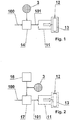
- FIG. 1 shows a first variant of a process structure for carrying out the method according to the invention for the physical foaming of silicone rubber.
- liquid 3 is added to the liquid silicone rubber 100, for which purpose the liquid silicone rubber 100 is transferred into a water mixing device 14.
- a water mixing device 14 By mixing the liquid silicone rubber 100 with water 3, an emulsion 101 is formed, in which the water in small droplet form in the bulk of the liquid silicone rubber is levitated.
- the emulsion 101 is then fed to an extruder unit 11, and in the extruder unit 11, the emulsion 101 is heated, wherein the heating takes place to a temperature which is below the evaporation temperature of the water 3 of the emulsion 101.
- the emulsion 101 is present in the extruder unit 11 in a form in which the proportion of the liquid silicone rubber 100 in the emulsion 101 is in a still uncrosslinked form, and the water 3 is in a liquid form.
- the heated emulsion 101 is now injected into the cavity 13 of the tool 12, wherein the injection of the emulsion 101 is a vulcanization of the liquid silicone rubber 100 by heating the water 3 above a vaporization temperature of the water 3 to foam a dimensionally stable silicone rubber body.
- the Production of the silicone rubber body consequently takes place discontinuously in individual injection molding steps. Subsequently, the silicone rubber body formed can be removed from the cavity 13 by opening the tool 12.
- FIG. 2 shows a further variant for carrying out the method.
- the liquid silicone rubber 100 is supplied to an additive mixing device 17.
- the additive metering device 17 is supplied with an additive 16 to additiate the liquid silicone rubber 100.
- the water 3 with the additive 16 is also supplied to the liquid silicone rubber 100 in-line, so that the additized liquid silicone rubber 100 now leaves the additive mixing device 17 as an emulsion 101, which results in a considerable plant-technical simplification results.
- the emulsion 101 enters the extrusion unit 11, and the silicone rubber body is injected into the cavity 13 of the tool 12 by vulcanizing the liquid silicone rubber 100 and heating the water 3 above an evaporation temperature of the water 3, so that foaming of a dimensionally stable silicone rubber body under molding of the water Cavity 13 is done.
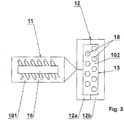
- FIG. 3 shows a detailed example of an extruder unit 11 with an extruder screw 15, wherein the extruder unit 11 is filled with emulsion 101.
- the emulsion 101 is heated in the extruder unit 11 and mixed accordingly, whereby an increase in pressure in the emulsion 101 is achieved.
- the pressurized emulsion 101 which is heated in the extruder unit 11 to, for example, about 80 ° C, is injected into the cavity 13 of the tool 12, the tool 12 being heated so that the injected emulsion 101 is heated to a temperature. which is above the evaporation temperature of the water in the emulsion 101.
- gas bubbles 18, which are formed by the evaporated water in the cavity 13 form in the silicone rubber body 102.
- the evaporation of the water is accompanied by a strong increase in volume, by which the foaming of the silicone rubber body 102 is achieved.
- the silicon rubber body 102 formed can be removed by opening the two tool parts 12a and 12b.
Landscapes
- Chemical & Material Sciences (AREA)
- Engineering & Computer Science (AREA)
- Materials Engineering (AREA)
- Health & Medical Sciences (AREA)
- Chemical Kinetics & Catalysis (AREA)
- Medicinal Chemistry (AREA)
- Polymers & Plastics (AREA)
- Organic Chemistry (AREA)
- Extrusion Moulding Of Plastics Or The Like (AREA)
- Manufacture Of Porous Articles, And Recovery And Treatment Of Waste Products (AREA)
- Molding Of Porous Articles (AREA)
Description
- Die Erfindung betrifft ein Verfahren zum physikalischen Schäumen von Silikonkautschukkörpern mittels Flüssigsilikonkautschuk.
- Für das physikalische Schäumen von Silikonkautschukkörpern existieren Treibmittel wie zum Beispiel Stickstoffe oder Kohlendioxide. Dabei wird der Polymermasse während einer Dosierung ein unter hohem Druck stehendes Treibfluid über eine spezielle Anlage zugeführt. Beim Einspritzen der Polymermasse in die Kavität eines Spritzgusswerkzeugs findet ein Druckabfall des unter Druck stehenden Treibmittels statt, sodass dieses expandiert. Dadurch kann das Treibmittel einen gasförmigen Aggregatzustand erlangen und dieses bildet eine poröse Struktur der Polymermasse innerhalb der Kavität aus, sodass ein im Wesentlichen formstabiler Silikonkautschukkörper gebildet wird.
- In diesem Zusammenhang ist aus der
DE 10 2006 030 403 A1 bekannt, einer Formmasse mit Flüssigsilikon in einem Mischer ein Treibfluid unter hohem Druck zuzuführen. In der Werkzeugform kann die Formmasse aufgrund des hohen Drucks dann durch Aufschäumen expandieren. - Beim chemischen Schäumen hingegen werden der Polymermasse Stoffe zugemischt, die im Verarbeitungsprozess durch eine chemische Reaktion Gase freisetzen. Diese führen dann zu einer Expansion, wobei das chemische Schäumen häufig mit einer erhöhten Umweltbelastung und mit der Beimengung des Treibmittels zum Silikonkautschukkörper einhergeht. Hingegen ist auch beim physikalischen Schäumen nicht jedes Treibmittel frei von negativen Nebeneffekten auf den Silikonkautschukkörper.
- Allgemein dient das Aufschäumen zur Dichtereduzierung von Silikonkautschukkörpern durch das Einbringen von Gasbläschen, welche beispielsweise von einem Flüssigsilikonkautschuk umschlossen werden. Die Dichtereduzierung führt zum einen zu einer Materialersparnis, welche im Hinblick auf die vergleichsweise hohen Materialkosten von einer Flüssigsilikonkautschukmasse wirtschaftlich bedeutend ist. Zum anderen verändert das Aufschäumen die Materialeigenschaften wie beispielsweise das Gewicht, mechanische Kennwerte und dergleichen, sodass ein formstabiler Silikonkautschukkörper geschaffen werden kann, der eine geringe Dichte und beispielsweise gummielastische Eigenschaften aufweist.
- Die
DE 42 35 309 A1 offenbart eine Treibmittelzusammensetzung auf Grundlage von wässrigen Emulsionen umfassend Organopolysiloxane, Emulgatoren, Wasser und Verdickungsmittel zur Herstellung von elastomeren Silikonschaumstoffen. Weiterhin offenbart ist ein Verfahren zur Herstellung von Treibmittelzusammensetzungen und es sind zur Bildung von elastomeren Silikonschaumstoffen härtbare Massen offenbart, die mit entsprechenden Treibmittelzusammensetzungen aufschäumbar sind. Damit ist die Verwendung von Wasser zur Bildung eines Treibmittels in Verbindung mit einer Reihe von weiteren Bestandteilen der Treibmittelzusammensetzung bekannt. - Für ein vorteilhaftes physikalisches Schäumen von Silikonkautschukkörpern bietet sich dabei ein Spritzgussverfahren an, wobei die Prozessführung zur Herstellung eines spritzgegossenen Silikonkautschukkörpers häufig mit sehr vielen Variablen ausgeführt werden muss und damit eine wirtschaftliche Umsetzung häufig erschwert.
- Es ist die Aufgabe der Erfindung, ein Verfahren zum physikalischen Schäumen von Silikonkautschukkörpern mittels Flüssigsilikonkautschuk so weiterzubilden, dass bei einer einfachen Bereitstellung eines Treibmittels auf wirtschaftlich vorteilhafte Weise ein Silikonkautschukkörper erzeugt werden kann.
- Diese Aufgabe wird ausgehend von einem Verfahren gemäß Anspruch 1 mit den kennzeichnenden Merkmalen gelöst. Vorteilhafte Weiterbildungen der Erfindung sind in den abhängigen Ansprüchen angegeben.
- Das Verfahren schließt erfindungsgemäß wenigstens die folgenden Schritte ein: Zugabe von Wasser in den Flüssigsilikonkautschuk unter Bildung einer Emulsion, Zuführen der Emulsion an eine Extrudereinheit, Erwärmen der Emulsion vor oder in der Extrudereinheit bis unter eine Verdampfungstemperatur des Wassers und Einspritzen der Emulsion in ein Werkzeug unter a) Vulkanisation des Flüssigsilikonkautschuks, unter b) Erhitzung des Wassers bis über eine Verdampfungstemperatur des Wassers und unter c) Aufschäumen eines formstabilen Silikonkautschukkörpers, wobei das Werkzeug eine beheizte Kavität aufweist, wobei die wenigstens überwiegende Vulkanisation des Flüssigsilikonkautschuks und die Erhitzung des Wassers bis über eine Verdampfungstemperatur des Wassers mittels eines Wärmeeintrags in die Emulsion durch das Werkzeug erfolgt, wobei die Emulsion in der Kavität des Werkzeugs auf 100°C bis 250°C erhitzt wird.
- Das erfindungsgemäße Verfahren geht zunächst aus von einer Bereitstellung eines Flüssigsilikonkautschuks (LSR), worunter vorliegend alle fließfähigen Silikonkautschukmassen verstanden werden, insbesondere alle Arten von 2K- Silikonkautschukmassen.
- Unter Zugabe von einfachem Wasser in den Flüssigsilikonkautschuk wird eine Emulsion gebildet, sodass mit der Emulsion der Flüssigsilikonkautschuk zur Weiterverarbeitung das Treibmittel bereits umfasst. Die Emulsion wird an eine Extrudereinheit überführt, vor oder in der die Emulsion bis unter eine Verdampfungstemperatur des Wassers erhitzt wird. Gewöhnlich kann die Emulsion in der Extrudereinheit selbst erhitzt werden, wobei es auch vorteilhaft sein kann, in einer zwischengeschalteten Erwärmungsstation die Emulsion auf eine Temperatur zu erwärmen, die unterhalb der Verdampfungstemperatur des Wassers in der Emulsion liegt.
- Die Erhitzung erfolgt dabei insbesondere drucklos, sodass erst ein Druck in der Emulsion aufgebaut wird, wenn diese in die Extrudereinheit überführt wurde. Schließlich kann mit der Extrudereinheit ein Einspritzen der Emulsion in das Werkzeug erfolgen, wobei wenigstens überwiegend die Vulkanisation des Flüssigsilikonkautschuks innerhalb der Kavität des Werkzeuges erfolgt. Dabei kann eine Vorvulkanisation des Flüssigsilikonkautschuks zumindest teilweise auch bereits vor dem Extruder stattfinden, wobei die Extrudierbarkeit der Emulsion erhalten bleiben muss. Prozessrelevant ist dabei der Erhalt der Emulsion in einem unvernetzten Zustand mit einem Wasseranteil, welches Wasser in diesem Stadium noch in flüssiger Form vorliegen soll. Erst nach Einspritzen der Emulsion in das Werkzeug soll das Wasser verdampfen, indem innerhalb des Werkzeuges, also in der Kavität des Werkzeuges, die Erhitzung des Wassers bis über eine Verdampfungstemperatur des Wassers erfolgt, und durch die Verdampfung des Wassers und mit der damit einhergehenden Volumenzunahme erfolgt das Aufschäumen des Flüssigsilikonkautschuks zu einem formstabilen Silikonkautschukkörper.
- Mit Bezug auf die Temperatur ist der erfindungsgemäße Herstellungsprozess dreistufig. Die Bereitstellung des Flüssigsilikonkautschuks, die Zugabe von Wasser und die Erzeugung der Emulsion erfolgen insbesondere bei Raumtemperatur, womit der erste Schritt erfüllt ist. Der zweite Schritt bezieht sich auf eine Erwärmung der Emulsion in der Extrudereinheit oder vor der Extrudereinheit bis unter eine Verdampfungstemperatur des Wassers, und der dritte Schritt umfasst das Erhitzen des Wassers in der Emulsion bis auf eine Temperatur, die über der Verdampfungstemperatur des Wassers liegt. Diese Erhitzung des Wassers gemäß dem dritten Schritt erfolgt dabei innerhalb der Kavität des Werkzeuges.
- Ein wesentliches Merkmal, mit dem das Verfahren zum physikalischen Schäumen von Silikonkautschukkörpern erfindungsgemäß ausgeführt werden kann, besteht darin, dass das Werkzeug eine beheizte Kavität aufweist, wobei die wenigstens überwiegende Vulkanisation des Flüssigsilikonkautschuks und die Erhitzung des Wassers bis über eine Verdampfungstemperatur des Wassers mittels eines Wärmeeintrags in die Emulsion durch das Werkzeug erfolgt. Das Verfahren soll dabei nicht darauf beschränkt sein, dass der Flüssigsilikonkautschuk ausschließlich in der Kavität des Werkzeuges vulkanisiert, da auch im Extruder bereits eine Vorvulkanisation stattfinden kann, die Vorvulkanisation jedoch nicht erfolgen muss.
- Beispielsweise wird die Emulsion in der Extrudereinheit auf 30 °C bis 80 °C erhitzt. Das Erhitzen der Emulsion kann auch auf eine Temperatur über 80 °C erfolgen, wobei die Emulsion jedoch nicht auf eine Temperatur erhitzt wird, die ein Erreichen eines Siedepunktes des Wassers in der Emulsion ermöglicht. Beispielsweise wird die Emulsion von einer Raumtemperatur beginnend aufgeheizt, wobei das Aufheizen in der Extrudereinheit erfolgt und wobei das Aufheizen beispielsweise zunächst bis unter 100 °C erfolgen kann, sodass das Wasser in der Emulsion nicht den Siedepunkt erreicht, sofern die Emulsion in der Extrudereinheit wenigstens anfänglich bei Normaldruck vorliegt. Die Emulsion wird in der Kavität des Werkzeuges auf eine Temperatur von mindestens 100 °C erhitzt, nämlich von 100 °C bis 250 °C. Die Erhitzung der Emulsion erfolgt so schnell, dass die Durchmischung des Wassers mit dem Flüssigsilikonkautschuk erhalten bleibt, und sodass bei einer Gasblasenbildung durch das verdampfende Wasser die Gasblasen von der Silikonkautschukmasse umschlossen bleiben.
- Ein weiterer Vorteil wird erreicht, wenn die Beheizung der Kavität des Werkzeuges nach einem Vulkanisieren des Flüssigsilikonkautschuks und nach einer Verdampfung des Wassers innerhalb der Kavität beendet wird. Nach Erkalten des gebildeten formstabilen Silikonkautschukkörpers kann das Werkzeug geöffnet werden und der formstabile Silikonkautschukkörper kann aus der Kavität entnommen werden. Die Formstabilität des Silikonkautschukkörpers umfasst dabei in vorliegendem Sinne auch weiche, gummielastische Silikonkautschukkörper, sofern der Silikonkautschukkörper beispielsweise nach einer Kraftbeaufschlagung in seine ursprüngliche Form zurückfindet. Die Zumischung des Wassers in den Flüssigsilikonkautschuk kann gemäß einer möglichen Variante des erfindungsgemäßen Verfahrens in einer Wassermischeinrichtung ausgeführt werden, wobei die Wassermischeinrichtung der Mischeinrichtung zur Mischung der ersten Komponente und der zweiten Komponente nachgelagert ist.
- Gemäß einer weiteren Variante zur Ausführung des erfindungsgemäßen Verfahrens wird dem Flüssigsilikonkautschuk wenigstens ein Additiv über eine Additivzumischeinrichtung zugemischt, wobei das Wasser mit dem Additiv ebenfalls dem Flüssigsilikonkautschuk zugemischt wird. Das Wasser wird damit beispielsweise in-line dem Flüssigsilikonkautschuk gemeinsam mit dem Additiv zugeführt. Ein Additiv kann dabei auch unabhängig von der Zuführung des Wassers dem Flüssigsilikonkautschuk zugemischt werden, wobei das Additiv auch bereits in die gebildete Emulsion eingemengt werden kann.
- Schließlich ergibt sich ein weiterer Vorteil dadurch, dass die Kavität des Werkzeuges vor dem Einspritzen der Emulsion evakuiert wird. Dadurch erfolgt die Volumenexpansion und damit die Verdampfung des Wasseranteils in der Emulsion in noch kürzerer Zeit, sodass sich eine verbesserte Homogenität des Silikonkautschukkörpers erreichen lässt.
- Weitere, die Erfindung verbessernde Maßnahmen werden nachstehend gemeinsam mit der Beschreibung bevorzugter Ausführungsbeispiele der Erfindung anhand der Figuren näher dargestellt. Es zeigt:
- Figur 1
- eine diagrammatische Darstellung einer ersten Variante zur Ausführung des erfindungsgemäßen Verfahrens,
- Figur 2
- eine diagrammatische Darstellung einer zweiten Variante zur Ausführung des erfindungsgemäßen Verfahrens,
- Figur 3
- ein Beispiel einer Extrudereinheit mit einem Werkzeug.
-
Figur 1 zeigt eine erste Variante eines Verfahrensaufbaus zur Ausführung des erfindungsgemäßen Verfahrens zum physikalischen Schäumen von Silikonkautschuk. Erfindungsgemäß wird dem Flüssigsilikonkautschuk 100 Wasser 3 zugegeben, wofür der Flüssigsilikonkautschuk 100 in eine Wassermischeinrichtung 14 überführt wird. Durch die Vermischung des Flüssigsilikonkautschuks 100 mit Wasser 3 wird eine Emulsion 101 gebildet, in der das Wasser in kleiner Tröpfchenform in der Masse des Flüssigsilikonkautschuks in Schwebe gehalten wird. - Die Emulsion 101 wird anschließend einer Extrudereinheit 11 zugeführt, und in der Extrudereinheit 11 wird die Emulsion 101 erwärmt, wobei die Erwärmung auf eine Temperatur erfolgt, die unterhalb der Verdampfungstemperatur des Wassers 3 der Emulsion 101 liegt.
- Somit liegt die Emulsion 101 in der Extrudereinheit 11 in einer Form vor, in der der Anteil des Flüssigsilikonkautschuks 100 in der Emulsion 101 in einer noch unvernetzten Form vorliegt, und das Wasser 3 liegt in einer flüssigen Form vor.
- In diesem Zustand wird die erwärmte Emulsion 101 nunmehr in die Kavität 13 des Werkzeugs 12 eingespritzt, wobei mit dem Einspritzen der Emulsion 101 eine Vulkanisation des Flüssigsilikonkautschuks 100 durch ein Erhitzen des Wassers 3 über eine Verdampfungstemperatur des Wassers 3 unter Aufschäumen eines formstabilen Silikonkautschukkörpers erfolgt. Die Herstellung des Silikonkautschukkörpers erfolgt folglich diskontinuierlich in einzelnen Spritzgussschritten. Anschließend kann der gebildete Silikonkautschukkörper durch Öffnen von dem Werkzeug 12 aus der Kavität 13 entnommen werden.
-
Figur 2 zeigt eine weitere Variante zur Ausführung des Verfahrens. Der Flüssigsilikonkautschuk 100 wird einer Additivzumischeinrichtung 17 zugeführt. Der Additivzumischeinrichtung 17 wird ein Additiv 16 zugeführt, um den Flüssigsilikonkautschuk 100 zu additivieren. Gemäß der in diesem Ausführungsbeispiel gezeigten Variante wird in-line auch das Wasser 3 mit dem Additiv 16 dem Flüssigsilikonkautschuk 100 zugeführt, sodass der additivierte Flüssigsilikonkautschuk 100 nunmehr als eine Emulsion 101 die Additivzumischeinrichtung 17 verlässt, wodurch sich eine erhebliche anlagentechnische Vereinfachung ergibt. Anschließend gelangt die Emulsion 101 in die Extrusionseinheit 11, und der Silikonkautschukkörper wird in der Kavität 13 des Werkzeuges 12 unter Vulkanisieren des Flüssigsilikonkautschuks 100 und unter Erhitzen des Wassers 3 über eine Verdampfungstemperatur des Wassers 3 eingespritzt, sodass eine Aufschäumung eines formstabilen Silikonkautschukkörpers unter einer Abformung der Kavität 13 erfolgt. -
Figur 3 zeigt ein detailliertes Beispiel einer Extrudereinheit 11 mit einer Extruderschnecke 15, wobei die Extrudereinheit 11 mit Emulsion 101 gefüllt ist. Die Emulsion 101 wird in der Extrudereinheit 11 erhitzt und entsprechend durchmischt, wobei eine Druckzunahme in der Emulsion 101 erreicht wird. Die unter Druck gesetzte Emulsion 101, die in der Extrudereinheit 11 auf beispielsweise etwa 80 °C erhitzt wird, wird in die Kavität 13 des Werkzeuges 12 eingespritzt, wobei das Werkzeug 12 so beheizt ist, dass die eingespritzte Emulsion 101 auf eine Temperatur erhitzt wird, die über der Verdampfungstemperatur des Wassers in der Emulsion 101 liegt. Dadurch bilden sich im Silikonkautschukkörper 102 Gasblasen 18, die gebildet werden durch das verdampfte Wasser in der Kavität 13. Mit dem Verdampfen des Wassers geht eine starke Volumenzunahme einher, durch die das Aufschäumen des Silikonkautschukkörpers 102 erreicht wird. Anschließend kann durch ein Öffnen der beiden Werkzeugteile 12a und 12b der gebildete Silikonkautschukkörper 102 entnommen werden. - Die Erfindung beschränkt sich in ihrer Ausführung nicht auf das vorstehend angegebene bevorzugte Ausführungsbeispiel. Vielmehr ist eine Anzahl von Varianten denkbar, welche von der dargestellten Lösung auch bei grundsätzlich anders gearteten Ausführungen Gebrauch macht. Sämtliche aus den Ansprüchen, der Beschreibung oder den Zeichnungen hervorgehenden Merkmale und/oder Vorteile, einschließlich konstruktiver Einzelheiten oder räumlicher Anordnungen, können sowohl für sich als auch in den verschiedensten Kombinationen erfindungswesentlich sein.
-
- 3
- Wasser
- 11
- Extrudereinheit
- 12
- Werkzeug
- 12a
- erster Werkzeugteil
- 12b
- zweiter Werkzeugteil
- 13
- Kavität
- 14
- Wassermischeinrichtung
- 15
- Extruderschnecke
- 16
- Additiv
- 17
- Additivzumischeinrichtung
- 18
- Gasblase
- 100
- Flüssigsilikonkautschuk
- 101
- Emulsion
- 102
- formstabiler Silikonkautschukkörper
Claims (5)
- Verfahren zum physikalischen Schäumen von Silikonkautschukkörpern mittels Flüssigsilikonkautschuk (100), wobei das Verfahren wenigstens die folgenden Schritte aufweist:- Zugabe von Wasser (3) in den Flüssigsilikonkautschuk (100) unter Bildung einer Emulsion (101),- Zuführen der Emulsion (101) an eine Extrudereinheit (11),- Erwärmen der Emulsion (101) vor oder in der Extrudereinheit (11) bis unter eine Verdampfungstemperatur des Wassers (3) und- Einspritzen der Emulsion (101) in ein Werkzeug (12) untera) Vulkanisation des Flüssigsilikonkautschuks (100), unterb) Erhitzung des Wassers (3) bis über eine Verdampfungstemperatur des Wassers (3) und unterc) Aufschäumung eines formstabilen Silikonkautschukkörpers (102), wobei das Werkzeug (12) eine beheizte Kavität (13) aufweist, wobei die wenigstens überwiegende Vulkanisation des Flüssigsilikonkautschuks (100) und die Erhitzung des Wassers (3) bis über eine Verdampfungstemperatur des Wassers (3) mittels eines Wärmeeintrags in die Emulsion (101) durch das Werkzeug (12) erfolgt, wobei die Emulsion (101) in der Kavität (13) des Werkzeugs (12) auf 100°C bis 250°C erhitzt wird.
- Verfahren nach Anspruch 1,
dadurch gekennzeichnet,
dass die Emulsion (101) in der Extrudereinheit (11) auf 30°C bis 80°C erhitzt wird. - Verfahren nach einem der Ansprüche 1 oder 2,
dadurch gekennzeichnet,
dass die Beheizung der Kavität (13) nach einem Vulkanisieren des Flüssigsilikonkautschuks (100) und nach einer Verdampfung des Wassers (3) innerhalb der Kavität (13) beendet wird. - Verfahren nach einem der vorgenannten Ansprüche,
dadurch gekennzeichnet,
dass dem Flüssigsilikonkautschuk (100) wenigstens ein Additiv (16) über eine Additivzumischeinrichtung (17) zugemischt wird, wobei das Wasser (3) mit dem Additiv (16) ebenfalls dem Flüssigkeitskautschuk (100) zugemischt wird. - Verfahren nach einem der vorgenannten Ansprüche,
dadurch gekennzeichnet,
dass die Kavität (13) des Werkzeugs (12) vor dem Einspritzen der Emulsion (101) evakuiert wird.
Applications Claiming Priority (1)
| Application Number | Priority Date | Filing Date | Title |
|---|---|---|---|
| DE102016005111.6A DE102016005111A1 (de) | 2016-04-28 | 2016-04-28 | Verfahren zum physikalischen Schäumen von Silikonkautschukkörpern |
Publications (2)
| Publication Number | Publication Date |
|---|---|
| EP3238904A1 EP3238904A1 (de) | 2017-11-01 |
| EP3238904B1 true EP3238904B1 (de) | 2019-02-20 |
Family
ID=58638667
Family Applications (1)
| Application Number | Title | Priority Date | Filing Date |
|---|---|---|---|
| EP17165691.1A Active EP3238904B1 (de) | 2016-04-28 | 2017-04-10 | Verfahren zum physikalischen schäumen von silikonkautschukkörpern |
Country Status (2)
| Country | Link |
|---|---|
| EP (1) | EP3238904B1 (de) |
| DE (1) | DE102016005111A1 (de) |
Cited By (1)
| Publication number | Priority date | Publication date | Assignee | Title |
|---|---|---|---|---|
| EP4129622A1 (de) | 2021-08-02 | 2023-02-08 | Universität Kassel | Silikonkautschukgemisch zur herstellung von bauteilen im extrusionsverfahren |
Families Citing this family (1)
| Publication number | Priority date | Publication date | Assignee | Title |
|---|---|---|---|---|
| EP4596208A1 (de) | 2024-01-31 | 2025-08-06 | Universität Kassel (Körperschaft d. öffentlichen Rechts) | Verfahren zur herstellung eines verbundbauteils mit einem thermoplastkörper und mit einem geschäumten silikonkörper |
Family Cites Families (3)
| Publication number | Priority date | Publication date | Assignee | Title |
|---|---|---|---|---|
| DE4235309A1 (de) | 1992-10-20 | 1994-04-21 | Wacker Chemie Gmbh | Treibmittelzusammensetzungen und zu elastomeren Siliconschaumstoffen härtbare Massen |
| JP3712380B2 (ja) * | 2001-11-27 | 2005-11-02 | ジーイー東芝シリコーン株式会社 | ポリオルガノシロキサン発泡材、その製造方法および発泡体 |
| DE102006030403A1 (de) * | 2005-06-30 | 2007-03-15 | Vereinigung zur Förderung des Instituts für Kunststoffverarbeitung in Industrie und Handwerk an der Rhein.-Westf. Technischen Hochschule Aachen eV | Verfahren zur Herstellung physikalisch getriebener Schäume von fließfähigen Formmassen |
-
2016
- 2016-04-28 DE DE102016005111.6A patent/DE102016005111A1/de not_active Withdrawn
-
2017
- 2017-04-10 EP EP17165691.1A patent/EP3238904B1/de active Active
Non-Patent Citations (1)
| Title |
|---|
| None * |
Cited By (2)
| Publication number | Priority date | Publication date | Assignee | Title |
|---|---|---|---|---|
| EP4129622A1 (de) | 2021-08-02 | 2023-02-08 | Universität Kassel | Silikonkautschukgemisch zur herstellung von bauteilen im extrusionsverfahren |
| DE102021119977B4 (de) | 2021-08-02 | 2025-01-02 | Universität Kassel, Körperschaft des öffentlichen Rechts | Verwendung eines Silikonkautschukgemisches zur Herstellung von Silikonkautschukbauteilen im Extrusionsverfahren und Vorrichtung zur Herstellung von Silikonkautschukbauteilen |
Also Published As
| Publication number | Publication date |
|---|---|
| DE102016005111A1 (de) | 2017-11-02 |
| EP3238904A1 (de) | 2017-11-01 |
Similar Documents
| Publication | Publication Date | Title |
|---|---|---|
| DE2461580B2 (de) | Verfahren zur Herstellung von Spritzgußkörpern aus thermoplastischem Kunststoff mit glatter Oberfläche und porigem Kern | |
| EP3717211B1 (de) | Hochtemperaturschaumstoffe mit verringerter harzaufnahme zur herstellung von sandwichmaterialien | |
| EP0753389B1 (de) | Verfahren zur Herstellung von Polyurethanschaumformkörpern | |
| EP3263425A1 (de) | Dämmelement | |
| EP3238904A1 (de) | Verfahren zum physikalischen schäumen von silikonkautschukkörpern | |
| WO2012016755A1 (de) | Verfahren und vorrichtung zum herstellen eines spritzgussteils | |
| WO2019101667A1 (de) | Pesu-partikelschäume für anwendungen im luftfahrt-interieur | |
| WO2017194584A1 (de) | 3d-druck von werkstücken mit zellstruktur, insbesondere aus kunststoff | |
| EP0952909B1 (de) | Verfahren zur herstellung geschäumter polyurethan-formkörper | |
| DE102014005227A1 (de) | Verfahren zur Herstellung von Schaumstoffen | |
| WO2016146120A1 (de) | Verfahren zur herstellung eines porösen bauteils aus mindestens einem material m und mit einer schaumstruktur sowie ein danach hergestelltes poröses bauteil | |
| WO1999043483A1 (de) | Verfahren und vorrichtung zum schäumen von kunststoffen | |
| DE4425319A1 (de) | Verfahren und Vorrichtung zur Schaumherstellung mittels unter Druck gelöstem Kohlendioxid | |
| DE2056322A1 (de) | Verfahren zur Herstellung von im wesent liehen oberflachenhohlraum oder fehler freien Polyurethanschaumstoff Formkorpern | |
| DE19525663C1 (de) | Verfahren zur Herstellung von Polyurethanschaumformkörpern | |
| DE102010029613A1 (de) | Verfahren zur Herstellung eines Schaumstoffes und Formkörper | |
| AT508511B1 (de) | Verfahren zum herstellen eines artikels mit einem hohlraum aus einem kunststoffmaterial | |
| EP2851174B1 (de) | Verfahren zur herstellung eines türaussengriffs für ein kraftfahrzeug und türaussengriff | |
| DE10147070A1 (de) | Verfahren und Vorrichtung zur Herstellung eines aufgeschäumten Kunststoffprodukts sowie aufgeschäumtes Kunststoffprodukt | |
| DE102005017882B4 (de) | Möglichkeiten zur Beeinflussung der Oberfläche polymerer Hohlkörper | |
| DE102013006067B4 (de) | Verfahren und Vorrichtung zur Herstellung eines faserverstärkten Kunststoffbauteils | |
| DE102008035530A1 (de) | Verfahren zur Herstellung eines Biopolymer-Formteils und nach dem Verfahren hergestelltes Formteil | |
| DE102006034953A1 (de) | Verfahren zum Herstellen eines Artikels mit einem Hohlraum aus einem Kunststoffmaterial | |
| DE2442136A1 (de) | Verfahren und anlage zur herstellung von kunststofformkoerpern aus hautmaterial und kernmaterial | |
| AT166060B (de) | Verfahren zur Herstellung von porösen, schwammartigen Massen und Gegenständen aus Kautschuk oder kautschukähnlichen Stoffen |
Legal Events
| Date | Code | Title | Description |
|---|---|---|---|
| PUAI | Public reference made under article 153(3) epc to a published international application that has entered the european phase |
Free format text: ORIGINAL CODE: 0009012 |
|
| STAA | Information on the status of an ep patent application or granted ep patent |
Free format text: STATUS: THE APPLICATION HAS BEEN PUBLISHED |
|
| AK | Designated contracting states |
Kind code of ref document: A1 Designated state(s): AL AT BE BG CH CY CZ DE DK EE ES FI FR GB GR HR HU IE IS IT LI LT LU LV MC MK MT NL NO PL PT RO RS SE SI SK SM TR |
|
| AX | Request for extension of the european patent |
Extension state: BA ME |
|
| STAA | Information on the status of an ep patent application or granted ep patent |
Free format text: STATUS: REQUEST FOR EXAMINATION WAS MADE |
|
| 17P | Request for examination filed |
Effective date: 20171121 |
|
| RBV | Designated contracting states (corrected) |
Designated state(s): AL AT BE BG CH CY CZ DE DK EE ES FI FR GB GR HR HU IE IS IT LI LT LU LV MC MK MT NL NO PL PT RO RS SE SI SK SM TR |
|
| STAA | Information on the status of an ep patent application or granted ep patent |
Free format text: STATUS: EXAMINATION IS IN PROGRESS |
|
| 17Q | First examination report despatched |
Effective date: 20180319 |
|
| GRAP | Despatch of communication of intention to grant a patent |
Free format text: ORIGINAL CODE: EPIDOSNIGR1 |
|
| STAA | Information on the status of an ep patent application or granted ep patent |
Free format text: STATUS: GRANT OF PATENT IS INTENDED |
|
| INTG | Intention to grant announced |
Effective date: 20180913 |
|
| GRAS | Grant fee paid |
Free format text: ORIGINAL CODE: EPIDOSNIGR3 |
|
| GRAA | (expected) grant |
Free format text: ORIGINAL CODE: 0009210 |
|
| STAA | Information on the status of an ep patent application or granted ep patent |
Free format text: STATUS: THE PATENT HAS BEEN GRANTED |
|
| AK | Designated contracting states |
Kind code of ref document: B1 Designated state(s): AL AT BE BG CH CY CZ DE DK EE ES FI FR GB GR HR HU IE IS IT LI LT LU LV MC MK MT NL NO PL PT RO RS SE SI SK SM TR |
|
| REG | Reference to a national code |
Ref country code: GB Ref legal event code: FG4D Free format text: NOT ENGLISH |
|
| REG | Reference to a national code |
Ref country code: CH Ref legal event code: EP |
|
| REG | Reference to a national code |
Ref country code: DE Ref legal event code: R096 Ref document number: 502017000770 Country of ref document: DE |
|
| REG | Reference to a national code |
Ref country code: AT Ref legal event code: REF Ref document number: 1097605 Country of ref document: AT Kind code of ref document: T Effective date: 20190315 |
|
| REG | Reference to a national code |
Ref country code: IE Ref legal event code: FG4D Free format text: LANGUAGE OF EP DOCUMENT: GERMAN |
|
| REG | Reference to a national code |
Ref country code: NL Ref legal event code: FP |
|
| REG | Reference to a national code |
Ref country code: LT Ref legal event code: MG4D |
|
| PG25 | Lapsed in a contracting state [announced via postgrant information from national office to epo] |
Ref country code: SE Free format text: LAPSE BECAUSE OF FAILURE TO SUBMIT A TRANSLATION OF THE DESCRIPTION OR TO PAY THE FEE WITHIN THE PRESCRIBED TIME-LIMIT Effective date: 20190220 Ref country code: LT Free format text: LAPSE BECAUSE OF FAILURE TO SUBMIT A TRANSLATION OF THE DESCRIPTION OR TO PAY THE FEE WITHIN THE PRESCRIBED TIME-LIMIT Effective date: 20190220 Ref country code: PT Free format text: LAPSE BECAUSE OF FAILURE TO SUBMIT A TRANSLATION OF THE DESCRIPTION OR TO PAY THE FEE WITHIN THE PRESCRIBED TIME-LIMIT Effective date: 20190620 Ref country code: FI Free format text: LAPSE BECAUSE OF FAILURE TO SUBMIT A TRANSLATION OF THE DESCRIPTION OR TO PAY THE FEE WITHIN THE PRESCRIBED TIME-LIMIT Effective date: 20190220 Ref country code: NO Free format text: LAPSE BECAUSE OF FAILURE TO SUBMIT A TRANSLATION OF THE DESCRIPTION OR TO PAY THE FEE WITHIN THE PRESCRIBED TIME-LIMIT Effective date: 20190520 |
|
| PG25 | Lapsed in a contracting state [announced via postgrant information from national office to epo] |
Ref country code: IS Free format text: LAPSE BECAUSE OF FAILURE TO SUBMIT A TRANSLATION OF THE DESCRIPTION OR TO PAY THE FEE WITHIN THE PRESCRIBED TIME-LIMIT Effective date: 20190620 Ref country code: GR Free format text: LAPSE BECAUSE OF FAILURE TO SUBMIT A TRANSLATION OF THE DESCRIPTION OR TO PAY THE FEE WITHIN THE PRESCRIBED TIME-LIMIT Effective date: 20190521 Ref country code: HR Free format text: LAPSE BECAUSE OF FAILURE TO SUBMIT A TRANSLATION OF THE DESCRIPTION OR TO PAY THE FEE WITHIN THE PRESCRIBED TIME-LIMIT Effective date: 20190220 Ref country code: RS Free format text: LAPSE BECAUSE OF FAILURE TO SUBMIT A TRANSLATION OF THE DESCRIPTION OR TO PAY THE FEE WITHIN THE PRESCRIBED TIME-LIMIT Effective date: 20190220 Ref country code: LV Free format text: LAPSE BECAUSE OF FAILURE TO SUBMIT A TRANSLATION OF THE DESCRIPTION OR TO PAY THE FEE WITHIN THE PRESCRIBED TIME-LIMIT Effective date: 20190220 Ref country code: BG Free format text: LAPSE BECAUSE OF FAILURE TO SUBMIT A TRANSLATION OF THE DESCRIPTION OR TO PAY THE FEE WITHIN THE PRESCRIBED TIME-LIMIT Effective date: 20190520 |
|
| PG25 | Lapsed in a contracting state [announced via postgrant information from national office to epo] |
Ref country code: ES Free format text: LAPSE BECAUSE OF FAILURE TO SUBMIT A TRANSLATION OF THE DESCRIPTION OR TO PAY THE FEE WITHIN THE PRESCRIBED TIME-LIMIT Effective date: 20190220 Ref country code: CZ Free format text: LAPSE BECAUSE OF FAILURE TO SUBMIT A TRANSLATION OF THE DESCRIPTION OR TO PAY THE FEE WITHIN THE PRESCRIBED TIME-LIMIT Effective date: 20190220 Ref country code: RO Free format text: LAPSE BECAUSE OF FAILURE TO SUBMIT A TRANSLATION OF THE DESCRIPTION OR TO PAY THE FEE WITHIN THE PRESCRIBED TIME-LIMIT Effective date: 20190220 Ref country code: EE Free format text: LAPSE BECAUSE OF FAILURE TO SUBMIT A TRANSLATION OF THE DESCRIPTION OR TO PAY THE FEE WITHIN THE PRESCRIBED TIME-LIMIT Effective date: 20190220 Ref country code: DK Free format text: LAPSE BECAUSE OF FAILURE TO SUBMIT A TRANSLATION OF THE DESCRIPTION OR TO PAY THE FEE WITHIN THE PRESCRIBED TIME-LIMIT Effective date: 20190220 Ref country code: SK Free format text: LAPSE BECAUSE OF FAILURE TO SUBMIT A TRANSLATION OF THE DESCRIPTION OR TO PAY THE FEE WITHIN THE PRESCRIBED TIME-LIMIT Effective date: 20190220 Ref country code: AL Free format text: LAPSE BECAUSE OF FAILURE TO SUBMIT A TRANSLATION OF THE DESCRIPTION OR TO PAY THE FEE WITHIN THE PRESCRIBED TIME-LIMIT Effective date: 20190220 |
|
| REG | Reference to a national code |
Ref country code: DE Ref legal event code: R097 Ref document number: 502017000770 Country of ref document: DE |
|
| PG25 | Lapsed in a contracting state [announced via postgrant information from national office to epo] |
Ref country code: PL Free format text: LAPSE BECAUSE OF FAILURE TO SUBMIT A TRANSLATION OF THE DESCRIPTION OR TO PAY THE FEE WITHIN THE PRESCRIBED TIME-LIMIT Effective date: 20190220 Ref country code: SM Free format text: LAPSE BECAUSE OF FAILURE TO SUBMIT A TRANSLATION OF THE DESCRIPTION OR TO PAY THE FEE WITHIN THE PRESCRIBED TIME-LIMIT Effective date: 20190220 |
|
| REG | Reference to a national code |
Ref country code: BE Ref legal event code: MM Effective date: 20190430 |
|
| PLBE | No opposition filed within time limit |
Free format text: ORIGINAL CODE: 0009261 |
|
| STAA | Information on the status of an ep patent application or granted ep patent |
Free format text: STATUS: NO OPPOSITION FILED WITHIN TIME LIMIT |
|
| PG25 | Lapsed in a contracting state [announced via postgrant information from national office to epo] |
Ref country code: LU Free format text: LAPSE BECAUSE OF NON-PAYMENT OF DUE FEES Effective date: 20190410 Ref country code: MC Free format text: LAPSE BECAUSE OF FAILURE TO SUBMIT A TRANSLATION OF THE DESCRIPTION OR TO PAY THE FEE WITHIN THE PRESCRIBED TIME-LIMIT Effective date: 20190220 |
|
| 26N | No opposition filed |
Effective date: 20191121 |
|
| PG25 | Lapsed in a contracting state [announced via postgrant information from national office to epo] |
Ref country code: SI Free format text: LAPSE BECAUSE OF FAILURE TO SUBMIT A TRANSLATION OF THE DESCRIPTION OR TO PAY THE FEE WITHIN THE PRESCRIBED TIME-LIMIT Effective date: 20190220 Ref country code: BE Free format text: LAPSE BECAUSE OF NON-PAYMENT OF DUE FEES Effective date: 20190430 |
|
| PG25 | Lapsed in a contracting state [announced via postgrant information from national office to epo] |
Ref country code: TR Free format text: LAPSE BECAUSE OF FAILURE TO SUBMIT A TRANSLATION OF THE DESCRIPTION OR TO PAY THE FEE WITHIN THE PRESCRIBED TIME-LIMIT Effective date: 20190220 |
|
| PG25 | Lapsed in a contracting state [announced via postgrant information from national office to epo] |
Ref country code: IE Free format text: LAPSE BECAUSE OF NON-PAYMENT OF DUE FEES Effective date: 20190410 |
|
| REG | Reference to a national code |
Ref country code: CH Ref legal event code: PL |
|
| PG25 | Lapsed in a contracting state [announced via postgrant information from national office to epo] |
Ref country code: LI Free format text: LAPSE BECAUSE OF NON-PAYMENT OF DUE FEES Effective date: 20200430 Ref country code: CH Free format text: LAPSE BECAUSE OF NON-PAYMENT OF DUE FEES Effective date: 20200430 |
|
| PG25 | Lapsed in a contracting state [announced via postgrant information from national office to epo] |
Ref country code: CY Free format text: LAPSE BECAUSE OF FAILURE TO SUBMIT A TRANSLATION OF THE DESCRIPTION OR TO PAY THE FEE WITHIN THE PRESCRIBED TIME-LIMIT Effective date: 20190220 |
|
| PG25 | Lapsed in a contracting state [announced via postgrant information from national office to epo] |
Ref country code: HU Free format text: LAPSE BECAUSE OF FAILURE TO SUBMIT A TRANSLATION OF THE DESCRIPTION OR TO PAY THE FEE WITHIN THE PRESCRIBED TIME-LIMIT; INVALID AB INITIO Effective date: 20170410 Ref country code: MT Free format text: LAPSE BECAUSE OF FAILURE TO SUBMIT A TRANSLATION OF THE DESCRIPTION OR TO PAY THE FEE WITHIN THE PRESCRIBED TIME-LIMIT Effective date: 20190220 |
|
| PG25 | Lapsed in a contracting state [announced via postgrant information from national office to epo] |
Ref country code: MK Free format text: LAPSE BECAUSE OF FAILURE TO SUBMIT A TRANSLATION OF THE DESCRIPTION OR TO PAY THE FEE WITHIN THE PRESCRIBED TIME-LIMIT Effective date: 20190220 |
|
| P01 | Opt-out of the competence of the unified patent court (upc) registered |
Free format text: CASE NUMBER: APP_57789/2024 Effective date: 20241022 |
|
| PGFP | Annual fee paid to national office [announced via postgrant information from national office to epo] |
Ref country code: NL Payment date: 20250418 Year of fee payment: 9 |
|
| PGFP | Annual fee paid to national office [announced via postgrant information from national office to epo] |
Ref country code: DE Payment date: 20250131 Year of fee payment: 9 |
|
| PGFP | Annual fee paid to national office [announced via postgrant information from national office to epo] |
Ref country code: GB Payment date: 20250423 Year of fee payment: 9 |
|
| PGFP | Annual fee paid to national office [announced via postgrant information from national office to epo] |
Ref country code: IT Payment date: 20250424 Year of fee payment: 9 |
|
| PGFP | Annual fee paid to national office [announced via postgrant information from national office to epo] |
Ref country code: FR Payment date: 20250425 Year of fee payment: 9 |
|
| PGFP | Annual fee paid to national office [announced via postgrant information from national office to epo] |
Ref country code: AT Payment date: 20250423 Year of fee payment: 9 |