EP3233094B1 - Biokompatible implantate mit manipulierten endothelzellen - Google Patents
Biokompatible implantate mit manipulierten endothelzellen Download PDFInfo
- Publication number
- EP3233094B1 EP3233094B1 EP15871199.4A EP15871199A EP3233094B1 EP 3233094 B1 EP3233094 B1 EP 3233094B1 EP 15871199 A EP15871199 A EP 15871199A EP 3233094 B1 EP3233094 B1 EP 3233094B1
- Authority
- EP
- European Patent Office
- Prior art keywords
- cells
- endothelial cells
- implant
- engineered
- e4orf1
- Prior art date
- Legal status (The legal status is an assumption and is not a legal conclusion. Google has not performed a legal analysis and makes no representation as to the accuracy of the status listed.)
- Active
Links
Images


Classifications
-
- A—HUMAN NECESSITIES
- A61—MEDICAL OR VETERINARY SCIENCE; HYGIENE
- A61L—METHODS OR APPARATUS FOR STERILISING MATERIALS OR OBJECTS IN GENERAL; DISINFECTION, STERILISATION OR DEODORISATION OF AIR; CHEMICAL ASPECTS OF BANDAGES, DRESSINGS, ABSORBENT PADS OR SURGICAL ARTICLES; MATERIALS FOR BANDAGES, DRESSINGS, ABSORBENT PADS OR SURGICAL ARTICLES
- A61L27/00—Materials for grafts or prostheses or for coating grafts or prostheses
- A61L27/50—Materials characterised by their function or physical properties, e.g. injectable or lubricating compositions, shape-memory materials, surface modified materials
- A61L27/56—Porous materials, e.g. foams or sponges
-
- A—HUMAN NECESSITIES
- A61—MEDICAL OR VETERINARY SCIENCE; HYGIENE
- A61K—PREPARATIONS FOR MEDICAL, DENTAL OR TOILETRY PURPOSES
- A61K35/00—Medicinal preparations containing materials or reaction products thereof with undetermined constitution
- A61K35/12—Materials from mammals; Compositions comprising non-specified tissues or cells; Compositions comprising non-embryonic stem cells; Genetically modified cells
- A61K35/28—Bone marrow; Haematopoietic stem cells; Mesenchymal stem cells of any origin, e.g. adipose-derived stem cells
-
- A—HUMAN NECESSITIES
- A61—MEDICAL OR VETERINARY SCIENCE; HYGIENE
- A61K—PREPARATIONS FOR MEDICAL, DENTAL OR TOILETRY PURPOSES
- A61K35/00—Medicinal preparations containing materials or reaction products thereof with undetermined constitution
- A61K35/12—Materials from mammals; Compositions comprising non-specified tissues or cells; Compositions comprising non-embryonic stem cells; Genetically modified cells
- A61K35/30—Nerves; Brain; Eyes; Corneal cells; Cerebrospinal fluid; Neuronal stem cells; Neuronal precursor cells; Glial cells; Oligodendrocytes; Schwann cells; Astroglia; Astrocytes; Choroid plexus; Spinal cord tissue
-
- A—HUMAN NECESSITIES
- A61—MEDICAL OR VETERINARY SCIENCE; HYGIENE
- A61K—PREPARATIONS FOR MEDICAL, DENTAL OR TOILETRY PURPOSES
- A61K35/00—Medicinal preparations containing materials or reaction products thereof with undetermined constitution
- A61K35/12—Materials from mammals; Compositions comprising non-specified tissues or cells; Compositions comprising non-embryonic stem cells; Genetically modified cells
- A61K35/32—Bones; Osteocytes; Osteoblasts; Tendons; Tenocytes; Teeth; Odontoblasts; Cartilage; Chondrocytes; Synovial membrane
-
- A—HUMAN NECESSITIES
- A61—MEDICAL OR VETERINARY SCIENCE; HYGIENE
- A61K—PREPARATIONS FOR MEDICAL, DENTAL OR TOILETRY PURPOSES
- A61K35/00—Medicinal preparations containing materials or reaction products thereof with undetermined constitution
- A61K35/12—Materials from mammals; Compositions comprising non-specified tissues or cells; Compositions comprising non-embryonic stem cells; Genetically modified cells
- A61K35/34—Muscles; Smooth muscle cells; Heart; Cardiac stem cells; Myoblasts; Myocytes; Cardiomyocytes
-
- A—HUMAN NECESSITIES
- A61—MEDICAL OR VETERINARY SCIENCE; HYGIENE
- A61K—PREPARATIONS FOR MEDICAL, DENTAL OR TOILETRY PURPOSES
- A61K35/00—Medicinal preparations containing materials or reaction products thereof with undetermined constitution
- A61K35/12—Materials from mammals; Compositions comprising non-specified tissues or cells; Compositions comprising non-embryonic stem cells; Genetically modified cells
- A61K35/35—Fat tissue; Adipocytes; Stromal cells; Connective tissues
-
- A—HUMAN NECESSITIES
- A61—MEDICAL OR VETERINARY SCIENCE; HYGIENE
- A61K—PREPARATIONS FOR MEDICAL, DENTAL OR TOILETRY PURPOSES
- A61K35/00—Medicinal preparations containing materials or reaction products thereof with undetermined constitution
- A61K35/12—Materials from mammals; Compositions comprising non-specified tissues or cells; Compositions comprising non-embryonic stem cells; Genetically modified cells
- A61K35/36—Skin; Hair; Nails; Sebaceous glands; Cerumen; Epidermis; Epithelial cells; Keratinocytes; Langerhans cells; Ectodermal cells
-
- A—HUMAN NECESSITIES
- A61—MEDICAL OR VETERINARY SCIENCE; HYGIENE
- A61K—PREPARATIONS FOR MEDICAL, DENTAL OR TOILETRY PURPOSES
- A61K35/00—Medicinal preparations containing materials or reaction products thereof with undetermined constitution
- A61K35/12—Materials from mammals; Compositions comprising non-specified tissues or cells; Compositions comprising non-embryonic stem cells; Genetically modified cells
- A61K35/37—Digestive system
- A61K35/38—Stomach; Intestine; Goblet cells; Oral mucosa; Saliva
-
- A—HUMAN NECESSITIES
- A61—MEDICAL OR VETERINARY SCIENCE; HYGIENE
- A61K—PREPARATIONS FOR MEDICAL, DENTAL OR TOILETRY PURPOSES
- A61K35/00—Medicinal preparations containing materials or reaction products thereof with undetermined constitution
- A61K35/12—Materials from mammals; Compositions comprising non-specified tissues or cells; Compositions comprising non-embryonic stem cells; Genetically modified cells
- A61K35/44—Vessels; Vascular smooth muscle cells; Endothelial cells; Endothelial progenitor cells
-
- A—HUMAN NECESSITIES
- A61—MEDICAL OR VETERINARY SCIENCE; HYGIENE
- A61K—PREPARATIONS FOR MEDICAL, DENTAL OR TOILETRY PURPOSES
- A61K35/00—Medicinal preparations containing materials or reaction products thereof with undetermined constitution
- A61K35/12—Materials from mammals; Compositions comprising non-specified tissues or cells; Compositions comprising non-embryonic stem cells; Genetically modified cells
- A61K35/48—Reproductive organs
- A61K35/52—Sperm; Prostate; Seminal fluid; Leydig cells of testes
-
- A—HUMAN NECESSITIES
- A61—MEDICAL OR VETERINARY SCIENCE; HYGIENE
- A61K—PREPARATIONS FOR MEDICAL, DENTAL OR TOILETRY PURPOSES
- A61K38/00—Medicinal preparations containing peptides
- A61K38/01—Hydrolysed proteins; Derivatives thereof
- A61K38/012—Hydrolysed proteins; Derivatives thereof from animals
- A61K38/014—Hydrolysed proteins; Derivatives thereof from animals from connective tissue peptides, e.g. gelatin, collagen
-
- A—HUMAN NECESSITIES
- A61—MEDICAL OR VETERINARY SCIENCE; HYGIENE
- A61L—METHODS OR APPARATUS FOR STERILISING MATERIALS OR OBJECTS IN GENERAL; DISINFECTION, STERILISATION OR DEODORISATION OF AIR; CHEMICAL ASPECTS OF BANDAGES, DRESSINGS, ABSORBENT PADS OR SURGICAL ARTICLES; MATERIALS FOR BANDAGES, DRESSINGS, ABSORBENT PADS OR SURGICAL ARTICLES
- A61L27/00—Materials for grafts or prostheses or for coating grafts or prostheses
- A61L27/14—Macromolecular materials
- A61L27/22—Polypeptides or derivatives thereof, e.g. degradation products
- A61L27/225—Fibrin; Fibrinogen
-
- A—HUMAN NECESSITIES
- A61—MEDICAL OR VETERINARY SCIENCE; HYGIENE
- A61L—METHODS OR APPARATUS FOR STERILISING MATERIALS OR OBJECTS IN GENERAL; DISINFECTION, STERILISATION OR DEODORISATION OF AIR; CHEMICAL ASPECTS OF BANDAGES, DRESSINGS, ABSORBENT PADS OR SURGICAL ARTICLES; MATERIALS FOR BANDAGES, DRESSINGS, ABSORBENT PADS OR SURGICAL ARTICLES
- A61L27/00—Materials for grafts or prostheses or for coating grafts or prostheses
- A61L27/14—Macromolecular materials
- A61L27/22—Polypeptides or derivatives thereof, e.g. degradation products
- A61L27/227—Other specific proteins or polypeptides not covered by A61L27/222, A61L27/225 or A61L27/24
-
- A—HUMAN NECESSITIES
- A61—MEDICAL OR VETERINARY SCIENCE; HYGIENE
- A61L—METHODS OR APPARATUS FOR STERILISING MATERIALS OR OBJECTS IN GENERAL; DISINFECTION, STERILISATION OR DEODORISATION OF AIR; CHEMICAL ASPECTS OF BANDAGES, DRESSINGS, ABSORBENT PADS OR SURGICAL ARTICLES; MATERIALS FOR BANDAGES, DRESSINGS, ABSORBENT PADS OR SURGICAL ARTICLES
- A61L27/00—Materials for grafts or prostheses or for coating grafts or prostheses
- A61L27/14—Macromolecular materials
- A61L27/22—Polypeptides or derivatives thereof, e.g. degradation products
- A61L27/24—Collagen
-
- A—HUMAN NECESSITIES
- A61—MEDICAL OR VETERINARY SCIENCE; HYGIENE
- A61L—METHODS OR APPARATUS FOR STERILISING MATERIALS OR OBJECTS IN GENERAL; DISINFECTION, STERILISATION OR DEODORISATION OF AIR; CHEMICAL ASPECTS OF BANDAGES, DRESSINGS, ABSORBENT PADS OR SURGICAL ARTICLES; MATERIALS FOR BANDAGES, DRESSINGS, ABSORBENT PADS OR SURGICAL ARTICLES
- A61L27/00—Materials for grafts or prostheses or for coating grafts or prostheses
- A61L27/36—Materials for grafts or prostheses or for coating grafts or prostheses containing ingredients of undetermined constitution or reaction products thereof, e.g. transplant tissue, natural bone, extracellular matrix
- A61L27/3604—Materials for grafts or prostheses or for coating grafts or prostheses containing ingredients of undetermined constitution or reaction products thereof, e.g. transplant tissue, natural bone, extracellular matrix characterised by the human or animal origin of the biological material, e.g. hair, fascia, fish scales, silk, shellac, pericardium, pleura, renal tissue, amniotic membrane, parenchymal tissue, fetal tissue, muscle tissue, fat tissue, enamel
- A61L27/3625—Vascular tissue, e.g. heart valves
-
- A—HUMAN NECESSITIES
- A61—MEDICAL OR VETERINARY SCIENCE; HYGIENE
- A61L—METHODS OR APPARATUS FOR STERILISING MATERIALS OR OBJECTS IN GENERAL; DISINFECTION, STERILISATION OR DEODORISATION OF AIR; CHEMICAL ASPECTS OF BANDAGES, DRESSINGS, ABSORBENT PADS OR SURGICAL ARTICLES; MATERIALS FOR BANDAGES, DRESSINGS, ABSORBENT PADS OR SURGICAL ARTICLES
- A61L27/00—Materials for grafts or prostheses or for coating grafts or prostheses
- A61L27/36—Materials for grafts or prostheses or for coating grafts or prostheses containing ingredients of undetermined constitution or reaction products thereof, e.g. transplant tissue, natural bone, extracellular matrix
- A61L27/3604—Materials for grafts or prostheses or for coating grafts or prostheses containing ingredients of undetermined constitution or reaction products thereof, e.g. transplant tissue, natural bone, extracellular matrix characterised by the human or animal origin of the biological material, e.g. hair, fascia, fish scales, silk, shellac, pericardium, pleura, renal tissue, amniotic membrane, parenchymal tissue, fetal tissue, muscle tissue, fat tissue, enamel
- A61L27/3633—Extracellular matrix [ECM]
-
- A—HUMAN NECESSITIES
- A61—MEDICAL OR VETERINARY SCIENCE; HYGIENE
- A61L—METHODS OR APPARATUS FOR STERILISING MATERIALS OR OBJECTS IN GENERAL; DISINFECTION, STERILISATION OR DEODORISATION OF AIR; CHEMICAL ASPECTS OF BANDAGES, DRESSINGS, ABSORBENT PADS OR SURGICAL ARTICLES; MATERIALS FOR BANDAGES, DRESSINGS, ABSORBENT PADS OR SURGICAL ARTICLES
- A61L27/00—Materials for grafts or prostheses or for coating grafts or prostheses
- A61L27/36—Materials for grafts or prostheses or for coating grafts or prostheses containing ingredients of undetermined constitution or reaction products thereof, e.g. transplant tissue, natural bone, extracellular matrix
- A61L27/38—Materials for grafts or prostheses or for coating grafts or prostheses containing ingredients of undetermined constitution or reaction products thereof, e.g. transplant tissue, natural bone, extracellular matrix containing added animal cells
- A61L27/3804—Materials for grafts or prostheses or for coating grafts or prostheses containing ingredients of undetermined constitution or reaction products thereof, e.g. transplant tissue, natural bone, extracellular matrix containing added animal cells characterised by specific cells or progenitors thereof, e.g. fibroblasts, connective tissue cells, kidney cells
- A61L27/3808—Endothelial cells
-
- A—HUMAN NECESSITIES
- A61—MEDICAL OR VETERINARY SCIENCE; HYGIENE
- A61L—METHODS OR APPARATUS FOR STERILISING MATERIALS OR OBJECTS IN GENERAL; DISINFECTION, STERILISATION OR DEODORISATION OF AIR; CHEMICAL ASPECTS OF BANDAGES, DRESSINGS, ABSORBENT PADS OR SURGICAL ARTICLES; MATERIALS FOR BANDAGES, DRESSINGS, ABSORBENT PADS OR SURGICAL ARTICLES
- A61L27/00—Materials for grafts or prostheses or for coating grafts or prostheses
- A61L27/36—Materials for grafts or prostheses or for coating grafts or prostheses containing ingredients of undetermined constitution or reaction products thereof, e.g. transplant tissue, natural bone, extracellular matrix
- A61L27/38—Materials for grafts or prostheses or for coating grafts or prostheses containing ingredients of undetermined constitution or reaction products thereof, e.g. transplant tissue, natural bone, extracellular matrix containing added animal cells
- A61L27/3804—Materials for grafts or prostheses or for coating grafts or prostheses containing ingredients of undetermined constitution or reaction products thereof, e.g. transplant tissue, natural bone, extracellular matrix containing added animal cells characterised by specific cells or progenitors thereof, e.g. fibroblasts, connective tissue cells, kidney cells
- A61L27/3834—Cells able to produce different cell types, e.g. hematopoietic stem cells, mesenchymal stem cells, marrow stromal cells, embryonic stem cells
-
- A—HUMAN NECESSITIES
- A61—MEDICAL OR VETERINARY SCIENCE; HYGIENE
- A61L—METHODS OR APPARATUS FOR STERILISING MATERIALS OR OBJECTS IN GENERAL; DISINFECTION, STERILISATION OR DEODORISATION OF AIR; CHEMICAL ASPECTS OF BANDAGES, DRESSINGS, ABSORBENT PADS OR SURGICAL ARTICLES; MATERIALS FOR BANDAGES, DRESSINGS, ABSORBENT PADS OR SURGICAL ARTICLES
- A61L27/00—Materials for grafts or prostheses or for coating grafts or prostheses
- A61L27/36—Materials for grafts or prostheses or for coating grafts or prostheses containing ingredients of undetermined constitution or reaction products thereof, e.g. transplant tissue, natural bone, extracellular matrix
- A61L27/38—Materials for grafts or prostheses or for coating grafts or prostheses containing ingredients of undetermined constitution or reaction products thereof, e.g. transplant tissue, natural bone, extracellular matrix containing added animal cells
- A61L27/3895—Materials for grafts or prostheses or for coating grafts or prostheses containing ingredients of undetermined constitution or reaction products thereof, e.g. transplant tissue, natural bone, extracellular matrix containing added animal cells using specific culture conditions, e.g. stimulating differentiation of stem cells, pulsatile flow conditions
-
- A—HUMAN NECESSITIES
- A61—MEDICAL OR VETERINARY SCIENCE; HYGIENE
- A61L—METHODS OR APPARATUS FOR STERILISING MATERIALS OR OBJECTS IN GENERAL; DISINFECTION, STERILISATION OR DEODORISATION OF AIR; CHEMICAL ASPECTS OF BANDAGES, DRESSINGS, ABSORBENT PADS OR SURGICAL ARTICLES; MATERIALS FOR BANDAGES, DRESSINGS, ABSORBENT PADS OR SURGICAL ARTICLES
- A61L27/00—Materials for grafts or prostheses or for coating grafts or prostheses
- A61L27/50—Materials characterised by their function or physical properties, e.g. injectable or lubricating compositions, shape-memory materials, surface modified materials
- A61L27/507—Materials characterised by their function or physical properties, e.g. injectable or lubricating compositions, shape-memory materials, surface modified materials for artificial blood vessels
-
- A—HUMAN NECESSITIES
- A61—MEDICAL OR VETERINARY SCIENCE; HYGIENE
- A61P—SPECIFIC THERAPEUTIC ACTIVITY OF CHEMICAL COMPOUNDS OR MEDICINAL PREPARATIONS
- A61P43/00—Drugs for specific purposes, not provided for in groups A61P1/00-A61P41/00
-
- A—HUMAN NECESSITIES
- A61—MEDICAL OR VETERINARY SCIENCE; HYGIENE
- A61P—SPECIFIC THERAPEUTIC ACTIVITY OF CHEMICAL COMPOUNDS OR MEDICINAL PREPARATIONS
- A61P9/00—Drugs for disorders of the cardiovascular system
-
- C—CHEMISTRY; METALLURGY
- C12—BIOCHEMISTRY; BEER; SPIRITS; WINE; VINEGAR; MICROBIOLOGY; ENZYMOLOGY; MUTATION OR GENETIC ENGINEERING
- C12N—MICROORGANISMS OR ENZYMES; COMPOSITIONS THEREOF; PROPAGATING, PRESERVING, OR MAINTAINING MICROORGANISMS; MUTATION OR GENETIC ENGINEERING; CULTURE MEDIA
- C12N5/00—Undifferentiated human, animal or plant cells, e.g. cell lines; Tissues; Cultivation or maintenance thereof; Culture media therefor
-
- C—CHEMISTRY; METALLURGY
- C12—BIOCHEMISTRY; BEER; SPIRITS; WINE; VINEGAR; MICROBIOLOGY; ENZYMOLOGY; MUTATION OR GENETIC ENGINEERING
- C12N—MICROORGANISMS OR ENZYMES; COMPOSITIONS THEREOF; PROPAGATING, PRESERVING, OR MAINTAINING MICROORGANISMS; MUTATION OR GENETIC ENGINEERING; CULTURE MEDIA
- C12N5/00—Undifferentiated human, animal or plant cells, e.g. cell lines; Tissues; Cultivation or maintenance thereof; Culture media therefor
- C12N5/06—Animal cells or tissues; Human cells or tissues
- C12N5/0602—Vertebrate cells
- C12N5/069—Vascular Endothelial cells
-
- A—HUMAN NECESSITIES
- A61—MEDICAL OR VETERINARY SCIENCE; HYGIENE
- A61K—PREPARATIONS FOR MEDICAL, DENTAL OR TOILETRY PURPOSES
- A61K2300/00—Mixtures or combinations of active ingredients, wherein at least one active ingredient is fully defined in groups A61K31/00 - A61K41/00
-
- A—HUMAN NECESSITIES
- A61—MEDICAL OR VETERINARY SCIENCE; HYGIENE
- A61L—METHODS OR APPARATUS FOR STERILISING MATERIALS OR OBJECTS IN GENERAL; DISINFECTION, STERILISATION OR DEODORISATION OF AIR; CHEMICAL ASPECTS OF BANDAGES, DRESSINGS, ABSORBENT PADS OR SURGICAL ARTICLES; MATERIALS FOR BANDAGES, DRESSINGS, ABSORBENT PADS OR SURGICAL ARTICLES
- A61L2300/00—Biologically active materials used in bandages, wound dressings, absorbent pads or medical devices
- A61L2300/20—Biologically active materials used in bandages, wound dressings, absorbent pads or medical devices containing or releasing organic materials
- A61L2300/252—Polypeptides, proteins, e.g. glycoproteins, lipoproteins, cytokines
-
- A—HUMAN NECESSITIES
- A61—MEDICAL OR VETERINARY SCIENCE; HYGIENE
- A61L—METHODS OR APPARATUS FOR STERILISING MATERIALS OR OBJECTS IN GENERAL; DISINFECTION, STERILISATION OR DEODORISATION OF AIR; CHEMICAL ASPECTS OF BANDAGES, DRESSINGS, ABSORBENT PADS OR SURGICAL ARTICLES; MATERIALS FOR BANDAGES, DRESSINGS, ABSORBENT PADS OR SURGICAL ARTICLES
- A61L2300/00—Biologically active materials used in bandages, wound dressings, absorbent pads or medical devices
- A61L2300/40—Biologically active materials used in bandages, wound dressings, absorbent pads or medical devices characterised by a specific therapeutic activity or mode of action
- A61L2300/412—Tissue-regenerating or healing or proliferative agents
-
- A—HUMAN NECESSITIES
- A61—MEDICAL OR VETERINARY SCIENCE; HYGIENE
- A61L—METHODS OR APPARATUS FOR STERILISING MATERIALS OR OBJECTS IN GENERAL; DISINFECTION, STERILISATION OR DEODORISATION OF AIR; CHEMICAL ASPECTS OF BANDAGES, DRESSINGS, ABSORBENT PADS OR SURGICAL ARTICLES; MATERIALS FOR BANDAGES, DRESSINGS, ABSORBENT PADS OR SURGICAL ARTICLES
- A61L2400/00—Materials characterised by their function or physical properties
- A61L2400/06—Flowable or injectable implant compositions
-
- A—HUMAN NECESSITIES
- A61—MEDICAL OR VETERINARY SCIENCE; HYGIENE
- A61L—METHODS OR APPARATUS FOR STERILISING MATERIALS OR OBJECTS IN GENERAL; DISINFECTION, STERILISATION OR DEODORISATION OF AIR; CHEMICAL ASPECTS OF BANDAGES, DRESSINGS, ABSORBENT PADS OR SURGICAL ARTICLES; MATERIALS FOR BANDAGES, DRESSINGS, ABSORBENT PADS OR SURGICAL ARTICLES
- A61L2430/00—Materials or treatment for tissue regeneration
- A61L2430/34—Materials or treatment for tissue regeneration for soft tissue reconstruction
-
- C—CHEMISTRY; METALLURGY
- C12—BIOCHEMISTRY; BEER; SPIRITS; WINE; VINEGAR; MICROBIOLOGY; ENZYMOLOGY; MUTATION OR GENETIC ENGINEERING
- C12N—MICROORGANISMS OR ENZYMES; COMPOSITIONS THEREOF; PROPAGATING, PRESERVING, OR MAINTAINING MICROORGANISMS; MUTATION OR GENETIC ENGINEERING; CULTURE MEDIA
- C12N2501/00—Active agents used in cell culture processes, e.g. differentation
- C12N2501/60—Transcription factors
-
- C—CHEMISTRY; METALLURGY
- C12—BIOCHEMISTRY; BEER; SPIRITS; WINE; VINEGAR; MICROBIOLOGY; ENZYMOLOGY; MUTATION OR GENETIC ENGINEERING
- C12N—MICROORGANISMS OR ENZYMES; COMPOSITIONS THEREOF; PROPAGATING, PRESERVING, OR MAINTAINING MICROORGANISMS; MUTATION OR GENETIC ENGINEERING; CULTURE MEDIA
- C12N2510/00—Genetically modified cells
-
- C—CHEMISTRY; METALLURGY
- C12—BIOCHEMISTRY; BEER; SPIRITS; WINE; VINEGAR; MICROBIOLOGY; ENZYMOLOGY; MUTATION OR GENETIC ENGINEERING
- C12N—MICROORGANISMS OR ENZYMES; COMPOSITIONS THEREOF; PROPAGATING, PRESERVING, OR MAINTAINING MICROORGANISMS; MUTATION OR GENETIC ENGINEERING; CULTURE MEDIA
- C12N2533/00—Supports or coatings for cell culture, characterised by material
- C12N2533/50—Proteins
- C12N2533/52—Fibronectin; Laminin
-
- C—CHEMISTRY; METALLURGY
- C12—BIOCHEMISTRY; BEER; SPIRITS; WINE; VINEGAR; MICROBIOLOGY; ENZYMOLOGY; MUTATION OR GENETIC ENGINEERING
- C12N—MICROORGANISMS OR ENZYMES; COMPOSITIONS THEREOF; PROPAGATING, PRESERVING, OR MAINTAINING MICROORGANISMS; MUTATION OR GENETIC ENGINEERING; CULTURE MEDIA
- C12N2533/00—Supports or coatings for cell culture, characterised by material
- C12N2533/50—Proteins
- C12N2533/54—Collagen; Gelatin
-
- C—CHEMISTRY; METALLURGY
- C12—BIOCHEMISTRY; BEER; SPIRITS; WINE; VINEGAR; MICROBIOLOGY; ENZYMOLOGY; MUTATION OR GENETIC ENGINEERING
- C12N—MICROORGANISMS OR ENZYMES; COMPOSITIONS THEREOF; PROPAGATING, PRESERVING, OR MAINTAINING MICROORGANISMS; MUTATION OR GENETIC ENGINEERING; CULTURE MEDIA
- C12N2533/00—Supports or coatings for cell culture, characterised by material
- C12N2533/50—Proteins
- C12N2533/56—Fibrin; Thrombin
Definitions
- Biocompatible implants have been used in a variety of applications, including, for example, to repair or replace damaged or defective tissues within the human body.
- Some such implants comprise biocompatible scaffold materials that, when implanted surgically into a host subject's body, become populated with the subject's cells and integrate into the subject's tissues.
- Such implants In order to ensure an adequate supply of oxygen and nutrients such implants must, generally, become invested with endothelial cells after surgical implantation, and the endothelial cells must then form functional blood vessels that connect with the subject's existing vasculature. The degree and speed with which endothelial cells infiltrate such implanted scaffolds and form functional blood vessels is thus an important determinant of the ultimate success of such implants.
- the present invention is based, in part, upon the surprising discovery that engineered endothelial cells expressing the adenovirus E4ORF1 protein can form blood vessels having patent lumens inside three-dimensional biocompatible scaffolds in vitro. While it was shown previously that E4ORF1+ endothelial cells could form neovessels in Matrigel plugs in vivo following co-injection of such cells with liquid Matrigel into the flanks of mice, and that E4ORF1+ endothelial cells could form neo-angiogenic tubes on Matrigel coated culture plates ( See U.S. Patent No.
- the present invention provides certain new and improved implants suitable for surgical implantation into subjects, as well as methods for making and using such implants.
- the present invention provides an isolated implant suitable for surgical implantation into a subject comprising: (a) a biocompatible porous scaffold material comprising extracellular matrix molecules, collagen, fibrin and/or laminin, or decellularized animal tissue, and (b) blood vessels disposed within the biocompatible scaffold material, wherein the blood vessels comprise E4ORF1+ engineered endothelial cells, and wherein the implants do not comprise fibroblasts, fibroblast-derived angiogenic factors or fibroblast-derived extracellular matrix components.
- the present invention provides a method of preparing an implant suitable for surgical implantation into a subject, the method comprising: culturing a population of engineered E4ORF 1+ endothelial cells in contact with a biocompatible porous scaffold material comprising extracellular matrix molecules, collagen, fibrin and/or laminin, or decellularized animal tissue in vitro until blood vessels are formed within the biocompatible scaffold material, thereby forming an implant comprising E4ORF 1+ blood vessels.
- the biocompatible scaffold materials used in the implants and methods of the invention are, typically, three-dimensional structures - such that vessels can be disposed within the three-dimensional structure.
- the implants of the invention contain a network of connected blood vessels, which may comprise capillaries.
- the blood vessels have open/patent lumens.
- one or more of the blood vessels may protrude beyond the boundaries of the biocompatible scaffold material.
- the E4ORF1+ engineered endothelial cells used in the implants and methods of the present invention also express an ETV2 polypeptide (i.e. they are E4ORF1+ ETV2+ endothelial cells).
- the E4ORF1+ engineered endothelial cells also express a recombinant ETS family transcription factor (i.e. they are E4ORF1+ETS+).
- the engineered E4ORF1+ endothelial cells may be fetal cells, or post-natal cells, or adult cells.
- the engineered E4ORF1+ endothelial cells used in the implants and methods of the present invention are mammalian endothelial cells.
- the engineered E4ORF1+ endothelial cells are human endothelial cells.
- the engineered E4ORF1+ endothelial cells are derived from human umbilical vein endothelial cells (HUVECs).
- the engineered E4ORF 1+ endothelial cells used in the implants and methods of the present invention are organ-specific endothelial cells.
- the engineered endothelial cells may be hematopoietic system-specific endothelial cells, or nervous system-specific endothelial cells, or cardiac-specific endothelial cells, or lung-specific endothelial cells, or liver-specific endothelial cells, or kidney-specific endothelial cells, or muscle-specific endothelial cells, or cartilage-specific endothelial cells, or tendon-specific endothelial cells, or adipose tissue-specific endothelial cells.
- the organ-specific endothelial cells used are derived from the organ or tissue into which the implant is to be placed.
- the engineered E4ORF1+ endothelial cells used in the implants and methods of the present invention are derived from endothelial cells of the subject into which the implant is to be surgically implanted - i.e. they are autologous endothelial cells.
- the engineered E4ORF1+ endothelial cells are derived from endothelial cells of a donor of the same species as the subject into which the implant is to be surgically implanted - i.e. they are allogeneic endothelial cells.
- the allogeneic donor is tissue matched (or partially matched) with the subject into which the implant is to be surgically implanted.
- the donor has the same MHC-type (or HLA-type) as the subject into which the implant is to be surgically implanted.
- the donor has the an MHC-type (or HLA-type) that is partially matched with that of the subject into which the implant is to be surgically implanted.
- the donor has an MHC-type (or HLA-type) that is different from that of the subject into which the implant is to be surgically implanted.
- the biocompatible scaffold materials used in the implants and methods of the present invention of the invention contain one or more additional cell types - in addition to the engineered endothelial cells.
- the additional cell types may be genetically modified.
- the additional cell types may be naive (i.e. not genetically modified).
- the additional cell types may be fetal cells, or post-natal cells, or adult cells.
- such additional cell types may be stem or progenitor cells.
- such additional cell types may be differentiated cells.
- stem or progenitors cells may be hematopoietic stem cells, bone stem cells, muscle stem cells, neural stem cells, epithelial stem cells, skin stem cells, mesenchymal stem cells, intestinal stem cells, or spermatogonial stem cells.
- the differentiated cells may be differentiated hematopoietic cells, bone cells, muscle cells, neural cells, pericytes, hair follicle cells, adipose cells, keratinocytes, epithelial cells, skin cells, fibroblasts, intestinal cells, or testicular cells.
- the biocompatible scaffold material used in the implants and methods of the present invention within the implants is solid at 4°C. In some embodiments the biocompatible scaffold material is solid at 21°C. In some embodiments the biocompatible scaffold material comprises one or more extracellular matrix molecules, such as collagen or fibrin. In some embodiments the biocompatible scaffold material within the implants comprises decellularized animal tissue, such as decellularized porcine tissue. In some embodiments the biocompatible scaffold material within the implants is not Matrigel. In some embodiments the biocompatible scaffold material within the implants does not comprise hyaluronic acid.
- the implants of the invention do not comprise serum. In some embodiments the implants of the invention do not comprise exogenous growth factors. In some embodiments the implants of the invention do not comprise exogenous angiogenic factors. In some embodiments the implants of the invention do not comprise exogenous VEGF. In some embodiments the implants of the invention do not comprise exogenous FGF.
- implants of the invention do not comprise micro-carrier beads. In some embodiments implants of the invention do not comprise micro-carrier beads coated with an extracellular matrix molecule.
- culturing refers to the propagation of cells on or in media of various kinds.
- Co-culturing refers to the propagation of two or more distinct types of cells on or in media of various kinds, for instance, in some embodiments, endothelial cells and stem or progenitor cells may be co-cultured.
- the term "effective amount” refers to an amount of a specified agent or cell population (e.g. an E4ORF1 polypeptide, a nucleic acid molecule encoding an E4ORF1 polypeptide, or a population of E4ORF1+ engineered endothelial cells), as described herein, that is sufficient to achieve a detectable effect on one or more of the outcomes described herein.
- a specified agent or cell population e.g. an E4ORF1 polypeptide, a nucleic acid molecule encoding an E4ORF1 polypeptide, or a population of E4ORF1+ engineered endothelial cells
- an effective amount of a nucleic acid molecule e.g.
- an effective amount of the nucleic acid molecule (e.g. in a vector) may be one that results in a detectable increase in the endothelial cells survival or proliferation as compared to that of any suitable control (e.g. E4ORF1 - cells).
- an effective amount may be one that results in a detectable improvement of one or more desired biological or therapeutic indicators, (such as, for example, improved endothelial/vascular regeneration, improved angiogenesis, improved survival or engraftment of an implant, etc.), as compared to that of any suitable control (e.g. E4ORF1 - endothelial cells).
- An appropriate "effective amount” in any individual case may be determined empirically, for example using standard techniques known in the art, such as dose escalation studies, and may be determined taking into account such factors as the planned use, the planned mode of delivery/administration, desired frequency of delivery/administration, etc.
- an "effective amount” may be determined using assays such as those described in the Examples section of this patent disclosure to assess the formation of blood vessels in implants and/or toassess the integration of an implant into a tissue in vivo.
- engineered when used in relation to cells herein refers to cells that have been engineered by man to result in the recited phenotype (e.g. E4ORF1 + or ETV2 + or expressing a recombinant ETS transcription factor), or to express a recited nucleic acid molecule or polypeptide.
- engineered cells is not intended to encompass naturally occurring cells, but is, instead, intended to encompass, for example, cells that comprise a recombinant nucleic acid molecule, or cells that have otherwise been altered artificially (e.g. by genetic modification - as defined below), for example so that they express a polypeptide that they would not otherwise express, or so that they express a polypeptide at substantially higher levels than that observed in non-engineered endothelial cells.
- Genesenetic modification or “gene-modified” or “genetically modified” refers to any addition, deletion or disruption of or to a cell's normal nucleotide sequences.
- the endothelial cells described have been genetically modified such that they contain a nucleic acid molecule that encodes an adenovirus E4ORF1 polypeptide, and/or a nucleic acid molecule that encodes any of the other specific polypeptides described herein (e.g. ETS transcription factor polypeptides, such as ETV2 polypeptides).
- the endothelial cells described herein, or any of the other cell types described herein may also comprise one or more other genetic modifications - as desired.
- genetic modification encompasses use of a gene delivery vehicle and includes, but is not limited to, transduction (viral mediated transfer of nucleic acid to a recipient, either in vivo or in vitro ), transfection (uptake by cells of isolated nucleic acid), liposome mediated transfer and others means well known in the art.
- nonaive or wild-type when used in relation to cells herein refers to cells that have not been genetically modified (as that term is defined above) or that are not “engineered” cells (as that term is defined above). For example, endothelial cells or other cell types that have been obtained from a subject and that have not been genetically modified by man are considered “naive” or "wild-type” cells.
- isolated implant refers to an implant that is not inside the body of a subject, but that is instead ex vivo / in vitro.
- an implant in vitro in a culture medium is considered to be an "isolated implant.”
- an "isolated” implant is one that was created in vitro as opposed to in vivo, and that has not yet been implanted or incubated in vivo.
- an isolated implant refers to an implant created in vitro that, while suitable for surgical implantation, has not yet been surgically implanted into a subject. All of the embodiments of the invention that refer to "implants” typically involve “isolated implants.”
- recombinant refers to nucleic acid molecules that are generated by man (including by a machine) using methods of molecular biology and genetic engineering (such as molecular cloning), and that comprise nucleotide sequences that would not otherwise exist in nature.
- recombinant nucleic acid molecules are to be distinguished from nucleic acid molecules that exist in nature - for example in the genome of an organism.
- a nucleic acid molecule that comprises a complementary DNA or "cDNA" copy of an mRNA sequence, without any intervening intronic sequences such as would be found in the corresponding genomic DNA sequence, would thus be considered a recombinant nucleic acid molecule.
- a recombinant E4ORF1 nucleic acid molecule might comprise an E4ORF1 coding sequence operatively linked to a promoter and/or other genetic elements with which that coding sequence is not ordinarily associated in a naturally-occurring adenovirus genome.
- a recombinant ETV2 nucleic acid molecule might comprise an ETV2 cDNA sequence (i.e. a sequence that does not exist in nature in the genome of an organism), and/or may comprise ETV2-coding sequences operatively linked to a promoter and/or other genetic elements with which that coding sequence is not ordinarily associated in the genome of an organism.
- subject and “patient” are used herein interchangeably herein and refer to, except where indicated, mammals such as humans and non-human primates, as well as rabbits, rats, mice, goats, pigs, and other mammalian species.
- substantially pure refers to a population of cells of a specified type (e.g. as determined by expression of one or more specified cell markers, morphological characteristics, or functional characteristics), or of specified types (plural) in embodiments where two or more different cell types are used together, that is at least about 50%, preferably at least about 75-80%, more preferably at least about 85-90%, and most preferably at least about 95% of the cells making up the total cell population.
- a “substantially pure cell population” refers to a population of cells that contain fewer than about 50%, preferably fewer than about 20-25%, more preferably fewer than about 10-15%, and most preferably fewer than about 5% of cells that are not of the specified type or types.
- the adenoviral early 4 (E4) region contains at least 6 open reading frames (E4ORFs).
- the entire E4 region has been shown previously to regulate angiogenesis and promote survival of endothelial cells (see Zhang et al. (2004), J. Biol. Chem. 279(12): 11760-66 ). It has also been shown previously that, within the entire E4 region, it is the E4ORF1 sequence that is responsible for these biological effects in endothelial cells. See U.S. Patent No. 8,465,732 . See also Seandel et al. (2008), "Generation of a functional and durable vascular niche by the adenoviral E4ORF1 gene," PNAS, 105(49):19288-93 .
- engineered endothelial cells that are E4ORF1+ - i.e. that express an E4ORF1 polypeptide.
- engineered endothelial cells that are ETV2+ or ETS+.
- Such cells contain express an ETV2 polypeptide or an ETS family transcription factor polypeptide, respectively. All of these polypeptides (E4ORF1, ETV2, ETS) are referred to collectively herein as "polypeptides of the invention”.
- nucleic acid molecules are encoded by nucleic acid molecules.
- the present invention involves nucleic acid molecules that encode an adenovirus E4ORF1 polypeptide, nucleic acid molecules that encode an ETS transcription factor polypeptide, and/or nucleic acid molecules that encode an ETV2 transcription factor polypeptide.
- nucleic acid molecules are referred to collectively herein as “nucleic acid molecules of the invention.”
- polypeptides of the invention and the nucleic acid molecules of the invention may have amino acid sequences or nucleotide sequences that are specified herein or known in the art, or may have amino acid or nucleotide sequences that are variants, derivatives, mutants, or fragments of such amino acid or nucleotide sequences - provided that such a variants, derivatives, mutants, or fragments have, or encode a polypeptide that has, one or more of the functional properties described herein, or one or more of the properties required for the uses described herein, or does not prevent or block one or more of the properties or uses described herein (which include, but are not limited to, an ability to promote the survival of endothelial cells in vitro, and an ability of endothelial cells to form blood vessels in an implant in vitro ).
- the polypeptide may be any mammalian ETS transcription factor polypeptide, such as a human, non-human primate, rabbit, rat, mouse, goat, or pig polypeptide. In some preferred embodiments the polypeptide may be a human polypeptide. Amino acid sequences of such polypeptides, and nucleic acid sequences that encode such polypeptides, are well known in the art and available in well-known publicly available databases, such as the Genbank database.
- the polypeptide sequence used may be from any suitable adenovirus type or strain, such as human adenovirus type 2, 3, 5, 7, 9, 11, 12, 14, 34, 35, 46, 50, or 52. In some preferred embodiments the polypeptide sequence used is from human adenovirus type 5. Amino acid sequences of such adenovirus polypeptides, and nucleic acid sequences that encode such polypeptides, are well known in the art and available in well-known publicly available databases, such as the Genbank database. For example, suitable sequences include the following: human adenovirus 9 (Genbank Accession No. CAI05991), human adenovirus 7 (Genbank Accession No.
- human adenovirus 46 (Genbank Accession No. AAX70946), human adenovirus 52 (Genbank Accession No. ABK35065), human adenovirus 34 (Genbank Accession No. AAW33508), human adenovirus 14 (Genbank Accession No. AAW33146), human adenovirus 50 (Genbank Accession No. AAW33554), human adenovirus 2 (Genbank Accession No. AP.sub.--000196), human adenovirus 12 (Genbank Accession No. AP.sub.-000141), human adenovirus 35 (Genbank Accession No. AP.sub.--000607), human adenovirus 7 (Genbank Accession No.
- human adenovirus 1 Genbank Accession No. AP.sub.--000533
- human adenovirus 11 Genbank Accession No. AP.sub.-000474
- human adenovirus 3 Genbank Accession No. ABB 17792
- human adenovirus type 5 Genbank accession number D12587.
- polypeptides and nucleic acid molecules of the invention have the same amino acid or nucleotide sequences as those specifically recited herein or known in the art (for example in public sequence databases, such as the Genbank database).
- polypeptides and nucleic acid molecules of the invention may have amino acid or nucleotide sequences that are variants, derivatives, mutants, or fragments of such sequences, for example variants, derivatives, mutants, or fragments having greater than 85% sequence identity to such sequences.
- the variants, derivatives, mutants, or fragments have about an 85% identity to the known sequence, or about an 88%, 89%, 90%, 91%, 92%, 93%, 94%, 95%, 96%, 97%, 98%, or 99% sequence identity to the known sequence.
- a variant, derivative, mutant, or fragment of a known nucleotide sequence is used that varies in length by about 50 nucleotides, or about 45 nucleotides, or about 40 nucleotides, or about 35 nucleotides, or about 30 nucleotides, or about 28 nucleotides, 26 nucleotides, 24 nucleotides, 22 nucleotides, 20 nucleotides, 18 nucleotides, 16 nucleotides, 14 nucleotides, 12 nucleotides, 10 nucleotides, 9 nucleotides, 8 nucleotides, 7 nucleotides, 6 nucleotides, 5 nucleotides, 4 nucleotides, 3 nucleotides, 2 nucleotides, or 1 nucleotide relative to the known nucleotide sequence.
- a variant, derivative, mutant, or fragment of a known amino sequence is used that varies in length about 50 amino acids, or about 45 amino acids, or about 40 amino acids, or about 35 amino acids, or about 30 amino acids, or about 28 amino acids, 26 amino acids, 24 amino acids, 22 amino acids, 20 amino acids, 18 amino acids, 16 amino acids, 14 amino acids, 12 amino acids, 10 amino acids, 9 amino acids, 8 amino acids, 7 amino acids, 6 amino acids, 5 amino acids, 4 amino acids, 3 amino acids, 2 amino acids, or 1 amino acid relative to the known amino acid sequence.
- E4ORF1 nucleic acid or amino acid sequence in some embodiments are used without other sequences from the adenovirus E4 region - for example not in the context of the nucleotide sequence of the entire E4 region or not together with other polypeptides encoded by the E4 region.
- sequences may be used in conjunction with one or more other nucleic acid or amino acid sequences from the E4 region, such as E4ORF2, E4ORF3, E4ORF4, or E4ORF5 sequences, or variants, mutants or fragments thereof.
- E4ORF1 sequences can be used in constructs (such as a viral vectors) that contain other sequences, genes, or coding regions (such as promoters, marker genes, antibiotic resistance genes, and the like), in certain embodiments, the E4ORF 1 sequences are used in constructs that do not contain the entire E4 region, or that do not contain other ORFs from the entire E4 region, such as E4ORF2, E4ORF3, E4ORF4, and/or E4ORF5.
- nucleic acid molecules of the invention can be used in constructs that contain various other nucleic acid sequences, genes, or coding regions, depending on the desired use, for example, antibiotic resistance genes, reporter genes or expression tags (such as, for example nucleotides sequences encoding GFP), or any other nucleotide sequences or genes that might be desirable.
- the polypeptides of the invention can be expressed alone or as part of fusion proteins.
- nucleic acid molecules of the invention can be under the control of one or more promoters to allow for expression.
- Any promoter able to drive expression of the nucleic acid sequences in the desired cell type can be used.
- suitable promoters include, but are not limited to, the CMV, SV40, RSV, HIV-Ltr, and MML promoters.
- the promoter can also be a promoter from the adenovirus genome, or a variant thereof.
- the promoter can be the promoter used to drive expression of corresponding genes in an adenovirus.
- nucleic acid molecules of the invention can be placed under the control of an inducible promoter, so that expression of the nucleic acid sequences can be turned on or off as desired.
- Any suitable inducible expression system can be used, such as, for example, a tetracycline inducible expression system, or a hormone inducible expression system.
- the nucleic acid molecules of the invention can be expressed while they are needed and then switched off when the desired outcome has been achieved, for example when there has been sufficient growth or proliferation of the endothelial cells. The ability to turn on or turn off expression could be particularly useful for in vivo applications.
- the nucleic acid molecules of the invention may comprise naturally occurring nucleotides, synthetic nucleotides, or a combination thereof.
- the nucleic acid molecules of the invention can comprise RNA, such as synthetic modified RNA that is stable within cells and can be used to direct protein expression/production directly within cells.
- the nucleic acid molecules of the invention can comprise DNA.
- the DNA sequences may be operably linked to one or more suitable promoters and/or regulatory elements to allow (and/or facilitate, enhance, or regulate) expression within cells, and may be present in one or more suitable vectors or constructs.
- the nucleic acid molecules of the invention can be introduced into endothelial cells in the same nucleic acid construct or they can be introduced in separate nucleic acid constructs.
- the nucleic acid molecules of the invention can be introduced into endothelial cells using any suitable system known in the art, including, but not limited to, transfection techniques and viral-mediated transduction techniques.
- Transfection methods that can be used in accordance with the present invention include, but are not limited to, liposome-mediated transfection, polybrene-mediated transfection, DEAE dextran-mediated transfection, electroporation, calcium phosphate precipitation, microinjection, and microparticle bombardment.
- Viral-mediated transduction methods that can be used include, but are not limited to, lentivirus-mediated transduction, adenovirus-mediated transduction, retrovirus-mediated transduction, adeno-associated virus-mediated transduction and herpes virus-mediated transduction.
- the present invention also provides vectors, including expression vectors that contain nucleic acid molecules of the invention.
- the present invention provides an expression vector comprising a nucleotide sequence encoding an ETS transcription factor polypeptide and a nucleotide sequence encoding an E4ORF1 polypeptide.
- the ETS transcription factor is ETV2.
- the expression vector is a lentivirus vector.
- the nucleotide sequence encoding the ETS transcription factor polypeptide and the nucleotide sequence encoding the E4ORF 1 polypeptide are under the control of separate promoters.
- nucleotide sequence encoding the ETS transcription factor polypeptide and the nucleotide sequence encoding the E4ORF 1 polypeptide are under the control of the same promoter, for example with an internal ribosome entry site sequence (IRES) between the ETS and E4ORF1 sequences.
- IRS internal ribosome entry site sequence
- a peptidomimetic may be used.
- a peptidomimetic is a small protein-like chain designed to mimic a polypeptide. Such a molecule could be designed to mimic any of the polypeptides of the invention (e.g. an ETV2 or E4ORF1 polypeptide).
- ETV2 or E4ORF1 polypeptide e.g. an ETV2 or E4ORF1 polypeptide.
- Various different ways of modifying a peptide to create a peptidomimetic or otherwise designing a peptidomimetic are known in the art and can be used to create a peptidomimetic of one of the polypeptides of the invention.
- the handling, manipulation, and expression of the polypeptides and nucleic acid molecules of the invention may be performed using conventional techniques of molecular biology and cell biology. Such techniques are well known in the art. For example, one may refer to the teachings of Sambrook, Fritsch and Maniatis eds., "Molecular Cloning A Laboratory Manual, 2nd Ed., Cold Springs Harbor Laboratory Press, 1989 ); the series Methods of Enzymology (Academic Press, Inc. ), or any other standard texts for guidance on suitable techniques to use in handling, manipulating, and expressing nucleotide and/or amino acid sequences. Additional aspects relevant to the handling or expression of E4ORF1 sequences are described in U.S. Patent No. 8,465,732 .
- the present invention provides "engineered endothelial cells.”
- the engineered endothelial cells are E4ORF1+ engineered endothelial cells. In some embodiments the engineered endothelial cells are E4ORF1+ETV2+ engineered endothelial cells. In some embodiments the engineered endothelial cells are E4ORF1+ETS+ engineered endothelial cells.
- the engineered endothelial cells express one or more markers.
- endothelial cells can be used that have been engineered (for example by transfection or transduction with a nucleic acid molecule, or by treatment with any other agent, such as a protein or chemical agent) such that they express one or more of the following markers, or express elevated levels of one or more of the following markers, such as 2-fold, 3-fold, 4-fold, 5-fold, 6-fold, 7-fold, 8-fold, 9-fold, 10-fold, 20-fold, 30-fold, 40-fold, or 50-fold higher levels of one or more of the following markers, as compared to non-engineered endothelial cells (e.g.
- the markers are: Integrin alpha 11, Matrilin 2, TIMP metallopeptidase inhibitor 3, Delta-like 4, Elastin, Smoothelin-like 2, Syndecan 1, Calponin 3 acidic, Protein C (inactivator of coagulation factors Va and Villa), Growth differentiation factor 3, Gap junction protein alpha 4 37kDa, ADAM metallopeptidase with thrombospondin type 1 motif 18, Interleukin 33, Leptin receptor, Sulfatase 1, Ephrin-A1, Dipeptidyl-peptidase 4, Collagen, type VIII, alpha 1, Chemokine (C-C motif) ligand 2, Cartilage acidic protein 1, Cysteinyl leukotriene receptor 2, Fibroblast growth factor 2 (basic), Laminin beta 3, CD82 molecule, Insulin receptor, Ephrin-B1, Chemokine (C-C motif) ligand 2, Cartilage acidic protein 1, Cysteinyl leukotriene receptor 2, Fibroblast growth factor 2 (basic), Laminin
- Table 1 Markers Up-regulated in Engineered E4ORF1+ Endothelial Cells Gene Name Gene Symbol Fold increase in expression* Integrin, alpha 11 ITGA11 3.84 Matrilin 2 MATN2 7.97 TIMP metallopeptidase inhibitor 3 TiMP3 6.23 Delta-like 4 (Drosophila) DLL4 2.24 Elastin ELN 91.37 Smoothelin-like 2 SMTNL2 9.52 Syndecan 1 SDC1 4.23 Calponin 3, acidic CNN3 1.55 Protein C (inactivator of coagulation factors Va and Villa) PROC 10.48 Growth differentiation factor 3 GDF3 7.62 Gap junction protein, alpha 4, 37kDa GJA4 4.15 ADAM metallopeptidase with thrombospondin type 1 motif 18 ADAMT18 2.93 Interleukin 33 IL33 6.14 Leptin receptor LEPR 5.13 Sulfatase 1 SULF1 3.36 Ephrin
- the engineered endothelial cells express, or express elevated levels of, 2, 3, 4, 5, 6, 7, 8, 9, 10, 11, 12, 13, 14, 15, 16, 17, 18, 19, 20, 21, 22, 23, 24, 25, 26, 27, 28, or all 29 of the above markers. In some such embodiments the engineered endothelial cells express, or express elevated levels of, elastin. In some such embodiments the engineered endothelial cells express, or express elevated levels of, elastin, protein C, cartilage acidic protein 1, and fibulin 2.
- the engineered endothelial cells express, or express elevated levels of, elastin, protein C, cartilage acidic protein 1, fibulin 2, matrilin 2, smoothelin-like 2, growth-differentiation factor 3, interleukin 33, leptin receptor and cysteinyl leukotriene receptor 2.
- the engineered endothelial cells can be derived from any suitable source of endothelial cells known in the art.
- the endothelial cells are primary endothelial cells.
- the engineered endothelial cells are mammalian cells, such as human or non-human primate cells, or rabbit, rat, mouse, goat, pig, or other mammalian cells.
- the endothelial cells are primary human endothelial cells.
- the endothelial cells are umbilical vein endothelial cells (UVECs), such as human umbilical vein endothelial cells (HUVECs).
- the endothelial cells are naive endothelial cells.
- the endothelial cells are genetically modified endothelial cells.
- the engineered endothelial cells can be derived from stem cells or progenitor cells.
- the engineered endothelial cells can be derived from pluripotent stem cells, such as induced pluripotent stem cells (iPS cells) or embryonic stem cells (ES cells).
- iPS cells induced pluripotent stem cells
- ES cells embryonic stem cells
- the engineered endothelial cells can be derived from endothelial progenitor cells.
- the engineered endothelial cells can be derived from a differentiated non-endothelial cell type using a reprogramming method, such as a direct reprogramming method or a method in which a differentiated cell is reprogrammed into a less differentiated cell type (such as a pluripotent or multipotent cell type) prior to subsequently differentiating the less differentiated cell into an endothelial cell.
- a reprogramming method such as a direct reprogramming method or a method in which a differentiated cell is reprogrammed into a less differentiated cell type (such as a pluripotent or multipotent cell type) prior to subsequently differentiating the less differentiated cell into an endothelial cell.
- the engineered endothelial cells are organ-specific endothelial cells.
- the engineered endothelial cells may be hematopoietic system-specific endothelial cells, or nervous system-specific endothelial cells, or cardiac-specific endothelial cells, or lung-specific endothelial cells, or liver-specific endothelial cells, or kidney-specific endothelial cells, or muscle-specific endothelial cells, or cartilage-specific endothelial cells, or adipose tissue-specific endothelial cells.
- the organ-specific endothelial cells used are derived from the organ or tissue into which the implant is to be placed.
- the endothelial cells used may lung-specific endothelial cells.
- the endothelial cells used may be liver-specific endothelial cells.
- Other suitable endothelial cells that can be used include those described previously as being suitable for E4ORF 1-expression in U. S. Patent No. 8,465,732 .
- the engineered endothelial cells are genetically-modified such that they comprise one or more genetic modifications in addition to and apart from the expression of any of the specific molecules or markers described herein (e.g. E4ORF 1).
- such cells may comprise a corrected version of a gene known to be involved in, or suspected of being involved in, a disease or disorder that affects endothelial cells, or any other gene, such as a therapeutically useful gene, that it may be desired to provide in endothelial cells or administer or deliver using engineered endothelial cells.
- the engineered endothelial cells of the invention may exist in, or be provided in, various forms.
- the engineered endothelial cells may comprise a population of cells, such as an isolated population of cells.
- the engineered endothelial cells may comprise a population of cells in vitro - for example to be added to an implant, or comprised within an implant.
- the engineered endothelial cells may comprise a substantially pure population of cells.
- the isolated implants of the invention may comprise a substantially pure population of endothelial cells.
- At least about 50%, preferably at least about 75-80%, more preferably at least about 85-90%, and most preferably at least about 95% of the cells making up a total cell population will be engineered endothelial cells of the invention.
- the engineered endothelial cells may be provided in the form of a composition containing the engineered cells and one or more additional components.
- the present invention may provide a composition comprising a population of engineered endothelial cells as described herein together with a carrier solution, such as a physiological saline solution, cell suspension medium, cell culture medium, or the like.
- compositions may be therapeutic compositions - comprising a population of engineered endothelial cells and a carrier solution that is suitable for administration to a subject, such as a human subject.
- Other therapeutically acceptable agents can be included if desired.
- suitable agents to be included in the therapeutic compositions depending on the intended use.
- the engineered endothelial cells of the invention are mitotically inactivated prior to use (e.g. therapeutic use) such that they cannot replicate. This can be achieved, for example, by using a chemical agent such as mitomycin C or by irradiating the engineered endothelial cells.
- the biocompatible scaffold used in accordance with the present invention can be, or can comprise, consist essentially of, or consist of, of any material that is biocompatible, is capable of being infiltrated by cells (e.g. comprising a porous structure), and is suitable for surgical implantation into a living subject.
- examples of such scaffolds include, but are not limited to, those that comprise, consist of, or consist essentially of de-cellularized animal tissue (such as de-cellularized porcine tissue, e.g. XenMatrix available from Bard, Inc.), or one or more extracellular matrix (“ECM”) components such as collagen, laminin, and/or fibrin.
- de-cellularized animal tissue such as de-cellularized porcine tissue, e.g. XenMatrix available from Bard, Inc.
- ECM extracellular matrix
- the biocompatible scaffold comprises at least about 5%, 10%, 20%, 30%, 40%, 50%, 60%, 70% , 80%, 90% or 95% collagen. In some embodiments the biocompatible scaffold comprises at least about 5%, 10%, 20%, 30%, 40%, 50%, 60%, 70% , 80%, 90% or 95% laminin. In some embodiments the biocompatible scaffold comprises at least about 5%, 10%, 20%, 30%, 40%, 50%, 60%, 70% , 80%, 90% or 95% fibrin. In some embodiments the biocompatible scaffold is one that is solid at 4°C and/or at room temperature (around 21°C), or both. In some embodiments the biocompatible scaffold does not comprise hyaluronic acid.
- the biocompatible scaffold does not comprise more than about 5%, 4%, 3%, 2%, 1%, or 0.5% hyaluronic acid. In some embodiments the biocompatible scaffold does not comprise Matrigel. In some embodiments the biocompatible scaffold material may be selected depending on the tissue location into which it is to be implanted, for example based on its biomechanical properties or any other biological properties.
- the implants described herein comprise a biocompatible scaffold material and engineered endothelial cells.
- the biocompatible scaffold has a three-dimensional structure and the engineered endothelial cells form blood vessels within the implant.
- the implants may also comprise other cell types - in addition to endothelial cells.
- additional cell types may be stem or progenitor cells, such as embryonic stem (ES) cells, induced pluripotent stem cells (iPSCs), hematopoietic stem cells, bone stem cells, muscle stem cells, neural stem cells, epithelial stem cells, skin stem cells, mesenchymal stem cells, intestinal stem cells, spermatogonial stem cells, and the like.
- ES embryonic stem
- iPSCs induced pluripotent stem cells
- hematopoietic stem cells bone stem cells, muscle stem cells, neural stem cells, epithelial stem cells, skin stem cells, mesenchymal stem cells, intestinal stem cells, spermatogonial stem cells, and the like.
- such additional cell types may differentiated cells such as hematopoietic cells, bone cells, muscle cells, neural cells, epithelial cells, skin cells, intestinal cells, testicular cells, and the like.
- such additional cell types may be naive (i.e. non-genetially modified) cells.
- naive cells i.e. non-genetially modified cells.
- Other examples of cells that can be provided or used together with the engineered endothelial cells of the invention are provided in U.S. Patent No. 8,465,732 .
- the implant can be of any suitable size and/or shape depending on the intended use of the implant. For example, if an implant is intended for replacement or repair of a specific tissue defect, the implant can be configured such that it has a size and shape suitable for insertion into that tissue defect.
- the engineered endothelial cells of the invention, or implants containing such cells can be cultured using methods known to be useful for culturing other endothelial cells, or, methods known to be useful for culturing E4ORF 1+ endothelial cells, for example as described in U.S. Patent No. 8,465,732 .
- the engineered endothelial cells of the invention, or implants containing such cells can be cultured in the absence of serum, or in the absence of exogenous growth factors, or in the absence of both serum and exogenous growth factors, or in the absence of exogenous angiogenic factors.
- the engineered endothelial cells of the invention can also be cryopreserved.
- Various methods for cell culture and cell cryopreservation are known to those skilled in the art, such as the methods described in Culture of Animal Cells: A Manual of Basic Technique, 4th Edition (2000) by R. Ian Freshney ("Freshney ").
- the present invention provides a method for preparing an implant as described herein, comprising contacting a biocompatible scaffold with a population of engineered endothelial cells in vitro.
- the initial contacting step may comprise placing a biocompatible scaffold material into, or on top of, a culture of engineered endothelial cells.
- the initial contacting step may comprise placing engineered endothelial cells on to or into a biocompatible scaffold material.
- the engineered endothelial cells, the biocompatible scaffold, and the resulting implant can be maintained under culture conditions that are known to be suitable for the culture of endothelial cells, such as those described herein.
- the biocompatible scaffold may be incubated with the population of engineered endothelial cells for sufficient time for the endothelial cells to infiltrate the biocompatible scaffold, or for sufficient time for the endothelial cells to form blood vessels within biocompatible scaffold, as desired.
- the biocompatible scaffold may be incubated with the population of engineered endothelial cells for about 1 day (24 hours), 2 days (48 hours), 3 days, 4 days, 5 days, 6 days, or 7 days (1 week), or for about 2 weeks, 3 weeks, 4 weeks, 5 weeks, or 6 weeks, or more, prior to use of the implant, for example for implantation into a subject.
- the subjects into which the implants of the invention may be implanted are subjects of any animal species in which it may be desired to use an implant to aid in the treatment of a tissue defect.
- the subject is a mammal, for example a mammal selected from the group consisting of primates (such as humans and monkeys), rodents, (such as mice, rats and rabbits), ovine species (such as sheep and goats), bovine species (such as cows), porcine species, equine species, feline species and canine species.
- the subject is a human.
- tissue defect is intended to encompass a variety of types of conditions and types of tissue damage, tissue injury, or tissue dysfunction, including, but not limited to, that caused by traumatic injury, ageing, degenerative disease, genetic disorders, infectious disease, autoimmune disease, or cancer.
- the methods of treatment provided herein may provide, or be aimed at achieving, replacement, reconstruction, regeneration, repair, or supplementation of a tissue defect in the subject.
- an implant as described herein can be used to treat diabetes in a subject (e.g. by replacement or supplementation of defective insulin-secreting tissue), or treat neuropathy.
- an implant as described herein can be used to treat neuropathy, for example by placing an implant in the vicinity of a damaged nerve, e.g. a nerve having a damaged, defective or absent myelin sheath, where such implant may facilitate repair of the nerve, including its myelin sheath.
- a damaged nerve e.g. a nerve having a damaged, defective or absent myelin sheath
- the implants of the present invention can be surgically implanted into a subject in need thereof using standard surgical methods or techniques known in the art.
- an implant according to the present invention may be surgically implanted at the site of a tissue defect, or close to the site of a tissue defect, as needed.
- the implants of the invention contain engineered endothelial cells that are derived from the same subject into which the implant is to be implanted - i.e. autologous cells.
- the implants of the invention contain engineered endothelial cells that are derived from an allogeneic donor subject.
- the allogeneic donor has a tissue match with the subject into which the implant will be placed (e.g. HLA matched, or MHC matched).
- the allogenic donor is mismatched or partially matched with the subject into which the implant will be placed (e.g. HLA partial mismatch or MHC partial mismatch).
- the engineered endothelial cells are derived from an allogeneic donor it may be necessary to treat the subject with one or more immunosuppressive agents in order to reduce the risk of rejection of the "foreign" endothelial cells.
- kits for making the implants described herein, and for carrying out the various methods described herein.
- kits may contain any of the components described herein, including, but not limited to, nucleotide sequences (for example encoding E4ORF1), engineered endothelial cells (e.g. E4ORF1+ endothelial cells), naive endothelial cells, means or compositions for detection of engineered endothelial cells or the proteins or nucleic acid molecules expressed therein, (e.g.
- kits may optionally comprise instructions for use, containers, culture vessels and the like.
- a label may accompany the kit and may include any writing or recorded material, which may be electronic or computer readable form (e.g., disk, optical disc, memory chip, or tape) providing instructions or other information for use of the kit contents.
- Engineered E4ORF1+ human umbilical vein endothelial cells (HUVECs) expressing the adenovirus E4ORF1 protein and green fluorescent protein (GFP) were cultured as described in Example 3.
- the engineered E4ORF1+ HUVECs were plated under standard conditions in a 24 well plate and were allowed to reach confluence.
- De-cellularized porcine collagen matrix was used (XenMatrix TM Surgical Graft, Bard Davol, Inc. Warwick, RI).
- the collagen matrix was prepared either by sheering the matrix material into small pieces with scissors or using a 6mm dermal punch. Two alternative methods were used to seed the collagen matrix with the engineered HUVECs.
- the collagen matrix was placed directly on top of monolayers of the engineered HUVECs, which were being cultured on the surface of 24 well plates.
- collagen matrix was placed into wells of a 24 well plate, and engineered HUVECs that had been harvested from their culture vessels were placed on top of the collagen matrix.
- the engineered HUVECs in both conditions were observed growing into the collagen matrix within 24 hours, and remained viable within the collagen matrix for all time points tested (up to 6 weeks). Blood vessels could be visualized within 48 hours of seeding with the engineered endothelial cells and were present for all time points tested (up to 6 weeks).
- the engineered E4ORF1+ HUVECs formed blood vessel structures with open lumens, which were observed throughout the collagen matrices ( see Fig. 1A ) and also protruding from the boundaries of the matrices and into the surrounding media ( see Fig. 1B ).
- Collagen matrices were seeded with engineered HUVECs as described in Example 1.
- Cells were cultured in vitro for between 8 days and 6 weeks after seeding with the engineered HUVECs, and then subsequently implanted into mice (immunocompromised mice were used to minimize any rejection reaction to the human endothelial cells). Mice were anesthetized and prepared for surgery. An 8 mm incision was made in the skin of the abdomen. Forceps were inserted between the abdominal muscle and skin to create a space to be occupied by the implants.
- control implant comprising collagen matrix material that had been soaked in media, but that had not been seeded with endothelial cells
- test implant comprising the engineered HUVECs.
- the implants were harvested at 48 hours to 4 weeks following implantation. When removing the implants it was found that the test implants were adhered to the surrounding mouse tissues much more strongly than the control implants. At the 48 hour time point the test implants were already partially anastomosed as evidenced by the presence of blood penetrating the graft ( Figure 2A ) whereas the control implants were not ( Figure 2B ).
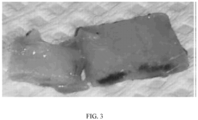
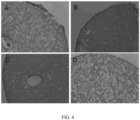
- Figure 3 illustrates the far greater degree of vascularization seen in the test implants as compared to the controls at 4 weeks following implantation. Implants were sectioned and examined histologically. It appeared that the test implants exhibited a greater degree of cellularity than the control implants. See Figure 4 .
- Example 3 Culture of E4ORF 1+ engineered endothelial cells and implants containing E4ORF1+ engineered endothelial cells.
- human umbilical vein endothelial cells (HUVECs) were obtained from consenting donors with no known maladies and transduced with adenovirus E4ORF 1 to generate E4ORF 1+ HUVECs.
- the engineered HUVECs were grown as adherent cells using methods standard in the art.
- This standard includes splitting the cells when 100% confluent, culturing at 37°C, expansion on tissue culture treated plates, flasks, or wells, and using a media defined as: Medium 199 supplemented with endothelial cell supplement (50 ⁇ g/ml), fetal bovine serum (FBS, final concentration: 20%), an antibiotic-antimycotic solution, HEPES buffer (10mM), heparin (50 ⁇ g/ml), and Glutamax. As the cells proliferated, media was exchanged either during subculturing into larger flasks or if the media exceeded 2 days of culture.
- the endothelial cells were only placed into contact with the matrices when the matrices were hydrated.
- Several variations of the culture method were used when culturing the E4ORF1+ endothelial cells with collagen matrices.
- the solid collagen matrix was cut into 25mm 2 pieces with sharp bladed instruments (such as razor blades, scalpels, or scissors).
- the solid collagen matrix was cut into circular pieces with dental punches.
- the E4ORF1+ endothelial cells (ECs) were in a confluent monolayer with the matrix placed on top with ample media to cover the matrix. The ECs migrated into the matrix.
- the matrix was placed in a well with ample media to cover the matrix.
- E4ORF1+ ECs were added in a suspension of media to the matrix-containing well. The ECs adhered to and grew on the matrix until contact-mediated growth inhibition. For long term incubations, media was exchanged every 2-3 days with care taken not to directly contact the matrix to prevent disruption of the vascular structures. Invasion of the collagen matrix by the E4ORF1+ ECs was noted within 24 hours in each method with increasing invasion continuing for several days depending on the number of cells seeded and the size of the graft. Overgrowth (defined as E4ORF1+ ECs growing in multiple layers, balls, or clumps), was not noticed - consistent with the cells being growth arrested at confluence. Lumen-containing structures having the appearance of blood vessel were noted at 48 hours and persisted for several weeks ( Figure 1B ).
Landscapes
- Health & Medical Sciences (AREA)
- Life Sciences & Earth Sciences (AREA)
- Engineering & Computer Science (AREA)
- Biomedical Technology (AREA)
- Chemical & Material Sciences (AREA)
- Cell Biology (AREA)
- General Health & Medical Sciences (AREA)
- Public Health (AREA)
- Veterinary Medicine (AREA)
- Animal Behavior & Ethology (AREA)
- Medicinal Chemistry (AREA)
- Zoology (AREA)
- Epidemiology (AREA)
- Developmental Biology & Embryology (AREA)
- Immunology (AREA)
- Biotechnology (AREA)
- Pharmacology & Pharmacy (AREA)
- Virology (AREA)
- Dermatology (AREA)
- Oral & Maxillofacial Surgery (AREA)
- Transplantation (AREA)
- Chemical Kinetics & Catalysis (AREA)
- Bioinformatics & Cheminformatics (AREA)
- Vascular Medicine (AREA)
- Botany (AREA)
- Urology & Nephrology (AREA)
- Organic Chemistry (AREA)
- Cardiology (AREA)
- Wood Science & Technology (AREA)
- Genetics & Genomics (AREA)
- Hematology (AREA)
- Molecular Biology (AREA)
- Biophysics (AREA)
- Orthopedic Medicine & Surgery (AREA)
- Rheumatology (AREA)
- Reproductive Health (AREA)
- Proteomics, Peptides & Aminoacids (AREA)
- General Engineering & Computer Science (AREA)
- Microbiology (AREA)
- Biochemistry (AREA)
Claims (15)
- Isoliertes Implantat, das für eine chirurgische Implantation in ein Individuum geeignet ist, umfassend: (a) ein biokompatibles poröses Gerüstmaterial, das Moleküle extrazellulärer Matrix, Kollagen, Fibrin und/oder Laminin oder dezellularisiertes tierisches Gewebe umfasst, und (b) Blutgefäße, die innerhalb des biokompatiblen Gerüstmaterials angeordnet sind, wobei die Blutgefäße manipulierte E4ORF1+-Endothelzellen umfassen, und wobei das Implantat keine Fibroblasten, von Fibroblasten abgeleitete angiogene Faktoren oder von Fibroblasten abgeleitete Bestandteile extrazellulärer Matrix umfasst.
- Isoliertes Implantat nach Anspruch 1, das ein Netzwerk aus verbundenen Blutgefäßen umfasst; oderwobei die Blutgefäße Kapillaren umfassen; oderwobei die Blutgefäße offene Lumen aufweisen; oderwobei eines oder mehrere der Blutgefäße über die Ränder des biokompatiblen Gerüstmaterials hinaus vorstehen.
- Isoliertes Implantat nach einem vorstehenden Anspruch, wobei es sich bei den manipulierten E4ORF1+- Endothelzellen um E4ORF1+ ETV2+ handelt; oderwobei die manipulierten Endothelzellen einen rekombinanten Transkriptionsfaktor der ETS-Familie exprimieren; oderwobei es sich bei den manipulierten E4ORF1+-Endothelzellen um Säugetierendothelzellen handelt; oderwobei es sich bei den manipulierten E4ORF1+-Endothelzellen um humane Endothelzellen handelt; oderwobei die manipulierten E4ORF1+-Endothelzellen von humanen Nabelvenenendothelzellen (HUVECs) abgeleitet sind; oderwobei es sich bei den manipulierten E4ORF1+-Endothelzellen um organspezifische Endothelzellen handelt; oderwobei die manipulierten E4ORF1+-Endothelzellen von Endothelzellen des Individuums abgeleitet sind, dem das Implantat chirurgisch zu implantieren ist; oderwobei die manipulierten E4ORF1+-Endothelzellen von Endothelzellen eines allogenen Spenders mit dem gleichem MHC- oder HLA-Typ wie das Individuum abgeleitet sind, dem das Implantat chirurgisch zu implantieren ist; oderwobei die manipulierten E4ORF1+-Endothelzellen von Endothelzellen eines allogenen Spenders mit einer teilweisen MHC- oder HLA-Typübereinstimmung in Bezug auf das Individuum abgeleitet sind, dem das Implantat chirurgisch zu implantieren ist; oderwobei die manipulierten E4ORF1+-Endothelzellen von Endothelzellen eines allogenen Spenders mit Unterschieden im MHC- oder HLA-Typ gegenüber dem Individuum abgeleitet sind, dem das Implantat chirurgisch zu implantieren ist.
- Isoliertes Implantat nach Anspruch 1, das ferner Stamm- oder Vorläuferzellen umfasst, die innerhalb des biokompatiblen Gerüstmaterials angeordnet sind, und optional wobei die Stamm- oder Vorläuferzellen aus der Gruppe ausgewählt sind, die aus hämatopoetischen Stammzellen, Knochenstammzellen, Muskelstammzellen, Nervenstammzellen, Haarfollikelstammzellen, Epithelstammzellen, Hautstammzellen, mesenchymalen Stammzellen, intestinalen Stammzellen und Spermatogonienstammzellen besteht.
- Isoliertes Implantat nach Anspruch 1, das ferner einen oder mehrere zusätzliche Zelltypen umfasst, die innerhalb des biokompatiblen Gerüstmaterials angeordnet sind, und optional wobei die zusätzlichen Zelltypen aus der Gruppe ausgewählt sind, die besteht aus: hämatopoetischen Zellen, Knochenzellen, Muskelzellen, Nervenzellen, Perizyten, Haarfollikelzellen, Fettzellen, Keratinozyten, Epithelzellen, Hautzellen, intestinalen Zellen und Hodenzellen.
- Isoliertes Implantat nach einem vorstehenden Anspruch, wobei das biokompatible Gerüstmaterial bei 4 °C fest ist; oderwobei das biokompatible Gerüstmaterial dezellularisiertes Schweinegewebe umfasst; oderwobei es sich bei dem biokompatiblen Gerüstmaterial nicht um Matrigel handelt; oderwobei das biokompatible Gerüstmaterial keine Hyaluronsäure umfasst.
- Isoliertes Implantat nach einem vorstehenden Anspruch, wobei das Implantat kein Serum umfasst; oder
wobei das Implantat keine exogenen Wachstumsfaktoren umfasst; oderwobei das Implantat keine exogenen angiogenen Faktoren umfasst; oderwobei das Implantat keinen exogenen VEGF umfasst; oderwobei das Implantat keinen exogenen FGF umfasst; oderwobei das Implantat keine Fibroblasten umfasst; oderwobei das Implantat keine von Fibroblasten abgeleitete angiogene Faktoren umfasst; oderwobei das Implantat keine von Fibroblasten abgeleiteten Bestandteile extrazellulärer Matrix umfasst; oderwobei das Implantat keine Mikroträgerkügelchen umfasst; oderwobei das Implantat keine Mikroträgerkügelchen umfasst, die mit einem Molekül extrazellulärer Matrix beschichtet sind. - Verfahren zum Herstellen eines Implantats, das sich für eine chirurgische Implantation in ein Individuum eignet, wobei das Verfahren umfasst: Kultivieren einer Population von manipulierten E4ORF1+-Endothelzellen in Kontakt mit einem biokompatiblen porösen Gerüstmaterial, das Moleküle extrazellulärer Matrix, Kollagen, Fibrin und/oder Laminin oder dezellularisiertes tierisches Gewebe umfasst, in vitro, bis Blutgefäße innerhalb des biokompatiblen Gerüstmaterials gebildet werden, wodurch ein Implantat gebildet wird, das E4ORF1+-Blutgefäße umfasst.
- Verfahren nach Anspruch 8, wobei das Kultivieren durchgeführt wird, bis ein Netzwerk aus verbundenen Blutgefäßen gebildet wird; oder
wobei das Kultivieren durchgeführt wird, bis ein oder mehrere Blutgefäße über die Ränder des biokompatiblen Gerüstmaterials hinaus vorstehen. - Verfahren nach Anspruch 8 oder 9, wobei das Kultivieren für zumindest 24 Stunden durchgeführt wird; oderwobei das Kultivieren für zumindest 48 Stunden durchgeführt wird; oderwobei das Kultivieren für zumindest 3 Tage durchgeführt wird; oderwobei das Kultivieren für zumindest 4 Tage durchgeführt wird; oderwobei das Kultivieren für zumindest 5 Tage durchgeführt wird; oderwobei das Kultivieren für zumindest 1 Woche durchgeführt wird.
- Verfahren nach einem der Ansprüche 8 bis 10, wobei es sich bei den manipulierten E4ORF1+-Endothelzellen um E4ORF1+ ETV2+ handelt; oderwobei die manipulierten E4ORF1+-Endothelzellen einen rekombinanten Transkriptionsfaktor der ETS-Familie exprimieren; oderwobei es sich bei den manipulierten E4ORF1+-Endothelzellen um organspezifische Endothelzellen handelt; oderwobei es sich bei den manipulierten E4ORF1+-Endothelzellen um Säugetierendothelzellen handelt; oderwobei es sich bei den manipulierten E4ORF1+-Endothelzellen um humane Endothelzellen handelt; oderwobei die manipulierten E4ORF1+-Endothelzellen von Endothelzellen des Individuums abgeleitet sind, dem das Implantat chirurgisch zu implantieren ist; oderwobei die manipulierten E4ORF1+-Endothelzellen von Endothelzellen eines allogenen Spenders mit dem gleichem MHC- oder HLA-Typ wie das Individuum abgeleitet sind, dem das Implantat chirurgisch zu implantieren ist; oderwobei die manipulierten E4ORF1+-Endothelzellen von Endothelzellen eines allogenen Spenders mit dem gleichem MHC- oder HLA-Typ wie das Individuum abgeleitet sind, dem das Implantat chirurgisch zu implantieren ist; oderwobei die manipulierten E4ORF1+-Endothelzellen von Endothelzellen eines allogenen Spenders mit einer teilweisen MHC- oder HLA-Typübereinstimmung in Bezug auf das Individuum abgeleitet sind, dem das Implantat chirurgisch zu implantieren ist; oderwobei die manipulierten E4ORF1+-Endothelzellen von Endothelzellen eines allogenen Spenders mit Unterschieden im MHC- oder HLA-Typ gegenüber dem Individuum abgeleitet sind, dem das Implantat chirurgisch zu implantieren ist; oderwobei die manipulierten E4ORF1+-Endothelzellen von humanen Nabelvenenendothelzellen (HUVECs) abgeleitet sind.
- Verfahren nach einem der Ansprüche 8 bis 11, wobei die Blutgefäße Kapillaren umfassen; oderwobei die Blutgefäße Lumen aufweisen; oderwobei das biokompatible Gerüstmaterial Stamm- oder Vorläuferzellen umfasst, die innerhalb dieses angeordnet sind, und optional wobei die Stamm- oder Vorläuferzellen aus der Gruppe ausgewählt sind, die aus hämatopoetischen Stammzellen, Knochenstammzellen, Muskelstammzellen, Nervenstammzellen, Epithelstammzellen, Hautstammzellen, Haarfollikelstammzellen, mesenchymalen Stammzellen, intestinalen Stammzellen und Spermatogonienstammzellen besteht; oderwobei das biokompatible Gerüstmaterial einen oder mehrere zusätzliche Zelltypen umfasst, die innerhalb dieses angeordnet sind, und optional wobei die zusätzlichen Zelltypen aus der Gruppe ausgewählt sind, die besteht aus: hämatopoetischen Zellen, Knochenzellen, Muskelzellen, Nervenzellen, Perizyten, Haarfollikel, Fettzellen, Keratinozyten, Epithelzellen, Hautzellen, intestinalen Zellen und Hodenzellen; oder wobei das biokompatible Gerüstmaterial bei 4 °C fest ist; oder wobei das biokompatible Gerüstmaterial bei 21 °C fest ist; oderwobei es sich bei dem biokompatiblen Gerüstmaterial nicht um Matrigel handelt; oderwobei das biokompatible Gerüstmaterial keine Hyaluronsäure umfasst; oderwobei das biokompatible Gerüstmaterial dezellularisiertes Schweinegewebe umfasst.
- Verfahren nach einem der Ansprüche 8 bis 12, wobei das Kultivieren in Abwesenheit von Serum durchgeführt wird; oder wobei das Kultivieren in Abwesenheit von exogenen Wachstumsfaktoren durchgeführt wird; oderwobei das Kultivieren in Abwesenheit von exogenen angiogenen Faktoren durchgeführt wird; oderwobei das Kultivieren in Abwesenheit von exogenem VEGF durchgeführt wird; oderwobei das Kultivieren in Abwesenheit von exogenem FGF durchgeführt wird; oderwobei das Kultivieren in Abwesenheit von Fibroblasten durchgeführt wird; oderwobei das Kultivieren in Abwesenheit von von Fibroblasten abgeleiteten angiogenen Faktoren durchgeführt wird; oderwobei das Kultivieren in Abwesenheit von von Fibroblasten abgeleiteten Bestandteilen extrazellulärer Matrix durchgeführt wird; oderwobei das Kultivieren in Abwesenheit von Mikroträgerkügelchen durchgeführt wird; oderwobei das Kultivieren in Abwesenheit von Mikroträgerkügelchen durchgeführt wird, die mit einem Molekül extrazellulärer Matrix beschichtet sind.
- Implantat nach einem der Ansprüche 1 bis 7 zur Verwendung bei einer Behandlung eines Individuums.
- Implantat zur Verwendung nach Anspruch 14, wobei das Individuum einen Gewebedefekt aufweist, und wobei das Implantat dem Individuum an der Stelle des Gewebedefekts chirurgisch zu implantieren ist; oderwobei es sich bei den manipulierten E4ORF1+-Endothelzellen um organspezifische Endothelzellen handelt und wobei in dem Implantat chirurgisch in das Organ implantiert wird, aus dem die organspezifischen Endothelzellen abgeleitet wurden; oderwobei es sich bei dem Individuum um ein Säugetierindividuum handelt; oderwobei es sich bei dem Individuum um ein humanes Individuum handelt; oderwobei die manipulierten E4ORF1+-Endothelzellen in dem Implantat von den eigenen Endothelzellen des Individuums abgeleitet sind; oderwobei die manipulierten E4ORF1+-Endothelzellen in dem Implantat von Endothelzellen eines allogenen Spenders mit dem gleichem MHC- oder HLA-Typ wie das Individuum abgeleitet sind; oderwobei die manipulierten E4ORF1+-Endothelzellen in dem Implantat von Endothelzellen eines allogenen Spenders mit einer teilweisen MHC- oder HLA-Typübereinstimmung in Bezug auf das Individuum abgeleitet sind, dem das Implantat chirurgisch zu implantieren ist; oderwobei die manipulierten E4ORF1+-Endothelzellen in dem Implantat von Endothelzellen eines allogenen Spenders mit Unterschieden im MHC- oder HLA-Typ gegenüber dem Individuum abgeleitet sind, dem das Implantat chirurgisch zu implantieren ist.
Applications Claiming Priority (2)
| Application Number | Priority Date | Filing Date | Title |
|---|---|---|---|
| US201462094915P | 2014-12-19 | 2014-12-19 | |
| PCT/US2015/066782 WO2016100869A1 (en) | 2014-12-19 | 2015-12-18 | Biocompatible implants comprising engineered endothelial cells |
Publications (3)
| Publication Number | Publication Date |
|---|---|
| EP3233094A1 EP3233094A1 (de) | 2017-10-25 |
| EP3233094A4 EP3233094A4 (de) | 2018-09-05 |
| EP3233094B1 true EP3233094B1 (de) | 2025-01-08 |
Family
ID=56127705
Family Applications (1)
| Application Number | Title | Priority Date | Filing Date |
|---|---|---|---|
| EP15871199.4A Active EP3233094B1 (de) | 2014-12-19 | 2015-12-18 | Biokompatible implantate mit manipulierten endothelzellen |
Country Status (11)
| Country | Link |
|---|---|
| US (1) | US20170360988A1 (de) |
| EP (1) | EP3233094B1 (de) |
| JP (1) | JP6855377B2 (de) |
| KR (1) | KR102571649B1 (de) |
| CN (1) | CN107249607A (de) |
| AU (2) | AU2015364383A1 (de) |
| CA (1) | CA2971439A1 (de) |
| HK (1) | HK1245126A1 (de) |
| RU (1) | RU2743761C2 (de) |
| SG (1) | SG11201704989WA (de) |
| WO (1) | WO2016100869A1 (de) |
Families Citing this family (7)
| Publication number | Priority date | Publication date | Assignee | Title |
|---|---|---|---|---|
| HK1258452A1 (zh) * | 2015-07-20 | 2019-11-15 | Angiocrine Bioscience, Inc. | 表达ets转录因子的工程化的内皮细胞 |
| AU2017326174B2 (en) | 2016-09-13 | 2024-02-22 | Angiocrine Bioscience, Inc. | Blood-brain barrier comprising engineered endothelial cells |
| EP3576756A4 (de) * | 2017-02-03 | 2020-12-16 | Cornell University | Stabile dreidimensionale blutgefässe und verfahren zur formung davon |
| CN112105721A (zh) * | 2018-03-23 | 2020-12-18 | 儿童医疗中心公司 | 内皮细胞因子及其方法 |
| RS64381B1 (sr) * | 2018-08-03 | 2023-08-31 | VeriGraft AB | Postupci pripreme personalizovanih krvnih sudova |
| CN114340642A (zh) * | 2019-05-28 | 2022-04-12 | 安吉克莱茵生物科学有限公司 | 用于胸腺再生和t细胞重建的组合物和方法 |
| CA3183395A1 (en) * | 2020-06-25 | 2021-12-30 | Paul William FINNEGAN | Endothelial cells for mitigation of chemotherapy-induced toxicity |
Family Cites Families (5)
| Publication number | Priority date | Publication date | Assignee | Title |
|---|---|---|---|---|
| WO2008089448A2 (en) * | 2007-01-19 | 2008-07-24 | Cornell Presearch Foundation, Inc. | Methods and compositions for promoting survival & proliferation of endothelial cells & stimulating angiogenesis |
| GB0717168D0 (en) * | 2007-09-04 | 2007-10-17 | Ucl Business Plc | Biomaterial scaffolds for controlled tissue growth |
| CA2756833C (en) | 2009-04-09 | 2019-11-19 | Sangamo Therapeutics, Inc. | Targeted integration into stem cells |
| EP2637683B1 (de) * | 2010-11-09 | 2020-03-04 | Cornell University | Leberregenierung |
| EP2508212A1 (de) * | 2011-04-05 | 2012-10-10 | Universitätsklinikum Freiburg | Biokompatibles und biologisch abbaubares Gradientenschichtsystem für die regenerative Medizin und zur Gewebeunterstützung |
-
2015
- 2015-12-18 US US15/536,794 patent/US20170360988A1/en not_active Abandoned
- 2015-12-18 JP JP2017533321A patent/JP6855377B2/ja active Active
- 2015-12-18 KR KR1020177020113A patent/KR102571649B1/ko active Active
- 2015-12-18 RU RU2017125478A patent/RU2743761C2/ru active
- 2015-12-18 SG SG11201704989WA patent/SG11201704989WA/en unknown
- 2015-12-18 AU AU2015364383A patent/AU2015364383A1/en not_active Abandoned
- 2015-12-18 HK HK18104746.9A patent/HK1245126A1/zh unknown
- 2015-12-18 CN CN201580076657.9A patent/CN107249607A/zh active Pending
- 2015-12-18 CA CA2971439A patent/CA2971439A1/en active Pending
- 2015-12-18 WO PCT/US2015/066782 patent/WO2016100869A1/en not_active Ceased
- 2015-12-18 EP EP15871199.4A patent/EP3233094B1/de active Active
-
2021
- 2021-07-28 AU AU2021209230A patent/AU2021209230A1/en not_active Abandoned
Non-Patent Citations (2)
| Title |
|---|
| ANDREW C. NEWMAN ET AL: "The requirement for fibroblasts in angiogenesis: fibroblast-derived matrix proteins are essential for endothelial cell lumen formation", MOLECULAR BIOLOGY OF THE CELL, vol. 22, no. 20, 15 October 2011 (2011-10-15), US, pages 3791 - 3800, XP055757219, ISSN: 1059-1524, DOI: 10.1091/mbc.e11-05-0393 * |
| NAKATSU MARTIN N ET AL: "Angiogenic sprouting and capillary lumen formation modeled by human umbilical vein endothelial cells (HUVEC) in fibrin gels: the role of fibroblasts and Angiopoietin-1", MICROVASCULAR RESEARCH, ACADEMIC PRESS, US, vol. 66, no. 2, 1 September 2003 (2003-09-01), pages 102 - 112, XP002453095, ISSN: 0026-2862, DOI: 10.1016/S0026-2862(03)00045-1 * |
Also Published As
| Publication number | Publication date |
|---|---|
| CA2971439A1 (en) | 2016-06-23 |
| KR102571649B1 (ko) | 2023-08-25 |
| KR20170100572A (ko) | 2017-09-04 |
| WO2016100869A1 (en) | 2016-06-23 |
| AU2015364383A1 (en) | 2017-07-27 |
| EP3233094A4 (de) | 2018-09-05 |
| JP6855377B2 (ja) | 2021-04-07 |
| AU2021209230A1 (en) | 2021-08-19 |
| RU2017125478A3 (de) | 2019-05-29 |
| US20170360988A1 (en) | 2017-12-21 |
| RU2017125478A (ru) | 2019-01-21 |
| EP3233094A1 (de) | 2017-10-25 |
| RU2743761C2 (ru) | 2021-02-25 |
| JP2018500993A (ja) | 2018-01-18 |
| HK1245126A1 (zh) | 2018-08-24 |
| SG11201704989WA (en) | 2017-07-28 |
| CN107249607A (zh) | 2017-10-13 |
Similar Documents
| Publication | Publication Date | Title |
|---|---|---|
| AU2021209230A1 (en) | Biocompatible implants comprising engineered endothelial cells | |
| JP6882391B2 (ja) | 肺臓の組織工学 | |
| US20220204924A1 (en) | Engineered endothelial cells expressing an ets transcription factor | |
| KR20070001108A (ko) | 각막 윤부로부터 유도된 미분화 줄기 세포를 가진 조직시스템 | |
| JP2019077701A (ja) | 心臓神経堤細胞、及びその使用方法 | |
| CN102257133A (zh) | 软骨细胞样细胞及其制造方法 | |
| Lepore et al. | Survival and differentiation of pituitary colony‐forming cells in vivo | |
| JP7637418B2 (ja) | 胸腺再生およびt細胞再構成のための組成物および方法 | |
| US20220396770A1 (en) | Method for cultivating stem cells in vitro | |
| KR20220054315A (ko) | 요로 상피 세포로의 유도제 및 요로 상피 세포의 유도 방법 | |
| EP4516895A1 (de) | Verfahren zur herstellung einer zellschicht | |
| JP6654323B2 (ja) | 重層上皮組織形成能を有する細胞、及びその製造方法 | |
| WO2020066818A1 (ja) | 毛包上皮性幹細胞の生体外増殖方法 | |
| Muggeo | A STEP-BY-STEP PROCESS TO GENERATE FUNCTIONAL OSTEOCLASTS FROM SITE SPECIFIC GENE-CORRECTED INDUCED PLURIPOTENT STEM CELLS: AN AUTOLOGOUS CELL THERAPY APPROACH TO TREAT AUTOSOMAL RECESSIVE OSTEOPETROSIS. |
Legal Events
| Date | Code | Title | Description |
|---|---|---|---|
| STAA | Information on the status of an ep patent application or granted ep patent |
Free format text: STATUS: THE INTERNATIONAL PUBLICATION HAS BEEN MADE |
|
| PUAI | Public reference made under article 153(3) epc to a published international application that has entered the european phase |
Free format text: ORIGINAL CODE: 0009012 |
|
| STAA | Information on the status of an ep patent application or granted ep patent |
Free format text: STATUS: REQUEST FOR EXAMINATION WAS MADE |
|
| 17P | Request for examination filed |
Effective date: 20170717 |
|
| AK | Designated contracting states |
Kind code of ref document: A1 Designated state(s): AL AT BE BG CH CY CZ DE DK EE ES FI FR GB GR HR HU IE IS IT LI LT LU LV MC MK MT NL NO PL PT RO RS SE SI SK SM TR |
|
| AX | Request for extension of the european patent |
Extension state: BA ME |
|
| DAV | Request for validation of the european patent (deleted) | ||
| DAX | Request for extension of the european patent (deleted) | ||
| REG | Reference to a national code |
Ref country code: HK Ref legal event code: DE Ref document number: 1245126 Country of ref document: HK |
|
| A4 | Supplementary search report drawn up and despatched |
Effective date: 20180808 |
|
| RIC1 | Information provided on ipc code assigned before grant |
Ipc: A61F 2/02 20060101ALI20180802BHEP Ipc: A61K 35/12 20150101AFI20180802BHEP Ipc: C12N 15/09 20060101ALI20180802BHEP |
|
| STAA | Information on the status of an ep patent application or granted ep patent |
Free format text: STATUS: EXAMINATION IS IN PROGRESS |
|
| 17Q | First examination report despatched |
Effective date: 20200908 |
|
| RIC1 | Information provided on ipc code assigned before grant |
Ipc: A61P 43/00 20060101ALI20240405BHEP Ipc: A61P 9/00 20060101ALI20240405BHEP Ipc: C12N 5/071 20100101ALI20240405BHEP Ipc: A61K 35/52 20150101ALI20240405BHEP Ipc: A61K 35/44 20150101ALI20240405BHEP Ipc: A61K 35/38 20150101ALI20240405BHEP Ipc: A61K 35/36 20150101ALI20240405BHEP Ipc: A61K 35/35 20150101ALI20240405BHEP Ipc: A61K 35/34 20150101ALI20240405BHEP Ipc: A61K 35/32 20150101ALI20240405BHEP Ipc: A61K 35/30 20150101ALI20240405BHEP Ipc: A61K 35/28 20150101ALI20240405BHEP Ipc: A61L 27/38 20060101ALI20240405BHEP Ipc: A61L 27/36 20060101ALI20240405BHEP Ipc: A61K 38/01 20060101ALI20240405BHEP Ipc: C12N 15/09 20060101ALI20240405BHEP Ipc: A61F 2/02 20060101ALI20240405BHEP Ipc: A61K 35/12 20150101AFI20240405BHEP |
|
| GRAP | Despatch of communication of intention to grant a patent |
Free format text: ORIGINAL CODE: EPIDOSNIGR1 |
|
| STAA | Information on the status of an ep patent application or granted ep patent |
Free format text: STATUS: GRANT OF PATENT IS INTENDED |
|
| INTG | Intention to grant announced |
Effective date: 20240719 |
|
| GRAS | Grant fee paid |
Free format text: ORIGINAL CODE: EPIDOSNIGR3 |
|
| GRAA | (expected) grant |
Free format text: ORIGINAL CODE: 0009210 |
|
| STAA | Information on the status of an ep patent application or granted ep patent |
Free format text: STATUS: THE PATENT HAS BEEN GRANTED |
|
| AK | Designated contracting states |
Kind code of ref document: B1 Designated state(s): AL AT BE BG CH CY CZ DE DK EE ES FI FR GB GR HR HU IE IS IT LI LT LU LV MC MK MT NL NO PL PT RO RS SE SI SK SM TR |
|
| REG | Reference to a national code |
Ref country code: GB Ref legal event code: FG4D |
|
| REG | Reference to a national code |
Ref country code: CH Ref legal event code: EP |
|
| REG | Reference to a national code |
Ref country code: DE Ref legal event code: R096 Ref document number: 602015090839 Country of ref document: DE |
|
| REG | Reference to a national code |
Ref country code: IE Ref legal event code: FG4D |
|
| REG | Reference to a national code |
Ref country code: LT Ref legal event code: MG9D |
|
| REG | Reference to a national code |
Ref country code: NL Ref legal event code: MP Effective date: 20250108 |
|
| REG | Reference to a national code |
Ref country code: AT Ref legal event code: MK05 Ref document number: 1757908 Country of ref document: AT Kind code of ref document: T Effective date: 20250108 |
|
| PG25 | Lapsed in a contracting state [announced via postgrant information from national office to epo] |
Ref country code: NL Free format text: LAPSE BECAUSE OF FAILURE TO SUBMIT A TRANSLATION OF THE DESCRIPTION OR TO PAY THE FEE WITHIN THE PRESCRIBED TIME-LIMIT Effective date: 20250108 |
|
| PG25 | Lapsed in a contracting state [announced via postgrant information from national office to epo] |
Ref country code: RS Free format text: LAPSE BECAUSE OF FAILURE TO SUBMIT A TRANSLATION OF THE DESCRIPTION OR TO PAY THE FEE WITHIN THE PRESCRIBED TIME-LIMIT Effective date: 20250408 |
|
| PG25 | Lapsed in a contracting state [announced via postgrant information from national office to epo] |
Ref country code: FI Free format text: LAPSE BECAUSE OF FAILURE TO SUBMIT A TRANSLATION OF THE DESCRIPTION OR TO PAY THE FEE WITHIN THE PRESCRIBED TIME-LIMIT Effective date: 20250108 |
|
| PG25 | Lapsed in a contracting state [announced via postgrant information from national office to epo] |
Ref country code: PL Free format text: LAPSE BECAUSE OF FAILURE TO SUBMIT A TRANSLATION OF THE DESCRIPTION OR TO PAY THE FEE WITHIN THE PRESCRIBED TIME-LIMIT Effective date: 20250108 |
|
| PG25 | Lapsed in a contracting state [announced via postgrant information from national office to epo] |
Ref country code: ES Free format text: LAPSE BECAUSE OF FAILURE TO SUBMIT A TRANSLATION OF THE DESCRIPTION OR TO PAY THE FEE WITHIN THE PRESCRIBED TIME-LIMIT Effective date: 20250108 |
|
| REG | Reference to a national code |
Ref country code: HK Ref legal event code: WD Ref document number: 1245126 Country of ref document: HK |
|
| PG25 | Lapsed in a contracting state [announced via postgrant information from national office to epo] |
Ref country code: NO Free format text: LAPSE BECAUSE OF FAILURE TO SUBMIT A TRANSLATION OF THE DESCRIPTION OR TO PAY THE FEE WITHIN THE PRESCRIBED TIME-LIMIT Effective date: 20250408 Ref country code: IS Free format text: LAPSE BECAUSE OF FAILURE TO SUBMIT A TRANSLATION OF THE DESCRIPTION OR TO PAY THE FEE WITHIN THE PRESCRIBED TIME-LIMIT Effective date: 20250508 |
|
| PG25 | Lapsed in a contracting state [announced via postgrant information from national office to epo] |
Ref country code: HR Free format text: LAPSE BECAUSE OF FAILURE TO SUBMIT A TRANSLATION OF THE DESCRIPTION OR TO PAY THE FEE WITHIN THE PRESCRIBED TIME-LIMIT Effective date: 20250108 |
|
| PG25 | Lapsed in a contracting state [announced via postgrant information from national office to epo] |
Ref country code: LV Free format text: LAPSE BECAUSE OF FAILURE TO SUBMIT A TRANSLATION OF THE DESCRIPTION OR TO PAY THE FEE WITHIN THE PRESCRIBED TIME-LIMIT Effective date: 20250108 Ref country code: PT Free format text: LAPSE BECAUSE OF FAILURE TO SUBMIT A TRANSLATION OF THE DESCRIPTION OR TO PAY THE FEE WITHIN THE PRESCRIBED TIME-LIMIT Effective date: 20250508 |
|
| PG25 | Lapsed in a contracting state [announced via postgrant information from national office to epo] |
Ref country code: BG Free format text: LAPSE BECAUSE OF FAILURE TO SUBMIT A TRANSLATION OF THE DESCRIPTION OR TO PAY THE FEE WITHIN THE PRESCRIBED TIME-LIMIT Effective date: 20250108 Ref country code: GR Free format text: LAPSE BECAUSE OF FAILURE TO SUBMIT A TRANSLATION OF THE DESCRIPTION OR TO PAY THE FEE WITHIN THE PRESCRIBED TIME-LIMIT Effective date: 20250409 |
|
| PG25 | Lapsed in a contracting state [announced via postgrant information from national office to epo] |
Ref country code: AT Free format text: LAPSE BECAUSE OF FAILURE TO SUBMIT A TRANSLATION OF THE DESCRIPTION OR TO PAY THE FEE WITHIN THE PRESCRIBED TIME-LIMIT Effective date: 20250108 |
|
| PG25 | Lapsed in a contracting state [announced via postgrant information from national office to epo] |
Ref country code: SE Free format text: LAPSE BECAUSE OF FAILURE TO SUBMIT A TRANSLATION OF THE DESCRIPTION OR TO PAY THE FEE WITHIN THE PRESCRIBED TIME-LIMIT Effective date: 20250108 |
|
| PG25 | Lapsed in a contracting state [announced via postgrant information from national office to epo] |
Ref country code: SM Free format text: LAPSE BECAUSE OF FAILURE TO SUBMIT A TRANSLATION OF THE DESCRIPTION OR TO PAY THE FEE WITHIN THE PRESCRIBED TIME-LIMIT Effective date: 20250108 |
|
| REG | Reference to a national code |
Ref country code: DE Ref legal event code: R097 Ref document number: 602015090839 Country of ref document: DE |
|
| PG25 | Lapsed in a contracting state [announced via postgrant information from national office to epo] |
Ref country code: DK Free format text: LAPSE BECAUSE OF FAILURE TO SUBMIT A TRANSLATION OF THE DESCRIPTION OR TO PAY THE FEE WITHIN THE PRESCRIBED TIME-LIMIT Effective date: 20250108 |
|
| PG25 | Lapsed in a contracting state [announced via postgrant information from national office to epo] |
Ref country code: EE Free format text: LAPSE BECAUSE OF FAILURE TO SUBMIT A TRANSLATION OF THE DESCRIPTION OR TO PAY THE FEE WITHIN THE PRESCRIBED TIME-LIMIT Effective date: 20250108 Ref country code: CZ Free format text: LAPSE BECAUSE OF FAILURE TO SUBMIT A TRANSLATION OF THE DESCRIPTION OR TO PAY THE FEE WITHIN THE PRESCRIBED TIME-LIMIT Effective date: 20250108 |
|
| PG25 | Lapsed in a contracting state [announced via postgrant information from national office to epo] |
Ref country code: RO Free format text: LAPSE BECAUSE OF FAILURE TO SUBMIT A TRANSLATION OF THE DESCRIPTION OR TO PAY THE FEE WITHIN THE PRESCRIBED TIME-LIMIT Effective date: 20250108 |
|
| PG25 | Lapsed in a contracting state [announced via postgrant information from national office to epo] |
Ref country code: SK Free format text: LAPSE BECAUSE OF FAILURE TO SUBMIT A TRANSLATION OF THE DESCRIPTION OR TO PAY THE FEE WITHIN THE PRESCRIBED TIME-LIMIT Effective date: 20250108 |
|
| PLBE | No opposition filed within time limit |
Free format text: ORIGINAL CODE: 0009261 |
|
| STAA | Information on the status of an ep patent application or granted ep patent |
Free format text: STATUS: NO OPPOSITION FILED WITHIN TIME LIMIT |
|
| 26N | No opposition filed |
Effective date: 20251009 |
|
| PG25 | Lapsed in a contracting state [announced via postgrant information from national office to epo] |
Ref country code: IT Free format text: LAPSE BECAUSE OF FAILURE TO SUBMIT A TRANSLATION OF THE DESCRIPTION OR TO PAY THE FEE WITHIN THE PRESCRIBED TIME-LIMIT Effective date: 20250108 |