EP3207928A2 - Zusammengesetztes präparat mit einem neuartigen 3-(4-(benzyloxy)phenyl)hex-4-inonensäure-derivat und einem anderen wirkstoff zur vorbeugung oder behandlung von stoffwechselerkrankungen - Google Patents
Zusammengesetztes präparat mit einem neuartigen 3-(4-(benzyloxy)phenyl)hex-4-inonensäure-derivat und einem anderen wirkstoff zur vorbeugung oder behandlung von stoffwechselerkrankungen Download PDFInfo
- Publication number
- EP3207928A2 EP3207928A2 EP15850582.6A EP15850582A EP3207928A2 EP 3207928 A2 EP3207928 A2 EP 3207928A2 EP 15850582 A EP15850582 A EP 15850582A EP 3207928 A2 EP3207928 A2 EP 3207928A2
- Authority
- EP
- European Patent Office
- Prior art keywords
- phenyl
- hex
- benzyloxy
- ynoic acid
- methyl
- Prior art date
- Legal status (The legal status is an assumption and is not a legal conclusion. Google has not performed a legal analysis and makes no representation as to the accuracy of the status listed.)
- Granted
Links
- 0 Cc(cc1)ccc1S(C)(=*)=O Chemical compound Cc(cc1)ccc1S(C)(=*)=O 0.000 description 11
- KDXKERNSBIXSRK-YFKPBYRVSA-N NCCCC[C@@H](C(O)=O)N Chemical compound NCCCC[C@@H](C(O)=O)N KDXKERNSBIXSRK-YFKPBYRVSA-N 0.000 description 2
- LKYMNRGMUMGARY-KOPFOPFGSA-N C/C(/CN(CC1)CC=C1c(cc1)ccc1S(C)(=O)=O)=C\C=C(/C)\COc1ccc([C@H](C/C(/O)=[O]\C)C#CC)cc1 Chemical compound C/C(/CN(CC1)CC=C1c(cc1)ccc1S(C)(=O)=O)=C\C=C(/C)\COc1ccc([C@H](C/C(/O)=[O]\C)C#CC)cc1 LKYMNRGMUMGARY-KOPFOPFGSA-N 0.000 description 1
- KHJJIVNIIQXOQW-UHFFFAOYSA-N CC#CC(CC(O)=O)c(cc1)ccc1OCc1cc(C(CC2)=CCC22OCCO2)ccc1 Chemical compound CC#CC(CC(O)=O)c(cc1)ccc1OCc1cc(C(CC2)=CCC22OCCO2)ccc1 KHJJIVNIIQXOQW-UHFFFAOYSA-N 0.000 description 1
- PATCWKHFHRRALO-UHFFFAOYSA-N CC#CC(CC(O)=O)c(cc1)ccc1OCc1ccc(CN(CC2)CC=C2c2ccccc2)cc1 Chemical compound CC#CC(CC(O)=O)c(cc1)ccc1OCc1ccc(CN(CC2)CC=C2c2ccccc2)cc1 PATCWKHFHRRALO-UHFFFAOYSA-N 0.000 description 1
- KHJJIVNIIQXOQW-QHCPKHFHSA-N CC#C[C@@H](CC(O)=O)c(cc1)ccc1OCc1cccc(C(CC2)=CCC22OCCO2)c1 Chemical compound CC#C[C@@H](CC(O)=O)c(cc1)ccc1OCc1cccc(C(CC2)=CCC22OCCO2)c1 KHJJIVNIIQXOQW-QHCPKHFHSA-N 0.000 description 1
- HHEPUKKAKUDQJI-LJAQVGFWSA-N CC#C[C@@H](CC(O)=O)c(cc1)ccc1[O](C)CC1=CC=C(C[N](C)(CC2)CCN2c(cc2)ccc2OC)CC1 Chemical compound CC#C[C@@H](CC(O)=O)c(cc1)ccc1[O](C)CC1=CC=C(C[N](C)(CC2)CCN2c(cc2)ccc2OC)CC1 HHEPUKKAKUDQJI-LJAQVGFWSA-N 0.000 description 1
- KHJJIVNIIQXOQW-HSZRJFAPSA-N CC#C[C@H](CC(O)=O)c(cc1)ccc1OCc1cccc(C(CC2)=CCC22OCCO2)c1 Chemical compound CC#C[C@H](CC(O)=O)c(cc1)ccc1OCc1cccc(C(CC2)=CCC22OCCO2)c1 KHJJIVNIIQXOQW-HSZRJFAPSA-N 0.000 description 1
- WZCPELGQNQALKK-UHFFFAOYSA-N CC(C)c1n[o]c(C)n1 Chemical compound CC(C)c1n[o]c(C)n1 WZCPELGQNQALKK-UHFFFAOYSA-N 0.000 description 1
- MQIYPZWODVZYGP-FUKGKQRISA-N CCOC(C[C@@H](c(cc1)ccc1OCC1=CC(C)[C@H](CO)C=C1)C#CC)=O Chemical compound CCOC(C[C@@H](c(cc1)ccc1OCC1=CC(C)[C@H](CO)C=C1)C#CC)=O MQIYPZWODVZYGP-FUKGKQRISA-N 0.000 description 1
- VNQVMWIBJNZMCB-UHFFFAOYSA-N Cc(cc1)ccc1OCCCS(C)(=O)=O Chemical compound Cc(cc1)ccc1OCCCS(C)(=O)=O VNQVMWIBJNZMCB-UHFFFAOYSA-N 0.000 description 1
- PBLOYQAQGYUPCM-UHFFFAOYSA-N Cc(cc1)ncc1C#N Chemical compound Cc(cc1)ncc1C#N PBLOYQAQGYUPCM-UHFFFAOYSA-N 0.000 description 1
- LEBUUJSFTYUUOO-UHFFFAOYSA-N OCOCCCc(cc1)ccc1OCc1ccc(CN(CC2)CC=C2c2ccccc2)cc1 Chemical compound OCOCCCc(cc1)ccc1OCc1ccc(CN(CC2)CC=C2c2ccccc2)cc1 LEBUUJSFTYUUOO-UHFFFAOYSA-N 0.000 description 1
- IOJUPLGTWVMSFF-UHFFFAOYSA-N c1nc(cccc2)c2[s]1 Chemical compound c1nc(cccc2)c2[s]1 IOJUPLGTWVMSFF-UHFFFAOYSA-N 0.000 description 1
Images



Classifications
-
- A—HUMAN NECESSITIES
- A61—MEDICAL OR VETERINARY SCIENCE; HYGIENE
- A61K—PREPARATIONS FOR MEDICAL, DENTAL OR TOILETRY PURPOSES
- A61K31/00—Medicinal preparations containing organic active ingredients
- A61K31/33—Heterocyclic compounds
- A61K31/395—Heterocyclic compounds having nitrogen as a ring hetero atom, e.g. guanethidine or rifamycins
- A61K31/495—Heterocyclic compounds having nitrogen as a ring hetero atom, e.g. guanethidine or rifamycins having six-membered rings with two or more nitrogen atoms as the only ring heteroatoms, e.g. piperazine or tetrazines
- A61K31/505—Pyrimidines; Hydrogenated pyrimidines, e.g. trimethoprim
- A61K31/506—Pyrimidines; Hydrogenated pyrimidines, e.g. trimethoprim not condensed and containing further heterocyclic rings
-
- C—CHEMISTRY; METALLURGY
- C07—ORGANIC CHEMISTRY
- C07D—HETEROCYCLIC COMPOUNDS
- C07D317/00—Heterocyclic compounds containing five-membered rings having two oxygen atoms as the only ring hetero atoms
- C07D317/08—Heterocyclic compounds containing five-membered rings having two oxygen atoms as the only ring hetero atoms having the hetero atoms in positions 1 and 3
- C07D317/72—Heterocyclic compounds containing five-membered rings having two oxygen atoms as the only ring hetero atoms having the hetero atoms in positions 1 and 3 spiro-condensed with carbocyclic rings
-
- A—HUMAN NECESSITIES
- A61—MEDICAL OR VETERINARY SCIENCE; HYGIENE
- A61K—PREPARATIONS FOR MEDICAL, DENTAL OR TOILETRY PURPOSES
- A61K31/00—Medicinal preparations containing organic active ingredients
- A61K31/185—Acids; Anhydrides, halides or salts thereof, e.g. sulfur acids, imidic, hydrazonic or hydroximic acids
- A61K31/19—Carboxylic acids, e.g. valproic acid
- A61K31/192—Carboxylic acids, e.g. valproic acid having aromatic groups, e.g. sulindac, 2-aryl-propionic acids, ethacrynic acid
-
- A—HUMAN NECESSITIES
- A61—MEDICAL OR VETERINARY SCIENCE; HYGIENE
- A61K—PREPARATIONS FOR MEDICAL, DENTAL OR TOILETRY PURPOSES
- A61K31/00—Medicinal preparations containing organic active ingredients
- A61K31/33—Heterocyclic compounds
- A61K31/335—Heterocyclic compounds having oxygen as the only ring hetero atom, e.g. fungichromin
- A61K31/357—Heterocyclic compounds having oxygen as the only ring hetero atom, e.g. fungichromin having two or more oxygen atoms in the same ring, e.g. crown ethers, guanadrel
-
- A—HUMAN NECESSITIES
- A61—MEDICAL OR VETERINARY SCIENCE; HYGIENE
- A61K—PREPARATIONS FOR MEDICAL, DENTAL OR TOILETRY PURPOSES
- A61K31/00—Medicinal preparations containing organic active ingredients
- A61K31/33—Heterocyclic compounds
- A61K31/395—Heterocyclic compounds having nitrogen as a ring hetero atom, e.g. guanethidine or rifamycins
- A61K31/40—Heterocyclic compounds having nitrogen as a ring hetero atom, e.g. guanethidine or rifamycins having five-membered rings with one nitrogen as the only ring hetero atom, e.g. sulpiride, succinimide, tolmetin, buflomedil
-
- A—HUMAN NECESSITIES
- A61—MEDICAL OR VETERINARY SCIENCE; HYGIENE
- A61K—PREPARATIONS FOR MEDICAL, DENTAL OR TOILETRY PURPOSES
- A61K31/00—Medicinal preparations containing organic active ingredients
- A61K31/33—Heterocyclic compounds
- A61K31/395—Heterocyclic compounds having nitrogen as a ring hetero atom, e.g. guanethidine or rifamycins
- A61K31/40—Heterocyclic compounds having nitrogen as a ring hetero atom, e.g. guanethidine or rifamycins having five-membered rings with one nitrogen as the only ring hetero atom, e.g. sulpiride, succinimide, tolmetin, buflomedil
- A61K31/403—Heterocyclic compounds having nitrogen as a ring hetero atom, e.g. guanethidine or rifamycins having five-membered rings with one nitrogen as the only ring hetero atom, e.g. sulpiride, succinimide, tolmetin, buflomedil condensed with carbocyclic rings, e.g. carbazole
- A61K31/4035—Isoindoles, e.g. phthalimide
-
- A—HUMAN NECESSITIES
- A61—MEDICAL OR VETERINARY SCIENCE; HYGIENE
- A61K—PREPARATIONS FOR MEDICAL, DENTAL OR TOILETRY PURPOSES
- A61K31/00—Medicinal preparations containing organic active ingredients
- A61K31/33—Heterocyclic compounds
- A61K31/395—Heterocyclic compounds having nitrogen as a ring hetero atom, e.g. guanethidine or rifamycins
- A61K31/435—Heterocyclic compounds having nitrogen as a ring hetero atom, e.g. guanethidine or rifamycins having six-membered rings with one nitrogen as the only ring hetero atom
-
- A—HUMAN NECESSITIES
- A61—MEDICAL OR VETERINARY SCIENCE; HYGIENE
- A61K—PREPARATIONS FOR MEDICAL, DENTAL OR TOILETRY PURPOSES
- A61K31/00—Medicinal preparations containing organic active ingredients
- A61K31/33—Heterocyclic compounds
- A61K31/395—Heterocyclic compounds having nitrogen as a ring hetero atom, e.g. guanethidine or rifamycins
- A61K31/435—Heterocyclic compounds having nitrogen as a ring hetero atom, e.g. guanethidine or rifamycins having six-membered rings with one nitrogen as the only ring hetero atom
- A61K31/44—Non condensed pyridines; Hydrogenated derivatives thereof
-
- A—HUMAN NECESSITIES
- A61—MEDICAL OR VETERINARY SCIENCE; HYGIENE
- A61K—PREPARATIONS FOR MEDICAL, DENTAL OR TOILETRY PURPOSES
- A61K31/00—Medicinal preparations containing organic active ingredients
- A61K31/33—Heterocyclic compounds
- A61K31/395—Heterocyclic compounds having nitrogen as a ring hetero atom, e.g. guanethidine or rifamycins
- A61K31/435—Heterocyclic compounds having nitrogen as a ring hetero atom, e.g. guanethidine or rifamycins having six-membered rings with one nitrogen as the only ring hetero atom
- A61K31/44—Non condensed pyridines; Hydrogenated derivatives thereof
- A61K31/4418—Non condensed pyridines; Hydrogenated derivatives thereof having a carbocyclic group directly attached to the heterocyclic ring, e.g. cyproheptadine
-
- A—HUMAN NECESSITIES
- A61—MEDICAL OR VETERINARY SCIENCE; HYGIENE
- A61K—PREPARATIONS FOR MEDICAL, DENTAL OR TOILETRY PURPOSES
- A61K31/00—Medicinal preparations containing organic active ingredients
- A61K31/33—Heterocyclic compounds
- A61K31/395—Heterocyclic compounds having nitrogen as a ring hetero atom, e.g. guanethidine or rifamycins
- A61K31/435—Heterocyclic compounds having nitrogen as a ring hetero atom, e.g. guanethidine or rifamycins having six-membered rings with one nitrogen as the only ring hetero atom
- A61K31/44—Non condensed pyridines; Hydrogenated derivatives thereof
- A61K31/445—Non condensed piperidines, e.g. piperocaine
-
- A—HUMAN NECESSITIES
- A61—MEDICAL OR VETERINARY SCIENCE; HYGIENE
- A61K—PREPARATIONS FOR MEDICAL, DENTAL OR TOILETRY PURPOSES
- A61K31/00—Medicinal preparations containing organic active ingredients
- A61K31/33—Heterocyclic compounds
- A61K31/395—Heterocyclic compounds having nitrogen as a ring hetero atom, e.g. guanethidine or rifamycins
- A61K31/435—Heterocyclic compounds having nitrogen as a ring hetero atom, e.g. guanethidine or rifamycins having six-membered rings with one nitrogen as the only ring hetero atom
- A61K31/44—Non condensed pyridines; Hydrogenated derivatives thereof
- A61K31/445—Non condensed piperidines, e.g. piperocaine
- A61K31/4523—Non condensed piperidines, e.g. piperocaine containing further heterocyclic ring systems
- A61K31/454—Non condensed piperidines, e.g. piperocaine containing further heterocyclic ring systems containing a five-membered ring with nitrogen as a ring hetero atom, e.g. pimozide, domperidone
-
- A—HUMAN NECESSITIES
- A61—MEDICAL OR VETERINARY SCIENCE; HYGIENE
- A61K—PREPARATIONS FOR MEDICAL, DENTAL OR TOILETRY PURPOSES
- A61K31/00—Medicinal preparations containing organic active ingredients
- A61K31/33—Heterocyclic compounds
- A61K31/395—Heterocyclic compounds having nitrogen as a ring hetero atom, e.g. guanethidine or rifamycins
- A61K31/435—Heterocyclic compounds having nitrogen as a ring hetero atom, e.g. guanethidine or rifamycins having six-membered rings with one nitrogen as the only ring hetero atom
- A61K31/47—Quinolines; Isoquinolines
-
- A—HUMAN NECESSITIES
- A61—MEDICAL OR VETERINARY SCIENCE; HYGIENE
- A61K—PREPARATIONS FOR MEDICAL, DENTAL OR TOILETRY PURPOSES
- A61K31/00—Medicinal preparations containing organic active ingredients
- A61K31/33—Heterocyclic compounds
- A61K31/395—Heterocyclic compounds having nitrogen as a ring hetero atom, e.g. guanethidine or rifamycins
- A61K31/435—Heterocyclic compounds having nitrogen as a ring hetero atom, e.g. guanethidine or rifamycins having six-membered rings with one nitrogen as the only ring hetero atom
- A61K31/47—Quinolines; Isoquinolines
- A61K31/472—Non-condensed isoquinolines, e.g. papaverine
-
- A—HUMAN NECESSITIES
- A61—MEDICAL OR VETERINARY SCIENCE; HYGIENE
- A61K—PREPARATIONS FOR MEDICAL, DENTAL OR TOILETRY PURPOSES
- A61K31/00—Medicinal preparations containing organic active ingredients
- A61K31/33—Heterocyclic compounds
- A61K31/395—Heterocyclic compounds having nitrogen as a ring hetero atom, e.g. guanethidine or rifamycins
- A61K31/495—Heterocyclic compounds having nitrogen as a ring hetero atom, e.g. guanethidine or rifamycins having six-membered rings with two or more nitrogen atoms as the only ring heteroatoms, e.g. piperazine or tetrazines
-
- A—HUMAN NECESSITIES
- A61—MEDICAL OR VETERINARY SCIENCE; HYGIENE
- A61K—PREPARATIONS FOR MEDICAL, DENTAL OR TOILETRY PURPOSES
- A61K31/00—Medicinal preparations containing organic active ingredients
- A61K31/33—Heterocyclic compounds
- A61K31/395—Heterocyclic compounds having nitrogen as a ring hetero atom, e.g. guanethidine or rifamycins
- A61K31/495—Heterocyclic compounds having nitrogen as a ring hetero atom, e.g. guanethidine or rifamycins having six-membered rings with two or more nitrogen atoms as the only ring heteroatoms, e.g. piperazine or tetrazines
- A61K31/496—Non-condensed piperazines containing further heterocyclic rings, e.g. rifampin, thiothixene or sparfloxacin
-
- A—HUMAN NECESSITIES
- A61—MEDICAL OR VETERINARY SCIENCE; HYGIENE
- A61K—PREPARATIONS FOR MEDICAL, DENTAL OR TOILETRY PURPOSES
- A61K45/00—Medicinal preparations containing active ingredients not provided for in groups A61K31/00 - A61K41/00
- A61K45/06—Mixtures of active ingredients without chemical characterisation, e.g. antiphlogistics and cardiaca
-
- A—HUMAN NECESSITIES
- A61—MEDICAL OR VETERINARY SCIENCE; HYGIENE
- A61K—PREPARATIONS FOR MEDICAL, DENTAL OR TOILETRY PURPOSES
- A61K9/00—Medicinal preparations characterised by special physical form
- A61K9/0012—Galenical forms characterised by the site of application
- A61K9/0019—Injectable compositions; Intramuscular, intravenous, arterial, subcutaneous administration; Compositions to be administered through the skin in an invasive manner
-
- A—HUMAN NECESSITIES
- A61—MEDICAL OR VETERINARY SCIENCE; HYGIENE
- A61K—PREPARATIONS FOR MEDICAL, DENTAL OR TOILETRY PURPOSES
- A61K9/00—Medicinal preparations characterised by special physical form
- A61K9/14—Particulate form, e.g. powders, Processes for size reducing of pure drugs or the resulting products, Pure drug nanoparticles
-
- A—HUMAN NECESSITIES
- A61—MEDICAL OR VETERINARY SCIENCE; HYGIENE
- A61K—PREPARATIONS FOR MEDICAL, DENTAL OR TOILETRY PURPOSES
- A61K9/00—Medicinal preparations characterised by special physical form
- A61K9/20—Pills, tablets, discs, rods
-
- A—HUMAN NECESSITIES
- A61—MEDICAL OR VETERINARY SCIENCE; HYGIENE
- A61K—PREPARATIONS FOR MEDICAL, DENTAL OR TOILETRY PURPOSES
- A61K9/00—Medicinal preparations characterised by special physical form
- A61K9/48—Preparations in capsules, e.g. of gelatin, of chocolate
-
- A—HUMAN NECESSITIES
- A61—MEDICAL OR VETERINARY SCIENCE; HYGIENE
- A61P—SPECIFIC THERAPEUTIC ACTIVITY OF CHEMICAL COMPOUNDS OR MEDICINAL PREPARATIONS
- A61P3/00—Drugs for disorders of the metabolism
-
- A—HUMAN NECESSITIES
- A61—MEDICAL OR VETERINARY SCIENCE; HYGIENE
- A61P—SPECIFIC THERAPEUTIC ACTIVITY OF CHEMICAL COMPOUNDS OR MEDICINAL PREPARATIONS
- A61P3/00—Drugs for disorders of the metabolism
- A61P3/04—Anorexiants; Antiobesity agents
-
- A—HUMAN NECESSITIES
- A61—MEDICAL OR VETERINARY SCIENCE; HYGIENE
- A61P—SPECIFIC THERAPEUTIC ACTIVITY OF CHEMICAL COMPOUNDS OR MEDICINAL PREPARATIONS
- A61P3/00—Drugs for disorders of the metabolism
- A61P3/06—Antihyperlipidemics
-
- A—HUMAN NECESSITIES
- A61—MEDICAL OR VETERINARY SCIENCE; HYGIENE
- A61P—SPECIFIC THERAPEUTIC ACTIVITY OF CHEMICAL COMPOUNDS OR MEDICINAL PREPARATIONS
- A61P3/00—Drugs for disorders of the metabolism
- A61P3/08—Drugs for disorders of the metabolism for glucose homeostasis
- A61P3/10—Drugs for disorders of the metabolism for glucose homeostasis for hyperglycaemia, e.g. antidiabetics
-
- A—HUMAN NECESSITIES
- A61—MEDICAL OR VETERINARY SCIENCE; HYGIENE
- A61P—SPECIFIC THERAPEUTIC ACTIVITY OF CHEMICAL COMPOUNDS OR MEDICINAL PREPARATIONS
- A61P43/00—Drugs for specific purposes, not provided for in groups A61P1/00-A61P41/00
-
- A—HUMAN NECESSITIES
- A61—MEDICAL OR VETERINARY SCIENCE; HYGIENE
- A61P—SPECIFIC THERAPEUTIC ACTIVITY OF CHEMICAL COMPOUNDS OR MEDICINAL PREPARATIONS
- A61P5/00—Drugs for disorders of the endocrine system
- A61P5/48—Drugs for disorders of the endocrine system of the pancreatic hormones
- A61P5/50—Drugs for disorders of the endocrine system of the pancreatic hormones for increasing or potentiating the activity of insulin
-
- C—CHEMISTRY; METALLURGY
- C07—ORGANIC CHEMISTRY
- C07C—ACYCLIC OR CARBOCYCLIC COMPOUNDS
- C07C59/00—Compounds having carboxyl groups bound to acyclic carbon atoms and containing any of the groups OH, O—metal, —CHO, keto, ether, groups, groups, or groups
- C07C59/40—Unsaturated compounds
- C07C59/58—Unsaturated compounds containing ether groups, groups, groups, or groups
- C07C59/72—Unsaturated compounds containing ether groups, groups, groups, or groups containing six-membered aromatic rings and other rings
-
- C—CHEMISTRY; METALLURGY
- C07—ORGANIC CHEMISTRY
- C07C—ACYCLIC OR CARBOCYCLIC COMPOUNDS
- C07C59/00—Compounds having carboxyl groups bound to acyclic carbon atoms and containing any of the groups OH, O—metal, —CHO, keto, ether, groups, groups, or groups
- C07C59/40—Unsaturated compounds
- C07C59/76—Unsaturated compounds containing keto groups
- C07C59/90—Unsaturated compounds containing keto groups containing singly bound oxygen-containing groups
-
- C—CHEMISTRY; METALLURGY
- C07—ORGANIC CHEMISTRY
- C07D—HETEROCYCLIC COMPOUNDS
- C07D207/00—Heterocyclic compounds containing five-membered rings not condensed with other rings, with one nitrogen atom as the only ring hetero atom
- C07D207/02—Heterocyclic compounds containing five-membered rings not condensed with other rings, with one nitrogen atom as the only ring hetero atom with only hydrogen or carbon atoms directly attached to the ring nitrogen atom
- C07D207/04—Heterocyclic compounds containing five-membered rings not condensed with other rings, with one nitrogen atom as the only ring hetero atom with only hydrogen or carbon atoms directly attached to the ring nitrogen atom having no double bonds between ring members or between ring members and non-ring members
- C07D207/06—Heterocyclic compounds containing five-membered rings not condensed with other rings, with one nitrogen atom as the only ring hetero atom with only hydrogen or carbon atoms directly attached to the ring nitrogen atom having no double bonds between ring members or between ring members and non-ring members with radicals, containing only hydrogen and carbon atoms, attached to ring carbon atoms
-
- C—CHEMISTRY; METALLURGY
- C07—ORGANIC CHEMISTRY
- C07D—HETEROCYCLIC COMPOUNDS
- C07D209/00—Heterocyclic compounds containing five-membered rings, condensed with other rings, with one nitrogen atom as the only ring hetero atom
- C07D209/02—Heterocyclic compounds containing five-membered rings, condensed with other rings, with one nitrogen atom as the only ring hetero atom condensed with one carbocyclic ring
- C07D209/44—Iso-indoles; Hydrogenated iso-indoles
-
- C—CHEMISTRY; METALLURGY
- C07—ORGANIC CHEMISTRY
- C07D—HETEROCYCLIC COMPOUNDS
- C07D211/00—Heterocyclic compounds containing hydrogenated pyridine rings, not condensed with other rings
- C07D211/04—Heterocyclic compounds containing hydrogenated pyridine rings, not condensed with other rings with only hydrogen or carbon atoms directly attached to the ring nitrogen atom
- C07D211/06—Heterocyclic compounds containing hydrogenated pyridine rings, not condensed with other rings with only hydrogen or carbon atoms directly attached to the ring nitrogen atom having no double bonds between ring members or between ring members and non-ring members
- C07D211/08—Heterocyclic compounds containing hydrogenated pyridine rings, not condensed with other rings with only hydrogen or carbon atoms directly attached to the ring nitrogen atom having no double bonds between ring members or between ring members and non-ring members with hydrocarbon or substituted hydrocarbon radicals directly attached to ring carbon atoms
- C07D211/10—Heterocyclic compounds containing hydrogenated pyridine rings, not condensed with other rings with only hydrogen or carbon atoms directly attached to the ring nitrogen atom having no double bonds between ring members or between ring members and non-ring members with hydrocarbon or substituted hydrocarbon radicals directly attached to ring carbon atoms with radicals containing only carbon and hydrogen atoms attached to ring carbon atoms
- C07D211/14—Heterocyclic compounds containing hydrogenated pyridine rings, not condensed with other rings with only hydrogen or carbon atoms directly attached to the ring nitrogen atom having no double bonds between ring members or between ring members and non-ring members with hydrocarbon or substituted hydrocarbon radicals directly attached to ring carbon atoms with radicals containing only carbon and hydrogen atoms attached to ring carbon atoms with hydrocarbon or substituted hydrocarbon radicals attached to the ring nitrogen atom
-
- C—CHEMISTRY; METALLURGY
- C07—ORGANIC CHEMISTRY
- C07D—HETEROCYCLIC COMPOUNDS
- C07D211/00—Heterocyclic compounds containing hydrogenated pyridine rings, not condensed with other rings
- C07D211/04—Heterocyclic compounds containing hydrogenated pyridine rings, not condensed with other rings with only hydrogen or carbon atoms directly attached to the ring nitrogen atom
- C07D211/68—Heterocyclic compounds containing hydrogenated pyridine rings, not condensed with other rings with only hydrogen or carbon atoms directly attached to the ring nitrogen atom having one double bond between ring members or between a ring member and a non-ring member
- C07D211/70—Heterocyclic compounds containing hydrogenated pyridine rings, not condensed with other rings with only hydrogen or carbon atoms directly attached to the ring nitrogen atom having one double bond between ring members or between a ring member and a non-ring member with only hydrogen atoms, hydrocarbon or substituted hydrocarbon radicals, directly attached to ring carbon atoms
-
- C—CHEMISTRY; METALLURGY
- C07—ORGANIC CHEMISTRY
- C07D—HETEROCYCLIC COMPOUNDS
- C07D213/00—Heterocyclic compounds containing six-membered rings, not condensed with other rings, with one nitrogen atom as the only ring hetero atom and three or more double bonds between ring members or between ring members and non-ring members
- C07D213/02—Heterocyclic compounds containing six-membered rings, not condensed with other rings, with one nitrogen atom as the only ring hetero atom and three or more double bonds between ring members or between ring members and non-ring members having three double bonds between ring members or between ring members and non-ring members
- C07D213/04—Heterocyclic compounds containing six-membered rings, not condensed with other rings, with one nitrogen atom as the only ring hetero atom and three or more double bonds between ring members or between ring members and non-ring members having three double bonds between ring members or between ring members and non-ring members having no bond between the ring nitrogen atom and a non-ring member or having only hydrogen or carbon atoms directly attached to the ring nitrogen atom
- C07D213/24—Heterocyclic compounds containing six-membered rings, not condensed with other rings, with one nitrogen atom as the only ring hetero atom and three or more double bonds between ring members or between ring members and non-ring members having three double bonds between ring members or between ring members and non-ring members having no bond between the ring nitrogen atom and a non-ring member or having only hydrogen or carbon atoms directly attached to the ring nitrogen atom with substituted hydrocarbon radicals attached to ring carbon atoms
- C07D213/54—Radicals substituted by carbon atoms having three bonds to hetero atoms with at the most one bond to halogen, e.g. ester or nitrile radicals
- C07D213/55—Acids; Esters
-
- C—CHEMISTRY; METALLURGY
- C07—ORGANIC CHEMISTRY
- C07D—HETEROCYCLIC COMPOUNDS
- C07D213/00—Heterocyclic compounds containing six-membered rings, not condensed with other rings, with one nitrogen atom as the only ring hetero atom and three or more double bonds between ring members or between ring members and non-ring members
- C07D213/02—Heterocyclic compounds containing six-membered rings, not condensed with other rings, with one nitrogen atom as the only ring hetero atom and three or more double bonds between ring members or between ring members and non-ring members having three double bonds between ring members or between ring members and non-ring members
- C07D213/04—Heterocyclic compounds containing six-membered rings, not condensed with other rings, with one nitrogen atom as the only ring hetero atom and three or more double bonds between ring members or between ring members and non-ring members having three double bonds between ring members or between ring members and non-ring members having no bond between the ring nitrogen atom and a non-ring member or having only hydrogen or carbon atoms directly attached to the ring nitrogen atom
- C07D213/60—Heterocyclic compounds containing six-membered rings, not condensed with other rings, with one nitrogen atom as the only ring hetero atom and three or more double bonds between ring members or between ring members and non-ring members having three double bonds between ring members or between ring members and non-ring members having no bond between the ring nitrogen atom and a non-ring member or having only hydrogen or carbon atoms directly attached to the ring nitrogen atom with hetero atoms or with carbon atoms having three bonds to hetero atoms with at the most one bond to halogen, e.g. ester or nitrile radicals, directly attached to ring carbon atoms
- C07D213/78—Carbon atoms having three bonds to hetero atoms, with at the most one bond to halogen, e.g. ester or nitrile radicals
- C07D213/84—Nitriles
-
- C—CHEMISTRY; METALLURGY
- C07—ORGANIC CHEMISTRY
- C07D—HETEROCYCLIC COMPOUNDS
- C07D215/00—Heterocyclic compounds containing quinoline or hydrogenated quinoline ring systems
- C07D215/02—Heterocyclic compounds containing quinoline or hydrogenated quinoline ring systems having no bond between the ring nitrogen atom and a non-ring member or having only hydrogen atoms or carbon atoms directly attached to the ring nitrogen atom
- C07D215/04—Heterocyclic compounds containing quinoline or hydrogenated quinoline ring systems having no bond between the ring nitrogen atom and a non-ring member or having only hydrogen atoms or carbon atoms directly attached to the ring nitrogen atom with only hydrogen atoms or radicals containing only hydrogen and carbon atoms, directly attached to the ring carbon atoms
- C07D215/06—Heterocyclic compounds containing quinoline or hydrogenated quinoline ring systems having no bond between the ring nitrogen atom and a non-ring member or having only hydrogen atoms or carbon atoms directly attached to the ring nitrogen atom with only hydrogen atoms or radicals containing only hydrogen and carbon atoms, directly attached to the ring carbon atoms having only hydrogen atoms, hydrocarbon or substituted hydrocarbon radicals, attached to the ring nitrogen atom
-
- C—CHEMISTRY; METALLURGY
- C07—ORGANIC CHEMISTRY
- C07D—HETEROCYCLIC COMPOUNDS
- C07D217/00—Heterocyclic compounds containing isoquinoline or hydrogenated isoquinoline ring systems
- C07D217/02—Heterocyclic compounds containing isoquinoline or hydrogenated isoquinoline ring systems with only hydrogen atoms or radicals containing only carbon and hydrogen atoms, directly attached to carbon atoms of the nitrogen-containing ring; Alkylene-bis-isoquinolines
- C07D217/04—Heterocyclic compounds containing isoquinoline or hydrogenated isoquinoline ring systems with only hydrogen atoms or radicals containing only carbon and hydrogen atoms, directly attached to carbon atoms of the nitrogen-containing ring; Alkylene-bis-isoquinolines with hydrocarbon or substituted hydrocarbon radicals attached to the ring nitrogen atom
-
- C—CHEMISTRY; METALLURGY
- C07—ORGANIC CHEMISTRY
- C07D—HETEROCYCLIC COMPOUNDS
- C07D239/00—Heterocyclic compounds containing 1,3-diazine or hydrogenated 1,3-diazine rings
- C07D239/02—Heterocyclic compounds containing 1,3-diazine or hydrogenated 1,3-diazine rings not condensed with other rings
- C07D239/24—Heterocyclic compounds containing 1,3-diazine or hydrogenated 1,3-diazine rings not condensed with other rings having three or more double bonds between ring members or between ring members and non-ring members
- C07D239/28—Heterocyclic compounds containing 1,3-diazine or hydrogenated 1,3-diazine rings not condensed with other rings having three or more double bonds between ring members or between ring members and non-ring members with hetero atoms or with carbon atoms having three bonds to hetero atoms with at the most one bond to halogen, directly attached to ring carbon atoms
- C07D239/32—One oxygen, sulfur or nitrogen atom
- C07D239/42—One nitrogen atom
-
- C—CHEMISTRY; METALLURGY
- C07—ORGANIC CHEMISTRY
- C07D—HETEROCYCLIC COMPOUNDS
- C07D241/00—Heterocyclic compounds containing 1,4-diazine or hydrogenated 1,4-diazine rings
- C07D241/02—Heterocyclic compounds containing 1,4-diazine or hydrogenated 1,4-diazine rings not condensed with other rings
- C07D241/04—Heterocyclic compounds containing 1,4-diazine or hydrogenated 1,4-diazine rings not condensed with other rings having no double bonds between ring members or between ring members and non-ring members
-
- C—CHEMISTRY; METALLURGY
- C07—ORGANIC CHEMISTRY
- C07D—HETEROCYCLIC COMPOUNDS
- C07D271/00—Heterocyclic compounds containing five-membered rings having two nitrogen atoms and one oxygen atom as the only ring hetero atoms
- C07D271/02—Heterocyclic compounds containing five-membered rings having two nitrogen atoms and one oxygen atom as the only ring hetero atoms not condensed with other rings
- C07D271/06—1,2,4-Oxadiazoles; Hydrogenated 1,2,4-oxadiazoles
- C07D271/07—1,2,4-Oxadiazoles; Hydrogenated 1,2,4-oxadiazoles with oxygen, sulfur or nitrogen atoms, directly attached to ring carbon atoms, the nitrogen atoms not forming part of a nitro radical
-
- C—CHEMISTRY; METALLURGY
- C07—ORGANIC CHEMISTRY
- C07D—HETEROCYCLIC COMPOUNDS
- C07D277/00—Heterocyclic compounds containing 1,3-thiazole or hydrogenated 1,3-thiazole rings
- C07D277/60—Heterocyclic compounds containing 1,3-thiazole or hydrogenated 1,3-thiazole rings condensed with carbocyclic rings or ring systems
- C07D277/62—Benzothiazoles
- C07D277/68—Benzothiazoles with hetero atoms or with carbon atoms having three bonds to hetero atoms with at the most one bond to halogen, e.g. ester or nitrile radicals, directly attached in position 2
- C07D277/82—Nitrogen atoms
-
- C—CHEMISTRY; METALLURGY
- C07—ORGANIC CHEMISTRY
- C07D—HETEROCYCLIC COMPOUNDS
- C07D295/00—Heterocyclic compounds containing polymethylene-imine rings with at least five ring members, 3-azabicyclo [3.2.2] nonane, piperazine, morpholine or thiomorpholine rings, having only hydrogen atoms directly attached to the ring carbon atoms
- C07D295/04—Heterocyclic compounds containing polymethylene-imine rings with at least five ring members, 3-azabicyclo [3.2.2] nonane, piperazine, morpholine or thiomorpholine rings, having only hydrogen atoms directly attached to the ring carbon atoms with substituted hydrocarbon radicals attached to ring nitrogen atoms
- C07D295/08—Heterocyclic compounds containing polymethylene-imine rings with at least five ring members, 3-azabicyclo [3.2.2] nonane, piperazine, morpholine or thiomorpholine rings, having only hydrogen atoms directly attached to the ring carbon atoms with substituted hydrocarbon radicals attached to ring nitrogen atoms substituted by singly bound oxygen or sulfur atoms
- C07D295/096—Heterocyclic compounds containing polymethylene-imine rings with at least five ring members, 3-azabicyclo [3.2.2] nonane, piperazine, morpholine or thiomorpholine rings, having only hydrogen atoms directly attached to the ring carbon atoms with substituted hydrocarbon radicals attached to ring nitrogen atoms substituted by singly bound oxygen or sulfur atoms with the ring nitrogen atoms and the oxygen or sulfur atoms separated by carbocyclic rings or by carbon chains interrupted by carbocyclic rings
-
- C—CHEMISTRY; METALLURGY
- C07—ORGANIC CHEMISTRY
- C07D—HETEROCYCLIC COMPOUNDS
- C07D401/00—Heterocyclic compounds containing two or more hetero rings, having nitrogen atoms as the only ring hetero atoms, at least one ring being a six-membered ring with only one nitrogen atom
- C07D401/02—Heterocyclic compounds containing two or more hetero rings, having nitrogen atoms as the only ring hetero atoms, at least one ring being a six-membered ring with only one nitrogen atom containing two hetero rings
- C07D401/04—Heterocyclic compounds containing two or more hetero rings, having nitrogen atoms as the only ring hetero atoms, at least one ring being a six-membered ring with only one nitrogen atom containing two hetero rings directly linked by a ring-member-to-ring-member bond
-
- C—CHEMISTRY; METALLURGY
- C07—ORGANIC CHEMISTRY
- C07D—HETEROCYCLIC COMPOUNDS
- C07D403/00—Heterocyclic compounds containing two or more hetero rings, having nitrogen atoms as the only ring hetero atoms, not provided for by group C07D401/00
- C07D403/02—Heterocyclic compounds containing two or more hetero rings, having nitrogen atoms as the only ring hetero atoms, not provided for by group C07D401/00 containing two hetero rings
- C07D403/04—Heterocyclic compounds containing two or more hetero rings, having nitrogen atoms as the only ring hetero atoms, not provided for by group C07D401/00 containing two hetero rings directly linked by a ring-member-to-ring-member bond
-
- C—CHEMISTRY; METALLURGY
- C07—ORGANIC CHEMISTRY
- C07D—HETEROCYCLIC COMPOUNDS
- C07D413/00—Heterocyclic compounds containing two or more hetero rings, at least one ring having nitrogen and oxygen atoms as the only ring hetero atoms
- C07D413/02—Heterocyclic compounds containing two or more hetero rings, at least one ring having nitrogen and oxygen atoms as the only ring hetero atoms containing two hetero rings
- C07D413/04—Heterocyclic compounds containing two or more hetero rings, at least one ring having nitrogen and oxygen atoms as the only ring hetero atoms containing two hetero rings directly linked by a ring-member-to-ring-member bond
-
- C—CHEMISTRY; METALLURGY
- C07—ORGANIC CHEMISTRY
- C07D—HETEROCYCLIC COMPOUNDS
- C07D417/00—Heterocyclic compounds containing two or more hetero rings, at least one ring having nitrogen and sulfur atoms as the only ring hetero atoms, not provided for by group C07D415/00
- C07D417/02—Heterocyclic compounds containing two or more hetero rings, at least one ring having nitrogen and sulfur atoms as the only ring hetero atoms, not provided for by group C07D415/00 containing two hetero rings
- C07D417/04—Heterocyclic compounds containing two or more hetero rings, at least one ring having nitrogen and sulfur atoms as the only ring hetero atoms, not provided for by group C07D415/00 containing two hetero rings directly linked by a ring-member-to-ring-member bond
Definitions
- the present invention relates to a pharmaceutical composition for the prevention or treatment of metabolic diseases, in which a novel 3-(4-(benzyloxy)phenyl)hex-4-ynoic acid derivative and at least one selected from the group consisting of dipeptidyl peptidase IV (DPPIV) inhibitor-based, sulfonylurea-based, thiazolidinedione (TZD)-based, biguanide-based, and sodium/glucose cotransporter 2 (SGLT2) inhibitor-based drugs can be administered, as different active ingredients, in combination or in the form of a composite preparation.
- DPPIV dipeptidyl peptidase IV
- ZD thiazolidinedione
- SGLT2 sodium/glucose cotransporter 2
- Type I diabetes also known as insulin-dependent diabetes mellitus (IDDM)
- IDDM insulin-dependent diabetes mellitus
- Type II diabetes also known as non insulin-dependent diabetes mellitus (NIDDM)
- NIDDM non insulin-dependent diabetes mellitus
- Diabetes is characterized by a high concentration of glucose in blood and urine, by which this disease causes polyuria, thirst, hunger, and other lipid and protein metabolism related problems. Diabetes can cause life threatening complications, such as vision loss, renal failure, and heart disease. Diabetes is also a cause of retinal damage, and increases the risk of cataract and glaucoma. Diabetes also lowers response to the pain relating to nerve injury in legs and feet and can be a cause of significant infection.
- GPCR G-protein coupled receptor
- GPR40 has recently been identified as one of G-protein coupled receptors (GPCR). It is known as free fatty acid receptor I, which is over-expressed in ⁇ -cells in the pancreas. Intracellular calcium concentration is increased by a compound that activates GPR40 (FFAR1) and accordingly glucose-stimulated insulin secretion (GSIS) is promoted (non-patent document 1).
- FFAR1 FFAR1
- GSIS glucose-stimulated insulin secretion
- the GPR40 activator was introduced in a normal mouse or a transgenic mouse being apt to have diabetes and a glucose tolerance test followed, it showed increased glucose tolerance. The treated mouse demonstrated a short-term increase of insulin in blood plasma.
- GPR40 is regarded as a novel target of a diabetes study.
- the present inventors verified that the co-treatment with a novel 3-(4-(benzyloxy)phenyl)hex-4-ynoic acid derivative and at least one selected from the group consisting of dipeptidyl peptide IV (dipeptidyl peptidase-4, DPPIV) inhibitor-based, sulfonylurea-based, thiazolidinedione (TZD)-based, biguanide-based, and sodium/glucose cotransporter 2 (SGLT2) inhibitor-based drugs, as different active ingredients, exhibited an excellent blood glucose lowering effect, and then completed the present invention.
- dipeptidyl peptide IV dipeptidyl peptidase-4, DPPIV
- ZD thiazolidinedione
- biguanide-based biguanide-based
- SGLT2 sodium/glucose cotransporter 2
- An aspect of the present invention is to provide a pharmaceutical composition for the prevention or treatment of metabolic diseases, in which a novel 3-(4-(benzyloxy)phenyl)hex-4-ynoic acid derivative, an optical isomer, hydrate, or solvate thereof, or a pharmaceutically acceptable salt thereof, and at least one selected from the group consisting of dipeptidyl peptidase IV (DPPIV) inhibitor-based, sulfonylurea-based, thiazolidinedione (TZD)-based, biguanide-based, and sodium/glucose cotransporter 2 (SGLT2) inhibitor-based drugs can be administered, as different active ingredients, in combination or in the form of a composite preparation.
- DPPIV dipeptidyl peptidase IV
- ZD thiazolidinedione
- SGLT2 sodium/glucose cotransporter 2
- a composition for the prevention or treatment of metabolic diseases comprising: (a), as a first active ingredient, a compound represented by formula 1, an optical isomer, hydrate, or solvate thereof, or a pharmaceutically acceptable salt thereof, as a first active ingredient; and (b), as a second active ingredient, at least one compound selected from the group consisting of dipeptidyl peptidase IV (DPPIV) inhibitor-based, sulfonylurea-based, thiazolidinedione (TZD)-based, biguanide-based, and sodium/glucose cotransporter 2 (SGLT2) inhibitor-based compounds: (In formula 1,
- the dipeptidyl peptidase IV inhibitor-based compound may include sitagliptin, vildagliptin, saxagliptin, linagliptin, teneligliptin, alogliptin, gemigliptin, dutogliptin, berberine, lupeol, red alder, and dandelion coffee
- the sulfonyl urea-based compound is any one selected from the group consisting of carbutamide, acetohexamide, chlorpropamide, tolbutamide, glipizide, gliclazide, glibenclamide, glibornuride, gliquidone, glisoxepide, glyclopyramide, and glimepiride.
- the thiazolidinedione-based compound may be any one selected from the group consisting of rosiglitazone, pioglitazone, troglitazone, netoglitazone, rivoglitazone, ciglitazone, and rhodanine
- the biguanide-based compound may be any one selected from the group consisting of metformin, phenformin, buformin, proguanil, chlorproguanil, chlorhexidine, polyaminopropyl biguanide (PAPB), polihexanide, and alexidine.
- the sodium/glucose cotransporter 2 (SGLT2) inhibitor-based compound is any one selected from the group consisting of empagliflozin, canagliflozin, and dapagliflozin.
- a method for the prevention or treatment of metabolic diseases comprising administering, to a subject, a pharmaceutically effective amount of a composition
- a composition comprising: (a), as a first active ingredient, a compound represented by formula 1, an optical isomer, hydrate, or solvate thereof, or a pharmaceutically acceptable salt thereof; and (b), as a second active ingredient, at least one compound selected from the group consisting of dipeptidyl peptidase-IV (DPP-IV) inhibitor-based, sulfonylurea-based, thiazolidinedione (TZD)-based, biguanide-based, and sodium/glucose cotransporter 2 (SGLT2) inhibitor-based compounds, as a second active ingredient:
- DPP-IV dipeptidyl peptidase-IV
- ZD thiazolidinedione
- biguanide-based biguanide-based
- SGLT2 sodium/glucose cotransporter 2
- Formula 1 is as described in the detailed description of the composition for the prevention or treatment of metabolic diseases.
- the mixed composition of the first active ingredient and the second active ingredient is not particularly limited to the mixing weight ratio since no side effects or reduced efficacy are caused by the mixing weight ratio, and considering pathological conditions of patients, the known characteristics of the second active ingredient, and the like, the first active ingredient and the second active ingredient may be mixed at appropriate amounts and administered in combination.
- the mixing weight ratio is 0.03:1 to 100:1.
- the mixing weight ratio is 0.03:1 to 30:1, and in still another embodiment, the mixing weight ratio is 0.03:1 to 10:1.
- a composition for the prevention or treatment of metabolic diseases comprising: (a), as a first active ingredient, a compound represented by formula 1, an optical isomer, hydrate, or solvate thereof, or a pharmaceutically acceptable salt thereof, as a first active ingredient; and (b), as a second active ingredient, at least one compound selected from the group consisting of dipeptidyl peptidase IV (DPPIV) inhibitor-based, sulfonylurea-based, thiazolidinedione (TZD)-based, biguanide-based, and sodium/glucose cotransporter 2 (SGLT2) inhibitor-based compounds: (In formula 1,
- X is a single bond, or C 1-5 straight or branched alkylene
- R 1 is -H, -OH, halogen, C 1-5 straight or branched alkyl, C 1-5 straight or branched alkoxy, C 5-8 cycloalkyl, or C 5-8 cycloalkenyl
- R 2 , R 3 , and R 5 are independently -H, -OH, halogen, C 1-5 straight or branched alkyl, or C 1-5 straight or branched alkoxy, wherein, R 2 and R 3 , together with the atoms to which they are attached, may form C 5-8 cycloalkyl, C 6-8 aryl, 5-8 membered heterocycloalkyl containing at least one hetero atom selected from the group consisting of N, O, and S, or 5-8 membered heteroaryl
- X is a single bond, or C 1-3 straight or branched alkylene
- R 1 is -H or R 2 , R 3 , and R 5 are independently -H, wherein, R 2 and R 3 , together with the atoms to which they are attached, may form phenyl
- R 4B is absent, or R 9B , together with the atoms to which R 4B is attached and R 4A , may form
- the compound represented by formula 1 is any one selected from the following compound group:
- the compound represented by formula 1 of the present invention may be used in the form of a pharmaceutically acceptable salt, in which the salt is usefully an acid addition salt formed by a pharmaceutically acceptable free acid.
- the acid addition salt is obtained from: inorganic acids, such as hydrochloric acid, nitric acid, phosphoric acid, sulfuric acid, hydrobromic acid, hydriodic acid, nitrous acid, and phosphorous acid; non-toxic organic acids, such as aliphatic mono and dicarboxylate, phenyl-substituted alkanoate, hydroxy alkanoate and alkane dioate, aromatic acids, and aliphatic and aromatic sulfonic acids; or organic acids, such as acetic acid, benzoic acid, citric acid, lactic acid, maleic acid, gluconic acid, methanesulfonic acid, 4-toluenesulfonic acid, tartaric acid, and fumaric acid.
- inorganic acids such as hydrochloric acid, n
- Examples of the pharmaceutically non-toxic salt include sulfate, pyrosulfate, bisulfate, sulphite, bisulphite, nitrate, phosphate, monohydrogen phosphate, dihydrogen phosphate, metaphosphate, pyrophosphate, chloride, bromide, iodide, fluoride, acetate, propionate, decanoate, caprylate, acrylate, formate, isobutylate, caprate, heptanoate, propiolate, oxalate, malonate, succinate, suberate, cabacate, fumarate, maliate, butyne-1,4-dioate, hexane-1,6-dioate, benzoate, chlorobenzoate, methylbenzoate, dinitrobenzoate, hydroxybenzoate, methoxybenzoate, phthalate, terephthalate, benzenesulfonate, toluenesulf
- the acid addition salt of the present invention may be prepared by a conventional method, and for example, the acid addition salt may be prepared by dissolving the derivative of formula 1 in an organic solvent, such as methanol, ethanol, acetone, methylene chloride, or acetonitrile, adding an organic acid or inorganic acid thereto to generate a precipitate, and then filtering and drying the precipitate, or may be prepared by distilling a solvent and an excess acid under reduced pressure, followed by drying and crystallization in an organic solvent.
- an organic solvent such as methanol, ethanol, acetone, methylene chloride, or acetonitrile
- a pharmaceutically acceptable metal salt may be prepared by using a base.
- an alkali metal or alkaline earth metal salt is obtained by dissolving the compound in an excessive alkali metal hydroxide or alkaline earth metal hydroxide solution, filtering a non-soluble compound salt, and then evaporating and drying the filtrate.
- a sodium, potassium, or calcium salt is preferably prepared from a pharmaceutical aspect.
- the corresponding salt is obtained by reacting an alkali metal or alkaline earth metal salt with a suitable salt (e.g., silver nitrate).
- a pharmaceutically acceptable salt may be prepared by using an amino acid in which an amino group is attached to an organic acid, and, as the amino acid salt, a natural amino acid, such as glycine, alanine, phenylalanine, valine, lysine, or glutamic acid, is preferably prepared from a pharmaceutical aspect, and L-lysine is most preferably prepared from a pharmaceutical aspect.
- a natural amino acid such as glycine, alanine, phenylalanine, valine, lysine, or glutamic acid
- the present invention includes not only the compound represented by formula 1 and the pharmaceutically acceptable salt thereof but also a solvate, an optical isomer, a hydrate, and the like, which may be prepared therefrom.
- the pharmaceutical composition of the present invention may contain a pharmaceutically acceptable carrier in addition to active ingredients.
- the pharmaceutically acceptable carrier contained in the pharmaceutical composition of the present invention is conventionally used in the formulation, and examples thereof may include, but are not limited to, lactose, dextrose, sucrose, sorbitol, mannitol, starch, acacia gum, calcium phosphate, alginate, gelatin, calcium silicate, microcrystalline cellulose, polyvinylpyrrolidone, cellulose, water, syrup, methyl cellulose, methyl hydroxybenzoate, propyl hydroxybenzoate, talc, magnesium stearate, and mineral oil.
- the pharmaceutical composition of the present invention may further contain, in addition to the above ingredients, a lubricant, a wetting agent, a sweetening agent, a flavoring agent, an emulsifier, a suspending agent, a preservative, and the like.
- a lubricant for example, a lubricant, a wetting agent, a sweetening agent, a flavoring agent, an emulsifier, a suspending agent, a preservative, and the like.
- Suitable pharmaceutically acceptable carriers and agents are described in detail in Remington's Pharmaceutical Sciences (19th ed., 1995 ).
- the effective dose of the compound of the present invention on the human body may vary depending on the age, body weight, sex, form of administration, health condition, and disease severity of a patient, and is generally about 0.001-100 mg/kg/day, and preferably 0.01-35 mg/kg/day. Based on an adult patient weighing 70 kg, the dose is generally 0.07-7000 mg/day, and preferably 0.7-2500 mg/day, and the dose may be administered once or several times a day at a predetermined time interval according to the judgment of a doctor or a pharmacist.
- the pharmaceutical composition of the present invention may be administered orally or parenterally, and examples of the parenteral administration may include a topical application to skin, an intravenous injection, a subcutaneous injection, a muscular injection, an intraperitoneal injection, and a transdermal administration.
- the pharmaceutical composition of the present invention may be preferably administered orally.
- a solid preparation for oral administration include a tablet, a pill, a powder, a granule, a capsule, a troche, and the like, and such solid preparations are formulated by mixing one or more of the compounds of the present invention with at least one excipient, such as starch, calcium carbonate, sucrose or lactose, or gelatin.
- lubricants such as magnesium stearate and talc are also used.
- a liquid preparation for oral administration may include a suspension, a liquid for internal use, an emulsion, a syrup, and the like.
- various excipients such as a wetting agent, a sweetener, an aroma, and a preservative may be included in the liquid preparation.
- Examples of the preparation for oral administration include a sterilized aqueous solution, a non-aqueous solvent, a suspension solvent, an emulsion, a freeze-drying agent, and a suppository.
- a non-aqueous solvent and the suspension solvent propylene glycol, polyethylene glycol, a vegetable oil such as an olive oil, an injectable ester such as ethylolate, or the like may be used.
- a substrate for the suppository witepsol, macrogol, tween 61, cacao paper, laurin, glycerol, gelatin, and the like may be used.
- the pharmaceutical composition of the present invention may be formulated using a pharmaceutically acceptable carrier and/or excipient according to a method which can be easily carried out by a person having ordinary skill in the art to which the present invention pertains, and may be prepared in a unit dosage form or may be prepared by being packaged in a multidose container.
- the dosage form may be a solution in an oily or aqueous medium, a suspension, an emulsion, an extract, a powder, a granule, a tablet, or a capsule, and may further contain a dispersant or a stabilizer.
- the dipeptidyl peptidase IV inhibitor-based compound is any one selected from the group consisting of sitagliptin, vildagliptin, saxagliptin, linagliptin, teneligliptin, alogliptin, gemigliptin, dutogliptin, berberine, lupeol, red alder, and dandelion coffee.
- the sulfonyl urea-based compound is any one selected from the group consisting of carbutamide, acetohexamide, chlorpropamide, tolbutamide, glipizide, gliclazide, glibenclamide, glibornuride, gliquidone, glisoxepide, glyclopyramide, and glimepiride.
- the thiazolidinedione-based compound is any one selected from the group consisting of rosiglitazone, pioglitazone, troglitazone, netoglitazone, rivoglitazone, ciglitazone, and rhodanine.
- the e biguanide-based compound is any one selected from the group consisting of metformin, phenformin, buformin, proguanil, chlorproguanil, chlorhexidine, polyaminopropyl biguanide (PAPB), polihexanide, and alexidine.
- the SGLT2 inhibitor-based compound is any one selected from the group consisting of empagliflozin, canagliflozin, and dapagliflozin.
- the mixing weight ratio of the first active ingredient and the second active ingredient of the present invention is 0.03:1 to 100:1. In another embodiment, the mixing weight ratio is 0.03:1 to 30:1, and in still another embodiment, the mixing weight ratio is 0.03:1 to 10:1.
- the composition of the present invention is not particularly limited to the mixing weight ratio since no side effects or reduced efficacy are caused by the mixing weight ratio, and considering pathological conditions of patients, the known characteristics of the second active ingredient, and the like, the first active ingredient and the second active ingredient may be mixed at appropriate amounts and administered in combination.
- the composition of the present invention activates G-protein receptor 40 (GPR40) enzyme.
- GPR40 is the G-protein coupled receptor (GPCR) that is mainly expressed in insulin secreting cells of the pancreas.
- GPCR G-protein coupled receptor
- the GPR40 expression profile has the potential usability for the treatment of various metabolic diseases including obesity and diabetes.
- DPPIV dipeptidyl peptidase IV
- ZD thiazolidinedione
- biguanide-based biguanide-based
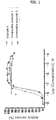
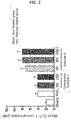
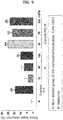
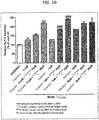
- SGLT2 inhibitor-based drugs had an excellent blood glucose-lowering effect compared with the administration of the drugs alone (see tables 8 to 14 in Experimental Examples 8 to 12, and FIGS. 3 to 12 ).
- the pharmaceutical composition of the present invention has an excellent effect of activating GPR40 protein, leading to an excellent insulin secretion promoting effect, and can be co-administered together with other drugs, and also, has a significantly excellent effect of activating GPR40 protein in vivo.
- the metabolic disease is any one selected from the group consisting of obesity, type I diabetes, type II diabetes, impaired glucose tolerance, insulin resistance syndrome, hyperglycemia, hyperlipidemia, hypertriglyceridemia, hypercholesterolemia, dyslipidemia, and syndrome X.
- the composition of the present invention can be advantageously used for the prevention or treatment of the above-mentioned metabolic diseases through the blood sugar-lowering effect thereof.
- a compound represented by formula 1 of the present invention may be prepared, as shown in Reaction Scheme 1 below, by including steps of: carrying out a condensation reaction of a compound represented by formula 2 and a compound represented by formula 3 to prepare a compound represented by formula 4 (Step 1); and
- step 1) is to prepare a compound represented by formula 4 by carrying out a coupling reaction between a compound represented by formula 2 and a compound represented by formula 3. More specifically, the compound represented by formula 2, an azocarboxylate reagent is slowly added dropwise to a solution, in which the compound represented by formula 3, and triphenylphosphine are mixed, at a temperature of -5 ⁇ to 10 ⁇ to carry out the Mitsunobu reaction to give the compound represented by formula 4.
- azocarboxylate reagent diethyl azodicarboxylate (DEAD) or diisopropyl azodicarboxylate (DIAD) may be used, and preferably diisopropyl azodicarboxylate (DIAD) may be used.
- DEAD diethyl azodicarboxylate
- DIAD diisopropyl azodicarboxylate
- reaction solvent tetrahydrofuran (THF), dichloromethane (DCM), toluene, or acetonitrile may be used, and preferably tetrahydrofuran (THF) may be used.
- reaction temperature is preferably carried out between 0 ⁇ to the boiling point of the solvent, and the reaction time is not particularly limited, but the reaction may preferably be carried out for 0.5-10 hours.
- step 2) is to prepare the compound represented by formula 1 by carrying out a reduction reaction of the compound represented by formula 4, prepared in step 1), in the presence of a base. More specifically, the compound represented by formula 4 prepared in step 1) is reacted with the base at room temperature to prepare the compound represented by formula 1 wherein an ester group contained in the compound represented by formula 4 is reduced into a carboxyl group.
- potassium hydroxide (KOH), sodium hydroxide (NaOH), or lithium hydroxide (LiOH) may be used, and preferably, potassium hydroxide (KOH) may be used.
- reaction solvent tetrahydrofuran (THF), dichloromethane (DCM), toluene, or acetonitrile may be used, and preferably tetrahydrofuran (THF) may be used.
- reaction temperature is preferably carried out between 0 ⁇ to the boiling point of the solvent, and the reaction time is not particularly limited, but the reaction may preferably be carried out for 0.5-10 hours.
- the compound represented by formula 2 used as a starting material may be prepared by the method comprising the following steps, as shown in Reaction Scheme 2 below:
- step 1) is to prepare the compound represented by formula 10 by reacting a compound represented by formula 8 with a compound represented by formula 9. More specifically, the compound represented by formula 8 and the compound represented by formula 9 are dissolved in an organic solvent at -80 ⁇ to -70 ⁇ , and then a bis(trimethylsilyl)amide metal complex is slowly added dropwise thereto, and the mixture was stirred while the temperature was raised to room temperature, thereby giving the compound represented by formula 10.
- potassium bis(trimethylsilyl)amide lithium bis(trimethylsilyl)amide, or sodium bis(trimethylsilyl)amide may be used, and preferably, potassium bis(trimethylsilyl)amide may be used.
- organic solvent tetrahydrofuran (THF), diethylether, diphenylether, diisopropylether (DIPE), dimethylformamide (DMF), dimethylacetamide (DMA), dimethylsulfoxide DMSO), dichloromethane (DCM), chlorobenzene, toluene, and benzene may be used.
- reaction temperature is preferably carried out between -80 ⁇ to the boiling point of the solvent, and the reaction time is not particularly limited, but the reaction may preferably be carried out for 0.5-10 hours.
- step 2) is to prepare the compound represented by formula 12 by reacting the compound represented by formula 10 prepared in step 1) with the compound represented by formula 11. More specifically, a Suzuki coupling reaction of the compound represented by formula 10 prepared in step 1) and the compound represented by formula 11 is carried out in the presence of a palladium catalyst to give the compound represented by formula 12.
- tetrakis(triphenylphosphine) Pd(PPh 3 ) 4
- bis(triphenylphosphine)palladium(II) dichloride PdCl 2 (PPh 3 ) 2
- palladium dichloride PdCl 2
- palladium acetate Pd(OCOCH 3 ) 2
- tetrakis(triphenylphosphine) Pd(PPh 3 ) 4
- organic solvent tetrahydrofuran (THF), diethylether, diphenylether, diisopropylether (DIPE), dimethylformamide (DMF), dimethylacetamide (DMA), dimethylsulfoxide DMSO), dichloromethane (DCM), chlorobenzene, toluene, or benzene may be used, and preferably, toluene may be used.
- reaction temperature is preferably carried out between 0 ⁇ to the boiling point of the solvent, and the reaction time is not particularly limited, but the reaction may preferably be carried out for 0.5-10 hours.
- step 3) is to prepare the compound represented by formula 2 by carrying out a reduction reaction of the compound represented by formula 12, prepared in step 2), in the presence of a base. More specifically, the compound represented by formula 12 prepared in step 2) is dissolved in an organic solvent, and the base is added, thereby giving the compound represented by formula 2 wherein an aldehyde group contained in the compound represented by formula 12 is reduced into a carboxyl group.
- organic solvent methanol, ethanol, ethylacetate, tetrahydrofuran, diethyl ether, or a mixed solution of two or more thereof may be used, and preferably, a tetrahydrofuran : methanol (4:1) mixed solution may be used.
- sodium borohydride (NaBH 3 ) or lithium aluminum hydride (LiAlH 4 ) may be used, and preferably, sodium borohydride (NaBH 3 ) may be used.
- reaction temperature is preferably carried out between 0 ⁇ to the boiling point of the solvent, and the reaction time is not particularly limited, but the reaction may preferably be carried out for 0.5-10 hours.
- the compound represented by formula 1 of the present invention may be prepared, as shown in Reaction Scheme 3 below, by including steps of: carrying out a coupling reaction of a compound represented by formula 5 and a compound represented by formula 3 to prepare a compound represented by formula 6 (step 1); carrying out a Mesylate reaction of the compound represented by formula 6 prepared in step 1) to prepare a compound represented by formula 7 (step 2); replacing the Mesylate site of the compound represented by formula 7 prepared in step 2) with a compound represented by formula 13 to prepare a compound represented by formula 4 (step 3); and carrying out a reduction reaction of the compound represented by formula 4 prepared in step 3) to prepare the compound represented by formula 1 (step 4).
- step 1) is to prepare the compound represented by formula 6 by carrying out a coupling reaction of the compound represented by formula 5 and the compound represented by formula 3.
- organic solvent tetrahydrofuran (THF), diethylether, diphenylether, diisopropylether (DIPE), dimethylformamide (DMF), dimethylacetamide (DMA), dimethylsulfoxide DMSO), dichloromethane (DCM), chlorobenzene, toluene, or benzene may be used, and preferably, dimethylformamide (DMF) may be used.
- Cs 2 CO 3 cesium carbonate
- NaBH 3 sodium borohydride
- LiAlH 4 lithium aluminum hydride
- Cs 2 CO 3 cesium carbonate
- reaction temperature is preferably carried out between 0 ⁇ to the boiling point of the solvent, and the reaction time is not particularly limited, but the reaction may preferably be carried out for 0.5-10 hours.
- step 2) is to prepare the compound represented by formula 7 by carrying out a Mesylate reaction of the compound represented by formula 6 prepared in step 1) in a solvent.
- MsCl methanesulfonyl chloride
- triethylamine tetrahydrofuran (THF), diethylether, diphenylether, diisopropylether (DIPE), dimethylformamide (DMF), dimethylacetamide (DMA), dimethylsulfoxide (DMSO), dichloromethane (DCM), chlorobenzene, toluene, or benzene
- THF tetrahydrofuran
- DIPE dimethylformamide
- DMA dimethylacetamide
- DMSO dimethylsulfoxide
- DCM dichloromethane
- chlorobenzene toluene
- benzene triethylamine
- reaction temperature is preferably carried out between 0 ⁇ to the boiling point of the solvent, and the reaction time is not particularly limited, but the reaction may preferably be carried out for 0.5-10 hours.
- step 3) is to prepare the compound represented by formula 4 by replacing the Mesylate site of the compound represented by formula 7 prepared in step 2) with the compound represented by formula 13.
- organic solvent tetrahydrofuran (THF), diethylether, diphenylether, diisopropylether (DIPE), dimethylformamide (DMF), dimethylacetamide (DMA), dimethylsulfoxide DMSO), dichloromethane (DCM), chlorobenzene, toluene, or benzene may be used, and preferably, dichloromethane (DCM) may be used.
- Cs 2 CO 3 cesium carbonate
- NaBH 3 sodium borohydride
- LiAlH 4 lithium aluminum hydride
- Cs 2 CO 3 cesium carbonate
- reaction temperature is preferably carried out between 0 ⁇ to the boiling point of the solvent, and the reaction time is not particularly limited, but the reaction may preferably be carried out for 0.5-10 hours.
- step 4) is to prepare the compound represented by formula 1 by carrying out a reduction reaction of the compound represented by formula 4, prepared in step 3), in the presence of a base. More specifically, the compound represented by formula 4 prepared in step 3) is reacted with the base at room temperature to give the compound represented by formula 1 wherein the ester group contained in the compound represented by formula 4 is reduced into the carboxyl group.
- potassium hydroxide (KOH), sodium hydroxide (NaOH), and lithium hydroxide (LiOH) may be used, and preferably, potassium hydroxide (KOH) may be used.
- reaction solvent tetrahydrofuran (THF), dichloromethane (DCM), toluene, and acetonitrile may be used, and preferably tetrahydrofuran (THF) may be used.
- reaction temperature is preferably carried out between 0 ⁇ to the boiling point of the solvent, and the reaction time is not particularly limited, but the reaction may preferably be carried out for 0.5-10 hours.
- the compound represented by formula 1 of the present invention may be prepared, as shown in Reaction Scheme 4 below, by including a step for carrying out a ring-opening reaction of a compound represented by formula 1a to prepare a compound represented by formula 1b (step 1).
- Reaction Scheme 4 R 1 is as defined in formula 1; and the compounds represented by formulas 1a and 1b are included in the compound represented by formula 1).
- step 1) is to prepare the compound represented by formula 1b by carrying out a ring-opening reaction of the compound represented by formula 1a in the presence of an acid. More specifically, the compound represented by formula 1a included in the compound represented by formula 1 is subjected to a ring-opening reaction in the presence of an acid, thereby giving the compound represented by formula 1b, which contains carbonyl through the ring opening of the hetero ring of the compound represented by formula 1a.
- an inorganic acid such as hydrochloric acid, sulfuric acid, or phosphoric acid
- hydrochloric acid may be used.
- reaction solvent tetrahydrofuran (THF), dichloromethane (DCM), toluene, and acetonitrile may be used, and preferably tetrahydrofuran (THF) may be used.
- reaction temperature is preferably carried out between 0 ⁇ to the boiling point of the solvent, and the reaction time is not particularly limited, but the reaction may preferably be carried out for 0.5-10 hours.
- the compound represented by formula 1 of the present invention may be prepared, as shown in Reaction Scheme 5 below, by including a step for carrying out a reduction reaction of a compound represented by formula 1b to prepare a compound represented by formula 1c (step 2). (wherein Reaction Scheme 5, R 1 is as defined in formula 1; and the compounds represented by formulas 1b and 1c are included in the compound represented by formula 1).
- step 1) is to prepare the compound represented by formula 1c by carrying out a reduction reaction of the compound represented by formula 1b in the presence of a base. More specifically, the compound represented by formula 1b, which is one of the compounds represented by formula 1, is subjected to a reduction reaction in the presence of a base, thereby giving the compound represented by formula 1c in which the carbonyl group of the compound represented by formula 1b is reduced to the hydroxyl group.
- sodium borohydride (NaBH 3 ) or lithium aluminum hydride (LiAlH 4 ) may be used, and preferably, sodium borohydride (NaBH 3 ) may be used.
- reaction solvent tetrahydrofuran (THF), dichloromethane (DCM), toluene, and acetonitrile may be used, and preferably tetrahydrofuran (THF) may be used.
- reaction temperature is preferably carried out between 0 ⁇ to the boiling point of the solvent, and the reaction time is not particularly limited, but the reaction may preferably be carried out for 0.5-10 hours.
- the pharmaceutical composition of the present invention is characterized by activating the GPR40 enzyme.
- GPR40 is the G-protein coupled receptor (GPCR) that is mainly expressed in insulin secreting cells of the pancreas.
- GPCR G-protein coupled receptor
- the GPR40 expression profile has the potential usability for the treatment of various metabolic diseases including obesity and diabetes.
- DPPIV dipeptidyl peptidase IV
- ZD thiazolidinedione
- biguanide-based drug showed an excellent blood glucose-lowering effect compared with the administration of the drugs alone (see Tables 8, 9, 10, and 11 of Experimental Examples 8, 9, 10, and 11, and FIGS. 3 , 4 , 5 , and 6 ).
- the compounds represented by formula 1 of the present invention have an excellent effect of activating GPR40 protein, leading to an excellent insulin secretion promoting effect, and can be co-administered together with other drugs, and also, have a significantly excellent effect in activating GPR40 protein in vivo, and thus, the composition comprising the compound represented by formula 1 as an active ingredient can be advantageously used as a pharmaceutical composition for the prevention or treatment of metabolic diseases, such as obesity, type I diabetes, type II diabetes, impaired glucose tolerance, insulin resistance syndrome, hyperglycemia, hyperlipidemia, hypertriglyceridemia, hypercholesterolemia, dyslipidemia, and syndrome X.
- metabolic diseases such as obesity, type I diabetes, type II diabetes, impaired glucose tolerance, insulin resistance syndrome, hyperglycemia, hyperlipidemia, hypertriglyceridemia, hypercholesterolemia, dyslipidemia, and syndrome X.
- the compound represented by formula 1 of the present invention can be administered in several dosage forms for oral or parenteral administration at the time of clinical administration, and may be formulated by using a diluent or excipient, such as a filler, an extender, a binder, a wetting agent, a disintegrant, or a surfactant, that is ordinarily used.
- a diluent or excipient such as a filler, an extender, a binder, a wetting agent, a disintegrant, or a surfactant, that is ordinarily used.
- Solid preparations for oral administration include a tablet, a pill, a powder, granules, a capsule, a troche, and the like. These solid preparations may be prepared by mixing a least one of the compounds of the present invention and at least one excipient, for example, starch, calcium carbonate, sucrose or lactose, gelatin, or the like. In addition to simple excipients, lubricants such as magnesium stearate and talc may also be used. Examples of a liquid preparation for oral administration may include a suspension, an oral liquid, an emulsion, a syrup, and the like. In addition to commonly used simple diluents, such as water and liquid paraffin, various excipients, such as a wetting agent, a sweetener, an aroma, a preservative, and the like may be included in the liquid preparation.
- excipients such as a wetting agent, a sweetener, an aroma, a preservative, and the like may be included in the liquid preparation.
- Preparations for parenteral administration include a sterilized aqueous solution, a non-aqueous solvent, a suspension solvent, an emulsion, a freeze-drying agent, and a suppository.
- a non-aqueous solvent and the suspension solvent propylene glycol, polyethylene glycol, a vegetable oil such as an olive oil, an injectable ester such as ethylolate, and the like may be used.
- a substrate for the suppository Witepsol, Macrogol, twin 61, cacao butter, laurin butter, glycerol, gelatin, or the like may be used.
- the effective dose of the compound of the present invention on the human body may vary depending on the age, body weight, sex, form of administration, health condition, and disease severity of a patient, and is generally about 0.001-100 mg/kg/day, and preferably 0.01-35 mg/kg/day. Based on an adult patient weighing 70 kg, the dose is generally 0.07-7000 mg/day, and preferably 0.7-2500 mg/day, and the dose may be administered once or several times a day at a predetermined time interval according to the judgment of a doctor or a pharmacist.
- 1,4-dioxaspiro[4.5]dec-7-en-8-yl trifluoromethanesulfonate (3.0 g) and toluene (50 mL) were loaded in a 250-mL flask and stirred to dissolve, and then, 3-formylphenyl boronic acid (1.8 g) and cesium carbonate (8.47 g) were added, followed by cooling to 0 ⁇ . Thereafter, tetrakis(triphenyl phosphine)palladium (601 mg) was slowly added, and then the mixture was stirred for 3 hours or longer while the temperature was raised.
- Step 2 Preparation of ethyl 3-(4-(4-(hydroxymethyl)benzyloxy)phenyl)hex-4-ynoate
- Step 3 Preparation of ethyl 3-(4-(4-(methylsulfonlyoxy)methyl)benzyloxy)phenyl) hex-4-ynoate
- 3-(4-(4-(hydroxymethyl)benzyloxy)phenyl)hex-4-ynoate (3.0 g) obtained in step 2 was added to MC (30 mL) in a 500-mL flask and stirred to dissolve, and then TEA (4.0 mL) was added dropwise at 0 ⁇ . After 30 minutes, MsCl (2.1 mL) was slowly added dropwise. Upon completion of the reaction after one hour, distilled water was slowly added dropwise, followed by extraction using MC. The extracted organic layer was dried under reduced pressure to give the title compound.
- Step 1 Preparation of ethyl 3-methoxyphenethyl carbamate
- step 1 Under a nitrogen atmosphere, 36 g of ethyl 3-methoxyphenethylcarbamate obtained in step 1 was stirred to dissolve in 120 g of polyphosphoric acid in a 500-mL flask, and the mixture was heated under reflux for 3 hours or longer. After the temperature was lowered to room temperature, ethyl acetate and distilled water were slowly added dropwise, followed by extraction three times or more. The extracted organic layer was washed with brine, and dried over anhydrous magnesium sulfate, and then concentrated. Thereafter, the reaction product was separated by silica column chromatography to give the title compound.
- Step 1 Preparation of tert-butyl 4-(4-(methylsulfonyl)phenyl)-5,6-dihydropyridine-l(2H)-carboxylate
- step 1 After 1.4 g of tert-butyl 4-(4-(methylsulfonyl)phenyl)-5,6-dihydropyridine-1(2H)-carboxylate (1.4 g) obtained in step 1 was dissolved in 20 ml of MC, 10.4 mL of 4 N HCl was added dropwise. Upon completion of the reaction after five hours, diethyl ether was added dropwise and solidified to give the title compound.
- Step 1 Preparation of tert-butyl 4-(-4-hydroxyphenyl)-5,6-dihydropyridine-1(2H)-carboxylate
- the title compound was obtained by the same method as in step 1 in Preparative Example 9 except that 4-hydroxyphenylboronic acid was used instead of 4-(methylsulfonyl)phenylboronic acid.
- the title compound was obtained by the same method as in step 2 in Preparative Example 9 except that tert-butyl 4-(4-hydroxyphenyl)-5,6-dihydropyridine-1(2H)-carboxylate obtained in step 1 was used instead of tert-butyl 4-(4-(methylsulfonyl)phenyl)-5,6-dihydropyridine-1(2H)-carboxylate.
- step 1 3-(methylthio)propyl 4-methylbenzenesulfonate obtained in step 1 was added in THF/distilled water (150/100 mL) in a flask and stirred to dissolve, and then 310 g of oxone was added dropwise at 0 ⁇ . After stirring at room temperature for 12 hours or longer, upon completion of the reaction, distilled water was slowly added dropwise, extracted with ethyl acetate, washed with brine, and dried over anhydrous magnesium sulfate to give the title compound.
- Step 3 Preparation of tert-butyl 4-(4-(3-methylsulfonyl)propoxy)phenyl)-5,6-dihydropyridine-1(2H)-carboxylate
- Step 4 Preparation of 4-(4-(3-(methylsulfonyl)propoxy)phenyl)-1,2,3,6-tetrahydropyridine hydrochloride
- the title compound was obtained by the same method as in step 2 in Preparative Example 9 except that tert-butyl 4-(4-(3-methylsulfonyl)propoxy)phenyl)-5,6-dihydropyridine-1(2H)-carboxylate obtained in step 3 was used instead of tert-butyl 4-(4-(methylsulfonyl)phenyl)-5,6-dihydropyridine-1(2H)-carboxylate.
- Step 3 Preparation of (3S)-ethyl 3-(4-(4-(1-hydroxyethyl)benzyloxy)phenyl)hex-4-ynoate
- Step 4 Preparation of (3S)-ethyl 3-(4-(4-(1-bromoethyl)benzyloxy)phenyl)hex-4-ynoate
- step 3 Under a nitrogen atmosphere, 0.76 g of (3S)-ethyl 3-(4-(4-(1-hydroxyethyl)benzyloxy)phenyl)hex-4-ynoate obtained in step 3 was added to 50 mL of MC in a flask and stirred to dissolve, and then 0.6 g of triphenylphosphine and 0.75 g of CBr 4 were added dropwise at 0 ⁇ . After stirring at room temperature for 2 hours or longer, upon completion of the reaction, distilled water was slowly added dropwise, extracted with EA, washed with brine, dried over anhydrous magnesium sulfate, and then concentrated to give the title compound.
- Step 1 Preparation of tert-butyl 4-(benzo[d]thiazol-2-yl)piperazine-1-carboxylate
- Step 1 Preparation of tert-butyl 4-(5-propylpyrimidin-2-yl)piperazine-1-carboxylate
- the title compound was obtained by the same method as in step 2 in Preparative Example 9 except that tert-butyl 4-(5-propylpyrimidin-2-yl)piperazine-1-carboxylate obtained in step 1 was used instead of tert-butyl 4-(4-(methylsulfonyl)phenyl)-5,6-dihydropyridine-1(2H)-carboxylate.
- Step 1 Preparation of tert-butyl 4-(5-cyanopyridin-2-yl)piperazine-1-carboxylate
- the title compound was obtained by the same method as in step 2 in Preparative Example 9 except that tert-butyl 4-(5-cyanopyridin-2-yl)piperazine-1-carboxylate obtained in step 1 was used instead of tert-butyl 4-(4-(methylsulfonyl)phenyl)-5,6-dihydropyridine-1(2H)-carboxylate.
- the title compound was obtained by the same method as in step 2 in Preparative Example 5 except that 2-(4-(bromomethyl)phenyl)ethanol obtained in step 1 was used instead of 4-(bromomethyl)phenyl)methanol.
- Step 3 Preparation of (S)-ethyl 3-(4-(4-(2-(methylsulfonyloxy)ethyl)benzyloxy)phenyl)hex-4-ynoate
- Step 1 Preparation of ethyl 3-(4-(3-(1,4-dioxaspiro[4.5]dec-7-en-8-yl)benzyloxy)phenyl)hex-4-ynoate
- diisopropyl azodicarboxylate (23.4 mL) was slowly added dropwise using a dropping funnel at 0 ⁇ , and then stirred for 4 hours or longer while the temperature was raised to room temperature.
- distilled water 200 mL was slowly added dropwise and extracted with ethylacetate (300 mL), and then the extracted organic layer was dried under reduced pressure to give the title compound (32.1 g, 87.9%).
- Step 2 Preparation of 3-(4-(3-(1,4-dioxaspiro[4.5]dec-7-en-8-yl)benzyloxy)phenyl)hex-4-ynoic acid
- ethyl 3-(4-(3-(1,4-dioxaspiro[4.5]dec-7-en-8-yl)benzyloxy)phenyl)hex-4-ynoate (32.1 g) prepared in step 1, methanol (50 mL), and distilled water (50 mL) were loaded in a 500-mL flask and stirred to dissolve, and then potassium hydroxide (19.5 g) was slowly added at room temperature, followed by stirring for one hour or longer.
- Step 1 Preparation of ethyl 4-(4-(3-(1,4-dioxaspiro[4.5]dec-7-en-8-yl)benzyloxy)phenyl)hex-4-ynoate
- diisopropyl azodicarboxylate (9.38 mL) was slowly added dropwise using a dropping funnel at 0 ⁇ , and then stirred for 4 hours or longer while the temperature was raised to room temperature.
- distilled water 50 mL was slowly added dropwise, followed by extraction using ethylacetate (100 mL), and then the extracted organic layer was dried under reduced pressure to give the title compound (1.38 g, 49.2%).
- Step 2 Preparation of 4-(4-(3-(1,4-dioxaspiro[4.5]dec-7-en-8-yl)benzyloxy)phenyl)hex-4-ynoic acid
- ethyl 4-(4-(3-(1,4-dioxaspiro[4.5]dec-7-en-8-yl)benzyloxy)phenyl)hex-4-ynoate (1.38 g) prepared in step 1, methanol (10 mL), and distilled water (10 mL) were loaded in a 500-mL flask and stirred to dissolve, and then potassium hydroxide (1.25 g) was slowly added at room temperature, followed by stirring for one hour or longer.
- the mixture was acidified with a 1 M hydrochloric acid aqueous solution to a pH of 2-3, extracted with ethyl acetate (50 mL), and dried under reduced pressure to give the title compound (0.98 g, 75.6%).
- Step 1 Preparation of ethyl-(3S)-3--(4-(3-(1,4-dioxaspiro[4.5]dec-7-en-8-yl)benzyloxy)phenyl)-hex-4-ynoate
- diisopropyl azodicarboxylate (23.4 mL) was slowly added dropwise using a dropping funnel at 0 ⁇ , and then stirred for 4 hours or longer while the temperature was raised to room temperature.
- distilled water 200 mL was slowly added dropwise and extracted with ethylacetate (300 mL), and then the extracted organic layer was dried under reduced pressure to give the title compound.
- Step 2 Preparation of (3S)-3-(4-(3-(1,4-dioxaspiro[4.5]dec-7-en-8-yl)benzyloxy)phenyl)hex-4-ynoic acid
- ethyl-(3S)-3-(4-(3-(1,4-dioxaspiro[4.5]dec-7-en-8-yl)benzyloxy)phenyl)hex-4-ynoate (32.1 g) prepared in step 1, methanol (50 mL), and distilled water (50 mL) were loaded in a 500-mL flask and stirred to dissolve, and then potassium hydroxide (19.5 g) was slowly added at room temperature, followed by stirring for one hour or longer.
- Step 1 Preparation of ethyl-(3R)-3-(4-(3-(1,4-dioxaspiro[4.5]dec-7-en-8-yl)benzyloxy)phenyl)hex-4-ynoate
- diisopropyl azodicarboxylate (23.4 mL) was slowly added dropwise using a dropping funnel at 0 ⁇ , and then stirred for 4 hours or longer while the temperature was raised to room temperature.
- distilled water 200 mL was slowly added dropwise and extracted with ethylacetate (300 mL), and then the extracted organic layer was dried under reduced pressure to give the title compound.
- Step 2 Preparation of (3R)-3-(4-(3-(1,4-dioxaspiro[4.5]dec-7-en-8-yl)benzyloxy)phenyl)hex-4-ynoic acid
- ethyl-(3R)-3-(4-(3-(1,4-dioxaspiro[4.5]dec-7-en-8-yl)benzyloxy)phenyl)hex-4-ynoate (32.1 g) prepared in step 1, methanol (50 mL), and distilled water (50 mL) were loaded in a 500-mL flask and stirred to dissolve, and then potassium hydroxide (19.5 g) was slowly added at room temperature, followed by stirring for one hour or longer.
- the mixture was acidified with a 1 M hydrochloric acid aqueous solution to a pH of 2-3, extracted with ethyl acetate (300 mL), and dried under reduced pressure to give the title compound (17.3 g, 47.5%).
- Step 1 Preparation of ethyl 3-(4-(4-((3,4-dihydroisoquinolin-2(1H)-yl)methyl)benzyloxy)-phenyl)hex- 4-ynoate
- Step 2 Preparation of 3-(4-(4-((3,4-dihydroisoquinolin-2(1H)-yl)methyl)benzyloxy)phenyl)hex-4-ynoic acid
- ethyl 3-(4-(4-(3,4-dihydroisoquinolin-2(1H)-yl)methyl)benzyloxy)phenyl)hex-4-ynoate prepared in step 1 was added to THF, methanol, and distilled water in a flask and stirred to dissolve, and then, 0.7 g of lithium hydroxide was slowly added at room temperature, followed by stirring for 1 hour or longer.
- the mixture was acidified with a 1 M hydrochloric acid aqueous solution to a pH of 2-3, extracted with ethyl acetate, and dried under reduced pressure to give the title compound.
- Step 1 Preparation of ethyl 3-(4-(3-cyclohexenyl-4-((3,4-dihydroisoquinolin-2(1H)-yl)methyl)benzyloxy)phenyl)hex-4-ynoate
- Step 2 Preparation of 3-(4-(3-cyclohexenyl-4-((3,4-dihydroisoquinolin-2(1H)-yl)methyl)benzyloxy)phenyl)hex-4-ynoic acid
- the title compound was obtained by the same method as in step 2 in Example 12 except that ethyl 3-(4-(3-cyclohexenyl-4-((3,4-dihydroisoquinolin-2(1H)-yl)methyl)benzyloxy)phenyl)hex-4-ynoate was used instead of ethyl 3-(4-(4-((3,4-dihydroisoquinolin-2(1H)-yl)methyl)benzyloxy)phenyl)hex-4-ynoate.
- the title compound was obtained by the same method as in Example 12 except that 4-phenyl-1,2,3,6-tetrahydropyridine hydrochloride was used instead of 1,2,3,4-tetrahydroisoquinoline.
- the title compound was obtained by the same method as in Example 12 except that 1-phenylpiperazine was used instead of 1,2,3,4-tetrahydroisoquinoline.
- the title compound was obtained by the same method as in Example 12 except that 6-methoxy-1,2,3,4-tetrahydroisoquinoline was used instead of 1,2,3,4-tetrahydroisoquinoline.
- the title compound was obtained by the same method as in Example 12 except that 4-phenylpiperidine was used instead of 1,2,3,4-tetrahydroisoquinoline.
- the title compound was obtained by the same method as in Example 12 except that 1-(4-fluorophenyl)piperazine was used instead of 1,2,3,4-tetrahydroisoquinoline.
- the title compound was obtained by the same method as in Example 12 except that 1-(4-(trifluoromethyl)phenyl)piperazine was used instead of 1,2,3,4-tetrahydroisoquinoline.
- the title compound was obtained by the same method as in Example 12 except that 1-(4-(3-(methylsulfonyl)propoxy)phenyl)piperazine hydrochloride was used instead of 1,2,3,4-tetrahydroisoquinoline.
- Step 1 Preparation of ethyl (S)-3-(4-(4-((3,4-dihydroisoquinolin-2(1H)-yl)methyl)benzyloxy)phenyl)hex- 4-ynoate
- Step 2 Preparation of (S)-3-(4-(4-((3,4-dihydroisoquinolin-2(1H)-yl)methyl)benzyloxy)phenyl)hex-4-ynoic acid
- ethyl (S)-3-(4-(4-(3,4-dihydroisoquinolin-2(1H)-yl)methyl)benzyloxy)phenyl)hex-4-ynoate prepared in step 1 was added to THF, methanol, and distilled water in a flask and stirred to dissolve, and then, 0.5 g of lithium hydroxide was slowly added at room temperature, followed by stirring for 1 hour or longer. Upon completion of the reaction, the mixture was acidified with a 1 M hydrochloric acid aqueous solution to a pH of 2-3, extracted with ethyl acetate, and dried under reduced pressure to give the title compound.
- the title compound was obtained by the same method as in Example 21 except that 1-(4-(trifluoromethyl)phenyl)piperazine was used instead of 1,2,3,4-tetrahydroisoquinoline.
- the title compound was obtained by the same method as in Example 21 except that 1-(4-fluorophenyl)piperazine was used instead of 1,2,3,4-tetrahydroisoquinoline.
- the title compound was obtained by the same method as in Example 21 except that 6-methoxy-1,2,3,4-tetrahydroisoquinoline was used instead of 1,2,3,4-tetrahydroisoquinoline.
- the title compound was obtained by the same method as in Example 21 except that 4-phenylpiperidine was used instead of 1,2,3,4-tetrahydroisoquinoline.
- the title compound was obtained by the same method as in Example 21 except that 4-phenyl-1,2,3,6-tetrahydropyridine hydrochloride was used instead of 1,2,3,4-tetrahydroisoquinoline.
- the title compound was obtained by the same method as in Example 21 except that 1-(4-(methoxymethoxy)phenyl)piperazine was used instead of 1,2,3,4-tetrahydroisoquinoline.
- the title compound was obtained by the same method as in Example 21 except that 3-isopropyl-5-(piperazin-1-yl)-1,2,4-oxadiazole was used instead of 1,2,3,4-tetrahydroisoquinoline.
- the title compound was obtained by the same method as in Example 21 except that 1-(4-(3-(methylsulfonyl)propoxy)phenyl)piperazine hydrochloride was used instead of 1,2,3,4-tetrahydroisoquinoline.
- the title compound was obtained by the same method as in Example 21 except that 4-(4-fluorophenyl)-1,2,3,6-tetrahydropyridine hydrochloride was used instead of 1,2,3,4-tetrahydroisoquinoline.
- the title compound was obtained by the same method as in Example 21 except that 4-(4-methoxyphenyl)-1,2,3,6-tetrahydropyridine was used instead of 1,2,3,4-tetrahydroisoquinoline.
- Step 1 Preparation of (S)-3-(4-(4-((3,4-dihydroisoquinolin-1(1H)-yl)methyl)benzyloxy)phenyl)hex- 4-ynoic acid
- the title compound was obtained by the same method as in Example 21 except that 1,2,3,4-tetrahydroquinoline was used instead of 1,2,3,4-tetrahydroisoquinoline.
- Step 2 Preparation of sodium (S)-3-(4-(4-((3,4-dihydroquinolin-1(1H)-yl)methyl)benzyloxy)phenyl)hex-4-ynoate
- the title compound was obtained by the same method as in Example 37 except that (S)-3-(4-(4-((3,4-dihydroquinolin-1(2H)-yl)methyl)benzyloxy)phenyl)hex-4-ynoic acid prepared in step 1 was used instead of (S)-3-(4-(4-(isoindolin-2-yl methyl)benzyloxy)phenyl)hex-4-ynoic acid.
- Example 40 The title compound was obtained by the same method as in Example 37 except that (S)-3-(4-(4-((4-(4-methoxyphenyl)piperazin-1-yl)methyl)benzyloxy)phenyl)hex-4-ynoic acid prepared in Example 40 was used instead of (S)-3-(4-(4-(isoindolin-2-yl methyl)benzyloxy)phenyl)hex-4-ynoic acid.
- Step 1 Preparation of ethyl (S)-3-(4-(4-(2-(6-methoxy-3,4-dihydroisoquinolin-2(1H)-yl)ethyl)benzyloxy)phenyl)hex-4-ynoate
- Step 2 Preparation of (S)-3-(4-(4-(2-(6-methoxy-3,4-dihydroisoquinolin-2(1H)-yl)ethyl)benzyloxy)phenyl)hex-4-ynoic acid
- ethyl (S)-3-(4-(4-(2-(6-methoxy-3,4-dihydroisoquinolin-2(1H)-yl)ethyl)benzyloxy)phenyl)hex-4-ynoate prepared in step 1 was added to THF, methanol, and distilled water in a flask and stirred to dissolve, and then, 0.5 g of lithium hydroxide was slowly added at room temperature, followed by stirring for 1 hour or longer. Upon completion of the reaction, the mixture was acidified with a 1 M hydrochloric acid aqueous solution to a pH of 2-3, extracted with ethyl acetate, and dried under reduced pressure to give the title compound.
- the title compound was obtained by the same method as in Example 48 except that isoindoline was used instead of 6-methoxy-1,2,3,4-tetrahydroisoquinoline.
- the title compound was obtained by the same method as in Example 48 except that 1,2,3,4-tetrahydroisoquinoline was used instead of 6-methoxy-1,2,3,4-tetrahydroisoquinoline.
- the title compound was obtained by the same method as in Example 37 except that (S)-3-(4-(4-((6-methoxy-3,4-dihydroisoquinolin-2(1H)-yl)methyl)benzyloxy)phenyl)hex-4-ynoic acid prepared in Example 25 was used instead of (S)-3-(4-(4-(isoindolin-2-ylmethyl)benzyloxy)phenyl)hex-4-ynoic acid.
- 4-(3-phenoxybenzylamino)phenylpropynoic acid was prepared by a known method.
- Table 1 summarizes the chemical structures of the compounds prepared in Examples 1-51. [Table 1] Example Formula Example Formula 1 27 2 28 3 29 4 30 5 31 6 32 7 33 8 34 9 35 10 36 11 37 12 38 13 39 14 40 15 41 16 42 17 43 18 44 19 45 20 46 21 47 22 48 23 49 24 50 25 51 26
- a method for the prevention or treatment of metabolic diseases comprising administering, to a subject, a pharmaceutically effective amount of a composition
- a composition comprising: (a), as a first active ingredient, a compound represented by formula 1, an optical isomer, hydrate, or solvate thereof, or a pharmaceutically acceptable salt thereof; and (b), as a second active ingredient, at least one compound selected from the group consisting of dipeptidyl peptidase-IV (DPP-IV) inhibitor-based, sulfonylurea-based, thiazolidinedione (TZD)-based, biguanide-based, and sodium/glucose cotransporter 2 (SGLT2) inhibitor-based compounds, as a second active ingredient:
- DPP-IV dipeptidyl peptidase-IV
- ZD thiazolidinedione
- biguanide-based biguanide-based
- SGLT2 sodium/glucose cotransporter 2
- Formula 1 is as described in the detailed description of the composition for the prevention or treatment of metabolic diseases.
- the mixed composition of the active ingredient and the second active ingredient is not particularly limited to the mixing weight ratio since no side effects or reduced efficacy are caused by the mixing weight ratio, and considering pathological conditions of patients, the known characteristics of the second active ingredient, and the like, the first active ingredient and the second active ingredient may be mixed at appropriate amounts and administered in combination.
- the mixing weight ratio is 0.03:1 to 100:1.
- the mixing weight ratio is 0.03:1 to 30:1, and in still another embodiment, the mixing weight ratio is 0.03:1 to 10:1.
- HEK-293 cells were transfected with human GPR40 DNA (Origene, RC218370) by using Fugene HD (Promega, E2311). The transfected HEK-293 cells were seeded in a 96-well black, clear bottom plate (Costar, 3603) and cultured. After 24 hours, the cell culture medium was removed, and replaced with Dulbecco's Modified Eagle Medium (DMEM, 50 ⁇ l) supplemented with 1% fetal bovine serum (FBS).
- DMEM Dulbecco's Modified Eagle Medium
- FBS fetal bovine serum
- Fluo-4 reagent (Invitrogen, F10471) was added to each well and cultured in a 37 ⁇ incubator for 2 hours.
- the compounds of the examples and the compounds of Comparative Examples 1 and 2 were diluted with 1 x Hank's buffered salt solution (HBSS) supplemented with 20 mM 4-(2-hydroxyethyl)-1-piperazineethanesulfonic acid (HEPES) buffer to prepare samples to be treated on cells.
- HBSS Hank's buffered salt solution
- HEPES 4-(2-hydroxyethyl)-1-piperazineethanesulfonic acid
- DMSO dimethylsulfoxide
- GPR 40 activity intracellular calcium concentration increased by the sample / intracellular calcium concentration of the non ⁇ treated group ⁇ 100 [Table 2]
- the compounds of the examples of the present invention had excellent effects in activating the GPR 40 protein at low concentrations.
- the compounds of Examples 7, 9, 11, 12, 14, 27, 28, 37, and 38 activated the GPR40 protein by 50% at very low concentrations, such as 0.20 ⁇ M or lower, indicating that the ability thereof to increase the intracellular Ca 2+ concentration was very excellent compared with that of the compound of Comparative Example 1 (B, 0.28 ⁇ M).
- a novel 3-(4-(benzyloxy)phenyl)hex-4-ynoic acid derivative of the present invention induces excellent GPR40 protein activity and, especially, shows similar or improved GPR40 protein activity compared with a conventional antidiabetic drug (Comparative Example 1), which has been been known to activate GPR40 protein to promote the insulin secretion, and thus, a pharmaceutical composition comprising the compound of the present invention as an active ingredient can be advantageously used as a pharmaceutical composition for the prevention or treatment of metabolic diseases, such as obesity, type I diabetes, type II diabetes, impaired glucose tolerance, insulin resistance syndrome, hyperglycemia, hyperlipidemia, hypertriglyceridemia, hypercholesterolemia, dyslipidemia, and syndrome X.
- metabolic diseases such as obesity, type I diabetes, type II diabetes, impaired glucose tolerance, insulin resistance syndrome, hyperglycemia, hyperlipidemia, hypertriglyceridemia, hypercholesterolemia, dyslipidemia, and syndrome X.
- the compounds of the examples of the invention dissolved in DMSO (dimethyl sulfoxide), PBS (phosphate buffered saline), and DW (distilled water) were diluted three-times with EMD Millipore's GPCR profiler assay buffer.
- DMSO dimethyl sulfoxide
- PBS phosphate buffered saline
- DW distilled water
- the EMD Millipore's GPCR profiler assay buffer was a Hanks balanced salt solution (HBSS) containing 20 mM HEPES (4-(2-hydroxyethyl)-1-piperazineethanesulfonic acid) and 2.5 mM probenecid (4-(dipropylsulfamoyl)benzoic acid) and adjusted to pH 7.4.
- HBSS Hanks balanced salt solution
- the compound of the example was duplicated at each concentration.
- the positive control groups (Comparative Examples 1 and 3) for each G protein-coupled receptor (GPCR) were prepared in the same manner as the non-treated group (vehicle).
- the positive control groups (Comparative Examples 1 and 3) for each G PCR were included in E max as a concentration exhibiting the maximal activity.
- Agonist assay was performed by using FLIPR TETRA , and fluorescence and luminescence baselines were measured.
- the compounds of the examples, the non-treated group, and the positive control groups (Comparative Examples 1 and 3) were added to the assay plates. In order to measure the activity of the compound of the example, GPCR activity assay was performed for 180 seconds.
- the fluorescence values minus the baseline were compared with E max values of the positive controls (Comparative Examples 1 and 3) and the non-treated group, and then calculated as a percent (%).
- the obtained data indicate the inhibition (%) resulted from the comparision of EC 50 with the non-treated group, and the quality of each plate was evaluated by the statistical data representing the activity % from repeated data values. When the assay data were not satisfactory, an additional experiment was performed.
- FIG. 1 is a graph illustrating the activation pattern of GPR40 protein measured according to the concentrations of the compounds of Example 9, Comparative Example 1, and Comparative Example 3.
- the concentration required to reach 50% of GPR40 activity was very low (lower than the measurable concentration of 1 nM) in the compound of the example compared with the compounds of Comparative Examples 1 and 3.
- the compound of the example of the present invention activated GPR40 at a much lower concentration than the compounds of Comparative Example 1 (14 nM) and Comparative Example 3 (27 nM).
- a novel 3-(4-(benzyloxy)phenyl)hex-4-ynoic acid derivative of the present invention induces excellent GPR40 protein activity and especially, shows significantly excellent GPR40 protein activity compared with conventional antidiabetic drugs (Comparative Examples 1 and 3), which have been known to activate GPR40 protein to promote the insulin secretion, and thus, the pharmaceutical composition comprising the novel compound as an active ingredient can be advantageously used as a pharmaceutical composition for the prevention or treatment of metabolic diseases, such as obesity, type I diabetes, type II diabetes, impaired glucose tolerance, insulin resistance syndrome, hyperglycemia, hyperlipidemia, hypertriglyceridemia, hypercholesterolemia, dyslipidemia, and syndrome X.
- metabolic diseases such as obesity, type I diabetes, type II diabetes, impaired glucose tolerance, insulin resistance syndrome, hyperglycemia, hyperlipidemia, hypertriglyceridemia, hypercholesterolemia, dyslipidemia, and syndrome X.
- CYP enzymes are involved in the drug metabolism, and depending on the inhibitory effects on these enzymes, the dose of a drug and the toxicity due to the co-administration concentration for co-administration with another drug can be predicted. Therefore, the inventors measured the inhibitory effects of the compounds of the examples of the invention on CYP3A4, CYP2C9, CYP1A2, CYP2D6, and CYP2C19 existing in the human body.
- the Invitrogen kit (P2862) was used as the CYP2D6 inhibition kit, and the BD GENTEST kit (459100, 459300, 459400, 459500) was used as the CYP1A2, CYP2C9, CYP2C19, and CYP3A4 inhibition kits.
- the Invitrogen kit a test sample was diluted in distilled water at 2.5 ⁇ of the final experimental concentration.
- P450 BACULOSOMES® reagent and a reproducer (100X) provided in the Invitrogen kit were diluted in Vivid® CYP450 reaction buffer (2 ⁇ ) at the concentration that matched the target CYP450.
- the prepared 2.5 ⁇ sample (80 ⁇ L) and the diluted P450 BACULOSOMES® reagent mixture (100 ⁇ L) were mixed in the U-bottom 96-well plate, followed by pre-culture for 20 minutes.
- Vivid® CYP450 substrate and NADP+ (100 ⁇ ) were diluted in Vivid® CYP450 reaction buffer (2 ⁇ ) at the concentration that matched the target CYP450 and the kind of substrate.
- NADP nicotinamide adenine dinucleotide phosphate
- BD GENTEST kit As for the BD GENTEST kit, a test sample was diluted in acetonitrile at 50 ⁇ of the final experimental concentration. A NADPH-coenzyme mixture was prepared by diluting coenzyme, G6PDH, and a regulatory protein provided in the kit with distilled water to a concentration instructed by the kit. The prepared 50 ⁇ sample (4 ⁇ L) and the NADPH-coenzyme mixture (96 ⁇ L) were mixed in the U-bottom 96-well plate, followed by pre-culture for 10 minutes in a 37 ⁇ incubator.
- the enzyme/substrate mixture was prepared by diluting a buffer (0.5 M potassium phosphate, pH 7.4) and each CYP450 enzyme/substrate mixture with distilled water to a concentration instructed according to the kind of CYP450. Upon completion of the pre-culture, 100 ⁇ L of the enzyme/substrate mixture was added to the plate, followed by reaction in a 37 ⁇ incubator for 15 minutes (CYP 1A2), 30 minutes (CYP 3A4 and CYP 2C19) or one and half hours (CYP 2C9).
- the reactant was transferred onto the white plate, and then fluorescence was measured with a microplate reader (excitation wavelength: 410 nm, absorption wavelength: 460 nm for CYP 1A2 and CYP 2C19; and excitation wavelength: 409 nm, absorption wavelength: 530 nm for CYP 2C9 and CYP 3A4).
- excitation wavelength: 410 nm, absorption wavelength: 460 nm for CYP 1A2 and CYP 2C19; and excitation wavelength: 409 nm, absorption wavelength: 530 nm for CYP 2C9 and CYP 3A4 The values measured above were converted into % as the inhibition of the sample compared with the non-treated group. The results are shown in Table 4.
- the compounds of the examples of the present invention showed low activity on the CYP450 inhibition, suggesting that the risk of side effects due to the drug interaction is low. More specifically, the compounds of almost all the examples of the present invention showed enzyme inhibitions of about 50% or less on CYP 1A2, CYP 2C9, CYP 2C19, CYP 2D6, and CYP 3A4 enzymes. In particular, the compounds of the examples showed relatively very low enzyme inhibitory activity on CYP 2C9 enzyme, compared with the compound of Comparative Example 1 (81.2%), which is used as a conventional anti-diabetic drug that can promote the insulin secretion by activating GPR40 protein. In addition, the compounds of the examples of the present invention showed relatively very low enzyme inhibitory activity on CYP 2D6 enzyme, compared with the compound of Comparative Example 2 (63.2%).
- a pharmaceutical composition comprising the novel compound as an active ingredient can be co-administered together with other drugs, and thus can be advantageously used in the treatment of complications including metabolic diseases, such as obesity, type I diabetes, type II diabetes, impaired glucose tolerance, insulin resistance syndrome, hyperglycemia, hyperlipidemia, hypertriglyceridemia, hypercholesterolemia, dyslipidemia, and syndrome X.
- metabolic diseases such as obesity, type I diabetes, type II diabetes, impaired glucose tolerance, insulin resistance syndrome, hyperglycemia, hyperlipidemia, hypertriglyceridemia, hypercholesterolemia, dyslipidemia, and syndrome X.
- mice Male Sprague Dawley rats aged 8-10 weeks old were acclimated for at least 7 days, and then only healthy animals were used for the oral glucose tolerance test (OGTT test). After fasting for 16-18 hours, five rats per group were randomly grouped and orally administered with the compounds prepared in Examples 2, 3, 4, 6, 9, 12, 14, 16, 25, 29, 36, 37, 41, 43, and 44 at a dose of 10 mg/kg each.
- a solution PEG 400/Tween 80/0.25% CMC, 5%/5%/90%, v/v/v
- CMC carboxymethylcelluluse
- Glucose (4 g/kg) was orally administered at a dose of 5 ml/kg 30 minutes after each sample was administered. Then, the blood glucose was measured by using Accu-chek active strip (Roche diagnostic Co.). The time for the measurement was set at 30 minutes before the glucose administration (-30), 0 minute, 20 minutes, 40 minutes, 60 minutes, and 120 minutes after the glucose administration, and the blood glucose was measured through tail vein puncture. The reduction (%) of blood glucose AUC was measured and the results are shown in Table 5 below. [Table 5] Example % AUC 2 17.2 3 12.5 4 16.2 6 15.2 9 24.7 12 31.0 14 27.7 16 21.1 25 24.6 29 27.1 36 22.6 37 28.5 41 23.7 43 21.2 44 22.8 Comparative Example 1 16.2
- the compounds of the examples of the present invention had a blood sugar lowering effect of, on average, 21.9% compared with the non-treated group, suggesting that the compounds of the examples have excellent in vivo advantageous effects.
- the compound of Comparative Example 1 known as a conventional GPR40 protein activator, was verified to have a blood glucose lowering effect of 16.2%, but the compounds of the examples of the present invention showed more excellent blood glucose lowering effects compared with the compound of Comparative Example 1.
- the compounds of Examples 9, 12, 14, 29, and 37 showed blood glucose lowering effects of 24.7%, 31.0%, 27.7%, 27.1%, and 28.5%, respectively, and thus exhibited more excellent efficacy compared with the compound of Comparative Example 1.
- a novel 3-(4-(benzyloxy)phenyl)hex-4-ynoic acid derivatives of the present invention has an excellent effect of activating GPR40 protein, and thus has an excellent insulin secretion promoting effect, leading to a significantly excellent blood glucose lowering effect, and thus, a pharmaceutical composition comprising the novel compound as an active ingredient can be advantageously used as a pharmaceutical composition for the treatment of metabolic diseases, such as obesity, type I diabetes, type II diabetes, impaired glucose tolerance, insulin resistance syndrome, hyperglycemia, hyperlipidemia, hypertriglyceridemia, hypercholesterolemia, dyslipidemia, and syndrome X.
- metabolic diseases such as obesity, type I diabetes, type II diabetes, impaired glucose tolerance, insulin resistance syndrome, hyperglycemia, hyperlipidemia, hypertriglyceridemia, hypercholesterolemia, dyslipidemia, and syndrome X.
- GK rats Male Goto-Kakizaki (GK) rats aged 22-23 weeks, as non-obese type II diabetic models, were acclimated for at least 7 days, and then only healthy animals were used for the oral glucose tolerance test (OGTT test). After fasting for 16-18 hours, five rats per group were randomly grouped and orally administered with the compounds prepared in Examples 5, 9, 14, 28, 37, and 47 at a dose of 0.3-10 mg/kg each.
- a solution PEG 400/Tween 80/0.25% CMC, 5%/5%/90%, v/v/v) containing 5% polyethyleneglycol/5% tween 80/0.25% carboxymethylcelluluse (CMC) was orally administered at the same dose.
- Glucose (4 g/kg) was orally administered at a dose of 5 ml/kg 60 minutes after each sample was administered. Then, the blood glucose was measured by using Accu-chek active strip (Roche diagnostic Co.).
- the compounds of the examples of the present invention showed a blood glucose lowering effect of, on average, at least 30.0% compared with the non-treated group at the same dose of the compound of Comparative Example 1 (10 mg/kg). More specifically, the compound of Comparative Example 1 showed a blood glucose lowering effect of 25.3% (B) at a dose of 10 mg/kg, while the compounds of Examples 5, 9, 14, 28, 37, and 47 showed similar blood glucose lowering effects at a dose of 3 mg/kg compared with the compound of Comparative Example 1. In particular, the compounds of Examples 9 and 37 showed blood gulose lowering effects of 35.0% or more at a dose of 10 mg/kg, indicating more excellent efficacy compared with the compound of Comparative Example 1.
- a novel 3-(4-(benzyloxy)phenyl)hex-4-ynoic acid derivative of the present invention has an excellent effect of activating GPR40 protein, and thus has an excellent insulin secretion promoting effect, leading to a significantly excellent blood glucose lowering effect, and thus, a pharmaceutical composition comprising the novel compound as an active ingredient can be advantageously used as a pharmaceutical composition for the treatment of metabolic diseases, such as obesity, type I diabetes, type II diabetes, impaired glucose tolerance, insulin resistance syndrome, hyperglycemia, hyperlipidemia, hypertriglyceridemia, hypercholesterolemia, dyslipidemia, and syndrome X.
- metabolic diseases such as obesity, type I diabetes, type II diabetes, impaired glucose tolerance, insulin resistance syndrome, hyperglycemia, hyperlipidemia, hypertriglyceridemia, hypercholesterolemia, dyslipidemia, and syndrome X.
- OLETF Male Otsuka Long-Evans Tokushima fatty (OLETF) rats aged 29-30 weeks, as obese type II diabetic models, were acclimated for at least 7 days, and then only healthy animals were used for the oral glucose tolerance test (OGTT test). After fasting for 16-18 hours, five rats per group were randomly grouped and orally administered with the compounds prepared in Examples 5, 9, 14, 28, 37, and 47 at a dose of 1-10 mg/kg each.
- a solution PEG 400/Tween 80/0.25% CMC, 5%/5%/90%, v/v/v) containing 5% polyethyleneglycol/5% tween 80/0.25% carboxymethylcelluluse (CMC) was orally administered at the same dose.
- Glucose (4 g/kg) was orally administered at a dose of 5 ml/kg 60 minutes after each sample was administered. Then, the blood glucose was measured by using Accu-chek active strip (Roche diagnostic Co.).
- Example Dose(mg/kg) % AUC Example 5 1 B 3 B 10 A Example 9 1 B 3 A 10 A Example 14 1 C 3 B 10 B Example 28 1 B 3 B 10 B Example 37 1 A 3 A 10 A Example 47 1 C 3 C 10 B Comparative Example 1 10 B In table 7, A: over 35.0 %; B: 25.0-35.0 %; and C: under 25.0.
- the compounds of the examples of the present invention showed a blood glucose lowering effect of, on average 35.0% or more, compared with the non-treated group at the same dose of the compound of Comparative Example 1 (10 mg/kg). More specifically, the compound of Comparative Example 1 showed a blood glucose lowering effect of 31.6% (B) at a dose of 10 mg/kg, while the compounds of Examples 9 and 37 showed more excellent blood glucose lowering effects at a dose of 1 mg/kg compared with the compound of Comparative Example 1. In particular, the compounds of Examples 9 and 37 showed blood gulose lowering effects of 35.0% or more at a dose of 10 mg/kg, indicating more excellent efficacy compared with the compound of Comparative Example 1.
- a novel 3-(4-(benzyloxy)phenyl)hex-4-ynoic acid derivatives of the present invention has an excellent effect of activating GPR40 protein, and thus has an excellent insulin secretion promoting effect, leading to a significantly excellent blood glucose lowering effect, and thus, a pharmaceutical composition comprising the novel compound as an active ingredient can be advantageously used as a pharmaceutical composition for the treatment of metabolic diseases, such as obesity, type I diabetes, type II diabetes, impaired glucose tolerance, insulin resistance syndrome, hyperglycemia, hyperlipidemia, hypertriglyceridemia, hypercholesterolemia, dyslipidemia, and syndrome X.
- metabolic diseases such as obesity, type I diabetes, type II diabetes, impaired glucose tolerance, insulin resistance syndrome, hyperglycemia, hyperlipidemia, hypertriglyceridemia, hypercholesterolemia, dyslipidemia, and syndrome X.
- mice Male Sprague Dawley (SD) rats aged 10-12 weeks were acclimated for at least 7 days, and then only healthy animals were used for the following experiment. After fasting for 16-18 hours, five rats per group were randomly grouped and orally administered with the compound prepared in Example 9 at a dose of 10-100 mg/kg each (administration solvent volume: 5 mL/kg).
- a solution PEG 400/Tween 80/0.25% CMC, 5%/5%/90%, v/v/v
- CMC carboxymethylcelluluse
- FIG. 2 is a graph illustrating the blood GLP-1 concentration when Sprague Dawley (SD) rats were orally administered with the compounds of Example 9 and Comparative Example 1.
- the compound of Comparative Example 1 did not show an effect of increasing the concentration of GLP-1 hormone, which promotes the insulin secretion, after administration, but the compound of Example 9 increased the blood GLP-1 concentration at the dose administered to the SD rats.
- a novel 3-(4-(benzyloxy)phenyl)hex-4-ynoic acid derivative of the present invention has an excellent effect of promoting the secretion of GLP-1 hormone, compared with the compound of Comparative Example 1, and especially, showed very excellent efficacy in the diabetic animal models.
- the novel compounds of the present invention can be expected to prevent the dysfunction of beta cells and weight gain by promoting the secretion of GLP-1, and can be advantageously used as a pharmaceutical composition for the treatment of metabolic diseases, such as obesity, type I diabetes, type II diabetes, impaired glucose tolerance, insulin resistance syndrome, hyperglycemia, hyperlipidemia, hypertriglyceridemia, hypercholesterolemia, dyslipidemia, and syndrome X.
- the compounds represented by formula 1 of the present invention can be formulated in various forms according to the purpose of use.
- the following are examples of some formulations containing a compound represented by formula 1 of the present invention as an active ingredient, but the present invention is not limited thereto.
- mice aged 29 to 30 weeks were randomly grouped into five animals per each group, and then orally administered with the compound prepared in Example 9 at a dose of 30-100 mg/kg (volume of administration solvent: 5 ml/kg).
- 5% carboxymethyl cellulose (CMC) was orally administered at the same dose.
- 10 mg/kg of sitagliptin, which is a drug well known as a dipeptidyl peptidase IV (DPPIV) inhibitor was administered alone.
- 10 mg/kg of sitagliptin and 30-100 mg/kg of the compound prepared in Example 9 were co-administered.
- Each test sample and 0.5% carboxymethyl cellulase (CMC) were orally administered at 5 ml/kg.
- glucose 4 g/kg was orally administered at a dose of 5 ml/kg.
- the blood glucose was measured by using Accu-chek active strip (Roche diagnostic Co.). The time for the measurement was set at 60 minutes before the glucose administration (-60), 0 minute, 20 minutes, 40 minutes, 60 minutes, and 120 minutes after the glucose administration, and the blood glucose was measured through tail vein puncture. The results are shown in FIG. 3 and Table 3 below as a reduction (%) of blood glucose AUC.
- the blood glucose lowering effect was more excellent when sitagliptin (10 mg/kg) and the compound (30 mg/kg or 100 mg/kg) prepared in Example 9 were co-administered rather than when sitagliptin (10 mg/kg) was used alone.
- mice Male Sprague Dawley (SD) rats aged 8-10 weeks were acclimated for at least 7 days, and then only healthy animals were used for the OGTT experiment. After fasting for 16-18 hours, six rats per group were randomly grouped and administered with vehicle (0.5 %, carboxymethyl cellulose (CMC)) or the compound of Example 9 (3 mg/kg) or linagliptin (1, 3, or 10 mg/kg), or co-administered with the compound of Example 9 (3 mg/kg) plus linagliptin (1, 3, or 10 mg/kg). Vehicle and the compound of Example 9 were orally administered at 10 ml/kg.
- vehicle 0.5 %, carboxymethyl cellulose (CMC)
- CMC carboxymethyl cellulose
- glucose 4 g/kg was orally administered at a dose of 5 ml/kg.
- the blood glucose was measured by using Accu-chek active strip (Roche diagnostic Co.). The time for the measurement was set at 30 minutes before the glucose administration (-30), 0 minute, 20 minutes, 40 minutes, 60 minutes, and 120 minutes after the glucose administration,, and the blood glucose was measured through tail vein puncture. The results are shown as a reduction (%) of blood glucose AUC. The reduction (%) of AUC was shown in Table 9 below and FIG. 7 .
- Example 9 Compound Reduction (%) of blood glucose AUC
- Example 9 (3 mg/kg) 14.8 Linagliptin (1 mg/kg) 5.8 Linagliptin (3 mg/kg) 7.9 Linagliptin (10 mg/kg) 11.8
- Example 9 (3 mg/kg) + Linagliptin (1 mg/kg) 24.1
- Example 9 (3 mg/kg) + Linagliptin (3 mg/kg) 24.3
- Example 9 (3 mg/kg) + Linagliptin (10 mg/kg) 24.4
- a pharmaceutical composition comprising the derivative of the present invention and another active ingredient can be advantageously used in the prevention or treatment of metabolic diseases, such as obesity, type I diabetes, type II diabetes, impaired glucose tolerance, insulin resistance syndrome, hyperglycemia, hyperlipidemia, hypertriglyceridemia, hypercholesterolemia, dyslipidemia, and syndrome X.
- metabolic diseases such as obesity, type I diabetes, type II diabetes, impaired glucose tolerance, insulin resistance syndrome, hyperglycemia, hyperlipidemia, hypertriglyceridemia, hypercholesterolemia, dyslipidemia, and syndrome X.
- mice aged 29 to 30 weeks were randomly grouped into five animals per each group, and then orally administered with the compound prepared in Example 9 at a dose of 10-100 mg/kg (volume of administration solvent: 10 ml/kg).
- 5% carboxymethyl cellulose (CMC) was orally administered at the same dose.
- 10 mg/kg of glimepiride which is well known as a sulfonylurea-based drug, was administered alone.
- 10 mg/kg of glimepiride and 10-100 mg/kg of the compound prepared in Example 9 were co-administered.
- the saline and test materials were orally administered at 5 ml/kg.
- glucose 4 g/kg was orally administered at a dose of 5 ml/kg.
- the blood glucose was measured by using Accu-chek active strip (Roche diagnostic Co.). The time for the measurement was set at 60 minutes before the glucose administration (-60), 0 minute, 20 minutes, 40 minutes, 60 minutes, and 120 minutes after the glucose administration, and the blood glucose was measured through tail vein puncture. The results are shown in FIG. 4 and Table 10 below as a reduction (%) of blood glucose AUC.
- the blood glucose lowering effect was more excellent when glimepiride (10 mg/kg) and the compound (30 mg/kg or 100 mg/kg) prepared in Example 9 were co-administered rather than when sitagliptin (10 mg/kg) was used alone.
- a pharmaceutical composition according to the present invention can be advantageously used in the prevention or treatment of metabolic diseases, such as obesity, type I diabetes, type II diabetes, impaired glucose tolerance, insulin resistance syndrome, hyperglycemia, hyperlipidemia, hypertriglyceridemia, hypercholesterolemia, dyslipidemia, and syndrome X.
- metabolic diseases such as obesity, type I diabetes, type II diabetes, impaired glucose tolerance, insulin resistance syndrome, hyperglycemia, hyperlipidemia, hypertriglyceridemia, hypercholesterolemia, dyslipidemia, and syndrome X.
- mice aged 29 to 30 weeks were randomly grouped into five animals per each group, and then orally administered with the compound prepared in Example 9 at a dose of 10-30 mg/kg (volume of administration solvent: 10 ml/kg).
- CMC carboxymethyl cellulose
- rosiglitazone and pioglitazone which are well known as thiazolidinedione (TZD)-based drugs, were administered alone.
- 10 mg/kg of rosiglitazone and pioglitazone each and 10-30 mg/kg of the compound prepared in Example 9 were co-administered.
- the saline and test materials were orally administered at 5 ml/kg.
- glucose 4 g/kg was orally administered at a dose of 5 ml/kg.
- the blood glucose was measured by using Accu-chek active strip (Roche diagnostic Co.). The time for the measurement was set at 60 minutes before the glucose administration (-60), 0 minute, 20 minutes, 40 minutes, 60 minutes, and 120 minutes after the glucose administration, and the blood glucose was measured through tail vein puncture. The results are shown in FIG. 5 and Table 11 below as a reduction (%) of blood glucose AUC.
- the blood glucose lowering effect was more excellent when rosiglitazone (5 mg/kg) and the compound (10 mg/kg or 30 mg/kg) prepared in Example 9 were co-administered rather than when rosiglitazone (5 mg/kg) was used alone.
- the blood glucose lowering effect was also more excellent when pioglitazone (10 mg/kg) and the compound (10 mg/kg) prepared in Example 9 were co-administered rather than when pioglitazone (10 mg/kg) was used alone.
- a pharmaceutical composition comprising the derivative of the present invention and another active ingredient can be advantageously used in the prevention or treatment of metabolic diseases, such as obesity, type I diabetes, type II diabetes, impaired glucose tolerance, insulin resistance syndrome, hyperglycemia, hyperlipidemia, hypertriglyceridemia, hypercholesterolemia, dyslipidemia, and syndrome X.
- metabolic diseases such as obesity, type I diabetes, type II diabetes, impaired glucose tolerance, insulin resistance syndrome, hyperglycemia, hyperlipidemia, hypertriglyceridemia, hypercholesterolemia, dyslipidemia, and syndrome X.
- Example 9 After fasting for 16-18 hours, male Zucker diabetic fatty (ZDF) rats aged 8 weeks were randomly grouped into five animals per each group, and then orally administered with the compound prepared in Example 9 at a dose of 1-10 mg/kg (volume of administration solvent: 5 ml/kg).
- vehicle 5% carboxymethyl cellulose (CMC)
- metformin which is well known as a biguanide-based drug
- 50 mg/kg of metformin and 1-10 mg/kg of the compound prepared in Example 9 were co-administered.
- glucose 4 g/kg was orally administered at a dose of 5 ml/kg.
- the blood glucose was measured by using Accu-chek active strip (Roche diagnostic Co.). The time for the measurement was set at 60 minutes before the glucose administration (-60), 0 minute, 20 minutes, 40 minutes, 60 minutes, and 120 minutes after the glucose administration, and the blood glucose was measured through tail vein puncture. The results are shown in FIG. 6 and Table 12 below as a reduction (%) of blood glucose AUC.
- Example 9 Compound Reduction (%) of blood glucose AUC Metformin (50 mg/kg) 21.7 Example 9 (1 mg/kg) 34.2 Example 9 (3 mg/kg) 40.9 Example 9 (10 mg/kg) 37.8 Metformin (50 mg/kg) + Example 9 (1 mg/kg) 43.0 Metformin (50 mg/kg) + Example 9 (3 mg/kg) 48.8 Metformin (50 mg/kg) + Example 9 (10 mg/kg) 48.3
- the blood glucose lowering effect was more excellent when metformin (50 mg/kg) and the compound (1 mg/kg, 3 mg/kg, or 10 mg/kg) prepared in Example 9 were co-administered rather than when metformin (50 mg/kg) was used alone.
- vehicle 0.5 %, carboxymethyl cellulose (CMC)
- CMC carboxymethyl cellulose
- the blood glucose was measured by using Accu-chek active strip (Roche diagnostic Co.). The time for the measurement was set at 30 minutes before the glucose administration (-30), 0 minute, 20 minutes, 40 minutes, 60 minutes, and 120 minutes after the glucose administration, and the blood glucose was measured through tail vein puncture. The results are shown in FIG. 8 and Table 13 below as a reduction (%) of blood glucose AUC.
- Example 9 Compound Reduction (%) of blood glucose AUC
- Example 9 (3 mg/kg) 14.5 Metformin (10 mg/kg) 3.9 Metformin (50 mg/kg) 7.3 Metformin (100 mg/kg) 10.0
- Example 9 (3 mg/kg) + Metformin (10 mg/kg) 20.2
- Example 9 (3 mg/kg) + Metformin (50 mg/kg) 16.5
- Example 9 (3 mg/kg) + Metformin (100 mg/kg) 18.7
- a pharmaceutical composition according to the present invention can be advantageously used in the prevention or treatment of metabolic diseases, such as obesity, type I diabetes, type II diabetes, impaired glucose tolerance, insulin resistance syndrome, hyperglycemia, hyperlipidemia, hypertriglyceridemia, hypercholesterolemia, dyslipidemia, and syndrome X.
- metabolic diseases such as obesity, type I diabetes, type II diabetes, impaired glucose tolerance, insulin resistance syndrome, hyperglycemia, hyperlipidemia, hypertriglyceridemia, hypercholesterolemia, dyslipidemia, and syndrome X.
- mice Male Sprague Dawley (SD) rats aged 8-10 weeks were acclimated for at least 7 days, and then only healthy animals were used for the OGTT experiment. After fasting for 16-18 hours, six rats per group were randomly grouped and administered with vehicle (0.5 %, carboxymethyl cellulose (CMC)) or the compound of Example 9 (3 mg/kg) or empagliflozin (1, 3, or 10 mg/kg), or co-administered with the compound of Example 9 (3 mg/kg) plus empagliflozin (1, 3, or 10 mg/kg). Vehicle and the compound of Example 9 were orally administered at 10 ml/kg.
- vehicle 0.5 %, carboxymethyl cellulose (CMC)
- CMC carboxymethyl cellulose
- glucose 4 g/kg was orally administered at a dose of 5 ml/kg.
- the blood glucose was measured by using Accu-chek active strip (Roche diagnostic Co.). The time for the measurement was set at 30 minutes before the glucose administration (-30), 0 minute, 20 minutes, 40 minutes, 60 minutes, and 120 minutes after the glucose administration, and the blood glucose was measured through tail vein puncture. The results are shown in FIG. 9 and Table 14 below as a reduction (%) of blood glucose AUC.
- Example 9 Compound Reduction (%) of blood glucose AUC
- Example 9 (3 mg/kg) 14.8 Empagliflozin(1 mg/kg) 6.5 Empagliflozin(3 mg/kg) 9.2 Empagliflozin(10 mg/kg) 29.5
- Example 9 (3 mg/kg) + Empagliflozin (1 mg/kg) 29.3
- Example 9 (3 mg/kg) + Empagliflozin (3 mg/kg) 30.2
- Example 9 (3 mg/kg) + Empagliflozin (10 mg/kg) 36.6
- a pharmaceutical composition of the present invention can be advantageously used in the prevention or treatment of metabolic diseases, such as obesity, type I diabetes, type II diabetes, impaired glucose tolerance, insulin resistance syndrome, hyperglycemia, hyperlipidemia, hypertriglyceridemia, hypercholesterolemia, dyslipidemia, and syndrome X.
- metabolic diseases such as obesity, type I diabetes, type II diabetes, impaired glucose tolerance, insulin resistance syndrome, hyperglycemia, hyperlipidemia, hypertriglyceridemia, hypercholesterolemia, dyslipidemia, and syndrome X.
- NCI-H716 cells were seeded in a 12-well plate coated with Matrigel (BD) at 1 ⁇ 10 6 cells/well, and cultured in an incubator (370) for 48 hours. After removing the supernatant, the cells were washed with DMEM low glucose (5.5 mM; containing 2% FBS, 2 mM L-glutamine, 100 IU/ml penicillin, and 100 ug/ml streptomycin) medium, and subjected to starvation in the same medium for 4 hours. After removing the supernatant, the medium was replaced with DMEM high glucose (25 mM) containing diluted sitagliptin (0.1, 1, or 10 ⁇ M), and then pre-treated for 30 minutes.
- DMEM low glucose 5.5 mM; containing 2% FBS, 2 mM L-glutamine, 100 IU/ml penicillin, and 100 ug/ml streptomycin
- the medium was treated with the compound of Example 9 at each dose (1, 10, or 30 ⁇ M), and then the cells were cultured at 370 for 2 hours.
- 0.1% DMSO was used as a control group.
- the amount of GLP-1 secreted from NCI-H716 cells was measured through a glucagon-like peptide-1 (GLP-1) kit (Millipore) by using the supernatant of the cells after the experiment was ended (see Table 15 and FIG. 10 ).
- INS-1 cells (rat insulinoma cell line) were seeded in a 24-well plate at 5X10 5 cells/well, and cultured for 48 hours. After the cells were washed with 3 mM glucose-KRB buffer (118 mM NaCl, 4.7 mM KCl, 1.2 mM KH 2 PO 4 , 1.16 mM MgCl 2 , 10 mM HEPES, 2.5 mM CaCl 2 , 25.5 mM NaHCO 3 , 0.2% BSA, pH 7.4), and cultured in the same buffer for 2 hours, so that the intracellular glucose concentration could be in a low concentration state.
- 3 mM glucose-KRB buffer 118 mM NaCl, 4.7 mM KCl, 1.2 mM KH 2 PO 4 , 1.16 mM MgCl 2 , 10 mM HEPES, 2.5 mM CaCl 2 , 25.5 mM NaHCO 3 , 0.2% BSA, pH 7.4
- test compound (see Table 16) was diluted to a final concentration of 0.1-10 M in 25 mM glucose-KRB buffer, and then used to treat the cells upon completion of the culture in 3 mM glucose conditions for 1 hour, thereby inducing the insulin secretion.
- the amount of insulin secreted in the insulin ELISA kit (Morinaga) was measured using the supernatant of the cells after the experiment was ended (see Table 16 and FIG. 11 ).
- Powders were prepared by mixing all the above ingredients and then packaging the mixture in an airtight bag.
- Tablets were prepared by mixing the above ingredients and then tableting the mixture according to an ordinary method for preparing a tablet preparation.
- Capsules were prepared by mixing the above ingredients and then filling the mixture in a gelatin capsule according to an ordinary method for preparing a capsule preparation.
- Injections were prepared by containing the above ingredients per ampoule (2 mL) according to an ordinary method for preparing an injection.
- each ingredient was dissolved in purified water, to which a lemon flavor was added, and then the above ingredients were mixed, to which purified water was added to make the total volume to 100 mL.
- the mixture was filled in a brown bottle and sterilized to prepare liquid formulations.
Landscapes
- Chemical & Material Sciences (AREA)
- Health & Medical Sciences (AREA)
- Organic Chemistry (AREA)
- Life Sciences & Earth Sciences (AREA)
- Public Health (AREA)
- Veterinary Medicine (AREA)
- Medicinal Chemistry (AREA)
- General Health & Medical Sciences (AREA)
- Pharmacology & Pharmacy (AREA)
- Animal Behavior & Ethology (AREA)
- Epidemiology (AREA)
- Diabetes (AREA)
- Bioinformatics & Cheminformatics (AREA)
- Engineering & Computer Science (AREA)
- Chemical Kinetics & Catalysis (AREA)
- Nuclear Medicine, Radiotherapy & Molecular Imaging (AREA)
- General Chemical & Material Sciences (AREA)
- Hematology (AREA)
- Obesity (AREA)
- Endocrinology (AREA)
- Emergency Medicine (AREA)
- Dermatology (AREA)
- Child & Adolescent Psychology (AREA)
- Pharmaceuticals Containing Other Organic And Inorganic Compounds (AREA)
- Medicines That Contain Protein Lipid Enzymes And Other Medicines (AREA)
- Acyclic And Carbocyclic Compounds In Medicinal Compositions (AREA)
- Molecular Biology (AREA)
Priority Applications (1)
| Application Number | Priority Date | Filing Date | Title |
|---|---|---|---|
| PL15850582T PL3207928T3 (pl) | 2014-10-17 | 2015-10-16 | Preparat złożony, zawierający nową pochodną kwasu 3-(4-(benzyloksy)fenylo)heks-4-ynowego oraz inny składnik czynny, przeznaczony do zapobiegania lub leczenia chorób metabolicznych |
Applications Claiming Priority (2)
| Application Number | Priority Date | Filing Date | Title |
|---|---|---|---|
| KR20140141216 | 2014-10-17 | ||
| PCT/KR2015/010976 WO2016060517A2 (ko) | 2014-10-17 | 2015-10-16 | 신규한 3-(4- (벤질옥시)페닐)핵스- 4-이노익 산 유도체 및 다른 유효 성분을 포함하는 대사성 질환의 예방 또는 치료용 복합제제 |
Publications (3)
| Publication Number | Publication Date |
|---|---|
| EP3207928A2 true EP3207928A2 (de) | 2017-08-23 |
| EP3207928A4 EP3207928A4 (de) | 2018-03-14 |
| EP3207928B1 EP3207928B1 (de) | 2021-03-10 |
Family
ID=55747525
Family Applications (1)
| Application Number | Title | Priority Date | Filing Date |
|---|---|---|---|
| EP15850582.6A Active EP3207928B1 (de) | 2014-10-17 | 2015-10-16 | Zusammengesetztes präparat mit einem neuartigen 3-(4-(benzyloxy)phenyl)hex-4-inonensäure-derivat und einem anderen wirkstoff zur vorbeugung oder behandlung von stoffwechselerkrankungen |
Country Status (15)
| Country | Link |
|---|---|
| US (1) | US10821110B2 (de) |
| EP (1) | EP3207928B1 (de) |
| JP (1) | JP6458136B2 (de) |
| KR (1) | KR101728900B1 (de) |
| CN (2) | CN111423408A (de) |
| AU (1) | AU2015331074B2 (de) |
| BR (1) | BR112017007720B1 (de) |
| CA (1) | CA2960944C (de) |
| DK (1) | DK3207928T3 (de) |
| ES (1) | ES2869910T3 (de) |
| MX (1) | MX387086B (de) |
| PL (1) | PL3207928T3 (de) |
| RU (1) | RU2680248C1 (de) |
| SA (1) | SA517381320B1 (de) |
| WO (1) | WO2016060517A2 (de) |
Cited By (2)
| Publication number | Priority date | Publication date | Assignee | Title |
|---|---|---|---|---|
| WO2019134984A1 (en) * | 2018-01-08 | 2019-07-11 | Celon Pharma S.A. | 3-phenyl-4-hexynoic acid derivatives as gpr40 agonists |
| JP2023512757A (ja) * | 2020-01-31 | 2023-03-29 | ヒュンダイ ファーム カンパニー リミテッド | (3s)-3-(4-(3-(1,4-ジオキサスピロ[4,5]デカ-7-エン-8-イル)ベンジルオキシ)フェニル)ヘキサ-4-イン酸の品質評価方法 |
Families Citing this family (11)
| Publication number | Priority date | Publication date | Assignee | Title |
|---|---|---|---|---|
| BR102018007822A2 (pt) | 2017-04-20 | 2018-11-06 | Gilead Sciences, Inc. | composto, métodos para inibir pd-1, pd-l1 e/ou interação de pd-1/pd-l1 e para tratamento de câncer, composição farmacêutica, e, kit para tratamento de ou prevenção de câncer ou uma doença ou condição |
| WO2019108046A1 (ko) * | 2017-12-01 | 2019-06-06 | 현대약품 주식회사 | 3-(4-(벤질옥시)페닐)헥스-4-이노익산 유도체의 신규 용도 |
| CR20200347A (es) | 2018-02-13 | 2020-09-23 | Gilead Sciences Inc | Inhibidores pd-1/pd-l1 |
| TWI712412B (zh) | 2018-04-19 | 2020-12-11 | 美商基利科學股份有限公司 | Pd‐1/pd‐l1抑制劑 |
| SG11202012425QA (en) | 2018-07-13 | 2021-01-28 | Gilead Sciences Inc | Pd-1/pd-l1 inhibitors |
| WO2020086556A1 (en) | 2018-10-24 | 2020-04-30 | Gilead Sciences, Inc. | Pd-1/pd-l1 inhibitors |
| AU2020283307B2 (en) * | 2019-05-31 | 2025-03-06 | Hyundai Pharm Co., Ltd. | Novel crystal form of 3-(4-(benzyloxy)phenyl)hex-4-inoic acid derivative |
| KR102699076B1 (ko) * | 2021-04-01 | 2024-08-27 | 현대약품 주식회사 | 3-(4-(벤질옥시)페닐)헥스-4-이노익산 유도체의 신규 용도 |
| EP4329756A1 (de) * | 2021-04-29 | 2024-03-06 | Ildong Pharmaceutical Co., Ltd. | Pharmazeutische zusammensetzung mit gpr40-agonist und sglt-2-inhibitor |
| WO2025158275A1 (en) | 2024-01-24 | 2025-07-31 | Pfizer Inc. | Combination therapy using glucose-dependent insulinotropic polypeptide receptor antagonist compounds and glp-1 receptor agonist compounds |
| WO2025253265A1 (ko) * | 2024-06-03 | 2025-12-11 | 현대약품 주식회사 | 당뇨병의 예방 또는 치료용 약학적 조성물 |
Family Cites Families (14)
| Publication number | Priority date | Publication date | Assignee | Title |
|---|---|---|---|---|
| CA2558585C (en) * | 2004-02-27 | 2010-10-12 | Amgen Inc. | Compounds, pharmaceutical compositions and methods for use in treating metabolic disorders |
| US7517910B2 (en) * | 2004-03-30 | 2009-04-14 | Takeda Pharmaceutical Company Limited | Alkoxyphenylpropanoic acid derivatives |
| RS53230B (sr) * | 2006-06-27 | 2014-08-29 | Takeda Pharmaceutical Company Limited | Kondenzovana ciklična jedinjenja kao modulatori gpr40 receptora |
| CA2662242C (en) | 2006-09-07 | 2012-06-12 | Amgen Inc. | Benzo-fused compounds for use in treating metabolic disorders |
| MX2009002772A (es) * | 2006-09-13 | 2009-05-28 | Takeda Pharmaceutical | Uso de 2-6-(3-amino-piperidin-1-il)-3-metil-2,4-dioxo-3,4-dihidro- 2h-pirimidin-1-ilmetil-4-fluoro-benzonitrilo. |
| AU2008241490B2 (en) * | 2007-04-16 | 2011-07-21 | Amgen Inc. | Substituted biphenyl phenoxy-, thiophenyl- and aminophenylpropanoic acid GPR40 modulators |
| DE102009020897A1 (de) * | 2009-05-08 | 2010-11-11 | Aesculap Ag | Faden mit beschichteten Verankerungsstrukturen zur Verankerung in biologischen Geweben und ein Verfahren zu seiner Herstellung |
| AR078522A1 (es) * | 2009-10-15 | 2011-11-16 | Lilly Co Eli | Compuesto de espiropiperidina, composicion farmaceutica que lo comprende, su uso para preparar un medicamento util para tratar diabetes y compuesto intermediario para su sintesis |
| KR20240090632A (ko) * | 2009-11-27 | 2024-06-21 | 베링거 인겔하임 인터내셔날 게엠베하 | 리나글립틴과 같은 dpp-iv 억제제를 사용한 유전자형 검사된 당뇨병 환자의 치료 |
| TW201215387A (en) | 2010-07-05 | 2012-04-16 | Sanofi Aventis | Spirocyclically substituted 1,3-propane dioxide derivatives, processes for preparation thereof and use thereof as a medicament |
| US20130303446A1 (en) * | 2012-05-09 | 2013-11-14 | Boehringer Ingelheim International Gmbh | Pharmaceutical combinations for the treatment of metabolic disorders |
| KR101569522B1 (ko) | 2013-04-18 | 2015-11-17 | 현대약품 주식회사 | 신규한 3-(4-(벤질옥시)페닐)헥스-4-이노익 산 유도체, 이의 제조방법 및 이를 유효성분으로 함유하는 대사성 질환의 예방 또는 치료용 약학적 조성물 |
| EP3068788A1 (de) * | 2013-11-14 | 2016-09-21 | Cadila Healthcare Limited | Neuartige heterocyclische verbindungen |
| CN104740635A (zh) | 2013-12-26 | 2015-07-01 | 上海复星医药产业发展有限公司 | 一种糖尿病药物组合物及其应用 |
-
2015
- 2015-10-16 MX MX2017004614A patent/MX387086B/es unknown
- 2015-10-16 BR BR112017007720-5A patent/BR112017007720B1/pt active IP Right Grant
- 2015-10-16 US US15/511,955 patent/US10821110B2/en active Active
- 2015-10-16 EP EP15850582.6A patent/EP3207928B1/de active Active
- 2015-10-16 PL PL15850582T patent/PL3207928T3/pl unknown
- 2015-10-16 RU RU2017113130A patent/RU2680248C1/ru active
- 2015-10-16 WO PCT/KR2015/010976 patent/WO2016060517A2/ko not_active Ceased
- 2015-10-16 ES ES15850582T patent/ES2869910T3/es active Active
- 2015-10-16 KR KR1020150144852A patent/KR101728900B1/ko active Active
- 2015-10-16 CN CN202010089772.2A patent/CN111423408A/zh active Pending
- 2015-10-16 CA CA2960944A patent/CA2960944C/en active Active
- 2015-10-16 DK DK15850582.6T patent/DK3207928T3/da active
- 2015-10-16 AU AU2015331074A patent/AU2015331074B2/en active Active
- 2015-10-16 JP JP2017515685A patent/JP6458136B2/ja active Active
- 2015-10-16 CN CN201580050675.XA patent/CN106715409B/zh active Active
-
2017
- 2017-04-16 SA SA517381320A patent/SA517381320B1/ar unknown
Cited By (6)
| Publication number | Priority date | Publication date | Assignee | Title |
|---|---|---|---|---|
| WO2019134984A1 (en) * | 2018-01-08 | 2019-07-11 | Celon Pharma S.A. | 3-phenyl-4-hexynoic acid derivatives as gpr40 agonists |
| KR20200108318A (ko) * | 2018-01-08 | 2020-09-17 | 셀론 파르마 에스.에이. | Gpr40 작용제로서 3-페닐-4-헥신산 유도체 |
| US20200399198A1 (en) * | 2018-01-08 | 2020-12-24 | Celon Pharma S.A. | 3-phenyl-4-hexynoic acid derivatives as gpr40 agonists |
| AU2019205093B2 (en) * | 2018-01-08 | 2024-03-07 | Celon Pharma S.A. | 3-phenyl-4-hexynoic acid derivatives as GPR40 agonists |
| US11964938B2 (en) | 2018-01-08 | 2024-04-23 | Celon Pharma S.A. | 3-phenyl-4-hexynoic acid derivatives as GPR40 agonists |
| JP2023512757A (ja) * | 2020-01-31 | 2023-03-29 | ヒュンダイ ファーム カンパニー リミテッド | (3s)-3-(4-(3-(1,4-ジオキサスピロ[4,5]デカ-7-エン-8-イル)ベンジルオキシ)フェニル)ヘキサ-4-イン酸の品質評価方法 |
Also Published As
| Publication number | Publication date |
|---|---|
| WO2016060517A2 (ko) | 2016-04-21 |
| AU2015331074A1 (en) | 2017-05-18 |
| MX387086B (es) | 2025-03-19 |
| BR112017007720A2 (pt) | 2017-12-19 |
| WO2016060517A3 (ko) | 2016-09-15 |
| CN106715409B (zh) | 2020-09-11 |
| CN111423408A (zh) | 2020-07-17 |
| CN106715409A (zh) | 2017-05-24 |
| KR101728900B1 (ko) | 2017-04-24 |
| JP6458136B2 (ja) | 2019-01-23 |
| US20170296539A1 (en) | 2017-10-19 |
| MX2017004614A (es) | 2017-06-20 |
| DK3207928T3 (da) | 2021-04-26 |
| ES2869910T8 (es) | 2022-02-01 |
| CA2960944C (en) | 2019-09-10 |
| ES2869910T3 (es) | 2021-10-26 |
| KR20160046306A (ko) | 2016-04-28 |
| BR112017007720B1 (pt) | 2023-01-17 |
| PL3207928T3 (pl) | 2021-08-23 |
| JP2017534582A (ja) | 2017-11-24 |
| SA517381320B1 (ar) | 2021-07-12 |
| US10821110B2 (en) | 2020-11-03 |
| AU2015331074B2 (en) | 2018-11-15 |
| RU2680248C1 (ru) | 2019-02-19 |
| EP3207928B1 (de) | 2021-03-10 |
| EP3207928A4 (de) | 2018-03-14 |
| CA2960944A1 (en) | 2016-04-21 |
Similar Documents
| Publication | Publication Date | Title |
|---|---|---|
| EP3207928B1 (de) | Zusammengesetztes präparat mit einem neuartigen 3-(4-(benzyloxy)phenyl)hex-4-inonensäure-derivat und einem anderen wirkstoff zur vorbeugung oder behandlung von stoffwechselerkrankungen | |
| EP2987791B1 (de) | 3-(4-(benzyloxy)phenyl)hex-4-insäure-derivat, geeignet zur prävention und behandlung von stoffwechselerkrankungen | |
| EP3681872B1 (de) | Heteroarylsubstituierte beta-hydroxyethylamine zur verwendung in der behandlung von hyperglykämie | |
| EP3573965B1 (de) | Indanylaminopyrazolylcyclopropancarbonsäuren, pharmazeutische zusammensetzungen und verwendungen davon | |
| EP3138834B1 (de) | Cyclohexenderivat, herstellungsverfahren dafür und pharmazeutische zusammensetzung zur vorbeugung oder behandlung von stoffwechselkrankheiten damit als wirkstoff | |
| EP2847196B1 (de) | Neue 2,3-dihydro-furo-[2,3-c-]pyridine, deren verwendung als modulatoren des g-protein-gekoppelten rezeptors gpr119 und pharmazeutische zusammensetzungen damit | |
| KR101705390B1 (ko) | 이중환 구조를 갖는 신규한 gpcr 효능제 | |
| HK1237781B (zh) | 包含新型3-(4-(苄氧基)苯基)-4-己烯酸衍生物及其它有效成分的代谢性疾病的预防或治疗用复合制剂 | |
| HK1237781A1 (en) | Composite preparation, containing novel 3-(4-(benzyloxy)phenyl)hex-4-inoic acid derivative and another active ingredient, for preventing or treating metabolic diseases | |
| HK1214822B (en) | 3-(4-(benzyloxy)phenyl)hex-4-inoic acid derivative, method of preparing same and pharmaceutical composition for preventing and treating metabolic disease including same as effective ingredient | |
| WO2006136063A1 (en) | Aporphine and secoaporphine compounds for treatment of diabetes |
Legal Events
| Date | Code | Title | Description |
|---|---|---|---|
| STAA | Information on the status of an ep patent application or granted ep patent |
Free format text: STATUS: THE INTERNATIONAL PUBLICATION HAS BEEN MADE |
|
| PUAI | Public reference made under article 153(3) epc to a published international application that has entered the european phase |
Free format text: ORIGINAL CODE: 0009012 |
|
| STAA | Information on the status of an ep patent application or granted ep patent |
Free format text: STATUS: REQUEST FOR EXAMINATION WAS MADE |
|
| 17P | Request for examination filed |
Effective date: 20170413 |
|
| AK | Designated contracting states |
Kind code of ref document: A2 Designated state(s): AL AT BE BG CH CY CZ DE DK EE ES FI FR GB GR HR HU IE IS IT LI LT LU LV MC MK MT NL NO PL PT RO RS SE SI SK SM TR |
|
| AX | Request for extension of the european patent |
Extension state: BA ME |
|
| DAV | Request for validation of the european patent (deleted) | ||
| DAX | Request for extension of the european patent (deleted) | ||
| A4 | Supplementary search report drawn up and despatched |
Effective date: 20180209 |
|
| RIC1 | Information provided on ipc code assigned before grant |
Ipc: A61K 31/357 20060101AFI20180205BHEP Ipc: A61K 31/192 20060101ALI20180205BHEP Ipc: A61P 3/10 20060101ALI20180205BHEP Ipc: A61P 3/04 20060101ALI20180205BHEP |
|
| STAA | Information on the status of an ep patent application or granted ep patent |
Free format text: STATUS: EXAMINATION IS IN PROGRESS |
|
| 17Q | First examination report despatched |
Effective date: 20200430 |
|
| GRAP | Despatch of communication of intention to grant a patent |
Free format text: ORIGINAL CODE: EPIDOSNIGR1 |
|
| STAA | Information on the status of an ep patent application or granted ep patent |
Free format text: STATUS: GRANT OF PATENT IS INTENDED |
|
| INTG | Intention to grant announced |
Effective date: 20201030 |
|
| GRAS | Grant fee paid |
Free format text: ORIGINAL CODE: EPIDOSNIGR3 |
|
| GRAA | (expected) grant |
Free format text: ORIGINAL CODE: 0009210 |
|
| STAA | Information on the status of an ep patent application or granted ep patent |
Free format text: STATUS: THE PATENT HAS BEEN GRANTED |
|
| AK | Designated contracting states |
Kind code of ref document: B1 Designated state(s): AL AT BE BG CH CY CZ DE DK EE ES FI FR GB GR HR HU IE IS IT LI LT LU LV MC MK MT NL NO PL PT RO RS SE SI SK SM TR |
|
| REG | Reference to a national code |
Ref country code: GB Ref legal event code: FG4D |
|
| REG | Reference to a national code |
Ref country code: CH Ref legal event code: EP Ref country code: CH Ref legal event code: NV Representative=s name: ISLER AND PEDRAZZINI AG, CH Ref country code: AT Ref legal event code: REF Ref document number: 1369035 Country of ref document: AT Kind code of ref document: T Effective date: 20210315 |
|
| REG | Reference to a national code |
Ref country code: IE Ref legal event code: FG4D |
|
| REG | Reference to a national code |
Ref country code: DE Ref legal event code: R096 Ref document number: 602015066803 Country of ref document: DE |
|
| REG | Reference to a national code |
Ref country code: NL Ref legal event code: FP |
|
| REG | Reference to a national code |
Ref country code: DK Ref legal event code: T3 Effective date: 20210421 |
|
| REG | Reference to a national code |
Ref country code: SE Ref legal event code: TRGR |
|
| REG | Reference to a national code |
Ref country code: FI Ref legal event code: FGE |
|
| REG | Reference to a national code |
Ref country code: LT Ref legal event code: MG9D |
|
| PG25 | Lapsed in a contracting state [announced via postgrant information from national office to epo] |
Ref country code: BG Free format text: LAPSE BECAUSE OF FAILURE TO SUBMIT A TRANSLATION OF THE DESCRIPTION OR TO PAY THE FEE WITHIN THE PRESCRIBED TIME-LIMIT Effective date: 20210610 Ref country code: HR Free format text: LAPSE BECAUSE OF FAILURE TO SUBMIT A TRANSLATION OF THE DESCRIPTION OR TO PAY THE FEE WITHIN THE PRESCRIBED TIME-LIMIT Effective date: 20210310 Ref country code: GR Free format text: LAPSE BECAUSE OF FAILURE TO SUBMIT A TRANSLATION OF THE DESCRIPTION OR TO PAY THE FEE WITHIN THE PRESCRIBED TIME-LIMIT Effective date: 20210611 Ref country code: LT Free format text: LAPSE BECAUSE OF FAILURE TO SUBMIT A TRANSLATION OF THE DESCRIPTION OR TO PAY THE FEE WITHIN THE PRESCRIBED TIME-LIMIT Effective date: 20210310 Ref country code: NO Free format text: LAPSE BECAUSE OF FAILURE TO SUBMIT A TRANSLATION OF THE DESCRIPTION OR TO PAY THE FEE WITHIN THE PRESCRIBED TIME-LIMIT Effective date: 20210610 |
|
| PG25 | Lapsed in a contracting state [announced via postgrant information from national office to epo] |
Ref country code: RS Free format text: LAPSE BECAUSE OF FAILURE TO SUBMIT A TRANSLATION OF THE DESCRIPTION OR TO PAY THE FEE WITHIN THE PRESCRIBED TIME-LIMIT Effective date: 20210310 Ref country code: LV Free format text: LAPSE BECAUSE OF FAILURE TO SUBMIT A TRANSLATION OF THE DESCRIPTION OR TO PAY THE FEE WITHIN THE PRESCRIBED TIME-LIMIT Effective date: 20210310 |
|
| REG | Reference to a national code |
Ref country code: ES Ref legal event code: FG2A Ref document number: 2869910 Country of ref document: ES Kind code of ref document: T3 Effective date: 20211026 |
|
| PG25 | Lapsed in a contracting state [announced via postgrant information from national office to epo] |
Ref country code: SM Free format text: LAPSE BECAUSE OF FAILURE TO SUBMIT A TRANSLATION OF THE DESCRIPTION OR TO PAY THE FEE WITHIN THE PRESCRIBED TIME-LIMIT Effective date: 20210310 Ref country code: EE Free format text: LAPSE BECAUSE OF FAILURE TO SUBMIT A TRANSLATION OF THE DESCRIPTION OR TO PAY THE FEE WITHIN THE PRESCRIBED TIME-LIMIT Effective date: 20210310 Ref country code: CZ Free format text: LAPSE BECAUSE OF FAILURE TO SUBMIT A TRANSLATION OF THE DESCRIPTION OR TO PAY THE FEE WITHIN THE PRESCRIBED TIME-LIMIT Effective date: 20210310 |
|
| PG25 | Lapsed in a contracting state [announced via postgrant information from national office to epo] |
Ref country code: SK Free format text: LAPSE BECAUSE OF FAILURE TO SUBMIT A TRANSLATION OF THE DESCRIPTION OR TO PAY THE FEE WITHIN THE PRESCRIBED TIME-LIMIT Effective date: 20210310 Ref country code: RO Free format text: LAPSE BECAUSE OF FAILURE TO SUBMIT A TRANSLATION OF THE DESCRIPTION OR TO PAY THE FEE WITHIN THE PRESCRIBED TIME-LIMIT Effective date: 20210310 Ref country code: PT Free format text: LAPSE BECAUSE OF FAILURE TO SUBMIT A TRANSLATION OF THE DESCRIPTION OR TO PAY THE FEE WITHIN THE PRESCRIBED TIME-LIMIT Effective date: 20210712 Ref country code: IS Free format text: LAPSE BECAUSE OF FAILURE TO SUBMIT A TRANSLATION OF THE DESCRIPTION OR TO PAY THE FEE WITHIN THE PRESCRIBED TIME-LIMIT Effective date: 20210710 |
|
| REG | Reference to a national code |
Ref country code: DE Ref legal event code: R097 Ref document number: 602015066803 Country of ref document: DE |
|
| PLBE | No opposition filed within time limit |
Free format text: ORIGINAL CODE: 0009261 |
|
| STAA | Information on the status of an ep patent application or granted ep patent |
Free format text: STATUS: NO OPPOSITION FILED WITHIN TIME LIMIT |
|
| PG25 | Lapsed in a contracting state [announced via postgrant information from national office to epo] |
Ref country code: AL Free format text: LAPSE BECAUSE OF FAILURE TO SUBMIT A TRANSLATION OF THE DESCRIPTION OR TO PAY THE FEE WITHIN THE PRESCRIBED TIME-LIMIT Effective date: 20210310 |
|
| 26N | No opposition filed |
Effective date: 20211213 |
|
| PG25 | Lapsed in a contracting state [announced via postgrant information from national office to epo] |
Ref country code: SI Free format text: LAPSE BECAUSE OF FAILURE TO SUBMIT A TRANSLATION OF THE DESCRIPTION OR TO PAY THE FEE WITHIN THE PRESCRIBED TIME-LIMIT Effective date: 20210310 |
|
| PG25 | Lapsed in a contracting state [announced via postgrant information from national office to epo] |
Ref country code: IS Free format text: LAPSE BECAUSE OF FAILURE TO SUBMIT A TRANSLATION OF THE DESCRIPTION OR TO PAY THE FEE WITHIN THE PRESCRIBED TIME-LIMIT Effective date: 20210710 |
|
| PG25 | Lapsed in a contracting state [announced via postgrant information from national office to epo] |
Ref country code: MC Free format text: LAPSE BECAUSE OF FAILURE TO SUBMIT A TRANSLATION OF THE DESCRIPTION OR TO PAY THE FEE WITHIN THE PRESCRIBED TIME-LIMIT Effective date: 20210310 |
|
| PG25 | Lapsed in a contracting state [announced via postgrant information from national office to epo] |
Ref country code: LU Free format text: LAPSE BECAUSE OF NON-PAYMENT OF DUE FEES Effective date: 20211016 |
|
| REG | Reference to a national code |
Ref country code: AT Ref legal event code: UEP Ref document number: 1369035 Country of ref document: AT Kind code of ref document: T Effective date: 20210310 |
|
| PG25 | Lapsed in a contracting state [announced via postgrant information from national office to epo] |
Ref country code: HU Free format text: LAPSE BECAUSE OF FAILURE TO SUBMIT A TRANSLATION OF THE DESCRIPTION OR TO PAY THE FEE WITHIN THE PRESCRIBED TIME-LIMIT; INVALID AB INITIO Effective date: 20151016 |
|
| PG25 | Lapsed in a contracting state [announced via postgrant information from national office to epo] |
Ref country code: CY Free format text: LAPSE BECAUSE OF FAILURE TO SUBMIT A TRANSLATION OF THE DESCRIPTION OR TO PAY THE FEE WITHIN THE PRESCRIBED TIME-LIMIT Effective date: 20210310 |
|
| PG25 | Lapsed in a contracting state [announced via postgrant information from national office to epo] |
Ref country code: MK Free format text: LAPSE BECAUSE OF FAILURE TO SUBMIT A TRANSLATION OF THE DESCRIPTION OR TO PAY THE FEE WITHIN THE PRESCRIBED TIME-LIMIT Effective date: 20210310 |
|
| PG25 | Lapsed in a contracting state [announced via postgrant information from national office to epo] |
Ref country code: MT Free format text: LAPSE BECAUSE OF FAILURE TO SUBMIT A TRANSLATION OF THE DESCRIPTION OR TO PAY THE FEE WITHIN THE PRESCRIBED TIME-LIMIT Effective date: 20210310 |
|
| P01 | Opt-out of the competence of the unified patent court (upc) registered |
Free format text: CASE NUMBER: APP_68183/2024 Effective date: 20241223 |
|
| PGFP | Annual fee paid to national office [announced via postgrant information from national office to epo] |
Ref country code: NL Payment date: 20250924 Year of fee payment: 11 Ref country code: PL Payment date: 20250922 Year of fee payment: 11 Ref country code: IT Payment date: 20250926 Year of fee payment: 11 |
|
| PGFP | Annual fee paid to national office [announced via postgrant information from national office to epo] |
Ref country code: BE Payment date: 20250924 Year of fee payment: 11 Ref country code: GB Payment date: 20250918 Year of fee payment: 11 |
|
| PGFP | Annual fee paid to national office [announced via postgrant information from national office to epo] |
Ref country code: FR Payment date: 20250922 Year of fee payment: 11 |
|
| PGFP | Annual fee paid to national office [announced via postgrant information from national office to epo] |
Ref country code: SE Payment date: 20250929 Year of fee payment: 11 |
|
| PGFP | Annual fee paid to national office [announced via postgrant information from national office to epo] |
Ref country code: IE Payment date: 20250923 Year of fee payment: 11 |
|
| REG | Reference to a national code |
Ref country code: CH Ref legal event code: U11 Free format text: ST27 STATUS EVENT CODE: U-0-0-U10-U11 (AS PROVIDED BY THE NATIONAL OFFICE) Effective date: 20251101 |
|
| PGFP | Annual fee paid to national office [announced via postgrant information from national office to epo] |
Ref country code: DE Payment date: 20250923 Year of fee payment: 11 |
|
| PGFP | Annual fee paid to national office [announced via postgrant information from national office to epo] |
Ref country code: AT Payment date: 20250925 Year of fee payment: 11 |
|
| PGFP | Annual fee paid to national office [announced via postgrant information from national office to epo] |
Ref country code: FI Payment date: 20251014 Year of fee payment: 11 Ref country code: DK Payment date: 20251014 Year of fee payment: 11 |
|
| PGFP | Annual fee paid to national office [announced via postgrant information from national office to epo] |
Ref country code: TR Payment date: 20251008 Year of fee payment: 11 |
|
| PGFP | Annual fee paid to national office [announced via postgrant information from national office to epo] |
Ref country code: CH Payment date: 20251101 Year of fee payment: 11 |
|
| PGFP | Annual fee paid to national office [announced via postgrant information from national office to epo] |
Ref country code: ES Payment date: 20251107 Year of fee payment: 11 |