EP3201115B1 - Aufzugsanordnung, verfahren und computerprogrammprodukt - Google Patents
Aufzugsanordnung, verfahren und computerprogrammprodukt Download PDFInfo
- Publication number
- EP3201115B1 EP3201115B1 EP14903069.4A EP14903069A EP3201115B1 EP 3201115 B1 EP3201115 B1 EP 3201115B1 EP 14903069 A EP14903069 A EP 14903069A EP 3201115 B1 EP3201115 B1 EP 3201115B1
- Authority
- EP
- European Patent Office
- Prior art keywords
- elevator
- arrangement
- connection
- remote
- local
- Prior art date
- Legal status (The legal status is an assumption and is not a legal conclusion. Google has not performed a legal analysis and makes no representation as to the accuracy of the status listed.)
- Active
Links
Images
Classifications
-
- B—PERFORMING OPERATIONS; TRANSPORTING
- B66—HOISTING; LIFTING; HAULING
- B66B—ELEVATORS; ESCALATORS OR MOVING WALKWAYS
- B66B1/00—Control systems of elevators in general
- B66B1/34—Details, e.g. call counting devices, data transmission from car to control system, devices giving information to the control system
- B66B1/3415—Control system configuration and the data transmission or communication within the control system
-
- B—PERFORMING OPERATIONS; TRANSPORTING
- B66—HOISTING; LIFTING; HAULING
- B66B—ELEVATORS; ESCALATORS OR MOVING WALKWAYS
- B66B1/00—Control systems of elevators in general
- B66B1/24—Control systems with regulation, i.e. with retroactive action, for influencing travelling speed, acceleration, or deceleration
- B66B1/2408—Control systems with regulation, i.e. with retroactive action, for influencing travelling speed, acceleration, or deceleration where the allocation of a call to an elevator car is of importance, i.e. by means of a supervisory or group controller
- B66B1/2458—For elevator systems with multiple shafts and a single car per shaft
-
- B—PERFORMING OPERATIONS; TRANSPORTING
- B66—HOISTING; LIFTING; HAULING
- B66B—ELEVATORS; ESCALATORS OR MOVING WALKWAYS
- B66B5/00—Applications of checking, fault-correcting, or safety devices in elevators
- B66B5/0006—Monitoring devices or performance analysers
- B66B5/0018—Devices monitoring the operating condition of the elevator system
-
- B—PERFORMING OPERATIONS; TRANSPORTING
- B66—HOISTING; LIFTING; HAULING
- B66B—ELEVATORS; ESCALATORS OR MOVING WALKWAYS
- B66B2201/00—Aspects of control systems of elevators
Definitions
- the invention relates to an elevator arrangement and particularly to elevator system group controllers for an elevator arrangement.
- elevator system group controllers Optimized and capacity of an elevator group in transporting people. As the buildings grow, elevator groups grow and several groups and even horizontal people flows needs to be managed simultaneously. Therefore, in large elevator groups an amount of data to be processed by the elevator system group controller is also large.
- Publication JP 2011158578 describes a group supervisory operation controller.
- a transmission line is formed between unit controllers and a group supervisory operation controller, and a means for monitoring the presence or absence of failure of communication between the unit controllers and the group supervisory operation controller.
- a lower group supervisory operation controlling means which performs at least a part of the group supervisory operation of the group supervisory operation controller, is mounted on the unit controller so that the unit controller may act for the group supervisory operation controller when some failure is detected by the monitoring means.
- Publication US 2002112923 discloses a group controlled elevator control system capable of forming a reliable group control system by connecting a platform call input/output unit for each floor to an operation control unit every one-car system by means of a transmission line of one system, and each of the operation control units is connected to the group control system by means of another transmission line.
- Publication US 5892190 illustrates an elevator group supervisory control system for group supervisory control of a plurality of elevators serving a plurality of floors.
- the invention permits the inputting of qualitative requests, from the user, concerning elevator operation into the group supervisory control system.
- Qualitative requests concerning elevator operation are set in the form of guidance targets.
- the thus set request targets are converted into control targets for the elevators.
- Actual group supervisory control is executed using the control targets.
- the large amount of data means that the challenge of optimizing the people flow becomes complex and the demand for computing power is high for solving the optimization task in an acceptable time.
- the complexity of the optimization task may vary in time, for example the time of day, whereby the demand for computing power may have peaks.
- the physical resources in the elevator system group controller should be increased. However, this causes the elevator system group controller to take more space in the building the elevator group is deployed. In addition to the building having sufficient space for the elevator system group controller, the space should also be air-conditioned to keep the temperature within an operational range of the elevator system group controller.
- Some embodiments provide improvements comprising controlling an elevator group by a remote elevator system group controller.
- Some embodiments provide improvements to controlling an elevator group, when a connection to a remote elevator system group controller is down.
- Some embodiments provide improvements to adapting computing power dedicated to optimization of traffic flow.
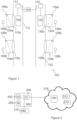
- FIG. 1 illustrates an elevator arrangement 100 according to an embodiment.
- the elevator arrangement comprises an elevator group that includes a plurality of elevator cars 102, 122 movable between landing zones 104a, 104b, 124a, 124b that communicate traffic, e.g. people, to and from the elevator cars through doorways 110a, 110b, 130a, 130b.
- the elevator cars are supported by ropes in hoistways 112, 132 such that the elevator cars may be moved up or down the hoistways by hoisting machineries 113, 133 connected to the ropes.
- the hoistways may be located in a single shaft or separate shafts. In the illustration the elevator cars are located in separate shafts.
- Sensors 106a, 106b, 108a, 108b, 126a, 126b may be installed to the elevator arrangement for obtaining data on traffic and environment of the elevator arrangement.
- the sensors may be installed to the elevator cars, hoistways, doorways and landing zone for example.
- the sensors 106a, 106b, 126a, 126b are installed to ceilings in the landing zones to monitor traffic that enters the elevator car, leaves the elevator car or is waiting in the landing zone for arrival of the elevator car. Examples of sensors comprise optical sensors, radio frequency sensors, cameras and weight sensors.
- Operating panels 108a, 108b, 128a, 128b on the landing zones or in side elevator cars may also serve as sensors.
- the operating panel may include a user interface, for example one or buttons, a touch screen and/or a display.
- the operating panel provides a user to enter a destination landing zone to the elevator arrangement.
- the sensors may be connected to a Local Elevator System Group Controller (LESGC) 140 such that data from the sensors, for example destination landing zone may be used for traffic flow optimization in the elevator group.
- LESGC Local Elevator System Group Controller
- the connections between the sensors and the LESGC may be wired or wireless connections.
- Wireless connections may be implemented using devices capable of operating according to a Wireless Local Area Network standard defined by the IEEE 802.11 family of standards. Wired connections may be implemented by wiring, for example field buses and Ethernet connections. Both the wireless and wireless communications may be based on the Internet Protocol.
- the elevator car may be driven between the floors on the basis of the destination landing zone received via the operating panel.
- the elevator arrangement may comprise more than one operating panels that each may be used to enter a destination landing zone.
- the landing zone may have an operating panel installed to a wall.
- Atypical operating panel in the landing zone is a button for indicating a destination landing zone that is higher or lower than the landing zone of the operating panel.
- Both operating panels in the landing zone and the in the elevator car may be capable of receiving a specific destination landing zone, e.g. defined by a number of the floor the landing zone is located in.
- the LESGC may perform traffic flow optimization in the elevator group on the basis of data from sensors in the elevator arrangement.
- the traffic flow optimization may comprise inputting the data from the sensors to a local operating model to determine actions in the elevator arrangement for traffic flow optimization.
- the actions in the elevator arrangement comprise controlling movement of the elevator cars between the landing zones.
- the LESGC may be connected to the hoisting machineries for issuing control commands to the hoisting machineries for driving the elevator cars between the landing zones.
- a LESGC may be connected to hoisting machinery over a secure connection.
- the security of the connection may be provided by a short distance and/or a dedicated communication path for the communications between the LESGC and the hoisting machinery. In this way the number of intermediate devices such as hosts, bridges and routers may be kept low.
- a landing zone may be located in one floor in a building where the elevator arrangement is installed.
- the landing zone refers to an area of the floor that communicates traffic with the elevator car through the doorway.
- the doorway may comprise a door such that the doorway may be closed, when the elevator car is not at the landing zone, but for example moving between the floors or stopped to another floor.
- FIG 2 illustrates an elevator arrangement 200 controllable by a local elevator system group controller 202 and a Remote Elevator System Group Controller 204 (RESGC), according to an embodiment.
- the LESGC may be installed to the elevator arrangement described in Figure 1 .
- the LESGC may be connected electrically to a memory (M) 206 and a Communications Unit (CU) 208 such that functionalities according to an embodiment may be caused.
- M memory
- CU Communications Unit
- the LESGC, M and CU may be for example installed to the same instrument cabin, where they are connected by a communication bus within the instrument cabin.
- the CU provides transmission and reception of information between the elevator arrangement and the RESGC, and between the LESGC and the units of the elevator arrangement, for example one or more hoisting machineries (HMs) 210 and sensors.
- the connection to the RESGC may be an Internet Protocol connection over Ethernet connection.
- the RESGC may be located in an external network 216, for example the Internet. Connecting RESGC to the elevator arrangement provides that the elevator group in the elevator arrangement may be controller by the RESGC.
- the RESGC may be connected to one or more external data sources 212, 214 that provide information for traffic flow optimization in the elevator arrangement.
- Examples of the information provided by the external data sources comprise public transportation schedules, real-time data from traffic on the streets, real-time data form traffic on the roads, real-time data from the public transportation.
- the RESGC may be connected to the data sources over IP connections for example in the Internet.
- the external data source may comprise for example databases that may be accessed by the RESGC.
- the RESGC is implemented in a cloud computing system.
- the functionality of the RESGC may be executed by a plurality of computers in the cloud computing system.
- the cloud computing system provides adapting computing power dedicated to optimization of traffic flow. Accordingly resources may be flexibly allocated to the RESGC based on the complexity of traffic flow optimization tasks at hand, which may depend on an amount of traffic or on distribution of traffic to name a few.
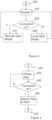
- Figure 3 illustrates a method according to an embodiment.
- the method may be performed in an elevator arrangement of Figure 2 .
- a LESGC or another control entity in the elevator arrangement may cause execution of the method steps.
- the method may start 302, when the elevator arrangement is deployed and operational.
- the connections illustrated in Figure 2 are configured and functional, thus data may be communicated over the connections.
- the connection between the elevator arrangement and the RESGC may be monitored. Monitoring of the connection facilitates determining when the RESGC can control the elevator group and when the RESGC cannot control the elevator group.
- the RESGC may control the elevator group when data from the sensors of the elevator arrangement can be received by the RESGC and the RESGC can send control commands and/or a new local operating model to the elevator arrangement.
- the monitoring may comprise monitoring an amount of traffic, size of data packets and/or type of data packets for example.
- the monitoring may be used to determine an amount of traffic in one direction or in both directions between the elevator arrangement and the RESGC. If the amount of traffic in either or both directions is below a threshold, it may be determined that the connection may be down. Polling messages, for example ping messages, may be sent in one or both directions to determine whether the connection is down.
- the size of data packets may be monitored to determine whether the connection between the elevator arrangement and the RESGC is down or up. When the size of data packets correspond to a size of data packets that are typical for error messages, it may be determined that the connection towards the sender of the data packets is down.
- the type of data packets may be identified as error messages or negative acknowledgement messages, whereby the connection towards the originator of such messages may be determined as being down.
- the method proceeds to 308, where traffic may be served by the elevator cars on the basis of the local operating model.
- the connection may be down, when traffic cannot be communicated in one or both directions on the connection.
- the connection may be down due to a broken device, cable or wire or due to a restart of a device that forms a part of the connection.
- the local operating model may be formed on the basis of data from the sensors within the elevator arrangement.
- the data may be input to the local elevator system group controller for forming the local operating model.
- the LESGC may be used by the LESGC for serving traffic when the connection to the RGC is down.
- the local operating model used by the LESGC for serving traffic when the connection to the RGC is down may be obtained from the RESGC when the connection to the RESGC is up, i.e. prior to the connection being down.
- connection between the elevator arrangement and the RESGC traffic may be served 310 by the elevator cars as controlled by the RESGC, when the connection is up.
- a connection may be up, when traffic may be communicated in both directions on the connection.
- the RESGC may control the elevator cars on the basis of a remote operating model.
- the controlling may comprise sending control commands to the elevator arrangement.
- the elevator control commands may be direct commands to drive the elevator car or the control commands may be a drive profile file that includes parameters for driving the elevator cars.
- traffic may be served 308, 310 according to the remote operating mode or the local operating model and monitoring 304 of the connection may be continued.
- the RESGC may obtain data from the sensors in the elevator arrangement and the external data sources, when the connection between the RESGC and the elevator arrangement is up.
- the obtained data are input to the RESGC that may process the data and form a remote operating model.
- the remote operating model may be updated on the basis of the data form the sensors as well as data form the external data sources.
- the RESGC may combine the data from the elevator arrangement and external data sources for updating the remote operating model.
- the remote operating model may be used to determine control commands to the elevator arrangement for controlling the elevator group, e.g. driving the elevator cars.
- the local operating model may be updated on the basis of the remote operating model.
- the RESGC may form a new local operating model on the basis of the remote operating model.
- the new local operating model may be communicated to the elevator arrangement.
- the elevator arrangement may use an operating model that is formed on the basis of data sources from the elevator arrangement as well as external data sources even if connection to the remote elevator arrangement is down.
- the local operating model may require less computational power than the remote operating model.
- the local operating model may have less parameters than the remote operating model. Since the local operating model is formed on the basis of data sources that are internal to the elevator arrangement as well as external data sources, the local operating model may be optimized for the elevator arrangement such that traffic in the elevator arrangement may be served efficiently even if the connection to the RESGC is down.
- Figure 4 illustrates operation on re-establishment of connection to a RESGC.
- the operation may be performed in an elevator arrangement of Figure 1 , for example by the LESGC.
- the re-establishment of connection to the RESGC may start 402 after it has been determined that a connection to the RESGC is down, for example in step 308 in Figure 3 .
- data from sensors in the elevator arrangement may be obtained.
- the data may be buffered for later use.
- the buffered data may be sent 408 to the RESGC.
- the buffered data may be used to update the remote operating model and/or to determine a new local operating model.
- the connection may be determined to be up on the basis of monitoring the connection as described in step 304 in Figure 3 .
- connection If 406 the connection is not up, the buffering of data may be continued and the method proceeds to 402.
- the connection may be determined to be down on the basis of monitoring the connection as described in step 304 in Figure 3 .
- Implementations of an elevator arrangement, a RESGC or a LESGC may comprise a central processing unit (CPU).
- the CPU may comprise a set of registers, an arithmetic logic unit, and a control unit.
- the control unit is controlled by a sequence of program instructions transferred to the CPU from the memory.
- the control unit may contain a number of microinstructions for basic operations.
- the implementation of micro-instructions may vary, depending on the CPU design.
- the program instructions may be coded by a programming language, which may be a high-level programming language, such as C, Java, etc., or a low-level programming language, such as a machine language, or an assembler.
- the memory may be a volatile or a nonvolatile memory, for example EEPROM, ROM, PROM, RAM, DRAM, SRAM, firmware, programmable logic, etc.
- the memory and the controller may be connected by an electrical connection provided e.g. by a printed circuit board, where the memory and the controller are installed.
- the LESGC and the RESGC may include or be connected to a memory that may store an operating model to be used in controlling an elevator group.
- An embodiment provides a computer program embodied on a distribution medium, for example a non-transitory computer readable storage medium, comprising program instructions which, when loaded into an electronic apparatus, cause the controller to perform a method according to an embodiment.
- the computer program may be in source code form, object code form, or in some intermediate form, and it may be stored in some sort of carrier, which may be any entity or device capable of carrying the program.
- carrier include a record medium, computer memory, read-only memory, electrical carrier signal, telecommunications signal, and software distribution package, for example.
- the computer program may be executed in a single electronic digital computer or processor or it may be distributed amongst a number of computers or processors.
- Execution of the computer program or a computer program product for a computer causes execution of a method according to an embodiment.
- an elevator arrangement implementing one or more functions described with an embodiment comprises not only prior art means, but also means for monitoring a connection to the RESGC, and serving traffic by the elevator cars on the basis of the local operating model, when the connection is down, and serving traffic by the elevator cars as controlled by the RESGC, when the connection is up.
- the various means comprise means for implementing functionality of a corresponding elevator arrangement described with an embodiment and it may comprise separate means for each separate function, or means may be configured to perform two or more functions.
- these techniques may be implemented in hardware (one or more apparatuses), firmware (one or more apparatuses), software (one or more modules), or combinations thereof.
- firmware or software implementation can be through modules (e.g., procedures, functions, and so on) that perform the functions described herein.
- the software codes may be stored in any suitable, processor/computer-readable data storage medium(s) or memory unit(s) or article(s) of manufacture and executed by one or more processors/computers.
- the data storage medium or the memory unit may be implemented within the processor/computer or external to the processor/computer, in which case it can be communicatively coupled to the processor/computer via various means as is known in the art.
Landscapes
- Engineering & Computer Science (AREA)
- Automation & Control Theory (AREA)
- Computer Networks & Wireless Communication (AREA)
- Indicating And Signalling Devices For Elevators (AREA)
- Elevator Control (AREA)
Claims (10)
- Aufzugsanordnung (100), die eine Aufzugsgruppe, eine lokale Aufzugssystemgruppensteuerung (202) und eine Kommunikationseinheit (208) zum Verbinden der Aufzugsanordnung mit einer entfernten Aufzugssystemgruppensteuerung (204) umfasst, wobei die lokale Aufzugssystemgruppensteuerung (202) mit der Aufzugsgruppe und der Kommunikationseinheit (208) verbunden ist, um Folgendes zu veranlassen:Überwachen einer Verbindung zur entfernten Aufzugssystemgruppensteuerung (204), dadurch gekennzeichnet, dass die lokale Aufzugssystemgruppensteuerung (202) ferner angeordnet ist, ferner Folgendes zu veranlassen: Bedienen eines Verkehrs durch die Aufzugsgruppe, wie von der lokalen Aufzugssystemgruppensteuerung (202) gesteuert, auf Basis eines lokalen Betriebsmodells (308), wenn die Verbindung unterbrochen ist, wobei das lokale Betriebsmodell (308) auf Basis von Datenquellen, die sich innerhalb der Aufzugsanordnung (100) befinden, und externen Datenquellen gebildet ist; undBedienen eines Verkehrs durch die Aufzugsgruppe, wie von der entfernten Aufzugssystemgruppensteuerung (204) gesteuert, wenn die Verbindung besteht.
- Aufzugsanordnung (100) nach Anspruch 1, wobei die entfernte Aufzugssystemgruppensteuerung (202) die Aufzugsgruppe auf Basis eines entfernten Betriebsmodells (310) steuert.
- Aufzugsanordnung (100) nach Anspruch 1 oder 2, wobei die entfernte Aufzugssystemgruppensteuerung (204) ein Clouddatenverarbeitungssystem umfasst.
- Aufzugsanordnung (100) nach Anspruch 1, 2 oder 3, wobei die Aufzugsanordnung zum Erhalten von Daten eines Verkehrs und einer Umgebung der Aufzugsanordnung Sensoren (106a,b; 108a,b; 126a,b) umfasst und die Daten von den Sensoren und Daten von externen Datenquellen von der Aufzugsanordnung zum Bedienen eines Verkehrs, wie vom entfernten Betriebsmodell (310) gesteuert, in das entfernte Betriebsmodell (310) eingegeben werden.
- Aufzugsanordnung (100) nach Anspruch 4, wobei Daten von den Sensoren (106a,b; 108a,b; 126a,b) in der Aufzugsanordnung zum Bedienen eines Verkehrs, wie vom lokalen Betriebsmodell (308) gesteuert, in das lokale Betriebsmodell (308) eingegeben werden.
- Aufzugsanordnung (100) nach einem der vorhergehenden Ansprüche 2 bis 5, wobei auf Basis des entfernten Betriebsmodells (310) ein neues lokales Betriebsmodell (308) gebildet wird.
- Aufzugsanordnung (100) nach einem der vorhergehenden Ansprüche 4 bis 6, wobei die Aufzugsanordnung zum Erhalten von Daten über einen Verkehr und eine Umgebung der Aufzugsanordnung Sensoren (106a,b; 108a,b; 126a,b) umfasst und die Daten gepuffert werden, wenn die Verbindung zur entfernten Aufzugssystemgruppensteuerung (204) unterbrochen ist, und die gepufferten Daten an die entfernte Aufzugssystemgruppensteuerung (204) gesendet werden, wenn die Verbindung besteht, um ein neues lokales Betriebsmodell (308) zu bilden oder das entfernte Betriebsmodell (310) zu aktualisieren.
- Aufzugsanordnung (100) nach einem der vorhergehenden Ansprüche, wobei das Überwachen eine Verkehrsmenge, eine Größe von Datenpaketen und/oder eine Art von Datenpaketen umfasst.
- Verfahren für eine Aufzugsanordnung (100), die eine Aufzugsgruppe umfasst, das Folgendes umfasst:
Überwachen einer Verbindung zu einer entfernten Aufzugssystemgruppensteuerung (204), dadurch gekennzeichnet, dass das Verfahren ferner Folgendes umfasst:Bedienen eines Verkehrs durch die Aufzugsgruppe, wie von einer lokalen Aufzugssystemgruppensteuerung (202) gesteuert, auf Basis eines lokalen Betriebsmodells (308), wenn die Verbindung unterbrochen ist, wobei das lokale Betriebsmodell (308) auf Basis von Datenquellen, die sich innerhalb der Aufzugsanordnung (100) befinden, und externen Datenquellen gebildet ist; undBedienen eines Verkehrs durch die Aufzugsgruppe, wie von der entfernten Aufzugssystemgruppensteuerung (204) gesteuert, wenn die Verbindung besteht. - Computerprogrammprodukt für einen Computer, das Softwarecodeabschnitte umfasst, die, wenn sie auf einer lokalen Aufzugssystemgruppensteuerung (202) ausgeführt werden, die lokale Aufzugssystemgruppensteuerung (202) veranlasst, Folgendes zu veranlassen:
Überwachen einer Verbindung zu einer entfernten Aufzugssystemgruppensteuerung (204), dadurch gekennzeichnet, dass die lokale Aufzugssystemgruppensteuerung (202) ferner angeordnet ist, Folgendes zu veranlassen:Bedienen eines Verkehrs durch eine Aufzugsgruppe, wie von der lokalen Aufzugssystemgruppensteuerung (202) gesteuert, auf Basis eines lokalen Betriebsmodells (308), wenn die Verbindung unterbrochen ist, wobei das lokale Betriebsmodell (308) auf Basis von Datenquellen, die sich innerhalb einer Aufzugsanordnung (100) befinden, und externen Datenquellen gebildet ist; undBedienen eines Verkehrs durch die Aufzugsgruppe, wie von der entfernten Aufzugssystemgruppensteuerung (204) gesteuert, wenn die Verbindung besteht.
Applications Claiming Priority (1)
| Application Number | Priority Date | Filing Date | Title |
|---|---|---|---|
| PCT/FI2014/050747 WO2016051011A1 (en) | 2014-10-01 | 2014-10-01 | Elevator arrangement, method and computer program product |
Publications (3)
| Publication Number | Publication Date |
|---|---|
| EP3201115A1 EP3201115A1 (de) | 2017-08-09 |
| EP3201115A4 EP3201115A4 (de) | 2018-06-13 |
| EP3201115B1 true EP3201115B1 (de) | 2024-08-14 |
Family
ID=55629467
Family Applications (1)
| Application Number | Title | Priority Date | Filing Date |
|---|---|---|---|
| EP14903069.4A Active EP3201115B1 (de) | 2014-10-01 | 2014-10-01 | Aufzugsanordnung, verfahren und computerprogrammprodukt |
Country Status (4)
| Country | Link |
|---|---|
| US (1) | US10640327B2 (de) |
| EP (1) | EP3201115B1 (de) |
| CN (1) | CN107074483B (de) |
| WO (1) | WO2016051011A1 (de) |
Families Citing this family (5)
| Publication number | Priority date | Publication date | Assignee | Title |
|---|---|---|---|---|
| CN105923476B (zh) * | 2016-07-14 | 2018-04-10 | 日立楼宇技术(广州)有限公司 | 多目标电梯群控系统及方法 |
| KR102616698B1 (ko) | 2017-07-07 | 2023-12-21 | 오티스 엘리베이터 컴파니 | 엘레베이터 상태 모니터링 시스템 |
| US11524864B2 (en) * | 2018-07-25 | 2022-12-13 | Otis Elevator Company | Method for understanding and planning elevator use |
| FI3680204T3 (fi) * | 2019-01-11 | 2023-03-07 | Kone Corp | Hissijärjestelmän kaukovalvontajärjestelmä ja kaukovalvontamenetelmä |
| EP3995425A1 (de) * | 2020-11-10 | 2022-05-11 | KONE Corporation | Zentrales aufzugverwaltungssystem |
Family Cites Families (18)
| Publication number | Priority date | Publication date | Assignee | Title |
|---|---|---|---|---|
| US4046227A (en) * | 1974-09-04 | 1977-09-06 | Westinghouse Electric Corporation | Elevator system |
| US4111284A (en) * | 1974-09-04 | 1978-09-05 | Westinghouse Electric Corp. | Elevator system |
| US4114730A (en) * | 1976-09-07 | 1978-09-19 | Reliance Electric Company | Transportation system with individual programmable vehicle processors |
| US4397377A (en) * | 1981-07-23 | 1983-08-09 | Westinghouse Electric Corp. | Elevator system |
| US4511017A (en) * | 1983-09-20 | 1985-04-16 | Westinghouse Electric Corp. | Elevator system |
| US4568909A (en) * | 1983-12-19 | 1986-02-04 | United Technologies Corporation | Remote elevator monitoring system |
| DE3763766D1 (de) * | 1986-07-07 | 1990-08-23 | Inventio Ag | System zur fernverwaltung von aufzugsanlagen. |
| US4766978A (en) * | 1987-10-16 | 1988-08-30 | Westinghouse Electric Corp. | Elevator system adaptive time-based block operation |
| US4765442A (en) * | 1987-10-16 | 1988-08-23 | Westinghouse Electric Corp. | Elevator system graceful degradation of bank service |
| US5307903A (en) * | 1988-01-29 | 1994-05-03 | Hitachi, Ltd. | Method and system of controlling elevators and method and apparatus of inputting requests to the control system |
| CN1029516C (zh) * | 1988-01-29 | 1995-08-16 | 株式会社日立制作所 | 电梯的控制装置和向控制装置输入要求的装置 |
| JP2607597B2 (ja) * | 1988-03-02 | 1997-05-07 | 株式会社日立製作所 | エレベータの群管理制御方法 |
| US5398782A (en) * | 1993-11-12 | 1995-03-21 | Otis Elevator Company | Remote monitoring system with variable period communication check |
| SG97809A1 (en) * | 1998-09-17 | 2003-08-20 | Inventio Ag | Remote control of lift installations |
| JP2001158578A (ja) * | 1999-12-06 | 2001-06-12 | Hitachi Ltd | エレベーターの群管理制御システム |
| JP4803865B2 (ja) * | 2000-05-29 | 2011-10-26 | 東芝エレベータ株式会社 | 群管理エレベータの制御装置 |
| ZA200307740B (en) * | 2002-10-29 | 2004-07-02 | Inventio Ag | Device and method for remote maintenance of a lift. |
| KR101286181B1 (ko) * | 2009-09-16 | 2013-07-15 | 오티스 엘리베이터 컴파니 | 다중 서브시스템들을 갖는 엘리베이터 제어 시스템의 원격 접근 |
-
2014
- 2014-10-01 EP EP14903069.4A patent/EP3201115B1/de active Active
- 2014-10-01 CN CN201480082297.9A patent/CN107074483B/zh active Active
- 2014-10-01 WO PCT/FI2014/050747 patent/WO2016051011A1/en not_active Ceased
-
2017
- 2017-03-02 US US15/448,061 patent/US10640327B2/en active Active
Also Published As
| Publication number | Publication date |
|---|---|
| US10640327B2 (en) | 2020-05-05 |
| EP3201115A4 (de) | 2018-06-13 |
| CN107074483B (zh) | 2020-10-13 |
| US20170174470A1 (en) | 2017-06-22 |
| CN107074483A (zh) | 2017-08-18 |
| WO2016051011A1 (en) | 2016-04-07 |
| EP3201115A1 (de) | 2017-08-09 |
Similar Documents
| Publication | Publication Date | Title |
|---|---|---|
| US10640327B2 (en) | Elevator arrangement provided with remote elevator system group controller, method and computer program product | |
| US11440773B2 (en) | Automatic rescue operation in an elevator system | |
| US12580985B2 (en) | Elevator system with a multipurpose edge-gateway and method for data communication | |
| CN110790097A (zh) | 向输送机系统生成控制信号 | |
| CN104220353A (zh) | 使用双通信信道的电梯系统 | |
| US10371531B2 (en) | Structure including a passageway | |
| JP6638424B2 (ja) | エレベータの群管理制御装置、群管理システム、及びエレベータシステム、並びにエレベータの群管理制御方法 | |
| JP2015044668A (ja) | エレベータの群管理制御システム | |
| KR102490796B1 (ko) | 엘리베이터 시스템 및 휴대 단말 | |
| CN112020471B (zh) | 电梯系统的通信解决方案 | |
| JP6861123B2 (ja) | 群管理エレベータ装置 | |
| KR102317211B1 (ko) | 엘리베이터 원격 감시 시스템 | |
| HK1241840A1 (en) | Elevator arrangement, method and computer program product | |
| HK1241840B (zh) | 电梯布置、方法以及计算机程序产品 | |
| US12570499B2 (en) | Elevator communication system | |
| CN116675081A (zh) | 一种电梯自动出入方法、装置、设备及介质 | |
| KR20200060453A (ko) | 엘리베이터 원격 감시 시스템 | |
| US20220204315A1 (en) | System and method for addressing elevator drive faults | |
| CN117412915A (zh) | 电梯系统和用于选择无线通信系统的方法 | |
| US20240064041A1 (en) | Conveyor system, an elevator system, and a conveyor device | |
| HK40023203A (en) | Generation of a control signal to a conveyor system | |
| HK40105941A (zh) | 电梯系统和用於选择无线通信系统的方法 | |
| HK1229041A1 (en) | A structure including a passageway | |
| WO2019142297A1 (ja) | エレベーター装置及び通信装置 | |
| HK1229041B (zh) | 包括通道的结构 |
Legal Events
| Date | Code | Title | Description |
|---|---|---|---|
| STAA | Information on the status of an ep patent application or granted ep patent |
Free format text: STATUS: THE INTERNATIONAL PUBLICATION HAS BEEN MADE |
|
| PUAI | Public reference made under article 153(3) epc to a published international application that has entered the european phase |
Free format text: ORIGINAL CODE: 0009012 |
|
| STAA | Information on the status of an ep patent application or granted ep patent |
Free format text: STATUS: REQUEST FOR EXAMINATION WAS MADE |
|
| 17P | Request for examination filed |
Effective date: 20170425 |
|
| AK | Designated contracting states |
Kind code of ref document: A1 Designated state(s): AL AT BE BG CH CY CZ DE DK EE ES FI FR GB GR HR HU IE IS IT LI LT LU LV MC MK MT NL NO PL PT RO RS SE SI SK SM TR |
|
| AX | Request for extension of the european patent |
Extension state: BA ME |
|
| DAX | Request for extension of the european patent (deleted) | ||
| A4 | Supplementary search report drawn up and despatched |
Effective date: 20180515 |
|
| RIC1 | Information provided on ipc code assigned before grant |
Ipc: B66B 5/00 20060101ALI20180508BHEP Ipc: B66B 1/24 20060101ALI20180508BHEP Ipc: B66B 1/34 20060101AFI20180508BHEP |
|
| STAA | Information on the status of an ep patent application or granted ep patent |
Free format text: STATUS: EXAMINATION IS IN PROGRESS |
|
| 17Q | First examination report despatched |
Effective date: 20210817 |
|
| P01 | Opt-out of the competence of the unified patent court (upc) registered |
Effective date: 20230525 |
|
| GRAP | Despatch of communication of intention to grant a patent |
Free format text: ORIGINAL CODE: EPIDOSNIGR1 |
|
| STAA | Information on the status of an ep patent application or granted ep patent |
Free format text: STATUS: GRANT OF PATENT IS INTENDED |
|
| INTG | Intention to grant announced |
Effective date: 20240307 |
|
| GRAS | Grant fee paid |
Free format text: ORIGINAL CODE: EPIDOSNIGR3 |
|
| GRAA | (expected) grant |
Free format text: ORIGINAL CODE: 0009210 |
|
| STAA | Information on the status of an ep patent application or granted ep patent |
Free format text: STATUS: THE PATENT HAS BEEN GRANTED |
|
| AK | Designated contracting states |
Kind code of ref document: B1 Designated state(s): AL AT BE BG CH CY CZ DE DK EE ES FI FR GB GR HR HU IE IS IT LI LT LU LV MC MK MT NL NO PL PT RO RS SE SI SK SM TR |
|
| REG | Reference to a national code |
Ref country code: GB Ref legal event code: FG4D |
|
| REG | Reference to a national code |
Ref country code: CH Ref legal event code: EP |
|
| REG | Reference to a national code |
Ref country code: DE Ref legal event code: R096 Ref document number: 602014090706 Country of ref document: DE |
|
| REG | Reference to a national code |
Ref country code: IE Ref legal event code: FG4D |
|
| REG | Reference to a national code |
Ref country code: LT Ref legal event code: MG9D |
|
| REG | Reference to a national code |
Ref country code: NL Ref legal event code: MP Effective date: 20240814 |
|
| PG25 | Lapsed in a contracting state [announced via postgrant information from national office to epo] |
Ref country code: NO Free format text: LAPSE BECAUSE OF FAILURE TO SUBMIT A TRANSLATION OF THE DESCRIPTION OR TO PAY THE FEE WITHIN THE PRESCRIBED TIME-LIMIT Effective date: 20241114 |
|
| REG | Reference to a national code |
Ref country code: AT Ref legal event code: MK05 Ref document number: 1713149 Country of ref document: AT Kind code of ref document: T Effective date: 20240814 |
|
| PG25 | Lapsed in a contracting state [announced via postgrant information from national office to epo] |
Ref country code: NL Free format text: LAPSE BECAUSE OF FAILURE TO SUBMIT A TRANSLATION OF THE DESCRIPTION OR TO PAY THE FEE WITHIN THE PRESCRIBED TIME-LIMIT Effective date: 20240814 Ref country code: FI Free format text: LAPSE BECAUSE OF FAILURE TO SUBMIT A TRANSLATION OF THE DESCRIPTION OR TO PAY THE FEE WITHIN THE PRESCRIBED TIME-LIMIT Effective date: 20240814 Ref country code: PT Free format text: LAPSE BECAUSE OF FAILURE TO SUBMIT A TRANSLATION OF THE DESCRIPTION OR TO PAY THE FEE WITHIN THE PRESCRIBED TIME-LIMIT Effective date: 20241216 Ref country code: GR Free format text: LAPSE BECAUSE OF FAILURE TO SUBMIT A TRANSLATION OF THE DESCRIPTION OR TO PAY THE FEE WITHIN THE PRESCRIBED TIME-LIMIT Effective date: 20241115 Ref country code: PL Free format text: LAPSE BECAUSE OF FAILURE TO SUBMIT A TRANSLATION OF THE DESCRIPTION OR TO PAY THE FEE WITHIN THE PRESCRIBED TIME-LIMIT Effective date: 20240814 |
|
| PG25 | Lapsed in a contracting state [announced via postgrant information from national office to epo] |
Ref country code: BG Free format text: LAPSE BECAUSE OF FAILURE TO SUBMIT A TRANSLATION OF THE DESCRIPTION OR TO PAY THE FEE WITHIN THE PRESCRIBED TIME-LIMIT Effective date: 20240814 |
|
| PG25 | Lapsed in a contracting state [announced via postgrant information from national office to epo] |
Ref country code: LV Free format text: LAPSE BECAUSE OF FAILURE TO SUBMIT A TRANSLATION OF THE DESCRIPTION OR TO PAY THE FEE WITHIN THE PRESCRIBED TIME-LIMIT Effective date: 20240814 |
|
| PG25 | Lapsed in a contracting state [announced via postgrant information from national office to epo] |
Ref country code: AT Free format text: LAPSE BECAUSE OF FAILURE TO SUBMIT A TRANSLATION OF THE DESCRIPTION OR TO PAY THE FEE WITHIN THE PRESCRIBED TIME-LIMIT Effective date: 20240814 Ref country code: IS Free format text: LAPSE BECAUSE OF FAILURE TO SUBMIT A TRANSLATION OF THE DESCRIPTION OR TO PAY THE FEE WITHIN THE PRESCRIBED TIME-LIMIT Effective date: 20241214 |
|
| PG25 | Lapsed in a contracting state [announced via postgrant information from national office to epo] |
Ref country code: HR Free format text: LAPSE BECAUSE OF FAILURE TO SUBMIT A TRANSLATION OF THE DESCRIPTION OR TO PAY THE FEE WITHIN THE PRESCRIBED TIME-LIMIT Effective date: 20240814 |
|
| PG25 | Lapsed in a contracting state [announced via postgrant information from national office to epo] |
Ref country code: ES Free format text: LAPSE BECAUSE OF FAILURE TO SUBMIT A TRANSLATION OF THE DESCRIPTION OR TO PAY THE FEE WITHIN THE PRESCRIBED TIME-LIMIT Effective date: 20240814 Ref country code: RS Free format text: LAPSE BECAUSE OF FAILURE TO SUBMIT A TRANSLATION OF THE DESCRIPTION OR TO PAY THE FEE WITHIN THE PRESCRIBED TIME-LIMIT Effective date: 20241114 |
|
| PG25 | Lapsed in a contracting state [announced via postgrant information from national office to epo] |
Ref country code: RS Free format text: LAPSE BECAUSE OF FAILURE TO SUBMIT A TRANSLATION OF THE DESCRIPTION OR TO PAY THE FEE WITHIN THE PRESCRIBED TIME-LIMIT Effective date: 20241114 Ref country code: PT Free format text: LAPSE BECAUSE OF FAILURE TO SUBMIT A TRANSLATION OF THE DESCRIPTION OR TO PAY THE FEE WITHIN THE PRESCRIBED TIME-LIMIT Effective date: 20241216 Ref country code: PL Free format text: LAPSE BECAUSE OF FAILURE TO SUBMIT A TRANSLATION OF THE DESCRIPTION OR TO PAY THE FEE WITHIN THE PRESCRIBED TIME-LIMIT Effective date: 20240814 Ref country code: NO Free format text: LAPSE BECAUSE OF FAILURE TO SUBMIT A TRANSLATION OF THE DESCRIPTION OR TO PAY THE FEE WITHIN THE PRESCRIBED TIME-LIMIT Effective date: 20241114 Ref country code: NL Free format text: LAPSE BECAUSE OF FAILURE TO SUBMIT A TRANSLATION OF THE DESCRIPTION OR TO PAY THE FEE WITHIN THE PRESCRIBED TIME-LIMIT Effective date: 20240814 Ref country code: LV Free format text: LAPSE BECAUSE OF FAILURE TO SUBMIT A TRANSLATION OF THE DESCRIPTION OR TO PAY THE FEE WITHIN THE PRESCRIBED TIME-LIMIT Effective date: 20240814 Ref country code: IS Free format text: LAPSE BECAUSE OF FAILURE TO SUBMIT A TRANSLATION OF THE DESCRIPTION OR TO PAY THE FEE WITHIN THE PRESCRIBED TIME-LIMIT Effective date: 20241214 Ref country code: HR Free format text: LAPSE BECAUSE OF FAILURE TO SUBMIT A TRANSLATION OF THE DESCRIPTION OR TO PAY THE FEE WITHIN THE PRESCRIBED TIME-LIMIT Effective date: 20240814 Ref country code: GR Free format text: LAPSE BECAUSE OF FAILURE TO SUBMIT A TRANSLATION OF THE DESCRIPTION OR TO PAY THE FEE WITHIN THE PRESCRIBED TIME-LIMIT Effective date: 20241115 Ref country code: FI Free format text: LAPSE BECAUSE OF FAILURE TO SUBMIT A TRANSLATION OF THE DESCRIPTION OR TO PAY THE FEE WITHIN THE PRESCRIBED TIME-LIMIT Effective date: 20240814 Ref country code: ES Free format text: LAPSE BECAUSE OF FAILURE TO SUBMIT A TRANSLATION OF THE DESCRIPTION OR TO PAY THE FEE WITHIN THE PRESCRIBED TIME-LIMIT Effective date: 20240814 Ref country code: BG Free format text: LAPSE BECAUSE OF FAILURE TO SUBMIT A TRANSLATION OF THE DESCRIPTION OR TO PAY THE FEE WITHIN THE PRESCRIBED TIME-LIMIT Effective date: 20240814 Ref country code: AT Free format text: LAPSE BECAUSE OF FAILURE TO SUBMIT A TRANSLATION OF THE DESCRIPTION OR TO PAY THE FEE WITHIN THE PRESCRIBED TIME-LIMIT Effective date: 20240814 |
|
| PG25 | Lapsed in a contracting state [announced via postgrant information from national office to epo] |
Ref country code: SM Free format text: LAPSE BECAUSE OF FAILURE TO SUBMIT A TRANSLATION OF THE DESCRIPTION OR TO PAY THE FEE WITHIN THE PRESCRIBED TIME-LIMIT Effective date: 20240814 Ref country code: DK Free format text: LAPSE BECAUSE OF FAILURE TO SUBMIT A TRANSLATION OF THE DESCRIPTION OR TO PAY THE FEE WITHIN THE PRESCRIBED TIME-LIMIT Effective date: 20240814 Ref country code: RO Free format text: LAPSE BECAUSE OF FAILURE TO SUBMIT A TRANSLATION OF THE DESCRIPTION OR TO PAY THE FEE WITHIN THE PRESCRIBED TIME-LIMIT Effective date: 20240814 |
|
| PG25 | Lapsed in a contracting state [announced via postgrant information from national office to epo] |
Ref country code: EE Free format text: LAPSE BECAUSE OF FAILURE TO SUBMIT A TRANSLATION OF THE DESCRIPTION OR TO PAY THE FEE WITHIN THE PRESCRIBED TIME-LIMIT Effective date: 20240814 |
|
| PG25 | Lapsed in a contracting state [announced via postgrant information from national office to epo] |
Ref country code: CZ Free format text: LAPSE BECAUSE OF FAILURE TO SUBMIT A TRANSLATION OF THE DESCRIPTION OR TO PAY THE FEE WITHIN THE PRESCRIBED TIME-LIMIT Effective date: 20240814 |
|
| PG25 | Lapsed in a contracting state [announced via postgrant information from national office to epo] |
Ref country code: IT Free format text: LAPSE BECAUSE OF FAILURE TO SUBMIT A TRANSLATION OF THE DESCRIPTION OR TO PAY THE FEE WITHIN THE PRESCRIBED TIME-LIMIT Effective date: 20240814 Ref country code: SK Free format text: LAPSE BECAUSE OF FAILURE TO SUBMIT A TRANSLATION OF THE DESCRIPTION OR TO PAY THE FEE WITHIN THE PRESCRIBED TIME-LIMIT Effective date: 20240814 |
|
| REG | Reference to a national code |
Ref country code: DE Ref legal event code: R097 Ref document number: 602014090706 Country of ref document: DE |
|
| REG | Reference to a national code |
Ref country code: CH Ref legal event code: PL |
|
| PLBE | No opposition filed within time limit |
Free format text: ORIGINAL CODE: 0009261 |
|
| STAA | Information on the status of an ep patent application or granted ep patent |
Free format text: STATUS: NO OPPOSITION FILED WITHIN TIME LIMIT |
|
| PG25 | Lapsed in a contracting state [announced via postgrant information from national office to epo] |
Ref country code: MC Free format text: LAPSE BECAUSE OF FAILURE TO SUBMIT A TRANSLATION OF THE DESCRIPTION OR TO PAY THE FEE WITHIN THE PRESCRIBED TIME-LIMIT Effective date: 20240814 |
|
| PG25 | Lapsed in a contracting state [announced via postgrant information from national office to epo] |
Ref country code: BE Free format text: LAPSE BECAUSE OF NON-PAYMENT OF DUE FEES Effective date: 20241031 Ref country code: LU Free format text: LAPSE BECAUSE OF NON-PAYMENT OF DUE FEES Effective date: 20241001 |
|
| 26N | No opposition filed |
Effective date: 20250515 |
|
| PG25 | Lapsed in a contracting state [announced via postgrant information from national office to epo] |
Ref country code: CH Free format text: LAPSE BECAUSE OF NON-PAYMENT OF DUE FEES Effective date: 20241031 |
|
| REG | Reference to a national code |
Ref country code: BE Ref legal event code: MM Effective date: 20241031 |
|
| PG25 | Lapsed in a contracting state [announced via postgrant information from national office to epo] |
Ref country code: SE Free format text: LAPSE BECAUSE OF FAILURE TO SUBMIT A TRANSLATION OF THE DESCRIPTION OR TO PAY THE FEE WITHIN THE PRESCRIBED TIME-LIMIT Effective date: 20240814 |
|
| PG25 | Lapsed in a contracting state [announced via postgrant information from national office to epo] |
Ref country code: IE Free format text: LAPSE BECAUSE OF NON-PAYMENT OF DUE FEES Effective date: 20241001 |
|
| PGFP | Annual fee paid to national office [announced via postgrant information from national office to epo] |
Ref country code: DE Payment date: 20251021 Year of fee payment: 12 |
|
| PGFP | Annual fee paid to national office [announced via postgrant information from national office to epo] |
Ref country code: GB Payment date: 20251024 Year of fee payment: 12 |
|
| PGFP | Annual fee paid to national office [announced via postgrant information from national office to epo] |
Ref country code: FR Payment date: 20251030 Year of fee payment: 12 |
|
| PG25 | Lapsed in a contracting state [announced via postgrant information from national office to epo] |
Ref country code: CY Free format text: LAPSE BECAUSE OF FAILURE TO SUBMIT A TRANSLATION OF THE DESCRIPTION OR TO PAY THE FEE WITHIN THE PRESCRIBED TIME-LIMIT; INVALID AB INITIO Effective date: 20141001 |
|
| PG25 | Lapsed in a contracting state [announced via postgrant information from national office to epo] |
Ref country code: HU Free format text: LAPSE BECAUSE OF FAILURE TO SUBMIT A TRANSLATION OF THE DESCRIPTION OR TO PAY THE FEE WITHIN THE PRESCRIBED TIME-LIMIT; INVALID AB INITIO Effective date: 20141001 |