EP3200930B1 - Plasma deposition method for catechol/quinone functionalised layers - Google Patents
Plasma deposition method for catechol/quinone functionalised layers Download PDFInfo
- Publication number
- EP3200930B1 EP3200930B1 EP15750794.8A EP15750794A EP3200930B1 EP 3200930 B1 EP3200930 B1 EP 3200930B1 EP 15750794 A EP15750794 A EP 15750794A EP 3200930 B1 EP3200930 B1 EP 3200930B1
- Authority
- EP
- European Patent Office
- Prior art keywords
- substrate
- azobis
- catechol
- plasma
- quinone
- Prior art date
- Legal status (The legal status is an assumption and is not a legal conclusion. Google has not performed a legal analysis and makes no representation as to the accuracy of the status listed.)
- Active
Links
Images

Classifications
-
- B—PERFORMING OPERATIONS; TRANSPORTING
- B05—SPRAYING OR ATOMISING IN GENERAL; APPLYING FLUENT MATERIALS TO SURFACES, IN GENERAL
- B05D—PROCESSES FOR APPLYING FLUENT MATERIALS TO SURFACES, IN GENERAL
- B05D1/00—Processes for applying liquids or other fluent materials
- B05D1/62—Plasma-deposition of organic layers
-
- B—PERFORMING OPERATIONS; TRANSPORTING
- B05—SPRAYING OR ATOMISING IN GENERAL; APPLYING FLUENT MATERIALS TO SURFACES, IN GENERAL
- B05D—PROCESSES FOR APPLYING FLUENT MATERIALS TO SURFACES, IN GENERAL
- B05D5/00—Processes for applying liquids or other fluent materials to surfaces to obtain special surface effects, finishes or structures
-
- C—CHEMISTRY; METALLURGY
- C09—DYES; PAINTS; POLISHES; NATURAL RESINS; ADHESIVES; COMPOSITIONS NOT OTHERWISE PROVIDED FOR; APPLICATIONS OF MATERIALS NOT OTHERWISE PROVIDED FOR
- C09D—COATING COMPOSITIONS, e.g. PAINTS, VARNISHES OR LACQUERS; FILLING PASTES; CHEMICAL PAINT OR INK REMOVERS; INKS; CORRECTING FLUIDS; WOODSTAINS; PASTES OR SOLIDS FOR COLOURING OR PRINTING; USE OF MATERIALS THEREFOR
- C09D133/00—Coating compositions based on homopolymers or copolymers of compounds having one or more unsaturated aliphatic radicals, each having only one carbon-to-carbon double bond, and at least one being terminated by only one carboxyl radical, or of salts, anhydrides, esters, amides, imides, or nitriles thereof; Coating compositions based on derivatives of such polymers
- C09D133/04—Homopolymers or copolymers of esters
-
- C—CHEMISTRY; METALLURGY
- C09—DYES; PAINTS; POLISHES; NATURAL RESINS; ADHESIVES; COMPOSITIONS NOT OTHERWISE PROVIDED FOR; APPLICATIONS OF MATERIALS NOT OTHERWISE PROVIDED FOR
- C09D—COATING COMPOSITIONS, e.g. PAINTS, VARNISHES OR LACQUERS; FILLING PASTES; CHEMICAL PAINT OR INK REMOVERS; INKS; CORRECTING FLUIDS; WOODSTAINS; PASTES OR SOLIDS FOR COLOURING OR PRINTING; USE OF MATERIALS THEREFOR
- C09D133/00—Coating compositions based on homopolymers or copolymers of compounds having one or more unsaturated aliphatic radicals, each having only one carbon-to-carbon double bond, and at least one being terminated by only one carboxyl radical, or of salts, anhydrides, esters, amides, imides, or nitriles thereof; Coating compositions based on derivatives of such polymers
- C09D133/24—Homopolymers or copolymers of amides or imides
- C09D133/26—Homopolymers or copolymers of acrylamide or methacrylamide
Definitions
- the invention is directed to the field of coating catechol and quinone on a substrate.
- Catechol-containing coatings have attracted a lot of attention since the discovery of the role of such groups in the adhesion of musseis.
- Catechol groups present in the 3,4-dihydroxyphenylalanine (DOPA) found in the Mytilus edulis foot protein or its dihydroxyphenyl derivates (DHPD), are well known to react and adhere to both inorganic and organic surfaces in a wet, turbulent and saline environment.
- DOPA 3,4-dihydroxyphenylalanine
- DHPD dihydroxyphenyl derivates
- Catechol/quinone functionalised layers are attracting more and more interest from materials scientists and Companies due to the richness of the Chemistry associated to these highly reactive functional groups.
- Macromolecules are synthetic or natural polymers, and bear at least one catechol group at the chain-end or along the chain as side chains. They are produced by different synthetic pathways that are summarized in the review by Faure et al.
- the deposition is carried out by the conventional wet deposition techniques such as dip-coating, spraying, roll-coating, etc.
- the second technique consists in the autopolymerization of dopamine in alkaline solution during 24h, or with use of oxidant, such as sodium periodate or an enzyme.
- US4693799 discloses a process for producing a plasma polymerised film having a low coefficient of friction, using a low temperature plasma.
- WO2007/022645 discloses a method for adhering a catechol and quinone functionalised layer to a substrate, according to the preamble of claim 1, i.e. a solvent based method to form an adlayer on a Substrate which comprises dissolving the compounds to be adhered in water and placing the Substrate in the solution for an hour at room temperature.
- US 2007/0202612 A1 discloses a method for adhering a layer to a substrate by plasma polymerisation.
- the present invention provides a Chemical vapour deposition method assisted by plasma to obtain an adherent catechol/quinone functionalized layer.
- the catechol/quinone surface content, crosslinking and thickness of the layer as well as the synthesized organic layer molecular weight can be adjusted according to the plasma Parameters.
- the highly chemically reactive coatings formed by the method of the invention are useful for various applications, due to:
- a plasma deposition method is not a wet chemistry process such as dipping or spraying which require a liquid solvent in addition to polymerizing monomers.
- a plasma deposition method is an all-dry, solvent-free process because the reaction takes place in a gaseous phase with no addition of a liquid organic solvent.
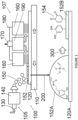
- a first atmospheric pressure plasma deposition chamber is indicated generally at 100 on Figure 1 of the drawings.
- Chamber 100 comprises a spray System indicated generally at 105, a plasma generation System indicated generally at 107, a moving table 110 and an inorganic or organic Substrate120.
- the spray System 105 has a precursor inlet 130 and an ultrasonic spray System 140 which generates microdroplets 150 which when directed against the Substrate 120 in Step 200 forms an initial coating layer 152.
- the ultrasonic spray System 140 may be a 48 kHz ultrasonic atomising nozzle (Sono-Tek Corporation).
- the plasma generation System 107 has a pair of electrodes 160, a gas flux inlet 170, a high voltage Circuit 180 and a gas outlet 190.
- the plasma generation System 107 is arranged vertically above the moving table 110 and is spaced from the Substrate 120.
- an adhered organic functionalised coating layer 152B is formed on the Substrate 120A.
- the adhered organic functionalised coating layer 152B has functional catechol and/or quinone groups indicated at 154.
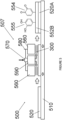
- a second atmospheric pressure plasma deposition chamber is indicated generally at 500 on Figure 5 of the drawings.
- Chamber 500 comprises a plasma generation System indicated generally at 507, a moving table 510 and an inorganic or organic Substrate 520.
- the plasma generation System 507 has a pair of electrodes 560, a gas and precursor inlet 570, a high voltage Circuit 580 and a gas and precursor outlet 590.
- the plasma generation System 507 is arranged vertically above the moving table 510 and is spaced from the Substrate 520.
- the gas and precursor introduced by outlet 590 and the Substrate 520 are then submitted to a plasma polymerization Step 300.
- a Substrate 520A of organic or inorganic material having an adhered coating 552B is generated.
- the coating 552B is an organic functionalised layer with quinone groups 554 and catechol groups 555
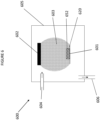
- a low pressure plasma deposition chamber is indicated generally at 600 on Figure 6 of the drawings.
- Chamber 600 comprises a deposition chamber 605, a high voltage electrode 602, a grounded electrode 601, a generated plasma 603, a plasma gas and precursor inlet 604, an outlet 606 connected to a pump, a Substrate 620 and a functionalised layer 652.
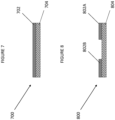
- a coated Substrate according to a first embodiment of the invention is indicated generally at 700 in Figure 7 .
- the coated Substrate has a Substrate 704 and a solvent-free adhered coating 702.
- a coated Substrate according to a first embodiment of the invention is indicated generally at 800 in Figure 8 .
- the coated Substrate has a Substrate 804 and solvent-free adhered coating portions 802A and 802B which partly cover Substrate 804.
- This basic aqueous solution was degassed in sonicator bath (Branson 2510, 100 W, 42 KHz) for 1 h, applying light vaeuum followed by, bubbling with argon for another 2 h.
- 3 g (15.8 mmol) of Dopamine hydrochloride (molecule 1) was added under argon atmosphere and continued stirring for 30 minutes.
- the flask was then cooled at 0°C before drop- wise addition of 5.1 mL (63.2 mmol) of acryloyl Chloride with stirring.
- Another 9.0 g Na2CC>3 was added to maintain the pH of the solution above 9 during the reaction.
- the Substrates used for deposition are 1 mm thick mirror polished 304 stainless Steel disks or aluminium foils. Stainless Steel disks were first cleaned by successive ultrasonic washings in butanone (5 min.), acetone (1 min.) and absolute ethanol (Imin) and further dried under a nitrogen flux. Lysozyme from chicken egg, white egg (lyophilized powder, protein >90%, >40,000 units/mg protein, Aldrich) was used as received.
- the metallic Substrates were plasma cleaned and activated through an Ar/Ü2 plasma treatment (19 slm/ 1 slm (Standard litre per minute)) in continuous (CW) discharge mode at 1.6W/cm 2 during 30 sec.
- VTMOS vinyltrimethoxysilane
- the prepared solution was sprayed by a 48 kHz ultrasonic atomising nozzle 140 (Sono-Tek Corporation) using the apparatus illustrated in Figure 1 .
- the created mist 150 was composed of droplets of median diameter of 40 microns and the rlinde of size is 5 to 200 microns. 0.25 mL/min of solution was injected in the nozzle 140 by using a syringe driver.
- the Sonotek generator 140 was set up to 2W to generate the mist 150, while at the output of the nozzle 140, a nitrogen flow was used in order to shape the mist 150, and entrain it on the Substrate 120.
- Plasma curing in argon was then performed with a dielectric barrier discharge reactor 107 composed of two flat alumina covered electrodes 160 connected to high voltage 180 and ensuring an efficient plasma surface zone of 18.72 cm 2 .
- the samples were placed on the moving table 110 (i.e, grounded electrode) ensuring a dynamic deposition mode.
- the table 110 speed and the gap between the electrodes 160 were fixed at 100 mm.s 1 and 1 mm, respectively.
- the plasma discharge was ignited with a sinusoidal Signal at 10 kHz chopped by a 1667 Hz rectangular Signal.
- the power density was set up to 1.6 W/cm 2 .
- a biomolecule in the form of lysozyme (antibacterial peptide) was then immobilised on the coated surface as follows. Substrates coated with the catechol/quinone functionalized layer were immersed in a IOmM phosphate buffer solution containing lysozyme at 5 mg/ml, at pH 11 during Ih at room temperature under gentle mechanical agitations. The samples were then washed 5 times during 5 minutes with MilliQ purified water.
- FT-IR analysis was performed on a Bruker Hyperion 2000 spectrometer equipped a with MCT detector. A grazing angle or ATR objectives were used for the coated stainless Steel or aluminium Substrates analyses, respectively.
- PerkinElmer Lambda 950UV-vis-NIR (InGaAs) spectrophotometer equipped with an integrating sphere was used for UV-visible spectroscopy.
- the samples are exposed less than 15 seconds under the plasma.
- This method is in the order of few seconds compared to all other existing methods which are in the order of about an hour.
- the method of the present invention is thus at least 200 times faster.
- the deposition rate measured with a contact profilometer, was estimated to be around 5 to 10 nm/s, 29 .
- catechol/quinone functionalized layers can be deposited according to the present invention with a deposition rate that is at least 200 times faster than the conventional wet Chemical methods already reported.
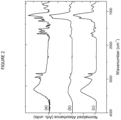
- a peak at 1450 cm” 1 is ascribed to CN Stretching.
- the absence of the vinylic peak 1600 cm" 1 from DOA and VTMOS suggests that a plasma Polymerisation through the vinyl monomer group occurred.
- Si-OH, Si-O-CH3 peaks at 1200-1000 cm” 1 , 940 cm” 1 and 1280 cm” 1 respectively.
- the catechol/quinone functionalized layer might be composed of a silica network resulting from the use ofVTMOS.
- the peak at 1100 cm 1 might be related that an overlap should exist between the Si-O- Si peak and C-C/C-0 peak coming from a C-C/C-0 network created by the reaction between catechols and radicals as supposed in E. Faure review 31 .
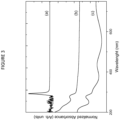
- Catechols are Chromophore compounds that absorb in the UV zone.
- dopamine acrylamide in VTMOS solution shows an absorbance peak at around 290 nm ( Figure 3.a ).
- UV-Visible analyses of plasma deposited layer confirm the presence of free catechol groups with a small shift of this peak toward 276 nm. The same shift was observed in the UV-analyse of a sprayed DOA/VTMOS solution onto a surface ( Figure 3b ).
- the plasma deposited layer one can also notice the formation of a band at 320 nm and the emergence of a peak at 420 nm.
- the former peak might be due to the formation of a polymer of higher molecular mass, a dopamine derivative intermediate.
- the peak at 420 nm is sometimes assigned to catechol oxidation and accumulation of phenol coupling products.
- JISZ2801 antimicrobial tests were performed on plasma deposited layers after the lysozyme immobilization Step. Metallic grafted samples exhibited a total reduction of the bacteria population. Log reduction of the bacteria of 6.9 was achieved, which is far above the 2 log reduction efficacy limit set by the test.
- the Substrate used for deposition is 1 mm thick mirror polished 304 stainless Steel disks. Prior to plasma deposition, stainless Steel disks were cleaned by successive ultrasonic washings in butanone (5 min.), acetone (1 min.) and absolute ethanol (Imin) and further dried under a nitrogen flux. Metallic Substrates were then plasma activated through an Ar/02 plasma treatment (19 slm/ 1 slm (Standard litre per minute)) in continuous (CW) discharge mode at 1.6W/cm2 during 30 sec.
- Catechol molecule (1,2-dihydroxybenzene, Sigma-Aldrich, >99%) was dissolved at final concentration of 5 mg/mL in vinyltrimethoxysilane (VTMOS, 98%, Sigma-Aldrich) at ambient temperature.
- VTMOS vinyltrimethoxysilane
- nisin antibacterial peptide
- the conditions for nisin antibacterial peptide immobilization were as follows. The catechol/quinone plasma functionalized layers were immersed in a 1 mL solution containing 5 mg of nisin and left to react under constant agitation during 1 hour at ambient temperature. Nisin immobilisation was performed in a 10 mM phosphate buffer solution at pH 6.8. The surfaces were then rinsed with deionized water 4 times during 5 minutes under 500 rpm stirring to remove unreacted peptides.
- the antibacterial activity of the developed surfaces was investigated by carrying out the IS022196 antibacterial test.
- Example 2 preparation of bio-inspired antibiofilm surfaces is described.
- the materials were the same as for Example 2 except that the biomolecule used is DispersinB (antibiofilm), which has been produced according to the protocol published by Kaplan et al. ( Kaplan, J.B. Ragunath, C. Ramasubbu N. Fine D.H, J. Bacteriol. 2005, 185, 4693 ).
- the plasma deposition method was the same as for Example 2.
- DispersinB Antibio-film enzyme
- the DispersinB immobilization conditions were as follows. Substrates coated with the catechol/quinone functionalized layer were immersed in a IOmM phosphate buffer solution containing Dispersin B at 1 mg/ml, at pH 7 during Ih at room temperature under gentle mechanical agitations. The samples were then washed 5 times during 5 minutes with MilliQ purified water.
- DspB Dispersin B
- pET-28a/DspB-expressing Escherichia coli was grown overnight at 37°C with shaking in 50 ml LB medium supplemented with 50 pg/ml kanamycin.
- the bacterial Suspension was diluted 100-fold in a total of 2 liters of LB supplemented with kanamycin (50 pg/ml), and the expression of DspB was induced with isopropyl- ⁇ -D-thiogalactopyranoside (final concentration, 0.5 mM) when the culture reached an A600 of 0.6.
- the induced culture was incubated for further 4 h at 37°C with shaking.
- DspB was purified by nickel affinity chromatography as previously described [ Faure et al., Adv. Funct. Mater. 2012, 22, 5271- 5282 ], Fractions were analyzed by SDS-PAGE and by the ability to hydrolyze the chromogenic Substrate 4-nitrophenyl-N-acetyl- ⁇ -D-galactosaminide (Sigma Aldrich). Those fractions containing Dispersin B were pooled and dialyzed against 10 mM P04 pH 5.9, 100 mM NaCl overnight at 4°C. Proteins were quantified using the BCA kit (Pierce).
- test in-vitro anti-adhesion test was performed as follows. A preculture of biofilm forming S. epidermidis ATCC35984 was grown overnight at 37°C in LB (3 mL) and used the next morning to seed a fresh culture in LB (50 mL). The bacterial concentration of test inoculum was adjusted to about 107 cells mL" 1 in M63 medium supplemented with glucose and casamino acids. Metallic Substrates coated with anti-adhesive films were placed in Petri dishes containing damp blotting paper. Test inoculum (200 pL) was pipetted onto each Substrate. The Petri dishes containing the inoculated Coupons were closed and incubated at 37°C for 24 h.
- the treated Substrates were rinsed twice with sterile deionized water (10 mL) to remove non-adherent bacteria and then placed face downward in glass jars containing 500-fold-diluted LB (20 mL) and 4-mm glass beads. The jars were shaken horizontally for 10 minutes and then their contents were sonicated in a water bath (50-60 kHz) for 2 minutes. Viable bacteria were counted by plating 10-fold dilution on LB agar. The plates were incubated at 37°C overnight at room temperature before colony-forming units were counted.
- Enzymatic activity was estimated through the amoxicillin degradation monitoring over time. Enzymes were incubated in a 2 mL degradation medium composed of tap water filtered through 0.22 pm , HEPES (12.5 mM), BSA (10 pg.mL 1 ) and amoxicillin (100 pg.mL 1 ). Each 24h, the degraded amoxicillin concentration was estimated by absorbance measurements at 210 nm with a 2 Synergy microplate reader (Biotek). The medium was removed every 24 hours, wells were washed 3 times with filtered tap water and a new volume of the degradation medium was put in wells.
- FIG. 4 is a bar chart showing degradation of amoxicillin for free and immobilized beta-lactamase.
- the percentage degradation of amoxicillin is shown.
- the time in hours is measured.
- the percentage degradation of amoxicillin is shown for immobilized beta- lactamase (left hand bars) and free beta-lactamase (right hand bars).
- the percentage degradation of amoxicillin is shown for immobilized beta-lactamase.
- the resistance to erosion of the functionalized disks elaborated according to the present invention was investigated by placing the Substrates in a Biofilm Reactor Annular U 1320 (Biosurface Technologies Corporation). The coated Substrates were subjected to 30 km.lr 1 water flows. After 48h and 6 days, the enzymatic activity was investigated. Interestingly, the activity of immobilized enzymes after this erosion test was not altered reflecting a strong enzymes anchoring onto the functionalized surface.
- preparation of bio-inspired antibiofilm surfaces is described based on the plasma deposition of a pre-formed polymer carrying quinone groups.
- the Substrates used for deposition were 1 mm thick mirror polished 304 stainless Steel disks or aluminium foils. Stainless Steel disks were first cleaned by successive ultrasonic washings in butanone (5 min.), acetone (1 min.) and absolute ethanol (Imin) and further dried under a nitrogen flux. Before plasma deposition, the metallic Substrates were plasma cleaned and activated through an Ar/Ü2 plasma treatment (19 slm/ 1 slm (Standard litre per minute)) in continuous (CW) discharge mode at 1.6W/cm2 during 30 sec.
- 20mg of P(mDOPA) was dispersed in a IOmL distilled water solution and a NaOH solution (0.1 M) was slowly added in order to raise the pH above 10.
- the oxidation Step lasted at least one night under air.
- polymer solution presents a pink colour characteristics confirming that the oxidized Pox(mDOPA) polymer had been obtained, (molecule (2)).
- the plasma deposition method and conditions used were as described in Example 2.
- a 0.5 mL/min of a Pox(mDOPA) solution was injected in the nozzle by using a syringe driver.
- DspB DispersinB
- the production and immobilization conditions of DspB are already reported in Example 4.
Landscapes
- Chemical & Material Sciences (AREA)
- Engineering & Computer Science (AREA)
- Life Sciences & Earth Sciences (AREA)
- Materials Engineering (AREA)
- Wood Science & Technology (AREA)
- Organic Chemistry (AREA)
- Physics & Mathematics (AREA)
- Plasma & Fusion (AREA)
- Other Resins Obtained By Reactions Not Involving Carbon-To-Carbon Unsaturated Bonds (AREA)
- Chemical Vapour Deposition (AREA)
- Physical Vapour Deposition (AREA)
- Coating Of Shaped Articles Made Of Macromolecular Substances (AREA)
Applications Claiming Priority (2)
| Application Number | Priority Date | Filing Date | Title |
|---|---|---|---|
| EP14187218 | 2014-09-30 | ||
| PCT/EP2015/069361 WO2016050419A2 (en) | 2014-09-30 | 2015-08-24 | Plasma deposition method for catechol/quinone functionalised layers |
Publications (2)
| Publication Number | Publication Date |
|---|---|
| EP3200930A2 EP3200930A2 (en) | 2017-08-09 |
| EP3200930B1 true EP3200930B1 (en) | 2023-10-04 |
Family
ID=51743262
Family Applications (1)
| Application Number | Title | Priority Date | Filing Date |
|---|---|---|---|
| EP15750794.8A Active EP3200930B1 (en) | 2014-09-30 | 2015-08-24 | Plasma deposition method for catechol/quinone functionalised layers |
Country Status (5)
| Country | Link |
|---|---|
| US (1) | US10843224B2 (enExample) |
| EP (1) | EP3200930B1 (enExample) |
| JP (1) | JP6683692B2 (enExample) |
| SG (2) | SG11201702534VA (enExample) |
| WO (1) | WO2016050419A2 (enExample) |
Families Citing this family (10)
| Publication number | Priority date | Publication date | Assignee | Title |
|---|---|---|---|---|
| BRPI0811530B1 (pt) | 2007-05-14 | 2019-01-02 | Research Foundation Of State Univ Of New York | composição compreendendo indutor(es) de resposta fisiológica à dispersão ácido decanóico, superfície, solução, método ex vivo de tratamento ou inibição da formação de um biofilme sobre uma superfície |
| JP6850973B2 (ja) * | 2016-11-07 | 2021-03-31 | 東京電力ホールディングス株式会社 | 自己修復機能を有する塗料 |
| US11541105B2 (en) | 2018-06-01 | 2023-01-03 | The Research Foundation For The State University Of New York | Compositions and methods for disrupting biofilm formation and maintenance |
| CN111175257A (zh) * | 2018-11-13 | 2020-05-19 | 香港城市大学深圳研究院 | 一种可逆的醌基修饰的生物芯片及其制备方法与应用 |
| CN114286836B (zh) * | 2019-06-18 | 2024-08-09 | 分子等离子集团股份有限公司 | 抗微生物和/或抗病毒聚合物表面 |
| US20220275243A1 (en) * | 2019-08-20 | 2022-09-01 | The Regents Of The University Of Michigan | Surface functionalized substrates and methods of making the same |
| EP3881941A1 (en) | 2020-03-17 | 2021-09-22 | Molecular Plasma Group SA | Plasma coating method and apparatus for biological surface modification |
| JP7561530B2 (ja) * | 2020-06-25 | 2024-10-04 | 東京エレクトロン株式会社 | 成膜方法及び成膜装置 |
| EP3992330A1 (en) * | 2020-10-29 | 2022-05-04 | PartiX | Powder coating method |
| US20250019473A1 (en) * | 2021-11-24 | 2025-01-16 | Verdox, Inc. | Quinone-containing polymer, methods for the manufacture thereof, and use for electrochemical gas separation |
Family Cites Families (30)
| Publication number | Priority date | Publication date | Assignee | Title |
|---|---|---|---|---|
| JPS61213221A (ja) | 1985-03-19 | 1986-09-22 | Japan Synthetic Rubber Co Ltd | プラズマ重合膜の製法 |
| US4952656A (en) * | 1986-10-01 | 1990-08-28 | Air Products And Chemicals, Inc. | Manufacture of high molecular weight poly(vinylamines) |
| JPH01142721A (ja) * | 1987-11-30 | 1989-06-05 | Fujitsu Ltd | ポジ型感光性パターン形成材料およびパターン形成方法 |
| DE19622458C2 (de) * | 1996-05-24 | 1998-03-26 | Senslab Ges Zur Entwicklung Un | Enzymatisch-elektrochemischer Einschritt-Affinitätssensor zur quantitativen Bestimmung von Analyten in wäßrigen Medien und Affinitätsassay |
| JP4624626B2 (ja) * | 1999-11-05 | 2011-02-02 | ズィー コーポレイション | 材料システム及び3次元印刷法 |
| JP2002302505A (ja) * | 2001-01-31 | 2002-10-18 | Sanyo Chem Ind Ltd | ビニル重合体及びその製法 |
| US20020120333A1 (en) | 2001-01-31 | 2002-08-29 | Keogh James R. | Method for coating medical device surfaces |
| US6821379B2 (en) * | 2001-12-21 | 2004-11-23 | The Procter & Gamble Company | Portable apparatus and method for treating a workpiece |
| EP1735113A2 (en) * | 2004-03-26 | 2006-12-27 | Forskningscenter Ris | Plasma-polymerisation of polycyclic compounds |
| CA2657953A1 (en) * | 2005-07-19 | 2007-01-25 | University Of Rochester | Alpha-synuclein antibodies and methods related thereto |
| US8568872B2 (en) * | 2005-08-24 | 2013-10-29 | Eth Zurich | Catechol functionalized polymers and method for preparing them |
| US20080085974A1 (en) * | 2005-12-19 | 2008-04-10 | Sortwell Edwin T | Process for Preparing Water-Soluble Polymer Gels |
| JP5597836B2 (ja) * | 2006-08-04 | 2014-10-01 | ケンジー ナッシュ コーポレイション | バイオミメティック化合物およびその合成方法 |
| WO2008049108A1 (en) * | 2006-10-19 | 2008-04-24 | Northwestern University | Surface-independent, surface-modifying, multifunctional coatings and applications thereof |
| FR2912309B1 (fr) * | 2007-02-13 | 2010-06-04 | Oreal | Procede de deformation permanente des fibres keratiniques comprenant une etape d'application d'une composition oxydante contenant un polymere epaississant cationique. |
| US8623196B2 (en) * | 2007-05-16 | 2014-01-07 | Michigan State University | Nanostructured biosensor containing neuropathy target esterase activity |
| JP2009025604A (ja) * | 2007-07-20 | 2009-02-05 | Konica Minolta Opto Inc | 偏光板保護フィルム、その製造方法及び製造装置、並びに偏光板、その製造方法及び表示装置 |
| WO2009062146A2 (en) * | 2007-11-09 | 2009-05-14 | Northwestern University | Substrate-independent layer-by-layer assembly using catechol-functionalized polymers |
| TW200951579A (en) * | 2008-04-17 | 2009-12-16 | Sumitomo Chemical Co | Composite retardation plate and its manufacturing method |
| EP2130844A1 (en) | 2008-06-06 | 2009-12-09 | Université de Liège | Multifunctional coatings |
| US8796394B2 (en) | 2009-08-27 | 2014-08-05 | Northwestern University | Antifouling hydrogels, coatings, and methods of synthesis and use thereof |
| US20120111791A1 (en) * | 2010-11-04 | 2012-05-10 | Board Of Regents, The University Of Texas System | Surface Deposition of Small Molecules to Increase Water Purification Membrane Fouling Resistance |
| JP2012104399A (ja) * | 2010-11-11 | 2012-05-31 | Fujifilm Corp | プラズマ処理方法 |
| US9572910B2 (en) * | 2011-05-19 | 2017-02-21 | Northwestern University | pH responsive self-healing hydrogels formed by boronate-catechol complexation |
| US20130022752A1 (en) * | 2011-07-20 | 2013-01-24 | U.S. Government As Represented By The Secretary Of The Army | Methods for treating a surface of a substrate by atmospheric plasma processing |
| CN102504082A (zh) * | 2011-10-26 | 2012-06-20 | 杭州师范大学 | 一种聚丙烯酰基多巴胺及其制备方法与应用 |
| CN103094120A (zh) * | 2011-11-08 | 2013-05-08 | 中国科学院微电子研究所 | 一种半导体结构的制造方法 |
| US8962772B2 (en) * | 2013-06-26 | 2015-02-24 | International Business Machines Corporation | Antimicrobial surface modified silicone rubber and methods of preparation thereof |
| US10005716B2 (en) * | 2014-02-07 | 2018-06-26 | Cheorwon Plasma Research Institute | Method for synthesizing catecholamines by using plasma polymerization |
| US10611927B2 (en) * | 2015-05-26 | 2020-04-07 | Japan Science And Technology Agency | Catechol-containing adhesive hydrogel, composition for preparing adhesive hydrogel, and compositions each including said adhesive hydrogel |
-
2015
- 2015-08-24 WO PCT/EP2015/069361 patent/WO2016050419A2/en not_active Ceased
- 2015-08-24 SG SG11201702534VA patent/SG11201702534VA/en unknown
- 2015-08-24 SG SG10201902659XA patent/SG10201902659XA/en unknown
- 2015-08-24 EP EP15750794.8A patent/EP3200930B1/en active Active
- 2015-08-24 US US15/515,916 patent/US10843224B2/en active Active
- 2015-08-24 JP JP2017517242A patent/JP6683692B2/ja active Active
Also Published As
| Publication number | Publication date |
|---|---|
| WO2016050419A2 (en) | 2016-04-07 |
| US20170297055A1 (en) | 2017-10-19 |
| EP3200930A2 (en) | 2017-08-09 |
| US10843224B2 (en) | 2020-11-24 |
| JP6683692B2 (ja) | 2020-04-22 |
| SG10201902659XA (en) | 2019-04-29 |
| WO2016050419A3 (en) | 2016-06-09 |
| JP2017533347A (ja) | 2017-11-09 |
| SG11201702534VA (en) | 2017-05-30 |
Similar Documents
| Publication | Publication Date | Title |
|---|---|---|
| US10843224B2 (en) | Plasma deposition method for catechol/quinone functionalised layers | |
| Lee et al. | Rapid gel formation and adhesion in photocurable and biodegradable block copolymers with high DOPA content | |
| US9296843B2 (en) | Substrate-independent layer-by-layer assembly using catechol-functionalized polymers | |
| Kang et al. | Surface modification of fluoropolymers via molecular design | |
| Jenkins et al. | Pulsed plasma deposited maleic anhydride thin films as supports for lipid bilayers | |
| CN108047860B (zh) | 一种具有防污自净功能的表面涂层产品的制备方法 | |
| WO1995020006A1 (en) | Surface treatment of polymers | |
| US20230025164A1 (en) | Antimicrobial with modified-chitosan functionalization via dopamine linkage | |
| Camporeale et al. | Atmospheric‐Pressure Plasma Deposited Epoxy‐Rich Thin Films as Platforms for Biomolecule Immobilization—Application for Anti‐Biofouling and Xenobiotic‐Degrading Surfaces | |
| AU2014311454A1 (en) | Conductive polymeric coatings, medical devices, coating solutions and methods | |
| WO2011076924A1 (en) | Method to activate silicone rubber surfaces | |
| Mauchauffé et al. | Fast atmospheric plasma deposition of bio-inspired catechol/quinone-rich nanolayers to immobilize NDM-1 enzymes for water treatment | |
| JP2003040902A (ja) | 天然ゴム、天然ゴムの製造方法、粘着剤および粘着テープ | |
| Nitschke et al. | Low pressure plasma immobilization of thin hydrogel films on polymer surfaces | |
| CN107227072B (zh) | 一种两亲性壳聚糖衍生物抗蛋白质吸附涂层的制备方法和应用 | |
| WO2007132018A1 (en) | Anti-microbial material with reduced oxygen permeability | |
| CA3186497A1 (en) | Antimicrobial surfaces via multicomponent chitosan conjugates | |
| CN117225671B (zh) | 一种水凝胶涂层、制备方法及应用 | |
| CN102321419A (zh) | 一种抗凝血涂料及其制法和应用 | |
| Zhang et al. | Thermal imidization of poly (amic acid) precursors on glycidyl methacrylate (GMA) graft-polymerized aluminium and copper surfaces | |
| JPH01123737A (ja) | 防曇性農業用被覆資材 | |
| Serizawa et al. | Prolonged degradation of end-capped polyelectrolyte multilayer films | |
| CN1624062A (zh) | 超疏水性薄膜的制备方法 | |
| US20030021996A1 (en) | Release surfaces | |
| Kumar | Development and characterization of novel organic coatings based on biopolymer chitsan |
Legal Events
| Date | Code | Title | Description |
|---|---|---|---|
| STAA | Information on the status of an ep patent application or granted ep patent |
Free format text: STATUS: THE INTERNATIONAL PUBLICATION HAS BEEN MADE |
|
| PUAI | Public reference made under article 153(3) epc to a published international application that has entered the european phase |
Free format text: ORIGINAL CODE: 0009012 |
|
| STAA | Information on the status of an ep patent application or granted ep patent |
Free format text: STATUS: REQUEST FOR EXAMINATION WAS MADE |
|
| 17P | Request for examination filed |
Effective date: 20170413 |
|
| AK | Designated contracting states |
Kind code of ref document: A2 Designated state(s): AL AT BE BG CH CY CZ DE DK EE ES FI FR GB GR HR HU IE IS IT LI LT LU LV MC MK MT NL NO PL PT RO RS SE SI SK SM TR |
|
| AX | Request for extension of the european patent |
Extension state: BA ME |
|
| DAV | Request for validation of the european patent (deleted) | ||
| DAX | Request for extension of the european patent (deleted) | ||
| STAA | Information on the status of an ep patent application or granted ep patent |
Free format text: STATUS: EXAMINATION IS IN PROGRESS |
|
| 17Q | First examination report despatched |
Effective date: 20180628 |
|
| GRAP | Despatch of communication of intention to grant a patent |
Free format text: ORIGINAL CODE: EPIDOSNIGR1 |
|
| STAA | Information on the status of an ep patent application or granted ep patent |
Free format text: STATUS: GRANT OF PATENT IS INTENDED |
|
| RIC1 | Information provided on ipc code assigned before grant |
Ipc: B05D 5/00 20060101ALI20230216BHEP Ipc: B05D 1/00 20060101AFI20230216BHEP |
|
| INTG | Intention to grant announced |
Effective date: 20230316 |
|
| GRAS | Grant fee paid |
Free format text: ORIGINAL CODE: EPIDOSNIGR3 |
|
| GRAA | (expected) grant |
Free format text: ORIGINAL CODE: 0009210 |
|
| STAA | Information on the status of an ep patent application or granted ep patent |
Free format text: STATUS: THE PATENT HAS BEEN GRANTED |
|
| AK | Designated contracting states |
Kind code of ref document: B1 Designated state(s): AL AT BE BG CH CY CZ DE DK EE ES FI FR GB GR HR HU IE IS IT LI LT LU LV MC MK MT NL NO PL PT RO RS SE SI SK SM TR |
|
| REG | Reference to a national code |
Ref country code: GB Ref legal event code: FG4D |
|
| REG | Reference to a national code |
Ref country code: CH Ref legal event code: EP |
|
| REG | Reference to a national code |
Ref country code: DE Ref legal event code: R096 Ref document number: 602015085944 Country of ref document: DE |
|
| REG | Reference to a national code |
Ref country code: IE Ref legal event code: FG4D |
|
| REG | Reference to a national code |
Ref country code: NL Ref legal event code: FP |
|
| REG | Reference to a national code |
Ref country code: LT Ref legal event code: MG9D |
|
| REG | Reference to a national code |
Ref country code: AT Ref legal event code: MK05 Ref document number: 1617194 Country of ref document: AT Kind code of ref document: T Effective date: 20231004 |
|
| PG25 | Lapsed in a contracting state [announced via postgrant information from national office to epo] |
Ref country code: GR Free format text: LAPSE BECAUSE OF FAILURE TO SUBMIT A TRANSLATION OF THE DESCRIPTION OR TO PAY THE FEE WITHIN THE PRESCRIBED TIME-LIMIT Effective date: 20240105 |
|
| PG25 | Lapsed in a contracting state [announced via postgrant information from national office to epo] |
Ref country code: IS Free format text: LAPSE BECAUSE OF FAILURE TO SUBMIT A TRANSLATION OF THE DESCRIPTION OR TO PAY THE FEE WITHIN THE PRESCRIBED TIME-LIMIT Effective date: 20240204 |
|
| PG25 | Lapsed in a contracting state [announced via postgrant information from national office to epo] |
Ref country code: LT Free format text: LAPSE BECAUSE OF FAILURE TO SUBMIT A TRANSLATION OF THE DESCRIPTION OR TO PAY THE FEE WITHIN THE PRESCRIBED TIME-LIMIT Effective date: 20231004 |
|
| PG25 | Lapsed in a contracting state [announced via postgrant information from national office to epo] |
Ref country code: AT Free format text: LAPSE BECAUSE OF FAILURE TO SUBMIT A TRANSLATION OF THE DESCRIPTION OR TO PAY THE FEE WITHIN THE PRESCRIBED TIME-LIMIT Effective date: 20231004 |
|
| PG25 | Lapsed in a contracting state [announced via postgrant information from national office to epo] |
Ref country code: ES Free format text: LAPSE BECAUSE OF FAILURE TO SUBMIT A TRANSLATION OF THE DESCRIPTION OR TO PAY THE FEE WITHIN THE PRESCRIBED TIME-LIMIT Effective date: 20231004 |
|
| PG25 | Lapsed in a contracting state [announced via postgrant information from national office to epo] |
Ref country code: LT Free format text: LAPSE BECAUSE OF FAILURE TO SUBMIT A TRANSLATION OF THE DESCRIPTION OR TO PAY THE FEE WITHIN THE PRESCRIBED TIME-LIMIT Effective date: 20231004 Ref country code: IS Free format text: LAPSE BECAUSE OF FAILURE TO SUBMIT A TRANSLATION OF THE DESCRIPTION OR TO PAY THE FEE WITHIN THE PRESCRIBED TIME-LIMIT Effective date: 20240204 Ref country code: GR Free format text: LAPSE BECAUSE OF FAILURE TO SUBMIT A TRANSLATION OF THE DESCRIPTION OR TO PAY THE FEE WITHIN THE PRESCRIBED TIME-LIMIT Effective date: 20240105 Ref country code: ES Free format text: LAPSE BECAUSE OF FAILURE TO SUBMIT A TRANSLATION OF THE DESCRIPTION OR TO PAY THE FEE WITHIN THE PRESCRIBED TIME-LIMIT Effective date: 20231004 Ref country code: BG Free format text: LAPSE BECAUSE OF FAILURE TO SUBMIT A TRANSLATION OF THE DESCRIPTION OR TO PAY THE FEE WITHIN THE PRESCRIBED TIME-LIMIT Effective date: 20240104 Ref country code: AT Free format text: LAPSE BECAUSE OF FAILURE TO SUBMIT A TRANSLATION OF THE DESCRIPTION OR TO PAY THE FEE WITHIN THE PRESCRIBED TIME-LIMIT Effective date: 20231004 Ref country code: PT Free format text: LAPSE BECAUSE OF FAILURE TO SUBMIT A TRANSLATION OF THE DESCRIPTION OR TO PAY THE FEE WITHIN THE PRESCRIBED TIME-LIMIT Effective date: 20240205 |
|
| PG25 | Lapsed in a contracting state [announced via postgrant information from national office to epo] |
Ref country code: SE Free format text: LAPSE BECAUSE OF FAILURE TO SUBMIT A TRANSLATION OF THE DESCRIPTION OR TO PAY THE FEE WITHIN THE PRESCRIBED TIME-LIMIT Effective date: 20231004 Ref country code: RS Free format text: LAPSE BECAUSE OF FAILURE TO SUBMIT A TRANSLATION OF THE DESCRIPTION OR TO PAY THE FEE WITHIN THE PRESCRIBED TIME-LIMIT Effective date: 20231004 Ref country code: PL Free format text: LAPSE BECAUSE OF FAILURE TO SUBMIT A TRANSLATION OF THE DESCRIPTION OR TO PAY THE FEE WITHIN THE PRESCRIBED TIME-LIMIT Effective date: 20231004 Ref country code: NO Free format text: LAPSE BECAUSE OF FAILURE TO SUBMIT A TRANSLATION OF THE DESCRIPTION OR TO PAY THE FEE WITHIN THE PRESCRIBED TIME-LIMIT Effective date: 20240104 Ref country code: LV Free format text: LAPSE BECAUSE OF FAILURE TO SUBMIT A TRANSLATION OF THE DESCRIPTION OR TO PAY THE FEE WITHIN THE PRESCRIBED TIME-LIMIT Effective date: 20231004 Ref country code: HR Free format text: LAPSE BECAUSE OF FAILURE TO SUBMIT A TRANSLATION OF THE DESCRIPTION OR TO PAY THE FEE WITHIN THE PRESCRIBED TIME-LIMIT Effective date: 20231004 |
|
| REG | Reference to a national code |
Ref country code: DE Ref legal event code: R097 Ref document number: 602015085944 Country of ref document: DE |
|
| PG25 | Lapsed in a contracting state [announced via postgrant information from national office to epo] |
Ref country code: DK Free format text: LAPSE BECAUSE OF FAILURE TO SUBMIT A TRANSLATION OF THE DESCRIPTION OR TO PAY THE FEE WITHIN THE PRESCRIBED TIME-LIMIT Effective date: 20231004 |
|
| PG25 | Lapsed in a contracting state [announced via postgrant information from national office to epo] |
Ref country code: CZ Free format text: LAPSE BECAUSE OF FAILURE TO SUBMIT A TRANSLATION OF THE DESCRIPTION OR TO PAY THE FEE WITHIN THE PRESCRIBED TIME-LIMIT Effective date: 20231004 |
|
| PG25 | Lapsed in a contracting state [announced via postgrant information from national office to epo] |
Ref country code: SK Free format text: LAPSE BECAUSE OF FAILURE TO SUBMIT A TRANSLATION OF THE DESCRIPTION OR TO PAY THE FEE WITHIN THE PRESCRIBED TIME-LIMIT Effective date: 20231004 |
|
| PG25 | Lapsed in a contracting state [announced via postgrant information from national office to epo] |
Ref country code: SM Free format text: LAPSE BECAUSE OF FAILURE TO SUBMIT A TRANSLATION OF THE DESCRIPTION OR TO PAY THE FEE WITHIN THE PRESCRIBED TIME-LIMIT Effective date: 20231004 Ref country code: SK Free format text: LAPSE BECAUSE OF FAILURE TO SUBMIT A TRANSLATION OF THE DESCRIPTION OR TO PAY THE FEE WITHIN THE PRESCRIBED TIME-LIMIT Effective date: 20231004 Ref country code: RO Free format text: LAPSE BECAUSE OF FAILURE TO SUBMIT A TRANSLATION OF THE DESCRIPTION OR TO PAY THE FEE WITHIN THE PRESCRIBED TIME-LIMIT Effective date: 20231004 Ref country code: IT Free format text: LAPSE BECAUSE OF FAILURE TO SUBMIT A TRANSLATION OF THE DESCRIPTION OR TO PAY THE FEE WITHIN THE PRESCRIBED TIME-LIMIT Effective date: 20231004 Ref country code: EE Free format text: LAPSE BECAUSE OF FAILURE TO SUBMIT A TRANSLATION OF THE DESCRIPTION OR TO PAY THE FEE WITHIN THE PRESCRIBED TIME-LIMIT Effective date: 20231004 Ref country code: DK Free format text: LAPSE BECAUSE OF FAILURE TO SUBMIT A TRANSLATION OF THE DESCRIPTION OR TO PAY THE FEE WITHIN THE PRESCRIBED TIME-LIMIT Effective date: 20231004 Ref country code: CZ Free format text: LAPSE BECAUSE OF FAILURE TO SUBMIT A TRANSLATION OF THE DESCRIPTION OR TO PAY THE FEE WITHIN THE PRESCRIBED TIME-LIMIT Effective date: 20231004 |
|
| PLBE | No opposition filed within time limit |
Free format text: ORIGINAL CODE: 0009261 |
|
| STAA | Information on the status of an ep patent application or granted ep patent |
Free format text: STATUS: NO OPPOSITION FILED WITHIN TIME LIMIT |
|
| 26N | No opposition filed |
Effective date: 20240705 |
|
| PG25 | Lapsed in a contracting state [announced via postgrant information from national office to epo] |
Ref country code: SI Free format text: LAPSE BECAUSE OF FAILURE TO SUBMIT A TRANSLATION OF THE DESCRIPTION OR TO PAY THE FEE WITHIN THE PRESCRIBED TIME-LIMIT Effective date: 20231004 |
|
| PG25 | Lapsed in a contracting state [announced via postgrant information from national office to epo] |
Ref country code: SI Free format text: LAPSE BECAUSE OF FAILURE TO SUBMIT A TRANSLATION OF THE DESCRIPTION OR TO PAY THE FEE WITHIN THE PRESCRIBED TIME-LIMIT Effective date: 20231004 |
|
| REG | Reference to a national code |
Ref country code: CH Ref legal event code: PL |
|
| PG25 | Lapsed in a contracting state [announced via postgrant information from national office to epo] |
Ref country code: MC Free format text: LAPSE BECAUSE OF FAILURE TO SUBMIT A TRANSLATION OF THE DESCRIPTION OR TO PAY THE FEE WITHIN THE PRESCRIBED TIME-LIMIT Effective date: 20231004 Ref country code: CH Free format text: LAPSE BECAUSE OF NON-PAYMENT OF DUE FEES Effective date: 20240831 |
|
| PG25 | Lapsed in a contracting state [announced via postgrant information from national office to epo] |
Ref country code: IE Free format text: LAPSE BECAUSE OF NON-PAYMENT OF DUE FEES Effective date: 20240824 |
|
| PGFP | Annual fee paid to national office [announced via postgrant information from national office to epo] |
Ref country code: LU Payment date: 20250827 Year of fee payment: 11 Ref country code: NL Payment date: 20250826 Year of fee payment: 11 |
|
| PG25 | Lapsed in a contracting state [announced via postgrant information from national office to epo] |
Ref country code: FI Free format text: LAPSE BECAUSE OF FAILURE TO SUBMIT A TRANSLATION OF THE DESCRIPTION OR TO PAY THE FEE WITHIN THE PRESCRIBED TIME-LIMIT Effective date: 20231004 |
|
| PGFP | Annual fee paid to national office [announced via postgrant information from national office to epo] |
Ref country code: DE Payment date: 20250827 Year of fee payment: 11 |
|
| PGFP | Annual fee paid to national office [announced via postgrant information from national office to epo] |
Ref country code: BE Payment date: 20250827 Year of fee payment: 11 Ref country code: GB Payment date: 20250827 Year of fee payment: 11 |
|
| PGFP | Annual fee paid to national office [announced via postgrant information from national office to epo] |
Ref country code: FR Payment date: 20250825 Year of fee payment: 11 |
|
| PG25 | Lapsed in a contracting state [announced via postgrant information from national office to epo] |
Ref country code: CY Free format text: LAPSE BECAUSE OF FAILURE TO SUBMIT A TRANSLATION OF THE DESCRIPTION OR TO PAY THE FEE WITHIN THE PRESCRIBED TIME-LIMIT; INVALID AB INITIO Effective date: 20150824 |
|
| PG25 | Lapsed in a contracting state [announced via postgrant information from national office to epo] |
Ref country code: HU Free format text: LAPSE BECAUSE OF FAILURE TO SUBMIT A TRANSLATION OF THE DESCRIPTION OR TO PAY THE FEE WITHIN THE PRESCRIBED TIME-LIMIT; INVALID AB INITIO Effective date: 20150824 |
|
| PG25 | Lapsed in a contracting state [announced via postgrant information from national office to epo] |
Ref country code: TR Free format text: LAPSE BECAUSE OF FAILURE TO SUBMIT A TRANSLATION OF THE DESCRIPTION OR TO PAY THE FEE WITHIN THE PRESCRIBED TIME-LIMIT Effective date: 20231004 |