EP3190906B1 - Verfahren zur steuerung eines prozesses zum rösten von kaffeebohnen und vorrichtung zur verwendung in einem verfahren zum rösten von kaffeebohnen - Google Patents
Verfahren zur steuerung eines prozesses zum rösten von kaffeebohnen und vorrichtung zur verwendung in einem verfahren zum rösten von kaffeebohnen Download PDFInfo
- Publication number
- EP3190906B1 EP3190906B1 EP15774867.4A EP15774867A EP3190906B1 EP 3190906 B1 EP3190906 B1 EP 3190906B1 EP 15774867 A EP15774867 A EP 15774867A EP 3190906 B1 EP3190906 B1 EP 3190906B1
- Authority
- EP
- European Patent Office
- Prior art keywords
- particulate matter
- roasting
- peak
- coffee beans
- roasting process
- Prior art date
- Legal status (The legal status is an assumption and is not a legal conclusion. Google has not performed a legal analysis and makes no representation as to the accuracy of the status listed.)
- Active
Links
Images



Classifications
-
- A—HUMAN NECESSITIES
- A23—FOODS OR FOODSTUFFS; TREATMENT THEREOF, NOT COVERED BY OTHER CLASSES
- A23F—COFFEE; TEA; THEIR SUBSTITUTES; MANUFACTURE, PREPARATION, OR INFUSION THEREOF
- A23F5/00—Coffee; Coffee substitutes; Preparations thereof
- A23F5/04—Methods of roasting coffee
-
- A—HUMAN NECESSITIES
- A23—FOODS OR FOODSTUFFS; TREATMENT THEREOF, NOT COVERED BY OTHER CLASSES
- A23N—MACHINES OR APPARATUS FOR TREATING HARVESTED FRUIT, VEGETABLES OR FLOWER BULBS IN BULK, NOT OTHERWISE PROVIDED FOR; PEELING VEGETABLES OR FRUIT IN BULK; APPARATUS FOR PREPARING ANIMAL FEEDING- STUFFS
- A23N12/00—Machines for cleaning, blanching, drying or roasting fruits or vegetables, e.g. coffee, cocoa, nuts
- A23N12/08—Machines for cleaning, blanching, drying or roasting fruits or vegetables, e.g. coffee, cocoa, nuts for drying or roasting
- A23N12/12—Auxiliary devices for roasting machines
-
- A—HUMAN NECESSITIES
- A23—FOODS OR FOODSTUFFS; TREATMENT THEREOF, NOT COVERED BY OTHER CLASSES
- A23N—MACHINES OR APPARATUS FOR TREATING HARVESTED FRUIT, VEGETABLES OR FLOWER BULBS IN BULK, NOT OTHERWISE PROVIDED FOR; PEELING VEGETABLES OR FRUIT IN BULK; APPARATUS FOR PREPARING ANIMAL FEEDING- STUFFS
- A23N12/00—Machines for cleaning, blanching, drying or roasting fruits or vegetables, e.g. coffee, cocoa, nuts
- A23N12/08—Machines for cleaning, blanching, drying or roasting fruits or vegetables, e.g. coffee, cocoa, nuts for drying or roasting
- A23N12/12—Auxiliary devices for roasting machines
- A23N12/125—Accessories or details
Definitions
- the invention relates to a method for controlling a process of roasting coffee beans. Furthermore, the present invention relates to a device for use in a process for roasting coffee beans.
- Coffee beans are roasted by treating the beans with an airflow at high temperature, or by subjecting the beans to irradiation or heat conduction.
- a roasting process has a number of different stages such as dehydration, first cracking, second cracking and carbonization.
- the roasting process involves physical and chemical changes which finally result in the coffee beans having a unique aroma and flavor.
- Checking bean color and listening to cracking sound are the most popular ways in which professional roasters monitor a roasting process and determine when to terminate the process. However, this way of doing requires roasting experience. An average home user cannot be expected to have the necessary knowledge of the roasting process, let alone the necessary roasting experience.
- a method for controlling a process of roasting coffee beans wherein measurements of an actual value of particulate matter emission from the coffee beans are performed during the roasting process in order to find a pattern of the particulate matter emission over time, wherein an actual roasting degree of the coffee beans is determined on the basis of the pattern, and wherein at least one characteristic of the roasting process is determined and set on the basis of the actual roasting degree.
- a device for roasting coffee beans which comprises measuring means for performing measurements of an actual value of particulate matter emission from the coffee beans during a process of roasting the coffee beans, and controlling means coupled to the measuring means for receiving the outcome of the measurements from the measuring means, wherein the controlling means are adapted to find a pattern of the particulate matter emission over time on the basis of the outcome of the measurements, to determine an actual roasting degree of the coffee beans on the basis of the pattern, and to determine and set at least one characteristic of the roasting process on the basis of the actual roasting degree.
- the invention is based on the insight that many thermal and chemical reactions occur during the roasting process, including dehydration, decarboxylation, fractionization, isomerization, polymerization, Maillard reaction, Strecker degradation, and caramelization. These reactions normally involve a change of the chemical composition of the coffee beans and the emission of by-products in the form of particulate matter, volatile organic compounds, and moisture. It has been discovered that pollutant emission has a correlation with coffee roasting stages, and it is now proposed to use this correlation for indicating roasting degree and determining one or more characteristics of the roasting process.
- the invention is about particulate matter sensing in the context of a process of roasting coffee beans and using the values of the particulate matter as found during the process for real-time determination of the roasting degree, which enables setting at least one characteristic of the roasting process in an appropriate manner.
- the at least one characteristic of the roasting process may include a temperature over time, for example, and/or a duration of the process or at least a stage thereof.
- a particulate matter sensor can be mounted to or integrated in a coffee roaster or a coffee machine including a roaster, particularly a so-called bean-to-cup coffee machine.
- the particulate matter sensor is preferably arranged at an outlet position with respect to the roaster.
- operation of a particulate matter sensor is based on the use of a light beam which is emitted into a measurement chamber. The light is refracted by particles as present in the measurement chamber, and the amount of scattered light is detected.
- Known particulate matter sensors are used for the purpose of engine exhaust measurements or in air purifiers, for example. It is possible to use a particulate matter sensor for counting particles of a certain size. It has been found that in the context of roasting of coffee beans, it may be practical to detect particles having a size of 0.3 ⁇ m.
- both the dehydration stage and the cracking stages of the roasting process involve high emission of particulate matter. Hence, these stages are associated with significant peaks in a pattern of the particulate matter emission. Furthermore, it has been found that when green beans are roasted, a first peak occurs as a result of the dehydration stage in a certain time period after the start of the roasting process, for example, in a time period commencing 3 minutes from the start and ending several minutes later. When partially roasted beans are subjected to a roasting process, the dehydration stage will not occur. Hence, checking whether a peak is present or absent in a certain time period can be used for discriminating green beans from partially roasted beans, i.e. for automatically determining the initial roasting degree of coffee beans without a need of input from a user. In cases in which the peak is found, it is concluded that green beans are used, which need to be roasted during a longer time than partially roasted beans.
- the invention can be applied for automatically adapting the duration of the roasting process to the type of coffee beans to be roasted, without needing to use complex arrangements for visually inspecting the coffee beans at the start of the roasting process, for example.
- the device according to the invention may comprise a memory in which details regarding the first predetermined time period, and regarding a relation between the possible peak of the particulate matter emission and the total duration to be chosen are stored. For example, the relation between peak and duration as mentioned can be recorded in the form of a look-up table.
- roasting stages occur near the end of the roasting process.
- Known preferences in respect of roasting are closely linked to the cracking stages.
- the following relation between roasting degree and cracking stages may be applicable:
- the invention for determining actual cracking stages, so that the invention enables termination of any roasting process at exactly the right moment.
- a predetermined duration of the final stage and/or a predetermined roasting temperature (over time) may be set as soon as the cracking starts, wherein the characteristics can be chosen according to a user's preference in respect of the final roasting degree.
- the controlling means may comprise an interface for receiving input from a user of the device regarding a desired roasting degree of the coffee beans, wherein the controlling means are adapted to use input provided by a user along with the input following from the measurements of the actual value of the particulate matter emission for determining at least one characteristic of the roasting process.
- a solution to this problem is found in detecting particulate matter of the same size at two positions, namely one position for verifying ambient particulate matter and another position for verifying particulate matter at an outlet position with respect to the coffee beans as subjected to roasting, wherein a value of the particulate matter as found at the first position is deducted from a value of the particulate matter as found at the second position in order to obtain the actual value of particulate matter emission from the coffee beans.
- the outlet position with respect to the coffee beans is an outlet position with respect to a space for accommodating the coffee beans with which the device is associated, at least during roasting processes.
- the invention may further relate to a coffee machine for roasting, grinding, brewing and/or dispensing comprising a coffee roaster.
- a coffee machine for roasting, grinding, brewing and/or dispensing comprising a coffee roaster.
- a coffee machine provides the advantage that the taste of the coffee can be adapted according to a consumer's personal desires.
- the coffee machine may either be for personal use, or for professional use, for example in a restaurant.
- the roaster may be a device as defined above for performing the method for controlling a process of roasting coffee beans.
- each of the graphs as shown in Figs. 2 , 3 , 5, 6 , 7, 8 and 9 represents a pattern of particulate matter emission over time from coffee beans subjected to a roasting process.
- Fig. 1 relates to a procedure for determining an initial roasting degree of coffee beans, which procedure can be performed automatically in a device comprising measuring means and controlling means without requiring actions/input from a user.
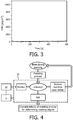
- Figs. 2 and 3 show graphs for illustrating the basic principle of the procedure, wherein graph 2 relates to coffee beans which are initially green, wherein graph 3 relates to coffee beans which are initially partially roasted, and wherein it is true in respect of both graphs that the values of the x axis represent roasting time in seconds and the values of the y axis represent particulate matter in ⁇ g/m 3 .
- the graphs have been found on the basis of processes of roasting green beans and partially roasted beans, respectively, performed in the context of investigations as to the feasibility of the invention, and by performing real-time measurements of the total particulate matter emitted from the beans during those processes.
- a coffee roaster 1 is equipped with at least one particulate matter sensor 10 and a controller 20 for receiving signals from the sensor 10 representing actual values of the particulate matter, for analyzing and interpreting such signals, and for using the outcome of the analysis and interpretation in a process of setting at least one characteristic of a roasting process.
- the coffee roaster 1, the particulate matter sensor 10 and the controller 20 are only diagrammatically indicated as boxes.
- the coffee roaster 1 can be any type of device which is adapted to subject coffee beans to a roasting process, and may be integrated in a coffee maker (not shown).
- the invention is about how the coffee roaster 1, the particulate matter sensor 10 and the controller 20 are used in a process of obtaining excellent roasting results according to a user's desire rather than how these devices actually work, the technical details of these devices will not be elaborated on in this text, unless relevant to the process.
- the beans are initially partially roasted when the total particulate matter remains constant, about 100 to 200 ⁇ g/m 3 , in the time period of about 3 minutes to about 6 minutes from the start.
- the graph shown in Fig. 3 has been found by detecting total particulate matter.
- Equal conditions of the roasting process such as the quantity of the coffee beans and the temperature, are applicable to both graphs. It is noted that a typical value of the temperature associated with dehydration of the beans is approximately 180°C.
- High contrast in total particulate matter of a magnitude of about 100 involves high sensitivity in distinguishing initial bean status.
- a first predetermined time period of about 3-6 minutes, for example.
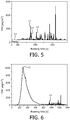
- Fig. 4 relates to a procedure for determining a real-time roasting degree of coffee beans, which procedure can be performed automatically in a device comprising measuring means and controlling means without requiring actions/input from a user.
- Fig. 5 shows a graph for illustrating the basic principle of the procedure, wherein the values of the x axis represent roasting time in seconds and the values of the y axis represent particulate matter in ⁇ g/m 3 . Like the graphs shown in Figs. 2 and 3 , the graph shown in Fig.
- a coffee roaster 1 is equipped with at least one particulate matter sensor 10 and a controller 20 for receiving signals from the sensor 10 representing actual values of the particulate matter, for analyzing and interpreting such signals, and for using the outcome of the analysis and interpretation in a process of setting at least one characteristic of a roasting process.
- the coffee roaster 1, the particulate matter sensor 10 and the controller 20 are only diagrammatically indicated as boxes.
- the coffee roaster 1 can be any type of device which is adapted to subject coffee beans to a roasting process, and may be integrated in a coffee maker (not shown).
- the first stages of a roasting process including the dehydration stage as mentioned in the foregoing in case green beans are roasted, are warming-up stages leading up to first crack, from which moment on exothermic reactions take place.
- the first crack is known to usually release some of the most intense aromas of the entire process.
- the stage between the first crack and termination of the roasting process can be denoted as being the most critical stage of the entire process, due to the rate and sensitivity of the reactions taking place.
- the particulate matter sensor 10 is used to monitor the value of the emission from the coffee beans over time. On the basis thereof, it is possible to sense the start, the continuation process and the termination of the first crack.
- the graph of Fig. 5 relates to the time period during which the first crack takes place and clearly shows that sharp particulate matter emission peaks 12 are produced during that period. It has been found that the total particulate matter increases quickly and significantly when audible cracking sounds are detected, and drop to a baseline 13 after the crack is over. Thus, by registering sharp particulate matter emission peaks 12, the start, the continuation process and the termination of the first crack can be determined, and this can be done in a similar manner in respect of the second crack.
- the exact information regarding cracking status is suitable to be used in a process of setting particulars of a final roasting stage and/or determining when to terminate roasting. It is noted that it is also possible to use a timer for determining a roasting degree and for guiding roasting operation, wherein a setting of the timer can be predetermined on the basis of experience and/or experimental validation. For example, a timer may be activated as soon as it has been determined that the crack stage has started, in order to ensure that the roasting process is terminated after a time period of 2 minutes from that moment on in order to achieve a certain roasting degree such as medium roast. Hence, in such a case, the roasting process is firstly monitored on the basis of information about particulate matter emission, and subsequently controlled by means of a timer which is started at a predetermined moment in the roasting process.
- the final roasting degree can be linked to a user's subjective evaluation of the taste in order to find an optimal setting of the characteristics of the roasting process. For example, a user who prefers a bitter coffee taste, can choose to prolong the duration of the roasting process in order to achieve a darker roasting degree. In such a case, the termination point of the roasting process can be set at the start of the second crack.
- a practical value of the roasting temperature during the cracking stage is typically about 220°C-230°C. In order to have higher intensity of the cracking stage, higher roasting temperature can be applied. This results in higher frequency of the emission peaks 12 and shorter intervals for monitoring emission and providing feedback in terms of a setting of the characteristic(s) of the roasting process.
- the new information regarding particulate matter emission is recorded iteratively for determining an optimal setting of the roasting process according to the user's taste preference.
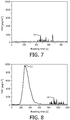
- L* is a known color parameter indicating the lightness of the coffee beans, which is normally in the range of 0-100, wherein a lower value indicates a darker color, and which is indicative of the roasting degree of the beans. It appeared that particulate matter emission started to increase after 3 minutes of roasting time, and the maximum peak 11 was observed at 5 minutes roasting with extremely high value (about 10,000 ⁇ g/m 3 total particulate matter). Afterwards, the particulate matter emission dropped and remained constant at a much lower level, indicating the end of the dehydration stage.
- the roasting process can be denoted as being a second stage roast of Yirgacheffe coffee beans in a very light roast status. It was observed that there was no peak 11 during the first minutes of the roasting process, which is mainly due to the low water content of the partially roasted beans. The roasting was continued to the crack stage, and as soon as that stage was reached, a series of sharp peaks 12 appeared.
- monitoring particulate matter is suitable for detecting initial and actual roasting degree of coffee beans, in respect of various types of beans.
- the first time period is a period of 3-6 minutes after the start of the roasting process.
- the second time period is a later period, which may start 6 minutes after the start of the roasting process, for example.
- the cracks occur at a later stage than in case the beans are initially partially roasted.
- the second time period may be a period of 6-12 minutes after the start of the roasting process in case a peak 11 is absent in the first time period, and the second time period may be a period of 13-23 minutes after the start of the roasting process in case a peak 11 is present in the first time period.
- the particulate matter sensor 10 When monitoring of particulate matter emission is used for controlling a roasting process of coffee beans, it may be practical to require the particulate matter sensor 10 to be sensitive to small particles generated during the roasting with a certain size, for example, 0.3 ⁇ m. However, it appears that the indoor air quality changes from day to day, so that it has to be assumed that the variation of the roasting ambient is very large. For example, the ambient particulate matter may be around 3,000 one day and more than 40,000 another day. This variation may introduce large background noise for the procedure relying on particulate matter measuring and may even render the procedure useless.
- the invention proposes a method in which the noise caused by the indoor air quality is reduced.
- the proposed method is based on having a controlling arrangement in which particulate matter having a particular size can be measured at two positions, namely at a position for measuring ambient particulate matter and at a position for measuring particulate matter emitted from the coffee beans.
- Two particulate matter sensors can be used, wherein, when the roasting process is performed by means of a hot airflow, a first sensor can be arranged at a position where the airflow enters a space where the coffee beans are present during the roasting process, and a second sensor can be arranged at a position in the space, near an air outlet of the space.
- the outcome of the measurements performed by both sensors can be used for finding an actual value of the particulate matter emission from the coffee beans, wherein the outcome of the measurement performed by the first sensor is deducted from the outcome of the measurement performed by the second sensor.
- the outcome of the measurement performed by the first sensor is deducted from the outcome of the measurement performed by the second sensor.
- the two parallel particulate matter sensors can be operated simultaneously, which does not alter the fact that it is also possible to measure the ambient particulate matter only once at a moment prior to the roasting process.
- Figs. 10 and 11 relate to a case in which the roasting process takes place by supplying a hot airflow to the beans.
- a first particulate matter sensor 10a is used to monitor the particle counts from the ambient with specific size, for example, 0.3 ⁇ m.
- a second particulate matter sensor 10b is used to monitor the particle counts with the same size as the first particulate matter sensor 10a.
- An input airflow which is represented by two continuous arrows, is heated by the heating unit 35.
- the first particulate matter sensor 10a can be placed at a position upstream of the heating unit 35 or in a branch of the input airflow.
- an output airflow which is represented by a dashed arrow, is monitored by the second particulate matter sensor 10b, which does not alter the fact that the second particulate matter sensor 10b may also be arranged inside the space 30.
- the outcome of the measurements performed by the sensors 10a, 10b is processed by a particulate matter monitoring module 21 of the controller 20, which is adapted to deduct the value detected by the first sensor 10a from the value detected by the second sensor 10b.
- the settings of the roasting process are determined in a way as described in the foregoing and actually set by a roasting control module 22 of the controller 20.
- the invention is applied to a roaster operating on the basis of another heating principle than the principle of supplying a hot airflow.
- the ambient particles contribute as background noises in particulate matter sensing, due to the fact that the space 30 where the coffee beans are present is normally not a sealed container.
- the second particulate matter sensor 10b is arranged inside the space 30 in order to be at a position for detecting particulate matter emitted from the coffee beans.
Landscapes
- Life Sciences & Earth Sciences (AREA)
- Chemical & Material Sciences (AREA)
- Engineering & Computer Science (AREA)
- Food Science & Technology (AREA)
- Polymers & Plastics (AREA)
- Tea And Coffee (AREA)
- Apparatus For Making Beverages (AREA)
- Apparatuses For Bulk Treatment Of Fruits And Vegetables And Apparatuses For Preparing Feeds (AREA)
Claims (15)
- Verfahren zum Steuern eines Prozesses zum Rösten von Kaffeebohnen, wobei während des Röstprozesses Messungen eines Istwertes der Emission von Feststoffteilchen von den Kaffeebohnen ausgeführt werden, um ein Verhaltensmuster der Emission von Feststoffteilchen in Abhängigkeit von der Zeit festzustellen, wobei auf der Grundlage des Verhaltensmusters ein Ist-Röstgrad der Kaffeebohnen bestimmt wird, und wobei auf der Grundlage des Röstgrads mindestens eine Charakteristikum des Röstprozesses bestimmt und eingestellt wird.
- Verfahren nach Anspruch 1, wobei geprüft wird, ob ein signifikanter Spitzenwert (11) der Emission von Feststoffteilchen in einer ersten vorbestimmten Zeitdauer nach dem Start des Röstprozesses auftritt, und wobei eine Gesamtdauer des Röstprozesses derart eingestellt wird, dass sie für einen Fall, in dem der Spitzenwert (11) festgestellt wird, länger ist als für einen Fall, in dem der Spitzenwert (11) nicht festgestellt wird.
- Verfahren nach Anspruch 2, wobei die Gesamtdauer des Röstprozesses in Abhängigkeit von einer Größe des Spitzenwerts (11) eingestellt wird, und wobei die Gesamtdauer länger eingestellt wird, wenn der Spitzenwert (11) größer ist.
- Verfahren nach Anspruch 1, wobei geprüft wird, ob ein signifikanter Spitzenwert (12) der Emission von Feststoffteilchen in einer zweiten vorbestimmten Zeitdauer nach dem Start des Röstprozesses auftritt, und wobei eine der folgenden Aktionen ausgeführt wird:- Beenden des Röstprozesses, sobald in der zweiten vorbestimmten Zeitdauer ein erster Spitzenwert (12) oder eine vorbestimmte Zahl von Spitzenwerten (12) festgestellt wurde; oder- Beenden des Röstprozesses zu einer vorbestimmten Zeit nach einer Zeit, in der in der zweiten vorbestimmten Zeitdauer ein erster Spitzenwert (12) festgestellt wurde.
- Verfahren nach Anspruch 1, wobei geprüft wird, ob ein signifikanter Spitzenwert (12) der Emission von Feststoffteilchen in einer zweiten vorbestimmten Zeitdauer nach dem Start des Röstprozesses auftritt, und wobei Charakteristika einer letzten Stufe des Röstprozesses eingestellt werden, sobald in der zweiten vorbestimmten Zeitdauer ein erster Spitzenwert (12) festgestellt wurde.
- Verfahren nach einem der Ansprüche 1 bis 5, wobei Feststoffteilchen der gleichen Größe an zwei Positionen detektiert werden, d.h. einer Position zum Überprüfen von umgebenden Feststoffteilchen und einer anderen Position zum Überprüfen von Feststoffteilchen an einer Auslassposition in Bezug auf die Kaffeebohnen, die einem Rösten unterzogen werden, und wobei ein Wert von Feststoffteilchen, wie er an der ersten Position festgestellt wird, von einem Wert von Feststoffteilchen abgezogen wird, wie er an der zweiten Position festgestellt wird, um den Istwert der Emission von Feststoffteilchen von den Kaffeebohnen zu erhalten.
- Vorrichtung zur Verwendung in einem Verfahren zum Rösten von Kaffeebohnen, umfassend Messeinrichtungen (10; 10a, 10b) zum Ausführen von Messungen eines Istwertes einer Emission von Feststoffteilchen von den Kaffeebohnen während eines Prozesses des Röstens der Kaffeebohnen, und Steuermittel (20), die mit den Messeinrichtungen (10; 10a, 10b) zum Empfangen des Ergebnisses der Messungen von den Messeinrichtungen (10; 10a, 10b) verbunden sind, wobei die Steuermittel (20) ausgelegt sind, um ein Verhaltensmuster der Emission von Feststoffteilchen in Abhängigkeit von der Zeit auf der Grundlage des Ergebnisses der Messungen festzustellen, um einen Ist-Röstgrad der Kaffeebohnen auf der Grundlage des Verhaltensmusters zu bestimmen, und um mindestens ein Charakteristikum des Röstprozesses auf der Grundlage des Röstgrads zu bestimmen und einzustellen.
- Vorrichtung nach Anspruch 7, wobei die Messeinrichtungen (10; 10a, 10b) mindestens einen Sensor für Feststoffteilchenumfassen.
- Vorrichtung nach Anspruch 7 oder 8, wobei die Steuermittel (20) ausgelegt sind, um zu prüfen, ob ein signifikanter Spitzenwert (11) der Emission von Feststoffteilchen in einer ersten vorbestimmten Zeitdauer nach dem Start des Röstprozesses auftritt, und um eine Gesamtdauer des Röstprozesses derart einzustellen, dass sie länger ist für einen Fall, in dem der Spitzenwert (11) festgestellt wird als für einen Fall, in dem der Spitzenwert (11) nicht festgestellt wird.
- Vorrichtung nach Anspruch 9, wobei die Steuermittel (20) ausgelegt sind, die Gesamtdauer des Röstprozesses in Abhängigkeit von einer Größe des Spitzenwerts (11) einzustellen, und die Gesamtdauer länger einzustellen, wenn der Spitzenwert (11) größer ist.
- Vorrichtung nach Anspruch 7 oder 8, wobei die Steuermittel (20) ausgelegt sind, um zu prüfen, ob ein signifikanter Spitzenwert (12) der Emission von Feststoffteilchen in einer zweiten vorbestimmten Zeitdauer nach dem Start des Röstprozesses auftritt, und um eine die folgenden Aktionen auszuführen:- Beenden des Röstprozesses, sobald ein erster Spitzenwert (12) oder eine vorbestimmte Zahl von Spitzenwerten (12) in der zweiten vorbestimmten Zeitdauer festgestellt wurde; oder- Beenden des Röstprozesses zu einer vorbestimmten Zeit nach einer Zeit, zu der ein erster Spitzenwert (12) in der zweiten vorbestimmten Zeitdauer festgestellt wurde.
- Vorrichtung nach Anspruch 7 oder 8, wobei die Steuermittel (20) ausgelegt sind, um Charakteristika einer Endstufe des Röstprozesses einzustellen, sobald ein erster Spitzenwert (12) in der zweiten vorbestimmten Zeitdauer festgestellt wurde.
- Vorrichtung nach einem der Ansprüche 7 bis 12, wobei die Steuermittel (20) eine Schnittstelle zum Empfangen einer Eingabe von einem Benutzer der Vorrichtung in Bezug auf einen gewünschten Röstgrad der Kaffeebohnen umfassen, und wobei die Steuermittel (20) ausgelegt sind, eine von einem Benutzer bereitgestellte Eingabe zum Bestimmen des mindestens einen Charakteristikums des Röstprozesses zu verwenden.
- Vorrichtung nach einem der Ansprüche 7 bis 13, die mit einem Raum (30) zum Aufnehmen der Kaffeebohnen verbunden ist, wobei die Messeinrichtungen (10; 10b) in Bezug auf den Raum an einer Auslassposition angeordnet sind.
- Vorrichtung nach einem der Ansprüche 7 bis 13, die mit einem Raum (30) zum Aufnehmen der Kaffeebohnen verbunden ist, wobei die Messeinrichtungen (10a, 10b) ausgelegt sind, um an zwei Positionen Feststoffteilchen der gleichen Größe zu detektieren, d.h. eine Position zum Prüfen von umgebenden Feststoffteilchen und eine andere Position zum Prüfen von Feststoffteilchen an einer Auslassposition in Bezug auf den Raum (30), und wobei die Steuermittel (20) ausgelegt sind, einen Wert der umgebenden Feststoffteilchen von einem Wert der austretenden umgebenden Feststoffteilchen abzuziehen, um den Istwert der Emission von Feststoffteilchen von den Kaffeebohnen während des Röstprozesses zu erhalten.
Applications Claiming Priority (3)
| Application Number | Priority Date | Filing Date | Title |
|---|---|---|---|
| CN2014086303 | 2014-09-11 | ||
| EP14188489 | 2014-10-10 | ||
| PCT/EP2015/070417 WO2016037993A1 (en) | 2014-09-11 | 2015-09-08 | Method for controlling a process of roasting coffee beans and device for use in a process for roasting coffee beans |
Publications (2)
| Publication Number | Publication Date |
|---|---|
| EP3190906A1 EP3190906A1 (de) | 2017-07-19 |
| EP3190906B1 true EP3190906B1 (de) | 2018-04-18 |
Family
ID=54251479
Family Applications (1)
| Application Number | Title | Priority Date | Filing Date |
|---|---|---|---|
| EP15774867.4A Active EP3190906B1 (de) | 2014-09-11 | 2015-09-08 | Verfahren zur steuerung eines prozesses zum rösten von kaffeebohnen und vorrichtung zur verwendung in einem verfahren zum rösten von kaffeebohnen |
Country Status (7)
| Country | Link |
|---|---|
| US (1) | US11517026B2 (de) |
| EP (1) | EP3190906B1 (de) |
| JP (1) | JP6325172B2 (de) |
| CN (1) | CN106604646B (de) |
| AU (1) | AU2015314341A1 (de) |
| RU (1) | RU2653762C1 (de) |
| WO (1) | WO2016037993A1 (de) |
Families Citing this family (6)
| Publication number | Priority date | Publication date | Assignee | Title |
|---|---|---|---|---|
| US11259557B2 (en) | 2016-04-13 | 2022-03-01 | Societe Des Produits Nestle S.A. | Roasting and grinding system and method |
| CA3116837A1 (en) | 2018-10-26 | 2020-04-30 | Societe Des Produits Nestle S.A. | Apparatus and method for roasting coffee beans |
| MX2021005974A (es) * | 2018-12-17 | 2021-06-15 | Nestle Sa | Metodo para tostar granos de cafe. |
| MX2021005978A (es) * | 2018-12-17 | 2021-06-15 | Nestle Sa | Metodo para tostar granos de cafe. |
| KR20230009382A (ko) * | 2020-05-11 | 2023-01-17 | 소시에떼 데 프로듀이 네슬레 소시에떼아노님 | 커피 콩을 로스팅하는 방법 |
| KR20230124595A (ko) * | 2020-12-22 | 2023-08-25 | 소시에떼 데 프로듀이 네슬레 소시에떼아노님 | 커피 콩 로스팅 시스템을 점검하는 방법 |
Family Cites Families (23)
| Publication number | Priority date | Publication date | Assignee | Title |
|---|---|---|---|---|
| US4425720A (en) * | 1981-03-05 | 1984-01-17 | Elevitch Franklin R | Coffee roaster |
| US4602147A (en) * | 1983-11-28 | 1986-07-22 | Gell Harold A | Roasting timer |
| DE3419250C2 (de) | 1984-05-23 | 1987-02-26 | Bosch-Siemens Hausgeräte GmbH, 7000 Stuttgart | Vorrichtung für eine Röstkammer zum Rösten von grünen Kaffeebohnen |
| EP0470254A4 (en) * | 1989-12-21 | 1992-07-15 | Kabushiki Kaisha Doutor Coffee | Device for roasting coffee beans |
| DE69838435T2 (de) | 1997-11-11 | 2008-06-12 | Group 32 Development & Engineering, Inc., Key Biscayne | Röstverfahren |
| US6106877A (en) * | 1998-05-01 | 2000-08-22 | Fresh Roast Systems, Inc. | Method of terminating roasting of bulk materials in real time on basis of objectively determined color of materials |
| JP2001254959A (ja) | 2000-03-14 | 2001-09-21 | Matsushita Electric Ind Co Ltd | 加熱調理器 |
| US7838799B2 (en) | 2001-01-12 | 2010-11-23 | Jeffrey Freedman | Coffee roaster method and control |
| RU2203553C1 (ru) | 2001-11-15 | 2003-05-10 | Государственное образовательное учреждение Воронежская государственная технологическая академия | Способ автоматического управления процессом обжарки кофе |
| CN2884923Y (zh) * | 2006-04-13 | 2007-04-04 | 陈胜雄 | 一种咖啡豆烘焙炒机 |
| RU2328140C1 (ru) | 2007-01-15 | 2008-07-10 | Государственное образовательное учреждение высшего профессионального образования "Воронежская государственная технологическая академия" | Способ управления процессом получения обжаренных зернопродуктов |
| JP5526755B2 (ja) | 2009-12-17 | 2014-06-18 | いすゞ自動車株式会社 | Pmセンサ |
| CN103987282A (zh) * | 2011-07-07 | 2014-08-13 | 纽罗斯特有限公司 | 用于加热食品的容器、系统和方法 |
| CN202364775U (zh) | 2011-12-20 | 2012-08-08 | 黄颖露 | 一种滚筒式炒咖啡机 |
| JP5776574B2 (ja) | 2012-02-07 | 2015-09-09 | 株式会社デンソー | エンジン制御用のセンサ信号の処理装置 |
| US8679561B2 (en) * | 2012-06-21 | 2014-03-25 | Loring Smart Roast, Inc. | Smokeless coffee roaster |
| JP2014011984A (ja) | 2012-07-05 | 2014-01-23 | Takasago Internatl Corp | コーヒー豆又はコーヒー抽出液の品質評価方法 |
| US20140242239A1 (en) * | 2012-09-15 | 2014-08-28 | Deepak Boggavarapu | Systems and methods for coffee preparation |
| US9863861B2 (en) | 2013-02-28 | 2018-01-09 | Perfect Coffee, Inc. | Method and apparatus for particle size determination |
| JP6517319B2 (ja) | 2014-03-28 | 2019-05-22 | キャリター・サイエンシーズ・リミテッド・ライアビリティ・カンパニーCalitor Sciences, Llc | 置換されたヘテロアリール化合物および使用方法 |
| CN105636461B (zh) | 2014-04-15 | 2017-05-03 | 皇家飞利浦有限公司 | 控制咖啡豆的烘烤进程 |
| AU2015317099B2 (en) | 2014-09-19 | 2020-03-26 | Koninklijke Philips N.V. | Apparatus and method for roasting coffee beans, and coffee machine |
| CN105249505B (zh) | 2015-11-02 | 2017-06-23 | 东莞市瑞铸金属科技有限公司 | 一种微型炒豆机及利用该炒豆机炒豆的工艺方法 |
-
2015
- 2015-09-08 EP EP15774867.4A patent/EP3190906B1/de active Active
- 2015-09-08 JP JP2017510643A patent/JP6325172B2/ja active Active
- 2015-09-08 US US15/503,745 patent/US11517026B2/en active Active
- 2015-09-08 WO PCT/EP2015/070417 patent/WO2016037993A1/en not_active Ceased
- 2015-09-08 AU AU2015314341A patent/AU2015314341A1/en not_active Abandoned
- 2015-09-08 RU RU2017112344A patent/RU2653762C1/ru active
- 2015-09-08 CN CN201580049117.1A patent/CN106604646B/zh active Active
Non-Patent Citations (1)
| Title |
|---|
| None * |
Also Published As
| Publication number | Publication date |
|---|---|
| CN106604646A (zh) | 2017-04-26 |
| US20170251691A1 (en) | 2017-09-07 |
| RU2653762C1 (ru) | 2018-05-14 |
| WO2016037993A1 (en) | 2016-03-17 |
| AU2015314341A1 (en) | 2017-04-27 |
| JP2017532010A (ja) | 2017-11-02 |
| JP6325172B2 (ja) | 2018-05-16 |
| CN106604646B (zh) | 2021-11-09 |
| US11517026B2 (en) | 2022-12-06 |
| EP3190906A1 (de) | 2017-07-19 |
Similar Documents
| Publication | Publication Date | Title |
|---|---|---|
| US11517026B2 (en) | Method for controlling a process of roasting coffee beans and device for use in a process for roasting coffee beans | |
| JP6261788B1 (ja) | コーヒー豆のハゼ発生予定時期予測方法、コーヒー豆のハゼ発生予定時期予測装置、コーヒー豆のハゼ検知方法、コーヒー豆のハゼ検知装置、及び焙煎コーヒー豆の製造方法 | |
| EP3223635B1 (de) | Kaffeeröstvorrichtung, kaffeebrühvorrichtung und kaffeeröstverfahren | |
| JP6192840B2 (ja) | コーヒー豆の炒り工程の制御 | |
| CN105939643B (zh) | 用于烘焙部分烘焙咖啡豆的方法和设备 | |
| CN106998948B (zh) | 咖啡烘焙装置、咖啡冲泡装置和咖啡烘焙方法 | |
| EP3214955A1 (de) | Verfahren und vorrichtung zur kontrolle des röstens von kaffeebohnen | |
| CN110089922B (zh) | 一种烹饪方法 | |
| JP2008517681A (ja) | 寸法の異なる加熱調理品を含んでいる加熱調理品ロットを加熱調理する方法、およびこのような方法を具体化するための加熱調理器具 | |
| CN119234955A (zh) | 控制食物烹饪过程的方法和装置 | |
| JP2019503647A5 (de) | ||
| EP2895005A1 (de) | Systeme und verfahren zur kaffeezubereitung | |
| JP2019503647A (ja) | 焙煎方法および装置 | |
| EP3928667A1 (de) | Verfahren zur überwachung zumindest einer eigenschaften einer kaffeesorte | |
| CN109199074A (zh) | 烹饪控制方法、烹饪控制装置和烹饪器具 | |
| CN105636461B (zh) | 控制咖啡豆的烘烤进程 | |
| KR102204213B1 (ko) | 범용 가스식 로스팅기의 로스팅정보 관리장치 | |
| WO2022175406A1 (en) | Quality control of an aerosol-generating article | |
| CN119970873A (zh) | 一种基于数据监测的地黄中药饮片制备方法 | |
| RU2021119855A (ru) | Способ обжаривания кофейных зерен |
Legal Events
| Date | Code | Title | Description |
|---|---|---|---|
| PUAI | Public reference made under article 153(3) epc to a published international application that has entered the european phase |
Free format text: ORIGINAL CODE: 0009012 |
|
| 17P | Request for examination filed |
Effective date: 20170411 |
|
| AK | Designated contracting states |
Kind code of ref document: A1 Designated state(s): AL AT BE BG CH CY CZ DE DK EE ES FI FR GB GR HR HU IE IS IT LI LT LU LV MC MK MT NL NO PL PT RO RS SE SI SK SM TR |
|
| AX | Request for extension of the european patent |
Extension state: BA ME |
|
| GRAP | Despatch of communication of intention to grant a patent |
Free format text: ORIGINAL CODE: EPIDOSNIGR1 |
|
| DAV | Request for validation of the european patent (deleted) | ||
| DAX | Request for extension of the european patent (deleted) | ||
| INTG | Intention to grant announced |
Effective date: 20171106 |
|
| GRAS | Grant fee paid |
Free format text: ORIGINAL CODE: EPIDOSNIGR3 |
|
| GRAA | (expected) grant |
Free format text: ORIGINAL CODE: 0009210 |
|
| AK | Designated contracting states |
Kind code of ref document: B1 Designated state(s): AL AT BE BG CH CY CZ DE DK EE ES FI FR GB GR HR HU IE IS IT LI LT LU LV MC MK MT NL NO PL PT RO RS SE SI SK SM TR |
|
| REG | Reference to a national code |
Ref country code: GB Ref legal event code: FG4D |
|
| REG | Reference to a national code |
Ref country code: CH Ref legal event code: EP |
|
| REG | Reference to a national code |
Ref country code: DE Ref legal event code: R096 Ref document number: 602015010228 Country of ref document: DE |
|
| REG | Reference to a national code |
Ref country code: AT Ref legal event code: REF Ref document number: 989442 Country of ref document: AT Kind code of ref document: T Effective date: 20180515 |
|
| REG | Reference to a national code |
Ref country code: IE Ref legal event code: FG4D |
|
| REG | Reference to a national code |
Ref country code: NL Ref legal event code: MP Effective date: 20180418 |
|
| REG | Reference to a national code |
Ref country code: LT Ref legal event code: MG4D |
|
| REG | Reference to a national code |
Ref country code: FR Ref legal event code: PLFP Year of fee payment: 4 |
|
| PG25 | Lapsed in a contracting state [announced via postgrant information from national office to epo] |
Ref country code: NL Free format text: LAPSE BECAUSE OF FAILURE TO SUBMIT A TRANSLATION OF THE DESCRIPTION OR TO PAY THE FEE WITHIN THE PRESCRIBED TIME-LIMIT Effective date: 20180418 |
|
| PG25 | Lapsed in a contracting state [announced via postgrant information from national office to epo] |
Ref country code: BG Free format text: LAPSE BECAUSE OF FAILURE TO SUBMIT A TRANSLATION OF THE DESCRIPTION OR TO PAY THE FEE WITHIN THE PRESCRIBED TIME-LIMIT Effective date: 20180718 Ref country code: FI Free format text: LAPSE BECAUSE OF FAILURE TO SUBMIT A TRANSLATION OF THE DESCRIPTION OR TO PAY THE FEE WITHIN THE PRESCRIBED TIME-LIMIT Effective date: 20180418 Ref country code: NO Free format text: LAPSE BECAUSE OF FAILURE TO SUBMIT A TRANSLATION OF THE DESCRIPTION OR TO PAY THE FEE WITHIN THE PRESCRIBED TIME-LIMIT Effective date: 20180718 Ref country code: ES Free format text: LAPSE BECAUSE OF FAILURE TO SUBMIT A TRANSLATION OF THE DESCRIPTION OR TO PAY THE FEE WITHIN THE PRESCRIBED TIME-LIMIT Effective date: 20180418 Ref country code: AL Free format text: LAPSE BECAUSE OF FAILURE TO SUBMIT A TRANSLATION OF THE DESCRIPTION OR TO PAY THE FEE WITHIN THE PRESCRIBED TIME-LIMIT Effective date: 20180418 Ref country code: SE Free format text: LAPSE BECAUSE OF FAILURE TO SUBMIT A TRANSLATION OF THE DESCRIPTION OR TO PAY THE FEE WITHIN THE PRESCRIBED TIME-LIMIT Effective date: 20180418 Ref country code: LT Free format text: LAPSE BECAUSE OF FAILURE TO SUBMIT A TRANSLATION OF THE DESCRIPTION OR TO PAY THE FEE WITHIN THE PRESCRIBED TIME-LIMIT Effective date: 20180418 Ref country code: PL Free format text: LAPSE BECAUSE OF FAILURE TO SUBMIT A TRANSLATION OF THE DESCRIPTION OR TO PAY THE FEE WITHIN THE PRESCRIBED TIME-LIMIT Effective date: 20180418 |
|
| PG25 | Lapsed in a contracting state [announced via postgrant information from national office to epo] |
Ref country code: LV Free format text: LAPSE BECAUSE OF FAILURE TO SUBMIT A TRANSLATION OF THE DESCRIPTION OR TO PAY THE FEE WITHIN THE PRESCRIBED TIME-LIMIT Effective date: 20180418 Ref country code: GR Free format text: LAPSE BECAUSE OF FAILURE TO SUBMIT A TRANSLATION OF THE DESCRIPTION OR TO PAY THE FEE WITHIN THE PRESCRIBED TIME-LIMIT Effective date: 20180719 Ref country code: HR Free format text: LAPSE BECAUSE OF FAILURE TO SUBMIT A TRANSLATION OF THE DESCRIPTION OR TO PAY THE FEE WITHIN THE PRESCRIBED TIME-LIMIT Effective date: 20180418 Ref country code: RS Free format text: LAPSE BECAUSE OF FAILURE TO SUBMIT A TRANSLATION OF THE DESCRIPTION OR TO PAY THE FEE WITHIN THE PRESCRIBED TIME-LIMIT Effective date: 20180418 |
|
| REG | Reference to a national code |
Ref country code: AT Ref legal event code: MK05 Ref document number: 989442 Country of ref document: AT Kind code of ref document: T Effective date: 20180418 |
|
| REG | Reference to a national code |
Ref country code: DE Ref legal event code: R097 Ref document number: 602015010228 Country of ref document: DE |
|
| PG25 | Lapsed in a contracting state [announced via postgrant information from national office to epo] |
Ref country code: EE Free format text: LAPSE BECAUSE OF FAILURE TO SUBMIT A TRANSLATION OF THE DESCRIPTION OR TO PAY THE FEE WITHIN THE PRESCRIBED TIME-LIMIT Effective date: 20180418 Ref country code: AT Free format text: LAPSE BECAUSE OF FAILURE TO SUBMIT A TRANSLATION OF THE DESCRIPTION OR TO PAY THE FEE WITHIN THE PRESCRIBED TIME-LIMIT Effective date: 20180418 Ref country code: DK Free format text: LAPSE BECAUSE OF FAILURE TO SUBMIT A TRANSLATION OF THE DESCRIPTION OR TO PAY THE FEE WITHIN THE PRESCRIBED TIME-LIMIT Effective date: 20180418 Ref country code: RO Free format text: LAPSE BECAUSE OF FAILURE TO SUBMIT A TRANSLATION OF THE DESCRIPTION OR TO PAY THE FEE WITHIN THE PRESCRIBED TIME-LIMIT Effective date: 20180418 Ref country code: CZ Free format text: LAPSE BECAUSE OF FAILURE TO SUBMIT A TRANSLATION OF THE DESCRIPTION OR TO PAY THE FEE WITHIN THE PRESCRIBED TIME-LIMIT Effective date: 20180418 Ref country code: SK Free format text: LAPSE BECAUSE OF FAILURE TO SUBMIT A TRANSLATION OF THE DESCRIPTION OR TO PAY THE FEE WITHIN THE PRESCRIBED TIME-LIMIT Effective date: 20180418 |
|
| PLBE | No opposition filed within time limit |
Free format text: ORIGINAL CODE: 0009261 |
|
| STAA | Information on the status of an ep patent application or granted ep patent |
Free format text: STATUS: NO OPPOSITION FILED WITHIN TIME LIMIT |
|
| PG25 | Lapsed in a contracting state [announced via postgrant information from national office to epo] |
Ref country code: SM Free format text: LAPSE BECAUSE OF FAILURE TO SUBMIT A TRANSLATION OF THE DESCRIPTION OR TO PAY THE FEE WITHIN THE PRESCRIBED TIME-LIMIT Effective date: 20180418 |
|
| 26N | No opposition filed |
Effective date: 20190121 |
|
| PG25 | Lapsed in a contracting state [announced via postgrant information from national office to epo] |
Ref country code: MC Free format text: LAPSE BECAUSE OF FAILURE TO SUBMIT A TRANSLATION OF THE DESCRIPTION OR TO PAY THE FEE WITHIN THE PRESCRIBED TIME-LIMIT Effective date: 20180418 |
|
| REG | Reference to a national code |
Ref country code: CH Ref legal event code: PL |
|
| REG | Reference to a national code |
Ref country code: BE Ref legal event code: MM Effective date: 20180930 |
|
| REG | Reference to a national code |
Ref country code: IE Ref legal event code: MM4A |
|
| PG25 | Lapsed in a contracting state [announced via postgrant information from national office to epo] |
Ref country code: LU Free format text: LAPSE BECAUSE OF NON-PAYMENT OF DUE FEES Effective date: 20180908 |
|
| PG25 | Lapsed in a contracting state [announced via postgrant information from national office to epo] |
Ref country code: IE Free format text: LAPSE BECAUSE OF NON-PAYMENT OF DUE FEES Effective date: 20180908 |
|
| PG25 | Lapsed in a contracting state [announced via postgrant information from national office to epo] |
Ref country code: CH Free format text: LAPSE BECAUSE OF NON-PAYMENT OF DUE FEES Effective date: 20180930 Ref country code: LI Free format text: LAPSE BECAUSE OF NON-PAYMENT OF DUE FEES Effective date: 20180930 Ref country code: BE Free format text: LAPSE BECAUSE OF NON-PAYMENT OF DUE FEES Effective date: 20180930 |
|
| PGFP | Annual fee paid to national office [announced via postgrant information from national office to epo] |
Ref country code: GB Payment date: 20190927 Year of fee payment: 5 |
|
| PG25 | Lapsed in a contracting state [announced via postgrant information from national office to epo] |
Ref country code: MT Free format text: LAPSE BECAUSE OF NON-PAYMENT OF DUE FEES Effective date: 20180908 |
|
| PG25 | Lapsed in a contracting state [announced via postgrant information from national office to epo] |
Ref country code: TR Free format text: LAPSE BECAUSE OF FAILURE TO SUBMIT A TRANSLATION OF THE DESCRIPTION OR TO PAY THE FEE WITHIN THE PRESCRIBED TIME-LIMIT Effective date: 20180418 |
|
| PG25 | Lapsed in a contracting state [announced via postgrant information from national office to epo] |
Ref country code: PT Free format text: LAPSE BECAUSE OF FAILURE TO SUBMIT A TRANSLATION OF THE DESCRIPTION OR TO PAY THE FEE WITHIN THE PRESCRIBED TIME-LIMIT Effective date: 20180418 |
|
| PG25 | Lapsed in a contracting state [announced via postgrant information from national office to epo] |
Ref country code: HU Free format text: LAPSE BECAUSE OF FAILURE TO SUBMIT A TRANSLATION OF THE DESCRIPTION OR TO PAY THE FEE WITHIN THE PRESCRIBED TIME-LIMIT; INVALID AB INITIO Effective date: 20150908 Ref country code: MK Free format text: LAPSE BECAUSE OF NON-PAYMENT OF DUE FEES Effective date: 20180418 Ref country code: CY Free format text: LAPSE BECAUSE OF FAILURE TO SUBMIT A TRANSLATION OF THE DESCRIPTION OR TO PAY THE FEE WITHIN THE PRESCRIBED TIME-LIMIT Effective date: 20180418 |
|
| PG25 | Lapsed in a contracting state [announced via postgrant information from national office to epo] |
Ref country code: IS Free format text: LAPSE BECAUSE OF FAILURE TO SUBMIT A TRANSLATION OF THE DESCRIPTION OR TO PAY THE FEE WITHIN THE PRESCRIBED TIME-LIMIT Effective date: 20180818 |
|
| PG25 | Lapsed in a contracting state [announced via postgrant information from national office to epo] |
Ref country code: SI Free format text: LAPSE BECAUSE OF NON-PAYMENT OF DUE FEES Effective date: 20180908 |
|
| GBPC | Gb: european patent ceased through non-payment of renewal fee |
Effective date: 20200908 |
|
| PG25 | Lapsed in a contracting state [announced via postgrant information from national office to epo] |
Ref country code: GB Free format text: LAPSE BECAUSE OF NON-PAYMENT OF DUE FEES Effective date: 20200908 |
|
| P01 | Opt-out of the competence of the unified patent court (upc) registered |
Effective date: 20230530 |
|
| REG | Reference to a national code |
Ref country code: DE Ref legal event code: R081 Ref document number: 602015010228 Country of ref document: DE Owner name: VERSUNI HOLDING B.V., NL Free format text: FORMER OWNER: KONINKLIJKE PHILIPS N.V., EINDHOVEN, NL |
|
| PGFP | Annual fee paid to national office [announced via postgrant information from national office to epo] |
Ref country code: DE Payment date: 20250926 Year of fee payment: 11 |
|
| PGFP | Annual fee paid to national office [announced via postgrant information from national office to epo] |
Ref country code: IT Payment date: 20250922 Year of fee payment: 11 |
|
| PGFP | Annual fee paid to national office [announced via postgrant information from national office to epo] |
Ref country code: FR Payment date: 20250925 Year of fee payment: 11 |