EP3170662B1 - Flachdruckplattenvorläufer - Google Patents
Flachdruckplattenvorläufer Download PDFInfo
- Publication number
- EP3170662B1 EP3170662B1 EP15195567.1A EP15195567A EP3170662B1 EP 3170662 B1 EP3170662 B1 EP 3170662B1 EP 15195567 A EP15195567 A EP 15195567A EP 3170662 B1 EP3170662 B1 EP 3170662B1
- Authority
- EP
- European Patent Office
- Prior art keywords
- group
- printing plate
- plate precursor
- coating
- optionally substituted
- Prior art date
- Legal status (The legal status is an assumption and is not a legal conclusion. Google has not performed a legal analysis and makes no representation as to the accuracy of the status listed.)
- Not-in-force
Links
- 238000007639 printing Methods 0.000 title claims description 102
- 239000002243 precursor Substances 0.000 title claims description 58
- 238000000576 coating method Methods 0.000 claims description 75
- 239000011248 coating agent Substances 0.000 claims description 71
- 239000011230 binding agent Substances 0.000 claims description 56
- HRPVXLWXLXDGHG-UHFFFAOYSA-N Acrylamide Chemical class NC(=O)C=C HRPVXLWXLXDGHG-UHFFFAOYSA-N 0.000 claims description 29
- 238000000034 method Methods 0.000 claims description 20
- 230000002708 enhancing effect Effects 0.000 claims description 16
- 239000001257 hydrogen Substances 0.000 claims description 12
- 229910052739 hydrogen Inorganic materials 0.000 claims description 12
- 238000001035 drying Methods 0.000 claims description 11
- 239000007864 aqueous solution Substances 0.000 claims description 10
- NBIIXXVUZAFLBC-UHFFFAOYSA-N Phosphoric acid Chemical compound OP(O)(O)=O NBIIXXVUZAFLBC-UHFFFAOYSA-N 0.000 claims description 9
- 125000003118 aryl group Chemical group 0.000 claims description 9
- 125000005647 linker group Chemical group 0.000 claims description 8
- 125000001072 heteroaryl group Chemical group 0.000 claims description 6
- 125000000547 substituted alkyl group Chemical group 0.000 claims description 6
- PEEHTFAAVSWFBL-UHFFFAOYSA-N Maleimide Chemical class O=C1NC(=O)C=C1 PEEHTFAAVSWFBL-UHFFFAOYSA-N 0.000 claims description 5
- 125000002947 alkylene group Chemical group 0.000 claims description 5
- 125000002993 cycloalkylene group Chemical group 0.000 claims description 5
- CERQOIWHTDAKMF-UHFFFAOYSA-M Methacrylate Chemical class CC(=C)C([O-])=O CERQOIWHTDAKMF-UHFFFAOYSA-M 0.000 claims description 4
- 150000001252 acrylic acid derivatives Chemical class 0.000 claims description 4
- 229910000147 aluminium phosphate Inorganic materials 0.000 claims description 4
- 230000005660 hydrophilic surface Effects 0.000 claims description 4
- 125000005462 imide group Chemical group 0.000 claims description 4
- FQPSGWSUVKBHSU-UHFFFAOYSA-N methacrylamide Chemical class CC(=C)C(N)=O FQPSGWSUVKBHSU-UHFFFAOYSA-N 0.000 claims description 4
- 150000003254 radicals Chemical class 0.000 claims description 4
- 125000000391 vinyl group Chemical class [H]C([*])=C([H])[H] 0.000 claims description 4
- 125000003710 aryl alkyl group Chemical group 0.000 claims description 3
- 125000000732 arylene group Chemical group 0.000 claims description 3
- 125000005549 heteroarylene group Chemical group 0.000 claims description 3
- 125000004435 hydrogen atom Chemical group [H]* 0.000 claims description 3
- 125000000542 sulfonic acid group Chemical group 0.000 claims description 3
- 239000006096 absorbing agent Substances 0.000 claims description 2
- 125000000753 cycloalkyl group Chemical group 0.000 claims description 2
- 150000005690 diesters Chemical class 0.000 claims description 2
- ABLZXFCXXLZCGV-UHFFFAOYSA-N phosphonic acid group Chemical group P(O)(O)=O ABLZXFCXXLZCGV-UHFFFAOYSA-N 0.000 claims description 2
- 125000005504 styryl group Chemical class 0.000 claims description 2
- 125000005156 substituted alkylene group Chemical group 0.000 claims description 2
- 125000003107 substituted aryl group Chemical group 0.000 claims description 2
- 125000000516 sulfuric acid monoester group Chemical group 0.000 claims description 2
- 239000000243 solution Substances 0.000 description 51
- 239000010410 layer Substances 0.000 description 44
- 229920005989 resin Polymers 0.000 description 37
- 239000011347 resin Substances 0.000 description 37
- LFQSCWFLJHTTHZ-UHFFFAOYSA-N Ethanol Chemical compound CCO LFQSCWFLJHTTHZ-UHFFFAOYSA-N 0.000 description 36
- 229920000642 polymer Polymers 0.000 description 33
- 239000000203 mixture Substances 0.000 description 32
- NIXOWILDQLNWCW-UHFFFAOYSA-M Acrylate Chemical compound [O-]C(=O)C=C NIXOWILDQLNWCW-UHFFFAOYSA-M 0.000 description 30
- -1 poly(vinyl acetal Chemical class 0.000 description 29
- 239000000126 substance Substances 0.000 description 28
- OKKJLVBELUTLKV-UHFFFAOYSA-N Methanol Chemical class OC OKKJLVBELUTLKV-UHFFFAOYSA-N 0.000 description 26
- XLYOFNOQVPJJNP-UHFFFAOYSA-N water Substances O XLYOFNOQVPJJNP-UHFFFAOYSA-N 0.000 description 26
- ISWSIDIOOBJBQZ-UHFFFAOYSA-N phenol group Chemical group C1(=CC=CC=C1)O ISWSIDIOOBJBQZ-UHFFFAOYSA-N 0.000 description 22
- 229920001577 copolymer Polymers 0.000 description 20
- 239000000975 dye Substances 0.000 description 20
- 239000000976 ink Substances 0.000 description 20
- 238000011161 development Methods 0.000 description 19
- 238000006243 chemical reaction Methods 0.000 description 18
- 238000004090 dissolution Methods 0.000 description 18
- 239000000178 monomer Substances 0.000 description 18
- 239000011541 reaction mixture Substances 0.000 description 18
- 229910052782 aluminium Inorganic materials 0.000 description 17
- XAGFODPZIPBFFR-UHFFFAOYSA-N aluminium Chemical compound [Al] XAGFODPZIPBFFR-UHFFFAOYSA-N 0.000 description 17
- 150000001875 compounds Chemical class 0.000 description 17
- YEJRWHAVMIAJKC-UHFFFAOYSA-N 4-Butyrolactone Chemical compound O=C1CCCO1 YEJRWHAVMIAJKC-UHFFFAOYSA-N 0.000 description 16
- 239000004411 aluminium Substances 0.000 description 16
- KWYUFKZDYYNOTN-UHFFFAOYSA-M Potassium hydroxide Chemical compound [OH-].[K+] KWYUFKZDYYNOTN-UHFFFAOYSA-M 0.000 description 15
- HEMHJVSKTPXQMS-UHFFFAOYSA-M Sodium hydroxide Chemical compound [OH-].[Na+] HEMHJVSKTPXQMS-UHFFFAOYSA-M 0.000 description 15
- 238000012545 processing Methods 0.000 description 15
- 230000015572 biosynthetic process Effects 0.000 description 14
- ZMANZCXQSJIPKH-UHFFFAOYSA-N Triethylamine Chemical compound CCN(CC)CC ZMANZCXQSJIPKH-UHFFFAOYSA-N 0.000 description 12
- VYPSYNLAJGMNEJ-UHFFFAOYSA-N silicon dioxide Inorganic materials O=[Si]=O VYPSYNLAJGMNEJ-UHFFFAOYSA-N 0.000 description 12
- 229920002554 vinyl polymer Polymers 0.000 description 12
- 230000001965 increasing effect Effects 0.000 description 11
- 238000003786 synthesis reaction Methods 0.000 description 11
- ARXJGSRGQADJSQ-UHFFFAOYSA-N 1-methoxypropan-2-ol Chemical compound COCC(C)O ARXJGSRGQADJSQ-UHFFFAOYSA-N 0.000 description 10
- 238000004458 analytical method Methods 0.000 description 10
- 239000003795 chemical substances by application Substances 0.000 description 10
- 239000003480 eluent Substances 0.000 description 10
- 239000004615 ingredient Substances 0.000 description 10
- 239000007788 liquid Substances 0.000 description 10
- 239000000463 material Substances 0.000 description 10
- 238000011282 treatment Methods 0.000 description 10
- CSCPPACGZOOCGX-UHFFFAOYSA-N Acetone Chemical compound CC(C)=O CSCPPACGZOOCGX-UHFFFAOYSA-N 0.000 description 9
- WEVYAHXRMPXWCK-UHFFFAOYSA-N Acetonitrile Chemical compound CC#N WEVYAHXRMPXWCK-UHFFFAOYSA-N 0.000 description 9
- 241001479434 Agfa Species 0.000 description 9
- YMWUJEATGCHHMB-UHFFFAOYSA-N Dichloromethane Chemical compound ClCCl YMWUJEATGCHHMB-UHFFFAOYSA-N 0.000 description 9
- 125000002496 methyl group Chemical group [H]C([H])([H])* 0.000 description 9
- 239000002904 solvent Substances 0.000 description 9
- FUGYGGDSWSUORM-UHFFFAOYSA-N 4-hydroxystyrene Chemical compound OC1=CC=C(C=C)C=C1 FUGYGGDSWSUORM-UHFFFAOYSA-N 0.000 description 8
- IJGRMHOSHXDMSA-UHFFFAOYSA-N Atomic nitrogen Chemical compound N#N IJGRMHOSHXDMSA-UHFFFAOYSA-N 0.000 description 8
- 101000835998 Homo sapiens SRA stem-loop-interacting RNA-binding protein, mitochondrial Proteins 0.000 description 8
- 102100025491 SRA stem-loop-interacting RNA-binding protein, mitochondrial Human genes 0.000 description 8
- PPBRXRYQALVLMV-UHFFFAOYSA-N Styrene Chemical compound C=CC1=CC=CC=C1 PPBRXRYQALVLMV-UHFFFAOYSA-N 0.000 description 8
- NIXOWILDQLNWCW-UHFFFAOYSA-N acrylic acid group Chemical group C(C=C)(=O)O NIXOWILDQLNWCW-UHFFFAOYSA-N 0.000 description 8
- PNEYBMLMFCGWSK-UHFFFAOYSA-N aluminium oxide Inorganic materials [O-2].[O-2].[O-2].[Al+3].[Al+3] PNEYBMLMFCGWSK-UHFFFAOYSA-N 0.000 description 8
- 239000002585 base Substances 0.000 description 8
- GDTBXPJZTBHREO-UHFFFAOYSA-N bromine Chemical compound BrBr GDTBXPJZTBHREO-UHFFFAOYSA-N 0.000 description 8
- 238000001914 filtration Methods 0.000 description 8
- 230000002209 hydrophobic effect Effects 0.000 description 8
- 239000003960 organic solvent Substances 0.000 description 8
- 239000002253 acid Substances 0.000 description 7
- 125000000217 alkyl group Chemical group 0.000 description 7
- 239000003112 inhibitor Substances 0.000 description 7
- 230000002829 reductive effect Effects 0.000 description 7
- 235000000346 sugar Nutrition 0.000 description 7
- 125000000565 sulfonamide group Chemical group 0.000 description 7
- SMZOUWXMTYCWNB-UHFFFAOYSA-N 2-(2-methoxy-5-methylphenyl)ethanamine Chemical compound COC1=CC=C(C)C=C1CCN SMZOUWXMTYCWNB-UHFFFAOYSA-N 0.000 description 6
- KGIGUEBEKRSTEW-UHFFFAOYSA-N 2-vinylpyridine Chemical compound C=CC1=CC=CC=N1 KGIGUEBEKRSTEW-UHFFFAOYSA-N 0.000 description 6
- VHYFNPMBLIVWCW-UHFFFAOYSA-N 4-Dimethylaminopyridine Chemical compound CN(C)C1=CC=NC=C1 VHYFNPMBLIVWCW-UHFFFAOYSA-N 0.000 description 6
- ZTQSAGDEMFDKMZ-UHFFFAOYSA-N Butyraldehyde Chemical compound CCCC=O ZTQSAGDEMFDKMZ-UHFFFAOYSA-N 0.000 description 6
- IAZDPXIOMUYVGZ-UHFFFAOYSA-N Dimethylsulphoxide Chemical compound CS(C)=O IAZDPXIOMUYVGZ-UHFFFAOYSA-N 0.000 description 6
- LYCAIKOWRPUZTN-UHFFFAOYSA-N Ethylene glycol Chemical compound OCCO LYCAIKOWRPUZTN-UHFFFAOYSA-N 0.000 description 6
- WSFSSNUMVMOOMR-UHFFFAOYSA-N Formaldehyde Chemical compound O=C WSFSSNUMVMOOMR-UHFFFAOYSA-N 0.000 description 6
- WMFOQBRAJBCJND-UHFFFAOYSA-M Lithium hydroxide Chemical compound [Li+].[OH-] WMFOQBRAJBCJND-UHFFFAOYSA-M 0.000 description 6
- DNIAPMSPPWPWGF-UHFFFAOYSA-N Propylene glycol Chemical compound CC(O)CO DNIAPMSPPWPWGF-UHFFFAOYSA-N 0.000 description 6
- FAPWRFPIFSIZLT-UHFFFAOYSA-M Sodium chloride Chemical compound [Na+].[Cl-] FAPWRFPIFSIZLT-UHFFFAOYSA-M 0.000 description 6
- DHKHKXVYLBGOIT-UHFFFAOYSA-N acetaldehyde Diethyl Acetal Natural products CCOC(C)OCC DHKHKXVYLBGOIT-UHFFFAOYSA-N 0.000 description 6
- 125000001495 ethyl group Chemical group [H]C([H])([H])C([H])([H])* 0.000 description 6
- 150000002430 hydrocarbons Chemical group 0.000 description 6
- 239000004094 surface-active agent Substances 0.000 description 6
- 150000001299 aldehydes Chemical class 0.000 description 5
- 229910052910 alkali metal silicate Inorganic materials 0.000 description 5
- 230000008901 benefit Effects 0.000 description 5
- 239000000994 contrast dye Substances 0.000 description 5
- 230000005595 deprotonation Effects 0.000 description 5
- 238000010537 deprotonation reaction Methods 0.000 description 5
- 229930182470 glycoside Natural products 0.000 description 5
- 125000002887 hydroxy group Chemical group [H]O* 0.000 description 5
- 239000000123 paper Substances 0.000 description 5
- 229920001568 phenolic resin Polymers 0.000 description 5
- 235000011118 potassium hydroxide Nutrition 0.000 description 5
- 239000011241 protective layer Substances 0.000 description 5
- 239000000377 silicon dioxide Substances 0.000 description 5
- 235000011121 sodium hydroxide Nutrition 0.000 description 5
- 125000001424 substituent group Chemical group 0.000 description 5
- LWIHDJKSTIGBAC-UHFFFAOYSA-K tripotassium phosphate Chemical compound [K+].[K+].[K+].[O-]P([O-])([O-])=O LWIHDJKSTIGBAC-UHFFFAOYSA-K 0.000 description 5
- MKRBAPNEJMFMHU-UHFFFAOYSA-N 1-benzylpyrrole-2,5-dione Chemical compound O=C1C=CC(=O)N1CC1=CC=CC=C1 MKRBAPNEJMFMHU-UHFFFAOYSA-N 0.000 description 4
- VISOTGQYFFULBK-UHFFFAOYSA-N 3-hydroxy-4-phenylpyrrole-2,5-dione Chemical class O=C1C(=O)NC(O)=C1C1=CC=CC=C1 VISOTGQYFFULBK-UHFFFAOYSA-N 0.000 description 4
- DNCFPDURLPJGKX-UHFFFAOYSA-N 4-(2-methylprop-2-enoyloxy)benzoic acid Chemical compound CC(=C)C(=O)OC1=CC=C(C(O)=O)C=C1 DNCFPDURLPJGKX-UHFFFAOYSA-N 0.000 description 4
- ZCYVEMRRCGMTRW-UHFFFAOYSA-N 7553-56-2 Chemical group [I] ZCYVEMRRCGMTRW-UHFFFAOYSA-N 0.000 description 4
- NLHHRLWOUZZQLW-UHFFFAOYSA-N Acrylonitrile Chemical compound C=CC#N NLHHRLWOUZZQLW-UHFFFAOYSA-N 0.000 description 4
- KZBUYRJDOAKODT-UHFFFAOYSA-N Chlorine Chemical compound ClCl KZBUYRJDOAKODT-UHFFFAOYSA-N 0.000 description 4
- IMROMDMJAWUWLK-UHFFFAOYSA-N Ethenol Chemical compound OC=C IMROMDMJAWUWLK-UHFFFAOYSA-N 0.000 description 4
- PXGOKWXKJXAPGV-UHFFFAOYSA-N Fluorine Chemical compound FF PXGOKWXKJXAPGV-UHFFFAOYSA-N 0.000 description 4
- CDBYLPFSWZWCQE-UHFFFAOYSA-L Sodium Carbonate Chemical compound [Na+].[Na+].[O-]C([O-])=O CDBYLPFSWZWCQE-UHFFFAOYSA-L 0.000 description 4
- QAOWNCQODCNURD-UHFFFAOYSA-N Sulfuric acid Chemical compound OS(O)(=O)=O QAOWNCQODCNURD-UHFFFAOYSA-N 0.000 description 4
- XTXRWKRVRITETP-UHFFFAOYSA-N Vinyl acetate Chemical compound CC(=O)OC=C XTXRWKRVRITETP-UHFFFAOYSA-N 0.000 description 4
- QYKIQEUNHZKYBP-UHFFFAOYSA-N Vinyl ether Chemical compound C=COC=C QYKIQEUNHZKYBP-UHFFFAOYSA-N 0.000 description 4
- 125000001797 benzyl group Chemical group [H]C1=C([H])C([H])=C(C([H])=C1[H])C([H])([H])* 0.000 description 4
- 229910052794 bromium Inorganic materials 0.000 description 4
- 239000000460 chlorine Substances 0.000 description 4
- 229910052801 chlorine Inorganic materials 0.000 description 4
- 229910052681 coesite Inorganic materials 0.000 description 4
- 229910052906 cristobalite Inorganic materials 0.000 description 4
- 239000011737 fluorine Substances 0.000 description 4
- 229910052731 fluorine Inorganic materials 0.000 description 4
- 229910052736 halogen Inorganic materials 0.000 description 4
- 150000002367 halogens Chemical class 0.000 description 4
- FBPFZTCFMRRESA-UHFFFAOYSA-N hexane-1,2,3,4,5,6-hexol Chemical compound OCC(O)C(O)C(O)C(O)CO FBPFZTCFMRRESA-UHFFFAOYSA-N 0.000 description 4
- 229910052740 iodine Inorganic materials 0.000 description 4
- 125000001449 isopropyl group Chemical group [H]C([H])([H])C([H])(*)C([H])([H])[H] 0.000 description 4
- 150000002576 ketones Chemical class 0.000 description 4
- 229910052751 metal Inorganic materials 0.000 description 4
- 239000002184 metal Substances 0.000 description 4
- BDAGIHXWWSANSR-UHFFFAOYSA-N methanoic acid Natural products OC=O BDAGIHXWWSANSR-UHFFFAOYSA-N 0.000 description 4
- 229910052757 nitrogen Inorganic materials 0.000 description 4
- 239000005011 phenolic resin Substances 0.000 description 4
- 125000001997 phenyl group Chemical group [H]C1=C([H])C([H])=C(*)C([H])=C1[H] 0.000 description 4
- 229920002451 polyvinyl alcohol Polymers 0.000 description 4
- 235000019422 polyvinyl alcohol Nutrition 0.000 description 4
- BWHMMNNQKKPAPP-UHFFFAOYSA-L potassium carbonate Chemical compound [K+].[K+].[O-]C([O-])=O BWHMMNNQKKPAPP-UHFFFAOYSA-L 0.000 description 4
- 238000002360 preparation method Methods 0.000 description 4
- 125000001436 propyl group Chemical group [H]C([*])([H])C([H])([H])C([H])([H])[H] 0.000 description 4
- GHMLBKRAJCXXBS-UHFFFAOYSA-N resorcinol Chemical compound OC1=CC=CC(O)=C1 GHMLBKRAJCXXBS-UHFFFAOYSA-N 0.000 description 4
- 229910052682 stishovite Inorganic materials 0.000 description 4
- 150000008163 sugars Chemical class 0.000 description 4
- 229940124530 sulfonamide Drugs 0.000 description 4
- 229910052905 tridymite Inorganic materials 0.000 description 4
- LENZDBCJOHFCAS-UHFFFAOYSA-N tris Chemical compound OCC(N)(CO)CO LENZDBCJOHFCAS-UHFFFAOYSA-N 0.000 description 4
- HDTRYLNUVZCQOY-UHFFFAOYSA-N α-D-glucopyranosyl-α-D-glucopyranoside Natural products OC1C(O)C(O)C(CO)OC1OC1C(O)C(O)C(O)C(CO)O1 HDTRYLNUVZCQOY-UHFFFAOYSA-N 0.000 description 3
- QCDWFXQBSFUVSP-UHFFFAOYSA-N 2-phenoxyethanol Chemical compound OCCOC1=CC=CC=C1 QCDWFXQBSFUVSP-UHFFFAOYSA-N 0.000 description 3
- WVDDGKGOMKODPV-UHFFFAOYSA-N Benzyl alcohol Chemical compound OCC1=CC=CC=C1 WVDDGKGOMKODPV-UHFFFAOYSA-N 0.000 description 3
- CERQOIWHTDAKMF-UHFFFAOYSA-N Methacrylic acid Chemical compound CC(=C)C(O)=O CERQOIWHTDAKMF-UHFFFAOYSA-N 0.000 description 3
- 239000004372 Polyvinyl alcohol Substances 0.000 description 3
- 239000004111 Potassium silicate Substances 0.000 description 3
- WUGQZFFCHPXWKQ-UHFFFAOYSA-N Propanolamine Chemical compound NCCCO WUGQZFFCHPXWKQ-UHFFFAOYSA-N 0.000 description 3
- 239000004115 Sodium Silicate Substances 0.000 description 3
- CZMRCDWAGMRECN-UGDNZRGBSA-N Sucrose Chemical compound O[C@H]1[C@H](O)[C@@H](CO)O[C@@]1(CO)O[C@@H]1[C@H](O)[C@@H](O)[C@H](O)[C@@H](CO)O1 CZMRCDWAGMRECN-UGDNZRGBSA-N 0.000 description 3
- 229930006000 Sucrose Natural products 0.000 description 3
- HDTRYLNUVZCQOY-WSWWMNSNSA-N Trehalose Natural products O[C@@H]1[C@@H](O)[C@@H](O)[C@@H](CO)O[C@@H]1O[C@@H]1[C@H](O)[C@@H](O)[C@@H](O)[C@@H](CO)O1 HDTRYLNUVZCQOY-WSWWMNSNSA-N 0.000 description 3
- 150000001241 acetals Chemical class 0.000 description 3
- HDTRYLNUVZCQOY-LIZSDCNHSA-N alpha,alpha-trehalose Chemical compound O[C@@H]1[C@@H](O)[C@H](O)[C@@H](CO)O[C@@H]1O[C@@H]1[C@H](O)[C@@H](O)[C@H](O)[C@@H](CO)O1 HDTRYLNUVZCQOY-LIZSDCNHSA-N 0.000 description 3
- 150000001408 amides Chemical class 0.000 description 3
- 238000007743 anodising Methods 0.000 description 3
- 230000004888 barrier function Effects 0.000 description 3
- DMSMPAJRVJJAGA-UHFFFAOYSA-N benzo[d]isothiazol-3-one Chemical compound C1=CC=C2C(=O)NSC2=C1 DMSMPAJRVJJAGA-UHFFFAOYSA-N 0.000 description 3
- 239000003139 biocide Substances 0.000 description 3
- 150000001720 carbohydrates Chemical class 0.000 description 3
- 125000003178 carboxy group Chemical group [H]OC(*)=O 0.000 description 3
- KRKNYBCHXYNGOX-UHFFFAOYSA-N citric acid Chemical compound OC(=O)CC(O)(C(O)=O)CC(O)=O KRKNYBCHXYNGOX-UHFFFAOYSA-N 0.000 description 3
- 239000003086 colorant Substances 0.000 description 3
- 235000013681 dietary sucrose Nutrition 0.000 description 3
- WYACBZDAHNBPPB-UHFFFAOYSA-N diethyl oxalate Chemical compound CCOC(=O)C(=O)OCC WYACBZDAHNBPPB-UHFFFAOYSA-N 0.000 description 3
- MTHSVFCYNBDYFN-UHFFFAOYSA-N diethylene glycol Chemical compound OCCOCCO MTHSVFCYNBDYFN-UHFFFAOYSA-N 0.000 description 3
- UAOMVDZJSHZZME-UHFFFAOYSA-N diisopropylamine Chemical compound CC(C)NC(C)C UAOMVDZJSHZZME-UHFFFAOYSA-N 0.000 description 3
- 238000010828 elution Methods 0.000 description 3
- 238000011156 evaluation Methods 0.000 description 3
- 239000012530 fluid Substances 0.000 description 3
- 238000010438 heat treatment Methods 0.000 description 3
- 238000004895 liquid chromatography mass spectrometry Methods 0.000 description 3
- 230000007246 mechanism Effects 0.000 description 3
- HEBKCHPVOIAQTA-UHFFFAOYSA-N meso ribitol Natural products OCC(O)C(O)C(O)CO HEBKCHPVOIAQTA-UHFFFAOYSA-N 0.000 description 3
- DCUFMVPCXCSVNP-UHFFFAOYSA-N methacrylic anhydride Chemical compound CC(=C)C(=O)OC(=O)C(C)=C DCUFMVPCXCSVNP-UHFFFAOYSA-N 0.000 description 3
- WSFSSNUMVMOOMR-NJFSPNSNSA-N methanone Chemical compound O=[14CH2] WSFSSNUMVMOOMR-NJFSPNSNSA-N 0.000 description 3
- XJRBAMWJDBPFIM-UHFFFAOYSA-N methyl vinyl ether Chemical compound COC=C XJRBAMWJDBPFIM-UHFFFAOYSA-N 0.000 description 3
- 229920001542 oligosaccharide Polymers 0.000 description 3
- 150000002482 oligosaccharides Chemical class 0.000 description 3
- 230000008520 organization Effects 0.000 description 3
- 239000002245 particle Substances 0.000 description 3
- 230000035515 penetration Effects 0.000 description 3
- 239000002985 plastic film Substances 0.000 description 3
- 229920006255 plastic film Polymers 0.000 description 3
- 229910052913 potassium silicate Inorganic materials 0.000 description 3
- NNHHDJVEYQHLHG-UHFFFAOYSA-N potassium silicate Chemical compound [K+].[K+].[O-][Si]([O-])=O NNHHDJVEYQHLHG-UHFFFAOYSA-N 0.000 description 3
- 235000019353 potassium silicate Nutrition 0.000 description 3
- 230000008569 process Effects 0.000 description 3
- 229910002027 silica gel Inorganic materials 0.000 description 3
- 239000000741 silica gel Substances 0.000 description 3
- 229960001866 silicon dioxide Drugs 0.000 description 3
- 239000011780 sodium chloride Substances 0.000 description 3
- 239000001488 sodium phosphate Substances 0.000 description 3
- 229910052911 sodium silicate Inorganic materials 0.000 description 3
- NTHWMYGWWRZVTN-UHFFFAOYSA-N sodium silicate Chemical compound [Na+].[Na+].[O-][Si]([O-])=O NTHWMYGWWRZVTN-UHFFFAOYSA-N 0.000 description 3
- 238000005507 spraying Methods 0.000 description 3
- 229960004793 sucrose Drugs 0.000 description 3
- 150000005846 sugar alcohols Chemical class 0.000 description 3
- ANRHNWWPFJCPAZ-UHFFFAOYSA-M thionine Chemical compound [Cl-].C1=CC(N)=CC2=[S+]C3=CC(N)=CC=C3N=C21 ANRHNWWPFJCPAZ-UHFFFAOYSA-M 0.000 description 3
- XRUGBBIQLIVCSI-UHFFFAOYSA-N 2,3,4-trimethylphenol Chemical compound CC1=CC=C(O)C(C)=C1C XRUGBBIQLIVCSI-UHFFFAOYSA-N 0.000 description 2
- WVNIWWGCVMYYJZ-UHFFFAOYSA-N 2-ethenyl-4-methylpyridine Chemical compound CC1=CC=NC(C=C)=C1 WVNIWWGCVMYYJZ-UHFFFAOYSA-N 0.000 description 2
- CBECDWUDYQOTSW-UHFFFAOYSA-N 2-ethylbut-3-enal Chemical compound CCC(C=C)C=O CBECDWUDYQOTSW-UHFFFAOYSA-N 0.000 description 2
- QTWJRLJHJPIABL-UHFFFAOYSA-N 2-methylphenol;3-methylphenol;4-methylphenol Chemical compound CC1=CC=C(O)C=C1.CC1=CC=CC(O)=C1.CC1=CC=CC=C1O QTWJRLJHJPIABL-UHFFFAOYSA-N 0.000 description 2
- 125000000094 2-phenylethyl group Chemical group [H]C1=C([H])C([H])=C(C([H])=C1[H])C([H])([H])C([H])([H])* 0.000 description 2
- YNGIFMKMDRDNBQ-UHFFFAOYSA-N 3-ethenylphenol Chemical compound OC1=CC=CC(C=C)=C1 YNGIFMKMDRDNBQ-UHFFFAOYSA-N 0.000 description 2
- DPZYLEIWHTWHCU-UHFFFAOYSA-N 3-ethenylpyridine Chemical compound C=CC1=CC=CN=C1 DPZYLEIWHTWHCU-UHFFFAOYSA-N 0.000 description 2
- OSWFIVFLDKOXQC-UHFFFAOYSA-N 4-(3-methoxyphenyl)aniline Chemical compound COC1=CC=CC(C=2C=CC(N)=CC=2)=C1 OSWFIVFLDKOXQC-UHFFFAOYSA-N 0.000 description 2
- KFDVPJUYSDEJTH-UHFFFAOYSA-N 4-ethenylpyridine Chemical compound C=CC1=CC=NC=C1 KFDVPJUYSDEJTH-UHFFFAOYSA-N 0.000 description 2
- 229920000178 Acrylic resin Chemical group 0.000 description 2
- USFZMSVCRYTOJT-UHFFFAOYSA-N Ammonium acetate Chemical compound N.CC(O)=O USFZMSVCRYTOJT-UHFFFAOYSA-N 0.000 description 2
- ATRRKUHOCOJYRX-UHFFFAOYSA-N Ammonium bicarbonate Chemical compound [NH4+].OC([O-])=O ATRRKUHOCOJYRX-UHFFFAOYSA-N 0.000 description 2
- GAWIXWVDTYZWAW-UHFFFAOYSA-N C[CH]O Chemical group C[CH]O GAWIXWVDTYZWAW-UHFFFAOYSA-N 0.000 description 2
- ROSDSFDQCJNGOL-UHFFFAOYSA-N Dimethylamine Chemical compound CNC ROSDSFDQCJNGOL-UHFFFAOYSA-N 0.000 description 2
- 101100476962 Drosophila melanogaster Sirup gene Proteins 0.000 description 2
- QUSNBJAOOMFDIB-UHFFFAOYSA-N Ethylamine Chemical compound CCN QUSNBJAOOMFDIB-UHFFFAOYSA-N 0.000 description 2
- PEDCQBHIVMGVHV-UHFFFAOYSA-N Glycerine Chemical compound OCC(O)CO PEDCQBHIVMGVHV-UHFFFAOYSA-N 0.000 description 2
- KFZMGEQAYNKOFK-UHFFFAOYSA-N Isopropanol Chemical compound CC(C)O KFZMGEQAYNKOFK-UHFFFAOYSA-N 0.000 description 2
- BAVYZALUXZFZLV-UHFFFAOYSA-N Methylamine Chemical compound NC BAVYZALUXZFZLV-UHFFFAOYSA-N 0.000 description 2
- IMNFDUFMRHMDMM-UHFFFAOYSA-N N-Heptane Chemical compound CCCCCCC IMNFDUFMRHMDMM-UHFFFAOYSA-N 0.000 description 2
- 229910019142 PO4 Inorganic materials 0.000 description 2
- JUJWROOIHBZHMG-UHFFFAOYSA-N Pyridine Chemical compound C1=CC=NC=C1 JUJWROOIHBZHMG-UHFFFAOYSA-N 0.000 description 2
- UIIMBOGNXHQVGW-UHFFFAOYSA-M Sodium bicarbonate Chemical compound [Na+].OC([O-])=O UIIMBOGNXHQVGW-UHFFFAOYSA-M 0.000 description 2
- 229920002472 Starch Polymers 0.000 description 2
- NINIDFKCEFEMDL-UHFFFAOYSA-N Sulfur Chemical compound [S] NINIDFKCEFEMDL-UHFFFAOYSA-N 0.000 description 2
- GWEVSGVZZGPLCZ-UHFFFAOYSA-N Titan oxide Chemical compound O=[Ti]=O GWEVSGVZZGPLCZ-UHFFFAOYSA-N 0.000 description 2
- 230000002378 acidificating effect Effects 0.000 description 2
- 125000003158 alcohol group Chemical group 0.000 description 2
- GZCGUPFRVQAUEE-SLPGGIOYSA-N aldehydo-D-glucose Chemical compound OC[C@@H](O)[C@@H](O)[C@H](O)[C@@H](O)C=O GZCGUPFRVQAUEE-SLPGGIOYSA-N 0.000 description 2
- 125000001931 aliphatic group Chemical group 0.000 description 2
- 239000003513 alkali Substances 0.000 description 2
- 229910052783 alkali metal Inorganic materials 0.000 description 2
- 150000008044 alkali metal hydroxides Chemical class 0.000 description 2
- 125000003545 alkoxy group Chemical group 0.000 description 2
- 239000005030 aluminium foil Substances 0.000 description 2
- 125000003277 amino group Chemical group 0.000 description 2
- 125000004397 aminosulfonyl group Chemical group NS(=O)(=O)* 0.000 description 2
- 239000001099 ammonium carbonate Substances 0.000 description 2
- 239000002280 amphoteric surfactant Substances 0.000 description 2
- 125000000129 anionic group Chemical group 0.000 description 2
- 239000003945 anionic surfactant Substances 0.000 description 2
- 230000000845 anti-microbial effect Effects 0.000 description 2
- 239000002518 antifoaming agent Substances 0.000 description 2
- 239000003429 antifungal agent Substances 0.000 description 2
- 229940121375 antifungal agent Drugs 0.000 description 2
- 239000004599 antimicrobial Substances 0.000 description 2
- QVGXLLKOCUKJST-UHFFFAOYSA-N atomic oxygen Chemical compound [O] QVGXLLKOCUKJST-UHFFFAOYSA-N 0.000 description 2
- 230000001588 bifunctional effect Effects 0.000 description 2
- 125000000484 butyl group Chemical group [H]C([*])([H])C([H])([H])C([H])([H])C([H])([H])[H] 0.000 description 2
- 235000013877 carbamide Nutrition 0.000 description 2
- 125000003917 carbamoyl group Chemical group [H]N([H])C(*)=O 0.000 description 2
- 125000004432 carbon atom Chemical group C* 0.000 description 2
- 125000002843 carboxylic acid group Chemical group 0.000 description 2
- 150000001768 cations Chemical class 0.000 description 2
- 239000002738 chelating agent Substances 0.000 description 2
- PBAYDYUZOSNJGU-UHFFFAOYSA-N chelidonic acid Natural products OC(=O)C1=CC(=O)C=C(C(O)=O)O1 PBAYDYUZOSNJGU-UHFFFAOYSA-N 0.000 description 2
- 229910052593 corundum Inorganic materials 0.000 description 2
- 229930003836 cresol Natural products 0.000 description 2
- 239000013078 crystal Substances 0.000 description 2
- FYGDTMLNYKFZSV-MRCIVHHJSA-N dextrin Chemical compound O[C@@H]1[C@@H](O)[C@H](O)[C@@H](CO)OC1O[C@@H]1[C@@H](CO)OC(O[C@@H]2[C@H](O[C@H](O)[C@H](O)[C@H]2O)CO)[C@H](O)[C@H]1O FYGDTMLNYKFZSV-MRCIVHHJSA-N 0.000 description 2
- 239000000839 emulsion Substances 0.000 description 2
- UYMKPFRHYYNDTL-UHFFFAOYSA-N ethenamine Chemical class NC=C UYMKPFRHYYNDTL-UHFFFAOYSA-N 0.000 description 2
- 125000001301 ethoxy group Chemical group [H]C([H])([H])C([H])([H])O* 0.000 description 2
- UZCGKGPEKUCDTF-UHFFFAOYSA-N fluazinam Chemical compound [O-][N+](=O)C1=CC(C(F)(F)F)=C(Cl)C([N+]([O-])=O)=C1NC1=NC=C(C(F)(F)F)C=C1Cl UZCGKGPEKUCDTF-UHFFFAOYSA-N 0.000 description 2
- 239000011888 foil Substances 0.000 description 2
- 235000019253 formic acid Nutrition 0.000 description 2
- 125000000524 functional group Chemical group 0.000 description 2
- 150000002338 glycosides Chemical class 0.000 description 2
- LEQAOMBKQFMDFZ-UHFFFAOYSA-N glyoxal Chemical compound O=CC=O LEQAOMBKQFMDFZ-UHFFFAOYSA-N 0.000 description 2
- 238000005984 hydrogenation reaction Methods 0.000 description 2
- 238000003384 imaging method Methods 0.000 description 2
- FPYJFEHAWHCUMM-UHFFFAOYSA-N maleic anhydride Chemical compound O=C1OC(=O)C=C1 FPYJFEHAWHCUMM-UHFFFAOYSA-N 0.000 description 2
- 239000011159 matrix material Substances 0.000 description 2
- 239000002609 medium Substances 0.000 description 2
- 125000000956 methoxy group Chemical group [H]C([H])([H])O* 0.000 description 2
- FTQWRYSLUYAIRQ-UHFFFAOYSA-N n-[(octadecanoylamino)methyl]octadecanamide Chemical compound CCCCCCCCCCCCCCCCCC(=O)NCNC(=O)CCCCCCCCCCCCCCCCC FTQWRYSLUYAIRQ-UHFFFAOYSA-N 0.000 description 2
- HGUZQMQXAHVIQC-UHFFFAOYSA-N n-methylethenamine Chemical compound CNC=C HGUZQMQXAHVIQC-UHFFFAOYSA-N 0.000 description 2
- JTHNLKXLWOXOQK-UHFFFAOYSA-N n-propyl vinyl ketone Natural products CCCC(=O)C=C JTHNLKXLWOXOQK-UHFFFAOYSA-N 0.000 description 2
- 125000002560 nitrile group Chemical group 0.000 description 2
- 239000002736 nonionic surfactant Substances 0.000 description 2
- 229920003986 novolac Polymers 0.000 description 2
- 238000007645 offset printing Methods 0.000 description 2
- 230000003287 optical effect Effects 0.000 description 2
- 230000003647 oxidation Effects 0.000 description 2
- 238000007254 oxidation reaction Methods 0.000 description 2
- TWNQGVIAIRXVLR-UHFFFAOYSA-N oxo(oxoalumanyloxy)alumane Chemical compound O=[Al]O[Al]=O TWNQGVIAIRXVLR-UHFFFAOYSA-N 0.000 description 2
- 239000001301 oxygen Substances 0.000 description 2
- 229910052760 oxygen Inorganic materials 0.000 description 2
- 229960005323 phenoxyethanol Drugs 0.000 description 2
- WRAQQYDMVSCOTE-UHFFFAOYSA-N phenyl prop-2-enoate Chemical class C=CC(=O)OC1=CC=CC=C1 WRAQQYDMVSCOTE-UHFFFAOYSA-N 0.000 description 2
- NBIIXXVUZAFLBC-UHFFFAOYSA-K phosphate Chemical compound [O-]P([O-])([O-])=O NBIIXXVUZAFLBC-UHFFFAOYSA-K 0.000 description 2
- 239000010452 phosphate Substances 0.000 description 2
- 239000000049 pigment Substances 0.000 description 2
- 229920001225 polyester resin Chemical group 0.000 description 2
- 238000006116 polymerization reaction Methods 0.000 description 2
- 229920005749 polyurethane resin Chemical group 0.000 description 2
- 229910000027 potassium carbonate Inorganic materials 0.000 description 2
- 235000011181 potassium carbonates Nutrition 0.000 description 2
- 239000001508 potassium citrate Substances 0.000 description 2
- QEEAPRPFLLJWCF-UHFFFAOYSA-K potassium citrate (anhydrous) Chemical compound [K+].[K+].[K+].[O-]C(=O)CC(O)(CC([O-])=O)C([O-])=O QEEAPRPFLLJWCF-UHFFFAOYSA-K 0.000 description 2
- 239000000047 product Substances 0.000 description 2
- 230000001681 protective effect Effects 0.000 description 2
- 150000004760 silicates Chemical class 0.000 description 2
- 229910000029 sodium carbonate Inorganic materials 0.000 description 2
- 235000017550 sodium carbonate Nutrition 0.000 description 2
- 238000005063 solubilization Methods 0.000 description 2
- 230000007928 solubilization Effects 0.000 description 2
- 235000019698 starch Nutrition 0.000 description 2
- 239000008107 starch Substances 0.000 description 2
- 150000003440 styrenes Chemical class 0.000 description 2
- 239000000758 substrate Substances 0.000 description 2
- 229910052717 sulfur Inorganic materials 0.000 description 2
- 239000011593 sulfur Substances 0.000 description 2
- 230000003746 surface roughness Effects 0.000 description 2
- 235000020357 syrup Nutrition 0.000 description 2
- 238000012360 testing method Methods 0.000 description 2
- 239000002562 thickening agent Substances 0.000 description 2
- 239000001003 triarylmethane dye Substances 0.000 description 2
- GETQZCLCWQTVFV-UHFFFAOYSA-N trimethylamine Chemical compound CN(C)C GETQZCLCWQTVFV-UHFFFAOYSA-N 0.000 description 2
- 229910000404 tripotassium phosphate Inorganic materials 0.000 description 2
- 235000019798 tripotassium phosphate Nutrition 0.000 description 2
- RYFMWSXOAZQYPI-UHFFFAOYSA-K trisodium phosphate Chemical compound [Na+].[Na+].[Na+].[O-]P([O-])([O-])=O RYFMWSXOAZQYPI-UHFFFAOYSA-K 0.000 description 2
- 229910000406 trisodium phosphate Inorganic materials 0.000 description 2
- 235000019801 trisodium phosphate Nutrition 0.000 description 2
- 150000003672 ureas Chemical class 0.000 description 2
- HGBOYTHUEUWSSQ-UHFFFAOYSA-N valeric aldehyde Natural products CCCCC=O HGBOYTHUEUWSSQ-UHFFFAOYSA-N 0.000 description 2
- 150000003739 xylenols Chemical class 0.000 description 2
- 229910001845 yogo sapphire Inorganic materials 0.000 description 2
- BNHGVULTSGNVIX-UHFFFAOYSA-N 1-(2-ethoxyethoxy)ethanol Chemical compound CCOCCOC(C)O BNHGVULTSGNVIX-UHFFFAOYSA-N 0.000 description 1
- HXKKHQJGJAFBHI-UHFFFAOYSA-N 1-aminopropan-2-ol Chemical compound CC(O)CN HXKKHQJGJAFBHI-UHFFFAOYSA-N 0.000 description 1
- LHENQXAPVKABON-UHFFFAOYSA-N 1-methoxypropan-1-ol Chemical compound CCC(O)OC LHENQXAPVKABON-UHFFFAOYSA-N 0.000 description 1
- HIDBROSJWZYGSZ-UHFFFAOYSA-N 1-phenylpyrrole-2,5-dione Chemical compound O=C1C=CC(=O)N1C1=CC=CC=C1 HIDBROSJWZYGSZ-UHFFFAOYSA-N 0.000 description 1
- 238000005160 1H NMR spectroscopy Methods 0.000 description 1
- HZAXFHJVJLSVMW-UHFFFAOYSA-N 2-Aminoethan-1-ol Chemical compound NCCO HZAXFHJVJLSVMW-UHFFFAOYSA-N 0.000 description 1
- 229940058020 2-amino-2-methyl-1-propanol Drugs 0.000 description 1
- XQCZBXHVTFVIFE-UHFFFAOYSA-N 2-amino-4-hydroxypyrimidine Chemical group NC1=NC=CC(O)=N1 XQCZBXHVTFVIFE-UHFFFAOYSA-N 0.000 description 1
- POAOYUHQDCAZBD-UHFFFAOYSA-N 2-butoxyethanol Chemical compound CCCCOCCO POAOYUHQDCAZBD-UHFFFAOYSA-N 0.000 description 1
- ZNQVEEAIQZEUHB-UHFFFAOYSA-N 2-ethoxyethanol Chemical compound CCOCCO ZNQVEEAIQZEUHB-UHFFFAOYSA-N 0.000 description 1
- 229940093475 2-ethoxyethanol Drugs 0.000 description 1
- LTHNHFOGQMKPOV-UHFFFAOYSA-N 2-ethylhexan-1-amine Chemical compound CCCCC(CC)CN LTHNHFOGQMKPOV-UHFFFAOYSA-N 0.000 description 1
- KXGFMDJXCMQABM-UHFFFAOYSA-N 2-methoxy-6-methylphenol Chemical compound [CH]OC1=CC=CC([CH])=C1O KXGFMDJXCMQABM-UHFFFAOYSA-N 0.000 description 1
- JITOHJHWLTXNCU-UHFFFAOYSA-N 2-methyl-n-(4-methylphenyl)sulfonylprop-2-enamide Chemical compound CC(=C)C(=O)NS(=O)(=O)C1=CC=C(C)C=C1 JITOHJHWLTXNCU-UHFFFAOYSA-N 0.000 description 1
- AGBXYHCHUYARJY-UHFFFAOYSA-N 2-phenylethenesulfonic acid Chemical compound OS(=O)(=O)C=CC1=CC=CC=C1 AGBXYHCHUYARJY-UHFFFAOYSA-N 0.000 description 1
- 239000004925 Acrylic resin Substances 0.000 description 1
- 229910000013 Ammonium bicarbonate Inorganic materials 0.000 description 1
- VHUUQVKOLVNVRT-UHFFFAOYSA-N Ammonium hydroxide Chemical compound [NH4+].[OH-] VHUUQVKOLVNVRT-UHFFFAOYSA-N 0.000 description 1
- NOWKCMXCCJGMRR-UHFFFAOYSA-N Aziridine Chemical compound C1CN1 NOWKCMXCCJGMRR-UHFFFAOYSA-N 0.000 description 1
- BVKZGUZCCUSVTD-UHFFFAOYSA-M Bicarbonate Chemical compound OC([O-])=O BVKZGUZCCUSVTD-UHFFFAOYSA-M 0.000 description 1
- OYPRJOBELJOOCE-UHFFFAOYSA-N Calcium Chemical compound [Ca] OYPRJOBELJOOCE-UHFFFAOYSA-N 0.000 description 1
- OKTJSMMVPCPJKN-UHFFFAOYSA-N Carbon Chemical group [C] OKTJSMMVPCPJKN-UHFFFAOYSA-N 0.000 description 1
- 241000579895 Chlorostilbon Species 0.000 description 1
- KRKNYBCHXYNGOX-UHFFFAOYSA-K Citrate Chemical compound [O-]C(=O)CC(O)(CC([O-])=O)C([O-])=O KRKNYBCHXYNGOX-UHFFFAOYSA-K 0.000 description 1
- 241000640882 Condea Species 0.000 description 1
- OCUCCJIRFHNWBP-IYEMJOQQSA-L Copper gluconate Chemical class [Cu+2].OC[C@@H](O)[C@@H](O)[C@H](O)[C@@H](O)C([O-])=O.OC[C@@H](O)[C@@H](O)[C@H](O)[C@@H](O)C([O-])=O OCUCCJIRFHNWBP-IYEMJOQQSA-L 0.000 description 1
- 229920000742 Cotton Polymers 0.000 description 1
- FBPFZTCFMRRESA-FSIIMWSLSA-N D-Glucitol Natural products OC[C@H](O)[C@H](O)[C@@H](O)[C@H](O)CO FBPFZTCFMRRESA-FSIIMWSLSA-N 0.000 description 1
- FBPFZTCFMRRESA-JGWLITMVSA-N D-glucitol Chemical compound OC[C@H](O)[C@@H](O)[C@H](O)[C@H](O)CO FBPFZTCFMRRESA-JGWLITMVSA-N 0.000 description 1
- 229920001353 Dextrin Polymers 0.000 description 1
- 239000005696 Diammonium phosphate Substances 0.000 description 1
- 239000005977 Ethylene Substances 0.000 description 1
- IAYPIBMASNFSPL-UHFFFAOYSA-N Ethylene oxide Chemical compound C1CO1 IAYPIBMASNFSPL-UHFFFAOYSA-N 0.000 description 1
- PIICEJLVQHRZGT-UHFFFAOYSA-N Ethylenediamine Chemical compound NCCN PIICEJLVQHRZGT-UHFFFAOYSA-N 0.000 description 1
- 108010010803 Gelatin Proteins 0.000 description 1
- UFHFLCQGNIYNRP-UHFFFAOYSA-N Hydrogen Chemical compound [H][H] UFHFLCQGNIYNRP-UHFFFAOYSA-N 0.000 description 1
- 239000004354 Hydroxyethyl cellulose Substances 0.000 description 1
- 229920000663 Hydroxyethyl cellulose Polymers 0.000 description 1
- HEBKCHPVOIAQTA-IMJSIDKUSA-N L-arabinitol Chemical compound OC[C@H](O)C(O)[C@@H](O)CO HEBKCHPVOIAQTA-IMJSIDKUSA-N 0.000 description 1
- 229920002774 Maltodextrin Polymers 0.000 description 1
- 229920001665 Poly-4-vinylphenol Polymers 0.000 description 1
- 239000002202 Polyethylene glycol Substances 0.000 description 1
- 239000004793 Polystyrene Substances 0.000 description 1
- 229920002396 Polyurea Polymers 0.000 description 1
- GOOHAUXETOMSMM-UHFFFAOYSA-N Propylene oxide Chemical compound CC1CO1 GOOHAUXETOMSMM-UHFFFAOYSA-N 0.000 description 1
- JVWLUVNSQYXYBE-UHFFFAOYSA-N Ribitol Natural products OCC(C)C(O)C(O)CO JVWLUVNSQYXYBE-UHFFFAOYSA-N 0.000 description 1
- XUIMIQQOPSSXEZ-UHFFFAOYSA-N Silicon Chemical compound [Si] XUIMIQQOPSSXEZ-UHFFFAOYSA-N 0.000 description 1
- GSEJCLTVZPLZKY-UHFFFAOYSA-N Triethanolamine Chemical compound OCCN(CCO)CCO GSEJCLTVZPLZKY-UHFFFAOYSA-N 0.000 description 1
- 239000007983 Tris buffer Substances 0.000 description 1
- TVXBFESIOXBWNM-UHFFFAOYSA-N Xylitol Natural products OCCC(O)C(O)C(O)CCO TVXBFESIOXBWNM-UHFFFAOYSA-N 0.000 description 1
- 241000209149 Zea Species 0.000 description 1
- 235000005824 Zea mays ssp. parviglumis Nutrition 0.000 description 1
- 235000002017 Zea mays subsp mays Nutrition 0.000 description 1
- 238000002679 ablation Methods 0.000 description 1
- 238000005299 abrasion Methods 0.000 description 1
- 238000010521 absorption reaction Methods 0.000 description 1
- 150000007513 acids Chemical class 0.000 description 1
- 150000003926 acrylamides Chemical class 0.000 description 1
- 229920006243 acrylic copolymer Polymers 0.000 description 1
- 230000009471 action Effects 0.000 description 1
- 239000011149 active material Substances 0.000 description 1
- 239000000654 additive Substances 0.000 description 1
- 125000002723 alicyclic group Chemical group 0.000 description 1
- 150000001340 alkali metals Chemical class 0.000 description 1
- 125000003282 alkyl amino group Chemical group 0.000 description 1
- 125000002877 alkyl aryl group Chemical group 0.000 description 1
- CBTVGIZVANVGBH-UHFFFAOYSA-N aminomethyl propanol Chemical compound CC(C)(N)CO CBTVGIZVANVGBH-UHFFFAOYSA-N 0.000 description 1
- 235000012538 ammonium bicarbonate Nutrition 0.000 description 1
- 235000012501 ammonium carbonate Nutrition 0.000 description 1
- 239000000908 ammonium hydroxide Substances 0.000 description 1
- 229910000148 ammonium phosphate Inorganic materials 0.000 description 1
- ZRIUUUJAJJNDSS-UHFFFAOYSA-N ammonium phosphates Chemical compound [NH4+].[NH4+].[NH4+].[O-]P([O-])([O-])=O ZRIUUUJAJJNDSS-UHFFFAOYSA-N 0.000 description 1
- 238000002048 anodisation reaction Methods 0.000 description 1
- 239000012736 aqueous medium Substances 0.000 description 1
- JPIYZTWMUGTEHX-UHFFFAOYSA-N auramine O free base Chemical compound C1=CC(N(C)C)=CC=C1C(=N)C1=CC=C(N(C)C)C=C1 JPIYZTWMUGTEHX-UHFFFAOYSA-N 0.000 description 1
- 229910052788 barium Inorganic materials 0.000 description 1
- DSAJWYNOEDNPEQ-UHFFFAOYSA-N barium atom Chemical compound [Ba] DSAJWYNOEDNPEQ-UHFFFAOYSA-N 0.000 description 1
- 235000019445 benzyl alcohol Nutrition 0.000 description 1
- 230000003115 biocidal effect Effects 0.000 description 1
- 229920001400 block copolymer Polymers 0.000 description 1
- 238000007664 blowing Methods 0.000 description 1
- 229910021538 borax Inorganic materials 0.000 description 1
- 239000000872 buffer Substances 0.000 description 1
- HQABUPZFAYXKJW-UHFFFAOYSA-N butan-1-amine Chemical compound CCCCN HQABUPZFAYXKJW-UHFFFAOYSA-N 0.000 description 1
- 239000011575 calcium Substances 0.000 description 1
- 229910052791 calcium Inorganic materials 0.000 description 1
- 238000004364 calculation method Methods 0.000 description 1
- 235000014633 carbohydrates Nutrition 0.000 description 1
- 229910052799 carbon Inorganic materials 0.000 description 1
- 125000002915 carbonyl group Chemical group [*:2]C([*:1])=O 0.000 description 1
- 229920002301 cellulose acetate Polymers 0.000 description 1
- 238000012512 characterization method Methods 0.000 description 1
- 238000001311 chemical methods and process Methods 0.000 description 1
- 239000007795 chemical reaction product Substances 0.000 description 1
- 238000005345 coagulation Methods 0.000 description 1
- 230000015271 coagulation Effects 0.000 description 1
- 239000008139 complexing agent Substances 0.000 description 1
- 238000011109 contamination Methods 0.000 description 1
- 238000001816 cooling Methods 0.000 description 1
- 238000007334 copolymerization reaction Methods 0.000 description 1
- 235000005822 corn Nutrition 0.000 description 1
- 238000012937 correction Methods 0.000 description 1
- 238000004132 cross linking Methods 0.000 description 1
- ZXJXZNDDNMQXFV-UHFFFAOYSA-M crystal violet Chemical compound [Cl-].C1=CC(N(C)C)=CC=C1[C+](C=1C=CC(=CC=1)N(C)C)C1=CC=C(N(C)C)C=C1 ZXJXZNDDNMQXFV-UHFFFAOYSA-M 0.000 description 1
- 230000003111 delayed effect Effects 0.000 description 1
- 230000001419 dependent effect Effects 0.000 description 1
- MNNHAPBLZZVQHP-UHFFFAOYSA-N diammonium hydrogen phosphate Chemical compound [NH4+].[NH4+].OP([O-])([O-])=O MNNHAPBLZZVQHP-UHFFFAOYSA-N 0.000 description 1
- 235000019838 diammonium phosphate Nutrition 0.000 description 1
- 229910000388 diammonium phosphate Inorganic materials 0.000 description 1
- 239000001002 diarylmethane dye Substances 0.000 description 1
- ZBCBWPMODOFKDW-UHFFFAOYSA-N diethanolamine Chemical compound OCCNCCO ZBCBWPMODOFKDW-UHFFFAOYSA-N 0.000 description 1
- HPNMFZURTQLUMO-UHFFFAOYSA-N diethylamine Chemical compound CCNCC HPNMFZURTQLUMO-UHFFFAOYSA-N 0.000 description 1
- LVTYICIALWPMFW-UHFFFAOYSA-N diisopropanolamine Chemical compound CC(O)CNCC(C)O LVTYICIALWPMFW-UHFFFAOYSA-N 0.000 description 1
- 229940043276 diisopropanolamine Drugs 0.000 description 1
- 229940043279 diisopropylamine Drugs 0.000 description 1
- 238000007865 diluting Methods 0.000 description 1
- 239000004205 dimethyl polysiloxane Substances 0.000 description 1
- ZPWVASYFFYYZEW-UHFFFAOYSA-L dipotassium hydrogen phosphate Chemical compound [K+].[K+].OP([O-])([O-])=O ZPWVASYFFYYZEW-UHFFFAOYSA-L 0.000 description 1
- 229910000396 dipotassium phosphate Inorganic materials 0.000 description 1
- 235000019797 dipotassium phosphate Nutrition 0.000 description 1
- 238000007598 dipping method Methods 0.000 description 1
- 150000002016 disaccharides Chemical class 0.000 description 1
- BNIILDVGGAEEIG-UHFFFAOYSA-L disodium hydrogen phosphate Chemical compound [Na+].[Na+].OP([O-])([O-])=O BNIILDVGGAEEIG-UHFFFAOYSA-L 0.000 description 1
- 229910000397 disodium phosphate Inorganic materials 0.000 description 1
- 235000019800 disodium phosphate Nutrition 0.000 description 1
- 239000003792 electrolyte Substances 0.000 description 1
- 229910052876 emerald Inorganic materials 0.000 description 1
- 239000010976 emerald Substances 0.000 description 1
- 230000007613 environmental effect Effects 0.000 description 1
- 239000003822 epoxy resin Substances 0.000 description 1
- 150000002148 esters Chemical class 0.000 description 1
- 238000005530 etching Methods 0.000 description 1
- 150000002170 ethers Chemical class 0.000 description 1
- FBPFZTCFMRRESA-GUCUJZIJSA-N galactitol Chemical compound OC[C@H](O)[C@@H](O)[C@@H](O)[C@H](O)CO FBPFZTCFMRRESA-GUCUJZIJSA-N 0.000 description 1
- 239000008273 gelatin Substances 0.000 description 1
- 229920000159 gelatin Polymers 0.000 description 1
- 235000019322 gelatine Nutrition 0.000 description 1
- 235000011852 gelatine desserts Nutrition 0.000 description 1
- 230000009477 glass transition Effects 0.000 description 1
- 235000011187 glycerol Nutrition 0.000 description 1
- 229940015043 glyoxal Drugs 0.000 description 1
- 238000004442 gravimetric analysis Methods 0.000 description 1
- 229920001519 homopolymer Polymers 0.000 description 1
- 229920001477 hydrophilic polymer Polymers 0.000 description 1
- 125000001165 hydrophobic group Chemical group 0.000 description 1
- XLYOFNOQVPJJNP-UHFFFAOYSA-M hydroxide Chemical compound [OH-] XLYOFNOQVPJJNP-UHFFFAOYSA-M 0.000 description 1
- 235000019447 hydroxyethyl cellulose Nutrition 0.000 description 1
- 238000002329 infrared spectrum Methods 0.000 description 1
- 230000002401 inhibitory effect Effects 0.000 description 1
- 229910001506 inorganic fluoride Inorganic materials 0.000 description 1
- 229940030980 inova Drugs 0.000 description 1
- 230000003993 interaction Effects 0.000 description 1
- 150000002500 ions Chemical class 0.000 description 1
- JJWLVOIRVHMVIS-UHFFFAOYSA-N isopropylamine Chemical compound CC(C)N JJWLVOIRVHMVIS-UHFFFAOYSA-N 0.000 description 1
- 125000000468 ketone group Chemical group 0.000 description 1
- 150000002605 large molecules Chemical class 0.000 description 1
- 239000004816 latex Substances 0.000 description 1
- 229920000126 latex Polymers 0.000 description 1
- PAZHGORSDKKUPI-UHFFFAOYSA-N lithium metasilicate Chemical compound [Li+].[Li+].[O-][Si]([O-])=O PAZHGORSDKKUPI-UHFFFAOYSA-N 0.000 description 1
- 229910052912 lithium silicate Inorganic materials 0.000 description 1
- 229940107698 malachite green Drugs 0.000 description 1
- FDZZZRQASAIRJF-UHFFFAOYSA-M malachite green Chemical compound [Cl-].C1=CC(N(C)C)=CC=C1C(C=1C=CC=CC=1)=C1C=CC(=[N+](C)C)C=C1 FDZZZRQASAIRJF-UHFFFAOYSA-M 0.000 description 1
- 125000005439 maleimidyl group Chemical group C1(C=CC(N1*)=O)=O 0.000 description 1
- 239000000845 maltitol Substances 0.000 description 1
- 235000010449 maltitol Nutrition 0.000 description 1
- VQHSOMBJVWLPSR-WUJBLJFYSA-N maltitol Chemical compound OC[C@H](O)[C@@H](O)[C@@H]([C@H](O)CO)O[C@H]1O[C@H](CO)[C@@H](O)[C@H](O)[C@H]1O VQHSOMBJVWLPSR-WUJBLJFYSA-N 0.000 description 1
- 229940035436 maltitol Drugs 0.000 description 1
- 238000004519 manufacturing process Methods 0.000 description 1
- 239000006224 matting agent Substances 0.000 description 1
- DZVCFNFOPIZQKX-LTHRDKTGSA-M merocyanine Chemical compound [Na+].O=C1N(CCCC)C(=O)N(CCCC)C(=O)C1=C\C=C\C=C/1N(CCCS([O-])(=O)=O)C2=CC=CC=C2O\1 DZVCFNFOPIZQKX-LTHRDKTGSA-M 0.000 description 1
- 239000000113 methacrylic resin Substances 0.000 description 1
- 238000002156 mixing Methods 0.000 description 1
- 239000008164 mustard oil Substances 0.000 description 1
- MXDDRENDTSVWLG-UHFFFAOYSA-N n-(4-methylphenyl)sulfonylprop-2-enamide Chemical compound CC1=CC=C(S(=O)(=O)NC(=O)C=C)C=C1 MXDDRENDTSVWLG-UHFFFAOYSA-N 0.000 description 1
- 125000004433 nitrogen atom Chemical group N* 0.000 description 1
- 125000006574 non-aromatic ring group Chemical group 0.000 description 1
- 239000013500 performance material Substances 0.000 description 1
- 238000005191 phase separation Methods 0.000 description 1
- 239000008363 phosphate buffer Substances 0.000 description 1
- 150000003014 phosphoric acid esters Chemical class 0.000 description 1
- 229920003023 plastic Polymers 0.000 description 1
- 239000004033 plastic Substances 0.000 description 1
- 229920000435 poly(dimethylsiloxane) Polymers 0.000 description 1
- 229920006122 polyamide resin Polymers 0.000 description 1
- 229920006289 polycarbonate film Polymers 0.000 description 1
- 229920000647 polyepoxide Polymers 0.000 description 1
- 229920006267 polyester film Polymers 0.000 description 1
- 239000004645 polyester resin Substances 0.000 description 1
- 229920001223 polyethylene glycol Polymers 0.000 description 1
- 229920006290 polyethylene naphthalate film Polymers 0.000 description 1
- 229920000139 polyethylene terephthalate Polymers 0.000 description 1
- 239000005020 polyethylene terephthalate Substances 0.000 description 1
- 229920001228 polyisocyanate Polymers 0.000 description 1
- 239000005056 polyisocyanate Substances 0.000 description 1
- 229920005862 polyol Polymers 0.000 description 1
- 150000003077 polyols Chemical class 0.000 description 1
- 229920002223 polystyrene Polymers 0.000 description 1
- 229920002689 polyvinyl acetate Polymers 0.000 description 1
- 239000001267 polyvinylpyrrolidone Substances 0.000 description 1
- 229920000036 polyvinylpyrrolidone Polymers 0.000 description 1
- 235000013855 polyvinylpyrrolidone Nutrition 0.000 description 1
- 239000011736 potassium bicarbonate Substances 0.000 description 1
- 235000015497 potassium bicarbonate Nutrition 0.000 description 1
- 229910000028 potassium bicarbonate Inorganic materials 0.000 description 1
- 229960002635 potassium citrate Drugs 0.000 description 1
- 235000011082 potassium citrates Nutrition 0.000 description 1
- TYJJADVDDVDEDZ-UHFFFAOYSA-M potassium hydrogencarbonate Chemical compound [K+].OC([O-])=O TYJJADVDDVDEDZ-UHFFFAOYSA-M 0.000 description 1
- 229940086066 potassium hydrogencarbonate Drugs 0.000 description 1
- 239000003755 preservative agent Substances 0.000 description 1
- 230000002335 preservative effect Effects 0.000 description 1
- UMJSCPRVCHMLSP-UHFFFAOYSA-N pyridine Natural products COC1=CC=CN=C1 UMJSCPRVCHMLSP-UHFFFAOYSA-N 0.000 description 1
- 230000001105 regulatory effect Effects 0.000 description 1
- 239000013557 residual solvent Substances 0.000 description 1
- 229920003987 resole Polymers 0.000 description 1
- HEBKCHPVOIAQTA-ZXFHETKHSA-N ribitol Chemical compound OC[C@H](O)[C@H](O)[C@H](O)CO HEBKCHPVOIAQTA-ZXFHETKHSA-N 0.000 description 1
- 238000007788 roughening Methods 0.000 description 1
- BHRZNVHARXXAHW-UHFFFAOYSA-N sec-butylamine Chemical compound CCC(C)N BHRZNVHARXXAHW-UHFFFAOYSA-N 0.000 description 1
- 239000004065 semiconductor Substances 0.000 description 1
- 230000035945 sensitivity Effects 0.000 description 1
- 239000003352 sequestering agent Substances 0.000 description 1
- 235000012239 silicon dioxide Nutrition 0.000 description 1
- 235000017557 sodium bicarbonate Nutrition 0.000 description 1
- 229910000030 sodium bicarbonate Inorganic materials 0.000 description 1
- 239000001509 sodium citrate Substances 0.000 description 1
- NLJMYIDDQXHKNR-UHFFFAOYSA-K sodium citrate Chemical compound O.O.[Na+].[Na+].[Na+].[O-]C(=O)CC(O)(CC([O-])=O)C([O-])=O NLJMYIDDQXHKNR-UHFFFAOYSA-K 0.000 description 1
- 235000011083 sodium citrates Nutrition 0.000 description 1
- 235000010339 sodium tetraborate Nutrition 0.000 description 1
- 229960002920 sorbitol Drugs 0.000 description 1
- 125000006850 spacer group Chemical group 0.000 description 1
- 239000010935 stainless steel Substances 0.000 description 1
- 229910001220 stainless steel Inorganic materials 0.000 description 1
- 230000003068 static effect Effects 0.000 description 1
- 229910052712 strontium Inorganic materials 0.000 description 1
- CIOAGBVUUVVLOB-UHFFFAOYSA-N strontium atom Chemical compound [Sr] CIOAGBVUUVVLOB-UHFFFAOYSA-N 0.000 description 1
- 125000000475 sulfinyl group Chemical group [*:2]S([*:1])=O 0.000 description 1
- 125000000472 sulfonyl group Chemical group *S(*)(=O)=O 0.000 description 1
- 239000001117 sulphuric acid Substances 0.000 description 1
- 235000011149 sulphuric acid Nutrition 0.000 description 1
- 229920002677 supramolecular polymer Polymers 0.000 description 1
- 229920001169 thermoplastic Polymers 0.000 description 1
- 239000004408 titanium dioxide Substances 0.000 description 1
- WYXIGTJNYDDFFH-UHFFFAOYSA-Q triazanium;borate Chemical compound [NH4+].[NH4+].[NH4+].[O-]B([O-])[O-] WYXIGTJNYDDFFH-UHFFFAOYSA-Q 0.000 description 1
- 125000002889 tridecyl group Chemical group [H]C([*])([H])C([H])([H])C([H])([H])C([H])([H])C([H])([H])C([H])([H])C([H])([H])C([H])([H])C([H])([H])C([H])([H])C([H])([H])C([H])([H])C([H])([H])[H] 0.000 description 1
- RKBCYCFRFCNLTO-UHFFFAOYSA-N triisopropylamine Chemical compound CC(C)N(C(C)C)C(C)C RKBCYCFRFCNLTO-UHFFFAOYSA-N 0.000 description 1
- WUUHFRRPHJEEKV-UHFFFAOYSA-N tripotassium borate Chemical compound [K+].[K+].[K+].[O-]B([O-])[O-] WUUHFRRPHJEEKV-UHFFFAOYSA-N 0.000 description 1
- 235000015870 tripotassium citrate Nutrition 0.000 description 1
- BSVBQGMMJUBVOD-UHFFFAOYSA-N trisodium borate Chemical compound [Na+].[Na+].[Na+].[O-]B([O-])[O-] BSVBQGMMJUBVOD-UHFFFAOYSA-N 0.000 description 1
- 238000002211 ultraviolet spectrum Methods 0.000 description 1
- XSQUKJJJFZCRTK-UHFFFAOYSA-N urea group Chemical group NC(=O)N XSQUKJJJFZCRTK-UHFFFAOYSA-N 0.000 description 1
- ROVRRJSRRSGUOL-UHFFFAOYSA-N victoria blue bo Chemical compound [Cl-].C12=CC=CC=C2C(NCC)=CC=C1C(C=1C=CC(=CC=1)N(CC)CC)=C1C=CC(=[N+](CC)CC)C=C1 ROVRRJSRRSGUOL-UHFFFAOYSA-N 0.000 description 1
- 239000007966 viscous suspension Substances 0.000 description 1
- 238000009736 wetting Methods 0.000 description 1
- 239000000811 xylitol Substances 0.000 description 1
- HEBKCHPVOIAQTA-SCDXWVJYSA-N xylitol Chemical compound OC[C@H](O)[C@@H](O)[C@H](O)CO HEBKCHPVOIAQTA-SCDXWVJYSA-N 0.000 description 1
- 235000010447 xylitol Nutrition 0.000 description 1
- 229960002675 xylitol Drugs 0.000 description 1
- 229910052725 zinc Inorganic materials 0.000 description 1
- 239000011701 zinc Substances 0.000 description 1
Classifications
-
- B—PERFORMING OPERATIONS; TRANSPORTING
- B41—PRINTING; LINING MACHINES; TYPEWRITERS; STAMPS
- B41C—PROCESSES FOR THE MANUFACTURE OR REPRODUCTION OF PRINTING SURFACES
- B41C1/00—Forme preparation
- B41C1/10—Forme preparation for lithographic printing; Master sheets for transferring a lithographic image to the forme
- B41C1/1091—Forme preparation for lithographic printing; Master sheets for transferring a lithographic image to the forme by physical transfer from a donor sheet having an uniform coating of lithographic material using thermal means as provided by a thermal head or a laser; by mechanical pressure, e.g. from a typewriter by electrical recording ribbon therefor
-
- B—PERFORMING OPERATIONS; TRANSPORTING
- B41—PRINTING; LINING MACHINES; TYPEWRITERS; STAMPS
- B41C—PROCESSES FOR THE MANUFACTURE OR REPRODUCTION OF PRINTING SURFACES
- B41C1/00—Forme preparation
- B41C1/10—Forme preparation for lithographic printing; Master sheets for transferring a lithographic image to the forme
- B41C1/1008—Forme preparation for lithographic printing; Master sheets for transferring a lithographic image to the forme by removal or destruction of lithographic material on the lithographic support, e.g. by laser or spark ablation; by the use of materials rendered soluble or insoluble by heat exposure, e.g. by heat produced from a light to heat transforming system; by on-the-press exposure or on-the-press development, e.g. by the fountain of photolithographic materials
-
- B—PERFORMING OPERATIONS; TRANSPORTING
- B41—PRINTING; LINING MACHINES; TYPEWRITERS; STAMPS
- B41N—PRINTING PLATES OR FOILS; MATERIALS FOR SURFACES USED IN PRINTING MACHINES FOR PRINTING, INKING, DAMPING, OR THE LIKE; PREPARING SUCH SURFACES FOR USE AND CONSERVING THEM
- B41N1/00—Printing plates or foils; Materials therefor
- B41N1/12—Printing plates or foils; Materials therefor non-metallic other than stone, e.g. printing plates or foils comprising inorganic materials in an organic matrix
- B41N1/14—Lithographic printing foils
-
- B—PERFORMING OPERATIONS; TRANSPORTING
- B41—PRINTING; LINING MACHINES; TYPEWRITERS; STAMPS
- B41C—PROCESSES FOR THE MANUFACTURE OR REPRODUCTION OF PRINTING SURFACES
- B41C1/00—Forme preparation
- B41C1/10—Forme preparation for lithographic printing; Master sheets for transferring a lithographic image to the forme
- B41C1/1008—Forme preparation for lithographic printing; Master sheets for transferring a lithographic image to the forme by removal or destruction of lithographic material on the lithographic support, e.g. by laser or spark ablation; by the use of materials rendered soluble or insoluble by heat exposure, e.g. by heat produced from a light to heat transforming system; by on-the-press exposure or on-the-press development, e.g. by the fountain of photolithographic materials
- B41C1/1016—Forme preparation for lithographic printing; Master sheets for transferring a lithographic image to the forme by removal or destruction of lithographic material on the lithographic support, e.g. by laser or spark ablation; by the use of materials rendered soluble or insoluble by heat exposure, e.g. by heat produced from a light to heat transforming system; by on-the-press exposure or on-the-press development, e.g. by the fountain of photolithographic materials characterised by structural details, e.g. protective layers, backcoat layers or several imaging layers
-
- B—PERFORMING OPERATIONS; TRANSPORTING
- B41—PRINTING; LINING MACHINES; TYPEWRITERS; STAMPS
- B41C—PROCESSES FOR THE MANUFACTURE OR REPRODUCTION OF PRINTING SURFACES
- B41C2201/00—Location, type or constituents of the non-imaging layers in lithographic printing formes
- B41C2201/04—Intermediate layers
-
- B—PERFORMING OPERATIONS; TRANSPORTING
- B41—PRINTING; LINING MACHINES; TYPEWRITERS; STAMPS
- B41C—PROCESSES FOR THE MANUFACTURE OR REPRODUCTION OF PRINTING SURFACES
- B41C2201/00—Location, type or constituents of the non-imaging layers in lithographic printing formes
- B41C2201/14—Location, type or constituents of the non-imaging layers in lithographic printing formes characterised by macromolecular organic compounds, e.g. binder, adhesives
-
- B—PERFORMING OPERATIONS; TRANSPORTING
- B41—PRINTING; LINING MACHINES; TYPEWRITERS; STAMPS
- B41C—PROCESSES FOR THE MANUFACTURE OR REPRODUCTION OF PRINTING SURFACES
- B41C2210/00—Preparation or type or constituents of the imaging layers, in relation to lithographic printing forme preparation
- B41C2210/02—Positive working, i.e. the exposed (imaged) areas are removed
-
- B—PERFORMING OPERATIONS; TRANSPORTING
- B41—PRINTING; LINING MACHINES; TYPEWRITERS; STAMPS
- B41C—PROCESSES FOR THE MANUFACTURE OR REPRODUCTION OF PRINTING SURFACES
- B41C2210/00—Preparation or type or constituents of the imaging layers, in relation to lithographic printing forme preparation
- B41C2210/06—Developable by an alkaline solution
-
- B—PERFORMING OPERATIONS; TRANSPORTING
- B41—PRINTING; LINING MACHINES; TYPEWRITERS; STAMPS
- B41C—PROCESSES FOR THE MANUFACTURE OR REPRODUCTION OF PRINTING SURFACES
- B41C2210/00—Preparation or type or constituents of the imaging layers, in relation to lithographic printing forme preparation
- B41C2210/24—Preparation or type or constituents of the imaging layers, in relation to lithographic printing forme preparation characterised by a macromolecular compound or binder obtained by reactions involving carbon-to-carbon unsaturated bonds, e.g. acrylics, vinyl polymers
Definitions
- the present invention relates to a positive-working lithographic printing plate precursor comprising a novel binder.
- Lithographic printing presses use a so-called printing master such as a printing plate which is mounted on a cylinder of the printing press.
- the master carries a lithographic image on its surface and a print is obtained by applying ink to said image and then transferring the ink from the master onto a receiver material, which is typically paper.
- ink as well as an aqueous fountain solution (also called dampening liquid) are supplied to the lithographic image which consists of oleophilic (or hydrophobic, i.e. ink-accepting, water-repelling) areas as well as hydrophilic (or oleophobic, i.e. water-accepting, ink-repelling) areas.
- driographic printing the lithographic image consists of ink-accepting and ink-abhesive (ink-repelling) areas and during driographic printing, only ink is supplied to the master.
- Printing masters are generally obtained by the image-wise exposure and processing of an imaging material called plate precursor.
- plate precursor an imaging material
- pre-sensitized plate precursors which are suitable for UV contact exposure through a film mask
- heat-sensitive printing plate precursors have become very popular in the late 1990s.
- thermal materials offer the advantage of daylight stability and are especially used in the so-called computer-to-plate method wherein the plate precursor is directly exposed, i.e. without the use of a film mask.
- the material is exposed to heat or to infrared light and the generated heat triggers a (physico-)chemical process, such as ablation, polymerization, insolubilization by crosslinking of a polymer, heat-induced solubilization or particle coagulation of a thermoplastic polymer latex.
- a (physico-)chemical process such as ablation, polymerization, insolubilization by crosslinking of a polymer, heat-induced solubilization or particle coagulation of a thermoplastic polymer latex.
- the most popular thermal plates form an image by a heat-induced solubility difference in an alkaline developer between exposed and non-exposed areas of the coating.
- the coating typically comprises an oleophilic binder, e.g. a phenolic resin, of which the rate of dissolution in the alkaline developer is either reduced (negative working) or increased (positive working) by the image-wise exposure.
- the solubility differential leads to the removal of the non-image (non-printing) areas of the coating, thereby revealing the hydrophilic support, while the image (printing) areas of the coating remain on the support.
- Typical examples of such plates are described in e.g.
- the quality of the prints is determined by the lithographic properties of the hydrophobic image areas and the hydrophilic non-image areas: the greater the difference between these two properties the better the quality of the plate.
- a measure of this difference in properties is the so-called lithographic contrast between image and non-image parts.
- the lithographic printing plate should be sufficiently resistent against application of a variety of treating liquids or in other words, should have a high chemical resistance. Indeed, before, during and after the printing step, a lithographic printing plate is in general exposed to various liquids such as for example ink and/or fountain solutions or plate treating liquids for further improving the lithographic properties of the image and non-image areas.
- thermo plates The current state-of-the-art in thermal plates is mainly focussed on novolac binder based printing plates and/or poly(vinyl acetal) or poly(ethylene vinyl acetal) binder based printing plates.
- Positive thermal plates are typically used in very high image quality printing applications (i.e. books, magazines) and require processing in high pH (>12) developers whereby the consumption of chemicals is substantial.
- the working mechanism of positive-working thermal plates based on a solubility difference of the coating including a binder having e.g. phenolic groups is based on the following sequence:
- Phenolic groups typically have, as single molecules, a pKa around 10. In order to have a complete and fast deprotonation of such groups, a solution with a pH of at least 11 would be needed. In coatings of printing plates a polymer matrix is formed due to hydrogen bonds between the phenolic groups, resulting in a higher pKa of the bonded phenol groups. As a consequence, in order to obtain high quality prints, developers having a pH of at least 12 are needed for developing current positive-working printing plates based on phenolic resins. However, in view of the growing demand for more environmentally friendly processes, there is an urgent need for more sustainable thermal positive printing plate systems.
- EP 1 342 568 and WO 2005/111727 describe a method which involves the use of a gum solution as developer whereby the plate is developed and gummed in a single step.
- WO 02/053627 discloses a positive working lithographic printing plate precursor comprising a thermally sensitive supramolecular polymer including a phenolic, acrylic, polyester or polyurethane resin substituted with one or more groups, such as an isocytosine group, capable of forming two or more hydrogen bonds.
- a thermally sensitive supramolecular polymer including a phenolic, acrylic, polyester or polyurethane resin substituted with one or more groups, such as an isocytosine group, capable of forming two or more hydrogen bonds.
- the modified polymer Upon heating of the imaging element, the modified polymer becomes soluble in an alkaline developer.
- EP 2 213 690 discloses a printing plate precursor with excellent lithographic properties comprising a resin including a first monomeric unit including at least one sulfonamide group and a specified second monomeric unit including a keto-ester group.
- EP 1 705 003 discloses a heat-sensitive lithographic printing plate which requires no wet processing step and includes a coating comprising a polymer modified with at least two groups which can form four hydrogen bonds.
- the lithographic quality of the printing plate is determined by the difference between the hydrophilicity of the non-image areas and the hydrophobicity of the image areas - herein further referred to as the lithographic contrast.
- Areas having hydrophilic properties means areas having a higher affinity for an aqueous solution than for an oleophilic ink; areas having hydrophobic properties means areas having a higher affinity for an oleophilic ink than for an aqueous solution.
- a lithographic printing plate precursor including a novel binder comprising oxalylamide moieties, i.e. a lithographic printing plate precursor, which comprises on a support having a hydrophilic surface or which is provided with a hydrophilic layer, a heat and/or light-sensitive coating including an infrared absorbing agent and a binder including a monomeric unit including an oxalylamide moiety and a monomeric unit including a group capable of being deprotonated in an aqueous solution.
- a novel binder comprising oxalylamide moieties i.e. a lithographic printing plate precursor, which comprises on a support having a hydrophilic surface or which is provided with a hydrophilic layer, a heat and/or light-sensitive coating including an infrared absorbing agent and a binder including a monomeric unit including an oxalylamide moiety and a monomeric unit including a group capable of being deprotonated in an a
- the lithographic printing plate precursor according to the present invention comprises a heat and/or light sensitive coating and is positive-working, i.e. after exposure and development the exposed areas of the coating are removed from the support and define hydrophilic (non-printing) areas, whereas the unexposed coating is not removed from the support and defines oleophilic (printing) areas.
- the heat and/or light sensitive coating includes a novel binder comprising a monomeric unit including an oxalylamide moiety.
- This binder is further also referred to as "oxalylamido binder".
- the oxalylamido binder of the present invention contains a monomeric unit including a group which is able to be deprotonated in an aqueous solution; also referred to as solubility enhancing group.
- solubility enhancing group This mechanism wherein image formation is mainly occasioned by the oxalylamide moieties and the dissolution behaviour is mainly occasioned by the solubility enhancing groups should allow the production of low pH (preferably below 11) processable printing plates.
- solubility enhancing groups may become deprotonated making the binder and/or coating soluble in water-based developer solutions in the exposed areas.
- solubility enhancing groups which have a relatively low pKa such as for example carboxylic acid groups, fast deprotonation may occur at relatively low pH (7-9) leading to improved dissolution behaviour of the binder and/or coating.
- the ratio between the oxalylamide moieties and the solubility enhancing groups, and/or the kind of solubility enhancing group influence the solubility of the oxalylamido binder and can be optimised be the skilled person.
- the oxalylamido binder contains at least 15 mol% monomeric units including an oxalylamide moiety, more preferably at least 20 mol%, and most preferably at least 25 mol%.
- the binder preferably contains between 55 mol% and 95 mol% of the oxalylamide moiety.
- the monomeric unit including an oxalylamide moiety is preferably presented by structure I:
- the free radical polymerisable group is preferably represented by an ethylenical unsaturated group.
- the ethylenical unsaturated group preferably represents an optionally substituted acrylate, methacrylate, acrylamide, methacrylamide, maleimide, styryl or vinyl group.
- the optional substituents may represent a halogen such as a fluorine, chlorine, bromine or iodine atom, an alkoxy group such as a methoxy or ethoxy group or an alkyl group such as a methyl, ethyl, propyl or isopropyl group.
- a halogen such as a fluorine, chlorine, bromine or iodine atom
- an alkoxy group such as a methoxy or ethoxy group
- an alkyl group such as a methyl, ethyl, propyl or isopropyl group.
- the terminal group R 2 is preferably represented by hydrogen, an optionally substituted alkyl or cycloalkyl group, an optionally substituted aryl group, an optionally substituted aralkyl group or an optionally substituted heteroaryl group.
- the substituents optionally present on the alkylene, the cyloalkylene, the arylene or the heteroarylene group may be represented by an alkyl group such as a methyl, ethyl, propyl or isopropyl group, substituents including for example oxygen or sulfur; a halogen such as a fluorine, chlorine, bromine or iodine atom; a hydroxyl group; an amino group; an alkoxy group such as a methoxy or ethoxy group or a (di)alkylamino group.
- the divalent linking groups L 2 and L 3 independently represent a divalent aliphatic group including straight or branched carbon chain(s) or alicyclic, non-aromatic ring(s).
- the aliphatic linking group may contain substituents including for example oxygen or sulfur; alkyl groups such as a methyl, ethyl, propyl or isopropyl group and halogens such as a fluorine, chlorine, bromine or iodine atom.
- linking groups L 2 and L 3 independently represent an optionally substituted alkylene or cycloalkylene group.
- the substituents optionally present on the alkylene or cycloalkylene group may be represented by an alkyl group such as a methyl, ethyl, propyl or isopropyl group or a halogen such as a fluorine, chlorine, bromine or iodine atom.
- the solubility enhancing group present in the oxalylamido binder preferably has a pKa below 10, more preferably below 9 and most preferably below 8.
- a suitable solubility enhancing group may represent for example a carboxylic group, a sulfonic acid group, an imide group, a phosphonic acid group, a sulfuric acid mono ester group and/or a phosphoric acid mono or di ester.
- the oxalylamido resin contains at least 5 mol% of a monomeric unit including a solubility enhancing group; more preferably at least 10 mol%, and most preferably at least 20 mol%.
- the oxalylamido resin preferably contains between 5 and 50 mol% of a monomeric unit including a solubility enhancing group, more preferably between 10 and 45 mol%, and most preferably between 20 and 40 mol%.
- the ratio between the oxalylamide moieties and the solubility enhancing groups determines the properties of the oxalylamido binder.
- the binder preferably contains between 55 mol% and 95 mol% of the monomeric unit including an oxalylamide moiety and between 5 mol% and 50 mol% of the monomeric unit including a solubility enhancing group.
- the ratio between the oxalylamide moiety and the solubility enhancing group and/or between both types of monomeric units can be optimised by the skilled person in order to obtain an optimal heat-induced solubility difference between exposed and non-exposed areas of the coating in a specific developer solution. In other words, depending on the type of developer(mild or more aggressive), the ratio between both monomeric units can be modified by the skilled person in order to obtain an optimal lithographic quality.
- the oxalylamido binder according to the present invention may further comprise one or more other monomeric units, preferably selected from an acrylate or methacrylate e.g. an alkyl or aryl (meth)acrylate such as methyl (meth)acrylate, ethyl (meth)acrylate, butyl (meth)acrylate, benzyl (meth)acrylate, 2-phenylethyl (meth)acrylate, hydroxylethyl (meth)acrylate, phenyl (meth)acrylate or N-(4-metylpyridyl)(meth)acrylate; a (meth)acrylamide e.g.
- an alkyl or aryl (meth)acrylate such as methyl (meth)acrylate, ethyl (meth)acrylate, butyl (meth)acrylate, benzyl (meth)acrylate, 2-phenylethyl (meth)acrylate, hydroxylethy
- (meth)acrylamide or a N-alkyl or N-aryl (meth)acrylamide such as N-methyl (meth)acrylamide, N-ethyl (meth)acrylamide, N-phenyl (meth)acrylamide, N-benzyl (meth)acrylamide, N-methylol (meth)acrylamide, N-(4-hydroxyphenyl)(meth)acrylamide; (meth)acrylonitrile; styrene; a substituted styrene such as 2-, 3- or 4-hydroxy-styrene, 4-carboxy-styrene ester; a vinylpyridine such as 2-vinylpyridine, 3-vinylpyridine, 4-vinylpyridine; a substituted vinylpyridine such as 4-methyl-2-vinylpyridine; vinyl acetate, optionally the copolymerised vinyl acetate monomeric units are at least partially hydrolysed, forming an alcohol group, and/or at least partially reacted by an aldehyde
- the binder according to the present invention preferably has a molecular weight which is sufficiently high in order to have film forming properties.
- the amount of binder according to the present invention in the coating is preferably above 70%wt; more preferably above 75%wt and most preferably above 80%wt; relative to the total weight of all ingredients in the coating.
- the coating may include one layer including the oxalylamido binder, also referred to as the "thermal responsive" layer.
- the coating may contain additional layer(s) such as for example, a chemical resistant layer and/or an adhesion-improving layer. These layers may be located between the thermal responsive layer including the oxalylamido binder and the aluminium support.
- the chemical resistant layer improves the press life of the printing plate.
- the oxalylamido binder is present in the thermal responsive layer but may be present in both the chemical resistant layer and the thermal responsive layer.
- the chemical resistant layer preferably includes a binder selected from a polyester resin, a polyamide resin, an epoxy resin, an acrylic resin, a methacrylic resin, a styrene based resin, a polyurethane resin or a polyurea resin.
- the binder may have one or more functional groups. The functional group(s) can be selected from the list of
- Sulfonamide (co)polymers including a sulfonamide group are preferred.
- Sulfonamide (co)polymers are preferably high molecular weight compounds prepared by homopolymerization of monomers containing at least one sulfonamide group or by copolymerization of such monomers and other polymerizable monomers.
- the copolymer comprising at least one sulfonamide group is present in the first layer located between the layer including the oxalylamido binder and the hydrophilic support.
- Examples of monomers copolymerized with the monomers containing at least one sulfonamide group include monomers as disclosed in EP 1 262 318 , EP 1 275 498 , EP 909 657 , EP 1 120 246 , EP 894 622 , US 5,141,838 , EP 1 545 878 and EP 1 400 351 .
- Monomers such as alkyl or aryl (meth)acrylate such as methyl (meth)acrylate, ethyl (meth)acrylate, butyl (meth)acrylate, benzyl (meth)acrylate, 2-phenylethyl (meth)acrylate, hydroxyethyl (meth)acrylate, phenyl (meth)acrylate; (meth)acrylic acid; (meth)acrylamide; a N- alkyl or N-aryl (meth)acrylamide such as N-methyl (meth)acrylamide, N-ethyl (meth)acrylamide, N-phenyl (meth)acrylamide, N-benzyl (meth)acrylamide, N-methylol (meth)acrylamide, N-(4-hydroxyphenyl)(meth)acrylamide, N-(4-methylpyridyl)(meth)acrylate; (meth)acrylonitrile; styrene; a substituted styren
- Suitable examples of sulfonamide (co)polymers and/or their method of preparation are disclosed in EP 933 682 , EP 982 123 , EP 1 072 432 , WO 99/63407 , EP 1 400 351 and EP 2 159 049 .
- a highly preferred example of a sulfonamide (co)polymer is described in EP 2 047 988 A in [0044] to [0046].
- sulphonamide (co)polymers are polymers comprising N-(p-aminosulfonylphenyl) (meth)acrylamide, N-(m-aminosulfonylphenyl) (meth)acrylamide N-(o-aminosulfonylphenyl) (meth)acrylamide and or m-aminosulfonylphenyl (meth)acrylate.
- (Co)polymers including an imide group are also preferred as a binder in the heat-sensitive coating.
- Specific examples include derivatives of methyl vinyl ether/maleic anhydride copolymers and derivatives of styrene/maleic anhydride copolymers, that contain an N-substituted cyclic imide monomeric units and/or N-substituted maleimides such as a N-phenylmaleimide monomeric unit and a N-benzyl-maleimide monomeric unit.
- this copolymer is present in the first layer located between the layer including the oxalylamido binder and the hydrophilic support. This copolymer is preferably alkali soluble.
- EP 933 682 Suitable examples are described in EP 933 682 , EP 894 622 A [0010] to [0033], EP 901 902 , EP 0 982 123 A [007] to [0114], EP 1 072 432 A [0024] to [0043] and WO 99/63407 (page 4 line 13 to page 9 line 37).
- Polycondensates and polymers having free phenolic hydroxyl groups as obtained, for example, by reacting phenol, resorcinol, a cresol, a xylenol or a trimethylphenol with aldehydes, especially formaldehyde, or ketones, may also be added to the heat-sensitive coating.
- Condensates of sulfamoyl- or carbamoyl-substituted aromatics and aldehydes or ketones are also suitable.
- Polymers of bismethylol-substituted ureas, vinyl ethers, vinyl alcohols, vinyl acetals or vinylamides and polymers of phenylacrylates and copolymers of hydroxy-phenylmaleimides are likewise suitable.
- polymers having units of vinylaromatics or aryl (meth)acrylates may be mentioned, it being possible for each of these units also to have one or more carboxyl groups, phenolic hydroxyl groups, sulfamoyl groups or carbamoyl groups.
- Specific examples include polymers having units of 2-hydroxyphenyl (meth)acrylate, of 4-hydroxystyrene or of hydroxyphenylmaleimide.
- the polymers may additionally contain units of other monomers which have no acidic units.
- Such units include vinylaromatics, methyl (meth)acrylate, phenyl(meth)acrylate, benzyl (meth)acrylate, methacrylamide or acrylonitrile.
- the coating may further comprise one or more binders selected from hydrophilic binders such as homopolymers and copolymers of vinyl alcohol, (meth)acrylamide, methylol (meth)acrylamide, (meth)acrylic acid, hydroxyethyl (meth)acrylate, maleic anhydride/vinylmethylether copolymers, copolymers of (meth)acrylic acid or vinylalcohol with styrene sulphonic acid; hydrophobic binders such as phenolic resins (e.g.
- novolac, resoles or polyvinyl phenols chemically modified phenolic resins or polymers containing a carboxyl group, a nitrile group or a maleimide group as described in DE 4 007 428 , DE 4 027 301 and DE 4 445 820 ; polymers having an active imide group such as -SO 2 -NH-COR h , -SO 2 -NH-SO 2 -R h or -CO-NH-SO 2 -R h wherein R h represents an optionally substituted hydrocarbon group such as an optionally substituted alkyl, aryl, alkaryl, aralkyl or heteroaryl group; polymers comprising a N-benzyl-maleimide monomeric unit as described in EP 933 682 , EP 894 622 (page 3 line 16 to page 6 line 30), EP 982 123 (page 3 line 56 to page 51 line 5), EP 1 072 432 (page 4 line 21 to page 10 line 29) and WO
- the dissolution behavior of the coating in the developer can be fine-tuned by optional solubility regulating components. More particularly, development accelerators and development inhibitors can be used. In the embodiment where the layer includes two layers or more, these ingredients are preferably added to the the thermal responsive layer.
- Development accelerators are compounds which act as dissolution promoters because they are capable of increasing the dissolution rate of the coating.
- Developer resistance means also called development inhibitors, are compounds which are capable of delaying the dissolution of the unexposed areas during processing. The dissolution inhibiting effect is preferably reversed by heating, so that the dissolution of the exposed areas is not substantially delayed and a large dissolution differential between exposed and unexposed areas can thereby be obtained.
- the compounds described in e.g. EP 823 327 and WO 97/39894 are believed to act as dissolution inhibitors due to interaction, e.g. by hydrogen bridge formation, with the alkali-soluble resin(s) in the coating.
- Inhibitors of this type typically comprise at least one hydrogen bridge forming group such as nitrogen atoms, onium groups, carbonyl (-CO-), sulfinyl (-SO-) or sulfonyl (-SO 2 -) groups and a large hydrophobic moiety such as one or more aromatic rings.
- hydrogen bridge forming group such as nitrogen atoms, onium groups, carbonyl (-CO-), sulfinyl (-SO-) or sulfonyl (-SO 2 -) groups and a large hydrophobic moiety such as one or more aromatic rings.
- Suitable inhibitors improve the developer resistance because they delay the penetration of the aqueous alkaline developer into the coating.
- Such compounds can be present in the thermal responsive layer and/or in an optional second layer as described in e.g. EP 950 518 , and/or in an optional development barrier layer on top of said layer as described in e.g. EP 864 420 , EP 950 517 , WO 99/21725 and WO 01/45958 .
- the solubility of the barrier layer in the developer or the penetrability of the barrier layer by the developer can be increased by exposure to heat or infrared light.
- inhibitors which delay the penetration of the aqueous alkaline developer into the coating include (i) polymeric materials which are insoluble in or impenetrable by the developer, (ii) bifunctional compounds such as surfactants comprising a polar group and a hydrophobic group such as a long chain hydrocarbon group, a poly- or oligosiloxane and/or a perfluorinated hydrocarbon group such as Megafac F-177, a perfluorinated surfactant available from Dainippon Ink & Chemicals, Inc., (iii) bifunctional block-copolymers comprising a polar block such as a poly- or oligo(alkylene oxide) and a hydrophobic block such as a long chain hydrocarbon group, a poly- or oligosiloxane and/or a perfluorinated hydrocarbon group such as Tego Glide 410, Tego Wet 265, Tego Protect 5001 or Silikophen P50/X, all commercially
- the coating of the heat-sensitive printing plate precursors described above also contains an infrared light absorbing dye or pigment which may be present in the thermal responsive layer and/or in an optional other layer.
- Preferred IR absorbing dyes are cyanine dyes, merocyanine dyes, indoaniline dyes, oxonol dyes, pyrilium dyes and squarilium dyes. Examples of suitable IR dyes are described in e.g. EP-As 823327 , 978376 , 1029667 , 1053868 , 1093934 ; WO 97/39894 and 00/29214 .
- a preferred compound is the following cyanine dye:
- the concentration of the IR-dye in the coating is preferably between 0.25 and 15.0 %wt, more preferably between 0.5 and 10.0 %wt, most preferably between 1.0 and 7.5 %wt relative to the coating as a whole.
- the coating may further comprise one or more colorant(s) such as dyes or pigments which provide a visible color to the coating and which remain in the coating at the image areas which are not removed during the processing step. Thereby a visible image is formed and examination of the lithographic image on the developed printing plate becomes feasible.
- dyes are often called contrast dyes or indicator dyes.
- the dye has a blue color and an absorption maximum in the wavelength range between 600 nm and 750 nm.
- Typical examples of such contrast dyes are the amino-substituted tri- or diarylmethane dyes, e.g. crystal violet, methyl violet, victoria pure blue, flexoblau 630, basonylblau 640, auramine and malachite green.
- dyes which are discussed in depth in EP-A 400,706 are suitable contrast dyes. Dyes which, combined with specific additives, only slightly color the coating but which become intensively colored after exposure, as described in for example WO2006/005688 may also be used as colorants.
- Polymer particles such as matting agents and spacers, surfactants such as perfluoro-surfactants, silicon or titanium dioxide particles, colorants, metal complexing agents are well-known components of lithographic coatings.
- a protective layer may optionally be applied on top of the coating.
- the protective layer generally comprises at least one water-soluble polymeric binder, such as polyvinyl alcohol, polyvinylpyrrolidone, partially hydrolyzed polyvinyl acetates, gelatin, carbohydrates or hydroxyethylcellulose.
- the protective layer may contain small amounts, i.e. less then 5 % by weight, of organic solvents.
- the thickness of the protective layer is not particularly limited but preferably is up to 5.0 ⁇ m, more preferably from 0.05 to 3.0 ⁇ m, particularly preferably from 0.10 to 1.0 ⁇ m.
- the lithographic printing plate precursor used in the present invention comprises a support which has a hydrophilic surface or which is provided with a hydrophilic layer.
- the support may be a sheet-like material such as a plate or it may be a cylindrical element such as a sleeve which can be slid around a print cylinder of a printing press.
- the support is a metal support such as aluminium or stainless steel.
- the support can also be a laminate comprising an aluminium foil and a plastic layer, e.g. polyester film.
- a particularly preferred lithographic support is an electrochemically grained and anodized aluminium support.
- the aluminium support has usually a thickness of about 0.1-0.6 mm. However, this thickness can be changed appropriately depending on the size of the printing plate used and/or the size of the plate-setters on which the printing plate precursors are exposed.
- the aluminium is preferably grained by electrochemical graining, and anodized by means of anodizing techniques employing phosphoric acid or a sulphuric acid/phosphoric acid mixture. Methods of both graining and anodization of aluminium are very well known in the art.
- the surface roughness is often expressed as arithmetical mean centerline roughness Ra (ISO 4287/1 or DIN 4762) and may vary between 0.05 and 1.5 ⁇ m.
- the aluminium substrate of the current invention has preferably an Ra value below 0.45 ⁇ m, more preferably below 0.40 ⁇ m, even more preferably below 0.30 ⁇ m and most preferably below 0.25 ⁇ m.
- the lower limit of the Ra value is preferably about 0.1 ⁇ m. More details concerning the preferred Ra values of the surface of the grained and anodized aluminum support are described in EP 1 356 926 .
- the anodic weight (g/m 2 Al 2 O 3 formed on the aluminium surface) varies between 1 and 8 g/m 2 .
- the anodic weight is preferably ⁇ 3 g/m 2 , more preferably ⁇ 3.5 g/m 2 and most preferably ⁇ 4.0 g/m 2 .
- the grained and anodized aluminium support may be subject to a so-called post-anodic treatment to improve the hydrophilic properties of its surface.
- the aluminium support may be silicated by treating its surface with a sodium silicate solution at elevated temperature, e.g. 95°C.
- a phosphate treatment may be applied which involves treating the aluminium oxide surface with a phosphate solution that may further contain an inorganic fluoride.
- the aluminium oxide surface may be rinsed with a citric acid or citrate solution. This treatment may be carried out at room temperature or may be carried out at a slightly elevated temperature of about 30 to 50°C.
- a further interesting treatment involves rinsing the aluminum oxide surface with a bicarbonate solution.
- the aluminum oxide surface may be treated with polyvinylphosphonic acid, polyvinylmethylphosphonic acid, phosphoric acid esters of polyvinyl alcohol, polyvinylsulphonic acid, polyvinylbenzenesulphonic acid, sulphuric acid esters of polyvinyl alcohol, and acetals of polyvinyl alcohols formed by reaction with a sulphonated aliphatic aldehyde. It is further evident that one or more of these posttreatments may be carried out alone or in combination.
- the support can also be a flexible support, which may be provided with a hydrophilic layer, hereinafter called 'base layer'.
- the flexible support is e.g. paper, plastic film or aluminium.
- Preferred examples of plastic film are polyethylene terephthalate film, polyethylene naphthalate film, cellulose acetate film, polystyrene film, polycarbonate film, etc.
- the plastic film support may be opaque or transparent.
- the base layer is preferably a cross-linked hydrophilic layer obtained from a hydrophilic binder cross-linked with a hardening agent such as formaldehyde, glyoxal, polyisocyanate or a hydrolyzed tetra-alkylorthosilicate.
- a hardening agent such as formaldehyde, glyoxal, polyisocyanate or a hydrolyzed tetra-alkylorthosilicate.
- the thickness of the hydrophilic base layer may vary in the range of 0.2 to 25 ⁇ m and is preferably 1 to 10 ⁇ m. More details of preferred embodiments of the base layer can be found in e.g. EP-A 1 025 992 .
- a method for making a printing plate precursor comprising the steps of applying a heat and/or light sensitive coating as defined above on a lithographic support - as defined above - followed by drying said coating.
- any coating method can be used for applying the coating solution(s) to the hydrophilic surface of the support.
- the multilayer coating can be applied by coating/drying each layer consecutively or by the simultaneous coating of several coating solutions at once.
- the volatile solvents are removed from the coating until the coating is self-supporting and dry to the touch.
- the residual solvent content may be regarded as an additional composition variable by means of which the composition may be optimized. Drying is typically carried out by blowing hot air onto the coating, typically at a temperature of at least 70°C, suitably 80-150°C and especially 90-140°C. Also infrared lamps can be used.
- the drying time may typically be 15-600 seconds.
- a heat treatment and subsequent cooling may provide additional benefits, as described in WO99/21715 , EP-A 1074386 , EP-A 1074889 , WO00/29214 , and WO/04030923 , WO/04030924 , WO/04030925 .
- the heat-sensitive plate precursor can be image-wise exposed directly with heat, e.g. by means of a thermal head, or indirectly by infrared light, preferably near infrared light.
- the infrared light is preferably converted into heat by an IR light absorbing compound as discussed above.
- the printing plate precursor is positive working and relies on heat-induced solubilization of the binder of the present invention.
- the printing plate precursor can be exposed to infrared light by means of e.g. LEDs or a laser.
- the light used for the exposure is a laser emitting near infrared light having a wavelength in the range from about 750 to about 1500 nm, more preferably 750 to 1100 nm, such as a semiconductor laser diode, a Nd:YAG or a Nd:YLF laser.
- the required laser power depends on the sensitivity of the plate precursor, the pixel dwell time of the laser beam, which is determined by the spot diameter (typical value of modern plate-setters at 1/e 2 of maximum intensity : 5-25 ⁇ m), the scan speed and the resolution of the exposure apparatus (i.e. the number of addressable pixels per unit of linear distance, often expressed in dots per inch or dpi; typical value : 1000-4000 dpi) .
- ITD plate-setters for thermal plates are typically characterized by a very high scan speed up to 500 m/sec and may require a laser power of several Watts.
- XTD platesetters for thermal plates having a typical laser power from about 200 mW to about 1 W operate at a lower scan speed, e.g. from 0.1 to 10 m/sec.
- An XTD platesetter equipped with one or more laserdiodes emitting in the wavelength range between 750 and 850 nm is an especially preferred embodiment for the method of the present invention.
- the known platesetters can be used as an off-press exposure apparatus, which offers the benefit of reduced press downtime.
- XTD platesetter configurations can also be used for on-press exposure, offering the benefit of immediate registration in a multi-color press. More technical details of on-press exposure apparatuses are described in e.g. US 5,174,205 and US 5,163,368 .
- Preferred lithographic printing plate precursors according to the present invention produce a useful lithographic image upon image-wise exposure with IR-light having an energy density, measured at the surface of said precursor, of 200 mJ/cm 2 or less, more preferably of 180 mJ/cm 2 or less, most preferably of 160 mJ/cm 2 or less.
- an energy density measured at the surface of said precursor, of 200 mJ/cm 2 or less, more preferably of 180 mJ/cm 2 or less, most preferably of 160 mJ/cm 2 or less.
- the printing plate precursor after exposure, may be developed off-press by means of a suitable processing liquid.
- the exposed areas of the image-recording layer are at least partially removed without essentially removing the non-exposed areas, i.e. without affecting the exposed areas to an extent that renders the ink-acceptance of the exposed areas unacceptable.
- the processing liquid can be applied to the plate e.g. by rubbing with an impregnated pad, by dipping, immersing, (spin-)coating, spraying, pouring-on, either by hand or in an automatic processing apparatus.
- the treatment with a processing liquid may be combined with mechanical rubbing, e.g. by a rotating brush.
- the developed plate precursor can, if required, be post-treated with rinse water, a suitable correcting agent or preservative as known in the art. During the development step, any water-soluble protective layer present is preferably also removed.
- the development is preferably carried out at temperatures of from 20 to 40 °C in automated processing units as customary in the art. More details concerning the development step can be found in for example EP 1 614 538 , EP 1 614 539 , EP 1 614 540 and WO2004/071767 .
- the printing plate precursor may be developed using solvent-based or alkaline developers.
- the amounts of developer ingredients given herein refer to the ready-to-use developer, which may be obtained by diluting a more concentrated solution that is supplied by the manufacturer.
- An alkaline developer is an aqueous solution which has a pH of at least 11, more typically at least 12, preferably from 12 to 14.
- Preferred high pH developers comprise at least one alkali metal silicate, such as lithium silicate, sodium silicate, and/or potassium silicate. Sodium silicate and potassium silicate are preferred, and potassium silicate is most preferred.
- a mixture of alkali metal silicates may be used if desired.
- Especially preferred high pH developers comprise an alkali metal silicate having a SiO 2 to M 2 O weight ratio of at least of at least 0.3, in which M is the alkali metal. Preferably, the ratio is from 0.3 to 1.2.
- the amount of alkali metal silicate in the high pH developer is typically at least 20 g of SiO 2 per 1000 g of developer (that is, at least 2 wt.%) and preferably from 20 g to 80 g of SiO 2 per 1000 g of developer (2-8 wt.%). More preferably, it is 40 g to 65 g of SiO 2 per 1000 g of developer (4-6.5 wt.%).
- alkalinity can be provided by a suitable concentration of any suitable base, such as, for example, ammonium hydroxide, sodium hydroxide, lithium hydroxide, and/or potassium hydroxide.
- a preferred base is potassium hydroxide.
- Optional components of high pH developers are anionic, nonionic and amphoteric surfactants (up to 3% on the total composition weight), biocides (antimicrobial and/or antifungal agents), antifoaming agents or chelating agents (such as alkali gluconates), and thickening agents (water soluble or water dispersible polyhydroxy compounds such as glycerin or polyethylene glycol).
- these developers preferably do not contain organic solvents.
- Solvent-based alkaline developers typically have a pH below 10.5, especially below 10.2 (measured at 25°C).
- Solvent-based developers comprise water and an organic solvent or a mixture of organic solvents. They are typically free of silicates, alkali metal hydroxides, and mixtures of silicates and alkali metal hydroxides.
- the developer is preferably a single phase. Consequently, the organic solvent or mixture of organic solvents is preferably either miscible with water or sufficiently soluble in the developer that phase separation does not occur.
- Optional components include anionic, nonionic and amphoteric surfactants (up to 3% on the total composition weight), and biocides (antimicrobial and/or antifungal agents).
- solvent-based developers the reaction products of phenol with ethylene oxide (phenol ethoxylates) and with propylene oxide (phenol propoxylates), such as ethylene glycol phenyl ether (phenoxyethanol); benzyl alcohol; esters of ethylene glycol and of propylene glycol with acids having six or fewer carbon atoms, and ethers of ethylene glycol, diethylene glycol, and propylene glycol with alkyl groups having six or fewer carbon atoms, such as 2-ethoxyethanol, 2-(2-ethoxy)ethoxyethanol, and 2-butoxyethanol.
- a developer that comprises phenoxyethanol is preferred.
- the developer typically comprises 0.5 wt % to 15 wt %, preferably 3 wt % to 5 wt %, of the organic solvent or solvents, based on the weight of the developer.
- a suitable alternative developer for processing positive plates comprises a non-reducing sugar and a base, as described in EP 1 403 716 .
- nonreducing sugar means a saccharide which is free of free aldehyde or ketone group and thus is not reducing, e.g. trehalose type oligosaccharides, glycosides and sugar alcohols obtained by hydrogenating and reducing saccharides.
- examples of the trehalose type oligosaccharides include saccharose, and trehalose.
- the glycosides include alkyl glycoside, phenol glycoside, and mustard oil glycoside.
- sugar alcohols examples include D, L-arabitol, ribitol, xylitol, D,L-sorbitol, D,L-mannitol, D,L-iditol, D,L-talitol, dulcitol, and arodulicitol.
- maltitol obtained by the hydrogenation of disaccharide or reduced material (reduced starch sirup) obtained by the hydrogenation of oligosaccharide may be used.
- Preferred among these nonreducing sugars are sugar alcohols and saccharose. Even more desirable among these nonreducing sugars are D-sorbitol, saccharose, and reduced starch sirup because they have buffer action within a proper pH range.
- nonreducing sugars may be used alone or in combination of two or more thereof.
- the proportion of these nonreducing sugars in the developer is preferably from 0.1 to 30% by weight, more preferably from 1 to 20% by weight.
- the aforementioned nonreducing sugar may be used in combination with an alkaline agent as a base, properly selected from the group consisting of known materials such as inorganic alkaline agents, e.g. sodium hydroxide, potassium hydroxide, lithium hydroxide, trisodium phosphate, tripotassium phosphate, triammonium phosphate, disodium phosphate, dipotassium phosphate, diammonium phosphate, sodium carbonate, potassium carbonate, ammonium carbonate, sodium hydrogencarbonate, potassium hydrogencarbonate, ammonium hydrogencarbonate, sodium borate, potassium borate and ammonium borate, potassium citrate, tripotassium citrate, and sodium citrate.
- inorganic alkaline agents e.g. sodium hydroxide, potassium hydroxide, lithium hydroxide, trisodium phosphate, tripotassium phosphate, triammonium phosphate, disodium phosphate, dipotassium phosphate, diammonium phosphate, sodium carbonate,
- alkaline agents include organic alkaline agents such as monomethylamine, dimethylamine, trimethylamine, monoethylamine, diethylamine, triethylamine, monoisopropylamine, diisopropylamine, triisopropylamine, n-butylamine, monoethanolamine, diethanolamine, triethanolamine, monoisopropanolamine, diisopropanolamine, ethyleneimine, ethylenediamine and pyridine.
- organic alkaline agents such as monomethylamine, dimethylamine, trimethylamine, monoethylamine, diethylamine, triethylamine, monoisopropylamine, diisopropylamine, triisopropylamine, n-butylamine, monoethanolamine, diethanolamine, triethanolamine, monoisopropanolamine, diisopropanolamine, ethyleneimine, ethylenediamine and pyridine.
- alkaline agents may be used singly or in combination of two or more thereof.
- Preferred among these alkaline agents are sodium hydroxide, potassium hydroxide, trisodium phosphate, tripotassium phosphate, sodium carbonate and potassium carbonate.
- silicate-free and sugar-free alkaline aqueous developer composition has a pH of at least 12 and comprises (a) a hydroxide, (b) a metal cation M2' selected from barium, calcium, strontium, and zinc cations, (c) a chelating agent for the metal cation M+ and (d) an alkali metal salt different than all of a, b, and c above.
- the development step may be followed by a rinsing step and/or a gumming step.
- a suitable gum solution which can be used is described in for example EP-A 1 342 568 and WO 2005/111727 .
- the printing plate precursor is developed in a single step i.e. combining development and gumming.
- a gum developer has been described in EP 1 342 568 ([0010] to [0021]) and WO 2005/111727 (page 6 line 5 till page 11 line 30) and is typically an aqueous liquid which comprises one or more surface protective compounds that are capable of protecting the lithographic image of a printing plate against contamination, oxidation or damaging. Suitable examples of such compounds are film-forming hydrophilic polymers or surfactants.
- the layer that remains on the plate after treatment with the gum solution and drying 2 preferably comprises between 0.1 and 20 g/m of the surface protective compound.
- the gum solution preferably has a pH below 11, more preferably below 10, even more preferfably a pH from 3 to 9, and most preferably from 6 to 8. After the single step development, the plate is ready to be mounted on a printing press.
- the single step development may be followed by a rinsing step.
- the plate coating is preferably briefly heated to elevated temperatures ("baking").
- the plate can be dried before baking or is dried during the baking process itself.
- the plate can be heated at a temperature which is higher than the glass transition temperature of the heat-sensitive coating, e.g. between 100°C and 300°C for a period of 15 seconds to 5 minutes.
- the baking temperature does not exceed 300°C during the baking period.
- Baking can be done in conventional hot air ovens or by irradiation with lamps emitting in the infrared or ultraviolet spectrum, as e.g. described in EP 1 588 220 and EP 1 916 101 . Both so-called static and dynamic baking ovens can be used.
- a baking gum has a similar composition as described above, with the additional preference towards compounds that do not evaporate at the usual bake temperatures. Specific examples of suitable baking gum solutions are described in e.g. EP-A 222 297 , EP-A 1 025 992 , DE-A 2 626 473 and US 4,786,581 .
- a method for making a positive-working lithographic printing plate comprising the steps of imagewise exposing the heat-sensitive lithographic printing plate precursor according to the present invention to heat and/or infrared light, followed by developing the imagewise exposed precursor with an aqueous alkaline developer and/or with a gum developer, as described above, so that the exposed areas are dissolved.
- the pH of the aqueous alkaline developer is preferably below 12.
- the obtained precursor may optionally be baked.
- the printing plate thus obtained can be used for conventional, so-called wet offset printing, in which ink and an aqueous dampening liquid is supplied to the plate.
- Another suitable printing method uses a so-called single-fluid ink without a dampening liquid.
- Suitable single-fluid inks have been described in US 4,045,232 ; US 4,981,517 and US 6,140,392 .
- the single-fluid ink comprises an ink phase, also called the hydrophobic or oleophilic phase, and a polyol phase as described in WO 00/32705 .
- binders used in the Examples are illustrative to the invention; their two essential monomers may be chemically modified and/or used in different molar ratio's.
- Table 1 oxalylamido binders Resin Monomer ratio % Structural formula Resin 1-1 Inv. 90/10 Resin 1-2 Inv. 80/20 Resin 1-3 Inv. 60/40 Resin 2-1 Inv. 90/10 Resin 3-1 Inv. 90/10 Resin 3-2 Inv. 80/20 Resin 4-1 Inv. 60/40
- the LC-MS analysis was done on a HP 1100 Esquire LC, using an Altima HP C18 AQ column (150x3, 5 ⁇ m), operating at a flow rate of 0.5ml/min and at 40°C.
- a gradient elution was used, with water + 0.1 % formic acid as eluent A and acetonitrile + 0.1% formic acid as eluent B.
- the gradient according to table 2 was used.
- Table 2 Time % B 0 20 7 100 17 100 17.1 20 20 20 20
- ESI ionisation was used in combination with a combibron detector. 5 ⁇ l of a solution of 2 mg of each compound in 10 ml acetonitrile was injected.
- the LC-MS analysis was done on a HP 1100 Esquire LC, using an Altima HP C18 AQ column (150x3, 5 ⁇ m), operating at a flow rate of 0.5 ml/min and at 40°C.
- a gradient elution was used, H 2 O/MeOH 9/1 containing 10 mmol NH 4 OAc as eluent A and MeOH containing 10 mmol NH 4 OAc as eluent B.
- the gradient according to table 3 was used.
- Table 3 gradient elution Time % B 0 0 12 100 17 100 18 0 20 0
- ESI ionisation was used in combination with a combibron detector. 5 ⁇ l of a solution of 2 mg of each compound in 10 ml acetonitrile was injected.
- a Varian Unity Inova spectrometers was used, using DMSO d6 as solvent at 25°C with DMSO d5 (2.50 ppm) as internal reference at a spectrometer frequency of 400 MHz.
- the target oxalylamide was isolated by filtation, washed several times with heptane and dried. 1.354 kg of the oxalyl amide was isolated (y : 78.8%). (m.p. : 140°C, TLC analysis on Merck TLC Silicagel 60F 254 using methylene chloride /methanol 9/1 as eluent : R f : 0.45).
- the reaction mixture was further heated to 60°C and the ethanol was partially removed under reduced pressure (160 to 80 mbar) until the intermediate amide precipitated from the medium as viscous suspension.
- the intermediate amide was isolated by filtration, washed with a small fraction ethanol and dried. 740 g (y : 61 %) of the intermediate oxalylamide was isolated. (TLC analysis on Merck TLC Silicagel 60F 254 using methylene chloride /methanol 9/1 as eluent : R f : 0.45).
- Oxalylamide-3 was isolated by filtration, washed with water and dried. 746 g (91.4 %) of oxalylamide-3 was isolated (TLC analysis on Whatman Partisil KC18F using MeOH/0.5 M NaCl as eluent : R f : 0.57).
- p-Methacryloyloxybenzoic acid was prepared as disclosed by Van Ekenstein and Tan (Eur. Polym. J., 31(3), 239-242 (1995 )).
- Copolymers of oxalylamido-1 and acrylic acid (Resin 1-1, Resin 1-2, Resin 1-3):
- x g of oxalylamido-1 and y g of acrylic acid (table 1) were dissolved in 30 g ⁇ -butyrolactone. A gentle nitrogen flow was put over the reactor. The mixture was stirred at 200 rpm and heated to 105°C. After complete dissolution of the monomers, 58 ⁇ l trigonox DC50 was added immediately followed by the addition of 0.804 ml of a 25 w% solution of Trigonox 141 in ⁇ -butyrolactone. The polymerisation was exothermic. When the reaction temperature started to decrease back to 105°C, 291 ⁇ l Trigonox DC50 was added and the reaction temperature was increased to 130°C. The polymerisation was allowed to continue at 130°C for two hours.
- the polymerisation was allowed to continue at 130°C for two hours.
- the stirrer speed was increased to 400 rpm and the reaction mixture was cooled to 120°C. 14.1 ml 1-methoxy-2-propanol was added and the reaction mixture was allowed to cool down to room temperature.
- the solution of the polymer was directly used to coat lithographic printing plate precursors, without isolating the polymer.
- the polymerisation was allowed to continue at 130°C for two hours.
- the stirrer speed was increased to 400 rpm and the reaction mixture was cooled to 120°C. 14.1 ml 1-methoxy-2-propanol was added and the reaction mixture was allowed to cool down to room temperature.
- the solution of the polymer was directly used to coat lithographic printing plate precursors, without isolating the polymer.
- a 0.3 mm thick aluminium plate was degreased by spraying with an aqueous solution containing 34 g/l NaOH at 70°C for 6 seconds and rinsed with demineralised water for 3.6 seconds.
- the foil was then electrochemically grained during 8 seconds using an alternating current in an aqueous solution containing 15 g/l HCl, 15 g/l SO 4 2- ions and 5 g/l Al 3+ ions at a temperature of 37°C and a current density of about 100 A/dm 2 (charge density of about 800 C/dm 2 ).
- the aluminium foil was desmutted by etching with an aqueous solution containing 6.5 g/l of sodium hydroxide at 35°C for 5 seconds and rinsed with demineralised water for 4 seconds.
- the foil was subsequently subjected to anodic oxidation during 10 seconds in an aqueous solution containing 145 g/l of sulfuric acid at a temperature of 57°C and an anodic charge of 250 C/dm 2 , then washed with demineralised water for 7 seconds and dried at 120°C for 7 seconds.
- support S-00 was characterised by a surface roughness R a of 0.45-0.50 ⁇ m (measured with interferometer NT3300 and had an anodic weight of about 3.0 g/m 2 (gravimetric analysis).
- the support S-01 was produced by spraying, onto the above described support S-00, a post treatment solution containing 2.2 g/l polyvinylphosphonic acid (PVPA) for 4 seconds at 70°C, rinsed with demineralised water for 3.5 seconds and dried at 120°C for 7 seconds.
- PVPA polyvinylphosphonic acid
- a 50 g coating solution was prepared by mixing the components as described in Table 6. Each coating solution was coated onto the lithographic support S-01 by means of a semi-automated coating device in a wet-layer thickness of 26 ⁇ m. The coating was dried for 1 min at 100°C. After drying, the sample was exposed to a hot-warehouse treatment for two days, at 55 °C and 25% relative humidity. The printing plate precursors PPP-01 to PPP-03 were obtained (see Table 7).
- Table 6 Ingredients of the coating solution Ingredients g Binder (1) 13.47 IR dye (2) 6.00 Contrast dye (3) 5.35 Megaface F-253 (4) 0.020 MEK 16.22 THF 8.94 Total coating solution 50 (1) See Table 1; (2) Infrared cyanine dye, commercially available from FEW CHEMICALS having the following chemical structure: (3) Solution in 1-methoxy-2-propanol of 1 % by weight of Crystal Violet, commercially available from Ciba-Geigy GmbH.; (4) Fluorinated acrylic copolymer, commercially available from DIC with the following chemical structure: Table 7: printing plate precursors PPP-01 to PPP-04 Number printing plate precursor Binder PPP-01 inventive Resin 1-2 PPP-02 inventive Resin 3-2 PPP-03 inventive Resin 4-1 PPP-04 inventive Resin 1-3
- the printing plate precursors were imagewise exposed at a range of energy densities (80 - 200 mJ/cm 2 ) with a Creo Trendsetter, a platesetter having a 20 W infrared laser head (830 nm), operating at 140 rpm and 2400dpi, commercially available from Eastman Kodak Corp.
- the image had a 50% dot coverage and consisted of a 10 ⁇ m x 10 ⁇ m checkerboard pattern.
- composition of the developer solution DEV-01 (1) Ingredient Amount g/l 1M phosphate buffer at pH 11.4 895,05 Ralufon DCH (2) 50 2-amino-2-methyl-1-propanol 15 Proxel ultra 5 (3) 1,3 Servoxyl VPNZ 9/100 (4) 21 SAG220 (5) 0,05 Bayhibit AM (50%) (6) 17,6 (1) The pH of the developer is 10 and the conductivity 7.24 mS/cm +/-0.1 mS/cm (measured at 20°C). The pH is adjusted to the target value by using potassium hydroxide.
- Ralufon DCH is commercially available from Raschig and has the following chemical structure:
- R1 cocoalkyl containing +/- 53% C12:
- Biocide commercially available from Avecia;
- a phosphonated surfactant a mixture of mono-and diphosphonated components with tridecyl branched hydrophobic chains, commercially available from Condea Servo BV.
- SAG220 Anti-Foam Emulsion polydimethylsiloxane emulsion in water (20 wt% active material), commercially available from Momentive Performance Materials Inc.
- Bayhibit AM sequestering agent commercially available from Bayer AG. with the following structure:
- the contrast between the image and non-image areas was determined after development in the developer DEV-01 and is defined as the difference in optical density between the exposed and non-exposed areas. The contrast was evaluated visually.
- the exposed printing plate precursor PPP-04 (see above) was developed as described above using the gum developer solution DEV-02 defined in Table 9. No further gumming and/or rinsing step were performed, i.e. a single step processing. Printing plate PP-04 was obtained.
- the printing plate PP-04 developed in DEV-02 was mounted on a Heidelberg GTO 52 printing press (available from Heidelberg). Each print job was started using K+E Novavit 800 Skinnex ink (trademark of BASF Druckmaschine GmbH)and 2 wt% Prima FS404 (trademark of Agfa Graphics NV) in water as fountain solution. A compressible blanket was used and printing was performed on non-coated offset paper.
- the results of the print test confirm that printing plates including the binder according to the present invention can be processed using a mild developer, for example based on corn dextrin.
- Strips of these samples SA-01 to SA-07 were put on a Drent web offset printing press, using newspaper stock 45 g/m 2 (from Stora Enso) and Sun Chemical Magenta UV ink. As such a 7x7 matrix of the seven binders was printed up to 10000 sheets.
- the solvent or chemical resistance was evaluated as follows: The samples SA-01 to SA-07 were exposed to a droplet (50 ⁇ l) of 20 different pressroom chemicals or ingredients of pressroom chemicals, for 1 min at room temperature. The chemicals are removed with a cotton pad. The damage to the coating was visually evaluated and scored between 0 and 5. The degree of damage the chemical had induced to the coating was visually evaluated and scored with a value ranging between 0 and 5:
- Table 11 fountain solutions Fountain solutions Commercially available from 3520 Emerald Premium Anchor Prisco 3551 + 2 Prisco Europe Bvba Prisco 3551 + 2 (50% w/w) Prisco Europe Bvba Varn Fount 2000 Varn Products Prisco Webfount 225 E Prisco Europe Bvba Prisco Webfount 230 E Prisco Europe Bvba Antura FS707 web Agfa Graphics NV Isopropanol Acros or Aldrich Prisco 2351 Prisco Europe Bvba Table 12: wash solutions Wash solutions Commercially available from Methoxypropanol Acros Solco Solstar 4065 E Solco OffsetProducts NV Wash 228 Anchor Antura Wash UV74A Agfa Graphics NV UV Wash CBR silverwash UV LO (25 %w/w) Ampla Polygrafia Table 13: plate cleaners Plate cleaners Commercially available from Normakleen RC910
- Table 15 show that the chemical resistance of the samples including an oxalylamido binder is comparable to the reference Thermostar P970, commercially available from Agfa Graphics NV.
- Table 15 Chemical resistance of the samples SA-01 to SA-07 Samples Chemical resistance Reference* 60 SA-01 Inventive 59 SA-02 Inventive 58 SA-03 inventive 61 SA-04 inventive 58 SA-05 inventive 46 SA-06 inventive 48 SA-07 inventive 59 * Thermostar P970, commercially available from Agfa Graphics NV.
Landscapes
- Engineering & Computer Science (AREA)
- Physics & Mathematics (AREA)
- Optics & Photonics (AREA)
- Manufacturing & Machinery (AREA)
- Mechanical Engineering (AREA)
- Thermal Sciences (AREA)
- Materials For Photolithography (AREA)
- Photosensitive Polymer And Photoresist Processing (AREA)
Claims (15)
- Eine positivarbeitende lithografische Druckplattenvorstufe, die auf einem Träger mit einer hydrophilen Oberfläche oder einem mit einer hydrophilen Schicht versehenen Träger eine wärmeempfindliche und/oder lichtempfindliche Beschichtung umfasst, enthaltend ein Infrarotlicht absorbierendes Mittel und ein Bindemittel, das eine einen Oxalylamidanteil enthaltende Monomereinheit und eine Monomereinheit, die in der Lage ist, in einer wässrigen Lösung deprotoniert zu werden, enthält.
- Druckplattenvorstufe nach Anspruch 1, wobei die einen Oxalylamidanteil enthaltende Monomereinheit Struktur I aufweist:
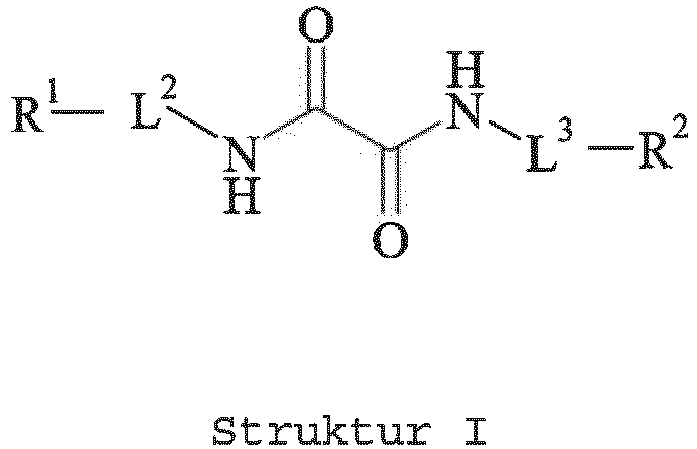 in der R1 eine eine freiradikalisch polymerisierbare Gruppe umfassende Gruppe darstellt,R2 eine endständige Gruppe darstellt, undL2 und L3 unabhängig voneinander eine divalente Verbindungsgruppe darstellen.
 - Druckplattenvorstufe nach Anspruch 2, wobei die freiradikalisch polymerisierbare Gruppe eine ethylenisch ungesättigte Gruppe, ausgewählt aus einer gegebenenfalls substituierten Acrylatgruppe, Methacrylatgruppe, Acrylamidgruppe, Methacrylamidgruppe, Maleimidgruppe, Styrylgruppe oder Vinylgruppe, bedeutet.
- Druckplattenvorstufe nach einem der vorstehenden Ansprüche 2 bis 3, wobei die endständige Gruppe R2 aus einem Wasserstoffatom, einer gegebenenfalls substituierten Alkylgruppe oder Cycloalkylgruppe, einer gegebenenfalls substituierten Arylgruppe, einer gegebenenfalls substituierten Aralkylgruppe oder einer gegebenenfalls substituierten Heteroarylgruppe ausgewählt wird.
- Druckplattenvorstufe nach einem der vorstehenden Ansprüche 2 bis 4, wobei die divalenten Verbindungsgruppen L2 und L3 unabhängig voneinander aus einer gegebenenfalls substituierten Alkylengruppe, Cycloalkylengruppe, Arylengruppe oder Heteroarylengruppe, -O-, -CO-, -CO-O-, -O-CO-, -CO-NH-, -NH-CO-, -NH-CO-O-, -O-CO-NH-, -NH-CO-NH-, -NH-CS-NH-, -CO-NR'-, -NR"-CO-, -NH-CS-NH-, -SO-, -SO2-, -SO2-NH-, -NH-SO2-, -CH=N-, -NH-NH-,-N+(CH3)2-, -S-, -S-S- und/oder Kombinationen derselben ausgewählt werden, wobei R' und R" unabhängig voneinander jeweils eine gegebenenfalls substituierte Alkylgruppe, Arylgruppe oder Heteroarylgruppe bedeuten.
- Druckplattenvorstufe nach einem der vorstehenden Ansprüche 2 bis 5, wobei die divalenten Verbindungsgruppen L2 und L3 unabhängig voneinander aus einer gegebenenfalls substituierten Alkylengruppe oder Cycloalkylengruppe ausgewählt werden.
- Druckplattenvorstufe nach einem der vorstehenden Ansprüche, wobei die die Löslichkeit verbessernde Gruppe einen pKa unter 10 aufweist.
- Druckplattenvorstufe nach einem der vorstehenden Ansprüche, wobei die die Löslichkeit verbessernde Gruppe aus einer Carbonsäuregruppe, einer Sulfonsäuregruppe, einer Imidgruppe, einer Phosphonsäuregruppe, einer Schwefelsäuremonoestergruppe und/oder einem Phosphorsäuremonoester oder Phosphorsäurediester ausgewählt wird.
- Druckplattenvorstufe nach einem der vorstehenden Ansprüche, wobei das Bindemittel mindestens 10 mol-% der Monomereinheit, welche die die Löslichkeit verbessernde Gruppe enthält, enthält.
- Druckplattenvorstufe nach einem der vorstehenden Ansprüche, wobei das Bindemittel mindestens 15 mol-% der den Oxalylamidanteil enthaltenden Monomereinheit enthält.
- Druckplattenvorstufe nach einem der vorstehenden Ansprüche, wobei das Bindemittel in einer Menge von mehr 70 Gew.-% in der Beschichtung enthalten ist.
- Ein Verfahren zur Herstellung einer positivarbeitenden lithografischen Druckplattenvorstufe, umfassend die folgenden Schritte:a) Auftrag einer wie nach einem der vorstehenden Ansprüche definierten wärmeempfindlichen und/oder lichtempfindlichen Beschichtung auf einen Träger,b) Trocknung der Beschichtung.
- Ein Verfahren zur Herstellung einer positivarbeitenden lithografischen Druckplatte, umfassend die folgenden Schritte:a) bildweise Erwärmung und/oder Infrarotbelichtung einer wie nach einem der vorstehenden Ansprüche 1 bis 11 definierten wärmeempfindlichen lithografischen Druckplattenvorstufe,b) Entwicklung der bildweise belichteten Vorstufe mit einem wässrig-alkalischen Entwickler.
- Ein Verfahren zur Herstellung einer positivarbeitenden lithografischen Druckplatte, umfassend die folgenden Schritte:c) bildweise Erwärmung und/oder Infrarotbelichtung einer wie nach einem der vorstehenden Ansprüche 1 bis 11 definierten wärmeempfindlichen lithografischen Druckplattenvorstufe,d) Entwicklung der bildweise belichteten Vorstufe in einem einzelnen Schritt mittels eines Gummientwicklers.
- Ein Verfahren zur Herstellung einer positivarbeitenden lithografischen Druckplatte nach Anspruch 14, wobei der Gummientwickler einen pH unter 11 aufweist.
Priority Applications (5)
| Application Number | Priority Date | Filing Date | Title |
|---|---|---|---|
| EP15195567.1A EP3170662B1 (de) | 2015-11-20 | 2015-11-20 | Flachdruckplattenvorläufer |
| US15/776,797 US20200262192A1 (en) | 2015-11-20 | 2016-11-14 | A lithographic printing plate precursor |
| PCT/EP2016/077546 WO2017085002A1 (en) | 2015-11-20 | 2016-11-14 | A lithographic printing plate precursor |
| CN201680067243.4A CN108290406A (zh) | 2015-11-20 | 2016-11-14 | 平版印刷版前体 |
| BR112018010208A BR112018010208A2 (pt) | 2015-11-20 | 2016-11-14 | precursor de placa de impressão litográfica |
Applications Claiming Priority (1)
| Application Number | Priority Date | Filing Date | Title |
|---|---|---|---|
| EP15195567.1A EP3170662B1 (de) | 2015-11-20 | 2015-11-20 | Flachdruckplattenvorläufer |
Publications (2)
| Publication Number | Publication Date |
|---|---|
| EP3170662A1 EP3170662A1 (de) | 2017-05-24 |
| EP3170662B1 true EP3170662B1 (de) | 2019-08-14 |
Family
ID=54695551
Family Applications (1)
| Application Number | Title | Priority Date | Filing Date |
|---|---|---|---|
| EP15195567.1A Not-in-force EP3170662B1 (de) | 2015-11-20 | 2015-11-20 | Flachdruckplattenvorläufer |
Country Status (5)
| Country | Link |
|---|---|
| US (1) | US20200262192A1 (de) |
| EP (1) | EP3170662B1 (de) |
| CN (1) | CN108290406A (de) |
| BR (1) | BR112018010208A2 (de) |
| WO (1) | WO2017085002A1 (de) |
Families Citing this family (1)
| Publication number | Priority date | Publication date | Assignee | Title |
|---|---|---|---|---|
| EP3650938A1 (de) * | 2018-11-09 | 2020-05-13 | Agfa Nv | Lithographiedruckplattenvorläufer |
Family Cites Families (81)
| Publication number | Priority date | Publication date | Assignee | Title |
|---|---|---|---|---|
| GB1084070A (en) | 1960-08-05 | 1967-09-20 | Kalle Ag | Process and material for the preparation of planographic printing plates |
| DE1447963B2 (de) | 1965-11-24 | 1972-09-07 | KaIIe AG, 6202 Wiesbaden Biebnch | Verfahren zur herstellung einer offsetdruckform aus einem vorsensibilisierten druckplattenmaterial |
| US4045232A (en) | 1973-11-12 | 1977-08-30 | Topar Products Corporation | Printing ink composition |
| CH613059A5 (en) | 1975-06-30 | 1979-08-31 | Hoechst Ag | Method for producing a flat-bed printing forme |
| DE3126627A1 (de) | 1981-07-06 | 1983-01-20 | Hoechst Ag, 6000 Frankfurt | Polyvinylmethylphosphinsaeure, verfahren zu ihrer herstellung und ihre verwendung |
| DE3410522A1 (de) | 1984-03-22 | 1985-10-03 | Hoechst Ag, 6230 Frankfurt | Einbrenngummierung fuer offsetdruckplatten und verfahren zur herstellung einer offsetdruckform |
| DE3539992A1 (de) | 1985-11-12 | 1987-05-14 | Hoechst Ag | Einbrenngummierung fuer offsetdruckplatten |
| DE3715791A1 (de) | 1987-05-12 | 1988-11-24 | Hoechst Ag | Druckplattentraeger sowie verfahren und vorrichtung zu dessen herstellung |
| DE3717654A1 (de) | 1987-05-26 | 1988-12-08 | Hoechst Ag | Verfahren zur elektrochemischen aufrauhung von aluminium fuer druckplattentraeger |
| JPH0769605B2 (ja) | 1988-02-25 | 1995-07-31 | 富士写真フイルム株式会社 | 感光性組成物 |
| US5163368B1 (en) | 1988-08-19 | 1999-08-24 | Presstek Inc | Printing apparatus with image error correction and ink regulation control |
| CA2016687A1 (en) | 1989-05-31 | 1990-11-30 | Agfa-Gevaert Naamloze Vennootschap | Dyes and dye-donor elements for use in thermal dye sublimation transfer |
| US4981517A (en) | 1989-06-12 | 1991-01-01 | Desanto Jr Ronald F | Printing ink emulsion |
| DE4001466A1 (de) | 1990-01-19 | 1991-07-25 | Hoechst Ag | Verfahren zur elektrochemischen aufrauhung von aluminium fuer druckplattentraeger |
| DE4007428A1 (de) | 1990-03-09 | 1991-09-12 | Hoechst Ag | Photopolymerisierbares gemisch und daraus hergestelltes aufzeichnungsmaterial |
| DE4027301A1 (de) | 1990-08-29 | 1992-03-05 | Hoechst Ag | Photopolymerisierbares gemisch und daraus hergestelltes photopolymerisierbares aufzeichnungsmaterial |
| US5174205B1 (en) | 1991-01-09 | 1999-10-05 | Presstek Inc | Controller for spark discharge imaging |
| DE4134143A1 (de) | 1991-10-16 | 1993-06-24 | Hoechst Ag | Verfahren zur herstellung von flachdruckformen und danach hergestellte flachdruckformen |
| US5340699A (en) | 1993-05-19 | 1994-08-23 | Eastman Kodak Company | Radiation-sensitive composition containing a resole resin and a novolac resin and use thereof in lithographic printing plates |
| GB9326150D0 (en) | 1993-12-22 | 1994-02-23 | Alcan Int Ltd | Electrochemical roughening method |
| DE4417907A1 (de) | 1994-05-21 | 1995-11-23 | Hoechst Ag | Verfahren zur Nachbehandlung von platten-, folien- oder bandförmigem Material, Träger aus derartigem Material und seine Verwendung für Offsetdruckplatten |
| DE4423140A1 (de) | 1994-07-01 | 1996-01-04 | Hoechst Ag | Hydrophiliertes Trägermaterial und damit hergestelltes Aufzeichnungsmaterial |
| DE4445820A1 (de) | 1994-12-21 | 1996-06-27 | Hoechst Ag | Verfahren zum Entwickeln bestrahlter, strahlungsempfindlicher Aufzeichnungsmaterialien |
| EP0825927B1 (de) | 1996-04-23 | 1999-08-11 | Kodak Polychrome Graphics Company Ltd. | Vorläufer einer lithographischen druckform und ihre verwendung bei der bebilderung durch wärme |
| JP3814961B2 (ja) | 1996-08-06 | 2006-08-30 | 三菱化学株式会社 | ポジ型感光性印刷版 |
| DE69833046T2 (de) | 1997-03-11 | 2006-08-03 | Agfa-Gevaert | Verfahren zur Herstellung einer lithographischen Druckplatte |
| JP3779444B2 (ja) | 1997-07-28 | 2006-05-31 | 富士写真フイルム株式会社 | 赤外線レーザ用ポジ型感光性組成物 |
| GB9722861D0 (en) | 1997-10-29 | 1997-12-24 | Horsell Graphic Ind Ltd | Improvements in relation to the manufacture of lithographic printing forms |
| EP0901902A3 (de) | 1997-09-12 | 1999-03-24 | Fuji Photo Film Co., Ltd. | Positiv arbeitende lichtempfindliche Zusammensetzung für Infrarot Bebilderung |
| EP1452335A1 (de) | 1997-10-17 | 2004-09-01 | Fuji Photo Film Co., Ltd. | Positiv arbeitendes photoempfindliches Aufzeichnungsmaterial für Infrarotlaser und positiv arbeitende Zusammensetzung für Infrarotlaser |
| GB9722862D0 (en) | 1997-10-29 | 1997-12-24 | Horsell Graphic Ind Ltd | Pattern formation |
| DE19803564A1 (de) | 1998-01-30 | 1999-08-05 | Agfa Gevaert Ag | Polymere mit Einheiten aus N-substituiertem Maleimid und deren Verwendung in strahlungsempfindlichen Gemischen |
| EP0950518B1 (de) | 1998-04-15 | 2002-01-23 | Agfa-Gevaert N.V. | Wärmeempfindliches Aufzeichnungsmaterial zur Herstellung von positiv arbeitenden Druckplatten |
| EP0950517B1 (de) | 1998-04-15 | 2001-10-04 | Agfa-Gevaert N.V. | Wärmeempfindliches Aufzeichnungsmaterial zur Herstellung von positiv arbeitenden Druckplatten |
| GB9811813D0 (en) | 1998-06-03 | 1998-07-29 | Horsell Graphic Ind Ltd | Polymeric compounds |
| US6534238B1 (en) | 1998-06-23 | 2003-03-18 | Kodak Polychrome Graphics, Llc | Thermal digital lithographic printing plate |
| US6352811B1 (en) | 1998-06-23 | 2002-03-05 | Kodak Polychrome Graphics Llc | Thermal digital lithographic printing plate |
| DE19834746A1 (de) | 1998-08-01 | 2000-02-03 | Agfa Gevaert Ag | Strahlungsempfindliches Gemisch mit IR-absorbierenden, betainischen oder betainisch-anionischen Cyaninfarbstoffen und damit hergestelltes Aufzeichnungsmaterial |
| EP0982123B1 (de) | 1998-08-24 | 2004-07-21 | Fuji Photo Film Co., Ltd. | Bildaufzeichnungsmaterial und Flachdruckplatte, die dieses verwendet |
| IL143158A0 (en) | 1998-11-16 | 2002-04-21 | Mitsubishi Chem Corp | Positive-working photosensitive lithographic printing plate and method for producing the same |
| US6140392A (en) | 1998-11-30 | 2000-10-31 | Flint Ink Corporation | Printing inks |
| DE69909734T2 (de) | 1999-02-02 | 2004-04-15 | Agfa-Gevaert | Verfahren zur Herstellung positiv arbeitender Druckplatten |
| JP3996305B2 (ja) | 1999-02-15 | 2007-10-24 | 富士フイルム株式会社 | ポジ型平版印刷用材料 |
| DE60042764D1 (de) | 1999-05-21 | 2009-09-24 | Fujifilm Corp | Lichtempfindliche Zusammensetzung und Flachdruckplattenbasis damit |
| JP4480812B2 (ja) | 1999-07-27 | 2010-06-16 | 富士フイルム株式会社 | 感光又は感熱性ポジ型平版印刷版原版、および製版方法 |
| US6251559B1 (en) | 1999-08-03 | 2001-06-26 | Kodak Polychrome Graphics Llc | Heat treatment method for obtaining imagable coatings and imagable coatings |
| US6706466B1 (en) | 1999-08-03 | 2004-03-16 | Kodak Polychrome Graphics Llc | Articles having imagable coatings |
| DE60025283T2 (de) | 1999-10-19 | 2006-08-24 | Fuji Photo Film Co., Ltd., Minami-Ashigara | Fotoempfindliche Zusammensetzung und Flachdruckplatte, die diese Zusammensetzung verwendet |
| JP2001209172A (ja) | 2000-01-27 | 2001-08-03 | Fuji Photo Film Co Ltd | 平版印刷版原版及びその製版方法 |
| WO2002053627A1 (en) | 2000-12-29 | 2002-07-11 | Kodak Polychrome Graphics, L.L.C. | Two-layer imageable element comprising thermally reversible polymers |
| US6506536B2 (en) | 2000-12-29 | 2003-01-14 | Kodak Polychrome Graphics, Llc | Imageable element and composition comprising thermally reversible polymers |
| JP2002357894A (ja) | 2001-06-01 | 2002-12-13 | Fuji Photo Film Co Ltd | 平版印刷版用原版およびその処理方法 |
| EP1275498A3 (de) | 2001-07-09 | 2005-05-04 | Fuji Photo Film Co., Ltd. | Flachdruckplattenvorläufer und Verfahren zur Herstellung einer Flachdruckplatte |
| EP1586448B1 (de) | 2002-03-06 | 2007-12-12 | Agfa Graphics N.V. | Verfahren zum Entwickeln eines Wärmeempfindlichen lithographischen Druckplattenvorläufers mit einer Gummilösung |
| EP1356926B1 (de) | 2002-04-26 | 2008-01-16 | Agfa Graphics N.V. | Negativ-arbeitender thermischer Flachdruckplattenvorläufer, der einen Aluminiumträger mit einer glatten Oberfläche enthält |
| US20040023155A1 (en) | 2002-08-01 | 2004-02-05 | Eiji Hayakawa | Composition for a thermal lithographic printing plate and lithographic printing plate comprising the composition |
| EP1400351B1 (de) | 2002-09-19 | 2006-04-12 | Fuji Photo Film Co., Ltd. | Lithographischer Druckplattenvorläufer |
| JP2004125877A (ja) | 2002-09-30 | 2004-04-22 | Fuji Photo Film Co Ltd | 平版印刷版の現像処理方法 |
| DE60318600T2 (de) | 2002-10-04 | 2009-01-15 | Agfa Graphics N.V. | Verfahren zur herstellung einer lithografischen druckplatte |
| US6858359B2 (en) | 2002-10-04 | 2005-02-22 | Kodak Polychrome Graphics, Llp | Thermally sensitive, multilayer imageable element |
| WO2004030925A1 (en) | 2002-10-04 | 2004-04-15 | Agfa-Gevaert | Method of making a lithographic printing plate precursor |
| JP2006501505A (ja) | 2002-10-04 | 2006-01-12 | アグフア−ゲヴエルト | リトグラフ印刷版前駆物質の製法 |
| EP1594696B1 (de) | 2003-02-11 | 2007-08-15 | Agfa Graphics N.V. | Wärmeempfindlicher lithographischer druckplattenvorläufer |
| EP1588220B1 (de) | 2003-07-17 | 2008-10-08 | Kodak Graphic Communications GmbH | Verfahren zum behandeln von bilderzeugungsmaterialien |
| US6992688B2 (en) | 2004-01-28 | 2006-01-31 | Eastman Kodak Company | Method for developing multilayer imageable elements |
| EP1506854B1 (de) | 2003-08-13 | 2008-04-23 | Agfa Graphics N.V. | Verfahren zum Nacheinbrennen von lithographischen Druckplatten |
| PL1751625T3 (pl) | 2004-05-19 | 2012-04-30 | Agfa Nv | Sposób wytwarzania fotopolimerowej płyty drukarskiej |
| EP1614539B1 (de) | 2004-07-08 | 2008-09-17 | Agfa Graphics N.V. | Verfahren zur Herstellung einer lithographischen Druckplatte |
| ATE424299T1 (de) | 2004-07-08 | 2009-03-15 | Agfa Graphics Nv | Verfahren zur herstellung einer negativarbeitenden, wärmeempfindlichen, lithographischen druckplattenvorstufe |
| EP1614540B1 (de) | 2004-07-08 | 2008-09-17 | Agfa Graphics N.V. | Verfahren zur Herstellung einer lithographischen Druckplatte |
| EP1765592B1 (de) | 2004-07-08 | 2009-01-28 | Agfa Graphics N.V. | Verfahren zur herstellung eines vorläufers für eine negativ arbeitende wärmeempfindliche lithographische druckplatte |
| EP1705003B1 (de) | 2005-03-21 | 2007-10-24 | Agfa Graphics N.V. | Entwicklungsfreie Flachdruckplatten |
| EP2047988B1 (de) | 2007-10-09 | 2014-03-12 | Agfa Graphics N.V. | Lithographiedruckplattenvorläufer |
| ATE552111T1 (de) | 2008-09-02 | 2012-04-15 | Agfa Graphics Nv | Wärmeempfindlicher, positiv arbeitender lithographiedruckformvorläufer |
| EP2213690B1 (de) * | 2009-01-30 | 2015-11-11 | Agfa Graphics N.V. | Neues alkalisches lösliches harz |
| JP2011054559A (ja) | 2009-08-04 | 2011-03-17 | Sumitomo Chemical Co Ltd | 正極用粉末および正極合剤 |
| EP2489512B1 (de) * | 2011-02-18 | 2013-08-28 | Agfa Graphics N.V. | Lithographiedruckplattenvorläufer |
| JP5241871B2 (ja) | 2011-03-11 | 2013-07-17 | 富士フイルム株式会社 | サーマルポジ型平版印刷版原版及び平版印刷版の作製方法 |
| EP3008518A1 (de) | 2013-06-14 | 2016-04-20 | Agfa Graphics NV | Lithografiedruckplattenvorläufer |
| BR112015030811A2 (pt) | 2013-06-14 | 2017-07-25 | Agfa Graphics Nv | precursor de placa de impressão litográfica |
| CN104827795B (zh) * | 2015-04-21 | 2018-03-06 | 青岛蓝帆新材料有限公司 | 一种阳图热敏平版印刷版版材 |
-
2015
- 2015-11-20 EP EP15195567.1A patent/EP3170662B1/de not_active Not-in-force
-
2016
- 2016-11-14 BR BR112018010208A patent/BR112018010208A2/pt not_active IP Right Cessation
- 2016-11-14 CN CN201680067243.4A patent/CN108290406A/zh active Pending
- 2016-11-14 US US15/776,797 patent/US20200262192A1/en not_active Abandoned
- 2016-11-14 WO PCT/EP2016/077546 patent/WO2017085002A1/en not_active Ceased
Non-Patent Citations (1)
| Title |
|---|
| None * |
Also Published As
| Publication number | Publication date |
|---|---|
| WO2017085002A1 (en) | 2017-05-26 |
| US20200262192A1 (en) | 2020-08-20 |
| EP3170662A1 (de) | 2017-05-24 |
| BR112018010208A2 (pt) | 2018-11-21 |
| CN108290406A (zh) | 2018-07-17 |
Similar Documents
| Publication | Publication Date | Title |
|---|---|---|
| CN102300887B (zh) | 新型碱溶性树脂 | |
| EP2263874B1 (de) | Lithographiedruckplattenvorläufer | |
| EP2941349B1 (de) | (ethylen-,vinylacetal-)copolymere und ihre verwendung in lithographiedruckplattenvorläufern | |
| EP2944657B1 (de) | (Ethylen-,Vinylacetal-)Copolymere und deren Verwendung in Lithographiedruckplattenvorläufern | |
| EP2933278B1 (de) | (Ethylen-,Vinylacetal-)Copolymere und ihre Verwendung in Lithographiedruckplattenvorläufern | |
| EP2963496A1 (de) | Lithografiedruckplattenvorläufer mit (Ethylen-, Vinylacetal-)Copolymeren | |
| WO2015189092A1 (en) | (ethylene, vinyl acetal) copolymers and their use in lithographic printing plate precursors | |
| EP2489512B1 (de) | Lithographiedruckplattenvorläufer | |
| CN102762381B (zh) | 正性平版印刷版前体及其制备方法、用于制备正性平版印刷版的方法和印刷方法 | |
| EP3170662B1 (de) | Flachdruckplattenvorläufer | |
| CN103328214B (zh) | 平版印刷版前体 | |
| EP1738900B1 (de) | Wärmeempfindlicher Flachdruckplattenvorläufer | |
| EP3032334B1 (de) | System zur Reduzierung von Ablationsrückständen | |
| US20070003869A1 (en) | Heat-sensitive lithographic printing plate-precursor |
Legal Events
| Date | Code | Title | Description |
|---|---|---|---|
| PUAI | Public reference made under article 153(3) epc to a published international application that has entered the european phase |
Free format text: ORIGINAL CODE: 0009012 |
|
| STAA | Information on the status of an ep patent application or granted ep patent |
Free format text: STATUS: THE APPLICATION HAS BEEN PUBLISHED |
|
| AK | Designated contracting states |
Kind code of ref document: A1 Designated state(s): AL AT BE BG CH CY CZ DE DK EE ES FI FR GB GR HR HU IE IS IT LI LT LU LV MC MK MT NL NO PL PT RO RS SE SI SK SM TR |
|
| AX | Request for extension of the european patent |
Extension state: BA ME |
|
| STAA | Information on the status of an ep patent application or granted ep patent |
Free format text: STATUS: REQUEST FOR EXAMINATION WAS MADE |
|
| RAP1 | Party data changed (applicant data changed or rights of an application transferred) |
Owner name: AGFA NV |
|
| 17P | Request for examination filed |
Effective date: 20171124 |
|
| RBV | Designated contracting states (corrected) |
Designated state(s): AL AT BE BG CH CY CZ DE DK EE ES FI FR GB GR HR HU IE IS IT LI LT LU LV MC MK MT NL NO PL PT RO RS SE SI SK SM TR |
|
| RIC1 | Information provided on ipc code assigned before grant |
Ipc: B41C 1/10 20060101AFI20190123BHEP |
|
| GRAP | Despatch of communication of intention to grant a patent |
Free format text: ORIGINAL CODE: EPIDOSNIGR1 |
|
| STAA | Information on the status of an ep patent application or granted ep patent |
Free format text: STATUS: GRANT OF PATENT IS INTENDED |
|
| INTG | Intention to grant announced |
Effective date: 20190322 |
|
| GRAS | Grant fee paid |
Free format text: ORIGINAL CODE: EPIDOSNIGR3 |
|
| GRAA | (expected) grant |
Free format text: ORIGINAL CODE: 0009210 |
|
| STAA | Information on the status of an ep patent application or granted ep patent |
Free format text: STATUS: THE PATENT HAS BEEN GRANTED |
|
| AK | Designated contracting states |
Kind code of ref document: B1 Designated state(s): AL AT BE BG CH CY CZ DE DK EE ES FI FR GB GR HR HU IE IS IT LI LT LU LV MC MK MT NL NO PL PT RO RS SE SI SK SM TR |
|
| REG | Reference to a national code |
Ref country code: GB Ref legal event code: FG4D |
|
| REG | Reference to a national code |
Ref country code: CH Ref legal event code: EP Ref country code: AT Ref legal event code: REF Ref document number: 1166547 Country of ref document: AT Kind code of ref document: T Effective date: 20190815 |
|
| REG | Reference to a national code |
Ref country code: DE Ref legal event code: R096 Ref document number: 602015035733 Country of ref document: DE |
|
| REG | Reference to a national code |
Ref country code: NL Ref legal event code: FP Ref country code: IE Ref legal event code: FG4D |
|
| REG | Reference to a national code |
Ref country code: LT Ref legal event code: MG4D |
|
| PG25 | Lapsed in a contracting state [announced via postgrant information from national office to epo] |
Ref country code: LT Free format text: LAPSE BECAUSE OF FAILURE TO SUBMIT A TRANSLATION OF THE DESCRIPTION OR TO PAY THE FEE WITHIN THE PRESCRIBED TIME-LIMIT Effective date: 20190814 Ref country code: BG Free format text: LAPSE BECAUSE OF FAILURE TO SUBMIT A TRANSLATION OF THE DESCRIPTION OR TO PAY THE FEE WITHIN THE PRESCRIBED TIME-LIMIT Effective date: 20191114 Ref country code: SE Free format text: LAPSE BECAUSE OF FAILURE TO SUBMIT A TRANSLATION OF THE DESCRIPTION OR TO PAY THE FEE WITHIN THE PRESCRIBED TIME-LIMIT Effective date: 20190814 Ref country code: FI Free format text: LAPSE BECAUSE OF FAILURE TO SUBMIT A TRANSLATION OF THE DESCRIPTION OR TO PAY THE FEE WITHIN THE PRESCRIBED TIME-LIMIT Effective date: 20190814 Ref country code: NO Free format text: LAPSE BECAUSE OF FAILURE TO SUBMIT A TRANSLATION OF THE DESCRIPTION OR TO PAY THE FEE WITHIN THE PRESCRIBED TIME-LIMIT Effective date: 20191114 Ref country code: PT Free format text: LAPSE BECAUSE OF FAILURE TO SUBMIT A TRANSLATION OF THE DESCRIPTION OR TO PAY THE FEE WITHIN THE PRESCRIBED TIME-LIMIT Effective date: 20191216 Ref country code: HR Free format text: LAPSE BECAUSE OF FAILURE TO SUBMIT A TRANSLATION OF THE DESCRIPTION OR TO PAY THE FEE WITHIN THE PRESCRIBED TIME-LIMIT Effective date: 20190814 |
|
| PGFP | Annual fee paid to national office [announced via postgrant information from national office to epo] |
Ref country code: DE Payment date: 20191017 Year of fee payment: 5 Ref country code: NL Payment date: 20191007 Year of fee payment: 5 |
|
| REG | Reference to a national code |
Ref country code: AT Ref legal event code: MK05 Ref document number: 1166547 Country of ref document: AT Kind code of ref document: T Effective date: 20190814 |
|
| PG25 | Lapsed in a contracting state [announced via postgrant information from national office to epo] |
Ref country code: GR Free format text: LAPSE BECAUSE OF FAILURE TO SUBMIT A TRANSLATION OF THE DESCRIPTION OR TO PAY THE FEE WITHIN THE PRESCRIBED TIME-LIMIT Effective date: 20191115 Ref country code: LV Free format text: LAPSE BECAUSE OF FAILURE TO SUBMIT A TRANSLATION OF THE DESCRIPTION OR TO PAY THE FEE WITHIN THE PRESCRIBED TIME-LIMIT Effective date: 20190814 Ref country code: IS Free format text: LAPSE BECAUSE OF FAILURE TO SUBMIT A TRANSLATION OF THE DESCRIPTION OR TO PAY THE FEE WITHIN THE PRESCRIBED TIME-LIMIT Effective date: 20191214 Ref country code: AL Free format text: LAPSE BECAUSE OF FAILURE TO SUBMIT A TRANSLATION OF THE DESCRIPTION OR TO PAY THE FEE WITHIN THE PRESCRIBED TIME-LIMIT Effective date: 20190814 Ref country code: RS Free format text: LAPSE BECAUSE OF FAILURE TO SUBMIT A TRANSLATION OF THE DESCRIPTION OR TO PAY THE FEE WITHIN THE PRESCRIBED TIME-LIMIT Effective date: 20190814 Ref country code: ES Free format text: LAPSE BECAUSE OF FAILURE TO SUBMIT A TRANSLATION OF THE DESCRIPTION OR TO PAY THE FEE WITHIN THE PRESCRIBED TIME-LIMIT Effective date: 20190814 |
|
| PGFP | Annual fee paid to national office [announced via postgrant information from national office to epo] |
Ref country code: FR Payment date: 20191008 Year of fee payment: 5 |
|
| PG25 | Lapsed in a contracting state [announced via postgrant information from national office to epo] |
Ref country code: TR Free format text: LAPSE BECAUSE OF FAILURE TO SUBMIT A TRANSLATION OF THE DESCRIPTION OR TO PAY THE FEE WITHIN THE PRESCRIBED TIME-LIMIT Effective date: 20190814 |
|
| PG25 | Lapsed in a contracting state [announced via postgrant information from national office to epo] |
Ref country code: DK Free format text: LAPSE BECAUSE OF FAILURE TO SUBMIT A TRANSLATION OF THE DESCRIPTION OR TO PAY THE FEE WITHIN THE PRESCRIBED TIME-LIMIT Effective date: 20190814 Ref country code: PL Free format text: LAPSE BECAUSE OF FAILURE TO SUBMIT A TRANSLATION OF THE DESCRIPTION OR TO PAY THE FEE WITHIN THE PRESCRIBED TIME-LIMIT Effective date: 20190814 Ref country code: IT Free format text: LAPSE BECAUSE OF FAILURE TO SUBMIT A TRANSLATION OF THE DESCRIPTION OR TO PAY THE FEE WITHIN THE PRESCRIBED TIME-LIMIT Effective date: 20190814 Ref country code: AT Free format text: LAPSE BECAUSE OF FAILURE TO SUBMIT A TRANSLATION OF THE DESCRIPTION OR TO PAY THE FEE WITHIN THE PRESCRIBED TIME-LIMIT Effective date: 20190814 Ref country code: EE Free format text: LAPSE BECAUSE OF FAILURE TO SUBMIT A TRANSLATION OF THE DESCRIPTION OR TO PAY THE FEE WITHIN THE PRESCRIBED TIME-LIMIT Effective date: 20190814 Ref country code: RO Free format text: LAPSE BECAUSE OF FAILURE TO SUBMIT A TRANSLATION OF THE DESCRIPTION OR TO PAY THE FEE WITHIN THE PRESCRIBED TIME-LIMIT Effective date: 20190814 |
|
| PGFP | Annual fee paid to national office [announced via postgrant information from national office to epo] |
Ref country code: GB Payment date: 20191007 Year of fee payment: 5 |
|
| PG25 | Lapsed in a contracting state [announced via postgrant information from national office to epo] |
Ref country code: IS Free format text: LAPSE BECAUSE OF FAILURE TO SUBMIT A TRANSLATION OF THE DESCRIPTION OR TO PAY THE FEE WITHIN THE PRESCRIBED TIME-LIMIT Effective date: 20200224 Ref country code: SM Free format text: LAPSE BECAUSE OF FAILURE TO SUBMIT A TRANSLATION OF THE DESCRIPTION OR TO PAY THE FEE WITHIN THE PRESCRIBED TIME-LIMIT Effective date: 20190814 Ref country code: CZ Free format text: LAPSE BECAUSE OF FAILURE TO SUBMIT A TRANSLATION OF THE DESCRIPTION OR TO PAY THE FEE WITHIN THE PRESCRIBED TIME-LIMIT Effective date: 20190814 Ref country code: SK Free format text: LAPSE BECAUSE OF FAILURE TO SUBMIT A TRANSLATION OF THE DESCRIPTION OR TO PAY THE FEE WITHIN THE PRESCRIBED TIME-LIMIT Effective date: 20190814 |
|
| REG | Reference to a national code |
Ref country code: DE Ref legal event code: R097 Ref document number: 602015035733 Country of ref document: DE |
|
| REG | Reference to a national code |
Ref country code: CH Ref legal event code: PL |
|
| PLBE | No opposition filed within time limit |
Free format text: ORIGINAL CODE: 0009261 |
|
| STAA | Information on the status of an ep patent application or granted ep patent |
Free format text: STATUS: NO OPPOSITION FILED WITHIN TIME LIMIT |
|
| PG2D | Information on lapse in contracting state deleted |
Ref country code: IS |
|
| PG25 | Lapsed in a contracting state [announced via postgrant information from national office to epo] |
Ref country code: LU Free format text: LAPSE BECAUSE OF NON-PAYMENT OF DUE FEES Effective date: 20191120 Ref country code: CH Free format text: LAPSE BECAUSE OF NON-PAYMENT OF DUE FEES Effective date: 20191130 Ref country code: LI Free format text: LAPSE BECAUSE OF NON-PAYMENT OF DUE FEES Effective date: 20191130 Ref country code: MC Free format text: LAPSE BECAUSE OF FAILURE TO SUBMIT A TRANSLATION OF THE DESCRIPTION OR TO PAY THE FEE WITHIN THE PRESCRIBED TIME-LIMIT Effective date: 20190814 |
|
| 26N | No opposition filed |
Effective date: 20200603 |
|
| REG | Reference to a national code |
Ref country code: BE Ref legal event code: MM Effective date: 20191130 |
|
| PG25 | Lapsed in a contracting state [announced via postgrant information from national office to epo] |
Ref country code: SI Free format text: LAPSE BECAUSE OF FAILURE TO SUBMIT A TRANSLATION OF THE DESCRIPTION OR TO PAY THE FEE WITHIN THE PRESCRIBED TIME-LIMIT Effective date: 20190814 |
|
| PG25 | Lapsed in a contracting state [announced via postgrant information from national office to epo] |
Ref country code: IE Free format text: LAPSE BECAUSE OF NON-PAYMENT OF DUE FEES Effective date: 20191120 |
|
| PG25 | Lapsed in a contracting state [announced via postgrant information from national office to epo] |
Ref country code: BE Free format text: LAPSE BECAUSE OF NON-PAYMENT OF DUE FEES Effective date: 20191130 |
|
| PG25 | Lapsed in a contracting state [announced via postgrant information from national office to epo] |
Ref country code: CY Free format text: LAPSE BECAUSE OF FAILURE TO SUBMIT A TRANSLATION OF THE DESCRIPTION OR TO PAY THE FEE WITHIN THE PRESCRIBED TIME-LIMIT Effective date: 20190814 |
|
| REG | Reference to a national code |
Ref country code: DE Ref legal event code: R119 Ref document number: 602015035733 Country of ref document: DE |
|
| REG | Reference to a national code |
Ref country code: NL Ref legal event code: MM Effective date: 20201201 |
|
| GBPC | Gb: european patent ceased through non-payment of renewal fee |
Effective date: 20201120 |
|
| PG25 | Lapsed in a contracting state [announced via postgrant information from national office to epo] |
Ref country code: HU Free format text: LAPSE BECAUSE OF FAILURE TO SUBMIT A TRANSLATION OF THE DESCRIPTION OR TO PAY THE FEE WITHIN THE PRESCRIBED TIME-LIMIT; INVALID AB INITIO Effective date: 20151120 Ref country code: MT Free format text: LAPSE BECAUSE OF FAILURE TO SUBMIT A TRANSLATION OF THE DESCRIPTION OR TO PAY THE FEE WITHIN THE PRESCRIBED TIME-LIMIT Effective date: 20190814 |
|
| PG25 | Lapsed in a contracting state [announced via postgrant information from national office to epo] |
Ref country code: NL Free format text: LAPSE BECAUSE OF NON-PAYMENT OF DUE FEES Effective date: 20201201 |
|
| PG25 | Lapsed in a contracting state [announced via postgrant information from national office to epo] |
Ref country code: FR Free format text: LAPSE BECAUSE OF NON-PAYMENT OF DUE FEES Effective date: 20201130 |
|
| PG25 | Lapsed in a contracting state [announced via postgrant information from national office to epo] |
Ref country code: GB Free format text: LAPSE BECAUSE OF NON-PAYMENT OF DUE FEES Effective date: 20201120 Ref country code: DE Free format text: LAPSE BECAUSE OF NON-PAYMENT OF DUE FEES Effective date: 20210601 |
|
| PG25 | Lapsed in a contracting state [announced via postgrant information from national office to epo] |
Ref country code: MK Free format text: LAPSE BECAUSE OF FAILURE TO SUBMIT A TRANSLATION OF THE DESCRIPTION OR TO PAY THE FEE WITHIN THE PRESCRIBED TIME-LIMIT Effective date: 20190814 |