EP3169697B1 - Neuartiges verfahren zur aufreinigung von rhu-gcsf - Google Patents
Neuartiges verfahren zur aufreinigung von rhu-gcsf Download PDFInfo
- Publication number
- EP3169697B1 EP3169697B1 EP15822758.7A EP15822758A EP3169697B1 EP 3169697 B1 EP3169697 B1 EP 3169697B1 EP 15822758 A EP15822758 A EP 15822758A EP 3169697 B1 EP3169697 B1 EP 3169697B1
- Authority
- EP
- European Patent Office
- Prior art keywords
- range
- gcsf
- csf
- buffer
- exchange chromatography
- Prior art date
- Legal status (The legal status is an assumption and is not a legal conclusion. Google has not performed a legal analysis and makes no representation as to the accuracy of the status listed.)
- Active
Links
Images



Classifications
-
- A—HUMAN NECESSITIES
- A61—MEDICAL OR VETERINARY SCIENCE; HYGIENE
- A61K—PREPARATIONS FOR MEDICAL, DENTAL OR TOILETRY PURPOSES
- A61K38/00—Medicinal preparations containing peptides
- A61K38/16—Peptides having more than 20 amino acids; Gastrins; Somatostatins; Melanotropins; Derivatives thereof
- A61K38/17—Peptides having more than 20 amino acids; Gastrins; Somatostatins; Melanotropins; Derivatives thereof from animals; from humans
- A61K38/19—Cytokines; Lymphokines; Interferons
- A61K38/193—Colony stimulating factors [CSF]
-
- A—HUMAN NECESSITIES
- A61—MEDICAL OR VETERINARY SCIENCE; HYGIENE
- A61K—PREPARATIONS FOR MEDICAL, DENTAL OR TOILETRY PURPOSES
- A61K47/00—Medicinal preparations characterised by the non-active ingredients used, e.g. carriers or inert additives; Targeting or modifying agents chemically bound to the active ingredient
- A61K47/02—Inorganic compounds
-
- A—HUMAN NECESSITIES
- A61—MEDICAL OR VETERINARY SCIENCE; HYGIENE
- A61K—PREPARATIONS FOR MEDICAL, DENTAL OR TOILETRY PURPOSES
- A61K47/00—Medicinal preparations characterised by the non-active ingredients used, e.g. carriers or inert additives; Targeting or modifying agents chemically bound to the active ingredient
- A61K47/06—Organic compounds, e.g. natural or synthetic hydrocarbons, polyolefins, mineral oil, petrolatum or ozokerite
- A61K47/08—Organic compounds, e.g. natural or synthetic hydrocarbons, polyolefins, mineral oil, petrolatum or ozokerite containing oxygen, e.g. ethers, acetals, ketones, quinones, aldehydes, peroxides
- A61K47/10—Alcohols; Phenols; Salts thereof, e.g. glycerol; Polyethylene glycols [PEG]; Poloxamers; PEG/POE alkyl ethers
-
- A—HUMAN NECESSITIES
- A61—MEDICAL OR VETERINARY SCIENCE; HYGIENE
- A61K—PREPARATIONS FOR MEDICAL, DENTAL OR TOILETRY PURPOSES
- A61K47/00—Medicinal preparations characterised by the non-active ingredients used, e.g. carriers or inert additives; Targeting or modifying agents chemically bound to the active ingredient
- A61K47/06—Organic compounds, e.g. natural or synthetic hydrocarbons, polyolefins, mineral oil, petrolatum or ozokerite
- A61K47/08—Organic compounds, e.g. natural or synthetic hydrocarbons, polyolefins, mineral oil, petrolatum or ozokerite containing oxygen, e.g. ethers, acetals, ketones, quinones, aldehydes, peroxides
- A61K47/12—Carboxylic acids; Salts or anhydrides thereof
-
- A—HUMAN NECESSITIES
- A61—MEDICAL OR VETERINARY SCIENCE; HYGIENE
- A61K—PREPARATIONS FOR MEDICAL, DENTAL OR TOILETRY PURPOSES
- A61K47/00—Medicinal preparations characterised by the non-active ingredients used, e.g. carriers or inert additives; Targeting or modifying agents chemically bound to the active ingredient
- A61K47/06—Organic compounds, e.g. natural or synthetic hydrocarbons, polyolefins, mineral oil, petrolatum or ozokerite
- A61K47/26—Carbohydrates, e.g. sugar alcohols, amino sugars, nucleic acids, mono-, di- or oligo-saccharides; Derivatives thereof, e.g. polysorbates, sorbitan fatty acid esters or glycyrrhizin
-
- A—HUMAN NECESSITIES
- A61—MEDICAL OR VETERINARY SCIENCE; HYGIENE
- A61K—PREPARATIONS FOR MEDICAL, DENTAL OR TOILETRY PURPOSES
- A61K47/00—Medicinal preparations characterised by the non-active ingredients used, e.g. carriers or inert additives; Targeting or modifying agents chemically bound to the active ingredient
- A61K47/50—Medicinal preparations characterised by the non-active ingredients used, e.g. carriers or inert additives; Targeting or modifying agents chemically bound to the active ingredient the non-active ingredient being chemically bound to the active ingredient, e.g. polymer-drug conjugates
- A61K47/51—Medicinal preparations characterised by the non-active ingredients used, e.g. carriers or inert additives; Targeting or modifying agents chemically bound to the active ingredient the non-active ingredient being chemically bound to the active ingredient, e.g. polymer-drug conjugates the non-active ingredient being a modifying agent
- A61K47/56—Medicinal preparations characterised by the non-active ingredients used, e.g. carriers or inert additives; Targeting or modifying agents chemically bound to the active ingredient the non-active ingredient being chemically bound to the active ingredient, e.g. polymer-drug conjugates the non-active ingredient being a modifying agent the modifying agent being an organic macromolecular compound, e.g. an oligomeric, polymeric or dendrimeric molecule
- A61K47/59—Medicinal preparations characterised by the non-active ingredients used, e.g. carriers or inert additives; Targeting or modifying agents chemically bound to the active ingredient the non-active ingredient being chemically bound to the active ingredient, e.g. polymer-drug conjugates the non-active ingredient being a modifying agent the modifying agent being an organic macromolecular compound, e.g. an oligomeric, polymeric or dendrimeric molecule obtained otherwise than by reactions only involving carbon-to-carbon unsaturated bonds, e.g. polyureas or polyurethanes
- A61K47/60—Medicinal preparations characterised by the non-active ingredients used, e.g. carriers or inert additives; Targeting or modifying agents chemically bound to the active ingredient the non-active ingredient being chemically bound to the active ingredient, e.g. polymer-drug conjugates the non-active ingredient being a modifying agent the modifying agent being an organic macromolecular compound, e.g. an oligomeric, polymeric or dendrimeric molecule obtained otherwise than by reactions only involving carbon-to-carbon unsaturated bonds, e.g. polyureas or polyurethanes the organic macromolecular compound being a polyoxyalkylene oligomer, polymer or dendrimer, e.g. PEG, PPG, PEO or polyglycerol
-
- A—HUMAN NECESSITIES
- A61—MEDICAL OR VETERINARY SCIENCE; HYGIENE
- A61K—PREPARATIONS FOR MEDICAL, DENTAL OR TOILETRY PURPOSES
- A61K9/00—Medicinal preparations characterised by special physical form
- A61K9/0012—Galenical forms characterised by the site of application
- A61K9/0019—Injectable compositions; Intramuscular, intravenous, arterial, subcutaneous administration; Compositions to be administered through the skin in an invasive manner
-
- C—CHEMISTRY; METALLURGY
- C07—ORGANIC CHEMISTRY
- C07K—PEPTIDES
- C07K1/00—General methods for the preparation of peptides, i.e. processes for the organic chemical preparation of peptides or proteins of any length
- C07K1/02—General methods for the preparation of peptides, i.e. processes for the organic chemical preparation of peptides or proteins of any length in solution
-
- C—CHEMISTRY; METALLURGY
- C07—ORGANIC CHEMISTRY
- C07K—PEPTIDES
- C07K1/00—General methods for the preparation of peptides, i.e. processes for the organic chemical preparation of peptides or proteins of any length
- C07K1/14—Extraction; Separation; Purification
-
- C—CHEMISTRY; METALLURGY
- C07—ORGANIC CHEMISTRY
- C07K—PEPTIDES
- C07K1/00—General methods for the preparation of peptides, i.e. processes for the organic chemical preparation of peptides or proteins of any length
- C07K1/14—Extraction; Separation; Purification
- C07K1/16—Extraction; Separation; Purification by chromatography
- C07K1/18—Ion-exchange chromatography
-
- C—CHEMISTRY; METALLURGY
- C07—ORGANIC CHEMISTRY
- C07K—PEPTIDES
- C07K1/00—General methods for the preparation of peptides, i.e. processes for the organic chemical preparation of peptides or proteins of any length
- C07K1/14—Extraction; Separation; Purification
- C07K1/34—Extraction; Separation; Purification by filtration, ultrafiltration or reverse osmosis
-
- C—CHEMISTRY; METALLURGY
- C07—ORGANIC CHEMISTRY
- C07K—PEPTIDES
- C07K14/00—Peptides having more than 20 amino acids; Gastrins; Somatostatins; Melanotropins; Derivatives thereof
- C07K14/435—Peptides having more than 20 amino acids; Gastrins; Somatostatins; Melanotropins; Derivatives thereof from animals; from humans
- C07K14/52—Cytokines; Lymphokines; Interferons
- C07K14/53—Colony-stimulating factor [CSF]
- C07K14/535—Granulocyte CSF; Granulocyte-macrophage CSF
-
- A—HUMAN NECESSITIES
- A61—MEDICAL OR VETERINARY SCIENCE; HYGIENE
- A61K—PREPARATIONS FOR MEDICAL, DENTAL OR TOILETRY PURPOSES
- A61K38/00—Medicinal preparations containing peptides
-
- Y—GENERAL TAGGING OF NEW TECHNOLOGICAL DEVELOPMENTS; GENERAL TAGGING OF CROSS-SECTIONAL TECHNOLOGIES SPANNING OVER SEVERAL SECTIONS OF THE IPC; TECHNICAL SUBJECTS COVERED BY FORMER USPC CROSS-REFERENCE ART COLLECTIONS [XRACs] AND DIGESTS
- Y02—TECHNOLOGIES OR APPLICATIONS FOR MITIGATION OR ADAPTATION AGAINST CLIMATE CHANGE
- Y02A—TECHNOLOGIES FOR ADAPTATION TO CLIMATE CHANGE
- Y02A50/00—TECHNOLOGIES FOR ADAPTATION TO CLIMATE CHANGE in human health protection, e.g. against extreme weather
- Y02A50/30—Against vector-borne diseases, e.g. mosquito-borne, fly-borne, tick-borne or waterborne diseases whose impact is exacerbated by climate change
Definitions
- the present invention relates to a process for purification of pegylated granulocyte colony stimulating factor (rHu-GCSF).
- G-CSF Granulocyte colony-stimulating factor
- GCSF Granulocyte colony-stimulating factor
- G-CSF coli-derived G-CSF, which has no sugar chain (non-glycosylated G-CSF; filgrastim; Neupogen, Amgen) and Chinese hamster ovary cell derived-CSF (glycosylated G-CSF; lenograstim, Chugai Pharma UK Ltd).
- Filgrastim is a water-soluble 175 amino acid protein with a molecular weight of 18,800 Daltons. Filgrastim is obtained from the bacterial fermentation of a strain of Escherichia coli (E. coli) transformed with a genetically engineered plasmid containing the human G-CSF gene.
- the biological activities of G-CSF includes stimulation and differentiation of progenitor "stem cells" into a variety of blood cell lines, stimulation of the proliferation of differentiated blood cell lines and stimulating the ultimate differentiation of mature blood cells from proliferated cell lines.
- IBs inclusion bodies
- recombinant proteins are present in biologically inactive form which require additional downstream steps to make the protein biologically active and suitable for further purification steps.
- IBs inclusion bodies
- the production of recombinant proteins from inclusion bodies can be viable if a simple and cost-effective downstream process may be developed.
- the above-mentioned variants/impurities include different oxidation forms of methionine (Met) residues of G-CSF.
- Met methionine residues of G-CSF.
- G-CSF protein contains four methionine residues at Met1, Met122, Met127 and Met138 positions. It is observed that at different oxidative conditions, each of the four methionine residues oxidizes at different rates [Met1>Met138> Met127>Met122] which may be resolved by Reverse Phase-High Performance Liquid Chromatography (RP-HPLC) chromatogram to native G-CSF.
- RP-HPLC Reverse Phase-High Performance Liquid Chromatography
- impurities like reduced and aggregated form of G-CSF formed by misfolding of native G-CSF demonstrate additional peaks in RP-HPLC chromatogram.
- chromatographic techniques were used in prior art such as multimodal chromatography which involves the use of resins that offer a combination of interactions between the product and resin like Hydroxy apatite (HA) (cation exchange and metal affinity interaction), Capto MMC (cation exchange and hydrophobic interactions), Capto Adhere (anion exchange and hydrophobic interactions), and HEA/PPA. All of these resins are effective and provide different selectivities but are costly when compared to conventional ion exchange and hydrophobic resins, thereby increasing the cost of the final product. Moreover, optimization of process parameters with multimode resins is a tedious and time-consuming process which increases the process development time and subsequently the running time for chromatography.
- HA Hydroxy apatite
- MMC cation exchange and hydrophobic interactions
- Capto Adhere anion exchange and hydrophobic interactions
- HEA/PPA HEA/PPA
- WO1987/03689 discloses the use of immune-affinity chromatography for isolation and purification of recombinant G-CSF which was not a well-accepted approach for commercial manufacturing, since it could raise its own regulatory concerns. Also, the cost of immune-affinity chromatography media was very high compared to conventional chromatography matrices owing to use of monoclonal antibodies for their preparation.
- European patent EP2341061 discloses a purification process involving a series of four chromatography steps, comprising two gel filtration chromatographies, a cation exchange chromatography and an anion exchange chromatography for preparation of G-CSF.
- Another European patent EP1904522 discloses a purification process used for purification of G-CSF primarily involving three chromatography steps namely, two cation exchange chromatography and a hydrophobic interaction chromatography.
- WO 2001/04154 discloses a purification process which includes a hydrophobic interaction chromatography, a hydroxyl apatite chromatography and a cation exchange chromatography to purify the G-CSF.
- solubilization of inclusion bodies and refolding of G-CSF are extra steps to be considered.
- the final yield decreases to a great extent.
- a simplified process with fewer steps with higher yields in a shorter time is required.
- the WO 2008/096370 A2 discloses a purification process for recombinant human granulocyte colony stimulating factor (G-CSF).
- the CN 102 485 742 A discloses the preparation and purification of a polyethylene glycol single modified recombinant human granulocyte-colony stimulating factor (PEG-rhG-CSF).
- PEG-rhG-CSF polyethylene glycol single modified recombinant human granulocyte-colony stimulating factor
- the CN 102 234 310 A discloses a cation chromatography media MacroCap Sp which can induct protein surface charge distribution relation sensitively.
- the CN 1 663 962 A discloses a one-step chromatography which is utilized for obtaining rhG-CSF and polyethylene glycol chemically modified rhG-CSF.
- the EP 2 341 061 B1 discloses a process of isolating and purifying granulocyte colony stimulating factor (G-CSF) from a G-CSF-producing microorganism.
- G-CSF granulocyte colony stimulating factor
- the WO 2012/057529 A2 discloses a method for purifying a large amount of human granulocyte-colony stimulating factors (hG-CSFs) from a recombinant E . coli.
- hG-CSFs human granulocyte-colony stimulating factors
- the WO 2012/021088 A1 discloses physiologically active conjugates of granulocyte colony-stimulating factor (G-CSF).
- Herman AC et al discloses in FORMULATION, CHARACTERIZATION, AND STABILITY OF PROTEIN DRUGS: CASE HISTORIES, VOLUME 9 OF THE SERIES PHARMACEUTICAL BIOTECHNOLOGY, vol. 9, 2002, pages 303-328 , the characterization of a recombinant human granulocyte-colony stimulating factor.
- the Indian patent application 2692/MUM/2010 discloses a process for the production and purification of PEG-G-CSF.
- the purification processes described are complicated, long and includes multiple chromatography steps to get the purified G-CSF. Furthermore, none of the earlier processes reveal a basic, prudent and financially practical strategy for the production of G-CSF which could ensure the consistent production of stable product at industrial scale. Subsequently, to conquer the significant issues concerned with the production of G-CSF, a simple, scalable, commercially viable and steadier process for high recovery of G-CSF has been currently developed and disclosed in the present invention.
- the process of the present invention comprises, streamlined, orthogonal, robust and scalable downstream process steps for production of G-CSF at industrial scale with higher yield and purity.
- the object of the present invention is to provide a highly efficient, robust, economical and scalable downstream process for purification of recombinant human pegylated G-CSF.
- the present invention provides a novel, scalable and industrially viable downstream process for purification of recombinant human pegylated G-CSF.
- the present invention discloses a process for the isolation and purification of recombinant pegylated human granulocyte colony stimulating factor (G-CSF) from a G-CSF producing microorganism.
- G-CSF pegylated human granulocyte colony stimulating factor
- the host cells transformed or transfected with the recombinant plasmids or viral DNA vectors express biologically active human G-CSF or a genetically engineered variant of human G-CSF.
- the protein expressed is purified using the novel method described in the present invention.
- the DNA sequences coding for all or a part of G-CSF includes the incorporation of codons "preferred" for expression by selected non-mammalian hosts.
- the GCSF gene may be inserted in shuttle plasmid and amplified.
- the designed vector comprising GCSF open reading frame may then be transformed into a chemically competent host cell and isolated.
- the cells may be then grown in fermenter under controlled temperature ranging between 20°C to 40°C at pH 5-8, more preferably 25°C to 30°C at pH 7.0-7.5.
- the biomass thus obtained may be subjected to novel isolation and purification process described in the present application to obtain purified GCSF.
- the process for isolation and purification of pegylated G-CSF according to the invention comprises the steps i. to vii. as defined in claim 1.
- the purification of GCSF of the present invention may be conducted by production of rHu-GCSF by separating the soluble and particulate fractions of the fermented broth and collecting the biomass.
- the separation may preferably be carried out by centrifugation, filtration, more preferably by centrifugation.
- the separated cells may be further lysed by using lysis buffer at pH 7 to 9, more preferably the pH of the lysis buffer is between pH 7.5-8.5.
- the cell lysis may be followed by isolation of inclusion bodies.
- the isolation may preferably be performed individually or in combination using instruments selected from the group consisting of laboratory scale sonicator, high pressure cell homogenizer, centrifugation, filtration, more preferably a combination of the laboratory scale sonicator and high-pressure cell homogenizer.
- the isolated inclusion bodies are further washed with buffers preferably selected from the group consisting of Tris-EDTA-Triton buffer, Tris-EDTA-DOC buffer, Tris-NaCl-Urea buffer, Tris-buffer, TritonX-100; preferably the buffer is mixture of Tris-EDTA, Urea, NaCl and TritonX-100.
- the concentration of Tris is present in range from 30 - 50 mM
- EDTA is in range from 3-7 mM
- Urea is in range from 0.1 - 0.5 M
- NaCl is in range from 1 - 2 M
- Triton X 100 is in range from 0.8 - 1.5 %.
- the pH of the washing buffer is maintained in the range from 7.5-8.5.
- the temperature of the washing buffer is maintained in the range from 20 to 25°C and incubation time is in the range from 60 to 90 minutes.
- the selection of the lytic agent and the washing buffer of the present invention are such that it allows higher recovery of inclusion bodies.
- Solubilization of bacterial inclusion bodies is critical step if not optimized properly could affect the yield of further process steps and also the quality of purified protein.
- the isolated inclusion bodies is solubilised in a solublizing mixture of urea, buffer and a reducing agent at an alkaline pH.
- the said reducing agent is cysteine and present in a range from 20 to 100 mM.
- the reducing agent may be added at a pH ranging 8-11 for 45 to 120 minutes, more preferably at pH 9-10 for 60 minutes.
- the selection of the reducing agent of the present invention is such that the solubilization is achieved in 2-3 hrs.
- the reducing agent may be preferably added after 60 min of solubilization and solubilization is continued for about 60 minutes in the presence of reducing agent.
- the concentration of selected reducing agent is optimized in such a way that it should eliminate the need of adding any reducing agent in refolding buffer.
- the buffer is comprising mixture of Tris, EDTA, Urea wherein urea is present in range from 6 - 8 M, Tris is in the range from 20 - 50 mM, and EDTA is in the range from 2-7 mM and the pH of the buffer is maintained in a range from 9.5 - 10.5.
- the solubilised inclusion bodies solution are clarified by centrifugation at 8,000-15,000 g , preferably for 10-30 minutes, more preferably at 10,000-12,000 g for 30 minutes.
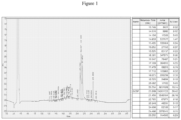
- the purity of the solubilized IB of rHu-GCSF may be estimated by RP-HPLC profile as represented in Figure 1 .
- the purity of released G-CSF is found to be in a range from 25 - 50%.
- a refolding buffer used to refold the proteins is usually composed of chemicals such as guanidium hydrochloride and arginine for increasing the conductivity of refolding solution. Processing of this refolding solution often requires the necessity of having an ultrafiltration/diafiltration step prior to ion exchange chromatography step, which adds extra time, complexity and expenditures to downstream process operations.. Keeping these constraints in mind the refolding process of current invention is developed in such a manner that the refolding solution may be directly loaded on to ion exchange chromatography without any extra conditioning step.
- the protein refolding Since the protein refolding is generally performed at very low protein concentration, it needs large volume of refolding buffer. Most commonly used component of refolding buffer is arginine which is not only very expensive ingredient to be used in large volume of refolding buffers but also contributes high conductivity to refolding solution which makes it incompatible for loading on to ion exchange chromatography.
- the present invention uses a novel and an inventive refolding approach to contribute higher overall yield of downstream process. Also the novel components as claimed in present invention make the process economical and avoid extra unit operations in the process.
- the clarified solubilised inclusion body solution is diluted by urea and sorbitol containing refolding buffer comprising of an oxidizing agent.
- the said oxidizing agent is cystine.
- the amount of cystine is in range of 0-3 mM.
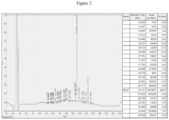
- the selection of the oxidizing agent of the present invention is such that higher refolding yield of 85 to 95% and RP-HPLC purity of 40 to 70% is achieved.
- the refolding is carried out at room temperature for 12-18 hrs.
- the refolded protein solution is acidified in presence of an acidifying agent.
- the said acidifying agent is selected from the group consisting of sodium acetate, acetic acid, hydrochloric acid, orthophosphoric acid, more preferably the acidifying agent is hydrochloric acid.
- the pH of the acidified refolded solution is adjusted in a range from 3.5 to 4.5 maintained for 30-45 min.
- the yield of the refolding step preferably ranges from 60-85%.
- the purity of acidified refolded GCSF may be estimated by RP-HPLC profile as represented in Figure 2 .
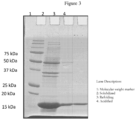
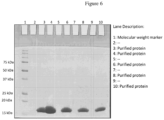
- the solubilised solution, refolded solution, acidified solution and ion exchange chromatography eluate may be subjected to SDS-PAGE to characterize low and high molecular weight impurities associated with rHu-GCSF as represented in Figure 3 .
- the acidified refolded G-CSF protein solution may optionally be subjected to filtration and/or centrifugation to remove any precipitate and particulate matter that may be formed before subjecting to chromatography for purification.
- G-CSF may get precipitated during refolding process and can cause haziness/cloudiness leading to clarification challenges after refolding. Extent of precipitation depends on solubilisation followed by refolding strategy. In many such cases, clarification of protein solution involves filtration steps due to broad range of particle size and type present in process stream.
- the said clarification may be selected from the group comprising ultrafiltration, diafiltration, microfiltration, depth filtration, tangential flow filtration, normal flow filtration and centrifugation, preferably microfiltration and centrifugation
- the said centrifugation process may be selected from the batch mode and continuous mode, preferably the centrifugation process is continuous process.
- Methionine oxidized, reduced and f-Met forms of a native recombinant GCSF protein product are certain product variants, which are considered as impurities associated with expression system like E.coli. Such product variants differ from native protein in their structural and functional aspects, and may lead to loss of biological activity and immunogenic response in patients.
- the present invention discloses a two chromatography step purification process for selective removal of these product variants. Unique selectivity in separation of closely related product variants may be obtained using combined pH and salt based elution gradients in ion exchange and hydrophobic interaction chromatography. Complete removal of process related impurities is also achieved in two step purification process.
- IEC ion-exchange chromatography
- the proteins may be purified by ion exchange chromatography followed by hydrophobic interaction chromatography wherein process and product related impurities are removed to acceptable limits using combination of pH and salt gradients with high process yields.
- the acidified refolded solution may be purified by subjecting it to ion exchange chromatography.
- the said ion exchange chromatography may either be cation exchange chromatography and anion exchange chromatography, more preferably cation exchange chromatography, most preferably weak cation exchange chromatography.
- the cation exchange chromatography for purification further comprises a stationary phase and a mobile phase
- the stationary phase of cation exchange chromatography may be selected from the group comprising SP-Sepharose FF, CM-Sepharose FF, SP-Sepharose HP, Fractogel SO3, Fractogel SE Hi Cap, more preferably CM-Sepharose FF.
- the mobile phase or binding buffer of cation exchange chromatography is selected from the group comprising sodium acetate, acetic acid, sodium phosphate, orthophosphoric acid or a mixture, preferably a mixture comprises sodium acetate and acetic acid.
- the concentration of mobile phase or binding buffer is 20 - 50 mM, and pH ranges from 3.5 - 4.5;
- the GCSF protein is eluted out of cation exchange column using the buffer comprises a mixture of sodium acetate, acetic acid and NaCl, at a pH range from 4.0 - 6.0 preferably in the range from 4.5 - 5.6.
- the mode of elution is selected from the group comprising step gradient, linear gradient and/or combination of both, preferably the gradient used for elution is step gradient.
- Refolded and acidified solutions containing G-CSF may be applied to cation exchange media under acidic conditions, for example at pH 3.0 to pH 5.0, and eluted from the media at weakly acidic to weakly basic pH, for example from pH 4.0 to pH 8.
- G-CSF may be eluted from the cation exchange medium at slightly acidic conditions, using an increasing gradient of NaCl or other salt, e.g., 0-200mMNaCl, in 40-50 mM sodium acetate, pH 5.4.
- rHu-G-CSF may be eluted from the cation exchange medium at slightly basic conditions, using 40-50 mM sodium acetate at pH 5.6- 6.2 with or without using any salt.
- the elution may be preferably performed at a flow rate of 100-250 cm/hr, more preferably 150-200 cm/hr.
- the dynamic binding capacity may be preferably between 10-20 mg/ml, more preferably 15-18 mg/ml.
- the yield of ion exchange chromatography step may preferably be in the range of 70-98%, more preferably 90-98 %.
- the selection of the cation exchange media of the present invention may be such that the medium is conditioned using a small volume of refolded solution and which avoids use of extra unit operation like buffer exchange chromatography or diafiltration using TFF.
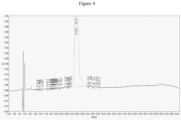
- the purity of ion exchange eluate may be estimated by RP-HPLC profile as represented in Figure 4 .
- the RP-HPLC purity of G-CSF obtained from cation exchange chromatography step is in a range of 90% - 97%.
- the ion exchange chromatography eluate containing rHu-G-CSF may be applied to hydrophobic interaction media under acidic conditions preferably in the range of pH 2.0 to pH 7.0, more preferably pH 4.0 to pH 6.0.
- the ion exchange chromatography eluate is diluted with ammonium sulphate to ensure the effective concentration of ammonium sulphate in diluted solution remains in the range from 0.5 - 1.5 M, preferably in the range from 0.7 - 1.0 M;
- the hydrophobic interaction media or stationary phase of the present invention may be selected from the group comprising Phenyl Sepharose FF, Butyl Sepharose, Nuviac-Prime, HEA hypercel, PPA hypercel, Phenyl Sepharose HP, MEP hyper cell, and Capto Adhere, preferably phenyl Sepharose FF.
- the mobile phase or binding buffer of hydrophobic interaction chromatography comprises mixture of sodium acetate, acetic acid, and ammonium sulfate at a pH range from 4.5 - 6, more preferably the pH is in the range of 5.2 - 5.8
- the elution may be preferably performed at a flow rate of 95-300cm/hr, more preferably at 100-250 cm/hr.
- the purified GCSF protein is eluted from the stationary phase of hydrophobic interaction chromatography using mobile phase comprises sodium acetate and acetic acid at a pH range from 4-6, more preferably in the range of 4.0 - 5.0.
- the mode of elution is selected from the group comprising step gradient, linear gradient and combination of both, preferably the gradient used for elution is step gradient.
- the eluate is obtained at a flow rate from 95-300cm/hr, preferably 100-250 cm/hr.
- the yield of the hydrophobic interaction chromatography (HIC) step may preferably ranges between 80 to 90%.
- the purity of G-CSF protein obtained from hydrophobic interaction chromatography is in a range from 96.5 % - 99.5% .
- the selection of second chromatography of the present invention may be such that final purity of GCSF achieved to match the quality required for pharmaceutical preparation of rHu-GCSF.
- the purity of HIC eluate may be estimated by RP-HPLC profile as represented in Figure 5 .
- the HIC load, wash-I may be subjected to SDS-PAGE to characterize low and high molecular weight impurities associated with rHu-GCSF.
- Results indicate that the product recovery after two chromatography step purification is up to 50 to 70.0% with purity levels of greater than 98.0%.
- Selective removal of various product variants using the combined pH and salt based elution and removal of the host cell impurities using orthogonal selection of chromatography steps are amongst the novel and inventive features of the process of the present invention.
- the eluate of hydrophobic interaction chromatography may optionally be buffer exchanged in formulation buffer.
- the refolded G-CSF in formulation buffer containing biologically active G-CSF may be sterile filtered to produce the pharmaceutical grade recombinant human G-CSF having final concentration in range of 0.5 to 0.9 mg/ml, more preferably 0.85 to 0.90 mg/ml.
- the purity of final purified protein may be estimated by RP-HPLC profile as represented in Figure 6 .
- the recombinant human G-CSF obtained by the process described in the present invention can be useful in the treatment of medical conditions related to haematology and oncology.
- E.g. neutropenia, acute myeloid leukaemia and a variety of infections in humans, animals, poultry, swine, horses, as well as dogs and cats are treatable with administration of G-CSF of current invention.
- Purified rHu-GCSF (Drug Substance) is conjugated with a polyethylene glycol in a suitable buffer at an acidic pH.
- the said buffer may be preferably selected from group comprising sodium acetate, phosphate acetate, potassium hydrogen phosphate, potassium dihydrogen phosphate, disodium hydrogen phosphate, potassium hydrogen phthalate, sodium tetraborate, more preferably sodium acetate.
- pH of the said conjugation reaction may be preferably in range of pH 5.0 to 5.8.
- the said conjugation reaction may be carried out by adding 3 to 5 times higher quantity (w/w) of 20kD PEG aldehyde compared to purified rHu-GCSF used for conjugation reaction.
- the said conjugation reaction may optionally be carried in presence of a reducing agent preferably selected from the group comprising sodium cyanoborohydride, sodium triacetoxy borohydride, sodium borohydride, sodium dithionite, sodium hydrosulfite, more preferably sodium cyanoborohydride.
- a reducing agent preferably selected from the group comprising sodium cyanoborohydride, sodium triacetoxy borohydride, sodium borohydride, sodium dithionite, sodium hydrosulfite, more preferably sodium cyanoborohydride.
- the reducing agent may preferably be added at a concentration in the range of 10 to 30 mM, more preferably 20 mM.
- the reaction mixture may be stirred at room temperature for 12 to 18 hrs, more preferably for 12-16 hrs.
- the yield of monopegylated rHu-GCSF preferably is in the range of 65 to 85 %, more preferably 70 to 75%.
- the monopegylated rHu-GCSF reaction mixture may be preferably stored at 1 to 10°C for further purification, more preferably at 2-8°C.
- the conjugated pegylated G-CSF mixture may be diluted with equilibration buffer and pH is adjusted in range of 3.5-5.0, more preferably pH may be adjusted to 4.0-4.5.
- the said diluted sample is subjected to cation exchange chromatography.
- the cation exchange chromatography comprises stationary phase or cation exchange media and mobile phase or binding buffer the stationary phase or cation exchange media is selected from the group comprising of MacroCap-SP and SP Sepharose FF, Fractogel SO3, preferably the stationary phase is MacroCap-SP.
- the elution buffer or elution mobile phase is selected from the sodium acetate, acetic acid, Sodium Chloride and their mixture, preferably mobile phase is a mixture.
- the concentration of sodium acetate is in the range of 10-50 mM and Sodium Chloride in the range of 0.25 to 0.75 M.
- the pH of the elution buffer or elution mobile phase is present in the range from 3.5-5, preferably the pH is 4.0- 4.5.
- the mode of elution is selected from the group comprising step gradient, linear gradient and combination of both; preferably the gradient used for elution is step gradient.
- the yield of monopegylated GCSF obtained from cation exchange chromatography is in the range from 80 to 95% preferably the range is from 85 to 90 %.
- Purified monopegylated r-Hu-GCSF may be recovered and eluted from the column by performing elution at a flow rate of 100-150 cm/hr, more preferably 100cm/hr.
- Target Elute fraction may be buffer exchanged in predefined formulation buffer of pegfilgrastim containing sodium acetate and sorbitol at pH preferably ranging between pH 3.0-4.0, more preferably pH 4.0-4.5.
- the purified monopegylated rHu-GCSF may be further concentrated up to 9-12 mg/ml by 10 kDa ultra filtration membrane, more preferably the purified monopegylated rHu-GCSF may be concentrated in range of 11.0-11.5 mg/ml.
- the final TFF retentate thus obtained may be sterile filtered with 0.2 micron to get filtrate of intended quality and diluted by formulation buffer during sterile filtration to recover the product holdup, filtration may be optimized to recover the product at pegfilgrastim concentration of >10 mg/ml.
- the final purified monopegylated rHu-GCSF produced may be preferably stored at temperature ranging from 1-10°C, more preferably at 2-8 °C till further use.
- the final PEG-GCSF concentrated solution may analyzed by following analytical methods to check the PEG-GCSF concentrated solution or PEG-GCSF drug substance or PEG-GCSF bulk drug substance or PEG-GCSF API against specification.
- the product purified by the process described in the present invention is N-terminal monopegylated GCSF which is highly similar to innovator product with overall process yield of more than 65 %.
- the rHu-GCSF and rHu PEG-GCSF drug substances obtained using process described in present invention are extensively characterized using monograph and state of art in house analytical methods.
- the rHu-GCSF product obtained using process of present invention meets following critical quality attributes but not limited to the critical quality attribute results set out in detail at Table 1 & Table 2:
- Table 1 Quality of rHu-GCSF obtained using process of the present invention
- the principle band in the electropherogram obtained with the test solution is similar in the position to the principle band obtained with the reference solution.
- Identification C determination by size exclusion chromatography (impurities of molecular mass higher than that of Filgrastim/dimers and related substance of higher molecular mass)
- the retention time to the principle peak obtained with test solution is similar to that of the principal peak obtained with the reference solution.
- the electropherogram obtained under both reducing and non-reducing condition, the principle band obtained with the test solution is similar in the position to the principle band obtained with the reference solution.
- compositions of G-CSF in a pharmaceutically acceptable carrier may be administered intravascularly, intraperitoneally, subcutaneously, intramuscularly, or by using forms known to the pharmaceutical art.
- active drug components may be combined with a suitable carrier such as water, saline, aqueous dextrose, and the like.
- composition comprising the G-CSF obtained from the process of present invention in liquid parenteral I.V formulation with pharmaceutically acceptable excipients for proliferation and differentiation of granulocytes.
- composition comprising: G-CSF or Filgrastim obtained from the process of present invention formulated in a 10 mM sodium acetate buffer at pH 4.0, containing 5% sorbitol and 0.004% Polysorbate 80.
- Ingredient Quantity Filgrastim More than 0.9 mg Acetate 0.59 mg Sorbitol 50.0 mg Polysorbate 80 0.04 mg Sodium 0.035 mg Water for Injection Q.S. to 1 ml
- the pharmaceutical composition of present invention comprises: PEG-GCSF/Peg- Filgrastim obtained from the process of present invention formulated in a 10 mM sodium acetate buffer at pH 4.0, containing 5% sorbitol and 0.004% Polysorbate 20.
- Ingredient Quantity Peg- Filgrastim More than 10 mg Acetate 0.59 mg Sorbitol 50.0 mg Polysorbate 20 0.04 mg Sodium 0.035 mg Water for Injection Q.S. to 1 ml
- Example-1 Process of isolation and purification of G-CSF of present invention
- Step 1 Production of rHu- GCSF by high cell density fermentation of E.coli
- the pre-inoculum medium containing suitable antibiotic is inoculated with E. coli cells from petriplate revived from frozen stock. Culture is incubated at 30 °C, 12 Hrs. at 250 rpm.
- the pre inoculum and subsequently inoculum are prepared by inoculating E. coli in basal media containing suitable antibiotics and incubated at 30°C, 12 Hrs. at 250 rpm. Fermenter containing conditioned basal salt medium is inoculated with inoculum culture such that the starting O.D. at 600nm is approx. 0.1. Culture is induced by adding 1mM IPTG when desired O.D. 600nm is reached.
- broth containing induced E. coli cells is harvested by centrifugation at 4°C and 6000 rpm for 30 min.
- the harvested cell pellet is washed with phosphate buffered saline (PBS).
- PBS phosphate buffered saline
- Step 2 Cell lysis, isolation and washing of inclusion bodies
- 19.0g of frozen cell pellet obtained from fermentation and diluted 15 X in Lysis Buffer comprises 100mM Tris, 20mM EDTA, 250mM NaCl, and pH 8.0. Solution kept for stirring at room temperature (RT) for 30 min.
- cell lysate is subjected to high speed centrifugation at 10,000 g for 20 min. Lysed cell pellet is carefully recovered by decanting the supernatant. Both lysed pellet and supernatant were analyzed by reducing SDS PAGE.
- Lysed cell pellet obtained after centrifugation is again resuspended in wash buffer containing 20mM Tris, 1% Triton X 100, 5mM EDTA, and pH 8.0. Suspension is kept for stirring at room temperature for 30 min. After 30 minutes of incubation and stirring in wash buffer the suspension is subjected to centrifugation at 10,000 g for 20 min. Washed IB is recovered in pellet fraction by carefully decanting the supernatant. Both washed IB and supernatant were analyzed by reducing SDS PAGE for purity estimation. Washed Inclusion bodies (IB) were stored at -80 °C till further use.
- Step 3 Solubilization of inclusion bodies to release GCSF
- 1 g of Inclusion body weighed and solubilised in 20 ml of solubilization buffer comprises; 50 mM Tris, 5mM EDTA and 8M Urea at pH 10. After 1 hr of solubilization, 40mM Cysteine was added to reduce the disulfide bonds, pH was readjusted to 10.0 and kept for solubilization for 60 minutes at room temperature with continuous stirring. After solubilization, the solubilized inclusion body solution was clarified using centrifugation at 11000 g for 30 minutes.
- Step 4 Refolding of the GCSF protein
- the clarified and solubilised inclusion body solution was refolded by adding it slowly into10 volumes of refolding buffer composed of 50mM Tris, 0.5M Urea, 5% Sorbitol and 2mM Cystine. Dilution is carried out using pump with constant flow rate. After addition of solubilized sample to refolding buffer sample was kept overnight (approximately 16 hr) for refolding at room temperature (25°C).
- Step 5 Clarification of acidified G-CSF protein refolded solution
- Refolded clarified protein solution was acidified by addition of stock solution of 1 M sodium acetate pH 4.0 equivalent to 20mM Sodium Acetate and finally pH was adjusted by 2M hydrochloric acid up to pH 4.0 and kept for 30 min on hold.
- the acidified refolded G-CSF protein solution may optionally be subjected to filtration to remove any precipitate and particulate matter that may be formed before subjecting to chromatography.
- the said filtration may be preferably selected from the group comprising ultrafiltration, diafiltration, microfiltration, depth filtration, tangential flow filtration, normal flow filtration and centrifugation, preferably microfiltration.
- equilibration buffer composed of 20 mM Sodium Acetate buffer, and 0.8M Ammonium Sulphate, pH 5.4 to bring the UV280 absorbance to baseline.
- Target protein was recovered and eluted from the column running a linear gradient of equilibration and elution buffer comprises of 20mM sodium acetate buffer, pH4.0in 20CV.
- Step 7 Recovering the purified G-CSF in formulation buffer
- HIC fractions containing purified target protein was buffer exchanged in predefined formulation buffer composed of 10 mM sodium, pH 4.0, 5% Sorbitol, 0.004% Polysorbate 80 and further concentrated up to 1 mg/ml using10 kDa of ultra filtration membrane.
- the final rHu-GCSF concentrated solution was sterile filtered with 0.2 micron and stored at 2-8 °C till further use.
- the final G-CSF concentrated solution was analyzed by following analytical methods to check the G-CSF concentrated solution or G-CSF drug substance or G-CSF bulk drug substance or G-CSF API against specification.
- Step 8 Conjugation and Purification of pegylated G-CSF using cation exchange chromatography
- rHu-GCSF present in10 mM sodium acetate buffer, pH 4.0, containing 5 % sorbitol and 0.004 % Tween 80 at a concentration of 1-1.2 mg/mL is adjusted to pH ⁇ 5.0 by addition of 1 M Sodium acetate at pH 5.0.
- the final buffer strength is approximately 50 mM.
- the 3X amount (weight basis) of mPEG-20kDa-CHO is added to the reaction mixture mPEG-20kDa-PEG-aldehyde to the amount of rHu-GCSF present in reaction mixture before pegylation.
- Immediately 20 mM Sodium Cyanoborohydride [Na(CN)BH 3 ] is added to the reaction mixture.
- reaction mixture is stirred at room temperature [ ⁇ 25 °C] overnight.
- process quality analysis is performed to check the % of monopegylated filgrastim, generally 75-80 % monopegylated filgrastim is obtained after 14 hrs, reaction is quenched with 1M tris at pH 8.0 and stored at 2-8°C till further processing.
- Conjugation reaction mixture is 20X diluted with Equilibration buffer and pH is adjusted to 4.0. Diluted sample is loaded onto pre-equilibrated cation exchange chromatography column (MacroCap SP) at a liner flow rate of 100 cm/hr. Column is washed for 5 CV with equilibration buffer composed of 20mM Sodium Acetate, pH 4.0 to bring the UV280 absorbance to baseline at a liner flow rate of 100 cm/hr.
- Purified N-terminally Monopegylated rHu-GCSF is recovered and eluted from the column by passing elution buffer composed of 20mM Sodium Acetate, 0.5 M NaCl, pH 4.0 in 0-100% liner gradient for 10 CV at a liner flow rate of 100 cm/hr.
- Target fraction of chromatography eluate is buffer exchanged in buffer containing 10mM Sodium Acetate, 5% Sorbitol, 0.004% Polysorbate 20, pH 4.0.
- Buffer exchanged sample is further concentrated up to ⁇ 11 mg/ml by 10 kDa ultra filtration membrane.
- the final TFF retentate is sterile filtered with 0.2 micron to get filtrate of intended quality and diluted using buffer. During sterile filtration to recover the product holdup, filtration is optimized to recover the product at PEG-GCSF concentration of > 10 mg/ml.
- the final product is stored at 2-8 °C till further use.
- the final peg-filgrastim concentrated solution is analyzed by following analytical methods to check the peg-filgrastim concentrated solution or pegfilgrsatim drug substance or pegfilgrsatim bulk drug substance or pegfilgrsatim API against specification.
- the aforementioned improvements in the purification process of PEG-GCSF will be beneficial in terms of decreased human intervention, capital expenditure and operational expenditure costs in addition to an expected higher overall product yield in the final product.
Landscapes
- Health & Medical Sciences (AREA)
- Chemical & Material Sciences (AREA)
- Life Sciences & Earth Sciences (AREA)
- General Health & Medical Sciences (AREA)
- Medicinal Chemistry (AREA)
- Organic Chemistry (AREA)
- Pharmacology & Pharmacy (AREA)
- Epidemiology (AREA)
- Animal Behavior & Ethology (AREA)
- Public Health (AREA)
- Veterinary Medicine (AREA)
- Proteomics, Peptides & Aminoacids (AREA)
- Engineering & Computer Science (AREA)
- Molecular Biology (AREA)
- Biochemistry (AREA)
- Genetics & Genomics (AREA)
- Biophysics (AREA)
- Analytical Chemistry (AREA)
- Chemical Kinetics & Catalysis (AREA)
- Oil, Petroleum & Natural Gas (AREA)
- General Chemical & Material Sciences (AREA)
- Immunology (AREA)
- Zoology (AREA)
- Gastroenterology & Hepatology (AREA)
- Bioinformatics & Cheminformatics (AREA)
- Toxicology (AREA)
- Inorganic Chemistry (AREA)
- Dermatology (AREA)
- Water Supply & Treatment (AREA)
- Peptides Or Proteins (AREA)
- Preparation Of Compounds By Using Micro-Organisms (AREA)
- Medicines That Contain Protein Lipid Enzymes And Other Medicines (AREA)
- Micro-Organisms Or Cultivation Processes Thereof (AREA)
- Medicinal Preparation (AREA)
- Enzymes And Modification Thereof (AREA)
Claims (8)
- Ein Verfahren zur Herstellung von PEG-G-CSF, das die Schritte umfasst:i) Produktion von rHu-GCSF durch Hochzelldichtefermentation von E.coli und Isolierung von Einschlusskörpern;ii) wobei die isolierten Einschlusskörper in einem Puffer gewaschen werden, der aus der Gruppe ausgewählt ist die Tris-EDTA-Triton-Puffer, Tris-EDTA-DOC-Puffer, Tris-NaCl-Harnstoff-Puffer, Tris-Puffer und TritonX-100 oder ein Gemisch, bevorzugt das Gemisch aus Tris-EDTA, Harnstoff, NaCl und TritonX-100, umfasst;wobei das Tris im Bereich von 30 - 50 mM vorhanden ist, EDTA ist im Bereich von 3 - 7 mM, Harnstoff ist im Bereich von 0,1 - 0,5 M, NaCl ist im Bereich von 1 - 2 M und TritonX-100 ist im Bereich von 0,8 - 1,5 %;wobei der pH-Wert des Waschpuffers im Bereich von 7,5-8,5 ist;wobei die Temperatur im Bereich von 20 bis 25°C ist und die Inkubationszeit im Bereich von 60 bis 90 Minuten ist;iii) Solubilisierung der in Schritt (ii) erhaltenen Einschlusskörper zur Freisetzung von G-CSF mit einer Mischung aus Harnstoff, Puffer und einem Reduktionsmittel bei einem alkalischen pH-Wert;wobei die isolierten Einschlusskörper in einer solubilisierenden Mischung aus Harnstoff, Puffer und einem Reduktionsmittel solubilisiert werden;wobei das Reduktionsmittel Cystein ist, das in einem Bereich von 20 bis 100 mM vorhanden ist; wobei der Puffer ein Gemisch aus Tris, EDTA und Harnstoff ist;wobei die Konzentration von Harnstoff in einem Bereich von 6 - 8 M ist, Tris in einem Bereich von 20 - 50 mM ist und EDTA in einem Bereich von 2 - 7 mM ist;wobei der pH-Wert der Solubilisierungsmischung in einem Bereich von 9,5 - 10,5 ist;wobei die solublisierten Einschlusskörper geklärt werden, um das G-CSF-Protein durch Zentrifugation in einem Bereich von 8000 - 15000 g freizusetzen;wobei das von den solubilisierten Einschlusskörpern freigesetzte G-CSF-Protein durch RP-HPLC auf seine Reinheit geschätzt wird;wobei die Reinheit des freigesetzten G-CSF in einem Bereich von 25 - 50% gefunden wird;iv) Rückfaltung des in Schritt (iii) erhaltenen G-CSF-Proteins in einem Rückfaltungspuffer; der Harnstoff, Sorbitol und ein Oxidationsmittel enthält;wobei das Oxidationsmittel Cystin ist;wobei Cystin in einer Konzentration von bis zu 3 mM vorhanden ist;und wobei Harnstoff in einem Bereich von 0,4 - 1 M vorhanden istwobei die Menge an Sorbitol 5 % beträgt;wobei das G-CSF-Protein durch RP-HPLC auf seine Reinheit geschätzt wird,wobei die Reinheit von G-CSF in einem Bereich von 40-70% ist;wobei der Rückfaltungsprozess bei 25°C für 12-18 Stunden durchgeführt wirdwobei die G-CSF-Proteinlösung in Gegenwart eines Säuerungsmittels angesäuert wird;wobei das Säuerungsmittel aus der Gruppe ausgewählt ist, die Natriumacetat, Essigsäure, Salzsäure und ortho-Phosphorsäure umfasst;wobei der pH-Wert der angesäuerten rückgefalteten Proteinlösung im Bereich von 3,5 - 4,5 ist und die besagte Lösung für 30 - 45 Minuten bei diesem pH-Wert gehalten wird; undwobei die Ausbeute der Rückfaltungsstufe im Bereich von 60 - 85% ist.v) Klärung und Reinigung des in Schritt (iv) gewonnenen G-CSF-Proteins;vi) Konjugieren des in Schritt (v) erhaltenen gereinigten G-CSF mit PEG;
undvii) Reinigen des in Schritt (vi) erhaltenen konjugierten (pegylierten) G-CSF unter Verwendung von Kationenaustauschchromatographie;wobei die Ausbeute des Verfahrens reicht von 50 bis 70% und die Reinheit des durch SEC-HPLC analysierten GCSF nicht weniger als 98% ist;wobei die Summe der Verunreinigungen, wie z.B. Aggregate, nicht größer als 2% ist und die Reinheit von G-CSF, analysiert durch RPHPLC, nicht weniger als 96,5% ist;wobei die Summe aus oxidiertem GCSF, reduziertem GCSF und f-met GCSF nicht größer als 3,5 % ist;wobei die Ausbeute des Verfahrens zur Herstellung von PEG-GCSF aus GCSF reicht von 60 bis 75 % und die Reinheit von PEG-GCSF, wie durch SEC-HPLC analysiert, ist nicht weniger als 95 %. - Das Verfahren gemäß Schritt (vii) von Anspruch 1, wobei die Menge an vorhandenem oxidiertem GCSF weniger als 1,5 %, reduziertem GCSF weniger als 1 % und f-met GCSF weniger als 1,5 % ist.
- Das Verfahren gemäß Schritt (vii) von Anspruch 1, wobei die Menge der vorhandenen Aggregate weniger als 2 % ist.
- Das Verfahren gemäß Schritt (vii) von Anspruch 1, wobei die Prozessausbeute an GCSF nicht weniger als 50 % und die Prozessausbeute an PEG-GC SF nicht weniger als 60 % ist.
- Das Verfahren gemäß Schritt (i) von Anspruch 1, wobei die aus der Hochzelldichtefermentation von E.coli erzeugten Zellen durch Lysepuffer lysiert werden;wobei der pH-Wert des Lysepuffers in einem Bereich von 7,5-8,5 ist;wobei die Isolierung durch Instrumente durchgeführt wird, die ausgewählt werden aus einer Gruppe umfassend Ultraschallbad im Labormaßstab, Hochdruck-Zellhomogenisator, Zentrifugation und Filtration, oder einer Kombination, bevorzugt einer Kombination aus dem Ultraschallbad im Labormaßstab und Hochdruck-Zellhomogenisator.
- Das Verfahren nach Schritt (v) von Anspruch 1, wobei das G-CSF-Protein geklärt und gereinigt wird, um ein G-CSF-Proteineluat zu erhalten;wobei die G-CSF-Proteinlösung einer Filtration und Zentrifugation zur Klärung unterworfen wird, um Präzipitat und partikuläre Stoffe zu entfernen, bevor sie einer Chromatographie zur Reinigung unterworfen wird;wobei die Klärung aus der Gruppe ausgewählt ist die Ultrafiltration, Diafiltration, Mikrofiltration, Tiefenfiltration, Tangentialflussfiltration, Normalflussfiltration und Zentrifugation umfasst, bevorzugt erfolgt die Klärung durch Mikrofiltration oder Zentrifugation; wobei das Zentrifugationsverfahren aus dem Batch-Modus und dem kontinuierlichen Modus ausgewählt wird, bevorzugt ist das Zentrifugationsverfahren im kontinuierlicher Modus;wobei die Reinigungsmethode zwei Chromatographiemethoden umfasst;wobei die Chromatographiemethoden Ionenaustauschchromatographie & hydrophobe Wechselwirkung sind;wobei die Ionenaustauschchromatographie ausgewählt ist aus der Kationenaustauschchromatographie und der Anionenaustauschchromatographie, bevorzugt der Kationenaustauschchromatographie, mehr bevorzugt der schwachen Kationenaustauschchromatographie;wobei die Kationenaustauschchromatographie eine stationäre Phase und eine mobile Phase umfasst;wobei die stationäre Phase aus der Gruppe ausgewählt ist die SP-Sepharose FF, CM-Sepharose FF, SP-Sepharose HP, Fractogel SO3 und Fractogel SE HiCap, mehr bevorzugt CM-Sepharose, umfasst, bevorzugt ist die stationäre Phase CM-Sepharose FF;wobei die mobile Phase aus der Gruppe ausgewählt ist die Natriumacetat, Essigsäure, Natriumphosphat, Orthophosphorsäure oder eine Mischung umfasst, bevorzugt eine Mischung, die Natriumacetat und Essigsäure umfasst;wobei die Konzentration der mobilen Phase 20 - 50 mM ist und der pH-Wert reicht von 3,5 - 4,5;wobei das GCSF-Protein aus der Kationenaustauschersäule eluiert wird unter Verwendung des Puffers, der Natriumacetat, Essigsäure und NaCl umfasst, bei einem pH-Bereich von 4,0 - 6,0, bevorzugt bei einem Bereich von 4,5 - 5,6;wobei der Elutionsmodus aus der Gruppe ausgewählt ist, die einen Stufengradienten, einen linearen Gradienten und eine Kombination aus beiden umfasst, bevorzugt ist der für die Elution verwendete Gradient ein Stufengradient;wobei die Elution bei einer Flussrate von 100-250 cm/Std., mehr bevorzugt bei 150-200 cm/Std. durchgeführt wird;wobei die dynamische Bindungskapazität des Eluats ist im Bereich von 10-20 mg/ml, bevorzugt 15-18 mg/ml;wobei die RP-HPLC-Reinheit von G-CSF aus dem Kationenaustauschchromatographie-Schritt in einem Bereich von 90-97 % ist;wobei die Ausbeute des G-CSF-Proteins aus dem Kationenaustauschchromatographie-Schritt in einem Bereich von 90 % - 98 % ist;wobei das rHu-G-CSF enthaltende Ionenaustauschchromatographie-Eluat auf die stationäre Phase einer hydrophoben Interaktionschromatographie unter sauren Bedingungen im Bereich von pH 2,0 - 7,0, bevorzugt pH 4,0 - pH 6,0, aufgetragen wird;wobei das Ionenaustauschchromatographie-Eluat mit Ammoniumsulfat verdünnt wird, um sicherzustellen, dass die effektive Konzentration von Ammoniumsulfat in der verdünnten Lösung im Bereich von 0,5 - 1,5 M, bevorzugt im Bereich von 0,7 - 1,0 M, verbleibt; wobei die Ionenaustauschchromatographie eine stationäre Phase und eine mobile Phase umfasst; wobei das G-CSF enthaltende, mit Ammoniumsulfat behandelte Ionenaustauschchromatographie-Eluat auf die stationäre Phase der hydrophoben Interaktionschromatographie unter sauren Bedingungen aufgetragen wird, bevorzugt im Bereich von pH 2,0 - pH 7,0, mehr bevorzugt pH 4,0 - pH 6,0;wobei die stationäre Phase aus der Gruppe ausgewählt ist die Phenyl Sepharose FF, Butyl Sepharose, Nuvia-cPrime, HEA hypercel, PPA hypercel, Phenyl Sepharose HP, MEP hyperCel und Capto adhere umfasst, bevorzugt Phenyl Sepharose FF;wobei die mobile Phase der hydrophoben Interaktionschromatographie ein Gemisch aus Natriumacetat, Essigsäure und Ammoniumsulfat einen pH-Bereich von 4,5 - 6, mehr bevorzugt 5,2 - 5,8, umfasst;wobei die Elution bei einer Flussrate von 95-300 cm/Std., bevorzugt bei 100-250 cm/Std., durchgeführt wird;wobei das gereinigte GCSF-Protein von der stationären Phase der hydrophoben Interaktionschromatographie unter Verwendung einer mobilen Phase eluiert wird, die Natriumacetat und Essigsäure bei einem pH-Wert im Bereich von 4 - 6, mehr bevorzugt im Bereich von 4,0 - 5,0, umfasst;wobei der Elutionsmodus aus einer Gruppe ausgewählt wird, die einen Stufengradienten, einen linearen Gradienten und eine Kombination aus beiden umfasst, bevorzugt ist der für die Elution verwendete Gradient ein Stufengradient;wobei das Eluat bei einer Flussrate von 95-300 cm/Std., bevorzugt bei 100-250 cm/Std, erhalten wird;wobei die Reinheit des G-CSF-Proteins, erhalten durch hydrophobe Interaktionschromatographie, in einem Bereich von 96,5% - 99,5% ist;
undwobei die Ausbeute des G-CSF-Proteins, erhalten durch hydrophobe Interaktionschromatographie, in einem Bereich von 80 % bis 90 % ist. - Das Verfahren gemäß Schritt (vi) von Anspruch 1, wobei das gereinigte G-CSF-Protein mit Polyethylenglykol (PEG) in einer Pufferlösung konjugiert ist;wobei die Pufferlösung ausgewählt ist aus der Gruppe die Natriumacetat, Phosphat Acetat, Kaliumhydrogenphosphat, Kaliumdihydrogenphosphat, Dinatriumhydrogenphosphat, Kaliumhydrogenphthalat, Natriumtetraborat umfasst, bevorzugt ist die Pufferlösung Natriumacetat;wobei der pH-Wert der Konjugationsreaktion in einem Bereich von pH 5,0 - 5,8 ist;wobei die Konjugationsreaktion durch Zugabe der 3- bis 5-fach höheren Menge (w/w) an 20 kD PEG-Aldehyd durchgeführt wird;wobei die Konjugationsreaktion in Gegenwart eines Reduktionsmittels durchgeführt wird, das aus der Gruppe ausgewählt ist die Natriumcyanoborhydrid, Natriumtriacetoxyborhydrid, Natriumborhydrid, Natriumdithionit, Natriumhydrosulfit umfasst, wobei das Reduktionsmittel bevorzugt Natriumcyanoborhydrid ist;wobei das Reduktionsmittel im Bereich von 10 bis 30 mM vorhanden ist, bevorzugt ist das Reduktionsmittel 20 mM;wobei die Reaktionsmischung bei 25°C für 12 bis 18 Stunden, bevorzugt für 12-16 Stunden, gerührt wird;wobei die Ausbeute an monpegyliertem rHu-GCSF der Konjugationsreaktion im Bereich von 65 - 85 % ist, bevorzugt ist die Ausbeute 70 - 75 %;
undwobei die Temperatur zur Lagerung der monopegylierten rHu-GCSF-Reaktionsmischung im Bereich von 1 bis 10°C, bevorzugt im Bereich von 2-8°C ist. - Das Verfahren gemäß Schritt (vii) von Anspruch 1, wobei das konjugierte pegylierte G-CSF-Protein gereinigt wird, um monopegyliertes G-CSF durch Kationenaustauschchromatographie zu erhalten;wobei das konjugierte pegylierte G-CSF mit Äquilibrierungspuffer verdünnt wird, um den pH-Wert im Bereich von 3,5-5,0 einzustellen, bevorzugt wird der pH-Wert im Bereich von 4,0-4,5 eingestellt;wobei die Kationenaustauschchromatographie eine stationäre Phase und eine mobile Phase umfasst;wobei die stationäre Phase ausgewählt ist aus der Gruppe umfassend MacroCap-SP und SP Sepharose FF, Fractogel SO3, bevorzugt ist die stationäre Phase MacroCap-SP;wobei die mobile Phase ausgewählt ist aus Natriumacetat, Essigsäure, NaCl und deren Gemisch, bevorzugt ist die mobile Phase ein Gemisch;wobei das Natriumacetat im Bereich von 10 bis 50 mM vorhanden ist und NaCl im Bereich von 0,25 bis 0,75 M vorhanden ist, wobei der pH-Wert der mobilen Phase im Bereich von 3,5 - 5 vorhanden ist, bevorzugt ist der pH-Wert 4,0 - 4,5;wobei der Elutionsmodus aus der Gruppe ausgewählt ist, die einen Stufengradienten, einen linearen Gradienten und eine Kombination aus beiden umfasst, bevorzugt ist der für die Elution verwendete Gradient ein Stufengradient;wobei das gereinigte monopegylierte r-Hu-GCSF bei einer Durchflussrate von 100-150 cm/Std., bevorzugt 100 cm/Std., rückgewonnen wird;wobei die Ausbeute an monopegyliertem r-Hu-GCSF aus der Kationenaustauschchromatographie im Bereich von 80 bis 95% ist, bevorzugt im Bereich von 85 bis 90%;wobei das gereinigte monopegylierte rHu-GCSF durch eine 10 kDa-Ultrafiltrationsmembran im Bereich von 9-12 mg/ml konzentriert wird, bevorzugt wird das gereinigte monopegylierte rHu-GCSF im Bereich von 11,0-11,5 mg/ml konzentriert; undwobei das erhaltene gereinigte monopegylierte rHu-GCSF im Temperaturbereich von 1-10°C, bevorzugt bei 2-8°C, gelagert wird.
Applications Claiming Priority (2)
| Application Number | Priority Date | Filing Date | Title |
|---|---|---|---|
| IN2289MU2014 | 2014-07-14 | ||
| PCT/IN2015/050066 WO2016009451A2 (en) | 2014-07-14 | 2015-07-13 | A novel process for purification of rhu-gcsf |
Publications (4)
| Publication Number | Publication Date |
|---|---|
| EP3169697A2 EP3169697A2 (de) | 2017-05-24 |
| EP3169697A4 EP3169697A4 (de) | 2017-11-08 |
| EP3169697C0 EP3169697C0 (de) | 2024-10-23 |
| EP3169697B1 true EP3169697B1 (de) | 2024-10-23 |
Family
ID=55079140
Family Applications (1)
| Application Number | Title | Priority Date | Filing Date |
|---|---|---|---|
| EP15822758.7A Active EP3169697B1 (de) | 2014-07-14 | 2015-07-13 | Neuartiges verfahren zur aufreinigung von rhu-gcsf |
Country Status (14)
| Country | Link |
|---|---|
| US (1) | US10519209B2 (de) |
| EP (1) | EP3169697B1 (de) |
| JP (1) | JP6742300B2 (de) |
| AU (1) | AU2015291123C1 (de) |
| CL (1) | CL2017000087A1 (de) |
| CO (1) | CO2017001387A2 (de) |
| EA (1) | EA035448B1 (de) |
| ES (1) | ES3002087T3 (de) |
| MX (1) | MX379025B (de) |
| NZ (1) | NZ728662A (de) |
| PE (2) | PE20220371A1 (de) |
| PL (1) | PL3169697T3 (de) |
| SA (1) | SA517380723B1 (de) |
| WO (1) | WO2016009451A2 (de) |
Families Citing this family (8)
| Publication number | Priority date | Publication date | Assignee | Title |
|---|---|---|---|---|
| KR102020995B1 (ko) * | 2017-10-30 | 2019-09-16 | 한국코러스 주식회사 | 콜로니자극인자와 폴리올이 접합된 접합물을 고수율로 제조하는 방법 |
| KR102870505B1 (ko) * | 2017-12-06 | 2025-10-15 | 주식회사 아모라이프사이언스 | 홍합접착단백질의 생산 방법 |
| CN109840410B (zh) * | 2017-12-28 | 2021-09-21 | 中国科学院计算技术研究所 | 一种进程内数据隔离与保护的方法和系统 |
| KR102140531B1 (ko) * | 2018-08-07 | 2020-08-04 | (주)휴온스 | Gly-Tβ4의 제조방법 |
| EP3959222A4 (de) * | 2019-04-24 | 2023-06-14 | Tanvex Biopharma Usa, Inc. | Verfahren zur herstellung von granulozytenkoloniestimulierendem faktor |
| EP4072592A4 (de) * | 2019-12-03 | 2024-06-12 | Indian Institute of Technology, Delhi | Verfahren zum herstellen pegylierter therapeutischer proteine |
| WO2022167886A1 (en) * | 2021-02-04 | 2022-08-11 | Intas Pharmaceuticals Ltd. | An improved peg-gcsf purification process having dual ufdf |
| WO2022245259A1 (ru) * | 2021-05-18 | 2022-11-24 | Акционерное общество "ГЕНЕРИУМ" | Способ промышленной очистки ромиплостима |
Family Cites Families (17)
| Publication number | Priority date | Publication date | Assignee | Title |
|---|---|---|---|---|
| NZ218336A (en) | 1985-12-09 | 1991-08-27 | Kirin Amgen Inc | Monoclonal antibodies to human pluripotent granulocyte colony stimulating factor (hpg-csf) |
| IL133974A0 (en) * | 1997-07-14 | 2001-04-30 | Bolder Biotechnology Inc | Derivatives of growth hormone and related proteins |
| US6653098B1 (en) * | 1998-02-23 | 2003-11-25 | G. D. Searle & Co. | Method of producing mouse and human endostatin |
| FR2796071B1 (fr) | 1999-07-08 | 2001-09-07 | Hoechst Marion Roussel Inc | Procede de purification de facteur de stimulation de colonies de granulocytes |
| CN1663962A (zh) * | 2004-03-01 | 2005-09-07 | 重庆富进生物医药有限公司 | 重组人粒细胞集落刺激因子及其化学修饰物的一步纯化工艺 |
| JP2007277094A (ja) * | 2004-06-29 | 2007-10-25 | Chemo Sero Therapeut Res Inst | 改変ダニ主要アレルゲン含有医薬組成物 |
| DE102005033250A1 (de) * | 2005-07-15 | 2007-01-18 | Bioceuticals Arzneimittel Ag | Verfahren zur Reinigung von G-CSF |
| EP2044118A2 (de) * | 2006-06-13 | 2009-04-08 | Zymogenetics, Inc. | Il-17- und il-23-antagonisten sowie verwendungsverfahren |
| WO2008096370A2 (en) * | 2007-02-05 | 2008-08-14 | Natco Pharma Limited | An efficient and novel purification method of recombinant hg-csf |
| US7625555B2 (en) * | 2007-06-18 | 2009-12-01 | Novagen Holding Corporation | Recombinant human interferon-like proteins |
| PT2341061E (pt) * | 2009-12-31 | 2013-11-05 | Arven Ilac Sanayi Ve Ticaret As | Um processo novo para a preparação de g-csf (fator de estimulação de colónias de granulócitos) |
| CN102234310B (zh) | 2010-04-30 | 2017-02-08 | 杭州九源基因工程有限公司 | 一种聚乙二醇修饰蛋白的分离纯化方法 |
| RU2446173C1 (ru) * | 2010-08-13 | 2012-03-27 | Зао "Биокад" | Новый функционально активный, высокоочищенный стабильный конъюгат гранулоцитарного колониестимулирующего фактора (г-ксф) с полиэтиленгликолем с пролонгированным биологическим действием, пригодный для медицинского применения, и иммунобиологическое средство на его основе |
| KR101831300B1 (ko) * | 2010-10-29 | 2018-02-23 | 한미사이언스 주식회사 | 재조합 대장균으로부터 인간 과립구 콜로니 자극인자를 정제하는 방법 |
| CN102485742A (zh) * | 2010-12-02 | 2012-06-06 | 山东新时代药业有限公司 | 一种聚乙二醇单修饰的重组人粒细胞集落刺激因子的制备及分离纯化方法 |
| EP2670424A4 (de) * | 2011-02-01 | 2014-12-31 | Fate Therapeutics Inc | Cardiotrophin-verwandte moleküle für verbesserte therapeutika |
| US9422354B2 (en) * | 2012-06-19 | 2016-08-23 | Indian Institute Of Technology Delhi | Process for purification of recombinant granulocyte colony stimulating factor (rHu GCSF) |
-
2015
- 2015-07-13 ES ES15822758T patent/ES3002087T3/es active Active
- 2015-07-13 EP EP15822758.7A patent/EP3169697B1/de active Active
- 2015-07-13 AU AU2015291123A patent/AU2015291123C1/en active Active
- 2015-07-13 PL PL15822758.7T patent/PL3169697T3/pl unknown
- 2015-07-13 EA EA201700058A patent/EA035448B1/ru unknown
- 2015-07-13 PE PE2022000247A patent/PE20220371A1/es unknown
- 2015-07-13 WO PCT/IN2015/050066 patent/WO2016009451A2/en not_active Ceased
- 2015-07-13 JP JP2017502883A patent/JP6742300B2/ja active Active
- 2015-07-13 NZ NZ728662A patent/NZ728662A/en unknown
- 2015-07-13 MX MX2017000467A patent/MX379025B/es unknown
- 2015-07-13 US US15/326,277 patent/US10519209B2/en active Active
- 2015-07-13 PE PE2017000070A patent/PE20170769A1/es unknown
-
2017
- 2017-01-12 CL CL2017000087A patent/CL2017000087A1/es unknown
- 2017-01-14 SA SA517380723A patent/SA517380723B1/ar unknown
- 2017-02-13 CO CONC2017/0001387A patent/CO2017001387A2/es unknown
Also Published As
| Publication number | Publication date |
|---|---|
| WO2016009451A3 (en) | 2016-05-19 |
| MX2017000467A (es) | 2017-07-28 |
| JP6742300B2 (ja) | 2020-08-19 |
| SA517380723B1 (ar) | 2021-05-18 |
| AU2015291123B2 (en) | 2020-03-12 |
| MX379025B (es) | 2025-03-11 |
| EP3169697C0 (de) | 2024-10-23 |
| NZ728662A (en) | 2021-01-29 |
| EA035448B1 (ru) | 2020-06-17 |
| JP2017526649A (ja) | 2017-09-14 |
| CO2017001387A2 (es) | 2017-05-10 |
| EA201700058A1 (ru) | 2017-07-31 |
| PE20170769A1 (es) | 2017-07-04 |
| US10519209B2 (en) | 2019-12-31 |
| CL2017000087A1 (es) | 2018-05-18 |
| AU2015291123C1 (en) | 2020-12-10 |
| AU2015291123A1 (en) | 2017-02-23 |
| BR112017000704A2 (pt) | 2017-11-14 |
| PL3169697T3 (pl) | 2025-03-10 |
| EP3169697A2 (de) | 2017-05-24 |
| EP3169697A4 (de) | 2017-11-08 |
| WO2016009451A2 (en) | 2016-01-21 |
| ES3002087T3 (en) | 2025-03-06 |
| PE20220371A1 (es) | 2022-03-16 |
| US20170210784A1 (en) | 2017-07-27 |
Similar Documents
| Publication | Publication Date | Title |
|---|---|---|
| EP3169697B1 (de) | Neuartiges verfahren zur aufreinigung von rhu-gcsf | |
| US10428107B2 (en) | Method for isolating and purifying recombinant human serum albumin from transgenic rice grain | |
| KR101853146B1 (ko) | 생물학적으로 활성인 재조합 인간 gcsf의 수득 방법 | |
| CN107438623B (zh) | 长效的ctp修饰的生长激素多肽的制备方法 | |
| KR101831300B1 (ko) | 재조합 대장균으로부터 인간 과립구 콜로니 자극인자를 정제하는 방법 | |
| CN106632682A (zh) | 融合蛋白ifn-elp及其应用 | |
| CA2469984C (en) | Process for the purification and/or isolation of biologically active granulocyte colony stimulating factor | |
| EP2341061B1 (de) | Neuartiges Verfahren zur Herstellung von G-CSF | |
| CN107129531B (zh) | 一种聚乙二醇化重组人粒细胞刺激因子的纯化方法 | |
| US9902753B2 (en) | Method of purifying a long-acting human growth hormone | |
| WO2020234742A1 (en) | Granulocyte colony stimulating factor purification | |
| KR100531670B1 (ko) | 인체 인터페론 알파의 제조방법 | |
| US20180086808A1 (en) | A process for preparing g-csf (granulocyte colony stimulating factor) | |
| CN106986928B (zh) | 一种聚乙二醇化重组人粒细胞刺激因子的纯化方法 | |
| KR20040083268A (ko) | 안정성이 증가된 인간 과립구 콜로니 자극인자 융합체 및이의 제조방법 | |
| WO2026058279A1 (en) | Methods for purifying recombinant human gonadotropins using sequential chromatographic and filtration techniques | |
| BR112017000704B1 (pt) | Processo em escala industrial para isolamento e purificação de fator estimulador de colônia de granulócitos (g-csf) | |
| EP3153522A1 (de) | Verfahren zur reinigung von erythropoietin und darbepoetin-alpha | |
| Tiwari et al. | Efficient purification of rhG-CSF and its PEGylated forms and evaluation for in vitro activities | |
| EP3959222A1 (de) | Verfahren zur herstellung von granulozytenkoloniestimulierendem faktor | |
| EP1833846A2 (de) | Verfahren zur herstellung eines therapeutisch reinen granulozytenmacrophagen-koloniestimulierenden faktors |
Legal Events
| Date | Code | Title | Description |
|---|---|---|---|
| STAA | Information on the status of an ep patent application or granted ep patent |
Free format text: STATUS: THE INTERNATIONAL PUBLICATION HAS BEEN MADE |
|
| PUAI | Public reference made under article 153(3) epc to a published international application that has entered the european phase |
Free format text: ORIGINAL CODE: 0009012 |
|
| STAA | Information on the status of an ep patent application or granted ep patent |
Free format text: STATUS: REQUEST FOR EXAMINATION WAS MADE |
|
| 17P | Request for examination filed |
Effective date: 20170214 |
|
| AK | Designated contracting states |
Kind code of ref document: A2 Designated state(s): AL AT BE BG CH CY CZ DE DK EE ES FI FR GB GR HR HU IE IS IT LI LT LU LV MC MK MT NL NO PL PT RO RS SE SI SK SM TR |
|
| AX | Request for extension of the european patent |
Extension state: BA ME |
|
| DAV | Request for validation of the european patent (deleted) | ||
| DAX | Request for extension of the european patent (deleted) | ||
| A4 | Supplementary search report drawn up and despatched |
Effective date: 20171006 |
|
| RIC1 | Information provided on ipc code assigned before grant |
Ipc: C07K 14/535 20060101ALI20170929BHEP Ipc: C12P 21/00 20060101ALI20170929BHEP Ipc: C07K 1/14 20060101AFI20170929BHEP |
|
| TPAC | Observations filed by third parties |
Free format text: ORIGINAL CODE: EPIDOSNTIPA |
|
| STAA | Information on the status of an ep patent application or granted ep patent |
Free format text: STATUS: EXAMINATION IS IN PROGRESS |
|
| 17Q | First examination report despatched |
Effective date: 20190409 |
|
| RIC1 | Information provided on ipc code assigned before grant |
Ipc: A61K 47/60 20170101ALI20240403BHEP Ipc: A61K 38/00 20060101ALI20240403BHEP Ipc: A61K 38/19 20060101ALI20240403BHEP Ipc: C07K 14/535 20060101ALI20240403BHEP Ipc: C12P 21/00 20060101ALI20240403BHEP Ipc: C07K 1/14 20060101AFI20240403BHEP |
|
| GRAP | Despatch of communication of intention to grant a patent |
Free format text: ORIGINAL CODE: EPIDOSNIGR1 |
|
| STAA | Information on the status of an ep patent application or granted ep patent |
Free format text: STATUS: GRANT OF PATENT IS INTENDED |
|
| INTG | Intention to grant announced |
Effective date: 20240515 |
|
| GRAS | Grant fee paid |
Free format text: ORIGINAL CODE: EPIDOSNIGR3 |
|
| GRAA | (expected) grant |
Free format text: ORIGINAL CODE: 0009210 |
|
| STAA | Information on the status of an ep patent application or granted ep patent |
Free format text: STATUS: THE PATENT HAS BEEN GRANTED |
|
| AK | Designated contracting states |
Kind code of ref document: B1 Designated state(s): AL AT BE BG CH CY CZ DE DK EE ES FI FR GB GR HR HU IE IS IT LI LT LU LV MC MK MT NL NO PL PT RO RS SE SI SK SM TR |
|
| REG | Reference to a national code |
Ref country code: GB Ref legal event code: FG4D |
|
| REG | Reference to a national code |
Ref country code: CH Ref legal event code: EP |
|
| REG | Reference to a national code |
Ref country code: DE Ref legal event code: R096 Ref document number: 602015090218 Country of ref document: DE |
|
| REG | Reference to a national code |
Ref country code: IE Ref legal event code: FG4D |
|
| U01 | Request for unitary effect filed |
Effective date: 20241122 |
|
| U07 | Unitary effect registered |
Designated state(s): AT BE BG DE DK EE FI FR IT LT LU LV MT NL PT RO SE SI Effective date: 20250103 |
|
| REG | Reference to a national code |
Ref country code: ES Ref legal event code: FG2A Ref document number: 3002087 Country of ref document: ES Kind code of ref document: T3 Effective date: 20250306 Ref country code: GR Ref legal event code: EP Ref document number: 20250400131 Country of ref document: GR Effective date: 20250211 |
|
| PG25 | Lapsed in a contracting state [announced via postgrant information from national office to epo] |
Ref country code: IS Free format text: LAPSE BECAUSE OF FAILURE TO SUBMIT A TRANSLATION OF THE DESCRIPTION OR TO PAY THE FEE WITHIN THE PRESCRIBED TIME-LIMIT Effective date: 20250223 Ref country code: HR Free format text: LAPSE BECAUSE OF FAILURE TO SUBMIT A TRANSLATION OF THE DESCRIPTION OR TO PAY THE FEE WITHIN THE PRESCRIBED TIME-LIMIT Effective date: 20241023 |
|
| PG25 | Lapsed in a contracting state [announced via postgrant information from national office to epo] |
Ref country code: RS Free format text: LAPSE BECAUSE OF FAILURE TO SUBMIT A TRANSLATION OF THE DESCRIPTION OR TO PAY THE FEE WITHIN THE PRESCRIBED TIME-LIMIT Effective date: 20250123 |
|
| U1O | Appointed representative for the unitary patent procedure deleted after the registration of the unitary effect | ||
| PG25 | Lapsed in a contracting state [announced via postgrant information from national office to epo] |
Ref country code: SM Free format text: LAPSE BECAUSE OF FAILURE TO SUBMIT A TRANSLATION OF THE DESCRIPTION OR TO PAY THE FEE WITHIN THE PRESCRIBED TIME-LIMIT Effective date: 20241023 |
|
| PG25 | Lapsed in a contracting state [announced via postgrant information from national office to epo] |
Ref country code: SK Free format text: LAPSE BECAUSE OF FAILURE TO SUBMIT A TRANSLATION OF THE DESCRIPTION OR TO PAY THE FEE WITHIN THE PRESCRIBED TIME-LIMIT Effective date: 20241023 |
|
| PLBE | No opposition filed within time limit |
Free format text: ORIGINAL CODE: 0009261 |
|
| STAA | Information on the status of an ep patent application or granted ep patent |
Free format text: STATUS: NO OPPOSITION FILED WITHIN TIME LIMIT |
|
| U20 | Renewal fee for the european patent with unitary effect paid |
Year of fee payment: 11 Effective date: 20250727 |
|
| 26N | No opposition filed |
Effective date: 20250724 |
|
| PGFP | Annual fee paid to national office [announced via postgrant information from national office to epo] |
Ref country code: ES Payment date: 20250803 Year of fee payment: 11 |
|
| PGFP | Annual fee paid to national office [announced via postgrant information from national office to epo] |
Ref country code: NO Payment date: 20250728 Year of fee payment: 11 Ref country code: GR Payment date: 20250721 Year of fee payment: 11 |
|
| PGFP | Annual fee paid to national office [announced via postgrant information from national office to epo] |
Ref country code: PL Payment date: 20250710 Year of fee payment: 11 Ref country code: TR Payment date: 20250711 Year of fee payment: 11 |
|
| PGFP | Annual fee paid to national office [announced via postgrant information from national office to epo] |
Ref country code: GB Payment date: 20250710 Year of fee payment: 11 |
|
| PGFP | Annual fee paid to national office [announced via postgrant information from national office to epo] |
Ref country code: CH Payment date: 20250801 Year of fee payment: 11 |
|
| PGFP | Annual fee paid to national office [announced via postgrant information from national office to epo] |
Ref country code: IE Payment date: 20250727 Year of fee payment: 11 Ref country code: CZ Payment date: 20250711 Year of fee payment: 11 |