EP3147740B1 - Steuerungsverfahren und vorrichtung für einen zweirädrigen spannwagen, computerprogramm und aufzeichnungsmedium - Google Patents
Steuerungsverfahren und vorrichtung für einen zweirädrigen spannwagen, computerprogramm und aufzeichnungsmedium Download PDFInfo
- Publication number
- EP3147740B1 EP3147740B1 EP16189990.1A EP16189990A EP3147740B1 EP 3147740 B1 EP3147740 B1 EP 3147740B1 EP 16189990 A EP16189990 A EP 16189990A EP 3147740 B1 EP3147740 B1 EP 3147740B1
- Authority
- EP
- European Patent Office
- Prior art keywords
- obstacle
- balance car
- wheel balance
- module
- height
- Prior art date
- Legal status (The legal status is an assumption and is not a legal conclusion. Google has not performed a legal analysis and makes no representation as to the accuracy of the status listed.)
- Active
Links
Images




Classifications
-
- B—PERFORMING OPERATIONS; TRANSPORTING
- B62—LAND VEHICLES FOR TRAVELLING OTHERWISE THAN ON RAILS
- B62J—CYCLE SADDLES OR SEATS; AUXILIARY DEVICES OR ACCESSORIES SPECIALLY ADAPTED TO CYCLES AND NOT OTHERWISE PROVIDED FOR, e.g. ARTICLE CARRIERS OR CYCLE PROTECTORS
- B62J45/00—Electrical equipment arrangements specially adapted for use as accessories on cycles, not otherwise provided for
- B62J45/40—Sensor arrangements; Mounting thereof
- B62J45/41—Sensor arrangements; Mounting thereof characterised by the type of sensor
-
- G—PHYSICS
- G05—CONTROLLING; REGULATING
- G05D—SYSTEMS FOR CONTROLLING OR REGULATING NON-ELECTRIC VARIABLES
- G05D1/00—Control of position, course, altitude or attitude of land, water, air or space vehicles, e.g. using automatic pilots
- G05D1/02—Control of position or course in two dimensions
-
- B—PERFORMING OPERATIONS; TRANSPORTING
- B60—VEHICLES IN GENERAL
- B60R—VEHICLES, VEHICLE FITTINGS, OR VEHICLE PARTS, NOT OTHERWISE PROVIDED FOR
- B60R21/00—Arrangements or fittings on vehicles for protecting or preventing injuries to occupants or pedestrians in case of accidents or other traffic risks
- B60R21/01—Electrical circuits for triggering passive safety arrangements, e.g. airbags, safety belt tighteners, in case of vehicle accidents or impending vehicle accidents
- B60R21/013—Electrical circuits for triggering passive safety arrangements, e.g. airbags, safety belt tighteners, in case of vehicle accidents or impending vehicle accidents including means for detecting collisions, impending collisions or roll-over
- B60R21/0134—Electrical circuits for triggering passive safety arrangements, e.g. airbags, safety belt tighteners, in case of vehicle accidents or impending vehicle accidents including means for detecting collisions, impending collisions or roll-over responsive to imminent contact with an obstacle, e.g. using radar systems
-
- B—PERFORMING OPERATIONS; TRANSPORTING
- B60—VEHICLES IN GENERAL
- B60T—VEHICLE BRAKE CONTROL SYSTEMS OR PARTS THEREOF; BRAKE CONTROL SYSTEMS OR PARTS THEREOF, IN GENERAL; ARRANGEMENT OF BRAKING ELEMENTS ON VEHICLES IN GENERAL; PORTABLE DEVICES FOR PREVENTING UNWANTED MOVEMENT OF VEHICLES; VEHICLE MODIFICATIONS TO FACILITATE COOLING OF BRAKES
- B60T8/00—Arrangements for adjusting wheel-braking force to meet varying vehicular or ground-surface conditions, e.g. limiting or varying distribution of braking force
- B60T8/17—Using electrical or electronic regulation means to control braking
- B60T8/1701—Braking or traction control means specially adapted for particular types of vehicles
- B60T8/1706—Braking or traction control means specially adapted for particular types of vehicles for single-track vehicles, e.g. motorcycles
-
- B—PERFORMING OPERATIONS; TRANSPORTING
- B60—VEHICLES IN GENERAL
- B60T—VEHICLE BRAKE CONTROL SYSTEMS OR PARTS THEREOF; BRAKE CONTROL SYSTEMS OR PARTS THEREOF, IN GENERAL; ARRANGEMENT OF BRAKING ELEMENTS ON VEHICLES IN GENERAL; PORTABLE DEVICES FOR PREVENTING UNWANTED MOVEMENT OF VEHICLES; VEHICLE MODIFICATIONS TO FACILITATE COOLING OF BRAKES
- B60T8/00—Arrangements for adjusting wheel-braking force to meet varying vehicular or ground-surface conditions, e.g. limiting or varying distribution of braking force
- B60T8/32—Arrangements for adjusting wheel-braking force to meet varying vehicular or ground-surface conditions, e.g. limiting or varying distribution of braking force responsive to a speed condition, e.g. acceleration or deceleration
- B60T8/321—Arrangements for adjusting wheel-braking force to meet varying vehicular or ground-surface conditions, e.g. limiting or varying distribution of braking force responsive to a speed condition, e.g. acceleration or deceleration deceleration
- B60T8/3225—Systems specially adapted for single-track vehicles, e.g. motorcycles
-
- B—PERFORMING OPERATIONS; TRANSPORTING
- B60—VEHICLES IN GENERAL
- B60W—CONJOINT CONTROL OF VEHICLE SUB-UNITS OF DIFFERENT TYPE OR DIFFERENT FUNCTION; CONTROL SYSTEMS SPECIALLY ADAPTED FOR HYBRID VEHICLES; ROAD VEHICLE DRIVE CONTROL SYSTEMS FOR PURPOSES NOT RELATED TO THE CONTROL OF A PARTICULAR SUB-UNIT
- B60W10/00—Conjoint control of vehicle sub-units of different type or different function
- B60W10/18—Conjoint control of vehicle sub-units of different type or different function including control of braking systems
-
- B—PERFORMING OPERATIONS; TRANSPORTING
- B60—VEHICLES IN GENERAL
- B60W—CONJOINT CONTROL OF VEHICLE SUB-UNITS OF DIFFERENT TYPE OR DIFFERENT FUNCTION; CONTROL SYSTEMS SPECIALLY ADAPTED FOR HYBRID VEHICLES; ROAD VEHICLE DRIVE CONTROL SYSTEMS FOR PURPOSES NOT RELATED TO THE CONTROL OF A PARTICULAR SUB-UNIT
- B60W30/00—Purposes of road vehicle drive control systems not related to the control of a particular sub-unit, e.g. of systems using conjoint control of vehicle sub-units
- B60W30/08—Active safety systems predicting or avoiding probable or impending collision or attempting to minimise its consequences
-
- B—PERFORMING OPERATIONS; TRANSPORTING
- B62—LAND VEHICLES FOR TRAVELLING OTHERWISE THAN ON RAILS
- B62K—CYCLES; CYCLE FRAMES; CYCLE STEERING DEVICES; RIDER-OPERATED TERMINAL CONTROLS SPECIALLY ADAPTED FOR CYCLES; CYCLE AXLE SUSPENSIONS; CYCLE SIDE-CARS, FORECARS, OR THE LIKE
- B62K11/00—Motorcycles, engine-assisted cycles or motor scooters with one or two wheels
- B62K11/007—Automatic balancing machines with single main ground engaging wheel or coaxial wheels supporting a rider
-
- B—PERFORMING OPERATIONS; TRANSPORTING
- B62—LAND VEHICLES FOR TRAVELLING OTHERWISE THAN ON RAILS
- B62M—RIDER PROPULSION OF WHEELED VEHICLES OR SLEDGES; POWERED PROPULSION OF SLEDGES OR SINGLE-TRACK CYCLES; TRANSMISSIONS SPECIALLY ADAPTED FOR SUCH VEHICLES
- B62M6/00—Rider propulsion of wheeled vehicles with additional source of power, e.g. combustion engine or electric motor
- B62M6/40—Rider propelled cycles with auxiliary electric motor
- B62M6/45—Control or actuating devices therefor
- B62M6/50—Control or actuating devices therefor characterised by detectors or sensors, or arrangement thereof
-
- G—PHYSICS
- G05—CONTROLLING; REGULATING
- G05D—SYSTEMS FOR CONTROLLING OR REGULATING NON-ELECTRIC VARIABLES
- G05D1/00—Control of position, course, altitude or attitude of land, water, air or space vehicles, e.g. using automatic pilots
- G05D1/02—Control of position or course in two dimensions
- G05D1/021—Control of position or course in two dimensions specially adapted to land vehicles
- G05D1/0231—Control of position or course in two dimensions specially adapted to land vehicles using optical position detecting means
- G05D1/0238—Control of position or course in two dimensions specially adapted to land vehicles using optical position detecting means using obstacle or wall sensors
- G05D1/024—Control of position or course in two dimensions specially adapted to land vehicles using optical position detecting means using obstacle or wall sensors in combination with a laser
-
- G—PHYSICS
- G05—CONTROLLING; REGULATING
- G05D—SYSTEMS FOR CONTROLLING OR REGULATING NON-ELECTRIC VARIABLES
- G05D1/00—Control of position, course, altitude or attitude of land, water, air or space vehicles, e.g. using automatic pilots
- G05D1/02—Control of position or course in two dimensions
- G05D1/021—Control of position or course in two dimensions specially adapted to land vehicles
- G05D1/0231—Control of position or course in two dimensions specially adapted to land vehicles using optical position detecting means
- G05D1/0246—Control of position or course in two dimensions specially adapted to land vehicles using optical position detecting means using a video camera in combination with image processing means
-
- G—PHYSICS
- G05—CONTROLLING; REGULATING
- G05D—SYSTEMS FOR CONTROLLING OR REGULATING NON-ELECTRIC VARIABLES
- G05D1/00—Control of position, course, altitude or attitude of land, water, air or space vehicles, e.g. using automatic pilots
- G05D1/08—Control of attitude, i.e. control of roll, pitch, or yaw
- G05D1/0891—Control of attitude, i.e. control of roll, pitch, or yaw specially adapted for land vehicles
-
- B—PERFORMING OPERATIONS; TRANSPORTING
- B60—VEHICLES IN GENERAL
- B60W—CONJOINT CONTROL OF VEHICLE SUB-UNITS OF DIFFERENT TYPE OR DIFFERENT FUNCTION; CONTROL SYSTEMS SPECIALLY ADAPTED FOR HYBRID VEHICLES; ROAD VEHICLE DRIVE CONTROL SYSTEMS FOR PURPOSES NOT RELATED TO THE CONTROL OF A PARTICULAR SUB-UNIT
- B60W2420/00—Indexing codes relating to the type of sensors based on the principle of their operation
- B60W2420/40—Photo, light or radio wave sensitive means, e.g. infrared sensors
- B60W2420/403—Image sensing, e.g. optical camera
-
- B—PERFORMING OPERATIONS; TRANSPORTING
- B60—VEHICLES IN GENERAL
- B60W—CONJOINT CONTROL OF VEHICLE SUB-UNITS OF DIFFERENT TYPE OR DIFFERENT FUNCTION; CONTROL SYSTEMS SPECIALLY ADAPTED FOR HYBRID VEHICLES; ROAD VEHICLE DRIVE CONTROL SYSTEMS FOR PURPOSES NOT RELATED TO THE CONTROL OF A PARTICULAR SUB-UNIT
- B60W2554/00—Input parameters relating to objects
-
- B—PERFORMING OPERATIONS; TRANSPORTING
- B60—VEHICLES IN GENERAL
- B60W—CONJOINT CONTROL OF VEHICLE SUB-UNITS OF DIFFERENT TYPE OR DIFFERENT FUNCTION; CONTROL SYSTEMS SPECIALLY ADAPTED FOR HYBRID VEHICLES; ROAD VEHICLE DRIVE CONTROL SYSTEMS FOR PURPOSES NOT RELATED TO THE CONTROL OF A PARTICULAR SUB-UNIT
- B60W2720/00—Output or target parameters relating to overall vehicle dynamics
- B60W2720/10—Longitudinal speed
- B60W2720/106—Longitudinal acceleration
Definitions
- the present disclosure relates to the field of automatic control, in particular to a control method and apparatus for a two-wheel balance car, a computer program and a recording medium.
- Two-wheel balance car is also known as two-wheel electric balance car, and now it is a new kind of short-distance transportation means.
- the two-wheel balance car generally has two parallel wheels and a turning control component, and is driven by an internal driving motor to go forward or backward; when going forward or backward, the user can control the two-wheel balance car to turn around by means of the turning control component. If there is an obstacle in front of one of the wheels of the two-wheel balance car, and the wheel is stopped or locked, while the other wheel continues moving, it will bring "centrifugal movement" that may cause the driver to fall over.
- the present disclosure provides a control method for a two-wheel balance car, a computer program and a recording medium.
- the invention relates to a control method used for a two-wheel balance car comprising two parallel wheels and a turning control component.
- the method comprises:
- the type also comprises: passable obstacle; the method further comprises: if the type of the obstacle is passable obstacle, increasing a driving force to the two-wheel balance car to continue moving.
- the step of identifying the type of an obstacle in front of any of the wheels comprises:
- the step of identifying the type of an obstacle in front of any of the wheels comprises:
- the method further comprises:
- the method further comprises:
- the invention relates to a control apparatus used for a two-wheel balance car comprising two parallel wheels and a turning control component.
- the apparatus comprises:
- the type also comprises: passable obstacle; the apparatus further comprises: an accelerating module configured to, if the type of the obstacle identified by the identifying module is passable obstacle, increase a driving force to the two-wheel balance car to continue moving.
- the identifying module comprises:
- the identifying module further comprises:
- the apparatus further comprises:
- the apparatus further comprises:
- the invention relates to a two-wheel balance car comprising two parallel wheels, the two-wheel balance car comprising:
- the steps of the control method used for a two-wheel balance car are determined by computer program instructions.
- the invention is also directed to a computer program for executing the steps of a control method used for a two-wheel balance car as described above when this program is executed by a computer.
- This program can use any programming language and take the form of source code, object code or a code intermediate between source code and object code, such as a partially compiled form, or any other desirable form.
- the invention is also directed to a computer-readable information medium containing instructions of a computer program as described above.
- the information medium can be any entity or device capable of storing the program.
- the support can include storage means such as a ROM, for example a CD ROM or a microelectronic circuit ROM, or magnetic storage means, for example a diskette (floppy disk) or a hard disk.
- the information medium can be an integrated circuit in which the program is incorporated, the circuit being adapted to execute the method in question or to be used in its execution.
- the technical solution provided in the embodiments of the present disclosure may have the following advantageous effects: identifying the type of the obstacle in front of any of the wheels, and if the type of the obstacle is impassable obstacle, controlling the two-wheel balance car to decelerate and shield the turning control component; and it solves the problem that the driver may fall over due to the "centrifugal movement" produced when one of the wheels of the two-wheel balance car is stopped or locked by an impassable obstacle in front of the wheel while the other wheel continues moving forward, and thereby achieving the effect of preventing the user from falling over as far as possible, when one of the wheels is stuck in the use of the two-wheel balance car.
- Fig. 1 is a schematic diagram showing an implementing environment involved in the control method for a two-wheel balance car according to an exemplary embodiment of the present disclosure.
- the implementing environment may be a two-wheel balance car comprising two parallel wheels 110 and 120, two wheel housings 150 and 160 corresponding with the two parallel wheels above, a turning control component 130, a load bearing pedal 140 and obstacle identification components 170 and 180.
- the turning control component 130 is connected with the load bearing pedal 140 and can be used to control turning of the two-wheel balance car.
- the turning control component 130 can be implemented through manual control, and can also be implemented through leg control, and this will not be limited in the embodiment.
- the obstacle identification component 170 is used for identifying an obstacle in front of the wheel of the two-wheel balance car at the right side of the heading direction; the obstacle identification component 180 is used for identifying an obstacle in front of the wheel of the two-wheel balance car at the left side of the heading direction.
- the obstacle identification components 170 and 180 can be any distance measuring components capable of identifying the size and distance of an object, such as infrared ray sensing apparatus, ultrasonic wave sensing apparatus and laser range finder, etc.; the obstacle identification components 170 and 180 can also be any image acquiring components capable of capturing images, such as a camera.
- the obstacle identification component 170 is provided merely as an example at position 1 of the wheel housing 150
- the obstacle identification component 180 is provided merely as an example at position 2 of the wheel housing 160.
- the obstacle identification components 170 and 180 may also be positioned at any possible positions of the two-wheel balance car foreseeable for a person skilled in the art, such as the position where the load bearing pedal 140 is engaged with the turning control component 130.
- the number of the obstacle identification components 170 and 180 is given as two as an example in this embodiment, while the number should be at least one, and this will not be limited in the embodiment.
- the two-wheel balance car may also comprise other components, such as a control chip, a storage, and a driving motor, etc. (not shown in the figures).
- the control chip is connected to the driving motor and the above mentioned turning control component 130 and obstacle identification components 170 and 180, and controls the moving forward, moving backward, stop and turning of the two-wheel balance car according to the executable instructions stored in the storage. This part of content will not be described expansively in the embodiments of the present disclosure.
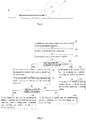
- Fig. 2 is a flowchart showing a control method for a two-wheel balance car according to an exemplary embodiment. As shown in Fig. 2 , this embodiment illustrates by applying the control method for a two-wheel balance car to the implementing environment shown in Fig. 1 , and the control method for a two-wheel balance car comprises the following steps.
- step 201 the type of an obstacle in front of any of the wheels is identified, and the type comprises: impassable obstacle.
- control chip identifies the type of an obstacle in front of any of the wheels by means of an obstacle identification component.
- the obstacle identification component comprises: a distance measuring component and/or an image acquiring component.
- step 202 if the type of the obstacle is impassable obstacle, the two-wheel balance car is controlled to decelerate, and the turning control component is shielded.
- the control method for a two-wheel balance car solves the problem that the driver may fall over due to the "centrifugal movement" produced when one of the wheels of the two-wheel balance car is stopped or locked by an impassable obstacle in front of the wheel while the other wheel continues moving forward, and thereby achieving the effect of preventing, the user from falling over as far as possible when one of the wheels is stuck in the use of the two-wheel balance car.
- step 201 there are two methods for identifying the type of an obstacle in front of any of the wheels in step 201:
- Fig. 3 is a flowchart showing a control method for a two-wheel balance car according to an exemplary embodiment. As shown in Fig. 3 , this embodiment illustrates by applying the control method for a two-wheel balance car to the implementing environment shown in Fig. 1 , and the method comprises the following steps.
- step 301 the height of the obstacle in front of any of the wheels is measured by a distance measuring component.
- the control chip of the two-wheel balance car controls the distance measuring component to transmit a detection signal outwards at intervals at every predetermined time, and the detection signal may be laser, infrared ray and ultrasonic wave, etc..
- a reflected signal will be returned when the detection signal encounters an obstacle.
- the distance measuring component receives the reflected signal, it indicates that there is an obstacle in the front.
- a distance measuring component is respectively mounted on each of the two wheel housings of the two-wheel balance car, and, if the distance measuring component on one of the wheels of the two-wheel balance car receives the reflected signal, it indicates that there is an obstacle in front of the wheel.
- the height of the obstacle is not lower than the mounting height of the distance measuring component, that is, the mounting height of the distance measuring component defines the detectable height of the obstacle.
- the distance measuring component mounted on each of the wheel housings of the two-wheel balance car is located at a position 5cm from the ground, if any of the wheels of the two-wheel balance car receives the reflected signal of the transmitted signal, it indicates that there is an obstacle with a height of at least 5cm in front of the wheel; and if any of the wheels of the two-wheel balance car does not receive the reflected signal, it indicates that there does is no obstacle with a height of over 5cm in front of the wheel.
- the distance measuring component may also be mounted at the position where the load bearing pedal is engaged with the turning control component. And whether the position of the obstacle is at the left wheel or at the right wheel of the two-wheel balance car is judged according to whether the received reflected signal from the left side or the right side, and this will not be limited in the embodiment.
- step 302 whether the height of the obstacle is greater than a predetermined threshold is detected
- the distance measuring component mounted on the wheel housings of the two-wheel balance car is provided at a position at a predetermined threshold from the ground.
- the predetermined threshold is the maximum height of the obstacle that can be passed by the two-wheel balance car.
- the predetermined threshold may be 1/x of the height of the tyre or other numerical values, and this will not be limited in the embodiment.
- the distance measuring component continuously transmits a detection signal outwards, and when the reflected signal of the detection signal is received, it indicates that there is an obstacle with a height greater than the predetermined threshold in front of the wheel; and if the reflected signal is not received, it indicates that there is no obstacle with a height greater than the predetermined threshold in front of the wheel.
- two distance measuring components may be mounted respectively on each of the two wheel housings of the two-wheel balance car in a vertical direction, the two distance measuring components on each of the wheels are arranged one above the other, and the connecting line thereof is perpendicular to the ground.
- the distance from the upper distance measuring component to the ground is the predetermined threshold, and the distance from the lower distance measuring component to the ground may be the maximum height of the obstacle that can be passed by the two-wheel balance car without acceleration.
- the upper distance measuring component corresponding with any of the two wheels When the upper distance measuring component corresponding with any of the two wheels receives the reflected signal, it indicates that there is an obstacle in front of the wheel that cannot be passed by the two-wheel balance car.
- the upper distance measuring component corresponding with any of the two wheels does not receive the reflected signal, it indicates that there is an obstacle in front of the wheel that can be passed by the two-wheel balance car only when accelerated.
- This embodiment only provides, as an example, a method of detecting the height of an obstacle in the front by means of the distance measuring component, but not limit how to use the distance measuring component to detect the height of the obstacle in the front.
- the two distance measuring components 42 and 43 on the wheel 41 transmit a detection signal outwards, wherein if the distance measuring component 42 does not receive the reflected signal and the distance measuring component 43 receives the reflected signal, there is a passable obstacle in front of the wheel 41.
- step 303 if the height of the obstacle is greater than the predetermined threshold, the obstacle is identified as impassable type.
- the two-wheel balance car When the distance measuring component on any of the wheel housings of the two-wheel balance car receives the reflected signal of the detection signal, it indicates that there is an obstacle with a height that reaches the predetermined threshold in front of the wheel, at this time, the two-wheel balance car identifies the obstacle as an impassable type obstacle.
- step 305 When the obstacle is impassable type, turn to step 305.
- step 304 if the height of the obstacle is less than the predetermined threshold, the obstacle is identified as passable type.
- the obstacle When there is an obstacle in front of any of the wheels and the height of the obstacle is less than the predetermined threshold, the obstacle is identified as passable type.
- step 305 when the obstacle is impassable type, the distance between the obstacle and the two-wheel balance car is measured.
- control chip measures the distance between the obstacle in front of any of the wheels and the two-wheel balance car by means of the distance measuring component. For example, the control chip acquires the distance by calculation according to the transmission time of the detection signal and the reception time of the reflected signal, in combination with the traveling speed of the two-wheel balance car.
- step 306 detect whether the distance is less than a predetermined distance is detected.
- the control chip detects whether the distance between the obstacle and the two-wheel balance car is less than the predetermined distance.
- the predetermined distance is the maximum distance needed when the two-wheel balance car turns.
- the predetermined distance may be x times of the diameter of the tyre or other numerical values, and will not be limited in the embodiment.
- step 307 If the distance is less than the predetermined distance, turn to step 307; and if the distance is greater than the predetermined distance, turn to step 308.
- step 307 if the distance is less than the predetermined distance, the two-wheel balance car is controlled to decelerate, the turning control component is shielded, and an obstacle prompt is provided in a predetermined mode.
- the control chip controls the two-wheel balance car to decelerate to stop.
- the situation where the two-wheel balance car collides with the obstacle during the deceleration is also possible to happen.
- the control chip also shields the turning control component. At this time, the user will not be able to control the two-wheel balance car to turn. Even if the two-wheel balance car collides with the obstacle during deceleration, and the user performs a misoperation on the turning control component during the collision due to losing control of his body, the control chip still will not respond to the misoperation.
- control chip also provides an obstacle prompt in a predetermined mode, wherein the predetermined mode comprises at least one of playing a prompt tone, vibrating a predetermine part of the two-wheel balance car, and flickering a signal light.
- the two-wheel balance car when it is identified that there is an impassable obstacle in front of one of the wheels of the two-wheel balance car, and the distance between the impassable obstacle and the two-wheel balance car reaches the predetermined distance, the two-wheel balance car will make out a beep prompt tone.
- step 308 if the distance is greater than the predetermined distance, the two-wheel balance car is controlled to continue moving.
- step 309 if the type of the obstacle is passable obstacle, a driving force is increased to the two-wheel balance car to continue moving.
- the control chip controls a driving motor to increase the driving force to the two-wheel balance car to move on.
- the control method for a two-wheel balance car solves the problem that the driver may fall over due to the "centrifugal movement" produced when one of the wheels of the two-wheel balance car is stopped or locked by an impassable obstacle in front of the wheel while the other wheel continues moving forward, and thereby achieving the effect of preventing the user from falling over as far as possible, when one of the wheels is stuck in the use of the two-wheel balance car.
- the control method for a two-wheel balance car measures the height and distance of the obstacle by means of the distance measuring component, and thereby enables the two-wheel balance car to identify the type of the obstacle and take an action to decelerate and shield the turning control component according to the distance between the obstacle and the two-wheel balance car.
- the control method for a two-wheel balance car provided in this embodiment also shields the turning control component when the distance between the obstacle and the two-wheel balance car is less than a predetermined distance, so that even if the two-wheel balance car collides with the obstacle during deceleration, and the user performs a misoperation on the turning control component during the collision due to losing control of his body, the control chip still will not respond to the misoperation, thereby effectively reducing the possibility for the user to fall over.
- Fig. 5 is a flowchart showing a control method for a two-wheel balance car according to an exemplary embodiment. As shown in Fig. 5 , this embodiment illustrates by applying the control method of a two-wheel balance car to the implementing environment shown in Fig. 1 , and the method comprises the following steps.
- step 501 an image frame in front of any of the wheels is acquired by an image acquiring component.
- the image acquiring component may be mounted on each the two wheel housings of the two-wheel balance car, and may also be mounted at the part where the load bearing pedal is engaged with the turning control component.
- the control chip controls the image acquiring component to acquire images in front of the two wheels to form continuous image frames.
- step 502 the obstacle in the image frames is identified.
- the ground and other objects in the image frames can be determined according to pixel change in the image frames.
- the control chip obtains an image frame 60 acquired by the image acquiring component, then acquires a first region 62 and a second region 64 by binary process of the image frame 60 according to the color difference, and a road line 66 is formed at the intersection of the first region 62 and second region 64.
- the control chip detects whether the road line 66 has a protrusion 68. If the road line 66 has a protrusion 68, the control chip identifies the protrusion 68 as an obstacle.
- step 503 the height of the obstacle identified is calculated.
- the control chip calculates the height of the obstacle according to the height of the obstacle in the image frame and a predetermined measuring scale, for example, if the predetermined measuring scale is 1:3, when the height of the obstacle in the image frame is 1cm, the height of the obstacle calculated is 3cm.
- the predetermined measuring scale is 1:3, when the height of the obstacle in the image frame is 1cm, the height of the obstacle calculated is 3cm.
- the obstacle is closer to the two-wheel balance car, the height of the obstacle calculated is also closer.
- the two-wheel balance car is also provided with a distance measuring component, used to measure the distance from the obstacle to the two-wheel balance car.
- the control chip first searches for a measuring scale corresponding with the distance, and then calculates the height of the obstacle according to the height of the obstacle in the image frame and the measuring scale corresponding with the distance, for example, if the measuring scale corresponding with the distance is 1:5, when the height of the obstacle in the image frame is 1cm, the height of the obstacle calculated is 5cm.
- the control chip can calculate the actual height of the obstacle according to the protrusion (i.e., the obstacle) in two image frames acquired by the two image acquiring components in combination with the binocular imaging principle.
- step 504 whether the height of the obstacle is greater than a predetermined threshold is detected.
- the control chip detects whether the height of the obstacle calculated is greater than a predetermined threshold.
- the predetermined threshold is the maximum height of the obstacle that can be passed by the two-wheel balance car.
- step 505 If the height of the obstacle is greater than the predetermined threshold, turn to step 505; if the height of the obstacle is less than the predetermined threshold, turn to step 506;
- step 505 if the height of the obstacle is greater than the predetermined threshold, the obstacle is identified as impassable type.
- step 507 is entered.
- step 506 if the height of the obstacle is less than the predetermined threshold, the obstacle is identified as passable type.
- step 511 When the obstacle is passable type, turn to step 511.
- step 507 when the obstacle is impassable type, the distance between the obstacle and the two-wheel balance car is measured.
- control chip measures the distance between the obstacle and the two-wheel balance car by means of the image acquiring component.
- image acquiring component there are two image acquiring components, and the control chip can calculate the distance between the obstacle and the two-wheel balance car according to the image frames respectively acquired by the two image acquiring components in combination with the binocular imaging principle.
- control chip measures the distance between the obstacle in front of any of the wheels and the two-wheel balance car by means of the distance measuring component.
- control chip acquires the distance by calculation according to the transmission time of the detection signal and the reception time of the reflected signal, in combination with the traveling speed of the two-wheel balance car, and this is not limited in the embodiment.
- step 508 whether the distance is less than a predetermined distance is detected.
- the control chip detects whether the distance between the obstacle and the two-wheel balance car is less than the predetermined distance.
- the predetermined distance is the maximum distance needed when the two-wheel balance car turns.
- the predetermined distance may be x times of the diameter of the tyre or other numerical values, and will not be limited in this embodiment.
- step 509 If the distance is less than the predetermined distance, turn to step 509; and if the distance is greater than the predetermined distance, turn to step 510 .
- step 509 if the distance is less than the predetermined distance, the two-wheel balance car is controlled to decelerate, the turning control component is shielded, and an obstacle prompt is provided in a predetermined mode.
- the control chip controls the two-wheel balance car to decelerate to stop.
- the situation where the two-wheel balance car collides with the obstacle during deceleration is also possible to happen.
- the control chip also shields the turning control component. At this time, the user will not be able to control the two-wheel balance car to turn. Even if the two-wheel balance car collides with the obstacle during deceleration, and the user performs a misoperation on the turning control component during the collision due to losing control of his body, the control chip still will not respond to the misoperation.
- control chip also provides the obstacle prompt in a predetermined mode, wherein the predetermined mode comprises at least one of playing a prompt tone, vibrating a predetermine part of the two-wheel balance car, and flickering a signal light.
- the two-wheel balance car when it is identified that there is an impassable obstacle in front of one of the wheels of the two-wheel balance car, and the impassable obstacle reaches in the predetermined distance from the two-wheel balance car, the two-wheel balance car will give out a prompt tone of "obstacles ahead".
- step 510 if the distance is greater than the predetermined distance, the two-wheel balance car is controlled to continue moving.
- step 511 if the type of the obstacle is passable obstacle, a driving force is increased to the two-wheel balance car to continue moving.
- the control chip controls a driving motor to increase the driving force to the two-wheel balance car to move on.
- the control method for a two-wheel balance car solves the problem that the driver may fall over due to the "centrifugal movement" produced when one of the wheels of the two-wheel balance car is stopped or locked by an impassable obstacle in front of the wheel while the other wheel continues moving forward, and thereby achieving the effect of preventing the user from falling over as far as possible, when one of the wheels is stuck in the use of the two-wheel balance car.
- the control method for a two-wheel balance car measures the height and distance of the obstacle by means of the image acquiring component, thereby enables the two-wheel balance car to identify the type of the obstacle and take an action to decelerate and shield the turning control component according to the distance between the obstacle and the two-wheel balance car.
- the control method for a two-wheel balance car provided in this embodiment also shields the turning control component when the distance between the obstacle and the two-wheel balance car is less than a predetermined distance, so that even if the two-wheel balance car collides with the obstacle during deceleration, and the user performs a misoperation on the turning control component during the collision due to losing control of his body, the control chip still will not respond to the misoperation, thereby effectively reducing the possibility for the user to fall over.
- Fig. 7 is a block diagram showing a control apparatus for a two-wheel balance car according to an exemplary embodiment. As shown in Fig. 7 , the control apparatus for a two-wheel balance car is used in the control method for a two-wheel balance car in the implementing environment shown in Fig. 1 .
- the control apparatus for a two-wheel balance car comprises but is not limited to an identifying module 710 and a control module 720.
- the identifying module 710 is configured to identify the type of an obstacle in front of any of the wheels, and the type comprises: impassable obstacle; the control module 720 is configured to control the two-wheel balance car to decelerate, and shield the turning control component, when the type of the obstacle identified by the identifying module 710 is impassable obstacle.
- the control apparatus for a two-wheel balance car provided in this embodiment solves the problem that the driver may fall over due to the "centrifugal movement" produced when one of the wheels of the two-wheel balance car is stopped or stuck by an impassable obstacle in front of the wheel while the other wheel continues moving forward, and thereby achieving the effect of preventing the user from falling over as far as possible, when one of the wheels is stuck while in the use of the two-wheel balance car.
- Fig. 8 is a block diagram showing a control apparatus for a two-wheel balance car according to another exemplary embodiment. As shown in Fig. 8 , the control apparatus for a two-wheel balance car is used in the control method for a two-wheel balance car in the implementing environment shown in Fig. 1 .
- the control apparatus for a two-wheel balance car comprises but is not limited to an identifying module 810 and a control module 820.
- the identifying module 810 is configured to identify the type of an obstacle in front of any of the wheels, and the type comprises: impassable obstacle; the control module 820 is configured to control the two-wheel balance car to decelerate, and shield the turning control component, when the type of the obstacle identified by the identifying module 810 is impassable obstacle.
- the type also comprises: passable obstacle; the apparatus further comprises: an accelerating module 830.
- the accelerating module 830 is configured to, increase a driving force to the two-wheel balance car to continue to moving, if the type of the obstacle identified by the identifying module 810 is passable obstacle,.
- the identifying module 810 comprises: a height measuring sub-module 811, a first detecting sub-module 812 and a first identifying sub-module 813.
- the height measuring sub-module 811 is configured to measure the height of the obstacle in front of any of the wheels by means of a distance measuring component; the first detecting sub-module 812 is configured to detect whether the height of the obstacle measured by the height measuring sub-module 811 is greater than a predetermined threshold; the first identifying sub-module 813 is configured to identify the obstacle as impassable type, when the height of the obstacle detected by the first detecting sub-module 812 is greater than the predetermined threshold.
- the identifying module 810 further comprises: an image acquiring sub-module 814, an image identifying sub-module 815, a height calculating sub-module 816, a second detecting sub-module 817 and a second identifying sub-module 818.
- the image acquiring sub-module 814 is configured to acquire an image frame in front of any of the wheels by means of an image acquiring component; the image identifying sub-module 815 is configured to identify the obstacle in the image frame acquired by the image acquiring sub-module 814; the height calculating sub-module 816 is configured to calculate the height of the obstacle identified by the image identifying sub-module 815; the second detecting sub-module 817 is configured to detect whether the height of the obstacle measured by the height calculating sub-module 816 is greater than a predetermined threshold; the second identifying sub-module 818 is configured to, identify the obstacle as impassable type, when the height of the obstacle detected by the second detecting sub-module 817 is greater than the predetermined threshold.
- control apparatus for a two-wheel balance car further comprises: a distance measuring module 840, a distance detecting module 850 and a control module 820.
- the distance measuring module 840 is configured to measure a distance from the obstacle to the two-wheel balance car; the distance detecting module 850 is configured to detect whether the distance measured by the distance measuring module 840 is less than a predetermined distance; the control module 820 is configured to control the two-wheel balance car to decelerate, and shield the turning control component, when the distance detected by the distance detecting module 850 is less than the predetermined distance.
- control apparatus for a two-wheel balance car further comprises: a prompt module 860.
- the prompt module 860 is configured to provide an obstacle prompt in a predetermined mode, if the type of the obstacle identified by the identifying module 810 is impassable obstacle,; wherein, the predetermined mode comprises at least one of playing a prompt tone, vibrating a predetermine part of the two-wheel balance car, and flickering a signal light.
- the control apparatus for a two-wheel balance car provided in this embodiment solves the problem that the driver may fall over due to the "centrifugal movement" produced when one of the wheels of the two-wheel balance car is stopped or locked by an impassable obstacle in front of the wheel while the other wheel continues moving forward, and thereby achieving the effect of preventing the user from falling over as far as possible, when one of the wheels is stuck in the use of the two-wheel balance car.
- the control method for a two-wheel balance car measures the height and distance of the obstacle by means of the image acquiring component, thereby enables the two-wheel balance car to identify the type of the obstacle and take an action to decelerate and shield the turning control component according to the distance between the obstacle and the two-wheel balance car.
- the control method for a two-wheel balance car provided in this embodiment also shields the turning control component when the distance between the obstacle and the two-wheel balance car is less than a predetermined distance, so that even if the two-wheel balance car collides with the obstacle during deceleration, and the user performs a misoperation on the turning control component during the collision due to losing control of his body, the control chip still will not respond to the misoperation, thereby effectively reducing the possibility for the user to fall over.
- the specific modes in which each module executes the operations have been described in detail in the embodiments of the relevant methods, and thus will not be elaborated here in detail.
- An exemplary embodiment of the present disclosure provides a two-wheel balance car, which comprises two parallel wheels and is able to implement the control method for a two-wheel balance car provided in the present disclosure.
- the two-wheel balance car comprises: a control chip, a storage for storing instructions executable by the control chip, and a turning control component connected to the control chip. wherein, the control chip is configured to:
- Fig. 9 is a block diagram showing a two-wheel balance car according to an exemplary embodiment.
- the two-wheel balance car 900 may comprise one or more of a control chip 902, a storage 904, a power supply component 906, an image acquiring component 908, a distance measuring component 910, an input/output (I/O) interface 912, a sensor component 914 and a turning control component 916.
- the control chip 902 generally controls an overall control of the two-wheel balance car 900, such as operations related to moving forward, moving backward, acceleration and deceleration. Besides, the control chip 902 may also comprise one or more modules to facilitate interaction between the control chip 902 and other components. For example, the control chip 902 may comprise an image acquisition module to facilitate interaction between the image acquiring component 908 and the control chip 902.
- the storage 904 is configured to store various types of data so as to support operations of the two-wheel balance car 900. Examples of these data comprise any instructions, image data and distance data of the two-wheel balance car to be operated on the two-wheel balance car 900.
- the storage 904 can be implemented by any type of volatile or nonvolatile storage devices or a combination thereof, such as Static Random Access Memory (SRAM), Electrically Erasable Programmable Read Only Memory (EEPROM), Erasable Programmable Read Only Memory (EPROM), Programmable Read Only memory (PROM), Read Only Memory (ROM), magnetic memory, flash memory, magnetic disk or optical disc.
- SRAM Static Random Access Memory
- EEPROM Electrically Erasable Programmable Read Only Memory
- EPROM Erasable Programmable Read Only Memory
- PROM Programmable Read Only memory
- ROM Read Only Memory
- magnetic memory flash memory
- flash memory magnetic disk or optical disc.
- the power supply component 906 supplies electric power to the various components of the two-wheel balance car 900.
- the power component 906 may include a power supply management system, one or more power supplies, and other components related to generation, management and electric power distribution of the two-wheel balance car 900.
- the image acquiring component 908 is included in the two-wheel balance car 900.
- the image acquiring component 908 comprises a front camera and/or a rear camera.
- the front camera and/or rear camera can receive external multimedia data.
- Each of the front camera and the rear camera can be a fixed optical lens system or can have focal lengths and optical zoom functionality.
- the distance measuring component 910 is configured to transmit and/or receive the detection signal.
- the distance measuring component 910 includes a laser transmitter, when the two-wheel balance car 900 is in an operation mode, such as when it receives a reflected laser, the laser transmitter is configured to receive the reflected signal of the detection signal.
- the received reflected signal can be further stored in the storage 904.
- the I/O interface 912 provides interface between the control chip 902 and the peripheral interface modules, and the peripheral interface modules may be USB flash disk and audio player, etc..
- the sensor component 914 comprises one or more sensors for providing condition assessment of every aspect for the two-wheel balance car 900.
- the sensor component 914 can detect an open/close state of the two-wheel balance car 900, and can detect a change in orientation or in acceleration/deceleration of the two-wheel balance car 900.
- the sensor component 914 may comprise a proximity sensor which is configured for detecting existence of nearby objects without physical contact.
- the sensor component 914 may also comprise an optical sensor, such as CMOS or CCD image sensor, to be used in imaging applications.
- the sensor component 914 may also comprise an acceleration sensor, a gyroscope sensor, a magnetic sensor, a pressure sensor or a temperature sensor.
- the turning control component 916 is configured to facilitate control of turning of the two-wheel balance car 900.
- the turning control component 916 may be a manual controlled turning control component, and may also be a leg controlled turning control component.
- the two-wheel balance car 900 can be implemented by one or more of Application Specific Integrated Circuit (ASIC), Digital Signal Processor (DSP), Digital Signal Processing Device (DSPD), Programmable Logic Device (PLD), Field Programmable Gate Array (FPGA), controller, microcontroller, microprocessor or other electronic elements, for performing the above mentioned control method for a two-wheel balance car.
- ASIC Application Specific Integrated Circuit
- DSP Digital Signal Processor
- DSPD Digital Signal Processing Device
- PLD Programmable Logic Device
- FPGA Field Programmable Gate Array
- controller microcontroller, microprocessor or other electronic elements, for performing the above mentioned control method for a two-wheel balance car.
Landscapes
- Engineering & Computer Science (AREA)
- Mechanical Engineering (AREA)
- Physics & Mathematics (AREA)
- Remote Sensing (AREA)
- Automation & Control Theory (AREA)
- Radar, Positioning & Navigation (AREA)
- General Physics & Mathematics (AREA)
- Aviation & Aerospace Engineering (AREA)
- Transportation (AREA)
- Electromagnetism (AREA)
- Combustion & Propulsion (AREA)
- Chemical & Material Sciences (AREA)
- Optics & Photonics (AREA)
- Computer Vision & Pattern Recognition (AREA)
- Multimedia (AREA)
- Traffic Control Systems (AREA)
- Motorcycle And Bicycle Frame (AREA)
- Control Of Driving Devices And Active Controlling Of Vehicle (AREA)
- Regulating Braking Force (AREA)
- Control Of Position, Course, Altitude, Or Attitude Of Moving Bodies (AREA)
- Measurement Of Velocity Or Position Using Acoustic Or Ultrasonic Waves (AREA)
- Optical Radar Systems And Details Thereof (AREA)
- Train Traffic Observation, Control, And Security (AREA)
Claims (13)
- Steuerungsverfahren, das für einen Zweirad-Gleichgewichtswagen verwendet wird, wobei der Zweirad-Gleichgewichtswagen zwei parallele Räder und eine Drehsteuerungskomponente zum Ermöglichen des Steuerns des Drehens des Zweirad-Gleichgewichtswagens umfasst, wobei die Drehsteuerungskomponente durch manuelle Steuerung oder Fußsteuerung implementiert ist, und wobei das Verfahren umfasst:Identifizieren (201) des Typs eines Hindernisses vor jedem der Räder, wobei der Typ ein unpassierbares Hindernis umfasst,wenn der Typ des Hindernisses das unpassierbare Hindernis ist, Steuern (202) des Zweirad-Gleichgewichtswagens so, dass er abbremst, und Abschirmen der Drehsteuerungskomponente, so dass verhindert wird, dass der Zweirad-Gleichgewichtswagen als Reaktion auf eine Benutzersteuerung oder -fehlbedienung dreht,wobei das Verfahren dadurch gekennzeichnet ist, dass das Hindernis als unpassierbarer Typ identifiziert wird, wenn die Höhe des Hindernisses größer als ein vorbestimmter Grenzwert ist, der der maximalen Höhe eines Hindernisses entspricht, das vom Zweirad-Gleichgewichtswagen passiert werden kann, wobeidas Verfahren ferner dadurch gekennzeichnet ist, dass der Typ ferner umfasst: ein passierbares Hindernis, das von dem Zweirad-Gleichgewichtswagen nur passiert werden kann, wenn er beschleunigt wird, wobei das Hindernis als passierbarer Typ identifiziert wird, wenn die Höhe des Hindernisses kleiner als der vorbestimmte Grenzwert und größer als ein vorbestimmter Wert ist, welcher der maximalen Höhe des Hindernisses, das von dem Zweirad-Gleichgewichtswagen ohne Beschleunigung passiert werden kann, entspricht,und wobei das Verfahren ferner umfasst:
wenn der Typ des Hindernisses das passierbare Hindernis ist, Erhöhen (309) der Antriebskraft zu dem Zweirad-Gleichgewichtswagen, so dass er sich weiterhin bewegt. - Verfahren nach Anspruch 1, dadurch gekennzeichnet, dass der Schritt des Identifizierens des Typs des Hindernisses vor jedem der Räder umfasst:
Messen (301) der Höhe des Hindernisses vor jedem der Räder durch eine Entfernungsmesskomponente. - Verfahren nach Anspruch 1, dadurch gekennzeichnet, dass der Schritt des Identifizierens des Typs des Hindernisses vor jedem der Räder umfasst:Erfassen (501) eines Bildrahmens vor jedem der Räder durch eine Bilderfassungskom ponente,Identifizieren (502) des Hindernisses in dem Bildrahmen undBerechnen (503) der Höhe des identifizierten Hindernisses.
- Verfahren nach einem der Ansprüche 1 bis 3, dadurch gekennzeichnet, dass das Verfahren ferner umfasst:Messen (507) der Entfernung von dem Hindernis zu dem Zweirad-Gleichgewichtswagen,Erkennen (508), ob die Entfernung kleiner als eine vorbestimmte Entfernung ist, undwenn die Entfernung kleiner als die vorbestimmte Entfernung ist, Ausführen (509) des Schritts des Steuerns des Zweirad-Gleichgewichtswagens, so dass er abbremst, und Abschirmen der Drehsteuerungskomponente.
- Verfahren nach einem der Ansprüche 1 bis 4, dadurch gekennzeichnet, dass das Verfahren ferner umfasst:wenn der Typ des Hindernisses das unpassierbare Hindernis ist, Bereitstellen (509) einer Hindernismeldung in einem vorbestimmten Modus,wobei der vorbestimmte Modus mindestens eines von einem Wiedergeben eines Signaltons, Vibrieren eines vorbestimmten Teils des Zweirad-Gleichgewichtswagens und Flackern eines Signallichts umfasst.
- Steuerungsvorrichtung für einen Zweirad-Gleichgewichtswagen, der zwei parallele Räder und eine Drehsteuerungskomponente zum Ermöglichen des Steuerns des Drehens des Zweirad-Gleichgewichtswagens umfasst, wobei die Drehsteuerungskomponente durch manuelle Steuerung oder Fußsteuerung implementiert ist, wobei die Vorrichtung umfasst:ein Identifizierungsmodul (710), das dazu ausgestaltet ist, den Typ eines Hindernisses vor jedem der Räder zu identifizieren, und wobei der Typ ein unpassierbares Hindernis umfasst,ein Steuerungsmodul (720), das dazu ausgestaltet ist, den Zweirad-Gleichgewichtswagen so zu steuern, dass er abbremst, und die Drehsteuerungskomponente abzuschirmen, so dass verhindert wird, dass der Zweirad-Gleichgewichtswagen als Reaktion auf eine Benutzersteuerung oder -fehlbedienung dreht, wenn der Typ des Hindernisses, das von dem Identifizierungsmodul identifiziert wird, das unpassierbare Hindernis ist, wobei die Vorrichtung dadurch gekennzeichnet ist, dass das Hindernis als unpassierbarer Typ identifiziert wird, wenn die Höhe des Hindernisses größer als ein vorbestimmter Grenzwert ist, die der maximalen Höhe eines Hindernisses entspricht, das von dem Zweirad-Gleichgewichtswagen passiert werden kann,wobei die Vorrichtung ferner dadurch gekennzeichnet ist, dass der Typ ferner umfasst: ein passierbares Hindernis, das von dem Zweirad-Gleichgewichtswagen nur passiert werden kann, wenn er beschleunigt wird, wobei das Hindernis als passierbarer Typ identifiziert wird, wenn die Höhe des Hindernisses kleiner als der vorbestimmte Grenzwert und größer als ein vorbestimmter Wert ist, welcher der maximalen Höhe des Hindernisses, das von dem Zweirad-Gleichgewichtswagen ohne Beschleunigung passiert werden kann, entspricht,und dass die Vorrichtung ferner umfasst:
ein Beschleunigungsmodul (830), das dazu ausgestaltet ist, eine Antriebskraft zu dem Zweirad-Gleichgewichtswagen so zu erhöhen, dass er sich weiterhin bewegt, wenn der Typ des Hindernisses, das von dem Identifizierungsmodul identifiziert wird, das passierbare Hindernis ist. - Vorrichtung nach Anspruch 6, dadurch gekennzeichnet, dass das Identifizierungsmodul umfasst:ein Höhenmess-Untermodul (811), das dazu ausgestaltet ist, die Höhe des Hindernisses vor jedem der Räder mittels einer Entfernungsmesskomponente zu messen,ein erstes Erkennungs-Untermodul (812), das dazu ausgestaltet ist, zu erkennen, ob die Höhe des Hindernisses, die von dem Höhenmess-Untermodul gemessen wird, größer als der vorbestimmte Grenzwert ist,ein erstes Identifizierungs-Untermodul (813), das dazu ausgestaltet ist, das Hindernis als den unpassierbaren Typ zu identifizieren, wenn die Höhe des Hindernisses, das von dem ersten Erkennungs-Untermodul erkannt wird, größer als der vorbestimmte Grenzwert ist.
- Vorrichtung nach einem der Ansprüche 6 bis 7, dadurch gekennzeichnet, dass das Identifizierungsmodul ferner umfasst:ein Bilderfassungs-Untermodul (814), das dazu ausgestaltet ist, einen Bildrahmen vor jedem der Räder mittels einer Bilderfassungskomponente zu erfassen,ein Bildidentifizierungs-Untermodul (815), das dazu ausgestaltet ist, das Hindernis in dem Bildrahmen zu identifizieren, der von dem Bilderfassungs-Untermodul erfasst wird,ein Höhenberechnungs-Untermodul (816), das dazu ausgestaltet ist, die Höhe des Hindernisses zu berechnen, das von dem Bildidentifizierungs-Untermodul identifiziert wird,ein zweites Erkennungs-Untermodul (817), das dazu ausgestaltet ist, zu erkennen, ob die Höhe des Hindernisses, die von dem Höhenberechnungs-Untermodul berechnet wird, größer als der vorbestimmte Grenzwert ist,ein zweites Identifizierungs-Untermodul (818), das dazu ausgestaltet ist, das Hindernis als den unpassierbaren Typ zu identifizieren, wenn die Höhe des Hindernisses, das von dem zweiten Erkennungs-Untermodul erkannt wird, größer als der vorbestimmte Grenzwert ist.
- Vorrichtung nach einem der Ansprüche 6 bis 8, dadurch gekennzeichnet, dass die Vorrichtung ferner umfasst:ein Entfernungsmessmodul (840), das dazu ausgestaltet ist, eine Entfernung von dem Hindernis zu dem Zweirad-Gleichgewichtswagen zu messen, undein Entfernungserkennungsmodul (850), das dazu ausgestaltet ist, zu erkennen, ob die Entfernung, die von dem Entfernungsmessmodul gemessen wird, kleiner als eine vorbestimmte Entfernung ist, wobeidas Steuerungsmodul, das ferner dazu ausgestaltet ist, den Zweirad-Gleichgewichtswagen so zu steuern, dass er abbremst, und die Drehsteuerungskomponente abzuschirmen, wenn die Entfernung, die von dem Entfernungserkennungsmodul erkannt wird, kleiner als die vorbestimmte Entfernung ist.
- Vorrichtung nach einem der Ansprüche 6 bis 9, dadurch gekennzeichnet, dass die Vorrichtung ferner umfasst:ein Meldungsmodul (860), das dazu ausgestaltet ist, eine Hindernismeldung in einem vorbestimmten Modus bereitzustellen, wenn der Typ des Hindernisses, das von dem Identifizierungsmodul identifiziert wird, das unpassierbare Hindernis ist,wobei der vorbestimmte Modus mindestens eines von einem Wiedergeben eines Signaltons, Vibrieren eines vorbestimmten Teils des Zweirad-Gleichgewichtswagens und Flackern eines Signallichts umfasst.
- Zweirad-Gleichgewichtswagen, umfassend zwei parallele Räder und umfassend:einen Steuerungschip (902),einen Speicher (904) zum Speichern von Anweisungen, die von dem Steuerungschip ausführbar sind,eine Drehsteuerungskomponente (916), die mit dem Steuerungschip verbunden ist,wobei der Steuerungschip dazu ausgestaltet ist, das Verfahren nach Anspruch 1 zu implementieren.
- Computerprogamm, das Anweisungen zum Ausführen der Schritte eines Steuerungsverfahrens beinhaltet, das für einen Zweirad-Gleichgewichtswagen nach einem der Ansprüche 1 bis 5 verwendet wird, wenn das Programm von einem Computer ausgeführt wird.
- Aufzeichnungsmedium, das von einem Computer gelesen werden kann und auf dem ein Computerprogramm aufgezeichnet ist, das Anweisungen zum Ausführen der Schritte eines Steuerungsverfahrens beinhaltet, das für einen Zweirad-Gleichgewichtswagen nach einem der Ansprüche 1 bis 5 verwendet wird.
Applications Claiming Priority (1)
| Application Number | Priority Date | Filing Date | Title |
|---|---|---|---|
| CN201510626948.2A CN105270525B (zh) | 2015-09-28 | 2015-09-28 | 两轮平衡车的控制方法及装置 |
Publications (2)
| Publication Number | Publication Date |
|---|---|
| EP3147740A1 EP3147740A1 (de) | 2017-03-29 |
| EP3147740B1 true EP3147740B1 (de) | 2020-05-06 |
Family
ID=55140541
Family Applications (1)
| Application Number | Title | Priority Date | Filing Date |
|---|---|---|---|
| EP16189990.1A Active EP3147740B1 (de) | 2015-09-28 | 2016-09-21 | Steuerungsverfahren und vorrichtung für einen zweirädrigen spannwagen, computerprogramm und aufzeichnungsmedium |
Country Status (8)
| Country | Link |
|---|---|
| US (1) | US9827984B2 (de) |
| EP (1) | EP3147740B1 (de) |
| JP (1) | JP2017536275A (de) |
| KR (1) | KR101878082B1 (de) |
| CN (1) | CN105270525B (de) |
| MX (1) | MX373600B (de) |
| RU (1) | RU2647360C2 (de) |
| WO (1) | WO2017054345A1 (de) |
Families Citing this family (21)
| Publication number | Priority date | Publication date | Assignee | Title |
|---|---|---|---|---|
| US10843765B2 (en) * | 2015-08-04 | 2020-11-24 | Shane Chen | Two-wheel self-balancing vehicle with platform borne sensor control |
| CN105223952B (zh) * | 2015-09-28 | 2019-03-29 | 小米科技有限责任公司 | 平衡车的控制方法及装置 |
| CN105966538B (zh) * | 2016-06-03 | 2018-12-07 | 尚艳燕 | 一种电动平衡车的控制方法和控制装置 |
| WO2017206170A1 (zh) * | 2016-06-03 | 2017-12-07 | 尚艳燕 | 一种电动平衡车的控制方法和控制装置 |
| WO2018006300A1 (zh) * | 2016-07-06 | 2018-01-11 | 尚艳燕 | 一种平衡车载物的方法和平衡车 |
| WO2018039909A1 (zh) * | 2016-08-30 | 2018-03-08 | 尚艳燕 | 一种平衡车在狭窄空间的自动驻车方法和装置 |
| WO2018039908A1 (zh) * | 2016-08-30 | 2018-03-08 | 尚艳燕 | 一种平衡车自动驻车的方法和装置 |
| CN106371437B (zh) * | 2016-08-30 | 2020-02-11 | 尚艳燕 | 一种平衡车在狭窄空间的自动驻车方法和装置 |
| CN106292667B (zh) * | 2016-08-30 | 2019-06-18 | 深圳市汲众科技开发有限公司 | 一种平衡车自动驻车的方法和装置 |
| CN106741399B (zh) * | 2016-11-18 | 2019-06-04 | 速珂智能科技(上海)有限公司 | 一种智能型代步装置 |
| CN107224363A (zh) * | 2017-05-05 | 2017-10-03 | 深圳市元征科技股份有限公司 | 轮椅控制方法及装置 |
| CN107168322A (zh) * | 2017-06-05 | 2017-09-15 | 深圳飞亮智能科技有限公司 | 轮式工具转弯减速的控制系统及方法 |
| US11586211B2 (en) | 2017-10-25 | 2023-02-21 | Lg Electronics Inc. | AI mobile robot for learning obstacle and method of controlling the same |
| US11535323B2 (en) * | 2018-05-18 | 2022-12-27 | Shimano Inc. | Telescopic apparatus for human-powered vehicle, height adjustable seatpost, and bicycle component control system |
| CN110967689B (zh) * | 2018-09-28 | 2022-03-18 | 广州小鹏汽车科技有限公司 | 一种目标对象高度的确定方法、装置及车载雷达设备 |
| CN109955978A (zh) * | 2019-03-27 | 2019-07-02 | 深圳市乐骑智能科技有限公司 | 一种平衡车防止碰撞系统及其工作方法 |
| KR102751306B1 (ko) * | 2020-06-16 | 2025-01-09 | 현대자동차주식회사 | 차고 제어 장치 및 방법 |
| CN113052888B (zh) * | 2020-11-03 | 2021-12-17 | 杭州尽享科技有限公司 | 异常环境实时监测系统 |
| TWI825374B (zh) * | 2020-12-22 | 2023-12-11 | 緯創資通股份有限公司 | 移動式輔具及其障礙克服方法 |
| CN113419528A (zh) * | 2021-06-22 | 2021-09-21 | 广西科技大学 | 一种无接触智能配送车 |
| CN118267252B (zh) * | 2024-06-04 | 2024-08-23 | 南通富德金属科技有限公司 | 轮椅主动刹车刹车盘及安装装置 |
Family Cites Families (33)
| Publication number | Priority date | Publication date | Assignee | Title |
|---|---|---|---|---|
| US4230341A (en) * | 1978-09-25 | 1980-10-28 | Caterpillar Tractor Co. | Vehicle suspension system |
| US7275607B2 (en) | 1999-06-04 | 2007-10-02 | Deka Products Limited Partnership | Control of a personal transporter based on user position |
| US20030000754A1 (en) * | 2001-06-07 | 2003-01-02 | Daudt Stephen William | Powered lightweight personal transportation vehicle |
| US6842692B2 (en) * | 2002-07-02 | 2005-01-11 | The United States Of America As Represented By The Department Of Veterans Affairs | Computer-controlled power wheelchair navigation system |
| JP4411867B2 (ja) * | 2003-06-04 | 2010-02-10 | トヨタ自動車株式会社 | 重心移動により操舵可能な車両 |
| JP2005006436A (ja) * | 2003-06-12 | 2005-01-06 | Sony Corp | 同軸二輪車 |
| US7246671B2 (en) * | 2005-01-10 | 2007-07-24 | Michael Goren | Stair-climbing human transporter |
| WO2006137545A1 (ja) * | 2005-06-24 | 2006-12-28 | Equos Research Co., Ltd. | 車両 |
| JP4956962B2 (ja) * | 2005-10-31 | 2012-06-20 | トヨタ自動車株式会社 | 走行装置及びその制御方法 |
| JP2007219986A (ja) * | 2006-02-20 | 2007-08-30 | Toyota Motor Corp | 倒立移動装置及びその制御方法 |
| US7798264B2 (en) * | 2006-11-02 | 2010-09-21 | Hutcheson Timothy L | Reconfigurable balancing robot and method for dynamically transitioning between statically stable mode and dynamically balanced mode |
| JP5133632B2 (ja) * | 2007-08-24 | 2013-01-30 | トヨタ自動車株式会社 | 倒立型移動体 |
| US20090242284A1 (en) * | 2008-04-01 | 2009-10-01 | Whetstone Jr Henry M | Transportation cart with electronic controls, steering and brakes selectively configured for riding and walking modes of use |
| US20090242285A1 (en) * | 2008-04-01 | 2009-10-01 | Whetstone Jr Henry M | Transportation cart with extendable arm and a throttle coupled thereto for controlling a motor and associated methods |
| JP5088211B2 (ja) * | 2008-04-07 | 2012-12-05 | 株式会社エクォス・リサーチ | 車両 |
| KR101464955B1 (ko) | 2009-08-18 | 2014-11-25 | 크라운 이큅먼트 코포레이션 | 원격 작동되는 자재 취급 차량을 위한 조향 보정 |
| JP2011131620A (ja) * | 2009-12-22 | 2011-07-07 | Toyota Motor Corp | 倒立二輪車、その制御方法及び制御プログラム |
| US9216763B2 (en) * | 2010-09-01 | 2015-12-22 | Timothy Huntzinger | Personal mobility device |
| US8924218B2 (en) * | 2010-11-29 | 2014-12-30 | Greg L. Corpier | Automated personal assistance system |
| JP2012126224A (ja) * | 2010-12-15 | 2012-07-05 | Bosch Corp | 倒立振子型移動体 |
| US20130081885A1 (en) * | 2011-10-03 | 2013-04-04 | Robert A. Connor | Transformability(TM): personal mobility with shape-changing wheels |
| WO2013084354A1 (ja) * | 2011-12-09 | 2013-06-13 | 株式会社日立製作所 | 倒立振子型移動装置、および、その制御方法 |
| US20140018994A1 (en) * | 2012-07-13 | 2014-01-16 | Thomas A. Panzarella | Drive-Control Systems for Vehicles Such as Personal-Transportation Vehicles |
| CN203268232U (zh) * | 2013-01-30 | 2013-11-06 | 杭州亿脑智能科技有限公司 | 智能平衡车平衡控制装置及智能平衡车 |
| CN103558778B (zh) | 2013-11-01 | 2016-08-17 | 深圳乐行天下科技有限公司 | 一种两轮平衡车的状态检测方法和系统 |
| CN103770872B (zh) | 2014-02-20 | 2016-08-17 | 深圳乐行天下科技有限公司 | 一种两轮平衡车的转向控制方法 |
| CN204110256U (zh) * | 2014-09-04 | 2015-01-21 | 深圳路帝科技有限公司 | 带健康指数检测装置的双轮平衡车 |
| CN104386183A (zh) * | 2014-11-17 | 2015-03-04 | 韩莹光 | 两轮平衡车 |
| CN104571104A (zh) * | 2014-11-19 | 2015-04-29 | 广西大学 | 智能探险车及智能探险方法 |
| CN104503450B (zh) * | 2014-11-27 | 2016-12-07 | 中国人民解放军防化学院 | 实现智能化越障的服务机器人 |
| CN104443140A (zh) * | 2014-12-10 | 2015-03-25 | 柳州铁道职业技术学院 | 平衡车障碍检测装置 |
| CN204440053U (zh) * | 2015-02-05 | 2015-07-01 | 重庆交通大学 | 两轮平衡车控制系统 |
| CN204423150U (zh) * | 2015-02-05 | 2015-06-24 | 重庆交通大学 | 基于图像的两轮平衡车控制系统 |
-
2015
- 2015-09-28 CN CN201510626948.2A patent/CN105270525B/zh active Active
- 2015-12-25 WO PCT/CN2015/099062 patent/WO2017054345A1/zh not_active Ceased
- 2015-12-25 JP JP2016519845A patent/JP2017536275A/ja active Pending
- 2015-12-25 KR KR1020167009249A patent/KR101878082B1/ko active Active
- 2015-12-25 RU RU2016118866A patent/RU2647360C2/ru active
- 2015-12-25 MX MX2016004498A patent/MX373600B/es active IP Right Grant
-
2016
- 2016-05-06 US US15/148,635 patent/US9827984B2/en active Active
- 2016-09-21 EP EP16189990.1A patent/EP3147740B1/de active Active
Non-Patent Citations (1)
| Title |
|---|
| None * |
Also Published As
| Publication number | Publication date |
|---|---|
| JP2017536275A (ja) | 2017-12-07 |
| US9827984B2 (en) | 2017-11-28 |
| WO2017054345A1 (zh) | 2017-04-06 |
| US20170088131A1 (en) | 2017-03-30 |
| MX373600B (es) | 2020-05-18 |
| MX2016004498A (es) | 2017-06-09 |
| CN105270525A (zh) | 2016-01-27 |
| KR101878082B1 (ko) | 2018-07-13 |
| RU2016118866A (ru) | 2017-12-07 |
| RU2647360C2 (ru) | 2018-03-15 |
| KR20180050186A (ko) | 2018-05-14 |
| EP3147740A1 (de) | 2017-03-29 |
| CN105270525B (zh) | 2018-02-02 |
Similar Documents
| Publication | Publication Date | Title |
|---|---|---|
| EP3147740B1 (de) | Steuerungsverfahren und vorrichtung für einen zweirädrigen spannwagen, computerprogramm und aufzeichnungsmedium | |
| EP3147742A2 (de) | Steuerungsverfahren und steuerungsvorrichtung für ein ausgeglichenes fahrzeug, computerprogramm und aufzeichnungsmedium | |
| US11034294B2 (en) | Driving notification method and driving notification system | |
| US11325590B2 (en) | Autonomous driving device and driving method thereof | |
| US20190337513A1 (en) | Lane keeping assist system and method for improving safety in preceding vehicle follower longitudinal control | |
| KR20210115026A (ko) | 차량 인텔리전트 운전 제어 방법 및 장치, 전자 기기 및 기억 매체 | |
| EP2808700B1 (de) | Fahrassistenzvorrichtung und die Fahrassistenzvorrichtung nutzendes Fahrzeug | |
| US10929986B2 (en) | Techniques for using a simple neural network model and standard camera for image detection in autonomous driving | |
| US20160288833A1 (en) | Method for performing an at least semi-autonomous parking process of a motor vehicle in a garage, parking assistance system and motor vehicle | |
| US11772555B2 (en) | Vehicle and method of providing surrounding information thereof | |
| JP6066048B2 (ja) | 障害物検出装置及びそれを用いた車両 | |
| CN114537521A (zh) | 停车辅助设备和方法 | |
| JP2013054399A (ja) | 車両周辺監視装置 | |
| US9245342B2 (en) | Obstacle detection device | |
| US20250200992A1 (en) | Intersecting road detection device, intersecting road detection method, and non-transitory recording medium | |
| US20240071097A1 (en) | Apparatus and method for object detection | |
| JP7781630B2 (ja) | 駐車支援装置、及び駐車支援方法 | |
| CN114268788B (zh) | 车载车辆图像采集装置功能符合性的监测 | |
| US20210321062A1 (en) | Image processing device in moving object, imaging device, image processing method, and recording medium | |
| JP7643472B2 (ja) | 物体検出装置、物体検出方法、および物体検出用コンピュータプログラム | |
| KR20230092079A (ko) | 센서 융합형 타겟 감지 장치 및 방법 | |
| TW201323262A (zh) | 車輛輔助系統及車輛輔助方法 | |
| CN111043977B (zh) | 用于确定第一车辆相对于第二车辆的相对参数的方法 | |
| JP2025150285A (ja) | 車両制御装置 | |
| CN117746680A (zh) | 动作预测装置、动作预测方法以及非瞬时性的计算机可读介质 |
Legal Events
| Date | Code | Title | Description |
|---|---|---|---|
| PUAI | Public reference made under article 153(3) epc to a published international application that has entered the european phase |
Free format text: ORIGINAL CODE: 0009012 |
|
| STAA | Information on the status of an ep patent application or granted ep patent |
Free format text: STATUS: THE APPLICATION HAS BEEN PUBLISHED |
|
| AK | Designated contracting states |
Kind code of ref document: A1 Designated state(s): AL AT BE BG CH CY CZ DE DK EE ES FI FR GB GR HR HU IE IS IT LI LT LU LV MC MK MT NL NO PL PT RO RS SE SI SK SM TR |
|
| AX | Request for extension of the european patent |
Extension state: BA ME |
|
| STAA | Information on the status of an ep patent application or granted ep patent |
Free format text: STATUS: REQUEST FOR EXAMINATION WAS MADE |
|
| 17P | Request for examination filed |
Effective date: 20170929 |
|
| RBV | Designated contracting states (corrected) |
Designated state(s): AL AT BE BG CH CY CZ DE DK EE ES FI FR GB GR HR HU IE IS IT LI LT LU LV MC MK MT NL NO PL PT RO RS SE SI SK SM TR |
|
| RIN1 | Information on inventor provided before grant (corrected) |
Inventor name: TANG, MINGYONG Inventor name: LIU, HUAYIJUN Inventor name: CHEN, TAO |
|
| STAA | Information on the status of an ep patent application or granted ep patent |
Free format text: STATUS: EXAMINATION IS IN PROGRESS |
|
| 17Q | First examination report despatched |
Effective date: 20181002 |
|
| GRAP | Despatch of communication of intention to grant a patent |
Free format text: ORIGINAL CODE: EPIDOSNIGR1 |
|
| STAA | Information on the status of an ep patent application or granted ep patent |
Free format text: STATUS: GRANT OF PATENT IS INTENDED |
|
| INTG | Intention to grant announced |
Effective date: 20200207 |
|
| GRAS | Grant fee paid |
Free format text: ORIGINAL CODE: EPIDOSNIGR3 |
|
| GRAA | (expected) grant |
Free format text: ORIGINAL CODE: 0009210 |
|
| STAA | Information on the status of an ep patent application or granted ep patent |
Free format text: STATUS: THE PATENT HAS BEEN GRANTED |
|
| AK | Designated contracting states |
Kind code of ref document: B1 Designated state(s): AL AT BE BG CH CY CZ DE DK EE ES FI FR GB GR HR HU IE IS IT LI LT LU LV MC MK MT NL NO PL PT RO RS SE SI SK SM TR |
|
| REG | Reference to a national code |
Ref country code: GB Ref legal event code: FG4D |
|
| REG | Reference to a national code |
Ref country code: CH Ref legal event code: EP Ref country code: AT Ref legal event code: REF Ref document number: 1267801 Country of ref document: AT Kind code of ref document: T Effective date: 20200515 |
|
| REG | Reference to a national code |
Ref country code: IE Ref legal event code: FG4D |
|
| REG | Reference to a national code |
Ref country code: DE Ref legal event code: R096 Ref document number: 602016035576 Country of ref document: DE |
|
| REG | Reference to a national code |
Ref country code: LT Ref legal event code: MG4D |
|
| REG | Reference to a national code |
Ref country code: NL Ref legal event code: MP Effective date: 20200506 |
|
| PG25 | Lapsed in a contracting state [announced via postgrant information from national office to epo] |
Ref country code: PT Free format text: LAPSE BECAUSE OF FAILURE TO SUBMIT A TRANSLATION OF THE DESCRIPTION OR TO PAY THE FEE WITHIN THE PRESCRIBED TIME-LIMIT Effective date: 20200907 Ref country code: LT Free format text: LAPSE BECAUSE OF FAILURE TO SUBMIT A TRANSLATION OF THE DESCRIPTION OR TO PAY THE FEE WITHIN THE PRESCRIBED TIME-LIMIT Effective date: 20200506 Ref country code: NO Free format text: LAPSE BECAUSE OF FAILURE TO SUBMIT A TRANSLATION OF THE DESCRIPTION OR TO PAY THE FEE WITHIN THE PRESCRIBED TIME-LIMIT Effective date: 20200806 Ref country code: GR Free format text: LAPSE BECAUSE OF FAILURE TO SUBMIT A TRANSLATION OF THE DESCRIPTION OR TO PAY THE FEE WITHIN THE PRESCRIBED TIME-LIMIT Effective date: 20200807 Ref country code: FI Free format text: LAPSE BECAUSE OF FAILURE TO SUBMIT A TRANSLATION OF THE DESCRIPTION OR TO PAY THE FEE WITHIN THE PRESCRIBED TIME-LIMIT Effective date: 20200506 Ref country code: IS Free format text: LAPSE BECAUSE OF FAILURE TO SUBMIT A TRANSLATION OF THE DESCRIPTION OR TO PAY THE FEE WITHIN THE PRESCRIBED TIME-LIMIT Effective date: 20200906 Ref country code: SE Free format text: LAPSE BECAUSE OF FAILURE TO SUBMIT A TRANSLATION OF THE DESCRIPTION OR TO PAY THE FEE WITHIN THE PRESCRIBED TIME-LIMIT Effective date: 20200506 |
|
| PG25 | Lapsed in a contracting state [announced via postgrant information from national office to epo] |
Ref country code: BG Free format text: LAPSE BECAUSE OF FAILURE TO SUBMIT A TRANSLATION OF THE DESCRIPTION OR TO PAY THE FEE WITHIN THE PRESCRIBED TIME-LIMIT Effective date: 20200806 Ref country code: LV Free format text: LAPSE BECAUSE OF FAILURE TO SUBMIT A TRANSLATION OF THE DESCRIPTION OR TO PAY THE FEE WITHIN THE PRESCRIBED TIME-LIMIT Effective date: 20200506 Ref country code: HR Free format text: LAPSE BECAUSE OF FAILURE TO SUBMIT A TRANSLATION OF THE DESCRIPTION OR TO PAY THE FEE WITHIN THE PRESCRIBED TIME-LIMIT Effective date: 20200506 Ref country code: RS Free format text: LAPSE BECAUSE OF FAILURE TO SUBMIT A TRANSLATION OF THE DESCRIPTION OR TO PAY THE FEE WITHIN THE PRESCRIBED TIME-LIMIT Effective date: 20200506 |
|
| REG | Reference to a national code |
Ref country code: AT Ref legal event code: MK05 Ref document number: 1267801 Country of ref document: AT Kind code of ref document: T Effective date: 20200506 |
|
| PG25 | Lapsed in a contracting state [announced via postgrant information from national office to epo] |
Ref country code: AL Free format text: LAPSE BECAUSE OF FAILURE TO SUBMIT A TRANSLATION OF THE DESCRIPTION OR TO PAY THE FEE WITHIN THE PRESCRIBED TIME-LIMIT Effective date: 20200506 Ref country code: NL Free format text: LAPSE BECAUSE OF FAILURE TO SUBMIT A TRANSLATION OF THE DESCRIPTION OR TO PAY THE FEE WITHIN THE PRESCRIBED TIME-LIMIT Effective date: 20200506 |
|
| PG25 | Lapsed in a contracting state [announced via postgrant information from national office to epo] |
Ref country code: DK Free format text: LAPSE BECAUSE OF FAILURE TO SUBMIT A TRANSLATION OF THE DESCRIPTION OR TO PAY THE FEE WITHIN THE PRESCRIBED TIME-LIMIT Effective date: 20200506 Ref country code: AT Free format text: LAPSE BECAUSE OF FAILURE TO SUBMIT A TRANSLATION OF THE DESCRIPTION OR TO PAY THE FEE WITHIN THE PRESCRIBED TIME-LIMIT Effective date: 20200506 Ref country code: EE Free format text: LAPSE BECAUSE OF FAILURE TO SUBMIT A TRANSLATION OF THE DESCRIPTION OR TO PAY THE FEE WITHIN THE PRESCRIBED TIME-LIMIT Effective date: 20200506 Ref country code: SM Free format text: LAPSE BECAUSE OF FAILURE TO SUBMIT A TRANSLATION OF THE DESCRIPTION OR TO PAY THE FEE WITHIN THE PRESCRIBED TIME-LIMIT Effective date: 20200506 Ref country code: ES Free format text: LAPSE BECAUSE OF FAILURE TO SUBMIT A TRANSLATION OF THE DESCRIPTION OR TO PAY THE FEE WITHIN THE PRESCRIBED TIME-LIMIT Effective date: 20200506 Ref country code: RO Free format text: LAPSE BECAUSE OF FAILURE TO SUBMIT A TRANSLATION OF THE DESCRIPTION OR TO PAY THE FEE WITHIN THE PRESCRIBED TIME-LIMIT Effective date: 20200506 Ref country code: CZ Free format text: LAPSE BECAUSE OF FAILURE TO SUBMIT A TRANSLATION OF THE DESCRIPTION OR TO PAY THE FEE WITHIN THE PRESCRIBED TIME-LIMIT Effective date: 20200506 Ref country code: IT Free format text: LAPSE BECAUSE OF FAILURE TO SUBMIT A TRANSLATION OF THE DESCRIPTION OR TO PAY THE FEE WITHIN THE PRESCRIBED TIME-LIMIT Effective date: 20200506 |
|
| REG | Reference to a national code |
Ref country code: DE Ref legal event code: R097 Ref document number: 602016035576 Country of ref document: DE |
|
| PG25 | Lapsed in a contracting state [announced via postgrant information from national office to epo] |
Ref country code: SK Free format text: LAPSE BECAUSE OF FAILURE TO SUBMIT A TRANSLATION OF THE DESCRIPTION OR TO PAY THE FEE WITHIN THE PRESCRIBED TIME-LIMIT Effective date: 20200506 Ref country code: PL Free format text: LAPSE BECAUSE OF FAILURE TO SUBMIT A TRANSLATION OF THE DESCRIPTION OR TO PAY THE FEE WITHIN THE PRESCRIBED TIME-LIMIT Effective date: 20200506 |
|
| PLBE | No opposition filed within time limit |
Free format text: ORIGINAL CODE: 0009261 |
|
| STAA | Information on the status of an ep patent application or granted ep patent |
Free format text: STATUS: NO OPPOSITION FILED WITHIN TIME LIMIT |
|
| 26N | No opposition filed |
Effective date: 20210209 |
|
| PG25 | Lapsed in a contracting state [announced via postgrant information from national office to epo] |
Ref country code: MC Free format text: LAPSE BECAUSE OF FAILURE TO SUBMIT A TRANSLATION OF THE DESCRIPTION OR TO PAY THE FEE WITHIN THE PRESCRIBED TIME-LIMIT Effective date: 20200506 |
|
| REG | Reference to a national code |
Ref country code: CH Ref legal event code: PL |
|
| PG25 | Lapsed in a contracting state [announced via postgrant information from national office to epo] |
Ref country code: SI Free format text: LAPSE BECAUSE OF FAILURE TO SUBMIT A TRANSLATION OF THE DESCRIPTION OR TO PAY THE FEE WITHIN THE PRESCRIBED TIME-LIMIT Effective date: 20200506 |
|
| REG | Reference to a national code |
Ref country code: BE Ref legal event code: MM Effective date: 20200930 |
|
| PG25 | Lapsed in a contracting state [announced via postgrant information from national office to epo] |
Ref country code: LU Free format text: LAPSE BECAUSE OF NON-PAYMENT OF DUE FEES Effective date: 20200921 |
|
| PG25 | Lapsed in a contracting state [announced via postgrant information from national office to epo] |
Ref country code: BE Free format text: LAPSE BECAUSE OF NON-PAYMENT OF DUE FEES Effective date: 20200930 Ref country code: CH Free format text: LAPSE BECAUSE OF NON-PAYMENT OF DUE FEES Effective date: 20200930 Ref country code: LI Free format text: LAPSE BECAUSE OF NON-PAYMENT OF DUE FEES Effective date: 20200930 Ref country code: IE Free format text: LAPSE BECAUSE OF NON-PAYMENT OF DUE FEES Effective date: 20200921 |
|
| PG25 | Lapsed in a contracting state [announced via postgrant information from national office to epo] |
Ref country code: TR Free format text: LAPSE BECAUSE OF FAILURE TO SUBMIT A TRANSLATION OF THE DESCRIPTION OR TO PAY THE FEE WITHIN THE PRESCRIBED TIME-LIMIT Effective date: 20200506 Ref country code: MT Free format text: LAPSE BECAUSE OF FAILURE TO SUBMIT A TRANSLATION OF THE DESCRIPTION OR TO PAY THE FEE WITHIN THE PRESCRIBED TIME-LIMIT Effective date: 20200506 Ref country code: CY Free format text: LAPSE BECAUSE OF FAILURE TO SUBMIT A TRANSLATION OF THE DESCRIPTION OR TO PAY THE FEE WITHIN THE PRESCRIBED TIME-LIMIT Effective date: 20200506 |
|
| PG25 | Lapsed in a contracting state [announced via postgrant information from national office to epo] |
Ref country code: MK Free format text: LAPSE BECAUSE OF FAILURE TO SUBMIT A TRANSLATION OF THE DESCRIPTION OR TO PAY THE FEE WITHIN THE PRESCRIBED TIME-LIMIT Effective date: 20200506 |
|
| REG | Reference to a national code |
Ref country code: DE Ref legal event code: R082 Ref document number: 602016035576 Country of ref document: DE Representative=s name: CBDL PATENTANWAELTE GBR, DE |
|
| P01 | Opt-out of the competence of the unified patent court (upc) registered |
Effective date: 20230523 |
|
| PGFP | Annual fee paid to national office [announced via postgrant information from national office to epo] |
Ref country code: FR Payment date: 20230928 Year of fee payment: 8 Ref country code: DE Payment date: 20230920 Year of fee payment: 8 |
|
| REG | Reference to a national code |
Ref country code: DE Ref legal event code: R119 Ref document number: 602016035576 Country of ref document: DE |
|
| PG25 | Lapsed in a contracting state [announced via postgrant information from national office to epo] |
Ref country code: DE Free format text: LAPSE BECAUSE OF NON-PAYMENT OF DUE FEES Effective date: 20250401 |
|
| PG25 | Lapsed in a contracting state [announced via postgrant information from national office to epo] |
Ref country code: FR Free format text: LAPSE BECAUSE OF NON-PAYMENT OF DUE FEES Effective date: 20240930 |
|
| PGFP | Annual fee paid to national office [announced via postgrant information from national office to epo] |
Ref country code: GB Payment date: 20250919 Year of fee payment: 10 |