EP3143027B1 - New solvated crystal form of rifaximin, production, compositions and uses thereof - Google Patents
New solvated crystal form of rifaximin, production, compositions and uses thereof Download PDFInfo
- Publication number
- EP3143027B1 EP3143027B1 EP15726344.3A EP15726344A EP3143027B1 EP 3143027 B1 EP3143027 B1 EP 3143027B1 EP 15726344 A EP15726344 A EP 15726344A EP 3143027 B1 EP3143027 B1 EP 3143027B1
- Authority
- EP
- European Patent Office
- Prior art keywords
- rifaximin
- crystalline form
- ranging
- tablets
- compositions
- Prior art date
- Legal status (The legal status is an assumption and is not a legal conclusion. Google has not performed a legal analysis and makes no representation as to the accuracy of the status listed.)
- Active
Links
Images

Classifications
-
- C—CHEMISTRY; METALLURGY
- C07—ORGANIC CHEMISTRY
- C07D—HETEROCYCLIC COMPOUNDS
- C07D498/00—Heterocyclic compounds containing in the condensed system at least one hetero ring having nitrogen and oxygen atoms as the only ring hetero atoms
- C07D498/22—Heterocyclic compounds containing in the condensed system at least one hetero ring having nitrogen and oxygen atoms as the only ring hetero atoms in which the condensed system contains four or more hetero rings
-
- A—HUMAN NECESSITIES
- A61—MEDICAL OR VETERINARY SCIENCE; HYGIENE
- A61K—PREPARATIONS FOR MEDICAL, DENTAL OR TOILETRY PURPOSES
- A61K31/00—Medicinal preparations containing organic active ingredients
- A61K31/33—Heterocyclic compounds
- A61K31/395—Heterocyclic compounds having nitrogen as a ring hetero atom, e.g. guanethidine or rifamycins
- A61K31/435—Heterocyclic compounds having nitrogen as a ring hetero atom, e.g. guanethidine or rifamycins having six-membered rings with one nitrogen as the only ring hetero atom
- A61K31/4353—Heterocyclic compounds having nitrogen as a ring hetero atom, e.g. guanethidine or rifamycins having six-membered rings with one nitrogen as the only ring hetero atom ortho- or peri-condensed with heterocyclic ring systems
- A61K31/437—Heterocyclic compounds having nitrogen as a ring hetero atom, e.g. guanethidine or rifamycins having six-membered rings with one nitrogen as the only ring hetero atom ortho- or peri-condensed with heterocyclic ring systems the heterocyclic ring system containing a five-membered ring having nitrogen as a ring hetero atom, e.g. indolizine, beta-carboline
-
- A—HUMAN NECESSITIES
- A61—MEDICAL OR VETERINARY SCIENCE; HYGIENE
- A61K—PREPARATIONS FOR MEDICAL, DENTAL OR TOILETRY PURPOSES
- A61K9/00—Medicinal preparations characterised by special physical form
- A61K9/20—Pills, tablets, discs, rods
-
- A—HUMAN NECESSITIES
- A61—MEDICAL OR VETERINARY SCIENCE; HYGIENE
- A61K—PREPARATIONS FOR MEDICAL, DENTAL OR TOILETRY PURPOSES
- A61K9/00—Medicinal preparations characterised by special physical form
- A61K9/48—Preparations in capsules, e.g. of gelatin, of chocolate
-
- A—HUMAN NECESSITIES
- A61—MEDICAL OR VETERINARY SCIENCE; HYGIENE
- A61P—SPECIFIC THERAPEUTIC ACTIVITY OF CHEMICAL COMPOUNDS OR MEDICINAL PREPARATIONS
- A61P1/00—Drugs for disorders of the alimentary tract or the digestive system
-
- A—HUMAN NECESSITIES
- A61—MEDICAL OR VETERINARY SCIENCE; HYGIENE
- A61P—SPECIFIC THERAPEUTIC ACTIVITY OF CHEMICAL COMPOUNDS OR MEDICINAL PREPARATIONS
- A61P1/00—Drugs for disorders of the alimentary tract or the digestive system
- A61P1/04—Drugs for disorders of the alimentary tract or the digestive system for ulcers, gastritis or reflux esophagitis, e.g. antacids, inhibitors of acid secretion, mucosal protectants
-
- A—HUMAN NECESSITIES
- A61—MEDICAL OR VETERINARY SCIENCE; HYGIENE
- A61P—SPECIFIC THERAPEUTIC ACTIVITY OF CHEMICAL COMPOUNDS OR MEDICINAL PREPARATIONS
- A61P1/00—Drugs for disorders of the alimentary tract or the digestive system
- A61P1/12—Antidiarrhoeals
-
- A—HUMAN NECESSITIES
- A61—MEDICAL OR VETERINARY SCIENCE; HYGIENE
- A61P—SPECIFIC THERAPEUTIC ACTIVITY OF CHEMICAL COMPOUNDS OR MEDICINAL PREPARATIONS
- A61P1/00—Drugs for disorders of the alimentary tract or the digestive system
- A61P1/16—Drugs for disorders of the alimentary tract or the digestive system for liver or gallbladder disorders, e.g. hepatoprotective agents, cholagogues, litholytics
-
- A—HUMAN NECESSITIES
- A61—MEDICAL OR VETERINARY SCIENCE; HYGIENE
- A61P—SPECIFIC THERAPEUTIC ACTIVITY OF CHEMICAL COMPOUNDS OR MEDICINAL PREPARATIONS
- A61P1/00—Drugs for disorders of the alimentary tract or the digestive system
- A61P1/18—Drugs for disorders of the alimentary tract or the digestive system for pancreatic disorders, e.g. pancreatic enzymes
-
- A—HUMAN NECESSITIES
- A61—MEDICAL OR VETERINARY SCIENCE; HYGIENE
- A61P—SPECIFIC THERAPEUTIC ACTIVITY OF CHEMICAL COMPOUNDS OR MEDICINAL PREPARATIONS
- A61P15/00—Drugs for genital or sexual disorders; Contraceptives
- A61P15/02—Drugs for genital or sexual disorders; Contraceptives for disorders of the vagina
-
- A—HUMAN NECESSITIES
- A61—MEDICAL OR VETERINARY SCIENCE; HYGIENE
- A61P—SPECIFIC THERAPEUTIC ACTIVITY OF CHEMICAL COMPOUNDS OR MEDICINAL PREPARATIONS
- A61P31/00—Antiinfectives, i.e. antibiotics, antiseptics, chemotherapeutics
-
- A—HUMAN NECESSITIES
- A61—MEDICAL OR VETERINARY SCIENCE; HYGIENE
- A61P—SPECIFIC THERAPEUTIC ACTIVITY OF CHEMICAL COMPOUNDS OR MEDICINAL PREPARATIONS
- A61P31/00—Antiinfectives, i.e. antibiotics, antiseptics, chemotherapeutics
- A61P31/04—Antibacterial agents
-
- C—CHEMISTRY; METALLURGY
- C07—ORGANIC CHEMISTRY
- C07B—GENERAL METHODS OF ORGANIC CHEMISTRY; APPARATUS THEREFOR
- C07B2200/00—Indexing scheme relating to specific properties of organic compounds
- C07B2200/13—Crystalline forms, e.g. polymorphs
-
- Y—GENERAL TAGGING OF NEW TECHNOLOGICAL DEVELOPMENTS; GENERAL TAGGING OF CROSS-SECTIONAL TECHNOLOGIES SPANNING OVER SEVERAL SECTIONS OF THE IPC; TECHNICAL SUBJECTS COVERED BY FORMER USPC CROSS-REFERENCE ART COLLECTIONS [XRACs] AND DIGESTS
- Y02—TECHNOLOGIES OR APPLICATIONS FOR MITIGATION OR ADAPTATION AGAINST CLIMATE CHANGE
- Y02A—TECHNOLOGIES FOR ADAPTATION TO CLIMATE CHANGE
- Y02A50/00—TECHNOLOGIES FOR ADAPTATION TO CLIMATE CHANGE in human health protection, e.g. against extreme weather
- Y02A50/30—Against vector-borne diseases, e.g. mosquito-borne, fly-borne, tick-borne or waterborne diseases whose impact is exacerbated by climate change
Definitions
- Rifaximin (INN, see The Merck Index, XIII ed., 8304, CAS No. 80621-81-4 ), IUPAC nomenclature (2S, 16Z, 18E, 20S, 21S, 22R, 23R, 24R, 25S, 26S, 27S, 28E)-5, 6, 21, 23, 25 pentahydroxy-27-methoxy-2, 4, 11, 16, 20, 22, 24, 26-octamethyl-2,7-(epoxypentadeca-(1,11,13)trienimino) benzofuro (4,5-e) pyrido (1,2,-a benzimidazole-1,15(2H) dione, 25-acetate) is a semi-synthetic antibiotic belonging to the class of rifampicins, more precisely it is a pyrido-imidazo rifamycin described in IT 1154655 , whereas EP 0161534 describes a process for the production starting from rifamycin O (The Merck
- Rifaximin is commercially available under the trademarks Normix®, Rifacol® and Xifaxan®.
- Rifaximin is an antibiotic that can be used locally with a broad spectrum of activity against Gram-positive and Gram-negative aerobic and anaerobic organisms.
- Rifaximin is characterized by low systemic absorption and is well known for its antibacterial effect on bacteria localized in the gastrointestinal tract, for example, Escherichia coli and Clostridium difficile.
- Rifaximin is also used for the treatment or prevention of intestinal disorders such as traveller's diarrhoea, infectious diarrhoea, and other diarrhoea, irritable bowel syndrome, known as "irritable bowel disease” (IBS), bacterial overgrowth in the small intestine also known as “small intestinal bowel overgrowth” (SIBO), Crohn's disease (CD), colitis pancreatic insufficiency, enteritis, fibromyalgia, hepatic encephalopathy functional gastrointestinal disorder, functional dyspepsia with diarrhoea and other infections, for example, vaginal infections.
- IBS irritable bowel disease
- SIBO small intestinal bowel overgrowth
- CD Crohn's disease
- colitis pancreatic insufficiency enteritis
- fibromyalgia hepatic encephalopathy functional gastrointestinal disorder
- functional dyspepsia with diarrhoea and other infections for example, vagina
- Solid rifaximin can be in crystalline or in amorphous form.
- the crystalline forms can be polymorphic, hydrate, anhydrous or solvate forms and can have different solubility, and also different in vivo absorption.
- Crystalline forms of rifaximin containing organic solvents are known, for instance WO 2009/108730 describes the form ⁇ -1, with an ethanolate/trihydrate of rifaximin.
- WO 2012/150561 describes a solvate of rifaximin with N,N-dimethylformamide (DMF).
- WO 2012/156951 describes a crystal of rifaximin ⁇ obtained in presence of 1,2 dimethyl ether (DME).
- ethanol and DMF are organic solvents and their use in pharmaceutical compounds is regulated by European Guideline for residual solvent (CPMP/ICH/283/95). These guidelines divide organic solvents into three classes: Class 1, solvents which must be avoided; Class 2, solvents having an administration upper limit; Class 3, solvents with a low toxic potential, but having a maximum permitted daily dose (permitted daily exposure, PDE).
- DMF comprised in rifaximin ⁇ as described in WO 2012/150561 , belongs to the Class 3 and has a PDE of 8.8 mg.
- rifaximin-based pharmaceuticals can in some instances be administered in doses up to 2400 mg/die ( Lorenzetti R. et al., Clin. Invest 2013,3(12), 1187-1193 ), it must contain an amount corresponding to a rifaximin-DMF molar ratio larger than about 23:1 in order to keep the DMF exposure below the limit of 8.8 mg/die.
- the described crystal contains at least one DMF mole for each rifaximin mole; in this case, the weight ratio between the two components would be 11:1, and consequently for a daily rifaximin dosage of 2400 mg, the DMF amount would be much larger than the safety limit permitted for this compound.
- a similar case is represented by the crystalline form ⁇ -1, described in WO 2009/108730 , containing ethanol, which has a PDE of 50 mg/die. Since the molar ratio reported between rifaximin and ethanol in crystalline form ⁇ -1 is 1:1, when rifaximin is administered at 2400 mg/die, the administered ethanol amount is about 141 mg/die, namely larger that the permitted amount for Class 3. Therefore, this crystalline form is also potentially toxic.
- DME dimethyl ether
- DME is potentially a toxic compound and its use in pharmaceutical preparations must be avoided.
- DME is easily inflammable and explosive and its potential industrial use for the preparation of rifaximin polymorphs is problematic.
- the polymorphic form and the morphology of a solid form of a pharmaceutical compound can affect its physicochemical and biological properties. Therefore it is important and useful to search new forms of a known compound that can be effectively and safely administered for medical use at a lower dosage and/or possess a different absorption profile in humans and animals. It is also important to find pharmaceutical preparations obtainable by industrial process.
- the present invention describes a new crystalline form of rifaximin called rifaximin ⁇ , which comprises in its crystalline structure, the compound identified by IUPAC nomenclature as 2-(2-ethoxyethoxy)ethanol, also known as diethylene glycol monoethyl ether, (DEGME), commercially available as a product under the trade name Transcutol® or Carbitol®.
- rifaximin ⁇ the compound identified by IUPAC nomenclature as 2-(2-ethoxyethoxy)ethanol, also known as diethylene glycol monoethyl ether, (DEGME), commercially available as a product under the trade name Transcutol® or Carbitol®.
- DEGME diethylene glycol monoethyl ether
- the new crystalline form is a solvated stoichiometric form of rifaximin with a rifaximin : DEGME molar ratio of 1:1.
- DEGME is a compound commonly used in the pharmaceutical industry and approved as a pharmaceutical excipient for its safety, and therefore easily usable.
- NOAEL No Observed Adverse Effect Level
- a toxic substance be administered at a dosage at least ten times lower than NOAEL; therefore, in the case of DEGME, doses lower than 1110 mg/die are deemed within the safe range.
- the molar ratio of rifaximin ⁇ to DEGME is 1:1, this amount would correspond to a rifaximin dose of 6500 mg/die, which is higher than the typical dosages required in the pathologies treated with rifaximin.
- Rifaximin ⁇ is a stable form, and the crystalline structure does not transform when it is exposed to a humid environment at varying levels of humidity.
- Rifaximin ⁇ is a crystalline form of rifaximin with increased solubility in comparison with other crystalline forms, which provides high rifaximin concentrations in aqueous solution, maintaining a low absorption and avoiding systemic exposure. Said rifaximin ⁇ does not show a proportional correspondence between solubility in aqueous solution and in vivo bioavailability values.
- the present invention also describes the process for obtaining the crystalline form of rifaximin ⁇ , the pharmaceutical compositions comprising said form and their use in the treatment and/or prevention of infections and inflammations.
- the present invention relates to a new crystalline form of rifaximin, characterized in that it is a solvated form of rifaximin with diethylene glycol monoethyl ether (DEGME) and it is called rifaximin ⁇ .
- DEGME diethylene glycol monoethyl ether
- rifaximin ⁇ shows a X-ray diffraction spectra with peaks at values of angles 2 ⁇ 0.1° of 5.9°; 9.0° and 12.9°; or 5.9°; 12.9° and 18.8°; or 5.9°; 15.4° and 23.4°; or 9.0°; 15.4° and 23.4° or 12.9°; 22.8° and 23.4°.
- rifaximin ⁇ is also characterized by a X-ray diffraction spectra with peaks at values of angles 2 ⁇ 0.1° of 5.9°; 9.0°; 12.9°; 15.4°; 18.8°; 22.8° and 23.4°.
- Rifaximin ⁇ is characterized in that it is a solvated form wherein the solvent is diethylene glycol monoethyl ether (DEGME) in a stoichiometric ratio of 1:1 with rifaximin.
- DEGME diethylene glycol monoethyl ether
- Rifaximin is stable over time and does not transform into other forms when subjected to drying to remove water and/or other residual solvents present in the solid or when it is exposed to humidity.
- Rifaximin ⁇ does not alter its chemical structure when exposed to humidity levels between 10% and 90% over a duration of time ranging from about 1 hour to 10 days.
- Rifaximin ⁇ is characterized by intrinsic dissolution values higher than 0.12 mg/min/cm 2 .
- Rifaximin ⁇ is characterized by concentration values in aqueous solution at neutral pH higher than 90 ⁇ g/ml after 30 min.
- Another aspect of the invention is a process for producing rifaximin ⁇ comprising the steps of:
- the solid precipitate can be washed by the use of apolar solvent.
- the process for producing rifaximin ⁇ comprises the addition of diethylene glycol monoethyl ether (DEGME) in a molar ratio with rifaximin ranging from 10:1 to 100:1, preferably from 50:1 to 100:1.
- DEGME diethylene glycol monoethyl ether
- the process for producing rifaximin ⁇ can further comprises a step of lyophilisation to dry the solid, and the solution to be lyophilized can comprise soluble carbohydrate, preferably trealose.
- Another aspect of the invention is a pharmaceutical composition
- a pharmaceutical composition comprising an effective amount of the rifaximin ⁇ together with one or more pharmaceutically acceptable excipients.
- the pharmaceutical composition comprising rifaximin ⁇ in an amount ranging from 20 and 1200 mg can be in the form of tablets, capsules, creams, or granules for suspension.
- the pharmaceutical composition of the invention can provide controlled release.
- the pharmaceutical composition comprising rifaximin ⁇ is useful as a medicament for use in treatment or prevention of intestinal infections caused by, for example, Escherichia coli, Clostridium difficile, of traveller's diarrhoea, infectious diarrhoea and other intestinal disorders, for example, Crohn's disease, irritable bowel syndrome (IBS), enteritis, enterocolitis, diverticulitis, syndrome of the overgrowth of bacteria in the small intestine (SIBO), colitis, pancreatic insufficiency, chronic pancreatitis and/or hepatic encephalopathy, functional gastrointestinal disorder, functional dyspepsia with diarrhoea and other infections, for example, vaginal infections.
- Rifaximin ⁇ is useful also as antibacterial or prophylactic prior to and post colon surgery, for dysentery, paucities, peptic ulcer disease and bacterial dysbiosis.
- Rifaximin ⁇ can be used as an analytical standard in X-ray analysis for complex mixtures of rifaximin.
- the present disclosure describes a rifaximin crystalline form and related compositions, methods and systems.
- the invention relates to a new rifaximin crystalline form described herein as rifaximin ⁇ , characterized in that it is a solvated form with diethylene glycol monoethyl ether, (DEGME).
- DEGME diethylene glycol monoethyl ether
- Rifaximin ⁇ shows a X-ray diffraction spectra with peaks at values of angles 2 ⁇ 0.1 of 5.9°; 9.0° and 12.9° or 5.9°; 12.9° and 18.8° or 5.9°; 15.4° and 23.4° or 9.0°; 15.4° and 23.4° or 12.9°; 22.8° and 23.4°.
- rifaximin ⁇ can be characterized by X-ray diffraction spectra with peaks at values of angles 2 ⁇ 0.1 of 5.9°; 9.0°; 12.9° and 18.8° or 5.9°; 12.9°; 15.4° and 18.8° or 9.0°; 12.9°; 15.5° and 18.8°.
- rifaximin ⁇ can be characterized by X-ray diffraction spectra with peaks at values of angles 2 ⁇ 0.1 of 5.9°; 9.0°; 12.9;° 15.4°; 18.8°; 22.8° and 23.4°.
- Rifaximin ⁇ is solvated with a compound identified by IUPAC nomenclature as 2-(2-ethoxyethoxy)ethanol, also known as diethylene glycol monoethyl ether (DEGME), which can be identified through association with trademarks, such as Transcutol® or Carbitol®.
- DEGME diethylene glycol monoethyl ether
- solvate identifies a crystalline form containing a compound with a solvent, wherein the solvent is incorporated in the crystalline form as a component, and wherein the molar ratio between the two components forming the crystal form can be stoichiometric or not stoichiometric.
- the stoichiometric solvates can be considered molecular compounds and the solvent can be a part of the structure and can contribute to maintaining the crystal lattice of the crystal form or solvate.
- Rifaximin ⁇ can be described as a solvated stoichiometric form of rifaximin and DEGME, wherein rifaximin and DEGME are present in a stoichiometric molar ratio.
- the stoichiometric molar ratio of rifaximin : DEGME is 1:1.
- Rifaximin ⁇ is stable and does not transform into other forms.
- rifaximin ⁇ is stable over time.
- rifaximin ⁇ can maintain its crystal structure even when subjected to drying for removing water and/or other residual solvents present in the solid or when rifaximin ⁇ is placed in humid environment.
- physicochemical properties of rifaximin ⁇ can be preserved in the storage of the active principle ⁇ for the preparation of pharmaceutical compositions.
- rifaximin ⁇ reaches concentrations in aqueous solution higher than those reached to other crystalline forms of rifaximin, and in some cases, dissolution values of rifaximin ⁇ can be comparable to those of rifaximin amorphous forms.
- rifaximin ⁇ can have values of intrinsic dissolution higher than those reported for hydrated crystal forms of rifaximin, and its value can be comparable with those of amorphous rifaximin.
- Rifaximin ⁇ can have intrinsic dissolution value higher than 0.10 mg/min/cm 2 .
- rifaximin ⁇ shows unexpected dissolution properties compared to the forms of rifaximin known in the art. For example, at pH 6.8, at time less than 1 hour, rifaximin ⁇ provides higher concentration compared to rifaximin amorphous or rifaximin ⁇ . For example after about 30 minutes, rifaximin ⁇ provides concentrations higher than 90 ⁇ g/ml. As the person skilled in the art will understand, such concentrations are about five times higher than those shown by amorphous rifaximin, for example, and about twenty times higher than those shown by rifaximin polymorph ⁇ or ⁇ . For example, in some embodiments, rifaximin ⁇ reaches concentrations about 25 times higher than those obtained with rifaximin polymorph ⁇ .
- rifaximin ⁇ shows pharmacokinetic values between those of rifaximin ⁇ and rifaximin amorphous.
- rifaximin ⁇ shows C max values ranging from 0 to 35 ng/ml, AUC 0-8h values ranging from 0 to 35 ng ⁇ h/ml and AUC 0-tlast values ranging from 20 to 325 ng ⁇ h/ml.
- rifaximin ⁇ reaches C max values at a longer time as compared to rifaximin ⁇ and amorphous rifaximin, at tmax values ranging from 3 to 7 hours.
- rifaximin ⁇ reaches concentration in aqueous solutions higher than the other solid forms of rifaximin, but it does not show a proportional increase in bioavailability.
- the increased dissolution rate of rifaximin ⁇ is not affected by the amount of DEGME present in the solution after the dissolution in aqueous solution.
- crystalline form ⁇ is more stable, and does not transform into other forms of rifaximin with different and uncontrolled physicochemical properties.
- the rifaximin ⁇ does not transform its crystallographic parameters and X-ray diffractogram when subjected to humidity levels ranging from about 10% to about 90% for a period ranging from about 1 hour to about 10 days, and does not transform into other, less soluble forms of rifaximin.
- Rifaximin ⁇ provides an increased concentration of rifaximin in aqueous solutions compared with other polymorph forms of rifaximin, without any proportional change of in vivo bioavailability.
- Rifaximin ⁇ does not transform into other forms with different chemico-physical characteristics, and therefore provides a stable form which keeps the same properties of the starting compound, as solubility, bioavailability, local and systemic effectiveness and non-toxicity characteristics.
- the invention relates to a process for obtaining rifaximin ⁇ which allows the obtainment of this form in a reproducible way with a molar yield higher than 90%.
- the process for obtaining rifaximin ⁇ comprises adding DEGME to rifaximin, in a DEGME : rifaximin molar ratios ranging from 10:1 to 100:1 at temperatures ranging from room temperature to 100°C for a duration ranging from 5 minutes to 5 hours, until complete dissolution of rifaximin starting material.
- the DEGME can be added to the rifaximin in a DEGME : rifaximin molar ratio ranging from 50:1 to 100:1.
- the adding step can be performed by dissolving rifaximin in DEGME and the method can comprise dissolving rifaximin in DEGME, thereby obtaining a solution; and cooling the solution to a temperature of -20°C, thereby filtering the precipitated solid from the solution and drying the solid.
- the adding of DEGME to rifaximin results in a rifaximin suspension in DEGME that can be stirred at a temperature ranging from room temperature to 100°C for a duration of time ranging from 5 minutes to 5 hours until complete dissolution of rifaximin.
- the solution can be kept at room temperature or at a temperature ranging from room temperature to 60°C.
- an apolar solvent such as n-pentane, n-hexane, or n-heptane can be added to rifaximin- DEGME solution.
- Rifaximin ⁇ can precipitate in a time ranging from 1 hour to 20 hours as an intensely coloured solid.
- the solid can then be filtered and dried.
- the solid can be washed with apolar organic solvents, such as n-pentane, n-hexane, or n-heptane.
- excess of DEGME and/or other solvent(s) can be removed by filtration, by absorption on inert absorbent material, by evaporation, by evaporation under vacuum, or by means of a combination of these methods.
- the drying step can take place, for example, at a temperature ranging from room temperature to 70°C, and under a pressure ranging from ambient pressure to a reduced pressure of about 0.001 Torr.
- the drying time can range from about 10 minutes to about 1 day, and optionally in the presence of dehydrating agents.
- the drying can be performed under vacuum and in some of those embodiments, a condenser can also be used in connection with the vacuum system at temperatures ranging from room temperature to 40°C.
- the process for obtaining a rifaximin crystalline form comprises the steps of:
- the solid precipitate can be washed with apolar organic solvent, e.g. C 3 -C 7 linear or cyclic or aromatic alkyl.
- apolar organic solvent e.g. C 3 -C 7 linear or cyclic or aromatic alkyl.
- the process described herein can provide a rifaximin solvate in crystalline form, with a process yield higher than 90%.
- the process for obtaining rifaximin ⁇ described herein allows for obtaining this crystalline form in a reproducible way with a molar yield between 30% and 99%.
- Rifaximin ⁇ obtained with a process described herein can have a purity of higher than about 95%, and can be obtained with an experimental yield from about 40% to about 90%.
- the process described herein generates a rifaximin crystalline form characterized by a X-ray diffraction spectra with peaks at values of angles 2 ⁇ 0.1 of 5.9°; 9.0° and 12.9° or 5.9°; 12.9° and 18.8° or 5.9°; 15.4° and 23.4° or 9.0°; 15.4° and 23.4° or 12.9°; 22.8° and 23.4° (see Figure 1 ).
- the present disclosure relates to the use of DEGME for solubilising rifaximin in a production process for rifaximin ⁇ and rifaximin related compositions.
- DEGME can be used in a molar ratio ranging from 10 to 100 times relative to rifaximin.
- DEGME can be used to solubilise the starting rifaximin in a molar ratio ranging from 10 to 100 times relative to rifaximin.
- excess DEGME on the crystalline surface is removed by washing with an apolar organic solvent, preferably C 3 -C 7 linear or cyclic alkyl and/or by drying.
- DEGME residual can be comprised in finished pharmaceutical compositions, without any toxic effect.
- the rifaximin used for the preparation of the new crystalline form can be in a polymorph, amorphous or raw form, or mixtures thereof.
- DEGME can be used to obtain rifaximin ⁇ in a rifaximin crystalline stoichiometric solvate wherein DEGME and rifaximin components are in a molar ratio of 1:1.
- a third aspect of the invention relates to pharmaceutical compositions comprising a therapeutically effective amount of rifaximin ⁇ .
- a pharmaceutical composition is described that comprises a therapeutically effective amount of rifaximin ⁇ or its derivatives together with one or more pharmaceutically acceptable excipients for the treatment and/or the prevention of inflammations and infections, such as, for instance, intestinal, vaginal or lung infections.
- pharmaceutically acceptable excipients indicates any of various media acting usually as solvents, carriers, binders or diluents for the rifaximin comprised in a composition as an active ingredient.
- exemplary pharmaceutically acceptable excipients in the sense of the present disclosure include lubricants, glidants, diluents, buffering agents, opacifiers, plasticizers and colouring agents, agents capable of providing a controlled release and agents capable of providing bio-adhesive properties.
- compositions comprising rifaximin ⁇ can provide a higher rifaximin concentration in aqueous solutions compared to other crystalline forms of rifaximin and provides a low amount of rifaximin in vivo.
- rifaximin ⁇ provides increased local concentration with low systemic absorption.
- the amount of soluble rifaximin released is in a higher percentage than that released by compositions comprising hydrated crystalline rifaximin or amorphous rifaximin.
- compositions comprising rifaximin ⁇ can release a higher amount of rifaximin as soluble rifaximin and the release of soluble rifaximin is considered rapid.
- Reference is made to Example 15 which demonstrates that tablets comprising rifaximin ⁇ release nearly five times the amount of rifaximin as compared to the amount released by a tablet comprising another form of crystalline rifaximin.
- tablets comprising rifaximin ⁇ release, after 45 minutes, an amount of rifaximin that is 40% higher than the amount of rifaximin released by a tablet containing amorphous rifaximin.
- rifaximin An increased concentration of rifaximin is useful for topical infection or inflammations.
- the release can be modified according to the conditions treated by these compositions.
- rifaximin ⁇ can also be associated with other crystalline forms of rifaximin, such as, for example, the forms ⁇ , ⁇ , ⁇ , ⁇ , ⁇ -1, ⁇ , ⁇ , ⁇ , ⁇ , ⁇ , ⁇ , o, ⁇ , ⁇ , ⁇ , ⁇ , mesylate form, amorphous forms or solid dispersion, or their mixtures.
- rifaximin ⁇ in defined ratios can lead to a different bioavailability of rifaximin and therefore to various uses in different kinds of infections and/or different kinds of intestinal disorders.
- the pharmaceutical composition described herein can comprise rifaximin ⁇ in an amount ranging from about 20 mg to about 3300 mg.
- compositions can be in the form of a powder, paste, granulates, tablets, capsules, pessaries, cream, ointment, suppository, suspension or solution.
- pharmaceutical composition can be formulated for use in humans.
- the pharmaceutical composition can be formulated for use in animals.
- compositions described herein can be prepared based on rifaximin ⁇ by mixing rifaximin ⁇ with one or more pharmaceutical excipients to obtain a pharmaceutical composition
- the mixing can be performed according to methods and techniques identifiable by a skilled person upon reading of the present disclosure.
- the mixing can be performed to obtain a pharmaceutical composition comprising rifaximin ⁇ and at least one excipient in a set pharmaceutical form.
- pharmaceutical form in the sense of the present disclosure relates to a pharmaceutical product involving a mixture of active drug components and nondrug components (excipients), along with other non-reusable material that cannot be considered either ingredient or packaging (such as a capsule shell, for example).
- pharmaceutical forms come in several types. These include liquid, solid, and semisolid dosage forms.
- the pharmaceutical composition described herein can be in solid or liquid form, in a suspension, in a gel, as a cream, as a foam, or as a spray.
- the pharmaceutical compositions described herein can be in the form of pills, tablets, capsules, soft capsules, granules, enemas, syrups, gels, emulsions, suppositories, and in additional forms identifiable by a skilled person also in view of the condition to be treated and the route of administration.
- rifaximin ⁇ can be used for preparations for rectal or vaginal use, in the form of douches, tablets, pessaries, or the like.
- the pharmaceutical compositions described herein can be a controlled release compositions, such as an immediate release or slow release or delayed release or a gastroresistant composition for release of the active principle in the intestine.
- the amount of the rifaximin ⁇ in the pharmaceutical compositions can provide for a form of dosage which varies according to the administration method and corresponding to the amount necessary to obtain the desired therapeutic or preventive effect.
- the amount of rifaximin ⁇ can be from 0.1% to 99% compared to the weight of the final composition.
- the active principle is an amount by weight ranging from 1% to 80%, preferably from 10% to 70% of the weight of the final composition.
- compositions described herein can be in the form of tablets comprising rifaximin ⁇ , wherein said form has a weight percentage ranging from 20% to 70% in respect to the weight of the tablet.
- the one or more excipients can comprise lubricants, glidants, disintegrants, diluents, buffering agents, pacifiers, plasticizers and colouring agents, agents capable of providing a controlled release and agents capable of providing bio-adhesive properties.
- rifaximin ⁇ can be directly mixed with excipients known in the pharmaceutical art for obtaining a solid form, such as, for example, a tablet which can also be coated with suitable coatings to provide for controlled release.
- the release can also be immediate, delayed or gastroresistant according to the aim of the administration.
- rifaximin ⁇ can be mixed with excipients to form granules which can be used as such or mixed with extragranular excipients to form solid compositions such as, for example, tablets.
- granular excipients can be chosen among known excipients in the pharmaceutical art which are suitable to provide a controlled release. Granules comprising rifaximin ⁇ can have 20% to 90% by weight of the finished composition.
- rifaximin ⁇ can be in the granules in an amount from 10% to 80% with disintegrant(s) in an amount from 5% to 20%, diluents(s) in an amount from 5% to 70%, glydant(s) in an amount 0.1 to 5% in respect to the weight of granule.
- tablets comprising granules of rifaximin ⁇ can be successively coated with suitable coatings to stabilize the pharmaceutical form or to guarantee a controlled release of rifaximin, for example, enteric coatings.
- the granules comprising rifaximin ⁇ can be coated to form controlled release granules, such as, for example, release at pH higher than 4.5.
- the controlled release granules can be used in solid forms, such as, for example, tablets or sachets for oral suspensions. In sachet compositions for aqueous solutions, the amount of these granules can be 5% and 50% by weight of the finished composition.
- compositions according to the present disclosure can be prepared according to the methods known in the pharmaceutical art with a carrier or one or more excipients or in association with other active principles.
- the dosage of the rifaximin crystal is incorporated in the pharmaceutical composition of the present disclosure and can depend on the disease and on the treatment schedule.
- compositions of rifaximin ⁇ can be in form of tablets wherein rifaximin can be, for example, in the form of powder or in the form of granules mixed together with pharmaceutically acceptable excipients.
- the granules can comprise granular excipients such as, for example, disintegrants, lubricants, diluents and glidants.
- the rifaximin ⁇ granules can be successively mixed with extragranular excipients comprising lubricants, glidants, diluents and disintegrants.
- granular excipients comprise a substance selected from starch glycolate, glyceryl stearate, talc, microcrystalline cellulose and extragranular excipients selected from glyceryl palmitostearate, talc, microcrystalline cellulose and silica.
- tablets can comprise rifaximin granules in an amount from 20% to 90% in respect to the weight of tablets.
- extragranular excipients can comprise diluents(s) in an amount from 5% to 10%, disintegrant(s) in an amount from 1% to 5% and glydant(s) in an amount from 0.1 % to 1% in respect to the weight of the tablets.
- compositions such as tablets obtained by mixing rifaximin ⁇ in powder or granule form with suitable excipients can then be coated with suitable coatings to provide for a controlled release of rifaximin.
- tablets comprising rifaximin ⁇ can be prepared by directly mixing rifaximin ⁇ with excipients, and the core obtained by compression or compacting, suitably coated to provide for the desired release.
- the tablets can be coated with gastroresistant coatings suitable to release rifaximin at pH values higher than 4.5. These coatings can contain commercially available gastroresistant polymers.
- compositions comprising rifaximin ⁇ can be in form of granules of solvated rifaximin together with excipients such as sweeteners, flavouring agents, diluents, plasticizers, and/or anti-foaming agents for preparations in sachets for generating aqueous suspensions.
- excipients such as sweeteners, flavouring agents, diluents, plasticizers, and/or anti-foaming agents for preparations in sachets for generating aqueous suspensions.
- the disintegrants can be selected, for example, among cellulose derivatives such as sodium carboxymethyl cellulose also called carmellose, crosslinked carboxymethyl cellulose, also called croscarmellose, hydroxypropyl methylcellulose, hydroxypropyl ethylcellulose, hydroxypropyl cellulose phthalate, polyvinyl acetate phthalate, povidone, copovidone, or sodium starch glycolate.
- cellulose derivatives such as sodium carboxymethyl cellulose also called carmellose, crosslinked carboxymethyl cellulose, also called croscarmellose, hydroxypropyl methylcellulose, hydroxypropyl ethylcellulose, hydroxypropyl cellulose phthalate, polyvinyl acetate phthalate, povidone, copovidone, or sodium starch glycolate.
- the lubricants can be selected, for example, among magnesium or calcium stearate, sodium stearyl fumarate, hydrogenated vegetable oils, mineral oils, polyethylene glycols, sodium lauryl sulphate, glycerides, sodium benzoate, or mixtures thereof.
- the diluents can be selected, for example, among cellulose, microcrystalline cellulose, calcium phosphate, starch, kaolin, anhydrous or hydrated calcium sulphate, calcium carbonate, lactose, sucrose, mannitol, starches, natural gums, malt, or gelatine.
- the glidants can be selected, for example, among talc, microcrystalline cellulose, or magnesium carbonate.
- the plasticizers can be selected, for example, among adipates, azelates, benzoates, citrates, phthalates, sebacates, stearates and glycols, such as acetylated monoglycerides, butyl glycol, dibutyl tartrate, diethyl phthalate, dimethyl phthalate, ethyl phthalate, ethyl glycol, glycerol, ethylene glycol, propylene glycol, triacetin citrate, dibutyl phthalate, polyethylene glycols, castor oil, polyhydric alcohols, acetate esters, glycerol triacetate, dibenzyl phthalate, dihexyl phthalate, butyl octil-phthalate, caprilates or caprates.
- the amount of plasticizers used in the compositions can vary, for example, between about 5% and about 50%.
- compositions described herein can comprise a protective layer which can be used over the enteric layer or over other layers including a semi permeable polymer which can cover the enteric layer to reduce the penetration of water or to increase the time range for releasing rifaximin.
- a protective layer which can be used over the enteric layer or over other layers including a semi permeable polymer which can cover the enteric layer to reduce the penetration of water or to increase the time range for releasing rifaximin.
- Apparatuses like the fluidized bed, in which the polymers are dissolved in water or in organic solvents can be used for coating with these polymers.
- compositions can also comprise anti-foaming agents, buffering agents, such as magnesium hydroxide, aluminium hydroxide, alginic acid, pyrogen-free water, isotonic saline solutions, ethyl alcohol, phosphate buffer solutions and other non-toxic substances compatible for pharmaceutical use.
- buffering agents such as magnesium hydroxide, aluminium hydroxide, alginic acid, pyrogen-free water, isotonic saline solutions, ethyl alcohol, phosphate buffer solutions and other non-toxic substances compatible for pharmaceutical use.
- agents can be added to the solution to increase its processability, such as talc, colloidal silica, polyvinyl alcohol, glycerol monostearate, magnesium tri-silicate, magnesium stearate, and mixtures thereof.
- the amount of polymers to be used to give the composition the desired release properties can be adjusted to achieve the desired purpose.
- compositions in tablets or granules in sachets can contain sweeteners such as sucrose, mannitol, sorbitol, saccharin, acesulfame or neohesperidine or their mixtures.
- sweeteners such as sucrose, mannitol, sorbitol, saccharin, acesulfame or neohesperidine or their mixtures.
- colouring and flavouring agents can be comprised in the compositions.
- preservatives and antioxidants such as, ascorbic acid, cysteine, sodium bisulfite, sodium metasulfite, sodium metabisulfite, or sodium sulphite, and chelating agents such as citric acid, ethylenediaminetetraacetic acid (EDTA), sorbitol, tartaric acid, or phosphoric acid, can be included.
- other ingredients of the compositions described herein can comprise polysaccharides, such as starch, chitosan, chondroitin sulphate, dextran, guar gum, xyloglucan, xanthans, inulin, pectin, firming agents such as adipates, azelates, benzoates, citrates, phthalates, stearates and glycols, cellulose acetate, cellulose acetate butyrate, cellulose acetate propionate, ethyl cellulose, fatty acids and their esters, waxes and zeins.
- polysaccharides such as starch, chitosan, chondroitin sulphate, dextran, guar gum, xyloglucan, xanthans, inulin, pectin, firming agents such as adipates, azelates, benzoates, citrates, phthalates, stearates and glycols, cellulose acetate
- hydrophilic polymers such as hydroxyethyl cellulose and hydroxypropyl cellulose can be added.
- agents providing mucoadhesivity to the composition can optionally be added.
- tablets and granules described herein can be coated with filmogen coatings comprising, for example, microcrystalline cellulose, hydroxymethyl or hydroxypropylmethyl cellulose, opacifiers, such as titanium dioxide, plasticizers such as propylene glycol and optionally colouring, flavouring and/or buffering agents.
- tablets and granules described herein can be coated with suitable coatings to provide a controlled release, for example, a quick release or a late release or an intestinal release.
- compositions can comprise gastroresistant agents wherein the rifaximin ⁇ granules or the tablets are coated with suitable agents to release rifaximin at pH values greater than 4.5, for example pH values comprised between about 4.9 and 7.7.
- suitable agents comprise acrylic polymers, methacrylic acid copolymer with an acrylic or methacrylic ester (e.
- copolymer of methacrylic acid (1:1) and copolymer of methacrylic acid and methyl methacrylate (1:2) polyvinyl acetate phthalate, hydroxypropyl cellulose acetate phthalate and cellulose acetate phthalate), cellulose acetate phthalate, hydroxypropyl methylcellulose phthalate, polyvinyl acetate phthalate.
- copolymer of methacrylic acid (1:1) and copolymer of methacrylic acid and methyl methacrylate (1:2) polyvinyl acetate phthalate, hydroxypropyl cellulose acetate phthalate and cellulose acetate phthalate
- EUDRAGIT® RL EUDRAGIT® 40
- AQUATERIC® AQUACOAT®
- enteric or gastroresistant polymers which are soluble at high pH values, can be used for specific colon release.
- enteric or gastroresistant polymers can be used for gastroresistant formulations such as those described, although not limited to those described.
- the gastroresistant polymers used can also be modified by adding other coating products which are not pH sensitive, such as products comprising acrylic esters, esters of methacrylic acid with a small portion of trimethylammonium ethyl methacrylate chloride, polysaccharides such as amylose, chitosan, chondroitin sulphate, dextran, guar gum, inulin and pectin.
- gastroresistant polymers in pharmaceutical compositions described herein can be in concentrations ranging from about 5% to about 75% by weight of the final composition. According to a particular aspect of the present disclosure, the concentration can be range from about 20% to about 60%.
- the gastroresistant microgranules can have bioadhesive properties, which means that they can adhere to the mucosa.
- Exemplary polymers and oligomers, or mixtures thereof that can be included in microgranules described herein are pectins, zeins, casein, gelatine, albumin, collagen, chitosan, oligosaccharides and polysaccharides such as cellulose, dextran, polysaccharides from tamarind seeds, xanthan gum, gum arabic, hyaluronic acid, alginic acid, and/or sodium alginate.
- the polymer can be selected from polyamides, polycarbonates, polyalkylenes, polyalkylene glycols, polyalkylene oxides, polyalkylene terephthalates, polyvinyl alcohols, polyvinyl ethers, polyvinyl esters, polyvinyl pyrrolidone, polysiloxanes, polyurethanes, polystyrenes, polymers of acrylic acid and methacrylic esters, copolymer of methacrylic acid-ethyl acrylate, polylactides, poly acids barbiturates, polyanhydrides, polyorthoesters, and mixtures thereof.
- polymers that can be comprised in compositions described herein include, for example, methylcellulose, ethyl cellulose, hydroxypropyl cellulose, hydroxybutylmethyl cellulose, cellulose acetate, cellulose propionate, cellulose acetate butyrate, cellulose acetate phthalate, carboxymethyl cellulose, cellulose triacetate, cellulose sulphate sodium salt, polymethyl methacrylate, poly isopropyl methacrylate, poly isobutyl acrylate, polyoctadecyl acrylate, polypropylene, polyethylene glycol, polyethylene oxide, polyethylene terephthalate, polyvinyl acetate, polyvinyl chloride, polystyrene, polyvinyl pyrrolidone, polyvinyl phenol and/or mixtures thereof.
- Another group of polymers useful for bioadhesivity in the compositions described herein includes polymers having a branching with at least one linked hydrophobic group, in which the hydrophobic groups are generally non-polar groups.
- these hydrophobic groups comprise alkyls, alkenyls and alkynyl groups.
- the hydrophobic groups can be chosen to increase the bioadhesivity of the polymers.
- Other polymers are characterized by hydrophobic branchings with at least a hydrophilic group, such as carboxylic acids, sulfonic acids and phosphonic acids, neutral and positively charged amines, amides and imines, wherein the hydrophilic groups are such to increase the bioadhesivity of the polymer.
- compositions in tablets can be prepared with the methods known in the art, for example with rifaximin granules.
- the tablets can contain a rifaximin core or a rifaximin layer in multilayer tablets in which the other layers can contain other useful active principles for a combined administration, or suitable agents to control the rifaximin release.
- compositions containing the solvated form of rifaximin can be useful for oral administrations, and can be in form of tablets, pills, granules for suspension in aqueous or hydroalcoholic solutions, or elixirs, each containing an effective amount of the new rifaximin form.
- compositions comprising the rifaximin form of the present disclosure can also be in the form of a cream for topical use, rectal use or suppositories prepared by any method known in the art.
- the amount of rifaximin ⁇ can be combined with a carrier to produce a therapeutic effect.
- the preparations are in the form of a cream that can contain the excipients known in the art, such, for example, as white petrolatum, white wax, lanolin and its derivatives, stearyl alcohol, propylene glycol, sodium lauryl sulphate, fatty acid esters, stearate, cellulose, colloidal aluminium, magnesium silicate, and sodium alginate.
- excipients known in the art, such, for example, as white petrolatum, white wax, lanolin and its derivatives, stearyl alcohol, propylene glycol, sodium lauryl sulphate, fatty acid esters, stearate, cellulose, colloidal aluminium, magnesium silicate, and sodium alginate.
- compositions comprising rifaximin ⁇ for medical use.
- the pharmaceutical compositions of rifaximin ⁇ are useful in the treatment or prevention of intestinal infections, for example, Escherichia coli, Clostridium difficile, and of traveller's diarrhoea, infectious diarrhoea and other intestinal disorders, for example, Crohn's disease, irritable bowel syndrome (IBS), enteritis, enterocolitis, diverticulitis, syndrome of the overgrowth of bacteria in the small intestine (SIBO), colitis, pancreatic insufficiency, chronic pancreatitis, hepatic encephalopathy, functional gastrointestinal disorders, functional dyspepsia with diarrhoea and other infections, for example, vaginal infections.
- the pharmaceutical compositions of rifaximin ⁇ are useful as an antibacterial or prophylactic treatment prior to and post colon surgery, or for dysentery, paucities, and/or peptic ulcer disease.
- compositions comprising rifaximin ⁇ can provide increased local concentrations of rifaximin and be efficacious at lower amounts of rifaximin or provide efficacy for severe infection or inflammation.
- the pharmaceutical compositions described herein can be administered to provide rifaximin ⁇ in a dosage range from 20 to 3300 mg per day.
- the dosage of the administered active principle rifaximin ⁇ can range from about 20 to 2400 mg/day, preferably comprised between 50 and 1200 mg/day. In some of those embodiments, the compositions can, for example, be administered one, twice or three times a day.
- rifaximin ⁇ can be administered once a day, twice a day, three times a day, four times a day or even more often, if necessary, at doses ranging from 20 mg to 3300 mg/die.
- Exemplary doses comprise from 100, 200, 400, 550, 600, 800 mg/die up to 1100 mg/die.
- 100, 200, 400, 550, 600, 800 mg/die or more of rifaximin ⁇ can be administered once a day, twice a day, three times a day, four times a day, or even more often if necessary.
- compositions comprising rifaximin ⁇ can provide increased local concentrations of rifaximin also providing efficacious at lower amount of rifaximin or efficacious for severe infection or inflammation.
- the rifaximin ⁇ and related compositions can be used for treatment and/or prevention of a condition in an individual.
- treatment indicates any activity that is part of a medical care for, or deals with, a condition, medically or surgically.
- the terms “treating” and “treatment” refer to reduction in severity and/or frequency of symptoms, elimination of symptoms and/or underlying cause, prevention of the occurrence of symptoms and/or their underlying cause, and improvement or remediation of damage.
- “treating” a patient involves prevention of a symptom or adverse physiological event in a susceptible individual, as well as modulation and/or amelioration of the status of a clinically symptomatic individual by inhibiting or causing regression of a disorder or disease.
- prevention indicates any activity which reduces the burden of mortality or morbidity from the condition in an individual. This takes place at primary, secondary and tertiary prevention levels, wherein: a) primary prevention avoids the development of a disease; b) secondary prevention activities are aimed at early disease treatment, thereby increasing opportunities for interventions to prevent progression of the disease and emergence of symptoms; and c) tertiary prevention reduces the negative impact of an already established disease by restoring function and reducing disease-related complications.
- condition indicates a physical status of the body of an individual (as a whole or as one or more of its parts e.g., body systems), that does not conform to a standard physical status associated with a state of complete physical, mental and social well-being for the individual.
- Conditions described herein include disorders and diseases wherein the term “disorder” indicates a condition of the living individual but that is associated to a functional abnormality of the body or of any of its parts, and the term “disease” indicates a condition of the living individual that impairs normal functioning of the body or of any of its parts and is typically manifested by distinguishing signs and symptoms in an individual.
- the term "individual” or “subject” or “patient” as used herein in the context of treatment includes a single animal and in particular higher animals and in particular vertebrates such as mammals and in particular human beings.
- “individual” according to the present disclosure indicates an animal that has a gastrointestinal (herein also GI) system and that is susceptible to gastric and intestinal ulcerations, as well as a respiratory system and a reproductive system.
- GI gastrointestinal
- rifaximin ⁇ and related compositions are useful for the treatment of various conditions in inflammations and infections, such as, for example, systemic, intestinal, vaginal, cutaneous and pulmonary ones.
- a higher solubility of rifaximin ⁇ compared to other forms of rifaximin known in the art, can be useful for the treatment of various conditions in inflammations and infections, such as, for example, intestinal, vaginal and pulmonary ones, wherein a higher local concentration is efficacious.
- Rifaximin ⁇ is characterized by a high topical effect with a low in -vivo absorption and this is a very important for the low toxicity and interaction with other active ingredients.
- the total daily usage of one or more pharmaceutical compositions of the present disclosure will be decided by a patient's attending physician within the scope of sound medical judgment.
- the specific therapeutically effective or prophylactically effective dose level for any particular patient will depend upon a variety of factors including the disorder being treated and the severity of the disorder; activity of the specific compound employed; the specific composition employed; the age, body weight, general health, sex and diet of the patient; the time administration, route of administration, and rate of excretion of the specific compound employed; the duration of the treatment; drugs used in combination or coincidental with the specific compound employed; and other factors known to those of ordinary skill in the medical arts.
- the present invention relates to the use of the single crystal of rifaximin ⁇ , as internal standard, in X-ray analysis.
- mixture indicates two or more substances which have been combined such that each substance retains its own chemical identity in particular a mixture can be a material system made up of two or more different substances which are mixed but are not combined chemically and can take the form of in the form of solutions, suspensions, and colloids.
- Mixtures can be either homogeneous or heterogeneous.
- a homogeneous mixture is a type of mixture in which the composition is uniform and every part of the solution has the same properties.
- a heterogeneous mixture is a type of mixture in which the components can be seen, as there are two or more phases present.
- a single crystal of rifaximin ⁇ can be used to detect rifaximin ⁇ in a mixture of rifaximin, possibly further comprising other crystal forms and amorphous forms of rifaximin.
- the method described herein can comprise obtaining an X-ray powder diffraction pattern of the mixture, and comparing the X-ray powder diffraction pattern of the complex mixture with an X-ray powder diffraction pattern of the single crystal of rifaximin ⁇ .
- obtaining an X-ray diffraction pattern can be performed by placing the mixture in a X-ray diffractometer and providing an intense beam of X-rays, on the mixture usually of a single wavelength (monochromatic X-rays ), producing a regular pattern of reflections, thus providing an X-ray diffraction pattern of the mixture.
- the X-ray diffraction pattern of the mixture can be compared with the X-ray diffraction patter for rifaximin ⁇ to identify common peaks characterizing rifaximin ⁇ over other compounds including other forms of rifaximin.
- identifying rifaximin ⁇ in the mixture is performed by detecting peaks from the X-ray powder diffraction pattern of the single crystal of rifaximin ⁇ in the X-ray powder diffraction pattern of the mixture.
- the present disclosure relates to the use of a single crystal of rifaximin ⁇ as a standard, to determine the presence of this form in mixtures of other crystal forms and amorphous forms of rifaximin.
- the standard can be provided by an X-ray diffraction pattern of the single crystal rifaximin ⁇ .
- the X-ray diffraction pattern of the single crystal rifaximin ⁇ can be calculated based on the structural details.
- the X-ray diffraction pattern of the single crystal rifaximin ⁇ can be experimentally provided.
- presence of rifaximin can be identified by comparing an X-ray powder diffraction pattern of the mixture with the standard to detect rifaximin ⁇ in the mixture.
- the X-ray powder diffraction pattern it is possible to calculate the X-ray powder diffraction pattern and to compare this with any experimental one.
- the coincidence of relevant peaks in the two patterns allows identification of rifaximin ⁇ in a mixture or in the presence of amorphous solid.
- the calculated pattern can be used to detect the presence of rifaximin ⁇ in a solid mixture by comparison with an experimental pattern and also to normalize the peaks values.
- compositions, methods and systems described herein are further illustrated in the following examples, which are provided by way of illustration and are not intended to be limiting.
- diethylene glycol monoethyl ether also named 2-(2-ethoxyethoxy)ethanol
- DEGME diethylene glycol monoethyl ether
- the structure was solved by using direct methods by means of the program SIR2008 ( M. C. Burla, R. Caliandro, M. Camalli, B. Carrozzini, G. L. Cascarano, L. De Caro, C. Giacovazzo, G. Polidori, D. Siliqi, R. Spagna (2007); Il Milione: a suite of computer programs for crystal structure solution of proteins J. Appl. Cryst.
- Figure 1 reports the X-ray diffractogram of rifaximin ⁇ obtained on the basis of single crystal data.
- Amounts of DEGME in a molar ratio of 64:1 relative to rifaximin were added to solid rifaximin.
- the suspension was kept under stirring at 60°C until a clear solution was obtained.
- the solution was left to cool to room temperature and kept one night under stirring.
- the solid precipitate was filtered and dried from the excess of solvents by means of absorbing paper.
- the crystal powder was sieved by means of a 100 ⁇ m sieve, thus obtaining a crystal product which, once analyzed by HPLC, gave a rifaximin titre of 69.9%; once analyzed by GC, a DEGME titre of 28.53% was obtained; once analyzed by the Karl Fisher method, a water content of 1.58% was measured.
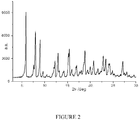
- the X-ray powder diffraction (XRPD) pattern of the product is characterized by the same 2 ⁇ values of diffraction peaks shown in Figure 2 , and corresponds to the X-ray diffraction pattern of Figure 1 , calculated on the basis of single crystal data of Example 1.
- the yield of the preparation was 47.3%.
- Example 3 After having proceeded as in Example 3, the product was further dried under vacuum, with a vacuum of about 8x10 -3 atm, putting the product on a plate per about 30 minutes at 30°C and connecting the system to a condenser at temperature of -82°C.
- the crystal powder was sieved by means of a 100 ⁇ m sieve, thus obtaining a crystal product which, once analyzed by HPLC, gave a rifaximin titre of 87.4%; once analyzed by GC, a DEGME titre of 12.1% was obtained; once analyzed by the Karl Fisher method, a water content of 0.48% was measured.
- the X-ray powder diffraction (XRPD) pattern of the product corresponds to the X-ray diffraction pattern of Figure 1 , calculated on the basis of single crystal data of Example 1.
- the yield of the preparation was 93.7%.
- Amounts of DEGEE in a molar ratio of 10:1 relative to rifaximin were added to solid rifaximin.
- the suspension was kept under stirring at 60°C for about 2 hours until a clear solution was obtained.
- the solution was left to cool to room temperature, thus obtaining a precipitate.
- An amount of heptane having a volume equivalent to DEGEE was added to the solution.
- the product was then isolated and dried for one night under vacuum at 65°C, thus obtaining a crystal product which, once analyzed by HPLC, gave a rifaximin titre of 83.2%; once analyzed by GC it gave a DEGEE titre of 15.9%; once analyzed by the Karl Fisher method, a water content of 0.8% was obtained.
- the X-ray powder diffraction (XRPD) pattern of the product corresponds to the X-ray diffraction pattern of Figure 1 , calculated on the basis of single crystal data of Example 1.
- the yield of the preparation was 74.7%.
- XRPD X-ray powder diffraction
- Table 2 reports the obtained values of intrinsic dissolution.
- Table 2 Amorphous rifaximin Rifaximin ⁇ Rifaximin polymorph ⁇ Dissolution mg/min/cm 2 0.131 0.121 0.016
- composition A Preparation of pharmaceutical compositions in the form of tablets comprising rifaximin ⁇ (Composition A)
- Example 5 An amount of 2340 mg crystal powder rifaximin ⁇ obtained from Example 5 was mixed with starch glycolate, glycerol distearate, talc and microcrystalline cellulose. The mixture was stirred for 30 minutes in a V-mixer and then compacted to obtain granules. The sieved granules were then mixed with extragranular agents: glyceryl palmitostearate, talc, microcrystalline cellulose, silica and the homogeneous mixture compressed to obtain the solid form. The tablets were then coated with a film coating comprising hydroxypropyl methylcellulose, titanium dioxide, sodium edetate and iron oxide.
- the unitary composition of the tablets is reported in Table 4.
- Table 4 Component Amount (mg) Percentage (w/w) Component (%) Rifaximin ⁇ 234.00 60 Sodium starch glycolate 15.00 3.8 Glyceryl stearate 18.00 4.6 Colloidal silica 1.00 0.1 Talc 1.00 0.1 Microcrystalline cellulose 115.00 29.3 Hydroxypropyl methylcellulose 5.48 1.4 Titanium dioxide 1.50 3.8 EDTA 0.02 0.005 Propylene Glycol 0.50 0.12 Iron oxide E-172 0.5 0.12
- composition B Preparation of pharmaceutical compositions in the form of tablets comprising rifaximin ⁇ (Composition B)
- Example 5 An amount of 2340 mg crystal powder rifaximin ⁇ obtained from Example 5 was mixed in a mixer with microcrystalline cellulose, pre-gelatinized starch, talc and magnesium stearate for 20 minutes at 16 rpm. The mixture was then compressed by means of a punch to obtain the tablets. The tablets were then coated. The unitary composition of the tablet is reported in Table 5.
- composition C Preparation of pharmaceutical compositions in the form of tablets comprising rifaximin ⁇ (Composition C)
- the homogenous mixture was dry granulated with 3.15 and 1.45 mm meshes, and the granules were mixed with extragranular excipients formed by microcrystalline cellulose, glyceryl palmitostearate, talc and anhydrous colloidal silica.
- the mixture was stirred for 20 minutes at 16 rpm and then compressed.
- the tablets obtained were coated with a film coating.
- the film coating suspended in an aqueous solution was sprayed on the tablets at a temperature of 45°C.
- the unitary composition of the obtained tablets is reported in Table 6.
- Table 6 Component Amount (mg) Percentage (w/w) Component (%) GRANULE Rifaximin ⁇ 234.00 40.6 Glyceryl palmitostearate 70.00 12.5 Talc 3.75 0.6 Microcrystalline cellulose 100.00 17.3 Sodium starch glycolate 87.7 15.2 EXTRA GRANULAR Microcrystalline cellulose 43.5 7.6 Glyceryl palmitostearate 9.00 1.6 Talc 0.6 0.1 Anhydrous colloidal silica 1.6 0.2 Film coating (hydroxypropyl methylcellulose, titanium dioxide, talc, iron oxide, sodium edetate) 25 4.3
- An amount quantity of 2340 mg rifaximin ⁇ obtained according to Example 5 was mixed in a V-mixer with microcrystalline cellulose, glyceryl palmitostearate, talc and sodium starch glycolate. The mixture was then granulated by means of a dry granulation process with 3.15 and 1.45 mm meshes. The granules were then mixed with extragranular excipients: microcrystalline cellulose, glyceryl palmitostearate, talc and anhydrous colloidal silica.
- the mixture was compressed and the cores obtained were then coated with a coating formed by copolymer of methacrylic acid and ethyl acrylate (Eudargit L30 D-55), triethyl citrate, polysorbate 80, glyceryl monostearate suspended in an aqueous solution.
- the coating solution was then sprayed on the rifaximin cores, pre-heated at 45°C.
- the unitary composition of the rifaximin ⁇ tablet is reported in Table 7.
- a fluidized bed apparatus 468 g of rifaximin ⁇ obtained according to Example 5 have been charged with 2.5 g of colloidal silica.
- a suspension was prepared with 267.3 g copolymer methacrylic acid ethyl acrylate (Kollicoat® MAE100P), 40.1 g propylene glycol, 71 g talc and 18 g titanium dioxide in 1385 g demineralised water.
- the suspension was charged in the fluidized bed apparatus and nebulised on the rifaximin granules by applying an incoming air flow of 15 m 3 /h at a temperature of 65°C.
- the gastroresistant granules obtained were then dried at a temperature of 75°C for 1 hour.
- the tablets comprising rifaximin ⁇ , rifaximin ⁇ and amorphous rifaximin, were placed in 1 litre phosphate buffer at pH 7.4 under stirring at 100 rpm at 37°C, respectively, and at given intervals of time, samples of the solution were taken.
- the rifaximin concentrations were determined by spectrophotometric analysis at 239 nm and compared to a standard solution of rifaximin. The test was repeated with another series of tablets.
- Table 9 reports the average concentrations of rifaximin obtained in these two tests.
- Table 9 Time Composition Example 10 Tablets amorphous rifaximin (min) % Rifaximin (w/w) % Rifaximin (w/w) % Rifaximin (w/w) 0 0.0 0.0 15 6.0 2.5 4.1 30 11.5 2.8 9.3 45 17.1 2.8 12.5 60 16.6 3.1 17.0 90 18.3 3.2 19.4 120 27.1 3.1 23.0 180 22.4 2.7 27.2
- a bioavailability study of rifaximin ⁇ in comparison with rifaximin amorphous and rifaximin polymorph alpha has been carried out on 4 Beagle male dogs, by feeding them a dose of 100 mg/kg of one of the polymorphs or amorphous form.
- Each animal received a single oral capsule of rifaximin ⁇ , amorphous rifaximin, and rifaximin ⁇ with a washout period of seven days between the administration of each form to the same animal.
- Doses were administered with a size 13 gelatine capsule followed by 10 ml of drinking water.
- Blood was taken at 6 time points up to 24 hours post dose and it was collected into tubes containing lithium heparin anticoagulant.
- the plasma has been assayed for rifaximin on the validated LC-MS/MS (Liquid Chromatography-Mass Spectrometry/Mass Spectrometry) method and the maximum plasma concentration observed (C max ), the time to reach the (C max ), (tmax), and the area under the concentration-time curve (AUC) have been calculated.
- Rifaximin was observed in the plasma of all dogs dosed with 100 mg/kg in a time between 1 hours and 5 hours after dosing and, after 1 hour, rifaximin values were detectable in all animals.
- Table 10 reports the pharmacokinetic parameters. Table 10 Rifaximin form C max tmax AUC 0-8h AUC 0-tlast (ng/ml) (h) (ng ⁇ h /ml) (ng ⁇ h /ml) ⁇ 15.70 ⁇ 18.63 5 19.93 ⁇ 10.25 150.54 ⁇ 172.55 Amorphous 279.79 ⁇ 378.41 3 1318.02 ⁇ 1975.04 2337.16 ⁇ 3223.76 ⁇ 2.84 ⁇ 1.26 1 7.20 ⁇ 4.00 16.86 ⁇ 13.99
- Cmax maximum observed plasma concentration
- tmax time from administration to obtain C max (expressed as median values)
- AUC 0-8h Area under the concentration-time curve from time 0h (first experimental point) up to 8 hours)
- AUC 0-tlast Area under the concentration
Landscapes
- Health & Medical Sciences (AREA)
- Chemical & Material Sciences (AREA)
- Organic Chemistry (AREA)
- Pharmacology & Pharmacy (AREA)
- Life Sciences & Earth Sciences (AREA)
- Animal Behavior & Ethology (AREA)
- General Health & Medical Sciences (AREA)
- Public Health (AREA)
- Veterinary Medicine (AREA)
- Medicinal Chemistry (AREA)
- Chemical Kinetics & Catalysis (AREA)
- General Chemical & Material Sciences (AREA)
- Nuclear Medicine, Radiotherapy & Molecular Imaging (AREA)
- Engineering & Computer Science (AREA)
- Bioinformatics & Cheminformatics (AREA)
- Epidemiology (AREA)
- Oncology (AREA)
- Communicable Diseases (AREA)
- Gastroenterology & Hepatology (AREA)
- Gynecology & Obstetrics (AREA)
- Endocrinology (AREA)
- Reproductive Health (AREA)
- Pharmaceuticals Containing Other Organic And Inorganic Compounds (AREA)
- Nitrogen And Oxygen Or Sulfur-Condensed Heterocyclic Ring Systems (AREA)
- Medicinal Preparation (AREA)
Priority Applications (7)
| Application Number | Priority Date | Filing Date | Title |
|---|---|---|---|
| DK19169546.9T DK3546464T3 (da) | 2014-05-12 | 2015-05-07 | Fremstilling og anvendelse af den krystallinske form tau af rifaximin solvateret med degme |
| PL19169546T PL3546464T3 (pl) | 2014-05-12 | 2015-05-07 | Sposób wytwarzania i zastosowanie postaci krystalicznej Tau rifaksyminy solwatowanej z DEGME |
| EP19169546.9A EP3546464B1 (en) | 2014-05-12 | 2015-05-07 | Preparation and use of crystalline form tau of rifaximin solvated with degme |
| RSP20191133 RS59250B1 (sr) | 2014-05-12 | 2015-05-07 | Novi solvatni kristalni oblik rifaksimina, njegova proizvodnja, kompozicije i upotreba |
| SI201530871T SI3143027T1 (sl) | 2014-05-12 | 2015-05-07 | Nova solvatirana kristalna oblika rifaksimina, proizvodnja, sestavki in uporaba le-teh |
| PL15726344T PL3143027T3 (pl) | 2014-05-12 | 2015-05-07 | Nowe solwatowane krystaliczne postaci rifaksyminy, ich wytwarzanie, kompozycje i zastosowania |
| HRP20191520 HRP20191520T1 (hr) | 2014-05-12 | 2015-05-07 | Novi solvatirani kristalni oblik rifaksimina, proizvodnja, pripravci i njihova upotreba |
Applications Claiming Priority (2)
| Application Number | Priority Date | Filing Date | Title |
|---|---|---|---|
| US201461992017P | 2014-05-12 | 2014-05-12 | |
| PCT/IB2015/053342 WO2015173697A1 (en) | 2014-05-12 | 2015-05-07 | New solvated crystal form of rifaximin, production, compositions and uses thereof |
Related Child Applications (2)
| Application Number | Title | Priority Date | Filing Date |
|---|---|---|---|
| EP19169546.9A Division EP3546464B1 (en) | 2014-05-12 | 2015-05-07 | Preparation and use of crystalline form tau of rifaximin solvated with degme |
| EP19169546.9A Division-Into EP3546464B1 (en) | 2014-05-12 | 2015-05-07 | Preparation and use of crystalline form tau of rifaximin solvated with degme |
Publications (2)
| Publication Number | Publication Date |
|---|---|
| EP3143027A1 EP3143027A1 (en) | 2017-03-22 |
| EP3143027B1 true EP3143027B1 (en) | 2019-07-10 |
Family
ID=53276210
Family Applications (2)
| Application Number | Title | Priority Date | Filing Date |
|---|---|---|---|
| EP15726344.3A Active EP3143027B1 (en) | 2014-05-12 | 2015-05-07 | New solvated crystal form of rifaximin, production, compositions and uses thereof |
| EP19169546.9A Active EP3546464B1 (en) | 2014-05-12 | 2015-05-07 | Preparation and use of crystalline form tau of rifaximin solvated with degme |
Family Applications After (1)
| Application Number | Title | Priority Date | Filing Date |
|---|---|---|---|
| EP19169546.9A Active EP3546464B1 (en) | 2014-05-12 | 2015-05-07 | Preparation and use of crystalline form tau of rifaximin solvated with degme |
Country Status (17)
| Country | Link |
|---|---|
| US (2) | US9938298B2 (enExample) |
| EP (2) | EP3143027B1 (enExample) |
| JP (1) | JP6576953B2 (enExample) |
| KR (1) | KR102362719B1 (enExample) |
| AU (1) | AU2015260837B2 (enExample) |
| CA (1) | CA2940601C (enExample) |
| DK (2) | DK3546464T3 (enExample) |
| EA (1) | EA030457B1 (enExample) |
| ES (2) | ES2742106T3 (enExample) |
| HR (2) | HRP20191520T1 (enExample) |
| HU (2) | HUE050054T2 (enExample) |
| NZ (1) | NZ723571A (enExample) |
| PL (2) | PL3546464T3 (enExample) |
| PT (2) | PT3546464T (enExample) |
| RS (2) | RS60576B1 (enExample) |
| SI (2) | SI3546464T1 (enExample) |
| WO (1) | WO2015173697A1 (enExample) |
Families Citing this family (8)
| Publication number | Priority date | Publication date | Assignee | Title |
|---|---|---|---|---|
| TWI335218B (en) * | 2003-02-19 | 2011-01-01 | Panion & Bf Biotech Inc | Ferric organic compounds, uses thereof and methods of making same |
| PT1698630E (pt) | 2005-03-03 | 2014-09-15 | Alfa Wassermann Spa | Novas formas polimorfas de rifaximina, processos para a sua produção e a sua utilização nas preparações medicinais |
| EP2927235B1 (en) | 2014-03-31 | 2017-02-08 | Euticals S.P.A. | Polymorphic mixture of rifaximin and its use for the preparation of solid formulations |
| ES2742106T3 (es) | 2014-05-12 | 2020-02-13 | Alfasigma Spa | Nueva forma de cristal solvatado de rifaximina, producción, composiciones y usos de la misma |
| KR20210054521A (ko) | 2018-09-06 | 2021-05-13 | 파흐호흐슐레 노르트베스치바이츠 | 약물 방출 제어형 제형 |
| WO2020208140A1 (en) | 2019-04-12 | 2020-10-15 | Sandoz Ag | Rifaximin-containing granules |
| GR1010652B (el) * | 2023-04-20 | 2024-03-12 | Φαρματεν Α.Β.Ε.Ε., | Φαρμακευτικο σκευασμα που περιλαμβανει εναν αντιμικροβιακο παραγοντα και μεθοδος για την παρασκευη αυτου |
| WO2025170483A1 (ru) * | 2024-02-07 | 2025-08-14 | Общество с ограниченной ответственностью "БИННОФАРМ ГРУПП" | Фармацевтическая композиция, обладающая антибиотической активностью |
Family Cites Families (85)
| Publication number | Priority date | Publication date | Assignee | Title |
|---|---|---|---|---|
| IT1154655B (it) | 1980-05-22 | 1987-01-21 | Alfa Farmaceutici Spa | Derivati imidazo-rifamicinici metodi per la loro preparazione e loro uso come sostanza ad azione antibatterica |
| IT1199374B (it) | 1984-05-15 | 1988-12-30 | Alfa Farmaceutici Spa | Processo per la preparazione di pirido-imidazo-rifamicine |
| CA1215976A (en) | 1984-05-15 | 1986-12-30 | Vincenzo Cannata | New process for the synthesis of imidazo rifamycins |
| IT1199413B (it) | 1984-09-26 | 1988-12-30 | Alfa Farmaceutici Spa | Processo per la preparazione di pirido-imidazo-rifamicine |
| US5356625A (en) | 1986-08-28 | 1994-10-18 | Enzacor Properties Limited | Microgranular preparation useful in the delivery of biologically active materials to the intestinal regions of animals |
| US5443826A (en) | 1988-08-02 | 1995-08-22 | Borody; Thomas J. | Treatment of gastro-intestinal disorders with a fecal composition or a composition of bacteroides and E. Coli |
| IT1253711B (it) | 1991-12-17 | 1995-08-23 | Alfa Wassermann Spa | Formulazioni farmaceutiche vaginali contenenti rifaximin e loro uso nel trattamento delle infezioni vaginali |
| IT1264494B1 (it) | 1993-03-23 | 1996-09-24 | Alfa Wassermann Spa | Uso di rifaximin e di formulazioni che la contengono nel trattamento delle dispepsie gastriche originate da helicobacter |
| US6861053B1 (en) | 1999-08-11 | 2005-03-01 | Cedars-Sinai Medical Center | Methods of diagnosing or treating irritable bowel syndrome and other disorders caused by small intestinal bacterial overgrowth |
| US5840332A (en) | 1996-01-18 | 1998-11-24 | Perio Products Ltd. | Gastrointestinal drug delivery system |
| DE69739394D1 (de) | 1996-10-16 | 2009-06-18 | Napo Pharmaceuticals Inc | Enteral-formulierungen von proanthocyanidzusammensetzungen gegen diarrhöe |
| IT1290679B1 (it) | 1997-02-14 | 1998-12-10 | Alfa Wassermann Spa | Uso della rifaximina e delle composizioni farmaceutiche che la contengono nel trattamento della diarrea da criptosporidiosi. |
| US6770623B1 (en) | 1997-12-09 | 2004-08-03 | Eli Lilly And Company | Stabilized teriparatide solutions |
| US20030059471A1 (en) | 1997-12-15 | 2003-03-27 | Compton Bruce Jon | Oral delivery formulation |
| US20030157174A1 (en) | 2000-03-23 | 2003-08-21 | Takayuki Tsukuda | Enteric granular preparations of hardly water soluble drugs characterized by containing water-repellent component |
| DE10045547A1 (de) | 2000-09-14 | 2002-04-04 | Infineon Technologies Ag | Verfahren zur systemunabhängigen digitalen Erzeugung von Mobilkommunikations-Sendesignalen verschiedener Mobilfunkstandards |
| US8101209B2 (en) | 2001-10-09 | 2012-01-24 | Flamel Technologies | Microparticulate oral galenical form for the delayed and controlled release of pharmaceutical active principles |
| US20080262024A1 (en) | 2003-11-07 | 2008-10-23 | Giuseppe Claudio Viscomi | Rifaximin compositions and method of use |
| US7902206B2 (en) | 2003-11-07 | 2011-03-08 | Alfa Wassermann, S.P.A. | Polymorphic forms α, β and γ of rifaximin |
| US7906542B2 (en) | 2004-11-04 | 2011-03-15 | Alfa Wassermann, S.P.A. | Pharmaceutical compositions comprising polymorphic forms α, β, and γ of rifaximin |
| US7923553B2 (en) | 2003-11-07 | 2011-04-12 | Alfa Wassermann, S.P.A. | Processes for the production of polymorphic forms of rifaximin |
| ITMI20032144A1 (it) | 2003-11-07 | 2005-05-08 | Alfa Wassermann Spa | Forme polimorfe di rifaximina, processi per ottenerle e |
| US20050196418A1 (en) | 2004-03-04 | 2005-09-08 | Yu Ruey J. | Bioavailability and improved delivery of alkaline pharmaceutical drugs |
| SE528938C2 (sv) | 2005-02-08 | 2007-03-20 | Ortic Ab | Hydroformningsenhet |
| US20060210483A1 (en) | 2005-03-02 | 2006-09-21 | Kodsi Robert E | Non-systemic antibiotic formulations and related method of use and treatment of upper respiratory infections |
| US8003118B2 (en) | 2005-03-02 | 2011-08-23 | Kodsi Robert E | Use of rifaximin for the prevention of aspiration pneumonia and/or sepsis |
| US20060210492A1 (en) | 2005-03-02 | 2006-09-21 | Kodsi Robert E | Use of rifaximin for treatment and prevention of periodontal conditions |
| PT1698630E (pt) | 2005-03-03 | 2014-09-15 | Alfa Wassermann Spa | Novas formas polimorfas de rifaximina, processos para a sua produção e a sua utilização nas preparações medicinais |
| ITBO20050123A1 (it) | 2005-03-07 | 2005-06-06 | Alfa Wassermann Spa | Formulazioni farmaceutiche gastroresistenti contenenti rifaximina |
| ITMI20061692A1 (it) | 2006-09-05 | 2008-03-06 | Alfa Wassermann Spa | Uso di polioli per ottenere forme polimorfe stabili di rifaximina |
| AU2007298733B2 (en) | 2006-09-22 | 2012-11-08 | Cipla Limited | Rifaximin |
| ITMI20071241A1 (it) | 2007-06-20 | 2008-12-21 | Solmag S P A | Processo per la preparazione di rifaximina amorfa e rifaximina amorfa cosi' ottenuta |
| JP5755878B2 (ja) | 2007-07-06 | 2015-07-29 | ルパン リミテッドLupin Limited | リファキシミンの薬剤組成物 |
| US8974825B2 (en) | 2007-07-06 | 2015-03-10 | Lupin Limited | Pharmaceutical compositions for gastrointestinal drug delivery |
| PL2011486T5 (pl) | 2007-07-06 | 2016-09-30 | Lupin Ltd | Farmaceutyczne kompozycje rifaksyminy |
| US7709634B2 (en) | 2007-09-20 | 2010-05-04 | Apotex Pharmachem Inc. | Amorphous form of rifaximin and processes for its preparation |
| JP2011500552A (ja) | 2007-10-10 | 2011-01-06 | ルピン・リミテッド | 胃腸障害を処置するための医薬用組み合わせおよび組成物 |
| US8486956B2 (en) | 2008-02-25 | 2013-07-16 | Salix Pharmaceuticals, Ltd | Forms of rifaximin and uses thereof |
| SG188931A1 (en) | 2008-02-25 | 2013-04-30 | Salix Pharmaceuticals Ltd | Forms of rifaximin and uses thereof |
| DK2252148T3 (da) | 2008-02-26 | 2019-05-06 | Salix Pharmaceuticals Ltd | Fremgangsmåder til behandling af irritabel tarmsyndrom |
| EP3628319B1 (en) | 2008-10-02 | 2024-02-14 | Salix Pharmaceuticals, Ltd. | Treatment of hepatic encephalopathy using rifaximin |
| US7928115B2 (en) | 2008-10-02 | 2011-04-19 | Salix Pharmaceuticals, Ltd. | Methods of treating travelers diarrhea and hepatic encephalopathy |
| US20110035232A1 (en) | 2008-10-02 | 2011-02-10 | Salix Pharmaceuticals, Ltd. | Methods of treating hepatic encephalopathy |
| WO2010044093A1 (en) | 2008-10-16 | 2010-04-22 | Strides Arcolab Limited | Formulations containing rifaximin |
| KR101906177B1 (ko) | 2008-12-10 | 2018-10-10 | 시플라 리미티드 | 리팍시민 복합체 |
| IT1397617B1 (it) * | 2009-04-20 | 2013-01-18 | Alfa Wassermann Spa | Nuovi derivati della rifamicina |
| PL2493471T3 (pl) | 2009-10-26 | 2020-10-19 | Borody | Nowa skojarzona terapia jelitowa |
| MX346660B (es) | 2009-10-27 | 2017-03-28 | Lupin Ltd | Dispersion solida de rifaximina. |
| WO2011061748A1 (en) | 2009-11-19 | 2011-05-26 | Strides Arcolab Limited | Rifaximin premix |
| JP2013511569A (ja) | 2009-11-23 | 2013-04-04 | シプラ・リミテッド | 局所用泡沫組成物 |
| AU2010320656B2 (en) | 2009-11-23 | 2015-07-30 | Cipla Limited | Topical foam composition |
| US8952159B2 (en) | 2009-12-28 | 2015-02-10 | Silvio Massimo Lavagna | Method for the production of amorphous rifaximin |
| CN101773465B (zh) | 2010-01-19 | 2012-11-07 | 南京泛太化工医药研究所 | 以氨基酸为稳定剂的聚合物胶束载药系统 |
| CA2800235C (en) | 2010-03-10 | 2018-10-16 | Lupin Limited | Rifaximin ready-to-use suspension |
| WO2011153444A1 (en) | 2010-06-03 | 2011-12-08 | Salix Pharmaceuticals, Ltd | New forms of rifaximin and uses thereof |
| WO2011156897A2 (en) | 2010-06-16 | 2011-12-22 | Apotex Pharmachem Inc. | Polymorphic forms of rifaximin |
| SI2593463T1 (sl) | 2010-07-12 | 2020-10-30 | Salix Pharmaceuticals, Inc. | Formulacije rifaksimina in njihove uporabe |
| CA2810598A1 (en) | 2010-09-13 | 2012-03-22 | Cipla Limited | Pharmaceutical composition |
| IT1403847B1 (it) | 2010-09-22 | 2013-11-08 | Alfa Wassermann Spa | Composizioni farmaceutiche comprendenti rifaximina e loro uso. |
| WO2012060675A1 (es) | 2010-11-05 | 2012-05-10 | Interquim, S.A. De C.V. | Proceso para la preparación de rifaximina amorfa |
| WO2012076832A1 (en) | 2010-12-09 | 2012-06-14 | Cipla Limited | Suppositories comprising rifaximin |
| PT2672970T (pt) | 2011-02-11 | 2018-10-11 | Salix Pharmaceuticals Ltd | Formas de rifaximina e suas utilizações |
| CA2834829A1 (en) * | 2011-05-02 | 2012-11-08 | Ranbaxy Laboratories Limited | Rifaximin dimethylformamide solvate |
| ITMI20110890A1 (it) | 2011-05-19 | 2012-11-20 | A M S A Anonima Materie Sint & Affini S P A | Polimorfo di rifaximina e processo per la sua preparazione |
| WO2012155981A1 (en) | 2011-05-19 | 2012-11-22 | Friulchem Spa | New process for the synthesis of rifaximin and a new pseudo-crystalline form of rifaximin obtained thereby |
| ITBO20110461A1 (it) | 2011-07-29 | 2013-01-30 | Alfa Wassermann Spa | Composizioni farmaceutiche comprendenti rifaximina, processi per la loro preparazione e loro uso nel trattamento di infezioni vaginali. |
| JP2013184902A (ja) * | 2012-03-06 | 2013-09-19 | Aska Pharmaceutical Co Ltd | リファキシミン含有結晶 |
| CA2876737A1 (en) | 2012-06-13 | 2013-12-19 | Apotex Pharmachem Inc. | Polymorphic forms of rifaximin |
| ITBO20120368A1 (it) | 2012-07-06 | 2014-01-07 | Alfa Wassermann Spa | Composizioni comprendenti rifaximina e amminoacidi, cristalli di rifaximina derivanti da tali composizioni e loro uso. |
| WO2014091432A1 (en) | 2012-12-12 | 2014-06-19 | Ranbaxy Laboratories Limited | Pharmaceutical compositions of rifaximin |
| JP6433980B2 (ja) | 2013-04-12 | 2018-12-05 | アルファシグマ ソシエタ ペル アチオニ | Nsaid投与並びに関連する組成物、方法及びシステム |
| EP2997034A4 (en) | 2013-05-17 | 2016-12-28 | Salix Pharmaceuticals Inc | METHODS OF USING RIFAXIMINE IN POSITRON EMISSION TOMOGRAPHY SCANNING (PET) |
| US9018225B1 (en) | 2013-07-26 | 2015-04-28 | Novel Laboratories | Rifaximin crystalline forms and methods of preparation thereof |
| ITMI20131307A1 (it) | 2013-08-02 | 2015-02-02 | A M S A Anonima Materie Sint & Affini S P A | Processo per la preparazione di refaximina k |
| EP2927235B1 (en) | 2014-03-31 | 2017-02-08 | Euticals S.P.A. | Polymorphic mixture of rifaximin and its use for the preparation of solid formulations |
| CA2946101A1 (en) | 2014-04-19 | 2015-10-22 | Granules India Limited | An improved process for the preparation of rifamycin derivatives |
| ES2742106T3 (es) | 2014-05-12 | 2020-02-13 | Alfasigma Spa | Nueva forma de cristal solvatado de rifaximina, producción, composiciones y usos de la misma |
| WO2016063289A2 (en) | 2014-10-22 | 2016-04-28 | Strides Arcolab Limited | Pharmaceutical tablet compositions comprising rifaximin |
| WO2017021975A1 (en) | 2015-08-06 | 2017-02-09 | Msn Laboratories Private Limited | Process for the preparation of crystalline forms of rifaximin |
| ES2738024T5 (es) | 2016-03-24 | 2022-10-24 | Sandoz Ag | Composición estable al almacenamiento que comprende rifaximina alfa |
| HUE056045T2 (hu) | 2016-03-24 | 2022-01-28 | Sandoz Ag | Rifaximin alfa és delta tartalmú gyógyászati készítmény |
| US9988398B2 (en) | 2016-06-07 | 2018-06-05 | Cadila Healthcare Limited | Crystalline form of rifaximin and process for its preparation |
| WO2018158646A1 (en) | 2017-03-02 | 2018-09-07 | Granules India Limited | Rifaximin crystalline form |
| WO2018178777A1 (en) | 2017-03-31 | 2018-10-04 | Granules India Limited | Process for the preparation of rifaximin crystalline form |
| US11052071B2 (en) | 2017-04-26 | 2021-07-06 | Sandoz Ag | Oral dosage form comprising rifaximin in form beta |
-
2015
- 2015-05-07 ES ES15726344T patent/ES2742106T3/es active Active
- 2015-05-07 DK DK19169546.9T patent/DK3546464T3/da active
- 2015-05-07 EP EP15726344.3A patent/EP3143027B1/en active Active
- 2015-05-07 EA EA201692110A patent/EA030457B1/ru unknown
- 2015-05-07 WO PCT/IB2015/053342 patent/WO2015173697A1/en not_active Ceased
- 2015-05-07 EP EP19169546.9A patent/EP3546464B1/en active Active
- 2015-05-07 HR HRP20191520 patent/HRP20191520T1/hr unknown
- 2015-05-07 HU HUE19169546A patent/HUE050054T2/hu unknown
- 2015-05-07 NZ NZ723571A patent/NZ723571A/en unknown
- 2015-05-07 PT PT191695469T patent/PT3546464T/pt unknown
- 2015-05-07 HU HUE15726344 patent/HUE044748T2/hu unknown
- 2015-05-07 PL PL19169546T patent/PL3546464T3/pl unknown
- 2015-05-07 DK DK15726344.3T patent/DK3143027T3/da active
- 2015-05-07 AU AU2015260837A patent/AU2015260837B2/en active Active
- 2015-05-07 US US15/310,436 patent/US9938298B2/en active Active
- 2015-05-07 SI SI201531304T patent/SI3546464T1/sl unknown
- 2015-05-07 PT PT15726344T patent/PT3143027T/pt unknown
- 2015-05-07 CA CA2940601A patent/CA2940601C/en active Active
- 2015-05-07 KR KR1020167031391A patent/KR102362719B1/ko active Active
- 2015-05-07 PL PL15726344T patent/PL3143027T3/pl unknown
- 2015-05-07 RS RS20200857A patent/RS60576B1/sr unknown
- 2015-05-07 RS RSP20191133 patent/RS59250B1/sr unknown
- 2015-05-07 SI SI201530871T patent/SI3143027T1/sl unknown
- 2015-05-07 JP JP2016566935A patent/JP6576953B2/ja active Active
- 2015-05-07 ES ES19169546T patent/ES2810010T3/es active Active
-
2018
- 2018-02-27 US US15/907,117 patent/US10428086B2/en active Active
-
2020
- 2020-07-13 HR HRP20201093TT patent/HRP20201093T1/hr unknown
Non-Patent Citations (1)
| Title |
|---|
| None * |
Also Published As
Similar Documents
| Publication | Publication Date | Title |
|---|---|---|
| EP3143027B1 (en) | New solvated crystal form of rifaximin, production, compositions and uses thereof | |
| KR101663491B1 (ko) | 리팍시민 분말, 그를 제조하는 방법 및 장기 지속형 효과를 얻는데 유용한 상기 리팍시민을 포함하는 제어 방출 조성물 | |
| JP5671560B2 (ja) | 固体投与形中のテトラサイクリン金属錯体 | |
| KR20070053205A (ko) | 의약 조성물 | |
| JP2011507977A (ja) | (r)−2−[[[3−メチル−4−(2,2,2−トリフルオロエトキシ)−2−ピリジニル]メチル]スルフィニル]−1h−ベンズイミダゾールの溶媒和物結晶形 | |
| CN101633662A (zh) | 普拉格雷的药用酸加成盐及其制备方法和药物应用 | |
| WO2015130110A1 (ko) | 무정형 솔리페나신 또는 그의 염을 포함하는 안정성이 증가된 고체분산체 조성물 및 그 제조방법 | |
| JP2013184902A (ja) | リファキシミン含有結晶 | |
| HK1255535A1 (en) | New solvated crystal form of rifaximin, production, compositions and uses thereof | |
| HK1255535B (en) | New solvated crystal form of rifaximin, production, compositions and uses thereof | |
| MXPA06000699A (en) | A doxycycline metal complex in a solid dosage form | |
| HK1174263B (en) | Rifaximin powder, process for preparing the same and controlled release compositions containing said rifaximin useful for obtaining a long-lasting effect |
Legal Events
| Date | Code | Title | Description |
|---|---|---|---|
| STAA | Information on the status of an ep patent application or granted ep patent |
Free format text: STATUS: THE INTERNATIONAL PUBLICATION HAS BEEN MADE |
|
| PUAI | Public reference made under article 153(3) epc to a published international application that has entered the european phase |
Free format text: ORIGINAL CODE: 0009012 |
|
| STAA | Information on the status of an ep patent application or granted ep patent |
Free format text: STATUS: REQUEST FOR EXAMINATION WAS MADE |
|
| 17P | Request for examination filed |
Effective date: 20161017 |
|
| AK | Designated contracting states |
Kind code of ref document: A1 Designated state(s): AL AT BE BG CH CY CZ DE DK EE ES FI FR GB GR HR HU IE IS IT LI LT LU LV MC MK MT NL NO PL PT RO RS SE SI SK SM TR |
|
| AX | Request for extension of the european patent |
Extension state: BA ME |
|
| DAV | Request for validation of the european patent (deleted) | ||
| DAX | Request for extension of the european patent (deleted) | ||
| RAP1 | Party data changed (applicant data changed or rights of an application transferred) |
Owner name: ALFASIGMA S.P.A. |
|
| RAP1 | Party data changed (applicant data changed or rights of an application transferred) |
Owner name: ALFASIGMA S.P.A. |
|
| GRAP | Despatch of communication of intention to grant a patent |
Free format text: ORIGINAL CODE: EPIDOSNIGR1 |
|
| STAA | Information on the status of an ep patent application or granted ep patent |
Free format text: STATUS: GRANT OF PATENT IS INTENDED |
|
| INTG | Intention to grant announced |
Effective date: 20181212 |
|
| GRAS | Grant fee paid |
Free format text: ORIGINAL CODE: EPIDOSNIGR3 |
|
| GRAA | (expected) grant |
Free format text: ORIGINAL CODE: 0009210 |
|
| STAA | Information on the status of an ep patent application or granted ep patent |
Free format text: STATUS: THE PATENT HAS BEEN GRANTED |
|
| AK | Designated contracting states |
Kind code of ref document: B1 Designated state(s): AL AT BE BG CH CY CZ DE DK EE ES FI FR GB GR HR HU IE IS IT LI LT LU LV MC MK MT NL NO PL PT RO RS SE SI SK SM TR |
|
| REG | Reference to a national code |
Ref country code: GB Ref legal event code: FG4D |
|
| REG | Reference to a national code |
Ref country code: AT Ref legal event code: REF Ref document number: 1153459 Country of ref document: AT Kind code of ref document: T Effective date: 20190715 Ref country code: CH Ref legal event code: NV Representative=s name: RENTSCH PARTNER AG, CH Ref country code: CH Ref legal event code: EP |
|
| REG | Reference to a national code |
Ref country code: IE Ref legal event code: FG4D |
|
| REG | Reference to a national code |
Ref country code: DE Ref legal event code: R096 Ref document number: 602015033492 Country of ref document: DE |
|
| REG | Reference to a national code |
Ref country code: DK Ref legal event code: T3 Effective date: 20190807 |
|
| REG | Reference to a national code |
Ref country code: SE Ref legal event code: TRGR |
|
| REG | Reference to a national code |
Ref country code: HR Ref legal event code: TUEP Ref document number: P20191520T Country of ref document: HR |
|
| REG | Reference to a national code |
Ref country code: HK Ref legal event code: DE Ref document number: 1255535 Country of ref document: HK |
|
| REG | Reference to a national code |
Ref country code: RO Ref legal event code: EPE |
|
| REG | Reference to a national code |
Ref country code: NL Ref legal event code: FP |
|
| REG | Reference to a national code |
Ref country code: PT Ref legal event code: SC4A Ref document number: 3143027 Country of ref document: PT Date of ref document: 20190920 Kind code of ref document: T Free format text: AVAILABILITY OF NATIONAL TRANSLATION Effective date: 20190903 |
|
| REG | Reference to a national code |
Ref country code: NO Ref legal event code: T2 Effective date: 20190710 |
|
| REG | Reference to a national code |
Ref country code: SK Ref legal event code: T3 Ref document number: E 31961 Country of ref document: SK |
|
| REG | Reference to a national code |
Ref country code: EE Ref legal event code: FG4A Ref document number: E018132 Country of ref document: EE Effective date: 20190902 |
|
| REG | Reference to a national code |
Ref country code: LT Ref legal event code: MG4D |
|
| REG | Reference to a national code |
Ref country code: HU Ref legal event code: AG4A Ref document number: E044748 Country of ref document: HU |
|
| REG | Reference to a national code |
Ref country code: HR Ref legal event code: T1PR Ref document number: P20191520 Country of ref document: HR |
|
| REG | Reference to a national code |
Ref country code: GR Ref legal event code: EP Ref document number: 20190402598 Country of ref document: GR Effective date: 20191128 |
|
| PG25 | Lapsed in a contracting state [announced via postgrant information from national office to epo] |
Ref country code: LT Free format text: LAPSE BECAUSE OF FAILURE TO SUBMIT A TRANSLATION OF THE DESCRIPTION OR TO PAY THE FEE WITHIN THE PRESCRIBED TIME-LIMIT Effective date: 20190710 |
|
| REG | Reference to a national code |
Ref country code: ES Ref legal event code: FG2A Ref document number: 2742106 Country of ref document: ES Kind code of ref document: T3 Effective date: 20200213 |
|
| PG25 | Lapsed in a contracting state [announced via postgrant information from national office to epo] |
Ref country code: LV Free format text: LAPSE BECAUSE OF FAILURE TO SUBMIT A TRANSLATION OF THE DESCRIPTION OR TO PAY THE FEE WITHIN THE PRESCRIBED TIME-LIMIT Effective date: 20190710 |
|
| REG | Reference to a national code |
Ref country code: HR Ref legal event code: ODRP Ref document number: P20191520 Country of ref document: HR Payment date: 20200330 Year of fee payment: 6 |
|
| PG25 | Lapsed in a contracting state [announced via postgrant information from national office to epo] |
Ref country code: SM Free format text: LAPSE BECAUSE OF FAILURE TO SUBMIT A TRANSLATION OF THE DESCRIPTION OR TO PAY THE FEE WITHIN THE PRESCRIBED TIME-LIMIT Effective date: 20190710 |
|
| REG | Reference to a national code |
Ref country code: DE Ref legal event code: R097 Ref document number: 602015033492 Country of ref document: DE |
|
| REG | Reference to a national code |
Ref country code: AT Ref legal event code: UEP Ref document number: 1153459 Country of ref document: AT Kind code of ref document: T Effective date: 20190710 |
|
| PLBE | No opposition filed within time limit |
Free format text: ORIGINAL CODE: 0009261 |
|
| STAA | Information on the status of an ep patent application or granted ep patent |
Free format text: STATUS: NO OPPOSITION FILED WITHIN TIME LIMIT |
|
| 26N | No opposition filed |
Effective date: 20200603 |
|
| REG | Reference to a national code |
Ref country code: HR Ref legal event code: ODRP Ref document number: P20191520 Country of ref document: HR Payment date: 20210503 Year of fee payment: 7 |
|
| PG25 | Lapsed in a contracting state [announced via postgrant information from national office to epo] |
Ref country code: MT Free format text: LAPSE BECAUSE OF FAILURE TO SUBMIT A TRANSLATION OF THE DESCRIPTION OR TO PAY THE FEE WITHIN THE PRESCRIBED TIME-LIMIT Effective date: 20190710 Ref country code: CY Free format text: LAPSE BECAUSE OF FAILURE TO SUBMIT A TRANSLATION OF THE DESCRIPTION OR TO PAY THE FEE WITHIN THE PRESCRIBED TIME-LIMIT Effective date: 20190710 |
|
| REG | Reference to a national code |
Ref country code: HR Ref legal event code: ODRP Ref document number: P20191520 Country of ref document: HR Payment date: 20220503 Year of fee payment: 8 |
|
| PG25 | Lapsed in a contracting state [announced via postgrant information from national office to epo] |
Ref country code: MK Free format text: LAPSE BECAUSE OF FAILURE TO SUBMIT A TRANSLATION OF THE DESCRIPTION OR TO PAY THE FEE WITHIN THE PRESCRIBED TIME-LIMIT Effective date: 20190710 |
|
| REG | Reference to a national code |
Ref country code: HR Ref legal event code: ODRP Ref document number: P20191520 Country of ref document: HR Payment date: 20230504 Year of fee payment: 9 |
|
| P01 | Opt-out of the competence of the unified patent court (upc) registered |
Effective date: 20230418 |
|
| PGFP | Annual fee paid to national office [announced via postgrant information from national office to epo] |
Ref country code: MC Payment date: 20240325 Year of fee payment: 10 |
|
| PGFP | Annual fee paid to national office [announced via postgrant information from national office to epo] |
Ref country code: SK Payment date: 20240326 Year of fee payment: 10 |
|
| REG | Reference to a national code |
Ref country code: HR Ref legal event code: ODRP Ref document number: P20191520 Country of ref document: HR Payment date: 20240327 Year of fee payment: 10 |
|
| PGFP | Annual fee paid to national office [announced via postgrant information from national office to epo] |
Ref country code: LU Payment date: 20240426 Year of fee payment: 10 |
|
| PGFP | Annual fee paid to national office [announced via postgrant information from national office to epo] |
Ref country code: NO Payment date: 20240222 Year of fee payment: 10 |
|
| PGFP | Annual fee paid to national office [announced via postgrant information from national office to epo] |
Ref country code: IS Payment date: 20240405 Year of fee payment: 10 |
|
| PGFP | Annual fee paid to national office [announced via postgrant information from national office to epo] |
Ref country code: DK Payment date: 20240515 Year of fee payment: 10 |
|
| PGFP | Annual fee paid to national office [announced via postgrant information from national office to epo] |
Ref country code: GR Payment date: 20240412 Year of fee payment: 10 |
|
| PGFP | Annual fee paid to national office [announced via postgrant information from national office to epo] |
Ref country code: CH Payment date: 20240602 Year of fee payment: 10 Ref country code: RS Payment date: 20240410 Year of fee payment: 10 |
|
| PGFP | Annual fee paid to national office [announced via postgrant information from national office to epo] |
Ref country code: ES Payment date: 20240612 Year of fee payment: 10 |
|
| PGFP | Annual fee paid to national office [announced via postgrant information from national office to epo] |
Ref country code: AT Payment date: 20240425 Year of fee payment: 10 Ref country code: CZ Payment date: 20240424 Year of fee payment: 10 |
|
| PGFP | Annual fee paid to national office [announced via postgrant information from national office to epo] |
Ref country code: RO Payment date: 20240412 Year of fee payment: 10 Ref country code: IT Payment date: 20240411 Year of fee payment: 10 Ref country code: FI Payment date: 20240514 Year of fee payment: 10 Ref country code: SI Payment date: 20240327 Year of fee payment: 10 |
|
| PGFP | Annual fee paid to national office [announced via postgrant information from national office to epo] |
Ref country code: PT Payment date: 20240424 Year of fee payment: 10 |
|
| PGFP | Annual fee paid to national office [announced via postgrant information from national office to epo] |
Ref country code: TR Payment date: 20240422 Year of fee payment: 10 Ref country code: HU Payment date: 20240410 Year of fee payment: 10 Ref country code: BE Payment date: 20240422 Year of fee payment: 10 |
|
| PGFP | Annual fee paid to national office [announced via postgrant information from national office to epo] |
Ref country code: AL Payment date: 20240507 Year of fee payment: 10 |
|
| PGFP | Annual fee paid to national office [announced via postgrant information from national office to epo] |
Ref country code: SE Payment date: 20250310 Year of fee payment: 11 |
|
| PGFP | Annual fee paid to national office [announced via postgrant information from national office to epo] |
Ref country code: NL Payment date: 20250317 Year of fee payment: 11 |
|
| PGFP | Annual fee paid to national office [announced via postgrant information from national office to epo] |
Ref country code: BG Payment date: 20250317 Year of fee payment: 11 |
|
| PGFP | Annual fee paid to national office [announced via postgrant information from national office to epo] |
Ref country code: IE Payment date: 20250310 Year of fee payment: 11 |
|
| PGFP | Annual fee paid to national office [announced via postgrant information from national office to epo] |
Ref country code: EE Payment date: 20250319 Year of fee payment: 11 |
|
| PGFP | Annual fee paid to national office [announced via postgrant information from national office to epo] |
Ref country code: FR Payment date: 20250321 Year of fee payment: 11 Ref country code: PL Payment date: 20250221 Year of fee payment: 11 |
|
| PGFP | Annual fee paid to national office [announced via postgrant information from national office to epo] |
Ref country code: GB Payment date: 20250313 Year of fee payment: 11 |
|
| REG | Reference to a national code |
Ref country code: HR Ref legal event code: ODRP Ref document number: P20191520 Country of ref document: HR Payment date: 20250324 Year of fee payment: 11 |
|
| PGFP | Annual fee paid to national office [announced via postgrant information from national office to epo] |
Ref country code: DE Payment date: 20250311 Year of fee payment: 11 |
|
| PGFP | Annual fee paid to national office [announced via postgrant information from national office to epo] |
Ref country code: HR Payment date: 20250409 Year of fee payment: 11 |
|
| PG25 | Lapsed in a contracting state [announced via postgrant information from national office to epo] |
Ref country code: PT Free format text: LAPSE BECAUSE OF NON-PAYMENT OF DUE FEES Effective date: 20251107 |