EP3139914B1 - Compounds for treating ophthalmic diseases and disorders - Google Patents
Compounds for treating ophthalmic diseases and disorders Download PDFInfo
- Publication number
- EP3139914B1 EP3139914B1 EP15720340.7A EP15720340A EP3139914B1 EP 3139914 B1 EP3139914 B1 EP 3139914B1 EP 15720340 A EP15720340 A EP 15720340A EP 3139914 B1 EP3139914 B1 EP 3139914B1
- Authority
- EP
- European Patent Office
- Prior art keywords
- compound
- eye
- ocular
- use according
- month
- Prior art date
- Legal status (The legal status is an assumption and is not a legal conclusion. Google has not performed a legal analysis and makes no representation as to the accuracy of the status listed.)
- Active
Links
Images

Classifications
-
- A—HUMAN NECESSITIES
- A61—MEDICAL OR VETERINARY SCIENCE; HYGIENE
- A61K—PREPARATIONS FOR MEDICAL, DENTAL OR TOILETRY PURPOSES
- A61K31/00—Medicinal preparations containing organic active ingredients
- A61K31/33—Heterocyclic compounds
- A61K31/395—Heterocyclic compounds having nitrogen as a ring hetero atom, e.g. guanethidine or rifamycins
- A61K31/41—Heterocyclic compounds having nitrogen as a ring hetero atom, e.g. guanethidine or rifamycins having five-membered rings with two or more ring hetero atoms, at least one of which being nitrogen, e.g. tetrazole
- A61K31/42—Oxazoles
-
- A—HUMAN NECESSITIES
- A61—MEDICAL OR VETERINARY SCIENCE; HYGIENE
- A61K—PREPARATIONS FOR MEDICAL, DENTAL OR TOILETRY PURPOSES
- A61K31/00—Medicinal preparations containing organic active ingredients
- A61K31/185—Acids; Anhydrides, halides or salts thereof, e.g. sulfur acids, imidic, hydrazonic or hydroximic acids
- A61K31/19—Carboxylic acids, e.g. valproic acid
- A61K31/195—Carboxylic acids, e.g. valproic acid having an amino group
- A61K31/196—Carboxylic acids, e.g. valproic acid having an amino group the amino group being directly attached to a ring, e.g. anthranilic acid, mefenamic acid, diclofenac, chlorambucil
-
- A—HUMAN NECESSITIES
- A61—MEDICAL OR VETERINARY SCIENCE; HYGIENE
- A61K—PREPARATIONS FOR MEDICAL, DENTAL OR TOILETRY PURPOSES
- A61K31/00—Medicinal preparations containing organic active ingredients
- A61K31/33—Heterocyclic compounds
- A61K31/38—Heterocyclic compounds having sulfur as a ring hetero atom
- A61K31/381—Heterocyclic compounds having sulfur as a ring hetero atom having five-membered rings
-
- A—HUMAN NECESSITIES
- A61—MEDICAL OR VETERINARY SCIENCE; HYGIENE
- A61K—PREPARATIONS FOR MEDICAL, DENTAL OR TOILETRY PURPOSES
- A61K9/00—Medicinal preparations characterised by special physical form
- A61K9/0012—Galenical forms characterised by the site of application
- A61K9/0048—Eye, e.g. artificial tears
-
- A—HUMAN NECESSITIES
- A61—MEDICAL OR VETERINARY SCIENCE; HYGIENE
- A61K—PREPARATIONS FOR MEDICAL, DENTAL OR TOILETRY PURPOSES
- A61K31/00—Medicinal preparations containing organic active ingredients
- A61K31/275—Nitriles; Isonitriles
- A61K31/277—Nitriles; Isonitriles having a ring, e.g. verapamil
-
- A—HUMAN NECESSITIES
- A61—MEDICAL OR VETERINARY SCIENCE; HYGIENE
- A61K—PREPARATIONS FOR MEDICAL, DENTAL OR TOILETRY PURPOSES
- A61K31/00—Medicinal preparations containing organic active ingredients
- A61K31/33—Heterocyclic compounds
- A61K31/335—Heterocyclic compounds having oxygen as the only ring hetero atom, e.g. fungichromin
- A61K31/34—Heterocyclic compounds having oxygen as the only ring hetero atom, e.g. fungichromin having five-membered rings with one oxygen as the only ring hetero atom, e.g. isosorbide
- A61K31/341—Heterocyclic compounds having oxygen as the only ring hetero atom, e.g. fungichromin having five-membered rings with one oxygen as the only ring hetero atom, e.g. isosorbide not condensed with another ring, e.g. ranitidine, furosemide, bufetolol, muscarine
-
- A—HUMAN NECESSITIES
- A61—MEDICAL OR VETERINARY SCIENCE; HYGIENE
- A61K—PREPARATIONS FOR MEDICAL, DENTAL OR TOILETRY PURPOSES
- A61K31/00—Medicinal preparations containing organic active ingredients
- A61K31/33—Heterocyclic compounds
- A61K31/395—Heterocyclic compounds having nitrogen as a ring hetero atom, e.g. guanethidine or rifamycins
- A61K31/435—Heterocyclic compounds having nitrogen as a ring hetero atom, e.g. guanethidine or rifamycins having six-membered rings with one nitrogen as the only ring hetero atom
- A61K31/44—Non condensed pyridines; Hydrogenated derivatives thereof
-
- A—HUMAN NECESSITIES
- A61—MEDICAL OR VETERINARY SCIENCE; HYGIENE
- A61K—PREPARATIONS FOR MEDICAL, DENTAL OR TOILETRY PURPOSES
- A61K31/00—Medicinal preparations containing organic active ingredients
- A61K31/33—Heterocyclic compounds
- A61K31/395—Heterocyclic compounds having nitrogen as a ring hetero atom, e.g. guanethidine or rifamycins
- A61K31/435—Heterocyclic compounds having nitrogen as a ring hetero atom, e.g. guanethidine or rifamycins having six-membered rings with one nitrogen as the only ring hetero atom
- A61K31/44—Non condensed pyridines; Hydrogenated derivatives thereof
- A61K31/4418—Non condensed pyridines; Hydrogenated derivatives thereof having a carbocyclic group directly attached to the heterocyclic ring, e.g. cyproheptadine
-
- A—HUMAN NECESSITIES
- A61—MEDICAL OR VETERINARY SCIENCE; HYGIENE
- A61K—PREPARATIONS FOR MEDICAL, DENTAL OR TOILETRY PURPOSES
- A61K31/00—Medicinal preparations containing organic active ingredients
- A61K31/33—Heterocyclic compounds
- A61K31/395—Heterocyclic compounds having nitrogen as a ring hetero atom, e.g. guanethidine or rifamycins
- A61K31/435—Heterocyclic compounds having nitrogen as a ring hetero atom, e.g. guanethidine or rifamycins having six-membered rings with one nitrogen as the only ring hetero atom
- A61K31/47—Quinolines; Isoquinolines
-
- A—HUMAN NECESSITIES
- A61—MEDICAL OR VETERINARY SCIENCE; HYGIENE
- A61K—PREPARATIONS FOR MEDICAL, DENTAL OR TOILETRY PURPOSES
- A61K31/00—Medicinal preparations containing organic active ingredients
- A61K31/33—Heterocyclic compounds
- A61K31/395—Heterocyclic compounds having nitrogen as a ring hetero atom, e.g. guanethidine or rifamycins
- A61K31/435—Heterocyclic compounds having nitrogen as a ring hetero atom, e.g. guanethidine or rifamycins having six-membered rings with one nitrogen as the only ring hetero atom
- A61K31/47—Quinolines; Isoquinolines
- A61K31/4704—2-Quinolinones, e.g. carbostyril
-
- A—HUMAN NECESSITIES
- A61—MEDICAL OR VETERINARY SCIENCE; HYGIENE
- A61K—PREPARATIONS FOR MEDICAL, DENTAL OR TOILETRY PURPOSES
- A61K47/00—Medicinal preparations characterised by the non-active ingredients used, e.g. carriers or inert additives; Targeting or modifying agents chemically bound to the active ingredient
- A61K47/06—Organic compounds, e.g. natural or synthetic hydrocarbons, polyolefins, mineral oil, petrolatum or ozokerite
- A61K47/08—Organic compounds, e.g. natural or synthetic hydrocarbons, polyolefins, mineral oil, petrolatum or ozokerite containing oxygen, e.g. ethers, acetals, ketones, quinones, aldehydes, peroxides
- A61K47/10—Alcohols; Phenols; Salts thereof, e.g. glycerol; Polyethylene glycols [PEG]; Poloxamers; PEG/POE alkyl ethers
-
- A—HUMAN NECESSITIES
- A61—MEDICAL OR VETERINARY SCIENCE; HYGIENE
- A61K—PREPARATIONS FOR MEDICAL, DENTAL OR TOILETRY PURPOSES
- A61K47/00—Medicinal preparations characterised by the non-active ingredients used, e.g. carriers or inert additives; Targeting or modifying agents chemically bound to the active ingredient
- A61K47/30—Macromolecular organic or inorganic compounds, e.g. inorganic polyphosphates
- A61K47/32—Macromolecular compounds obtained by reactions only involving carbon-to-carbon unsaturated bonds, e.g. carbomers, poly(meth)acrylates, or polyvinyl pyrrolidone
-
- A—HUMAN NECESSITIES
- A61—MEDICAL OR VETERINARY SCIENCE; HYGIENE
- A61K—PREPARATIONS FOR MEDICAL, DENTAL OR TOILETRY PURPOSES
- A61K47/00—Medicinal preparations characterised by the non-active ingredients used, e.g. carriers or inert additives; Targeting or modifying agents chemically bound to the active ingredient
- A61K47/30—Macromolecular organic or inorganic compounds, e.g. inorganic polyphosphates
- A61K47/36—Polysaccharides; Derivatives thereof, e.g. gums, starch, alginate, dextrin, hyaluronic acid, chitosan, inulin, agar or pectin
- A61K47/38—Cellulose; Derivatives thereof
-
- A—HUMAN NECESSITIES
- A61—MEDICAL OR VETERINARY SCIENCE; HYGIENE
- A61P—SPECIFIC THERAPEUTIC ACTIVITY OF CHEMICAL COMPOUNDS OR MEDICINAL PREPARATIONS
- A61P27/00—Drugs for disorders of the senses
- A61P27/02—Ophthalmic agents
-
- A—HUMAN NECESSITIES
- A61—MEDICAL OR VETERINARY SCIENCE; HYGIENE
- A61P—SPECIFIC THERAPEUTIC ACTIVITY OF CHEMICAL COMPOUNDS OR MEDICINAL PREPARATIONS
- A61P37/00—Drugs for immunological or allergic disorders
- A61P37/02—Immunomodulators
- A61P37/06—Immunosuppressants, e.g. drugs for graft rejection
-
- A—HUMAN NECESSITIES
- A61—MEDICAL OR VETERINARY SCIENCE; HYGIENE
- A61P—SPECIFIC THERAPEUTIC ACTIVITY OF CHEMICAL COMPOUNDS OR MEDICINAL PREPARATIONS
- A61P43/00—Drugs for specific purposes, not provided for in groups A61P1/00-A61P41/00
Definitions
- the present invention relates generally to the field of ocular therapeutics and the development thereof for use in humans or animals. More particularly, it relates to DHODH inhibitor compounds and their use for the treatment of ophthalmic diseases and disorders.
- the invention also relates to the administration of such ophthalmic compositions, either for topical treatment or in particular to their intravitreal administration.
- the invention relates also to the controlled release of therapeutic active agents, in particular of DHODH inhibitor compounds intraocularly, in particular in the posterior segment of the eye.
- Ocular surface diseases encompass a plethora of pathologies with overlapping conditions leading to common sequels: dysfunction of the ocular tear film and/or the integrity of the ocular surface.
- the ocular surface is richly innervated by sensory nerves, therefore, any stimulus that affects these tissues can lead to a variety of symptoms. These range from mild discomfort to grittiness, foreign body sensation, irritation, and dryness affecting the quality of life of millions.
- inflammation can cause damage to the various structures of the ocular surface: i.e. scarring of tissues underlying the conjunctival epithelium and destruction of the Becher-cells leading to dry eyes and/or causing irregularity of the corneal surface that might result in glare.
- the condition is chronic with surface damage, it might lead to mild to profound decreases in vision as seen in severe dry eyes syndromes, vernal keratoconjunctivitis or infectious diseases as trachoma.
- Uveitis is an inflammatory and chronic disease of the eye affecting the uvea, the middle, pigmented layer of the eye. Apart from corticosteroids and immunosuppressives no treatment is currently available. Both classes of drugs are known to cause serious side effects when used for a prolonged time period, needed to treat chronic uveitis. Such side effects include osteoporosis, extreme weight gain, diabetes etc. Autoimmune uveitis is associated with immunological response by T helper cells (Th1 and Th17) to human retinal or cross-reactive proteins. These autoreactive T helper cells migrate and infiltrate the eye and are the main cause of the inflammation of the eye. It has been shown in animal models and in humans that neutralizing these deregulated T cells (hallmark cytokines: IFN- ⁇ for Th1 and IL-17 for Th17) lead to an amelioration of clinical uveitis.
- T helper cells Th1 and Th17
- Uveitis is one of the leading causes of blindness in the world and the fourth leading cause in the western world and several million patients suffer from any form of uveitis which can occur in any age group.
- Conjunctivitis (often called "pink eye") is an inflammation of the conjunctiva, which is the mucous membrane covering the white part of the eye and the inner side of the eyelid.
- conjunctivitis The most common form of conjunctivitis is caused by adenoviral infection. This type of conjunctivitis may also spread to affect the cornea (keratitis), and may persist for several weeks and cause hazy vision. Since the disease is often epidemic in nature, it is called epidemic keratoconjunctivitis (EKC). EKC is a serious and contagious form of conjunctivitis (conjunctiva and cornea).
- EKC e.g., a chronic obstructive pulmonary disease
- Symptoms of EKC include acute onset of watering redness, foreign body sensation and severe pain, diminished eyesight, tearing, and sensitivity to light.
- an immune T cell mediated infiltration of the corneal stroma that results in deteriorating vision is observed.
- Millions of patients suffer from viral conjunctivitis which can occur in any age group. Currently no antiviral treatment is available.
- Therapeutic agents for treating ocular conditions are known, but typically those agents are associated with the development of one or more side-effects.
- ocular corticosteroid treatment Prednisolon or Dexamethason
- PGF2 prostaglandin treatments
- WO2007038687 disclose a method for minimizing systemic exposure to a steroid-sparing immunosuppressive agent by administering said agent directly into an eye of a subject having or at risk for having an ocular disease.
- EP0413329 describe the use of leflunomide for the treatment of ocular diseases with immune etiology.
- DHODH inhibitors like leflunomide and teriflunomide are used systemically to treat diseases like rheumatoide arthritis and multiple sclerosis.
- Fang et al. described the systemic use of leflunomide to treat experimental autoimmune uveitis in rats ( Fang CB, et al. (2013) Amelioration of Experimental Autoimmune Uveitis by Leflunomide in Lewis Rats. PLoS ONE 8(4): e62071 ).
- high systemic drug exposure is needed to treat the eye disease uveitis.
- leflunomide is known to have the potential to cause severe liver toxicity, this approach would have a low risk-benefit ratio.
- it is generally favorable to avoid systemic drug exposure and potential systemic side effects in order to treat local eye diseases.
- EPQ4133292 discloses the use of leflunomide for the treatment of ocular diseases.
- Sung et al. describes an intravitreal controlled release implant of leflunomide for the treatment of uveitis ( Sung et al., Proceedings of the international Symposium on Controlled Release of Bioactive Materials, 26th, 38-39, 1999 ).
- US2011275603 describes dihydroorotate dehydrogenase inhibitors for the treatment of ocular diseases such as uveitis and allergic conjunctivitis.
- WO2006022442 discloses heterocyclic amide compounds as DHODH inhibitors.
- WO2004056797 discloses DHODH inhibitors (e.g, 3-(2,3,5,6-tetrafluoro-3'-trifluoromethoxy-biphenyl-4-ylcarbamoyl)-thiophene-2-carboxylic acid) and their use in the treatment of uveitis.
- DHODH inhibitors e.g, 3-(2,3,5,6-tetrafluoro-3'-trifluoromethoxy-biphenyl-4-ylcarbamoyl)-thiophene-2-carboxylic acid
- WO2004056747 discloses DHODH inhibitors, which are capable of binding to the ubiguinone binding site of DHODH, and their use in the treatment of uveitis.
- WO2008077639 describes amino nicotinic and isonicotinic compounds as DHODH inhibitors and their use in the treatment of conjunctivitis and uveitis.
- PP-001 (3-(2,3,5,6-tetrafluoro-3'-trifluoromethoxy-biphenyl-4-ylcarbamoyl)-thiophene-2-carboxylic acid), a DHODH inhibitor compound is highly efficacious and well tolerated to treat eye diseases by local administration to the eye.
- the present invention provides a method to treat an ocular disease or condition, wherein an effective amount of PP-001 is locally administered to the eye of a subject in need thereof.
- the method relates to PP-001 for use in local drug delivery in a method to treat an ocular disease.
- the ocular disease or condition to be treated can be uveitis, optic neuritis, retrobulbar neuritis, ocular inflammation or discomfort or trauma caused by or associated with the use of contact lenses, ocular inflammation, dry eye, discomfort or trauma caused by or associated with refractive surgery, macular degeneration, optionally radial keratotomy or astigmatic keratotomy, blepharitis, an optic nerve disease or disorder, optionally papilledema or a conjunctivitis condition, optionally allergic conjunctivitis, pink eye, giant papillary conjunctivitis, infectious conjunctivitis or chemical conjunctivitis.
- PP-001 (3-(2,3,5,6-tetrafluoro-3'-trifluoromethoxy-biphenyl-4-ylcarbamoyl)-thiophene-2-carboxylic acid), a DHODH inhibitor compounds is effective in treating ocular diseases, conditions or symptoms related thereto by ameliorating inflammation and/or by increasing healing or repair of injured ocular tissue or cells.
- Enhanced cell or tissue repair would slow ocular disease progression, enhance recovery or render an existing disease (usually mild to moderate) sub-clinical or nearly sub-clinical.
- DHODH inhibitor compounds for use in local drug delivery in the treatment of an ocular disease.
- DHODH inhibitor compounds which are not forming part of the claimed invention, but are useful for understanding the invention, selected from the group consisting of leflunomide, teriflunomide, vidofludimus, brequinar, ASLAN003 or a compound of general formula I, wherein
- DHODH inhibitor compounds which are not forming part of the claimed invention, but are useful for understanding the invention, of general formula I, wherein A is furan, thiophene, pyridyl, phenyl; dihydrothiophene, cyclopentenyl or cyclopentadienyl and the other residues are as defined above.
- inhibitor compounds of general formula I which are not forming part of the claimed invention, but are useful for understanding the invention, wherein A is thiophene and the other residues are as defined above.
- DHODH inhibitor compounds of general formula I which are not forming part of the claimed invention, but are useful for understanding the invention, wherein Z 1 and Z 2 are O.
- DHODH inhibitor compounds of general formula I which are not forming part of the claimed invention, but are useful for understanding the invention, wherein E is phenyl optionally substituted by R' and the other residues are as defined above.
- DHODH inhibitor compounds of general formula I which are not forming part of the claimed invention, but are useful for understanding the invention, wherein Y is phenyl optionally substituted by R' and the other residues are as defined above.
- DHODH inhibitor compounds depicted in the following list*, which are not forming part of the claimed invention, but are useful for understanding the invention.
- the embodiment according to the invention is the DHODH inhibitor comoound for use as described above, wherein the comoound is PP-001 (3-(2,3,5,6-tetrafluoro-3'-trifluoromethoxy-biphenyl-4-ylcarbamoyl)-thiophene-2-carboxylic acid) possesses pronounced antiviral activity.
- Leflunomide (5-methyl- N -[4-(trifluoromethyl) phenyl]-isoxazole-4-carboxamide) is an immunosuppressive disease-modifying anti-rheumatic drug (DMARD) used in active moderate to severe rheumatoid arthritis and psoriatic arthritis.
- DMARD immunosuppressive disease-modifying anti-rheumatic drug
- Teriflunomide ((2Z)-2-cyano-3-hydroxy- N -[4-(trifluoromethyl)phenyl]but-2-enamide) is the active metabolite of leflunomide, a disease-modifying agent used in the treatment of multiple sclerosis (MS).
- Brequinar (6-fluoro-2-(2'-fluoro-1,1'-biphenyl-4-yl)-3-methyl-4-quinolinecarboxylic acid sodium salt) was originally developed as an anti-proliferative agent for the treatment of cancer.
- Vidofludimus (2-(3-fluoro-3'-methoxybiphenyl-4-ylcarbamoyl)-cyclopent-1-enecarboxylic acid has been shown to be active in rodent models of arthritis, multiple sclerosis, psoriasis, and systemic lupus erythematosus. It has been shown to be active in clinical phase two studies to treat rheumatoid arthritis (RA) and inflammatory bowel disease (IBD).
- RA rheumatoid arthritis
- IBD inflammatory bowel disease
- DHODH inhibitors are described, for example, in WO2004056747 , WO2004056797 , WO2009021696 and WO2011138665 .
- alkyl when used alone or in combination with other groups or atoms, refers to a saturated straight or branched chain consisting solely of 1 to 6 hydrogen-substituted carbon atoms, and includes methyl, ethyl, propyl, isopropyl, n-butyl, 1-methylpropyl, isobutyl, t-butyl, 2,2-dimethylbutyl, n-pentyl, 2-methylpentyl, 3-methylpentyl, 4-methylpentyl, n-hexyl and the like.
- alkenyl refers to a partially unsaturated straight or branched chain consisting solely of 2 to 6 hydrogen-substituted carbon atoms that contains at least one double bond, and includes vinyl, allyl, 2-methylprop-1-enyl, but-1-enyl, but-2-enyl, but-3-enyl, buta-1,3-dienyl, penta-1,3-dienyl, penta-2,4-dienyl, 2-methylbut-1-enyl, 2-methylpent-1-enyl, 4-methylpent-1-enyl, 4-methylpent-2-enyl, 2-methylpent-2-enyl, 4-methylpenta-1,3-dienyl, hexen-1-yl and the like.
- alkynyl refers to a partially unsaturated straight or branched chain consisting solely of 2 to 8 hydrogen-substituted carbon atoms that contains at least one triple bond, and includes ethynyl, 1-propynyl, 2-propynyl, 2-methylprop-1-ynyl, 1-butynyl, 2-butynyl, 3-butynyl, 1,3-butadiynyl, 3-methylbut-1-ynyl, 4-methylbut-ynyl, 4-methylbut-2-ynyl, 2-methylbut-1-ynyl, 1-pentynyl,2-pentynyl, 3-pentynyl, 4-pentynyl, 1 ,3-pentadiynyl, 1,4-pentadiynyl, 3-methylpent-1-ynyl, 4-methylpent-2-ynyl, 4-methylpent-2-ynyl, 4-methylpent-2-yn
- cycloalkyl when used alone or in combination with other groups or atoms, refers to a saturated or unsaturated ring consisting solely of 3 to 8 carbon atoms, that may optionally be substituted with one or more, identical or different substituents, suitably one to three substituents, independently selected from C 1-4 alkyl, fluoro-substituted C 1-4 alkyl, halo, OC 1-4 alkyl, fluoro-substituted OC 1-4 alkyl, NH 2 , NH(alkyl), N(alkyl) 2 , CO 2 H, CO 2 (alkyl), NO 2 and CN.
- cycloalkyl groups include cyclopropyl, cyclobutyl, cyclopentyl, cyclohexyl, cycloheptyl, cyclooctyl, cyclopropenyl, cyclobutenyl, cyclopentenyl, cyclohexenyl, cycloheptenyl, cyclooctenyl and the like.
- Non-limiting examples of the heterocycloalkyl group are azepan-1-yl, piperidinyl, in particular piperidin-1-yl and piperidin-4-yl, piperazinyl, in particular N-piperazinyl and 1-alkylpiperazine-4-yl, morpholine-4-yl, tetrahydrofuranyl, tetrahydrothienyl, pyrrolidinyl, tetrahydropyranyl, tetrahydrothiophen, sulfolanyl, sulfolenyl, oxazolinyl, isoxazolinyl, oxazolidinyl, oxazolidinon-yl, wherein in the aforementioned groups optionally one or more of the hydrogen atoms is replaced by a residue R a as defined above.
- aryl refers to an aromatic mono- or bicyclic group containing from 6 to 14 carbon atoms that may be optionally fused with a fully or partially saturated or unsaturated carbocyclic ring and may optionally be substituted with one or more, identical or different substituents, suitably one to three substituents, independently selected from C 1-4 alkyl, fluoro-substituted C 1-4 alkyl, halo, - OC 1-4 alkyl, fluoro-substituted OC 1-4 alkyl, NH 2 , NH(alkyl), N(alkyl) 2 , CO 2 H, CO 2 (alkyl), NO 2 and CN.
- aryl groups include phenyl, naphthyl, indanyl, and the like.
- heteroaryl refers to an aromatic mono- or bicyclic group containing from 5 to 14 carbon atoms, of which one to five is replaced with a heteroatom selected from N, S and O, that may optionally be reduced to a nonaromatic heterocycle and may optionally be substituted with one or more, identical or different substituents, suitably one to three substituents, independently selected from C 1-4 alkyl, fluoro-substituted C 1-4 alkyl, halo, OC 1-4 alkyl, fluoro-substituted OC 1-4 alkyl, NH 2 , NH(alkyl), N(alkyl) 2 , CO 2 H, CO 2 (alkyl), NO 2 and CN.
- heteroaryl groups include pyrrolyl, dihydropyrrolyl, pyrrolidinyl, indolyl, isoindolyl, indolizinyl, imidazolyl, pyrazolyl, benzimidazolyl, imidazo(1,2-a)pyridinyl, indazolyl, purinyl, pyrrolo(2,3-c)pyridinyl, pyrrolo(3,2-c)pyridinyl, pyrrolo(2,3-b)pyridinyl, pyrazolo(1,5-a)pyridinyl, 1,2,3-triazolyl, 1,2,4-triazolyl, tetrazolyl, oxazolyl, isoxazolyl, 1,3,4-oxadiazolyl, 1,2,5-oxadiazolyl, 1,2,4-oxadiazolyl, 1,2,3-oxadiazolyl, thiazolyl, isothiazolyl,
- a halogen residue is chlorine, bromine, fluorine or iodine, fluorine being preferred.
- Ocular diseases are for example, uveitis, optic neuritis, retrobulbar neuritis, ocular inflammation or discomfort or trauma caused by or associated with the use of contact lenses, ocular inflammation, dry eye syndrome, discomfort or trauma caused by or associated with refractive surgery, such as for example radial keratotomy or astigmatic keratotomy, macular degeneration, blepharitis, an optic nerve disease or disorder, such as for example papilledema or a conjunctivitis condition, such as for example allergic conjunctivitis, pink eye, giant papillary conjunctivitis, infectious conjunctivitis or chemical conjunctivitis.
- Uveitis is an inflammatory and chronic disease of the eye affecting the uvea, the middle, pigmented layer of the eye.
- the uvea comprises three parts: the iris (responsible for color), the ciliary body (positioned behind the iris and responsible for lubrication of the eye) and the choroid (vascular lining tissue below the retina).
- the iris responsible for lubrication of the eye
- the choroid vascular lining tissue below the retina.
- Both classes of drugs are known to cause serious side effects when used for a prolonged time period, needed to treat chronic uveitis. Such side effects include osteoporosis, extreme weight gain, diabetes etc.
- T helper cells (Th1 and Th17) to human retinal or cross-reactive proteins. These autoreactive T helper cells migrate and infiltrate the eye and are the main cause of the inflammation of the eye. It has been shown in animal models and in humans that neutralizing these deregulated T cells (hallmark cytokines: IFN- ⁇ for Th1 and IL-17 for Th17) lead to an amelioration of clinical uveitis.
- DHODH inhibitors are already used to treat inflammatory diseases, e.g. Arava ® to treat rheumatoid arthritis or Aubagio ® to treat multiple sclerosis.
- such medications are provided as tablets or intravenous injections and gain therapeutic activity by having a systemic effect on the whole body.
- Fang CB et al. (2013) have also been shown previously that systemic administration of the DHODH inhibitor Leflunomide is useful to treat experimental autoimmune uveitis in a rat model.
- Leflunomide due to the ocular-blood-barrier, very high systemic blood levels of Leflunomide are necessary to reach therapeutically efficient drug levels in the eye. Such high blood levels of an immunosuppressive drug may result in inadequate systemic side effects when treating an eye disease.
- the DHODH inhibitor compound PP-001 is highly efficacious and well tolerated when used to treat eye diseases by local administration to the eye.
- a further embodiment of the invention relates to the DHODH inhibitor compound PP-001 for use in the treatment of uveitis.
- conjunctivitis The most common form of conjunctivitis is caused by adenoviral infection. This type of conjunctivitis may also spread to affect the cornea (keratitis), and may persist for several weeks and cause hazy vision. Since the disease is often epidemic in nature, it is called epidemic keratoconjunctivitis - EKC is a serious and contagious form of conjunctivitis (conjunctiva and cornea). A recent outbreak of adenoviral conjunctivitis in northern Germany in December 2012 was a major topic in the daily news. The majority of cases of EKC are believed to be caused by a select species of adenoviruses, including Ad8, Ad19 and Ad37.
- a further embodiment of the invention relates to the DHODH inhibitor compound PP-001for use in the treatment of conjunctivitis.
- Adenoviruses are known to cause upper and lower respiratory tract infections, several varieties of viral conjunctivitis (including keratoconjunctivitis), as well as gastroenteritis and hemorrhagic cysts, though only certain serotypes are associated with each. With regard to ocular infections, adenoviruses present a serious public health risk and are responsible for 65 to 90% of viral conjunctivitis and 15 to 70% of all cases of infectious conjunctivitis worldwide.
- a further embodiment of the invention relates to the DHODH inhibitor compound PP-001for use in the treatment of an ocular disease caused by an adenovirus.
- Keratoconjunctivitis sicca also called keratitis sicca, xerophthalmia or dry eye syndrome (DES) is an eye disease caused by eye dryness, which, in turn, is caused by either decreased tear production or increased tear film evaporation. It is found in humans and some animals. KCS is the most common eye disease, affecting 5-6% of the population.
- a further embodiment of the invention relates to the DHODH inhibitor compound PP-001for use in the treatment of dry eye syndrome.
- Age-related macular degeneration is a medical condition that usually affects older adults and results in a loss of vision in the center of the visual field (the macula) because of damage to the retina. It occurs in “dry” and “wet” forms. It is a major cause of blindness and visual impairment in older adults (>50 years).
- wet AMD wet AMD
- wet AMD wet AMD
- Wet AMD has a prevalence of around 1.5% among the population.
- a further embodiment of the invention relates to the DHODH inhibitor compound PP-001for use in the treatment of wet age-related macular degeneration.
- DHODH inhibitor compounds which are not forming part of the claimed invention, but are useful for understanding the invention, which are administered to a subject in a therapeutically effective amount.
- the term "subject" can be any singular or plural subject, including, but not limited to humans and animals, e.g. mammals or birds, specifically from horses, poultry, pigs, cattle, rodents and pets. Said subjects can be healthy subjects or any subjects suffering or going to suffer from an ocular disease.
- the terms “therapeutically effective amount” or “effective amount” refer to the amount of drug required to confer a biological or meaningful subject benefit, such as the biological or medical response or improvement sought by a medical doctor or other medical professional.
- the terms “therapeutically effective amount” or “effective amount” are intended to mean the amount of drug that will bring about a biologically meaningful improvement in the subject's ocular disorder, symptom, or disease. Doses that exhibit large therapeutic indices are preferred. Effective amounts may vary, as recognized by those skilled in the art, depending, for example, on route of administration, dosage form, inclusion of additional active agents, as well as age, weight, sensitivity, and health of the subject.
- the treatment regimen for the ocular disease can vary depending on the particular needs of the subject.
- the dose and frequency of administration of the DHODH inhibitor compound may depend in part on the age of the subject and severity of ocular disease and the route of administration.
- the DHODH inhibitor may be applied topically (e.g. in form of eye drops) between once daily and up to eight times a day.
- Some patients may benefit from regular application of the formulation, such as for at least for about 3 days, in another aspect at least for about 10 days, in a further aspect for at least about 1 month and yet in another aspect at least for about 3 months.
- a shorter or longer treatment regimen may be used, if desired.
- the DHODH inhibitor may also be applied into the eye, e.g. as intravitreal injection or implant. In contrast to topical eye drops, injections are applied significantly less frequent.
- Intravenous injection, oral administration or a intravitreous injection are attempted to administer the drugs for the diseases of the posterior segments of the eye.
- the intravenous injection and the oral administration can deliver only a very small amount of drugs to the posterior segments of the eye which are target sites, and sometimes causes unexpected strong systemic actions (side effects) of the drugs.
- the amount of the drug to be delivered to the posterior segments of the eye is larger than those of the intravenous injection and the oral administration.
- a formulation for intravitreal injections releases the drug continuously over a longer period of time at a release rate which ensures continuous therapeutic concentration at the desired site of action of the DHODH inhibitor.
- examples for such formulations are PLGA nano-spheres or PLGA microspheres.
- the DHODH inhibitor is embedded in small spheres of PLGA polymers and slowly released within the eye while the PLGA is degraded.
- complete drug can be released within 1 week to 1 month, preferred within 6 months, and more preferred within 12 months or longer periods.
- a slow release of therapeutically active amounts of the DHODH inhibitor from the formulation after intravitreal injection aims to reduce the intervals between single injections into the eye. Similar results can be obtained with implants.
- the active ingredient of the invention may be combined with pharmaceutically acceptable excipients, and optionally sustained-release matrices, such as biodegradable polymers, to form a pharmaceutical composition.
- the active ingredient of the invention may be administered locally to the eyes of the subjects to be treated for avoiding the potential negative side effects of the administration in the systemic circulation.
- the pharmaceutical composition of the invention is formulated for a local ocular route administration such as intravitreous, topical, periocular injections (subconjunctival, peribulbar, laterobulbar, retrobulbar, subtenon, suprachoroidal), intra- or periocular implants (intrascleral, periscleral, episcleral), intravitreous implants or suprachoroidal implants or particles or polymeric composition, or any releasing systems such as emulsions, solid non-biodegradable or degradable implants or tablets, mini pumps or any topical formulations.
- a local ocular route administration such as intravitreous, topical, periocular injections (subconjunctival, peribulbar, laterobulbar, retrobulbar, subtenon, suprachoroidal), intra- or periocular implants (intrascleral, periscleral, episcleral), intravitreous implants or suprachoroidal implants or particles or polymeric composition, or any releasing systems such as emulsions,
- the pharmaceutical composition contains vehicles which are pharmaceutically acceptable for a formulation capable of being injected into the eye.
- vehicles which are pharmaceutically acceptable for a formulation capable of being injected into the eye.
- These may be in particular isotonic, sterile, saline solutions (monosodium or disodium phosphate, sodium, potassium, calcium or magnesium chloride and the like or mixtures of such salts), or dry, especially freeze-dried compositions which upon addition, depending on the case, of sterilized water or physiological saline, permit the constitution of injectable solutions.
- compositions suitable for injectable use in the eye include sterile aqueous solutions or dispersions; formulations including sesame oil, peanut oil or aqueous propylene glycol; and sterile powders for the extemporaneous preparation of sterile injectable solutions or dispersions.
- the form must be sterile and must be fluid to the extent that easy syringability exists. It must be stable under the conditions of manufacture and storage and may be preserved against the contaminating action of microorganisms, such as bacteria, virus and fungi.
- Solutions comprising the DHODH inhibitor compound PP-001 of the invention as free base or pharmacologically acceptable salts may be prepared in water suitably mixed with a surfactant, such as hydroxypropylcellulose. Dispersions may also be prepared in glycerol, liquid polyethylene glycols, and mixtures thereof and in oils. Under ordinary conditions of storage and use, these preparations may contain a preservative to prevent the growth of microorganisms.
- the carrier can also be a solvent or dispersion medium containing, for example, water, ethanol, polyol (for example, glycerol, propylene glycol, and liquid polyethylene glycol, and the like), suitable mixtures thereof, and vegetables oils.
- the proper fluidity can be maintained, for example, by the use of a coating, such as lecithin, by the maintenance of the required particle size in the case of dispersion and by the use of surfactants.
- the prevention of the action of microorganisms can be brought about by various antibacterial and antifungal agents, for example, parabens, chlorobutanol, phenol, sorbic acid, thimerosal, benzalkonium chloride, and the like.
- isotonic agents for example, sugars or sodium chloride.
- Prolonged absorption of the injectable compositions can be brought about by the use in the compositions of agents delaying absorption, for example, aluminium monostearate and gelatin.
- Sterile injectable solutions for the eyes are prepared by incorporating the active ingredients of the invention in the required amount in the appropriate solvent with various of the other ingredients enumerated above, as required, followed by filtered sterilization.
- dispersions are prepared by incorporating the various sterilized active ingredients into a sterile vehicle which contains the basic dispersion medium and the required other ingredients from those enumerated above.
- the preferred methods of preparation are vacuum-drying and freeze-drying techniques which yield a powder of the active ingredient plus any additional desired ingredient from a previously sterile-filtered solution thereof.
- solutions Upon formulation, solutions will be administered in a manner compatible with the dosage formulation and in such amount as it is therapeutically effective.
- the formulations are easily administered in a variety of dosage forms, such as the type of injectable solutions described above, but drug release capsules and the like may also be employed.
- the active ingredient may be also delivered directly to the eye by ocular tissue injection such as periocular, conjunctival, subtenon, intracameral, intravitreal, intraocular, subretinal, subconjunctival, retrobulbar, suprachoroidal or intracanalicular injections; by direct application to the eye using a catheter or other placement device such as a retinal pellet, intraocular insert, suppository or an implant comprising a porous, non-porous, or gelatinous material; by topical ocular drops or ointments; or by a slow release device in the cul-de-sac or implanted adjacent to the sclera (transscleral) or in the sclera (intrascleral) or suprachoroidal or within the eye.
- Intracameral injection may be through the cornea into the anterior chamber to allow the agent to reach the trabecular meshwork.
- Intracanalicular injection may be into the venous collector channels draining Schlemm's
- the active ingredient may be combined with ophthalmologically acceptable preservatives, co-solvents, surfactants, viscosity enhancers, penetration enhancers, buffers, sodium chloride, or water to form an aqueous, sterile ophthalmic suspension or solution.
- Solution formulations may be prepared by dissolving the active ingredient in a physiologically acceptable isotonic aqueous buffer. Further, the solution may include an acceptable surfactant to assist in dissolving the active ingredient.
- Viscosity building agents such as hydroxymethyl cellulose, hydroxyethyl cellulose, hydroxypropyl methylcellulose, methylcellulose, carboxymethylcellulose, polyvinylpyrrolidone, hyaluronic acid, or the like may be added to the compositions of the present invention to improve the retention of the compound.
- a sterile ophthalmic ointment formulation the active ingredient is combined with a preservative in an appropriate vehicle, such as mineral oil, liquid lanolin, or white petrolatum.
- an appropriate vehicle such as mineral oil, liquid lanolin, or white petrolatum.
- Sterile ophthalmic gel formulations may be prepared by suspending the active ingredient in a hydrophilic base prepared from the combination of, for example, CARBOPOL ® -940 (BF Goodrich, Charlotte, NC), or the like, according to methods known in the art.
- VISCOAT ® Alcon Laboratories, Inc., Fort Worth, TX
- intraocular injection for example.
- compositions of the present invention may contain penetration enhancing agents such as cremophor and TWEEN ® 80 (polyoxyethylene sorbitan monolaureate, Sigma Aldrich, St. Louis, MO), in the event the active ingredient is less penetrating in the eye.
- penetration enhancing agents such as cremophor and TWEEN ® 80 (polyoxyethylene sorbitan monolaureate, Sigma Aldrich, St. Louis, MO), in the event the active ingredient is less penetrating in the eye.
- the pharmaceutical composition of the invention is an ophthalmic drop formulation.
- the eye drop is provided in any formulation generally used, for example, in the form of an aqueous eye drop such as aqueous eye drop solution, aqueous eye drop suspension, viscous eye drop solution, solubilized eye drop solution and the like, or in the form of a non-aqueous eye drop such as a non-aqueous eye drop solution, non-aqueous eye drop suspension and the like.
- the composition of the present invention is prepared as an aqueous eye drop, it preferably contains an additive which is usually used in an aqueous eye drop.
- the examples of such an additive include preservatives, isotonic agents, buffering agents, stabilizer, pH regulators or the like.
- the active ingredient of the invention is delivered through a biodegradable ocular implant.
- the implants can be formed in a manner that the active ingredient is homogenously distributed or dispersed throughout the biodegradable polymer matrix. Additionally, the implants can be formed to release the active ingredient into an ocular region of the eye over various time periods. Thus, the active ingredient can be released from implants made according to the present invention for a period of time, for example, 30-200 days.
- the active ingredient can comprise from about 10% to about 90% by weight of the implant.
- the agent is from about 40% to about 80% by weight of the implant.
- the agent comprises about 60% by weight of the implant
- the active ingredient can be homogeneously dispersed in the biodegradable polymer of the implant.
- the implant can be made, for example, by a sequential or double extrusion method.
- the selection of the biodegradable polymer used can vary with the desired release kinetics, subject tolerance, the nature of the disease to be treated, and the like. Polymer characteristics that are considered include, but are not limited to, the biocompatibility and biodegradability at the site of implantation, compatibility with the active ingredient of interest, and processing temperatures.
- the biodegradable polymer matrix usually comprises at least about 10, at least about 20, at least about 30, at least about 40, at least about 50, at least about 60, at least about 70, at least about 80, or at least about 90 weight percent of the implant. In one variation, the biodegradable polymer matrix comprises about 40% to 50% by weight of the implant.
- Biodegradable polymers which can be used include, but are not limited to, polymers made of monomers such as organic esters or ethers, which when degraded result in physiologically acceptable degradation products. Anhydrides, amides, orthoesters, or the like, by themselves or in combination with other monomers, may also be used.
- the polymers are generally condensation polymers.
- the polymers can be crosslinked or non-crosslinked. If crosslinked, they are usually not more than lightly crosslinked, and are less than 5% crosslinked, usually less than 1% crosslinked. Of particular interest are polymers of hydroxyaliphatic carboxylic acids, either homo- or copolymers, and polysaccharides.
- polyesters of interest include homo- or copolymers of D-lactic acid, L-lactic acid, racemic lactic acid, glycolic acid, caprolactone, and combinations thereof.
- Copolymers of glycolic and lactic acid are of particular interest, where the rate of biodegradation is controlled by the ratio of glycolic to lactic acid.
- the percent of each monomer in poly(lactic-co-glycolic)acid (PLGA) copolymer may be 0-100%, about 15-85%, about 25-75%, or about 35-65%. In certain variations, 25/75 PLGA and/or 50/50 PLGA copolymers are used. In other variations, PLGA copolymers are used in conjunction with polylactide polymers or polyurethanes.
- buffering agents and preservatives may be employed.
- Preservatives which may be used include, but are not limited to, sodium bisulfite, sodium bisulfate, sodium thiosulfate, benzalkonium chloride, chlorobutanol, thimerosal, phenylmercuric acetate, phenylmercuric nitrate, methylparaben, polyvinyl alcohol and phenylethyl alcohol.
- buffering agents that may be employed include, but are not limited to, sodium carbonate, sodium borate, sodium phosphate, sodium acetate, sodium bicarbonate, and the like, as approved by the FDA for the desired route of administration.
- Electrolytes such as sodium chloride and potassium chloride may also be included in the formulation.
- the formulation according to the invention may further comprise an antiphlogistic or antibiotic agent like azithromycin, specifically an agent with additional antiinflammatory properties, specifically histamine antagonists or non-steroidal antiinflammatory drugs.
- an antiphlogistic or antibiotic agent like azithromycin, specifically an agent with additional antiinflammatory properties, specifically histamine antagonists or non-steroidal antiinflammatory drugs.
- the formulation of the invention may also be formulated as depot formulation which provides continuous or prolonged administration.
- the formulation can be used in preventing recurrence of ocular infections in a subject.
- the formulation can be used in preventing recurrence of ocular inflammations in a subject.
- the formulations of the present invention are stable in a wide range of temperatures.
- the invention also provides that the formulation be packaged in a hermetically sealed container such as an ampoule or sachette indicating the quantity of formulation.
- the formulation is supplied as a liquid, in another embodiment, as a dry sterilized lyophilized powder or water free concentrate, or as dry and sterile nano- or microspheres of drug-containing PLGA copolymers in a hermetically sealed container and can be reconstituted, e.g., with water or saline to the appropriate concentration for administration to a subject.
- the composition is supplied in liquid form in a hermetically sealed container indicating the quantity and concentration of the composition.
- the invention furthermore comprises the following items:
- PP-001 was dissolved in PBS and applied intravitreally in 3 different concentrations.
- Example 2 Prevention of relapses in the experimental autoimmune uveitis rat model by intravitreal injection of PP-001
- EAU Experimental autoimmune uveitis in Lewis rats is a model for human endogenous uveitis.
- the disease is mediated by CD4+ T lymphocytes of the T helper 1 (Th1) and Th17 subtypes.
- Th1 T helper 1
- IRBP retinal antigens
- IRBP interphotoreceptor retiniod-binding protein
- IRBP is also considered to be an autoantigen in humans.
- Peptide R14 a 23mer from IRBP, is the most pathogenic epitope for Lewis rats. Immunization with these peptides emulsified in Complete Freund's Adjuvant (CFA) leads to severe inflammation of the anterior chamber of the eyes and destruction of the retinal architecture.
- CFA Complete Freund's Adjuvant
- R14 causes a relapsing-remitting disease with an early onset (about day 7), the peak of EAU between day 10 to 14 and the remission around day 17/18.
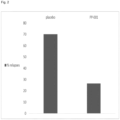
- PP-001 reduced the number of relapses by >50% Furthermore not only the number of relapses was inhibited after administration of a DHODH inhibitor but also the time to the appearance of the first relapse was delayed in the treatment group compared to the placebo group.
- Fig. 1 shows the percentage of relapses after single intravitreal treatment with placebo or PP-001.
- Example 3 Inhibition of choroidal neovascularization
- Choroidal neovascularization is a known feature of posterior uveitis and a major cause of retinal destruction and loss of vision.
- the EAU model in Lewis rats was used.
- Induction with PDSAg causes a monophasic disease with first clinical signs of inflammation observed between day 8 and 12 after immunization and reaching the peak of disease between day 14 and 18. Inflammation in the anterior chamber subsides until day 21 to 22 post immunization. Long term effects such as choroidal neovascularization are seen at the later stages of the disease after the inflammation of the anterior chamber has subsided. 18 Lewis rats were immunized with PDSAg. Starting at the beginning of the disease (day 9 post immunization) 6 animals were treated with PP-001 and 6 animals were treated with vehicle control. Starting at day 15 (peak of the disease) 6 additional animals were treated with PP-001. Post day 25 experiment was stopped and 12 eyes for each treatment group were histological analyzed for the presence of choroidal neovascularizations.
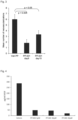
- PP-001 reduced the number of choroidal neovascularizations by a factor of 3 (p ⁇ 0.005) when treatment was started at the beginning of uveitis (day 9).
- PP-001 reduced the mean number of choroidal neovascularizations from 6 to 3 (p ⁇ 0.05).
- Rats were immunized with 25 ⁇ g of the respective peptide as previously described.
- LN inguinal and para-aortal lymph nodes
- single cell suspensions were stimulated with the respective antigen peptides at a final concentration of 10 ⁇ g/ml RPMI1640, supplemented with Penicillin/ Streptomycin, L-Glutamine, essential and non-essential amino acids (all 4 from PAA, Colebee, Germany), 12.5 ⁇ M MeOH and 1% normal rat serum.
- the cells were expanded in culture medium supplemented with 10% spleen conditioned medium (from Concanavalin A-stimulated rat spleen cells) and 5% fetal calf serum (FCS) for 4 days.
- 10% spleen conditioned medium from Concanavalin A-stimulated rat spleen cells
- FCS fetal calf serum
- T cells/ml were incubated with irradiated (8 Gy) rat thymocytes (3-10 fold more than T cells) as antigen-presenting cells (APC) and 10 ⁇ g/ml of the specific antigen peptide in culture medium as described for the first stimulation. After two days of culturing cells were expanded with conditioned medium for 5 days as described above, followed by another cycle of restimulation and expansion.
- irradiated (8 Gy) rat thymocytes (3-10 fold more than T cells) as antigen-presenting cells (APC)
- APC antigen-presenting cells
- test substance was added to the cultures during the first, second and third stimulation with antigen (primary stimulation: 2 ⁇ 10 6 LN cells, no addition of antigen presenting cells (APC) necessary; 2 nd /3 rd restimulation: 0.5 ⁇ 10 6 T cells and 2.5 ⁇ 10 6 irradiated thymocytes per ml; 20 ⁇ g of the respective antigen peptide/ml).
- primary stimulation 2 ⁇ 10 6 LN cells, no addition of antigen presenting cells (APC) necessary
- API antigen presenting cells
- nd /3 rd restimulation 0.5 ⁇ 10 6 T cells and 2.5 ⁇ 10 6 irradiated thymocytes per ml; 20 ⁇ g of the respective antigen peptide/ml.
- PP-001 dissolved in DMSO was added to final concentrations of 3 ⁇ M, 10 ⁇ M and 30 ⁇ M to triplicate microwell cultures of 100 ⁇ l (final volume). After 24 h supernatants were collected
- Example 5 In vivo efficacy of PP-001 eye drops in an experimental adenoviral ocular infection in New Zealand White rabbits
- the rabbits were divided into 5 treatment groups outlined in the chart below.
- the five treatment groups consisted of a vehicle control, 0.16% PP-001 8 times, 6 times, and 4 times daily for 10 days, and the positive antiviral control 0.5% cidofovir (CDV).
- Table 1 Group Drug Treatment Regimen n Rabbits n Eyes Rabbit Numbers PP-001-3 0.16% PP-001 8 times daily for 10 days 5 10 1-5 PP-001-2 0.16% PP-001 6 times daily for 10 days 5 10 6-10 PP-001-1 0.16% PP-001 4 times daily for 10 days 5 10 11-15
- Ad5 titers were determined on A549 cell monolayers using standard plaque assays. The ocular cultures to be titered were thawed, diluted (1:10) and inoculated onto A549 monolayers. The virus was adsorbed for 3 h. Following adsorption, 1 ml of media plus 0.5% methylcellulose was added to each well, and the plates were incubated at 37°C in a 5% CO 2 -water vapor atmosphere.
- Vehicle control eye drops A solution containing 20 mg/ml polyvinyl-pyrrolidone, 10 mg/ml glycerol 85%, 2 mg/ml hydroxypropyl methylcellulose in sodium phosphate buffer adjusted to pH 7.
- PP-001 eye drops A solution containing 1.6 mg/ml PP-001, 20 mg/ml polyvinylpyrrolidone, 10 mg/ml glycerol 85%, 2 mg/ml hydroxypropyl methylcellulose in sodium phosphate buffer adjusted to pH 7.
- Positive control cidofovir eye drops 450 ⁇ l (33.75 mg) of the 75 mg/ml Cidofovir Injection (Mylan Institutional LLC, Rockford, IL Lot #130628, Exp. 05/2015) was added to 6.3 ml of 0.9% sodium chloride for injection USP (Baxter Healthcare Corp. Deerfield, IL) to yield the 6.75 ml of 0.5% cidofovir.
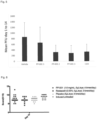
- the antiviral efficacy of 0.16% PP-001 instilled 8 times and 6 times per day for 10 days was similar to the positive antiviral control, 0.5% cidofovir, instilled twice daily for 7 days (see Fig. 5 ).
- Example 6 Evaluation of topical administrations of PP-001 in a controlled-environment chamber murine model of dry eye
- the aim of the study was to evaluate the tolerability and therapeutic potential of PP-001 in a murine model of dry eye syndrome.
- Dry eye symptoms were induced in forty (40) pigmented C57BL/6N mice by exposing them to a controlled environment (relative humidity ⁇ 25%, air-flow 15L/min, temperature 20-22°C) and systemic scopolamine administration (0.5 mg/72h) for 10 days.
- mice were randomized into 4 groups of 10 animals and treated with PP-001, Restasis ® , placebo and the forth group remained untreated.
- Placebo eye drops A solution containing 20 mg/ml polyvinylpyrrolidone, 10 mg/ml glycerol 85%, 2 mg/ml hydroxypropyl methylcellulose in sodium phosphate buffer adjusted to pH 7.
- PP-001 eye drops A solution containing 1.6 mg/ml PP-001, 20 mg/ml polyvinylpyrrolidone, 10 mg/ml glycerol 85%, 2 mg/ml hydroxypropyl methylcellulose in sodium phosphate buffer adjusted to pH 7.
- corneal staining scores and tear productions were significantly altered on days 3, 7 and 10, in comparison to baseline values i.e. increasing of the corneal staining and reduction of tear production, except for Placebo group on day 7 on tear production.
- PP-001 and Restasis ® 0.05% reduced corneal staining on Day 10 when compared to placebo treatment.
- Example 7 Pharmacokinetic and tolerability of intravitreal injections of PP-001 solutions in Dutch Belted rabbits
- Dose Volume Dose Vehicle Termination Time Points 1 IVT PP-001 0.0625 mg/eye 2.5 mg/mL 25 ⁇ L per eye Sucrose solution (270 mOsm, pH 7-8) 1,2,4,8,12,24,48,and 96 h post administration 2 IVT PP-001 0.125 mg/eye 5 mg/mL 25 ⁇ L per eye Sucrose solution (270 mOsm, pH 7-8) 1,2,4,8,12,24,48,and 96 h post administration
- the study director performed the IVT injection in both eyes (OU).
- Topical ocular anesthetics were used per ASI SOPs.
- the eyes and surrounding tissues were cleaned and disinfected with 2% betadine ophthalmic solution and then rinsed with basic salt solution (BSS).
- BSS basic salt solution
- injections were made 5 to 7 mm from the limbus (where the cornea meets the sclera).
- the PP-001 or vehicle control was injected at a volume of 25 ⁇ L per eye. The needle was then removed and the eye rinsed with BSS.
- the PP-001 was successfully administered via intravitreal injection in both eyes of 36 male Dutch Belted rabbits. No general health observations were noted for the duration of the study.
- Vitreous humor and choroid/sclera/retina were collected from both eyes of each animal at the designated time point and analyzed for PP-001 concentration using a specific HPLC/MS/MS analytical method.
Landscapes
- Health & Medical Sciences (AREA)
- Chemical & Material Sciences (AREA)
- General Health & Medical Sciences (AREA)
- Medicinal Chemistry (AREA)
- Veterinary Medicine (AREA)
- Public Health (AREA)
- Animal Behavior & Ethology (AREA)
- Life Sciences & Earth Sciences (AREA)
- Pharmacology & Pharmacy (AREA)
- Epidemiology (AREA)
- Inorganic Chemistry (AREA)
- Engineering & Computer Science (AREA)
- Chemical Kinetics & Catalysis (AREA)
- General Chemical & Material Sciences (AREA)
- Ophthalmology & Optometry (AREA)
- Oil, Petroleum & Natural Gas (AREA)
- Bioinformatics & Cheminformatics (AREA)
- Immunology (AREA)
- Organic Chemistry (AREA)
- Nuclear Medicine, Radiotherapy & Molecular Imaging (AREA)
- Transplantation (AREA)
- Pharmaceuticals Containing Other Organic And Inorganic Compounds (AREA)
- Medicinal Preparation (AREA)
- Medicines That Contain Protein Lipid Enzymes And Other Medicines (AREA)
- Acyclic And Carbocyclic Compounds In Medicinal Compositions (AREA)
Applications Claiming Priority (3)
| Application Number | Priority Date | Filing Date | Title |
|---|---|---|---|
| EP14167490 | 2014-05-08 | ||
| EP14170616 | 2014-05-30 | ||
| PCT/EP2015/060166 WO2015169944A1 (en) | 2014-05-08 | 2015-05-08 | Compounds for treating ophthalmic diseases and disorders |
Publications (3)
| Publication Number | Publication Date |
|---|---|
| EP3139914A1 EP3139914A1 (en) | 2017-03-15 |
| EP3139914B1 true EP3139914B1 (en) | 2023-07-26 |
| EP3139914C0 EP3139914C0 (en) | 2023-07-26 |
Family
ID=53051826
Family Applications (1)
| Application Number | Title | Priority Date | Filing Date |
|---|---|---|---|
| EP15720340.7A Active EP3139914B1 (en) | 2014-05-08 | 2015-05-08 | Compounds for treating ophthalmic diseases and disorders |
Country Status (18)
| Country | Link |
|---|---|
| US (3) | US11730716B2 (enExample) |
| EP (1) | EP3139914B1 (enExample) |
| JP (1) | JP6629840B2 (enExample) |
| KR (1) | KR102312186B1 (enExample) |
| CN (2) | CN106572968A (enExample) |
| AU (1) | AU2015257651B2 (enExample) |
| BR (1) | BR112016025997A8 (enExample) |
| CA (1) | CA2947067C (enExample) |
| CL (1) | CL2016002812A1 (enExample) |
| ES (1) | ES2960598T3 (enExample) |
| HK (1) | HK1231417A1 (enExample) |
| IL (1) | IL248732B (enExample) |
| MX (1) | MX378707B (enExample) |
| NZ (1) | NZ725574A (enExample) |
| PL (1) | PL3139914T3 (enExample) |
| SG (1) | SG11201608835VA (enExample) |
| WO (1) | WO2015169944A1 (enExample) |
| ZA (1) | ZA201607260B (enExample) |
Families Citing this family (44)
| Publication number | Priority date | Publication date | Assignee | Title |
|---|---|---|---|---|
| GB201112091D0 (en) | 2011-07-14 | 2011-08-31 | Gt Biolog Ltd | Bacterial strains isolated from pigs |
| GB201117313D0 (en) | 2011-10-07 | 2011-11-16 | Gt Biolog Ltd | Bacterium for use in medicine |
| GB201306536D0 (en) | 2013-04-10 | 2013-05-22 | Gt Biolog Ltd | Polypeptide and immune modulation |
| JP6629840B2 (ja) * | 2014-05-08 | 2020-01-15 | パノプテス・ファーマ・ゲーエムベーハー | 眼の疾患および障害を処置するための化合物 |
| PE20171138A1 (es) | 2014-12-23 | 2017-08-09 | 4D Pharma Res Ltd | Modulacion inmunitaria |
| DK3193901T3 (en) | 2014-12-23 | 2018-05-28 | 4D Pharma Res Ltd | PIRIN POLYPEPTIDE AND IMMUNMODULATION |
| PE20180243A1 (es) | 2015-06-15 | 2018-01-31 | 4D Pharma Res Ltd | Composiciones que comprenden cepas bacterianas |
| MA41060B1 (fr) | 2015-06-15 | 2019-11-29 | 4D Pharma Res Ltd | Compositions comprenant des souches bactériennes |
| MA41010B1 (fr) | 2015-06-15 | 2020-01-31 | 4D Pharma Res Ltd | Compositions comprenant des souches bactériennes |
| LT3360559T (lt) | 2015-06-15 | 2019-12-27 | 4D Pharma Research Limited | Kompozicijos, apimančios bakterijų kamienus |
| EP3662917A1 (en) | 2015-06-15 | 2020-06-10 | 4D Pharma Research Limited | Compositions comprising bacterial strains |
| GB201520497D0 (en) | 2015-11-20 | 2016-01-06 | 4D Pharma Res Ltd | Compositions comprising bacterial strains |
| MA41013A (fr) | 2015-11-20 | 2017-08-30 | 4D Pharma Res Ltd | Compositions comprenant des souches bactériennes |
| GB201520638D0 (en) | 2015-11-23 | 2016-01-06 | 4D Pharma Res Ltd | Compositions comprising bacterial strains |
| GB201520631D0 (en) | 2015-11-23 | 2016-01-06 | 4D Pharma Res Ltd | Compositions comprising bacterial strains |
| MX2018008169A (es) * | 2015-12-30 | 2019-02-20 | Agios Pharmaceuticals Inc | Tratamiento de tumores que incorpora isocitrato deshidrogenasa mutante. |
| GB201612191D0 (en) | 2016-07-13 | 2016-08-24 | 4D Pharma Plc | Compositions comprising bacterial strains |
| MX373290B (es) | 2016-03-04 | 2020-06-18 | 4D Pharma Plc | Composiciones que comprenden cepas bacterianas. |
| TWI802545B (zh) | 2016-07-13 | 2023-05-21 | 英商4D製藥有限公司 | 包含細菌菌株之組合物 |
| GB201621123D0 (en) | 2016-12-12 | 2017-01-25 | 4D Pharma Plc | Compositions comprising bacterial strains |
| US20180369206A1 (en) | 2017-04-24 | 2018-12-27 | Aurigene Discovery Technologies Limited | Methods of Use for Trisubstituted Benzotriazole Derivatives as Dihydroorotate Oxygenase Inhibitors |
| CA3060390A1 (en) | 2017-04-24 | 2018-11-01 | Aurigene Discovery Technologies Limited | Methods of use for trisubstituted benzotriazole derivatives as dihydroorotate oxygenase inhibitors |
| MA48940A (fr) | 2017-05-22 | 2020-04-08 | 4D Pharma Res Ltd | Compositions comprenant des souches bactériennes |
| MA41708A (fr) | 2017-05-24 | 2020-04-08 | 4D Pharma Res Ltd | Compositions comprenant des souches bactériennes |
| TWI767013B (zh) | 2017-06-14 | 2022-06-11 | 英商4D製藥研究有限公司 | 包含細菌品系之組成物 |
| PL3638271T3 (pl) | 2017-06-14 | 2021-03-22 | 4D Pharma Research Limited | Kompozycje zawierające szczepy bakteryjne |
| JP2020523326A (ja) | 2017-06-14 | 2020-08-06 | フォーディー ファーマ リサーチ リミテッド4D Pharma Research Limited | 細菌株を含む組成物 |
| WO2018230713A1 (ja) * | 2017-06-16 | 2018-12-20 | 学校法人同志社 | カスパーゼ阻害活性を有する化合物、これらの化合物を含む、角膜内皮の症状、障害または疾患を治療または予防するための医薬およびその応用 |
| EP3639854B1 (en) | 2017-06-16 | 2026-01-07 | The Doshisha | Mtor-inhibitor-containing medicine for treating or preventing fuchs' endothelial corneal dystrophy |
| CA3091792A1 (en) | 2018-02-20 | 2019-08-29 | Agios Pharmaceuticals, Inc. | Methods of use for trisubstituted benzotriazole derivatives |
| AU2019232153B2 (en) | 2018-03-09 | 2023-07-13 | Panoptes Pharma Ges.M.B.H. | Ophthalmic formulation |
| MD3765439T2 (ro) * | 2018-03-16 | 2024-08-31 | Immunic Ag | Polimorfi noi ai sării de calciu ca agenti anti-inflamatori, imunomodulatori și anti-proliferatori |
| EP3773579A4 (en) | 2018-03-26 | 2022-03-09 | Clear Creek Bio, Inc. | COMPOSITIONS AND METHODS FOR INHIBITING DIHYDROOROTATE DEHYDROGENASE |
| US12076315B2 (en) | 2020-03-20 | 2024-09-03 | Clear Creek Bio, Inc. | Stable polymorphic compositions of brequinar sodium and methods of use and manufacture thereof |
| JP7723987B2 (ja) * | 2020-04-21 | 2025-08-15 | ユニバーシティ オブ マサチューセッツ | 加齢性黄斑変性を処置するための方法および組成物 |
| CN111638341A (zh) * | 2020-07-01 | 2020-09-08 | 山东凯歌智能机器有限公司 | 一种检测小细胞肺癌患者外周血循环肿瘤细胞pd-l1基因突变的试剂盒及检测方法 |
| US20230390276A1 (en) * | 2020-10-15 | 2023-12-07 | Aslan Pharmaceuticals Pte. Ltd. | Treatment of autoimmune diseases with a dihydroorotate hehydrogenase (dhodh) inhibitor |
| KR20240007144A (ko) | 2021-04-09 | 2024-01-16 | 이뮤닉 아게 | 중수소화 dhodh 억제제 |
| UY40087A (es) * | 2021-12-23 | 2023-06-30 | Immunic Ag | Inhibidores de DHODH que contienen un bioisóstero de ácido carboxílico. |
| WO2023168176A1 (en) * | 2022-03-01 | 2023-09-07 | Kiora Pharmaceuticals Gmbh | Salts of a dihydroorotate dehydrogenase (dhod) inhibitor |
| EP4489745A4 (en) * | 2022-03-09 | 2025-10-15 | Kiora Pharmaceuticals Gmbh | POLYMORPHS OF A DIHYDROOROTATE DEHYDROGENASE (DHOD) INHIBITOR |
| WO2024138064A1 (en) * | 2022-12-22 | 2024-06-27 | Cavalry Biosciences, Inc. | Compositions and methods for treating meibomain gland dysfunction |
| UY40805A (es) | 2023-06-28 | 2025-01-15 | Immunic Ag | Inhibidores de dhodh heteroaromáticos |
| WO2026074007A1 (en) | 2024-10-02 | 2026-04-09 | Immunic Ag | Nurr1 agonists with replacement of the carboxylic acid or carboxamide moiety for use in the treatment of neurodegenerative diseases |
Family Cites Families (28)
| Publication number | Priority date | Publication date | Assignee | Title |
|---|---|---|---|---|
| JPS61103836A (ja) | 1984-10-24 | 1986-05-22 | Green Cross Corp:The | フイブロネクチン製剤 |
| DD297328A5 (de) | 1989-08-18 | 1992-01-09 | �������@���������k���Kk�� | 5-methyl-isoxalol-4-carbonsaeureanilide und 2 hydroxyethyliden-cyanoessigsaeureanilide zur behandlung von augenerkrankungen |
| DE69730476T2 (de) | 1996-04-19 | 2005-11-17 | Tsubota, Kazuo, Funabashi | Albumin als aktiver Bestandteil zur Behandlung von Bindehaut- und Hornhautverletzungen und von trockenen Augen |
| HUP9701554D0 (en) | 1997-09-18 | 1997-11-28 | Human Oltoanyagtermeloe Gyogys | Pharmaceutical composition containing plazma proteins |
| MXPA04000224A (es) | 2001-07-10 | 2005-07-25 | 4Sc Ag | Novedosos compuestos como agentes antiinflamatorios, inmunomoduladores y antiproliferativos. |
| AU2003301347A1 (en) * | 2002-10-17 | 2004-05-04 | Control Delivery Systems, Inc. | Methods for monitoring treatment of disease |
| WO2004056746A1 (en) | 2002-12-23 | 2004-07-08 | 4Sc Ag | Cycloalkene dicarboxylic acid compounds as anti-inflammatory, immunomodulatory and anti-proliferatory agents |
| WO2004056747A1 (en) * | 2002-12-23 | 2004-07-08 | 4Sc Ag | Dhodh-inhibitors and method for their identification |
| US7365094B2 (en) | 2002-12-23 | 2008-04-29 | 4Sc Ag | Compounds as anti-inflammatory, immunomodulatory and anti-proliferatory agents |
| PT1578741E (pt) | 2002-12-23 | 2011-10-17 | 4Sc Ag | Compostos aromáticos como agentes antiinflamatórios, imunoreguladores e antiproliferativos |
| JP4051398B2 (ja) | 2004-03-11 | 2008-02-20 | アクテリオン ファマシューティカルズ リミテッド | テトラヒドロピリドインドール誘導体 |
| WO2006022442A1 (ja) | 2004-08-24 | 2006-03-02 | Santen Pharmaceutical Co., Ltd. | ジヒドロオロテートデヒドロゲナーゼ阻害活性を有する新規複素環アミド誘導体 |
| JP2006089485A (ja) | 2004-08-24 | 2006-04-06 | Santen Pharmaceut Co Ltd | ジヒドロオロテートデヒドロゲナーゼ阻害活性を有する新規複素環アミド誘導体 |
| US20070082841A1 (en) * | 2005-09-27 | 2007-04-12 | Aciont, Inc. | Ocular administration of immunosuppressive agents |
| ES2319596B1 (es) * | 2006-12-22 | 2010-02-08 | Laboratorios Almirall S.A. | Nuevos derivados de los acidos amino-nicotinico y amino-isonicotinico. |
| UY31272A1 (es) | 2007-08-10 | 2009-01-30 | Almirall Lab | Nuevos derivados de ácido azabifenilaminobenzoico |
| JP2009270356A (ja) | 2008-05-08 | 2009-11-19 | Yoshinobu Hayashi | アスベスト含有被覆層剥ぎ取り物の処理方法 |
| TWI530286B (zh) | 2009-05-04 | 2016-04-21 | 帕納特斯製藥格斯有限公司 | 作為抑制病毒化合物之抗發炎劑 |
| US20110021465A1 (en) * | 2009-07-23 | 2011-01-27 | U.S. Nutraceuticals, Llc D/B/A Valensa International | Synergistic composition and method of retarding and ameliorating photo induced retinal damage and cataracts while ameliorating dry eye syndrome |
| US8686048B2 (en) | 2010-05-06 | 2014-04-01 | Rhizen Pharmaceuticals Sa | Immunomodulator and anti-inflammatory compounds |
| LT2717914T (lt) * | 2011-06-10 | 2020-03-25 | Ramscor, Inc. | Sulėtinto atpalaidavimo kompozicijos, skirtos baltymų pateikimui į akį, ir jų paruošimo būdai |
| RU2016144238A (ru) | 2014-04-11 | 2018-05-11 | Паноптес Фарма Гмбх | Противовоспалительные средства в качестве вирусостатических соединений |
| JP6629840B2 (ja) * | 2014-05-08 | 2020-01-15 | パノプテス・ファーマ・ゲーエムベーハー | 眼の疾患および障害を処置するための化合物 |
| MX2018008169A (es) | 2015-12-30 | 2019-02-20 | Agios Pharmaceuticals Inc | Tratamiento de tumores que incorpora isocitrato deshidrogenasa mutante. |
| AU2019232153B2 (en) | 2018-03-09 | 2023-07-13 | Panoptes Pharma Ges.M.B.H. | Ophthalmic formulation |
| KR20240007144A (ko) | 2021-04-09 | 2024-01-16 | 이뮤닉 아게 | 중수소화 dhodh 억제제 |
| WO2023168176A1 (en) | 2022-03-01 | 2023-09-07 | Kiora Pharmaceuticals Gmbh | Salts of a dihydroorotate dehydrogenase (dhod) inhibitor |
| EP4489745A4 (en) | 2022-03-09 | 2025-10-15 | Kiora Pharmaceuticals Gmbh | POLYMORPHS OF A DIHYDROOROTATE DEHYDROGENASE (DHOD) INHIBITOR |
-
2015
- 2015-05-08 JP JP2017510766A patent/JP6629840B2/ja not_active Expired - Fee Related
- 2015-05-08 NZ NZ725574A patent/NZ725574A/en unknown
- 2015-05-08 SG SG11201608835VA patent/SG11201608835VA/en unknown
- 2015-05-08 WO PCT/EP2015/060166 patent/WO2015169944A1/en not_active Ceased
- 2015-05-08 MX MX2016014634A patent/MX378707B/es unknown
- 2015-05-08 ES ES15720340T patent/ES2960598T3/es active Active
- 2015-05-08 HK HK17105296.1A patent/HK1231417A1/zh unknown
- 2015-05-08 CN CN201580036856.7A patent/CN106572968A/zh active Pending
- 2015-05-08 AU AU2015257651A patent/AU2015257651B2/en active Active
- 2015-05-08 US US15/309,176 patent/US11730716B2/en active Active
- 2015-05-08 BR BR112016025997A patent/BR112016025997A8/pt not_active Application Discontinuation
- 2015-05-08 CN CN202310101659.5A patent/CN116077665A/zh active Pending
- 2015-05-08 CA CA2947067A patent/CA2947067C/en active Active
- 2015-05-08 EP EP15720340.7A patent/EP3139914B1/en active Active
- 2015-05-08 KR KR1020167033322A patent/KR102312186B1/ko active Active
- 2015-05-08 PL PL15720340.7T patent/PL3139914T3/pl unknown
-
2016
- 2016-10-20 ZA ZA2016/07260A patent/ZA201607260B/en unknown
- 2016-11-03 IL IL248732A patent/IL248732B/en active IP Right Grant
- 2016-11-07 CL CL2016002812A patent/CL2016002812A1/es unknown
-
2023
- 2023-03-23 US US18/189,010 patent/US12364680B2/en active Active
-
2025
- 2025-06-24 US US19/248,216 patent/US20250381167A1/en active Pending
Also Published As
| Publication number | Publication date |
|---|---|
| BR112016025997A2 (pt) | 2017-08-15 |
| US12364680B2 (en) | 2025-07-22 |
| KR20160147023A (ko) | 2016-12-21 |
| CN106572968A (zh) | 2017-04-19 |
| MX378707B (es) | 2025-03-10 |
| US20170071904A1 (en) | 2017-03-16 |
| PL3139914T3 (pl) | 2023-11-27 |
| WO2015169944A1 (en) | 2015-11-12 |
| SG11201608835VA (en) | 2016-11-29 |
| IL248732A0 (en) | 2017-01-31 |
| CA2947067C (en) | 2023-02-14 |
| BR112016025997A8 (pt) | 2021-07-06 |
| EP3139914C0 (en) | 2023-07-26 |
| AU2015257651A1 (en) | 2016-11-10 |
| MX2016014634A (es) | 2017-04-10 |
| NZ725574A (en) | 2022-08-26 |
| JP6629840B2 (ja) | 2020-01-15 |
| US20250381167A1 (en) | 2025-12-18 |
| IL248732B (en) | 2019-07-31 |
| CA2947067A1 (en) | 2015-11-12 |
| ZA201607260B (en) | 2018-05-30 |
| US11730716B2 (en) | 2023-08-22 |
| CN116077665A (zh) | 2023-05-09 |
| EP3139914A1 (en) | 2017-03-15 |
| CL2016002812A1 (es) | 2017-03-17 |
| ES2960598T3 (es) | 2024-03-05 |
| HK1231417A1 (zh) | 2017-12-22 |
| KR102312186B1 (ko) | 2021-10-14 |
| AU2015257651B2 (en) | 2020-01-23 |
| JP2017514917A (ja) | 2017-06-08 |
| US20230285355A1 (en) | 2023-09-14 |
Similar Documents
| Publication | Publication Date | Title |
|---|---|---|
| US12364680B2 (en) | Compounds for treating ophthalmic diseases and disorders | |
| Schopf et al. | Topical ocular drug delivery to the back of the eye by mucus-penetrating particles | |
| CN103037857B (zh) | 用于治疗/预防眼部炎性疾病的化合物 | |
| CN119656170A (zh) | 使用尼达尼布来治疗具有异常新生血管形成的眼病的组合物和方法 | |
| Fang et al. | Immune modulating nanoparticles for the treatment of ocular diseases | |
| JP2010536797A5 (enExample) | ||
| Reijerkerk et al. | Systemic treatment with glutathione PEGylated liposomal methylprednisolone (2B3-201) improves therapeutic efficacy in a model of ocular inflammation | |
| WO2023039168A1 (en) | Use of verteporfin to modulate wound healing after an ocular surgical procedure or ocular injury | |
| US20240226180A1 (en) | Methods and compositions for treating dry eye, tear hyperosmolarity, and other ocular conditions | |
| WO2020009248A1 (ja) | 眼組織の線維化抑制用組成物 | |
| TW202227042A (zh) | 雙重鎮痛/消炎組合物、組合及其使用方法 | |
| CA3088185C (en) | Suspension compositions of multi-target inhibitors | |
| Zhang et al. | Human umbilical cord-derived mesenchymal stem/stromal cells via suprachoroidal injection: A novel approach for experimental uveitis treatment | |
| HK40092417A (en) | Compounds for treating ophthalmic diseases and disorders | |
| Fan et al. | Topical Gel/Microsphere Eyedrop for Combined Delivery of Brimonidine and Timolol: A Comparative Study With Traditional Eye Drops in Rabbits | |
| RU2836815C1 (ru) | Офтальмологические композиции для местного применения на ксантановой основе с сокращенным режимом дозирования | |
| WO2026064609A1 (en) | Methods for treating patients with ocular comorbidities of an autoimmune disorder | |
| CN114028421A (zh) | 一种使用泊洛沙姆用于治疗眼部疾病的方法 | |
| FR2963238A1 (fr) | Derives de 15-desoxyspergualine pour le traitement et/ou la prevention des maladies inflammatoires oculaires | |
| WO2014115011A1 (en) | Compositions for use in treating eye disorders using opioid receptor antagonists |
Legal Events
| Date | Code | Title | Description |
|---|---|---|---|
| STAA | Information on the status of an ep patent application or granted ep patent |
Free format text: STATUS: THE INTERNATIONAL PUBLICATION HAS BEEN MADE |
|
| PUAI | Public reference made under article 153(3) epc to a published international application that has entered the european phase |
Free format text: ORIGINAL CODE: 0009012 |
|
| STAA | Information on the status of an ep patent application or granted ep patent |
Free format text: STATUS: REQUEST FOR EXAMINATION WAS MADE |
|
| 17P | Request for examination filed |
Effective date: 20161201 |
|
| AK | Designated contracting states |
Kind code of ref document: A1 Designated state(s): AL AT BE BG CH CY CZ DE DK EE ES FI FR GB GR HR HU IE IS IT LI LT LU LV MC MK MT NL NO PL PT RO RS SE SI SK SM TR |
|
| AX | Request for extension of the european patent |
Extension state: BA ME |
|
| DAV | Request for validation of the european patent (deleted) | ||
| STAA | Information on the status of an ep patent application or granted ep patent |
Free format text: STATUS: EXAMINATION IS IN PROGRESS |
|
| 17Q | First examination report despatched |
Effective date: 20180910 |
|
| GRAP | Despatch of communication of intention to grant a patent |
Free format text: ORIGINAL CODE: EPIDOSNIGR1 |
|
| STAA | Information on the status of an ep patent application or granted ep patent |
Free format text: STATUS: GRANT OF PATENT IS INTENDED |
|
| INTG | Intention to grant announced |
Effective date: 20220809 |
|
| RAP3 | Party data changed (applicant data changed or rights of an application transferred) |
Owner name: PANOPTES PHARMA GES.M.B.H. |
|
| GRAJ | Information related to disapproval of communication of intention to grant by the applicant or resumption of examination proceedings by the epo deleted |
Free format text: ORIGINAL CODE: EPIDOSDIGR1 |
|
| STAA | Information on the status of an ep patent application or granted ep patent |
Free format text: STATUS: EXAMINATION IS IN PROGRESS |
|
| INTC | Intention to grant announced (deleted) | ||
| GRAP | Despatch of communication of intention to grant a patent |
Free format text: ORIGINAL CODE: EPIDOSNIGR1 |
|
| STAA | Information on the status of an ep patent application or granted ep patent |
Free format text: STATUS: GRANT OF PATENT IS INTENDED |
|
| INTG | Intention to grant announced |
Effective date: 20230220 |
|
| RAP1 | Party data changed (applicant data changed or rights of an application transferred) |
Owner name: KIORA PHARMACEUTICALS GMBH |
|
| GRAS | Grant fee paid |
Free format text: ORIGINAL CODE: EPIDOSNIGR3 |
|
| GRAA | (expected) grant |
Free format text: ORIGINAL CODE: 0009210 |
|
| STAA | Information on the status of an ep patent application or granted ep patent |
Free format text: STATUS: THE PATENT HAS BEEN GRANTED |
|
| AK | Designated contracting states |
Kind code of ref document: B1 Designated state(s): AL AT BE BG CH CY CZ DE DK EE ES FI FR GB GR HR HU IE IS IT LI LT LU LV MC MK MT NL NO PL PT RO RS SE SI SK SM TR |
|
| REG | Reference to a national code |
Ref country code: CH Ref legal event code: EP |
|
| REG | Reference to a national code |
Ref country code: DE Ref legal event code: R096 Ref document number: 602015084754 Country of ref document: DE |
|
| REG | Reference to a national code |
Ref country code: IE Ref legal event code: FG4D |
|
| U01 | Request for unitary effect filed |
Effective date: 20230825 |
|
| U07 | Unitary effect registered |
Designated state(s): AT BE BG DE DK EE FI FR IT LT LU LV MT NL PT SE SI Effective date: 20230901 |
|
| REG | Reference to a national code |
Ref country code: LT Ref legal event code: MG9D |
|
| PG25 | Lapsed in a contracting state [announced via postgrant information from national office to epo] |
Ref country code: GR Free format text: LAPSE BECAUSE OF FAILURE TO SUBMIT A TRANSLATION OF THE DESCRIPTION OR TO PAY THE FEE WITHIN THE PRESCRIBED TIME-LIMIT Effective date: 20231027 |
|
| PG25 | Lapsed in a contracting state [announced via postgrant information from national office to epo] |
Ref country code: IS Free format text: LAPSE BECAUSE OF FAILURE TO SUBMIT A TRANSLATION OF THE DESCRIPTION OR TO PAY THE FEE WITHIN THE PRESCRIBED TIME-LIMIT Effective date: 20231126 |
|
| PG25 | Lapsed in a contracting state [announced via postgrant information from national office to epo] |
Ref country code: RS Free format text: LAPSE BECAUSE OF FAILURE TO SUBMIT A TRANSLATION OF THE DESCRIPTION OR TO PAY THE FEE WITHIN THE PRESCRIBED TIME-LIMIT Effective date: 20230726 Ref country code: NO Free format text: LAPSE BECAUSE OF FAILURE TO SUBMIT A TRANSLATION OF THE DESCRIPTION OR TO PAY THE FEE WITHIN THE PRESCRIBED TIME-LIMIT Effective date: 20231026 Ref country code: IS Free format text: LAPSE BECAUSE OF FAILURE TO SUBMIT A TRANSLATION OF THE DESCRIPTION OR TO PAY THE FEE WITHIN THE PRESCRIBED TIME-LIMIT Effective date: 20231126 Ref country code: HR Free format text: LAPSE BECAUSE OF FAILURE TO SUBMIT A TRANSLATION OF THE DESCRIPTION OR TO PAY THE FEE WITHIN THE PRESCRIBED TIME-LIMIT Effective date: 20230726 Ref country code: GR Free format text: LAPSE BECAUSE OF FAILURE TO SUBMIT A TRANSLATION OF THE DESCRIPTION OR TO PAY THE FEE WITHIN THE PRESCRIBED TIME-LIMIT Effective date: 20231027 |
|
| REG | Reference to a national code |
Ref country code: ES Ref legal event code: FG2A Ref document number: 2960598 Country of ref document: ES Kind code of ref document: T3 Effective date: 20240305 |
|
| RAP4 | Party data changed (patent owner data changed or rights of a patent transferred) |
Owner name: KIORA PHARMACEUTICALS GMBH |
|
| U1H | Name or address of the proprietor changed after the registration of the unitary effect |
Owner name: KIORA PHARMACEUTICALS GMBH; AT |
|
| REG | Reference to a national code |
Ref country code: DE Ref legal event code: R097 Ref document number: 602015084754 Country of ref document: DE |
|
| PG25 | Lapsed in a contracting state [announced via postgrant information from national office to epo] |
Ref country code: SM Free format text: LAPSE BECAUSE OF FAILURE TO SUBMIT A TRANSLATION OF THE DESCRIPTION OR TO PAY THE FEE WITHIN THE PRESCRIBED TIME-LIMIT Effective date: 20230726 Ref country code: RO Free format text: LAPSE BECAUSE OF FAILURE TO SUBMIT A TRANSLATION OF THE DESCRIPTION OR TO PAY THE FEE WITHIN THE PRESCRIBED TIME-LIMIT Effective date: 20230726 Ref country code: CZ Free format text: LAPSE BECAUSE OF FAILURE TO SUBMIT A TRANSLATION OF THE DESCRIPTION OR TO PAY THE FEE WITHIN THE PRESCRIBED TIME-LIMIT Effective date: 20230726 Ref country code: SK Free format text: LAPSE BECAUSE OF FAILURE TO SUBMIT A TRANSLATION OF THE DESCRIPTION OR TO PAY THE FEE WITHIN THE PRESCRIBED TIME-LIMIT Effective date: 20230726 |
|
| PLBE | No opposition filed within time limit |
Free format text: ORIGINAL CODE: 0009261 |
|
| STAA | Information on the status of an ep patent application or granted ep patent |
Free format text: STATUS: NO OPPOSITION FILED WITHIN TIME LIMIT |
|
| 26N | No opposition filed |
Effective date: 20240429 |
|
| U20 | Renewal fee for the european patent with unitary effect paid |
Year of fee payment: 10 Effective date: 20240527 |
|
| PG25 | Lapsed in a contracting state [announced via postgrant information from national office to epo] |
Ref country code: MC Free format text: LAPSE BECAUSE OF FAILURE TO SUBMIT A TRANSLATION OF THE DESCRIPTION OR TO PAY THE FEE WITHIN THE PRESCRIBED TIME-LIMIT Effective date: 20230726 |
|
| PG25 | Lapsed in a contracting state [announced via postgrant information from national office to epo] |
Ref country code: MC Free format text: LAPSE BECAUSE OF FAILURE TO SUBMIT A TRANSLATION OF THE DESCRIPTION OR TO PAY THE FEE WITHIN THE PRESCRIBED TIME-LIMIT Effective date: 20230726 |
|
| PG25 | Lapsed in a contracting state [announced via postgrant information from national office to epo] |
Ref country code: IE Free format text: LAPSE BECAUSE OF NON-PAYMENT OF DUE FEES Effective date: 20240508 |
|
| U20 | Renewal fee for the european patent with unitary effect paid |
Year of fee payment: 11 Effective date: 20250528 |
|
| PGFP | Annual fee paid to national office [announced via postgrant information from national office to epo] |
Ref country code: ES Payment date: 20250627 Year of fee payment: 11 |
|
| PG25 | Lapsed in a contracting state [announced via postgrant information from national office to epo] |
Ref country code: CY Free format text: LAPSE BECAUSE OF FAILURE TO SUBMIT A TRANSLATION OF THE DESCRIPTION OR TO PAY THE FEE WITHIN THE PRESCRIBED TIME-LIMIT; INVALID AB INITIO Effective date: 20150508 |
|
| PG25 | Lapsed in a contracting state [announced via postgrant information from national office to epo] |
Ref country code: HU Free format text: LAPSE BECAUSE OF FAILURE TO SUBMIT A TRANSLATION OF THE DESCRIPTION OR TO PAY THE FEE WITHIN THE PRESCRIBED TIME-LIMIT; INVALID AB INITIO Effective date: 20150508 |
|
| PG25 | Lapsed in a contracting state [announced via postgrant information from national office to epo] |
Ref country code: TR Free format text: LAPSE BECAUSE OF FAILURE TO SUBMIT A TRANSLATION OF THE DESCRIPTION OR TO PAY THE FEE WITHIN THE PRESCRIBED TIME-LIMIT Effective date: 20230726 |
|
| REG | Reference to a national code |
Ref country code: CH Ref legal event code: U11 Free format text: ST27 STATUS EVENT CODE: U-0-0-U10-U11 (AS PROVIDED BY THE NATIONAL OFFICE) Effective date: 20260601 |
|
| U20 | Renewal fee for the european patent with unitary effect paid |
Year of fee payment: 12 Effective date: 20260527 |
|
| PGFP | Annual fee paid to national office [announced via postgrant information from national office to epo] |
Ref country code: GB Payment date: 20260522 Year of fee payment: 12 Ref country code: PL Payment date: 20260420 Year of fee payment: 12 |
|
| PGFP | Annual fee paid to national office [announced via postgrant information from national office to epo] |
Ref country code: CH Payment date: 20260601 Year of fee payment: 12 |