EP3137553B1 - Aufwertung von lignin aus ligninhaltigen rückständen durch reaktive extraktion - Google Patents
Aufwertung von lignin aus ligninhaltigen rückständen durch reaktive extraktion Download PDFInfo
- Publication number
- EP3137553B1 EP3137553B1 EP15786717.7A EP15786717A EP3137553B1 EP 3137553 B1 EP3137553 B1 EP 3137553B1 EP 15786717 A EP15786717 A EP 15786717A EP 3137553 B1 EP3137553 B1 EP 3137553B1
- Authority
- EP
- European Patent Office
- Prior art keywords
- less
- lignin
- water
- bar
- residue
- Prior art date
- Legal status (The legal status is an assumption and is not a legal conclusion. Google has not performed a legal analysis and makes no representation as to the accuracy of the status listed.)
- Active
Links
Images


Classifications
-
- C—CHEMISTRY; METALLURGY
- C08—ORGANIC MACROMOLECULAR COMPOUNDS; THEIR PREPARATION OR CHEMICAL WORKING-UP; COMPOSITIONS BASED THEREON
- C08H—DERIVATIVES OF NATURAL MACROMOLECULAR COMPOUNDS
- C08H6/00—Macromolecular compounds derived from lignin, e.g. tannins, humic acids
-
- C—CHEMISTRY; METALLURGY
- C07—ORGANIC CHEMISTRY
- C07G—COMPOUNDS OF UNKNOWN CONSTITUTION
- C07G1/00—Low-molecular-weight derivatives of lignin
-
- C—CHEMISTRY; METALLURGY
- C08—ORGANIC MACROMOLECULAR COMPOUNDS; THEIR PREPARATION OR CHEMICAL WORKING-UP; COMPOSITIONS BASED THEREON
- C08B—POLYSACCHARIDES; DERIVATIVES THEREOF
- C08B37/00—Preparation of polysaccharides not provided for in groups C08B1/00 - C08B35/00; Derivatives thereof
- C08B37/0006—Homoglycans, i.e. polysaccharides having a main chain consisting of one single sugar, e.g. colominic acid
- C08B37/0057—Homoglycans, i.e. polysaccharides having a main chain consisting of one single sugar, e.g. colominic acid beta-D-Xylans, i.e. xylosaccharide, e.g. arabinoxylan, arabinofuronan, pentosans; (beta-1,3)(beta-1,4)-D-Xylans, e.g. rhodymenans; Hemicellulose; Derivatives thereof
-
- C—CHEMISTRY; METALLURGY
- C08—ORGANIC MACROMOLECULAR COMPOUNDS; THEIR PREPARATION OR CHEMICAL WORKING-UP; COMPOSITIONS BASED THEREON
- C08H—DERIVATIVES OF NATURAL MACROMOLECULAR COMPOUNDS
- C08H8/00—Macromolecular compounds derived from lignocellulosic materials
-
- C—CHEMISTRY; METALLURGY
- C08—ORGANIC MACROMOLECULAR COMPOUNDS; THEIR PREPARATION OR CHEMICAL WORKING-UP; COMPOSITIONS BASED THEREON
- C08L—COMPOSITIONS OF MACROMOLECULAR COMPOUNDS
- C08L97/00—Compositions of lignin-containing materials
- C08L97/005—Lignin
-
- Y—GENERAL TAGGING OF NEW TECHNOLOGICAL DEVELOPMENTS; GENERAL TAGGING OF CROSS-SECTIONAL TECHNOLOGIES SPANNING OVER SEVERAL SECTIONS OF THE IPC; TECHNICAL SUBJECTS COVERED BY FORMER USPC CROSS-REFERENCE ART COLLECTIONS [XRACs] AND DIGESTS
- Y02—TECHNOLOGIES OR APPLICATIONS FOR MITIGATION OR ADAPTATION AGAINST CLIMATE CHANGE
- Y02P—CLIMATE CHANGE MITIGATION TECHNOLOGIES IN THE PRODUCTION OR PROCESSING OF GOODS
- Y02P20/00—Technologies relating to chemical industry
- Y02P20/50—Improvements relating to the production of bulk chemicals
- Y02P20/54—Improvements relating to the production of bulk chemicals using solvents, e.g. supercritical solvents or ionic liquids
Definitions
- the invention generally relates to methods of functionalizing lignin using a reactive extraction method.
- the invention also generally relates to functionalized lignin.
- a method for producing functionalized lignin comprising, consisting of, or consisting essentially of: providing a residue comprising lignin and cellulose; subjecting the residue to a liquid comprising, consisting of, or consisting essentially of an organic compound, thereby forming a first mixture; wherein the subjecting is performed at a first temperature of about 100 °C or less; and wherein the first mixture comprises, consists of, or consists essentially of: a first liquid fraction comprising solubilized functionalized lignin, wherein the solubilized functionalized lignin is functionalized with the organic compound; and a first solid fraction comprising, consisting of, or consisting essentially of cellulose.
- Residue is obtained from a process selected from the group consisting of enzymatic hydrolysis, acid hydrolysis, steam explosion, a treatment comprising SO 2 , a treatment comprising CO 2 , hydrothermal treatment, and any combination thereof.
- the residue is obtained from a biorefinery.
- a unique combination of supercritical hydrolysis (SH) (to produce a residue containing functionalizable lignin), and reactive extraction (to extract and functionalize the lignin) may be used.
- Functionalized lignin may then be employed in a variety of applications, including, for example, thermoplastics, carbon fibers, nano carbon fibers, adhesives, and so on.
- a functionalized lignin comprises: an ethoxyl content of about 1 to about 45 per 100 Ar; and at least one of: 1) a phenolic OH content of less than about 70; and 2) a ⁇ -O-4 content of at least about 10.
- a functionalized lignin comprises: an acyl content of about 1 to about 45 per 100 Ar; and at least one of: 1) a phenolic OH content of less than about 70; and 2) a ⁇ -O-4 content of at least about 10.
- a functionalized lignin comprises: an acyl content of about 1 to about 45 per 100 Ar; an ethoxyl content of about 1 to about 45 per 100 Ar; and at least one of: 1) a phenolic OH content of less than about 70; and 2) a ⁇ -O-4 content of at least about 10.
- a supercritical fluid is a fluid at a temperature above its critical temperature and at a pressure above its critical pressure.
- a supercritical fluid exists at or above its "critical point,” the point of highest temperature and pressure at which the liquid and vapor (gas) phases can exist in equilibrium with one another. Above critical pressure and critical temperature, the distinction between liquid and gas phases disappears.
- a supercritical fluid possesses approximately the penetration properties of a gas simultaneously with the solvent properties of a liquid. Accordingly, supercritical fluid extraction has the benefit of high penetrability and good solvation.
- Reported critical temperatures and pressures include: for pure water, a critical temperature of about 374.2 °C, and a critical pressure of about 221 bar; for carbon dioxide, a critical temperature of about 31 °C and a critical pressure of about 72.9 atmospheres (about 1072 psig).
- Near-critical water has a temperature at or above about 300 °C and below the critical temperature of water (374.2 °C), and a pressure high enough to ensure that all fluid is in the liquid phase.
- Sub-critical water has a temperature of less than about 300 °C and a pressure high enough to ensure that all fluid is in the liquid phase.
- Sub-critical water temperature may be greater than about 250 °C and less than about 300 °C, and in many instances sub-critical water has a temperature between about 250 °C and about 280 °C.
- hot compressed water is used interchangeably herein for water that is at or above its critical state, or defined herein as near- critical or sub-critical, or any other temperature above about 50°C (e.g., at least about 100°C, or at least about 150 °C) but less than subcritical and at pressures such that the water (e.g., all of the water) is in a liquid state
- a fluid which is "supercritical” indicates a fluid which would be supercritical if present in pure form under a given set of temperature and pressure conditions.
- “supercritical water” indicates water present at a temperature of at least about 374.2 °C and a pressure of at least about 221 bar, whether the water is pure water, or present as a mixture ( e.g., water and ethanol, water and CO 2 , etc .).
- a mixture of sub-critical water and supercritical carbon dioxide indicates a mixture of water and carbon dioxide at a temperature and pressure above that of the critical point for carbon dioxide but below the critical point for water, regardless of whether the supercritical phase contains water and regardless of whether the water phase contains any carbon dioxide.
- a mixture of sub-critical water and supercritical CO 2 may have a temperature of about 250 °C to about 280 °C and a pressure of at least about 225 bar.
- continuous indicates a process which is uninterrupted for its duration, or interrupted, paused or suspended only momentarily relative to the duration of the process.
- Treatment of biomass is “continuous” when biomass is fed into the apparatus without interruption or without a substantial interruption, or processing of said biomass is not done in a batch process.
- resides indicates the length of time which a given portion or bolus of material is within a reaction zone or reactor vessel.
- the “residence time,” as used herein, including the examples and data, are reported at ambient conditions and are not necessarily actual time elapsed.
- steam exploding means a thermomechanochemical process used to breakdown the structural components of the biomass aided by heat in the form of steam (thermo), shear forces due to the expansion of moisture (mechano), and hydrolysis of glycosidic bonds (chemical).
- steam under high pressure penetrates the lignocellulosic structures due to a pressure differential, or by convection or diffusion.
- the steam may also simply heat water already present within the interstitial spaces of the biomass itself, thereby forming hot water and/or steam in the interstitial spaces.
- the steam condenses under the high pressure, thereby "wetting" the material (in the case of hot water, the material will already be "wetted”).
- the water in the biomass hydrolyzes the acid functionalities of the hemicellulose, forming free organic acids, such as acetic acid. Acid byproducts may also form, such as formic acid.
- the acids catalyze the depolymerization of hemicellulose, releasing xylo-oligosaccharides and limited amounts of gluco-oligosaccharides. Under extreme conditions, the amorphous regions of cellulose may be hydrolyzed to some degree. Excessive conditions, i.e., high temperatures and pressures, however, can also promote the degradation of xylose to furfural and glucose to 5-hydroxymethyl furfural.
- the "wet" biomass is "exploded” when the pressure within the reactor is released. Several phenomena occur at this point.
- mining means any mechanical technique for the size reduction of a solid, such as crushing, grinding, collision milling, and the like.
- lignocellulosic biomass refers to plant biomass containing cellulose, hemicellulose, and lignin from a variety of sources, including, without limitation (1) agricultural waste (including corn stover and sugarcane bagasse), (2) dedicated energy crops, (3) wood waste (including sawmill and paper mill discards derived from, e.g., hardwoods and softwoods), and (4) municipal waste.” Annual fiber biomass may be used. Any suitable biomass can be employed to generate the lignin-containing residue, provided the starting biomass comprises lignin.
- a method for producing functionalized lignin comprising: providing a residue comprising lignin and cellulose; subjecting the residue to a liquid comprising an organic compound, thereby forming a first mixture; wherein the subjecting is performed at a first temperature of about 100 °C or less; and wherein the first mixture comprises: a first liquid fraction comprising solubilized functionalized lignin, wherein the solubilized functionalized lignin is functionalized with the organic compound; and a first solid fraction comprising cellulose.
- Lignin can be upgraded by simultaneously functionalizing and extracting it from biorefinery residues.
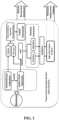
- Figure 1 depicts an example process (e.g., a two-step process to produce a lignin-containing residue, SHR, as described elsewhere herein).
- Lignin alkylation or acylation can result in superior properties of the modified lignin in such important applications as, for example, thermoplastic blends and carbon fiber manufacture.
- the alkoxy or the acyl groups on the modified lignins improve polymer miscibility and compatibility ⁇ 1 ⁇ .
- a dedicated lignin alkylation process is rather expensive and complex ⁇ 2, 3 ⁇ .
- the feedstock employed in the inventive methods can be any suitable lignin-containing residue.
- lignin-containing residue so-called "SHR" for supercritical hydrolysis residue
- SH supercritical hydrolysis
- Other lignin-containing biorefinery residues may also be employed, including residues from enzymatic hydrolysis, acid hydrolysis, steam explosion, or treatments comprising SO 2 and/or CO 2 .
- the lignin-containing biorefinery residue can be comminuted, if desired, prior to or during the reactive extraction.
- the residue can be produced by a combination of any of the aforementioned processes in any order (e.g., a treatment comprising SO 2 and enzymatic hydrolysis).
- raw lignocellulosic biomass can first be subjected to enzymatic hydrolysis, followed by hydrothermal treatment (e.g., supercritical hydrolysis) of the resulting mixture, thereby producing the residue.
- hydrothermal treatment can first be performed on raw lignocellulosic biomass, and the resulting mixture then subjected to acid hydrolysis, thereby producing the residue.
- a raw lignocellulosic biomass can first be subjected to hemicellulose extraction (e.g., digestion), followed by steam explosion (e.g., reducing the particle size), followed by hydrothermal treatment (e.g., supercritical hydrolysis), thereby producing the residue.
- hemicellulose extraction e.g., digestion
- steam explosion e.g., reducing the particle size
- hydrothermal treatment e.g., supercritical hydrolysis
- “residue” means a lignin-containing material, typically a solid (which may contain some liquid), remaining after a raw lignocellulosic biomass has been subjected to a hydrolysis process, an extraction process (e.g., hemicellulose extraction), and/or a chemical treatment (e.g., SO2 treatment).
- “raw lignocellulosic biomass” or simply “lignocellulosic biomass” means biomass that has not been subjected, or has not been substantially subjected, to a hydrolysis process, an extraction process, and/or chemical treatment.
- Comminution is not a process that in and of itself produces a residue, because comminution is not one of the processes defined above to produce a residue.
- "Has not been substantially subjected” means that raw lignocellulosic biomass may have been fleetingly subjected to one of the indicated processes/treatments (intentionally or unintentionally), but the composition (e.g., hemicellulose, cellulose, and lignin content) of the raw lignocellulosic biomass is still substantially similar to the raw lignocellulosic biomass before such fleeting processes/treatments.
- a hardwood raw lignocellulosic biomass in the form of woodchips is subjected to a temperature of about 90 °C for about 10 minutes or less (e.g., as a washing step to remove impurities, dirt, debris, etc.), these conditions would not substantially change the composition of the raw lignocellulosic biomass, such that the raw lignocellulosic biomass has not been substantially subjected to a process/treatment, as defined herein.
- subcritical and supercritical hydrolysis via a two-step process is used to produce a lignin-containing residue.
- the lignin-containing residue so-called "SHR" for supercritical hydrolysis residue, directly derived from the near-critical or supercritical hydrolysis (SH) reactor contains lignin as well as small amounts of residual sugars, mainly glucan, which residue can be further refined/upgraded to obtain high-purity functionalized lignin of higher value.
- lignin is subjected to harsh chemical treatment techniques in order to remove the lignin from biomass, which harsh treatments can contribute to a more degraded lignin structure and the introduction of unwanted functional groups (e.g., sulfur groups).
- harsh chemical treatment techniques can contribute to a more degraded lignin structure and the introduction of unwanted functional groups (e.g., sulfur groups).
- near-critical or supercritical hydrolysis results in lignin products that are substantially sulfur-free and have less degradation of the lignin structure.
- SH-derived lignin products have a unique chemical composition and molecular structure, as well as good reactivity and solubility in solvents. They are produced with different levels of purity and in a wide range of chemical structures. See, for example, U.S. Patent Application Publication 2014/0275501 , hereby incorporated by reference in its entirety.
- the invention as described herein is not limited only to lignin-containing residues derived from SH processes. In fact, lignin-containing residues from other
- a two-step or one-step process can be employed.
- biomass is first extracted with a fluid comprising water to remove at least a portion of the hemicellulose.
- the residue is obtained by a process comprising: extracting at least a portion of hemicellulose from a lignocellulosic biomass using a first fluid comprising water, thereby forming a second mixture comprising: a second liquid fraction comprising hemicellulose; and a second solid fraction comprising treated lignocellulosic biomass; wherein the first fluid has a second temperature of at least about 110 °C and a second pressure of at least about 10 bar; exposing the treated lignocellulosic biomass to a second fluid comprising water, thereby forming a third mixture comprising: a third liquid fraction; and a third solid fraction comprising the residue; wherein the second fluid has a third temperature of at least about 350 °C and a third pressure of
- Suitable temperatures in the first step include at least about 110 °C, e.g., at least about 120 °C, 130 °C, 140 °C, 150 °C, 160 °C, 170 °C, 180 °C, 190 °C, or at least about 200 °C (each of the foregoing numbers is preceded by the phrase "at least about").
- suitable temperatures include less than about 210 °C, e.g., less than about 200 °C, 190 °C, 180 °C, 170 °C, 160 °C, 150 °C, 140 °C, 130 °C, or less than about 120 °C (each of the foregoing numbers is preceded by the phrase "less than about”). Any of the foregoing endpoints can be combined to describe a close-ended range, or the endpoints can singly describe an open-ended range.
- Suitable pressures in the first step include at least about 10 bar, e.g., at least about 20 bar, 30 bar, 40 bar, 50 bar, 60 bar, 70 bar, 80 bar, 90 bar, 100 bar, 120 bar, 140 bar, 160 bar, 180 bar, or at least about 200 bar (each of the foregoing numbers is preceded by the phrase "at least about").
- the maximum pressure is not particularly important, but alternatively, or additionally, may be less than about 210 bar, e.g., less than about 200 bar, 180 bar, 160 bar, 140 bar, 120 bar, 100 bar, 90 bar, 80 bar, 70 bar, 60 bar, 50 bar, 40 bar, 30 bar, or less than about 20 bar (each of the foregoing numbers is preceded by the phrase "less than about”). Any of the foregoing endpoints can be combined to describe a close-ended range, or the endpoints can singly describe an open-ended range.
- Residence time in the first step typically will be determined by the temperature employed. Typically, however, the residence time will be on the order of minutes, e.g., at least about 1 min, 2 min, 3 min, 4 min, 5 min, 6 min, 7 min, 8 min, 9 min, 10 min, 20 min, 30 min, 40 min, 50 min, 60 min, 70 min, 80 min, 90 min, 100 min, 110 min, 120 min, 130 min, 140 min, 150 min, 160 min, 170 min, 180 min, 190 min, or at least about 200 min (each of the foregoing numbers is preceded by the phrase "at least about").
- the residence time can be less than about 210 min, e.g., less than about 200 min, 190 min, 180 min, 170 min, 160 min, 150 min, 140 min, 130 min, 120 min, 110 min, 100 min, 90 min, 80 min, 70 min, 60 min, 50 min, 40 min, 30 min, 20 min, 10 min, 9 min, 8 min, 7 min, 6 min, 5 min, 4 min, 3 min, or less than about 2 min (each of the foregoing numbers is preceded by the phrase "less than about"). Any of the foregoing endpoints can be combined to describe a close-ended range, or the endpoints can singly describe an open-ended range.
- any suitable fluid can be used in the first step (i.e., extracting step).
- the fluid comprises water.
- the fluid may also consist essentially of or consist of water.
- the fluid may be a mixture.
- the fluid can comprise water, ethanol, propanol (e.g., isopropanol), butanol, carbon dioxide, sulfur dioxide, or any combination thereof, such as water and ethanol mixtures, water and carbon dioxide mixtures, water and sulfur dioxide mixtures, water and ethanol and carbon dioxide mixtures, ethanol and propanol mixtures, ethanol and carbon dioxide mixtures, and the like.
- the first step can be digestion to remove hemicellulose sugars, followed by size reduction of the resulting digested biomass.
- the size reduction is selected from the grouping consisting of steam explosion, comminution, and a combination thereof.
- a suitable system for carrying out steam explosion, or digestion followed by steam explosion, is disclosed in U.S. Patent 8,057,639 , hereby incorporated by reference in its entirety.
- the first step can also extract hemicellulose by extracting a size reduced raw lignocellulosic biomass using a fluid comprising subcritical water. Since the biomass is already size reduced prior to the extracting, the biomass need not be further size reduced in this embodiment prior to the second step. In some embodiments, however, the extracted biomass may be further size reduced prior to the second step.
- a near-critical or supercritical fluid i.e., the second fluid
- the pretreated solids i.e., the treated lignocellulosic biomass
- the slurry or preheated slurry
- the slurry can then be mixed with near-critical or supercritical water to rapidly bring the slurry to reaction temperature, and fed to the supercritical tubular reactor.
- the treated lignocellulosic biomass is allowed to react for a time period (residence time) on the order of seconds, thereby forming a third mixture comprising a third liquid fraction and a third solid fraction comprising the residue.
- the third liquid fraction which can comprise solubilized glucose oligosaccharides and monosaccharides (C6 sugar stream)
- C6 sugar stream solubilized glucose oligosaccharides and monosaccharides
- the fluid (i.e., second fluid) used in the second step can have a temperature of at least about 350 °C, e.g., at least about 355 °C, 360 °C, 365 °C, 370 °C, 374 °C, 380 °C, 390 °C, 400 °C, 410 °C, 420 °C, 430 °C, 440 °C, 450 °C, 460 °C, 470 °C, 480 °C, 490 °C, 500 °C, 510 °C, 520 °C, 530 °C, 540 °C, or at least about 550 °C (each of the foregoing numbers is preceded by the phrase "at least about").
- the temperature of the fluid can be 575 °C or less, e.g., about 550 °C or less, about 540 °C or less, about 530 °C or less, about 520 °C or less, about 510 °C or less, about 500 °C or less, about 490 °C or less, about 480 °C or less, about 470 °C or less, about 460 °C or less, about 450 °C or less, about 440 °C or less, about 430 °C or less, about 420 °C or less, about 410 °C or less, about 400 °C or less, about 390 °C or less, about 380 °C or less, about 375 °C or less, about 370 °C or less, about 365 °C or less, or about 360 °C or less. Any of the foregoing endpoints can be combined to describe a close-ended range, or the endpoints can be singly employed
- the fluid (i.e., second fluid) used in the second step can have a pressure of at least about 180 bar, e.g., at least about 185 bar, 190 bar, 195 bar, 200 bar, 205 bar, 210 bar, 215 bar, 220 bar, 221 bar, 225 bar, 230 bar, 250 bar, 275 bar, 300 bar, 325 bar, 350 bar, 375 bar, 400 bar, 425 bar, 450 bar, 475 bar, 500 bar, 525 bar, 550 bar, 575 bar, 600 bar, 625 bar, 650 bar, 675 bar, 700 bar, 725 bar, 750 bar, 775 bar, or at least about 800 bar (each of the foregoing numbers is preceded by the phrase "at least about").
- the maximum pressure is not particularly limited, but can be less than about 800 bar, e.g., less than about 775 bar, 750 bar, 725 bar, 700 bar, 675 bar, 650 bar, 625 bar, 600 bar, 575 bar, 550 bar, 525 bar, 500 bar, 475 bar, 450 bar, 425 bar, 400 bar, 375 bar, 350 bar, 325 bar, 300 bar, 275 bar, 250 bar, 225 bar, 220 bar, 215 bar, 210 bar, 205 bar, 200 bar, 195 bar, or less than about 190 bar (each of the foregoing numbers is preceded by the phrase "less than about"). Any of the foregoing endpoints can be combined to describe a close-ended range, or the endpoints can be singly employed to describe an open-ended range.
- the slurry and fluid mixture can be held for any suitable duration (i.e., residence time) to effect the desired degree of hydrolysis and form the third mixture.
- the duration can be about 0.05 seconds or more, e.g., about 0.1 seconds or more, about 0.2 seconds or more, about 0.3 seconds or more, about 0.4 seconds or more, about 0.5 seconds or more, about 0.6 seconds or more, about 0.7 seconds or more, about 0.8 seconds or more, about 0.9 seconds or more, about 1 seconds or more, about 1.1 seconds or more, about 1.2 seconds or more, about 1.3 seconds or more, about 1.4 seconds or more, about 1.5 seconds or more, about 2 seconds or more, about 2.5 seconds or more, about 3 seconds or more, about 3.5 seconds or more, about 4 seconds or more, about 4.5 seconds or more, about 5 seconds or more, about 6 seconds or more, about 7 seconds or more, about 8 seconds or more, or about 9 seconds or more.
- the duration can be about 10 seconds or less, e.g., about 9 seconds or less, about 8 seconds or less, about 7 seconds or less, about 6 seconds or less, about 5 seconds or less, about 4.5 seconds or less, about 4 seconds or less, about 3.5 seconds or less, about 3 seconds or less, about 2.5 seconds or less, about 2 seconds or less, about 1.5 seconds or less, about 1.4 seconds or less, about 1.3 seconds or less, about 1.2 seconds or less, about 1.1 seconds or less, about 1 seconds or less, about 0.9 seconds or less, about 0.8 seconds or less, about 0.7 seconds or less, about 0.6 seconds or less, about 0.5 seconds or less, about 0.4 seconds or less, about 0.3 seconds or less, about 0.2 seconds or less, or about 0.1 seconds or less. Any of the foregoing endpoints can be combined to describe a close-ended range, or the endpoints can be singly employed to describe an open-ended range.
- any suitable fluid i.e., second fluid
- the fluid comprises water.
- the fluid may also consist essentially of or consist of water.
- the fluid may be a mixture.
- the fluid can comprise water, ethanol, propanol, butanol, carbon dioxide, sulfur dioxide, or any combination thereof, such as water and ethanol mixtures, water and carbon dioxide mixtures, water and sulfur dioxide mixtures, water and ethanol and carbon dioxide mixtures, ethanol and propanol mixtures, ethanol and carbon dioxide mixtures, and the like.
- the second fluid comprises, consists of, or consists essentially of supercritical water.
- the hot slurry (i.e., third mixture) can be cooled using, e.g., flash cooling, heat exchange, contacting with a cool fluid, and the like, or any combination thereof.
- the cooling can occur in one stage, or the cooling can occur using multiple stages, e.g., multiple flash cooling stages, multiple heat exchange stages, or any combination thereof.
- a one-step method can be employed.
- the first step e.g., auto-hydrolysis or hemicellulose extraction
- the second step supercritical fluid hydrolysis
- the raw biomass typically can be comminuted to a smaller size suitable for use in the supercritical process.
- the first step as described herein is not employed in this one step process, the raw biomass may first be treated in other ways prior to supercritical hydrolysis in order to facilitate the processing of the biomass (e.g., to facilitate the extraction of C5 sugars, C6 sugars, COS, and/or lignin).
- the raw biomass may be dried, subjected to an acid treatment, subjected to fungal or biocatalytic treatment, or any combination thereof.
- comminution can be performed with conventional mechanical means, or size reduction can be performed using explosion technology (e.g., steam explosion).
- explosion technology e.g., steam explosion.
- the effluent stream from this single step process likely will have a different composition than the effluent stream from either the first step or the second step of the two step process, since the hemicellulosic sugars may still be present in this one-step method upon supercritical hydrolysis.
- the solids will still be lignin-rich.
- the residue is obtained by a process comprising: exposing a lignocellulosic biomass to a second fluid comprising water, thereby forming a fourth mixture comprising: a fourth liquid fraction; and a fourth solid fraction comprising the residue; wherein the second fluid has a third temperature of at least about 350 °C and a third pressure of at least about 180 bar.
- the fluids, temperatures, pressures, and residence times disclosed herein for the second step (i.e., exposing step) of the two-step process are equally applicable to the fluids, temperatures, pressures, and residences times for the fluid employed in this one-step process.
- a method for producing functionalized lignin comprising: providing a residue comprising lignin and cellulose; subjecting the residue to a liquid comprising an organic compound, thereby forming a first mixture; wherein the subjecting is performed at a first temperature of about 100 °C or less; and wherein the first mixture comprises: a first liquid fraction comprising solubilized functionalized lignin, wherein the solubilized functionalized lignin is functionalized with the organic compound; and a first solid fraction comprising cellulose.
- the residue comprises lignin and cellulose. In some embodiments, the residue may further comprise at least one of hemicellulose, ash, extractives, and other components. In some embodiments, the residue comprises less than about 20 wt.% (less than about 15 wt.%, less than about 10 wt.%, or less than about 5 wt.%) hemicellulose, based on the dry weight of the residue.
- the residue is subjected to a liquid comprising an organic compound, thereby forming a first mixture.
- the liquid consists of or consists essentially of the organic compound.
- the organic compound can be any suitable organic compound that functionalizes lignin under a first temperature of about 100 °C or less. Suitable organic compounds include, for example, alcohol and/or organic acid. Other suitable organic compounds are disclosed hereinbelow.
- the liquid further comprises an acid. In some embodiments, the liquid further comprises water. In general, the liquid comprising the organic compound operates to both solubilize and functionalize the lignin, thereby "reactively extracting" the lignin from the residue.
- the liquid should have properties sufficient to solubilize the lignin (at least a portion thereof, e.g., at least about 20%, at least 30%, at least 40%, at least 50%, at least 60%, at least 70%, at least 80%, at least 90%, or at least 99% by weight, based on the original weight of the lignin in the residue, each of the foregoing numbers is preceded by the word "about”), while also containing an organic compound that can functionalize the lignin.
- the organic compound does not necessarily have to solubilize the lignin, but the liquid as a whole should have properties sufficient to solubilize at least a portion of the lignin (as noted hereinabove).
- an organic compound may be present that cannot solubilize lignin (e.g., a fatty acid), but this organic compound can be present in a liquid that can solubilize at least a portion of the lignin, and this organic compound (e.g., fatty acid) can still functionalize the lignin.
- lignin e.g., a fatty acid
- aqueous alcohol i.e., a liquid comprising an alcohol and water, in which the alcohol is the organic compound
- an aqueous alcohol i.e., a liquid comprising an alcohol and water, in which the alcohol is the organic compound
- the alcohol is the organic compound
- propanol one or more -OHs in any position, such as isopropanol or 1-propanol
- t-butanol one or more -OHs in any position
- strong acid e.g., mineral acids such as sulfuric acid, phosphoric acid, hydrochloric acid, hydrobromic acid, sulfurous acid, and organic acids such as p-toluenesulfonic acid, acetic acid, formic acid, propionic acid, oxalic acid, benzoic acid, carbonic acid, butyric acid, valeric acid, caproic acid, lactic
- added amounts of strong acid can exceed a catalytic amount, whereas in other embodiments, a strong acid need not be employed at all.
- water-miscible alcohols can be employed, but water-immiscible alcohols (or partially immiscible alcohols) may additionally or alternatively be used (i.e., mixtures may be employed).
- water-immiscible or partially-immiscible alcohols examples include n-butanol, sec-butanol, pentanol (one or more -OHs in any position), hexanol (one or more -OHs in any position), heptanol (one or more -OHs in any position), octanol (one or more -OHs in any position), nonanol (one or more -OHs in any position), decanol (one or more -OHs in any position), and any combination thereof.
- Various lignin extraction yields can be achieved with different aqueous solvent mixtures (see Figure 2 - 30 min extraction at room temperature).
- aqueous ethanol can extract about 60% of lignin at an ethanol concentration of 60-70% in water (w/w).
- the lignin can be fractionated using step-wise extraction with solvents containing various proportions of ethanol in water (or 100% ethanol containing no, or only residual, water), so as to obtain fractions of lignin with different properties.
- the alcohol is selected from the group consisting of methanol, propanol, isopropanol, butanol, pentanol, hexanol, octanol, nonanol, decanol, a polyhydric version of any aforementioned alcohol, and any combination thereof.
- the alcohol is ethanol.
- Lignin can be acylated using a process similar to the alkylation process, although a different organic compound is used, e.g., organic acids (such as acetic, formic, ethanoic, propionic, butyric, pentanoic, and any combination thereof, as well as any other suitable acid), with or without the addition of strong acid ⁇ 4 ⁇ .
- organic acids such as acetic, formic, ethanoic, propionic, butyric, pentanoic, and any combination thereof, as well as any other suitable acid
- the organic compound is acetic acid.
- the subjecting step is performed with ethanol and sulfuric acid. In some embodiments, the subjecting step is performed with ethanol, water, and sulfuric acid. In some embodiments, the proportion of ethanol in water can be about 40% to about 70% (w/w). In some embodiments, the subjecting step is performed with acetic acid (and only residual water). In some embodiments, the subjecting step is performed with acetic acid and water, without additional acid. In some embodiments, the subjecting step is performed with acetic acid, water, and acid (e.g., sulfuric acid). In some embodiments, the subjecting step is performed with ethanol, water, and no additional acid.
- the subjecting step further comprises diluting a combination of the liquid and the residue with , thereby forming the first mixture (in other words, the subjecting step effectively comprises two step: subjecting the residue to a liquid comprising an organic compound followed by diluting the liquid with water, thereby forming the first mixture). See, e.g., Figure 5 .
- the first step can be performed with a high concentration (about 85% or more, about 90% or more, about 95% or more, or about 100% (w/w)) of alcohol and/or organic acid, followed by diluting the resulting mixture with water to a concentration of alcohol and/or organic acid of about 60-80% (w/w), which solubilizes the lignin present (forming the first mixture).
- the resulting first mixture can be separated to separate the residual cellulose (first solid fraction) from the solubilized functionalized lignin (first liquid fraction). Additional water can then be added to the first liquid fraction to precipitate the lignin for subsequent filtration/isolation.
- lignin is partially soluble in about 80-100% alcohol in water (e.g., ethanol), the lignin solubility increases as water is added to a proportion of about 60-80% alcohol in water (useful for filtering solubilized functionalized lignin away from residual cellulose solids), and then the lignin solubility decreases as even more water is added to further decrease the proportion of alcohol and/or organic acid.
- water e.g., ethanol
- the lignin solubility increases as water is added to a proportion of about 60-80% alcohol in water (useful for filtering solubilized functionalized lignin away from residual cellulose solids), and then the lignin solubility decreases as even more water is added to further decrease the proportion of alcohol and/or organic acid.
- a lignin-containing residue is subjected to a liquid comprising acid and an organic compound (at a concentration of 80-100% by weight organic compound in the liquid, the balance may be water if the organic compound is not present in an amount of 100%) at a temperature of 100 °C or less, followed by dilution of this resulting mixture to a concentration of about 60-80% by organic compound in water.
- the organic compound can be any suitable organic compound as disclosed herein (e.g., ethanol, acetic acid, or a combination thereof, for example). Without wishing to be bound by theory, it is hypothesized, though not necessarily confirmed, that the 80-100% concentration maximizes functionalization, whereas the 60-80% concentration maximizes solubility of functionalized lignin. Solid/liquid separation is then performed to separate cellulose and residual lignin solids from the solubilized functionalized lignin. A second water addition decreases the organic compound concentration to below 60%, thereby precipitating the functionalized lignin from the solution. A subsequent solid/liquid separation is performed to separate the precipitated lignin from the liquid comprising acid, water, and organic compound.
- suitable organic compound e.g., ethanol, acetic acid, or a combination thereof, for example.
- the liquid can then be recycled back to the subjecting step with a fresh batch of lignin-containing residue.
- the first water addition step (“(1) H 2 O") is not performed, but the remaining steps, including the first solid/liquid separation step, may still be performed.
- the first solid/liquid separation may have a solids fraction with more lignin present than if the first water addition is performed, but these lignin-enriched solids may be collected as is, or may be sent through the reactor one or more additional times.
- the alkylation or acylation as described herein allows for partial modification of lignin during the same extraction process, thus combining lignin extraction and alkylation and/or acylation (i.e., "reactive extraction”).
- the yield of extracted lignin is higher than in a control experiment (without acid addition) that has been carried out.
- Other characteristics of lignin such as molecular weight, glass transition temperature (Tg), and molecular structure can be also manipulated by the process variables.
- Tg glass transition temperature
- the combination of lignin modification (functionalization) and extraction is a very simple process that uses cheap chemicals allowing for a significantly cheaper process as compared to other known processes for producing functionalized lignins with enhanced properties.
- SHR can be mixed with a fluid consisting of a solvent and optionally water at a desired ratio, as described elsewhere herein.
- a suitable amount of mineral acid (catalyst) can be added, and the slurry charged into a reactor (e.g., batch, semi-batch, or continuous).
- the reactor can be operated under atmospheric pressure (or a higher pressure if desired) and the solvent vapor, if present, can be condensed using a condenser, thereby returning the condensed solvent to the reactor.
- the reaction slurry can be heated to a suitable temperature and retained in the reactor for a suitable period of time under continuous or intermittent mixing (e.g., agitation, shearing, shaking, any combination thereof, etc).
- the solvent to water ratio can be adjusted to a concentration optimal for lignin extraction (i.e., to adjust the lignin solubility) by dilution with water, or another suitable solvent.
- the reaction solution can be drained from the reactor, and the lignin further extracted and washed with an optimal solvent mixture.
- the solution of the modified lignin can be separated from the insoluble residue consisting of mainly unconverted cellulose using conventional techniques.
- the residue will be washed with a minimal amount of solvent (of the optimal concentration) to maximize the yield of the lignin product, and then with water to recover solvent retained in the residue.
- the washing streams can be recycled in the process to ensure the most efficient and economical use of the solvent and water.
- the lignin solution can be diluted with water to precipitate the extracted lignin from the solution.
- the precipitated lignin can be separated by filtration, washed with water, and dried to produce alkylated or acylated lignin.
- the solvent/water mixture separated from the precipitated lignin can be distilled to recover the solvent for use in the process.
- Equations 1-6 describe general reactions occurring during lignin alkylation and acylation, in which primary and secondary aliphatic OH or OR and carboxylic OH or OR reactive centers participate in derivatization.
- the R 3 group can represent either H or an alkyl group.
- Equation 1 depicts alkylation at lignin hydroxyl or OR positions to produce ether derivatives.
- Equation 2 depicts alkylation at lignin carboxyl positions to produce ester derivatives.
- Equation 3 depicts acylation at lignin OH or OR positions with ester formation.
- Equation 4 depicts alkylation at a benzylic position on lignin.
- Equation 5 depicts alkylation at a position conjugated to an aromatic ring on lignin.
- Equation 6 depicts alkylation of a ketone on lignin via hemiketal and ketal formation.
- the use of longer carbon chain alcohols or acids e.g., fatty acids, which would produce modified lignin with corresponding longer chain alkyl or acyl groups, may also be employed.
- the alkylation and/or acylation can be performed at any suitable temperature.
- a suitable temperature is about 100 °C or less, but may be up to 120 °C or 130 °C if desired.
- Suitable temperatures for alkylation and/or acylation also include about 15 °C or more, e.g., 20 °C or more, 25 °C or more, 30 °C or more, 35 °C or more, 40 °C or more, 45 °C or more, 50 °C or more, 55 °C or more, 60 °C or more, 65 °C or more, 70 °C or more, 75 °C or more, 80 °C or more, 85 °C or more, 90 °C or more, or 95 °C or more.
- suitable temperatures can be 100 °C or less, e.g., 95 °C or less, 90 °C or less, 85 °C or less, 80 °C or less, 75 °C or less, 70 °C or less, 65 °C or less, 60 °C or less, 55 °C or less, 50 °C or less, 45 °C or less, 40 °C or less, 35 °C or less, 30 °C or less, or 25 °C or less.
- the aforementioned temperatures ranges can be open-ended ranges, or can be combined into close-ended ranges. Any of the aforementioned numbers may be preceded by the word "about.”
- the alkylation and/or acylation can be performed at any suitable pressure.
- the pressure is not particularly important, but from an economic standpoint, it is desirable to perform the subjecting at lower pressures.
- suitable pressures can be less than about 73 bar, e.g., less than about 70 bar, less than about 60 bar, less than about 50 bar, less than about 40 bar, less than about 30 bar, less than about 20 bar, less than about 10 bar, less than about 5 bar, or less than about 2 bar.
- the minimum pressure is not particularly limited, but may be at least atmospheric pressure. In some embodiments, the pressure is atmospheric pressure.
- the subjecting is not performed under supercritical conditions for one or more components making up the liquid comprising the organic compound (for example, the subjecting is not performed under conditions sufficient supercritical ethanol to be present). In some embodiments, the subjecting is performed under reflux conditions.
- the alkylation and acylation conditions are carried out using an amount of acid (e.g., strong acid or mineral acid) at a suitable level to enable the alkylation or acylation reactions to proceed.
- the acid can be employed in a catalytic amount, or the acid can be employed in an amount greater than a catalytic amount. In some embodiments, no additional acid is employed.
- Suitable pHs for conducting alkylation and acylation include low pHs of less than 4, as measured by a pH meter. Suitable pHs include greater than 0, e.g., greater than 0.5, greater than 1, greater than 1.5, greater than 2, greater than 2.5, greater than 3, or greater than 3.5.
- the pH can be less than 4, e.g., less than 3.5, less than 3, less than 2.5, less than 2, less than 1.5, less than 1, less than 0.5, or less than 0.
- the aforementioned pH ranges can be open-ended ranges, or can be combined into close-ended ranges. Any of the aforementioned numbers may be preceded by the word "about.”
- Suitable reaction times for acylation and/or alkylation include at least about 10 min, e.g., at least about 20 min, at least 30 min, at least 45 min, at least 60 min, at least 75 min, at least 90 min, at least 105 min, at least 120 min, at least 135 min, at least 150 min, at least 165 min, at least 180 min, at least 195 min, or at least 210 min.
- suitable reaction times include less than about 225 min, e.g., less than about 210 min, less than 195 min, less than 180 min, less than 165 min, less than 150 min, less than 135 min, less than 120 min, less than 105 min, less than 90 min, less than 75 min, less than 60 min, less than 45 min, less than 30 min, or less than 20 min.
- the aforementioned ranges can be open-ended ranges, or can be combined into close-ended ranges. Any of the aforementioned numbers may be preceded by the word "about.”
- Alkylation and acylation can be carried out at any suitable proportion of alcohol or organic acid in water.
- Proportions include 100% alcohol and/or organic acid, e.g., less than about 99% alcohol or organic acid, less than 97%, less than 95%, less than 93%, less than 90%, less than 85%, less than 80%, less than 75%, less than 70%, less than 65%, less than 60%, less than 55%, less than 50%, less than 45%, less than 40%, less than 35%, or less than 30%.
- proportions include at least about 30% alcohol or organic acid, e.g., at least about 35%, at least 40%, at least 45%, at least 50%, at least 55%, at least 60%, at least 65%, at least 70%, at least 75%, at least 80%, at least 85%, at least 90%, at least 93%, at least 95%, at least 97%, or at least 99%.
- the aforementioned ranges can be open-ended ranges, or can be combined into close-ended ranges. Any of the aforementioned numbers may be preceded by the word "about.”
- the percentages are on a w/w basis.
- the proportions can refer to alcohol, organic acid, or a combination of alcohol and organic acid.
- the subjecting step produces a first mixture.
- the first mixture comprises, consists of, or consists essentially of a first liquid fraction comprising solubilized functionalized lignin, wherein the solubilized functionalized lignin is functionalized with the organic compound, and the first mixture also comprises a first solid fraction comprising cellulose.
- Other components may be present in the first mixture, including hemicellulose, ash, extractives, etc.
- the first liquid fraction may additionally contain soluble sugars (C5 and/or C6, including glucose, xylose, and oligomers thereof), soluble lignin, and any combination thereof.
- the first solid fraction may additionally contain lignin, hemicellulose, ash, extractives, and any combination thereof.
- separation of the first liquid fraction from the first solid fraction forms a separated first liquid fraction, wherein the separated first liquid fraction contains less than about 5 wt.% cellulose on a dry solids basis (e.g., less than about 4 wt.%, less than about 3 wt.%, less than about 2 wt.%, less than about 1 wt.%, or less than about 0.5 wt.%).
- the solubilized functionalized lignin present in the first liquid fraction is recovered by precipitation by the addition of water to the first liquid fraction, by evaporation of solvent in the first liquid fraction, or a combination thereof.
- Alkylation and acylation typically are carried out separately. However, alkylation and acylation can be carried out simultaneously in some embodiments. When carried out simultaneously, both organic solvent and organic acid are combined with the lignin-containing residue to effect simultaneous alkylation, acylation, and extraction. In some embodiments, alkylation and acylation are carried out sequentially or consecutively, in any order.
- the organic compound comprises an alcohol and an organic acid, thereby producing functionalized lignin containing both alkoxy and acyl groups.
- Any suitable apparatus can be used to carry out the methods of the invention, including, but not limited to, batch reactors, semi-batch reactors, continuous reactors, and the like, and any combination thereof.
- any known apparatuses in the art may be used to carry out the inventive methods.
- Lignin products with different molecular structures and physical properties can be produced for incorporation into thermoplastic blends, e.g., polyolefins as a specific example ⁇ 5, 11 ⁇ .
- thermoplastic blends e.g., polyolefins as a specific example ⁇ 5, 11 ⁇ .
- Figures 3 and 4 A schematic representation of a possible upgrading process, as well as the two-step process described herein, are shown in Figures 3 and 4 . The two-step process is shown in Figure 3 , and the two-step process is described elsewhere herein.
- the alkylation upgrading can include the addition of the alcohol and catalytic amounts of mineral acid to the lignin generated in the supercritical hydrolysis process; this functionalizes and extracts the lignin.
- the lignin-containing solid slurry or powder can be continuously or intermittently fed to the top of the reactive extraction unit.
- a circulation loop fluidizes the lignin solids and entrains them to a separation zone at the top, which optionally could be separate from the extraction unit.
- the solids which are mainly unconverted cellulose are withdrawn from the bottom of the first stage.
- the solubilized lignin is precipitated by addition of water.
- Both stages use a liquid/solid fluidized bed with a recirculation loop.
- the alcohol/water/catalyst can be concentrated using, for example, pervaporation, steam stripping, vacuum concentration, or other suitable techniques. Subsequent extrusion steps can be carried out to produce thermoplastics, if desired.
- Reaction conditions can be varied to tune the degree of alkylation/acylation as well as lignin chemical structure and physical characteristics. Variables such as reaction time and temperature, acid level/pH, and feedstock type (hardwood, softwood, or other lignin-containing biomass feedstocks) can be varied. Alkylation and/or acylation can be achieved in an amount of greater than about 1% of total amount of aliphatic and carboxylic OH and OR groups (e.g., greater than 3%, greater than 5%, greater than 7%, greater than 10%, greater than 12%, greater than 15%, greater than 20%, greater than 25%, greater than 30%, greater than 35%, greater than 40%, greater than 45%, greater than 50%, greater than 55%, or greater than 60.
- Variables such as reaction time and temperature, acid level/pH, and feedstock type (hardwood, softwood, or other lignin-containing biomass feedstocks) can be varied.
- Alkylation and/or acylation can be achieved in an amount of greater than about
- aforementioned ranges can be open-ended, or can be combined into close-ended ranges. Any of the aforementioned numbers may be preceded with the word "about.”
- the aforementioned values can refer to types of functionality separately (e.g., EtO or Ac), or can refer to a total amount of functionalization (e.g., the sum of EtO and Ac), as will be clear by the context.
- the inventive methods disclosed herein functionalize about 1% to about 60% of the total amount of aliphatic and carboxylic OH and OR groups present on the lignin.
- the amounts of moieties are expressed as units of moiety per 100 aromatic units ("units per 100 Ar"), and can be considered as mol%.
- the aromatic region (about 100-162 ppm) in the 13 C spectrum is integrated, and this integral set to a value of 600.
- Subsequent integration of the moieties or regions of interest in this same spectrum will now be in the units of "per 100 Ar.”
- the unit of measurement "units per 100 Ar” is well known in the art and is the conventional way for describing moieties of lignin.
- the measurements can be conducted by quantitative nuclear magnetic resonance spectroscopy (NMR), such as quantitative 13 C NMR spectropscopy.
- NMR quantitative nuclear magnetic resonance spectroscopy
- Quantifying the amounts of the various moieties present in lignin via 13 C and/or 1 H NMR spectroscopy typically requires integration of the 13 C and/or 1 H NMR spectra. Chemical shift ranges where various lignin moieties or other regions of interest may be located in a 13 C and/or 1 H spectrum are reported herein to aid in determining the measurement of these various moieties.
- the actual integral may be located within a slightly different chemical shift range, and one of ordinary skill in the art would be able to recognize this fact and be able to integrate the appropriate peaks in the appropriate chemical shift range to determine as accurately as possible the integrals of various moieties or regions of interest.
- the functionalized lignin can include alkoxy content (e.g., AlkO content, such as EtO content), acyl content (e.g., AcO content, such as acetyl, formyl, propionyl, etc., content), a ⁇ -O-4 content per 100 Ar, PhOH content per 100 Ar, a degree of condensation (DC) in %, number average molecular weight (Mn), weight average molecular weight (Mw), and/or polydispersity index (PDI).
- alkoxy content e.g., AlkO content, such as EtO content
- acyl content e.g., AcO content, such as acetyl, formyl, propionyl, etc., content
- a ⁇ -O-4 content per 100 Ar e.g., PhOH content per 100 Ar
- DC degree of condensation
- Mn number average molecular weight
- Mw weight average molecular weight
- PDI polydispersity index
- the level of functionalization of the functionalized lignin, expressed as moiety (e.g., AlkO such as EtO, or AcO) per 100 Ar can be any suitable amount.
- the amount of functionalization (e.g., EtO or Ac) per 100 Ar can be about 1 or more, e.g., about 2 or more, e.g. about 4 or more, about 6 or more, about 8 or more, about 10 or more, about 12 or more, about 14 or more, about 16 or more, about 18 or more, about 20 or more, about 22 or more, about 24 or more, about 25 or more, about 30 or more, about 35 or more, or about 40 or more.
- the amount of functionalization per 100 Ar can be about 45 or less, e.g., about 40 or less, about 35 or less, about 30 or less, about 25 or less, about 24 or less, about 22 or less, about 20 or less, about 18 or less, about 16 or less, about 14 or less, about 12 or less, about 10 or less, about 8 or less, about 6 or less, about 4 or less, or about 2 or less.
- the aforementioned ranges can be open-ended, or can be combined into close-ended ranges.
- the ⁇ -O-4 content per 100 Ar can be at least about 8, e.g., at least about 10, 12, 14, 16, 18, 20, 22, 24, 26, 28, or 30 per 100 Ar (each of the foregoing numbers is preceded by the phrase "at least about”).
- the maximum amount is not particularly limited, but can be less than about 32, e.g., less than about 30, 28, 26, 24, 22, 20, 18, 16, 14, 12, or 10 per 100 Ar (each of the foregoing numbers is preceded by the phrase "less than about”). Any two of the foregoing numbers can be combined to form close-ended range, or can be used individually to define an open-ended range.
- the PhOH content per 100 Ar can be at least about 50, e.g., at least about 52, 54, 56, 58, 60, 62 64, 66, 68, 70, 72, 74, 76, 78, or 80 per 100 Ar (each of the foregoing numbers is preceded by the phrase "at least about”).
- the maximum amount is not particularly limited, but can be less than about 82, e.g., less than about 80, 78, 76, 74, 72, 70, 68, 66, 64, 62, 60, 58, 56, 54, or 52 per 100 Ar (each of the foregoing numbers is preceded by the phrase "less than about”). Any two of the foregoing numbers can be combined to form close-ended range, or can be used individually to define an open-ended range.
- the degree of condensation can be at least about 25, e.g., at least about 28, 30, 32, 34, 36, 38, 40, 42, 44, 46, 48, 50, 52, 54, 56, 58, or 60 (each of the foregoing numbers is preceded by the phrase "at least about”).
- the maximum amount is not particularly limited, but can be less than about 62, e.g., less than about 60, 58, 56, 54, 52, 50, 48, 46, 44, 42, 40, 38, 36, 34, 32, 30, 28, or 25 (each of the foregoing numbers is preceded by the phrase "less than about”). Any two of the foregoing numbers can be combined to form close-ended range, or can be used individually to define an open-ended range.
- the number average molecular weight (Mn) in Daltons can be at least about 500, e.g., at least about 550, 600, 650, 700, 750, 800, 850, 900, 950, 1000, 1050, 1100, 1150, 1200, 1250, 1300, 1350, 1400, 1450, 1500, 1600, 1700, 1800, 1900, or 2000 (each of the foregoing numbers is preceded by the phrase "at least about”).
- the maximum amount is not particularly limited, but can be less than about 2200, e.g., less than about 2000, 1900, 1800, 1700, 1600, 1500, 1350, 1300, 1250, 1200, 1150, 1100, 1050, 1000, 950, 900, 850, 800, 750, 700, 650, 600, 550, or 500 (each of the foregoing numbers is preceded by the phrase "less than about”). Any two of the foregoing numbers can be combined to form close-ended range, or can be used individually to define an open-ended range.
- the weight average molecular weight (Mw) in Daltons can be at least about 1300, e.g., at least about 1400, 1500, 1600, 1700, 1800, 1900, 2000, 2100, 2200, 2400, 2600, 2800, 3000, 3200, 3400, 3600, 3800, 4000, 4200, 4400, 4600, 4800, 5000, or 5200 (each of the foregoing numbers is preceded by the phrase "at least about").
- the maximum amount is not particularly limited, but can be less than about 5500, e.g., less than about 5200, 5000, 4800, 4600, 4400, 4200, 4000, 3800, 3600, 3400, 3200, 3000, 2800, 2600, 2400, 2200, 2100, 2000, 1900, 1800, 1700, 1600, 1500, 1400, or 1300 (each of the foregoing numbers is preceded by the phrase "less than about”). Any two of the foregoing numbers can be combined to form close-ended range, or can be used individually to define an open-ended range.
- the polydispersity index (PDI) can be at least about 1, e.g., at least about 1.2, 1.4, 1.6, 1.8, 2, 2.2, 2.4, 2.6, 2.8, 3, 3.2, 3.4, 3.6, 3.8, or 4 (each of the foregoing numbers is preceded by the phrase "at least about”).
- the maximum amount is not particularly limited, but can be less than about 4, e.g., less than about 3.8, 3.6, 3.4, 3.2, 3, 2.8, 2.6, 2.4, 2.2, 2, 1.8, 1.6, 1.4, or 1.2 (each of the foregoing numbers is preceded by the phrase "less than about”). Any two of the foregoing numbers can be combined to form close-ended range, or can be used individually to define an open-ended range.
- a functionalized lignin comprises an alkoxy content, except originally present aryl-methoxyl, (e.g., ethoxyl content), of about 1 to about 45 per 100 Ar; and at least one of: a) a phenolic OH content of less than about 70; and b) a ⁇ -O-4 content of at least about 10.
- a functionalized lignin comprises an acyl content of about 1 to about 45 per 100 Ar; and at least one of: a) a phenolic OH content of less than about 70; and b) a ⁇ -O-4 content of at least about 10.
- the functionalized lignin may also be characterized by one or more of ⁇ -O-4 content per 100 Ar, PhOH content per 100 Ar, DC in %, Mn, Mw, PDI, or any combination thereof.
- a functionalized lignin comprises an acyl content of about 1 to about 45 per 100 Ar; an alkoxy content, except methoxyl, (e.g., ethoxyl content), of about 1 to about 45 per 100 Ar; and at least one of: a) a phenolic OH content of less than about 70; and b) a ⁇ -O-4 content of at least about 10.
- the functionalized lignin may also be characterized by one or more of ⁇ -O-4 content per 100 Ar, PhOH content per 100 Ar, DC in %, Mn, Mw, PDI, or any combination thereof.
- the functionalized lignin is produced by the methods disclosed herein.
- Functionalized lignin(s) can be incorporated into thermoplastic blends (comprising, e.g., one or more thermoplastic polymers) in various proportions, e.g., at least 1%, at least 3%, at least 5%, at least 8%, at least 10%, at least 13%, at least 15%, at least 20%, at least 25%, at least 30%, at least 35%, at least 40%, at least 45%, at least 50%, at least 55%, at least 60%, at least 65%, at least 70%, at least 75%, or at least 80%.
- thermoplastic blends comprising, e.g., one or more thermoplastic polymers
- functionalized lignin(s) can be incorporated into thermoplastic blends in an amount less than 85%, e.g., less than 80%, less than 75%, less than 70%, less than 65%, less than 60%, less than 55%, less than 50%, less than 45%, less than 40%, less than 35%, less than 30%, less than 25%, less than 20%, less than 15%, less than 13%, less than 10%, less than 8%, less than 5%, or less than 3%.
- the aforementioned ranges can be open-ended, or can be combined into close-ended ranges. Any of the aforementioned numbers may be preceded with the word "about.”
- Suitable thermoplastic polymers can include, for example, a polyolefin (e.g., polyethylene and/or polypropylene), poly(methyl methacrylate), acrylonitrile butadiene styrene, nylon (i.e., a polyamide), polylatic acid, polybenzimidazole, polycarbonate, polyether sulfone, polyetherether ketone, polyetherimide, polyphenylene oxide, polystyrene, polyvinyl chloride, polytetrafluoroethylene, and any combination thereof.
- the blends comprising one or more functionalized lignins and one or more thermoplastic polymers can have various desirable properties (e.g., rheology, morphology, crystalline structure, mechanical properties and thermal stability).
- NMR spectra were acquired at 25°C in DMSO-d 6 .
- Quantitative 13 C NMR spectra were acquired on a Bruker AVANCE 500MHz spectrometer equipped with a 5mm QNP probe using an inverse gated proton decoupling sequence (Balakshin and Capanema et al. (2015), and Capanema and Jameel et al. (2005)). Sample concentration was about 25%.
- Chromium (III) acetylacetonate (0.016 M) was added to the NMR tube prior to quantitative 13C NMR acquisition to provide complete relaxation of all nuclei.
- the acquisition parameters included a 90° pulse width, a relaxation delay of 1.7 s, and an acquisition time of 1.2 s. A total of 20,000 scans were collected.
- the spectra were processed and the data were calculated according to Balakshin and Capanema et al. (2015), and Capanema and Jameel et al. (2005).
- 2D HSQC NMR spectra were acquired at a sample concentration of about 10% on a Bruker AVANCE III 950 MHz spectrometer equipped with a cryo-platform and a Bruker 5 mm ID CPTCI (1H/13C/15N/D) cryo-probe with Z-Axis Gradient spectrometer.
- the acquisition parameters were as follows: 24 transient (scans per block) were acquired using 2K data points in F2 (1H) dimension for an acquisition time of 72ms and 512 data points in F1 ( 13 C) dimension for an acquisition time of 5.36ms and for a total experiment time of 4 h 20 minutes.
- the 2D data set was processed with 2K x 2K data points using Qsine function in both dimensions.
- Tg measurements were performed using differential scanning calorimetry (DSC) as follows. Lignin samples (about 5 mg) were weighed in duplicate into pre-weighted pans with lids and placed in the vacuum oven at 40 °C overnight. On removing the pans from the oven they are immediately hermetically sealed with a sample press and left to cool. The weight of the pan containing lignin is recorded and the pan tare weight subtracted from this to provide the weight of dry lignin in the sealed pan.
- DSC differential scanning calorimetry
- Pans are loaded and run on a program consisting of the following steps: (1) Ramp at 5 °C/min to 105 °C; (2) Isothermal at 105 °C for 40 min; (3) Ramp at 50 °C/min to 200 °C; (4) Ramp 10 °C/min to 250 °C.
- Molecular weights (Mw, Mn, Mz) and polydispersity index (PDI) were determined by size exclusion chromatography (SEC) following a general procedure found in Baumberger et al. (2007). More specifically, the SEC analysis was performed on an Agilent 1260 ultra HPLC, equipped with Agilent refractive index (RI) and ultraviolet (UV) detectors, with UV set to 280 nm. The column set employed three sulfonated polystyrene-divinylbenzene PSS MCX columns (a pre-column, a 1000 ⁇ column, and a 100 000 ⁇ column), all available from Polymer Standards Service.
- the mobile phase was an aqueous alkaline solution (0.1 M NaOH), and the flow rate was about 0.4-1 mL/min.
- the method employed six different polystyrene standards ranging from 891 g/mol to 65,400 g/mol. Each injection was performed at a concentration of about 1 mg/mL.
- a lignin-containing residue was prepared in a two-step process.
- comminuted hardwood biomass having a particle size below about 500 microns was mixed with a fluid comprising water to form a slurry, and the slurry was thereafter reacted at a temperature of about 155-240 °C for a period of about 30 sec to about 100 min under a pressure sufficient to keep the fluid in liquid form.
- the resulting mixture from the first step was filtered, and the solids re-slurried with a fluid comprising water.
- This slurry was then contacted with a fluid comprising water, in which the fluid had a temperature of about 365-500 °C and a pressure of about 190-500 bar, and this contacting step brought the slurry to a temperature of about 370-450 °C.
- the slurry was held at this temperature for a period of less than about 10 sec.
- the resulting mixture was filtered, and the solids ("SHR") employed in the lignin functionalization step.
- a two-step process was carried out in aqueous EtOH.
- the first step was conducted by subjecting the obtained residue (SHR) to 99% (w/w) EtOH with a catalytic amount of H2SO4 (0.15 N) during 1 h under reflux.
- the high EtOH concentration was used to promote a high level of alkylation.
- a control experiment was run without the addition of H2SO4 for comparison purposes.
- the second step after the reaction was completed, the resulting mixture was separated by filtration and the insoluble residue extracted with fresh 70% EtOH to obtain a maximum extraction yield of the modified lignin.
- the dissolved lignins were precipitated from the solutions by dilution with water to decrease the EtOH concentration to about 10-15%.
- the isolated lignins were characterized with comprehensive quantitative 13 C NMR methods for molecular structure and size exclusion chromatography (SEC) for molecular weight (MW) determination (Table 1).
- the sample names in Table 1 indicate the extraction/functionalization conditions. For example, the number indicates the percent (w/w) organic solvent in water, and the presence or absence of "H” indicates whether acid was used.
- EHL-99 was extracted/functionalized using 99% EtOH in 1% water (w/w), along with the addition of acid.
- EL-99 was extracted/functionalized with the same solvent system, but without the addition of acid. This information can be used to decode the rest of the samples for the alkylation reactions. Alcell lignin was obtained commercially.
- the molecular weight of EHL-70 and EL-70 was higher than that of the corresponding EHL-99 and EL-99 due to better solubility of high molecular weight fractions in 70% EtOH as compared to 99% EtOH.
- the solubility of lignin increases from 100% ethanol to 70% ethanol, and then decreases again as the water content increases.
- the polydispersity index (PDI) was rather low for the lignin fractions, demonstrating it may be possible to obtain lignin derivatives with specific narrow characteristics, which are desired for many lignin applications.
Landscapes
- Chemical & Material Sciences (AREA)
- Organic Chemistry (AREA)
- Health & Medical Sciences (AREA)
- Life Sciences & Earth Sciences (AREA)
- Medicinal Chemistry (AREA)
- Polymers & Plastics (AREA)
- Engineering & Computer Science (AREA)
- Materials Engineering (AREA)
- Chemical Kinetics & Catalysis (AREA)
- Biochemistry (AREA)
- General Health & Medical Sciences (AREA)
- Molecular Biology (AREA)
- Processing Of Solid Wastes (AREA)
- Compounds Of Unknown Constitution (AREA)
- Polysaccharides And Polysaccharide Derivatives (AREA)
- Compositions Of Macromolecular Compounds (AREA)
- Medicines Containing Plant Substances (AREA)
- Extraction Or Liquid Replacement (AREA)
Claims (7)
- Verfahren zur Herstellung von funktionalisiertem Lignin, wobei:das funktionalisierte Lignin Folgendes umfasst: einen Acylgehalt von etwa 1 bis etwa 45 pro 100 Ar; einen Ethoxylgehalt von etwa 1 bis etwa 45 pro 100 Ar; und mindestens einen von: 1) einem phenolischen OH-Gehalt von weniger als etwa 70; und 2) einen β-0-4-Gehalt von mindestens etwa 10;wobei das Verfahren Folgendes umfasst:Bereitstellen eines Rückstandes, der Lignin und Zellulose umfasst;Aussetzen des Rückstands an eine Flüssigkeit, die eine organische Verbindung umfasst, wodurch ein erstes Gemisch gebildet wird;wobei das Aussetzen bei einer ersten Temperatur von etwa 100 °C oder weniger und für eine Zeit von weniger als etwa 225 Minuten durchgeführt wird;wobei das erste Gemisch Folgendes umfasst:eine erste flüssige Fraktion, die solubilisiertes funktionalisiertes Lignin umfasst, das mit der organischen Verbindung funktionalisiert ist; undeine erste feste Fraktion, die Zellulose umfasst; undwobei der Rückstand durch ein Verfahren erhalten wird, das Folgendes umfasst:Extrahieren mindestens eines Teils der Hemizellulose aus einer lignozellulosehaltigen Biomasse unter Verwendung eines ersten Fluids, das Wasser umfasst, wodurch eine zweites Gemisch gebildet wird, das Folgendes umfasst:eine zweite flüssige Fraktion, die Hemizellulose umfasst; undeine zweite feste Fraktion, die behandelte lignozellulosehaltige Biomasse umfasst;wobei das erste Fluid eine zweite Temperatur von mindestens etwa 110 °C und einen zweiten Druck von mindestens 10 bar aufweist;Exponieren der behandelten lignozellulosehaltigen Biomasse einem zweiten Fluid, das Wasser umfasst, wodurch ein drittes Gemisch gebildet wird, das Folgendes umfasst:eine dritte flüssige Fraktion; undeine dritte feste Fraktion, die den Rückstand umfasst;wobei das zweite Fluid eine dritte Temperatur von mindestens etwa 350 °C und einen dritten Druck von mindestens etwa 180 bar aufweist.
- Verfahren nach Anspruch 1, wobei die Flüssigkeit außerdem eine Säure umfasst.
- Verfahren nach Anspruch 1 oder Anspruch 2, wobei die organische Verbindung einen oder mehrere Alkohole, eine organische Säure oder beides umfasst.
- Verfahren nach einem der Ansprüche 1 bis 3, wobei das Aussetzen unter Rückflussbedingungen durchgeführt wird.
- Verfahren nach einem der Ansprüche 1 bis 4, wobei der Rückstand weniger als etwa 5 Gew.-% Hemizellulose umfasst, bezogen auf das Trockengewicht des Rückstandes.
- Verfahren nach einem der Ansprüche 1 bis 5, wobei das Aussetzen ferner das Verdünnen einer Kombination aus der Flüssigkeit und dem Rückstand mit Wasser umfasst, wodurch das erste Gemisch gebildet wird.
- Verfahren nach Anspruch 6, wobei vor dem Verdünnen die Flüssigkeit die organische Verbindung in einer Menge von etwa 80 bis etwa 100 Gew.-% in Wasser umfasst, bezogen auf das Gesamtgewicht der organischen Verbindung und des Wassers, und nach dem Verdünnen die Flüssigkeit die organische Verbindung in einer Menge von etwa 60 bis etwa 80 Gew.-% in Wasser umfasst, bezogen auf das Gesamtgewicht der organischen Verbindung und des Wassers.
Priority Applications (1)
| Application Number | Priority Date | Filing Date | Title |
|---|---|---|---|
| EP24201829.9A EP4477306A3 (de) | 2014-05-01 | 2015-05-01 | Aufwertung von lignin aus ligninhaltigen rückständen durch reaktive extraktion |
Applications Claiming Priority (3)
| Application Number | Priority Date | Filing Date | Title |
|---|---|---|---|
| US201461987270P | 2014-05-01 | 2014-05-01 | |
| US201462011879P | 2014-06-13 | 2014-06-13 | |
| PCT/US2015/028815 WO2015168571A1 (en) | 2014-05-01 | 2015-05-01 | Upgrading lignin from lignin-containing residues through reactive extraction |
Related Child Applications (2)
| Application Number | Title | Priority Date | Filing Date |
|---|---|---|---|
| EP24201829.9A Division EP4477306A3 (de) | 2014-05-01 | 2015-05-01 | Aufwertung von lignin aus ligninhaltigen rückständen durch reaktive extraktion |
| EP24201829.9A Division-Into EP4477306A3 (de) | 2014-05-01 | 2015-05-01 | Aufwertung von lignin aus ligninhaltigen rückständen durch reaktive extraktion |
Publications (3)
| Publication Number | Publication Date |
|---|---|
| EP3137553A1 EP3137553A1 (de) | 2017-03-08 |
| EP3137553A4 EP3137553A4 (de) | 2018-01-17 |
| EP3137553B1 true EP3137553B1 (de) | 2024-11-13 |
Family
ID=54359384
Family Applications (2)
| Application Number | Title | Priority Date | Filing Date |
|---|---|---|---|
| EP15786717.7A Active EP3137553B1 (de) | 2014-05-01 | 2015-05-01 | Aufwertung von lignin aus ligninhaltigen rückständen durch reaktive extraktion |
| EP24201829.9A Withdrawn EP4477306A3 (de) | 2014-05-01 | 2015-05-01 | Aufwertung von lignin aus ligninhaltigen rückständen durch reaktive extraktion |
Family Applications After (1)
| Application Number | Title | Priority Date | Filing Date |
|---|---|---|---|
| EP24201829.9A Withdrawn EP4477306A3 (de) | 2014-05-01 | 2015-05-01 | Aufwertung von lignin aus ligninhaltigen rückständen durch reaktive extraktion |
Country Status (11)
| Country | Link |
|---|---|
| US (2) | US10240006B2 (de) |
| EP (2) | EP3137553B1 (de) |
| JP (1) | JP2017514945A (de) |
| KR (1) | KR20170005418A (de) |
| CN (1) | CN106414615B (de) |
| AU (1) | AU2015252877A1 (de) |
| BR (1) | BR112016025313A8 (de) |
| CA (1) | CA2944905C (de) |
| FI (1) | FI3137553T3 (de) |
| SG (1) | SG11201608431UA (de) |
| WO (1) | WO2015168571A1 (de) |
Families Citing this family (16)
| Publication number | Priority date | Publication date | Assignee | Title |
|---|---|---|---|---|
| FI3137553T3 (fi) | 2014-05-01 | 2025-02-11 | Renmatix Inc | Ligniinin jalostaminen ligniinipitoisista jäännöksistä reaktiivisen uuton avulla |
| US10676688B2 (en) * | 2015-06-15 | 2020-06-09 | Ren Fuel K2B Ab | Composition comprising derivatized lignin for fuel production |
| FI126754B (en) * | 2015-11-25 | 2017-05-15 | Teknologian Tutkimuskeskus Vtt Oy | Functionalization of cellulose with lignin to produce high quality products |
| GB201614578D0 (en) * | 2016-08-26 | 2016-10-12 | Univ Court Of The Univ Of St Andrews The | Modified lignin and separation methods |
| EP3458511B1 (de) | 2016-12-15 | 2021-07-28 | Ren Com Ab | Modifiziertes lignin beinhaltendes polymeres material |
| US12091613B2 (en) * | 2017-09-18 | 2024-09-17 | Vertoro B.V. | Method for obtaining a stable lignin: polar organic solvent composition via mild solvolytic modifications |
| CN107721814B (zh) * | 2017-09-18 | 2021-02-09 | 吉林大学 | 通过亲核取代反应降解木质素和木质素模型化合物的方法 |
| EP3768406A1 (de) * | 2018-03-23 | 2021-01-27 | Domtar Paper Company, LLC | Verfahren zur geruchsreduzierung in extrudiertem lignin und extrudiertes lignin mit reduziertem geruch |
| CN108660171A (zh) * | 2018-06-11 | 2018-10-16 | 中国科学技术大学 | 一种高效绿色预处理农林废弃物的方法 |
| CN109232909B (zh) * | 2018-09-17 | 2020-12-01 | 盐城工学院 | 一种农林生物质分离高活性木质素的方法 |
| CN111393715B (zh) * | 2020-04-15 | 2021-11-16 | 仲恺农业工程学院 | 一种采用植物源餐厨垃圾制备的生物塑料薄膜及其应用 |
| EP3932993A1 (de) | 2020-07-01 | 2022-01-05 | Ren Fuel K2B AB | Mit einer mehrfach ungesättigten verbindung vernetztes lignin |
| CN112646061A (zh) * | 2021-01-18 | 2021-04-13 | 南京工业大学 | 一种担载量可控的强阳离子固相萃取填料的制备方法及应用 |
| IT202100021299A1 (it) | 2021-08-05 | 2023-02-05 | Univ Degli Studi Di Perugia | Processo di trattamento di sottoprodotti dell’industria birraria |
| EP4201946A1 (de) | 2021-12-22 | 2023-06-28 | Ren Fuel K2B AB | Mit triglycerid vernetztes lignin |
| EP4477657A1 (de) | 2023-06-16 | 2024-12-18 | Ren Fuel K2B Ipco AB | Veresterungsverfahren von lignin |
Family Cites Families (73)
| Publication number | Priority date | Publication date | Assignee | Title |
|---|---|---|---|---|
| US1806703A (en) | 1931-05-26 | Gesellschaft | ||
| US1816394A (en) | 1929-02-09 | 1931-07-28 | Muller Oskar Albert | Process for working up materials containing lignin and cellulose |
| GB421379A (en) | 1933-06-12 | 1934-12-12 | Henry Dreyfus | Improvements in or relating to the production of cellulose from lignocellulosic materials |
| US2190909A (en) | 1938-06-07 | 1940-02-20 | Phillips Max | Process for making fibrous molded products and materials |
| US2380448A (en) | 1941-01-25 | 1945-07-31 | Northwood Chemical Company | Lignin and method of production |
| US2645633A (en) | 1949-11-14 | 1953-07-14 | Masonite Corp | Process for extraction of lignin |
| US4017474A (en) | 1975-08-15 | 1977-04-12 | Research Corporation | Polyurethane intermediates and products and methods of producing same from lignin |
| GB2000822B (en) | 1977-07-11 | 1982-08-11 | Canadian Patents Dev | Method of rendering lignin separable from cellulose and hemicellulose in lignocellulosic material and the product so produced |
| CA1267407B (en) | 1981-11-12 | 1990-04-03 | Edward A. Delong | Method of rendering lignin separable from cellulose and hemicellulose and the product so produced |
| DE3379063D1 (en) | 1982-07-05 | 1989-03-02 | Erne Fittings Gmbh & Co | Process and apparatus for the preparation of cellulose, simple sugars and soluble lignine from vegetable biomasse |
| US4746401A (en) | 1983-09-29 | 1988-05-24 | Georgia Tech Research Corp. | Process for extracting lignin from lignocellulosic material using an aqueous organic solvent and an acid neutralizing agent |
| US4803255A (en) | 1987-06-22 | 1989-02-07 | Eastman Kodak Company | Lignin and lignin derivatives as copolymerizable colorants for polyesters |
| CA1278294C (en) * | 1987-09-17 | 1990-12-27 | George S. Ritchie | Method for fractionation of lignins from steam exploded lignocellulosics to provide fractions with different, but reproducible properties,and some methods for their interconversions and the products so produced |
| CA1282777C (en) | 1987-09-17 | 1991-04-09 | Edward A. De Long | Process to dissociate and extract the lignin and optionally the xylan from the primary wall and middle lamella of lignocellulosic material which retains the structural integrity of the fibre core, and the product so produced |
| DE4228897A1 (de) | 1992-08-29 | 1994-03-03 | Wella Ag | Mittel zur Festigung der Haare auf der Basis von Lignin oder Ligninderivaten sowie Dihydroxypropyllignin |
| US5614564A (en) | 1993-07-28 | 1997-03-25 | Samsung General Chemicals Co., Ltd. | Degradable foam and the method for its production |
| US5484896A (en) | 1994-03-24 | 1996-01-16 | The Procter & Gamble Company | Esterified high lignin content cellulosic fibers |
| CZ281504B6 (cs) | 1995-02-08 | 1996-10-16 | Zdeněk Kratochvíl | Způsob zpracování lignocelulózových materiálů kontinuální tlakovou hydrolýzou a zařízení |
| US5770010A (en) | 1995-04-20 | 1998-06-23 | R-J Holding Company | Pulping process employing nascent oxygen |
| DE59706982D1 (de) | 1996-08-09 | 2002-05-16 | Biotec Biolog Naturverpack | Thermoplastisch verarbeitbare stärke bzw. stärkederivat-polymermischungen |
| US5769934A (en) | 1997-01-15 | 1998-06-23 | Fmc Corporation | Method for producing microcrystalline cellulose |
| GB2329792A (en) | 1997-08-20 | 1999-03-31 | Nokia Telecommunications Oy | Identification signals enable a transceiver module to correctly configure itself to an attached functional module |
| DE19916347C1 (de) * | 1999-04-12 | 2000-11-09 | Rhodia Acetow Ag | Verfahren zum Auftrennen lignocellulosehaltiger Biomasse |
| US6172204B1 (en) | 1999-06-04 | 2001-01-09 | Regents Of The University Of Minnesota | Compositions based on lignin derivatives |
| MY137982A (en) | 1999-08-11 | 2009-04-30 | Startech Internat Group Ltd | Integrated process for treating oil palm biomass wastes |
| WO2001074555A1 (en) | 2000-03-31 | 2001-10-11 | Holy Norman L | Compostable, degradable plastic compositions and articles thereof |
| WO2002098530A2 (en) | 2001-06-06 | 2002-12-12 | Naturel Corporation, Llc | A low temperature process for extracting principal components from plants or plant materials and plant extracts produced thereby |
| US20070219141A1 (en) | 2003-12-08 | 2007-09-20 | David Jones | Plant Materials Extraction Method |
| FI117439B (fi) | 2003-12-23 | 2006-10-13 | Valtion Teknillinen | Menetelmä kuitukoostumuksen valmistamiseksi |
| RU2270218C1 (ru) | 2004-07-15 | 2006-02-20 | ООО СП "Аркаим" | Способ комплексной переработки отходов заготовки и переработки древесины лиственницы |
| BRPI0505212A (pt) | 2005-11-01 | 2007-08-07 | Dedini Sa Ind De Base | aperfeiçoamentos em processo de hidrólise ácida rápida de material lignocelulósico e em reator de hidrólise |
| WO2007120210A2 (en) | 2005-11-23 | 2007-10-25 | Natureworks Llc | Process for fractionating lignocellulosic biomass into liquid and solid products |
| EP2479341A1 (de) | 2006-05-08 | 2012-07-25 | Vertichem Corporation | Verfahren zur Herstellung von Biokraftstoff aus Pflanzenmaterial |
| CA2595484A1 (en) | 2006-08-07 | 2008-02-07 | John Allan Fallavollita | Process for recovery of holocellulose and near-native lignin from biomass |
| CN101274946A (zh) | 2007-03-29 | 2008-10-01 | 河南农业大学 | 一种从农作物下脚料中提取木质素的方法 |
| EP2025735A1 (de) | 2007-08-14 | 2009-02-18 | Bergen Teknologioverforing AS | Umwandlung in einem Schritt von festem Lignin in Flüssigprodukte |
| BRPI0905937A2 (pt) | 2008-02-05 | 2015-06-30 | Lignoil Technologies Private Ltd | Completa liquefação de rejeitos agrícolas lignocelulósicos para a formação de biocombustiveis líquidos |
| US8057639B2 (en) | 2008-02-28 | 2011-11-15 | Andritz Inc. | System and method for preextraction of hemicellulose through using a continuous prehydrolysis and steam explosion pretreatment process |
| US8663392B2 (en) | 2008-03-14 | 2014-03-04 | Virginia Tech Intellectual Properties, Inc. | Method and apparatus for lignocellulose pretreatment using a super-cellulose-solvent and highly volatile solvents |
| IT1387503B (it) | 2008-05-08 | 2011-04-13 | Novamont Spa | Poliestere biodegradabile alifatico-aromatico |
| WO2010034055A1 (en) | 2008-09-23 | 2010-04-01 | Licella Pty Ltd | Fractionation of lignocellulosic matter |
| EP2408847A1 (de) | 2009-03-20 | 2012-01-25 | Sika Technology AG | Verfahren zur herstellung von chemisch modifizierten ligninabbauprodukten |
| WO2010121366A1 (en) | 2009-04-23 | 2010-10-28 | Greenfield Ethanol Inc. | Separation of reactive cellulose from lignocellulosic biomass with high lignin content |
| US20120161060A1 (en) | 2009-07-03 | 2012-06-28 | Waldemar Jozef Homan | Method for Treating Lignocellulosic Parts |
| IT1396597B1 (it) | 2009-11-05 | 2012-12-14 | Novamont Spa | Miscele di poliesteri biodegradabili |
| EP2526225B1 (de) | 2010-01-19 | 2019-10-02 | Renmatix, Inc. | Herstellung von fermentierbaren zuckern und lignin aus biomasse mithilfe superkritischer flüssigkeiten |
| WO2011139165A1 (en) | 2010-05-07 | 2011-11-10 | Solray Energy Limited | Biomasses for the production of alternative petrochemical feedstock |
| FR2960888B1 (fr) | 2010-06-08 | 2012-06-08 | Cie Ind De La Matiere Vegetale Cimv | Procede de separation des lignines et des sucres a partir d'une liqueur d'extraction |
| WO2012000093A1 (en) | 2010-06-30 | 2012-01-05 | Lignol Innovations Ltd. | Organosolv process |
| EP2596058A2 (de) | 2010-07-21 | 2013-05-29 | BillerudKorsnäs AB | Biologisch abbaubarer kunststoffverbund |
| WO2012109651A1 (en) | 2011-02-11 | 2012-08-16 | Cellulose Sciences International, Inc. | Simultaneous delignification and deaggregation of biomass |
| JP5967730B2 (ja) | 2011-05-04 | 2016-08-10 | レンマティックス, インコーポレイテッドRenmatix, Inc. | リグノセルロース系バイオマスからのリグニンの製造 |
| US20130167603A1 (en) | 2011-07-03 | 2013-07-04 | Christopher Francis Bathurst | Methods and systems for processing plants and converting cellulosic residue to crude bio-oils |
| BR112014006623A2 (pt) | 2011-09-23 | 2017-04-04 | Archer Daniels Midland Co | método de processamento de biomassa lignocelulósica para formar uma polpa de celulose acilada, polpa de celulose acilada ou desacilada ou hemicelulose acilada ou desacilada, método de fermentação para produzir um produto de fermentação desejado e polpa de celulose derivada de pelo menos um item dentre o híbrido de milho ou a palha de trigo |
| AU2012331717A1 (en) | 2011-11-03 | 2014-06-05 | Solray Holdings Limited | System for removal of toxic waste from woody materials |
| CN103131017B (zh) | 2011-11-22 | 2016-03-16 | 济南圣泉集团股份有限公司 | 一种从木质纤维素生物质中提取木质素的工艺 |
| EP2597100A1 (de) | 2011-11-28 | 2013-05-29 | Annikki GmbH | Verfahren zur Gewinnung von niedermolekularem Lignin (NML) |
| US8759498B2 (en) | 2011-12-30 | 2014-06-24 | Renmatix, Inc. | Compositions comprising lignin |
| CN102604121A (zh) | 2012-03-30 | 2012-07-25 | 中国科学院过程工程研究所 | 水热预处理耦合高沸醇制备高品质木质素的方法 |
| AR091998A1 (es) | 2012-05-03 | 2015-03-18 | Annikki Gmbh | Procedimiento de preparacion de celulosa con baja concentracion de lignina |
| US8865802B2 (en) | 2012-05-11 | 2014-10-21 | Cyclewood Solutions, Inc. | Chemical modification of lignin and lignin derivatives |
| US9000075B2 (en) | 2012-05-11 | 2015-04-07 | Cyclewood Solutions, Inc. | Chemical modification of lignin and lignin derivatives |
| BR112015000582A2 (pt) | 2012-07-13 | 2017-06-27 | Renmatix Inc | método, e composição |
| US9303127B2 (en) | 2012-08-31 | 2016-04-05 | Colorado School Of Mines | Lignin extraction from lignocellulosics |
| US20140121307A1 (en) | 2012-10-30 | 2014-05-01 | Cyclewood Solutions, Inc. | Blending lignin with thermoplastics and a coupling agent or compatibilizer |
| US9777032B2 (en) | 2012-10-30 | 2017-10-03 | Cyclewood Solutions, Inc. | Injection of a chemical reagent into a process stream that contains lignin |
| WO2014094104A1 (en) | 2012-12-18 | 2014-06-26 | Lignol Innovations Ltd. | Processes for recovery of derivatives of native lignin |
| US20140170713A1 (en) * | 2012-12-19 | 2014-06-19 | Api Intellectual Property Holdings, Llc | Biomass fractionation processes, apparatus, and products produced therefrom |
| BR112015023320A2 (pt) | 2013-03-15 | 2017-07-18 | Renmatix Inc | lignina técnica; lignina técnica que tem um espectro de rmn de hsqc de 1h-13c; e lignina técnica que tem um espectro de rmn de 13c |
| CN103435817B (zh) | 2013-09-18 | 2015-07-08 | 湖北博斐逊生物新材料有限公司 | 一种用玉米麸皮制备低分子混合醚过程中直接提取木质素的方法 |
| US20150259369A1 (en) | 2014-03-17 | 2015-09-17 | Cyclewood Solutions, Inc. | Reactive extrusion processes |
| FI3137553T3 (fi) | 2014-05-01 | 2025-02-11 | Renmatix Inc | Ligniinin jalostaminen ligniinipitoisista jäännöksistä reaktiivisen uuton avulla |
| WO2016076845A1 (en) | 2014-11-12 | 2016-05-19 | Renmatix, Inc. | Method of coalescing a substance |
-
2015
- 2015-05-01 FI FIEP15786717.7T patent/FI3137553T3/fi active
- 2015-05-01 JP JP2016565043A patent/JP2017514945A/ja active Pending
- 2015-05-01 CA CA2944905A patent/CA2944905C/en active Active
- 2015-05-01 WO PCT/US2015/028815 patent/WO2015168571A1/en not_active Ceased
- 2015-05-01 KR KR1020167031623A patent/KR20170005418A/ko not_active Withdrawn
- 2015-05-01 EP EP15786717.7A patent/EP3137553B1/de active Active
- 2015-05-01 US US15/305,608 patent/US10240006B2/en active Active
- 2015-05-01 SG SG11201608431UA patent/SG11201608431UA/en unknown
- 2015-05-01 CN CN201580024461.5A patent/CN106414615B/zh not_active Expired - Fee Related
- 2015-05-01 EP EP24201829.9A patent/EP4477306A3/de not_active Withdrawn
- 2015-05-01 BR BR112016025313A patent/BR112016025313A8/pt not_active Application Discontinuation
- 2015-05-01 AU AU2015252877A patent/AU2015252877A1/en not_active Abandoned
-
2019
- 2019-03-25 US US16/363,776 patent/US20190263974A1/en not_active Abandoned
Also Published As
| Publication number | Publication date |
|---|---|
| WO2015168571A1 (en) | 2015-11-05 |
| EP3137553A4 (de) | 2018-01-17 |
| EP4477306A3 (de) | 2024-12-25 |
| BR112016025313A2 (pt) | 2017-08-15 |
| EP3137553A1 (de) | 2017-03-08 |
| BR112016025313A8 (pt) | 2021-05-04 |
| FI3137553T3 (fi) | 2025-02-11 |
| AU2015252877A1 (en) | 2016-10-27 |
| US20170044328A1 (en) | 2017-02-16 |
| KR20170005418A (ko) | 2017-01-13 |
| US20190263974A1 (en) | 2019-08-29 |
| CN106414615A (zh) | 2017-02-15 |
| JP2017514945A (ja) | 2017-06-08 |
| CA2944905C (en) | 2022-05-10 |
| EP4477306A2 (de) | 2024-12-18 |
| SG11201608431UA (en) | 2016-11-29 |
| US10240006B2 (en) | 2019-03-26 |
| CA2944905A1 (en) | 2015-11-05 |
| CN106414615B (zh) | 2020-10-16 |
Similar Documents
| Publication | Publication Date | Title |
|---|---|---|
| EP3137553B1 (de) | Aufwertung von lignin aus ligninhaltigen rückständen durch reaktive extraktion | |
| Luo et al. | High efficiency and clean separation of eucalyptus components by glycolic acid pretreatment | |
| Moghaddam et al. | Characterisation of lignins isolated from sugarcane bagasse pretreated with acidified ethylene glycol and ionic liquids | |
| Domínguez-Robles et al. | Aqueous acetone fractionation of kraft, organosolv and soda lignins | |
| EP2970595B1 (de) | Hochreines lignin, ligninzusammensetzungen und höherstrukturiertes lignin | |
| Sun et al. | Chemical changes of raw materials and manufactured binderless boards during hot pressing: lignin isolation and characterization | |
| Domínguez-Robles et al. | Biorefinery process combining Specel® process and selective lignin precipitation using mineral acids | |
| Saha et al. | Extraction of lignin, structural characterization and bioconversion of sugarcane bagasse after ionic liquid assisted pretreatment | |
| EP2991998B1 (de) | Verfahren zur herstellung wärmestabiler ligninfraktionen | |
| EP2213678B1 (de) | Herstellungsverfahren für gelöstes lignin, saccharidausgangsstoff und monosaccharidausgangsstoff sowie gelöstes lignin | |
| Xiao et al. | Characterization of MWLs from Tamarix ramosissima isolated before and after hydrothermal treatment by spectroscopical and wet chemical methods. | |
| Kumar et al. | Biphasic separation approach in the DES biomass fractionation facilitates lignin recovery for subsequent valorization to phenolics | |
| EP4038078B1 (de) | Verfahren zur bereitstellung einer ligninölzusammensetzung unter verwendung eines komprimierten gases und säure | |
| Chen et al. | Lignin extraction and fractionation from rice straw biorefinery residues | |
| Xu et al. | Microwave-assisted deep eutectic solvent extraction of lignin from spruce heartwood and sapwood, targeting the comparison of different biorefinery concepts | |
| Takada et al. | Decomposition behaviors of the lignocellulosics as treated by semi-flow hot-compressed water | |
| Zhuang et al. | Ferric chloride aided peracetic acid pretreatment for effective utilization of sugarcane bagasse | |
| Lin et al. | Production of xylooligosaccharide, nanolignin, and nanocellulose through a fractionation strategy of corncob for biomass valorization | |
| Quesada-Salas et al. | 1-ethyl-3-methyl imidazolium acetate, hemicellulolytic enzymes and laccase-mediator system: toward an integrated co-valorization of polysaccharides and lignin from Miscanthus | |
| Ahorsu et al. | Synergy of ball milling, microwave irradiation, and deep eutectic solvents for a rapid and selective delignification: walnut shells as model for lignin-enriched recalcitrant biomass | |
| Qin et al. | Extraction of lignin from Chinese quince fruit by acetic acid solution at above atmospheric pressure: Yield distribution, structural characterization, and antioxidant activities | |
| Zhang et al. | Structural characterization of soluble lignin in the pre-hydrolysis liquor of bamboo-willow dissolving pulp | |
| Audu et al. | Impact of ionic liquid 1-ethyl-3-methylimidazolium acetate mediated extraction on lignin features | |
| Lee et al. | Lignin isolation during recycling of waste wood in an urban locale | |
| Li et al. | A Green DES for the fractionation of lignocellulosic biomass |
Legal Events
| Date | Code | Title | Description |
|---|---|---|---|
| STAA | Information on the status of an ep patent application or granted ep patent |
Free format text: STATUS: THE INTERNATIONAL PUBLICATION HAS BEEN MADE |
|
| PUAI | Public reference made under article 153(3) epc to a published international application that has entered the european phase |
Free format text: ORIGINAL CODE: 0009012 |
|
| STAA | Information on the status of an ep patent application or granted ep patent |
Free format text: STATUS: REQUEST FOR EXAMINATION WAS MADE |
|
| 17P | Request for examination filed |
Effective date: 20161130 |
|
| AK | Designated contracting states |
Kind code of ref document: A1 Designated state(s): AL AT BE BG CH CY CZ DE DK EE ES FI FR GB GR HR HU IE IS IT LI LT LU LV MC MK MT NL NO PL PT RO RS SE SI SK SM TR |
|
| AX | Request for extension of the european patent |
Extension state: BA ME |
|
| RIN1 | Information on inventor provided before grant (corrected) |
Inventor name: COLAKYAN, MANUK Inventor name: CAPANEMA, EWELLYN A. Inventor name: LIPIECKI, FRANCIS Inventor name: BALAKSHIN, MIKHAIL Y. |
|
| DAV | Request for validation of the european patent (deleted) | ||
| DAX | Request for extension of the european patent (deleted) | ||
| A4 | Supplementary search report drawn up and despatched |
Effective date: 20171215 |
|
| RIC1 | Information provided on ipc code assigned before grant |
Ipc: C08L 99/00 20060101ALI20171211BHEP Ipc: C08L 97/02 20060101AFI20171211BHEP Ipc: B01J 8/24 20060101ALI20171211BHEP |
|
| STAA | Information on the status of an ep patent application or granted ep patent |
Free format text: STATUS: EXAMINATION IS IN PROGRESS |
|
| 17Q | First examination report despatched |
Effective date: 20201013 |
|
| GRAP | Despatch of communication of intention to grant a patent |
Free format text: ORIGINAL CODE: EPIDOSNIGR1 |
|
| STAA | Information on the status of an ep patent application or granted ep patent |
Free format text: STATUS: GRANT OF PATENT IS INTENDED |
|
| INTG | Intention to grant announced |
Effective date: 20240606 |
|
| GRAS | Grant fee paid |
Free format text: ORIGINAL CODE: EPIDOSNIGR3 |
|
| GRAA | (expected) grant |
Free format text: ORIGINAL CODE: 0009210 |
|
| STAA | Information on the status of an ep patent application or granted ep patent |
Free format text: STATUS: THE PATENT HAS BEEN GRANTED |
|
| AK | Designated contracting states |
Kind code of ref document: B1 Designated state(s): AL AT BE BG CH CY CZ DE DK EE ES FI FR GB GR HR HU IE IS IT LI LT LU LV MC MK MT NL NO PL PT RO RS SE SI SK SM TR |
|
| REG | Reference to a national code |
Ref country code: GB Ref legal event code: FG4D |
|
| REG | Reference to a national code |
Ref country code: CH Ref legal event code: EP |
|
| REG | Reference to a national code |
Ref country code: DE Ref legal event code: R096 Ref document number: 602015090400 Country of ref document: DE |
|
| REG | Reference to a national code |
Ref country code: IE Ref legal event code: FG4D |
|
| REG | Reference to a national code |
Ref country code: FI Ref legal event code: FGE |
|
| REG | Reference to a national code |
Ref country code: SE Ref legal event code: TRGR |
|
| REG | Reference to a national code |
Ref country code: LT Ref legal event code: MG9D |
|
| REG | Reference to a national code |
Ref country code: NL Ref legal event code: MP Effective date: 20241113 |
|
| PG25 | Lapsed in a contracting state [announced via postgrant information from national office to epo] |
Ref country code: HR Free format text: LAPSE BECAUSE OF FAILURE TO SUBMIT A TRANSLATION OF THE DESCRIPTION OR TO PAY THE FEE WITHIN THE PRESCRIBED TIME-LIMIT Effective date: 20241113 Ref country code: IS Free format text: LAPSE BECAUSE OF FAILURE TO SUBMIT A TRANSLATION OF THE DESCRIPTION OR TO PAY THE FEE WITHIN THE PRESCRIBED TIME-LIMIT Effective date: 20250313 Ref country code: PT Free format text: LAPSE BECAUSE OF FAILURE TO SUBMIT A TRANSLATION OF THE DESCRIPTION OR TO PAY THE FEE WITHIN THE PRESCRIBED TIME-LIMIT Effective date: 20250313 |
|
| PG25 | Lapsed in a contracting state [announced via postgrant information from national office to epo] |
Ref country code: NL Free format text: LAPSE BECAUSE OF FAILURE TO SUBMIT A TRANSLATION OF THE DESCRIPTION OR TO PAY THE FEE WITHIN THE PRESCRIBED TIME-LIMIT Effective date: 20241113 |
|
| REG | Reference to a national code |
Ref country code: AT Ref legal event code: MK05 Ref document number: 1741686 Country of ref document: AT Kind code of ref document: T Effective date: 20241113 |
|
| PG25 | Lapsed in a contracting state [announced via postgrant information from national office to epo] |
Ref country code: BG Free format text: LAPSE BECAUSE OF FAILURE TO SUBMIT A TRANSLATION OF THE DESCRIPTION OR TO PAY THE FEE WITHIN THE PRESCRIBED TIME-LIMIT Effective date: 20241113 |
|
| PG25 | Lapsed in a contracting state [announced via postgrant information from national office to epo] |
Ref country code: ES Free format text: LAPSE BECAUSE OF FAILURE TO SUBMIT A TRANSLATION OF THE DESCRIPTION OR TO PAY THE FEE WITHIN THE PRESCRIBED TIME-LIMIT Effective date: 20241113 |
|
| PG25 | Lapsed in a contracting state [announced via postgrant information from national office to epo] |
Ref country code: LV Free format text: LAPSE BECAUSE OF FAILURE TO SUBMIT A TRANSLATION OF THE DESCRIPTION OR TO PAY THE FEE WITHIN THE PRESCRIBED TIME-LIMIT Effective date: 20241113 Ref country code: GR Free format text: LAPSE BECAUSE OF FAILURE TO SUBMIT A TRANSLATION OF THE DESCRIPTION OR TO PAY THE FEE WITHIN THE PRESCRIBED TIME-LIMIT Effective date: 20250214 Ref country code: AT Free format text: LAPSE BECAUSE OF FAILURE TO SUBMIT A TRANSLATION OF THE DESCRIPTION OR TO PAY THE FEE WITHIN THE PRESCRIBED TIME-LIMIT Effective date: 20241113 |
|
| PG25 | Lapsed in a contracting state [announced via postgrant information from national office to epo] |
Ref country code: PL Free format text: LAPSE BECAUSE OF FAILURE TO SUBMIT A TRANSLATION OF THE DESCRIPTION OR TO PAY THE FEE WITHIN THE PRESCRIBED TIME-LIMIT Effective date: 20241113 |
|
| PG25 | Lapsed in a contracting state [announced via postgrant information from national office to epo] |
Ref country code: RS Free format text: LAPSE BECAUSE OF FAILURE TO SUBMIT A TRANSLATION OF THE DESCRIPTION OR TO PAY THE FEE WITHIN THE PRESCRIBED TIME-LIMIT Effective date: 20250213 |
|
| PG25 | Lapsed in a contracting state [announced via postgrant information from national office to epo] |
Ref country code: SM Free format text: LAPSE BECAUSE OF FAILURE TO SUBMIT A TRANSLATION OF THE DESCRIPTION OR TO PAY THE FEE WITHIN THE PRESCRIBED TIME-LIMIT Effective date: 20241113 |
|
| PG25 | Lapsed in a contracting state [announced via postgrant information from national office to epo] |
Ref country code: DK Free format text: LAPSE BECAUSE OF FAILURE TO SUBMIT A TRANSLATION OF THE DESCRIPTION OR TO PAY THE FEE WITHIN THE PRESCRIBED TIME-LIMIT Effective date: 20241113 |
|
| PG25 | Lapsed in a contracting state [announced via postgrant information from national office to epo] |
Ref country code: EE Free format text: LAPSE BECAUSE OF FAILURE TO SUBMIT A TRANSLATION OF THE DESCRIPTION OR TO PAY THE FEE WITHIN THE PRESCRIBED TIME-LIMIT Effective date: 20241113 |
|
| PG25 | Lapsed in a contracting state [announced via postgrant information from national office to epo] |
Ref country code: RO Free format text: LAPSE BECAUSE OF FAILURE TO SUBMIT A TRANSLATION OF THE DESCRIPTION OR TO PAY THE FEE WITHIN THE PRESCRIBED TIME-LIMIT Effective date: 20241113 |
|
| PG25 | Lapsed in a contracting state [announced via postgrant information from national office to epo] |
Ref country code: SK Free format text: LAPSE BECAUSE OF FAILURE TO SUBMIT A TRANSLATION OF THE DESCRIPTION OR TO PAY THE FEE WITHIN THE PRESCRIBED TIME-LIMIT Effective date: 20241113 |
|
| PG25 | Lapsed in a contracting state [announced via postgrant information from national office to epo] |
Ref country code: CZ Free format text: LAPSE BECAUSE OF FAILURE TO SUBMIT A TRANSLATION OF THE DESCRIPTION OR TO PAY THE FEE WITHIN THE PRESCRIBED TIME-LIMIT Effective date: 20241113 |
|
| PG25 | Lapsed in a contracting state [announced via postgrant information from national office to epo] |
Ref country code: IT Free format text: LAPSE BECAUSE OF FAILURE TO SUBMIT A TRANSLATION OF THE DESCRIPTION OR TO PAY THE FEE WITHIN THE PRESCRIBED TIME-LIMIT Effective date: 20241113 |
|
| REG | Reference to a national code |
Ref country code: DE Ref legal event code: R097 Ref document number: 602015090400 Country of ref document: DE |
|
| PLBE | No opposition filed within time limit |
Free format text: ORIGINAL CODE: 0009261 |
|
| STAA | Information on the status of an ep patent application or granted ep patent |
Free format text: STATUS: NO OPPOSITION FILED WITHIN TIME LIMIT |
|
| PGFP | Annual fee paid to national office [announced via postgrant information from national office to epo] |
Ref country code: FI Payment date: 20250814 Year of fee payment: 11 |
|
| PGFP | Annual fee paid to national office [announced via postgrant information from national office to epo] |
Ref country code: DE Payment date: 20250813 Year of fee payment: 11 |
|
| PGFP | Annual fee paid to national office [announced via postgrant information from national office to epo] |
Ref country code: NO Payment date: 20250827 Year of fee payment: 11 |
|
| 26N | No opposition filed |
Effective date: 20250814 |
|
| REG | Reference to a national code |
Ref country code: CH Ref legal event code: H13 Free format text: ST27 STATUS EVENT CODE: U-0-0-H10-H13 (AS PROVIDED BY THE NATIONAL OFFICE) Effective date: 20251223 |
|
| PG25 | Lapsed in a contracting state [announced via postgrant information from national office to epo] |
Ref country code: LU Free format text: LAPSE BECAUSE OF NON-PAYMENT OF DUE FEES Effective date: 20250501 |
|
| PG25 | Lapsed in a contracting state [announced via postgrant information from national office to epo] |
Ref country code: CH Free format text: LAPSE BECAUSE OF NON-PAYMENT OF DUE FEES Effective date: 20250531 |
|
| GBPC | Gb: european patent ceased through non-payment of renewal fee |
Effective date: 20250501 |
|
| REG | Reference to a national code |
Ref country code: BE Ref legal event code: MM Effective date: 20250531 |
|
| PG25 | Lapsed in a contracting state [announced via postgrant information from national office to epo] |
Ref country code: MC Free format text: LAPSE BECAUSE OF FAILURE TO SUBMIT A TRANSLATION OF THE DESCRIPTION OR TO PAY THE FEE WITHIN THE PRESCRIBED TIME-LIMIT Effective date: 20241113 |
|
| PGFP | Annual fee paid to national office [announced via postgrant information from national office to epo] |
Ref country code: SE Payment date: 20260312 Year of fee payment: 12 |
|
| PG25 | Lapsed in a contracting state [announced via postgrant information from national office to epo] |
Ref country code: GB Free format text: LAPSE BECAUSE OF NON-PAYMENT OF DUE FEES Effective date: 20250501 |
|
| PG25 | Lapsed in a contracting state [announced via postgrant information from national office to epo] |
Ref country code: IE Free format text: LAPSE BECAUSE OF NON-PAYMENT OF DUE FEES Effective date: 20250501 |
|
| PG25 | Lapsed in a contracting state [announced via postgrant information from national office to epo] |
Ref country code: BE Free format text: LAPSE BECAUSE OF NON-PAYMENT OF DUE FEES Effective date: 20250531 |
|
| PG25 | Lapsed in a contracting state [announced via postgrant information from national office to epo] |
Ref country code: FR Free format text: LAPSE BECAUSE OF NON-PAYMENT OF DUE FEES Effective date: 20250531 |