EP3135286B1 - Verfahren zur verwendung cyclischer aminderivate zur behandlung von schizophrenie und ihre symptome - Google Patents
Verfahren zur verwendung cyclischer aminderivate zur behandlung von schizophrenie und ihre symptome Download PDFInfo
- Publication number
- EP3135286B1 EP3135286B1 EP16181339.9A EP16181339A EP3135286B1 EP 3135286 B1 EP3135286 B1 EP 3135286B1 EP 16181339 A EP16181339 A EP 16181339A EP 3135286 B1 EP3135286 B1 EP 3135286B1
- Authority
- EP
- European Patent Office
- Prior art keywords
- compound
- schizophrenia
- formula
- use according
- administered
- Prior art date
- Legal status (The legal status is an assumption and is not a legal conclusion. Google has not performed a legal analysis and makes no representation as to the accuracy of the status listed.)
- Active
Links
Classifications
-
- A—HUMAN NECESSITIES
- A61—MEDICAL OR VETERINARY SCIENCE; HYGIENE
- A61K—PREPARATIONS FOR MEDICAL, DENTAL OR TOILETRY PURPOSES
- A61K31/00—Medicinal preparations containing organic active ingredients
- A61K31/33—Heterocyclic compounds
- A61K31/395—Heterocyclic compounds having nitrogen as a ring hetero atom, e.g. guanethidine or rifamycins
- A61K31/435—Heterocyclic compounds having nitrogen as a ring hetero atom, e.g. guanethidine or rifamycins having six-membered rings with one nitrogen as the only ring hetero atom
- A61K31/44—Non condensed pyridines; Hydrogenated derivatives thereof
- A61K31/445—Non condensed piperidines, e.g. piperocaine
- A61K31/4523—Non condensed piperidines, e.g. piperocaine containing further heterocyclic ring systems
- A61K31/454—Non condensed piperidines, e.g. piperocaine containing further heterocyclic ring systems containing a five-membered ring with nitrogen as a ring hetero atom, e.g. pimozide, domperidone
-
- C—CHEMISTRY; METALLURGY
- C07—ORGANIC CHEMISTRY
- C07D—HETEROCYCLIC COMPOUNDS
- C07D401/00—Heterocyclic compounds containing two or more hetero rings, having nitrogen atoms as the only ring hetero atoms, at least one ring being a six-membered ring with only one nitrogen atom
- C07D401/02—Heterocyclic compounds containing two or more hetero rings, having nitrogen atoms as the only ring hetero atoms, at least one ring being a six-membered ring with only one nitrogen atom containing two hetero rings
- C07D401/06—Heterocyclic compounds containing two or more hetero rings, having nitrogen atoms as the only ring hetero atoms, at least one ring being a six-membered ring with only one nitrogen atom containing two hetero rings linked by a carbon chain containing only aliphatic carbon atoms
-
- C—CHEMISTRY; METALLURGY
- C07—ORGANIC CHEMISTRY
- C07D—HETEROCYCLIC COMPOUNDS
- C07D217/00—Heterocyclic compounds containing isoquinoline or hydrogenated isoquinoline ring systems
-
- A—HUMAN NECESSITIES
- A01—AGRICULTURE; FORESTRY; ANIMAL HUSBANDRY; HUNTING; TRAPPING; FISHING
- A01N—PRESERVATION OF BODIES OF HUMANS OR ANIMALS OR PLANTS OR PARTS THEREOF; BIOCIDES, e.g. AS DISINFECTANTS, AS PESTICIDES OR AS HERBICIDES; PEST REPELLANTS OR ATTRACTANTS; PLANT GROWTH REGULATORS
- A01N43/00—Biocides, pest repellants or attractants, or plant growth regulators containing heterocyclic compounds
- A01N43/34—Biocides, pest repellants or attractants, or plant growth regulators containing heterocyclic compounds having rings with one nitrogen atom as the only ring hetero atom
- A01N43/40—Biocides, pest repellants or attractants, or plant growth regulators containing heterocyclic compounds having rings with one nitrogen atom as the only ring hetero atom six-membered rings
-
- A—HUMAN NECESSITIES
- A61—MEDICAL OR VETERINARY SCIENCE; HYGIENE
- A61K—PREPARATIONS FOR MEDICAL, DENTAL OR TOILETRY PURPOSES
- A61K31/00—Medicinal preparations containing organic active ingredients
- A61K31/33—Heterocyclic compounds
- A61K31/395—Heterocyclic compounds having nitrogen as a ring hetero atom, e.g. guanethidine or rifamycins
- A61K31/435—Heterocyclic compounds having nitrogen as a ring hetero atom, e.g. guanethidine or rifamycins having six-membered rings with one nitrogen as the only ring hetero atom
- A61K31/44—Non condensed pyridines; Hydrogenated derivatives thereof
- A61K31/445—Non condensed piperidines, e.g. piperocaine
-
- A—HUMAN NECESSITIES
- A61—MEDICAL OR VETERINARY SCIENCE; HYGIENE
- A61K—PREPARATIONS FOR MEDICAL, DENTAL OR TOILETRY PURPOSES
- A61K45/00—Medicinal preparations containing active ingredients not provided for in groups A61K31/00 - A61K41/00
- A61K45/06—Mixtures of active ingredients without chemical characterisation, e.g. antiphlogistics and cardiaca
-
- A—HUMAN NECESSITIES
- A61—MEDICAL OR VETERINARY SCIENCE; HYGIENE
- A61P—SPECIFIC THERAPEUTIC ACTIVITY OF CHEMICAL COMPOUNDS OR MEDICINAL PREPARATIONS
- A61P25/00—Drugs for disorders of the nervous system
- A61P25/18—Antipsychotics, i.e. neuroleptics; Drugs for mania or schizophrenia
-
- A—HUMAN NECESSITIES
- A61—MEDICAL OR VETERINARY SCIENCE; HYGIENE
- A61P—SPECIFIC THERAPEUTIC ACTIVITY OF CHEMICAL COMPOUNDS OR MEDICINAL PREPARATIONS
- A61P25/00—Drugs for disorders of the nervous system
- A61P25/20—Hypnotics; Sedatives
-
- A—HUMAN NECESSITIES
- A61—MEDICAL OR VETERINARY SCIENCE; HYGIENE
- A61P—SPECIFIC THERAPEUTIC ACTIVITY OF CHEMICAL COMPOUNDS OR MEDICINAL PREPARATIONS
- A61P25/00—Drugs for disorders of the nervous system
- A61P25/28—Drugs for disorders of the nervous system for treating neurodegenerative disorders of the central nervous system, e.g. nootropic agents, cognition enhancers, drugs for treating Alzheimer's disease or other forms of dementia
-
- C—CHEMISTRY; METALLURGY
- C07—ORGANIC CHEMISTRY
- C07D—HETEROCYCLIC COMPOUNDS
- C07D217/00—Heterocyclic compounds containing isoquinoline or hydrogenated isoquinoline ring systems
- C07D217/02—Heterocyclic compounds containing isoquinoline or hydrogenated isoquinoline ring systems with only hydrogen atoms or radicals containing only carbon and hydrogen atoms, directly attached to carbon atoms of the nitrogen-containing ring; Alkylene-bis-isoquinolines
-
- C—CHEMISTRY; METALLURGY
- C07—ORGANIC CHEMISTRY
- C07D—HETEROCYCLIC COMPOUNDS
- C07D217/00—Heterocyclic compounds containing isoquinoline or hydrogenated isoquinoline ring systems
- C07D217/22—Heterocyclic compounds containing isoquinoline or hydrogenated isoquinoline ring systems with hetero atoms or with carbon atoms having three bonds to hetero atoms with at the most one bond to halogen, e.g. ester or nitrile radicals, directly attached to carbon atoms of the nitrogen-containing ring
-
- C—CHEMISTRY; METALLURGY
- C07—ORGANIC CHEMISTRY
- C07D—HETEROCYCLIC COMPOUNDS
- C07D401/00—Heterocyclic compounds containing two or more hetero rings, having nitrogen atoms as the only ring hetero atoms, at least one ring being a six-membered ring with only one nitrogen atom
-
- H—ELECTRICITY
- H04—ELECTRIC COMMUNICATION TECHNIQUE
- H04L—TRANSMISSION OF DIGITAL INFORMATION, e.g. TELEGRAPHIC COMMUNICATION
- H04L5/00—Arrangements affording multiple use of the transmission path
- H04L5/0001—Arrangements for dividing the transmission path
- H04L5/0003—Two-dimensional division
- H04L5/0005—Time-frequency
- H04L5/0007—Time-frequency the frequencies being orthogonal, e.g. OFDM(A) or DMT
- H04L5/001—Time-frequency the frequencies being orthogonal, e.g. OFDM(A) or DMT the frequencies being arranged in component carriers
-
- H—ELECTRICITY
- H04—ELECTRIC COMMUNICATION TECHNIQUE
- H04L—TRANSMISSION OF DIGITAL INFORMATION, e.g. TELEGRAPHIC COMMUNICATION
- H04L5/00—Arrangements affording multiple use of the transmission path
- H04L5/0001—Arrangements for dividing the transmission path
- H04L5/0014—Three-dimensional division
- H04L5/0016—Time-frequency-code
-
- H—ELECTRICITY
- H04—ELECTRIC COMMUNICATION TECHNIQUE
- H04L—TRANSMISSION OF DIGITAL INFORMATION, e.g. TELEGRAPHIC COMMUNICATION
- H04L5/00—Arrangements affording multiple use of the transmission path
- H04L5/0001—Arrangements for dividing the transmission path
- H04L5/0014—Three-dimensional division
- H04L5/0016—Time-frequency-code
- H04L5/0019—Time-frequency-code in which one code is applied, as a temporal sequence, to all frequencies
-
- H—ELECTRICITY
- H04—ELECTRIC COMMUNICATION TECHNIQUE
- H04L—TRANSMISSION OF DIGITAL INFORMATION, e.g. TELEGRAPHIC COMMUNICATION
- H04L5/00—Arrangements affording multiple use of the transmission path
- H04L5/003—Arrangements for allocating sub-channels of the transmission path
- H04L5/0048—Allocation of pilot signals, i.e. of signals known to the receiver
-
- H—ELECTRICITY
- H04—ELECTRIC COMMUNICATION TECHNIQUE
- H04L—TRANSMISSION OF DIGITAL INFORMATION, e.g. TELEGRAPHIC COMMUNICATION
- H04L5/00—Arrangements affording multiple use of the transmission path
- H04L5/003—Arrangements for allocating sub-channels of the transmission path
- H04L5/0048—Allocation of pilot signals, i.e. of signals known to the receiver
- H04L5/005—Allocation of pilot signals, i.e. of signals known to the receiver of common pilots, i.e. pilots destined for multiple users or terminals
-
- H—ELECTRICITY
- H04—ELECTRIC COMMUNICATION TECHNIQUE
- H04L—TRANSMISSION OF DIGITAL INFORMATION, e.g. TELEGRAPHIC COMMUNICATION
- H04L5/00—Arrangements affording multiple use of the transmission path
- H04L5/003—Arrangements for allocating sub-channels of the transmission path
- H04L5/0053—Allocation of signalling, i.e. of overhead other than pilot signals
-
- H—ELECTRICITY
- H04—ELECTRIC COMMUNICATION TECHNIQUE
- H04W—WIRELESS COMMUNICATION NETWORKS
- H04W4/00—Services specially adapted for wireless communication networks; Facilities therefor
Definitions
- the mental disorder schizophrenia dramatically affects the health and well-being of individuals suffering from it. Individuals with schizophrenia can suffer from a myriad of symptoms and may require significant custodial care and continuous drug and/or behavior therapy, leading to substantial social and economic costs, even in the absence of hospitalization or institutionalization.
- the symptoms of schizophrenia are divided into two broad classes: positive symptoms and negative symptoms.
- Positive symptoms generally involve the experience of something in consciousness that should not normally be present.
- hallucinations and delusions represent perceptions or beliefs that should not normally be experienced.
- patients with schizophrenia frequently have marked disturbances in the logical process of their thoughts.
- psychotic thought processes are characteristically loose, disorganized, illogical, or playful. These disturbances in thought process frequently produce observable patterns of behavior that are also disorganized and playful.
- the severe disturbances of thought content and process that comprise the positive symptoms often are the most recognizable and striking features of schizophrenia.
- Negative symptoms of schizophrenia include, for example, flat or blunted affect, concrete thoughts, anhedonia (the inability to experience pleasure), poor motivation, spontaneity, and initiative. Inflexibility or rigidity of thought represents impairment in the ability to think abstractly. Blunting of affect refers to a general reduction in the ability to express emotion. Motivational failure and inability to initiate activities represent an important source of long-term disability in schizophrenia. Anhedonia reflects a deficit in the ability to experience pleasure and to react appropriately to pleasurable situations.
- Positive symptoms such as hallucinations are responsible for much of the acute distress associated with schizophrenia. Negative symptoms appear to be responsible for much of the chronic and long-term disability associated with the disorder. Current treatments for schizophrenia have shown limited benefit in the treatment of negative symptoms.
- Negative symptoms of schizophrenia can be further subdivided into primary and secondary negative symptoms.
- Primary negative symptoms do not include symptoms that are better accounted for by medication side-effects, post-psychotic depression or demoralization. Rather, examples of primary negative symptoms include: affective flattening (for example emotional immobility, unresponsiveness, poor eye contact, and limited body movement); alogia (this is where the patient exhibits poverty of speech and usually manifests itself by the patient making brief replies during conversation); avolition (the inability to initiate and persist in goal-directed activities); anhedonia (loss of interest or pleasure); dysphoric mood (depression, anxiety and anger); disturbances in sleep pattern (sleeping during the day, restlessness/night-time activity); abnormal psychomotor activity (pacing, rocking, apathetic immobility); and lack of insight.
- affective flattening for example emotional immobility, unresponsiveness, poor eye contact, and limited body movement
- alogia this is where the patient exhibits poverty of speech and usually manifests itself by the
- Secondary negative symptoms include for example, movement disorders such as extrapyramidal symptoms, akathisia and tardive dyskinesia and demoralization.
- the sigma receptor/binding sites of the brain are important target for the development of antipsychotic drugs that are free from the side effects of traditional antipsychotic drugs, or have reduced side effects of traditional antipsychotic drugs having antagonistic activity on the dopamine D2 receptor (see, E.g., J. M. Walker et al., Pharmacological Reviews, 42:355-402, 1990 ).
- the sigma 1 binding site was characterized to have high affinity for haloperidol, di-o-tolylguanidine (DTG) and (+)-benzomorphanes such as (+)-pentazocine.
- the sigma 2 binding site is characterized to have high affinity for haloperidol and DTG, but have low affinity for (+)-benzomorphane.
- Sigma 1 ligands may act on the gastrointestinal tract.
- the sigma 1 site may mediate suppression to muscarine-like acetylcholine receptor/phosphoinositide response by the sigma ligands.
- the sigma 1 binding site is present not only in brains, but on spleen cells ( Y. Lin et al., J. Neuroimmunol., 58: 143-154, 1995 ), and such sigma ligands may suppress the immune system ( H. H. Garza et al., J. Immunol., 151:4672-4680, 1993 ).
- the sigma 2 binding site is abundant in livers ( A. E. Bruce et al., Neurosci. Abstr., 16:370, 1990 ), kidneys ( W. D. Bowen et al., Soc. Neurosci. Abstr., 18:456 ), and heart ( M. Dumont and S. Lemaire, Eur. J. Pharmacol., 209:245, 248, 1991 ).
- the sigma 2 binding site in brain exists in the hypothalamus, cerebellum, pons medulla and medulla oblongata. In hippocampus, frontal lobe and occipital lobe in rat brains, it exists more abundantly than the sigma 1 binding site.
- Haloperidol a clinically effective dopaminergic antipsychotic agent, shows high affinity for both sigma subtypes 1 and 2.
- a reduced metabolite of haloperidol that acts on the central nervous system has higher affinity and selectivity for the sigma 2 receptor than dopamine D2, as compared to haloperidol ( J. C. Jaen.et al., J. Med. Chem., 36:3929-3936, 1993 ).
- U.S. Patent 7,166,617 discloses cyclic amide derivatives having high affinity for the sigma 2 binding site. Certain compounds disclosed in this patent also have high affinity for the sigma ligand binding site and low inhibition constant K i for sigma 1 and/or sigma 2, as well as selective binding profiles completely different from those of conventional known compounds. Such compounds may be useful for treatment of diseases that can be therapeutically and/or preventively treated by the nerve control function of the sigma ligands. However, the properties and characteristics of specific derivatives were not disclosed in U.S. Patent 7,166,617 . The European equivalent to this patent is EP 1260512 .
- P. F. Buckley et al. (Acta Psych. Scand., vol. 115, no. 2, 93-100, 2007 ) is a review reporting the use of second generation antipsychotics for the treatment of negative symptoms of schizophrenia.
- Stephen R. Marder et al. (Schizophrenia research, vol. 61, no. 2-3, 123-136, 2003 ) discloses the use of Aripiprazole in the treatment of schizophrenia.
- compounds of formula I have been shown to have properties useful to treat schizophrenia and/or one or more symptoms of schizophrenia.
- compounds of formula I have been shown to be useful to treat one or more negative symptoms of schizophrenia.
- the disclosure therefore provides compositions for treating various aspects of schizophrenia.
- references in the description to methods of treatment refer to the compounds, pharmaceutical compositions and medicaments of the present invention for use in a method for treatment of the human (or animal) body by therapy (or for diagnosis).
- schizophrenia covers the full spectrum of schizophrenic disorders known to the skilled person. These include, but are not limited to, the following: catatonic, disorganized, paranoid, residual and undifferentiated schizophrenia; schizophreniform disorder and schizoaffective disorder.
- receptor means a membrane-binding type receptor, as well as other binding sites.
- sigma 1 and sigma 2 a membrane-binding type receptor
- classification of sigma binding sites has been proposed ( R. Quirion et al., TiPS, 13:85-86, 1992 ).
- subject refers to any animal, including mammals, such as, but not limited to, humans, mice, rats, other rodents, rabbits, dogs, cats, pigs, cattle, sheep, horses, or primates.
- treating includes palliative, restorative, and preventative ("prophylactic") treating of a subject.
- palliative treating refers to treatment that eases or reduces the effect or intensity of a condition in a subject without curing the condition.
- preventative treating refers to treatment that prevents the occurrence of a condition in a subject.
- restorative treating (“curative”) refers to treatment that halts the progression of, reduces the pathologic manifestations of, or entirely eliminates a condition in a subject. Treating can be done with a therapeutically effective amount of compound, salt or composition that elicits the biological or medicinal response of a tissue, system or subject that is being sought by an individual such as a researcher, doctor, veterinarian, or clinician.
- PANSS refers to the Positive and Negative Syndrome Scale.
- HAMD refers to the Hamilton Depression Rating Scale.
- HAMA refers to the Hamilton Anxiety Scale.
- ADAS COG refers to the Alzheimer's Disease Assessment Scale - cognitive subscale and test.
- MADRS refers to the Montgomery-Asberg Depression Rating Scale.
- PSQI refers to the Pittsburgh Sleep Quality Index.
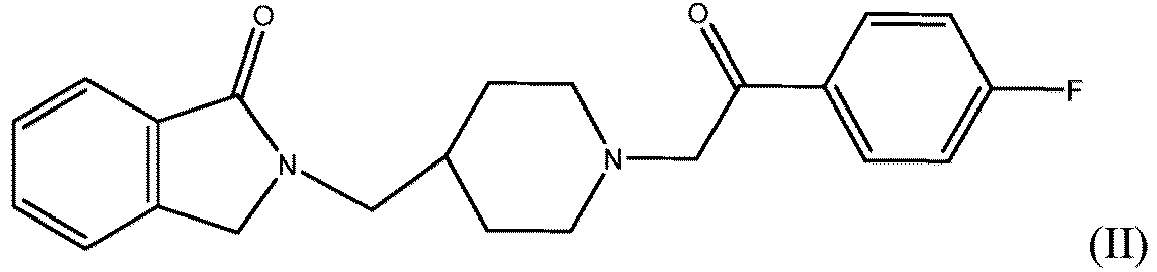
- a compound, or a pharmaceutically acceptable salt, hydrate, or solvate thereof for use in treating at least one negative symptom of schizophrenia in a schizophrenic subject in need thereof by a method which comprises administering a therapeutically effective amount of the compound, salt, hydrate, or solvate to the subject, wherein the compound is selected from the group consisting of a compound of formula (II), and a compound of formula (III),
- compounds of formula I are useful for augmenting treatment of schizophrenia in a subject presently receiving one or more compounds for the treatment of schizophrenia.
- compounds of formula I are useful for treating schizophrenia in combination with one or more additional antipsychotic compounds.
- compounds of formula I are useful for treating schizophrenia in combination with one or more additional antipsychotic compounds, by decreasing the therapeutically effective dosage of the one or more antipsychotic compounds.
- compounds of formula I are useful for treating schizophrenia in combination with one or more additional antipsychotic compounds by decreasing the therapeutically effective dosage of the one or more antipsychotic compounds, wherein the dosage of the compound of formula I is also decreased.
- compounds of formula I are useful for augmenting treatment of schizophrenia in a subject presently receiving one or more compounds for the treatment of schizophrenia by treating one or more negative symptoms of schizophrenia.
- compounds of formula I are useful for treating schizophrenia in combination with one or more additional antipsychotic compounds, by improving at least one aspect and/or parameter of sleep in the subject.
- a compound of formula I includes the compound set forth in formula II:
- a compound of formula I is the compound set forth in formula III:
- the compound of formula III has properties and/or activity similar to a compound of formula II.
- compounds of formula I disclosed herein have a receptor binding profile demonstrating preferential binding for sigma 2 receptors, 5-HT 2A receptors, and ⁇ 1 adrenergic receptors.
- compounds of formula I have a receptor binding profile comprising preferential affinity for sigma 2 receptors, while demonstrating little or no affinity for sigma 1 receptors.
- compounds of formula I have a receptor binding profile comprising preferential affinity for sigma 2 receptors than for sigma 1 receptors.
- compounds of formula I may not have a preferential binding for the same panel of receptors, and in some instances, may demonstrate preferential binding for one or more different receptors, including fewer than all of the sigma 2, 5-HT 2A , and ⁇ 1 adrenergic receptors.
- compounds disclosed herein may have little or no affinity for dopaminergic, muscarinic, cholinergic or histaminergic receptors, and may have varying affinities for any combinations of those receptors.
- a compound of formula II has little or no affinity for dopaminergic, muscarinic, cholinergic or histaminergic receptors.
- a compound of formula I may have a receptor binding profile with a K i value of less than 5 nmol/L, less than 10 nmol/L for, less than 15 nmol/L, less than 20 nmol/L, less than 25 nmol/L, or less than 50 nmol/L for 5-HT 2; a K i value of less than 10 nmol/L, less than 15 nmol/L, less than 20 nmol/L, less than 25 nmol/L, or less than 30 nmol/L for ⁇ 1 adrenergic receptors; and a K i value of less than 5 nmol/L, less than 10 nmol/L, less than 15 nmol/L, less than 20 nmol/L, and less than 25 nmol/L for the sigma 2 receptor, or any combination thereof.
- a use in a method for treating schizophrenia in a subject comprising administering to a subject in need thereof a therapeutically effective amount of a compound of the formula (I) or a pharmaceutically acceptable salt, hydrate, or solvate thereof, wherein X represents an alkyl group, a cycloalkyl-substituted alkyl group, an aryl-substituted alkyl group, an aryl-substituted alkenyl group, an aryl-substituted alkynyl group, a monocyclic or polycyclic cycloalkyl group which may be substituted with an alkyl group, an aryl group, a heterocyclic group, or a substituted or unsubstituted amino group;
- B represents the following groups: wherein R 3 , R 4 , R 5 and R 6 each independently represent a substituent selected from the group consisting of a hydrogen atom, a halogen atom, a nitro group, an alkyl group, a halogenated alkyl group, a hydroxyl group, an alkoxyl group, a halogenated alkoxyl group, and a cyano group; and m represents 1 or 2.
- a compound of formula I does not demonstrate cytochrome P450 2D6 ("2D6") inhibitory and/or modulatory activity. In another aspect, a compound of formula I demonstrates minimal 2D6 inhibitory and/or modulatory activity, such that the compound is still useful in that it does not significantly decrease the effectiveness of the intended treatment.
- 2D6 cytochrome P450 2D6
- a use in a method for treating at least one negative symptom of schizophrenia in a subject comprising administering to a subject in need thereof a therapeutically effective amount of a compound of the formula (I) or a pharmaceutically acceptable salt, as set forth above.
- a use in a method is provided wherein the compound is the compound set forth in formula II.
- a use in a method is provided wherein the compound is the compound set forth in formula III.
- a use in a method for treating at least one negative symptom of schizophrenia in a subject comprising administering to a subject in need thereof a therapeutically effective amount of a compound of the formula (I) or a pharmaceutically acceptable salt, as set forth above, wherein the at least one negative symptom is treated.
- at least one primary negative symptom is treated.
- at least one secondary negative symptom is treated.
- at least one disorder of sleep is treated.
- at least one aspect or parameter of sleep is improved in a patient.
- sleep is improved in a schizophrenic patient.
- the disruption of at least one disorder or parameter of sleep is associated with schizophrenia.
- the disruption of the at least one disorder or parameter of sleep is a negative symptom of schizophrenia.
- the disruption of the at least one disorder or parameter of sleep is neither a positive nor a negative symptom of schizophrenia, but rather, is merely associated with the schizophrenia.
- the present disclosure provides for treatment of at least one disorder or parameter of sleep regardless of how the disorder or affected parameter of sleep arises.
- sleep is improved in a patient who does not have schizophrenia.
- at least one disorder or parameter of sleep is treated and/or improved.
- a method is provided for improving at least one aspect of sleep, comprising administering to a subject in need thereof a therapeutically effective amount of a compound of the formula (I) or a pharmaceutically acceptable salt, as set forth above.
- Various aspects of sleep may be treated, including, but not limited to, sleep onset latency, latency to persistent sleep, and the distribution of slow wave sleep across the sleep period time, or one or more segments of sleep period time.
- total sleep time is decreased.
- sleep efficiency index (SEI) is decreased by 2.4%.
- the duration of wake after sleep onset (WASO) is increased.
- slow wave sleep (SWS) is increased in the first third of sleep period time (SPT1).
- SWS is decreased in the last third of SPT (SPT3).
- a use in a method for treating or improving cognition, comprising administering to a subject in need thereof a therapeutically effective amount of a compound of the formula (I) or a pharmaceutically acceptable salt, as set forth herein.
- modification of sleep parameters can improve cognition.
- improvement and/or an increase in SWS improves cognition.
- cognition in general is improved.
- one or more aspects of cognition are improved, including, among others, memory consolidation, executive functions, verbal memory, and verbal fluency.
- a use in a method for treating or improving at least one aspect or parameter of sleep, comprising administering to a subject in need thereof a therapeutically effective amount of a compound of the formula (I) or a pharmaceutically acceptable salt, as set forth above, wherein the subject is affected with schizophrenia.
- a disorder of sleep is treated.
- Negative symptoms of schizophrenia include, but are not limited to, blunted affect (E.g., diminished emotional responsiveness as characterized by a reduction in facial expression, modulation of feelings, and communicative gestures), emotional withdrawal (E.g., lack of interest in, involvement with, and affective commitment to life's events), poor rapport (E.g., lack of interpersonal empathy, lack of openness in conversation, lack of sense of closeness or interest, interpersonal distancing and reduced verbal and nonverbal communication), passive/apathetic social withdrawal (E.g., diminished interest and initiative in social interactions due to passivity, apathy, anergy, or avolition; reduced interpersonal involvement and neglect of activities of daily living), difficulty in abstract thinking (E.g., impairment in the use of the abstract-symbolic mode of thinking, as evidenced by difficulty in classification, forming generalizations, and proceeding beyond concrete or egocentric thinking in problem-solving tasks), lack of spontaneity and flow of conversation (E.g., Reduction in the normal flow of communication associated with apathy
- a use in a method for treating at least one negative symptom of schizophrenia in a subject comprising administering to a subject in need thereof a therapeutically effective amount of a compound of the formula (I) or a pharmaceutically acceptable salt, as set forth above, wherein the at least one negative symptom is treated, further wherein at least one positive symptom of schizophrenia is not treated.
- a method is provided for treating at least one negative symptom of schizophrenia in a subject comprising administering to a subject in need thereof a therapeutically effective amount of a compound of the formula (I) or a pharmaceutically acceptable salt, as set forth above, wherein the at least one negative symptom is treated, further wherein at least one positive symptom of schizophrenia is also treated.
- Positive symptoms of schizophrenia include, but are not limited to, delusions (unfounded, unrealistic, idiosyncratic beliefs), conceptual disorganization (E.g., Disorganized process of thinking characterized by disruption of goal-directed sequencing, e.g., circumstantiality, tangentiality, loose associations, non sequiturs, gross illogicality, or thought block), hallucinations (E.g., Verbal report or behavior indicating perceptions which are not generated by external stimuli and which may occur in the auditory visual, olfactory, or somatic realms), hyperactivity and excitement (E.g., accelerated motor behavior, heightened responsivity to stimuli, hypervigilance, or excessive mood lability), grandiosity (E.g., exaggerated self-opinion and unrealistic convictions of superiority, including delusions of extraordinary abilities, wealth, knowledge, fame, power, and moral righteousness), suspiciousness/persecution (E.g., unrealistic or exaggerated ideas of doctrine, as reflected in guardedness,
- a use in a method for treating at least one negative symptom of schizophrenia in a subject comprising administering to a subject in need thereof a therapeutically effective amount of a compound of the formula (I) or a pharmaceutically acceptable salt, as set forth above, wherein the at least one negative symptom is treated, further wherein a general symptom of schizophrenia is not treated.
- a use in a method is provided for treating at least one negative symptom of schizophrenia in a subject comprising administering to a subject in need thereof a therapeutically effective amount of a compound of the formula (I) or a pharmaceutically acceptable salt, as set forth above, wherein the at least one negative symptom is treated, further wherein at least one general symptom of schizophrenia is treated.
- General symptoms of schizophrenia include, but are not limited to, somatic concern (E.g., physical complaints or beliefs about bodily illness or malfunctions), anxiety (E.g., subjective experience of nervousness, worry, apprehension, or restlessness, ranging from excessive concern about the present or future to feelings of panic), guilt-feelings (E.g., sense of remorse or self-blame for real or imagined misdeeds in the past), tension (E.g., overt physical manifestations of fear, anxiety, and agitation, such as stiffness, tremor, profuse sweating, and restlessness), mannerisms and posturing (E.g., unnatural movements or posture as characterized by an awkward, stilted, disorganized, or playful appearance), depression (E.g., feelings of sadness, discouragement, helplessness, and pessimism), motor retardation (E.g., reduction in motor activity as reflected in slowing or lessening of movements and speech, diminished responsiveness to stimuli, and reduced body tone), uncooperativeness (E
- a compound of formula I may be employed in the form of its free base, but is preferably used in the form of a pharmaceutically acceptable salt, typically the hydrochloride salt.
- Alternative salts of a compound of formula I with pharmaceutically acceptable acids may also be utilized in therapeutic administration, for example salts derived from the functional free base and acids including, but not limited to, palmitic acid, hydrobromic acid, phosphoric acid, acetic acid, fumaric acid, maleic acid, salicylic acid, citric acid, oxalic acid, lactic acid, malic acid, methanesulphonic acid and p-toluene sulphonic acid.
- a compound of formula I or a pharmaceutically acceptable salt thereof, for example, the compound of formula II may be administered in pure form, but will preferably be formulated into any suitable pharmaceutically acceptable and effective composition which provides effective levels of the active ingredient in the body.
- a depot formulation comprises a palmitate salt of a compound of formula I.
- a method of administering a compound of formula I may include titration of the compound up to a predetermined level.
- a compound is used at a specified level (E.g., 2 mg b.i.d., 4 mg b.i.d., 8 mg b.i.d., 16 mg b.i.d.).
- the compound is titrated up to a predetermined dosage (E.g., titration up to 16 mg b.i.d., 32 mg b.i.d., 64 mg b.i.d., etc).
- Administration of a compound for any purpose as described herein, in any form or combination described herein, may include administering the compound of formula I or a pharmaceutically acceptable salt thereof at a dose of between 10 ng - 1 g, 100 ng - 750 mg, 500 ng - 500 mg, 10 ⁇ g - 200 mg, 15 ⁇ g - 190 mg, 25 ⁇ g - 180 mg, 50 ⁇ g - 170 mg, 75 ⁇ g - 160 mg, 100 ⁇ g - 150 mg, 250 ⁇ g - 140 mg, 400 ⁇ g - 130 mg, between 500 ⁇ g - 128 mg, 600 ⁇ g - 100 mg, 750 ⁇ g - 75 mg, 900 ⁇ g - 50 mg, or at a dose between 1 mg - 64 mg.
- the treatment of schizophrenia may include administering the compound of formula I or a pharmaceutically acceptable salt thereof at a dose of ⁇ 1 g, ⁇ 500 mg, ⁇ 200 mg, ⁇ 150 mg, ⁇ 100 mg, ⁇ 50 mg, ⁇ 40 mg, ⁇ 30 mg, ⁇ 20 mg, ⁇ 10 mg, ⁇ 9 mg, ⁇ 8 mg, ⁇ 7 mg, ⁇ 6 mg, ⁇ 5 mg, ⁇ 4 mg, ⁇ 3 mg, ⁇ 2 mg, ⁇ 1 mg, ⁇ 0.5 mg, ⁇ 0.25 mg, ⁇ 0.1 mg, ⁇ 0.05 mg, or ⁇ 0.01 mg, ⁇ 0.005 mg, or ⁇ 0.001 mg.
- the dose may be administered as a weekly dose, a dose every other day, a single daily dose, twice daily, three times daily, four times daily, five times daily, or more frequently.
- the compound of formula I or a pharmaceutically acceptable salt thereof is administered at a dose of between 8 mg - 32 mg twice daily.
- a compound of formula I or a pharmaceutically acceptable salt thereof is administered independently of any other medication.
- a compound of formula I or a pharmaceutically acceptable salt thereof is administered to a subject that is an efficient 2D6 metabolizer.
- an efficient 2D6 metabolizer is a subject having average or greater than average 2D6 metabolic activity.
- a compound of formula I or a pharmaceutically acceptable salt thereof is administered in conjunction with one or more other medications.
- Such other medications may be administered or co-administered in forms and dosages as known in the art, or in the alternative, as has been described above for administration of compounds of formula I.
- a compound of formula I for example, the compound set forth in formula II, or a pharmaceutically acceptable salt of either, may advantageously be administered in combination with at least one neuroleptic agent (E.g., a typical or an atypical antipsychotic agent) to provide improved treatment of any combination of negative symptoms of schizophrenia, positive symptoms of schizophrenia, general symptoms of schizophrenia, or the treatment of schizophrenia itself.
- a neuroleptic agent E.g., a typical or an atypical antipsychotic agent
- the combinations, uses and methods of treatment of the disclosure may also provide advantages in treatment of patients who fail to respond adequately or who are resistant to other known treatments.
- a compound of formula I may be administered to a patient already undergoing treatment with at least one neuroleptic agent (E.g., a typical or an atypical antipsychotic agent), to provide improved treatment of any combination of negative symptoms of schizophrenia, positive symptoms of schizophrenia, general symptoms of schizophrenia, or the treatment of schizophrenia itself.
- at least one neuroleptic agent E.g., a typical or an atypical antipsychotic agent
- Atypical antipsychotics include, but are not limited to, olanzapine, clozapine, risperidone, paliperidone, aripiprazole, quetiapine, iloperidone, ziprasidone, asenapine, lurasidone, sertindole, amisulpride, clotiapine, mosapramine perospirone, sulpiride, and zotepine.
- Typical antipsychotics include, but are not limited to, haloperidol, benperidol, loxapine, molindone, pimozide, thioridazine, mesoridazine, thiothixene, chlorprothixene, fluphenazine, trifluoperazine, chlorpromazine, perphenazine, prochlorperazine, droperidol, and zuclopenthixol.
- a compound that is co-administered with a compound of formula I does not demonstrate any 2D6 inhibitory and/or modulatory activity.
- a compound that is co-administered with a compound of formula I demonstrates minimal 2D6 inhibitory and/or modulatory activity, such that the compound is still useful in that it does not significantly decrease the effectiveness of the intended treatment.
- a compound of formula I may be administered to a patient in conjunction with at least one neuroleptic agent, or to a patient already undergoing treatment with at least one neuroleptic agent, to provide improved treatment of any combination of negative symptoms of schizophrenia, positive symptoms of schizophrenia, general symptoms of schizophrenia, or the treatment of schizophrenia itself.
- the administration of a compound of formula I lowers the concentration of the neuroleptic agent required to achieve a therapeutically effective amount of the neuroleptic agent.
- the compound of formula I provides a synergistic effect to the neuroleptic agent.
- a compound of formula I may be administered to a patient in conjunction with at least one neuroleptic agent, or to a patient already undergoing treatment with at least one neuroleptic agent, wherein the neuroleptic agent does not prolong the QT interval.
- neuroleptic agents include, but are not limited to, risperidone, quetiapine, aripiprazole, and olanzapine, and pharmaceutically acceptable salts thereof, including, but not limited to, palmitate salts.
- a compound of formula I such as the compound set forth in formula II, will be paired with one or more antipsychotic compounds having a low QT prolongation liability. It will be clear to the skilled artisan how to select, identify and/or characterize the QT prolongation liability of an antipsychotic, particularly in view of the guidance set forth herein.
- a compound of formula I may be administered to a patient in conjunction with at least one neuroleptic agent, or to a patient already undergoing treatment with at least one neuroleptic agent, wherein the administration of the compound of formula I further augments the treatment of at least one negative symptom of schizophrenia.
- a compound of formula I may be administered to a patient in conjunction with at least one neuroleptic agent, or to a patient already undergoing treatment with at least one neuroleptic agent, wherein the administration of the compound of formula I further augments the treatment of any combination of at least one negative symptom of schizophrenia, at least one positive symptom of schizophrenia, at least one general symptom of schizophrenia, or the schizophrenia itself.
- a method for treating at least one negative symptom of schizophrenia in a subject comprising administering to a subject in need thereof a therapeutically effective amount of a compound of the formula (I) or a pharmaceutically acceptable salt, as set forth above, wherein the at least one negative symptom is treated, further wherein schizophrenia-related cognition is improved.
- Cognitive skills include, but are not limited to, motor speed, verbal memory, and verbal fluency. Improvement of cognition is described in greater detail elsewhere herein.
- the study was designed to test the therapeutic efficacy of the compound of formula II on all dimensions of schizophrenic disease (E.g., positive, negative, and general symptoms, cognition, sleep, mood and anxiety).
- the study also examined the safety of the administered doses of the compound of formula II (also referred to herein as CYR-101), including heart repolarization (i.e., QT interval), weight change, adverse events, prolactin, and extrapyramidal symptoms).
- DAI-10 Drug Attitude Inventory-10
- CYR-101 8 mg oral sustained release (SR) tablet oral administration of 1, 2, or 4 tablets (8, 16 or 32 mg of CYR-101) was administered twice daily in fed condition.
- SR sustained release
- CYR-101 was administered orally, twice a day in the morning and in the evening, at the daily dose of 16 mg for two days, then titrated up every two days to 32 mg and 64 mg respectively.
- the optimal adjusted dose evaluated for each patient or the maximum daily dose of 64 mg of CYR-101 was administered.
- the dosage of compound was titrated up to 32 mg b.i.d.
- oral administration of 1 placebo SR tablet was conducted twice a day for 3 days.
- oral administration of 1, 2, or 4 placebo SR tablets was used twice daily as performed for the test product.
- the resulting data was analyzed one of three ways: 1.) Safety set; 2.) Full analysis set, with each patient having at least one PANSS evaluation after treatment initiation included in the efficacy analysis. The LOCF method is used; and 3.) Per protocol set, where for certain analyses, all patients having completed three months of treatment are included. ANCOVA followed by a contrast analysis at each time point were applied and in some cases, a non-parametric Wilcoxon test was used.
- CYR-101 has a positive effect on cognition in schizophrenic patients. Cognition was shown to improve quickly upon beginning treatment of patients with CYR-101. Cognitive performances assessed by the mean of the BACS show on the FAS, no differences between the placebo group and the CYR-101 group, except for the Token motor task. On the PPC at D84, descriptive data show a slight difference in favor of CYR-101 group in comparison to the placebo group for the Token motor task, list learning task and for verbal fluency, as well as for processing speed. These differences were not statistically significant. However, in comparison, it should be noted that most other antipsychotic treatments have a marked negative effect on cognition.
- CYR-101 induced surprising and unexpected immediate and sustained effects on negative symptoms and some cognitive functions disturbed in schizophrenic patients.
- CYR-101 has also some effects on positive symptoms but there is a need of a longer period of treatment to start to see a differentiation from placebo. All the above mentioned effects are accompanied by some improvements of mood, anxiety and sleep, making CYR-101 a desirable basis for therapy to treat schizophrenia and symptoms of schizophrenia with a minimum of side effects and an advantageous, immediate, and beneficial effect on negative symptoms and cognition.
- the change from baseline in PANSS total score after one month of treatment is the primary criteria of efficacy.
- the PANSS total score, the PANSS general psychopathology sub-score and the PANSS positive sub-score show a decrease in both groups with no treatment difference between placebo and CYR-101 groups.
- the PANSS total score, the PANSS general psychopathology sub-score and the PANSS positive sub-score show a statistically significant decrease for both groups with no treatment difference between placebo and CYR-101 groups.
- the FAS results of the PANSS negative sub-score at D28 demonstrate a favorable trend superiority of CYR-101 over placebo with a statistically significant decrease of - 1.7, (p ⁇ 0.05) and -1.9, (p ⁇ 0.01), for placebo and CYR-001 respectively.
- the pattern shown in FAS analysis is confirmed on PPC results.
- the PANSS negative sub-score at D28 demonstrate a more favorable superiority of CYR-101 over placebo with a statistically significant decrease of -4.2, (p ⁇ 0.0010) and -4.7, (p ⁇ 0.0010), for placebo and CYR-001 respectively.
- the CGI-S score shows no significant difference between CYR-101 and placebo on the FAS at D28 and D84.
- DAI-10 total score change from baseline to D28 and D84 show no statistically significant difference between the two groups, on the FAS and the PPC.
- PSQI results indicate on the FAS that sleep quality was better for both groups at the end of the study. This improvement was greater in CYR-101 group (-4 points ⁇ 4.9) in comparison to placebo group (-1.4 points ⁇ 6.6). As for the FAS results, the PPC data indicate that sleep quality was better for both groups at the end of the study. This improvement was greater in CYR-101 group (-4.6 points ⁇ 4.3) in comparison to placebo group (-1.2 points ⁇ 6.2).
- U.S. Patent 7,166,617 illustrates the preferential binding of CYR-101 to the sigma 2 receptor site.
- the test compound of Example 1 of U.S. Patent 7,166,617 is CYR-101.
- CYR-101 has an affinity of 13 nM for the sigma 2 receptor. This data illustrates that CYR-101 demonstrates sigma 2-selective receptor binding.
- CYR-101 is a dual 5-HT2A /sigma 2 antagonist and is devoid of dopamine binding properties.
- CYR-101 improves sleep in schizophrenic patients, and may be more generally useful for treatment of sleep disorders.
- results of the ANCOVA performed on the sleep initiation parameters indicate no significant treatment effect. However, a trend of improvement can be observed on sleep onset latency as well as on latency to persistent sleep. Results of the ANCOVA performed on the sleep maintenance parameters indicate no significant treatment effect. Contrasts revealed that, compared to placebo, CYR-101 decreased total sleep time (TST) by 13.7 min and sleep efficiency index (SEI) by 2.4% and increased duration of wake after sleep onset (WASO) by 26.6 min. These differences did not reach statistical significance.
- results of the mixed model performed on the sleep profile parameters indicate two significant treatment effects (p ⁇ 0.05) on the distribution of slow wave sleep across the first and the last third of the sleep period time (SPT).
- Significant contrasts (p ⁇ 0.05) revealed that, compared to placebo, CYR-101 increased SWS in the first third of SPT (SWS-SPT1) by 23.6% while it decreased it during the last third (SWS-SPT3) by 22.1%.
- REM sleep was found slightly increase by 1.4% in the first third of SPT (REM_SPT1) and slightly decreased thereafter (by 3.03% in SPT2 and in SPT3) but these results were not statistically significant. Both non significant latencies contrasts results showed that SWS appeared sooner and REM sleep appeared later with CYR-101.
- CYR-101 had no significant effect on sleep EEG parameters except for the slow wave sleep distribution.
- CYR-101 shifted the slow wave sleep distribution from the end to the beginning of the night: it significantly increased slow wave sleep in the first third of the night and decreased it in the last third of the night.
- sleep EEG parameters in patients with schizophrenia have a high degree of variability (due to illness heterogeneity and/or concomitant medication). In this context, some of the differences observed in the present study could have reached statistical significance with a larger sample size.
- any enhancement to or improvement in the quality of sleep, or in the beneficial effect obtained from sleep may be considered a treatment or an improvement.
Landscapes
- Health & Medical Sciences (AREA)
- Chemical & Material Sciences (AREA)
- Engineering & Computer Science (AREA)
- Organic Chemistry (AREA)
- Life Sciences & Earth Sciences (AREA)
- General Health & Medical Sciences (AREA)
- Animal Behavior & Ethology (AREA)
- Pharmacology & Pharmacy (AREA)
- Public Health (AREA)
- Veterinary Medicine (AREA)
- Medicinal Chemistry (AREA)
- Signal Processing (AREA)
- Bioinformatics & Cheminformatics (AREA)
- Neurology (AREA)
- Neurosurgery (AREA)
- Biomedical Technology (AREA)
- Epidemiology (AREA)
- Computer Networks & Wireless Communication (AREA)
- Nuclear Medicine, Radiotherapy & Molecular Imaging (AREA)
- General Chemical & Material Sciences (AREA)
- Chemical Kinetics & Catalysis (AREA)
- Psychiatry (AREA)
- Agronomy & Crop Science (AREA)
- Environmental Sciences (AREA)
- Zoology (AREA)
- Wood Science & Technology (AREA)
- Dentistry (AREA)
- Plant Pathology (AREA)
- Pest Control & Pesticides (AREA)
- Anesthesiology (AREA)
- Hospice & Palliative Care (AREA)
- Pharmaceuticals Containing Other Organic And Inorganic Compounds (AREA)
- Organic Low-Molecular-Weight Compounds And Preparation Thereof (AREA)
Claims (14)
- Verbindung oder pharmazeutisch unbedenkliches Salz, Hydrat oder Solvat davon zur Verwendung bei der Behandlung von mindestens einem negativen Symptom von Schizophrenie bei einem schizophrenen Individuum, bei dem diesbezüglicher Bedarf besteht, durch ein Verfahren, bei dem man dem Individuum eine therapeutisch wirksame Menge der Verbindung, des Salzes, des Hydrats oder des Solvats verabreicht, wobei die Verbindung aus der Gruppe bestehend aus einer Verbindung der Formel (II),

- Verbindung zur Verwendung nach Anspruch 1, wobei das negative Symptom aus der Gruppe bestehend aus Affektverarmung, emotionalem Rückzug, mangelnder Beziehungsfähigkeit, passivem/apathischem sozialem Rückzug, erschwertem abstraktem Denkvermögen, mangelnder Spontaneität und mangelndem Redefluss und stereotypem Denken ausgewählt ist.
- Verbindung zur Verwendung nach Anspruch 1 oder 2, wobei das negative Symptom aus der Gruppe bestehend aus einem primären negativen Symptom und einem sekundären negativen Symptom ausgewählt ist.
- Verbindung zur Verwendung nach einem der vorhergehenden Ansprüche, wobei die Verbindung in einer Dosis zwischen 100 µg und 150 mg verabreicht wird.
- Verbindung zur Verwendung nach Anspruch 4, wobei die Verbindung in einer Dosis zwischen 500 µg und 128 mg verabreicht wird.
- Verbindung zur Verwendung nach Anspruch 5, wobei die Verbindung in einer Dosis zwischen 600 µg und 100 mg, gegebenenfalls zwischen 750 µg und 75 mg, verabreicht wird.
- Verbindung zur Verwendung nach Anspruch 6, wobei die Verbindung in einer Dosis zwischen 1 mg und 64 mg, gegebenenfalls zwischen 8 mg und 32 mg, verabreicht wird.
- Verbindung zur Verwendung nach einem der Ansprüche 1-6, wobei die Verbindung als eine wöchentliche Dosis, eine Dosis jeden zweiten Tag, eine einzige Tagesdosis, zweimal täglich, dreimal täglich, viermal täglich oder fünfmal täglich verabreicht wird.
- Verbindung zur Verwendung nach Anspruch 8, wobei die Verbindung in einer Dosis zwischen 8 mg und 32 mg zweimal täglich verabreicht wird.
- Verbindung zur Verwendung nach einem der vorhergehenden Ansprüche, wobei es sich bei der Verbindung um eine Verbindung der Formel (II) handelt.
- Verbindung zur Verwendung nach Anspruch 10, wobei ein Hydrochloridsalz der Verbindung verabreicht wird.
- Verbindung zur Verwendung nach Anspruch 11, wobei ein Hydrat verabreicht wird.
- Verbindung zur Verwendung nach einem der vorhergehenden Ansprüche, wobei das Individuum bereits mit mindestens einem Neuroleptikum (z. B. einem typischen oder atypischen Antipsychotikum) behandelt wird.
- Verbindung zur Verwendung nach einem der vorhergehenden Ansprüche, wobei die Verbindung dem Individuum in Kombination mit mindestens einem Neuroleptikum (z. B. einem typischen oder atypischen Antipsychotikum) verabreicht wird.
Priority Applications (4)
| Application Number | Priority Date | Filing Date | Title |
|---|---|---|---|
| SI201132096T SI3135286T1 (sl) | 2010-07-20 | 2011-07-20 | Postopek uporabe derivatov cikličnega amida za zdravljenje shizofrenije in njenih simptomov |
| SM20230413T SMT202300413T1 (it) | 2010-07-20 | 2011-07-20 | Metodi di utilizzo di derivati di ammide ciclica per trattare schizofrenia e relativi sintomi |
| HRP20231446TT HRP20231446T1 (hr) | 2010-07-20 | 2011-07-20 | Postupci upotrebe derivata cikličkih amida za liječenje shizofrenije i njezinih simptoma |
| RS20231061A RS64819B1 (sr) | 2010-07-20 | 2011-07-20 | Metode upotrebe derivata cikličnih amida za lečenje šizofrenije i njenih simptoma |
Applications Claiming Priority (3)
| Application Number | Priority Date | Filing Date | Title |
|---|---|---|---|
| US36607510P | 2010-07-20 | 2010-07-20 | |
| EP11810349.8A EP2595484B1 (de) | 2010-07-20 | 2011-07-20 | Verwendung zyklischer Aminderivate zur Behandlung von Schlafstörungen |
| PCT/US2011/044697 WO2012012542A1 (en) | 2010-07-20 | 2011-07-20 | Methods of use of cyclic amide derivatives to treat schizophrenia |
Related Parent Applications (2)
| Application Number | Title | Priority Date | Filing Date |
|---|---|---|---|
| EP11810349.8A Division EP2595484B1 (de) | 2010-07-20 | 2011-07-20 | Verwendung zyklischer Aminderivate zur Behandlung von Schlafstörungen |
| EP11810349.8A Division-Into EP2595484B1 (de) | 2010-07-20 | 2011-07-20 | Verwendung zyklischer Aminderivate zur Behandlung von Schlafstörungen |
Publications (2)
| Publication Number | Publication Date |
|---|---|
| EP3135286A1 EP3135286A1 (de) | 2017-03-01 |
| EP3135286B1 true EP3135286B1 (de) | 2023-09-06 |
Family
ID=45497166
Family Applications (4)
| Application Number | Title | Priority Date | Filing Date |
|---|---|---|---|
| EP11810349.8A Active EP2595484B1 (de) | 2010-07-20 | 2011-07-20 | Verwendung zyklischer Aminderivate zur Behandlung von Schlafstörungen |
| EP17196800.1A Active EP3335731B1 (de) | 2010-07-20 | 2011-07-20 | Verwendung von cyclischen amidderivaten zur behandlung von schlafstörungen |
| EP24197877.4A Pending EP4494704A3 (de) | 2010-07-20 | 2011-07-20 | Verwendung von cyclischen amidderivaten zur behandlung von schlafstörungen |
| EP16181339.9A Active EP3135286B1 (de) | 2010-07-20 | 2011-07-20 | Verfahren zur verwendung cyclischer aminderivate zur behandlung von schizophrenie und ihre symptome |
Family Applications Before (3)
| Application Number | Title | Priority Date | Filing Date |
|---|---|---|---|
| EP11810349.8A Active EP2595484B1 (de) | 2010-07-20 | 2011-07-20 | Verwendung zyklischer Aminderivate zur Behandlung von Schlafstörungen |
| EP17196800.1A Active EP3335731B1 (de) | 2010-07-20 | 2011-07-20 | Verwendung von cyclischen amidderivaten zur behandlung von schlafstörungen |
| EP24197877.4A Pending EP4494704A3 (de) | 2010-07-20 | 2011-07-20 | Verwendung von cyclischen amidderivaten zur behandlung von schlafstörungen |
Country Status (22)
| Country | Link |
|---|---|
| US (3) | US20180155318A1 (de) |
| EP (4) | EP2595484B1 (de) |
| JP (2) | JP6053678B2 (de) |
| KR (1) | KR101867633B1 (de) |
| CN (1) | CN103220910B (de) |
| BR (1) | BR112013001303A2 (de) |
| CA (2) | CA3117855C (de) |
| DK (2) | DK3135286T3 (de) |
| ES (2) | ES2656313T3 (de) |
| FI (1) | FI3135286T3 (de) |
| HR (1) | HRP20231446T1 (de) |
| HU (1) | HUE064157T2 (de) |
| LT (1) | LT3135286T (de) |
| NO (1) | NO2595484T3 (de) |
| PL (2) | PL3135286T3 (de) |
| PT (2) | PT2595484T (de) |
| RS (1) | RS64819B1 (de) |
| RU (1) | RU2576611C2 (de) |
| SI (1) | SI3135286T1 (de) |
| SM (1) | SMT202300413T1 (de) |
| TW (1) | TWI583679B (de) |
| WO (1) | WO2012012542A1 (de) |
Families Citing this family (5)
| Publication number | Priority date | Publication date | Assignee | Title |
|---|---|---|---|---|
| BR112017011555B1 (pt) | 2014-12-02 | 2023-10-03 | Minerva Neurosciences, Inc | Formulação farmacêutica compreendendo 2-((1-(2(4- fluorofenil)-2-oxoetil)piperidin-4-il)metil)isoindolin-1- ona e kit |
| SG11201810358YA (en) * | 2016-05-25 | 2018-12-28 | Mitsubishi Tanabe Pharma Corp | Compositions and methods for treating negative symptoms in non-schizophrenic patients |
| BR112019027398A2 (pt) | 2017-06-21 | 2020-07-07 | Minerva Neurosciences, Inc. | formas de dosagem orais de liberação controlada gastrorresistente |
| KR20250110361A (ko) | 2017-10-10 | 2025-07-18 | 뉴로크린 바이오사이언시즈 인코퍼레이티드 | 특정 vmat2 억제제의 투여 방법 |
| WO2020041504A1 (en) * | 2018-08-21 | 2020-02-27 | Minerva Neurosciences, Inc. | Use of roluperidone to treat negative symptoms and disorders, increase neuroplasticity, and promote neuroprotection |
Family Cites Families (7)
| Publication number | Priority date | Publication date | Assignee | Title |
|---|---|---|---|---|
| EP0325063B1 (de) | 1988-01-21 | 1994-03-09 | Merrell Dow Pharmaceuticals Inc. | Verwendung von 1,4-disubstituierten-Piperidinyl-Verbindungen zur Herstellung eines Arzneimittels zur Behandlung von Schlaflosigkeit |
| ZA908641B (en) * | 1989-10-27 | 1992-06-24 | Du Pont | (n-phthalimidoalkyl)piperidines |
| IE903857A1 (en) * | 1989-10-27 | 1991-05-08 | Du Pont Merck Pharma | (N-Phthalimidoalkyl)Piperidines |
| ATE366249T1 (de) | 2000-02-29 | 2007-07-15 | Mitsubishi Pharma Corp | Zyklische amid-derivate |
| US6335371B1 (en) * | 2000-11-28 | 2002-01-01 | Orion Corporation | Method for inducing cognition enhancement |
| WO2006131713A1 (en) * | 2005-06-06 | 2006-12-14 | Merck Sharp & Dohme Limited | Cyclohexanesulfonyl derivatives as glyt1 inhibitors to treat schizophrenia |
| TW200817400A (en) * | 2006-05-30 | 2008-04-16 | Elbion Ag | Pyrido [3,2-e] pyrazines, their use as inhibitors of phosphodiesterase 10, and processes for preparing them |
-
2011
- 2011-07-20 HU HUE16181339A patent/HUE064157T2/hu unknown
- 2011-07-20 PL PL16181339.9T patent/PL3135286T3/pl unknown
- 2011-07-20 DK DK16181339.9T patent/DK3135286T3/da active
- 2011-07-20 PL PL11810349T patent/PL2595484T3/pl unknown
- 2011-07-20 SI SI201132096T patent/SI3135286T1/sl unknown
- 2011-07-20 TW TW100125661A patent/TWI583679B/zh active
- 2011-07-20 CA CA3117855A patent/CA3117855C/en active Active
- 2011-07-20 RU RU2013107382/15A patent/RU2576611C2/ru active
- 2011-07-20 EP EP11810349.8A patent/EP2595484B1/de active Active
- 2011-07-20 NO NO11810349A patent/NO2595484T3/no unknown
- 2011-07-20 PT PT118103498T patent/PT2595484T/pt unknown
- 2011-07-20 ES ES11810349.8T patent/ES2656313T3/es active Active
- 2011-07-20 WO PCT/US2011/044697 patent/WO2012012542A1/en not_active Ceased
- 2011-07-20 BR BR112013001303A patent/BR112013001303A2/pt not_active Application Discontinuation
- 2011-07-20 CA CA2806017A patent/CA2806017C/en active Active
- 2011-07-20 FI FIEP16181339.9T patent/FI3135286T3/fi active
- 2011-07-20 JP JP2013520840A patent/JP6053678B2/ja active Active
- 2011-07-20 CN CN201180045067.1A patent/CN103220910B/zh active Active
- 2011-07-20 RS RS20231061A patent/RS64819B1/sr unknown
- 2011-07-20 SM SM20230413T patent/SMT202300413T1/it unknown
- 2011-07-20 EP EP17196800.1A patent/EP3335731B1/de active Active
- 2011-07-20 HR HRP20231446TT patent/HRP20231446T1/hr unknown
- 2011-07-20 ES ES16181339T patent/ES2963362T3/es active Active
- 2011-07-20 DK DK11810349.8T patent/DK2595484T3/en active
- 2011-07-20 PT PT161813399T patent/PT3135286T/pt unknown
- 2011-07-20 KR KR1020137004217A patent/KR101867633B1/ko active Active
- 2011-07-20 EP EP24197877.4A patent/EP4494704A3/de active Pending
- 2011-07-20 LT LTEP16181339.9T patent/LT3135286T/lt unknown
- 2011-07-20 EP EP16181339.9A patent/EP3135286B1/de active Active
-
2016
- 2016-08-23 JP JP2016163049A patent/JP6200561B2/ja active Active
-
2017
- 2017-07-21 US US15/656,062 patent/US20180155318A1/en not_active Abandoned
-
2022
- 2022-05-16 US US17/745,024 patent/US20220274951A1/en not_active Abandoned
-
2024
- 2024-08-30 US US18/821,656 patent/US20250179044A1/en active Pending
Also Published As
Similar Documents
| Publication | Publication Date | Title |
|---|---|---|
| US9732059B2 (en) | Methods of use of cyclic amide derivatives to treat schizophrenia | |
| US20250179044A1 (en) | Methods of use of cyclic amide derivatives to treat schizophrenia | |
| JP6419294B2 (ja) | シグマ受容体に仲介される障害を処置するための環状アミド誘導体の使用の方法 | |
| RU2840025C2 (ru) | Способы применения производных циклического амида для лечения опосредуемых сигма-рецепторами расстройств | |
| KR20250105660A (ko) | 울로타론트를 이용한 신경정신 약물 변경 방법 |
Legal Events
| Date | Code | Title | Description |
|---|---|---|---|
| REG | Reference to a national code |
Ref country code: HR Ref legal event code: TUEP Ref document number: P20231446T Country of ref document: HR |
|
| PUAI | Public reference made under article 153(3) epc to a published international application that has entered the european phase |
Free format text: ORIGINAL CODE: 0009012 |
|
| STAA | Information on the status of an ep patent application or granted ep patent |
Free format text: STATUS: THE APPLICATION HAS BEEN PUBLISHED |
|
| AC | Divisional application: reference to earlier application |
Ref document number: 2595484 Country of ref document: EP Kind code of ref document: P |
|
| AK | Designated contracting states |
Kind code of ref document: A1 Designated state(s): AL AT BE BG CH CY CZ DE DK EE ES FI FR GB GR HR HU IE IS IT LI LT LU LV MC MK MT NL NO PL PT RO RS SE SI SK SM TR |
|
| STAA | Information on the status of an ep patent application or granted ep patent |
Free format text: STATUS: REQUEST FOR EXAMINATION WAS MADE |
|
| 17P | Request for examination filed |
Effective date: 20170830 |
|
| RBV | Designated contracting states (corrected) |
Designated state(s): AL AT BE BG CH CY CZ DE DK EE ES FI FR GB GR HR HU IE IS IT LI LT LU LV MC MK MT NL NO PL PT RO RS SE SI SK SM TR |
|
| STAA | Information on the status of an ep patent application or granted ep patent |
Free format text: STATUS: EXAMINATION IS IN PROGRESS |
|
| 17Q | First examination report despatched |
Effective date: 20200716 |
|
| GRAP | Despatch of communication of intention to grant a patent |
Free format text: ORIGINAL CODE: EPIDOSNIGR1 |
|
| STAA | Information on the status of an ep patent application or granted ep patent |
Free format text: STATUS: GRANT OF PATENT IS INTENDED |
|
| RIC1 | Information provided on ipc code assigned before grant |
Ipc: A61P 43/00 20060101ALI20230308BHEP Ipc: A61P 25/28 20060101ALI20230308BHEP Ipc: A61P 25/20 20060101ALI20230308BHEP Ipc: A61P 25/18 20060101ALI20230308BHEP Ipc: A61K 45/06 20060101ALI20230308BHEP Ipc: A61K 31/454 20060101AFI20230308BHEP |
|
| INTG | Intention to grant announced |
Effective date: 20230321 |
|
| RIN1 | Information on inventor provided before grant (corrected) |
Inventor name: KARABELAS, ARGERIS Inventor name: PELLEGRINI, LORENZO Inventor name: LUTHRINGER, REMY, HENRI |
|
| GRAS | Grant fee paid |
Free format text: ORIGINAL CODE: EPIDOSNIGR3 |
|
| GRAA | (expected) grant |
Free format text: ORIGINAL CODE: 0009210 |
|
| STAA | Information on the status of an ep patent application or granted ep patent |
Free format text: STATUS: THE PATENT HAS BEEN GRANTED |
|
| AC | Divisional application: reference to earlier application |
Ref document number: 2595484 Country of ref document: EP Kind code of ref document: P |
|
| AK | Designated contracting states |
Kind code of ref document: B1 Designated state(s): AL AT BE BG CH CY CZ DE DK EE ES FI FR GB GR HR HU IE IS IT LI LT LU LV MC MK MT NL NO PL PT RO RS SE SI SK SM TR |
|
| P01 | Opt-out of the competence of the unified patent court (upc) registered |
Effective date: 20230801 |
|
| REG | Reference to a national code |
Ref country code: GB Ref legal event code: FG4D |
|
| REG | Reference to a national code |
Ref country code: CH Ref legal event code: EP |
|
| REG | Reference to a national code |
Ref country code: DE Ref legal event code: R096 Ref document number: 602011074241 Country of ref document: DE |
|
| REG | Reference to a national code |
Ref country code: IE Ref legal event code: FG4D |
|
| RAP4 | Party data changed (patent owner data changed or rights of a patent transferred) |
Owner name: MINERVA NEUROSCIENCES, INC. |
|
| REG | Reference to a national code |
Ref country code: FI Ref legal event code: FGE |
|
| REG | Reference to a national code |
Ref country code: DK Ref legal event code: T3 Effective date: 20231123 Ref country code: NO Ref legal event code: T2 Effective date: 20230906 |
|
| REG | Reference to a national code |
Ref country code: PT Ref legal event code: SC4A Ref document number: 3135286 Country of ref document: PT Date of ref document: 20231128 Kind code of ref document: T Free format text: AVAILABILITY OF NATIONAL TRANSLATION Effective date: 20231123 |
|
| REG | Reference to a national code |
Ref country code: SE Ref legal event code: TRGR |
|
| REG | Reference to a national code |
Ref country code: NL Ref legal event code: FP |
|
| REG | Reference to a national code |
Ref country code: DE Ref legal event code: R081 Ref document number: 602011074241 Country of ref document: DE Owner name: MINERVA NEUROSCIENCES, INC., BURLINGTON, US Free format text: FORMER OWNER: MINERVA NEUROSCIENCES, INC., WALTHAM, MA, US |
|
| REG | Reference to a national code |
Ref country code: GR Ref legal event code: EP Ref document number: 20230402267 Country of ref document: GR Effective date: 20240110 |
|
| REG | Reference to a national code |
Ref country code: SK Ref legal event code: T3 Ref document number: E 42804 Country of ref document: SK |
|
| REG | Reference to a national code |
Ref country code: EE Ref legal event code: FG4A Ref document number: E023780 Country of ref document: EE Effective date: 20231123 |
|
| REG | Reference to a national code |
Ref country code: HU Ref legal event code: AG4A Ref document number: E064157 Country of ref document: HU |
|
| REG | Reference to a national code |
Ref country code: HR Ref legal event code: T1PR Ref document number: P20231446 Country of ref document: HR |
|
| REG | Reference to a national code |
Ref country code: ES Ref legal event code: FG2A Ref document number: 2963362 Country of ref document: ES Kind code of ref document: T3 Effective date: 20240326 |
|
| PG25 | Lapsed in a contracting state [announced via postgrant information from national office to epo] |
Ref country code: IS Free format text: LAPSE BECAUSE OF FAILURE TO SUBMIT A TRANSLATION OF THE DESCRIPTION OR TO PAY THE FEE WITHIN THE PRESCRIBED TIME-LIMIT Effective date: 20240106 |
|
| PG25 | Lapsed in a contracting state [announced via postgrant information from national office to epo] |
Ref country code: IS Free format text: LAPSE BECAUSE OF FAILURE TO SUBMIT A TRANSLATION OF THE DESCRIPTION OR TO PAY THE FEE WITHIN THE PRESCRIBED TIME-LIMIT Effective date: 20240106 |
|
| REG | Reference to a national code |
Ref country code: DE Ref legal event code: R097 Ref document number: 602011074241 Country of ref document: DE |
|
| PLBE | No opposition filed within time limit |
Free format text: ORIGINAL CODE: 0009261 |
|
| STAA | Information on the status of an ep patent application or granted ep patent |
Free format text: STATUS: NO OPPOSITION FILED WITHIN TIME LIMIT |
|
| REG | Reference to a national code |
Ref country code: HR Ref legal event code: ODRP Ref document number: P20231446 Country of ref document: HR Payment date: 20240704 Year of fee payment: 14 |
|
| 26N | No opposition filed |
Effective date: 20240607 |
|
| PGFP | Annual fee paid to national office [announced via postgrant information from national office to epo] |
Ref country code: MT Payment date: 20240702 Year of fee payment: 14 |
|
| PGFP | Annual fee paid to national office [announced via postgrant information from national office to epo] |
Ref country code: CY Payment date: 20240705 Year of fee payment: 14 |
|
| PGFP | Annual fee paid to national office [announced via postgrant information from national office to epo] |
Ref country code: RS Payment date: 20250630 Year of fee payment: 15 |
|
| PGFP | Annual fee paid to national office [announced via postgrant information from national office to epo] |
Ref country code: SK Payment date: 20250630 Year of fee payment: 15 |
|
| PGFP | Annual fee paid to national office [announced via postgrant information from national office to epo] |
Ref country code: SI Payment date: 20250630 Year of fee payment: 15 |
|
| PGFP | Annual fee paid to national office [announced via postgrant information from national office to epo] |
Ref country code: HU Payment date: 20250704 Year of fee payment: 15 |
|
| REG | Reference to a national code |
Ref country code: HR Ref legal event code: ODRP Ref document number: P20231446 Country of ref document: HR Payment date: 20250718 Year of fee payment: 15 |
|
| PGFP | Annual fee paid to national office [announced via postgrant information from national office to epo] |
Ref country code: NL Payment date: 20250726 Year of fee payment: 15 Ref country code: LU Payment date: 20250728 Year of fee payment: 15 |
|
| PGFP | Annual fee paid to national office [announced via postgrant information from national office to epo] |
Ref country code: SM Payment date: 20250708 Year of fee payment: 15 |
|
| PGFP | Annual fee paid to national office [announced via postgrant information from national office to epo] |
Ref country code: ES Payment date: 20250801 Year of fee payment: 15 Ref country code: PT Payment date: 20250702 Year of fee payment: 15 Ref country code: FI Payment date: 20250725 Year of fee payment: 15 |
|
| PGFP | Annual fee paid to national office [announced via postgrant information from national office to epo] |
Ref country code: DK Payment date: 20250725 Year of fee payment: 15 Ref country code: LT Payment date: 20250701 Year of fee payment: 15 Ref country code: DE Payment date: 20250729 Year of fee payment: 15 |
|
| PGFP | Annual fee paid to national office [announced via postgrant information from national office to epo] |
Ref country code: MC Payment date: 20250707 Year of fee payment: 15 Ref country code: GR Payment date: 20250729 Year of fee payment: 15 Ref country code: NO Payment date: 20250729 Year of fee payment: 15 |
|
| PGFP | Annual fee paid to national office [announced via postgrant information from national office to epo] |
Ref country code: PL Payment date: 20250703 Year of fee payment: 15 Ref country code: TR Payment date: 20250711 Year of fee payment: 15 Ref country code: IT Payment date: 20250721 Year of fee payment: 15 |
|
| PGFP | Annual fee paid to national office [announced via postgrant information from national office to epo] |
Ref country code: BG Payment date: 20250716 Year of fee payment: 15 Ref country code: BE Payment date: 20250728 Year of fee payment: 15 Ref country code: GB Payment date: 20250728 Year of fee payment: 15 |
|
| PGFP | Annual fee paid to national office [announced via postgrant information from national office to epo] |
Ref country code: HR Payment date: 20250718 Year of fee payment: 15 |
|
| PGFP | Annual fee paid to national office [announced via postgrant information from national office to epo] |
Ref country code: AL Payment date: 20250717 Year of fee payment: 15 Ref country code: AT Payment date: 20250702 Year of fee payment: 15 Ref country code: FR Payment date: 20250725 Year of fee payment: 15 |
|
| PGFP | Annual fee paid to national office [announced via postgrant information from national office to epo] |
Ref country code: SE Payment date: 20250727 Year of fee payment: 15 Ref country code: CH Payment date: 20250801 Year of fee payment: 15 |
|
| PGFP | Annual fee paid to national office [announced via postgrant information from national office to epo] |
Ref country code: CZ Payment date: 20250704 Year of fee payment: 15 Ref country code: EE Payment date: 20250711 Year of fee payment: 15 Ref country code: IE Payment date: 20250728 Year of fee payment: 15 |
|
| PGFP | Annual fee paid to national office [announced via postgrant information from national office to epo] |
Ref country code: RO Payment date: 20250707 Year of fee payment: 15 |
|
| PGFP | Annual fee paid to national office [announced via postgrant information from national office to epo] |
Ref country code: IS Payment date: 20250709 Year of fee payment: 15 |
|
| PGFP | Annual fee paid to national office [announced via postgrant information from national office to epo] |
Ref country code: LV Payment date: 20250701 Year of fee payment: 15 |
|
| PGFP | Annual fee paid to national office [announced via postgrant information from national office to epo] |
Ref country code: MK Payment date: 20250702 Year of fee payment: 15 |