EP3132043B1 - Viraler vektor für den zielgerichteten gentransfer in gehirn und rückenmark - Google Patents
Viraler vektor für den zielgerichteten gentransfer in gehirn und rückenmark Download PDFInfo
- Publication number
- EP3132043B1 EP3132043B1 EP15715750.4A EP15715750A EP3132043B1 EP 3132043 B1 EP3132043 B1 EP 3132043B1 EP 15715750 A EP15715750 A EP 15715750A EP 3132043 B1 EP3132043 B1 EP 3132043B1
- Authority
- EP
- European Patent Office
- Prior art keywords
- disease
- amino acid
- brain
- seq
- spinal cord
- Prior art date
- Legal status (The legal status is an assumption and is not a legal conclusion. Google has not performed a legal analysis and makes no representation as to the accuracy of the status listed.)
- Not-in-force
Links
- 210000004556 brain Anatomy 0.000 title claims description 80
- 210000000278 spinal cord Anatomy 0.000 title claims description 61
- 239000013603 viral vector Substances 0.000 title claims description 58
- 108090000623 proteins and genes Proteins 0.000 title claims description 41
- 238000012546 transfer Methods 0.000 title description 2
- 150000001413 amino acids Chemical class 0.000 claims description 68
- 210000004027 cell Anatomy 0.000 claims description 51
- 108090000565 Capsid Proteins Proteins 0.000 claims description 42
- 102100023321 Ceruloplasmin Human genes 0.000 claims description 42
- 108700019146 Transgenes Proteins 0.000 claims description 36
- 210000000234 capsid Anatomy 0.000 claims description 31
- 208000037265 diseases, disorders, signs and symptoms Diseases 0.000 claims description 26
- 101710197658 Capsid protein VP1 Proteins 0.000 claims description 21
- 101710132601 Capsid protein Proteins 0.000 claims description 20
- 101710118046 RNA-directed RNA polymerase Proteins 0.000 claims description 20
- 101710108545 Viral protein 1 Proteins 0.000 claims description 20
- 102000004169 proteins and genes Human genes 0.000 claims description 19
- 239000013607 AAV vector Substances 0.000 claims description 18
- 201000010099 disease Diseases 0.000 claims description 17
- 238000000034 method Methods 0.000 claims description 15
- 239000013612 plasmid Substances 0.000 claims description 14
- 102000039446 nucleic acids Human genes 0.000 claims description 12
- 108020004707 nucleic acids Proteins 0.000 claims description 12
- 150000007523 nucleic acids Chemical class 0.000 claims description 12
- 208000035475 disorder Diseases 0.000 claims description 9
- 230000004048 modification Effects 0.000 claims description 8
- 238000012986 modification Methods 0.000 claims description 8
- 230000003612 virological effect Effects 0.000 claims description 8
- 201000006417 multiple sclerosis Diseases 0.000 claims description 7
- 210000003169 central nervous system Anatomy 0.000 claims description 5
- 241000702421 Dependoparvovirus Species 0.000 claims description 4
- 208000015439 Lysosomal storage disease Diseases 0.000 claims description 4
- 239000012634 fragment Substances 0.000 claims description 4
- 230000004770 neurodegeneration Effects 0.000 claims description 4
- 208000015122 neurodegenerative disease Diseases 0.000 claims description 4
- 239000008194 pharmaceutical composition Substances 0.000 claims description 4
- 102100024643 ATP-binding cassette sub-family D member 1 Human genes 0.000 claims description 3
- 201000011452 Adrenoleukodystrophy Diseases 0.000 claims description 3
- 208000011403 Alexander disease Diseases 0.000 claims description 3
- 208000024827 Alzheimer disease Diseases 0.000 claims description 3
- 208000022526 Canavan disease Diseases 0.000 claims description 3
- 208000024720 Fabry Disease Diseases 0.000 claims description 3
- 102000034615 Glial cell line-derived neurotrophic factor Human genes 0.000 claims description 3
- 108091010837 Glial cell line-derived neurotrophic factor Proteins 0.000 claims description 3
- 208000010055 Globoid Cell Leukodystrophy Diseases 0.000 claims description 3
- 102000053187 Glucuronidase Human genes 0.000 claims description 3
- 108010060309 Glucuronidase Proteins 0.000 claims description 3
- 208000035895 Guillain-Barré syndrome Diseases 0.000 claims description 3
- 208000028226 Krabbe disease Diseases 0.000 claims description 3
- 108010049137 Member 1 Subfamily D ATP Binding Cassette Transporter Proteins 0.000 claims description 3
- 201000011442 Metachromatic leukodystrophy Diseases 0.000 claims description 3
- 206010049567 Miller Fisher syndrome Diseases 0.000 claims description 3
- 102100026784 Myelin proteolipid protein Human genes 0.000 claims description 3
- 108010006232 Neuraminidase Proteins 0.000 claims description 3
- 102000005348 Neuraminidase Human genes 0.000 claims description 3
- 208000018737 Parkinson disease Diseases 0.000 claims description 3
- 208000017493 Pelizaeus-Merzbacher disease Diseases 0.000 claims description 3
- 206010002026 amyotrophic lateral sclerosis Diseases 0.000 claims description 3
- 208000037976 chronic inflammation Diseases 0.000 claims description 3
- 208000037893 chronic inflammatory disorder Diseases 0.000 claims description 3
- 208000036546 leukodystrophy Diseases 0.000 claims description 3
- 102000003823 Aromatic-L-amino-acid decarboxylases Human genes 0.000 claims description 2
- 108090000121 Aromatic-L-amino-acid decarboxylases Proteins 0.000 claims description 2
- 108091022871 Cholesterol 24-Hydroxylase Proteins 0.000 claims description 2
- 102000020038 Cholesterol 24-Hydroxylase Human genes 0.000 claims description 2
- 102000002029 Claudin Human genes 0.000 claims description 2
- 108050009302 Claudin Proteins 0.000 claims description 2
- 108010023555 GTP Cyclohydrolase Proteins 0.000 claims description 2
- 102100027346 GTP cyclohydrolase 1 Human genes 0.000 claims description 2
- 102000018697 Membrane Proteins Human genes 0.000 claims description 2
- 108010052285 Membrane Proteins Proteins 0.000 claims description 2
- 108090000028 Neprilysin Proteins 0.000 claims description 2
- 102100028782 Neprilysin Human genes 0.000 claims description 2
- 102000003940 Occludin Human genes 0.000 claims description 2
- 108090000304 Occludin Proteins 0.000 claims description 2
- 102000000591 Tight Junction Proteins Human genes 0.000 claims description 2
- 108010002321 Tight Junction Proteins Proteins 0.000 claims description 2
- 108091000117 Tyrosine 3-Monooxygenase Proteins 0.000 claims description 2
- 102000048218 Tyrosine 3-monooxygenases Human genes 0.000 claims description 2
- 239000002559 chemokine receptor antagonist Substances 0.000 claims description 2
- 239000012528 membrane Substances 0.000 claims description 2
- 210000002161 motor neuron Anatomy 0.000 claims description 2
- 230000004083 survival effect Effects 0.000 claims description 2
- 125000003275 alpha amino acid group Chemical group 0.000 claims 9
- 201000011240 Frontotemporal dementia Diseases 0.000 claims 2
- 208000023105 Huntington disease Diseases 0.000 claims 2
- 208000000609 Pick Disease of the Brain Diseases 0.000 claims 2
- 101001123859 Homo sapiens Sialidase-1 Proteins 0.000 claims 1
- 102100028760 Sialidase-1 Human genes 0.000 claims 1
- 108090000765 processed proteins & peptides Proteins 0.000 description 53
- 239000013598 vector Substances 0.000 description 50
- 235000001014 amino acid Nutrition 0.000 description 40
- 229940024606 amino acid Drugs 0.000 description 39
- 230000014509 gene expression Effects 0.000 description 27
- 108020004414 DNA Proteins 0.000 description 21
- 235000018102 proteins Nutrition 0.000 description 17
- 210000001519 tissue Anatomy 0.000 description 17
- 102000004196 processed proteins & peptides Human genes 0.000 description 14
- 241000700605 Viruses Species 0.000 description 11
- 210000002889 endothelial cell Anatomy 0.000 description 10
- 210000002569 neuron Anatomy 0.000 description 9
- 230000001225 therapeutic effect Effects 0.000 description 9
- 108010067902 Peptide Library Proteins 0.000 description 8
- 230000027455 binding Effects 0.000 description 8
- 102000053602 DNA Human genes 0.000 description 7
- 238000001415 gene therapy Methods 0.000 description 7
- 238000001802 infusion Methods 0.000 description 7
- 210000000056 organ Anatomy 0.000 description 7
- 238000002347 injection Methods 0.000 description 6
- 239000007924 injection Substances 0.000 description 6
- 239000002773 nucleotide Substances 0.000 description 6
- 125000003729 nucleotide group Chemical group 0.000 description 6
- 229920001184 polypeptide Polymers 0.000 description 6
- 241000702423 Adeno-associated virus - 2 Species 0.000 description 5
- 210000004204 blood vessel Anatomy 0.000 description 5
- 238000003780 insertion Methods 0.000 description 5
- 230000037431 insertion Effects 0.000 description 5
- 239000000203 mixture Substances 0.000 description 5
- 230000005855 radiation Effects 0.000 description 5
- 238000006467 substitution reaction Methods 0.000 description 5
- 238000007910 systemic administration Methods 0.000 description 5
- 108020004682 Single-Stranded DNA Proteins 0.000 description 4
- 210000004899 c-terminal region Anatomy 0.000 description 4
- 238000001727 in vivo Methods 0.000 description 4
- 238000001990 intravenous administration Methods 0.000 description 4
- 238000010253 intravenous injection Methods 0.000 description 4
- 239000003446 ligand Substances 0.000 description 4
- 108020003175 receptors Proteins 0.000 description 4
- 102000005962 receptors Human genes 0.000 description 4
- 238000002560 therapeutic procedure Methods 0.000 description 4
- 230000010415 tropism Effects 0.000 description 4
- 241000701022 Cytomegalovirus Species 0.000 description 3
- DHMQDGOQFOQNFH-UHFFFAOYSA-N Glycine Natural products NCC(O)=O DHMQDGOQFOQNFH-UHFFFAOYSA-N 0.000 description 3
- 241000699666 Mus <mouse, genus> Species 0.000 description 3
- 238000013459 approach Methods 0.000 description 3
- 125000000637 arginyl group Chemical group N[C@@H](CCCNC(N)=N)C(=O)* 0.000 description 3
- 230000008499 blood brain barrier function Effects 0.000 description 3
- 210000001218 blood-brain barrier Anatomy 0.000 description 3
- 230000008859 change Effects 0.000 description 3
- 238000010367 cloning Methods 0.000 description 3
- 230000004064 dysfunction Effects 0.000 description 3
- 238000004519 manufacturing process Methods 0.000 description 3
- 239000002245 particle Substances 0.000 description 3
- 230000008488 polyadenylation Effects 0.000 description 3
- 238000000746 purification Methods 0.000 description 3
- 230000004223 radioprotective effect Effects 0.000 description 3
- 230000010076 replication Effects 0.000 description 3
- 239000000243 solution Substances 0.000 description 3
- 230000009870 specific binding Effects 0.000 description 3
- 230000026683 transduction Effects 0.000 description 3
- 238000010361 transduction Methods 0.000 description 3
- 238000001890 transfection Methods 0.000 description 3
- FWMNVWWHGCHHJJ-SKKKGAJSSA-N 4-amino-1-[(2r)-6-amino-2-[[(2r)-2-[[(2r)-2-[[(2r)-2-amino-3-phenylpropanoyl]amino]-3-phenylpropanoyl]amino]-4-methylpentanoyl]amino]hexanoyl]piperidine-4-carboxylic acid Chemical compound C([C@H](C(=O)N[C@H](CC(C)C)C(=O)N[C@H](CCCCN)C(=O)N1CCC(N)(CC1)C(O)=O)NC(=O)[C@H](N)CC=1C=CC=CC=1)C1=CC=CC=C1 FWMNVWWHGCHHJJ-SKKKGAJSSA-N 0.000 description 2
- 241000972680 Adeno-associated virus - 6 Species 0.000 description 2
- 239000004475 Arginine Substances 0.000 description 2
- CIWBSHSKHKDKBQ-JLAZNSOCSA-N Ascorbic acid Chemical compound OC[C@H](O)[C@H]1OC(=O)C(O)=C1O CIWBSHSKHKDKBQ-JLAZNSOCSA-N 0.000 description 2
- DCXYFEDJOCDNAF-UHFFFAOYSA-N Asparagine Natural products OC(=O)C(N)CC(N)=O DCXYFEDJOCDNAF-UHFFFAOYSA-N 0.000 description 2
- 102100021943 C-C motif chemokine 2 Human genes 0.000 description 2
- 239000004471 Glycine Substances 0.000 description 2
- MHAJPDPJQMAIIY-UHFFFAOYSA-N Hydrogen peroxide Chemical compound OO MHAJPDPJQMAIIY-UHFFFAOYSA-N 0.000 description 2
- 125000001429 N-terminal alpha-amino-acid group Chemical group 0.000 description 2
- 206010028980 Neoplasm Diseases 0.000 description 2
- ISWSIDIOOBJBQZ-UHFFFAOYSA-N Phenol Chemical compound OC1=CC=CC=C1 ISWSIDIOOBJBQZ-UHFFFAOYSA-N 0.000 description 2
- 108091058545 Secretory proteins Proteins 0.000 description 2
- 102000040739 Secretory proteins Human genes 0.000 description 2
- 102000019197 Superoxide Dismutase Human genes 0.000 description 2
- 108010012715 Superoxide dismutase Proteins 0.000 description 2
- 101150024766 VP1 gene Proteins 0.000 description 2
- 235000004279 alanine Nutrition 0.000 description 2
- ODKSFYDXXFIFQN-UHFFFAOYSA-N arginine Natural products OC(=O)C(N)CCCNC(N)=N ODKSFYDXXFIFQN-UHFFFAOYSA-N 0.000 description 2
- 235000009582 asparagine Nutrition 0.000 description 2
- 229960001230 asparagine Drugs 0.000 description 2
- 210000004958 brain cell Anatomy 0.000 description 2
- 210000005013 brain tissue Anatomy 0.000 description 2
- OSASVXMJTNOKOY-UHFFFAOYSA-N chlorobutanol Chemical compound CC(C)(O)C(Cl)(Cl)Cl OSASVXMJTNOKOY-UHFFFAOYSA-N 0.000 description 2
- LOKCTEFSRHRXRJ-UHFFFAOYSA-I dipotassium trisodium dihydrogen phosphate hydrogen phosphate dichloride Chemical compound P(=O)(O)(O)[O-].[K+].P(=O)(O)([O-])[O-].[Na+].[Na+].[Cl-].[K+].[Cl-].[Na+] LOKCTEFSRHRXRJ-UHFFFAOYSA-I 0.000 description 2
- 239000006185 dispersion Substances 0.000 description 2
- 239000003937 drug carrier Substances 0.000 description 2
- 238000010353 genetic engineering Methods 0.000 description 2
- ZDXPYRJPNDTMRX-UHFFFAOYSA-N glutamine Natural products OC(=O)C(N)CCC(N)=O ZDXPYRJPNDTMRX-UHFFFAOYSA-N 0.000 description 2
- 210000005260 human cell Anatomy 0.000 description 2
- 125000001165 hydrophobic group Chemical group 0.000 description 2
- 210000002865 immune cell Anatomy 0.000 description 2
- 230000008105 immune reaction Effects 0.000 description 2
- 238000000338 in vitro Methods 0.000 description 2
- 230000001404 mediated effect Effects 0.000 description 2
- 230000002018 overexpression Effects 0.000 description 2
- 239000002953 phosphate buffered saline Substances 0.000 description 2
- 238000002360 preparation method Methods 0.000 description 2
- 239000003755 preservative agent Substances 0.000 description 2
- 238000010187 selection method Methods 0.000 description 2
- 210000000130 stem cell Anatomy 0.000 description 2
- 208000024891 symptom Diseases 0.000 description 2
- DIGQNXIGRZPYDK-WKSCXVIASA-N (2R)-6-amino-2-[[2-[[(2S)-2-[[2-[[(2R)-2-[[(2S)-2-[[(2R,3S)-2-[[2-[[(2S)-2-[[2-[[(2S)-2-[[(2S)-2-[[(2R)-2-[[(2S,3S)-2-[[(2R)-2-[[(2S)-2-[[(2S)-2-[[(2S)-2-[[2-[[(2S)-2-[[(2R)-2-[[2-[[2-[[2-[(2-amino-1-hydroxyethylidene)amino]-3-carboxy-1-hydroxypropylidene]amino]-1-hydroxy-3-sulfanylpropylidene]amino]-1-hydroxyethylidene]amino]-1-hydroxy-3-sulfanylpropylidene]amino]-1,3-dihydroxypropylidene]amino]-1-hydroxyethylidene]amino]-1-hydroxypropylidene]amino]-1,3-dihydroxypropylidene]amino]-1,3-dihydroxypropylidene]amino]-1-hydroxy-3-sulfanylpropylidene]amino]-1,3-dihydroxybutylidene]amino]-1-hydroxy-3-sulfanylpropylidene]amino]-1-hydroxypropylidene]amino]-1,3-dihydroxypropylidene]amino]-1-hydroxyethylidene]amino]-1,5-dihydroxy-5-iminopentylidene]amino]-1-hydroxy-3-sulfanylpropylidene]amino]-1,3-dihydroxybutylidene]amino]-1-hydroxy-3-sulfanylpropylidene]amino]-1,3-dihydroxypropylidene]amino]-1-hydroxyethylidene]amino]-1-hydroxy-3-sulfanylpropylidene]amino]-1-hydroxyethylidene]amino]hexanoic acid Chemical compound C[C@@H]([C@@H](C(=N[C@@H](CS)C(=N[C@@H](C)C(=N[C@@H](CO)C(=NCC(=N[C@@H](CCC(=N)O)C(=NC(CS)C(=N[C@H]([C@H](C)O)C(=N[C@H](CS)C(=N[C@H](CO)C(=NCC(=N[C@H](CS)C(=NCC(=N[C@H](CCCCN)C(=O)O)O)O)O)O)O)O)O)O)O)O)O)O)O)N=C([C@H](CS)N=C([C@H](CO)N=C([C@H](CO)N=C([C@H](C)N=C(CN=C([C@H](CO)N=C([C@H](CS)N=C(CN=C(C(CS)N=C(C(CC(=O)O)N=C(CN)O)O)O)O)O)O)O)O)O)O)O)O DIGQNXIGRZPYDK-WKSCXVIASA-N 0.000 description 1
- MTCFGRXMJLQNBG-REOHCLBHSA-N (2S)-2-Amino-3-hydroxypropansäure Chemical compound OC[C@H](N)C(O)=O MTCFGRXMJLQNBG-REOHCLBHSA-N 0.000 description 1
- 108091032973 (ribonucleotides)n+m Proteins 0.000 description 1
- 241001655883 Adeno-associated virus - 1 Species 0.000 description 1
- 241000202702 Adeno-associated virus - 3 Species 0.000 description 1
- 241001634120 Adeno-associated virus - 5 Species 0.000 description 1
- 102000013455 Amyloid beta-Peptides Human genes 0.000 description 1
- 108010090849 Amyloid beta-Peptides Proteins 0.000 description 1
- 108020005544 Antisense RNA Proteins 0.000 description 1
- 206010003594 Ataxia telangiectasia Diseases 0.000 description 1
- 208000003174 Brain Neoplasms Diseases 0.000 description 1
- 102100031151 C-C chemokine receptor type 2 Human genes 0.000 description 1
- 101710149815 C-C chemokine receptor type 2 Proteins 0.000 description 1
- 108700013048 CCL2 Proteins 0.000 description 1
- 108090000994 Catalytic RNA Proteins 0.000 description 1
- 102000053642 Catalytic RNA Human genes 0.000 description 1
- 102000000018 Chemokine CCL2 Human genes 0.000 description 1
- 108091035707 Consensus sequence Proteins 0.000 description 1
- 102000004127 Cytokines Human genes 0.000 description 1
- 108090000695 Cytokines Proteins 0.000 description 1
- 230000005778 DNA damage Effects 0.000 description 1
- 231100000277 DNA damage Toxicity 0.000 description 1
- 238000007399 DNA isolation Methods 0.000 description 1
- 240000003517 Elaeocarpus dentatus Species 0.000 description 1
- 102000004190 Enzymes Human genes 0.000 description 1
- 108090000790 Enzymes Proteins 0.000 description 1
- 101000834253 Gallus gallus Actin, cytoplasmic 1 Proteins 0.000 description 1
- 108700028146 Genetic Enhancer Elements Proteins 0.000 description 1
- WHUUTDBJXJRKMK-UHFFFAOYSA-N Glutamic acid Natural products OC(=O)C(N)CCC(O)=O WHUUTDBJXJRKMK-UHFFFAOYSA-N 0.000 description 1
- 241000238631 Hexapoda Species 0.000 description 1
- 206010061218 Inflammation Diseases 0.000 description 1
- 102000008070 Interferon-gamma Human genes 0.000 description 1
- 108010074328 Interferon-gamma Proteins 0.000 description 1
- 102000000589 Interleukin-1 Human genes 0.000 description 1
- 108010002352 Interleukin-1 Proteins 0.000 description 1
- XUJNEKJLAYXESH-REOHCLBHSA-N L-Cysteine Chemical compound SC[C@H](N)C(O)=O XUJNEKJLAYXESH-REOHCLBHSA-N 0.000 description 1
- ONIBWKKTOPOVIA-BYPYZUCNSA-N L-Proline Chemical compound OC(=O)[C@@H]1CCCN1 ONIBWKKTOPOVIA-BYPYZUCNSA-N 0.000 description 1
- QNAYBMKLOCPYGJ-REOHCLBHSA-N L-alanine Chemical compound C[C@H](N)C(O)=O QNAYBMKLOCPYGJ-REOHCLBHSA-N 0.000 description 1
- ODKSFYDXXFIFQN-BYPYZUCNSA-P L-argininium(2+) Chemical compound NC(=[NH2+])NCCC[C@H]([NH3+])C(O)=O ODKSFYDXXFIFQN-BYPYZUCNSA-P 0.000 description 1
- DCXYFEDJOCDNAF-REOHCLBHSA-N L-asparagine Chemical compound OC(=O)[C@@H](N)CC(N)=O DCXYFEDJOCDNAF-REOHCLBHSA-N 0.000 description 1
- CKLJMWTZIZZHCS-REOHCLBHSA-N L-aspartic acid Chemical compound OC(=O)[C@@H](N)CC(O)=O CKLJMWTZIZZHCS-REOHCLBHSA-N 0.000 description 1
- WHUUTDBJXJRKMK-VKHMYHEASA-N L-glutamic acid Chemical compound OC(=O)[C@@H](N)CCC(O)=O WHUUTDBJXJRKMK-VKHMYHEASA-N 0.000 description 1
- ZDXPYRJPNDTMRX-VKHMYHEASA-N L-glutamine Chemical compound OC(=O)[C@@H](N)CCC(N)=O ZDXPYRJPNDTMRX-VKHMYHEASA-N 0.000 description 1
- HNDVDQJCIGZPNO-YFKPBYRVSA-N L-histidine Chemical compound OC(=O)[C@@H](N)CC1=CN=CN1 HNDVDQJCIGZPNO-YFKPBYRVSA-N 0.000 description 1
- AGPKZVBTJJNPAG-WHFBIAKZSA-N L-isoleucine Chemical compound CC[C@H](C)[C@H](N)C(O)=O AGPKZVBTJJNPAG-WHFBIAKZSA-N 0.000 description 1
- ROHFNLRQFUQHCH-YFKPBYRVSA-N L-leucine Chemical compound CC(C)C[C@H](N)C(O)=O ROHFNLRQFUQHCH-YFKPBYRVSA-N 0.000 description 1
- KDXKERNSBIXSRK-YFKPBYRVSA-N L-lysine Chemical compound NCCCC[C@H](N)C(O)=O KDXKERNSBIXSRK-YFKPBYRVSA-N 0.000 description 1
- FFEARJCKVFRZRR-BYPYZUCNSA-N L-methionine Chemical compound CSCC[C@H](N)C(O)=O FFEARJCKVFRZRR-BYPYZUCNSA-N 0.000 description 1
- COLNVLDHVKWLRT-QMMMGPOBSA-N L-phenylalanine Chemical compound OC(=O)[C@@H](N)CC1=CC=CC=C1 COLNVLDHVKWLRT-QMMMGPOBSA-N 0.000 description 1
- AYFVYJQAPQTCCC-GBXIJSLDSA-N L-threonine Chemical compound C[C@@H](O)[C@H](N)C(O)=O AYFVYJQAPQTCCC-GBXIJSLDSA-N 0.000 description 1
- QIVBCDIJIAJPQS-VIFPVBQESA-N L-tryptophane Chemical compound C1=CC=C2C(C[C@H](N)C(O)=O)=CNC2=C1 QIVBCDIJIAJPQS-VIFPVBQESA-N 0.000 description 1
- OUYCCCASQSFEME-QMMMGPOBSA-N L-tyrosine Chemical compound OC(=O)[C@@H](N)CC1=CC=C(O)C=C1 OUYCCCASQSFEME-QMMMGPOBSA-N 0.000 description 1
- KZSNJWFQEVHDMF-BYPYZUCNSA-N L-valine Chemical compound CC(C)[C@H](N)C(O)=O KZSNJWFQEVHDMF-BYPYZUCNSA-N 0.000 description 1
- 241000713666 Lentivirus Species 0.000 description 1
- ROHFNLRQFUQHCH-UHFFFAOYSA-N Leucine Natural products CC(C)CC(N)C(O)=O ROHFNLRQFUQHCH-UHFFFAOYSA-N 0.000 description 1
- 108060001084 Luciferase Proteins 0.000 description 1
- 239000005089 Luciferase Substances 0.000 description 1
- KDXKERNSBIXSRK-UHFFFAOYSA-N Lysine Natural products NCCCCC(N)C(O)=O KDXKERNSBIXSRK-UHFFFAOYSA-N 0.000 description 1
- 239000004472 Lysine Substances 0.000 description 1
- 101710091439 Major capsid protein 1 Proteins 0.000 description 1
- 241000124008 Mammalia Species 0.000 description 1
- 102000003792 Metallothionein Human genes 0.000 description 1
- 108090000157 Metallothionein Proteins 0.000 description 1
- 241001465754 Metazoa Species 0.000 description 1
- 241000699670 Mus sp. Species 0.000 description 1
- 108010025020 Nerve Growth Factor Proteins 0.000 description 1
- 102000007072 Nerve Growth Factors Human genes 0.000 description 1
- 208000012902 Nervous system disease Diseases 0.000 description 1
- 208000025966 Neurological disease Diseases 0.000 description 1
- 108700026244 Open Reading Frames Proteins 0.000 description 1
- 238000012408 PCR amplification Methods 0.000 description 1
- 108091000080 Phosphotransferase Proteins 0.000 description 1
- 102100024616 Platelet endothelial cell adhesion molecule Human genes 0.000 description 1
- 229920002685 Polyoxyl 35CastorOil Polymers 0.000 description 1
- 241000288906 Primates Species 0.000 description 1
- ONIBWKKTOPOVIA-UHFFFAOYSA-N Proline Natural products OC(=O)C1CCCN1 ONIBWKKTOPOVIA-UHFFFAOYSA-N 0.000 description 1
- 241001068263 Replication competent viruses Species 0.000 description 1
- 229920002684 Sepharose Polymers 0.000 description 1
- MTCFGRXMJLQNBG-UHFFFAOYSA-N Serine Natural products OCC(N)C(O)=O MTCFGRXMJLQNBG-UHFFFAOYSA-N 0.000 description 1
- 101710172711 Structural protein Proteins 0.000 description 1
- 210000001744 T-lymphocyte Anatomy 0.000 description 1
- AYFVYJQAPQTCCC-UHFFFAOYSA-N Threonine Natural products CC(O)C(N)C(O)=O AYFVYJQAPQTCCC-UHFFFAOYSA-N 0.000 description 1
- 239000004473 Threonine Substances 0.000 description 1
- QIVBCDIJIAJPQS-UHFFFAOYSA-N Tryptophan Natural products C1=CC=C2C(CC(N)C(O)=O)=CNC2=C1 QIVBCDIJIAJPQS-UHFFFAOYSA-N 0.000 description 1
- 102000001742 Tumor Suppressor Proteins Human genes 0.000 description 1
- 108010040002 Tumor Suppressor Proteins Proteins 0.000 description 1
- KZSNJWFQEVHDMF-UHFFFAOYSA-N Valine Natural products CC(C)C(N)C(O)=O KZSNJWFQEVHDMF-UHFFFAOYSA-N 0.000 description 1
- 108020005202 Viral DNA Proteins 0.000 description 1
- 230000021736 acetylation Effects 0.000 description 1
- 238000006640 acetylation reaction Methods 0.000 description 1
- 230000002378 acidificating effect Effects 0.000 description 1
- 125000003295 alanine group Chemical group N[C@@H](C)C(=O)* 0.000 description 1
- 230000003321 amplification Effects 0.000 description 1
- 238000010171 animal model Methods 0.000 description 1
- 230000003110 anti-inflammatory effect Effects 0.000 description 1
- 239000002246 antineoplastic agent Substances 0.000 description 1
- 229960005070 ascorbic acid Drugs 0.000 description 1
- 235000010323 ascorbic acid Nutrition 0.000 description 1
- 239000011668 ascorbic acid Substances 0.000 description 1
- 125000000613 asparagine group Chemical group N[C@@H](CC(N)=O)C(=O)* 0.000 description 1
- 235000003704 aspartic acid Nutrition 0.000 description 1
- 210000001130 astrocyte Anatomy 0.000 description 1
- 230000003385 bacteriostatic effect Effects 0.000 description 1
- 230000004888 barrier function Effects 0.000 description 1
- 230000008901 benefit Effects 0.000 description 1
- OQFSQFPPLPISGP-UHFFFAOYSA-N beta-carboxyaspartic acid Natural products OC(=O)C(N)C(C(O)=O)C(O)=O OQFSQFPPLPISGP-UHFFFAOYSA-N 0.000 description 1
- 238000001574 biopsy Methods 0.000 description 1
- 230000006287 biotinylation Effects 0.000 description 1
- 238000007413 biotinylation Methods 0.000 description 1
- 230000037396 body weight Effects 0.000 description 1
- 108010006025 bovine growth hormone Proteins 0.000 description 1
- AIYUHDOJVYHVIT-UHFFFAOYSA-M caesium chloride Chemical compound [Cl-].[Cs+] AIYUHDOJVYHVIT-UHFFFAOYSA-M 0.000 description 1
- 201000011510 cancer Diseases 0.000 description 1
- 239000002775 capsule Substances 0.000 description 1
- 230000015556 catabolic process Effects 0.000 description 1
- 238000006243 chemical reaction Methods 0.000 description 1
- 239000003795 chemical substances by application Substances 0.000 description 1
- 229960004926 chlorobutanol Drugs 0.000 description 1
- 238000012761 co-transfection Methods 0.000 description 1
- 239000002299 complementary DNA Substances 0.000 description 1
- 239000003184 complementary RNA Substances 0.000 description 1
- 238000004590 computer program Methods 0.000 description 1
- 235000018417 cysteine Nutrition 0.000 description 1
- XUJNEKJLAYXESH-UHFFFAOYSA-N cysteine Natural products SCC(N)C(O)=O XUJNEKJLAYXESH-UHFFFAOYSA-N 0.000 description 1
- 230000006378 damage Effects 0.000 description 1
- 230000002939 deleterious effect Effects 0.000 description 1
- 238000012217 deletion Methods 0.000 description 1
- 230000037430 deletion Effects 0.000 description 1
- 230000001419 dependent effect Effects 0.000 description 1
- 238000011161 development Methods 0.000 description 1
- 239000000539 dimer Substances 0.000 description 1
- 208000037765 diseases and disorders Diseases 0.000 description 1
- 238000009826 distribution Methods 0.000 description 1
- 230000003291 dopaminomimetic effect Effects 0.000 description 1
- 239000002552 dosage form Substances 0.000 description 1
- 239000003814 drug Substances 0.000 description 1
- 230000000694 effects Effects 0.000 description 1
- 210000002919 epithelial cell Anatomy 0.000 description 1
- 238000001914 filtration Methods 0.000 description 1
- 229940044627 gamma-interferon Drugs 0.000 description 1
- 238000002523 gelfiltration Methods 0.000 description 1
- 230000002068 genetic effect Effects 0.000 description 1
- 235000013922 glutamic acid Nutrition 0.000 description 1
- 239000004220 glutamic acid Substances 0.000 description 1
- 230000013595 glycosylation Effects 0.000 description 1
- 238000006206 glycosylation reaction Methods 0.000 description 1
- 125000003630 glycyl group Chemical group [H]N([H])C([H])([H])C(*)=O 0.000 description 1
- 230000036541 health Effects 0.000 description 1
- HNDVDQJCIGZPNO-UHFFFAOYSA-N histidine Natural products OC(=O)C(N)CC1=CN=CN1 HNDVDQJCIGZPNO-UHFFFAOYSA-N 0.000 description 1
- 230000028993 immune response Effects 0.000 description 1
- 239000002955 immunomodulating agent Substances 0.000 description 1
- 229940121354 immunomodulator Drugs 0.000 description 1
- 230000002584 immunomodulator Effects 0.000 description 1
- 230000006872 improvement Effects 0.000 description 1
- 238000000099 in vitro assay Methods 0.000 description 1
- 208000015181 infectious disease Diseases 0.000 description 1
- 230000002757 inflammatory effect Effects 0.000 description 1
- 230000004054 inflammatory process Effects 0.000 description 1
- NBQNWMBBSKPBAY-UHFFFAOYSA-N iodixanol Chemical compound IC=1C(C(=O)NCC(O)CO)=C(I)C(C(=O)NCC(O)CO)=C(I)C=1N(C(=O)C)CC(O)CN(C(C)=O)C1=C(I)C(C(=O)NCC(O)CO)=C(I)C(C(=O)NCC(O)CO)=C1I NBQNWMBBSKPBAY-UHFFFAOYSA-N 0.000 description 1
- 229960004359 iodixanol Drugs 0.000 description 1
- AGPKZVBTJJNPAG-UHFFFAOYSA-N isoleucine Natural products CCC(C)C(N)C(O)=O AGPKZVBTJJNPAG-UHFFFAOYSA-N 0.000 description 1
- 229960000310 isoleucine Drugs 0.000 description 1
- 239000007788 liquid Substances 0.000 description 1
- 210000004185 liver Anatomy 0.000 description 1
- 210000005229 liver cell Anatomy 0.000 description 1
- 230000003211 malignant effect Effects 0.000 description 1
- 239000011159 matrix material Substances 0.000 description 1
- 230000007246 mechanism Effects 0.000 description 1
- 229930182817 methionine Natural products 0.000 description 1
- 210000003007 myelin sheath Anatomy 0.000 description 1
- 230000001537 neural effect Effects 0.000 description 1
- 210000004498 neuroglial cell Anatomy 0.000 description 1
- 239000003900 neurotrophic factor Substances 0.000 description 1
- 238000003199 nucleic acid amplification method Methods 0.000 description 1
- QUANRIQJNFHVEU-UHFFFAOYSA-N oxirane;propane-1,2,3-triol Chemical compound C1CO1.OCC(O)CO QUANRIQJNFHVEU-UHFFFAOYSA-N 0.000 description 1
- 238000004806 packaging method and process Methods 0.000 description 1
- 230000007918 pathogenicity Effects 0.000 description 1
- 210000003668 pericyte Anatomy 0.000 description 1
- 239000000546 pharmaceutical excipient Substances 0.000 description 1
- 229960003742 phenol Drugs 0.000 description 1
- COLNVLDHVKWLRT-UHFFFAOYSA-N phenylalanine Natural products OC(=O)C(N)CC1=CC=CC=C1 COLNVLDHVKWLRT-UHFFFAOYSA-N 0.000 description 1
- 230000026731 phosphorylation Effects 0.000 description 1
- 238000006366 phosphorylation reaction Methods 0.000 description 1
- 102000020233 phosphotransferase Human genes 0.000 description 1
- 239000002504 physiological saline solution Substances 0.000 description 1
- 239000008389 polyethoxylated castor oil Substances 0.000 description 1
- 239000000843 powder Substances 0.000 description 1
- 230000002028 premature Effects 0.000 description 1
- 230000002335 preservative effect Effects 0.000 description 1
- 230000002035 prolonged effect Effects 0.000 description 1
- 238000001959 radiotherapy Methods 0.000 description 1
- 238000003753 real-time PCR Methods 0.000 description 1
- 230000009467 reduction Effects 0.000 description 1
- 230000008439 repair process Effects 0.000 description 1
- 108091092562 ribozyme Proteins 0.000 description 1
- 238000007363 ring formation reaction Methods 0.000 description 1
- 238000012216 screening Methods 0.000 description 1
- 238000007789 sealing Methods 0.000 description 1
- 238000012163 sequencing technique Methods 0.000 description 1
- 230000019491 signal transduction Effects 0.000 description 1
- 206010062261 spinal cord neoplasm Diseases 0.000 description 1
- 208000002320 spinal muscular atrophy Diseases 0.000 description 1
- 210000000952 spleen Anatomy 0.000 description 1
- 210000004989 spleen cell Anatomy 0.000 description 1
- 238000010186 staining Methods 0.000 description 1
- 230000001954 sterilising effect Effects 0.000 description 1
- 150000003431 steroids Chemical class 0.000 description 1
- 238000003860 storage Methods 0.000 description 1
- 239000000126 substance Substances 0.000 description 1
- -1 superoxide anions Chemical class 0.000 description 1
- 238000001356 surgical procedure Methods 0.000 description 1
- 230000002459 sustained effect Effects 0.000 description 1
- 230000009885 systemic effect Effects 0.000 description 1
- 229940124597 therapeutic agent Drugs 0.000 description 1
- RTKIYNMVFMVABJ-UHFFFAOYSA-L thimerosal Chemical compound [Na+].CC[Hg]SC1=CC=CC=C1C([O-])=O RTKIYNMVFMVABJ-UHFFFAOYSA-L 0.000 description 1
- 229960004906 thiomersal Drugs 0.000 description 1
- 231100000331 toxic Toxicity 0.000 description 1
- 230000002588 toxic effect Effects 0.000 description 1
- 230000001988 toxicity Effects 0.000 description 1
- 231100000419 toxicity Toxicity 0.000 description 1
- 239000003053 toxin Substances 0.000 description 1
- 231100000765 toxin Toxicity 0.000 description 1
- 108700012359 toxins Proteins 0.000 description 1
- 238000013519 translation Methods 0.000 description 1
- 238000002054 transplantation Methods 0.000 description 1
- 230000004614 tumor growth Effects 0.000 description 1
- 239000000225 tumor suppressor protein Substances 0.000 description 1
- OUYCCCASQSFEME-UHFFFAOYSA-N tyrosine Natural products OC(=O)C(N)CC1=CC=C(O)C=C1 OUYCCCASQSFEME-UHFFFAOYSA-N 0.000 description 1
- 238000005199 ultracentrifugation Methods 0.000 description 1
- 238000002604 ultrasonography Methods 0.000 description 1
- 241000701161 unidentified adenovirus Species 0.000 description 1
- 241001430294 unidentified retrovirus Species 0.000 description 1
- 239000004474 valine Substances 0.000 description 1
- 230000029812 viral genome replication Effects 0.000 description 1
- XLYOFNOQVPJJNP-UHFFFAOYSA-N water Substances O XLYOFNOQVPJJNP-UHFFFAOYSA-N 0.000 description 1
Images


Classifications
-
- C—CHEMISTRY; METALLURGY
- C07—ORGANIC CHEMISTRY
- C07K—PEPTIDES
- C07K7/00—Peptides having 5 to 20 amino acids in a fully defined sequence; Derivatives thereof
- C07K7/04—Linear peptides containing only normal peptide links
- C07K7/06—Linear peptides containing only normal peptide links having 5 to 11 amino acids
-
- A—HUMAN NECESSITIES
- A61—MEDICAL OR VETERINARY SCIENCE; HYGIENE
- A61P—SPECIFIC THERAPEUTIC ACTIVITY OF CHEMICAL COMPOUNDS OR MEDICINAL PREPARATIONS
- A61P25/00—Drugs for disorders of the nervous system
-
- A—HUMAN NECESSITIES
- A61—MEDICAL OR VETERINARY SCIENCE; HYGIENE
- A61P—SPECIFIC THERAPEUTIC ACTIVITY OF CHEMICAL COMPOUNDS OR MEDICINAL PREPARATIONS
- A61P25/00—Drugs for disorders of the nervous system
- A61P25/14—Drugs for disorders of the nervous system for treating abnormal movements, e.g. chorea, dyskinesia
-
- A—HUMAN NECESSITIES
- A61—MEDICAL OR VETERINARY SCIENCE; HYGIENE
- A61P—SPECIFIC THERAPEUTIC ACTIVITY OF CHEMICAL COMPOUNDS OR MEDICINAL PREPARATIONS
- A61P25/00—Drugs for disorders of the nervous system
- A61P25/14—Drugs for disorders of the nervous system for treating abnormal movements, e.g. chorea, dyskinesia
- A61P25/16—Anti-Parkinson drugs
-
- A—HUMAN NECESSITIES
- A61—MEDICAL OR VETERINARY SCIENCE; HYGIENE
- A61P—SPECIFIC THERAPEUTIC ACTIVITY OF CHEMICAL COMPOUNDS OR MEDICINAL PREPARATIONS
- A61P25/00—Drugs for disorders of the nervous system
- A61P25/28—Drugs for disorders of the nervous system for treating neurodegenerative disorders of the central nervous system, e.g. nootropic agents, cognition enhancers, drugs for treating Alzheimer's disease or other forms of dementia
-
- A—HUMAN NECESSITIES
- A61—MEDICAL OR VETERINARY SCIENCE; HYGIENE
- A61P—SPECIFIC THERAPEUTIC ACTIVITY OF CHEMICAL COMPOUNDS OR MEDICINAL PREPARATIONS
- A61P43/00—Drugs for specific purposes, not provided for in groups A61P1/00-A61P41/00
-
- C—CHEMISTRY; METALLURGY
- C07—ORGANIC CHEMISTRY
- C07K—PEPTIDES
- C07K14/00—Peptides having more than 20 amino acids; Gastrins; Somatostatins; Melanotropins; Derivatives thereof
- C07K14/005—Peptides having more than 20 amino acids; Gastrins; Somatostatins; Melanotropins; Derivatives thereof from viruses
-
- C—CHEMISTRY; METALLURGY
- C12—BIOCHEMISTRY; BEER; SPIRITS; WINE; VINEGAR; MICROBIOLOGY; ENZYMOLOGY; MUTATION OR GENETIC ENGINEERING
- C12N—MICROORGANISMS OR ENZYMES; COMPOSITIONS THEREOF; PROPAGATING, PRESERVING, OR MAINTAINING MICROORGANISMS; MUTATION OR GENETIC ENGINEERING; CULTURE MEDIA
- C12N15/00—Mutation or genetic engineering; DNA or RNA concerning genetic engineering, vectors, e.g. plasmids, or their isolation, preparation or purification; Use of hosts therefor
- C12N15/09—Recombinant DNA-technology
- C12N15/63—Introduction of foreign genetic material using vectors; Vectors; Use of hosts therefor; Regulation of expression
- C12N15/79—Vectors or expression systems specially adapted for eukaryotic hosts
- C12N15/85—Vectors or expression systems specially adapted for eukaryotic hosts for animal cells
- C12N15/86—Viral vectors
-
- C—CHEMISTRY; METALLURGY
- C12—BIOCHEMISTRY; BEER; SPIRITS; WINE; VINEGAR; MICROBIOLOGY; ENZYMOLOGY; MUTATION OR GENETIC ENGINEERING
- C12N—MICROORGANISMS OR ENZYMES; COMPOSITIONS THEREOF; PROPAGATING, PRESERVING, OR MAINTAINING MICROORGANISMS; MUTATION OR GENETIC ENGINEERING; CULTURE MEDIA
- C12N7/00—Viruses; Bacteriophages; Compositions thereof; Preparation or purification thereof
-
- A—HUMAN NECESSITIES
- A61—MEDICAL OR VETERINARY SCIENCE; HYGIENE
- A61K—PREPARATIONS FOR MEDICAL, DENTAL OR TOILETRY PURPOSES
- A61K38/00—Medicinal preparations containing peptides
-
- A—HUMAN NECESSITIES
- A61—MEDICAL OR VETERINARY SCIENCE; HYGIENE
- A61K—PREPARATIONS FOR MEDICAL, DENTAL OR TOILETRY PURPOSES
- A61K48/00—Medicinal preparations containing genetic material which is inserted into cells of the living body to treat genetic diseases; Gene therapy
-
- C—CHEMISTRY; METALLURGY
- C12—BIOCHEMISTRY; BEER; SPIRITS; WINE; VINEGAR; MICROBIOLOGY; ENZYMOLOGY; MUTATION OR GENETIC ENGINEERING
- C12N—MICROORGANISMS OR ENZYMES; COMPOSITIONS THEREOF; PROPAGATING, PRESERVING, OR MAINTAINING MICROORGANISMS; MUTATION OR GENETIC ENGINEERING; CULTURE MEDIA
- C12N2710/00—MICROORGANISMS OR ENZYMES; COMPOSITIONS THEREOF; PROPAGATING, PRESERVING, OR MAINTAINING MICROORGANISMS; MUTATION OR GENETIC ENGINEERING; CULTURE MEDIA dsDNA viruses
- C12N2710/00011—Details
- C12N2710/14011—Baculoviridae
- C12N2710/14111—Nucleopolyhedrovirus, e.g. autographa californica nucleopolyhedrovirus
- C12N2710/14141—Use of virus, viral particle or viral elements as a vector
- C12N2710/14144—Chimeric viral vector comprising heterologous viral elements for production of another viral vector
-
- C—CHEMISTRY; METALLURGY
- C12—BIOCHEMISTRY; BEER; SPIRITS; WINE; VINEGAR; MICROBIOLOGY; ENZYMOLOGY; MUTATION OR GENETIC ENGINEERING
- C12N—MICROORGANISMS OR ENZYMES; COMPOSITIONS THEREOF; PROPAGATING, PRESERVING, OR MAINTAINING MICROORGANISMS; MUTATION OR GENETIC ENGINEERING; CULTURE MEDIA
- C12N2750/00—MICROORGANISMS OR ENZYMES; COMPOSITIONS THEREOF; PROPAGATING, PRESERVING, OR MAINTAINING MICROORGANISMS; MUTATION OR GENETIC ENGINEERING; CULTURE MEDIA ssDNA viruses
- C12N2750/00011—Details
- C12N2750/14011—Parvoviridae
- C12N2750/14111—Dependovirus, e.g. adenoassociated viruses
- C12N2750/14122—New viral proteins or individual genes, new structural or functional aspects of known viral proteins or genes
-
- C—CHEMISTRY; METALLURGY
- C12—BIOCHEMISTRY; BEER; SPIRITS; WINE; VINEGAR; MICROBIOLOGY; ENZYMOLOGY; MUTATION OR GENETIC ENGINEERING
- C12N—MICROORGANISMS OR ENZYMES; COMPOSITIONS THEREOF; PROPAGATING, PRESERVING, OR MAINTAINING MICROORGANISMS; MUTATION OR GENETIC ENGINEERING; CULTURE MEDIA
- C12N2750/00—MICROORGANISMS OR ENZYMES; COMPOSITIONS THEREOF; PROPAGATING, PRESERVING, OR MAINTAINING MICROORGANISMS; MUTATION OR GENETIC ENGINEERING; CULTURE MEDIA ssDNA viruses
- C12N2750/00011—Details
- C12N2750/14011—Parvoviridae
- C12N2750/14111—Dependovirus, e.g. adenoassociated viruses
- C12N2750/14133—Use of viral protein as therapeutic agent other than vaccine, e.g. apoptosis inducing or anti-inflammatory
-
- C—CHEMISTRY; METALLURGY
- C12—BIOCHEMISTRY; BEER; SPIRITS; WINE; VINEGAR; MICROBIOLOGY; ENZYMOLOGY; MUTATION OR GENETIC ENGINEERING
- C12N—MICROORGANISMS OR ENZYMES; COMPOSITIONS THEREOF; PROPAGATING, PRESERVING, OR MAINTAINING MICROORGANISMS; MUTATION OR GENETIC ENGINEERING; CULTURE MEDIA
- C12N2750/00—MICROORGANISMS OR ENZYMES; COMPOSITIONS THEREOF; PROPAGATING, PRESERVING, OR MAINTAINING MICROORGANISMS; MUTATION OR GENETIC ENGINEERING; CULTURE MEDIA ssDNA viruses
- C12N2750/00011—Details
- C12N2750/14011—Parvoviridae
- C12N2750/14111—Dependovirus, e.g. adenoassociated viruses
- C12N2750/14141—Use of virus, viral particle or viral elements as a vector
- C12N2750/14143—Use of virus, viral particle or viral elements as a vector viral genome or elements thereof as genetic vector
-
- C—CHEMISTRY; METALLURGY
- C12—BIOCHEMISTRY; BEER; SPIRITS; WINE; VINEGAR; MICROBIOLOGY; ENZYMOLOGY; MUTATION OR GENETIC ENGINEERING
- C12N—MICROORGANISMS OR ENZYMES; COMPOSITIONS THEREOF; PROPAGATING, PRESERVING, OR MAINTAINING MICROORGANISMS; MUTATION OR GENETIC ENGINEERING; CULTURE MEDIA
- C12N2810/00—Vectors comprising a targeting moiety
- C12N2810/50—Vectors comprising as targeting moiety peptide derived from defined protein
- C12N2810/60—Vectors comprising as targeting moiety peptide derived from defined protein from viruses
- C12N2810/6027—Vectors comprising as targeting moiety peptide derived from defined protein from viruses ssDNA viruses
Definitions
- the invention relates to novel capsid proteins which bind specifically to cells of the brain and / or spinal cord.
- the proteins may be part of a viral capsid and used to selectively direct a recombinant viral vector to the brain and / or spinal cord after systemic administration to a subject and to provide there for tissue specific expression of one or more transgenes.
- the invention thus also relates to a recombinant viral vector, preferably an AAV vector, which comprises a capsid according to the invention and at least one transgene packed in the capsid.
- the viral vector is particularly useful for the therapeutic treatment of a disease or dysfunction of the brain and / or spinal cord.
- the invention further relates to cells and pharmaceutical compositions comprising the viral vector of the invention.
- Gene therapy by means of viral vectors represents a promising treatment option for diseases that do not or not adequately respond to conventional treatment.
- This approach relies on the introduction of therapeutic genes into the organism to be treated using viruses that have been modified to have the sequence of the corresponding gene in their genome.
- Viral vectors that have already been used in genetic therapy for gene therapy approaches are based on retroviruses, lentiviruses, adenoviruses and adeno-associated viruses.
- Adeno-associated viruses are promising candidates for use in clinical practice, as they are considered relatively safe.
- AAV vectors are capable of infiltrating a transgene into a tissue and stably and efficiently expressing it there. At the same time, these vectors have no known pathogenicity mechanisms [1].
- AAV vectors serotype 2 AAV2
- the transgenes may be present in various forms in the transfected cell, eg as episomal, single- or double-stranded DNA. Also concatameric forms of DNA were detected in transduced cells.
- the genome of AAV2 is formed by a linear, single-stranded DNA molecule of about 4700 nucleotides in length and includes inverted terminal repeats (ITRs) at both ends.
- the genome also includes two large open reading frames called replication region (rep) and capsid region (cap).
- the replication region encodes proteins required in virus replication.
- the capsid region encodes the structural proteins VP1, VP2, and VP3, which make up the icosahedral capsid of the virus.
- wild-type AAV vectors e.g. The described AAV2 vectors do not have sufficient specificity for a particular tissue but infect a wide range of cell types. Systemic administration of these wild-type vectors thus results in insufficient transduction of the target tissue, whereas due to the unwanted transduction of other tissues, strong immune reactions in the treated patient must be expected.
- Advances in the development of viral vectors that have increased specificity for certain organs have been achieved in the past through the use of peptide ligands capable of directing the vectors to a particular organ [2-3]. It has been shown that certain peptide ligands can be homing to different organs, e.g. to the brain.
- Reference [4] describes a method that allows screening for capsids of AAV2 with modified tropism in randomized peptide libraries. From these libraries, it is possible to isolate vectors which specifically transduce a desired cell type in vitro . However, it was found that the capsids selected in this way are often unsuitable for use in vivo because they lack the necessary specificity in the animal model [5].
- the brain is a clinically extremely relevant organ as it is the starting point for a number of neurological disorders. Considerable efforts have been made to make this organ accessible to gene therapy interventions [6-12].
- the blood-brain barrier collectively formed by endothelial cells, pericytes, and astrocytes, which secrete the brain from circulating particles, toxins, and messengers, presents an insurmountable barrier to current vector systems. Because no suitable vector systems are available after intravenous Targeted application of sufficient efficiency to transduce the brain, today's gene therapy vectors are usually injected directly into the brain [13], which is associated with a high risk to the patient.
- the ability to temporarily pass the blood-brain barrier for larger particles, e.g. by ultrasound [14] or by chemical components [7], is also considered very risky.
- agents capable of modulating the tropism of viral vectors thereby providing sufficient cell or tissue specificity that allows targeted delivery of a viral vector to brain and spinal cord tissues.
- Such vectors can provide for specific expression of therapeutic genes in these tissues to effectively treat disorders and / or dysfunctions of the brain and spinal cord.
- the present invention provides viral vectors for targeted gene transfer into the brain and spinal cord.
- the viral vectors according to the invention express on their capsid surface hitherto unknown amino acid sequences that are specifically recognized in vivo by receptors on the neurons of the brain and the endothelial cells of the blood vessels of the brain and spinal cord become.
- the viral vectors of the present invention specifically transduce its tissue into the brain and spinal cord.
- the viral vectors of the present invention enable strong and sustained expression of a transgene in the neurons of the brain and the endothelial cells of the blood vessels of the brain and spinal cord. Therefore, the vectors are particularly suitable for the gene therapy of certain diseases and disorders of the brain and spinal cord. It has also been found that the AAV vectors after transfection cause only a slight immune reaction in the host and thus are particularly suitable for gene therapy.
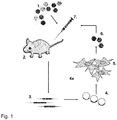
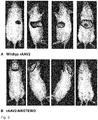
- a heptamer having a specific brain specificity was the peptide NRGTEWD (SEQ ID NO: 1). Based on this sequence, the recombinant viral vector rAAV2-NRGTEWD was prepared in which the peptide sequence NRGTEWD is expressed as a partial sequence of the capsid protein VP1. Subsequently, the vector rAAV2-NRGTEWD was administered intravenously to mice, whereby a unique specificity of the vector for the central nervous system could be observed both in vitro and in vivo . Both neurons of the brain and endothelial cells of the blood vessels of the brain and spinal cord were transfected from the vector. The specificity could be demonstrated by staining with CD31 as described in the present examples.
- Another group of peptides which also showed specificity for brain and spinal cord, included the peptides ADGVQWT (SEQ ID NO: 2), DDGVSWK (SEQ ID NO: 3), SDGLTWS (SEQ ID NO: 4) and SDGLAWV (SEQ ID NO: 5). These peptides each contained the general motif XDGXXWX (SEQ ID NO: 6).
- the present invention therefore provides various brain and spinal cord-specific capsid proteins that are particularly suitable for use in therapeutic agents, such as those described in U.S. Pat. direct viral vectors into the brain or spinal cord of a subject to be treated.
- the present invention relates to a capsid protein of a viral vector that specifically binds to cells of the brain and / or spinal cord, wherein the capsid protein comprises the amino acid sequence of SEQ ID NO: 1 or a variant thereof, wherein the variant differs from the amino acid sequence of SEQ ID NO: 1 by modification of at most one amino acid.
- the capsid protein according to the invention preferably binds to endothelial cells and / or to neurons of the brain or spinal cord.
- a peptide, polypeptide or protein that binds specifically to cells of the brain and / or spinal cord, wherein the peptide, polypeptide or protein comprises the general amino acid sequence of SEQ ID NO: 6.
- the peptide, polypeptide or protein may comprise one of the sequences ADGVQWT (SEQ ID NO: 2), DDGVSWK (SEQ ID NO: 3), SDGLTWS (SEQ ID NO: 4) or SDGLAWV (SEQ ID NO: 5) or a variant thereof , wherein the variant of the respective amino acid sequence of SEQ ID NO: 2-5 differs by modification of at most one amino acid.
- the peptide, polypeptide or protein preferably binds to endothelial cells and / or neurons of the brain or spinal cord.
- peptide refers to a linkage of 2-10 amino acids linked together by a peptidic linkage.
- polypeptide refers to a linkage of 11-100 amino acids linked by a peptidic linkage. Polypeptides with more than 100 amino acids are referred to herein as "protein".
- the brain and spinal cord-specific peptide sequence according to SEQ ID NO: 1 or a variant thereof is part of a capsid protein of a virus according to the invention.
- a corresponding nucleotide sequence encoding the peptide is cloned into the region of the virus genome encoding a capsid protein of the virus. If the brain or spinal cord-specific sequence is expressed as part of a capsid protein, it can often be presented on the surface of the viral vector.
- the capsid protein is one derived from an adeno-associated virus (AAV).
- AAV may be any of the serotypes described in the prior art, the capsid protein preferably being derived from an AAV of one of serotypes 2, 4, 6, 8 and 9.
- a capsid protein of serotype 2 AAV is particularly preferred.
- the AAV wild-type capsid is composed of the capsid proteins VP1, VP2 and VP3, which are overlapped by the cap region. All three proteins have an identical C-terminal region.
- the capsid of AAV comprises about 60 copies of the VP1, VP2 and VP3 proteins expressed in a 1: 1: 8 ratio. If a nucleotide sequence encoding one of the peptides with specificity for the brain or spinal cord described herein is cloned C-terminal into the reading frame of VP1 (ie, the region that is identical for all three proteins), then one can expect that theoretically 60 of the specific peptides are found on the capsid surface.
- an AAV vector is modified in the sense of the present invention, that for the peptide with specificity for the brain coding nucleotide sequence in the cap region at the 3 'end of the genome cloned.
- the sequence encoding the peptide with specificity for the brain or spinal cord can be cloned into the genomic sequence of one of the capsid proteins VP1, VP2 or VP3.
- the capsid proteins of AAV2 are exemplified in SEQ ID NO: 7 (VP1), SEQ ID NO: 8 (VP2), and SEQ ID NO: 9 (VP3).
- the sequence coding for the peptide which has specificity for the brain or spinal cord is cloned into the reading frame of a VP1 gene, preferably into the VP1 gene of SEQ ID NO: 7 of FIG AAV2. It should be noted that the insertion of the cloned sequence results in no change of the reading frame and no premature termination of the translation. The person skilled in the necessary methods will be readily apparent.
- the peptide sequence according to SEQ ID NO: 1 or a variant thereof is inserted in the region of amino acids 550-600 of the VP1 protein of AAV2, in particular of the VP1 protein of SEQ ID NO: 7. Even more preferred is that the peptide sequence is present in the region of amino acids 560-600, 570-600, 560-590, 570-590 of the VP1 protein.
- the peptide sequence according to SEQ ID NO: 1 or a variant thereof e.g. immediately after one of the following amino acids of the VP1 protein, in particular the protein of SEQ ID NO: 7, connect: 550, 551, 552, 553, 554, 555, 556, 557, 558, 559, 560, 561, 562, 563 564 565 566 567 568 569 570 571 572 573 574 575 576 578 579 580 581 582 583 584 585 586 587 588 , 589, 590, 591, 592, 593, 594, 595, 596, 597, 598, 599 or 600.
- the peptide sequence according to SEQ ID NO: 1 or a variant thereof follows the amino acid 588 of the VP1 protein of SEQ ID NO: 7, as shown in the examples. It is possible that between the arginine residue in position 588 and the first amino acid of the peptide or the variant thereof one or more, and in particular up to 5 (ie, 1, 2, 3, 4 or 5) amino acids are, by the cloning are conditional. Likewise, behind the last amino acid of the peptide or variant thereof may be one or more, in particular up to 5 (i.e., 1, 2, 3, 4 or 5) amino acids.
- amino acid R588 in VP1 corresponds to position R451 of VP2 (SEQ ID NO: 8) or position R386 of VP3 (SEQ ID NO: 9).
- SEQ ID NO: 10 exemplifies the sequence of the VP1 protein of AVV2 after introduction of the peptide sequence of SEQ ID NO: 1. Due to the cloning, the capsid protein has two additional amino acids that are not present in the native sequence of the VP1 protein of AVV2. Thus, the peptide sequence of SEQ ID NO: 1 becomes N-terminal of a glycine at position 589 and C-terminal of flanked by an alanine in position 597. In addition, the asparagine at position 587 of the native sequence is exchanged for a glutamine.
- the present invention also provides a nucleic acid encoding a capsid protein as described above.
- the nucleic acid encoding the capsid protein comprises the nucleotide sequence of SEQ ID NO: 11 or a nucleotide sequence derived therefrom having at least 80% sequence identity.
- a plasmid comprising such a nucleic acid is also provided.
- the invention relates to a recombinant, ie a produced by genetic engineering, viral vector comprising a capsid and at least one transgene packaged therein, wherein the capsid comprises at least one capsid protein comprising the peptide sequence according to SEQ ID NO: 1 or a variant thereof.
- the recombinant viral vector may be a recombinant AAV vector, such as serotype 2, 4, 6, 8, and 9 serotype 2 AAV vectors are particularly preferred.
- AAV serotypes differ essentially in their natural tropism. Thus, wild-type AAV2 binds more strongly to alveolar cells, whereas AAV5, AAV6 and AAV9 primarily infect epithelial cells.
- AAV5 binds more strongly to alveolar cells
- AAV5 binds more strongly to alveolar cells
- AAV5, AAV6 and AAV9 primarily infect epithelial cells.
- AAV serotypes are highly homologous. For example, e.g. the serotypes AAV1, AAV2, AAV3 and AAV6 are 82% identical at the nucleic acid level [25].
- the capsid of the viral vectors of the invention preferably comprises one or more transgenes.
- a transgene is a gene which has been introduced into the genome of the vector by means of genetic engineering.
- the transgene (or transgenes) may be DNA or RNA.
- it is single-stranded DNA (ssDNA) or double-stranded DNA (dsDNA), such as genomic DNA or cDNA.
- the transgene to be transported by the recombinant viral vector of the present invention is a human gene.
- Suitable transgenes are e.g. therapeutic genes intended to replace a gene dysfunctional in the patient. It may also be a gene that is not or only insufficiently expressed in the corresponding target tissue.
- the vectors of the invention may i.a. used for the treatment of multiple sclerosis (MS).
- the transgene may be e.g. be a gene coding for a membrane or tight junction protein, such as e.g. for a Claudin and Occludin.
- it is a gene of the Claudine family, e.g. around the gene coding for Claudinl. Overexpression of such a gene could be helpful in "sealing" the disease-damaged blood-brain barrier.
- a gene coding for a chemokine antagonist can also be used to treat the MS. So can eg a negative dominant mutant of the chemokine CCL2 (aka MCP1), which is termed "CCL2-7ND".
- CCL2 ensures that immune cells are attracted to a focal point of inflammation, which in the case of MS leads to the inflammatory breakdown of the neuronal myelin sheath.
- the dominant-negative variant "CCL2-7ND” forms dimers and blocks the receptor CCR2, which blocks the signaling cascade and prevents the immune cells from being lured to the neurons.
- neprilysin or cholesterol 24-hydroxylase are overexpressed, which can lead to the depletion of amyloid ⁇ plaques and thus contribute to an improvement of the disease state.
- Parkinson's disease can be induced by vector-mediated overexpression, e.g. the neurotrophic factor of the glial cells (GDNF), the aromatic L-amino acid decarboxylase, the tyrosine hydroxylase or the GTP cyclohydrolase I are treated, whereby a positive influence on the dopaminergic system would be expected.
- GDNF neurotrophic factor of the glial cells
- aromatic L-amino acid decarboxylase the aromatic L-amino acid decarboxylase
- the tyrosine hydroxylase or the GTP cyclohydrolase I are treated, whereby a positive influence on the dopaminergic system would be expected.
- Treatment of spinal muscular atrophy may e.g. by expression of the protein SMN (Survival of Motor Neuron) done.
- glucuronidase e.g. the ⁇ -glucuronidase
- transgene for the therapy of a lysosomal storage disease, expression of a glucuronidase, e.g. the ⁇ -glucuronidase, as a transgene with the aid of the vector of the invention promising.
- the transgene encodes a radioprotective protein, such as a radioprotective enzyme.
- a radioprotective protein such as a radioprotective enzyme.
- a major limitation in the use of radiotherapy in the treatment of cancer is the radiation-induced damage to normal tissue, which often requires a reduction in the radiation dose, an interruption of the therapy regimen, or even a complete renunciation of this form of therapy.
- the brain is a particularly radiation-sensitive organ, which is why primary tumors there often only limited and diffuse tumor growth usually can not be treated radiotherapeutically.
- the healthy tissue surrounding the malignant tissue can be protected by targeted expression of radioprotective proteins.
- the transgene that is introduced into healthy brain tissue is a manganese superoxide dismutase (MnSOD) that catalyzes the conversion of superoxide anions, one of the major factors of radiation-induced toxicity, to hydrogen peroxide.
- MnSOD manganese superoxide dismutase
- Another embodiment proposed here is the kinase domain of the Ataxia telangiectasia mutant (ATM) gene, which contributes to the repair of radiation-induced DNA damage.
- both genes are introduced into the patient to be treated by means of the vectors described herein.
- the viral vectors of the present invention are particularly suitable for use in a method for the therapeutic treatment of diseases of the brain and / or spinal cord.
- Diseases of the brain or spinal cord according to the invention include genetically-induced leukodystrophies such as adrenoleukodystrophy, Canavan disease, Krabbe disease, metachromatic leukodystrophy, Pelizaeus-Merzbacher disease and Alexander's disease; neurodegenerative diseases such as amyotrophic lateral sclerosis, Alzheimer's, Parkinson's, Huntington's and Pick's; chronic inflammatory diseases of the central nervous system, such as multiple sclerosis and Guillain-Barre syndrome; and lysosomal storage diseases such as Ceroid lipofuscinosis and Fabry disease.
- the viral vectors of the present invention are used for the therapeutic treatment of neurodegenerative diseases such as Alzheimer's, Parkinson's or Huntington's.
- the transgene encodes an antitumor agent, such as a tumor suppressor protein, or an immunomodulator, such as a cytokine (eg, interleukin 1 to 4, gamma-interferon, p53), which is to be selectively transported to a brain tumor or spinal cord tumor of the patient.
- an antitumor agent such as a tumor suppressor protein
- an immunomodulator such as a cytokine (eg, interleukin 1 to 4, gamma-interferon, p53), which is to be selectively transported to a brain tumor or spinal cord tumor of the patient.
- cytokine eg, interleukin 1 to 4, gamma-interferon, p53
- the vectors may also be used to transport antisense RNA, ribozymes, or the like into cells and tissues of the brain or spinal cord.
- the vectors of the invention may also comprise transgenes encoding secretory proteins to be released into the lumen of the brain or spinal cord microvasculature.
- secretory proteins may be anti-inflammatory.
- the term "subject" refers to any human or animal organisms that can be infected by AAV vectors.
- the subject to be treated is a mammal, e.g. around a human, a primate, a mouse or a rat.
- the subject to be treated is a human.
- the vector After transfection into the subject, the vector provides for the site-specific expression of the transgene in the cells of the brain or spinal cord.
- the transgene may be present in the viral vector in the form of an expression cassette which, in addition to the sequence of the transgene to be expressed, comprises further elements required for expression, such as a suitable promoter which controls the expression of the transgene after infection of the corresponding cells.
- suitable promoters include, in addition to the AAV promoters, for example, the cytomegalovirus (CMV) promoter, the chicken beta-actin / cytomegalovirus hybrid promoter (CAG), an endothelial cell-specific promoter, such as the VE-catherin promoter, and steroid promoters and metallothionein promoters.
- the promoter used in the vectors of the invention is a CAG promoter.
- the transgene according to the invention comprises a brain-specific promoter which is connected in functional connection with the transgene to be expressed is.
- a brain-specific promoter is a promoter whose activity in brain tissue is at least 2-fold, 5-fold, 10-fold, 20-fold, 50-fold or 100-fold higher than in a cell other than a brain cell , Preferably this promoter is a human promoter.
- the expression cassette may also contain an enhancer element to increase the level of expression of the exogenous protein to be expressed. Further, the expression cassette may comprise polyadenylation sequences such as the SV40 polyadenylation sequences or the bovine growth hormone polyadenylation sequences.
- the viral vectors according to the invention may, as part of one of their capsid proteins, preferably comprise a peptide sequence according to SEQ ID NO: 1.
- variants of the amino acid sequence of SEQ ID NO: 1 may be used which differ from the amino acid sequence of SEQ ID NO: 1 by modification of an amino acid.
- the modification may be an exchange, deletion or insertion of amino acids as long as the variant retains the ability to mediate, as part of the capsid, the specific binding of the vector to receptor structures of cells of the brain and / or spinal cord.
- the invention thus extends e.g. to variants of the sequence of SEQ ID NO: 1, in which the C- or N-terminal amino acid has been changed.
- These variants have a sequence identity greater than 85% to the amino acid sequence shown in SEQ ID NO: 1 when the sequences are compared with the GAP or BESTFIT programs. These computer programs for determining amino acid sequence identity are well known in the art.
- the variant of the sequence according to SEQ ID NO: 1 can be based on a substitution of an amino acid, ie one amino acid can be exchanged for another amino acid.
- the substitution by which the variants differ from the amino acid sequence shown in SEQ ID NO: 1 is conservative Substitution, ie substitution of an amino acid by an amino acid of similar polarity, which confers similar functional properties to the peptide.
- the exchanged amino acid is from the same group of amino acids as the replacing amino acid. For example, a hydrophobic residue may be replaced by another hydrophobic residue, or a polar residue by another polar residue.
- non-polar amino acids such as glycine, valine, alanine , Isoleucine, leucine, methionine, proline, phenylalanine, and tryptophan.
- uncharged polar amino acids include serine, threonine, glutamine, asparagine, tyrosine, and cysteine.
- charged polar (acidic) amino acids include histidine, arginine and lysine.
- charged polar (basic) amino acids include aspartic acid and glutamic acid.
- Variants of the amino acid sequence shown in SEQ ID NO: 1 also include those amino acid sequences in which an amino acid has been inserted. Such insertions may occur as long as the resulting variant retains its ability to bind specifically to cells of the brain and / or spinal cord. Furthermore, in the present case, such proteins also apply as variants of the amino acid sequence shown in SEQ ID NO: 1, in which one of the two N-terminal amino acids of the peptide is missing. In turn, it is a prerequisite that the correspondingly deleted variant binds specifically to cells of the brain and / or the spinal cord.
- modified amino acids may be amino acids which have been modified by biotinylation, phosphorylation, glycosylation, acetylation, branching and / or cyclization.
- Viral vectors whose capsids comprise the above-described peptide sequence or a variant thereof as defined above specifically bind cells of the brain and / or spinal cord.
- "specific" binding of the vectors of the invention means that after systemic administration, the vectors accumulate predominantly on or in the cells of the brain and / or spinal cord. This means that more than 50% of the originally administered vector genomes accumulate in the brain and / or spinal cord cells, while less than 50% accumulate in or around other cells or tissues (such as the spleen or liver ). It is preferred that more than 60%, 70%, 80%, 90%, 95%, or even more than 99% of the originally administered vector genome accumulate in or around the brain and / or spinal cord cells.
- a specific binding of the vectors can also be determined via the expression of the transgene.
- viral vectors that specifically bind cells of the brain and / or spinal cord more than 50% of the total expression of the transgene is in or around the brain and / or spinal cord, while less than 50% of the expression is in or in the range of other tissues can be observed. However, it is preferred that greater than 60%, 70%, 80%, 90%, 95%, or even more than 99% of the total measured expression of the transgene occurs in or around the brain and / or spinal cord.
- vectors whose capsids contain variants of the amino acid sequence shown in SEQ ID NO: 1 have at least about 50% of the binding activity of a corresponding viral vector whose Capsid having the amino acid sequence shown in SEQ ID NO: 1. Even more preferred is that the variants have about 60%, 70%, 80%, 90%, 95%, 96%, 97%, 98% or 99% of the binding activity of a corresponding viral vector whose capsid is as described in SEQ ID NO: 1 has shown amino acid sequence.
- the binding activity of the vectors can be measured by in vitro assays as described in the present examples.
- the binding activity of the vectors according to the invention is at least 2-fold, 5-fold, 10-fold, 20-fold, 50-fold for cells of the brain and / or spinal cord.
- the invention also relates to a cell which contains a capsid protein according to the invention, a nucleic acid coding therefor, a plasmid comprising such a nucleic acid or a recombinant AAV vector as described above. It is preferably a human cell or cell line.
- a cell was obtained from a human subject by a biopsy procedure and then transfected with the viral vector in an ex vivo procedure.
- the cell can then be reimplanted to the subject or reintroduced to the subject, eg by transplantation or infusion.
- the likelihood of rejection of transplanted cells is less if the subject from whom the cell was derived is genetically similar to the subject to whom the cell is administered.
- the subject to whom the transfected cells are delivered is the same subject from which the cells were previously obtained.
- the cell is preferably a human cell of the brain or spinal cord, in particular a neuronal cell, an endothelial cell of a blood vessel.
- the cell to be transfected may also be a stem cell, such as an adult human stem cell. It is particularly preferred according to the invention that the cells to be transfected are autologous cells which have been transfected ex vivo with the viral vector according to the invention, for example the recombinant AAV2 vector described.
- the cells are preferably used in a method of treating a disorder or disorder of the brain and / or spinal cord in a subject.
- the invention relates to a method of producing an AAV vector using a plasmid encoding a capsid protein comprising the amino acid sequence of SEQ ID NO: 1 or a variant thereof.
- the basic method of producing recombinant AAV vectors comprising a transgene to be expressed has been well described in the art [28].
- HEK293-T cells are transfected with three plasmids.
- a first plasmid contains the cap and rep regions of the AAV genome but lacks the naturally occurring inverted repeats (ITRs).
- the cap region of this plasmid contains a gene encoding at least one modified capsid protein, i.
- a protein comprising the peptide sequence according to SEQ ID NO: 1 or a variant thereof.
- a second plasmid comprises a transgene expression cassette flanked by the corresponding ITRs representing the packaging signal. The expression cassette is therefore packaged in the course of assembly of the virus particles in the capsid.
- the third plasmid is an adenoviral helper plasmid encoding the helper proteins E1A, E1B, E2A, E4-orf6, VA required for AAV replication in the HEK 293 T cells.
- a corresponding protocol is listed by way of example in Example 6 below.
- the production of the recombinant vectors can influence their specificity. That's how it became In the context of the present invention, it has been observed that vectors produced by the protocol of Example 2 in HEK293T cells transfected mainly endothelial cells of the brain and spinal cord blood vessels, and only a minor portion of neurons of the brain or spinal cord. On the other hand, the recombinant vectors produced by the protocol of Example 6 in Sf9 cells transfected predominantly neurons and to a much lesser extent endothelial cells. This observation can be used accordingly to further increase the specificity of the transfection.
- the vectors of the invention may be purified, for example, by gel filtration techniques, e.g. using a Sepharose matrix, desalted and purified by subsequent filtration. Other purification methods may further comprise cesium chloride or iodixanol gradient ultracentrifugation. Purification reduces potentially deleterious affects in the subject to which the adeno-associated viral vectors are administered.
- the administered virus is essentially free of wild-type and replication-competent virus. The purity of the virus can be checked by suitable methods, such as PCR amplification.
- the invention provides in a further aspect a pharmaceutical composition
- a pharmaceutical composition comprising a viral vector of the present invention, in particular an AAV vector.
- the viral vector is administered in a therapeutically effective amount to the patient, ie, in an amount sufficient to at least a symptom of the disorder or disease of the brain and / or spinal cord to be treated to improve or the progression of the Disease to prevent.
- a therapeutically effective amount of the vector according to the invention causes a positive change in one of the said symptoms, ie a change which changes the phenotype of the affected subject to the phenotype of a healthy one Subject that does not suffer from a disease of the brain and / or spinal cord approaches.
- the administration of the viral vector is in an amount that results in a complete or substantially complete cure of the disorder or disease of the brain and / or spinal cord.
- the pharmaceutical composition will accordingly contain a therapeutically effective dose of the vector according to the invention.
- a therapeutically effective dose will usually not be toxic to the subject undergoing the treatment.
- the exact amount of viral vector that must be administered to achieve a therapeutic effect depends on several parameters. Factors relevant to the amount of viral vector to be administered include e.g. the mode of administration of the viral vector, the nature and severity of the disease, the history of the disease of the patient to be treated and the age, weight, size and health of the patient to be treated. Furthermore, the expression level of the transgene needed to achieve a therapeutic effect, the immune response of the patient, as well as the stability of the gene product for the amount to be administered are also relevant. A therapeutically effective amount of the viral vector may be readily determined by one skilled in the art based on the general knowledge and disclosure herein.
- the viral vector is preferably administered in an amount corresponding to a virus dose in the range of 1.0 x 10 10 to 1.0 x 10 14 vg / kg (viral genomes per kg of body weight), with a range of 1.0 x 10 11 to 1.0 x 10 13 vg / kg is more preferable, and a range of 5.0 x 10 11 to 5.0 x 10 12 vg / kg is more preferable, and a range of 1.0 x 10 12 to 5 , 0x10 12 is even more preferred.
- a virus dose of about 2.5 x 10 12 vg / kg is most preferred.
- the amount of the viral vector to be administered for example the AAV2 vector according to the invention, can be dependent be adapted by the level of expression of the one or more transgenes.
- the viral vector of the present invention may be formulated for various modes of administration, for example for oral administration as a capsule, liquid or the like.
- the viral vector is administered parenterally, preferably by intravenous injection or intravenous infusion.
- administration may be by intravenous infusion, eg, within 60 minutes, within 30 minutes, or within 15 minutes.
- the viral vector be administered locally during surgery by injection into the brain and / or spinal cord.
- Compositions suitable for administration by injection and / or infusion typically include solutions and dispersions as well as powders from which appropriate solutions and dispersions can be made. Such compositions will contain the viral vector and at least one suitable pharmaceutically acceptable carrier.
- Suitable pharmaceutically acceptable carriers for intravenous administration include bacteriostatic water, Ringer's solution, physiological saline, phosphate buffered saline (PBS) and Cremophor EL TM.
- Sterile compositions for injection and / or infusion can be prepared by introducing the viral vector in the required amount in a suitable carrier and then filter sterilizing by means of a filter.
- Compositions for administration by injection or infusion should remain stable for a prolonged period after their preparation under storage conditions.
- the compositions may contain a preservative for this purpose. Suitable preservatives include chlorobutanol, phenol, ascorbic acid and thiomersal.
- the preparation of appropriate dosage forms and suitable excipients are, for example, in " Remington: The Science and Practice of Pharmacy ", Lippincott Williams & Wilkins, 21st Edition (2005 ).
- the invention features a method of therapeutically treating a disorder or disorder of the brain and / or spinal cord which comprises administering to a subject a viral vector of the invention, preferably an AAV vector as described above ,
- the vector comprises a capsid which comprises at least one capsid protein which contains the peptide sequence according to SEQ ID NO: 1 or a variant thereof.
- the viral vector further comprises a transgene, e.g. a therapeutic gene useful for the treatment of dysfunction or disease of the brain and / or spinal cord.
- systemic administration e.g. intravenous injection or infusion
- the vector provides for the specific expression of the gene in the cells of the brain and / or spinal cord.
Landscapes
- Health & Medical Sciences (AREA)
- Chemical & Material Sciences (AREA)
- Life Sciences & Earth Sciences (AREA)
- Organic Chemistry (AREA)
- Engineering & Computer Science (AREA)
- Bioinformatics & Cheminformatics (AREA)
- Genetics & Genomics (AREA)
- General Health & Medical Sciences (AREA)
- Biomedical Technology (AREA)
- Medicinal Chemistry (AREA)
- Biochemistry (AREA)
- Neurology (AREA)
- Neurosurgery (AREA)
- Zoology (AREA)
- Wood Science & Technology (AREA)
- Virology (AREA)
- Molecular Biology (AREA)
- Biophysics (AREA)
- Animal Behavior & Ethology (AREA)
- Public Health (AREA)
- Veterinary Medicine (AREA)
- Chemical Kinetics & Catalysis (AREA)
- General Chemical & Material Sciences (AREA)
- Nuclear Medicine, Radiotherapy & Molecular Imaging (AREA)
- Pharmacology & Pharmacy (AREA)
- General Engineering & Computer Science (AREA)
- Biotechnology (AREA)
- Proteomics, Peptides & Aminoacids (AREA)
- Microbiology (AREA)
- Gastroenterology & Hepatology (AREA)
- Psychology (AREA)
- Physics & Mathematics (AREA)
- Plant Pathology (AREA)
- Immunology (AREA)
- Hospice & Palliative Care (AREA)
- Psychiatry (AREA)
- Medicines Containing Material From Animals Or Micro-Organisms (AREA)
- Medicines That Contain Protein Lipid Enzymes And Other Medicines (AREA)
- Peptides Or Proteins (AREA)
- Micro-Organisms Or Cultivation Processes Thereof (AREA)
Description
- Die Erfindung betrifft neuartige Kapsid-Proteine, die spezifisch an Zellen des Gehirns und/oder des Rückenmarks binden. Die Proteine können Bestandteil eines viralen Kapsids sein und dazu verwendet werden, einen rekombinanten viralen Vektor nach systemischer Verabreichung an ein Subjekt selektiv zum Gehirn und/oder zum Rückenmark zu leiten und dort für eine gewebespezifische Expression von einem oder mehreren Transgenen zu sorgen. Die Erfindung betrifft somit auch einen rekombinanten viralen Vektor, vorzugsweise einen AAV-Vektor, der ein erfindungsgemäßes Kapsid sowie mindestens ein in dem Kapsid verpacktes Transgen umfasst. Der virale Vektor eignet sich insbesondere zur therapeutischen Behandlung einer Erkrankung oder Funktionsstörung des Gehirns und/oder des Rückenmarks. Die Erfindung betrifft ferner Zellen und pharmazeutische Zusammensetzungen, die den erfindungsgemäßen viralen Vektor umfassen.
- Die gentherapeutische Behandlung mittels viraler Vektoren stellt eine vielversprechende Behandlungsmöglichkeit für Erkrankungen dar, die auf eine konventionelle Behandlung nicht oder nicht in ausreichendem Maße ansprechen. Dieser Ansatz beruht auf der Einschleusung von therapeutischen Genen in den zu behandelnden Organismus mit Hilfe von Viren, die so modifizierte wurden, dass sie die Sequenz des entsprechenden Gens in ihrem Genom aufweisen. Virale Vektoren, die im Rahmen der Gentherapie bereits für gentherapeutische Therapieansätze verwendet wurden, basieren auf Retroviren, Lentiviren, Adenoviren und Adeno-assoziierte Viren.
- Adeno-assozierte Viren (AAV) stellen vielversprechende Kandidaten für den Einsatz in der der klinischen Praxis dar, da sie als verhältnismäßig sicher eingestuft werden. AAV-Vektoren sind in der Lage, ein Transgen in ein Gewebe einzuschleusen und dort stabil und effizient zu exprimieren. Gleichzeitig weisen diese Vektoren keine bekannten Pathogenitätsmechanismen auf [1]. Besondere Bedeutung für eine klinische Anwendung kommt den AAV-Vektoren vom Serotyp 2 (AAV2) zu, die als besonders gut untersucht gelten. Nach Einschleusung durch AAV-Vektoren können die Transgene in verschiedenen Formen in der transfizierten Zelle vorliegen, z.B. als episomale, einzel- oder doppelsträngige DNA. Auch konkatamere Formen der DNA wurden in transduzierten Zellen nachgewiesen.
- Das Genom von AAV2 wird von einem linearen, einzelsträngigen DNA-Molekül von etwa 4700 Nukleotiden Länge gebildet und umfasst an beiden Enden Inverted Terminal Repeats (ITRs). Das Genom umfasst ferner zwei große offene Leserahmen, die als Replikations-Region (rep) und Kapsid-Region (cap) bezeichnet werden. Die Replikations-Region kodiert für Proteine, die im Rahmen der Virusreplikation erforderlich sind. Die Kapsid-Region hingegen kodiert für die strukturellen Proteine VP1, VP2 und VP3, aus denen sich das ikosaedrische Kapsid des Virus zusammensetzt.
- Wie die meisten im Stand der Technik bekannten, gentherapeutisch verwendbaren Vektoren allerdings weisen Wildtyp-AAV-Vektoren, wie z.B. die beschriebenen AAV2-Vektoren, keine ausreichende Spezifität für ein bestimmtes Gewebe auf, sondern infizieren eine große Bandbreite von Zelltypen. Bei systemischer Gabe dieser Wildtyp-Vektoren kommt es somit zu einer unzureichenden Transduktion der Zielgewebe, während aufgrund der unerwünschten Transduktion von anderen Geweben mit starken Immunreaktionen im behandelten Patienten gerechnet werden muss. Fortschritte bei der Entwicklung von viralen Vektoren, die eine erhöhte Spezifität für bestimmte Organe aufweisen, wurden in der Vergangenheit durch den Einsatz von Peptidliganden erreicht, die in der Lage sind, die Vektoren zu einem bestimmten Organ zu leiten [2-3]. Es konnte gezeigt werden, dass bestimmte Peptidliganden für ein "Homing" zu verschiedenen Organen wie z.B. zum Gehirn sorgen.
- Literaturstelle [4] beschreibt ein Verfahren, welches das Screening nach Kapsiden von AAV2 mit modifiziertem Tropismus in randomisierten Peptidbanken erlaubt. Aus diesen Bibliotheken können Vektoren isoliert werden, die in vitro spezifisch einen gewünschten Zelltyp transduzieren. Jedoch wurde festgestellt, dass die auf diese Weise selektierten Kapside oftmals für eine Verwendung in vivo ungeeignet sind, da ihnen im Tiermodell die nötige Spezifität fehlte [5].
- Das Gehirn stellt ein klinisch extrem relevantes Organ dar, da es Ausgangspunkt für eine Reihe von neurologischen Erkrankungen ist. Es wurden erhebliche Anstrengungen unternommen, dieses Organ für gentherapeutische Interventionen erreichbar zu machen [6-12]. Allerdings stellt die Blut-Hirn-Schranke, die gemeinschaftlich von Endothelzellen, Perizyten und Astrozyten gebildet wird und das Gehirn von zirkulierenden Partikeln, Toxinen und Botenstoffen abschottet, ein für gängige Vektorsysteme unüberwindbares Hindernis dar. Da bislang keine geeigneten Vektorsysteme verfügbar sind, die nach intravenöser Applikation zielgerichtet mit ausreichender Effizienz das Gehirn transduzieren, werden heutige Gentherapievektoren meist direkt in das Gehirn injiziert [13], was mit einem hohen Risiko für den Patienten behaftet ist. Die Möglichkeit, die Blut-Hirn-Schranke kurzzeitig für größere Partikel passierbar zu machen, z.B. durch Ultraschall [14] oder mittels chemischer Komponenten [7], wird ebenfalls als sehr riskant erachtet.
- Es besteht daher ein großes Bedürfnis nach Mitteln, die in der Lage sind, den Tropismus viraler Vektoren zu modulieren und damit für eine ausreichende Zell- oder Gewebespezifität sorgen, die einen gezielten Transport eines viralen Vektors zu Geweben des Gehirn und Rückenmarks, ermöglicht. Solche Vektoren können für eine spezifische Expression von therapeutischen Genen in diesen Geweben sorgen, um auf diese Weise Erkrankungen und/oder Funktionsstörungen des Gehirns und Rückenmarks wirksam zu behandeln.
- Die vorliegende Erfindung stellt virale Vektoren für den zielgerichteten Gentransfer in das Gehirn und Rückenmarks bereit. Die erfindungsgemäßen viralen Vektoren exprimieren auf ihrer Kapsid-Oberfläche bislang unbekannte Aminosäuresequenzen, die in vivo spezifisch von Rezeptoren auf den Neuronen des Gehirns und den Endothelzellen der Blutgefäße von Gehirn und Rückenmark erkannt werden. Somit transduzieren die viralen Vektoren der vorliegenden Erfindung nach systemischer Verabreichung an ein Subjekt spezifisch dessen Gewebe in Gehirn und Rückenmark.
- Die erfindungsgemäßen viralen Vektoren ermöglichen darüber hinaus eine starke und lang anhaltende Expression eines Transgens in den Neuronen des Gehirns und den endothelialen Zellen der Blutgefäße von Gehirn und Rückenmark. Daher sind die Vektoren insbesondere für die gentherapeutische Behandlung von bestimmten Erkrankungen und Funktionsstörungen von Gehirn und Rückenmark geeignet. Es wurde darüber hinaus festgestellt, dass die die AAV-Vektoren nach der Transfektion lediglich eine geringfügige Immunreaktion in dem Wirt hervorrufen und somit besonders für die Gentherapie geeignet sind.
- Im Rahmen der vorliegenden Erfindung wurden durch Selektion in einer randomisierten AAV2-Heptamer-Pepidbibliothek verschiedene für das Zentralnervensystem, d.h. für Gehirn und Rückenmark, spezifische Sequenzen identifiziert. Ein Heptamer, das eine besondere Spezifität für das Gehirn aufwies, war das Peptid NRGTEWD (SEQ ID NO:1). Auf Basis dieser Sequenz wurde der rekombinante virale Vektor rAAV2-NRGTEWD hergestellt, bei dem die Peptidsequenz NRGTEWD als Teilsequenz des Kapsid-Proteins VP1 exprimiert wird. Anschließend wurde der Vektor rAAV2- NRGTEWD intravenös an Mäuse verabreicht, wobei sowohl in vitro als auch in vivo eine eindeutige Spezifität des Vektors für das Zentralnervensystem beobachtet werden konnte. Sowohl Neuronen des Gehirns als auch Endothelzellen der Blutgefäße von Gehirn und Rückenmark wurden von dem Vektor transfiziert. Die Spezifität konnte durch Färbung mit CD31 nachgewiesen werden, wie es in den vorliegenden Beispielen beschrieben wird.
- Eine weitere Gruppe von Peptiden, die ebenfalls eine Spezifität für Gehirn und Rückenmark zeigten, umfasste die Peptide ADGVQWT (SEQ ID NO:2), DDGVSWK (SEQ ID NO:3), SDGLTWS (SEQ ID NO:4) und SDGLAWV (SEQ ID NO:5). Diese Peptide enthielten jeweils das allgemeine Motiv XDGXXWX (SEQ ID NO:6).
- Die vorliegende Erfindung stellt daher verschiedene für das Gehirn und das Rückenmark spezifische Kapsid-Proteine bereit, die in besonderer Weise dazu geeignet sind, therapeutische Mittel, wie z.B. virale Vektoren, gezielt in das Gehirn bzw. das Rückenmark eines zu behandelnden Subjekts zu leiten.
- In einem ersten Aspekt betrifft die vorliegende Erfindung demgemäß ein Kapsid-Protein eines viralen Vektors, das spezifisch an Zellen des Gehirns und/oder des Rückenmarks bindet, wobei das Kapsid-Protein die Aminosäuresequenz von SEQ ID NO:1 oder eine Variante davon umfasst, wobei sich die Variante von der Aminosäuresequenz von SEQ ID NO:1 durch Modifikation von maximal einer Aminosäure unterscheidet. Das erfindungsgemäße Kapsid-Protein bindet vorzugsweise an Endothelzellen und/oder an Neuronen des Gehirns oder Rückenmarks.
- Offenbart wird vorliegend ferner ein Peptid, Polypeptid oder Protein, das spezifisch an Zellen des Gehirns und/oder des Rückenmarks bindet, wobei das Peptid, Polypeptid oder Protein die allgemeine Aminosäuresequenz von SEQ ID NO:6 umfasst. Das Peptid, Polypeptid oder Protein kann eine der Sequenzen ADGVQWT (SEQ ID NO:2), DDGVSWK (SEQ ID NO:3), SDGLTWS (SEQ ID NO:4) oder SDGLAWV (SEQ ID NO:5) oder eine Variante derselben umfassen, wobei sich die Variante von der jeweiligen Aminosäuresequenz von SEQ ID NO:2-5 durch Modifikation von maximal einer Aminosäure unterscheidet. Das Peptid, Polypeptid oder Protein bindet vorzugsweise an Endothelzellen und/oder an Neuronen des Gehirns oder Rückenmarks.
- Im Rahmen der vorliegenden Offenbarung bezeichnet der Begriff "Peptid" eine Verknüpfung von 2-10 Aminosäuren, die über eine peptidische Bindung miteinander verbunden sind. Der Begriff "Polypeptid" bezeichnet eine Verknüpfung von 11-100 Aminosäuren, die über eine peptidische Bindung miteinander verbunden sind. Polypeptide mit mehr als 100 Aminosäuren werden vorliegend als "Protein" bezeichnet.
- Die für das Gehirn und das Rückenmark spezifische Peptidsequenz gemäß SEQ ID NO:1 oder einer Variante davon ist erfindungsgemäß Teil eines Kapsid-Proteins eines Virus. Dies bedeutet, dass die für das Gehirn und das Rückenmark spezifische Peptidsequenz als Teil eines Kapsid-Proteins des Virus vorliegt. Um derartige Kapsid-Proteine herzustellen, wird eine entsprechende, für das Peptid kodierende Nukleotidsequenz in die Region des Virus-Genoms kloniert, die für ein Kapsid-Protein des Virus kodiert. Wird die für das Gehirn bzw. das Rückenmark spezifische Sequenz als Teil eines Kapsid-Proteins exprimiert, so kann sie vielfach an der Oberfläche des viralen Vektors präsentiert werden.
- Vorzugsweise handelt es sich bei dem Kapsid-Protein um ein solches, das von einem Adeno-assoziierten Virus (AAV) stammt. Bei dem AAV kann es sich um einen beliebigen der im Stand der Technik beschriebenen Serotypen handeln, wobei das Kapsid-Protein vorzugsweise von einem AAV von einem der Serotypen 2, 4, 6, 8 und 9 stammt. Ein Kapsid-Protein eines AAV vom Serotyp 2 ist besonders bevorzugt.
- Das Kapsid des AAV-Wildtyps setzt sich aus den Kapsid-Proteinen VP1, VP2 und VP3 zusammen, die überlappend von der cap-Region kodiert werden. Alle drei Proteine weisen einen identischen C-terminalen Bereich auf. Das Kapsid von AAV umfasst etwa 60 Kopien der Proteine VP1, VP2 und VP3, die im Verhältnis 1:1:8 exprimiert werden. Wird eine Nukleotidsequenz, die für eine der vorliegend beschriebenen Peptide mit Spezifität für das Gehirn bzw. das Rückenmark kodiert, C-terminal in den Leserahmen von VP1 kloniert (d.h. in den Bereich, der bei allen drei Proteinen identisch ist), so kann man erwarten, dass theoretisch 60 der spezifischen Peptide der auf der Kapsid-Oberfläche zu finden sind.
- Wird ein AAV-Vektor im Sinne der vorliegenden Erfindung modifiziert, so wird die für das Peptid mit Spezifität für das Gehirn kodierende Nukleotidsequenz in die cap-Region am 3'-Ende des Genoms kloniert. Die Sequenz, die für das Peptid mit Spezifität für das Gehirn bzw. Rückenmark kodiert, kann in die genomische Sequenz eines der Kapsid-Proteine VP1, VP2 oder VP3 kloniert werden. Die Kapsid-Proteine von AAV2 sind beispielhaft in SEQ ID NO:7 (VP1), SEQ ID NO:8 (VP2) und SEQ ID NO:9 (VP3) dargestellt.
- In einer besonders bevorzugten Ausführungsform der Erfindung wird die Sequenz, die für das Peptid kodiert, welches Spezifität für das Gehirn bzw. Rückenmark aufweist, in den Leserahmen eines VP1-Gens kloniert, vorzugsweise in das in SEQ ID NO:7 gezeigte VP1-Gen von AAV2. Dabei sollte beachtet werden, dass sich durch die Insertierung der klonierten Sequenz kein Wechsel des Leserahmens und kein vorzeitiger Abbruch der Translation ergibt. Dem Fachmann werden die dazu erforderlichen Methoden ohne Weiteres ersichtlich sein.
- In allen drei Kapsid-Proteinen von AVV wurden Stellen identifiziert, an denen Peptidsequenzen für das Homing eingefügt werden können [15-20] . So wurde unter anderem das im VP1 von AAV2 vorkommende Arginin in Position 588 (R588) spezifisch für die Insertion eines Peptidliganden vorgeschlagen [21-22]. Diese Aminosäureposition des viralen Kapsids ist offenbar an der Bindung von AAV2 an seinen natürlichen Rezeptor beteiligt. Es wurde vermutet, dass R588 einer von vier Arginin-Resten ist, der die Bindung von AAV2 an seinen natürlichen Rezeptor vermittelt [23-24]. Eine Modifikation in diesem Bereich des Kapsids schwächt den natürlichen Tropismus von AAV2 ab oder beseitigt diesen vollständig.
- Demgemäß ist es erfindungsgemäß besonders bevorzugt, dass die Peptidsequenz gemäß SEQ ID NO:1 oder einer Variante davon im Bereich der Aminosäuren 550-600 des VP1-Proteins von AAV2, insbesondere des VP1-Proteins von SEQ ID NO:7, insertiert vorliegt. Noch stärker bevorzugt ist es, dass die Peptidsequenz im Bereich der Aminosäuren 560-600, 570-600, 560-590, 570-590 des VP1-Proteins inseriert vorliegt.
- So kann sich die Peptidsequenz gemäß SEQ ID NO:1 oder einer Variante davon z.B. unmittelbar hinter einer der folgenden Aminosäure des VP1-Proteins, insbesondere des Proteins von SEQ ID NO:7, anschließen: 550, 551, 552, 553, 554, 555, 556, 557, 558, 559, 560, 561, 562, 563, 564, 565, 566, 567, 568, 569, 570, 571, 572, 573, 574, 575, 576, 577, 578, 579, 580, 581, 582, 583, 584, 585, 586, 587, 588, 589, 590, 591, 592, 593, 594, 595, 596, 597, 598, 599 oder 600.
- Besonders bevorzugt ist es, dass die Peptidsequenz gemäß SEQ ID NO:1 oder einer Variante davon auf die Aminosäure 588 des VP1-Proteins von SEQ ID NO:7 folgt, wie es in den Beispielen gezeigt ist. Es ist dabei möglich, dass zwischen dem Arginin-Rest in Position 588 und der ersten Aminosäure des Peptids oder der Variante davon eine oder mehrere, und insbesondere bis zu 5 (d.h. 1, 2, 3, 4 oder 5) Aminosäuren liegen, die durch die Klonierung bedingt sind. Ebenso können hinter der letzten Aminosäure des Peptids oder der Variante davon eine oder mehrere, insbesondere bis zu 5 (d.h. 1, 2, 3, 4 oder 5) Aminosäuren liegen.
- Die oben in Bezug auf VP1 angegebenen Stellen und Bereiche in der Aminosäuresequenz des Kapsid-Proteins gelten analog auch für die Kapsid-Proteine VP2 und VP3 von AAV2. Da sich die drei Kapsid-Proteine VP1, VP2 und VP3 von AAV2 lediglich durch die Länge der N-terminalen Sequenz unterscheiden und demgemäß einen identischen C-terminalen Bereich aufweisen, wird der Fachmann keine Probleme haben, durch Sequenzvergleich die oben für VP1 angegebenen Stellen für die Insertierung des Peptidliganden in den Aminosäuresequenzen von VP1 und VP2 zu identifizieren. So entspricht die Aminosäure R588 in VP1 der Position R451 von VP2 (SEQ ID NO:8) bzw. der Position R386 von VP3 (SEQ ID NO:9).
- SEQ ID NO:10 zeigt beispielhaft die Sequenz des VP1-Proteins von AVV2 nach Einbringung der Peptidsequenz von SEQ ID NO:1. Bedingt durch die Klonierung weist das Kapsid-Protein zwei zusätzliche Aminosäuren auf, die in der nativen Sequenz des VP1-Proteins von AVV2 nicht vorkommen. So wird die Peptidsequenz von SEQ ID NO:1 N-terminal von einem Glycin in Position 589 und C-terminal von einem Alanin in Position 597 flankiert. Darüber hinaus ist das Asparagin in Position 587 der nativen Sequenz gegen ein Glutamin ausgetauscht.
- In einer besonderen Ausführungsform betrifft die vorliegende Erfindung somit auch ein Kapsid-Protein, das Folgendes umfasst oder daraus besteht:
- (a) die Aminosäuresequenz von SEQ ID NO:10;
- (b) eine Aminosäuresequenz, die mindestens 80% und vorzugsweise 90, 95 oder 99% Identität zu der Aminosäuresequenz von SEQ ID NO:10 aufweist und darüber hinaus (i) die Sequenz von SEQ ID NO:1 umfasst oder (ii) eine Aminosäuresequenz, die sich von der Aminosäuresequenz von SEQ ID NO:1 durch Modifikation von einer Aminosäure unterscheidet; oder
- (c) ein Fragment von einer der in (a) oder (b) definierten Aminosäuresequenzen.
- Des Weiteren stellt die vorliegende Erfindung auch eine Nukleinsäure bereit, die für ein wie oben beschriebenes Kapsid-Protein kodiert. Vorzugsweise umfasst die für das Kapsid-Protein kodierende Nukleinsäure die Nukleotidsequenz von SEQ ID NO:11 oder eine davon abgeleitete Nukleotidsequenz mit mindestens 80% Sequenzidentität. Ein Plasmid, das eine solche Nukleinsäure umfasst, wird ebenfalls bereitgestellt.
- In einem noch weiteren Aspekt betrifft die Erfindung einen rekombinanten, d.h. einen mittels gentechnischer Verfahren hergestellten, viralen Vektor, der ein Kapsid und mindestens ein darin verpacktes Transgen umfasst, wobei das Kapsid mindestens ein Kapsid-Protein umfasst, welches die Peptidsequenz gemäß SEQ ID NO:1 oder einer Variante davon umfasst. Bei dem rekombinanten viralen Vektor kann es sich um einen rekombinanten AAV-Vektor handeln, z.B. um einen solchen vom Serotyp 2, 4, 6, 8 und 9. AAV-Vektoren vom Serotyp 2 sind besonders bevorzugt.
- Die unterschiedlichen AAV-Serotypen unterscheiden sich im Wesentlichen anhand ihres natürlichen Tropismus. So bindet Wildtyp-AAV2 stärker an alveolare Zellen, während AAV5, AAV6 und AAV9 vorwiegend Epithelzellen infizieren. Der Fachmann kann diese natürlichen Unterschiede hinsichtlich der Spezifität der Zellen nutzen, um die durch die oben beschriebenen Peptide vermittelte Spezifität für bestimmte Zellen oder Gewebe weiter zu verstärken. Auf der Nukleinsäureebene sind die verschiedenen AAV-Serotypen stark homolog. So sind z.B. die Serotypen AAV1, AAV2, AAV3 und AAV6 auf der Nukleinsäureebene zu 82% identisch [25].
- Das Kapsid der erfindungsgemäßen viralen Vektoren umfasst vorzugsweise ein oder mehrere Transgene. Als Transgen wird vorliegend ein Gen bezeichnet, das mittels gentechnischer Verfahren in das Genom des Vektors eingebracht wurde. Bei dem Transgen (oder den Transgenen) kann es sich um DNA oder RNA handeln. Vorzugsweise handelt es sich um einzelsträngige DNA (ssDNA) oder doppelsträngige DNA (dsDNA), wie beispielsweise genomische DNA oder cDNA. Vorzugsweise handelt es sich bei dem Transgen, welches mit Hilfe des erfindungsgemäßen rekombinanten viralen Vektors transportiert werden soll, um ein humanes Gen. Geeignete Transgene sind z.B. therapeutische Gene, die ein im Patienten dysfunktionales Gen ersetzen sollen. Es kann sich ferner um ein Gen handeln, das in dem entsprechenden Zielgewebe nicht oder nur in unzureichendem Umfang exprimiert wird.
- Die erfindungsgemäßen Vektoren können u.a. zur Behandlung der multiplen Sklerose (MS) eingesetzt werden. In diesem Fall kann es sich bei dem Transgen z.B. um ein Gen handeln, das für ein Membran- oder Tight-Junction-Protein kodiert, wie z.B. für ein Claudin und Occludin. Verzugsweise handelt es sich um ein Gen aus der Familie der Claudine handeln, z.B. um das für Claudinl kodierende Gen. Die Überexpression eines solchen Gens könnte hilfreich sein, um die durch die Krankheit geschädigte Blut-Hirn-Schranke "abzudichten".
- Ferner kann zur Behandlung der MS auch ein Gen eingesetzt werden, das für einen Chemokin-Antagonisten kodiert. So kann z.B. eine negativ-dominante Mutante des Chemokins CCL2 (aka MCP1) exprimiert werden, die als "CCL2-7ND" bezeichnet wird. CCL2 sorgt dafür, dass Immunzellen zu einem Entzündungsherd gelockt werden, was im Fall der MS zum entzündlichen Abbau der neuronalen Myelinscheide führt. Die dominant-negative Variante "CCL2-7ND" hingegen bildet Dimere und blockiert den Rezeptor CCR2, wodurch die Signalkaskade unterbunden wird und die Immunzellen nicht mehr zu den Neuronen gelockt werden.
- Zur Behandlung der Alzheimer-Krankheit kann z.B. das kodierende Gen für Neuraminidasel (NEU1), Neprilysin oder Cholesterol 24-Hydroxylase überexprimiert werden, was zur Abreicherung von Amyloid β-Plaques führen und damit zu einer Verbesserung des Krankheitszustands beitragen kann.
- Die Parkinson Krankheit kann durch Vektor-vermittelte Überexpression z.B. des neurotrophischen Faktors der Gliazellen (GDNF), der aromatischen L-Aminosäure-Decarboxylase, der Tyrosynhydroxylase oder der GTP-Cyclohydrolase I behandelt werden, wobei ein positiver Einfluss auf das dopaminergische System zu erwarten wäre. Eine Behandlung der Spinalen Muskelatrophie kann z.B. durch Expression des Proteins SMN (Survival of Motor Neuron) erfolgen.
- Für die Therapie einer lysosomalen Speicherkrankheit wäre die Expression einer Glucuronidase, z.B. der β-Glucuronidase, als Transgen mit Hilfe des erfindungsgemäßen Vektors erfolgsversprechend.
- In einer weiteren Ausführungsform kodiert das Transgen für ein radioprotektives Protein, wie z.B. für ein radioprotektives Enzym. Eine wesentliche Limitation beim Einsatz der Radiotherapie im Rahmen der Behandlung von Krebs ist die strahleninduzierte Schädigung des Normalgewebes, was häufig eine Verringerung der Strahlendosis, eine Unterbrechung des Therapieregimes, oder sogar einen völligen Verzicht auf diese Therapieform nötig macht. Das Gehirn ist ein besonders strahlenempfindliches Organ, weshalb Primärtumoren dort oft nur eingeschränkt und diffuses Tumorwachstum meistens gar nicht radiotherapeutisch behandelt werden kann. Mit Hilfe der Vektoren der vorliegenden Erfindung kann das gesunde Gewebe, welches das maligne Gewebe umgibt, durch zielgerichtete Expression radioprotektiver Proteine geschützt werden. In einer bevorzugten Ausführungsform handelt es sich bei dem Transgen, welches in das gesunde Gehirngewebe eingeschleust wird, um eine Mangan-Superoxiddismutase (MnSOD), die die Konversion von Superoxidanionen, einem der wesentliche Faktoren der strahleninduzierten Toxizität, zu Wasserstoffperoxid katalysiert. In einer weiteren hier vorgeschlagenen Ausführungsform handelt es sich um die Kinase-Domäne des Ataxia telangiectasia mutant (ATM)-Gens, das zur Reparatur der durch Bestrahlung entstandenen DNA-Schäden beiträgt. In einer weiteren bevorzugten Ausführungsform werden beide Gene mittels der vorliegend beschriebenen Vektoren in den zu behandelnden Patienten eingebracht.
- Die viralen Vektoren der vorliegenden Erfindung eignen sich insbesondere zur Verwendung in einem Verfahren zur therapeutischen Behandlung von Erkrankungen des Gehirns und/oder Rückenmarks. Erkrankungen des Gehirns bzw. des Rückenmarks im Sinne der Erfindung umfassen genetisch verursachte Leukodystrophien, wie Adrenoleukodystrophie, Morbus Canavan, Morbus Krabbe, metachromatische Leukodystrophie, Pelizaeus-Merzbacher-Krankheit und Morbus Alexander; neurodegenerative Erkrankungen, wie amyotrophe Lateralsklerose, Alzheimer, Parkinson, Chorea Huntington und Morbus Pick; chronisch-entzündliche Erkrankungen des Zentralnervensystems, wie Multiple Sklerose und Guillain-Barre-Syndrom; und Lysosomen-Speichererkrankungen, wie Ceroid-Lipofuszinose und Morbus Fabry. In einer bevorzugten Ausführungsform werden die viralen Vektoren der vorliegenden Erfindung zur therapeutischen Behandlung von neurodegenerative Erkrankungen, wie Alzheimer, Parkinson oder Chorea Huntington eingesetzt.
- In einer noch weiteren Ausführungsform kodiert das Transgen für ein Antitumormittel, wie z.B. ein Tumorsupressor-Protein, oder einen Immunmodulator, wie z.B. ein Zytokin (z.B. Interleukin 1 bis 4, Gamma-Interferon, p53), das selektiv zu einem Gehirntumor oder einen Tumor des Rückenmarks des Patienten transportiert werden soll.
- Die Vektoren können ferner auch dazu verwendet werden, um Antisense-RNA, Ribozyme, oder Ähnliches in Zellen und Gewebe des Gehirns bzw. Rückenmarks zu transportieren. Ferner können die erfindungsgemäßen Vektoren auch Transgene umfassen, die für sekretorische Proteine kodieren, die in das Lumen der Mikrovaskulatur des Gehirns oder des Rückenmarks freigesetzt werden sollen. Solche sekretorischen Proteine können beispielsweise entzündungshemmend wirken.
- Wie vorliegend verwendet, bezeichnet der Begriff "Subjekt" alle menschlichen oder tierischen Organismen, die durch AAV-Vektoren infiziert werden können. Vorzugsweise handelt es sich bei dem zu behandelnden Subjekt um ein Säugetier, wie z.B. um einen Menschen, einen Primaten, eine Maus oder eine Ratte. In einer bevorzugten Ausführungsform ist das zu behandelnde Subjekt ein Mensch. Nach Transfektion in das Subjekt sorgt der Vektor für die ortsspezifische Expression des Transgens in den Zellen des Gehirns bzw. des Rückenmarks.
- Das Transgen kann in dem viralen Vektor in Form einer Expressionskassette vorliegen, die neben der zu exprimierenden Sequenz des Transgens weitere für die Expression erforderliche Elemente umfasst, wie z.B. einen geeigneten Promoter, der nach Infektion der entsprechenden Zellen die Expression des Transgens steuert. Geeignete Promotoren umfassen neben den AAV-Promotoren z.B. den Cytomegalovirus (CMV)-Promoter, den Chicken-Beta-Actin/Cytomegalovirus-Hybridpromoter (CAG), einen Endothelzellen-spezifischen Promoter, wie z.B. den VE-Catherin Promoter, sowie Steroid-Promotoren und Metallothionein-Promotoren. In einer besonders bevorzugten Ausführungsform ist der in den erfindungsgemäßen Vektoren verwendete Promoter ein CAG-Promoter. In einer besonders bevorzugten Ausführungsform umfasst das erfindungsgemäße Transgen einen hirnspezifischen Promoter, der in funktionaler Verbindung mit dem zu exprimierenden Transgen verbunden ist. Auf diese Weise kann die Spezifität der erfindungsgemäßen Vektoren für das Gehirn weiter erhöht werden. Wie hierin verwendet, ist ein hirnspezifischer Promoter ein Promoter, dessen Aktivität in Hirngewebe mindestens 2-fach, 5-fach, 10-fach, 20-fach, 50-fach oder 100-fach höher ist als in einer Zelle, die keine Gehirnzelle ist. Vorzugsweise ist dieser Promoter ein humaner Promoter. Die Expressionskassette kann auch ein Enhancer-Element zur Erhöhung des Expressionslevels des zu exprimierenden exogenen Proteins enthalten. Ferner kann die Expressionskassette Polyadenylierungssequenzen, wie z.B. die SV40-Polyadenylierungssequenzen oder die Polyadenylierungssequenzen des bovinen Wachstumshormons umfassen.
- Die erfindungsgemäßen viralen Vektoren können als Bestandteil eines ihrer Kapsid-Proteine vorzugsweise eine Peptidsequenz gemäß SEQ ID NO:1 umfassen. Alternativ können auch Varianten der Aminosäuresequenz von SEQ ID NO:1 verwendet werden, die sich von der Aminosäuresequenz von SEQ ID NO:1 durch Modifikation von einer Aminosäure unterscheiden. Bei der Modifikation kann es sich um einen Austausch, eine Deletion oder eine Insertion von Aminosäuren handeln, solang die Variante die Fähigkeit beibehält, als Teil des Kapsids die spezifische Bindung des Vektors an Rezeptor-Strukturen von Zellen des Gehirns und/oder Rückenmarks zu vermitteln. Die Erfindung erstreckt sich somit z.B. auf Varianten der Sequenz von SEQ ID NO:1, bei denen die C- oder N-terminale Aminosäure verändert wurde. Diese Varianten weisen eine Sequenzidentität von mehr als 85% zu der in SEQ ID NO:1 gezeigten Aminosäuresequenz auf, wenn die Sequenzen mit den Programmen GAP oder BESTFIT miteinander verglichen werden. Diese Computerprogramme zur Bestimmung der Aminosäuresequenzidentität sind im Stand der Technik hinreichend bekannt.
- Die Variante der Sequenz gemäß SEQ ID NO:1 kann auf einer Substitution einer Aminosäure beruhen, d.h. eine Aminosäure kann gegen eine andere Aminosäure ausgetauscht sein. Vorzugsweise ist die Substitution, durch die sich die Varianten von der in SEQ ID NO:1 dargestellten Aminosäuresequenz unterscheidet, eine konservative Substitution, d.h. eine Substitution einer Aminosäure durch eine Aminosäure ähnlicher Polarität, die dem Peptid ähnliche funktionelle Eigenschaften verleiht. Vorzugsweise stammt die ausgetauschte Aminosäure aus der gleichen Gruppe von Aminosäuren wie die ersetzende Aminosäure. Beispielsweise kann ein hydrophober Rest durch einen anderen hydrophoben Rest ersetzt werden oder ein polarer Rest durch einen anderen polaren Rest. Funktionell ähnliche Aminosäuren, die im Rahmen einer konservativen Substitution gegeneinander ausgetauscht werden können, umfassen z.B. nicht-polare Aminosäuren wie z.B. Glycin, Valin, Alanin, Isoleucin, Leucin, Methionin, Prolin, Phenylalanin, und Tryptophan. Beispiele von ungeladenen polaren Aminosäuren umfassen Serin, Threonin, Glutamin, Asparagin, Tyrosin, und Cystein. Beispiele von geladenen polaren (sauren) Aminosäuren umfassen Histidin, Arginin und Lysin. Beispiele von geladenen polaren (basischen) Aminosäuren umfassen Asparaginsäure und Glutaminsäure.
- Als Varianten der in SEQ ID NO:1 gezeigten Aminosäuresequenz gelten auch solche Aminosäuresequenzen, bei denen eine Aminosäure eingefügt wurde. Solche Insertionen können erfolgen, so lange die resultierende Variante ihre Fähigkeit beibehält, spezifisch an Zellen des Gehirns und/oder des Rückenmarks zu binden. Ferner gelten vorliegend auch solche Proteine als Varianten der in SEQ ID NO:1 gezeigten Aminosäuresequenz, bei denen eine der beiden N-terminalen Aminosäuren des Peptids fehlt. Voraussetzung ist wiederum, dass die entsprechend deletierte Variante spezifisch an Zellen des Gehirns und/oder des Rückenmarks bindet.
- Ebenfalls von der Erfindung umfasst sind spezifische Varianten der in SEQ ID NO:1 gezeigten Aminosäuresequenz, die an einer Aminosäure strukturell verändert wurden, wie beispielsweise durch Einführen einer modifizierten Aminosäure. Bei diesen modifizierten Aminosäuren kann es sich erfindungsgemäß um Aminosäuren handeln, die durch Biotinylierung, Phosphorylierung, Glykosylierung, Acetylierung, Verzweigung und/oder Zyklisierung verändert wurden.
- Virale Vektoren, deren Kapsid die oben beschriebene Peptidsequenz oder eine wie oben definierte Variante davon umfassen, binden spezifisch Zellen des Gehirns und/oder des Rückenmarks. Wie vorliegend verwendet bedeutet eine "spezifische" Bindung der erfindungsgemäßen Vektoren, dass sich die Vektoren nach systemischer Verabreichung vorwiegend an oder in den Zellen des Gehirns und/oder des Rückenmarks anreichern. Dies bedeutet, dass sich mehr als 50% der ursprünglich verabreichten Vektorgenome im Bereich der Zellen des Gehirns und/oder des Rückenmarks anreichern, während sich weniger als 50% in oder im Bereich von anderen Zellen oder Geweben anreichern (wie z.B. in der Milz oder Leber). Es ist bevorzugt, dass sich mehr als 60%, 70%, 80%, 90%, 95%, oder sogar mehr als 99% der ursprünglich verabreichten Vektorgenome in oder im Bereich der Zellen des Gehirns und/oder des Rückenmarks anreichern. Eine spezifische Bindung der Vektoren kann auch über die Expression des Transgens ermittelt werden. Bei viralen Vektoren, die spezifisch Zellen des Gehirns und/oder des Rückenmarks binden, erfolgt mehr als 50% der gesamten Expression des Transgens in oder im Bereich des Gehirns und/oder des Rückenmarks, während weniger als 50% der Expression in oder im Bereich von anderen Geweben beobachtet werden kann. Es ist allerdings bevorzugt, dass mehr als 60%, 70%, 80%, 90%, 95%, oder sogar mehr als 99% der insgesamt gemessenen Expression des Transgens in oder im Bereich des Gehirns und/oder des Rückenmarks erfolgt.
- Der Fachmann wird problemlos in der Lage sein, die spezifische Bindung der erfindungsgemäßen Vektoren an Zellen des Gehirns bzw. des Rückenmarks und die Expression des mit Hilfe der Vektoren eingeschleusten Transgens zu bestimmten. Zu diesem Zweck geeignete Verfahren zur Messung der Spezifität von Transduktion und Expression sind in den nachstehenden Beispielen gezeigt.
- Es ist darüber hinaus erfindungsgemäß bevorzugt, dass Vektoren, deren Kapside Varianten der in SEQ ID NO:1 gezeigten Aminosäuresequenz enthalten, mindestens etwa 50% der Bindungsaktivität eines entsprechenden viralen Vektors aufweisen, dessen Kapsid die in SEQ ID NO:1 gezeigte Aminosäuresequenz aufweist. Noch stärker bevorzugt ist es, dass die Varianten etwa 60%, 70%, 80%, 90%, 95%, 96%, 97%, 98% oder 99% der Bindungsaktivität eines entsprechenden viralen Vektors aufweisen, dessen Kapsid die in SEQ ID NO:1 gezeigte Aminosäuresequenz aufweist. Die Bindungsaktivität der Vektoren kann mit Hilfe von in vitro-Assays gemessen werden, wie sie in den vorliegenden Beispielen beschrieben werden.
- Vorzugsweise ist die Bindungsaktivität der erfindungsgemäßen Vektoren, wie sie durch Verteilung der Vektorgenome oder Expression des Transgens bestimmt werden kann, für Zellen des Gehirns und/oder des Rückenmarks mindestens 2-fach, 5-fach, 10-fach, 20-fach, 50-fach, 75-fach, 100-fach, 150-fach, 200-fach, 250-fach, 500-fach, 600-fach, 700-fach, 800-fach, 900-fach, 1000-fach, 2000-fach, 5000-fach, oder 10000-fach höher als die Bindungsaktivität für eine Kontroll-Zelle, die keine Zelle des Gehirns oder Rückenmarks ist, Z.B. eine Milz- oder Leber-Zelle).
- Die Erfindung betrifft auch eine Zelle, die ein erfindungsgemäßes Kapsid-Protein, eine dafür kodierende Nukleinsäure, ein Plasmid, welches eine solche Nukleinsäure umfasst, oder einen wie oben beschriebenen rekombinanten AAV-Vektor enthält. Es handelt sich vorzugsweise um eine humane Zelle oder Zelllinie.
- In einer Ausführungsform wurde eine Zelle z.B. durch ein Biopsieverfahren aus einem humanen Subjekt gewonnen und anschließend mit dem viralen Vektor in einem ex vivo Verfahren transfiziert. Die Zelle kann anschließend dem Subjekt reimplantiert oder diesem auf andere Weise wieder zugeführt werden, z.B. durch Transplantation oder Infusion. Die Wahrscheinlichkeit einer Abstoßung von transplantierten Zellen ist geringer, wenn das Subjekt, aus dem die Zelle gewonnen wurde, genetisch dem Subjekt ähnelt, an das die Zelle verabreicht wird. Vorzugsweise handelt es sich daher bei dem Subjekt, dem die transfizierten Zellen zugeführt werden, um dasselbe Subjekt, aus dem zuvor die Zellen gewonnen wurden. Die Zelle ist vorzugsweise eine humane Zelle des Gehirns oder Rückenmarks, insbesondere eine neuronale Zelle, eine Endothelzelle eines Blutgefäßes. Die die zu transfizierende Zelle kann auch eine Stammzelle, wie z.B. eine adulte humane Stammzelle, sein. Es ist erfindungsgemäß besonders bevorzugt, dass es sich bei den zu transfizierenden Zellen um autologen Zellen handelt, die mit dem erfindungsgemäßen viralen Vektor, z.B. dem beschriebenen rekombinanten AAV2-Vektor, ex vivo transfiziert wurde. Die Zellen werden vorzugsweise in einem Verfahren zur Behandlung einer Funktionsstörung oder Erkrankung des Gehirns und/oder des Rückenmarks in einem Subjekt verwendet.
- In einem weiteren Aspekt betrifft die Erfindung ein Verfahren zur Herstellung eines AAV-Vektors, bei dem ein Plasmid verwendet wird, dass für ein Kapsid-Protein kodiert, welches die Aminosäuresequenz von SEQ ID NO:1 oder einer Variante davon umfasst. Das grundsätzliche Verfahren der Herstellung von rekombinanten AAV-Vektoren, die ein zu exprimierendes Transgen umfassen, ist im Stand der Technik hinreichend beschrieben [28]. HEK293-T Zellen werden mit drei Plasmiden transfiziert. Ein erstes Plasmid enthält das die cap- und rep-Regionen des AAV-Genoms, wobei jedoch die natürlich vorkommenden Inverted Repeats (ITRs) fehlen. Die cap-Region dieses Plasmids enthält ein Gen, das für mindestens ein modifiziertes Kapsid-Protein kodiert, d.h. ein Protein, welches die Peptidsequenz gemäß SEQ ID NO:1 oder einer Variante davon umfasst. Ein zweites Plasmid umfasst eine Transgen-Expressionskassette, die von den entsprechenden ITRs flankiert wird, die das Verpackungssignal darstellen. Die Expressionskassette wird daher im Zuge des Zusammenbaus der Viruspartikel in das Kapsid verpackt. Bei dem dritten Plasmid handelt es sich um ein adenovirales Helferplasmid, auf dem die Helferproteine E1A, E1B, E2A, E4-orf6, VA kodiert sind, die für die AAV-Replikation in den HEK 293-T-Zellen erforderlich sind. Alternativ ist auch möglich, die erfindungsgemäßen AVV-Vektoren in Insektenzellen zu erzeugen. Ein entsprechendes Protokoll ist beispielhaft im unten aufgeführten Beispiel 6 aufgeführt.
- Es hat sich überraschend gezeigt, dass die Herstellung der rekombinanten Vektoren deren Spezifität beeinflussen kann. So wurde im Rahmen der vorliegenden Erfindung beobachtet, dass Vektoren, die mit Hilfe des Protokolls von Beispiel 2 in HEK293T-Zellen hergestellt wurden, vorwiegend Endothelzellen der Blutgefäße von Gehirn und Rückenmark transfizierten und nur zu einem geringeren Teil Neuronen des Gehirns oder des Rückenmarks. Anderseits transfizierten die rekombinanten Vektoren, die mit Hilfe des Protokolls von Beispiel 6 in Sf9-Zellen hergestellt wurden, vorwiegend Neuronen und im wesentlich geringeren Umfang Endothelzellen. Diese Beobachtung kann entsprechend genutzt werden, um die Spezifität der Transfektion weiter zu erhöhen.
- Bedingungen, welche die Anreicherung und Aufreinigung der erfindungsgemäßen rekombinanten Vektoren erlauben, sind im Stand der Technik bekannt. Die erfindungsgemäßen Vektoren können beispielsweise durch Gelfiltrationsverfahren, z.B. unter Verwendung einer Sepharosematrix, entsalzt und durch anschließende Filtration aufgereinigt werden. Andere Aufreinigungsverfahren können ferner eine Cäsiumchlorid- oder Iodixanol-Gradienten-Ultrazentrifugation umfassen. Die Aufreinigung reduziert potentiell abträgliche Affekte in dem Subjekt, an das die adeno-assoziierten viralen Vektoren verabreicht werden. Der verabreichte Virus ist im Wesentlichen frei von Wildtyp- und replikationskompetenten Virus. Die Reinheit des Virus kann durch geeignete Verfahren, wie PCR-Amplifikation, überprüft werden.
- Die Erfindung stellt in einem weiteren Aspekt eine pharmazeutische Zusammensetzung bereit, die einen viralen Vektor der vorliegenden Erfindung, insbesondere einen AAV-Vektor, umfasst. Der virale Vektor wird dabei in einer therapeutisch wirksamen Menge an den Patienten verabreicht, d.h. in einer Menge, die ausreicht, um mindestens ein Symptom der zu behandelnden Funktionsstörung oder Erkrankung des Gehirns und/oder des Rückenmarks in einem erheblichen Maße zu verbessern oder die Progression der Erkrankung zu unterbinden. Eine therapeutisch wirksame Menge des erfindungsgemäßen Vektors ruft eine positive Veränderung in einem der besagten Symptom hervor, d.h. eine Veränderung die den Phänotyp des betroffenen Subjekts an den Phänotyp eines gesunden Subjekts, das nicht unter einer Erkrankung des Gehirns und/oder des Rückenmarks leidet, annähert.
- In einer bevorzugten Ausführungsform der Erfindung erfolgt die Verabreichung des viralen Vektors in einer Menge, die zu einer vollständigen oder im Wesentlichen vollständigen Heilung der Funktionsstörung oder Erkrankung des Gehirns und/oder des Rückenmarks führt. Die pharmazeutische Zusammensetzung wird demgemäß eine therapeutisch wirksame Dosis des erfindungsgemäßen Vektors enthalten. Eine therapeutisch wirksame Dosis wird in der Regel für das Subjekt, welches sich der Behandlung unterzieht, nicht toxisch sein.
- Die genaue Menge an viralen Vektor, die verabreicht werden muss, um einen therapeutischen Effekt zu erzielen, hängt von mehreren Parametern ab. Faktoren, die relevant für die Menge des zu verabreichenden viralen Vektors sind, umfassen z.B. die Art der Verabreichung des viralen Vektors, die Art und Schwere der Erkrankung, die Krankheitsgeschichte des zu behandelnden Patienten sowie Alter, Gewicht, Größe und Gesundheitszustand des zu behandelnden Patienten. Ferner sind auch das Expressionslevel des Transgens, das benötigt wird um einen therapeutischen Effekt zu erzielen, die Immunantwort des Patienten, sowie die Stabilität des Genproduktes für die zu verabreichende Menge relevant. Eine therapeutisch wirksame Menge des viralen Vektors kann von einem Fachmann ohne Weiteres auf Basis des allgemeinen Fachwissens und der vorliegenden Offenbarung bestimmt werden.
- Der virale Vektor wird vorzugsweise in einer Menge verabreicht, die einer Virusdosis im Bereich von 1,0 x 10¹⁰ bis 1,0 x 10¹⁴ vg/kg (Virusgenome pro kg Körpergewicht) entspricht, wobei ein Bereich von 1,0 x 10¹¹ bis 1,0 x 10¹³ vg/kg stärker bevorzugt ist, und ein Bereich von 5,0 x 10¹¹ bis 5,0 x 10¹² vg/kg stärker bevorzugt ist, und ein Bereich von 1,0 x 10¹² bis 5,0 x 10¹² noch stärker bevorzugt ist. Eine Virusdosis von etwa 2,5 x 10¹² vg/kg ist am stärksten bevorzugt. Die zu verabreichende Menge des viralen Vektors, z.B. des erfindungsgemäßen AAV2-Vektors, kann abhängig von der Stärke der Expression des einen oder der mehreren Transgene angepasst werden.
- Der virale Vektor der vorliegenden Erfindung, wie z.B. der erfindungsgemäß bevorzugte AVV2-Vektor, kann für verschiedene Arten der Verabreichung formuliert werden, z.B. für die orale Verabreichung als Kapsel, als Flüssigkeit oder Ähnliches. Es ist jedoch bevorzugt, dass der virale Vektor parenteral, vorzugsweise mittels intravenöser Injektion oder intravenöser Infusion verabreicht wird. Die Verabreichung kann beispielsweise mittels intravenöser Infusion, z.B. innerhalb von 60 Minuten, innerhalb von 30 Minuten, oder innerhalb von 15 Minuten erfolgen. Es ist ferner bevorzugt, dass der virale Vektor während einer Operation lokal mittels Injektion in das Gehirn und/oder das Rückenmark verabreicht wird. Zusammensetzungen, die für die Verabreichung mittels Injektion und/oder Infusion geeignet sind, umfassen in der Regel Lösungen und Dispersionen sowie Pulver, aus denen entsprechende Lösungen und Dispersionen hergestellt werden können. Derartige Zusammensetzungen werden den viralen Vektor und mindestens einen geeigneten pharmazeutisch akzeptablen Träger enthalten. Geeignete pharmazeutisch akzeptable Träger für die intravenöse Verabreichung umfassen bakteriostatisches Wasser, Ringer-Lösung, physiologische Salzlösung, Phosphat-gepufferte Salzlösung (PBS) und Cremophor EL™. Sterile Zusammensetzungen für die Injektion und/oder Infusion können hergestellt werden, indem der viralen Vektor in der erforderlichen Menge in einem geeigneten Träger eingebracht und anschließend mittels eines Filters sterilfiltriert wird. Zusammensetzungen für die Verabreichung mittels Injektion oder Infusion sollten nach ihrer Herstellung unter Lagerungsbedingungen über einen längeren Zeitraum stabil bleiben. Die Zusammensetzungen können zu diesem Zweck ein Konservierungsmittel enthalten. Geeignete Konservierungsmittel umfassen Chlorbutanol, Phenol, Ascorbinsäure und Thiomersal. Die Herstellung von entsprechenden Darreichungsformen sowie geeignete Hilfsstoffe sind beispielsweise in "Remington: The Science and Practice of Pharmacy", Lippincott Williams & Wilkins; 21. Auflage (2005) beschrieben.
- In noch einem weiteren Aspekt betrifft die Erfindung ein Verfahren zur therapeutischen Behandlung einer Funktionsstörung oder einer Erkrankung des Gehirns und/oder des Rückenmarks, bei dem man einen erfindungsgemäßen viralen Vektor, vorzugsweise einen AAV-Vektor, wie er oben beschrieben ist, an ein Subjekt verabreicht. Der Vektor umfasst ein Kapsid, das mindestens ein Kapsid-Protein umfasst, welches die Peptidsequenz gemäß SEQ ID NO:1 oder einer Variante davon enthält. Der virale Vektor umfasst ferner ein Transgen, z.B. ein therapeutisches Gen, das für die Behandlung der Funktionsstörung oder Erkrankung des Gehirns und/oder des Rückenmarks nützlich ist. Nach Verabreichung an das zu behandelnde Subjekt, vorzugsweise durch systemische Gabe, wie z.B. intravenöse Injektion oder Infusion, sorgt der Vektor für die spezifische Expression des Gens in den Zellen des Gehirns und/oder des Rückenmarks.
-
-
Figur 1 zeigt das im Rahmen der Erfindung angewendete in vivo Selektionsverfahren der AAV-Peptidbank.- 1.:
- Randomisierte AAV Peptidbibliothek mit ∼1x10⁸ unterschiedlichen Kapsidvarianten;
- 2.:
- Entnahme des Zielorgans, 8 Tage nach Injektion;
- 3.:
- DNS Isolierung und Amplifikation der viralen DNS-Fragmente per Real-Time-PCR;
- 4.:
- Klonierung in Peptidbibliotheks-Plasmide für Sequenzierung und Produktion einer sekundären Peptidbibliothek;
- 5.:
- Co-Transfektion von HEK293T Zellen, Produktion einer sekundären Peptidbibliothek;
- 6.:
- sekundäre AAV Peptidbibliothek für weitere Selektionsrunden. Beinhaltet vorselektierte Kapsidvarianten;
- 7.:
- intravenöse Injektion der Peptidbibliothek in die Maus.
-
Figur 2 zeigt die Sequenzen der mittels des Selektionsverfahrens identifizierten, für das Gehirn spezifischen Peptide. Das Peptid mit der in SEQ ID NO:1 gezeigten Sequenz wurde in der vierten Selektionsrunde identifiziert. -
Figur 3 zeigt die Genexpression nach intravenöser Injektion von rekombinanten AAV-Vektoren in der lebenden Maus. Die Luziferaseexpression wurde 14 Tage nach systemischer Injektion von 5x10¹⁰ -
- <110> Universitätsklinikum Hamburg-Eppendorf
- <120> Neue Peptide mit Spezifität für Gehirn und Rückenmark
- <130> P 97486
- <160> 21
- <170> PatentIn version 3.5
- <210> 1
<211> 7
<212> PRT
<213> Artificial Sequence - <220>
<223> brain specific peptide - <400> 1

- <210> 2
<211> 7
<212> PRT
<213> Artificial Sequence - <220>
<223> brain specific peptide - <400> 2

- <210> 3
<211> 7
<212> PRT
<213> Artificial Sequence - <220>
<223> brain specific peptide - <400> 3

- <210> 4
<211> 7
<212> PRT
<213> Artificial Sequence - <220>
<223> brain specific peptide - <400> 4

- <210> 5
<211> 7
<212> PRT
<213> Artificial Sequence - <220>
<223> brain specific peptide - <400> 5

- <210> 6
<211> 7
<212> PRT
<213> Artificial Sequence - <220>
<223> consensus sequence - <220>
<221> misc_feature
<222> (1)..(1)
<223> Xaa can be any naturally occurring amino acid - <220>
<221> misc_feature
<222> (4)..(5)
<223> Xaa can be any naturally occurring amino acid - <220>
<221> misc_feature
<222> (7)..(7)
<223> Xaa can be any naturally occurring amino acid - <400> 6

- <210> 7
<211> 735
<212> PRT
<213> adeno-associated virus 2 - <400> 7


- <210> 8
<211> 598
<212> PRT
<213> adeno-associated virus 2 - <400> 8


- <210> 9
<211> 533
<212> PRT
<213> adeno-associated virus 2 - <400> 9


- <210> 10
<211> 744
<212> PRT
<213> adeno-associated virus 2 - <400> 10


- <210> 11
<211> 8359
<212> DNA
<213> adeno-associated virus 2 - <400> 11


- <210> 12
<211> 56
<212> DNA
<213> Artificial Sequence - <220>
<223> PCR Primer - <220>
<221> misc_feature
<222> (18)..(38)
<223> n is a, c, g, or t - <400> 12
cagtcggcca gagaggcnnn nnnnnnnnnn nnnnnnnngc ccaggcggct gacgag 56 - <210> 13
<211> 16
<212> DNA
<213> Artificial Sequence - <220>
<223> PCR Primer - <400> 13
ctcgtcagcc gcctgg 16 - <210> 14
<211> 26
<212> DNA
<213> Artificial Sequence - <220>
<223> PCR Primer - <400> 14
gcagtatggt tctgtatcta ccaacc 26 - <210> 15
<211> 22
<212> DNA
<213> Artificial Sequence - <220>
<223> PCR Primer - <400> 15
gcctggaaga acgccttgtg tg 22 - <210> 16
<211> 22
<212> DNA
<213> Artificial Sequence - <220>
<223> PCR Primer - <400> 16
atggcaagcc acaaggacga tg 22 - <210> 17
<211> 22
<212> DNA
<213> Artificial Sequence - <220>
<223> PCR Primer - <400> 17
cgtggagtac tgtgtgatga ag 22 - <210> 18
<211> 23
<212> DNA
<213> Artificial Sequence - <220>
<223> PCR Primer - <400> 18
ggttctcatc tttgggaagc aag 23 - <210> 19
<211> 21
<212> DNA
<213> Artificial Sequence - <220>
<223> PCR Primer - <400> 19
tgatgagaat ctgtggagga g 21 - <210> 20
<211> 19
<212> DNA
<213> Artificial Sequence - <220>
<223> PCR Primer - <400> 20
ggcggagttg ttacgacat 19 - <210> 21
<211> 20
<212> DNA
<213> Artificial Sequence - <220>
<223> PCR Primer - <400> 21
gggactttcc ctacttggca 20
Claims (16)
- Kapsid-Protein eines viralen Vektors, das spezifisch an Zellen des Gehirns und/oder des Rückenmarks bindet, dadurch gekennzeichnet, dass es folgendes umfasst:(a) die Aminosäuresequenz von SEQ ID NO:1, oder(b) eine Aminosäuresequenz, die sich von der Aminosäuresequenz von SEQ ID NO:1 durch Modifikation von einer Aminosäure unterscheidet.
- Kapsid-Protein nach Anspruch 1, wobei es sich um ein Kapsid-Protein eines Adeno-assoziierten Virus (AAV) handelt.
- Kapsid-Protein nach Anspruch 2, wobei es sich um ein Kapsid-Protein eines AAV von einem Serotyp ausgewählt aus der Gruppe bestehend aus den 2, 4, 6, 8 und 9 handelt.
- Kapsid-Protein nach Anspruch 3, wobei es sich um das VP1-Protein eines AAV vom Serotyp 2 handelt.
- Kapsid-Protein nach einem der Ansprüche 1-4, das folgendes umfasst:(a) die Aminosäuresequenz von SEQ ID NO:10;(b) eine Aminosäuresequenz, die mindestens 80% Identität zu der Aminosäuresequenz von SEQ ID NO:10 aufweist und darüber hinaus die Sequenz von SEQ ID NO:1 umfasst oder eine Aminosäuresequenz, die sich von der Aminosäuresequenz von SEQ ID NO:1 durch Modifikation von einer Aminosäure unterscheidet; oder(c) ein Fragment von einer der in (a) oder (b) definierten Aminosäuresequenzen.
- Virales Kapsid, das ein Kapsid-Protein nach einem der Ansprüche 1-5 umfasst.
- Nukleinsäure, die für ein Kapsid-Protein nach einem der Ansprüche 1-5 kodiert.
- Plasmid, das eine Nukleinsäure nach Anspruch 7 umfasst.
- Rekombinanter viraler Vektor, der ein virales Kapsid nach Anspruch 6 und ein darin verpacktes Transgen umfasst.
- Rekombinanter viraler Vektor nach Anspruch 9, wobei es sich um einen rekombinanten AAV-Vektor handelt.
- Rekombinanter viraler Vektor nach Anspruch 10, wobei es sich um einen AAV-Vektor eines Serotyps ausgewählt aus der Gruppe bestehend aus den Serotypen 2, 4, 6, 8 und 9 handelt.
- Rekombinanter viraler Vektor nach einem der Ansprüche 9-11, wobei das Transgen für eines der folgenden Proteine kodiert: ein Membran- oder Tight-Junction-Protein, wie z.B. ein Claudin oder Occludin, Neuraminidase, z.B. Neuraminidase 1, Glucuronidase, ein Chemokin-Antagonist, wie z.B. CCL2-7ND, Neurotrophischer Faktor der Gliazellen (GDNF), Neprilysin, Cholesterol 24-Hydroxylase, aromatische L-Aminosäure-Decarboxylase, Tyrosynhydroxylase, GTP-Cyclohydrolase I und Survival of Motor Neuron(SMN)-Protein.
- Rekombinanter viraler Vektor nach einem der Ansprüche 9-12 zur Verwendung in einem Verfahren zur Behandlung einer Funktionsstörung oder einer Erkrankung des Gehirns und/oder Rückenmarks in einem Subjekt wobei die Erkrankung des Gehirns und/oder Rückenmarks vorzugsweise ausgewählt ist aus der Gruppe bestehend aus genetisch verursachten Leukodystrophien, wie Adrenoleukodystrophie, Morbus Canavan, Morbus Krabbe, metachromatische Leukodystrophie, Pelizaeus-Merzbacher-Krankheit und Morbus Alexander; neurodegenerativen Erkrankungen, wie amyotrophe Lateralsklerose, Alzheimer, Parkinson, Chorea Huntington und Morbus Pick; chronisch-entzündlichen Erkrankungen des Zentralnervensystems, wie Multiple Sklerose und Guillain-Barre-Syndrom; und Lysosomen-Speichererkrankungen, wie Ceroid-Lipofuszinose und Morbus Fabry.
- Zelle, die ein Kapsid-Protein nach einem der Ansprüche 1-5, ein virales Kapsid nach Anspruch 6, eine Nukleinsäure nach Anspruch 7, ein Plasmid nach Anspruch 8, oder einen rekombinanten viralen Vektor nach einem der Ansprüche 9-12 umfasst.
- Pharmazeutische Zusammensetzung, die ein Kapsid-Protein nach einem der Ansprüche 1-5, ein virales Kapsid nach Anspruch 6, eine Nukleinsäure nach Anspruch 7, ein Plasmid nach Anspruch 8, oder einen rekombinanten viralen Vektor nach einem der Ansprüche 9-12 umfasst.
- Kapsid-Protein nach einem der Ansprüche 1-5, virales Kapsid nach Anspruch 6, Nukleinsäure nach Anspruch 7, Plasmid nach Anspruch 8 oder rekombinanter viraler Vektor nach einem der Ansprüche 9-12 zur Verwendung in einem Verfahren zur Behandlung einer Funktionsstörung oder einer Erkrankung des Gehirns und/oder Rückenmarks in einem Subjekt, wobei die Erkrankung des Gehirns und/oder Rückenmarks vorzugsweise ausgewählt ist aus der Gruppe bestehend aus genetisch verursachten Leukodystrophien, wie Adrenoleukodystrophie, Morbus Canavan, Morbus Krabbe, metachromatische Leukodystrophie, Pelizaeus-Merzbacher-Krankheit und Morbus Alexander; neurodegenerativen Erkrankungen, wie amyotrophe Lateralsklerose, Alzheimer, Parkinson, Chorea Huntington und Morbus Pick; chronisch-entzündlichen Erkrankungen des Zentralnervensystems, wie Multiple Sklerose und Guillain-Barre-Syndrom; und Lysosomen-Speichererkrankungen, wie Ceroid-Lipofuszinose und Morbus Fabry.
Priority Applications (2)
| Application Number | Priority Date | Filing Date | Title |
|---|---|---|---|
| EP20169379.3A EP3722437A1 (de) | 2014-04-17 | 2015-04-15 | Viraler vektor für den zielgerichteten gentransfer in gehirn und rückenmark |
| EP19153559.0A EP3533877A3 (de) | 2014-04-17 | 2015-04-15 | Viraler vektor für den zielgerichteten gentransfer in gehirn und rückenmark |
Applications Claiming Priority (2)
| Application Number | Priority Date | Filing Date | Title |
|---|---|---|---|
| DE102014207498.3A DE102014207498A1 (de) | 2014-04-17 | 2014-04-17 | Viraler Vektor für den zielgerichteten Gentransfer in Gehirn und Rückenmark |
| PCT/EP2015/058123 WO2015158749A2 (de) | 2014-04-17 | 2015-04-15 | Viraler vektor für den zielgerichteten gentransfer in gehirn und rückenmark |
Related Child Applications (3)
| Application Number | Title | Priority Date | Filing Date |
|---|---|---|---|
| EP19153559.0A Division EP3533877A3 (de) | 2014-04-17 | 2015-04-15 | Viraler vektor für den zielgerichteten gentransfer in gehirn und rückenmark |
| EP19153559.0A Division-Into EP3533877A3 (de) | 2014-04-17 | 2015-04-15 | Viraler vektor für den zielgerichteten gentransfer in gehirn und rückenmark |
| EP20169379.3A Division EP3722437A1 (de) | 2014-04-17 | 2015-04-15 | Viraler vektor für den zielgerichteten gentransfer in gehirn und rückenmark |
Publications (2)
| Publication Number | Publication Date |
|---|---|
| EP3132043A2 EP3132043A2 (de) | 2017-02-22 |
| EP3132043B1 true EP3132043B1 (de) | 2019-03-06 |
Family
ID=52824253
Family Applications (3)
| Application Number | Title | Priority Date | Filing Date |
|---|---|---|---|
| EP15715750.4A Not-in-force EP3132043B1 (de) | 2014-04-17 | 2015-04-15 | Viraler vektor für den zielgerichteten gentransfer in gehirn und rückenmark |
| EP19153559.0A Withdrawn EP3533877A3 (de) | 2014-04-17 | 2015-04-15 | Viraler vektor für den zielgerichteten gentransfer in gehirn und rückenmark |
| EP20169379.3A Pending EP3722437A1 (de) | 2014-04-17 | 2015-04-15 | Viraler vektor für den zielgerichteten gentransfer in gehirn und rückenmark |
Family Applications After (2)
| Application Number | Title | Priority Date | Filing Date |
|---|---|---|---|
| EP19153559.0A Withdrawn EP3533877A3 (de) | 2014-04-17 | 2015-04-15 | Viraler vektor für den zielgerichteten gentransfer in gehirn und rückenmark |
| EP20169379.3A Pending EP3722437A1 (de) | 2014-04-17 | 2015-04-15 | Viraler vektor für den zielgerichteten gentransfer in gehirn und rückenmark |
Country Status (5)
| Country | Link |
|---|---|
| US (4) | US10287318B2 (de) |
| EP (3) | EP3132043B1 (de) |
| JP (1) | JP6706210B2 (de) |
| DE (1) | DE102014207498A1 (de) |
| WO (1) | WO2015158749A2 (de) |
Cited By (3)
| Publication number | Priority date | Publication date | Assignee | Title |
|---|---|---|---|---|
| US12146150B2 (en) | 2017-09-29 | 2024-11-19 | Voyager Therapeutics, Inc. | Rescue of central and peripheral neurological phenotype of friedreich's ataxia by intravenous delivery |
| US12180500B2 (en) | 2014-06-09 | 2024-12-31 | Voyager Therapeutics, Inc. | Chimeric capsids |
| US12281321B2 (en) | 2018-09-28 | 2025-04-22 | Voyager Therapeutics, Inc. | Frataxin expression constructs having engineered promoters and methods of use thereof |
Families Citing this family (24)
| Publication number | Priority date | Publication date | Assignee | Title |
|---|---|---|---|---|
| DE102013215817A1 (de) | 2013-08-09 | 2015-02-12 | Universitätsklinikum Hamburg-Eppendorf | Neue peptide mit spezifität für die lunge |
| US10087224B2 (en) * | 2013-11-01 | 2018-10-02 | Cornell University | Gene therapy for Alzheimer's and other neurodegenerative diseases and conditions |
| DE102014207498A1 (de) | 2014-04-17 | 2015-10-22 | Universitätsklinikum Hamburg-Eppendorf | Viraler Vektor für den zielgerichteten Gentransfer in Gehirn und Rückenmark |
| EP3377042A4 (de) | 2015-11-16 | 2019-05-29 | The Research Institute at Nationwide Children's Hospital | Materialien und verfahren zur behandlung von titinbasierten myopathien und anderen titinopathien |
| US11207382B2 (en) | 2016-08-19 | 2021-12-28 | University Of Florida Research Foundation, Incorporated | Compositions for treating conditions using recombinant self-complementary adeno-associated virus |
| KR20250121159A (ko) | 2016-12-07 | 2025-08-11 | 유니버시티 오브 플로리다 리서치 파운데이션, 인코포레이티드 | 인터류킨-1 수용체 길항제(IL-1RA) cDNA |
| WO2018191450A2 (en) | 2017-04-14 | 2018-10-18 | National Taiwan University Hospital | Gene therapy for aadc deficiency |
| RS64499B1 (sr) * | 2018-01-17 | 2023-09-29 | Meiragtx Uk Ii Ltd | Modifikovani protein kapsida raav za gensku terapiju |
| AR114350A1 (es) | 2018-01-31 | 2020-08-26 | Res Institute At Nationwide ChildrenS Hospital | Terapia genética para la distrofia muscular de cinturas del tipo 2c |
| US12121563B2 (en) | 2018-04-09 | 2024-10-22 | Allen Institute | Rescuing voltage-gated sodium channel function in inhibitory neurons |
| WO2020006458A1 (en) | 2018-06-29 | 2020-01-02 | Research Institute At Nationwide Children's Hospital | Recombinant adeno-associated virus products and methods for treating limb girdle muscular dystrophy 2a |
| AU2019358806B2 (en) | 2018-10-08 | 2025-06-05 | Allen Institute | Artificial expression constructs for selectively modulating gene expression in interneurons |
| CA3131390A1 (en) | 2019-02-26 | 2020-09-03 | Research Institute Of Nationwide Children's Hospital | Adeno-associated virus vector delivery of b-sarcoglycan and the treatment of muscular dystrophy |
| AU2020263757B2 (en) * | 2019-04-24 | 2025-08-28 | Takara Bio Inc. | AAV mutant having brain-targeting property |
| EP4488287A3 (de) | 2019-08-21 | 2025-03-05 | Research Institute at Nationwide Children's Hospital | Adeno-assoziierte virusvektorverabreichung von alpha-sarcoglycan und behandlung von muskeldystrophie |
| AU2020388404A1 (en) * | 2019-11-22 | 2022-06-09 | The Children's Hospital Of Philadelphia | Adeno-associated viral vector variants |
| WO2022040527A2 (en) * | 2020-08-21 | 2022-02-24 | Capsida, Inc. | Adeno-associated virus compositions having preferred expression levels |
| MX2023007474A (es) | 2020-12-23 | 2023-09-13 | Boehringer Ingelheim Int | Proteinas de la capside viral con especificidad para las celulas del tejido cardiaco. |
| KR20240023638A (ko) * | 2021-06-22 | 2024-02-22 | 화이자 인코포레이티드 | 곤충 세포에서의 아데노-연관 바이러스 벡터의 생산 |
| US12285497B2 (en) | 2021-10-15 | 2025-04-29 | Research Institute At Nationwide Children's Hospital | Self-complementary adeno-associated virus vector and its use in treatment of muscular dystrophy |
| JP2025505662A (ja) * | 2022-02-08 | 2025-02-28 | スペースクラフト セブン リミテッド ライアビリティ カンパニー | Glut1発現用アデノ随伴ウイルスベクターおよびその使用 |
| WO2024079317A1 (en) * | 2022-10-14 | 2024-04-18 | Institut National de la Santé et de la Recherche Médicale | Methods and pharmaceutical composition for the treatment of alpha-synucleinopathies |
| CN116693633B (zh) * | 2023-02-21 | 2023-12-22 | 广州派真生物技术有限公司 | 腺相关病毒突变体及其应用 |
| AU2024298945A1 (en) | 2023-07-27 | 2026-02-05 | Takara Bio Inc. | Brain-tropic aav mutant |
Family Cites Families (11)
| Publication number | Priority date | Publication date | Assignee | Title |
|---|---|---|---|---|
| US20040181830A1 (en) * | 2001-05-07 | 2004-09-16 | Kovalic David K. | Nucleic acid molecules and other molecules associated with plants and uses thereof for plant improvement |
| EP1493028A4 (de) * | 2001-07-06 | 2006-06-14 | Genentech Inc | Im phagen-display präsentierte liganden der pdz-domäne |
| US7314974B2 (en) * | 2002-02-21 | 2008-01-01 | Monsanto Technology, Llc | Expression of microbial proteins in plants for production of plants with improved properties |
| US20070172460A1 (en) | 2003-03-19 | 2007-07-26 | Jurgen Kleinschmidt | Random peptide library displayed on aav vectors |
| US7427396B2 (en) | 2004-06-03 | 2008-09-23 | Genzyme Corporation | AAV vectors for gene delivery to the lung |
| CN101460621B (zh) * | 2006-06-07 | 2016-01-27 | 建新公司 | 肌萎缩性侧索硬化和其他脊髓失调症的基因治疗 |
| US8299215B2 (en) * | 2007-07-14 | 2012-10-30 | University Of Iowa Research Foundation | Methods and compositions for treating brain diseases |
| ES2724122T3 (es) * | 2009-04-30 | 2019-09-06 | Univ Pennsylvania | Composiciones para dirigir células de las vías respiratorias de conducción que comprenden construcciones de virus adenoasociado |
| CN107828820B (zh) * | 2010-10-27 | 2022-06-07 | 学校法人自治医科大学 | 用于向神经系统细胞导入基因的腺相关病毒粒子 |
| WO2013072901A2 (en) * | 2011-11-17 | 2013-05-23 | Btm Mazowsze Sp. Zo.O. | Compositions and methods for treating glioma |
| DE102014207498A1 (de) | 2014-04-17 | 2015-10-22 | Universitätsklinikum Hamburg-Eppendorf | Viraler Vektor für den zielgerichteten Gentransfer in Gehirn und Rückenmark |
-
2014
- 2014-04-17 DE DE102014207498.3A patent/DE102014207498A1/de not_active Withdrawn
-
2015
- 2015-04-15 EP EP15715750.4A patent/EP3132043B1/de not_active Not-in-force
- 2015-04-15 WO PCT/EP2015/058123 patent/WO2015158749A2/de not_active Ceased
- 2015-04-15 JP JP2016563021A patent/JP6706210B2/ja active Active
- 2015-04-15 EP EP19153559.0A patent/EP3533877A3/de not_active Withdrawn
- 2015-04-15 US US15/303,950 patent/US10287318B2/en active Active
- 2015-04-15 EP EP20169379.3A patent/EP3722437A1/de active Pending
-
2019
- 2019-01-31 US US16/263,529 patent/US10696717B2/en active Active
-
2020
- 2020-06-30 US US16/916,896 patent/US20210147480A1/en not_active Abandoned
-
2023
- 2023-11-21 US US18/515,654 patent/US20240083942A1/en active Pending
Non-Patent Citations (1)
| Title |
|---|
| None * |
Cited By (3)
| Publication number | Priority date | Publication date | Assignee | Title |
|---|---|---|---|---|
| US12180500B2 (en) | 2014-06-09 | 2024-12-31 | Voyager Therapeutics, Inc. | Chimeric capsids |
| US12146150B2 (en) | 2017-09-29 | 2024-11-19 | Voyager Therapeutics, Inc. | Rescue of central and peripheral neurological phenotype of friedreich's ataxia by intravenous delivery |
| US12281321B2 (en) | 2018-09-28 | 2025-04-22 | Voyager Therapeutics, Inc. | Frataxin expression constructs having engineered promoters and methods of use thereof |
Also Published As
| Publication number | Publication date |
|---|---|
| US20240083942A1 (en) | 2024-03-14 |
| EP3722437A1 (de) | 2020-10-14 |
| US20210147480A1 (en) | 2021-05-20 |
| JP6706210B2 (ja) | 2020-06-03 |
| US10696717B2 (en) | 2020-06-30 |
| WO2015158749A3 (de) | 2016-02-04 |
| EP3132043A2 (de) | 2017-02-22 |
| WO2015158749A2 (de) | 2015-10-22 |
| DE102014207498A1 (de) | 2015-10-22 |
| US20170029464A1 (en) | 2017-02-02 |
| EP3533877A3 (de) | 2019-10-23 |
| EP3533877A2 (de) | 2019-09-04 |
| JP2017513486A (ja) | 2017-06-01 |
| US10287318B2 (en) | 2019-05-14 |
| US20190153034A1 (en) | 2019-05-23 |
Similar Documents
| Publication | Publication Date | Title |
|---|---|---|
| DE102014207498A1 (de) | Viraler Vektor für den zielgerichteten Gentransfer in Gehirn und Rückenmark | |
| DE69230993T2 (de) | Rekombinante viren vektoren zur expression in muskelzellen | |
| DE60129229T2 (de) | Adeno-assoziierte virus-vermittelte übertragung von angiogenesefaktoren | |
| DE60115070T2 (de) | Expressionsvektoren mit hybriden ubiquitin-promotoren | |
| CN107427666B (zh) | 脊髓软膜下基因递送系统 | |
| DE69835367T2 (de) | Gentherapie für gaucher-krankheit | |
| EP3030664A1 (de) | Neue peptide mit spezifität für die lunge | |
| US10849991B2 (en) | Gene therapy for the treatment of a disease of retinal cone cells | |
| DE60037189T2 (de) | Rekombinante, natrium-jodid symporter-kodierende adenoviren | |
| US20240139254A1 (en) | Mesenchymal stem cell having oxidative stress resistance, preparation method therefor, and use thereof | |
| CN117203334A (zh) | 用于治疗神经系统疾病和疼痛的表观遗传基因调控 | |
| EP1185279B1 (de) | Mittel zur behandlung maligner erkrankungen unter verwendung des proteins yb-1 | |
| US11510999B2 (en) | Treatment of neuropathy with DNA constructs expressing IGF-1 isoforms | |
| CN114516901B (zh) | 一种神经系统高亲和性的aav载体及其应用 | |
| WO2019138030A1 (de) | Gentherapeutische behandlung von schwerhörigkeit | |
| KR20230112672A (ko) | 신경변성 질환을 위한 유전자 요법 | |
| US20250241968A1 (en) | Compositions and methods for treating neurodegeneration | |
| DE19918446A1 (de) | Verwendung von Coxsackievirus B3 zur Verbesserung der Transfektion von Zellen | |
| WO2002068669A2 (de) | Episomale vektoren enthaltend matrix-anheftungsregionen zur zellspezifischen genexpression | |
| Reichel et al. | Gene transfer in ophthalmology | |
| DE19503082A1 (de) | Gegenstand und Verfahren zur bevorzugt transienten Expression und möglichen Translation spezifischer RNA im cytoplasmatischen Bereich höherer eukaryontischer Zellen | |
| EP4705490A1 (de) | Kapside und verfahren zum targeting von nueronen | |
| EP4551245A1 (de) | Intravenöse verabreichung von neuroglobin zur behandlung von neurologischen erkrankungen | |
| EP1198579A1 (de) | Nicht-humaner adenoviraler vektor für den gentransfer, seine anwendung und seine herstellung | |
| DE10055383A1 (de) | Verwendung des humanen LRP/MVP Promotors für einen Therapie-induzierbaren Vektor |
Legal Events
| Date | Code | Title | Description |
|---|---|---|---|
| STAA | Information on the status of an ep patent application or granted ep patent |
Free format text: STATUS: THE INTERNATIONAL PUBLICATION HAS BEEN MADE |
|
| PUAI | Public reference made under article 153(3) epc to a published international application that has entered the european phase |
Free format text: ORIGINAL CODE: 0009012 |
|
| STAA | Information on the status of an ep patent application or granted ep patent |
Free format text: STATUS: REQUEST FOR EXAMINATION WAS MADE |
|
| 17P | Request for examination filed |
Effective date: 20161026 |
|
| AK | Designated contracting states |
Kind code of ref document: A2 Designated state(s): AL AT BE BG CH CY CZ DE DK EE ES FI FR GB GR HR HU IE IS IT LI LT LU LV MC MK MT NL NO PL PT RO RS SE SI SK SM TR |
|
| AX | Request for extension of the european patent |
Extension state: BA ME |
|
| DAV | Request for validation of the european patent (deleted) | ||
| DAX | Request for extension of the european patent (deleted) | ||
| STAA | Information on the status of an ep patent application or granted ep patent |
Free format text: STATUS: EXAMINATION IS IN PROGRESS |
|
| 17Q | First examination report despatched |
Effective date: 20171024 |
|
| RAP1 | Party data changed (applicant data changed or rights of an application transferred) |
Owner name: BOEHRINGER INGELHEIM INTERNATIONAL GMBH |
|
| GRAP | Despatch of communication of intention to grant a patent |
Free format text: ORIGINAL CODE: EPIDOSNIGR1 |
|
| STAA | Information on the status of an ep patent application or granted ep patent |
Free format text: STATUS: GRANT OF PATENT IS INTENDED |
|
| INTG | Intention to grant announced |
Effective date: 20181004 |
|
| GRAS | Grant fee paid |
Free format text: ORIGINAL CODE: EPIDOSNIGR3 |
|
| GRAA | (expected) grant |
Free format text: ORIGINAL CODE: 0009210 |
|
| STAA | Information on the status of an ep patent application or granted ep patent |
Free format text: STATUS: THE PATENT HAS BEEN GRANTED |
|
| AK | Designated contracting states |
Kind code of ref document: B1 Designated state(s): AL AT BE BG CH CY CZ DE DK EE ES FI FR GB GR HR HU IE IS IT LI LT LU LV MC MK MT NL NO PL PT RO RS SE SI SK SM TR |
|
| REG | Reference to a national code |
Ref country code: GB Ref legal event code: FG4D Free format text: NOT ENGLISH |
|
| REG | Reference to a national code |
Ref country code: CH Ref legal event code: EP Ref country code: AT Ref legal event code: REF Ref document number: 1104594 Country of ref document: AT Kind code of ref document: T Effective date: 20190315 |
|
| REG | Reference to a national code |
Ref country code: DE Ref legal event code: R096 Ref document number: 502015008229 Country of ref document: DE |
|
| REG | Reference to a national code |
Ref country code: IE Ref legal event code: FG4D Free format text: LANGUAGE OF EP DOCUMENT: GERMAN |
|
| REG | Reference to a national code |
Ref country code: NL Ref legal event code: MP Effective date: 20190306 |
|
| REG | Reference to a national code |
Ref country code: LT Ref legal event code: MG4D |
|
| PG25 | Lapsed in a contracting state [announced via postgrant information from national office to epo] |
Ref country code: LT Free format text: LAPSE BECAUSE OF FAILURE TO SUBMIT A TRANSLATION OF THE DESCRIPTION OR TO PAY THE FEE WITHIN THE PRESCRIBED TIME-LIMIT Effective date: 20190306 Ref country code: SE Free format text: LAPSE BECAUSE OF FAILURE TO SUBMIT A TRANSLATION OF THE DESCRIPTION OR TO PAY THE FEE WITHIN THE PRESCRIBED TIME-LIMIT Effective date: 20190306 Ref country code: FI Free format text: LAPSE BECAUSE OF FAILURE TO SUBMIT A TRANSLATION OF THE DESCRIPTION OR TO PAY THE FEE WITHIN THE PRESCRIBED TIME-LIMIT Effective date: 20190306 Ref country code: NO Free format text: LAPSE BECAUSE OF FAILURE TO SUBMIT A TRANSLATION OF THE DESCRIPTION OR TO PAY THE FEE WITHIN THE PRESCRIBED TIME-LIMIT Effective date: 20190606 |
|
| PG25 | Lapsed in a contracting state [announced via postgrant information from national office to epo] |
Ref country code: LV Free format text: LAPSE BECAUSE OF FAILURE TO SUBMIT A TRANSLATION OF THE DESCRIPTION OR TO PAY THE FEE WITHIN THE PRESCRIBED TIME-LIMIT Effective date: 20190306 Ref country code: GR Free format text: LAPSE BECAUSE OF FAILURE TO SUBMIT A TRANSLATION OF THE DESCRIPTION OR TO PAY THE FEE WITHIN THE PRESCRIBED TIME-LIMIT Effective date: 20190607 Ref country code: HR Free format text: LAPSE BECAUSE OF FAILURE TO SUBMIT A TRANSLATION OF THE DESCRIPTION OR TO PAY THE FEE WITHIN THE PRESCRIBED TIME-LIMIT Effective date: 20190306 Ref country code: RS Free format text: LAPSE BECAUSE OF FAILURE TO SUBMIT A TRANSLATION OF THE DESCRIPTION OR TO PAY THE FEE WITHIN THE PRESCRIBED TIME-LIMIT Effective date: 20190306 Ref country code: NL Free format text: LAPSE BECAUSE OF FAILURE TO SUBMIT A TRANSLATION OF THE DESCRIPTION OR TO PAY THE FEE WITHIN THE PRESCRIBED TIME-LIMIT Effective date: 20190306 Ref country code: BG Free format text: LAPSE BECAUSE OF FAILURE TO SUBMIT A TRANSLATION OF THE DESCRIPTION OR TO PAY THE FEE WITHIN THE PRESCRIBED TIME-LIMIT Effective date: 20190606 |
|
| PG25 | Lapsed in a contracting state [announced via postgrant information from national office to epo] |
Ref country code: ES Free format text: LAPSE BECAUSE OF FAILURE TO SUBMIT A TRANSLATION OF THE DESCRIPTION OR TO PAY THE FEE WITHIN THE PRESCRIBED TIME-LIMIT Effective date: 20190306 Ref country code: CZ Free format text: LAPSE BECAUSE OF FAILURE TO SUBMIT A TRANSLATION OF THE DESCRIPTION OR TO PAY THE FEE WITHIN THE PRESCRIBED TIME-LIMIT Effective date: 20190306 Ref country code: RO Free format text: LAPSE BECAUSE OF FAILURE TO SUBMIT A TRANSLATION OF THE DESCRIPTION OR TO PAY THE FEE WITHIN THE PRESCRIBED TIME-LIMIT Effective date: 20190306 Ref country code: EE Free format text: LAPSE BECAUSE OF FAILURE TO SUBMIT A TRANSLATION OF THE DESCRIPTION OR TO PAY THE FEE WITHIN THE PRESCRIBED TIME-LIMIT Effective date: 20190306 Ref country code: IT Free format text: LAPSE BECAUSE OF FAILURE TO SUBMIT A TRANSLATION OF THE DESCRIPTION OR TO PAY THE FEE WITHIN THE PRESCRIBED TIME-LIMIT Effective date: 20190306 Ref country code: SK Free format text: LAPSE BECAUSE OF FAILURE TO SUBMIT A TRANSLATION OF THE DESCRIPTION OR TO PAY THE FEE WITHIN THE PRESCRIBED TIME-LIMIT Effective date: 20190306 Ref country code: PT Free format text: LAPSE BECAUSE OF FAILURE TO SUBMIT A TRANSLATION OF THE DESCRIPTION OR TO PAY THE FEE WITHIN THE PRESCRIBED TIME-LIMIT Effective date: 20190706 Ref country code: AL Free format text: LAPSE BECAUSE OF FAILURE TO SUBMIT A TRANSLATION OF THE DESCRIPTION OR TO PAY THE FEE WITHIN THE PRESCRIBED TIME-LIMIT Effective date: 20190306 |
|
| REG | Reference to a national code |
Ref country code: DE Ref legal event code: R119 Ref document number: 502015008229 Country of ref document: DE |
|
| PG25 | Lapsed in a contracting state [announced via postgrant information from national office to epo] |
Ref country code: PL Free format text: LAPSE BECAUSE OF FAILURE TO SUBMIT A TRANSLATION OF THE DESCRIPTION OR TO PAY THE FEE WITHIN THE PRESCRIBED TIME-LIMIT Effective date: 20190306 Ref country code: SM Free format text: LAPSE BECAUSE OF FAILURE TO SUBMIT A TRANSLATION OF THE DESCRIPTION OR TO PAY THE FEE WITHIN THE PRESCRIBED TIME-LIMIT Effective date: 20190306 |
|
| REG | Reference to a national code |
Ref country code: CH Ref legal event code: PL |
|
| REG | Reference to a national code |
Ref country code: BE Ref legal event code: MM Effective date: 20190430 |
|
| PG25 | Lapsed in a contracting state [announced via postgrant information from national office to epo] |
Ref country code: LU Free format text: LAPSE BECAUSE OF NON-PAYMENT OF DUE FEES Effective date: 20190415 Ref country code: IS Free format text: LAPSE BECAUSE OF FAILURE TO SUBMIT A TRANSLATION OF THE DESCRIPTION OR TO PAY THE FEE WITHIN THE PRESCRIBED TIME-LIMIT Effective date: 20190706 |
|
| PLBE | No opposition filed within time limit |
Free format text: ORIGINAL CODE: 0009261 |
|
| STAA | Information on the status of an ep patent application or granted ep patent |
Free format text: STATUS: NO OPPOSITION FILED WITHIN TIME LIMIT |
|
| PG25 | Lapsed in a contracting state [announced via postgrant information from national office to epo] |
Ref country code: LI Free format text: LAPSE BECAUSE OF NON-PAYMENT OF DUE FEES Effective date: 20190430 Ref country code: MC Free format text: LAPSE BECAUSE OF FAILURE TO SUBMIT A TRANSLATION OF THE DESCRIPTION OR TO PAY THE FEE WITHIN THE PRESCRIBED TIME-LIMIT Effective date: 20190306 Ref country code: CH Free format text: LAPSE BECAUSE OF NON-PAYMENT OF DUE FEES Effective date: 20190430 Ref country code: DE Free format text: LAPSE BECAUSE OF NON-PAYMENT OF DUE FEES Effective date: 20191101 Ref country code: DK Free format text: LAPSE BECAUSE OF FAILURE TO SUBMIT A TRANSLATION OF THE DESCRIPTION OR TO PAY THE FEE WITHIN THE PRESCRIBED TIME-LIMIT Effective date: 20190306 |
|
| 26N | No opposition filed |
Effective date: 20191209 |
|
| GBPC | Gb: european patent ceased through non-payment of renewal fee |
Effective date: 20190606 |
|
| PG25 | Lapsed in a contracting state [announced via postgrant information from national office to epo] |
Ref country code: SI Free format text: LAPSE BECAUSE OF FAILURE TO SUBMIT A TRANSLATION OF THE DESCRIPTION OR TO PAY THE FEE WITHIN THE PRESCRIBED TIME-LIMIT Effective date: 20190306 Ref country code: BE Free format text: LAPSE BECAUSE OF NON-PAYMENT OF DUE FEES Effective date: 20190430 |
|
| PG25 | Lapsed in a contracting state [announced via postgrant information from national office to epo] |
Ref country code: TR Free format text: LAPSE BECAUSE OF FAILURE TO SUBMIT A TRANSLATION OF THE DESCRIPTION OR TO PAY THE FEE WITHIN THE PRESCRIBED TIME-LIMIT Effective date: 20190306 |
|
| PG25 | Lapsed in a contracting state [announced via postgrant information from national office to epo] |
Ref country code: IE Free format text: LAPSE BECAUSE OF NON-PAYMENT OF DUE FEES Effective date: 20190415 Ref country code: GB Free format text: LAPSE BECAUSE OF NON-PAYMENT OF DUE FEES Effective date: 20190606 |
|
| PG25 | Lapsed in a contracting state [announced via postgrant information from national office to epo] |
Ref country code: FR Free format text: LAPSE BECAUSE OF NON-PAYMENT OF DUE FEES Effective date: 20190506 |
|
| PG25 | Lapsed in a contracting state [announced via postgrant information from national office to epo] |
Ref country code: CY Free format text: LAPSE BECAUSE OF FAILURE TO SUBMIT A TRANSLATION OF THE DESCRIPTION OR TO PAY THE FEE WITHIN THE PRESCRIBED TIME-LIMIT Effective date: 20190306 |
|
| REG | Reference to a national code |
Ref country code: AT Ref legal event code: MM01 Ref document number: 1104594 Country of ref document: AT Kind code of ref document: T Effective date: 20200415 |
|
| PG25 | Lapsed in a contracting state [announced via postgrant information from national office to epo] |
Ref country code: HU Free format text: LAPSE BECAUSE OF FAILURE TO SUBMIT A TRANSLATION OF THE DESCRIPTION OR TO PAY THE FEE WITHIN THE PRESCRIBED TIME-LIMIT; INVALID AB INITIO Effective date: 20150415 Ref country code: MT Free format text: LAPSE BECAUSE OF FAILURE TO SUBMIT A TRANSLATION OF THE DESCRIPTION OR TO PAY THE FEE WITHIN THE PRESCRIBED TIME-LIMIT Effective date: 20190306 |
|
| PG25 | Lapsed in a contracting state [announced via postgrant information from national office to epo] |
Ref country code: AT Free format text: LAPSE BECAUSE OF NON-PAYMENT OF DUE FEES Effective date: 20200415 |
|
| PG25 | Lapsed in a contracting state [announced via postgrant information from national office to epo] |
Ref country code: MK Free format text: LAPSE BECAUSE OF FAILURE TO SUBMIT A TRANSLATION OF THE DESCRIPTION OR TO PAY THE FEE WITHIN THE PRESCRIBED TIME-LIMIT Effective date: 20190306 |