EP3116500B1 - Ondansetron extended release solid dosage forms for treating diarrhea predominant irritable bowel syndrome - Google Patents
Ondansetron extended release solid dosage forms for treating diarrhea predominant irritable bowel syndrome Download PDFInfo
- Publication number
- EP3116500B1 EP3116500B1 EP15761030.4A EP15761030A EP3116500B1 EP 3116500 B1 EP3116500 B1 EP 3116500B1 EP 15761030 A EP15761030 A EP 15761030A EP 3116500 B1 EP3116500 B1 EP 3116500B1
- Authority
- EP
- European Patent Office
- Prior art keywords
- ondansetron
- test
- dosage form
- release
- day
- Prior art date
- Legal status (The legal status is an assumption and is not a legal conclusion. Google has not performed a legal analysis and makes no representation as to the accuracy of the status listed.)
- Active
Links
Images









Classifications
-
- A—HUMAN NECESSITIES
- A61—MEDICAL OR VETERINARY SCIENCE; HYGIENE
- A61K—PREPARATIONS FOR MEDICAL, DENTAL OR TOILETRY PURPOSES
- A61K31/00—Medicinal preparations containing organic active ingredients
- A61K31/33—Heterocyclic compounds
- A61K31/395—Heterocyclic compounds having nitrogen as a ring hetero atom, e.g. guanethidine or rifamycins
- A61K31/41—Heterocyclic compounds having nitrogen as a ring hetero atom, e.g. guanethidine or rifamycins having five-membered rings with two or more ring hetero atoms, at least one of which being nitrogen, e.g. tetrazole
- A61K31/4164—1,3-Diazoles
- A61K31/4178—1,3-Diazoles not condensed 1,3-diazoles and containing further heterocyclic rings, e.g. pilocarpine, nitrofurantoin
-
- A—HUMAN NECESSITIES
- A61—MEDICAL OR VETERINARY SCIENCE; HYGIENE
- A61K—PREPARATIONS FOR MEDICAL, DENTAL OR TOILETRY PURPOSES
- A61K9/00—Medicinal preparations characterised by special physical form
- A61K9/20—Pills, tablets, discs, rods
- A61K9/2072—Pills, tablets, discs, rods characterised by shape, structure or size; Tablets with holes, special break lines or identification marks; Partially coated tablets; Disintegrating flat shaped forms
- A61K9/2086—Layered tablets, e.g. bilayer tablets; Tablets of the type inert core-active coat
- A61K9/209—Layered tablets, e.g. bilayer tablets; Tablets of the type inert core-active coat containing drug in at least two layers or in the core and in at least one outer layer
-
- A—HUMAN NECESSITIES
- A61—MEDICAL OR VETERINARY SCIENCE; HYGIENE
- A61K—PREPARATIONS FOR MEDICAL, DENTAL OR TOILETRY PURPOSES
- A61K47/00—Medicinal preparations characterised by the non-active ingredients used, e.g. carriers or inert additives; Targeting or modifying agents chemically bound to the active ingredient
- A61K47/30—Macromolecular organic or inorganic compounds, e.g. inorganic polyphosphates
- A61K47/36—Polysaccharides; Derivatives thereof, e.g. gums, starch, alginate, dextrin, hyaluronic acid, chitosan, inulin, agar or pectin
- A61K47/38—Cellulose; Derivatives thereof
-
- A—HUMAN NECESSITIES
- A61—MEDICAL OR VETERINARY SCIENCE; HYGIENE
- A61K—PREPARATIONS FOR MEDICAL, DENTAL OR TOILETRY PURPOSES
- A61K9/00—Medicinal preparations characterised by special physical form
- A61K9/20—Pills, tablets, discs, rods
- A61K9/2004—Excipients; Inactive ingredients
- A61K9/2013—Organic compounds, e.g. phospholipids, fats
-
- A—HUMAN NECESSITIES
- A61—MEDICAL OR VETERINARY SCIENCE; HYGIENE
- A61K—PREPARATIONS FOR MEDICAL, DENTAL OR TOILETRY PURPOSES
- A61K9/00—Medicinal preparations characterised by special physical form
- A61K9/20—Pills, tablets, discs, rods
- A61K9/2004—Excipients; Inactive ingredients
- A61K9/2022—Organic macromolecular compounds
- A61K9/205—Polysaccharides, e.g. alginate, gums; Cyclodextrin
- A61K9/2054—Cellulose; Cellulose derivatives, e.g. hydroxypropyl methylcellulose
-
- A—HUMAN NECESSITIES
- A61—MEDICAL OR VETERINARY SCIENCE; HYGIENE
- A61K—PREPARATIONS FOR MEDICAL, DENTAL OR TOILETRY PURPOSES
- A61K9/00—Medicinal preparations characterised by special physical form
- A61K9/20—Pills, tablets, discs, rods
- A61K9/28—Dragees; Coated pills or tablets, e.g. with film or compression coating
-
- A—HUMAN NECESSITIES
- A61—MEDICAL OR VETERINARY SCIENCE; HYGIENE
- A61K—PREPARATIONS FOR MEDICAL, DENTAL OR TOILETRY PURPOSES
- A61K9/00—Medicinal preparations characterised by special physical form
- A61K9/20—Pills, tablets, discs, rods
- A61K9/28—Dragees; Coated pills or tablets, e.g. with film or compression coating
- A61K9/2806—Coating materials
- A61K9/2833—Organic macromolecular compounds
- A61K9/284—Organic macromolecular compounds obtained by reactions only involving carbon-to-carbon unsaturated bonds, e.g. polyvinyl pyrrolidone
-
- A—HUMAN NECESSITIES
- A61—MEDICAL OR VETERINARY SCIENCE; HYGIENE
- A61K—PREPARATIONS FOR MEDICAL, DENTAL OR TOILETRY PURPOSES
- A61K9/00—Medicinal preparations characterised by special physical form
- A61K9/20—Pills, tablets, discs, rods
- A61K9/28—Dragees; Coated pills or tablets, e.g. with film or compression coating
- A61K9/2806—Coating materials
- A61K9/2833—Organic macromolecular compounds
- A61K9/286—Polysaccharides, e.g. gums; Cyclodextrin
- A61K9/2866—Cellulose; Cellulose derivatives, e.g. hydroxypropyl methylcellulose
-
- A—HUMAN NECESSITIES
- A61—MEDICAL OR VETERINARY SCIENCE; HYGIENE
- A61K—PREPARATIONS FOR MEDICAL, DENTAL OR TOILETRY PURPOSES
- A61K9/00—Medicinal preparations characterised by special physical form
- A61K9/20—Pills, tablets, discs, rods
- A61K9/28—Dragees; Coated pills or tablets, e.g. with film or compression coating
- A61K9/2886—Dragees; Coated pills or tablets, e.g. with film or compression coating having two or more different drug-free coatings; Tablets of the type inert core-drug layer-inactive layer
-
- A—HUMAN NECESSITIES
- A61—MEDICAL OR VETERINARY SCIENCE; HYGIENE
- A61K—PREPARATIONS FOR MEDICAL, DENTAL OR TOILETRY PURPOSES
- A61K9/00—Medicinal preparations characterised by special physical form
- A61K9/48—Preparations in capsules, e.g. of gelatin, of chocolate
- A61K9/4841—Filling excipients; Inactive ingredients
- A61K9/4866—Organic macromolecular compounds
-
- A—HUMAN NECESSITIES
- A61—MEDICAL OR VETERINARY SCIENCE; HYGIENE
- A61P—SPECIFIC THERAPEUTIC ACTIVITY OF CHEMICAL COMPOUNDS OR MEDICINAL PREPARATIONS
- A61P1/00—Drugs for disorders of the alimentary tract or the digestive system
-
- A—HUMAN NECESSITIES
- A61—MEDICAL OR VETERINARY SCIENCE; HYGIENE
- A61P—SPECIFIC THERAPEUTIC ACTIVITY OF CHEMICAL COMPOUNDS OR MEDICINAL PREPARATIONS
- A61P1/00—Drugs for disorders of the alimentary tract or the digestive system
- A61P1/04—Drugs for disorders of the alimentary tract or the digestive system for ulcers, gastritis or reflux esophagitis, e.g. antacids, inhibitors of acid secretion, mucosal protectants
-
- A—HUMAN NECESSITIES
- A61—MEDICAL OR VETERINARY SCIENCE; HYGIENE
- A61P—SPECIFIC THERAPEUTIC ACTIVITY OF CHEMICAL COMPOUNDS OR MEDICINAL PREPARATIONS
- A61P1/00—Drugs for disorders of the alimentary tract or the digestive system
- A61P1/08—Drugs for disorders of the alimentary tract or the digestive system for nausea, cinetosis or vertigo; Antiemetics
-
- A—HUMAN NECESSITIES
- A61—MEDICAL OR VETERINARY SCIENCE; HYGIENE
- A61P—SPECIFIC THERAPEUTIC ACTIVITY OF CHEMICAL COMPOUNDS OR MEDICINAL PREPARATIONS
- A61P1/00—Drugs for disorders of the alimentary tract or the digestive system
- A61P1/12—Antidiarrhoeals
-
- A—HUMAN NECESSITIES
- A61—MEDICAL OR VETERINARY SCIENCE; HYGIENE
- A61P—SPECIFIC THERAPEUTIC ACTIVITY OF CHEMICAL COMPOUNDS OR MEDICINAL PREPARATIONS
- A61P1/00—Drugs for disorders of the alimentary tract or the digestive system
- A61P1/16—Drugs for disorders of the alimentary tract or the digestive system for liver or gallbladder disorders, e.g. hepatoprotective agents, cholagogues, litholytics
-
- A—HUMAN NECESSITIES
- A61—MEDICAL OR VETERINARY SCIENCE; HYGIENE
- A61P—SPECIFIC THERAPEUTIC ACTIVITY OF CHEMICAL COMPOUNDS OR MEDICINAL PREPARATIONS
- A61P43/00—Drugs for specific purposes, not provided for in groups A61P1/00-A61P41/00
-
- A—HUMAN NECESSITIES
- A61—MEDICAL OR VETERINARY SCIENCE; HYGIENE
- A61K—PREPARATIONS FOR MEDICAL, DENTAL OR TOILETRY PURPOSES
- A61K9/00—Medicinal preparations characterised by special physical form
- A61K9/20—Pills, tablets, discs, rods
- A61K9/2072—Pills, tablets, discs, rods characterised by shape, structure or size; Tablets with holes, special break lines or identification marks; Partially coated tablets; Disintegrating flat shaped forms
- A61K9/2077—Tablets comprising drug-containing microparticles in a substantial amount of supporting matrix; Multiparticulate tablets
Definitions
- Gastroenteritis attributable to viruses or bacteria is a condition that causes irritation and inflammation of the stomach and intestines (the gastrointestinal tract). Other causes include parasites, food allergens, drug reactions to antibiotics, and ingestion of toxic plants. Vomiting caused by acute gastroenteritis is very common in children and adolescents and is a very common reason for children and adolescents attending emergency departments. Intestinal irritation caused by gastroenteritis appears to be the main stimulus for vomiting. As the virus or bacteria invades the mucosal cells of the upper gastrointestinal tract, it disrupts the normal sodium and osmotic intracellular balance and as a result excessive intracellular fluids are lost producing cellular fluid depletion.
- Acute gastritis is the irritation and inflammation of the stomach's mucous lining. Gastritis may be caused by a chemical, thermal, or bacterial insult. For example, drugs such as alcohol, aspirin, and chemotherapeutic agents may cause an attack of gastritis. Likewise, hot, spicy, rough, or contaminated foods may bring about an attack. People experiencing gastritis typically vomit.
- Hyperemesis gravidarumn (“HG”) is a disorder in which extreme, persistent nausea and vomiting occur during pregnancy.
- a woman might have hyperemesis gravidarum if she is pregnant and she vomits more than three to four times per day; so much that she loses more than 10 pounds; so much that she feels dizzy and lightheaded; or so much that she is becoming dehydrated.
- IBS Irritable bowel syndrome
- GI gastrointestinal
- IBS-D Irritable bowel syndrome
- Extended release solid dosage forms are disclosed herein. More particularly, extended release solid dosage forms are disclosed herein for treating diarrhea in a subject, symptoms that can be caused by a variety of conditions.
- extended release solid dosage forms of the present invention are administered for treatment of Diarrhea Predominant Irritable Bowel Syndrome (IBS-D).
- IBS-D Diarrhea Predominant Irritable Bowel Syndrome
- an extended release ondansetron tablet that includes a core comprising a hydrophilic swellable matrix comprising ondansetron, or a pharmaceutically acceptable salt thereof, and sodium citrate anhydrous; a first seal coating comprising hypromellose and plasACRYL TM ; an immediate release drug layer surrounding the first seal coating comprising ondansetron, or a pharmaceutically acceptable salt thereof, hypromellose and plasACRYL TM ; and a second seal coating comprising hypromellose and plasACRYL TM T20, wherein the immediate release layer is sufficiently designed to release about 1 ⁇ 4 of a total dose of ondansetron within about 1 hour after oral administration, and wherein the core is sufficiently designed to release the remaining dose of ondansetron for a period of up to 24-hours via zero-order release.
- the sodium citrate anhydrous is present at a concentration in the range of about 50% to about 100% by weight of the hydrophilic swellable matrix.
- the hydrophilic swellable matrix of the core is METHOCEL TM K4M Premium CR
- the hypromellose of the first seal coating and the second seal coating is METHOCEL TM E5 Premium LV
- the hypromellose of the immediate release drug layer is METHOCEL TM E5 Premium LV.
- an extended release solid dosage form that includes an internal portion, wherein the internal portion comprises a first dose of at least one serotonin antagonist, i.e. ondansetron; a first coating, wherein the first coating directly encapsulates the internal portion of the solid dosage form; a drug layer coating, wherein the drug layer coating directly encapsulates the first coating, wherein the drug layer coating comprises a second dose of the at least one serotonin antagonist, wherein the drug layer coating is at least 4%, by weight, of the solid dosage form, wherein the second dose is equal to 25%, by weight, of a total dose of the at least one serotonin antagonist in the solid dosage form, and wherein the first dose is equal to the total dose minus the second dose; and a second coating, wherein the second coating directly encapsulates the drug layer coating, wherein the internal portion has solubility in water of X, wherein the first coating, the drug layer coating, and the second coating have solubility in water of at least Y
- the first coating and the second coating comprise a hydrophilic material.
- the drug layer further comprises a hydrophilic material.
- the hydrophilic material is hypromellose.
- the first coating and the second coating are each of at least 1.5%, by weight, of the solid dosage form.
- the ratio of the hypromellose to the at least one serotonin-3 receptor antagonist in the drug layer is about 4:6.
- total amount of hypromellose in the first coating, the drug layer, and the second coaling is less than 4%, by weight, of the solid dosage form.
- the core further comprises sodium citrate in an amount of less than 15%, by weight, of the core.
- X is sufficiently less than Y so that the second dose is substantially released from the solid dosage form within less than 12 hours after the solid dosage form is exposed to an aqueous environment, and the first dose is substantially released from the solid dosage in a zero-order release profile over a period of 12 to 24 hours after the solid dosage form is exposed to the aqueous environment.
- the aqueous environment has a pH in the range of pH 1.5 to pH 7.5.
- the solid dosage form is compressed into a tablet.
- the solid dosage form is formed as a capsule.
- the core further comprises glycine in an amount of less than 20%, by weight, of the core.
- an extended release ondansetron tablet made by compressing a sustained release core tablet and then coating the core tablet with a first seal coat followed by drug coat and finally a second seal coat
- the core tablet comprises a hydrophilic swellable matrix comprising ondansetron hydrochloride and sodium citrate anhydrous
- the first seal coat comprises comprising hypromellose and plasACRYL TM
- the drug coat comprises ondansetron hydrochloride, hypromellose and plasACRYL TM
- the second seal coat comprises hypromellose and plasACRYL TM T20.
- a solid oral dosage form that includes a core comprising a non-ionic polymer matrix, a first amount of ondansetron or an equivalent amount of an ondansetron salt thereof dispersed within the matrix, and a salt dispersed within the matrix; a first seal coat surrounding the core, wherein the first seal coat is comprised of a non-ionic polymer matrix; and an immediate release drug layer surrounding the first seal coat, wherein the immediate release drug layer comprises a non-ionic polymer and a second amount of ondansetron or an equivalent amount of an ondansetron salt thereof dispersed therein, wherein the solid oral dosage form results in an in vitro ondansetron dissolution profile when measured in a type 2 paddle dissolution apparatus at 37° C in aqueous solution containing distilled water at 50 rpm that exhibits: a) from about 15% to 30% of the total ondansetron is released after two and a half hours of measurement in the apparatus; b) from about 30% to
- a method for reducing diarrhea symptoms associated with Diarrhea Predominant Irritable Bowel Syndrome (IBS-D) in a patient comprises administering a therapeutically effective amount of a solid oral dosage form of the present invention to a patient once daily; and observing a reduction in symptoms.
- the observing a reduction in symptoms includes monitoring the patient to quantify at least one of frequency of diarrhea, severity of diarrhea, duration of diarrhea and stool consistency.
- “Hydropathy” refers to a scale of solubility characteristics combining hydrophobicity and hydrophilicity of amino acids. More particularly this term refers to a sliding scale, similar to a pH scale, which assigns relative values which represent the relative balance between hydrophobic and hydrophilic components of an amino acid.
- a typical scale is set forth in Pliska et al., J. Chromatog.
- glycine has a value of 0, representing a relatively equal balance between hydrophobic and hydrophilic components and may be referred to as relatively 'neutral', 'balanced', 'slightly hydrophilic'; or 'weakly hydrophobic', iso-leucine has a positive value of 1.83 and is strongly hydrophobic, and on the opposite end of the scale, aspartic acid has a negative value of-2.15 and may be characterized as strongly hydrophilic.
- Such a scale and the hydropathy characteristics described herein are well known and understood by those skilled in the art.
- “Monolithic” refers to tablets that do not require multiple layers, special shapes, osmotic compartments and/or specialized coatings, typically without joints or seams, and are capable of being tableted on modem high speed tableting equipment.
- bimodal refers to bimodal drug release profiles (fast release/slow release).
- a “serotonin antagonist” or “5-HT 3 receptor antagonist” refers to a class of medications useful in preventing and relieving nausea and vomiting. It is believed that serotonin antagonists work by blocking the effects of the chemical serotonin, which is produced in the brain and the stomach. 5-HT 3 receptor antagonists efficacious in preventing and relieving nausea and vomiting include, but are not limited to, dolasetron, granisetron, ondansetron, palonosetron, tropisetron.
- antiemetic drug is intended to include an antiemetic drug or a pharmaceutically acceptable salt thereof.
- ondansetron when used, it includes the pharmaceutically acceptable salt thereof (ondansetron HCl).
- Extended release solid dosage forms are provided.
- an extended release solid dosage form includes an internal portion, wherein the internal portion comprises a first dose of ondansetron; a first coating, wherein the first coating directly encapsulates the internal portion of the solid dosage form; a drug layer coating, wherein the drug layer coating directly encapsulates the first coating, wherein the drug layer coating comprises a second dose of ondansetron, wherein the drug layer coating is at least 4%, by weight, of the solid dosage form, wherein the second dose is equal to 25%, by weight, of a total dose of the ondansetron in the solid dosage form, and wherein the first dose is equal to the total dose minus the second dose; and a second coating, wherein the second coating directly encapsulates the drug layer coating, wherein the internal portion has solubility in water of X, wherein the first coating, the drug layer coating, and the second coating have solubility in water of at least Y, and wherein X is less than Y.
- the extended release solid dosage form is capable of producing a burst of approximately 25% ondansetron, followed by a zero-order release of the remaining ondansetron over a period of between 16-20 hours. In an embodiment, the extended release solid dosage form is capable of producing a burst of approximately 25% ondansetron, followed by a zero-order release of the remaining ondansetron over a period of between 20-30 hours.
- Ondansetron is an effective anti-vomiting agent. Ondansetron displays central and/or peripheral action by preferentially blocking the serotonin 5-HT 3 receptors.
- Ondansetron hydrochloride (HCl) is the dihydrate, the racemic form of ondansetron. Ondansetron has the empirical formula C18 H19 N3O ⁇ HCl ⁇ 2H2O, representing a molecular weight of 365.9.
- Ondansetron HCl dihydrate is a white to off-white powder that is soluble in water and normal saline.
- a tablet passes through the human digestive tract, it is subjected to pH values ranging from about 1.5 to about 7.4.
- the saliva of the mouth has a neutral pH
- the stomach has a pH varying from about 1.5-4.0
- the pH of the intestines carries a pH between about 5.0-7.5.
- the internal portion (“core") of a dosage form of the present disclosure may approach zero order delivery of a drug.
- the internal portion is comprised of a hydrophilic swellable matrix, in which is disposed a pharmaceutically active agent (“API”) , i.e. ondansetron, and one or more electrolytes.
- AZA pharmaceutically active agent
- electrolytes i.e. ondansetron
- the "electrolyte core” is a slow release (“SR") formulation.
- the one or more electrolytes either in combination with the API or another salt upon reaction in an aqueous medium, causes a hardening reaction of the matrix. The rate of outward diffusion is controlled by exposing the internal portion to an aqueous medium.
- the internal portion employs the colloidal chemistry phenomenon of "salting-out" to moderate the swelling and erosion kinetics of a non-ionic polymer matrix containing the API and one or more electrolytes.
- the presence of these electrolytic compounds in the form of ionizable salts allows for non-collapsible diffusion channels to form; channelization agents used in the past were not ionizable, therefore, the diffusion channels were unpredictable leading to poor release profiles and lack of control.
- the electrolytes also contribute to a contracting micro-environment within the tablet, whose pH is mediated by the pKa of the electrolyte, thus either enhancing or suppressing the solubility of the API itself.
- the electrolytes and polymer compete for water of hydration with the API, resulting in a programmable rate of release.
- the internal portion is thus capable of zero-order, pH-independent release of an API for up to 24-hours, without regard to the solubility of the API itself.
- swellable polymer such as hydroxypropylmethylcellulose (HPMC)
- HPMC hydroxypropylmethylcellulose
- solvent penetrates the periphery of the tablet and a rapid initial interaction between drug and electrolyte embedded in the polymeric matrix causes immediate hardening of the outer tablet boundary, the rate of hardening consistently decreases toward the center of the matrix core in a time-dependent manner over a long period of time (e.g. 24 hours).
- the differential rate of matrix hardening is the driving principle in the internal portion, which is dependent on and controlled by the rate of liquid ingress to the internal portion core.
- the rate of drug diffusion decreases. This phenomenon compensates for the increase in diffusion path length and decrease in the surface area of the receding core which arises from the swelling property of the polymer.
- the drug release process can be tailored for up to 24 hours. Control of the changes in core hardness and synchronization of the rubbery/swelling front and described receding phase boundaries as well as erosion of the dissolution front boundary (i.e. erosion of the tablet periphery) results in controlled drug release, preferably including zero order kinetics.
- polymer matrix hardenings is also easily achievable through double salt interaction.
- This binary salt combination is also uniformly dispersed in the polymeric matrix, which through ionic interaction/complexation/molecular and/or self association, increases the relative strength and rigidity of the matrix, resulting in controlled drug release with a similar mechanism to that described above.
- HPMC K4M hydrophilic matrix material useful in the internal portion.
- HPMC K4M is a nonionic swellable hydrophillic polymer manufactured by "The Dow Chemical Company” under the tradename “Methocel”.
- HPMC K4M is also abbreviated as HPMC K4MP, in which the "P” refers to premium cellulose ether designed for controlled release formulations.
- the "4" in the abbreviation suggests that the polymer has a nominal viscosity (2% in water) of 4000.
- the percent of methoxyl and hydroxypropryl groups are 19-24 and 7-12, respectively.
- HPMC K4M is a free-flowing, off-white powder with a particle size limitation of 90% ⁇ 100 mesh screen.
- HPMC K4M is a free-flowing, off-white powder with a particle size limitation of 90% ⁇ 100 mesh screen.
- HPMC K4M is a free-flowing, off-white powder with a particle size limitation of 90% ⁇ 100 mesh screen.
- HPMC
- the manufacturing process is a fundamentally two-step process of dry-blending and direct compression.
- a salt is dispersed in the matrix at a concentration in the range of about 50% to about 100% by weight of the polymeric matrix.
- the salt is selected from one or two members of the group consisting of sodium chloride, sodium bicarbonate, potassium bicarbonate, sodium citrate, sodium bisulfate, sodium sulfite, magnesium sulfate, calcium chloride, potassium chloride, and sodium carbonate.
- a binary salt system e.g. calcium chloride and sodium carbonate
- the hardening reaction may be a function of interaction between the salts.
- Calcium chloride may be incorporated to form a complex with sodium carbonate.
- the reaction products are insoluble calcium carbonate and soluble channel former, sodium chloride.
- the calcium carbonate embeds itself in the polymer matrix, initiates hardening and slowly dissolves with liquid ingress and the subsequent creation of diffusion channels as drug diffuses out.
- other binary salt combinations display time-dependent "hardening/de-hardening" behavior.
- the amount of salt to be used may be determined taking into consideration the solubility of the drug, the nature of the polymer and the required degree of matrix hardening desired.
- the internal portion of a solid dosage form of the present disclosure is a hydrophilic swellable polymeric matrix having dispersed within the matrix a pharmaceutically effective amount of at least one serotonin antagonist i.e. ondansetron, whose degree of solubilization is substantially independent of pH over a pH in the range of pH 1.5 to pH 7 .5 and an inorganic salt, wherein the inorganic salt is present at a concentration in the range of 50% to 100% by weight of the polymeric matrix.
- the inorganic salt is sodium citrate.
- the hydrophilic swellable polymeric matrix is hydroxypropylmethylcellulose or polyethylene oxide.
- An internal portion as described above can be prepared by a process as disclosed in U.S. Patent No.: 6,090,411 .
- the first coating and the second coating of an extended release bimodal solid dosage form of the present disclosure are non-functional coatings that act as processing aids.
- the first coating and the second coating do not substantially affect the release of the API from the dosage form.
- the first and the second coating comprise a hydrophilic material.
- the hydrophilic material is hypromellose.
- the hypromellose is Methocel E5.
- the first and the second coating further comprise the coating additive plasACRYL TM , an aqueous emulsion of glyceryl monostearate and triethyl citrate (developed by Emerson Resources, Inc. of Norristown, PA, USA).
- the plasACRYL TM used in the first and second coatings is T20 grade.
- the PlasACRYL TM T20 is a 20% aqueous suspension, containing an anti- tacking agent, a plasticizer and a stabilizer.
- Hypromellose is a pH independent non-ionic polymer formed by partial substitution with O-methylated and O-(2-hydroxypropylated) groups. The grades of hypromellose can vary upon extent to substitution which affects the viscosity.
- HPMC K4M Premium exhibits a viscosity of 3550 mPas
- HPMC E5 premium LV is a low viscosity grade polymer having a viscosity of 5 mPas.
- Hypromellose is soluble in cold water and forms a colloidal viscous liquid.
- the drug layer overcoat of an extended release solid dosage form of the present disclosure is an immediate release ("IR") drug layer.
- the drug layer overcoat is sufficiently designed to yield a burst of about 25% API, which, when the solid dosage form is ingested orally, would result in about 25% API being released in the stomach.
- the drug layer overcoat, or immediate release drug layer comprises ondansetron hydrochloride, hypromellose and plasACRYL TM .
- the hypromellose used in the IR layer is Methocel E5.
- an extended release solid dosage form of the present disclosure further includes an enteric coating.
- an enteric coating layer is positioned between the first coating and the drug layer overcoat.
- the enteric coating layer is EUDRAGIT ® L30D-55.
- the enteric coating layer is EUDRAGIT ® FS 30 D.
- the enteric coating layer is SURETERIC ® .
- a solid dosage form of the present disclosure includes a total of 12 mg of ondansetron (or an equivalent amount of ondansetron HCL). In the invention, 9 mg of ondansetron are present in the core of the dosage form and 3 mg of ondansetron are present in the drug overcoat.
- a solid oral dosage form of the present disclosure including a total of 12 mg of ondansetron (as an equivalent amount of ondansetron HCl) is to be administered to a patient having diarrhea predominant irritable bowel syndrome (IBS-D) to provide rapid relief of symptoms and maintaining relief. Redosing over the course of the illness may be necessary.
- IBS-D diarrhea predominant irritable bowel syndrome
- Release of ondansetron from the solid oral dosage form provides exposure to ondansetron for a minimum period of 16 hours so as to result in a reduction in frequency of either vomiting, nausea, or diarrhea in the patient.
- Ondansetron Internal Core 18mg; Amino Acid core (“AA core") Item Ingredients % w/w mg/tablet Actual g/batch 1 Ondansetron HCl 3.83 20.2 ⁇ 298.7* 2 Glycine, USP 18.96 100 1327.01 3 Hypromelose, USP (Methocel K15M Premium CR) 18.96 100 1327.01 4 Microcrystalline Cellulose, NF (Avicel ® PH-102) 19.84 104.7 1358.2* 5 Hypromelose, USP (Methocel K100 Premium LV) 37.91 200 2654.03 6 Purified Water, USP 1750.0 7 Magnesium Stearate, NF 0.50 2.6 35.0 Totals 100.00 527.5 7000.00 * adjusted based on API potency :MCC reduced to compensate ⁇ 20.2mg of Ondansetron HCl is equivalent to 18mg of Ondansetron
- the amino acid formulation (“AA core") was manufactured using low shear wet granulation.
- the Avicel ® PH-102 microcrystalline cellulose, ondansetron HCl, glycine and HPMC K15M were mixed in a I cu ft V-blender for 10 minutes, discharged and delumped using a Comil equipped with a 20 mesh screen.
- the pre-blend was then granulated in the Hobart D300 by adding water to the blend while mixing. After the water was added the material was mixed for an additional 2 minutes. The material was granulated adequately but not overly wet, therefore no additional water was added.
- the wet mass was screened through an 8 mesh screen then oven dried.
- the dried granulation was milled using a Comil with an 18mesh screen, blended with the extragranular HPMC K100LV and lubricant. Compression of the final blend was conducted on a 36-station Kikusui press using the 0.32" x 0.58" modified oval tooling. Table 2.
- Electrolyte core The electrolyte formulation was manufactured by blending and compression. All the materials were screened separately through a 30 mesh hand screen, charged into the V-blender and mixed for 15 minutes then lubricated. Compression was conducted on a 36-station Kikusui press using the 0.28" x 0.50" modified oval tooling.
- Seal Coat Formula (sub coating and top coat) Item Ingredients % w/w g/batch* 1 Hypromellose ( Methocel E5 ) 6.00 109.2 2 PlasACRYL TM T20 0.60 10.92 3 Purified Water 93.40 1699.88 Total 100.0 1820.00 ⁇ batch size is for one seal coating, with ⁇ 30% overage Table 4.
- Enteric Coating Formula item Ingredients % w/w g/batch * 1 EUDRAGIT ® L30D-55 ( 30% dispersion) 71.22 1365.68 2 PlasACRYL TM T20 (20% emulsion) 10.68 204.13 3 Triethyl citrate 1.08 21.24 4 Purified Water 17.02 768.86 Total 100.00 2359.91 * batch size includes 30% average
- the seal coating solution was manufactured by dissolving the Methocel E5 in water, then adding the PlasACRYL TM .
- the enteric coating suspension was manufactured by mixing the water, triethyl citrate and PlasACRYL TM .
- the EUDRAGIT ® dispersion was added; the suspension was mixed for 30 minutes then screened through a 60 mesh screen.
- the active suspension was manufactured by first dissolving the Methocel E5 in water, and separately dispersing the ondansetron in water and homogenizing. The Methocel solution was then added to the drug suspension, and the PlasACRYL TM was added.
- Drug layer coating Formulas 1 2 3 Ingredients % w/w g/batch* g/batch* g/batch* 1 Ondensatron HCl 2.40 65.82 87.76 83.37 2 Hypromellose ( Methocel E5) USP 3.60 98.72 131.63 0.13 3 PlasACRYL TM (20% emulsion) 0.90 24.68 32.91 31.26 4 Purified Water 93.10 2553.13 3404.18 3233.97 Total 100.00 2742.35 3656.47 3473.65 *Batch sizes include an 18% overage to account for manufacturing losses
- the tablets were coated with the required coatings as listed in Tables 6-8 . Weight gain was monitored by measuring the weight of 50 tablets every 10 minutes. Due to equipment availability, the 1 st two batches were coated using the R&D tablet coater (O'Hara LabMX). The 3 rd batch was manufactured using the cGMP equipment which will be used for the CTM manufactures. Table 6.
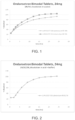
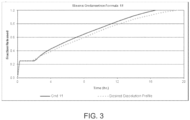
- Table 10 in conjunction with FIG. 1 and FIG. 2 show the dissolution profile for Products 1, 2 and 3.
- Product 1 there was an initial 25% burst, followed by a sustained release over 24 hours.
- product 2 there was an initial 25% burst, followed by a sustained release over 24 hours.
- product 3 there was initial 25% burst, followed by a lag in release while in acid.
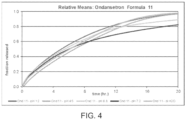
- Ondansetron HCl tablet cores were prepared through dry-blend and direct compression. Details of the formulation ingredients are depicted in Tables 11 and 12 . The dissolution profile (assuming enteric coating and 6 mg immediate release drug coating) for this formula is shown in FIG. 3 . Table 11. Ondansetron Electrolyte 11- tablet core Ondansetron HCl Electrolyte 11 %w/w mg/dosage Ondansetron HCl 5.30% 22.5 sodium citrate 11.78% 50 HPMC K4M 23.56% 100 MCC 47.11% 200 mg stearate 0.47% 2 Total 374.5 Table 12.
- Ondansetron HCl Formulation 11 Raw Material Purpose Manufacturer Lot Number w/w% mg/dosage Ondansetron HCl API DRL ON01 31 05 5.30% 22.5 HPMC K4M Polymer Colorcon WP193724 23.56% 100.00 Sodium Citrate Electrolyte Gadot Biochemical Ind. 48010004 11.78% 50.00 Avicel MCC PH 102 Flow Agent FMC Biopolymer P208819629 47.11% 200.00 Mg Stearate Lubricant Mallinckrodt E17591 0.47% 2.00 Total 100% 374.5
- Test-1 1 x Ondansetron 24 mg bimodal tablet (amino acid core) Batch no.: 19401.001A
- Test-2 1 x Ondansetron 24 mg bimodal tablet (electrolyte core) Batch no.: 19404.001A
- Test-3 1 x Ondansetron 24 mg bimodal tablet (enteric coated electrolyte core) Batch no.: 19403.001A
- the dose was chosen to achieve similar exposure as with the marketed immediate-release formulation (Zofran ® 8 mg) when administered three-time daily.
- a single dose of the assigned Test formulation was administered orally with approximately 240 mL of water at ambient temperature, starting at 07:30, to one subject per minute.
- the assigned Reference formulation was administered orally (three-times daily, at 8-hour intervals) with approximately 240 mL of water at ambient temperature, starting at 07:30, to one subject per minute. Subsequent drug administrations took place in the afternoon and in the evening at 15:30 and 23:30, respectively.
- the lunch was to be completed no later than 5 hours following morning drug administration. All meals were served at appropriate times thereafter, but not before 9 hours after morning drug administration.
- the supper was not to be served before 11 hours after the morning drug administration and was to be completed no later than 13 hours following morning drug administration.
- the light snack was to be completed no later than 13 hours after the morning drug administration. Water was allowed ad libitum until 1 hour pre-dose and beginning 1 hour after each drug administration.
- Blood samples for pharmacokinetic measurements were collected prior to and up to 32 hours (serial sampling) after each morning drug administration.
- the direct measurements of this study were the plasma concentrations of ondansetron. These concentrations were obtained by analysis of the plasma derived from the blood samples drawn during this study.
- the total volume of blood collected per subject (639 mL for males and 653 mL for females) is considered to have a negligible or no impact on the pharmacokinetic profiles of the drugs and the assessment of bioequivalence. Furthermore, it is considered to have a negligible impact on subjects* safety.
- the first blood sample of each period i.e. the blank plasma sample, was collected prior to drug administration while the others were collected 0.25, 0.5, 1, 1.5, 2, 2.5, 3, 3.5, 4, 5, 6, 7, 8, 9, 10, 12, 16, 20, 24 and 32 hours after drug administration in one tube of 6 mL (K 2 EDTA Vacutainers)
- the first blood sample of each period i.e. the blank plasma sample, was collected prior to the morning drug administration while the others were collected 0.25, 0.5, 1, 1.5, 2, 2.5, 3,4, 6,8, 8.25, 8.5,9, 9.5, 10,10.5,11, 12, 14,16, 16.25, 16.5,17,17.5, 18, 18.5,19,20, 22, 24, 28 and 32 hours following the morning drug administration in one tube of 6 mL (K 2 EDTA Vacutainers). Samples at 8-hour and 16-hour were collected within 5 minutes before the drug administration (the afternoon and evening administrations).
- the mean C max were respectively, 50.669 ng/mL and 50.731 ng/mL for the Test-1 and Reference formulations.
- the Test-1 to Reference C max ratio of geometric LSmeans was 99.05% (90%CI: 92.89 to 105.62%). This result thus demonstrates that the ratio and corresponding 90% confidence interval of the relative C max geometric LSmeans of the Test-1 to Reference formulation are within the pre-specified 80.00 to 125.00% range.
- the median T max was 3.50 and 17.50 hours for the Test-1 and Reference formulations, respectively.
- the mean AUC T were respectively, 659.098 ng ⁇ h/mL and 854.517 ng-h/mL for the Test-1 and Reference formulations.
- the Test-1 to Reference AUC T ratio of geometric LSmeans was 77.54% (90%CI: 73.60 to 81.68%). This result thus demonstrates that the ratio and corresponding 90% confidence interval of the relative AUC T geometric LSmeans of the Test-1 to Reference formulation are outside the pre-specified 80.00 to 125.00% range.
- the mean K el was 0.0671 hours -1 for the Test-1 formulation and 0.1391 hours -1 for the Reference formulation.
- the mean T 1 ⁇ 2el value was 11.72 and 5.40 hours, for the Test-1 and Reference formulations, respectively.
- the mean AUC ⁇ were respectively, 795.397 ng-h/mL and 946.030 ng-h/mL for the Test-1 and Reference formulations.
- the Test-1 to Reference AUC ⁇ ratio of geometric LSmeans was 83.95% (90%CI: 78.46 to 89.82%). This result thus demonstrates that the 90% confidence interval of the relative AUC ⁇ geometric LSmeans of the Test-1 to Reference formulation is outside the pre-specified 80.00 to 125.00% range.
- the mean AUC T over AUC ⁇ individual ratio (AUC T/ ⁇ ) were respectively, 84.61% and 92.07% for the Test-1 and Reference formulations.
- the mean C max were respectively, 55.718 ng/mL and 50.731 ng/mL for the Test-2 and Reference formulations.
- the Test-2 to Reference C max ratio of geometric LSmeans was 110.93% (90%CI: 104.03 to 118.30%). This result thus demonstrates that the ratio and corresponding 90% confidence interval of the relative C max geometric LSmeans of the Test-2 to Reference formulation are within the pre-specified 80.00 to 125.00% range.
- the median T max was 4.00 and 17.50 hours for the Test-2 and Reference formulations, respectively.
- the mean AUC T were respectively, 730.199 ng-h/mL and 854.517 ng ⁇ h/mL for the Test-2 and Reference formulations.
- the Test-2 to Reference AUC T ratio of geometric LSmeans was 86.79% (90%CI: 82.38 to 91.43%). This result thus demonstrates that the ratio and corresponding 90% confidence interval of the relative AUC T geometric LSmeans of the Test-2 to Reference formulation are within the pre-specified 80.00 to 125.00% range.
- the mean K el was 0.0676 hours -1 for the Test-2 formulation and 0.1391 hours -1 for the Reference formulation.
- the mean T 1 ⁇ 2el value was 10.84 and 5.40 hours, for the Test-2 and Reference formulations, respectively.
- the mean AUC ⁇ were respectively, 847.660 ng ⁇ h/mL and 946.030 ng ⁇ h/mL for the Test-2 and Reference formulations.
- the Test-2 to Reference AUC ⁇ ratio of geometric LSmeans was 91.38% (90%CI: 85.57 to 97.58%). This result thus demonstrates that the ratio and corresponding 90% confidence interval of the relative AUC ⁇ geometric LSmeans of the Test-2 to Reference formulation are within the pre-specified 80.00 to 125.00% range.
- the mean AUC T over AUC ⁇ individual ratio (AUC T/ ⁇ ) were respectively, 87.44% and 92.07% for the Test and Reference formulations.
- the mean C max were respectively, 32.958 ng/mL and 50.731 ng/mL for the Test-3 and Reference formulations.
- the Test-3 to Reference C max ratio of geometric LSmeans was 65.67% (90%CI: 61.54 to 70.09%). This result thus demonstrates that the ratio and corresponding 90% confidence interval of the relative C max geometric LSmeans of the Test-3 to Reference formulation are outside the pre-specified 80.00 to 125.00% range.
- the median T max was 5.00 and 17.50 hours for the Test-3 and Reference formulations, respectively.
- the mean AUC T were respectively, 646.611 ng ⁇ h/mL and 854.517 ng-h/mL for the Test-3 and Reference formulations.
- the Test-3 to Reference AUC T ratio of geometric LSmeans was 76.47% (90%CI: 72.54 to 80.61%). This result thus demonstrates that the ratio and corresponding 90% confidence interval of the relative AUC T geometric LSmeans of the Test-3 to Reference formulation are outside the pre-specified 80.00 to 125.00% range.
- the mean K el was 0.0640 hours -1 for the Test-3 formulation and 0.1391 hours -1 for the Reference formulation.
- the mean T 1 ⁇ 2el value was 12.73 and 5.40 hours, for the Test-3 and Reference formulations, respectively.
- the mean AUC ⁇ were respectively, 830.321 ng ⁇ h/mL and 946.030 ng ⁇ h/mL for the Test-3 and Reference formulations.
- the Test-3 to Reference AUC ⁇ ratio of geometric LSmeans was 88.38% (90%CI: 82.53 to 94.65%). This result thus demonstrates that the ratio and corresponding 90% confidence interval of the relative AUC ⁇ geometric LSmeans of the Test-3 to Reference formulation are within the pre-specified 80.00 to 125.00% range.
- the mean AUC T over AUC ⁇ individual ratio (AUC T/ ⁇ ) were respectively, 80.15% and 92.07% for the Test-3 and Reference formulations.
- ondansetron hydrochloride It may be desirable to develop a 36 to 48 hour extended release oral solid dosage form of ondansetron comprising 36 mg to 48 mg of ondansetron hydrochloride.
- Table 20 presents the dry blend direct compression composition of extended release core tablet formulations 20 and 28 mg of ondanstron free base.
- Materials used for ondanstron hydrochloride sustained release core tablet development were similar to those listed in Example 1, Table 2 of the 24 mg bimodal tablet formulation (18 mg of ondansetron free base in core tablet) except for the Hypromelose K4M premium DC grade utilized instead of Hypromelose K4M premium.
- Table 20 Composition of Dry Blend Direct Compression Extended Release Ondansetron Formulation approach
- Reference Formulation Dry Blend Formulation Prototypes Lab scale L004-04 ⁇ 001 (20 mg free base) 003 005 007 (28 mg free base) % (w/w) Ondansetron HCl 5.39* 6.64 9.30 9.30 9.30 9.30 Hypromelose K4M premium DC 26.7 26.70 41.30 34.30 30.00 Sodium dihydrogen citrate anhydrous 13.35 13.35 13.55 13.35 13.35 Microcrystalline Cellulose type 102 (TABULOSE ® -102) 54.02* 52.78 35.52 42.52 46.82 Magnesium stearate (Ligamed MF-2-V) 0.53 0.53 0.53 0.53 0.53 Total 99.99 100.0 100.0 100 100.0 *: Before potency adjustment
- Table 21 presents the dry blend direct compression composition of core tablet 8 mg of Ondansetron free base formulation assessed to be chronodosed coated.
- a dry blend was processed using a PK Blend Master laboratory blender (Patterson-Kelly, East Stroudsburg, PA, USA) equipped with 1.5 L V-blender capacity for the laboratory scale formulation L004-04001 to -04008 ( Tables 22A and 22B and Tables 23A and 23B respectively). All the materials were screened separately through a 30 mesh hand screen, charged into the V-blender and mixed for 15 minutes at 25 rpm without the lubricant which was then added and mixed for 3 additional minutes. The same blending method was applied to the lots -04002, -04004, -04006 and -04004 intended to be chronodosed coated.
- Table 22A Extended Release Ondansetron Core Formulation Composition Approach L004-04001 and L003 Ingredient Name Dry Blend Formulation Prototypes Lab scale L004-04 ⁇ 001 003 (20 mg free base) (28 mg free base) % (w/w) Batch size (g) 001 (Low Hardness) 001A (High Hardness) % (w/w) Batch size (g) mg/unit mg/unit Ondansetron HCl 6.64 6.64 24.9 9.30 9.30 34.8 Hypromelose K4M premium DC 26.70 26.70 100.0 41.30 41.30 154.7 Sodium dihydrogen citrate anhydrous 13.35 13.35 50.0 13.55 13.55 50.0 Microcrystalline Cellulose type 102 (TABULOSE ® -102) 52.78 52.78 197.6 35.52 35.52 133.0 Magnesium stearate (Ligamed MF-2-V) 0.53 0.53 2.0 0.53 0.53 2.0 Total 100.0 100 374.5 100.0 100.0 374.5 Table 22B: Extended
- the compression trials of lots L004-0401, -04001A, -04005 and -04007 extended release formulation were performed using a hydraulic laboratory hand press with 10.0 mm diameter standard concave round tooling while the lot -04003 the compression was conducted using a 6 stations rotary tablet press machine type PR6 (SVIAC, Antony, France) equipped with a gravity powder feeder with 8.0 X 16.0 X 2.0 deep oval concave 'D' type tooling.
- the core tablets - 04007B were also compressed using 6 stations rotary tablet press machine type PR6 with 7.0 X 14.0 mm 'D' type tooling model capsule with the number "20" embedded in upper punch.
- the core tablets L004-04002, -04002C, -04004, -04006 and -04008 intended to be chronodosed coated were also compressed using also the SVIAC with 6.0 mm round standard concave 'D' type tooling.
- Seal, enteric and immediate release layer coating for bimodal drug product from formulations -04001, -04003 and -04007, as well as for chronodosed film coating for drug products from formulation -04002, -04004, -04006 and -04008 were performed using an Aeromatic-Fielder fluid bed laboratory unit (model Strea-1, Columbia, MD, USA) equipped with a Wurster column.
- the coating suspensions were sprayed using a Cole-Parmer peristaltic pump (model 77521-40, Vernon Hills, IL, USA) with Masterflex tubing #16.
- Aqueous coating composition for the seal and enteric coat, as well as for the immediate release layer applied on sustained release enteric coated tablets can be found in Tables 24, 25 and 26 respectively.
- the core tablets 28 mg from the first compression trial of extended release formulation L004-04005 were not coated. They were intended to evaluate and compare the dissolution profile in pH 6.8 medium against those of -04003.
- Table 24 Composition of All Seal Coats Aqueous Suspensions Component Supplier Appearance % w/w Total quantity prepared (g) Lot L004-04 001 001A 003 007A and 007B Purified water* Corealis Pharma Clear liquid 93.4 93.4 Hypromelose (METHOCEL TM E5) JRS Pharma White powder 6.0 6.0 plasACRYL TM T20 (20%) Evonik White emulsion 0.6 0.6 TOTAL 100.0 100 *: Removed during coating and drying process
- Table 25 Composition of All Enteric Coats Aqueous Suspensions Component Supplier Appearance % w/w Total quantity prepared (g) Lot L004-04 001 001A 003 007A and 007B Purified water* Corealis Pharma Clear liquid 17.02 17.02 EUDRAGIT ® L30 D55 (30%) Evonik White suspension 71.22 71.22 plasACRYL TM T20 (20%) Evonik White emulsion 10.68 10.68 Trie
- Table 27 displays different composition of diverse chronodosed aqueous coat suspension trials applied on the 8 mg core tablet.
- the coat suspension trials #1 and #2 were formulated without talk.
- Trials #3, #4, #7 and #9 included 5.88% of talk while for the trials #5 and #6, the talc ratio was reduced down to 1%.
- Table 27 Various Compositions of Chronodose Aqueous Suspension Trials #1 to #8 Component (Eudragit RS/RL ratio) (3-7): Trial #1 (7-3): Trial #2 (9-1): Trial #3 (8-2): Trial #4 (8-2): Trial #5 (6-4); Trial #6 (7-3): Trial #7 (6-4): Trial #8 % w/w Purified water* 19.4 19.4 52.55 52.55 41.12 41.12 52.55 52.55 EUDRAGIT ® RS 30D (30%) 24.0 56.0 35.29 31.38 44.42 33.32 27.44 23.53 EUDRAGIT ® RL 30D (30%) 56.0 24.0 3.93 7.84 11.11 22.21 11.78 15.69 plasACRYL TM T20 (20%) 0.6 0.6 - - - - - - Triethyl citrate - - 2.35 2.35 2.35 2.35 2.35 2.35 2.35 2.35 2.35 Talc - - - 5.88 5.88 1.00
- Example 12 Tablets Seal Coating
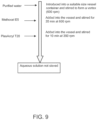
- the seal aqueous coating solution of 6.12% w/w was manufactured by dissolving the METHOCEL TM E5 in water, then adding the plasACRYL TM using a marine propeller ( ⁇ 50.0 mm of diameter) as shown in FIG. 9 .
- Table 28 presents the seal coating process parameters.
- the inlet air temperature was set at 46°C.
- Table 28 Aeromatic-Fielder fluid bed Seal Coating Process Parameters Lot L004-04 ⁇ Targeted Weight Gain (%w/w) Tablets pre warm Time (Min) Coating Time (min) Inlet Air T (°C) Outlet Air T (45 ⁇ 5)°C) Spray Rate (g/min) Atomizing Air Pressure (bar) (Pascal) Air Flow (m 3 /h) Tablets Drying Time (Min) 001 2.5% 2 17 59-61 46-50 2.5 12 (120,000) 115-130 3 001A 18 58-61 50 2.4 120-130 003 13 58-61 48-50 3.4 110-130 007A 16 58-63 48-51 2.8 125-130 007B 21 58-60 49-50 2.2 130 009A 23 56-58 48-50 2.3 120-125 009B 22 58 48-51 2.4 120
- Example 13 a Tablets Enteric Coating
- a 24.58% w/w aqueous enteric coating system was used and prepared by mixing the water, triethyl citrate and plasACRYL TM using also a marine propeller ( ⁇ 50.0 mm of diameter) as shown in FIG. 10 .
- the EUDRAGIT ® dispersion was added; the suspension was mixed for 30 minutes at 400 rpm then screened through a 60 mesh screen.
- the enteric coating parameters are reported in Table 29.
- the inlet air temperature was set at 46°C.
- Table 29 Aeromatic-Fielder fluid bed Enteric Coating Process Parameters Lot L004-04 ⁇ Targeted Weight Gain (%w/w) Tablets pre warm Time (Min) Coating Time (min) Inlet Air T (°C) Outlet Air T (41 ⁇ 5)°C) Spray Rate (g/min) Atomizing Air Pressure (bar) (Pascal) Air Flow (m 3 /h) Tablets Drying Time (Min) 001 10% 2 18 49-54 43-45 2.1 1.2 (120,000) 110-130 3 001A 13 51-53 43-44 2.9 125-130 003 13 52-53 43-45 2.7 110-120 007A 15 52-55 44-46 2.5 120-130 007B 18 51-53 43-46 2.2 110 009A 18 53-54 43-46 2.0 110 009B 17 53 43-45 2.2 110
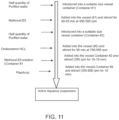
- a 6.18% w/w aqueous active suspension was prepared by first dissolving the METHOCEL TM E5 in water half of water to be used, and separately dispersing the ondansetron in water into the remaining water and stirring at high speed (750-950 rpm) using the 50.0 mm diameter marine propeller for 90 minutes.
- the METHOCEL TM solution was then added to the drug suspension, and finally the plasACRYL TM was added as presented in FIG. 11 .
- the enteric coating parameters are reported in Table 30.
- the inlet air temperature was set at 46°C for L001 and maintained at 56-58°C for L001A and L003 as well as subsequent bimodal tablets formulations.
- Table 30 Aeromatic-Fielder fluid bed Immediate Release Layer Coating Process Parameters Lot L004-04 ⁇ Targeted Weight Gain (%w/w) Tablets pre warm Time (Min) Coating Time (min) Inlet Air T (°C) Outlet Air T (43 ⁇ 5)°C) Spray Rate (g/min) Atomizing Air Pressure (bar) (Pascal) Air Flow (m 3 /h) Tablets Drying Time (Min) 001 6.02 2 23 57 44-47 4.1 1.2 (120,000) 125-130 3 001A 6.01 24 54-56 45-48 3.9 130 5 003 6.01 26 53-58 44-46 3.6 120-130 007A 6.02 28 55-58 45-47 3.6 120-130 007B 6.13 36 54-56 44-46 2.8 1.2-1.3 (120,000 - 130,000) 110-130 009A 6.06 37 58-61 47-48 2.7 1.3-1.4 (130,000 - 140,000) 120-130 009B 5.75 33 58-60 47-48 3.
- the dry blend DC of extended release core tablet formulation L004-04001, -04003, - 04005 and -04007 were prepared with 6.64% and 9.30% of API load respectively while the chronodose core formulation -04002, -04004, -04006 and -04008 was manufactured with 12.44% of API load. All the formulations generated a high yield of 99.6% or more from laboratory batches size of 0.1 kg.
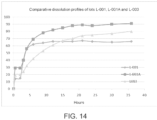
- FIG. 14 presents comparison dissolution profiles of Ondansetron bimodal round convex 28 mg tablets lots -04001 and -04001A compressed at low and high hardness respectively, and the oval convex tablets 36 mg lot -04003.
- FIG. 16 presents comparison dissolution profiles of Ondansetron core tablets -04007 28 mg and bimodal -04007A. It appeared that the coating had a real impact on dissolution profiles and reduction of enteric coating weight gain should be tested.
- FIG. 17 presents comparison dissolution profiles in mg of Ondansetron bimodal from formulations -04001, -04003, and -04007.
- Drug products -04001, -04001A and -04007A were compressed with 10.0 mm round convex standard toolings while the lot -04003 was compressed with Oval, concave, (8.0 X 16.0 X 2.0 mm) and the lot -04007B with Oblong, Capsule, (7.0 X 14.0 mm upper Emb. "20").
- lots -04007A (24.4 kP hardness value) and -04007B (20.2 kP hardness value) showed the highest API mg dissolved slightly over 30 mg out of 36 mg expected.
- lot -04007B showed faster dissolution profile compared to that of -04007A.
- FIG. 18 presents comparison dissolution profiles in percentage of Ondansetron bimodal from formulations showed above in FIG. 17 with corrected values of the expected results taking into consideration the actual average core tablet weight of 360.0 mg.
- Lot -04009A (with 12.6 kP hardness value) and 04009B (16.7 kP hardness value) were compressed using oval concave new toolings (7.6 X 14.0 mm) with an average core tablet weight of 376.40 mg and to 386.87 mg respectively.
- the compression force increased five times from 400 Kgf to 2200 Kgf for lots 04009A and 04009B, respectively, suggesting a plastic deformation of the tablet core at higher hardness that could explain the faster release.
- FIG. 16 presents the dissolution profiles in mg/time of the bimodal drug products 04003, 04007A, 04007B, 04009A and 04009B. More than 32 mg out of 36 mg expected were recovered from bimodal tablet 040098, slightly better than the lot 04007B but a little bit faster.
- FIG. 17 shows same results in percentage dissolved.
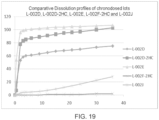
- FIG. 19 presents comparison dissolution profiles of chronodosed round convex tablets, 8 mg -04002D and -04002D-2HC using coating composition trial # 1 (EUDRAGIT ® RS/RL ratio: 3-7); -04002E using coating composition trial #2 (EUDRAGIT ® RS/RL ratio: 7-3), -04002F using coating composition trial #3 (EUDRAGIT ® RS/RL ratio: 9-1) and L-002J using coating composition trial #4 (EUDRAGIT ® RS/RL ratio: 8-2).
- the formulation -04002 was formulated with only MCC-102 as filler and showed a core disintegration time over 15 minutes.
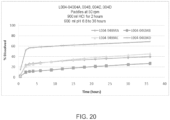
- FIG. 20 displays comparison dissolution profiles of chronodosed round convex tablets, 8 mg from formulation -04004 prepared with MCC-102 and Tablettose 80 with a core disintegration time less than 8 minutes.
- the lots -04004A and -04004B were chronodose coated using coating composition trial #5 (EUDRAGIT ® RS/RL ratio: 8-2 and 1% of talk) for a weight gain of 4.9 and 11.0% respectively while the lots -04004C and -04004D were coated using coating composition trial #6 (EUDRAGIT ® RS/RL ratio: 6-4 with 1% of talk) with a weight gain of 4.9 and 10.1%. All the four lots showed a fast dissolution profiles during the first 3 hours but failed to release more than 75% over 36 hours. For an unknown reason, the lot -04004D with double weight gain compared to the lot -04004C showed faster dissolution profile.
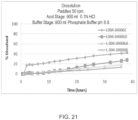
- FIG. 21 displays comparison dissolution profiles of chronodosed round convex tablets, 8 mg from formulation -04006 prepared with MCC-102, TABLETOSSE ® 80 and 4% of sodium starch glycolate as disintegrant and whose core disintegration time was less than 2 minutes.
- the lots -04006A and -040068 were chronodose coated using coating composition trial #4 as per - 04002J, (EUDRAGIT ® RS/RL ratio: 8-2 and 5.9% of talk) for a weight gain of 4.8 and 9.8% respectively while the lots -04006C and -04006D were coated using coating composition trial #7 (EUDRAGIT ® RS/RL ratio: 7-3 with 5.9% of talk) with a weight gain of 4.9 and 9.8%.
- the maximum API released over 36 hours was 40% for -04006C.
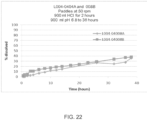
- FIG. 22 displays comparison dissolution profiles of chronodosed round convex tablets, 8 mg from formulation -04008 prepared same excipient as per L-006 but with increased sodium starch glycolate up to 8% and for which the core disintegration time was less than 1 minutes.
- the lots -04008A and -04008B were chronodose coated using coating composition trial #8 (EUDRAGIT ® RS/RL ratio: 6-4 and 5.9% of talk) for a weight gain of 10.1%.
- the only difference between both lots in formulation process was that the lot L-008A was not cured after chronodose film coating.
- the dissolution profiles of both lots were almost similar.
- dissolution profile improved but still not reached over 40% over 36 hours.
- the primary objective of this study was to compare the relative bioavailability and peak and trough concentrations between two FDA approved regimens of commercially available ondansetron 8 mg immediate-release tablet (twice daily Zofran ® 8 mg regimen administered for two days and a single dose of Zofran ® 24 mg regimen administered as three Zofran ® 8 mg tablets taken together) and the Test Product of ondansetron 24 mg extended-release tablet of the present invention (administered once daily).
- the wash-out period between the first drug administrations of each study period was to be of 9 calendar days.
- C max and AUC 0-24 on Days 2 through 5 were to be compared with C max and AUC 0-24 on Day 1 to assess accumulation with repeated dosing.
- Accumulation of the Test formulation was to be evaluated using In-transformed C max and AUC 0-24 .
- An Analysis of Variance (ANOVA) model was to be fitted with the day as a fixed effect and the subject as a random effect.
- Concentrations of ondansetron over time after dosing with the Test formulation were to be compared with those after dosing with the reference regimens. If the concentration of ondansetron after dosing with the test formulation was found to be similar to or higher than that after dosing with one or both of the reference regimens at most time points over the first 24-hour period studied, one can conclude that the Test product was to be at least as effective treatment with the existing regimens for vomiting and nausea.
- Adverse events experienced by two or more subjects with any treatment condition were (Treatment-1, Treatment-2, Treatment-3) abnormal faeces (2, 0, 0), constipation (2, 0, 1), vessel puncture site haematoma (2, 3, 2), vessel puncture site pain (0, 1, 1), headache (0, 1, 1) and somnolence (0, 1, 1). Furthermore, related adverse events experienced by two or more subjects with any treatment condition were (Treatment-1, Treatment-2, Treatment-3) constipation (2, 0, 1), headache (0, 1, 1) and somnolence (0, 1, 1).
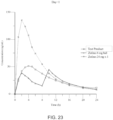
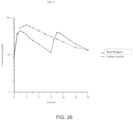
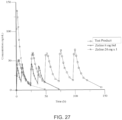
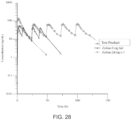
- the main pharmacokinetic parameters (C min , C max , C 24 and AUC 0-24 ) of each treatment were measured for each dosing day. Comparisons between the first 2 days of administration of Test Product with the 2 days of administration of Zofran 8mg bid were performed as well as a comparison between the first day of administration of Test Product with the administration of Zofran 24 mg. A summary of the results of these comparisons is presented in FIGS. 23-28 and Tables 29-32. Table 29. Pharmacokinetic Parameters After Administration of Test Product PARAMETER Test Product DAY 1 DAY 2 MEAN C.V. (%) MEAN C.V.
- Concentrations of ondansetron at selected time points after dosing with Test Product were compared with those after dosing with Zofran 8 mg bid and Zofran 24 mg x 1. Measured concentrations achieved with Test Product at 10, 12 14 and 16 hours post-dose for Day 1 and at 20 hours post-dose for Day 2 were compared to the respective measured concentrations of ondansetron achieved with the administration of the other treatments. A summary of the results of these comparisons is presented in the following tables. Table 33. Concentration After Administration of Test Product PARAMETER DAY Test Product MEAN C.V.
- the C 24 was found to be higher with the administration of Test Product for the first day of treatment and was found to be comparable between Test Product and Zofran 8 mg bid for the second day of treatment.
- the C min and C 24 were also higher for the first day of administration of Test Product as compared to the administration of Zofran 24 mg ⁇ 1.
- the C max and AUC 0-24 achieved with the administration of Test Product were about 60% (ratio of 38%) and 40% (ratio of 59%) lower than the C max and AUC 0-24 achieved with the administration of Zofran 24 mg ⁇ 1.
- Measured concentrations through 10 hours were found to be lower following the administration of Test Product.
- the measured concentration at 12 and 16 hours were found to be comparable between the two treatments and higher for Test Product at 20 and 24 hours.
- C max The accumulation evaluation performed on C max demonstrated a first 15% increase between Day 1 and Day 2 and also demonstrated a uniform increase of the ratio estimate based on back-transformation of LS Means' difference throughout Day 3 to Day 5 (118-125% of C max observed on Day 1) indicating the accumulation of ondansetron following multiple administrations of Test Product.
- a similar increase was observed for AUC 0-24 for Day 3 and 4 (125-131% of AUC 0-24 observed on Day 1) following a 22% increase between Day 1 and Day 2.
- the ratio estimate based on back-transformation of LS Means' difference for the AUC 0-24 was similar for Day 4 (131%) and Day 5 (132%) indicating that steady state had been reached between day 4 and 5 of repeated daily Test Product administration.
- Test Product is noninferior to that of Zofran 8 mg bid, the approved regimen for prevention of nausea and vomiting due to moderately emetogenic chemotherapy.
- the plasma level of ondansetron after Test Product is similar to or higher than the plasma level after Zofran 8 mg given twice daily at most time points tested, and the concentrations at other time points are considerably higher than trough levels at 8 or12 hours (days 1 and 2 respectively) after the initial dose for the reference regimen of Zofran 8mg twice daily. Therefore, it is reasonable to conclude that the efficacy of Test Product is at least as good as that of the Zofran 8 mg twice daily.
- Test Product for 5 consecutive days under fasting conditions confirmed an accumulation of ondansetron in human plasma.
- Maximum plasma concentrations increased from 15% to 25% from Day 2 to Day 5. Following the first 15% increase, an increase of ⁇ 3 % of the maximum concentration was observed for each subsequent dosing day.
- AUC 0-24 increased from 22 to 31% from Day 2 to Day 4 and subsequently stabilized to 32% for Day 5 indicating arrival at a steady state situation.
- Test Product was similar to the safety profile of the other treatments.
- the primary objective of this study was to explore the relative bioavailability between the Test formulation on ondansetron 24 mg bimodal release tablet and a once daily ondansetron suppository formulation, approved in many countries in Europe (Zofran ® 16 mg suppository).
- Test formulation was orally administered with approximately 240 mL of water at ambient temperature.
- Blood samples for pharmacokinetic measurements were collected prior to and up to 48 hours (serial sampling) after each drug administration.
- the blood sampling schedule was at sampling time (in hours): 0, 1, 2, 3, 4, 5, 6, 8, 10, 12, 14, 16, 20, 24, and 28.
- the mean C min were respectively 2.629 ng/mL and 0.793 ng/mL for the Test and Reference formulations.
- the Test to References C min ratio of geometric LSmeans was 277.21% (90%CI: 162.84% to 471.90%).
- the mean C max were respectively 53.055 ng/mL and 24.392 ng/mL for the Test and Reference formulations.
- the Test to Reference C max ratio of geometric LSmeans was 219.26% (90%CI: 192.74% to 249.43%)
- the mean C 24 were respectively 10.542 ng/mL and 5.570 ng/mL for Test and Reference formulations.
- the Test to Reference C 24 ratio of geometric LSmeans was 203.59% (90%CI: 157.81% to 262.65%).
- the median T max was 4.00 and 5.00 hours for Test and Reference formulations, respectively.
- the mean AUC 0-24 were respectively 629.082 ng ⁇ h/mL and 321.115 ng ⁇ h/mL for the Test and Reference formulations.
- the Test to Reference AUC 0-24 ratio of geometric LSmeans was 197.68% (90%CI: 173.80% to 224.85%).
- the mean AUC 0-T were respectively 781.788 ng h/mL and 382.769 ng ⁇ h/mL for the Test and Reference formulations.
- the Test to Reference AUC 0-T ratio of geometric LSmeans was 212.62% (90%CI: 180.62% to 250.30%).
- the mean ⁇ z was 0.0665 hours -1 for the Test formulation and 0.0914 hours -1 for the Reference formulation.
- the mean T half value was 12.69 and 8.16 hours, for the Test and Reference formulations, respectively.
- the mean AUC 0- ⁇ were respectively 848.005 ng-h/mL and 407.528 ng ⁇ h/mL for the Test and Reference formulations.
- the Test to Reference AUC 0- ⁇ ratio of geometric LSmeans was 212.76% (90%CI: 183.77% to 246.33%).
- the secondary objective of this study was to assess the safety and tolerability of the bimodal release formulation on healthy volunteers.
- the incidence and severity of adverse events related to the bimodal release formulation was comparable to that observed following the Zofran ® suppository even though there was a higher exposure and peak level of ondansetron following the administration of the bimodal release formulation.
- the two different formulations tested were safe and well tolerated by the subjects included in this study.
- Example 20 (Prophetic) Randomized, Placebo-Controlled Trial of Solid Dosage Forms of the Present Disclosure for Vomiting due to Presumed Acute Gastroenteritis or Gastritis
- Acute gastroenteritis is inflammation of the stomach, small intestine or large intestine, leading to a combination of abdominal pain, cramping, nausea, vomiting and diarrhea.
- Acute gastritis is inflammation of the stomach; patients with acute gastritis may have vomiting without diarrhea.
- patients must present with at least vomiting, as described below, with or without other symptoms.
- Acute gastroenteritis is a major health problem worldwide. While mortality is greatest in developing countries and in both the very young and old, morbidity of acute gastroenteritis is shared by all ages and economic strata. In the US, most cases of acute gastroenteritis are viral, most commonly rotavirus and norovirus. In the US, there are between 15-25 million episodes of viral gastroenteritis annually, leading to 3-5 million office visits and 200,000 hospitalizations. While mortality is low, among the 17,000 people dying from acute gastroenteritis in the US each year, 83% are over age 65.
- the Test product for this study is a bimodal release oral formulation of ondansetron. It contains 24 mg of ondansetron, 6 mg immediate release and 18 mg in an extended release matrix. As described above, pharmacokinetic studies in healthy volunteers have demonstrated rapid early release, with appearance of drug in the plasma within half an hour of dosing, similarly to immediate release Zofran, but with sustained drug availability over 24 hours. Thus, the Test product should provide rapid relief from nausea and vomiting in patients not requiring immediate intravenous medication, yet require only once daily dosing for a sustained effect over the several days of illness. The safety profile of the Test product is similar to that of Zofran 8 mg, as demonstrated in volunteer studies described above.
- a solid dosage form for this study is a modified release oral tablet formulations of ondansetron. It contains 6 mg ondansetron for immediate release and 18 mg in an extended release core. It provides early ondansetron levels similar to a single 8 mg immediate release tablet and sustained release over a 24-hour period.
- 5-HT 3 antagonists are available in the US: alosetron (Lotronex), dolasetron (Anzemet), granisetron (Sancuso and others), ondansetron (Zofran, Zuplenz and others), palonsetron (Aloxi).
- Oral fluids will be administered as tolerated once a patient has not vomited for 30 minutes after dosing with study medication (second dose for those patients receiving 2 doses in the ED). Patients tolerating oral fluids will be discharged once deemed stable by the attending physician but not prior to 2 hours after dosing. On discharge, patients will be given 3 additional doses of study medication to take once daily if necessary. Patients who do not tolerate oral fluids may receive parenteral hydration.
- Data will be collected daily for up to 4 days following study initiation (until symptoms have resolved) to ascertain whether the patient had further vomiting, other sequelae of the acute gastroenteritis or required further medical care for the gastroenteritis.
- Data may be collected by entry by the patient or a caregiver into a web-based system or on paper, or by telephone contact daily from a study staff member. If during the follow-up period, symptoms progress or worsen or new symptoms develop, the patient may be asked to return for further evaluation. If by day 4 after discharge (i.e., the day after the last dose of study medication), the patient still notes gastroenteritis symptoms, , be or she will be instructed to return for further evaluation.
- Blood and urine specimens should be taken expeditiously at the beginning of assessment, but patient entry into the study and treatment need not wait for lab results (other than pregnancy test when required) unless clinically indicated. After phlebotomy, a saline lock may be placed so that the patient will not require an additional needle stick should he/she require intravenous fluids subsequently. History of present illness should include questioning regarding precipitating/causative factors, as well as recording of number and character of emetic and diarrheal episodes. Patients with diet-controlled type 2 diabetes mellitus are to have a finger stick blood glucose. For women of childbearing potential, as defined in the exclusion criteria: urine or serum pregnancy test. Negative pregnancy test result must be obtained prior to treating a patient on study.
- b Patients are to be observed in the emergency department for a minimum of 2 hours, with VS at least once every hour and recording of intake (both oral and parenteral) and number of voidings. All episodes of vomiting and diarrhea are to be recorded, and severity of nausea at baseline and every hour while in the ED noted. At a minimum of 2 hours after initial administration of study medication, patients may be discharged when clinically appropriate.
- c Patients will complete a diary either online or on paper or be contacted each day following treatment to a maximum of 4 days to determine whether they had further nausea and vomiting after leaving the emergency department, whether they required further care for the acute gastroenteritis, and details regarding the continuation, if any, of the illness. If symptoms persist for 3 or more days after study entry, the patient is to be instructed to return for further evaluation.
- d To include all medications taken within 7 days prior to study entry, all treatments (including parenteral fluids) on the day of study entry, and all medication, including rescue medications, from the time of study entry through last follow-up.
- c Patients are to receive the first dose of study medication within one hour of signing informed consent.
- f Patients may take study medication daily for up to 3 days after study entry (maximum total of 4 doses, plus one additional if patient vomits within 15 minutes of first dose) if symptoms persist. Patients should stop taking study medication if symptoms have resolved, though they may resume study medication once daily if symptoms recur after discontinuation. Patients are not to take any remaining study medication after day 4. They will be given mailers to return any unused study medication.
- Example 21 - ( Prophetic ) Ways to Measure the Reduction of Prolonged Gastroenteritis Induced Vomiting After Administration of Solid Dosage Forms of the Present Disclosure
- vomiting symptoms such as frequency, duration, volume, severity and distress will be measured.
- Frequency may be measured, for example, by the number of vomiting episodes in a specified period
- duration may be measured, for example, by the number of hours of vomiting
- volume may be measured, for example, in cups of vomit
- severity may be measured, for example, by quantifying physical symptoms
- distress that the patient is experiencing may be measured, for example, by the resulting stress and psychological symptoms).
- INVR Index of Nausea, Vomiting, and Retching
- Patients will be administered either a solid oral dosage form of the present disclosure (a 24 mg bimodal tablet as described above) or placebo, and the reduction in gastroenteritis induced vomiting will be assessed by looking at one or more vomiting symptoms, such as frequency, duration, volume, severity and distress.
- Example 22 - ( Prophetic ) Interventional Study to Assess the Severity of Vomiting After Administration of Solid Dosage Forms of the Present Disclosure to Women with Hyperemesis Gravidarum
- a PUQE score index ⁇ 13 associated to one or more of the following conditions:
- Example 23 ( Prophetic ) Randomized, Placebo-Controlled Trial of Solid Dosage Forms of the Present Disclosure for Diarrhea Predominant Irritable Bowel Syndrome (IBS-D)
- IBS Irritable bowel syndrome
- Onset associated with a change in the form of stool b. Loose or watery stools (Bristol stool form scale 6 or 7) ⁇ 25% and hard or lumpy stools ⁇ 25% of bowel movements 3.
- Major laboratory parameters within the following limits (no worse than grade 1 abnormalities per NCI-CTCAE v4): a. Adequate hematologic function, as demonstrated by i. Hemoglobin ⁇ 10 g/dL ii. ANC 1.5-10 x 10 9 /L iii. Platelets ⁇ 100 x 10 9 /L b. Adequate liver and renal function as demonstrated by i. AST and ALT each ⁇ 3.0 x ULN ii.
- Efficacy data will be calculated, for intent to treatment, based on all patients randomized and who receive at least one dose of any study medication, either active or placebo. Per protocol analysis will include all patients who receive at least 75% of the planned study medication during at least the first treatment period and have baseline and at least one full week (at least 6 days of data) on study, or discontinue before that due to documented lack of efficacy. Pharmacodynamics Changes from baseline to measurements during each of the treatment periods, as well as on-treatment comparisons between each of the treatment groups will be calculated. Efficacy A responder is a patient who, during the second two weeks of the first treatment period or during the last two weeks of the second treatment period meets the following criteria (FDA Guidance re: IBS): 1.
- Stool consistency ⁇ 50% reduction in number of days per week as compared to baseline with ⁇ 1 stool with Type 6 or 7 consistency, and Changes from baseline to the latter two weeks of each of treatment period will be calculated for each of these parameters, as well as for each of the secondary efficacy parameters.
- Adverse events will be tabulated by system organ class (SOC) and preferred term (PT) using MedDRA version 13. Adverse events will be graded 1-4 according to NCI-CTCAE v4 criteria.
- Example 24 (Prophetic) Randomized, Double-Blind, 3 Arm, Trial of Solid Dosage Forms of the Present Disclosure for Diarrhea Predominant Irritable Bowel Syndrome (IBS-D)
- Ondansetron extended release solid oral dosage form for treating either nausea, vomiting, or diarrhea symptoms are disclosed herein.
- a method of treating a patient comprises orally administering, to a patient, a solid oral dosage form comprising a core comprising a non-ionic polymer matrix, a first amount of ondansetron dispersed within the matrix, and a salt dispersed within the matrix, wherein the first amount of ondansetron ranges from about 9 mg to about 28 mg; a first seal coat surrounding the core, wherein the first seal coat is comprised of a non-ionic polymer matrix; and an immediate release drug layer surrounding the first seal coat and comprising a non-ionic polymer and a second amount of ondansetron dispersed therein, wherein the second amount of ondansetron ranges from about 3 mg to about 8 mg, wherein release of ondansetron from the solid oral dosage form provides exposure to ondansetron for a minimum period of 16 hours so as to result in a reduction in frequency of vomiting, nausea, diarrhea, or a combination thereof.
- Extended release solid dosage forms are disclosed herein for reducing, treating, or preventing either nausea, vomiting or diarrhea in a subject, symptoms that can be caused by a variety of conditions.
- nausea, vomiting or diarrhea are side effects of viral gastroenteritis in a subject.
- nausea, vomiting or diarrhea are side effects of bacterial gastroenteritis in a subject.
- nausea, vomiting or diarrhea are side effects of gastritis (inflammation of the gastric wall) in a subject.
- nausea, vomiting or diarrhea are side effects of inflammatory bowel disease in a subject.
- nausea, vomiting or diarrhea are side effects of irritable bowel syndrome in a subject.
- nausea, vomiting or diarrhea are side effects of cholecystitis in a subject.
- nausea, vomiting or diarrhea are side effects of dyspepsia in a subject
- nausea, vomiting or diarrhea are side effects of pancreatitis in a subject.
- nausea, vomiting or diarrhea are side effects of appendicitis in a subject.
- nausea, vomiting or diarrhea are side effects of a surgical procedure in a subject.
- nausea, vomiting or diarrhea are side effects of hepatitis in a subject.
- nausea, vomiting or diarrhea are side effects of peritonitis in a subject.
- nausea, vomiting or diarrhea are side effects of gastroesophageal reflux disease in a subject.
- nausea, vomiting or diarrhea are side effects of bowel obstructive in a subject. In an aspect, nausea, vomiting or diarrhea are side effects of food poisoning in a subject. In an aspect, nausea, vomiting or diarrhea are side effects of a tumor in a subject.
- a solid oral dosage form that includes a core comprising a non-ionic polymer matrix, a first amount of a first antiemetic drug or a pharmaceutically acceptable salt thereof dispersed within the matrix, and a salt dispersed within the matrix; a first seal coat surrounding the core, wherein the first seal coat is comprised of a non-ionic polymer matrix; and an immediate release drug layer surrounding the first seal coat, wherein the immediate release drug layer comprises a non-ionic polymer and a second amount of a second antiemetic drug or a pharmaceutically acceptable salt thereof dispersed therein, wherein the drug layer is sufficiently designed to release the second amount of the antiemetic drug over a period of at least 1 hour, wherein the solid oral dosage form is sufficiently designed to release the first amount of the first antiemetic drug and the second amount of the second antiemetic drug over a minimum period of 16 hours.
- the solid oral dosage form further includes an enteric coating surrounding the first seal coat.
- the solid oral dosage form further includes a second seal coat surrounding the immediate release drug layer, wherein the second seal coat is comprised of a non-ionic polymer.
- the first seal coat further comprises a coating additive such as plasACRYL TM .
- the salt in the core is dispersed in the matrix at a concentration in the range of 50% to 100% by weight of the matrix.
- the salt upon exposure of the solid dosage form to an aqueous medium, causes a hardened boundary around the periphery of the matrix, the boundary sequentially progressing inwardly toward the center thereof as the aqueous medium permeates the matrix, the hardened boundary limiting the rate at which the antiemetic drug in the matrix is released from the tablet.
- the solid oral dosage form is sufficiently designed to release the first amount of the antiemetic drug and the second amount of the antiemetic drug over a minimum period of 20 hours. In an embodiment, the solid oral dosage form is sufficiently designed to release the first amount of the antiemetic drug and the second amount of the antiemetic drug over a minimum period of 24 hours.
- first antiemetic drug and the second antiemetic drug are the same drug.
- first antiemetic drug and the second antiemetic drug are each ondansetron or an equivalent amount of an ondansetron salt thereof.
- a solid oral dosage form that includes a core comprising hypromellose, 18 mg of ondansetron or an equivalent amount of an ondansetron salt thereof, and sodium citrate anhydrous; a first seal coat surrounding the core and comprising hypromellose; and an immediate release drug layer surrounding the first seal coat and comprising hypromellose and 6 mg of ondansetron or an equivalent amount of an ondansetron salt thereof, the immediate release drug layer sufficient to release the ondansetron over a period of at least 1 hour, wherein the total amount of ondansetron in the dosage form is released over 24 hours.
- the solid oral dosage form further includes an enteric coating surrounding the first seal coat.
- the solid oral dosage form further includes a second seal coat surrounding the immediate release drug layer, wherein the second seal coat is comprised of a non-ionic polymer.
- the first seal coat further comprises a coating additive such as plasACRYL TM .
- the sodium citrate anhydrous in the core is dispersed in the hypromellose at a concentration in the range of 50% to 100% by weight of the hypromellose.
- the sodium citrate anhydrous upon exposure of the solid oral dosage form to an aqueous medium, causes a hardened boundary around the periphery of the hypromellose, the boundary sequentially progressing inwardly toward the center thereof as the aqueous medium permeates the hypromellose, the hardened boundary limiting the rate at which the ondansetron in the hypromellose is released from the tablet.
- the solid oral dosage form when the solid oral dosage form is administered to a patient in a fasting state, achieves a C max of at least 50 ng/ml.
- AUC at least 700 nghr/ml.
- a solid oral dosage form that includes a core comprising a non-ionic polymer matrix, a first amount of ondansetron or an equivalent amount of an ondansetron salt thereof dispersed within the matrix, and a salt dispersed within the matrix; a first seal coat surrounding the core, wherein the first seal coat is comprised of a non-ionic polymer matrix; and an immediate release drug layer surrounding the first seal coat, wherein the immediate release drug layer comprises a non-ionic polymer and a second amount of ondansetron or an equivalent amount of an ondansetron salt thereof dispersed therein, wherein the solid oral dosage form results in an in vitro ondansetron dissolution profile when measured in a type 2 paddle dissolution apparatus at 37° C in aqueous solution containing distilled water at 50 rpm that exhibits: a) from about 15% to 30% of the total ondansetron is released after two and a half hours of measurement in the apparatus; b) from about 30% to
- the solid oral dosage form when the solid oral dosage form is administered to a patient in a fasting state at a dose of 24 mg ondansetron, achieves a C max of at least 50 ng/ml. In an aspect, when the solid oral dosage form is administered to a patient in a fasting state at to dose of 24 mg ondansetron, achieves AUC of at least 700 nghr/ml.
- a packaged pharmaceutical preparation that includes a plurality of any of the solid oral dosage forms of the present disclosure in a sealed container and instructions for administering the dosage forms orally to effect prevention of nausea.
- a packaged pharmaceutical preparation that includes a plurality of any of the solid oral dosage forms of the present disclosure in a sealed container and instructions for administering the dosage forms orally to effect prevention of vomiting.
- a packaged pharmaceutical preparation that includes a plurality of any of the solid oral dosage forms of the presentdisctosure in a sealed container and instructions for administering the dosage forms orally to effect prevention of diarrhea.
- a pharmaceutical preparation that includes a plurality of any of the solid oral dosage forms of the present disclosure each in a discrete sealed housing, and instructions for administering the dosage forms orally to effect prevention of nausea.
- a pharmaceutical preparation that includes a plurality of any of the solid oral dosage forms of the present disclosure each in a discrete sealed housing, and instructions for administering the dosage forms orally to effect prevention of vomiting.
- a pharmaceutical preparation that includes a plurality of any of the solid oral dosage forms of the present disclosure each in a discrete sealed housing, and instructions for administering the dosage forms orally to effect prevention of diarrhea.
- a unit dosage form for preventing nausea and/or vomiting for oral administration to a patient that includes a combination of: an immediate release ondansetron component containing a unit dosage of ondansetron or a pharmaceutically acceptable salt thereof in the range of 4 mg to 8 mg; and a controlled release ondansetron component containing a unit dosage of ondansetron or a pharmaceutically acceptable salt thereof in the range of 16 mg to 28 mg, the controlled release ondansetron component comprising a non-ionic polymer matrix, the ondansetron within the matrix, and a salt dispersed within the matrix, and wherein the unit dosage form exhibits a maximum plasma concentration (Cmax) at about 2 to about 5 hours (Tmax) after administration and exhibits a comparable Cmax to a non-controlled release ondansetron formulation administered three times per day without decreasing total drug exposure defined by the area under the concentration-time curve (AUC), thereby enabling reduction of concentration-dependent side effects without a decrease in efficacy.
- a unit dosage form for preventing diarrhea for oral administration to a patient that includes a combination of an immediate release ondansetron component containing a unit dosage of ondansetron or a pharmaceutically acceptable salt thereof in the range of 4 mg to 8 mg; and a controlled release ondansetron component containing a unit dosage of ondansetron or a pharmaceutically acceptable salt thereof in the range of 16 mg to 28 mg, the controlled release ondansetron component comprising a non-ionic polymer matrix, the ondansetron within the matrix, and a salt dispersed within the matrix, and wherein the unit dosage form exhibits a maximum plasma concentration (C max ) at about 2 to about 5 hours (Tmax) after administration and exhibits a comparable C max to a non-controlled release ondansetron formulation administered three times per day without decreasing total drug exposure defined by the area under the concentration-time curve (AUC), thereby enabling reduction of concentration-dependent side effects without a decrease in efficacy.
- C max maximum plasma concentration
- a packaged pharmaceutical preparation that includes a plurality of the unit dosage forms of the present disclosure can be contained within a sealed container and include instructions for administering the dosage forms orally to effect prevention of nausea.
- a packaged pharmaceutical preparation that includes a plurality of the unit dosage forms of the present disclosure can be contained within a sealed container and include instructions for administering the dosage forms orally to effect prevention of vomiting.
- a packaged pharmaceutical preparation that includes a plurality of the unit dosage forms of the present disclosure can be contained within a sealed container and include instructions for administering the dosage forms orally to effect prevention of diarrhea.
- a packaged pharmaceutical preparation that includes a plurality of the unit dosage forms of the present disclosure can be contained within a discrete sealed housing and include instructions for administering the dosage forms orally to effect prevention of nausea.
- a packaged pharmaceutical preparation that includes a plurality of the unit dosage forms of the present disclosure can be contained within a discrete sealed housing and include instructions for administering the dosage forms orally to effect prevention of vomiting.
- a packaged pharmaceutical preparation that includes a plurality of the unit dosage forms of the present invention can be contained within a discrete sealed housing and include instructions for administering the dosage forms orally to effect prevention of diarrhea.
- a method for preventing nausea includes the step of administering a therapeutically-effective amount of a solid oral dosage form or a unit dosage form of the present disclosure to a patient.
- a method for preventing vomiting includes the step of administering a therapeutically-effective amount of a solid oral dosage form or a unit dosage form of the present disclosure to a patient.
- a method for preventing diarrhea includes the step of administering a therapeutically-effective amount of a solid oral dosage form or a unit dosage form of the present disclosure to a patient.
- a once-a-day composition that includes: (a) a core comprising a non-ionic polymer matrix, a first amount of ondansetron or an equivalent amount of an ondansetron salt dispersed within the matrix, and a salt dispersed within the matrix; (b) a first seal coat surrounding the core, wherein the first seal coat is comprised of a non-ionic polymer matrix; and (c) an immediate release drug layer surrounding the enteric coating, wherein the immediate release drug layer comprises a non-ionic polymer and a second amount of ondansetron or an equivalent amount of an ondansetron salt dispersed therein, wherein the immediate release drug layer is sufficiently designed to release the second amount of ondansetron over a period of at least 1 hour, wherein the immediate release drug layer releases the second amount of ondansetron in the upper gastrointestinal tract of a human patient, wherein the core releases the first amount of ondansetron in the lower gastrointestinal tract of a human
- the once-a-day composition when administered once-a-day to a human in a fasted state, is bioequivalent to administration to a human in a fasted state, three-times-a-day, a unit dosage form comprising 8 mg ondansetron.
- the bioequivalency is established by a 90% Confidence Interval of between 0.80 and 1.25 for both C max and AUC, when administered to a human.
- solubility and dissolution characteristics are pH-independent.
- the core has a pH-independent dissolution release profile over a pH range of 1.2-6.8.
- each of the core and the immediate release drug layer have a pH-independent dissolution release profile over a pH range of 1.2-6.8.
- each of the core and the immediate release drug layer are surrounded by a seal coat comprised of a non-ionic polymer which increases hydrophilicity of the composition and as a result the dissolution profile of the composition is pH-independent.
Landscapes
- Health & Medical Sciences (AREA)
- Life Sciences & Earth Sciences (AREA)
- Chemical & Material Sciences (AREA)
- General Health & Medical Sciences (AREA)
- Veterinary Medicine (AREA)
- Public Health (AREA)
- Medicinal Chemistry (AREA)
- Animal Behavior & Ethology (AREA)
- Pharmacology & Pharmacy (AREA)
- Bioinformatics & Cheminformatics (AREA)
- Engineering & Computer Science (AREA)
- Epidemiology (AREA)
- Nuclear Medicine, Radiotherapy & Molecular Imaging (AREA)
- General Chemical & Material Sciences (AREA)
- Chemical Kinetics & Catalysis (AREA)
- Organic Chemistry (AREA)
- Molecular Biology (AREA)
- Biophysics (AREA)
- Hospice & Palliative Care (AREA)
- Gastroenterology & Hepatology (AREA)
- Otolaryngology (AREA)
- Inorganic Chemistry (AREA)
- Medicinal Preparation (AREA)
- Pharmaceuticals Containing Other Organic And Inorganic Compounds (AREA)
Applications Claiming Priority (5)
| Application Number | Priority Date | Filing Date | Title |
|---|---|---|---|
| US201461951092P | 2014-03-11 | 2014-03-11 | |
| US201461951074P | 2014-03-11 | 2014-03-11 | |
| US201461951112P | 2014-03-11 | 2014-03-11 | |
| US201462040136P | 2014-08-21 | 2014-08-21 | |
| PCT/IB2015/000997 WO2015136377A2 (en) | 2014-03-11 | 2015-03-11 | Ondansetron extended release solid dosage forms for treating either nausea, vomiting or diarrhea symptoms |
Publications (3)
| Publication Number | Publication Date |
|---|---|
| EP3116500A2 EP3116500A2 (en) | 2017-01-18 |
| EP3116500A4 EP3116500A4 (en) | 2017-10-25 |
| EP3116500B1 true EP3116500B1 (en) | 2023-09-13 |
Family
ID=54067752
Family Applications (1)
| Application Number | Title | Priority Date | Filing Date |
|---|---|---|---|
| EP15761030.4A Active EP3116500B1 (en) | 2014-03-11 | 2015-03-11 | Ondansetron extended release solid dosage forms for treating diarrhea predominant irritable bowel syndrome |
Country Status (17)
Families Citing this family (4)
| Publication number | Priority date | Publication date | Assignee | Title |
|---|---|---|---|---|
| KR20180014778A (ko) | 2015-06-03 | 2018-02-09 | 트리아스텍 인코포레이티드 | 제형 및 이의 용도 |
| CA3051614A1 (en) | 2017-01-26 | 2018-08-02 | Triastek, Inc. | Dosage forms of controlled release at specific gastrointestinal sites |
| JP7315383B2 (ja) * | 2019-06-27 | 2023-07-26 | 株式会社Screenホールディングス | インクジェット用水性組成物及び固体製剤 |
| WO2023102491A1 (en) * | 2021-12-01 | 2023-06-08 | Invea Therapeutics, Inc. | Methods for treating gastrointestinal inflammatory disease |
Family Cites Families (35)
| Publication number | Priority date | Publication date | Assignee | Title |
|---|---|---|---|---|
| US4720353A (en) | 1987-04-14 | 1988-01-19 | Richardson-Vicks Inc. | Stable pharmaceutical w/o emulsion composition |
| US5419917A (en) * | 1994-02-14 | 1995-05-30 | Andrx Pharmaceuticals, Inc. | Controlled release hydrogel formulation |
| BE1011045A3 (fr) | 1997-03-14 | 1999-04-06 | Ucb Sa | Compositions pharmaceutiques pour la liberation controlee de substances actives. |
| US6090411A (en) | 1998-03-09 | 2000-07-18 | Temple University | Monolithic tablet for controlled drug release |
| US6733789B1 (en) | 1999-01-21 | 2004-05-11 | Biovail Laboratories, Inc. | Multiparticulate bisoprolol formulation |
| DE60019334T2 (de) | 1999-12-09 | 2005-09-08 | Alza Corp., Mountain View | Antivirale arznei |
| WO2003024427A1 (en) | 1999-12-20 | 2003-03-27 | Temple University Of The Commonwealth System Of Higher Education | Tableted oral extended release dosage form |
| US6936275B2 (en) | 1999-12-20 | 2005-08-30 | Scolr, Inc. | Amino acid modulated extended release dosage form |
| US20020044962A1 (en) | 2000-06-06 | 2002-04-18 | Cherukuri S. Rao | Encapsulation products for controlled or extended release |
| US6500457B1 (en) | 2000-08-14 | 2002-12-31 | Peirce Management, Llc | Oral pharmaceutical dosage forms for pulsatile delivery of an antiarrhythmic agent |
| US20020172712A1 (en) | 2001-03-19 | 2002-11-21 | Alan Drizen | Antiemetic, anti-motion sustained release drug delivery system |
| GB0119012D0 (en) | 2001-08-03 | 2001-09-26 | Strakan Group Plc | Transdermal delivery of drugs |
| US20050131045A1 (en) | 2002-04-30 | 2005-06-16 | Judith Aronhime | Novel crystal forms of ondansetron, processes for their preparation, pharmaceutical, compositions containing the novel forms and methods for treating nausea using them |
| US7704527B2 (en) | 2002-10-25 | 2010-04-27 | Collegium Pharmaceutical, Inc. | Modified release compositions of milnacipran |
| PL378369A1 (pl) * | 2003-01-13 | 2006-04-03 | Dynogen Pharmaceuticals, Inc. | Sposób leczenia mdłości, wymiotów, nudności lub ich dowolnej kombinacji |
| PL1683526T3 (pl) * | 2003-11-14 | 2012-09-28 | Senju Pharma Co | Preparat wodnego roztworu zawierający antybiotyk aminoglikozydowy i bromfenak |
| AU2005319367B2 (en) * | 2004-12-20 | 2012-05-24 | Collegium Pharmaceutical, Inc. | Pharmaceutical compositions for sleep disorders |
| CA2635313C (en) | 2005-12-29 | 2013-12-31 | Osmotica Corp. | Triple combination release multi-layered tablet |
| EP1976491B1 (en) | 2006-01-27 | 2014-12-17 | Aptalis Pharmatech, Inc. | Drug delivery systems comprising weakly basic selective serotonin 5-ht3 blocking agent and organic acids |
| US20070190141A1 (en) | 2006-02-16 | 2007-08-16 | Aaron Dely | Extended release opiate composition |
| US20080004260A1 (en) | 2006-06-29 | 2008-01-03 | Transcept Pharmaceuticals, Inc. | Compositions of 5-HT3 antagonists and dopamine D2 antagonists for treatment of dopamine-associated chronic conditions |
| BRPI0621996B8 (pt) * | 2006-08-18 | 2022-07-05 | Evonik Roehm Gmbh | preparação farmacêutica compreendendo um núcleo com um ingrediente ativo e com um ácido orgânico e/ou com o sal de um ácido orgânico, e um revestimento que envolve o núcleo e que compreende um ou mais copolímeros de (met)acrilato, e seu uso. |
| CN100584319C (zh) | 2006-10-16 | 2010-01-27 | 北京科信必成医药科技发展有限公司 | 群孔释放渗透泵控释片及其制备方法 |
| MX2009004439A (es) | 2006-10-25 | 2009-05-11 | Mcneil Ppc Inc | Composicion de ibuprofeno. |
| GB0624087D0 (en) | 2006-12-01 | 2007-01-10 | Selamine Ltd | Ramipril combination salt |
| JP2010514679A (ja) | 2006-12-22 | 2010-05-06 | スリーエム イノベイティブ プロパティズ カンパニー | 制御放出組成物及び方法 |
| WO2009118763A1 (en) * | 2008-03-28 | 2009-10-01 | Panacea Biotec Limited | Multilayered pharmaceutical compositions and processes thereof |
| US20100196291A1 (en) | 2009-01-30 | 2010-08-05 | Laurence Halimi | Personal care sunscreen compositions having reduced eye irritation |
| EP2403487A2 (en) | 2009-03-04 | 2012-01-11 | Fdc Limited | Oral controlled release dosage forms for water soluble drugs |
| US20110003005A1 (en) | 2009-07-06 | 2011-01-06 | Gopi Venkatesh | Methods of Treating PDNV and PONV with Extended Release Ondansetron Compositions |
| US20110108058A1 (en) * | 2009-11-11 | 2011-05-12 | Axcelis Technologies, Inc. | Method and apparatus for cleaning residue from an ion source component |
| AU2010343147A1 (en) | 2009-12-28 | 2012-07-19 | Monosol Rx, Llc | Orally administrable film dosage forms containing ondansetron |
| WO2012028922A2 (en) | 2010-08-30 | 2012-03-08 | Lupin Limited | Controlled release pharmaceutical compositions of milnacipran |
| US20120128730A1 (en) | 2010-11-23 | 2012-05-24 | Nipun Davar | Compositions and methods for once-daily treatment of obsessive compulsive disorder with ondansetron |
| KR102270521B1 (ko) | 2013-03-14 | 2021-06-30 | 레드힐 바이오파마 엘티디 | 구토억제 서방형 고체 제형 |
-
2015
- 2015-03-11 CA CA2941829A patent/CA2941829C/en active Active
- 2015-03-11 BR BR112016020877-3A patent/BR112016020877B1/pt active IP Right Grant
- 2015-03-11 KR KR1020167027738A patent/KR20160132057A/ko not_active Ceased
- 2015-03-11 UA UAA201610250A patent/UA121209C2/uk unknown
- 2015-03-11 RU RU2016139474A patent/RU2706708C2/ru active
- 2015-03-11 CN CN201580024541.0A patent/CN106456611B/zh not_active Expired - Fee Related
- 2015-03-11 EP EP15761030.4A patent/EP3116500B1/en active Active
- 2015-03-11 SG SG11201607511WA patent/SG11201607511WA/en unknown
- 2015-03-11 US US14/644,801 patent/US9675588B2/en active Active
- 2015-03-11 JP JP2016556842A patent/JP6461186B2/ja active Active
- 2015-03-11 WO PCT/IB2015/000997 patent/WO2015136377A2/en not_active Ceased
- 2015-03-11 AU AU2015228545A patent/AU2015228545B2/en active Active
- 2015-03-11 MX MX2016011734A patent/MX373002B/es active IP Right Grant
-
2016
- 2016-09-06 CL CL2016002251A patent/CL2016002251A1/es unknown
- 2016-09-07 PH PH12016501756A patent/PH12016501756B1/en unknown
- 2016-09-08 IL IL247698A patent/IL247698B/en active IP Right Grant
- 2016-09-09 ZA ZA2016/06276A patent/ZA201606276B/en unknown
-
2017
- 2017-05-26 US US15/606,650 patent/US10668050B2/en active Active
-
2020
- 2020-04-29 US US16/861,752 patent/US20200253933A1/en not_active Abandoned
Also Published As
Similar Documents
| Publication | Publication Date | Title |
|---|---|---|
| CN102387802B (zh) | 包含羟考酮和纳洛酮的立即释放药物组合物 | |
| US9283209B2 (en) | Oral formulations of deferasirox | |
| JP6566638B2 (ja) | メサラミンの放出制御固形製剤 | |
| US20200253933A1 (en) | Methods for treating diarrhea predominant irritable bowel syndrome | |
| US20180325826A1 (en) | Controlled-release formulation | |
| JP2022163681A (ja) | 治療方法 | |
| US20180028452A1 (en) | Antiemetic extended release solid dosage forms | |
| HK1232432B (zh) | 用於治疗恶心、呕吐或腹泻症状的恩丹西酮缓释固体制剂 | |
| HK1232432A1 (en) | Ondansetron extended release solid dosage forms for treating either nausea, vomiting or diarrhea symptoms |
Legal Events
| Date | Code | Title | Description |
|---|---|---|---|
| STAA | Information on the status of an ep patent application or granted ep patent |
Free format text: STATUS: THE INTERNATIONAL PUBLICATION HAS BEEN MADE |
|
| PUAI | Public reference made under article 153(3) epc to a published international application that has entered the european phase |
Free format text: ORIGINAL CODE: 0009012 |
|
| STAA | Information on the status of an ep patent application or granted ep patent |
Free format text: STATUS: REQUEST FOR EXAMINATION WAS MADE |
|
| 17P | Request for examination filed |
Effective date: 20161006 |
|
| AK | Designated contracting states |
Kind code of ref document: A2 Designated state(s): AL AT BE BG CH CY CZ DE DK EE ES FI FR GB GR HR HU IE IS IT LI LT LU LV MC MK MT NL NO PL PT RO RS SE SI SK SM TR |
|
| AX | Request for extension of the european patent |
Extension state: BA ME |
|
| DAV | Request for validation of the european patent (deleted) | ||
| DAX | Request for extension of the european patent (deleted) | ||
| A4 | Supplementary search report drawn up and despatched |
Effective date: 20170922 |
|
| RIC1 | Information provided on ipc code assigned before grant |
Ipc: A61P 1/08 20060101ALI20170918BHEP Ipc: A61K 31/4178 20060101ALI20170918BHEP Ipc: A61K 9/24 20060101AFI20170918BHEP Ipc: A61P 1/12 20060101ALI20170918BHEP |
|
| STAA | Information on the status of an ep patent application or granted ep patent |
Free format text: STATUS: EXAMINATION IS IN PROGRESS |
|
| 17Q | First examination report despatched |
Effective date: 20180903 |
|
| GRAP | Despatch of communication of intention to grant a patent |
Free format text: ORIGINAL CODE: EPIDOSNIGR1 |
|
| STAA | Information on the status of an ep patent application or granted ep patent |
Free format text: STATUS: GRANT OF PATENT IS INTENDED |
|
| INTG | Intention to grant announced |
Effective date: 20201014 |
|
| GRAJ | Information related to disapproval of communication of intention to grant by the applicant or resumption of examination proceedings by the epo deleted |
Free format text: ORIGINAL CODE: EPIDOSDIGR1 |
|
| STAA | Information on the status of an ep patent application or granted ep patent |
Free format text: STATUS: EXAMINATION IS IN PROGRESS |
|
| INTC | Intention to grant announced (deleted) | ||
| RIN1 | Information on inventor provided before grant (corrected) |
Inventor name: FATHI, REZA Inventor name: RADAY, GILEAD Inventor name: GOLDBERG, GUY |
|
| GRAP | Despatch of communication of intention to grant a patent |
Free format text: ORIGINAL CODE: EPIDOSNIGR1 |
|
| STAA | Information on the status of an ep patent application or granted ep patent |
Free format text: STATUS: GRANT OF PATENT IS INTENDED |
|
| INTG | Intention to grant announced |
Effective date: 20230327 |
|
| GRAS | Grant fee paid |
Free format text: ORIGINAL CODE: EPIDOSNIGR3 |
|
| GRAA | (expected) grant |
Free format text: ORIGINAL CODE: 0009210 |
|
| STAA | Information on the status of an ep patent application or granted ep patent |
Free format text: STATUS: THE PATENT HAS BEEN GRANTED |
|
| AK | Designated contracting states |
Kind code of ref document: B1 Designated state(s): AL AT BE BG CH CY CZ DE DK EE ES FI FR GB GR HR HU IE IS IT LI LT LU LV MC MK MT NL NO PL PT RO RS SE SI SK SM TR |
|
| REG | Reference to a national code |
Ref country code: GB Ref legal event code: FG4D |
|
| REG | Reference to a national code |
Ref country code: CH Ref legal event code: EP |
|
| REG | Reference to a national code |
Ref country code: DE Ref legal event code: R096 Ref document number: 602015085692 Country of ref document: DE |
|
| REG | Reference to a national code |
Ref country code: IE Ref legal event code: FG4D |
|
| P01 | Opt-out of the competence of the unified patent court (upc) registered |
Effective date: 20230912 |
|
| REG | Reference to a national code |
Ref country code: LT Ref legal event code: MG9D |
|
| REG | Reference to a national code |
Ref country code: NL Ref legal event code: MP Effective date: 20230913 |
|
| PG25 | Lapsed in a contracting state [announced via postgrant information from national office to epo] |
Ref country code: GR Free format text: LAPSE BECAUSE OF FAILURE TO SUBMIT A TRANSLATION OF THE DESCRIPTION OR TO PAY THE FEE WITHIN THE PRESCRIBED TIME-LIMIT Effective date: 20231214 |
|
| PG25 | Lapsed in a contracting state [announced via postgrant information from national office to epo] |
Ref country code: SE Free format text: LAPSE BECAUSE OF FAILURE TO SUBMIT A TRANSLATION OF THE DESCRIPTION OR TO PAY THE FEE WITHIN THE PRESCRIBED TIME-LIMIT Effective date: 20230913 Ref country code: RS Free format text: LAPSE BECAUSE OF FAILURE TO SUBMIT A TRANSLATION OF THE DESCRIPTION OR TO PAY THE FEE WITHIN THE PRESCRIBED TIME-LIMIT Effective date: 20230913 Ref country code: NO Free format text: LAPSE BECAUSE OF FAILURE TO SUBMIT A TRANSLATION OF THE DESCRIPTION OR TO PAY THE FEE WITHIN THE PRESCRIBED TIME-LIMIT Effective date: 20231213 Ref country code: LV Free format text: LAPSE BECAUSE OF FAILURE TO SUBMIT A TRANSLATION OF THE DESCRIPTION OR TO PAY THE FEE WITHIN THE PRESCRIBED TIME-LIMIT Effective date: 20230913 Ref country code: LT Free format text: LAPSE BECAUSE OF FAILURE TO SUBMIT A TRANSLATION OF THE DESCRIPTION OR TO PAY THE FEE WITHIN THE PRESCRIBED TIME-LIMIT Effective date: 20230913 Ref country code: HR Free format text: LAPSE BECAUSE OF FAILURE TO SUBMIT A TRANSLATION OF THE DESCRIPTION OR TO PAY THE FEE WITHIN THE PRESCRIBED TIME-LIMIT Effective date: 20230913 Ref country code: GR Free format text: LAPSE BECAUSE OF FAILURE TO SUBMIT A TRANSLATION OF THE DESCRIPTION OR TO PAY THE FEE WITHIN THE PRESCRIBED TIME-LIMIT Effective date: 20231214 Ref country code: FI Free format text: LAPSE BECAUSE OF FAILURE TO SUBMIT A TRANSLATION OF THE DESCRIPTION OR TO PAY THE FEE WITHIN THE PRESCRIBED TIME-LIMIT Effective date: 20230913 |
|
| REG | Reference to a national code |
Ref country code: AT Ref legal event code: MK05 Ref document number: 1610559 Country of ref document: AT Kind code of ref document: T Effective date: 20230913 |
|
| PG25 | Lapsed in a contracting state [announced via postgrant information from national office to epo] |
Ref country code: NL Free format text: LAPSE BECAUSE OF FAILURE TO SUBMIT A TRANSLATION OF THE DESCRIPTION OR TO PAY THE FEE WITHIN THE PRESCRIBED TIME-LIMIT Effective date: 20230913 |
|
| PG25 | Lapsed in a contracting state [announced via postgrant information from national office to epo] |
Ref country code: IS Free format text: LAPSE BECAUSE OF FAILURE TO SUBMIT A TRANSLATION OF THE DESCRIPTION OR TO PAY THE FEE WITHIN THE PRESCRIBED TIME-LIMIT Effective date: 20240113 |
|
| PG25 | Lapsed in a contracting state [announced via postgrant information from national office to epo] |
Ref country code: AT Free format text: LAPSE BECAUSE OF FAILURE TO SUBMIT A TRANSLATION OF THE DESCRIPTION OR TO PAY THE FEE WITHIN THE PRESCRIBED TIME-LIMIT Effective date: 20230913 |
|
| PG25 | Lapsed in a contracting state [announced via postgrant information from national office to epo] |
Ref country code: ES Free format text: LAPSE BECAUSE OF FAILURE TO SUBMIT A TRANSLATION OF THE DESCRIPTION OR TO PAY THE FEE WITHIN THE PRESCRIBED TIME-LIMIT Effective date: 20230913 |
|
| PG25 | Lapsed in a contracting state [announced via postgrant information from national office to epo] |
Ref country code: SM Free format text: LAPSE BECAUSE OF FAILURE TO SUBMIT A TRANSLATION OF THE DESCRIPTION OR TO PAY THE FEE WITHIN THE PRESCRIBED TIME-LIMIT Effective date: 20230913 Ref country code: RO Free format text: LAPSE BECAUSE OF FAILURE TO SUBMIT A TRANSLATION OF THE DESCRIPTION OR TO PAY THE FEE WITHIN THE PRESCRIBED TIME-LIMIT Effective date: 20230913 Ref country code: IS Free format text: LAPSE BECAUSE OF FAILURE TO SUBMIT A TRANSLATION OF THE DESCRIPTION OR TO PAY THE FEE WITHIN THE PRESCRIBED TIME-LIMIT Effective date: 20240113 Ref country code: ES Free format text: LAPSE BECAUSE OF FAILURE TO SUBMIT A TRANSLATION OF THE DESCRIPTION OR TO PAY THE FEE WITHIN THE PRESCRIBED TIME-LIMIT Effective date: 20230913 Ref country code: EE Free format text: LAPSE BECAUSE OF FAILURE TO SUBMIT A TRANSLATION OF THE DESCRIPTION OR TO PAY THE FEE WITHIN THE PRESCRIBED TIME-LIMIT Effective date: 20230913 Ref country code: CZ Free format text: LAPSE BECAUSE OF FAILURE TO SUBMIT A TRANSLATION OF THE DESCRIPTION OR TO PAY THE FEE WITHIN THE PRESCRIBED TIME-LIMIT Effective date: 20230913 Ref country code: AT Free format text: LAPSE BECAUSE OF FAILURE TO SUBMIT A TRANSLATION OF THE DESCRIPTION OR TO PAY THE FEE WITHIN THE PRESCRIBED TIME-LIMIT Effective date: 20230913 Ref country code: PT Free format text: LAPSE BECAUSE OF FAILURE TO SUBMIT A TRANSLATION OF THE DESCRIPTION OR TO PAY THE FEE WITHIN THE PRESCRIBED TIME-LIMIT Effective date: 20240115 Ref country code: SK Free format text: LAPSE BECAUSE OF FAILURE TO SUBMIT A TRANSLATION OF THE DESCRIPTION OR TO PAY THE FEE WITHIN THE PRESCRIBED TIME-LIMIT Effective date: 20230913 |
|
| PG25 | Lapsed in a contracting state [announced via postgrant information from national office to epo] |
Ref country code: PL Free format text: LAPSE BECAUSE OF FAILURE TO SUBMIT A TRANSLATION OF THE DESCRIPTION OR TO PAY THE FEE WITHIN THE PRESCRIBED TIME-LIMIT Effective date: 20230913 Ref country code: IT Free format text: LAPSE BECAUSE OF FAILURE TO SUBMIT A TRANSLATION OF THE DESCRIPTION OR TO PAY THE FEE WITHIN THE PRESCRIBED TIME-LIMIT Effective date: 20230913 |
|
| REG | Reference to a national code |
Ref country code: DE Ref legal event code: R097 Ref document number: 602015085692 Country of ref document: DE |
|
| PG25 | Lapsed in a contracting state [announced via postgrant information from national office to epo] |
Ref country code: DK Free format text: LAPSE BECAUSE OF FAILURE TO SUBMIT A TRANSLATION OF THE DESCRIPTION OR TO PAY THE FEE WITHIN THE PRESCRIBED TIME-LIMIT Effective date: 20230913 |
|
| PLBE | No opposition filed within time limit |
Free format text: ORIGINAL CODE: 0009261 |
|
| STAA | Information on the status of an ep patent application or granted ep patent |
Free format text: STATUS: NO OPPOSITION FILED WITHIN TIME LIMIT |
|
| PG25 | Lapsed in a contracting state [announced via postgrant information from national office to epo] |
Ref country code: DK Free format text: LAPSE BECAUSE OF FAILURE TO SUBMIT A TRANSLATION OF THE DESCRIPTION OR TO PAY THE FEE WITHIN THE PRESCRIBED TIME-LIMIT Effective date: 20230913 |
|
| 26N | No opposition filed |
Effective date: 20240614 |
|
| PG25 | Lapsed in a contracting state [announced via postgrant information from national office to epo] |
Ref country code: SI Free format text: LAPSE BECAUSE OF FAILURE TO SUBMIT A TRANSLATION OF THE DESCRIPTION OR TO PAY THE FEE WITHIN THE PRESCRIBED TIME-LIMIT Effective date: 20230913 |
|
| PG25 | Lapsed in a contracting state [announced via postgrant information from national office to epo] |
Ref country code: SI Free format text: LAPSE BECAUSE OF FAILURE TO SUBMIT A TRANSLATION OF THE DESCRIPTION OR TO PAY THE FEE WITHIN THE PRESCRIBED TIME-LIMIT Effective date: 20230913 |
|
| REG | Reference to a national code |
Ref country code: CH Ref legal event code: PL |
|
| PG25 | Lapsed in a contracting state [announced via postgrant information from national office to epo] |
Ref country code: BG Free format text: LAPSE BECAUSE OF FAILURE TO SUBMIT A TRANSLATION OF THE DESCRIPTION OR TO PAY THE FEE WITHIN THE PRESCRIBED TIME-LIMIT Effective date: 20230913 |
|
| PG25 | Lapsed in a contracting state [announced via postgrant information from national office to epo] |
Ref country code: LU Free format text: LAPSE BECAUSE OF NON-PAYMENT OF DUE FEES Effective date: 20240311 |
|
| PG25 | Lapsed in a contracting state [announced via postgrant information from national office to epo] |
Ref country code: MC Free format text: LAPSE BECAUSE OF FAILURE TO SUBMIT A TRANSLATION OF THE DESCRIPTION OR TO PAY THE FEE WITHIN THE PRESCRIBED TIME-LIMIT Effective date: 20230913 |
|
| PG25 | Lapsed in a contracting state [announced via postgrant information from national office to epo] |
Ref country code: MC Free format text: LAPSE BECAUSE OF FAILURE TO SUBMIT A TRANSLATION OF THE DESCRIPTION OR TO PAY THE FEE WITHIN THE PRESCRIBED TIME-LIMIT Effective date: 20230913 Ref country code: LU Free format text: LAPSE BECAUSE OF NON-PAYMENT OF DUE FEES Effective date: 20240311 Ref country code: BG Free format text: LAPSE BECAUSE OF FAILURE TO SUBMIT A TRANSLATION OF THE DESCRIPTION OR TO PAY THE FEE WITHIN THE PRESCRIBED TIME-LIMIT Effective date: 20230913 |
|
| REG | Reference to a national code |
Ref country code: BE Ref legal event code: MM Effective date: 20240331 |
|
| PG25 | Lapsed in a contracting state [announced via postgrant information from national office to epo] |
Ref country code: BE Free format text: LAPSE BECAUSE OF NON-PAYMENT OF DUE FEES Effective date: 20240331 |
|
| PGFP | Annual fee paid to national office [announced via postgrant information from national office to epo] |
Ref country code: FR Payment date: 20241231 Year of fee payment: 11 |
|
| PG25 | Lapsed in a contracting state [announced via postgrant information from national office to epo] |
Ref country code: IE Free format text: LAPSE BECAUSE OF NON-PAYMENT OF DUE FEES Effective date: 20240311 |
|
| PG25 | Lapsed in a contracting state [announced via postgrant information from national office to epo] |
Ref country code: IE Free format text: LAPSE BECAUSE OF NON-PAYMENT OF DUE FEES Effective date: 20240311 Ref country code: BE Free format text: LAPSE BECAUSE OF NON-PAYMENT OF DUE FEES Effective date: 20240331 Ref country code: CH Free format text: LAPSE BECAUSE OF NON-PAYMENT OF DUE FEES Effective date: 20240331 |
|
| PGFP | Annual fee paid to national office [announced via postgrant information from national office to epo] |
Ref country code: DE Payment date: 20241231 Year of fee payment: 11 |
|
| PGFP | Annual fee paid to national office [announced via postgrant information from national office to epo] |
Ref country code: GB Payment date: 20250102 Year of fee payment: 11 |
|
| PG25 | Lapsed in a contracting state [announced via postgrant information from national office to epo] |
Ref country code: CY Free format text: LAPSE BECAUSE OF FAILURE TO SUBMIT A TRANSLATION OF THE DESCRIPTION OR TO PAY THE FEE WITHIN THE PRESCRIBED TIME-LIMIT; INVALID AB INITIO Effective date: 20150311 |
|
| PG25 | Lapsed in a contracting state [announced via postgrant information from national office to epo] |
Ref country code: HU Free format text: LAPSE BECAUSE OF FAILURE TO SUBMIT A TRANSLATION OF THE DESCRIPTION OR TO PAY THE FEE WITHIN THE PRESCRIBED TIME-LIMIT; INVALID AB INITIO Effective date: 20150311 |
|
| PG25 | Lapsed in a contracting state [announced via postgrant information from national office to epo] |
Ref country code: TR Free format text: LAPSE BECAUSE OF FAILURE TO SUBMIT A TRANSLATION OF THE DESCRIPTION OR TO PAY THE FEE WITHIN THE PRESCRIBED TIME-LIMIT Effective date: 20230913 |