EP3115232A1 - Strassenoberflächenzustandsschätzungsverfahren - Google Patents
Strassenoberflächenzustandsschätzungsverfahren Download PDFInfo
- Publication number
- EP3115232A1 EP3115232A1 EP15759202.3A EP15759202A EP3115232A1 EP 3115232 A1 EP3115232 A1 EP 3115232A1 EP 15759202 A EP15759202 A EP 15759202A EP 3115232 A1 EP3115232 A1 EP 3115232A1
- Authority
- EP
- European Patent Office
- Prior art keywords
- end point
- time
- leading end
- positions
- tire
- Prior art date
- Legal status (The legal status is an assumption and is not a legal conclusion. Google has not performed a legal analysis and makes no representation as to the accuracy of the status listed.)
- Granted
Links
- 238000000034 method Methods 0.000 title claims abstract description 20
- 230000001133 acceleration Effects 0.000 abstract description 30
- 238000010586 diagram Methods 0.000 description 8
- 238000001228 spectrum Methods 0.000 description 7
- 238000001514 detection method Methods 0.000 description 4
- 238000012544 monitoring process Methods 0.000 description 4
- 239000000284 extract Substances 0.000 description 2
- 238000009434 installation Methods 0.000 description 2
- 238000012986 modification Methods 0.000 description 2
- 230000004048 modification Effects 0.000 description 2
- 239000000725 suspension Substances 0.000 description 2
- 239000000470 constituent Substances 0.000 description 1
- 230000005674 electromagnetic induction Effects 0.000 description 1
- 230000004907 flux Effects 0.000 description 1
Images
Classifications
-
- B—PERFORMING OPERATIONS; TRANSPORTING
- B60—VEHICLES IN GENERAL
- B60T—VEHICLE BRAKE CONTROL SYSTEMS OR PARTS THEREOF; BRAKE CONTROL SYSTEMS OR PARTS THEREOF, IN GENERAL; ARRANGEMENT OF BRAKING ELEMENTS ON VEHICLES IN GENERAL; PORTABLE DEVICES FOR PREVENTING UNWANTED MOVEMENT OF VEHICLES; VEHICLE MODIFICATIONS TO FACILITATE COOLING OF BRAKES
- B60T8/00—Arrangements for adjusting wheel-braking force to meet varying vehicular or ground-surface conditions, e.g. limiting or varying distribution of braking force
- B60T8/17—Using electrical or electronic regulation means to control braking
- B60T8/172—Determining control parameters used in the regulation, e.g. by calculations involving measured or detected parameters
-
- B—PERFORMING OPERATIONS; TRANSPORTING
- B60—VEHICLES IN GENERAL
- B60C—VEHICLE TYRES; TYRE INFLATION; TYRE CHANGING; CONNECTING VALVES TO INFLATABLE ELASTIC BODIES IN GENERAL; DEVICES OR ARRANGEMENTS RELATED TO TYRES
- B60C19/00—Tyre parts or constructions not otherwise provided for
-
- G—PHYSICS
- G01—MEASURING; TESTING
- G01N—INVESTIGATING OR ANALYSING MATERIALS BY DETERMINING THEIR CHEMICAL OR PHYSICAL PROPERTIES
- G01N29/00—Investigating or analysing materials by the use of ultrasonic, sonic or infrasonic waves; Visualisation of the interior of objects by transmitting ultrasonic or sonic waves through the object
- G01N29/04—Analysing solids
- G01N29/041—Analysing solids on the surface of the material, e.g. using Lamb, Rayleigh or shear waves
-
- B—PERFORMING OPERATIONS; TRANSPORTING
- B60—VEHICLES IN GENERAL
- B60C—VEHICLE TYRES; TYRE INFLATION; TYRE CHANGING; CONNECTING VALVES TO INFLATABLE ELASTIC BODIES IN GENERAL; DEVICES OR ARRANGEMENTS RELATED TO TYRES
- B60C19/00—Tyre parts or constructions not otherwise provided for
- B60C2019/004—Tyre sensors other than for detecting tyre pressure
-
- B—PERFORMING OPERATIONS; TRANSPORTING
- B60—VEHICLES IN GENERAL
- B60T—VEHICLE BRAKE CONTROL SYSTEMS OR PARTS THEREOF; BRAKE CONTROL SYSTEMS OR PARTS THEREOF, IN GENERAL; ARRANGEMENT OF BRAKING ELEMENTS ON VEHICLES IN GENERAL; PORTABLE DEVICES FOR PREVENTING UNWANTED MOVEMENT OF VEHICLES; VEHICLE MODIFICATIONS TO FACILITATE COOLING OF BRAKES
- B60T2210/00—Detection or estimation of road or environment conditions; Detection or estimation of road shapes
- B60T2210/10—Detection or estimation of road conditions
- B60T2210/12—Friction
-
- B—PERFORMING OPERATIONS; TRANSPORTING
- B60—VEHICLES IN GENERAL
- B60T—VEHICLE BRAKE CONTROL SYSTEMS OR PARTS THEREOF; BRAKE CONTROL SYSTEMS OR PARTS THEREOF, IN GENERAL; ARRANGEMENT OF BRAKING ELEMENTS ON VEHICLES IN GENERAL; PORTABLE DEVICES FOR PREVENTING UNWANTED MOVEMENT OF VEHICLES; VEHICLE MODIFICATIONS TO FACILITATE COOLING OF BRAKES
- B60T2210/00—Detection or estimation of road or environment conditions; Detection or estimation of road shapes
- B60T2210/10—Detection or estimation of road conditions
- B60T2210/14—Rough roads, bad roads, gravel roads
-
- B—PERFORMING OPERATIONS; TRANSPORTING
- B60—VEHICLES IN GENERAL
- B60T—VEHICLE BRAKE CONTROL SYSTEMS OR PARTS THEREOF; BRAKE CONTROL SYSTEMS OR PARTS THEREOF, IN GENERAL; ARRANGEMENT OF BRAKING ELEMENTS ON VEHICLES IN GENERAL; PORTABLE DEVICES FOR PREVENTING UNWANTED MOVEMENT OF VEHICLES; VEHICLE MODIFICATIONS TO FACILITATE COOLING OF BRAKES
- B60T2240/00—Monitoring, detecting wheel/tyre behaviour; counteracting thereof
- B60T2240/03—Tyre sensors
-
- G—PHYSICS
- G01—MEASURING; TESTING
- G01N—INVESTIGATING OR ANALYSING MATERIALS BY DETERMINING THEIR CHEMICAL OR PHYSICAL PROPERTIES
- G01N2291/00—Indexing codes associated with group G01N29/00
- G01N2291/26—Scanned objects
- G01N2291/263—Surfaces
Definitions
- the present invention relates to a method for estimating a road surface condition under a traveling vehicle.
- the road surface condition under a traveling vehicle is estimated with accuracy and the data thus obtained is fed back to vehicle control. If the road surface condition can be estimated in time, then it will be possible to operate such advanced control as ABS (antilock braking system) braking before taking any danger avoidance action such as braking, accelerating, or steering. With such facility, there will be a marked boost in the safety of vehicular operation.
- ABS antilock braking system
- a time-series waveform of vibration of the tire tread cf a traveling vehicle is detected by an acceleration sensor installed on the inner liner of the tire.
- the time-series waveform is then subjected to a frequency analysis by extracting the time-series waveform of a demain including a leading end point of tire contact patch (footprint) and the time-series waveform of a domain including a trailing end point. From frequency spectrums thus derived, a band value P fi of the leading end domain and a band value P kj of the trailing end domain, which are the vibration levels of the plurality of frequency bands, are calculated respectively. And a road surface condition is estimated from these band values P fi and P kj .
- the positions of leading end point and trailing end point of tire footprint can be identified from the positions of peaks appearing in the time-series waveform of tire vibration.
- an excessive input impact
- a conspicuous peak appears in the time-series waveform.
- the positions of leading end point and trailing end point can sometimes be estimated incorrectly.
- Patent Document 1 A solution to this problem as disclosed in Patent Document 1 is the installation of an acceleration sensor for monitoring on the suspension. And when the value of acceleration detected by the acceleration sensor for monitoring exceeds a predetermined threshold value, it is determined that there has been an excessive input (hereinafter referred to as large input) to the tire, and the estimation of a road surface condition is canceled.
- large input an excessive input
- Patent Document 1 Japanese Unexamined Patent Application Publication No. 2011-242303
- Patent Document 1 requires the installation of an acceleration sensor for monitoring on the suspension (unsprung).
- the present invention has been made in view of the above-described problem, and an object of the invention is to provide a method for estimating a road surface condition by accurately determining whether or not there has been any large input to the tire, without an increase in the number of sensors.
- the present invention provides a method for estimating a road surface condition under a tire in motion from a time-series waveform of tire vibration detected by a vibration detecting means.
- the method includes estimating positions of a leading end point and a trailing end point of tire contact patch from peak positions appearing in the time-series waveform, calculating cne or more of contact time, extra-contact time, and revolution time, which is the time for one revolution of the tire, from the estimated positions of leading end point and trailing end point, and determining whether or not the estimated positions of leading end point and trailing end point are equal to the actual positions of leading end point and trailing end point, based on one or more of the calculated contact time, extra-contact time, and revolution time.
- the estimation of a road surface condition is not performed when it is determined that one or both of the positions of leading end point and trailing end point estimated in the above step of estimating are not equal to the actual positions of leading end point and trailing end point.
- the leading end point refers to the time, or the position on the tire circumference, at which the circumferential position of the tire where the vibration detecting means is installed (hereinafter referred to as measuring point) engages with the road surface, on the time-series waveform of tire vibration, and the trailing end point the time, or the position on the tire circumference, at which the measuring point disengages from the road surface.
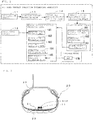
- FIG. 1 is a functional block diagram of a road surface condition estimating apparatus 10 according to an embodiment of the present invention.
- the road surface condition estimating apparatus 10 includes an acceleration sensor 11 as a vibration detecting means, a wheel speed sensor 12 as a wheel speed detecting means, a vibration waveform detecting means 13, a leading and trailing position estimating means 14, a contact time and revolution time calculating means 15, a determining means 16, a storage means 17, and a road surface condition estimating means 18.
- the respective means cited above namely, the vibration waveform detecting means 13 to the determining means 16 and the road surface condition estimating means 18, may be constituted by computer software, for instance, and the storage means 17 by a RAM and ROM, and they are all incorporated into a vehicle control unit installed on a vehicle body.
- the acceleration sensor 11, as shown in FIG. 2 is disposed nearly at the midportion of the inner liner 21 on the tire air chamber 22 side of the tire 20. And the acceleration sensor 11 detects the vibration inputted to the tread 23 of the tire 20 from the road surface as acceleration.
- the position of the acceleration sensor 11 (to be exact, the position on the surface of the tread 23 radially outside of the acceleration sensor 11) is referred to as the measuring point.
- the output of the acceleration sensor 11 is sent to a vehicle control unit installed on the vehicle body by a transmitter 11F, for instance.
- the wheel speed sensor 12 detects the revolution speed of the wheel (hereinafter referred to as wheel speed).
- the wheel speed sensor 12 is comprised, for instance, of a rotor formed with gear teeth on its periphery and rotating together with the wheel, a yoke constituting a magnetic circuit in association with the rotor, and a coil for detecting changes in magnetic flux of the magnetic circuit.
- a wheel speed sensor of a known electromagnetic induction type or the like may be used for detecting the angle of rotation of the wheel.
- the vibration waveform detecting means 13 detects a time-series waveform of vibration inputted to the tire 20 in motion, which is tire vibration on a time-series plot, outputted by the acceleration sensor 11.
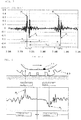
- the peak (a positive peak here) appearing first in the time-series waveform of vibration is the leading end point P f , which is the peak occurring when the measuring point engages with the road surface.
- the peak (a negative peak here) appearing next is the trailing end point P k , which is the peak occurring when the measuring point disengages from the road surface.
- the leading and trailing position estimating means 14 detects two peaks appearing first, one positive and one negative, from the time-series waveform of vibration, thereby estimating the times of appearance of these peaks to be the position t 11 of the leading end point P f and the position t 12 of the trailing end point P k , respectively. Also, the leading and trailing position estimating means 14 estimates the times of the two peaks, one positive and one negative, appearing next to be the position t 21 of the next leading end point P f and the position t 22 of the next trailing end point P k , respectively.
- the contact time and revolution time calculating means 15 calculates the contact time T a , which is the space of time when the measuring point is in contact with the road surface, from the difference between the position t 11 of the leading end point P f and the position t 12 of the trailing end point P k .
- the contact time and revolution time calculating means 15 calculates the revolution time T ab , which is the time taken by one revolution of the tire 20, from the difference between the position t 12 of the first trailing end point P k and the position t 22 cf the next trailing end point P k . Note that the difference between the position t 12 of the trailing end point P k and the position t 21 of the next leading end point P f is the extra-contact time T b .
- T a t 12 - t 11
- T c t 21 - t 12
- T ab t 22 - t 12
- the revolution time T ab may be calculated from the difference between the position t 11 of the leading end point P f and the position t 21 of the next leading end point P f .
- the determining means 16 includes a contact time ratio calculating unit 161, a comparison determining unit 162, and a cancel signal outputting unit 163.
- the contact time ratio calculating unit 161 calculates the contact time ratio R, which is the ratio between the contact time T a and revolution time T ab calculated by the contact time and revolution time calculating means 15.
- the comparison determining unit 162 determines whether or not the position t 11 of the leading end point P f and the positions t 12 and t 22 of the trailing end point P k estimated by the leading and trailing position estimating means 14 are all equal to the actual positions of leading end point and trailing end point.
- the contact time ratio R is in the predetermined contact time ratio range [from R1 to R2].
- the contact time ratio R is in the contract time ratio range (R1 ⁇ R ⁇ R2), it is determined that t 11 , t 12 , and t 22 estimated by the leading and trailing position estimating means 14 are all equal to the actual positions of leading end point and trailing end point (normal positions).
- the cancel signal outputting unit 163 outputs a cancel signal, which is a command signal to cancel the operation of road surface estimation, to the road surface condition estimating means 18 when the comparison determining unit 162 has determined that the estimation was incorrect, that is, there was a failure in estimating the position of the leading end point P f and the position of the trailing end point P k correctly.
- the storage means 17 stores a map 17M showing a relationship between predetermined road surface conditions and calculated values of vibration level.
- the road surface condition estimating means 18 includes a waveform domain dividing unit 181, a domain signal extracting unit 182, a frequency analyzing unit 183, a vibration level calculating unit 184, and a road surface condition estimating unit 185.
- the read surface condition estimating means 18 estimates a road surface condition only when it is determined that the positions of leading end point and trailing end point estimated by the leading and trailing position estimating means 14 are equal to the actual positions of leading end point and trailing end point. And it cancels the estimation of a road surface condition when a cancel signal is outputted from the cancel signal outputting unit 163.
- the waveform domain dividing unit 181 extracts a vibration waveform for a single revolution of the tire, using the position of the leading end point P f or the trailing end point P k estimated by the leading and trailing position estimating means 14 and the revolution speed of the tire 20 detected by the wheel speed sensor 12. At the same time, it divides the vibration waveform into the data of two domains, namely, the leading end domain and the trailing end domain as shown in FIG. 4 .
- the domain signal extracting unit 182 extracts the time-series waveforms of vibration level in the respective domains.
- the frequency analyzing unit 183 which is constituted by a frequency analyzing means such as an FFT analyzer, generates frequency spectrums by performing a frequency analysis on the extracted time-series waveforms of vibration level, respectively.
- the vibration level calculating unit 184 calculates the leading end vibration level V f , which is the vibration level in a predetermined frequency band of the frequency spectrum in the leading end domain, and the trailing end vibration level V k , which is the vibration level in a predetermined frequency band of the frequency spectrum in the trailing end domain. At the same time, it calculates a calculated value S of the vibration levels, using these vibration levels.
- the calculated value S may be the ratio of the leading end vibration level V f to the trailing end vibration level V k , fcr instance.
- the road surface condition estimating unit 185 estimates the condition of the road surface under the traveling vehicle, based on the map 17M, stored in the storage means 17, showing the relationship between the predetermined road surface conditions and the calculated value S of the vibration levels and the data of the calculated value S of the vibration levels calculated by the vibration level calculating unit 184.
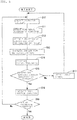
- step S10 the circumferential vibration of the tire 20 in motion is detected by the acceleration sensor 11 (step S10) . And the output is sent to the vibration waveform detecting means 13, where the time-series waveform of vibration, which is the vibration waveform in the tire circumferential direction on a time-series plot, is determined (step S11).
- step S12 From the time-series waveform of vibration as shown in FIG. 3 , the position t 11 of the leading end point P f appearing first, the position t 12 of the trailing end point P k appearing first, and the position t 22 of the trailing end point P k appearing next are estimated by the leading and trailing position estimating means 14 (step S12).
- the contact time T a and the revolution time T ab are calculated by the contact time and revolution time calculating means 15 (step S13).
- step S14 After the contact time ratio R, which is the ratio between the contact time T a and the revolution time T ab , is calculated (step S14), it is determined by the determining means 16 whether or not the contact time ratio R is in the predetermined contact time ratio range [from R1 to R2]. At the same time, a leading and trailing position determination is performed, in which it is determined whether or not the t 11 , t 12 , and t 22 detected in step S12 are all equal to the actual positions of the leading end point P f and trailing end point P k (step S15).
- the revolution time T ab calculated will be shorter than the actual revolution time T ab .
- the contact time t a will be shorter than the actual contact time T a .
- a range of contact time ratio [from R1 to R2] is predetermined for the contact time ratio R, and the R is compared against the lower limit value R1 and the upper limit value R2 of the contact time ratio range. Then by determining whether or not the contact time ratio R is in the predetermined contact time ratio range, a leading and trailing position determination can be performed, in which it is determined whether or not the position t 11 of the leading end point P f and the positions t 12 and t 22 of the trailing end point P k estimated by the leading and trailing position estimating means 14 are equal to the actual positions of leading end point and trailing end point.
- step S15 When the result of leading and trailing position determination in step S15 is "normal positions", the procedure goes to step S16, where an estimation of a road surface condition is performed using the time-series waveform of vibration level.
- step S17 when the result of leading and trailing position determination is "incorrect estimation”, a cancel signal is outputted to the road surface condition estimating means 18 (step S17), and the procedure goes back to step S10, where the detection of the circumferential vibration of the tire 20 in motion is continued.
- step S16 it is determined whether the operation of estimating a road surface condition has been completed (step S18). And if the operation of estimation is to be continued, the procedure returns to step S10, where the detection of the circumferential vibration cf the tire 2C in motion is continued. It it is not to be continued, this operation is brought to an end.
- step S16 The method for estimating a road surface condition in step S16 is as described below:
- the extracted time-series waveforms of vibration level are subjected to a frequency analysis, respectively. And from the frequency spectrums of the two domains resulting from the frequency analysis, the vibration levels V f and V k in predetermined frequency bands are calculated. Then a calculated value S is computed from the vibration levels V f and V k .
- the condition of the road surface under the traveling vehicle is estimated from the calculated value S and the map 17M showing the relationship between the predetermined road surface conditions and the calculated value S f of vibration levels.
- the vibration level V f in the frequency band of 8 to 10 kHz is calculated from the frequency spectrum of the leading end domain
- the vibration level V k in the frequency band of 1 to 3 kHz is calculated from the frequency spectrum cf the trailing end domain.
- an acceleration sensor 11 is disposed on the tire 20 to detect the circumferential vibration of the tire 20 in motion.
- the positions of the leading end point P f and trailing end point P k of tire contact patch are estimated from the peak positions appearing in the time-variable waveform of the vibration.
- the contact time T a , extra-contact time T b , and revolution time T ab of the tire 20 are calculated from the estimated positions of the leading end point P f and trailing end point P k .
- a leading and trailing position determination is performed, in which it is determined whether or not the estimated positions of the leading end point P f and trailing end point P k are equal to the actual positions of leading end point and trailing end point. And if the result of determination is "incorrect estimation", the estimation of a road surface condition is not performed. Accordingly, it is possible to accurately determine whether cr not there has been any excessive input to the tire without an increase in the number of sensors. Thus, the accuracy in the estimation of a road surface condition can be improved.
- the arrangement may also be such that when the contact time or the contact length estimated from the contact time is outside the predetermined range of contact length, it is determined that one or both of the estimated positions of leading end point and trailing end point are not equal to the actual positions of leading end point and trailing end point.
- the arrangement may be such that when the revolution time or the revolution length estimated from the revolution time is outside the predetermined range of revolution length, it is determined that one or both of the estimated positions of leading end point and trailing end point are not equal to the actual positions of leading end point and trailing end point.
- the arrangement may be such that the contact time ratio, which is the ratio between the contact time and the revolution time, is calculated and when the calculated contact time ratio is outside the predetermined range of contact time ratio, it is determined that one or both of the estimated positions of leading end point and trailing end point are not equal to the actual positions of leading end point and trailing end point.
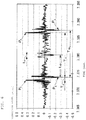
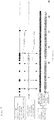
- FIG. 7 is a diagram comparing the results of incorrect estimation as determined by the leading and trailing position determination of the present invention with the results of large input detection by the monitoring acceleration sensor as described in the afore-mentioned Patent Document 1.
- the leading and trailing position determination of the present invention displays a determination accuracy equal to or better than that of the large input detection described in Patent Document 1.
- the invention provides the determination with accuracy whether or not the positions of leading end point and trailing end point estimated from the vibration waveform are equal to the actual positions of leading end point and trailing end point.
- an acceleration sensor 11 is disposed on the tire air chamber 21 side of the inner liner 21 of the tire 20 to detect the circumferential vibration of the tire.
- the arrangement may be such that the acceleration sensor is attached on the knuckle to detect the fore-aft vibration of the tire.
- the positions of the leading end point P f and trailing end point P k and a road surface condition are estimated using the circumferential vibration of the tire detected by the acceleration sensor 11.
- the axial acceleration or radial acceleration of the tire may be used instead.
- a differential acceleration derived by differentiating the detected radial acceleration of the tire is used, which will enable a more accurate estimation of the positions of the leading end point F f and trailing end point P k .
- a road surface condition under a traveling vehicle is estimated based on a calculated value S of the leading-end vibration level V f and traiing-end vibration level V k derived from the time-series waveform of tire vibration detected by the acceleration sensor 11 and the map 17M showing the relationship between the predetermined road surface conditions and the calculated value S f .
- the invention is applicable to an apparatus for estimating a road surface condition using a time-variable waveform of vibration of the tire in motion detected by a vibration detecting means as disclosed in Patent Document 1.
- the vibration waveform is divided into the leading end domain and the trailing end domain, using the output of the wheel speed sensor 12.
- the vibration waveform may be divided into the leading end domain and the trailing end domain by converting the time-series waveform of the vibration waveform into the vibration waveforms at predetermined positions of the tire from the motional radius and the revolution time of the tire. Then the wheel speed sensor 12 may be omitted.
- the present invention may be applicable to a road surface condition estimating apparatus having no wheel speed sensor 12 as a constituent element.
- the leading and trailing position determination is performed using the contact time ratio R.
- the leading and trailing position determination may be performed using any one of the contact time, the extra-contact time, and the revolution time.
- the contact length and the revolution length may be used in the place of the contact time and the revolution time. Then there will be no dependence on the wheel speed. This will further improve the accuracy of leading and trailing position determination.
- the contact time or the contact length it is determined to be “incorrect estimation” when the contact time or the contact length is outside the predetermined range of contact length.
- the revolution time or the revolution length it is determined to be “incorrect estimation” when the revolution time or the revolution length is outside the predetermined range of revolution length.
Landscapes
- Engineering & Computer Science (AREA)
- Mechanical Engineering (AREA)
- Physics & Mathematics (AREA)
- Transportation (AREA)
- Analytical Chemistry (AREA)
- Health & Medical Sciences (AREA)
- Life Sciences & Earth Sciences (AREA)
- Chemical & Material Sciences (AREA)
- Acoustics & Sound (AREA)
- Biochemistry (AREA)
- General Health & Medical Sciences (AREA)
- General Physics & Mathematics (AREA)
- Immunology (AREA)
- Pathology (AREA)
- Control Of Driving Devices And Active Controlling Of Vehicle (AREA)
- Tires In General (AREA)
- Length Measuring Devices With Unspecified Measuring Means (AREA)
Applications Claiming Priority (2)
| Application Number | Priority Date | Filing Date | Title |
|---|---|---|---|
| JP2014045591A JP6382534B2 (ja) | 2014-03-07 | 2014-03-07 | 路面状態推定方法 |
| PCT/JP2015/050029 WO2015133155A1 (ja) | 2014-03-07 | 2015-01-05 | 路面状態推定方法 |
Publications (3)
| Publication Number | Publication Date |
|---|---|
| EP3115232A1 true EP3115232A1 (de) | 2017-01-11 |
| EP3115232A4 EP3115232A4 (de) | 2017-03-08 |
| EP3115232B1 EP3115232B1 (de) | 2019-07-10 |
Family
ID=54054967
Family Applications (1)
| Application Number | Title | Priority Date | Filing Date |
|---|---|---|---|
| EP15759202.3A Active EP3115232B1 (de) | 2014-03-07 | 2015-01-05 | Strassenoberflächenzustandsschätzungsverfahren |
Country Status (5)
| Country | Link |
|---|---|
| US (1) | US10059316B2 (de) |
| EP (1) | EP3115232B1 (de) |
| JP (1) | JP6382534B2 (de) |
| CN (1) | CN106061761B (de) |
| WO (1) | WO2015133155A1 (de) |
Families Citing this family (15)
| Publication number | Priority date | Publication date | Assignee | Title |
|---|---|---|---|---|
| JP2017161477A (ja) * | 2016-03-11 | 2017-09-14 | 株式会社ブリヂストン | タイヤ荷重推定方法及びタイヤ荷重推定装置 |
| JP6544302B2 (ja) * | 2016-06-22 | 2019-07-17 | 株式会社Soken | 路面状況推定装置 |
| JP6620787B2 (ja) * | 2016-08-11 | 2019-12-18 | 株式会社デンソー | 路面状態推定装置 |
| JP6783184B2 (ja) * | 2017-05-12 | 2020-11-11 | 株式会社ブリヂストン | 路面状態判別方法及び路面状態判別装置 |
| DE102017006844B4 (de) * | 2017-07-18 | 2019-04-11 | Bomag Gmbh | Bodenverdichter und Verfahren zur Bestimmung von Untergrundeigenschaften mittels eines Bodenverdichters |
| JP7009098B2 (ja) * | 2017-07-19 | 2022-01-25 | 株式会社ブリヂストン | 路面状態推定方法 |
| US20190118592A1 (en) * | 2017-10-19 | 2019-04-25 | Infineon Technologies Ag | Method, Tire-Mounted TPMS Component, and Machine Readable Storage or Computer Program for Determining a Duration of at Least one Contact Patch Event of a Rolling Tire |
| US10549587B2 (en) | 2017-10-19 | 2020-02-04 | Infineon Technologies Ag | Method, component, tire-mounted TPMS module, TPMS system, and machine readable storage or computer program for determining time information of at least one contact patch event of a rolling tire, method for locating a tire |
| JP6996710B2 (ja) * | 2018-02-14 | 2022-02-03 | 学校法人神奈川大学 | 回転体への入力パワー推定システム及び入力パワー推定方法、並びに、当接面状態判定システム及び移動体機器制御システム |
| JP7348198B2 (ja) | 2018-10-05 | 2023-09-20 | 株式会社ブリヂストン | タイヤ摩耗推定方法 |
| US11255282B2 (en) * | 2019-02-15 | 2022-02-22 | Toyota Jidosha Kabushiki Kaisha | State detection system for internal combustion engine, data analysis device, and vehicle |
| EP3696395A1 (de) * | 2019-02-15 | 2020-08-19 | Toyota Jidosha Kabushiki Kaisha | Zustandserkennungssystem für einen verbrennungsmotor, datenanalysevorrichtung und fahrzeug |
| JP7148452B2 (ja) * | 2019-04-12 | 2022-10-05 | 株式会社ブリヂストン | 橋梁ジョイントの劣化状態推定方法とその装置 |
| FR3097962B1 (fr) * | 2019-06-28 | 2021-06-11 | Ifp Energies Now | Procédé de caractérisation de l’état d’une route |
| JP2024097561A (ja) * | 2023-01-06 | 2024-07-19 | 横浜ゴム株式会社 | 路面状態判定方法及び路面状態判定装置 |
Family Cites Families (16)
| Publication number | Priority date | Publication date | Assignee | Title |
|---|---|---|---|---|
| EP0602277A1 (de) | 1992-12-18 | 1994-06-22 | Siemens Aktiengesellschaft | Verfahren zum Erkennen von Schlechtwegstrecken |
| JP4703817B2 (ja) * | 2000-06-16 | 2011-06-15 | 株式会社ブリヂストン | 路面摩擦係数の推定方法と路面摩擦係数推定装置、路面状態の推定方法と路面状態推定装置、及び、路面滑り警告装置 |
| ES2358732T3 (es) * | 2000-06-23 | 2011-05-13 | Kabushiki Kaisha Bridgestone | Procedimiento para la estimación del estado de rodadura de un vehículo, dispositivo de estimación del estado de rodadura de un vehículo, dispositivo de control del vehículo y neumático. |
| JP4367613B2 (ja) * | 2003-09-25 | 2009-11-18 | 横浜ゴム株式会社 | タイヤ踏面状態測定装置及び測定方法 |
| WO2006135090A1 (ja) * | 2005-06-17 | 2006-12-21 | Kabushiki Kaisha Bridgestone | 路面状態推定方法、路面状態推定用タイヤ、路面状態推定装置、及び、車両制御装置 |
| JP4817753B2 (ja) * | 2005-08-22 | 2011-11-16 | 株式会社ブリヂストン | 路面状態推定方法、路面状態推定装置、及び、車両制御装置 |
| JP2007106243A (ja) * | 2005-10-13 | 2007-04-26 | Toyota Motor Corp | タイヤ情報取得装置およびタイヤ情報取得方法 |
| EP1878596B1 (de) * | 2006-07-11 | 2013-06-05 | The Yokohama Rubber Co., Ltd. | Vorrichtung und Verfahren zur Beurteilung des Fahrsicherheitsgrades eines Fahrzeugs |
| JP2008302848A (ja) * | 2007-06-08 | 2008-12-18 | Nissan Motor Co Ltd | タイヤ状態推定装置、自動車及びタイヤ状態推定方法 |
| DE102007039242A1 (de) | 2007-08-20 | 2009-02-26 | Robert Bosch Gmbh | Verfahren zum Betrieb eines Sensors an oder in einem Fahrzeugreifen und Sensoranordnung |
| EP2301769B1 (de) | 2008-06-25 | 2017-01-11 | Kabushiki Kaisha Bridgestone | Verfahren zur schätzung von reifenverschleiss und vorrichtung zur schätzung von reifenverschleiss |
| US8767843B2 (en) * | 2008-11-10 | 2014-07-01 | Motorola Mobility Llc | Employing cell-specific and user entity-specific reference symbols in an orthogonal frequency-division multiple access |
| JP5557569B2 (ja) * | 2010-03-24 | 2014-07-23 | 株式会社ブリヂストン | 路面状態推定方法 |
| JP5657917B2 (ja) * | 2010-05-19 | 2015-01-21 | 株式会社ブリヂストン | 路面状態推定方法 |
| JP5788710B2 (ja) | 2011-05-16 | 2015-10-07 | 株式会社ブリヂストン | 路面摩擦係数推定方法、車両制御方法、及び、路面摩擦係数推定装置 |
| US8942861B2 (en) * | 2011-07-20 | 2015-01-27 | Bridgestone Corporation | Road surface condition estimation method, and road surface condition estimation apparatus |
-
2014
- 2014-03-07 JP JP2014045591A patent/JP6382534B2/ja active Active
-
2015
- 2015-01-05 EP EP15759202.3A patent/EP3115232B1/de active Active
- 2015-01-05 WO PCT/JP2015/050029 patent/WO2015133155A1/ja not_active Ceased
- 2015-01-05 CN CN201580012512.2A patent/CN106061761B/zh active Active
- 2015-01-05 US US15/122,993 patent/US10059316B2/en active Active
Also Published As
| Publication number | Publication date |
|---|---|
| CN106061761A (zh) | 2016-10-26 |
| JP6382534B2 (ja) | 2018-08-29 |
| JP2015168362A (ja) | 2015-09-28 |
| EP3115232A4 (de) | 2017-03-08 |
| US20170072922A1 (en) | 2017-03-16 |
| CN106061761B (zh) | 2018-11-27 |
| EP3115232B1 (de) | 2019-07-10 |
| US10059316B2 (en) | 2018-08-28 |
| WO2015133155A1 (ja) | 2015-09-11 |
Similar Documents
| Publication | Publication Date | Title |
|---|---|---|
| EP3115232B1 (de) | Strassenoberflächenzustandsschätzungsverfahren | |
| US9045117B2 (en) | Road surface condition estimating method, vehicle control method, and road surface condition estimating apparatus | |
| JP5956250B2 (ja) | タイヤ偏摩耗検知方法及びタイヤ偏摩耗検知装置 | |
| US10377385B2 (en) | Road surface condition determining system | |
| US10471779B2 (en) | Tire wear amount estimating method and tire wear amount estimating apparatus | |
| CN105793687B (zh) | 轮胎异常磨损的估计方法和估计设备 | |
| EP2460674B1 (de) | Verfahren und vorrichtung zur bestimmung der form eines reifenkontaktelements | |
| US20180257441A1 (en) | Sensor transmitter, wheel position detection apparatus, and tire pressure monitoring system provided with the same | |
| EP2655103A2 (de) | Verfahren und system zur schätzung des inflationsdrucks eines reifens | |
| EP2695753B1 (de) | Vorrichtung zur Erkennung der Abnahme des Reifendrucks und Verfahren sowie computerlesbares Medium dafür | |
| WO2018131664A1 (ja) | センサ送信機、車輪位置検出装置およびそれを備えたタイヤ空気圧検出装置 | |
| US20200173908A1 (en) | Road surface state estimation method and road surface state estimation device | |
| US7957879B2 (en) | Brake control method and brake control device | |
| CN111163950B (zh) | 用于确定周期性信号的瞬时频率和瞬时相位的方法 | |
| EP3835090B1 (de) | Reifentypunterscheidungsverfahren und reifentypunterscheidungsvorrichtung | |
| JP5376040B2 (ja) | 路面摩擦係数推定装置 | |
| KR101755843B1 (ko) | 차량의 타이어 크기 판단 시스템 | |
| JP2019190947A (ja) | 路面状態推定方法及び路面状態推定装置 |
Legal Events
| Date | Code | Title | Description |
|---|---|---|---|
| PUAI | Public reference made under article 153(3) epc to a published international application that has entered the european phase |
Free format text: ORIGINAL CODE: 0009012 |
|
| STAA | Information on the status of an ep patent application or granted ep patent |
Free format text: STATUS: REQUEST FOR EXAMINATION WAS MADE |
|
| 17P | Request for examination filed |
Effective date: 20161006 |
|
| AK | Designated contracting states |
Kind code of ref document: A1 Designated state(s): AL AT BE BG CH CY CZ DE DK EE ES FI FR GB GR HR HU IE IS IT LI LT LU LV MC MK MT NL NO PL PT RO RS SE SI SK SM TR |
|
| AX | Request for extension of the european patent |
Extension state: BA ME |
|
| A4 | Supplementary search report drawn up and despatched |
Effective date: 20170207 |
|
| RIC1 | Information provided on ipc code assigned before grant |
Ipc: G01W 1/00 20060101ALI20170201BHEP Ipc: B60W 40/06 20120101ALI20170201BHEP Ipc: B60T 8/172 20060101ALI20170201BHEP Ipc: B60C 19/00 20060101AFI20170201BHEP |
|
| DAX | Request for extension of the european patent (deleted) | ||
| GRAP | Despatch of communication of intention to grant a patent |
Free format text: ORIGINAL CODE: EPIDOSNIGR1 |
|
| STAA | Information on the status of an ep patent application or granted ep patent |
Free format text: STATUS: GRANT OF PATENT IS INTENDED |
|
| INTG | Intention to grant announced |
Effective date: 20190121 |
|
| GRAS | Grant fee paid |
Free format text: ORIGINAL CODE: EPIDOSNIGR3 |
|
| GRAA | (expected) grant |
Free format text: ORIGINAL CODE: 0009210 |
|
| STAA | Information on the status of an ep patent application or granted ep patent |
Free format text: STATUS: THE PATENT HAS BEEN GRANTED |
|
| AK | Designated contracting states |
Kind code of ref document: B1 Designated state(s): AL AT BE BG CH CY CZ DE DK EE ES FI FR GB GR HR HU IE IS IT LI LT LU LV MC MK MT NL NO PL PT RO RS SE SI SK SM TR |
|
| REG | Reference to a national code |
Ref country code: GB Ref legal event code: FG4D |
|
| REG | Reference to a national code |
Ref country code: CH Ref legal event code: EP Ref country code: AT Ref legal event code: REF Ref document number: 1153156 Country of ref document: AT Kind code of ref document: T Effective date: 20190715 |
|
| REG | Reference to a national code |
Ref country code: DE Ref legal event code: R096 Ref document number: 602015033553 Country of ref document: DE |
|
| REG | Reference to a national code |
Ref country code: IE Ref legal event code: FG4D |
|
| REG | Reference to a national code |
Ref country code: NL Ref legal event code: MP Effective date: 20190710 |
|
| REG | Reference to a national code |
Ref country code: LT Ref legal event code: MG4D |
|
| REG | Reference to a national code |
Ref country code: AT Ref legal event code: MK05 Ref document number: 1153156 Country of ref document: AT Kind code of ref document: T Effective date: 20190710 |
|
| PG25 | Lapsed in a contracting state [announced via postgrant information from national office to epo] |
Ref country code: BG Free format text: LAPSE BECAUSE OF FAILURE TO SUBMIT A TRANSLATION OF THE DESCRIPTION OR TO PAY THE FEE WITHIN THE PRESCRIBED TIME-LIMIT Effective date: 20191010 Ref country code: NL Free format text: LAPSE BECAUSE OF FAILURE TO SUBMIT A TRANSLATION OF THE DESCRIPTION OR TO PAY THE FEE WITHIN THE PRESCRIBED TIME-LIMIT Effective date: 20190710 Ref country code: LT Free format text: LAPSE BECAUSE OF FAILURE TO SUBMIT A TRANSLATION OF THE DESCRIPTION OR TO PAY THE FEE WITHIN THE PRESCRIBED TIME-LIMIT Effective date: 20190710 Ref country code: HR Free format text: LAPSE BECAUSE OF FAILURE TO SUBMIT A TRANSLATION OF THE DESCRIPTION OR TO PAY THE FEE WITHIN THE PRESCRIBED TIME-LIMIT Effective date: 20190710 Ref country code: PT Free format text: LAPSE BECAUSE OF FAILURE TO SUBMIT A TRANSLATION OF THE DESCRIPTION OR TO PAY THE FEE WITHIN THE PRESCRIBED TIME-LIMIT Effective date: 20191111 Ref country code: SE Free format text: LAPSE BECAUSE OF FAILURE TO SUBMIT A TRANSLATION OF THE DESCRIPTION OR TO PAY THE FEE WITHIN THE PRESCRIBED TIME-LIMIT Effective date: 20190710 Ref country code: AT Free format text: LAPSE BECAUSE OF FAILURE TO SUBMIT A TRANSLATION OF THE DESCRIPTION OR TO PAY THE FEE WITHIN THE PRESCRIBED TIME-LIMIT Effective date: 20190710 Ref country code: NO Free format text: LAPSE BECAUSE OF FAILURE TO SUBMIT A TRANSLATION OF THE DESCRIPTION OR TO PAY THE FEE WITHIN THE PRESCRIBED TIME-LIMIT Effective date: 20191010 Ref country code: FI Free format text: LAPSE BECAUSE OF FAILURE TO SUBMIT A TRANSLATION OF THE DESCRIPTION OR TO PAY THE FEE WITHIN THE PRESCRIBED TIME-LIMIT Effective date: 20190710 |
|
| PG25 | Lapsed in a contracting state [announced via postgrant information from national office to epo] |
Ref country code: ES Free format text: LAPSE BECAUSE OF FAILURE TO SUBMIT A TRANSLATION OF THE DESCRIPTION OR TO PAY THE FEE WITHIN THE PRESCRIBED TIME-LIMIT Effective date: 20190710 Ref country code: RS Free format text: LAPSE BECAUSE OF FAILURE TO SUBMIT A TRANSLATION OF THE DESCRIPTION OR TO PAY THE FEE WITHIN THE PRESCRIBED TIME-LIMIT Effective date: 20190710 Ref country code: IS Free format text: LAPSE BECAUSE OF FAILURE TO SUBMIT A TRANSLATION OF THE DESCRIPTION OR TO PAY THE FEE WITHIN THE PRESCRIBED TIME-LIMIT Effective date: 20191110 Ref country code: GR Free format text: LAPSE BECAUSE OF FAILURE TO SUBMIT A TRANSLATION OF THE DESCRIPTION OR TO PAY THE FEE WITHIN THE PRESCRIBED TIME-LIMIT Effective date: 20191011 Ref country code: AL Free format text: LAPSE BECAUSE OF FAILURE TO SUBMIT A TRANSLATION OF THE DESCRIPTION OR TO PAY THE FEE WITHIN THE PRESCRIBED TIME-LIMIT Effective date: 20190710 Ref country code: LV Free format text: LAPSE BECAUSE OF FAILURE TO SUBMIT A TRANSLATION OF THE DESCRIPTION OR TO PAY THE FEE WITHIN THE PRESCRIBED TIME-LIMIT Effective date: 20190710 |
|
| PG25 | Lapsed in a contracting state [announced via postgrant information from national office to epo] |
Ref country code: TR Free format text: LAPSE BECAUSE OF FAILURE TO SUBMIT A TRANSLATION OF THE DESCRIPTION OR TO PAY THE FEE WITHIN THE PRESCRIBED TIME-LIMIT Effective date: 20190710 |
|
| PG25 | Lapsed in a contracting state [announced via postgrant information from national office to epo] |
Ref country code: RO Free format text: LAPSE BECAUSE OF FAILURE TO SUBMIT A TRANSLATION OF THE DESCRIPTION OR TO PAY THE FEE WITHIN THE PRESCRIBED TIME-LIMIT Effective date: 20190710 Ref country code: IT Free format text: LAPSE BECAUSE OF FAILURE TO SUBMIT A TRANSLATION OF THE DESCRIPTION OR TO PAY THE FEE WITHIN THE PRESCRIBED TIME-LIMIT Effective date: 20190710 Ref country code: EE Free format text: LAPSE BECAUSE OF FAILURE TO SUBMIT A TRANSLATION OF THE DESCRIPTION OR TO PAY THE FEE WITHIN THE PRESCRIBED TIME-LIMIT Effective date: 20190710 Ref country code: DK Free format text: LAPSE BECAUSE OF FAILURE TO SUBMIT A TRANSLATION OF THE DESCRIPTION OR TO PAY THE FEE WITHIN THE PRESCRIBED TIME-LIMIT Effective date: 20190710 Ref country code: PL Free format text: LAPSE BECAUSE OF FAILURE TO SUBMIT A TRANSLATION OF THE DESCRIPTION OR TO PAY THE FEE WITHIN THE PRESCRIBED TIME-LIMIT Effective date: 20190710 |
|
| PG25 | Lapsed in a contracting state [announced via postgrant information from national office to epo] |
Ref country code: CZ Free format text: LAPSE BECAUSE OF FAILURE TO SUBMIT A TRANSLATION OF THE DESCRIPTION OR TO PAY THE FEE WITHIN THE PRESCRIBED TIME-LIMIT Effective date: 20190710 Ref country code: SK Free format text: LAPSE BECAUSE OF FAILURE TO SUBMIT A TRANSLATION OF THE DESCRIPTION OR TO PAY THE FEE WITHIN THE PRESCRIBED TIME-LIMIT Effective date: 20190710 Ref country code: IS Free format text: LAPSE BECAUSE OF FAILURE TO SUBMIT A TRANSLATION OF THE DESCRIPTION OR TO PAY THE FEE WITHIN THE PRESCRIBED TIME-LIMIT Effective date: 20200224 Ref country code: SM Free format text: LAPSE BECAUSE OF FAILURE TO SUBMIT A TRANSLATION OF THE DESCRIPTION OR TO PAY THE FEE WITHIN THE PRESCRIBED TIME-LIMIT Effective date: 20190710 |
|
| REG | Reference to a national code |
Ref country code: DE Ref legal event code: R097 Ref document number: 602015033553 Country of ref document: DE |
|
| PLBE | No opposition filed within time limit |
Free format text: ORIGINAL CODE: 0009261 |
|
| STAA | Information on the status of an ep patent application or granted ep patent |
Free format text: STATUS: NO OPPOSITION FILED WITHIN TIME LIMIT |
|
| PG2D | Information on lapse in contracting state deleted |
Ref country code: IS |
|
| 26N | No opposition filed |
Effective date: 20200603 |
|
| PG25 | Lapsed in a contracting state [announced via postgrant information from national office to epo] |
Ref country code: MC Free format text: LAPSE BECAUSE OF FAILURE TO SUBMIT A TRANSLATION OF THE DESCRIPTION OR TO PAY THE FEE WITHIN THE PRESCRIBED TIME-LIMIT Effective date: 20190710 Ref country code: SI Free format text: LAPSE BECAUSE OF FAILURE TO SUBMIT A TRANSLATION OF THE DESCRIPTION OR TO PAY THE FEE WITHIN THE PRESCRIBED TIME-LIMIT Effective date: 20190710 |
|
| REG | Reference to a national code |
Ref country code: CH Ref legal event code: PL |
|
| GBPC | Gb: european patent ceased through non-payment of renewal fee |
Effective date: 20200105 |
|
| REG | Reference to a national code |
Ref country code: BE Ref legal event code: MM Effective date: 20200131 |
|
| PG25 | Lapsed in a contracting state [announced via postgrant information from national office to epo] |
Ref country code: GB Free format text: LAPSE BECAUSE OF NON-PAYMENT OF DUE FEES Effective date: 20200105 Ref country code: LU Free format text: LAPSE BECAUSE OF NON-PAYMENT OF DUE FEES Effective date: 20200105 |
|
| PG25 | Lapsed in a contracting state [announced via postgrant information from national office to epo] |
Ref country code: CH Free format text: LAPSE BECAUSE OF NON-PAYMENT OF DUE FEES Effective date: 20200131 Ref country code: LI Free format text: LAPSE BECAUSE OF NON-PAYMENT OF DUE FEES Effective date: 20200131 Ref country code: BE Free format text: LAPSE BECAUSE OF NON-PAYMENT OF DUE FEES Effective date: 20200131 |
|
| PG25 | Lapsed in a contracting state [announced via postgrant information from national office to epo] |
Ref country code: IE Free format text: LAPSE BECAUSE OF NON-PAYMENT OF DUE FEES Effective date: 20200105 |
|
| PG25 | Lapsed in a contracting state [announced via postgrant information from national office to epo] |
Ref country code: MT Free format text: LAPSE BECAUSE OF FAILURE TO SUBMIT A TRANSLATION OF THE DESCRIPTION OR TO PAY THE FEE WITHIN THE PRESCRIBED TIME-LIMIT Effective date: 20190710 Ref country code: CY Free format text: LAPSE BECAUSE OF FAILURE TO SUBMIT A TRANSLATION OF THE DESCRIPTION OR TO PAY THE FEE WITHIN THE PRESCRIBED TIME-LIMIT Effective date: 20190710 |
|
| PG25 | Lapsed in a contracting state [announced via postgrant information from national office to epo] |
Ref country code: MK Free format text: LAPSE BECAUSE OF FAILURE TO SUBMIT A TRANSLATION OF THE DESCRIPTION OR TO PAY THE FEE WITHIN THE PRESCRIBED TIME-LIMIT Effective date: 20190710 |
|
| P01 | Opt-out of the competence of the unified patent court (upc) registered |
Effective date: 20230531 |
|
| PGFP | Annual fee paid to national office [announced via postgrant information from national office to epo] |
Ref country code: DE Payment date: 20250121 Year of fee payment: 11 |
|
| PGFP | Annual fee paid to national office [announced via postgrant information from national office to epo] |
Ref country code: FR Payment date: 20250127 Year of fee payment: 11 |