EP3105281B1 - Materials and methods relating to stabilised polymeric silicate compositions - Google Patents
Materials and methods relating to stabilised polymeric silicate compositions Download PDFInfo
- Publication number
- EP3105281B1 EP3105281B1 EP15707169.7A EP15707169A EP3105281B1 EP 3105281 B1 EP3105281 B1 EP 3105281B1 EP 15707169 A EP15707169 A EP 15707169A EP 3105281 B1 EP3105281 B1 EP 3105281B1
- Authority
- EP
- European Patent Office
- Prior art keywords
- composition
- silicate
- stabilised
- polymeric
- less
- Prior art date
- Legal status (The legal status is an assumption and is not a legal conclusion. Google has not performed a legal analysis and makes no representation as to the accuracy of the status listed.)
- Active
Links
Images






Classifications
-
- C—CHEMISTRY; METALLURGY
- C08—ORGANIC MACROMOLECULAR COMPOUNDS; THEIR PREPARATION OR CHEMICAL WORKING-UP; COMPOSITIONS BASED THEREON
- C08G—MACROMOLECULAR COMPOUNDS OBTAINED OTHERWISE THAN BY REACTIONS ONLY INVOLVING UNSATURATED CARBON-TO-CARBON BONDS
- C08G77/00—Macromolecular compounds obtained by reactions forming a linkage containing silicon with or without sulfur, nitrogen, oxygen or carbon in the main chain of the macromolecule
- C08G77/02—Polysilicates
-
- A—HUMAN NECESSITIES
- A61—MEDICAL OR VETERINARY SCIENCE; HYGIENE
- A61K—PREPARATIONS FOR MEDICAL, DENTAL OR TOILETRY PURPOSES
- A61K33/00—Medicinal preparations containing inorganic active ingredients
-
- A—HUMAN NECESSITIES
- A61—MEDICAL OR VETERINARY SCIENCE; HYGIENE
- A61K—PREPARATIONS FOR MEDICAL, DENTAL OR TOILETRY PURPOSES
- A61K9/00—Medicinal preparations characterised by special physical form
- A61K9/0012—Galenical forms characterised by the site of application
- A61K9/0014—Skin, i.e. galenical aspects of topical compositions
-
- A—HUMAN NECESSITIES
- A61—MEDICAL OR VETERINARY SCIENCE; HYGIENE
- A61K—PREPARATIONS FOR MEDICAL, DENTAL OR TOILETRY PURPOSES
- A61K33/00—Medicinal preparations containing inorganic active ingredients
- A61K33/24—Heavy metals; Compounds thereof
- A61K33/34—Copper; Compounds thereof
-
- A—HUMAN NECESSITIES
- A61—MEDICAL OR VETERINARY SCIENCE; HYGIENE
- A61K—PREPARATIONS FOR MEDICAL, DENTAL OR TOILETRY PURPOSES
- A61K33/00—Medicinal preparations containing inorganic active ingredients
- A61K33/24—Heavy metals; Compounds thereof
- A61K33/38—Silver; Compounds thereof
-
- A—HUMAN NECESSITIES
- A61—MEDICAL OR VETERINARY SCIENCE; HYGIENE
- A61K—PREPARATIONS FOR MEDICAL, DENTAL OR TOILETRY PURPOSES
- A61K47/00—Medicinal preparations characterised by the non-active ingredients used, e.g. carriers or inert additives; Targeting or modifying agents chemically bound to the active ingredient
- A61K47/06—Organic compounds, e.g. natural or synthetic hydrocarbons, polyolefins, mineral oil, petrolatum or ozokerite
- A61K47/08—Organic compounds, e.g. natural or synthetic hydrocarbons, polyolefins, mineral oil, petrolatum or ozokerite containing oxygen, e.g. ethers, acetals, ketones, quinones, aldehydes, peroxides
- A61K47/10—Alcohols; Phenols; Salts thereof, e.g. glycerol; Polyethylene glycols [PEG]; Poloxamers; PEG/POE alkyl ethers
-
- A—HUMAN NECESSITIES
- A61—MEDICAL OR VETERINARY SCIENCE; HYGIENE
- A61K—PREPARATIONS FOR MEDICAL, DENTAL OR TOILETRY PURPOSES
- A61K9/00—Medicinal preparations characterised by special physical form
- A61K9/0012—Galenical forms characterised by the site of application
- A61K9/0019—Injectable compositions; Intramuscular, intravenous, arterial, subcutaneous administration; Compositions to be administered through the skin in an invasive manner
-
- A—HUMAN NECESSITIES
- A61—MEDICAL OR VETERINARY SCIENCE; HYGIENE
- A61K—PREPARATIONS FOR MEDICAL, DENTAL OR TOILETRY PURPOSES
- A61K9/00—Medicinal preparations characterised by special physical form
- A61K9/0012—Galenical forms characterised by the site of application
- A61K9/0053—Mouth and digestive tract, i.e. intraoral and peroral administration
-
- A—HUMAN NECESSITIES
- A61—MEDICAL OR VETERINARY SCIENCE; HYGIENE
- A61K—PREPARATIONS FOR MEDICAL, DENTAL OR TOILETRY PURPOSES
- A61K9/00—Medicinal preparations characterised by special physical form
- A61K9/06—Ointments; Bases therefor; Other semi-solid forms, e.g. creams, sticks, gels
-
- A—HUMAN NECESSITIES
- A61—MEDICAL OR VETERINARY SCIENCE; HYGIENE
- A61K—PREPARATIONS FOR MEDICAL, DENTAL OR TOILETRY PURPOSES
- A61K9/00—Medicinal preparations characterised by special physical form
- A61K9/14—Particulate form, e.g. powders, Processes for size reducing of pure drugs or the resulting products, Pure drug nanoparticles
- A61K9/16—Agglomerates; Granulates; Microbeadlets ; Microspheres; Pellets; Solid products obtained by spray drying, spray freeze drying, spray congealing,(multiple) emulsion solvent evaporation or extraction
-
- A—HUMAN NECESSITIES
- A61—MEDICAL OR VETERINARY SCIENCE; HYGIENE
- A61K—PREPARATIONS FOR MEDICAL, DENTAL OR TOILETRY PURPOSES
- A61K9/00—Medicinal preparations characterised by special physical form
- A61K9/14—Particulate form, e.g. powders, Processes for size reducing of pure drugs or the resulting products, Pure drug nanoparticles
- A61K9/16—Agglomerates; Granulates; Microbeadlets ; Microspheres; Pellets; Solid products obtained by spray drying, spray freeze drying, spray congealing,(multiple) emulsion solvent evaporation or extraction
- A61K9/1605—Excipients; Inactive ingredients
- A61K9/1611—Inorganic compounds
-
- A—HUMAN NECESSITIES
- A61—MEDICAL OR VETERINARY SCIENCE; HYGIENE
- A61K—PREPARATIONS FOR MEDICAL, DENTAL OR TOILETRY PURPOSES
- A61K9/00—Medicinal preparations characterised by special physical form
- A61K9/48—Preparations in capsules, e.g. of gelatin, of chocolate
- A61K9/4841—Filling excipients; Inactive ingredients
- A61K9/4866—Organic macromolecular compounds
-
- A—HUMAN NECESSITIES
- A61—MEDICAL OR VETERINARY SCIENCE; HYGIENE
- A61P—SPECIFIC THERAPEUTIC ACTIVITY OF CHEMICAL COMPOUNDS OR MEDICINAL PREPARATIONS
- A61P1/00—Drugs for disorders of the alimentary tract or the digestive system
- A61P1/04—Drugs for disorders of the alimentary tract or the digestive system for ulcers, gastritis or reflux esophagitis, e.g. antacids, inhibitors of acid secretion, mucosal protectants
-
- A—HUMAN NECESSITIES
- A61—MEDICAL OR VETERINARY SCIENCE; HYGIENE
- A61P—SPECIFIC THERAPEUTIC ACTIVITY OF CHEMICAL COMPOUNDS OR MEDICINAL PREPARATIONS
- A61P1/00—Drugs for disorders of the alimentary tract or the digestive system
- A61P1/16—Drugs for disorders of the alimentary tract or the digestive system for liver or gallbladder disorders, e.g. hepatoprotective agents, cholagogues, litholytics
-
- A—HUMAN NECESSITIES
- A61—MEDICAL OR VETERINARY SCIENCE; HYGIENE
- A61P—SPECIFIC THERAPEUTIC ACTIVITY OF CHEMICAL COMPOUNDS OR MEDICINAL PREPARATIONS
- A61P13/00—Drugs for disorders of the urinary system
- A61P13/12—Drugs for disorders of the urinary system of the kidneys
-
- A—HUMAN NECESSITIES
- A61—MEDICAL OR VETERINARY SCIENCE; HYGIENE
- A61P—SPECIFIC THERAPEUTIC ACTIVITY OF CHEMICAL COMPOUNDS OR MEDICINAL PREPARATIONS
- A61P17/00—Drugs for dermatological disorders
-
- A—HUMAN NECESSITIES
- A61—MEDICAL OR VETERINARY SCIENCE; HYGIENE
- A61P—SPECIFIC THERAPEUTIC ACTIVITY OF CHEMICAL COMPOUNDS OR MEDICINAL PREPARATIONS
- A61P17/00—Drugs for dermatological disorders
- A61P17/02—Drugs for dermatological disorders for treating wounds, ulcers, burns, scars, keloids, or the like
-
- A—HUMAN NECESSITIES
- A61—MEDICAL OR VETERINARY SCIENCE; HYGIENE
- A61P—SPECIFIC THERAPEUTIC ACTIVITY OF CHEMICAL COMPOUNDS OR MEDICINAL PREPARATIONS
- A61P19/00—Drugs for skeletal disorders
- A61P19/02—Drugs for skeletal disorders for joint disorders, e.g. arthritis, arthrosis
-
- A—HUMAN NECESSITIES
- A61—MEDICAL OR VETERINARY SCIENCE; HYGIENE
- A61P—SPECIFIC THERAPEUTIC ACTIVITY OF CHEMICAL COMPOUNDS OR MEDICINAL PREPARATIONS
- A61P19/00—Drugs for skeletal disorders
- A61P19/08—Drugs for skeletal disorders for bone diseases, e.g. rachitism, Paget's disease
- A61P19/10—Drugs for skeletal disorders for bone diseases, e.g. rachitism, Paget's disease for osteoporosis
-
- A—HUMAN NECESSITIES
- A61—MEDICAL OR VETERINARY SCIENCE; HYGIENE
- A61P—SPECIFIC THERAPEUTIC ACTIVITY OF CHEMICAL COMPOUNDS OR MEDICINAL PREPARATIONS
- A61P25/00—Drugs for disorders of the nervous system
- A61P25/28—Drugs for disorders of the nervous system for treating neurodegenerative disorders of the central nervous system, e.g. nootropic agents, cognition enhancers, drugs for treating Alzheimer's disease or other forms of dementia
-
- A—HUMAN NECESSITIES
- A61—MEDICAL OR VETERINARY SCIENCE; HYGIENE
- A61P—SPECIFIC THERAPEUTIC ACTIVITY OF CHEMICAL COMPOUNDS OR MEDICINAL PREPARATIONS
- A61P31/00—Antiinfectives, i.e. antibiotics, antiseptics, chemotherapeutics
- A61P31/04—Antibacterial agents
-
- A—HUMAN NECESSITIES
- A61—MEDICAL OR VETERINARY SCIENCE; HYGIENE
- A61P—SPECIFIC THERAPEUTIC ACTIVITY OF CHEMICAL COMPOUNDS OR MEDICINAL PREPARATIONS
- A61P35/00—Antineoplastic agents
-
- A—HUMAN NECESSITIES
- A61—MEDICAL OR VETERINARY SCIENCE; HYGIENE
- A61P—SPECIFIC THERAPEUTIC ACTIVITY OF CHEMICAL COMPOUNDS OR MEDICINAL PREPARATIONS
- A61P37/00—Drugs for immunological or allergic disorders
- A61P37/02—Immunomodulators
-
- A—HUMAN NECESSITIES
- A61—MEDICAL OR VETERINARY SCIENCE; HYGIENE
- A61P—SPECIFIC THERAPEUTIC ACTIVITY OF CHEMICAL COMPOUNDS OR MEDICINAL PREPARATIONS
- A61P5/00—Drugs for disorders of the endocrine system
-
- A—HUMAN NECESSITIES
- A61—MEDICAL OR VETERINARY SCIENCE; HYGIENE
- A61P—SPECIFIC THERAPEUTIC ACTIVITY OF CHEMICAL COMPOUNDS OR MEDICINAL PREPARATIONS
- A61P9/00—Drugs for disorders of the cardiovascular system
-
- C—CHEMISTRY; METALLURGY
- C08—ORGANIC MACROMOLECULAR COMPOUNDS; THEIR PREPARATION OR CHEMICAL WORKING-UP; COMPOSITIONS BASED THEREON
- C08K—Use of inorganic or non-macromolecular organic substances as compounding ingredients
- C08K3/00—Use of inorganic substances as compounding ingredients
- C08K3/34—Silicon-containing compounds
- C08K3/36—Silica
-
- C—CHEMISTRY; METALLURGY
- C08—ORGANIC MACROMOLECULAR COMPOUNDS; THEIR PREPARATION OR CHEMICAL WORKING-UP; COMPOSITIONS BASED THEREON
- C08L—COMPOSITIONS OF MACROMOLECULAR COMPOUNDS
- C08L83/00—Compositions of macromolecular compounds obtained by reactions forming in the main chain of the macromolecule a linkage containing silicon with or without sulfur, nitrogen, oxygen or carbon only; Compositions of derivatives of such polymers
- C08L83/02—Polysilicates
-
- A—HUMAN NECESSITIES
- A61—MEDICAL OR VETERINARY SCIENCE; HYGIENE
- A61K—PREPARATIONS FOR MEDICAL, DENTAL OR TOILETRY PURPOSES
- A61K2300/00—Mixtures or combinations of active ingredients, wherein at least one active ingredient is fully defined in groups A61K31/00 - A61K41/00
-
- B—PERFORMING OPERATIONS; TRANSPORTING
- B82—NANOTECHNOLOGY
- B82Y—SPECIFIC USES OR APPLICATIONS OF NANOSTRUCTURES; MEASUREMENT OR ANALYSIS OF NANOSTRUCTURES; MANUFACTURE OR TREATMENT OF NANOSTRUCTURES
- B82Y30/00—Nanotechnology for materials or surface science, e.g. nanocomposites
-
- C—CHEMISTRY; METALLURGY
- C08—ORGANIC MACROMOLECULAR COMPOUNDS; THEIR PREPARATION OR CHEMICAL WORKING-UP; COMPOSITIONS BASED THEREON
- C08K—Use of inorganic or non-macromolecular organic substances as compounding ingredients
- C08K2201/00—Specific properties of additives
- C08K2201/011—Nanostructured additives
Definitions
- the present invention relates to materials and methods relating to stabilised polymeric silicate compositions, and in particular to processes for producing stabilised polymeric silicate compositions, to compositions obtainable using the processes and their uses, in particular in therapy.
- Silicon is an environmentally ubiquitous element and adult humans in the Western world ingest about 15 to 50 mg per day currently. Naturally it occurs as silicates wherein silicon links to oxygen atoms. Silicic acid and silica are also terms used for such structures. These range from the simplest mono silicic acid, also termed ortho, to silica particles. Its precise biological role is not yet understood but much evidence points to an important role in connective tissue health (Jugdaohsingh et al., 2008).
- quintessential connective tissues include bone, joints, blood vessels, skin, hair and nails
- dietary, supplemental, or therapeutic benefit of soluble or polymeric silicate in a wide array of medical conditions that include, but are not limited to, osteoporosis, osteopenia and other musculoskeletal and joint disorders, cancers of all types, various skin conditions, vascular, cardiovascular and coronary heart diseases, inflammatory diseases, autoimmune diseases, Alzheimer's disease and varying forms of cognitive impairment, infections of various types, wounds and ulcers, gastrointestinal, liver, kidney and immune related disorders and hormone related changes and disorders.
- beneficial nutritional and therapeutic effects of silicate appear to extend to other animals, especially other mammals.
- Silicate has been used as an oral nutritional supplement, although achieving a formulation that allows effective acquisition (absorption) following dosing is not straightforward.
- Silicon in its naturally occurring inorganic form is soluble as orthosilicic acid.
- concentration e.g. in drinking water, needs to be relatively low ( ⁇ 1.7 mM) as, under natural conditions, this is the maximum equilibrium solubility of aqueous silicate at pHs ⁇ 9 to prevent the onset of irreversible polymerisation of particles that gradually condense and/or increase in size and then are not easily re-solubilized.
- This behaviour has bedevilled the development of silicate supplements as concentrated forms do not dissolve in the gut to enable absorption, whilst dilute forms result in large quantities of supplement (e.g. 20-100 ml/day) needing to be ingested.
- silicate is awkward because the monomer typically has greater affinity for itself (i.e. to undergo self-assembly) than for any other molecules, and the higher the concentration of silicon the more difficult it becomes to arrest its self-assembly in aqueous solution. This has led to alternate strategies for producing bioavailable and therapeutically useful silicate composition being pursued.
- US 5,807,951 (Nippon Zoki Pharmaceutical Co., Ltd) describes a process for producing silicate polymers by adding acid to a silicate solution.
- a saccharide or sugar alcohol may be added to the silicate compositions with the examples using lactose or mannitol.
- the process described in US 5,807,951 requires a final drying step, between 150°C and 250°C, to produce a dry lyophilised composition.
- the use of heating, and any other form of drying to a powder has the significant disadvantage of causing the formation of condensed silicates with corresponding poor resorbability.
- US 2011/0229577 discloses silicic acid particles having shell-like structures in which the particles condense under conditions in which the pH of the reaction mixture is first reduced and then increased, leading to a composition said to be at a pH 2.1 or a pH greater than 9.2.
- Kim et al. (Macromolecules, 45: 4225-4237, 2012 ) describes the production of nanocomposite melts formed from a mixture of silicate nanoparticles and ethanol mixed with a defined mass of PEG.
- the samples were heated in a vacuum oven to remove residual ethanol.
- the vacuum oven was then purged several times with nitrogen followed by evacuation of the chamber to remove oxygen, yielding the polymer nanocomposites.
- the silicate nanoparticles were relatively large (44 ⁇ 5 nm). Also, these were synthesized based on a base-catalysed hydrolysis and condensation of tetraethylorthosilicate (TEOS) which yields condensed silicates.
- TEOS tetraethylorthosilicate
- Gao et al (Colloids and Surfaces A: Physicochem. Eng. Aspects 350: 33-37, 2009 ) precipitated silicates in the presence of PEG but the process employed required first calcination at 550°C, producing highly condensed materials that are distinct from those described herein.
- compositions were capable of providing amounts of stabilised polymeric silicates suitable for use in therapy, as compared to prior art compositions that contain only low levels of bioavailable silicate present as appropriately resorbable polymeric silicates.
- the present invention addresses the need in the art to provide stabilised and aquated polymeric silicates, to compositions obtainable using the processes and their uses, that are suitable for administration as therapeutic agents and supplements.
- the present invention addresses the provision of stabilised and aquated polymeric silicates that are capable of intravenous delivery or for topical administration, e.g. in the form of a solid or semi-solid ointment. These formulations may be useful in the treatment of wounds.
- stabilised polymeric silicate composition includes polymeric silicic acid and nanosilicate particles having the properties described herein, as well as soluble forms of silicic acid and polysilicic acid that they are in equilibrium with in the composition or in a formulation comprising it.
- compositions of the present invention comprise polymeric silicate compositions in which the natural tendency of polymeric silicates to grow to form higher order polysilicates and silicate particles is inhibited by the inclusion of substances such as organic compounds that are capable of acting as growth retardants, i.e. which inhibit the natural tendency of polysilicic acid to grow to form gels and more condensed silicate particles or polymers and particles larger than those of the desired size.
- the present inventors have found that this approach means that the compositions are stable at physiological acceptable pHs, especially neutral or mildly acidic pH or mildly alkaline pH.
- a further advantage of the method described herein is that through the selective control of pH, silicon concentration, and stabiliser concentration during the synthesis, the particle size may be tailored from small polymers of less than 1 nm diameter up to 20 nm diameter depending upon the desirable particle size and that this may then be stabilised according to the invention outlined to enable administration to a subject or animal at the chosen particles size. It will be clear to those skilled in the art that a particle size refers to a range of sizes and the number quoted herein refers to the average diameter, most commonly mean diameter of that range of particles.
- polyalkylene glycols such as PEG and/or sugars such as sucrose are advantageous size stabilisers and/or stability modulators of poorly condensed nanosilicates that may then find use for oral, parenteral or topical administration.
- Sucrose is especially advantageous for oral or parenteral administration as it is a well known, extremely safe molecule with a long history of use in intravenous iron products, for example.
- PEG is especially well suited for topical delivery of silica as it forms a cream or an ointment and is available in a range of different molecular weights, allowing the tailoring of viscosity and other physical parameters that may be desirable in the final ointment.
- the application of the present invention to topical products has therapeutic use for wound healing and as in anti-infective compositions.
- the present invention provides a process for producing a stabilised polymeric silicate composition comprising polymeric silicic acid and nanosilicate particles having mean diameters of 20 nm or less, the process comprising the steps of:
- Silicate nanoparticles that are transiently stable in vivo may have suitable roles for re-activation of the immune system to help treat infections and cancers, for example.
- Cancers include melanoma, skin cancers, lung cancer, pancreatic cancer, colon rectal and other splanchnic cancers, gastric cancer, breast cancer, lymphomas, leukaemias, uterine cancers, prostate cancer, oesophageal cancer, bone cancers, bladder cancers, cervical cancer, endometrial cancer, brain cancer, eye cancers, ovarian cancer, testicular cancer, liver cancer, renal cancer, head and neck cancers and includes metastatic and primary cancers.
- Infection includes, but is not limited to: infection with viruses, retroviruses and bacteria such as mycobacteria, Gram positive bacteria and Gram negative bacteria, as well as helminths, parasites and other infectious agents.
- the transiently stable silicate nanoparticles may also act as a reservoir for the release of silicic acid that itself is effective in enhancing connective tissue health and may be useful in osteoporosis, fracture healing, joint diseases, skin diseases, blood vessel disorders, or for nutritional supplementation to ensure adequate supply of silicate.
- administration may be by topical application, oral administration or parenteral administration, the latter especially by intravenous administration.
- the present invention provides a stabilised polymeric silicate composition for use in a method of treatment, wherein the composition is as obtainable by the method described herein and comprises polymeric silicic acid and nanosilicate particles having mean diameters of 20 nm or less, wherein the silicate composition is aquated and comprises a stabilising agent that comprises a polyalkylene glycol and/or a sugar in which the stabilising agent inhibits formation of condensed silicates.
- the present invention provides a stabilised polymeric silicate composition for use in a method of treatment, wherein the composition is as obtainable by the method as defined herein and comprises polymeric silicic acid and nanosilicate particles having mean diameters of 20 nm or less and a stabilising agent comprising a polyalkylene glycol, wherein composition is formulated as a cream or an ointment for topical administration, the composition is for use in a method of promoting wound healing and/or treating or preventing bacterial infection.
- the present invention provides a silicate-containing supplement as obtainable by the method as defined herein, comprising a stabilised polymeric silicate composition comprising polymeric silicic acid and nanosilicate particles having mean diameters of 20 nm or less for use in the delivery of silicic acid to a human or animal subject, wherein the composition is in the form of a liquid filled capsule and comprises a stabilising agent that comprises a polyalkylene glycol and/or a sugar in which the stabilising agent inhibits formation of condensed silicates.
- the supplement may be used for use in the delivery of silicic acid to a human or animal subject.
- the composition may be employed in the treatment of conditions ameliorated by administration of silicates.
- silicic acid the monomer of which is represented as Si(OH) 4
- Si(OH) 4 self assembles and at pHs ⁇ 9.0 and concentrations above the maximum solubility of aqueous silicate (1.7 mM at 25°C, see Figure 1 of Jugdaosingh et al., supra ) it forms insoluble species.
- aqueous silicate 1.7 mM at 25°C, see Figure 1 of Jugdaosingh et al., supra
- the process of growth from solutions of silicic acid involves evolution where the single unit grows in size and becomes more and more evolved (i.e. less labile, soluble and/or dissolvable) and, thus, less able to return towards Si(OH) 4 in the absence of added alkali. Growth can include polymerisation, agglomeration, aggregation or an increase in size due to surface deposition of soluble species.
- the growth of polysilicic acids eventually leads to gel formation under suitable conditions. These factors make it extremely difficult to stabilise silicate compositions above these concentrations of aqueous silicate and at physiologically relevant pH.
- the dosing of silicate is therefore a challenge because the dosage must deliver silicon as required for a desirable effect in terms of both concentration and chemical form, and at a pH that is compatible with physiological health and in a manner that will avoid persistent nanoparticles of silicate that may have adverse effects to health.
- a dosage three notable changes generally occur due to the physiological environment. Firstly, there will be dilution by the physiological fluids, and secondly there will be a pH change, and thirdly there will be a change in the ionic strength. The net effect of these influences will determine the behaviour of the dosed silicate.
- the present inventors have found that certain conditions can be achieved to generate metastable silicate dosages, at compatible pHs for application to humans or animals and that upon a change in the chemical environment, as may be brought about by a physiologically relevant system, desirable properties of the silicate dosage are achieved, or retained.
- the present invention provides processes for producing a stabilised polymeric silicate composition comprising polymeric silicic acid and nanosilicate particles, in particular particles having mean diameters of 20 nm or less.
- polymerisation of silicates and particle size growth is controlled and the resulting particles are rendered size stable through the combination of silicate concentration, pH and/or stabiliser.
- the compositions may additionally be doped with metal cations as the present inventors have found that these may induce particle size growth and may provide the compositions with useful additional properties. Doping with copper (Cu 2+ ) or silver
- the stabilised and aquated polymeric silicate compositions may subsequently be formulated according to the application to which the composition is intended. If intended for topical uses, the compositions may be incorporated into an ointment (e.g. a PEG cream), which itself may confer extra stability.
- an ointment e.g. a PEG cream
- the main goal may be size stability under physiological conditions during the therapeutic window during which the composition is administered to a subject.
- dilution may be used to offset some of the loss in stability that the change in pH causes as silicic acid compositions are more stable at low concentrations of silicon. Accordingly, the stabilisation may provide sufficient time for the material to be used by dilution at a point of use.
- One preferred feature of the present invention is that stabilisation and size control are achieved without the use of high temperatures at any stage in the process. This may be contrasted with the approach taken in US Patent No: 5,807,951 in which drying the silicates at 200°C causes the formation of condensed forms of silicates that are then less bioavailable. Preferably, this means that the processes of the present invention are carried out at less than 100°C and more preferably less than 70°C. Alternatively or additionally, it is preferred that stabilisation is achieved without the removal of solvent (i.e. drying), since this also favours the formation of condensed forms of silicate.
- the polymeric silicates compositions of the present invention have the property of being resorbable, that is that they are poorly condensed amorphous silicates that are capable of undergoing dissolution, within therapeutically useful timescales, upon administration.
- the amorphous nature of polymeric silicate acid compositions and different levels of condensation and the corresponding structural arrangement of the solid phase that can be exhibited by amorphous mineral phases, may be indistinguishable by XRD analysis (or equivalent).
- the level of condensation can be determined by appropriate in vitro dissolution assays, whereby poorly condensed amorphous nanosilicates exhibit faster dissolution rates as compared to condensed amorphous silicates of equivalent particle size.
- a dissolution assay may involve taking a sample of a polymeric silicate composition and diluting it in buffer.
- a molybdic acid assay may be used to determine the concentration of soluble silicate present in an aliquot of the buffer over time course of the assay.
- the composition may be diluted in 10 mM HEPES buffer and adjusted to pH 6.7-7.0.
- An exemplary molybdic acid assay employs 100 ⁇ L of the test solution or standard (prepared from Sigma Aldrich Si ICP standard, 1000 mg/L) and 200 ⁇ L molybdic acid colouring solution (0.6105 g NH 4 Mo 7 4H 2 0, 15 mL 0.5 N H 2 SO 4 , 85 mL H 2 O).
- a "poorly condensed" polymeric silicate composition will be resorbable, for example as determined in an in vitro dissolution assay in which at least 25% of the composition, and more preferably at least 35% of the composition, more preferably at least 50% of the composition, and more preferably at least 75% of the composition dissolves in 24 hours in HEPES buffer.
- the polymeric silicic acid compositions of the present invention comprise soluble polysilicic acid and nanoparticles of polymeric silicic acid having mean diameters of 20 nm or less, and in some cases mean diameters that are more preferably less than 10 nm, more preferably less than 5 nm, 4 nm, 3 nm, 2 nm or 1 nm.
- the particles may range from about 1 nm to about 2 nm, or from about 1 nm to about 3 nm, or from about 1 nm to about 4 nm, or from about 1 nm to about 5 nm, or from about 1 nm to about 10 nm, or from about 1 nm to about 15 nm, or from about 1 nm to about 20 nm, or from about 5 nm to about 20 nm, or from about 5 nm to about 15 nm, or from about 5 nm to about 10 nm, or from about 10 nm to about 15 nm, or from about 10 nm to about 20 nm, or from about 15 nm to about 20 nm.
- the non-soluble nature of the polymeric silicic acid and/or nanosilicate particles may be confirmed indirectly by the molybdic acid assay mentioned above as this determines the soluble silicic acid fraction.
- the materials will be in equilibrium with the soluble silicic acid, with typical soluble silicic acid concentration being about ⁇ 2 mM at pH ⁇ 9.0.
- the polymeric silicate compositions of the present invention may be contrasted with more condensed forms of silicates, including larger nanoparticles (e.g. preferably having an average size greater than 50 nm, and more preferably greater than 20 nm), polysilicic acid gels and silicon dioxide (SiO 2 ) the fully condensed form of silicic acid, in which -OH groups are virtually absent.
- the size of the particles of polysilicic acids can be determined using dynamic light scattering and it is preferred that the measurements are made on freshly prepared samples, if not stabilised.
- the polysilicic acids will be in equilibrium with other silicate species. For example, and depending on the precise conditions present, this may include smaller amounts of soluble silicic acid.
- the polymeric silicic acid compositions of the present invention are aquated, that is water is present throughout their synthesis and, at least to some degree (e.g. at least 5 wt%, more preferably at least 10 wt%, at least 20 wt% water), preferably also in the final formulation, i.e. the materials are not dried or significantly heated prior to formulation and subsequent administration. It will be clear, however, that stabilisers or other formulation agents may be used at such a high concentrations that displaces water molecules from the silicate particles. As such, the water may be displaced although the formulation is not dried.
- the stabilisation of the polymeric silicic acid compositions of the present invention preferably extends from their synthesis to their storage, formulation and/or administration (e.g. unwanted lack of agglomeration).
- the polymeric silicate compositions of the present invention are metastable, that is the compositions possess a stability that is fit for the purpose of shelf-life of their intended use, and do not grow to any significant extent.
- the polymeric silicate compositions of the present invention are storage stable, for example being stable for 3 months or more, more preferably for 6 months or more, more preferably for 12 months or more, and more preferably 24 months or more.
- the polymeric silicate compositions of the present invention may be produced by partial condensation of silicic acid (or silicate) molecules. These materials are metastable as discrete, non-aggregated clusters or colloids.
- the polymeric silicate compositions include a stabilising agent, preferably a sugar and/or a polyalkylene glycol.
- the sugars include oligosaccharides composed of eight monosaccharides or fewer, such as monomeric, dimeric or trimeric saccharides.
- a preferred sugar is sucrose.
- the maximum number of monomeric units in the sugar is chosen such that its administration does not elicit an immune response in the subject on administration.
- Polyalkylene glycols are a family of polyether compounds that include polyethylene glycol (PEG) and polypropylene glycol.
- stabilising agents that are sugars (saccharides) include monomeric, dimeric, trimeric and polymeric sugars (saccharide), or the corresponding sugar alcohols, such as glucose, fructose, mannose, sucrose, threitol, erythritol, sorbitol, mannitol, galactitol or adonitol.
- the stabilising agent is a sugar
- it is an oligosaccharide other than lactose.
- a sugar alcohol it is other than mannitol.
- sugars as stabilising agents for compositions that are administered internally is preferred in the present invention as they are safe for administration to human and animal subjects.
- sugars or polyalkylene glycol(s) e.g. two, three, four or five or more sugars or polyalkylene glycols, e.g. by adding them in step (a) and/or (b).
- Sugar and/or polyalkylene glycol stabilising agents are generally added at a concentration between 0.01 M and 3.0 M, and more preferably between 0.03 and 2.0 M, and most preferably between 0.1 M and 1.5 M. The skilled person can carry out routine tests to determine which combinations of sugars and/or polyalkylene glycols work best in any given situation.
- the stabilised polymeric silicate compositions of the present invention may be distinguished from the compositions disclosed in US Patent Publication No: 2003/0206967 (Choi et al. ) which describe a composition that comprises sodium metasilicate, borax, sodium thiosulfate, potassium carbonate and refined sugar in water. This results in a very alkaline composition having a pH of about pH 13, in contrast to pHs of the stabilised polymeric silicate compositions of the present invention, which are preferably between pH 3.0 and 9.0, more preferably between 3.0 and 8.0 and more preferably between 5.5 and 7.5.
- the process used to make the compositions of Choi et al. differs from the present invention as the present invention produces the compositions by lowering the pH to produce stable silicate polymers.
- the stabilised polymeric silicate compositions of the present invention do not comprise one or more of sodium metasilicate, borax, sodium thiosulfate, potassium carbonate, and preferably do not include borax.
- the present invention may use carboxylic acids as stabilizing agents and the carboxylic acid may be a C 2-10 carboxylic acid, for example a dicarboxylic acid such as oxalic acid, malonic acid, glutaric acid, tartaric acid, succinic acid, adipic acid or pimelic acid, or ionised forms thereof (i.e., the corresponding carboxylate), such as adipate. Or for example a monocarboxylic acid, such as gluconic acid.
- a dicarboxylic acid such as oxalic acid, malonic acid, glutaric acid, tartaric acid, succinic acid, adipic acid or pimelic acid, or ionised forms thereof (i.e., the corresponding carboxylate), such as adipate.
- a monocarboxylic acid such as gluconic acid.
- stabilizing agents are dicarboxylic acids, which may be represented by the formula HOOC-R 1 -COOH (or an ionised form thereof) , where R 1 is an optionally substituted C 1-10 alkyl, C 1-10 alkenyl or C 1-10 alkynyl group.
- R 1 is an optionally substituted C 1-10 alkyl, C 1-10 alkenyl or C 1-10 alkynyl group.
- carboxylic acids in which R 1 is a C 1-10 alkyl group, and more preferably is a C 2-6 alkyl group is preferred.
- the polymeric silicic acid compositions may be contacted with metal cations, such as Ca 2+ , Mg 2+ , Ag + , Al 3+ , Cu 2+ , Fe 3+ and/or Zn 2+ as the inventors have found that this helps to stabilise the compositions against dissolution, which may be advantageous in some applications, or confer additional functional benefits (e.g. antimicrobial action, for example by including Ag + and/or Cu 2+ ) .
- metal cations such as Ca 2+ , Mg 2+ , Ag + , Al 3+ , Cu 2+ , Fe 3+ and/or Zn 2+ as the inventors have found that this helps to stabilise the compositions against dissolution, which may be advantageous in some applications, or confer additional functional benefits (e.g. antimicrobial action, for example by including Ag + and/or Cu 2+ ) .
- the present inventors believe that the cations coat the nanosilicate particles via interaction with free silanol groups (-OH) present in the materials.
- the metal cation is added to provide a final concentration between 0.01 M and 1.0 M and more preferably the metal cation is added to provide a final concentration between 0.05 M and 0.5 M.
- the metal cation is added to provide a Si to metal ratio of between 100:1 and 10:1, and optionally to provide a Si to metal ratio of 20:1.
- polymeric silicate acid compositions of the present invention may be further stabilised by adding a non-aqueous solvent, such as an alcohol.
- a non-aqueous solvent such as an alcohol.
- an alcohol is ethanol.
- the non-aqueous solvent may be added between 10 and 50% v/v, or between 20 and 50% v/v or between 10 and 20% v/v.
- the combination of sucrose with alcohol was particularly effective for stabilising the compositions.
- the inventors found that a number of factors contribute to the stability of the polymeric silicate compositions including the rate at which the pH of the starting alkaline silicate solution is lowered, the inclusion of stabilisers, notably sugars or polyalkylene glycols, the addition of metal cations and/or the addition of a non-aqueous solvent. Accordingly, the processes of the present invention may employ these approaches, alone or in any combination, to produce polymeric silicate compositions having sufficient stability for use, e.g. as supplements or therapeutic agents.
- the metal cations may also serve to provide antibacterial properties to the compositions (e.g. by adding Ag + or Cu 2+ ) and/or to inhibit dissolution of the composition as demonstrated in Figure 20 .
- the rate at which the pH of the alkaline silicate solution is lowered may have a significant effect on the stability of the resulting polymeric silicate compositions.
- the pH is lowered (e.g. to a pH of less than or equal to pH 4.0 or 3.0) over a period of less than 60 seconds, more preferably less than 30 seconds, more preferably less that 10 seconds, or most preferably less that 5 seconds.
- the concentration of the alkaline silicate solution is between 0.05 M and 1.5 M, and more preferably is between 0.03 and 2.0 M, and most preferably between 0.1 M and 1.0 M.
- the use of pHs that are higher than 9.5 is also preferred in order to maintain the solubility of the silicates, and preferably in step(a) the pH of the alkaline silicate solution is about pH 10.5 or above, and still more preferably is about pH 11.5 or above.
- the concentration of silicon may be 2.5mM or more, 5.0mM or more, 25mM or more, 30 mM or more, 40 mM or more, 50 mM or more, 100mM or more, 250mM or more, 500mM or more.
- the concentration of silicon may be 1.5M or less, 1.0M or less, 500mM or less, and ranges between these lower and upper limits.
- the reduced pH in step (b) has an effect on the type of stabilised silicate nanoparticles that can be produced.
- uSANS or very small particles that have mean diameters of 5 nm or less can be formed by rapidly dropping the pH from pH greater than 10 to 3.0 or less and enable concentrations of silicon up to 1 M to be used.
- SANS or small nanoparticles have mean diameters of 10nm of less and may be formed by reducing the pH to about 7.4. In this case, lower concentrations of about 50 mM or less can be used. Accordingly, the reduced pH may be 7.4 or lower, or pH 3.0 or lower.
- the pH may be lowered and/or the suspension diluted for long term storage of stabilised aqueous suspensions.
- the nanosilicate suspension may be adjusted to a physiological pH, and/or diluted and/or stabiliser added.
- the pH of the composition or a formulation containing it is raised to a physiological pH, preferably to a pH between 3.0 and 8.0, and more preferably to a pH of between 5.5 and 7.5. Conveniently, this may be done by adding a base, such as sodium hydroxide or sodium carbonate.
- a base such as sodium hydroxide or sodium carbonate.
- the pH of the composition should be suitable for administration, i.e. close to physiological, for example pH 7.4 ⁇ 1.5. The aim of this is so that administration to a subject will not result in unintended clinical outcomes, such as pain or inflammation.
- it may be acceptable if the final formulation containing the stabilised polymeric silicate compositions has a pH in the range between pH 3 and pH 9.
- the composition should be suitably stabilised, such that the particle size of the nanosilicates will remain sufficiently stable ( ⁇ 20 nm) for the intended application.
- the particle size of the first storage solution e.g. at pH ⁇ 3 and 100 mM Si
- PEG stabilisation in topical applications would also mean that particle size would be sufficiently constant in the ointment during storage and upon application.
- the stabilised polymeric silicate compositions of the present invention may be formulated for use in a range of biologically relevant applications, including formulation for use as pharmaceutical or nutritional compositions, and in particular as a silicate-containing supplement or therapeutic agents.
- the compositions of the present invention may comprise, in addition to one or more of the solid phase materials of the invention, a pharmaceutically acceptable excipient, carrier, buffer, stabiliser or other materials well known to those skilled in the art. Such materials should be non-toxic and should not interfere with the efficacy of the stabilised polymeric silicate compositions depending on their intended use.
- the present invention has application in the veterinary field.
- the present invention provides compositions suitable for a range of different applications in which silicic acid is provided to a subject.
- the stabilised polymeric silicate compositions may be for use in oral delivery of silicic acid to a subject via the gastrointestinal tract, in particular wherein the stabiliser is a sugar.
- the composition generally is for direct administration to a subject, i.e. there is no requirement for a dilution step to be carried out by the subject prior to administration.
- the stabiliser is chosen from among the saccharides set out herein.
- the sugar will be employed in an amount between 0.01 M and 3.0 M, and more preferably between 0.03 and 3.0 M, even more preferably between 0.1 and 3.0 M, and most preferably between 0.01 M and 1.5 M.
- the compositions have a pH between 1.0 and 6.0, 1.5 to 5.0, or 2.2 to 4.0, or 2.4 to 4.0. In other embodiments, the compositions have a pH between 1.5, or 2.0, or 2.5 and a pH of 6.0, or 5.5, or 5.0, or 4.5, or 4.0, or 3.5.
- the concentration of silicon is between 0.1M and 1.5M.
- compositions may be used for silicon supplementation or for delivery of therapeutic silicate, i.e. to treat a condition ameliorated by the delivery of therapeutic or nutritional silicate.
- the stabilised polymeric silicate composition when formulated for oral delivery is a liquid filled capsule. This may be to treat a condition in the GI tract or for the purpose of silicon supplementation.
- the former may involve iron binding to ameliorate iron's toxic effect in the colon.
- This and other embodiments of oral delivery may require enteric or specialist coating for delayed release.
- the stabilised polymeric silicate compositions may be administered to a subject intravenously by dilution into a drip, typically a glucose or saline or sucrose drip, with or without a buffer or agent to achieve a pH suitable for administration.
- a drip typically a glucose or saline or sucrose drip
- the determination of doses suitable for providing given levels of silicate in circulation can be determined by doctors using approaches well known in the art.
- the stabilised polymeric silicate compositions may be formulated for topical administration for example for application to the skin or surface of wounds.
- Liquid pharmaceutical compositions generally include a liquid carrier such as water, petroleum, animal or vegetable oils, mineral oil or synthetic oil. Physiological saline solution, dextrose or other saccharide solution or glycols such as ethylene glycol, propylene glycol or polyethylene glycol may be included. Where the silicate-containing supplement needs to be maintained in a solid form, e.g. to control the delivery of a component of the material, it may be necessary to select components of the formulation accordingly, e.g. where a liquid formulation of the material is made. Preservatives, stabilisers, buffers, antioxidants and/or other additives may be included, as required, for example in embodiments of the present invention in which the polymeric silicate compositions are suitable for administration to a subject via a drip.
- a liquid carrier such as water, petroleum, animal or vegetable oils, mineral oil or synthetic oil.
- Physiological saline solution, dextrose or other saccharide solution or glycols such as ethylene glycol, propylene glycol or
- stabilised polymeric silicate compositions of the present invention are preferably given to an individual in a "prophylactically effective amount” or a “therapeutically effective amount” (as the case may be, although prophylaxis may be considered therapy), this being sufficient to show benefit to the individual (e.g. bioavailability).
- the actual amount administered, and rate and time-course of administration, will depend on the nature and severity of what is being treated. Prescription of treatment, e.g. decisions on dosage etc. is within the responsibility of general practitioners and other medical doctors, and typically takes account of the disorder to be treated, the condition of the individual patient, the site of delivery, the method of administration and other factors known to practitioners. Examples of the techniques and protocols mentioned above can be found in Remington's Pharmaceutical Sciences, 20th Edition, 2000, Lippincott, Williams & Wilkins .
- a composition may be administered alone or in combination with other treatments, either simultaneously or sequentially, dependent upon the condition to be treated.
- compositions of the present invention may be used in therapeutic applications in which delivery of silicate is desirable, including a wide array of medical conditions that include, but are not limited to, osteoporosis, osteopenia, musculoskeletal and joint disorders, cancers of all types, skin conditions, vascular diseases, cardiovascular diseases, coronary heart diseases, inflammatory diseases, autoimmune diseases, Alzheimer's disease, cognitive impairment, infections of all types, wounds, ulcers, gastrointestinal disorders, liver disease, kidney disease, immune related disorders or hormone related disorders.
- Cosmetic aspects of the present invention include the cosmetic improvement of hair, skin or nails, e.g. to provide them with an improved appearance.
- compositions of the present invention may also be used in veterinary therapeutic applications in which delivery of silicon is desirable, including, but not limited to, treatment of wounds, ulcers and cancers.
- the therapeutic uses of silicates are disclosed in WO 2009/052090 , US Patent Publication No: 2009/0130230 and US Patent Publication No: 2013/0149396 , incorporated by reference in their entirety, and in particular the compositions of the present invention may be used in the treatment of conditions disclosed in these references with the added advantage that the compositions of the present invention are stabilised.
- the polymeric silicate compositions of the present invention may be delivered orally not as bioavailable silicon but, rather, to keep it in the distal gut lumen where absorption is low, and to utilise the strong binding affinity of polysilicic acid for certain cations, notably iron.
- polysilicic acid for certain cations, notably iron.
- iron in the colon is permissive for the development of colonic cancers in susceptible individuals (13).
- the delivery of stabilised polymeric silicate compositions targeted to the colon at concentrations that once in that environment favours only gradual dissolution or even condensation of the polysilicic acid will result in complexation/deactivation of luminal iron and, thereby, prevention or reduction of tumorogenesis in the local environment. This may be useful in the treatment or prevention of cancer in the colon.
- This may be through the binding of iron in the gastrointestinal lumen thereby preventing iron's ingress to the body and/or toxicity to intestinal cells, such as in the colorectal region, or may be a systemic effect following parenteral administration in cellular and/or extracellular compartments.
- Silicate nanoparticles that are transiently stable in vivo may have suitable roles for re-activation of the immune system to help treat infections and cancers, for example.
- Cancers may include but are not restricted to: melanoma, skin cancers, lung cancer, pancreatic cancer, colon rectal and other splanchnic cancers, gastric cancer, breast cancer, lymphomas, leukaemias, uterine cancers, prostate cancer, oesophageal cancer, bone cancers, bladder cancers, cervical cancer, endometrial cancer, brain cancer, eye cancers, ovarian cancer, testicular cancer, liver cancer, renal cancer, head and neck cancers and includes metastatic and primary cancers.
- Infection includes, but is not limited to: infection with viruses, retroviruses and bacteria such as Mycobacteria, Gram positive bacteria and Gram negative bacteria, as well as helminths, parasites and other infectious agents.
- the transiently stable silicate nanoparticles may also act as a reservoir for the release of silicic acid that itself is effective in enhancing connective tissue health and may be useful in osteoporosis, fracture healing, joint diseases, skin diseases, blood vessel disorders, or for nutritional supplementation to ensure adequate supply of silicate.
- administration may be by topical application, oral administration or parenteral administration, the latter especially by intravenous administration.
- compositions of the present invention include the treatment of hypertension, diabetes, bone diseases, cardiovascular diseases, neurodegenerative pathologies, cancer of all types not noted above, hyperacidity, osteoporosis, dental calculus, Alzheimer disease, Creutzfeld-Jacob disease as well as for wound healing.
- compositions of the present invention include the treatment of skin affected by burn, wounding or action of pathogens or of caustic chemicals, including the treatment of sun burn, or any skin disease including psoriasis, eczema and dermatitis of other sorts.
- Polyalkylene glycols such as PEG are especially well suited for topical delivery of silicate as it forms an ointment and is available in a range of different molecular weights, allowing the tailoring of viscosity and other physical parameters that may desirable in the final ointment.
- topical application delivery may be achieved using non- or only partially PEG based ointments.
- the silicates upon initial stabilisation with PEG as described herein, are incorporated in a non-PEG based ointment, e.g. a PEG stabilised nanosilicate composition incorporated in a further, different vehicle such as hydroxyethyl cellulose.
- compositions herein may be formulated for topical application, e.g. to the skin, teeth, nails or hair.
- These compositions can be in the form of creams, lotions, gels, suspensions, dispersions, microemulsions, nanodispersions, microspheres, hydro gels, emulsions (oil-in-water and water-in-oil, as well as multiple emulsions) and multilaminar gels and the like, (see, for example, The Chemistry and Manufacture of Cosmetics, Schlossman et al., 1998 ), and may be formulated as aqueous or silicone compositions or may be formulated as emulsions of one or more oil phases in an aqueous continuous phase (or an aqueous phase in an oil phase).
- the type of carrier utilized in the present invention depends on the properties of the topical composition.
- the carrier can be solid, semi-solid or liquid. Suitable carriers are liquid or semi-solid, such as creams, lotions, gels, sticks, ointments, pastes, sprays and mousses.
- the carrier is in the form of a cream, an ointment, a lotion or a gel, more specifically one which has a sufficient thickness or yield point to prevent the particles from sedimenting.
- the carrier can itself be inert or it can possess benefits of its own.
- the carrier should also be physically and chemically compatible with the stabilised polymeric silicate compositions or other ingredients formulated in the carrier. Examples of carriers include water, hydroxyethyl cellulose, propylene glycol, butylene glycol and polyethylene glycol, or a combination thereof.
- a 25 ⁇ 5mM solution of silicate was prepared from a concentrated stock of sodium silicate.
- an HCl solution was used to adjust pH to 6.8 ⁇ 0.2.
- the pH drop resulted in the formation of amorphous colloidal silicates.
- the solution was left to equilibrate for 16-24 hours during which it increased to pH 7.1 ⁇ 0.2.
- the process leading to the formation of the stabilised polymeric silicate compositions of the present invention is shown schematically in Figure 1 .
- the aliquots were diluted to ca. 1 mM in 10 mM HEPES buffer and pH adjusted, if needed, to pH 6.7-7, 25 h after initial SANS stock preparation.
- a molybdic acid assay was used to determine concentration of soluble silicate over time.
- test solution or standard prepared from Sigma Aldrich Si ICP standard, 1000 mg/L
- molybdic acid colouring solution 0.6105 g NH 4 MO 7 4H 2 0, 15 mL 0.5 N H 2 SO 4 , 85 mL H 2 O
- a suspension of nanoparticulate silicates (0.5M Si) was prepared by first diluting a concentrated solution of sodium silicate (resulting pH is greater than 10.5) and then dropping the pH to approximately 1.0 in less than 5 sec by a bolus addition of concentrated HCl. The pH was then raised to 3.0 and 1M PEG 200 added. This suspension was then diluted to 1mM Si (24 h later) for the dissolution assay.
- a non-stabilised suspension of uSANS (0.5M Si) was prepared by first diluting a concentrated solution of sodium silicate (resulting pH is greater than 10.5) and then dropping the pH to approximately 1.0 in less than 5 sec by a bolus addition of concentrated HCl , and then raising it to pH 3.5. The suspension was subsequently diluted to 40 mM and the pH raised to 7.0 to induce controlled particle growth.
- a non-stabilised suspension of uSANS (0.5M Si) was prepared by first diluting a concentrated solution of sodium silicate (resulting pH is greater than 10.5) and then dropping the pH to approximately 1.0 in less than 5 sec by a bolus addition of concentrated HCl. The pH was then raised to 4.0 to induce controlled particle growth.
- a non-stabilised suspension of nanoparticulate silicates (0.5M Si) was prepared by first diluting a concentrated solution of sodium silicate (resulting pH is greater than 10.5) and then dropping the pH to approximately 1.0 in less than 5 sec by a bolus addition of concentrated HCl. The pH was then raised to 4.0 and 1M PEG added.
- sucrose stabilised ultra-small amorphous nano-silicates (uSANS) at physiological pH
- sucrose-stabilised suspension of uSANS (0.5M Si) was produced by diluting a concentrated solution of sodium silicate (resulting pH is greater than 10.5) and adding sucrose (such that the final composition contains 1.5M sucrose). Next the pH was dropped to approximately 1.0 in less than 5 sec by a bolus addition of concentrated HCl. This was followed by sodium hydroxide addition to obtain pH 3.5. Next, this suspension was diluted down to 40mM Si and the pH adjusted to 7 to simulate intravenous administration.
- SANS small amorphous nano-silicates
- Si-containing PEG creams (10g) were transferred to and allowed to settle at the bottom of a Falcon tube for at least 12 hours. Next, 10ml of a 50mM bicarbonate buffer (pH 7) was added on top of the cream layer and the release of silicon determined overtime by ICP-OES. The assay was run at room temperature ⁇ 20°C. Agglomerated materials were produced by freezing and thawing as described above.
- PEG 3350 (5.25 g) was melted.
- a SANS suspension (2.3 g of 30mM suspension) is mixed with PEG 400 (6.15 g) at 65-70 °C and added to the PEG melt. The resulting mixture was homogenised and allowed to cool to room temperature.
- Method 1 PEG 3350 (5.25 g) was melted and sodium hydroxide was added to ensure the pH of the cream, once formed, was above pH 6.
- PEG 200- stabilized silicate nanoparticles (2.3 g of 0.5M suspension) were mixed with PEG 400 (6.15 g) at 65-70°C and added to the PEG melt. The resulting mixture was homogenised and allowed to cool to room temperature.
- Method 2 PEG 3350 (5.25 g) was melted and sodium hydroxide was added to ensure the pH of the cream, once formed, was above pH 6.
- PEG 200- stabilized silicate nanoparticles (2.3 g of 0.5M suspension) were mixed with PEG 400 (6.15 g) at room temperature and added to the PEG melt. The resulting mixture was homogenised and allowed to cool to room temperature.
- the preparation of PEG ointments comprises the incorporation of PEG200 -stabilised suspension (0.5 M Si; pH 3.0) into PEG cream, which further stabilised the materials.
- the cream was formed by first mixing the suspension PEG 400, followed by heating to 60-70°C and then adding PEG 3350.
- the pH neutralisation was carried out adding NaOH after 1) PEG 200 stabilisation (before PEG 400), or 2) after addition of PEG 400, or 3) with the addition of PEG3350.
- Amorphous nanosilicates can exhibit different levels of condensation, which are not easily distinguished by standard techniques, such as XRD.
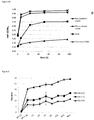
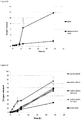
- the present inventors observed that exposure to even moderate temperatures (e.g. 60°C) can lead, over time, to an increase in condensation that results in lower dissolution rates ( Figure 3 ). This unwanted change is particularly pronounced at higher temperatures, such as those employed in drying or sterilisation processes, where even short exposures result in a dramatic reduction in lability ( Figure 4 ).
- the synthetic methods described herein produce stable nanoparticles that are labile, i.e. non-persistent in vivo ( Figure 5 ).
- Ludox SM30® is an example of a condensed silicate nanoparticle.
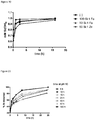
- Figure 19 shows that while Ludox SM30® and the nanosilicates of the present invention have similar particle sizes, that their respective different rates of dissolution mean that dissolution rates are not size dependent.
- a 30 ⁇ 3mM solution of silicate was prepared from a concentrated stock of sodium silicate. Next, an HCl solution was used to adjust pH to 6.8 ⁇ 0.2. The pH drop resulted in the formation of amorphous polymeric silicates. The solution was left to equilibrate for 16-24 hours during which it increased to pH 7.1 ⁇ 0.2.
- Molybdic acid assay 100 ⁇ L of the test solution or standard (prepared from Sigma Aldrich Si ICP standard, 1000 mg/L) and 200 ⁇ L molybdic acid colouring solution (0.6105 g NH 4 MO 7 4H 2 0, 15 mL 0.5 N H 2 SO 4 , 85 mL H 2 O) were transferred to a 96 well plate and mixed for 10 min. After the incubation, the absorbance (405 nm) was measured the concentration of soluble silicic acid was determined using the standard curve.
- a suspension of nanoparticulate silicates (0.5M Si) was prepared by first diluting a concentrated solution of sodium silicate (resulting pH is greater than 10.5) and then dropping the pH to approximately 1.0 in less than 5 sec by a bolus addition of concentrated HCl. The pH was then raised to 3.0 and 1M PEG added. This suspension was then diluted to 1mM Si (24 h later) for the dissolution assay.
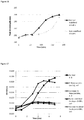
- Growth retardants increase meta-stability ( Figure 9A ) in a pH dependent fashion ( Figure 9B ). This increase in stability enables the processing and formulation of concentrated amorphous silicates (e.g. incorporation in gels or creams).
- the enhanced dispersibility and stability of the silicates described herein allow the administration of high concentrations of nanoparticles at physiological pHs without the risk of aggregation. This enables a range of applications relying on parenterals, such as intravenous (i.v.), or oral delivery, and is illustrated by sucrose stabilised silicate NPs, which remain disperse and small once exposed to physiological pHs ( Figure 10 ).
- TEM analysis was carried out using an ointment made using the synthesis in Figure 14 in which NaOH was added after PEG 3350. A small amounts ointment was suspended in ethanol. After sonication, a drop of this suspension was placed on a grid, and after drying, was examined in a FEI Tecnai F20 field emission gun (FEG) transmission electron microscope (TEM).
- FEG field emission gun
- TEM transmission electron microscope
- the final concentration of Si was 83 mmol/kg as determined using EDX spectroscopy which indicated the presence of silica as well as Cu.
- the TEM image showed the nanoparticles of stabilised polymeric silicates surrounded by a matrix of stabilising PEG 3350.
- Silicate stabilised materials remove Fe from Fe-DMHP complex; at 5mM Si (Ratio 1:625 Fe:Si), all DMHP was unbound from the Fe complex ( Figure 15 ). However, over time DMHP seemed to complex iron again as seen by a shift towards the Fe-DMHP wavelength (289.2 nm) in both stabilised and non-stabilised silicates ( Figure 16 ).
- Copper loaded silicate polymers showed antimicrobial activity, but Growth retardants did not impact negatively in the bacterial activity of copper. There was not a remarkable difference between stabilised and non-stabilised materials ( Figure 17 ). In practice, stabilisation would allow greater copper-loaded silicate concentrations and no impact of the stabiliser on efficacy.
- compositions of the present invention may be tested to determine their behaviour in the gastrointestinal tract. After exposure to simulated digestion, the compositions undergo a rapid change such that some silicic acid is released, that would be absorbed and utilised by the body, whilst the remaining silicate forms larger particles that would be safely excreted in the faeces. Persistent nanoparticles and the concurrent risk of toxicity are therefore avoided.
- Stabilised polymeric silicate compositions formulated in a solid or semi-solid matrix for topical application
- Stabilised polymeric silicate compositions optionally doped with copper, of the present invention were incorporated in a hydroxy ethyl cellulose gel (2% w/w) and for covering wounds.
- metal ions such as Cu 2+ or Ag + may be included in the cream for increasing its antibacterial properties.
- a uSANS dispersion (500 mM Si, pH 1.5) was spiked with soluble metal ions and incubated at room temperature for 1 h.
- Figure 20 shows that low levels of metals inhibit the dissolution of uSANS as determined by the molybdate assay.
- Gao et al Colloids and Surfaces A: Physicochem. Eng. Aspects 350: 33-37, 2009 ).
Landscapes
- Health & Medical Sciences (AREA)
- Chemical & Material Sciences (AREA)
- Medicinal Chemistry (AREA)
- Public Health (AREA)
- Veterinary Medicine (AREA)
- Life Sciences & Earth Sciences (AREA)
- Animal Behavior & Ethology (AREA)
- General Health & Medical Sciences (AREA)
- Pharmacology & Pharmacy (AREA)
- Epidemiology (AREA)
- Engineering & Computer Science (AREA)
- Chemical Kinetics & Catalysis (AREA)
- Bioinformatics & Cheminformatics (AREA)
- Organic Chemistry (AREA)
- Inorganic Chemistry (AREA)
- General Chemical & Material Sciences (AREA)
- Nuclear Medicine, Radiotherapy & Molecular Imaging (AREA)
- Polymers & Plastics (AREA)
- Dermatology (AREA)
- Physical Education & Sports Medicine (AREA)
- Orthopedic Medicine & Surgery (AREA)
- Immunology (AREA)
- Rheumatology (AREA)
- Physiology (AREA)
- Oil, Petroleum & Natural Gas (AREA)
- Nutrition Science (AREA)
- Neurosurgery (AREA)
- Neurology (AREA)
- Biomedical Technology (AREA)
- Gastroenterology & Hepatology (AREA)
- Psychiatry (AREA)
- Communicable Diseases (AREA)
- Heart & Thoracic Surgery (AREA)
- Hospice & Palliative Care (AREA)
- Urology & Nephrology (AREA)
- Cardiology (AREA)
- Oncology (AREA)
- Diabetes (AREA)
- Endocrinology (AREA)
- Medicinal Preparation (AREA)
Applications Claiming Priority (2)
| Application Number | Priority Date | Filing Date | Title |
|---|---|---|---|
| GB201402672A GB201402672D0 (en) | 2014-02-14 | 2014-02-14 | Materials and methods relating to stabilised polymeric silicate compositions |
| PCT/GB2015/050409 WO2015121666A1 (en) | 2014-02-14 | 2015-02-13 | Materials and methods relating to stabilised polymeric silicate compositions |
Publications (2)
| Publication Number | Publication Date |
|---|---|
| EP3105281A1 EP3105281A1 (en) | 2016-12-21 |
| EP3105281B1 true EP3105281B1 (en) | 2021-04-21 |
Family
ID=50440204
Family Applications (1)
| Application Number | Title | Priority Date | Filing Date |
|---|---|---|---|
| EP15707169.7A Active EP3105281B1 (en) | 2014-02-14 | 2015-02-13 | Materials and methods relating to stabilised polymeric silicate compositions |
Country Status (13)
| Country | Link |
|---|---|
| US (4) | US20170042934A1 (enExample) |
| EP (1) | EP3105281B1 (enExample) |
| JP (1) | JP6618475B2 (enExample) |
| KR (1) | KR102354909B1 (enExample) |
| CN (1) | CN106164136B (enExample) |
| AU (1) | AU2015216711B2 (enExample) |
| CA (1) | CA2939419C (enExample) |
| EA (1) | EA034577B1 (enExample) |
| ES (1) | ES2872498T3 (enExample) |
| GB (1) | GB201402672D0 (enExample) |
| NZ (1) | NZ723746A (enExample) |
| SG (2) | SG10202000307VA (enExample) |
| WO (1) | WO2015121666A1 (enExample) |
Families Citing this family (14)
| Publication number | Priority date | Publication date | Assignee | Title |
|---|---|---|---|---|
| ES2652114T3 (es) | 2007-10-15 | 2018-01-31 | 7 Oaks Pharmaceutical Corporation | Una disolución que contiene silicato para uso en el tratamiento de melanoma |
| GB201507002D0 (en) * | 2015-04-24 | 2015-06-10 | Medical Res Council | Copper Oxo-hydroxide nanoparticles and their uses as biocidal agents |
| WO2017173317A1 (en) * | 2016-04-01 | 2017-10-05 | Nickels Daniel | Novel bone putty compositions and methods of use thereof |
| US10604257B2 (en) * | 2016-06-28 | 2020-03-31 | International Business Machines Corporation | Unmanned aerial vehicle for air sampling |
| JP7510254B2 (ja) * | 2016-08-10 | 2024-07-03 | ユナイテッド キングダム リサーチ アンド イノベーション | ナノシリカ粒子を含む組成物および療法のためにtリンパ球を活性化する方法におけるそれらの使用 |
| KR20180034937A (ko) | 2016-09-28 | 2018-04-05 | 모멘티브퍼포먼스머티리얼스코리아 주식회사 | 유기 전자 소자 봉지재용 조성물 및 이를 이용하여 형성된 봉지재 |
| GB201701944D0 (en) * | 2017-02-06 | 2017-03-22 | Medical Res Council | Antimicrobial compositions and their uses |
| KR102427987B1 (ko) | 2018-11-27 | 2022-08-02 | 주식회사 엘지화학 | 전가수분해된 폴리실리케이트의 합성방법 |
| KR102207608B1 (ko) * | 2019-04-24 | 2021-01-26 | 윤종오 | 카르복실산으로 유기화된 규소 이온 복합체 및 복합체의 제조방법과 이를 이용한 제품 |
| WO2020218834A1 (ko) * | 2019-04-24 | 2020-10-29 | 윤종오 | 카르복실산으로 유기화된 규소 이온 복합체 및 복합체의 제조방법과 이를 이용한 제품 |
| US20230021329A1 (en) * | 2019-12-20 | 2023-01-26 | Veri Nano Inc. | Nanostructured binary gel composition and use thereof |
| SE2450523A1 (en) * | 2024-02-22 | 2025-08-23 | Lea Cares Ab | Method to form supernatant |
| WO2025178550A1 (en) * | 2024-02-22 | 2025-08-28 | Lea Cares Ab | Method to form supernatant |
| CN119660919A (zh) * | 2024-12-19 | 2025-03-21 | 河北清泓检测技术服务有限公司 | 一种适应高温高pH值的絮凝剂复配方法 |
Family Cites Families (38)
| Publication number | Priority date | Publication date | Assignee | Title |
|---|---|---|---|---|
| US1688228A (en) | 1928-10-16 | gebmany | ||
| US4029770A (en) | 1974-03-26 | 1977-06-14 | Caw Industries, Inc. | Method of therapeutically treating damaged and/or infected tissue and relieving stress and shock in warm blooded animals |
| US4563351A (en) | 1983-08-01 | 1986-01-07 | Forsyth Dental Infirmary For Children | Self-gelling therapeutic compositions for topical application |
| US5080900A (en) | 1990-04-17 | 1992-01-14 | Stanley R Thomas | Treatment of skin ulcers with an aqueous extract of oak bark ash |
| US7014870B1 (en) | 1992-11-06 | 2006-03-21 | Greystone Medical Group, Inc. | Compositions of oak bark extract related synthetic compositions and method of using same |
| DK0668769T3 (da) | 1992-11-06 | 2000-10-02 | Greystone Medical Group Inc | Egebarkekstrakt-relaterede syntetiske sammensætninger og fremgangsmåde til deres anvendelse |
| US5370876A (en) | 1993-01-08 | 1994-12-06 | Microbarriers | Antimicrobial protective skin composition and method for protecting skin from body fluids |
| JP2588109B2 (ja) * | 1993-03-19 | 1997-03-05 | 日本臓器製薬株式会社 | 鎮痛剤 |
| NL9400189A (nl) | 1994-02-07 | 1995-09-01 | Bio Pharma Sciences Bv | Gestabiliseerd orthosiliciumzuur bevattend preparaat, een werkwijze voor het bereiden daarvan en een biologisch preparaat. |
| US20060246154A1 (en) | 1997-10-08 | 2006-11-02 | Hon David N | Composition of oak bark extract, related synthetic compositions, and method of using same |
| FR2799758B1 (fr) | 1999-10-15 | 2002-05-17 | Exsymol Sa | Complexe a base d'acide orthosilicique biologiquement assimilable, se presentant sous forme solide, stable et concentree, et procede de preparation |
| CA2298762C (en) | 2000-02-11 | 2001-06-12 | Paul M. Pidcock | Therapeutic compositions consisting of clarified multi-filtered soluable sodium silicate in liquid form are found to modify suppressor cells and enhanse the human immune system toprevent recurrence of herpes infections |
| KR100330993B1 (ko) | 2000-02-18 | 2002-04-01 | 김승일 | 액상 사료 첨가제 및 이의 제조방법 |
| RU2182006C2 (ru) | 2000-03-01 | 2002-05-10 | Цивинский Станислав Викторович | Способ лечения ревматоидного артрита |
| US6692775B2 (en) | 2000-03-13 | 2004-02-17 | Aqua Med, Inc. | Bactericidal gel and method for treating burns and dermal lesions |
| US6288045B1 (en) | 2000-06-09 | 2001-09-11 | Lifelink Pharmaceuticals, Inc. | Epithelial cell cancer drug |
| KR100331952B1 (ko) | 2000-11-23 | 2002-04-09 | 최수일 | 다목적 고기능성 알칼리 용액 조성물 및 그 제조방법과 비특이 면역증강제로서의 용도 |
| US20040057958A1 (en) | 2002-05-17 | 2004-03-25 | Waggoner David W. | Immunogenicity-enhancing carriers and compositions thereof and methods of using the same |
| UA80969C2 (en) | 2002-05-31 | 2007-11-26 | Aqueous solution of non-colloidal silicic and boric acids, method for its preparation and application | |
| US20040097467A1 (en) | 2002-08-22 | 2004-05-20 | Vijaya Juturu | Arginine silicate inositol complex and use thereof |
| RU2237483C1 (ru) | 2003-02-21 | 2004-10-10 | Цивинский Станислав Викторович | Средство для лечения гастрита с повышенной кислотностью и язвенной болезни и способ их лечения |
| US8187473B2 (en) | 2003-05-15 | 2012-05-29 | Kanumuru Rahul Raju | Functional transition metal silicates |
| CN100366534C (zh) * | 2004-05-09 | 2008-02-06 | 中国石化北京燕化石油化工股份有限公司 | 适用于阴离子聚合的层状硅酸盐的改性方法、由此得到的改性层状硅酸盐及其用途 |
| CN1315484C (zh) | 2004-11-16 | 2007-05-16 | 关相龙 | 治疗皮肤病的药物载体组合物及制备方法 |
| RU2280458C1 (ru) | 2004-11-30 | 2006-07-27 | Алевтина Ивановна Косолапова | Противовоспалительная мазь |
| DE102004063599B4 (de) | 2004-12-30 | 2007-07-12 | Bayer Innovation Gmbh | Verkürzte Wundheilungsprozesse mittels neuartiger Faservliese |
| NZ537747A (en) * | 2005-01-18 | 2008-02-29 | Victoria Link Ltd | Nano-structured silicate, functionalised forms thereof, preparation and uses |
| WO2006136003A1 (en) | 2005-04-20 | 2006-12-28 | Laboratoires Mauves Inc. | Organic silicic acids complex for therapeutic and cosmetic applications |
| US20070161539A1 (en) * | 2006-01-12 | 2007-07-12 | Enrique Hernandez | Method of regulating degree of polymerization of an alkali metal silicate in solution using pH |
| WO2008147468A2 (en) | 2006-12-18 | 2008-12-04 | Amcol International | Compositions comprising virus-interacting layered phyllosilicates and a therapeutic agent, and methods of use |
| US20100278935A1 (en) | 2007-07-30 | 2010-11-04 | Stacey William C | Immune System Modulator Formulation |
| ES2652114T3 (es) | 2007-10-15 | 2018-01-31 | 7 Oaks Pharmaceutical Corporation | Una disolución que contiene silicato para uso en el tratamiento de melanoma |
| US20110009486A1 (en) | 2008-03-03 | 2011-01-13 | Luna Innovations Incorporated | Method for treating pruritus by administering fullerenes |
| WO2009127256A1 (en) * | 2008-04-17 | 2009-10-22 | Jisbrey, S.A | Hydronium stabilized and dissoluble silicic acid nanoparticles: preparation, stabilization and use |
| EP2151466A1 (en) | 2008-08-01 | 2010-02-10 | SiNatur GmbH | Biologically active silicic acid |
| EP2371220B2 (en) * | 2010-03-31 | 2018-01-17 | Taminco | Stabilized bio-available soluble silicate solution |
| US9345720B2 (en) * | 2010-10-26 | 2016-05-24 | Exeltis Usa Dermatology, Inc. | Composition and method for treating wounds |
| GB201402669D0 (en) * | 2014-02-14 | 2014-04-02 | Medical Res Council | Stabilised silicate compositions and their uses |
-
2014
- 2014-02-14 GB GB201402672A patent/GB201402672D0/en not_active Ceased
-
2015
- 2015-02-13 KR KR1020167024827A patent/KR102354909B1/ko active Active
- 2015-02-13 WO PCT/GB2015/050409 patent/WO2015121666A1/en not_active Ceased
- 2015-02-13 CA CA2939419A patent/CA2939419C/en active Active
- 2015-02-13 SG SG10202000307VA patent/SG10202000307VA/en unknown
- 2015-02-13 EA EA201691441A patent/EA034577B1/ru unknown
- 2015-02-13 NZ NZ723746A patent/NZ723746A/en unknown
- 2015-02-13 JP JP2016551833A patent/JP6618475B2/ja active Active
- 2015-02-13 EP EP15707169.7A patent/EP3105281B1/en active Active
- 2015-02-13 ES ES15707169T patent/ES2872498T3/es active Active
- 2015-02-13 CN CN201580018382.3A patent/CN106164136B/zh active Active
- 2015-02-13 AU AU2015216711A patent/AU2015216711B2/en active Active
- 2015-02-13 SG SG10202007920RA patent/SG10202007920RA/en unknown
- 2015-02-13 US US15/119,071 patent/US20170042934A1/en not_active Abandoned
-
2018
- 2018-10-24 US US16/169,437 patent/US10898511B2/en active Active
-
2020
- 2020-12-15 US US17/121,884 patent/US11833171B2/en active Active
-
2023
- 2023-10-27 US US18/495,938 patent/US20240066053A1/en not_active Abandoned
Non-Patent Citations (1)
| Title |
|---|
| None * |
Also Published As
| Publication number | Publication date |
|---|---|
| GB201402672D0 (en) | 2014-04-02 |
| US20190224233A1 (en) | 2019-07-25 |
| CA2939419C (en) | 2022-07-26 |
| EP3105281A1 (en) | 2016-12-21 |
| AU2015216711A1 (en) | 2016-09-22 |
| CN106164136B (zh) | 2019-11-08 |
| US20240066053A1 (en) | 2024-02-29 |
| HK1226424A1 (zh) | 2017-09-29 |
| SG10202007920RA (en) | 2020-10-29 |
| WO2015121666A1 (en) | 2015-08-20 |
| KR102354909B1 (ko) | 2022-01-24 |
| KR20160124797A (ko) | 2016-10-28 |
| JP6618475B2 (ja) | 2019-12-11 |
| CN106164136A (zh) | 2016-11-23 |
| NZ723746A (en) | 2022-09-30 |
| SG10202000307VA (en) | 2020-03-30 |
| AU2015216711B2 (en) | 2018-08-09 |
| EA201691441A1 (ru) | 2017-02-28 |
| ES2872498T3 (es) | 2021-11-02 |
| US10898511B2 (en) | 2021-01-26 |
| JP2017512189A (ja) | 2017-05-18 |
| US11833171B2 (en) | 2023-12-05 |
| CA2939419A1 (en) | 2015-08-20 |
| EA034577B1 (ru) | 2020-02-21 |
| US20210145866A1 (en) | 2021-05-20 |
| US20170042934A1 (en) | 2017-02-16 |
Similar Documents
| Publication | Publication Date | Title |
|---|---|---|
| US20240066053A1 (en) | Materials and Methods Relating to Stabilised Polymeric Silicate Compositions | |
| Juère et al. | On the nanopore confinement of therapeutic drugs into mesoporous silica materials and its implications | |
| CN106102694B (zh) | 稳定化硅酸盐组合物及其作为止汗组合物的用途 | |
| JP3903061B2 (ja) | 薬物を含有するナノ粒子およびその製造方法、ならびに当該ナノ粒子からなる非経口投与用製剤 | |
| US11980637B2 (en) | Compositions comprising nanosilica particles and their use in methods of activating T lymphocytes for therapy | |
| HK1216720A1 (zh) | 用於递送治疗剂的可生物蚀解的硅基组合物 | |
| CN111110636A (zh) | 使用纳米介孔氧化硅高效负载及缓释抗青光眼药物 | |
| Naumova et al. | Mesoporous silica particles based on complex micelles of poorly water-soluble compounds. One simple step to multidrug carriers | |
| JP7158039B2 (ja) | ゾル-ゲル/ヒドロゲル治療薬送達システム及びその方法 | |
| AU2003288820B2 (en) | Pharmaceutical formulation and a method of making same | |
| HK1226424B (en) | Materials and methods relating to stabilised polymeric silicate compositions | |
| Karunanithi et al. | Niosomes and ZnO@ HNT nanoparticles embedded in agarose–chitosan composite films for cancer treatment | |
| Lin et al. | Synthesis of water-dispersible silicon-containing hydroxyapatite nanoparticles with adjustable degradation rates and their applications as pH-responsive drug carriers | |
| Srivastava | Gentamicin loaded mesoporous silica nano particles for topical treatment of bacterial infections | |
| CN120859943A (zh) | 一种羟基磷灰石纳米乳的制备及其应用 | |
| HK40007601B (en) | Compositions comprising nanosilica particles and their use in methods of activating t lymphocytes for therapy | |
| EVA et al. | Physical-Chemical Issues of Cephalosporin Intercalated Nanoparticles for Life-Threatening Infections Treatment | |
| NZ577505A (en) | Anthelmintic formulations | |
| MX2010005475A (es) | La lidocaina como transformadora y productora de complejos de farmacos trasformados aplicados en nanodosis mediante implantes por inyeccion como dispositivos de liberacion prolongada. |
Legal Events
| Date | Code | Title | Description |
|---|---|---|---|
| PUAI | Public reference made under article 153(3) epc to a published international application that has entered the european phase |
Free format text: ORIGINAL CODE: 0009012 |
|
| STAA | Information on the status of an ep patent application or granted ep patent |
Free format text: STATUS: REQUEST FOR EXAMINATION WAS MADE |
|
| 17P | Request for examination filed |
Effective date: 20160825 |
|
| AK | Designated contracting states |
Kind code of ref document: A1 Designated state(s): AL AT BE BG CH CY CZ DE DK EE ES FI FR GB GR HR HU IE IS IT LI LT LU LV MC MK MT NL NO PL PT RO RS SE SI SK SM TR |
|
| AX | Request for extension of the european patent |
Extension state: BA ME |
|
| DAX | Request for extension of the european patent (deleted) | ||
| REG | Reference to a national code |
Ref country code: HK Ref legal event code: DE Ref document number: 1226424 Country of ref document: HK |
|
| STAA | Information on the status of an ep patent application or granted ep patent |
Free format text: STATUS: EXAMINATION IS IN PROGRESS |
|
| 17Q | First examination report despatched |
Effective date: 20171204 |
|
| RAP1 | Party data changed (applicant data changed or rights of an application transferred) |
Owner name: UNITED KINGDOM RESEARCH AND INNOVATION |
|
| GRAP | Despatch of communication of intention to grant a patent |
Free format text: ORIGINAL CODE: EPIDOSNIGR1 |
|
| STAA | Information on the status of an ep patent application or granted ep patent |
Free format text: STATUS: GRANT OF PATENT IS INTENDED |
|
| INTG | Intention to grant announced |
Effective date: 20201109 |
|
| GRAS | Grant fee paid |
Free format text: ORIGINAL CODE: EPIDOSNIGR3 |
|
| GRAA | (expected) grant |
Free format text: ORIGINAL CODE: 0009210 |
|
| STAA | Information on the status of an ep patent application or granted ep patent |
Free format text: STATUS: THE PATENT HAS BEEN GRANTED |
|
| AK | Designated contracting states |
Kind code of ref document: B1 Designated state(s): AL AT BE BG CH CY CZ DE DK EE ES FI FR GB GR HR HU IE IS IT LI LT LU LV MC MK MT NL NO PL PT RO RS SE SI SK SM TR |
|
| REG | Reference to a national code |
Ref country code: GB Ref legal event code: FG4D |
|
| REG | Reference to a national code |
Ref country code: CH Ref legal event code: EP |
|
| REG | Reference to a national code |
Ref country code: DE Ref legal event code: R096 Ref document number: 602015068314 Country of ref document: DE Ref country code: IE Ref legal event code: FG4D |
|
| REG | Reference to a national code |
Ref country code: AT Ref legal event code: REF Ref document number: 1384583 Country of ref document: AT Kind code of ref document: T Effective date: 20210515 |
|
| REG | Reference to a national code |
Ref country code: LT Ref legal event code: MG9D |
|
| REG | Reference to a national code |
Ref country code: AT Ref legal event code: MK05 Ref document number: 1384583 Country of ref document: AT Kind code of ref document: T Effective date: 20210421 |
|
| REG | Reference to a national code |
Ref country code: NL Ref legal event code: MP Effective date: 20210421 |
|
| PG25 | Lapsed in a contracting state [announced via postgrant information from national office to epo] |
Ref country code: FI Free format text: LAPSE BECAUSE OF FAILURE TO SUBMIT A TRANSLATION OF THE DESCRIPTION OR TO PAY THE FEE WITHIN THE PRESCRIBED TIME-LIMIT Effective date: 20210421 Ref country code: NL Free format text: LAPSE BECAUSE OF FAILURE TO SUBMIT A TRANSLATION OF THE DESCRIPTION OR TO PAY THE FEE WITHIN THE PRESCRIBED TIME-LIMIT Effective date: 20210421 Ref country code: LT Free format text: LAPSE BECAUSE OF FAILURE TO SUBMIT A TRANSLATION OF THE DESCRIPTION OR TO PAY THE FEE WITHIN THE PRESCRIBED TIME-LIMIT Effective date: 20210421 Ref country code: BG Free format text: LAPSE BECAUSE OF FAILURE TO SUBMIT A TRANSLATION OF THE DESCRIPTION OR TO PAY THE FEE WITHIN THE PRESCRIBED TIME-LIMIT Effective date: 20210721 Ref country code: AT Free format text: LAPSE BECAUSE OF FAILURE TO SUBMIT A TRANSLATION OF THE DESCRIPTION OR TO PAY THE FEE WITHIN THE PRESCRIBED TIME-LIMIT Effective date: 20210421 Ref country code: HR Free format text: LAPSE BECAUSE OF FAILURE TO SUBMIT A TRANSLATION OF THE DESCRIPTION OR TO PAY THE FEE WITHIN THE PRESCRIBED TIME-LIMIT Effective date: 20210421 |
|
| REG | Reference to a national code |
Ref country code: ES Ref legal event code: FG2A Ref document number: 2872498 Country of ref document: ES Kind code of ref document: T3 Effective date: 20211102 |
|
| PG25 | Lapsed in a contracting state [announced via postgrant information from national office to epo] |
Ref country code: GR Free format text: LAPSE BECAUSE OF FAILURE TO SUBMIT A TRANSLATION OF THE DESCRIPTION OR TO PAY THE FEE WITHIN THE PRESCRIBED TIME-LIMIT Effective date: 20210722 Ref country code: LV Free format text: LAPSE BECAUSE OF FAILURE TO SUBMIT A TRANSLATION OF THE DESCRIPTION OR TO PAY THE FEE WITHIN THE PRESCRIBED TIME-LIMIT Effective date: 20210421 Ref country code: IS Free format text: LAPSE BECAUSE OF FAILURE TO SUBMIT A TRANSLATION OF THE DESCRIPTION OR TO PAY THE FEE WITHIN THE PRESCRIBED TIME-LIMIT Effective date: 20210821 Ref country code: NO Free format text: LAPSE BECAUSE OF FAILURE TO SUBMIT A TRANSLATION OF THE DESCRIPTION OR TO PAY THE FEE WITHIN THE PRESCRIBED TIME-LIMIT Effective date: 20210721 Ref country code: PT Free format text: LAPSE BECAUSE OF FAILURE TO SUBMIT A TRANSLATION OF THE DESCRIPTION OR TO PAY THE FEE WITHIN THE PRESCRIBED TIME-LIMIT Effective date: 20210823 Ref country code: PL Free format text: LAPSE BECAUSE OF FAILURE TO SUBMIT A TRANSLATION OF THE DESCRIPTION OR TO PAY THE FEE WITHIN THE PRESCRIBED TIME-LIMIT Effective date: 20210421 Ref country code: RS Free format text: LAPSE BECAUSE OF FAILURE TO SUBMIT A TRANSLATION OF THE DESCRIPTION OR TO PAY THE FEE WITHIN THE PRESCRIBED TIME-LIMIT Effective date: 20210421 Ref country code: SE Free format text: LAPSE BECAUSE OF FAILURE TO SUBMIT A TRANSLATION OF THE DESCRIPTION OR TO PAY THE FEE WITHIN THE PRESCRIBED TIME-LIMIT Effective date: 20210421 |
|
| REG | Reference to a national code |
Ref country code: DE Ref legal event code: R097 Ref document number: 602015068314 Country of ref document: DE |
|
| PG25 | Lapsed in a contracting state [announced via postgrant information from national office to epo] |
Ref country code: RO Free format text: LAPSE BECAUSE OF FAILURE TO SUBMIT A TRANSLATION OF THE DESCRIPTION OR TO PAY THE FEE WITHIN THE PRESCRIBED TIME-LIMIT Effective date: 20210421 Ref country code: SK Free format text: LAPSE BECAUSE OF FAILURE TO SUBMIT A TRANSLATION OF THE DESCRIPTION OR TO PAY THE FEE WITHIN THE PRESCRIBED TIME-LIMIT Effective date: 20210421 Ref country code: SM Free format text: LAPSE BECAUSE OF FAILURE TO SUBMIT A TRANSLATION OF THE DESCRIPTION OR TO PAY THE FEE WITHIN THE PRESCRIBED TIME-LIMIT Effective date: 20210421 Ref country code: DK Free format text: LAPSE BECAUSE OF FAILURE TO SUBMIT A TRANSLATION OF THE DESCRIPTION OR TO PAY THE FEE WITHIN THE PRESCRIBED TIME-LIMIT Effective date: 20210421 Ref country code: EE Free format text: LAPSE BECAUSE OF FAILURE TO SUBMIT A TRANSLATION OF THE DESCRIPTION OR TO PAY THE FEE WITHIN THE PRESCRIBED TIME-LIMIT Effective date: 20210421 Ref country code: CZ Free format text: LAPSE BECAUSE OF FAILURE TO SUBMIT A TRANSLATION OF THE DESCRIPTION OR TO PAY THE FEE WITHIN THE PRESCRIBED TIME-LIMIT Effective date: 20210421 |
|
| PLBE | No opposition filed within time limit |
Free format text: ORIGINAL CODE: 0009261 |
|
| STAA | Information on the status of an ep patent application or granted ep patent |
Free format text: STATUS: NO OPPOSITION FILED WITHIN TIME LIMIT |
|
| 26N | No opposition filed |
Effective date: 20220124 |
|
| PG25 | Lapsed in a contracting state [announced via postgrant information from national office to epo] |
Ref country code: IS Free format text: LAPSE BECAUSE OF FAILURE TO SUBMIT A TRANSLATION OF THE DESCRIPTION OR TO PAY THE FEE WITHIN THE PRESCRIBED TIME-LIMIT Effective date: 20210821 Ref country code: AL Free format text: LAPSE BECAUSE OF FAILURE TO SUBMIT A TRANSLATION OF THE DESCRIPTION OR TO PAY THE FEE WITHIN THE PRESCRIBED TIME-LIMIT Effective date: 20210421 |
|
| PG25 | Lapsed in a contracting state [announced via postgrant information from national office to epo] |
Ref country code: MC Free format text: LAPSE BECAUSE OF FAILURE TO SUBMIT A TRANSLATION OF THE DESCRIPTION OR TO PAY THE FEE WITHIN THE PRESCRIBED TIME-LIMIT Effective date: 20210421 |
|
| P01 | Opt-out of the competence of the unified patent court (upc) registered |
Effective date: 20230518 |
|
| PG25 | Lapsed in a contracting state [announced via postgrant information from national office to epo] |
Ref country code: HU Free format text: LAPSE BECAUSE OF FAILURE TO SUBMIT A TRANSLATION OF THE DESCRIPTION OR TO PAY THE FEE WITHIN THE PRESCRIBED TIME-LIMIT; INVALID AB INITIO Effective date: 20150213 |
|
| PG25 | Lapsed in a contracting state [announced via postgrant information from national office to epo] |
Ref country code: MK Free format text: LAPSE BECAUSE OF FAILURE TO SUBMIT A TRANSLATION OF THE DESCRIPTION OR TO PAY THE FEE WITHIN THE PRESCRIBED TIME-LIMIT Effective date: 20210421 Ref country code: CY Free format text: LAPSE BECAUSE OF FAILURE TO SUBMIT A TRANSLATION OF THE DESCRIPTION OR TO PAY THE FEE WITHIN THE PRESCRIBED TIME-LIMIT Effective date: 20210421 |
|
| PG25 | Lapsed in a contracting state [announced via postgrant information from national office to epo] |
Ref country code: TR Free format text: LAPSE BECAUSE OF FAILURE TO SUBMIT A TRANSLATION OF THE DESCRIPTION OR TO PAY THE FEE WITHIN THE PRESCRIBED TIME-LIMIT Effective date: 20210421 |
|
| PG25 | Lapsed in a contracting state [announced via postgrant information from national office to epo] |
Ref country code: MT Free format text: LAPSE BECAUSE OF FAILURE TO SUBMIT A TRANSLATION OF THE DESCRIPTION OR TO PAY THE FEE WITHIN THE PRESCRIBED TIME-LIMIT Effective date: 20210421 |
|
| REG | Reference to a national code |
Ref country code: CH Ref legal event code: U11 Free format text: ST27 STATUS EVENT CODE: U-0-0-U10-U11 (AS PROVIDED BY THE NATIONAL OFFICE) Effective date: 20260301 |
|
| PGFP | Annual fee paid to national office [announced via postgrant information from national office to epo] |
Ref country code: LU Payment date: 20260217 Year of fee payment: 12 |
|
| PGFP | Annual fee paid to national office [announced via postgrant information from national office to epo] |
Ref country code: GB Payment date: 20260224 Year of fee payment: 12 |
|
| PGFP | Annual fee paid to national office [announced via postgrant information from national office to epo] |
Ref country code: ES Payment date: 20260319 Year of fee payment: 12 |
|
| PGFP | Annual fee paid to national office [announced via postgrant information from national office to epo] |
Ref country code: DE Payment date: 20260217 Year of fee payment: 12 Ref country code: IE Payment date: 20260218 Year of fee payment: 12 |
|
| PGFP | Annual fee paid to national office [announced via postgrant information from national office to epo] |
Ref country code: BE Payment date: 20260218 Year of fee payment: 12 Ref country code: IT Payment date: 20260227 Year of fee payment: 12 |
|
| PGFP | Annual fee paid to national office [announced via postgrant information from national office to epo] |
Ref country code: FR Payment date: 20260223 Year of fee payment: 12 |
|
| PGFP | Annual fee paid to national office [announced via postgrant information from national office to epo] |
Ref country code: CH Payment date: 20260301 Year of fee payment: 12 |