EP3100508B1 - Systeme, verfahren und vorrichtungen zur kanalreservierung - Google Patents
Systeme, verfahren und vorrichtungen zur kanalreservierung Download PDFInfo
- Publication number
- EP3100508B1 EP3100508B1 EP15743102.4A EP15743102A EP3100508B1 EP 3100508 B1 EP3100508 B1 EP 3100508B1 EP 15743102 A EP15743102 A EP 15743102A EP 3100508 B1 EP3100508 B1 EP 3100508B1
- Authority
- EP
- European Patent Office
- Prior art keywords
- lte
- enb
- reserve
- request
- transmit
- Prior art date
- Legal status (The legal status is an assumption and is not a legal conclusion. Google has not performed a legal analysis and makes no representation as to the accuracy of the status listed.)
- Not-in-force
Links
- 238000000034 method Methods 0.000 title claims description 46
- 238000001228 spectrum Methods 0.000 claims description 34
- 238000004891 communication Methods 0.000 claims description 31
- 230000005540 biological transmission Effects 0.000 description 116
- 230000008054 signal transmission Effects 0.000 description 29
- 238000010586 diagram Methods 0.000 description 15
- 238000005516 engineering process Methods 0.000 description 15
- 239000000969 carrier Substances 0.000 description 13
- 230000007246 mechanism Effects 0.000 description 12
- 238000013507 mapping Methods 0.000 description 11
- 230000011664 signaling Effects 0.000 description 11
- 235000019580 granularity Nutrition 0.000 description 7
- 230000007774 longterm Effects 0.000 description 7
- 230000006870 function Effects 0.000 description 6
- 238000007726 management method Methods 0.000 description 6
- 238000012545 processing Methods 0.000 description 6
- 238000005259 measurement Methods 0.000 description 5
- 230000002776 aggregation Effects 0.000 description 4
- 238000004220 aggregation Methods 0.000 description 4
- 238000013461 design Methods 0.000 description 4
- 239000000463 material Substances 0.000 description 4
- 230000003068 static effect Effects 0.000 description 4
- 230000007704 transition Effects 0.000 description 4
- 230000008901 benefit Effects 0.000 description 3
- 230000015556 catabolic process Effects 0.000 description 3
- 238000006731 degradation reaction Methods 0.000 description 3
- 230000001419 dependent effect Effects 0.000 description 3
- 238000001514 detection method Methods 0.000 description 3
- 230000003287 optical effect Effects 0.000 description 3
- 230000000153 supplemental effect Effects 0.000 description 3
- IYZMXHQDXZKNCY-UHFFFAOYSA-N 1-n,1-n-diphenyl-4-n,4-n-bis[4-(n-phenylanilino)phenyl]benzene-1,4-diamine Chemical compound C1=CC=CC=C1N(C=1C=CC(=CC=1)N(C=1C=CC(=CC=1)N(C=1C=CC=CC=1)C=1C=CC=CC=1)C=1C=CC(=CC=1)N(C=1C=CC=CC=1)C=1C=CC=CC=1)C1=CC=CC=C1 IYZMXHQDXZKNCY-UHFFFAOYSA-N 0.000 description 2
- 238000003491 array Methods 0.000 description 2
- 238000010295 mobile communication Methods 0.000 description 2
- 238000012986 modification Methods 0.000 description 2
- 230000004048 modification Effects 0.000 description 2
- 230000008569 process Effects 0.000 description 2
- 230000009897 systematic effect Effects 0.000 description 2
- 238000012549 training Methods 0.000 description 2
- 101150039363 SIB2 gene Proteins 0.000 description 1
- 238000013459 approach Methods 0.000 description 1
- 230000006399 behavior Effects 0.000 description 1
- 230000009286 beneficial effect Effects 0.000 description 1
- 230000001413 cellular effect Effects 0.000 description 1
- 239000003795 chemical substances by application Substances 0.000 description 1
- 230000006835 compression Effects 0.000 description 1
- 238000007906 compression Methods 0.000 description 1
- 125000004122 cyclic group Chemical group 0.000 description 1
- 230000006837 decompression Effects 0.000 description 1
- 238000009434 installation Methods 0.000 description 1
- 230000010354 integration Effects 0.000 description 1
- 230000002452 interceptive effect Effects 0.000 description 1
- 239000004973 liquid crystal related substance Substances 0.000 description 1
- 230000005055 memory storage Effects 0.000 description 1
- 230000006855 networking Effects 0.000 description 1
- 239000013307 optical fiber Substances 0.000 description 1
- 230000000737 periodic effect Effects 0.000 description 1
- 238000013468 resource allocation Methods 0.000 description 1
- 230000004044 response Effects 0.000 description 1
- 230000011218 segmentation Effects 0.000 description 1
- 239000004065 semiconductor Substances 0.000 description 1
- 230000001360 synchronised effect Effects 0.000 description 1
- 239000004557 technical material Substances 0.000 description 1
- 238000012546 transfer Methods 0.000 description 1
Images










Classifications
-
- H—ELECTRICITY
- H04—ELECTRIC COMMUNICATION TECHNIQUE
- H04W—WIRELESS COMMUNICATION NETWORKS
- H04W16/00—Network planning, e.g. coverage or traffic planning tools; Network deployment, e.g. resource partitioning or cells structures
- H04W16/14—Spectrum sharing arrangements between different networks
-
- H—ELECTRICITY
- H04—ELECTRIC COMMUNICATION TECHNIQUE
- H04W—WIRELESS COMMUNICATION NETWORKS
- H04W74/00—Wireless channel access
- H04W74/08—Non-scheduled access, e.g. ALOHA
-
- H—ELECTRICITY
- H04—ELECTRIC COMMUNICATION TECHNIQUE
- H04W—WIRELESS COMMUNICATION NETWORKS
- H04W84/00—Network topologies
- H04W84/02—Hierarchically pre-organised networks, e.g. paging networks, cellular networks, WLAN [Wireless Local Area Network] or WLL [Wireless Local Loop]
- H04W84/10—Small scale networks; Flat hierarchical networks
- H04W84/12—WLAN [Wireless Local Area Networks]
Definitions
- US 2011/0205941 A1 discloses a system and a method for spectrum sharing among plural wireless radio networks. According to this document, spectrum that overlaps in time, geography and frequency is allocated to more than one radio network. The networks share the spectrum by employing spectrum sharing in accordance with spectrum sharing control data to avoid collisions between the transmissions of the networks.
- US 2013/0279376 A1 discloses methods and apparatus for opportunistic radio resource allocation in multi-carrier communication systems. According to this document, methods and apparatus for dynamic sharing of resources such as radio frequency (RF) spectrum in a wireless system are provided.
- RF radio frequency
- the sharing is conducted among a number of base stations (e.g., eNodeBs or Access Points (APs)), or among different radio access technologies (RATs).
- the sharing is accomplished through reservation of new RF carriers, and temporary assignment (and release) of one or more RF carriers to the multi-carrier enabled radio access systems or base stations.
- Such dynamic spectrum sharing allows opportunistic use of additional RF carriers in a multi-carrier system as opposed to permanent availability to the eNodeB or AP regardless of their effective usage.
- US 2008/0108365 A1 discloses a method and apparatus for dynamically allocating spectrum available within a region including a plurality of base stations in wireless networks.
- the method includes obtaining a plurality of spectrum demands associated with at least a portion of the base stations, each spectrum demand requesting a portion of the available spectrum, and determining a plurality of spectrum allocations satisfying at least a portion of the spectrum demands.
- the spectrum allocations are determined by processing the spectrum demands using network information such as base station information associated with the base stations and region information such as terrain information associated with the region.
- the region information may include signal propagation information.
- an evolved node B also known as an e node B or eNB
- LAA licensed assisted access
- LTE-U long term evolution over unlicensed spectrum
- RAT radio access technology
- the eNB selects to broadcast a WLAN reservation message using a set of options including: (1) from a control channel region of LTE-U, (2) from a muting gap indicated by a reservation muting symbol pattern indicator, (3) from a time division duplex (TDD) guard period (GP), (4) from a TDD uplink pilot time slot (UpPTS), (5) from an empty uplink (UL) subframe or (6) from a sounding reference signal (SRS).
- the LTE-U eNB can use a listen-before-talk protocol to reserve the medium with the reservation message.
- an LTE-U eNB can send out the reservation signal at fixed time/resource, without changing an overall 1 ms LTE interval.
- the eNB selects to broadcast an LAA reservation message using one of the set of options.
- the eNB selects to broadcast an LAA reservation message and a WLAN reservation message using one or more of the set of options.
- LTE-U long term evolution over unlicensed spectrum
- LAA Licensed Assisted Access
- transmission opportunities in an LTE-U frame structure are identified. While an eNB is generally discussed, it should be recognized that other options, such as a small cell (or booster), can be used.
- LTE-U extends an LTE platform into unlicensed deployments, enabling operators and vendors to use existing or planned investments in a long term evolution (LTE)/evolved packet core (EPC) hardware in the radio and core network.
- LTE-U is considered a Supplemental Downlink or a Component Carrier (CC) in an LTE Carrier Aggregation (CA) configuration.
- CC Component Carrier
- CA LTE Carrier Aggregation
- LTE-U can be dependent on the spectrum under consideration.
- the channel characteristics (such as path loss, frequency selectivity, etc.) are dependent on the carrier frequency.
- incumbent technologies in the considered spectrum can affect the interference profile of an LTE-U network deployed in the unlicensed band.
- One potential unlicensed spectrum that can be considered for LTE-U is the 5 GHz spectrum (e.g., 5725 to 5850 MHz band currently used by IEEE 802.11 a/n/ac wireless local area networks (WLANs)). It should be recognized that other unlicensed spectrum exist and can be used without departing from the scope of this disclosure (e.g., ISM bands including 2.4 to 2.5 GHz, 5.725 to 5.875 GHz, 24 to 24.250 GHz, etc.).
- LTE is a synchronous technology; eNB periodically transmits some signals even in absence of any traffic (i.e., eNB sends cell specific reference signal (CRS) to support UE synchronization with eNB).
- CRS cell specific reference signal
- an eNB using an LTE-U protocol can introduce gaps in its transmission to provide opportunities for these other RATs to operate. These gaps in LTE-U transmission are known as coexistence muting gaps (or muting gaps). During these muting gaps, the LTE-U eNB and UEs will refrain from transmission, thereby allowing other RAT(s), as well as, other LTE-U operators (such as a carrier) to use the medium.
- WLAN devices can attempt to occupy the channel during the LTE-U transmission duration, due to operation of WLAN Clear Channel Assessment (CCA) rules definitions and the fact that CCA distinguishes between detection of a WLAN packet (using carrier sense or CS) and other technologies in the band (using energy detection or ED).
- CCA WLAN Clear Channel Assessment
- the WLAN receiver can detect the WLAN preamble, it employs a lower threshold value of -82 dBm for 20 MHz channel spacing, whereas in absence of any such preamble, a higher threshold value of -62 dBm for 20 MHz channel spacing is used.
- This may lead to increased level of interference/collisions between LTE-U and WLAN transmissions, and WLAN will not be able to identify the sources of these collisions. Therefore, back-off intervals of WLAN stations (STAs) will gradually increase to the maximum values, which in fact make LTE-U operation intrusive to WLAN operation.
- STAs back-off intervals of WLAN stations
- the collision with LTE-U transmission will also degrade the LTE-U transmission quality, thereby increasing the chances of packet failure, as well as the number of retransmissions.
- WLANs can include technology from the IEEE 802.11 family of standards, which can also include technology known as Wi-FiTM from the Wi-Fi Alliance.
- LTE-U channel reservation messages When used in conjunction with an LTE-U protocol to reserve a communication medium, these mechanisms are called LTE-U channel reservation messages (or LTE-U channel reservation signals).
- LTE-U channel reservation messages When used in conjunction with an LTE-U protocol to reserve a communication medium, these mechanisms are called LTE-U channel reservation messages (or LTE-U channel reservation signals).
- LTE-U channel reservation messages can include, but are not limited to (a) physical layer convergence protocol (PLCP) preamble broadcasting and (b) request to send (RTS) and/or clear to send (CTS) broadcasting.
- PLCP preamble broadcasting can also be known as physical layer (PHY) spoofing.
- PHY physical layer
- an eNB prior to sending an LTE signal, can transmit a portion of a WLAN PHY layer packet consisting of PLCP preamble (e.g., short training symbol field (STF), long training symbol field (LTF), and signal field (SIG)) without data.
- PLCP preamble e.g., short training symbol field (STF), long training symbol field (LTF), and signal field (SIG)
- STF short training symbol field
- LTF long training symbol field
- SIG signal field
- a UE does not need to transmit CTS or RTS to reserve the time for WLAN communication (i.e., there is no need for a UE to implement/equip/turn on a WLAN modem).
- a UE can send a PLCP preamble message to reserve the channel for uplink LTE-U transmission. By sending this preamble, WLAN stations (STAs) that receive the preamble will refrain from transmitting during the duration of time indicated in the preamble (which is indicated by the length field).
- the eNB transmits a preamble to reserve the LTE-U data transmission.
- a maximum reserved time is limited to 5.45 ms using a preamble based reservation (which is further described later in a section entitled PLCP Preamble Based Reservation).
- a data length in the SIG field can virtually indicate the LTE data region to a WLAN device.
- LTE data will be transmitted in the indicated virtual data region of the WLAN reservation.
- a WLAN device detects the virtual signal (i.e., preamble) and successfully decodes the signal as a part of a carrier sensing operation, the STA can skip the carrier sensing operation during the LTE data transmission from the length given by SIG field.
- This skipping allows the STA to save the processing power and/or radio power for carrier sensing during LTE data transmission like existing WLAN protocol (which can be viewed as backwards compatible in terms of carrier sensing).
- the eNB can also configure the MBSFN subframes to allow the WLAN STA use of the subframes for their communication.
- RTS/CTS broadcasting can be known as using WLAN MAC-level channel reservation technique by an eNB and/or a UE.
- an eNB and/or UE
- the RTS and/or CTS message includes a duration that causes WLAN STAs that receive the duration to refrain from transmitting during the duration of time indicated in the RTS and/or CTS message.
- any other message transmitted by LTE-U signal indicating the intention of reserving the medium for further transmission and/or the message recognized by WLAN or other incumbent RATs, as well as other LTE-U operators can also be considered as LTE-U channel reservation signals.
- Reservation messages can include (A) PLCP preamble based reservations and/or (B) RTS/CTS based reservations.
- N SYM ⁇ 16 + LENGTH ⁇ 8 + 6 N DBPS ⁇
- LENGTH can vary from 0 to 4095.
- T SYM is 4 ⁇ s for 802.11 a/g/n/ac.
- N DBPS is the number of data bits per OFDM symbol. If BPSK modulation with one half code rate is used, by using the above equation, a maximum of 5.45 ms can be reserved for 20 MHz WLAN channel bandwidth. Therefore, a PLCP preamble based LTE-U channel reservation needs to be repeated every five subframes for LTE-U to keep using the channel.
- the length of the legacy 802.11a PLCP preamble is 16 ⁇ s, and PLCP header (excluding the SERVICE part) is transmitted using one OFDM symbol. Therefore, the PLCP preamble based LTE-U channel reservation signal will require total 20 ⁇ s to transmit for 20 MHz WLAN channel bandwidth.
- a channel can be reserved for a much longer duration.
- a maximum of 32.7 ms of channel can be reserved.
- a maximum of (32767 - TSIFS - TCTS) ⁇ s time can be reserved, where the value of TSIFS (or time of short inter-frame space) is 16 ⁇ s for 20 MHz 802.11 a/g/n/ac WLAN channel bandwidth.
- the value of TCTS (or time cost of transmitting CTS) depends on the modulation and coding rate.
- the joint RTS/CTS based method has the added benefit of reducing the hidden terminal problem.
- an entire subframe is used for LTE-U channel reservation signal transmission (such as the last SC-OFDMA symbol of a UL subframe can be used for reservation signal transmission, see, e.g., Fig. 11 ).
- this method can improve resource utilization of LTE-U transmission.
- a portion of a radio access network (RAN) system 100 includes a cellular air interface (or medium, such as an LTE-U access link) provided between a cell tower 104 and UEs 112 (i.e., on LTE-U Access Link).
- a second air interface e.g., a wireless local area network (WLAN) based interface
- WLAN wireless local area network
- UEs 112 are located within a cell tower coverage 108.
- the computing system 102 is located within the cell tower coverage 108 and the AP coverage 110.
- a backhaul link 116 provides a network connection to a network such as an evolved packet core (EPC).
- EPC evolved packet core
- Wireless mobile communication technology uses various standards and protocols to transmit data between a base station and a wireless mobile device.
- Wireless communication system standards and protocols can include the Third Generation Partnership Project (3GPP) long term evolution (LTE); the Institute of Electrical and Electronics Engineers (IEEE) 802.16 standard, which is commonly known to industry groups as worldwide interoperability for microwave access (WiMAX); and the IEEE 802.11 standard, which is commonly known to industry groups as Wi-Fi.
- 3GPP Third Generation Partnership Project
- LTE Long Term evolution
- IEEE 802.16 Institute of Electrical and Electronics Engineers
- WiMAX worldwide interoperability for microwave access
- Wi-Fi Wireless broadband networks can include various high speed data technologies, such as 3GPP LTE systems.
- the base station can include Evolved Universal Terrestrial Radio Access Network (E-UTRAN) Node Bs (also commonly denoted as evolved Node Bs, enhanced Node Bs, eNodeBs, or eNBs) and/or Radio Network Controllers (RNCs) in an E-UTRAN, which communicate with a wireless communication device, known as user equipment (UE).
- E-UTRAN Evolved Universal Terrestrial Radio Access Network
- Node Bs also commonly denoted as evolved Node Bs, enhanced Node Bs, eNodeBs, or eNBs
- RNCs Radio Network Controllers
- UEs 112 can connect to the cell tower 104 through a single or multiple protocols. In some embodiments, UEs 112 connect to the cell tower 104 though a single LTE-U protocol. In other embodiments, UEs 112 can use multiple protocols, such as an LTE-U and an LTE/LTE-Advanced access link to connect with the cell tower 104. Multiple protocols allow supplemental behavior, such as a control signal being provided over LTE/LTE-Advanced with LTE-U providing a supplemental downlink. Other combinations are also possible.
- Fig. 2 is a schematic diagram 200 illustrating a long term evolution (LTE) communication frame 204 of a 10 ms duration 202.
- each frequency allocation (carrier) can be in 108 kHz increments.
- the frame 204 can be 10 ms with each slot 208 being 0.5 ms (and each subframe 206 being 1 ms).
- Fig. 3 is a graph of an LTE channel reservation communication 300.
- One or more control channel symbols (such as in a PDCCH 302 region) can be muted 304 to allow for transmission of an LTE reservation signal 303.
- An LTE-U transmission 308 can then occupy the reserved time of the medium. After the reserved time, portions of LTE subframes 310 can be muted to allow WLAN transmissions 312. However, some control signals (such as the PDCCH 302) may still be transmitted.
- the first one, two or three OFDM symbols 302 and 304 can be used for control signal transmission.
- a number of OFDM symbols used for the PDCCH 302 transmission can be dynamically varied on a per-subframe basis independently for each component carrier using PCFICH.
- PCFICH information is mapped to the first OFDM symbol 302 in the LTE subframe 300.
- an enhanced physical downlink control channel (EPDCCH) 306 can be used for the control signal (e.g., PDCCH 302) transmission.
- the starting OFDM symbol for any EPDCCH 306 and PDSCH 314 scheduled by the EPDCCH 306 can be indicated semi-statically by the startSymbol field in EPDCCH-Config information element (IE) indicated by higher layer.
- the value of startSymbol can be 1, 2 and 3 for system bandwidth greater than 10 RBs.
- the first OFDM symbol in a subframe contains CRS, PCFICH and physical-hybrid-ARQ indicator channel (PHICH) and therefore cannot be used for the LTE-U reservation signal 303 transmission.
- startSymbol can be set to 2 or 3.
- symbol 2 and 3 can be used for the LTE-U reservation signal 303 transmission when two-port CRS is configured.
- symbol 3 can be used for LTE-U reservation signal 303 transmission.
- One possible example of such transmission is presented in Fig. 3 .
- the unlicensed carrier When the unlicensed carrier is operated as a secondary carrier in the context of carrier aggregation, there is no need to transmit the PDCCH 302 for common search space (CSS) in the secondary carrier and downlink control information (DCI) for UE search space (USS) is transmitted by means of the EPDCCH 306 (i.e., in this scenario, for system, eNB, and UE perspectives, there will be no PDCCH 302 for CSS).
- SCS common search space
- DCI downlink control information
- USS downlink control information
- LTE-U is considered to be a secondary cross-carrier (CC), where the UE is also connected to a primary CC using licensed spectrum. Scheduling of PDSCH transmission on the secondary carrier can be performed using cross-carrier scheduling from the primary CC.
- a starting OFDM symbol of the SCell is indicated semi-statical
- a value of pdsch-Start-r10 can be 1, 2 and 3 for system bandwidth greater than 10 resource blocks (RBs).
- the first OFDM symbol in a subframe contains CRS, PCFICH and PHICH and therefore cannot be used for LTE-U reservation signal transmission.
- the value of pdsch-Start-r10 can be set to 2 or 3 (as shown in Fig. 3 ). In such case symbol 2 and 3 can be used for LTE-U reservation signal transmission when two-port CRS is configured. In case of four-port CRS configuration, symbol 3 can be used for LTE-U reservation signal transmission.
- the unlicensed carrier can be operated as a secondary carrier in the context of carrier aggregation, there is no need to transmit PDCCH for common search space (CSS) in the secondary carrier and DCI for UE search space (USS) is transmitted by means of cross-carrier scheduling (i.e., in this scenario, for system, eNB, and UE perspectives, there will be no PDCCH for CSS).
- SCS common search space
- USS UE search space
- control channel symbols and cross carrier scheduling can be backwards compatible with legacy LTE specifications.
- Fig. 4 is a graph of a modified LTE subframe 400.
- an existing LTE subframe can be modified (which, in some embodiments, may not be backwards compatible).
- a first few OFDM symbols 402 in the LTE subframe 400 can be reserved for LTE-U reservation signal transmission.
- the number of symbols n reserved for such transmission can be indicated by introducing a higher layer signaling parameter.
- An LTE-U UE will ignore the OFDM symbols 402 reserved for such LTE-U reservation signal transmission, and begin decoding the subframe from an n-th OFDM symbol (third OFDM symbol in Fig. 4 - e.g., the mPDDCH 404 region) containing an LTE transmission.
- a subframe can be divided into two parts: (a) a non-LTE transmission region 408 and (b) an LTE transmission region 410.
- non-LTE transmission region 408 non-LTE-U signaling can be used.
- An LTE-U reservation signal transmission can occur.
- such region can be left empty for WLAN transmission (e.g., can be used as muting gap).
- the LTE transmission region 410 can be used for LTE transmission. Such region can further contain a modified PDCCH region (referred to as a mPDCCH region) and a modified PDSCH region (referred as mPDSCH region).
- mPDCCH 404 region is used for control signal transmission and an mPDSCH 406 region for data transmission. If n OFDM symbols are used for the non-LTE transmission region 408, then the LTE transmission region 410 is restricted to 14-n ODFM symbols for normal CP case (12-n OFDM symbols for extended CP case). Among these 14-n ODFM symbols, the first one, two or three symbols can be used for control signal transmission, which can be referred to as the mPDCCH 404 region. The rest of the signal can be used for data transmission and can be referred to as the mPDSCH region 406. Both the mPDCCH 404 region and the mPDSCH 406 region can include CRS with a time shift.
- a non-LTE region when a non-LTE region is left empty, no LTE signals (including reference signals) are transmitted in this region.
- Existing CRS structure can be reused in an LTE region, with a time shift. In the example of Fig. 4 , the CRS is shifted by two ODFM symbols.
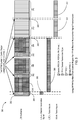
- Fig. 5 is a graph 500 illustrating an LTE transmission with a modified subframe structure, similar to the one described above and legacy subframe structure.
- a combination of a modified subframe structure 510, a legacy subframe structure 512 and subframe level muting gaps 514 are utilized to facilitate coexistence of LTE-U and WLAN transmission.
- a particular subframe is the modified subframe 510, the legacy subframe 512 or the muting gap 514, it can be semi-statically indicated by introducing new higher layer signaling.
- the modified subframe 510 can be used to introduce a reservation signal gap (a muting gap used for a reservation signal 502).
- a reservation signal gap a muting gap used for a reservation signal 502
- an LTE-U channel reservation signal (such as a PLCP preamble or RTS/CTS message) can be broadcast to reserve the medium.
- Legacy subframes 512 can be used as part of an LTE transmission 504 during the reserved time duration.
- subframe muting gaps 514 can be provided to allow WLAN transmissions 506.
- An LTE-U reservation muting symbol pattern indicator field can be used to indicate when the medium will be muted from use by an implementation of LTE-U protocol.
- Such muting symbol pattern can be pre-determined or indicated semi-statically by higher layer signaling.
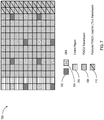
- the term puncturing may be described as when “signal B punctures signal A," then the REs of signal A that overlap with the REs of signal B are not mapped or transmitted, but the mapping index is still counted. For example, if the mapping elements of signal A are symbols a(0), ..., a(99) and those of signal B are b(10), ..., b(19), then symbols a(10) through a(19) are not mapped or transmitted. Rather, the transmitted signal is a(0), ..., a(9), b(10), ..., b(19), ..., a(20), ..., a(99) over a mapping index range of 0 to 99.
- the transmitted signal is a(0), ..., a(9), b(10), ..., b(19), ..., a(10), ..., a(89) over a mapping index range of 0 to 99.
- the muting OFDM symbols in a subframe are defined and then the PDSCH symbols are mapped in sequence to the REs that are not part of the muting OFDM symbols.
- Fig. 8B is a diagram illustrating an LTE time division duplex (TDD) frame consistent with embodiments disclosed herein.
- TDD time division duplex
- the special subframe 818 includes a DwPTS 812, a guard period (GP) 814 and an uplink pilot time slot (UpPTS) 816.
- CRS is transmitted in every downlink subframe, except in the MBSFN region of the MBSFN subframes.
- PSS are transmitted on subframes 0 and 5.
- SSS are transmitted in subframes 1 and 6.
- Physical broadcast channel (PBCH) is transmitted in subframe 0.
- SFN mod 2 0 (i.e., every other frame).
- T the discontinuous reception (DRX) cycle of the UE.
- DRX discontinuous reception
- a first one or two symbols are used as non-MBSFN regions.
- CRS is transmitted on the first symbol of non-MBSFN region of an MBSFN subframe.
- Subframes 3, 7, 8, and 9 can be configured as MBSFN subframe for TDD.
- GP and UpPTS can be used for LTE-U channel reservation signal.
- An eNB scheduler can choose to not schedule any UEs on a particular UL subframe which may also contain UpPTS in the special subframe.
- the empty subframe can then be used for LTE-U channel reservation signal transmission. It is more advantageous when only the DL is supported on the unlicensed carrier. This method is applicable both for TDD UL subframe and in case of FDD if LTE-U spectrum is used for UL transmission.
- T WLAN T GP ⁇ max T p 1 , ... , T pn ⁇ T DL ⁇ UL
- a DL-UL switching offset ( T DL - UL ) of around 20 ⁇ s is used for TDD transmission.
- the timing advance value of few ⁇ s will be required for the considered deployment scenario. Therefore, a large part of the GP can be used for LTE-U channel reservation signal transmission.
- the PLCP preamble based LTE-U channel reservation signal can be fitted into special subframe configurations.
- special subframe configuration GP can be used for joint RTS/CTS type LTE-U channel reservation signal, e.g., special subframe configuration 4 with normal CP has a GP duration of 71.35 ⁇ s, which may not fit the RTS/CTS time requirement of 112 ⁇ s with BPSK, one-half rate transmission.
- special subframe configuration 4 with normal CP has a GP duration of 71.35 ⁇ s, which may not fit the RTS/CTS time requirement of 112 ⁇ s with BPSK, one-half rate transmission.
- different LTE-U channel reservation technics can be used.
- Table 3 An example of periodicity of GP for various UL-DL configurations is provided in Table 3. If PLCP preamble based channel reservation signal is used for UL-DL configurations 3, 4 and 5, only a first 5 ms of a 10 ms duration can be reserved for LTE-U transmission. Table 3 - Uplink-Downlink Configurations and GP Periodicity Uplink-Downlink Configuration GP Periodicity (ms) 0 5 1 5 2 5 3 10 4 10 5 10 6 5
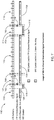
- Fig. 10 is a graph of example of using GP for LTE-U channel reservation.
- an LTE-U channel reservation signal 1008 is transmitted during a GP 1004 of special subframe (subframe 1).
- Normal subframes 2-7 (1006) can be used for LTE transmissions during the LTE-U reservation duration 1010.
- the reservation can also be repeated for remaining time during the LTE-U transmission as shown in subframe 6.
- the last SC-OFDMA symbol in FDD UL or TDD UL subframe can be configured for transmitting SRS signals.
- Cell specific SRS configuration is provided using SIB2 message by setting proper value of configuration parameters srs-SubfrarneConfig, srs-BandwidthConfig etc.
- UE specific SRS configuration is provided in RRC configuration/reconfiguration messages by setting proper values of configuration parameters srs-Bandwidth, srs-ConfigIndex, etc.
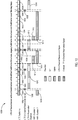
- Fig. 12 is a graph of example of transmitting a redundant channel reservation consistent with embodiments disclosed herein.
- an LTE-U eNB performs listen before transmit (LBT, which is also referred to as listen before talk) to sense an empty channel and then reserves the channel for LTE-U transmission using an LTE-U channel reservation signal 1206 as part of LTE-U subframes 1202.
- WLAN STAs and APs upon hearing the channel reservation signal, will update their NAVs and will refrain from accessing the medium during an LTE-U transmission duration 1208.
- STAs in sleep mode during LTE-U channel reservation signal transmission may not be able to update their NAVs.
- the STA may employ a higher threshold value for a higher threshold duration 1210, since it cannot detect any WLAN OFDM preamble during LTE-U transmission.
- a higher threshold value e.g., -62 dBm in case of 802.11 n/ac
- the STA may not be able to detect the LTE-U transmission and may attempt to access the medium.
- an additional redundant LTE-U channel reservation signal 1204 is transmitted during the LTE-U transmission, the STA will be able to detect WLAN OFDM preamble (detection occurring during a duration 1214) and as a result will use the lower threshold value (e.g. -82 dBm in case of 802.11 n/ac) after a short duration 1212 of using a higher threshold value. This can prevent the STA from accessing the medium and avoid interfering with the LTE-U transmission.
- the lower threshold value e.g. -82 dBm in case of 802.11 n/ac
- the LTE-U eNB can choose to access the medium at predefined time point without using LBT protocol.
- the eNB access time can be coordinated with a WLAN beacon interval to reduce the possibility of collisions with WLAN transmission. Redundant transmission of LTE-U channel reservation signal during LTE-U transmission duration can help STAs to determine that medium is busy, and hence STAs will refrain from transmission.
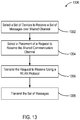
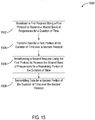
- Figs. 13 to 15 show methods of reserving a shared medium.
- Fig. 13 shows an embodiment that initially reserves a medium.
- Fig. 14 shows an embodiment that extends a reservation.
- Fig. 15 shows a duplicate reservation message being sent (which can aid STAs that missed the first reservation message, such as STAs that were in a low power state).
- Fig. 13 is a flow chart illustrating a method 1300 for channel reservation consistent with embodiments disclosed herein.
- the method 1300 can be accomplished by systems such as those shown in Fig. 1 , including UEs 112, the cell tower 104, the AP 108 and the computing system 102.
- an eNB selects a set of devices to receive a set of messages over a shared channel (such as unlicensed spectrum).
- the eNB selects a placement of a request to reserve the shared communication channel (such as (1) from a control channel region of LTE-U, (2) from a muting gap indicated by a reservation muting symbol pattern indicator, (3) from a time division duplex (TDD) guard period (GP), (4) from a TDD uplink pilot time slot (UpPTS), (5) from an empty uplink (UL) subframe or (6) from a sounding reference signal (SRS)).
- the eNB (or a UE, if requested) sends a request to reserve the shared communication channel using a WLAN protocol.
- the eNB then transmits the set of messages over the shared channel.
- Fig. 14 is a flow chart illustrating a method 1400 for a duplicate channel reservation consistent with embodiments disclosed herein.
- the method 1400 can be accomplished by systems such as those shown in Fig. 1 , including UEs 112, the cell tower 104, the AP 108 and the computing system 102.
- the eNB sends a first reservation message for a shared medium over a first protocol (such as WLAN).
- the eNB transmits first data over a second protocol (such as LTE-U) using the shared medium.
- the eNB determines to extend use of the shared medium by the second protocol.
- the eNB sends a second reservation message for the shared medium over the first protocol to further reserve the medium for an extended duration.
- Fig. 15 is a flow chart illustrating a method 1500 for extending a channel reservation consistent with embodiments disclosed herein.
- the method 1500 can be accomplished by systems such as those shown in Fig. 1 , including UEs 112, the cell tower 104, the AP 108 and the computing system 102.
- an eNB broadcasts a first request using a first protocol (such as WLAN) to reserve a shared band of frequencies for a duration of time.
- the eNB transmits data for a first portion of the duration of time over a second protocol (such as LTE-U).
- a first protocol such as WLAN
- LTE-U second protocol
- the eNB broadcasts a second request using the first protocol to reserve the shared band of frequencies for a remaining portion of the duration of time (which can help silence STAs that missed the first reservation message).
- the eNB transmits data for a second portion of the duration of time over the second protocol.
- FIG. 16 an example of an enhanced LTE protocol stack 1600 for a UE is shown.
- the enhanced LTE protocol stack 1600 can be enhanced with new messages and measurements for use in the LTE-U protocol as described above.
- the stack describes protocol layers in the enhanced LTE protocol stack 1600. These layers can provide abstraction from a lower layer (represented as a layer closer to the bottom of the page).
- a physical layer (L1) 1614 includes systems that translate physical signals into logical data for use by the higher layers. L1 can also provide measurement and configuration services to a radio resource control (RRC) layer 1606.
- RRC radio resource control
- a medium access control (MAC) layer 1612 includes systems that perform transport as logical mapping and/or scheduling. The MAC layer 1612 includes systems that can provide format selection and measurements about the network to the RRC layer 1606.
- a radio link control (RLC) layer 1610 includes systems that provide segmentation, concatenation and reassembly, and can operate in different modes depending on a radio bearer.
- a packet data convergence protocol (PDCP) layer 1608 includes systems that can provide services for higher level protocols including cryptographic functions, header compression/decompression, sequence numbering and/or duplicate removal.
- User traffic can be sent through the PDCP layer 1608 to an internet protocol (IP) layer 1604, which is then routed to applications and systems of the UE for use.
- Control traffic can be sent to the RRC layer 1606.
- the RRC layer 1606 can provide management and control functions of the UE.
- the RRC layer 1606 functionality can include processing of broadcast information, paging, connection management with an eNB, integrity protection of RRC messages, radio bearer control, mobility functions, UE measurement and reporting, Quality of Service management, etc.
- a non-access stratum (NAS) layer 1602 includes systems that can provide mobility management, call control, session management and/or identity management.
- the LTE protocol described above can be enhanced to provide different types (or granularities) of muting gaps as shown in Figs. 17A, 17B, 17C . It should be recognized that patterns shown in Figs. 17A, 17B, 17C are examples and other patterns can be used.
- Fig. 17A shows a diagram of a subframe muting gap.
- subframes 0 and 1 (1702a) and 6 and 7 (1702b) are muted to allow for WLAN transmissions.
- Subframes 1704 can be used for LTE transmissions.
- these subframes 1702a and 1702b can be reserved by the LTE protocol such that WLAN transmissions can occur.
- These subframes 1702a and 1702b can be reserved by carrier, across multiple carriers or across all carriers.
- an eNB can detect which WLAN channels are in use and insert muting gaps only in the carriers covered by the WLAN channels.
- eNB and UEs refrain from transmission allowing other radio access technologies (RATs) to perform one or more operations.
- RATs radio access technologies
- muting gaps can provide additional power savings over transmissions without muting gaps. As a UE does not need to scan the medium during muting gaps, UE can transition to a lower power state by powering down medium transmitters and/or receivers during muting gaps.
- LTE-U devices e.g., eNB, UE
- LTE-U devices do not transmit and do not expect to receive any transmission.
- An LTE system can gain additional benefits of power saving by shutting down transmitters and/or receivers during muting gaps.
- an eNB performs LBT and/or channel reservation mechanism to reserve the channel. Once the channel is reserved/access, eNB and UE can transmit and receive data using the unlicensed band.
- a UE scans the channel during the unmuted portion of the frame structure, regardless of whether eNB is transmitting or not.
- LTE-U channel reservation signals can be applied to different granularity of coexistence muting gaps.
- PLCP preamble based LTE-U channel reservation signal can be more suitable to finer granularity (e.g., symbol/slot/subframe level coexistence muting gaps).
- RTS-CTS based technique can be more suitable to larger granularity (e.g., frame level coexistence muting gaps).
- Fig. 18 is an example illustration of a mobile device, such as a UE, a mobile station (MS), a mobile wireless device, a mobile communication device, a tablet, a handset, or another type of mobile wireless device.
- the mobile device can include one or more antennas configured to communicate with a transmission station, such as a base station (BS), an eNB, a base band unit (BBU), a remote radio head (RRH), a remote radio equipment (RRE), a relay station (RS), a radio equipment (RE), or another type of wireless wide area network (WWAN) access point.
- the mobile device can be configured to communicate using at least one wireless communication standard including 3GPP LTE, WiMAX, HSPA, Bluetooth, and Wi-Fi.
- the mobile device can communicate using separate antennas for each wireless communication standard or shared antennas for multiple wireless communication standards.
- the mobile device can communicate in a WLAN, a wireless personal area network (WPAN), and/or a WWAN.
- WLAN wireless personal area network
- WPAN
- Fig. 18 also provides an illustration of a microphone and one or more speakers that can be used for audio input and output from the mobile device.
- the display screen can be a liquid crystal display (LCD) screen or other type of display screen, such as an organic light emitting diode (OLED) display.
- the display screen can be configured as a touch screen.
- the touch screen can use capacitive, resistive, or another type of touch screen technology.
- An application processor and a graphics processor can be coupled to internal memory to provide processing and display capabilities.
- a non-volatile memory port can also be used to provide data input/output options to a user.
- the non-volatile memory port can also be used to expand the memory capabilities of the mobile device.
- a keyboard can be integrated with the mobile device or wirelessly connected to the mobile device to provide additional user input.
- a virtual keyboard can also be provided using the touch screen.
- Suitable networks may include communications or networking software, such as the software available from Novell®, Microsoft®, and other vendors, and may operate using TCP/IP, SPX, IPX, and other protocols over twisted pair, coaxial, or optical fiber cables, telephone lines, radio waves, satellites, microwave relays, modulated AC power lines, physical media transfer, and/or other data transmission "wires" known to those of skill in the art.
- the network may encompass smaller networks and/or be connectable to other networks through a gateway or similar mechanism.
- Various techniques, or certain aspects or portions thereof, may take the form of program code (i.e., instructions) embodied in tangible media, such as floppy diskettes, CD-ROMs, hard drives, magnetic or optical cards, solid-state memory devices, a non-transitory computer-readable storage medium, or any other machine-readable storage medium wherein, when the program code is loaded into and executed by a machine, such as a computer, the machine becomes an apparatus for practicing the various techniques.
- the computing device may include a processor, a storage medium readable by the processor (including volatile and nonvolatile memory and/or storage elements), at least one input device, and at least one output device.
- Components may also be implemented in software for execution by various types of processors.
- An identified component of executable code may, for instance, comprise one or more physical or logical blocks of computer instructions, which may, for instance, be organized as an object, a procedure, or a function. Nevertheless, the executables of an identified component need not be physically located together, but may comprise disparate instructions stored in different locations that, when joined logically together, comprise the component and achieve the stated purpose for the component.
- a software module or component may include any type of computer instruction or computer-executable code located within a memory device.
- a software module may, for instance, include one or more physical or logical blocks of computer instructions, which may be organized as a routine, a program, an object, a component, a data structure, etc. that performs one or more tasks or implements particular data types. It is appreciated that a software module may be implemented in hardware and/or firmware instead of or in addition to software.
- One or more of the functional modules described herein may be separated into sub-modules and/or combined into a single or smaller number of modules.
Landscapes
- Engineering & Computer Science (AREA)
- Computer Networks & Wireless Communication (AREA)
- Signal Processing (AREA)
- Mobile Radio Communication Systems (AREA)
Claims (14)
- eNB zum Teilen eines unlizenzierten Spektrums, umfassend:
einen Prozessor, der zu Folgendem konfiguriert ist:Auswählen (1302) eines Satzes von lizenzierten, zugangsunterstützten kompatiblen Vorrichtungen, die einen Satz von Nachrichten über einen geteilten Kommunikationskanal empfangen;Auswählen (1304) einer Platzierung einer Anforderung zum Reservieren des geteilten Kommunikationskanals in einem 3GPP-kompatiblen lizenzierten, zugangsunterstützten Protokoll;Übertragen (1306) der Anforderung zum Reservieren des geteilten Kommunikationskanals unter Verwendung eines Protokolls, das durch ein oder mehrere Funkzugangsnetzwerke in dem unlizenzierten Spektrum erkannt wird; undÜbertragen (1308), unter Verwendung des 3GPP-kompatiblen lizenzierten, zugangsunterstützten Protokolls über den geteilten Kommunikationskanal, des Satzes von Nachrichten. - eNB nach Anspruch 1, wobei das eine oder die mehreren RANs ein drahtloses lokales Netzwerk umfassen.
- eNB nach Anspruch 2, wobei der Prozessor ferner konfiguriert ist, um eine Zeitsteuerung in dem 3GPP-kompatiblen lizenzierten, zugangsunterstützten Protokoll zu konfigurieren, um die Anforderung zum Reservieren des geteilten Kommunikationskanals zu übertragen.
- eNB nach Anspruch 3, wobei die Konfiguration der Zeitsteuerung in dem 3GPP-kompatiblen lizenzierten, zugangsunterstützten Protokoll ferner eine Auswahl von einem oder mehreren Steuerkanalsymbolen umfasst, die zu verwenden sind, um die Anforderung zum Reservieren des geteilten Kommunikationskanals zu übertragen.
- eNB nach Anspruch 3, wobei die Konfiguration der Zeitsteuerung in dem 3GPP-kompatiblen lizenzierten, zugangsunterstützten Protokoll ferner eine Bereitstellung eines Reservierungsstummschaltsymbolmusterindikators an lizenzierten, zugangsunterstützten kompatible Vorrichtungen umfasst, die die Verfügbarkeit des geteilten Kommunikationskanals zum Übertragen der Anforderung zum Reservieren beschreiben.
- eNB nach Anspruch 3, wobei die Konfiguration der Zeitsteuerung in dem 3GPP-kompatiblen lizenzierten, zugangsunterstützten Protokoll ferner eine Konfiguration der eNB umfasst, um einen Abschnitt des TDD-Schutzzeitraums zum Übertragen der Anforderung zum Reservieren zu verwenden.
- eNB nach Anspruch 3, wobei die Konfiguration der Zeitsteuerung in dem 3GPP-kompatiblen lizenzierten, zugangsunterstützten Protokoll ferner eine Konfiguration der eNB umfasst, um ein TDD-Uplink-Pilot-Zeitschlitz-Feld zum Übertragen der Anforderung zum Reservieren zu verwenden.
- eNB nach Anspruch 3, wobei die Konfiguration der Zeitsteuerung in dem 3GPP-kompatiblen lizenzierten, zugangsunterstützten Protokoll ferner eine Konfiguration der eNB umfasst, um einen leeren Uplink-Unterrahmen zum Übertragen der Anforderung zum Reservieren zu verwenden.
- eNB nach Anspruch 3, wobei die Konfiguration der Zeitsteuerung in dem 3GPP-kompatiblen lizenzierten, zugangsunterstützten Protokoll ferner eine Konfiguration der eNB umfasst, um ein oder mehrere Referenzsymbole zum Bestimmen der Impulsantwort im Uplink zu reservieren, um die Anforderung zum Reservieren zu übertragen.
- Verfahren zum Teilen eines unlizenzierten Spektrums, umfassend die folgenden Schritte, die durch eine eNB durchgeführt werden:Auswählen (1302) eines Satzes von lizenzierten, zugangsunterstützten kompatiblen Vorrichtungen, die einen Satz von Nachrichten über einen geteilten Kommunikationskanal empfangen;Auswählen (1304) einer Platzierung einer Anforderung zum Reservieren des geteilten Kommunikationskanals in einem 3GPP-kompatiblen lizenzierten, zugangsunterstützten Protokoll;Übertragen (1306) der Anforderung zum Reservieren des geteilten Kommunikationskanals unter Verwendung eines Protokolls, das durch ein oder mehrere Funkzugangsnetzwerke in dem unlizenzierten Spektrum erkannt wird; und Übertragen (1308), unter Verwendung des 3GPP-kompatiblen lizenzierten, zugangsunterstützten Protokolls über den geteilten Kommunikationskanal, des Satzes von Nachrichten.
- Verfahren nach Anspruch 10, wobei das eine oder die mehreren Funkzugangsnetzwerke ein drahtloses lokales Netzwerk umfassen.
- Verfahren nach Anspruch 11, das Verfahren ferner umfassend:
Konfigurieren einer Zeitsteuerung in dem 3GPP-kompatiblen lizenzierten, zugangsunterstützten Protokoll, um die Anforderung zum Reservieren des geteilten Kommunikationskanals zu übertragen. - Verfahren nach Anspruch 12, wobei das Konfigurieren der Zeitsteuerung in dem 3GPP-kompatiblen lizenzierten, zugangsunterstützten Protokoll ferner ein Auswählen von einem oder mehreren Steuerkanalsymbolen umfasst, die zu verwenden sind, um die Anforderung zum Reservieren des geteilten Kommunikationskanals zu übertragen, oder ferner ein Bereitstellen eines Reservierungsstummschaltsymbolmusterindikators an lizenzierte, zugangsunterstützte kompatible Vorrichtungen umfasst, die die Verfügbarkeit des geteilten Kommunikationskanals zum Übertragen der Anforderung zum Reservieren beschreiben, oder ferner ein Konfigurieren der eNB umfasst, um einen Abschnitt des TDD-Schutzzeitraums zum Übertragen der Anforderung zum Reservieren zu verwenden, oder ferner ein Konfigurieren der eNB umfasst, um ein TDD-Uplink-Pilot-Zeitschlitz-Feld zum Übertragen der Anforderung zum Reservieren zu verwenden, oder ferner ein Konfigurieren der eNB umfasst, um einen leeren Uplink-Unterrahmen zum Übertragen der Anforderung zum Reservieren zu verwenden, oder ferner ein Konfigurieren der eNB umfasst, um ein oder mehrere Referenzsymbole zum Bestimmen der Impulsantwort im UL zu reservieren, um die Anforderung zum Reservieren zu übertragen.
- Maschinenlesbarer Speicher, der Anweisungen speichert, die bei Ausführung auf einer eNB die eNB dazu veranlassen, die Schritte des Verfahrens nach einem der Ansprüche 10-13 durchzuführen.
Applications Claiming Priority (3)
| Application Number | Priority Date | Filing Date | Title |
|---|---|---|---|
| US201461933879P | 2014-01-31 | 2014-01-31 | |
| US14/496,725 US20150223075A1 (en) | 2014-01-31 | 2014-09-25 | Systems, methods and devices for channel reservation |
| PCT/US2015/013469 WO2015116789A1 (en) | 2014-01-31 | 2015-01-29 | Systems, methods and devices for channel reservation |
Publications (3)
| Publication Number | Publication Date |
|---|---|
| EP3100508A1 EP3100508A1 (de) | 2016-12-07 |
| EP3100508A4 EP3100508A4 (de) | 2017-11-08 |
| EP3100508B1 true EP3100508B1 (de) | 2020-05-13 |
Family
ID=53755947
Family Applications (1)
| Application Number | Title | Priority Date | Filing Date |
|---|---|---|---|
| EP15743102.4A Not-in-force EP3100508B1 (de) | 2014-01-31 | 2015-01-29 | Systeme, verfahren und vorrichtungen zur kanalreservierung |
Country Status (5)
| Country | Link |
|---|---|
| US (1) | US20150223075A1 (de) |
| EP (1) | EP3100508B1 (de) |
| CN (2) | CN105850180B (de) |
| HK (1) | HK1225898A1 (de) |
| WO (1) | WO2015116789A1 (de) |
Families Citing this family (128)
| Publication number | Priority date | Publication date | Assignee | Title |
|---|---|---|---|---|
| US10499421B2 (en) * | 2014-03-21 | 2019-12-03 | Qualcomm Incorporated | Techniques for configuring preamble and overhead signals for transmissions in an unlicensed radio frequency spectrum band |
| US9706572B2 (en) * | 2014-04-30 | 2017-07-11 | Qualcomm Incorporated | Techniques for obtaining and maintaining access to a wireless communication medium |
| CN105101223A (zh) * | 2014-05-16 | 2015-11-25 | 北京三星通信技术研究有限公司 | 一种在免许可频段上进行数据传输的方法和设备 |
| WO2015178816A1 (en) * | 2014-05-23 | 2015-11-26 | Telefonaktiebolaget L M Ericsson (Publ) | Radio devices and methods for performing communication via licensed and unlicensed spectrum |
| US9603164B2 (en) * | 2014-07-01 | 2017-03-21 | Intel Corporation | Group carrier scheduling for unlicensed long term evolution network |
| US9693235B2 (en) * | 2014-07-03 | 2017-06-27 | Sony Corporation | Methods and devices for securing radio resources for an LTE-U data transmission |
| US9485753B2 (en) * | 2014-07-03 | 2016-11-01 | Sony Corporation | Methods and devices for allocating a radio resource for an LTE-unlicensed data transmission |
| US10165553B2 (en) * | 2014-07-29 | 2018-12-25 | Htc Corporation | Device and method of handling communication operations in a licensed frequency band and an unlicensed frequency band |
| US9930535B2 (en) | 2014-08-05 | 2018-03-27 | Cisco Technology, Inc. | Joint scheduler for integrated Wi-Fi and LTE-U wireless access point |
| JP6255106B2 (ja) | 2014-08-21 | 2017-12-27 | 日本電信電話株式会社 | 無線通信システム、無線通信方法、連携制御装置、端末装置、及び、ライセンスバンド基地局装置 |
| CN105162563B (zh) * | 2014-08-25 | 2020-07-10 | 中兴通讯股份有限公司 | 非授权载波信息的发送及接收的方法和装置 |
| US10560891B2 (en) * | 2014-09-09 | 2020-02-11 | Blackberry Limited | Medium Access Control in LTE-U |
| US10362585B2 (en) * | 2014-09-24 | 2019-07-23 | Avago Technologies International Sales Pte. Limited | Licensed-assisted access (LAA) using long term evolution (LTE) protocols |
| EP3198962B1 (de) * | 2014-09-26 | 2019-01-02 | Telefonaktiebolaget LM Ericsson (publ) | Erste kommunikationsvorrichtung, zweite kommunikationsvorrichtung und verfahren darin zum senden bzw. empfangen eines hinweises eines hilfsrahmentyps |
| US9907085B2 (en) * | 2014-09-26 | 2018-02-27 | Avago Technologies General Ip (Singapore) Pte. Ltd. | WIFI-coordinated LAA-LTE |
| WO2016047514A1 (ja) * | 2014-09-26 | 2016-03-31 | 京セラ株式会社 | 基地局及びユーザ端末 |
| EP3198766B1 (de) * | 2014-09-26 | 2021-02-17 | Nokia Solutions and Networks Oy | Drahtlose kommunikation unter verwendung von aggregierten trägern in unlizenzierten frequenzbändern |
| EP3200525B1 (de) * | 2014-10-11 | 2020-01-08 | Huawei Technologies Co., Ltd. | Lte-u-trägerwelleninformationsübertragungsverfahren, basisstation und benutzervorrichtung |
| US10117261B2 (en) * | 2014-10-13 | 2018-10-30 | Futurewei Technologies, Inc. | Device, network, and method for communications with carrier sensing and coexistence |
| US10904801B2 (en) * | 2017-02-07 | 2021-01-26 | Qualcomm Incorporated | Multicarrier access for spectrum pooling |
| CN112074004B (zh) | 2014-11-06 | 2023-07-14 | 日本电气株式会社 | 无线电终端、无线电站及其方法 |
| US20160135179A1 (en) * | 2014-11-07 | 2016-05-12 | Sharp Laboratories Of America, Inc. | Systems and methods for synchronization signal |
| KR102631732B1 (ko) * | 2014-11-14 | 2024-01-30 | 인터디지탈 패튼 홀딩스, 인크 | 비인가 대역에서의 롱 텀 에볼루션(lte) 동작을 위한 채널 측정 및 보고 메커니즘을 위한 방법 및 프로시져 |
| US10153970B2 (en) * | 2014-11-26 | 2018-12-11 | Qualcomm Incorporated | Partial channel reservation on a shared communication medium |
| KR101813037B1 (ko) | 2014-12-23 | 2017-12-28 | 엘지전자 주식회사 | 비면허 대역을 지원하는 무선 접속 시스템에서 부분 서브프레임을 구성하고 스케줄링하는 방법 및 이를 지원하는 장치 |
| US9807821B2 (en) * | 2015-01-20 | 2017-10-31 | Cisco Technology, Inc. | Neutral cell host solution providing communication to user equipments associated with different wireless providers |
| US10512033B2 (en) * | 2015-01-29 | 2019-12-17 | Qualcomm Incorporated | Timing information for discovery in unlicensed spectrum |
| US10206223B2 (en) * | 2015-02-06 | 2019-02-12 | Apple Inc. | Method and apparatus for time division LTE transmission in unlicensed radio frequency bands |
| WO2016131166A1 (zh) * | 2015-02-16 | 2016-08-25 | 华为技术有限公司 | 监听授权辅助接入小区的方法、设备和基站 |
| AU2015383606A1 (en) * | 2015-02-17 | 2017-08-17 | Telefonaktiebolaget Lm Ericsson (Publ) | Methods, computer programs, network nodes and communication device |
| JP6430856B2 (ja) * | 2015-02-24 | 2018-11-28 | 日本電信電話株式会社 | 無線通信システムおよび無線通信方法 |
| US20160255627A1 (en) * | 2015-02-27 | 2016-09-01 | Qualcomm Incorporated | Methods and apparatus for communicating lte-u network information |
| US20160255643A1 (en) * | 2015-02-27 | 2016-09-01 | Qualcomm Incorporated | Methods and apparatus for receiving lte-u network information |
| US10091114B2 (en) * | 2015-03-11 | 2018-10-02 | Nec Corporation | Asynchronous access and synchronous transmission for coexistence of wireless standards |
| CN113613343B (zh) | 2015-04-08 | 2024-08-13 | 交互数字专利控股公司 | Wtru、由wtru执行的方法及针对有条件上行链路传输的方法 |
| KR102467048B1 (ko) * | 2015-04-09 | 2022-11-14 | 한국전자통신연구원 | 히든 노드 문제와 사용자 단말들의 채널 점유를 고려한 상향 링크 데이터 전송 방법 |
| US11201688B2 (en) | 2015-05-15 | 2021-12-14 | Kyocera Corporation | Base station, user terminal, processor, and communication method |
| WO2016185945A1 (ja) * | 2015-05-15 | 2016-11-24 | 京セラ株式会社 | 基地局及びユーザ端末 |
| WO2016186541A1 (en) * | 2015-05-20 | 2016-11-24 | Telefonaktiebolaget Lm Ericsson (Publ) | Method for managing enhanced physical downlink control channel, wireless communication network, computer programs and computer program products |
| US20160353437A1 (en) * | 2015-05-26 | 2016-12-01 | Futurewei Technologies, Inc. | System and Method for Reserving Unlicensed Spectrum |
| CN107710834B (zh) * | 2015-06-19 | 2021-03-23 | 夏普株式会社 | 终端装置、通信方法以及集成电路 |
| US10420147B2 (en) | 2015-07-05 | 2019-09-17 | Ofinno, Llc | Random access process in carrier aggregation |
| CN106413118B (zh) * | 2015-07-31 | 2020-01-17 | 电信科学技术研究院 | 一种数据传输方法和装置 |
| WO2017024597A1 (zh) * | 2015-08-10 | 2017-02-16 | 华为技术有限公司 | 一种数据传输方法、装置和系统 |
| US10778486B2 (en) * | 2015-08-13 | 2020-09-15 | Intel IP Corporation | Discovery reference signal design for LTE in unlicensed bands |
| WO2017028032A1 (zh) * | 2015-08-14 | 2017-02-23 | 华为技术有限公司 | 基站在授权频谱辅助接入小区中的数据传输方法及基站 |
| US10219300B2 (en) | 2015-08-19 | 2019-02-26 | Qualcomm Incorporated | Enhanced channel reservation for co-existence on a shared communication medium |
| US10091789B2 (en) * | 2015-08-19 | 2018-10-02 | Qualcomm, Incorporated | Re-contention-based co-existence on a shared communication medium |
| US10542541B2 (en) | 2015-08-19 | 2020-01-21 | Qualcomm, Incorporated | Re-contention-based co-existence on a shared communication medium |
| US10356816B2 (en) | 2015-08-19 | 2019-07-16 | Qualcomm Incorporated | Re-contention-based co-existence on a shared communication medium |
| US10129870B2 (en) * | 2015-09-01 | 2018-11-13 | Qualcomm Incorporated | Separation of control and data subbands in unlicensed spectrum |
| US10602536B2 (en) * | 2015-09-09 | 2020-03-24 | Qualcomm Incorporated | Beacon-aware co-existence in shared spectrum |
| US20170093530A1 (en) * | 2015-09-24 | 2017-03-30 | Qualcomm Incorporated | Techniques for channel estimation and packet decoding using an enhanced license assisted wi-fi header |
| CN106559882B (zh) * | 2015-09-25 | 2021-12-10 | 中兴通讯股份有限公司 | 一种授权协助接入设备竞争接入参数配置的方法及装置 |
| WO2017052451A1 (en) * | 2015-09-25 | 2017-03-30 | Telefonaktiebolaget Lm Ericsson (Publ) | Methods of operating wireless terminals and related wireless terminals |
| KR102203641B1 (ko) * | 2015-10-01 | 2021-01-18 | 노키아 솔루션스 앤드 네트웍스 오와이 | 방법, 시스템 및 장치 |
| US9877344B2 (en) | 2015-10-12 | 2018-01-23 | Qualcomm Incorporated | Techniques for downlink scheduling and uplink scheduling in a shared radio frequency spectrum band |
| JP2018532314A (ja) | 2015-10-17 | 2018-11-01 | コムキャスト ケーブル コミュニケーションズ, エルエルシー | 部分および完全サブフレームにおける制御チャネル構成 |
| US10327164B2 (en) | 2015-10-29 | 2019-06-18 | Cable Television Laboratories, Inc. | Multichannel communication systems |
| CN108141337B (zh) * | 2015-10-29 | 2021-12-17 | 苹果公司 | 在授权辅助接入(laa)中的部分子帧内的(e)pdcch的设计与传输 |
| DE112016004931T5 (de) * | 2015-10-30 | 2018-08-02 | Intel IP Corporation | Vorrichtung für Evolved Node B, die zum Kommunizieren unter Verwendung von robustem, punktierungsbasiertem Multiplexen konfiguriert sind |
| CN108141296B (zh) * | 2015-11-05 | 2020-12-18 | 苹果公司 | 用于授权辅助接入的同步信号 |
| EP3376814A4 (de) | 2015-11-12 | 2018-10-31 | Fujitsu Limited | Endgerätevorrichtung, basisstationsvorrichtung, drahtloskommunikationssystem und drahtloskommunikationsverfahren |
| JP6950724B2 (ja) * | 2015-11-12 | 2021-10-13 | 富士通株式会社 | 端末装置、基地局装置、無線通信システム及び無線通信方法 |
| US10674535B2 (en) | 2015-11-13 | 2020-06-02 | Futurewei Technologies, Inc. | Device, network, and method for communications with opportunistic transmission and reception |
| JP2019503111A (ja) | 2015-11-27 | 2019-01-31 | テレフオンアクチーボラゲット エルエム エリクソン(パブル) | マルチプロトコル送信の方法およびシステム |
| HK1256561A1 (zh) * | 2015-12-07 | 2019-09-27 | 苹果公司 | 未授权频谱中的主信息块和系统信息块传输 |
| CN105656821A (zh) * | 2015-12-17 | 2016-06-08 | 北京邮电大学 | 一种cr-ofdm系统中抑制旁瓣干扰的方法及装置 |
| JP6731484B2 (ja) * | 2015-12-24 | 2020-07-29 | 華為技術有限公司Huawei Technologies Co.,Ltd. | チャネル予約信号を送信する方法、及び基地局 |
| KR20170078530A (ko) * | 2015-12-29 | 2017-07-07 | 한국전자통신연구원 | 비면허 대역의 무선 통신 시스템에서 사운딩 참조 신호를 전송하는 방법 및 장치, 그리고 사운딩 참조 신호의 전송을 트리거하는 방법 및 장치 |
| WO2017116125A1 (ko) | 2015-12-29 | 2017-07-06 | 한국전자통신연구원 | 비면허 대역의 무선 통신 시스템에서 사운딩 참조 신호를 전송하는 방법 및 장치, 그리고 사운딩 참조 신호의 전송을 트리거하는 방법 및 장치 |
| JP6800982B2 (ja) * | 2015-12-30 | 2020-12-16 | アイディーエーシー ホールディングス インコーポレイテッド | マルチrat wtruにおける干渉の処理 |
| WO2017120542A1 (en) * | 2016-01-06 | 2017-07-13 | Intel IP Corporation | Method and apparatus for channel access for transmission of pusch and ul control |
| CN105634710B (zh) * | 2016-01-20 | 2019-03-22 | 宇龙计算机通信科技(深圳)有限公司 | Srs发送方法、srs发送装置和终端 |
| CN107041000A (zh) * | 2016-02-04 | 2017-08-11 | 电信科学技术研究院 | 上行控制信息的传输方法及装置 |
| WO2017133778A1 (en) * | 2016-02-04 | 2017-08-10 | Nec Europe Ltd. | Method for operating a plurality of wireless networks |
| CN107046698A (zh) * | 2016-02-05 | 2017-08-15 | 上海贝尔股份有限公司 | 针对授权辅助接入的信道预留 |
| US10531307B2 (en) | 2016-02-29 | 2020-01-07 | Apple Inc. | Mechanisms for LAA/LTE-U detection to mitigate impact on Wi-Fi performance |
| KR102375953B1 (ko) * | 2016-03-04 | 2022-03-17 | 삼성전자주식회사 | 무선 통신 시스템에서 채널 액세스를 적응적으로 제어하기 위한 장치 및 방법 |
| KR102474525B1 (ko) | 2016-03-11 | 2022-12-06 | 삼성전자 주식회사 | 이동통신 시스템에서 단말의 제어 정보 전송 방법 및 장치 |
| US10292054B2 (en) * | 2016-03-14 | 2019-05-14 | Nec Corporation | Enabling technologies for LTE on unlicensed spectrum |
| US10412755B2 (en) * | 2016-03-25 | 2019-09-10 | Qualcomm Incorporated | Techniques for configuring uplink transmissions in a shared radio frequency spectrum band |
| CN108781399B (zh) * | 2016-03-28 | 2021-08-13 | 苹果公司 | 用于物理广播信道(pbch)中的网络信息的传输的系统、方法及设备 |
| EP3764581A1 (de) | 2016-03-30 | 2021-01-13 | IDAC Holdings, Inc. | Durch long-term-evolution unterstützter nr-flexibler funkzugriff |
| BR112018070106A2 (pt) | 2016-04-01 | 2019-02-12 | Telefonaktiebolaget Lm Ericsson (Publ) | métodos para um dispositivo de comunicação e para gerenciar transmissões em ligação ascendente, dispositivo de comunicação, e, nó de rede. |
| US10484980B1 (en) * | 2016-04-14 | 2019-11-19 | Marvell International Ltd. | Link layer service platform |
| WO2017183002A1 (en) * | 2016-04-21 | 2017-10-26 | Telefonaktiebolaget Lm Ericsson (Publ) | Transmitter device and a method therein for generating a symbol and a receiver device and method therein for processing a received symbol |
| US10142951B2 (en) * | 2016-05-05 | 2018-11-27 | Cisco Technology, Inc. | Synchronization of licensed assisted access long term evolution (LAA-LTE) over shared spectrum |
| US20170331758A1 (en) * | 2016-05-12 | 2017-11-16 | Koninklijke Kpn N.V. | Wireless communication systems coexistence |
| WO2017219214A1 (zh) * | 2016-06-20 | 2017-12-28 | 华为技术有限公司 | 一种数据报文的发送方法、通信系统的识别方法及装置 |
| US20180006833A1 (en) * | 2016-06-29 | 2018-01-04 | Argela Yazilim ve Bilisim Teknolojileri San. ve Tic. A.S. | System and method for controller-initiated simultaneous discovery of the control tree and data network topology in a software defined network |
| US10517021B2 (en) | 2016-06-30 | 2019-12-24 | Evolve Cellular Inc. | Long term evolution-primary WiFi (LTE-PW) |
| WO2018015796A1 (en) | 2016-07-22 | 2018-01-25 | Telefonaktiebolaget Lm Ericsson (Publ) | Multi-ofdm-protocol beacon operation |
| US10868643B2 (en) * | 2016-07-22 | 2020-12-15 | Telefonaktiebolaget Lm Ericsson (Publ) | Method and system for orthogonal multi-protocol transmissions |
| CN109716811B (zh) * | 2016-07-22 | 2023-10-17 | 瑞典爱立信有限公司 | 用于正交多协议传输的方法和系统 |
| US10349442B2 (en) | 2016-08-12 | 2019-07-09 | Qualcomm Incorporated | Cross-carrier scheduling for V2X communication |
| US10405242B2 (en) * | 2016-08-19 | 2019-09-03 | Qualcomm Incorporated | Robust channel reservation on a shared communication medium |
| US10834757B2 (en) * | 2016-09-15 | 2020-11-10 | Qualcomm Incorporated | Methods and apparatus for channel reservation |
| US10244399B2 (en) * | 2016-09-30 | 2019-03-26 | Qualcomm Incorporated | Signature sequence-based signaling and allocation of resources of a shared spectrum |
| EP3531765B1 (de) * | 2016-10-20 | 2023-08-02 | Sharp Kabushiki Kaisha | Endgerätevorrichtung, basisstationsvorrichtung und kommunikationsverfahren |
| US10624125B2 (en) * | 2016-10-26 | 2020-04-14 | Qualcomm Incorporated | Techniques for semi-autonomously scheduling an uplink transmission in a shared radio frequency spectrum band |
| US10715301B2 (en) * | 2016-11-07 | 2020-07-14 | Qualcomm Incorporated | Radio-spectrum sharing (NR-SS) in frequency-division duplexing (FDD) spectrum |
| WO2018089911A1 (en) * | 2016-11-14 | 2018-05-17 | Intel IP Corporation | Interference coordination in unlicensed spectrum |
| US10856185B2 (en) * | 2016-12-09 | 2020-12-01 | Qualcomm Incorporated | Channel reservation signals for new radio interference management |
| US10779320B2 (en) * | 2016-12-16 | 2020-09-15 | Qualcomm Incorporated | Channel reservation signal with new radio PDCCH waveform |
| EP3566541A4 (de) * | 2017-01-05 | 2020-08-12 | Telefonaktiebolaget LM Ericsson (PUBL) | Verfahren und vorrichtungen zur ermöglichung von diskontinuierlichem empfang |
| PL3566364T3 (pl) * | 2017-01-09 | 2025-10-06 | Telefonaktiebolaget Lm Ericsson (Publ) | Sterowanie z wykorzystaniem tdd nr |
| KR102450962B1 (ko) | 2017-01-13 | 2022-10-05 | 삼성전자 주식회사 | 무선 통신 시스템에 있어서 기지국 및 이의 제어 방법 |
| KR20180087741A (ko) * | 2017-01-25 | 2018-08-02 | 한국과학기술원 | 비면허 주파수 대역에서의 네트워크 구성 설정장치 및 방법 |
| US10231132B2 (en) * | 2017-02-10 | 2019-03-12 | Qualcomm Incorporated | Reservation signal design for spectrum sharing |
| JP7074974B2 (ja) * | 2017-03-24 | 2022-05-25 | ノキア テクノロジーズ オーユー | アンライセンススペクトル上のアップリンク割り当て |
| US10798734B2 (en) * | 2017-03-28 | 2020-10-06 | Centre Of Excellence In Wireless Technology | Method and wireless device for transmitting RACH preamble in wireless communication network |
| CN108880768B (zh) * | 2017-05-12 | 2021-04-20 | 华为技术有限公司 | 一种信号的传输方法和装置 |
| CN115225232B (zh) | 2017-06-16 | 2024-07-19 | 韦勒斯标准与技术协会公司 | 使用时分双工方案的无线通信系统的用户设备及操作方法 |
| DE102017218321A1 (de) * | 2017-07-18 | 2019-01-24 | Robert Bosch Gmbh | Verfahren zum Betreiben einer netzwerkinfrastrukturseitigen Netzwerkeinheit, netzwerkinfrastrukturseitige Netzwerkeinheit, Verfahren zum Betreiben einer straßenseitigen Netzwerkeinheit, straßenseitige Netzwerkeinheit |
| US10667259B2 (en) * | 2017-08-17 | 2020-05-26 | Qualcomm Incorporated | Channel reservation transmission schemes in shared radio frequency spectrum |
| US11064396B2 (en) * | 2017-09-15 | 2021-07-13 | Qualcomm Incorporated | Channel reservation signal design with different numerology |
| WO2019132538A1 (ko) * | 2017-12-27 | 2019-07-04 | 엘지전자 주식회사 | 무선랜 시스템에서 tdd 스케줄링을 지원하기 위한 방법 및 이를 이용한 무선 단말 |
| US11044675B2 (en) * | 2018-02-13 | 2021-06-22 | Idac Holdings, Inc. | Methods, apparatuses and systems for adaptive uplink power control in a wireless network |
| US11172504B2 (en) * | 2018-09-27 | 2021-11-09 | Qualcomm Incorporated | Coordination of listen before talk structure in new radio-unlicensed multi-channel access |
| US11265728B2 (en) * | 2018-10-24 | 2022-03-01 | Qualcomm Incorporated | Tight frequency reuse coloring for new radio-unlicensed (NR-U) |
| CN113455073B (zh) | 2019-01-04 | 2024-08-13 | 苹果公司 | 使用不同的通信系统接入通信信道 |
| WO2020176704A1 (en) * | 2019-02-27 | 2020-09-03 | Northeastern University | Method for spectrum sharing by primary and secondary networks based on cognitive beamforming |
| US11659402B2 (en) * | 2019-03-15 | 2023-05-23 | Apple Inc. | Enhanced reservation signal for cellular communication in unlicensed spectrum |
| EP4042803A1 (de) * | 2019-11-07 | 2022-08-17 | Huawei Technologies Co., Ltd. | Verfahren und vorrichtung zur ressourcenreservierung in schmalband-internet-der-dinge-kommunikation |
| US11792877B2 (en) * | 2020-02-21 | 2023-10-17 | Qualcomm Incorporated | Indication triggering transmission of known data for training artificial neural networks |
| CN112073353B (zh) * | 2020-09-09 | 2023-07-04 | 浙江树人学院(浙江树人大学) | 基于fpga的lte-u通信系统 |
| CN119603729B (zh) * | 2025-02-08 | 2025-07-15 | 沈阳邦粹科技有限公司 | 一种wia-fa网络与其他无线网络协议共存传输方法 |
Family Cites Families (17)
| Publication number | Priority date | Publication date | Assignee | Title |
|---|---|---|---|---|
| US7889761B2 (en) * | 2002-09-17 | 2011-02-15 | Broadcom Corporation | Method and system for providing bandwidth allocation and sharing in a hybrid wired/wireless network |
| US7363008B2 (en) * | 2003-10-30 | 2008-04-22 | Microsoft Corporation | Spectrum sharing in the unlicensed band |
| CN102916795B (zh) * | 2004-09-24 | 2016-05-04 | 高通股份有限公司 | 用于采用不同传输协议的系统中的通信的方法和设备 |
| US8958810B2 (en) * | 2006-11-07 | 2015-02-17 | Alcatel Lucent | Method and apparatus for spectrum allocation in wireless networks |
| US8248996B2 (en) * | 2009-07-28 | 2012-08-21 | Qualcomm Incorporated | Methods and apparatus for using a licensed spectrum to transmit a signal when an unlicensed spectrum is congested |
| CN101674652A (zh) * | 2009-10-15 | 2010-03-17 | 华为技术有限公司 | 频率资源分配方法和装置 |
| US9066238B2 (en) | 2010-02-22 | 2015-06-23 | Spectrum Bridge. Inc. | System and method for spectrum sharing among plural wireless radio networks |
| KR101202196B1 (ko) * | 2010-03-11 | 2012-11-20 | 한국전자통신연구원 | Mimo 시스템에서 데이터를 송수신하는 방법 및 장치 |
| US8792900B2 (en) * | 2010-09-23 | 2014-07-29 | Nokia Corporation | Autonomous unlicensed band reuse in mixed cellular and device-to-device network |
| US9401832B2 (en) * | 2011-05-20 | 2016-07-26 | Microsoft Technology Licensing, Llc | Long-range nodes with adaptive preambles for coexistence |
| CN102802161A (zh) * | 2011-05-27 | 2012-11-28 | 国际商业机器公司 | 一种减少无线网络间的频谱干扰的方法及设备 |
| CN103718600B (zh) * | 2011-07-28 | 2017-11-14 | 安华高科技通用Ip(新加坡)公司 | 用于在免许可频带上竞争的蜂窝簇的信令和进程设计 |
| US8965390B2 (en) * | 2012-01-30 | 2015-02-24 | T-Mobile Usa, Inc. | Simultaneous communications over licensed and unlicensed spectrum |
| US9603124B2 (en) | 2012-04-24 | 2017-03-21 | Apple Inc. | Methods and apparatus for opportunistic radio resource allocation in multi-carrier communication systems |
| US20150126207A1 (en) * | 2012-05-31 | 2015-05-07 | Nokia Corporation | Coexistence of lte operated in unlicesnsed band |
| US9565593B2 (en) * | 2013-05-20 | 2017-02-07 | Qualcomm Incorporated | Techniques for selecting subframe type or for interleaving signals for wireless communications over unlicensed spectrum |
| US9445431B2 (en) * | 2013-08-08 | 2016-09-13 | Mediatek Inc. | Wireless communications devices supporting WiFi and LTE communications and methods for transmission control thereof |
-
2014
- 2014-09-25 US US14/496,725 patent/US20150223075A1/en not_active Abandoned
-
2015
- 2015-01-29 EP EP15743102.4A patent/EP3100508B1/de not_active Not-in-force
- 2015-01-29 WO PCT/US2015/013469 patent/WO2015116789A1/en not_active Ceased
- 2015-01-29 CN CN201580003287.6A patent/CN105850180B/zh active Active
- 2015-01-29 CN CN201911350034.2A patent/CN111093231A/zh active Pending
- 2015-01-29 HK HK16114107.3A patent/HK1225898A1/zh unknown
Non-Patent Citations (1)
| Title |
|---|
| None * |
Also Published As
| Publication number | Publication date |
|---|---|
| CN105850180A (zh) | 2016-08-10 |
| CN105850180B (zh) | 2020-01-17 |
| US20150223075A1 (en) | 2015-08-06 |
| CN111093231A (zh) | 2020-05-01 |
| EP3100508A1 (de) | 2016-12-07 |
| EP3100508A4 (de) | 2017-11-08 |
| HK1225898A1 (zh) | 2017-09-15 |
| WO2015116789A1 (en) | 2015-08-06 |
Similar Documents
| Publication | Publication Date | Title |
|---|---|---|
| CN105850180B (zh) | 用于信道预留的系统、方法和设备 | |
| US11683790B2 (en) | Low-latency, low-bandwidth and low duty cycle operation in a wireless communication system | |
| AU2020201006B2 (en) | Techniques for transmitting and receiving synchronization signals over an unlicensed radio frequency spectrum band | |
| US11323972B2 (en) | Synchronization and data channel numerology in wireless communications | |
| US10674485B2 (en) | Common control resource set with user equipment-specific resources | |
| US20230085896A1 (en) | Pdcch monitoring for single-dci to multi-cell scheduling | |
| EP3092848B1 (de) | Systeme, verfahren und vorrichtungen zur koexistenz mehrerer signale in einem mehrfach verwendbaren frequenzspektrum | |
| US9794033B2 (en) | Systems, methods and devices for opportunistic networking | |
| AU2016228025B2 (en) | Control signaling for flexible duplex in wireless communications | |
| US20210337495A1 (en) | Synchronization signal block (ssb) in full-duplex | |
| EP4005317B1 (de) | Design eines steuerungsressourcensatzes für ein benutzergerät auf niedriger stufe mit reduzierter bandbreite | |
| JP2017538350A (ja) | 免許不要無線周波数スペクトル帯域上でプリアンブルを送信するための技法 | |
| US11743909B2 (en) | Synchronized scheduling for carrier aggregation |
Legal Events
| Date | Code | Title | Description |
|---|---|---|---|
| PUAI | Public reference made under article 153(3) epc to a published international application that has entered the european phase |
Free format text: ORIGINAL CODE: 0009012 |
|
| STAA | Information on the status of an ep patent application or granted ep patent |
Free format text: STATUS: REQUEST FOR EXAMINATION WAS MADE |
|
| 17P | Request for examination filed |
Effective date: 20160614 |
|
| AK | Designated contracting states |
Kind code of ref document: A1 Designated state(s): AL AT BE BG CH CY CZ DE DK EE ES FI FR GB GR HR HU IE IS IT LI LT LU LV MC MK MT NL NO PL PT RO RS SE SI SK SM TR |
|
| AX | Request for extension of the european patent |
Extension state: BA ME |
|
| DAX | Request for extension of the european patent (deleted) | ||
| REG | Reference to a national code |
Ref country code: DE Ref legal event code: R079 Ref document number: 602015052741 Country of ref document: DE Free format text: PREVIOUS MAIN CLASS: H04W0028260000 Ipc: H04W0016140000 |
|
| A4 | Supplementary search report drawn up and despatched |
Effective date: 20171006 |
|
| RIC1 | Information provided on ipc code assigned before grant |
Ipc: H04W 84/12 20090101ALI20170929BHEP Ipc: H04W 88/00 20090101ALI20170929BHEP Ipc: H04W 28/26 20090101ALI20170929BHEP Ipc: H04W 88/02 20090101ALI20170929BHEP Ipc: H04W 74/08 20090101ALI20170929BHEP Ipc: H04W 16/14 20090101AFI20170929BHEP |
|
| GRAP | Despatch of communication of intention to grant a patent |
Free format text: ORIGINAL CODE: EPIDOSNIGR1 |
|
| STAA | Information on the status of an ep patent application or granted ep patent |
Free format text: STATUS: GRANT OF PATENT IS INTENDED |
|
| INTG | Intention to grant announced |
Effective date: 20191205 |
|
| GRAS | Grant fee paid |
Free format text: ORIGINAL CODE: EPIDOSNIGR3 |
|
| GRAA | (expected) grant |
Free format text: ORIGINAL CODE: 0009210 |
|
| STAA | Information on the status of an ep patent application or granted ep patent |
Free format text: STATUS: THE PATENT HAS BEEN GRANTED |
|
| AK | Designated contracting states |
Kind code of ref document: B1 Designated state(s): AL AT BE BG CH CY CZ DE DK EE ES FI FR GB GR HR HU IE IS IT LI LT LU LV MC MK MT NL NO PL PT RO RS SE SI SK SM TR |
|
| REG | Reference to a national code |
Ref country code: GB Ref legal event code: FG4D |
|
| REG | Reference to a national code |
Ref country code: CH Ref legal event code: EP |
|
| REG | Reference to a national code |
Ref country code: DE Ref legal event code: R096 Ref document number: 602015052741 Country of ref document: DE |
|
| REG | Reference to a national code |
Ref country code: AT Ref legal event code: REF Ref document number: 1271841 Country of ref document: AT Kind code of ref document: T Effective date: 20200615 |
|
| REG | Reference to a national code |
Ref country code: LT Ref legal event code: MG4D |
|
| REG | Reference to a national code |
Ref country code: NL Ref legal event code: MP Effective date: 20200513 |
|
| PG25 | Lapsed in a contracting state [announced via postgrant information from national office to epo] |
Ref country code: LT Free format text: LAPSE BECAUSE OF FAILURE TO SUBMIT A TRANSLATION OF THE DESCRIPTION OR TO PAY THE FEE WITHIN THE PRESCRIBED TIME-LIMIT Effective date: 20200513 Ref country code: NO Free format text: LAPSE BECAUSE OF FAILURE TO SUBMIT A TRANSLATION OF THE DESCRIPTION OR TO PAY THE FEE WITHIN THE PRESCRIBED TIME-LIMIT Effective date: 20200813 Ref country code: GR Free format text: LAPSE BECAUSE OF FAILURE TO SUBMIT A TRANSLATION OF THE DESCRIPTION OR TO PAY THE FEE WITHIN THE PRESCRIBED TIME-LIMIT Effective date: 20200814 Ref country code: FI Free format text: LAPSE BECAUSE OF FAILURE TO SUBMIT A TRANSLATION OF THE DESCRIPTION OR TO PAY THE FEE WITHIN THE PRESCRIBED TIME-LIMIT Effective date: 20200513 Ref country code: PT Free format text: LAPSE BECAUSE OF FAILURE TO SUBMIT A TRANSLATION OF THE DESCRIPTION OR TO PAY THE FEE WITHIN THE PRESCRIBED TIME-LIMIT Effective date: 20200914 Ref country code: IS Free format text: LAPSE BECAUSE OF FAILURE TO SUBMIT A TRANSLATION OF THE DESCRIPTION OR TO PAY THE FEE WITHIN THE PRESCRIBED TIME-LIMIT Effective date: 20200913 Ref country code: SE Free format text: LAPSE BECAUSE OF FAILURE TO SUBMIT A TRANSLATION OF THE DESCRIPTION OR TO PAY THE FEE WITHIN THE PRESCRIBED TIME-LIMIT Effective date: 20200513 |
|
| PG25 | Lapsed in a contracting state [announced via postgrant information from national office to epo] |
Ref country code: HR Free format text: LAPSE BECAUSE OF FAILURE TO SUBMIT A TRANSLATION OF THE DESCRIPTION OR TO PAY THE FEE WITHIN THE PRESCRIBED TIME-LIMIT Effective date: 20200513 Ref country code: RS Free format text: LAPSE BECAUSE OF FAILURE TO SUBMIT A TRANSLATION OF THE DESCRIPTION OR TO PAY THE FEE WITHIN THE PRESCRIBED TIME-LIMIT Effective date: 20200513 Ref country code: BG Free format text: LAPSE BECAUSE OF FAILURE TO SUBMIT A TRANSLATION OF THE DESCRIPTION OR TO PAY THE FEE WITHIN THE PRESCRIBED TIME-LIMIT Effective date: 20200813 Ref country code: LV Free format text: LAPSE BECAUSE OF FAILURE TO SUBMIT A TRANSLATION OF THE DESCRIPTION OR TO PAY THE FEE WITHIN THE PRESCRIBED TIME-LIMIT Effective date: 20200513 |
|
| REG | Reference to a national code |
Ref country code: AT Ref legal event code: MK05 Ref document number: 1271841 Country of ref document: AT Kind code of ref document: T Effective date: 20200513 |
|
| RAP2 | Party data changed (patent owner data changed or rights of a patent transferred) |
Owner name: APPLE INC. |
|
| PG25 | Lapsed in a contracting state [announced via postgrant information from national office to epo] |
Ref country code: AL Free format text: LAPSE BECAUSE OF FAILURE TO SUBMIT A TRANSLATION OF THE DESCRIPTION OR TO PAY THE FEE WITHIN THE PRESCRIBED TIME-LIMIT Effective date: 20200513 Ref country code: NL Free format text: LAPSE BECAUSE OF FAILURE TO SUBMIT A TRANSLATION OF THE DESCRIPTION OR TO PAY THE FEE WITHIN THE PRESCRIBED TIME-LIMIT Effective date: 20200513 |
|
| PG25 | Lapsed in a contracting state [announced via postgrant information from national office to epo] |
Ref country code: ES Free format text: LAPSE BECAUSE OF FAILURE TO SUBMIT A TRANSLATION OF THE DESCRIPTION OR TO PAY THE FEE WITHIN THE PRESCRIBED TIME-LIMIT Effective date: 20200513 Ref country code: RO Free format text: LAPSE BECAUSE OF FAILURE TO SUBMIT A TRANSLATION OF THE DESCRIPTION OR TO PAY THE FEE WITHIN THE PRESCRIBED TIME-LIMIT Effective date: 20200513 Ref country code: CZ Free format text: LAPSE BECAUSE OF FAILURE TO SUBMIT A TRANSLATION OF THE DESCRIPTION OR TO PAY THE FEE WITHIN THE PRESCRIBED TIME-LIMIT Effective date: 20200513 Ref country code: IT Free format text: LAPSE BECAUSE OF FAILURE TO SUBMIT A TRANSLATION OF THE DESCRIPTION OR TO PAY THE FEE WITHIN THE PRESCRIBED TIME-LIMIT Effective date: 20200513 Ref country code: AT Free format text: LAPSE BECAUSE OF FAILURE TO SUBMIT A TRANSLATION OF THE DESCRIPTION OR TO PAY THE FEE WITHIN THE PRESCRIBED TIME-LIMIT Effective date: 20200513 Ref country code: DK Free format text: LAPSE BECAUSE OF FAILURE TO SUBMIT A TRANSLATION OF THE DESCRIPTION OR TO PAY THE FEE WITHIN THE PRESCRIBED TIME-LIMIT Effective date: 20200513 Ref country code: EE Free format text: LAPSE BECAUSE OF FAILURE TO SUBMIT A TRANSLATION OF THE DESCRIPTION OR TO PAY THE FEE WITHIN THE PRESCRIBED TIME-LIMIT Effective date: 20200513 Ref country code: SM Free format text: LAPSE BECAUSE OF FAILURE TO SUBMIT A TRANSLATION OF THE DESCRIPTION OR TO PAY THE FEE WITHIN THE PRESCRIBED TIME-LIMIT Effective date: 20200513 |
|
| REG | Reference to a national code |
Ref country code: DE Ref legal event code: R097 Ref document number: 602015052741 Country of ref document: DE |
|
| PG25 | Lapsed in a contracting state [announced via postgrant information from national office to epo] |
Ref country code: PL Free format text: LAPSE BECAUSE OF FAILURE TO SUBMIT A TRANSLATION OF THE DESCRIPTION OR TO PAY THE FEE WITHIN THE PRESCRIBED TIME-LIMIT Effective date: 20200513 Ref country code: SK Free format text: LAPSE BECAUSE OF FAILURE TO SUBMIT A TRANSLATION OF THE DESCRIPTION OR TO PAY THE FEE WITHIN THE PRESCRIBED TIME-LIMIT Effective date: 20200513 |
|
| PLBE | No opposition filed within time limit |
Free format text: ORIGINAL CODE: 0009261 |
|
| STAA | Information on the status of an ep patent application or granted ep patent |
Free format text: STATUS: NO OPPOSITION FILED WITHIN TIME LIMIT |
|
| 26N | No opposition filed |
Effective date: 20210216 |
|
| PG25 | Lapsed in a contracting state [announced via postgrant information from national office to epo] |
Ref country code: SI Free format text: LAPSE BECAUSE OF FAILURE TO SUBMIT A TRANSLATION OF THE DESCRIPTION OR TO PAY THE FEE WITHIN THE PRESCRIBED TIME-LIMIT Effective date: 20200513 |
|
| PGFP | Annual fee paid to national office [announced via postgrant information from national office to epo] |
Ref country code: DE Payment date: 20210119 Year of fee payment: 7 Ref country code: GB Payment date: 20210120 Year of fee payment: 7 |
|
| PG25 | Lapsed in a contracting state [announced via postgrant information from national office to epo] |
Ref country code: MC Free format text: LAPSE BECAUSE OF FAILURE TO SUBMIT A TRANSLATION OF THE DESCRIPTION OR TO PAY THE FEE WITHIN THE PRESCRIBED TIME-LIMIT Effective date: 20200513 |
|
| REG | Reference to a national code |
Ref country code: CH Ref legal event code: PL |
|
| PG25 | Lapsed in a contracting state [announced via postgrant information from national office to epo] |
Ref country code: LU Free format text: LAPSE BECAUSE OF NON-PAYMENT OF DUE FEES Effective date: 20210129 |
|
| REG | Reference to a national code |
Ref country code: BE Ref legal event code: MM Effective date: 20210131 |
|
| PG25 | Lapsed in a contracting state [announced via postgrant information from national office to epo] |
Ref country code: FR Free format text: LAPSE BECAUSE OF NON-PAYMENT OF DUE FEES Effective date: 20210131 |
|
| PG25 | Lapsed in a contracting state [announced via postgrant information from national office to epo] |
Ref country code: CH Free format text: LAPSE BECAUSE OF NON-PAYMENT OF DUE FEES Effective date: 20210131 Ref country code: LI Free format text: LAPSE BECAUSE OF NON-PAYMENT OF DUE FEES Effective date: 20210131 |
|
| PG25 | Lapsed in a contracting state [announced via postgrant information from national office to epo] |
Ref country code: IE Free format text: LAPSE BECAUSE OF NON-PAYMENT OF DUE FEES Effective date: 20210129 |
|
| PG25 | Lapsed in a contracting state [announced via postgrant information from national office to epo] |
Ref country code: BE Free format text: LAPSE BECAUSE OF NON-PAYMENT OF DUE FEES Effective date: 20210131 |
|
| REG | Reference to a national code |
Ref country code: DE Ref legal event code: R119 Ref document number: 602015052741 Country of ref document: DE |
|
| GBPC | Gb: european patent ceased through non-payment of renewal fee |
Effective date: 20220129 |
|
| PG25 | Lapsed in a contracting state [announced via postgrant information from national office to epo] |
Ref country code: GB Free format text: LAPSE BECAUSE OF NON-PAYMENT OF DUE FEES Effective date: 20220129 Ref country code: DE Free format text: LAPSE BECAUSE OF NON-PAYMENT OF DUE FEES Effective date: 20220802 |
|
| PG25 | Lapsed in a contracting state [announced via postgrant information from national office to epo] |
Ref country code: HU Free format text: LAPSE BECAUSE OF FAILURE TO SUBMIT A TRANSLATION OF THE DESCRIPTION OR TO PAY THE FEE WITHIN THE PRESCRIBED TIME-LIMIT; INVALID AB INITIO Effective date: 20150129 |
|
| PG25 | Lapsed in a contracting state [announced via postgrant information from national office to epo] |
Ref country code: CY Free format text: LAPSE BECAUSE OF FAILURE TO SUBMIT A TRANSLATION OF THE DESCRIPTION OR TO PAY THE FEE WITHIN THE PRESCRIBED TIME-LIMIT Effective date: 20200513 |
|
| PG25 | Lapsed in a contracting state [announced via postgrant information from national office to epo] |
Ref country code: MK Free format text: LAPSE BECAUSE OF FAILURE TO SUBMIT A TRANSLATION OF THE DESCRIPTION OR TO PAY THE FEE WITHIN THE PRESCRIBED TIME-LIMIT Effective date: 20200513 |
|
| PG25 | Lapsed in a contracting state [announced via postgrant information from national office to epo] |
Ref country code: TR Free format text: LAPSE BECAUSE OF FAILURE TO SUBMIT A TRANSLATION OF THE DESCRIPTION OR TO PAY THE FEE WITHIN THE PRESCRIBED TIME-LIMIT Effective date: 20200513 |
|
| PG25 | Lapsed in a contracting state [announced via postgrant information from national office to epo] |
Ref country code: MT Free format text: LAPSE BECAUSE OF FAILURE TO SUBMIT A TRANSLATION OF THE DESCRIPTION OR TO PAY THE FEE WITHIN THE PRESCRIBED TIME-LIMIT Effective date: 20200513 |