EP3078367B1 - Bioadhäsive zusammensetzungen zur intranasalen verabreichung von granisetron - Google Patents
Bioadhäsive zusammensetzungen zur intranasalen verabreichung von granisetron Download PDFInfo
- Publication number
- EP3078367B1 EP3078367B1 EP16162215.4A EP16162215A EP3078367B1 EP 3078367 B1 EP3078367 B1 EP 3078367B1 EP 16162215 A EP16162215 A EP 16162215A EP 3078367 B1 EP3078367 B1 EP 3078367B1
- Authority
- EP
- European Patent Office
- Prior art keywords
- granisetron
- pharmaceutical composition
- polymer
- composition
- concentration
- Prior art date
- Legal status (The legal status is an assumption and is not a legal conclusion. Google has not performed a legal analysis and makes no representation as to the accuracy of the status listed.)
- Active
Links
- 0 CN1[C@@]2C[C@@](*)C[C@]1CCC2 Chemical compound CN1[C@@]2C[C@@](*)C[C@]1CCC2 0.000 description 2
Images


Classifications
-
- A—HUMAN NECESSITIES
- A61—MEDICAL OR VETERINARY SCIENCE; HYGIENE
- A61K—PREPARATIONS FOR MEDICAL, DENTAL OR TOILETRY PURPOSES
- A61K31/00—Medicinal preparations containing organic active ingredients
- A61K31/33—Heterocyclic compounds
- A61K31/395—Heterocyclic compounds having nitrogen as a ring hetero atom, e.g. guanethidine or rifamycins
- A61K31/435—Heterocyclic compounds having nitrogen as a ring hetero atom, e.g. guanethidine or rifamycins having six-membered rings with one nitrogen as the only ring hetero atom
- A61K31/439—Heterocyclic compounds having nitrogen as a ring hetero atom, e.g. guanethidine or rifamycins having six-membered rings with one nitrogen as the only ring hetero atom the ring forming part of a bridged ring system, e.g. quinuclidine
-
- A—HUMAN NECESSITIES
- A61—MEDICAL OR VETERINARY SCIENCE; HYGIENE
- A61K—PREPARATIONS FOR MEDICAL, DENTAL OR TOILETRY PURPOSES
- A61K47/00—Medicinal preparations characterised by the non-active ingredients used, e.g. carriers or inert additives; Targeting or modifying agents chemically bound to the active ingredient
- A61K47/02—Inorganic compounds
-
- A—HUMAN NECESSITIES
- A61—MEDICAL OR VETERINARY SCIENCE; HYGIENE
- A61K—PREPARATIONS FOR MEDICAL, DENTAL OR TOILETRY PURPOSES
- A61K47/00—Medicinal preparations characterised by the non-active ingredients used, e.g. carriers or inert additives; Targeting or modifying agents chemically bound to the active ingredient
- A61K47/06—Organic compounds, e.g. natural or synthetic hydrocarbons, polyolefins, mineral oil, petrolatum or ozokerite
- A61K47/08—Organic compounds, e.g. natural or synthetic hydrocarbons, polyolefins, mineral oil, petrolatum or ozokerite containing oxygen, e.g. ethers, acetals, ketones, quinones, aldehydes, peroxides
- A61K47/10—Alcohols; Phenols; Salts thereof, e.g. glycerol; Polyethylene glycols [PEG]; Poloxamers; PEG/POE alkyl ethers
-
- A—HUMAN NECESSITIES
- A61—MEDICAL OR VETERINARY SCIENCE; HYGIENE
- A61K—PREPARATIONS FOR MEDICAL, DENTAL OR TOILETRY PURPOSES
- A61K47/00—Medicinal preparations characterised by the non-active ingredients used, e.g. carriers or inert additives; Targeting or modifying agents chemically bound to the active ingredient
- A61K47/06—Organic compounds, e.g. natural or synthetic hydrocarbons, polyolefins, mineral oil, petrolatum or ozokerite
- A61K47/16—Organic compounds, e.g. natural or synthetic hydrocarbons, polyolefins, mineral oil, petrolatum or ozokerite containing nitrogen, e.g. nitro-, nitroso-, azo-compounds, nitriles, cyanates
- A61K47/18—Amines; Amides; Ureas; Quaternary ammonium compounds; Amino acids; Oligopeptides having up to five amino acids
- A61K47/186—Quaternary ammonium compounds, e.g. benzalkonium chloride or cetrimide
-
- A—HUMAN NECESSITIES
- A61—MEDICAL OR VETERINARY SCIENCE; HYGIENE
- A61K—PREPARATIONS FOR MEDICAL, DENTAL OR TOILETRY PURPOSES
- A61K47/00—Medicinal preparations characterised by the non-active ingredients used, e.g. carriers or inert additives; Targeting or modifying agents chemically bound to the active ingredient
- A61K47/30—Macromolecular organic or inorganic compounds, e.g. inorganic polyphosphates
- A61K47/32—Macromolecular compounds obtained by reactions only involving carbon-to-carbon unsaturated bonds, e.g. carbomers, poly(meth)acrylates, or polyvinyl pyrrolidone
-
- A—HUMAN NECESSITIES
- A61—MEDICAL OR VETERINARY SCIENCE; HYGIENE
- A61K—PREPARATIONS FOR MEDICAL, DENTAL OR TOILETRY PURPOSES
- A61K47/00—Medicinal preparations characterised by the non-active ingredients used, e.g. carriers or inert additives; Targeting or modifying agents chemically bound to the active ingredient
- A61K47/30—Macromolecular organic or inorganic compounds, e.g. inorganic polyphosphates
- A61K47/34—Macromolecular compounds obtained otherwise than by reactions only involving carbon-to-carbon unsaturated bonds, e.g. polyesters, polyamino acids, polysiloxanes, polyphosphazines, copolymers of polyalkylene glycol or poloxamers
-
- A—HUMAN NECESSITIES
- A61—MEDICAL OR VETERINARY SCIENCE; HYGIENE
- A61K—PREPARATIONS FOR MEDICAL, DENTAL OR TOILETRY PURPOSES
- A61K47/00—Medicinal preparations characterised by the non-active ingredients used, e.g. carriers or inert additives; Targeting or modifying agents chemically bound to the active ingredient
- A61K47/30—Macromolecular organic or inorganic compounds, e.g. inorganic polyphosphates
- A61K47/36—Polysaccharides; Derivatives thereof, e.g. gums, starch, alginate, dextrin, hyaluronic acid, chitosan, inulin, agar or pectin
- A61K47/38—Cellulose; Derivatives thereof
-
- A—HUMAN NECESSITIES
- A61—MEDICAL OR VETERINARY SCIENCE; HYGIENE
- A61K—PREPARATIONS FOR MEDICAL, DENTAL OR TOILETRY PURPOSES
- A61K47/00—Medicinal preparations characterised by the non-active ingredients used, e.g. carriers or inert additives; Targeting or modifying agents chemically bound to the active ingredient
- A61K47/30—Macromolecular organic or inorganic compounds, e.g. inorganic polyphosphates
- A61K47/42—Proteins; Polypeptides; Degradation products thereof; Derivatives thereof, e.g. albumin, gelatin or zein
-
- A—HUMAN NECESSITIES
- A61—MEDICAL OR VETERINARY SCIENCE; HYGIENE
- A61K—PREPARATIONS FOR MEDICAL, DENTAL OR TOILETRY PURPOSES
- A61K9/00—Medicinal preparations characterised by special physical form
- A61K9/0012—Galenical forms characterised by the site of application
- A61K9/0043—Nose
-
- A—HUMAN NECESSITIES
- A61—MEDICAL OR VETERINARY SCIENCE; HYGIENE
- A61K—PREPARATIONS FOR MEDICAL, DENTAL OR TOILETRY PURPOSES
- A61K9/00—Medicinal preparations characterised by special physical form
- A61K9/06—Ointments; Bases therefor; Other semi-solid forms, e.g. creams, sticks, gels
-
- A—HUMAN NECESSITIES
- A61—MEDICAL OR VETERINARY SCIENCE; HYGIENE
- A61P—SPECIFIC THERAPEUTIC ACTIVITY OF CHEMICAL COMPOUNDS OR MEDICINAL PREPARATIONS
- A61P1/00—Drugs for disorders of the alimentary tract or the digestive system
- A61P1/08—Drugs for disorders of the alimentary tract or the digestive system for nausea, cinetosis or vertigo; Antiemetics
Definitions
- This invention relates to a pharmaceutical composition, particularly a bioadhesive composition comprising granisetron or a pharmaceutically salt thereof, as the active ingredient for intranasal administration with enhanced and prolonged granisetron absorption as well as reduced nasal stinging and dripping.
- the composition is suitable for rapid and sustained prevention and/or relief of nausea and/or vomiting induced by cytotoxic chemotherapy, radiation, or surgery.
- 5-HT3-receptor-antagonists 5-HT3-RAs
- the 5-HT3-RAs also known as "setrons”, are widely regarded as the most efficacious antiemetics available today and currently recommended as the first choice to control CINV, RINV and PONV ( Annual Oncology 1998; 9:811-819 ).
- Granisetron (1-methyl- N -((1 R ,3 r ,5 S )-9-methyl-9-azabicyclo[3.3.1]nonan-3-yl)-1 H- indazole-3-carboxamide; CAS No.: 109889-09-0) is a potent and highly selective 5-HT3-RA, it is effective and well-tolerated for preventing CINV, RINV and PONV (de Genolier CG, The Oncologist 2004; 9:673-686 ).
- the available dosage forms of granisetron in the market include oral tablet/solution (Kytril®), transdermal patch (Sancuso®), and intravenous injection (Kytril®).
- oral tablet or transdermal patch is relatively slow (at least 1 hour for PO route and 24 hrs for transdermal route), and oral dosing of the tablets may be extremely difficult when patients are suffering from nausea and vomiting and the swallowing capacity is compromised.
- Granisetron IV injection can achieve rapid pharmacological effect (5 minutes), however, it is invasive and patients will suffer unnecessary pains and potential side-effects related to the injection, not to mention the extra staff time and procedure involved in administer the injectable medication. Therefore, it is imperative to seek an alternative dosage form that is ease of use, non-invasive, safe with rapid onset for better manage.
- Granisetron is a small and lipophilic molecule with acceptable water solubility and stability; compared to other setron drugs (i.e. ondansetron), the dose of granisetron is low (1-2 mg/person/day), therefore, it is a possible candidate for intranasal delivery.
- setron drugs i.e. ondansetron
- MCC may result in short nasal residence time, limited drug absorption and insufficient pharmacologic effect ( Ugwoke MI et al., J Pharm Pharmacol, 2001; 53, 3-22 ).
- Intranasal composition comprising granisetron was firstly disclosed in CN patent no. ZL021176716.8.
- Granisetron hydrochloride together with preservatives and tonicity agents, were dissolved in water and then filtrated and filled into spray device.
- the drug plasma concentration (C max ) increased 1.5-5 fold as compared to that after administration of oral tablets.
- the time to reach C max (T max ) was reduced from 1.5 hr (oral) to 0.31 hr (intranasal).
- the mucoadhesive technology utilizes the bioadhesive properties of certain water-soluble polymers, which become adhesive on hydration, and hence can be used for targeting a drug to a particular region of the body (i.e. epithelial tissue) for extended periods of time ( Asane GS et al., Drug Del Ind Pharm, 2008; 34, 1246-1266 ).
- US patent no. 7947257 disclosed the compositions containing chitosan (a salt or derivative) for intranasal administration of granisetron or the pharmaceutically salts.
- Chitosan is a cationic polymer with bioadhesive properties, has been shown to improve the systemic bioavailability of granisetron after intranasal administration in sheep, with shorter time to maximum plasma concentration (T max ).
- T max maximum plasma concentration
- One object of the present invention is to provide a sprayable aqueous pharmaceutical composition, which comprises granisetron or a pharmaceutically salt thereof, and pharmaceutically acceptable inactive ingredients, including at least one water soluble bioadhesive polymer comprising hypromellose and optionally at least one further polymer capable of changing its rheological behavior in relation to ion, pH and temperature, and optionally tonicity agents and preservatives.
- Granisetron or a pharmaceutically salt thereof in the composition can be rapidly and completely absorbed from nasal mucosa after administration.
- the compositions are suitable for intranasal administration to a subject in need thereof in the prevention or relief of nausea and vomiting induced by cytotoxic chemotherapy, radiation, or surgery, with the advantages of rapid and prolonged absorption, as well as reduced nasal stinging sensation.
- the present invention provides a pharmaceutical composition, comprising (a) granisetron or a pharmaceutically salt, and (b) at least one aqueous vehicle polymer that is selected from a group consisting of a bioadhesive polymer comprising hypromellose, wherein the composition is a sprayable aqueous composition.
- the pharmaceutical composition may further comprise at least one aqueous vehicle polymer that is selected from a group consisting of a rheology-changeable polymer.
- the rheology-changeable polymer is selected from a group consisting of a pH-Sensitive polymer, a Temperature-Sensitive polymer, an Ion-sensitive polymer and the combinations thereof.
- the rheology-changeable polymer may also be selected from a group consisting of carbomer, carrageenan, cellulose acetate phthalate, gellan gum, pectin, sodium alginate, poloxamer, and the combinations thereof.
- the bioadhesive polymer may further include a polymer selected from a group consisting of acacia, albumins, carboxymethylcellulose sodium, carrageenan, cellulose microcrystalline, cellulose acetate, chitosan, dextrin, gelatin, guar gum, hyaluronic acid, hydroxylethylcellulose, hydroxypropyl starch, hydroxypropylcellulose, methyl cellulose, polyethylene glycols, poly(methyl vinyl ether/maleic anhydride), povidone, rafinose, shellac, sodium alginate, sodium starch glycolate, starch and pregelatinized starch, tragacanth, xanthan gum, and the combinations thereof.
- the pharmaceutical composition may further comprise an aqueous solvent suitable for intranasal spray using a spray device.
- granisetron or the pharmaceutically acceptable salt thereof is at a concentration of 0.5-100 mg/ml.
- the pharmaceutical composition may preferably have a pH in the range from 3.0 to 9.0.
- the pH-Sensitive polymer is capable of changing the rheological behavior in relation to pH change, while preferably said pH-Sensitive polymer is carbomer, which may be present at a concentration of e.g. 0.1 to 30 mg/ml.
- the pH-Sensitive polymer is cellulose acetate phthalate, which may be present at a concentration of e.g. 1 to 500 mg/ml.
- the temperature-sensitive polymer is capable of changing the rheological behavior in relation to a temperature change, while preferably said temperature-sensitive polymer is poloxamer 407, poloxamer 188, or a combination thereof.
- Poloxamer 407 may be present at a concentration of e.g. 50 to 300 mg/ml
- poloxamer 188 may be present at a concentration of e.g. 5 to 50 mg/ml.
- the ion-sensitive polymer is capable of changing the rheological behavior in presence of ions in nasal fluid, while preferably said ion-sensitive polymer is gellan gum.
- gellan gum is present at a concentration of 1 to 20 mg/ml.
- said ion-sensitive polymer is pectin.
- pectin is present at a concentration of 0.1 to 10 mg/ml.
- the pharmaceutical composition comprises three aqueous vehicle polymers capable of changing the rheological behavior in relation to pH change, in relation to temperature change, and in presence of ions in nasal fluid, respectively.
- the pharmaceutical composition comprises 1 to 50 mg/ml hypromellose (hydroxymethylpropylcelloluse).
- the invention further provides a pharmaceutical composition according to the invention for use in the prevention and/or relief of nausea and/or vomiting induced by cytotoxic chemotherapy, radiation, or surgery.
- the pharmaceutical composition for use as herein described may be for administration intranasally spraying an aqueous composition which comprises granisetron or a pharmaceutically acceptable salt thereof with concentration of 0.5-100 mg/ml of the active ingredient, wherein said composition is a solution containing 0.5-100 mg/ml of the active ingredient and wherein said dose is sufficient to generate a plasma concentration of the active ingredient comparable to or higher than intravenous infusion, and achieve therapeutic effects in 15 minutes, with the duration of no less than 3 hours.
- the rheology-changeable polymer is selected from a group consisting of pH-Sensitive polymer, Temperature-Sensitive polymer, Ion-sensitive polymer and the combinations thereof.
- Said pH-Sensitive polymer is capable of changing the rheological behavior in relation to pH change when the drug solution is mixed with nasal fluid.
- Said Temperature-Sensitive polymer is capable of changing the rheological behavior in relation to temperature change when sprayed into nasal cavity.
- Said Ion-sensitive polymer is capable of changing the rheological behavior in presence of ions in nasal fluid.
- the rheology-changeable polymer is selected from a group consisting of carbomer, carrageenan, cellulose acetate phthalate, gellan gum, pectin, sodium alginate, poloxamer, and the combinations thereof.
- aqueous vehicle polymers have bioadhesive properties and/or are capable of changing the rheological behavior in relation to ion, pH and temperature, respectively.
- Such compositions can keep low viscosity when the drug solution is stored in the container, allowing easily spraying into nasal cavity. The viscosity of the solution will then dramatically increase, for instances, by ions in nasal fluids, pH or temperature changes in nasal cavity, resulting in a viscous gel which ensures a better and longer contact with the nasal mucosa as well the reduced nasal stinging sensation by slow release of active ingredient to nasal mucosa.
- the compositions deliver 0.1 to 20 mg granisetron or a pharmaceutically salt thereof after intranasal administration, with a spray dosage ranging from 10 to 200 ⁇ L in each nostril.
- a spray dosage ranging from 10 to 200 ⁇ L in each nostril.
- Poloxamers are nonionic triblock copolymers composed of a central hydrophobic chain of polyoxypropylene (poly(propylene oxide)) flanked by two hydrophilic chains of polyoxyethylene (poly(ethylene oxide)). Because the lengths of the polymer blocks can be customized, many different poloxamers exist that have slightly different properties. For the generic term "poloxamer”, these copolymers are commonly named with the letter "P" (for poloxamer) followed by three digits: the first two digits x 100 give the approximate molecular mass of the polyoxypropylene core, and the last digit x 10 gives the percentage polyoxyethylene content.
- P407 represents a Poloxamer with a polyoxypropylene molecular mass of 4,000 g/mol and a 70% polyoxyethylene content.
- Embodiments of the present invention provide compositions for intranasal delivery of granisetron or a pharmaceutically salt thereof.
- intranasal compositions can offer several advantages such as non-invasive, easy to use without water, self-dose, rapid absorption and fast onset, high bioavailability, prolonged pharmacological effects, and reduced nasal stinging sensation, such compositions are therefore especially suitable for rapid and sustained prevention or relief of nausea and vomiting induced by cytotoxic chemotherapy, radiation, or surgery.
- the composition according to the present invention includes the active ingredient granisetron or a pharmaceutically salt thereof.
- Granisetron used in current invention includes both in the form of free base or the pharmaceutically acceptable salts.
- the pharmaceutically acceptable salts include, but not limited to acetate, benzenesulfonate, benzoate, bicarbonate, bromide, calcium edentate, camsylate, carbonate, citrate, edatate, edisylate, estolate, esylate, fumarate, gluceptate, gluconate, glutamate, glycollylarsinate, hexylresorcinate, hydrabamine, hydrobromide, hydrochloride, hydroxynapthoate, iodide, isothionate, lactate, lactobionate, malate, maleate, mandelate, mesylate, methylbromide, methylnitrate, methylsulfate, mucate, napsylate,
- the dose of granisetron or a pharmaceutically salt thereof in this invention ranges between 0.01 mg and 30 mg, more preferably 0.05 - 10 mg, and most preferably 0.5-5 mg.
- the composition is provided as an aqueous solution, which enables rapid drug release as well as minimal nasal irritation.
- the aqueous solution contains granisetron or a pharmaceutically salt thereof at a concentration from 0.1 to 300 mg/ml, more preferably from 0.5 to 100 mg/ml, most preferably from 1 to 50 mg/ml.
- a spray volume of the solution ranges from 10 to 200 ⁇ L, more preferably from 20 to 150 ⁇ L, and most preferably from 50 to 120 ⁇ L for each nostril.
- granisetron hydrochloride is further mixed with further polymeric materials with bioadhesive properties, i.e.
- bioadhesive polymers which are selected from acacia, albumins, carboxymethylcellulose sodium, carrageenan, cellulose microcrystalline, cellulose acetate, chitosan, dextrin, gelatin, guar gum, hyaluronic acid, hydroxylethylcellulose, hydroxypropyl starch, hydroxypropylcellulose, methyl cellulose, polyethylene glycols, poly(methyl vinyl ether/maleic anhydride), povidone, rafinose, shellac, sodium alginate, sodium starch glycolate, starch and pregelatinized starch, tragacanth, xanthan gum.
- bioadhesive polymers which are selected from acacia, albumins, carboxymethylcellulose sodium, carrageenan, cellulose microcrystalline, cellulose acetate, chitosan, dextrin, gelatin, guar gum, hyaluronic acid, hydroxylethylcellulose, hydroxypropyl starch,
- nasal stinging sensation caused by granisetron and/or excipients has not been adequately controlled by the compositions disclosed in all existing patents known to the inventors.
- aqueous vehicle polymers which are capable of instantly changing the rheological behavior in relation to ion, pH and temperature.
- the solution viscosity will quickly and dramatically increase due to the phase transition triggered by the ions in nasal fluids, or by the pH or temperature change in nasal cavity, yielding a viscous gel which ensures a better and longer contact with the nasal mucosa.
- Absorption of granisetron or a pharmaceutically salt thereof through nasal mucosa is then enhanced and the pharmacological effect is prolonged accordingly.
- the nasal stinging sensation is minimized by the controlled (i.e., slow and sustained) release of granisetron or a pharmaceutically salt thereof to nasal mucosa.
- Polymers applied to prepare the instant gel formulations include but not limited to carbomer, carrageenan, cellulose acetate phthalate (CAP), gellan gum, pectin, sodium alginate, and poloxamer. Although this provides surprisingly good results for Graniestron, once these results are known, a person of ordinary skill in the art may, according to the teaching of the present disclosure, find some other polymers that also provide satisfactory results in practicing the present invention.
- buffering agents may be used to maintain the optimal pH conditions for achieving physicochemical stability and minimizing local irritation to nasal mucosa.
- the suitable pH range according to the present invention ranges from 3.0 to 9.0, preferably 4.0 to 7.0.
- the preferred buffering systems include without limitation to acetic buffer, boric buffer, citrate buffer, phosphate buffer, tartaric buffer, and tris buffer.
- compositions also contain one of the pharmaceutical preservatives to maintain the microbiological stability.
- suitable preservatives include benzalkonium chloride, benzethonium chloride, benzyl alcohol, chlorobutanol, chlorhexidine, methylparaben and propylparaben, phenylethyl alcohol, phenylmercuric acetate, thimerosal.
- the preferred preservatives without adverse effect on cillia include but not limited to benzyl alcohol, benzalconium chloride, chlorhexidine, and thimerosal.
- compositions of the present invention may also contain: (1) chelators, i.e. sodium EDTA; (2) antioxidant, i.e. sodium metabisulphite; (3) tonicity agents, including dextrose, glycerin, hydroxpropyl betadex, mannitol, sorbitol, potassium chloride, and sodium chloride.; (4) absorption enhancers including but not limited to bile salts, cyclodextrins, fatty acids, fusidic acid derivatives, phosphatidylcholines, Laureth-9, oleic acid, surfactants, etc. (see Davis SS, Illum L. Clin Pharmacokinet 2003. 42(13):1107-1128 ).
- chelators i.e. sodium EDTA
- antioxidant i.e. sodium metabisulphite
- tonicity agents including dextrose, glycerin, hydroxpropyl betadex, mannitol, sorbitol, potassium chloride, and
- the granisetron or a pharmaceutically salt thereof compositions should be sprayed into nasal cavity using a non-pressurized disperser.
- Suitable dispenser includes a spray pump and a bottle, and can deliver a single dose or multiple doses by mechanical actuation.
- a spray volume ranges from 10 to 200 ⁇ L, more preferably from 50 to 150 ⁇ L, and most preferably from 80 to 120 ⁇ L in each nostril.
- compositions of the present invention are administrated intranasally to a patient, for rapid and sustained prevention or relief of nausea and vomiting induced by cytotoxic chemotherapy, radiation, or surgery.
- the pH of solution was adjusted to 6.95 by 10 mg/ml L-Arginine solution.
- the solution was then filled into a spray nasal dispenser with and the applicator delivering a quantity comprising 0.5 mg granisetron per actuation (0.1 ml).
- This example provides a description for making temperature-sensitive composition for nasal administration in accordance with the invention, which serves to illustrate the present invention without limiting its scope.
- 5.59 g Granisetron Hydrochloride, 60 g NaCL and 0.125g Benzalconium Chloride was added in a stainless steel equipped with mixer, 0.8 L 0.05N HCL was then introduced under consistent stirring at the room temperature until a clear solution obtained.
- 175 g Poloxamer 188 was charged into the above solution and stir, after dissolve completely, 12 g Poloxamer 407 was added into the solution and stir for 5 minutes, and then the rest HCL solution was added to the metered amount (1L).
- the solution was filled into a spray nasal dispenser with and the applicator delivering a quantity comprising 0.5 mg granisetron per actuation (0.1 ml).
- This example provides a description for making a bioadhesive composition without phase-transition property for nasal administration in accordance with the invention, which serves to illustrate the present invention without limiting its scope.
- 5.59g Granisetron Hydrochloride, 8.9 g Na 2 HPO 4 ⁇ 2H 2 O, 1.86 g Citric Acid Anhydrous, 0.2g EDTA.2Na and 0.125 g Benzalkonium Chloride were charged in a stainless steel equipped with mixer, about 0.8 L purified water was then introduced and keep stirring at the room temperature until obtaining a clear solution.
- Hypromellose (Methocel k100m Premium) was added into 25 ml hot distilled water (80-90 °C) with agitation until the powder is homogeneously dispersed. Hypromellose solution was then mixed with the drug solution under stirring until a clear solution obtained. Solution pH was adjusted to 6-7 by HCL or NaOH. Purified Water was added to the required volume (1 L). The solution was filtrated through 0.22-micron filter, and then filled into a spray nasal dispenser with and the applicator delivering a quantity comprising 0.5 mg granisetron per actuation (0.1 ml).
- the receiver cell was filled with simulated nasal electrolyte solution (SNES, containing 1.29 mg/ml KCl, 7.45 mg/ml NaCl and 0.32 mg/ml CaCl 2 ⁇ H 2 O) as diffusion medium at 32 ⁇ 0.5 °C, stirred at 100 rpm.
- SNES simulated nasal electrolyte solution
- the semi-permeable membrane Spectra/Por® membrane, MWCO: 12000-14000 Da, Spectrum Laboratories Inc., CA, USA
- immersed in SNES for 24h prior to study was mounted on the top of receiver compartment.
- 0.2 ml of the Ion-Sensitive Composition was then dropped onto the membrane.
- the donor cap was covered and clamped.
- the cumulative in vitro granisetron hydrochloride release is shown in Figure 1 .
- the cumulative release of granisetron hydrochloride gradually increased with time.
- the release profile of granisetron hydrochloride from the composition mixed with SNES fits the first-order kinetics.
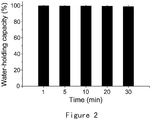
- the Ion-Sensitive Composition described in EXAMPLE 1 was mixed with SNES with a ratio of 2:1 in test tube, and placed for 2 min. Then, about 0.4 g of formed gel was accurately weighted into centriprep filter device of ultrafiltration tube (size: 0.5 ml, MWCO: 30 kDa, Millipore, MA, USA) (total weight Wo), followed by centrifugation at 300 rpm for 1, 5, 10, 20 and 30 min. The gel with centriprep filter device was reweighted (W t ) to determine the water-holding capacity of the gel: W t /W 0 ⁇ 100%.
- the water-holding capacity is generally expressed as the amount of water the gel structure can hold, or the capacity of the gel retain this water during storage or when subjected to external force.
- the ion-sensitive composition exhibited a water-holding capacity above 99% when subjected to a centrifugation (300 rpm) for 30min ( Figure 2 ), suggesting that the in-situ gel has a stable structure of gel matrix, and not easy to be disturbed under low mechanic force.
- the static rheological property of Ion-Sensitive Composition described in EXAMPLE 1 was investigated using rotational viscometer (Brookfield DV-II, Brookfield Engineering Laboratories Inc., MA, USA). Prior to measurement, the gel composition was mixed with SNES at different ratios (4:1, 2:1 and 1:1) and placed for 2 min. The mixture was then transferred into the small sample adapter of viscometer, and SC4-18 spindle was installed (the ratio of inner radius to outer radius was 0.92). Viscosity ( ⁇ ) was recorded as a function of increasing shear rate (y) from 3.96 to 132 s -1 . The rheological properties of the intact Ion-Sensitive Composition described in EXAMPLE 1 was also investigated and served as control. All the rheological measurements were performed in triplicate.
- the viscosity of Ion-Sensitive Composition increased when mixed with SNES and the maximum viscosity was reached at the mixing ratio of 4:1.
- the viscosity decreased with the increase of shear rate, all tested samples demonstrated pseudoplastic fluid behavior.
- the viscosity at a shear rate of 3.96 s -1 was summarized in Table 1. After mixed with SNES at 4:1, the formed gel has a ⁇ 10-fold higher viscosity, which facilitated to prolong the residence time of drug for its absorption in nasal cavity.
- Nasal sprays containing 3.5 mL Bioadhesive Compositions were prepared according to the method described in EXAMPLE 4.
- the spray devices were automatically actuated by Mighty Runt Actuation Station, Innova System, Inc., USA.
- Spray pattern and plume geometry were tested by Spray View, Proveris Scientific Corp., USA; droplet size distribution were measured by Sympatec Helos/BF, Sympatec Gmbh, Germany; the fine droplet less than or equal to 9 ⁇ m was determined by Anderson Cascade Impactor, Copley Scientific, UK.
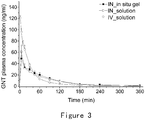
- Figure 3 shows the mean granisetron plasma concentration versus time profiles after intravenous administration of granisetron solution (IV_solution) and intranasal administration of Ion-Sensitive composition (IN_in situ gel), or solution composition (IN_solution) at a single dose of 0.4 mg/kg in rats.
- Results indicate the intranasal dose of Ion-Sensitive composition can achieve prolonged granisetron plasma concentration than the same intranasal dose of solution composition, especially during the first 3 hours.
- EXAMPLE 4 Granisetron Bioadhesive Composition
- IV intravenous administration
- 0.3 ml of 0.333 mg/ml test solution Kytril® IV Infusion (3mg/3ml) was given to short-term anesthetized rats via plastic tube (pre-cannulated in jugular vein the day before drug administration).
- intranasal administration 20 ⁇ l of drug nasal formulation (10 ⁇ l for each nostril) was administrated to rats (5 mm depth into the nostril) by the aid of a micropipette.
- Rats were placed in supine position during intranasal administration.
- 1 ml of 0.1 mg/ml oral suspension formulation prepared by dissolving 1 Kytril® tablet (1 mg) into 10 ml deionized water containing 0.5% CMCNa
- 0.1 mg/ml oral suspension formulation prepared by dissolving 1 Kytril® tablet (1 mg) into 10 ml deionized water containing 0.5% CMCNa
- Multiple blood samples were collected from tail vein until 6 hrs.
- Granisetron concentration in rat plasma was determined using a validated HPLC-FLD method. The standard non-compartmental method was used to generate the pharmacokinetic parameters.
- This study is meant to evaluate the pharmacokinetic parameters of Granisetron intranasal spray compared to oral tablet and IV injection in Beagle dogs.
- Eight Beagle dogs (4 male and 4 female) participated in the study. The study was preceded in five cross-over periods, separated by 3-day washout period.
- dogs were fasted about 16 hours prior to the dosing but had free access to water. Dogs were orally administered 1 Kytril® tablet (1 mg) for the 1.0 mg/dog. Each oral dosing was administered with 20-30 mL of water.
- the spray device was primed 4-5 times prior to dose administration, dogs were allowed to stand or in an upright position, Granisetron bioadhesive composition was sprayed into the right nostril by pressing down the spray device evenly on both sides once.
- 1 mL Kytril® IV Infusion 3mg/3ml was infused intravenously at the rate of 1 ml/min. Blood samples were collected at pre-dose (0 min) and at 5, 10, 15, 30, 45 minutes; and at 1, 2, 3, 4, 6, 8, 12, 24 hours post-dose. After the plasma-separation process, the samples were analyzed by a validated LC-MS/MS method.
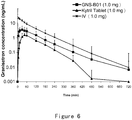
- the mean plasma concentration-time profiles after intranasal, oral and intravenous administration of various compositions is shown in Figure 6 . All dogs were exposed to the parent drug and all plasma samples were analyzed for Granisetron and its major metabolite 7-OH Granisetron.
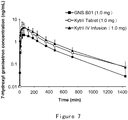
- the mean 7-hydroxyl granisetron plasma concentration versus time profiles after intravenous administration of Kytril® Infusion (3mg/3mL), oral administration of Kytril® Tablet (1 mg), and intranasal administration of bioadhesive composition (GNS-B01) at a single dose of 1.0 mg in beagle dogs is shown in Figure 7 .
- the pharmacokinetic parameters of Granisetron and its major metabolite of 7-OH Granisetron are summarized in Tables 8 and 9.
- the mean T max of Granisetron was 26.3 minutes (ranged 15.0 - 45.0) by intranasal administration compared to 43.1 minutes (ranged 30.0 - 60.0) by oral administration. This finding indicates that the absorption of Granisetron by the intranasal route was faster than that by oral dosing.
- the mean C max of 3.71 ng/mL and AUC 0-last of 436 ng/mL ⁇ min by intranasal administration were at least twice as much as the mean C max of 1.78 ng/mL and AUC 0-last of 177 ng/mL ⁇ min by oral administration.
- the terminal half- lives were similar for both dose administrations at about 60 minutes.
- the method of the present invention can be applied to the field of preparation of pharmaceutical composition for intranasal administration.
Landscapes
- Health & Medical Sciences (AREA)
- Chemical & Material Sciences (AREA)
- Life Sciences & Earth Sciences (AREA)
- Public Health (AREA)
- Veterinary Medicine (AREA)
- Medicinal Chemistry (AREA)
- Pharmacology & Pharmacy (AREA)
- Animal Behavior & Ethology (AREA)
- General Health & Medical Sciences (AREA)
- Epidemiology (AREA)
- Inorganic Chemistry (AREA)
- Engineering & Computer Science (AREA)
- Chemical Kinetics & Catalysis (AREA)
- General Chemical & Material Sciences (AREA)
- Proteomics, Peptides & Aminoacids (AREA)
- Otolaryngology (AREA)
- Oil, Petroleum & Natural Gas (AREA)
- Hospice & Palliative Care (AREA)
- Bioinformatics & Cheminformatics (AREA)
- Nuclear Medicine, Radiotherapy & Molecular Imaging (AREA)
- Organic Chemistry (AREA)
- Medicinal Preparation (AREA)
- Pharmaceuticals Containing Other Organic And Inorganic Compounds (AREA)
Claims (14)
- Pharmazeutische Zusammensetzung, umfassend:(a) Granisetron oder ein pharmazeutisch unbedenkliches Salz davon, und(b) wenigstens ein wässriges Vehikel-Polymer, das aus einer Gruppe ausgewählt ist, die aus einem bioadhäsiven Polymer besteht, das Hypromellose umfasst,wobei die Zusammensetzung eine sprühbare wässrige Zusammensetzung ist.
- Pharmazeutische Zusammensetzung nach Anspruch 1, wobei das wenigstens eine wässrige Vehikel-Polymer ferner ein Rheologie-veränderbares Polymer enthält.
- Pharmazeutische Zusammensetzung nach Anspruch 2, wobei das Rheologieveränderbare Polymer aus einer Gruppe ausgewählt ist, die aus einem pH-Wertempfindlichen Polymer, einem temperaturempfindlichen Polymer, einem ionenempfindlichen Polymer und Kombinationen davon besteht.
- Pharmazeutische Zusammensetzung nach Anspruch 2, wobei das Rheologieveränderbare Polymer aus einer Gruppe ausgewählt ist, die aus einem Carbomer, einem Carrageen, einem Celluloseacetatphthalat, einem Gellan, einem Pektin, einem Natriumalginat, einem Poloxamer und Kombinationen davon besteht.
- Pharmazeutische Zusammensetzung nach Anspruch 1, wobei das bioadhäsive Polymer ferner ein Polymer enthält, das aus einer Gruppe ausgewählt ist, die aus Akazie, Albuminen, Carboxymethylcellulose-Natrium, Carrageen, mikrokristalliner Cellulose, Celluloseacetat, Chitosan, Dextrin, Gelatine, Guarkernmehl, Hyaluronsäure, Hydroxylethylcellulose, Hydroxypropylstärke, Hydroxypropylcellulose, Methylcellulose, Polyethylenglykolen, Poly(methylvinylether/Maleinsäureanhydrid), Povidon, Rafinose, Schellack, Natriumalginat, Natriumstärkeglykolat, Stärke und Quellstärke, Tragant, Xanthan und den Kombinationen davon besteht.
- Pharmazeutische Zusammensetzung nach einem der Ansprüche 1 bis 5, ferner umfassend ein wässriges Lösungsmittel, das für ein intranasales Spray unter Verwendung einer Sprühvorrichtung geeignet ist.
- Pharmazeutische Zusammensetzung nach einem der Ansprüche 1 bis 6, wobei Granisetron oder das pharmazeutisch unbedenkliche Salz davon bei einer Konzentration von 0,5 bis 100 mg/ml liegt.
- Pharmazeutische Zusammensetzung nach Anspruch 6 oder 7, die einen pH-Wert von 3,0 bis 9,0 aufweist.
- Pharmazeutische Zusammensetzung nach Anspruch 3, wobei das pH-Wertempfindliche Polymer ein Carbomer ist, das dazu in der Lage ist, das rheologische Verhalten in Bezug auf die pH-Wert-Veränderung, die in einer Konzentration von 0,1 bis 30 mg/ml vorliegt und/oder Celluloseacetatphthalat, das in einer Konzentration von 1 bis 500 mg/ml vorliegt, zu ändern.
- Pharmazeutische Zusammensetzung nach Anspruch 3, wobei das temperaturempfindliche Polymer Poloxamer 407, Poloxamer 188 oder beides ist und dazu in der Lage ist, das rheologische Verhalten in Bezug auf die Temperatur zu ändern, wobei Poloxamer 407 in einer Konzentration von 50 bis 300 mg/ml vorliegt und Poloxamer 188 in einer Konzentration von 5 bis 50 mg/ml vorliegt.
- Pharmazeutische Zusammensetzung nach Anspruch 3, wobei das ionenempfindliche Polymer Gellan ist, das dazu in der Lage ist, das rheologische Verhalten in Gegenwart von Ionen in nasalem Fluid zu ändern, wobei das Gellan bei einer Konzentration von 1 bis 20 mg/ml liegt, und/oder das ionenempfindliche Polymer Pektin ist, das in einer Konzentration von 0,1 bis 10 mg/ml vorliegt.
- Pharmazeutische Zusammensetzung nach einem der vorhergehenden Ansprüche, umfassend 1 bis 50 mg/ml Hypromellose.
- Pharmazeutische Zusammensetzung nach einem der vorhergehenden Ansprüche für die Verwendung bei der Vorbeugung und/oder Linderung von Übelkeit und/oder Erbrechen, die/das durch zytotoxische Chemotherapie, Bestrahlung oder Chirurgie induziert wird.
- Pharmazeutische Zusammensetzung nach Anspruch 13, wobei die Zusammensetzung für eine intranasale Verabreichung durch das Sprühen einer wässrigen Zusammensetzung dient, die Granisetron oder ein pharmazeutisch unbedenkliches Salz davon mit einer Konzentration von 0,5 bis 100 mg/ml des Wirkstoffes umfasst, wobei die Zusammensetzung eine Lösung ist, die 0,5 bis 100 mg/ml des Wirkstoffes enthält, und wobei die Dosis ausreichend ist, um eine Plasmakonzentration des Wirkstoffes zu erzeugen, die vergleichbar mit oder höher als eine intravenöse Infusion ist, und therapeutische Wirkungen in 15 Minuten zu erreichen, wobei die Dauer nicht weniger als 3 Stunden beträgt.
Applications Claiming Priority (1)
| Application Number | Priority Date | Filing Date | Title |
|---|---|---|---|
| PCT/CN2015/000248 WO2016161537A1 (en) | 2015-04-08 | 2015-04-08 | Bioadhesive compositions for intranasal administration of granistron |
Publications (2)
| Publication Number | Publication Date |
|---|---|
| EP3078367A1 EP3078367A1 (de) | 2016-10-12 |
| EP3078367B1 true EP3078367B1 (de) | 2020-07-22 |
Family
ID=55646350
Family Applications (1)
| Application Number | Title | Priority Date | Filing Date |
|---|---|---|---|
| EP16162215.4A Active EP3078367B1 (de) | 2015-04-08 | 2016-03-24 | Bioadhäsive zusammensetzungen zur intranasalen verabreichung von granisetron |
Country Status (7)
| Country | Link |
|---|---|
| US (1) | US10335398B2 (de) |
| EP (1) | EP3078367B1 (de) |
| CN (1) | CN107921033B (de) |
| AU (1) | AU2015390261A1 (de) |
| ES (1) | ES2826548T3 (de) |
| TW (1) | TWI645852B (de) |
| WO (1) | WO2016161537A1 (de) |
Families Citing this family (10)
| Publication number | Priority date | Publication date | Assignee | Title |
|---|---|---|---|---|
| AU2015390261A1 (en) | 2015-04-08 | 2017-11-30 | Maxinase Life Sciences Limited | Bioadhesive compositions for intranasal administration of granistron |
| US11007144B2 (en) | 2016-11-15 | 2021-05-18 | Klaria Pharma Holding Ab | Pharmaceutical formulation |
| GB201709141D0 (en) | 2017-06-08 | 2017-07-26 | Klaria Pharma Holding Ab | Pharmaceutical formulation |
| EP3501496A1 (de) * | 2017-12-22 | 2019-06-26 | Cosmo Technologies Ltd. | Flüssigkeitsabgabezusammensetzung |
| WO2019143925A1 (en) * | 2018-01-22 | 2019-07-25 | Insys Development Company, Inc. | Liquid rizatriptan compositions |
| GB201808462D0 (en) | 2018-05-23 | 2018-07-11 | Klaria Pharma Holding Ab | Pharmaceutical formulation |
| CN110693818A (zh) * | 2019-10-31 | 2020-01-17 | 吉林省华恩生物科技有限公司 | 一种温敏型的鼻腔液体敷料及制备方法 |
| CN114948855B (zh) * | 2022-04-01 | 2024-02-13 | 承德医学院 | 一种鼻腔给药野黄芩苷镁温度敏感原位凝胶制剂及其制备方法 |
| BR102022006855A2 (pt) * | 2022-04-08 | 2023-10-10 | Eurofarma Laboratorios S.A | Composição em spray nasal bioadesivo, processo de preparação e uso |
| US20250032666A1 (en) * | 2023-07-25 | 2025-01-30 | Ethicon, Inc. | Hemostatic Materials Based on Aldehyde-Functional Polysaccharides |
Family Cites Families (12)
| Publication number | Priority date | Publication date | Assignee | Title |
|---|---|---|---|---|
| GB0328186D0 (en) * | 2003-12-05 | 2004-01-07 | West Pharm Serv Drug Res Ltd | Intranasal compositions |
| CA2601969A1 (en) * | 2005-02-10 | 2006-08-17 | Orexo Ab | Pharmaceutical compositions useful in the transmucosal administration of drugs |
| EP1863456A1 (de) * | 2005-03-28 | 2007-12-12 | Orexo AB | Neue pharmazeutische zusammensetzungen zur behandlung von schmerzen |
| US8911751B2 (en) | 2005-10-11 | 2014-12-16 | Yissum Research Development Company Of The Hebrew University Of Jerusalem | Compositions for nasal delivery |
| ATE544444T1 (de) * | 2005-10-11 | 2012-02-15 | Yissum Res Dev Co | Zusammensetzungen für die nasale abgabe |
| GB2423711B (en) * | 2005-10-24 | 2007-02-14 | Fortune Apex Dev Ltd | Method for preparing a pharmaceutical composition with enhanced mucoadhesion |
| RU2434652C2 (ru) | 2006-04-21 | 2011-11-27 | Токо Якухин Когио Кабусики Кайся | Емкость для текучей среды и система безвоздушного дозирования текучей среды с использованием упомянутой емкости |
| CN100566754C (zh) * | 2007-07-24 | 2009-12-09 | 山东大学 | 5-ht3受体拮抗剂控释凝胶剂及其制备方法 |
| CN101933902A (zh) * | 2009-07-03 | 2011-01-05 | 重庆医科大学 | 盐酸格拉司琼微乳凝胶剂及其制备方法 |
| US8827946B2 (en) | 2009-07-31 | 2014-09-09 | Shin Nippon Biomedical Laboratories, Ltd. | Intranasal granisetron and nasal applicator |
| WO2013175502A2 (en) * | 2012-05-15 | 2013-11-28 | Rubicon Research Private Limited | Formulations for mucosal administration |
| AU2015390261A1 (en) | 2015-04-08 | 2017-11-30 | Maxinase Life Sciences Limited | Bioadhesive compositions for intranasal administration of granistron |
-
2015
- 2015-04-08 AU AU2015390261A patent/AU2015390261A1/en not_active Abandoned
- 2015-04-08 CN CN201580080406.8A patent/CN107921033B/zh active Active
- 2015-04-08 WO PCT/CN2015/000248 patent/WO2016161537A1/en not_active Ceased
- 2015-04-08 US US15/564,824 patent/US10335398B2/en active Active - Reinstated
-
2016
- 2016-01-08 TW TW105100608A patent/TWI645852B/zh active
- 2016-03-24 ES ES16162215T patent/ES2826548T3/es active Active
- 2016-03-24 EP EP16162215.4A patent/EP3078367B1/de active Active
Non-Patent Citations (1)
| Title |
|---|
| AHMED SAMI ET AL: "Provesicular granisetron hydrochloride buccal formulations:Invitroevaluation and preliminary investigation ofin vivoperformance", EUROPEAN JOURNAL OF PHARMACEUTICAL SCIENCES, vol. 60, 29 April 2014 (2014-04-29), pages 10 - 23, XP028849959, ISSN: 0928-0987, DOI: 10.1016/J.EJPS.2014.04.013 * |
Also Published As
| Publication number | Publication date |
|---|---|
| ES2826548T3 (es) | 2021-05-18 |
| US10335398B2 (en) | 2019-07-02 |
| AU2015390261A1 (en) | 2017-11-30 |
| TW201639566A (zh) | 2016-11-16 |
| TWI645852B (zh) | 2019-01-01 |
| US20180117019A1 (en) | 2018-05-03 |
| CN107921033B (zh) | 2021-01-01 |
| CN107921033A (zh) | 2018-04-17 |
| WO2016161537A1 (en) | 2016-10-13 |
| EP3078367A1 (de) | 2016-10-12 |
Similar Documents
| Publication | Publication Date | Title |
|---|---|---|
| US10335398B2 (en) | Bioadhesive compositions for intranasal administration of granisetron | |
| US9339552B2 (en) | Diclofenac topical formulation | |
| AU2023262714B2 (en) | Pharmaceutical compositions of semaglutide and the methods of use thereof | |
| EP1722759B1 (de) | Zusammensetzung enthaltend chitosan sowie ein zuckerphosphat oder ein polyolphosphat | |
| US20180228792A1 (en) | Transoral dosage forms comprising sufentanil and naloxone | |
| US20200375898A1 (en) | Multi-use torasemide composition | |
| TW201330851A (zh) | 用於鼻內施用唑吡坦(zolpidem)的治療組合物 | |
| CN108815119A (zh) | 一种含有盐酸贝西沙星的药物组合物及其制备方法 | |
| HK1188140A (en) | Diclofenac gel | |
| HK1134024B (en) | Diclofenac gel |
Legal Events
| Date | Code | Title | Description |
|---|---|---|---|
| PUAI | Public reference made under article 153(3) epc to a published international application that has entered the european phase |
Free format text: ORIGINAL CODE: 0009012 |
|
| AK | Designated contracting states |
Kind code of ref document: A1 Designated state(s): AL AT BE BG CH CY CZ DE DK EE ES FI FR GB GR HR HU IE IS IT LI LT LU LV MC MK MT NL NO PL PT RO RS SE SI SK SM TR |
|
| AX | Request for extension of the european patent |
Extension state: BA ME |
|
| STAA | Information on the status of an ep patent application or granted ep patent |
Free format text: STATUS: REQUEST FOR EXAMINATION WAS MADE |
|
| 17P | Request for examination filed |
Effective date: 20170410 |
|
| RBV | Designated contracting states (corrected) |
Designated state(s): AL AT BE BG CH CY CZ DE DK EE ES FI FR GB GR HR HU IE IS IT LI LT LU LV MC MK MT NL NO PL PT RO RS SE SI SK SM TR |
|
| STAA | Information on the status of an ep patent application or granted ep patent |
Free format text: STATUS: EXAMINATION IS IN PROGRESS |
|
| 17Q | First examination report despatched |
Effective date: 20170803 |
|
| GRAP | Despatch of communication of intention to grant a patent |
Free format text: ORIGINAL CODE: EPIDOSNIGR1 |
|
| STAA | Information on the status of an ep patent application or granted ep patent |
Free format text: STATUS: GRANT OF PATENT IS INTENDED |
|
| INTG | Intention to grant announced |
Effective date: 20200225 |
|
| GRAS | Grant fee paid |
Free format text: ORIGINAL CODE: EPIDOSNIGR3 |
|
| GRAA | (expected) grant |
Free format text: ORIGINAL CODE: 0009210 |
|
| STAA | Information on the status of an ep patent application or granted ep patent |
Free format text: STATUS: THE PATENT HAS BEEN GRANTED |
|
| AK | Designated contracting states |
Kind code of ref document: B1 Designated state(s): AL AT BE BG CH CY CZ DE DK EE ES FI FR GB GR HR HU IE IS IT LI LT LU LV MC MK MT NL NO PL PT RO RS SE SI SK SM TR |
|
| REG | Reference to a national code |
Ref country code: GB Ref legal event code: FG4D |
|
| RIN1 | Information on inventor provided before grant (corrected) |
Inventor name: LEE, TAK KWONG BENJAMIN Inventor name: WANG, YANGFENG Inventor name: LAU, YIU NAM JOHNSON |
|
| REG | Reference to a national code |
Ref country code: CH Ref legal event code: EP |
|
| REG | Reference to a national code |
Ref country code: DE Ref legal event code: R096 Ref document number: 602016040268 Country of ref document: DE |
|
| REG | Reference to a national code |
Ref country code: AT Ref legal event code: REF Ref document number: 1292723 Country of ref document: AT Kind code of ref document: T Effective date: 20200815 |
|
| REG | Reference to a national code |
Ref country code: IE Ref legal event code: FG4D |
|
| REG | Reference to a national code |
Ref country code: NL Ref legal event code: FP |
|
| REG | Reference to a national code |
Ref country code: LT Ref legal event code: MG4D |
|
| REG | Reference to a national code |
Ref country code: AT Ref legal event code: MK05 Ref document number: 1292723 Country of ref document: AT Kind code of ref document: T Effective date: 20200722 |
|
| PG25 | Lapsed in a contracting state [announced via postgrant information from national office to epo] |
Ref country code: PT Free format text: LAPSE BECAUSE OF FAILURE TO SUBMIT A TRANSLATION OF THE DESCRIPTION OR TO PAY THE FEE WITHIN THE PRESCRIBED TIME-LIMIT Effective date: 20201123 Ref country code: AT Free format text: LAPSE BECAUSE OF FAILURE TO SUBMIT A TRANSLATION OF THE DESCRIPTION OR TO PAY THE FEE WITHIN THE PRESCRIBED TIME-LIMIT Effective date: 20200722 Ref country code: HR Free format text: LAPSE BECAUSE OF FAILURE TO SUBMIT A TRANSLATION OF THE DESCRIPTION OR TO PAY THE FEE WITHIN THE PRESCRIBED TIME-LIMIT Effective date: 20200722 Ref country code: LT Free format text: LAPSE BECAUSE OF FAILURE TO SUBMIT A TRANSLATION OF THE DESCRIPTION OR TO PAY THE FEE WITHIN THE PRESCRIBED TIME-LIMIT Effective date: 20200722 Ref country code: NO Free format text: LAPSE BECAUSE OF FAILURE TO SUBMIT A TRANSLATION OF THE DESCRIPTION OR TO PAY THE FEE WITHIN THE PRESCRIBED TIME-LIMIT Effective date: 20201022 Ref country code: GR Free format text: LAPSE BECAUSE OF FAILURE TO SUBMIT A TRANSLATION OF THE DESCRIPTION OR TO PAY THE FEE WITHIN THE PRESCRIBED TIME-LIMIT Effective date: 20201023 Ref country code: FI Free format text: LAPSE BECAUSE OF FAILURE TO SUBMIT A TRANSLATION OF THE DESCRIPTION OR TO PAY THE FEE WITHIN THE PRESCRIBED TIME-LIMIT Effective date: 20200722 Ref country code: SE Free format text: LAPSE BECAUSE OF FAILURE TO SUBMIT A TRANSLATION OF THE DESCRIPTION OR TO PAY THE FEE WITHIN THE PRESCRIBED TIME-LIMIT Effective date: 20200722 Ref country code: BG Free format text: LAPSE BECAUSE OF FAILURE TO SUBMIT A TRANSLATION OF THE DESCRIPTION OR TO PAY THE FEE WITHIN THE PRESCRIBED TIME-LIMIT Effective date: 20201022 |
|
| PG25 | Lapsed in a contracting state [announced via postgrant information from national office to epo] |
Ref country code: LV Free format text: LAPSE BECAUSE OF FAILURE TO SUBMIT A TRANSLATION OF THE DESCRIPTION OR TO PAY THE FEE WITHIN THE PRESCRIBED TIME-LIMIT Effective date: 20200722 Ref country code: PL Free format text: LAPSE BECAUSE OF FAILURE TO SUBMIT A TRANSLATION OF THE DESCRIPTION OR TO PAY THE FEE WITHIN THE PRESCRIBED TIME-LIMIT Effective date: 20200722 Ref country code: RS Free format text: LAPSE BECAUSE OF FAILURE TO SUBMIT A TRANSLATION OF THE DESCRIPTION OR TO PAY THE FEE WITHIN THE PRESCRIBED TIME-LIMIT Effective date: 20200722 Ref country code: IS Free format text: LAPSE BECAUSE OF FAILURE TO SUBMIT A TRANSLATION OF THE DESCRIPTION OR TO PAY THE FEE WITHIN THE PRESCRIBED TIME-LIMIT Effective date: 20201122 |
|
| REG | Reference to a national code |
Ref country code: DE Ref legal event code: R097 Ref document number: 602016040268 Country of ref document: DE |
|
| PG25 | Lapsed in a contracting state [announced via postgrant information from national office to epo] |
Ref country code: DK Free format text: LAPSE BECAUSE OF FAILURE TO SUBMIT A TRANSLATION OF THE DESCRIPTION OR TO PAY THE FEE WITHIN THE PRESCRIBED TIME-LIMIT Effective date: 20200722 Ref country code: CZ Free format text: LAPSE BECAUSE OF FAILURE TO SUBMIT A TRANSLATION OF THE DESCRIPTION OR TO PAY THE FEE WITHIN THE PRESCRIBED TIME-LIMIT Effective date: 20200722 Ref country code: EE Free format text: LAPSE BECAUSE OF FAILURE TO SUBMIT A TRANSLATION OF THE DESCRIPTION OR TO PAY THE FEE WITHIN THE PRESCRIBED TIME-LIMIT Effective date: 20200722 Ref country code: RO Free format text: LAPSE BECAUSE OF FAILURE TO SUBMIT A TRANSLATION OF THE DESCRIPTION OR TO PAY THE FEE WITHIN THE PRESCRIBED TIME-LIMIT Effective date: 20200722 Ref country code: SM Free format text: LAPSE BECAUSE OF FAILURE TO SUBMIT A TRANSLATION OF THE DESCRIPTION OR TO PAY THE FEE WITHIN THE PRESCRIBED TIME-LIMIT Effective date: 20200722 |
|
| REG | Reference to a national code |
Ref country code: ES Ref legal event code: FG2A Ref document number: 2826548 Country of ref document: ES Kind code of ref document: T3 Effective date: 20210518 |
|
| PLBE | No opposition filed within time limit |
Free format text: ORIGINAL CODE: 0009261 |
|
| STAA | Information on the status of an ep patent application or granted ep patent |
Free format text: STATUS: NO OPPOSITION FILED WITHIN TIME LIMIT |
|
| PG25 | Lapsed in a contracting state [announced via postgrant information from national office to epo] |
Ref country code: AL Free format text: LAPSE BECAUSE OF FAILURE TO SUBMIT A TRANSLATION OF THE DESCRIPTION OR TO PAY THE FEE WITHIN THE PRESCRIBED TIME-LIMIT Effective date: 20200722 |
|
| 26N | No opposition filed |
Effective date: 20210423 |
|
| PG25 | Lapsed in a contracting state [announced via postgrant information from national office to epo] |
Ref country code: SK Free format text: LAPSE BECAUSE OF FAILURE TO SUBMIT A TRANSLATION OF THE DESCRIPTION OR TO PAY THE FEE WITHIN THE PRESCRIBED TIME-LIMIT Effective date: 20200722 |
|
| PG25 | Lapsed in a contracting state [announced via postgrant information from national office to epo] |
Ref country code: SI Free format text: LAPSE BECAUSE OF FAILURE TO SUBMIT A TRANSLATION OF THE DESCRIPTION OR TO PAY THE FEE WITHIN THE PRESCRIBED TIME-LIMIT Effective date: 20200722 |
|
| PG25 | Lapsed in a contracting state [announced via postgrant information from national office to epo] |
Ref country code: MC Free format text: LAPSE BECAUSE OF FAILURE TO SUBMIT A TRANSLATION OF THE DESCRIPTION OR TO PAY THE FEE WITHIN THE PRESCRIBED TIME-LIMIT Effective date: 20200722 |
|
| REG | Reference to a national code |
Ref country code: CH Ref legal event code: PL |
|
| PG25 | Lapsed in a contracting state [announced via postgrant information from national office to epo] |
Ref country code: LU Free format text: LAPSE BECAUSE OF NON-PAYMENT OF DUE FEES Effective date: 20210324 Ref country code: LI Free format text: LAPSE BECAUSE OF NON-PAYMENT OF DUE FEES Effective date: 20210331 Ref country code: CH Free format text: LAPSE BECAUSE OF NON-PAYMENT OF DUE FEES Effective date: 20210331 Ref country code: IE Free format text: LAPSE BECAUSE OF NON-PAYMENT OF DUE FEES Effective date: 20210324 |
|
| PG25 | Lapsed in a contracting state [announced via postgrant information from national office to epo] |
Ref country code: HU Free format text: LAPSE BECAUSE OF FAILURE TO SUBMIT A TRANSLATION OF THE DESCRIPTION OR TO PAY THE FEE WITHIN THE PRESCRIBED TIME-LIMIT; INVALID AB INITIO Effective date: 20160324 |
|
| PG25 | Lapsed in a contracting state [announced via postgrant information from national office to epo] |
Ref country code: CY Free format text: LAPSE BECAUSE OF FAILURE TO SUBMIT A TRANSLATION OF THE DESCRIPTION OR TO PAY THE FEE WITHIN THE PRESCRIBED TIME-LIMIT Effective date: 20200722 |
|
| PG25 | Lapsed in a contracting state [announced via postgrant information from national office to epo] |
Ref country code: MK Free format text: LAPSE BECAUSE OF FAILURE TO SUBMIT A TRANSLATION OF THE DESCRIPTION OR TO PAY THE FEE WITHIN THE PRESCRIBED TIME-LIMIT Effective date: 20200722 |
|
| PG25 | Lapsed in a contracting state [announced via postgrant information from national office to epo] |
Ref country code: MT Free format text: LAPSE BECAUSE OF FAILURE TO SUBMIT A TRANSLATION OF THE DESCRIPTION OR TO PAY THE FEE WITHIN THE PRESCRIBED TIME-LIMIT Effective date: 20200722 |
|
| PG25 | Lapsed in a contracting state [announced via postgrant information from national office to epo] |
Ref country code: TR Free format text: LAPSE BECAUSE OF FAILURE TO SUBMIT A TRANSLATION OF THE DESCRIPTION OR TO PAY THE FEE WITHIN THE PRESCRIBED TIME-LIMIT Effective date: 20200722 |
|
| PGFP | Annual fee paid to national office [announced via postgrant information from national office to epo] |
Ref country code: GB Payment date: 20260323 Year of fee payment: 11 |
|
| PGFP | Annual fee paid to national office [announced via postgrant information from national office to epo] |
Ref country code: DE Payment date: 20260320 Year of fee payment: 11 |
|
| PGFP | Annual fee paid to national office [announced via postgrant information from national office to epo] |
Ref country code: BE Payment date: 20260323 Year of fee payment: 11 Ref country code: IT Payment date: 20260319 Year of fee payment: 11 |
|
| PGFP | Annual fee paid to national office [announced via postgrant information from national office to epo] |
Ref country code: NL Payment date: 20260323 Year of fee payment: 11 |
|
| PGFP | Annual fee paid to national office [announced via postgrant information from national office to epo] |
Ref country code: FR Payment date: 20260323 Year of fee payment: 11 |
|
| PGFP | Annual fee paid to national office [announced via postgrant information from national office to epo] |
Ref country code: ES Payment date: 20260414 Year of fee payment: 11 |