EP3077331B1 - Verfahren zur herstellung von hochreinem germane durch ein kontinuierliches oder halbkontinuierliches verfahren - Google Patents
Verfahren zur herstellung von hochreinem germane durch ein kontinuierliches oder halbkontinuierliches verfahren Download PDFInfo
- Publication number
- EP3077331B1 EP3077331B1 EP14815503.9A EP14815503A EP3077331B1 EP 3077331 B1 EP3077331 B1 EP 3077331B1 EP 14815503 A EP14815503 A EP 14815503A EP 3077331 B1 EP3077331 B1 EP 3077331B1
- Authority
- EP
- European Patent Office
- Prior art keywords
- germane
- hydrogen
- product stream
- reaction mixture
- continuous
- Prior art date
- Legal status (The legal status is an assumption and is not a legal conclusion. Google has not performed a legal analysis and makes no representation as to the accuracy of the status listed.)
- Active
Links
Images
Classifications
-
- C—CHEMISTRY; METALLURGY
- C01—INORGANIC CHEMISTRY
- C01G—COMPOUNDS CONTAINING METALS NOT COVERED BY SUBCLASSES C01D OR C01F
- C01G17/00—Compounds of germanium
- C01G17/003—Preparation involving a liquid-liquid extraction, an adsorption or an ion-exchange
-
- B—PERFORMING OPERATIONS; TRANSPORTING
- B01—PHYSICAL OR CHEMICAL PROCESSES OR APPARATUS IN GENERAL
- B01D—SEPARATION
- B01D53/00—Separation of gases or vapours; Recovering vapours of volatile solvents from gases; Chemical or biological purification of waste gases, e.g. engine exhaust gases, smoke, fumes, flue gases, aerosols
- B01D53/02—Separation of gases or vapours; Recovering vapours of volatile solvents from gases; Chemical or biological purification of waste gases, e.g. engine exhaust gases, smoke, fumes, flue gases, aerosols by adsorption, e.g. preparative gas chromatography
- B01D53/04—Separation of gases or vapours; Recovering vapours of volatile solvents from gases; Chemical or biological purification of waste gases, e.g. engine exhaust gases, smoke, fumes, flue gases, aerosols by adsorption, e.g. preparative gas chromatography with stationary adsorbents
- B01D53/0462—Temperature swing adsorption
-
- B—PERFORMING OPERATIONS; TRANSPORTING
- B01—PHYSICAL OR CHEMICAL PROCESSES OR APPARATUS IN GENERAL
- B01D—SEPARATION
- B01D53/00—Separation of gases or vapours; Recovering vapours of volatile solvents from gases; Chemical or biological purification of waste gases, e.g. engine exhaust gases, smoke, fumes, flue gases, aerosols
- B01D53/02—Separation of gases or vapours; Recovering vapours of volatile solvents from gases; Chemical or biological purification of waste gases, e.g. engine exhaust gases, smoke, fumes, flue gases, aerosols by adsorption, e.g. preparative gas chromatography
- B01D53/04—Separation of gases or vapours; Recovering vapours of volatile solvents from gases; Chemical or biological purification of waste gases, e.g. engine exhaust gases, smoke, fumes, flue gases, aerosols by adsorption, e.g. preparative gas chromatography with stationary adsorbents
- B01D53/047—Pressure swing adsorption
-
- C—CHEMISTRY; METALLURGY
- C01—INORGANIC CHEMISTRY
- C01B—NON-METALLIC ELEMENTS; COMPOUNDS THEREOF; METALLOIDS OR COMPOUNDS THEREOF NOT COVERED BY SUBCLASS C01C
- C01B3/00—Hydrogen; Gaseous mixtures containing hydrogen; Separation of hydrogen from mixtures containing it; Purification of hydrogen; Reversible storage of hydrogen
- C01B3/50—Separation of hydrogen or hydrogen-containing gases from gaseous mixtures, e.g. purification
- C01B3/56—Separation of hydrogen or hydrogen-containing gases from gaseous mixtures, e.g. purification by contacting with solids; Regeneration of used solids
-
- C—CHEMISTRY; METALLURGY
- C01—INORGANIC CHEMISTRY
- C01B—NON-METALLIC ELEMENTS; COMPOUNDS THEREOF; METALLOIDS OR COMPOUNDS THEREOF NOT COVERED BY SUBCLASS C01C
- C01B6/00—Hydrides of metals including fully or partially hydrided metals, alloys or intermetallic compounds ; Compounds containing at least one metal-hydrogen bond, e.g. (GeH3)2S, SiH GeH; Monoborane or diborane; Addition complexes thereof
- C01B6/06—Hydrides of aluminium, gallium, indium, thallium, germanium, tin, lead, arsenic, antimony, bismuth or polonium; Monoborane; Diborane; Addition complexes thereof
-
- C—CHEMISTRY; METALLURGY
- C01—INORGANIC CHEMISTRY
- C01G—COMPOUNDS CONTAINING METALS NOT COVERED BY SUBCLASSES C01D OR C01F
- C01G17/00—Compounds of germanium
-
- F—MECHANICAL ENGINEERING; LIGHTING; HEATING; WEAPONS; BLASTING
- F25—REFRIGERATION OR COOLING; COMBINED HEATING AND REFRIGERATION SYSTEMS; HEAT PUMP SYSTEMS; MANUFACTURE OR STORAGE OF ICE; LIQUEFACTION SOLIDIFICATION OF GASES
- F25J—LIQUEFACTION, SOLIDIFICATION OR SEPARATION OF GASES OR GASEOUS OR LIQUEFIED GASEOUS MIXTURES BY PRESSURE AND COLD TREATMENT OR BY BRINGING THEM INTO THE SUPERCRITICAL STATE
- F25J3/00—Processes or apparatus for separating the constituents of gaseous or liquefied gaseous mixtures involving the use of liquefaction or solidification
- F25J3/08—Separating gaseous impurities from gases or gaseous mixtures or from liquefied gases or liquefied gaseous mixtures
-
- B—PERFORMING OPERATIONS; TRANSPORTING
- B01—PHYSICAL OR CHEMICAL PROCESSES OR APPARATUS IN GENERAL
- B01D—SEPARATION
- B01D2253/00—Adsorbents used in seperation treatment of gases and vapours
- B01D2253/10—Inorganic adsorbents
- B01D2253/106—Silica or silicates
- B01D2253/108—Zeolites
-
- B—PERFORMING OPERATIONS; TRANSPORTING
- B01—PHYSICAL OR CHEMICAL PROCESSES OR APPARATUS IN GENERAL
- B01D—SEPARATION
- B01D2256/00—Main component in the product gas stream after treatment
- B01D2256/16—Hydrogen
-
- B—PERFORMING OPERATIONS; TRANSPORTING
- B01—PHYSICAL OR CHEMICAL PROCESSES OR APPARATUS IN GENERAL
- B01D—SEPARATION
- B01D2257/00—Components to be removed
- B01D2257/55—Compounds of silicon, phosphorus, germanium or arsenic
Definitions
- This invention involves a method for producing high purity germane by a continuous or semi-continuous process.
- the typical preferred commercial method for producing germane is an aqueous borohydride reduction of germanium dioxide, most often using sodium borohydride or potassium borohydride. Examples of this process may be found in U.S. Patent No. 4,668,502 ofRussotti ; U.S. Patent No. 7,087,102 of Withers et al. ; and U.S. Patent Application Publication No. 2008/0299037 of Tezock .
- Russotti, Withers et al. and Tezock are all directed to the yield and purification of germane from germanium dioxide.
- Withers et al. disclose a method for purifying a germane fluid, produced by a cryogenic-trapping technique.
- the co-product of the reduction namely hydrogen gas, is not considered or discussed in detail in Russotti, Withers et al. or Tezock.
- One aspect of the present invention is directed to a method for producing high purity germane containing less than 0.1 volume percent of impurities.
- the method comprises: (a) preparing a reaction mixture containing hydrogen and crude germane; (b) separating the hydrogen from the crude germane by a pressure swing adsorption process, the pressure swing adsorption process resulting in a hydrogen-rich product stream and a germane-rich product stream; and (c) purifying the germane-rich product stream by continuous distillation thereof to remove impurities therefrom and to produce a high purity germane containing less than 0.1 volume percent of impurities.
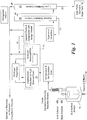
- a method for generating and purifying germane (GeH 4 ) by a continuous or semi-continuous process.
- the method comprises producing a germane-containing reaction mixture by reacting one or more germanium-containing compounds such as, for example, germanium oxide (also known as germanium dioxide), alkali metal germanates (such as potassium germanate), and/or compounds formed in situ from germanium tetrachloride, germanium or various germanides, with one or more hydrogen-containing reducing agents in a reactor 10 to provide a reaction mixture.
- the hydrogen-containing reducing agent is a borohydride.
- reducing agents that may be used include sodium borohydride, potassium borohydride, lithium borohydride.
- the various components may be mixed together in ratios known in conventional reaction methods. Also, the various components may be added directly to the reactor 10 with good turbulent mixing or, alternatively, may be fed through a static mixer (not shown) before entering the reactor 10.
- the reaction is preferably conducted in an aqueous medium under conventional temperature and pressure conditions.
- the reaction may instead be conducted in a non-aqueous medium, such as an organic solvent, or utilizing a combination of aqueous and non-aqueous media.
- the method comprises producing a germane-containing reaction mixture by borohydride reduction of germanium oxide or its hydrate germanium hydroxide in an aqueous solution.
- any known processes for producing germane-containing mixtures may be utilized.
- the reaction mixture primarily contains germane (GeH 4 ) and hydrogen (H 2 ), as well as carbon dioxide (CO 2 ), water vapor (H 2 O), digermane (Ge 2 H 6 ) and possibly other trace gases and impurities. More particularly, in one embodiment, the reaction mixture contains 80% or greater, and more preferably 80% to 98% by volume hydrogen gas with the balance being germane, carbon dioxide, water vapor, digermane and other trace gases and impurities.
- the hydrogen is considered an impurity and it is thus preferable to separate the hydrogen from the germane in the reaction mixture.
- the reaction mixture is subsequently subjected to a separation process to separate the hydrogen from the germane.
- separation of the hydrogen from the germane is effected using pressure swing adsorption (PSA) technology.
- PSA pressure swing adsorption
- PSA technology is based on a physical binding of gas molecules to an adsorbent material.
- Adsorptive materials such as zeolites, are used as a molecular sieve, to adsorb a target gas species at a high pressure. The process then swings to a low pressure to desorb the adsorbed target gas species from the adsorbent material.
- the respective forces acting between the target gas molecules and the adsorbent material depend on various factors, such as the gas component, the type of adsorbent material used, the partial pressure of the gas component, and the operating temperature.
- PSA technology can be used to separate gases in a mixture because each of the gas components has different binding forces with respect to different adsorbent materials.
- hydrogen a highly volatile component with low polarity
- gas molecules such as N 2 , CO, CO 2 , hydrocarbons, water vapor and germane are generally strongly adsorbed.
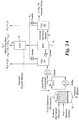
- the reaction mixture including hydrogen, germane species, CO 2 , water vapor and impurities, is passed through an adsorbent material 12, preferably in the form of an adsorption bed, in a PSA vessel 14.
- the adsorbed hydrogen may then be readily desorbed and recovered by slightly reducing the pressure, such that an enriched hydrogen stream is released from the PSA vessel.
- Germane and the other components of the reaction mixture are also adsorbed by the adsorption bed 12.
- the adsorbed germane and other components can then be desorbed and recovered separately by a further reduction in the pressure of the PSA vessel and subsequently purified by a distillation process.
- the reduction of pressure is performed in a single-stage to effect desorption of the germane, digermane, CO 2 , water vapor and trace gases, and the small amount of adsorbed hydrogen is removed during the subsequent distillation process, as described in more detail herein.
- the gaseous reaction mixture of germane, hydrogen, CO 2 , water vapor, digermane, and trace gases is introduced into a PSA vessel 14 as an input process stream.
- the PSA vessel contains one or more adsorbent materials that attract germane species more strongly than hydrogen.
- the adsorbent material(s) may be any commercially available adsorbent material, such as carbon, colloidal, precipitated or aerogel silicas, activated aluminas, molecular sieves and zeolite molecular sieves.
- the adsorbent material(s) is/are one or more zeolite molecular sieves.
- zeolites examples include 3A, 4A, 5A, 10X, 13X, Y, ZSM-5 and synthetic mordenite.
- the zeolite is 5A or 13x.
- the pressure swing adsorption bed of the PSA vessel may be of any dimensions as necessary to carry out the adsorption/desorption activities.
- the packed bed volume of the adsorption bed has an aspect ratio (L/D) of at least 5:1, and more preferably greater than 12:1.
- the PSA vessel 14 is at a relatively high pressure of approximately 15 to 600 psia to effect adsorption of the germane species, CO 2 , water vapor and trace gases. More preferably, the PSA vessel operates under a pressure of approximately 30 to 250 psia, and most preferably approximately 50 to 75 psia, during the adsorption stage.
- a significant portion of the germane species (i.e., germane and digermane) contained in the input process stream (i.e., the reaction mixture) are adsorbed by the zeolite molecular sieve and only a small portion of the hydrogen contained in the input process stream (preferably 5% or less by volume) is adsorbed by the zeolite molecular sieve.
- the bulk of the hydrogen gas simply passes through the zeolite molecular sieve without being adsorbed thereby.
- a first gas stream 16 exiting the vessel 14 after the adsorption stage is enriched in hydrogen and contains very low levels of germane (i.e., a hydrogen-rich product stream). More preferably, approximately 90% or greater, and most preferably 96 to 99% by volume of the germane species contained in the input process stream (i.e., the reaction mixture) are adsorbed by the zeolite molecular sieve, such that the exiting hydrogen-rich product stream contains approximately 1% or less by volume of germane species, and more preferably approximately 0.1 to 0.4% by volume of germane species.
- the pressure in the PSA vessel is reduced to approximately 0 to 50 psia, and more preferably to approximately 15 to 50 psia, to effect desorption of the adsorbed germane species, CO 2 , water vapor and trace gases from the zeolite molecular sieve.
- the adsorbed germane species, CO 2 , water vapor and trace gases are released or desorbed from the zeolite molecular sieve as a second gas stream, such that the zeolite molecular sieve is regenerated for another PSA separation process cycle.
- the second gas stream 18 is a germane species-containing output product stream that is substantially free of hydrogen, and more preferably includes only approximately 5 % or less by volume of hydrogen.
- the germane species-containing output product stream also includes the adsorbed and desorbed CO 2 , water vapor and trace gases.
- the PSA vessel 14 and process utilize alternating pressures and partial pressures to perform adsorption and desorption of germane, its co-products and contaminant by-products by and from the zeolite molecular sieve. Further, the PSA process is carried out at a generally constant temperature of approximately -5 to 40°C, and more preferably approximately 5 to 30°C, and most preferably approximately 20°C. As such, no heating or cooling (i.e., cycling of the temperature) of the PSA vessel is required, and relatively short PSA separation process cycles, generally within the range of minutes, can be achieved for separation of the germane and hydrogen.
- the cycle times for adsorption and desorption of germane are temperature dependent, with temperatures above 50°C generally being avoided to decrease the formation of other impurities.
- the cycle time for germane desorption is between twenty minutes and six hours, preferably between twenty five minutes and five hours, and more preferably between thirty minutes and four hours.
- the cycle time for germane adsorption generally matches that of germane desorption.
- the cycle times, temperature, pressure and other parameters of the adsorption and desorption cycles may be adjusted as necessary to obtain a germane stream of the desired purity.
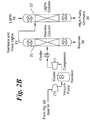
- the germane species-containing output product stream 18 is delivered, preferably continuously, from the PSA vessel to dual distillation columns 20, 22.
- the distillation columns 20, 22 and a heavies distillation column and a lights distillation column, respectively.
- the distillation columns 20, 22 may be constructed of any appropriate materials, such as, for example, stainless steel, monel, hastelloy and glass-lined steel.
- the materials of construction of the distillation columns 20, 22 are generally passivated by exposure to germane, which reduces the potential for the formation of digermane and other higher polygermane species during the distillation process.
- the dual distillation columns 20, 22 are arranged as a high pressure rectification system, with a condensate return temperature of no less than -40°C (i.e., -40°C or above). It will be understood that more than two distillation columns may be utilized as necessary to effect purification of the germane species-containing output product stream.
- Each of the distillation columns 20, 22 preferably operates at a pressure of no greater than 500 psi, and more preferably at a pressure of approximately 200 to 400 psi, and most preferably at a pressure of approximately 300 psi.
- the germane species-containing output product stream 18 is passed through the first or upstream heavies distillation column 20, preferably primarily for removal of the digermane.
- the top temperature of the upstream distillation column 20 is maintained at approximately -5°C to - 15°C, and more preferably approximately -10°C.
- a digermane stream 26 is removed from the bottom of the column 20 and a partially purified germane stream 24 is removed from the top of the column 20 at a discharge temperature of approximately -10°C.
- the partially purified germane stream output 24 from the upstream distillation column 20 is preferably 96% or greater pure by volume.
- at least a portion of the CO 2 , water vapor and/or trace gases are removed with the digermane stream 26 from the bottom of the upstream distillation column 20.
- the partially purified germane stream 24 of the upstream distillation column 20 is then introduced into and passes through the second or downstream lights distillation column 22 for further purification of the product stream 24 to remove any impurities which are present.
- the bottom temperature of the downstream distillation column 22 is maintained at approximately 15°C to 25°C, and more preferably approximately 20°C.
- any remaining impurities including any remaining hydrogen and traces of oxygen, nitrogen, argon and other non-condensible components, are removed as a lights stream 28 from the top of the column 22 and a stream 30 highly purified germane is removed from the bottom of the column 22 at a discharge temperature of approximately 20°C, thus completing purification of the germane.
- the high purity germane 30 produced after the above-described PSA and purification (i.e., distillation) processes is preferably 98% or greater pure by volume (i.e., contains 2% or less impurities), and more preferably 99% or greater (i.e., contains 1% or less impurities), and most preferably 99.9% or greater (i.e., contains 0.1% or less impurities).
- the high purity germane is then transferred to a holding or storage tank 32, from where it can be distributed for use in various applications, such as cylinder-fill or blending operations.
- the purification stage of the present invention need not include two distillation columns. Instead, depending on the specifications of the end-use applications, only one distillation column may be utilized to remove the digermane and other impurities from the germane species-containing output product stream of the PSA vessel and process.
- a temperature swing adsorption (TSA) unit 34 is utilized to remove entrained or trace water, CO 2 and other polar species prior and/or subsequent to the PSA vessel or unit 14.
- a packed metal hydride column (not shown), and more preferably a packed lithium hydride column, may be utilized to remove any oxide species formed during the process by the interaction of germane with non-passivated process equipment.
- a reaction mixture was prepared by borohydride reduction of germanium oxide.
- the reaction mixture contained 6% by volume germane and trace amounts of carbon dioxide, water vapor, digermane and other impurities, with the remainder of the reaction mixture being hydrogen.
- the reaction mixture was then introduced into a PSA vessel including a pressure swing adsorption bed operating with 5A zeolite molecular sieve (i.e., alkali metal alumino silicate).
- the PSA vessel was initially at a pressure of approximately 200 to 220 psi to effect adsorption of the germane species contained in the reaction mixture. After a predetermined period of time, the pressure of the PSA vessel was reduced to approximately 15 to 50 psi to effect desorption of the adsorbed germane species.
- the adsorption and desorption stages were preferably carried out for approximately four hours each. During both the adsorption and desorption stages, the temperature of the PSA vessel was maintained at approximately 20°C.
- the hydrogen-rich output product stream contained approximately 1 to 4% by volume of germane species and the germane species-containing output product stream contained approximately 5% by volume of hydrogen.
- the germane species-containing output product stream was fed to a first distillation column operating at a pressure of approximately 200 psi to effect removal of the digermane and any other germane-containing impurities.
- the discharge stream from the top of the first distillation column maintained at a temperature of approximately -10°C, was thus a partially purified discharge stream having a purity greater than 99% by volume.
- the top partially purified discharge stream was then fed to a second distillation column for further purification, and more particularly for removal of any remaining impurities and traces of oxygen, nitrogen, argon and other non-condensible components.
- a highly purified germane stream was discharged from the bottom of the second distillation column at a temperature of approximately 20°C and a purity of approximately 99.99% or greater by volume.
- the present invention provides for easy separation of hydrogen from a reaction mixture containing crude germane, production of a high purity germane product (i.e., 98% or greater purity), recovery of 90% or greater of the germane contained in the reaction mixture, little to no degradation of germane to germanium metal, and a hydrogen-rich byproduct stream containing low levels of germane.
- the PSA process in particular, allows for the semi-continuous and economical generation of high purity germane. Also, the life span and efficiency of the PSA vessel may be improved by separately removing water from the reaction mixture prior to treating the reaction mixture in the PSA vessel.
Landscapes
- Chemical & Material Sciences (AREA)
- Organic Chemistry (AREA)
- Engineering & Computer Science (AREA)
- Inorganic Chemistry (AREA)
- Analytical Chemistry (AREA)
- General Chemical & Material Sciences (AREA)
- Oil, Petroleum & Natural Gas (AREA)
- Chemical Kinetics & Catalysis (AREA)
- Combustion & Propulsion (AREA)
- Physics & Mathematics (AREA)
- Mechanical Engineering (AREA)
- Thermal Sciences (AREA)
- General Engineering & Computer Science (AREA)
- Hydrogen, Water And Hydrids (AREA)
- Separation Of Gases By Adsorption (AREA)
- Solid-Sorbent Or Filter-Aiding Compositions (AREA)
- Organic Low-Molecular-Weight Compounds And Preparation Thereof (AREA)
Claims (13)
- Kontinuierliches oder halbkontinuierliches Verfahren zum Herstellen eines hochreinen Monogermans, das weniger als 0,1 Volumenprozent Verunreinigungen enthält, wobei das Verfahren umfasst:a) Bereiten einer Reaktionsmischung, die Wasserstoff und Roh-Monogerman enthält;b) Trennen des Wasserstoffs von dem Roh-Monogerman durch einen Druckwechsel-Adsorptionsprozess, wobei der Druckwechsel-Adsorptionsprozess zu einem wasserstoffreichen Produktstrom und einem monogermanreichen Produktstrom führt; undc) Reinigen des monogermanreichen Produktstroms durch dessen kontinuierliche Destillierung zum Entfernen von Verunreinigungen von diesem und zum Herstellen eines hochreinen Monogermans, das weniger als 0,1 Volumenprozent Verunreinigungen enthält.
- Verfahren gemäß Anspruch 1, wobei die Reaktionsmischung durch Kontaktieren einer Germanium enthaltenden Verbindung mit einem Wasserstoff enthaltenden Reduktionsmittel bereitet wird.
- Verfahren gemäß Anspruch 2, wobei das Reduktionsmittel ein Tetrahydridoborat ist.
- Verfahren gemäß Anspruch 3, wobei die Germanium enthaltende Verbindung Germaniumdioxid ist.
- Verfahren gemäß Anspruch 1, wobei der Druckwechsel-Adsorptionsprozess in einem Gefäß stattfindet, das ein adsorbierendes Material enthält, das eine Form eines Zeolith-Molekularsiebs hat.
- Verfahren gemäß Anspruch 5, wobei das Zeolith-Molekularsieb ein 5A-Zeolith-Molekularsieb ist.
- Verfahren gemäß Anspruch 5, wobei während des Druckwechsel-Adsorptionsprozesses Monogerman von dem Zeolith-Molekularsieb in einer Adsorptions- und einer Desorptionsstufe adsorbiert bzw. desorbiert wird.
- Verfahren gemäß Anspruch 7, wobei die Reaktionsmischung ferner ein Digerman enthält und das Digerman von dem Zeolith-Molekularsieb in einer Adsorptions- und einer Desorptionsstufe zusammen mit dem Monogerman adsorbiert bzw. desorbiert wird.
- Verfahren gemäß Anspruch 7, wobei der Druck des Gefäßes während der Adsorptionsstufe auf ungefähr 30 bis 250 psia (206.843 bis 1.723.690 Pa) gehalten wird und der Druck des Gefäßes während der Desorptionsstufe auf ungefähr 0 bis 50 psia (0 bis 344.738 Pa) gehalten wird.
- Verfahren gemäß Anspruch 9, wobei die Temperatur des Gefäßes allgemein konstant ist.
- Verfahren gemäß Anspruch 1, wobei die kontinuierliche Destillation des monogermanreichen Produktstroms ein Leiten des monogermanreichen Produktstroms durch eine erste Destillationskolonne zum Herstellen eines teilweise gereinigten Monogermanprodukts enthält.
- Verfahren gemäß Anspruch 11, wobei die kontinuierliche Destillation des monogermanreichen Produktstroms ein Leiten des teilweise gereinigten Monogermanprodukts durch eine zweite Destillationskolonne zum Herstellen des hochreinen Monogermans enthält.
- Verfahren gemäß Anspruch 11, ferner umfassend Leiten der Reaktionsmischung durch eine Temperaturwechsel-Adsorptionseinheit vor oder nach dem Druckwechsel-Adsorptionsprozess.
Applications Claiming Priority (2)
| Application Number | Priority Date | Filing Date | Title |
|---|---|---|---|
| US201361912791P | 2013-12-06 | 2013-12-06 | |
| PCT/US2014/066640 WO2015084599A1 (en) | 2013-12-06 | 2014-11-20 | Method for producing high purity germane by a continuous or semi-continuous process |
Publications (2)
| Publication Number | Publication Date |
|---|---|
| EP3077331A1 EP3077331A1 (de) | 2016-10-12 |
| EP3077331B1 true EP3077331B1 (de) | 2018-01-10 |
Family
ID=52130813
Family Applications (1)
| Application Number | Title | Priority Date | Filing Date |
|---|---|---|---|
| EP14815503.9A Active EP3077331B1 (de) | 2013-12-06 | 2014-11-20 | Verfahren zur herstellung von hochreinem germane durch ein kontinuierliches oder halbkontinuierliches verfahren |
Country Status (5)
| Country | Link |
|---|---|
| US (1) | US9174853B2 (de) |
| EP (1) | EP3077331B1 (de) |
| KR (1) | KR101780199B1 (de) |
| TW (1) | TWI537214B (de) |
| WO (1) | WO2015084599A1 (de) |
Families Citing this family (4)
| Publication number | Priority date | Publication date | Assignee | Title |
|---|---|---|---|---|
| CN106475048B (zh) * | 2015-08-28 | 2019-05-21 | 中国石油化工股份有限公司 | 一种无粘结剂的5a分子筛球形吸附剂及制备方法 |
| CN110548364B (zh) * | 2019-10-17 | 2024-12-13 | 昆明先导新材料科技有限责任公司 | 一种回收分子筛吸附的特种气体的方法和装置 |
| CN113135953A (zh) * | 2021-05-06 | 2021-07-20 | 广东先导微电子科技有限公司 | 一种二甲基锗烷的制备方法及装置 |
| CN116902920A (zh) * | 2023-06-15 | 2023-10-20 | 中船(邯郸)派瑞特种气体股份有限公司 | 一种电子级锗烷的纯化方法 |
Family Cites Families (9)
| Publication number | Priority date | Publication date | Assignee | Title |
|---|---|---|---|---|
| US4668502A (en) | 1986-01-13 | 1987-05-26 | Voltaix, Inc. | Method of synthesis of gaseous germane |
| RU2230830C1 (ru) | 2003-07-08 | 2004-06-20 | Общество с ограниченной ответственностью "Фирма "ХОРСТ" | Способ получения высокочистого гидрида германия (варианты) |
| US7087102B2 (en) * | 2004-02-26 | 2006-08-08 | Air Products And Chemicals, Inc. | Process for purification of germane |
| DE102006035960A1 (de) * | 2006-08-02 | 2008-02-07 | Biotronik Vi Patent Ag | Vorrichtung zur Herstellung von strangförmigen Gütern |
| US7591985B2 (en) | 2007-05-31 | 2009-09-22 | Metaloid Precursors, Inc. | Method for purifying germanium hydrides |
| CN101486444A (zh) | 2009-01-05 | 2009-07-22 | 浙江理工大学 | 一种锗烷提纯的方法 |
| DE102009056731A1 (de) | 2009-12-04 | 2011-06-09 | Rev Renewable Energy Ventures, Inc. | Halogenierte Polysilane und Polygermane |
| CN102390808A (zh) | 2011-08-12 | 2012-03-28 | 福建博纯材料有限公司 | 锗烷气体的提纯收集系统和方法 |
| JP5780981B2 (ja) | 2012-03-02 | 2015-09-16 | 東京エレクトロン株式会社 | ゲルマニウム薄膜の成膜方法 |
-
2014
- 2014-11-13 US US14/540,466 patent/US9174853B2/en active Active
- 2014-11-20 KR KR1020167018072A patent/KR101780199B1/ko active Active
- 2014-11-20 EP EP14815503.9A patent/EP3077331B1/de active Active
- 2014-11-20 WO PCT/US2014/066640 patent/WO2015084599A1/en not_active Ceased
- 2014-11-26 TW TW103141003A patent/TWI537214B/zh active
Also Published As
| Publication number | Publication date |
|---|---|
| KR20160106590A (ko) | 2016-09-12 |
| TW201522229A (zh) | 2015-06-16 |
| KR101780199B1 (ko) | 2017-09-21 |
| TWI537214B (zh) | 2016-06-11 |
| WO2015084599A1 (en) | 2015-06-11 |
| US20150158738A1 (en) | 2015-06-11 |
| US9174853B2 (en) | 2015-11-03 |
| EP3077331A1 (de) | 2016-10-12 |
Similar Documents
| Publication | Publication Date | Title |
|---|---|---|
| KR100966064B1 (ko) | 합성가스 정제 방법 | |
| CA2544028C (en) | Adsorbents for rapid cycle pressure swing adsorption processes | |
| CA2741289C (en) | Helium recovery process | |
| US7935177B2 (en) | Method of purifying a gas stream contaminated by CO2 and one or more hydrocarbons and/or nitrogen oxides by adsorption on an aggregated zeolitic adsorbent | |
| CA2420756C (en) | Activated carbon as sole adsorbent in rapid cycle hydrogen psa | |
| KR102624566B1 (ko) | 기체 수소 스트림의 연속 제조 방법 | |
| Rege et al. | Kinetic separation of oxygen and argon using molecular sieve carbon | |
| KR20070028264A (ko) | 기체 정제 방법 | |
| EP3077331B1 (de) | Verfahren zur herstellung von hochreinem germane durch ein kontinuierliches oder halbkontinuierliches verfahren | |
| JP2016147766A (ja) | 亜酸化窒素の精製方法 | |
| EP0955265B1 (de) | Verfahren zur Adsorption von Kohlendioxid aus einer Kohlendioxid enthaltenden Gasmischung | |
| JP5916949B2 (ja) | アンモニア、窒素と水素の混合物、または窒素と水素とアンモニアの混合物を精製する方法 | |
| KR20070116258A (ko) | 트리플루오르화질소의 정제 | |
| KR20260041445A (ko) | 중수소 회수를 위한 흡착 분리 시스템 | |
| JP2007045702A (ja) | クリプトン及び/又はキセノンの製造方法及び装置 | |
| WO2007039514A1 (en) | A method of removing nitrous oxide | |
| WO1999041557A1 (en) | Air prepurification for a large scale cryogenic air separation plant |
Legal Events
| Date | Code | Title | Description |
|---|---|---|---|
| PUAI | Public reference made under article 153(3) epc to a published international application that has entered the european phase |
Free format text: ORIGINAL CODE: 0009012 |
|
| 17P | Request for examination filed |
Effective date: 20160704 |
|
| AK | Designated contracting states |
Kind code of ref document: A1 Designated state(s): AL AT BE BG CH CY CZ DE DK EE ES FI FR GB GR HR HU IE IS IT LI LT LU LV MC MK MT NL NO PL PT RO RS SE SI SK SM TR |
|
| AX | Request for extension of the european patent |
Extension state: BA ME |
|
| DAX | Request for extension of the european patent (deleted) | ||
| GRAP | Despatch of communication of intention to grant a patent |
Free format text: ORIGINAL CODE: EPIDOSNIGR1 |
|
| STAA | Information on the status of an ep patent application or granted ep patent |
Free format text: STATUS: GRANT OF PATENT IS INTENDED |
|
| RIC1 | Information provided on ipc code assigned before grant |
Ipc: C01B 6/06 20060101ALI20170707BHEP Ipc: C01B 3/56 20060101AFI20170707BHEP |
|
| INTG | Intention to grant announced |
Effective date: 20170809 |
|
| GRAS | Grant fee paid |
Free format text: ORIGINAL CODE: EPIDOSNIGR3 |
|
| GRAA | (expected) grant |
Free format text: ORIGINAL CODE: 0009210 |
|
| STAA | Information on the status of an ep patent application or granted ep patent |
Free format text: STATUS: THE PATENT HAS BEEN GRANTED |
|
| AK | Designated contracting states |
Kind code of ref document: B1 Designated state(s): AL AT BE BG CH CY CZ DE DK EE ES FI FR GB GR HR HU IE IS IT LI LT LU LV MC MK MT NL NO PL PT RO RS SE SI SK SM TR |
|
| REG | Reference to a national code |
Ref country code: AT Ref legal event code: REF Ref document number: 962173 Country of ref document: AT Kind code of ref document: T Effective date: 20180115 Ref country code: CH Ref legal event code: EP |
|
| REG | Reference to a national code |
Ref country code: IE Ref legal event code: FG4D |
|
| REG | Reference to a national code |
Ref country code: DE Ref legal event code: R096 Ref document number: 602014019918 Country of ref document: DE |
|
| REG | Reference to a national code |
Ref country code: NL Ref legal event code: MP Effective date: 20180110 |
|
| REG | Reference to a national code |
Ref country code: AT Ref legal event code: MK05 Ref document number: 962173 Country of ref document: AT Kind code of ref document: T Effective date: 20180110 |
|
| PG25 | Lapsed in a contracting state [announced via postgrant information from national office to epo] |
Ref country code: NL Free format text: LAPSE BECAUSE OF FAILURE TO SUBMIT A TRANSLATION OF THE DESCRIPTION OR TO PAY THE FEE WITHIN THE PRESCRIBED TIME-LIMIT Effective date: 20180110 |
|
| PG25 | Lapsed in a contracting state [announced via postgrant information from national office to epo] |
Ref country code: NO Free format text: LAPSE BECAUSE OF FAILURE TO SUBMIT A TRANSLATION OF THE DESCRIPTION OR TO PAY THE FEE WITHIN THE PRESCRIBED TIME-LIMIT Effective date: 20180410 Ref country code: HR Free format text: LAPSE BECAUSE OF FAILURE TO SUBMIT A TRANSLATION OF THE DESCRIPTION OR TO PAY THE FEE WITHIN THE PRESCRIBED TIME-LIMIT Effective date: 20180110 Ref country code: LT Free format text: LAPSE BECAUSE OF FAILURE TO SUBMIT A TRANSLATION OF THE DESCRIPTION OR TO PAY THE FEE WITHIN THE PRESCRIBED TIME-LIMIT Effective date: 20180110 Ref country code: FI Free format text: LAPSE BECAUSE OF FAILURE TO SUBMIT A TRANSLATION OF THE DESCRIPTION OR TO PAY THE FEE WITHIN THE PRESCRIBED TIME-LIMIT Effective date: 20180110 Ref country code: CY Free format text: LAPSE BECAUSE OF FAILURE TO SUBMIT A TRANSLATION OF THE DESCRIPTION OR TO PAY THE FEE WITHIN THE PRESCRIBED TIME-LIMIT Effective date: 20180110 Ref country code: ES Free format text: LAPSE BECAUSE OF FAILURE TO SUBMIT A TRANSLATION OF THE DESCRIPTION OR TO PAY THE FEE WITHIN THE PRESCRIBED TIME-LIMIT Effective date: 20180110 |
|
| PG25 | Lapsed in a contracting state [announced via postgrant information from national office to epo] |
Ref country code: IS Free format text: LAPSE BECAUSE OF FAILURE TO SUBMIT A TRANSLATION OF THE DESCRIPTION OR TO PAY THE FEE WITHIN THE PRESCRIBED TIME-LIMIT Effective date: 20180510 Ref country code: LV Free format text: LAPSE BECAUSE OF FAILURE TO SUBMIT A TRANSLATION OF THE DESCRIPTION OR TO PAY THE FEE WITHIN THE PRESCRIBED TIME-LIMIT Effective date: 20180110 Ref country code: SE Free format text: LAPSE BECAUSE OF FAILURE TO SUBMIT A TRANSLATION OF THE DESCRIPTION OR TO PAY THE FEE WITHIN THE PRESCRIBED TIME-LIMIT Effective date: 20180110 Ref country code: GR Free format text: LAPSE BECAUSE OF FAILURE TO SUBMIT A TRANSLATION OF THE DESCRIPTION OR TO PAY THE FEE WITHIN THE PRESCRIBED TIME-LIMIT Effective date: 20180411 Ref country code: BG Free format text: LAPSE BECAUSE OF FAILURE TO SUBMIT A TRANSLATION OF THE DESCRIPTION OR TO PAY THE FEE WITHIN THE PRESCRIBED TIME-LIMIT Effective date: 20180410 Ref country code: RS Free format text: LAPSE BECAUSE OF FAILURE TO SUBMIT A TRANSLATION OF THE DESCRIPTION OR TO PAY THE FEE WITHIN THE PRESCRIBED TIME-LIMIT Effective date: 20180110 Ref country code: PL Free format text: LAPSE BECAUSE OF FAILURE TO SUBMIT A TRANSLATION OF THE DESCRIPTION OR TO PAY THE FEE WITHIN THE PRESCRIBED TIME-LIMIT Effective date: 20180110 Ref country code: AT Free format text: LAPSE BECAUSE OF FAILURE TO SUBMIT A TRANSLATION OF THE DESCRIPTION OR TO PAY THE FEE WITHIN THE PRESCRIBED TIME-LIMIT Effective date: 20180110 |
|
| REG | Reference to a national code |
Ref country code: DE Ref legal event code: R097 Ref document number: 602014019918 Country of ref document: DE |
|
| PG25 | Lapsed in a contracting state [announced via postgrant information from national office to epo] |
Ref country code: EE Free format text: LAPSE BECAUSE OF FAILURE TO SUBMIT A TRANSLATION OF THE DESCRIPTION OR TO PAY THE FEE WITHIN THE PRESCRIBED TIME-LIMIT Effective date: 20180110 Ref country code: AL Free format text: LAPSE BECAUSE OF FAILURE TO SUBMIT A TRANSLATION OF THE DESCRIPTION OR TO PAY THE FEE WITHIN THE PRESCRIBED TIME-LIMIT Effective date: 20180110 Ref country code: IT Free format text: LAPSE BECAUSE OF FAILURE TO SUBMIT A TRANSLATION OF THE DESCRIPTION OR TO PAY THE FEE WITHIN THE PRESCRIBED TIME-LIMIT Effective date: 20180110 |
|
| PLBE | No opposition filed within time limit |
Free format text: ORIGINAL CODE: 0009261 |
|
| STAA | Information on the status of an ep patent application or granted ep patent |
Free format text: STATUS: NO OPPOSITION FILED WITHIN TIME LIMIT |
|
| PG25 | Lapsed in a contracting state [announced via postgrant information from national office to epo] |
Ref country code: CZ Free format text: LAPSE BECAUSE OF FAILURE TO SUBMIT A TRANSLATION OF THE DESCRIPTION OR TO PAY THE FEE WITHIN THE PRESCRIBED TIME-LIMIT Effective date: 20180110 Ref country code: SK Free format text: LAPSE BECAUSE OF FAILURE TO SUBMIT A TRANSLATION OF THE DESCRIPTION OR TO PAY THE FEE WITHIN THE PRESCRIBED TIME-LIMIT Effective date: 20180110 Ref country code: SM Free format text: LAPSE BECAUSE OF FAILURE TO SUBMIT A TRANSLATION OF THE DESCRIPTION OR TO PAY THE FEE WITHIN THE PRESCRIBED TIME-LIMIT Effective date: 20180110 Ref country code: DK Free format text: LAPSE BECAUSE OF FAILURE TO SUBMIT A TRANSLATION OF THE DESCRIPTION OR TO PAY THE FEE WITHIN THE PRESCRIBED TIME-LIMIT Effective date: 20180110 |
|
| 26N | No opposition filed |
Effective date: 20181011 |
|
| PG25 | Lapsed in a contracting state [announced via postgrant information from national office to epo] |
Ref country code: SI Free format text: LAPSE BECAUSE OF FAILURE TO SUBMIT A TRANSLATION OF THE DESCRIPTION OR TO PAY THE FEE WITHIN THE PRESCRIBED TIME-LIMIT Effective date: 20180110 |
|
| REG | Reference to a national code |
Ref country code: CH Ref legal event code: PL |
|
| GBPC | Gb: european patent ceased through non-payment of renewal fee |
Effective date: 20181120 |
|
| PG25 | Lapsed in a contracting state [announced via postgrant information from national office to epo] |
Ref country code: LU Free format text: LAPSE BECAUSE OF NON-PAYMENT OF DUE FEES Effective date: 20181120 Ref country code: MC Free format text: LAPSE BECAUSE OF FAILURE TO SUBMIT A TRANSLATION OF THE DESCRIPTION OR TO PAY THE FEE WITHIN THE PRESCRIBED TIME-LIMIT Effective date: 20180110 |
|
| REG | Reference to a national code |
Ref country code: IE Ref legal event code: MM4A |
|
| PG25 | Lapsed in a contracting state [announced via postgrant information from national office to epo] |
Ref country code: LI Free format text: LAPSE BECAUSE OF NON-PAYMENT OF DUE FEES Effective date: 20181130 Ref country code: CH Free format text: LAPSE BECAUSE OF NON-PAYMENT OF DUE FEES Effective date: 20181130 |
|
| PG25 | Lapsed in a contracting state [announced via postgrant information from national office to epo] |
Ref country code: IE Free format text: LAPSE BECAUSE OF NON-PAYMENT OF DUE FEES Effective date: 20181120 |
|
| PG25 | Lapsed in a contracting state [announced via postgrant information from national office to epo] |
Ref country code: GB Free format text: LAPSE BECAUSE OF NON-PAYMENT OF DUE FEES Effective date: 20181120 |
|
| PG25 | Lapsed in a contracting state [announced via postgrant information from national office to epo] |
Ref country code: MT Free format text: LAPSE BECAUSE OF NON-PAYMENT OF DUE FEES Effective date: 20181120 |
|
| PG25 | Lapsed in a contracting state [announced via postgrant information from national office to epo] |
Ref country code: TR Free format text: LAPSE BECAUSE OF FAILURE TO SUBMIT A TRANSLATION OF THE DESCRIPTION OR TO PAY THE FEE WITHIN THE PRESCRIBED TIME-LIMIT Effective date: 20180110 |
|
| PG25 | Lapsed in a contracting state [announced via postgrant information from national office to epo] |
Ref country code: PT Free format text: LAPSE BECAUSE OF FAILURE TO SUBMIT A TRANSLATION OF THE DESCRIPTION OR TO PAY THE FEE WITHIN THE PRESCRIBED TIME-LIMIT Effective date: 20180110 |
|
| PG25 | Lapsed in a contracting state [announced via postgrant information from national office to epo] |
Ref country code: MK Free format text: LAPSE BECAUSE OF NON-PAYMENT OF DUE FEES Effective date: 20180110 Ref country code: RO Free format text: LAPSE BECAUSE OF FAILURE TO SUBMIT A TRANSLATION OF THE DESCRIPTION OR TO PAY THE FEE WITHIN THE PRESCRIBED TIME-LIMIT Effective date: 20180110 Ref country code: HU Free format text: LAPSE BECAUSE OF FAILURE TO SUBMIT A TRANSLATION OF THE DESCRIPTION OR TO PAY THE FEE WITHIN THE PRESCRIBED TIME-LIMIT; INVALID AB INITIO Effective date: 20141120 |
|
| REG | Reference to a national code |
Ref country code: DE Ref legal event code: R082 Ref document number: 602014019918 Country of ref document: DE Representative=s name: LEMCKE, BROMMER & PARTNER, PATENTANWAELTE PART, DE Ref country code: DE Ref legal event code: R081 Ref document number: 602014019918 Country of ref document: DE Owner name: GELEST, INC., MORRISVILLE, US Free format text: FORMER OWNER: GELEST TECHNOLOGIES, INC., MORRISVILLE, PA., US Ref country code: DE Ref legal event code: R081 Ref document number: 602014019918 Country of ref document: DE Owner name: GELEST INC., MORRISVILLE, US Free format text: FORMER OWNER: GELEST TECHNOLOGIES, INC., MORRISVILLE, PA., US |
|
| REG | Reference to a national code |
Ref country code: GB Ref legal event code: 732E Free format text: REGISTERED BETWEEN 20210701 AND 20210707 |
|
| REG | Reference to a national code |
Ref country code: DE Ref legal event code: R081 Ref document number: 602014019918 Country of ref document: DE Owner name: GELEST, INC., MORRISVILLE, US Free format text: FORMER OWNER: GELEST INC., MORRISVILLE, PA., US |
|
| REG | Reference to a national code |
Ref country code: BE Ref legal event code: PD Owner name: GELEST INC.; US Free format text: DETAILS ASSIGNMENT: CHANGE OF OWNER(S), ASSIGNMENT; FORMER OWNER NAME: GELEST TECHNOLOGIES INC. Effective date: 20210906 |
|
| P01 | Opt-out of the competence of the unified patent court (upc) registered |
Effective date: 20230508 |
|
| PGFP | Annual fee paid to national office [announced via postgrant information from national office to epo] |
Ref country code: DE Payment date: 20251128 Year of fee payment: 12 |
|
| PGFP | Annual fee paid to national office [announced via postgrant information from national office to epo] |
Ref country code: FR Payment date: 20251125 Year of fee payment: 12 |
|
| PGFP | Annual fee paid to national office [announced via postgrant information from national office to epo] |
Ref country code: BE Payment date: 20251127 Year of fee payment: 12 |