EP3072016B1 - Mise en oeuvre à distance d'un actionneur de barrière mobile par un dispositif auxiliaire - Google Patents
Mise en oeuvre à distance d'un actionneur de barrière mobile par un dispositif auxiliaire Download PDFInfo
- Publication number
- EP3072016B1 EP3072016B1 EP14864870.2A EP14864870A EP3072016B1 EP 3072016 B1 EP3072016 B1 EP 3072016B1 EP 14864870 A EP14864870 A EP 14864870A EP 3072016 B1 EP3072016 B1 EP 3072016B1
- Authority
- EP
- European Patent Office
- Prior art keywords
- movable barrier
- network
- host device
- enabled electronic
- electronic host
- Prior art date
- Legal status (The legal status is an assumption and is not a legal conclusion. Google has not performed a legal analysis and makes no representation as to the accuracy of the status listed.)
- Active
Links
Images
Classifications
-
- G—PHYSICS
- G05—CONTROLLING; REGULATING
- G05B—CONTROL OR REGULATING SYSTEMS IN GENERAL; FUNCTIONAL ELEMENTS OF SUCH SYSTEMS; MONITORING OR TESTING ARRANGEMENTS FOR SUCH SYSTEMS OR ELEMENTS
- G05B19/00—Programme-control systems
- G05B19/02—Programme-control systems electric
- G05B19/418—Total factory control, i.e. centrally controlling a plurality of machines, e.g. direct or distributed numerical control [DNC], flexible manufacturing systems [FMS], integrated manufacturing systems [IMS] or computer integrated manufacturing [CIM]
- G05B19/4185—Total factory control, i.e. centrally controlling a plurality of machines, e.g. direct or distributed numerical control [DNC], flexible manufacturing systems [FMS], integrated manufacturing systems [IMS] or computer integrated manufacturing [CIM] characterised by the network communication
- G05B19/41855—Total factory control, i.e. centrally controlling a plurality of machines, e.g. direct or distributed numerical control [DNC], flexible manufacturing systems [FMS], integrated manufacturing systems [IMS] or computer integrated manufacturing [CIM] characterised by the network communication by local area network [LAN], network structure
-
- E—FIXED CONSTRUCTIONS
- E05—LOCKS; KEYS; WINDOW OR DOOR FITTINGS; SAFES
- E05F—DEVICES FOR MOVING WINGS INTO OPEN OR CLOSED POSITION; CHECKS FOR WINGS; WING FITTINGS NOT OTHERWISE PROVIDED FOR, CONCERNED WITH THE FUNCTIONING OF THE WING
- E05F15/00—Power-operated mechanisms for wings
- E05F15/70—Power-operated mechanisms for wings with automatic actuation
- E05F15/77—Power-operated mechanisms for wings with automatic actuation using wireless control
-
- E—FIXED CONSTRUCTIONS
- E05—LOCKS; KEYS; WINDOW OR DOOR FITTINGS; SAFES
- E05F—DEVICES FOR MOVING WINGS INTO OPEN OR CLOSED POSITION; CHECKS FOR WINGS; WING FITTINGS NOT OTHERWISE PROVIDED FOR, CONCERNED WITH THE FUNCTIONING OF THE WING
- E05F15/00—Power-operated mechanisms for wings
- E05F15/60—Power-operated mechanisms for wings using electrical actuators
- E05F15/603—Power-operated mechanisms for wings using electrical actuators using rotary electromotors
- E05F15/665—Power-operated mechanisms for wings using electrical actuators using rotary electromotors for vertically-sliding wings
- E05F15/668—Power-operated mechanisms for wings using electrical actuators using rotary electromotors for vertically-sliding wings for overhead wings
-
- E—FIXED CONSTRUCTIONS
- E05—LOCKS; KEYS; WINDOW OR DOOR FITTINGS; SAFES
- E05Y—INDEXING SCHEME ASSOCIATED WITH SUBCLASSES E05D AND E05F, RELATING TO CONSTRUCTION ELEMENTS, ELECTRIC CONTROL, POWER SUPPLY, POWER SIGNAL OR TRANSMISSION, USER INTERFACES, MOUNTING OR COUPLING, DETAILS, ACCESSORIES, AUXILIARY OPERATIONS NOT OTHERWISE PROVIDED FOR, APPLICATION THEREOF
- E05Y2400/00—Electronic control; Electrical power; Power supply; Power or signal transmission; User interfaces
- E05Y2400/65—Power or signal transmission
- E05Y2400/66—Wireless transmission
-
- E—FIXED CONSTRUCTIONS
- E05—LOCKS; KEYS; WINDOW OR DOOR FITTINGS; SAFES
- E05Y—INDEXING SCHEME ASSOCIATED WITH SUBCLASSES E05D AND E05F, RELATING TO CONSTRUCTION ELEMENTS, ELECTRIC CONTROL, POWER SUPPLY, POWER SIGNAL OR TRANSMISSION, USER INTERFACES, MOUNTING OR COUPLING, DETAILS, ACCESSORIES, AUXILIARY OPERATIONS NOT OTHERWISE PROVIDED FOR, APPLICATION THEREOF
- E05Y2400/00—Electronic control; Electrical power; Power supply; Power or signal transmission; User interfaces
- E05Y2400/65—Power or signal transmission
- E05Y2400/66—Wireless transmission
- E05Y2400/664—Wireless transmission by radio waves
-
- E—FIXED CONSTRUCTIONS
- E05—LOCKS; KEYS; WINDOW OR DOOR FITTINGS; SAFES
- E05Y—INDEXING SCHEME ASSOCIATED WITH SUBCLASSES E05D AND E05F, RELATING TO CONSTRUCTION ELEMENTS, ELECTRIC CONTROL, POWER SUPPLY, POWER SIGNAL OR TRANSMISSION, USER INTERFACES, MOUNTING OR COUPLING, DETAILS, ACCESSORIES, AUXILIARY OPERATIONS NOT OTHERWISE PROVIDED FOR, APPLICATION THEREOF
- E05Y2400/00—Electronic control; Electrical power; Power supply; Power or signal transmission; User interfaces
- E05Y2400/80—User interfaces
-
- E—FIXED CONSTRUCTIONS
- E05—LOCKS; KEYS; WINDOW OR DOOR FITTINGS; SAFES
- E05Y—INDEXING SCHEME ASSOCIATED WITH SUBCLASSES E05D AND E05F, RELATING TO CONSTRUCTION ELEMENTS, ELECTRIC CONTROL, POWER SUPPLY, POWER SIGNAL OR TRANSMISSION, USER INTERFACES, MOUNTING OR COUPLING, DETAILS, ACCESSORIES, AUXILIARY OPERATIONS NOT OTHERWISE PROVIDED FOR, APPLICATION THEREOF
- E05Y2400/00—Electronic control; Electrical power; Power supply; Power or signal transmission; User interfaces
- E05Y2400/80—User interfaces
- E05Y2400/85—User input means
- E05Y2400/8505—User authentication, e.g. biometric
-
- E—FIXED CONSTRUCTIONS
- E05—LOCKS; KEYS; WINDOW OR DOOR FITTINGS; SAFES
- E05Y—INDEXING SCHEME ASSOCIATED WITH SUBCLASSES E05D AND E05F, RELATING TO CONSTRUCTION ELEMENTS, ELECTRIC CONTROL, POWER SUPPLY, POWER SIGNAL OR TRANSMISSION, USER INTERFACES, MOUNTING OR COUPLING, DETAILS, ACCESSORIES, AUXILIARY OPERATIONS NOT OTHERWISE PROVIDED FOR, APPLICATION THEREOF
- E05Y2400/00—Electronic control; Electrical power; Power supply; Power or signal transmission; User interfaces
- E05Y2400/80—User interfaces
- E05Y2400/85—User input means
- E05Y2400/851—Voice
-
- E—FIXED CONSTRUCTIONS
- E05—LOCKS; KEYS; WINDOW OR DOOR FITTINGS; SAFES
- E05Y—INDEXING SCHEME ASSOCIATED WITH SUBCLASSES E05D AND E05F, RELATING TO CONSTRUCTION ELEMENTS, ELECTRIC CONTROL, POWER SUPPLY, POWER SIGNAL OR TRANSMISSION, USER INTERFACES, MOUNTING OR COUPLING, DETAILS, ACCESSORIES, AUXILIARY OPERATIONS NOT OTHERWISE PROVIDED FOR, APPLICATION THEREOF
- E05Y2400/00—Electronic control; Electrical power; Power supply; Power or signal transmission; User interfaces
- E05Y2400/80—User interfaces
- E05Y2400/85—User input means
- E05Y2400/8515—Smart phones; Tablets
-
- E—FIXED CONSTRUCTIONS
- E05—LOCKS; KEYS; WINDOW OR DOOR FITTINGS; SAFES
- E05Y—INDEXING SCHEME ASSOCIATED WITH SUBCLASSES E05D AND E05F, RELATING TO CONSTRUCTION ELEMENTS, ELECTRIC CONTROL, POWER SUPPLY, POWER SIGNAL OR TRANSMISSION, USER INTERFACES, MOUNTING OR COUPLING, DETAILS, ACCESSORIES, AUXILIARY OPERATIONS NOT OTHERWISE PROVIDED FOR, APPLICATION THEREOF
- E05Y2400/00—Electronic control; Electrical power; Power supply; Power or signal transmission; User interfaces
- E05Y2400/80—User interfaces
- E05Y2400/85—User input means
- E05Y2400/856—Actuation thereof
- E05Y2400/858—Actuation thereof by body parts, e.g. by feet
- E05Y2400/86—Actuation thereof by body parts, e.g. by feet by hand
-
- E—FIXED CONSTRUCTIONS
- E05—LOCKS; KEYS; WINDOW OR DOOR FITTINGS; SAFES
- E05Y—INDEXING SCHEME ASSOCIATED WITH SUBCLASSES E05D AND E05F, RELATING TO CONSTRUCTION ELEMENTS, ELECTRIC CONTROL, POWER SUPPLY, POWER SIGNAL OR TRANSMISSION, USER INTERFACES, MOUNTING OR COUPLING, DETAILS, ACCESSORIES, AUXILIARY OPERATIONS NOT OTHERWISE PROVIDED FOR, APPLICATION THEREOF
- E05Y2900/00—Application of doors, windows, wings or fittings thereof
- E05Y2900/10—Application of doors, windows, wings or fittings thereof for buildings or parts thereof
- E05Y2900/106—Application of doors, windows, wings or fittings thereof for buildings or parts thereof for garages
Definitions
- the present invention relates generally to moveable barrier operators, and more specifically to remotely operating a movable barrier operators with an auxiliary device communicating with a host device.
- each such system includes a primary barrier control mechanism coupled to a corresponding barrier configured to move the barrier (typically between closed and opened positions).
- a Radio Frequency (“RF") transmitter is typically utilized to remotely control a garage door opener for opening and closing a garage door.
- the RF transmitter is often located within an automobile and an RF control signal may be transmitted to the garage door opener in response to, for example, pressing a button on the RF transmitter.
- the movable barrier operator is often times controlled by a networked device that also performs various other functions.
- the networked device may be an internet-enabled mobile computer running various applications.
- a problem arises when a user needs to navigate through various screens of the networked device to access the controls for operating the movable barrier operator while engaged in other activities. For example, a user may need to open a web browser, type in a web address, and enter log-in information before the user can access the controls for operating the movable barrier operator. This is inconvenient and potentially dangerous, especially if the user is also driving. Operating such devices behind the wheels may also be illegal in several States. There is also no convenient way to see whether the movable barrier is open or close without having to similarly navigate through the networked device.
- US 2002/0183008 A1 discloses a system located in the vicinity of a garage door opener, the system comprising a processor, a position sensor and a transceiver arranged for both long range and short range communications.
- the system is in communication with the garage door opener to enable a user to operate the door opener using a wireless communication device, such as a cellular telephone, a pager, a PDA, a computer or other device that communicates using a network to remotely control and manage single or multiple door openers via the system.
- the user may also use short range communications capabilities, like a BLUETOOTH ® interface, of his cellular telephone to locally communicate with the system and control the door opener.
- US 7 197 278 B2 discloses a system, wherein a garage door opener has a BLUETOOTH ® enabled communications module and a transceiver to enable wireless communications between devices located in a house, such as a personal computer, a home lighting device, and a home security device, and a vehicle appliance integrated in a vehicle, which has a BLUETOOTH ® enabled communications module.
- the garage door opener thus acts as a wireless communication gateway between the devices and the vehicle appliance.
- US 2010/0289661 A1 discloses a garage door monitoring system that allows a user to remotely actuate the garage door with a cell phone via a network and a control unit of the door monitoring system.
- the door monitoring system with the control unit is installed near the garage door opener and includes an obstruction sensor for detecting when the door entrance is obstructed, an interior and an exterior camera which provide pictures or video images of an area near to the interior and exterior side of the garage door, respectively, a door status sensor which provides information regarding the position of the garage door, and a light sensor which senses the ambient light on the exterior side of the garage door.
- the present invention provides a new system and method for controlling a movable barrier operator as claimed in independent claims 1 and 9, respectively, with especially preferred embodiments being the subject-matter of dependent claims.
- the system includes an auxiliary device configured for mounting in the vehicle and a network-enabled electronic host device that can communicate with a movable barrier operator through a network connection.
- the system may include a Smartphone running a garage door controller app and a separate remote control device that communicates with the Smartphone.
- the remote control device When a user presses a button on the remote control device, the remote control device sends a signal to the Smartphone through short-range radio frequencies such as Bluetooth ® .
- the garage door controller application installed on the Smartphone then sends a control signal to a designated movable barrier operator over a network, such as the Internet, to cause the garage door to open or close.
- Such a system provides a dedicated remote control device that can be easily accessed and operated by a user, much like the conventional Radio Frequency (RF) transmitter remote controllers. That is, a driver can simply reach for the remote control device and press a button to operate the garage door without having the take his eyes off the road.
- This system also provides added benefits of controlling a movable barrier operator over a network that is not present in convention RF transmitters.
- the remote control device can control a movable barrier from anywhere with a network connection.
- a remote control device coupled with a networked host device has the added ability to receive information relating to the status of the movable barrier.
- the remote control may include a status indicator for indicating whether a garage door is opened or closed.
- the app running on the host device may be configured to control different barrier operators and select which barrier to open or close based on the location of the host device. For example, when a user presses a button on the remote control device, the host device may open either a community gate or a house garage door depending on the user's proximity to these movable barriers. This function can reduce the number of remote control devices that a user needs to carry around. Additionally, the system also provides an added layer of security to the remote control device. The system allows the security information needed to operate a movable barrier operator to be only stored on the host device. If the remote is misplaced or stolen, the remote control will not be able to open a movable barrier on its own.
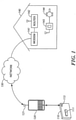
- FIG. 1 an example system comprising components and apparatuses for operating a movable barrier is shown.
- the system shown in FIG. 1 includes an auxiliary device 110, a host device 120, a network 130, a modem 141, and a movable barrier operator 143.
- the auxiliary device 110 is a short range transmitter device configured for mounting in a vehicle.
- the auxiliary device 110 may be a dedicated remote control including having a button 111 and a status indicator 113.
- the auxiliary device 110 may be similar in appearance to a conventional radio frequency (RF) garage door opener.
- the auxiliary device may be part of a built-in vehicle electronics system.
- the auxiliary device 110 includes wireless communication interface configured to send short range wireless communication signals to the host device 120.
- the short-range signal may be, for example, Bluetooth, infrared, Wi-Fi, and the like.
- short-range communication signals are signals limited to 25-100mW effective radiated power (ERP) or less so that the communication range is approximately limited to being within a given vehicle. Additional details of an auxiliary device are described with reference to FIG. 2 below.
- the host device 120 is a network-enabled electronic device such as a Smartphone, a mobile communication device, a tablet computer, a wearable computer, an infotainment system, a telematics system, a personal computer, a dash computer, a dedicated computer platform, a navigation system, and an intelligent transportation system.
- the host device 120 is a multi-functional device such as a Smartphone configured to run one or more applications, such as mapping application, email application, music player application, internet browser application, and the like.
- the host device 120 includes movable barrier controller software that is configured to send a command to the movable barrier operator 143 in response to receiving a signal from the auxiliary device 110.
- the software may be a downloaded movable barrier controller application installed on a Smartphone.
- the movable barrier controller software also provides a user interface on the host device 120 that allows the user to control and/or monitor one or more movable barriers through the display and input devices of the host device 120.
- the host device also includes a network interface 121 for communicating with the network 130. Additional details of a host device are described with reference to FIG. 2 below.
- the network 130 is a data communication network which may be, for example, the Internet. While not shown, it is understood that the network 130 may include various components such as routers, transmission towers, servers, and the like for relaying the communication between the home network modem 141 and the host device 120.
- the network 130 may further include a barrier operator server (not shown), which processes the data received from the host device prior to sending the data to the movable barrier operator. For example, in some embodiments, the host device sends a message to the barrier operator server with only an identification number of a movable barrier operator and/or the user, and the server routes the message to the movable barrier with the information relating to that movable barrier operator stored on the server.
- the message may be stored on the server until the movable barrier operator queries the server for messages.
- a dedicated barrier operator server is not needed and the message may be sent through other types of communication server.
- the host device 120 may send a text message to a phone number or an email to an email address monitored by the movable barrier operator using the text message and email servers respectively.
- a local network is represented by a house 140 in FIG. 1 ; however, it is understood that the components shown as being in the house 140 need not be physically located in a residence.
- the modem 141 is connected to the network 130 to receive messages from the host device 120 through the network 130.
- the message may be a command to operate the movable barrier operator 143 or a query for the status of the movable barrier (not shown).
- the message is routed through the local network router 142 to the network enabled movable barrier operator 143.
- the movable barrier operator 143 may be a garage door operator, a gate operator, a commercial door operator, an arm barrier operator and the like.
- FIG. 1 also shows the movable barrier operator being coupled to a motor 144 for actuating a movable barrier. While FIG. 1 shows that the router 142 and the movable barrier operator 143 communicating wirelessly, it is understood that the connection may also be wired. Additionally, in some embodiments, the movable barrier operator 143 may directly communicate with the network without the modem 141 and router 142.
- the movable barrier operator 143 may be a network enabled device configured to directly access the cellular, mobile data, or other types of wireless network.
- FIG. 1 illustrates the host device 120 and the auxiliary device 110 as being outside of the house 140
- the system is also configured to operate with the host device 120 and the auxiliary device 110 near or inside the house 140.
- the host device 120 is located in a vehicle and the auxiliary device 110 is configured for mounting in a vehicle.
- movable barrier operator 143 is configured to receive signal directly from the auxiliary device 110 in case the host device 120 is not available.
- the auxiliary device may be equipped with both a Bluetooth transceiver (2400-2483.5 MHz) and a 200MHz to 400MHz transmitter, a frequency compatible with conventional garage door openers (GDO).
- GDO garage door openers
- the auxiliary device 110 may transmit both a Bluetooth signal to the host device 120 and a RF signal directly receivable by the movable barrier operator 143 when the user pushes the button 111.
- a user can selectively configure the auxiliary device 110 to transmit one or both of a Bluetooth signal and a GDO signal.
- the auxiliary device 110 includes a switch for enabling and disabling GDO signal transmission.
- the user can also configure the auxiliary device 110 with a Bluetooth transmitter to only transmit a GDO signal, thus functioning essentially as a conventional GDO.
- the information required to transmit the GDO signal is stored on a local memory of the auxiliary device 110.
- the auxiliary device 110 is configured to obtain and/or update the information required to transmit a GDO signal from the host device 120.
- the movable barrier operator 143 is configured to respond to status change requests received through the network and through a 200MHz to 400 MHz RF receiver.
- the movable barrier operator 143 may be configured by a user to respond only to status change requests from the network or from the RF receiver. For example, if a GDO remote is misplaced, a user can disable the movable barrier operator's GDO receiver with either a networked device or a switch on the movable barrier operator 143, and still operate the movable barrier with an authorized networked device.
- each auxiliary device may be configured to communicate with multiple host devices
- each host device may be configured to communicate with multiple auxiliary devices
- each movable barrier operator may be configured to receive message from multiple host devices.
- the system shown in FIG. 1 allows the auxiliary device 110 to operate the movable barrier operator 143 at any location that the host device 120 can directly or indirectly access over the network 130.
- the auxiliary device 110 also removes the need for a user to navigate through various menus and options of the host device 120 to access the interface that allows the user to remotely control a movable barrier operator.
- the auxiliary device 110 may be clipped to a vehicle visor and a driver can reach for and press the button 111 on the auxiliary device 110 without taking his eyes off the road. A driver can also quickly glance over to the auxiliary device to check the status of the movable barrier operator displayed on the status indicator 113 to make sure the garage door is closed.
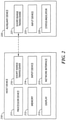
- the host device 210 includes a processor device 211, a memory 212, a display 213, input device 214, a network interface 215, and a short-range transceiver 216.
- the host device 210 is a network-enabled electronic device such as a Smartphone, a tablet computer, a wearable computer, an infotainment system, a telematics system, a personal computer, a dash computer, a dedicated computer platform, a navigation system, and an intelligent transportation system.
- the memory 212 may include one or more of a hard disk, solid state drive, RAM, and other types of non-transitory storage memory.
- the memory 212 may include one or more of the built-in mass storage, on-board RAM, inserted SD memory card, and SIM card memory of a Smartphone device.
- the memory 212 may store a number of software programs or apps executable by the processor device 211, including a movable barrier operator controller program.
- the movable barrier controller program is configured to communicate with one or more movable barrier operators to operate the movable barrier and/or to receive status indication.
- the movable barrier operator controller program may include its own user interface to allow a user to operate a movable barrier operator with the host device.
- the movable barrier controller program may further include a user interface to allow a user to configure various settings associated with the operation of movable barrier.
- the user interface may allow the user to associate the host device 210 with one or more auxiliary devices 220 and/or one or more movable barrier operators.
- the user setting is also stored on the memory 212; in other embodiments, the user setting is stored on a movable barrier operator server in the data cloud.
- the movable barrier program includes a background process that monitors for signals from the auxiliary device 220, a movable barrier operator, and/or a server.
- the memory 212 also stores an operating system, such as Windows ® , iOS ® , Android TM , BlackBerry ®
- the memory 212 may also store authentication information of auxiliary device(s) that had been paired with the host device 210.
- the memory may further store information of associated movable barrier operator(s) needed to send messages and commands to the movable barrier operator(s).
- the display 213 may be any type of known displays, such as liquid crystal display (LCD), light emitting diode (LED) display, organic light emitting diode (OLED) display, E-Paper, and the like.
- the display 213 may be build-in screen incorporated with a vehicle's telematic system.
- the display 213 is configured to display the user interface of the various operating system and/or program executed by the processor device 211,
- the input device 214 may be any type of known user input devices including a touch screen, a touch pad, a keypad, a keyboard, one or more buttons, a microphone, a camera, a joystick, and the like.
- the input device 214 allows the user to interface with various programs executed by the processor device 211.
- the display 213 and the input device 214 are integrated in the form of a touch screen device.
- the network interface 215 is a communication interface that allows the host device 21 to connect to a network.
- the network interface 215 may include one or more of a cellular network transceiver, a Wi-Fi modem, a wireless broadband modem, a mobile data network modem and the like.
- the network interface 215 may be configured to connect to the internet and/or a private network to communicate with a movable barrier operator and/or a server.
- the short-range transceiver 216 is a short-range radio frequency communication interface.
- the short-range transceiver may include a low-power transmitter with less than 100 mW effective radiated power (ERP), depending on the frequency band, which limits their useful range to few hundred meters, and do not require a license from its user.
- the short-range transceiver 216 may be a Bluetooth ® transceiver which operates in the range of 2400-2483.5MHz.
- the host device 210 may communicate with one or more devices through the short-range transceiver 216.
- the host device 210 may further include a location determination function such as a global positioning system (GPS) receiver (not shown) and/or other types of sensors such as motion sensor, accelerometer, microphone, camera, and the like.
- GPS global positioning system
- one host device may be associated with multiple movable barrier operators.
- the movable barrier operator controller software on the host device 210 may select a movable barrier operator to control based on the proximity of the host device to the movable barrier operators using the host device's location determination function, such as receipt of a GPS signal, receipt of a WiFi signal, triangulation via communication with multiple other antennas, and the like.
- the software may determine the host device's location and compare that information with stored information regarding the locations of certain movable barrier operators as may be programmed by a user. In this manner, the host device can determine which movable barrier operator is the closest to the current location of the host device, and sends the message to the closest movable barrier operator.
- the auxiliary device 220 includes a short-range transceiver 221, an input device 223, and a status indicator 225.
- the auxiliary device 220 may be a short-range transmitter and may be a dedicated movable barrier operator controller device.
- the auxiliary device may be similar in dimensions and appearance to a conventional garage door remote control.
- the auxiliary device may be integrated with other devices, such as a vehicle on-board electronics system.
- the short-range transceiver 221 of the auxiliary device 220 may be similar to the short-range transceiver 216 of the host device 210.
- the short-range transceiver 221 provides a way for the auxiliary device 220 to communicate with the host device 210.
- the input device 223 may be any type of common input means including a the user input device comprises at least one of a button, a capacitance input, a touch screen, a switch, a microphone, and a motion sensor.
- the input device 223 allows a user to cause the auxiliary device 220 to send a signal to the host device 210 to request a status change on the movable barrier.
- a user may press a button on the auxiliary device 220 to open or close a garage door through the host device 210.
- the input device 223 may allow the user to specify whether the desired status is open or closed.
- the auxiliary device 220 may include multiple buttons, each pre-programmed for a different movable barrier operator. The signal from the auxiliary device 220 to the host device 210 may then include information associated with which button is pushed.
- the status indicator 225 may be any type of display that can indicate at least two statuses (e.g. open or close).
- the status indicator may be an LED bulb(s), an LED array, an LCD display, a bistable display, and the like.
- the status indicator may also include one or more of a light producing device, a light emitting diode, a video display, a liquid crystal display, a touch screen display, and a sound producing device.
- the auxiliary device 220 may be configured to receive movable barrier status information from the host device 210 and display the status of the movable barrier (e.g., open or closed) through the status indicator 225.
- the movable barrier status information may be information related to the position and/or movement of a movable barrier such as open, close, moving, opening, closing, locked, unlocked, connected, disconnected, and the like.
- the status indicator may be configured to display the status of multiple movable barriers.
- a status indicator may be associated with each of the multiple inputs.
- the status indicator constantly displays the status of movable barrier(s).
- a user can use an input device 223 to trigger the display of status on the status indicator.
- the status indicator 225 is only turned on in specific statuses and is off in other statuses. For example, a LED light may only be lit when a garage door is open, and is turned off when the garage door is closed.
- the auxiliary device 220 may include additional components.
- the auxiliary device 220 may include a housing enclosing the short range transceiver 221, the input device 223, and the status indicator 225.
- the auxiliary device may further include means for attaching the auxiliary device 220 to another structure.
- the attachment means may be a clip, a clap, a hook and loop strip, a suction cup, and the like.
- the auxiliary 220 device may also include an independent power source such as a battery.
- the auxiliary device 220 may further include a memory for storing authentication information of the host device(s) with which it had previously authenticated.
- an auxiliary device 220 may not include a status indicator 225.
- the transceivers 221 may be a transmitters instead. That is, the auxiliary device 220 may only be configured to send status change requests but does not receive the movable barrier status information.
- the auxiliary device 220 includes a short-range transmitter, such as a GDO transmitter, in addition to the short-range transceiver 221.
- a short-range transmitter such as a GDO transmitter
- the auxiliary device may transmit a GDO signal through the GDO transmitter in addition to transmitting the short-range signal through the short-range transceiver 221.
- the auxiliary device further includes one or more switches for enabling and disabling the GDO transmitter and/or the short-range transceiver 221. For example, a user may place the switch in one position to transmit both a GDO signal and a Bluetooth signal, and move the switch to a second position to transmit only a Bluetooth signal.
- the transmitter/transceiver may be configured through the host device 210.
- movable operator controller application on the host device 210 may allow the user to enable and disable the GDO transmitter on the auxiliary device 220.
- the movable operator controller allows the user to configure whether to send a GDO transmitter and/or a Bluetooth signal based on the movable barrier operator being operated by the signal.
- the short-range transceiver 221 and the GDO transmitter may respond to different user inputs.
- different buttons may be associated with the short-range transceiver 221 and the GDO transmitter. The buttons may be configured to operate the same or different movable barrier operators.
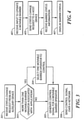
- FIG. 3 shows a flow diagram of an example method for remotely operating a movable barrier as implemented on a host device.
- the host device receives a status change request from an auxiliary device.
- the signal from the auxiliary device may be a simple trigger signal or it may specify whether the desired movable barrier status should be opened or closed.
- the signal may also indicate which of a plurality of movable barriers should receive the command to change status.
- the status change request is a short-range radio frequency signal such as a Bluetooth ® signal.
- the host device may additionally verify the authentication status of the auxiliary device. For example, the host device may determine whether the auxiliary device sending the signal has permission to control the movable barrier operator.
- Step 301 may be a function of movable barrier operator application software, the operating system, and/or a background monitoring process running on the host device.
- the host device determines whether more than one movable barrier operator are associated with the application running on the host device.
- one host device may have stored in its memory information relating to multiple movable barrier operators that it can communicate with and control. For example, one host device may be configured to control an office parking garage gate, a community gate, and a residential garage gate. If there are multiple movable barrier operators associated with the host device, the process moves to step 304. If only one movable barrier operator is associated with the application, the process may proceed directly to step 305.
- the movable barrier controller application is only configured to communicate with one movable barrier operator, and both steps 303 and 304 may be skipped.
- the application selects one movable barrier operator to control.
- the selection may be based on one or more factors.
- the user may select a default movable barrier operator for the host device.
- the default movable barrier operator may further be configured to automatically change based on time of day, date of week, location of the host device, etc.
- the host device uses a GPS signal or other location determination to determine which movable barrier operator is the closest to the host device to select a movable barrier operator to control.
- the signal from an auxiliary device causes the host display to display options and/or status for the multiple movable barrier operators on its display screen for the user to select.
- one movable barrier operator is selected based the input received on the auxiliary device.
- the auxiliary device may have separate buttons for the community gate and the residential garage door, and a different signal is sent to the host device based on which button is pressed.
- the movable barrier operator is selected based on the identity of the auxiliary device sending the signal.
- one auxiliary device may be configured to only control a first gate, and a second auxiliary may be configured to control a second gate.
- the host device may be configured to allow a user to select and edit one or more of the above configurations with a user interface of the movable barrier controller application, and determine a movable barrier operator based on the stored user configuration.
- the host device generates a control signal for a movable barrier operator.
- the control signal may be a status change request which opens the movable barrier if it is currently closed, and closes the movable barrier if it is currently open.
- the control signal may specify whether the desired status is opened or closed such that the operator then determines whether to operate based on the received control signal and the current state of the barrier.
- the control signal may include information necessary to establish that the host device has permission to change the status of the movable barrier operator.
- the control signal may be encrypted with a passcode or include other encryption such as rolling code encryption.
- the control signal is sent over a network to the movable barrier operator.
- the control signal may be sent via a network interface of the host device such as a Wi-Fi module, a cellular data antenna, and the like.
- the control signal may be sent in the form of a data packet, a text message, a voice call, or an email.
- the host device may receive a confirmation signal from the movable barrier operator through the network to confirm that the requested status change has been completed.
- the confirmation signal may be barrier status information.
- the control signal and/or the confirmation signal is routed through a server such as a dedicated movable barrier controller server.
- the host device may first be required to authenticate with one or more auxiliary devices. For example, a user may enter a pass code or device code associated with the auxiliary device on the host device for the host device to accept status change request signals from the auxiliary device in the future. Also prior to step 301, the host device may also authenticate with a movable barrier operator. For example, the user may be required to enter a pass code or the device code associated with the movable barrier operator for the host device to send control commands to the movable barrier operators.
- the pass code or the device code may be encrypted into the control signal each time a message is sent between the various devices to ensure that only host devices with permission to operate the movable barrier operator can cause the movable barrier to move.
- authentication may include the user logging into a movable operator server to access a user profile that may be associated with one or more movable barrier operator.
- the host device may further periodically query for movable barrier status from the movable barrier operator.
- the movable barrier operator updates the information stored on a server when the status of the movable barrier changes, and the host device periodically retrieves the status information form the server.
- FIG. 4 shows a flow diagram of a method for remotely operating a movable barrier as implemented on an auxiliary device.
- the auxiliary device receives a user input to operate a moveable barrier.
- the user input may be a user operating an input device such as a button, a keypad, a touchpad, a switch, and the like on the auxiliary device.
- the user input may also be a voice command, a gesture command, and the like.
- the auxiliary device sends a status change request to a host device.
- Step 403 occurs in response to step 401.
- the status change request may be sent through a previously established communication link with a host device.
- the communication link is a short-range radio frequency communication channel.
- the status change request is broadcasted to all nearby devices.
- the status change request may be a trigger that requests a change from the current barrier status, whether the current status is opened or closed.
- the status change request may specify whether the desired status is opened or closed.
- the status change request may specify which movable barrier operator to control based on the user input in step 401. For example, the status change request may be based on which button the user pushes on the auxiliary device.
- the auxiliary device receives the barrier status information from the host device.
- Step 405 may occur after each time a status change request is sent to a host device in step 403.
- the barrier status information also functions as a confirmation of the receipt of the status change request.
- the host device may send a separate confirmation signal.
- step 405 occurs periodically with or without steps 401 and 403.
- the host device may automatically transmit the barrier status information to the auxiliary periodically, or the auxiliary device may request the barrier status information from the host device periodically.
- the barrier status information is sent by the host device when the host device detected a change in the movable barrier status.
- step 405 includes storing the received barrier status information on a memory on the auxiliary device.
- the stored status memory may be used to determine whether the desired status is open or close when a user input is received in step 401.
- no barrier status information is received at all by the auxiliary device, such information being available instead only from the host device.
- the barrier status is displayed on a status indicator of the auxiliary device.
- the status indicator may be LED bulb(s), a LED array, a LCD display, a bistable display, and the like.
- the status indicator may display the status of multiple movable barriers.
- a status indicator may be associated with each of the multiple inputs.
- the status indicator constantly displays the status of movable barrier(s).
- a user can use an input device to trigger the display of status on the status indicator.
- the display of barrier status may be changed based on the barrier status information received in step 405.
- the above approach combines the accessibility with a conventional remote control and the versatility of a networked movable barrier controller application.
- a driver can simply reach for the remote control device and press a button to operate the garage door without having the take his eyes off the road.
- This system also allows for various user configurable settings that can be tailored to each user's individual needs and usage pattern.
- the system also provides an added layer of security in case the remote control is misplaced or stolen. In such a case, the remote control will not be able to open a movable barrier on its own.
- the user can also revoke the authentication of the host and/or auxiliary device if one or both is lost through another networked device for added security.
- the embodiments described above provide security to the owner of a garage door opener by removing the ability for a transmitter to function when it is distant from a vehicle in which it is normally used.
- the primary transmitter would have knowledge that it is close enough to the vehicle in order to activate the garage door opener to perform various functions.
- any of the signals or commands sent or received by the host device, auxiliary device, and movable barrier operator may be encrypted according to various methods.
Landscapes
- Engineering & Computer Science (AREA)
- Computer Networks & Wireless Communication (AREA)
- Physics & Mathematics (AREA)
- General Physics & Mathematics (AREA)
- Automation & Control Theory (AREA)
- General Engineering & Computer Science (AREA)
- Manufacturing & Machinery (AREA)
- Quality & Reliability (AREA)
- Selective Calling Equipment (AREA)
- Telephonic Communication Services (AREA)
Claims (14)
- Système pour la commande d'un opérateur de barrière mobile (143), le système comprenant :un dispositif électronique hôte compatible réseau (120, 210) situé dans un véhicule et configuré pour exécuter une application de commande de barrière mobile et pour générer et envoyer, à l'aide de l'application de commande de barrière mobile, un signal de commande à l'opérateur de barrière mobile (143) ; etun dispositif auxiliaire (110, 220) configuré pour être monté dans le véhicule, le dispositif auxiliaire (110, 220) comprenant :une interface de communication radiofréquence à courte portée (221) configurée pour communiquer avec le dispositif électronique hôte compatible réseau (110, 220) exécutant l'application de commande de barrière mobile ;un dispositif d'entrée utilisateur (111, 223) configuré pour recevoir une entrée utilisateur et, en réponse à la réception de l'entrée utilisateur, amener l'interface de communication (221) à envoyer une demande de changement d'état au dispositif électronique hôte compatible réseau (120, 210) ; etun émetteur à courte portée conçu pour envoyer un signal radiofréquence « RF » à l'opérateur de barrière mobile (143) ;dans lequel la demande de changement d'état est configurée pour amener l'application de commande de barrière mobile à générer le signal de commande qui amènera l'opérateur de barrière mobile (143) à mouvoir une barrière mobile et pour amener le dispositif électronique hôte compatible réseau (120, 210) à envoyer le signal de commande à l'opérateur de barrière mobile (143) sur un réseau (130) ;caractérisé en ce que le dispositif auxiliaire (110, 220) comprend un commutateur pour l'activation et la désactivation d'au moins un élément parmi l'émetteur à courte portée et l'interface de communication radiofréquence à courte portée (221), et en ce que le dispositif auxiliaire (110, 220) est conçu pour, sur la base du commutateur, envoyer sélectivement, lors d'une manœuvre du dispositif d'entrée utilisateur (111, 223), l'un des éléments suivants ou les deux: la demande de changement d'état au dispositif électronique hôte compatible réseau (120, 210) et un signal radiofréquence RF directement à l'opérateur de barrière mobile (143).
- Système selon la revendication 1, dans lequel le commutateur inclut :une position pour activer l'émetteur à courte portée pour l'envoi du signal RF, et pour activer l'interface de communication (221) pour l'envoi de la demande de changement d'état ; etune autre position pour désactiver un élément parmi l'émetteur à courte portée et l'interface de communication (221).
- Système selon la revendication 1 ou 2, dans lequel le commutateur est également conçu pour être configuré par le moyen de l'application de commande de barrière mobile sur le dispositif électronique hôte compatible réseau (110, 220).
- Système selon l'une quelconque des revendications précédentes, dans lequel le dispositif auxiliaire (110, 210) comprend en outre :un indicateur d'état de barrière (113, 225),dans lequel l'interface de communication (221) est en outre configurée pour recevoir des informations d'état de barrière en provenance du dispositif électronique hôte compatible réseau (120, 210) et dans lequel l'indicateur d'état de barrière (113, 225) affiche les informations d'état de barrière.
- Système selon l'une quelconque des revendications précédentes, comprenant en outre : une mémoire de stockage (212) pour le stockage d'informations d'authentification, dans lequel le dispositif auxiliaire (110, 210) est configuré pour s'authentifier auprès du dispositif électronique hôte compatible réseau (120, 210) avant d'envoyer la demande de changement d'état, et facultativement dans lequel le dispositif électronique hôte compatible réseau (120, 210) est conçu pour déterminer si le dispositif auxiliaire (110, 220), duquel a émané la demande de changement d'état, a la permission de commander l'opérateur de barrière mobile (143) sur la base des informations d'authentification.
- Système selon l'une quelconque des revendications précédentes, dans lequel le dispositif électronique hôte compatible réseau (120, 210) est associé à une pluralité d'opérateurs de barrière mobile, et facultativement dans lequel le dispositif électronique hôte compatible réseau (120, 210) est en outre configuré pour sélectionner l'un des opérateurs de barrière mobile sur la base d'un ou de plusieurs facteurs incluant : un réglage par défaut, une heure de la journée, un jour de la semaine, et un emplacement du dispositif électronique hôte compatible réseau (120, 210), et en outre facultativement dans lequel le dispositif électronique hôte compatible réseau (120, 210) est en outre configuré pour déterminer un emplacement du dispositif électronique hôte compatible réseau (120, 210), pour comparer l'emplacement du dispositif électronique hôte compatible réseau (120, 210) à un emplacement d'un opérateur de barrière mobile (143), et pour générer le signal de commande sur la base en partie de l'emplacement du dispositif électronique hôte compatible réseau (120, 210) et de l'emplacement d'un opérateur de barrière mobile (143) le plus proche parmi la pluralité d'opérateurs de barrière mobile.
- Système selon l'une quelconque des revendications 1-3, dans lequel le dispositif auxiliaire (110, 220) est configuré pour s'appairer avec le dispositif électronique hôte compatible réseau (120, 210), et facultativement dans lequel l'interface de communication (221) et l'émetteur à courte portée comprennent des émetteurs-récepteurs Bluetooth pour l'appairage.
- Système selon l'une quelconque des revendications précédentes, dans lequel le dispositif électronique hôte compatible réseau (120, 220) est configuré dans le véhicule sous la forme d'un système d'infodivertissement, d'un système télématique, d'un ordinateur de bord, d'un système de navigation ou d'un système de transport intelligent.
- Procédé pour la commande d'un opérateur de barrière mobile (143) avec un système selon l'une quelconque des revendications 1-8, un dispositif électronique hôte compatible réseau (120, 210) étant situé dans un véhicule pour la commande d'un opérateur de barrière mobile (143), le procédé comprenant :la réception d'une entrée pour actionner une barrière mobile au niveau d'un dispositif auxiliaire (110, 220) configuré pour être monté dans le véhicule ;l'envoi, par l'intermédiaire d'une interface de communication radiofréquence à courte portée (221) du dispositif auxiliaire (110, 220), d'une demande de changement d'état au dispositif électronique hôte compatible réseau (120, 210), le dispositif électronique hôte compatible réseau (120, 210) exécutant une application de commande de barrière mobile ;dans lequel la demande de changement d'état est configurée pour amener l'application de commande de barrière mobile à générer un signal de commande et pour amener le dispositif électronique hôte compatible réseau (120, 210) à envoyer le signal de commande à l'opérateur de barrière mobile (143) sur un réseau (130) ; etcaractérisé en ce que le dispositif auxiliaire (110, 220) comprend en outre un émetteur à courte portée conçu pour envoyer un signal radiofréquence « RF » à l'opérateur de barrière mobile (143) ; et un commutateur pour l'activation et la désactivation d'au moins un élément parmi l'émetteur à courte portée et l'interface de communication radiofréquence à courte portée (221) ; le dispositif auxiliaire (110, 220) étant conçu pour envoyer sélectivement, lors d'une manœuvre du dispositif d'entrée utilisateur (111, 223), l'un des éléments suivants ou les deux : la demande de changement d'état au dispositif électronique hôte compatible réseau (120, 210) et un signal radiofréquence RF directement à l'opérateur de barrière mobile (143).
- Procédé selon la revendication 9, dans lequel le dispositif électronique hôte compatible réseau (120, 210) comprend un émetteur à courte portée, et facultativement dans lequel l'interface de communication radiofréquence à courte portée et l'émetteur à courte portée comprennent des émetteurs-récepteurs Bluetooth pour l'appairage.
- Procédé selon la revendication 9 ou 10, comprenant en outre :la réception d'informations d'état de barrière en provenance du dispositif électronique hôte compatible réseau (120, 210) par le moyen de l'interface de communication (221) ; etl'affichage d'informations d'état de barrière sur un indicateur d'état de barrière (113, 225).
- Procédé selon la revendication 9, comprenant en outre :
le stockage d'informations d'authentification sur une mémoire de stockage (212) et l'authentification auprès du dispositif électronique hôte compatible réseau (120, 210) avant l'envoi de la demande de changement d'état, et facultativement dans lequel le dispositif électronique hôte compatible réseau (120, 210) est conçu pour déterminer si le dispositif auxiliaire (110, 220), duquel a émané la demande de changement d'état, a la permission de commander l'opérateur de barrière mobile (143) sur la base des informations d'authentification. - Procédé selon l'une quelconque des revendications 9 à 12, dans lequel le dispositif électronique hôte compatible réseau (120, 220) est configuré dans le véhicule sous la forme d'un système d'infodivertissement, d'un système télématique, d'un ordinateur de bord, d'un système de navigation ou d'un système de transport intelligent.
- Dispositif auxiliaire (110, 220) conçu pour être utilisé avec un dispositif électronique hôte compatible réseau (120, 210) situé dans un véhicule, le dispositif électronique hôte compatible réseau étant configuré pour exécuter une application de commande de barrière mobile et pour générer et envoyer, à l'aide de l'application de commande de barrière mobile, un signal de commande à un opérateur de barrière mobile pour la commande de l'opérateur de barrière mobile (143), le dispositif auxiliaire (110, 220) étant configuré pour être monté dans un véhicule, le dispositif auxiliaire (110, 220) comprenant :une interface de communication radiofréquence à courte portée (221) configurée pour communiquer avec le dispositif électronique hôte compatible réseau (110, 220) exécutant l'application de commande de barrière mobile ;un dispositif d'entée utilisateur (111, 223) configuré pour recevoir une entrée utilisateur et, en réponse à la réception de l'entrée utilisateur, amener l'interface de communication (221) à envoyer une demande de changement d'état au dispositif électronique hôte compatible réseau (120, 210) ;un émetteur à courte portée conçu pour envoyer un signal radiofréquence « RF » à l'opérateur de barrière mobile (143) ; etdans lequel la demande de changement d'état est configurée pour amener l'application de commande de barrière mobile à générer le signal de commande qui amènera l'opérateur de barrière mobile (143) à mouvoir une barrière mobile et pour amener le dispositif électronique hôte compatible réseau (120, 210) à envoyer le signal de commande à l'opérateur de barrière mobile (143) sur un réseau (130) ; etcaractérisé en ce que le dispositif auxiliaire (110, 220) comprend en outre un commutateur pour l'activation et la désactivation d'au moins un élément parmi l'émetteur à courte portée et l'interface de communication radiofréquence à courte portée (221), et en ce que le dispositif auxiliaire (110, 220) est conçu pour, sur la base du commutateur, envoyer sélectivement, lors d'une manœuvre du dispositif d'entrée utilisateur (111, 223), l'un des éléments suivants ou les deux: la demande de changement d'état au dispositif électronique hôte compatible réseau (120, 210) et un signal radiofréquence RF directement à l'opérateur de barrière mobile (143).
Applications Claiming Priority (2)
| Application Number | Priority Date | Filing Date | Title |
|---|---|---|---|
| US14/087,741 US10126737B2 (en) | 2013-11-22 | 2013-11-22 | Remotely operating a movable barrier operator with auxiliary device |
| PCT/US2014/066132 WO2015077222A1 (fr) | 2013-11-22 | 2014-11-18 | Mise en œuvre à distance d'un actionneur de barrière mobile par un dispositif auxiliaire |
Publications (3)
| Publication Number | Publication Date |
|---|---|
| EP3072016A1 EP3072016A1 (fr) | 2016-09-28 |
| EP3072016A4 EP3072016A4 (fr) | 2017-07-19 |
| EP3072016B1 true EP3072016B1 (fr) | 2022-03-16 |
Family
ID=53180069
Family Applications (1)
| Application Number | Title | Priority Date | Filing Date |
|---|---|---|---|
| EP14864870.2A Active EP3072016B1 (fr) | 2013-11-22 | 2014-11-18 | Mise en oeuvre à distance d'un actionneur de barrière mobile par un dispositif auxiliaire |
Country Status (5)
| Country | Link |
|---|---|
| US (2) | US10126737B2 (fr) |
| EP (1) | EP3072016B1 (fr) |
| AU (1) | AU2014353222B2 (fr) |
| CA (1) | CA2930825C (fr) |
| WO (1) | WO2015077222A1 (fr) |
Families Citing this family (23)
| Publication number | Priority date | Publication date | Assignee | Title |
|---|---|---|---|---|
| US8866583B2 (en) | 2012-06-12 | 2014-10-21 | Jeffrey Ordaz | Garage door system and method |
| US10096187B2 (en) * | 2015-04-09 | 2018-10-09 | Overhead Door Corporation | Automatic transmission of a barrier status and change of status over a network |
| CN108780593A (zh) | 2016-04-11 | 2018-11-09 | 创科(澳门离岸商业服务)有限公司 | 模块化车库开门器 |
| CA2961090A1 (fr) | 2016-04-11 | 2017-10-11 | Tti (Macao Commercial Offshore) Limited | Ouvre-porte de garage modulaire |
| DE202016002975U1 (de) * | 2016-05-06 | 2017-08-09 | Marantec Antriebs- Und Steuerungstechnik Gmbh & Co. Kg | Steuereinheit für einen Torantrieb |
| CA3035765C (fr) | 2016-09-19 | 2022-11-08 | The Chamberlain Group, Inc. | Actionnement de barriere sensible a la position |
| CN107965231A (zh) * | 2016-10-20 | 2018-04-27 | 创科(澳门离岸商业服务)有限公司 | 使用日志数据的异步报告支持车库门开门器操作的诊断的系统和方法 |
| US10443295B2 (en) | 2016-12-02 | 2019-10-15 | Tti (Macao Commercial Offshore) Limited | Garage door opener system having an intelligent automated assistant and method of controlling the same |
| CA2987088A1 (fr) * | 2016-12-02 | 2018-06-02 | Mark Huggins | Systeme d'ouvre-porte de garage comportant un assistant intelligent et methode de commande associee |
| CA2987080A1 (fr) * | 2016-12-02 | 2018-06-02 | Parke Pleasants | Adaptateur |
| EP3348767B1 (fr) | 2017-01-12 | 2024-04-17 | dormakaba Deutschland GmbH | Système permettant d'obtenir au moins un paramètre d'entraînement d'un système de porte |
| IT201700011800A1 (it) * | 2017-02-03 | 2018-08-03 | Carlo Vignati | Apri cancello gps |
| DE102017002543A1 (de) * | 2017-03-15 | 2018-09-20 | Marantec Antriebs- Und Steuerungstechnik Gmbh & Co. Kg | Torsteuerung |
| US10270493B2 (en) | 2017-07-14 | 2019-04-23 | The Chamberlain Group, Inc. | Portable rechargeable transmitter |
| US10490007B2 (en) | 2017-08-08 | 2019-11-26 | Honda Motor Co., Ltd. | System and method for automatically controlling movement of a barrier |
| US10557299B2 (en) | 2017-08-08 | 2020-02-11 | Honda Motor Co., Ltd. | System and method for automatically controlling movement of a barrier |
| US10246930B2 (en) | 2017-08-08 | 2019-04-02 | Honda Motor Co., Ltd. | System and method for remotely controlling and determining a status of a barrier |
| EP3899178B1 (fr) * | 2018-12-19 | 2025-07-23 | ASSA ABLOY Entrance Systems AB | Actionneur de porte automatique et procédé de fonctionnement d'un actionneur de porte automatique |
| US11313168B2 (en) | 2018-12-31 | 2022-04-26 | William Kyle Virgin | Universal add-on devices for feature enhancement of openers for movable barriers |
| US11402812B1 (en) * | 2019-03-22 | 2022-08-02 | The Chamberlain Group Llc | Apparatus and method for controlling a device |
| US11308019B2 (en) | 2019-05-30 | 2022-04-19 | D. H. Pace Company, Inc. | Systems and methods for door and dock equipment servicing |
| JP7289741B2 (ja) * | 2019-07-01 | 2023-06-12 | 文化シヤッター株式会社 | 開閉制御システム、開閉制御方法、リモコン装置用アプリケーション及び携帯通信端末装置 |
| US12306165B2 (en) * | 2022-03-07 | 2025-05-20 | Hach Company | Probe system with detachable sensor probe that communicates wirelessly |
Citations (1)
| Publication number | Priority date | Publication date | Assignee | Title |
|---|---|---|---|---|
| WO2015073810A1 (fr) * | 2013-11-15 | 2015-05-21 | Gentex Corporation | Système de commande de porte de garage connecté à internet |
Family Cites Families (29)
| Publication number | Priority date | Publication date | Assignee | Title |
|---|---|---|---|---|
| US7346374B2 (en) | 1999-05-26 | 2008-03-18 | Johnson Controls Technology Company | Wireless communications system and method |
| US7257426B1 (en) | 1999-05-26 | 2007-08-14 | Johnson Controls Technology Company | Wireless communications systems and method |
| EP1216899A1 (fr) | 2000-12-22 | 2002-06-26 | Ford Global Technologies, Inc. | Système de communication à distance pour l'utilisation avec un véhicule |
| US20020183008A1 (en) | 2001-05-29 | 2002-12-05 | Menard Raymond J. | Power door control and sensor module for a wireless system |
| US7167076B2 (en) | 2001-12-19 | 2007-01-23 | Lear Corporation | Universal garage door operating system and method |
| US6998977B2 (en) | 2003-04-28 | 2006-02-14 | The Chamberlain Group, Inc. | Method and apparatus for monitoring a movable barrier over a network |
| US7197278B2 (en) | 2004-01-30 | 2007-03-27 | Lear Corporation | Method and system for communicating information between a vehicular hands-free telephone system and an external device using a garage door opener as a communications gateway |
| US7124943B2 (en) | 2004-09-24 | 2006-10-24 | Assa Abloy Identification Technology Group Ab | RFID system having a field reprogrammable RFID reader |
| US20060103503A1 (en) | 2004-11-12 | 2006-05-18 | Yan Rodriguez | Networked movable barrier operator system |
| US7956718B2 (en) * | 2004-12-16 | 2011-06-07 | Overhead Door Corporation | Remote control and monitoring of barrier operators with radio frequency transceivers |
| US7532709B2 (en) | 2005-02-04 | 2009-05-12 | Styers Justin R | Remote garage door monitoring system |
| US20070046428A1 (en) | 2005-08-24 | 2007-03-01 | Wayne-Dalton Corporation | System and methods for automatically moving access barriers initiated by mobile transmitter devices |
| US7701331B2 (en) | 2006-06-12 | 2010-04-20 | Tran Bao Q | Mesh network door lock |
| US20080061926A1 (en) | 2006-07-31 | 2008-03-13 | The Chamberlain Group, Inc. | Method and apparatus for utilizing a transmitter having a range limitation to control a movable barrier operator |
| US20080169899A1 (en) * | 2007-01-12 | 2008-07-17 | Lear Corporation | Voice programmable and voice activated vehicle-based appliance remote control |
| US8761712B1 (en) * | 2007-01-23 | 2014-06-24 | Control4 Corporation | Location based remote controller for controlling different electronic devices located in different locations |
| US8330572B2 (en) * | 2007-03-16 | 2012-12-11 | Homerun Holdings Corporation | Multiple barrier control system |
| US8841988B2 (en) * | 2007-05-22 | 2014-09-23 | Lear Corporation | System having key fob operable to remotely control a garage door via remote keyless entry receiver and garage door opener transmitter interconnected by vehicle bus |
| US8791790B2 (en) | 2009-02-10 | 2014-07-29 | Yikes Llc | System and method for accessing a structure using a mobile device |
| US8581696B2 (en) | 2010-01-14 | 2013-11-12 | Lear Corporation | Universal garage door opener and appliance control system |
| CA2804974A1 (fr) | 2010-06-16 | 2011-12-22 | Delphian Systems, LLC | Systeme de verrouillage active par un dispositif sans fil |
| US9781599B2 (en) * | 2011-01-07 | 2017-10-03 | Delphian Systems, LLC | System and method for access control via mobile device |
| US8994496B2 (en) * | 2011-04-01 | 2015-03-31 | The Chamberlain Group, Inc. | Encrypted communications for a moveable barrier environment |
| AU2012271443B2 (en) * | 2011-06-17 | 2016-05-12 | Yikes, Llc | System and method for accessing a structure using directional antennas and a wireless token |
| CN106533853B (zh) | 2011-11-07 | 2020-04-21 | 科泰克工业有限公司 | 可适配的无线功率、照明和自动化系统 |
| US9479498B2 (en) * | 2012-09-28 | 2016-10-25 | Intel Corporation | Providing limited access to a service device via an intermediary |
| US9122302B2 (en) * | 2012-12-18 | 2015-09-01 | Yue Huang | Automatic garage door automatic monitoring and controlling system based on the internet of things concept and near field communication (NFC) technology |
| US9169684B2 (en) * | 2013-04-26 | 2015-10-27 | GM Global Technology Operations LLC | Methods, program products, and systems relating to vehicular garage door control systems |
| US10062223B2 (en) * | 2013-08-30 | 2018-08-28 | Bayerische Motoren Werke Akttiengesellschaft | Intermediary access device for communication with a vehicle |
-
2013
- 2013-11-22 US US14/087,741 patent/US10126737B2/en active Active
-
2014
- 2014-11-18 AU AU2014353222A patent/AU2014353222B2/en active Active
- 2014-11-18 WO PCT/US2014/066132 patent/WO2015077222A1/fr not_active Ceased
- 2014-11-18 CA CA2930825A patent/CA2930825C/fr active Active
- 2014-11-18 EP EP14864870.2A patent/EP3072016B1/fr active Active
-
2018
- 2018-10-30 US US16/174,695 patent/US10739762B2/en active Active
Patent Citations (1)
| Publication number | Priority date | Publication date | Assignee | Title |
|---|---|---|---|---|
| WO2015073810A1 (fr) * | 2013-11-15 | 2015-05-21 | Gentex Corporation | Système de commande de porte de garage connecté à internet |
Also Published As
| Publication number | Publication date |
|---|---|
| US10739762B2 (en) | 2020-08-11 |
| CA2930825C (fr) | 2023-09-05 |
| AU2014353222B2 (en) | 2019-03-28 |
| EP3072016A1 (fr) | 2016-09-28 |
| AU2014353222A1 (en) | 2016-06-02 |
| US20190064783A1 (en) | 2019-02-28 |
| CA2930825A1 (fr) | 2015-05-28 |
| WO2015077222A1 (fr) | 2015-05-28 |
| US10126737B2 (en) | 2018-11-13 |
| US20150148983A1 (en) | 2015-05-28 |
| EP3072016A4 (fr) | 2017-07-19 |
Similar Documents
| Publication | Publication Date | Title |
|---|---|---|
| US10739762B2 (en) | Remotely operating a movable barrier operator with auxiliary device | |
| US10730481B2 (en) | Remote control of vehicle functionalities by means of a mobile terminal | |
| EP3069453B1 (fr) | Système de commande de porte de garage connecté à internet | |
| CN107054294B (zh) | 用于按需禁用被动进入的系统和方法 | |
| US10529226B1 (en) | Vehicle integration with security and/or automation systems | |
| US12428900B2 (en) | Movable barrier operator having updatable security protocol | |
| US20180108249A1 (en) | Remote Control Systems for Vehicles | |
| US20170120864A1 (en) | Methods and Systems for Enabling a Vehicle Drive-Away | |
| US20220180679A1 (en) | Vehicle control system | |
| US20190122471A1 (en) | Key unit, control system, control method, and non-transitory computer-readable storage medium having program stored therein | |
| US11220856B2 (en) | Movable barrier operator enhancement device and method | |
| KR101602341B1 (ko) | Avn 장치를 이용한 차량 내 스마트폰 분실 방지 방법 및 시스템 | |
| KR101707823B1 (ko) | 차량 연결 단말기, 차량, 이들을 포함하는 차량 시스템 및 차량 연결 방법 | |
| US20180374291A1 (en) | Connected vehicle communication port integrated universal garage door opener | |
| KR101551075B1 (ko) | 차량 관리 시스템 및 방법 | |
| CA3255599A1 (fr) | Système et procédé d'authentification multi-utilisateur pour entrée et démarrage d'un véhicule sans clé | |
| KR102504469B1 (ko) | 차량, 허브장치 및 이를 포함하는 통신 시스템 | |
| US20170064486A1 (en) | Application Software for Movable Barrier Operation |
Legal Events
| Date | Code | Title | Description |
|---|---|---|---|
| PUAI | Public reference made under article 153(3) epc to a published international application that has entered the european phase |
Free format text: ORIGINAL CODE: 0009012 |
|
| 17P | Request for examination filed |
Effective date: 20160607 |
|
| AK | Designated contracting states |
Kind code of ref document: A1 Designated state(s): AL AT BE BG CH CY CZ DE DK EE ES FI FR GB GR HR HU IE IS IT LI LT LU LV MC MK MT NL NO PL PT RO RS SE SI SK SM TR |
|
| AX | Request for extension of the european patent |
Extension state: BA ME |
|
| DAX | Request for extension of the european patent (deleted) | ||
| A4 | Supplementary search report drawn up and despatched |
Effective date: 20170616 |
|
| RIC1 | Information provided on ipc code assigned before grant |
Ipc: G05B 11/01 20060101AFI20170609BHEP |
|
| STAA | Information on the status of an ep patent application or granted ep patent |
Free format text: STATUS: EXAMINATION IS IN PROGRESS |
|
| 17Q | First examination report despatched |
Effective date: 20180620 |
|
| GRAP | Despatch of communication of intention to grant a patent |
Free format text: ORIGINAL CODE: EPIDOSNIGR1 |
|
| STAA | Information on the status of an ep patent application or granted ep patent |
Free format text: STATUS: GRANT OF PATENT IS INTENDED |
|
| INTG | Intention to grant announced |
Effective date: 20201027 |
|
| GRAJ | Information related to disapproval of communication of intention to grant by the applicant or resumption of examination proceedings by the epo deleted |
Free format text: ORIGINAL CODE: EPIDOSDIGR1 |
|
| STAA | Information on the status of an ep patent application or granted ep patent |
Free format text: STATUS: EXAMINATION IS IN PROGRESS |
|
| RAP1 | Party data changed (applicant data changed or rights of an application transferred) |
Owner name: THE CHAMBERLAIN GROUP, INC. |
|
| INTC | Intention to grant announced (deleted) | ||
| GRAP | Despatch of communication of intention to grant a patent |
Free format text: ORIGINAL CODE: EPIDOSNIGR1 |
|
| STAA | Information on the status of an ep patent application or granted ep patent |
Free format text: STATUS: GRANT OF PATENT IS INTENDED |
|
| INTG | Intention to grant announced |
Effective date: 20211021 |
|
| GRAS | Grant fee paid |
Free format text: ORIGINAL CODE: EPIDOSNIGR3 |
|
| RAP3 | Party data changed (applicant data changed or rights of an application transferred) |
Owner name: THE CHAMBERLAIN GROUP LLC |
|
| GRAA | (expected) grant |
Free format text: ORIGINAL CODE: 0009210 |
|
| STAA | Information on the status of an ep patent application or granted ep patent |
Free format text: STATUS: THE PATENT HAS BEEN GRANTED |
|
| AK | Designated contracting states |
Kind code of ref document: B1 Designated state(s): AL AT BE BG CH CY CZ DE DK EE ES FI FR GB GR HR HU IE IS IT LI LT LU LV MC MK MT NL NO PL PT RO RS SE SI SK SM TR |
|
| REG | Reference to a national code |
Ref country code: GB Ref legal event code: FG4D |
|
| REG | Reference to a national code |
Ref country code: CH Ref legal event code: EP Ref country code: DE Ref legal event code: R096 Ref document number: 602014082882 Country of ref document: DE |
|
| REG | Reference to a national code |
Ref country code: IE Ref legal event code: FG4D |
|
| REG | Reference to a national code |
Ref country code: AT Ref legal event code: REF Ref document number: 1476333 Country of ref document: AT Kind code of ref document: T Effective date: 20220415 |
|
| REG | Reference to a national code |
Ref country code: SE Ref legal event code: TRGR |
|
| REG | Reference to a national code |
Ref country code: LT Ref legal event code: MG9D |
|
| REG | Reference to a national code |
Ref country code: NL Ref legal event code: MP Effective date: 20220316 |
|
| PG25 | Lapsed in a contracting state [announced via postgrant information from national office to epo] |
Ref country code: RS Free format text: LAPSE BECAUSE OF FAILURE TO SUBMIT A TRANSLATION OF THE DESCRIPTION OR TO PAY THE FEE WITHIN THE PRESCRIBED TIME-LIMIT Effective date: 20220316 Ref country code: NO Free format text: LAPSE BECAUSE OF FAILURE TO SUBMIT A TRANSLATION OF THE DESCRIPTION OR TO PAY THE FEE WITHIN THE PRESCRIBED TIME-LIMIT Effective date: 20220616 Ref country code: LT Free format text: LAPSE BECAUSE OF FAILURE TO SUBMIT A TRANSLATION OF THE DESCRIPTION OR TO PAY THE FEE WITHIN THE PRESCRIBED TIME-LIMIT Effective date: 20220316 Ref country code: HR Free format text: LAPSE BECAUSE OF FAILURE TO SUBMIT A TRANSLATION OF THE DESCRIPTION OR TO PAY THE FEE WITHIN THE PRESCRIBED TIME-LIMIT Effective date: 20220316 Ref country code: BG Free format text: LAPSE BECAUSE OF FAILURE TO SUBMIT A TRANSLATION OF THE DESCRIPTION OR TO PAY THE FEE WITHIN THE PRESCRIBED TIME-LIMIT Effective date: 20220616 |
|
| REG | Reference to a national code |
Ref country code: AT Ref legal event code: MK05 Ref document number: 1476333 Country of ref document: AT Kind code of ref document: T Effective date: 20220316 |
|
| PG25 | Lapsed in a contracting state [announced via postgrant information from national office to epo] |
Ref country code: LV Free format text: LAPSE BECAUSE OF FAILURE TO SUBMIT A TRANSLATION OF THE DESCRIPTION OR TO PAY THE FEE WITHIN THE PRESCRIBED TIME-LIMIT Effective date: 20220316 Ref country code: GR Free format text: LAPSE BECAUSE OF FAILURE TO SUBMIT A TRANSLATION OF THE DESCRIPTION OR TO PAY THE FEE WITHIN THE PRESCRIBED TIME-LIMIT Effective date: 20220617 Ref country code: FI Free format text: LAPSE BECAUSE OF FAILURE TO SUBMIT A TRANSLATION OF THE DESCRIPTION OR TO PAY THE FEE WITHIN THE PRESCRIBED TIME-LIMIT Effective date: 20220316 |
|
| PG25 | Lapsed in a contracting state [announced via postgrant information from national office to epo] |
Ref country code: NL Free format text: LAPSE BECAUSE OF FAILURE TO SUBMIT A TRANSLATION OF THE DESCRIPTION OR TO PAY THE FEE WITHIN THE PRESCRIBED TIME-LIMIT Effective date: 20220316 |
|
| PG25 | Lapsed in a contracting state [announced via postgrant information from national office to epo] |
Ref country code: SM Free format text: LAPSE BECAUSE OF FAILURE TO SUBMIT A TRANSLATION OF THE DESCRIPTION OR TO PAY THE FEE WITHIN THE PRESCRIBED TIME-LIMIT Effective date: 20220316 Ref country code: SK Free format text: LAPSE BECAUSE OF FAILURE TO SUBMIT A TRANSLATION OF THE DESCRIPTION OR TO PAY THE FEE WITHIN THE PRESCRIBED TIME-LIMIT Effective date: 20220316 Ref country code: RO Free format text: LAPSE BECAUSE OF FAILURE TO SUBMIT A TRANSLATION OF THE DESCRIPTION OR TO PAY THE FEE WITHIN THE PRESCRIBED TIME-LIMIT Effective date: 20220316 Ref country code: PT Free format text: LAPSE BECAUSE OF FAILURE TO SUBMIT A TRANSLATION OF THE DESCRIPTION OR TO PAY THE FEE WITHIN THE PRESCRIBED TIME-LIMIT Effective date: 20220718 Ref country code: ES Free format text: LAPSE BECAUSE OF FAILURE TO SUBMIT A TRANSLATION OF THE DESCRIPTION OR TO PAY THE FEE WITHIN THE PRESCRIBED TIME-LIMIT Effective date: 20220316 Ref country code: EE Free format text: LAPSE BECAUSE OF FAILURE TO SUBMIT A TRANSLATION OF THE DESCRIPTION OR TO PAY THE FEE WITHIN THE PRESCRIBED TIME-LIMIT Effective date: 20220316 Ref country code: CZ Free format text: LAPSE BECAUSE OF FAILURE TO SUBMIT A TRANSLATION OF THE DESCRIPTION OR TO PAY THE FEE WITHIN THE PRESCRIBED TIME-LIMIT Effective date: 20220316 Ref country code: AT Free format text: LAPSE BECAUSE OF FAILURE TO SUBMIT A TRANSLATION OF THE DESCRIPTION OR TO PAY THE FEE WITHIN THE PRESCRIBED TIME-LIMIT Effective date: 20220316 |
|
| PG25 | Lapsed in a contracting state [announced via postgrant information from national office to epo] |
Ref country code: PL Free format text: LAPSE BECAUSE OF FAILURE TO SUBMIT A TRANSLATION OF THE DESCRIPTION OR TO PAY THE FEE WITHIN THE PRESCRIBED TIME-LIMIT Effective date: 20220316 Ref country code: IS Free format text: LAPSE BECAUSE OF FAILURE TO SUBMIT A TRANSLATION OF THE DESCRIPTION OR TO PAY THE FEE WITHIN THE PRESCRIBED TIME-LIMIT Effective date: 20220716 Ref country code: AL Free format text: LAPSE BECAUSE OF FAILURE TO SUBMIT A TRANSLATION OF THE DESCRIPTION OR TO PAY THE FEE WITHIN THE PRESCRIBED TIME-LIMIT Effective date: 20220316 |
|
| REG | Reference to a national code |
Ref country code: DE Ref legal event code: R097 Ref document number: 602014082882 Country of ref document: DE |
|
| PLBE | No opposition filed within time limit |
Free format text: ORIGINAL CODE: 0009261 |
|
| STAA | Information on the status of an ep patent application or granted ep patent |
Free format text: STATUS: NO OPPOSITION FILED WITHIN TIME LIMIT |
|
| PG25 | Lapsed in a contracting state [announced via postgrant information from national office to epo] |
Ref country code: DK Free format text: LAPSE BECAUSE OF FAILURE TO SUBMIT A TRANSLATION OF THE DESCRIPTION OR TO PAY THE FEE WITHIN THE PRESCRIBED TIME-LIMIT Effective date: 20220316 |
|
| 26N | No opposition filed |
Effective date: 20221219 |
|
| PG25 | Lapsed in a contracting state [announced via postgrant information from national office to epo] |
Ref country code: SI Free format text: LAPSE BECAUSE OF FAILURE TO SUBMIT A TRANSLATION OF THE DESCRIPTION OR TO PAY THE FEE WITHIN THE PRESCRIBED TIME-LIMIT Effective date: 20220316 |
|
| PG25 | Lapsed in a contracting state [announced via postgrant information from national office to epo] |
Ref country code: MC Free format text: LAPSE BECAUSE OF FAILURE TO SUBMIT A TRANSLATION OF THE DESCRIPTION OR TO PAY THE FEE WITHIN THE PRESCRIBED TIME-LIMIT Effective date: 20220316 |
|
| REG | Reference to a national code |
Ref country code: CH Ref legal event code: PL |
|
| REG | Reference to a national code |
Ref country code: BE Ref legal event code: MM Effective date: 20221130 |
|
| PG25 | Lapsed in a contracting state [announced via postgrant information from national office to epo] |
Ref country code: LI Free format text: LAPSE BECAUSE OF NON-PAYMENT OF DUE FEES Effective date: 20221130 Ref country code: CH Free format text: LAPSE BECAUSE OF NON-PAYMENT OF DUE FEES Effective date: 20221130 |
|
| PG25 | Lapsed in a contracting state [announced via postgrant information from national office to epo] |
Ref country code: LU Free format text: LAPSE BECAUSE OF NON-PAYMENT OF DUE FEES Effective date: 20221118 |
|
| PG25 | Lapsed in a contracting state [announced via postgrant information from national office to epo] |
Ref country code: IE Free format text: LAPSE BECAUSE OF NON-PAYMENT OF DUE FEES Effective date: 20221118 |
|
| PG25 | Lapsed in a contracting state [announced via postgrant information from national office to epo] |
Ref country code: BE Free format text: LAPSE BECAUSE OF NON-PAYMENT OF DUE FEES Effective date: 20221130 |
|
| PG25 | Lapsed in a contracting state [announced via postgrant information from national office to epo] |
Ref country code: HU Free format text: LAPSE BECAUSE OF FAILURE TO SUBMIT A TRANSLATION OF THE DESCRIPTION OR TO PAY THE FEE WITHIN THE PRESCRIBED TIME-LIMIT; INVALID AB INITIO Effective date: 20141118 |
|
| PG25 | Lapsed in a contracting state [announced via postgrant information from national office to epo] |
Ref country code: CY Free format text: LAPSE BECAUSE OF FAILURE TO SUBMIT A TRANSLATION OF THE DESCRIPTION OR TO PAY THE FEE WITHIN THE PRESCRIBED TIME-LIMIT Effective date: 20220316 |
|
| PG25 | Lapsed in a contracting state [announced via postgrant information from national office to epo] |
Ref country code: MK Free format text: LAPSE BECAUSE OF FAILURE TO SUBMIT A TRANSLATION OF THE DESCRIPTION OR TO PAY THE FEE WITHIN THE PRESCRIBED TIME-LIMIT Effective date: 20220316 |
|
| PG25 | Lapsed in a contracting state [announced via postgrant information from national office to epo] |
Ref country code: TR Free format text: LAPSE BECAUSE OF FAILURE TO SUBMIT A TRANSLATION OF THE DESCRIPTION OR TO PAY THE FEE WITHIN THE PRESCRIBED TIME-LIMIT Effective date: 20220316 |
|
| PG25 | Lapsed in a contracting state [announced via postgrant information from national office to epo] |
Ref country code: MT Free format text: LAPSE BECAUSE OF FAILURE TO SUBMIT A TRANSLATION OF THE DESCRIPTION OR TO PAY THE FEE WITHIN THE PRESCRIBED TIME-LIMIT Effective date: 20220316 |
|
| PGFP | Annual fee paid to national office [announced via postgrant information from national office to epo] |
Ref country code: GB Payment date: 20250925 Year of fee payment: 12 |
|
| PGFP | Annual fee paid to national office [announced via postgrant information from national office to epo] |
Ref country code: FR Payment date: 20250908 Year of fee payment: 12 |
|
| PGFP | Annual fee paid to national office [announced via postgrant information from national office to epo] |
Ref country code: SE Payment date: 20250910 Year of fee payment: 12 |
|
| PGFP | Annual fee paid to national office [announced via postgrant information from national office to epo] |
Ref country code: DE Payment date: 20250923 Year of fee payment: 12 |
|
| PGFP | Annual fee paid to national office [announced via postgrant information from national office to epo] |
Ref country code: IT Payment date: 20251022 Year of fee payment: 12 |