EP3048693B1 - Anomaliendetektor in einem mosfet-schaltelement und verfahren zur erkennung von anomalien - Google Patents
Anomaliendetektor in einem mosfet-schaltelement und verfahren zur erkennung von anomalien Download PDFInfo
- Publication number
- EP3048693B1 EP3048693B1 EP14846577.6A EP14846577A EP3048693B1 EP 3048693 B1 EP3048693 B1 EP 3048693B1 EP 14846577 A EP14846577 A EP 14846577A EP 3048693 B1 EP3048693 B1 EP 3048693B1
- Authority
- EP
- European Patent Office
- Prior art keywords
- switch element
- mosfet switch
- short circuit
- mosfet
- current
- Prior art date
- Legal status (The legal status is an assumption and is not a legal conclusion. Google has not performed a legal analysis and makes no representation as to the accuracy of the status listed.)
- Active
Links
Images


Classifications
-
- G—PHYSICS
- G01—MEASURING; TESTING
- G01R—MEASURING ELECTRIC VARIABLES; MEASURING MAGNETIC VARIABLES
- G01R31/00—Arrangements for testing electric properties; Arrangements for locating electric faults; Arrangements for electrical testing characterised by what is being tested not provided for elsewhere
- G01R31/327—Testing of circuit interrupters, switches or circuit-breakers
- G01R31/3277—Testing of circuit interrupters, switches or circuit-breakers of low voltage devices, e.g. domestic or industrial devices, such as motor protections, relays, rotation switches
-
- G—PHYSICS
- G01—MEASURING; TESTING
- G01R—MEASURING ELECTRIC VARIABLES; MEASURING MAGNETIC VARIABLES
- G01R31/00—Arrangements for testing electric properties; Arrangements for locating electric faults; Arrangements for electrical testing characterised by what is being tested not provided for elsewhere
- G01R31/327—Testing of circuit interrupters, switches or circuit-breakers
- G01R31/3277—Testing of circuit interrupters, switches or circuit-breakers of low voltage devices, e.g. domestic or industrial devices, such as motor protections, relays, rotation switches
- G01R31/3278—Testing of circuit interrupters, switches or circuit-breakers of low voltage devices, e.g. domestic or industrial devices, such as motor protections, relays, rotation switches of relays, solenoids or reed switches
-
- G—PHYSICS
- G01—MEASURING; TESTING
- G01R—MEASURING ELECTRIC VARIABLES; MEASURING MAGNETIC VARIABLES
- G01R31/00—Arrangements for testing electric properties; Arrangements for locating electric faults; Arrangements for electrical testing characterised by what is being tested not provided for elsewhere
- G01R31/50—Testing of electric apparatus, lines, cables or components for short-circuits, continuity, leakage current or incorrect line connections
- G01R31/52—Testing for short-circuits, leakage current or ground faults
-
- H—ELECTRICITY
- H01—ELECTRIC ELEMENTS
- H01M—PROCESSES OR MEANS, e.g. BATTERIES, FOR THE DIRECT CONVERSION OF CHEMICAL ENERGY INTO ELECTRICAL ENERGY
- H01M10/00—Secondary cells; Manufacture thereof
- H01M10/42—Methods or arrangements for servicing or maintenance of secondary cells or secondary half-cells
- H01M10/48—Accumulators combined with arrangements for measuring, testing or indicating the condition of cells, e.g. the level or density of the electrolyte
- H01M10/482—Accumulators combined with arrangements for measuring, testing or indicating the condition of cells, e.g. the level or density of the electrolyte for several batteries or cells simultaneously or sequentially
-
- H—ELECTRICITY
- H02—GENERATION; CONVERSION OR DISTRIBUTION OF ELECTRIC POWER
- H02H—EMERGENCY PROTECTIVE CIRCUIT ARRANGEMENTS
- H02H3/00—Emergency protective circuit arrangements for automatic disconnection directly responsive to an undesired change from normal electric working condition with or without subsequent reconnection ; integrated protection
- H02H3/08—Emergency protective circuit arrangements for automatic disconnection directly responsive to an undesired change from normal electric working condition with or without subsequent reconnection ; integrated protection responsive to excess current
- H02H3/087—Emergency protective circuit arrangements for automatic disconnection directly responsive to an undesired change from normal electric working condition with or without subsequent reconnection ; integrated protection responsive to excess current for DC applications
-
- H—ELECTRICITY
- H02—GENERATION; CONVERSION OR DISTRIBUTION OF ELECTRIC POWER
- H02H—EMERGENCY PROTECTIVE CIRCUIT ARRANGEMENTS
- H02H7/00—Emergency protective circuit arrangements specially adapted for specific types of electric machines or apparatus or for sectionalised protection of cable or line systems, and effecting automatic switching in the event of an undesired change from normal working conditions
- H02H7/18—Emergency protective circuit arrangements specially adapted for specific types of electric machines or apparatus or for sectionalised protection of cable or line systems, and effecting automatic switching in the event of an undesired change from normal working conditions for batteries; for accumulators
-
- H02J7/64—
-
- H02J7/865—
-
- H—ELECTRICITY
- H03—ELECTRONIC CIRCUITRY
- H03K—PULSE TECHNIQUE
- H03K17/00—Electronic switching or gating, i.e. not by contact-making and –breaking
- H03K17/08—Modifications for protecting switching circuit against overcurrent or overvoltage
- H03K17/082—Modifications for protecting switching circuit against overcurrent or overvoltage by feedback from the output to the control circuit
- H03K17/0822—Modifications for protecting switching circuit against overcurrent or overvoltage by feedback from the output to the control circuit in field-effect transistor switches
-
- Y—GENERAL TAGGING OF NEW TECHNOLOGICAL DEVELOPMENTS; GENERAL TAGGING OF CROSS-SECTIONAL TECHNOLOGIES SPANNING OVER SEVERAL SECTIONS OF THE IPC; TECHNICAL SUBJECTS COVERED BY FORMER USPC CROSS-REFERENCE ART COLLECTIONS [XRACs] AND DIGESTS
- Y02—TECHNOLOGIES OR APPLICATIONS FOR MITIGATION OR ADAPTATION AGAINST CLIMATE CHANGE
- Y02E—REDUCTION OF GREENHOUSE GAS [GHG] EMISSIONS, RELATED TO ENERGY GENERATION, TRANSMISSION OR DISTRIBUTION
- Y02E60/00—Enabling technologies; Technologies with a potential or indirect contribution to GHG emissions mitigation
- Y02E60/10—Energy storage using batteries
Definitions
- the present invention relates to an abnormality diagnostic device and an abnormality diagnostic method for a MOSFET (metal-oxide-semiconductor field-effect transistor) switch element included in a rechargeable battery pack, in particular, for diagnosing a short circuit abnormality (fusion) that is a state in which a MOSFET switch element remains on (short circuited) even if the MOSFET switch element is controlled to be off.
- MOSFET metal-oxide-semiconductor field-effect transistor
- FIG. 7 illustrates an example of a battery pack used for, for example, an electric vehicle that is driven by a rechargeable battery.
- a battery pack 100 includes one or more battery modules 101, and the battery module 101 includes one or more rechargeable batteries, a sensor that monitors states of the batteries, and a battery monitoring unit (not shown).
- the battery module 101 is connected to a charger 200 through positive and negative feed lines 103a and 103b, a charge relay 104, and a charger-side connector 201, and is charged by the charger 200 . Further, the battery module 101 is disconnected from the charger 200 after the charging is completed, and supplies current to a load 300 of, for example, a motor through the feed lines 103a and 103b and a main switch 301.
- first and second MOSFET switch elements 102a and 102b that interrupt a charge current flowing into a battery or a discharge current flowing out of the battery are provided in series between one of the feed lines 103a and 103b and each of the battery modules 101.
- FIG. 7 illustrates an exemplary configuration in which the first and second MOSFET switch elements 102a and 102b are provided on the side of the negative feed line 103b, but the first and second MOSFET switch elements 102a and 102b may be provided on the side of the positive feed line 103a.
- the exemplary configuration in which the first and second MOSFET switch elements 102a and 102b are provided on the side of the negative feed line 103b will be described below, but it is also operable with an exemplary configuration in which they are provided on the side of the positive feed line 103a.
- a holding current flowing through the first and second MOSFET switch elements 102a and 102b that are made of a semiconductor is lower than that of a mechanical relay, and in the first and second MOSFET switch elements 102a and 102b, the degradation of the conduction/interruption characteristics due to, for example, an abrasion or fusion of a contact is small, but there coexists a parasitic diode between a source and a drain.
- MOSFET switch element is hereinafter simply referred to as a MOSFET.
- the first MOSFET 102a causes a charge current to flow into the battery module 101 when it is on.
- a charge current flows into the battery module 101 through a parasitic diode of the second MOSFET 102b, regardless of whether the second MOSFET 102b is on or off.
- the second MOSFET 102b causes a discharge current to flow out of the battery module 101 when it is on.
- a discharge current flows out of the battery module 101 through the parasitic diode of the first MOSFET 102a, regardless of whether the first MOSFET 102a is on or off.
- switch elements such as the first and second MOSFET 102a and 102b and the charge relay 104
- a short circuit abnormality in which a switch element remains in a short-circuited (on) state even if it is controlled to be off such that a current path is interrupted, so a frequent diagnosis of a short circuit abnormality (fusion) is required to be performed on these switch elements.
- a discharging circuit 106 that is constituted of, for example, a transistor switch and resistance is provided in a control unit 105 in the battery pack 100, and the discharging circuit 106 is connected such that a closed circuit is formed in the order of "battery module 101 ⁇ positive feed line 103a ⁇ discharging circuit 106 ⁇ charge relay 104 ⁇ negative feed line 103b ⁇ second MOSFET 102b ⁇ first MOSFET 102a ⁇ battery module 101".
- an on/off controller 107 in the control unit 105 determines whether a discharge current is flowing through the discharging circuit 106 in a state in which the charge relay 104 is off and the second MOSFET 102b is on. It is determined that a short circuit abnormality (fusion) has occurred in the charge relay 104 when it is determined that a discharge current has flowed through the discharging circuit 106, and it is determined that a short circuit abnormality (fusion) has not occurred in the charge relay 104 when it is determined that a discharge current has not flowed.
- a short circuit abnormality (fusion) in the second MOSFET 102b is diagnosed by use of the discharging circuit 106 described above.
- the on/off controller 107 in the control unit 105 determines whether a discharge current is flowing through the discharging circuit 106 in a state in which the charge relay 104 is on and the second MOSFET 102b is off.
- Patent Document 1 discloses a method for diagnosing a short circuit abnormality (fusion) in a relay that is turned on when charging is allowed to be performed, the method including controlling the relay to be off when the diagnosis is performed, measuring voltage on one of the contact sides of the relay and voltage on the other contact side of the relay, and diagnosing fusion in the relay on the basis of these voltages.
- fusion short circuit abnormality
- Patent Document 1 Japanese Laid-open Patent Publication No. 2011-109872
- the first MOSFET 102a is a switch element that is another switch element connected to the battery module 101 and that causes a charge current to flow in.
- the reason is that, even if the first MOSFET 102a is controlled to be off in a state in which the charge relay 104 and the second MOSFET 102b are on, a discharge current flows into the discharging circuit 106 through the parasitic diode of the first MOSFET 102a, regardless of whether there exists a short circuit abnormality (fusion).
- an object of the present invention is to provide an abnormality diagnostic device and method for diagnosing an abnormality in a MOSFET switch element, the abnormality diagnostic device and method permitting a diagnosis of the occurrence of a short circuit abnormality (fusion) in a first MOSFET 102a that is connected to the battery module 101 in the battery pack 100 and that causes a charge current to flow in.
- a short circuit abnormality fusion
- An abnormality diagnostic device for diagnosing an abnormality in a MOSFET switch element includes a current sensor detecting current that flows through a battery module, and a control unit that turns off a MOSFET switch element that causes a charge current to flow into the battery module, transmits, to a charger that charges the battery module, an instruction signal to start a charging operation, and determines, on the basis of an output signal of the current sensor, whether current is flowing through the MOSFET switch element due to the charging operation of the charger, so as to diagnose a short circuit abnormality in the MOSFET switch element on the basis of a result of the determination.
- the control unit diagnoses a short circuit abnormality in the first MOSFET switch element after the charging of the battery module performed by the charger is completed and turns off the second MOSFET switch element after the diagnosis, or before the diagnosis and after the charging is completed, and determines whether a discharge current is flowing through the second MOSFET switch element, so as to diagnose a short circuit abnormality in the second MOSFET switch element.
- the control unit diagnoses, after the charging of the battery module performed by the charger is completed, a short circuit abnormality in the first MOSFET switch element and a short circuit abnormality in the second MOSFET switch element in a state in which the charge relay is on, turns off, after that, the charge relay in a state in which the first MOSFET switch element and the second MOSFET switch element are on, and determines whether a discharge current is flowing through the charge relay, so as to diagnose a short circuit abnormality in the charge relay.
- the control unit diagnoses a short circuit abnormality in the first MOSFET switch element before the charging of the battery module performed by the charger is started and turns off the second MOSFET switch element before the diagnosis, or after the diagnosis and before the charging is started, and determines whether a discharge current is flowing through the second MOSFET switch element, so as to diagnose a short circuit abnormality in the second MOSFET switch element.
- the control unit determines, before the charging of the battery module performed by the charger is started, whether a discharge current is flowing through the charge relay in a state in which the charge relay is off, so as to diagnose a short circuit abnormality in the charge relay, and diagnoses, after that, a short circuit abnormality in the first MOSFET switch element and a short circuit abnormality in the second MOSFET switch element in a state in which the charge relay is on.
- a short circuit abnormality (fusion) in a MOSFET that is connected to a battery module and that causes a charge current to flow in without an increase in cost, by causing a charger that charges a battery module in the battery pack to supply a charging current and by determining whether there exists a charge current that is flowing at that time.
- a diagnosis of a short circuit abnormality (fusion) in a first MOSFET switch element and a second MOSFET switch element that are connected to a battery module is performed, and then a diagnosis of a short circuit abnormality (fusion) in a charge relay is performed, the number of on/off switching controls of each of the switch elements for performing a diagnosis is minimal, which results in efficiently diagnosing a short circuit abnormality (fusion) in these switch elements.
- a diagnosis of a short circuit abnormality (fusion) in a charge relay is performed, and then a diagnosis of a short circuit abnormality (fusion) in a first MOSFET switch element and a second MOSFET switch element that are connected to a battery module is performed, the number of on/off switching controls of each of the switch elements for performing a diagnosis is minimal, which results in efficiently diagnosing a short circuit abnormality (fusion) in these switch elements.
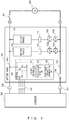
- FIG. 1 is a diagram that illustrates an example of an abnormality diagnostic device according to the present embodiment.
- a battery pack 100 includes a current sensor 110 that detects a charge current and a discharge current that flow through a battery module 101, an on/off controller 107 that performs an on/off control on MOSFETs 102a and 102b and a charge relay 104, a start-of-charge instruction unit 108 that transmits, to a charger 200 that charges the battery module 101, an instruction signal to start a charging operation, and a short circuit abnormality diagnostic unit 109 that determines, on the basis of an output signal of the current sensor 110, whether a charge current is flowing through the MOSFET 102a due to the charging operation of the charger 200, so as to diagnose a short circuit abnormality in the MOSFET 102a on the basis of a result of the determination, or that determines, on the basis of an output signal of the current sensor 110, whether a discharge
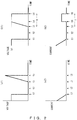
- FIG. 2 illustrates charge voltage waveforms and charge current waveforms when performing a diagnosis of the MOSFET 102a that causes a charge current to flow in.
- (a1) and (a2) of FIG. 2 respectively represent waveforms of an output voltage and a charge current of the charger 200 when the MOSFET 102a is in a normal state (without fusion).
- (b1) and (b2) of FIG. 2 respectively represent waveforms of an output voltage and a charge current of the charger 200 when there exists a short circuit abnormality in the MOSFET 102a (with fusion).
- the charging is completed at time t1, the MOSFET 102a is turned off at time t2, and then an instruction is issued to the charger 200 to start a charging operation at time t3, so as to cause the charger 200 to output a charge voltage.
- the charger 200 stops the charging operation at time t6 at which a certain period of time T has elapsed since time t3. It is determined, on the basis of a result of a detection performed by the current sensor 110, whether a charge current is flowing through the MOSFET 102a during the certain period of time T from time t3 to time t6, and it is determined that there exists a short circuit abnormality (fusion) when a charge current has flowed, and that there does not exist a short circuit abnormality (without fusion) when a charge current has not flowed.
- fusion short circuit abnormality
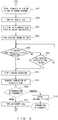
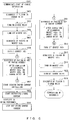
- FIG. 3 illustrates an operational flow for diagnosing a short circuit abnormality (fusion) in the MOSFET 102a by use of a charge current.
- an operation with a thick-lined border is an operation in the charger 200
- an operation with a thin-lined border is an operation in the battery pack 100.
- Step S301 When starting a diagnosis of a short circuit abnormality (fusion) by use of a charge current in a state in which the battery pack 100 is connected to the charger 200 and the charge relay 104 is on (Step S301), the on/off controller 107 of the battery pack 100 controls the MOSFET 102a that causes a charge current to flow in to be off (Step S302).
- the start-of-charge instruction unit 108 of the battery pack 100 sets a start-of-diagnosis flag that indicates that a diagnosis of a short circuit abnormality in the MOSFET 102a is started, and instructs the charger 200 to charge the battery pack 100 at a predetermined charge current rate for a certain period of time to diagnose a short circuit abnormality in the MOSFET 102a (Step S303).
- the charger 200 When receiving, from a control unit 105 of the battery pack 100, an instruction signal to start charging at the predetermined current rate for diagnosing a short circuit abnormality, the charger 200 starts applying a charge voltage to feed lines 103a and 103b of the battery pack 100 such that the battery pack 100 is charged at the predetermined current rate (Step S304).
- the charger 200 gradually increases a charge voltage to be applied while monitoring a charge current, such that the battery pack 100 is charged at the predetermined current rate described above, and monitors whether the charge voltage reaches a predetermined threshold and an overvoltage protection circuit operates (Step S305).
- Step S305 When the overvoltage protection circuit operates (YES in Step S305), the charger 200 stops outputting the charge voltage to stop the charging operation (Step S307) . On the other hand, when the overvoltage protection circuit does not operate (NO in Step S305), the charger 200 monitors whether a certain period of time has elapsed since the charging was started (Step S306) .
- Step S306 When the certain period of time has not elapsed since the charging was started (NO in Step S306), the process returns to the operation of Step S305 for the charger 200. On the other hand, when the certain period of time has elapsed since the charging was started (YES in Step S306), the charger 200 stops outputting the charge voltage to stop the charging operation (Step S307).
- the charger 200 transmits, to the battery pack 100, a completion-of-diagnosis flag that reports that the charging has been stopped (Step S308) .
- the short circuit abnormality diagnostic unit 109 of the battery pack 100 determines whether there exists a short circuit abnormality (fusion) in the MOSFET 102a by determining whether a charge current is flowing (Step S309) .
- the short circuit abnormality diagnostic unit 109 of the battery pack 100 monitors whether a charge current is flowing through the battery module 101 using the current sensor 110, and stores a result of the monitoring. In the determination of abnormality in Step S309, it is determined, on the basis of a result of the monitoring, that there exists a short circuit abnormality (fusion) in the MOSFET 102a when the fact that a charge current has flowed is stored.
- Step S309 When it is determined in Step S309 that there exists a short circuit abnormality (fusion), the short circuit abnormality diagnostic unit 109 of the battery pack 100 sets an abnormality flag reporting the short circuit abnormality (fusion) in the MOSFET 102a so as to report it to a user (Step S310), and terminates an operation for diagnosing a short circuit abnormality (fusion) .
- Step S310 when the fact that a charge current has flowed is not stored, it is determined that the MOSFET 102a is in a normal state (without fusion).
- Step S311 When the MOSFET 102a is determined to be in a normal state (without fusion) in Step S309, the on/off controller 107 turns on the MOSFET 102a (Step S311).
- Step S311 When the diagnosis of a short circuit abnormality (fusion) in the MOSFET 102a that is performed by use of a charge current is terminated, all of the MOSFETs 102a and 102b and the charge relay 104 are terminated in an on state. Before or after this diagnosis, a diagnosis of a short circuit abnormality (fusion) in the MOSFETs 102b or the charge relay 104 is appropriately performed.
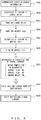
- FIG. 4 is a first operational flow for diagnosing a short circuit abnormality in each switch element by use of a charge current and a discharge current.
- Step S401 a diagnosis of a short circuit abnormality (fusion) in the MOSFET 102a by use of a charge current is performed (Step S402).
- the diagnosis in Step S402 is the diagnosis performed on the MOSFET 102a in Steps S301 to S311 described in FIG. 3 .
- the diagnosis is completed, all of the MOSFETs 102a and 102b and the charge relay 104 are in an on state.
- the on/off controller 107 of the battery pack 100 turns off the MOSFET 102b (Step S403), a transistor in the discharging circuit 106 is turned on, and the short circuit abnormality diagnostic unit 109 diagnoses a short circuit abnormality (fusion) in the MOSFET 102b (Step S404) .
- the short circuit abnormality diagnostic unit 109 determines whether there exists a short circuit abnormality (fusion) in the MOSFET 102b by determining whether a discharge current is flowing through the discharging circuit 106 (Step S405) . In the determination of abnormality in Step S405, it is determined that there exists a short circuit abnormality (fusion) in the MOSFET 102b when it is determined that a discharge current has flowed.
- Step S405 When it is determined in Step S405 that there exists an abnormality, the short circuit abnormality diagnostic unit 109 sets an abnormality flag reporting the short circuit abnormality (fusion) in the MOSFET 102b so as to report it to the user (Step S410), and terminates an operation for diagnosing an abnormality.
- Step S405 when it is determined that a discharge current has not flowed and the MOSFET 102b is determined to be in a normal state (without fusion) in Step S405, the on/off controller 107 turns on the MOSFET 102b (Step S406) and turns off the charge relay 104 (Step S407). Then, the transistor in the discharging circuit 106 is turned on, and the short circuit abnormality diagnostic unit 109 diagnoses a short circuit abnormality (fusion) in the charge relay 104 (Step S408) .
- the short circuit abnormality diagnostic unit 109 determines whether there exists a short circuit abnormality (fusion) in the charge relay 104 by determining whether a discharge current is flowing through the discharging circuit 106 (Step S409). In the determination of abnormality in Step S409, it is determined that there exists a short circuit abnormality (fusion) in the charge relay 104 when it is determined that a discharge current has flowed.
- the short circuit abnormality diagnostic unit 109 sets an abnormality flag reporting the short circuit abnormality (fusion) in the charge relay 104 so as to report it to the user (Step S410), and terminates an operation for diagnosing a short circuit abnormality (fusion).
- Step S409 that a discharge current has not flowed and the charge relay 104 is determined to be in a normal state, an operation for diagnosing a short circuit abnormality (fusion) is terminated.
- a diagnosis of a short circuit abnormality (fusion) in the first MOSFET 102a is performed in a state in which the first MOSFET 102a is off, and the first MOSFET 102a is turned on after the diagnosis
- a diagnosis of a short circuit abnormality (fusion) in the second MOSFET 102b is performed in a state in which the second MOSFET 102b is off, and the second MOSFET 102b is turned on after the diagnosis
- a diagnosis of a short circuit abnormality (fusion) in the charge relay 104 is performed in a state in which the charge relay 104 is off.
- a diagnostic operation is completed in a state in which the first and second MOSFETs 102a and 102b are on and the charge relay 104 is off when the diagnoses of a short circuit abnormality (fusion) in the first and second MOSFETs 102a and 102b and in the charge relay 104 are completed.
- This is a state in which the battery pack 100 can be immediately used for supplying power to a load 300.
- the number of on/off switching controls for diagnosing a short circuit abnormality (fusion) in each of the switch elements is minimal, which results in efficiently diagnosing a short circuit abnormality (fusion) in these switch elements.
- Step S402 may be performed next after "TURN ON MOSFET 102b" of Step S406 that is performed when the diagnosis of the second MOSFET 102b is completed, and before “TURN OFF CHARGE RELAY" of Step S407 that is performed before the diagnosis of the charge relay 104 is started.
- a diagnosis is only performed after the charging of the battery pack 100 is completed. If a diagnosis is only performed after the charging of the battery pack 100 is completed, there is a possibility that a short circuit abnormality (fusion) in each switch element will not be detected when the charging is not completed in a normal way.
- fusion short circuit abnormality
- a diagnosis of a short circuit abnormality (fusion) in each switch element is only performed after the charging of the battery pack 100 is completed, when a short circuit abnormality (fusion) occurs in any switch element, for example while a vehicle equipped with the battery pack 100 after being charged is moving, a next charging is performed without the short circuit abnormality (fusion) being detected when the charging is started, and the short circuit abnormality (fusion) is first detected after the next charging is completed.
- the first MOSFET 102a cannot be turned off due to the occurrence of a short circuit abnormality (fusion) when an abnormality occurs during the charging and the first MOSFET 102a needs to be turned off.
- a diagnosis is performed before the charging of the battery pack 100 is started.
- the problem described above can be solved by performing the second operational flow.
- the control unit 105 in the battery pack 100 communicates start-of-charge information with the charger 200 (Step S501).
- Step S502 the control unit 105 performs, on the charge relay 104 in an off state, a diagnosis of a short circuit abnormality (fusion) by use of a discharge current by a method similar to Step S408 in FIG. 4 (Step S502) .
- a short circuit abnormality (fusion) is detected as a result of the diagnosis in Step S502
- an abnormality flag is set and reported to the user as in Step S410, and the operation of the diagnosis of an abnormality is terminated (not shown).
- the charge relay 104 is turned on after the diagnosis is completed (Step S503).
- Step S504 the second MOSFET 102b is turned off (Step S504), and a diagnosis of a short circuit abnormality (fusion) in the second MOSFET 102b is performed by use of a discharge current by a method similar to Step S404 in FIG. 4 (Step S505).
- Step S505 a diagnosis of a short circuit abnormality (fusion) in the second MOSFET 102b is performed by use of a discharge current by a method similar to Step S404 in FIG. 4
- Step S505 a diagnosis of a short circuit abnormality (fusion) in the second MOSFET 102b is performed by use of a discharge current by a method similar to Step S404 in FIG. 4
- Step S505 an abnormality flag is set and reported to the user in a similar way, and the operation of the diagnosis of an abnormality is terminated (not shown) .
- Step S506 the diagnosis of an abnormality is completed.
- Step S507 a diagnosis of a short circuit abnormality (fusion) in the MOSFET 102a is performed by use of a charge current (Step S507) .
- the diagnosis in Step S507 is the diagnosis performed on the MOSFET 102a in Steps S301 to S311 described in FIG. 3 .
- the control unit 105 immediately starts issuing a charge-current instruction to the charger 200 (Step S508) .
- the charger 200 starts outputting a charge current to the battery pack 100 (Step S509).
- the diagnosis of a short circuit abnormality (fusion) before the charging is started is performed by the procedures in the second operational flow described above, the number of on/off switching controls of the first and second MOSFET 102a and 102b and the charge relay 104 is minimal, which results in efficiently diagnosing a short circuit abnormality (fusion) in these switch elements.
- Step S507 may be performed between "TURN ON CHARGE RELAY" of Step S503 and "TURN OFF MOSFET 102b" of Step S504.
- the diagnosis of a short circuit abnormality (fusion) according to the second operational flow described above is only performed before the charging of the battery pack 100 is started, and it is possible to diagnose, before the charging is started, a short circuit abnormality (fusion) that has occurred while a vehicle equipped with the battery pack 100 is moving, but it is not possible to detect a short circuit abnormality (fusion) that occurs during the charging before a next charging is started.
- a diagnosis of a short circuit abnormality (fusion) in each switch element is performed before the charging of the battery pack 100 is started and after the charging is completed. This permits solving of the problem.
- diagnoses of a short circuit abnormality (fusion) in the first and second MOSFETs 102a and 102b and the charge relay 104 are performed in Steps S601 to S609 by procedures similar to Steps S501 to S509 illustrated in FIG. 5 .
- the battery pack 100 starts to be charged by the charger 200 (Step S609), and when the charging is completed and the output of the charge current from the charger 200 is stopped (Step S610), then a diagnosis of a short circuit abnormality (fusion) after the charging is completed is performed.
- Step S611 to S616 As a diagnosis of a short circuit abnormality (fusion) after the charging is completed, a diagnosis of a short circuit abnormality (fusion) in each switch element is performed in Steps S611 to S616 by procedures similar to Steps S402 to S410 illustrated in FIG. 4 .
- Step S613 When a short circuit abnormality (fusion) is detected as a result of the diagnosis of the second MOSFET 102b in Step S613, an abnormality flag is set and reported to the user as in Step S410 in FIG. 4 , and the operation of the diagnosis of an abnormality is terminated (not shown) .
- the second MOSFET 102b is turned on after the diagnosis is completed (Step S613) .
- Step S616 when a short circuit abnormality (fusion) is detected as a result of the diagnosis of the charge relay 104 in Step S616, an abnormality flag is also set and reported to the user as in Step S410 in FIG. 4 , and the operation of the diagnosis of an abnormality is terminated (not shown) .
- Step S410 the diagnosis of an abnormality
- the order of performing the diagnosis of the first MOSFET 102a and the diagnosis of the second MOSFET 102b also may be changed in the third operational flow, but if a diagnosis of each switch element is performed in the order of the third operational flow, the number of on/off switching controls of each of the switch elements for performing a diagnosis is minimal, which results in efficiently diagnosing a short circuit abnormality (fusion) in these switch elements.
- the on/off controls of the first and second MOSFETs 102a and 102b may be performed by a battery monitoring unit (not shown) in each battery module 101 instead of the on/off controller 107 in the control unit 105 common to each battery module 101.
- start-of-charge instruction unit 108 and the short circuit abnormality diagnostic unit 109 may be included in the battery monitoring unit. Furthermore, the determination of whether a charge current is flowing may be performed by the charger 200 instead of the battery pack 100, and a diagnosis of an abnormality may be performed by the charger 200. Moreover, the charge relay 104 is not limited to a mechanical relay, and various types of switches may be applicable to it.
Landscapes
- Physics & Mathematics (AREA)
- General Physics & Mathematics (AREA)
- Engineering & Computer Science (AREA)
- Manufacturing & Machinery (AREA)
- Chemical & Material Sciences (AREA)
- Chemical Kinetics & Catalysis (AREA)
- Electrochemistry (AREA)
- General Chemical & Material Sciences (AREA)
- Charge And Discharge Circuits For Batteries Or The Like (AREA)
- Power Engineering (AREA)
- Secondary Cells (AREA)
Claims (4)
- Unregelmäßigkeitsdiagnosevorrichtung zum Diagnostizieren einer Unregelmäßigkeit in einem MOSFET-Schaltelement (102), wobei die Unregelmäßigkeitsdiagnosevorrichtung aufweist:einen Stromsensor (110), der Strom detektiert, der durch ein Batteriemodul (101) fließt;ein erstes MOSFET-Schaltelement (102a), das bewirkt, dass ein Ladestrom in das Batteriemodul (101) hinein fließt, und mit dem Batteriemodul (101) in Reihe geschaltet ist;ein zweites MOSFET-Schaltelement (102b), das bewirkt, dass ein Entladestrom aus dem Batteriemodul (101) heraus fließt, und mit dem ersten MOSFET-Schaltelement (102a) und dem Batteriemodul (101) in Reihe geschaltet ist;ein Laderelais (104), das auf einem Stromweg bereitgestellt ist, über den ein Ladestrom von einer Ladeeinrichtung (200) zu dem Batteriemodul (101) fließt; undeine Steuereinheit (105), dienachdem das durch die Ladeeinrichtung (200) durchgeführte Laden des Batteriemoduls (101) abgeschlossen ist, das erste MOSFET-Schaltelement (102a) in einem Zustand ausschaltet, in dem das Laderelais (104) ein ist, ein Anweisungssignal zum Starten eines Ladevorgangs an die Ladeeinrichtung (200) überträgt, und auf Grundlage eines Ausgabesignals des Stromsensors bestimmt, ob aufgrund des Ladevorgangs der Ladeeinrichtung (200) Strom durch das erste MOSFET-Schaltelement (102a) fließt, um eine Kurzschlussunregelmäßigkeit in dem ersten MOSFET-Schaltelement (102a) auf Grundlage eines Ergebnisses der Bestimmung zu diagnostizieren;nachdem das Laden abgeschlossen ist, das zweite MOSFET-Schaltelement (102b) in einem Zustand ausschaltet, in dem das Laderelais (104) ein ist, und bestimmt, ob ein Entladestrom durch das zweite MOSFET-Schaltelement (102b) fließt, um eine Kurzschlussunregelmäßigkeit in dem zweiten MOSFET-Schaltelement (102b) zu diagnostizieren; undnachdem die Diagnosen einer Kurzschlussunregelmäßigkeit in dem ersten MOSFET-Schaltelement (102a) und einer Kurzschlussunregelmäßigkeit in dem zweiten MOSFET-Schaltelement (102b) abgeschlossen sind, das Laderelais (104) in einem Zustand ausschaltet, in dem das erste MOSFET-Schaltelement (102a) und das zweite MOSFET-Schaltelement (102b) ein sind, und bestimmt, ob ein Entladestrom durch das Laderelais (104) fließt, um eine Kurzschlussunregelmäßigkeit in dem Laderelais (104) zu diagnostizieren.
- Unregelmäßigkeitsdiagnosevorrichtung zum Diagnostizieren einer Unregelmäßigkeit in einem MOSFET-Schaltelement (102), wobei die Unregelmäßigkeitsdiagnosevorrichtung aufweist:einen Stromsensor (110), der Strom detektiert, der durch ein Batteriemodul (101) fließt;ein erstes MOSFET-Schaltelement (102a), das bewirkt, dass ein Ladestrom in das Batteriemodul (101) hinein fließt, und mit dem Batteriemodul (101) in Reihe geschaltet ist;ein zweites MOSFET-Schaltelement (102b), das bewirkt, dass ein Entladestrom aus dem Batteriemodul (101) heraus fließt, und mit dem ersten MOSFET-Schaltelement (102a) und dem Batteriemodul (101) in Reihe geschaltet ist;ein Laderelais (104), das auf einem Stromweg bereitgestellt ist, über den ein Ladestrom von einer Ladeeinrichtung (200) zu dem Batteriemodul (101) fließt; undeine Steuereinheit (105), diebevor das durch die Ladeeinrichtung (200) durchgeführte Laden des Batteriemoduls (101) gestartet ist, bestimmt, ob ein Entladestrom durch das Laderelais (104) in einem Zustand fließt, in dem das Laderelais (104) aus ist, um eine Kurzschlussunregelmäßigkeit in dem Laderelais (104) zu diagnostizieren;nachdem die Diagnose einer Kurzschlussunregelmäßigkeit in dem Laderelais (104) abgeschlossen ist, und bevor das Laden gestartet ist, das erste MOSFET-Schaltelement (102a) in einem Zustand ausschaltet, in dem das Laderelais (104) ein ist, ein Anweisungssignal zum Starten eines Ladevorgangs an die Ladeeinrichtung (200) überträgt, auf Grundlage eines Ausgabesignals des Stromsensors (110) bestimmt, ob aufgrund des Ladevorgangs der Ladeeinrichtung (200) Strom durch das erste MOSFET-Schaltelement (102a) fließt, um eine Kurzschlussunregelmäßigkeit in dem ersten MOSFET-Schaltelement (102a) auf Grundlage eines Ergebnisses der Bestimmung zu diagnostizieren, und, nach der Diagnose, das erste MOSFET-Schaltelement (102a) einschaltet, wenn eine Kurzschlussunregelmäßigkeit nicht detektiert wurde; undnachdem die Diagnose einer Kurzschlussunregelmäßigkeit in dem Laderelais (104) abgeschlossen ist, und bevor das Laden gestartet ist, das zweite MOSFET-Schaltelement (102b) in einem Zustand ausschaltet, in dem das Laderelais (104) ein ist, bestimmt, ob ein Entladestrom durch das zweite MOSFET-Schaltelement (102b) fließt, um eine Kurzschlussunregelmäßigkeit in dem zweiten MOSFET-Schaltelement (102b) zu diagnostizieren, und, nach der Diagnose, das zweite MOSFET-Schaltelement (102b) einschaltet, wenn eine Kurzschlussunregelmäßigkeit nicht detektiert wurde.
- Unregelmäßigkeitsdiagnoseverfahren zum Diagnostizieren einer Unregelmäßigkeit in einem MOSFET-Schaltelement (102), wobei die Diagnose mit Bezug auf einen Batteriepack (100) durchgeführt wird, umfassend einen Stromsensor (110), der Strom detektiert, der durch ein Batteriemodul (101) fließt, ein erstes MOSFET-Schaltelement (102a), das bewirkt, dass ein Ladestrom in das Batteriemodul (101) hinein fließt, und mit dem Batteriemodul (101) in Reihe geschaltet ist, ein zweites MOSFET-Schaltelement (102b), das bewirkt, dass ein Entladestrom aus dem Batteriemodul (101) heraus fließt, und mit dem ersten MOSFET-Schaltelement (102a) und dem Batteriemodul (101) in Reihe geschaltet ist, und ein Laderelais (104), das auf einem Stromweg bereitgestellt ist, über den ein Ladestrom von einer Ladeeinrichtung (200) zu dem Batteriemodul (101) fließt, wobei das Unregelmäßigkeitsdiagnoseverfahren aufweist:Ausschalten, nachdem das durch die Ladeeinrichtung (200) durchgeführte Laden des Batteriemoduls (101) abgeschlossen ist, des ersten MOSFET-Schaltelements (102a) in einem Zustand, in dem das Laderelais (104) ein ist, Übertragen eines Anweisungssignals zum Starten eines Ladevorgangs an die Ladeeinrichtung (200), und Bestimmen, auf Grundlage eines Ausgabesignals des Stromsensors (110), ob aufgrund des Ladevorgangs der Ladeeinrichtung (200) Strom durch das erste MOSFET-Schaltelement (102a) fließt, um eine Kurzschlussunregelmäßigkeit in dem ersten MOSFET-Schaltelement (102a) auf Grundlage eines Ergebnisses der Bestimmung zu diagnostizieren;Ausschalten, nachdem das Laden abgeschlossen ist, des zweiten MOSFET-Schaltelements (102b) in einem Zustand, in dem das Laderelais (104) ein ist, und Bestimmen, ob ein Entladestrom durch das zweite MOSFET-Schaltelement (102b) fließt, um eine Kurzschlussunregelmäßigkeit in dem zweiten MOSFET-Schaltelement (102b) zu diagnostizieren; undAusschalten, nachdem die Diagnosen einer Kurzschlussunregelmäßigkeit in dem ersten MOSFET-Schaltelement (102a) und einer Kurzschlussunregelmäßigkeit in dem zweiten MOSFET-Schaltelement (102b) abgeschlossen sind, des Laderelais (104) in einem Zustand, in dem das erste MOSFET-Schaltelement (102a) und das zweite MOSFET-Schaltelement (102b) ein sind, und Bestimmen, ob ein Entladestrom durch das Laderelais (104) fließt, um eine Kurzschlussunregelmäßigkeit in dem Laderelais (104) zu diagnostizieren.
- Unregelmäßigkeitsdiagnoseverfahren zum Diagnostizieren einer Unregelmäßigkeit in einem MOSFET-Schaltelement (102), wobei die Diagnose mit Bezug auf einen Batteriepack (100) durchgeführt wird, umfassend einen Stromsensor (110), der Strom detektiert, der durch ein Batteriemodul (101) fließt, ein erstes MOSFET-Schaltelement (102a), das bewirkt, dass ein Ladestrom in das Batteriemodul (101) hinein fließt, und mit dem Batteriemodul (101) in Reihe geschaltet ist, ein zweites MOSFET-Schaltelement (102b), das bewirkt, dass ein Entladestrom aus dem Batteriemodul (101) heraus fließt, und mit dem ersten MOSFET-Schaltelement (102a) und dem Batteriemodul (101) in Reihe geschaltet ist, und ein Laderelais (104), das auf einem Stromweg bereitgestellt ist, über den ein Ladestrom von einer Ladeeinrichtung (200) zu dem Batteriemodul (101) fließt, wobei das Unregelmäßigkeitsdiagnoseverfahren aufweist:Bestimmen, bevor das durch die Ladeeinrichtung (200) durchgeführte Laden des Batteriemoduls (101) gestartet ist, ob ein Entladestrom durch das Laderelais (104) in einem Zustand fließt, in dem das Laderelais (104) aus ist, um eine Kurzschlussunregelmäßigkeit in dem Laderelais (104) zu diagnostizieren;Ausschalten, nachdem die Diagnose einer Kurzschlussunregelmäßigkeit in dem Laderelais (104) abgeschlossen ist, und bevor das Laden gestartet ist, des ersten MOSFET-Schaltelements (102a) in einem Zustand, in dem das Laderelais (104) ein ist, Übertragen eines Anweisungssignals zum Starten eines Ladevorgangs an die Ladeeinrichtung (200), Bestimmen, auf Grundlage eines Ausgabesignals des Stromsensors (110), ob aufgrund des Ladevorgangs der Ladeeinrichtung (200) Strom durch das erste MOSFET-Schaltelement (102a) fließt, um eine Kurzschlussunregelmäßigkeit in dem ersten MOSFET-Schaltelement (102a) auf Grundlage eines Ergebnisses der Bestimmung zu diagnostizieren, und Einschalten, nach der Diagnose, des ersten MOSFET-Schaltelements (102a) wenn eine Kurzschlussunregelmäßigkeit nicht detektiert wurde; undAusschalten, nachdem die Diagnose einer Kurzschlussunregelmäßigkeit in dem Laderelais (104) abgeschlossen ist, und bevor das Laden gestartet ist, des zweiten MOSFET-Schaltelements (102b) in einem Zustand, in dem das Laderelais (104) ein ist, Bestimmen, ob ein Entladestrom durch das zweite MOSFET-Schaltelement (102b) fließt, um eine Kurzschlussunregelmäßigkeit in dem zweiten MOSFET-Schaltelement (102b) zu diagnostizieren, und Einschalten, nach der Diagnose, des zweiten MOSFET-Schaltelements (102b), wenn eine Kurzschlussunregelmäßigkeit nicht detektiert wurde.
Applications Claiming Priority (3)
| Application Number | Priority Date | Filing Date | Title |
|---|---|---|---|
| JP2013193594 | 2013-09-19 | ||
| JP2014053305A JP5652562B1 (ja) | 2013-09-19 | 2014-03-17 | Mosfetスイッチ素子の異常診断装置及び方法 |
| PCT/JP2014/067341 WO2015040923A1 (ja) | 2013-09-19 | 2014-06-30 | Mosfetスイッチ素子の異常診断装置及び方法 |
Publications (3)
| Publication Number | Publication Date |
|---|---|
| EP3048693A1 EP3048693A1 (de) | 2016-07-27 |
| EP3048693A4 EP3048693A4 (de) | 2016-10-05 |
| EP3048693B1 true EP3048693B1 (de) | 2018-01-17 |
Family
ID=52339817
Family Applications (1)
| Application Number | Title | Priority Date | Filing Date |
|---|---|---|---|
| EP14846577.6A Active EP3048693B1 (de) | 2013-09-19 | 2014-06-30 | Anomaliendetektor in einem mosfet-schaltelement und verfahren zur erkennung von anomalien |
Country Status (4)
| Country | Link |
|---|---|
| US (1) | US9766292B2 (de) |
| EP (1) | EP3048693B1 (de) |
| JP (1) | JP5652562B1 (de) |
| WO (1) | WO2015040923A1 (de) |
Families Citing this family (30)
| Publication number | Priority date | Publication date | Assignee | Title |
|---|---|---|---|---|
| DE102014202198A1 (de) * | 2014-02-06 | 2015-08-06 | Robert Bosch Gmbh | Verfahren zur Überprüfung eines automatischen Parkbremssystems |
| US10033213B2 (en) * | 2014-09-30 | 2018-07-24 | Johnson Controls Technology Company | Short circuit wake-up system and method for automotive battery while in key-off position |
| CN104578307B (zh) * | 2015-01-23 | 2017-01-18 | 浙江大学 | 一种容错锂离子电池组的结构及故障检测方法 |
| CN104953557A (zh) * | 2015-07-01 | 2015-09-30 | 珠海银隆电器有限公司 | 电动汽车动力电池接触器保护装置及其控制方法 |
| JP2017030464A (ja) * | 2015-07-30 | 2017-02-09 | 株式会社オートネットワーク技術研究所 | 給電制御装置及び給電制御システム |
| US10103556B2 (en) * | 2015-11-17 | 2018-10-16 | Motorola Solutions, Inc. | Load side method of blocking charger voltage from a battery load |
| US10283982B2 (en) * | 2016-01-27 | 2019-05-07 | Gm Global Technology Operations Llc. | Voltage disconnect architecture |
| EP3336956B1 (de) * | 2016-12-14 | 2023-08-30 | Robert Bosch GmbH | Verfahren zur überwachung einer entladungsvorrichtung einer batterie |
| JP6628905B2 (ja) * | 2016-12-15 | 2020-01-15 | 三菱電機株式会社 | 動力伝達機構の異常診断装置および動力伝達機構の異常診断方法 |
| US10229873B2 (en) * | 2017-02-07 | 2019-03-12 | International Business Machines Corporation | Three plate MIM capacitor via integrity verification |
| JP6898122B2 (ja) * | 2017-03-23 | 2021-07-07 | 株式会社マキタ | 充電器 |
| CN107170924B (zh) * | 2017-04-24 | 2020-05-01 | 北京长城华冠汽车科技股份有限公司 | 一种电池箱和电动汽车 |
| TWM576750U (zh) * | 2017-07-25 | 2019-04-11 | 美商米沃奇電子工具公司 | 電氣組合物、電動化裝置系統、電池組、電馬達、馬達總成及電馬達總成 |
| GB2551081B (en) * | 2017-08-18 | 2018-12-19 | O2Micro Inc | Fault detection for battery management systems |
| KR102423301B1 (ko) * | 2017-12-11 | 2022-07-19 | 주식회사 엘지에너지솔루션 | 단락 방지 장치 및 방법 |
| KR102364572B1 (ko) * | 2017-12-14 | 2022-02-17 | 주식회사 엘지에너지솔루션 | 릴레이 이상 진단 시스템 및 방법 |
| CN108258754A (zh) * | 2017-12-29 | 2018-07-06 | 惠州市蓝微新源技术有限公司 | 一种充放电快速无缝切换系统 |
| KR102412313B1 (ko) * | 2018-07-17 | 2022-06-22 | 주식회사 엘지에너지솔루션 | 스위치 진단 장치 및 방법 |
| JP6779949B2 (ja) * | 2018-09-04 | 2020-11-04 | 本田技研工業株式会社 | 蓄電システム、および異常判定方法 |
| CN110970962A (zh) * | 2018-12-07 | 2020-04-07 | 宁德时代新能源科技股份有限公司 | 充放电电路 |
| CN109490771B (zh) * | 2019-01-11 | 2025-03-25 | 珠海广通汽车有限公司 | 一种继电器检测方法以及继电器检测装置 |
| CN110347143B (zh) * | 2019-08-07 | 2020-10-16 | 中国核动力研究设计院 | 核安全级优选模块现场驱动输出回路诊断系统及方法 |
| CN111152659B (zh) * | 2019-12-25 | 2021-09-10 | 浙江合众新能源汽车有限公司 | 电池包高压拓补结构及基于该结构的继电器粘连检测方法 |
| KR102729158B1 (ko) * | 2020-06-08 | 2024-11-12 | 주식회사 엘지에너지솔루션 | 릴레이 진단 장치, 릴레이 진단 방법, 배터리 시스템 및 전기 차량 |
| CN112834918B (zh) * | 2020-12-21 | 2023-05-05 | 深圳供电局有限公司 | 开关故障检测方法和开关故障检测装置 |
| US11929698B2 (en) * | 2021-03-23 | 2024-03-12 | Snap-On Incorporated | Short circuit protection for a BLDC motor |
| CN115411789A (zh) | 2021-05-26 | 2022-11-29 | 北京小米移动软件有限公司 | 充电电路、充电控制方法及电子设备 |
| CN114499482B (zh) * | 2022-03-01 | 2025-12-09 | 骆驼集团武汉光谷研发中心有限公司 | 断路器、断路器异常诊断方法及锂电池系统 |
| CN116169748B (zh) * | 2023-02-07 | 2024-12-10 | 中国铁塔股份有限公司 | 供电系统的控制方法、装置、电子设备及可读存储介质 |
| DE102023133323B4 (de) * | 2023-11-29 | 2025-06-12 | DeepDrive GmbH | Wechselrichterschaltung und elektromotorisches Antriebssystem |
Family Cites Families (8)
| Publication number | Priority date | Publication date | Assignee | Title |
|---|---|---|---|---|
| JP3433000B2 (ja) * | 1996-05-29 | 2003-08-04 | 三洋電機株式会社 | 組電池をパルス充電する充電方法 |
| JP2004343850A (ja) * | 2003-05-14 | 2004-12-02 | Nippon Telegr & Teleph Corp <Ntt> | 充電システム |
| US7642750B2 (en) * | 2005-10-04 | 2010-01-05 | O2Micro International Limited | Battery charge/discharge control circuit |
| JP2007215309A (ja) | 2006-02-08 | 2007-08-23 | Sanyo Electric Co Ltd | パック電池の制御方法 |
| JP4591560B2 (ja) * | 2008-06-24 | 2010-12-01 | ソニー株式会社 | 電池パックおよび制御方法 |
| JP5087064B2 (ja) | 2009-11-20 | 2012-11-28 | パナソニック株式会社 | 給電制御装置 |
| JP5733786B2 (ja) * | 2010-11-02 | 2015-06-10 | Necエナジーデバイス株式会社 | 二次電池システム |
| JP5414818B2 (ja) * | 2012-02-23 | 2014-02-12 | 三菱電機株式会社 | 電気自動車用電力変換装置 |
-
2014
- 2014-03-17 JP JP2014053305A patent/JP5652562B1/ja active Active
- 2014-06-30 US US15/021,582 patent/US9766292B2/en active Active
- 2014-06-30 EP EP14846577.6A patent/EP3048693B1/de active Active
- 2014-06-30 WO PCT/JP2014/067341 patent/WO2015040923A1/ja not_active Ceased
Non-Patent Citations (1)
| Title |
|---|
| None * |
Also Published As
| Publication number | Publication date |
|---|---|
| WO2015040923A1 (ja) | 2015-03-26 |
| US20160231382A1 (en) | 2016-08-11 |
| US9766292B2 (en) | 2017-09-19 |
| JP2015084631A (ja) | 2015-04-30 |
| JP5652562B1 (ja) | 2015-01-14 |
| EP3048693A1 (de) | 2016-07-27 |
| EP3048693A4 (de) | 2016-10-05 |
Similar Documents
| Publication | Publication Date | Title |
|---|---|---|
| EP3048693B1 (de) | Anomaliendetektor in einem mosfet-schaltelement und verfahren zur erkennung von anomalien | |
| US9225182B2 (en) | Charge controller with protective function and battery pack | |
| US10284193B2 (en) | Semiconductor switch control device | |
| US9966639B2 (en) | Battery monitoring device | |
| US20190271743A1 (en) | Power supply protective device, power supply device and switch failure diagnosing method | |
| EP1897661B1 (de) | Werkzeugmaschine | |
| CN107017441B (zh) | 蓄电池装置、车辆、记录介质及蓄电池装置管理方法 | |
| US9843184B2 (en) | Voltage conversion apparatus | |
| US9840158B2 (en) | Current measuring relay device | |
| US10177560B2 (en) | Battery monitoring device | |
| EP3683099B1 (de) | Türverriegelungsstromversorgungsvorrichtung, türverriegelungsstromversorgungssystem und fahrzeug damit | |
| JP2015077933A (ja) | 車両電源システム | |
| KR20190072276A (ko) | 워치독 타이머를 진단하기 위한 장치 및 방법 | |
| KR20160041495A (ko) | 모스펫 스위치 구동 장치의 모스펫 진단 장치 및 방법 | |
| US10377239B2 (en) | Auxiliary battery status determination device and auxiliary battery status determination method | |
| EP2998200B1 (de) | Elektrische servolenkvorrichtung | |
| KR20110066872A (ko) | 배터리 상태 감시 회로 및 배터리 장치 | |
| US11368015B2 (en) | Process for testing the operability of a circuit breaker device | |
| JP2016082699A (ja) | リレー制御装置及びリレー制御方法 | |
| JP5931567B2 (ja) | 組電池モジュール | |
| KR20160043736A (ko) | 전기 자동차용 배터리 전원 공급 장치 및 방법 | |
| WO2013118401A1 (ja) | 電池制御装置 | |
| JP6323162B2 (ja) | 電池監視装置 | |
| JP2020022366A (ja) | 車両 | |
| KR20180112484A (ko) | 리던던트 배터리가 포함된 배터리 관리 장치 및 방법 |
Legal Events
| Date | Code | Title | Description |
|---|---|---|---|
| PUAI | Public reference made under article 153(3) epc to a published international application that has entered the european phase |
Free format text: ORIGINAL CODE: 0009012 |
|
| 17P | Request for examination filed |
Effective date: 20160311 |
|
| AK | Designated contracting states |
Kind code of ref document: A1 Designated state(s): AL AT BE BG CH CY CZ DE DK EE ES FI FR GB GR HR HU IE IS IT LI LT LU LV MC MK MT NL NO PL PT RO RS SE SI SK SM TR |
|
| AX | Request for extension of the european patent |
Extension state: BA ME |
|
| A4 | Supplementary search report drawn up and despatched |
Effective date: 20160901 |
|
| RIC1 | Information provided on ipc code assigned before grant |
Ipc: H01M 10/48 20060101ALI20160826BHEP Ipc: H02H 7/18 20060101ALI20160826BHEP Ipc: G01R 31/02 20060101ALI20160826BHEP Ipc: H02H 3/087 20060101ALI20160826BHEP Ipc: H03K 17/00 20060101ALI20160826BHEP Ipc: G01R 31/327 20060101ALI20160826BHEP Ipc: H03K 17/082 20060101ALI20160826BHEP Ipc: H03K 17/08 20060101ALI20160826BHEP Ipc: H02J 7/00 20060101AFI20160826BHEP |
|
| DAX | Request for extension of the european patent (deleted) | ||
| RIC1 | Information provided on ipc code assigned before grant |
Ipc: G01R 31/02 20060101ALI20170330BHEP Ipc: H02J 7/00 20060101AFI20170330BHEP Ipc: H01M 10/48 20060101ALI20170330BHEP Ipc: H03K 17/08 20060101ALI20170330BHEP Ipc: H03K 17/082 20060101ALI20170330BHEP Ipc: H02H 7/18 20060101ALI20170330BHEP Ipc: H02H 3/087 20060101ALI20170330BHEP Ipc: G01R 31/327 20060101ALI20170330BHEP Ipc: H03K 17/00 20060101ALI20170330BHEP |
|
| GRAP | Despatch of communication of intention to grant a patent |
Free format text: ORIGINAL CODE: EPIDOSNIGR1 |
|
| INTG | Intention to grant announced |
Effective date: 20170927 |
|
| GRAS | Grant fee paid |
Free format text: ORIGINAL CODE: EPIDOSNIGR3 |
|
| GRAA | (expected) grant |
Free format text: ORIGINAL CODE: 0009210 |
|
| AK | Designated contracting states |
Kind code of ref document: B1 Designated state(s): AL AT BE BG CH CY CZ DE DK EE ES FI FR GB GR HR HU IE IS IT LI LT LU LV MC MK MT NL NO PL PT RO RS SE SI SK SM TR |
|
| REG | Reference to a national code |
Ref country code: GB Ref legal event code: FG4D |
|
| REG | Reference to a national code |
Ref country code: CH Ref legal event code: EP |
|
| REG | Reference to a national code |
Ref country code: IE Ref legal event code: FG4D |
|
| REG | Reference to a national code |
Ref country code: AT Ref legal event code: REF Ref document number: 965041 Country of ref document: AT Kind code of ref document: T Effective date: 20180215 |
|
| REG | Reference to a national code |
Ref country code: DE Ref legal event code: R096 Ref document number: 602014020188 Country of ref document: DE |
|
| REG | Reference to a national code |
Ref country code: NL Ref legal event code: MP Effective date: 20180117 |
|
| REG | Reference to a national code |
Ref country code: LT Ref legal event code: MG4D |
|
| REG | Reference to a national code |
Ref country code: AT Ref legal event code: MK05 Ref document number: 965041 Country of ref document: AT Kind code of ref document: T Effective date: 20180117 |
|
| PG25 | Lapsed in a contracting state [announced via postgrant information from national office to epo] |
Ref country code: NL Free format text: LAPSE BECAUSE OF FAILURE TO SUBMIT A TRANSLATION OF THE DESCRIPTION OR TO PAY THE FEE WITHIN THE PRESCRIBED TIME-LIMIT Effective date: 20180117 |
|
| PG25 | Lapsed in a contracting state [announced via postgrant information from national office to epo] |
Ref country code: NO Free format text: LAPSE BECAUSE OF FAILURE TO SUBMIT A TRANSLATION OF THE DESCRIPTION OR TO PAY THE FEE WITHIN THE PRESCRIBED TIME-LIMIT Effective date: 20180417 Ref country code: LT Free format text: LAPSE BECAUSE OF FAILURE TO SUBMIT A TRANSLATION OF THE DESCRIPTION OR TO PAY THE FEE WITHIN THE PRESCRIBED TIME-LIMIT Effective date: 20180117 Ref country code: FI Free format text: LAPSE BECAUSE OF FAILURE TO SUBMIT A TRANSLATION OF THE DESCRIPTION OR TO PAY THE FEE WITHIN THE PRESCRIBED TIME-LIMIT Effective date: 20180117 Ref country code: CY Free format text: LAPSE BECAUSE OF FAILURE TO SUBMIT A TRANSLATION OF THE DESCRIPTION OR TO PAY THE FEE WITHIN THE PRESCRIBED TIME-LIMIT Effective date: 20180117 Ref country code: ES Free format text: LAPSE BECAUSE OF FAILURE TO SUBMIT A TRANSLATION OF THE DESCRIPTION OR TO PAY THE FEE WITHIN THE PRESCRIBED TIME-LIMIT Effective date: 20180117 Ref country code: HR Free format text: LAPSE BECAUSE OF FAILURE TO SUBMIT A TRANSLATION OF THE DESCRIPTION OR TO PAY THE FEE WITHIN THE PRESCRIBED TIME-LIMIT Effective date: 20180117 |
|
| PG25 | Lapsed in a contracting state [announced via postgrant information from national office to epo] |
Ref country code: RS Free format text: LAPSE BECAUSE OF FAILURE TO SUBMIT A TRANSLATION OF THE DESCRIPTION OR TO PAY THE FEE WITHIN THE PRESCRIBED TIME-LIMIT Effective date: 20180117 Ref country code: BG Free format text: LAPSE BECAUSE OF FAILURE TO SUBMIT A TRANSLATION OF THE DESCRIPTION OR TO PAY THE FEE WITHIN THE PRESCRIBED TIME-LIMIT Effective date: 20180417 Ref country code: AT Free format text: LAPSE BECAUSE OF FAILURE TO SUBMIT A TRANSLATION OF THE DESCRIPTION OR TO PAY THE FEE WITHIN THE PRESCRIBED TIME-LIMIT Effective date: 20180117 Ref country code: SE Free format text: LAPSE BECAUSE OF FAILURE TO SUBMIT A TRANSLATION OF THE DESCRIPTION OR TO PAY THE FEE WITHIN THE PRESCRIBED TIME-LIMIT Effective date: 20180117 Ref country code: IS Free format text: LAPSE BECAUSE OF FAILURE TO SUBMIT A TRANSLATION OF THE DESCRIPTION OR TO PAY THE FEE WITHIN THE PRESCRIBED TIME-LIMIT Effective date: 20180517 Ref country code: LV Free format text: LAPSE BECAUSE OF FAILURE TO SUBMIT A TRANSLATION OF THE DESCRIPTION OR TO PAY THE FEE WITHIN THE PRESCRIBED TIME-LIMIT Effective date: 20180117 Ref country code: GR Free format text: LAPSE BECAUSE OF FAILURE TO SUBMIT A TRANSLATION OF THE DESCRIPTION OR TO PAY THE FEE WITHIN THE PRESCRIBED TIME-LIMIT Effective date: 20180418 Ref country code: PL Free format text: LAPSE BECAUSE OF FAILURE TO SUBMIT A TRANSLATION OF THE DESCRIPTION OR TO PAY THE FEE WITHIN THE PRESCRIBED TIME-LIMIT Effective date: 20180117 |
|
| REG | Reference to a national code |
Ref country code: DE Ref legal event code: R097 Ref document number: 602014020188 Country of ref document: DE |
|
| PG25 | Lapsed in a contracting state [announced via postgrant information from national office to epo] |
Ref country code: EE Free format text: LAPSE BECAUSE OF FAILURE TO SUBMIT A TRANSLATION OF THE DESCRIPTION OR TO PAY THE FEE WITHIN THE PRESCRIBED TIME-LIMIT Effective date: 20180117 Ref country code: IT Free format text: LAPSE BECAUSE OF FAILURE TO SUBMIT A TRANSLATION OF THE DESCRIPTION OR TO PAY THE FEE WITHIN THE PRESCRIBED TIME-LIMIT Effective date: 20180117 Ref country code: RO Free format text: LAPSE BECAUSE OF FAILURE TO SUBMIT A TRANSLATION OF THE DESCRIPTION OR TO PAY THE FEE WITHIN THE PRESCRIBED TIME-LIMIT Effective date: 20180117 Ref country code: AL Free format text: LAPSE BECAUSE OF FAILURE TO SUBMIT A TRANSLATION OF THE DESCRIPTION OR TO PAY THE FEE WITHIN THE PRESCRIBED TIME-LIMIT Effective date: 20180117 |
|
| PLBE | No opposition filed within time limit |
Free format text: ORIGINAL CODE: 0009261 |
|
| STAA | Information on the status of an ep patent application or granted ep patent |
Free format text: STATUS: NO OPPOSITION FILED WITHIN TIME LIMIT |
|
| PG25 | Lapsed in a contracting state [announced via postgrant information from national office to epo] |
Ref country code: CZ Free format text: LAPSE BECAUSE OF FAILURE TO SUBMIT A TRANSLATION OF THE DESCRIPTION OR TO PAY THE FEE WITHIN THE PRESCRIBED TIME-LIMIT Effective date: 20180117 Ref country code: SK Free format text: LAPSE BECAUSE OF FAILURE TO SUBMIT A TRANSLATION OF THE DESCRIPTION OR TO PAY THE FEE WITHIN THE PRESCRIBED TIME-LIMIT Effective date: 20180117 Ref country code: SM Free format text: LAPSE BECAUSE OF FAILURE TO SUBMIT A TRANSLATION OF THE DESCRIPTION OR TO PAY THE FEE WITHIN THE PRESCRIBED TIME-LIMIT Effective date: 20180117 Ref country code: DK Free format text: LAPSE BECAUSE OF FAILURE TO SUBMIT A TRANSLATION OF THE DESCRIPTION OR TO PAY THE FEE WITHIN THE PRESCRIBED TIME-LIMIT Effective date: 20180117 |
|
| 26N | No opposition filed |
Effective date: 20181018 |
|
| REG | Reference to a national code |
Ref country code: CH Ref legal event code: PL |
|
| GBPC | Gb: european patent ceased through non-payment of renewal fee |
Effective date: 20180630 |
|
| PG25 | Lapsed in a contracting state [announced via postgrant information from national office to epo] |
Ref country code: SI Free format text: LAPSE BECAUSE OF FAILURE TO SUBMIT A TRANSLATION OF THE DESCRIPTION OR TO PAY THE FEE WITHIN THE PRESCRIBED TIME-LIMIT Effective date: 20180117 |
|
| REG | Reference to a national code |
Ref country code: BE Ref legal event code: MM Effective date: 20180630 |
|
| PG25 | Lapsed in a contracting state [announced via postgrant information from national office to epo] |
Ref country code: MC Free format text: LAPSE BECAUSE OF FAILURE TO SUBMIT A TRANSLATION OF THE DESCRIPTION OR TO PAY THE FEE WITHIN THE PRESCRIBED TIME-LIMIT Effective date: 20180117 Ref country code: LU Free format text: LAPSE BECAUSE OF NON-PAYMENT OF DUE FEES Effective date: 20180630 |
|
| REG | Reference to a national code |
Ref country code: IE Ref legal event code: MM4A |
|
| PG25 | Lapsed in a contracting state [announced via postgrant information from national office to epo] |
Ref country code: FR Free format text: LAPSE BECAUSE OF NON-PAYMENT OF DUE FEES Effective date: 20180630 Ref country code: GB Free format text: LAPSE BECAUSE OF NON-PAYMENT OF DUE FEES Effective date: 20180630 Ref country code: IE Free format text: LAPSE BECAUSE OF NON-PAYMENT OF DUE FEES Effective date: 20180630 Ref country code: LI Free format text: LAPSE BECAUSE OF NON-PAYMENT OF DUE FEES Effective date: 20180630 Ref country code: CH Free format text: LAPSE BECAUSE OF NON-PAYMENT OF DUE FEES Effective date: 20180630 |
|
| PG25 | Lapsed in a contracting state [announced via postgrant information from national office to epo] |
Ref country code: BE Free format text: LAPSE BECAUSE OF NON-PAYMENT OF DUE FEES Effective date: 20180630 |
|
| PG25 | Lapsed in a contracting state [announced via postgrant information from national office to epo] |
Ref country code: MT Free format text: LAPSE BECAUSE OF NON-PAYMENT OF DUE FEES Effective date: 20180630 |
|
| PG25 | Lapsed in a contracting state [announced via postgrant information from national office to epo] |
Ref country code: TR Free format text: LAPSE BECAUSE OF FAILURE TO SUBMIT A TRANSLATION OF THE DESCRIPTION OR TO PAY THE FEE WITHIN THE PRESCRIBED TIME-LIMIT Effective date: 20180117 |
|
| PG25 | Lapsed in a contracting state [announced via postgrant information from national office to epo] |
Ref country code: PT Free format text: LAPSE BECAUSE OF FAILURE TO SUBMIT A TRANSLATION OF THE DESCRIPTION OR TO PAY THE FEE WITHIN THE PRESCRIBED TIME-LIMIT Effective date: 20180117 |
|
| PG25 | Lapsed in a contracting state [announced via postgrant information from national office to epo] |
Ref country code: HU Free format text: LAPSE BECAUSE OF FAILURE TO SUBMIT A TRANSLATION OF THE DESCRIPTION OR TO PAY THE FEE WITHIN THE PRESCRIBED TIME-LIMIT; INVALID AB INITIO Effective date: 20140630 Ref country code: MK Free format text: LAPSE BECAUSE OF NON-PAYMENT OF DUE FEES Effective date: 20180117 |
|
| P01 | Opt-out of the competence of the unified patent court (upc) registered |
Effective date: 20230519 |
|
| PGFP | Annual fee paid to national office [announced via postgrant information from national office to epo] |
Ref country code: DE Payment date: 20250507 Year of fee payment: 12 |