EP3030540B1 - Verbesserte herstellung von methylolalkanen - Google Patents
Verbesserte herstellung von methylolalkanen Download PDFInfo
- Publication number
- EP3030540B1 EP3030540B1 EP14750854.3A EP14750854A EP3030540B1 EP 3030540 B1 EP3030540 B1 EP 3030540B1 EP 14750854 A EP14750854 A EP 14750854A EP 3030540 B1 EP3030540 B1 EP 3030540B1
- Authority
- EP
- European Patent Office
- Prior art keywords
- aldehyde
- successive
- reaction
- base
- production stream
- Prior art date
- Legal status (The legal status is an assumption and is not a legal conclusion. Google has not performed a legal analysis and makes no representation as to the accuracy of the status listed.)
- Active
Links
Images


Classifications
-
- C—CHEMISTRY; METALLURGY
- C07—ORGANIC CHEMISTRY
- C07C—ACYCLIC OR CARBOCYCLIC COMPOUNDS
- C07C29/00—Preparation of compounds having hydroxy or O-metal groups bound to a carbon atom not belonging to a six-membered aromatic ring
- C07C29/36—Preparation of compounds having hydroxy or O-metal groups bound to a carbon atom not belonging to a six-membered aromatic ring increasing the number of carbon atoms by reactions with formation of hydroxy groups, which may occur via intermediates being derivatives of hydroxy, e.g. O-metal
- C07C29/38—Preparation of compounds having hydroxy or O-metal groups bound to a carbon atom not belonging to a six-membered aromatic ring increasing the number of carbon atoms by reactions with formation of hydroxy groups, which may occur via intermediates being derivatives of hydroxy, e.g. O-metal by reaction with aldehydes or ketones
-
- B—PERFORMING OPERATIONS; TRANSPORTING
- B01—PHYSICAL OR CHEMICAL PROCESSES OR APPARATUS IN GENERAL
- B01F—MIXING, e.g. DISSOLVING, EMULSIFYING OR DISPERSING
- B01F25/00—Flow mixers; Mixers for falling materials, e.g. solid particles
- B01F25/40—Static mixers
- B01F25/42—Static mixers in which the mixing is affected by moving the components jointly in changing directions, e.g. in tubes provided with baffles or obstructions
- B01F25/43—Mixing tubes, e.g. wherein the material is moved in a radial or partly reversed direction
- B01F25/431—Straight mixing tubes with baffles or obstructions that do not cause substantial pressure drop; Baffles therefor
- B01F25/4314—Straight mixing tubes with baffles or obstructions that do not cause substantial pressure drop; Baffles therefor with helical baffles
- B01F25/43141—Straight mixing tubes with baffles or obstructions that do not cause substantial pressure drop; Baffles therefor with helical baffles composed of consecutive sections of helical formed elements
-
- B—PERFORMING OPERATIONS; TRANSPORTING
- B01—PHYSICAL OR CHEMICAL PROCESSES OR APPARATUS IN GENERAL
- B01F—MIXING, e.g. DISSOLVING, EMULSIFYING OR DISPERSING
- B01F25/00—Flow mixers; Mixers for falling materials, e.g. solid particles
- B01F25/40—Static mixers
- B01F25/42—Static mixers in which the mixing is affected by moving the components jointly in changing directions, e.g. in tubes provided with baffles or obstructions
- B01F25/43—Mixing tubes, e.g. wherein the material is moved in a radial or partly reversed direction
- B01F25/431—Straight mixing tubes with baffles or obstructions that do not cause substantial pressure drop; Baffles therefor
- B01F25/43195—Wires or coils
- B01F25/431951—Spirally-shaped baffle
-
- B—PERFORMING OPERATIONS; TRANSPORTING
- B01—PHYSICAL OR CHEMICAL PROCESSES OR APPARATUS IN GENERAL
- B01J—CHEMICAL OR PHYSICAL PROCESSES, e.g. CATALYSIS OR COLLOID CHEMISTRY; THEIR RELEVANT APPARATUS
- B01J19/00—Chemical, physical or physico-chemical processes in general; Their relevant apparatus
- B01J19/0053—Details of the reactor
- B01J19/006—Baffles
-
- B—PERFORMING OPERATIONS; TRANSPORTING
- B01—PHYSICAL OR CHEMICAL PROCESSES OR APPARATUS IN GENERAL
- B01J—CHEMICAL OR PHYSICAL PROCESSES, e.g. CATALYSIS OR COLLOID CHEMISTRY; THEIR RELEVANT APPARATUS
- B01J19/00—Chemical, physical or physico-chemical processes in general; Their relevant apparatus
- B01J19/24—Stationary reactors without moving elements inside
- B01J19/2405—Stationary reactors without moving elements inside provoking a turbulent flow of the reactants, such as in cyclones, or having a high Reynolds-number
-
- B—PERFORMING OPERATIONS; TRANSPORTING
- B01—PHYSICAL OR CHEMICAL PROCESSES OR APPARATUS IN GENERAL
- B01J—CHEMICAL OR PHYSICAL PROCESSES, e.g. CATALYSIS OR COLLOID CHEMISTRY; THEIR RELEVANT APPARATUS
- B01J19/00—Chemical, physical or physico-chemical processes in general; Their relevant apparatus
- B01J19/24—Stationary reactors without moving elements inside
- B01J19/2415—Tubular reactors
- B01J19/242—Tubular reactors in series
-
- B—PERFORMING OPERATIONS; TRANSPORTING
- B01—PHYSICAL OR CHEMICAL PROCESSES OR APPARATUS IN GENERAL
- B01F—MIXING, e.g. DISSOLVING, EMULSIFYING OR DISPERSING
- B01F25/00—Flow mixers; Mixers for falling materials, e.g. solid particles
- B01F25/40—Static mixers
- B01F25/42—Static mixers in which the mixing is affected by moving the components jointly in changing directions, e.g. in tubes provided with baffles or obstructions
- B01F25/43—Mixing tubes, e.g. wherein the material is moved in a radial or partly reversed direction
- B01F25/431—Straight mixing tubes with baffles or obstructions that do not cause substantial pressure drop; Baffles therefor
- B01F25/43197—Straight mixing tubes with baffles or obstructions that do not cause substantial pressure drop; Baffles therefor characterised by the mounting of the baffles or obstructions
- B01F25/431972—Mounted on an axial support member, e.g. a rod or bar
-
- B—PERFORMING OPERATIONS; TRANSPORTING
- B01—PHYSICAL OR CHEMICAL PROCESSES OR APPARATUS IN GENERAL
- B01J—CHEMICAL OR PHYSICAL PROCESSES, e.g. CATALYSIS OR COLLOID CHEMISTRY; THEIR RELEVANT APPARATUS
- B01J2219/00—Chemical, physical or physico-chemical processes in general; Their relevant apparatus
- B01J2219/00002—Chemical plants
- B01J2219/00027—Process aspects
- B01J2219/0004—Processes in series
-
- B—PERFORMING OPERATIONS; TRANSPORTING
- B01—PHYSICAL OR CHEMICAL PROCESSES OR APPARATUS IN GENERAL
- B01J—CHEMICAL OR PHYSICAL PROCESSES, e.g. CATALYSIS OR COLLOID CHEMISTRY; THEIR RELEVANT APPARATUS
- B01J2219/00—Chemical, physical or physico-chemical processes in general; Their relevant apparatus
- B01J2219/00049—Controlling or regulating processes
- B01J2219/00051—Controlling the temperature
- B01J2219/00054—Controlling or regulating the heat exchange system
- B01J2219/00056—Controlling or regulating the heat exchange system involving measured parameters
- B01J2219/00058—Temperature measurement
- B01J2219/0006—Temperature measurement of the heat exchange medium
-
- B—PERFORMING OPERATIONS; TRANSPORTING
- B01—PHYSICAL OR CHEMICAL PROCESSES OR APPARATUS IN GENERAL
- B01J—CHEMICAL OR PHYSICAL PROCESSES, e.g. CATALYSIS OR COLLOID CHEMISTRY; THEIR RELEVANT APPARATUS
- B01J2219/00—Chemical, physical or physico-chemical processes in general; Their relevant apparatus
- B01J2219/00049—Controlling or regulating processes
- B01J2219/00051—Controlling the temperature
- B01J2219/00074—Controlling the temperature by indirect heating or cooling employing heat exchange fluids
- B01J2219/00087—Controlling the temperature by indirect heating or cooling employing heat exchange fluids with heat exchange elements outside the reactor
- B01J2219/00094—Jackets
-
- B—PERFORMING OPERATIONS; TRANSPORTING
- B01—PHYSICAL OR CHEMICAL PROCESSES OR APPARATUS IN GENERAL
- B01J—CHEMICAL OR PHYSICAL PROCESSES, e.g. CATALYSIS OR COLLOID CHEMISTRY; THEIR RELEVANT APPARATUS
- B01J2219/00—Chemical, physical or physico-chemical processes in general; Their relevant apparatus
- B01J2219/00049—Controlling or regulating processes
- B01J2219/00051—Controlling the temperature
- B01J2219/00159—Controlling the temperature controlling multiple zones along the direction of flow, e.g. pre-heating and after-cooling
-
- B—PERFORMING OPERATIONS; TRANSPORTING
- B01—PHYSICAL OR CHEMICAL PROCESSES OR APPARATUS IN GENERAL
- B01J—CHEMICAL OR PHYSICAL PROCESSES, e.g. CATALYSIS OR COLLOID CHEMISTRY; THEIR RELEVANT APPARATUS
- B01J2219/00—Chemical, physical or physico-chemical processes in general; Their relevant apparatus
- B01J2219/00049—Controlling or regulating processes
- B01J2219/00191—Control algorithm
- B01J2219/00193—Sensing a parameter
- B01J2219/00204—Sensing a parameter of the heat exchange system
-
- B—PERFORMING OPERATIONS; TRANSPORTING
- B01—PHYSICAL OR CHEMICAL PROCESSES OR APPARATUS IN GENERAL
- B01J—CHEMICAL OR PHYSICAL PROCESSES, e.g. CATALYSIS OR COLLOID CHEMISTRY; THEIR RELEVANT APPARATUS
- B01J2219/00—Chemical, physical or physico-chemical processes in general; Their relevant apparatus
- B01J2219/00049—Controlling or regulating processes
- B01J2219/00191—Control algorithm
- B01J2219/00222—Control algorithm taking actions
- B01J2219/00227—Control algorithm taking actions modifying the operating conditions
- B01J2219/00238—Control algorithm taking actions modifying the operating conditions of the heat exchange system
-
- B—PERFORMING OPERATIONS; TRANSPORTING
- B01—PHYSICAL OR CHEMICAL PROCESSES OR APPARATUS IN GENERAL
- B01J—CHEMICAL OR PHYSICAL PROCESSES, e.g. CATALYSIS OR COLLOID CHEMISTRY; THEIR RELEVANT APPARATUS
- B01J2219/00—Chemical, physical or physico-chemical processes in general; Their relevant apparatus
- B01J2219/00761—Details of the reactor
- B01J2219/00763—Baffles
- B01J2219/00765—Baffles attached to the reactor wall
- B01J2219/0077—Baffles attached to the reactor wall inclined
- B01J2219/00772—Baffles attached to the reactor wall inclined in a helix
-
- B—PERFORMING OPERATIONS; TRANSPORTING
- B01—PHYSICAL OR CHEMICAL PROCESSES OR APPARATUS IN GENERAL
- B01J—CHEMICAL OR PHYSICAL PROCESSES, e.g. CATALYSIS OR COLLOID CHEMISTRY; THEIR RELEVANT APPARATUS
- B01J2219/00—Chemical, physical or physico-chemical processes in general; Their relevant apparatus
- B01J2219/00761—Details of the reactor
- B01J2219/00763—Baffles
- B01J2219/00765—Baffles attached to the reactor wall
- B01J2219/00777—Baffles attached to the reactor wall horizontal
-
- B—PERFORMING OPERATIONS; TRANSPORTING
- B01—PHYSICAL OR CHEMICAL PROCESSES OR APPARATUS IN GENERAL
- B01J—CHEMICAL OR PHYSICAL PROCESSES, e.g. CATALYSIS OR COLLOID CHEMISTRY; THEIR RELEVANT APPARATUS
- B01J2219/00—Chemical, physical or physico-chemical processes in general; Their relevant apparatus
- B01J2219/24—Stationary reactors without moving elements inside
Definitions
- the present invention relates to improved manufacture of methylolalkanes such as trimethylolpropane (TMP) by way of multistage reaction in a tubular reactor with a plurality of tube banks. Staged addition of reactant aldehyde and/or base promotes better temperature control and reduces unwanted byproducts such as 2-ethylhexyl dimers, methylolalkane formals, methanol and so forth.
- TMP trimethylolpropane
- methylolalkanes is carried out in a variety of processes including by the reaction of formaldehyde with another aldehyde condensible with formaldehyde (hereinafter sometimes referred to as reactant aldehyde), that is, an aldehyde having at least one hydrogen bound at the ⁇ -carbon atom adjacent to the carbonyl moiety.
- reactant aldehyde another aldehyde condensible with formaldehyde
- the base-catalyzed aldol reaction of the reactant aldehyde with formaldehyde initially generates the methylol derivative of the aldehyde in the first reaction step.
- the aldehyde moiety may be converted in a second reaction step by reaction with further formaldehyde and base in a Cannizzaro-reaction into an alcohol group. Simultaneously, the formate of the base is generated.
- the 1 st reaction step, the aldol reaction, and the 2 nd reaction step, a Cannizzaro reaction may either be carried out separately or in one working step.
- the bases used both for the base catalyzed reaction step 1 and also for the reaction step 2 which is stoichiometric in relation to the base quantity may optionally each independently be, for example, alkali metal or alkaline earth metal hydroxides, carbonates , or tertiary amines.
- an inorganic base such as sodium hydroxide, potassium hydroxide or calcium hydroxide.
- the resultant formates, such as potassium formate or calcium formate can be used in further industrial applications such as an assistant in the leather industry.
- reaction products are pentaerythritol, trimethylolethane, trimethylolpropane and neopentylglycol.
- polyhydric alcohols of great industrial significance which find use, for example, in the field of coating resins, powder coating, foam production and polyester production.
- TMP manufacture of TMP according to the inorganic Cannizzarro process
- United States Patent No. 3,183,274 United States Patent No. 5,948,943
- United States Patent No. 7,253,326 United States Patent No. 8,354,561
- Batchwise production of TMP is seen in United States Patent No. 7,253,326 to Eom et al ., wherein the batch production is followed by a semi-continuous product recovery train. While batchwise production may be advantageous in terms of raw material use, such systems are relatively difficult to operate and capital costs are higher than continuous systems.
- TMP is prepared from n-butyraldehyde and formaldehyde.
- base-catalyzed aldol reaction initially generates 2,2-dimethylolbutyraldehyde in a first reaction step which is then converted to a TMP-formate mixture by way of a Cannizzaro reaction.
- the TMP-containing mixture is typically extracted with an organic solvent, such as ethyl acetate, thereby providing an organic phase comprising TMP and an aqueous phase containing the formate.
- the solvent is separated and the crude TMP is purified by distillation.
- Typical processing is seen in United States Patent No. 5,603,835 to Cheung et al ., Comparative Example 1, Col. 7. See , also, United States Patent No. 5,948,943 to Supplee et al. referred to above.
- DE 1 154 080 relates to a method for continuous production of tri- and polyhydric alcohols by alkaline condensation using a series of stirred reactors. See Example 1.
- the reaction of the aldehyde with formaldehyde is highly exothermic and can result in excessively high temperatures in the reaction zone before the heat can be removed.
- the temperature spikes lead to efficiency losses due to side reactions.
- the art In order to reduce said temperature spikes, the art generally teaches to use a relatively dilute aqueous formaldehyde solution and aqueous solution of the inorganic base in order to moderate temperature. Because of the presence of large amounts of water in the reaction mixture, the heat capacity is relatively high so that the exothermic heat of the reaction does not raise the temperature of the mixture to a level above the desired range.
- the aqueous formaldehyde solution is blended with the starting aldehyde continuously to produce a stream of aqueous mixed aldehydes and the aqueous solution of the inorganic base is injected into this stream in a mixing zone.
- the reaction mixture is then fed to a reaction zone.
- Heat generation is most problematical at or near the mixing zone where the reactants are most highly concentrated. Heat generated in these areas leads to temperature spikes and byproduct generation.
- byproducts can cause color and other product quality problems, leading to higher purification expense in addition to loss of efficiency because of lower yields.
- large amounts of water needed as a temperature moderator are difficult and expensive to process.
- tube inserts are used to promote heat transfer and mixing, preferably proximate a plurality of feed ports.
- Various configurations and types of tube inserts are commercially available from Koch Heat Transfer Company and their use is discussed in Chemical Engineering Process, September 2012, pages 19-25; Shilling, Richard, L.
- the tube reactor according to another aspect of the invention comprises a series n of tubes and each series contains m single tubes, where m can vary between reactor stages.
- the staged addition of the reactants in accordance with the invention occurs at various locations and preferably in the first tube of a series of tubes.
- the aldehyde and the aqueous solution of the inorganic base are added to the various stages while the aqueous formaldehyde solution flows through the tube reactor.
- the tube reactor is designed as a double-pipe reactor with the reaction zone in the inner tube and a coolant in the outer tube, sometimes referred to herein as a jacketed construction as discussed hereinafter.
- Aggregate and like terminology refers to the total amount of reactants or material added to the reaction system by adding the amounts supplied to each stage.
- the aggregate amount of reactant aldehyde added to the system includes the sum of the amounts supplied at each stage.
- a C 2 or higher condensible aldehyde is a two carbon or more carbon aldehyde which will undergo condensation with formaldehyde to form a methylol derivative of that aldehyde.
- Aldehydes condensible with formaldehyde have at least one hydrogen bound at the ⁇ -carbon atom adjacent to the carbonyl moiety.
- Useful higher aldehydes are virtually all alkanals having an acidic hydrogen atom in the ⁇ -position to the carbonyl group.
- Aliphatic aldehydes having from 2 to 24 carbon atoms may be used as starting materials and may be straight-chain or branched or else contain alicyclic groups.
- araliphatic aldehydes are suitable as starting materials, provided that they contain at least one hydrogen in the ⁇ -position to the carbonyl group.
- aralkyl aldehydes having from 8 to 24 carbon atoms, preferably from 8 to 12 carbon atoms, are used as starting materials, for example phenyl acetaldehyde.
- Especially preferred C 2 or higher condensible aldehydes include acetaldehyde, propionaldehyde, n-butyraldehyde and isobutyraldehyde.
- Unwanted byproducts avoided in accordance with the invention include dimers such as 2-ethylhexyl dimers produced by self-aldol condensation of butyraldehyde and may include a plurality of impurities believed derived from reaction of monomethylol compounds such as monomethylol butyraldehyde.
- impurities include for, example,
- staging base addition also reduces unwanted methanol generation which increases raw material efficiency.
- a Cannizzarro process refers to methyloalkane synthesis where the condensate intermediate is reacted with additional formaldehyde and base to yield the corresponding methylolalkane, for example, a Cannizzarro TMP synthesis as shown in the following scheme:
- Tube insert and like terminology refers to a part disposed in a reaction tube to enhance mixing and heat transfer.
- a tube insert may be a static mixer insert, a boundary layer interrupter insert, a swirl flow insert, a displaced flow insert or a combination of these types of inserts.
- Particularly preferred is a wire-wrapped displacement flow insert which combines swirl flow and displacement flow augmentation.
- Displaced-flow inserts increase heat transfer by blocking flow furthest from the tube wall and increasing the Reynolds number of the liquid and therefore the U-value of the system. In connection with the present invention, it also extends the area in which the reaction is occurring, which, in turn, reduces the final peak temperature seen in the reactor by increasing the amount of area used for heat transfer in critical areas.
- the ratio of D/D e (defined below) is from 1.5 to 3.
- inserts are used in selected sections of reactor pipe only so as not to overtax the feed pumps of the reaction system.
- Methylol derivative and like terminology refers to condensation products of formaldehyde and aldehydes condensible with formaldehyde as well as the corresponding polyol end products formed by reduction of the condensation product with formaldehyde or hydrogenation.
- Methylol derivatives include methylolalkanes and methylolaldehydes.
- Proximate refers to closeness in position of a feed port and generally means that a feed point is proximate to a reactor tube section with a tube insert if less than 30% of added reactant aldehyde reacts over a reactor length prior to entry into the reactor tube section with a tube insert or if the feed point is at a distance of less than 6 meters from the reactor tube section with a tube insert.
- a proximate feed point is within a distance of 6 meters of a reactor tube section with a tube insert and still more preferably a proximate feed point is within a distance of 5 meters of a reactor tube section with a tube insert. In many cases a proximate feed point is within a distance of 3 meters of a reactor tube section with a tube insert.
- a "stage" of a multistage reaction system is a portion of the reactor system discretely configured with respect to other stages by way of an additional feed port for reactants or catalyst or independent temperature control of the stage, or by way of a separate flow of cooling medium to the stage.
- Successessive refers to a serial arrangement of reactor stages, for example, where later reaction stages are downstream of initial stages as is seen in Figure 1 .
- reaction system 10 comprising multiple banks or stages S1 , S2, S3 and so forth of reaction tubes such as tubes indicated at 12, 14, 16 and so forth.
- Each bank preferably has multiple tubes connected in series within each bank as shown schematically. 3,4,5,6 or more stages may be employed, each having 3-10 tubes in series if so desired. Stages without additional reactant feed may be interposed between stages receiving fresh charges of reactants.
- Reaction system 10 also includes a cooling system which includes a plurality of coolant feeds 20 for providing coolant to the reaction tubes and a plurality of return lines 22 for returning coolant to the cooling system. Also provided are a plurality of temperature indicator controllers 24, 26, 28, 30, a cooler 35 , and a plurality of control valves indicated at 40, 42, 44, and 46.
- reaction tubes are connected in series as indicated schematically and have the structure generally illustrated in Figures 2 and 3 , although only the tubes receiving a fresh charge of aldehyde reactant need be provided with a tube insert to enhance mixing and heat transfer.
- reactor stages without additional reactant feed may include inlet tubes without tube inserts since the stream concentration profiles are already relatively well developed.
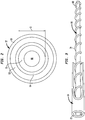
- reaction tube 12 which has an outer shell 60 , and annular cooling channel 62 and an inner reaction tube 64 which is provided with a tube insert 66.
- the reaction tube has an inside diameter, D.
- insert 66 is a wire-wrapped cylinder, a combination swirl flow and displacement insert which reduces residence time in the areas where reactants are introduced and heat transfer is most critical.
- Insert 66 thus has a cylindrical body 68 , a wire wrap 70 and resides in reaction tube 64 as shown in Figure 3 .
- the net free area 72 is thus defined between insert 66 and the inner wall of tube 64.
- reaction tubes in system 10 without inserts are of the same general configuration, but the inner channel is unrestricted.
- reaction tubes with inserts have a ratio of D/De of from 1.5 to 3 as noted above.
- a static mixer insert having the geometry shown in Figure 4 could be utilized.
- Static mixers are operative to transport, by their mechanical construction, the fluid at the tube wall to the center of the tube and to fold these transported regions of fluid into each other. This dramatically increases heat transfer because it increases the local temperature difference between portions of the bulk (tubeside) fluid and the tube wall. Static mixers are particularly useful in a flow that is laminarized.
- a swirl flow tube insert such as the twisted tape swirl inserts shown in Figures 5(a) - 5(d) could be employed, if so desired.
- Twisted tapes impart rotational flow which has two effects. It imparts a helical flow path along the inside wall of the tube, thereby producing a high velocity along the tube wall that is a function of the helical flow angle. It also imparts a combination of flow rotation and centripetal force away from the center of the tube that in single-phase flow, increases mixing and turbulence at the tube wall. This creates turbulent flows at Reynolds numbers that would be characteristic of laminar or transition flows in tubes without inserts. Inducing turbulence at a lower Reynolds number enhances heat transfer.
- a stream 100 of aqueous formaldehyde is fed to system 10 via reaction tube 12 of bank S1 along with potassium hydroxide and n-butyraldehyde via a feed port 101.
- Tube 12 has a tube insert as discussed in connection with Figures 2 and 3 .
- the reaction mixture proceeds through additional tubes in bank S1 where the reaction proceeds and stream 100 becomes enriched in methylolated product before being passed to the next stage of the system.
- Additional potassium hydroxide and n-butyraldehyde is provided to stream 100 via another feed port 102 as the stream is fed to reactor stage S2 wherein the first tube is provided with a tube insert as discussed above.
- Stream 100 proceeds through the tubes of stage S2 such as tube 14 before exiting the stage.
- the outlet of bank S2 is optionally provided with cooler 35 to further regulate temperature in the system.
- stream 100 is provided with additional butyraldehyde and potassium hydroxide at a feed port indicated at 103 and fed to reactor tube bank S3 as shown.
- the first tube of bank S3 is likewise provided with a tube insert, whereas the subsequent tubes of the bank need not have inserts.
- Stream 100 is passed through the tubes of bank S3 and thereafter still additional butyraldehyde and potassium hydroxide may be added in subsequent stages if so desired, or the stream may be provided to additional reactor banks without further providing reactants.
- the temperature in the reaction tubes is regulated independently in the various reaction tube banks by way of a plurality of temperature indicator controllers (TIC's), control valves and one or more coolers such as cooler 35.
- TIC's temperature indicator controllers
- the temperature in the reaction medium is maintained between 35°C and 75°C.
- the temperature in the reaction medium is maintained at between 35°C and 65°C at all times and temperature spikes are minimized or eliminated.
- coolant feed 20 is pumped to reactor banks S1, S2 and S3 such that the coolant circulates through the annular cooling channels of the reaction tubes before returning to the coolant system via return lines 22.
- TIC controllers sense the temperature of the coolant and regulate control valves in order to maintain a target temperature of the coolant thus maintaining a target temperature of the reaction medium as well.
- the controllers and valves are configured such that the temperature of each stage can be independently controlled.
- TIC's 24, 26, 30 sense the reaction temperature in banks S1 , S2 and S3 and regulate the flow of the coolant through valves 40, 42, 46 in order to maintain target reaction temperatures in the banks.
- Another TIC 28 senses temperature in cooler 35 and controls coolant flow via valve 44 to further adjust temperatures in the system.
- the inventive system may be sized and operated in a variety of operating modes wherein reactants and catalyst are added in stages to minimize temperature spikes and maintain target temperatures.
- the amount of reactants employed will vary depending upon the process employed and the products made; for example, the aggregate formaldehyde: C 2 and higher aldehyde reactant mole ratio differs with the C 2 and higher aldehyde reactant. If a Cannizzaro reaction scheme is included, acetaldehyde requires a minimum of ratio of formaldehyde: acetaldehyde of 4:1, n-butyraldehyde requires a minimum of ratio of formaldehyde: n-butyraldehyde of 3: 1, and isobutyraldehyde requires a minimum of ratio of formaldehyde: isobutyraldehyde of 2:1. For n-butyraldehyde recommended ranges of formaldehyde: butyraldehyde are from 3.01:1 to 10:1.
- a set of preferred operating parameters for making TMP from n-butyraldehyde in a Cannizzarro process are as follows: Reaction Medium Temperature 35°C - 65°C Aqueous Formaldehyde Concentration (wt% Formaldehyde) 10%-50% Aggregate Formaldehyde/ Reactant Aldehyde Molar Ratio 3.01:1- 10:1 Aggregate Inorganic Base/ Reactant Aldehyde Molar Ratio 1:1- 2:1 preferably 1:1-1.5:1
- Said process options may include the option of using different ratios of base and condensable aldehyde along the feeding points, as long as the total of all additions equals the targeted component ratios.
- further work-up includes extracting formates from the reclaimed TMP and distillation of the crude TMP to purified form as is known in the art.
- purification of the crude product includes a multistage water/ethyl acetate extraction system, as well as one or more distillation tower (s).
- the process and apparatus of the present invention are especially suited to the inorganic Cannizzarro process of the class described in United States Patent No. 3,183,274 , United States Patent No. 5,948,943 , United States Patent No. 7,253,326 and United States Patent No. 8,354,561 referred to above.
- the apparatus and process methodology could be employed in connection with an organic Cannizzarro process or a condensation/hydrogenation methylolalkane process described in United States Patent No. 7,301,058 .
- a method of making a methylolalkane from formaldehyde and a C 2 or higher condensable aldehyde in a multistage process comprising: (a) providing a formaldehyde containing stream to a tubular reaction system with a plurality of successive reaction stages; (b) adding a C 2 or higher condensible aldehyde and optionally a base to the formaldehyde containing stream wherein at least one of the C 2 or higher condensible aldehyde or base are added to the formaldehyde containing stream at a plurality of successive feed points to provide a production stream which is progressively provided with additional C 2 or higher condensible aldehyde or base as the production stream advances through the successive reaction stages; and (c) converting the C 2 or higher condensible aldehyde and formaldehyde to a methylolalkane.
- the C 2 or higher condensible aldehyde may be added to the formaldehyde containing stream at a plurality of successive feed points to provide a production stream which is progressively provided with additional C 2 or higher condensible aldehyde as the production stream advances through the successive reaction stages.
- the methylolalkane may be pentaerythritol and the C 2 or higher condensible aldehyde is acetaldehyde or the methylolalkane is trimethylolethane and the C 2 or higher condensible aldehyde is propionaldehyde.
- the methylolalkane may be trimethylolpropane and the C 2 or higher condensible aldehyde is n-butyraldehyde or the methylolalkane may be neopentyl glycol and the C 2 or higher condensible aldehyde is isobutyraldehyde.
- the base may be added to the formaldehyde containing stream at a plurality of successive feed points to provide a production stream which is progressively provided with additional base as the production stream advances through the successive reaction stages if so desired or both the C 2 or higher condensible aldehyde and an inorganic base may be added to the formaldehyde containing stream at a plurality of successive feed points to provide a production stream which is progressively provided with additional C 2 or higher condensible aldehyde and inorganic base as the production stream advances through the successive reaction stages.
- an inorganic base selected from potassium hydroxide, calcium hydroxide and sodium hydroxide may be employed.
- the inorganic base and C 2 or higher condensible aldehyde is added to the production stream in at least 3 discrete locations and in some cases in at least 4 discrete locations.
- tubular reaction system has at least 3 stages.
- the temperature of the production stream is maintained between 30°C and 75°C; more preferably in many cases the temperature of the production stream is maintained between 35°C and 65°C.
- said C 2 or higher condensible aldehyde is added in a fixed proportion with inorganic base at said plurality of successive feed points to provide a production stream which is progressively provided with additional C 2 or higher condensible aldehyde as the production stream advances through the successive reaction stages.
- said C 2 or higher condensible aldehyde and inorganic base are provided in an upstream feed point in larger amounts relative to amounts provided in a downstream feed point.
- the inorganic base is provided in a downstream feed point in a larger amount relative to an amount provided in an upstream feed point to provide a production stream which is provided with inorganic base at higher levels in a later stage as compared with levels of inorganic base in an intial stage.
- a multistage tubular reaction system for preparing methylol derivatives of a C 2 or higher condensible aldehyde comprising: (a) a tubular reaction system with a plurality of successive reactor stages comprising a plurality of reaction tubes; (b) a reaction system inlet adapted to provide a formaldehyde containing stream to the tubular reaction system; and (c) a plurality of feed ports adapted to provide at least one of the C 2 or higher condensible aldehyde or a base to the formaldehyde containing stream at a plurality of successive feed points to provide a production stream which is progressively provided with additional C 2 or higher condensible aldehyde or base as the production stream advances through successive reaction stages.
- the multistage tubular reaction system is preferably adapted to provide both C 2 or higher condensible aldehyde and base to the successive stages of the reaction system such that the production stream is progressively provided with additional C 2 or higher condensible aldehyde and base as the production stream advances through successive reaction stages.
Landscapes
- Chemical & Material Sciences (AREA)
- Chemical Kinetics & Catalysis (AREA)
- Organic Chemistry (AREA)
- Dispersion Chemistry (AREA)
- Organic Low-Molecular-Weight Compounds And Preparation Thereof (AREA)
- Low-Molecular Organic Synthesis Reactions Using Catalysts (AREA)
Claims (16)
- Verfahren zur Herstellung eines Methylolalkans aus Formaldehyd und einem kondensierbaren C2-Aldehyd oder höheren Aldehyd in einem mehrstufigen Prozess, umfassend:(a) Zuführen eines Formaldehyd enthaltenden Stroms zu einem rohrförmigen Reaktionssystem mit mehreren aufeinanderfolgenden Reaktionsstufen;(b) Zugeben eines kondensierbaren C2-Aldehyds oder höheren Aldehyds und gegebenenfalls einer Base zu dem Formaldehyd enthaltenden Strom, wobei man den kondensierbaren C2-Aldehyd oder höheren Aldehyd und/oder die Base an mehreren aufeinanderfolgenden Einspeisungspunkten zu dem Formaldehyd enthaltenden Strom gibt, um einen Produktionsstrom bereitzustellen, der zunehmend mit zusätzlichem kondensierbarem C2-Aldehyd oder höherem Aldehyd oder zusätzlicher Base versorgt wird, während er die aufeinanderfolgenden Reaktionsstufen durchläuft; und(c) Umwandeln des kondensierbaren C2-Aldehyds oder höheren Aldehyds und Formaldehyds in ein Methylolalkan.
- Verfahren nach Anspruch 1, bei dem der kondensierbare C2-Aldehyd oder höhere Aldehyd an mehreren aufeinanderfolgenden Einspeisungspunkten zu dem Formaldehyd enthaltenden Strom gegeben wird, um einen Produktionsstrom bereitzustellen, der zunehmend mit zusätzlichem kondensierbarem C2-Aldehyd oder höherem Aldehyd versorgt wird, während er die aufeinanderfolgenden Reaktionsstufen durchläuft.
- Verfahren nach Anspruch 1, bei dem es sich bei dem Methylolalkan um Trimethylolpropan handelt und es sich bei dem kondensierbaren C2-Aldehyd oder höheren Aldehyd um n-Butyraldehyd handelt.
- Verfahren nach Anspruch 1, bei dem es sich bei dem Methylolalkan um Neopentylglykol handelt und es sich bei dem kondensierbaren C2-Aldehyd oder höheren Aldehyd um Isobutyraldehyd handelt.
- Verfahren nach Anspruch 1, bei dem Base an mehreren aufeinanderfolgenden Einspeisungspunkten zu dem Formaldehyd enthaltenden Strom gegeben wird, um einen Produktionsstrom bereitzustellen, der zunehmend mit zusätzlicher Base versorgt wird, während er die aufeinanderfolgenden Reaktionsstufen durchläuft.
- Verfahren nach Anspruch 1, bei dem das rohrförmige Reaktionssystem mindestens 3 Stufen aufweist.
- Verfahren nach Anspruch 1, bei dem der kondensierbare C2-Aldehyd oder höhere Aldehyd und eine anorganische Base an mehreren aufeinanderfolgenden Einspeisungspunkten zu dem Formaldehyd enthaltenden Strom gegeben werden, um einen Produktionsstrom bereitzustellen, der zunehmend mit zusätzlichem kondensierbarem C2-Aldehyd oder höherem Aldehyd und zusätzlicher anorganischer Base versorgt wird, während er die aufeinanderfolgenden Reaktionsstufen durchläuft.
- Verfahren nach Anspruch 5 oder 7, bei dem die anorganische Base aus Kaliumhydroxid, Calciumhydroxid und Natriumhydroxid ausgewählt wird.
- Verfahren nach Anspruch 7, bei dem der kondensierbare C2-Aldehyd oder höhere Aldehyd in einem festgelegten Verhältnis mit anorganischer Base an den mehreren aufeinanderfolgenden Einspeisungspunkten zugegeben wird, um einen Produktionsstrom bereitzustellen, der zunehmend mit zusätzlichem kondensierbarem C2-Aldehyd oder höherem Aldehyd versorgt wird, während er die aufeinanderfolgenden Reaktionsstufen durchläuft.
- Verfahren nach Anspruch 9, bei dem der kondensierbare C2-Aldehyd oder höhere Aldehyd und die anorganische Base an einem stromaufwärtigen Einspeisungspunkt in größeren Mengen relativ zu an einem stromabwärtigen Einspeisungspunkt bereitgestellten Mengen bereitgestellt werden.
- Verfahren nach Anspruch 7, bei dem die anorganische Base an einem stromabwärtigen Einspeisungspunkt in einer größeren Menge relativ zu einer an einem stromaufwärtigen Einspeisungspunkt bereitgestellten Menge bereitgestellt wird, um einen Produktionsstrom bereitzustellen, der in einer späteren Stufe mit anorganischer Base in höheren Gehalten im Vergleich mit Gehalten von anorganischer Base in einer Anfangsstufe versorgt wird.
- Verfahren nach Anspruch 1, bei dem die Temperatur des Produktionsstroms zwischen 30° C und 75° C gehalten wird.
- Mehrstufiges rohrförmiges Reaktionssystem zur Herstellung von Methylolderivaten eines kondensierbaren C2-Aldehyds oder höheren Aldehyds, umfassend:(a) ein rohrförmiges Reaktionssystem mit mehreren aufeinanderfolgenden Reaktorstufen, die mehrere Reaktionsrohre umfassen;(b) einen Reaktionssystemeinlass, der darauf ausgelegt ist, dem rohrförmigen Reaktionssystem einen Formaldehyd enthaltenden Strom zuzuführen; und(c) mehrere Zuführungsöffnungen, die darauf ausgelegt sind, dem Formaldehyd enthaltenden Strom an mehreren aufeinanderfolgenden Einspeisungspunkten den kondensierbaren C2-Aldehyd oder höheren Aldehyd und/oder eine Base zuzuführen, um einen Produktionsstrom bereitzustellen, der zunehmend mit zusätzlichem kondensierbarem C2-Aldehyd oder höherem Aldehyd oder zusätzlicher Base versorgt wird, während er die aufeinanderfolgenden Reaktionsstufen durchläuft.
- Mehrstufiges rohrförmiges Reaktionssystem zur Herstellung von Methylolderivaten eines kondensierbaren C2-Aldehyds oder höheren Aldehyds nach Anspruch 13, wobei das rohrförmige Reaktionssystem, das mehrere Reaktionsrohre umfasst, mit einem Kühlmittel gekühlt wird, um eine gewünschte Temperatur einzuhalten, und die Temperatur des Produktionsstroms zwischen 30-75 °C gehalten wird.
- Mehrstufiges rohrförmiges Reaktionssystem zur Herstellung von Methylolderivaten eines kondensierbaren C2-Aldehyds oder höheren Aldehyds nach Anspruch 13, wobei das Reaktionssystem darauf ausgelegt ist, aufeinanderfolgenden Stufen des Reaktionssystems sowohl kondensierbaren C2-Aldehyd oder höheren Aldehyd als auch Base zuzuführen, so dass der Produktionsstrom zunehmend mit zusätzlichem kondensierbarem C2-Aldehyd oder höherem Aldehyd und zusätzlicher Base versorgt wird, während er die aufeinanderfolgenden Reaktionsstufen durchläuft.
- Mehrstufiges rohrförmiges Reaktionssystem zur Herstellung von Methylolderivaten eines kondensierbaren C2-Aldehyds oder höheren Aldehyds nach Anspruch 13, wobei das Reaktionssystem mehrere Reaktionsrohre mit Mantelaufbau mit einer äußeren Schale, einem ringförmigen Kühlkanal und einem inneren Reaktionsrohr, das eine Reaktionszone definiert, umfasst und wobei der ringförmige Kühlkanal Kühlmittel empfängt.
Applications Claiming Priority (2)
| Application Number | Priority Date | Filing Date | Title |
|---|---|---|---|
| US201361862574P | 2013-08-06 | 2013-08-06 | |
| PCT/US2014/047738 WO2015020796A1 (en) | 2013-08-06 | 2014-07-23 | Improved manufacture of methylolalkanes |
Publications (2)
| Publication Number | Publication Date |
|---|---|
| EP3030540A1 EP3030540A1 (de) | 2016-06-15 |
| EP3030540B1 true EP3030540B1 (de) | 2018-04-11 |
Family
ID=51352776
Family Applications (1)
| Application Number | Title | Priority Date | Filing Date |
|---|---|---|---|
| EP14750854.3A Active EP3030540B1 (de) | 2013-08-06 | 2014-07-23 | Verbesserte herstellung von methylolalkanen |
Country Status (7)
| Country | Link |
|---|---|
| US (1) | US9394218B2 (de) |
| EP (1) | EP3030540B1 (de) |
| JP (2) | JP2016527311A (de) |
| KR (1) | KR102283433B1 (de) |
| CN (1) | CN105431402B (de) |
| ES (1) | ES2671557T3 (de) |
| WO (1) | WO2015020796A1 (de) |
Families Citing this family (5)
| Publication number | Priority date | Publication date | Assignee | Title |
|---|---|---|---|---|
| ES2632457T3 (es) | 2013-08-06 | 2017-09-13 | Oxea Bishop Llc | Fabricación de metilolalcanos con una transferencia de calor aumentada y un control de temperatura mejorado |
| EP3315484B1 (de) * | 2016-10-25 | 2019-02-27 | OXEA GmbH | Verfahren zur koppelproduktion von polyolen in gegenwart einer anorganischen base |
| CN109485544B (zh) * | 2017-09-11 | 2021-12-14 | 中国科学院大连化学物理研究所 | 一种连续制备三羟甲基丙烷的方法 |
| JP7343191B2 (ja) * | 2019-01-17 | 2023-09-12 | 日本分光株式会社 | 液体クロマトグラフィー用スタティックミキサー |
| CN110878005B (zh) * | 2019-12-09 | 2022-05-03 | 赤峰瑞阳化工有限公司 | 一种三羟甲基丙烷和双三羟甲基丙烷连续缩合工艺 |
Family Cites Families (11)
| Publication number | Priority date | Publication date | Assignee | Title |
|---|---|---|---|---|
| US3183274A (en) * | 1956-10-09 | 1965-05-11 | Celanese Corp | Trimethylolpropane |
| DE1154080B (de) * | 1959-06-04 | 1963-09-12 | Bayer Ag | Verfahren zur kontinuierlichen Herstellung von drei- und mehrwertigen Alkoholen durch alkalische Kondensation |
| JPS6191144A (ja) * | 1984-10-08 | 1986-05-09 | Mitsubishi Gas Chem Co Inc | ネオペンチルグリコ−ルの製造法 |
| US5603835A (en) | 1994-01-19 | 1997-02-18 | Hoechst Celanese Corporation | Trimethylolpropane color improvement |
| DE19653093A1 (de) * | 1996-12-20 | 1998-06-25 | Basf Ag | Verfahren zur Herstellung von Polyalkoholen |
| US5948943A (en) | 1997-10-16 | 1999-09-07 | Celanese International Corporation | Process improvement to produce low color trimethylolpropane |
| DE10234016A1 (de) | 2002-07-26 | 2004-02-05 | Basf Ag | Verfahren zur Ausbeuteerhöhung bei der Herstellung von mehrwertigen Alkoholen durch Spaltung acetalhaltiger Nebenprodukte |
| KR100837523B1 (ko) | 2006-03-07 | 2008-06-12 | 주식회사 엘지화학 | 트리메틸올프로판의 제조방법 |
| EP2281794B1 (de) * | 2009-08-07 | 2015-10-14 | LANXESS Deutschland GmbH | Verfahren zur Farbzahlverbesserung von Trimethylolpropan |
| EP2607341B1 (de) * | 2009-12-24 | 2015-11-18 | Oxea Bishop LLC | Trimethylolpropan-Farbverbesserung |
| EP2457648A1 (de) * | 2010-11-29 | 2012-05-30 | Yellow Diesel B.V. | Herstellung von Fettsäurealkylestern |
-
2014
- 2014-07-23 ES ES14750854.3T patent/ES2671557T3/es active Active
- 2014-07-23 US US14/903,619 patent/US9394218B2/en active Active
- 2014-07-23 KR KR1020167003226A patent/KR102283433B1/ko active Active
- 2014-07-23 CN CN201480042917.6A patent/CN105431402B/zh active Active
- 2014-07-23 EP EP14750854.3A patent/EP3030540B1/de active Active
- 2014-07-23 WO PCT/US2014/047738 patent/WO2015020796A1/en not_active Ceased
- 2014-07-23 JP JP2016533314A patent/JP2016527311A/ja active Pending
-
2019
- 2019-04-03 JP JP2019071149A patent/JP6762395B2/ja active Active
Also Published As
| Publication number | Publication date |
|---|---|
| KR20160040564A (ko) | 2016-04-14 |
| US9394218B2 (en) | 2016-07-19 |
| CN105431402B (zh) | 2018-01-02 |
| WO2015020796A1 (en) | 2015-02-12 |
| US20160145179A1 (en) | 2016-05-26 |
| KR102283433B1 (ko) | 2021-07-30 |
| JP6762395B2 (ja) | 2020-09-30 |
| JP2019142894A (ja) | 2019-08-29 |
| JP2016527311A (ja) | 2016-09-08 |
| EP3030540A1 (de) | 2016-06-15 |
| CN105431402A (zh) | 2016-03-23 |
| ES2671557T3 (es) | 2018-06-07 |
Similar Documents
| Publication | Publication Date | Title |
|---|---|---|
| JP6762395B2 (ja) | メチロールアルカンの改良された製造 | |
| EP3030541B1 (de) | Herstellung von methylolalkanen mit erhöhter wärmeübertragung und verbesserter temperaturregelung | |
| KR20110110303A (ko) | 폴리메틸올의 제조 방법 | |
| JP5512083B2 (ja) | 反応器内部の反応速度制御方法、反応装置及びジメチルエーテルの製造方法。 | |
| EP3539941A1 (de) | Verfahren zur herstellung von trimethylolpropan | |
| RU2349573C2 (ru) | Способ получения (мет)акриловой кислоты или (мет)акролеина | |
| US12257563B2 (en) | Aldol condensation reaction apparatus | |
| US20130289315A1 (en) | Process and Apparatus for Continuous High Temperature Short-Time Alkoxylation (Ethoxylation, Propoxylation) of Chemical Substances with Active Hydrogen Atoms | |
| JP7635122B2 (ja) | プソイドイオノン及びヒドロキシプソイドイオノンを製造するための装置及び方法 | |
| US20080004475A1 (en) | Process for the production of neopentylglycol using formaldehyde with a low methanol content | |
| JP2022507150A5 (de) | ||
| KR101856763B1 (ko) | 하이드록시피브알데하이드의 연속 제조 방법 | |
| JP6933718B2 (ja) | 無機塩基の存在下でポリオールを併産する方法 | |
| CN114555218B (zh) | 醛醇缩合反应用连续搅拌釜反应器 | |
| CN120515358B (zh) | 一种基于气液微流控连续制备三氟化磷的装置及方法 | |
| KR101776404B1 (ko) | 네오펜틸 글리콜 제조장치 | |
| CN115624918A (zh) | 一种高转化率的羰基转化合成系统及工艺 |
Legal Events
| Date | Code | Title | Description |
|---|---|---|---|
| PUAI | Public reference made under article 153(3) epc to a published international application that has entered the european phase |
Free format text: ORIGINAL CODE: 0009012 |
|
| 17P | Request for examination filed |
Effective date: 20151201 |
|
| AK | Designated contracting states |
Kind code of ref document: A1 Designated state(s): AL AT BE BG CH CY CZ DE DK EE ES FI FR GB GR HR HU IE IS IT LI LT LU LV MC MK MT NL NO PL PT RO RS SE SI SK SM TR |
|
| AX | Request for extension of the european patent |
Extension state: BA ME |
|
| DAX | Request for extension of the european patent (deleted) | ||
| STAA | Information on the status of an ep patent application or granted ep patent |
Free format text: STATUS: EXAMINATION IS IN PROGRESS |
|
| 17Q | First examination report despatched |
Effective date: 20170403 |
|
| GRAP | Despatch of communication of intention to grant a patent |
Free format text: ORIGINAL CODE: EPIDOSNIGR1 |
|
| STAA | Information on the status of an ep patent application or granted ep patent |
Free format text: STATUS: GRANT OF PATENT IS INTENDED |
|
| INTG | Intention to grant announced |
Effective date: 20171206 |
|
| RIN1 | Information on inventor provided before grant (corrected) |
Inventor name: SCHROEDER, MARCOS, L. Inventor name: NOWOTNY, NORMAN Inventor name: HUNT, TRACY, KEVIN Inventor name: RAFF, DONALD, K. Inventor name: GAYTAN, FRED Inventor name: SLINKARD, WILLIAM, E. Inventor name: STRUTZ, HEINZ Inventor name: FREY, GUIDO, D. |
|
| GRAS | Grant fee paid |
Free format text: ORIGINAL CODE: EPIDOSNIGR3 |
|
| GRAA | (expected) grant |
Free format text: ORIGINAL CODE: 0009210 |
|
| STAA | Information on the status of an ep patent application or granted ep patent |
Free format text: STATUS: THE PATENT HAS BEEN GRANTED |
|
| AK | Designated contracting states |
Kind code of ref document: B1 Designated state(s): AL AT BE BG CH CY CZ DE DK EE ES FI FR GB GR HR HU IE IS IT LI LT LU LV MC MK MT NL NO PL PT RO RS SE SI SK SM TR |
|
| REG | Reference to a national code |
Ref country code: GB Ref legal event code: FG4D |
|
| REG | Reference to a national code |
Ref country code: CH Ref legal event code: EP |
|
| REG | Reference to a national code |
Ref country code: AT Ref legal event code: REF Ref document number: 987853 Country of ref document: AT Kind code of ref document: T Effective date: 20180415 |
|
| REG | Reference to a national code |
Ref country code: IE Ref legal event code: FG4D |
|
| REG | Reference to a national code |
Ref country code: DE Ref legal event code: R096 Ref document number: 602014023768 Country of ref document: DE |
|
| REG | Reference to a national code |
Ref country code: ES Ref legal event code: FG2A Ref document number: 2671557 Country of ref document: ES Kind code of ref document: T3 Effective date: 20180607 |
|
| REG | Reference to a national code |
Ref country code: SE Ref legal event code: TRGR |
|
| REG | Reference to a national code |
Ref country code: NL Ref legal event code: FP |
|
| REG | Reference to a national code |
Ref country code: FR Ref legal event code: PLFP Year of fee payment: 5 |
|
| REG | Reference to a national code |
Ref country code: LT Ref legal event code: MG4D |
|
| PG25 | Lapsed in a contracting state [announced via postgrant information from national office to epo] |
Ref country code: AL Free format text: LAPSE BECAUSE OF FAILURE TO SUBMIT A TRANSLATION OF THE DESCRIPTION OR TO PAY THE FEE WITHIN THE PRESCRIBED TIME-LIMIT Effective date: 20180411 Ref country code: NO Free format text: LAPSE BECAUSE OF FAILURE TO SUBMIT A TRANSLATION OF THE DESCRIPTION OR TO PAY THE FEE WITHIN THE PRESCRIBED TIME-LIMIT Effective date: 20180711 Ref country code: FI Free format text: LAPSE BECAUSE OF FAILURE TO SUBMIT A TRANSLATION OF THE DESCRIPTION OR TO PAY THE FEE WITHIN THE PRESCRIBED TIME-LIMIT Effective date: 20180411 Ref country code: BG Free format text: LAPSE BECAUSE OF FAILURE TO SUBMIT A TRANSLATION OF THE DESCRIPTION OR TO PAY THE FEE WITHIN THE PRESCRIBED TIME-LIMIT Effective date: 20180711 Ref country code: LT Free format text: LAPSE BECAUSE OF FAILURE TO SUBMIT A TRANSLATION OF THE DESCRIPTION OR TO PAY THE FEE WITHIN THE PRESCRIBED TIME-LIMIT Effective date: 20180411 Ref country code: PL Free format text: LAPSE BECAUSE OF FAILURE TO SUBMIT A TRANSLATION OF THE DESCRIPTION OR TO PAY THE FEE WITHIN THE PRESCRIBED TIME-LIMIT Effective date: 20180411 |
|
| PG25 | Lapsed in a contracting state [announced via postgrant information from national office to epo] |
Ref country code: RS Free format text: LAPSE BECAUSE OF FAILURE TO SUBMIT A TRANSLATION OF THE DESCRIPTION OR TO PAY THE FEE WITHIN THE PRESCRIBED TIME-LIMIT Effective date: 20180411 Ref country code: HR Free format text: LAPSE BECAUSE OF FAILURE TO SUBMIT A TRANSLATION OF THE DESCRIPTION OR TO PAY THE FEE WITHIN THE PRESCRIBED TIME-LIMIT Effective date: 20180411 Ref country code: LV Free format text: LAPSE BECAUSE OF FAILURE TO SUBMIT A TRANSLATION OF THE DESCRIPTION OR TO PAY THE FEE WITHIN THE PRESCRIBED TIME-LIMIT Effective date: 20180411 Ref country code: GR Free format text: LAPSE BECAUSE OF FAILURE TO SUBMIT A TRANSLATION OF THE DESCRIPTION OR TO PAY THE FEE WITHIN THE PRESCRIBED TIME-LIMIT Effective date: 20180712 |
|
| REG | Reference to a national code |
Ref country code: AT Ref legal event code: MK05 Ref document number: 987853 Country of ref document: AT Kind code of ref document: T Effective date: 20180411 |
|
| PG25 | Lapsed in a contracting state [announced via postgrant information from national office to epo] |
Ref country code: PT Free format text: LAPSE BECAUSE OF FAILURE TO SUBMIT A TRANSLATION OF THE DESCRIPTION OR TO PAY THE FEE WITHIN THE PRESCRIBED TIME-LIMIT Effective date: 20180813 |
|
| REG | Reference to a national code |
Ref country code: DE Ref legal event code: R097 Ref document number: 602014023768 Country of ref document: DE |
|
| PG25 | Lapsed in a contracting state [announced via postgrant information from national office to epo] |
Ref country code: DK Free format text: LAPSE BECAUSE OF FAILURE TO SUBMIT A TRANSLATION OF THE DESCRIPTION OR TO PAY THE FEE WITHIN THE PRESCRIBED TIME-LIMIT Effective date: 20180411 Ref country code: AT Free format text: LAPSE BECAUSE OF FAILURE TO SUBMIT A TRANSLATION OF THE DESCRIPTION OR TO PAY THE FEE WITHIN THE PRESCRIBED TIME-LIMIT Effective date: 20180411 Ref country code: EE Free format text: LAPSE BECAUSE OF FAILURE TO SUBMIT A TRANSLATION OF THE DESCRIPTION OR TO PAY THE FEE WITHIN THE PRESCRIBED TIME-LIMIT Effective date: 20180411 Ref country code: SK Free format text: LAPSE BECAUSE OF FAILURE TO SUBMIT A TRANSLATION OF THE DESCRIPTION OR TO PAY THE FEE WITHIN THE PRESCRIBED TIME-LIMIT Effective date: 20180411 Ref country code: RO Free format text: LAPSE BECAUSE OF FAILURE TO SUBMIT A TRANSLATION OF THE DESCRIPTION OR TO PAY THE FEE WITHIN THE PRESCRIBED TIME-LIMIT Effective date: 20180411 Ref country code: CZ Free format text: LAPSE BECAUSE OF FAILURE TO SUBMIT A TRANSLATION OF THE DESCRIPTION OR TO PAY THE FEE WITHIN THE PRESCRIBED TIME-LIMIT Effective date: 20180411 |
|
| PLBE | No opposition filed within time limit |
Free format text: ORIGINAL CODE: 0009261 |
|
| STAA | Information on the status of an ep patent application or granted ep patent |
Free format text: STATUS: NO OPPOSITION FILED WITHIN TIME LIMIT |
|
| PG25 | Lapsed in a contracting state [announced via postgrant information from national office to epo] |
Ref country code: SM Free format text: LAPSE BECAUSE OF FAILURE TO SUBMIT A TRANSLATION OF THE DESCRIPTION OR TO PAY THE FEE WITHIN THE PRESCRIBED TIME-LIMIT Effective date: 20180411 |
|
| REG | Reference to a national code |
Ref country code: CH Ref legal event code: PL |
|
| 26N | No opposition filed |
Effective date: 20190114 |
|
| PG25 | Lapsed in a contracting state [announced via postgrant information from national office to epo] |
Ref country code: LU Free format text: LAPSE BECAUSE OF NON-PAYMENT OF DUE FEES Effective date: 20180723 Ref country code: MC Free format text: LAPSE BECAUSE OF FAILURE TO SUBMIT A TRANSLATION OF THE DESCRIPTION OR TO PAY THE FEE WITHIN THE PRESCRIBED TIME-LIMIT Effective date: 20180411 |
|
| REG | Reference to a national code |
Ref country code: IE Ref legal event code: MM4A |
|
| PG25 | Lapsed in a contracting state [announced via postgrant information from national office to epo] |
Ref country code: IE Free format text: LAPSE BECAUSE OF NON-PAYMENT OF DUE FEES Effective date: 20180723 Ref country code: CH Free format text: LAPSE BECAUSE OF NON-PAYMENT OF DUE FEES Effective date: 20180731 Ref country code: LI Free format text: LAPSE BECAUSE OF NON-PAYMENT OF DUE FEES Effective date: 20180731 |
|
| PG25 | Lapsed in a contracting state [announced via postgrant information from national office to epo] |
Ref country code: SI Free format text: LAPSE BECAUSE OF FAILURE TO SUBMIT A TRANSLATION OF THE DESCRIPTION OR TO PAY THE FEE WITHIN THE PRESCRIBED TIME-LIMIT Effective date: 20180411 |
|
| PG25 | Lapsed in a contracting state [announced via postgrant information from national office to epo] |
Ref country code: MT Free format text: LAPSE BECAUSE OF NON-PAYMENT OF DUE FEES Effective date: 20180723 |
|
| PG25 | Lapsed in a contracting state [announced via postgrant information from national office to epo] |
Ref country code: TR Free format text: LAPSE BECAUSE OF FAILURE TO SUBMIT A TRANSLATION OF THE DESCRIPTION OR TO PAY THE FEE WITHIN THE PRESCRIBED TIME-LIMIT Effective date: 20180411 |
|
| PG25 | Lapsed in a contracting state [announced via postgrant information from national office to epo] |
Ref country code: MK Free format text: LAPSE BECAUSE OF NON-PAYMENT OF DUE FEES Effective date: 20180411 Ref country code: HU Free format text: LAPSE BECAUSE OF FAILURE TO SUBMIT A TRANSLATION OF THE DESCRIPTION OR TO PAY THE FEE WITHIN THE PRESCRIBED TIME-LIMIT; INVALID AB INITIO Effective date: 20140723 Ref country code: CY Free format text: LAPSE BECAUSE OF FAILURE TO SUBMIT A TRANSLATION OF THE DESCRIPTION OR TO PAY THE FEE WITHIN THE PRESCRIBED TIME-LIMIT Effective date: 20180411 |
|
| PG25 | Lapsed in a contracting state [announced via postgrant information from national office to epo] |
Ref country code: IS Free format text: LAPSE BECAUSE OF FAILURE TO SUBMIT A TRANSLATION OF THE DESCRIPTION OR TO PAY THE FEE WITHIN THE PRESCRIBED TIME-LIMIT Effective date: 20180811 |
|
| PGFP | Annual fee paid to national office [announced via postgrant information from national office to epo] |
Ref country code: NL Payment date: 20250721 Year of fee payment: 12 |
|
| PGFP | Annual fee paid to national office [announced via postgrant information from national office to epo] |
Ref country code: ES Payment date: 20250826 Year of fee payment: 12 |
|
| PGFP | Annual fee paid to national office [announced via postgrant information from national office to epo] |
Ref country code: DE Payment date: 20250731 Year of fee payment: 12 |
|
| PGFP | Annual fee paid to national office [announced via postgrant information from national office to epo] |
Ref country code: IT Payment date: 20250724 Year of fee payment: 12 |
|
| PGFP | Annual fee paid to national office [announced via postgrant information from national office to epo] |
Ref country code: GB Payment date: 20250722 Year of fee payment: 12 Ref country code: BE Payment date: 20250718 Year of fee payment: 12 |
|
| PGFP | Annual fee paid to national office [announced via postgrant information from national office to epo] |
Ref country code: FR Payment date: 20250725 Year of fee payment: 12 |
|
| PGFP | Annual fee paid to national office [announced via postgrant information from national office to epo] |
Ref country code: SE Payment date: 20250722 Year of fee payment: 12 |