EP3027656B1 - Medicament comprising anti-phospholipase d4 antibody - Google Patents
Medicament comprising anti-phospholipase d4 antibody Download PDFInfo
- Publication number
- EP3027656B1 EP3027656B1 EP14761423.4A EP14761423A EP3027656B1 EP 3027656 B1 EP3027656 B1 EP 3027656B1 EP 14761423 A EP14761423 A EP 14761423A EP 3027656 B1 EP3027656 B1 EP 3027656B1
- Authority
- EP
- European Patent Office
- Prior art keywords
- seq
- set forth
- antibody
- variable region
- heavy chain
- Prior art date
- Legal status (The legal status is an assumption and is not a legal conclusion. Google has not performed a legal analysis and makes no representation as to the accuracy of the status listed.)
- Active
Links
Images

Classifications
-
- A—HUMAN NECESSITIES
- A61—MEDICAL OR VETERINARY SCIENCE; HYGIENE
- A61K—PREPARATIONS FOR MEDICAL, DENTAL OR TOILETRY PURPOSES
- A61K39/00—Medicinal preparations containing antigens or antibodies
- A61K39/395—Antibodies; Immunoglobulins; Immune serum, e.g. antilymphocytic serum
-
- A—HUMAN NECESSITIES
- A61—MEDICAL OR VETERINARY SCIENCE; HYGIENE
- A61P—SPECIFIC THERAPEUTIC ACTIVITY OF CHEMICAL COMPOUNDS OR MEDICINAL PREPARATIONS
- A61P37/00—Drugs for immunological or allergic disorders
-
- A—HUMAN NECESSITIES
- A61—MEDICAL OR VETERINARY SCIENCE; HYGIENE
- A61P—SPECIFIC THERAPEUTIC ACTIVITY OF CHEMICAL COMPOUNDS OR MEDICINAL PREPARATIONS
- A61P37/00—Drugs for immunological or allergic disorders
- A61P37/02—Immunomodulators
- A61P37/06—Immunosuppressants, e.g. drugs for graft rejection
-
- A—HUMAN NECESSITIES
- A61—MEDICAL OR VETERINARY SCIENCE; HYGIENE
- A61P—SPECIFIC THERAPEUTIC ACTIVITY OF CHEMICAL COMPOUNDS OR MEDICINAL PREPARATIONS
- A61P37/00—Drugs for immunological or allergic disorders
- A61P37/08—Antiallergic agents
-
- A—HUMAN NECESSITIES
- A61—MEDICAL OR VETERINARY SCIENCE; HYGIENE
- A61P—SPECIFIC THERAPEUTIC ACTIVITY OF CHEMICAL COMPOUNDS OR MEDICINAL PREPARATIONS
- A61P43/00—Drugs for specific purposes, not provided for in groups A61P1/00-A61P41/00
-
- C—CHEMISTRY; METALLURGY
- C07—ORGANIC CHEMISTRY
- C07K—PEPTIDES
- C07K16/00—Immunoglobulins [IG], e.g. monoclonal or polyclonal antibodies
- C07K16/40—Immunoglobulins [IG], e.g. monoclonal or polyclonal antibodies against enzymes
-
- G—PHYSICS
- G01—MEASURING; TESTING
- G01N—INVESTIGATING OR ANALYSING MATERIALS BY DETERMINING THEIR CHEMICAL OR PHYSICAL PROPERTIES
- G01N33/00—Investigating or analysing materials by specific methods not covered by groups G01N1/00 - G01N31/00
- G01N33/48—Biological material, e.g. blood, urine; Haemocytometers
- G01N33/50—Chemical analysis of biological material, e.g. blood, urine; Testing involving biospecific ligand binding methods; Immunological testing
- G01N33/53—Immunoassay; Biospecific binding assay; Materials therefor
- G01N33/573—Immunoassay; Biospecific binding assay; Materials therefor for enzymes or isoenzymes
-
- A—HUMAN NECESSITIES
- A61—MEDICAL OR VETERINARY SCIENCE; HYGIENE
- A61K—PREPARATIONS FOR MEDICAL, DENTAL OR TOILETRY PURPOSES
- A61K39/00—Medicinal preparations containing antigens or antibodies
- A61K2039/505—Medicinal preparations containing antigens or antibodies comprising antibodies
-
- C—CHEMISTRY; METALLURGY
- C07—ORGANIC CHEMISTRY
- C07K—PEPTIDES
- C07K2317/00—Immunoglobulins specific features
- C07K2317/20—Immunoglobulins specific features characterized by taxonomic origin
- C07K2317/24—Immunoglobulins specific features characterized by taxonomic origin containing regions, domains or residues from different species, e.g. chimeric, humanized or veneered
-
- C—CHEMISTRY; METALLURGY
- C07—ORGANIC CHEMISTRY
- C07K—PEPTIDES
- C07K2317/00—Immunoglobulins specific features
- C07K2317/70—Immunoglobulins specific features characterized by effect upon binding to a cell or to an antigen
- C07K2317/73—Inducing cell death, e.g. apoptosis, necrosis or inhibition of cell proliferation
-
- C—CHEMISTRY; METALLURGY
- C07—ORGANIC CHEMISTRY
- C07K—PEPTIDES
- C07K2317/00—Immunoglobulins specific features
- C07K2317/70—Immunoglobulins specific features characterized by effect upon binding to a cell or to an antigen
- C07K2317/73—Inducing cell death, e.g. apoptosis, necrosis or inhibition of cell proliferation
- C07K2317/732—Antibody-dependent cellular cytotoxicity [ADCC]
-
- C—CHEMISTRY; METALLURGY
- C07—ORGANIC CHEMISTRY
- C07K—PEPTIDES
- C07K2317/00—Immunoglobulins specific features
- C07K2317/70—Immunoglobulins specific features characterized by effect upon binding to a cell or to an antigen
- C07K2317/76—Antagonist effect on antigen, e.g. neutralization or inhibition of binding
-
- G—PHYSICS
- G01—MEASURING; TESTING
- G01N—INVESTIGATING OR ANALYSING MATERIALS BY DETERMINING THEIR CHEMICAL OR PHYSICAL PROPERTIES
- G01N2333/00—Assays involving biological materials from specific organisms or of a specific nature
- G01N2333/90—Enzymes; Proenzymes
- G01N2333/914—Hydrolases (3)
- G01N2333/916—Hydrolases (3) acting on ester bonds (3.1), e.g. phosphatases (3.1.3), phospholipases C or phospholipases D (3.1.4)
Definitions
- the present invention relates to a use of an antibody binding to phospholipase D4.
- phospholipase D may be abbreviated as PLD and "phospholipase D4" and the like may be abbreviated as PLD4 and the like.
- PLD is an enzyme which catalyzes a reaction to produce phosphatidic acid and choline by hydrolyzing phosphatidyl choline and causes various intracellular signaling. It has been believed that the produced phosphatidic acid functions as a lipid signal molecule.
- PLD1 and PLD2 have been known as two types of mammal PLD, which have been previously known, and contain a phosphatidyl inositide-binding Phox homology domain (PX domain) and a phosphatidyl inositide-binding pleckstrin homology domain (PH domain) in the N-terminal region thereof. Both domains are involved in membrane localization of PLD.
- PX domain phosphatidyl inositide-binding Phox homology domain
- PH domain phosphatidyl inositide-binding pleckstrin homology domain
- PLD1 and PLD2 further contain two His-x-Lys-x-x-x-x-Asp sequences (HKD motifs).
- the HKD motifs are essential domains for PLD activity.
- Phosphatidic acid produced by PLD1 and PLD2 has been suggested to be involved in cytoskeleton reconstruction, exocytosis, phagocytosis, canceration, cell adhesion, chemotaxis and the like, and mainly acts on nervous systems, immune systems and the like.
- PLD3 Human Hu-K4 and mouse SAM9, which are now officially named PLD3, lack the PX and PH domains and do not show PLD activity despite having two HKD motifs . Although there are further three PLD family members, PLD4, PLD5 and PLD6, little has been known about these non-classical PLDs.
- PLD4 has a 506 amino acid sequence shown in SEQ ID NO: 1 and is encoded by a cDNA base sequence of SEQ ID NO: 44 (Non Patent Literatures 1 and 2).
- the PLD4 protein has two tentative PDE regions (phosphodiesterase motifs) constituted of two HKD motifs (His-x-Lys-x-x-x-x-Asp amino acid sequence, x represents other amino acids) conserved in the C-terminal region, and a putative phosphorylation site (Thr 472).
- the structure of the PLD4 protein is estimated as a type II transmembrane protein.
- PLD4 does not have PX and PH domains, which PLD1 and PLD2 in a classical PLD family have them, in the N-terminal region.
- PLD4 belongs to the PLD family because of having two HKD motifs, but lacks the PX domain and the PH domain and has a putative transmembrane domain instead (Non Patent Literature 3).
- PLD4 mRNA The expression of PLD4 mRNA has been found at low to medium levels in small cell clusters preferentially localized around white matter regions including corpus callosum and cerebellar white matter of 1 week old mice. These PLD4 mRNA-expressing cells have been identified as Iba1-positive microglia (Non Patent Literature 3). However, the PLD4-positive cells in mouse cerebellum is dispersed 10-day-old mice. It suggested that PLD4 expression is temporarily restricted during early postnatal development in mouse cerebellum.
- Myelin formation in mouse begins in the corpora callosa and the cerebellar white matter at one week after birth.
- PLD4 is highly expressed in amoeboid (an activated state) microglia existing in the white matter, and thus it has been also believed that there is a possibility that PLD4-expressing cells in the white matter in this time are involved in myelin formation.
- PLD4 accumulates in food vacuoles, and it has been suggested that there is a possibility that PLD4 is involved in phagocytosis.
- amoeboid microglia which is in an activated state, various cytokines and growth factors are secreted and simultaneously phagocytosis is activated.
- oligodendrocytes central nervous system glial cells, which form myelin by wrapping around axons
- PLD4 central nervous system glial cells, which form myelin by wrapping around axons
- PLD4 mRNA is also observed in non-neuronal tissues and mainly distributed in the spleen. Strong expression of PLD4 protein is detected around a marginal zone of the splenic red pulp, and splenic PLD4 protein collected from subcellular membrane fractions is highly N-glycosylated.
- PLD4 was expressed in a heterologous cell system, PLD4 was localized in the endoplasmic reticulum and Golgi apparatus. The heterologously expressed PLD4 did not show PLD enzyme activity (Non Patent Literature 3).
- PLD4 may play a role in common functions among the microglia and splenic marginal zone cells during early postnatal brain development.
- PLD4 is specifically highly expressed in pDC (plasmacytoid Dendritic Cell) in a resting period (resting pDC) (Patent Literature 1).
- the present inventors further have reported that a PLD4-specific antibody can be utilized for suppression of pDC activity.
- PLD4 has been reported as one of novel susceptibility genes of Systemic Sclerosis in Japanese (Non Patent Literature 4). As a result of the same analysis in Europe, however, significant correlation with PLD4 has not been found and strong results showing a relationship between PLD4 and autoimmune diseases such as Systemic Sclerosis have not been obtained.
- An immune mechanism is roughly classified into two groups.
- One is “natural immunity (innate immunity)” which detects foreign substances such as pathogens and carries out an initial attack
- the other is “acquired immunity” through information exchange which is presentation of antigen peptides and the like derived from foreign substances.
- Neutrophils, macrophage, dendritic cells (DC), NK (Natural Killer) cells and the like are mainly involved in the "natural immunity”
- T cells and B cells to which information of antigen peptides and the like presented by the above dendritic cells and the like is transmitted are involved in the "acquired immunity” .
- T cells activated by transmission of information of antigen peptides are capable of specifically recognizing and attacking pathogens in a direct manner as the cell-mediated immunity
- B cells activated in the same manner as above are capable of specific recognition and attack against pathogens in an indirect manner by producing antibodies (hormonal immunity).
- TLR Toll-like receptors
- IFN interferon regulatory factor
- TLR is roughly classified into two groups by subcellular localization sites: a group expressed on cell surfaces and a group expressed in endosomes and endoplasmic reticula (ER).
- IRF7 is activated via TLR7 and TLR9 localized in endosomes and endoplasmic reticula to induce IFN- ⁇ production.
- TLR7 and TLR9 recognize single-stranded RNA and DNA respectively as a ligand. Not only foreign pathogenic bacteria but also hosts hold these nucleic acids, and thus it has been suggested that receptors, which recognize nucleic acids and activate immune cells, always induce the autoimmune diseases.
- B cells showing an important role in the "acquired immunity” are lymphocytes which express immunoglobulin Ig receptors on the surface thereof.
- B cells are produced from hematopoietic stem cells in the bone marrow, and are differentiated into pre-B cells and immature B cells, and then mature into naive B cells (mature, unprimed B cells).
- the naive B cells are activated by not only the stimulation through the above T cells but also the direct antigen stimulation, and further become antibody-producing cells by differentiation and proliferation to produce and secrete antibodies such as IgM, IgD, IgA, IgE, IgG (including subclasses such as IgG1, IgG2, IgG2b, IgG3 and the like).
- BCR B cell receptors
- the above TLRs are expressed in B cells .
- LPS which has been known to cause the proliferation and antibody production of B cells is a ligand of TLR4 and the above TLR7 and TLR9 are also expressed in B cells.
- Such B cells have been suggested to have a possibility to induce not only the above autoimmune diseases but also allergic diseases due to the overreaction of the antibody-producing ability thereof.
- IgG immunoglobulin G
- IgG is an antibody isotype consisting of four peptide chains-two identical heavy chains and two identical light chains.
- IgG is produced by B cells and plays a critical role for adaptive immunity. Naive B cells which do not produce IgG, differentiate into plasmablasts, and eventually into plasma cells . Plasmablasts and plasma cells can produce a large amount of antibodies.
- myeloid dendritic cells DCs have been shown to trigger B cell growth and differentiation by stimulating with IL-12 and IL-6 and/or membrane molecules such as BAFF/APRIL (Non Patent Literatures 5, 6 and 7).
- pDCs plasmacytoid DCs
- IFN- ⁇ and IL-6 IFN- ⁇ and IL-6
- Non Patent Literature 8 The variable region of IgG captures various pathogens such as viruses, bacteria, and fungi, resulting in protection of the body from such infections.
- SLE is regarded as a classic immune complex-mediated autoimmune disease.
- Immune complexes are formed in circulation or in situ as a result of produced auto-antibodies against nucleic acids and their associated proteins, such as dsDNA, ribonucleoprotein, and histone.
- ICs cause inflammation with disease-characteristic clinical symptoms such as nephritis, arthritis, skin rashes, and vasculitis.
- Blood from SLE patient is characterized by reduction of naive B cells and increased memory B cells, plasmablasts and plasma cells (Non Patent Literatures 9, 10 and 11). Therefore, suppression of differentiation into plasma cells and antibody production through manipulation of auto-reactive antibody-secreting plasmablasts would result in a promising strategy to cure autoimmune diseases.
- B cells In PBMCs, there are various subsets of B cells, such as naive B cells, memory B cells, and plasmablasts. Most of B cell subset in PBMCs is naive B cells. Naive B cells are the one who are not exposed by foreign antigen. Memory B cells are the one who are formed by primary infection and are critical in quick antibody-mediated immune response by differentiation into plasmablasts. Plasmablasts are the one who secrete a large amount of antibody and marked by CD19+CD27+IgD-CD38+.
- naive B cells Once exposed by foreign antigen, naive B cells become activated B cells.
- the activated B cells are further differentiated in to memory B cell and/ or also plasmablasts that secrete antibodies. This change is called "maturation".
- B cell maturation occurs in multiple phases.
- the initial, antigen-independent phase induces mature B cells that can bind to a unique antigen. This stage of maturation happens in the bone marrow and the spleen in living body.
- the antigen-dependent phase of B cell maturation happens following B cell activation by antigen binding and co-stimulation. These signals promote B cell maturation into either memory B cells or antibody-secreting plasmablasts.
- the antigen-dependent phase of B cell maturation involves activated B cell proliferation, antibody affinity maturation, and antibody class switching. Those maturations occur in the germinal centers of secondary lymphoid tissues.
- pDCs induce the maturation of activated B cells into Ig-secreting plasmablasts through release of IFN- ⁇ and IL-6.
- CpG2216 activates pDCs to induce IFN- ⁇ production and B cells to initiate maturation.
- IFN- ⁇ from pDCs further supports maturation of activated B cells into plasmablasts in the presence of IL-6.
- Patent Literature 2 discloses novel proteins and polynucleotides, and speculates as to the biological activities and uses of the proteins.
- a problem to be solved by the present invention is to regulate activated B cells using an antibody binding to PLD4 and to improve symptoms of diseases caused thereby.
- PLD4 expression was also induced in activated B cells.
- the present inventors therefore examined influence of PLD4 antibodies on activated B cells.
- a method for producing and purifying anti-PLD4 antibodies is carried out by a method in Patent Literature 1.
- the present invention relates to a second use using anti-PLD4 antibodies described below.
- the "activated B cells” may include B cells possessing the activity of proliferation and antibody production and secretion by not only direct stimulation through BCR and TLR but also stimulation through T cells.
- the "fragment containing an antigen-binding region” may include Fab, Fab', F(ab') 2 fragments and the like obtained by partial digestion with papain or pepsin, but is not limited thereto.
- the fragment containing an antigen-binding region also may include a fragment of immunoglobulin containing a variable region into which CDR (complementarily-determining region) of a monoclonal antibody is grafted. It is well known that these antibody fragments can be used as antibody molecules having binding affinity to antigens. Alternatively, insofar as required antigen-binding activity is maintained, antibodies constructed by gene recombination can be used.
- Examples of antibodies constructed by gene recombination can include chimeric antibodies, CDR-grafted antibodies, single chain Fv (scFv), diabody (diabodies), linear antibodies, and polyspecific antibodies formed from antibody fragments and the like.
- scFv single chain Fv
- diabody diabodies
- linear antibodies polyspecific antibodies formed from antibody fragments and the like.
- a method for obtaining these antibodies based on monoclonal antibodies or antibody-producing cells producing the monoclonal antibodies is known.
- autoimmune diseases are diseases which are caused by attacks of immune functions by misunderstanding one's own body tissues as foreign substances.
- Organ-specific autoimmune diseases include Guillain-Barre syndrome, myasthenia gravis, chronic gastritis (chronic atrophic gastritis), autoimmune hepatitis, primary biliary cirrhosis, primary sclerosing cholangitis, autoimmune pancreatitis, aortitis syndrome, Goodpasture syndrome, rapidly progressive glomerulonephritis, megaloblastic anemia, autoimmune hemolytic anemia, autoimmune neutropenia, idiopathic thrombocytopenic purpura, Basedow disease, Hashimoto thyroiditis, primary hypothyroidism, idiopathic Addison's disease, type 1 diabetes, ulcerative colitis, Crohn's disease, celiac disease and the like; and systemic autoimmune diseases include articular rheumatism, systemic lupus erythematosus, anti-phospho
- the "allergic diseases” are diseases caused by abnormal immune reactions against foreign substances, and include atopic dermatitis, bronchial asthma, pollinosis, allergic rhinitis, urticaria, infantile asthma, allergic gastroenteritis, contact dermatitis, serum sickness, vascular purpura and the like but are not limited thereto.
- the present invention provides a therapeutic method attributable to suppression of activated B cells using an antibody specifically recognizing PLD4 and a fragment thereof, and a medicament having its therapeutic effect.
- the present invention can be further expected to have preventive and therapeutic effects on patients with autoimmune diseases or allergic diseases by using the activated B cell-suppressing activity.
- PLD4 was a molecule whose expression is induced with activation of B cells.
- Patent Literature 1 The present inventors have previously reported expression, subcellular localization, structure and function of human PLD4 (Patent Literature 1). In the present invention, it further turned out that the expression of PLD4 is induced in not only pDC but also activated B cells . It was further newly found that anti-PLD4 antibodies suppressed activated B cells. Such findings not only strengthen a possibility that anti-PLD4 antibodies have a therapeutic effect on autoimmune diseases by suppression of pDC activity, which has been previously reported, but also B cell activity.
- Proteins such as CD19, CD20, CD22 and BAFF-R are expressed on the surface of B cells.
- CD19 is expressed on B cells from an early stage such as pro-B cells to antibody-secreting plasma cells, and functions as an auxiliary receptor controlling activation in mature B cells.
- CD20 is expressed from pre B cells to activated B cells
- CD22 is expressed on the cell surface of mature B cells
- BAFF-R is observed in the extensive differentiation stage of B cells. Therefore, there is concern that antibodies recognizing these proteins suppress not only activated B cells but also unprimed naive B cells .
- the anti-PLD4 antibodies of the present invention are however characterized by suppressing activated B cells without influence on naive B cells.
- the anti-PLD4 antibodies used in the present invention are the same as those reported previously (Patent Literature 1).
- Patent Literature 1 a recombinant PLD4-Ig fusion protein encoding an amino acid sequence containing an extracellular domain of PLD4 (the amino acid sequence corresponding to from position 54 to 506 in the amino acid sequence shown in SEQ ID NO: 1), an antibody against PLD4 was obtained as follows.
- the above recombinant PLD4-Ig fusion protein was used as an immunogen.
- the PLD4-Ig fusion protein was administered to the dorsal hypodermis of three BALB/c mice.
- As adjuvants Freund's Adjuvants, Complete and Incomplete (SIGMA), were used.
- the volume of first administration was 200 ⁇ g/mouse, and the volume of second to fourth administration was 50 ⁇ g/mouse.
- the PLD4-Ig fusion protein was transformed into a solid phase on a 96 well microtiter plate.
- An antiserum was serially diluted in 3-fold increments from 1000-fold and a dilution series up to 729000-fold was prepared.
- To the antigen-coated plate each 50 ⁇ l of each sample was added and a first-order reaction was carried out. After washing, a second-order reaction was carried out with the HRP-labeled anti-mouse IgG ( ⁇ , ⁇ ) antibody and color development was detected with OPD (orthophenylene diamine) (490 nm).
- Splenic cells were extracted from mice in which an increase in anti-serum titer was observed.
- the extracted splenic cells and mouse myeloma cells (P3U1) were fused by the PEG method and the fused splenic cells were selectively cultured in an HAT medium.
- CDR regions CDRs; CDR1, CDR2 and CDR3
- FW regions Framework regions in a variable region and a sequence of the variable region were determined according to an analytical method of Kabat numbering system (Kabat et al, 1991, Sequences of Proteins of Immunological Interest, National Institutes of Health Publication No. 91-3242, 5th ed., United States Department of Health and Human Services, Bethesda, MD) .
- the nucleic acid sequence of the heavy chain variable region of the obtained mouse 11G9.6 antibody is SEQ ID NO: 74, and the amino acid sequence is SEQ ID NO: 75.
- the amino acid sequences of CDR1, CDR2 and CDR3 within the heavy chain variable region of the mouse 11G9.6 antibody are SEQ ID NO: 2, SEQ ID NO: 3 and SEQ ID NO: 4, respectively.
- the nucleic acid sequence of the heavy chain variable region of the obtained mouse 3B4 antibody is SEQ ID NO: 76, and the amino acid sequence is SEQ ID NO: 77.
- the amino acid sequences of CDR1, CDR2 and CDR3 within the heavy chain variable region of the mouse 3B4 antibody are SEQ ID NO: 8, SEQ ID NO: 9 and SEQ ID NO: 10, respectively.
- the nucleic acid sequence of the heavy chain variable region of the obtained mouse 5B7 antibody is SEQ ID NO: 78, and the amino acid sequence is SEQ ID NO: 79.
- the amino acid sequences of CDR1, CDR2 and CDR3 within the heavy chain variable region of the mouse 5B7 antibody are SEQ ID NO: 14, SEQ ID NO: 15 and SEQ ID NO: 16, respectively.
- the nucleic acid sequence of the heavy chain variable region of the obtained mouse 7B4 antibody is SEQ ID NO: 80, and the amino acid sequence is SEQ ID NO: 81.
- the amino acid sequences of CDR1, CDR2 and CDR3 within the heavy chain variable region of the mouse 7B4 antibody are SEQ ID NO: 14, SEQ ID NO: 15 and SEQ ID NO: 16, respectively.
- the 7B4 antibody is an antibody which has the same CDR sequences in the variable regions of the heavy and light chains as of the 5B7 antibody.
- the nucleic acid sequence of the heavy chain variable region of the obtained mouse 8C11 antibody is SEQ ID NO: 82, and the amino acid sequence is SEQ ID NO: 83.
- the amino acid sequences of CDR1, CDR2 and CDR3 within the heavy chain variable region of the mouse 8C11 antibody are SEQ ID NO: 20, SEQ ID NO: 21 and SEQ ID NO: 22, respectively.
- the nucleic acid sequence of the heavy chain variable region of the obtained mouse 10C3 antibody is SEQ ID NO: 84, and the amino acid sequence is SEQ ID NO: 85.
- the amino acid sequences of CDR1, CDR2 and CDR3 within the heavy chain variable region of the mouse 10C3 antibody are SEQ ID NO: 26, SEQ ID NO: 27 and SEQ ID NO: 28, respectively.
- the nucleic acid sequence of the heavy chain variable region of the obtained mouse 11D10 antibody is SEQ ID NO: 86, and the amino acid sequence is SEQ ID NO: 87.
- the amino acid sequences of CDR1, CDR2 and CDR3 within the heavy chain variable region of the mouse 11D10 antibody are SEQ ID NO: 26, SEQ ID NO: 27 and SEQ ID NO: 28, respectively.
- the 11D10 antibody is an antibody which has the same CDR sequences in the variable regions of the heavy and light chains as of the 10C3 antibody. Their heavy chain isotypes are, however, different (10C3 has the constant region of mouse IgG2a and 11D10 has the constant region of mouse IgG2b).
- the nucleic acid sequence of the heavy chain variable region of the obtained mouse 13D4 antibody is SEQ ID NO: 88, and the amino acid sequence is SEQ ID NO: 89.
- the amino acid sequences of CDR1, CDR2 and CDR3 within the heavy chain variable region of the mouse 13D4 antibody are SEQ ID NO: 32, SEQ ID NO: 33 and SEQ ID NO: 34, respectively.
- the nucleic acid sequence of the heavy chain variable region of the obtained mouse 13H11 antibody is SEQ ID NO: 90, and the amino acid sequence is SEQ ID NO: 91.
- the amino acid sequences of CDR1, CDR2 and CDR3 within the heavy chain variable region of the mouse 13H11 antibody are SEQ ID NO: 38, SEQ ID NO: 39 and SEQ ID NO: 40, respectively.
- the nucleic acid sequence of the heavy chain variable region of the obtained mouse 14C1 antibody is SEQ ID NO: 92, and the amino acid sequence is SEQ ID NO: 93.
- the amino acid sequences of CDR1, CDR2 and CDR3 within the heavy chain variable region of the mouse 14C1 antibody are SEQ ID NO: 38, SEQ ID NO: 39 and SEQ ID NO: 40, respectively.
- the 14C1 antibody is an antibody which has the same CDR sequences in the variable regions of the heavy and light chains as of the 13H11 antibody. Their heavy chain isotypes are, however, different (13H11 has the constant region of mouse IgG2b and 14C1 has the constant region of mouse IgG1).
- the nucleic acid sequence of the light chain variable region of the mouse 11G9.6 antibody is SEQ ID NO: 94, and the amino acid sequence is SEQ ID NO: 95.
- the amino acid sequences of CDR1, CDR2 and CDR3 within the light chain variable region of the mouse 11G9.6 antibody are SEQ ID NO: 5, SEQ ID NO: 6 and SEQ ID NO: 7, respectively.
- the nucleic acid sequence of the light chain variable region of the mouse 3B4 antibody is SEQ ID NO: 96, and the amino acid sequence is SEQ ID NO: 97.
- the amino acid sequences of CDR1, CDR2 and CDR3 within the light chain variable region of the mouse 3B4 antibody are SEQ ID NO: 11, SEQ ID NO: 12 and SEQ ID NO: 13, respectively.
- the nucleic acid sequence of the light chain variable region of the mouse 5B7 antibody is SEQ ID NO: 98, and the amino acid sequence is SEQ ID NO: 99.
- the amino acid sequences of CDR1, CDR2 and CDR3 within the light chain variable region of the mouse 5B7 antibody are SEQ ID NO: 17, SEQ ID NO: 18 and SEQ ID NO: 19, respectively.
- the nucleic acid sequence of the light chain variable region of the mouse 7B4 antibody is SEQ ID NO: 100, and the amino acid sequence is SEQ ID NO: 101.
- the amino acid sequences of CDR1, CDR2 and CDR3 within the light chain variable region of the mouse 7B4 antibody are SEQ ID NO: 17, SEQ ID NO: 18 and SEQ ID NO: 19, respectively.
- the nucleic acid sequence of the light chain variable region of the mouse 8C11 antibody is SEQ ID NO: 102, and the amino acid sequence is SEQ ID NO: 103.
- the amino acid sequences of CDR1, CDR2 and CDR3 within the light chain variable region of the mouse 8C11 antibody are SEQ ID NO: 23, SEQ ID NO: 24 and SEQ ID NO: 25, respectively.
- the nucleic acid sequence of the light chain variable region of the mouse 10C3 antibody is SEQ ID NO: 104, and the amino acid sequence is SEQ ID NO: 105.
- the amino acid sequences of CDR1, CDR2 and CDR3 within the light chain variable region of the mouse 10C3 antibody are SEQ ID NO: 29, SEQ ID NO: 30 and SEQ ID NO: 31, respectively.
- the nucleic acid sequence of the light chain variable region of the mouse 11D10 antibody is SEQ ID NO: 106, and the amino acid sequence is SEQ ID NO: 107.
- the amino acid sequences of CDR1, CDR2 and CDR3 within the light chain variable region of the mouse 11D10 antibody are SEQ ID NO: 29, SEQ ID NO: 30 and SEQ ID NO: 31, respectively.
- the nucleic acid sequence of the light chain variable region of the mouse 13D4 antibody is SEQ ID NO: 108, and the amino acid sequence is SEQ ID NO: 109.
- the amino acid sequences of CDR1, CDR2 and CDR3 within the light chain variable region of the mouse 13D4 antibody are SEQ ID NO: 35, SEQ ID NO: 36 and SEQ ID NO: 37, respectively.
- the nucleic acid sequence of the light chain variable region of the mouse 13H11 antibody is SEQ ID NO: 100, and the amino acid sequence is SEQ ID NO: 111.
- the amino acid sequences of CDR1, CDR2 and CDR3 within the light chain variable region of the mouse 13H11 antibody are SEQ ID NO: 41, SEQ ID NO: 42 and SEQ ID NO: 43, respectively.
- the nucleic acid sequence of the light chain variable region of the mouse 14C1 antibody is SEQ ID NO: 112, and the amino acid sequence is SEQ ID NO: 113.
- the amino acid sequences of CDR1, CDR2 and CDR3 within the light chain variable region of the mouse 14C1 antibody are SEQ ID NO: 41, SEQ ID NO: 42 and SEQ ID NO: 43, respectively.
- Examples of more preferred monoclonal antibodies in the present invention can include monoclonal antibodies produced by hybridomas mp5B7, mp7B4, mp13D4 and mp13H11.
- Hybridomas mp5B7, mp7B4, mp13D4 and mp13H11 were accepted by National Institute of Technology and Evaluation, International Patent Organism Depositary, under accession No. NITE ABP-1211, NITE ABP-1212, NITE ABP-1213 and NITE ABP-1214 as of January 27, 2012. The details specifying the deposition will be described as follows.
- more preferred antibodies are an antibody having a combination of the heavy chain CDR1: DYNLH, CDR2: YIYPYNGNTGYNQKFKR, and CDR3: GGIYDDYYDYAIDY, and the light chain CDR1: RASENIYSHIA, CDR2: GATNLAH, and CDR3: QHFWGTP as the sequences of CDRs constituting its variable regions; an antibody having a combination of the heavy chain CDR1: SHYYWT, CDR2: YISYDGSNNYNPSLKN, and CDR3: EGPLYYGNPYWYFDV, and the light chain CDR1: RASQDIDNYLN, CDR2: YTSRLHS, and CDR3: QQFNTLP as the sequences of CDRs constituting its variable regions; and an antibody having a combination of the heavy chain CDR1: SHYYWS, CDR2: YISYDGSNNYNPSLKN, and CDR3: GGI
- a chimeric antibody or a humanized antibody recognizing PLD4 can be produced by genetic engineering using a polynucleotide encoding it.
- each active chimeric antibody (ch3B4Ab, ch5B7Ab, ch7B4Ab, ch8C11Ab, ch10C3Ab, ch11D10Ab, ch13D4Ab, ch13H11Ab, ch14C1Ab, ch11G9.6Ab etc.) can be easily produced using each CDR region of the above mouse monoclonal antibodies (3B4, 5B7, 7B4, 8C11, 10C3, 11D10, 13D4, 13H11, 14C1, 11G9.6etc.) by those of skill in the art.
- the present inventors have verified that monoclonal antibodies against PLD4 have CDC (Complement Dependent Cytotoxicity) activity and ADCC (Antibody-dependent cellular cytotoxicity) activity against the PLD4-expressing cells. Therefore, the anti-PLD4 monoclonal antibodies according to the present invention have cytotoxicity action against PLD4-expressing cells.
- the present invention relates to an agent for suppressing activated B cells, wherein the agent comprises an antibody binding to an extracellular domain of PLD4 as an active component.
- the present invention provides a method for suppressing antibody production, the method including a step of administering an antibody binding to an extracellular domain of PLD4.
- the present invention further relates to use of an antibody binding to an extracellular domain of PLD4 in production of a pharmaceutical composition for suppressing activated B cells.
- an antibody modified as needed can be used.
- an antibody recognizing the extracellular domain of PLD4 has the activated B cell-suppressing action. That is, it has been believed that there is a possibility that an antibody itself have cytotoxicity action against activated B cells.
- the subclass of an antibody showing intense effector action is known.
- suppressive effect on activated B cells can be further increased by modifying an antibody with a cytotoxic agent.
- cytotoxic agents the following substances can be mentioned.
- Toxins Pseudomonas Endotoxin (PE), diphtheria toxin, lysine Radioisotopes: Tc99m, Sr89, 1131, Y90
- Anticancer agents calicheamicin, mitomycin, paclitaxel
- the toxins containing proteins can be bound to an antibody or a fragment thereof or the like by a bifunctional reagent.
- a fusion protein of the two can be also obtained.
- a method for binding a radioisotope to an antibody is also known.
- a method for labeling an antibody with a radioisotope, for example, using a chelating agent is known.
- an anticancer agent can be bound to an antibody, using glycan or a bifunctional reagent or the like.
- an antibody whose structure is artificially modified can be used as an active component.
- various modification methods for improving the cytotoxicity action and stability of antibodies are known.
- immunoglobulin in which the glycan of its heavy chain is modified is known ( Shinkawa, T. et al. J. Biol. Chem. 278:3466-3473. 2003 ).
- ADCC Antibody Dependent Cell-mediated Cytotoxicity
- one or more monoclonal antibodies can be used.
- monoclonal antibodies recognizing the extracellular domain of PLD4 can be combined and used for the present invention.
- B cells produce a large amount of antibodies by stimulation of a BCR ligand or a TLR ligand (preferably TLR4 ligand, TLR7 ligand or TLR9 ligand).
- An anti-PLD4 antibody is provided before and after stimulation of the above ligand on B cells or simultaneously with stimulation of the ligand, and using B cells for which an anti-PLD4 antibody is not provided as a control, ability to produce acquired immune antibodies derived from B cells is compared.
- the antibody-producing ability can be evaluated by measuring secretory immunoglobulin contained in a culture supernatant of B cells.
- B cells are cells which produce hormonal immunity (secretory antibody) in a living body. Therefore, hormonal immunity can be adjusted by suppressing the antibody-producing ability of B cells.
- variable region gene of human immunoglobulin can be also obtained by the phage display method ( McCafferty J. et al., Nature 348:552-554, 1990 ; Kretzschmar T et. al., Curr Opin Biotechnol. 2002 Dec; 13(6):598-602 .).
- a gene encoding a variable region of human immunoglobulin is incorporated into a phage gene.
- a phage library can be also created.
- a phage expresses such a variable region as a fusion protein of a protein constructing the phage itself.
- variable region expressed by the phage on the phage surface maintains binding activity to antigens. Therefore, by selecting a phage binding to an antigen or cells expressing the antigen or the like, a phage expressing a variable region having target binding activity can be screened from a phage library. Further, a gene encoding a variable region having target binding activity is maintained in the phage particle selected as above. That is, in the phage display method, using the binding activity of a variable region as an index, a gene encoding a variable region having target binding activity can be obtained.
- an antibody recognizing the extracellular domain of PLD4 or an antibody fragment containing at least the antigen-binding region thereof can be administered as a protein or a polynucleotide encoding it.
- a vector in which a polynucleotide encoding a target protein is arranged be used under control of a proper promoter so that the target protein can be expressed.
- an enhancer and a terminator can be also arranged. Vectors which maintain the genes of heavy and light chains constituting immunoglobulin and in which an immunoglobulin molecule can be expressed are known.
- a vector in which immunoglobulin can be expressed can be administered by introduction into cells .
- a vector which can infect cells by administration to the living body can be directly administered.
- a vector is introduced into a lymphocyte separated from a living body and then the vector can be returned into the living body (ex vivo) .
- the amount of monoclonal antibody to be administered to a living body is normally 0.5 mg to 10 mg, for example 1 mg to 50 mg, preferably 2 mg to 10 mg as immunoglobulin per kg of body weight.
- An interval of administration of an antibody to a living body can be properly adjusted in order that an effective concentration of immunoglobulin in the living body during treatment period can be maintained.
- an antibody can be administered at intervals of 1 to 2 weeks. Any administration route can be used.
- Those of skill in the art can properly select an effective administration route for treatment. Concretely, oral or parenteral administration can be mentioned.
- an antibody By an intravenous injection, an intramuscular injection, an intraperitoneal injection or a subcutaneous injection or the like, for example, an antibody can be systemically or locally administered.
- the formulations suitable for parenteral administration in the present invention include injections, suppositories, sprays and the like.
- immunoglobulin when provided to cells, immunoglobulin is provided in a culture fluid in an amount of normally 1 ⁇ g/ml, preferably 10 ⁇ g/mL or more, more preferably 50 ⁇ g/mL or more, and further preferably 0.5 mg/mL or more.
- a monoclonal antibody can be administered to a living body by any method.
- a monoclonal antibody is normally combined with a pharmaceutically acceptable carrier.
- a monoclonal antibody can be combined with additives as needed, such as a thickener, a stabilizer, an antiseptic and a solubilizing agent.
- Such carriers or additives include lactose, a citric acid, a stearic acid, magnesium stearate, sucrose, starch, talc, gelatin, agar, plant oil, ethylene glycol and the like.
- the term "pharmaceutically acceptable” means to be approved by government authorities of various countries, or that its use for animals, mammals and, in particular, human is listed in pharmacopoeias of various countries or pharmacopoeias commonly acknowledged.
- the agent for suppressing B cell activity in the present invention can be also supplied in the form of freeze-drying powders or tablets at one or more doses . Further, sterilized water for injections, a physiological salt solution or a buffer solution, which are used for dissolution, can be combined with freeze-drying powders or tablets in order that the composition will obtain a desired concentration before administration.
- a heavy chain and a light chain are cotransfected as different plasmids and each plasmid can be administered at 0.1 to 10 mg, for example 1 to 5 mg per kg of body weight.
- 1 to 5 ⁇ g vectors/10 6 cells are used to introduce into cells in vitro. The present invention will be now described in more detail by way of examples.
- Human PBMC (1 ⁇ 10 7 cells/ml) was stimulated by CpG2006, a ligand of TLR9, (a final concentration of 1 ⁇ M) and incubated in a 24 well plate in a CO 2 incubator (37°C, 5% CO 2 ) for about 20 hours.
- human PBMC (1 ⁇ 10 7 cells/ml) which was not stimulated was also cultured in a CO 2 incubator (37°C, 5% CO 2 ) for about 20 hours.
- FcR Blocking Reagent (Miltenyi), which was diluted 5-fold with FACS buffer (1% FBS/PBS), at 4°C for 20 minutes. After washing, staining was carried out with 5B7, 11G9.6 or mouse IgG2b, ⁇ , a primary antibody, (each 10 ⁇ g/ml) at 4°C for 15 minutes. A secondary antibody and subsequent antibodies were diluted with FACS buffer so that FcR Blocking Reagent would be diluted 25-fold. PE-labeled anti-mouse Ig (BD), a secondary antibody, was diluted 100-fold and the solution was added thereto and mixed.
- BD PE-labeled anti-mouse Ig
- an APC-labeled anti-human CD 19 antibody (Biolegend) was diluted 30-fold with FACS buffer containing FcR Blocking Reagent and staining was carried out at 4°C for 15 minutes.
- FACS Calibur (BD)
- Living cells were gated on a dot plot of the X axis: FSC and the Y axis: SSC. Data was incorporated until the number of cells in the living cell gate became 100,000 counts.
- B cells anti-marker molecule antibody-positive cells were gated.
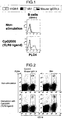
- the gated cells were analyzed on the histogram with the X axis: PLD4, and the results of staining with mouse IgG2b, ⁇ were overlaid thereon. Consequently, anti-PLD4 antibodies were hardly bound to non-stimulated, but were selectively bound to activated B cells by stimulation with TLR9 ligand ( Fig. 1 ) . This shows that PLD4 is expressed on activated B cells.
- Human PBMC was stimulated with CpG2006 with a final concentration of 1 ⁇ M for about 20 hours. Cells were collected and treated with FcR Blocking Reagent at 4°C for 20 minutes. After washing, staining was carried out with each 10 ⁇ g/ml of 3B4, 5B7, 13D4, 13H11, 11G9.6, mouse IgG1, ⁇ or mouse IgG2b, ⁇ , a primary antibody, at 4°C for 15 minutes. Staining was carried out with PE-labeled anti-mouse Ig, a secondary antibody, at 4°C for 15 minutes. For gating of a B cell group, double staining was carried out with an APC-labeled anti-human CD19 antibody at 4°C for 15 minutes.
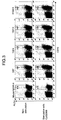
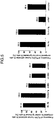
- a living cell group on the dot plot of the X axis: FSC and the Y axis: SSC was analyzed by binding of anti-PLD4 antibody to CD19+ B cells ( Fig. 2 and Fig.3 ). Consequently, all of the tested anti-PLD4 monoclonal antibodies were bound to B cells stimulated by TLR9. That is, it was verified that by all anti-PLD4 monoclonal antibodies, expression of PLD4 was induced in B cells in an activation-dependent manner.
- the cells were further stained by 5B7 or 13D4, 3B4 or mouse IgG2b, ⁇ , a primary antibody, at 4°C for 15 minutes (each 10 ⁇ g/ml).
- a sample in which PBMC was treated with a chimeric 3B4 antibody (ch3B4), a chimeric 3D4 antibody (ch3D4), or a chimeric 13H11 antibody (ch13H11) was stained with 5B7, and a sample in which PBMC was treated with a chimeric 5B7 antibody (ch5B7) or a chimeric 11G9.6 antibody (ch11G9.6) was stained with 13D4.
- an anti-PLD4 antibody clone treated for ADCC and an anti-PLD4 antibody clone used for staining do not compete with each other.
- the binding of the anti-PLD4 was found by PE-labeled anti-mouse Ig, a secondary antibody, at 4°C for 15 minutes.
- double staining was carried out with an APC-labeled anti-human CD19 antibody at 4°C for 15 minutes ( Fig. 4 ).
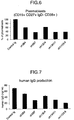
- the population of PLD4 + activated B cells treated with each chimeric anti-PLD4 antibody was compared with that of PLD4 + activated B cells treated with the control antibody ( Fig. 5 ).
- the cultured activated B cells were re-stimulated with 50 ng/ ml of PMA (Phorbol myristate acetate) after washed with PBS 2 times. Two days later, human IgG production was measured in the culture supernatants by ELISA. Plasmablasts in the activated B cells were reduced by the treatment with ch3B4, ch5B7, ch13D4, ch13H11, or ch11G9.6 compared with control Ig treatment ( Figure 6 ) .
- PMA Phorbol myristate acetate
- anti-PLD4 antibodies recognize and suppress activated B cells. Therefore, the antibodies are useful for prevention and treatment of diseases involved in immune function (autoimmune diseases and allergic diseases).
- the nucleic acid sequence of the heavy chain variable region of the obtained anti-PLD4 mouse 11G9.6 antibody is SEQ ID NO: 74, and the amino acid sequence is SEQ ID NO: 75.
- the amino acid sequences of CDR1, CDR2 and CDR3 within the heavy chain variable region of the mouse 11G9.6 antibody are SEQ ID NO: 2, SEQ ID NO: 3 and SEQ ID NO: 4, respectively.
- nucleic acid sequence of the heavy chain variable region of the anti-PLD4 mouse 11G9.6 antibody (504 bp) [capital letters: mouse 11G9.6 VH variable region, small letters: mouse IgG2b heavy chain constant region] (SEQ ID NO: 74)
- the amino acid sequence of the heavy chain variable region of the mouse 11G9.6 antibody (168 a. a.) [capital letters: mouse 11G9.6 VH variable region, small letters: mouse IgG2b heavy chain constant region]
- the underlined sequence shows its signal sequence and the double underline shows its CDR regions (CDR1, CDR2 and CDR3) (SEQ ID NO: 75).
- the nucleic acid sequence of the light chain variable region of the obtained anti-PLD4 mouse 11G9.6 antibody is SEQ ID NO: 94, and the amino acid sequence is SEQ ID NO: 95.
- the amino acid sequences of CDR1, CDR2 and CDR3 within the light chain variable region of the mouse 11G9.6 antibody are SEQ ID NO: 5, SEQ ID NO: 6 and SEQ ID NO: 7, respectively.
- nucleic acid sequence of the light chain variable region of the anti-PLD4 mouse 11G9.6 antibody (421 bp) [capital letters: mouse 11G9.6 VL variable region, small letters: mouse Ig ⁇ light chain constant region] (SEQ ID NO: 94)
- the amino acid sequence of the light chain variable region of the mouse 11G9.6 antibody (140 a.a.) [capital letters: mouse 11G9.6 VL variable region, small letters: mouse Ig ⁇ light chain constant region]
- the underlined sequence shows its signal sequence and the double underline shows its CDR regions (CDR1, CDR2 and CDR3) (SEQ ID NO: 95).
- the nucleic acid sequence of the heavy chain variable region of the obtained anti-PLD4 mouse 3B4 antibody is SEQ ID NO: 76, and the amino acid sequence is SEQ ID NO: 77.
- the amino acid sequences of CDR1, CDR2 and CDR3 within the heavy chain variable region of the mouse 3B4 antibody are SEQ ID NO: 8, SEQ ID NO: 9 and SEQ ID NO: 10, respectively.
- the nucleic acid sequence of the heavy chain variable region of the anti-PLD4 mouse 3B4 antibody (437 bp) [capital letters : mouse 3B4 VH variable region, small letters : mouse IgG1 heavy chain constant region]
- the amino acid sequence of the heavy chain variable region of the mouse 3B4 antibody (145 a. a.) [capital letters: mouse 3B4 VH variable region, small letters: mouse IgG1 heavy chain constant region]
- the underlined sequence shows its signal sequence and the double underline shows its CDR regions (CDR1, CDR2 and CDR3).
- the nucleic acid sequence of the light chain variable region of the obtained anti-PLD4 mouse 3B4 antibody is SEQ ID NO: 96, and the amino acid sequence is SEQ ID NO: 97.
- the amino acid sequences of CDR1, CDR2 and CDR3 within the light chain variable region of the mouse 3B4 antibody are SEQ ID NO: 11, SEQ ID NO: 12 and SEQ ID NO: 13, respectively.
- nucleic acid sequence of the light chain variable region of the anti-PLD4 mouse 3B4 antibody (459 bp) [capital letters: mouse 3B4 VL variable region, small letters: mouse Ig ⁇ light chain constant region]
- the amino acid sequence of the light chain variable region of the mouse 3B4 antibody (153 a. a.) [capital letters: mouse 3B4 VL variable region, small letters: mouse Ig ⁇ light chain constant region]
- the underlined sequence shows its signal sequence and the double underline shows its CDR regions (CDR1, CDR2 and CDR3).
- the nucleic acid sequence of the heavy chain variable region of the obtained anti-PLD4 mouse 5B7 antibody is SEQ ID NO: 78, and the amino acid sequence is SEQ ID NO: 79.
- the amino acid sequences of CDR1, CDR2 and CDR3 within the heavy chain variable region of the mouse 5B7 antibody are SEQ ID NO: 14, SEQ ID NO: 15 and SEQ ID NO: 16, respectively.
- the nucleic acid sequence of the heavy chain variable region of the anti-PLD4 mouse 5B7 antibody (475 bp) [capital letters: mouse 5B7 VH variable region, small letters: mouse IgG2b heavy chain constant region]
- the amino acid sequence of the heavy chain variable region of the mouse 5B7 antibody (158 a. a.) [capital letters: mouse 5B7 VH variable region, small letters: mouse IgG2b heavy chain constant region]
- the underlined sequence shows its signal sequence and the double underline shows its CDR regions (CDR1, CDR2 and CDR3).
- the nucleic acid sequence of the light chain variable region of the obtained anti-PLD4 mouse 5B7 antibody is SEQ ID NO: 98, and the amino acid sequence is SEQ ID NO: 99.
- the amino acid sequences of CDR1, CDR2 and CDR3 within the light chain variable region of the mouse 5B7 antibody are SEQ ID NO: 17, SEQ ID NO: 18 and SEQ ID NO: 19, respectively.
- nucleic acid sequence of the light chain variable region of the anti-PLD4 mouse 5B7 antibody (467 bp) [capital letters: mouse 5B7 VL variable region, small letters: mouse Ig ⁇ light chain constant region]
- the amino acid sequence of the light chain variable region of the mouse 5B7 antibody (155 a. a.) [capital letters: mouse 5B7 VL variable region, small letters: mouse Ig ⁇ light chain constant region]
- the underlined sequence shows its signal sequence and the double underline shows its CDR regions (CDR1, CDR2 and CDR3).
- the nucleic acid sequence of the heavy chain variable region of the obtained anti-PLD4 mouse 7B4 antibody is SEQ ID NO: 80, and the amino acid sequence is SEQ ID NO: 81.
- the amino acid sequences of CDR1, CDR2 and CDR3 within the heavy chain variable region of the mouse 7B4 antibody are SEQ ID NO: 14, SEQ ID NO: 15 and SEQ ID NO: 16, respectively.
- the nucleic acid sequence of the heavy chain variable region of the anti-PLD4 mouse 7B4 antibody (470 bp) [capital letters: mouse 7B4 VH variable region, small letters: mouse IgG2b heavy chain constant region]
- the amino acid sequence of the heavy chain variable region of the mouse 7B4 antibody (156 a. a.) [capital letters: mouse 7B4 VH variable region, small letters: mouse IgG2b heavy chain constant region]
- the underlined sequence shows its signal sequence and the double underline shows its CDR regions (CDR1, CDR2 and CDR3).
- the nucleic acid sequence of the light chain variable region of the obtained anti-PLD4 mouse 7B4 antibody is SEQ ID NO: 100, and the amino acid sequence is SEQ ID NO: 101.
- the amino acid sequences of CDR1, CDR2 and CDR3 within the light chain variable region of the mouse 7B4 antibody are SEQ ID NO: 17, SEQ ID NO: 18 and SEQ ID NO: 19, respectively.
- nucleic acid sequence of the light chain variable region of the anti-PLD4 mouse 7B4 antibody (454 bp) [capital letters: mouse 7B4 VL variable region, small letters: mouse Ig ⁇ light chain constant region]
- the amino acid sequence of the light chain variable region of the mouse 7B4 antibody (151 a. a.) [capital letters: mouse 7B4 VL variable region, small letters: mouse Ig ⁇ light chain constant region]
- the underlined sequence shows its signal sequence and the double underline shows its CDR regions (CDR1, CDR2 and CDR3).
- the nucleic acid sequence of the heavy chain variable region of the obtained anti-PLD4 mouse 8C11 antibody is SEQ ID NO: 82, and the amino acid sequence is SEQ ID NO: 83.
- the amino acid sequences of CDR1, CDR2 and CDR3 within the heavy chain variable region of the mouse 8C11 antibody are SEQ ID NO: 20, SEQ ID NO: 21 and SEQ ID NO: 22, respectively.
- the nucleic acid sequence of the heavy chain variable region of the anti-PLD4 mouse 8C11 antibody (462 bp) [capital letters: mouse 8C11 VH variable region, small letters: mouse IgG2b heavy chain constant region]
- the amino acid sequence of the heavy chain variable region of the mouse 8C11 antibody (154 a. a.) [capital letters: mouse 8C11 VH variable region, small letters: mouse IgG2b heavy chain constant region]
- the underlined sequence shows its signal sequence and the double underline shows its CDR regions (CDR1, CDR2 and CDR3).
- the nucleic acid sequence of the light chain variable region of the obtained anti-PLD4 mouse 8C11 antibody is SEQ ID NO: 102, and the amino acid sequence is SEQ ID NO: 103.
- the amino acid sequences of CDR1, CDR2 and CDR3 within the light chain variable region of the mouse 8C11 antibody are SEQ ID NO: 23, SEQ ID NO: 24 and SEQ ID NO: 25, respectively.
- the amino acid sequence of the light chain variable region of the mouse 8C11 antibody (152 a. a.) [capital letters: mouse 8C11 VL variable region, small letters: mouse Ig ⁇ light chain constant region]
- the underlined sequence shows its signal sequence and the double underline shows its CDR regions (CDR1, CDR2 and CDR3).
- the nucleic acid sequence of the heavy chain variable region of the obtained anti-PLD4 mouse 10C3 antibody is SEQ ID NO: 84, and the amino acid sequence is SEQ ID NO: 85.
- the amino acid sequences of CDR1, CDR2 and CDR3 within the heavy chain variable region of the mouse 10C3 antibody are SEQ ID NO: 26, SEQ ID NO: 27 and SEQ ID NO: 28, respectively.
- the nucleic acid sequence of the heavy chain variable region of the anti-PLD4 mouse 10C3 antibody (450 bp) [capital letters: mouse 10C3 VH variable region, small letters: mouse IgG2a heavy chain constant region]
- the amino acid sequence of the heavy chain variable region of the mouse 10C3 antibody (150 a. a.) [capital letters: mouse 10C3 VH variable region, small letters: mouse IgG2a heavy chain constant region]
- the underlined sequence shows its signal sequence and the double underline shows its CDR regions (CDR1, CDR2 and CDR3).
- the nucleic acid sequence of the light chain variable region of the obtained anti-PLD4 mouse 10C3 antibody is SEQ ID NO: 104, and the amino acid sequence is SEQ ID NO: 105.
- the amino acid sequences of CDR1, CDR2 and CDR3 within the light chain variable region of the mouse 10C3 antibody are SEQ ID NO: 29, SEQ ID NO: 30 and SEQ ID NO: 31, respectively.
- nucleic acid sequence of the light chain variable region of the anti-PLD4 mouse 10C3 antibody (423 bp) [capital letters: mouse 10C3 VL variable region, small letters: mouse Ig ⁇ light chain constant region]
- the amino acid sequence of the light chain variable region of the mouse 10C3 antibody (141 a. a.) [capital letters: mouse 10C3 VL variable region, small letters: mouse Ig ⁇ light chain constant region]
- the underlined sequence shows its signal sequence and the double underline shows its CDR regions (CDR1, CDR2 and CDR3).
- the nucleic acid sequence of the heavy chain variable region of the obtained anti-PLD4 mouse 11D10 antibody is SEQ ID NO: 86, and the amino acid sequence is SEQ ID NO: 87.
- the amino acid sequences of CDR1, CDR2 and CDR3 within the heavy chain variable region of the mouse 11D10 antibody are SEQ ID NO: 26, SEQ ID NO: 27 and SEQ ID NO: 28, respectively.
- the nucleic acid sequence of the heavy chain variable region of the anti-PLD4 mouse 11D10 antibody (450 bp) [capital letters: mouse 11D10 VH variable region, small letters: mouse IgG2b heavy chain constant region]
- the amino acid sequence of the heavy chain variable region of the mouse 11D10 antibody (150 a. a.) [capital letters: mouse 11D10 VH variable region, small letters : mouse IgG2b heavy chain constant region]
- the underlined sequence shows its signal sequence and the double underline shows its CDR regions (CDR1, CDR2 and CDR3).
- the nucleic acid sequence of the light chain variable region of the obtained anti-PLD4 mouse 11D10 antibody is SEQ ID NO: 106, and the amino acid sequence is SEQ ID NO: 107.
- the amino acid sequences of CDR1, CDR2 and CDR3 within the light chain variable region of the mouse 11D10 antibody are SEQ ID NO: 29, SEQ ID NO: 30 and SEQ ID NO: 31, respectively.
- the amino acid sequence of the light chain variable region of the mouse 11D10 antibody (141 a. a.) [capital letters: mouse 11D10 VL variable region, small letters: mouse Ig ⁇ light chain constant region]
- the underlined sequence shows its signal sequence and the double underline shows its CDR regions (CDR1, CDR2 and CDR3).
- the nucleic acid sequence of the heavy chain variable region of the obtained anti-PLD4 mouse 13D4 antibody is SEQ ID NO: 88, and the amino acid sequence is SEQ ID NO: 89.
- the amino acid sequences of CDR1, CDR2 and CDR3 within the heavy chain variable region of the mouse 13D4 antibody are SEQ ID NO: 32, SEQ ID NO: 33 and SEQ ID NO: 34, respectively.
- the nucleic acid sequence of the heavy chain variable region of the anti-PLD4 mouse 13D4 antibody (472 bp) [capital letters: mouse 13D4 VH variable region, small letters: mouse IgG2b heavy chain constant region]
- the amino acid sequence of the heavy chain variable region of the mouse 13D4 antibody (157 a. a.) [capital letters: mouse 13D4 VH variable region, small letters: mouse IgG2b heavy chain constant region]
- the underlined sequence shows its signal sequence and the double underline shows its CDR regions (CDR1, CDR2 and CDR3).
- the nucleic acid sequence of the light chain variable region of the obtained anti-PLD4 mouse 13D4 antibody is SEQ ID NO: 108, and the amino acid sequence is SEQ ID NO: 109.
- the amino acid sequences of CDR1, CDR2 and CDR3 within the light chain variable region of the mouse 13D4 antibody are SEQ ID NO: 35, SEQ ID NO: 36 and SEQ ID NO: 37, respectively.
- the nucleic acid sequence of the light chain variable region of the anti-PLD4 mouse 13D4 antibody (404 bp) [capital letters: mouse 13D4 VL variable region, small letters: mouse Ig ⁇ light chain constant region]
- the amino acid sequence of the light chain variable region of the mouse 13D4 antibody (134 a. a.) [capital letters: mouse 13D4 VL variable region, small letters: mouse Ig ⁇ light chain constant region]
- the underlined sequence shows its signal sequence and the double underline shows its CDR regions (CDR1, CDR2 and CDR3).
- the nucleic acid sequence of the heavy chain variable region of the obtained anti-PLD4 mouse 13H11 antibody is SEQ ID NO: 90, and the amino acid sequence is SEQ ID NO: 91.
- the amino acid sequences of CDR1, CDR2 and CDR3 within the heavy chain variable region of the mouse 13H11 antibody are SEQ ID NO: 38, SEQ ID NO: 39 and SEQ ID NO: 40, respectively.
- the nucleic acid sequence of the heavy chain variable region of the anti-PLD4 mouse 13H11 antibody (471 bp) [capital letters: mouse 13H11 VH variable region, small letters: mouse IgG2b heavy chain constant region]
- the amino acid sequence of the heavy chain variable region of the mouse 13H11 antibody (157 a. a.) [capital letters: mouse 13H11 VH variable region, small letters : mouse IgG2b heavy chain constant region]
- the underlined sequence shows its signal sequence and the double underline shows its CDR regions (CDR1, CDR2 and CDR3).
- the nucleic acid sequence of the light chain variable region of the obtained anti-PLD4 mouse 13H11 antibody is SEQ ID NO: 110, and the amino acid sequence is SEQ ID NO: 111.
- the amino acid sequences of CDR1, CDR2 and CDR3 within the light chain variable region of the mouse 13H11 antibody are SEQ ID NO: 41, SEQ ID NO: 42 and SEQ ID NO: 43, respectively.
- nucleic acid sequence of the light chain variable region of the anti-PLD4 mouse 13H11 antibody (414 bp) [capital letters: mouse 13H11 VL variable region, small letters: mouse Ig ⁇ light chain constant region]
- the amino acid sequence of the light chain variable region of the mouse 13H11 antibody (138 a. a.) [capital letters: mouse 13H11 VL variable region, small letters: mouse Ig ⁇ light chain constant region]
- the underlined sequence shows its signal sequence and the double underline shows its CDR regions (CDR1, CDR2 and CDR3).
- the nucleic acid sequence of the heavy chain variable region of the obtained anti-PLD4 mouse 14C1 antibody is SEQ ID NO: 92, and the amino acid sequence is SEQ ID NO: 93.
- the amino acid sequences of CDR1, CDR2 and CDR3 within the heavy chain variable region of the mouse 14C1 antibody are SEQ ID NO: 38, SEQ ID NO: 39 and SEQ ID NO: 40, respectively.
- the nucleic acid sequence of the heavy chain variable region of the anti-PLD4 mouse 14C1 antibody (470 bp) [capital letters: mouse 14C1 VH variable region, small letters: mouse IgG1 heavy chain constant region]
- the amino acid sequence of the heavy chain variable region of the mouse 14C1 antibody (156 a. a.) [capital letters: mouse 14C1 VH variable region, small letters: mouse IgG1 heavy chain constant region]
- the underlined sequence shows its signal sequence and the double underline shows its CDR regions (CDR1, CDR2 and CDR3).
- the nucleic acid sequence of the light chain variable region of the obtained anti-PLD4 mouse 14C1 antibody is SEQ ID NO: 112, and the amino acid sequence is SEQ ID NO: 113.
- the amino acid sequences of CDR1, CDR2 and CDR3 within the light chain variable region of the mouse 14C1 antibody are SEQ ID NO: 41, SEQ ID NO: 42 and SEQ ID NO: 43, respectively.
- nucleic acid sequence of the light chain variable region of the anti-PLD4 mouse 14C1 antibody (465 bp) [capital letters: mouse 14C1 VL variable region, small letters: mouse Ig ⁇ light chain constant region]
- the amino acid sequence of the light chain variable region of the mouse 14C1 antibody (155 a. a.) [capital letters: mouse 14C1 VL variable region, small letters: mouse Ig ⁇ light chain constant region]
- the underlined sequence shows its signal sequence and the double underline shows its CDR regions (CDR1, CDR2 and CDR3).
- the base sequences and the amino acid sequences of the heavy chain and the light chain of the created chimeric 11G9.6 antibody are as the sequence numbers given below.
Landscapes
- Health & Medical Sciences (AREA)
- Chemical & Material Sciences (AREA)
- Life Sciences & Earth Sciences (AREA)
- Immunology (AREA)
- Engineering & Computer Science (AREA)
- Medicinal Chemistry (AREA)
- Organic Chemistry (AREA)
- General Health & Medical Sciences (AREA)
- Molecular Biology (AREA)
- Bioinformatics & Cheminformatics (AREA)
- Veterinary Medicine (AREA)
- Pharmacology & Pharmacy (AREA)
- Public Health (AREA)
- Animal Behavior & Ethology (AREA)
- Biochemistry (AREA)
- Chemical Kinetics & Catalysis (AREA)
- Nuclear Medicine, Radiotherapy & Molecular Imaging (AREA)
- General Chemical & Material Sciences (AREA)
- Biomedical Technology (AREA)
- Hematology (AREA)
- Urology & Nephrology (AREA)
- Genetics & Genomics (AREA)
- Biophysics (AREA)
- Microbiology (AREA)
- Proteomics, Peptides & Aminoacids (AREA)
- Cell Biology (AREA)
- Physics & Mathematics (AREA)
- Analytical Chemistry (AREA)
- Food Science & Technology (AREA)
- General Physics & Mathematics (AREA)
- Pathology (AREA)
- Biotechnology (AREA)
- Epidemiology (AREA)
- Mycology (AREA)
- Transplantation (AREA)
- Pulmonology (AREA)
- Peptides Or Proteins (AREA)
- Medicines Containing Antibodies Or Antigens For Use As Internal Diagnostic Agents (AREA)
- Enzymes And Modification Thereof (AREA)
- Preparation Of Compounds By Using Micro-Organisms (AREA)
Priority Applications (1)
| Application Number | Priority Date | Filing Date | Title |
|---|---|---|---|
| PL14761423T PL3027656T3 (pl) | 2013-07-30 | 2014-07-30 | Lek zawierający przeciwciało anty-fosfolipazowe D4 |
Applications Claiming Priority (2)
| Application Number | Priority Date | Filing Date | Title |
|---|---|---|---|
| JP2013158258 | 2013-07-30 | ||
| PCT/JP2014/070661 WO2015016386A1 (en) | 2013-07-30 | 2014-07-30 | Medicament comprising anti-phospholipase d4 antibody |
Publications (2)
| Publication Number | Publication Date |
|---|---|
| EP3027656A1 EP3027656A1 (en) | 2016-06-08 |
| EP3027656B1 true EP3027656B1 (en) | 2019-06-26 |
Family
ID=51493000
Family Applications (1)
| Application Number | Title | Priority Date | Filing Date |
|---|---|---|---|
| EP14761423.4A Active EP3027656B1 (en) | 2013-07-30 | 2014-07-30 | Medicament comprising anti-phospholipase d4 antibody |
Country Status (17)
| Country | Link |
|---|---|
| US (2) | US20160168266A1 (enExample) |
| EP (1) | EP3027656B1 (enExample) |
| JP (3) | JP6431523B2 (enExample) |
| KR (1) | KR102367760B1 (enExample) |
| CN (1) | CN105745226B (enExample) |
| AU (1) | AU2014297217B2 (enExample) |
| BR (1) | BR112016002001B1 (enExample) |
| CA (1) | CA2919736C (enExample) |
| DK (1) | DK3027656T3 (enExample) |
| ES (1) | ES2736324T3 (enExample) |
| HU (1) | HUE044469T2 (enExample) |
| MX (1) | MX381725B (enExample) |
| PL (1) | PL3027656T3 (enExample) |
| RU (1) | RU2709741C2 (enExample) |
| SG (2) | SG11201600666SA (enExample) |
| TR (1) | TR201910330T4 (enExample) |
| WO (1) | WO2015016386A1 (enExample) |
Families Citing this family (6)
| Publication number | Priority date | Publication date | Assignee | Title |
|---|---|---|---|---|
| JOP20210044A1 (ar) | 2010-12-30 | 2017-06-16 | Takeda Pharmaceuticals Co | الأجسام المضادة لـ cd38 |
| HUE054362T2 (hu) * | 2012-01-31 | 2021-09-28 | Sbi Biotech Co Ltd | Foszfolipáz D4 elleni antitest |
| SG11201600666SA (en) * | 2013-07-30 | 2016-02-26 | Sbi Biotech Co Ltd | Medicament comprising anti-phospholipase d4 antibody |
| MA45674A (fr) | 2016-07-15 | 2019-05-22 | Takeda Pharmaceuticals Co | Méthodes et matériaux permettant d'évaluer une réponse à des traitements de déplétion de plasmoblastes et de plasmocytes |
| MX2020007429A (es) | 2018-01-12 | 2020-10-15 | Takeda Pharmaceuticals Co | Dosificacion subcutanea de anticuerpos anti grupo de diferenciacion 38 (cd38). |
| JP7140367B2 (ja) * | 2018-05-31 | 2022-09-21 | 国立大学法人 東京大学 | ヒト由来サンプルにおける可溶型tlr7の分析 |
Family Cites Families (6)
| Publication number | Priority date | Publication date | Assignee | Title |
|---|---|---|---|---|
| ATE139900T1 (de) * | 1992-11-13 | 1996-07-15 | Idec Pharma Corp | Therapeutische verwendung von chimerischen und markierten antikörper gegen menschlichen b lymphozyt beschränkter differenzierung antigen für die behandlung von b-zell-lymphoma |
| WO2000011015A1 (en) * | 1998-08-24 | 2000-03-02 | Alphagene, Inc. | Secreted proteins and polynucleotides encoding them |
| EP1392855A4 (en) * | 2000-12-07 | 2005-05-25 | Millennium Pharm Inc | METHODS AND COMPOSITIONS FOR THE DIAGNOSIS AND TREATMENT OF VIRAL DISEASES VIA GENE 55092 |
| JP2013052781A (ja) | 2011-09-05 | 2013-03-21 | Tokai Rika Co Ltd | 車両用ミラー装置 |
| HUE054362T2 (hu) * | 2012-01-31 | 2021-09-28 | Sbi Biotech Co Ltd | Foszfolipáz D4 elleni antitest |
| SG11201600666SA (en) * | 2013-07-30 | 2016-02-26 | Sbi Biotech Co Ltd | Medicament comprising anti-phospholipase d4 antibody |
-
2014
- 2014-07-30 SG SG11201600666SA patent/SG11201600666SA/en unknown
- 2014-07-30 KR KR1020167002746A patent/KR102367760B1/ko active Active
- 2014-07-30 CN CN201480047721.6A patent/CN105745226B/zh active Active
- 2014-07-30 WO PCT/JP2014/070661 patent/WO2015016386A1/en not_active Ceased
- 2014-07-30 PL PL14761423T patent/PL3027656T3/pl unknown
- 2014-07-30 TR TR2019/10330T patent/TR201910330T4/tr unknown
- 2014-07-30 BR BR112016002001-4A patent/BR112016002001B1/pt active IP Right Grant
- 2014-07-30 SG SG10201800592SA patent/SG10201800592SA/en unknown
- 2014-07-30 MX MX2016001193A patent/MX381725B/es unknown
- 2014-07-30 AU AU2014297217A patent/AU2014297217B2/en active Active
- 2014-07-30 ES ES14761423T patent/ES2736324T3/es active Active
- 2014-07-30 EP EP14761423.4A patent/EP3027656B1/en active Active
- 2014-07-30 DK DK14761423.4T patent/DK3027656T3/da active
- 2014-07-30 RU RU2016106708A patent/RU2709741C2/ru active
- 2014-07-30 US US14/908,004 patent/US20160168266A1/en not_active Abandoned
- 2014-07-30 CA CA2919736A patent/CA2919736C/en active Active
- 2014-07-30 JP JP2016503264A patent/JP6431523B2/ja active Active
- 2014-07-30 HU HUE14761423 patent/HUE044469T2/hu unknown
-
2018
- 2018-11-01 JP JP2018206702A patent/JP2019014759A/ja not_active Ceased
-
2019
- 2019-09-25 JP JP2019173621A patent/JP6843449B2/ja active Active
-
2020
- 2020-12-18 US US17/127,202 patent/US20210130493A1/en not_active Abandoned
Non-Patent Citations (1)
| Title |
|---|
| None * |
Also Published As
| Publication number | Publication date |
|---|---|
| JP6843449B2 (ja) | 2021-03-17 |
| JP2019014759A (ja) | 2019-01-31 |
| BR112016002001B1 (pt) | 2023-04-25 |
| DK3027656T3 (da) | 2019-08-05 |
| CA2919736C (en) | 2022-03-22 |
| JP2016534022A (ja) | 2016-11-04 |
| CN105745226B (zh) | 2020-03-06 |
| HUE044469T2 (hu) | 2019-10-28 |
| RU2709741C2 (ru) | 2019-12-19 |
| RU2016106708A3 (enExample) | 2018-03-30 |
| PL3027656T3 (pl) | 2019-10-31 |
| US20160168266A1 (en) | 2016-06-16 |
| ES2736324T3 (es) | 2019-12-27 |
| RU2016106708A (ru) | 2017-09-01 |
| KR102367760B1 (ko) | 2022-02-24 |
| AU2014297217B2 (en) | 2020-01-16 |
| KR20160034934A (ko) | 2016-03-30 |
| SG11201600666SA (en) | 2016-02-26 |
| JP2019214621A (ja) | 2019-12-19 |
| BR112016002001A2 (pt) | 2017-08-29 |
| TR201910330T4 (tr) | 2019-07-22 |
| EP3027656A1 (en) | 2016-06-08 |
| SG10201800592SA (en) | 2018-03-28 |
| US20210130493A1 (en) | 2021-05-06 |
| MX381725B (es) | 2025-03-13 |
| MX2016001193A (es) | 2016-05-26 |
| CA2919736A1 (en) | 2015-02-05 |
| JP6431523B2 (ja) | 2018-11-28 |
| CN105745226A (zh) | 2016-07-06 |
| AU2014297217A1 (en) | 2016-02-18 |
| WO2015016386A1 (en) | 2015-02-05 |
Similar Documents
| Publication | Publication Date | Title |
|---|---|---|
| KR102677225B1 (ko) | Siglec-9 중화 항체 | |
| US20210130493A1 (en) | Medicament comprising anti-phospholipase d4 antibody | |
| CN112384532B (zh) | 抗SIRP-β1抗体及其使用方法 | |
| JP7244102B2 (ja) | 抗ホスホリパーゼd4抗体 | |
| EP3232202B1 (en) | Anti-human receptor-type protein tyrosine phosphatase antibody | |
| HK40039509A (en) | Anti-phospholipase d4 antibody |
Legal Events
| Date | Code | Title | Description |
|---|---|---|---|
| PUAI | Public reference made under article 153(3) epc to a published international application that has entered the european phase |
Free format text: ORIGINAL CODE: 0009012 |
|
| 17P | Request for examination filed |
Effective date: 20160217 |
|
| AK | Designated contracting states |
Kind code of ref document: A1 Designated state(s): AL AT BE BG CH CY CZ DE DK EE ES FI FR GB GR HR HU IE IS IT LI LT LU LV MC MK MT NL NO PL PT RO RS SE SI SK SM TR |
|
| AX | Request for extension of the european patent |
Extension state: BA ME |
|
| DAX | Request for extension of the european patent (deleted) | ||
| STAA | Information on the status of an ep patent application or granted ep patent |
Free format text: STATUS: EXAMINATION IS IN PROGRESS |
|
| 17Q | First examination report despatched |
Effective date: 20170317 |
|
| GRAP | Despatch of communication of intention to grant a patent |
Free format text: ORIGINAL CODE: EPIDOSNIGR1 |
|
| STAA | Information on the status of an ep patent application or granted ep patent |
Free format text: STATUS: GRANT OF PATENT IS INTENDED |
|
| INTG | Intention to grant announced |
Effective date: 20180718 |
|
| GRAJ | Information related to disapproval of communication of intention to grant by the applicant or resumption of examination proceedings by the epo deleted |
Free format text: ORIGINAL CODE: EPIDOSDIGR1 |
|
| STAA | Information on the status of an ep patent application or granted ep patent |
Free format text: STATUS: EXAMINATION IS IN PROGRESS |
|
| INTC | Intention to grant announced (deleted) | ||
| GRAP | Despatch of communication of intention to grant a patent |
Free format text: ORIGINAL CODE: EPIDOSNIGR1 |
|
| STAA | Information on the status of an ep patent application or granted ep patent |
Free format text: STATUS: GRANT OF PATENT IS INTENDED |
|
| INTG | Intention to grant announced |
Effective date: 20190111 |
|
| GRAS | Grant fee paid |
Free format text: ORIGINAL CODE: EPIDOSNIGR3 |
|
| GRAA | (expected) grant |
Free format text: ORIGINAL CODE: 0009210 |
|
| STAA | Information on the status of an ep patent application or granted ep patent |
Free format text: STATUS: THE PATENT HAS BEEN GRANTED |
|
| RAP1 | Party data changed (applicant data changed or rights of an application transferred) |
Owner name: SBI BIOTECH CO., LTD. |
|
| RIN1 | Information on inventor provided before grant (corrected) |
Inventor name: ENDO, MAYUKI Inventor name: ISHIDA, KOJI Inventor name: YAMAZAKI, TOMOHIDE |
|
| AK | Designated contracting states |
Kind code of ref document: B1 Designated state(s): AL AT BE BG CH CY CZ DE DK EE ES FI FR GB GR HR HU IE IS IT LI LT LU LV MC MK MT NL NO PL PT RO RS SE SI SK SM TR |
|
| REG | Reference to a national code |
Ref country code: GB Ref legal event code: FG4D |
|
| REG | Reference to a national code |
Ref country code: CH Ref legal event code: EP |
|
| REG | Reference to a national code |
Ref country code: AT Ref legal event code: REF Ref document number: 1148177 Country of ref document: AT Kind code of ref document: T Effective date: 20190715 |
|
| REG | Reference to a national code |
Ref country code: DE Ref legal event code: R096 Ref document number: 602014049106 Country of ref document: DE |
|
| REG | Reference to a national code |
Ref country code: IE Ref legal event code: FG4D |
|
| REG | Reference to a national code |
Ref country code: CH Ref legal event code: NV Representative=s name: DENNEMEYER AG, CH Ref country code: NL Ref legal event code: FP |
|
| REG | Reference to a national code |
Ref country code: DK Ref legal event code: T3 Effective date: 20190801 |
|
| REG | Reference to a national code |
Ref country code: SE Ref legal event code: TRGR |
|
| REG | Reference to a national code |
Ref country code: HU Ref legal event code: AG4A Ref document number: E044469 Country of ref document: HU |
|
| PG25 | Lapsed in a contracting state [announced via postgrant information from national office to epo] |
Ref country code: HR Free format text: LAPSE BECAUSE OF FAILURE TO SUBMIT A TRANSLATION OF THE DESCRIPTION OR TO PAY THE FEE WITHIN THE PRESCRIBED TIME-LIMIT Effective date: 20190626 Ref country code: LT Free format text: LAPSE BECAUSE OF FAILURE TO SUBMIT A TRANSLATION OF THE DESCRIPTION OR TO PAY THE FEE WITHIN THE PRESCRIBED TIME-LIMIT Effective date: 20190626 Ref country code: NO Free format text: LAPSE BECAUSE OF FAILURE TO SUBMIT A TRANSLATION OF THE DESCRIPTION OR TO PAY THE FEE WITHIN THE PRESCRIBED TIME-LIMIT Effective date: 20190926 Ref country code: AL Free format text: LAPSE BECAUSE OF FAILURE TO SUBMIT A TRANSLATION OF THE DESCRIPTION OR TO PAY THE FEE WITHIN THE PRESCRIBED TIME-LIMIT Effective date: 20190626 |
|
| REG | Reference to a national code |
Ref country code: LT Ref legal event code: MG4D |
|
| PG25 | Lapsed in a contracting state [announced via postgrant information from national office to epo] |
Ref country code: RS Free format text: LAPSE BECAUSE OF FAILURE TO SUBMIT A TRANSLATION OF THE DESCRIPTION OR TO PAY THE FEE WITHIN THE PRESCRIBED TIME-LIMIT Effective date: 20190626 Ref country code: BG Free format text: LAPSE BECAUSE OF FAILURE TO SUBMIT A TRANSLATION OF THE DESCRIPTION OR TO PAY THE FEE WITHIN THE PRESCRIBED TIME-LIMIT Effective date: 20190926 Ref country code: LV Free format text: LAPSE BECAUSE OF FAILURE TO SUBMIT A TRANSLATION OF THE DESCRIPTION OR TO PAY THE FEE WITHIN THE PRESCRIBED TIME-LIMIT Effective date: 20190626 Ref country code: GR Free format text: LAPSE BECAUSE OF FAILURE TO SUBMIT A TRANSLATION OF THE DESCRIPTION OR TO PAY THE FEE WITHIN THE PRESCRIBED TIME-LIMIT Effective date: 20190927 |
|
| REG | Reference to a national code |
Ref country code: ES Ref legal event code: FG2A Ref document number: 2736324 Country of ref document: ES Kind code of ref document: T3 Effective date: 20191227 |
|
| PG25 | Lapsed in a contracting state [announced via postgrant information from national office to epo] |
Ref country code: SK Free format text: LAPSE BECAUSE OF FAILURE TO SUBMIT A TRANSLATION OF THE DESCRIPTION OR TO PAY THE FEE WITHIN THE PRESCRIBED TIME-LIMIT Effective date: 20190626 Ref country code: RO Free format text: LAPSE BECAUSE OF FAILURE TO SUBMIT A TRANSLATION OF THE DESCRIPTION OR TO PAY THE FEE WITHIN THE PRESCRIBED TIME-LIMIT Effective date: 20190626 Ref country code: EE Free format text: LAPSE BECAUSE OF FAILURE TO SUBMIT A TRANSLATION OF THE DESCRIPTION OR TO PAY THE FEE WITHIN THE PRESCRIBED TIME-LIMIT Effective date: 20190626 Ref country code: PT Free format text: LAPSE BECAUSE OF FAILURE TO SUBMIT A TRANSLATION OF THE DESCRIPTION OR TO PAY THE FEE WITHIN THE PRESCRIBED TIME-LIMIT Effective date: 20191028 |
|
| PG25 | Lapsed in a contracting state [announced via postgrant information from national office to epo] |
Ref country code: IS Free format text: LAPSE BECAUSE OF FAILURE TO SUBMIT A TRANSLATION OF THE DESCRIPTION OR TO PAY THE FEE WITHIN THE PRESCRIBED TIME-LIMIT Effective date: 20191026 Ref country code: SM Free format text: LAPSE BECAUSE OF FAILURE TO SUBMIT A TRANSLATION OF THE DESCRIPTION OR TO PAY THE FEE WITHIN THE PRESCRIBED TIME-LIMIT Effective date: 20190626 |
|
| PG25 | Lapsed in a contracting state [announced via postgrant information from national office to epo] |
Ref country code: IS Free format text: LAPSE BECAUSE OF FAILURE TO SUBMIT A TRANSLATION OF THE DESCRIPTION OR TO PAY THE FEE WITHIN THE PRESCRIBED TIME-LIMIT Effective date: 20200224 Ref country code: LU Free format text: LAPSE BECAUSE OF NON-PAYMENT OF DUE FEES Effective date: 20190730 |
|
| REG | Reference to a national code |
Ref country code: DE Ref legal event code: R097 Ref document number: 602014049106 Country of ref document: DE |
|
| PLBE | No opposition filed within time limit |
Free format text: ORIGINAL CODE: 0009261 |
|
| STAA | Information on the status of an ep patent application or granted ep patent |
Free format text: STATUS: NO OPPOSITION FILED WITHIN TIME LIMIT |
|
| PG2D | Information on lapse in contracting state deleted |
Ref country code: IS |
|
| 26N | No opposition filed |
Effective date: 20200603 |
|
| PG25 | Lapsed in a contracting state [announced via postgrant information from national office to epo] |
Ref country code: SI Free format text: LAPSE BECAUSE OF FAILURE TO SUBMIT A TRANSLATION OF THE DESCRIPTION OR TO PAY THE FEE WITHIN THE PRESCRIBED TIME-LIMIT Effective date: 20190626 |
|
| PG25 | Lapsed in a contracting state [announced via postgrant information from national office to epo] |
Ref country code: CY Free format text: LAPSE BECAUSE OF FAILURE TO SUBMIT A TRANSLATION OF THE DESCRIPTION OR TO PAY THE FEE WITHIN THE PRESCRIBED TIME-LIMIT Effective date: 20190626 |
|
| PG25 | Lapsed in a contracting state [announced via postgrant information from national office to epo] |
Ref country code: MT Free format text: LAPSE BECAUSE OF FAILURE TO SUBMIT A TRANSLATION OF THE DESCRIPTION OR TO PAY THE FEE WITHIN THE PRESCRIBED TIME-LIMIT Effective date: 20190626 |
|
| REG | Reference to a national code |
Ref country code: AT Ref legal event code: UEP Ref document number: 1148177 Country of ref document: AT Kind code of ref document: T Effective date: 20190626 |
|
| PG25 | Lapsed in a contracting state [announced via postgrant information from national office to epo] |
Ref country code: MK Free format text: LAPSE BECAUSE OF FAILURE TO SUBMIT A TRANSLATION OF THE DESCRIPTION OR TO PAY THE FEE WITHIN THE PRESCRIBED TIME-LIMIT Effective date: 20190626 |
|
| P01 | Opt-out of the competence of the unified patent court (upc) registered |
Effective date: 20230517 |
|
| PGFP | Annual fee paid to national office [announced via postgrant information from national office to epo] |
Ref country code: HU Payment date: 20250723 Year of fee payment: 12 |
|
| PGFP | Annual fee paid to national office [announced via postgrant information from national office to epo] |
Ref country code: NL Payment date: 20250721 Year of fee payment: 12 |
|
| PGFP | Annual fee paid to national office [announced via postgrant information from national office to epo] |
Ref country code: FI Payment date: 20250725 Year of fee payment: 12 Ref country code: ES Payment date: 20250826 Year of fee payment: 12 |
|
| PGFP | Annual fee paid to national office [announced via postgrant information from national office to epo] |
Ref country code: DK Payment date: 20250725 Year of fee payment: 12 Ref country code: DE Payment date: 20250722 Year of fee payment: 12 |
|
| PGFP | Annual fee paid to national office [announced via postgrant information from national office to epo] |
Ref country code: MC Payment date: 20250723 Year of fee payment: 12 |
|
| PGFP | Annual fee paid to national office [announced via postgrant information from national office to epo] |
Ref country code: IT Payment date: 20250724 Year of fee payment: 12 Ref country code: PL Payment date: 20250718 Year of fee payment: 12 Ref country code: TR Payment date: 20250722 Year of fee payment: 12 |
|
| PGFP | Annual fee paid to national office [announced via postgrant information from national office to epo] |
Ref country code: BE Payment date: 20250718 Year of fee payment: 12 Ref country code: GB Payment date: 20250722 Year of fee payment: 12 |
|
| PGFP | Annual fee paid to national office [announced via postgrant information from national office to epo] |
Ref country code: FR Payment date: 20250725 Year of fee payment: 12 Ref country code: AT Payment date: 20250722 Year of fee payment: 12 |
|
| PGFP | Annual fee paid to national office [announced via postgrant information from national office to epo] |
Ref country code: CH Payment date: 20250801 Year of fee payment: 12 Ref country code: SE Payment date: 20250722 Year of fee payment: 12 |
|
| PGFP | Annual fee paid to national office [announced via postgrant information from national office to epo] |
Ref country code: IE Payment date: 20250723 Year of fee payment: 12 Ref country code: CZ Payment date: 20250718 Year of fee payment: 12 |
|
| REG | Reference to a national code |
Ref country code: CH Ref legal event code: U11 Free format text: ST27 STATUS EVENT CODE: U-0-0-U10-U11 (AS PROVIDED BY THE NATIONAL OFFICE) Effective date: 20260801 |