EP3010488B1 - Stereospezifische lipide zur lokoregionären therapie mit langzeitzirkulierenden stimuli-sensitiven nanocarriersystemen - Google Patents
Stereospezifische lipide zur lokoregionären therapie mit langzeitzirkulierenden stimuli-sensitiven nanocarriersystemen Download PDFInfo
- Publication number
- EP3010488B1 EP3010488B1 EP14730932.2A EP14730932A EP3010488B1 EP 3010488 B1 EP3010488 B1 EP 3010488B1 EP 14730932 A EP14730932 A EP 14730932A EP 3010488 B1 EP3010488 B1 EP 3010488B1
- Authority
- EP
- European Patent Office
- Prior art keywords
- stimuli
- phosphocholine
- sensitive nanocarrier
- treatment
- inhibitors
- Prior art date
- Legal status (The legal status is an assumption and is not a legal conclusion. Google has not performed a legal analysis and makes no representation as to the accuracy of the status listed.)
- Active
Links
Images


Classifications
-
- A—HUMAN NECESSITIES
- A61—MEDICAL OR VETERINARY SCIENCE; HYGIENE
- A61K—PREPARATIONS FOR MEDICAL, DENTAL OR TOILETRY PURPOSES
- A61K9/00—Medicinal preparations characterised by special physical form
- A61K9/10—Dispersions; Emulsions
- A61K9/127—Synthetic bilayered vehicles, e.g. liposomes or liposomes with cholesterol as the only non-phosphatidyl surfactant
-
- A—HUMAN NECESSITIES
- A61—MEDICAL OR VETERINARY SCIENCE; HYGIENE
- A61K—PREPARATIONS FOR MEDICAL, DENTAL OR TOILETRY PURPOSES
- A61K31/00—Medicinal preparations containing organic active ingredients
- A61K31/70—Carbohydrates; Sugars; Derivatives thereof
- A61K31/7028—Compounds having saccharide radicals attached to non-saccharide compounds by glycosidic linkages
- A61K31/7034—Compounds having saccharide radicals attached to non-saccharide compounds by glycosidic linkages attached to a carbocyclic compound, e.g. phloridzin
- A61K31/704—Compounds having saccharide radicals attached to non-saccharide compounds by glycosidic linkages attached to a carbocyclic compound, e.g. phloridzin attached to a condensed carbocyclic ring system, e.g. sennosides, thiocolchicosides, escin, daunorubicin
-
- A—HUMAN NECESSITIES
- A61—MEDICAL OR VETERINARY SCIENCE; HYGIENE
- A61K—PREPARATIONS FOR MEDICAL, DENTAL OR TOILETRY PURPOSES
- A61K45/00—Medicinal preparations containing active ingredients not provided for in groups A61K31/00 - A61K41/00
- A61K45/06—Mixtures of active ingredients without chemical characterisation, e.g. antiphlogistics and cardiaca
-
- A—HUMAN NECESSITIES
- A61—MEDICAL OR VETERINARY SCIENCE; HYGIENE
- A61K—PREPARATIONS FOR MEDICAL, DENTAL OR TOILETRY PURPOSES
- A61K47/00—Medicinal preparations characterised by the non-active ingredients used, e.g. carriers or inert additives; Targeting or modifying agents chemically bound to the active ingredient
- A61K47/06—Organic compounds, e.g. natural or synthetic hydrocarbons, polyolefins, mineral oil, petrolatum or ozokerite
- A61K47/24—Organic compounds, e.g. natural or synthetic hydrocarbons, polyolefins, mineral oil, petrolatum or ozokerite containing atoms other than carbon, hydrogen, oxygen, halogen, nitrogen or sulfur, e.g. cyclomethicone or phospholipids
-
- A—HUMAN NECESSITIES
- A61—MEDICAL OR VETERINARY SCIENCE; HYGIENE
- A61K—PREPARATIONS FOR MEDICAL, DENTAL OR TOILETRY PURPOSES
- A61K9/00—Medicinal preparations characterised by special physical form
- A61K9/0012—Galenical forms characterised by the site of application
- A61K9/0019—Injectable compositions; Intramuscular, intravenous, arterial, subcutaneous administration; Compositions to be administered through the skin in an invasive manner
-
- A—HUMAN NECESSITIES
- A61—MEDICAL OR VETERINARY SCIENCE; HYGIENE
- A61P—SPECIFIC THERAPEUTIC ACTIVITY OF CHEMICAL COMPOUNDS OR MEDICINAL PREPARATIONS
- A61P19/00—Drugs for skeletal disorders
- A61P19/02—Drugs for skeletal disorders for joint disorders, e.g. arthritis, arthrosis
-
- A—HUMAN NECESSITIES
- A61—MEDICAL OR VETERINARY SCIENCE; HYGIENE
- A61P—SPECIFIC THERAPEUTIC ACTIVITY OF CHEMICAL COMPOUNDS OR MEDICINAL PREPARATIONS
- A61P25/00—Drugs for disorders of the nervous system
- A61P25/28—Drugs for disorders of the nervous system for treating neurodegenerative disorders of the central nervous system, e.g. nootropic agents, cognition enhancers, drugs for treating Alzheimer's disease or other forms of dementia
-
- A—HUMAN NECESSITIES
- A61—MEDICAL OR VETERINARY SCIENCE; HYGIENE
- A61P—SPECIFIC THERAPEUTIC ACTIVITY OF CHEMICAL COMPOUNDS OR MEDICINAL PREPARATIONS
- A61P27/00—Drugs for disorders of the senses
- A61P27/02—Ophthalmic agents
-
- A—HUMAN NECESSITIES
- A61—MEDICAL OR VETERINARY SCIENCE; HYGIENE
- A61P—SPECIFIC THERAPEUTIC ACTIVITY OF CHEMICAL COMPOUNDS OR MEDICINAL PREPARATIONS
- A61P29/00—Non-central analgesic, antipyretic or antiinflammatory agents, e.g. antirheumatic agents; Non-steroidal antiinflammatory drugs [NSAID]
-
- A—HUMAN NECESSITIES
- A61—MEDICAL OR VETERINARY SCIENCE; HYGIENE
- A61P—SPECIFIC THERAPEUTIC ACTIVITY OF CHEMICAL COMPOUNDS OR MEDICINAL PREPARATIONS
- A61P31/00—Antiinfectives, i.e. antibiotics, antiseptics, chemotherapeutics
-
- A—HUMAN NECESSITIES
- A61—MEDICAL OR VETERINARY SCIENCE; HYGIENE
- A61P—SPECIFIC THERAPEUTIC ACTIVITY OF CHEMICAL COMPOUNDS OR MEDICINAL PREPARATIONS
- A61P35/00—Antineoplastic agents
-
- A—HUMAN NECESSITIES
- A61—MEDICAL OR VETERINARY SCIENCE; HYGIENE
- A61P—SPECIFIC THERAPEUTIC ACTIVITY OF CHEMICAL COMPOUNDS OR MEDICINAL PREPARATIONS
- A61P37/00—Drugs for immunological or allergic disorders
- A61P37/02—Immunomodulators
-
- A—HUMAN NECESSITIES
- A61—MEDICAL OR VETERINARY SCIENCE; HYGIENE
- A61P—SPECIFIC THERAPEUTIC ACTIVITY OF CHEMICAL COMPOUNDS OR MEDICINAL PREPARATIONS
- A61P43/00—Drugs for specific purposes, not provided for in groups A61P1/00-A61P41/00
-
- A—HUMAN NECESSITIES
- A61—MEDICAL OR VETERINARY SCIENCE; HYGIENE
- A61P—SPECIFIC THERAPEUTIC ACTIVITY OF CHEMICAL COMPOUNDS OR MEDICINAL PREPARATIONS
- A61P7/00—Drugs for disorders of the blood or the extracellular fluid
- A61P7/02—Antithrombotic agents; Anticoagulants; Platelet aggregation inhibitors
-
- A—HUMAN NECESSITIES
- A61—MEDICAL OR VETERINARY SCIENCE; HYGIENE
- A61P—SPECIFIC THERAPEUTIC ACTIVITY OF CHEMICAL COMPOUNDS OR MEDICINAL PREPARATIONS
- A61P9/00—Drugs for disorders of the cardiovascular system
- A61P9/10—Drugs for disorders of the cardiovascular system for treating ischaemic or atherosclerotic diseases, e.g. antianginal drugs, coronary vasodilators, drugs for myocardial infarction, retinopathy, cerebrovascula insufficiency, renal arteriosclerosis
-
- C—CHEMISTRY; METALLURGY
- C07—ORGANIC CHEMISTRY
- C07F—ACYCLIC, CARBOCYCLIC OR HETEROCYCLIC COMPOUNDS CONTAINING ELEMENTS OTHER THAN CARBON, HYDROGEN, HALOGEN, OXYGEN, NITROGEN, SULFUR, SELENIUM OR TELLURIUM
- C07F9/00—Compounds containing elements of Groups 5 or 15 of the Periodic Table
- C07F9/02—Phosphorus compounds
- C07F9/06—Phosphorus compounds without P—C bonds
- C07F9/08—Esters of oxyacids of phosphorus
- C07F9/09—Esters of phosphoric acids
- C07F9/10—Phosphatides, e.g. lecithin
-
- C—CHEMISTRY; METALLURGY
- C07—ORGANIC CHEMISTRY
- C07F—ACYCLIC, CARBOCYCLIC OR HETEROCYCLIC COMPOUNDS CONTAINING ELEMENTS OTHER THAN CARBON, HYDROGEN, HALOGEN, OXYGEN, NITROGEN, SULFUR, SELENIUM OR TELLURIUM
- C07F9/00—Compounds containing elements of Groups 5 or 15 of the Periodic Table
- C07F9/02—Phosphorus compounds
- C07F9/06—Phosphorus compounds without P—C bonds
- C07F9/08—Esters of oxyacids of phosphorus
- C07F9/09—Esters of phosphoric acids
- C07F9/10—Phosphatides, e.g. lecithin
- C07F9/106—Adducts, complexes, salts of phosphatides
Definitions
- the present application relates to stereospecific lipids for locoregional therapy with long-term circulating stimuli-sensitive nanocarrier systems.
- thermosensitive liposome for the treatment of tumors, in particular urinary bladder tumors and other localized tumors.
- the present application particularly relates to the treatment of bladder tumors with long-term circulating thermosensitive liposomes.
- the therapeutic approach is of general clinical importance, because it can generally be used for the treatment of diseases in humans and animals through the locoregional release of drugs and, in particular, also for other tumor diseases that are caused by the localized settlement of tumor cells in organs and body tissue.
- the application also relates to phospholipids with a uniform and natural configuration, which can be used in particular as components of the nanocarrier systems according to the invention, e.g. as components of liposomes.
- WO 2004/026282 A1 describes a thermolabile liposome with a controlled release temperature.
- the liposomes described are essentially formed from at least one phosphatidylcholine with a main transition temperature in the range from 0 to 80 ° C. and more than 15 to 70% by weight of phosphatidyl oligoglycerol.
- thermolabile liposome with a regulated release temperature for the liposome content, which is essentially formed from at least one phosphatidylcholine with a main transition temperature in the range from 0 to 80 ° C. and 2 to 15% by weight of phosphatidyl oligoglycerol.
- thermosensitive liposomes containing phosphatidyl diglycerol M. Hossann et al., Biochimica et Biophysica Acta 1768 (2007) 2491-2499 describes studies on the in vitro temperature-dependent release of hydrophilic substances from thermosensitive liposomes containing phosphatidyl diglycerol.
- CD Landon et al., The Open Nanomedicine Journal, 2011, 3, 38-64 describes formulation development, in vitro characterization, as well as preclinical and clinical investigations of low-temperature-sensitive liposomes based on lysolipids and PEGylated lipids, used in combination with hyperthermia in the treatment of local tumors.
- WO 97/30058 describes phosphatidyl oligoglycerols and their use for the formation of cholesterol-containing liposomes with a prolonged half-life in blood.
- EP 0 319 136 A1 describes liposomes containing phosphatidylglycerol.
- Bladder cancer is a common oncological disease. Around 130,000 people worldwide die of bladder cancer every year. Men are twice as likely to get the disease as women, with the mean age of onset being 69 years for men and 73 years for women. About 95% of bladder carcinomas are of urothelial origin. Clinically The distinction between low-grade and high-grade tumors is particularly important, as there is a very high risk of recurrence and progression for the latter.
- the histological proof of a bladder tumor with determination of the infiltration depth is done by a transurethral resection of the tumor (TURB). For all high-grade and T1 tumors (ie with infiltration of the lamina limbal), transurethral resection is necessary two to six weeks after the initial procedure. If the tumor invades the muscle layer, radical cystectomy is indicated.
- intravesical chemotherapy ie instillation with mitomycin C, doxorubicin or epirubicin
- mitomycin C doxorubicin
- epirubicin is a proven method for treating bladder tumors. After resection of a low-risk tumor, only early instillation is recommended (within the first 6 hours postoperatively), whereas maintenance therapy with repeated chemotherapy instillations is also recommended for intermediate risk and high risk. Some of the installations are carried out at weekly intervals and can be continued for several months.
- An alternative to instillation of chemotherapy is the instillation of BCG (Bacile Calmette Guerin).
- the bladder wall is made up of the following tissues: urothelium, lamina intestinal, tunica muscularis and adventitia. After instillation of cytostatics into the bladder, the tissue concentration decreases semilogarithmically with increasing tissue depth. In humans it could be shown that from an infiltration depth of 500 ⁇ m only 50% of the initial tissue concentration is present ( Wientjes MG et al. Penetration of mitomycin C in human bladder. Cancer Res.
- a stimuli-sensitive nanocarrier system for use in locoregional therapy which contains at least one phosphatidyl oligoglycerol of the formula (IIa) comprises, wherein R 1 and R 2 each independently represent a hydrocarbon radical having 12 to 24 carbon atoms and m is an integer from 0 to 50, wherein the linkage from the glyceride to the phosphate group is stereospecific and is present as an sn-3 linkage and the Linkage of the phosphate group to the oligoglycerol is stereospecific and is present as an sn-1 linkage.
- the nanocarrier system according to the invention is preferably liposomes. However, other nanocarrier systems can also be used. It is essential to the invention that the nanocarrier systems, in particular liposomes, are stimuli-sensitive.
- ultrasound such as highly focused ultrasound (HIFU) or low-intensity ultrasound (LIFU), light, laser, conduction through heated liquid or other physical principles, which lead to locoregional heating and / or destabilize membranes, in particular membranes comprising phospholipids.
- HIFU highly focused ultrasound
- LIFU low-intensity ultrasound
- a locoregional therapy in particular through the targeted and rapid release of active ingredients enclosed in the stimulus-sensitive nanocarrier systems, localized diseases can be treated in a targeted manner without damaging healthy tissue.
- the targeted release of active ingredients keeps systemic exposure to a minimum.
- thermosensitive liposomes for use in the treatment of tumors and in particular of urinary bladder tumors.
- an active ingredient enclosed in the liposomes can be released by targeted heating of the liposomes. Therefore, such thermosensitive liposomes are particularly suitable for the local therapy of tumors and in particular of urinary bladder tumors or urinary bladder carcinomas.
- the release of the active ingredient enclosed in the liposomes can be induced in a targeted manner at the desired location in the body, e.g. in the urinary bladder wall, whereby the active ingredient, in particular a cytostatic agent, can be released directly at the desired location.
- the stimuli-sensitive nanocarrier system used according to the invention in particular a thermosensitive liposome, particularly preferably comprises (i) at least one phosphatidylcholine with a main conversion temperature of 0 ° C. to 80 ° C. and (ii) at least one phosphatidyloligoglycerol.
- thermosensitive lipsomes with a longer blood circulation time ( WO 2002/064116 and WO 2004/026282 ).
- These liposomes are for example under Physiological conditions (37 - 38 ° C) in the blood circulation are very stable and do not or only insignificantly release an active ingredient previously enclosed in the liposome ( Lindner LH et al. Novel temperature-sensitive liposomes with prolonged circulation time. Clin Cancer Res. 2004 ; Hossann M et al. In vitro stability and content release properties of phosphatidylglyceroglycerol containing thermosensitive liposomes. Biochim Biophys Acta. 2007 ).
- the majority of the liposomes remain in the blood circulation over a period of 2 hours and are therefore available for a heat-controlled release of active ingredients. Due to the rapid release kinetics of these liposomes with a heat-induced release of active ingredient within a few seconds, preferably ⁇ 15 s, more preferably ⁇ 10 s, a previously enclosed active ingredient can be removed by targeted heating of the liposomes to temperatures> 39 ° C, preferably 40-42 ° C are released suddenly.
- these liposomes are particularly suitable for the local therapy of tumors, in particular of localized tumors and particularly preferably of urinary bladder carcinoma.
- the targeted heating of the desired location e.g. the urinary bladder wall
- tumors in particular solid and / or localized tumors
- tumors and metastases located on the surface can in particular be treated, since these can be heated in a simple manner. It can but other tumors, for example tumors in hollow organs, can also be treated.
- the heating required to release the liposome constituents can be achieved, for example, by rinsing with warm water. Examples of these are ENT tumors, lymph node tumors, lung tumors, peritoneal carcinomas, pleural carcinomas, esophageal carcinomas, gastric carcinomas and urinary bladder carcinomas.
- a bladder tumor or a bladder carcinoma is treated according to the invention. Both carcinoma in situ and stage T1 as well as other stages, e.g. T2 or T3, of bladder carcinoma can be treated.
- such a method can also be used for the therapy of muscle-invasive tumors in order to ensure that the bladder is preserved.
- the advantage achieved by this method over intravesical chemotherapy application in terms of improved tumor control and an increased rate of bladder-preserving treatments combined with a low rate of systemic side effects suggests that this method will replace conventional intravesical chemotherapy instillation.
- the liposomes according to the invention preferably also comprise an active ingredient, in particular a cytostatic agent.
- cytostatic agent in addition to the usual cytostatics mitomycin C, doxorubicin and epirubicin used for intravesical therapy, other cytostatics such as gemcitabine, trabectedin, etc. can also be used for this approach.
- Other suitable cytostatics are platinum derivatives such as cisplatin, carboplatin or oxaliplatin.
- the most preferred active ingredient is doxorubicin.
- heating of the affected organ e.g. the bladder
- the heating of the affected organ is technically possible through a variety of processes.
- heating can also be achieved electromagnetic waves, ultrasound or laser techniques.
- Stimuli-sensitive nanocarrier systems in particular thermosensitive liposomes, which comprise at least (i) one phosphatidylcholine with a main transition temperature of 0 ° C to 80 ° C and (ii) at least one phosphatidyl oligoglycerol, have a long half-life in the serum.
- the content of such nanocarrier systems, in particular liposomes is released quickly when a stimulus is applied, e.g. when a certain temperature is exceeded, in particular in less than 10 s.
- a component of stimuli-sensitive nanocarrier systems preferred according to the invention, in particular thermosensitive liposomes, is a phosphatidylcholine.
- the phosphatidylcholine is preferably in an amount of at least 1% by weight, more preferably at least 10% by weight, even more preferably at least 30% by weight and even more preferably at least 50% by weight and up to 99% by weight %, more preferably up to 90% by weight and particularly preferably up to 80% by weight, based on the total weight of the stimuli-sensitive nanocarrier systems, in particular the liposomes.
- the stimuli-sensitive nanocarrier system in particular the thermosensitive liposome, can be tailored by selecting a phosphatidylcholine with a suitable main transition temperature.
- Table 1 shows the main transition temperatures (T M ) of phosphatidylcholines, the main transition temperatures of which are in the range from 0 to 80.degree. As can be seen from the table, the main transition temperatures are dependent on the chain length and the distribution over positions 1 and 2 of glycero-3-phosphocholine or over positions 1 and 3 of glycero-2-phosphocholine.
- T M Phase transition temperatures (T M ) of phospholipids T M Phosphatidylcholine / Phosphatidyldiglycerin / Phosphatidyltriglycerin / Phosphatidyltetraglycerin 5 ° C 1-palmitoyl-2-oleoyl- 7 ° C 1-stearoyl-2-oleoyl- 11 ° C 1-palmitoyl-2-lauroyl- 14 ° C 1-behenoyl-2-oleoyl- 17 ° C 1-stearoyl-2-lauroyl- 19 ° C 1,3-dimyristoyl 23 ° C 1,2-dimyristoyl 27 ° C 1-palmitoyl-2-myristoyl- 33 ° C 1-stearoyl-2-myristoyl- 37 ° C 1-myristoyl-2-palmitoyl- 39 ° C 1,3-dipalmitoyl 41 ° C 1,2-dipal
- the values listed in Table 1 show that practically any desired temperature in the stated range from 0 to 80 ° C. can be set by using the specified fatty acids with uneven chain length and suitable distribution over the glycerol skeleton.
- the fatty acid chains and their distribution over positions 1 and 2 of the glycerol molecule dominate the physical properties of the Phospholipids.
- the phase transition temperature is independent of whether it is phosphatidylcholine, phosphatidyl diglycerol, phosphatidyl triglycerol or phosphatidyl tetraglycerol.
- thermosensitive nanocarrier system in particular the thermosensitive liposome, preferably comprises a phosphatidylcholine of the formula (I), wherein R 1 and R 2 each independently represent a hydrocarbon radical having 12 to 24 carbon atoms.
- R 1 and R 2 are preferably each, independently of one another, a saturated or mono- or polyunsaturated, preferably linear alkyl radical, in particular a saturated alkyl radical.
- R 1 and R 2 are further preferably each independently a C14 to C20, in particular a C14 to C18 radical.
- R 1 and R 2 are each independently a linear, saturated C12 to C24, in particular C12 to C20, alkyl radical.
- R 1 and R 2 are independently a C14, C16, or C18 linear saturated alkyl.
- R 1 and R 2 are preferably each independently a C13 to C19, in particular a C13 to C17 radical. Most preferably, R 1 and R 2 are independently a linear saturated C13, C15, or C17 alkyl radical.
- Suitable phosphatidylcholines are, for example, 1-palmitoyl-2-oleoylglycero-3-phosphocholine, 1-stearoyl-2-oleoyl-3-phosphocholine, 1-palmitoyl-2-lauroylglycero-3-phosphocholine, 1-behenoyl-3-oleoylglycero- phosphocholine, 1-stearoyl-2-lauroylglycero-3-phosphocholine, 1,3-dimyristoylglycero-2-phosphocholine, 1,2-dimyristoylglycero-3-phosphocholine, 1-palmitoyl-2-myristoylglycero-3-phosphocholine, 1-stearoyl- 2-myristoylglycero-3-phosphocholine, 1-myristoyl-2-palmitoylglycero-3-phosphocholine, 1,3-palmitoylglycero-2-phosphocholine, 1,2-dipalmitoylglycero
- the stimuli-sensitive nanocarrier system in particular thermosensitive liposome, particularly preferably has at least one phosphatidylcholine with a main transition temperature in the range from 35 ° C to 42 ° C, even more preferably in the range from 39 ° C to 41 ° C.
- Stimuli-sensitive nanocarrier systems in particular thermosensitive liposomes that contain such phosphatidylcholines, have a release temperature for the content that enables the liposomes to be stable in normal circulation (at 37 ° C) and at temperatures due to the action of heat, especially local heat release their contents above 39 ° C to 41 ° C.
- Stimuli-sensitive nanocarrier systems, in particular thermosensitive liposomes with a release temperature of 40 to 43 ° C.
- thermosensitive liposomes particularly preferably have at least one phosphatidylcholine selected from 1,3-dipalmitoyl-phosphatidylcholine and 1,2-dipalmitoyl-phosphatidylcholine.
- Phosphatidylcholines which are preferred for therapeutic use are those which have a phase transition temperature of around 40.degree.
- T M phase transition temperature
- the T M of the stimuli-sensitive nanocarrier system, in particular liposome can be adjusted to the desired temperature. It has been shown that differences in the alkyl chain length of> 4 CH 2 groups lead to phase separations and should therefore be avoided.
- phospholipids can be used that have other T M of ⁇ 37 ° C or> 45 ° C.
- thermosensitive nanocarrier systems in particular thermosensitive liposomes, contain at least one phosphatidyl oligoglycerol as an essential component.
- Phosphatidyloligoglycerols include oligoglycerol units, in particular units of the formula (III) - [- O - CH 2 - CHOH - CH 2 -] n - OH where n is an integer from 2 to 50, in particular an integer from 2 to 10 and most preferably 2 or 3.
- the stimuli-sensitive nanocarrier system in particular thermosensitive liposome, comprises a stereospecific phosphate didyl oligoglycerol of the formula (IIa) wherein R 1 and R 2 each independently represent a hydrocarbon radical having 12 to 24 carbon atoms and m is an integer from 0 to 50, wherein the linkage from the glyceride to the phosphate group is stereospecific and is present as an sn-3 linkage and the linkage of of the phosphate group is stereospecific to the oligoglycerol and is present as an sn-1 linkage.
- R 1 and R 2 each independently represent a hydrocarbon radical having 12 to 24 carbon atoms and m is an integer from 0 to 50, wherein the linkage from the glyceride to the phosphate group is stereospecific and is present as an sn-3 linkage and the linkage of of the phosphate group is stereospecific to the oligoglycerol and is present as an sn-1 linkage.
- m is preferably 0 to 8, and most preferably 0 or 1.
- a stereospecific phosphatidyl diglycerol is particularly preferred Configuration: Naturally Description: 1,2-diacyl-sn-3-glycero-phospho-sn-1-diglycerol; Sodium salt (accordingly also oligoglycerines, especially tri- or tetraglycerines) R 1 , R 2 , fatty acids; sn, stereo-specific numbering; PG 2 , phosphodiglycerin wherein R 1 and R 2 each independently represent a hydrocarbon radical having 12 to 24 carbon atoms.
- R 1 and R 2 are preferably each, independently of one another, a preferably linear, saturated or mono- or polyunsaturated alkyl radical, in particular a saturated alkyl radical.
- R 1 and R 2 are further preferably each independently a C14 to C20, in particular a C14 to C18 radical.
- R 1 and R 2 are each independently a linear, saturated C12 to C24, in particular C12 to C20, alkyl radical.
- R 1 and R 2 are independently a C14, C16, or C18 linear saturated alkyl.
- R 1 and R 2 are preferably each independently a C13 to C19, in particular a C13 to C17 radical. Most preferably, R 1 and R 2 are independently a linear saturated C13, C15, or C17 alkyl radical.
- the stimuli-sensitive nanocarrier systems in particular thermosensitive liposomes, particularly preferably comprise at least one phosphatidyl diglycerol and / or at least one phosphatidyl triglycerol. It was found that such stimuli-sensitive nanocarrier systems, in particular liposomes, comprising diglycerols and / or triglycerols, show a particularly favorable release behavior.
- stimuli-sensitive nanocarrier systems are preferred, in particular liposomes, in which only a single isomer of a phosphatidyloligoglycerol compound is contained, for example exclusively 1.2 Dipalmitoylphosphooligoglycerin and no 1.3 Dipalmitoylphosphooligoglycerin.
- the configuration of the phospholipids is irrelevant for the physical properties of the stimuli-sensitive nanocarrier systems, in particular liposomes, ie the physical properties do not change, even if racemates or 1,3-diacylglycerols occur in the structure. However, they are less preferred for other reasons, because they cannot be broken down or only to a limited extent by phospholipases. This is especially true for phospholipases A, B, C and D, which are responsible for the breakdown of phospholipids. It has not been investigated at all whether z. B. 1.3-Dipalmitoyl-glycero-2-phospholipids can be metabolically degraded. In other words, the question remains unanswered as to whether such phospholipids accumulate in the organism, and whether they can even be toxic.
- the phospholipids used Before clinical use, it must therefore be ensured that the phospholipids used have a defined structure - defined in terms of structure, fatty acid composition and configuration. Otherwise, as an alternative, long-term studies (animal experiments) would have to show that non-natural phospholipids have no toxic properties in terms of structure and configuration. Because clinical application, especially in the cancer indication, means that the therapy must be carried out over a longer period of time.
- the phospholipids used are uniform and natural in structure, configuration and fatty acid composition. It is preferred to use exclusively 1,2-diacyl-sn-glycero-3-phosphocholines and 1,2-diacyl-sn-glycero-3-phospho-sn-1-di-, tri- or tetraglycerols.
- the nanocarrier systems according to the invention in particular comprise no 1,3-diacyl-glycero-3-phosphocholine and no 1,2-diacyl-glycero-3-phospho-oligoglycerols (oligo 2 to 50, in particular 2 to 10 glycerol units).
- stereospecific lipids are provided or used.
- the starting product for the phosphorylation mostly 1,2-diacylglycerol, e.g. B. 1.2-Dipalmitoyl-glycerin was used
- phosphatidyl-oligo-glycerins could be obtained in very good quality (purity> 99%).
- the structural purity was only in the range of ⁇ 90%; ie during phosphorylation or in part Even when storing 1,2-diacyl-glycerin, eg 1,2-dipalmitoyl-glycerin, fatty acids have migrated from the 2-position to the 3-position.
- 1.3-diacyl-glycerine for example 1.3-dipalmitoyl-glycerine, was produced, at a level of around 10%.
- the diacyl-glycerine formed by fatty acid migration eg 1.3-dipalmitoyl-glycerine, is also phosphorylated and converted into 1.3-dipalmitoyl-2-phospho-oligoglycerine.
- the physical properties of the 1.2 or 1.3 derivative are very similar, so that purification by chromatography is possible but time-consuming.
- the new processes avoid the use of 1.2-diacyl-glycerine, e.g. 1.2-dipalmitoyl-glycerine, with the help of a completely new protective group system that is specifically designed to produce phosphate didyloligo-glycerine in a chemically analytically pure, structurally pure and natural configuration.
- the building blocks required for this are described here.
- the new synthetic routes have the advantage that the building blocks used are absolutely stable under the reaction conditions. There is no decomposition or migration of substituents in the molecule.
- Another advantage of the new process is that the fatty acid composition is not determined from the start via the diacylglycerols used. This means separate synthesis and phosphorylation steps for each desired fatty acid pattern.
- the physical properties of the stimuli-sensitive nanocarrier systems according to the invention are determined by the fatty acid composition, which guarantees precise thermal sensitivity.
- serum stability and biological degradation of the carrier systems require a defined configuration. This can only be achieved by chemical synthesis, but not by transesterification with phospholipase D.
- the phosphatidyl-oligoglycerins used cause the stimulus-sensitive nanocarrier systems, in particular liposomes, to circulate for a long time in the blood.
- the fatty acid composition guarantees a release of the active ingredients at a certain temperature and serum stability.
- Molecules that ensure normal biological degradation are also preferred, i.e. these molecules are preferably in the natural configuration and are degradable by phospholipases, e.g. B. by the phospholipases A, B and C.
- Preferred phosphatidyl oligoglycerols which have these properties are uniform in their configuration and are in the natural configuration (see general formula IIa).
- the amount of phosphatidyl oligoglycerol is preferably at least 1% by weight, more preferably at least 10% by weight and even more preferably at least 15% by weight, and up to 70% by weight, more preferably up to 50% by weight and even more preferably up to 30% by weight, based on the total weight of the nanocarrier systems, in particular the liposomes.
- the nanocarrier systems according to the invention can also comprise phosphatidylglyceroglycols.
- Phosphatidylglyceroglycols of the formula (IV) are preferred wherein R 1 and R 2 each independently represent a hydrocarbon radical having 12 to 24 carbon atoms and x is an integer from 0 to 50.
- R 1 and R 2 are preferably each, independently of one another, a preferably linear, saturated or mono- or polyunsaturated alkyl radical, in particular a saturated alkyl radical.
- R 1 and R 2 are further preferably each independently a C14 to C20, in particular a C14 to C18 radical.
- R 1 and R 2 are each independently a linear, saturated C12 to C24, in particular C12 to C20, alkyl radical.
- R 1 and R 2 are independently a C14, C16, or C18 linear saturated alkyl.
- R 1 and R 2 are preferably each independently a C13 to C19, in particular a C13 to C17 radical. Most preferably, R 1 and R 2 are independently a linear saturated C13, C15, or C17 alkyl radical.
- x is preferably an integer from 0 to 10, in particular 0, 1, 2 or 3.
- the nanocarrier systems according to the invention can also comprise a cardiolipin.
- Cardiolipins of the formula (V) are preferred wherein R 1 , R 2 , R 3 and R 4 each independently represent a hydrocarbon radical having 12 to 24 carbon atoms and x is an integer from 0 to 50.
- R 1 , R 2 , R 3 and R 4 are preferably each, independently of one another, a preferably linear, saturated or mono- or polyunsaturated alkyl radical, in particular a saturated alkyl radical.
- R 1 , R 2 , R 3 and R 4 are further preferably each independently a C14 to C20, in particular a C14 to C18 radical.
- R 1 and R 2 are each independently a linear, saturated C12 to C24, in particular C12 to C20, alkyl radical.
- R 1 , R 2 , R 3 and R 4 are independently a linear saturated C14, C16 or C18 alkyl radical.
- R 1 , R 2 , R 3 and R 4 are preferably each independently a C13 to C19, in particular a C13 to C17 radical. At the most preferably R 1 , R 2 , R 3 and R 4 are independently a linear saturated C13, C15 or C17 alkyl radical.
- Cardiolipins increase the circulation time of nanocarrier systems, especially liposomes, in the blood.
- Stimuli-sensitive nanocarrier systems in particular thermosensitive liposomes, which are stable in the serum at 37 ° C, i.e. do not release any active substance, are particularly preferred. At 42 ° C, however, the active ingredient is rapidly released in a period of ⁇ 15 seconds.
- the release of the liposomally enclosed active ingredients can, for example, take place in a targeted manner in the urinary bladder wall, whereby the active ingredient, in particular a cytostatic, can be released directly at the desired location.
- the physical properties of the stimuli-sensitive nanocarrier systems, in particular liposomes are initially of decisive importance.
- the basic conditions are given by the body temperature of about 37 ° C in a healthy person.
- the stimuli-sensitive nanocarrier systems, in particular liposomes, loaded with active substance should be stable at 36 to 37 ° C. With a local increase in temperature in the tumor area to 42 ° C, the active ingredient should be released quickly in ⁇ 15 seconds.
- These stimuli-sensitive nanocarrier systems can preferably be produced with the help of suitable phospholipids, which are based on fatty acid esters of chain length C 14 to C 18 (myristic acid, palmitic acid, stearic acid: see also Table 1). These phospholipids pass through a phase transition temperature in the region of about 40 ° C. Below 40 ° C the lamellar arranged phospholipids are in the crystalline phase, above in the fluid phase. In the conversion area in a tight In the temperature range between 40 and 42 ° C, the active ingredients are released spontaneously.
- suitable phospholipids which are based on fatty acid esters of chain length C 14 to C 18 (myristic acid, palmitic acid, stearic acid: see also Table 1). These phospholipids pass through a phase transition temperature in the region of about 40 ° C. Below 40 ° C the lamellar arranged phospholipids are in the crystalline phase, above in the fluid phase. In the conversion area in a tight In the temperature range between
- the main transition temperature for (1,2-dipalmitoyl) -phosphatidylcholine is around 41 ° C.
- the purely physical prerequisites for clinical use in liposomes can therefore be met by this phosphatidylcholine.
- the serum stability required in the bloodstream of humans and animals is lacking for clinical applications.
- (1-2-Dipalmitoyl) -phosphatidylcholine alone is therefore not sufficient to achieve the therapeutic goals.
- the intended therapeutic goals cannot be achieved with (dipalmitoyl) -phosphatidyl-choline alone.
- phosphatidyl oligoglycerols By using phosphatidyl oligoglycerols, however, it has been possible to produce stimuli-sensitive nanocarrier systems, in particular thermosensitive liposomes, with a prolonged circulation time in the blood by simply adding phosphatidyl diglycerol or phosphatidyl triglycerol. Simple admixing is possible because phosphatidylcholines, phosphatidyldiglycerols or phosphatidyl triglycerols have comparable phase transition temperatures with the same structure and the same fatty acid distribution in the glycerol molecule, e.g. about 41 ° C for the corresponding dipalmitoyl compounds.
- phase transition temperatures between 23 ° C (pure dimyristoylphosphatidylcholine) and 41 ° C (pure dipalmitoylphosphatidylcholine) can be set as required, also between 41 ° C and 56 ° C (pure distearoylphosphatidylcholine). Accordingly, phosphatidyl oligoglycerols can also be used in these mixtures.
- stimuli-sensitive nanocarrier systems in particular thermosensitive liposomes, with a main phase transition temperature of about 40 ° C to 42 ° C from mixtures of (dipalmitoyl) -phosphatidylcholine, (distearoyl) -phosphatidylcholine, and (dipalmitoyl) -phosphatidyl-di- or triglycerin, i.e. three-component systems.
- the 1,2-dipalmitoylphosphatidylcholine serves as the basic matrix to adjust the phase transition temperature to about 42 ° C, the 1,2-distearoylphosphatidylcholine leads to a slight increase in the phase transition temperature and (1,2-dipalmitoyl) -phosphatidyl-di- or -triglycerol to the production of the serum stability and stability Blood circulation.
- Systems comprising 40-60% by weight 1,2-dipalmitoylphosphatidylcholine, 15-25% by weight 1,2-distearoylphosphatidylcholine and 20-40% by weight 1,2-dipalmitoylphosphatidyl digylcerol are preferred.
- the constituents are even more preferably used in each case in stereospecific form.
- a two-component system composed of (1,2-dipalmitoyl) -phosphatidylcholine and (1,2-distearoyl) -phosphatidyl-di- or -triglycerol is also sufficient.
- thermosensitive liposomes an active ingredient enclosed in the stimuli-sensitive nanocarrier systems, in particular liposomes, can be released by applying a stimulus, in particular local heating of the stimuli-sensitive nanocarrier systems, in particular liposomes. Therefore, these stimulus-sensitive nanocarrier systems, in particular thermosensitive liposomes, are particularly suitable for the local therapy of tumors, in particular of urinary bladder tumors or urinary bladder carcinomas.
- the release of the active substance enclosed in the stimuli-sensitive nanocarrier systems, in particular liposomes can be induced in a targeted manner in the urinary bladder wall , whereby the active ingredient, in particular a cytostatic, can be released immediately at the desired location.
- the stimuli-sensitive nanocarrier systems described here are particularly suitable for the local release of active substances through hyperthermia.
- Stimuli-sensitive nanocarrier systems are preferred, in particular liposomes which are thermosensitive and comprise at least one phosphatidylcholine and at least one phosphatidyloligoglycerol with phase transition temperatures of around 40 ° C. each.
- phase transition temperatures are myristic acid, palmitic acid or stearic acid esters.
- phase transition temperatures can also be set using appropriate fatty acid esters (see also Table 1).
- stimuli-sensitive nanocarrier systems in particular thermosensitive liposomes, which have at least one phosphatidylcholine and at least one phosphatidyl diglycerol or phosphatidyl triglycerol with phase transition temperatures around 40 ° C, have long half-lives at normal temperatures around 36 to 37 ° C in the bloodstream of test animals. Trapped active ingredients are only released when the temperature is increased locally to around 42 ° C.
- thermosensitive nanocarrier system claimed according to the invention preferably contains at least one phosphatidylcholine and at least one phosphatidyl-di, -tri- or -tetraglycerol.
- the phase transition temperature depends on the requirements of the application. It is preferably set to around 42 ° C for clinical applications, easily achieved through the possible fatty acid combinations in the glycerol molecule (see also Table 1). Other phase transition temperatures can be used for other applications below 40 ° C be of interest, for example temperatures around ⁇ 30 ° C, which can be reached again using appropriate fatty acid combinations (see Table 1).
- stimuli-sensitive nanocarrier systems in particular liposomes
- stimuli-sensitive nanocarrier systems, especially liposomes, with higher phase transition temperatures are important because these stimuli-sensitive nanocarrier systems, especially liposomes, are very stable, do not release the active ingredient directly, but slowly release the active ingredient after e.g. B. can release uptake in cells without a thermal effect is necessary. They are therefore stimuli-sensitive nanocarrier systems, in particular liposomes, which are also stable at 50 ° C. or more.
- the stimuli-sensitive nanocarrier system in particular a thermosensitive liposome, can be tailored by selecting a phosphatidylcholine with a suitable main transition temperature.
- Table 1 shows the main transition temperatures (T M ) of phosphatidylcholines, the main transition temperatures of which are in the range from 0 to 80.degree. As can be seen from the table, the main transition temperatures are dependent on the chain length and the distribution over positions 1 and 2 of glycero-3-phosphocholine or over positions 1 and 3 of glycero-2-phosphocholine.
- the phosphatidylcholine is preferably in an amount of at least 10% by weight, more preferably in an amount of at least 30% by weight, even more preferably in an amount of at least 50% by weight, but at most 90% by weight the stimuli-sensitive nanocarrier systems, especially liposomes.
- phase transition temperature of the phosphatidylcholines can be controlled via the chain length of the fatty acid esters, as Table 1 shows.
- the main transition temperature (T M ) of the Phosphatidylcholine can be tailored to your needs. Temperatures around 40 ° C are particularly important for clinical applications.
- these stimuli-sensitive nanocarrier systems can only be used therapeutically if these requirements are also present in the presence of serum and also in model experiments in experimental animals .
- this stability cannot be achieved if liposomes made from (dipalmitoyl) -phosphatidylcholine and (dialmitoyl) -phosphatidylglycerol are used.
- animal experiments show that the liposome content, the active ingredient, is almost completely released in ⁇ one minute.
- phosphatidyl oligoglycerols in particular the phosphatidyl diglycerols and phosphatidyl triglycerols.
- phosphatidyl diglycerols and phosphatidyl triglycerols with phosphoric acid esters which have an sn-1 linkage and thus the naturally occurring configuration were produced for the first time.
- the present application therefore also relates to stereospecific phosphatidyl oligoglycerols of the formula IIa Configuration: Naturally Description: 1,2-diacyl-sn-3-glycero-phospho-sn-1-oligoglycerol; sn, stereo-specific numbering; wherein R 1 and R 2 each independently represent a hydrocarbon radical having 12 to 24 carbon atoms and m is an integer from 0 to 50, wherein the linkage from the glyceride to the phosphate group is stereospecific and is present as an sn-3 linkage and the linkage of of the phosphate group is stereospecific to the oligoglycerol and is present as an sn-1 linkage.
- R 1 and R 2 are preferably each, independently of one another, a preferably linear, saturated or mono- or polyunsaturated alkyl radical, in particular a saturated alkyl radical.
- R 1 and R 2 are further preferably each independently a C14 to C20, in particular a C14 to C18 radical.
- R 1 and R 2 are each independently a linear, saturated C12 to C24, in particular C12 to C20, alkyl radical.
- R 1 and R 2 are independently a C14, C16, or C18 linear saturated alkyl.
- n is preferably an integer from 0 to 10 and most preferably 0 or 1.
- the physiological tolerance is of great importance.
- the stimuli-sensitive nanocarrier system, in particular liposome, as a carrier system should be able to be easily broken down by phospholipases after the active substance has been released. Therefore, according to the invention, the phosphatidyl diglycerols and analogs used are very preferably molecules which have a phosphoric acid sn-1 linkage to the glycerol building blocks. The advantage is that it is rapidly broken down by phospholipases.
- the stimuli-sensitive nanocarrier systems according to the invention are preferably free from cholesterol, since cholesterol leads to a smear of the phase transition temperature and thus to a broad thermal transition range.
- the stimuli-sensitive nanocarrier systems according to the invention in particular thermosensitive liposomes, contain cholesterol in a proportion of ⁇ 0.1% by weight, more preferably ⁇ 0.01% by weight.
- the stimuli-sensitive nanocarrier systems, in particular liposomes particularly preferably contain no cholesterol, but are completely free of cholesterol.
- the stimuli-sensitive nanocarrier systems according to the invention in particular liposomes, additionally contain smaller amounts of alkylphosphocholines, preferably 10 to 15% by weight.
- Suitable substances are, for example, hexadecylphosphocholine, oleylphosphocholine and etherlysolecithins.
- the hydroxyl group in position 2 of the glycerol can be methylated or free.
- the alkylphosphocholines have an anti-tumor effect through temperature-dependent release from the stimulus-sensitive nanocarrier systems, in particular liposomes.
- the stimuli-sensitive nanocarrier systems according to the invention furthermore preferably contain an active substance, in particular an active substance suitable for treating urinary bladder tumors.
- the stimuli-sensitive nanocarrier systems, in particular liposomes preferably contain a cytostatic, in particular a cytostatic selected from the group consisting of mitomycin C, doxorubicin, epirubicin, gemcitabine, trabectedin, cisplatin, carboplatin and oxaliplatin.
- thermosensitivity of the liposomes according to the invention is caused by the phase transformation of the phosphatidylcholines within the liposome membrane. If the phase transition temperature is passed, a brief instability of the membrane occurs and the liposome content is released. According to the invention, this effect is used to treat urinary bladder tumors.
- the bladder tumor is heated specifically for the region, for example as part of regional hyperthermia. The temperature in the tumor rises above the limit temperature for the release of the liposome content. The liposome content is then released specifically and almost exclusively in the tumor, so that the active ingredients can be used effectively to treat the tumor.
- thermosensitive liposome as described herein in combination with hyperthermia and / or ultrasound.
- the heating can be carried out by a variety of methods such as simple rinsing of the bladder with warm water, heating by electromagnetic waves, ultrasound or laser.
- thermolabile liposomes The production of the stimuli-sensitive nanocarrier systems according to the invention, in particular thermolabile liposomes, is carried out in the usual way by dissolving the lipids, e.g. in chloroform or chloroform / water / isopropanol, removing the solvent, expediently in a vacuum in a rotary evaporator, tempering the lipids with aqueous solutions of the Ingredients at temperatures above the phase transition temperature.
- the duration of this heat treatment is expediently 30 to 60 minutes, but it can also be shorter or longer. Homogenization takes place through repeated freezing-thawing processes, for example 2 to 5 times freezing and thawing again.
- the lipid suspension obtained is extruded through a membrane of defined pore size at a temperature above the phase transition temperature in order to achieve the desired stimuli-sensitive nanocarrier system size, in particular liposome size.
- a membrane of defined pore size such as 100 to 200 nm, are suitable as the membrane.
- non-encapsulated ingredients can be separated off, for example by column chromatography or the like.
- the release of active ingredients in locoregional therapy is not limited to the treatment of bladder tumors.
- the invention therefore also comprises a stimuli-sensitive nanocarrier system, in particular a thermosensitive liposome, for use in the treatment of other tumors, in particular soft tissue sarcoma, osteosarcoma, bladder carcinoma ( muscle invasive, muscle invasive bladder cancer [MIBC] and non-muscle invasive, non-muscle invasive bladder cancer) [NMIBC]), ovarian cancer, gastric cancer, breast cancer (especially triple negative breast cancer, [TNBC]), Hepatocellular carcinoma, uterine carcinoma, thyroid carcinoma, head and neck tumors, prostate carcinoma, chordoma, desmoid tumor, glioblastoma and other tumor diseases with preferably locoregional spread.
- a stimuli-sensitive nanocarrier system in particular a thermosensitive liposome, for use in the treatment of other tumors, in particular soft tissue sarcoma, osteosarcoma, bladder carcinoma ( muscle invasive, muscle invasive bladder cancer [MIBC] and non-muscle invasive, non-muscle invasive bladder cancer) [NMIBC]),
- Such nanocarrier systems preferably include an active ingredient suitable for treating the respective tumor, which is then released in a stimulus-sensitive manner in or near the tumor.
- Suitable active ingredients for the treatment of tumors are, for example, anthracyclines (for example doxorubicin, epirubicin), oxazaphosphorins (for example hydroxyifosfamide), platinum analogues (cisplatin, oxaliplatin, carboplatin), gemcitabine, 5-fluorouracil, paclitaxistel, docetaxel, toposidecan , Bleomycin, tyrosine kinase inhibitors, small molecules, DNA therapeutics or radiosensitizers (in connection with radiation therapy).
- anthracyclines for example doxorubicin, epirubicin
- oxazaphosphorins for example hydroxyifosfamide
- platinum analogues cisplatin, oxaliplatin, carboplatin
- gemcitabine 5-fluorouracil
- paclitaxistel for example hydroxyifosfamide
- docetaxel for example, 5-fluorouracil,
- the stimuli-sensitive nanocarrier systems according to the invention can be used to treat infectious diseases, in particular infectious diseases caused by bacteria, viruses, fungi and / or parasites.
- the treatment of infections of medical implants, in particular orthopedic prostheses, the treatment of localized infections, in particular infections of the deep soft tissue and / or the bone, and / or the therapy of multi-resistant pathogens is preferred.
- the stimulus-sensitive nanocarrier systems in particular thermosensitive liposomes, preferably comprise an active ingredient, in particular selected from antibiotics, virostatics, fungicides and drugs with an anti-parasitic effect.
- the active ingredient is particularly preferably selected from
- Antibiotics in particular ⁇ -lactams, glycopeptides, polyketides, aminoglycoside antibiotics, polypeptide antibiotics, quinolones, sulfonamides (e.g. linezolid, flucloxacillin, cefazolin, clindamycin, vancomycin, teicoplanin, rifampicin, ampicillin, metracidolepolim, ceftazidime, ceftefria., Metracidazidone, ceftazidime, ceftefacidia , Amikacin, etc.) and / or antivirals, in particular entry inhibitors, penetration inhibitors, DNA polymerase inhibitors, DNA / RNA polymerase inhibitors, reverse transcriptase inhibitors, inosine monophosphate dehydrogenase inhibitors, protease inhibitors, integrase inhibitors , Helicase primase inhibitors, cyclophilin inhibitors, maturation inhibitors
- azoles benzimidazoles
- MBC benzimidazoles
- morpholines strobilurins
- quinolines anilino-pyrimidines
- oxazolidine-diones carboxamides, etc.
- thermosensitive nanocarrier systems according to the invention can also be used for the treatment of diseases of the eye, in particular for the treatment of inflammatory, degenerative, infectious and / or neoplastic diseases of the eye, wound healing disorders and / and glaucoma.
- the stimulus-sensitive nanocarrier systems in particular thermosensitive liposomes, can also be used in a further preferred embodiment for the treatment of autoimmune diseases, in particular for the treatment of rheumatoid arthritis and / and chronic inflammatory bowel diseases.
- the stimuli-sensitive nanocarrier systems, in particular thermosensitive liposomes preferably also comprise an active ingredient, in particular a steroid, TNF- ⁇ and / or immunosuppressants.
- the invention also provides a stimuli-sensitive nanocarrier system, in particular a thermosensitive liposome, for use in diagnosis ready, especially for non-invasive temperature measurement with MR contrast media and MR imaging.
- a stimuli-sensitive nanocarrier system in particular a thermosensitive liposome, preferably comprises a CT or MRT contrast agent, preferably selected from iodine-containing contrast agents or gadolinium chelates, as the active ingredient.
- the stimuli-sensitive nanocarrier systems according to the invention can also be used for the treatment of degenerative diseases, in particular for the localized release of anti-inflammatory agents, analgesics and / or chondroprotectives.
- Further areas of application of the stimulus-sensitive nanocarrier systems, in particular thermosensitive liposomes are the treatment of dementia syndromes, Alzheimer's disease and / and focal neurological psychiatric diseases, in particular epilepsy, and the treatment of atherosclerosis.
- the stimuli-sensitive nanocarrier systems in particular thermosensitive liposomes, preferably contain at least one active ingredient selected from fibrinolytics, preferably streptokinase, urokinase and / or alteplase.
- the substances of natural configuration to the phosphate esters i.e. (sn-3) linkage of diacylglycerol, on the other hand (sn-1) linkage of di-, tri- or tetraglycerols, are described here for the first time. They cannot be obtained from lecithins by transesterification with phospholipase D in the presence of glycerol, but only through targeted synthesis.
- the substances are in a natural configuration, i.e. (sn-3) and (sn-1) linkage.
- P palmitic acid
- O oleic acid
- S steric acid
- L lauric acid
- B behenic acid
- M myristic acid
- A arachidic acid
- Li linoceric acid.
- PC phosphocholine
- PG 2 phosphodiglycerin
- PG 3 phosphotriglycerin
- PG 4 phosphotetraglycerin.
- Glycero-Glycols G-Gly
- thermosensitive liposomes for the treatment of bladder cancer
- Thermosensitive liposomes according to the invention comprising 30 mol% dipalmitoylphosphatidyldiglycerol or dipalmitoylphosphatidyltriglycerol were used.
- Figure 1 shows the principle of intravascular drug release from thermosensitive liposomes.
- Drug release generally occurs by passive transfer across the lipid membrane due to a concentration gradient.
- T m phase transition temperature
- phospholipids change from a solid gel phase (L ⁇ ) to a liquid disordered phase (L ⁇ ).
- the L ⁇ phase is characterized by a greater permeability compared to the L ⁇ phase.
- T m phase transition temperature
- the permeability is greatest due to the coexistence of membrane areas in which both phases occur, as a result of which boundary areas with packing defects are formed.
- the thermosensitive liposomes of the invention release their contents into the bloodstream when they pass through heated tissue. This provides a high rate of active ingredient release.
- FIG. 2 shows the pharmacokinetic profile of TSL (Dox).
- TSL (Dox) application of 2 mg / kg was carried out on day 0 with a repetition after 7 or 14 days in female F344 rats.
- TSL (Dox) show a high stability over 120 minutes.
- Figure 3 shows the experimental setup of the rat bladder carcinoma model (modified from Postius, Szelinyi; J. Pharmacol. Methods. 1983, 9: 53-61 ).
- the rat is provided with two urinary catheters (1).
- a precision pump (2) transports heated water from the water bath (3) through one of the catheters into the bladder.
- the other catheter is used to discharge the warm water.
- thermosensitive liposomes containing doxorubicin are injected into the tail vein and a one-hour hyperthermia treatment is started.
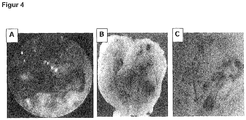
- Figure 4 shows a tumor macroscopy seven days after tumor cell inoculation.
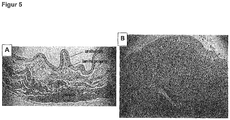
- Figure 5 shows the histology of a bladder.
- Figure (A) shows a normal-appearing bladder of an F344 rat magnified 10 times.
- FIG. (B) shows a pT1G3 tumor seven days after tumor cell inoculation, likewise in 10-fold magnification.
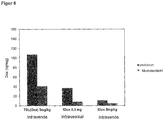
- Figure 6 shows tissue concentrations of Dox in the bladder wall of female F344 rats with bladder tumor.
- the figure shows the mean Dox concentration in the urothelium and in the muscle layer after one hour of treatment with intravenously administered TSL (Dox) and hyperthermia, intravesically administered free Dox (fDOX) and intravenously administered free Dox.
- the Dox dose for iv treatment was 5 mg / kg body weight, for intravesical treatment 0.5 mg / rat.
- the Dox concentration in the urothelialium was higher in all cases, regardless of the treatment procedure.
- the concentration in the urothelium / muscle layer of a tumor-bearing rat that was treated with TSL (Dox) + hyperthermia was up to 3 to 5 times higher compared to intravesically administered free Dox.
- triglycerols can be used to develop (sn) -1 OH-2 Benzyl-3 Glycero-2 Benzyl-Glycero-Benzyl-Glycol: G) (sn) -1 acetyl-2 benzyl glycerol this protective group is only used for the production of complex phospholipids such as cardiolipin, which contains two phosphoric acid esters in one molecule.
- the phosphatidyl residues present in the molecule are connected to one another via a glycerol bridge.
- the above building block allows the production of this bridge and the production of the two phosphoric acid esters in the (sn) -3 position, i.e. also in the naturally occurring configuration.
- G can be developed from building block C: Detritylation in the (sn) -1- position, rearrangement of allyl into propenyl, acetylation of the (sn) -1- position and acidic cleavage of the propenyl protective group results in building block G with free (sn) -3 -Position:
- the four isopropylidene-protected hydroxyl groups are exposed. This is followed as usual acylation by known processes fatty acid chloride, for example Palmitic acid chloride or palmitic acid. After the benzyl ether protective groups have been split off by catalytic hydrogenolysis with PD-C, the target product is obtained by splitting off the methyl group with lithium bromide.
- deoxy-cardiolipins can also be used as a bridging molecule and then leads to the so-called deoxy-cardiolipins - also with other terminal diols such as glycol, butanediol- (1.4) etc. These compounds are of less interest in our concept of using naturally occurring phosphatidyl derivatives.
- Different phosphatidyl oligoglycerins and corresponding phosphatidyl glyceroglycols can be produced from the building blocks described here. It is particularly important that the fatty acid residues are only produced from a central intermediate product at the end of the synthesis, ie, in contrast to previous syntheses, the fatty acid residues are only produced at the end introduced. This is possible by making a central intermediate with two vicinal hydroxyl groups, e.g.
- the phosphoric acid diesters are not hydrolyzed directly, but are converted into phosphoric acid triesters by methanolysis.
- the ricinal diol can now be exposed by acidic cleavage of the isopropylidene protective group.
- the hydroxyl groups are then acylated by known processes (fatty acid chloride, e.g. palmitic acid chloride or free fatty acid).
- the target products are then obtained by PD / C catalyzed hydrogenolysis followed by methylation with lithium bromide.
- some target products in formula images e.g. B. be represented as dipalmitoyl ester:
- Phosphatidyl diglycerine and phosphatidyl triglycerine were developed from phosphatidyl glycerine, a naturally occurring membrane phospholipid.
- the introduction of a further glycerol residue, which is linked to phosphatidylglycerol via an ether bridge leads to special properties: The circulation times of liposomes in the blood that contain this phospholipid are changed and enormously extended.
- Cardiolipins and analogs which are also found in natural membranes, also have circulation time-changing properties and increase the circulation time of liposomes in the blood.
- the building blocks developed by us can also be used to produce mixed-chain cardiolipins, for example structures with only three fatty acid residues.
Landscapes
- Health & Medical Sciences (AREA)
- Chemical & Material Sciences (AREA)
- Life Sciences & Earth Sciences (AREA)
- General Health & Medical Sciences (AREA)
- Pharmacology & Pharmacy (AREA)
- Veterinary Medicine (AREA)
- Public Health (AREA)
- Animal Behavior & Ethology (AREA)
- Medicinal Chemistry (AREA)
- Organic Chemistry (AREA)
- General Chemical & Material Sciences (AREA)
- Chemical Kinetics & Catalysis (AREA)
- Engineering & Computer Science (AREA)
- Nuclear Medicine, Radiotherapy & Molecular Imaging (AREA)
- Bioinformatics & Cheminformatics (AREA)
- Epidemiology (AREA)
- Molecular Biology (AREA)
- Biochemistry (AREA)
- Immunology (AREA)
- Dispersion Chemistry (AREA)
- Dermatology (AREA)
- Neurology (AREA)
- Biomedical Technology (AREA)
- Neurosurgery (AREA)
- Rheumatology (AREA)
- Biophysics (AREA)
- Oil, Petroleum & Natural Gas (AREA)
- Communicable Diseases (AREA)
- Hospice & Palliative Care (AREA)
- Heart & Thoracic Surgery (AREA)
- Vascular Medicine (AREA)
- Orthopedic Medicine & Surgery (AREA)
- Psychiatry (AREA)
- Physical Education & Sports Medicine (AREA)
- Urology & Nephrology (AREA)
- Cardiology (AREA)
- Oncology (AREA)
- Pain & Pain Management (AREA)
- Diabetes (AREA)
- Hematology (AREA)
Priority Applications (2)
| Application Number | Priority Date | Filing Date | Title |
|---|---|---|---|
| PL14730932T PL3010488T3 (pl) | 2013-06-18 | 2014-06-18 | Stereospecyficzne lipidy do terapii lokoregionalnej z użyciem długotrwale krążących układów nanonośników wrażliwych na działanie bodźców |
| EP14730932.2A EP3010488B1 (de) | 2013-06-18 | 2014-06-18 | Stereospezifische lipide zur lokoregionären therapie mit langzeitzirkulierenden stimuli-sensitiven nanocarriersystemen |
Applications Claiming Priority (3)
| Application Number | Priority Date | Filing Date | Title |
|---|---|---|---|
| EP13172469 | 2013-06-18 | ||
| PCT/EP2014/062849 WO2014202680A1 (de) | 2013-06-18 | 2014-06-18 | Stereospezifische lipide zur lokoregionären therapie mit langzeitzirkulierenden stimuli-sensitiven nanocarriersystemen |
| EP14730932.2A EP3010488B1 (de) | 2013-06-18 | 2014-06-18 | Stereospezifische lipide zur lokoregionären therapie mit langzeitzirkulierenden stimuli-sensitiven nanocarriersystemen |
Publications (2)
| Publication Number | Publication Date |
|---|---|
| EP3010488A1 EP3010488A1 (de) | 2016-04-27 |
| EP3010488B1 true EP3010488B1 (de) | 2021-05-05 |
Family
ID=48628349
Family Applications (1)
| Application Number | Title | Priority Date | Filing Date |
|---|---|---|---|
| EP14730932.2A Active EP3010488B1 (de) | 2013-06-18 | 2014-06-18 | Stereospezifische lipide zur lokoregionären therapie mit langzeitzirkulierenden stimuli-sensitiven nanocarriersystemen |
Country Status (17)
| Country | Link |
|---|---|
| US (1) | US10251838B2 (pl) |
| EP (1) | EP3010488B1 (pl) |
| JP (1) | JP6501765B2 (pl) |
| KR (1) | KR102242183B1 (pl) |
| CN (1) | CN105431139B (pl) |
| AU (1) | AU2014283264C1 (pl) |
| BR (1) | BR112015031495B1 (pl) |
| CA (1) | CA2922627C (pl) |
| DK (1) | DK3010488T3 (pl) |
| EA (1) | EA033891B1 (pl) |
| ES (1) | ES2881699T3 (pl) |
| HU (1) | HUE054713T2 (pl) |
| IL (1) | IL243212B (pl) |
| MX (1) | MX2015017505A (pl) |
| PL (1) | PL3010488T3 (pl) |
| PT (1) | PT3010488T (pl) |
| WO (1) | WO2014202680A1 (pl) |
Families Citing this family (5)
| Publication number | Priority date | Publication date | Assignee | Title |
|---|---|---|---|---|
| EP3270891A1 (en) * | 2015-03-17 | 2018-01-24 | Leon-Nanodrugs GmbH | Nanoparticles comprising a stabilized boronic acid compound |
| TW202216122A (zh) | 2020-07-07 | 2022-05-01 | 德商塞摩斯桑股份有限公司 | 微脂體製劑 |
| AU2024345757A1 (en) | 2023-09-19 | 2026-03-26 | THERMOSOME GmbH | Lipids containing an oligoglycerol group |
| EP4527843A1 (en) | 2023-09-19 | 2025-03-26 | Thermosome Gmbh | Stereoisomeric phosphatidyloligoglycerol |
| EP4527379A1 (en) | 2023-09-19 | 2025-03-26 | Thermosome Gmbh | Lipids containing an oligoglycerol group |
Family Cites Families (9)
| Publication number | Priority date | Publication date | Assignee | Title |
|---|---|---|---|---|
| FI874742L (fi) * | 1987-10-28 | 1989-04-29 | K & V Licencing Oy | Foerfarande foer framstaellning av liposomer. |
| AU715208B2 (en) * | 1996-02-16 | 2000-01-20 | Max-Planck-Gesellschaft Zur Forderung Der Wissenschaften E.V. | Phosphatidyl oligoglycerols |
| US6177282B1 (en) * | 1997-08-12 | 2001-01-23 | Mcintyre John A. | Antigens embedded in thermoplastic |
| US6200598B1 (en) | 1998-06-18 | 2001-03-13 | Duke University | Temperature-sensitive liposomal formulation |
| DE10107165A1 (de) * | 2001-02-15 | 2002-08-29 | Max Planck Gesellschaft | Thermolabiles Liposom mit geregelter Freigabetemperatur |
| DE10242367A1 (de) * | 2002-09-12 | 2004-03-18 | MAX-PLANCK-Gesellschaft zur Förderung der Wissenschaften e.V. | Thermolabiles Liposom mit geregelter Freigabetemperatur |
| CA2706923A1 (en) * | 2007-11-30 | 2009-06-11 | Endo Pharmaceuticals Solutions, Inc. | Intravesical compositions with valrubicin for the treatment of bladder cancer |
| JP5382567B2 (ja) * | 2008-05-02 | 2014-01-08 | 公立大学法人大阪府立大学 | 温度感受性リポソーム |
| EP2638896A1 (en) * | 2012-03-14 | 2013-09-18 | Bioneer A/S | Cationic liposomal drug delivery system for specific targeting of human cd14+ monocytes in whole blood |
-
2014
- 2014-06-18 HU HUE14730932A patent/HUE054713T2/hu unknown
- 2014-06-18 ES ES14730932T patent/ES2881699T3/es active Active
- 2014-06-18 MX MX2015017505A patent/MX2015017505A/es active IP Right Grant
- 2014-06-18 PT PT147309322T patent/PT3010488T/pt unknown
- 2014-06-18 JP JP2016520468A patent/JP6501765B2/ja active Active
- 2014-06-18 WO PCT/EP2014/062849 patent/WO2014202680A1/de not_active Ceased
- 2014-06-18 AU AU2014283264A patent/AU2014283264C1/en active Active
- 2014-06-18 EP EP14730932.2A patent/EP3010488B1/de active Active
- 2014-06-18 EA EA201690029A patent/EA033891B1/ru not_active IP Right Cessation
- 2014-06-18 PL PL14730932T patent/PL3010488T3/pl unknown
- 2014-06-18 DK DK14730932.2T patent/DK3010488T3/da active
- 2014-06-18 BR BR112015031495-3A patent/BR112015031495B1/pt active IP Right Grant
- 2014-06-18 CN CN201480042361.0A patent/CN105431139B/zh active Active
- 2014-06-18 KR KR1020167000760A patent/KR102242183B1/ko active Active
- 2014-06-18 US US14/899,174 patent/US10251838B2/en active Active
- 2014-06-18 CA CA2922627A patent/CA2922627C/en active Active
-
2015
- 2015-12-17 IL IL243212A patent/IL243212B/en active IP Right Grant
Also Published As
| Publication number | Publication date |
|---|---|
| AU2014283264C1 (en) | 2019-08-29 |
| JP2016523242A (ja) | 2016-08-08 |
| EA033891B1 (ru) | 2019-12-05 |
| CN105431139A (zh) | 2016-03-23 |
| BR112015031495B1 (pt) | 2023-04-11 |
| AU2014283264B2 (en) | 2019-05-02 |
| DK3010488T3 (da) | 2021-05-31 |
| US20160136092A1 (en) | 2016-05-19 |
| US10251838B2 (en) | 2019-04-09 |
| HUE054713T2 (hu) | 2021-09-28 |
| IL243212B (en) | 2020-01-30 |
| KR20160026984A (ko) | 2016-03-09 |
| PT3010488T (pt) | 2021-08-03 |
| KR102242183B1 (ko) | 2021-04-20 |
| AU2014283264A1 (en) | 2016-02-04 |
| CA2922627A1 (en) | 2014-12-24 |
| CA2922627C (en) | 2022-03-08 |
| EP3010488A1 (de) | 2016-04-27 |
| BR112015031495A2 (pt) | 2017-07-25 |
| PL3010488T3 (pl) | 2021-11-15 |
| CN105431139B (zh) | 2019-10-01 |
| JP6501765B2 (ja) | 2019-04-17 |
| IL243212A0 (en) | 2016-02-29 |
| EA201690029A1 (ru) | 2016-05-31 |
| MX2015017505A (es) | 2016-08-05 |
| ES2881699T3 (es) | 2021-11-30 |
| HK1217647A1 (zh) | 2017-01-20 |
| WO2014202680A1 (de) | 2014-12-24 |
Similar Documents
| Publication | Publication Date | Title |
|---|---|---|
| DE69019366T2 (de) | Methode und zusammensetzung zur behandlung solider tumoren. | |
| KR101652126B1 (ko) | 치료제를 함유하는 신규 온도 감응성 리포솜 | |
| DE69310527T2 (de) | Mittel zur Behandlung entzündeter Gewebe | |
| DE60122304T2 (de) | Auf lipiden basierendes system zur zielgerichteten verabreichung diagnostischer wirkstoffe | |
| EP0526531B1 (de) | Liposomen mit positiver überschussladung | |
| JP2011502134A5 (pl) | ||
| DE60027730T2 (de) | Verabreichung von taxanen an angiogene blutgefässe mittels kationischer liposomen | |
| EP1814843B1 (de) | (2r)-enantiomer von dotap-chlorid | |
| EP3010488A1 (de) | Stereospezifische lipide zur lokoregionären therapie mit langzeitzirkulierenden stimuli-sensitiven nanocarriersystemen | |
| DE60105977T2 (de) | Auf lipiden basierende systeme zur arzneistoffabgabe | |
| EP0200068A2 (de) | Arzneizubereitung enthaltend Dihydropyridine und Verfahren zu ihrer Herstellung | |
| US20220362148A1 (en) | Isotretinoin formulations and uses and methods thereof | |
| EP1536770B1 (de) | Thermolabiles liposom mit geregelter freigabetemperatur | |
| EP1359901B1 (de) | Thermolabiles liposom mit geregelter freigabetemperatur | |
| EP4351506B1 (en) | Lipid crystalline compositions with enhanced stability for topical delivery of active agent combinations | |
| JP2911550B2 (ja) | リポソーム製剤 | |
| HK1217647B (zh) | 用於以长期循环的刺激-敏感性纳米载体系统进行局部治疗的立体特异性脂质 | |
| WO2006024675A1 (de) | Verwendung von alkylphospholipiden zur behandlung solider tumore | |
| PL197939B1 (pl) | Liposomowy preparat zawierający przeciwnowotworową substancję aktywną, sposób jego wytwarzania i zawierająca go kompozycja farmaceutyczna |
Legal Events
| Date | Code | Title | Description |
|---|---|---|---|
| PUAI | Public reference made under article 153(3) epc to a published international application that has entered the european phase |
Free format text: ORIGINAL CODE: 0009012 |
|
| 17P | Request for examination filed |
Effective date: 20160114 |
|
| AK | Designated contracting states |
Kind code of ref document: A1 Designated state(s): AL AT BE BG CH CY CZ DE DK EE ES FI FR GB GR HR HU IE IS IT LI LT LU LV MC MK MT NL NO PL PT RO RS SE SI SK SM TR |
|
| AX | Request for extension of the european patent |
Extension state: BA ME |
|
| DAX | Request for extension of the european patent (deleted) | ||
| STAA | Information on the status of an ep patent application or granted ep patent |
Free format text: STATUS: EXAMINATION IS IN PROGRESS |
|
| 17Q | First examination report despatched |
Effective date: 20180129 |
|
| GRAP | Despatch of communication of intention to grant a patent |
Free format text: ORIGINAL CODE: EPIDOSNIGR1 |
|
| STAA | Information on the status of an ep patent application or granted ep patent |
Free format text: STATUS: GRANT OF PATENT IS INTENDED |
|
| RIC1 | Information provided on ipc code assigned before grant |
Ipc: A61K 31/704 20060101ALI20200626BHEP Ipc: C07F 9/09 20060101ALI20200626BHEP Ipc: A61K 9/127 20060101AFI20200626BHEP Ipc: A61P 35/00 20060101ALI20200626BHEP |
|
| INTG | Intention to grant announced |
Effective date: 20200723 |
|
| GRAJ | Information related to disapproval of communication of intention to grant by the applicant or resumption of examination proceedings by the epo deleted |
Free format text: ORIGINAL CODE: EPIDOSDIGR1 |
|
| STAA | Information on the status of an ep patent application or granted ep patent |
Free format text: STATUS: EXAMINATION IS IN PROGRESS |
|
| GRAP | Despatch of communication of intention to grant a patent |
Free format text: ORIGINAL CODE: EPIDOSNIGR1 |
|
| STAA | Information on the status of an ep patent application or granted ep patent |
Free format text: STATUS: GRANT OF PATENT IS INTENDED |
|
| INTC | Intention to grant announced (deleted) | ||
| RIC1 | Information provided on ipc code assigned before grant |
Ipc: A61P 35/00 20060101ALI20201123BHEP Ipc: A61K 9/127 20060101AFI20201123BHEP Ipc: A61P 29/00 20060101ALI20201123BHEP Ipc: A61P 7/02 20060101ALI20201123BHEP Ipc: A61K 31/704 20060101ALI20201123BHEP Ipc: C07F 9/09 20060101ALI20201123BHEP Ipc: A61P 9/10 20060101ALI20201123BHEP |
|
| INTG | Intention to grant announced |
Effective date: 20201217 |
|
| GRAS | Grant fee paid |
Free format text: ORIGINAL CODE: EPIDOSNIGR3 |
|
| GRAA | (expected) grant |
Free format text: ORIGINAL CODE: 0009210 |
|
| STAA | Information on the status of an ep patent application or granted ep patent |
Free format text: STATUS: THE PATENT HAS BEEN GRANTED |
|
| AK | Designated contracting states |
Kind code of ref document: B1 Designated state(s): AL AT BE BG CH CY CZ DE DK EE ES FI FR GB GR HR HU IE IS IT LI LT LU LV MC MK MT NL NO PL PT RO RS SE SI SK SM TR |
|
| REG | Reference to a national code |
Ref country code: GB Ref legal event code: FG4D Free format text: NOT ENGLISH |
|
| REG | Reference to a national code |
Ref country code: CH Ref legal event code: EP |
|
| REG | Reference to a national code |
Ref country code: AT Ref legal event code: REF Ref document number: 1388914 Country of ref document: AT Kind code of ref document: T Effective date: 20210515 |
|
| REG | Reference to a national code |
Ref country code: DE Ref legal event code: R096 Ref document number: 502014015551 Country of ref document: DE |
|
| REG | Reference to a national code |
Ref country code: IE Ref legal event code: FG4D Free format text: LANGUAGE OF EP DOCUMENT: GERMAN |
|
| REG | Reference to a national code |
Ref country code: DK Ref legal event code: T3 Effective date: 20210527 |
|
| REG | Reference to a national code |
Ref country code: FI Ref legal event code: FGE |
|
| REG | Reference to a national code |
Ref country code: NL Ref legal event code: FP |
|
| REG | Reference to a national code |
Ref country code: SE Ref legal event code: TRGR |
|
| REG | Reference to a national code |
Ref country code: PT Ref legal event code: SC4A Ref document number: 3010488 Country of ref document: PT Date of ref document: 20210803 Kind code of ref document: T Free format text: AVAILABILITY OF NATIONAL TRANSLATION Effective date: 20210729 |
|
| REG | Reference to a national code |
Ref country code: NO Ref legal event code: T2 Effective date: 20210505 |
|
| REG | Reference to a national code |
Ref country code: LT Ref legal event code: MG9D |
|
| REG | Reference to a national code |
Ref country code: HU Ref legal event code: AG4A Ref document number: E054713 Country of ref document: HU |
|
| REG | Reference to a national code |
Ref country code: GR Ref legal event code: EP Ref document number: 20210402085 Country of ref document: GR Effective date: 20210915 |
|
| PG25 | Lapsed in a contracting state [announced via postgrant information from national office to epo] |
Ref country code: HR Free format text: LAPSE BECAUSE OF FAILURE TO SUBMIT A TRANSLATION OF THE DESCRIPTION OR TO PAY THE FEE WITHIN THE PRESCRIBED TIME-LIMIT Effective date: 20210505 Ref country code: LT Free format text: LAPSE BECAUSE OF FAILURE TO SUBMIT A TRANSLATION OF THE DESCRIPTION OR TO PAY THE FEE WITHIN THE PRESCRIBED TIME-LIMIT Effective date: 20210505 Ref country code: BG Free format text: LAPSE BECAUSE OF FAILURE TO SUBMIT A TRANSLATION OF THE DESCRIPTION OR TO PAY THE FEE WITHIN THE PRESCRIBED TIME-LIMIT Effective date: 20210805 |
|
| PG25 | Lapsed in a contracting state [announced via postgrant information from national office to epo] |
Ref country code: LV Free format text: LAPSE BECAUSE OF FAILURE TO SUBMIT A TRANSLATION OF THE DESCRIPTION OR TO PAY THE FEE WITHIN THE PRESCRIBED TIME-LIMIT Effective date: 20210505 Ref country code: IS Free format text: LAPSE BECAUSE OF FAILURE TO SUBMIT A TRANSLATION OF THE DESCRIPTION OR TO PAY THE FEE WITHIN THE PRESCRIBED TIME-LIMIT Effective date: 20210905 Ref country code: RS Free format text: LAPSE BECAUSE OF FAILURE TO SUBMIT A TRANSLATION OF THE DESCRIPTION OR TO PAY THE FEE WITHIN THE PRESCRIBED TIME-LIMIT Effective date: 20210505 |
|
| REG | Reference to a national code |
Ref country code: ES Ref legal event code: FG2A Ref document number: 2881699 Country of ref document: ES Kind code of ref document: T3 Effective date: 20211130 |
|
| PG25 | Lapsed in a contracting state [announced via postgrant information from national office to epo] |
Ref country code: SK Free format text: LAPSE BECAUSE OF FAILURE TO SUBMIT A TRANSLATION OF THE DESCRIPTION OR TO PAY THE FEE WITHIN THE PRESCRIBED TIME-LIMIT Effective date: 20210505 Ref country code: SM Free format text: LAPSE BECAUSE OF FAILURE TO SUBMIT A TRANSLATION OF THE DESCRIPTION OR TO PAY THE FEE WITHIN THE PRESCRIBED TIME-LIMIT Effective date: 20210505 Ref country code: EE Free format text: LAPSE BECAUSE OF FAILURE TO SUBMIT A TRANSLATION OF THE DESCRIPTION OR TO PAY THE FEE WITHIN THE PRESCRIBED TIME-LIMIT Effective date: 20210505 Ref country code: RO Free format text: LAPSE BECAUSE OF FAILURE TO SUBMIT A TRANSLATION OF THE DESCRIPTION OR TO PAY THE FEE WITHIN THE PRESCRIBED TIME-LIMIT Effective date: 20210505 |
|
| REG | Reference to a national code |
Ref country code: DE Ref legal event code: R097 Ref document number: 502014015551 Country of ref document: DE |
|
| PLBE | No opposition filed within time limit |
Free format text: ORIGINAL CODE: 0009261 |
|
| STAA | Information on the status of an ep patent application or granted ep patent |
Free format text: STATUS: NO OPPOSITION FILED WITHIN TIME LIMIT |
|
| PG25 | Lapsed in a contracting state [announced via postgrant information from national office to epo] |
Ref country code: MC Free format text: LAPSE BECAUSE OF FAILURE TO SUBMIT A TRANSLATION OF THE DESCRIPTION OR TO PAY THE FEE WITHIN THE PRESCRIBED TIME-LIMIT Effective date: 20210505 |
|
| 26N | No opposition filed |
Effective date: 20220208 |
|
| PG25 | Lapsed in a contracting state [announced via postgrant information from national office to epo] |
Ref country code: IS Free format text: LAPSE BECAUSE OF FAILURE TO SUBMIT A TRANSLATION OF THE DESCRIPTION OR TO PAY THE FEE WITHIN THE PRESCRIBED TIME-LIMIT Effective date: 20210905 Ref country code: AL Free format text: LAPSE BECAUSE OF FAILURE TO SUBMIT A TRANSLATION OF THE DESCRIPTION OR TO PAY THE FEE WITHIN THE PRESCRIBED TIME-LIMIT Effective date: 20210505 |
|
| REG | Reference to a national code |
Ref country code: FR Ref legal event code: PLFP Year of fee payment: 9 |
|
| P01 | Opt-out of the competence of the unified patent court (upc) registered |
Effective date: 20230515 |
|
| PG25 | Lapsed in a contracting state [announced via postgrant information from national office to epo] |
Ref country code: CY Free format text: LAPSE BECAUSE OF FAILURE TO SUBMIT A TRANSLATION OF THE DESCRIPTION OR TO PAY THE FEE WITHIN THE PRESCRIBED TIME-LIMIT Effective date: 20210505 |
|
| PG25 | Lapsed in a contracting state [announced via postgrant information from national office to epo] |
Ref country code: MK Free format text: LAPSE BECAUSE OF FAILURE TO SUBMIT A TRANSLATION OF THE DESCRIPTION OR TO PAY THE FEE WITHIN THE PRESCRIBED TIME-LIMIT Effective date: 20210505 |
|
| PG25 | Lapsed in a contracting state [announced via postgrant information from national office to epo] |
Ref country code: MT Free format text: LAPSE BECAUSE OF FAILURE TO SUBMIT A TRANSLATION OF THE DESCRIPTION OR TO PAY THE FEE WITHIN THE PRESCRIBED TIME-LIMIT Effective date: 20210505 |
|
| PGFP | Annual fee paid to national office [announced via postgrant information from national office to epo] |
Ref country code: FI Payment date: 20250627 Year of fee payment: 12 |
|
| PGFP | Annual fee paid to national office [announced via postgrant information from national office to epo] |
Ref country code: DE Payment date: 20250523 Year of fee payment: 12 Ref country code: PL Payment date: 20250606 Year of fee payment: 12 |
|
| PGFP | Annual fee paid to national office [announced via postgrant information from national office to epo] |
Ref country code: GB Payment date: 20250618 Year of fee payment: 12 Ref country code: DK Payment date: 20250625 Year of fee payment: 12 |
|
| PGFP | Annual fee paid to national office [announced via postgrant information from national office to epo] |
Ref country code: NO Payment date: 20250624 Year of fee payment: 12 |
|
| PGFP | Annual fee paid to national office [announced via postgrant information from national office to epo] |
Ref country code: LU Payment date: 20250627 Year of fee payment: 12 Ref country code: NL Payment date: 20250618 Year of fee payment: 12 Ref country code: BE Payment date: 20250618 Year of fee payment: 12 |
|
| PGFP | Annual fee paid to national office [announced via postgrant information from national office to epo] |
Ref country code: PT Payment date: 20250605 Year of fee payment: 12 |
|
| PGFP | Annual fee paid to national office [announced via postgrant information from national office to epo] |
Ref country code: HU Payment date: 20250620 Year of fee payment: 12 Ref country code: FR Payment date: 20250625 Year of fee payment: 12 |
|
| PGFP | Annual fee paid to national office [announced via postgrant information from national office to epo] |
Ref country code: GR Payment date: 20250620 Year of fee payment: 12 |
|
| PGFP | Annual fee paid to national office [announced via postgrant information from national office to epo] |
Ref country code: AT Payment date: 20250620 Year of fee payment: 12 |
|
| PGFP | Annual fee paid to national office [announced via postgrant information from national office to epo] |
Ref country code: TR Payment date: 20250611 Year of fee payment: 12 |
|
| PGFP | Annual fee paid to national office [announced via postgrant information from national office to epo] |
Ref country code: CZ Payment date: 20250610 Year of fee payment: 12 |
|
| PGFP | Annual fee paid to national office [announced via postgrant information from national office to epo] |
Ref country code: IE Payment date: 20250618 Year of fee payment: 12 |
|
| PGFP | Annual fee paid to national office [announced via postgrant information from national office to epo] |
Ref country code: SE Payment date: 20250618 Year of fee payment: 12 |
|
| PGFP | Annual fee paid to national office [announced via postgrant information from national office to epo] |
Ref country code: ES Payment date: 20250728 Year of fee payment: 12 |
|
| PGFP | Annual fee paid to national office [announced via postgrant information from national office to epo] |
Ref country code: IT Payment date: 20250624 Year of fee payment: 12 |
|
| PGFP | Annual fee paid to national office [announced via postgrant information from national office to epo] |
Ref country code: CH Payment date: 20250701 Year of fee payment: 12 |