EP2988790B1 - Bioactive coatings - Google Patents
Bioactive coatings Download PDFInfo
- Publication number
- EP2988790B1 EP2988790B1 EP14730561.9A EP14730561A EP2988790B1 EP 2988790 B1 EP2988790 B1 EP 2988790B1 EP 14730561 A EP14730561 A EP 14730561A EP 2988790 B1 EP2988790 B1 EP 2988790B1
- Authority
- EP
- European Patent Office
- Prior art keywords
- group
- polymer
- heparin
- methacrylate
- antimicrobial
- Prior art date
- Legal status (The legal status is an assumption and is not a legal conclusion. Google has not performed a legal analysis and makes no representation as to the accuracy of the status listed.)
- Active
Links
- 0 C*N(CC(CO*(C)C=CO*(C)C(C(*)=C)=O)O)C(NC(NCC=C=CCC*CN)=N)=N Chemical compound C*N(CC(CO*(C)C=CO*(C)C(C(*)=C)=O)O)C(NC(NCC=C=CCC*CN)=N)=N 0.000 description 1
Images



Classifications
-
- A—HUMAN NECESSITIES
- A61—MEDICAL OR VETERINARY SCIENCE; HYGIENE
- A61K—PREPARATIONS FOR MEDICAL, DENTAL OR TOILETRY PURPOSES
- A61K31/00—Medicinal preparations containing organic active ingredients
- A61K31/70—Carbohydrates; Sugars; Derivatives thereof
- A61K31/715—Polysaccharides, i.e. having more than five saccharide radicals attached to each other by glycosidic linkages; Derivatives thereof, e.g. ethers, esters
- A61K31/726—Glycosaminoglycans, i.e. mucopolysaccharides
- A61K31/728—Hyaluronic acid
-
- A—HUMAN NECESSITIES
- A61—MEDICAL OR VETERINARY SCIENCE; HYGIENE
- A61K—PREPARATIONS FOR MEDICAL, DENTAL OR TOILETRY PURPOSES
- A61K31/00—Medicinal preparations containing organic active ingredients
- A61K31/13—Amines
- A61K31/131—Amines acyclic
-
- A—HUMAN NECESSITIES
- A61—MEDICAL OR VETERINARY SCIENCE; HYGIENE
- A61K—PREPARATIONS FOR MEDICAL, DENTAL OR TOILETRY PURPOSES
- A61K31/00—Medicinal preparations containing organic active ingredients
- A61K31/13—Amines
- A61K31/14—Quaternary ammonium compounds, e.g. edrophonium, choline
-
- A—HUMAN NECESSITIES
- A61—MEDICAL OR VETERINARY SCIENCE; HYGIENE
- A61K—PREPARATIONS FOR MEDICAL, DENTAL OR TOILETRY PURPOSES
- A61K31/00—Medicinal preparations containing organic active ingredients
- A61K31/70—Carbohydrates; Sugars; Derivatives thereof
- A61K31/715—Polysaccharides, i.e. having more than five saccharide radicals attached to each other by glycosidic linkages; Derivatives thereof, e.g. ethers, esters
- A61K31/726—Glycosaminoglycans, i.e. mucopolysaccharides
- A61K31/727—Heparin; Heparan
-
- A—HUMAN NECESSITIES
- A61—MEDICAL OR VETERINARY SCIENCE; HYGIENE
- A61K—PREPARATIONS FOR MEDICAL, DENTAL OR TOILETRY PURPOSES
- A61K47/00—Medicinal preparations characterised by the non-active ingredients used, e.g. carriers or inert additives; Targeting or modifying agents chemically bound to the active ingredient
- A61K47/30—Macromolecular organic or inorganic compounds, e.g. inorganic polyphosphates
- A61K47/32—Macromolecular compounds obtained by reactions only involving carbon-to-carbon unsaturated bonds, e.g. carbomers, poly(meth)acrylates, or polyvinyl pyrrolidone
-
- A—HUMAN NECESSITIES
- A61—MEDICAL OR VETERINARY SCIENCE; HYGIENE
- A61K—PREPARATIONS FOR MEDICAL, DENTAL OR TOILETRY PURPOSES
- A61K9/00—Medicinal preparations characterised by special physical form
- A61K9/0012—Galenical forms characterised by the site of application
-
- A—HUMAN NECESSITIES
- A61—MEDICAL OR VETERINARY SCIENCE; HYGIENE
- A61L—METHODS OR APPARATUS FOR STERILISING MATERIALS OR OBJECTS IN GENERAL; DISINFECTION, STERILISATION OR DEODORISATION OF AIR; CHEMICAL ASPECTS OF BANDAGES, DRESSINGS, ABSORBENT PADS OR SURGICAL ARTICLES; MATERIALS FOR BANDAGES, DRESSINGS, ABSORBENT PADS OR SURGICAL ARTICLES
- A61L27/00—Materials for grafts or prostheses or for coating grafts or prostheses
- A61L27/14—Macromolecular materials
- A61L27/16—Macromolecular materials obtained by reactions only involving carbon-to-carbon unsaturated bonds
-
- A—HUMAN NECESSITIES
- A61—MEDICAL OR VETERINARY SCIENCE; HYGIENE
- A61L—METHODS OR APPARATUS FOR STERILISING MATERIALS OR OBJECTS IN GENERAL; DISINFECTION, STERILISATION OR DEODORISATION OF AIR; CHEMICAL ASPECTS OF BANDAGES, DRESSINGS, ABSORBENT PADS OR SURGICAL ARTICLES; MATERIALS FOR BANDAGES, DRESSINGS, ABSORBENT PADS OR SURGICAL ARTICLES
- A61L27/00—Materials for grafts or prostheses or for coating grafts or prostheses
- A61L27/14—Macromolecular materials
- A61L27/26—Mixtures of macromolecular compounds
-
- A—HUMAN NECESSITIES
- A61—MEDICAL OR VETERINARY SCIENCE; HYGIENE
- A61L—METHODS OR APPARATUS FOR STERILISING MATERIALS OR OBJECTS IN GENERAL; DISINFECTION, STERILISATION OR DEODORISATION OF AIR; CHEMICAL ASPECTS OF BANDAGES, DRESSINGS, ABSORBENT PADS OR SURGICAL ARTICLES; MATERIALS FOR BANDAGES, DRESSINGS, ABSORBENT PADS OR SURGICAL ARTICLES
- A61L27/00—Materials for grafts or prostheses or for coating grafts or prostheses
- A61L27/28—Materials for coating prostheses
- A61L27/34—Macromolecular materials
-
- A—HUMAN NECESSITIES
- A61—MEDICAL OR VETERINARY SCIENCE; HYGIENE
- A61L—METHODS OR APPARATUS FOR STERILISING MATERIALS OR OBJECTS IN GENERAL; DISINFECTION, STERILISATION OR DEODORISATION OF AIR; CHEMICAL ASPECTS OF BANDAGES, DRESSINGS, ABSORBENT PADS OR SURGICAL ARTICLES; MATERIALS FOR BANDAGES, DRESSINGS, ABSORBENT PADS OR SURGICAL ARTICLES
- A61L27/00—Materials for grafts or prostheses or for coating grafts or prostheses
- A61L27/50—Materials characterised by their function or physical properties, e.g. injectable or lubricating compositions, shape-memory materials, surface modified materials
- A61L27/54—Biologically active materials, e.g. therapeutic substances
-
- A—HUMAN NECESSITIES
- A61—MEDICAL OR VETERINARY SCIENCE; HYGIENE
- A61L—METHODS OR APPARATUS FOR STERILISING MATERIALS OR OBJECTS IN GENERAL; DISINFECTION, STERILISATION OR DEODORISATION OF AIR; CHEMICAL ASPECTS OF BANDAGES, DRESSINGS, ABSORBENT PADS OR SURGICAL ARTICLES; MATERIALS FOR BANDAGES, DRESSINGS, ABSORBENT PADS OR SURGICAL ARTICLES
- A61L29/00—Materials for catheters, medical tubing, cannulae, or endoscopes or for coating catheters
- A61L29/04—Macromolecular materials
- A61L29/041—Macromolecular materials obtained by reactions only involving carbon-to-carbon unsaturated bonds
-
- A—HUMAN NECESSITIES
- A61—MEDICAL OR VETERINARY SCIENCE; HYGIENE
- A61L—METHODS OR APPARATUS FOR STERILISING MATERIALS OR OBJECTS IN GENERAL; DISINFECTION, STERILISATION OR DEODORISATION OF AIR; CHEMICAL ASPECTS OF BANDAGES, DRESSINGS, ABSORBENT PADS OR SURGICAL ARTICLES; MATERIALS FOR BANDAGES, DRESSINGS, ABSORBENT PADS OR SURGICAL ARTICLES
- A61L29/00—Materials for catheters, medical tubing, cannulae, or endoscopes or for coating catheters
- A61L29/04—Macromolecular materials
- A61L29/049—Mixtures of macromolecular compounds
-
- A—HUMAN NECESSITIES
- A61—MEDICAL OR VETERINARY SCIENCE; HYGIENE
- A61L—METHODS OR APPARATUS FOR STERILISING MATERIALS OR OBJECTS IN GENERAL; DISINFECTION, STERILISATION OR DEODORISATION OF AIR; CHEMICAL ASPECTS OF BANDAGES, DRESSINGS, ABSORBENT PADS OR SURGICAL ARTICLES; MATERIALS FOR BANDAGES, DRESSINGS, ABSORBENT PADS OR SURGICAL ARTICLES
- A61L29/00—Materials for catheters, medical tubing, cannulae, or endoscopes or for coating catheters
- A61L29/08—Materials for coatings
- A61L29/085—Macromolecular materials
-
- A—HUMAN NECESSITIES
- A61—MEDICAL OR VETERINARY SCIENCE; HYGIENE
- A61L—METHODS OR APPARATUS FOR STERILISING MATERIALS OR OBJECTS IN GENERAL; DISINFECTION, STERILISATION OR DEODORISATION OF AIR; CHEMICAL ASPECTS OF BANDAGES, DRESSINGS, ABSORBENT PADS OR SURGICAL ARTICLES; MATERIALS FOR BANDAGES, DRESSINGS, ABSORBENT PADS OR SURGICAL ARTICLES
- A61L29/00—Materials for catheters, medical tubing, cannulae, or endoscopes or for coating catheters
- A61L29/14—Materials characterised by their function or physical properties, e.g. lubricating compositions
- A61L29/16—Biologically active materials, e.g. therapeutic substances
-
- A—HUMAN NECESSITIES
- A61—MEDICAL OR VETERINARY SCIENCE; HYGIENE
- A61L—METHODS OR APPARATUS FOR STERILISING MATERIALS OR OBJECTS IN GENERAL; DISINFECTION, STERILISATION OR DEODORISATION OF AIR; CHEMICAL ASPECTS OF BANDAGES, DRESSINGS, ABSORBENT PADS OR SURGICAL ARTICLES; MATERIALS FOR BANDAGES, DRESSINGS, ABSORBENT PADS OR SURGICAL ARTICLES
- A61L31/00—Materials for other surgical articles, e.g. stents, stent-grafts, shunts, surgical drapes, guide wires, materials for adhesion prevention, occluding devices, surgical gloves, tissue fixation devices
- A61L31/04—Macromolecular materials
- A61L31/041—Mixtures of macromolecular compounds
-
- A—HUMAN NECESSITIES
- A61—MEDICAL OR VETERINARY SCIENCE; HYGIENE
- A61L—METHODS OR APPARATUS FOR STERILISING MATERIALS OR OBJECTS IN GENERAL; DISINFECTION, STERILISATION OR DEODORISATION OF AIR; CHEMICAL ASPECTS OF BANDAGES, DRESSINGS, ABSORBENT PADS OR SURGICAL ARTICLES; MATERIALS FOR BANDAGES, DRESSINGS, ABSORBENT PADS OR SURGICAL ARTICLES
- A61L31/00—Materials for other surgical articles, e.g. stents, stent-grafts, shunts, surgical drapes, guide wires, materials for adhesion prevention, occluding devices, surgical gloves, tissue fixation devices
- A61L31/04—Macromolecular materials
- A61L31/048—Macromolecular materials obtained by reactions only involving carbon-to-carbon unsaturated bonds
-
- A—HUMAN NECESSITIES
- A61—MEDICAL OR VETERINARY SCIENCE; HYGIENE
- A61L—METHODS OR APPARATUS FOR STERILISING MATERIALS OR OBJECTS IN GENERAL; DISINFECTION, STERILISATION OR DEODORISATION OF AIR; CHEMICAL ASPECTS OF BANDAGES, DRESSINGS, ABSORBENT PADS OR SURGICAL ARTICLES; MATERIALS FOR BANDAGES, DRESSINGS, ABSORBENT PADS OR SURGICAL ARTICLES
- A61L31/00—Materials for other surgical articles, e.g. stents, stent-grafts, shunts, surgical drapes, guide wires, materials for adhesion prevention, occluding devices, surgical gloves, tissue fixation devices
- A61L31/08—Materials for coatings
- A61L31/10—Macromolecular materials
-
- A—HUMAN NECESSITIES
- A61—MEDICAL OR VETERINARY SCIENCE; HYGIENE
- A61L—METHODS OR APPARATUS FOR STERILISING MATERIALS OR OBJECTS IN GENERAL; DISINFECTION, STERILISATION OR DEODORISATION OF AIR; CHEMICAL ASPECTS OF BANDAGES, DRESSINGS, ABSORBENT PADS OR SURGICAL ARTICLES; MATERIALS FOR BANDAGES, DRESSINGS, ABSORBENT PADS OR SURGICAL ARTICLES
- A61L31/00—Materials for other surgical articles, e.g. stents, stent-grafts, shunts, surgical drapes, guide wires, materials for adhesion prevention, occluding devices, surgical gloves, tissue fixation devices
- A61L31/14—Materials characterised by their function or physical properties, e.g. injectable or lubricating compositions, shape-memory materials, surface modified materials
- A61L31/16—Biologically active materials, e.g. therapeutic substances
-
- A—HUMAN NECESSITIES
- A61—MEDICAL OR VETERINARY SCIENCE; HYGIENE
- A61L—METHODS OR APPARATUS FOR STERILISING MATERIALS OR OBJECTS IN GENERAL; DISINFECTION, STERILISATION OR DEODORISATION OF AIR; CHEMICAL ASPECTS OF BANDAGES, DRESSINGS, ABSORBENT PADS OR SURGICAL ARTICLES; MATERIALS FOR BANDAGES, DRESSINGS, ABSORBENT PADS OR SURGICAL ARTICLES
- A61L33/00—Antithrombogenic treatment of surgical articles, e.g. sutures, catheters, prostheses, or of articles for the manipulation or conditioning of blood; Materials for such treatment
- A61L33/0005—Use of materials characterised by their function or physical properties
- A61L33/0011—Anticoagulant, e.g. heparin, platelet aggregation inhibitor, fibrinolytic agent, other than enzymes, attached to the substrate
-
- A—HUMAN NECESSITIES
- A61—MEDICAL OR VETERINARY SCIENCE; HYGIENE
- A61L—METHODS OR APPARATUS FOR STERILISING MATERIALS OR OBJECTS IN GENERAL; DISINFECTION, STERILISATION OR DEODORISATION OF AIR; CHEMICAL ASPECTS OF BANDAGES, DRESSINGS, ABSORBENT PADS OR SURGICAL ARTICLES; MATERIALS FOR BANDAGES, DRESSINGS, ABSORBENT PADS OR SURGICAL ARTICLES
- A61L33/00—Antithrombogenic treatment of surgical articles, e.g. sutures, catheters, prostheses, or of articles for the manipulation or conditioning of blood; Materials for such treatment
- A61L33/06—Use of macromolecular materials
- A61L33/064—Use of macromolecular materials obtained by reactions only involving carbon-to-carbon unsaturated bonds
-
- C—CHEMISTRY; METALLURGY
- C08—ORGANIC MACROMOLECULAR COMPOUNDS; THEIR PREPARATION OR CHEMICAL WORKING-UP; COMPOSITIONS BASED THEREON
- C08G—MACROMOLECULAR COMPOUNDS OBTAINED OTHERWISE THAN BY REACTIONS ONLY INVOLVING UNSATURATED CARBON-TO-CARBON BONDS
- C08G65/00—Macromolecular compounds obtained by reactions forming an ether link in the main chain of the macromolecule
- C08G65/02—Macromolecular compounds obtained by reactions forming an ether link in the main chain of the macromolecule from cyclic ethers by opening of the heterocyclic ring
- C08G65/32—Polymers modified by chemical after-treatment
- C08G65/329—Polymers modified by chemical after-treatment with organic compounds
- C08G65/331—Polymers modified by chemical after-treatment with organic compounds containing oxygen
- C08G65/332—Polymers modified by chemical after-treatment with organic compounds containing oxygen containing carboxyl groups, or halides, or esters thereof
-
- C—CHEMISTRY; METALLURGY
- C08—ORGANIC MACROMOLECULAR COMPOUNDS; THEIR PREPARATION OR CHEMICAL WORKING-UP; COMPOSITIONS BASED THEREON
- C08G—MACROMOLECULAR COMPOUNDS OBTAINED OTHERWISE THAN BY REACTIONS ONLY INVOLVING UNSATURATED CARBON-TO-CARBON BONDS
- C08G65/00—Macromolecular compounds obtained by reactions forming an ether link in the main chain of the macromolecule
- C08G65/02—Macromolecular compounds obtained by reactions forming an ether link in the main chain of the macromolecule from cyclic ethers by opening of the heterocyclic ring
- C08G65/32—Polymers modified by chemical after-treatment
- C08G65/329—Polymers modified by chemical after-treatment with organic compounds
- C08G65/333—Polymers modified by chemical after-treatment with organic compounds containing nitrogen
- C08G65/33303—Polymers modified by chemical after-treatment with organic compounds containing nitrogen containing amino group
- C08G65/33306—Polymers modified by chemical after-treatment with organic compounds containing nitrogen containing amino group acyclic
-
- C—CHEMISTRY; METALLURGY
- C09—DYES; PAINTS; POLISHES; NATURAL RESINS; ADHESIVES; COMPOSITIONS NOT OTHERWISE PROVIDED FOR; APPLICATIONS OF MATERIALS NOT OTHERWISE PROVIDED FOR
- C09D—COATING COMPOSITIONS, e.g. PAINTS, VARNISHES OR LACQUERS; FILLING PASTES; CHEMICAL PAINT OR INK REMOVERS; INKS; CORRECTING FLUIDS; WOODSTAINS; PASTES OR SOLIDS FOR COLOURING OR PRINTING; USE OF MATERIALS THEREFOR
- C09D171/00—Coating compositions based on polyethers obtained by reactions forming an ether link in the main chain; Coating compositions based on derivatives of such polymers
- C09D171/02—Polyalkylene oxides
-
- A—HUMAN NECESSITIES
- A61—MEDICAL OR VETERINARY SCIENCE; HYGIENE
- A61L—METHODS OR APPARATUS FOR STERILISING MATERIALS OR OBJECTS IN GENERAL; DISINFECTION, STERILISATION OR DEODORISATION OF AIR; CHEMICAL ASPECTS OF BANDAGES, DRESSINGS, ABSORBENT PADS OR SURGICAL ARTICLES; MATERIALS FOR BANDAGES, DRESSINGS, ABSORBENT PADS OR SURGICAL ARTICLES
- A61L2300/00—Biologically active materials used in bandages, wound dressings, absorbent pads or medical devices
- A61L2300/20—Biologically active materials used in bandages, wound dressings, absorbent pads or medical devices containing or releasing organic materials
- A61L2300/204—Biologically active materials used in bandages, wound dressings, absorbent pads or medical devices containing or releasing organic materials with nitrogen-containing functional groups, e.g. aminoxides, nitriles, guanidines
- A61L2300/206—Biguanides, e.g. chlorohexidine
-
- A—HUMAN NECESSITIES
- A61—MEDICAL OR VETERINARY SCIENCE; HYGIENE
- A61L—METHODS OR APPARATUS FOR STERILISING MATERIALS OR OBJECTS IN GENERAL; DISINFECTION, STERILISATION OR DEODORISATION OF AIR; CHEMICAL ASPECTS OF BANDAGES, DRESSINGS, ABSORBENT PADS OR SURGICAL ARTICLES; MATERIALS FOR BANDAGES, DRESSINGS, ABSORBENT PADS OR SURGICAL ARTICLES
- A61L2300/00—Biologically active materials used in bandages, wound dressings, absorbent pads or medical devices
- A61L2300/20—Biologically active materials used in bandages, wound dressings, absorbent pads or medical devices containing or releasing organic materials
- A61L2300/204—Biologically active materials used in bandages, wound dressings, absorbent pads or medical devices containing or releasing organic materials with nitrogen-containing functional groups, e.g. aminoxides, nitriles, guanidines
- A61L2300/208—Quaternary ammonium compounds
-
- A—HUMAN NECESSITIES
- A61—MEDICAL OR VETERINARY SCIENCE; HYGIENE
- A61L—METHODS OR APPARATUS FOR STERILISING MATERIALS OR OBJECTS IN GENERAL; DISINFECTION, STERILISATION OR DEODORISATION OF AIR; CHEMICAL ASPECTS OF BANDAGES, DRESSINGS, ABSORBENT PADS OR SURGICAL ARTICLES; MATERIALS FOR BANDAGES, DRESSINGS, ABSORBENT PADS OR SURGICAL ARTICLES
- A61L2300/00—Biologically active materials used in bandages, wound dressings, absorbent pads or medical devices
- A61L2300/20—Biologically active materials used in bandages, wound dressings, absorbent pads or medical devices containing or releasing organic materials
- A61L2300/23—Carbohydrates
- A61L2300/236—Glycosaminoglycans, e.g. heparin, hyaluronic acid, chondroitin
-
- A—HUMAN NECESSITIES
- A61—MEDICAL OR VETERINARY SCIENCE; HYGIENE
- A61L—METHODS OR APPARATUS FOR STERILISING MATERIALS OR OBJECTS IN GENERAL; DISINFECTION, STERILISATION OR DEODORISATION OF AIR; CHEMICAL ASPECTS OF BANDAGES, DRESSINGS, ABSORBENT PADS OR SURGICAL ARTICLES; MATERIALS FOR BANDAGES, DRESSINGS, ABSORBENT PADS OR SURGICAL ARTICLES
- A61L2300/00—Biologically active materials used in bandages, wound dressings, absorbent pads or medical devices
- A61L2300/40—Biologically active materials used in bandages, wound dressings, absorbent pads or medical devices characterised by a specific therapeutic activity or mode of action
- A61L2300/404—Biocides, antimicrobial agents, antiseptic agents
-
- A—HUMAN NECESSITIES
- A61—MEDICAL OR VETERINARY SCIENCE; HYGIENE
- A61L—METHODS OR APPARATUS FOR STERILISING MATERIALS OR OBJECTS IN GENERAL; DISINFECTION, STERILISATION OR DEODORISATION OF AIR; CHEMICAL ASPECTS OF BANDAGES, DRESSINGS, ABSORBENT PADS OR SURGICAL ARTICLES; MATERIALS FOR BANDAGES, DRESSINGS, ABSORBENT PADS OR SURGICAL ARTICLES
- A61L2300/00—Biologically active materials used in bandages, wound dressings, absorbent pads or medical devices
- A61L2300/40—Biologically active materials used in bandages, wound dressings, absorbent pads or medical devices characterised by a specific therapeutic activity or mode of action
- A61L2300/42—Anti-thrombotic agents, anticoagulants, anti-platelet agents
-
- A—HUMAN NECESSITIES
- A61—MEDICAL OR VETERINARY SCIENCE; HYGIENE
- A61L—METHODS OR APPARATUS FOR STERILISING MATERIALS OR OBJECTS IN GENERAL; DISINFECTION, STERILISATION OR DEODORISATION OF AIR; CHEMICAL ASPECTS OF BANDAGES, DRESSINGS, ABSORBENT PADS OR SURGICAL ARTICLES; MATERIALS FOR BANDAGES, DRESSINGS, ABSORBENT PADS OR SURGICAL ARTICLES
- A61L2300/00—Biologically active materials used in bandages, wound dressings, absorbent pads or medical devices
- A61L2300/40—Biologically active materials used in bandages, wound dressings, absorbent pads or medical devices characterised by a specific therapeutic activity or mode of action
- A61L2300/44—Radioisotopes, radionuclides
-
- A—HUMAN NECESSITIES
- A61—MEDICAL OR VETERINARY SCIENCE; HYGIENE
- A61L—METHODS OR APPARATUS FOR STERILISING MATERIALS OR OBJECTS IN GENERAL; DISINFECTION, STERILISATION OR DEODORISATION OF AIR; CHEMICAL ASPECTS OF BANDAGES, DRESSINGS, ABSORBENT PADS OR SURGICAL ARTICLES; MATERIALS FOR BANDAGES, DRESSINGS, ABSORBENT PADS OR SURGICAL ARTICLES
- A61L2300/00—Biologically active materials used in bandages, wound dressings, absorbent pads or medical devices
- A61L2300/40—Biologically active materials used in bandages, wound dressings, absorbent pads or medical devices characterised by a specific therapeutic activity or mode of action
- A61L2300/45—Mixtures of two or more drugs, e.g. synergistic mixtures
Definitions
- the Technical Field relates to anti-microbial and antithrombogenic polymers, compounds, coatings and materials containing the same, as well as articles made with, or coated with the same, and methods of making the same.
- antimicrobial materials have been widely used as a coating for various surfaces, especially those used in medical applications. These coatings reduce the likelihood of complications based on infection. Anti-fouling materials have also been used to coat these surfaces and reduce the likelihood of device related complications.
- WO99/16475 discloses biologically active materials that may be incorporated (either by chemical bonding or by physical incorporation) into a polymer to form a modified polymer and which are selected from a list including heparin and antimicrobials.
- Polymeric materials are described herein that can be coated onto various articles and can give enhanced antimicrobial properties and reduced platelet adhesion. These polymeric materials can be used to make or coat a range of medical devices.
- Embodiments of the present invention include polymers comprising an antimicrobial and an antithrombogenic moiety bound to the same polymeric backbone or a polymeric blend comprising a polymer with an antimicrobial moiety and a polymer with an antithrombogenic moiety.
- the invention addresses the task of providing polymers comprising both an antimicrobial component and an antithrombogenic component where it is found, surprisingly, that the individual components are not mutually exclusive in their functionality, and thereby give enhanced antimicrobial activity.
- Polymers and polymeric blends described herein have been found to have surprisingly superior antimicrobial activity over polymers currently in use, especially with regard to against gram negative bacteria (e.g. Pseudomonas aeruginosa ).
- a non-thrombogenic component generally has the property not to enhance protein/platelet binding or activate platelets - that is to say, it may be seen as a passive phenomenon to prevent clot formation; whereas an antithrombogenic component may be seen as an active phenomenon, one where (for example) heparin and other polysaccharides, including glycosaminoglycans, play a specific role in preventing clot formation.
- the invention provides compounds, polymeric coatings, medical devices, methods for making a polymer, and polymer blends, both as set out in the appended claims.
- the invention provides a compound comprising a polymer, an antithrombogenic agent, and an antimicrobial agent, wherein the antithrombogenic agent and the antimicrobial agent are covalently bound to the polymer.
- the polymer may comprise polymerized vinylic groups, allylic groups, methacrylate groups, acrylate groups, or combinations thereof.
- the polymer may also comprise a copolymer.
- Either or both of the antithrombogenic agent and the antimicrobial agent may be pendant groups.
- Pendant groups include groups that are attached to the backbone chain of a polymer. Such attachment may be achieved by copolymerising moieties (suitable species such as monomers, oligomers and the like) to yield longer chain polymer structures with pendant groups directly, or in stages, such as by initially forming one polymer, which may itself be a copolymer, from suitable species, and attaching pendant functional groups subsequently.
- the antithrombogenic agent and the antimicrobial agent may each be each covalently bound to the polymer with an attachment group.
- the attachment group comprises a polyethylene oxide group, an amine group, an ether group, or a combination thereof.
- the antithrombogenic agent comprises a heparin group, which may suitably comprise a heparin derivative, a heparin amine, a heparin salt, a heparin sulfate, a heparan sulfate, a heparin methacrylate, a heparin quaternary ammonium salt complex methacrylate, a heparin methacrylate salt or a heparin poly(ethylene glycol) methacrylate.
- a heparin group which may suitably comprise a heparin derivative, a heparin amine, a heparin salt, a heparin sulfate, a heparan sulfate, a heparin methacrylate, a heparin quaternary ammonium salt complex methacrylate, a heparin methacrylate salt or a heparin poly(ethylene glycol) methacrylate.
- the antimicrobial agent comprises a guanidine group.
- Preferred guanidine groups may comprise a biguanide group, a polyamino propyl biguanide group, a poly(hexamethylene biguanide) group, or a chlorhexidine group.
- the ratio of the number of the antithrombogenic agent moieties to the number of the antimicrobial agent moieties on the polymer may usefully be between about 1:3 and about 1:25, or between about 1:6 and about 1:20.
- the compounds of the invention may further comprise a lubricant group and/or an anti-fouling group covalently bound to the polymer.
- Lubricant groups and anti-fouling or non-fouling groups are groups which have lubricant or anti-fouling or non-fouling effects respectively in the environment in which the invention is at a relevant time deployed.
- a lubricant group includes a group or moiety that reduces the coefficient of friction of a compound or coating of the invention, in a relevant environment, when compared with a corresponding compound or coating without such group or moiety.
- anti-fouling or non-fouling groups mitigate or prevent the laying down and adhesion of biological and/or chemical entities on to a surface.
- the invention also extends to polymeric coatings comprising the compounds of the invention. Such a polymeric coating may comprise a compound of the invention blended with a lubricant and/or an anti-fouling or non-fouling compound.
- the polymeric coating may include a lubricant that comprises an N-vinyl pyrrolidone group and/or a glycerol methacrylate group.
- the polymeric coating may include an anti-fouling compound that comprises one or more of methacryloyloxyethyl phosphorylcholine, 2-((2-(methacryloyloxy)ethyl)dimethylammonio)ethyl 2-methoxyethyl phosphate, 2-((2-(methacryloyloxy)ethyl)dimethylammonio)propyl 2-methoxyethyl phosphate, or a combination thereof.
- the invention extends to medical devices in which such compounds or coatings are exploited, and specifically to medical devices having a coating according to the invention.
- medical devices can include, but are not limited to, an artificial blood vessel, a cardiac stent, a venous stent, an arterial stent, a kidney stent, a ureter stent, a valve, a cardiac valve leaflet, a shunt, a cardiac device, a pacemaker, a transcutaneous catheter, a dialysis port, or a port for chemotherapy.
- the compounds and coating will typically be applied to surfaces of the devices that are to be exposed, in use, to biological environments, such as fluids, tissues and the like.
- the invention further extends to a method for making a polymer, comprising polymerizing a mixture of an antimicrobial agent and an antithrombogenic agent, wherein the antimicrobial agent comprises a first backbone precursor with a covalently bound antimicrobial compound and a first polymerizable group, and the antithrombogenic agent comprises a second backbone precursor with a covalently bound antithrombogenic compound and a second polymerizable group.
- the method further comprising adding a free radical initiator to the mixture.
- the first polymerizable group and/or the second polymerizable group comprises polymerizable vinylic groups, allylic groups, methacrylate groups, acrylate groups, or a combination thereof.
- the antimicrobial compound comprises a guanidine group, such as a biguanide group, a polyaminopropyl biguanide group, a poly(hexamethylene biguanide) group, a polyhexamethylene guanidine group, or a chlorhexidine group.
- a guanidine group such as a biguanide group, a polyaminopropyl biguanide group, a poly(hexamethylene biguanide) group, a polyhexamethylene guanidine group, or a chlorhexidine group.
- the invention further provides a polymer blend comprising an antimicrobial polymer blended with an antithrombogenic polymer; wherein the antimicrobial polymer comprises a first backbone, a first attachment group covalently bound to the first backbone, and an antimicrobial group covalently bound to the first attachment group; and wherein the antithrombogenic polymer comprises a second backbone, a second attachment group covalently bound to the second backbone, and an antithrombogenic group covalently bound to the second attachment group.
- the method of the invention may further comprise reacting a lubricant group and/or an anti-fouling group with a further backbone precursor, which may be a third backbone precursor, comprising an attachment group and a third polymerizable group to form an additive agent, and mixing the additive agent with the mixture prior to polymerization.
- a further backbone precursor which may be a third backbone precursor, comprising an attachment group and a third polymerizable group
- the first backbone and/or the second backbone may preferably comprise polymerized vinylic groups, allylic groups, methacrylate groups, acrylate groups, or a combination thereof.
- agent as used in the claims and description herein, in the expressions "antithrombogenic agent”, “antimicrobial agent” “therapeutic agent”, “lubricant agent”, “anti-fouling functional agent” and the like, extends not only to compounds as such, including but not limited to monomers and polymers, but also to correspondingly active parts of compounds, such as radicals and groups, having the relevant property.
- Polymers are molecules built up by the repetition of smaller units that are sometimes called monomers. Polymers are typically made by special chemical schemes that make the monomers chemically react with each other to form molecular chains that can range in length from short to very long molecules. Polymers can be assembled into larger materials; for example, many polymers may be linked together to form a hydrogel. The polymers may be crosslinked or may be free of crosslinks. Crosslinks are covalent bonds that link one polymer chain to another.
- the antithrombogenic and antimicrobial groups may be pendant groups, which are independently chosen and attached to the polymer backbone.
- the various pendant groups will be independently attached to the polymer backbone so that the polymer will comprise the polymer backbone and a plurality of the pendant groups. Further, other pendant groups may be attached to the polymer, or the polymer may be free of pendant groups besides the antithrombogenic and/or antimicrobial groups.
- Polymer compositions generally have a distribution of molecular weights that can generally be characterized by an average property.
- the polymer, or the polymer backbone may range in weight from, for instance, a minimum of 100 Daltons, or a minimum of 1,000 Daltons, up to a maximum of, for instance, 1,000,000 Daltons or 10,000,000 Daltons.
- exemplary molecular weight ranges for the polymer, or for the polymer backbone of 100 to 10,000,000 Daltons, or of 1,000 to 1,000,000 Daltons, are possible.
- Highly crosslinked polymer may not be readily characterized by a molecular weight, but the polymer can then be characterized by the polymer chain within the polymer and a degree of crosslinking.
- the amount of the antithrombogenic or antimicrobial group, which may be a pendant group may be freely varied, for instance from about 0.1% to about 99% w/w of the total compound that includes the pendant group.
- the concentration (that is to say, the weight proportion) of the antithrombogenic pendant group to the total weight of the polymer may be at least 1%, or at least 1.5%, and may be not more than 8%, or not more than 20%.
- concentration ranges for the antithrombogenic group include, for example, about 1% to about 20%, or from about 1.5% to about 8%.
- concentration (weight proportion) of the antimicrobial pendant group to the total weight of the polymer may be at least 2%, or at least 6%, and may be not more than 7%, 8%, or 10%.
- the concentration ranges for the antimicrobial group include, for example, about 2% to about 10%, or from about 6% to about 7% or 8%.
- the monomer compound may be polymerized from a concentrated state, or mixed with various other monomers for polymerization.
- a polymer may be selected to serve as the polymer backbone and lightly or heavily decorated with antithrombogenic/antimicrobial pendant groups, as well as other pendant groups.
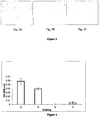
- Fig. 1 shows a series of three light microscopy photographs (photomicrographs) each made at a magnification of x400 of the platelet adhesion of an uncoated polyurethane ( FIG. 1A ), a polyurethane coated with a polymer of 90% PHMB-polymer (where PHMB denotes polyhexamethylene biguanide) and 10% heparin polymer (Fig. IB), and a polyurethane coated with a polymer of 75% PHMB-polymer and 25% heparin polymer ( Fig. 1C ), after exposure to 1x10 5 platelets/ ⁇ l platelet rich plasma (PRP). It is apparent that the combination coatings each reduce the platelet adhesion.
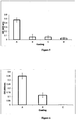
- Fig. 2 is a graph showing biofilm-mediated turbidity for haemodialysis catheters coated with either antimicrobial or combination polymers (antimicrobial + heparin) and challenged with Pseudomonas aeruginosa. Specifically, Fig. 2 shows the turbidity of solutions associated with substrates coated with combination polymers (combinational polymer 33, designated A, and combinational polymer 46, designated B), antimicrobial polymers (designated C), and uncoated (D).
- the substrate is treated with a bacterial source, given a proper amount of time for the bacteria to adhere to the surface, and then rinsed.
- the treated substrate is then placed in solution and the bacteria are allowed to proliferate. After a set period of time, the optical density (OD) of the solution is measured. Higher OD indicates that there are more bacteria present in the solution and therefore there were more bacteria present on the substrate. It can be seen in Fig. 2 that combination polymers provide significant improvements in antimicrobial proprieties with regard to P. aeriginosa over both uncoated substrates and substrates coated with an antimicrobial-only polymer.
- Fig. 3 is a series of three light microscopy photographs (photomicrographs x400) of the platelet adhesion of an uncoated polyurethane ( Fig. 3A ), a polyurethane coated with the combination polymer 33 ( Fig. 3B ) and a polyurethane coated with the combination polymer 44 ( Fig. 3C ) as tested in Fig. 2 after exposure to 1x10 5 platelets/ ⁇ l PRP.
- the combination coatings are seen to reduce the platelet adhesion.
- Example 1 describes the synthesis of an antithrombogenic monomer.
- a monomer e.g. poly(ethylene glycol) methacrylate
- a polymerizable group e.g. methacrylate
- an attachment group e.g. poly(ethylene glycol)
- the monomer is then purified.
- a process similar to the one in Example 1 is used to create the antimicrobial monomer in Examples 4-6, 39, and 43.
- Example 2 describes the process for complexing the antithrombogenic monomer if necessary to protect the functional group or make it easier to dissolve the monomer.
- the monomer/polymer can be decomplexed as described in Example 3.
- Example 7 describes the process for synthesizing a combination polymer.
- the antithrombogenic monomer or the antimicrobial monomer is mixed with one or more co-monomers, degassed, and heated to the reaction temperature.
- the polymerization initiator is then added followed by the missing antithrombogenic monomer or antimicrobial monomer.
- the reaction is allowed to progress for a determined amount of time and then is quenched.
- the resulting polymer is then purified.
- a similar process to the one in Example 7 is used to create combination polymers in Examples 8-14, 40, and 44.
- Example 15 describes the process for synthesizing an antimicrobial polymer.
- the antimicrobial monomer is mixed with one or more co-monomers, degassed, and heated to the reaction temperature.
- the polymerization initiator is then added.
- the reaction is allowed to progress to a desired viscosity and then is quenched.
- the resulting polymer is then purified.
- a similar process to the one in Example 15 is used to create antimicrobial polymers in Example 16.
- Example 17 describes the process for synthesizing an antithrombogenic polymer.
- the antithrombogenic monomer is mixed with one or more co-monomers, degassed, and heated to the reaction temperature.
- the polymerization initiator is then added.
- the reaction is allowed to progress to a desired viscosity and then is quenched.
- the resulting polymer is then purified.
- a similar process to the one in Example 17 is used to create antithrombogenic polymers in Examples 18-20.
- Examples 21-27 describe possible process for coating a substrate with a polymeric coating using heat curing, UV curing, and dip coating.
- Example 28 describes the method for testing the antimicrobial proprieties of coated substrates. Generally, test pieces are exposed to a particular medium (to enable protein adhesion etc.) such as plasma, blood or urine etc. for a predetermined time point, pieces are then washed then put into the test protocol. The test protocol effectively incubated the device with live microorganisms, washed the device to removed "solution present bacteria", allowed the active component sufficient time to "kill”, then transferred to growth media where viable microorganisms on the device will proliferate into daughter cells in solution hence increasing turbidity of growth media which can then be measured by optical density.
- a particular medium such as plasma, blood or urine etc.
- the test protocol effectively incubated the device with live microorganisms, washed the device to removed "solution present bacteria", allowed the active component sufficient time to "kill”, then transferred to growth media where viable microorganisms on the device will proliferate into daughter cells in solution hence increasing turbidity of growth media which can then be measured by optical density.
- Example 29 describes the method for testing the platelet adhesion of a substrate.
- test pieces may (or may not be) exposed to a particular medium (to enable protein adhesion etc.) such as plasma, blood or urine etc. for a predetermined time point, pieces are then washed then put into the test protocol.
- the test protocol consists of exposing the treated pieces to plasma containing a certain concentration of platelets and allowed to sit overnight.
- Example 30 describes the method for testing heparin activity.
- Example 31 describes the general procedure for testing the activity of various coatings against Pseudomonas aeruginosa. The method is similar to the one described with regard to Fig. 2 .
- Fig. 4 Biofilm-mediated turbidity for haemodialysis catheters coated with either Antimicrobial or combination polymers (antimicrobial + heparin) and challenged with Pseudomonas aeruginosa shows the results from Example 31, and it is clear from this graph that combination coatings show surprisingly superior antimicrobial activity relative to both the uncoated catheter and the antimicrobial polymer against Pseudomonas aeruginosa.
- Examples 32-36 are conducted in a similar manner to Example 31.
- Fig. 5 Biofilm-mediated turbidity for haemodialysis catheters coated with either antimicrobial or combination polymers (antimicrobial + heparin) and challenged with Enterococcus faecalis shows the results from Example 32, and it is clear from this graph that combination coatings show superior antimicrobial activity relative to the uncoated catheter against Enterococcus faecalis.
- Fig. 5 Biofilm-mediated turbidity for haemodialysis catheters coated with either antimicrobial or combination polymers (antimicrobial + heparin) and challenged with Enterococcus faecalis
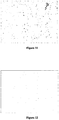
- Example 37 tests the platelet adhesion as described above, for surfaces coated with antimicrobial, combination (antimicrobial + heparin) or blended (antimicrobial + heparin) polymers. The results are shown in Fig. 10-12 .
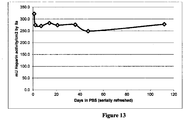
- Example 38 describes the heparin activity overtime for a combination polymer.
- the results (Surface heparin activity (by IIa) for Combination Polymer (High Heparin) Coated PUR strips over a 16 week serial incubation in PBS) are shown in Fig. 13 .
- Examples 41-42, 45, and 46 describe the process for polymerizing an antimicrobial monomer.
- the antimicrobial monomer is mixed with one or more co-monomers, degassed, and heated to the reaction temperature.
- the polymerization initiator is then added.
- the reaction is allowed to progress to a desired level of viscosity and then is quenched.
- the resulting polymer is then purified.
- Antimicrobial functional groups are capable of killing, preventing the proliferation of, or inhibiting, or at least substantially slowing the growth of susceptible classes of microorganisms.
- Microorganisms include but are not necessarily limited to bacteria, viruses, fungi, yeasts, algae, and other life forms.
- Antimicrobial functional groups include guanide groups, and biguanide groups.
- Biguanide groups are a subgroup of guanide and have a portion of the compound with the general formula:
- Suitable antimicrobial groups with biguanide and/or guanide groups include poly(guanides), poly(biguanides), poly(hexamethylene biguanide), and chlorhexidine.
- Antithrombogenic functional groups reduce the amount of thrombus formation in the body, generally following the introduction of a foreign object.
- Polysaccharides are polymers made from combinations of sugar monomer. Some polysaccharides have antithrombogenic properties including glycosaminoglycans, heparin, and their derivatives. Suitable antithrombogenic functional groups include heparin groups.
- Heparin groups are polysaccharides having a portion of the compound with the general formula:
- Derivatives of the antithrombogenic functional groups are also suitable for use as an antithrombogenic functional group.
- Derivatives are compounds that can be derived from the parent compound by some chemical or physical process. Generally, they are similar in structure to the parent compound and possess similar characteristics.
- the antithrombogenic functional group may be a heparin derivative.
- Heparin derivatives include benzalkonium heparin, heparin sulfate, heparan sulfate, heparin ammonium, heparin benzyl ester, heparin calcium, heparin lithium, heparin sodium heparin salt, low and high molecular weight heparin, sulfated heparin, aminated heparin, heparin methacrylate, heparin quaternary ammonium salt complex methacrylate, heparin methacrylate salt, and heparin polyethylene glycol methacrylate.
- polymerizable groups include poly(ethylene) oxide, polyethylene glycol, polyvinyl pyrrolidinone, polyacrylate, polymethylacrylate, polyalkylene oxide, methacrylic acid or other vinylic monomers, an acyl chloride, for example methacryloyl chloride, an isocyanate, or 2-isocyanatoethyl methacrylate an electrophilic poly(ethylene glycol) methacrylate (PEGMA).
- PEGMA is made electrophilic by reacting it with epichlorohydrin first to attach an epoxide group onto PEGMA. The epoxide can then react with the amine on a functional group.
- Free radical polymerization is, in general, accomplished with a vinylic or allylic group, including acrylates and methacrylates.
- a monomer may be polymerized by itself or with co-monomers that also undergo free radical polymerization.
- co-monomers include one or more of: acrylates, methacrylates, 2-hydroxyethyl methacrylate, hydroxypropyl methacrylate, n-butyl methacrylate, tert-butyl methacrylate, n-hexyl methacrylate, 2-methoxyethyl methacrylate, poly(hexanide) methacrylate, poly(hexanide) polyethylene oxide methacrylate, or alkyl derivatized poly(hexanide) methacrylate, heparin derivatized polyethylene oxide macromer, vinyl sulfonic acid monomer, monomers comprising poly(ethylene glycol), N-vinyl pyrrolidone monomers, 4-benzoylphenyl
- the antimicrobial and/or the antithrombogenic groups are covalently bound to their respective polymerizable groups through an attachment group.
- attachment groups are generally a part of the backbone precursor and contain a reactive group that reacts with the desired amines or hydroxides to form the monomers, e.g. monomers containing vinylic or allylic groups, for example polyhexamethylene biguanide methacrylate.
- monomers containing vinylic or allylic groups for example polyhexamethylene biguanide methacrylate.
- the attachment group may be a substituted or unsubstituted hydrocarbon chain ranging from 1 to 13 carbons, a substituted or unsubstituted alkyl, a substituted or unsubstituted aryl, a substituted or unsubstituted cycloalkyl, a substituted or unsubstituted cycloalkenyl, a substituted or unsubstituted heterocycle, a substituted or unsubstituted alkenyl, a functional chain comprising an ester, a functional chain comprising an amide, a functional chain comprising a urea, a functional chain comprising a carbonate, a functional chain comprising a carbamate, a functional chain comprising a poly(ethylene oxide), and a functional chain comprising a poly(propylene) oxide polymer.
- a polymer is a molecule composed of repeated subunits.
- the subunits are commonly referred as a monomeric unit or a mer.
- the term monomer is typically used to refer to a chemical subunit that is reactable to make a polymer. Polymers of only a few monomeric units are sometimes referred to as oligomers.
- the term polymer includes the meanings of homopolymer, copolymer, terpolymer, block copolymer, random copolymer, and oligomer.
- a polymer may include a block. A series of identical monomeric units joined together forms a block.
- a polymer may have no blocks, or a plurality of blocks.
- a copolymer is a polymer having at least two different monomeric units. Some copolymers have blocks, while others have random structures, and some copolymers have both blocks and regions of random copolymer bonding. Copolymers may be made from reactive monomers, oligomers, polymers, or other copoly
- Free radical polymerization techniques are powerful tools for making polymers.
- monomers in a solution are activated to form free radicals.
- a monomer with a free radical reacts with another monomer, forming a covalent bond, and that other monomer is activated to form a free radical.
- the resultant chain reaction is used to form polymers.
- a process for making a copolymer is to join two other polymers together (precursor polymers, or precursors, in this context), typically by using functional groups on the two precursors that can react with each other to form a covalent bond.
- embodiments of the invention include polymers with antimicrobial groups and antithrombogenic groups that are copolymers.
- the copolymers may comprise one or more of various polymers.
- Various polymers include, for instance: hydrophilic polymers, hydrophobic polymers, polyalkylene oxides, polyethylene oxide, polyethers, and polyvinylpyrrolidone.
- various polymers include, for example, polymers made with the polymerizable groups that are set forth herein, and which are not restated here for the sake of brevity.
- Examples include vinyls, epoxides, aldehydes, imines, isocyanates, benzophenones, aziridines, maleimides, diimides, carbodiimides, and succinimides.
- Further suitable crosslinkers include vinyl sulfonic acid, glycidyl methacrylate and other epoxide functional groups, alcohol methacrylate (HEMA) and 4-benzoylphenyl methacrylate
- HEMA alcohol methacrylate
- the reactive groups may be placed on a backbone of polyethylene glycol, polyvinyl pyrrolidinone, polyacrylate, polymethylacrylate, or polyalkylene oxide.
- the invention may be performed, and embodiments may be made, by the following process.
- a backbone monomer that comprises the desired attachment group is reacted with the desired amine position on the antimicrobial precursor.
- the resulting product is a polymerizable group connected to an antimicrobial agent by an attachment group, forming an antimicrobial monomer.
- a backbone monomer that comprises the desired attachment group is reacted with the desired amine or hydroxide position on the antithrombogenic precursor.
- the resulting product is a polymerizable group connected to an antithrombogenic agent by an attachment group, forming an antithrombogenic monomer.
- polymerization occurs through a free radical process.
- the antithrombogenic monomer or the antimicrobial monomer is mixed with one or more co-monomers, degassed, and heated to the reaction temperature.
- the reaction temperature may be above about 60°C, or from about 60°C to about 80°C, or from about 65° to about 75°C.
- the polymerization initiator for example potassium persulfate
- the reaction is allowed to progress for a determined amount of time and then is quenched.
- the reaction may be allowed to progress for at least 20 minutes, for about 20 minutes to about 40 minutes, for about 25 minutes to about 30 minutes, for no more than about 90 minutes, or for no more than about 60 minutes.
- the resulting polymer is then purified.
- the antimicrobial precursor is a compound comprising a biguanide group with the desired amine position being a part of the biguanide group.
- the antimicrobial precursor may be a hydrochloride salt comprising a biguanide group. The salt may first be neutralized with a strong base. The biguanide group is then reacted with a backbone monomer that comprises the desired attachment group, as shown in Reaction Scheme 1 below.
- the antimicrobial precursor is a compound comprising a biguanide group with the desired amine position being a primary amine, cyanoamine, or cyanoguanidine group that is not part of the biguanide group.
- the antimicrobial precursor may be a hydrochloride salt comprising a biguanide group. The precursor is reacted with a backbone monomer that comprises the desired attachment group without first neutralizing the salt, as shown in Reaction Scheme 2 below.
- the antithrombogenic precursor is a compound comprising a heparin group, with the heparin group comprising a hydroxide or a primary amine.
- the antithrombogenic precursor is reacted with an activated backbone monomer that comprises the desired attachment group, as shown in Reaction Scheme 3.
- the heparin group may by complexed with benzalkonium prior to the reactions. If the heparin group is complexed it may be decomplexed prior to use as a coating.
- the backbone monomer may be activated by reacting with an amide, as shown in Reaction Scheme 3.
- a coating is a substance that provides complete or partial coverage of an item.
- a coating may be a single layer or may be more than one layer with each layer comprising the same compound or different compounds.
- the coating will have only one layer with the antimicrobial/antithrombogenic polymer or polymer blend along with any other desired compounds.
- the layer may consist essentially of the antimicrobial/antithrombogenic polymer or polymer blend.
- the coating will have multiple layers with at least one layer consisting essentially of the antimicrobial/antithrombogenic polymer or polymer blend.
- the polymer or polymer blend is at least about 90% of the layer by weight.
- the polymer or polymer blend may be at least about 93%, 95%, or 97% of the layer by weight. Additional ranges are contemplated and are within the present disclosure. All values and ranges within the expressly stated limits are contemplated.
- the copolymers can be dissolved in solution to be coated onto medical devices using any suitable solution coating method, including dip-coating, spray coating (ultrasonic, electrostatic, thermal), dip-coating with UV cure, or dip-coated and cross-linked with a polyfunctional cross-linker (e.g. polyaziridines, polyisocyanates).
- a polyfunctional cross-linker e.g. polyaziridines, polyisocyanates.
- Suitable medical apparatus for coating include medical devices such as contact lenses, catheters for vascular access (both arterial and venous), abdominal cavity tubing, drainage bags and connectors of various kinds, catheters, blood bags, dialysis or other membranes, surgical gloves, surgical instruments, vascular grafts, stents, contact lenses and intra-ocular lenses, contact lens cases, bottles, diagnostic apparatus, oxygenators, heart valves and pumps, artificial blood vessels, cardiac stents, venous stents, arterial stents, kidney stents, ureter stents, cardiac valve leaflets, shunts, cardiac devices including pacemakers, transcutaneous catheters, dialysis ports, or ports for chemotherapy.
- medical devices such as contact lenses, catheters for vascular access (both arterial and venous), abdominal cavity tubing, drainage bags and connectors of various kinds, catheters, blood bags, dialysis or other membranes, surgical gloves, surgical instruments, vascular grafts, stents, contact lenses and intra-ocular lenses, contact lens cases, bottles,
- Monomers for mixing with the polysaccharide macromers can include, but are not limited to, monomers with hydroxyl groups (e.g., hydroxyethyl methacrylate), monomers with glycerol groups (e.g., glycerol monomethacrylate, glycerol dimethacrylate, glycerol trimethacrylate), monomers with polyoxyalkylene ether groups (e.g., polyethylene glycol methacrylate, polypropylene glycol methacrylate), monomers with vinyl groups (e.g., N-vinyl pyrrolidone), monomers with zwitterionic groups (e.g., 2-methacryloyloxyethyl-2-(trimethyl ammonium)phosphate, monomers with silicone groups (e.g., methacryloxypropyl tris(
- Lubricants as a class are, in general, groups or moieties that reduce the coefficient of friction.
- Useful lubricants include N-vinyl pyrrolidone, glycerol, glycerol methacrylate, glycols, polyethylene glycol methacrylate, phosphoryl choline and derivatives thereof. Examples of suitable lubricants can be found in US Pat. No. 6,287,707 "Biocompatible Lubricious Hydrophilic Materials for Medical Devices" to Luthra et al..
- Monomers (1) and (2) are hydroxy or, preferably, methoxy polyethyleneglycol acrylates or, preferably, methacrylates, and provide the hydrophilic moieties in the terpolymer.
- Monomer (3) ranging from butyl to octadecyl methacrylate, provides the hydrophobic moieties.
- the preferred molar proportions of (1), (2) and (3) are about 15% each of (1) and (2) and 70% of (3). In weight terms, proportions of 6 to 20% of (1), 40 to 80% of (2) and 10 to 50% of (3) are generally appropriate. It is preferred that monomer (1) has polyethylene oxide units with a degree of polymerization n1 from 5 to 12, more especially a degree of polymerization n1 from 5 to 10.
- monomer (2) has polyethylene oxide units with a degree of polymerization n2 from 20 to 50, more especially a degree of polymerization n2 from 22 to 48. It is preferred that monomer (3) is n-butyl methacrylate. Further suitable lubricants include N-vinylpyrrolidone.
- Hydrophilic groups are well known in the art, and the term is well understood. Suitable hydrophilic groups include N-vinyl pyrrolidone, glycerol, glycerol methacrylate, glycols, polyethylene glycol methacrylate, phosphoryl choline and derivatives thereof. Examples of suitable hydrophilic groups and compounds can also be found in US Pub. No. US2013/0053470 "Biocompatible, Biomimetic Ampholyte Materials" to Raisin-Dadre et al.. For example, an ampholyte compound represented by the general formula: wherein R1, R2, and R3 are independently chosen from the group consisting of
- Suitable non-fouling compounds include (poly(ethylene glycol) and methoxy ether poly(ethylene glycol)), methacryloyloxyethyl phosphorylcholine, and 2-((2-(methacryloyloxy)ethyl)dimethylammonio)ethyl 2-methoxyethyl phosphate), and other agents that prevent the laying down and adhesion of biological and chemical entities on to a surface. Numerous examples are known in the art.
- the anti-microbial monomer takes the structure depicted in structure 6.
- n is from 1 to 30, m is from 1 to 10, and p is from 1 to 10000.
- X is a methyl or hydrogen.
- n may be from 5 to 15.
- m may be from 3 to 6.
- p may be from 5 to 50. These ranges may be combined.
- the anti-microbial monomer takes the structure depicted in structure 7.
- n is from 1 to 30, m is from 1 to 10, and r is from 0 to 10.
- X is a methyl or hydrogen.
- n may be from 5 to 15.
- m may be from 3 to 6.
- r may be from 2 to 5. These ranges may be combined.
- the anti-microbial monomer takes the structure depicted in structure 8.
- n is from 1 to 30, m is from 1 to 10, p is from 1 to 10000, and r is from 0 to 10.
- X is a methyl or hydrogen.
- Y is a substituted or unsubstituted hydrocarbon chain that may or may not contain heteroatoms.
- n may be from 5 to 15.
- m may be from 3 to 6.
- p may be from 5 to 50.
- r may be from 2 to 5. These ranges may be combined.
- the embodiments of structures 11 and 12 may be derivatized with a linker and a methacrylate functionality on the guanide functionality or at the chain end.
- the antithrombogenic monomer takes the structure depicted in structure 15.
- n is from 1 to 10000.
- X is a methyl or hydrogen.
- Y is a heteroatom, a nitrogen, or an oxygen atom.
- R 1 and R 2 are substituted or unsubstituted hydrocarbon chains that may or may not contain heteroatoms. In certain embodiments Y may be omitted entirely. In further embodiments n may be from 5 to 50.
- Heparin may be replaced by derivatives of heparin including heparin methacrylate, heparin quaternary ammonium salt complex methacrylate, heparin methacrylate salt, and heparin polyethylene glycol methacrylate
- the poly(ethylene glycol) methacrylate-derivatized heparin was then dried in a vacuum oven in small pellets for 8 hours at ⁇ 40-50°C.
- the pH of the solution can be adjusted to 8.5-9 once the heparin and CDI-activated poly(ethylene glycol) methacrylate are mixed together. Then, the pH can be readjusted to 7 once the reaction is finished.
- the benzalkonium chloride solution was added to the sodium heparin aqueous solution to precipitate the heparin-benzalkonium complex.
- the white precipitate was stirred for 10 minutes and then left to stand.
- the precipitate was suspended in water and dialysed in water at a molecular weight cut off of 3500 Daltons and then freeze-dried to recover a white powder of sodium heparin-benzalkonium complex.
- heparin poly(ethylene glycol) methacrylate from example 1 can also be complexed with benzalkonium chloride using the same method as above.
- Poly(hexanide) hydrochloride was dialysed against water at a molecular weight cut off of 3500 Daltons. 130 g of dialysed poly(hexanide) in aqueous solution ( ⁇ 4 L of solution) was then neutralised with a solution of 1.98 g of sodium hydroxide dissolved in 220 mL of water. Aqueous sodium hydroxide was slowly added (1 L/min) to the aqueous dialysed poly(hexanide).
- the aqueous mixture was precipitated twice in tetrahydrofuran and washed twice in acetone.
- the precipitate was dried in a vacuum oven at 50°C for 8-12 hours to obtain a white powder.
- Example 7 Synthesis of combination polymer (using poly(ethylene glycol) methacrylate polyhexanide and a low dose of heparin methacrylate)
- heparin poly(ethylene glycol) methacrylate (as per example 1) was dissolved in 28 mL of water. Subsequently, the following components were added into the flask: 13.5 g (solid) of methoxy poly(ethylene glycol) methacrylate of MW 2000, purified on charcoal and diluted at 20% (w/v), 2.98 g of methoxy poly(ethylene glycol) methacrylate of MW 350, 1 mL of methacrylic acid, 5.98 g of butyl methacrylate and 15 mL of isopropanol. The reflux condenser was turned on, the nitrogen allowed to bubble into the mixture of monomers and the heating turned up to warm up the mixture of monomers.
- Example 9 Synthesis of combination polymer (using poly(ethylene glycol) methacrylate poly(hexanide) and a high dose of heparin methacrylate)
- the potassium persulfate aqueous solution was added to the mixture of monomers in the round bottom flask and the polymerisation started.
- the poly(ethylene glycol) methacrylate-poly(hexanide) aqueous solution was then added.
- the polymerisation was allowed to progress for a total of 25-30 minutes and was quenched by adding 25 mL of icy cold water.
- the polymerisation solution was allowed to cool down to room temperature and was dialysed at a molecular weight cut off of 12-14 KDa against water overnight.
- the potassium persulfate aqueous solution was added to the mixture of monomers in the round bottom flask and the polymerisation started.
- Example 12 Synthesis of a combination polymer using chlorhexidine dihydrochloride methacrylate
- the potassium persulfate aqueous solution was added to the mixture of monomers in the round bottom flask and the polymerisation started.
- the chlorhexidine dihydrochloride methacrylate aqueous solution was then added.
- the polymerisation was allowed to progress for a total of 25-30 minutes and was quenched by adding 25 mL of icy cold water.
- the polymerisation solution was allowed to cool down to room temperature and was dialysed at a molecular weight cut off of 12-14 KDa against water overnight.
- Example 13 Synthesis of a combination polymer (using heparin poly(ethylene glycol) methacrylate/benzalkonium complex).
- heparin poly(ethylene glycol) methacrylate/benzalkonium complex (as per example 2) was dissolved in 10 mL of isopropanol.
- 145 mg of potassium persulfate was dissolved in 5 mL of water and degassed with nitrogen.
- the potassium persulfate aqueous solution was added to the mixture of monomers in the round bottom flask and the polymerisation started.
- the heparin poly(ethylene glycol) methacrylate/benzalkonium complex solution was then added.
- the polymerisation was allowed to progress for approximately 1 hour and was then allowed to cool down to room temperature.
- the polymerisation solution was dialysed at a molecular weight cut off of 12-14 KDa against water overnight.
- the polymerisation was allowed to progress to the desired level of viscosity and was quenched by the addition of 100 mL of icy cold water. Once cooled down to room temperature, the polymerisation solution was dialysed at a molecular weight cut off of 12-14 KDa against water overnight.
- the potassium persulfate aqueous solution was added to the mixture of monomers in the round bottom flask and the polymerisation started.
- the polymerisation was allowed to progress for approximately 1 hour to the desired level of viscosity and was then allowed to cool down to room temperature.
- the polymerisation solution was dialysed at a molecular weight cut off of 12-14 KDa against water overnight.
- Example 21 Coating using the combination polymer, heat-cured
- the device was dip-coated in the coating formulation, the film was left to dry at room temperature for approximately 20 minutes and then was cured at 70°C for 1 hour.
- Example 22 Coating using the combination polymer, UV cured
- a formulation was prepared as follows (% volume): Polymer solution from example 10 35.8 % IPA 19 % Polyaziridine crosslinker solution at 10% 0.8 % THF 44.4 %
- Example 25 Coating using a blend of antimicrobial polymer and anti-coagulant polymer, respectively 75/25% (w/v of the final concentration)
- the device was dip-coated in the coating formulation, the film was left to dry at room temperature for approximately 20 minutes and then was cured at 70°C for 1 hour.
- the device was dip-coated in the coating formulation, the film was left to dry at room temperature for approximately 20 minutes and then was cured at 70°C for 1 hour
- the device was dip-coated in the coating formulation, the film was left to dry at room temperature for approximately 20 minutes and then was cured at 70°C for 1 hour.
- Test pieces are exposed to a particular medium (to enable protein adhesion etc.) such as plasma, blood or urine etc. for a predetermined time point, pieces are then washed then put into the test protocol.
- the test protocol effectively incubated the device with live microorganisms, washed device to removed "solution present bacteria", allowed active component sufficient time to "kill” then transferred to growth media where viable microorganisms on the device will proliferate into daughter cells in solution hence increasing turbidity of growth media which can then be measured by optical density.
- Colonies of each relevant bacteria were transferred from cultures on agar slopes (Oxoid, UK) to tryptone soya broth (TSB) (Oxoid, UK) and incubated at 37 ° C overnight. A second, bacteria-free control volume was also incubated at 37 ° C.
- coated and uncoated articles were placed in fresh de-ionised sterile water (Baxter, UK) for 30 mins at ambient temperature to hydrate the coating.
- the article was a tube, such as a catheter
- the lumens were flooded using a disposable syringe (Midmeds, UK) which remained attached to the article throughout the hydration process. All handling of test surfaces was performed with sterile tweezers.
- test articles were then rinsed with deionised sterile water and placed in the challenge suspension. Again, where the article is a tube, care is taken to ensure the exposure of the lumens.
- the test articles are then incubated for 60 mins at 37 ° C. Gentle manual agitation was applied at 30 mins to dislodge any bubbles that formed on the device surface.
- test item is a tube such as a catheter
- a 20 ml disposable syringe (plunger removed) is used as a funnel to rinse the lumens.
- test items and device-free control wells are incubated at ambient temperature overnight.
- the culture plates containing the test items were visually examined for signs of growth in either the test item wells, or the control (device-free) wells. The plates were then sealed with film and placed at 37 ° C, and assessed visually ever hour for signs of growth. Turbidity typically presented after > 4 hours at 37 ° C after overnight incubation at RT, though inter-species and inter-device variation did occur).
- test item wells or the control (device-free) wells.
- the plates were then sealed with film and placed at 37 ° C, and assessed visually ever hour for signs of growth. Turbidity typically presented after > 4 hours at 37 ° C after overnight incubation at RT, though inter-species and inter-device variation did occur).
- When wells containing uncoated articles exhibited strong signs of bacterial growth their contents were resuspended fully using disposable Pasteur pipettes, and then 300 ⁇ l transferred from each well to 96 well plates (in triplicate) before the plate(s) were read at 600 nm
- Test pieces may (or may not be) exposed to a particular medium (to enable protein adhesion etc) such as plasma, blood or urine etc for a predetermined time point, pieces are then washed then put into the test protocol.
- a particular medium such as plasma, blood or urine etc for a predetermined time point
- Test pieces may (or may not be) exposed to a particular medium (to enable protein adhesion etc) such as plasma, blood or urine etc for a predetermined time point, pieces are then washed and put into the test protocol.
- a particular medium such as plasma, blood or urine etc for a predetermined time point
- the reagents were then made as to the manufacturer's instructions and the test started (as per the manufacturer's instructions).
- Example 31 Activity of Combination Polymer and Antimicrobial Polymer (coated on polyurethane haemodialysis catheters) against Pseudomonas aeruginosa
- Catheters were coated as per the methodology set out in the relevant example (i.e. examples 21-27) and then tested for antimicrobial activity against Pseudomonas aeruginosa as per example 28.
- Table 2 Coating Mean Optical Density (OD) (600 nm) SD
- A Uncoated Dual Lumen 14Fr Polyurethane Dialysis Catheter 0.05825 0.00783
- B Coated with Antimicrobial Polymer (from Example 26) 0.03937 0.00342
- C Coated with Low Heparin Combination Polymer (from Example 7) -4.6E-18 0.001155
- D Coated with High Heparin Combination Polymer (from Example 9) 0.003856 0.00362
- Example 32 Activity of Combination Polymer and Antimicrobial Polymer (coated on polyurethane haemodialysis catheters) against Enterococcus faecalis
- Catheters were coated as per the methodology set out in the relevant example (i.e. examples 21-27) and then tested for antimicrobial activity against Enterococcus faecalis as per example 28.
- Table 3 Coating Mean OD (600 nm) SD
- A Uncoated Dual Lumen 14Fr Polyurethane Dialysis Catheter 0.472394 0.050788
- B Antimicrobial Polymer (from Example 26) 0.061583 0.065647
- C Low Heparin Combination Polymer (from Example 7) 0.062913 0.031085
- D High Heparin Combination Polymer (from Example 9) 0.03535 0.019943
- Catheters were coated as per the methodology set out in the relevant example (i.e. examples 21-27) and then tested for antimicrobial activity against Escherichia coli as per example 28. Prior to testing the sections were incubated in citrated human plasma overnight.
- Table 4 Coating Mean OD (600 nm) SD
- A Uncoated Dual Lumen 14Fr Polyurethane Dialysis Catheter 0.348924 0.0348
- B Antimicrobial Polymer (from Example 26) 0.117033 0.027831
- C High Heparin Combination Polymer (from Example 9) 0.000333 0.000957
- Catheters were coated as per the methodology set out in the relevant example (i.e. examples 21-27) and then tested for antimicrobial activity against Staphylococcus aureus as per example 28. Prior to testing the sections were incubated in citrated human plasma overnight.
- Example 35 Activity of Blended Polymer and Antimicrobial Polymer (coated on polyurethane haemodialysis catheters) against Staphylococcus aureus post plasma incubation
- Catheters were coated as per the methodology set out in the relevant example (i.e. examples 21-27) and then tested for antimicrobial activity against Staphylococcus aureus as per example 28. Prior to testing the sections were incubated in citrated human plasma overnight.
- Example 36 Activity of Blended Polymer and Antimicrobial Polymer (coated on polyurethane haemodialvsis catheters) against Pseudomonas aeruginosa
- Catheters were coated as per the methodology set out in the relevant example (i.e. examples 21-27) and then tested for antimicrobial activity against Pseudomonas aeruginosa as per example 28.
- Table 7 Coating Mean OD (600 nm) SD
- A Uncoated Dual Lumen 14Fr Polyurethane Dialysis Catheter 0.31 0.10924
- B Antimicrobial Polymer from Example 26 0.114 0.017588
- C Blended Polymer (90:10) from Example 24 0.028 0.032833
- D Blended Polymer (75:25) from Example 25 0.07875 0.010046
- Example 37 Platelet Adhesion to Uncoated. Blended Polymer, Antimicrobial and Combination Polymer
- Transparent samples were coated as per the methodology set out in the relevant example (i.e. examples 21-27). Platelet adhesion was then calculated by the methodology in Example 29.
- Fig. 11 represents the polyurethane substrate (x400), and Fig. 12 a combination polymer (high heparin) from Example 12 (also a x400 photomicrograph).
- Table 8 Coating Mean Count SD A: Uncoated Polystyrene 401.0 28.1 B: Uncoated Polyurethane 551.7 70.1 C: Combination Polymer (High Heparin) from Example 9 3.3 4.2 D: Combination Polymer (Low Heparin) from Example 7 6.0 5.6 E: Antimicrobial Polymer from Example 26 6.3 8.5 F: Anticoagulant Polymer from Example 17 2.3 0.6
- G Blended Polymer (90:10) from Example 24 3.0 3.6
- H Blended Polymer (75:25) from Example 25 4.0 1
- Pieces were then incubated in PBS at 37°C and at set time points the heparin activity of pieces was measured using the methodology in example 30.
- the aqueous mixture was precipitated twice in tetrahydrofuran and washed twice in acetone.
- the precipitate was dried in a vacuum oven at 50°C for 8-12 hours to obtain a white powder.
- Example 40 Synthesis of combination polymer (using PHMG-MA)
- heparin poly(ethylene glycol) methacrylate (as per example 1) was dissolved in 28 mL of water. Subsequently, the following components were added into the flask: 13.5 g (solid) of methoxy poly(ethylene glycol) methacrylate of MW 2000, purified on charcoal and diluted at 20% (w/v), 2.98 g of methoxy poly(ethylene glycol) methacrylate of MW 350, 1 mL of methacrylic acid, 5.98 g of butyl methacrylate and 15 mL of isopropanol. The reflux condenser was turned on, the nitrogen allowed to bubble into the mixture of monomers and the heating turned up to warm up the mixture of monomers.
- PHMG-MA from example 39
- 150 mg of potassium persulfate was dissolved in 4 mL of water and degassed with nitrogen.
- the potassium persulfate aqueous solution was added to the mixture of monomers in the round bottom flask and the polymerisation started.
- the PHMG-MA aqueous solution was then added.
- the polymerisation was allowed to progress for a total of 25-30 minutes and was quenched by adding 25 mL of icy cold water.
- the polymerisation solution was allowed to cool down to room temperature and was dialysed at a molecular weight cut off of 12-14 KDa against water overnight.
- the potassium persulfate aqueous solution was added to the mixture of monomers in the round bottom flask and the polymerisation started.
- the polymerisation was allowed to progress to the desired level of viscosity and was quenched by the addition of 100 mL of icy cold water. Once cooled down to room temperature, the polymerisation solution was dialysed at a molecular weight cut off of 12-14 KDa against water overnight.
- the reaction mixture was then stirred at 45°C for 16 hours.
- Example 44 Synthesis of combination polymer (using poly(ethylene glycol) methacrylate PHMG)
- heparin poly(ethylene glycol) methacrylate (as per example 1) was dissolved in 28 mL of water. Subsequently, the following components were added into the flask: 13.5 g (solid) of methoxy poly(ethylene glycol) methacrylate of MW 2000, purified on charcoal and diluted at 20% (w/v), 2.98 g of methoxy poly(ethylene glycol) methacrylate of MW 350, 1 mL of methacrylic acid, 5.98 g of butyl methacrylate and 15 mL of isopropanol. The reflux condenser was turned on, the nitrogen allowed to bubble into the mixture of monomers and the heating turned up to warm up the mixture of monomers.
- the potassium persulfate aqueous solution was added to the mixture of monomers in the round bottom flask and the polymerisation started.
- the poly(ethylene glycol) methacrylate PHMG aqueous solution was then added.
- the polymerisation was allowed to progress for a total of 25-30 minutes and was quenched by adding 25 mL of icy cold water.
- the polymerisation solution was allowed to cool down to room temperature and was dialysed at a molecular weight cut off of 12-14 KDa against water overnight.
- the potassium persulfate aqueous solution was added to the mixture of monomers in the round bottom flask and the polymerisation started.
- the polymerisation was allowed to progress to the desired level of viscosity and was quenched by the addition of 100 mL of icy cold water. Once cooled down to room temperature, the polymerisation solution was dialysed at a molecular weight cut off of 12-14 KDa against water overnight.
Landscapes
- Health & Medical Sciences (AREA)
- Life Sciences & Earth Sciences (AREA)
- Chemical & Material Sciences (AREA)
- Animal Behavior & Ethology (AREA)
- Veterinary Medicine (AREA)
- Public Health (AREA)
- General Health & Medical Sciences (AREA)
- Epidemiology (AREA)
- Medicinal Chemistry (AREA)
- Dermatology (AREA)
- Surgery (AREA)
- Engineering & Computer Science (AREA)
- Pharmacology & Pharmacy (AREA)
- Molecular Biology (AREA)
- Chemical Kinetics & Catalysis (AREA)
- Heart & Thoracic Surgery (AREA)
- Oral & Maxillofacial Surgery (AREA)
- Transplantation (AREA)
- Vascular Medicine (AREA)
- Biomedical Technology (AREA)
- Materials Engineering (AREA)
- Hematology (AREA)
- Organic Chemistry (AREA)
- General Chemical & Material Sciences (AREA)
- Polymers & Plastics (AREA)
- Inorganic Chemistry (AREA)
- Wood Science & Technology (AREA)
- Materials For Medical Uses (AREA)
- Agricultural Chemicals And Associated Chemicals (AREA)
- Paints Or Removers (AREA)
- Macromonomer-Based Addition Polymer (AREA)
Priority Applications (1)
| Application Number | Priority Date | Filing Date | Title |
|---|---|---|---|
| EP20168956.9A EP3699220B1 (en) | 2013-04-26 | 2014-04-28 | Bioactive coatings |
Applications Claiming Priority (2)
| Application Number | Priority Date | Filing Date | Title |
|---|---|---|---|
| US201361816519P | 2013-04-26 | 2013-04-26 | |
| PCT/GB2014/000164 WO2014174237A1 (en) | 2013-04-26 | 2014-04-28 | Bioactive coatings |
Related Child Applications (2)
| Application Number | Title | Priority Date | Filing Date |
|---|---|---|---|
| EP20168956.9A Division-Into EP3699220B1 (en) | 2013-04-26 | 2014-04-28 | Bioactive coatings |
| EP20168956.9A Division EP3699220B1 (en) | 2013-04-26 | 2014-04-28 | Bioactive coatings |
Publications (2)
| Publication Number | Publication Date |
|---|---|
| EP2988790A1 EP2988790A1 (en) | 2016-03-02 |
| EP2988790B1 true EP2988790B1 (en) | 2021-04-28 |
Family
ID=50943334
Family Applications (2)
| Application Number | Title | Priority Date | Filing Date |
|---|---|---|---|
| EP14730561.9A Active EP2988790B1 (en) | 2013-04-26 | 2014-04-28 | Bioactive coatings |
| EP20168956.9A Active EP3699220B1 (en) | 2013-04-26 | 2014-04-28 | Bioactive coatings |
Family Applications After (1)
| Application Number | Title | Priority Date | Filing Date |
|---|---|---|---|
| EP20168956.9A Active EP3699220B1 (en) | 2013-04-26 | 2014-04-28 | Bioactive coatings |
Country Status (9)
| Country | Link |
|---|---|
| US (1) | US10206945B2 (enExample) |
| EP (2) | EP2988790B1 (enExample) |
| JP (1) | JP6454325B2 (enExample) |
| CN (3) | CN110776610B (enExample) |
| AU (1) | AU2014259261B2 (enExample) |
| BR (1) | BR112015027122B1 (enExample) |
| CA (4) | CA3105565C (enExample) |
| ES (2) | ES3047457T3 (enExample) |
| WO (1) | WO2014174237A1 (enExample) |
Families Citing this family (22)
| Publication number | Priority date | Publication date | Assignee | Title |
|---|---|---|---|---|
| WO2017145142A1 (en) | 2016-02-25 | 2017-08-31 | Nobio Ltd. | Micro and nanoparticulate compositions comprising anti-microbially active groups |
| EP3478064B1 (en) * | 2016-06-30 | 2024-12-04 | The Hong Kong University of Science and Technology | Colloidal antimicrobial and anti-biofouling coatings for surfaces |
| KR102561667B1 (ko) * | 2017-01-30 | 2023-07-31 | 루브리졸 어드밴스드 머티어리얼스, 인코포레이티드 | 항균성의 비-응혈성 폴리머 조성물 |
| JP7119074B2 (ja) | 2017-08-30 | 2022-08-16 | ノビオ リミテッド | 抗微生物粒子およびその使用方法 |
| RU2700876C2 (ru) * | 2017-11-21 | 2019-09-23 | Федеральное государственное бюджетное образовательное учреждение высшего образования "Санкт-Петербургский государственный технологический институт (технический университет)" | Биоцидная порошковая композиция |
| CN109925536B (zh) * | 2017-12-15 | 2021-01-26 | 先健科技(深圳)有限公司 | 可吸收铁基植入式器械 |
| US20200246466A1 (en) * | 2019-02-04 | 2020-08-06 | Colorado School Of Mines | Zwitterionic gels and methods of making the same |
| KR102892508B1 (ko) * | 2019-02-15 | 2025-11-27 | 어큐이티 폴리머스, 인크. | 치료제를 함유하는 생체적합성 중합체 코팅 |
| CN113795282A (zh) * | 2019-03-19 | 2021-12-14 | 杰美特涂层科技(厦门)有限公司 | 包含共价键合肝素涂层的医疗装置 |
| RU2725237C1 (ru) * | 2019-03-27 | 2020-06-30 | Станислав Анатольевич Кедик | Адгезионная композиция для изготовления напольных ковриков с антибактериальным покрытием |
| CN110947056A (zh) * | 2019-11-29 | 2020-04-03 | 河南驼人贝斯特医疗器械有限公司 | 一种内外壁抗感染抗凝血留置针软管及其制备方法 |
| CN115135732A (zh) * | 2020-02-19 | 2022-09-30 | 日产化学株式会社 | 生物材料附着抑制剂 |
| CN111472200B (zh) * | 2020-05-19 | 2021-12-24 | 太原理工大学 | 一种纤维素试纸表面原位构建抗污凝胶涂层的方法 |
| CN114315684B (zh) * | 2020-09-30 | 2024-05-31 | 江苏百赛飞生物科技有限公司 | 有机化合物、抗菌涂层及其制备方法、涂覆制品 |
| US12364265B2 (en) | 2020-10-06 | 2025-07-22 | Carefusion 2200, Inc. | Inclusion of bound antiseptic in a luer lock |
| CN113384758B (zh) * | 2021-06-18 | 2022-10-04 | 海思盖德(苏州)生物医学科技有限公司 | 抗凝血涂层组合物及其制备方法与应用 |
| AU2022312193B2 (en) | 2021-07-16 | 2026-08-20 | Biointeractions Ltd | Coatings, formulations, uses and coating methods |
| CN114808469B (zh) * | 2021-12-30 | 2023-06-06 | 南京大学 | 在聚酯织物人工血管上用紫外光固化方法固定肝素的方法及应用 |
| CN116410404A (zh) * | 2021-12-31 | 2023-07-11 | 江苏百赛飞生物科技有限公司 | 聚合物及其制备方法、抗菌组合物、抗菌涂层 |
| CN114773530B (zh) * | 2022-03-29 | 2023-05-12 | 河南驼人医疗器械研究院有限公司 | 一种具有抗凝血功能的聚合物乳液及其制备方法 |
| CN117482304A (zh) * | 2022-07-26 | 2024-02-02 | 上海发微医用材料有限公司 | 肝素抗凝涂层及其制备方法和应用 |
| CN115845154B (zh) * | 2022-11-28 | 2024-03-19 | 中国科学院深圳先进技术研究院 | 纳米抗菌材料与抗凝组分的组合物及其等离子体制备方法 |
Family Cites Families (74)
| Publication number | Priority date | Publication date | Assignee | Title |
|---|---|---|---|---|
| GB705838A (en) | 1951-02-05 | 1954-03-17 | Ici Ltd | New bactericidal substances |
| BR6568736D0 (pt) | 1964-04-09 | 1973-08-14 | Drug Inc Sterling | Processo para preparar uma bisguanida |
| US3730701A (en) | 1971-05-14 | 1973-05-01 | Method for controlling the growth of algae in an aqueous medium | |
| BE789399A (fr) | 1971-09-29 | 1973-03-28 | Dow Corning | Inhibition de la croissance de bacteries et de champignons a l'aide de silylpropylamines et de derives de celles-ci |
| US3860709A (en) | 1971-09-29 | 1975-01-14 | Dow Corning | Method of inhibiting the growth of bacteria and fungi using organosilicon amines |
| JPS5250399A (en) | 1975-10-21 | 1977-04-22 | Agency Of Ind Science & Technol | Process for preparing anticoagulating organosilicon polymers |
| US4239664A (en) | 1978-10-31 | 1980-12-16 | Research Corporation | Anti-thrombogenic PVP-heparin polymer |
| US4282366A (en) | 1979-11-06 | 1981-08-04 | International Paper Company | Organosilicon quaternary ammonium antimicrobial compounds |
| US4331697A (en) | 1980-09-02 | 1982-05-25 | Teijin Limited | Novel heparin derivative, method for production thereof, and method for rendering biomedical materials antithrombotic by use of the novel heparin derivative |
| DE3038288C1 (de) | 1980-10-10 | 1982-04-08 | Robert Bürkle GmbH & Co, 7290 Freudenstadt | Vorrichtung zur Erfassung des Fliesspunktes von Harzlaminaten bei der Herstellung von Mehrschichtleiterplatten |
| US4394378A (en) | 1981-07-08 | 1983-07-19 | Klein Stewart E | 3-(Trimethoxysilyl) propyldidecylmethyl ammonium salts and method of inhibiting growth of microorganisms therewith |
| US4414268A (en) | 1981-10-09 | 1983-11-08 | Burlington Industries, Inc. | Absorbent microbiocidal fabric and process for making same |
| US4408996A (en) | 1981-10-09 | 1983-10-11 | Burlington Industries, Inc. | Process for dyeing absorbent microbiocidal fabric and product so produced |
| US5512329A (en) | 1982-09-29 | 1996-04-30 | Bsi Corporation | Substrate surface preparation |
| GB8312663D0 (en) | 1983-05-09 | 1983-06-15 | Ici Plc | Bisbiguanide compounds |
| US4620878A (en) | 1983-10-17 | 1986-11-04 | Dow Corning Corporation | Method of preparing polyorganosiloxane emulsions having small particle size |
| US4504541A (en) | 1984-01-25 | 1985-03-12 | Toyo Boseki Kabushiki Kaisha | Antimicrobial fabrics having improved susceptibility to discoloration and process for production thereof |
| US4631273A (en) | 1984-11-05 | 1986-12-23 | Dow Corning Corporation | Aqueous emulsions using cationic silanes |
| US4748189A (en) * | 1985-04-19 | 1988-05-31 | Ciba-Geigy Corporation | Ophthalmic solutions and methods for improving the comfort and safety of contact lenses |
| CH665954A5 (fr) | 1985-07-08 | 1988-06-30 | Battelle Memorial Institute | Substrat dont la surface presente une activite antithrombogenique. |
| US4615937A (en) | 1985-09-05 | 1986-10-07 | The James River Corporation | Antimicrobially active, non-woven web used in a wet wiper |
| US5270046A (en) * | 1988-09-27 | 1993-12-14 | Ube Industries, Ltd. | Heparin bound anti-thrombotic material |
| US5064613A (en) | 1989-11-03 | 1991-11-12 | Dow Corning Corporation | Solid antimicrobial |
| GB9009570D0 (en) * | 1990-04-27 | 1990-06-20 | Biocompatibles Ltd | Antithrombogenic polymers |
| JPH0426668A (ja) | 1990-05-10 | 1992-01-29 | Hb Fuller Licensing & Financing Inc | 新規の生物致死組成物 |
| DE4034882A1 (de) | 1990-11-02 | 1992-05-07 | Starchem Gmbh | Verfahren zur herstellung von feinteiligen, wasserquellbaren polysaccharid-pfropfpolymeren |
| US5605938A (en) | 1991-05-31 | 1997-02-25 | Gliatech, Inc. | Methods and compositions for inhibition of cell invasion and fibrosis using dextran sulfate |
| AU3124793A (en) | 1991-10-29 | 1993-06-07 | Clover Consolidated, Limited | Crosslinkable polysaccharides, polycations and lipids useful for encapsulation and drug release |
| JP2855307B2 (ja) | 1992-02-05 | 1999-02-10 | 生化学工業株式会社 | 光反応性グリコサミノグリカン、架橋グリコサミノグリカン及びそれらの製造方法 |
| BR9306038A (pt) | 1992-02-28 | 1998-01-13 | Univ Texas | Hidrogéis biodegradáveis fotopolimerizáveis como materiais de contato de tecidos e condutores de liberação controlada |
| US5344455A (en) | 1992-10-30 | 1994-09-06 | Medtronic, Inc. | Graft polymer articles having bioactive surfaces |
| CA2154166A1 (en) | 1992-11-19 | 1994-05-26 | Roger E. Marchant | Nonthrombogenic implant surfaces |
| TW243455B (enExample) | 1993-02-09 | 1995-03-21 | Ciba Geigy | |
| US5464650A (en) | 1993-04-26 | 1995-11-07 | Medtronic, Inc. | Intravascular stent and method |
| US5583213A (en) | 1995-05-12 | 1996-12-10 | Minnesota Mining And Manufacturing Company | Process to activate sulfated polysaccharides |
| GB9521253D0 (en) | 1995-10-17 | 1995-12-20 | Luthra Ajay K | Biocompatible lubricious hydrophilic materials for medical devices |
| EP0781566B1 (en) | 1995-12-26 | 2004-07-28 | Toyo Boseki Kabushiki Kaisha | Organic solvent-soluble mucopolysaccharide, antibacterial antithrombogenic composition and medical material |
| GB9608882D0 (en) | 1996-04-30 | 1996-07-03 | Luthra Ajay K | Non-thrombogenic and anti-thrombogenic polymers |
| US5855618A (en) | 1996-09-13 | 1999-01-05 | Meadox Medicals, Inc. | Polyurethanes grafted with polyethylene oxide chains containing covalently bonded heparin |
| US5741881A (en) * | 1996-11-25 | 1998-04-21 | Meadox Medicals, Inc. | Process for preparing covalently bound-heparin containing polyurethane-peo-heparin coating compositions |
| US5728751A (en) | 1996-11-25 | 1998-03-17 | Meadox Medicals, Inc. | Bonding bio-active materials to substrate surfaces |
| US5877263A (en) * | 1996-11-25 | 1999-03-02 | Meadox Medicals, Inc. | Process for preparing polymer coatings grafted with polyethylene oxide chains containing covalently bonded bio-active agents |
| JPH114883A (ja) * | 1997-06-18 | 1999-01-12 | Toray Ind Inc | 抗血栓性医療材料 |
| US6121027A (en) | 1997-08-15 | 2000-09-19 | Surmodics, Inc. | Polybifunctional reagent having a polymeric backbone and photoreactive moieties and bioactive groups |
| US5945457A (en) * | 1997-10-01 | 1999-08-31 | A.V. Topchiev Institute Of Petrochemical Synthesis, Russian Academy Of Science | Process for preparing biologically compatible polymers and their use in medical devices |
| GB2349644A (en) * | 1999-05-01 | 2000-11-08 | Biointeractions Ltd | Infection resistant polymers, methods for their preparation, and their uses |
| US6440571B1 (en) * | 1999-05-20 | 2002-08-27 | Bausch & Lomb Incorporated | Surface treatment of silicone medical devices with reactive hydrophilic polymers |
| KR100378109B1 (ko) * | 2000-10-24 | 2003-03-29 | 주식회사 메디프렉스 | 소수성 다중복합 헤파린 결합체, 그의 제조방법 및 용도 |
| US8101196B2 (en) | 2001-06-26 | 2012-01-24 | Biointeractions, Ltd. | Polysaccharide biomaterials and methods of use thereof |
| US7008979B2 (en) * | 2002-04-30 | 2006-03-07 | Hydromer, Inc. | Coating composition for multiple hydrophilic applications |
| US7256218B2 (en) | 2002-11-22 | 2007-08-14 | Jacobus Pharmaceutical Company, Inc. | Biguanide and dihydrotriazine derivatives |
| EP1603603B1 (en) * | 2003-02-28 | 2014-11-19 | Biointeractions Ltd. | Polymeric network system for medical devices and methods of use |
| CN1448144A (zh) * | 2003-04-28 | 2003-10-15 | 浙江大学 | 改进生物医用装置表面抗凝血性能的涂层液及涂层法 |
| JP4691497B2 (ja) | 2003-05-15 | 2011-06-01 | アーチ ユーケイ バイオサイドズ リミテッド | 組成物及びその使用(2) |
| US8603453B2 (en) | 2003-05-20 | 2013-12-10 | Arch Uk Biocides Limited | Antimicrobial polymeric biguanide and acidic co-polymer composition and method of use |
| US7544381B2 (en) * | 2003-09-09 | 2009-06-09 | Boston Scientific Scimed, Inc. | Lubricious coatings for medical device |
| US20050208093A1 (en) * | 2004-03-22 | 2005-09-22 | Thierry Glauser | Phosphoryl choline coating compositions |
| JP4295667B2 (ja) * | 2004-05-14 | 2009-07-15 | 株式会社パイオラックスメディカルデバイス | 薬液注入用カテーテル |
| US20060134166A1 (en) | 2004-05-25 | 2006-06-22 | Luthra Ajay K | Absorbable biocompatible materials |
| EP1761538A1 (de) | 2004-06-22 | 2007-03-14 | Basf Aktiengesellschaft | 6-(2-fluorphenyl)-triazolopyrimidine, verfahren zu ihrer herstellung und ihre verwendung zur bekämpfung von schadpilzen sowie sie enthaltende mittel |
| JP2008534714A (ja) | 2005-03-22 | 2008-08-28 | バイオセーフ インク. | 優れた持続性の抗菌特性を有する、無溶媒のシリコン含有第4級アンモニウムを含むポリマー抗菌剤の作製法 |
| DE102006001954B4 (de) | 2006-01-16 | 2013-01-03 | Lohmann & Rauscher Gmbh & Co. Kg | Antiseptische Alginatzubereitung, Verfahren zu deren Herstellung, sowie deren Verwendung |
| US20080200421A1 (en) * | 2007-02-21 | 2008-08-21 | Zhao Jonathon Z | Coating for a medical device having an anti-thrombotic conjugate |
| US8383156B2 (en) * | 2007-04-30 | 2013-02-26 | Cordis Corporation | Coating for a medical device having an anti-thrombotic conjugate |
| EP2182798B1 (en) | 2007-07-16 | 2020-11-18 | Allvivo Vascular, Inc. | Antimicrobial constructs |
| US8512731B2 (en) | 2007-11-13 | 2013-08-20 | Medtronic Minimed, Inc. | Antimicrobial coatings for medical devices and methods for making and using them |
| US20110124772A1 (en) * | 2008-05-29 | 2011-05-26 | Dsm Ip Assets B.V. | Antimicrobial polymers and their uses |
| NZ593201A (en) * | 2008-12-05 | 2013-05-31 | Semprus Biosciences Corp | Non-fouling, anti-microbial, anti-thrombogenic graft-from compositions |
| CN101966350A (zh) * | 2009-07-27 | 2011-02-09 | 天津协和生物科技发展有限公司 | 对医用高分子材料抗凝血处理的方法 |
| EP2482867A1 (en) * | 2009-10-02 | 2012-08-08 | Agency For Science, Technology And Research | Improved bioartificial kidneys |
| NZ603705A (en) * | 2010-06-09 | 2014-10-31 | Semprus Biosciences Corp | Non-fouling, anti-microbial, anti-thrombogenic graft-from compositions |
| US8541498B2 (en) * | 2010-09-08 | 2013-09-24 | Biointeractions Ltd. | Lubricious coatings for medical devices |
| US9567357B2 (en) | 2011-06-24 | 2017-02-14 | Biointeractions Ltd. | Biocompatible, biomimetic ampholyte materials |
| DE102012007212A1 (de) | 2012-04-11 | 2013-10-17 | Merz Pharma Gmbh & Co. Kgaa | Zubereitung zur topischen Anwendung auf Schleimhäuten mit Polyhexanid als Wirkstoff |
-
2014
- 2014-04-28 CA CA3105565A patent/CA3105565C/en active Active
- 2014-04-28 CN CN201911080182.7A patent/CN110776610B/zh active Active
- 2014-04-28 CN CN202210544106.2A patent/CN114957564A/zh active Pending
- 2014-04-28 CA CA2910000A patent/CA2910000C/en active Active
- 2014-04-28 WO PCT/GB2014/000164 patent/WO2014174237A1/en not_active Ceased
- 2014-04-28 AU AU2014259261A patent/AU2014259261B2/en active Active
- 2014-04-28 JP JP2016509536A patent/JP6454325B2/ja active Active
- 2014-04-28 EP EP14730561.9A patent/EP2988790B1/en active Active
- 2014-04-28 ES ES20168956T patent/ES3047457T3/es active Active
- 2014-04-28 EP EP20168956.9A patent/EP3699220B1/en active Active
- 2014-04-28 US US14/263,387 patent/US10206945B2/en not_active Ceased
- 2014-04-28 ES ES14730561T patent/ES2881278T3/es active Active
- 2014-04-28 CA CA3105562A patent/CA3105562C/en active Active
- 2014-04-28 BR BR112015027122-7A patent/BR112015027122B1/pt active IP Right Grant
- 2014-04-28 CN CN201480036679.8A patent/CN105517585B/zh active Active
- 2014-04-28 CA CA3117019A patent/CA3117019A1/en active Pending
Non-Patent Citations (1)
| Title |
|---|
| None * |
Also Published As
| Publication number | Publication date |
|---|---|
| ES3047457T3 (en) | 2025-12-03 |
| CN110776610A (zh) | 2020-02-11 |
| JP6454325B2 (ja) | 2019-01-16 |
| CA3105565A1 (en) | 2014-10-30 |
| EP3699220A1 (en) | 2020-08-26 |
| CA2910000A1 (en) | 2014-10-30 |
| AU2014259261B2 (en) | 2018-06-07 |
| US20140322287A1 (en) | 2014-10-30 |
| EP3699220B1 (en) | 2025-08-27 |
| ES2881278T3 (es) | 2021-11-29 |
| BR112015027122A2 (pt) | 2017-07-25 |
| CN105517585A (zh) | 2016-04-20 |
| HK1217304A1 (zh) | 2017-01-06 |
| CN110776610B (zh) | 2026-07-28 |
| EP3699220C0 (en) | 2025-08-27 |
| AU2014259261A1 (en) | 2015-12-03 |
| CA3105562A1 (en) | 2014-10-30 |
| CN105517585B (zh) | 2019-11-22 |
| US10206945B2 (en) | 2019-02-19 |
| CA2910000C (en) | 2023-01-03 |
| EP2988790A1 (en) | 2016-03-02 |
| WO2014174237A1 (en) | 2014-10-30 |
| CA3117019A1 (en) | 2014-10-30 |
| BR112015027122B1 (pt) | 2020-09-29 |
| JP2016526060A (ja) | 2016-09-01 |
| CA3105565C (en) | 2023-03-07 |
| CN114957564A (zh) | 2022-08-30 |
| CA3105562C (en) | 2023-03-07 |
Similar Documents
| Publication | Publication Date | Title |
|---|---|---|
| EP3699220B1 (en) | Bioactive coatings | |
| US7807750B2 (en) | Thermally-reactive polymers | |
| US7794751B2 (en) | Medicament incorporation matrix | |
| KR100572168B1 (ko) | 폴리포스파젠 유도체 | |
| US9895470B2 (en) | Non-fouling, anti-microbial, anti-thrombogenic graft—from compositions | |
| CN102947376B (zh) | 用于制备亲水性涂层的涂料配制品 | |
| US20240374794A1 (en) | Coating compositions, polymeric coatings, and methods | |
| EP3452118A1 (en) | Polypeptide and hyaluronic acid coatings | |
| USRE49522E1 (en) | Bioactive coatings | |
| HK40035884A (en) | Bioactive coatings | |
| HK40035884B (en) | Bioactive coatings | |
| HK1217304B (en) | Bioactive coatings | |
| Marques | Antifouling surfaces as a strategy to prevent microorganism’s adhesion on medical devices |
Legal Events
| Date | Code | Title | Description |
|---|---|---|---|
| PUAI | Public reference made under article 153(3) epc to a published international application that has entered the european phase |
Free format text: ORIGINAL CODE: 0009012 |
|
| 17P | Request for examination filed |
Effective date: 20151123 |
|
| AK | Designated contracting states |
Kind code of ref document: A1 Designated state(s): AL AT BE BG CH CY CZ DE DK EE ES FI FR GB GR HR HU IE IS IT LI LT LU LV MC MK MT NL NO PL PT RO RS SE SI SK SM TR |
|
| AX | Request for extension of the european patent |
Extension state: BA ME |
|
| DAX | Request for extension of the european patent (deleted) | ||
| REG | Reference to a national code |
Ref country code: HK Ref legal event code: DE Ref document number: 1217304 Country of ref document: HK |
|
| STAA | Information on the status of an ep patent application or granted ep patent |
Free format text: STATUS: EXAMINATION IS IN PROGRESS |
|
| 17Q | First examination report despatched |
Effective date: 20181026 |
|
| RAP1 | Party data changed (applicant data changed or rights of an application transferred) |
Owner name: BIOINTERACTIONS LTD |
|
| GRAP | Despatch of communication of intention to grant a patent |
Free format text: ORIGINAL CODE: EPIDOSNIGR1 |
|
| STAA | Information on the status of an ep patent application or granted ep patent |
Free format text: STATUS: GRANT OF PATENT IS INTENDED |
|
| INTG | Intention to grant announced |
Effective date: 20200715 |
|
| GRAJ | Information related to disapproval of communication of intention to grant by the applicant or resumption of examination proceedings by the epo deleted |
Free format text: ORIGINAL CODE: EPIDOSDIGR1 |
|
| STAA | Information on the status of an ep patent application or granted ep patent |
Free format text: STATUS: EXAMINATION IS IN PROGRESS |
|
| INTC | Intention to grant announced (deleted) | ||
| GRAP | Despatch of communication of intention to grant a patent |
Free format text: ORIGINAL CODE: EPIDOSNIGR1 |
|
| STAA | Information on the status of an ep patent application or granted ep patent |
Free format text: STATUS: GRANT OF PATENT IS INTENDED |
|
| INTG | Intention to grant announced |
Effective date: 20201218 |
|
| GRAS | Grant fee paid |
Free format text: ORIGINAL CODE: EPIDOSNIGR3 |
|
| GRAA | (expected) grant |
Free format text: ORIGINAL CODE: 0009210 |
|
| STAA | Information on the status of an ep patent application or granted ep patent |
Free format text: STATUS: THE PATENT HAS BEEN GRANTED |
|
| AK | Designated contracting states |
Kind code of ref document: B1 Designated state(s): AL AT BE BG CH CY CZ DE DK EE ES FI FR GB GR HR HU IE IS IT LI LT LU LV MC MK MT NL NO PL PT RO RS SE SI SK SM TR |
|
| REG | Reference to a national code |
Ref country code: GB Ref legal event code: FG4D |
|
| REG | Reference to a national code |
Ref country code: CH Ref legal event code: EP |
|
| REG | Reference to a national code |
Ref country code: DE Ref legal event code: R096 Ref document number: 602014076970 Country of ref document: DE |
|
| REG | Reference to a national code |
Ref country code: AT Ref legal event code: REF Ref document number: 1386384 Country of ref document: AT Kind code of ref document: T Effective date: 20210515 |
|
| REG | Reference to a national code |
Ref country code: IE Ref legal event code: FG4D |
|
| REG | Reference to a national code |
Ref country code: SE Ref legal event code: TRGR |
|
| REG | Reference to a national code |
Ref country code: NL Ref legal event code: FP |
|
| REG | Reference to a national code |
Ref country code: LT Ref legal event code: MG9D |
|
| REG | Reference to a national code |
Ref country code: AT Ref legal event code: MK05 Ref document number: 1386384 Country of ref document: AT Kind code of ref document: T Effective date: 20210428 |
|
| PG25 | Lapsed in a contracting state [announced via postgrant information from national office to epo] |
Ref country code: FI Free format text: LAPSE BECAUSE OF FAILURE TO SUBMIT A TRANSLATION OF THE DESCRIPTION OR TO PAY THE FEE WITHIN THE PRESCRIBED TIME-LIMIT Effective date: 20210428 Ref country code: LT Free format text: LAPSE BECAUSE OF FAILURE TO SUBMIT A TRANSLATION OF THE DESCRIPTION OR TO PAY THE FEE WITHIN THE PRESCRIBED TIME-LIMIT Effective date: 20210428 Ref country code: AT Free format text: LAPSE BECAUSE OF FAILURE TO SUBMIT A TRANSLATION OF THE DESCRIPTION OR TO PAY THE FEE WITHIN THE PRESCRIBED TIME-LIMIT Effective date: 20210428 Ref country code: BG Free format text: LAPSE BECAUSE OF FAILURE TO SUBMIT A TRANSLATION OF THE DESCRIPTION OR TO PAY THE FEE WITHIN THE PRESCRIBED TIME-LIMIT Effective date: 20210728 Ref country code: HR Free format text: LAPSE BECAUSE OF FAILURE TO SUBMIT A TRANSLATION OF THE DESCRIPTION OR TO PAY THE FEE WITHIN THE PRESCRIBED TIME-LIMIT Effective date: 20210428 |
|
| REG | Reference to a national code |
Ref country code: ES Ref legal event code: FG2A Ref document number: 2881278 Country of ref document: ES Kind code of ref document: T3 Effective date: 20211129 |
|
| PG25 | Lapsed in a contracting state [announced via postgrant information from national office to epo] |
Ref country code: IS Free format text: LAPSE BECAUSE OF FAILURE TO SUBMIT A TRANSLATION OF THE DESCRIPTION OR TO PAY THE FEE WITHIN THE PRESCRIBED TIME-LIMIT Effective date: 20210828 Ref country code: GR Free format text: LAPSE BECAUSE OF FAILURE TO SUBMIT A TRANSLATION OF THE DESCRIPTION OR TO PAY THE FEE WITHIN THE PRESCRIBED TIME-LIMIT Effective date: 20210729 Ref country code: LV Free format text: LAPSE BECAUSE OF FAILURE TO SUBMIT A TRANSLATION OF THE DESCRIPTION OR TO PAY THE FEE WITHIN THE PRESCRIBED TIME-LIMIT Effective date: 20210428 Ref country code: RS Free format text: LAPSE BECAUSE OF FAILURE TO SUBMIT A TRANSLATION OF THE DESCRIPTION OR TO PAY THE FEE WITHIN THE PRESCRIBED TIME-LIMIT Effective date: 20210428 Ref country code: NO Free format text: LAPSE BECAUSE OF FAILURE TO SUBMIT A TRANSLATION OF THE DESCRIPTION OR TO PAY THE FEE WITHIN THE PRESCRIBED TIME-LIMIT Effective date: 20210728 Ref country code: PL Free format text: LAPSE BECAUSE OF FAILURE TO SUBMIT A TRANSLATION OF THE DESCRIPTION OR TO PAY THE FEE WITHIN THE PRESCRIBED TIME-LIMIT Effective date: 20210428 Ref country code: PT Free format text: LAPSE BECAUSE OF FAILURE TO SUBMIT A TRANSLATION OF THE DESCRIPTION OR TO PAY THE FEE WITHIN THE PRESCRIBED TIME-LIMIT Effective date: 20210830 |
|
| PG25 | Lapsed in a contracting state [announced via postgrant information from national office to epo] |
Ref country code: LU Free format text: LAPSE BECAUSE OF NON-PAYMENT OF DUE FEES Effective date: 20210428 |
|
| PG25 | Lapsed in a contracting state [announced via postgrant information from national office to epo] |
Ref country code: CZ Free format text: LAPSE BECAUSE OF FAILURE TO SUBMIT A TRANSLATION OF THE DESCRIPTION OR TO PAY THE FEE WITHIN THE PRESCRIBED TIME-LIMIT Effective date: 20210428 Ref country code: DK Free format text: LAPSE BECAUSE OF FAILURE TO SUBMIT A TRANSLATION OF THE DESCRIPTION OR TO PAY THE FEE WITHIN THE PRESCRIBED TIME-LIMIT Effective date: 20210428 Ref country code: EE Free format text: LAPSE BECAUSE OF FAILURE TO SUBMIT A TRANSLATION OF THE DESCRIPTION OR TO PAY THE FEE WITHIN THE PRESCRIBED TIME-LIMIT Effective date: 20210428 Ref country code: SM Free format text: LAPSE BECAUSE OF FAILURE TO SUBMIT A TRANSLATION OF THE DESCRIPTION OR TO PAY THE FEE WITHIN THE PRESCRIBED TIME-LIMIT Effective date: 20210428 Ref country code: SK Free format text: LAPSE BECAUSE OF FAILURE TO SUBMIT A TRANSLATION OF THE DESCRIPTION OR TO PAY THE FEE WITHIN THE PRESCRIBED TIME-LIMIT Effective date: 20210428 Ref country code: RO Free format text: LAPSE BECAUSE OF FAILURE TO SUBMIT A TRANSLATION OF THE DESCRIPTION OR TO PAY THE FEE WITHIN THE PRESCRIBED TIME-LIMIT Effective date: 20210428 Ref country code: CH Free format text: LAPSE BECAUSE OF NON-PAYMENT OF DUE FEES Effective date: 20210430 Ref country code: LI Free format text: LAPSE BECAUSE OF NON-PAYMENT OF DUE FEES Effective date: 20210430 Ref country code: MC Free format text: LAPSE BECAUSE OF FAILURE TO SUBMIT A TRANSLATION OF THE DESCRIPTION OR TO PAY THE FEE WITHIN THE PRESCRIBED TIME-LIMIT Effective date: 20210428 |
|
| REG | Reference to a national code |
Ref country code: DE Ref legal event code: R097 Ref document number: 602014076970 Country of ref document: DE |
|
| PLBE | No opposition filed within time limit |
Free format text: ORIGINAL CODE: 0009261 |
|
| STAA | Information on the status of an ep patent application or granted ep patent |
Free format text: STATUS: NO OPPOSITION FILED WITHIN TIME LIMIT |
|
| 26N | No opposition filed |
Effective date: 20220131 |
|
| PG25 | Lapsed in a contracting state [announced via postgrant information from national office to epo] |
Ref country code: IS Free format text: LAPSE BECAUSE OF FAILURE TO SUBMIT A TRANSLATION OF THE DESCRIPTION OR TO PAY THE FEE WITHIN THE PRESCRIBED TIME-LIMIT Effective date: 20210828 Ref country code: AL Free format text: LAPSE BECAUSE OF FAILURE TO SUBMIT A TRANSLATION OF THE DESCRIPTION OR TO PAY THE FEE WITHIN THE PRESCRIBED TIME-LIMIT Effective date: 20210428 |
|
| PG25 | Lapsed in a contracting state [announced via postgrant information from national office to epo] |
Ref country code: IT Free format text: LAPSE BECAUSE OF FAILURE TO SUBMIT A TRANSLATION OF THE DESCRIPTION OR TO PAY THE FEE WITHIN THE PRESCRIBED TIME-LIMIT Effective date: 20210428 |
|
| PG25 | Lapsed in a contracting state [announced via postgrant information from national office to epo] |
Ref country code: HU Free format text: LAPSE BECAUSE OF FAILURE TO SUBMIT A TRANSLATION OF THE DESCRIPTION OR TO PAY THE FEE WITHIN THE PRESCRIBED TIME-LIMIT; INVALID AB INITIO Effective date: 20140428 |
|
| P01 | Opt-out of the competence of the unified patent court (upc) registered |
Effective date: 20230503 |
|
| PG25 | Lapsed in a contracting state [announced via postgrant information from national office to epo] |
Ref country code: CY Free format text: LAPSE BECAUSE OF FAILURE TO SUBMIT A TRANSLATION OF THE DESCRIPTION OR TO PAY THE FEE WITHIN THE PRESCRIBED TIME-LIMIT Effective date: 20210428 |
|
| REG | Reference to a national code |
Ref country code: DE Ref legal event code: R082 Ref document number: 602014076970 Country of ref document: DE Representative=s name: ALPSPITZ IP ALLGAYER UND PARTNER PATENTANWAELT, DE |
|
| PG25 | Lapsed in a contracting state [announced via postgrant information from national office to epo] |
Ref country code: MK Free format text: LAPSE BECAUSE OF FAILURE TO SUBMIT A TRANSLATION OF THE DESCRIPTION OR TO PAY THE FEE WITHIN THE PRESCRIBED TIME-LIMIT Effective date: 20210428 |
|
| PG25 | Lapsed in a contracting state [announced via postgrant information from national office to epo] |
Ref country code: TR Free format text: LAPSE BECAUSE OF FAILURE TO SUBMIT A TRANSLATION OF THE DESCRIPTION OR TO PAY THE FEE WITHIN THE PRESCRIBED TIME-LIMIT Effective date: 20210428 |
|
| PG25 | Lapsed in a contracting state [announced via postgrant information from national office to epo] |
Ref country code: MT Free format text: LAPSE BECAUSE OF FAILURE TO SUBMIT A TRANSLATION OF THE DESCRIPTION OR TO PAY THE FEE WITHIN THE PRESCRIBED TIME-LIMIT Effective date: 20210428 |
|
| PGFP | Annual fee paid to national office [announced via postgrant information from national office to epo] |
Ref country code: NL Payment date: 20260420 Year of fee payment: 13 |
|
| PGFP | Annual fee paid to national office [announced via postgrant information from national office to epo] |
Ref country code: ES Payment date: 20260529 Year of fee payment: 13 |
|
| PGFP | Annual fee paid to national office [announced via postgrant information from national office to epo] |
Ref country code: GB Payment date: 20260423 Year of fee payment: 13 |
|
| PGFP | Annual fee paid to national office [announced via postgrant information from national office to epo] |
Ref country code: DE Payment date: 20260422 Year of fee payment: 13 |
|
| PGFP | Annual fee paid to national office [announced via postgrant information from national office to epo] |
Ref country code: SE Payment date: 20260420 Year of fee payment: 13 |
|
| PGFP | Annual fee paid to national office [announced via postgrant information from national office to epo] |
Ref country code: IE Payment date: 20260420 Year of fee payment: 13 Ref country code: BE Payment date: 20260420 Year of fee payment: 13 |
|
| PGFP | Annual fee paid to national office [announced via postgrant information from national office to epo] |
Ref country code: FR Payment date: 20260420 Year of fee payment: 13 |