EP2941955B1 - Pathogenic microbe and insect pest extermination method and pathogenic microbe and insect pest extermination device - Google Patents
Pathogenic microbe and insect pest extermination method and pathogenic microbe and insect pest extermination device Download PDFInfo
- Publication number
- EP2941955B1 EP2941955B1 EP13868543.3A EP13868543A EP2941955B1 EP 2941955 B1 EP2941955 B1 EP 2941955B1 EP 13868543 A EP13868543 A EP 13868543A EP 2941955 B1 EP2941955 B1 EP 2941955B1
- Authority
- EP
- European Patent Office
- Prior art keywords
- plasma
- pests
- water
- radical
- pathogens
- Prior art date
- Legal status (The legal status is an assumption and is not a legal conclusion. Google has not performed a legal analysis and makes no representation as to the accuracy of the status listed.)
- Not-in-force
Links
Images









Classifications
-
- A—HUMAN NECESSITIES
- A01—AGRICULTURE; FORESTRY; ANIMAL HUSBANDRY; HUNTING; TRAPPING; FISHING
- A01N—PRESERVATION OF BODIES OF HUMANS OR ANIMALS OR PLANTS OR PARTS THEREOF; BIOCIDES, e.g. AS DISINFECTANTS, AS PESTICIDES OR AS HERBICIDES; PEST REPELLANTS OR ATTRACTANTS; PLANT GROWTH REGULATORS
- A01N59/00—Biocides, pest repellants or attractants, or plant growth regulators containing elements or inorganic compounds
-
- A—HUMAN NECESSITIES
- A01—AGRICULTURE; FORESTRY; ANIMAL HUSBANDRY; HUNTING; TRAPPING; FISHING
- A01M—CATCHING, TRAPPING OR SCARING OF ANIMALS; APPARATUS FOR THE DESTRUCTION OF NOXIOUS ANIMALS OR NOXIOUS PLANTS
- A01M1/00—Stationary means for catching or killing insects
- A01M1/20—Poisoning, narcotising, or burning insects
- A01M1/2022—Poisoning or narcotising insects by vaporising an insecticide
-
- H—ELECTRICITY
- H05—ELECTRIC TECHNIQUES NOT OTHERWISE PROVIDED FOR
- H05H—PLASMA TECHNIQUE; PRODUCTION OF ACCELERATED ELECTRICALLY-CHARGED PARTICLES OR OF NEUTRONS; PRODUCTION OR ACCELERATION OF NEUTRAL MOLECULAR OR ATOMIC BEAMS
- H05H1/00—Generating plasma; Handling plasma
- H05H1/24—Generating plasma
- H05H1/46—Generating plasma using applied electromagnetic fields, e.g. high frequency or microwave energy
- H05H1/4645—Radiofrequency discharges
- H05H1/4652—Radiofrequency discharges using inductive coupling means, e.g. coils
-
- H—ELECTRICITY
- H05—ELECTRIC TECHNIQUES NOT OTHERWISE PROVIDED FOR
- H05H—PLASMA TECHNIQUE; PRODUCTION OF ACCELERATED ELECTRICALLY-CHARGED PARTICLES OR OF NEUTRONS; PRODUCTION OR ACCELERATION OF NEUTRAL MOLECULAR OR ATOMIC BEAMS
- H05H1/00—Generating plasma; Handling plasma
- H05H1/24—Generating plasma
- H05H1/46—Generating plasma using applied electromagnetic fields, e.g. high frequency or microwave energy
- H05H1/4645—Radiofrequency discharges
- H05H1/466—Radiofrequency discharges using capacitive coupling means, e.g. electrodes
-
- H—ELECTRICITY
- H05—ELECTRIC TECHNIQUES NOT OTHERWISE PROVIDED FOR
- H05H—PLASMA TECHNIQUE; PRODUCTION OF ACCELERATED ELECTRICALLY-CHARGED PARTICLES OR OF NEUTRONS; PRODUCTION OR ACCELERATION OF NEUTRAL MOLECULAR OR ATOMIC BEAMS
- H05H1/00—Generating plasma; Handling plasma
- H05H1/24—Generating plasma
- H05H1/47—Generating plasma using corona discharges
- H05H1/471—Pointed electrodes
Definitions
- the present invention relates to a non-therapeutic method of eradicating pathogens and pests and a device for eradicating pathogens and pests to kill pathogens or pests.
- Patent Literature 1 discloses a device that, in a plasma analysis device for performing elemental analysis, sprays an item to be analyzed together with a liquid to introduce it into plasma.
- Patent Literature 3 As a method of utilizing plasma, a method of performing sterilization with air plasma has been developed (see, for example, Patent Literature 3).
- Patent Literature 3 In the method of performing sterilization with air plasma as disclosed in Patent Literature 3, it is impossible to effectively generate an OH radical, which has excellent sterilization effects, with the result that it is disadvantageously impossible to effectively eradicate pathogens and pests. Hence, for example, even when the OH radical is used in the field of agriculture, it is disadvantageously impossible to produce an effect that would warrant using it instead of pesticides.
- the present invention has a first object to provide a non-therapeutic method of eradicating pathogens and pests and a device for eradicating pathogens and pests that can efficiently generate an OH radical and that are excellent in the effect of eradicating pathogens and pests.
- a second object is to provide a method of eradicating pathogens and pests and a device for eradicating pathogens and pests that can sterilize crops, soil without use of pesticides or can kill pests when they are used in the field of agriculture.
- the present inventors have found that water such as water mist and the like is introduced into plasma such as air and so on, to generate an OH radical and that it is possible to perform sterilization and kill pests with the OH radical, and have conceived the present invention.
- a non-therapeutic method of eradicating pathogens and pests includes: introducing water mist or water droplets into a reaction container; supplying, from a gas supply portion, a plasma-forming gas to the reaction container; applying a voltage between a positive electrode and a negative electrode provided in the reaction container to discharge the gas and introducing the water mist or water droplets into generated plasma to generate an OH radical; and applying the OH radical to the pathogens or the pests to eradicate them.
- the non-therapeutic method of eradicating pathogens and pests according to the present invention, not only the gas but also the water is introduced into the reaction container, and thus it is possible to efficiently generate the OH radical. Since the OH radical has excellent sterilization effects, it is possible to effectively eradicate pathogens and pests by killing them.
- any form of water may be introduced into the reaction container, and water mist or water droplets are preferable.
- the gas any plasma-forming gas may be used, and any of air, helium and argon or a mixture of these gasses is preferable.
- the amount of the OH radical generated may be controlled by controlling the amount of the water mist supplied and/or the amount of the gas supplied.
- the non-therapeutic method of eradicating pathogens and pests according to the present invention is preferably used for an item to be sterilized that will or has been damaged in some way by a pathogenic agent or a pest which harms plants for example for a plant or soil that will or has been damaged.
- a pathogenic agent include pathogens such as filamentous fungi (mainly molds) and bacteria and viruses.
- the pathogens may be any one of rice blast, wheat powdery mildew, soybean purpura, strawberry gray mold disease, cucumber gray mold disease, tomato gray mold disease, lily leaf blight, cucumber powdery mildew, strawberry powdery mildew, tomato leaf mold disease, onion rust disease, chrysanthemum white rust disease, green onion black spot disease, apple spot deciduous disease, cucumber brown spot disease, crown daisy anthrax, parsley leaf blight, apple brown spot disease and bakanae disease.
- the method can be applied to any pests that harm plants, and may be preferably applied to mites or aphids.
- an OH radical that is generated by setting the voltage at 10 to 20 kV and introducing 0.001 to 10 mL of the water mist per hour may be used, the amount of the gas supplied may be set at 7 to 20 liters / minute and furthermore, the OH radical may be applied to the pathogens or the pests for at least 5 to 15 minutes.
- a non-therapeutic eradicating method for agriculture according to the present invention is characterized that is comprising the method of eradicating pathogens and pests according to the present invention.
- non-therapeutic eradicating method for agriculture since it is possible to efficiently generate the OH radical having excellent sterilization effects, it is possible to sterilize crops, soil and the like or kill pests without the use of pesticides.
- a device for eradicating pathogens and pests includes: a reaction container to generate plasma; a pair of electrodes; a water supply portion; a gas supply portion; and a power supply portion, where one of the electrodes includes an insertion portion that is inserted into the reaction container, the other electrode is arranged in a position opposite the insertion portion, the water supply portion is provided such that the water supply portion can supply water through the insertion portion into the generated plasma, wherein the water is water mist or water droplets , the gas supply portion is provided such that the gas supply portion can supply a plasma-forming gas to the reaction container and the power supply portion is provided such that the power supply portion can apply a voltage between the insertion portion and the other electrode so as to generate an OH radical in the reaction container to which the water and the gas are supplied.
- the device for eradicating pathogens and pests according to the present invention is preferably used according to any one of the non-therapeutic methods of eradicating pathogens and pests described above and according to the present invention.
- the device for eradicating pathogens and pests according to the present invention since not only the gas but also the water is introduced through the insertion portion into the reaction container, it is possible to efficiently generate the OH radical. Since the OH radical has excellent sterilization effects, it is possible to effectively eradicate pathogens and pests by killing the pathogens and the pests. Hence, when it is used in the field of agriculture, it is possible to sterilize crops, soil or kill pests without the use of pesticides.
- a plasma device according to the present invention is formed with the device for eradicating pathogens and pests according to the present invention, and is used in the agricultural eradicating method according to the present invention.
- the insertion portion is formed in a tubular shape, and the insertion portion can supply the water to the reaction container through an interior thereof.
- the insertion portion can supply the water to a position sandwiched between the electrodes within the reaction container, and thus it is possible to effectively generate the OH radical.
- the insertion portion When the insertion portion is formed in a tubular shape, the insertion portion may include a linear member that is provided to protrude from a tip end to transmit the water passing through the interior and that is formed with a thin wire. In this case, it is possible to efficiently generate the OH radical from the water transmitted by the linear member.
- the water transmitted by the linear member is preferably formed in the shape of droplets.
- a cooling means may be included which is provided such that a gap is provided between the tip end and an outside surface of the insertion portion, that the tip end and the outside surface of the insertion portion are covered and that the water passing through the insertion portion is passed through the gap and is thereafter supplied to the reaction container.
- the cooling means it is possible to cool the insertion portion and to prevent the temperature of the plasma including the generated OH radical from being increased. Hence, it is possible to reduce an effect caused by heat on an item to which the plasma is applied, such as a plant.
- the water supply portion can supply water mist or water droplets to the reaction container, and can supply the water mist in particular. In this case, in particular, it is possible to more easily generate the OH radical.
- the other electrode may include a coil provided inside or outside the reaction container or may include a radial electrode portion formed with a plurality of thin wires.
- the power supply portion is preferably a pulse power supply, and an alternating-current power supply can also be used.
- a non-therapeutic method of eradicating pathogens and pests and a device for eradicating pathogens and pests that can efficiently produce an OH radical generated by water such as water mist and a plasma-forming gas, that can perform sterilization or kill pests in a short period of time and that are excellent in the effect of eradicating pathogens and pests.
- a non-therapeutic method of eradicating pathogens and pests and a device for eradicating pathogens and pests in which, for example, when they are used in the field of agriculture, it is possible to sterilize crops, soil or kill pests without the use of pesticides.
- the plasma device of the present invention in the range of 0.5 atmospheres to atmospheric pressure, water mist is supplied into a plasma using air, helium or argon, and thus it is possible to efficiently generate an OH radical having a strong oxidizing power.
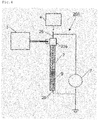
- Fig. 1 is a diagram showing an example of the configuration of a device 1 for eradicating pathogens and pests according to the first embodiment of the present invention.
- the device 1 for eradicating pathogens and pests according to the first embodiment of the present invention includes a reaction container 2, a gas supply portion 3 that supplies gas to the reaction container 2, a water supply portion 4 that supplies water mist to the reaction container 2, a negative electrode 5 and a positive electrode 6 that are arranged outside the reaction container, and a power supply portion 7.
- the reaction container 2 is a container that is formed of glass such as quartz glass and the like or an insulator such as resin and the like.
- a gas carrier tube 3a is connected to the reaction container 2. Furthermore, in the reaction container 2, the negative electrode 5 and the positive electrode 6 are arranged. The negative electrode 5 is arranged in the vicinity of the gas carrier tube 3a.
- the positive electrode 6 includes an outer coil 8 that is wound around the reaction container 2.
- the outer coil 8 is formed with a copper wire or a coated copper wire. The outer coil 8 is inserted, and thus air plasma is easily produced.
- the gas supply portion 3 is formed with a pressure adjustment unit that is connected to a gas cylinder; a stopper valve; a mass flow controller and the like, and is connected to an inlet of the gas carrier tube 3a with piping made of resin or metal.
- a gas any of air, helium and argon or a mixture of the gasses thereof is supplied to the gas carrier tube 3a from the gas supply portion 3.
- air normal atmosphere or compressed air from a compressor may be used.
- the gas carrier tube 3a is formed with a tube made of resin or glass.
- the gas supply portion 3 may be formed with an air-blowing fan and a dumper which is fitted to the air suction port of the air-blowing fan and that can adjust the amount of air by opening and closing. Furthermore, when an air-blowing fan for controlling the number of revolutions with an inverter is adopted, the dumper can be omitted.
- the gas supply portion 3 as described above, it becomes unnecessary to use not only expensive helium or argon, but also a gas cylinder, and it is possible to reduce the running cost, the weight and the size of the device 1 for eradicating pathogens and pests.
- the device 1 for eradicating pathogens and pests according to the present invention when used to sterilize crops such as strawberries and the like, it is easy to sterilize the crops while moving the device 1 for eradicating pathogens and pests above the crops.
- the water supply portion 4 includes a pump 4a that supplies water, a water mist generation unit 4b, a water mist carrier gas supply unit 4c that is connected to the water mist generation unit 4b and a water amount control device 4d that controls the amount of water carried by the pump 4a.
- the water mist generation unit 4b is a device for spraying water, and is also called a nebulizer.
- the water mist generated by the water supply portion 4 is supplied into the reaction container 2 from the lower left side of the negative electrode 5 arranged in the reaction container 2.
- the water supply portion 4 generates the water mist with an extremely small amount of water supplied from the pump 4a and the gas supplied from the water mist carrier gas supply unit 4c.
- the amount of water supplied from the pump 4a is controlled by the water amount control device 4d.
- a voltage applied to the negative electrode 5 is represented by V.
- the power supply portion 7 is a power supply that is connected to the negative electrode 5 and the positive electrode 6.
- the power supply portion 7 is formed with an alternating-current high-voltage power supply that can control voltage and a half-wave rectification power supply that includes a capacitor, a diode and a resistor and the like.
- an alternating-current power supply such as a high-voltage power supply for low-frequency and the like or a pulse power supply may be used.
- a groove that generates a swirling flow in a gas flow including an OH radical may be formed, or a structure in which the diameter of the container is decreased toward a tip end from which the gas flow is discharged may be adopted.
- the gas and the water mist are supplied to the reaction container 2, and the OH radical is generated in the reaction container 2.
- the amount of OH radical generated can be controlled by the water amount control device 4d.
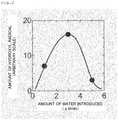
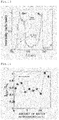
- Fig. 2 is a diagram showing an example of the relationship between the amount of hydroxyl radical generated from the device 1 for eradicating pathogens and pests and the amount of water introduced.
- the vertical axis represents the OH radical generated (arbitrary scale), and the horizontal axis represents the amount of water introduced ( ⁇ l / minute). 1 ⁇ l is 10 -6 liters.
- the amount of hydroxyl radical generated from the device 1 for eradicating pathogens and pests changes in the shape of a mountain such that it is increased with the amount of water introduced and is reduced after it reaches its peak.
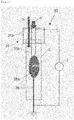
- Fig. 3 is a diagram showing an example of the configuration of a device 20 for eradicating pathogens and pests according to a second embodiment of the present invention.
- the device 20 for eradicating pathogens and pests shown in Fig. 3 differs from the device 1 for eradicating pathogens and pests shown in Fig. 1 in the configuration of a negative electrode 25 and a positive electrode 26 and the introduction of the water mist from the side of the negative electrode 25 into the reaction container 2.
- the negative electrode 25 includes a main body portion 25a that is connected to the reaction container 2 and an insertion portion 25b that is connected to the main body portion 25a and that is inserted into the reaction container 2.
- the insertion portion 25b is formed with a thin tube whose tip end is tapered.
- the water supply portion 4 introduces the water mist through the insertion portion 25b into the reaction container 2.
- the positive electrode 26 is formed with bundled thin wires made of W (tungsten) or the like, and includes a radial electrode portion 26a in which the bundled thin wires are unbundled on the side opposite the insertion portion 25b of the negative electrode 25 and which is formed with a plurality of thin wires.
- a part that has a high electric field strength as compared with the case of a so-called flat plate electrode plate is produced, and a large number of electric lines of force can be produced.
- the pressure of the air ranges from, for example, 0.1 atmospheres to about atmospheric pressure.
- Fig. 4 is a diagram showing an example of the configuration of a device 20A for eradicating pathogens and pests according to a variation of the second embodiment of the present invention.
- the device 20A for eradicating pathogens and pests shown in Fig. 4 differs from the device 20 for eradicating pathogens and pests shown in Fig. 3 in that an inside coil 9 connected to the positive electrode 26 is included.
- the other configurations are the same as the device 20 for eradicating pathogens and pests shown in Fig. 3 , and thus their description will be omitted.
- the inside coil 9 connected to the positive electrode 26 is formed with a coated copper wire. When the inside coil 9 is inserted, it becomes easy to produce air plasma.
- Fig. 5 is a diagram showing an example of the configuration of a device 30 for eradicating pathogens and pests according to a third embodiment of the present invention.
- the device 30 for eradicating pathogens and pests shown in Fig. 5 differs from the device 1 for eradicating pathogens and pests shown in Fig. 1 in the configuration of the negative electrode 25 and the introduction of the water from the side of the negative electrode 25 into the reaction container 2.
- the negative electrode 25 includes a tubular insertion portion 25b that is inserted into the reaction container 2 and a linear member 25c that is provided at a tip end of the insertion portion 25b and that is formed with a thin wire.
- the tip end portion of the insertion portion 25b and the linear member 25c are arranged inside the outer coil 8 of the positive electrode 26 wound around the reaction container 2.
- the device 30 for eradicating pathogens and pests introduces, through the interior of the insertion portion 25b, the water from the water supply portion 4 into the reaction container 2. The water that is passed through the interior of the insertion portion 25b is formed into water droplets, and is moved along the linear member 25c.
- the device 30 for eradicating pathogens and pests voltage is applied by the power supply portion 7 between the insertion portion 25b of the negative electrode 25 and the linear member 25c and the outer coil 8 of the positive electrode 26, and thus plasma is produced, with the result that it is possible to efficiently generate the OH radical from the water moved along the linear member 25c.
- Fig. 6 is a diagram showing an example of the configuration of a device 40 for eradicating pathogens and pests according to a fourth embodiment of the present invention.
- the device 40 for eradicating pathogens and pests shown in Fig. 6 differs from the device 1 for eradicating pathogens and pests shown in Fig. 1 in the configuration of the negative electrode 25 and the introduction of the water from the side of the negative electrode 25 into the reaction container 2.
- the negative electrode 25 includes a tubular insertion portion 25b that is inserted into the reaction container 2 and a cylindrical cooling means 25d that covers the insertion portion 25b.
- the cooling means 25d is formed of quartz glass, and an opening on the side of the tip end of the insertion portion 25b is blocked.
- the cooling means 25d is arranged so as to cover the tip end and the outside surface of the insertion portion 25b with a gap left between the tip end and the outside surface of the insertion portion 25b.
- the tip end portion of the insertion portion 25b is arranged inside the outer coil 8 of the positive electrode 26 wound around the reaction container 2.
- the device 40 for eradicating pathogens and pests introduces, through the interior of the insertion portion 25b, the water from the water supply portion 4 into the reaction container 2.
- the water that is passed through the interior of the insertion portion 25b is passed through the gap between the insertion portion 25b and the cooling means 25d from the tip end of the insertion portion 25b and is supplied from the opening on the side of the back end of the cooling means 25d to the outside of the cooling means 25d, that is, between the inner wall of the reaction container 2 and the cooling means 25d.
- the device 40 for eradicating pathogens and pests voltage is applied by the power supply portion 7 between the insertion portion 25b of the negative electrode 25 and the outer coil 8 of the positive electrode 26, and thus plasma is produced, with the result that it is possible to efficiently generate the OH radical from the water supplied to the outside of the cooling means 25d.
- the cooling means 25d By the cooling means 25d, the insertion portion 25b can be cooled, and thus it is possible to prevent the temperature of the plasma including the generated OH radical from being increased. Hence, it is possible to reduce an effect caused by heat on an item to which the plasma is applied, such as a plant and so on.
- Fig. 7 is graphs showing changes in the temperatures of the insertion portion 25b and plasma at the time of generation of plasma when water is not introduced into the cooling means 25d in the device 40 for eradicating pathogens and pests and when water is introduced into the cooling means 25d in the device 40 for eradicating pathogens and pests.
- Fig. 8 is a diagram showing an example of the configuration of a device 50 for eradicating pathogens and pests according to a fifth embodiment of the present invention.
- the device 50 for eradicating pathogens and pests shown in Fig. 8 is formed with a plurality of devices, that is, the device 1 for eradicating pathogens and pests shown in Fig. 1 , the device 20 for eradicating pathogens and pests shown in Fig. 3 , the device 20A for eradicating pathogens and pests shown in Fig. 4 , the device 30 for eradicating pathogens and pests shown in Fig. 5 and the device 40 for eradicating pathogens and pests shown in Fig. 6 .
- the device 50 for eradicating pathogens and pests shown in Fig. 8 it is possible to generate a large amount of OH radical.
- the device 50 for eradicating pathogens and pests shown in Fig. 8 is placed on a vehicle such as a tractor and the like, for example, and is moved along the direction of the ridges of a farmland where crops are grown so as to be able to be swept, with the result that its operability is enhanced.
- a vehicle such as a tractor and the like
- the devices 1, 20, 20A, 30 or 40 for eradicating pathogens and pests are arranged in a row, they may be arranged in a plane instead of being arranged in the same row, and when they are arranged in a plane, it is possible to apply the OH radical to a larger area.
- a non-therapeutic method of eradicating pathogens and pests according to the embodiment of the present invention will be described.
- the non-therapeutic method of eradicating pathogens and pests using the device for eradicating pathogens and pests according to the embodiment of the present invention will be described below.
- the OH radical generated with the device for eradicating pathogens and pests is applied to an item to be sterilized and thus it is possible to perform sterilization or kill pests.
- the OH radical generated with the device for eradicating pathogens and pests according to the present invention is applied to a crop that is an item to be sterilized and thus it is possible to perform sterilization or kill pests.
- the diseases that affect crops are thought to be caused by pathogenic agents (such as filamentous fungi, bacteria and viruses and the like.) and pests, and in the present specification, in particular, pathogenic agents are referred to as "bacteria" in a broad sense.
- Examples of the diseases that can be killed by the OH radical include rice blast, wheat powdery mildew, soybean purpura, strawberry gray mold disease, cucumber gray mold disease, tomato gray mold disease, lily leaf blight, cucumber powdery mildew, strawberry powdery mildew, tomato leaf mold disease, onion rust disease, chrysanthemum white rust disease, green onion black spot disease, apple spot deciduous disease, cucumber brown spot disease, crown daisy anthrax, parsley leaf blight, apple brown spot disease and bakanae disease.
- the OH radical generated with the water such as water mist and the like and the plasma-forming gas, it is possible to eradicate pests, that is, mites and aphids.
- the present invention can be applied to any pest that damages plants as a pest to be killed.
- an application voltage is set at 10 to 20 kV (see Figs. 11 and 16 ), and 0.001 to 10 mL per hour of the water mist (see Figs. 14 and 15 ) is introduced. More preferably, 0.01 to 5 mL per hour of the water mist is introduced.
- the amount of gas supplied is preferably set at 7 to 20 liters / minute (see Fig. 21 ).
- the OH radical generated using helium plasma or air plasma can be applied to an item to be sterilized or a pest to be killed for at least about 5 to 15 minutes.
- the method of eradicating pathogens and pests and the devices 1, 20, 20A, 30, 40 and 50 for eradicating pathogens and pests according to the present invention can also be applied not only to normal farms, but also to cultivation using greenhouses, plant factories.
- the OH radical generated with the water such as water mist and the like and the plasma-forming gas is applied to crops, and thus it is not left on crops as pesticides are, with the result that it is safe.
- the OH radical may be applied to crops that are being grown or crops that are harvested.
- the application of the OH radical can be applied to the methods of eradicating pathogens and pests not only on crops, but also fertilizers, liquid fertilizers, water and soil given to crops and articles and the like used in farms and plant factories.
- the OH radical may be applied to crops while the device 50 for eradicating pathogens and pests is placed on a moving vehicle such as a tractor or an automatic guided vehicle and the moving vehicle is moved along the direction of the ridges of a farmland where crops are being grown.
- a moving vehicle such as a tractor or an automatic guided vehicle
- the following method may be adopted: in a house or the like, a rail is attached along a ceiling above crops being grown, the devices 1, 20, 20A, 30, 40 and 50 for eradicating pathogens and pests are suspended from an automatic guided vehicle or the like that can move along the rail and the OH radical is applied from above the crops while the automatic guided vehicle or the like is being moved.
- a pot or the like where crops are grown is provided so as to be able to be moved along a movement path such as a rail and the like, the devices 1, 20, 20A, 30, 40 and 50 for eradicating pathogens and pests are arranged beside the movement path and the OH radical is sequentially applied to crops that are moved to the movement path.
- the devices 1, 20, 20A, 30, 40 and 50 for eradicating pathogens and pests are placed on a flight vehicle such as a helicopter, a radio-controlled helicopter or a radio-controlled airplane, and the OH radical is applied to crops from the sky.
- the non-therapeutic method of eradicating pathogens and pests and the devices 1, 20, 20A, 30, 40 and 50 for eradicating pathogens and pests according to the present invention may be used not only in the field of agriculture but also in hospitals and nursing homes and for virus removal, air cleaning and deodorizing in places such as homes.
- the method of eradicating pathogens and pests according to the present invention is characterized in that the water such as water mist and the like is introduced into the reaction container 2, the plasma-forming gas is supplied from the gas supply portion 3 to the reaction container 2, voltage is applied between the positive electrode 6 and the negative electrode 5 provided in the reaction container 2 to discharge the gas and generate the OH radical, the OH radical is applied to pests and pathogens of microorganisms such as virus, eubacteria, fungi and protozoa called "pathogenic agents" in plants, and thus they are eradicated.
- the water such as water mist and the like
- the plasma-forming gas is supplied from the gas supply portion 3 to the reaction container 2
- voltage is applied between the positive electrode 6 and the negative electrode 5 provided in the reaction container 2 to discharge the gas and generate the OH radical
- the OH radical is applied to pests and pathogens of microorganisms such as virus, eubacteria, fungi and protozoa called "pathogenic agents" in plants,
- the device 1 for eradicating pathogens and pests shown in Fig. 1 was produced.
- reaction container 2 a container was used which was formed of quartz and whose inside diameter was 3 mm, outside diameter was 6 mm and length was 110 mm.
- the negative electrode stainless steel was used.
- the positive electrode tungsten was used.
- Water was supplied from a pump to the water supply portion 4, and a gas was also supplied thereto, and water mist was supplied into the reaction container 2.
- the gas at room temperature, argon and helium whose pressures were 0 to 0.2 MPa were supplied to the gas carrier tube 3a.
- the gas was passed to the gas carrier tube 3a while the amount of gas passed was being controlled by the mass flow controller, discharge under atmospheric pressure was performed while the gas was issued from the gas carrier tube 3a under atmospheric pressure and room temperature.
- the application voltage V was set at 2 to 25 kV to perform discharge, and the OH radical generated by the discharge was detected with a spectroscope. No ozone odor was produced.
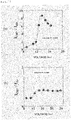
- Fig. 9 is a diagram showing emission spectroscopic spectra of the plasma by helium gas and the water mist. As is clear from Fig. 9 , light emitted by the OH radical whose spectroscopic wavelength was 309 nm and light emitted by He whose spectroscopic wavelength was 700 nm were observed.
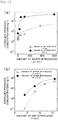
- Fig. 10 is a diagram showing the dependence of the OH radical on the amount of water introduced and the dependence of an emission intensity ratio on helium and argon;
- Fig. 10(a) shows the case of helium plasma and
- Fig. 10(b) shows the case of argon plasma.
- the horizontal axis represents the amount of water introduced (mL / hour), and the vertical axis represents the emission intensity ratio (OH radical / He).
- the emission intensity ratio (OH radical / He) is rapidly increased when the amount of water introduced is 0.001 mL / hour or more, and that in the range of 2 to 6 mL / hour, the emission intensity ratio changed in a concave/convex shape.
- the emission intensity ratio (OH radical / He) is rapidly increased when the amount of water introduced is 0.1 mL / hour or more, and that in the range of 2 to 6 mL / hour, the emission intensity ratio remains substantially constant.
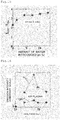
- Fig. 11 is a diagram showing the dependence of the OH radical on the application voltage and the dependence of the emission intensity ratio on helium and argon;
- Fig. 11(a) shows the case of helium plasma and
- Fig. 11(b) shows the case of argon plasma.
- the horizontal axis of Fig. 11 represents the application voltage (kV), and the vertical axis represents the emission intensity ratio (OH radical / He).
- the emission intensity ratio (OH radical / He) is 1 when the application voltage is 10 kV, the emission intensity ratio is increased as the application voltage is increased and the emission intensity ratio reaches its peak of about 9 when the application voltage is about 14 kV.
- the emission intensity ratio is monotonously reduced from 9 to 6.
- the emission intensity ratio (OH radical / He) is 0.5 when the application voltage is 9 kV, the emission intensity ratio is increased as the application voltage is increased and the emission intensity ratio constantly remains about 0.9 when the application voltage is about 14 to 24 kV.
- the device 20 for eradicating pathogens and pests shown in Fig. 3 was produced.
- a container was used which was formed of quartz and whose inside diameter was 4 mm, outside diameter was 6 mm and length was 85 mm.
- an injection needle was used as the insertion portion 25b of the negative electrode 25. Water was supplied to the injection needle from a pump, and water mist was supplied from the water supply portion 4 into the reaction container 2.
- a gas was supplied from the gas supply portion 3 into the reaction container 2.
- the positive electrode 26 inserted into the reaction container 2 was a wire bundle made of tungsten, and 5 wires having a diameter of 0.5 mm were used.
- As the gas under atmospheric pressure and room temperature, any of argon, oxygen and air was supplied to the gas carrier tube 3a.
- the gas was passed to the gas carrier tube 3a while the amount of gas passed was being controlled by the mass flow controller, discharge under atmospheric pressure was performed while the gas was issued from the gas carrier tube 3a under atmospheric pressure and room temperature.
- the application voltage V was changed in a range of 0 to 25 kV to perform discharge, and the OH radical generated by the discharge was detected with a spectroscope. No ozone odor was produced.
- Fig. 12 is a diagram showing emission spectroscopic spectra of plasma by air depending on the presence of the water mist; Fig. 12(a) shows a case where the water mist is not added and Fig. 12(b) shows a case where the water mist is added.
- Fig. 13 is an enlarged diagram of the emission spectroscopic spectra of Fig. 12 in a wavelength range of 300 to 350 nm. As is clear from Fig. 12(b) , it is found that in the case where the water mist is added to the air plasma, as compared with the case where the water mist is not added (see Fig.
- H ⁇ light emission of 656 nm by hydrogen (H) is increased, and that furthermore, an emission intensity in the vicinity of 309 nm, which is the light emission wavelength of the OH radical is increased.
- the light emission of oxygen (O) is 777 nm.
- Fig. 14 is a diagram showing the dependence of the OH radical on the amount of water introduced and the dependence of the emission intensity ratio on N 2 .
- the horizontal axis of Fig. 14 represents the amount of water introduced (mL / hour), and the vertical axis represents the emission intensity ratio (OH radical / N 2 ).
- the emission intensity ratio (OH radical / N 2 ) is changed in a range of about 0.4 to 0.7 when the amount of water introduced ranged from about 1 to 10 ml / hour, the emission intensity ratio was increased to about 0.4 to 1 when the amount of water introduced ranged from 10 to 12 mL / hour and thereafter the emission intensity ratio was reduced to about 0.9 when the amount of water introduced ranged from about 12 to 14.5 mL / hour.
- Fig. 15 is a diagram showing the dependence of the OH radical on the amount of water introduced and the dependence of the emission intensity ratio on helium.
- the horizontal axis of Fig. 15 represents the amount of water introduced (mL / hour), and the vertical axis represents the emission intensity ratio (OH radical / He).
- the emission intensity ratio (OH radical / He) is increased to about 2.3 to 3.2 when the amount of water introduced ranged from 0 to 4 mL / hour, and thereafter the emission intensity ratio (OH radical / He) is saturated at 3.3 to 3.6 even when the amount of water introduced is increased in a range of 12 to 14.5 mL / hour. No ozone odor was produced.
- Fig. 16 is a diagram showing the dependence of the application voltage on the emission intensity of the OH radical and N 2 .
- the horizontal axis of Fig. 16 represents the application voltage (kV), and the vertical axis represents the emission intensity (arbitrary scale).
- the light emission of the OH radical is performed when the application voltage is 14 kV or more, and even when the application voltage is increased to about 24 kV, the emission intensity remains substantially constant.
- the emission intensity of N 2 occurs when the application voltage is about 14 kV or more, thereafter the application voltage reaches the maximum value at 18 kV and thereafter when the application voltage is further increased, the emission intensity of N 2 is reduced.
- the application voltage changes in the shape of a large mountain in a range of about 14 to about 24 kV.
- Fig. 17 is a diagram showing the dependence of the application voltage on the emission intensity of the OH radical and helium.
- the horizontal axis of Fig. 17 represents the application voltage (kV), and the vertical axis represents the emission intensity (arbitrary scale).
- the emission intensity of the OH radical occurs when the application voltage is 4 kV or more, and the emission intensity of the OH radical is increased as the application voltage is increased. It is found that the light emission of helium occurs when the application voltage is about 4 kV or more, and thereafter when the application voltage is increased to about 23.5 kV, the light emission of helium is increased proportionally to the application voltage.
- the hydroxylation of terephthalic acid was performed with the OH radical, the fluorescence thereof was measured and thus the density of the OH radical was measured.
- Fig. 18 is a diagram schematically showing a method of measuring the density of the OH radical by the utilization of the hydroxylation of terephthalic acid by the OH radical.
- the OH radical reacts with terephthalic acid to generate hydroxy terephthalic acid (hydroxylation).
- violet light of 310 nm is applied to the hydroxy terephthalic acid, a fluorescence having a wavelength of 425 nm is produced.
- the intensity of the fluorescence is increased proportionally to amount of the hydroxy terephthalic acid produced by the reaction of the OH radical with terephthalic acid.
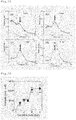
- Fig. 19 is a diagram showing emission spectra of the fluorescence generated by the hydroxylation of terephthalic acid when the amount of helium gas passed is changed; Fig. 19(a) shows the case of 1 slm, Fig. 19(b) shows the case of 3 slm, Fig. 19(c) shows the case of 5 slm, and Fig. 19(d) shows the case of 8 slm.
- slm refers to standard liter / minute, and represents the unit L / minute.
- the horizontal axis of Fig. 19 represents the wavelength (nm), and the vertical axis represents the emission intensity (arbitrary scale). As is clear from Fig.
- the fluorescent intensity having a wavelength of 425 nm (a position indicated by an arrow in the figure), that is, the density of the OH radical is increased as the amount of helium gas passed is increased from 1 slm to 3 slm, to 5 slm and to 8 slm.
- Fig. 20 is a diagram showing the dependence of the fluorescent intensity on the amount of helium gas passed.
- the horizontal axis of Fig. 20 represents the amount of helium gas passed (slm), and the vertical axis represents the fluorescent intensity (arbitrary scale).
- the fluorescent intensity that is, the density of the OH radical is increased substantially proportionally to the amount of helium gas passed. Consequently, it is found that with the device 1 for eradicating pathogens and pests according to the present invention, by changing the amount of helium gas passed, it is possible to efficiently generate the OH radical.
- the concentration of hydrogen peroxide in plasma generated when the amount of water introduced and the amount of air introduced were changed with the device 1 for eradicating pathogens and pests shown in Fig. 1 was measured.
- a pack test (registered trademark; made by KYORITSU CHEMICAL-CHECK Lab., Corp.) was used.
- the reagents of the pack test were an enzyme (peroxidase) and 4-aminoantipyrine.
- a dish into which pure water (2.4 mL) was put was placed, and an item obtained by the application of the plasma to the pure water was used as a specimen.
- the distance over which the plasma was applied was set at 50 mm, the time during which the plasma was applied when the amount of water introduced was changed was set at 10 minutes and the time during which the plasma was applied when the amount of air introduced was changed was set at 1 minute.
- the voltage and the frequency when the plasma was applied were set at 11. 5 kV and 8.3 kHz, respectively.
- Fig. 21(a) shows results when the amount of water introduced was changed
- Fig. 21(b) shows results when the amount of air introduced was changed.
- Fig. 21(a) it is found that when the amount of water introduced is increased to 100 to 200 ⁇ L / minute, as compared with the case where water is not introduced, the concentration of hydrogen peroxide is significantly increased by 2 to 10 times.
- Fig. 21(b) it is found that when the amount of air introduced is increased by four times from 4 L / minute to 16 L / minute, the concentration of hydrogen peroxide is increased by 10 to 100 times or more.
- the amount of air introduced is 7 L / minute or more, the concentration of hydrogen peroxide is increased. It is thought that since the OH radical is generated by the utilization of hydrogen peroxide, as the amount of water introduced is increased and the amount of air introduced is increased, the OH radical is increased by substantially the same amount as the increase in hydrogen peroxide.
- the density of the OH radical and the concentration of hydrogen peroxide in plasma generated when the time during which the plasma was applied and the distance over which the plasma was applied were changed with the device 1 for eradicating pathogens and pests shown in Fig. 1 were measured.
- the measurement of the density of the OH radical was performed by the utilization of the fluorescent intensity having a wavelength of 425 nm based on Fig. 18 , and the measurement of the concentration of hydrogen peroxide was performed with the pack test.
- the voltage, the frequency, the amount of air introduced and the amount of water introduced when the plasma was applied were set at 11. 7 kV, 8.3 kHz, 16 L / minute, and 91 ⁇ L / minute, respectively.
- the distance over which the plasma was applied when the time during which the plasma was applied was changed was set at 30 mm, and the time during which the plasma was applied when the distance over which the plasma was applied was changed was set at 15 minutes.
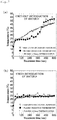
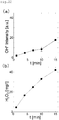
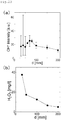
- Fig. 22 shows results when the time t during which the plasma was applied was changed
- Fig. 23 shows results when the distance d over which the plasma was applied was changed.
- Changes in the density of the OH radical are shown in Figs. 22(a) and 23(b)
- changes in the concentration of hydrogen peroxide are shown in Figs. 22(b) and 23(b) .
- Fig. 22 it is found that as the time t during which the plasma was applied was increased, the density of the OH radical and the concentration of hydrogen peroxide tended to be increased.
- Fig. 22 it is found that as the time t during which the plasma was applied was increased, the density of the OH radical and the concentration of hydrogen peroxide tended to be increased.
- Fig. 22 shows results when the time t during which the plasma was applied was changed
- Fig. 23 shows results when the distance d over which the plasma was applied was changed.
- Changes in the density of the OH radical are shown in Figs. 22(a)
- Lily leaf blight fungi were cultured in a PDA medium, then for each PDA medium, the lily leaf blight fungi were cut into the size of a 5 mm square, the device 1 for eradicating pathogens and pests shown in Fig. 1 was used to apply the OH radical generated by addition of the water mist to He plasma and then it was divided into 9 pieces and was cultured with the PDA medium at 20°C for 2 days.
- the distance between a reaction container and the PDA medium was set at about 5 cm.
- An application voltage V and the amount of water introduced at the time of discharge were set at 10 to 20 kV and 0.1 to 5 mL / hour, respectively.
- Fig. 24 is a diagram showing microscope images of the lily leaf blight fungi two days after the application of the OH radical generated by the helium plasma; Fig. 24(a) shows the fungi when the OH radical was not applied, Fig. 24(b) shows the fungi when the power supply portion 7 was turned off and He and the water mist were applied for 10 minutes, Fig. 24(c) shows the fungi when the OH radical was applied for 5 minutes, and Fig. 24(d) shows the fungi when the OH radical was applied for 10 minutes. As shown in Fig. 24 , it is found that the lily leaf blight fungi were killed by the application of the OH radical for 10 minutes.
- the device 20A for eradicating pathogens and pests shown in Fig. 4 was used to apply the OH radical generated by addition of the water mist to air plasma to the PDA medium, as with the He plasma, and then it was divided into 9 pieces and was cultured with the PDA medium at 20°C for 2 days.
- the distance between the reaction container and the PDA medium was set at about 1 cm.
- the application voltage V and the amount of water introduced at the time of discharge were set at 10 to 20 kV and 0.1 to 5 mL / hour, respectively.
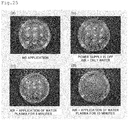
- Fig. 25 is a diagram showing microscope images of the lily leaf blight fungi two days after the application of the OH radical generated by the air plasma; Fig. 25(a) shows the fungi when the OH radical was not applied, Fig. 25(b) shows the fungi when the power supply portion 7 was turned off and the air and the water mist were applied for 10 minutes, Fig. 25(c) shows the fungi when the OH radical was applied for 5 minutes, and Fig. 24(d) shows the fungi when the OH radical was applied for 10 minutes. As shown in Fig. 25 , it is found that the lily leaf blight fungi were killed by the application of the OH radical for 10 minutes.
- the reproduction of the temperature state by the dryer was performed by the utilization of results obtained by measuring the temperature state at the time of application of plasma with a radiation thermometer and by the application of the wind of the dryer while the temperature was being measured with the radiation thermometer.
- the time during which the plasma was applied and the time during which the wind of the dryer was applied were set at 10 minutes, and the distance over which the plasma was applied and the distance over which the wind of the dryer was issued were set at 30 mm.
- the voltage, the frequency, the amount of air introduced and the amount of water introduced when the plasma was applied were set at 11. 5 kV, 8.3 kHz, 16 L / minute and 98 ⁇ L /minute, respectively.
- Fig. 26(a) shows results when the plasma was applied without the introduction of the water mist
- Fig. 26(b) shows results when the wind of the dryer was applied without the introduction of the water mist
- Fig. 26(c) shows results when the water mist was introduced and the plasma was applied
- Fig. 26(d) shows results when the water mist was introduced and the wind of the dryer was applied
- Fig. 26(e) shows results when the application of the plasma, the dryer and the introduction of the water were not performed for comparison.
- Fig. 26 when the plasma was applied ( Figs.
- chrysanthemum white rust leaf fungi were cultured in a PDA medium, then the PDA medium was cut into the size of a 5 mm square and, after the application of the OH radical, it was divided into 9 pieces and was cultured with the PDA medium at 20°C for 4 days.
- the OH radical was generated using helium plasma.
- the application voltage V and the amount of water introduced at the time of discharge were set at 10 to 20 kV and 0.1 to 5 mL / hour, respectively.
- Fig. 27 is a diagram showing microscope images of the chrysanthemum white rust leaf fungi four days after the application of the OH radical. As shown in Fig. 27 , it is found that the chrysanthemum white rust leaf fungi were killed by the application of the OH radical.
- the device 1 for eradicating pathogens and pests shown in Fig. 1 was used to apply the plasma to bakanae disease fungi every day, and their changes when the application time was changed were checked.
- the bakanae disease fungi were cultured with the PDA medium at 20°C for 24 days, and in the meantime, their changes by the application of the plasma were observed.
- the time during which the plasma was applied was set at 15 minutes per day, 10 minutes per day and 4 minutes per day, and the distance over which the plasma was applied was set at 100 mm.
- the voltage, the frequency, the amount of air introduced and the amount of water introduced when the plasma was applied were set at 11.5 kV, 8.3 kHz, 16 L / minute and 98 ⁇ L /minute, respectively.
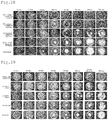
- Fig. 28(a) shows results when the time during which the plasma was applied was set at 15 minutes per day
- Fig. 28(b) shows results when the time during which the plasma was applied was set at 10 minutes per day
- Fig. 28(c) shows results when the time during which the plasma was applied was set at 4 minutes per day
- Fig. 28(d) shows results when the plasma was not applied and only air was blown for 4 minutes per day for comparison
- Fig. 28(e) shows results when the plasma was not applied for comparison.
- Fig. 28 shows results when the plasma was applied for 15 minutes per day ( Fig. 28(a) ) and when the plasma was applied for 10 minutes per day ( Fig.
- bakanae disease fungi Their changes when the interval at which the plasma was applied to the bakanae disease fungi was changed were checked next.
- the bakanae disease fungi were cultured with the PDA medium at 20°C for 26 days, and in the meantime, their changes by the application of the plasma were observed.
- the time during which the plasma was applied once was set at 15 minutes, and the distance over which the plasma was applied was set at 100 mm.
- the voltage, the frequency, the amount of air introduced and the amount of water introduced when the plasma was applied were set at 11.5 kV, 8.3 kHz, 16 L / minute and 98 ⁇ L /minute, respectively.
- Fig. 29(a) shows results when the plasma was applied every day
- Fig. 29(b) shows results when the plasma was applied every two days
- Fig. 29(c) shows results when the plasma was applied every five days
- Fig. 29(d) shows results when the plasma was not applied and only air was blown every day for comparison
- Fig. 29(e) shows results when the plasma was not applied for comparison.
- Fig. 29 when the plasma was applied every day ( Fig. 29(a) ), the fungi were gradually reduced, with the result that it is found that sterilization effects were obtained.
- the plasma was applied every two days ( Fig. 29(b) ) and when the plasma was applied every five days ( Fig. 29(c) it is found that although the effect of reducing the propagation of the fungi was obtained, the fungi were gradually propagated, and sterilization effects cannot be obtained.
- botrytis cinerea fungi (scientific name: Botryotinia fuckeliana)
- the device 1 for eradicating pathogens and pests shown in Fig. 1 was used to apply the plasma to botrytis cinerea fungi when the water mist was introduced and when the water mist was not introduced, and their changes when the application time was changed were checked.
- the botrytis cinerea fungi were cultured with the PDA medium at 20°C for 10 days, and their changes were observed.
- the time during which the plasma was applied was set at 15 minutes, 10 minutes, 7 minutes, 2 minutes and 1 minute, and the distance over which the plasma was applied was set at 100 mm.
- the voltage, the frequency and the amount of air introduced when the plasma was applied were set at 11.5 kV, 8.3 kHz and 16 L / minute, respectively.
- the amount of water introduced when the water mist was introduced was set at 117 ⁇ L / minute when the application time was 1 to 4 minutes, and was set at 91 ⁇ L / minute when the application time was 7 to 15 minutes.
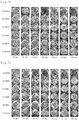
- Figs. 30 and 31(a) show results when the time during which the plasma was applied was set at 15 minutes
- Figs. 30(b) and 31(b) show results when the time during which the plasma was applied was set at 10 minutes
- Figs. 30(c) and 31(c) show results when the time during which the plasma was applied was set at 7 minutes
- Figs. 30(d) and 31(d) show results when the time during which the plasma was applied was set at 2 minutes
- Figs. 30(a) and 31(a) show results when the time during which the plasma was applied was set at 15 minutes
- Figs. 30(b) and 31(b) show results when the time during which the plasma was applied was set at 10 minutes
- Figs. 30(c) and 31(c) show results when the time during which the plasma was applied was set at 7 minutes
- Figs. 30(d) and 31(d) show results when the time during which the plasma was applied was set at 2 minutes
- FIGs. 30(e) and 31(e) show results when the time during which the plasma was applied was set at 1 minute and Figs. 30(f) and 31(f) show results when the plasma was not applied for comparison.
- Figs. 30 and 31 when the plasma was applied for 15 minutes ( Figs. 30(a) and 31(a) ), regardless of whether the water mist was introduced, the fungi were not propagated even by being cultured for 10 days, with the result that it is found that sterilization effects were obtained.
- the plasma was applied for 10 minutes or less ( Figs. 30(b) to 30(e) and Figs.
- the device 1 for eradicating pathogens and pests shown in Fig. 1 was used to apply the plasma to the spores of the botrytis cinerea fungi, and their changes when the application time and the application distance were changed were checked.
- the spores of the botrytis cinerea fungi were cultured with the PDA medium at 20°C for 10 days, and their changes were observed.
- the time during which the plasma was applied was set at 15 minutes and 4 minutes, and the distance over which the plasma was applied was set at 200 and 100 mm.
- the voltage, the frequency, the amount of air introduced and the amount of water introduced when the plasma was applied were set at 11.7 kV, 8.3 kHz, 16 L / minute and 91 ⁇ L /minute, respectively.
- the density of the spores was set at 100 pieces / 10 ⁇ L.
- Fig. 32(a) shows results when the time during which the plasma was applied was set at 15 minutes and the distance over which the plasma was applied was set at 200 mm
- Fig. 32(b) shows results when the time during which the plasma was applied was set at 15 minutes and the distance over which the plasma was applied was set at 100 mm
- Fig. 32(c) shows results when the time during which the plasma was applied was set at 4 minutes and the distance over which the plasma was applied was set at 100 mm
- Fig. 32(d) shows results when the plasma was not applied for comparison.
- Fig. 32 when the plasma was applied for 15 minutes ( Figs.
- Fig. 33(a) shows results when the concentration of hydrogen peroxide was 1000 mg /L
- Fig. 33(b) shows results when the concentration of hydrogen peroxide was 625 mg /L
- Fig. 33(c) shows results when the concentration of hydrogen peroxide was 250 mg /L
- Fig. 33(d) shows results when the concentration of hydrogen peroxide was 100 mg / L
- Fig. 33(e) shows results when instead of hydrogen peroxide, pure water was dropped for comparison
- Fig. 33(f) shows results when nothing was dropped for comparison.
- Fig. 33(a) shows results when the concentration of hydrogen peroxide was 1000 mg /L
- Fig. 33(b) shows results when the concentration of hydrogen peroxide was 625 mg /L
- Fig. 33(c) shows results when the concentration of hydrogen peroxide was 250 mg /L
- Fig. 33(d) shows results when the concentration of hydrogen peroxide was 100 mg / L
- Fig. 33(e) shows results
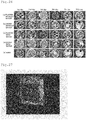
- Fig. 34 is a diagram showing microscope images of the aphids when the OH radical was applied to the aphids. As shown in Fig. 34 , when the OH radical was applied to the aphids, the aphids were killed or debilitated. The individuals thereof were checked visually or by microscope observation.
- the device 1 for eradicating pathogens and pests shown in Fig. 1 was used to apply the OH radical generated with helium plasma to mites.
- the application voltage V at the time of discharge and the amount of water introduced were set at 10 to 20 kV and 0.1 to 5 mL / hour, respectively. It was confirmed by microscope observation that the individuals to which the OH radical was applied were killed after a few days. On the other hand, the mites to which the OH radical was not applied survived.
- the application voltage is set at 10 to 20 kV (see Figs. 11 and 16 ), 0.001 to 10 mL of water mist per hour (see Figs. 14 and 15 ) is introduced, the amount of gas such as helium or air supplied is set at 7 to 20 liters / minute (see Fig. 21 ) and the OH radical generated with helium plasma or air plasma is applied to the pathogens and pests for at least 5 to 15 minutes.
- the amount of OH radical is controlled depending on the inside diameter of the reaction container 2, the length of the negative electrode 5 and the positive electrode 6, the surface area of the electrode, the range of the voltage and the amount of water mist etc. introduced in the device 1 for eradicating pathogens and pests used.
- the amount of OH radical is not limited to the range of 0.001 to 10 mL of water mist introduced per hour as described above and is also not limited to the application time of 5 to 15 minutes as described above.
Landscapes
- Physics & Mathematics (AREA)
- Engineering & Computer Science (AREA)
- Life Sciences & Earth Sciences (AREA)
- Plasma & Fusion (AREA)
- Pest Control & Pesticides (AREA)
- Spectroscopy & Molecular Physics (AREA)
- Zoology (AREA)
- Environmental Sciences (AREA)
- Electromagnetism (AREA)
- Wood Science & Technology (AREA)
- General Health & Medical Sciences (AREA)
- Health & Medical Sciences (AREA)
- Dentistry (AREA)
- Plant Pathology (AREA)
- Chemical & Material Sciences (AREA)
- Inorganic Chemistry (AREA)
- Agronomy & Crop Science (AREA)
- Toxicology (AREA)
- Insects & Arthropods (AREA)
- Catching Or Destruction (AREA)
- Plasma Technology (AREA)
- Agricultural Chemicals And Associated Chemicals (AREA)
Applications Claiming Priority (2)
| Application Number | Priority Date | Filing Date | Title |
|---|---|---|---|
| JP2012289269 | 2012-12-30 | ||
| PCT/JP2013/085232 WO2014104350A1 (ja) | 2012-12-30 | 2013-12-27 | 病原菌および害虫の駆除方法ならびに病原菌および害虫の駆除装置 |
Publications (3)
| Publication Number | Publication Date |
|---|---|
| EP2941955A1 EP2941955A1 (en) | 2015-11-11 |
| EP2941955A4 EP2941955A4 (en) | 2015-11-11 |
| EP2941955B1 true EP2941955B1 (en) | 2019-05-08 |
Family
ID=51021412
Family Applications (1)
| Application Number | Title | Priority Date | Filing Date |
|---|---|---|---|
| EP13868543.3A Not-in-force EP2941955B1 (en) | 2012-12-30 | 2013-12-27 | Pathogenic microbe and insect pest extermination method and pathogenic microbe and insect pest extermination device |
Country Status (4)
| Country | Link |
|---|---|
| EP (1) | EP2941955B1 (enExample) |
| JP (2) | JP5909831B2 (enExample) |
| CN (1) | CN104883881A (enExample) |
| WO (1) | WO2014104350A1 (enExample) |
Cited By (1)
| Publication number | Priority date | Publication date | Assignee | Title |
|---|---|---|---|---|
| US11122790B2 (en) * | 2019-12-30 | 2021-09-21 | Nbs Tek Llc | Cold plasma method and apparatus for eradication of the taxonomic class insecta |
Families Citing this family (16)
| Publication number | Priority date | Publication date | Assignee | Title |
|---|---|---|---|---|
| JP6755491B2 (ja) * | 2014-09-04 | 2020-09-16 | 国立大学法人東海国立大学機構 | 抗腫瘍水溶液の製造方法 |
| CN104313150B (zh) * | 2014-10-22 | 2016-09-07 | 南京农业大学 | 菊花抗蚜性关联分子标记、筛选方法及应用 |
| JP2016185083A (ja) * | 2015-03-27 | 2016-10-27 | 大亜真空株式会社 | 籾処理方法及び籾処理装置 |
| JP6464009B2 (ja) * | 2015-03-27 | 2019-02-06 | 大亜真空株式会社 | プラズマ殺菌駆除装置 |
| TWI601694B (zh) * | 2016-06-06 | 2017-10-11 | 拜普生醫科技股份有限公司 | 電漿液產生裝置 |
| CN109661244B (zh) * | 2016-08-30 | 2021-08-10 | 国立大学法人东北大学 | 病原体及害虫的驱除装置以及其反应容器 |
| WO2018155260A1 (ja) | 2017-02-23 | 2018-08-30 | 株式会社Ihi | Ohラジカル検出プローブ、ohラジカル測定装置、および、ohラジカル測定方法 |
| DE102017105401B4 (de) * | 2017-03-14 | 2019-01-31 | Tdk Electronics Ag | Vorrichtung zur Erzeugung eines nichtthermischen Atmosphärendruck-Plasmas |
| CN109248329A (zh) * | 2017-07-13 | 2019-01-22 | 王绪乔 | 一种杀菌除螨仪及其方法 |
| JP7040770B2 (ja) * | 2017-08-23 | 2022-03-23 | 国立大学法人東北大学 | 活性種含有液噴射装置 |
| CN112601951B (zh) | 2018-08-23 | 2024-06-07 | 株式会社Ihi | Oh自由基测定装置及oh自由基测定方法 |
| JP7215726B2 (ja) * | 2019-02-21 | 2023-01-31 | 国立大学法人東北大学 | 活性種含有液噴射装置および殺菌駆除方法 |
| CN110693692A (zh) * | 2019-10-09 | 2020-01-17 | 华中科技大学 | 一种等离子体活化雾制备装置 |
| CN111296557A (zh) * | 2020-03-23 | 2020-06-19 | 中国检验检疫科学研究院 | 一种基于等离子体的植物产品采后杀虫抑菌处理方法 |
| TWI760857B (zh) * | 2020-09-23 | 2022-04-11 | 逢甲大學 | 電漿氣霧裝置 |
| JP7660861B2 (ja) | 2021-10-11 | 2025-04-14 | 国立大学法人東北大学 | 植物の病害抵抗性誘導方法および植物の病害抵抗性誘導装置、ならびに、植物の病害抵抗性誘導剤 |
Family Cites Families (16)
| Publication number | Priority date | Publication date | Assignee | Title |
|---|---|---|---|---|
| JP3445632B2 (ja) | 1993-02-26 | 2003-09-08 | 科学技術振興事業団 | 薄膜の製造方法とその装置 |
| JP2001145689A (ja) * | 1999-11-24 | 2001-05-29 | Matsushita Electric Works Ltd | プラズマ滅菌処理装置及びプラズマ滅菌処理方法 |
| JP2002159844A (ja) * | 2000-11-22 | 2002-06-04 | Nomura Denshi Kogyo Kk | 低温プラズマ発生装置 |
| NL1017942C2 (nl) * | 2001-04-26 | 2002-10-29 | Kema Nv | Werkwijze en inrichting voor het afdoden van entomologie. |
| EP1613149B1 (de) * | 2003-04-11 | 2011-03-09 | Hanspeter Steffen | Verfahren zur kontrolle von schädlichen mikro-organismen und insekten im pflanzenschutz mittels dipol-elektrischer air -jet spray-technik, ozon haltigem wasser und uv-c-bestrahlung |
| CN2707269Y (zh) * | 2004-05-27 | 2005-07-06 | 福州大学 | 填料型冷电弧杀菌装置 |
| JP4709998B2 (ja) | 2005-01-18 | 2011-06-29 | 国立大学法人東京工業大学 | 液体導入プラズマ装置 |
| JP2007000101A (ja) * | 2005-06-27 | 2007-01-11 | Matsushita Electric Works Ltd | 植物病害防除装置 |
| TWI345431B (en) * | 2006-09-14 | 2011-07-11 | Ind Tech Res Inst | Processing system and plasma generation device thereof |
| JP5272170B2 (ja) * | 2006-11-28 | 2013-08-28 | 国立大学法人東京工業大学 | 液体噴射装置 |
| JP5170509B2 (ja) * | 2007-03-26 | 2013-03-27 | 勝 堀 | 殺虫殺菌方法及び殺虫殺菌装置 |
| JP4214213B1 (ja) * | 2007-08-03 | 2009-01-28 | 国立大学法人佐賀大学 | プラズマ滅菌装置及び方法 |
| JP2010187648A (ja) | 2009-02-20 | 2010-09-02 | Gunma Univ | 空気プラズマを用いた殺菌方法 |
| JP5434180B2 (ja) * | 2009-03-23 | 2014-03-05 | 株式会社Ihi | プラズマ貯蔵装置 |
| FR2947416B1 (fr) * | 2009-06-29 | 2015-01-16 | Univ Toulouse 3 Paul Sabatier | Dispositif d'emission d'un jet de plasma a partir de l'air atmospherique a temperature et pression ambiantes et utilisation d'un tel dispositif |
| JP6099862B2 (ja) * | 2011-06-01 | 2017-03-22 | マイクロプラズマ株式会社 | 表面活性化処理装置 |
-
2013
- 2013-12-27 EP EP13868543.3A patent/EP2941955B1/en not_active Not-in-force
- 2013-12-27 WO PCT/JP2013/085232 patent/WO2014104350A1/ja not_active Ceased
- 2013-12-27 JP JP2014554615A patent/JP5909831B2/ja active Active
- 2013-12-27 CN CN201380068973.2A patent/CN104883881A/zh active Pending
-
2016
- 2016-03-10 JP JP2016046397A patent/JP6363124B2/ja active Active
Non-Patent Citations (1)
| Title |
|---|
| None * |
Cited By (1)
| Publication number | Priority date | Publication date | Assignee | Title |
|---|---|---|---|---|
| US11122790B2 (en) * | 2019-12-30 | 2021-09-21 | Nbs Tek Llc | Cold plasma method and apparatus for eradication of the taxonomic class insecta |
Also Published As
| Publication number | Publication date |
|---|---|
| WO2014104350A1 (ja) | 2014-07-03 |
| JP2016171792A (ja) | 2016-09-29 |
| EP2941955A1 (en) | 2015-11-11 |
| JPWO2014104350A1 (ja) | 2017-01-19 |
| CN104883881A (zh) | 2015-09-02 |
| JP6363124B2 (ja) | 2018-07-25 |
| JP5909831B2 (ja) | 2016-04-27 |
| EP2941955A4 (en) | 2015-11-11 |
Similar Documents
| Publication | Publication Date | Title |
|---|---|---|
| EP2941955A1 (en) | Pathogenic microbe and insect pest extermination method and pathogenic microbe and insect pest extermination device | |
| Sivachandiran et al. | Enhanced seed germination and plant growth by atmospheric pressure cold air plasma: combined effect of seed and water treatment | |
| Takaki et al. | High-voltage technologies for agriculture and food processing | |
| Ehlbeck et al. | Low temperature atmospheric pressure plasma sources for microbial decontamination | |
| Scholtz et al. | Effects of nonthermal plasma on wheat grains and products | |
| Misra et al. | In-package nonthermal plasma degradation of pesticides on fresh produce | |
| Zahoranová et al. | Effect of cold atmospheric pressure plasma on the wheat seedlings vigor and on the inactivation of microorganisms on the seeds surface | |
| Martines et al. | A novel plasma source for sterilization of living tissues | |
| Reineke et al. | The impact of different process gas compositions on the inactivation effect of an atmospheric pressure plasma jet on Bacillus spores | |
| BR112020007118A2 (pt) | métodos e sistemas para distribuição sequencial de composições aquosas | |
| Carpen et al. | The effect of argon/oxygen and argon/nitrogen atmospheric plasma jet on stored products pests | |
| US9050384B2 (en) | Means of applying peracetic acid to achieve enhanced microbial effect | |
| CN109414517A (zh) | 等离子体灭菌系统和方法 | |
| EP2904629A2 (en) | Non-thermal plasma jet device as source of spatial ionization for ambient mass spectrometry and method of application | |
| Takaki et al. | Function of plasma and electrostatics for keeping quality of agricultural produce in post-harvest stage | |
| US9662412B2 (en) | Plasma vapor chamber and antimicrobial applications thereof | |
| Suwannarat et al. | Electrohydraulic streamer discharge plasma-enhanced Alternaria brassicicola disinfection in seed sterilization | |
| JP2018027025A (ja) | 農産物のオゾン、エチレンガス処理装置及びその農産物の流通システム | |
| Kopacki et al. | Physical crop postharvest storage and protection methods | |
| US10925285B2 (en) | Pathogen and pest exterminating device and reaction vessel thereof | |
| WO2018207667A1 (ja) | 農作物の生産方法 | |
| Kordová et al. | Inactivation of microbial food contamination of plastic cups using nonthermal plasma and hydrogen peroxide | |
| Czylkowski et al. | Atmospheric pressure microwave microplasma microorganism deactivation | |
| Shrestha et al. | Atmospheric pressure single electrode argon plasma jet for biomedical applications | |
| Jurov et al. | Helium atmospheric pressure plasma jet parameters and their influence on bacteria deactivation in a medium |
Legal Events
| Date | Code | Title | Description |
|---|---|---|---|
| PUAI | Public reference made under article 153(3) epc to a published international application that has entered the european phase |
Free format text: ORIGINAL CODE: 0009012 |
|
| 17P | Request for examination filed |
Effective date: 20150728 |
|
| A4 | Supplementary search report drawn up and despatched |
Effective date: 20151012 |
|
| AK | Designated contracting states |
Kind code of ref document: A1 Designated state(s): AL AT BE BG CH CY CZ DE DK EE ES FI FR GB GR HR HU IE IS IT LI LT LU LV MC MK MT NL NO PL PT RO RS SE SI SK SM TR |
|
| AX | Request for extension of the european patent |
Extension state: BA ME |
|
| RAP1 | Party data changed (applicant data changed or rights of an application transferred) |
Owner name: TOHOKU TECHNO ARCH CO., LTD. Owner name: SHOWA DENKO K.K. |
|
| DAX | Request for extension of the european patent (deleted) | ||
| RAP1 | Party data changed (applicant data changed or rights of an application transferred) |
Owner name: TOHOKU UNIVERSITY |
|
| STAA | Information on the status of an ep patent application or granted ep patent |
Free format text: STATUS: EXAMINATION IS IN PROGRESS |
|
| 17Q | First examination report despatched |
Effective date: 20180727 |
|
| GRAP | Despatch of communication of intention to grant a patent |
Free format text: ORIGINAL CODE: EPIDOSNIGR1 |
|
| STAA | Information on the status of an ep patent application or granted ep patent |
Free format text: STATUS: GRANT OF PATENT IS INTENDED |
|
| INTG | Intention to grant announced |
Effective date: 20181207 |
|
| GRAS | Grant fee paid |
Free format text: ORIGINAL CODE: EPIDOSNIGR3 |
|
| GRAA | (expected) grant |
Free format text: ORIGINAL CODE: 0009210 |
|
| STAA | Information on the status of an ep patent application or granted ep patent |
Free format text: STATUS: THE PATENT HAS BEEN GRANTED |
|
| AK | Designated contracting states |
Kind code of ref document: B1 Designated state(s): AL AT BE BG CH CY CZ DE DK EE ES FI FR GB GR HR HU IE IS IT LI LT LU LV MC MK MT NL NO PL PT RO RS SE SI SK SM TR |
|
| REG | Reference to a national code |
Ref country code: GB Ref legal event code: FG4D |
|
| REG | Reference to a national code |
Ref country code: CH Ref legal event code: EP Ref country code: AT Ref legal event code: REF Ref document number: 1128728 Country of ref document: AT Kind code of ref document: T Effective date: 20190515 |
|
| REG | Reference to a national code |
Ref country code: DE Ref legal event code: R096 Ref document number: 602013055262 Country of ref document: DE Ref country code: IE Ref legal event code: FG4D |
|
| REG | Reference to a national code |
Ref country code: NL Ref legal event code: FP |
|
| REG | Reference to a national code |
Ref country code: LT Ref legal event code: MG4D |
|
| PG25 | Lapsed in a contracting state [announced via postgrant information from national office to epo] |
Ref country code: SE Free format text: LAPSE BECAUSE OF FAILURE TO SUBMIT A TRANSLATION OF THE DESCRIPTION OR TO PAY THE FEE WITHIN THE PRESCRIBED TIME-LIMIT Effective date: 20190508 Ref country code: HR Free format text: LAPSE BECAUSE OF FAILURE TO SUBMIT A TRANSLATION OF THE DESCRIPTION OR TO PAY THE FEE WITHIN THE PRESCRIBED TIME-LIMIT Effective date: 20190508 Ref country code: NO Free format text: LAPSE BECAUSE OF FAILURE TO SUBMIT A TRANSLATION OF THE DESCRIPTION OR TO PAY THE FEE WITHIN THE PRESCRIBED TIME-LIMIT Effective date: 20190808 Ref country code: PT Free format text: LAPSE BECAUSE OF FAILURE TO SUBMIT A TRANSLATION OF THE DESCRIPTION OR TO PAY THE FEE WITHIN THE PRESCRIBED TIME-LIMIT Effective date: 20190908 Ref country code: FI Free format text: LAPSE BECAUSE OF FAILURE TO SUBMIT A TRANSLATION OF THE DESCRIPTION OR TO PAY THE FEE WITHIN THE PRESCRIBED TIME-LIMIT Effective date: 20190508 Ref country code: AL Free format text: LAPSE BECAUSE OF FAILURE TO SUBMIT A TRANSLATION OF THE DESCRIPTION OR TO PAY THE FEE WITHIN THE PRESCRIBED TIME-LIMIT Effective date: 20190508 Ref country code: ES Free format text: LAPSE BECAUSE OF FAILURE TO SUBMIT A TRANSLATION OF THE DESCRIPTION OR TO PAY THE FEE WITHIN THE PRESCRIBED TIME-LIMIT Effective date: 20190508 Ref country code: LT Free format text: LAPSE BECAUSE OF FAILURE TO SUBMIT A TRANSLATION OF THE DESCRIPTION OR TO PAY THE FEE WITHIN THE PRESCRIBED TIME-LIMIT Effective date: 20190508 |
|
| PG25 | Lapsed in a contracting state [announced via postgrant information from national office to epo] |
Ref country code: GR Free format text: LAPSE BECAUSE OF FAILURE TO SUBMIT A TRANSLATION OF THE DESCRIPTION OR TO PAY THE FEE WITHIN THE PRESCRIBED TIME-LIMIT Effective date: 20190809 Ref country code: BG Free format text: LAPSE BECAUSE OF FAILURE TO SUBMIT A TRANSLATION OF THE DESCRIPTION OR TO PAY THE FEE WITHIN THE PRESCRIBED TIME-LIMIT Effective date: 20190808 Ref country code: RS Free format text: LAPSE BECAUSE OF FAILURE TO SUBMIT A TRANSLATION OF THE DESCRIPTION OR TO PAY THE FEE WITHIN THE PRESCRIBED TIME-LIMIT Effective date: 20190508 Ref country code: LV Free format text: LAPSE BECAUSE OF FAILURE TO SUBMIT A TRANSLATION OF THE DESCRIPTION OR TO PAY THE FEE WITHIN THE PRESCRIBED TIME-LIMIT Effective date: 20190508 |
|
| REG | Reference to a national code |
Ref country code: AT Ref legal event code: MK05 Ref document number: 1128728 Country of ref document: AT Kind code of ref document: T Effective date: 20190508 |
|
| PG25 | Lapsed in a contracting state [announced via postgrant information from national office to epo] |
Ref country code: DK Free format text: LAPSE BECAUSE OF FAILURE TO SUBMIT A TRANSLATION OF THE DESCRIPTION OR TO PAY THE FEE WITHIN THE PRESCRIBED TIME-LIMIT Effective date: 20190508 Ref country code: AT Free format text: LAPSE BECAUSE OF FAILURE TO SUBMIT A TRANSLATION OF THE DESCRIPTION OR TO PAY THE FEE WITHIN THE PRESCRIBED TIME-LIMIT Effective date: 20190508 Ref country code: EE Free format text: LAPSE BECAUSE OF FAILURE TO SUBMIT A TRANSLATION OF THE DESCRIPTION OR TO PAY THE FEE WITHIN THE PRESCRIBED TIME-LIMIT Effective date: 20190508 Ref country code: CZ Free format text: LAPSE BECAUSE OF FAILURE TO SUBMIT A TRANSLATION OF THE DESCRIPTION OR TO PAY THE FEE WITHIN THE PRESCRIBED TIME-LIMIT Effective date: 20190508 Ref country code: RO Free format text: LAPSE BECAUSE OF FAILURE TO SUBMIT A TRANSLATION OF THE DESCRIPTION OR TO PAY THE FEE WITHIN THE PRESCRIBED TIME-LIMIT Effective date: 20190508 Ref country code: SK Free format text: LAPSE BECAUSE OF FAILURE TO SUBMIT A TRANSLATION OF THE DESCRIPTION OR TO PAY THE FEE WITHIN THE PRESCRIBED TIME-LIMIT Effective date: 20190508 |
|
| REG | Reference to a national code |
Ref country code: DE Ref legal event code: R097 Ref document number: 602013055262 Country of ref document: DE |
|
| PG25 | Lapsed in a contracting state [announced via postgrant information from national office to epo] |
Ref country code: SM Free format text: LAPSE BECAUSE OF FAILURE TO SUBMIT A TRANSLATION OF THE DESCRIPTION OR TO PAY THE FEE WITHIN THE PRESCRIBED TIME-LIMIT Effective date: 20190508 Ref country code: IT Free format text: LAPSE BECAUSE OF FAILURE TO SUBMIT A TRANSLATION OF THE DESCRIPTION OR TO PAY THE FEE WITHIN THE PRESCRIBED TIME-LIMIT Effective date: 20190508 |
|
| PLBE | No opposition filed within time limit |
Free format text: ORIGINAL CODE: 0009261 |
|
| STAA | Information on the status of an ep patent application or granted ep patent |
Free format text: STATUS: NO OPPOSITION FILED WITHIN TIME LIMIT |
|
| PG25 | Lapsed in a contracting state [announced via postgrant information from national office to epo] |
Ref country code: TR Free format text: LAPSE BECAUSE OF FAILURE TO SUBMIT A TRANSLATION OF THE DESCRIPTION OR TO PAY THE FEE WITHIN THE PRESCRIBED TIME-LIMIT Effective date: 20190508 |
|
| 26N | No opposition filed |
Effective date: 20200211 |
|
| PG25 | Lapsed in a contracting state [announced via postgrant information from national office to epo] |
Ref country code: PL Free format text: LAPSE BECAUSE OF FAILURE TO SUBMIT A TRANSLATION OF THE DESCRIPTION OR TO PAY THE FEE WITHIN THE PRESCRIBED TIME-LIMIT Effective date: 20190508 |
|
| PG25 | Lapsed in a contracting state [announced via postgrant information from national office to epo] |
Ref country code: SI Free format text: LAPSE BECAUSE OF FAILURE TO SUBMIT A TRANSLATION OF THE DESCRIPTION OR TO PAY THE FEE WITHIN THE PRESCRIBED TIME-LIMIT Effective date: 20190508 |
|
| REG | Reference to a national code |
Ref country code: DE Ref legal event code: R119 Ref document number: 602013055262 Country of ref document: DE |
|
| REG | Reference to a national code |
Ref country code: CH Ref legal event code: PL |
|
| REG | Reference to a national code |
Ref country code: BE Ref legal event code: MM Effective date: 20191231 |
|
| PG25 | Lapsed in a contracting state [announced via postgrant information from national office to epo] |
Ref country code: MC Free format text: LAPSE BECAUSE OF FAILURE TO SUBMIT A TRANSLATION OF THE DESCRIPTION OR TO PAY THE FEE WITHIN THE PRESCRIBED TIME-LIMIT Effective date: 20190508 |
|
| GBPC | Gb: european patent ceased through non-payment of renewal fee |
Effective date: 20191227 |
|
| PG25 | Lapsed in a contracting state [announced via postgrant information from national office to epo] |
Ref country code: LU Free format text: LAPSE BECAUSE OF NON-PAYMENT OF DUE FEES Effective date: 20191227 Ref country code: GB Free format text: LAPSE BECAUSE OF NON-PAYMENT OF DUE FEES Effective date: 20191227 Ref country code: FR Free format text: LAPSE BECAUSE OF NON-PAYMENT OF DUE FEES Effective date: 20191231 Ref country code: DE Free format text: LAPSE BECAUSE OF NON-PAYMENT OF DUE FEES Effective date: 20200701 Ref country code: IE Free format text: LAPSE BECAUSE OF NON-PAYMENT OF DUE FEES Effective date: 20191227 |
|
| PG25 | Lapsed in a contracting state [announced via postgrant information from national office to epo] |
Ref country code: LI Free format text: LAPSE BECAUSE OF NON-PAYMENT OF DUE FEES Effective date: 20191231 Ref country code: CH Free format text: LAPSE BECAUSE OF NON-PAYMENT OF DUE FEES Effective date: 20191231 Ref country code: BE Free format text: LAPSE BECAUSE OF NON-PAYMENT OF DUE FEES Effective date: 20191231 |
|
| PG25 | Lapsed in a contracting state [announced via postgrant information from national office to epo] |
Ref country code: CY Free format text: LAPSE BECAUSE OF FAILURE TO SUBMIT A TRANSLATION OF THE DESCRIPTION OR TO PAY THE FEE WITHIN THE PRESCRIBED TIME-LIMIT Effective date: 20190508 |
|
| PG25 | Lapsed in a contracting state [announced via postgrant information from national office to epo] |
Ref country code: IS Free format text: LAPSE BECAUSE OF FAILURE TO SUBMIT A TRANSLATION OF THE DESCRIPTION OR TO PAY THE FEE WITHIN THE PRESCRIBED TIME-LIMIT Effective date: 20190908 |
|
| PG25 | Lapsed in a contracting state [announced via postgrant information from national office to epo] |
Ref country code: MT Free format text: LAPSE BECAUSE OF FAILURE TO SUBMIT A TRANSLATION OF THE DESCRIPTION OR TO PAY THE FEE WITHIN THE PRESCRIBED TIME-LIMIT Effective date: 20190508 Ref country code: HU Free format text: LAPSE BECAUSE OF FAILURE TO SUBMIT A TRANSLATION OF THE DESCRIPTION OR TO PAY THE FEE WITHIN THE PRESCRIBED TIME-LIMIT; INVALID AB INITIO Effective date: 20131227 |
|
| PG25 | Lapsed in a contracting state [announced via postgrant information from national office to epo] |
Ref country code: MK Free format text: LAPSE BECAUSE OF FAILURE TO SUBMIT A TRANSLATION OF THE DESCRIPTION OR TO PAY THE FEE WITHIN THE PRESCRIBED TIME-LIMIT Effective date: 20190508 |
|
| PGFP | Annual fee paid to national office [announced via postgrant information from national office to epo] |
Ref country code: NL Payment date: 20231116 Year of fee payment: 11 |
|
| REG | Reference to a national code |
Ref country code: NL Ref legal event code: MM Effective date: 20250101 |
|
| PG25 | Lapsed in a contracting state [announced via postgrant information from national office to epo] |
Ref country code: NL Free format text: LAPSE BECAUSE OF NON-PAYMENT OF DUE FEES Effective date: 20250101 |