EP2934563B1 - Antimicrobial compounds, their synthesis and applications thereof - Google Patents
Antimicrobial compounds, their synthesis and applications thereof Download PDFInfo
- Publication number
- EP2934563B1 EP2934563B1 EP13865950.3A EP13865950A EP2934563B1 EP 2934563 B1 EP2934563 B1 EP 2934563B1 EP 13865950 A EP13865950 A EP 13865950A EP 2934563 B1 EP2934563 B1 EP 2934563B1
- Authority
- EP
- European Patent Office
- Prior art keywords
- lys
- boc
- str
- group
- compounds
- Prior art date
- Legal status (The legal status is an assumption and is not a legal conclusion. Google has not performed a legal analysis and makes no representation as to the accuracy of the status listed.)
- Active
Links
- ZKSYDVTUZMRUTO-UHFFFAOYSA-N C=SCc1c[s]c2ccccc12 Chemical compound C=SCc1c[s]c2ccccc12 ZKSYDVTUZMRUTO-UHFFFAOYSA-N 0.000 description 1
- GRWHGCSTHKIFFT-UHFFFAOYSA-N CCCCc1c[s]c2c1cccc2 Chemical compound CCCCc1c[s]c2c1cccc2 GRWHGCSTHKIFFT-UHFFFAOYSA-N 0.000 description 1
- JAABUGUCYZQMID-UHFFFAOYSA-N CCc1cc2ccccc2[s]1 Chemical compound CCc1cc2ccccc2[s]1 JAABUGUCYZQMID-UHFFFAOYSA-N 0.000 description 1
- WLWBKLRAHBGNIU-UHFFFAOYSA-N CCc1cc2ccccc2nc1 Chemical compound CCc1cc2ccccc2nc1 WLWBKLRAHBGNIU-UHFFFAOYSA-N 0.000 description 1
- UOYJBGYNFMPCLV-UHFFFAOYSA-N CCc1ccnc2c1cccc2 Chemical compound CCc1ccnc2c1cccc2 UOYJBGYNFMPCLV-UHFFFAOYSA-N 0.000 description 1
Images


Classifications
-
- C—CHEMISTRY; METALLURGY
- C07—ORGANIC CHEMISTRY
- C07C—ACYCLIC OR CARBOCYCLIC COMPOUNDS
- C07C237/00—Carboxylic acid amides, the carbon skeleton of the acid part being further substituted by amino groups
- C07C237/02—Carboxylic acid amides, the carbon skeleton of the acid part being further substituted by amino groups having the carbon atoms of the carboxamide groups bound to acyclic carbon atoms of the carbon skeleton
- C07C237/04—Carboxylic acid amides, the carbon skeleton of the acid part being further substituted by amino groups having the carbon atoms of the carboxamide groups bound to acyclic carbon atoms of the carbon skeleton the carbon skeleton being acyclic and saturated
- C07C237/06—Carboxylic acid amides, the carbon skeleton of the acid part being further substituted by amino groups having the carbon atoms of the carboxamide groups bound to acyclic carbon atoms of the carbon skeleton the carbon skeleton being acyclic and saturated having the nitrogen atoms of the carboxamide groups bound to hydrogen atoms or to acyclic carbon atoms
-
- A—HUMAN NECESSITIES
- A61—MEDICAL OR VETERINARY SCIENCE; HYGIENE
- A61K—PREPARATIONS FOR MEDICAL, DENTAL OR TOILETRY PURPOSES
- A61K38/00—Medicinal preparations containing peptides
- A61K38/04—Peptides having up to 20 amino acids in a fully defined sequence; Derivatives thereof
- A61K38/05—Dipeptides
-
- A—HUMAN NECESSITIES
- A61—MEDICAL OR VETERINARY SCIENCE; HYGIENE
- A61P—SPECIFIC THERAPEUTIC ACTIVITY OF CHEMICAL COMPOUNDS OR MEDICINAL PREPARATIONS
- A61P31/00—Antiinfectives, i.e. antibiotics, antiseptics, chemotherapeutics
- A61P31/04—Antibacterial agents
-
- C—CHEMISTRY; METALLURGY
- C07—ORGANIC CHEMISTRY
- C07C—ACYCLIC OR CARBOCYCLIC COMPOUNDS
- C07C231/00—Preparation of carboxylic acid amides
- C07C231/12—Preparation of carboxylic acid amides by reactions not involving the formation of carboxamide groups
-
- C—CHEMISTRY; METALLURGY
- C07—ORGANIC CHEMISTRY
- C07D—HETEROCYCLIC COMPOUNDS
- C07D215/00—Heterocyclic compounds containing quinoline or hydrogenated quinoline ring systems
- C07D215/02—Heterocyclic compounds containing quinoline or hydrogenated quinoline ring systems having no bond between the ring nitrogen atom and a non-ring member or having only hydrogen atoms or carbon atoms directly attached to the ring nitrogen atom
- C07D215/12—Heterocyclic compounds containing quinoline or hydrogenated quinoline ring systems having no bond between the ring nitrogen atom and a non-ring member or having only hydrogen atoms or carbon atoms directly attached to the ring nitrogen atom with substituted hydrocarbon radicals attached to ring carbon atoms
-
- Y—GENERAL TAGGING OF NEW TECHNOLOGICAL DEVELOPMENTS; GENERAL TAGGING OF CROSS-SECTIONAL TECHNOLOGIES SPANNING OVER SEVERAL SECTIONS OF THE IPC; TECHNICAL SUBJECTS COVERED BY FORMER USPC CROSS-REFERENCE ART COLLECTIONS [XRACs] AND DIGESTS
- Y02—TECHNOLOGIES OR APPLICATIONS FOR MITIGATION OR ADAPTATION AGAINST CLIMATE CHANGE
- Y02A—TECHNOLOGIES FOR ADAPTATION TO CLIMATE CHANGE
- Y02A50/00—TECHNOLOGIES FOR ADAPTATION TO CLIMATE CHANGE in human health protection, e.g. against extreme weather
- Y02A50/30—Against vector-borne diseases, e.g. mosquito-borne, fly-borne, tick-borne or waterborne diseases whose impact is exacerbated by climate change
Definitions
- the present disclosure relates to the field of medicinal chemistry and more particularly to the development of antimicrobial compounds.
- the disclosure relates to the synthesis and characterization of compounds comprising an aromatic radical and/or an aliphatic radical, an alkyl amine and amino acid moiety wherein said compounds exhibit antimicrobial activity against various drug-sensitive and drug-resistant pathogenic microorganisms.
- AMPs Antimicrobial Peptides
- AMPs are known to act primarily by causing lysis of the bacterial cell membrane. Consequently, unlike in the case of conventional antibiotics, where even point mutations can render them inactive, bacteria are slow to develop resistance against antimicrobial peptides.
- the aliphatic radical of R 2 is selected from a group consisting of the following: and wherein,
- R 1 is selected from a group consisting of:
- the invention also provides a method of preparing a compound of formula I as mentioned above, said method comprising acts of:
- the invention also provides a pharmaceutically accepted salt of the compound as mentioned above.
- the invention also provides a composition
- a composition comprising: (a) the compound or the pharmaceutically acceptable salt as mentioned above; and (b) a pharmaceutically acceptable excipient.
- the pharmaceutically acceptable excipient is selected from the group consisting of sugar, starch, cellulose, malt, gelatine, talc, cocoa butter, suppository wax, oil, glycol, ester, agar, buffering agent, alginic acid, pyrogen-free water, isotonic saline, Ringer's solution, alcohol, lipid, surfactant, coloring agent, releasing agent, coating agent, sweetening agent, flavouring agent, perfuming agent, preservatives, antioxidants and their derivatives, or any combination thereof.
- the compound or the pharmaceutically accepted salt or the composition is for use in the treatment of disease caused by pathogenic microorganism.
- the pathogenic microorganism is a bacteria; optionally wherein the bacteria is a gram positive bacterium or a gram negative bacterium, or a combination thereof; optionally wherein the bacteria is a drug sensitive bacterium or a drug resistant bacterium, or a combination thereof; optionally wherein: (a) the drug sensitive bacterium is selected from a group consisting of S . aureus, E. faecium, E. coli and P.
- the drug resistant bacterium is selected from a group consisting of vancomycin-resistant E. faecium, methicillin-resistant S. aureus and ⁇ -lactam resistant K. pneumoniae, or any combination thereof.
- the present disclosure relates to a compound of formula I: wherein,
- aromatic radical of R 1 is selected from a group consisting of but not limited to:
- aliphatic radical of R 1 is selected from a group consisting of but not limited to the following: wherein,
- the aliphatic radical of R 2 is selected from a group consisting of but not limited the following: and wherein,
- aromatic radical of R 1 is selected from a group consisting of but not limited to the following: and Wherein, X 1 is wherein,
- R 1 is selected from a group consisting of: and R 2 is
- R 1 is selected from a group consisting of: wherein 'm' ranges from 1-11.
- R 2 is selected from a group consisting of:
- R 1 is wherein 'm' is 9.
- R 2 is wherein 'p' is 7.
- the disclosure further relates to a method of preparing a compound of formula I, wherein, said method comprises acts of:
- alkyl amine is C 1 -C 20 aliphatic amine preferably C 2 -C 14 aliphatic amine.
- the disclosure further relates to a pharmaceutically accepted salt of the compounds as mentioned above.
- the disclosure further relates to a composition
- a composition comprising: the compounds as mentioned above or the pharmaceutically acceptable salt of the compounds as mentioned above and a pharmaceutically acceptable excipient.
- the pharmaceutically acceptable excipient is selected from the group consisting of sugar, starch, cellulose, malt, gelatine, talc, cocoa butter, suppository wax, oil, glycol, ester, agar, buffering agent, alginic acid, pyrogen-free water, isotonic saline, Ringer's solution, alcohol, lipid, surfactant, coloring agent, releasing agent, coating agent, sweetening agent, flavouring agent, perfuming agent, preservatives, antioxidants and their derivatives, or any combination thereof.
- the compounds, the pharmaceutically accepted salt or the composition as mentioned above is for use in the treatment of disease caused by pathogenic microorganism.
- the compound, the pharmaceutically accepted salt or the composition as mentioned above is for use in the treatment of disease caused by pathogenic microorganism, wherein the pathogenic microorganism is a bacteria.
- the compound, the pharmaceutically accepted salt or the composition as mentioned above is for use in the treatment of disease caused by bacteria, wherein the bacteria is a gram positive bacterium or a gram negative bacterium, or a combination thereof.
- the compound, the pharmaceutically accepted salt or the composition as mentioned above is for use in the treatment of disease caused by bacteria, wherein the bacteria is a drug sensitive bacterium or a drug resistant bacterium, or a combination thereof.
- the compound, the pharmaceutically accepted salt or the composition as mentioned above is for use in the treatment of disease caused by a drug-sensitive bacterium, wherein the drug sensitive bacterium is selected from a group consisting of S. aureus, E. faecium, E. coli and P. aeruginosa, or any combination thereof.
- the compound, the pharmaceutically accepted salt or the composition as mentioned above is for use in the treatment of disease caused by drug-resistant bacteria, wherein the drug-resistant bacterium is selected from a group consisting of vancomycin-resistant E. faecium, methicillin-resistant S . aureus and K. pneumoniae, or any combination thereof.
- the present disclosure relates to the development of antimicrobial compounds which are potent against various drug-sensitive and drug-resistant pathogenic microorganisms.
- the disclosure further relates to the preparation of said antimicrobial compounds which mimic the properties of antimicrobial peptides and are also non-toxic.
- the antimicrobial compounds of the present disclosure comprises an aromatic radical and/or an aliphatic radical, an alkyl amine and an amino acid group, wherein the aliphatic radical or alkyl amine comprises varying alkyl chain length.
- the antimicrobial compounds comprise an aromatic radical, alkyl amine and an amino acid group, wherein said alkyl amine has a varying alkyl chain length.
- the amino acid is selected from a group comprising cationic, anionic, polar uncharged, hydrophobic and aromatic amino acids, or any combination of amino acids thereof.
- the cationic amino acid is selected from lysine arginine, histidine or a combination thereof.
- the anionic amino acid is selected from aspartic acid or glutamic acid, or a combination thereof.
- the polar uncharged amino acid is selected from a group consisting of serine, threonine, cysteine, asparagine and glutamine, or any combination thereof.
- the hydrophobic amino acid is selected from a group consisting of alanine, valine, leucine, isoleucine and methionine, or any combination thereof.
- the aromatic amino acid is selected from a group consisting of phenylalanine, tyrosine, tryptophan and histidine, or any combination thereof.
- the amino acid is cationic, preferably L-lysine.
- the antimicrobial compounds comprise an aromatic radical and/or aliphatic radical, alkyl amine and a peptide, wherein the aliphatic radical or alkyl amine comprises varying alkyl chain length.
- the peptide is a dipeptide, a tripeptide or a polypeptide.
- the aromatic radical is preferably selected from a group comprising but not limited to phenyl, benzyl, naphthalenyl, anthracenyl, pyridyl, quinoyl, isoquinoyl, pyrazinyl, quinoxalinyl, acridinyl, pyrimidinyl, quinazolinyl, pyhdazinyl, cinnolinyl, imidazolyl, benzimidazolyl, purinyl, indolyl, furanyl, benzofuranyl, isobenzofuranyl, pyrrolyl, indolyl, isoindolyl, thiophenyl, benzothiophenyl, pyrazolyl, indazolyl, oxazolyl, benzoxazolyl, isoxazolyl, benzisoxazolyl, thiaxolyl, quanidino,
- the aliphatic radical is an alkyl chain of varying length, wherein the length of alkyl chain ranges from about C 1 to about C 20 . In a preferred embodiment, the length of the alkyl chain ranges from about C 4 to C 14 . In a more preferred embodiment, the length of the alkyl chain ranges from about C 5 to C 19 .
- the general representation of the said aliphatic radical is illustrated as follows. wherein, 'n' ranges from C 1 to C 20 , preferably from C 4 to C 20 , more preferably from C 5 to C 19 .
- the amino acid can be selected from a group consisting of but not limited to alanine (Ala), arginine (Arg), asparagine (Asn), aspartic acid (Asp), cysteine (Cys), glutamic acid (GIu), glutamine (Gln), glycine (GIy), histidine (His), homocysteine (Hey), homoserine (Hse), isoleucine (lie), leucine (Leu), lysine (Lys), methionine (Met), norleucine (NIe), norvaline (Nva), ornithine (Orn), penicillamine (Pen), phenylalanine (Phe), proline (Pro), serine (Ser), tyrosine (Thr), threonine (Trp), tryptophan (Tyr), valine (VaI), pyroglutamic acid (pGLU), dinitrobenzylaled lysine (Ala), arginine
- the side chain of the compounds as mentioned above is -CH 2 -CH 2 -CH 2 -CH 2 -NH 2
- the said amino acid is L-Lysine
- the alkyl chain length of the alkyl amine ranges from about C 2 -C 10 .
- the alkyl chain length of the alkyl amine ranges from about C 4 -C 12 .
- the alkyl chain length of the alkyl amine ranges from about C 4 -C 14 .
- the compounds with 9-Chloroanthracene as an aromatic radical is referred herein as ACK, wherein 10-Aminomethyl-9-chloroanthracene moiety in the compound forms the hydrophobic core, having attached thereto, through the N atom, an L-lysine moiety and an alkyl chain comprising 2-10 carbon atoms (illustrated in figure 1 ).
- the ACK with a varying alkyl chain carbon length is designated a number with respect to the length of the carbon in the alkyl chain. For instance, ACK comprising ethyl as alkyl chain is referred as ACK-2.
- ACK comprising butyl chain is referred as ACK-4
- ACK comprising hexyl chain is referred as ACK-6
- ACK comprising octyl chain is referred as ACK-8
- ACK comprising decyl chain is referred as ACK-10.
- all the said compounds with varying alkyl chain length are evidently illustrated in Figure 1 .
- NCK compounds with naphthalene as an aromatic radical
- Aminomethyl naphthalene moiety in the compound forms the hydrophobic core, having attached thereto, through the N atom, an L-lysine moiety and an alkyl chain comprising 4-12 carbon atoms (illustrated in Figure 1 ).
- the NCK with a varying alkyl chain carbon length is designated a number with respect to the length of the carbon in the alkyl chain.
- NCK comprising butyl as alkyl chain is referred as NCK-4.
- NCK comprising hexyl chain is referred as NCK-6
- NCK comprising octyl chain is referred as NCK-8
- NCK comprising decyl chain is referred as NCK-10
- NCK comprising dodecyl chain is referred as NCK-12.
- all the compounds with varying alkyl chain length are evidently illustrated in Figure 1 .
- compounds with benzene as an aromatic core is referred herein as BCK, wherein Aminomethyl benzene moiety in the compound forms the hydrophobic core, having attached thereto, through the N atom, an L-lysine moiety and an alkyl chain comprising 4-14 carbon atoms (illustrated in Figure 1 ).
- BCK with a varying alkyl chain carbon length is designated a number with respect to the length of the carbon in the alkyl chain. For instance, BCK comprising butyl as alkyl chain is referred as BCK-4.
- BCK comprising hexyl chain is referred as BCK-6
- BCK comprising octyl chain is referred as BCK-8
- BCK comprising decyl chain is referred as BCK-10
- BCK comprising dodecyl chain is referred as BCK-12
- BCK comprising tetradecyl chain is referred as BCK-14.
- all the compounds with varying alkyl chain length are evidently illustrated in figure 1 .
- the present disclosure addresses some of the problems of the prior art without compromising on the antimicrobial efficacy of the naturally occurring AMPs.
- the compounds disclosed herein involve simple design, facile synthetic methodology and cheap starting materials.
- one significant feature of the compounds of the instant disclosure is the incorporation of the N -disubstituted or tertiary amide bond, which contributes significantly to the abiotic nature of the design.
- the disclosure further relates to a method of synthesizing various compounds as provided herein, wherein the method comprises acts of reacting aldehydes of aromatic radical or aliphatic radical with alkyl amine (carbon length varying from about C 1 to C 20 , preferably from about C 2 to C 14 ).
- aldehyde forms a Schiff's base, which is then reduced by Sodium borohydride to form secondary amines.
- Salts of these secondary amines are coupled to free acid group of amino acid(s) [wherein the functional groups of amino acid (apart from carboxylic group) is protected by tertiary butyl carbamate group or Boc] using O-Benzotriazole-N,N,N',N'-tetramethyl-uronium-hexafluorophosphate (HBTU) coupling chemistry. Finally the tertiarybutyl carbamate groups are deprotected using Trifluoroacetic acid to obtain the compounds defined by formula I. The compounds obtained are purified by purification techniques (preferably HPLC) and characterized using NMR, IR and Mass-Spectrometry.
- salt forms of the compounds of the present disclosure are also disclosed.
- a pharmaceutically acceptable salt of the compounds of the present disclosure with a pharmaceutically acceptable mineral acid or organic acid include hydrochloric acid, hydrobromic acid, hydroiodic acid, sulfuric acid, phosphoric acid, and the like, and organic acids such as p-toluenesulfonic acid, methanesulfonic acid, oxalic acid, p-bromophenylsulfonic acid, carbonic acid, succinic acid, citric acid, benzoic acid, acetic acid, trifluoroacetic acid, salicylic acid, terephthalic acid and the like.
- salts examples include the sulfate, pyrosulfate, bisulfate, sulfite, bisulfite, phosphate, monohydrogenphosphate, dihydrogenphosphate, metaphosphate, pyrophosphate, chloride, bromide, iodide, acetate, trifluoroacetate, propionate, decanoate, caprylate, acrylate, formate, isobutyrate, caproate, heptanoate, propiolate, oxalate, malonate, succinate, suberate, sebacate, fumarate, maleate, butyne-1,4-dioate, hexyne-1,6-dioate, benzoate, chlorobenzoate, methylbenzoate, dinitrobenzoate, hydroxybenzoate, methoxybenzoate, phthalate, sulfonate, xylenesulfonate, phenylacetate, phenylprop
- a pharmaceutically acceptable salt of the compounds of the present disclosure are with a pharmaceutically acceptable organic acid such as hydrobromic acid and the pharmaceutically acceptable salt may be bromide.
- a pharmaceutically acceptable organic acid such as hydrobromic acid
- the pharmaceutically acceptable salt may be bromide.
- the particular counterion forming a part of any salt of this invention may not be of a critical nature, so long as the salt as a whole is pharmacologically acceptable and as long as the counter ion does not contribute undesired qualities to the salt as a whole.
- compositions optionally along with pharmaceutically acceptable excipients.
- Said composition is formulated to dosage forms in order to treat infection or disease caused by pathogenic microorganism.
- excipients are selected from a group comprising sugar, starch, cellulose, malt, gelatin, talc, cocoa butter, suppository wax, oil, glycol, ester, agar, buffering agent, alginic acid, pyrogen-free water, isotonic saline, Ringer's solution, alcohol, lipid, surfactant, coloring agent, releasing agent, coating agent, sweetening agent, flavouring agent, perfuming agent, preservatives, antioxidants and their derivatives, or any combination thereof.
- substrates may be coated with the compounds or compositions of the present disclosure.
- substrates that may be coated with the antimicrobial compositions include, but are not limited to personal care products, healthcare products, household product, food preparation surfaces, food packaging surfaces, medical devices, wound dressings, surgical staples, membranes, shunts, surgical gloves, tissue patches, prosthetic devices, wound drainage tubes, blood collection and transfer devices, tracheotomy devices, intraocular lenses, laboratory devices, textile products, and painted surfaces.
- the compounds or compositions of the present disclosure are administered separately or in combination with any other drug or therapeutic agent.
- examples of other therapeutic agents and/or drugs that are administered with the compounds and/or formulations/compositions of the present disclsoure include, but are not limited to, beta lactam antibiotics, such as penems, penams, cephems, carbapenems, oxacephems, carbacephems, and monobactams, or other antibiotics such as cycloserine and fosfomycin.
- the other therapeutic agent need not be an antibiotic.
- the compounds or compositions of the present disclosure are administered to the subject in a therapeutically effective amount, wherein the subject is preferably a human, in an amount ranging from about 0.25 to about 2 grams per day.
- the compounds or compositions of the present disclosure are administered in a single daily dosage or in multiple doses per day.
- Other periodic treatment protocols or alternate dosage regime are also adopted to overcome the infection or the disease caused by the microorganism.
- the treatment protocol may require administration over extended periods of time, e.g., for several days or for from about one to six weeks.
- the therapeutically effective amounts of the compounds or compositions of the present disclosure discussed above are merely exemplary, the amount per administered dose or the total amount administered will depend on factors such as the nature and severity of the infection, the age and general health of the patient, the tolerance of the patient to the compounds or compositions/formulations of the present disclsoure and the microorganism or microorganisms involved in the infection.
- the compounds or compositions of the present disclosure are used to form contact-killing coatings or layers on a variety of substrates including personal care products (such as toothbrushes, contact lens cases and dental equipment), healthcare products, household products, food preparation surfaces and packaging, and laboratory and scientific equipment.
- substrates include medical devices such as catheters, urological devices, blood collection and transfer devices, tracheotomy devices, intraocular lenses, wound dressings, sutures, surgical staples, membranes, shunts, gloves, tissue patches, prosthetic devices (e.g., heart valves) and wound drainage tubes.
- other substrates include textile products such as carpets and fabrics, paints and joint cement. A further use is as an antimicrobial soil fumigant.
- Enteral administration of the compounds or compositions of the present disclosure is preferably administered at a dosage of from about 0.01 mg/kg to about 100 mg/kg, more preferably from about 2 mg/kg to about 50 mg/kg, and most preferably from about 5 mg/kg to about 30 mg/kg.
- Parenteral administration of the compounds or compositions of the present disclosure is preferably administered at a dosage from about 0.01 mg/kg to about 100 mg/kg, more preferably from about 1 mg/kg to about 30 mg/kg, and most preferably from about 5 mg/kg to about 25 mg/kg.
- Topical administration of the compounds or compositions of the present disclosure is preferably administered at a dosage from about 0.000001 % to about 20%, more preferably from about 0.001% to about 15%, and most preferably from about 0.025% to about 10%.
- Inhalational administration of the compounds or compositions of the present disclosure is preferably administered at a dosage from about 0.0001 mg to about 25 mg, more preferably from about 0.01 mg to about 15 mg, and most preferably from about 0.1 mg to about 10 mg.
- the compounds or compositions of the present disclosure are for use in the treatment and prevention of infectious diseases, such as diseases caused by a variety of microorganisms including but not limited to Gram-positive bacteria, Gram-negative bacteria, mycobacteria, filametous fungi, yeast, protozoa and the like including parasites and viruses.
- infectious diseases such as diseases caused by a variety of microorganisms including but not limited to Gram-positive bacteria, Gram-negative bacteria, mycobacteria, filametous fungi, yeast, protozoa and the like including parasites and viruses.
- infectious diseases such as diseases caused by a variety of microorganisms including but not limited to Gram-positive bacteria, Gram-negative bacteria, mycobacteria, filametous fungi, yeast, protozoa and the like including parasites and viruses.
- Skilled artisans will appreciate that the compounds of present disclosure will be subjected for treatment against a variety of other microorganisms and diseases.
- treatment includes preventing a disease or condition from occurring in a subject which may be predisposed to the disease but has not yet been diagnosed as having it.
- treatment includes inhibiting the disease or condition, i.e. arresting its development; relieving the disease or condition, i.e. causing regression of the condition; or relieving the conditions caused by the disease, i.e. symptoms of the disease.
- compounds or composition of the present disclosure exhibits significant antibacterial activity against wild-type bacteria (drug sensitive bacteria) such as Staphylococcus aureus, Pseudomonas aeruginosa, Escherichia coli and Enterococcus faecium and drug resistant bacteria such as Methicillin resistant S. aureus (MRSA) and Vancomycin resistant E. faecium (VRE).
- wild-type bacteria drug sensitive bacteria
- Pseudomonas aeruginosa such as Staphylococcus aureus, Pseudomonas aeruginosa, Escherichia coli and Enterococcus faecium
- drug resistant bacteria such as Methicillin resistant S. aureus (MRSA) and Vancomycin resistant E. faecium (VRE).
- ACK, NCK and BCK series of compounds or composition exhibit significant antibacterial activity against wild-type bacteria (drug sensitive bacteria) such as Staphylococcus aureus, Pseudomonas aeruginosa, Escherichia coli and Enterococcus faecium and drug resistant bacteria such as Methicillin resistant S. aureus (MRSA) and Vancomycin resistant E. faecium (VRE).
- wild-type bacteria drug sensitive bacteria
- MRSA Methicillin resistant S. aureus
- VRE Vancomycin resistant E. faecium
- the minimum inhibitory concentration of ACK compounds or compositions with an alkyl carbon length of ethyl to decyl ranges from about 2.2 ⁇ g/ml to about 7 ⁇ g/ml, wherein the compounds ACK-6 and ACK-10 exhibit the effective minimum inhibitory concentration in the range of about 2 ⁇ g/ml to about 2.5 ⁇ g/ml.
- the minimum inhibitory concentration of NCK compounds or compositions with an alkyl carbon length of butyl to dodecyl ranges from about >100 ⁇ g/ml to about 2.5 ⁇ g/ml, wherein the compounds NCK-10 and NCK-12 exhibit the effective minimum inhibitory concentration in the range of about 2.5 ⁇ g/ml to about 3 ⁇ g/ml.
- the minimum inhibitory concentration of BCK compounds or compositions with an alkyl carbon length of butyl to dodecyl ranges from about >100 ⁇ g/ml to about 2.7 ⁇ g/ml, wherein the compounds BCK-12 and BCK-14 exhibit the effective minimum inhibitory concentration in the range of about 2.5 ⁇ g/ml to about 3 ⁇ g/ml.
- the compounds or compositions of the present disclosure are effective against The Gram-positive and Gram-negative cocci which include, but are not limited to, Aerococcus, Enterococcus, Halococcus, Leuconostoc, Micrococcus, Mobiluncus, Moraxella catarrhalis, Neisseria (including N. gonorrheae and N. meningitidis ), Pediococcus, Peptostreptococcus, Staphylococcus species (including S . aureus, methicillin-resistant S. aureus, coagulase-negative S . aureus, and S . saprophyticus ), Streptococcus species (including S. pyogenes, S .
- the compounds or compositions of the present disclosure are effective against the Gram-positive and Gram-negative straight, curved, helical/vibrioid and branched rods include, but are not limited to, Acetobacfer, Acinetobacter, Actinobacillus equuli, Aeromonas, Agrobacterium, Alcaligenes, Aquaspirillum, Arcanobacterium haemolyticum, Bacillus species (including B. cereus and B. anthracis ), Bacteroides species (including B. fragilis ), Bartonella, Bordetella species (including B.
- Pectinalus Pectinalus
- Porphyromanas gingivalis Proteus species (including P. mirabilis), Providencia, Pseudomonas species (including P. aeruginosa, P. mallei, P. pseudomallei and P. solanacearum ), Rahnella, Renibacterium salmoninarum, Salmonella, Serratia, Shigella, Spirillum, Streptobacillus species (including S . moniliformis ), Vibrio species (including V. cholerae and V. vulnificus ), Wolinella, Xanthobacter, Xenorhabdus, Yersinia species (including Y. pestis and Y. enterocolitica ), Zanthomonas and Zymomonas.
- the compounds or compositions of the present disclosure are effective against sheathed bacteria which include, but are not limited to, Crenothrix, Leptothrix and Sphaerotilus.
- the sulfur-oxidizing bacteria include, but are not limited to, Beggiatoa, Gallionella, Sulfolobus. Thermothrix, Thiobacillus species (including T. ferroxidans), Thiomicrospira and Thiosphaera.
- the sulfur or sulfate-reducing bacteria include, but are not limited to, Desulfobacter, Desulfobulbus, Desulfococcus, Desulfomonas, Desulfosarcina. Desulfotomaculum, Desulfovibrio and Desulfuromonas.
- the compounds or compositions of the present disclosure are effective against fungi which include, but are not limited to, Acremonium, Aspergillus, Blastomyces species (including B. dermatitidis ), Candida species (including C. albicans ), Ceratocystis, Chaetomium, Coccidioides species (including C. immitis ), Cryptococcus neoformans, Epidermophyton, Fusarium species (including F. oxysporum ), Gongronella, Histoplasma species (including H.
- capsulatum ), Hormonea, Malassezia furfur, Microsporum, Mycosphaerella fijiensis, Paracoccidiodes brasiliensis, Penicillium, Pneumocystis carinii, Pythium, Rhizoctonia, Rhodotorula, Saccharomyces, Sporothrix schenckii, Torula, Trichoderma, Trichophyton species (including T. mentagrophytes and T rubrum ) and Trichothecium.
- the compounds or compositions of the present disclosure are effective against parasites which include, but are not limited to, Acanthamoeba species, Ascaris lumbricoides, Babesia, Balamuthia, Balantidium, Blastocystis species including B. hominis, Chilomastix, Clonorchis sinensis, Cryptosporidium parvum, Cyclospora, Dientamoeba fragilis, Diphyllobothrium, Echinococcus, Endolimax, Entamoeba species (including E. histolytica ), Enterobius species (including E.
- T. trichiura Dirofilaria, Brugia, Wuchereria, Trypanosoma
- Vorticella Eimeria species,Hexamita species and Histomonas meleagidis.
- viruses which include, but are not limited, to adenovirus, arborviruses (including hanta virus), astrovirus, coronavirus, cytomegalovirus, enteroviruses (including coxsackievirus A), Epstein-Barr virus, hepatitis A virus, hepatitis B virus, herpes viruses (including herpes simples virus or HSV), human immunodeficiency virus (HIV), human papilloma virus, human T-cell leukemia virus, influenza virus, mumps virus, Norwalk viruses, orbivirus, parainfluenzae viruses, parvovirus B19, poxviruses, Rabies virus, respiratory syncytial virus, rhinovirus, rotavirus, Rubella virus, varicella-zoster virus, vesicular stomatitis virus, cauliflower mosaic virus, cowpea mosaic virus, cowpox virus and rabbit myxomatis virus.
- viruses include, but are not limited, to adenovirus, arborvirus
- aliphatic radical refers to an organic radical having a valence of at least one comprising a linear or branched acyclic or non-aromatic cyclic array of atoms.
- the non-aromatic cyclic aliphatic radical may comprise one or more noncyclic components.
- a cyclohexylmethyl group (C 6 H 11 CH 2 -) is a cycloaliphatic radical which comprises a cyclohexyl ring (the array of atoms which is cyclic but which is not aromatic) and a methylene group (the noncyclic component).
- the array of atoms comprising the aliphatic radical may include heteroatoms such as nitrogen, sulfur, silicon, selenium and oxygen or may be composed exclusively of carbon and hydrogen.
- aliphatic radical is defined herein to encompass, as part of the " linear or branched acyclic or non-aromatic cyclic array of atoms " organic radicals substituted with a wide range of functional groups such as alkyl groups, alkenyl groups, alkynyl groups, haloalkyl groups, conjugated dienyl groups, alcohol groups, ether groups, aldehyde groups, ketone groups, carboxylic acid groups, acyl groups, for example carboxylic acid derivatives such as esters and amides (including secondary amides, tertiary amides), amine groups, nitro groups, amino acids, peptides and the like.
- the 4-methylpent-1-yl radical is a C 6 aliphatic radical comprising a methyl group, the methyl group being a functional group which is an alkyl group.
- the 4-nitrobut-1-yl group is a C 4 aliphatic radical comprising a nitro group, the nitro group being a functional group.
- non-aromatic cyclic radicals include but are not limited to steroids such as cholesterol and ergosterol.
- An aliphatic radical may be a haloalkyl group which comprises one or more halogen atoms which may be the same or different.
- Halogen atoms include, for example; fluorine, chlorine, bromine, and iodine.
- Aliphatic radicals comprising one or more halogen atoms include the alkyl halides trifluoromethyl, bromodifluoromethyl, chlorodifluoromethyl, hexafluoroisopropylidene, chloromethyl, difluorovinylidene, trichloromethyl, bromodichloromethyl, bromoethyl, 2-bromotrimethylene (e.g. -CH 2 CHBrCH 2 -), and the like.
- a C 1 -C 10 aliphatic radical contains at least one but no more than 10 carbon atoms.
- a methyl group i.e., CH 3 -
- a decyl group i.e., CH 3 (CH 2 ) 9 -
- CH 3 (CH 2 ) 9 - is an example of a C 10 aliphatic radical.
- aromatic radical refers to an array of atoms having a valence of at least one comprising at least one aromatic group.
- the array of atoms having a valence of at least one comprising at least one aromatic group may include heteroatoms such as nitrogen, sulfur, selenium, silicon and oxygen, or may be composed exclusively of carbon and hydrogen.
- aromatic radical includes but is not limited to phenyl, pyridyl, furanyl, thienyl, naphthyl, phenylene, and biphenyl radicals.
- the aromatic radical contains at least one aromatic group.
- the aromatic radical may also include nonaromatic components.
- benzyl C 6 H 5 CH 2 -
- naphthyl-1-methyl C 10 H 7 CH 2 -
- anthracenyl-1-methyl C 14 H 9 CH 2 -
- aromatic radicals which comprise a phenyl ring, a naphthyl ring, an anthracenyl ring (the aromatic group) respectively and a methylene group (the nonaromatic component).
- a tetrahydronaphthyl radical is an aromatic radical comprising an aromatic group (C 6 H 3 ) fused to a nonaromatic component -(CH 2 ) 4 -.
- aromatic radical is defined herein to encompass, as a part of "an array of atoms having a valence of at least one comprising at least one aromatic group” organic radicals substituted with a wide range of functional groups such as alkyl groups, alkenyl groups, alkynyl groups, haloalkyl groups, haloaromatic groups, conjugated dienyl groups, alcohol groups, ether groups, aldehyde groups, ketone groups, carboxylic acid groups, acyl groups, for example carboxylic acid derivatives such as esters and amides (including secondary amides and tertiary amides), amine groups, nitro groups, amino acids, peptides and the like.
- functional groups such as alkyl groups, alkenyl groups, alkynyl groups, haloalkyl groups, haloaromatic groups, conjugated dienyl groups, alcohol groups, ether groups, aldehyde groups, ketone groups, carboxylic acid groups, acyl groups
- the 10-Chloro-9-methylanthracenyl radical is a C 10 aromatic radical comprising a methyl group and a chloro group, the methyl group and chloro group being two functional groups which are an alkyl group and a halogen group respectively.
- the 4-methylphenyl radical is a C 7 aromatic radical comprising a methyl group, the methyl group being a functional group which is an alkyl group.
- the 2-nitrophenyl group is a C 6 aromatic radical comprising a nitro group, the nitro group being a functional group.
- Aromatic radicals include halogenated aromatic radicals such as 4-trifluoromethylphenyl, hexafluoroisopropylidene bis (4-phen-1-yloxy) (i.e.,-OPhC(CF 3 ) 2 PhO-), 4-chloromethylphen-1-yl, 3-trifluorovinyl-2-thienyl, 3-trichloromethylphen-1-yl (i.e., 3-CCl 3 Ph-), 4-(3-bromoprop-1-yl)phen-1-yl (i.e., 4-BrCH 2 CH 2 CH 2 Ph-), and the like.
- aromatic radical include but are not limited to, tocopherol and tocotrienol.
- aromatic radicals include 4-allyloxyphen-1-oxy, 4-aminophen-1-yl (i.e., 4-H 2 NPh-), 3- aminocarbonylphen-1-yl (i.e., NH 2 COPh-), 4-benzoylphen-1-yl, dicyanomethylidenebis (4-phen-1-yloxy) (i.e.,-OPhC(CN) 2 PhO-), 3-methylphen-1-yl, methylenebis (4-phen-1-yloxy) (i.e.,-OPhCH 2 PhO-), 2-ethylphen-1-yl, phenylethenyl, 3-formyl-2-thienyl, 2-hexyl-5-furanyl, hexamethylene-1,6-bis (4-pben-1-yloxy) (i.e., -OPh(CH 2 ) 6 PhO-), 4-hydroxymethylphen-1-yl (i.e., 4-HOCH 2 Ph-), 4-mercaptomethylphen-1-y
- a C 3 -C 10 aromatic radical includes aromatic radicals containing at least three but no more than 10 carbon atoms.
- the aromatic radical 1-imidazolyl (C 3 H 2 N 2 -) represents a C 3 aromatic radical.
- the benzyl radical (C 7 H 7 -) represents a C 7 aromatic radical.
- Aromatic radicals also include the following radicals and Wherein, X 1 is wherein,
- amino acid is a compound comprising both amine and carboxyl functional groups.
- the carbon atom next to the carbonyl group of a carboxyl functional group is called the alpha-carbon.
- Amino acids with or without a substitution on the alpha- carbon are referred to as alpha amino acids.
- amino acids that have an amino group and a carbon chain attached to the alpha-carbon the carbons are labelled in order as alpha, beta, gamma, and so on from the carbonyl carbon.
- An amino acid which has the amino group attached to the beta or gamma-carbon is referred to as beta or gamma amino acid respectively, and so on.
- An alpha amino acid is an amino acid which has amino and carboxylate groups bonded to the same carbon (the alpha carbon).
- the alpha carbon is one atom away from the carboxylate group.
- An alpha amino acid has a structure of Structure 1: H 2 NCHR 1 COOH Structure 1
- alpha amino acid examples include, without limitation, alanine (Ala), arginine (Arg), asparagine (Asn), aspartic acid (Asp), cysteine (Cys), glutamic acid (GIu), glutamine (GIn), glycine (GIy), histidine (His), homocysteine (Hey), homoserine (Hse), isoleucine (lie), leucine (Leu), lysine (Lys), methionine (Met), norleucine (NIe), norvaline (Nva), ornithine (Orn), penicillamine (Pen), phenylalanine (Phe), proline (Pro), serine (Ser), tyrosine (Thr), threonine (Trp), tryptophan (Tyr), valine (Val), pyroglutamic acid (pGLU), dinitrobenzylated lysine (dnp-LYS), phosphorylated threonine (
- N -methylated leucine (nme-LEU), N -methylated phenylalanine (nme-PHE), N -methylated valine (nme-VAL), N -methylated serine (nme-SER), N -methylated threonine (nme-THR), N-methylated tyrosine (nme-TYR), alpha amino-butyhc acid (alpha-ABA), iso-aspartic acid (iso-ASP), acetylated lysine (Ac-LYS), 2-methyl alanine (2-Me-ALA) and oxamic acid (OXA).
- nme-LEU N -methylated leucine
- nme-PHE N -methylated phenylalanine
- VAL N -methylated valine
- nme-SER N -methylated serine
- nme-THR N -methylated threonine
- nme-TYR N-methylated
- side chain refers to a chemical group which is attached to the ⁇ -carbon atom of an amino acid, the side chain is unique for each type of amino acid, and typically does not take part in forming the peptide bond in a naturally occurring protein or polypeptide.
- R 1 in structure I represents the side chain of an amino acid wherein: R' is selected from the group consisting of substituted and unsubstituted imidazolyl, substituted and unsubstituted quanidino, substituted and unsubstituted carboxyl, substituted and unsubstituted carboxamide, substituted and unsubstituted alkyl, substituted and unsubstituted cycloalkyl, substituted and unsubstituted heterocycloalkyl, substituted and unsubstituted alkoxyl, substituted and unsubstituted alkylthio, substituted and unsubstituted alkylamino, substituted and unsubstituted alkylcarbonyl, substituted and unsubstituted perfluoroalkyl, substituted and unsubstituted alkyl halide, substituted and unsubstituted aryl, and substituted and unsubstituted heteroaryl groups.
- the side chain of L-Lysine is CH 2 CH 2 CH 2 CH 2 CH 2 -NH 2
- the side chain of L-Phenylalanine is -CH 2 -Ph
- the side chain of L-aspartic acid is-CH 2 -COOH.
- a beta amino acid is an amino acid which has an amino group bonded to the beta carbon which is the second carbons away from the carboxylate group. Examples of beta amino acid include, without limitation, beta-alanine ( ⁇ -Ala), beta- arginine ( ⁇ -Arg), beta-asparagine ( ⁇ -Asn), beta-aspartic acid ( ⁇ -Asp).
- beta-cysteine ( ⁇ - Cys), beta-glutamic acid ( ⁇ -Glu), beta-glutamine ( ⁇ -GIn), beta-histidine ( ⁇ -His), beta- isoleucine ( ⁇ -Ile), beta-leucine ( ⁇ -Leu), beta-lysine ( ⁇ -Lys), beta-methionine ( ⁇ -Met), beta-phenylalanine ( ⁇ -Phe), beta-proline ( ⁇ -Pro), beta-serine ( ⁇ -Ser), beta-tyrosine ( ⁇ - Thr), beta-threonine ( ⁇ -Trp), beta-tryptophan ( ⁇ -Tyr) and beta-valine ( ⁇ -Val).
- a gamma amino acid is an amino acid which has an amino group bonded to the gamma carbon which is the third carbons away from the carboxylate group.
- Examples of gamma amino acid include, without limitation, gamma-glutamic acid (y-GLU).
- amino acids can be modified synthetically, for example amino groups may be guadinylated, acylated, alkylated, or arylated; aromatic groups may be halogenated, nitrosylated, alkylated, sulphonated, or acylated. These modifications are meant to be illustrative and not comprehensive of the types of modifications possible. Modification of the amino acids would likely add to the cost of synthesis and therefore not preferred.
- Table I genetically encoded amino acids
- Table II non-limiting examples of non-conventional/modified amino acids
- peptide refers to a compound consisting of two or more amino acids linked in a chain, the carboxyl group of each acid being joined to the amino group of the next by a bond of the type -OC-NH-.
- dipeptide refers to a peptide composed of two amino acids.
- the dipeptide Arg-Phe is a dipeptide of arginine and phenylalanine.
- tripeptide refers to a peptide composed of three amino acids linked together by two peptide bonds.
- the tripeptide Arg-Phe-Gly is a tripeptide of arginine, phenylalanine and glycine which are linked by two peptide bonds.
- polypeptide refers to a peptide composed of more than three amino acids linked together by more than two peptide bonds.
- amide bond refers to the bond between an organic acid and an organic amine and can be represented by the structure II
- R 1 can be an aromatic or aliphatic radical
- R 2 can also be an aromatic or aliphatic radical
- R 3 is H or an aromatic or an aliphatic radical.
- the amide bond is a secondary amide bond when R 3 is H.
- the amide bond is a tertiary amide bond if R 3 is an aliphatic radical or an aromatic radical.
- pharmaceutically acceptable salt refers to salts of the compounds that are substantially non-toxic to living organisms such that it could be effectively used for the treatment of a subject.
- pharmacokinetics and pharmacodynamics properties of a pharmaceutically acceptable salt may be suitable for in-vivo usage.
- Typical pharmaceutically acceptable salts of the compounds of the subject invention include those salts, which are prepared by reaction of the compounds of the present invention with a pharmaceutically acceptable mineral acid or organic acid. Such salts are classified as acid addition salts.
- treatment includes any treatment of a condition or disease in a subject and includes: (i) preventing the disease or condition from occurring in a subject which may be predisposed to the disease but has not yet been diagnosed as having it; (ii) inhibiting the disease or condition, i.e. arresting its development; relieving the disease or condition, i.e. causing regression of the condition; or relieving the conditions caused by the disease, i.e. symptoms of the disease.
- an effective amount is a concentration at which an active ingredient optimally performs it intended use. For example, it is an amount that is effective to prevent a disease or condition from occurring in a subject and/or inhibit the disease or condition, i.e. arrest its development; relieve the disease or condition, i.e. cause regression of the condition; or relieve the conditions caused by the disease.
- hydrophobic refers to the tendency of the compound or substituent thereon to lack an affinity for, to repel or to fail to absorb water, or to be immiscible in water.
- hydrophobic is not meant to exclude compounds or substituents thereon that are not completely immiscible in water.
- lipophilic and “hydrophobic” may be used interchangeably.
- pathogenic microorganism is used to describe any microorganism which can cause a disease or disorder in higher organism such as mammals in general and humans in particular.
- the pathogenic microorganism may belong to any family of organisms, such as, but not limited to prokaryotic organisms, eubacterium, archaebacterium, eukaryotic organisms such as yeast, fungi, algae, protozoa and other parasites.
- Drug resistant bacterium as used herein is a bacterium which is able to survive exposure to at least one drug.
- the drug resistant bacterium is a bacterium which is able to survive exposure to a single drug or multiple drugs.
- Examples of drug resistant bacterium include but are not limited to vancomycin resistant bacterium or methicillin resistant bacterium.
- the solvents employed herein are of reagent grade and are distilled and dried prior to use wherever required.
- the reagents employed herein are purchased from Sigma-Aldrich, S.D. Fine, Merck and Spectrochem. They are used in the experiments described in the examples herein without further purification.
- Analytical thin layer chromatography is performed on E. Merck TLC plates precoated with silica gel 60 F 254 (250 ⁇ m thickness). Visualization is accomplished using UV light and Iodine. Column chromatography is performed on silica gel (60-120 mesh). HPLC analysis is performed on a Shimadzu-LC 8A Liquid Chromatograph instrument (C18 column, 10 mm diameter, 250 mm length) with UV detector monitoring at 254 nm. Nuclear magnetic resonance spectra are recorded on Bruker (AV-400) 400 MHz spectrometer in deuterated solvents.
- IR Infrared
- Microorganisms and Culture Conditions Bacterial strains, S. aureus (MTCC 737) and E. coli (MTCC 443) are purchased from MTCC (Chandigarh, India). MRSA (ATCC 33591), Pseudomonas aeruginosa (ATCC 4676), ⁇ -lactamase producing and drug-resistant Klebsiella pneumonia (ATCC700603), Enterococcus faecium (ATCC 19634) and vancomycin resistant Enterococcus faecium (ATCC 51559) are obtained from ATCC (Rockville, MD, USA).
- E. coli is cultured in Luria Bertani broth (10 g of tryptone, 5 g of yeast extract, and 10 g of NaCl in 1000 mL of sterile distilled water (pH -7) while S . aureus, Pseudomonas aeruginosa (ATCC 4676) and MRSA are grown in Yeast-dextrose broth (1 g of beef extract, 2 g of yeast extract, 5 g of peptone and 5 g of NaCl in 1.000 mL of sterile distilled water).
- BHI Brain Heart Infusion broth
- solid media 5% agar was used along with above mentioned composition. K.
- pneumonia was grown in nutrient media (3 g of beef extract and 5 g of peptone in 1000 mL of sterile distilled water). The bacterial samples were freeze dried and stored at -80°C. 5 ⁇ l of these stocks were added to 3 mL of the nutrient broth and the culture was grown for 6 h at 37°C prior to the experiments.
- nutrient media 3 g of beef extract and 5 g of peptone in 1000 mL of sterile distilled water.
- the bacterial samples were freeze dried and stored at -80°C. 5 ⁇ l of these stocks were added to 3 mL of the nutrient broth and the culture was grown for 6 h at 37°C prior to the experiments.
- Lysine hydrochloride (about 5 g, 27.3 mmol) is dissolved in 50 ml H 2 O and to it NaHCO 3 (6.9 g, 82.1 mmol) is added and stirred.
- NaHCO 3 (6.9 g, 82.1 mmol) is added and stirred.
- Di- t -butylpyrocarbonate (Boc 2 O) (7.16 g, 65.5 mmol) in 50 ml Tetrahydrofuran (THF) is added at a temperature of about 0°C.
- the solution is stirred at room temperature (20°C to 35°C) and atmospheric pressure (1 atm) for about12 hrs.
- 7.16g, 65.5 mmol of Boc 2 O is added again and stirred for about 12 hrs at room temperature (20°C to 35°C).
- THF is removed under reduced pressure and the aqueous layer is washed with diethyl ether to remove organic impurities. Then the aqueous layer is acidified to pH 4-5 using citric acid solution. Then the aqueous layer is extracted with Dichloromethane (DCM). The organic layer is then washed with brine, dried over anhydrous Na 2 SO 4 . This DCM layer is removed under reduced pressure to obtain BOC-LYS (BOC)-OH with a yield of about 90%.
- DCM Dichloromethane
- Boc-Lys(Boc)-N-alkyl-10-Aminomethyl-9-chloroanthracene is dissolved in about 5ml DCM and subsequently CF3COOH (50% by volume) is added and stirred at room temperature.
- the reactions are monitored by TLC until complete removal of starting material is observed. All the volatile components are removed by evaporation under pressure, and the product is purified by reverse phase HPLC using 0.1% Trifluoro acetic acid (TFA) in water and acetonitrile (0-100%) as mobile phase, C18 column (10mm diameter, 250 mm length) as stationary phase and UV detector at 270 nm wavelength is used. After drying the compounds in freeze drier, they are characterized by 1H NMR, IR and mass spectrometry.
- TFA Trifluoro acetic acid
- Lys- N -alkyl-10-Aminomethyl-9-chloroanthracene trifluoroacetate is illustrated below:
- the compounds represented in the NCK series follow a similar protocol of preparation as the compounds mentioned in the ACK series (as illustrated in Figure 5 ). The only difference is that the starting aldehyde used to couple with the alkylamines is Naphthaldehyde.
- Example 3 Synthesis of N -alkyl-1-Aminomethylnaphthalene hydrochlorides (compounds 3a-3e) as furnished in Figure 3
- the organic layer is subsequently washed with water (x2), brine and dried over MgSO 4 .
- the volatile components are then evaporated under reduced pressure and the residue is dissolved in about 2mLof methanol.
- 3 ml of 4N HCl is added and instantaneous formation of precipitate is observed.
- the volatiles components are completely removed and the precipitate is dissolved in minimum volume of ethyl acetate (a few drops of methanol is added to dissolve the precipitate completely).
- hexane is added to obtain pure crystals of N -alkyl-1-Aminomethylnaphthalene hydrochlorides with an yield of about 75%. These crystals are filtered, dried and subsequently characterized using 1 H NMR, IR and Mass spectrometry.
- Example 3.3 Lys- N -alkyl-1-Aminomethylnaphthalene trifluoroacetates (compounds 3k-3o) as furnished in figure 3
- Boc-Lys (Boc)- N -alkyl-1-Aminomethylnaphthalene compound is dissolved in about 5ml of DCM and subsequently CF 3 COOH (50% by volume) is added and stirred at room temperature. The reactions are monitored by TLC until complete removal of starting material. All the volatile components are removed by evaporation, and the product is purified by reverse phase HPLC using 0.1% Trifluoro acetic acid (TFA) in water and acetonitrile (0-100%) as mobile phase. C 18 column (10mm diameter, 250 mm length) as stationary phase and UV detector at 270 nm wavelength is used. After drying the compounds in freeze drier, the compounds were characterized by 1 H NMR, IR and mass spectrometry.
- TFA Trifluoro acetic acid
- the compounds represented in the BCK series follows a similar protocol of preparation as mentioned in the preparation of the ACK and NCK series (illustrated in figure 6 ). The only difference is that the starting aldehyde used to couple with alkylamines is Benzaldehyde.
- the organic layer is subsequently washed with water (x2), brine and dried over MgSO 4 .
- the volatile components are then evaporated under reduced pressure and the residue is dissolved in minimum volume of methanol.
- about 3 ml of 4N HCl is added and instantaneous formation of precipitate is observed.
- the volatile components are completely removed and the precipitate is dissolved in minimum volume of ethyl acetate (a few drops of methanol is added to dissolve the precipitate completely).
- hexane is added to obtain pure crystals N -alkyl-1-Aminomethylbenzene hydrochlorides with a yield of about 75%. These crystals are filtered, dried and subsequently characterized using 1 H NMR, IR and Mass spectrometry.
- Boc-Lys(Boc)- N -alkyl-1-Aminomethylbenzene compound is dissolved in about 5 ml DCM and subsequently CF 3 COOH (50% by volume) is added and stirred at room temperature. The reactions are monitored by TLC until complete removal of starting material. All the volatile components are removed, and the product is purified by reverse phase HPLC using 0.1% Trifluoroacetic acid (TFA) in water and acetonitrile (0-100%) as mobile phase. C 18 column (10mm diameter, 250 mm length)as stationary phase and UV detector at 270 nm wavelength is used. After drying the compounds in freeze drier, the compounds are characterized by 1 H NMR, IR and mass spectrometry.
- TFA Trifluoroacetic acid
- the organic layer is subsequently washed with water (twice), brine and dried over MgSO 4 .
- the organic layer is then evaporated under reduced pressure and the residue is dissolved in 2mL methanol.
- To this about 3ml of 4N HCl is added and instantaneous formation of precipitate is observed.
- the solvents are completely removed and the precipitate is dissolved in 4mL minimum volume of ethyl acetate (a few drops of methanol is added to dissolve completely).
- To this hexane is added to obtain pure crystals of N -octyldecan-1-aminium chloride with a yield of about 62%). These crystals are filtered, dried and subsequently characterized using 1 H NMR.
- CHCl 3 is evaporated under reduced pressure and the resulting solution is diluted to 2 times its original volume by addition of ethyl acetate. This mixture is subsequently washed with about 0.5 M KHSO 4 , H 2 O (thrice) and brine. After passage through anhydrous Na 2 SO 4 , the organic layer is evaporated under reduced pressure and the residue is purified using column chromatography (only CHCl 3 ) to obtain Boc-Lys(Boc)- N -octylaminodecane with a yield of about 72%. The purified compound is subsequently characterized using 1 H NMR, IR and Mass spectrometry.
- Boc-Lys(Boc)- N -octylaminodecane is dissolved in DCM and subsequently CF 3 COOH (50% by volume) is added and stirred at RT. The reactions are monitored by TLC until complete removal of starting material. All the volatile components are removed and the compound is dried overnight in a high vacuum oven. Then the compound is characterized by 1 H NMR, IR and mass spectrometry.
- IR (cm -1 ) N -Octyl-1-aminomethylbiphenyl hydrochloride (5c): 1 H NMR (CDCl 3 ) ⁇ /PPM 9(s, 2H), 7.4-7.6(9H), 4(s, 2H), 2.8(d,2H), 1.9(m,2H), 1.4(q,10H), 0.9(t, 3H).IR (cm -1 )
- Boc-Lys-(Boc)OH (0.7 mmole) is dissolved in about 7ml of 2:5 CHCl 3 /DMF.
- Boc-Lys(Boc)- N -alkylaminomethylbiphenyl is dissolved in DCM and subsequently CF 3 COOH (about 50% by volume) is added and stirred at RT. The reactions are monitored by TLC until complete removal of starting material. All the volatile components are removed and the compound is dried overnight in a high vacuum oven. Then the compound is characterized by 1 H NMR.
- Boc-Lys-(Boc)OH (0.79 mmol) is dissolved in about 11ml of 2:9 CHCl 3 /DMF.
- about 420 ⁇ l of DIPEA (2.3 mmol) and about 0.36 g of HBTU (0.9 mmol) are added. This mixture is stirred for about 5 minutes at temperature of about 0°C and about 0.25 g (0.79 mmol, 1eqv) of secondary amines of Biphenyls is added. This mixture is stirred at room temperature for about 18 hrs. Chloroform and DMF are evaporated under reduced pressure.
- Boc-Lys(Boc)- N -hexyl- 4-Aminomethylquinoline 1 H NMR (CDCl 3 ) ⁇ /PPM 8.8(1H), 8.15(1H), 7.9(1H), 7.8-7.5(2H), 7.1(1H) 5.2(1H), 4.9(1H), 4.7(1H), 3.5-3(4H), 1.8-1.2(32H), 0.9(3H)
- Boc-Lys(Boc)- N -hexyl-4-aminomethylquinoline is dissolved in DCM and subsequently CF 3 COOH (about 50% by volume) is added and stirred at RT. The reactions are monitored by TLC until complete removal of starting material. All the volatile components are removed and the compound is dried overnight in a high vacuum oven. Then the compound is characterized by 1 H NMR.
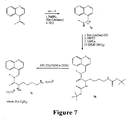
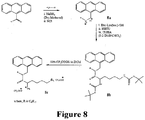
- N -octyl-9-Aminomethylanthracene hydrochloride 8a: 1 H-NMR (CDCl 3 ) ⁇ /ppm: 9.7 (2H), 8.51 (1H), 8.38 (2H), 8.0 (2H), 7.6 (2H), 7.5 (2H), 5.1 (2H), 2.68 (2H), 1.74 (2H), 1.2-1.0 (10H), 0.79 (3H)
- Boc-Lys(Boc)- N -octyl-9-Aminomethylanthracene 1 H-NMR (CDCl 3 ) ⁇ /ppm: 8.5 (1H), 8.2 (2H), 8 (4H), 6.08 (1H), 5.46 (1H), 5.32 (1H), 4.56 (2H) 3.1-2.7 (4H), 1.69-0.75 (39H).
- Salts of these secondary amines are coupled to the free acid group of amino acid [wherein the functional groups of amino acid (apart from carboxylic group) is protected by tertiary butyl carbamate group or Boc] using O -Benzotriazole- N,N,N',N'- tetramethyl-uronium-hexafluorophosphate (HBTU) coupling chemistry. Finally the tertiarybutyl carbamate groups are deprotected using Trifluoroacetic acid to obtain the respective compounds. The compounds obtained are later purified and characterized.
- MIC Minimum Inhibitory Concentration
- Water-soluble ACK, NCK and BCK series of compounds are assayed in a modified micro-dilution broth format. Stock solutions are made by serially diluting the compounds using autoclaved Millipore water. Bacteria, to be tested are grown for about 6 hrs in the suitable media containing ⁇ 10 9 cfu/mL (determined through dilution plate technique by spread plate method), which is then diluted to 10 5 cfu/mL using nutrient media.
- MIC data is recorded by measuring the O.D. value at 600 nm using a Tecan InfinitePro series M200 Microplate Reader. MIC value is determined by taking the average of triplicate O.D. values for each concentration and plotting it against concentration using Origin Pro 8.0 software. The data is then subjected to sigmoidal fitting. From the curve, MIC value is determined, as the point in the curve where the O.D. is similar to that of control having no bacteria. The MIC values and errors of independent experiments are reported as average and standard deviation of triplicates.
- the antimicrobial activities of the compounds of present disclosure are determined against a variety of bacteria by evaluating their Minimum Inhibition Concentrations (MIC).
- MIC Minimum Inhibition Concentrations
- the compounds of ACK series exhibit antimicrobial activity against drug sensitive bacteria and drug resistant bacteria.
- the ACK series are active against S.aureus at a concentration below 11 ⁇ g/ml, wherein ACK-4, ACK-6, ACK-8 and ACK-10 exhibit most effective MIC value of about 5.3 ⁇ g/ml, 2.4 ⁇ g/ml, 2.2 ⁇ g/ml and 7.1 ⁇ g/ml, respectively.
- the compounds of ACK series are active against E.faecium at a concentration below 13.6 ⁇ g/ml, wherein ACK-4, ACK-6, ACK-8 and ACK-10 exhibit most effective MIC value of about 4.5 ⁇ g/ml, 3.3 ⁇ g/ml, 2.5 ⁇ g/ml and 4.9 ⁇ g/ml, respectively.
- the compounds of ACK are active against E.coli at a concentration below 26 ⁇ g/ml, wherein ACK-4, ACK-6 and ACK-8 exhibit most effective MIC value of about 4.8 ⁇ g/ml, 3.5 ⁇ g/ml and 2.9 ⁇ g/ml, respectively.
- the compounds of ACK series are active against P.aeruginosa at a concentration below 11 ⁇ g/ml, wherein ACK-2, ACK-4, ACK-6 and ACK-8 exhibit most effective MIC value of about 4 ⁇ g/ml, 1.9 ⁇ g/ml, 1.6 ⁇ g/ml and 3.8 ⁇ g/ml, respectively.
- the compounds of ACK series are active against methicillin-resistant S.aureus at a concentration below 21 ⁇ g/ml, wherein ACK-4, ACK-6, ACK-8 and ACK-10 exhibit most effective MIC value of about 6.3 ⁇ g/ml, 2.8 ⁇ g/ml, 2.3 ⁇ g/ml and 4.6 ⁇ g/ml, respectively.
- the compounds ACK series are active against vancomycin-resistant E.faecium at a concentration below 7.2 ⁇ g/ml, wherein ACK-4, ACK-6, ACK-8 and ACK-10 exhibit most effective MIC value of about 5.3 ⁇ g/ml, 5.2 ⁇ g/ml, 3 ⁇ g/ml and 5.6 ⁇ g/ml, respectively.
- the ACK series are active against K.pneumonia at a concentration below 31 ⁇ g/ml, wherein ACK-4, ACK-6, ACK-8 and ACK-10 exhibit most effective MIC value of about 17 ⁇ g/ml, 16 ⁇ g/ml, 4.3 ⁇ g/ml and 7.6 ⁇ g/ml, respectively.
- the compounds of NCK series exhibit antimicrobial activity against drug sensitive bacteria and drug resistant bacteria.
- NCK series are active against S.aureus at a concentration below 20 ⁇ g/ml, wherein NCK-8, NCK-10 and NCK-12 exhibit most effective MIC value of about 6.3 ⁇ g/ml, 2.5 ⁇ g/ml and 3 ⁇ g/ml, respectively.
- NCK-8, NCK-10 and NCK-12 exhibit most effective MIC value of about 5.5 ⁇ g/ml, 3.5 ⁇ g/ml and 1.6 ⁇ g/ml, respectively.
- NCK-8, NCK-10 and NCK-12 exhibit most effective MIC value of about 5 ⁇ g/ml, 4 ⁇ g/ml and 3.1 ⁇ g/ml, respectively.
- NCK-6, NCK-8, NCK-10 and NCK-12 exhibit most effective MIC value of about 11 ⁇ g/ml, 5.4 ⁇ g/ml, 3 ⁇ g/ml and 3.2 ⁇ g/ml, respectively.
- NCK-8, NCK-10 and NCK-12 exhibit most effective MIC value of about 4.4 ⁇ g/ml, 2.6 ⁇ g/ml and 2.7 ⁇ g/ml, respectively.
- NCK-8, NCK-10 and NCK-12 exhibit most effective MIC value of about 7 ⁇ g/ml, 1.6 ⁇ g/ml and 3.4 ⁇ g/ml, respectively.
- NCK-8, NCK-10 and NCK-12 exhibit most effective MIC value of about 13 ⁇ g/ml, 5.8 ⁇ g/ml and 4 ⁇ g/ml, respectively.
- the compounds of BCK series exhibit antimicrobial activity against drug sensitive bacteria and drug resistant bacteria.
- the BCK series are active against S.aureus at a concentration below 46 ⁇ g/ml, wherein BCK-10, BCK-12 and BCK-14 exhibit most effective MIC value of about 5.7 ⁇ g/ml, 2.7 ⁇ g/ml and 3.1 ⁇ g/ml, respectively.
- the compounds of BCK series are active against E.faecium at a concentration below 60 ⁇ g/ml, wherein BCK-10, BCK-12 and BCK-14 exhibit most effective MIC value of about 6.5 ⁇ g/ml, 2.6 ⁇ g/ml and 2 ⁇ g/ml, respectively.
- the compounds of BCK series are active against E.coli at a concentration below 51 ⁇ g/ml, wherein BCK-10, BCK-12 and BCK-14 exhibit most effective MIC value of about 6.5 ⁇ g/ml, 5 ⁇ g/ml and 3.1 ⁇ g/ml, respectively.
- the compounds of BCK series are active against P.aeruginosa at a concentration below 60 ⁇ g/ml, wherein BCK-10, BCK-12 and BCK-14 exhibit most effective MIC value of about 4 ⁇ g/ml, 4 ⁇ g/ml and 2.8 ⁇ g/ml, respectively.
- the compounds of BCK series are active against methicillin-resistant S.aureus at a concentration below 100 ⁇ g/ml, wherein BCK-10, BCK-12 and BCK-14 exhibit most effective MIC value of about 15.7 ⁇ g/ml, 2.9 ⁇ g/ml and 2.5 ⁇ g/ml, respectively.
- the compounds of BCK series are active against vancomycin-resistant E.faecium at a concentration below 100 ⁇ g/ml, wherein BCK-10, BCK-12 and BCK-14 exhibit most effective MIC value of about 5.8 ⁇ g/ml, 3.3 ⁇ g/ml and 2.5 ⁇ g/ml, respectively.
- the compounds of BCK series are active against K.pneumonia at a concentration below 100 ⁇ g/ml, wherein BCK-10, BCK-12 and BCK-14 exhibit most effective MIC value of about 31 ⁇ g/ml, 2.8 ⁇ g/ml and 4 ⁇ g/ml, respectively.
- Dec-CK-8 is active against all bacteria at a concentration below 5.6 ⁇ g/ml. It shows best activity against MRSA and E.faecium at a concentration of 3 ⁇ g/ml.
- Erythrocytes are isolated from freshly drawn, heparanized human blood and re-suspended to 5 vol% in PBS (pH 7.4).
- PBS pH 7.4
- 150 ⁇ l of erythrocyte suspension is added to 50 ⁇ l of serially diluted compound.
- Two controls are made, one without compound and other with 50 ⁇ l of 1 vol% solution of Triton X-100.
- the plate is incubated for about 1 hr at a temperature of about 37°C.
- the plate is then centrifuged at 3,500 rpm for about 5 min, 100 ⁇ l of the supernatant from each well is transferred to a fresh microtiter plate, and absorbance at 540nm is measured.
- Percentage of hemolysis is determined as (A - A0)/(Atotal -A0) x 100, where A is the absorbance of the test well, A0 the absorbance of the negative controls (without compound), and A total the absorbance of 100% hemolysis wells (with Triton X-100), when absorbance is read at 540nm.
- Toxicity studies of the compounds are carried out on freshly drawn human RBCs. Toxicity of the antimicrobial compounds of the present disclosure is defined by their HC 50 values illustrated in Table 3, i.e. the concentration of compound at which 50% of the blood cells are lysed. Haemolytic studies conducted herein illustrates that the antimicrobial compounds provided by the instant disclosure are selective towards drug sensitive bacteria and drug resistant bacteria over human RBCs, thus establishing the non-toxicity of the present compounds.
- HC 50 values for the compounds in the ACK series ranges from about 64 ⁇ g/ml to about 118 ⁇ g/ml.
- HC 50 values for the compounds in the NCK series ranges from about 54 ⁇ g/ml to about 508 ⁇ g/ml.
- HCso values for the compounds in the BCK series ranges from about 45 ⁇ g/ml to about 325 ⁇ g/ml.
- HCso values for Dec-CK-8 is 82 ⁇ g/ml.
- Table 3 In-vitro antibacterial and haemolytic activity of the compounds of present disclosure Compounds Minimum Inhibitory Concentration ( ⁇ g mL -1 ) HC 50 ( ⁇ g mL) Drug sensitive bacteria Drug resistant bacteria S . aureus E. faecium E. coli P. aeruginosa MRSA VRE K.
- the present disclosure therefore provides for various compounds (Formula I) and synthesis of the same. Further, from the description above, it is evidently established that the said compounds possess significantly improved antimicrobial properties along with additional advantages such as non-toxicity.
- the said compounds can be used in various pharmaceutical and non-pharmaceutical applications, particularly as agents for use in the treatment of antimicrobial infections as well as microbial biofilms.
Landscapes
- Chemical & Material Sciences (AREA)
- Organic Chemistry (AREA)
- Health & Medical Sciences (AREA)
- Life Sciences & Earth Sciences (AREA)
- Animal Behavior & Ethology (AREA)
- Veterinary Medicine (AREA)
- Public Health (AREA)
- General Health & Medical Sciences (AREA)
- Medicinal Chemistry (AREA)
- Pharmacology & Pharmacy (AREA)
- Chemical Kinetics & Catalysis (AREA)
- Bioinformatics & Cheminformatics (AREA)
- Epidemiology (AREA)
- Proteomics, Peptides & Aminoacids (AREA)
- Immunology (AREA)
- Engineering & Computer Science (AREA)
- Gastroenterology & Hepatology (AREA)
- Nuclear Medicine, Radiotherapy & Molecular Imaging (AREA)
- Oncology (AREA)
- General Chemical & Material Sciences (AREA)
- Communicable Diseases (AREA)
- Pharmaceuticals Containing Other Organic And Inorganic Compounds (AREA)
- Acyclic And Carbocyclic Compounds In Medicinal Compositions (AREA)
- Organic Low-Molecular-Weight Compounds And Preparation Thereof (AREA)
- Medicinal Preparation (AREA)
- Low-Molecular Organic Synthesis Reactions Using Catalysts (AREA)
- Medicines That Contain Protein Lipid Enzymes And Other Medicines (AREA)
- Peptides Or Proteins (AREA)
Applications Claiming Priority (2)
| Application Number | Priority Date | Filing Date | Title |
|---|---|---|---|
| IN5299CH2012 | 2012-12-18 | ||
| PCT/IB2013/061090 WO2014097178A1 (en) | 2012-12-18 | 2013-12-18 | Antimicrobial compounds, their synthesis and applications thereof |
Publications (3)
| Publication Number | Publication Date |
|---|---|
| EP2934563A1 EP2934563A1 (en) | 2015-10-28 |
| EP2934563A4 EP2934563A4 (en) | 2016-08-17 |
| EP2934563B1 true EP2934563B1 (en) | 2020-07-08 |
Family
ID=54148251
Family Applications (1)
| Application Number | Title | Priority Date | Filing Date |
|---|---|---|---|
| EP13865950.3A Active EP2934563B1 (en) | 2012-12-18 | 2013-12-18 | Antimicrobial compounds, their synthesis and applications thereof |
Country Status (9)
| Country | Link |
|---|---|
| US (1) | US9783490B2 (https=) |
| EP (1) | EP2934563B1 (https=) |
| JP (1) | JP6533466B2 (https=) |
| CN (1) | CN104981249B (https=) |
| AU (1) | AU2013365769B2 (https=) |
| BR (1) | BR112015014391B1 (https=) |
| CA (1) | CA2894202A1 (https=) |
| HK (1) | HK1210437A1 (https=) |
| WO (1) | WO2014097178A1 (https=) |
Families Citing this family (3)
| Publication number | Priority date | Publication date | Assignee | Title |
|---|---|---|---|---|
| CN105566149B (zh) * | 2016-03-02 | 2017-05-24 | 郑州大学 | 具有抗菌活性的查尔酮阳离子抗菌肽模拟物及其制备方法 |
| CN106995384B (zh) * | 2017-04-21 | 2018-12-11 | 郑州大学 | 具有抗菌活性的二烷基阳离子两亲性抗菌肽模拟物及其制备方法 |
| EP3724216A1 (en) | 2017-12-15 | 2020-10-21 | Dana Farber Cancer Institute, Inc. | Stabilized peptide-mediated targeted protein degradation |
Family Cites Families (17)
| Publication number | Priority date | Publication date | Assignee | Title |
|---|---|---|---|---|
| DK0610487T3 (da) | 1992-09-03 | 2000-05-15 | Boehringer Ingelheim Pharma | Nye aminosyrederivater, fremgangsmåde til deres fremstilling og farmaceutiske præparater indeholdende disse forbindelser |
| US5654451B1 (en) * | 1993-01-14 | 2000-02-22 | Magainin Pharma | Amino acids and peptides having modified c-terminals and modified n-terminals |
| JPH09507846A (ja) * | 1993-12-30 | 1997-08-12 | スミスクライン・ビーチャム・コーポレイション | フェニルメチルヘキサンアミドおよびその使用 |
| US5663148A (en) | 1994-07-12 | 1997-09-02 | Abbott Laboratories | Anaphylatoxin receptor ligands containing lipophilic residues |
| US6071890A (en) * | 1994-12-09 | 2000-06-06 | Genzyme Corporation | Organ-specific targeting of cationic amphiphile/DNA complexes for gene therapy |
| JP3338452B2 (ja) | 1995-12-12 | 2002-10-28 | 大鵬薬品工業株式会社 | エポキシコハク酸アミド誘導体又はその塩及びこれを含有する医薬 |
| CA2217550A1 (en) * | 1996-10-22 | 1998-04-22 | F. Hoffmann-La Roche Ag | Cationic lipids for gene therapy |
| WO1999031052A1 (fr) * | 1997-12-12 | 1999-06-24 | Fuji Yakuhin Kogyo Kabushiki Kaisha | Nouveaux inhibiteurs de metalloproteinases |
| AU2180201A (en) * | 1999-11-30 | 2001-06-12 | Aventis Pharma S.A. | Hydroxamic acid macrocyclic derivatives, preparation method and compositions containing same |
| JP2002161084A (ja) * | 2000-11-28 | 2002-06-04 | Sumitomo Pharmaceut Co Ltd | 複素環誘導体 |
| US7393836B2 (en) | 2004-07-06 | 2008-07-01 | Boehringer Ingelheim International Gmbh | D-xylopyranosyl-substituted phenyl derivatives, medicaments containing such compounds, their use and process for their manufacture |
| GB0512751D0 (en) * | 2005-06-22 | 2005-07-27 | Glaxo Group Ltd | New adjuvant |
| EP2019819A4 (en) * | 2006-05-09 | 2011-01-19 | Neobiotics Ab | INNOVATIVE PEPTIDE DERIVATIVES AS ANTIMICROBIAL AGENTS FOR THE TREATMENT OF INJURIES |
| SG175573A1 (en) * | 2006-10-04 | 2011-11-28 | Inimex Pharmaceuticals Inc | Novel peptides for treating and preventing immune-related disorders, including treating and preventing infection by modulating innate immunity |
| JP2010512417A (ja) * | 2006-12-11 | 2010-04-22 | ワイス エルエルシー | イオンチャネルモジュレータ− |
| CN102757477B (zh) * | 2011-04-27 | 2014-09-03 | 首都医科大学 | 烯丙基半胱氨酰氨基酸甲酯衍生物及其合成方法和应用 |
| DK2709619T3 (en) * | 2011-05-16 | 2018-01-15 | Cellceutix Corp | RELATIONSHIPS FOR USING THE TREATMENT OF MUCOSITIS |
-
2013
- 2013-12-18 US US14/652,714 patent/US9783490B2/en not_active Expired - Fee Related
- 2013-12-18 AU AU2013365769A patent/AU2013365769B2/en not_active Ceased
- 2013-12-18 WO PCT/IB2013/061090 patent/WO2014097178A1/en not_active Ceased
- 2013-12-18 BR BR112015014391-1A patent/BR112015014391B1/pt not_active IP Right Cessation
- 2013-12-18 EP EP13865950.3A patent/EP2934563B1/en active Active
- 2013-12-18 JP JP2015548841A patent/JP6533466B2/ja not_active Expired - Fee Related
- 2013-12-18 HK HK15111327.4A patent/HK1210437A1/xx unknown
- 2013-12-18 CN CN201380070984.4A patent/CN104981249B/zh not_active Expired - Fee Related
- 2013-12-18 CA CA2894202A patent/CA2894202A1/en not_active Abandoned
Non-Patent Citations (1)
| Title |
|---|
| None * |
Also Published As
| Publication number | Publication date |
|---|---|
| US20150329478A1 (en) | 2015-11-19 |
| BR112015014391A2 (pt) | 2017-07-11 |
| HK1210437A1 (en) | 2016-04-22 |
| US9783490B2 (en) | 2017-10-10 |
| BR112015014391B1 (pt) | 2020-11-03 |
| AU2013365769B2 (en) | 2018-03-15 |
| EP2934563A1 (en) | 2015-10-28 |
| WO2014097178A1 (en) | 2014-06-26 |
| JP6533466B2 (ja) | 2019-06-19 |
| AU2013365769A1 (en) | 2015-07-02 |
| CN104981249B (zh) | 2018-06-19 |
| JP2016504330A (ja) | 2016-02-12 |
| CA2894202A1 (en) | 2014-06-26 |
| CN104981249A (zh) | 2015-10-14 |
| EP2934563A4 (en) | 2016-08-17 |
Similar Documents
| Publication | Publication Date | Title |
|---|---|---|
| US11325955B2 (en) | Stabilized anti-microbial peptides for the treatment of antibiotic-resistant bacterial infections | |
| US6858581B2 (en) | Chemically-modified peptides, compositions, and methods of production and use | |
| Ma et al. | Potent antibacterial activity of MSI-1 derived from the magainin 2 peptide against drug-resistant bacteria | |
| US20250277002A1 (en) | Engineered antimicrobial amphiphilic peptides and methods of use | |
| AU2025202864A1 (en) | Treatment of implants with engineered antimicrobial amphiphilic peptides | |
| EP2934563B1 (en) | Antimicrobial compounds, their synthesis and applications thereof | |
| KR20170052613A (ko) | 효모/곰팡이에 의해 유발되는 감염을 치료하기 위한 시스테아민의 사용 | |
| EP2766031B1 (en) | Antimicrobial peptides for treatment of infectious diseases | |
| US11180452B2 (en) | Methods and compositions for selectively inhibiting pathogenic microbes | |
| US20240115654A1 (en) | Intravenous administration of engineered antimicrobial amphiphilic peptides | |
| AU2012338461A1 (en) | Cationic antibacterial composition | |
| JP2017530088A (ja) | 抗微生物性ペプチド、その医薬組成物および使用方法 | |
| CN106470674A (zh) | 肽和其用途 | |
| CN121975017A (en) | Mouthwash capable of effectively inhibiting helicobacter pylori and preparation method thereof |
Legal Events
| Date | Code | Title | Description |
|---|---|---|---|
| PUAI | Public reference made under article 153(3) epc to a published international application that has entered the european phase |
Free format text: ORIGINAL CODE: 0009012 |
|
| 17P | Request for examination filed |
Effective date: 20150717 |
|
| AK | Designated contracting states |
Kind code of ref document: A1 Designated state(s): AL AT BE BG CH CY CZ DE DK EE ES FI FR GB GR HR HU IE IS IT LI LT LU LV MC MK MT NL NO PL PT RO RS SE SI SK SM TR |
|
| AX | Request for extension of the european patent |
Extension state: BA ME |
|
| DAX | Request for extension of the european patent (deleted) | ||
| REG | Reference to a national code |
Ref country code: HK Ref legal event code: DE Ref document number: 1210437 Country of ref document: HK |
|
| A4 | Supplementary search report drawn up and despatched |
Effective date: 20160719 |
|
| RIC1 | Information provided on ipc code assigned before grant |
Ipc: C07C 237/06 20060101ALI20160713BHEP Ipc: A61K 38/05 20060101AFI20160713BHEP Ipc: C07C 231/12 20060101ALI20160713BHEP Ipc: C07D 215/12 20060101ALI20160713BHEP |
|
| STAA | Information on the status of an ep patent application or granted ep patent |
Free format text: STATUS: EXAMINATION IS IN PROGRESS |
|
| 17Q | First examination report despatched |
Effective date: 20180103 |
|
| GRAP | Despatch of communication of intention to grant a patent |
Free format text: ORIGINAL CODE: EPIDOSNIGR1 |
|
| STAA | Information on the status of an ep patent application or granted ep patent |
Free format text: STATUS: GRANT OF PATENT IS INTENDED |
|
| GRAJ | Information related to disapproval of communication of intention to grant by the applicant or resumption of examination proceedings by the epo deleted |
Free format text: ORIGINAL CODE: EPIDOSDIGR1 |
|
| GRAP | Despatch of communication of intention to grant a patent |
Free format text: ORIGINAL CODE: EPIDOSNIGR1 |
|
| INTG | Intention to grant announced |
Effective date: 20190823 |
|
| INTG | Intention to grant announced |
Effective date: 20190904 |
|
| GRAS | Grant fee paid |
Free format text: ORIGINAL CODE: EPIDOSNIGR3 |
|
| RAP1 | Party data changed (applicant data changed or rights of an application transferred) |
Owner name: SECRETARY OF STATE FOR HEALTH AND SOCIAL CARE Owner name: JAWAHARLAL NEHRU CENTRE FOR ADVANCED SCIENTIFIC RESEARCH |
|
| GRAA | (expected) grant |
Free format text: ORIGINAL CODE: 0009210 |
|
| STAA | Information on the status of an ep patent application or granted ep patent |
Free format text: STATUS: THE PATENT HAS BEEN GRANTED |
|
| AK | Designated contracting states |
Kind code of ref document: B1 Designated state(s): AL AT BE BG CH CY CZ DE DK EE ES FI FR GB GR HR HU IE IS IT LI LT LU LV MC MK MT NL NO PL PT RO RS SE SI SK SM TR |
|
| REG | Reference to a national code |
Ref country code: AT Ref legal event code: REF Ref document number: 1287719 Country of ref document: AT Kind code of ref document: T Effective date: 20200715 Ref country code: CH Ref legal event code: EP |
|
| REG | Reference to a national code |
Ref country code: DE Ref legal event code: R096 Ref document number: 602013070592 Country of ref document: DE |
|
| REG | Reference to a national code |
Ref country code: IE Ref legal event code: FG4D |
|
| REG | Reference to a national code |
Ref country code: LT Ref legal event code: MG4D |
|
| REG | Reference to a national code |
Ref country code: AT Ref legal event code: MK05 Ref document number: 1287719 Country of ref document: AT Kind code of ref document: T Effective date: 20200708 |
|
| REG | Reference to a national code |
Ref country code: NL Ref legal event code: MP Effective date: 20200708 |
|
| REG | Reference to a national code |
Ref country code: DE Ref legal event code: R082 Ref document number: 602013070592 Country of ref document: DE Representative=s name: MATHYS & SQUIRE EUROPE PATENTANWAELTE PARTNERS, DE Ref country code: DE Ref legal event code: R082 Ref document number: 602013070592 Country of ref document: DE Representative=s name: MATHYS & SQUIRE GBR, DE |
|
| PG25 | Lapsed in a contracting state [announced via postgrant information from national office to epo] |
Ref country code: HR Free format text: LAPSE BECAUSE OF FAILURE TO SUBMIT A TRANSLATION OF THE DESCRIPTION OR TO PAY THE FEE WITHIN THE PRESCRIBED TIME-LIMIT Effective date: 20200708 Ref country code: ES Free format text: LAPSE BECAUSE OF FAILURE TO SUBMIT A TRANSLATION OF THE DESCRIPTION OR TO PAY THE FEE WITHIN THE PRESCRIBED TIME-LIMIT Effective date: 20200708 Ref country code: AT Free format text: LAPSE BECAUSE OF FAILURE TO SUBMIT A TRANSLATION OF THE DESCRIPTION OR TO PAY THE FEE WITHIN THE PRESCRIBED TIME-LIMIT Effective date: 20200708 Ref country code: NO Free format text: LAPSE BECAUSE OF FAILURE TO SUBMIT A TRANSLATION OF THE DESCRIPTION OR TO PAY THE FEE WITHIN THE PRESCRIBED TIME-LIMIT Effective date: 20201008 Ref country code: GR Free format text: LAPSE BECAUSE OF FAILURE TO SUBMIT A TRANSLATION OF THE DESCRIPTION OR TO PAY THE FEE WITHIN THE PRESCRIBED TIME-LIMIT Effective date: 20201009 Ref country code: FI Free format text: LAPSE BECAUSE OF FAILURE TO SUBMIT A TRANSLATION OF THE DESCRIPTION OR TO PAY THE FEE WITHIN THE PRESCRIBED TIME-LIMIT Effective date: 20200708 Ref country code: SE Free format text: LAPSE BECAUSE OF FAILURE TO SUBMIT A TRANSLATION OF THE DESCRIPTION OR TO PAY THE FEE WITHIN THE PRESCRIBED TIME-LIMIT Effective date: 20200708 Ref country code: BG Free format text: LAPSE BECAUSE OF FAILURE TO SUBMIT A TRANSLATION OF THE DESCRIPTION OR TO PAY THE FEE WITHIN THE PRESCRIBED TIME-LIMIT Effective date: 20201008 Ref country code: LT Free format text: LAPSE BECAUSE OF FAILURE TO SUBMIT A TRANSLATION OF THE DESCRIPTION OR TO PAY THE FEE WITHIN THE PRESCRIBED TIME-LIMIT Effective date: 20200708 Ref country code: PT Free format text: LAPSE BECAUSE OF FAILURE TO SUBMIT A TRANSLATION OF THE DESCRIPTION OR TO PAY THE FEE WITHIN THE PRESCRIBED TIME-LIMIT Effective date: 20201109 |
|
| PG25 | Lapsed in a contracting state [announced via postgrant information from national office to epo] |
Ref country code: IS Free format text: LAPSE BECAUSE OF FAILURE TO SUBMIT A TRANSLATION OF THE DESCRIPTION OR TO PAY THE FEE WITHIN THE PRESCRIBED TIME-LIMIT Effective date: 20201108 Ref country code: PL Free format text: LAPSE BECAUSE OF FAILURE TO SUBMIT A TRANSLATION OF THE DESCRIPTION OR TO PAY THE FEE WITHIN THE PRESCRIBED TIME-LIMIT Effective date: 20200708 Ref country code: RS Free format text: LAPSE BECAUSE OF FAILURE TO SUBMIT A TRANSLATION OF THE DESCRIPTION OR TO PAY THE FEE WITHIN THE PRESCRIBED TIME-LIMIT Effective date: 20200708 Ref country code: LV Free format text: LAPSE BECAUSE OF FAILURE TO SUBMIT A TRANSLATION OF THE DESCRIPTION OR TO PAY THE FEE WITHIN THE PRESCRIBED TIME-LIMIT Effective date: 20200708 |
|
| PG25 | Lapsed in a contracting state [announced via postgrant information from national office to epo] |
Ref country code: NL Free format text: LAPSE BECAUSE OF FAILURE TO SUBMIT A TRANSLATION OF THE DESCRIPTION OR TO PAY THE FEE WITHIN THE PRESCRIBED TIME-LIMIT Effective date: 20200708 |
|
| REG | Reference to a national code |
Ref country code: DE Ref legal event code: R097 Ref document number: 602013070592 Country of ref document: DE |
|
| PG25 | Lapsed in a contracting state [announced via postgrant information from national office to epo] |
Ref country code: SM Free format text: LAPSE BECAUSE OF FAILURE TO SUBMIT A TRANSLATION OF THE DESCRIPTION OR TO PAY THE FEE WITHIN THE PRESCRIBED TIME-LIMIT Effective date: 20200708 Ref country code: RO Free format text: LAPSE BECAUSE OF FAILURE TO SUBMIT A TRANSLATION OF THE DESCRIPTION OR TO PAY THE FEE WITHIN THE PRESCRIBED TIME-LIMIT Effective date: 20200708 Ref country code: DK Free format text: LAPSE BECAUSE OF FAILURE TO SUBMIT A TRANSLATION OF THE DESCRIPTION OR TO PAY THE FEE WITHIN THE PRESCRIBED TIME-LIMIT Effective date: 20200708 Ref country code: CZ Free format text: LAPSE BECAUSE OF FAILURE TO SUBMIT A TRANSLATION OF THE DESCRIPTION OR TO PAY THE FEE WITHIN THE PRESCRIBED TIME-LIMIT Effective date: 20200708 Ref country code: EE Free format text: LAPSE BECAUSE OF FAILURE TO SUBMIT A TRANSLATION OF THE DESCRIPTION OR TO PAY THE FEE WITHIN THE PRESCRIBED TIME-LIMIT Effective date: 20200708 Ref country code: IT Free format text: LAPSE BECAUSE OF FAILURE TO SUBMIT A TRANSLATION OF THE DESCRIPTION OR TO PAY THE FEE WITHIN THE PRESCRIBED TIME-LIMIT Effective date: 20200708 |
|
| PLBE | No opposition filed within time limit |
Free format text: ORIGINAL CODE: 0009261 |
|
| STAA | Information on the status of an ep patent application or granted ep patent |
Free format text: STATUS: NO OPPOSITION FILED WITHIN TIME LIMIT |
|
| PG25 | Lapsed in a contracting state [announced via postgrant information from national office to epo] |
Ref country code: AL Free format text: LAPSE BECAUSE OF FAILURE TO SUBMIT A TRANSLATION OF THE DESCRIPTION OR TO PAY THE FEE WITHIN THE PRESCRIBED TIME-LIMIT Effective date: 20200708 |
|
| 26N | No opposition filed |
Effective date: 20210409 |
|
| PG25 | Lapsed in a contracting state [announced via postgrant information from national office to epo] |
Ref country code: SK Free format text: LAPSE BECAUSE OF FAILURE TO SUBMIT A TRANSLATION OF THE DESCRIPTION OR TO PAY THE FEE WITHIN THE PRESCRIBED TIME-LIMIT Effective date: 20200708 |
|
| REG | Reference to a national code |
Ref country code: CH Ref legal event code: PL |
|
| PG25 | Lapsed in a contracting state [announced via postgrant information from national office to epo] |
Ref country code: SI Free format text: LAPSE BECAUSE OF FAILURE TO SUBMIT A TRANSLATION OF THE DESCRIPTION OR TO PAY THE FEE WITHIN THE PRESCRIBED TIME-LIMIT Effective date: 20200708 Ref country code: MC Free format text: LAPSE BECAUSE OF FAILURE TO SUBMIT A TRANSLATION OF THE DESCRIPTION OR TO PAY THE FEE WITHIN THE PRESCRIBED TIME-LIMIT Effective date: 20200708 |
|
| REG | Reference to a national code |
Ref country code: BE Ref legal event code: MM Effective date: 20201231 |
|
| PG25 | Lapsed in a contracting state [announced via postgrant information from national office to epo] |
Ref country code: IE Free format text: LAPSE BECAUSE OF NON-PAYMENT OF DUE FEES Effective date: 20201218 Ref country code: FR Free format text: LAPSE BECAUSE OF NON-PAYMENT OF DUE FEES Effective date: 20201231 Ref country code: LU Free format text: LAPSE BECAUSE OF NON-PAYMENT OF DUE FEES Effective date: 20201218 |
|
| PG25 | Lapsed in a contracting state [announced via postgrant information from national office to epo] |
Ref country code: CH Free format text: LAPSE BECAUSE OF NON-PAYMENT OF DUE FEES Effective date: 20201231 Ref country code: LI Free format text: LAPSE BECAUSE OF NON-PAYMENT OF DUE FEES Effective date: 20201231 |
|
| PG25 | Lapsed in a contracting state [announced via postgrant information from national office to epo] |
Ref country code: TR Free format text: LAPSE BECAUSE OF FAILURE TO SUBMIT A TRANSLATION OF THE DESCRIPTION OR TO PAY THE FEE WITHIN THE PRESCRIBED TIME-LIMIT Effective date: 20200708 Ref country code: MT Free format text: LAPSE BECAUSE OF FAILURE TO SUBMIT A TRANSLATION OF THE DESCRIPTION OR TO PAY THE FEE WITHIN THE PRESCRIBED TIME-LIMIT Effective date: 20200708 Ref country code: CY Free format text: LAPSE BECAUSE OF FAILURE TO SUBMIT A TRANSLATION OF THE DESCRIPTION OR TO PAY THE FEE WITHIN THE PRESCRIBED TIME-LIMIT Effective date: 20200708 |
|
| PG25 | Lapsed in a contracting state [announced via postgrant information from national office to epo] |
Ref country code: MK Free format text: LAPSE BECAUSE OF FAILURE TO SUBMIT A TRANSLATION OF THE DESCRIPTION OR TO PAY THE FEE WITHIN THE PRESCRIBED TIME-LIMIT Effective date: 20200708 |
|
| REG | Reference to a national code |
Ref country code: HK Ref legal event code: WD Ref document number: 1210437 Country of ref document: HK |
|
| PG25 | Lapsed in a contracting state [announced via postgrant information from national office to epo] |
Ref country code: BE Free format text: LAPSE BECAUSE OF NON-PAYMENT OF DUE FEES Effective date: 20201231 |
|
| PGFP | Annual fee paid to national office [announced via postgrant information from national office to epo] |
Ref country code: GB Payment date: 20221220 Year of fee payment: 10 |
|
| PGFP | Annual fee paid to national office [announced via postgrant information from national office to epo] |
Ref country code: DE Payment date: 20221221 Year of fee payment: 10 |
|
| REG | Reference to a national code |
Ref country code: DE Ref legal event code: R119 Ref document number: 602013070592 Country of ref document: DE |
|
| GBPC | Gb: european patent ceased through non-payment of renewal fee |
Effective date: 20231218 |
|
| PG25 | Lapsed in a contracting state [announced via postgrant information from national office to epo] |
Ref country code: DE Free format text: LAPSE BECAUSE OF NON-PAYMENT OF DUE FEES Effective date: 20240702 |
|
| PG25 | Lapsed in a contracting state [announced via postgrant information from national office to epo] |
Ref country code: GB Free format text: LAPSE BECAUSE OF NON-PAYMENT OF DUE FEES Effective date: 20231218 |
|
| PG25 | Lapsed in a contracting state [announced via postgrant information from national office to epo] |
Ref country code: GB Free format text: LAPSE BECAUSE OF NON-PAYMENT OF DUE FEES Effective date: 20231218 Ref country code: DE Free format text: LAPSE BECAUSE OF NON-PAYMENT OF DUE FEES Effective date: 20240702 |