EP2934473B1 - Reinigungszubereitungen mit peelingeffekt auf der basis von wasserlöslichen bestandteilen in kristalliner form - Google Patents
Reinigungszubereitungen mit peelingeffekt auf der basis von wasserlöslichen bestandteilen in kristalliner form Download PDFInfo
- Publication number
- EP2934473B1 EP2934473B1 EP13811397.2A EP13811397A EP2934473B1 EP 2934473 B1 EP2934473 B1 EP 2934473B1 EP 13811397 A EP13811397 A EP 13811397A EP 2934473 B1 EP2934473 B1 EP 2934473B1
- Authority
- EP
- European Patent Office
- Prior art keywords
- weight
- cleansing
- preparation
- preparations
- water
- Prior art date
- Legal status (The legal status is an assumption and is not a legal conclusion. Google has not performed a legal analysis and makes no representation as to the accuracy of the status listed.)
- Active
Links
Images

Classifications
-
- A—HUMAN NECESSITIES
- A61—MEDICAL OR VETERINARY SCIENCE; HYGIENE
- A61K—PREPARATIONS FOR MEDICAL, DENTAL OR TOILETRY PURPOSES
- A61K8/00—Cosmetics or similar toiletry preparations
- A61K8/18—Cosmetics or similar toiletry preparations characterised by the composition
- A61K8/72—Cosmetics or similar toiletry preparations characterised by the composition containing organic macromolecular compounds
- A61K8/81—Cosmetics or similar toiletry preparations characterised by the composition containing organic macromolecular compounds obtained by reactions involving only carbon-to-carbon unsaturated bonds
- A61K8/817—Compositions of homopolymers or copolymers of compounds having one or more unsaturated aliphatic radicals, each having only one carbon-to-carbon double bond, and at least one being terminated by a single or double bond to nitrogen or by a heterocyclic ring containing nitrogen; Compositions or derivatives of such polymers, e.g. vinylimidazol, vinylcaprolactame, allylamines (Polyquaternium 6)
- A61K8/8182—Copolymers of vinyl-pyrrolidones. Compositions of derivatives of such polymers
-
- A—HUMAN NECESSITIES
- A61—MEDICAL OR VETERINARY SCIENCE; HYGIENE
- A61K—PREPARATIONS FOR MEDICAL, DENTAL OR TOILETRY PURPOSES
- A61K8/00—Cosmetics or similar toiletry preparations
- A61K8/18—Cosmetics or similar toiletry preparations characterised by the composition
- A61K8/19—Cosmetics or similar toiletry preparations characterised by the composition containing inorganic ingredients
- A61K8/20—Halogens; Compounds thereof
-
- A—HUMAN NECESSITIES
- A61—MEDICAL OR VETERINARY SCIENCE; HYGIENE
- A61K—PREPARATIONS FOR MEDICAL, DENTAL OR TOILETRY PURPOSES
- A61K8/00—Cosmetics or similar toiletry preparations
- A61K8/18—Cosmetics or similar toiletry preparations characterised by the composition
- A61K8/30—Cosmetics or similar toiletry preparations characterised by the composition containing organic compounds
- A61K8/60—Sugars; Derivatives thereof
-
- A—HUMAN NECESSITIES
- A61—MEDICAL OR VETERINARY SCIENCE; HYGIENE
- A61K—PREPARATIONS FOR MEDICAL, DENTAL OR TOILETRY PURPOSES
- A61K8/00—Cosmetics or similar toiletry preparations
- A61K8/18—Cosmetics or similar toiletry preparations characterised by the composition
- A61K8/72—Cosmetics or similar toiletry preparations characterised by the composition containing organic macromolecular compounds
- A61K8/73—Polysaccharides
-
- A—HUMAN NECESSITIES
- A61—MEDICAL OR VETERINARY SCIENCE; HYGIENE
- A61K—PREPARATIONS FOR MEDICAL, DENTAL OR TOILETRY PURPOSES
- A61K8/00—Cosmetics or similar toiletry preparations
- A61K8/18—Cosmetics or similar toiletry preparations characterised by the composition
- A61K8/72—Cosmetics or similar toiletry preparations characterised by the composition containing organic macromolecular compounds
- A61K8/81—Cosmetics or similar toiletry preparations characterised by the composition containing organic macromolecular compounds obtained by reactions involving only carbon-to-carbon unsaturated bonds
- A61K8/8141—Compositions of homopolymers or copolymers of compounds having one or more unsaturated aliphatic radicals, each having only one carbon-to-carbon double bond, and at least one being terminated by only one carboxyl radical, or of salts, anhydrides, esters, amides, imides or nitriles thereof; Compositions of derivatives of such polymers
- A61K8/8152—Homopolymers or copolymers of esters, e.g. (meth)acrylic acid esters; Compositions of derivatives of such polymers
-
- A—HUMAN NECESSITIES
- A61—MEDICAL OR VETERINARY SCIENCE; HYGIENE
- A61Q—SPECIFIC USE OF COSMETICS OR SIMILAR TOILETRY PREPARATIONS
- A61Q19/00—Preparations for care of the skin
- A61Q19/10—Washing or bathing preparations
-
- A—HUMAN NECESSITIES
- A61—MEDICAL OR VETERINARY SCIENCE; HYGIENE
- A61K—PREPARATIONS FOR MEDICAL, DENTAL OR TOILETRY PURPOSES
- A61K2800/00—Properties of cosmetic compositions or active ingredients thereof or formulation aids used therein and process related aspects
- A61K2800/20—Chemical, physico-chemical or functional or structural properties of the composition as a whole
- A61K2800/28—Rubbing or scrubbing compositions; Peeling or abrasive compositions; Containing exfoliants
Definitions
- the present invention describes cosmetic cleansing preparations which, in addition to surfactants, contain water-soluble constituents in dissolved and crystalline form, which are stably distributed in the preparation by polymeric structurants.
- the crystalline forms of these water-soluble components, which act as peeling particles, are stabilized by the addition of polyols in their shape and / or size.
- Peeling is a cosmetic or dermatological treatment that removes the superficial layers of the skin.
- the uppermost horny layer of the skin is removed mechanically or chemically.
- Chemical exfoliation uses fruit acids, lipo-hydroxy acid, trichloroacetic acids, phenolic compounds and vitamin A acid.
- the first two classes of compounds are suitable for superficial peeling.
- exfoliating particles which are of natural origin, have good biodegradability and moreover have comparable skin tolerance and active power as the synthetic-based exfoliating particles, in particular polyethylene-based. It has been found that sugar crystals have a good peeling effect and are skin-compatible. In addition, these crystals dissolve in use, i. when rinsing with water largely on.
- Most structured surfactant systems contain electrolytes, surfactants, and water to hold solid particles in suspension.
- the document EP 1203068 discloses a surfactant system with extended lamellar phases which is formed from surfactants, water and structurants, which may be a water-soluble carbohydrate or also an electrolyte. Such a surfactant system is capable of stably suspending particles.
- WO 2008/023145 discloses structured surfactant systems used for skin exfoliation.
- the skin shedding is done by solid Sugar particles that are added to a saturated solution of sugar along with sufficient surfactant.
- electrolytes are disclosed.
- the object on which the present invention is based is first of all to provide cosmetic cleaning preparations with stably suspended particles, in particular peeling particles, whose composition contains components which are easy to formulate and whose preparation is effected in a simple manner.
- the substances having an exfoliating effect in particular carbohydrate crystals, are distributed homogeneously in the preparation and remain so.
- Another object of the present invention is to provide stable preparations.
- stable means that there is no detectable phase separation within the preparation over a relatively long period of time and that no appreciable amounts of particles, in particular particles of sugar crystals, settle in the preparation at the bottom of the packaging unit. Longer period means more than two months.
- cleaning preparations should be made available which show comparable product performances, for example exfoliating action, in the case of a reduced amount of sugar, such as preparations with a higher sugar content.
- the objects could be surprisingly solved by those skilled in the art by the provision of cosmetic cleaning preparations containing surfactants, water-soluble ingredients in dissolved and undissolved form and polymeric structurants.
- the water-soluble constituents in undissolved form are completely or at least predominantly in solid and / or crystalline form.
- preparations which do not contain a structured surfactant system.
- anionic and / or amphoteric and / or cationic and / or nonionic surfactants are present in the preparations according to the invention.
- the content of surfactants in the preparations according to the invention is preferably 1 to 12 wt .-%, particularly preferably 2 to 9 wt .-%, based on the total weight of the preparation.
- the surfactant contents in the preparations according to the invention can be in the range from 0.1 to 10% by weight. These are areas where no structured surfactant systems are formed.
- preparations having a surfactant content of> 10 to 15% by weight, based on the total weight of the preparation, which do not have a structured surfactant system are also according to the invention.
- cosmetic cleaning preparations with water-soluble constituents are in dissolved and solid and / or crystalline form, if these are carbohydrates.
- the carbohydrates which can be used according to the invention can be, for example, saccharides, such as mono-, di-, oligo- or polysaccharides.
- Mono- or disaccharides may be, for example, sucrose, glucose or fructose, with sucrose being preferred. It is preferred to use in each case a carbohydrate, in particular a sugar, in the preparations according to the invention. However, mixtures are also conceivable.
- the total carbohydrate content is 10 to 90% by weight, preferably 15 to 80% by weight, particularly preferably 20 to 70% by weight, based on the total weight of the preparation.
- the polymeric structurants are cross-linked copolymers, with acrylate / C10-30 acrylic acrylate cross-polymer and copolymers of vinylpyrrolidone and acrylic acid being particularly preferred.
- Acrylate / C10-30 Acrylacrylate Crosspolymer and copolymers of vinylpyrrolidone and acrylic acid can be used in the preparations according to the invention individually or in combination. The respective embodiments lead to extremely satisfactory cleaning preparations.
- the content of polymeric Strukturanten is 0.05 to 3.0%, preferably 0.1 to 2.0 wt .-%, based on the total weight of the preparation.
- xanthan gum with a content of 0.05 to 0.8% by weight, preferably 0.1 to 0.5% by weight.
- polymeric structurants for inhibiting the sedimentation tendency of carbohydrate crystals in carbohydrate and surfactant-containing cosmetic cleansing preparations.
- Advantageous according to the invention is the use of polymeric structurants for inhibiting the sedimentation tendency of sugar crystals in sugar-saturated, surfactant-containing cosmetic cleansing preparations.
- a process for inhibiting the sedimentation tendency of carbohydrate crystals in carbohydrate-saturated, surfactant-containing cleaning preparations is also characterized in that polymeric structurants, preferably crosslinked copolymers of vinylpyrrolidone and acrylic acid, are added to the preparation.
- cleaning formulations comprising surfactants, water and water-soluble constituents in dissolved and crystalline form are present as water-soluble constituents of sugar, part of which is in the form of sugar crystals, and wherein the crystals are homogeneous and stable through the use of polymeric structurants are distributed in the preparation and are stabilized in size and shape by polyols with a content ⁇ 15 wt .-%, based on the total weight of the preparation.
- Cleaning preparations containing polyols with a content ⁇ 15 wt .-% are hereinafter referred to as preparations containing crystal stabilizing polyols.
- the sugars are mono- and / or di- and / or oligosaccharides, with sucrose being particularly preferred.
- the sugars are present in the preparations at a level of from 10 to 90% by weight, preferably from 15 to 80% by weight, particularly preferably from 20 to 70% by weight, based on the total weight of the preparation.
- the polymeric structuring agents are selected from the group of cellulose ethers, polyacrylates and polyacrylate copolymers. More preferred are polyacrylate copolymers, with acrylic acid / VP crosspolymer, acrylate copolymer and acrylate crosspolymer-4 being particularly preferred. Most preferred is the Acrylic Acid / VP Crosspolymer.
- the content of polymeric structurant is 0.05 to 3.0% by weight, preferably 0.1 to 2.0% by weight, based on the total weight of the preparation.
- preparations according to the invention contain xanthan gum at a content of 0.05 to 0.8% by weight, preferably 0.1 to 0.5% by weight.
- the surfactants are a combination of anionic and nonionic surfactants. Particular preference is given to anionic and / or nonionic surfactants which have an alkyl group with a chain length of 10-16 C atoms, in particular of 12-14 C atoms. It is even more preferred that the anionic and / or nonionic surfactants have alkyl groups characteristic of alkyl groups derived from the work-up of coconut oil to surfactants.
- the anionic surfactants are selected from the group alkyl sulfates, acyl glutamates, alkyl sulfonates, alkyl sulfosuccinates and acyl sarcosinates, alkyl sulfates are particularly advantageous.
- the nonionic surfactants are alkylglucosides.
- the anionic surfactants are alkyl sulfates and the nonionic surfactants are alkyl glucosides.
- the surfactant content in the preparations containing crystal-stabilizing polyols is 0.1 to 10 wt .-%, preferably 0.5 to 8.0 wt .-%, based on the active content and the total weight of the preparation.
- the polyols are selected from the group of glycerol and propylene glycol. It is according to the invention that glycerol and propylene glycol are contained in the cleaning preparations. It is preferred that glycerine is included in the cleaning preparations as polyol.
- the content of polyols is 15-50 wt .-%, preferably 25- 40 wt .-%, based on the total weight of the preparation.
- the use of polymeric structurants for inhibiting the sedimentation tendency of carbohydrate crystals in carbohydrate and surfactant-containing cosmetic cleansing preparations comprises surfactants, water and water-soluble constituents in dissolved and crystalline form, the water-soluble constituents being sugar, part of which is in the form of sugar crystals, and the crystals being homogeneous and stable through the use of polymeric structurants are distributed in the preparation and stabilized by polyols in size and shape.
- polyols preferably polyols selected as propylene glycol and / or glycerol, with a content of 15-50 wt .-%, in particular 25-40 wt .-% to stabilize the size and shape of sugar crystals in cleaning preparations
- the cleaning preparations comprise surfactants, water and water-soluble constituents in dissolved and crystalline form, wherein the water-soluble constituent is sugar, part of which is in the form of sugar crystals, and wherein the crystals are homogeneous and stable through the use of polymeric structurants are distributed in the preparation and stabilized by polyols in size and shape.
- the cleaning preparations contain sucrose as water-soluble constituents.
- polyols preferably polyols selected as propylene glycol and / or glycerol, with a content of 15 to 50 wt .-%, in particular 25 to 40 wt .-% for inhibiting the crystal growth of sugar crystals in cleaning preparations.
- the cleaning preparations surfactants, water and water-soluble ingredients in dissolved and crystalline form, wherein the water-soluble ingredient is sugar, part of which is in the form of sugar salt crystals, and wherein the crystals are homogeneously and stably distributed in the preparation through the use of polymeric structurants and stabilized by polyols in size and shape become.
- the cleaning preparations contain sucrose as water-soluble constituents.
- a cosmetic, non-therapeutic method for abrasive skin cleansing wherein in a first step, cleaning preparations comprising surfactants, water and water-soluble ingredients in dissolved and crystalline form, wherein as a water-soluble ingredient sugar, part of which each in the form of sugar crystals is present, and wherein the crystals are distributed homogeneously and stably in the preparation by the use of polymeric structurants and stabilized by polyols in size and shape are applied to the skin and distributed and rinsed in a second step.
- the cleaning preparations contain sucrose as water-soluble constituents.
- Also according to the invention is a cosmetic, non-therapeutic method for skin freshening, wherein in a first step cleaning preparations comprising surfactants, water and water-soluble ingredients in dissolved and crystalline form, wherein as a water-soluble ingredient sugar, part of which is in the form of sugar crystals, and wherein the crystals are distributed homogeneously and stably in the preparation by the use of polymeric structurants and are stabilized by polyols in their size and shape are applied to the skin and distributed and rinsed in a second step. It is preferred that the cleaning preparations contain sucrose as water-soluble constituents.
- structureant polymeric structurant
- structure-builder gelling agent
- structurant polymeric thickener
- the polymeric structurants used make it possible to provide cosmetic preparations which contain particles which are and remain homogeneously suspended.
- the polymeric structurants are used in particular for inhibiting the sedimentation tendency of carbohydrate crystals in carbohydrate-saturated, surfactant-containing cosmetic cleansing preparations.
- the preparations according to the invention are distinguished by a simple and safe preparation.
- the peeling particles are homogeneously distributed in the preparation and remain so. Furthermore, the preparations can be easily removed from the appropriate packaging. They have a correspondingly good flow behavior.
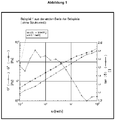
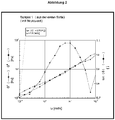
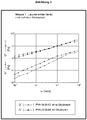
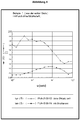
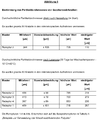
- the structurants have an effect on the stable suspension of particles. This is evidenced by the experiments disclosed in Figures 1 to 4.
- the yield stress is the critical shear stress of the flow curve. It can be determined according to the invention as follows:
- the flow curve is measured on a shear stress-controlled rheometer at 25 ° C ⁇ 1 ° C with 20 mm plate / plate geometry at a gap between 0.8 mm and 1.2 mm, filling the structure gently.
- a suitable constant shear stress time ramp is specified and a corresponding structure recovery time is maintained before the test and the critical shear stress is specified at the maximum of the flow curve.
- a flow limit is formed when the formulation, in addition to viscous properties, also has an adequate level of viscoelastic properties.
- the proportion of viscous and viscoelastic properties can be determined by frequency measurement tests. Such measurements were carried out by way of example.
- Figures 1 to 4 show the results of frequency measurement tests to determine the ratio of elastic to viscous properties of an exemplary formulation of this invention.
- Example 1 from the first series. The measurements were carried out with the device ARES 5, at a Peltier temperature of 25 ° C. The measuring system had a plate plate Diameter of 50 mm and a gap of 1 mm. A program of 0.1 -> 100 rad / s was used.
- the G "values are greater than the G 'values, i.e., the viscous portion in this formulation is predominant.
- the tan ⁇ values are above 1.
- the first sample and the second sample are distinguished by the presence or absence of the structurant.
- the measurement results for the second sample show that the elastic content in two frequency ranges is greater than the viscous, which means that the tan ⁇ values are almost always less than 1.
- the fourth figure combines the tan ⁇ values from the first two figures in a figure.
- the Figure 5 shows the effects of adding glycerin to a cleansing formulation in terms of inhibiting crystal growth and stabilizing the size and shape of sucrose crystals.
- Examples 1 to 4 correspond to Example Formulations 1 to 4 of Example Series II. "Examples of the use of crystal-stabilizing polyols”.
- Example 2 contains i.a. 10 wt .-% glycerol, 57 wt .-% sucrose and about 20 wt .-% water.
- the second part of the Figure 5 shows images of cleaning preparations with the Raman microscope after 30 days of storage under changing temperature conditions
- changing storage conditions means that the temperature during the day from -10 ° C to + 40 ° C and back to -10 ° C changes.
- the recording to the stored example 2 shows in comparison to the recording of the starting situation significantly larger crystals, which also appear irregular.
- Example 1 contains, inter alia, 10 wt .-% glycerol, 57 wt .-% sucrose and about 20 wt .-% water, shows an improvement over Example 2, but the crystals appear even larger than in the starting solution and more irregular.
- Example 3 including 33.7 wt .-% glycerol, 44.5 wt .-% sucrose, about 10 wt .-% water and 3 wt .-% oil, again shows a significant improvement over the shots for example 1 and 2.
- the crystals appear smaller and more regular shaped.
- Example 4 wherein Example 4 contains, inter alia, 36.7 wt .-% glycerol, 44.5 wt .-% sucrose, about 10 wt .-% water and no oil, shows crystals, the initial formulation, starting situation Example 2, are very similar in size and shape and have only a small increase in size.
- Figure 6 lists a determination of the particle diameter.
- 80 crystals each were measured in the Raman microscopy images of the respective formulations. The results revealed by the photos from Raman microscopy are confirmed by the particle diameter data.
- Example 2 which contains no glycerol, has the largest crystals after storage. The crystals in cleaning preparations containing glycerine are at 30 Days storage significantly smaller at 10 wt .-% glycerol (Example 1) an average of 459 microns at 34 wt .-% glycerol (Example 3) an average of 413 microns and at 37 wt .-% glycerol (Example 4) at an average of 387 microns ,
- sucrose it is possible to reduce the amount of sucrose by using glycerine. This is clear in comparison of Examples 1, 2 and 3. Without the addition of glycerol (Example 2) 67 wt .-% sucrose were added to obtain a sufficient amount of sucrose crystals in the cleaning preparation. With the addition of 10% by weight of glycerol (Example 1), the amount of sucrose could be reduced to 57% by weight, and with the addition of 34% by weight of glycerol, 44.5% by weight of sucrose was sufficient for a sufficient amount of Peeling crystals in the preparation.
- the surfactants used in the preparations according to the invention may be anionic and / or amphoteric and / or cationic and / or nonionic surfactants.
- Quaternary surfactants contain at least one N atom covalently bonded to 4 alkyl and / or aryl groups. This results in a positive charge regardless of the pH.
- Advantageous quaternary surfactants are alkylbetaine, alkylamidopropylbetaine and alkylamidopropylhydroxysulfaine.
- Cationic surfactants may further preferably in the sense of from the group of quaternary ammonium compounds, in particular benzyltrialkylammonium chlorides or bromides, such as benzyldimethylstearylammonium chloride, furthermore alkyltrialkylammonium salts, for example cetyltrimethylammonium chloride or bromide, alkyldimethylhydroxyethylammonium chlorides or bromides, dialkyldimethylammonium chlorides or bromides, alkylamidethyltrimethylammonium ether sulfates, alkylpyridinium salts, for example lauryl or cetylpyrimidinium chloride, Imidazoline derivatives and cationic compounds such as amine oxides, for example alkyl dimethylamine oxides or alkylaminoethyl dimethylamine oxides. Cetyltrimethylammonium salts are particularly advantageous to use.
- Suspended particles are particulate structures that can be incorporated into the cleaning formulations. These particles can perform various functions.
- exfoliating particles or peeling bodies are used synonymously in this disclosure. These are solid and / or crystalline structures that cause an exfoliating effect.
- the exfoliating particles according to the invention are understood as meaning the undissolved constituents of carbohydrates, for example sucrose, which are present at least partly in solid and / or crystalline form. This is achieved by such a high carbohydrate concentration that not all carbohydrate molecules can dissolve in the preparation according to the invention, but are present in solid and / or crystalline form. This means that, for example, in the case of use of sucrose, the corresponding crystals are present in the cleaning preparation.
- the exfoliating particles in the form of these crystals come into contact with water during use during the showering or washing process, for example during showering or washing off of the foam and the cleaning preparation at the end of the cleaning process. As a result, a dissolution of the crystals is guaranteed, resulting in a decreasing peeling effect.
- peeling agents are superfluous due to the embodiments of the invention. Of course, however, an addition of additional peeling agents is possible.
- the peeling agents are then advantageously selected from the group of natural or natural-based peeling agents such as alumina, sand, crushed or ground kernels of walnut shells, apricot, peach and / or almond kernels, peeling particles of waxy, solid bases such as hardened castor oil, jojoba oil, carnauba wax, Candelell wax, hydrogenated sunflower oil, rice germ oil, hardened soybean oil and paraffin.
- peeling particles of silica and silicates or polylactides are conceivable. Also possible, although not desirable, is the use of fully synthetic peeling agents.
- the oils can be selected from the group of polar oils, for example from the group of lecithins and fatty acid triglycerides, namely the triglycerol esters of saturated and / or unsaturated, branched and / or unbranched alkanecarboxylic acids having a chain length of 8 to 24, in particular 12 to 18 C atoms.
- the fatty acid triglycerides can be selected, for example, advantageously from the group of synthetic, semi-synthetic and natural oils, such as.
- Cocoglyceride olive oil, sunflower oil, soybean oil, peanut oil, rapeseed oil, almond oil, palm oil, coconut oil, castor oil, wheat germ oil, grape seed oil, thistle oil, evening primrose oil, macadamia nut oil and the like.
- further advantageous polar oil components can furthermore be selected from the group of esters of saturated and / or unsaturated, branched and / or unbranched alkanecarboxylic acids having a chain length of 3 to 30 carbon atoms and saturated and / or unsaturated, branched and / or or unbranched alcohols having a chain length of 3 to 30 carbon atoms and from the group of esters of aromatic carboxylic acids and saturated and / or unsaturated, branched and / or unbranched alcohols having a chain length of 3 to 30 carbon atoms.
- ester oils can then advantageously be selected from the group octyl palmitate, octyl cocoate, octyl isostearate, octyldodeceyl myristate, octyldodecanol, cetearyl isononanoate, isopropyl myristate, isopropyl palmitate, isopropyl stearate, isopropyl oleate, n-butyl stearate, n-hexyl laurate, n-decyl oleate, isooctyl stearate, isononyl stearate, isononyl isononanoate, Ethylhexyl palmitate, 2-ethylhexyl laurate, 2-hexyldecyl stearate, 2-octyl dodecyl palmitate, stearyl heptanoate, oley
- the oil phase can be advantageously selected from the group of dialkyl ethers and dialkyl carbonates, advantageous z.
- the oil components are selected from the group isoeicosane, neopentyl glycol diheptanoate, propylene glycol dicaprylate / dicaprate, caprylic / capric / diglyceryl succinate, butylene glycol dicaprylate / dicaprate, C12-13-alkyl lactate, di-C12-13-alkyl tartrate, triisostearin, dipentaerythrityl hexacaprylate / hexacaprate, Propylene glycol monoisostearate, tricaprylin, dimethylisosorbide. It is special advantageous if the oil phase of the formulations according to the invention has a content of C12-15-alkyl benzoate or consists entirely of this.
- Advantageous oil components are also z. Butyloctyl salicylate (for example that available under the trade name Hallbrite BHB ), hexadecyl benzoate and butyl octyl benzoate and mixtures thereof ( Hallstar AB ) and / or diethylhexylnaphthalate ( Hallbrite TQ or Corapan TQ from H & R ).
- Hallbrite BHB hexadecyl benzoate and butyl octyl benzoate and mixtures thereof
- Hallstar AB hexadecyl benzoate
- Hallstar AB hexadecyl benzoate
- Hallstar AB butyl octyl benzoate and mixtures thereof
- Hallstar TQ or Corapan TQ from H & R diethylhexylnaphthalate
- the oil phase may also advantageously contain nonpolar oils, for example those which are selected from the group of branched and unbranched hydrocarbons and waxes, in particular mineral oil, Vaseline (petrolatum), paraffin oil, squalane and squalene, polyolefins, hydrogenated polyisobutenes and isohexadecane.
- nonpolar oils for example those which are selected from the group of branched and unbranched hydrocarbons and waxes, in particular mineral oil, Vaseline (petrolatum), paraffin oil, squalane and squalene, polyolefins, hydrogenated polyisobutenes and isohexadecane.
- polyolefins polydecenes are the preferred substances.
- the oil phase may further comprise a content of cyclic or linear silicone oils or consist entirely of such oils, although it is preferred to use an additional content of other oil phase components in addition to the silicone oil or silicone oils.
- nonpolar oils such as, for example, branched or unbranched hydrocarbons and waxes, in particular mineral oil, Vaseline (petrolatum), paraffin oil, squalane and squalene, polyolefins, hydrogenated polyisobutenes and isohexadecane.
- coco-caprylates / caprate is particularly advantageous.
- compositions according to the invention may contain one or more polymeric structurants .
- the polymeric structurants can advantageously be chosen from the group of gums, polysaccharides, cellulose derivatives, layered silicates, polyacrylates and / or other polymers.
- the gums include plant or tree juices that harden in the air and form resins or extracts from aquatic plants. From this group, for example, gum arabic, locust bean gum, tragacanth, karaya, guar gum, pectin, gellan gum, carrageenan, agar, algine, chondrus, xanthan gum may be selected; particularly advantageous is xanthan gum.
- polysaccharides and derivatives are e.g. Hyaluronic acid, chitin and chitosan, chondroitin sulphates, starch and starch derivatives.
- cellulose derivatives are z. Methylcellulose, carboxymethylcellulose, hydroxyethylcellulose, hydroxypropylmethylcellulose.
- layered silicates are naturally occurring and synthetic clays such as e.g. Montmorillonite, bentonite, hectorite, laponite, magnesium aluminum silicates such as Veegum®. These may be used as such or in modified form as e.g. Stearylalkonium hectorites.
- silica gels can also be used.
- taurates z. Ammonium acryloyldimethyltaurate / VP copolymer.
- polyacrylates are e.g. Carbopol grades from Lubrizol (Carbopol 980, 981, 1382, 5984, 2984, ETD 2001, ETD 2020, ETD 2050, Ultrez-10 or Pemulen TR1 & TR2), Acrylates Copolymer (trade name Carbopol Aqua SF-1) or Acrylates Crosspolymer 4 (trade name: Carbopol Aqua SF-2).
- polyacrylamides As polyacrylamides (Seppigel 305), polyvinyl alcohols, PVP, PVP / VA copolymers, polyglycols.
- Particularly preferred according to the invention is an acrylic acid / VP crosspolymer from ASI for cleaning preparations comprising crystal-stabilizing polyols.
- Preparations according to the invention may contain one or more emulsifiers .
- Preferred emulsifiers are W / O emulsifiers.
- W / O emulsifiers can be used: fatty alcohols having 8 to 30 carbon atoms, monoglycerol esters of saturated and / or unsaturated, branched or unbranched alkanecarboxylic acids having a chain length of 8 to 24, in particular 12 to 20 carbon atoms, diglycerol esters of saturated and / or unsaturated, branched or unbranched alkanecarboxylic acids having a chain length of 8 to 24, in particular 12 to 20 carbon atoms, monoglycerol ethers of saturated and / or unsaturated, branched or unbranched alcohols having a chain length of 8 to 24, in particular 12 to 20 carbon atoms, diglycerol ethers of saturated and / or unsaturated, branched or unbranched alcohols a chain length of 8 to 24, in particular 12 to 20 carbon atoms, polypropylene glycol esters of saturated and / or unsaturated, branched or unbranched alkanecarboxylic acids having a
- glyceryl oleate is preferred according to the invention.
- Preferred W / O emulsifiers are branched or unbranched, saturated or unsaturated fatty acids having 12 to 26 carbon atoms, polyglyceryl-3 diisostearate, polyglyceryl-4 isostearate, polyglyceryl-2 dipolyhydroxystearate, cetyl PEG / PPG-10-1 dimethicones, PEG-30 dipolyhydroxystearate, PEG-40 Sorbitanperisostearat, Cetyldimethiconecopolyol, PEG-7 Hydrogenated Castor Oil, PEG 45 / dodecyl, PEG 22 / Dodeceylglycolcopolymer, Pentaerythritylisostearat, Isostearyldiglycerylsuccinat, sorbitan isostearate, polyglyceryl-2 Sesquiisostearat, glyceryl isostearate, sorbitan stearate, glyceryl stearate, PEG-25 Hydrogen
- W / O emulsifiers are ethoxylated fatty alcohols, in particular laureth-2.
- these substances are also substances which are usually used to adjust the pH of the preparations according to the invention and to keep them stable.
- these substances can be selected from the group of citric acid and lactic acid and / or from the group of aminomethylpropanol, sodium hydroxide solution, potassium hydroxide solution and triethanolamine.
- the customary in cosmetics additives and excipients can be incorporated into the preparations, such as.
- preservatives bactericides, deodorants, antiperspirants, insect repellents, vitamins, Foaming inhibitors, colorants, coloring pigments, flavoring agents, denaturants, perfumes, emollients, moisturizing and / or moisturizing substances, antioxidants, UV filter substances, sensory additives, film formers, active ingredients or other conventional ingredients of a cosmetic formulation, such as alcohols, Polyols, foam stabilizers, electrolytes, organic solvents or silicone derivatives.
- the information in the brackets refers to the active contents.
Landscapes
- Health & Medical Sciences (AREA)
- Life Sciences & Earth Sciences (AREA)
- Veterinary Medicine (AREA)
- Animal Behavior & Ethology (AREA)
- General Health & Medical Sciences (AREA)
- Public Health (AREA)
- Birds (AREA)
- Epidemiology (AREA)
- Inorganic Chemistry (AREA)
- Chemical & Material Sciences (AREA)
- Dermatology (AREA)
- Cosmetics (AREA)
- Detergent Compositions (AREA)
Priority Applications (1)
| Application Number | Priority Date | Filing Date | Title |
|---|---|---|---|
| PL13811397T PL2934473T3 (pl) | 2012-12-19 | 2013-11-28 | Kompozycje oczyszczające z efektem peelingu na bazie rozpuszczalnych w wodzie składników w postaci krystalicznej |
Applications Claiming Priority (2)
| Application Number | Priority Date | Filing Date | Title |
|---|---|---|---|
| DE102012223743 | 2012-12-19 | ||
| PCT/EP2013/074980 WO2014095296A2 (de) | 2012-12-19 | 2013-11-28 | Reinigungszubereitungen mit peelingeffekt auf der basis von wasserlöslichen bestandteilen in kristalliner form |
Publications (2)
| Publication Number | Publication Date |
|---|---|
| EP2934473A2 EP2934473A2 (de) | 2015-10-28 |
| EP2934473B1 true EP2934473B1 (de) | 2018-04-04 |
Family
ID=49876552
Family Applications (2)
| Application Number | Title | Priority Date | Filing Date |
|---|---|---|---|
| EP13811397.2A Active EP2934473B1 (de) | 2012-12-19 | 2013-11-28 | Reinigungszubereitungen mit peelingeffekt auf der basis von wasserlöslichen bestandteilen in kristalliner form |
| EP13798322.7A Not-in-force EP2945611B1 (de) | 2012-12-19 | 2013-11-28 | Peelende reinigungszubereitung mit wasserlöslichen kristallen |
Family Applications After (1)
| Application Number | Title | Priority Date | Filing Date |
|---|---|---|---|
| EP13798322.7A Not-in-force EP2945611B1 (de) | 2012-12-19 | 2013-11-28 | Peelende reinigungszubereitung mit wasserlöslichen kristallen |
Country Status (5)
| Country | Link |
|---|---|
| EP (2) | EP2934473B1 (pl) |
| DE (2) | DE102013224336A1 (pl) |
| ES (1) | ES2673044T3 (pl) |
| PL (1) | PL2934473T3 (pl) |
| WO (2) | WO2014095296A2 (pl) |
Families Citing this family (4)
| Publication number | Priority date | Publication date | Assignee | Title |
|---|---|---|---|---|
| DE102014222014A1 (de) | 2014-10-29 | 2016-05-04 | Beiersdorf Ag | Peelendes Reinigungsprodukt auf Ölbasis |
| DE102015215359A1 (de) | 2015-08-12 | 2017-02-16 | Beiersdorf Ag | Halbfestes Reinigungsprodukt auf Ölbasis enthaltend Peelingpartikel |
| FR3059548B1 (fr) * | 2016-12-05 | 2019-01-25 | Lvmh Recherche | Produit exfoliant pour les levres, procedes de soin et maquillage |
| DE102017200079A1 (de) | 2017-01-05 | 2018-07-05 | Beiersdorf Ag | Reinigungszubereitungen enthaltend beschichtete Partikel wasserlöslicher Substanzen |
Family Cites Families (9)
| Publication number | Priority date | Publication date | Assignee | Title |
|---|---|---|---|---|
| US5385729A (en) * | 1991-08-01 | 1995-01-31 | Colgate Palmolive Company | Viscoelastic personal care composition |
| FR2755370B1 (fr) | 1996-11-04 | 1998-12-04 | Oreal | Composition nettoyante sous la forme d'un gel transparent rincable |
| WO2001005932A1 (en) | 1999-07-17 | 2001-01-25 | Rhodia Consumer Specialties Limited | Structured surfactant systems |
| US6727209B2 (en) | 2002-08-14 | 2004-04-27 | Unilever Home & Personal Care, Usa, Division Of Conopco, Inc. | Biphasic composition induced by polydextrose and sucrose |
| US20060034978A1 (en) * | 2004-08-16 | 2006-02-16 | Grain Processing Corporation | Aerosol compositions, devices and methods |
| WO2008023145A1 (en) | 2006-08-22 | 2008-02-28 | Innovation Deli Limited | Structured cleaning compositions |
| DE102006044942A1 (de) * | 2006-09-22 | 2008-04-03 | Beiersdorf Ag | Peelingkapseln |
| US20100305015A1 (en) * | 2006-10-20 | 2010-12-02 | Innovation Deli Limited | Skin cleansing compositions |
| DE102011077053A1 (de) * | 2011-06-07 | 2012-12-13 | Beiersdorf Ag | Kosmetische oder dermatologische Peelingszubereitung |
-
2013
- 2013-11-28 EP EP13811397.2A patent/EP2934473B1/de active Active
- 2013-11-28 PL PL13811397T patent/PL2934473T3/pl unknown
- 2013-11-28 DE DE102013224336.7A patent/DE102013224336A1/de not_active Withdrawn
- 2013-11-28 ES ES13811397.2T patent/ES2673044T3/es active Active
- 2013-11-28 EP EP13798322.7A patent/EP2945611B1/de not_active Not-in-force
- 2013-11-28 DE DE102013224368.5A patent/DE102013224368A1/de not_active Withdrawn
- 2013-11-28 WO PCT/EP2013/074980 patent/WO2014095296A2/de not_active Ceased
- 2013-11-28 WO PCT/EP2013/074979 patent/WO2014095295A2/de not_active Ceased
Also Published As
| Publication number | Publication date |
|---|---|
| WO2014095296A3 (de) | 2014-09-25 |
| EP2945611A2 (de) | 2015-11-25 |
| DE102013224336A1 (de) | 2014-06-26 |
| WO2014095295A2 (de) | 2014-06-26 |
| DE102013224368A1 (de) | 2014-06-26 |
| EP2934473A2 (de) | 2015-10-28 |
| ES2673044T3 (es) | 2018-06-19 |
| PL2934473T3 (pl) | 2018-08-31 |
| WO2014095295A3 (de) | 2014-10-02 |
| EP2945611B1 (de) | 2019-08-21 |
| WO2014095296A2 (de) | 2014-06-26 |
Similar Documents
| Publication | Publication Date | Title |
|---|---|---|
| EP1942864B1 (de) | Kosmetische zubereitung in form einer o/w-emulsion enthaltend 1,2-alkandiol(e) | |
| EP2881381A1 (de) | Polyglycerinpartialester, ihre Herstellung und Verwendung | |
| EP2934473B1 (de) | Reinigungszubereitungen mit peelingeffekt auf der basis von wasserlöslichen bestandteilen in kristalliner form | |
| EP3113749A1 (de) | Abrasive hautreinigungsmittel ii | |
| EP3233212A1 (de) | Peelendes reinigungsprodukt auf ölbasis | |
| EP1674134B1 (de) | Tensidhaltige Reinigungsemulsion mit festen Partikeln | |
| EP3113756B1 (de) | Abrasive hautreinigungsmittel i | |
| WO2016083043A1 (de) | Kosmetische stückseifen enthaltend seife und mikroemulsionen | |
| WO2017012738A1 (de) | Reversibel mischbare und wieder entmischbare zweiphasenprodukte | |
| DE102005014417A1 (de) | Oxidationsgeschützte kosmetische Zubereitung mit Reiskeimöl | |
| DE102014104261B4 (de) | Verdickte transparente Tensidsysteme mit Fließgrenze, enthaltend 4-Hydroxyacetophenon | |
| DE102010055766A1 (de) | Wirkstoffkombinationen aus Glucosylglyceriden und einem oder mehreren partiell hochethoxylierten Estern aus Polyolen und Fettsäuren | |
| DE102017217306A1 (de) | Duschprodukte mit höheren Ölgehalten | |
| DE102024203761A1 (de) | Reinigungszubereitung zur verbesserten Aufziehbarkeit | |
| DE102024203765A1 (de) | Verdickung von Trübungsmittel enthaltenden Reinigungszubereitungen | |
| DE10232117A1 (de) | Baukastensystem für kosmetische und dermatologische Zubereitungen | |
| DE102023205777A1 (de) | Restrukturierendes Haarbehandlungsmittel | |
| DE102016206252A1 (de) | Neuartige schäumende Zubereitungen | |
| DE102023205779A1 (de) | Restrukturierendes Haarbehandlungsmittel | |
| EP3297601A1 (de) | Milde kosmetische reinigungszusammensetzung mit guten schaumeigenschaften | |
| DE102023205785A1 (de) | Restrukturierendes Haarbehandlungsmittel | |
| WO2024046660A1 (de) | Reinigungszubereitung zur rasurvorbereitung und gesichtsreinigung | |
| EP1938782A1 (de) | Abschminkmittel | |
| DE102017200079A1 (de) | Reinigungszubereitungen enthaltend beschichtete Partikel wasserlöslicher Substanzen |
Legal Events
| Date | Code | Title | Description |
|---|---|---|---|
| PUAI | Public reference made under article 153(3) epc to a published international application that has entered the european phase |
Free format text: ORIGINAL CODE: 0009012 |
|
| 17P | Request for examination filed |
Effective date: 20150720 |
|
| AK | Designated contracting states |
Kind code of ref document: A2 Designated state(s): AL AT BE BG CH CY CZ DE DK EE ES FI FR GB GR HR HU IE IS IT LI LT LU LV MC MK MT NL NO PL PT RO RS SE SI SK SM TR |
|
| AX | Request for extension of the european patent |
Extension state: BA ME |
|
| DAX | Request for extension of the european patent (deleted) | ||
| 17Q | First examination report despatched |
Effective date: 20170213 |
|
| GRAP | Despatch of communication of intention to grant a patent |
Free format text: ORIGINAL CODE: EPIDOSNIGR1 |
|
| INTG | Intention to grant announced |
Effective date: 20171120 |
|
| GRAS | Grant fee paid |
Free format text: ORIGINAL CODE: EPIDOSNIGR3 |
|
| GRAA | (expected) grant |
Free format text: ORIGINAL CODE: 0009210 |
|
| AK | Designated contracting states |
Kind code of ref document: B1 Designated state(s): AL AT BE BG CH CY CZ DE DK EE ES FI FR GB GR HR HU IE IS IT LI LT LU LV MC MK MT NL NO PL PT RO RS SE SI SK SM TR |
|
| REG | Reference to a national code |
Ref country code: GB Ref legal event code: FG4D Free format text: NOT ENGLISH |
|
| REG | Reference to a national code |
Ref country code: CH Ref legal event code: EP |
|
| REG | Reference to a national code |
Ref country code: AT Ref legal event code: REF Ref document number: 984804 Country of ref document: AT Kind code of ref document: T Effective date: 20180415 |
|
| REG | Reference to a national code |
Ref country code: IE Ref legal event code: FG4D Free format text: LANGUAGE OF EP DOCUMENT: GERMAN |
|
| REG | Reference to a national code |
Ref country code: DE Ref legal event code: R096 Ref document number: 502013009864 Country of ref document: DE |
|
| REG | Reference to a national code |
Ref country code: ES Ref legal event code: FG2A Ref document number: 2673044 Country of ref document: ES Kind code of ref document: T3 Effective date: 20180619 |
|
| REG | Reference to a national code |
Ref country code: NL Ref legal event code: MP Effective date: 20180404 |
|
| REG | Reference to a national code |
Ref country code: LT Ref legal event code: MG4D |
|
| PG25 | Lapsed in a contracting state [announced via postgrant information from national office to epo] |
Ref country code: NL Free format text: LAPSE BECAUSE OF FAILURE TO SUBMIT A TRANSLATION OF THE DESCRIPTION OR TO PAY THE FEE WITHIN THE PRESCRIBED TIME-LIMIT Effective date: 20180404 |
|
| PG25 | Lapsed in a contracting state [announced via postgrant information from national office to epo] |
Ref country code: FI Free format text: LAPSE BECAUSE OF FAILURE TO SUBMIT A TRANSLATION OF THE DESCRIPTION OR TO PAY THE FEE WITHIN THE PRESCRIBED TIME-LIMIT Effective date: 20180404 Ref country code: NO Free format text: LAPSE BECAUSE OF FAILURE TO SUBMIT A TRANSLATION OF THE DESCRIPTION OR TO PAY THE FEE WITHIN THE PRESCRIBED TIME-LIMIT Effective date: 20180704 Ref country code: BG Free format text: LAPSE BECAUSE OF FAILURE TO SUBMIT A TRANSLATION OF THE DESCRIPTION OR TO PAY THE FEE WITHIN THE PRESCRIBED TIME-LIMIT Effective date: 20180704 Ref country code: AL Free format text: LAPSE BECAUSE OF FAILURE TO SUBMIT A TRANSLATION OF THE DESCRIPTION OR TO PAY THE FEE WITHIN THE PRESCRIBED TIME-LIMIT Effective date: 20180404 Ref country code: SE Free format text: LAPSE BECAUSE OF FAILURE TO SUBMIT A TRANSLATION OF THE DESCRIPTION OR TO PAY THE FEE WITHIN THE PRESCRIBED TIME-LIMIT Effective date: 20180404 Ref country code: LT Free format text: LAPSE BECAUSE OF FAILURE TO SUBMIT A TRANSLATION OF THE DESCRIPTION OR TO PAY THE FEE WITHIN THE PRESCRIBED TIME-LIMIT Effective date: 20180404 |
|
| PG25 | Lapsed in a contracting state [announced via postgrant information from national office to epo] |
Ref country code: LV Free format text: LAPSE BECAUSE OF FAILURE TO SUBMIT A TRANSLATION OF THE DESCRIPTION OR TO PAY THE FEE WITHIN THE PRESCRIBED TIME-LIMIT Effective date: 20180404 Ref country code: GR Free format text: LAPSE BECAUSE OF FAILURE TO SUBMIT A TRANSLATION OF THE DESCRIPTION OR TO PAY THE FEE WITHIN THE PRESCRIBED TIME-LIMIT Effective date: 20180705 Ref country code: HR Free format text: LAPSE BECAUSE OF FAILURE TO SUBMIT A TRANSLATION OF THE DESCRIPTION OR TO PAY THE FEE WITHIN THE PRESCRIBED TIME-LIMIT Effective date: 20180404 Ref country code: RS Free format text: LAPSE BECAUSE OF FAILURE TO SUBMIT A TRANSLATION OF THE DESCRIPTION OR TO PAY THE FEE WITHIN THE PRESCRIBED TIME-LIMIT Effective date: 20180404 |
|
| PG25 | Lapsed in a contracting state [announced via postgrant information from national office to epo] |
Ref country code: PT Free format text: LAPSE BECAUSE OF FAILURE TO SUBMIT A TRANSLATION OF THE DESCRIPTION OR TO PAY THE FEE WITHIN THE PRESCRIBED TIME-LIMIT Effective date: 20180806 |
|
| REG | Reference to a national code |
Ref country code: DE Ref legal event code: R097 Ref document number: 502013009864 Country of ref document: DE |
|
| PG25 | Lapsed in a contracting state [announced via postgrant information from national office to epo] |
Ref country code: EE Free format text: LAPSE BECAUSE OF FAILURE TO SUBMIT A TRANSLATION OF THE DESCRIPTION OR TO PAY THE FEE WITHIN THE PRESCRIBED TIME-LIMIT Effective date: 20180404 Ref country code: DK Free format text: LAPSE BECAUSE OF FAILURE TO SUBMIT A TRANSLATION OF THE DESCRIPTION OR TO PAY THE FEE WITHIN THE PRESCRIBED TIME-LIMIT Effective date: 20180404 Ref country code: CZ Free format text: LAPSE BECAUSE OF FAILURE TO SUBMIT A TRANSLATION OF THE DESCRIPTION OR TO PAY THE FEE WITHIN THE PRESCRIBED TIME-LIMIT Effective date: 20180404 Ref country code: RO Free format text: LAPSE BECAUSE OF FAILURE TO SUBMIT A TRANSLATION OF THE DESCRIPTION OR TO PAY THE FEE WITHIN THE PRESCRIBED TIME-LIMIT Effective date: 20180404 Ref country code: SK Free format text: LAPSE BECAUSE OF FAILURE TO SUBMIT A TRANSLATION OF THE DESCRIPTION OR TO PAY THE FEE WITHIN THE PRESCRIBED TIME-LIMIT Effective date: 20180404 |
|
| PLBE | No opposition filed within time limit |
Free format text: ORIGINAL CODE: 0009261 |
|
| STAA | Information on the status of an ep patent application or granted ep patent |
Free format text: STATUS: NO OPPOSITION FILED WITHIN TIME LIMIT |
|
| PG25 | Lapsed in a contracting state [announced via postgrant information from national office to epo] |
Ref country code: IT Free format text: LAPSE BECAUSE OF FAILURE TO SUBMIT A TRANSLATION OF THE DESCRIPTION OR TO PAY THE FEE WITHIN THE PRESCRIBED TIME-LIMIT Effective date: 20180404 Ref country code: SM Free format text: LAPSE BECAUSE OF FAILURE TO SUBMIT A TRANSLATION OF THE DESCRIPTION OR TO PAY THE FEE WITHIN THE PRESCRIBED TIME-LIMIT Effective date: 20180404 |
|
| 26N | No opposition filed |
Effective date: 20190107 |
|
| PG25 | Lapsed in a contracting state [announced via postgrant information from national office to epo] |
Ref country code: SI Free format text: LAPSE BECAUSE OF FAILURE TO SUBMIT A TRANSLATION OF THE DESCRIPTION OR TO PAY THE FEE WITHIN THE PRESCRIBED TIME-LIMIT Effective date: 20180404 |
|
| REG | Reference to a national code |
Ref country code: CH Ref legal event code: PL |
|
| PG25 | Lapsed in a contracting state [announced via postgrant information from national office to epo] |
Ref country code: LU Free format text: LAPSE BECAUSE OF NON-PAYMENT OF DUE FEES Effective date: 20181128 Ref country code: MC Free format text: LAPSE BECAUSE OF FAILURE TO SUBMIT A TRANSLATION OF THE DESCRIPTION OR TO PAY THE FEE WITHIN THE PRESCRIBED TIME-LIMIT Effective date: 20180404 |
|
| REG | Reference to a national code |
Ref country code: BE Ref legal event code: MM Effective date: 20181130 |
|
| REG | Reference to a national code |
Ref country code: IE Ref legal event code: MM4A |
|
| PG25 | Lapsed in a contracting state [announced via postgrant information from national office to epo] |
Ref country code: LI Free format text: LAPSE BECAUSE OF NON-PAYMENT OF DUE FEES Effective date: 20181130 Ref country code: CH Free format text: LAPSE BECAUSE OF NON-PAYMENT OF DUE FEES Effective date: 20181130 |
|
| PG25 | Lapsed in a contracting state [announced via postgrant information from national office to epo] |
Ref country code: IE Free format text: LAPSE BECAUSE OF NON-PAYMENT OF DUE FEES Effective date: 20181128 |
|
| PG25 | Lapsed in a contracting state [announced via postgrant information from national office to epo] |
Ref country code: BE Free format text: LAPSE BECAUSE OF NON-PAYMENT OF DUE FEES Effective date: 20181130 |
|
| REG | Reference to a national code |
Ref country code: AT Ref legal event code: MM01 Ref document number: 984804 Country of ref document: AT Kind code of ref document: T Effective date: 20181128 |
|
| PG25 | Lapsed in a contracting state [announced via postgrant information from national office to epo] |
Ref country code: AT Free format text: LAPSE BECAUSE OF NON-PAYMENT OF DUE FEES Effective date: 20181128 Ref country code: MT Free format text: LAPSE BECAUSE OF FAILURE TO SUBMIT A TRANSLATION OF THE DESCRIPTION OR TO PAY THE FEE WITHIN THE PRESCRIBED TIME-LIMIT Effective date: 20180404 |
|
| PG25 | Lapsed in a contracting state [announced via postgrant information from national office to epo] |
Ref country code: TR Free format text: LAPSE BECAUSE OF FAILURE TO SUBMIT A TRANSLATION OF THE DESCRIPTION OR TO PAY THE FEE WITHIN THE PRESCRIBED TIME-LIMIT Effective date: 20180404 |
|
| PG25 | Lapsed in a contracting state [announced via postgrant information from national office to epo] |
Ref country code: HU Free format text: LAPSE BECAUSE OF FAILURE TO SUBMIT A TRANSLATION OF THE DESCRIPTION OR TO PAY THE FEE WITHIN THE PRESCRIBED TIME-LIMIT; INVALID AB INITIO Effective date: 20131128 Ref country code: MK Free format text: LAPSE BECAUSE OF NON-PAYMENT OF DUE FEES Effective date: 20180404 Ref country code: CY Free format text: LAPSE BECAUSE OF FAILURE TO SUBMIT A TRANSLATION OF THE DESCRIPTION OR TO PAY THE FEE WITHIN THE PRESCRIBED TIME-LIMIT Effective date: 20180404 |
|
| PG25 | Lapsed in a contracting state [announced via postgrant information from national office to epo] |
Ref country code: IS Free format text: LAPSE BECAUSE OF FAILURE TO SUBMIT A TRANSLATION OF THE DESCRIPTION OR TO PAY THE FEE WITHIN THE PRESCRIBED TIME-LIMIT Effective date: 20180804 |
|
| REG | Reference to a national code |
Ref country code: DE Ref legal event code: R081 Ref document number: 502013009864 Country of ref document: DE Owner name: BEIERSDORF AKTIENGESELLSCHAFT, DE Free format text: FORMER OWNER: BEIERSDORF AG, 20253 HAMBURG, DE |
|
| PGFP | Annual fee paid to national office [announced via postgrant information from national office to epo] |
Ref country code: DE Payment date: 20251130 Year of fee payment: 13 |
|
| PGFP | Annual fee paid to national office [announced via postgrant information from national office to epo] |
Ref country code: GB Payment date: 20251121 Year of fee payment: 13 |
|
| PGFP | Annual fee paid to national office [announced via postgrant information from national office to epo] |
Ref country code: FR Payment date: 20251125 Year of fee payment: 13 |
|
| PGFP | Annual fee paid to national office [announced via postgrant information from national office to epo] |
Ref country code: PL Payment date: 20251121 Year of fee payment: 13 |
|
| PGFP | Annual fee paid to national office [announced via postgrant information from national office to epo] |
Ref country code: ES Payment date: 20251229 Year of fee payment: 13 |