EP2932443B1 - Recombinase-based logic and memory systems - Google Patents
Recombinase-based logic and memory systems Download PDFInfo
- Publication number
- EP2932443B1 EP2932443B1 EP13814792.1A EP13814792A EP2932443B1 EP 2932443 B1 EP2932443 B1 EP 2932443B1 EP 13814792 A EP13814792 A EP 13814792A EP 2932443 B1 EP2932443 B1 EP 2932443B1
- Authority
- EP
- European Patent Office
- Prior art keywords
- promoter
- nucleic acid
- logic
- flanked
- operably linked
- Prior art date
- Legal status (The legal status is an assumption and is not a legal conclusion. Google has not performed a legal analysis and makes no representation as to the accuracy of the status listed.)
- Not-in-force
Links
Images













Classifications
-
- G—PHYSICS
- G06—COMPUTING OR CALCULATING; COUNTING
- G06N—COMPUTING ARRANGEMENTS BASED ON SPECIFIC COMPUTATIONAL MODELS
- G06N3/00—Computing arrangements based on biological models
- G06N3/002—Biomolecular computers, i.e. using biomolecules, proteins, cells
Definitions
- a central goal of synthetic biology is to create cellular networks that integrate input signals for decision making and actuation [1].
- artificial logic gates [2-4] and memory devices [5,6] have been independently constructed.
- complex gates required the layering of multiple genetic circuits [2,7], thus necessitating significant efforts for circuit construction and tuning. These complex logic gates can achieve only combinatorial logic.
- the invention provides, inter alia, synthetic recombinase-based systems for integrating combinatorial logic and memory in living cells. Integrated logic and memory are crucial for performing complex and persistent state-dependent computation such as sequential logic [8].
- the logic and memory systems of the invention enable efficient, one-step assembly of any Boolean logic function with stable, DNA-based memory of events. These systems utilize chemical inducer inputs to drive the expression of orthogonal recombinases from promoters. These recombinases target genetic elements for DNA inversion, or excision, resulting in conditional nucleic acid expression.
- Such logic and memory systems are useful for a variety of applications, including programming cellular state machines, behaviors and pathways for therapeutic, diagnostic and basic science applications.
- synthetic logic and memory systems operable in a single cell, the systems comprising a plurality of nucleic acid sequences encoding at least two promoters and at least two recombinases, wherein each of the plurality of recombinase-encoding nucleic acid sequences is operably linked to a different promoter, a plurality of logic gates that are single genetic circuit constructs of an output nucleic acid sequence operably linked, or conditionally operably linked, to a genetic regulatory element such as a promoter and/or a unidirectional terminator, wherein at least one of the output nucleic acid, the genetic regulatory element such as the promoter and the unidirectional terminator is flanked by a forward and a reverse recognition site of at least one of the recombinases, and wherein the logic gates provide all two-input Boolean logic functions except TRUE and FALSE logic gates.
- synthetic logic and memory systems operable in a single cell, the systems comprising a plurality of nucleic acid sequences encoding at least two promoters and at least two recombinases, wherein each of the plurality of recombinase-encoding nucleic acid sequences is operably linked to a different promoter, a plurality of logic gates that are single genetic circuit constructs of an output nucleic acid sequence operably linked, or conditionally operably linked, to a genetic regulatory element such as a promoter and/or a unidirectional terminator, wherein at least one of the output nucleic acid and the genetic regulatory element, such as the promoter and the unidirectional terminator, is flanked by a forward and a reverse recognition site of at least one of the recombinases, and wherein the logic gates provide at least two two-input Boolean logic functions.
- the logic gates provide at least three, at least four at least five, at least six, at least 7, at least 8 or at least 9 two-input Boolean logic functions. In some embodiments, the logic gates provide TRUE and FALSE logic gates, while in other embodiments the logic gates do not provide TRUE and FALSE logic gates.
- the expression of the recombinases is operably linked to a signal of interest, such as an external input or a cellular regulatory signal.
- a signal of interest such as an external input or a cellular regulatory signal.
- one or more of the at least two promoters is/are inducible promoters.
- the at least two recombinases are irreversible recombinases. In some embodiments, the at least two irreversible recombinases are serine recombinases. In some embodiments, the serine recombinases are Bxb1 and phiC31.
- the logic gates are NOR, AND, OR, NAND, A, NOT A, B, NOT B, A IMPLY B, A NIMPLY B, B IMPLY A, B NIMPLY A, XOR and XNOR.
- the synthetic logic and memory systems of the invention further comprise TRUE and/or FALSE logic gates, wherein the TRUE logic gate is a single genetic circuit construct of an output nucleic acid sequence operably linked to a promoter, and wherein the FALSE gate is a single genetic circuit construct of an output nucleic acid sequence immediately downstream of an inverted promoter.
- the output nucleic acid encodes an output product.
- the output product is a reporter protein, a transcriptional repressor, a transcriptional activator, a selection marker, an enzyme, a receptor protein, a ligand protein, an RNA, a riboswitch, a short-hairpin RNA or a recombinase.
- the NOR logic gate is a single genetic circuit construct of (a) an output nucleic acid operably linked to a promoter and (b) two unidirectional terminators, wherein each terminator is inverted and flanked by different forward and reverse recombinase recognition sites and is located between the promoter and the output nucleic acid.
- the AND logic gate is a single genetic circuit construct of an output nucleic acid conditionally operably linked to a promoter, wherein the output nucleic acid and the promoter is each inverted and flanked by different forward and reverse recombinase recognition sites.
- the OR logic gate is a single genetic circuit construct of an output nucleic acid conditionally operably linked to two promoters, wherein each promoter is inverted and flanked by different forward and reverse recombinase recognition sites.
- the NAND logic gate is a single genetic circuit construct of an output nucleic acid operably linked to two promoters, wherein each promoter is flanked by different forward and reverse recombinase recognition sites.
- the A logic gate is a single genetic circuit construct of an output nucleic acid conditionally operably linked to a promoter, wherein the output nucleic acid is inverted and flanked by forward and reverse recombinase recognition sites.
- the B logic gate is a single genetic circuit construct of an output nucleic acid conditionally operably linked to a promoter, wherein the promoter is inverted and flanked by forward and reverse recombinase recognition sites.
- the NOT A logic gate is a single genetic circuit construct of an output nucleic acid operably linked to a promoter, wherein the output nucleic acid is flanked by forward and reverse recombinase recognition sites.
- the NOT B logic gate is a single genetic circuit construct of an output nucleic acid operably linked to a promoter, wherein the promoter is flanked by forward and reverse recombinase recognition sites.
- the A IMPLY B logic gate is a single genetic circuit construct of an output nucleic acid operably linked to a first promoter and conditionally operably linked to a second promoter, wherein the first promoter is flanked by forward and reverse recombinase recognition sites, and the second promoter is inverted and flanked by different forward and reverse recombinase recognition sites and is located between the first promoter and the output nucleic acid.
- the B IMPLY A logic gate is a single genetic circuit construct of an output nucleic acid conditionally operably linked to a first promoter and operably linked to a second promoter, wherein the first promoter is inverted and flanked by forward and reverse recombinase recognition sites, and the second promoter is flanked by different forward and reverse recombinase recognition sites and is located between the first promoter and the output nucleic acid.
- the A NIMPLY B logic gate is a single genetic circuit construct of an output nucleic acid conditionally operably linked to a promoter, wherein the promoter is flanked by forward and reverse recombinase recognition sites, and the output nucleic acid is inverted and flanked by different forward and reverse recombinase recognition sites.
- the B NIMPLY A logic gate is a single genetic circuit construct of an output nucleic acid conditionally operably linked to a promoter and a unidirectional terminator, wherein the promoter is inverted and flanked by forward and reverse recombinase recognition sites, and the terminator is inverted and flanked by different forward and reverse recombinase recognition sites and is located between the promoter and the output nucleic acid.
- the XOR logic gate is a single genetic circuit construct of an output nucleic acid conditionally operably linked to a promoter, wherein the promoter is inverted and flanked by two, different forward and reverse recombinase recognition sites.
- the XNOR logic gate is a single genetic circuit construct of an output nucleic acid operably linked to a promoter, wherein the output nucleic acid is flanked by two, different forward and reverse recombinase recognition sites.
- a logic gate may comprise a single genetic circuit construct containing at least two promoters (e.g ., constitutive promoters), optionally wherein each promoter is a different strength.
- a logic gate may contain a pair of promoters, optionally wherein each promoter is a different strength. Such a pair of promoters, if of different strengths, may be referred to herein as a pair of variant promoters.
- the promoter(s) is/are selected from proD, proA and proC.
- cells comprising a synthetic logic and memory system of the invention.
- the cells comprise at least two logic gates of the invention.
- provided herein are methods of altering gene expression or cellular differentiation comprising engineering a cell to comprise at least one recombinase and at least two logic gates of the invention.
- DNA-based memory is a useful implementation of long-term storage, as it is naturally propagated throughout cellular generations and can be stable even after cell death [9,10].
- the integrated logic and memory systems of the invention are comprised of logic gates, which are single genetic circuit constructs containing, in various orientations, at least one promoter operably linked, or conditionally operably linked, to an output nucleic acid (e.g., a gene encoding a protein product) and optionally at least one unidirectional terminator ( FIG. 1 ).
- the systems employ chemical inducer inputs to drive the expression of orthogonal recombinases from inducible promoters. The recombinases then target recognition sites flanking a promoter, terminator and/or output nucleic acid sequence in the genetic circuit constructs for DNA inversion, or excision, resulting in conditional expression of the output nucleic acid sequence.
- a feature of the invention is that the logic gates maintain stable output memory after inputs are withdrawn. This feature may be used to create biosensors with states that can be interrogated in a multiplexed fashion using high-throughput sequencing technologies. Further, the programming language provided herein, which governs the behavior of the recombinase-based computation, is compatible with automated genetic circuit design algorithms [22].
- Boolean logic function is based on logic gates that can be used to assemble combinations of functions that will implement any digital component imaginable.
- the invention provides for one-step assembly of any Boolean logic function with stable DNA-based memory of genetic (e.g ., recombination) events.
- the invention contemplates the assembly of two or more genetic-based logic gates for integrated logic and memory in living cells.
- the basic "genetic elements" of the logic gates are listed in Table 1, and each logic gate contains a combination of at least two of these genetic elements.
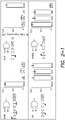
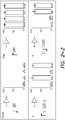
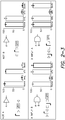
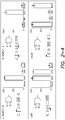
- FIG. 2 A set of logic gates is shown in FIG. 2 .
- Each panel of FIG. 2 is representative of a synthetic logic and memory system (16 total systems/panels) and each system includes (a) a genetic construct containing an N -acyl homoserine lactone (AHL)-inducible promoter operably linked to a nucleic acid sequence encoding Bxb1 recombinase (not depicted), (b) a genetic construct containing an anhydrotetracycline (aTc)-inducible promoter operably linked to a nucleic acid sequence encoding phiC31 recombinase (not depicted), and (c) one of sixteen logic gates (depicted).
- AHL N -acyl homoserine lactone
- aTc anhydrotetracycline
- 2 includes one of sixteen logic gates: NOT, AND, OR, NOT, NOR, NAND, XOR, XNOR, A IMPLY B, B IMPLY A, A NIMPLY B, B NIMPLY A, A, B, FALSE or TRUE.
- input A represents the addition of AHL to the logic and memory system, which induces expression of Bxb1 recombinase, which in turn catalyzes recombination of complementary Bxb1 attB (forward) and Bxb1 attP (reverse) recombination recognition sites (schematized as triangles in FIG. 2 ).
- input B represents the addition of aTc to the system, which induces expression of phiC31 recombinase, which in turn catalyzes recombination of complementary phiC31 attB (forward) and phiC31 attP (reverse) recombination recognition sites (schematized as brackets in FIG. 2 ).
- AHL and aTc are examples of inputs for the logic gates described herein. The invention contemplates the use of other inputs, which may be chosen by the end-user and used interchangeably with or in place of AHL and aTc.
- recombinases Bxbl and phiC31 are examples of recombinases (and recognition sites) that may be used in accordance with the invention.
- the invention contemplates the use of other recombinases/recognition sites, which may be chosen by the end-user and used interchangeably with or in place of Bxbl and/or phiC31 to catalyze inversion or excision of DNA. Examples of other recombinases/recognition sites are described below.
- the output nucleic acid sequence, gfp depicted in FIG. 2 encodes the protein product green fluorescent protein (GFP), it should be understood that gfp may be substituted with any output nucleic acid sequence.
- GFP protein product green fluorescent protein
- logic gates of the invention (AND, OR, NOT A, NOT B, NOR, NAND, XOR, XNOR, A IMPLY B, B IMPLY A, A NIMPLY B, B NIMPLY A, A, B, FALSE and TRUE) are described below, which provide for all two-input Boolean logic functions.
- Logic gates that include "two-input" Boolean logic functions include AND, OR, NOR, NAND, XOR, XNOR, A IMPLY B, B IMPLY A, A NIMPLY B and B NIMPLY A.
- a logic gate or a plurality of logic gates is considered to provide all two-input Boolean logic functions if the logic gates or the plurality of logic gates includes AND, OR, NOR, NAND, XOR, XNOR, A IMPLY B, B IMPLY A, A NIMPLY B and B NIMPLY A logic gates.
- the individual logic gates of the invention are not limited to the genetic circuit constructs depicted in FIG. 2 . Any number of the genetic elements of Table 1 may be arranged in a variety of locations and orientations in a given genetic circuit construct of a logic gate to achieve the desired output. For example, alternative genetic circuit constructs for logic gates NOR, AND and XOR are depicted in FIG. 3 .
- a promoter is considered to be “operably linked” when it is in a correct functional location and orientation in relation to a nucleic acid sequence it regulates to control ("drive") transcriptional initiation and/or expression of that sequence.
- a promoter is said to be “conditionally operably linked” when, upon a genetic recombination event, it is placed in a correct functional location and orientation in relation to a nucleic acid sequence it regulates.
- An "inverted” genetic element e.g ., inverted promoter, inverted terminator, inverted output nucleic acid sequence
- inverted promoter e.g ., inverted promoter, inverted terminator, inverted output nucleic acid sequence
- a genetic element In its inverted, reverse orientation, a genetic element is non-functional (e.g ., not operably linked to another genetic element such as an output nucleic acid sequence). Function of the genetic element can be restored upon recombination of flanking complementary recognition sites and subsequent inversion of the genetic element back to its correct orientation.
- an inverted promoter flanked by recombination recognition sites may be considered to be "conditionally operably linked" to a downstream output nucleic acid sequence if, upon recombination of the flanking complementary recognition sites, the promoter is oriented such that what was the non-coding strand is now the coding strand, and the promoter is able to control transcriptional initiation and/or expression of the output nucleic acid sequence.
- an inverted output nucleic acid sequence flanked by recombination recognition sites may be "conditionally operably linked" to an upstream promoter if, upon recombination of the flanking recognition sites, the output nucleic acid sequence is oriented such that what was the non-coding strand is now the coding strand, and the upstream promoter is able to control transcriptional initiation and/or expression of the output nucleic acid.
- Illustrative examples of a promoter operably linked to an output nucleic acid sequence are shown in the NOR, NAND, TRUE, NOT A, NOT B and XNOR logic gates of FIG. 2 .
- FIG. 2 Illustrative examples of a promoter conditionally operably linked to an output nucleic acid sequence are shown in the AND, OR, A, B, A NIMPLY B, B NIMPLY A and XOR logic gates of FIG. 2 .
- Logic gates A IMPLY B and B IMPLY A contain both a promoter that is operably linked to an output nucleic acid sequence and a promoter that is conditionally operably linked to an output nucleic acid sequence.
- an output nucleic acid sequence is considered to be downstream of a genetic element if the output nucleic acid sequence is located toward the 3' end and the genetic element is located toward the 5' end of the coding (sense) strand.
- One genetic element is considered to be "immediately downstream" of another genetic element the two are proximal to each other ( e.g., no other genetic element, such as those listed in Table 1, is located between the two).
- the simplest Boolean logic gate is referred to as a NOT gate. It takes one input and produces as output its opposite.
- exemplary NOT A and NOT B logic gates where A (AHL) and B (aTc) are inputs ( FIG. 2 ).
- the NOT A gate in FIG. 2 includes a constitutive promoter (referred to herein for simplicity as a promoter) operably linked to an output nucleic acid sequence, gfp, flanked by complementary recombinase recognition sites, Bxbl attB and Bxb1 attP.
- Bxb1 recombinase When AHL is added to the system, Bxb1 recombinase is expressed, and Bxb1 attB and Bxbl attP recombine, resulting in inversion of gfp such that its transcription is no longer controlled by the promoter. Conversely, when aTc, and not AHL, is added to the system, Bxb1 recombinase is not expressed, Bxb1 attB and Bxb1 attP do not recombine, and the promoter controls gfp transcription. Thus, GFP is expressed only in the absence of AHL.
- the NOT B gate in FIG. 2 includes a promoter flanked by complementary recombinase recognition sites phiC31 attB and phiC31 attP and operably linked to gfp.
- aTc complementary recombinase recognition sites
- phiC31 attB and phiC31 attP recombine, resulting in inversion of the promoter such that it no longer controls transcription of gfp.
- AHL is added to the system, and not aTc
- phiC31 recombinase is not expressed, phiC31 attB and phiC31 attP do not recombine, and the promoter controls gfp transcription.
- GFP is expressed only in the absence of aTc.
- the AND gate is another simple Boolean logic gate. It performs a logical "and" operation on two inputs, A and B.
- the AND gate in FIG. 2 includes an inverted promoter flanked by phiC31 attB and phiC31 attP conditionally operably linked to inverted gfp flanked by Bxbl attB and Bxb1 attP.
- Bxb1 recombinase When only AHL is added to the system, Bxb1 recombinase is expressed, and Bxb1 attB and Bxb1 attP recombine to orient gfp along the coding strand in the 5' to 3' direction; however, without aTc to activate recombination of phiC31 attB and phiC31 attP , the promoter remains inverted and cannot control gfp transcription.
- phiC31 recombinase when only aTC is added to the system, phiC31 recombinase is expressed, and phiC31 attB and phiC31 attP recombine to orient the promoter along the coding strand in the 5' to 3' direction; however without AHL to activate recombination of Bxbl attB and Bxbl attP, gfp remains inverted.
- GFP is expressed only in the presence of both AHL and aTc.
- the OR gate performs a logical "or" operation on input A or input B.
- the OR gate in FIG. 2 includes an inverted promoter flanked by Bxbl attB and Bxb1 attP upstream of an inverted promoter flanked by phiC31 attB and phiC31 attP, each inverted promoter conditionally operably linked to gfp.
- Bxb1 recombinase is expressed, and Bxbl attB and Bxb1 attP recombine to orient the promoter along the coding strand in the 5' to 3' direction to control gfp transcription.
- GFP is expressed in the presence of AHL or aTc or both.
- the NOR gate is a combination of an OR gate with a NOT gate.
- the NOR gate in FIG. 2 includes a promoter operably linked to gfp with two inverted terminators located therebetween, each terminator flanked by different complementary recombinase recognition sites.
- AHL is added to the system, Bxb1 recombinase is expressed, and Bxb1 attB and Bxb1 attP recombine to orient the terminator along the coding strand in the 5' to 3' direction, thereby terminating gfp transcription.
- GFP is expressed only in the absence of both AHL and aTc.
- the NAND gate is a combination of an AND gate with a NOT gate.
- the NAND gate in FIG. 2 includes two promoters operably linked to gfp, each promoter flanked by different complementary recombinase recognition sites.
- Bxb1 recombinase is expressed, and Bxb1 attB and Bxb1 attP recombine to invert the upstream promoter; however, without aTc to activate recombination of phiC31 attB and phiC31 attP, the downstream promoter remains operably linked and in control of gfp transcription.
- the XOR gate is an "exclusive or" gate.
- the XOR gate in FIG. 2 includes an inverted promoter conditionally operably linked to gfp and flanked by Bxb1 attB and Bxb1 attP and phiC31 attB and phiC31 attP.
- Bxb1 recombinase is expressed, and Bxb1 attB and Bxb1 attP recombine to orient the promoter along the coding strand in the 5' to 3' direction to control gfp transcription.
- the XNOR gate is an "exclusive nor" gate.
- the XNOR gate in FIG. 2 includes a promoter operably linked to gfp, which is flanked by Bxb1 attB and Bxb1 attP and phiC31 attB and phiC31 attP.
- Bxbl recombinase is expressed, and Bxb1 attB and Bxb1 attP recombine to invert gfp along the non-coding strand where it is not controlled by the promoter.
- the invention also provides A IMPLY B gates (A AND NOT B) and B IMPLY A gates (B AND NOT A).
- the A IMPLY B gate in FIG. 2 includes a promoter (operably linked to gfp ) flanked by Bxb1 attB and Bxb1 attP and an inverted promoter (conditionally operably linked to gfp ) flanked by phiC31 attB and phiC31 attP positioned therebetween.
- AHL is added to the system
- the upstream promoter is inverted, and gfp is not transcribed.
- aTc is added to the system, the downstream promoter is oriented along the coding strand in the 5' to 3' direction to control gfp transcription.
- GFP is expressed in the presence of aTc, in the presence of both AHL and aTc, or in the absence of both; however, GFP is not expressed in the presence of only AHL.
- the B IMPLY A gate in FIG.2 includes an inverted promoter (conditionally operably linked to gfp ) flanked by Bxb1 attB and Bxb1 attP located upstream of a promoter (operably linked to gfp ) flanked by phiC31 attB and phiC31 attP.
- AHL is added to the system
- the upstream promoter is oriented along the coding strand in the 5' to 3' direction to control gfp transcription.
- aTc is added to the system, the downstream promoter is inverted, and gfp is not transcribed.
- GFP is expressed in the presence of AHL, in the presence of both AHL and aTc, or in the absence of both; however, GFP is not expressed in the presence of only aTc.
- the invention also provides A NIMPLY B and B NIMPLY A gates.
- the A NIMPLY B gate in FIG. 2 includes a promoter flanked by phiC31 attB and phiC31 attP and conditionally operably linked to inverted gfp, which is flanked by Bxb1 attB and Bxb1 attP.
- aTc When aTc is added to the system, the upstream promoter is inverted, and gfp is not transcribed.
- gfp is oriented along the coding strand in the 5' to 3' direction and is transcribed. Thus, GFP is expressed in the presence of only AHL.
- the B NIMPLY A gate includes an inverted promoter flanked by phiC31 attB and phiC31 attP and conditionally operably linked to gfp, and an inverted terminator flanked by Bxb1 attB and Bxb1 attP positioned therebetween.
- the upstream promoter is oriented along the coding strand in the 5' to 3' direction, and gfp is transcribed.
- the terminator is oriented along the coding strand in the 5' to 3' direction, and gfp is not transcribed.
- GFP is expressed in the presence of only aTc.
- the invention also provides A and B gates.
- the A gate in FIG. 2 includes a promoter conditionally operably linked to inverted gfp, which is flanked by Bxb1 attB and Bxb1 attP. GFP is expressed when AHL is present in the system.
- the B gate in FIG. 2 includes an inverted promoter flanked by phiC31 attB and phiC31 attP and conditionally operably linked to gfp. GFP is expressed when aTc is added to the system.
- the invention also provides TRUE and FALSE gates.
- the TRUE gate in FIG. 2 includes a promoter operably linked to gfp. GFP is expressed independent of the input to the system.
- the FALSE gate of the invention includes gfp immediately downstream of (e.g., adjacent to) an inverted promoter. GFP is never expressed, and this is also independent of the input to the system.
- recombinases used to impart stable, DNA-base memory to the logic and memory systems of the invention.
- a "recombinase,” as used herein, is a site-specific enzyme that recognizes short DNA sequence(s), which sequence(s) are typically between about 30 base pairs (bp) and 40 bp, and that mediates the recombination between these recombinase recognition sequences, which results in the excision, integration, inversion, or exchange of DNA fragments between the recombinase recognition sequences.
- a “genetic element,” as used herein, refers to a sequence of DNA that has a role in gene expression. For example, a promoter, a transcriptional terminator, and a nucleic acid encoding a product (e.g., a protein product) is each considered to be a genetic element.
- Recombinases can be classified into two distinct families: serine recombinases (e.g ., resolvases and invertases) and tyrosine recombinases (e.g ., integrases), based on distinct biochemical properties. Serine recombinases and tyrosine recombinases are further divided into bidirectional recombinases and unidirectional recombinases.
- bidirectional serine recombinases include, without limitation, ⁇ -six, CinH, ParA and ⁇ ; and examples of unidirectional serine recombinases include, without limitation, Bxb1, ⁇ C31, TP901, TG1, ⁇ BT1, R4, ⁇ RV1, ⁇ FC1, MR11, A118, U153 and gp29.
- bidirectional tyrosine recombinases include, without limitation, Cre, FLP, and R; and unidirectional tyrosine recombinases include, without limitation, Lambda, HK101, HK022 and pSAM2.
- the serine and tyrosine recombinase names stem from the conserved nucleophilic amino acid residue that the recombinase uses to attack the DNA and which becomes covalently linked to the DNA during strand exchange. Recombinases have been used for numerous standard biological applications, including the creation of gene knockouts and the solving of sorting problems [35-38].
- recombinases bind to these repeated sequences, which are specific to each recombinase, and are herein referred to as "recombinase recognition sequences" or "recombinase recognition sites.”
- recombinase recognition sequences or "recombinase recognition sites.”
- a recombinase is "specific for" a recombinase recognition site when the recombinase can mediate inversion or excision between the repeat DNA sequences.
- a recombinase may also be said to recognize its "cognate recombinase recognition sites," which flank an intervening genetic element (e.g ., promoter, terminator, or output nucleic acid sequence).
- a genetic element is said to be "flanked” by recombinase recognition sites when the element is located between and immediately adjacent to two repeated DNA sequences.
- the recombinase recognition sites do not overlap each other. However, in other embodiments, recombinase recognition sites do overlap each other, such as described hereinbelow (see, for example, the circuits described in Example 5), which permits greatly increased combinatorial complexity.
- Inversion recombination happens between two short, inverted, repeated DNA sequences.
- a DNA loop formation assisted by DNA bending proteins, brings the two repeat sequences together, at which point DNA cleavage and ligation occur.
- This reaction is ATP independent and requires supercoiled DNA.
- the end result of such an inversion recombination event is that the stretch of DNA between the repeated site inverts (i.e., the stretch of DNA reverses orientation) such that what was the coding strand is now the non-coding strand and vice versa. In such reactions, the DNA is conserved with no net gain or no loss of DNA.
- integration occurs between two short, repeated DNA sequences that are oriented in the same direction.
- the intervening DNA is excised/removed.
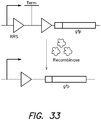
- an AND gate can be assembled by placing a terminator between each of two different sets of recombinase sites oriented for excision, flanked by a promoter and an output such as a GFP-encoding sequence.
- both terminators must be excised by input-dependent action of the recombinase(s) to permit readthrough from the promoter to the GFP-encoding sequence.
- two inputs are needed to excise both terminators to generate output.
- Recombinases can also be classified as irreversible or reversible.
- an "irreversible recombinase” refers to a recombinase that can catalyze recombination between two complementary recombination sites, but cannot catalyze recombination between the hybrid sites that are formed by this recombination without the assistance of an additional factor.
- an "irreversible recognition site” refers to a recombinase recognition site that can serve as the first of two DNA recognition sequences for an irreversible recombinase and that is modified to a hybrid recognition site following recombination at that site.
- a "complementary irreversible recognition site” refers to a recombinase recognition site that can serve as the second of two DNA recognition sequences for an irreversible recombinase and that is modified to a hybrid recombination site following homologous recombination at that site.
- attB and attP are the irreversible recombination sites for Bxb1 and phiC31 recombinases- attB is the complementary irreversible recombination site of attP, and vice versa.
- the attB/attP sites can be mutated to create orthogonal B/P pairs that only interact with each other but not the other mutants [72]. This allows a single recombinase to control the excision or integration or inversion of multiple orthogonal B/P pairs.
- the phiC31 ( ⁇ C31) integrase catalyzes only the attB ⁇ attP reaction in the absence of an additional factor not found in eukaryotic cells.
- the recombinase cannot mediate recombination between the attL and attR hybrid recombination sites that are formed upon recombination between attB and attP. Because recombinases such as the phiC31 integrase cannot alone catalyze the reverse reaction, the phiC31 attB ⁇ attP recombination is stable.
- Irreversible recombinases and nucleic acids that encode the irreversible recombinases, are described in the art and can be obtained using routine methods.
- irreversible recombinases include, without limitation, phiC31 ( ⁇ C31) recombinase (SEQ ID NO:11), coliphage P4 recombinase [39], coliphage lambda integrase [40], Listeria A118 phage recombinase [41], and actinophage R4 Sre recombinase [42], HK101, HK022, pSAM2, Bxb1, TP901, TG1, ⁇ BT1, ⁇ RV1, ⁇ FC1, MR11, U153 and gp29.
- a "reversible recombinase” refers to a recombinase that can catalyze recombination between two complementary recombinase recognition sites and, without the assistance of an additional factor, can catalyze recombination between the sites that are formed by the initial recombination event, thereby reversing it.
- the product-sites generated by recombination are themselves substrates for subsequent recombination.
- Examples of reversible recombinase systems include, without limitation, the Cre-lox and the Flp-frt systems, R, ⁇ -six, CinH, ParA and ⁇ .
- recombinases provided herein are not meant to be exclusive examples of recombinases that can be used in embodiments of the invention.
- the complexity of logic and memory systems of the invention can be expanded by mining databases for new orthogonal recombinases or designing synthetic recombinases with defined DNA specificities [20,21].
- Other examples of recombinases that are useful in the synthetic logic and memory systems described herein are known to those of skill in the art, and any new recombinase that is discovered or generated is expected to be able to be used in the different embodiments of the invention.
- the recombinase is serine recombinase. Thus, in some embodiments, the recombinase is considered to be irreversible. In some embodiments, the recombinase is a tyrosine recombinase. Thus, in some embodiments, the recombinase is considered to be reversible.
- the recombinase comprises the sequence of Bxb1 recombinase as set forth in SEQ ID NO:8 (Table 2), and the corresponding Bxbl attB and Bxb1 attP recombinase recognition sequences as set forth in SEQ ID NO:9 and SEQ ID NO:10, respectively.
- the recombinase comprises the sequence of phiC31 ( ⁇ C31) recombinase as set forth in SEQ ID NO:11 (Table 2), and the corresponding phiC31 attB and phiC31 attP recombinase recognition sequences as set forth in SEQ ID NO: 12 and SEQ ID NO: 13, respectively.
- promoter sequences for use in the recombinase-based synthetic logic and memory systems of the invention.
- a “promoter” refers to a control region of a nucleic acid sequence at which initiation and rate of transcription of the remainder of a nucleic acid sequence are controlled.
- a promoter may also contain subregions at which regulatory proteins and molecules may bind, such as RNA polymerase and other transcription factors. Promoters may be constitutive, inducible, activatable, repressible, tissue-specific or any combination thereof.
- a promoter drives expression or drives transcription of the nucleic acid sequence that it regulates.
- "operably linked” and “under control” indicate that a promoter is in a correct functional location and/or orientation in relation to a nucleic acid sequence it regulates to control transcriptional initiation and/or expression of that sequence.
- An "inverted promoter,” as described above, is a promoter in which the nucleic acid sequence is in the reverse orientation, such that what was the coding strand is now the non-coding strand, and vice versa. Inverted promoter sequences can be used in various embodiments of the invention to regulate the state of a logic gate (e.g., high output, "ON,” or low/no output, "OFF").
- the promoter is an inverted promoter, flanked by complementary recombinase recognition sites that, upon recombination of the sites, inverts to the correct orientation and drives expression of an operably linked nucleic acid sequence.
- a promoter may or may not be used in conjunction with an "enhancer,” which refers to a cis-acting regulatory sequence involved in the transcriptional activation of a nucleic acid sequence downstream of the promoter.
- the enhancer may be located at any functional location before or after the promoter and/or the encoded nucleic acid.
- a promoter is classified as strong or weak according to its affinity for RNA polymerase (and/or sigma factor); this is related to how closely the promoter sequence resembles the ideal consensus sequence for the polymerase.
- the strength of a promoter may depend on whether initiation of transcription occurs at that promoter with high or low frequency. Different promoters with different strengths may be used to construct logic gates with different digitally settable levels of gene output expression (e.g ., the level of gene expression initiated from a weak promoter is lower than the level of gene expression initiated from a strong promoter).
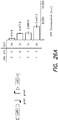
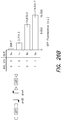
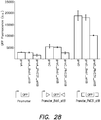
- the data shown in FIGs. 26A-26C demonstrate that various digital combinations of the input inducers result in multiple levels of analog gene expression outputs based on the varying strengths of the promoters used and the sum of their respective outputs.
- a promoter may be one naturally associated with a gene or sequence, as may be obtained by isolating the 5' non-coding sequences located upstream of the coding segment and/or exon of a given gene or sequence. Such a promoter can be referred to as "endogenous.”
- an enhancer may be one naturally associated with a nucleic acid sequence, located either downstream or upstream of that sequence.
- a coding nucleic acid segment may be positioned under the control of a recombinant or heterologous promoter, which refers to a promoter that is not normally associated with the encoded nucleic acid sequence in its natural environment.
- a recombinant or heterologous enhancer refers to an enhancer not normally associated with a nucleic acid sequence in its natural environment.
- promoters or enhancers may include promoters or enhancers of other genes; promoters or enhancers isolated from any other prokaryotic, viral or eukaryotic cell; and synthetic promoters or enhancers that are not "naturally occurring" such as, for example, those that contain different elements of different transcriptional regulatory regions and/or mutations that alter expression through methods of genetic engineering that are known in the art.
- sequences may be produced using recombinant cloning and/or nucleic acid amplification technology, including PCR, in connection with the logic gates disclosed herein (see U.S. Pat. No. 4,683,202 and U.S. Pat. No. 5,928,906 ).
- control sequences that direct transcription and/or expression of sequences within non-nuclear organelles such as mitochondria, chloroplasts and the like, may be used in accordance with the invention.
- an “inducible promoter” is one that is characterized by initiating or enhancing transcriptional activity when in the presence of, influenced by or contacted by an inducer or inducing agent.
- An “inducer” or “inducing agent” may be endogenous or a normally exogenous compound or protein that is administered in such a way as to be active in inducing transcriptional activity from the inducible promoter.
- Inducible promoters for use in accordance with the invention may function in both prokaryotic and eukaryotic host organisms.
- mammalian inducible promoters are used.
- Examples of mammalian inducible promoters for use herein include, without limitation, promoter type P Act :P AIR , P ART , P BIT , P CR5 , P CTA , P ETR , P NIC , P PIP , P ROP , P SPA /P SCA , P TET , P TtgR , promoter type P Rep :P CuO , P ETR ON8, P NIC , P PIR ON, P SCA ON8, P TetO , P UREX8 , promoter type P Hyb :tetO 7 -ETR 8 -P hCMVmin , tetO 7 -PIR 3 -ETR 8 -P hCMVmin , and scbR 8 - P
- inducible promoters from other organisms may be used.
- non-mammalian inducible promoters include, without limitation, Lentivirus promoters (e.g ., EF ⁇ , CMV, Human SynapsinI (hSynI), CaMKII ⁇ , hGFAP and TPH-2) and Adeno-Associated Virus promoters (e.g ., CaMKII ⁇ (AAV5), hSynI (AAV2), hThy1 (AAV5), fSST (AAV1), hGFAP (AAV5, AAV8), MBP (AAV8), SST (AAV2)).
- Lentivirus promoters e.g EF ⁇ , CMV, Human SynapsinI (hSynI), CaMKII ⁇ , hGFAP and TPH-2
- Adeno-Associated Virus promoters e.g ., CaMKII ⁇ (AAV5), hSynI (AAV2),
- the administration or removal of an inducer results in a switch between the "ON” or “OFF” states of the transcription of the operably linked nucleic acid sequence (e.g ., nucleic acid encoding a recombinase).
- the "ON" state of a promoter operably linked to a nucleic acid sequence refers to the state when the promoter is actively driving transcription of the nucleic acid sequence (i.e., the linked nucleic acid sequence is expressed).
- the "OFF" state of a promoter operably linked, or conditionally operably linked, to a nucleic acid sequence refers to the state when the promoter is not actively driving transcription of the nucleic acid sequence (i.e., the linked nucleic acid sequence is not expressed).
- An inducible promoter for use in accordance with the invention may be induced by (or repressed by) one or more physiological condition(s), such as changes in pH, temperature, radiation, osmotic pressure, saline gradients, cell surface binding, and the concentration of one or more extrinsic or intrinsic inducing agent(s).
- the extrinsic inducer or inducing agent may comprise, without limitation, amino acids and amino acid analogs, saccharides and polysaccharides, nucleic acids, protein transcriptional activators and repressors, cytokines, toxins, petroleum-based compounds, metal containing compounds, salts, ions, enzyme substrate analogs, hormones or combinations thereof.
- the condition(s) and/or agent(s) that induce or repress an inducible promoter can be input(s) of the logic gates described herein.
- inducible promoters for use in accordance with the invention include any inducible promoter described herein or known to one of ordinary skill in the art.
- inducible promoters include, without limitation, chemically/biochemically-regulated and physically- regulated promoters such as alcohol-regulated promoters, tetracycline-regulated promoters (e.g ., anhydrotetracycline (aTc)-responsive promoters and other tetracycline-responsive promoter systems, which include a tetracycline repressor protein (tetR), a tetracycline operator sequence (tetO) and a tetracycline transactivator fusion protein (tTA)), steroid-regulated promoters (e.g ., promoters based on the rat glucocorticoid receptor, human estrogen receptor, moth ecdysone receptors, and promoters from the steroid/retinoid/thyroid receptor superfamily), metal-regulated
- the inducer used in accordance with the invention is an N-acyl homoserine lactone (AHL), which is a class of signaling molecules involved in bacterial quorum sensing. Quorum sensing is a method of communication between bacteria that enables the coordination of group based behavior based on population density.
- AHL can diffuse across cell membranes and is stable in growth media over a range of pH values.
- AHL can bind to transcriptional activators such as LuxR and stimulate transcription from cognate promoters.
- the inducer used in accordance with the invention is anhydrotetracycline (aTc), which is a derivative of tetracycline that exhibits no antibiotic activity and is designed for use with tetracycline-controlled gene expression systems, for example, in bacteria.
- aTc anhydrotetracycline
- a terminator is a nucleic acid sequence that causes transcription to stop.
- a terminator may be unidirectional or bidirectional. It is comprised of a DNA sequence involved in specific termination of an RNA transcript by an RNA polymerase.
- a terminator sequence prevents transcriptional activation of downstream nucleic acid sequences by upstream promoters.
- a terminator that ends the production of an RNA transcript is contemplated.
- a terminator may be necessary in vivo to achieve desirable output expression levels (e.g., low output levels).
- the most commonly used type of terminator is a forward terminator. When placed downstream of a nucleic acid sequence that is usually transcribed, a forward transcriptional terminator will cause transcription to abort.
- bidirectional transcriptional terminators are provided, which usually cause transcription to terminate on both the forward and reverse strand.
- reverse transcriptional terminators are provided, which usually terminate transcription on the reverse strand only.
- Rho-independent terminators are generally composed of palindromic sequence that forms a stem loop rich in G-C base pairs followed by several T bases.
- the conventional model of transcriptional termination is that the stem loop causes RNA polymerase to pause, and transcription of the poly-A tail causes the RNA:DNA duplex to unwind and dissociate from RNA polymerase.
- the terminator region may comprise specific DNA sequences that permit site-specific cleavage of the new transcript so as to expose a polyadenylation site. This signals a specialized endogenous polymerase to add a stretch of about 200 A residues (polyA) to the 3' end of the transcript. RNA molecules modified with this polyA tail appear to more stable and are translated more efficiently.
- a terminator may comprise a signal for the cleavage of the RNA.
- the terminator signal promotes polyadenylation of the message.
- the terminator and/or polyadenylation site elements may serve to enhance output nucleic acid levels and/or to minimize read through between nucleic acids.
- Terminators for use in accordance with the invention include any terminator of transcription described herein or known to one of ordinary skill in the art.
- Examples of terminators include, without limitation, the termination sequences of genes such as, for example, the bovine growth hormone terminator, and viral termination sequences such as, for example, the SV40 terminator, spy, yejM, secG-leuU, thrLABC, rrnB T1, hisLGDCBHAFI, metZWV, rrnC, xapR, aspA and arcA terminator.
- the termination signal may be a sequence that cannot be transcribed or translated, such as those resulting from a sequence truncation.
- output nucleic acid sequences and output products are provided for use in accordance with the invention.
- output products refer to gene products that may be used as markers of specific states of the logic gates and systems described herein.
- An output nucleic acid sequence of the invention can encode for a protein or RNA that is used to track or mark the state of the cell upon receiving a particular input. Such output products can be used to distinguish between various states ( e.g ., "ON” or "OFF") of a cell.
- Representative output products for the logic and memory systems of the invention include, without limitation, reporter proteins, transcriptional repressors, transcriptional activators, selection markers, enzymes, receptor proteins, ligand proteins, RNAs, riboswitches, short-hairpin RNAs and recombinases.
- Aspects of the invention relate to logic and memory systems that include a plurality of logic gates (e.g., at least two logic gates). It should be understood that in such systems, each logic gate may include one or more different output nucleic acid (e.g., that encode(s) different, or unique, output product(s)). Thus, a single cell or system may include at least 2, 3, 4, 5, 6, 7, 8, 9, 10 or more different output nucleic acids.
- the output nucleic acid sequence of the invention may encode a "reporter.”
- a reporter refers to a protein that can be used to measure gene expression and generally produce a measurable signal such as fluorescence, luminescence or color. The presence of a reporter in a cell or organism is readily observed.
- fluorescent proteins e.g ., GFP
- luciferases cause a cell to catalyze a reaction that produces light
- enzymes such as ⁇ -galactosidase convert a substrate to a colored product.
- reporters may be used to quantify the strength or activity of the input received by the systems of the invention.
- reporters can be fused in-frame to other protein coding sequences to identify where a protein is located in a cell or organism. Reporters for use in accordance with the invention include any reporter described herein or known to one of ordinary skill in the art.
- microscopy can be a useful technique for obtaining both spatial and temporal information on reporter activity, particularly at the single cell level.
- flow cytometers can be used for measuring the distribution in reporter activity across a large population of cells.
- plate readers may be used for taking population average measurements of many different samples over time.
- instruments that combine such various functions may be used, such as multiplex plate readers designed for flow cytometers, and combination microscopy and flow cytometric instruments.
- Fluorescent proteins may be used for visualizing or quantifying the output of logic gates/systems. Fluorescence can be readily quantified using a microscope, plate reader or flow cytometer equipped to excite the fluorescent protein with the appropriate wavelength of light. Several different fluorescent proteins are available, thus multiple gene expression measurements can be made in parallel. Examples of genes encoding fluorescent proteins that may be used in accordance with the invention include, without limitation, those proteins provided in U.S. Patent Application No. 2012/0003630 (see Table 59), incorporated herein by reference.
- Luciferases may also be used for visualizing or quantifying the output of logic gates/systems, particularly for measuring low levels of gene expression, as cells tend to have little to no background luminescence in the absence of a luciferase. Luminescence can be readily quantified using a plate reader or luminescence counter. Examples of genes encoding luciferases for that may be used in accordance with the invention include, without limitation, dmMyD88-linker-Rluc, dmMyD88-linker-Rluc-linker-PEST191, and firefly luciferase (from Photinus pyralis).
- Enzymes that produce colored substrates may also be used for visualizing or quantifying the output of logic gates/systems. Enzymatic products may be quantified using spectrophotometers or other instruments that can take absorbance measurements including plate readers. Like luciferases, enzymes such as ⁇ -galactosidase can be used for measuring low levels of gene expression because they tend to amplify low signals. Examples of genes encoding colorimetric enzymes that may be used in accordance with the invention include, without limitation, lacZ alpha fragment, lacZ (encoding beta-galactosidase, full-length), and xylE.
- the output nucleic acid sequence of the invention may encode a transcriptional activator or repressor, the production of which by an output gene can result in a further change in state of the cell, and provide additional input signals to subsequent or additional logic gates.
- Transcriptional regulators either activate or repress transcription from cognate promoters. Transcriptional activators typically bind nearby to transcriptional promoters and recruit RNA polymerase to directly initiate transcription. Repressors bind to transcriptional promoters and sterically hinder transcriptional initiation by RNA polymerase. Other transcriptional regulators serve as either an activator or a repressor depending on where it binds and cellular conditions.
- Transcriptional regulators for use in accordance with the invention include any transcriptional regulator described herein or known to one of ordinary skill in the art.
- Examples of genes encoding transcriptional regulators that may be used in accordance with the invention include, without limitation, those regulators provided in U.S. Patent Application No. 2012/0003630 (see Table 63), incorporated herein by reference.
- the output nucleic acid sequence of the invention may encode a selection marker.
- a selection marker refers to protein coding sequence that confers a selective advantage or disadvantage to a biological unit, such as a cell.
- a common type of prokaryotic selection marker is one that confers resistance to a particular antibiotic.
- cells that carry the selection marker can grow in media despite the presence of antibiotic.
- most plasmids contain antibiotic selection markers so that it is ensured that the plasmid is maintained during cell replication and division, as cells that lose a copy of the plasmid will soon either die or fail to grow in media supplemented with antibiotic.
- a second common type of selection marker is toxic to the cell.
- Positive selection markers are frequently used during cloning to select against cells transformed with the cloning vector and ensure that only cells transformed with a plasmid containing the insert.
- Selection markers for use in accordance with the invention include any selection marker described herein or known to one of ordinary skill in the art. Examples of genes encoding selection markers that may be used in accordance with the invention include, without limitation, those markers provided in U.S. Patent Application No. 2012/0003630 (see Table 64), incorporated herein by reference.
- the output nucleic acid sequence of the invention may encode an enzyme.
- an enzyme is used as a response to a particular input. For example, in response to a particular input received by a logic and memory system of the invention, such as a certain range of toxin concentration present in the environment, the system may turn "ON" a logic gate containing an output nucleic acid sequence that encodes an enzyme that can degrade or otherwise destroy the toxin.
- output products may be "biosynthetic enzymes" that catalyze the conversion of substrates to products.
- biosynthetic enzymes can be used in accordance with the invention to assemble pathways that produce or degrade useful chemicals and materials, in response to specific signals. These combinations of enzymes can reconstitute either natural or synthetic biosynthetic pathways. These enzymes have applications in specialty chemicals, biofuels and bioremediation.
- Enzymes for use in accordance with the invention include any enzyme described herein or known to one of ordinary skill in the art. Examples of genes encoding enzymes that may be used in accordance with the invention include, without limitation, those provided in U.S. Patent Application No. 2012/0003630 , incorporated herein by reference.
- the output nucleic acid sequence of the invention may encode a receptor, ligand or lytic protein.
- Receptors tend to have three domains: an extracellular domain for binding ligands such as proteins, peptides or small molecules, a transmembrane domain and an intracellular or cytoplasmic domain, which frequently can participate in some sort of signal transduction event such as phosphorylation.
- transporters, channels or pumps are used as output products. Transporters are membrane proteins responsible for transport of substances across the cell membrane. Channels are made up of proteins that form transmembrane pores through which selected ions can diffuse. Pumps are membrane proteins that can move substances against their gradients in an energy-dependent process known as active transport.
- nucleic acid sequences encoding proteins and protein domains whose primary purpose is to bind other proteins, ions, small molecules, and other ligands may be used in accordance with the invention.
- Receptors, ligands and lytic proteins for use in accordance with the invention include any receptor, ligand and lytic protein, described herein or known to one of ordinary skill in the art. Examples of genes encoding receptors, ligands and lytic proteins that may be used in accordance with the invention include, without limitation, those provided in U.S. Patent Application No. 2012/0003630 (see Table 73), incorporated herein by reference.
- a cell to be engineered for use with the synthetic logic and memory systems of the invention may be any cell or host cell.
- a "cell” or “cellular system” is the basic structural and functional unit of all known independently living organisms. It is the smallest unit of life that is classified as a living thing. Some organisms, such as most bacteria, are unicellular (consist of a single cell). Other organisms, such as humans, are multicellular.
- a cell for use in accordance with the invention is a prokaryotic cell, which may comprise a cell envelope and a cytoplasmic region that contains the cell genome (DNA) and ribosomes and various sorts of inclusions.
- the cells are bacterial cells.
- bacteria encompasses all variants of bacteria, for example, prokaryotic organisms and cyanobacteria. Bacteria are small (typical linear dimensions of around 1 micron), non-compartmentalized, with circular DNA and ribosomes of 70S. The term bacteria also includes bacterial subdivisions of Eubacteria and Archaebacteria.
- Eubacteria can be further subdivided into gram-positive and gram-negative Eubacteria, which depend upon a difference in cell wall structure. Also included herein are those classified based on gross morphology alone ( e.g., cocci, bacilli).
- the bacterial cells are gram-negative cells, and in some embodiments, the bacterial cells are gram-positive cells.
- Examples of bacterial cells that may be used in accordance with the invention include, without limitation, cells from Yersinia spp., Escherichia spp., Klebsiella spp., Bordetella spp., Neisseria spp., Aeromonas spp., Franciesella spp., Corynebacterium spp., Citrobacter spp., Chlamydia spp., Hemophilus spp., Brucella spp., Mycobacterium spp., Legionella spp., Rhodococcus spp., Pseudomonas spp., Helicobacter spp., Salmonella spp., Vibrio spp., Bacillus spp., Erysipelothrix spp., Salmonella spp., Stremtomyces spp.
- the bacterial cells are from Staphylococcus aureus, Bacillus subtilis, Clostridium butyricum, Brevibacterium lactofermentum, Streptococcus agalactiae, Lactococcus lactis, Leuconostoc lactis, Streptomyces, Actinobacillus actinobycetemcomitans, Bacteroides, cyanobacteria, Escherichia coli, Helobacter pylori, Selnomonas ruminatium, Shigella sonnei, Zymomonas mobilis, Mycoplasma mycoides, Treponema denticola, Bacillus thuringiensis, Staphlococcus lugdunensis, Leuconostoc oenos, Corynebacterium xerosis, Lactobacillus planta rum, Streptococcus faecalis, Bacillus coagulans, Bacill
- a cell for use in accordance with the invention is a eukaryotic cell, which comprises membrane-bound compartments in which specific metabolic activities take place, such as a nucleus.
- eukaryotic cells for use in accordance with the invention include, without limitation, mammalian cells, insect cells, yeast cells ( e.g., Saccharomyces cerevisiae ) and plant cells.
- the eukaryotic cells are from a vertebrate animal.
- vertebrate cells for use in accordance with the invention include, without limitation, reproductive cells including sperm, ova and embryonic cells, and non-reproductive cells, including kidney, lung, spleen, lymphoid, cardiac, gastric, intestinal, pancreatic, muscle, bone, neural, brain and epithelial cells.
- reproductive cells including sperm, ova and embryonic cells
- non-reproductive cells including kidney, lung, spleen, lymphoid, cardiac, gastric, intestinal, pancreatic, muscle, bone, neural, brain and epithelial cells.
- Stem cells including embryonic stem cells, can also be used.
- a non-cellular system such as a virus or phage may be used in accordance with the invention.
- any one or more component(s) of the synthetic logic and memory systems may be introduced, by direct integration of logic system nucleic acids, for example, into a viral genome.
- a virus for use as described herein may be a double-stranded DNA (dsDNA) virus (e.g ., Adenoviruses, Herpesviruses, Poxviruses), a single-stranded DNA (ssDNA) viruses ((+)sense DNA) (e.g .
- Parvoviruses a double-stranded RNA (dsRNA) virus (e.g., Reoviruses); a (+)ssRNA viruses ((+)sense RNA) (e.g. Picornaviruses, Togaviruses); (-)ssRNA virus ((-)sense RNA) (e.g ., Orthomyxoviruses, Rhabdoviruses); a single-stranded RNA (ssRNA)-Reverse Transcriptase viruses ((+)sense RNA with DNA intermediate in life-cycle) ( e.g., Retroviruses); or a dsDNA-Reverse Transcriptase virus (e.g., Hepadnaviruses).
- dsRNA double-stranded RNA
- dsRNA double-stranded RNA
- Reoviruses e.g., Reoviruses
- (+)ssRNA viruses ((+)sense RNA) (e.g.
- Viruses may also include plant viruses and bacteriophages or phages.
- phage families that may be used in accordance with the invention include, without limitation, Myoviridae (T4-like viruses; P1-like viruses; P2-like viruses; Mu-like viruses; SPO1-like viruses; phiH-like viruses); Siphoviridae ⁇ -like viruses (T1-like viruses; T5-like viruses; c2-like viruses; L5-like viruses; .psi.M1-like viruses; phiC31-like viruses; N15-like viruses); Podoviridae (T7-like viruses; phi29-like viruses; P22-like viruses; N4-like viruses); Tectiviridae (Tectivirus); Corticoviridae (Corticovirus); Lipothrixviridae (Alphalipothrixvirus, Betalipothrixvirus, Gammalipothrixvirus, Deltalipothrixvirus); Plasmaviridae (Pla
- the cell or cellular system is a "natural cell” (e.g., found in nature; not artificial or synthetic).
- the cell or cellular system is an artificial cell or synthetic cell.
- an "artificial cell” or a “synthetic cell” is a minimal cell formed from artificial parts that can function in ways that a natural cell can function (e.g ., transcribe and translate proteins and generate ATP).
- a host cell in accordance with the invention includes any host cell that, upon transformation or transfection with one or more component(s) of the synthetic logic system (e.g., logic gates) is capable of supporting the activation and expression of the synthetic logic and memory system component(s).
- the synthetic logic system e.g., logic gates
- one or more component(s) of the synthetic logic and memory systems of the invention may be introduced into a cellular or non-cellular system using a vector or plasmid.
- a "vector” is used interchangeably with “plasmid” to refer to a nucleic acid molecule capable of transporting another nucleic acid to which it has been linked.
- Vectors capable of directing the expression of genes and/or nucleic acid sequence to which they are operatively linked are referred to herein as "expression vectors.”
- expression vectors described herein are often in the form of plasmids, which are circular double-stranded DNA loops not bound to chromosome. Expression vectors may be vectors for stable or transient expression of the DNA.
- a vector may be either a self-replicating extrachromosomal vector or a vector which integrates into a host genome.
- Other expression vectors may be used in accordance with the invention including, without limitation, episomes, bacteriophages and viral vectors, and such vectors can integrate into the host's genome or replicate autonomously in the particular cellular system used.
- Other forms of expression vectors known by those skilled in the art which serve the equivalent functions may also be used.
- Vectors comprising nucleic acid sequences of the invention may be "introduced” into cells as polynucleotides by techniques well-known in the art for introducing DNA and RNA into cells.
- transfection refers to the introduction of genetic material (e.g., a vector comprising nucleic acid sequences) into a cell, tissue or organism. Transfection of a cell may be stable or transient. A host cell is considered to be transiently transfected when nucleic acid is introduced into the cell and does not integrate into the host cell's genome.
- Transient transfection may be detected by, for example, enzyme linked immunosorbent assay (ELISA), which detects the presence of a polypeptide encoded by the nucleic acid, or it may be detected by detecting the activity of a protein encoded by the nucleic acid.
- ELISA enzyme linked immunosorbent assay
- a host cell is considered to be stably transfected when nucleic acid is introduced into the cell and does integrate into the host cell's genome. Stably transfected cells pass the introduced nucleic acid to their progeny (i.e. , stable heritability through meiosis).
- Stable transfection of a cell may be detected by Southern blot hybridization of genomic DNA of the cell with nucleic acid sequences, which are capable of binding to one or more of the transgenes, or by polymerase chain reaction of genomic DNA of the cell to amplify transgene sequences.
- a synthetic RNA-processing platform may be used to process mRNAs to separate the 5'untranslated region (UTR) from the downstream gene.
- a sequence encoding a self-cleaving ribozyme e.g ., RiboJ [68]; AGCTGTCACCGGATGTGCTTTCCGGTCTGATGAGTCCGTGAGGACGAAACAGCCT CTACAAATAATTTTGTTTAA [SEQ ID NO:16]
- RiboJ for example, self-cleaves to reduce the impact of the upstream RRSs on translation of the downstream gene.
- the bacterial clustered regularly interspaced short palindromic repeat (CRISPR) pathway may be used to process mRNAs to separate the 5' UTR from the downstream gene [70].
- CRISPR regularly interspaced short palindromic repeat
- a coupled translational system with an upstream "throwaway" open reading frame (ORF) and downstream ORF may be used to generate mRNAs with more reliable and programmable translation of the downstream [71].
- ORF upstream "throwaway" open reading frame
- Other synthetic RNA-processing platforms are also contemplated herein.
- the recombinase-based synthetic logic and memory systems of the invention are useful for, inter alia, engineering complex behavioral phenotypes in cellular systems, such as prokaryotic, eukaryotic and synthetic cells, or in non-cellular systems, including test tubes, viruses and phages.
- the logic and memory systems described herein combine the power of nucleic acid-based engineering methods with computational and systems biology approaches for programming cellular, or biological, state machines, behaviors and pathways for therapeutic, diagnostic and basic science applications.
- a "state machine” refers to any tool that stores the status (or state) of something at a given time and can operate on input(s) to change the status and/or cause an action(s) or output(s) to take place for any given change.
- a state machine typically includes a set of input events, a set of output events, a set of states, a function that maps states and input(s) to output(s), a function that maps states and inputs to new states (which is referred to as a state transition function), and a description of the initial state.
- the synthetic logic and memory systems of the invention may be used for a variety of applications and in many different types of methods, including, but not limited to, bioremediation, biosensing and biomedical therapeutics.
- the logic and memory systems may be used to build multiplexed cellular switches for gene expression or synthetic differentiation cascades.
- Cellular signals can be integrated as inputs to the logic and memory systems by linking the signals to recombinase expression.
- Multicellular systems endowed with logic and memory systems of the invention may also implement distributed computation or synthetic cellular consortia [23-26].
- the synthetic logic and memory systems of the invention may also be used to build "digital-to-analog converters," which translate digital representations back into analog outputs.
- Such systems may be used to reliably set internal system states.
- a digital-to-analog converter composed of a bank of genetic switches (different recombinases and logic gates), each of which is sensitive to a different inducer, provides better control.
- transcription from promoters of varying strengths e.g ., P output,3 > P output,2 > P output,1
- digital combinations of inducers may be used to program defined levels of transcriptional activities.
- Such a circuit may be used in biotechnology applications, where reliable expression of different pathways is needed for programming different modes of operation in engineered cells.
- digital-to-analog converters are useful for providing a multiplexed method for probing synthetic circuits. For example, because each analog level is associated with a distinct digital state, a single analog output can allow one to infer the internal digital state of a synthetic gene network.
- the synthetic logic and memory systems of the invention may be used for detection of arsenic in drinking water and/or a range of toxins and/or heavy metals.
- the systems may be coupled to genetically engineered bacteria, which are capable of digesting and neutralizing toxins and heavy metals. This may be achieved, for example, by the bacteria sensing a specific toxin or heavy metal, and the sensor being directly linked as input for an inducible promoter that controls recombinase expression, which in turn activates the logic/memory system by flipping ( e.g ., activating or de-activating) the gene, promoter or terminator. As a result, the pathway that controls digesting and neutralizing toxins and heavy metals is turned on.
- the methods and uses of the synthetic logic and memory systems as disclosed herein may involve in vivo, ex vivo, or in vitro systems.
- the term "in vivo” refers to assays or processes that occur in or within an organism, such as a multicellular animal. In some embodiments, a method or use can be said to occur in vivo when a unicellular organism, such as a bacteria, is used.
- the term "ex vivo” refers to methods and uses that are performed using a living cell with an intact membrane that is outside of the body of a multicellular animal or plant (e.g ., explants, cultured cells, including primary cells and cell lines, transformed cell lines, and extracted tissue or cells, including blood cells, among others).
- in vitro refers to assays and methods that do not require the presence of a cell with an intact membrane, such as cellular extracts, and may refer to introducing an engineered genetic counter in a non-cellular system, such as a media not comprising cells or cellular systems, such as cellular extracts.
- Serine recombinases Bxbl and phiC31, which target non-identical recognition sites known as attB and attP, were used to irreversibly invert or excise DNA based on the orientation of the surrounding pair of recognition sites [11].
- Bxbl expression via AHL is referred to as input A and phiC31 expression via aTc is referred to as input B.
- the output of the logic and memory systems of the invention were assayed by using green fluorescent protein ( gfp ) as a reporter gene.
- gfp green fluorescent protein
- Recombinase-catalyzed inversion of cascaded promoters can implement OR and NAND logic, depending on the initial orientation of the promoters ( FIG. 2 ).
- flipping i.e., inversion
- Recombinase-catalyzed inversion of cascaded unidirectional terminators can implement AND and NOR logic, depending on the initial orientation of the terminators ( FIG. 1 and FIG. 2 ).
- NOR and NAND gates are universal logic operations and can be assembled together to implement more complex functions [15-17], as is often done in electrical systems.
- biological systems are resource-constrained environments with much fewer parts that are available for synthetic circuit design.
- direct and efficient encoding of complex logic functions, without the need to cascade multiple universal gates together, is implemented.
- B NIMPLY A is equivalent to B AND NOT A; this logic function can be built by cascading an inverted promoter, which is flipped by phiC31 (due to expression of input B), with a downstream inverted terminator, which is flipped by Bxbl (due to expression of input A), and a downstream upright gfp output gene ( FIG. 2 ). In this configuration, gene expression only occurs when B is TRUE and A is FALSE.
- complex XOR and XNOR gates can be implemented with the simplicity of the other logic gates by positioning components between the recombinase-recognition sites of both recombinases ( FIG. 2 and FIG. 3 ).
- the promoter is initially inverted. Any single inversion of the promoter, due to either AHL or aTc, results in GFP expression whereas no inversion of the promoter, due to the absence of AHL and aTc, or double inversion of the promoter, due to the presence of both AHL and aTc, results in the absence of GFP expression ( FIG. 2 ).
- the XOR gate of FIG. 2 the promoter is initially inverted. Any single inversion of the promoter, due to either AHL or aTc, results in GFP expression whereas no inversion of the promoter, due to the absence of AHL and aTc, or double inversion of the promoter, due to the presence of both AHL and aTc, results in the absence of GFP expression ( FIG. 2
- a gfp gene is initially inverted and only single inversions of this gene due to single inputs result in GFP expression.
- the gfp gene is initially upright ( FIG. 2 ).
- the presence of single inputs inverts the gfp gene and abolishes GFP expression, which would otherwise be present ( FIG. 2 ).
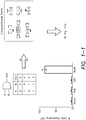
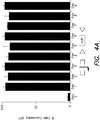
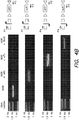
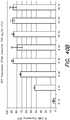
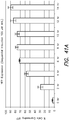
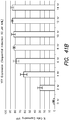
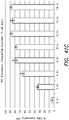
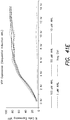
- a key feature of this computational paradigm is that these logic gates maintain stable output memory after inputs are withdrawn. This was demonstrated by allowing an AND gate to be induced to its ON state with both inputs and then repeatedly sub-diluting and growing these cells for 9 days (>90 generations) without the inputs present ( FIG. 4B ). This circuit maintained a high output throughout the entire post-induction period. This property will enable the creation of complex, state-dependent synthetic circuits. Furthermore, unlike transcriptional or post-transcriptional logic, the state of the computations can be detected using PCR even after cell death ( FIG. 4B ). This feature may be used to create cellular biosensors whose states can be interrogated in a multiplexed fashion using high-throughput sequencing techniques.
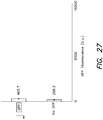
- the relative strengths of the variant promoters with downstream Bxb1 and phiC31 recombinase-recognition sites were determined by assaying GFP fluorescence by flow cytometry ( FIG. 27 ). These results showed that the phiC31 attB site reduced GFP expression from all promoters compared with the Bxbl attB site or no intervening recombinase-recognition site.
- Each digital-to-analog circuit contains a pair of these variant constitutive promoters, each of which drives the expression of GFP only after inducible recombinase-mediated inversion.
- the total GFP output of the circuit when exposed to both inputs is about equal to the GFP level when only AHL is present plus the GFP level when only aTc is present ( FIGs. 26A-26C ).
- the digital-to-analog circuit output was determined by the inputs based on a simple binary code.
- the digital AHL input can be represented as the least-significant bit and the digital aTc input can be represented as the most-significant bit in a binary integer that is scaled to yield the ultimate analog gene expression output.
- constitutive promoters are useful for stable gene expression but are not typically able to dynamically tune gene expression levels or induce gene expression at defined time points [45].
- inducible promoters provide adjustable gene expression but rely on inducers that can be expensive or difficult to scale into higher volumes [45].
- Digital-to-analog converters in accordance with the invention provide an advantageous compromise between constitutive and inducible promoters and can be extended to enable the scalable programming of 2" constitutive output expression levels by the application of n input inducers. Cells containing these circuits only need to be induced transiently to lock them into a defined constitutive level of expression, thus mitigating issues associated with inducer scalability.
- Digital-to-analog circuits of the invention are also useful for multiplexed reporting of digital events with a single analog output. For example, as shown in FIG. 26C , distinct analog expression levels can be uniquely mapped back to their digital input combinations by a simple binary code.
- the invention provides an efficient platform for integrated logic and memory within single cells.
- This modular DNA assembly strategy enables straightforward plug-and-play encoding of logic functions with concomitant memory arising from the ability of recombinases to "write" information in DNA. Because unidirectional recombinases are used, the logic gates of the invention maintain memory of their inputs over time and are not solely conditional on their inputs at a given time. This property enables the construction of biological state machines that implement sequential logic and stable cellular states.
- Recombinases are placed under the control of inducible promoters in S . cerevisiae, including, e.g., those that can be controlled by aTc, IPTG, copper and galactose.
- Recombinases used include phiC31, Bxb1, TP901-1, A118 and U15353.
- Recombinase activity is tested with reporter constructs containing a promoter (e.g., pCYC1, pADH1, pPGK1) and a downstream inverted gene, such as yeast-enhanced gfp (yEGFP), which is positioned between a pair of inverted recombinase recognition sites (RRSs) ( FIG. 32 , left).
- a promoter e.g., pCYC1, pADH1, pPGK1
- yEGFP yeast-enhanced gfp
- Recombinase efficiency is monitored over time with flow cytometry and the measurements confirmed with PCR ( e.g., using specific primers that only amplify when the gene is initially inverted as well as primers that only amplify after the gene is flipped) and DNA sequencing. Recombinase inversion efficiencies may be greater than 90% [46].
- Recombinase orthogonality with respect to each other's RRSs is characterized by crossing all recombinases with all reporter constructs ( FIG. 32 , right). These recombinases are typically highly specific, given the sequence differences between their RRSs.
- a terminator is placed between a constitutive promoter and a downstream yegfp gene ( FIG. 33 ). This terminator is placed between two RRSs oriented in the same direction, thus leading to excision.
- yeast terminators include, without limitation, the CYC1 and ADH1 terminators.
- Synthetic cassettes containing recombinases, promoters and reporters are integrated into genomic loci, including HIS3, TRP1, LEU2, URA3, and HO [47,48] that have been identified as suitable targets for heterologous gene expression.
- insulator elements are introduced into the constructs [49] or yeast artificial chromosomes (YACs) are used.
- the genes are codon-optimized and directed evolution is performed to identify recombinase mutants with elevated activity.
- Recombinase expression can also be tuned, in some instances, by adding degradation tags to the recombinases [50], tuning synthetic upstream open reading frames [51], modifying 5'UTR sequences [52], or mutagenizing promoters [53] to minimize issues with unwanted activity from leakage and poor degradation.
- Recombinase-based circuits for integrated logic and memory can be described by straightforward design rules. For example, when RRSs do not overlap one another and the genetic construct has a straightforward [promoter(s)]-[terminator(s)]-[output] structure ( FIG. 1 ), then gene expression can only occur when: (at least one upstream promoter is upright) AND (no terminators are upright) AND (the output gene is upright).
- the software program provides a state-diagram-to-circuit design process that minimizes the input required for a researcher to develop a state-dependent system wherein a given number of genes are active in a specific pattern or sequence of events.
- Algorithms are validated by creating constructs to match differentiation diagrams where outputs are defined by gene expression at each node. To do so, the software applies a specific set of parts, such as serine recombinases ( e.g ., focusing on unidirectional recombinases for simplicity) and RRSs, promoters, terminators, and gene modules.
- Nodes in the differentiation network are states with specific configurations of these parts to yield the desired gene expression output at each state. These states are linked through recombinase logic, such that a single inversion or excision event causes a transition between states.
- Figure 34 depicts a non-limiting example of a general outline for an algorithm of the invention.
- the user designs a state diagram of interest that behaves in a complex, conditional manner ( FIG. 34A ).
- an input of '1' always results in the added expression of the blue gene to the current set of outputs, while an input of '2' adds the expression of the green gene.
- '3' is the first input, then the original red gene is preserved. Otherwise, the original red gene is switched off, as can be seen in states B and C ( FIG. 34A ).
- This behavior directly results from how the user drew the states, their corresponding outputs and the transitions that link them. Numerous other state machines and design architectures are contemplated herein.
- the provided example utilizes a network for which the full possible set of inputs (e.g., all possible permutations of inputs 1, 2 and 3) is not drawn.
- An initial input of '1' or '2' prevents any further inputs from being delivered productively to the system.
- the user can also define trees where not all possible transitions produce a new output (though technically a new DNA state may be generated).
- the grammar description is a listing of all transitions in the network, such that each entry contains the input at that transition, the state where the transition originates, the state where it terminates, and the outputs of both of these states.
- the program assesses the minimal collection of parts required to achieve the provided network behavior (FIG. 34C).
- the number of gene modules initialized into the program is chosen according to the unique set of total outputs in the network, while the number of regulatory elements is determined by the maximum number of genes expressed simultaneously for all outputs within the network.
- the program will determine how many recombinases are required based upon the number of unique inputs designated by the user.
- the program computes all relevant permutations of the gene expression components and of the recombinase sites separately (FIG. 34D). This reduces the computational burden of the algorithm and also allows for an uncoupled assessment of the underlying logic of the gene regulatory and recombination elements. For both the gene regulatory parts and the recombinase sites, the program accounts for two possible orientations for each component when computing the combinations, depending on the strand of DNA on which that component resides relative to the others. To reduce the computational demand further, the determination of the recombinase combinations can be performed by assuming, at least to a first approximation, that the recombinase sites are interchangeable.
- the program evaluates the fundamental logic of each generated combination. In the case of analyzing gene expression, the program evaluates the location of every gene module in each construct and assesses whether it is active based on the relative orientation and location of gene regulatory elements. Constructs with the same gene outputs are then grouped together (FIG. 34E). To enhance this further, a scoring approach can be implemented, which analyzes each construct for biological feasibility. Once the gene regulatory constructs have been placed into bins corresponding to gene outputs, the program traverses the entire differentiation diagram by looking at each transition in turn and computing whether candidates in the bins that correspond to the outputs for the start and end state of that transition are separated by a single recombination event. As candidates are processed for each transition, those that do not meet the requirements of that transition are discarded, allowing for constructs that match the entire network to eventually emerge.
- the logic computation involves the creation of tables that track the current state, Qn, of a combination of RRSs and the resultant state Qn+1, after the entire set of all combinations of possible unique inputs, I (FIG. 34F).
- I the current state
- Qn current state
- Qn+1 resultant state
- I the entire set of all combinations of possible unique inputs
- this algorithm will produce a list of recombinase-based circuits, containing different permutations of RRSs and regulatory parts, which should satisfy a given desired state diagram.
- the algorithm can be validated through the reverse process. Namely, for each resulting recombinase-based circuit, all possible states are transition through based on different identities and timing of inputs in order to draw the corresponding state diagrams and confirm the algorithm's accuracy.
- the computation time of the algorithm can scale quickly.
- the algorithm can be parallelized and run on computational clusters, and the code can be optimize using a different language (e.g., C).
- C e.g., C
- the results of smaller state diagrams may be stored in memory and the results used in future computations to minimize unnecessary recalculations.
- Improvements can be made to the core algorithm to enhance its flexibility, power and efficiency.
- Other recombinase reactions e.g ., integration or bidirectional inversion
- the tool can be refined to rank-sort designs that maximize computational effectiveness while limiting biological load. Because every state diagram will usually have many potential circuit implementations, the various implementations can be scored based on expected performance. For example, very short DNA sequences are inverted less efficiently than longer sequences due to the effects of DNA stiffness on the DNA looping needed for recombinase activity [54]. Also, different recombinases will likely display different efficiencies which can be incorporated into the scoring criteria with data from, e.g., Example 2.
- the pluripotent stem cell state is central to the biology of higher organisms but is not present in the unicellular Saccharomyces cerevisiae (S. cerevisiae).
- synthetic circuits in S . cerevisiae with stem-cell behaviors are designed using Gibson and Golden Gate DNA assembly strategies and genomically integrate these circuits or place them in yeast artificial chromosomes (YACs) ( FIG. 35 ).
- YACs yeast artificial chromosomes
- Daughter-specific circuits are designed to be inducible for starting and controlling "stem cell” experiments externally. This is achieved by designing the output of the daughter-specific promoters to be inducible synthetic transcription factors (sTFs) (e.g ., TetR-based or LacIbased sTFs), which control downstream recombinase expression, modifying daughter-specific promoters to contain binding sites for inducible repressors ( e.g ., TetR or LacI), and/or using inducible recombinases (e.g ., estradiol-inducible Cre).
- sTFs synthetic transcription factors
- inducible repressors e.g ., TetR or LacI
- inducible recombinases e.g ., estradiol-inducible Cre
- Synthetic Differentiation Networks The asymmetric circuits described above activate differentiation cascades, upon the addition of external inducers, only in daughters of the yeast stem cells. Synthetic networks are engineered to guide these "progenitor" cells down specific differentiation pathways. Two proof-of-concept differentiation networks are used as model systems: (1) a 2-to-4 multiplexer circuit, in which the timing and identity of two external inputs leads to four different fluorescent protein outputs ( FIG. 36 ) and ( 2 ) a network which mimics the HSC differentiation pathway ( FIG. 37 ).
- the inputs to these networks are external inducers that control recombinase expression. Stochastic switching is attained by expressing intermediate recombinase levels or inducing switching to completion by expressing high recombinase levels.
- WDR wide-dynamic-range
- PF positive feedback
- shunt motif [58] is implemented in S . cerevisiae. Promoters with TetO binding sites are designed to express a TetON-based system (where aTc induces TetR-VP16 binding to the promoter). This PF-loop is integrated or placed on YACs so it is present in low copy numbers.
- promoters with TetO binding sites expressing a fluorescent protein on a high-copy 2-micron plasmid are engineered.
- IPTG isopropyl ⁇ -D-1-thiogalactopyranoside
- the outputs of these differentiation networks include different reporter genes, such as fluorescent, colorimetric, luciferase and drug resistance genes.
- the reporters allow convenient measurement of the proportion of cell populations in each state. In instances where it may be challenging to perform multiplexed imaging, using flow cytometry for example, of a single circuit with more than three simultaneous fluorescent reporters, other reporters proposed above are used, or multiple versions of the same circuit are built with two or three reporters placed into the different output gene positions.
- the outputs can also be sTFs that regulate endogenous or synthetic pathways [59-62].
- the sTFs can be built off of the zinc finger (ZF), transcription activator-like effector (TALE), and clustered regularly interspaced short palindromic repeat (CRISPR) transcription factor frameworks and permit tunably regulated desired pathways in each state.
- ZF zinc finger
- TALE transcription activator-like effector
- CRISPR clustered regularly interspaced short palindromic repeat
- synthetic transcription factors sTFs
- sTFs can be used to differentially regulate endogenous pathways in each state (e.g., pseudohyphal growth, mating type, flocculation).
- recombinase circuits from the algorithms described above can be used, thus enabling multiple potential alternatives in instances of inadequate performance.
- Manually designed circuits can also be used.
- Some designs may encode multiple RRS pairs that are recognized by the same recombinase for inversion or excision.
- RRSs that otherwise share the same sequence but have their central dinucleotide residues mutated can be designed. It has been shown that RRS pairs that contain the same central dinucleotides preferentially react with each other [64-66].
- linearized transcriptional circuits can be used [67].
- the differentiation networks are tested by inducing the expression of different recombinases with different timings ( FIG. 37 ). Permutations of recombinase expression are explored and the states and transitions monitored with flow cytometry, microscopy, PCR, and DNA sequencing. How the efficiency of state transitions and the stability of each state depend on the circuit topologies and the temporal dynamics of the inputs are determined. Low, intermediate and high levels of recombinases are expressed with WDR circuits to determine how different levels affect the fidelity and stochasticity of state transitions. Intermediate levels of recombinase expression may lead to mixed populations.
- logic and memory systems that can be used to construct biological circuits, thus enabling the modeling of complex systems with a simple state machine representation (e.g ., from computer science).
- the logic and memory systems of the invention can be used to transition a cell between unique states depending on the order and identity of inputs (e.g ., chemical-based or recombinase-based inputs).
- inputs e.g ., chemical-based or recombinase-based inputs.
- One non-limiting example of this is an n-inputs-to-2n-outputs circuit, which enables the selection of one of 2n outputs based on the combination of n inputs used ( FIGs. 38A-38E , 39A-39C ).
- the state machine concept is scalable and enables n inputs ⁇ 2 n outputs.
- Logic gate 1 includes two output nucleic acids, one encoding blue fluorescent protein (BFP) and the other encoding yellow fluorescent protein (YFP). Cognate phiC31 recombinase recognition sites (RRSs) are depicted as brackets, and cognate Bxbl RRSs are depicted as triangles.
- Logic gate 2 similarly includes two output nucleic acids, one encoding red fluorescent protein (RFP) and one encoding green fluorescent protein (GFP). Logic gates 1 and 2 will be referred to herein as a "four-color system.”
- cells were transformed with plasmids containing the four-color system and the two recombinases, PhiC31 recombinase and Bxbl recombinase under the control of an arabinose-inducible promoter and an IPTG-inducible promoter, respectively ( FIGs. 38B ).
- Cells were grown overnight in media without inducer and then exposed to IPTG only, IPTG then arabinose, arabinose or arabinose then IPTG ( FIG. 38).
- Figure 38 shows fluorescence of RFP in cells exposed to IPTG only, fluorescence of GFP in cells exposed to IPTG and then arabinose, fluorescence of BFP in cells exposed to arabinose only, and fluorescence of YFP in cells exposed to arabinose and then IPTG.
- FIGs. 39A cells were transformed with plasmids containing the four-color system and the two recombinases, PhiC31 recombinase and Bxbl recombinaseunder riboregulator control.
- Cells were grown overnight in media without inducer (aTc and AHL), centrifuged, washed and diluted 1:2000 the next day.
- Cells were exposed to 50 ng/ml, 200 ng/ml and 250 ng/ml concentrations of one input inducer, aTc, for 2, 4, 6, 8, 10, 12 and 14 hours, respectively. Expression of BFP was then measured using flow cytometry. Output nucleic acid expression was also confirmed by PCR (data not shown).
- Figures 40A-40D show graphs plotting the percentage of cells expressing BFP at various input concentrations over time.
- PCRs Polymerase chain reactions (PCRs) were carried out with a Bio-Rad S1000TM Thermal Cycler With Dual 48/48 Fast Reaction Modules (BioRad). Custom sequences, including recombinase recognition sites, were constructed from Integrated DNA Technologies (Coralville, IA).
- Promoter PLtet0-1 and the ribosomal binding site (RBS) present in pZA31G were removed via excision by XhoI and KpnI and replaced with the same RBS and an EagI restriction site. All components for the recombinase-based computation devices that consisted of promoters and/or terminators located between recognition sites and a downstream gfp that was not positioned between recognition sites were then Gibson assembled between the AatII and XhoI restriction sites in pZA31G CmR. All the other designs (i.e. , those that involved gfp positioned between recognition sites) were Gibson assembled between AatII and AvrII restriction sites.
- the Bxbl gene was cloned into a variant of the riboregulator vector rrjc12y(rii)g from Callura et al. between the restriction sites KpnI and HindIII [29,30].
- This high-copy-number plasmid contains kanamycin resistance, and the PLuxI promoter driving transcription of taRNA (trans-activating RNA) version taR12y and Bxbl.
- the Bxbl gene has the crR12y cis-repressive sequence upstream of the RBS.
- the phiC31 gene was obtained from Addgene plasmid 18941 (Cambridge, MA). The phiC31 gene was cloned into a variant of the riboregulator vector rrjt12(11)g from Callura et al. between the restriction sites KpnI and PstI [29,30]. This medium-copy-number plasmid contains carbenicillin resistance, and the PLtet0-1 promoter driving transcription of both taRNA version taR12 and phiC31. The phiC31 gene has the crR12 cis-repressive sequence upstream of the RBS.
- Gibson assembly master mix was prepared by adding: 320 ⁇ L of 5X ISO Buffer, 0.64 ⁇ L of 10 U/ ⁇ L T5 exonuclease, 20 ⁇ L of 2 U/( ⁇ L PHUSION® polymerase, 160 ⁇ L of 40 U/ ⁇ L Taq ligase and water to bring it to 1.2 mL. Aliquots of 15 ⁇ L were prepared and used for a single Gibson reaction.
- cells Prior to performing flow cytometer measurements, cells were grown overnight in inducer-free media and then diluted 1:1000 in media with inducer anhydrotetracycline (Sigma) at a final concentration of 20 ng/mL and/or N-Acyl homoserine lactone (AHL) at a final concentration of 1 ⁇ M, as indicated.
- inducer anhydrotetracycline Sigma
- AHL N-Acyl homoserine lactone
- PCR was performed on DNA isolated from the dead cells using PHUSION® PCR kits (New England Biolab) according to manufacturer's instructions. PCRs were carried out with a Bio-Rad S1000TM Thermal Cycler With Dual 48/48 Fast Reaction Modules (BioRad). The PCR products were analyzed by electrophoresis on a 1% agarose gel.
- inventive embodiments are presented by way of example only and that, within the scope of the appended claims and equivalents thereto, inventive embodiments may be practiced otherwise than as specifically described and claimed.
- inventive embodiments of the present disclosure are directed to each individual feature, system, article, material, kit, and/or method described herein.
- a reference to "A and/or B", when used in conjunction with open-ended language such as “comprising” can refer, in one embodiment, to A only (optionally including elements other than B); in another embodiment, to B only (optionally including elements other than A); in yet another embodiment, to both A and B (optionally including other elements); etc.
- the phrase "at least one,” in reference to a list of one or more elements, should be understood to mean at least one element selected from any one or more of the elements in the list of elements, but not necessarily including at least one of each and every element specifically listed within the list of elements and not excluding any combinations of elements in the list of elements.
- This definition also allows that elements may optionally be present other than the elements specifically identified within the list of elements to which the phrase "at least one" refers, whether related or unrelated to those elements specifically identified.
- At least one of A and B can refer, in one embodiment, to at least one, optionally including more than one, A, with no B present (and optionally including elements other than B); in another embodiment, to at least one, optionally including more than one, B, with no A present (and optionally including elements other than A); in yet another embodiment, to at least one, optionally including more than one, A, and at least one, optionally including more than one, B (and optionally including other elements); etc.
Landscapes
- Engineering & Computer Science (AREA)
- Physics & Mathematics (AREA)
- Life Sciences & Earth Sciences (AREA)
- Theoretical Computer Science (AREA)
- Biophysics (AREA)
- Computational Linguistics (AREA)
- Molecular Biology (AREA)
- Spectroscopy & Molecular Physics (AREA)
- Artificial Intelligence (AREA)
- Biomedical Technology (AREA)
- Organic Chemistry (AREA)
- Data Mining & Analysis (AREA)
- Evolutionary Computation (AREA)
- General Health & Medical Sciences (AREA)
- Health & Medical Sciences (AREA)
- Computing Systems (AREA)
- General Engineering & Computer Science (AREA)
- General Physics & Mathematics (AREA)
- Mathematical Physics (AREA)
- Software Systems (AREA)
- Chemical & Material Sciences (AREA)
- Micro-Organisms Or Cultivation Processes Thereof (AREA)
- Enzymes And Modification Thereof (AREA)
Applications Claiming Priority (3)
| Application Number | Priority Date | Filing Date | Title |
|---|---|---|---|
| US201261736792P | 2012-12-13 | 2012-12-13 | |
| US201361757113P | 2013-01-26 | 2013-01-26 | |
| PCT/US2013/075068 WO2014093852A1 (en) | 2012-12-13 | 2013-12-13 | Recombinase-based logic and memory systems |
Publications (2)
| Publication Number | Publication Date |
|---|---|
| EP2932443A1 EP2932443A1 (en) | 2015-10-21 |
| EP2932443B1 true EP2932443B1 (en) | 2018-10-10 |
Family
ID=49885489
Family Applications (1)
| Application Number | Title | Priority Date | Filing Date |
|---|---|---|---|
| EP13814792.1A Not-in-force EP2932443B1 (en) | 2012-12-13 | 2013-12-13 | Recombinase-based logic and memory systems |
Country Status (7)
| Country | Link |
|---|---|
| US (1) | US9691017B2 (ja) |
| EP (1) | EP2932443B1 (ja) |
| JP (1) | JP6419082B2 (ja) |
| CN (1) | CN105144204B (ja) |
| AU (1) | AU2013358998B2 (ja) |
| CA (1) | CA2894710A1 (ja) |
| WO (1) | WO2014093852A1 (ja) |
Families Citing this family (66)
| Publication number | Priority date | Publication date | Assignee | Title |
|---|---|---|---|---|
| EP2734621B1 (en) | 2011-07-22 | 2019-09-04 | President and Fellows of Harvard College | Evaluation and improvement of nuclease cleavage specificity |
| US20150044192A1 (en) | 2013-08-09 | 2015-02-12 | President And Fellows Of Harvard College | Methods for identifying a target site of a cas9 nuclease |
| US9359599B2 (en) | 2013-08-22 | 2016-06-07 | President And Fellows Of Harvard College | Engineered transcription activator-like effector (TALE) domains and uses thereof |
| US9388430B2 (en) | 2013-09-06 | 2016-07-12 | President And Fellows Of Harvard College | Cas9-recombinase fusion proteins and uses thereof |
| US9340800B2 (en) | 2013-09-06 | 2016-05-17 | President And Fellows Of Harvard College | Extended DNA-sensing GRNAS |
| US9526784B2 (en) | 2013-09-06 | 2016-12-27 | President And Fellows Of Harvard College | Delivery system for functional nucleases |
| CA2930015A1 (en) | 2013-11-07 | 2015-05-14 | Editas Medicine, Inc. | Crispr-related methods and compositions with governing grnas |
| CN106232832B (zh) | 2013-12-06 | 2022-04-05 | 哈佛大学校长及研究员协会 | 基于纸的合成基因网络 |
| US9840699B2 (en) | 2013-12-12 | 2017-12-12 | President And Fellows Of Harvard College | Methods for nucleic acid editing |
| WO2015188191A1 (en) * | 2014-06-06 | 2015-12-10 | Wong Wilson W | Dna recombinase circuits for logical control of gene expression |
| SG11201610126RA (en) * | 2014-06-27 | 2017-01-27 | Univ Nanyang Tech | Systems and methods for synthetic biology design and host cell simulation |
| WO2016022363A2 (en) | 2014-07-30 | 2016-02-11 | President And Fellows Of Harvard College | Cas9 proteins including ligand-dependent inteins |
| US20170335411A1 (en) * | 2014-10-27 | 2017-11-23 | Massachusetts Institute Of Technology | Correcting crosstalk in biological systems |
| WO2016106343A1 (en) * | 2014-12-22 | 2016-06-30 | Massachusetts Institute Of Technology | Probiotic organisms for diagnosis, monitoring, and treatment of inflammatory bowel disease |
| WO2016106319A1 (en) * | 2014-12-22 | 2016-06-30 | Massachusetts Institute Of Technology | Analog to digital computations in biological systems |
| US20160206666A1 (en) | 2014-12-22 | 2016-07-21 | Synlogic, Inc. | Bacteria engineered to treat diseases that benefit from reduced gut inflammation and/or tighten gut mucosal barrier |
| CN104762311A (zh) * | 2015-04-07 | 2015-07-08 | 北京理工大学 | 基因密码锁的设计与应用 |
| EP3294760B1 (en) | 2015-05-13 | 2021-03-24 | Synlogic Operating Company, Inc. | Bacteria engineered to reduce hyperphenylalaninemia |
| US20180291372A1 (en) * | 2015-05-14 | 2018-10-11 | Massachusetts Institute Of Technology | Self-targeting genome editing system |
| US11459573B2 (en) | 2015-09-30 | 2022-10-04 | Trustees Of Boston University | Deadman and passcode microbial kill switches |
| US10480009B2 (en) | 2015-10-01 | 2019-11-19 | Massachusetts Institute Of Technology | Biological state machines |
| IL258821B (en) | 2015-10-23 | 2022-07-01 | Harvard College | Nucleobase editors and their uses |
| US11685925B2 (en) | 2015-10-30 | 2023-06-27 | Synlogic Operating Company, Inc. | Bacteria engineered to treat diseases that benefit from reduced gut inflammation and/or tightened gut mucosal barrier |
| AU2016356684C1 (en) | 2015-11-16 | 2022-11-10 | Synlogic Operating Company, Inc. | Bacteria engineered to reduce hyperphenylalaninemia |
| CN109074424B (zh) * | 2016-05-04 | 2022-03-11 | 深圳华大生命科学研究院 | 利用dna存储文本信息的方法、其解码方法及应用 |
| CN107513538A (zh) * | 2016-06-17 | 2017-12-26 | 北京大学 | 基因敲除方法 |
| EP3478852B1 (en) | 2016-07-01 | 2020-08-12 | Microsoft Technology Licensing, LLC | Storage through iterative dna editing |
| US11359234B2 (en) | 2016-07-01 | 2022-06-14 | Microsoft Technology Licensing, Llc | Barcoding sequences for identification of gene expression |
| US10892034B2 (en) | 2016-07-01 | 2021-01-12 | Microsoft Technology Licensing, Llc | Use of homology direct repair to record timing of a molecular event |
| US20190233844A1 (en) * | 2016-07-26 | 2019-08-01 | Senti Biosciences, Inc. | Spatiotemporal regulators |
| KR20250103795A (ko) | 2016-08-03 | 2025-07-07 | 프레지던트 앤드 펠로우즈 오브 하바드 칼리지 | 아데노신 핵염기 편집제 및 그의 용도 |
| CA3033327A1 (en) | 2016-08-09 | 2018-02-15 | President And Fellows Of Harvard College | Programmable cas9-recombinase fusion proteins and uses thereof |
| WO2018039438A1 (en) | 2016-08-24 | 2018-03-01 | President And Fellows Of Harvard College | Incorporation of unnatural amino acids into proteins using base editing |
| JP7588390B2 (ja) | 2016-10-14 | 2024-11-22 | プレジデント アンド フェローズ オブ ハーバード カレッジ | 核酸塩基エディターのaav送達 |
| WO2018111838A1 (en) | 2016-12-12 | 2018-06-21 | Trustees Of Boston University | Inducible dimerization of recombinases |
| WO2018119359A1 (en) | 2016-12-23 | 2018-06-28 | President And Fellows Of Harvard College | Editing of ccr5 receptor gene to protect against hiv infection |
| WO2018165504A1 (en) | 2017-03-09 | 2018-09-13 | President And Fellows Of Harvard College | Suppression of pain by gene editing |
| CN110662556A (zh) | 2017-03-09 | 2020-01-07 | 哈佛大学的校长及成员们 | 癌症疫苗 |
| JP2020510439A (ja) | 2017-03-10 | 2020-04-09 | プレジデント アンド フェローズ オブ ハーバード カレッジ | シトシンからグアニンへの塩基編集因子 |
| BR112019019655A2 (pt) | 2017-03-23 | 2020-04-22 | Harvard College | editores de nucleobase que compreendem proteínas de ligação a dna programáveis por ácido nucleico |
| WO2018209320A1 (en) | 2017-05-12 | 2018-11-15 | President And Fellows Of Harvard College | Aptazyme-embedded guide rnas for use with crispr-cas9 in genome editing and transcriptional activation |
| JP2020534795A (ja) | 2017-07-28 | 2020-12-03 | プレジデント アンド フェローズ オブ ハーバード カレッジ | ファージによって支援される連続的進化(pace)を用いて塩基編集因子を進化させるための方法および組成物 |
| US11319532B2 (en) | 2017-08-30 | 2022-05-03 | President And Fellows Of Harvard College | High efficiency base editors comprising Gam |
| KR20250107288A (ko) | 2017-10-16 | 2025-07-11 | 더 브로드 인스티튜트, 인코퍼레이티드 | 아데노신 염기 편집제의 용도 |
| CN107937328B (zh) * | 2017-11-30 | 2018-09-14 | 中央民族大学 | 基于细胞的比较器及应用与细胞计算机 |
| WO2019118949A1 (en) | 2017-12-15 | 2019-06-20 | The Broad Institute, Inc. | Systems and methods for predicting repair outcomes in genetic engineering |
| CN110117614A (zh) * | 2018-02-05 | 2019-08-13 | 复旦大学 | 一种单输入多输出的基因回路、表达载体和宿主细胞及其应用 |
| WO2019226953A1 (en) | 2018-05-23 | 2019-11-28 | The Broad Institute, Inc. | Base editors and uses thereof |
| CN112823209A (zh) | 2018-10-11 | 2021-05-18 | 瑞士苏黎世联邦理工大学 | 使用编码高度紧凑的多输入逻辑门的核酸载体治疗疾病的方法 |
| WO2020092453A1 (en) | 2018-10-29 | 2020-05-07 | The Broad Institute, Inc. | Nucleobase editors comprising geocas9 and uses thereof |
| WO2020097411A1 (en) * | 2018-11-08 | 2020-05-14 | Massachusetts Institute Of Technology | Encryption and steganography of synthetic gene circuits |
| WO2020101329A1 (ko) * | 2018-11-15 | 2020-05-22 | 연세대학교 산학협력단 | 세포의 dna에 시간의 흐름을 기록하는 방법 |
| US12351837B2 (en) | 2019-01-23 | 2025-07-08 | The Broad Institute, Inc. | Supernegatively charged proteins and uses thereof |
| EP3942042A1 (en) | 2019-03-19 | 2022-01-26 | The Broad Institute, Inc. | Methods and compositions for editing nucleotide sequences |
| EP3956349A1 (en) | 2019-04-17 | 2022-02-23 | The Broad Institute, Inc. | Adenine base editors with reduced off-target effects |
| CN110309903B (zh) * | 2019-07-09 | 2020-03-31 | 中央民族大学 | 细菌细胞3-8译码器及细胞计算机 |
| CA3157472A1 (en) * | 2019-10-09 | 2021-04-15 | The Jackson Laboratory | High frequency targeted animal transgenesis |
| US12435330B2 (en) | 2019-10-10 | 2025-10-07 | The Broad Institute, Inc. | Methods and compositions for prime editing RNA |
| CN113355345B (zh) * | 2020-03-06 | 2023-05-23 | 深圳蓝晶生物科技有限公司 | 一种基因组整合外源序列的方法 |
| JP2023518184A (ja) | 2020-03-20 | 2023-04-28 | シンロジック オペレーティング カンパニー インコーポレイテッド | 高フェニルアラニン血症を軽減するように遺伝子改変された微生物 |
| WO2021226558A1 (en) | 2020-05-08 | 2021-11-11 | The Broad Institute, Inc. | Methods and compositions for simultaneous editing of both strands of a target double-stranded nucleotide sequence |
| CN111560343B (zh) * | 2020-06-02 | 2021-02-09 | 中央民族大学 | 一种多细胞信号大小比较器以及比较方法和应用 |
| CN112458059B (zh) * | 2020-11-25 | 2021-07-23 | 杭州景杰生物科技股份有限公司 | 一种识别H3 K18la兔单克隆抗体稳转细胞株及其构建方法 |
| CN114085835A (zh) * | 2021-11-16 | 2022-02-25 | 珠海中科先进技术研究院有限公司 | 一种癌细胞分析基因电路组件及其制备方法 |
| WO2025006468A2 (en) | 2023-06-26 | 2025-01-02 | University Of Hawaii | Evolved integrases and methods of using the same for genome editing |
| WO2025111554A1 (en) * | 2023-11-22 | 2025-05-30 | Earthbarrier Atmospheric Sciences Corporation | Single-chromosome self-sufficient finite-state machine |
Family Cites Families (9)
| Publication number | Priority date | Publication date | Assignee | Title |
|---|---|---|---|---|
| US4683202A (en) | 1985-03-28 | 1987-07-28 | Cetus Corporation | Process for amplifying nucleic acid sequences |
| US5928906A (en) | 1996-05-09 | 1999-07-27 | Sequenom, Inc. | Process for direct sequencing during template amplification |
| JP2004357502A (ja) * | 2003-05-30 | 2004-12-24 | Olympus Corp | 核酸分子を使用した情報処理方法 |
| JP4664791B2 (ja) * | 2005-09-28 | 2011-04-06 | 学校法人甲南学園 | 分子論理素子 |
| US8865667B2 (en) * | 2007-09-12 | 2014-10-21 | California Institute Of Technology | Higher-order cellular information processing devices |
| NZ590750A (en) * | 2008-07-28 | 2012-12-21 | Univ Massachusetts | Methods and compositions for improving the production of products in microorganisms, especially clostridium phytofermentans |
| US8645115B2 (en) | 2008-12-22 | 2014-02-04 | Trustees Of Boston University | Modular nucleic acid-based circuits for counters, binary operations, memory and logic |
| CN102656178A (zh) * | 2009-12-17 | 2012-09-05 | 先正达参股股份有限公司 | 用于在植物根部调节基因表达的启动子 |
| WO2013169867A1 (en) | 2012-05-08 | 2013-11-14 | The Board Of Trustees Of The Leland Stanford Junior University | Methods and compositions for rewritable digital data storage in live cells |
-
2013
- 2013-12-13 WO PCT/US2013/075068 patent/WO2014093852A1/en not_active Ceased
- 2013-12-13 JP JP2015547996A patent/JP6419082B2/ja not_active Expired - Fee Related
- 2013-12-13 CN CN201380072760.7A patent/CN105144204B/zh not_active Expired - Fee Related
- 2013-12-13 AU AU2013358998A patent/AU2013358998B2/en not_active Ceased
- 2013-12-13 US US14/105,994 patent/US9691017B2/en not_active Expired - Fee Related
- 2013-12-13 CA CA2894710A patent/CA2894710A1/en not_active Abandoned
- 2013-12-13 EP EP13814792.1A patent/EP2932443B1/en not_active Not-in-force
Non-Patent Citations (1)
| Title |
|---|
| None * |
Also Published As
| Publication number | Publication date |
|---|---|
| EP2932443A1 (en) | 2015-10-21 |
| CN105144204B (zh) | 2018-02-27 |
| JP6419082B2 (ja) | 2018-11-07 |
| US9691017B2 (en) | 2017-06-27 |
| CN105144204A (zh) | 2015-12-09 |
| AU2013358998B2 (en) | 2019-04-18 |
| CA2894710A1 (en) | 2014-06-19 |
| JP2016505959A (ja) | 2016-02-25 |
| US20140315310A1 (en) | 2014-10-23 |
| WO2014093852A1 (en) | 2014-06-19 |
| AU2013358998A1 (en) | 2015-07-02 |
Similar Documents
| Publication | Publication Date | Title |
|---|---|---|
| EP2932443B1 (en) | Recombinase-based logic and memory systems | |
| US10731153B2 (en) | Recombinases and target sequences | |
| Roquet et al. | Synthetic recombinase-based state machines in living cells | |
| US8645115B2 (en) | Modular nucleic acid-based circuits for counters, binary operations, memory and logic | |
| US9284562B2 (en) | Biological circuit chemotactic converters | |
| US11030531B2 (en) | DNA recombinase circuits for logical control of gene expression | |
| US10614353B2 (en) | Biological analog-to-digital and digital-to-analog converters | |
| Martella et al. | EMMA: an extensible mammalian modular assembly toolkit for the rapid design and production of diverse expression vectors | |
| US10480009B2 (en) | Biological state machines | |
| Zúñiga et al. | Rational programming of history-dependent logic in cellular populations | |
| US12428633B2 (en) | Inducible dimerization of recombinases | |
| Santos-Moreno et al. | A framework for the modular and combinatorial assembly of synthetic gene circuits | |
| WO2013169867A1 (en) | Methods and compositions for rewritable digital data storage in live cells | |
| Baier et al. | Addressing evolutionary questions with synthetic biology | |
| An et al. | Synthetic ratio computation for programming population composition and multicellular morphology | |
| Basit et al. | Mechanistic Insights, Technical Innovations and Emerging Applications of CRISPR-Cas Systems in Biotechnology and Biochemistry for Genome Editing | |
| Gander | Rational design and implementation of synthetic genetic digital logic circuits in Saccharomyces cerevisiae | |
| Sun | Biological Programmable Logic Device in Escherichia coli |
Legal Events
| Date | Code | Title | Description |
|---|---|---|---|
| PUAI | Public reference made under article 153(3) epc to a published international application that has entered the european phase |
Free format text: ORIGINAL CODE: 0009012 |
|
| 17P | Request for examination filed |
Effective date: 20150629 |
|
| AK | Designated contracting states |
Kind code of ref document: A1 Designated state(s): AL AT BE BG CH CY CZ DE DK EE ES FI FR GB GR HR HU IE IS IT LI LT LU LV MC MK MT NL NO PL PT RO RS SE SI SK SM TR |
|
| AX | Request for extension of the european patent |
Extension state: BA ME |
|
| RIN1 | Information on inventor provided before grant (corrected) |
Inventor name: LU, TIMOTHY, KUAN-TA Inventor name: SIUTI, PIRO |
|
| DAX | Request for extension of the european patent (deleted) | ||
| 17Q | First examination report despatched |
Effective date: 20160825 |
|
| REG | Reference to a national code |
Ref country code: DE Ref legal event code: R079 Ref document number: 602013044956 Country of ref document: DE Free format text: PREVIOUS MAIN CLASS: G06N0003120000 Ipc: C12N0015100000 |
|
| GRAP | Despatch of communication of intention to grant a patent |
Free format text: ORIGINAL CODE: EPIDOSNIGR1 |
|
| RIC1 | Information provided on ipc code assigned before grant |
Ipc: C12N 15/10 20060101AFI20170504BHEP |
|
| INTG | Intention to grant announced |
Effective date: 20170523 |
|
| GRAJ | Information related to disapproval of communication of intention to grant by the applicant or resumption of examination proceedings by the epo deleted |
Free format text: ORIGINAL CODE: EPIDOSDIGR1 |
|
| INTC | Intention to grant announced (deleted) | ||
| GRAP | Despatch of communication of intention to grant a patent |
Free format text: ORIGINAL CODE: EPIDOSNIGR1 |
|
| INTG | Intention to grant announced |
Effective date: 20171213 |
|
| GRAJ | Information related to disapproval of communication of intention to grant by the applicant or resumption of examination proceedings by the epo deleted |
Free format text: ORIGINAL CODE: EPIDOSDIGR1 |
|
| GRAS | Grant fee paid |
Free format text: ORIGINAL CODE: EPIDOSNIGR3 |
|
| GRAP | Despatch of communication of intention to grant a patent |
Free format text: ORIGINAL CODE: EPIDOSNIGR1 |
|
| INTC | Intention to grant announced (deleted) | ||
| INTG | Intention to grant announced |
Effective date: 20180514 |
|
| GRAA | (expected) grant |
Free format text: ORIGINAL CODE: 0009210 |
|
| AK | Designated contracting states |
Kind code of ref document: B1 Designated state(s): AL AT BE BG CH CY CZ DE DK EE ES FI FR GB GR HR HU IE IS IT LI LT LU LV MC MK MT NL NO PL PT RO RS SE SI SK SM TR |
|
| REG | Reference to a national code |
Ref country code: GB Ref legal event code: FG4D |
|
| REG | Reference to a national code |
Ref country code: CH Ref legal event code: EP Ref country code: AT Ref legal event code: REF Ref document number: 1051270 Country of ref document: AT Kind code of ref document: T Effective date: 20181015 |
|
| REG | Reference to a national code |
Ref country code: IE Ref legal event code: FG4D |
|
| REG | Reference to a national code |
Ref country code: DE Ref legal event code: R096 Ref document number: 602013044956 Country of ref document: DE |
|
| REG | Reference to a national code |
Ref country code: NL Ref legal event code: MP Effective date: 20181010 |
|
| REG | Reference to a national code |
Ref country code: LT Ref legal event code: MG4D |
|
| REG | Reference to a national code |
Ref country code: AT Ref legal event code: MK05 Ref document number: 1051270 Country of ref document: AT Kind code of ref document: T Effective date: 20181010 |
|
| PG25 | Lapsed in a contracting state [announced via postgrant information from national office to epo] |
Ref country code: NL Free format text: LAPSE BECAUSE OF FAILURE TO SUBMIT A TRANSLATION OF THE DESCRIPTION OR TO PAY THE FEE WITHIN THE PRESCRIBED TIME-LIMIT Effective date: 20181010 |
|
| PG25 | Lapsed in a contracting state [announced via postgrant information from national office to epo] |
Ref country code: FI Free format text: LAPSE BECAUSE OF FAILURE TO SUBMIT A TRANSLATION OF THE DESCRIPTION OR TO PAY THE FEE WITHIN THE PRESCRIBED TIME-LIMIT Effective date: 20181010 Ref country code: IS Free format text: LAPSE BECAUSE OF FAILURE TO SUBMIT A TRANSLATION OF THE DESCRIPTION OR TO PAY THE FEE WITHIN THE PRESCRIBED TIME-LIMIT Effective date: 20190210 Ref country code: HR Free format text: LAPSE BECAUSE OF FAILURE TO SUBMIT A TRANSLATION OF THE DESCRIPTION OR TO PAY THE FEE WITHIN THE PRESCRIBED TIME-LIMIT Effective date: 20181010 Ref country code: LT Free format text: LAPSE BECAUSE OF FAILURE TO SUBMIT A TRANSLATION OF THE DESCRIPTION OR TO PAY THE FEE WITHIN THE PRESCRIBED TIME-LIMIT Effective date: 20181010 Ref country code: BG Free format text: LAPSE BECAUSE OF FAILURE TO SUBMIT A TRANSLATION OF THE DESCRIPTION OR TO PAY THE FEE WITHIN THE PRESCRIBED TIME-LIMIT Effective date: 20190110 Ref country code: PL Free format text: LAPSE BECAUSE OF FAILURE TO SUBMIT A TRANSLATION OF THE DESCRIPTION OR TO PAY THE FEE WITHIN THE PRESCRIBED TIME-LIMIT Effective date: 20181010 Ref country code: ES Free format text: LAPSE BECAUSE OF FAILURE TO SUBMIT A TRANSLATION OF THE DESCRIPTION OR TO PAY THE FEE WITHIN THE PRESCRIBED TIME-LIMIT Effective date: 20181010 Ref country code: LV Free format text: LAPSE BECAUSE OF FAILURE TO SUBMIT A TRANSLATION OF THE DESCRIPTION OR TO PAY THE FEE WITHIN THE PRESCRIBED TIME-LIMIT Effective date: 20181010 Ref country code: NO Free format text: LAPSE BECAUSE OF FAILURE TO SUBMIT A TRANSLATION OF THE DESCRIPTION OR TO PAY THE FEE WITHIN THE PRESCRIBED TIME-LIMIT Effective date: 20190110 Ref country code: AT Free format text: LAPSE BECAUSE OF FAILURE TO SUBMIT A TRANSLATION OF THE DESCRIPTION OR TO PAY THE FEE WITHIN THE PRESCRIBED TIME-LIMIT Effective date: 20181010 |
|
| PG25 | Lapsed in a contracting state [announced via postgrant information from national office to epo] |
Ref country code: PT Free format text: LAPSE BECAUSE OF FAILURE TO SUBMIT A TRANSLATION OF THE DESCRIPTION OR TO PAY THE FEE WITHIN THE PRESCRIBED TIME-LIMIT Effective date: 20190210 Ref country code: AL Free format text: LAPSE BECAUSE OF FAILURE TO SUBMIT A TRANSLATION OF THE DESCRIPTION OR TO PAY THE FEE WITHIN THE PRESCRIBED TIME-LIMIT Effective date: 20181010 Ref country code: RS Free format text: LAPSE BECAUSE OF FAILURE TO SUBMIT A TRANSLATION OF THE DESCRIPTION OR TO PAY THE FEE WITHIN THE PRESCRIBED TIME-LIMIT Effective date: 20181010 Ref country code: GR Free format text: LAPSE BECAUSE OF FAILURE TO SUBMIT A TRANSLATION OF THE DESCRIPTION OR TO PAY THE FEE WITHIN THE PRESCRIBED TIME-LIMIT Effective date: 20190111 Ref country code: SE Free format text: LAPSE BECAUSE OF FAILURE TO SUBMIT A TRANSLATION OF THE DESCRIPTION OR TO PAY THE FEE WITHIN THE PRESCRIBED TIME-LIMIT Effective date: 20181010 |
|
| REG | Reference to a national code |
Ref country code: DE Ref legal event code: R097 Ref document number: 602013044956 Country of ref document: DE |
|
| PG25 | Lapsed in a contracting state [announced via postgrant information from national office to epo] |
Ref country code: CZ Free format text: LAPSE BECAUSE OF FAILURE TO SUBMIT A TRANSLATION OF THE DESCRIPTION OR TO PAY THE FEE WITHIN THE PRESCRIBED TIME-LIMIT Effective date: 20181010 Ref country code: DK Free format text: LAPSE BECAUSE OF FAILURE TO SUBMIT A TRANSLATION OF THE DESCRIPTION OR TO PAY THE FEE WITHIN THE PRESCRIBED TIME-LIMIT Effective date: 20181010 Ref country code: IT Free format text: LAPSE BECAUSE OF FAILURE TO SUBMIT A TRANSLATION OF THE DESCRIPTION OR TO PAY THE FEE WITHIN THE PRESCRIBED TIME-LIMIT Effective date: 20181010 |
|
| REG | Reference to a national code |
Ref country code: CH Ref legal event code: PL |
|
| PLBE | No opposition filed within time limit |
Free format text: ORIGINAL CODE: 0009261 |
|
| STAA | Information on the status of an ep patent application or granted ep patent |
Free format text: STATUS: NO OPPOSITION FILED WITHIN TIME LIMIT |
|
| PG25 | Lapsed in a contracting state [announced via postgrant information from national office to epo] |
Ref country code: LU Free format text: LAPSE BECAUSE OF NON-PAYMENT OF DUE FEES Effective date: 20181213 Ref country code: MC Free format text: LAPSE BECAUSE OF FAILURE TO SUBMIT A TRANSLATION OF THE DESCRIPTION OR TO PAY THE FEE WITHIN THE PRESCRIBED TIME-LIMIT Effective date: 20181010 Ref country code: RO Free format text: LAPSE BECAUSE OF FAILURE TO SUBMIT A TRANSLATION OF THE DESCRIPTION OR TO PAY THE FEE WITHIN THE PRESCRIBED TIME-LIMIT Effective date: 20181010 Ref country code: SK Free format text: LAPSE BECAUSE OF FAILURE TO SUBMIT A TRANSLATION OF THE DESCRIPTION OR TO PAY THE FEE WITHIN THE PRESCRIBED TIME-LIMIT Effective date: 20181010 Ref country code: SM Free format text: LAPSE BECAUSE OF FAILURE TO SUBMIT A TRANSLATION OF THE DESCRIPTION OR TO PAY THE FEE WITHIN THE PRESCRIBED TIME-LIMIT Effective date: 20181010 Ref country code: EE Free format text: LAPSE BECAUSE OF FAILURE TO SUBMIT A TRANSLATION OF THE DESCRIPTION OR TO PAY THE FEE WITHIN THE PRESCRIBED TIME-LIMIT Effective date: 20181010 |
|
| 26N | No opposition filed |
Effective date: 20190711 |
|
| REG | Reference to a national code |
Ref country code: IE Ref legal event code: MM4A |
|
| REG | Reference to a national code |
Ref country code: BE Ref legal event code: MM Effective date: 20181231 |
|
| PG25 | Lapsed in a contracting state [announced via postgrant information from national office to epo] |
Ref country code: IE Free format text: LAPSE BECAUSE OF NON-PAYMENT OF DUE FEES Effective date: 20181213 Ref country code: SI Free format text: LAPSE BECAUSE OF FAILURE TO SUBMIT A TRANSLATION OF THE DESCRIPTION OR TO PAY THE FEE WITHIN THE PRESCRIBED TIME-LIMIT Effective date: 20181010 |
|
| PG25 | Lapsed in a contracting state [announced via postgrant information from national office to epo] |
Ref country code: BE Free format text: LAPSE BECAUSE OF NON-PAYMENT OF DUE FEES Effective date: 20181231 |
|
| PG25 | Lapsed in a contracting state [announced via postgrant information from national office to epo] |
Ref country code: CH Free format text: LAPSE BECAUSE OF NON-PAYMENT OF DUE FEES Effective date: 20181231 Ref country code: LI Free format text: LAPSE BECAUSE OF NON-PAYMENT OF DUE FEES Effective date: 20181231 |
|
| PG25 | Lapsed in a contracting state [announced via postgrant information from national office to epo] |
Ref country code: MT Free format text: LAPSE BECAUSE OF NON-PAYMENT OF DUE FEES Effective date: 20181213 |
|
| PGFP | Annual fee paid to national office [announced via postgrant information from national office to epo] |
Ref country code: FR Payment date: 20191226 Year of fee payment: 7 |
|
| PG25 | Lapsed in a contracting state [announced via postgrant information from national office to epo] |
Ref country code: TR Free format text: LAPSE BECAUSE OF FAILURE TO SUBMIT A TRANSLATION OF THE DESCRIPTION OR TO PAY THE FEE WITHIN THE PRESCRIBED TIME-LIMIT Effective date: 20181010 |
|
| PGFP | Annual fee paid to national office [announced via postgrant information from national office to epo] |
Ref country code: GB Payment date: 20200102 Year of fee payment: 7 Ref country code: DE Payment date: 20191231 Year of fee payment: 7 |
|
| PG25 | Lapsed in a contracting state [announced via postgrant information from national office to epo] |
Ref country code: CY Free format text: LAPSE BECAUSE OF FAILURE TO SUBMIT A TRANSLATION OF THE DESCRIPTION OR TO PAY THE FEE WITHIN THE PRESCRIBED TIME-LIMIT Effective date: 20181010 Ref country code: MK Free format text: LAPSE BECAUSE OF NON-PAYMENT OF DUE FEES Effective date: 20181010 Ref country code: HU Free format text: LAPSE BECAUSE OF FAILURE TO SUBMIT A TRANSLATION OF THE DESCRIPTION OR TO PAY THE FEE WITHIN THE PRESCRIBED TIME-LIMIT; INVALID AB INITIO Effective date: 20131213 |
|
| REG | Reference to a national code |
Ref country code: DE Ref legal event code: R119 Ref document number: 602013044956 Country of ref document: DE |
|
| GBPC | Gb: european patent ceased through non-payment of renewal fee |
Effective date: 20201213 |
|
| PG25 | Lapsed in a contracting state [announced via postgrant information from national office to epo] |
Ref country code: FR Free format text: LAPSE BECAUSE OF NON-PAYMENT OF DUE FEES Effective date: 20201231 |
|
| PG25 | Lapsed in a contracting state [announced via postgrant information from national office to epo] |
Ref country code: DE Free format text: LAPSE BECAUSE OF NON-PAYMENT OF DUE FEES Effective date: 20210701 Ref country code: GB Free format text: LAPSE BECAUSE OF NON-PAYMENT OF DUE FEES Effective date: 20201213 |