EP2931416B1 - Kontinuierliches verfahren zur herstellung von copolymeren - Google Patents
Kontinuierliches verfahren zur herstellung von copolymeren Download PDFInfo
- Publication number
- EP2931416B1 EP2931416B1 EP13801598.7A EP13801598A EP2931416B1 EP 2931416 B1 EP2931416 B1 EP 2931416B1 EP 13801598 A EP13801598 A EP 13801598A EP 2931416 B1 EP2931416 B1 EP 2931416B1
- Authority
- EP
- European Patent Office
- Prior art keywords
- different
- radicals
- unbranched
- branched
- alkyl group
- Prior art date
- Legal status (The legal status is an assumption and is not a legal conclusion. Google has not performed a legal analysis and makes no representation as to the accuracy of the status listed.)
- Active
Links
- 0 CON*(*)[Po]* Chemical compound CON*(*)[Po]* 0.000 description 2
Images
Classifications
-
- C—CHEMISTRY; METALLURGY
- C08—ORGANIC MACROMOLECULAR COMPOUNDS; THEIR PREPARATION OR CHEMICAL WORKING-UP; COMPOSITIONS BASED THEREON
- C08F—MACROMOLECULAR COMPOUNDS OBTAINED BY REACTIONS ONLY INVOLVING CARBON-TO-CARBON UNSATURATED BONDS
- C08F216/00—Copolymers of compounds having one or more unsaturated aliphatic radicals, each having only one carbon-to-carbon double bond, and at least one being terminated by an alcohol, ether, aldehydo, ketonic, acetal or ketal radical
- C08F216/12—Copolymers of compounds having one or more unsaturated aliphatic radicals, each having only one carbon-to-carbon double bond, and at least one being terminated by an alcohol, ether, aldehydo, ketonic, acetal or ketal radical by an ether radical
- C08F216/14—Monomers containing only one unsaturated aliphatic radical
- C08F216/1416—Monomers containing oxygen in addition to the ether oxygen, e.g. allyl glycidyl ether
- C08F216/1425—Monomers containing side chains of polyether groups
- C08F216/1433—Monomers containing side chains of polyethylene oxide groups
-
- B—PERFORMING OPERATIONS; TRANSPORTING
- B01—PHYSICAL OR CHEMICAL PROCESSES OR APPARATUS IN GENERAL
- B01J—CHEMICAL OR PHYSICAL PROCESSES, e.g. CATALYSIS OR COLLOID CHEMISTRY; THEIR RELEVANT APPARATUS
- B01J19/00—Chemical, physical or physico-chemical processes in general; Their relevant apparatus
- B01J19/18—Stationary reactors having moving elements inside
- B01J19/1812—Tubular reactors
- B01J19/1818—Tubular reactors in series
-
- B—PERFORMING OPERATIONS; TRANSPORTING
- B01—PHYSICAL OR CHEMICAL PROCESSES OR APPARATUS IN GENERAL
- B01J—CHEMICAL OR PHYSICAL PROCESSES, e.g. CATALYSIS OR COLLOID CHEMISTRY; THEIR RELEVANT APPARATUS
- B01J19/00—Chemical, physical or physico-chemical processes in general; Their relevant apparatus
- B01J19/18—Stationary reactors having moving elements inside
- B01J19/1812—Tubular reactors
- B01J19/1837—Loop-type reactors
-
- C—CHEMISTRY; METALLURGY
- C04—CEMENTS; CONCRETE; ARTIFICIAL STONE; CERAMICS; REFRACTORIES
- C04B—LIME, MAGNESIA; SLAG; CEMENTS; COMPOSITIONS THEREOF, e.g. MORTARS, CONCRETE OR LIKE BUILDING MATERIALS; ARTIFICIAL STONE; CERAMICS; REFRACTORIES; TREATMENT OF NATURAL STONE
- C04B24/00—Use of organic materials as active ingredients for mortars, concrete or artificial stone, e.g. plasticisers
- C04B24/24—Macromolecular compounds
- C04B24/26—Macromolecular compounds obtained by reactions only involving carbon-to-carbon unsaturated bonds
- C04B24/2641—Polyacrylates; Polymethacrylates
- C04B24/2647—Polyacrylates; Polymethacrylates containing polyether side chains
-
- C—CHEMISTRY; METALLURGY
- C04—CEMENTS; CONCRETE; ARTIFICIAL STONE; CERAMICS; REFRACTORIES
- C04B—LIME, MAGNESIA; SLAG; CEMENTS; COMPOSITIONS THEREOF, e.g. MORTARS, CONCRETE OR LIKE BUILDING MATERIALS; ARTIFICIAL STONE; CERAMICS; REFRACTORIES; TREATMENT OF NATURAL STONE
- C04B24/00—Use of organic materials as active ingredients for mortars, concrete or artificial stone, e.g. plasticisers
- C04B24/24—Macromolecular compounds
- C04B24/26—Macromolecular compounds obtained by reactions only involving carbon-to-carbon unsaturated bonds
- C04B24/2652—Nitrogen containing polymers, e.g. polyacrylamides, polyacrylonitriles
- C04B24/2658—Nitrogen containing polymers, e.g. polyacrylamides, polyacrylonitriles containing polyether side chains
-
- C—CHEMISTRY; METALLURGY
- C04—CEMENTS; CONCRETE; ARTIFICIAL STONE; CERAMICS; REFRACTORIES
- C04B—LIME, MAGNESIA; SLAG; CEMENTS; COMPOSITIONS THEREOF, e.g. MORTARS, CONCRETE OR LIKE BUILDING MATERIALS; ARTIFICIAL STONE; CERAMICS; REFRACTORIES; TREATMENT OF NATURAL STONE
- C04B28/00—Compositions of mortars, concrete or artificial stone, containing inorganic binders or the reaction product of an inorganic and an organic binder, e.g. polycarboxylate cements
- C04B28/02—Compositions of mortars, concrete or artificial stone, containing inorganic binders or the reaction product of an inorganic and an organic binder, e.g. polycarboxylate cements containing hydraulic cements other than calcium sulfates
- C04B28/04—Portland cements
-
- C—CHEMISTRY; METALLURGY
- C08—ORGANIC MACROMOLECULAR COMPOUNDS; THEIR PREPARATION OR CHEMICAL WORKING-UP; COMPOSITIONS BASED THEREON
- C08F—MACROMOLECULAR COMPOUNDS OBTAINED BY REACTIONS ONLY INVOLVING CARBON-TO-CARBON UNSATURATED BONDS
- C08F2/00—Processes of polymerisation
- C08F2/01—Processes of polymerisation characterised by special features of the polymerisation apparatus used
-
- C—CHEMISTRY; METALLURGY
- C08—ORGANIC MACROMOLECULAR COMPOUNDS; THEIR PREPARATION OR CHEMICAL WORKING-UP; COMPOSITIONS BASED THEREON
- C08F—MACROMOLECULAR COMPOUNDS OBTAINED BY REACTIONS ONLY INVOLVING CARBON-TO-CARBON UNSATURATED BONDS
- C08F220/00—Copolymers of compounds having one or more unsaturated aliphatic radicals, each having only one carbon-to-carbon double bond, and only one being terminated by only one carboxyl radical or a salt, anhydride ester, amide, imide or nitrile thereof
- C08F220/02—Monocarboxylic acids having less than ten carbon atoms; Derivatives thereof
- C08F220/04—Acids; Metal salts or ammonium salts thereof
- C08F220/06—Acrylic acid; Methacrylic acid; Metal salts or ammonium salts thereof
-
- C—CHEMISTRY; METALLURGY
- C08—ORGANIC MACROMOLECULAR COMPOUNDS; THEIR PREPARATION OR CHEMICAL WORKING-UP; COMPOSITIONS BASED THEREON
- C08F—MACROMOLECULAR COMPOUNDS OBTAINED BY REACTIONS ONLY INVOLVING CARBON-TO-CARBON UNSATURATED BONDS
- C08F290/00—Macromolecular compounds obtained by polymerising monomers on to polymers modified by introduction of aliphatic unsaturated end or side groups
- C08F290/02—Macromolecular compounds obtained by polymerising monomers on to polymers modified by introduction of aliphatic unsaturated end or side groups on to polymers modified by introduction of unsaturated end groups
- C08F290/06—Polymers provided for in subclass C08G
- C08F290/062—Polyethers
-
- B—PERFORMING OPERATIONS; TRANSPORTING
- B01—PHYSICAL OR CHEMICAL PROCESSES OR APPARATUS IN GENERAL
- B01J—CHEMICAL OR PHYSICAL PROCESSES, e.g. CATALYSIS OR COLLOID CHEMISTRY; THEIR RELEVANT APPARATUS
- B01J2219/00—Chemical, physical or physico-chemical processes in general; Their relevant apparatus
- B01J2219/00049—Controlling or regulating processes
- B01J2219/00051—Controlling the temperature
- B01J2219/00054—Controlling or regulating the heat exchange system
- B01J2219/00056—Controlling or regulating the heat exchange system involving measured parameters
- B01J2219/00058—Temperature measurement
- B01J2219/00063—Temperature measurement of the reactants
-
- B—PERFORMING OPERATIONS; TRANSPORTING
- B01—PHYSICAL OR CHEMICAL PROCESSES OR APPARATUS IN GENERAL
- B01J—CHEMICAL OR PHYSICAL PROCESSES, e.g. CATALYSIS OR COLLOID CHEMISTRY; THEIR RELEVANT APPARATUS
- B01J2219/00—Chemical, physical or physico-chemical processes in general; Their relevant apparatus
- B01J2219/00049—Controlling or regulating processes
- B01J2219/00051—Controlling the temperature
- B01J2219/00074—Controlling the temperature by indirect heating or cooling employing heat exchange fluids
- B01J2219/00087—Controlling the temperature by indirect heating or cooling employing heat exchange fluids with heat exchange elements outside the reactor
- B01J2219/00099—Controlling the temperature by indirect heating or cooling employing heat exchange fluids with heat exchange elements outside the reactor the reactor being immersed in the heat exchange medium
-
- B—PERFORMING OPERATIONS; TRANSPORTING
- B01—PHYSICAL OR CHEMICAL PROCESSES OR APPARATUS IN GENERAL
- B01J—CHEMICAL OR PHYSICAL PROCESSES, e.g. CATALYSIS OR COLLOID CHEMISTRY; THEIR RELEVANT APPARATUS
- B01J2219/00—Chemical, physical or physico-chemical processes in general; Their relevant apparatus
- B01J2219/00049—Controlling or regulating processes
- B01J2219/00177—Controlling or regulating processes controlling the pH
-
- C—CHEMISTRY; METALLURGY
- C04—CEMENTS; CONCRETE; ARTIFICIAL STONE; CERAMICS; REFRACTORIES
- C04B—LIME, MAGNESIA; SLAG; CEMENTS; COMPOSITIONS THEREOF, e.g. MORTARS, CONCRETE OR LIKE BUILDING MATERIALS; ARTIFICIAL STONE; CERAMICS; REFRACTORIES; TREATMENT OF NATURAL STONE
- C04B2103/00—Function or property of ingredients for mortars, concrete or artificial stone
- C04B2103/30—Water reducers, plasticisers, air-entrainers, flow improvers
- C04B2103/34—Flow improvers
-
- C—CHEMISTRY; METALLURGY
- C04—CEMENTS; CONCRETE; ARTIFICIAL STONE; CERAMICS; REFRACTORIES
- C04B—LIME, MAGNESIA; SLAG; CEMENTS; COMPOSITIONS THEREOF, e.g. MORTARS, CONCRETE OR LIKE BUILDING MATERIALS; ARTIFICIAL STONE; CERAMICS; REFRACTORIES; TREATMENT OF NATURAL STONE
- C04B2103/00—Function or property of ingredients for mortars, concrete or artificial stone
- C04B2103/40—Surface-active agents, dispersants
-
- C—CHEMISTRY; METALLURGY
- C08—ORGANIC MACROMOLECULAR COMPOUNDS; THEIR PREPARATION OR CHEMICAL WORKING-UP; COMPOSITIONS BASED THEREON
- C08F—MACROMOLECULAR COMPOUNDS OBTAINED BY REACTIONS ONLY INVOLVING CARBON-TO-CARBON UNSATURATED BONDS
- C08F2/00—Processes of polymerisation
- C08F2/04—Polymerisation in solution
- C08F2/10—Aqueous solvent
Definitions
- the present invention relates to a process for the continuous preparation of a copolymer, wherein the polymerization apparatus comprises a loop reactor comprising at least one reaction zone with internal cooling and mixing elements and which has a volume-based heat removal power of at least 10 kW/m 3 ⁇ K.
- additives in the form of dispersants are often added to aqueous slurries of pulverulent inorganic or organic substances such as clays, ground silicate, chalk, carbon black, ground rock and hydraulic binders in order to improve their processability, i.e. kneadability, paintability, sprayability, pumpability or flowability.
- Such additives are able to break up agglomerates of solids, to disperse the particles formed and in this way to improve the processability. This effect is exploited, in particular, in a targeted manner in the production of building material mixtures comprising hydraulic binders such as cement, lime, gypsum or anhydride.
- additives which are generally referred to as water reduction agents or plasticizers are used.
- Copolymers which are prepared by free-radical copolymerization of acid monomers with polyether macromonomers are frequently used in practice as such agents. The copolymerization is usually carried out either in the batch mode or in the semibatch mode.
- EP-B-1 218 427 describes a continuous process for preparing said copolymers which, as plasticizers/water reduction agents, are said to display better performance than corresponding copolymers which have been prepared in batch or semibatch operation.
- a monomer stream comprising an acid monomer and a polyether macromonomer is firstly produced.
- This previously produced monomer stream comprising acid monomer and polyether macromonomer is polymerized by means of an initiator stream in a reaction zone, and a polymer stream is finally taken off from the reaction zone.
- EP 2 113 519 describes a process for preparing said copolymers, wherein electrochemically generated radicals are used to initiate the radical polymerization. It is further mentioned that virtually all known continuous process apparatuses can be equipped with corresponding electrolysis cells or may even be part of electrolysis cells. In this context, tubular and tube-bundle reactors, loop reactors and spinning-disc reactors are mentioned.
- WO 2009/100956 likewise describes a continuous process for preparing copolymers on the basis of acid monomers and polyether macromonomers.
- the significant difference from EP-B-1 218 427 is the separate addition of acid monomer and polyether macromonomer. In this way, undesirable secondary reactions between acid monomer and polyether macromonomer can be avoided.
- This object is achieved by a process for the continuous preparation of polymers in a polymerization apparatus, where the starting materials comprise at least one olefinically unsaturated polyether macromonomer and at least one olefinically unsaturated acid monomer and at least one free-radical initiator and the polymerization is carried out at temperatures in the range from -20 to +120°C, wherein the polymerization apparatus comprises at least one loop reactor which has at least one feed line for the starting materials and at least one outlet, where the loop reactor comprises at least one reaction zone with internal cooling and mixing elements and the at least one reaction zone has a volume-based heat removal power of at least 10kW/m 3 ⁇ K.
- a polymerization apparatus comprising a loop reactor comprising at least one reaction zone with internal cooling and mixing elements and which has a volume-based heat removal power of at least 10 kW/m 3 ⁇ K.
- a loop reactor comprising at least one reaction zone with internal cooling and mixing elements and which has a volume-based heat removal power of at least 10 kW/m 3 ⁇ K.
- the range is particularly preferably from 10 to 2000 kW/m 3 ⁇ K.
- the overall loop reactor has a volume-based heat removal power of at least 20 kW/m 3 ⁇ K, particularly preferably in the range from 20 to 1000 kW/m 3 ⁇ K.
- the loop reactors according to the invention comprise at least one reaction zone with internal cooling and mixing elements over which the reaction medium flows by convection in the mixing section and which has a volume-based heat removal power of at least 10 kW/m 3 ⁇ K.
- This can be achieved, for example, by integration of a tube reactor having cooling and mixing elements into the loop reactor, where the tube reactor can be, for example, a tube reactor of the type CSE-XR from Fluitec Georg AG or an SMR reactor from Sulzer.
- the loop reactor according to the invention comprises a plurality of tube reactors having cooling and mixing elements which are joined to one another in a circular fashion.
- the polymerization apparatus can comprise a loop reactor which is made up of a plurality of tube reactors having cooling and mixing elements which are connected to one another in a circular fashion. In particular, there can be 2, 3, 4, 5 or 6 tube reactors.
- the internal cooling elements not only enable a very large area for heat exchange between cooling medium and reaction mixture to be generated and a high heat transfer power thus to be achieved but the cooling elements at the same time ensure and improve mixing of the reaction mixture.
- the simultaneous mixing and heat removal thus makes a high level of heat removal possible at low temperature differences between cooling medium and reaction mixture. This is in turn an important prerequisite for keeping the continuous reaction in a narrow temperature window independently of the exact throughput.
- the loop reactor thus preferably allows tight temperature control, i.e. an increase in the temperature during the reaction of less than 10°C, particularly preferably less than 5°C.
- the loop reactor comprises an apparatus for circulating the reaction medium.
- such devices are gear pumps.
- the loop reactor according to the invention leads to backmixing of the reaction medium.
- the concentration of the olefinically unsaturated polyether macromonomer in the reaction solution can be set to a very low value. This makes it possible to suppress secondary reactions, for example the hydrolysis reaction of the polyether macromonomers, and at the same time make high conversions to the desired polymers possible.
- the polymerization apparatus can optionally have at least one continuously operated reactor which is located downstream of the polymerization reactor and into which the copolymer-comprising reaction composition is introduced via the outlet of the loop reactor.
- Monomeric starting materials and/or initiator components can then be introduced into the downstream reactor in order to increase the conversion.
- olefinically unsaturated acid monomer refers to free-radically copolymerizable monomers which have at least one carbon double bond and comprise at least one acid function and act as acid in an aqueous medium.
- acid monomer also encompasses free-radically copolymerizable monomers which have at least one carbon double bond and form at least one acid function as a result of a hydrolysis reaction in an aqueous medium and react as acids in an aqueous medium (for example: maleic anhydride).
- Olefinically unsaturated polyether macromonomers for the purposes of the present invention are free-radically copolymerizable compounds which have at least one carbon double bond and at least two ether oxygens, with the proviso that the polyether macromonomer structural units comprised in the copolymer have side chains which comprise at least two ether oxygens.
- the acid monomer is reacted by polymerization so as to produce a structural unit having one of the general formulae (Ia), (Ib), (Ic) and/or (Id) in the copolymer, where
- methacrylic acid acrylic acid, maleic acid, maleic anhydride, a monoester of maleic acid or a mixture of a plurality of these components is frequently used as acid monomer.
- the polyether macromonomer is reacted by polymerization so as to produce a structural unit having one of the general formulae (IIa), (IIb), (IIc) and/or (IId) in the copolymer, where
- polyalkoxy side chains (AO) a of the polyether macromonomers are usually pure polyethoxy side chains but are not uncommonly also mixed polyalkoxy side chains, in particular polyalkoxy side chains comprising both propoxy and ethoxy groups.
- alkoxylated isoprenol i.e. alkoxylated 3-methyl-3-buten-l-ol and/or alkoxylated hydroxybutyl vinyl ether and/or alkoxylated (meth)allyl alcohol is frequently used as polyether macromonomer, with allyl alcohol being preferred over methalkyl alcohol and an arithmetic mean number of oxyalkylene groups of from 4 to 350 normally being used in each case. Particular preference is given to alkoxylated hydroxybutyl vinyl ether.
- Typical monomers which can be polymerized to produce the structural units (IIIa) or (IIIb) are, for example, 2-hydroxypropyl acrylate, isoprenol or allyl alcohol.
- a further typical monomer in this context is hydroxybutyl vinyl ether.
- a total of at least 45 mol% but preferably at least 80 mol% of all structural units of the copolymer produced by the process are normally produced by polymerization of acid monomer and polyether macromonomer.
- the amount of polyether macromonomer introduced into the polymerization reactor per mole of acid monomer is such that an arithmetic mean molar ratio of acid monomer structural units to polyether macromonomer structural units of from 20:1 to 1:1, preferably from 12:1 to 1:1, is obtained in the copolymer formed.
- a redox initiator is used as free-radical polymerization initiator.
- the system H 2 O 2 /FeSO 4 is usually chosen, preferably together with a reducing agent, as redox initiator.
- Possible reducing agents are sodium sulfite, the disodium salt of 2-hydroxy-2-sulfinatoacetic acid, the disodium salt of 2-hydroxy-2-sulfonatoacetic acid, sodium hydroxymethanesulfinate, ascorbic acid, isoascorbic acid or mixtures thereof.
- Other systems e.g. those based on t-butyl hydroperoxide, ammonium peroxodisulfate or potassium peroxodisulfate, are also possible as redox initiator system.
- initiator components e.g. H 2 O 2
- the polyether macromonomer are introduced in premixed form in one stream into the polymerization reactor.
- Suitable reducing agents are, for example, sodium sulfite, the disodium salt of 2-hydroxy-2-sulfonatoacetic acid, the disodium salt of 2-hydroxy-2-sulfinatoacetic acid, sodium hydroxymethanesulfinate, ascorbic acid, isoascorbic acid, amines such as diethanolamine or triethanolamine, hydroxylamine or mixtures thereof.
- transition metals such as iron, cobalt, nickel or silver
- a chain transfer agent which is preferably present in dissolved form, is usually introduced into the polymerization reactor.
- the monomeric starting materials and/or the initiator can be introduced in the form of their aqueous solutions into the polymerization reactor.
- the at least one olefinically unsaturated polyether macromonomer and the at least one olefinically unsaturated acid monomer are fed into the loop reactor via different feed lines. As a result, secondary reactions and in particular hydrolysis of the polyether macromonomer by the acid monomer are avoided.
- the product quality in carrying out the process of the invention is preferably monitored via continuous in-line monitoring of the quality of the starting materials, of the intermediates and in so far as necessary the reaction products.
- different parameters can be examined or measured. Suitable measurement methods are all those which can detect the raw materials quality and/or the conversion in the reaction in a sufficiently short time. These are, for example, spectroscopic processes such as NIR spectroscopy, FT-IR spectroscopy, Raman FT spectroscopy, etc.
- the conversion in the reaction is preferably monitored. This can, for example, be carried out by Raman spectroscopy.
- copolymer of the invention can advantageously used as dispersant for hydraulic binders.
- the process of the invention enables the copolymers of the invention to be prepared in a continuous process, where the process has the following advantages:
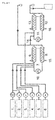
- a production plant designed for the process of the invention for the continuous production of copolymers on production scale is shown schematically in fig. 1 .
- the reaction unit comprises two loop reactors (7 and 11).
- Each loop consists of two mixer-heat exchange reactors type XR-52-NS-LQ DN200 (Fluitec AG, Swizerland) (8 and 9, 12 and 13) with a length of 3250 mm and a volume of 74 I for each section., Both loops (7 and 11) are equipped with one centrifugical pump (10 and 11)..
- the reactors are connected by a pipe (14).
- the first loop reactor (7) is connected to the stock vessels of the reactants by means of pipes.
- a defined mass flow can be set by means of intermediate pumps.
- the plant set-up comprises the following stock vessels : (1) for the aqueous solution of the vinyl ether component (the polyether macromonomer), alkali metal hydroxide solution and the initiator component 3 (reducing agent); (2) for an aqueous base solution for setting the pH required in the reaction, (3) for the aqueous solution of the acid monomer 2-propenoic acid (acrylic acid), (4) for the chain transfer components and the initiator component 2 (Fe 2+ salt), (5) for the first initiator component (H 2 O 2 ), (6) for the initiator component 3 (reducing agent).
- the feed pipes for the stock vessels 1 and 2 and also 3 and 4 are in each case combined so that a total of three metering lines lead into the reactor 7, with the position and the depth to which the metering lines project into the reaction medium being selected so that the introduction into a zone occurs with high mixing efficiency.
- the monomers are introduced separately into the reactor.
- Reactor (11) is likewise connected by a line to the stock vessel (6) for reactants.
- a defined mass flow can be set by means of pumps which are likewise installed in between.
- the reactors (7 and 11) each comprise a temperature sensor and in each case a sensor for determining the pH and for determining the redox potential in the reactant outlet.
- the loop reactors have a volume-based heat removal power of - 80 kW/m 3 •K.
- Example 1 According to the invention: Preparation of a polymer in a two-stage loop reactor
- the apparatus is initially flushed with water and the reactors 7 and 11 are flooded with water.
- 2540 kg of H 2 O are placed in stock vessel 1 and 2756 kg of vinyloxybutylpoly(ethylene oxide) melt having a number average molar mass of 3000 g ⁇ mol -1 as polyether macromonomer and 5.39 kg of an aqueous KOH solution (50% strength by weight) are added while stirring.
- 197.7 kg of a 3% strength aqueous solution of Rongalit C ® sodium hydroxymethylsulfinate, able to be procured from BASF SE
- Stock vessel 2 is charged with 100 kg of an aqueous NaOH solution (20% strength by weight).
- the sodium hydroxide solution serves to regulate the pH during the polymerization.
- 360 kg of H 2 O are placed in stock vessel 3 and 240 kg of the acid monomer 2-propenoic acid (acrylic acid) are introduced while stirring.
- 356 kg of water are placed in stock vessel 4 and 16 kg of MPA (3-mercaptopropanoic acid) and 28.3 kg of a 1.83% strength by weight aqueous solution of FeSO 4 ⁇ 7H 2 O are added while stirring.
- Stock vessel 5 is filled with a 2% strength H 2 O 2 solution (75 kg) and stock vessel 6 is charged with 485 kg of deionized water and 15 kg of Rongalit C ® .
- the two centrifugical pumps and all pumps are started and the thermostat temperature is set so that the temperature of the reaction medium is a constant 15°C.
- the streams of the reactants from stock vessels 1, 2, 3 and 4 are set so that the sum of the average residence times are 4 minutes in reactor 7 and 4 minutes in reactor 11.
- the stream from stock vessel 5 is set to 26,1 kg/h at the beginning of the polymerization. It is ensured that the introduction of the polyether macromonomer into the polymerization reactor is kept separate from that of the acid monomer in such a way that the polyether macromonomer is mixed with the initiator, monomeric starting materials and copolymer-comprising reaction composition in the polymerization reactor and only then comes into contact with the acid monomer.
- the polymers are analyzed with regard to average molar mass by means of size exclusion chromatography (column combination: Suprema 3000, Suprema 1000 and Suprema 30 from PSS, Mainz; Eluent: aqueous solution of Na 2 HPO 4 (0.03 mol/l) and 0.5 g/l of sodium azide; injection volume 50 ⁇ l; flow rate 0.8 ml/min). Calibration to determine the average molar mass was carried out using linear poly(ethylene oxide) standards.
- the polymer according to the invention was examined in terms of its properties as concrete plasticizer in a suitable test system.
- the polymer was brought to a pH of 6.5 ⁇ 0.2 by means of a solution of NaOH in water and admixed with small amounts of a conventional antifoam to control the air pore content.
- the following formulation was used for the tests: Starting material Amount Cement type CEM I 42,5R 330 kg/m 3 Ground limestone 80 kg/m 3 Sand, particle size 0 - 4 mm 965 kg/m 3 Gravel, particle size 4 - 16 mm 915 kg/m 3 Total water 145 l/m 3 (corresponds to w/c 0.44) Polymer (active, based on 100% solids) 0.495 kg/m 3
- cement, ground limestone, sand and gravel were firstly mixed dry for 10 seconds; 15% of the water was then added and the mixture was mixed for 120 seconds. The remaining water and the amount of the respective polymer were subsequently added and the mixture was mixed for a further 120 seconds (corresponds to a water/cement ratio of 0.44 and an amount of polymer of 0.15% solids, based on the weight of cement introduced).
- the slump in accordance with DIN EN 12350-2 was subsequently determined both immediately after production and after 10 and 30 minutes.
- the polymer prepared according to the invention has a better plasticizing action immediately after production of the concrete compared to the reference polymer. Furthermore, it has a comparable maintenance of consistency.
Landscapes
- Chemical & Material Sciences (AREA)
- Organic Chemistry (AREA)
- Chemical Kinetics & Catalysis (AREA)
- Engineering & Computer Science (AREA)
- Ceramic Engineering (AREA)
- Polymers & Plastics (AREA)
- Health & Medical Sciences (AREA)
- Medicinal Chemistry (AREA)
- Materials Engineering (AREA)
- Structural Engineering (AREA)
- Inorganic Chemistry (AREA)
- Macromonomer-Based Addition Polymer (AREA)
- Civil Engineering (AREA)
- Dispersion Chemistry (AREA)
- Nanotechnology (AREA)
- Addition Polymer Or Copolymer, Post-Treatments, Or Chemical Modifications (AREA)
Claims (12)
- Verfahren zur kontinuierlichen Herstellung von Polymeren in einer Polymerisationseinrichtung, wobei die Ausgangsstoffe mindestens ein olefinisch ungesättigtes Polyethermakromonomer und mindestens ein olefinisch ungesättigtes Säuremonomer und mindestens einen radikalischen Initiator umfassen und die Polymerisation bei Temperaturen zwischen - 20 und +120°C durchgeführt wird, dadurch gekennzeichnet, dass die Polymerisationseinrichtung mindestens einen Schlaufenreaktor umfasst, welcher mindestens eine Zuführungsleitung für die Ausgangsstoffe und mindestens einen Abfluss aufweist, wobei der Schlaufenreaktor mindestens eine Reaktionszone mit innenliegenden Kühl- und Mischelementen umfasst und die mindestens eine Reaktionszone eine volumenspezifische Wärmeabfuhrleistung von mindestens 10 kW/m3·K aufweist.
- Verfahren nach Anspruch 1, dadurch gekennzeichnet, dass das olefinisch ungesättigte Säuremonomer durch Polymerisation umgesetzt und dadurch eine Struktureinheit im Polymer erzeugt wird, die gemäß einer der allgemeinen Formeln (Ia), (Ib), (Ic) und/oder (Id) ist
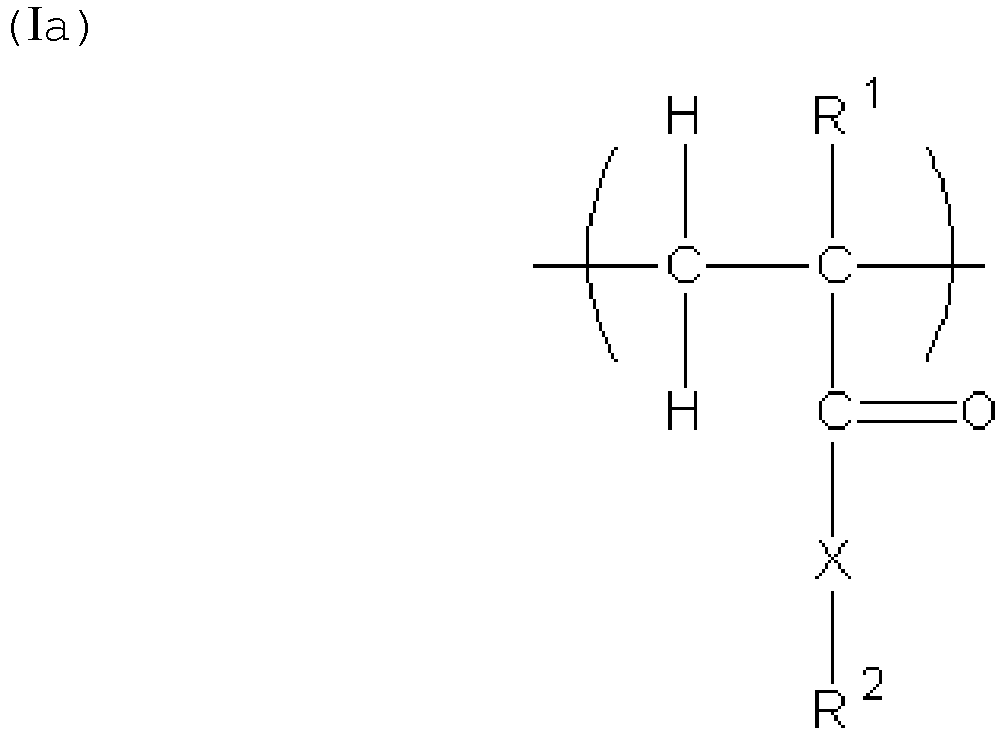 R1 gleich oder verschieden sowie repräsentiert durch H und/oder eine unverzweigte oder verzweigte C1-C4 Alkylgruppe;X gleich oder verschieden sowie repräsentiert durch NH-(CnH2n) mit n = 1, 2, 3 oder 4 und/oder O-(CnH2n) mit n = 1, 2, 3 oder 4 und/oder durch eine nicht vorhandene Einheit;R2 gleich oder verschieden sowie repräsentiert durch OH, SO3H, PO3H2, O-PO3H2 und/oder para substituiertes C6H4-SO3H, mit der Maßgabe, dass, falls X eine nicht vorhandene Einheit ist, R2 durch OH repräsentiert wird;
 R3 gleich oder verschieden sowie repräsentiert durch H und/oder eine unverzweigte oder verzweigte C1-C4 Alkylgruppe;n = 0, 1, 2, 3 oder 4R4 gleich oder verschieden sowie repräsentiert durch SO3H, PO3H2, O-PO3H2 und/oder para substituiert vorliegendes C6H4-SO3H;
 R5 gleich oder verschieden sowie repräsentiert durch H und/oder eine unverzweigte oder verzweigte C1-C4 Alkylgruppe;Z gleich oder verschieden sowie repräsentiert durch 0 und/oder NH;
 R6 gleich oder verschieden sowie repräsentiert durch H und/oder eine unverzweigte oder verzweigte C1-C4 Alkylgruppe;Q gleich oder verschieden sowie repräsentiert durch NH und/oder 0;R7 gleich oder verschieden sowie repräsentiert durch H, (CnH2n)-SO3H mit n = 0, 1, 2, 3 oder 4, (CnH2n)-OH mit n = 0, 1, 2, 3 oder 4; (CnH2n)-PO3H2 mit n = 0, 1, 2, 3 oder 4, (CnH2n)-OPO3H2 mit n= 0, 1, 2, 3 oder 4, (C6H4)-SO3H, (C6H4)-PO3H2, (C6H4)-OPO3H2 und/oder (CmH2m)e-O-(A'O)α-R9 mit m = 0, 1, 2, 3 oder 4, e = 0, 1, 2, 3 oder 4, A' = Cx'H2x' mit x' = 2, 3, 4 oder 5 und/oder CH2C(C6H5)H-, α = eine ganze Zahl von 1 bis 350 mit R9 gleich oder verschieden sowie repräsentiert durch eine unverzweigte oder verzweigte C1 - C4 Alkylgruppe.
 - Verfahren nach Anspruch 1 oder 2, dadurch gekennzeichnet, dass als Säuremonomer Methacrylsäure, Acrylsäure, Maleinsäure, Maleinsäureanhydrid, ein Halbester der Maleinsäure oder eine Mischung aus mehreren dieser Komponenten eingesetzt wird.
- Verfahren nach einem der Ansprüche 1 bis 3, dadurch gekennzeichnet, dass das Polyethermakromonomer durch Polymerisation umgesetzt und dadurch eine Struktureinheit im Polymer erzeugt wird, die gemäß einer der allgemeinen Formeln (IIa), (IIb) (IIc) und/oder (IId) ist

 R10, R11 sowie R12 jeweils gleich oder verschieden und unabhängig voneinander repräsentiert durch H und/oder eine unverzweigte oder verzweigte C1 - C4 Alkylgruppe;E gleich oder verschieden sowie repräsentiert durch eine unverzweigte oder verzweigte C1 - C6 Alkylen-gruppe, eine Cyclohexylgruppe, CH2-C6H10, ortho, meta oder para substituiert vorliegendes C6H4 und/oder eine nicht vorhandene Einheit;G gleich oder verschieden sowie repräsentiert durch 0, NH und/oder CO-NH mit der Maßgabe, dass falls E eine nicht vorhandene Einheit ist, G auch als eine nicht vorhandene Einheit vorliegt;A gleich oder verschieden sowie repräsentiert durch CxH2x mit x = 2, 3, 4 und/oder 5 (bevorzugt x = 2) und/oder CH2CH (C6H5) ;n gleich oder verschieden sowie repräsentiert durch 0, 1, 2, 3, 4 und/oder 5;a gleich oder verschieden sowie repräsentiert durch eine ganze Zahl von 2 bis 350 (bevorzugt 10-200) ;R13 gleich oder verschieden sowie repräsentiert durch H, eine unverzweigte oder verzweigte C1 - C4 Alkylgruppe, CO-NH2, und/oder COCH3;
 R14 gleich oder verschieden sowie repräsentiert durch H und/oder eine unverzweigte oder verzweigte C1-C4 Alkylgruppe;E gleich oder verschieden sowie repräsentiert durch eine unverzweigte oder verzweigte C1 - C6 Alkylengruppe, eine Cyclohexylgruppe, CH2-C6H10, ortho, meta oder para substituiert vorliegendes C6H4 und/oder durch eine nicht vorhandene Einheit;G gleich oder verschieden sowie repräsentiert durch eine nicht vorhandene Einheit, 0, NH und/oder CO-NH mit der Maßgabe, dass, falls E eine nicht vorhandene Einheit ist, G auch als eine nicht vorhandene Einheit vorliegt;A gleich oder verschieden sowie repräsentiert durch CxH2x mit x = 2, 3, 4 und/oder 5 und/oder CH2CH (C6H5) ;n gleich oder verschieden sowie repräsentiert durch 0, 1, 2, 3, 4 und/oder 5a gleich oder verschieden sowie repräsentiert durch eine ganze Zahl von 2 bis 350;D gleich oder verschieden sowie repräsentiert durch eine nicht vorhandene Einheit, NH und/oder 0, mit der Maßgabe, dass, falls D eine nicht vorhandene Einheit ist: b = 0, 1, 2, 3 oder 4 sowie c = 0, 1, 2, 3 oder 4, wobei b + c = 3 oder 4, und mit der Maßgabe dass, falls D NH und/oder 0 ist: b = 0, 1, 2 oder 3, c = 0, 1, 2 oder 3, wobei b + c = 2 oder 3;R15 gleich oder verschieden sowie repräsentiert durch H, eine unverzweigte oder verzweigte C1 - C4 Alkylgruppe, CO-NH2, und/oder COCH3;
 R16, R17 sowie R18 jeweils gleich oder verschieden und unabhängig voneinander repräsentiert durch H und/oder eine unverzweigte oder verzweigte C1 - C4 Alkylgruppe;E gleich oder verschieden sowie repräsentiert durch eine unverzweigte oder verzweigte C1 - C6 Alkylengruppe, eine Cyclohexylgruppe, CH2-C6H10, ortho, meta oder para substituiert vorliegendes C6H4 und/oder durch eine nicht vorhandene Einheit;A gleich oder verschieden sowie repräsentiert durch CxH2x mit x = 2, 3, 4 und/oder 5 und/oder CH2CH (C6H5) ;n gleich oder verschieden sowie repräsentiert durch 0, 1, 2, 3, 4 und/oder 5;L gleich oder verschieden sowie repräsentiert durch CxH2x mit x = 2, 3, 4 und/oder 5 und/oder CH2-CH (C6-H5);a gleich oder verschieden sowie repräsentiert durch eine ganze Zahl von 2 bis 350;d gleich oder verschieden sowie repräsentiert durch eine ganze Zahl von 1 bis 350;R19 gleich oder verschieden sowie repräsentiert durch H und/oder eine unverzweigte oder verzweigte C1-C4 Alkylgruppe;R20 gleich oder verschieden sowie repräsentiert durch H und/oder eine unverzweigte C1 - C4 Alkylgruppe;
 R27, R28 sowie R29 gleich oder verschieden und unabhängig voneinander repräsentiert durch H und/oder eine unverzweigte oder verzweigte C1 - C4 Alkylgruppe;A gleich oder verschieden sowie repräsentiert durch CxH2x mit x = 2, 3, 4 und/oder 5 und/oder CH2CH(C6H5);a gleich oder verschieden sowie repräsentiert durch eine ganze Zahl von 2 bis 350;R30 gleich oder verschieden sowie repräsentiert durch H und/oder einen unverzweigten oder verzweigten C1 -C4 Alkylrest.
 - Verfahren nach einem der Ansprüche 1 bis 4, dadurch gekennzeichnet, dass als Polyethermakromonomer alkoxyliertes Isoprenol und/oder alkoxylierter Hydroxybutylvinylether und/oder alkoxylierter (Meth)allylalkohol mit bevorzugt jeweils einer arithmetisch mittleren Zahl an Oxyalkylengruppen von 4 bis 350 eingesetzt wird.
- Verfahren nach einem der Ansprüche 1 bis 5, dadurch gekennzeichnet, dass als monomerer Ausgangsstoff eine vinylisch ungesättigte Verbindung in den Polymerisationsreaktor eingeleitet wird, welche durch Polymerisation umgesetzt wird und dadurch eine Struktureinheit im Polymer erzeugt wird, die gemäß der allgemeinen Formeln (IIIa) und/oder (IIIb) ist

 R21 gleich oder verschieden sowie repräsentiert durch H und/oder eine unverzweigte oder verzweigte C1-C4 Gruppe;W gleich oder verschieden sowie repräsentiert durch 0 und/oder NH;R17 gleich oder verschieden sowie repräsentiert durch eine verzweigte oder unverzweigte C1 - C5 Monohydroxyalkylgruppe;
 R23, R24 und R25 jeweils gleich oder verschieden sowie jeweils unabhängig repräsentiert durch H und/oder eine unverzweigte oder verzweigte C1 - C4 Alkylgruppe;n gleich oder verschieden sowie repräsentiert durch 0, 1, 2, 3 und/oder 4;R26 gleich oder verschieden sowie repräsentiert durch (C6H5), OH und/oder -COCH3.
 - Verfahren nach einem der Ansprüche 1 bis 6, dadurch gekennzeichnet, dass so viel olefinisch ungesättigtes Polyethermakromonomer pro Mol olefinisch ungesättigtem Säuremonomer in die Polymerisationseinrichtung eingeleitet wird, dass sich im gebildeten Polymer ein arithmetisch mittleres molares Verhältnis von Säuremonomerstruktureinheiten zu Polyethermakromonomerstruktureinheiten von 20:1 bis 1:1, bevorzugt von 12:1 bis 1:1 einstellt.
- Verfahren nach einem der Ansprüche 1 bis 7, dadurch gekennzeichnet, dass insgesamt mindestens 45 Mol %, bevorzugt jedoch mindestens 80 Mol % aller Struktureinheiten des Polymers durch Polymerisation von olefinisch ungesättigtem Säuremonomer und olefinisch ungesättigtem Polyethermakromonomer erzeugt werden.
- Verfahren nach einem der Ansprüche 1 bis 8, dadurch gekennzeichnet, dass das mindestens eine olefinisch ungesättigte Polyethermakromonomer und das mindestens eine olefinisch ungesättigte Säuremonomer getrennt über verschiedene Zuführungsleitungen dem Schlaufenreaktor zugeführt werden.
- Verfahren nach einem der Ansprüche 1 bis 9, dadurch gekennzeichnet, dass der Schlaufenreaktor eine Einrichtung zur Umwälzung des Reaktionsmediums umfasst.
- Verfahren nach einem der Ansprüche 1 bis 10, dadurch gekennzeichnet, dass die Polymerisationseinrichtung noch mindestens einen dem Schlaufenreaktor nachgeschalteten, kontinuierlich betriebenen Reaktor aufweist, in welchem über den Abfluss des Schlaufenreaktors die Polymer enthaltende Reaktionskomposition eingeleitet wird.
- Verfahren nach Anspruch 11, dadurch gekennzeichnet, dass in den nachgeschalteten Reaktor monomere Ausgangsstoffe und/oder Initiatorkomponenten eingeleitet werden.
Priority Applications (1)
| Application Number | Priority Date | Filing Date | Title |
|---|---|---|---|
| EP13801598.7A EP2931416B1 (de) | 2012-12-11 | 2013-12-09 | Kontinuierliches verfahren zur herstellung von copolymeren |
Applications Claiming Priority (3)
| Application Number | Priority Date | Filing Date | Title |
|---|---|---|---|
| EP12196410.0A EP2742995A1 (de) | 2012-12-11 | 2012-12-11 | Kontinuierliches Verfahren zur Herstellung von Copolymeren |
| EP13801598.7A EP2931416B1 (de) | 2012-12-11 | 2013-12-09 | Kontinuierliches verfahren zur herstellung von copolymeren |
| PCT/EP2013/075943 WO2014090743A1 (en) | 2012-12-11 | 2013-12-09 | Continuous process for preparing copolymers |
Publications (2)
| Publication Number | Publication Date |
|---|---|
| EP2931416A1 EP2931416A1 (de) | 2015-10-21 |
| EP2931416B1 true EP2931416B1 (de) | 2016-11-30 |
Family
ID=47358371
Family Applications (2)
| Application Number | Title | Priority Date | Filing Date |
|---|---|---|---|
| EP12196410.0A Withdrawn EP2742995A1 (de) | 2012-12-11 | 2012-12-11 | Kontinuierliches Verfahren zur Herstellung von Copolymeren |
| EP13801598.7A Active EP2931416B1 (de) | 2012-12-11 | 2013-12-09 | Kontinuierliches verfahren zur herstellung von copolymeren |
Family Applications Before (1)
| Application Number | Title | Priority Date | Filing Date |
|---|---|---|---|
| EP12196410.0A Withdrawn EP2742995A1 (de) | 2012-12-11 | 2012-12-11 | Kontinuierliches Verfahren zur Herstellung von Copolymeren |
Country Status (7)
| Country | Link |
|---|---|
| US (1) | US9284395B2 (de) |
| EP (2) | EP2742995A1 (de) |
| JP (1) | JP6433912B2 (de) |
| CN (1) | CN104837552A (de) |
| AU (1) | AU2013357527B2 (de) |
| ES (1) | ES2617439T3 (de) |
| WO (1) | WO2014090743A1 (de) |
Families Citing this family (5)
| Publication number | Priority date | Publication date | Assignee | Title |
|---|---|---|---|---|
| CN105778007A (zh) * | 2014-12-22 | 2016-07-20 | 辽宁奥克化学股份有限公司 | 一种聚合物、其制备方法及包含该聚合物的减水剂 |
| WO2018029038A1 (en) | 2016-08-10 | 2018-02-15 | Basf Se | A process for the preparation of a polymer composition |
| CN107556419B (zh) * | 2017-09-08 | 2019-06-04 | 广东龙湖科技股份有限公司 | 连续挤出工艺制备水性丙烯酸树脂的方法及实现该方法的生产设备 |
| US20200362070A1 (en) | 2018-01-31 | 2020-11-19 | Basf Se | A Process for the Preparation of a Polymer Composition |
| CN111035962B (zh) * | 2019-12-13 | 2022-05-13 | 联泓(江苏)新材料研究院有限公司 | 一种聚羧酸减水剂中大单体的分离方法 |
Family Cites Families (32)
| Publication number | Priority date | Publication date | Assignee | Title |
|---|---|---|---|---|
| EP0056627B1 (de) | 1981-01-16 | 1984-10-03 | Nippon Shokubai Kagaku Kogyo Co., Ltd | Copolymer und Verfahren zu seiner Herstellung |
| DE19513126A1 (de) | 1995-04-07 | 1996-10-10 | Sueddeutsche Kalkstickstoff | Copolymere auf Basis von Oxyalkylenglykol-Alkenylethern und ungesättigten Dicarbonsäure-Derivaten |
| EP0891381B2 (de) * | 1996-04-01 | 2006-05-24 | The Dow Chemical Company | Olefin-lösungspolymerisation |
| US7033545B2 (en) * | 1997-07-15 | 2006-04-25 | Chevon Phillips Chemical Company, Lp | Slurry polymerization reactor having large length/diameter ratio |
| DE19834173A1 (de) | 1997-08-01 | 1999-02-04 | Sueddeutsche Kalkstickstoff | Copolymere auf Basis von ungesättigten Dicarbonsäure-Derivaten und Oxyalkylenglykol-Alkenylethern |
| EP1069139A3 (de) | 1999-07-13 | 2003-03-12 | Clariant GmbH | Wässrige Polymerdispersion, ihre Herstellung und Verwendung |
| US6214958B1 (en) | 1999-07-21 | 2001-04-10 | Arco Chemical Technology, L.P. | Process for preparing comb-branched polymers |
| CN1318344C (zh) | 2001-05-28 | 2007-05-30 | 株式会社日本触媒 | 水泥掺合料和水泥组合物 |
| EP1331232A1 (de) * | 2002-01-28 | 2003-07-30 | Dsm N.V. | Verfahren zur Herstellung eines Copolymers von Maleinsäureanhydrid und Alkylvinylether, Copolymere von Maleinsäureanhydrid und Alkylvinylether und Vorrichtung |
| DE10208361A1 (de) | 2002-02-27 | 2003-09-04 | Basf Ag | Verfahren zur Herstellung einer wässrigen thermisch härtbaren Polymerdispersion |
| DE10337975A1 (de) | 2003-08-19 | 2005-04-07 | Construction Research & Technology Gmbh | Statistische Kammpolymere, Verfahren zu ihrer Herstellung und deren Verwendung |
| DE102004005434A1 (de) | 2004-02-04 | 2005-08-25 | Construction Research & Technology Gmbh | Copolymere auf Basis von ungesättigten Mono- oder Dicarbonsäure-Derivaten und Oxyalkylenglykol-Alkenylethern, Verfahren zu deren Herstellung und ihre Verwendung |
| DE102004042799A1 (de) | 2004-09-03 | 2006-03-09 | Basf Ag | Verfahren zur Herstellung von Poly-(C2-C4-alkylenglykol)-mono(meth)acrylsäureestern |
| JP4990524B2 (ja) | 2005-02-14 | 2012-08-01 | 株式会社日本触媒 | セメント混和剤およびその製造方法 |
| US20060281885A1 (en) | 2005-06-14 | 2006-12-14 | Manfred Bichler | Polyether-containing copolymer |
| US20060281886A1 (en) | 2005-06-14 | 2006-12-14 | Manfred Bichler | Polyether-containing copolymer |
| JP5553467B2 (ja) * | 2005-08-31 | 2014-07-16 | 株式会社日本触媒 | 水溶性重合体の連続的製造方法、及び、水溶性重合体 |
| DE102005061153A1 (de) | 2005-12-21 | 2007-06-28 | Construction Research & Technology Gmbh | Copolymere auf Basis von ungesättigten Mono- oder Dicarbonsäure-Derivaten und Oxyalkylenglykol-Alkenylethern, Verfahren zu deren Herstellung und ihre Verwendung |
| JP5199588B2 (ja) * | 2007-02-28 | 2013-05-15 | 株式会社日本触媒 | 水溶性重合体製造装置および水溶性重合体の連続的製造方法 |
| JP5214155B2 (ja) * | 2007-02-28 | 2013-06-19 | 株式会社日本触媒 | 水溶性重合体製造装置および水溶性重合体の連続的製造方法 |
| EP2090553A1 (de) * | 2008-02-13 | 2009-08-19 | Construction Research and Technology GmbH | Kontinuierlich betriebenes Verfahren zur Herstellung von Copolymeren |
| EP2090597A1 (de) | 2008-02-13 | 2009-08-19 | Construction Research and Technology GmbH | Wässrige Lösung enthaltend Copolymer mit Polyetherseitenketten |
| ES2502524T3 (es) | 2008-03-19 | 2014-10-03 | Construction Research & Technology Gmbh | Método operado de manera semicontinua para la producción de copolímeros |
| EP2113519A1 (de) * | 2008-04-28 | 2009-11-04 | Construction Research and Technology GmbH | Verfahren zur Initiierung von radikalischen Polymerisationen |
| US7973110B2 (en) | 2008-06-16 | 2011-07-05 | Construction Research & Technology Gmbh | Copolymer synthesis process |
| WO2010040794A1 (de) | 2008-10-10 | 2010-04-15 | Construction Research & Technology Gmbh | KONTINUIERLICHE HERSTELLUNG VON SICH ALS FLIEßMITTEL EIGNENDEN COPOLYMEREN |
| US8536285B2 (en) | 2008-12-08 | 2013-09-17 | Construction Research & Technology Gmbh | Semi-continuous method for producing copolymers |
| ATE499985T1 (de) | 2008-12-08 | 2011-03-15 | Constr Res & Tech Gmbh | Semikontinuierlich betriebenes verfahren zur herstellung von copolymeren |
| ES2402531T3 (es) | 2008-12-08 | 2013-05-06 | Construction Research And Technology Gmbh | Procedimiento para la producción de copolímeros |
| EP2691425B1 (de) * | 2011-03-28 | 2017-04-19 | Dow Global Technologies LLC | Verfahren zur herstellung von ethylen/alpha-olefincopolymeren mit verbesserter schmelzstärke und artikel daraus |
| KR101912965B1 (ko) * | 2011-04-12 | 2019-01-14 | 바셀 폴리올레핀 이탈리아 에스.알.엘 | 올레핀 중합용 촉매 성분 |
| US10487233B2 (en) * | 2011-04-12 | 2019-11-26 | Basf Coatings Gmbh | Solvent-borne clearcoat coating composition, method for producing it and use thereof |
-
2012
- 2012-12-11 EP EP12196410.0A patent/EP2742995A1/de not_active Withdrawn
-
2013
- 2013-12-09 US US14/648,591 patent/US9284395B2/en active Active
- 2013-12-09 WO PCT/EP2013/075943 patent/WO2014090743A1/en not_active Ceased
- 2013-12-09 CN CN201380064564.5A patent/CN104837552A/zh active Pending
- 2013-12-09 AU AU2013357527A patent/AU2013357527B2/en not_active Ceased
- 2013-12-09 ES ES13801598.7T patent/ES2617439T3/es active Active
- 2013-12-09 EP EP13801598.7A patent/EP2931416B1/de active Active
- 2013-12-09 JP JP2015546964A patent/JP6433912B2/ja active Active
Non-Patent Citations (1)
| Title |
|---|
| None * |
Also Published As
| Publication number | Publication date |
|---|---|
| CN104837552A (zh) | 2015-08-12 |
| WO2014090743A1 (en) | 2014-06-19 |
| US9284395B2 (en) | 2016-03-15 |
| ES2617439T3 (es) | 2017-06-19 |
| EP2742995A1 (de) | 2014-06-18 |
| AU2013357527B2 (en) | 2016-12-22 |
| JP2016504444A (ja) | 2016-02-12 |
| US20150315318A1 (en) | 2015-11-05 |
| AU2013357527A1 (en) | 2015-07-02 |
| EP2931416A1 (de) | 2015-10-21 |
| JP6433912B2 (ja) | 2018-12-05 |
Similar Documents
| Publication | Publication Date | Title |
|---|---|---|
| CN102015570B (zh) | 制备共聚物的连续操作方法 | |
| EP2931416B1 (de) | Kontinuierliches verfahren zur herstellung von copolymeren | |
| US8541518B2 (en) | Semi continuous operational method for producing copolymers | |
| US20120035301A1 (en) | Method For The Production Of Copolymers | |
| US20060172916A1 (en) | Use of a polymer dispersant as a fluidising agent for hydraulic binder compositions and preparation thereof | |
| EP3019540B1 (de) | Polymerisches dispergiermittel | |
| CN108102085A (zh) | 聚醚单体、源自其的聚羧酸减水剂及其制备和应用方法 | |
| CN102361685B (zh) | 制备共聚物的半连续操作法 | |
| CA2715108A1 (en) | Aqueous solution containing copolymers with polyether side chains | |
| CN102245657B (zh) | 制备共聚物的半连续方法 | |
| CN100582128C (zh) | 水溶性聚合物的连续制造方法及水溶性聚合物 | |
| Cao et al. | Influence of High-Robustness Polycarboxylate Superplasticizer on the Performances of Concrete Incorporating Fly Ash and Manufactured Sand | |
| HK1149282A (en) | Semi continuous operational method for producing copolymers |
Legal Events
| Date | Code | Title | Description |
|---|---|---|---|
| PUAI | Public reference made under article 153(3) epc to a published international application that has entered the european phase |
Free format text: ORIGINAL CODE: 0009012 |
|
| 17P | Request for examination filed |
Effective date: 20150713 |
|
| AK | Designated contracting states |
Kind code of ref document: A1 Designated state(s): AL AT BE BG CH CY CZ DE DK EE ES FI FR GB GR HR HU IE IS IT LI LT LU LV MC MK MT NL NO PL PT RO RS SE SI SK SM TR |
|
| AX | Request for extension of the european patent |
Extension state: BA ME |
|
| RIN1 | Information on inventor provided before grant (corrected) |
Inventor name: SCHWEDE, CHRISTIAN Inventor name: KAISER, GUENTER Inventor name: BRODHAGEN, ANDREAS Inventor name: VIERLE, MARIO |
|
| DAX | Request for extension of the european patent (deleted) | ||
| REG | Reference to a national code |
Ref country code: DE Ref legal event code: R079 Ref document number: 602013014857 Country of ref document: DE Free format text: PREVIOUS MAIN CLASS: B01J0019180000 Ipc: C08F0002010000 |
|
| RIC1 | Information provided on ipc code assigned before grant |
Ipc: C04B 28/04 20060101ALI20160707BHEP Ipc: C04B 103/30 20060101ALI20160707BHEP Ipc: C08F 220/06 20060101ALI20160707BHEP Ipc: C08F 216/14 20060101ALI20160707BHEP Ipc: C08F 2/06 20060101ALI20160707BHEP Ipc: C04B 24/26 20060101ALI20160707BHEP Ipc: B01J 19/18 20060101ALI20160707BHEP Ipc: C04B 103/40 20060101ALI20160707BHEP Ipc: C08F 2/01 20060101AFI20160707BHEP Ipc: C08F 290/06 20060101ALI20160707BHEP |
|
| GRAP | Despatch of communication of intention to grant a patent |
Free format text: ORIGINAL CODE: EPIDOSNIGR1 |
|
| INTG | Intention to grant announced |
Effective date: 20160822 |
|
| GRAS | Grant fee paid |
Free format text: ORIGINAL CODE: EPIDOSNIGR3 |
|
| GRAA | (expected) grant |
Free format text: ORIGINAL CODE: 0009210 |
|
| AK | Designated contracting states |
Kind code of ref document: B1 Designated state(s): AL AT BE BG CH CY CZ DE DK EE ES FI FR GB GR HR HU IE IS IT LI LT LU LV MC MK MT NL NO PL PT RO RS SE SI SK SM TR |
|
| REG | Reference to a national code |
Ref country code: CH Ref legal event code: EP Ref country code: GB Ref legal event code: FG4D |
|
| REG | Reference to a national code |
Ref country code: AT Ref legal event code: REF Ref document number: 849732 Country of ref document: AT Kind code of ref document: T Effective date: 20161215 |
|
| REG | Reference to a national code |
Ref country code: FR Ref legal event code: PLFP Year of fee payment: 4 |
|
| REG | Reference to a national code |
Ref country code: IE Ref legal event code: FG4D |
|
| REG | Reference to a national code |
Ref country code: DE Ref legal event code: R096 Ref document number: 602013014857 Country of ref document: DE |
|
| PG25 | Lapsed in a contracting state [announced via postgrant information from national office to epo] |
Ref country code: LV Free format text: LAPSE BECAUSE OF FAILURE TO SUBMIT A TRANSLATION OF THE DESCRIPTION OR TO PAY THE FEE WITHIN THE PRESCRIBED TIME-LIMIT Effective date: 20161130 |
|
| REG | Reference to a national code |
Ref country code: LT Ref legal event code: MG4D |
|
| REG | Reference to a national code |
Ref country code: NL Ref legal event code: MP Effective date: 20161130 |
|
| REG | Reference to a national code |
Ref country code: AT Ref legal event code: MK05 Ref document number: 849732 Country of ref document: AT Kind code of ref document: T Effective date: 20161130 |
|
| PG25 | Lapsed in a contracting state [announced via postgrant information from national office to epo] |
Ref country code: GR Free format text: LAPSE BECAUSE OF FAILURE TO SUBMIT A TRANSLATION OF THE DESCRIPTION OR TO PAY THE FEE WITHIN THE PRESCRIBED TIME-LIMIT Effective date: 20170301 Ref country code: NO Free format text: LAPSE BECAUSE OF FAILURE TO SUBMIT A TRANSLATION OF THE DESCRIPTION OR TO PAY THE FEE WITHIN THE PRESCRIBED TIME-LIMIT Effective date: 20170228 Ref country code: SE Free format text: LAPSE BECAUSE OF FAILURE TO SUBMIT A TRANSLATION OF THE DESCRIPTION OR TO PAY THE FEE WITHIN THE PRESCRIBED TIME-LIMIT Effective date: 20161130 Ref country code: LT Free format text: LAPSE BECAUSE OF FAILURE TO SUBMIT A TRANSLATION OF THE DESCRIPTION OR TO PAY THE FEE WITHIN THE PRESCRIBED TIME-LIMIT Effective date: 20161130 |
|
| PG25 | Lapsed in a contracting state [announced via postgrant information from national office to epo] |
Ref country code: PT Free format text: LAPSE BECAUSE OF FAILURE TO SUBMIT A TRANSLATION OF THE DESCRIPTION OR TO PAY THE FEE WITHIN THE PRESCRIBED TIME-LIMIT Effective date: 20170330 Ref country code: BE Free format text: LAPSE BECAUSE OF NON-PAYMENT OF DUE FEES Effective date: 20161231 Ref country code: HR Free format text: LAPSE BECAUSE OF FAILURE TO SUBMIT A TRANSLATION OF THE DESCRIPTION OR TO PAY THE FEE WITHIN THE PRESCRIBED TIME-LIMIT Effective date: 20161130 Ref country code: FI Free format text: LAPSE BECAUSE OF FAILURE TO SUBMIT A TRANSLATION OF THE DESCRIPTION OR TO PAY THE FEE WITHIN THE PRESCRIBED TIME-LIMIT Effective date: 20161130 Ref country code: AT Free format text: LAPSE BECAUSE OF FAILURE TO SUBMIT A TRANSLATION OF THE DESCRIPTION OR TO PAY THE FEE WITHIN THE PRESCRIBED TIME-LIMIT Effective date: 20161130 Ref country code: RS Free format text: LAPSE BECAUSE OF FAILURE TO SUBMIT A TRANSLATION OF THE DESCRIPTION OR TO PAY THE FEE WITHIN THE PRESCRIBED TIME-LIMIT Effective date: 20161130 Ref country code: PL Free format text: LAPSE BECAUSE OF FAILURE TO SUBMIT A TRANSLATION OF THE DESCRIPTION OR TO PAY THE FEE WITHIN THE PRESCRIBED TIME-LIMIT Effective date: 20161130 |
|
| REG | Reference to a national code |
Ref country code: ES Ref legal event code: FG2A Ref document number: 2617439 Country of ref document: ES Kind code of ref document: T3 Effective date: 20170619 |
|
| PG25 | Lapsed in a contracting state [announced via postgrant information from national office to epo] |
Ref country code: NL Free format text: LAPSE BECAUSE OF FAILURE TO SUBMIT A TRANSLATION OF THE DESCRIPTION OR TO PAY THE FEE WITHIN THE PRESCRIBED TIME-LIMIT Effective date: 20161130 |
|
| PG25 | Lapsed in a contracting state [announced via postgrant information from national office to epo] |
Ref country code: DK Free format text: LAPSE BECAUSE OF FAILURE TO SUBMIT A TRANSLATION OF THE DESCRIPTION OR TO PAY THE FEE WITHIN THE PRESCRIBED TIME-LIMIT Effective date: 20161130 Ref country code: RO Free format text: LAPSE BECAUSE OF FAILURE TO SUBMIT A TRANSLATION OF THE DESCRIPTION OR TO PAY THE FEE WITHIN THE PRESCRIBED TIME-LIMIT Effective date: 20161130 Ref country code: SK Free format text: LAPSE BECAUSE OF FAILURE TO SUBMIT A TRANSLATION OF THE DESCRIPTION OR TO PAY THE FEE WITHIN THE PRESCRIBED TIME-LIMIT Effective date: 20161130 Ref country code: EE Free format text: LAPSE BECAUSE OF FAILURE TO SUBMIT A TRANSLATION OF THE DESCRIPTION OR TO PAY THE FEE WITHIN THE PRESCRIBED TIME-LIMIT Effective date: 20161130 Ref country code: CZ Free format text: LAPSE BECAUSE OF FAILURE TO SUBMIT A TRANSLATION OF THE DESCRIPTION OR TO PAY THE FEE WITHIN THE PRESCRIBED TIME-LIMIT Effective date: 20161130 |
|
| PG25 | Lapsed in a contracting state [announced via postgrant information from national office to epo] |
Ref country code: SM Free format text: LAPSE BECAUSE OF FAILURE TO SUBMIT A TRANSLATION OF THE DESCRIPTION OR TO PAY THE FEE WITHIN THE PRESCRIBED TIME-LIMIT Effective date: 20161130 Ref country code: BE Free format text: LAPSE BECAUSE OF FAILURE TO SUBMIT A TRANSLATION OF THE DESCRIPTION OR TO PAY THE FEE WITHIN THE PRESCRIBED TIME-LIMIT Effective date: 20161130 Ref country code: BG Free format text: LAPSE BECAUSE OF FAILURE TO SUBMIT A TRANSLATION OF THE DESCRIPTION OR TO PAY THE FEE WITHIN THE PRESCRIBED TIME-LIMIT Effective date: 20170228 |
|
| REG | Reference to a national code |
Ref country code: DE Ref legal event code: R097 Ref document number: 602013014857 Country of ref document: DE |
|
| PG25 | Lapsed in a contracting state [announced via postgrant information from national office to epo] |
Ref country code: MC Free format text: LAPSE BECAUSE OF FAILURE TO SUBMIT A TRANSLATION OF THE DESCRIPTION OR TO PAY THE FEE WITHIN THE PRESCRIBED TIME-LIMIT Effective date: 20161130 |
|
| REG | Reference to a national code |
Ref country code: IE Ref legal event code: MM4A |
|
| PLBE | No opposition filed within time limit |
Free format text: ORIGINAL CODE: 0009261 |
|
| STAA | Information on the status of an ep patent application or granted ep patent |
Free format text: STATUS: NO OPPOSITION FILED WITHIN TIME LIMIT |
|
| PG25 | Lapsed in a contracting state [announced via postgrant information from national office to epo] |
Ref country code: LU Free format text: LAPSE BECAUSE OF NON-PAYMENT OF DUE FEES Effective date: 20161209 |
|
| 26N | No opposition filed |
Effective date: 20170831 |
|
| PG25 | Lapsed in a contracting state [announced via postgrant information from national office to epo] |
Ref country code: SI Free format text: LAPSE BECAUSE OF FAILURE TO SUBMIT A TRANSLATION OF THE DESCRIPTION OR TO PAY THE FEE WITHIN THE PRESCRIBED TIME-LIMIT Effective date: 20161130 Ref country code: IE Free format text: LAPSE BECAUSE OF NON-PAYMENT OF DUE FEES Effective date: 20161209 |
|
| REG | Reference to a national code |
Ref country code: FR Ref legal event code: PLFP Year of fee payment: 5 |
|
| PG25 | Lapsed in a contracting state [announced via postgrant information from national office to epo] |
Ref country code: HU Free format text: LAPSE BECAUSE OF FAILURE TO SUBMIT A TRANSLATION OF THE DESCRIPTION OR TO PAY THE FEE WITHIN THE PRESCRIBED TIME-LIMIT; INVALID AB INITIO Effective date: 20131209 |
|
| PG25 | Lapsed in a contracting state [announced via postgrant information from national office to epo] |
Ref country code: IS Free format text: LAPSE BECAUSE OF FAILURE TO SUBMIT A TRANSLATION OF THE DESCRIPTION OR TO PAY THE FEE WITHIN THE PRESCRIBED TIME-LIMIT Effective date: 20161130 Ref country code: CY Free format text: LAPSE BECAUSE OF FAILURE TO SUBMIT A TRANSLATION OF THE DESCRIPTION OR TO PAY THE FEE WITHIN THE PRESCRIBED TIME-LIMIT Effective date: 20161130 Ref country code: MK Free format text: LAPSE BECAUSE OF FAILURE TO SUBMIT A TRANSLATION OF THE DESCRIPTION OR TO PAY THE FEE WITHIN THE PRESCRIBED TIME-LIMIT Effective date: 20161130 |
|
| PG25 | Lapsed in a contracting state [announced via postgrant information from national office to epo] |
Ref country code: MT Free format text: LAPSE BECAUSE OF NON-PAYMENT OF DUE FEES Effective date: 20161209 |
|
| PG25 | Lapsed in a contracting state [announced via postgrant information from national office to epo] |
Ref country code: AL Free format text: LAPSE BECAUSE OF FAILURE TO SUBMIT A TRANSLATION OF THE DESCRIPTION OR TO PAY THE FEE WITHIN THE PRESCRIBED TIME-LIMIT Effective date: 20161130 |
|
| PGFP | Annual fee paid to national office [announced via postgrant information from national office to epo] |
Ref country code: GB Payment date: 20231019 Year of fee payment: 11 |
|
| PGFP | Annual fee paid to national office [announced via postgrant information from national office to epo] |
Ref country code: TR Payment date: 20231207 Year of fee payment: 11 Ref country code: IT Payment date: 20231110 Year of fee payment: 11 Ref country code: FR Payment date: 20231024 Year of fee payment: 11 Ref country code: DE Payment date: 20231017 Year of fee payment: 11 |
|
| PGFP | Annual fee paid to national office [announced via postgrant information from national office to epo] |
Ref country code: ES Payment date: 20240111 Year of fee payment: 11 |
|
| PGFP | Annual fee paid to national office [announced via postgrant information from national office to epo] |
Ref country code: CH Payment date: 20240101 Year of fee payment: 11 |
|
| REG | Reference to a national code |
Ref country code: DE Ref legal event code: R119 Ref document number: 602013014857 Country of ref document: DE |
|
| REG | Reference to a national code |
Ref country code: CH Ref legal event code: PL |
|
| GBPC | Gb: european patent ceased through non-payment of renewal fee |
Effective date: 20241209 |
|
| PG25 | Lapsed in a contracting state [announced via postgrant information from national office to epo] |
Ref country code: DE Free format text: LAPSE BECAUSE OF NON-PAYMENT OF DUE FEES Effective date: 20250701 |
|
| PG25 | Lapsed in a contracting state [announced via postgrant information from national office to epo] |
Ref country code: IT Free format text: LAPSE BECAUSE OF NON-PAYMENT OF DUE FEES Effective date: 20241209 |
|
| PG25 | Lapsed in a contracting state [announced via postgrant information from national office to epo] |
Ref country code: GB Free format text: LAPSE BECAUSE OF NON-PAYMENT OF DUE FEES Effective date: 20241209 |
|
| PG25 | Lapsed in a contracting state [announced via postgrant information from national office to epo] |
Ref country code: FR Free format text: LAPSE BECAUSE OF NON-PAYMENT OF DUE FEES Effective date: 20241231 |
|
| PG25 | Lapsed in a contracting state [announced via postgrant information from national office to epo] |
Ref country code: CH Free format text: LAPSE BECAUSE OF NON-PAYMENT OF DUE FEES Effective date: 20241231 |
|
| REG | Reference to a national code |
Ref country code: ES Ref legal event code: FD2A Effective date: 20260128 |
|
| PG25 | Lapsed in a contracting state [announced via postgrant information from national office to epo] |
Ref country code: ES Free format text: LAPSE BECAUSE OF NON-PAYMENT OF DUE FEES Effective date: 20241210 |