EP2902291B1 - Verfahren zur Minimierung von automatischer Bremsintrusion auf Basis von Kollisionsvertrauen - Google Patents
Verfahren zur Minimierung von automatischer Bremsintrusion auf Basis von Kollisionsvertrauen Download PDFInfo
- Publication number
- EP2902291B1 EP2902291B1 EP15152998.9A EP15152998A EP2902291B1 EP 2902291 B1 EP2902291 B1 EP 2902291B1 EP 15152998 A EP15152998 A EP 15152998A EP 2902291 B1 EP2902291 B1 EP 2902291B1
- Authority
- EP
- European Patent Office
- Prior art keywords
- vehicle
- collision
- confidence value
- controller
- deceleration
- Prior art date
- Legal status (The legal status is an assumption and is not a legal conclusion. Google has not performed a legal analysis and makes no representation as to the accuracy of the status listed.)
- Active
Links
Images

Classifications
-
- B—PERFORMING OPERATIONS; TRANSPORTING
- B60—VEHICLES IN GENERAL
- B60T—VEHICLE BRAKE CONTROL SYSTEMS OR PARTS THEREOF; BRAKE CONTROL SYSTEMS OR PARTS THEREOF, IN GENERAL; ARRANGEMENT OF BRAKING ELEMENTS ON VEHICLES IN GENERAL; PORTABLE DEVICES FOR PREVENTING UNWANTED MOVEMENT OF VEHICLES; VEHICLE MODIFICATIONS TO FACILITATE COOLING OF BRAKES
- B60T7/00—Brake-action initiating means
- B60T7/12—Brake-action initiating means for automatic initiation; for initiation not subject to will of driver or passenger
- B60T7/22—Brake-action initiating means for automatic initiation; for initiation not subject to will of driver or passenger initiated by contact of vehicle, e.g. bumper, with an external object, e.g. another vehicle, or by means of contactless obstacle detectors mounted on the vehicle
-
- B—PERFORMING OPERATIONS; TRANSPORTING
- B60—VEHICLES IN GENERAL
- B60T—VEHICLE BRAKE CONTROL SYSTEMS OR PARTS THEREOF; BRAKE CONTROL SYSTEMS OR PARTS THEREOF, IN GENERAL; ARRANGEMENT OF BRAKING ELEMENTS ON VEHICLES IN GENERAL; PORTABLE DEVICES FOR PREVENTING UNWANTED MOVEMENT OF VEHICLES; VEHICLE MODIFICATIONS TO FACILITATE COOLING OF BRAKES
- B60T8/00—Arrangements for adjusting wheel-braking force to meet varying vehicular or ground-surface conditions, e.g. limiting or varying distribution of braking force
- B60T8/17—Using electrical or electronic regulation means to control braking
- B60T8/171—Detecting parameters used in the regulation; Measuring values used in the regulation
-
- B—PERFORMING OPERATIONS; TRANSPORTING
- B60—VEHICLES IN GENERAL
- B60W—CONJOINT CONTROL OF VEHICLE SUB-UNITS OF DIFFERENT TYPE OR DIFFERENT FUNCTION; CONTROL SYSTEMS SPECIALLY ADAPTED FOR HYBRID VEHICLES; ROAD VEHICLE DRIVE CONTROL SYSTEMS FOR PURPOSES NOT RELATED TO THE CONTROL OF A PARTICULAR SUB-UNIT
- B60W10/00—Conjoint control of vehicle sub-units of different type or different function
- B60W10/18—Conjoint control of vehicle sub-units of different type or different function including control of braking systems
- B60W10/184—Conjoint control of vehicle sub-units of different type or different function including control of braking systems with wheel brakes
- B60W10/192—Conjoint control of vehicle sub-units of different type or different function including control of braking systems with wheel brakes electric brakes
-
- B—PERFORMING OPERATIONS; TRANSPORTING
- B60—VEHICLES IN GENERAL
- B60W—CONJOINT CONTROL OF VEHICLE SUB-UNITS OF DIFFERENT TYPE OR DIFFERENT FUNCTION; CONTROL SYSTEMS SPECIALLY ADAPTED FOR HYBRID VEHICLES; ROAD VEHICLE DRIVE CONTROL SYSTEMS FOR PURPOSES NOT RELATED TO THE CONTROL OF A PARTICULAR SUB-UNIT
- B60W10/00—Conjoint control of vehicle sub-units of different type or different function
- B60W10/20—Conjoint control of vehicle sub-units of different type or different function including control of steering systems
-
- B—PERFORMING OPERATIONS; TRANSPORTING
- B60—VEHICLES IN GENERAL
- B60W—CONJOINT CONTROL OF VEHICLE SUB-UNITS OF DIFFERENT TYPE OR DIFFERENT FUNCTION; CONTROL SYSTEMS SPECIALLY ADAPTED FOR HYBRID VEHICLES; ROAD VEHICLE DRIVE CONTROL SYSTEMS FOR PURPOSES NOT RELATED TO THE CONTROL OF A PARTICULAR SUB-UNIT
- B60W30/00—Purposes of road vehicle drive control systems not related to the control of a particular sub-unit, e.g. of systems using conjoint control of vehicle sub-units
- B60W30/08—Active safety systems predicting or avoiding probable or impending collision or attempting to minimise its consequences
- B60W30/09—Taking automatic action to avoid collision, e.g. braking and steering
-
- B—PERFORMING OPERATIONS; TRANSPORTING
- B60—VEHICLES IN GENERAL
- B60W—CONJOINT CONTROL OF VEHICLE SUB-UNITS OF DIFFERENT TYPE OR DIFFERENT FUNCTION; CONTROL SYSTEMS SPECIALLY ADAPTED FOR HYBRID VEHICLES; ROAD VEHICLE DRIVE CONTROL SYSTEMS FOR PURPOSES NOT RELATED TO THE CONTROL OF A PARTICULAR SUB-UNIT
- B60W30/00—Purposes of road vehicle drive control systems not related to the control of a particular sub-unit, e.g. of systems using conjoint control of vehicle sub-units
- B60W30/08—Active safety systems predicting or avoiding probable or impending collision or attempting to minimise its consequences
- B60W30/095—Predicting travel path or likelihood of collision
-
- B—PERFORMING OPERATIONS; TRANSPORTING
- B60—VEHICLES IN GENERAL
- B60W—CONJOINT CONTROL OF VEHICLE SUB-UNITS OF DIFFERENT TYPE OR DIFFERENT FUNCTION; CONTROL SYSTEMS SPECIALLY ADAPTED FOR HYBRID VEHICLES; ROAD VEHICLE DRIVE CONTROL SYSTEMS FOR PURPOSES NOT RELATED TO THE CONTROL OF A PARTICULAR SUB-UNIT
- B60W30/00—Purposes of road vehicle drive control systems not related to the control of a particular sub-unit, e.g. of systems using conjoint control of vehicle sub-units
- B60W30/08—Active safety systems predicting or avoiding probable or impending collision or attempting to minimise its consequences
- B60W30/095—Predicting travel path or likelihood of collision
- B60W30/0953—Predicting travel path or likelihood of collision the prediction being responsive to vehicle dynamic parameters
-
- B—PERFORMING OPERATIONS; TRANSPORTING
- B60—VEHICLES IN GENERAL
- B60W—CONJOINT CONTROL OF VEHICLE SUB-UNITS OF DIFFERENT TYPE OR DIFFERENT FUNCTION; CONTROL SYSTEMS SPECIALLY ADAPTED FOR HYBRID VEHICLES; ROAD VEHICLE DRIVE CONTROL SYSTEMS FOR PURPOSES NOT RELATED TO THE CONTROL OF A PARTICULAR SUB-UNIT
- B60W30/00—Purposes of road vehicle drive control systems not related to the control of a particular sub-unit, e.g. of systems using conjoint control of vehicle sub-units
- B60W30/08—Active safety systems predicting or avoiding probable or impending collision or attempting to minimise its consequences
- B60W30/095—Predicting travel path or likelihood of collision
- B60W30/0956—Predicting travel path or likelihood of collision the prediction being responsive to traffic or environmental parameters
-
- B—PERFORMING OPERATIONS; TRANSPORTING
- B60—VEHICLES IN GENERAL
- B60W—CONJOINT CONTROL OF VEHICLE SUB-UNITS OF DIFFERENT TYPE OR DIFFERENT FUNCTION; CONTROL SYSTEMS SPECIALLY ADAPTED FOR HYBRID VEHICLES; ROAD VEHICLE DRIVE CONTROL SYSTEMS FOR PURPOSES NOT RELATED TO THE CONTROL OF A PARTICULAR SUB-UNIT
- B60W30/00—Purposes of road vehicle drive control systems not related to the control of a particular sub-unit, e.g. of systems using conjoint control of vehicle sub-units
- B60W30/18—Propelling the vehicle
- B60W30/18009—Propelling the vehicle related to particular drive situations
- B60W30/18036—Reversing
-
- B—PERFORMING OPERATIONS; TRANSPORTING
- B60—VEHICLES IN GENERAL
- B60T—VEHICLE BRAKE CONTROL SYSTEMS OR PARTS THEREOF; BRAKE CONTROL SYSTEMS OR PARTS THEREOF, IN GENERAL; ARRANGEMENT OF BRAKING ELEMENTS ON VEHICLES IN GENERAL; PORTABLE DEVICES FOR PREVENTING UNWANTED MOVEMENT OF VEHICLES; VEHICLE MODIFICATIONS TO FACILITATE COOLING OF BRAKES
- B60T2201/00—Particular use of vehicle brake systems; Special systems using also the brakes; Special software modules within the brake system controller
- B60T2201/02—Active or adaptive cruise control system; Distance control
- B60T2201/022—Collision avoidance systems
-
- B—PERFORMING OPERATIONS; TRANSPORTING
- B60—VEHICLES IN GENERAL
- B60W—CONJOINT CONTROL OF VEHICLE SUB-UNITS OF DIFFERENT TYPE OR DIFFERENT FUNCTION; CONTROL SYSTEMS SPECIALLY ADAPTED FOR HYBRID VEHICLES; ROAD VEHICLE DRIVE CONTROL SYSTEMS FOR PURPOSES NOT RELATED TO THE CONTROL OF A PARTICULAR SUB-UNIT
- B60W2554/00—Input parameters relating to objects
-
- B—PERFORMING OPERATIONS; TRANSPORTING
- B60—VEHICLES IN GENERAL
- B60W—CONJOINT CONTROL OF VEHICLE SUB-UNITS OF DIFFERENT TYPE OR DIFFERENT FUNCTION; CONTROL SYSTEMS SPECIALLY ADAPTED FOR HYBRID VEHICLES; ROAD VEHICLE DRIVE CONTROL SYSTEMS FOR PURPOSES NOT RELATED TO THE CONTROL OF A PARTICULAR SUB-UNIT
- B60W2720/00—Output or target parameters relating to overall vehicle dynamics
- B60W2720/10—Longitudinal speed
- B60W2720/103—Speed profile
-
- B—PERFORMING OPERATIONS; TRANSPORTING
- B60—VEHICLES IN GENERAL
- B60W—CONJOINT CONTROL OF VEHICLE SUB-UNITS OF DIFFERENT TYPE OR DIFFERENT FUNCTION; CONTROL SYSTEMS SPECIALLY ADAPTED FOR HYBRID VEHICLES; ROAD VEHICLE DRIVE CONTROL SYSTEMS FOR PURPOSES NOT RELATED TO THE CONTROL OF A PARTICULAR SUB-UNIT
- B60W2720/00—Output or target parameters relating to overall vehicle dynamics
- B60W2720/10—Longitudinal speed
- B60W2720/106—Longitudinal acceleration
Definitions
- the present invention relates to automotive vehicles, and more particularly to driver assistance systems for automotive vehicles.
- JP 2008 308036 A discloses the preamble of independent claims 1 and 9.
- Document US 5,864,285 A discloses a method of controlling deceleration of a vehicle with respect to an obstacle in the path of the vehicle, wherein, when the vehicle passes a first distance range to the obstacle which is detected by a sensor, the velocity of the vehicle is reduced by a controller of the vehicle, and wherein, when the vehicle passes a second distance range to the obstacle being lower than the first distance range and wherein the second distance range is also detected by the sensor, a braking force at the wheel brakes of the vehicle is increased, in order to avoid a collision between the vehicle and the obstacle.
- a disclosed automatic braking system for a vehicle includes, among other possible things, an electronic brake system capable of applying wheel brakes to decelerate the vehicle and a controller.
- the controller includes instructions for monitoring vehicle motion and detecting an object proximate to a vehicle with at least one sensor of a reverse collision avoidance system.
- the controller further includes instructions for determining a collision confidence value based upon the probability of a collision between the vehicle and the object.
- the controller further includes instructions for determining a desired velocity profile for decelerating the vehicle to stop the vehicle prior to collision with the obstacle, wherein the controller includes instructions for determining the velocity profile such that deceleration of the vehicle is inversely proportional to the collision confidence value.
- a disclosed method of controlling deceleration of a vehicle includes, among other possible things, detecting and monitoring an object proximate to a vehicle with at least one sensor, monitoring motion of the vehicle and calculating continuously a collision confidence value indicative of a probability of a collision between the vehicle and the object with a controller located within the vehicle.
- the controller includes instructions for determining a velocity profile of the vehicle that avoids a collision between the vehicle and the object with the controller based on the collision confidence value wherein the velocity profile is determined based on a current collision confidence value such that as the collision confidence value increases indicating a greater probability of a collision, the velocity profile is determined to define a deceleration maneuver of the vehicle that begins at a distance further away from the object as compared to a velocity profile determined on a current collision confidence value indicating a lesser probability of collision.
- a vehicle 10 including a driver assistance system, in particular an automatic braking system 12 is schematically shown.
- the automatic braking system 12 may be used to brake the vehicle 10 during autonomous and semi-autonomous vehicle operations.
- the automatic braking system 12 may be used when the vehicle 10 is performing a reverse driving operation.
- the relative forward and reverse directions are in reference to the direction in which an operator for the vehicle 10 would primarily be facing when operating the vehicle 10.
- the automatic braking system 12 may be used along with other safety systems, such as reverse collision avoidance system 14 and an electronic brake system (EBS) 16.
- EBS electronic brake system
- a common or separate controller 18 may be used by the systems 12, 14 and 16.
- the automatic braking system 12 determines when a braking event needs to occur, whether the vehicle 10 is travelling in a forward or a reverse direction.
- the automatic braking system 12, the reverse collision avoidance system 14, or a similar system determines a probability of collision when an object 34 is detected. The probability of collision is used to determine a collision confidence value. The more likely a collision with the object 34 the higher the collision confidence value. If the probability of collision exceeds a predetermined threshold, the controller 18 indicates that at least one vehicle collision avoidance action is required.
- the required action can be in the form of a warning to a driver when an object is detected and/or the automatic braking system 12 may be actuated to slow or stop the vehicle.
- a warning device 22 can be installed within the vehicle 10 and include a signal such as a light that is illuminated or an audible signal that alerts the driver to the presence of an object 34.
- the example automatic braking system 12 includes an algorithm for minimizing intrusion on driver operation under ordinary circumstances. Accordingly, the example braking system 12 minimizes the level of automatic braking actions taken that override and/or supplement driver braking operations.
- the example disclosed algorithm performs a probabilistic analysis of sensor-reported objects including fixed objects and moving pedestrians, expected and/or possible motion of a detected pedestrian, and expected and/or possible driver input.
- Current vehicle path and potential driver input is utilized to predict a range of potential vehicle paths. If a predicted vehicle path and predicted pedestrian path (or a static object's position) intersects then a potential collision is indicated. Of all of the potential collisions that are detected, one will require intervention before the others, and that one will be acted upon.
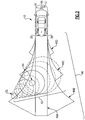
- the probabilistic analysis includes generating a predictive model of possible vehicle paths 40 and a predictive model of possible object paths 42.
- the possible vehicle paths 40 include the possibility that the vehicle may continue along its current path as is shown schematically by vehicle path indicated at 46A, or alternatively that the driver may turn the vehicle 10 such that it proceeds along an alternate path such as is schematically indicated at 46B, 46C and 46D.
- the object path boundaries 42 expand over time based on a current characteristic of the object 34 such as speed and position.
- a current characteristic of the object 34 such as speed and position.
- the location of the object 34 is an ever increasing range of possible locations.
- the rate of the expansion and range of possible locations represents an uncertainty of the position in the future and can change dependent on a classification of the object. From the initial position of the object 32 a predictive model is generated for possible locations of the object 32 relative to possible vehicle paths 40.
- the predictive model of the vehicle path 40 and the predictive model of the object path 42 are combined to identify possible intersecting points that are indicative of a collision.
- the location of the intersecting point is utilized to identify a potential collision at a future time and to determine a weight for the potential collision.
- the weight of that intersecting point is determined by the positional deviation of that point from both the expected vehicle position and the expected object position.
- the intersecting point with the highest weight is used to determine the collision confidence value, which directly affects the system's strategy for responding to the potential collision. Modifying autonomous braking actions based on a determined collision confidence value enables minimization of intrusion on driver control of the vehicle.
- the controller 18 executes an algorithm based on the predictive models of the vehicle path 40 and the object path 42.
- the algorithm implements the following loop: predict all potential collisions; for each detected collision, determine a confidence that the collision will occur (calculate a corresponding collision confidence value); determine which detected collision will require intervention first (the most relevant collision); and calculate the optimal braking response for the most relevant collision, given the collision weight and time at which it will occur.
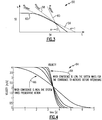
- graph 50 relates vehicle velocity 52 and time 54 to illustrate vehicle deceleration 62.
- a collision confidence value is used to directly determine a maximum deceleration value for a maneuver.
- a lower bound for vehicle deceleration occurs at a high collision confidence value as is shown at 56.
- the lower bound of vehicle deceleration 56 is gradual over a longer time period.
- An upper bound for vehicle deceleration occurs at a low collision confidence value as is shown at 60.
- This type of deceleration is implemented when there is a low probability of collision and therefore the system waits longer to implement a braking maneuver with the expectation that no collision is likely to occur. If the low probability occurrence does occur and a collision condition becomes more probable, a higher braking force will be required resulting in a larger deceleration over a smaller time period.
- deceleration 56, 60 are utilized to define a desired deceleration velocity profile that that in turn determines the braking force to provide the desired deceleration velocity profile indicated at 58.
- Compensation for the position and confidence level of a collision enables early braking at reduced deceleration rates over a longer time and distance to prevent a collision with a high probability while accepting the slight probability that a more aggressive braking force and vehicle deceleration to stop the vehicle may be required if a determined low probability of collision becomes more probable at a future time.
- the system anticipates that a steeper more aggressive deceleration may be required for an initial low probability chance of collision that is reflected in the collision confidence value.
- graph 64 illustrates velocity profiles based on a determined collision confidence value. If the system 12, 14 detects that a collision with an obstacle seems likely one avoidance action may be to use the automatic braking system 12 to apply the brakes 20 to prevent the collision.
- the system 12 determines the desired peak deceleration for the braking maneuver. For detected collisions with a low confidence value such as is shown by line 68, the system 12 waits longer to intervene. If the confidence value later changes from low to high, the system 12 is configured to respond with whatever higher braking deceleration is necessary to avoid the collision. However, as is reflected by the collision confidence value, the probability of a collision is low and therefore preventive action will most likely not be required. This strategy also ensures additional time is available for driver reaction.
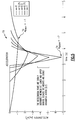
- vehicle acceleration is schematically shown over a braking maneuver in view of the collision confidence weights.
- Braking rates are determined based on a collision confidence to minimize intrusion to the driver across a diverse set of braking maneuvers.
- a high confidence value or weight triggers the system 12 to actuate the brakes earlier and at a lesser force to provide a more gradual deceleration as is shown at 72.
- Lower confidence levels may not ever result in the requirement that the system intervene to stop the vehicle. Because the probability is low that a collision is possible, the systems waits longer resulting in a required braking force and therefore deceleration that is larger as is shown at 74.
- the desired braking deceleration maneuver and rate may also be changed.
- the controller 18 continually generates updated predictive models based on movement of the object 34 and the vehicle 10 to enable recalculation of the confidence number over the course of the braking maneuver.
- the automatic braking system 12 may be used to brake the vehicle 10 when using the reverse collision avoidance system 14.
- the reverse collision avoidance system 14 includes a camera 30 mounted to provide a view of a rear driving direction for the vehicle 10.
- the camera 30 may be a monocular camera, binocular camera, or another type of sensing device capable of providing a view of the rear travelling path of the vehicle 10.
- the camera 30 may be mounted in any location that provides a view of the rear driving path of the vehicle 10.
- the controller 18 may be connected to the camera 30 to analyze the image/data and identify objects 34 within the image that may be obstacles for the vehicle 10.
- the collision avoidance system 14 may use other systems and sensors to assist in identifying objects 34.
- Such systems and sensors may include, but are not limited to: proximity sensors 36, LIDAR, RADAR, ultrasound, GPS 38, radio sensors, etc.
- the backup collision avoidance system 14 is started.
- a warning is provided to a driver when an obstacle is detected and at least one vehicle collision avoidance action is also provided when the probability that the object is determined to be an obstacle exceeds a predetermined threshold.
- the example controller 18 includes instructions for detecting an object 34 proximate to the vehicle 10 with at least one of the sensors 36, camera 30 and GPS system 38.
- the controller 18 further includes instructions for determining a collision confidence number based upon the probability of collision with the object that is generated based on the predictive models.
- the controller 18 further includes instructions for determining a desired braking force for a braking maneuver such that the braking force is inversely proportional to the determined collision confidence number.
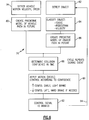
- the backup collision avoidance system 14 detects the vehicle motion including velocity, path and steering angle as indicated at 78.
- the detected parameters are utilized by the controller 18 to generate a predictive model of the vehicle path at a future time and over a defined distance as is indicated at 80.
- the cameras 30, sensors 36 and other detection systems are utilized to detect objects proximate the vehicle 10 as indicated at 82.
- the objects identified proximate the vehicle are classified as indicated at 84. Classification can include identifying if the object is fixed or moving and if moving at what speed and direction.
- the information obtained regarding the proximate objects is utilized to generate a predictive model of possible locations of a moving object at some future time as is indicated at 86.
- the predictive model can account for movement in view of the type of object, such as whether the object is a pedestrian or a person riding a bike. Movement of the pedestrian may also be predicted based on other identifying characteristics, such as whether the pedestrian is an adult or child.
- the collision confidence number in this example is a weight value that provides an indication as to the likelihood of a collision between the vehicle and a detected object based on the predictive models.
- one avoidance action may be to instruct the automatic braking system 12 to apply the brakes 20 as is indicated at 92, to prevent the collision.
- the braking rate is determined based upon a rate that is inversely proportional to collision confidence as indicated at 90.
- the controller 18 continually updates the predictive models and thereby updates the collision confidence number as is indicated by return arrow 94. As the collision confidence number changes, due to e.g. vehicle movement, object movement as the car is moving, the desired braking rate may also be changed.
- the controller 18 for the reverse collision avoidance system 14 determines the collision confidence number, while a separate controller for the automatic braking system 12 may determine the desired braking rate. Alternatively, the same controller 18 may perform both or either function.
- the example backup collision avoidance system 14 utilizes predictive models of both the vehicle path 40 and a detected object path 42 to determine a collision confidence value or weight that is utilized to determine when and how a braking maneuver is performed.
Landscapes
- Engineering & Computer Science (AREA)
- Transportation (AREA)
- Mechanical Engineering (AREA)
- Automation & Control Theory (AREA)
- Chemical & Material Sciences (AREA)
- Combustion & Propulsion (AREA)
- Regulating Braking Force (AREA)
- Traffic Control Systems (AREA)
Claims (13)
- Verfahren zur Steuerung der Verlangsamung eines Fahrzeuges (10), umfassend:Detektieren (82) und Überwachen eines Objektes (34) in der Nähe eines Fahrzeuges (10) mit mindestens einem Sensor (36);Überwachen (78) der Bewegung des Fahrzeuges (10);kontinuierliches Berechnen (88) eines Kollisionsvertrauenswertes, der eine Wahrscheinlichkeit einer Kollision zwischen dem Fahrzeug (10) und dem Objekt (34) anzeigt, mit einer innerhalb des Fahrzeuges (10) befindlichen Steuereinrichtung (18); undBestimmen eines Geschwindigkeitsprofiles des Fahrzeuges (10), das eine Kollision zwischen dem Fahrzeug (10) und dem Objekt (34) vermeidet, mit der Steuereinrichtung (18) auf der Basis des Kollisionsvertrauenswertes,dadurch gekennzeichnet, dassdas Geschwindigkeitsprofil derart auf der Basis eines aktuellen Kollisionsvertrauenswertes bestimmt wird, dass mit sich erhöhendem und damit eine größere Wahrscheinlichkeit einer Kollision anzeigendem Kollisionsvertrauenswert das Geschwindigkeitsprofil bestimmt wird, um ein Verlangsamungsmanöver des Fahrzeuges (10) zu bestimmen, das, im Vergleich zu einem auf der Basis eines aktuellen, eine geringere Kollisionswahrscheinlichkeit anzeigenden Kollisionsvertrauenswertes bestimmten Geschwindigkeitsprofil, bei einem größeren Abstand zu dem Objekt (34) beginnt.
- Verfahren nach Anspruch 1, wobei das Geschwindigkeitsprofil das Verlangsamungsmanöver über den Abstand zwischen dem Fahrzeug (10) und einem bestimmten Kollisionsort derart bestimmt, dass ein damit verbundenes Bremsmanöver eine geringste Fahrzeugverlangsamung über den Abstand bereitstellt, die das Fahrzeug (10) vor dem Kollisionsort zum Halten bringt.
- Verfahren nach Anspruch 1 oder 2, einschließend das Betätigen der Fahrzeugbremsen (20) mit dem automatischen Bremssystem (12) einschließlich des Sendens von Befehlen an ein elektronisches Bremssystem (16), die Fahrzeugbremsen (20) zu betätigen.
- Verfahren nach einem der Ansprüche 1 bis 3, analysierend Daten aus den Sensoren (36) mit einer Steuereinrichtung (18), um Charakteristika des detektierten Objektes (34) zu bestimmen und zu bestimmen, ob das Objekt (34) ein durch das Fahrzeug (10) zu vermeidendes Hindernis ist.
- Verfahren nach einem der Ansprüche 1 bis 4, einschließend das Generieren (86) eines prädiktiven Bewegungsmodells des Objektes (34), das einen Bereich von möglichen Orten (42) des Objektes (34) zu einem zukünftigen Zeitpunkt mit verknüpften Wahrscheinlichkeitswerten einschließt, auf der Basis der aktuellen Position und Bewegung des Objektes (34).
- Verfahren nach Anspruch 5, einschließend das Generieren (80) eines prädiktiven Modells des Fahrzeuges (10), um die Fahrzeugtrajektorie durch Überwachen von Fahrzeugsignalen, die die Bewegung des Fahrzeuges (10) anzeigen, zu bestimmen, wobei das prädiktive Modell des Fahrzeuges (10) einen Bereich von möglichen Wegen (40) des Fahrzeuges (10) mit verknüpften Wahrscheinlichkeitswerten bestimmt und das prädiktive Modell des Fahrzeuges (10) mit dem prädiktiven Bewegungsmodell des Objektes (34) in Beziehung bringt, um die Wahrscheinlichkeit einer Kollision zwischen dem Fahrzeug (10) und dem Objekt (34) zu bestimmen (88).
- Verfahren nach Anspruch 1, ferner umfassend:Neuberechnen des Kollisionsvertrauenswertes während des Verlangsamungsmanövers, wenn sich die Wahrscheinlichkeit einer Kollision mit dem Objekt (34) ändert;Bestimmen eines neuen gewünschten Geschwindigkeitsprofiles auf der Basis des neuberechneten Kollisionsvertrauenswertes; undBetätigen von Fahrzeugbremsen (20) gemäß dem neuen Geschwindigkeitsprofil.
- Verfahren nach Anspruch 1, einschließend das frühzeitigere Ausüben einer Bremskraft bei einem geringeren Verlangsamungswert und über ein längeres Zeitintervall hinweg, wenn sich der Kollisionsvertrauenswert erhöht, auf der Basis einer vorgegebenen Menge von auf der Basis des Kollisionsvertrauenswertes ausgewählten Bremskurven und das spätere Ausüben einer Bremskraft bei einem höheren Verlangsamungswert und über ein kürzeres Zeitintervall hinweg, wenn sich der Kollisionsvertrauenswert verringert, auf der Basis einer vorgegebenen Menge von auf der Basis des Kollisionsvertrauenswertes ausgewählten Bremskurven.
- Automatisches Bremssystem für ein Fahrzeug (10), umfassend:ein elektronisches Bremssystem (16), das zur Betätigung von Radbremsen (20) zur Verlangsamung des Fahrzeuges (10) fähig ist; undeine innerhalb des Fahrzeuges (10) angeordnete Steuereinrichtung (18), die Befehle generiert für das:Überwachen (78) der Fahrzeugbewegung;Detektieren (82) eines Objektes (34) in der Nähe des Fahrzeuges (10) mit mindestens einem Sensor (36) eines Systems zur Vermeidung von Kollisionen beim Zurücksetzen (14);Berechnen (88) eines Kollisionsvertrauenswertes, der eine Wahrscheinlichkeit einer Kollision zwischen dem Fahrzeug (10) und dem Objekt (34) anzeigt; undBestimmen eines gewünschten Geschwindigkeitsprofiles des Fahrzeuges (10), das eine Kollision zwischen dem Fahrzeug (10) und dem Objekt (34) vermeidet, mit der Steuereinrichtung (18) auf der Basis des berechneten Kollisionsvertrauenswertes,dadurch gekennzeichnet, dassdie Steuereinrichtung (18) Befehle zur Bestimmung des Geschwindigkeitsprofiles derart, dass die Verlangsamung des Fahrzeuges (10) umgekehrt proportional zu dem Kollisionsvertrauenswert ist, einschließt.
- Automatisches Bremssystem nach Anspruch 9, wobei die Steuereinrichtung (18) ferner Befehle einschließt für das frühzeitigere Ausüben (90) einer Bremskraft bei einem geringeren Verlangsamungswert über ein längeres Zeitintervall hinweg, wenn sich der Kollisionsvertrauenswert erhöht, gemäß einer vorgegebenen Menge von auf der Basis des Kollisionsvertrauenswertes ausgewählten Geschwindigkeitsprofilen.
- Automatisches Bremssystem nach einem der Ansprüche 9 und 10, wobei die Steuereinrichtung (18) ferner Befehle einschließt für das spätere Ausüben (90) einer Bremskraft bei einem höheren Verlangsamungswert über ein kürzeres Zeitintervall hinweg, wenn sich der Kollisionsvertrauenswert verringert, gemäß einer vorgegebenen Menge von auf der Basis des Kollisionsvertrauenswertes ausgewählten Geschwindigkeitsprofilen und die Steuereinrichtung (18) ferner Befehle einschließt für das Betätigen von Fahrzeugbremsen (20) im Verlauf des Verlangsamungsmanövers gemäß dem durch die Steuereinrichtung (18) bestimmten gewünschten Geschwindigkeitsprofil.
- Automatisches Bremssystem nach einem der Ansprüche 9 bis 11, wobei die Steuereinrichtung (18) Befehle einschließt für das Generieren (86) eines prädiktiven Modells des Objektes (34), das einen Bereich von möglichen Orten des Objektes (34) zu einem zukünftigen Zeitpunkt einschließt, auf der Basis einer aktuellen Position und Bewegung des Objektes (34) und das Generieren (80) eines prädiktiven Modells des Fahrzeuges (10), das einen Bereich von möglichen Wegen (40) für das Fahrzeug (10) einschließt, und das Inbeziehungbringen (88) des prädiktiven Modells des Fahrzeuges (10) mit dem prädiktiven Modell des Objektes (34), um die Wahrscheinlichkeit einer Kollision zwischen dem Fahrzeug (10) und dem Objekt (34) zu bestimmen.
- Automatisches Bremssystem nach Anspruch 12, wobei die Steuereinrichtung (18) ferner Befehle einschließt für das:Neuberechnen des Kollisionsvertrauenswertes im Verlauf der Fahrzeugverlangsamung, wenn sich die Wahrscheinlichkeit einer Kollision mit dem Objekt (34) ändert;Bestimmen eines neuen gewünschten Geschwindigkeitsprofiles auf der Basis der neuberechneten Kollisionsvertrauenszahl; undBetätigen von Fahrzeugbremsen (20) gemäß dem neuen gewünschten Geschwindigkeitsprofil.
Applications Claiming Priority (2)
| Application Number | Priority Date | Filing Date | Title |
|---|---|---|---|
| US201461933083P | 2014-01-29 | 2014-01-29 | |
| US14/603,490 US9656667B2 (en) | 2014-01-29 | 2015-01-23 | Method for minimizing automatic braking intrusion based on collision confidence |
Publications (2)
| Publication Number | Publication Date |
|---|---|
| EP2902291A1 EP2902291A1 (de) | 2015-08-05 |
| EP2902291B1 true EP2902291B1 (de) | 2018-11-14 |
Family
ID=52423632
Family Applications (1)
| Application Number | Title | Priority Date | Filing Date |
|---|---|---|---|
| EP15152998.9A Active EP2902291B1 (de) | 2014-01-29 | 2015-01-29 | Verfahren zur Minimierung von automatischer Bremsintrusion auf Basis von Kollisionsvertrauen |
Country Status (4)
| Country | Link |
|---|---|
| US (1) | US9656667B2 (de) |
| EP (1) | EP2902291B1 (de) |
| JP (1) | JP6226896B2 (de) |
| CN (1) | CN104960509B (de) |
Families Citing this family (93)
| Publication number | Priority date | Publication date | Assignee | Title |
|---|---|---|---|---|
| US9424607B2 (en) * | 2013-09-20 | 2016-08-23 | Elwha Llc | Systems and methods for insurance based upon status of vehicle software |
| US10169821B2 (en) | 2013-09-20 | 2019-01-01 | Elwha Llc | Systems and methods for insurance based upon status of vehicle software |
| JP6174516B2 (ja) * | 2014-04-24 | 2017-08-02 | 本田技研工業株式会社 | 衝突回避支援装置、衝突回避支援方法、及びプログラム |
| SE538405C2 (en) * | 2015-01-07 | 2016-06-14 | Viscando Ab | Method and system for categorization of a scene |
| JP6181678B2 (ja) * | 2015-01-29 | 2017-08-16 | トヨタ自動車株式会社 | 車両制動制御装置 |
| US9869560B2 (en) | 2015-07-31 | 2018-01-16 | International Business Machines Corporation | Self-driving vehicle's response to a proximate emergency vehicle |
| US9896100B2 (en) | 2015-08-24 | 2018-02-20 | International Business Machines Corporation | Automated spatial separation of self-driving vehicles from other vehicles based on occupant preferences |
| JP6657673B2 (ja) * | 2015-08-28 | 2020-03-04 | いすゞ自動車株式会社 | 車両制御装置および車両制御方法 |
| US9566986B1 (en) | 2015-09-25 | 2017-02-14 | International Business Machines Corporation | Controlling driving modes of self-driving vehicles |
| US9944291B2 (en) | 2015-10-27 | 2018-04-17 | International Business Machines Corporation | Controlling driving modes of self-driving vehicles |
| US10607293B2 (en) | 2015-10-30 | 2020-03-31 | International Business Machines Corporation | Automated insurance toggling for self-driving vehicles |
| JP7036732B2 (ja) * | 2015-11-04 | 2022-03-15 | ズークス インコーポレイテッド | 自律車両のためのシミュレーションシステムおよび方法 |
| US10401852B2 (en) | 2015-11-04 | 2019-09-03 | Zoox, Inc. | Teleoperation system and method for trajectory modification of autonomous vehicles |
| WO2017079341A2 (en) | 2015-11-04 | 2017-05-11 | Zoox, Inc. | Automated extraction of semantic information to enhance incremental mapping modifications for robotic vehicles |
| US9632502B1 (en) | 2015-11-04 | 2017-04-25 | Zoox, Inc. | Machine-learning systems and techniques to optimize teleoperation and/or planner decisions |
| WO2017079229A1 (en) | 2015-11-04 | 2017-05-11 | Zoox, Inc. | Simulation system and methods for autonomous vehicles |
| US11283877B2 (en) | 2015-11-04 | 2022-03-22 | Zoox, Inc. | Software application and logic to modify configuration of an autonomous vehicle |
| US9606539B1 (en) | 2015-11-04 | 2017-03-28 | Zoox, Inc. | Autonomous vehicle fleet service and system |
| US12265386B2 (en) | 2015-11-04 | 2025-04-01 | Zoox, Inc. | Autonomous vehicle fleet service and system |
| US9612123B1 (en) | 2015-11-04 | 2017-04-04 | Zoox, Inc. | Adaptive mapping to navigate autonomous vehicles responsive to physical environment changes |
| US10176525B2 (en) | 2015-11-09 | 2019-01-08 | International Business Machines Corporation | Dynamically adjusting insurance policy parameters for a self-driving vehicle |
| CN114612877B (zh) * | 2016-01-05 | 2025-08-19 | 御眼视觉技术有限公司 | 用于估计未来路径的系统和方法 |
| US9981657B2 (en) * | 2016-04-14 | 2018-05-29 | Ford Global Technologies, Llc | Autonomous vehicle parking and transition to manual control |
| JP6728921B2 (ja) | 2016-04-15 | 2020-07-22 | いすゞ自動車株式会社 | 運転支援装置 |
| CN105741496A (zh) * | 2016-05-04 | 2016-07-06 | 成都贝森伟任科技有限责任公司 | 基于机器视觉的车辆防撞终端 |
| US10685391B2 (en) | 2016-05-24 | 2020-06-16 | International Business Machines Corporation | Directing movement of a self-driving vehicle based on sales activity |
| US10266175B2 (en) * | 2016-05-31 | 2019-04-23 | Ford Global Technologies, Llc | Vehicle collision avoidance |
| US10011277B2 (en) | 2016-06-02 | 2018-07-03 | Ford Global Technologies, Llc | Vehicle collision avoidance |
| DE102016209733A1 (de) * | 2016-06-02 | 2017-12-07 | Robert Bosch Gmbh | Verfahren und Vorrichtung zur Längsdynamikregelung bei einem Kraftfahrzeug während eines autonomen Fahrvorgangs |
| WO2017214581A1 (en) * | 2016-06-10 | 2017-12-14 | Duke University | Motion planning for autonomous vehicles and reconfigurable motion planning processors |
| US10962640B2 (en) * | 2016-06-17 | 2021-03-30 | Fujitsu Ten Limited | Radar device and control method of radar device |
| US10150414B2 (en) * | 2016-07-08 | 2018-12-11 | Ford Global Technologies, Llc | Pedestrian detection when a vehicle is reversing |
| US10093322B2 (en) | 2016-09-15 | 2018-10-09 | International Business Machines Corporation | Automatically providing explanations for actions taken by a self-driving vehicle |
| US10643256B2 (en) | 2016-09-16 | 2020-05-05 | International Business Machines Corporation | Configuring a self-driving vehicle for charitable donations pickup and delivery |
| GB2554760A (en) * | 2016-10-10 | 2018-04-11 | Jaguar Land Rover Ltd | Control of a vehicle driver assistance system |
| GB2554759B (en) | 2016-10-10 | 2020-02-19 | Jaguar Land Rover Ltd | Control of a vehicle emergency braking system |
| US10315649B2 (en) * | 2016-11-29 | 2019-06-11 | Ford Global Technologies, Llc | Multi-sensor probabilistic object detection and automated braking |
| JP6547735B2 (ja) * | 2016-12-22 | 2019-07-24 | トヨタ自動車株式会社 | 衝突回避支援装置 |
| EP3339999B1 (de) * | 2016-12-22 | 2021-10-27 | Panasonic Intellectual Property Corporation of America | Informationsverarbeitungsvorrichtung, informationsverarbeitungsverfahren und aufzeichnungsmedium mit gespeichertem programm |
| US10259452B2 (en) * | 2017-01-04 | 2019-04-16 | International Business Machines Corporation | Self-driving vehicle collision management system |
| US10529147B2 (en) | 2017-01-05 | 2020-01-07 | International Business Machines Corporation | Self-driving vehicle road safety flare deploying system |
| US10363893B2 (en) | 2017-01-05 | 2019-07-30 | International Business Machines Corporation | Self-driving vehicle contextual lock control system |
| EP3580621B1 (de) * | 2017-02-10 | 2024-11-20 | Nissan North America, Inc. | Autonome fahrzeugbetriebsverwaltung |
| RU2734744C1 (ru) | 2017-02-10 | 2020-10-22 | Ниссан Норт Америка, Инк. | Оперативное управление автономным транспортным средством, включающее в себя работу экземпляра модели частично наблюдаемого марковского процесса принятия решений |
| US10124777B2 (en) | 2017-02-22 | 2018-11-13 | Arnaldo C. Gomes | Multiple-stage collision avoidance braking system and method |
| US10576946B2 (en) | 2017-02-22 | 2020-03-03 | Arnaldo C. Gomes | Collision avoidance braking system and method |
| US10913434B2 (en) * | 2017-06-01 | 2021-02-09 | Aptiv Technologies Limited | Automatic braking system for slow moving objects |
| WO2019003574A1 (ja) * | 2017-06-30 | 2019-01-03 | パナソニック インテレクチュアル プロパティ コーポレーション オブ アメリカ | 車両、車両制御方法、車両遠隔操作装置および車両遠隔操作方法 |
| US10654453B2 (en) * | 2017-08-23 | 2020-05-19 | Uatc Llc | Systems and methods for low-latency braking action for an autonomous vehicle |
| US11702070B2 (en) | 2017-10-31 | 2023-07-18 | Nissan North America, Inc. | Autonomous vehicle operation with explicit occlusion reasoning |
| DE102017011139A1 (de) * | 2017-12-01 | 2019-06-06 | Lucas Automotive Gmbh | Bremssteuerung und Bremssteuerungsverfahren zum Ermitteln eines Brems-Korrekturwerts für Notbremsvorgänge |
| US11874120B2 (en) | 2017-12-22 | 2024-01-16 | Nissan North America, Inc. | Shared autonomous vehicle operational management |
| JP6749952B2 (ja) * | 2018-02-07 | 2020-09-02 | 株式会社Nippo | 作業機械の緊急停止装置及び緊急停止方法 |
| KR102532741B1 (ko) | 2018-02-28 | 2023-05-16 | 삼성전자주식회사 | 자율 주행 장치 및 그 주행 방법 |
| CN108791283B (zh) * | 2018-05-16 | 2019-11-05 | 江苏锡沂高新区科技发展有限公司 | 一种用于无人驾驶电动汽车的驾驶辅助控制器 |
| US11049265B2 (en) * | 2018-05-16 | 2021-06-29 | Nec Corporation | Balancing diversity and precision of generative models with complementary density estimators |
| US10829113B2 (en) * | 2018-09-17 | 2020-11-10 | Ford Global Technologies, Llc | Vehicle collision avoidance |
| US20230275877A1 (en) * | 2018-09-24 | 2023-08-31 | Karamba Security Ltd. | Visual sensor validation system |
| US10816987B2 (en) * | 2018-10-15 | 2020-10-27 | Zoox, Inc. | Responsive vehicle control |
| CN111081061B (zh) * | 2018-10-22 | 2021-09-21 | 杭州海康威视数字技术股份有限公司 | 碰撞预警方法及装置 |
| US11733703B2 (en) * | 2019-01-30 | 2023-08-22 | Perceptive Automata, Inc. | Automatic braking of autonomous vehicles using machine learning based prediction of behavior of a traffic entity |
| US11467579B2 (en) | 2019-02-06 | 2022-10-11 | Perceptive Automata, Inc. | Probabilistic neural network for predicting hidden context of traffic entities for autonomous vehicles |
| US12134392B2 (en) | 2019-05-08 | 2024-11-05 | Volvo Truck Corporation | Method for determining if a vehicle control command precludes a future vehicle safety maneuver |
| US11358593B2 (en) | 2019-07-09 | 2022-06-14 | King Fahd University Of Petroleum And Minerals | Dual direction accident prevention and assistive braking system |
| KR20210026248A (ko) * | 2019-08-29 | 2021-03-10 | 현대자동차주식회사 | 차량 사고 통보 장치, 그를 포함한 시스템 및 그 방법 |
| US11479297B2 (en) * | 2019-09-10 | 2022-10-25 | Ford Global Technologies, Llc | Overshoot protection in hitch assist operation |
| EP4034439A4 (de) * | 2019-09-27 | 2023-11-01 | Zoox, Inc. | Sicherheitsanalyserahmen |
| WO2021066019A1 (ja) * | 2019-09-30 | 2021-04-08 | 株式会社小松製作所 | 作業機械および作業機械の制御方法 |
| JP7347099B2 (ja) * | 2019-10-11 | 2023-09-20 | トヨタ自動車株式会社 | 車両警報装置 |
| US11269329B2 (en) * | 2019-10-21 | 2022-03-08 | Baidu Usa Llc | Dynamic model with learning based localization correction system |
| US11945434B2 (en) * | 2019-11-08 | 2024-04-02 | Baidu Usa Llc | Delay decision making for autonomous driving vehicles in response to obstacles based on confidence level and distance |
| WO2021097070A1 (en) * | 2019-11-13 | 2021-05-20 | Zoox, Inc. | Collision monitoring using statistic models |
| US11697412B2 (en) | 2019-11-13 | 2023-07-11 | Zoox, Inc. | Collision monitoring using statistic models |
| US11899454B2 (en) | 2019-11-26 | 2024-02-13 | Nissan North America, Inc. | Objective-based reasoning in autonomous vehicle decision-making |
| US11635758B2 (en) | 2019-11-26 | 2023-04-25 | Nissan North America, Inc. | Risk aware executor with action set recommendations |
| US11613269B2 (en) | 2019-12-23 | 2023-03-28 | Nissan North America, Inc. | Learning safety and human-centered constraints in autonomous vehicles |
| US11300957B2 (en) | 2019-12-26 | 2022-04-12 | Nissan North America, Inc. | Multiple objective explanation and control interface design |
| US11714971B2 (en) | 2020-01-31 | 2023-08-01 | Nissan North America, Inc. | Explainability of autonomous vehicle decision making |
| US11577746B2 (en) | 2020-01-31 | 2023-02-14 | Nissan North America, Inc. | Explainability of autonomous vehicle decision making |
| US11782438B2 (en) | 2020-03-17 | 2023-10-10 | Nissan North America, Inc. | Apparatus and method for post-processing a decision-making model of an autonomous vehicle using multivariate data |
| CN111409642B (zh) * | 2020-03-31 | 2021-10-08 | 潍柴动力股份有限公司 | 车速控制方法及装置、车辆电控设备 |
| KR20210153998A (ko) | 2020-06-11 | 2021-12-20 | 현대자동차주식회사 | 차량 및 그 제어방법 |
| JP7689962B2 (ja) * | 2020-07-01 | 2025-06-09 | パナソニック インテレクチュアル プロパティ コーポレーション オブ アメリカ | 情報処理方法、情報処理装置及び情報処理プログラム |
| US12134379B2 (en) * | 2020-09-24 | 2024-11-05 | Mobileye Vision Technologies Ltd. | Systems, devices, and methods for predictive risk-aware driving |
| US12545297B2 (en) * | 2021-01-07 | 2026-02-10 | Ford Global Technologies, Llc | Methods and systems for generating a longitudinal plan for an autonomous vehicle based on behavior of uncertain road users |
| US12466409B2 (en) * | 2021-05-28 | 2025-11-11 | Zoox, Inc. | Vehicle deceleration planning |
| US11794766B2 (en) * | 2021-10-14 | 2023-10-24 | Huawei Technologies Co., Ltd. | Systems and methods for prediction-based driver assistance |
| US20230192144A1 (en) * | 2021-12-16 | 2023-06-22 | Gm Cruise Holdings Llc | Uncertainty prediction for a predicted path of an object that avoids infeasible paths |
| CN114228707B (zh) * | 2021-12-22 | 2023-04-25 | 广西科技大学 | 一种无人驾驶车辆的防撞方法及系统 |
| CN114407856B (zh) * | 2022-02-14 | 2023-08-18 | 一汽解放汽车有限公司 | 车辆制动方法及系统 |
| JP2024109318A (ja) * | 2023-02-01 | 2024-08-14 | トヨタ自動車株式会社 | 運転支援装置 |
| US12509073B2 (en) * | 2023-08-31 | 2025-12-30 | Nissan North America, Inc. | Prediction variance estimation |
| CN120178700B (zh) * | 2025-03-25 | 2025-11-21 | 北京神州高铁轨道交通科技有限公司 | 内燃机车智能驾驶仿真测试方法及系统 |
Citations (1)
| Publication number | Priority date | Publication date | Assignee | Title |
|---|---|---|---|---|
| JP2008308036A (ja) * | 2007-06-14 | 2008-12-25 | Denso Corp | 衝突緩和装置 |
Family Cites Families (15)
| Publication number | Priority date | Publication date | Assignee | Title |
|---|---|---|---|---|
| DE19607788B4 (de) | 1996-03-01 | 2009-05-07 | Robert Bosch Gmbh | Verfahren und Vorrichtung zur Steuerung der Annäherung eines Fahrzeugs an ein Hindernis |
| JPH11255089A (ja) | 1998-03-12 | 1999-09-21 | Fuji Heavy Ind Ltd | 車両の自動ブレーキ制御装置 |
| DE19831262C2 (de) | 1998-07-11 | 2002-09-19 | Wabco Gmbh & Co Ohg | Einrichtung zur Unterstützung des Fahrers eines Nutzfahrzeuges bei Rückwärtsfahrt |
| JP2004521028A (ja) * | 2001-07-11 | 2004-07-15 | ローベルト ボッシュ ゲゼルシャフト ミット ベシュレンクテル ハフツング | 車両の減速を作動させて実施する方法および装置 |
| US20030111902A1 (en) | 2001-12-17 | 2003-06-19 | David Thiede | Intelligent braking system and method |
| US6607255B2 (en) * | 2002-01-17 | 2003-08-19 | Ford Global Technologies, Llc | Collision mitigation by braking system |
| US6480144B1 (en) * | 2002-01-30 | 2002-11-12 | Ford Global Technologies, Inc. | Wireless communication between countermeasure devices |
| US7197396B2 (en) * | 2004-03-31 | 2007-03-27 | Ford Global Technologies, Llc | Collision mitigation system |
| US7719410B2 (en) * | 2007-01-08 | 2010-05-18 | Gm Global Technology Operations, Inc. | Threat assessment state processing for collision warning, mitigation and/or avoidance in ground-based vehicles |
| US8155853B2 (en) | 2008-06-26 | 2012-04-10 | GM Global Technology Operations LLC | Mechanical time dilation algorithm for collision avoidance system |
| JP2011227582A (ja) | 2010-04-15 | 2011-11-10 | Toyota Motor Corp | 車両用衝突予測装置 |
| JP5381923B2 (ja) * | 2010-07-23 | 2014-01-08 | 日産自動車株式会社 | 車両用制動支援装置及び車両用制動支援方法 |
| CN103180888B (zh) * | 2010-10-22 | 2016-04-13 | 丰田自动车株式会社 | 驾驶支援装置 |
| DE102010051203B4 (de) * | 2010-11-12 | 2022-07-28 | Zf Active Safety Gmbh | Verfahren zur Erkennung von kritischen Fahrsituationen von Lastkraft- oder Personenkraftwagen, insbesondere zur Vermeidung von Kollisionen |
| JP5793868B2 (ja) | 2011-01-12 | 2015-10-14 | トヨタ自動車株式会社 | 走行支援装置 |
-
2015
- 2015-01-23 US US14/603,490 patent/US9656667B2/en active Active
- 2015-01-29 JP JP2015015673A patent/JP6226896B2/ja active Active
- 2015-01-29 CN CN201510102315.1A patent/CN104960509B/zh active Active
- 2015-01-29 EP EP15152998.9A patent/EP2902291B1/de active Active
Patent Citations (1)
| Publication number | Priority date | Publication date | Assignee | Title |
|---|---|---|---|---|
| JP2008308036A (ja) * | 2007-06-14 | 2008-12-25 | Denso Corp | 衝突緩和装置 |
Also Published As
| Publication number | Publication date |
|---|---|
| CN104960509B (zh) | 2018-09-14 |
| US9656667B2 (en) | 2017-05-23 |
| JP2015140181A (ja) | 2015-08-03 |
| CN104960509A (zh) | 2015-10-07 |
| JP6226896B2 (ja) | 2017-11-08 |
| US20150210280A1 (en) | 2015-07-30 |
| EP2902291A1 (de) | 2015-08-05 |
Similar Documents
| Publication | Publication Date | Title |
|---|---|---|
| US9656667B2 (en) | Method for minimizing automatic braking intrusion based on collision confidence | |
| EP3078515B1 (de) | Kollisionsvermeidung auf basis von vorderradausschaltverfolgung im rückwärtsbetrieb | |
| US11173898B2 (en) | Driver assistance system for a motor vehicle | |
| US9150199B2 (en) | Safety device for motor vehicles | |
| EP2902290B1 (de) | System zur Unterbringung eines Fußgängers während eines autonomen Fahrzeugbetriebs | |
| EP3208165B1 (de) | Fahrzeugsicherheitsassistenzsystem | |
| US9896073B2 (en) | Method and device for carrying out collision-avoiding measures | |
| US11713041B2 (en) | Control system and control method for driving a motor vehicle | |
| US11427221B2 (en) | Method and control device for the autonomous emergency braking of an ego vehicle | |
| EP2765046B1 (de) | Fahrhilfesystem für ein fahrzeug | |
| EP2840007B1 (de) | Konsistente Verhaltenserzeugung eines erweiterten vorhersagbaren Fahrerhilfssystems | |
| JP4883248B2 (ja) | 車両用周辺監視装置 | |
| US8896433B2 (en) | Driver assistance system and method for supporting the driver of a vehicle in maintaining a traffic lane limited by traffic lane markings | |
| US9508261B2 (en) | Method and device for operating a vehicle | |
| KR101478068B1 (ko) | 차량 충돌 방지 장치 및 그 방법 | |
| US9862383B2 (en) | Method for operating a vehicle based on one or more setpoint trajectories | |
| JP4964321B2 (ja) | 乗員保護装置 | |
| JPWO2016084487A1 (ja) | 車両走行制御装置 | |
| EP3000104B1 (de) | Kollisionsminderungssysteme mit einstellbarer auslöserbreite | |
| KR101552017B1 (ko) | 성능이 개선된 운전보조시스템 및 그 제어방법 | |
| KR20150051548A (ko) | 운전자의 성향을 반영하는 운전보조시스템 및 그 제어방법 | |
| JP4210640B2 (ja) | 車両用制御対象判定装置および車両制御装置 | |
| JP6657673B2 (ja) | 車両制御装置および車両制御方法 | |
| US20230347883A1 (en) | Method and arrangement to timely trigger automatic emergency braking operation and to control the longitudinal movement of a vehicle | |
| KR101511860B1 (ko) | 운전보조시스템 및 그 제어방법 |
Legal Events
| Date | Code | Title | Description |
|---|---|---|---|
| PUAI | Public reference made under article 153(3) epc to a published international application that has entered the european phase |
Free format text: ORIGINAL CODE: 0009012 |
|
| 17P | Request for examination filed |
Effective date: 20150129 |
|
| AK | Designated contracting states |
Kind code of ref document: A1 Designated state(s): AL AT BE BG CH CY CZ DE DK EE ES FI FR GB GR HR HU IE IS IT LI LT LU LV MC MK MT NL NO PL PT RO RS SE SI SK SM TR |
|
| AX | Request for extension of the european patent |
Extension state: BA ME |
|
| 17P | Request for examination filed |
Effective date: 20160125 |
|
| RBV | Designated contracting states (corrected) |
Designated state(s): AL AT BE BG CH CY CZ DE DK EE ES FI FR GB GR HR HU IE IS IT LI LT LU LV MC MK MT NL NO PL PT RO RS SE SI SK SM TR |
|
| REG | Reference to a national code |
Ref country code: DE Ref legal event code: R079 Ref document number: 602015019691 Country of ref document: DE Free format text: PREVIOUS MAIN CLASS: B60W0030090000 Ipc: B60T0008171000 |
|
| RIC1 | Information provided on ipc code assigned before grant |
Ipc: B60W 10/20 20060101ALI20180507BHEP Ipc: B60W 30/09 20120101ALI20180507BHEP Ipc: B60W 30/18 20120101ALI20180507BHEP Ipc: B60W 10/192 20120101ALI20180507BHEP Ipc: B60T 7/22 20060101ALI20180507BHEP Ipc: B60T 8/171 20060101AFI20180507BHEP Ipc: B60W 30/095 20120101ALI20180507BHEP |
|
| GRAP | Despatch of communication of intention to grant a patent |
Free format text: ORIGINAL CODE: EPIDOSNIGR1 |
|
| STAA | Information on the status of an ep patent application or granted ep patent |
Free format text: STATUS: GRANT OF PATENT IS INTENDED |
|
| INTG | Intention to grant announced |
Effective date: 20180709 |
|
| GRAS | Grant fee paid |
Free format text: ORIGINAL CODE: EPIDOSNIGR3 |
|
| GRAA | (expected) grant |
Free format text: ORIGINAL CODE: 0009210 |
|
| STAA | Information on the status of an ep patent application or granted ep patent |
Free format text: STATUS: THE PATENT HAS BEEN GRANTED |
|
| AK | Designated contracting states |
Kind code of ref document: B1 Designated state(s): AL AT BE BG CH CY CZ DE DK EE ES FI FR GB GR HR HU IE IS IT LI LT LU LV MC MK MT NL NO PL PT RO RS SE SI SK SM TR |
|
| REG | Reference to a national code |
Ref country code: CH Ref legal event code: EP Ref country code: AT Ref legal event code: REF Ref document number: 1064430 Country of ref document: AT Kind code of ref document: T Effective date: 20181115 |
|
| REG | Reference to a national code |
Ref country code: DE Ref legal event code: R096 Ref document number: 602015019691 Country of ref document: DE |
|
| REG | Reference to a national code |
Ref country code: IE Ref legal event code: FG4D |
|
| REG | Reference to a national code |
Ref country code: SE Ref legal event code: TRGR |
|
| REG | Reference to a national code |
Ref country code: NL Ref legal event code: MP Effective date: 20181114 |
|
| REG | Reference to a national code |
Ref country code: LT Ref legal event code: MG4D |
|
| REG | Reference to a national code |
Ref country code: AT Ref legal event code: MK05 Ref document number: 1064430 Country of ref document: AT Kind code of ref document: T Effective date: 20181114 |
|
| PG25 | Lapsed in a contracting state [announced via postgrant information from national office to epo] |
Ref country code: FI Free format text: LAPSE BECAUSE OF FAILURE TO SUBMIT A TRANSLATION OF THE DESCRIPTION OR TO PAY THE FEE WITHIN THE PRESCRIBED TIME-LIMIT Effective date: 20181114 Ref country code: BG Free format text: LAPSE BECAUSE OF FAILURE TO SUBMIT A TRANSLATION OF THE DESCRIPTION OR TO PAY THE FEE WITHIN THE PRESCRIBED TIME-LIMIT Effective date: 20190214 Ref country code: HR Free format text: LAPSE BECAUSE OF FAILURE TO SUBMIT A TRANSLATION OF THE DESCRIPTION OR TO PAY THE FEE WITHIN THE PRESCRIBED TIME-LIMIT Effective date: 20181114 Ref country code: LV Free format text: LAPSE BECAUSE OF FAILURE TO SUBMIT A TRANSLATION OF THE DESCRIPTION OR TO PAY THE FEE WITHIN THE PRESCRIBED TIME-LIMIT Effective date: 20181114 Ref country code: ES Free format text: LAPSE BECAUSE OF FAILURE TO SUBMIT A TRANSLATION OF THE DESCRIPTION OR TO PAY THE FEE WITHIN THE PRESCRIBED TIME-LIMIT Effective date: 20181114 Ref country code: AT Free format text: LAPSE BECAUSE OF FAILURE TO SUBMIT A TRANSLATION OF THE DESCRIPTION OR TO PAY THE FEE WITHIN THE PRESCRIBED TIME-LIMIT Effective date: 20181114 Ref country code: LT Free format text: LAPSE BECAUSE OF FAILURE TO SUBMIT A TRANSLATION OF THE DESCRIPTION OR TO PAY THE FEE WITHIN THE PRESCRIBED TIME-LIMIT Effective date: 20181114 Ref country code: IS Free format text: LAPSE BECAUSE OF FAILURE TO SUBMIT A TRANSLATION OF THE DESCRIPTION OR TO PAY THE FEE WITHIN THE PRESCRIBED TIME-LIMIT Effective date: 20190314 Ref country code: NO Free format text: LAPSE BECAUSE OF FAILURE TO SUBMIT A TRANSLATION OF THE DESCRIPTION OR TO PAY THE FEE WITHIN THE PRESCRIBED TIME-LIMIT Effective date: 20190214 |
|
| PG25 | Lapsed in a contracting state [announced via postgrant information from national office to epo] |
Ref country code: PT Free format text: LAPSE BECAUSE OF FAILURE TO SUBMIT A TRANSLATION OF THE DESCRIPTION OR TO PAY THE FEE WITHIN THE PRESCRIBED TIME-LIMIT Effective date: 20190314 Ref country code: NL Free format text: LAPSE BECAUSE OF FAILURE TO SUBMIT A TRANSLATION OF THE DESCRIPTION OR TO PAY THE FEE WITHIN THE PRESCRIBED TIME-LIMIT Effective date: 20181114 Ref country code: GR Free format text: LAPSE BECAUSE OF FAILURE TO SUBMIT A TRANSLATION OF THE DESCRIPTION OR TO PAY THE FEE WITHIN THE PRESCRIBED TIME-LIMIT Effective date: 20190215 Ref country code: RS Free format text: LAPSE BECAUSE OF FAILURE TO SUBMIT A TRANSLATION OF THE DESCRIPTION OR TO PAY THE FEE WITHIN THE PRESCRIBED TIME-LIMIT Effective date: 20181114 Ref country code: AL Free format text: LAPSE BECAUSE OF FAILURE TO SUBMIT A TRANSLATION OF THE DESCRIPTION OR TO PAY THE FEE WITHIN THE PRESCRIBED TIME-LIMIT Effective date: 20181114 |
|
| PG25 | Lapsed in a contracting state [announced via postgrant information from national office to epo] |
Ref country code: IT Free format text: LAPSE BECAUSE OF FAILURE TO SUBMIT A TRANSLATION OF THE DESCRIPTION OR TO PAY THE FEE WITHIN THE PRESCRIBED TIME-LIMIT Effective date: 20181114 Ref country code: CZ Free format text: LAPSE BECAUSE OF FAILURE TO SUBMIT A TRANSLATION OF THE DESCRIPTION OR TO PAY THE FEE WITHIN THE PRESCRIBED TIME-LIMIT Effective date: 20181114 Ref country code: PL Free format text: LAPSE BECAUSE OF FAILURE TO SUBMIT A TRANSLATION OF THE DESCRIPTION OR TO PAY THE FEE WITHIN THE PRESCRIBED TIME-LIMIT Effective date: 20181114 Ref country code: DK Free format text: LAPSE BECAUSE OF FAILURE TO SUBMIT A TRANSLATION OF THE DESCRIPTION OR TO PAY THE FEE WITHIN THE PRESCRIBED TIME-LIMIT Effective date: 20181114 |
|
| REG | Reference to a national code |
Ref country code: DE Ref legal event code: R097 Ref document number: 602015019691 Country of ref document: DE |
|
| PG25 | Lapsed in a contracting state [announced via postgrant information from national office to epo] |
Ref country code: EE Free format text: LAPSE BECAUSE OF FAILURE TO SUBMIT A TRANSLATION OF THE DESCRIPTION OR TO PAY THE FEE WITHIN THE PRESCRIBED TIME-LIMIT Effective date: 20181114 Ref country code: SM Free format text: LAPSE BECAUSE OF FAILURE TO SUBMIT A TRANSLATION OF THE DESCRIPTION OR TO PAY THE FEE WITHIN THE PRESCRIBED TIME-LIMIT Effective date: 20181114 Ref country code: MC Free format text: LAPSE BECAUSE OF FAILURE TO SUBMIT A TRANSLATION OF THE DESCRIPTION OR TO PAY THE FEE WITHIN THE PRESCRIBED TIME-LIMIT Effective date: 20181114 Ref country code: SK Free format text: LAPSE BECAUSE OF FAILURE TO SUBMIT A TRANSLATION OF THE DESCRIPTION OR TO PAY THE FEE WITHIN THE PRESCRIBED TIME-LIMIT Effective date: 20181114 Ref country code: RO Free format text: LAPSE BECAUSE OF FAILURE TO SUBMIT A TRANSLATION OF THE DESCRIPTION OR TO PAY THE FEE WITHIN THE PRESCRIBED TIME-LIMIT Effective date: 20181114 |
|
| REG | Reference to a national code |
Ref country code: CH Ref legal event code: PL |
|
| PLBE | No opposition filed within time limit |
Free format text: ORIGINAL CODE: 0009261 |
|
| STAA | Information on the status of an ep patent application or granted ep patent |
Free format text: STATUS: NO OPPOSITION FILED WITHIN TIME LIMIT |
|
| PG25 | Lapsed in a contracting state [announced via postgrant information from national office to epo] |
Ref country code: LU Free format text: LAPSE BECAUSE OF NON-PAYMENT OF DUE FEES Effective date: 20190129 |
|
| REG | Reference to a national code |
Ref country code: BE Ref legal event code: MM Effective date: 20190131 |
|
| 26N | No opposition filed |
Effective date: 20190815 |
|
| GBPC | Gb: european patent ceased through non-payment of renewal fee |
Effective date: 20190214 |
|
| REG | Reference to a national code |
Ref country code: IE Ref legal event code: MM4A |
|
| PG25 | Lapsed in a contracting state [announced via postgrant information from national office to epo] |
Ref country code: SI Free format text: LAPSE BECAUSE OF FAILURE TO SUBMIT A TRANSLATION OF THE DESCRIPTION OR TO PAY THE FEE WITHIN THE PRESCRIBED TIME-LIMIT Effective date: 20181114 |
|
| PG25 | Lapsed in a contracting state [announced via postgrant information from national office to epo] |
Ref country code: BE Free format text: LAPSE BECAUSE OF NON-PAYMENT OF DUE FEES Effective date: 20190131 |
|
| PG25 | Lapsed in a contracting state [announced via postgrant information from national office to epo] |
Ref country code: CH Free format text: LAPSE BECAUSE OF NON-PAYMENT OF DUE FEES Effective date: 20190131 Ref country code: LI Free format text: LAPSE BECAUSE OF NON-PAYMENT OF DUE FEES Effective date: 20190131 |
|
| PG25 | Lapsed in a contracting state [announced via postgrant information from national office to epo] |
Ref country code: IE Free format text: LAPSE BECAUSE OF NON-PAYMENT OF DUE FEES Effective date: 20190129 Ref country code: GB Free format text: LAPSE BECAUSE OF NON-PAYMENT OF DUE FEES Effective date: 20190214 |
|
| PG25 | Lapsed in a contracting state [announced via postgrant information from national office to epo] |
Ref country code: TR Free format text: LAPSE BECAUSE OF FAILURE TO SUBMIT A TRANSLATION OF THE DESCRIPTION OR TO PAY THE FEE WITHIN THE PRESCRIBED TIME-LIMIT Effective date: 20181114 |
|
| PG25 | Lapsed in a contracting state [announced via postgrant information from national office to epo] |
Ref country code: MT Free format text: LAPSE BECAUSE OF NON-PAYMENT OF DUE FEES Effective date: 20190129 |
|
| PG25 | Lapsed in a contracting state [announced via postgrant information from national office to epo] |
Ref country code: CY Free format text: LAPSE BECAUSE OF FAILURE TO SUBMIT A TRANSLATION OF THE DESCRIPTION OR TO PAY THE FEE WITHIN THE PRESCRIBED TIME-LIMIT Effective date: 20181114 |
|
| PG25 | Lapsed in a contracting state [announced via postgrant information from national office to epo] |
Ref country code: HU Free format text: LAPSE BECAUSE OF FAILURE TO SUBMIT A TRANSLATION OF THE DESCRIPTION OR TO PAY THE FEE WITHIN THE PRESCRIBED TIME-LIMIT; INVALID AB INITIO Effective date: 20150129 |
|
| PG25 | Lapsed in a contracting state [announced via postgrant information from national office to epo] |
Ref country code: MK Free format text: LAPSE BECAUSE OF FAILURE TO SUBMIT A TRANSLATION OF THE DESCRIPTION OR TO PAY THE FEE WITHIN THE PRESCRIBED TIME-LIMIT Effective date: 20181114 |
|
| REG | Reference to a national code |
Ref country code: DE Ref legal event code: R081 Ref document number: 602015019691 Country of ref document: DE Owner name: CONTINENTAL AUTONOMOUS MOBILITY US, LLC (N.D.G, US Free format text: FORMER OWNER: CONTINENTAL AUTOMOTIVE SYSTEMS US, INC., AUBURN HILLS, MICH., US |
|
| P01 | Opt-out of the competence of the unified patent court (upc) registered |
Effective date: 20230623 |
|
| PGFP | Annual fee paid to national office [announced via postgrant information from national office to epo] |
Ref country code: SE Payment date: 20260126 Year of fee payment: 12 |
|
| PGFP | Annual fee paid to national office [announced via postgrant information from national office to epo] |
Ref country code: DE Payment date: 20260131 Year of fee payment: 12 |
|
| PGFP | Annual fee paid to national office [announced via postgrant information from national office to epo] |
Ref country code: FR Payment date: 20260126 Year of fee payment: 12 |