EP2881157B1 - Verflochtene filtrationsbarriere - Google Patents
Verflochtene filtrationsbarriere Download PDFInfo
- Publication number
- EP2881157B1 EP2881157B1 EP14196886.7A EP14196886A EP2881157B1 EP 2881157 B1 EP2881157 B1 EP 2881157B1 EP 14196886 A EP14196886 A EP 14196886A EP 2881157 B1 EP2881157 B1 EP 2881157B1
- Authority
- EP
- European Patent Office
- Prior art keywords
- barrier
- layer
- nanofibers
- microfibers
- barrier layer
- Prior art date
- Legal status (The legal status is an assumption and is not a legal conclusion. Google has not performed a legal analysis and makes no representation as to the accuracy of the status listed.)
- Active
Links
Images



Classifications
-
- B—PERFORMING OPERATIONS; TRANSPORTING
- B01—PHYSICAL OR CHEMICAL PROCESSES OR APPARATUS IN GENERAL
- B01D—SEPARATION
- B01D46/00—Filters or filtering processes specially modified for separating dispersed particles from gases or vapours
- B01D46/0001—Making filtering elements
-
- B—PERFORMING OPERATIONS; TRANSPORTING
- B01—PHYSICAL OR CHEMICAL PROCESSES OR APPARATUS IN GENERAL
- B01D—SEPARATION
- B01D39/00—Filtering material for liquid or gaseous fluids
- B01D39/14—Other self-supporting filtering material ; Other filtering material
- B01D39/16—Other self-supporting filtering material ; Other filtering material of organic material, e.g. synthetic fibres
- B01D39/1607—Other self-supporting filtering material ; Other filtering material of organic material, e.g. synthetic fibres the material being fibrous
- B01D39/1623—Other self-supporting filtering material ; Other filtering material of organic material, e.g. synthetic fibres the material being fibrous of synthetic origin
-
- B—PERFORMING OPERATIONS; TRANSPORTING
- B01—PHYSICAL OR CHEMICAL PROCESSES OR APPARATUS IN GENERAL
- B01D—SEPARATION
- B01D46/00—Filters or filtering processes specially modified for separating dispersed particles from gases or vapours
- B01D46/0027—Filters or filtering processes specially modified for separating dispersed particles from gases or vapours with additional separating or treating functions
- B01D46/0028—Filters or filtering processes specially modified for separating dispersed particles from gases or vapours with additional separating or treating functions provided with antibacterial or antifungal means
-
- B—PERFORMING OPERATIONS; TRANSPORTING
- B01—PHYSICAL OR CHEMICAL PROCESSES OR APPARATUS IN GENERAL
- B01D—SEPARATION
- B01D46/00—Filters or filtering processes specially modified for separating dispersed particles from gases or vapours
- B01D46/0027—Filters or filtering processes specially modified for separating dispersed particles from gases or vapours with additional separating or treating functions
- B01D46/0032—Filters or filtering processes specially modified for separating dispersed particles from gases or vapours with additional separating or treating functions using electrostatic forces to remove particles, e.g. electret filters
-
- B—PERFORMING OPERATIONS; TRANSPORTING
- B01—PHYSICAL OR CHEMICAL PROCESSES OR APPARATUS IN GENERAL
- B01D—SEPARATION
- B01D46/00—Filters or filtering processes specially modified for separating dispersed particles from gases or vapours
- B01D46/54—Particle separators, e.g. dust precipitators, using ultra-fine filter sheets or diaphragms
- B01D46/546—Particle separators, e.g. dust precipitators, using ultra-fine filter sheets or diaphragms using nano- or microfibres
-
- B—PERFORMING OPERATIONS; TRANSPORTING
- B01—PHYSICAL OR CHEMICAL PROCESSES OR APPARATUS IN GENERAL
- B01D—SEPARATION
- B01D46/00—Filters or filtering processes specially modified for separating dispersed particles from gases or vapours
- B01D46/56—Filters or filtering processes specially modified for separating dispersed particles from gases or vapours with multiple filtering elements, characterised by their mutual disposition
- B01D46/62—Filters or filtering processes specially modified for separating dispersed particles from gases or vapours with multiple filtering elements, characterised by their mutual disposition connected in series
-
- B—PERFORMING OPERATIONS; TRANSPORTING
- B29—WORKING OF PLASTICS; WORKING OF SUBSTANCES IN A PLASTIC STATE IN GENERAL
- B29C—SHAPING OR JOINING OF PLASTICS; SHAPING OF MATERIAL IN A PLASTIC STATE, NOT OTHERWISE PROVIDED FOR; AFTER-TREATMENT OF THE SHAPED PRODUCTS, e.g. REPAIRING
- B29C48/00—Extrusion moulding, i.e. expressing the moulding material through a die or nozzle which imparts the desired form; Apparatus therefor
- B29C48/16—Articles comprising two or more components, e.g. co-extruded layers
- B29C48/18—Articles comprising two or more components, e.g. co-extruded layers the components being layers
-
- B—PERFORMING OPERATIONS; TRANSPORTING
- B29—WORKING OF PLASTICS; WORKING OF SUBSTANCES IN A PLASTIC STATE IN GENERAL
- B29C—SHAPING OR JOINING OF PLASTICS; SHAPING OF MATERIAL IN A PLASTIC STATE, NOT OTHERWISE PROVIDED FOR; AFTER-TREATMENT OF THE SHAPED PRODUCTS, e.g. REPAIRING
- B29C65/00—Joining or sealing of preformed parts, e.g. welding of plastics materials; Apparatus therefor
- B29C65/02—Joining or sealing of preformed parts, e.g. welding of plastics materials; Apparatus therefor by heating, with or without pressure
- B29C65/08—Joining or sealing of preformed parts, e.g. welding of plastics materials; Apparatus therefor by heating, with or without pressure using ultrasonic vibrations
-
- B—PERFORMING OPERATIONS; TRANSPORTING
- B29—WORKING OF PLASTICS; WORKING OF SUBSTANCES IN A PLASTIC STATE IN GENERAL
- B29C—SHAPING OR JOINING OF PLASTICS; SHAPING OF MATERIAL IN A PLASTIC STATE, NOT OTHERWISE PROVIDED FOR; AFTER-TREATMENT OF THE SHAPED PRODUCTS, e.g. REPAIRING
- B29C65/00—Joining or sealing of preformed parts, e.g. welding of plastics materials; Apparatus therefor
- B29C65/56—Joining or sealing of preformed parts, e.g. welding of plastics materials; Apparatus therefor using mechanical means or mechanical connections, e.g. form-fits
- B29C65/565—Joining or sealing of preformed parts, e.g. welding of plastics materials; Apparatus therefor using mechanical means or mechanical connections, e.g. form-fits involving interference fits, e.g. force-fits or press-fits
-
- B—PERFORMING OPERATIONS; TRANSPORTING
- B29—WORKING OF PLASTICS; WORKING OF SUBSTANCES IN A PLASTIC STATE IN GENERAL
- B29C—SHAPING OR JOINING OF PLASTICS; SHAPING OF MATERIAL IN A PLASTIC STATE, NOT OTHERWISE PROVIDED FOR; AFTER-TREATMENT OF THE SHAPED PRODUCTS, e.g. REPAIRING
- B29C65/00—Joining or sealing of preformed parts, e.g. welding of plastics materials; Apparatus therefor
- B29C65/72—Joining or sealing of preformed parts, e.g. welding of plastics materials; Apparatus therefor by combined operations or combined techniques, e.g. welding and stitching
-
- D—TEXTILES; PAPER
- D01—NATURAL OR MAN-MADE THREADS OR FIBRES; SPINNING
- D01D—MECHANICAL METHODS OR APPARATUS IN THE MANUFACTURE OF ARTIFICIAL FILAMENTS, THREADS, FIBRES, BRISTLES OR RIBBONS
- D01D1/00—Treatment of filament-forming or like material
- D01D1/02—Preparation of spinning solutions
-
- D—TEXTILES; PAPER
- D01—NATURAL OR MAN-MADE THREADS OR FIBRES; SPINNING
- D01D—MECHANICAL METHODS OR APPARATUS IN THE MANUFACTURE OF ARTIFICIAL FILAMENTS, THREADS, FIBRES, BRISTLES OR RIBBONS
- D01D5/00—Formation of filaments, threads, or the like
- D01D5/0007—Electro-spinning
- D01D5/0015—Electro-spinning characterised by the initial state of the material
- D01D5/003—Electro-spinning characterised by the initial state of the material the material being a polymer solution or dispersion
-
- D—TEXTILES; PAPER
- D01—NATURAL OR MAN-MADE THREADS OR FIBRES; SPINNING
- D01D—MECHANICAL METHODS OR APPARATUS IN THE MANUFACTURE OF ARTIFICIAL FILAMENTS, THREADS, FIBRES, BRISTLES OR RIBBONS
- D01D5/00—Formation of filaments, threads, or the like
- D01D5/0007—Electro-spinning
- D01D5/0061—Electro-spinning characterised by the electro-spinning apparatus
- D01D5/0076—Electro-spinning characterised by the electro-spinning apparatus characterised by the collecting device, e.g. drum, wheel, endless belt, plate or grid
-
- B—PERFORMING OPERATIONS; TRANSPORTING
- B01—PHYSICAL OR CHEMICAL PROCESSES OR APPARATUS IN GENERAL
- B01D—SEPARATION
- B01D2239/00—Aspects relating to filtering material for liquid or gaseous fluids
- B01D2239/02—Types of fibres, filaments or particles, self-supporting or supported materials
- B01D2239/025—Types of fibres, filaments or particles, self-supporting or supported materials comprising nanofibres
-
- B—PERFORMING OPERATIONS; TRANSPORTING
- B01—PHYSICAL OR CHEMICAL PROCESSES OR APPARATUS IN GENERAL
- B01D—SEPARATION
- B01D2239/00—Aspects relating to filtering material for liquid or gaseous fluids
- B01D2239/04—Additives and treatments of the filtering material
- B01D2239/0435—Electret
-
- B—PERFORMING OPERATIONS; TRANSPORTING
- B01—PHYSICAL OR CHEMICAL PROCESSES OR APPARATUS IN GENERAL
- B01D—SEPARATION
- B01D2239/00—Aspects relating to filtering material for liquid or gaseous fluids
- B01D2239/04—Additives and treatments of the filtering material
- B01D2239/0442—Antimicrobial, antibacterial, antifungal additives
-
- B—PERFORMING OPERATIONS; TRANSPORTING
- B01—PHYSICAL OR CHEMICAL PROCESSES OR APPARATUS IN GENERAL
- B01D—SEPARATION
- B01D2239/00—Aspects relating to filtering material for liquid or gaseous fluids
- B01D2239/06—Filter cloth, e.g. knitted, woven non-woven; self-supported material
- B01D2239/0604—Arrangement of the fibres in the filtering material
- B01D2239/0631—Electro-spun
-
- B—PERFORMING OPERATIONS; TRANSPORTING
- B01—PHYSICAL OR CHEMICAL PROCESSES OR APPARATUS IN GENERAL
- B01D—SEPARATION
- B01D2239/00—Aspects relating to filtering material for liquid or gaseous fluids
- B01D2239/06—Filter cloth, e.g. knitted, woven non-woven; self-supported material
- B01D2239/0604—Arrangement of the fibres in the filtering material
- B01D2239/064—The fibres being mixed
-
- B—PERFORMING OPERATIONS; TRANSPORTING
- B01—PHYSICAL OR CHEMICAL PROCESSES OR APPARATUS IN GENERAL
- B01D—SEPARATION
- B01D2239/00—Aspects relating to filtering material for liquid or gaseous fluids
- B01D2239/06—Filter cloth, e.g. knitted, woven non-woven; self-supported material
- B01D2239/0645—Arrangement of the particles in the filtering material
-
- B—PERFORMING OPERATIONS; TRANSPORTING
- B01—PHYSICAL OR CHEMICAL PROCESSES OR APPARATUS IN GENERAL
- B01D—SEPARATION
- B01D2239/00—Aspects relating to filtering material for liquid or gaseous fluids
- B01D2239/06—Filter cloth, e.g. knitted, woven non-woven; self-supported material
- B01D2239/065—More than one layer present in the filtering material
-
- B—PERFORMING OPERATIONS; TRANSPORTING
- B01—PHYSICAL OR CHEMICAL PROCESSES OR APPARATUS IN GENERAL
- B01D—SEPARATION
- B01D2239/00—Aspects relating to filtering material for liquid or gaseous fluids
- B01D2239/06—Filter cloth, e.g. knitted, woven non-woven; self-supported material
- B01D2239/065—More than one layer present in the filtering material
- B01D2239/0654—Support layers
-
- B—PERFORMING OPERATIONS; TRANSPORTING
- B01—PHYSICAL OR CHEMICAL PROCESSES OR APPARATUS IN GENERAL
- B01D—SEPARATION
- B01D2239/00—Aspects relating to filtering material for liquid or gaseous fluids
- B01D2239/06—Filter cloth, e.g. knitted, woven non-woven; self-supported material
- B01D2239/065—More than one layer present in the filtering material
- B01D2239/0672—The layers being joined by welding
-
- B—PERFORMING OPERATIONS; TRANSPORTING
- B01—PHYSICAL OR CHEMICAL PROCESSES OR APPARATUS IN GENERAL
- B01D—SEPARATION
- B01D2239/00—Aspects relating to filtering material for liquid or gaseous fluids
- B01D2239/12—Special parameters characterising the filtering material
- B01D2239/1233—Fibre diameter
-
- B—PERFORMING OPERATIONS; TRANSPORTING
- B29—WORKING OF PLASTICS; WORKING OF SUBSTANCES IN A PLASTIC STATE IN GENERAL
- B29K—INDEXING SCHEME ASSOCIATED WITH SUBCLASSES B29B, B29C OR B29D, RELATING TO MOULDING MATERIALS OR TO MATERIALS FOR MOULDS, REINFORCEMENTS, FILLERS OR PREFORMED PARTS, e.g. INSERTS
- B29K2001/00—Use of cellulose, modified cellulose or cellulose derivatives, e.g. viscose, as moulding material
-
- B—PERFORMING OPERATIONS; TRANSPORTING
- B29—WORKING OF PLASTICS; WORKING OF SUBSTANCES IN A PLASTIC STATE IN GENERAL
- B29K—INDEXING SCHEME ASSOCIATED WITH SUBCLASSES B29B, B29C OR B29D, RELATING TO MOULDING MATERIALS OR TO MATERIALS FOR MOULDS, REINFORCEMENTS, FILLERS OR PREFORMED PARTS, e.g. INSERTS
- B29K2001/00—Use of cellulose, modified cellulose or cellulose derivatives, e.g. viscose, as moulding material
- B29K2001/08—Cellulose derivatives
- B29K2001/12—Cellulose acetate
-
- B—PERFORMING OPERATIONS; TRANSPORTING
- B29—WORKING OF PLASTICS; WORKING OF SUBSTANCES IN A PLASTIC STATE IN GENERAL
- B29K—INDEXING SCHEME ASSOCIATED WITH SUBCLASSES B29B, B29C OR B29D, RELATING TO MOULDING MATERIALS OR TO MATERIALS FOR MOULDS, REINFORCEMENTS, FILLERS OR PREFORMED PARTS, e.g. INSERTS
- B29K2023/00—Use of polyalkenes or derivatives thereof as moulding material
- B29K2023/10—Polymers of propylene
-
- B—PERFORMING OPERATIONS; TRANSPORTING
- B29—WORKING OF PLASTICS; WORKING OF SUBSTANCES IN A PLASTIC STATE IN GENERAL
- B29L—INDEXING SCHEME ASSOCIATED WITH SUBCLASS B29C, RELATING TO PARTICULAR ARTICLES
- B29L2031/00—Other particular articles
- B29L2031/14—Filters
Definitions
- This invention relates to a polymer-based filtration barrier and a method of fabricating the same.
- the filtration barrier has a barrier layer and a substrate layer.
- a desirable filtration barrier should possess high filtration efficiency and low pressure drop.
- Some filtration barriers are made of meltblown fibers having diameters ranging from a few microns to a few tens of microns. Those barriers cannot effectively filter out most micron-sized maintaining a low pressure drop.
- Document WO 2012/027242 A1 discloses a membrane comprising a substrate and a porous layer comprising a nanofibrous scaffold layer.
- the substrate layer comprises microfibers.
- Ultra-fine nanofibers having diameters from 3nm to 50nm may be infused into the fibers of the scaffold and/ or substrate layers by infusing a solution of ultra-thin nanofibers on one side of the layers and by applying vacuum on the opposite side.
- the layers may bear electrostatic charges.
- Document US2008/0264259 A1 discloses a filter layer containing a mixture of nanofibers 20, porous nanoparticles, microfibers 30 and adsorption particles 60 in a single layer.
- the ratio of nanofibers 20 to microfibers 30 may vary from 1%:99% to 15%:85%, preferably 10%:90%, by weight based on fibers only.
- the present invention in one aspect, provides a filtration barrier which includes at least one barrier layer and at least one substrate layer.
- the barrier layer includes a plurality of polymer-based nanofibers interlaced with a plurality of polymer-based microfibers, the interlaced structure being obtained by electrospinning.
- the substrate layer includes polymer-based microfibers.
- the barrier layer is attached onto the substrate layer. The nanofibers and/or microfibers of the barrier layer bear electrostatic charges.
- the diameter of the polymer-based nanofibers of the barrier layer ranges from 10 nanometers to 1000 nanometers; the diameter of the polymer-based microfibers of the barrier layer ranges from 1 micron to 10 microns.
- the filtration barrier further includes at least one supporting layer attached to the barrier layer, and the supporting layer includes polymer-based microfibers.
- the invention provides a filtration barrier which includes a nanofiber layer and a biocide layer.
- the nanofiber layer includes a plurality of polymer-based nanofibers.
- the biocide layer includes a plurality of nanofibers made of polymers having reactive group and biocides which bind to the reactive group by crosslinker.
- the nanofiber layer is attached onto the biocide layer. The amount of biocide accounts for 0.5-2 weight percent in the biocide layer, and the range for the porosity of the biocide layer is 90-98%.
- the invention provides a method of fabricating a filtration barrier which includes the step of interlacing nanofibers with microfibers to form a barrier layer having a pore size of 100-10000 nm such that said filtration barrier can block more than 95% of particles of 200-400 nm at an air flow of less than 85 L/min, while maintaining a pressure drop of less than 35 mm H 2 O.
- Particles of less than 200 nm can be blocked by Brownian diffusion while particles of more than 400 nm can be blocked by impaction, interception, electrostatic attraction and sieving.
- the above method further comprises a step of varying the conductivity, viscosity or surface tension of the polymer solution.
- the above varying step further comprises the step of adding conductivity-enhancing additives.
- the method further includes a step of attaching the interlaced barrier layer onto a substrate layer, and the substrate layer includes polymer-based microfibers.
- the nanofibers and microfibers are made from a polymer solution and obtained by varying the conductivity, viscosity or surface tension of the polymer solution.
- the invention provides a method of fabricating a filtration barrier, which includes step (1) forming a barrier layer comprising nanofibers interlaced with microfibers by varying at least one dimension of a thread produced from a polymer solution; and (2) attaching the barrier layer onto a substrate layer to form the filtration barrier.
- the thread is produced by electrospinning with the polymer solution; and the substrate layer comprises a plurality of microfibers.
- the invention provides a method of fabricating a filtration barrier comprising a nanofiber layer and a biocide layer.
- the nanofiber layer includes a plurality of non-polar polymeric nanofibers bearing positive electrostatic charges.
- the biocide layer includes a plurality of nanofibers made of a polymer with a hydroxyl group that can covalently bind to a biocide with an amino group by a crosslinker.
- the barrier layer includes an interlaced structure produced by electrospinning nanofibers and microfibers in which additional support to the filtration barrier can be provided by the interlace without compromising the filtration efficiency of the filtration barrier.
- the inventors of the present invention appreciate the fact that although filtration efficiency generally increases with increasing nanofiber surface area, and that the surface area increases with decreasing nanofiber diameter, the nanofiber diameter cannot be reduced extensively without limit for a given material. If one needs to further increase the filtration efficiency of the barrier comprising nanofibers at a minimum possible diameter, one has to increase the thickness of the barrier, leading to an increase in pressure drop of the barrier. Therefore, the current invention is the solution to develop a filtration barrier capable of increasing filtration efficiency without causing significant increase in pressure drop.
- nanofibers fabricated via positive voltage and negative voltage electrospinning bear positive and negative electrostatic charges respectively and these charges can be retained for relatively long times.
- the current inventors also recognize that these charges come from two sources: residual surface charges and excess trapped charges (ETCs) in nanofibers. Unlike surface charges, ETCs do not dissipate easily as ETCs can accumulate at domain boundaries of a polymer. For semicrystalline polymers, charges can be trapped at crystalline/amorphous interface. Electrospun nanofibers made of non-polar polymers generally retain charges for a longer period of time when compared with those made of polar polymers. As most bacteria and viruses are negatively charged, the present solution to this problem is the formation of nanofibrous barriers bearing positive charges. Those charge-bearing barriers can enhance filtration of bacteria and viruses by electrostatic attraction without increasing pressure drop.
- electrospun nanofibers can be functionalized with biocides capable of killing bacteria on contact while most commercially available filtration barriers merely serve as sieves to filter out airborne contaminants.
- An ideal barrier should exhibit bactericidal function in addition to physical blockage of airborne contaminants in order to minimize cross contamination.
- biocides e.g. silver nanoparticles
- the filtration barrier has a higher filtration efficiency with lower pressure drop as illustrated in the results discussed below.
- the barrier layer can be made by one set of solution, of which the conductivity, viscosity, and surface tension are unstable, so that the method of fabricating the barrier layer can be easily scaled up for large-scale production.
- the barrier layer when attached to the substrate layer, can maintain its mechanical integrity.
- the filtration barrier comprising the substrate layer and the barrier layer is flexible such that roll-to-roll processing is allowed without affecting the mechanical integrity of the barrier layer.
- Example 1 Filtration barrier including nanofibers interlaced with microfibers
- the first aspect of this invention relates to a filtration barrier 20 including a barrier layer 22 and a substrate layer 24.
- the barrier layer 22 includes an interlaced structure of polymer-based nanofibers and polymer-based microfibers in which nanofibers and microfibers bear electrostatic charges, whereas the substrate layer 24 is made of polymer-based microfibers.
- the barrier layer 22 is attached onto the substrate layer 24 via mechanical interlocking and electrostatic attraction.
- the perimeter of the barrier layer 22 can also be attached onto the perimeter of the substrate layer 24 via ultrasonic welding.
- the thickness of the barrier layer 22 ranges from 5 to 100 microns whereas the thickness of the substrate layer 24 ranges from 90 to 200 microns.
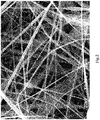
- Fig. 2 shows the morphology of the interlaced structure of the barrier layer 22 under Scanning Electron Microscope (x5000 magnification).
- the diameters of the nanofibers range from 20 to 500 nanometers while the diameters of the microfibers range from 1 to 3 microns.
- the filtration barrier 30 further includes a supporting layer 32 attached to the barrier layer 22.
- the supporting layer 32 is made of polymer-based microfibers.
- the supporting layer can be made of polyester, nylon, polyethylene, polyurethane, cellulose, polybutylene terephthalate, polycarbonate, polymethylpentene or polystyrene.
- the diameter of the supporting layer ranges from 1 micron to 10 mircons.
- the barrier layer 22 of the filtration barrier 30 as shown in Fig. 3 is made of a combination of CA and PEO at a weight of 0.8gsm in which both the nanofibers and microfibers are produced by electrospinning.
- Electrospinning a technology capable of forming nanofibers/microfibers, is a promising approach to generate air filtration barriers having high filtration efficiency at low pressure drop.
- the substrate layer 24 is a nonwoven fabric made of 20gsm polypropylene (PP) with antistatic treatment, in which the microfibers are produced by spunbonding or meltblowing.
- the supporting layer 32 is a nonwoven fabric made of 50gsm PP, in which the microfibers are also produced by spunbonding or meltblowing.
- Nonwoven mesh of nanofibers is a desirable material for filtration because of its high specific surface area. This property can facilitate trapping of tiny particles via various mechanisms such as sieving, interception and Brownian diffusion.
- the substrate layer is a nonwoven fabric made of 10-100gsm polypropylene
- the supporting layer is a nonwoven fabric made of 40-120gsm polypropylene.
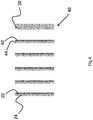
- a filtration barrier can include multiple barrier layers and substrate layers.
- filtration barrier 40 as shown in Fig. 4 includes five barrier layers 22, five substrate layers 24 and one supporting layer 32, in which each of the five barrier layers 22 is attached onto one substrate layer 24, and one of the barrier layers 42 is sandwiched between a substrate layer 44 and the supporting layer 32.
- CA cellulose acetate
- PEO polyethylene oxide
- DMF dimethylformamide
- BTEAC benzyltriethylammonium chloride
- the polymer solution was loaded into an electrospinning system in which electrospinning of the polymer solution was performed under the following conditions to form the barrier layer 22: coating time of 2hr (with basis weight of 0.8gsm), voltage at 25kV, working distance of 15cm, flow rate at 0.5ml/h, needle ID at 0.8mm, 23°C, and relative humidity of 60%.
- Drum collector was used for the electrospinning process.
- the working range of applied voltage is 10-50 kV; the working range of the distance is 10-30 cm; the working range of the solution flow rate is 0.05-5 ml/h; and the the working range of the relative humidity is 30-80%, and the temperature is 20-30°C.
- the barrier layer formed has a pore size of 200 to 5000 nm such that more than 95% of particles of 10 to 800 nm cannot pass through the barrier while maintaining a pressure drop of 31 mm H2O when the air flow is 3 L/min.
- the size or diameter of the CA/PEO fibers discharged from the electrospinner can be varied by adjusting the properties of the polymer solution, for example conductivity, viscosity and surface tension, during electrospinning. For instance, the size or diameter of the discharged fiber will be smaller if the conductivity of the polymer solution is increased, and the same effect can be observed if the viscosity of the polymer solution is decreased.
- a step of adding special conductivity-enhancing additives such as organic salts, inorganic salts, hygroscopic species or carbon black is included.
- the additives are BTEAC, phosphorous acid (H 3 PO 4 ), lithium chloride (LiCl), tetraethylammonium bromide (TEAB) and tetrabutylammonium bromide (TBAB).
- BTEAC phosphorous acid
- LiCl lithium chloride
- TEAB tetraethylammonium bromide
- TBAB tetrabutylammonium bromide
- the barrier layer produced by electrospinning is directly deposited onto a substrate layer made of polymer-based microfibers and the barrier layer is attached onto the substrate layer via mechanical interlocking and electrostatic attraction to form the filtration barrier.
- a supporting layer made of polymer-based microfibers is attached to the barrier layer via ultrasonic welding to provide extra strength and support to the filtration barrier.
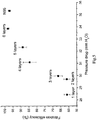
- the filtration efficiency and pressure drop on different numbers and/or different types of barrier layers synthesized in the aforementioned method were evaluated by passing particles with size ranging from 10-800 nm generated from an aerosol generator through the filtration barrier.
- An aerosol monitor was used at the other end of the filtration barrier to monitor the particles that can pass through.
- the barrier layer has nanofibers interlaced with microfibers at a weight of 0.8gsm.
- the nanofibers interlaced with microfibers have no electrostatic charge. It can be seen that with the increase in the number of barrier layers, the filtration efficiency barrier layers both increase. N95, a very commonly used respirator which is able to filter 95% contaminants, is used as a control. As further observed, the sample with six barrier layers has a higher filtration efficiency, but yet a lower pressure drop than N95.
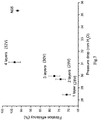
- Fig. 6 shows the filtration efficiency and pressure drop of a barrier layer having only the CA/PEO nanofibers (i.e. without interlace of CA/PEO nanofibers and CA/PEO microfibers) at a weight of 0.8gsm with no electrostatic charge.
- barrier layer with the interlaced structure of the present invention could provide a lower pressure drop without compromising the filtration efficiency.
- the CA/PEO nanofibers interlaced with microfibers have electrostatic charges at a range of 28-32V which were produced by electrospinning process.
- the barrier layer having electrostatic charge have a higher filtration efficiency than that of the barrier layer without electrostatic charges.
- sample with four barrier layers with an electrostatic charge of 32V possessed a higher filtration efficiency and a lower pressure drop than N95.
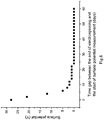
- the surface potential of one barrier layer of the present invention i.e. having interlace of nanofibers and microfibers
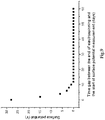
- the surface potential was measured from the end of the electrospinning to 60 days afterwards and shown in Fig. 8 .
- the surface potential was reduced to zero approximately 20 days after the end of the electrospinning, while as shown in Fig. 9 for barrer layer having CA/PEO nanofibers only, the surface potential was reduced to zero approximately 10 days after the end of electrospinning. Therefore, the result shows that the interlaced structure can maintain electrostatic charge for a longer time than the barrier layer having nanofibers only.
- the biocide-loaded solution was prepared into an interlaced structure of nanofibers and microfibers by electrospinning process as mentioned above.
- the working range of the applied voltage is 10-50 kV; the working range of the distance is 10-30 cm and the working range of the solution flow rate is 0.1-3 ml/h.
- the percent of CA and PEO and other components by weight in the solution is not limited to that in the above example.
- the polymer solution can include CA in the range of 10-20 by weight percent; PEO in the range of 0.05-0.2 by weight percent; benzyltriethylammonium chloride (BTEAC) in the range of 0.1-0.3 by weight percent, and DMF in the range of 80-90 by weight percent.
- BTEAC benzyltriethylammonium chloride
- DMF in the range of 80-90 by weight percent.
- the polymer used to produce the interlaced structure of nanofibers and microfibers of the barrier layer is not limited to combination of CA and PEO.
- the polymer used can be collagen, elastin, gelatin, fibrinogen, fibrin, alginate, cellulose, silk fibroin, chitosan and chitin, hyaluronic acid, dextran, wheat gluten, polyhydroxyalkanoates, laminin, nylon, polyacrylic acid (PA), polycarbonate (PC), polybutylene terephthalate (PBT), polyurethane (PU), poly(ethylene vinyl acetate) (PEVA), polycaprolactone (PCL), polyglycolic acid (PGA), poly(lactic acid) (PLA), poly(lactic-co-glycolic acid) (PLGA), polyacrylonitrile (PAN), polystyrene (PS), polyvinyl alcohol (PVA), cellulose acetate (CA), polyethylene oxide (PEO) or any combination thereof.
- the nanofibers and microfibers of the barrier layer can be made of non-polar polymers.
- polypropylene is disclosed in the above example as ingredient for making the substrate layer and the supporting layer, it is clear to one skilled in the art that other polymers such as polyester, nylon, polyethylene, polyurethane, cellulose, polybutylene terephthalate, polycarbonate, polymethylpentene and polystyrene can also be used.
- the filtration barrier may contain multiple barrier layers, substrate layers and supporting layers, and optionally biocide layer(s).
- the percentages of nanofibers and microfibers by weight in the interlaced structure of nanofibers and microfibers account for 60%-70%, and 30%-40%, respectively.
- the range of porosity of the interlaced structure is 80-98%.
- the nanofibers account for 65% by weight in the interlaced structure, and the microfibers account for 35% by weight in the interlaced structure.
- the diameter of microfibers of the substrate layer and the supporting layer ranges from 0.002-0.02 mm and 0.005-0.05 mm respectively.
- the thickness of a single barrier layer, a single substrate layer and a single supporting layer ranges from 5-100 microns, 90-200 microns, and 150-400 microns, respectively.
- the biocide used in the filtration barrier can be chlorhexidine (CHX), copper oxide, silver nanoparticles, calcium peroxide, N-halamines, and antibiotics.
- the cross-linker can be titanium triethanolamine, organic titanate, glutaraldehyde or genipin.
- the working conditions thereof include: applied voltage of 15-30 kV, working distance of 10-30 cm, solution flow rate at 0.1-5 ml/h, coating time of 0.5-5 hr.
- drum collector or plate collector can be used for the electrospinning process.
- Example 2 A filtration barrier including a nanofiber layer and a biocide layer
- a filtration barrier which includes two layers, nanofiber layer and biocide layer, attached to each other.
- the nanofiber layer is positioned distal to the air-flow direction and includes polymer-based nanofibers bearing positive electrostatic charge.
- the biocide layer is positioned proximal to the air-flow direction and includes polymer-based nanofibers crosslinked with biocides, in which a first reactive group in the polymer can covalently bind to a second reactive group of the biocide via a crosslinker.
- the nanofiber layer and biocide layer may further be attached to several fibrous layers.
- trap particles can be trapped and kill bacteria can be killed on contact while with the presence of positive charges on the barrier layer, filtration of negatively charged particles such as most bacteria and viruses can be further facilitated.
- Positive voltage electrospinning is employed to make the nanofibers bearing positive electrostatic charges.
- the filtration barrier can be used for water filtration, provided that the polymer used does not disintegrate in water.
- a method of fabricating a filtration barrier includes coating nanofiber layer onto biocide layer.
- the filtration barrier can be fabricated by first forming the barrier layer comprising positively charged nanofibers and the layer comprising biocide-crosslinked nanofibers separately, followed by assembling them together.
- the nanofiber layer was attached onto the biocide layer, which was made by electrospinning system.
- a CA/PEO solution was blended with CHX and TTE so that biocide-crosslinked nanofibers can be made via a one-step process.
- the biocide layer was used as a substrate to collect nanofibers bearing positive electrostatic charges which were made by electrospinning process.
- the percentage of CA by weight in the CA/PEO solution can be in the range of 10-20 by weight percent, and that of PEO can be 0.05-0.2 by weight percent.
- the nanofiber layer and the biocide layer were separately made by electrospinning. Both layers were assembled together to form a filtration barrier. Multiple nanofiber layers and biocide layers can be assembled together to form a filtration barrier.
- the nanofiber layer and the biocide layer can be assembled with other nonwoven layers including polypropylene meltblown microfibers.
- the filtration barrier can filter out at least 95% of sodium chloride aerosol having the most penetrating particle size at an airflow rate of 85L/min while the pressure drop does not exceed 35mm water.
- the polymer used to make the nanofiber layer or the biocide layer has the ability to retain residual charges for relatively long times.
- the polymer used in the nanofiber layer or in the biocide layer can be made of non-polar polymer; in another embodiment, the polymer can be collagen, elastin, gelatin, fibrinogen, fibrin, alginate, cellulose, silk fibroin, chitosan and chitin, hyaluronic acid, dextran, wheat gluten, polyhydroxyalkanoates, laminin, nylon, polyacrylic acid (PA), polycarbonate (PC), polybutylene terephthalate (PBT), polyurethane (PU), poly(ethylene vinyl acetate) (PEVA), polycaprolactone (PCL), polyglycolic acid (PGA), poly(lactic acid) (PLA), poly(lactic-co-glycolic acid) (PLGA), polyacrylonitrile (PAN), polystyrene (PS), polyvinyl alcohol (PVA), cellulose acetate (
- the filtration barrier may contain multiple nanofiber layers and biocide layers.
- the diameters of the nanofibers of the nanofiber layer range from 50-700 nm, and the diamaters of the nanofibers of the biocide layer range from 100-900 nm.
- the thickness of the nanofiber layer or the biocide layer is in the range of 5-100 microns.
- the nanofibers of the biocide layer exhibit an average diameter ranging of 50-900 nm.
- the thickness of the biocide layer and the nanofiber layer range of 100-500mm.
- the nanofiber layer retains residual positive charges for a period of time ranging from 90 days to 1 year.
- the first reactive group of the polymer can be hydroxyl group or amino group
- the second reactive group of the biocide can be an amino group or hydroxyl group
- the biocide can be chlorhexidine (CHX), copper oxide, silver nanoparticles, calcium peroxide, N-halamines, or antibiotics, etc.
- the cross-linker can be used to bind the reactive groups of the biocide to the reactive groups of the polymer such that the biocide-crosslinked nanofibrous layer can kill bacteria on contact without leaching the biocide away from the polymer.
- the crosslinker can be titanium triethanolamine or organic titanate, etc.
- a needle-electrospinning system For small-scale production of the nanofibers of both layers, a needle-electrospinning system can be used. For large-scale production of nanofibers, a needleless-electrospinning system can be used.
- the biocide-crosslinked nanofibers can be made via a one-step process or a post-electrospinning treatment.
- a polymer solution is blended with a biocide and a crosslinker so that biocide-crosslinked nanofibers can be electrospun in a single-step process.
- a polymer solution is electrospun into nanofibers first, followed by binding a crosslinker to the polymer and then binding a biocide to the crosslinker.
- the working conditions thereof include: applied voltage of 10-50 kV, working distance of 10-30 cm, solution flow rate at 0.1-5 ml/h.
Landscapes
- Engineering & Computer Science (AREA)
- Chemical & Material Sciences (AREA)
- Chemical Kinetics & Catalysis (AREA)
- Mechanical Engineering (AREA)
- Textile Engineering (AREA)
- Nanotechnology (AREA)
- Dispersion Chemistry (AREA)
- Nonwoven Fabrics (AREA)
- Filtering Materials (AREA)
- Spinning Methods And Devices For Manufacturing Artificial Fibers (AREA)
- Materials For Medical Uses (AREA)
Claims (11)
- Filtrationsbarriere mit:a) mindestens einer Barriereschicht mit einer verflochtenen Struktur, hergestellt durch Elektrospinnen einer Vielzahl von Nanofasern auf Polymerbasis und einer Vielzahl von Mikrofasern auf Polymerbasis; undb) mindestens einer Substratschicht mit Mikrofasern auf Polymerbasis,wobei die Barriereschicht auf der Substratschicht angebracht ist und die Nanofasern und/oder Mikrofasern der Barriereschicht elektrostatische Ladungen tragen, wobei die Nanofasern und Mikrofasern der Barriereschicht eine Kombination von Zelluloseazetat und Polyäthylenoxid umfassen, wobei die Nanofasern 60%-70% des Gewichts in der Barriereschicht ausmachen und die Mikrofasern der verflochtenen Struktur 30%-40% des Gewichts in der Barriereschicht ausmachen, und wobei ein Porositätsbereich der Barriereschicht 80-98% beträgt und die elektrostatische Ladung positiv ist.
- Filtrationsbarriere nach Anspruch 1, wobei ein Durchmesser der Nanofasern auf Polymerbasis der Barriereschicht von 10 Nanometern bis zu 1000 Nanometern reicht; ein Durchmesser der Mikrofasern auf Polymerbasis der Barriereschicht reicht von 1 Mikron bis 10 Mikron.
- Filtrationsbarriere nach Anspruch 1, wobei das Zelluloseazetat und das Polyäthylenoxid ein Gewichtsverhältnis von 50:1-400:1 haben.
- Filtrationsbarriere nach Anspruch 1, die des Weiteren mindestens eine Stützschicht umfasst, die an der Barriereschicht befestigt ist; wobei besagte Stützschicht Mikrofasern auf Polymerbasis umfasst.
- Filtrationsbarriere nach Anspruch 4 mit fünf solchen Barriereschichten, fünf solchen Substratschichten und einer solchen Stützschicht, wobei eine der Barriereschichten zwischen der Substratschicht und der Stützschicht eingelegt ist.
- Filtrationsbarriere nach Anspruch 1, die des Weiteren ein Biozid umfasst, das mit der Barriereschicht vernetzt ist.
- Verfahren zur Herstellung einer Filtrationsbarriere mit:Bereitstellung einer Polymerlösung mit Zelluloseazetat und Polyäthylenoxid; undElektrospinnen der Polymerlösung auf eine Substratschicht, um eine verflochtene Struktur von Nanofasern und Mikrofasern zu bilden,wobei die Substratschicht Mikrofasern auf Polymerbasis umfasst und die verflochtene Struktur von Nanofasern und Mikrofasern eine Barriereschicht bildet, die auf der Substratschicht angebracht wird, wobei die Nanofasern 60%-70% des Gewichts in der Barriereschicht ausmachen und die Mikrofasern der verflochtenen Struktur 30%-40% des Gewichts in der Barriereschicht, und wobei ein Porositätsbereich der Barriereschicht 80-98% beträgt und die elektrostatische Ladung positiv ist.
- Verfahren nach Anspruch 7, das des Weiteren folgendes umfasst:Variierung der Leitfähigkeit, Viskosität oder Oberflächenspannung der Polymerlösung während der Elektrospinnphase.
- Verfahren nach Anspruch 8, das des Weiteren folgendes umfasst:Zugabe eines die Leitfähigkeit steigernden Zusatzstoffs in die Polymerlösung, um die Leitfähigkeit der Polymerlösung zu variieren.
- Verfahren nach Anspruch 9, wobei der die Leitfähigkeit steigernde Zusatzstoff Benzyltriethylammoniumchlorid ist.
- Verfahren nach Anspruch 7, wobei die Polymerlösung Zelluloseazetat zu 10-20 Gewichtsprozent umfasst; Polyäthylenoxid zu 0,05-0,2 Gewichtsprozent; Benzyltriethylammoniumchlorid zu 0,1-0,3 Gewichtsprozent und DMF (Dimethylformamid) zu 80-90 Gewichtsprozent.
Priority Applications (1)
| Application Number | Priority Date | Filing Date | Title |
|---|---|---|---|
| EP16207015.5A EP3175903B1 (de) | 2013-12-09 | 2014-12-09 | Verschachtelte filtrationsbarriere und herstellungsverfahren |
Applications Claiming Priority (1)
| Application Number | Priority Date | Filing Date | Title |
|---|---|---|---|
| US201361963612P | 2013-12-09 | 2013-12-09 |
Related Child Applications (2)
| Application Number | Title | Priority Date | Filing Date |
|---|---|---|---|
| EP16207015.5A Division EP3175903B1 (de) | 2013-12-09 | 2014-12-09 | Verschachtelte filtrationsbarriere und herstellungsverfahren |
| EP16207015.5A Division-Into EP3175903B1 (de) | 2013-12-09 | 2014-12-09 | Verschachtelte filtrationsbarriere und herstellungsverfahren |
Publications (2)
| Publication Number | Publication Date |
|---|---|
| EP2881157A1 EP2881157A1 (de) | 2015-06-10 |
| EP2881157B1 true EP2881157B1 (de) | 2017-02-15 |
Family
ID=52598543
Family Applications (2)
| Application Number | Title | Priority Date | Filing Date |
|---|---|---|---|
| EP14196886.7A Active EP2881157B1 (de) | 2013-12-09 | 2014-12-09 | Verflochtene filtrationsbarriere |
| EP16207015.5A Active EP3175903B1 (de) | 2013-12-09 | 2014-12-09 | Verschachtelte filtrationsbarriere und herstellungsverfahren |
Family Applications After (1)
| Application Number | Title | Priority Date | Filing Date |
|---|---|---|---|
| EP16207015.5A Active EP3175903B1 (de) | 2013-12-09 | 2014-12-09 | Verschachtelte filtrationsbarriere und herstellungsverfahren |
Country Status (3)
| Country | Link |
|---|---|
| US (3) | US10137394B2 (de) |
| EP (2) | EP2881157B1 (de) |
| CN (2) | CN106861289B (de) |
Cited By (2)
| Publication number | Priority date | Publication date | Assignee | Title |
|---|---|---|---|---|
| CN108943482A (zh) * | 2018-06-14 | 2018-12-07 | 上海馨星环保科技有限公司 | Pla结晶干燥除湿制备的方法及设备 |
| CN110773002A (zh) * | 2019-11-05 | 2020-02-11 | 北京服装学院 | 一种抗菌复合纳米纤维膜及其制备方法和应用 |
Families Citing this family (29)
| Publication number | Priority date | Publication date | Assignee | Title |
|---|---|---|---|---|
| US10137394B2 (en) * | 2013-12-09 | 2018-11-27 | Nano and Advanced Materials Institute Ltd. | Interlaced filtration barrier |
| TWI640352B (zh) * | 2016-04-14 | 2018-11-11 | Taiwan Textile Research Institute | 多孔濾材及其製造方法 |
| PL3325703T3 (pl) | 2016-08-02 | 2020-03-31 | Fitesa Germany Gmbh | Układ i sposób wytwarzania materiałów włókninowych z poli(kwasu mlekowego) |
| US11441251B2 (en) | 2016-08-16 | 2022-09-13 | Fitesa Germany Gmbh | Nonwoven fabrics comprising polylactic acid having improved strength and toughness |
| CN107308728B (zh) * | 2017-08-11 | 2020-02-18 | 浙江笨鸟科技有限公司 | 用于从气体物流过滤颗粒材料的过滤介质 |
| CN110997305B (zh) * | 2017-09-05 | 2023-01-24 | 四清空气公司 | 具有可控制的固相体积分数的纳米纤维网状物 |
| CN108385278B (zh) * | 2018-02-01 | 2021-02-19 | 重庆中纳科技有限公司 | 一种抗水解的电纺pva/paa交联纳米纤维膜及其制备方法 |
| CN113005633A (zh) * | 2018-02-05 | 2021-06-22 | 嘉兴学院 | 一种抗菌纳米纤维膜及其制备方法和应用 |
| US20210060476A1 (en) * | 2018-03-27 | 2021-03-04 | Focus Industries Limited | Nanomaterial including nanofibers and beads for hepa air filter media |
| US11148085B2 (en) * | 2018-04-16 | 2021-10-19 | The Hong Kong Polytechnic University | Electrostatically-charged nanofiber media and fabrication method thereof |
| KR20210074346A (ko) * | 2018-10-19 | 2021-06-21 | 클라우스 고트샬 | 오염물질 제거를 위한 여과재, 재료 및 방법 |
| TWI758722B (zh) | 2019-05-01 | 2022-03-21 | 美商阿散德性能材料營運公司 | 包含聚醯胺奈米纖維層的過濾器介質 |
| WO2021013027A1 (en) * | 2019-07-25 | 2021-01-28 | Nano And Advanced Materials Institute Limited | Multi-layered interlaced membrane and methods for fabrication thereof |
| KR20220116146A (ko) | 2019-10-08 | 2022-08-22 | 도날드슨 컴파니, 인코포레이티드 | 혼합된 직경 미세 섬유를 포함하는 필터 매체 층 |
| EP3885032A1 (de) * | 2020-03-24 | 2021-09-29 | Fundación Tecnalia Research & Innovation | Smart filter mit verbesserten eigenschaften in der filtration und antibakterieller wirkung in flüssigkeiten |
| CN111234104B (zh) * | 2020-03-26 | 2021-04-13 | 四川大学 | 一种水溶性交联剂及其制备方法和制备得到的电纺胶原纤维 |
| CN116194187A (zh) | 2020-04-02 | 2023-05-30 | 唐纳森公司 | 过滤介质、复合材料以及使用该过滤介质的面罩系统 |
| EP4126295A1 (de) | 2020-04-03 | 2023-02-08 | Donaldson Company, Inc. | Filtrierungsmedien |
| US12233290B2 (en) | 2020-04-06 | 2025-02-25 | NuGeneration Technologies, LLC | Multi-layer face mask |
| CN111557500A (zh) * | 2020-05-18 | 2020-08-21 | 安徽沃伦科技有限公司 | 一种立体透气可替换滤芯重复使用口罩 |
| WO2021262977A1 (en) * | 2020-06-26 | 2021-12-30 | Jabil Inc. | Improved melt blown articles and methods to form them |
| CN116322932A (zh) * | 2020-07-17 | 2023-06-23 | 香港理工大学 | 具有消毒、低压降和减少的滤饼形成的高过滤性过滤器 |
| MX2023002118A (es) * | 2020-08-21 | 2023-03-15 | Ascend Performance Mat Operations Llc | Estructuras de medios filtrantes. |
| US12304972B2 (en) * | 2020-09-16 | 2025-05-20 | Alliance For Sustainable Energy, Llc | Cellulose-containing filtration materials and methods of making the same |
| CN112376124A (zh) * | 2020-11-20 | 2021-02-19 | 上海市第六人民医院 | 一种抗菌敷料 |
| US20220168705A1 (en) * | 2020-11-30 | 2022-06-02 | Nanoshields Technology Limited | Formulation and method for preparing fibrous material comprising nanofibers, and filter comprising the fibrous material |
| CN113737393B (zh) * | 2021-09-15 | 2022-06-07 | 陕西环保产业研究院有限公司 | 一种静电纺丝纳米纤维膜及其制备方法 |
| KR102446176B1 (ko) * | 2022-03-14 | 2022-09-22 | 주식회사 한국필터 | 차량용 에어필터 |
| CN114917765B (zh) * | 2022-05-20 | 2023-05-02 | 厦门大学 | 一种绒毛纳米纤维抗菌高效低阻空气过滤膜的制备方法 |
Family Cites Families (35)
| Publication number | Priority date | Publication date | Assignee | Title |
|---|---|---|---|---|
| CH570493A5 (de) * | 1973-08-16 | 1975-12-15 | Battelle Memorial Institute | |
| WO1995017152A1 (en) * | 1993-12-20 | 1995-06-29 | Biopolymerix, Inc. | Liquid dispenser for sterile solutions |
| US6743273B2 (en) * | 2000-09-05 | 2004-06-01 | Donaldson Company, Inc. | Polymer, polymer microfiber, polymer nanofiber and applications including filter structures |
| DE10109474C1 (de) * | 2001-02-28 | 2002-06-20 | Sandler Helmut Helsa Werke | Filtermaterialien mit bipolarer Beschichtung |
| US7044993B1 (en) | 2001-10-22 | 2006-05-16 | Bolduc Leroux Inc. | Microbicidal air filter |
| CN2647352Y (zh) | 2003-07-11 | 2004-10-13 | 香港理工大学 | 防护口罩 |
| US20050026526A1 (en) | 2003-07-30 | 2005-02-03 | Verdegan Barry M. | High performance filter media with internal nanofiber structure and manufacturing methodology |
| EP1878482B1 (de) * | 2005-04-26 | 2011-07-06 | Nitto Denko Corporation | Filtermedium, herstellungsverfahren dafür, verwendungsverfahren dafür und filtereinheit |
| CN101622195B (zh) * | 2006-09-29 | 2013-08-07 | 阿克伦大学 | 金属氧化物纤维和纳米纤维、其制备方法和其用途 |
| JP2008095266A (ja) * | 2006-10-12 | 2008-04-24 | Hodai Lee | ナノ素材を用いた複合繊維フィルター、ナノ素材を用いた複合繊維フィルターの製造装置及びナノ素材を用いた複合繊維フィルターの製造方法 |
| EP1953286A1 (de) | 2007-02-01 | 2008-08-06 | Nisshinbo Industries, Inc. | Stoff und Maske |
| US8303693B2 (en) * | 2007-04-26 | 2012-11-06 | The Hong Kong Polytechnic University | Nanofiber filter facemasks and cabin filters |
| WO2009140385A1 (en) | 2008-05-13 | 2009-11-19 | Research Triangle Institute | Particle filter system incorporating electret nanofibers |
| US9023376B2 (en) * | 2008-06-27 | 2015-05-05 | The University Of Akron | Nanofiber-reinforced composition for application to surgical wounds |
| US20100175555A1 (en) * | 2008-09-12 | 2010-07-15 | Ismael Ferrer | Polyamide Fine Fibers |
| EP2361144B1 (de) * | 2008-10-07 | 2018-05-16 | The Research Foundation of the State University of New York | Nanofasermembranen mit hohem fluss und hoher effizienz und herstellungsverfahren dafür |
| US8523971B2 (en) | 2009-05-07 | 2013-09-03 | The Hong Kong Polytechnic University | Multilayer nanofiber filter |
| KR101142852B1 (ko) | 2010-05-03 | 2012-05-08 | 한국과학기술연구원 | 초극세 연속 섬유상 세라믹 필터 및 이의 제조방법 |
| EP2606117A4 (de) * | 2010-08-17 | 2018-01-10 | Research Triangle Institute | Fasersammelvorrichtung zur wiederherstellung von bioaerosolen und partikeln |
| US20130180917A1 (en) * | 2010-08-23 | 2013-07-18 | The Research Foundation Of State University Of New York | High flux microfiltration membranes with virus and metal ion adsorption capability for liquid purification |
| US8546921B2 (en) * | 2010-08-24 | 2013-10-01 | Qualcomm Incorporated | Hybrid multilayer substrate |
| US9383292B1 (en) * | 2011-09-13 | 2016-07-05 | Clemson University | Flexible fiber-based micro and nanofluidics for probing liquids |
| US9644295B2 (en) * | 2012-08-16 | 2017-05-09 | University Of Washington Through Its Center For Commercialization | Centrifugal electrospinning apparatus and methods and fibrous structures produced therefrom |
| US10029029B2 (en) * | 2012-10-18 | 2018-07-24 | The University Of Akron | Apparatus and method for electrospinning a Nanofiber coating on surfaces of poorly conductive three-dimensional objects |
| US9091007B2 (en) * | 2012-12-10 | 2015-07-28 | Taipei Medical University | Electrospinning apparatus with a sideway motion device and a method of using the same |
| SI2959509T1 (sl) * | 2013-02-14 | 2018-11-30 | Nanopareil, Llc | Polst iz elektropredenih hibridnih nanovlaken, postopek za izdelavo le-te in postopek čiščenja biomolekul |
| DE102014003885A1 (de) * | 2013-03-27 | 2014-10-02 | Mann + Hummel Gmbh | Magnetisches Filtermedium und Verfahren zu seiner Herstellung |
| EP3029191A4 (de) * | 2013-08-01 | 2016-08-17 | Finetex Ene Inc | Mehrschichtiges nanofaserfiltermedium mit elektroblasen, schmelzblasen oder elektrospinnen sowie verfahren zur herstellung davon |
| US20160243271A1 (en) * | 2013-10-08 | 2016-08-25 | University Of Massachusetts | Essential Oils Or Volatile Organics Thereof Electrospun In Chitosan Nanofiber Mats |
| US10137394B2 (en) * | 2013-12-09 | 2018-11-27 | Nano and Advanced Materials Institute Ltd. | Interlaced filtration barrier |
| US20160136558A1 (en) * | 2014-07-21 | 2016-05-19 | W. L. Gore & Associates, Inc. | Article Containing Nanofiber Membrane for Bacterial Filtration |
| EP3200586B1 (de) * | 2014-09-19 | 2020-10-14 | The Hong Kong University of Science and Technology | Antimikrobielle beschichtung für langzeitdesinfektionsvon oberflächen |
| US10053798B2 (en) * | 2015-04-30 | 2018-08-21 | Massachusetts Insititute Of Technology | Methods and systems for manufacturing a tablet |
| KR101821049B1 (ko) * | 2016-07-15 | 2018-01-23 | 한국과학기술원 | 1차원의 고분자 나노섬유들이 준정렬된 그리드 형상으로 직교하여 적층되어 기공 분포 및 기공 크기가 제어된 3차원 고분자 나노섬유 멤브레인 및 그 제조방법 |
| ES2875608T3 (es) * | 2017-02-23 | 2021-11-10 | Sefar Ag | Medio de ventilación protector y procedimiento de producción de medio de ventilación protector |
-
2014
- 2014-12-08 US US14/562,779 patent/US10137394B2/en active Active
- 2014-12-08 CN CN201611054940.4A patent/CN106861289B/zh active Active
- 2014-12-08 CN CN201410743002.XA patent/CN104689641B/zh active Active
- 2014-12-09 EP EP14196886.7A patent/EP2881157B1/de active Active
- 2014-12-09 EP EP16207015.5A patent/EP3175903B1/de active Active
-
2016
- 2016-08-29 US US15/250,863 patent/US10150070B2/en active Active
- 2016-08-29 US US15/250,865 patent/US10293291B2/en active Active
Non-Patent Citations (1)
| Title |
|---|
| None * |
Cited By (3)
| Publication number | Priority date | Publication date | Assignee | Title |
|---|---|---|---|---|
| CN108943482A (zh) * | 2018-06-14 | 2018-12-07 | 上海馨星环保科技有限公司 | Pla结晶干燥除湿制备的方法及设备 |
| CN110773002A (zh) * | 2019-11-05 | 2020-02-11 | 北京服装学院 | 一种抗菌复合纳米纤维膜及其制备方法和应用 |
| CN110773002B (zh) * | 2019-11-05 | 2021-12-10 | 北京服装学院 | 一种抗菌复合纳米纤维膜及其制备方法和应用 |
Also Published As
| Publication number | Publication date |
|---|---|
| HK1210983A1 (en) | 2016-05-13 |
| US20170007950A1 (en) | 2017-01-12 |
| EP2881157A1 (de) | 2015-06-10 |
| CN104689641A (zh) | 2015-06-10 |
| CN104689641B (zh) | 2017-04-12 |
| US20150157971A1 (en) | 2015-06-11 |
| US10293291B2 (en) | 2019-05-21 |
| EP3175903B1 (de) | 2020-05-06 |
| CN106861289A (zh) | 2017-06-20 |
| EP3175903A1 (de) | 2017-06-07 |
| CN106861289B (zh) | 2019-02-01 |
| US10150070B2 (en) | 2018-12-11 |
| US10137394B2 (en) | 2018-11-27 |
| US20170007952A1 (en) | 2017-01-12 |
Similar Documents
| Publication | Publication Date | Title |
|---|---|---|
| US10150070B2 (en) | Interlaced Filtration Barrier | |
| Song et al. | Hierarchical porous poly (l-lactic acid) nanofibrous membrane for ultrafine particulate aerosol filtration | |
| KR101628205B1 (ko) | 일방향 전이 기능을 갖는 창상 피복재 및 그의 제조방법 | |
| AU2016256436B2 (en) | Antibacterial nanofibres | |
| JP2015511173A (ja) | 電界紡糸多孔質体 | |
| JP2010539347A (ja) | ゼラチンで作られた生体吸収性不織布 | |
| JP2011132628A (ja) | 抗菌性メルトブロー不織布 | |
| US20180030623A1 (en) | Powder of fragments of at least one polymeric nanofiber | |
| CN104674454B (zh) | 聚乳酸熔融纺纤维热粘合固化三维多孔无序支架的制备方法 | |
| CN116324065A (zh) | 用于制备包含纳米纤维的纤维材料的制剂和方法及包含该纤维材料的过滤器 | |
| JP5564934B2 (ja) | 抗菌性有機重合体製品 | |
| KR20210048809A (ko) | 메티실린 내성 황색포도상구균에 대한 항균 능력을 가지는 비올라세인―고분자 복합 나노섬유 멤브레인 및 그 제조방법 | |
| KR20210109080A (ko) | 미세먼지 차단을 위한 탄소 나노섬유를 포함하는 방진망 | |
| KR102139710B1 (ko) | 나노 섬유막의 제조방법, 나노 섬유막 및 이를 포함하는 마스크 필터 | |
| KR20220105348A (ko) | 마스크 필터용 나노섬유웹과 이의 제조 방법, 및 이를 포함하는 재사용 가능한 나노섬유 마스크 | |
| HK1233575A1 (en) | Interlaced filtration barrier | |
| HK1210983B (en) | Interlaced filtration barrier | |
| Borojeni et al. | Application of electrospun nonwoven fibers in air filters. Fibers. 2022; 10: 15 | |
| JP2023142116A (ja) | 繊維シートおよびその製造方法 | |
| US20230233967A1 (en) | Air filtration material, filters comprising the same and method for manufacturing the same | |
| US12544697B2 (en) | Antibacterial composition, filter using the same, and home appliance comprising filter | |
| RU2697772C1 (ru) | Текстильный нетканый электропрядный материал с многокомпонентными активными модифицирующими добавками и способ его получения | |
| JP2023120048A (ja) | 機能性不織布 | |
| Arrieta et al. | Antimicrobial fibers obtained by electrospinning | |
| JP2023132660A (ja) | 多機能不織布 |
Legal Events
| Date | Code | Title | Description |
|---|---|---|---|
| PUAI | Public reference made under article 153(3) epc to a published international application that has entered the european phase |
Free format text: ORIGINAL CODE: 0009012 |
|
| 17P | Request for examination filed |
Effective date: 20141209 |
|
| AK | Designated contracting states |
Kind code of ref document: A1 Designated state(s): AL AT BE BG CH CY CZ DE DK EE ES FI FR GB GR HR HU IE IS IT LI LT LU LV MC MK MT NL NO PL PT RO RS SE SI SK SM TR |
|
| AX | Request for extension of the european patent |
Extension state: BA ME |
|
| R17P | Request for examination filed (corrected) |
Effective date: 20151209 |
|
| RBV | Designated contracting states (corrected) |
Designated state(s): AL AT BE BG CH CY CZ DE DK EE ES FI FR GB GR HR HU IE IS IT LI LT LU LV MC MK MT NL NO PL PT RO RS SE SI SK SM TR |
|
| 17Q | First examination report despatched |
Effective date: 20160119 |
|
| GRAP | Despatch of communication of intention to grant a patent |
Free format text: ORIGINAL CODE: EPIDOSNIGR1 |
|
| INTG | Intention to grant announced |
Effective date: 20161010 |
|
| GRAS | Grant fee paid |
Free format text: ORIGINAL CODE: EPIDOSNIGR3 |
|
| GRAA | (expected) grant |
Free format text: ORIGINAL CODE: 0009210 |
|
| AK | Designated contracting states |
Kind code of ref document: B1 Designated state(s): AL AT BE BG CH CY CZ DE DK EE ES FI FR GB GR HR HU IE IS IT LI LT LU LV MC MK MT NL NO PL PT RO RS SE SI SK SM TR |
|
| REG | Reference to a national code |
Ref country code: CH Ref legal event code: EP Ref country code: GB Ref legal event code: FG4D |
|
| REG | Reference to a national code |
Ref country code: IE Ref legal event code: FG4D |
|
| REG | Reference to a national code |
Ref country code: AT Ref legal event code: REF Ref document number: 867588 Country of ref document: AT Kind code of ref document: T Effective date: 20170315 |
|
| REG | Reference to a national code |
Ref country code: DE Ref legal event code: R096 Ref document number: 602014006778 Country of ref document: DE |
|
| REG | Reference to a national code |
Ref country code: NL Ref legal event code: MP Effective date: 20170215 |
|
| REG | Reference to a national code |
Ref country code: LT Ref legal event code: MG4D |
|
| REG | Reference to a national code |
Ref country code: AT Ref legal event code: MK05 Ref document number: 867588 Country of ref document: AT Kind code of ref document: T Effective date: 20170215 |
|
| PG25 | Lapsed in a contracting state [announced via postgrant information from national office to epo] |
Ref country code: LT Free format text: LAPSE BECAUSE OF FAILURE TO SUBMIT A TRANSLATION OF THE DESCRIPTION OR TO PAY THE FEE WITHIN THE PRESCRIBED TIME-LIMIT Effective date: 20170215 Ref country code: NO Free format text: LAPSE BECAUSE OF FAILURE TO SUBMIT A TRANSLATION OF THE DESCRIPTION OR TO PAY THE FEE WITHIN THE PRESCRIBED TIME-LIMIT Effective date: 20170515 Ref country code: FI Free format text: LAPSE BECAUSE OF FAILURE TO SUBMIT A TRANSLATION OF THE DESCRIPTION OR TO PAY THE FEE WITHIN THE PRESCRIBED TIME-LIMIT Effective date: 20170215 Ref country code: GR Free format text: LAPSE BECAUSE OF FAILURE TO SUBMIT A TRANSLATION OF THE DESCRIPTION OR TO PAY THE FEE WITHIN THE PRESCRIBED TIME-LIMIT Effective date: 20170516 Ref country code: HR Free format text: LAPSE BECAUSE OF FAILURE TO SUBMIT A TRANSLATION OF THE DESCRIPTION OR TO PAY THE FEE WITHIN THE PRESCRIBED TIME-LIMIT Effective date: 20170215 |
|
| PG25 | Lapsed in a contracting state [announced via postgrant information from national office to epo] |
Ref country code: BG Free format text: LAPSE BECAUSE OF FAILURE TO SUBMIT A TRANSLATION OF THE DESCRIPTION OR TO PAY THE FEE WITHIN THE PRESCRIBED TIME-LIMIT Effective date: 20170515 Ref country code: AT Free format text: LAPSE BECAUSE OF FAILURE TO SUBMIT A TRANSLATION OF THE DESCRIPTION OR TO PAY THE FEE WITHIN THE PRESCRIBED TIME-LIMIT Effective date: 20170215 Ref country code: NL Free format text: LAPSE BECAUSE OF FAILURE TO SUBMIT A TRANSLATION OF THE DESCRIPTION OR TO PAY THE FEE WITHIN THE PRESCRIBED TIME-LIMIT Effective date: 20170215 Ref country code: SE Free format text: LAPSE BECAUSE OF FAILURE TO SUBMIT A TRANSLATION OF THE DESCRIPTION OR TO PAY THE FEE WITHIN THE PRESCRIBED TIME-LIMIT Effective date: 20170215 Ref country code: RS Free format text: LAPSE BECAUSE OF FAILURE TO SUBMIT A TRANSLATION OF THE DESCRIPTION OR TO PAY THE FEE WITHIN THE PRESCRIBED TIME-LIMIT Effective date: 20170215 Ref country code: PT Free format text: LAPSE BECAUSE OF FAILURE TO SUBMIT A TRANSLATION OF THE DESCRIPTION OR TO PAY THE FEE WITHIN THE PRESCRIBED TIME-LIMIT Effective date: 20170615 Ref country code: LV Free format text: LAPSE BECAUSE OF FAILURE TO SUBMIT A TRANSLATION OF THE DESCRIPTION OR TO PAY THE FEE WITHIN THE PRESCRIBED TIME-LIMIT Effective date: 20170215 Ref country code: ES Free format text: LAPSE BECAUSE OF FAILURE TO SUBMIT A TRANSLATION OF THE DESCRIPTION OR TO PAY THE FEE WITHIN THE PRESCRIBED TIME-LIMIT Effective date: 20170215 |
|
| PG25 | Lapsed in a contracting state [announced via postgrant information from national office to epo] |
Ref country code: CZ Free format text: LAPSE BECAUSE OF FAILURE TO SUBMIT A TRANSLATION OF THE DESCRIPTION OR TO PAY THE FEE WITHIN THE PRESCRIBED TIME-LIMIT Effective date: 20170215 Ref country code: SK Free format text: LAPSE BECAUSE OF FAILURE TO SUBMIT A TRANSLATION OF THE DESCRIPTION OR TO PAY THE FEE WITHIN THE PRESCRIBED TIME-LIMIT Effective date: 20170215 Ref country code: IT Free format text: LAPSE BECAUSE OF FAILURE TO SUBMIT A TRANSLATION OF THE DESCRIPTION OR TO PAY THE FEE WITHIN THE PRESCRIBED TIME-LIMIT Effective date: 20170215 Ref country code: EE Free format text: LAPSE BECAUSE OF FAILURE TO SUBMIT A TRANSLATION OF THE DESCRIPTION OR TO PAY THE FEE WITHIN THE PRESCRIBED TIME-LIMIT Effective date: 20170215 Ref country code: RO Free format text: LAPSE BECAUSE OF FAILURE TO SUBMIT A TRANSLATION OF THE DESCRIPTION OR TO PAY THE FEE WITHIN THE PRESCRIBED TIME-LIMIT Effective date: 20170215 |
|
| REG | Reference to a national code |
Ref country code: FR Ref legal event code: PLFP Year of fee payment: 4 |
|
| REG | Reference to a national code |
Ref country code: DE Ref legal event code: R097 Ref document number: 602014006778 Country of ref document: DE |
|
| PG25 | Lapsed in a contracting state [announced via postgrant information from national office to epo] |
Ref country code: PL Free format text: LAPSE BECAUSE OF FAILURE TO SUBMIT A TRANSLATION OF THE DESCRIPTION OR TO PAY THE FEE WITHIN THE PRESCRIBED TIME-LIMIT Effective date: 20170215 Ref country code: SM Free format text: LAPSE BECAUSE OF FAILURE TO SUBMIT A TRANSLATION OF THE DESCRIPTION OR TO PAY THE FEE WITHIN THE PRESCRIBED TIME-LIMIT Effective date: 20170215 Ref country code: DK Free format text: LAPSE BECAUSE OF FAILURE TO SUBMIT A TRANSLATION OF THE DESCRIPTION OR TO PAY THE FEE WITHIN THE PRESCRIBED TIME-LIMIT Effective date: 20170215 |
|
| PLBE | No opposition filed within time limit |
Free format text: ORIGINAL CODE: 0009261 |
|
| STAA | Information on the status of an ep patent application or granted ep patent |
Free format text: STATUS: NO OPPOSITION FILED WITHIN TIME LIMIT |
|
| 26N | No opposition filed |
Effective date: 20171116 |
|
| PG25 | Lapsed in a contracting state [announced via postgrant information from national office to epo] |
Ref country code: SI Free format text: LAPSE BECAUSE OF FAILURE TO SUBMIT A TRANSLATION OF THE DESCRIPTION OR TO PAY THE FEE WITHIN THE PRESCRIBED TIME-LIMIT Effective date: 20170215 |
|
| REG | Reference to a national code |
Ref country code: CH Ref legal event code: PL |
|
| REG | Reference to a national code |
Ref country code: IE Ref legal event code: MM4A |
|
| PG25 | Lapsed in a contracting state [announced via postgrant information from national office to epo] |
Ref country code: MT Free format text: LAPSE BECAUSE OF NON-PAYMENT OF DUE FEES Effective date: 20171209 Ref country code: LU Free format text: LAPSE BECAUSE OF NON-PAYMENT OF DUE FEES Effective date: 20171209 |
|
| REG | Reference to a national code |
Ref country code: BE Ref legal event code: MM Effective date: 20171231 |
|
| PG25 | Lapsed in a contracting state [announced via postgrant information from national office to epo] |
Ref country code: IE Free format text: LAPSE BECAUSE OF NON-PAYMENT OF DUE FEES Effective date: 20171209 |
|
| PG25 | Lapsed in a contracting state [announced via postgrant information from national office to epo] |
Ref country code: CH Free format text: LAPSE BECAUSE OF NON-PAYMENT OF DUE FEES Effective date: 20171231 Ref country code: LI Free format text: LAPSE BECAUSE OF NON-PAYMENT OF DUE FEES Effective date: 20171231 Ref country code: BE Free format text: LAPSE BECAUSE OF NON-PAYMENT OF DUE FEES Effective date: 20171231 |
|
| PG25 | Lapsed in a contracting state [announced via postgrant information from national office to epo] |
Ref country code: MC Free format text: LAPSE BECAUSE OF FAILURE TO SUBMIT A TRANSLATION OF THE DESCRIPTION OR TO PAY THE FEE WITHIN THE PRESCRIBED TIME-LIMIT Effective date: 20170215 Ref country code: HU Free format text: LAPSE BECAUSE OF FAILURE TO SUBMIT A TRANSLATION OF THE DESCRIPTION OR TO PAY THE FEE WITHIN THE PRESCRIBED TIME-LIMIT; INVALID AB INITIO Effective date: 20141209 |
|
| PG25 | Lapsed in a contracting state [announced via postgrant information from national office to epo] |
Ref country code: CY Free format text: LAPSE BECAUSE OF FAILURE TO SUBMIT A TRANSLATION OF THE DESCRIPTION OR TO PAY THE FEE WITHIN THE PRESCRIBED TIME-LIMIT Effective date: 20170215 |
|
| PG25 | Lapsed in a contracting state [announced via postgrant information from national office to epo] |
Ref country code: MK Free format text: LAPSE BECAUSE OF FAILURE TO SUBMIT A TRANSLATION OF THE DESCRIPTION OR TO PAY THE FEE WITHIN THE PRESCRIBED TIME-LIMIT Effective date: 20170215 |
|
| PG25 | Lapsed in a contracting state [announced via postgrant information from national office to epo] |
Ref country code: TR Free format text: LAPSE BECAUSE OF FAILURE TO SUBMIT A TRANSLATION OF THE DESCRIPTION OR TO PAY THE FEE WITHIN THE PRESCRIBED TIME-LIMIT Effective date: 20170215 |
|
| PG25 | Lapsed in a contracting state [announced via postgrant information from national office to epo] |
Ref country code: AL Free format text: LAPSE BECAUSE OF FAILURE TO SUBMIT A TRANSLATION OF THE DESCRIPTION OR TO PAY THE FEE WITHIN THE PRESCRIBED TIME-LIMIT Effective date: 20170215 Ref country code: IS Free format text: LAPSE BECAUSE OF FAILURE TO SUBMIT A TRANSLATION OF THE DESCRIPTION OR TO PAY THE FEE WITHIN THE PRESCRIBED TIME-LIMIT Effective date: 20170615 |
|
| P01 | Opt-out of the competence of the unified patent court (upc) registered |
Effective date: 20230526 |
|
| PGFP | Annual fee paid to national office [announced via postgrant information from national office to epo] |
Ref country code: DE Payment date: 20251212 Year of fee payment: 12 |
|
| PGFP | Annual fee paid to national office [announced via postgrant information from national office to epo] |
Ref country code: GB Payment date: 20251211 Year of fee payment: 12 |
|
| PGFP | Annual fee paid to national office [announced via postgrant information from national office to epo] |
Ref country code: FR Payment date: 20251212 Year of fee payment: 12 |
|
| REG | Reference to a national code |
Ref country code: GB Ref legal event code: 732E Free format text: REGISTERED BETWEEN 20260604 AND 20260610 |