EP2870475B1 - Fluorescent fusion polypeptide, biosensor comprising said polypeptide and uses thereof - Google Patents
Fluorescent fusion polypeptide, biosensor comprising said polypeptide and uses thereof Download PDFInfo
- Publication number
- EP2870475B1 EP2870475B1 EP13739169.4A EP13739169A EP2870475B1 EP 2870475 B1 EP2870475 B1 EP 2870475B1 EP 13739169 A EP13739169 A EP 13739169A EP 2870475 B1 EP2870475 B1 EP 2870475B1
- Authority
- EP
- European Patent Office
- Prior art keywords
- peptide
- seq
- fluorescent
- fusion polypeptide
- polypeptide
- Prior art date
- Legal status (The legal status is an assumption and is not a legal conclusion. Google has not performed a legal analysis and makes no representation as to the accuracy of the status listed.)
- Active
Links
Images

Classifications
-
- G—PHYSICS
- G01—MEASURING; TESTING
- G01N—INVESTIGATING OR ANALYSING MATERIALS BY DETERMINING THEIR CHEMICAL OR PHYSICAL PROPERTIES
- G01N33/00—Investigating or analysing materials by specific methods not covered by groups G01N1/00 - G01N31/00
- G01N33/48—Biological material, e.g. blood, urine; Haemocytometers
- G01N33/50—Chemical analysis of biological material, e.g. blood, urine; Testing involving biospecific ligand binding methods; Immunological testing
- G01N33/5005—Chemical analysis of biological material, e.g. blood, urine; Testing involving biospecific ligand binding methods; Immunological testing involving human or animal cells
- G01N33/5008—Chemical analysis of biological material, e.g. blood, urine; Testing involving biospecific ligand binding methods; Immunological testing involving human or animal cells for testing or evaluating the effect of chemical or biological compounds, e.g. drugs, cosmetics
- G01N33/502—Chemical analysis of biological material, e.g. blood, urine; Testing involving biospecific ligand binding methods; Immunological testing involving human or animal cells for testing or evaluating the effect of chemical or biological compounds, e.g. drugs, cosmetics for testing non-proliferative effects
- G01N33/5035—Chemical analysis of biological material, e.g. blood, urine; Testing involving biospecific ligand binding methods; Immunological testing involving human or animal cells for testing or evaluating the effect of chemical or biological compounds, e.g. drugs, cosmetics for testing non-proliferative effects on sub-cellular localization
-
- C—CHEMISTRY; METALLURGY
- C07—ORGANIC CHEMISTRY
- C07K—PEPTIDES
- C07K14/00—Peptides having more than 20 amino acids; Gastrins; Somatostatins; Melanotropins; Derivatives thereof
- C07K14/435—Peptides having more than 20 amino acids; Gastrins; Somatostatins; Melanotropins; Derivatives thereof from animals; from humans
- C07K14/705—Receptors; Cell surface antigens; Cell surface determinants
- C07K14/715—Receptors; Cell surface antigens; Cell surface determinants for cytokines; for lymphokines; for interferons
- C07K14/7155—Receptors; Cell surface antigens; Cell surface determinants for cytokines; for lymphokines; for interferons for interleukins [IL]
-
- C—CHEMISTRY; METALLURGY
- C07—ORGANIC CHEMISTRY
- C07K—PEPTIDES
- C07K2319/00—Fusion polypeptide
- C07K2319/01—Fusion polypeptide containing a localisation/targetting motif
- C07K2319/03—Fusion polypeptide containing a localisation/targetting motif containing a transmembrane segment
-
- C—CHEMISTRY; METALLURGY
- C07—ORGANIC CHEMISTRY
- C07K—PEPTIDES
- C07K2319/00—Fusion polypeptide
- C07K2319/01—Fusion polypeptide containing a localisation/targetting motif
- C07K2319/04—Fusion polypeptide containing a localisation/targetting motif containing an ER retention signal such as a C-terminal HDEL motif
-
- C—CHEMISTRY; METALLURGY
- C07—ORGANIC CHEMISTRY
- C07K—PEPTIDES
- C07K2319/00—Fusion polypeptide
- C07K2319/60—Fusion polypeptide containing spectroscopic/fluorescent detection, e.g. green fluorescent protein [GFP]
-
- C—CHEMISTRY; METALLURGY
- C07—ORGANIC CHEMISTRY
- C07K—PEPTIDES
- C07K2319/00—Fusion polypeptide
- C07K2319/70—Fusion polypeptide containing domain for protein-protein interaction
Definitions
- the present invention pertains to the biotechnological field, particularly to a fluorescent fusion polypeptide, a biosensor comprising said polypeptide and uses thereof.
- High-content screening (HCS) in cell-based systems uses living cells as tools in biological research to elucidate the workings of normal and diseased cells. HCS is also used to discover and optimizes new drug candidates.
- High content screening is a combination of modern cell biology, with all its molecular tools, with automated high resolution microscopy and robotic handling.
- Cells are first exposed to chemicals or RNAi reagents. Changes in cell morphology are then detected using image analysis. Changes in the amounts of proteins synthesized by cells are measured using a variety of techniques such as the green fluorescent proteins fused to endogenous proteins, or by fluorescent antibodies.
- Second messengers are molecules that relay signals from receptors on the cell surface to target molecules inside the cell, in the cytoplasm or nucleus. They relay the signals of hormones like epinephrine (adrenaline), growth factors, and others, and cause some kind of change in the activity of the cell. They greatly amplify the strength of the signal. Secondary messengers are a component of signal transduction cascades. Among these second messengers, the cAMP and calcium provide the paradigm for the second messenger concept and are appreciated as ubiquitous and critical intracellular molecules that regulate many key processes in the cell.
- said measurement requires tools of precise localization, high dynamic range and as little disturbance of cell physiology as possible that in turn are capable of monitoring the levels of second messengers in vivo by using a high content screening method.
- FRET Fluorescent Resonance Energy Transfer
- a first aspect of the present invention refers to a fluorescent fusion polypeptide capable of changing its localization within the cell from the cell cytoplasmic membrane to the retention vesicles, upon an increase in the concentration of second messengers within the cell cytoplasm, comprising a membrane localization peptide, a second messenger transduction protein binding peptide, a reticulum retention signal and a fluorescent peptide wherein:
- the membrane localization peptide is the extracellular domain of interleukin-2 receptor of SEQ ID No 17 or a variant which is at least 90% homologous to this sequence over the entire region based on amino acid identity and the reticulum retention signal is a peptide selected from the following list consisting of KDEL, HDEL, KKXX, KXKXX and RXR, wherein X is any aminoacid and wherein preferably said reticulum retention signal is KDEL.
- said second messenger transduction protein binding peptide is a cAMP transduction protein binding peptide, a calcium transduction protein binding peptide, an IP3 transduction protein binding peptide, a cGMP transduction protein binding peptide or a diacylglycerol transduction protein binding peptide.
- the fluorescent fusion polypeptide of the first aspect of the invention is capable of changing its localization within the cell from the cell cytoplasmic membrane to the retention vesicles, upon an increase in the concentration of a second messenger selected from the list consisting of calcium, cAMP, IP3, cGMP or diacyglycerol.
- a second aspect of the invention refers to a fluorescent fusion polypeptide capable of changing its localization within the cell from the cell cytoplasmic membrane to the retention vesicles, upon an increase in the concentration of intracellular calcium, comprising a membrane localization peptide, a second messenger transduction protein binding peptide comprising a calmodulin binding sequence, a reticulum retention signal and a fluorescent peptide wherein:
- the calmodulin binding sequence is selected from the list consisting of SEQ ID No 1 (MEKRRWKKNFIAVSAANRFKKISSSGAL), SEQ ID No 2 (ASPWKSARLMVHTVATFNSI), SEQ ID No 3 (AIGFKKLAEAVKFSAKLMGQ), SEQ ID No 4 (KKTFKEVANAVKISASLMGT), SEQ ID No 5 (GAVLKVLTTGLPALISWIKR), SEQ ID No 6 (RGGFRRIARLVGVLREWAYR), SEQ ID No 7 (GGRLALLRARLKELAALEAA) and SEQ ID No 8 (AEGVRNIKSMWEKGNVFSSP) or a variant which is at least 90% homologous to any of these sequences over the entire region based on amino acid identity.
- the reticulum retention signal is a peptide selected from the following list consisting of KDEL, HDEL, KKXX, KXKXX and RXR, wherein X is any aminoacid and wherein preferably said reticulum retention signal is KDEL and/or the membrane localization peptide is the extracellular domain of interleukin-2 of SEQ ID No 17 or a variant which is at least 90% homologous to any of these sequences over the entire region based on amino acid identity.
- the fluorescent peptide is selected from the group consisting of GFP, YFP, turboGFP, tRFP and tRFP602.
- the calcium fluorescent fusion polypeptide comprises or preferably consists of SEQ ID No 15.
- a third aspect of the invention refers to a fluorescent fusion polypeptide capable of changing its localization within the cell from the cell cytoplasmic membrane to the retention vesicles, upon an increase in the concentration of intracellular cAMP, comprising a membrane localization peptide, a second messenger transduction protein binding peptide comprising a binding sequence to the RI and RII regulatory domains of PKA, a reticulum retention signal and a fluorescent peptide wherein:
- the binding sequence to the RI and RII regulatory domains of PKA is selected from the list consisting of SEQ ID No 9 (DLIEEAASRIVDAVIEQVKAAGAY), SEQ ID no 10 (VQGNTDEAQEELAWKIAKMIVSDVMQQ), SEQ ID No 11 (VQGNTDEAQEELLWKIAKMIVSDVMQQ), SEQ ID No 12 (FEELAWKIAKMIWSDVFQQ), SEQ ID No 13 (QIEYLAKQIVDNAIQQAK) and SEQ ID No 14 (LEQYANQLADQIIKEATE) or a variant which is at least 90% homologous to any of these sequences over the entire region based on amino acid identity.
- the reticulum retention signal is a peptide selected from the following list consisting of KDEL, HDEL, KKXX, KXKXX and RXR, wherein X is any aminoacid and wherein preferably said reticulum retention signal is KDEL and/or the membrane localization peptide is the extracellular domain of interleukin-2 of SEQ ID No 17 or a variant which is at least 90% homologous to any of these sequences over the entire region based on amino acid identity.
- the fluorescent peptide is selected from the group consisting of GFP, YFP, turboGFP, tRFP and tRFP602.
- the fluorescent fusion polypeptide comprises or preferably consists of SEQ ID No 16.
- a fourth aspect of the invention refers to a fluorescent fusion polypeptide capable of changing its localization within the cell from the cell cytoplasmic membrane to the retention vesicles, upon an increase in the concentration of intracellular diacylglycerol, comprising a membrane localization peptide, a second messenger transduction protein binding peptide comprising a binding sequence to PKC ⁇ , a reticulum retention signal and a fluorescent peptide wherein:
- the binding sequence to PKC ⁇ is SEQ ID No 19 (AARKRKGSFFYGG), or a variant which is at least 90% homologous to this sequence over the entire region based on amino acid identity.
- the reticulum retention signal is a peptide selected from the following list consisting of KDEL, HDEL, KKXX, KXKXX and RXR, wherein X is any aminoacid and wherein preferably said reticulum retention signal is KDEL and/or the membrane localization peptide is the extracellular domain of interleukin-2 of SEQ ID No 17 or a variant which is at least 90% homologous to this sequence over the entire region based on amino acid identity.
- the fluorescent peptide is selected from the group consisting of GFP, YFP, turboGFP, tRFP and tRFP602.
- the fluorescent fusion polypeptide comprises SEQ ID No 18.
- a fifth aspect of the invention refers to a nucleic acid molecule comprising a polynucleotide sequence coding for a polypeptide as defined in any of the previous aspects of the invention.
- a sixth aspect of the invention refers to a biosensor comprising the fusion polypeptide as defined in the first, second, third and fourth aspects of the invention.
- a seventh aspect of the invention refers to a cell comprising the fluorescent fusion polypeptide as defined in any of the first, second, third or fourth aspects of the invention or the biosensor as defined in the sixth aspect of the invention, wherein preferably said cell is cell line U2O2.
- the present invention relates to several in vitro uses for the fluorescent fusion polypeptide as defined in any of the first, second, third or fourth aspects of the invention or of the biosensor as defined in the sixth aspect of the invention.
- the term “comprising” is used in the context of the present document to indicate that further members may optionally be present in addition to the members of the list introduced by “comprising”. It is, however, contemplated as a specific embodiment of the present invention that the term “comprising” encompasses the possibility of no further members being present, i.e. for the purpose of this embodiment "comprising” is to be understood as having the meaning of "consisting of”.
- fusion polypeptide refers to a hybrid polypeptide comprising a combination of at least four peptides from different proteins that are combined into the same polypeptide structure.
- membrane localization peptide is intended to mean a peptide whose natural intracellular localization is in the plasma membrane.
- transduction protein binding peptide is intended to mean a peptide that is able to bind a transduction protein in a specific conformation. Therefore, this peptide is able to bind the transduction protein only when this transduction protein is interacting with a second messenger (cAMP, Ca2+, IP3, cGMP, diacylglycerol).
- a second messenger cAMP, Ca2+, IP3, cGMP, diacylglycerol
- reticulum retention signal is intended to mean a short peptide chain that directs the transport of the polypeptide to the endoplasmic reticulum and through the secretory pathway conferring thereby a multivesicular localization.
- fluorescent peptide is intended to mean a fluorescent peptide that has fluorescent capacities. Fluorescent peptide domains are characterized by having a specific excitation spectrum and emission spectrum.
- the linker has at least one amino acid residue, preferably at least two consecutive amino acid residues.
- biosensor is intended to mean a molecular tool or entity that is sensitive to, and can respond to, a physical or chemical stimulus and transmit information about cellular status.
- drug is intended to mean a molecule that potentially acts as an agonist or antagonist or modulator of a signalling pathway.
- stable cell line is intended to mean a cell line that has been transfected or infected with a foreign piece of DNA that has incorporated itself into the genome of the cell.
- calmodulin binding sequence is intended to mean the amino acid sequence corresponding to the calmodulin binding domain of the skeletal muscle myosin light chain kinase. This sequence is included in the basic 1-8-14 subclass of the 1-14 calmodulin binding motif. The consensus sequence of the basic 1-8-14 is (RK)(RK)(RK)(FILVW)xxxxxx(FAILVW)xxxxx(FILVW). These types of sequences can easily be found in the Calmodulin Binding Database (http://calcium.uhnres.utoronto.ca/ctdb/ctdb/home.html).
- binding sequence to the RI and RII regulatory domains of PKA is intended to mean the conserved amino acid sequence that is present in A-kinase anchor protein family (AKAP) and whose principal function is binding to the regulatory domain (RI or RII) of protein kinase A (PKA).
- AKAP A-kinase anchor protein family
- PKA protein kinase A
- HT31 is the peptide derived from human thyroid A-kinase anchoring protein (AKAP) that can destroy the anchorage of A-kinase (after activation by cAMP signal) by competing with AKAPs.
- AKAP human thyroid A-kinase anchoring protein
- HT31 binds to the two regulatory domains (RI and RII) of Protein Kinase A but its affinity for these domains is different: low for RI domain and high for RII domain.
- binding sequence to PKCdelta is intended to mean the amino acid sequence corresponding to a synthetic soluble peptide which binds specifically to PKCdelta and no other PKCs. These types of sequences can be easily found in PKCLab Database (http://www.pkclab.org/PKC/link/substrate specificity.htm).
- the present invention confronts the problem of providing tools of precise localization, high dynamic range and as little disturbance of cell physiology as possible that are capable of monitoring a variation in the intracellular concentration levels of second messengers in vivo by using High-content screening (HCS) in cell-based systems , wherein these tools do not have the disadvantages of FRET-based biosensors.
- HCS High-content screening
- the authors of the present invention designed a new fluorescent fusion polypeptide comprising a membrane localization peptide, a fluorescent peptide, a second messenger transduction protein binding peptide and a reticulum retention signal.
- This biosensor is formed by two peptides targeted to two different cellular compartments, allowing the measurement of the second messenger concentration by monitoring the distribution of the fluorescent polypeptide within the cellular cytoplasm.
- the biosensor translocation within the cell shall be due to a change in its 3D conformation that hides or exposes the location signals in both ends of the polypeptide triggered by the binding of the transduction protein to the second messenger transduction protein binding peptide.
- the biosensor In the basal state, the biosensor is located in one of the compartments; this means that the location peptide directed to the other cellular compartment is hidden by the 3D conformation.
- concentration of the second messenger When the concentration of the second messenger is increased due to a cellular stimulation, these second messengers bind to the transduction protein that becomes active.
- the active transduction protein is able to bind to the transduction protein binding peptide in the biosensor causing a conformational change.
- the spatial distribution of the different structural elements in the biosensor is modified and the location peptide directed to the other cellular compartment is exposed by the new 3D conformation so that the whole biosensor is transported to its new location at the new cellular compartment. All this process can be traced in living cells due to the presence of the fluorescent protein in the biosensor.
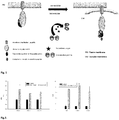
- a schematic view of the process can be visualized in the schematic representation shown in figure 1 .
- the authors of the present invention constructed three different fluorescent fusion polypeptides, all of them comprising the extracellular domain of interleukin-2 receptor of SEQ ID No 17 as the membrane localization peptide, the peptide KDEL as the reticulum retention signal and the turboGFP as the fluorescent peptide.
- a first aspect of the present invention refers to a fluorescent fusion polypeptide capable of changing its localization within the cell from the cell cytoplasmic membrane to the retention vesicles, upon an increase in the concentration of second messengers within the cell cytoplasm, comprising a membrane localization peptide, a second messenger transduction protein binding peptide, a reticulum retention signal and a fluorescent peptide wherein:
- the membrane localization peptide is the extracellular domain of interleukin-2 receptor of SEQ ID No 17 or a variant which is at least 90% homologous to this sequence over the entire region based on amino acid identity and the reticulum retention signal is a peptide selected from the following list consisting of KDEL, HDEL, KKXX, KXKXX and RXR, wherein X is any aminoacid and wherein preferably said reticulum retention signal is KDEL.
- said second messenger transduction protein binding peptide is a cAMP transduction protein binding peptide, a calcium transduction protein binding peptide, an IP3 transduction protein binding peptide, a cGMP transduction protein binding peptide or a diacylglycerol transduction protein binding peptide.
- the fluorescent fusion polypeptide of the first aspect of the invention is capable of changing its localization within the cell from the cell cytoplasmic membrane to the retention vesicles, upon an increase in the concentration of a second messenger selected from the list consisting of calcium, cAMP, IP3, cGMP or diacyglycerol.
- a second aspect of the invention refers to a fluorescent fusion polypeptide capable of changing its localization within the cell from the cell cytoplasmic membrane to the retention vesicles, upon an increase in the concentration of intracellular calcium, comprising a membrane localization peptide, a second messenger transduction protein binding peptide comprising a calmodulin binding sequence, a reticulum retention signal and a fluorescent peptide wherein:
- the calmodulin binding sequence is selected from the list consisting of SEQ ID No 1 (MEKRRWKKNFIAVSAANRFKKISSSGAL), SEQ ID No 2 (ASPWKSARLMVHTVATFNSI), SEQ ID No 3 (AIGFKKLAEAVKFSAKLMGQ), SEQ ID No 4 (KKTFKEVANAVKISASLMGT), SEQ ID No 5 (GAVLKVLTTGLPALISWIKR), SEQ ID No 6 (RGGFRRIARLVGVLREWAYR), SEQ ID No 7 (GGRLALLRARLKELAALEAA) and SEQ ID No 8 (AEGVRNIKSMWEKGNVFSSP) or a variant which is at least 90% homologous to any of these sequences over the entire region based on amino acid identity.
- the reticulum retention signal is a peptide selected from the following list consisting of KDEL, HDEL, KKXX, KXKXX and RXR, wherein X is any aminoacid and wherein preferably said reticulum retention signal is KDEL and/or the membrane localization peptide is the extracellular domain of interleukin-2 of SEQ ID No 17 or a variant which is at least 90% homologous to any of these sequences over the entire region based on amino acid identity.
- the fluorescent peptide is selected from the group consisting of GFP, YFP, turboGFP, tRFP and tRFP602.
- the fluorescent fusion polypeptide comprises or preferably consists of SEQ ID No 15.
- a third aspect of the invention refers to a fluorescent fusion polypeptide capable of changing its localization within the cell from the cell cytoplasmic membrane to the retention vesicles, upon an increase in the concentration of intracellular cAMP, comprising a membrane localization peptide, a second messenger transduction protein binding peptide comprising a binding sequence to the RI and RII regulatory domains of PKA, a reticulum retention signal and a fluorescent peptide wherein:
- the binding sequence to the RI and RII regulatory domains of PKA is selected from the list consisting of SEQ ID No 9 (DLIEEAASRIVDAVIEQVKAAGAY), SEQ ID no 10 (VQGNTDEAQEELAWKIAKMIVSDVMQQ), SEQ ID No 11 (VQGNTDEAQEELLWKIAKMIVSDVMQQ), SEQ ID No 12 (FEELAWKIAKMIWSDVFQQ), SEQ ID No 13 (QIEYLAKQIVDNAIQQAK) and SEQ ID No 14 (LEQYANQLADQIIKEATE) or a variant which is at least 90% homologous to any of these sequences over the entire region based on amino acid identity.
- the reticulum retention signal is a peptide selected from the following list consisting of KDEL, HDEL, KKXX, KXKXX and RXR, wherein X is any aminoacid and wherein preferably said reticulum retention signal is KDEL and/or the membrane localization peptide is the extracellular domain of interleukin-2 of SEQ ID No 17 or a variant which is at least 90% homologous to any of these sequences over the entire region based on amino acid identity.
- the fluorescent peptide is selected from the group consisting of GFP, YFP, turboGFP, tRFP and tRFP602.
- the fluorescent fusion polypeptide comprises or preferably consists of SEQ ID No 16.
- a fourth aspect of the invention refers to a fluorescent fusion polypeptide capable of changing its localization within the cell from the cell cytoplasmic membrane to the retention vesicles, upon an increase in the concentration of intracellular diacylglycerol, comprising a membrane localization peptide, a second messenger transduction protein binding peptide comprising a binding sequence to PKC ⁇ , a reticulum retention signal and a fluorescent peptide wherein:
- the binding sequence to PKC ⁇ is SEQ ID No 19 (AARKRKGSFFYGG), or a variant which is at least 90% homologous to this sequence over the entire region based on amino acid identity.
- the reticulum retention signal is a peptide selected from the following list consisting of KDEL, HDEL, KKXX, KXKXX and RXR wherein x is any aminoacid and wherein preferably said reticulum retention signal is KDEL and/or the membrane localization peptide is the extracellular domain of interleukin-2 of SEQ ID No 17 or a variant which is at least 90% homologous to any of these sequences over the entire region based on amino acid identity.
- the fluorescent peptide is selected from the group consisting of GFP, YFP, turboGFP, tRFP and tRFP602.
- the fluorescent fusion polypeptide comprises SEQ ID No 18.
- a fifth aspect of the invention refers to a nucleic acid molecule comprising a polynucleotide sequence coding for a polypeptide as defined in any of the previous aspects of the invention.
- a sixth aspect of the invention refers to a biosensor comprising the fusion polypeptide as defined in the first, second, third and fourth aspects of the invention.
- a seventh aspect of the invention refers to a cell comprising the fluorescent fusion polypeptide as defined in any of the first, second, third or fourth aspects of the invention or the biosensor as defined in the sixth aspect of the invention, wherein preferably said cell is cell line U2O2.
- the present invention relates to several uses for the fluorescent fusion polypeptide as defined in any of the first, second, third or fourth aspects of the invention or of the biosensor as defined in the sixth aspect of the invention.
- a first use of the biosensor according to the present invention is for detecting and quantifying second messengers including, but not limited thereto, cAMP, calcium, diacylglycerol, IP3 and cGMP.
- binding of the second messenger to the fluorescent fusion polypeptide of any of the aspects of this invention results in a substantial change in the spatial conformation that leads to a change in the intracellular fluorescence localization.
- This fluorescence translocation can be harnessed for second messenger quantification by fluorescence microscopy.
- all this process can be traced in living cells due to the presence of the fluorescent protein in the biosensor.
- the fluorescent fusion polypeptide as defined in any of the first, second, third or fourth aspects of the invention or the biosensor as defined in the sixth aspect of the invention is useful in the practice of essentially any application for which readout of second messenger transduction is obtained. Such applications are well known in the art. However, mere exemplary applications of the present invention include but are not limited to:
- the fluorescent fusion polypeptide and the corresponding biosensor of the present invention can be made by techniques well known by those skilled in the art but as a way of example, they can be constructed as follows.
- the coding sequences corresponding to the membrane localization peptide, the fluorescent peptide, the protein transduction interacting peptide and the reticulum localization signal can be easily amplified by PCR and cloned into a shuttle plasmid. These coding sequences can be then easily cloned into the final fusion plasmid in the specific order presented herein using the restriction enzyme sites that flanked each sequence.
- EXAMPLE 1 Construction and use of a calcium biosensor for measurement of calcium in living cells within a broad dynamic range of physiological concentrations of this second messenger.
- the authors of the present invention constructed a fluorescent fusion polypeptide comprising the extracellular domain of interleukin-2 receptor of SEQ ID No 17 as the membrane localization peptide, the calmodulin binding domain from muscle myosin light chain kinase of SEQ ID No 1 as the second messenger transduction protein binding peptide, the peptide KDEL as the reticulum retention signal and the turboGFP as the fluorescent peptide wherein:
- the turboGFP polypeptide was cloned as the fluorescent peptide and the cellular localization of the biosensor was analysed upon calcium induced activation.
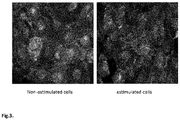
- cell lines HEK293 and U2O2 were stably transfected with the plasmid construction that contains the above mentioned biosensor's cDNA (please refer to SEQ ID No 15). After transfection, both cell lines presented a membrane distribution of the fluorescence. However, a substantial decrease in membrane distribution of the biosensor was observed after increasing the intracellular levels of calcium with 10 ng/ml of PMA and 1 uM of ionomycin.
- Tachykinin receptor 1 also known as Neurokinin 1 receptor (NK1R) or substance P receptor (SPR) is a G protein coupled receptor found in the central nervous system and peripheral nervous system.
- the endogenous ligand for this receptor is Substance P, although it has some affinity for other Tachykinins, Substance P is synthesized by neurons and transported to synaptic vesicles; the release of Substance P is accomplished through the depolarizing action of calcium-dependent mechanisms.
- NK1 receptors When NK1 receptors are stimulated, they can generate various second messengers, which can trigger a wide range of effector mechanisms that regulate cellular excitability and function. One of these mechanisms leads to the mobilization of calcium from both intra- and extracellular sources.
- the double stable cell line was seeded at 20,000 cells per well on 96-mm optical plates, and cultured in 200ul of DMEM F12 supplemented with 10% fetal bovine serum.
- DMEM F12 fetal bovine serum
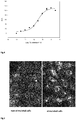
- the Ec50 for the Substance P was ⁇ 9.5 x 10 -12 M after a treatment of 6 h with agonist.
- EXAMPLE 2 Construction and use of a cAMP biosensor for measurement of cAMP in living cells within a broad dynamic range of Physiological concentrations of this second messenger.
- the authors of the present invention constructed a fluorescent fusion polypeptide comprising the extracellular domain of interleukin-2 receptor of SEQ ID No 17 as the membrane localization peptide, the protein kinase A (PKA) binding domain from A-kinase anchor protein (AKAP) of SEQ ID No 9 as the second messenger transduction protein binding peptide, the peptide KDEL as the reticulum retention signal and the turboGFP as the fluorescent peptide wherein:
- peptide turboGFP was cloned as the fluorescent peptide and the cellular localization of the biosensor was analysed upon cAMP induced activation.
- cell lines SHSY5Y and U2O2 were stably transfected with the plasmid construction that contains the above mentioned biosensor's coding sequence. Both cell lines presented a membrane distribution of the fluorescence.
- activity was calculated as an increment of granularity by treating these cells with 10 uM of forskolin and 25 uM of IBMX in three different stable clones during 36h ( Fig 2 Right graphic).
- the U2O2 biosensor stable cell line was stably transfected with the human adrenergic beta 2 receptor.
- the adrenergic receptors are a class of G protein-coupled receptors that are targets of the catecholamines, especially noradrenaline (norepinephrine) and adrenaline (epinephrine).
- the double stable cell line was seeded at 20.000 cell per well on 96-mm optical plates, and cultured in 200 ul of DMEM F12 supplemented with 10% fetal bovine serum.
- EXAMPLE 3 Construction and use of a diacylglycerol biosensor for measurement of diacylglycerol in living cells within a broad dynamic range of physiological concentrations of this second messenger.
- the authors of the present invention constructed a fluorescent fusion polypeptide comprising the extracellular domain of interleukin-2 receptor of SEQ ID No 17 as the membrane localization peptide, the binding sequence of SEQ ID No 19 as the second messenger transduction protein binding peptide, the peptide KDEL as the reticulum retention signal and the turboGFP as the fluorescent peptide wherein:
- peptide turboGFP was cloned as the fluorescent peptide and the cellular localization of the biosensor was analysed upon diacylglycerol induced activation.
- U2O2 cell line was stably transfected with the plasmid construction that contains the above mentioned biosensor's coding sequence. This stably transfected cell line presented a membrane distribution of the fluorescence before inducing the activation of intracellular diacylglycerol.
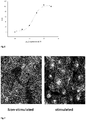
- activity was calculated as an increment of granularity by treating these cells with increasing dosages of PMA. The results are shown in Fig. 7 and Fig. 8 .
Landscapes
- Health & Medical Sciences (AREA)
- Life Sciences & Earth Sciences (AREA)
- Immunology (AREA)
- Chemical & Material Sciences (AREA)
- Engineering & Computer Science (AREA)
- Biomedical Technology (AREA)
- Molecular Biology (AREA)
- General Health & Medical Sciences (AREA)
- Medicinal Chemistry (AREA)
- Cell Biology (AREA)
- Hematology (AREA)
- Biochemistry (AREA)
- Toxicology (AREA)
- Urology & Nephrology (AREA)
- Organic Chemistry (AREA)
- Biotechnology (AREA)
- Gastroenterology & Hepatology (AREA)
- Physics & Mathematics (AREA)
- Analytical Chemistry (AREA)
- Microbiology (AREA)
- Tropical Medicine & Parasitology (AREA)
- General Physics & Mathematics (AREA)
- Pathology (AREA)
- Zoology (AREA)
- Food Science & Technology (AREA)
- Biophysics (AREA)
- Genetics & Genomics (AREA)
- Proteomics, Peptides & Aminoacids (AREA)
- Bioinformatics & Cheminformatics (AREA)
- Peptides Or Proteins (AREA)
- Measuring Or Testing Involving Enzymes Or Micro-Organisms (AREA)
- Investigating Or Analysing Biological Materials (AREA)
- Micro-Organisms Or Cultivation Processes Thereof (AREA)
Priority Applications (1)
| Application Number | Priority Date | Filing Date | Title |
|---|---|---|---|
| EP13739169.4A EP2870475B1 (en) | 2012-07-06 | 2013-07-08 | Fluorescent fusion polypeptide, biosensor comprising said polypeptide and uses thereof |
Applications Claiming Priority (3)
| Application Number | Priority Date | Filing Date | Title |
|---|---|---|---|
| EP12382272 | 2012-07-06 | ||
| EP13739169.4A EP2870475B1 (en) | 2012-07-06 | 2013-07-08 | Fluorescent fusion polypeptide, biosensor comprising said polypeptide and uses thereof |
| PCT/EP2013/064400 WO2014006225A1 (en) | 2012-07-06 | 2013-07-08 | Fluorescent fusion polypeptide, biosensor comprising said polypeptide and uses thereof |
Publications (2)
| Publication Number | Publication Date |
|---|---|
| EP2870475A1 EP2870475A1 (en) | 2015-05-13 |
| EP2870475B1 true EP2870475B1 (en) | 2017-06-07 |
Family
ID=48803514
Family Applications (1)
| Application Number | Title | Priority Date | Filing Date |
|---|---|---|---|
| EP13739169.4A Active EP2870475B1 (en) | 2012-07-06 | 2013-07-08 | Fluorescent fusion polypeptide, biosensor comprising said polypeptide and uses thereof |
Country Status (9)
| Country | Link |
|---|---|
| US (3) | US9784728B2 (enExample) |
| EP (1) | EP2870475B1 (enExample) |
| JP (1) | JP6393260B2 (enExample) |
| CN (1) | CN104781667B (enExample) |
| CA (1) | CA2878126C (enExample) |
| DK (1) | DK2870475T3 (enExample) |
| ES (1) | ES2645431T3 (enExample) |
| IN (1) | IN2014MN02585A (enExample) |
| WO (1) | WO2014006225A1 (enExample) |
Families Citing this family (3)
| Publication number | Priority date | Publication date | Assignee | Title |
|---|---|---|---|---|
| WO2014006225A1 (en) | 2012-07-06 | 2014-01-09 | Innovative Technologies In Biological Systems S.L. | Fluorescent fusion polypeptide, biosensor comprising said polypeptide and uses thereof |
| US9784726B2 (en) | 2013-01-08 | 2017-10-10 | Atrogi Ab | Screening method, a kit, a method of treatment and a compound for use in a method of treatment |
| WO2018141987A1 (en) * | 2017-02-06 | 2018-08-09 | Innovative Technologies In Biological Systems Sl | Fluorescent fusion polypeptide capable of detecting phosphorylation of cellular membrane receptors by grks (g-protein receptor kinases) and/or receptor tyrosine kinases (rtks) |
Family Cites Families (20)
| Publication number | Priority date | Publication date | Assignee | Title |
|---|---|---|---|---|
| JPH089640B2 (ja) * | 1994-05-19 | 1996-01-31 | 佑 本庶 | ヒト・インターロイキン−2受容体 |
| US6197928B1 (en) * | 1997-03-14 | 2001-03-06 | The Regents Of The University Of California | Fluorescent protein sensors for detection of analytes |
| US7192932B1 (en) * | 1997-04-29 | 2007-03-20 | Lauras As | Use of immunomodulating agents |
| IL139705A0 (en) * | 1998-05-20 | 2002-02-10 | Chugai Pharmaceutical Co Ltd | Novel method for gene cloning |
| AU1912000A (en) * | 1998-11-12 | 2000-05-29 | Beth Israel Deaconess Medical Center | Stimulation of angiogenesis via syndecan-4 cytoplasmic domain signaling pathway |
| US7060793B2 (en) * | 1999-05-21 | 2006-06-13 | The Regents Of The University Of California | Circularly permuted fluorescent protein indicators |
| US20070037165A1 (en) * | 2000-09-08 | 2007-02-15 | Applera Corporation | Polymorphisms in known genes associated with human disease, methods of detection and uses thereof |
| US7125660B2 (en) * | 2000-09-13 | 2006-10-24 | Archemix Corp. | Nucleic acid sensor molecules and methods of using same |
| EP1499885B1 (en) * | 2001-08-01 | 2009-10-21 | Cellomics, Inc. | Novel fusion proteins and assays for molecular binding |
| CA2497254A1 (en) * | 2002-09-06 | 2004-03-18 | Forschungsverbund Berlin E. V. | Akap18 delta, a novel splicing variant of a protein kinase a anchor protein and the use of the same |
| JP4214206B2 (ja) * | 2002-12-10 | 2009-01-28 | 独立行政法人理化学研究所 | Fretを利用した蛍光指示薬 |
| US7488583B2 (en) * | 2003-09-25 | 2009-02-10 | Odyssey Thera, Inc. | Fragment complementation assays for G-protein-coupled receptors and their signaling pathways |
| GB0411586D0 (en) * | 2004-05-24 | 2004-06-23 | Univ The Glasgow | Fluorescent protein |
| WO2006017751A2 (en) * | 2004-08-02 | 2006-02-16 | Cellumen, Inc. | Methods for the detection of molecular interactions within cells |
| EP1997885A1 (en) * | 2007-05-29 | 2008-12-03 | AXXAM S.p.A. | Fluorescent proteins and methods of use thereof |
| WO2009026941A1 (en) * | 2007-08-24 | 2009-03-05 | MAX-PLANCK-Gesellschaft zur Förderung der Wissenschaften e.V. | Genetically encoded calcium sensors comprising the c-terminal lobe of troponin c and a fluorescence tag |
| JP2009153399A (ja) * | 2007-12-25 | 2009-07-16 | National Institute Of Advanced Industrial & Technology | 一分子型リアルタイム生物発光イメージングプローブ |
| EP2379578A4 (en) * | 2009-01-12 | 2012-05-02 | Sutro Biopharma Inc | DOUBLE-LOADING SYSTEM FOR THE SELECTIVE INTRODUCTION OF NON-NITIVE AMINO ACIDS IN PROTEINS DUE TO AN IN VITRO-SYNTHESIS PROCESS |
| CA2772572A1 (en) * | 2009-08-31 | 2011-03-03 | Ibc Pharmaceuticals, Inc. | Bispecific immunocytokine dock-and-lock (dnl) complexes and therapeutic use thereof |
| WO2014006225A1 (en) | 2012-07-06 | 2014-01-09 | Innovative Technologies In Biological Systems S.L. | Fluorescent fusion polypeptide, biosensor comprising said polypeptide and uses thereof |
-
2013
- 2013-07-08 WO PCT/EP2013/064400 patent/WO2014006225A1/en not_active Ceased
- 2013-07-08 CA CA2878126A patent/CA2878126C/en active Active
- 2013-07-08 US US14/412,513 patent/US9784728B2/en active Active
- 2013-07-08 DK DK13739169.4T patent/DK2870475T3/en active
- 2013-07-08 IN IN2585MUN2014 patent/IN2014MN02585A/en unknown
- 2013-07-08 CN CN201380045944.4A patent/CN104781667B/zh active Active
- 2013-07-08 JP JP2015519247A patent/JP6393260B2/ja active Active
- 2013-07-08 ES ES13739169.4T patent/ES2645431T3/es active Active
- 2013-07-08 EP EP13739169.4A patent/EP2870475B1/en active Active
-
2017
- 2017-09-19 US US15/709,000 patent/US10883981B2/en active Active
- 2017-09-19 US US15/708,971 patent/US10877025B2/en active Active
Also Published As
| Publication number | Publication date |
|---|---|
| IN2014MN02585A (enExample) | 2015-07-24 |
| US10883981B2 (en) | 2021-01-05 |
| JP2015522582A (ja) | 2015-08-06 |
| US10877025B2 (en) | 2020-12-29 |
| US20150185205A1 (en) | 2015-07-02 |
| EP2870475A1 (en) | 2015-05-13 |
| DK2870475T3 (en) | 2017-09-18 |
| CN104781667A (zh) | 2015-07-15 |
| US20180003697A1 (en) | 2018-01-04 |
| WO2014006225A1 (en) | 2014-01-09 |
| US20180003698A1 (en) | 2018-01-04 |
| JP6393260B2 (ja) | 2018-09-19 |
| CA2878126C (en) | 2022-05-10 |
| CN104781667B (zh) | 2017-06-13 |
| CA2878126A1 (en) | 2014-01-09 |
| US9784728B2 (en) | 2017-10-10 |
| ES2645431T3 (es) | 2017-12-05 |
Similar Documents
| Publication | Publication Date | Title |
|---|---|---|
| EP2073013B1 (en) | Method of identifying transmembrane protein-interacting compounds | |
| US10877025B2 (en) | Fluorescent fusion polypeptide, encoding nucleic acid, and cell comprising said polypeptide | |
| Appleton et al. | Dissociation of β-arrestin-dependent desensitization and signaling using'biased'parathyroid hormone receptor ligands | |
| EP3577456B9 (en) | Fluorescent fusion polypeptide capable of detecting phosphorylation of cellular membrane receptors by grks (g-protein receptor kinases) and/or receptor tyrosine kinases (rtks) | |
| AU2015203835B2 (en) | Method of Identifying Transmembrane Protein-Interacting Compounds | |
| HK1128957B (en) | Method of identifying transmembrane protein-interacting compounds | |
| HK1073358B (en) | Method of identifying transmembrane protein-interacting compounds |
Legal Events
| Date | Code | Title | Description |
|---|---|---|---|
| PUAI | Public reference made under article 153(3) epc to a published international application that has entered the european phase |
Free format text: ORIGINAL CODE: 0009012 |
|
| 17P | Request for examination filed |
Effective date: 20150206 |
|
| AK | Designated contracting states |
Kind code of ref document: A1 Designated state(s): AL AT BE BG CH CY CZ DE DK EE ES FI FR GB GR HR HU IE IS IT LI LT LU LV MC MK MT NL NO PL PT RO RS SE SI SK SM TR |
|
| AX | Request for extension of the european patent |
Extension state: BA ME |
|
| DAX | Request for extension of the european patent (deleted) | ||
| 17Q | First examination report despatched |
Effective date: 20160302 |
|
| GRAP | Despatch of communication of intention to grant a patent |
Free format text: ORIGINAL CODE: EPIDOSNIGR1 |
|
| INTG | Intention to grant announced |
Effective date: 20170105 |
|
| RIN1 | Information on inventor provided before grant (corrected) |
Inventor name: MELLA LOPEZ, ROSA Inventor name: GAMIZ MATA, JORGE Inventor name: KORTAZAR ZABALA, DANEL Inventor name: ROURA FERRER, MERITXELL Inventor name: VILLACE LOZANO, PATRICIA Inventor name: SALADO POGONZA, AIDA CLARISA |
|
| GRAS | Grant fee paid |
Free format text: ORIGINAL CODE: EPIDOSNIGR3 |
|
| AK | Designated contracting states |
Kind code of ref document: B1 Designated state(s): AL AT BE BG CH CY CZ DE DK EE ES FI FR GB GR HR HU IE IS IT LI LT LU LV MC MK MT NL NO PL PT RO RS SE SI SK SM TR |
|
| REG | Reference to a national code |
Ref country code: GB Ref legal event code: FG4D |
|
| GRAA | (expected) grant |
Free format text: ORIGINAL CODE: 0009210 |
|
| REG | Reference to a national code |
Ref country code: CH Ref legal event code: EP Ref country code: AT Ref legal event code: REF Ref document number: 899617 Country of ref document: AT Kind code of ref document: T Effective date: 20170615 |
|
| REG | Reference to a national code |
Ref country code: IE Ref legal event code: FG4D |
|
| REG | Reference to a national code |
Ref country code: DE Ref legal event code: R096 Ref document number: 602013021984 Country of ref document: DE |
|
| REG | Reference to a national code |
Ref country code: DK Ref legal event code: T3 Effective date: 20170914 |
|
| REG | Reference to a national code |
Ref country code: NL Ref legal event code: MP Effective date: 20170607 |
|
| REG | Reference to a national code |
Ref country code: LT Ref legal event code: MG4D |
|
| PG25 | Lapsed in a contracting state [announced via postgrant information from national office to epo] |
Ref country code: HR Free format text: LAPSE BECAUSE OF FAILURE TO SUBMIT A TRANSLATION OF THE DESCRIPTION OR TO PAY THE FEE WITHIN THE PRESCRIBED TIME-LIMIT Effective date: 20170607 Ref country code: NO Free format text: LAPSE BECAUSE OF FAILURE TO SUBMIT A TRANSLATION OF THE DESCRIPTION OR TO PAY THE FEE WITHIN THE PRESCRIBED TIME-LIMIT Effective date: 20170907 Ref country code: LT Free format text: LAPSE BECAUSE OF FAILURE TO SUBMIT A TRANSLATION OF THE DESCRIPTION OR TO PAY THE FEE WITHIN THE PRESCRIBED TIME-LIMIT Effective date: 20170607 Ref country code: FI Free format text: LAPSE BECAUSE OF FAILURE TO SUBMIT A TRANSLATION OF THE DESCRIPTION OR TO PAY THE FEE WITHIN THE PRESCRIBED TIME-LIMIT Effective date: 20170607 |
|
| REG | Reference to a national code |
Ref country code: AT Ref legal event code: MK05 Ref document number: 899617 Country of ref document: AT Kind code of ref document: T Effective date: 20170607 |
|
| PG25 | Lapsed in a contracting state [announced via postgrant information from national office to epo] |
Ref country code: RS Free format text: LAPSE BECAUSE OF FAILURE TO SUBMIT A TRANSLATION OF THE DESCRIPTION OR TO PAY THE FEE WITHIN THE PRESCRIBED TIME-LIMIT Effective date: 20170607 Ref country code: LV Free format text: LAPSE BECAUSE OF FAILURE TO SUBMIT A TRANSLATION OF THE DESCRIPTION OR TO PAY THE FEE WITHIN THE PRESCRIBED TIME-LIMIT Effective date: 20170607 Ref country code: NL Free format text: LAPSE BECAUSE OF FAILURE TO SUBMIT A TRANSLATION OF THE DESCRIPTION OR TO PAY THE FEE WITHIN THE PRESCRIBED TIME-LIMIT Effective date: 20170607 Ref country code: SE Free format text: LAPSE BECAUSE OF FAILURE TO SUBMIT A TRANSLATION OF THE DESCRIPTION OR TO PAY THE FEE WITHIN THE PRESCRIBED TIME-LIMIT Effective date: 20170607 Ref country code: BG Free format text: LAPSE BECAUSE OF FAILURE TO SUBMIT A TRANSLATION OF THE DESCRIPTION OR TO PAY THE FEE WITHIN THE PRESCRIBED TIME-LIMIT Effective date: 20170907 |
|
| REG | Reference to a national code |
Ref country code: ES Ref legal event code: FG2A Ref document number: 2645431 Country of ref document: ES Kind code of ref document: T3 Effective date: 20171205 |
|
| REG | Reference to a national code |
Ref country code: FR Ref legal event code: PLFP Year of fee payment: 5 |
|
| PG25 | Lapsed in a contracting state [announced via postgrant information from national office to epo] |
Ref country code: RO Free format text: LAPSE BECAUSE OF FAILURE TO SUBMIT A TRANSLATION OF THE DESCRIPTION OR TO PAY THE FEE WITHIN THE PRESCRIBED TIME-LIMIT Effective date: 20170607 Ref country code: SK Free format text: LAPSE BECAUSE OF FAILURE TO SUBMIT A TRANSLATION OF THE DESCRIPTION OR TO PAY THE FEE WITHIN THE PRESCRIBED TIME-LIMIT Effective date: 20170607 Ref country code: EE Free format text: LAPSE BECAUSE OF FAILURE TO SUBMIT A TRANSLATION OF THE DESCRIPTION OR TO PAY THE FEE WITHIN THE PRESCRIBED TIME-LIMIT Effective date: 20170607 Ref country code: AT Free format text: LAPSE BECAUSE OF FAILURE TO SUBMIT A TRANSLATION OF THE DESCRIPTION OR TO PAY THE FEE WITHIN THE PRESCRIBED TIME-LIMIT Effective date: 20170607 Ref country code: CZ Free format text: LAPSE BECAUSE OF FAILURE TO SUBMIT A TRANSLATION OF THE DESCRIPTION OR TO PAY THE FEE WITHIN THE PRESCRIBED TIME-LIMIT Effective date: 20170607 |
|
| PG25 | Lapsed in a contracting state [announced via postgrant information from national office to epo] |
Ref country code: PL Free format text: LAPSE BECAUSE OF FAILURE TO SUBMIT A TRANSLATION OF THE DESCRIPTION OR TO PAY THE FEE WITHIN THE PRESCRIBED TIME-LIMIT Effective date: 20170607 Ref country code: SM Free format text: LAPSE BECAUSE OF FAILURE TO SUBMIT A TRANSLATION OF THE DESCRIPTION OR TO PAY THE FEE WITHIN THE PRESCRIBED TIME-LIMIT Effective date: 20170607 Ref country code: IS Free format text: LAPSE BECAUSE OF FAILURE TO SUBMIT A TRANSLATION OF THE DESCRIPTION OR TO PAY THE FEE WITHIN THE PRESCRIBED TIME-LIMIT Effective date: 20171007 |
|
| REG | Reference to a national code |
Ref country code: DE Ref legal event code: R097 Ref document number: 602013021984 Country of ref document: DE |
|
| PG25 | Lapsed in a contracting state [announced via postgrant information from national office to epo] |
Ref country code: MC Free format text: LAPSE BECAUSE OF FAILURE TO SUBMIT A TRANSLATION OF THE DESCRIPTION OR TO PAY THE FEE WITHIN THE PRESCRIBED TIME-LIMIT Effective date: 20170607 |
|
| PLBE | No opposition filed within time limit |
Free format text: ORIGINAL CODE: 0009261 |
|
| STAA | Information on the status of an ep patent application or granted ep patent |
Free format text: STATUS: NO OPPOSITION FILED WITHIN TIME LIMIT |
|
| 26N | No opposition filed |
Effective date: 20180308 |
|
| PG25 | Lapsed in a contracting state [announced via postgrant information from national office to epo] |
Ref country code: SI Free format text: LAPSE BECAUSE OF FAILURE TO SUBMIT A TRANSLATION OF THE DESCRIPTION OR TO PAY THE FEE WITHIN THE PRESCRIBED TIME-LIMIT Effective date: 20170607 |
|
| PG25 | Lapsed in a contracting state [announced via postgrant information from national office to epo] |
Ref country code: LU Free format text: LAPSE BECAUSE OF NON-PAYMENT OF DUE FEES Effective date: 20170708 |
|
| REG | Reference to a national code |
Ref country code: FR Ref legal event code: PLFP Year of fee payment: 6 |
|
| PG25 | Lapsed in a contracting state [announced via postgrant information from national office to epo] |
Ref country code: MT Free format text: LAPSE BECAUSE OF NON-PAYMENT OF DUE FEES Effective date: 20170708 |
|
| PG25 | Lapsed in a contracting state [announced via postgrant information from national office to epo] |
Ref country code: HU Free format text: LAPSE BECAUSE OF FAILURE TO SUBMIT A TRANSLATION OF THE DESCRIPTION OR TO PAY THE FEE WITHIN THE PRESCRIBED TIME-LIMIT; INVALID AB INITIO Effective date: 20130708 |
|
| PG25 | Lapsed in a contracting state [announced via postgrant information from national office to epo] |
Ref country code: CY Free format text: LAPSE BECAUSE OF FAILURE TO SUBMIT A TRANSLATION OF THE DESCRIPTION OR TO PAY THE FEE WITHIN THE PRESCRIBED TIME-LIMIT Effective date: 20170607 |
|
| PG25 | Lapsed in a contracting state [announced via postgrant information from national office to epo] |
Ref country code: MK Free format text: LAPSE BECAUSE OF FAILURE TO SUBMIT A TRANSLATION OF THE DESCRIPTION OR TO PAY THE FEE WITHIN THE PRESCRIBED TIME-LIMIT Effective date: 20170607 |
|
| PG25 | Lapsed in a contracting state [announced via postgrant information from national office to epo] |
Ref country code: TR Free format text: LAPSE BECAUSE OF FAILURE TO SUBMIT A TRANSLATION OF THE DESCRIPTION OR TO PAY THE FEE WITHIN THE PRESCRIBED TIME-LIMIT Effective date: 20170607 |
|
| PG25 | Lapsed in a contracting state [announced via postgrant information from national office to epo] |
Ref country code: PT Free format text: LAPSE BECAUSE OF FAILURE TO SUBMIT A TRANSLATION OF THE DESCRIPTION OR TO PAY THE FEE WITHIN THE PRESCRIBED TIME-LIMIT Effective date: 20170607 |
|
| PG25 | Lapsed in a contracting state [announced via postgrant information from national office to epo] |
Ref country code: GR Free format text: LAPSE BECAUSE OF FAILURE TO SUBMIT A TRANSLATION OF THE DESCRIPTION OR TO PAY THE FEE WITHIN THE PRESCRIBED TIME-LIMIT Effective date: 20170607 |
|
| PG25 | Lapsed in a contracting state [announced via postgrant information from national office to epo] |
Ref country code: AL Free format text: LAPSE BECAUSE OF FAILURE TO SUBMIT A TRANSLATION OF THE DESCRIPTION OR TO PAY THE FEE WITHIN THE PRESCRIBED TIME-LIMIT Effective date: 20170607 |
|
| PGFP | Annual fee paid to national office [announced via postgrant information from national office to epo] |
Ref country code: DK Payment date: 20250627 Year of fee payment: 13 |
|
| PGFP | Annual fee paid to national office [announced via postgrant information from national office to epo] |
Ref country code: ES Payment date: 20250801 Year of fee payment: 13 |
|
| PGFP | Annual fee paid to national office [announced via postgrant information from national office to epo] |
Ref country code: DE Payment date: 20250728 Year of fee payment: 13 |
|
| PGFP | Annual fee paid to national office [announced via postgrant information from national office to epo] |
Ref country code: IT Payment date: 20250626 Year of fee payment: 13 |
|
| PGFP | Annual fee paid to national office [announced via postgrant information from national office to epo] |
Ref country code: BE Payment date: 20250707 Year of fee payment: 13 Ref country code: GB Payment date: 20250703 Year of fee payment: 13 |
|
| PGFP | Annual fee paid to national office [announced via postgrant information from national office to epo] |
Ref country code: FR Payment date: 20250707 Year of fee payment: 13 |
|
| PGFP | Annual fee paid to national office [announced via postgrant information from national office to epo] |
Ref country code: CH Payment date: 20250801 Year of fee payment: 13 |
|
| PGFP | Annual fee paid to national office [announced via postgrant information from national office to epo] |
Ref country code: IE Payment date: 20250703 Year of fee payment: 13 |
|
| REG | Reference to a national code |
Ref country code: CH Ref legal event code: U11 Free format text: ST27 STATUS EVENT CODE: U-0-0-U10-U11 (AS PROVIDED BY THE NATIONAL OFFICE) Effective date: 20260801 |