EP2860607A1 - Generating haptic effects while minimizing cascading - Google Patents
Generating haptic effects while minimizing cascading Download PDFInfo
- Publication number
- EP2860607A1 EP2860607A1 EP20140002908 EP14002908A EP2860607A1 EP 2860607 A1 EP2860607 A1 EP 2860607A1 EP 20140002908 EP20140002908 EP 20140002908 EP 14002908 A EP14002908 A EP 14002908A EP 2860607 A1 EP2860607 A1 EP 2860607A1
- Authority
- EP
- European Patent Office
- Prior art keywords
- actuator
- haptic effect
- effect
- haptic
- definition
- Prior art date
- Legal status (The legal status is an assumption and is not a legal conclusion. Google has not performed a legal analysis and makes no representation as to the accuracy of the status listed.)
- Withdrawn
Links
Images



Classifications
-
- G—PHYSICS
- G06—COMPUTING OR CALCULATING; COUNTING
- G06F—ELECTRIC DIGITAL DATA PROCESSING
- G06F3/00—Input arrangements for transferring data to be processed into a form capable of being handled by the computer; Output arrangements for transferring data from processing unit to output unit, e.g. interface arrangements
- G06F3/01—Input arrangements or combined input and output arrangements for interaction between user and computer
- G06F3/016—Input arrangements with force or tactile feedback as computer generated output to the user
-
- G—PHYSICS
- G08—SIGNALLING
- G08B—SIGNALLING SYSTEMS, e.g. PERSONAL CALLING SYSTEMS; ORDER TELEGRAPHS; ALARM SYSTEMS
- G08B6/00—Tactile signalling systems, e.g. tactile personal calling systems
Definitions
- One embodiment is directed generally to haptic effects, and in particular to generating haptic effects using an actuator.
- kinesthetic feedback such as active and resistive force feedback
- tactile feedback such as vibration, texture, and heat
- Haptic feedback can provide cues that enhance and simplify the user interface.
- vibration effects, or vibrotactile haptic effects may be useful in providing cues to users of electronic devices to alert the user to specific events, or provide realistic feedback to create greater sensory immersion within a simulated or virtual environment.
- Haptic feedback has also been increasingly incorporated in portable electronic devices, such as cellular telephones, smartphones, portable gaming devices, and a variety of other portable electronic devices.
- portable gaming applications are capable of vibrating in a manner similar to control devices (e.g., joysticks, etc.) used with larger-scale gaming systems that are configured to provide haptic feedback.
- control devices e.g., joysticks, etc.
- devices such as smartphones use haptic effects to cause "buttons" on a touchscreen to feel like their mechanical counterparts when selected by a user.
- actuators used for this purpose include an electromagnetic actuator such as an Eccentric Rotating Mass (“ERM”) actuator in which an eccentric mass is moved by a motor and rotates around an axis of rotation.
- ERM Eccentric Rotating Mass
- the mass in an ERM takes time to get up to the desired rotation speed, and time to wind back down.
- This "spin up” and “spin down” time can cause latency in the generation of vibratory type haptic effects, and can degrade the "feeling" of haptic effects.
- multiple haptic effects that are generated within a short span of each other, such as in response to multiple "keypad” presses, can “cascade” or pile up into a continuous “buzz” due to the latency with slow, inexpensive ERMs.
- One embodiment is a system that generates haptic effects using an actuator.
- the system receives a haptic effect definition that defines a haptic effect.
- the system pre-processes the haptic effect definition by determining if the actuator is capable of playing the haptic effect.
- the system then post-processes the haptic effect definition by adjusting a force value based on an estimate or measurement of a state of the actuator during a playing of the haptic effect.
- the computer program product may be tangibly embodied as a computer readable medium and/or embodied as a signal or data stream.
- One embodiment is a system and drive circuit for an ERM actuator that tunes, pre-processes, and post-processes a haptic effect definition in order to account for actuator properties and minimize cascading of multiple haptic effects.
- the pre-processing can scale the magnitude or other parameter of the haptic effect.
- the post-processing can generate a new magnitude based on actuator properties, current actuator state and the desired magnitude.
- Fig. 1 is a block diagram of a haptically-enabled system 10 in accordance with one embodiment of the present invention.
- System 10 includes a touch sensitive surface 11 or other type of user interface mounted within a housing 15, and may include mechanical keys/buttons 13.
- a haptic feedback system Internal to system 10 is a haptic feedback system that generates vibrations 30, 31 on system 10. In one embodiment, the vibrations are generated on touch surface 11. In various embodiments, not all elements shown in Fig. 1 are required for implementation.
- the haptic feedback system includes a processor or controller 12. Coupled to processor 12 is a memory 20 and an actuator drive circuit 16, which is coupled to an actuator 18.
- Actuator 18 can be any type of actuator, including an actuator with a rotating mass, and in one embodiment is an Eccentric Rotating Mass (“ERM”) actuator. In one embodiment, actuator 18 is any type of actuator that has relatively long rise and fall times.
- Processor 12 may be any type of general purpose processor, or could be a processor specifically designed to provide haptic effects, such as an application-specific integrated circuit (“ASIC"). Processor 12 may be the same processor that operates the entire system 10, or may be a separate processor. Processor 12 can decide what haptic effects are to be played and the order in which the effects are played based on high level parameters.
- the high level parameters that define a particular haptic effect include magnitude, frequency and duration.
- Low level parameters such as streaming motor commands could also be used to determine a particular haptic effect.
- a haptic effect may be considered "dynamic" if it includes some variation of these parameters when the haptic effect is generated or a variation of these parameters based on a user's interaction.
- Processor 12 outputs the control signals to actuator drive circuit 16, which includes electronic components and circuitry used to supply actuator 18 with the required electrical current and voltage (i.e., "motor signals") to cause the desired haptic effects.
- System 10 may include more than one actuator 18, and each actuator may include a separate drive circuit 16, all coupled to a common processor 12.
- Memory device 20 can be any type of storage device or computer-readable medium, such as random access memory (“RAM”) or read-only memory (“ROM”).
- RAM random access memory
- ROM read-only memory
- Memory 20 stores instructions executed by processor 12.
- memory 20 includes a haptic effects module 22 which are instructions that, when executed by processor 12, generate drive signals for actuator 18 that provide haptic effects while minimizing cascading, as disclosed in more detail below.
- Memory 20 may also be located internal to processor 12, or any combination of internal and external memory.
- Touch surface 11 recognizes touches, and may also recognize the position and magnitude of touches on the surface.
- the data corresponding to the touches is sent to processor 12, or another processor within system 10, and processor 12 interprets the touches and in response generates haptic effect signals.
- Touch surface 11 may sense touches using any sensing technology, including capacitive sensing, resistive sensing, surface acoustic wave sensing, pressure sensing, optical sensing, etc.
- Touch surface 11 may sense multi-touch contacts and may be capable of distinguishing multiple touches that occur at the same time.
- Touch surface 11 may be a touchscreen that generates and displays images for the user to interact with, such as keys, dials, etc., or may be a touchpad with minimal or no images.
- System 10 may be a handheld device, such a cellular telephone, personal digital assistant ("PDA"), smartphone, computer tablet/pad, gaming console, etc., or may be any other type of device that includes a haptic effect system that includes one or more actuators.
- System 10 may also be a wearable device (e.g., a bracelet, armband, glove, jacket, vest, pair of glasses, shoes, belt, etc.) that includes one or more actuators that generate haptic effects.
- the user interface may be a touch sensitive surface, or can be any other type of user interface such as a mouse, touchpad, minijoystick, scroll wheel, trackball, game pads or game controllers, etc.
- each actuator may have a different rotational capability in order to create a wide range of haptic effects on the device.
- Embodiments include a pre-processing and post-processing of the haptic effect signal in order to accommodate slow rise and fall times of the actuator and eliminate or minimize cascading.
- embodiments "tune" the actuator in order to characterize the actuator rise time and fall time and to account for variations in those times.
- Some embodiments may implement the pre-processing or post-processing alone to minimize or eliminate cascading.
- Other embodiments will implement both the pre-processing and post-processing to minimize or eliminate cascading.
- slow actuators have non-linear rise and fall characteristics.
- embodiments measure the total rise time taken for the actuator to rise from rest to 90% of rated acceleration. This rise time region in one embodiment is then divided into 10 segments at 10%, 20%... 90% of the rise time and the corresponding acceleration at each point is noted. These 9 values + the total rise time are added to the tuning parameters. In general, any number of points/segments can be selected, and the more points taken along the rise curve, the more accurate the model.
- Each actuator on a device has its own set of 99 tuning parameters in one embodiment. Changing these parameters results in different haptic effects.
- tuning parameters include: (1) a gain value for scaling magnitudes; (2) linearization values which help to get a linear response from a non-linear actuator; (3) MagSweep effect kick and brake parameters; (4) Periodic effect parameters; (5) update rate (e.g., 5ms); and (6) informational parameters such as actuator type, build number, etc.
- the fall time is considered to be the time required for an actuator to go from rated acceleration to below perceptible acceleration ( ⁇ 0.04g in one embodiment). If braking is supported by the actuator, a negative overdrive voltage, or some other braking mechanism such as shunting, is applied. Otherwise, no voltage is applied.
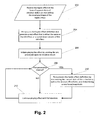
- Fig. 2 is a flow diagram of the functionality of system 10 when generating haptic effects with minimal or no cascading in accordance with one embodiment of the present invention.
- the functionality of the flow diagram of Fig. 2 , and Figs. 3 and 5 below is implemented by software (e.g., haptic effects module 22) stored in memory or other computer readable or tangible medium, and executed by a processor.
- the functionality may be performed by hardware (e.g., through the use of an application specific integrated circuit ("ASIC"), a programmable gate array (“PGA”), a field programmable gate array (“FPGA”), etc.), or any combination of hardware and software.
- ASIC application specific integrated circuit
- PGA programmable gate array
- FPGA field programmable gate array
- the haptic effect is received in the form of a parameterized vibration definition that defines the envelope/shape of the haptic effect.
- the definition includes parameters that define the haptic effect, including duration, frequency, magnitude, etc.
- the definition is in accordance with the "TouchSense ® 3000 Haptic Design Kit” from Immersion Corp.
- the haptic effect is defined by a definition shape formed by an envelope that includes three basis parts/regions or effect magnitudes: "impulse", “sustain” and “fade” that are formed from a MagSweep or Periodic basis effect.
- Other effect types such as Timelines and Interpolated effects are composed of basis effects.
- the definition is in general of an effect that is relatively maintained throughout the functionality of Fig. 2 .
- the haptic effect definition is pre-processed.
- the pre-processing revises the haptic effect to match the characteristics of actuator 18 within system 10 by determining the desired haptic effect and determining the actual effect the actuator is capable of playing based on its characteristics.
- the "new" effect is either the same as, or a scaled down version of, the original effect. For example, if the haptic effect definition is very strong for a short duration, the actuator may not be able to spin up so quickly. Therefore, the pre-processing modifies the haptic effect definition to accommodate the actuator, such as reducing the magnitude, before the haptic effect is played.
- pre-processing includes "clipping" the effect based on the desired effect to be played and based on the actuator rise curve and/or fall curve.
- the clipping occurs at the basis effect level and ensures that the actuator can achieve the desired magnitude at the end of the effect's duration. Therefore, if the same effect is played repeatedly, the effects will not merge into each other, which prevents cascading.
- the pre-processing modifies the effect in such a way that cascading is reduced or is impossible, while maintaining as much as possible the effect properties relative to each other.
- Other methods in addition to or instead of magnitude scaling can be used, including effect duration scaling. Additional details of the pre-processing is disclosed below.
- the pre-processed haptic effect is initiated/played by sending the pre-processed signal to the drive circuit, which causes the actuator to create a vibratory haptic effect.
- a post-processing interval is pre-determined and is typically equal to every timer/clock tick/cycle (e.g., every 5ms) and occurs every time prior to having a force value sent to the drive circuit.
- the haptic effect continues to be played until its full duration has expired and functionality continues at 208.
- the post-processing estimates or measures where the actuator lies on its rise or fall curve at a given point (i.e., the actuator current state), and the force/voltage value sent to the actuator drive circuit is adjusted accordingly.
- the force value represents how fast the motor is desired to be spinning based on the effect definition at a particular time instant.
- the post-processing determines the current state of the actuator as well as the desired effect force, and determines a new force/magnitude.
- the new force may be the same as the desired force or it may be a force which will cause the actuator to achieve the desired force as soon as possible.
- the force value can be received from an external entity, such as the kernel from the "TouchSense ® 3000 Haptic Design Kit” from Immersion Corp.
- the post-processing adjusts the force value based on an estimate or measurement about the current state of the actuator (i.e., how fast it is already spinning). Additional details of the post-processing are disclosed below.
- the haptic effect after being post-processed at 210, is played. Functionality continues at 208.
- Fig. 3 is a flow diagram of the functionality of system 10 when pre-processing a haptic effect definition in accordance with one embodiment of the present invention when three effect regions are used.
- the maximum magnitude that the actuator can achieve (“newMax") is determined. All three regions are then scaled using the ratio "newMax/oldMax”. Therefore, the effect shape is maintained.
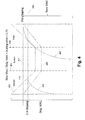
- Fig. 4 illustrates an example effect that illustrates the functionality of Fig. 3 in accordance with one embodiment.
- the effect is divided into the three magnitude sections/region: impulse, sustain and fade.
- the impulse and fade regions can be flat or can ramp up or ramp down.
- the sustain region is always flat in one embodiment.
- variable "oldMax" equals the maximum magnitude among the three sections.
- the impulse section of the original effect 402 is the initial section and ends at 420.
- the next section is the sustain section that ends at 430.
- the fade section concludes the effect.
- the impulse section is a ramp down and intersects with the rise curve of the actuator.
- the impulse section does ramp down, and does intersect rise curve 406 at 414.
- the variable "newMax” equals the impulse intersection level and the variable "Susachieved” equals 1.
- the impulse intersection level is 1 st clipping 409.
- the intersection level of the fade section and the rise curve is determined. If the rise curve does not intersect the fade section, fadelntersectLevel is set to the max that the rise curve can achieve in the fade duration. If the intersection level is greater than newMax, the newMax is set to the intersection level. In Fig. 4 , there is no intersection with curve 407, and the maximum is at a 2 nd clipping 411, which is greater than 1 st clipping 409.
- a scale factor of newMax/oldMax is determined.
- the original effect is then scaled to a scaled effect based on the scale factor by multiplying all magnitude levels by the scale factor.
- the scale factor is .75, and the original effect 402 is scaled to the scaled effect 403.
- the pre-processing scales the entire effect to something that the actuator can achieve, while maintaining the effect shape (or maintains the original effect).
- the functionality determines the maximum magnitude (referred to as "oldMax") out of the initial ramp, sustain and fade magnitudes.
- the functionality finds the three magnitudes that are actually achievable based on where the actuator rise curves intersect the effect curves (i.e., "ImpIntersectLevel”, “SuslntersectLevel” and "FadeIntersectLevel”).
- the newMax is the maximum of these three effect magnitudes.
- a scale factor of newMax/oldMax is determined. All three effect magnitudes in the original effect are multiplied by this scale factor to come up with the new magnitudes.
- effect durations could be clipped.
- both the effect duration and magnitude can be clipped.
- a perpendicular line is drawn from the effect to the rise curve and the magnitude and duration at the point of intersection of the perpendicular line and the rise curve is used.
- the area under the effect curve is determined and that is used to play effects. This embodiment assumes that for really slow motors a user would not be able to tell the difference between different effect shapes.
- the duration of the effect can be determined and a determination is made as to how fast the actuator can end up after that duration starting from zero if the effect were a maximum magnitude square pulse, then the effect magnitude, impulse level and fade level can be limited to that value.
- an embodiment can have a separate clipping process for "Timeline" haptic effects. Periodic, Magsweep and Waveform effects can be placed in a Timeline to create complex effect sequences.
- Fig. 5 is a flow diagram of the functionality of system 10 when post-processing a haptic effect definition in accordance with one embodiment of the present invention.
- the post-processing functionality of Fig. 5 is executed on every timer tick/cycle, which is typically 5ms.
- embodiments determine the desired force and calculate the new force/voltage to send to the actuator (i.e., overdriving or braking partially to get the motor to spin at a desired speed).
- Embodiments determine how fast the motor should spin based on the haptic effect compared to how fast the motor can spin by taking into account an estimate of what the motor is currently doing in connection with where the actuator lies on it rise or fall curve.
- Embodiments compute a voltage that will get the motor to spin as closely as possible to the desired speed, and then update/re-compute the estimated speed, which might not be the same as the desired speed if the motor is incapable of reaching the desired speed in a timer tick.
- the output is linearized at 504.
- Linearizing the output in general, adds real world parameters such as friction, etc. to the output determination. For example, friction in the actuator may mean that 15% force is needed to generate a 1 % force based haptic effect. In one embodiment, a table or other mapping is used for linearizing.
- variable "Diff" is determined as the desired output minus the estimated output.
- the rise time that the actuator can achieve in 1 timer tick is determined.
- a lookup table based on the rise time slope of the actuator is used for the determination.
- the lookup table is generated based on the tuning functionality described above before the pre-processing. Once the lookup table is generated, it is used for pre-processing and post-processing.
- the new output is determined using linear interpolation between two points. Additional details regarding the linear interpolation is disclosed below. In other embodiments, any type of interpolation model can be used.
- the output is linearized as in 504.
- the fall slope that the actuator can achieve in 1 timer tick is determined.
- a lookup table based on the fall time slope of the actuator is used for the determination.
- the rise and fall curves of the actuator are divided into 10 linear segments based on the changes to the tuning process.
- the maximum increase/decrease in force values in a timer tick is determined, based on the slope of these line segments.
- the slope is used to determine if the actuator can get to the desired force value by the next timer tick. If not, a kick or brake pulse is applied. If the actuator can get to the desired force by the next time tick, the amount that the force should be increased/decreased is determined so that the actuator is at the desired force value by the end of the timer tick.
- the estimate force is updated every tick, as shown in Fig. 5 .
- the post-processing can be implemented by the following pseudo-code in which parameter definitions are as follows:
- the input is as follows:
- the state variable is as follows:
- the desired slope is as follows:
- the output voltage is as follows:
- embodiments generate haptic effects by pre-processing and/or post-processing a haptic effect definition.
- the pre-processing looks at the desired effect as well as the actuator characteristics to determine the actual effect the actuator is capable of playing.
- the pre-processed effect is either the same or a scaled down version of the original effect.
- the pre-processing changes the haptic effects to what is achievable even before they are played.
- the post-processing looks at the current state of the actuator as well as the desired effect force, to come up with a new force.
- This new force might be the same as the desired force or it might be a force which will get the actuator to the desired force as soon as possible.
- cascading from a series of quick haptic effects, such as consecutive keypad presses, is minimized or eliminated.
Landscapes
- Engineering & Computer Science (AREA)
- General Engineering & Computer Science (AREA)
- Theoretical Computer Science (AREA)
- Physics & Mathematics (AREA)
- General Physics & Mathematics (AREA)
- Human Computer Interaction (AREA)
- User Interface Of Digital Computer (AREA)
- Apparatuses For Generation Of Mechanical Vibrations (AREA)
Applications Claiming Priority (1)
| Application Number | Priority Date | Filing Date | Title |
|---|---|---|---|
| US14/048,374 US9213408B2 (en) | 2013-10-08 | 2013-10-08 | Generating haptic effects while minimizing cascading |
Publications (1)
| Publication Number | Publication Date |
|---|---|
| EP2860607A1 true EP2860607A1 (en) | 2015-04-15 |
Family
ID=51429001
Family Applications (1)
| Application Number | Title | Priority Date | Filing Date |
|---|---|---|---|
| EP20140002908 Withdrawn EP2860607A1 (en) | 2013-10-08 | 2014-08-21 | Generating haptic effects while minimizing cascading |
Country Status (5)
| Country | Link |
|---|---|
| US (3) | US9213408B2 (enExample) |
| EP (1) | EP2860607A1 (enExample) |
| JP (2) | JP6226836B2 (enExample) |
| KR (1) | KR20150041743A (enExample) |
| CN (1) | CN104516502A (enExample) |
Cited By (1)
| Publication number | Priority date | Publication date | Assignee | Title |
|---|---|---|---|---|
| EP2942699A1 (en) * | 2014-05-07 | 2015-11-11 | Immersion Corporation | Dynamic haptic effect modification |
Families Citing this family (57)
| Publication number | Priority date | Publication date | Assignee | Title |
|---|---|---|---|---|
| US7765333B2 (en) | 2004-07-15 | 2010-07-27 | Immersion Corporation | System and method for ordering haptic effects |
| US9213408B2 (en) * | 2013-10-08 | 2015-12-15 | Immersion Corporation | Generating haptic effects while minimizing cascading |
| KR102096146B1 (ko) * | 2014-09-02 | 2020-04-28 | 애플 인크. | 가변 햅틱 출력을 위한 시맨틱 프레임워크 |
| US10007344B2 (en) * | 2015-09-30 | 2018-06-26 | Apple Inc. | Electronic device including closed-loop controller for haptic actuator and related methods |
| US10509468B2 (en) | 2016-01-27 | 2019-12-17 | Tactai, Inc. | Providing fingertip tactile feedback from virtual objects |
| DK179823B1 (en) | 2016-06-12 | 2019-07-12 | Apple Inc. | DEVICES, METHODS, AND GRAPHICAL USER INTERFACES FOR PROVIDING HAPTIC FEEDBACK |
| DK201670737A1 (en) | 2016-06-12 | 2018-01-22 | Apple Inc | Devices, Methods, and Graphical User Interfaces for Providing Haptic Feedback |
| US10210724B2 (en) | 2016-06-29 | 2019-02-19 | Immersion Corporation | Real-time patterned haptic effect generation using vibrations |
| US20180004291A1 (en) * | 2016-07-01 | 2018-01-04 | Immersion Corporation | Cloud Connected Haptic Platform |
| EP3487280B1 (en) | 2016-07-22 | 2022-03-30 | Harman International Industries, Incorporated | Haptic driving guidance system |
| DK179278B1 (en) | 2016-09-06 | 2018-03-26 | Apple Inc | Devices, methods and graphical user interfaces for haptic mixing |
| DK201670720A1 (en) | 2016-09-06 | 2018-03-26 | Apple Inc | Devices, Methods, and Graphical User Interfaces for Generating Tactile Outputs |
| US10732714B2 (en) | 2017-05-08 | 2020-08-04 | Cirrus Logic, Inc. | Integrated haptic system |
| DK201770372A1 (en) | 2017-05-16 | 2019-01-08 | Apple Inc. | TACTILE FEEDBACK FOR LOCKED DEVICE USER INTERFACES |
| CN107329576A (zh) * | 2017-07-07 | 2017-11-07 | 瑞声科技(新加坡)有限公司 | 触觉反馈系统以及触觉反馈的调整方法 |
| US11259121B2 (en) | 2017-07-21 | 2022-02-22 | Cirrus Logic, Inc. | Surface speaker |
| CN107506027B (zh) * | 2017-07-31 | 2021-06-01 | 瑞声科技(新加坡)有限公司 | 一种触觉反馈控制方法、处理器、控制系统及终端 |
| US20190041987A1 (en) * | 2017-08-03 | 2019-02-07 | Immersion Corporation | Haptic effect encoding and rendering system |
| US10959674B2 (en) | 2017-10-23 | 2021-03-30 | Datafeel Inc. | Communication devices, methods, and systems |
| US10871829B2 (en) | 2017-12-05 | 2020-12-22 | Tactai, Inc. | Touch enabling process, haptic accessory, and core haptic engine to enable creation and delivery of tactile-enabled experiences with virtual objects |
| CN108334193B (zh) * | 2018-01-04 | 2021-04-20 | 瑞声科技(新加坡)有限公司 | 一种马达刹车信号的生成方法及装置 |
| US10455339B2 (en) | 2018-01-19 | 2019-10-22 | Cirrus Logic, Inc. | Always-on detection systems |
| US10620704B2 (en) | 2018-01-19 | 2020-04-14 | Cirrus Logic, Inc. | Haptic output systems |
| US11175739B2 (en) | 2018-01-26 | 2021-11-16 | Immersion Corporation | Method and device for performing actuator control based on an actuator model |
| US11139767B2 (en) | 2018-03-22 | 2021-10-05 | Cirrus Logic, Inc. | Methods and apparatus for driving a transducer |
| US10795443B2 (en) * | 2018-03-23 | 2020-10-06 | Cirrus Logic, Inc. | Methods and apparatus for driving a transducer |
| US10667051B2 (en) | 2018-03-26 | 2020-05-26 | Cirrus Logic, Inc. | Methods and apparatus for limiting the excursion of a transducer |
| US10820100B2 (en) | 2018-03-26 | 2020-10-27 | Cirrus Logic, Inc. | Methods and apparatus for limiting the excursion of a transducer |
| US10832537B2 (en) | 2018-04-04 | 2020-11-10 | Cirrus Logic, Inc. | Methods and apparatus for outputting a haptic signal to a haptic transducer |
| US11069206B2 (en) | 2018-05-04 | 2021-07-20 | Cirrus Logic, Inc. | Methods and apparatus for outputting a haptic signal to a haptic transducer |
| US11269415B2 (en) | 2018-08-14 | 2022-03-08 | Cirrus Logic, Inc. | Haptic output systems |
| US10800433B2 (en) | 2018-09-14 | 2020-10-13 | Honda Motor Co., Ltd. | Seat haptic system and method of equalizing haptic output |
| US10332367B1 (en) * | 2018-10-17 | 2019-06-25 | Capital One Services, Llc | Systems and methods for using haptic vibration for inter device communication |
| GB201817495D0 (en) | 2018-10-26 | 2018-12-12 | Cirrus Logic Int Semiconductor Ltd | A force sensing system and method |
| US10828672B2 (en) | 2019-03-29 | 2020-11-10 | Cirrus Logic, Inc. | Driver circuitry |
| US10955955B2 (en) | 2019-03-29 | 2021-03-23 | Cirrus Logic, Inc. | Controller for use in a device comprising force sensors |
| US10992297B2 (en) | 2019-03-29 | 2021-04-27 | Cirrus Logic, Inc. | Device comprising force sensors |
| US11283337B2 (en) | 2019-03-29 | 2022-03-22 | Cirrus Logic, Inc. | Methods and systems for improving transducer dynamics |
| US11509292B2 (en) | 2019-03-29 | 2022-11-22 | Cirrus Logic, Inc. | Identifying mechanical impedance of an electromagnetic load using least-mean-squares filter |
| US12035445B2 (en) | 2019-03-29 | 2024-07-09 | Cirrus Logic Inc. | Resonant tracking of an electromagnetic load |
| US10726683B1 (en) | 2019-03-29 | 2020-07-28 | Cirrus Logic, Inc. | Identifying mechanical impedance of an electromagnetic load using a two-tone stimulus |
| US11644370B2 (en) | 2019-03-29 | 2023-05-09 | Cirrus Logic, Inc. | Force sensing with an electromagnetic load |
| US10976825B2 (en) | 2019-06-07 | 2021-04-13 | Cirrus Logic, Inc. | Methods and apparatuses for controlling operation of a vibrational output system and/or operation of an input sensor system |
| US11150733B2 (en) | 2019-06-07 | 2021-10-19 | Cirrus Logic, Inc. | Methods and apparatuses for providing a haptic output signal to a haptic actuator |
| WO2020254788A1 (en) | 2019-06-21 | 2020-12-24 | Cirrus Logic International Semiconductor Limited | A method and apparatus for configuring a plurality of virtual buttons on a device |
| US11408787B2 (en) | 2019-10-15 | 2022-08-09 | Cirrus Logic, Inc. | Control methods for a force sensor system |
| US11380175B2 (en) | 2019-10-24 | 2022-07-05 | Cirrus Logic, Inc. | Reproducibility of haptic waveform |
| US12276687B2 (en) | 2019-12-05 | 2025-04-15 | Cirrus Logic Inc. | Methods and systems for estimating coil impedance of an electromagnetic transducer |
| US11545951B2 (en) | 2019-12-06 | 2023-01-03 | Cirrus Logic, Inc. | Methods and systems for detecting and managing amplifier instability |
| US11662821B2 (en) | 2020-04-16 | 2023-05-30 | Cirrus Logic, Inc. | In-situ monitoring, calibration, and testing of a haptic actuator |
| US12244253B2 (en) | 2020-04-16 | 2025-03-04 | Cirrus Logic Inc. | Restricting undesired movement of a haptic actuator |
| KR20240083855A (ko) | 2020-10-30 | 2024-06-12 | 데이터필 인코포레이티드 | 웨어러블 데이터 통신 장치, 키트, 방법, 및 시스템 |
| US11933822B2 (en) | 2021-06-16 | 2024-03-19 | Cirrus Logic Inc. | Methods and systems for in-system estimation of actuator parameters |
| US11765499B2 (en) | 2021-06-22 | 2023-09-19 | Cirrus Logic Inc. | Methods and systems for managing mixed mode electromechanical actuator drive |
| US11908310B2 (en) | 2021-06-22 | 2024-02-20 | Cirrus Logic Inc. | Methods and systems for detecting and managing unexpected spectral content in an amplifier system |
| US11552649B1 (en) | 2021-12-03 | 2023-01-10 | Cirrus Logic, Inc. | Analog-to-digital converter-embedded fixed-phase variable gain amplifier stages for dual monitoring paths |
| CN114924642A (zh) * | 2022-04-13 | 2022-08-19 | 瑞声光电科技(常州)有限公司 | 一种振动控制方法、装置及计算机可读存储介质 |
Citations (4)
| Publication number | Priority date | Publication date | Assignee | Title |
|---|---|---|---|---|
| EP0401085A1 (fr) | 1989-05-31 | 1990-12-05 | OKW ODENWALDER KUNSTSTOFFWERKE GmbH & Co | Boîtier en particulier pour le logement d'appareils électriques à charnières intégrables |
| DE202004012462U1 (de) | 2004-08-09 | 2004-10-14 | Rose Systemtechnik Gmbh | Gehäuse und Gehäuseanordnung |
| US20130106589A1 (en) * | 2011-11-01 | 2013-05-02 | Texas Instruments Incorporated | Closed-loop haptic or other tactile feedback system for mobile devices, touch screen devices, and other devices |
| EP2624100A1 (en) * | 2012-02-01 | 2013-08-07 | Immersion Corporation | Eccentric rotating mass actuator optimization for haptic effects |
Family Cites Families (74)
| Publication number | Priority date | Publication date | Assignee | Title |
|---|---|---|---|---|
| US5889670A (en) | 1991-10-24 | 1999-03-30 | Immersion Corporation | Method and apparatus for tactilely responsive user interface |
| US6801008B1 (en) | 1992-12-02 | 2004-10-05 | Immersion Corporation | Force feedback system and actuator power management |
| US5959613A (en) | 1995-12-01 | 1999-09-28 | Immersion Corporation | Method and apparatus for shaping force signals for a force feedback device |
| EP0864145A4 (en) | 1995-11-30 | 1998-12-16 | Virtual Technologies Inc | TACTILE FEEDBACK FOR HUMAN / MACHINE INTERFACE |
| DE20022244U1 (de) | 1999-07-01 | 2001-11-08 | Immersion Corp | Steuerung vibrotaktiler Empfindungen für Haptische Rückkopplungsvorrichtungen |
| DE20080209U1 (de) | 1999-09-28 | 2001-08-09 | Immersion Corp | Steuerung von haptischen Empfindungen für Schnittstellenvorrichtungen mit Vibrotaktiler Rückkopplung |
| US7050955B1 (en) * | 1999-10-01 | 2006-05-23 | Immersion Corporation | System, method and data structure for simulated interaction with graphical objects |
| US20030025595A1 (en) * | 2001-06-22 | 2003-02-06 | Edwin Langberg | Tactile interface |
| US7369115B2 (en) | 2002-04-25 | 2008-05-06 | Immersion Corporation | Haptic devices having multiple operational modes including at least one resonant mode |
| US9948885B2 (en) | 2003-12-12 | 2018-04-17 | Kurzweil Technologies, Inc. | Virtual encounters |
| US7765333B2 (en) | 2004-07-15 | 2010-07-27 | Immersion Corporation | System and method for ordering haptic effects |
| US9495009B2 (en) | 2004-08-20 | 2016-11-15 | Immersion Corporation | Systems and methods for providing haptic effects |
| JP4423478B2 (ja) * | 2004-09-07 | 2010-03-03 | 株式会社国際電気通信基礎技術研究所 | 振動提示装置 |
| JP4860625B2 (ja) | 2004-10-08 | 2012-01-25 | イマージョン コーポレーション | タッチ式入力装置におけるボタンおよびスクロール動作シミュレーション用の触覚フィードバック |
| EP1817121B1 (en) | 2004-11-30 | 2021-01-06 | Immersion Corporation | Systems and methods for controlling a resonant device for generating vibrotactile haptic effects |
| WO2007030603A2 (en) * | 2005-09-08 | 2007-03-15 | Wms Gaming Inc. | Gaming machine having display with sensory feedback |
| US8700791B2 (en) | 2005-10-19 | 2014-04-15 | Immersion Corporation | Synchronization of haptic effect data in a media transport stream |
| US7920694B2 (en) * | 2006-02-03 | 2011-04-05 | Immersion Corporation | Generation of consistent haptic effects |
| US7938009B2 (en) * | 2006-02-03 | 2011-05-10 | Immersion Corporation | Haptic device testing |
| EP2002323A2 (en) | 2006-04-06 | 2008-12-17 | Immersion Corporation | Systems and methods for enhanced haptic effects |
| US9370704B2 (en) | 2006-08-21 | 2016-06-21 | Pillar Vision, Inc. | Trajectory detection and feedback system for tennis |
| US8098234B2 (en) | 2007-02-20 | 2012-01-17 | Immersion Corporation | Haptic feedback system with stored effects |
| WO2009092107A2 (en) | 2008-01-17 | 2009-07-23 | Articulate Technologies, Inc. | Methods and devices for intraoral tactile feedback |
| US9733704B2 (en) * | 2008-06-12 | 2017-08-15 | Immersion Corporation | User interface impact actuator |
| US7843277B2 (en) * | 2008-12-16 | 2010-11-30 | Immersion Corporation | Haptic feedback generation based on resonant frequency |
| US9370459B2 (en) | 2009-06-19 | 2016-06-21 | Andrew Mahoney | System and method for alerting visually impaired users of nearby objects |
| WO2011127379A2 (en) | 2010-04-09 | 2011-10-13 | University Of Florida Research Foundation Inc. | Interactive mixed reality system and uses thereof |
| WO2012135373A2 (en) * | 2011-04-01 | 2012-10-04 | Analog Devices, Inc. | A dedicated user interface controller for feedback responses |
| US9462262B1 (en) | 2011-08-29 | 2016-10-04 | Amazon Technologies, Inc. | Augmented reality environment with environmental condition control |
| TW201334248A (zh) * | 2011-10-21 | 2013-08-16 | Bayer Materialscience Ag | 介電彈性膜反饋裝置、系統、及方法 |
| US10852093B2 (en) | 2012-05-22 | 2020-12-01 | Haptech, Inc. | Methods and apparatuses for haptic systems |
| FR2999741B1 (fr) | 2012-12-17 | 2015-02-06 | Centre Nat Rech Scient | Systeme haptique pour faire interagir sans contact au moins une partie du corps d'un utilisateur avec un environnement virtuel |
| US9601030B2 (en) * | 2013-03-15 | 2017-03-21 | Mark B. Ratcliffe | System and method for performing virtual surgery |
| US9367136B2 (en) | 2013-04-12 | 2016-06-14 | Microsoft Technology Licensing, Llc | Holographic object feedback |
| US9908048B2 (en) | 2013-06-08 | 2018-03-06 | Sony Interactive Entertainment Inc. | Systems and methods for transitioning between transparent mode and non-transparent mode in a head mounted display |
| US9811854B2 (en) | 2013-07-02 | 2017-11-07 | John A. Lucido | 3-D immersion technology in a virtual store |
| EP3014394B1 (en) | 2013-07-05 | 2022-06-22 | Rubin, Jacob A. | Whole-body human-computer interface |
| US9630105B2 (en) | 2013-09-30 | 2017-04-25 | Sony Interactive Entertainment Inc. | Camera based safety mechanisms for users of head mounted displays |
| US9213408B2 (en) * | 2013-10-08 | 2015-12-15 | Immersion Corporation | Generating haptic effects while minimizing cascading |
| EP3095023A1 (en) | 2014-01-15 | 2016-11-23 | Sony Corporation | Haptic notification on wearables |
| US9551873B2 (en) | 2014-05-30 | 2017-01-24 | Sony Interactive Entertainment America Llc | Head mounted device (HMD) system having interface with mobile computing device for rendering virtual reality content |
| CN111998027B (zh) | 2014-07-28 | 2022-05-27 | Ck高新材料有限公司 | 触觉信息提供方法 |
| US9645646B2 (en) | 2014-09-04 | 2017-05-09 | Intel Corporation | Three dimensional contextual feedback wristband device |
| US9799177B2 (en) | 2014-09-23 | 2017-10-24 | Intel Corporation | Apparatus and methods for haptic covert communication |
| US20160170508A1 (en) | 2014-12-11 | 2016-06-16 | Toyota Motor Engineering & Manufacturing North America, Inc. | Tactile display devices |
| US10166466B2 (en) | 2014-12-11 | 2019-01-01 | Elwha Llc | Feedback for enhanced situational awareness |
| US9870718B2 (en) | 2014-12-11 | 2018-01-16 | Toyota Motor Engineering & Manufacturing North America, Inc. | Imaging devices including spacing members and imaging devices including tactile feedback devices |
| US9922518B2 (en) | 2014-12-11 | 2018-03-20 | Elwha Llc | Notification of incoming projectiles |
| US10073516B2 (en) | 2014-12-29 | 2018-09-11 | Sony Interactive Entertainment Inc. | Methods and systems for user interaction within virtual reality scene using head mounted display |
| US9746921B2 (en) | 2014-12-31 | 2017-08-29 | Sony Interactive Entertainment Inc. | Signal generation and detector systems and methods for determining positions of fingers of a user |
| US9843744B2 (en) | 2015-01-13 | 2017-12-12 | Disney Enterprises, Inc. | Audience interaction projection system |
| US10322203B2 (en) | 2015-06-26 | 2019-06-18 | Intel Corporation | Air flow generation for scent output |
| US9851799B2 (en) | 2015-09-25 | 2017-12-26 | Oculus Vr, Llc | Haptic surface with damping apparatus |
| US20170103574A1 (en) | 2015-10-13 | 2017-04-13 | Google Inc. | System and method for providing continuity between real world movement and movement in a virtual/augmented reality experience |
| US20170131775A1 (en) | 2015-11-10 | 2017-05-11 | Castar, Inc. | System and method of haptic feedback by referral of sensation |
| WO2017095951A1 (en) | 2015-11-30 | 2017-06-08 | Nike Innovate C.V. | Apparel with ultrasonic position sensing and haptic feedback for activities |
| US10310804B2 (en) | 2015-12-11 | 2019-06-04 | Facebook Technologies, Llc | Modifying haptic feedback provided to a user to account for changes in user perception of haptic feedback |
| US10324530B2 (en) | 2015-12-14 | 2019-06-18 | Facebook Technologies, Llc | Haptic devices that simulate rigidity of virtual objects |
| US10096163B2 (en) | 2015-12-22 | 2018-10-09 | Intel Corporation | Haptic augmented reality to reduce noxious stimuli |
| US10065124B2 (en) | 2016-01-15 | 2018-09-04 | Disney Enterprises, Inc. | Interacting with a remote participant through control of the voice of a toy device |
| US9846971B2 (en) | 2016-01-19 | 2017-12-19 | Disney Enterprises, Inc. | Systems and methods for augmenting an appearance of a hilt to simulate a bladed weapon |
| US11351472B2 (en) | 2016-01-19 | 2022-06-07 | Disney Enterprises, Inc. | Systems and methods for using a gyroscope to change the resistance of moving a virtual weapon |
| CN106997241B (zh) | 2016-01-22 | 2020-04-21 | 宏达国际电子股份有限公司 | 虚拟现实环境中与真实世界互动的方法与虚拟现实系统 |
| US9933851B2 (en) | 2016-02-22 | 2018-04-03 | Disney Enterprises, Inc. | Systems and methods for interacting with virtual objects using sensory feedback |
| US10555153B2 (en) | 2016-03-01 | 2020-02-04 | Disney Enterprises, Inc. | Systems and methods for making non-smart objects smart for internet of things |
| US20170352185A1 (en) | 2016-06-02 | 2017-12-07 | Dennis Rommel BONILLA ACEVEDO | System and method for facilitating a vehicle-related virtual reality and/or augmented reality presentation |
| US10155159B2 (en) | 2016-08-18 | 2018-12-18 | Activision Publishing, Inc. | Tactile feedback systems and methods for augmented reality and virtual reality systems |
| US20180053351A1 (en) | 2016-08-19 | 2018-02-22 | Intel Corporation | Augmented reality experience enhancement method and apparatus |
| US10779583B2 (en) | 2016-09-20 | 2020-09-22 | Facebook Technologies, Llc | Actuated tendon pairs in a virtual reality device |
| US10372213B2 (en) | 2016-09-20 | 2019-08-06 | Facebook Technologies, Llc | Composite ribbon in a virtual reality device |
| US10300372B2 (en) | 2016-09-30 | 2019-05-28 | Disney Enterprises, Inc. | Virtual blaster |
| US10281982B2 (en) | 2016-10-17 | 2019-05-07 | Facebook Technologies, Llc | Inflatable actuators in virtual reality |
| US10088902B2 (en) | 2016-11-01 | 2018-10-02 | Oculus Vr, Llc | Fiducial rings in virtual reality |
| US20170102771A1 (en) | 2016-12-12 | 2017-04-13 | Leibs Technology Limited | Wearable ultrasonic haptic feedback system |
-
2013
- 2013-10-08 US US14/048,374 patent/US9213408B2/en not_active Expired - Fee Related
-
2014
- 2014-08-21 EP EP20140002908 patent/EP2860607A1/en not_active Withdrawn
- 2014-08-22 JP JP2014169663A patent/JP6226836B2/ja not_active Expired - Fee Related
- 2014-09-29 CN CN201410513226.1A patent/CN104516502A/zh active Pending
- 2014-10-01 KR KR20140132274A patent/KR20150041743A/ko not_active Withdrawn
-
2015
- 2015-11-17 US US14/943,179 patent/US9507423B2/en not_active Expired - Fee Related
-
2016
- 2016-10-31 US US15/338,978 patent/US10296092B2/en not_active Expired - Fee Related
-
2017
- 2017-10-05 JP JP2017194965A patent/JP2018026157A/ja active Pending
Patent Citations (4)
| Publication number | Priority date | Publication date | Assignee | Title |
|---|---|---|---|---|
| EP0401085A1 (fr) | 1989-05-31 | 1990-12-05 | OKW ODENWALDER KUNSTSTOFFWERKE GmbH & Co | Boîtier en particulier pour le logement d'appareils électriques à charnières intégrables |
| DE202004012462U1 (de) | 2004-08-09 | 2004-10-14 | Rose Systemtechnik Gmbh | Gehäuse und Gehäuseanordnung |
| US20130106589A1 (en) * | 2011-11-01 | 2013-05-02 | Texas Instruments Incorporated | Closed-loop haptic or other tactile feedback system for mobile devices, touch screen devices, and other devices |
| EP2624100A1 (en) * | 2012-02-01 | 2013-08-07 | Immersion Corporation | Eccentric rotating mass actuator optimization for haptic effects |
Non-Patent Citations (1)
| Title |
|---|
| MICHAEL LEVIN AND ALFRED WOO: "Tactile-Feedback Solutions for an Enhanced User Experience", INFORMATION DISPLAY, PALISADES INSTITUTE FOR RESEARCH SERVICES. NEW YORK, US, no. 10, 1 January 2009 (2009-01-01), pages 18 - 21, XP007915375, ISSN: 0362-0972 * |
Cited By (1)
| Publication number | Priority date | Publication date | Assignee | Title |
|---|---|---|---|---|
| EP2942699A1 (en) * | 2014-05-07 | 2015-11-11 | Immersion Corporation | Dynamic haptic effect modification |
Also Published As
| Publication number | Publication date |
|---|---|
| JP2018026157A (ja) | 2018-02-15 |
| US20150097657A1 (en) | 2015-04-09 |
| US10296092B2 (en) | 2019-05-21 |
| JP2015084208A (ja) | 2015-04-30 |
| KR20150041743A (ko) | 2015-04-17 |
| CN104516502A (zh) | 2015-04-15 |
| US9507423B2 (en) | 2016-11-29 |
| US9213408B2 (en) | 2015-12-15 |
| US20170045945A1 (en) | 2017-02-16 |
| US20160070352A1 (en) | 2016-03-10 |
| JP6226836B2 (ja) | 2017-11-08 |
Similar Documents
| Publication | Publication Date | Title |
|---|---|---|
| US10296092B2 (en) | Generating haptic effects while minimizing cascading | |
| EP2713241B1 (en) | Generating Haptic Effects for Dynamic Events | |
| JP6470341B2 (ja) | ハプティック効果のための偏心回転質量アクチュエータ最適化 | |
| EP2743800B1 (en) | Haptic system with increased LRA bandwidth | |
| EP2942699A1 (en) | Dynamic haptic effect modification | |
| US8866601B2 (en) | Overdrive voltage for an actuator to generate haptic effects | |
| US10359851B2 (en) | Enhanced dynamic haptic effects | |
| EP2680107A2 (en) | Haptic feedback control system |
Legal Events
| Date | Code | Title | Description |
|---|---|---|---|
| PUAI | Public reference made under article 153(3) epc to a published international application that has entered the european phase |
Free format text: ORIGINAL CODE: 0009012 |
|
| 17P | Request for examination filed |
Effective date: 20140821 |
|
| AK | Designated contracting states |
Kind code of ref document: A1 Designated state(s): AL AT BE BG CH CY CZ DE DK EE ES FI FR GB GR HR HU IE IS IT LI LT LU LV MC MK MT NL NO PL PT RO RS SE SI SK SM TR |
|
| AX | Request for extension of the european patent |
Extension state: BA ME |
|
| RIN1 | Information on inventor provided before grant (corrected) |
Inventor name: GERVAIS, ERIC Inventor name: DA COSTA, HENRY Inventor name: RANK, STEPHEN D. Inventor name: PARKER, DANIEL Inventor name: GANDHI, KANAV |
|
| R17P | Request for examination filed (corrected) |
Effective date: 20151014 |
|
| RBV | Designated contracting states (corrected) |
Designated state(s): AL AT BE BG CH CY CZ DE DK EE ES FI FR GB GR HR HU IE IS IT LI LT LU LV MC MK MT NL NO PL PT RO RS SE SI SK SM TR |
|
| RAP1 | Party data changed (applicant data changed or rights of an application transferred) |
Owner name: IMMERSION CORPORATION |
|
| 17Q | First examination report despatched |
Effective date: 20170329 |
|
| GRAP | Despatch of communication of intention to grant a patent |
Free format text: ORIGINAL CODE: EPIDOSNIGR1 |
|
| INTG | Intention to grant announced |
Effective date: 20180502 |
|
| RIN1 | Information on inventor provided before grant (corrected) |
Inventor name: DA COSTA, HENRY Inventor name: GERVAIS, ERIC Inventor name: PARKER, DANIEL Inventor name: RANK, STEPHEN D. Inventor name: GANDHI, KANAV |
|
| STAA | Information on the status of an ep patent application or granted ep patent |
Free format text: STATUS: THE APPLICATION IS DEEMED TO BE WITHDRAWN |
|
| 18D | Application deemed to be withdrawn |
Effective date: 20180913 |