EP2844293B1 - Tonmineral zur anwendung in der behandlung von chronisch-entzündlichen darmerkrankungen - Google Patents
Tonmineral zur anwendung in der behandlung von chronisch-entzündlichen darmerkrankungen Download PDFInfo
- Publication number
- EP2844293B1 EP2844293B1 EP13727810.7A EP13727810A EP2844293B1 EP 2844293 B1 EP2844293 B1 EP 2844293B1 EP 13727810 A EP13727810 A EP 13727810A EP 2844293 B1 EP2844293 B1 EP 2844293B1
- Authority
- EP
- European Patent Office
- Prior art keywords
- clay mineral
- mixed
- weight
- layer clay
- use according
- Prior art date
- Legal status (The legal status is an assumption and is not a legal conclusion. Google has not performed a legal analysis and makes no representation as to the accuracy of the status listed.)
- Active
Links
Images


Classifications
-
- A—HUMAN NECESSITIES
- A61—MEDICAL OR VETERINARY SCIENCE; HYGIENE
- A61K—PREPARATIONS FOR MEDICAL, DENTAL OR TOILETRY PURPOSES
- A61K45/00—Medicinal preparations containing active ingredients not provided for in groups A61K31/00 - A61K41/00
- A61K45/06—Mixtures of active ingredients without chemical characterisation, e.g. antiphlogistics and cardiaca
-
- A—HUMAN NECESSITIES
- A61—MEDICAL OR VETERINARY SCIENCE; HYGIENE
- A61K—PREPARATIONS FOR MEDICAL, DENTAL OR TOILETRY PURPOSES
- A61K33/00—Medicinal preparations containing inorganic active ingredients
-
- A—HUMAN NECESSITIES
- A61—MEDICAL OR VETERINARY SCIENCE; HYGIENE
- A61K—PREPARATIONS FOR MEDICAL, DENTAL OR TOILETRY PURPOSES
- A61K33/00—Medicinal preparations containing inorganic active ingredients
- A61K33/06—Aluminium, calcium or magnesium; Compounds thereof, e.g. clay
- A61K33/08—Oxides; Hydroxides
-
- A—HUMAN NECESSITIES
- A61—MEDICAL OR VETERINARY SCIENCE; HYGIENE
- A61K—PREPARATIONS FOR MEDICAL, DENTAL OR TOILETRY PURPOSES
- A61K33/00—Medicinal preparations containing inorganic active ingredients
- A61K33/24—Heavy metals; Compounds thereof
- A61K33/26—Iron; Compounds thereof
-
- A—HUMAN NECESSITIES
- A61—MEDICAL OR VETERINARY SCIENCE; HYGIENE
- A61K—PREPARATIONS FOR MEDICAL, DENTAL OR TOILETRY PURPOSES
- A61K33/00—Medicinal preparations containing inorganic active ingredients
- A61K33/42—Phosphorus; Compounds thereof
-
- A—HUMAN NECESSITIES
- A61—MEDICAL OR VETERINARY SCIENCE; HYGIENE
- A61K—PREPARATIONS FOR MEDICAL, DENTAL OR TOILETRY PURPOSES
- A61K35/00—Medicinal preparations containing materials or reaction products thereof with undetermined constitution
- A61K35/02—Medicinal preparations containing materials or reaction products thereof with undetermined constitution from inanimate materials
-
- A—HUMAN NECESSITIES
- A61—MEDICAL OR VETERINARY SCIENCE; HYGIENE
- A61P—SPECIFIC THERAPEUTIC ACTIVITY OF CHEMICAL COMPOUNDS OR MEDICINAL PREPARATIONS
- A61P1/00—Drugs for disorders of the alimentary tract or the digestive system
Definitions
- the present invention relates to a removable storage clay mineral for use as an agent for the prevention and / or treatment of inflammatory bowel diseases (IBD) according to claim 1, and to a removable storage clay mineral modified with at least one other substance selected from the group of humic acids.
- IBD inflammatory bowel diseases
- diarrhea Worldwide, over 4 billion people suffer from diarrhea each year, with over 8 million people dying from the consequences of the diarrhea.
- the causes of the appearance of diarrhea include diseases of the digestive system, lactose intolerance, excessive intake of caffeine and alcohol, sweeteners, medicines, viruses, bacteria, toxins or psychological stress.
- Acute diarrhea usually caused by infection, food poisoning or medication, usually lasts only a few days. On the other hand, if a diarrhea lasts longer than four weeks, one speaks of chronic diarrhea. The most common cause of chronic diarrhea is irritable bowel syndrome, but inflammatory bowel diseases such as Crohn's disease and ulcerative colitis, infections, food intolerance, pancreatitis and celiac disease can also lead to chronic diarrhea.
- Crohn's disease is characterized by discontinuous, segmental involvement of the intestinal mucosa. Several sections of the intestine can be affected at the same time, which are separated from one another by healthy sections. Ulcerative colitis is characterized by inflammatory involvement of the rectum and colon, and in the case of ulcerative colitis the inflammation spreads continuously from the rectum, i.e. from anal to oral, and is restricted to the intestinal mucosa.
- IBD The pathogenesis complex of IBD consists of genetic factors, environmental influences, the microbial intestinal flora and innate immunity. There are currently 5 different etiological theories regarding the development of IBD: 1. Strain on the intestinal wall due to enteroadherent and invasive bacterial strains, 2. Persistent intestinal dysbiosis, 3. A disturbed barrier function of the intestinal mucosa, 4. Defects in the antimicrobial barrier and 5. An abnormal Immune regulation.
- IBD ulcerative colitis
- the course of the disease of IBD can be determined and complicated by the occurrence of extraintestinal comorbidities.
- Chronic diarrhea and IBD are caused by biological or chemical intestinal toxins and / or an impaired intestinal barrier function. Binding the biological and chemical toxins could be beneficial for targeted support of the intestinal flora. Dosage forms containing montmorillonite for the treatment of various gastrointestinal complaints are, for example, from WO2005112881 known.
- Typical standard medications include mesalazine, dexamethasone and mutaflor.
- Mesalazine (5-aminosalicylic acid) is an amine derivative of salicylic acid and is used as an anti-inflammatory drug in the treatment of IBD.
- Dexamethasone (9-fluoro-16 ⁇ -methylprednisolone) is an artificial glucocorticoid, which has an anti-inflammatory and depressant effect on the immune system. It is one of the long-acting glucocorticoids and is around 30 times stronger than the body's own products.
- Mutaflor is a probiotic drug and so far the only natural active ingredient that has a positive effect on the disease process of IBD by combating the causes through various mechanisms of action. It is used in the maintenance therapy of ulcerative colitis in the event of intolerance to aminosalicylates.
- Mutaflor is a concentrate of bacteria from E. coli Nissle 1917. It supports the physiological effect of the intestinal flora and the energy supply to the mucous membrane cells in the large intestine. The penetration of germs into the intestinal cells is also inhibited by Mutaflor. If the intestine is chronically inflamed, Mutaflor has an anti-inflammatory effect. It is disadvantageous, however, that the Mutaflor, due to its composition of E. coli bacteria, has to be stored refrigerated, which limits its possible uses.
- aminosalicylates such as mesalazine
- steroids such as dexamethasone
- the other immunosuppressants and biologics lead to persistent and long continued use in ascending order increasingly leads to significant side effects.
- the object of the present invention is therefore to provide a clay mineral and its modifications for use in therapeutic processes, in particular for reducing chronic inflammation in the intestinal tract such as IBD and its extraintestinal manifestations, no significant side effects being allowed to occur even when these compounds are taken for a long time.
- an alternating positioning clay mineral is used for the prevention and / or treatment of IBD.
- a mineral compound modified with at least one further substance selected from the group of humic acids or modified alternating storage clay mineral clay mineral is used for the prevention and / or treatment of IBD.
- the alternating storage clay mineral used is ground before it is used and subjected to a thermal treatment.
- the clay mineral is preferably reduced to a particle size smaller than 5 ⁇ m, e.g. ground to a particle size between 1 and 5 ⁇ m, in particular 1 and 4 ⁇ m, and then thermally activated.
- the thermal activation which e.g. at temperatures between 300 ° C and 500 ° C, preferably 350 ° C and 450 ° C e.g. over several hours from 1 to 5 h, preferably 1 to 3 h, causes the formation of reactive fracture surfaces of the mineral matrix with an increased binding affinity.
- the interlayer water is evaporated by the thermal treatment or calcination and the structure is expanded by the escaping steam. Both effects, the formation of channels through escaping water and the loosening of the structure by fragments, result in better penetrability for adsorptives.
- the crumbled layers create entrances to the interlayer areas. This increases the BET surface area and the pore volume. Furthermore one observes one Decrease in the proportion of carbon caused by humic substances. Overall, the thermal treatment creates a larger specific surface.
- the alternating bearing clay mineral used as the basic building block has complex properties and makes it possible to combine and utilize at least three different active properties or directions of action in one product.
- This mineral compound enables the elimination of toxins.
- endotoxins which are typically released by antibiotic-mediated reactions, are bound in the same way.
- other chemical and biological pollutants are bound, which are absorbed by the digestive tract.
- the mineral compound In addition to the elimination of toxins, the mineral compound present supports the intestinal barrier function.
- a protective layer is formed over the defective mucosal barrier, which prevents the ingress of bacteria and other pollutants and thereby reduces the inflammatory reactions.
- the number of pathogenic germs and free radicals can also be reduced.
- the antimicrobial and anti-inflammatory properties of the mineral compound can be incorporated by incorporating selected substances with anti-inflammatory and / or antioxidative properties such as e.g. from the class of phytochemcials and any free radicals that are formed are reduced.
- the present alternating storage clay mineral thus enables a multiple-action strategy and has the advantage over current medication that potential drug side effects can be significantly reduced.
- the interchangeable clay mineral used here Due to its unique mineralogical composition, the interchangeable clay mineral used here has special properties that are interesting for maintaining health and therapy for humans and animals.
- the special properties include the physical absorption of bioactive substances, the chemical Absorption of pollutants, the formation of gels due to the swelling ability of the clay mineral contained, the thixotropy and the cation and anion exchange ability.
- the preferred alternating storage clay mineral is able to stop diarrhea in calves and other animals after a short time without any side effects.
- the carcinogenic mycotoxins such as aflatoxin B1 and okratoxin
- Metabolic toxins such as ammonium in the gastrointestinal tract, are also adsorbed by the cationic exchange on the mineral compound and excreted with it.
- bioactive substances from plants to the mineral compound, which can then be released in the intestine under the conditions prevailing there.
- the inflammation parameters could be significantly reduced by adding a suspension of the mineral compound, comparable to the current medication.
- the mineral compound used has an anti-inflammatory effect and, at the same time, mucosal healing occurs, as a histological assessment has shown.
- Minerals can be divided into 10 different classes, whereby each class can be divided into several different subclasses. Many minerals have their preferred areas of application.
- the framework silicate zeolite and the layer silicate montmorillonite from the silicate group are used in particular for adsorptive processes.
- the effect of minerals in biological systems goes far beyond adsorption processes. Therefore, the sole fixation on only the highest possible montmorillonite content in the mineral compound is not expedient.
- Mixed layers can structurally consist of very different alternating layers, e.g. Kaolinite / smectite, chlorite / vermiculite, mica / vermiculite or very often alternating storage of illite / smectite or illite / montmorillonite. This enables more diverse exchange reactions of cations and anions than with pure montmorillonites. Mixed layers in combination with other reactive minerals are therefore particularly suitable for binding substances in solution in biological systems.
- a mineral compound or a mineral which comprises at least one alternating bearing clay mineral.
- An alternating-bearing clay mineral composed of montmorillonite and illite / muscovite is particularly preferably used, in which alternating-bearing mineral montmorillonite and illite / muscovite can be present in a ratio of 60:40 to 40:60, a ratio of 50:50 being preferred. This means that montmorillonite and illite / muscovite can each contain 50% by weight.
- the preferably used mineral compound can also have proportions of other clay minerals, such as kaolinites and chlorites, carbonates, sulfides, oxides and sulfates.
- the present alternating storage clay mineral comprises on average 50-60% by weight, preferably 55% by weight, montmorillonite-muscovite alternating storage, 15-25% by weight, preferably 20% by weight illite, 5-9% by weight, preferably 5% by weight kaolinite / Chlorite, 10-20% by weight, preferably 15% by weight quartz, 1-2% by weight, preferably 1% by weight calcite, 0.9-1.5, preferably 1% by weight dolomite, 0.9-1.9% by weight, preferably 1% by weight feldspar, 0.9-1.0% by weight, preferably 1% by weight pyrite and 0.6-1.0% by weight, preferably 1% by weight gypsum.
- the chemical composition of the main elements can be stated in% by weight as follows: SiO 2 58.9; TiO 2 0.9; Al 2 O 3 17.9; Fe 2 O 3 6.3; MgO 2.0; CaO 0.3; Na 2 O 1.1; K 2 O 3.0; P 2 O 5 0.1; Other 9.5.
- the aqueous clay mineral suspension is therefore free of aluminum ions. This is particularly important for human use.
- Another special feature of the preferred embodiment is the high proportion of organic carbon of 0.4% by weight. Together with the existing sulfates and pyrites, this is an important proof of the marine genesis of the mineral compound and at the same time an essential contribution to its effectiveness.
- the preferably used mineral compound has an inner (BET) surface area of 50-100 m 2 / g, preferably 55-65 m 2 / g, particularly preferably 60 m 2 / g.
- the inner surface of the mineral compound used with preference is thus relatively small, for example in comparison to the highly swellable montmorillonites.
- the average particle size of the preferably used mineral compound can be in a range from 1 to 10 ⁇ m, in particular 2 ⁇ m. After thermal treatment of the clay mineral, the inner BET surface area can rise to 100 to 200 m 2 / g.
- the preferred alternating storage clay mineral is isolated and prepared from the clay deposits available in Germany in Mecklenburg-Western Pomerania, more precisely near Friedland in the eastern part of the Mecklenburg Lake District.
- the alternating storage clay mineral that is preferably used has unique properties in which it differs significantly from other mineral matrices such as bentonite or montmorillonite.
- the alternating storage clay mineral used here is not only able to exchange cations in the existing montmorillonite layers, but also to bind anions.
- the mechanism of action of the mineral compound used here is therefore different from that of bentonites.
- Anionic substances are particularly loosely bound to the broken edges of the Illite / Muskovite contained in the mineral compound used. The reason for this are missing or knocked-out potassium ions, which ensure charge balance in the mineral composite. This creates positive charges to which anions can be easily bound.
- bioactive anions have a relatively high molecular mass and thus diameter, the depressions formed at the breaking edges are not large enough to achieve a firm bond. This is only possible with smaller molecules, as the very high adsorption power for special anions proves.
- a very fine comminution is advantageous in order to create the highest possible number of broken edges.
- the preferred particle size is about 2 ⁇ m.
- At least one polyvalent cation in particular a di- or trivalent cation, is preferably added to the at least one alternating storage clay mineral, or a mixture of clay mineral and cation is produced.
- the polyvalent cation is preferably selected from a group comprising Fe 2+ , Ca 2+ , Mg 2+ , Fe 3+ and Al 3+ .
- the polyvalent cation can be added in the form of a chloride salt and / or sulfate salt, with the addition of M 9 Cl 2 and MgSO 4 being particularly preferred.
- the mineral compound has bad swelling properties up to a pH value of 5 and good swelling properties only from a pH value above 6.5. This means that the other substances possibly bound to the mineral compound, such as phytopharmaceuticals and / or antioxidants in the stomach, remain protected in the mineral compound and are only released again in the intestine at a higher pH.
- the present mineral compound can therefore also be described as a natural drug delivery system.
- the alternating storage clay mineral is also preferably used in the form of a sterilized mineral suspension, e.g. can be sterilized by autoclaving.
- the alternating storage clay mineral can also be used in a colloidally disperse and / or gel-like form.
- the at least one further substance with which the mineral compound is modified or provided is an organic or inorganic substance, wherein the at least one further substance can also be an anti-inflammatory substance.
- the at least one further substance is preferably selected from a group comprising plant extracts, ferments, resins, antioxidants, activated carbon, humic acids and their salts.
- the at least one plant extract preferably a plant extract from the group of phytopharmaceuticals, can be selected from a group comprising green algae, fruits, vegetables, herbs, medicinal herbs, spices and mushrooms.
- the at least one plant extract is a polyphenol-rich plant extract.
- polyphenol-rich plant extracts are known for their antibacterial and antiviral activity and can thus fight bacterial and viral infectious agents that preferentially get through the oral cavity and thus also into the digestive tract of a human body and prevent diseases.
- Suitable plant extracts can be extracts from the plant of the genus Cistus, such as, for example, Cistus incanus (Cistus creticus), Cistus landanifer L., Cistus monospeliensis L., Cistus laurifolius L., Cistus parviflorus L., Cistus salviifolius L. or from the genus of Geraniums (cranesbills) such as Geranium sanguineum L., Geranium canariense, Geranium columbinum L, Geranium endressii, Geranium himalayense, Geranium sibiricum, Geranium pyrenaicum Burm., Geranium thunbergii can be used.
- Cistus incanus Cistus creticus
- Cistus monospeliensis L. Cistus laurifolius L.
- Cistus parviflorus L. Cistus salviifolius L.
- Geraniums genus of Ger
- Extracts from plants of the genus Echinacea are also particularly preferred .
- Echinacea unsun hats
- Echinacea angustifolia in particular Echinacea atrorubens, Echinacea laevigata, Echinacea pallida, Echinacea paradoxa, Echinacea purpurea, Echinacea sanguinea, Echinacea simulata and / or Echinaceae
- Echinaceae Extracts from plants of the genus Echinacea (sun hats), in particular Echinacea angustifolia, Echinacea atrorubens, Echinacea laevigata, Echinacea pallida, Echinacea paradoxa, Echinacea purpurea, Echinacea sanguinea, Echinacea simulata and / or Echinaceae , are also particularly preferred .
- sage such as, for example, Salvia aegyptiaca L., Salvia africana L., Salvia algeriensis, Salvia apian Jeps., Salvia aurea L., Salvia buchananii, Salvia cacaliaefolia, Salvia canariensis L., Salvia chiapensis, Salvia discolor, Salvia lanceolata, Salvia officinalis, Salvia sinaloensis or Salvia splendens.
- Salvia sage
- eucalyptus in particular Eucalyptus globulus, Eucalyptus citriodora, Eucalyptus radiata, preferably in the form of an oil.
- pomegranates for example Punica granatum, Punica protopunica
- Hamamelis e.g. Hamamelis virginiana, Hamamelis vernalis, Hamamelis ovalis, Hamamelis japonica, Hamamelis mollis
- Lemon balm eg Melissa officinalis
- Chamomile for example Matricaria chamomilla L .
- Ginseng eg Panax ginseng
- Mint for example Mentha aquatica L., Mentha austriaca, Mentha australis, Mentha japonica, Mentha longifolia L., Mentha requienii, Mentha cordifolia, Mentha suaveolens
- Rosemary e.g. Rosmarinus officinalis L .
- Rhubarb root such as rhubarb root extract
- Turmeric Curcumo longa
- / or tea such as green tea.
- antioxidants can be added which have the ability to deactivate the highly reactive free radicals which form in living organisms due to oxidative processes. These radicals influence and accelerate the aging process of organisms and affect health. Radicals are believed to be the cause of atherosclerosis and cancer.
- Typical compounds in plant extracts with high antioxidative potential are polyphenols and their derivatives, in particular flavonoids, for example dimethoxyflavones, naphthoflavones, quercetin, 3-O-methylquercetin, myricetin, catechins, oligomers of catechins; Coumarins, for example umbelliferone, herniarin, aesculetin, coumarin, scopoletin, isoscopoletin; Terpenes, for example dicyclic terpenes such as carnosol, carnosolic acid; Labdanolic acid, labdanediol, ribenol, laurifolic acid; Sesquiterpenes, sesquiterpene lactones, Seqsquiterpene alcohols, for example Germacren, Copaen, Bisabolol, Farnesen, Matricarin, Matricin Tetraterpenes such as carotonoids such as lycopene, beta-caro
- vitamins also have a high antioxidative potential.
- vitamins C and vitamin E are also have a high antioxidative potential.
- vitamin C is vitamin C and vitamin E.
- the plant extracts and / or antioxidants are preferably used in an amount between 20 and 50% by weight based on the total weight of the mineral compound.
- the at least one further substance for modifying the mineral compound can be selected from the group of humic acids.
- the humic acids used here include water-soluble fulvic acids e.g. with a molecular weight of less than 3000 Da, water-insoluble but alkali-soluble humic acids and water- and alkali-insoluble humic substances.
- the humic acids used can have molar masses between 1000 and 200,000 Da.
- Humic acids are three-dimensional macromolecules with heterogeneously linked building blocks. Humic acids generally have two characteristic areas or sections: a central core with a high degree of aromaticity as well as strong cross-links and peripheral functional groups linked by bridging bonds. So are polyionic structures with z. B. carboxylic acid ester, phenolic hydroxyl, carbonyl and carboxyl groups. Amino and sulfhydryl residues as well as quinoid and flavonoid structures are also present. In particular, the humic acids resulting from plant products, including lignite-humic acids, also have flavone structures.
- Humic acids form the main part of humic substances that we encounter everywhere in nature: in soils, in peat, in lignite and in the plants themselves. They are also found in many foods. The clay-humus complex in the soil is an important prerequisite for healthy plant growth. Humic acids are the natural synergy partner for the mineral compound, as they have additional mechanisms of action Influence the therapy of diseases of the digestive organs and disorders of the digestive metabolism. Thanks to their astringent, anti-inflammatory, anti-resorptive, antibacterial and virucidal effects, humic acids optimally complement the spectrum of activity of the mineral matrix.
- the humic acids used according to the invention can e.g. can be extracted from a lignite deposit.
- a lignite deposit is obtained from specific lignite deposits.
- these brown coal lumino acids have special flavone structures, e.g. Fisetin, Quercetin, Flavone and Xanthine. They are available in different embodiments.
- the distribution of the molar masses of humic acids can be 27% between 10 and 50kD, 32% between 50 and 100kD and 36% at up to 150kD. The rest of 5% goes up to 200kD. Low molecular weight compounds are preferably not included.
- the at least one further substance for modifying the mineral compound can be an inorganic substance which is preferably selected from the group of the zeolites, the highly swellable clay minerals and the metal salts, in particular the calcium, sodium and magnesium salts.
- magnesium chloride is preferably used in the CED.
- the mineral compound is combined to form a bio-mineral active complex using the metal salts or metal salt complexing agents and the humic acids.
- these bio-mineral active complexes can contain a mineral compound of 20 to 40% by mass, humic acid of 25 to 40% by mass and metal salt 20 to 30% by mass.
- the present mineral compound is used in a therapeutic process, particularly when used for prevention and treatment of CED administered at least in a single dose with an amount between 1 to 10 g, preferably 2 to 8 g, particularly preferably 3 to 5 g up to 3 times a day.
- the grain size distribution is ⁇ 0.50 ⁇ m 2.4 mass%, ⁇ 1 ⁇ m 18 mass%, ⁇ 2 ⁇ m 67 mass%, ⁇ 3 ⁇ m 91 mass%, ⁇ 4 ⁇ m 99 mass%, ⁇ 6 ⁇ m 100 mass%.
- the mineral compound used has a total clay mineral content of 80% and contains an average of 55% by weight montmorillonite-muscovite alternating storage in the Ratio 60:40, 20% by weight illite, 5% by weight kaolinite / chlorite, 15% by weight quartz, 1% by weight calcite, 1% by weight dolomite, 1% by weight feldspar, 1% by weight pyrite and 1% by weight gypsum.
- the chemical composition of the main elements can be stated in% by weight as follows: SiO 2 58.9%; TiO 2 0.9%; Al 2 O 3 17.9%; Fe 2 O 3 6.3%; MgO 2.0%; CaO 0.3%; Na 2 O 1.1%; K 2 O 3.0%; P 2 O 5 0.1%; Others 9.5%.
- the bulk density is 200 g / l, the specific surface 65 m 2 / g, the pH 8.3, the moisture 5%, the H 2 O absorption 150% Enslin after 60 min, zeta potential by means of DT-300 measurement at pH 7 -20mV, the content of dioxins at 0.2 ng / kg, and cation exchange capacity 85 meq / 100g.
- the alternating storage clay mineral described in exemplary embodiment 1a was thermally treated (calcined) at 350 ° C. for 1 h.
- the clay mineral modified in this way is referred to below as Fl5pp.
- Inflammation was induced in a defined small intestine segment with an intact vascular system by administration of iodoacetamide (1%, 15 min). Then the damaged intestinal segment is perfused with a control medium (e.g. Dulbecco's Modified Eagle Medium, DMEM) or a therapeutic composition such as Mutaflor, Dexamethasone and the mineral compound present for two hours.
- a control medium e.g. Dulbecco's Modified Eagle Medium, DMEM
- a therapeutic composition such as Mutaflor, Dexamethasone and the mineral compound present for two hours.
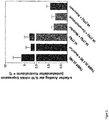
- the inflammation induced in the rat intestine is caused, among other things, by the mRNA expression of the interleukins IL-6 ( Figure 1 ) and IL-10 ( Figure 2 ) which increases sharply in the presence of inflammation.
- this increase in expression is significantly reduced by adding the therapeutic compositions.
- a comparable picture is the diagram of the Figure 2 which show the influence of the tested therapeutic agents on the IL 10 mRNA expression.
- an action of the present mineral compound resormin comparable to the known medication mutaflor and dexamethasone can be demonstrated.
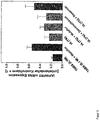
- the diagram of the Figure 3 again shows the influence of the investigated compositions on the mRNA expression of iAP (intestinal alkaline phosphatase) as an indicator of the intestinal regeneration.
- iAP intestinal alkaline phosphatase
- the simultaneous administration of IA and the therapeutically active compositions mutaflor and dexamethasone causes a slight increase in iAP mRNA expression
- the simultaneous administration of IA and the mineral compound resormin results in a 2-fold increase in iAP mRNA expression compared to the known medicaments causes.
- Resormin even shows a significantly improved effectiveness compared to the known agents.
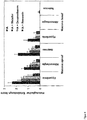
- the diagram of the Figure 4 shows the result of the evaluation of the individual histological parameters when determining a histo-score of sections of the stressed small intestine segment.
- the apical and basal mucosa was assessed with regard to hemorrhage (bleeding), hyperemia (filled blood vessels) and necrosis (dead tissue) on a scale from 0 to 3.
- Resormin performed significantly better than dexamethasone and mutaflor.
- the diagram of the Figure 5 shows the overall histo score for the evaluated parameters. This shows very clearly that Resormin performs much better than the comparison products. With a score of 1, one can already speak of a mucosal healing. As a result, the mineral compound resormin was able to completely restore the mocosa within 2 hours.
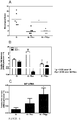
- the diagram of the Figure 6A shows the histological score in the presence of iodoacetamide (IA) as an agent damaging the intestinal wall alone and in combination with untreated resormin and thermally treated clay mineral FI5pp. Both Resormin and FI5pp show a significantly lower histological score compared to the model damaged with IA, but do not differ in their effectiveness with regard to the histological score ( Figure 6A ).
- IA iodoacetamide
Landscapes
- Health & Medical Sciences (AREA)
- Animal Behavior & Ethology (AREA)
- Chemical & Material Sciences (AREA)
- Veterinary Medicine (AREA)
- Medicinal Chemistry (AREA)
- Public Health (AREA)
- General Health & Medical Sciences (AREA)
- Pharmacology & Pharmacy (AREA)
- Life Sciences & Earth Sciences (AREA)
- Epidemiology (AREA)
- Inorganic Chemistry (AREA)
- Chemical Kinetics & Catalysis (AREA)
- Organic Chemistry (AREA)
- Nuclear Medicine, Radiotherapy & Molecular Imaging (AREA)
- General Chemical & Material Sciences (AREA)
- Engineering & Computer Science (AREA)
- Bioinformatics & Cheminformatics (AREA)
- Pharmaceuticals Containing Other Organic And Inorganic Compounds (AREA)
- Medicines Containing Material From Animals Or Micro-Organisms (AREA)
Description
- Die vorliegende Erfindung betrifft ein Wechsellagerungstonmineral zur Verwendung als Mittel zur Prävention und/ Behandlung bei chronisch-entzündlichen Darmerkrankungen (CED) gemäß Anspruch 1, sowie ein mit mindestens einer weiteren Substanz ausgewählt aus der Gruppe der Huminsäuren modifiziertes Wechsellagerungstonmineral gemäß Anspruch 14.
- Weltweit erkranken jährlich über 4 Milliarden Menschen an Durchfall, wobei über 8 Millionen Menschen an den Folgen des Durchfalls sterben. Die Ursachen für das Auftreten eines Durchfalls bestehen unter anderem in Erkrankungen des Verdauungssystems, Laktoseintoleranz, übermäßige Aufnahme von Koffein und Alkohol, Süßstoffe, Medikamente, Viren, Bakterien, Giftstoffe oder auch durch psychische Belastungen.
- Akute Durchfallerkrankungen, verursacht in der Regel durch Infektionen, Lebensmittelvergiftungen oder Medikamente, dauern in der Regel nur wenige Tage an. Dauert hingegen ein Durchfall länger als vier Wochen, so spricht man von chronischem Durchfall. Die häufigste Ursache für chronischen Durchfall ist das Reizdarmsyndrom, aber auch entzündliche Darmerkrankungen, wie Morbus Crohn und Colitis ulcerosa, Infektionen, Nahrungsmittelunverträglichkeiten, Pankreatitis und Zöliakie können zu chronischem Durchfall führen.
- Etwa 300.000 Patienten in Deutschland leiden an den CED Morbus Crohn und Colitis ulcerosa. Dabei kommt es zu schubweise verlaufenden Entzündungsreaktionen im Darm verbunden mit schweren Durchfällen, Blutverlust und Schmerzen. Die Patienten müssen dauerhaft medikamentös und/oder chirurgisch behandelt werden. Charakteristisch für Morbus Crohn ist ein diskontinuierlicher, segmentaler Befall der Darmschleimhaut. Dabei können gleichzeitig mehrere Darmabschnitte erkrankt sein, die durch gesunde Abschnitte voneinander getrennt sind. Colitis ulcerosa kennzeichnet sich durch einen entzündlichen Befall des Mastdarms und Dickdarms aus, wobei sich im Falle von Colitis ulcerosa die Entzündung kontinuierlich vom Mastdarm beginnend, also von anal nach oral, ausbreitet, und auf die Darmschleimhaut beschränkt ist.
- Der Pathogenesekomplex der CED besteht aus genetischen Faktoren, Umwelteinflüssen, der mikrobiellen Darmflora und der angeborenen Immunität. Es gibt derzeit 5 verschiedene ätiologische Theorien zu der Entstehung der CED: 1. Beanspruchung der Darmwand durch enteroadhärenten und invasiven Bakterienstämme, 2. eine anhaltende Darmdysbiose, 3. eine gestörte Barrierefunktion der Darmschleimhaut, 4. Defekte in der antimikrobiellen Darmbarriere und 5. eine abnormale Immunregulation.
- Diese Manifestationen werden ursächlich hervorgerufen durch von außen über den Verdauungstrakt eingetragenen chemischen und biologischen Toxinen, durch Medikamentenmissbrauch hervorgerufene Endotoxine, Infektionen durch das Mycobacterium avium subspecies paratuberculosis oder enteroadhärenten und invasiven E.coli-Stämme, falsche Ernährungsweisen und damit auch Unterversorgung der Darmschleimhaut mit essentiellen Nährstoffen, Dysstress und genetische Dispositionen. Diese Multikausalität der CED ist bei jedem Patienten unterschiedlich. Sie münden jedoch immer in einer überschießenden Immunreaktion des gastrointestinalen Immunsystems gegen luminale Antigene im Darm, die letztendlich zu entzündlichen Veränderungen des Darmepithels führen. Da es bisher nicht möglich war, die primären Ursachen der CED zumindest teilweise zu beseitigen, konzentrierte man sich auf die monokausale Behandlung der überschießenden Immunreaktion.
- Leitsymptome der CED sind Durchfälle, Blutungen und Bauchschmerzen, wobei es eine Vielzahl individueller Verläufe gibt. Eine sichere klinische Unterscheidung zwischen Morbus Crohn und Colitis ulcerosa ist nicht immer möglich.
- Der Krankheitsverlauf der CED kann neben der charakteristischen gastrointestinalen Symptomatik wesentlich durch das Auftreten von extraintestinalen Begleiterkrankungen bestimmt und kompliziert werden.
- Gegenwärtig erfolgt die Behandlung von Morbus Crohn und Colitis ulcerosa symptomatisch durch eine "Step-up"-Behandlungsstrategie mittels einer langsamen Eskalation der Medikation hin zu immer stärkerer immunsuppressiver Therapie. Dabei werden solche Medikamente wie Aminosalicylate, Steroide, Immunsuppressiva und Biologika eingesetzt.
- Neue therapeutische Ansätze beschäftigen sich mit einer "Top-down"-Therapie, wo mit der derzeit potentesten immunsuppressiven Therapie, den Biologika, begonnen, und bei klinischer Besserung langsam die Intensität der immunsuppressiven Therapie reduziert wird.
- Bei einer ausgeprägten Barrierestörung hält die Entzündungsreaktion allerdings an und es ist eine dauerhafte Verabreichung der Medikamente notwendig, die mit erheblichen Nebenwirkungen einhergeht. Ist eine Herabregulierung nicht möglich, bleibt nur noch die Operation mit gravierenden Folgen für die Lebensqualität der Patienten.
- Chronischer Durchfall und CED werden ursächlich durch biologische oder chemische Darmtoxine und/oder eine gestörte Darmbarrierefunktion hervorgerufen. Eine Bindung der biologischen und chemischen Toxine könnte zu einer gezielten Unterstützung der Darmflora vorteilhaft sein. Arzneiformen enthaltend Montmorillonit zur Behandlung verschiedener gastrointestinaler Beschwerden sind beispielsweise aus
WO2005112881 bekannt. - Die gegenwärtige Standardmedikation gegen die CED Morbus Crohn und Colitis ulcerosa weist eine Reihe von unerwünschten Nebenreaktionen bzw. Komplikationen auf. Zu den typischen Standardmedikamenten gehören beispielhaft Mesalazin, Dexamethason und Mutaflor.
- Mesalazin (5-Aminosalicylsäure) ist ein Aminderivat der Salicylsäure und wird als entzündungshemmender Arzneistoff bei der Behandlung von CED angewendet. Dexamethason (9-Fluor-16α-Methylprednisolon) ist ein künstliches Glukokortikoid, welches entzündungshemmend und dämpfend auf das Immunsystem wirkt. Es gehört zu den langwirkenden Glukokortikoiden und wirkt rund 30mal stärker als die körpereigenen Produkte.
- Mutaflor ist ein probiotisches Medikament und bisher der einzige natürliche Wirkstoff, der durch verschiedene Wirkmechanismen positiven Einfluss auf das Krankheitsgeschehen der CED durch Ursachenbekämpfung nimmt. Es wird in der Erhaltungstherapie der Colitis ulcerosa bei Unverträglichkeit von Aminosalicylaten eingesetzt. Mutaflor ist ein Konzentrat aus Bakterien von E. coli Nissle 1917. Es unterstützt dabei die physiologische Wirkung der Darmflora und die Energieversorgung der Schleimhautzellen im Dickdarm. Auch wird das Eindringen von Keimen in die Darmzellen durch Mutaflor gehemmt. Ist der Darm chronisch entzündet, wirkt Mutaflor entzündungshemmend. Nachteilig ist jedoch, dass das Mutaflor aufgrund seiner Zusammensetzung aus E.coli Bakterien gekühlt gelagert werden muss, wodurch deren Einsatzmöglichkeiten eingeschränkt sind.
- Insbesondere die Aminosalicylate wie z.B. Mesalazin, die Steroide wie z.B. Dexamethason sowie die anderen Immunsuppressiva und Biologika führen bei andauernder und lang anhaltender Einnahme in aufsteigender Reihenfolge zunehmend zu erheblichen Nebenwirkungen.
- Aufgabe der vorliegenden Erfindung ist daher die Bereitstellung eines Tonminerals und deren Modifikationen zur Anwendung in therapeutischen Verfahren, insbesondere zur Reduzierung von chronischen Entzündungen im Darmtrakt wie den CED und deren extraintestinalen Manifestationen, wobei auch bei lang anhaltender Einnahme dieser Verbindungen keine wesentlichen Nebenwirkungen auftreten dürfen.
- Diese Aufgabe wird durch ein Wechsellagerungstonmineral und deren Modifikationen zur Verwendung als Mittel zur Prävention und/oder Behandlung von chronisch-entzündlichen Darmerkrankungen (CED) gemäß den beigefügten Ansprüchen gelöst.
- Entsprechend wird ein Wechsellagerungstonmineral zur Prävention und / oder Behandlung von CED verwendet.
- Auch wird gemäß der vorliegenden Erfindung eine mineralische mit mindestens einer weiteren Substanz ausgewählt aus der Gruppe der Huminsäuren modifizierte Verbindung bzw. modifiziertes Wechsellagerungstonmineral Tonmineral zur Prävention und / oder Behandlung von CED verwendet.
- Erfindungsgemäß wird das zum Einsatz kommende Wechsellagerungstonmineral vor seiner Verwendung gemahlen wird und einer thermischen Behandlung unterzogen. Bevorzugterweise wird das Tonmineral auf eine Partikelgröße kleiner 5µm, z.B. auf eine Partikelgröße zwischen 1 und 5 µm, insbesondere 1 und 4 µm gemahlen und anschließend thermisch aktiviert. Die thermische Aktivierung (Kalzinierung), die z.B. bei Temperaturen zwischen 300°C und 500°C, bevorzugt 350°C und 450°C z.B. über mehrere Stunden von 1 bis 5 h, bevorzugt 1 bis 3h erfolgt, bewirkt die Bildung von reaktiven Bruchflächen der mineralischen Matrix mit einer erhöhten Bindungsaffinität.
- Durch die thermische Behandlung bzw. Kalzinierung wird das Zwischenschichtwasser verdampft und die Struktur wird durch den entweichenden Dampf aufgeweitet. Beide Effekte, die Bildung von Kanälen durch entweichendes Wasser und die Auflockerung der Struktur durch Bruchstücke, bewirken eine bessere Durchdringbarkeit für Adsorptive. Die abgebröckelten Schichten schaffen Eingänge zu den Zwischenschichtbereichen. Dadurch steigen die BET-Oberfläche und das Porenvolumen an. Des Weiteren beobachtet man eine Abnahme des Anteils an Kohlenstoff, der durch Huminstoffe hervorgerufen wird. Insgesamt wird durch die thermische Behandlung eine größere spezifische Oberfläche erzeugt.
- Die als Grundbaustein zum Einsatz kommende Wechsellagerungstonmineral verfügt über komplexe Eigenschaften und ermöglicht es, mindestens drei verschiedene Wirkeigenschaften bzw. Wirkrichtungen in einem Produkt zu vereinen und nutzbar zu machen. So ermöglicht die vorliegende mineralische Verbindung die Eliminierung von Toxinen. Dabei erfolgt eine Bindung von Toxinen, wie zum Beispiel Enterotoxinen an spezialisierte Teilchen der Verbindung und führt so zur Vermeidung bzw. Verminderung von Durchfall, hervorgerufen durch pathogene Keime. Darüber hinaus werden Endotoxine, die typischerweise durch Antibiotika vermittelte Reaktionen freigesetzt werden, auf gleiche Weise gebunden. Darüber hinaus erfolgt eine Bindung von sonstigen chemischen und biologischen Schadstoffen, die durch den Verdauungstrakt aufgenommen werden.
- Neben der Eliminierung von Toxinen ermöglicht die vorliegende mineralische Verbindung eine Unterstützung der Barrierefunktion des Darms. Bei Verabreichung der mineralischen Verbindung in Form einer kolloid dispersen und gelartigen Suspension kommt es zur Ausbildung einer Schutzschicht über der defekten Mukosabarriere, wodurch das Eindringen von Bakterien und anderen Schadstoffen verhindert wird und dadurch die Entzündungsreaktionen reduziert werden.
- Bei Einsatz eines mit einer weiteren Substanz modifizierten Wechsellagerungstonminerals kann ebenfalls die Anzahl pathogener Keime und freier Radikale verringert werden. So können die antimikrobiellen und antientzündlichen Eigenschaften der mineralischen Verbindung durch Einarbeitung ausgewählter Substanzen mit antientzündlichen und/oder antioxidativen Eigenschaften wie z.B. aus der Klasse der Phytochemcials erhöht und gegebenenfalls entstehende freie Radikale reduziert werden.
- Das vorliegende Wechsellagerungstonmineral ermöglicht somit eine Mehrfach-Wirkstrategie und weist gegenüber der aktuellen Medikation den Vorteil auf, dass potentielle Arzneimittelnebenwirkungen erheblich reduziert werden können.
- Das vorliegend verwendete Wechsellagerungstonmineral weist aufgrund ihrer einzigartigen mineralogischen Zusammensetzung besondere Eigenschaften auf, die für die Gesunderhaltung und Therapie von Mensch und Tier interessant sind. Zu den besonderen Eigenschaften gehören die physikalische Absorption von bioaktiven Stoffen, die chemische Absorption von Schadstoffen, die Bildung von Gelen aufgrund der Quellfähigkeit des enthaltenen Tonminerals, die Thixotropie und die Kationen- und Anionen-Austauschfähigkeit.
- Das bevorzugt verwendete Wechsellagerungstonmineral ist in der Lage, Durchfall bei Kälbern und anderen Tieren nach kurzer Zeit ohne jegliche Nebenwirkung zu stoppen. Die kanzerogen wirksamen Mykotoxine, wie Aflatoxin B1 und Okratoxin werden zu 99% bzw. 85% fest gebunden. Ebenso werden Stoffwechselgifte, wie Ammonium im Magen-DarmTrakt durch Kationenaustausch an der mineralischen Verbindung adsorbiert und mit dieser ausgeschieden. Mittels physikalischer Absorption ist es möglich, bioaktive Stoffe aus Pflanzen an die mineralische Verbindung zu binden, die anschließend im Darm unter den dort herrschenden Bedingungen freigesetzt werden können. In einem Rattenmodell mit einer künstlich erzeugten Entzündung konnten durch Zugabe einer Suspension aus der mineralischen Verbindung die Entzündungsparameter vergleichbar mit der aktuellen Medikation deutlich reduziert werden. So konnte in Versuchen mit einem Ratten-Kurzzeitschädigungsmodell überraschend festgestellt werden, dass die verwendete mineralische Verbindung entzündungshemmend wirkt und es gleichzeitig zu einer Mukosaheilung kommt, wie es eine histologische Begutachtung gezeigt hat.
- Mineralien kann man in 10 unterschiedliche Klassen einteilen, wobei jede Klasse für sich wieder in mehreren verschiedenen Unterklassen aufgeteilt werden kann. Viele Mineralien haben ihre bevorzugten Einsatzgebiete. Für adsorptive Prozesse kommen insbesondere aus der Silikatgruppe das Gerüstsilikat Zeolith und das Schichtsilikat Montmorillonit zum Einsatz. Zur besseren Vergleichbarkeit der verschiedenen Montmorillonitqualitäten wurde der Begriff Bentonit geprägt, dessen mineralogische Zusammensetzung mindestens 60 bis 70% Montmorillonit enthalten muss. Für viele technische Anwendungen ist diese Gruppenbildung sehr hilfreich. Die Wirkung von Mineralen in biologischen Systemen geht aber weit über Adsorptionsprozessen hinaus. Deshalb ist die alleinige Fixierung auf nur einen möglichst hohen Montmorillonitanteil in der mineralischen Verbindung nicht zielführend.
- Die häufig in der Natur vorkommenden mineralischen Verbindungen bzw. Matrizen, mit Wechsellagerungstonminerale (Mixedlayer) als Hauptbestandteil, werden auf Grund ihrer im Vergleich zu reinen Montmorillonitschichten geringeren messbaren spezifischen Oberflächen, Quellvermögen und Kationenaustauschkapazitäten seltener für adsorptive und katalytische Applikationen verwandt.
- Es hat sich nunmehr herausgestellt, dass natürlich vorkommende mineralische Verbindungen bzw. Matrizen mariner Genese aus Mixedlayer oder Wechsellagerungsmineralien bestehen, die sich aus quellfähigen und nichtquellfähigen Schichten in unregelmäßiger Folge zusammensetzen und die ggf. noch anderen Minerale wie Silikate, Oxide, Carbonate, Sulfide und Sulfate enthalten, nach einer entsprechenden Aufbereitung durchaus adsorptive und andere interessante Eigenschaften aufweisen.
- Mixedlayer können strukturell aus sehr unterschiedlichen Wechsellagerungsschichten bestehen z.B. Kaolinit/Smectit, Chlorit/Vermikulit, Glimmer/Vermikulit oder sehr häufig Wechsellagerung von Illit/Smectit oder Illit/Montmorillonit. Dadurch sind vielfältigere Austauschreaktionen von Kationen und Anionen möglich als bei reinen Montmorilloniten. Deshalb sind Mixedlayer in einer Kombination mit anderen reaktiven Mineralen besonders gut geeignet für die Bindung von in Lösung befindlichen Stoffen in biologischen Systemen.
- Erfindungsgemäß wird daher eine mineralische Verbindung bzw. ein Mineral verwendet, die bzw. das mindestens ein Wechsellagerungstonmineral umfasst.
- Besonders bevorzugt kommt dabei ein Wechsellagerungstonmineral aus Montmorillonit und Illit/Muskovit zum Einsatz, wobei in diesem Wechsellagerungsmineral Montmorillonit und Illit/Muskovit in einem Verhältnis von 60:40 bis 40:60 enthalten sein können, wobei ein Verhältnis von 50:50 bevorzugt ist. Dass heißt, das Montmorillonit und Illit/Muskovit zu jeweils 50 Gew% enthalten sein können.
- Zusätzlich zu den Mineralien Montmorillonit und Illit/Muskovit kann die bevorzugt verwendete mineralische Verbindung auch Anteile von anderen Tonmineralien, wie Kaolinite und Chlorite, Carbonate, Sulfide, Oxide und Sulfate aufweisen.
In einer besonders bevorzugten Ausführungsform umfasst das vorliegende Wechsellagerungstonmineral durchschnittlich 50-60 Gew%, bevorzugt 55 Gew% Montmorillonit-Muskovit-Wechsellagerung, 15-25 Gew%, bevorzugt 20 Gew % Illit, 5-9 Gew%, bevorzugt 5 Gew% Kaolinit/Chlorit, 10-20 Gew%, bevorzugt 15 Gew% Quarz, 1-2 Gew%, bevorzugt 1 Gew% Calcit, 0,9-1,5, bevorzugt 1 Gew% Dolomit, 0,9-1,9 Gew%, bevorzugt 1 Gew% Feldspat, 0,9 - 1,0 Gew%, bevorzugt 1 Gew% Pyrit und 0,6-1,0 Gew%, bevorzugt 1 Gew% Gips. - Die chemische Zusammensetzung der Hauptelemente kann in Gew% wie folgt angegeben werden: SiO2 58,9; TiO2 0,9; Al2O3 17,9; Fe2O3 6,3; MgO 2,0; CaO 0,3; Na2O 1,1; K2O 3,0; P2O5 0,1; Sonstige 9,5.
- Ein Teil der in der mineralischen Verbindung enthaltenen Minerale geht bei Vorhandensein eines Lösungsmittels in dieses über. So ergab ein Suspensionsversuch mit 2 Gew% mineralischer Verbindung in destilliertem Wasser folgende Ergebnisse: Leitfähigkeit 346 µS; pH-Wert 7,3; Kalium 5 mg/l; Natrium 73 mg/l; Chlor 20 mg/l; Magnesium 0 mg/l; Kalzium 1 mg/l; SO4 121 mg/l; Aluminium 0 mg/l; SiO2 8 mg/l; Eisen 0 mg/l.
- Besonders hervorzuheben ist der hohe Anteil an Sulfaten und die Tatsache, dass keine Aluminium-Ionen in Lösung gehen. Die wässrige Tonmineral-Suspension ist demnach frei von Aluminium-Ionen. Dies ist besonders für die humane Anwendung von besonderer Bedeutung.
- Eine weitere Besonderheit der bevorzugten Ausführungsform ist der hohe Anteil an organischem Kohlenstoff von 0,4 Gew%. Zusammen mit den vorhandenen Sulfaten und Pyriten ist dies ein wichtiger Beweis für die marine Genese der mineralischen Verbindung und gleichzeitig ein wesentlicher Beitrag zur Wirksamkeit derselben.
- Die bevorzugt verwendete mineralische Verbindung weist eine innere (BET)-Oberfläche von 50 -100 m2/g, bevorzugt 55 - 65 m2/g, insbesondere bevorzugt von 60 m2/g auf. Die innere Oberfläche der bevorzugt verwendeten mineralischen Verbindung ist somit z.B. im Vergleich zu den hochquellfähigen Montmorilloniten relativ gering. Die mittlere Teilchengröße der bevorzugt verwendeten mineralischen Verbindung kann in einem Bereich von 1 bis 10 µm, insbesondere bei 2 µm liegen. Nach thermischer Behandlung des Tonminerals kann die innere BET-Oberfläche auf 100 bis 200 m2/g ansteigen.
- Das bevorzugt verwendete Wechsellagerungstonmineral wird aus den in Deutschland in Mecklenburg-Vorpommern, genauer in der Nähe von Friedland im östlichen Teil der Mecklenburgischen Seenplatte, vorhandenen Tonvorkommen isoliert und aufbereitet.
- Das bevorzugt verwendete Wechsellagerungstonmineral weist, wie bereits oben erwähnt, einzigartige Eigenschaften auf, in denen es sich von anderen mineralischen Matrizen wie Bentonit oder Montmorillonit wesentlich unterscheidet.
- So ist das vorliegend verwendete Wechsellagerungstonmineral nicht nur in der Lage, Kationen in den vorhandenen Montmorillonitschichten auszutauschen, sondern auch Anionen zu binden. Der Wirkmechanismus der vorliegend zum Einsatz kommenden mineralischen Verbindung ist daher ein anderer als bei Bentoniten. So werden z.B. anionische Stoffe besonders gut an den Bruchkanten der in der verwendeten mineralischen Verbindung enthaltenen Illite/Muskovite locker gebunden. Ursache dafür sind fehlende bzw. herausgeschlagene Kaliumionen, die im Mineralverbund für einen Ladungsausgleich sorgen. So entstehen positive Ladungen, an denen Anionen locker gebunden werden können. Da bioaktive Anionen eine relativ hohe Molekularmasse und damit Durchmesser aufweisen, sind die an den Bruchkanten entstandenen Vertiefungen nicht groß genug, um eine feste Bindung zu realisieren. Dies gelingt nur mit kleineren Molekülen, wie die sehr hohe Adsorptionskraft für spezielle Anionen beweist.
- Um eine möglichst hohe Bindungskapazität des vorliegenden Wechsellagerungstonmineral zu erreichen, ist eine Feinstzerkleinerung zur Schaffung einer möglichst hohen Anzahl von Bruchkanten vorteilhaft. Die bevorzugte Teilchengröße liegt dabei bei ca. 2 µm. Zudem hat sich im Rahmen von Zetapotentialuntersuchungen herausgestellt, dass durch die Feinstzerkleinerung z.B. mittels einer Gegenstrahlmühle sich die Summenladung bei pH 7 von -140 auf -20mV verändert, was auf eine starke Zunahme der positiven Andockstellen für Anionen hindeutet.
- Bevorzugterweise wird dem mindestens einem Wechsellagerungstonmineral mindestens ein mehrwertiges Kation, insbesondere einen zwei- oder dreiwertigem Kation, zugegeben bzw. wird eine Mischung aus Tonmineral und Kation hergestellt. Das mehrwertige Kation ist dabei bevorzugterweise ausgewählt aus einer Gruppe enthaltend Fe2+, Ca2+, Mg2+, Fe3+ und Al3+. Durch Zugabe der mehrwertigen Kationen wird insbesondere die Bindungsaffinität des Tonminerals gegenüber den biologischen oder chemischen Darmtoxinen erhöht.
- Das mehrwertige Kation kann in Form eines Chlorid-Salzes und/oder Sulfat-Salzes zugegeben, wobei besonders die Zugabe von M9Cl2 und MgSO4 bevorzugt ist.
- Von Bedeutung für die Anwendbarkeit des vorliegenden Wechsellagerungstonminerals bei der Behandlung von CED sind deren spezifischen Quelleigenschaften. So weist die vorliegende mineralische Verbindung bis zu einem pH-Wert von 5 schlechte und erst ab einem pH-Wert über 6,5 gute Quelleigenschaften aufweist. Dies bedeutet, dass die an der mineralischen Verbindung ggf. gebundenen weiteren Substanzen wie z.B. Phytopharmaka und/oder Antioxidantien im Magen in der mineralischen Verbindung geschützt bleiben und erst im Darm bei höherem pH-Wert wieder freigesetzt werden. Die vorliegende mineralische Verbindung kann daher auch als ein natürliches Drug Delivery System beschrieben werden.
- Auch wird das Wechsellagerungstonmineral in bevorzugter Weise in Form einer sterilisierten Mineralsuspension verwendet, die z.B. mittels Autoklavierung sterilisierbar ist. Das Wechsellagerungstonmineral kann auch in einer kolloid dispersen und/oder gelartigen Form verwendet werden.
- In einer Ausführungsformist die mindestens eine weitere Substanz, mit der die mineralische Verbindung modifiziert bzw. versehen ist, eine organische oder anorganische Substanz, wobei die mindestens eine weitere Substanz auch eine entzündungshemmende Substanz sein kann.
- Bevorzugterweise ist die mindestens eine weitere Substanz ausgewählt aus einer Gruppe enthaltend Pflanzenextrakte, Fermente, Harze, Antioxidantien, Aktivkohle, Huminsäuren und deren Salze.
- Das mindestens eine Pflanzenextrakt, bevorzugt ein Pflanzenextrakt aus der Gruppe der Phytopharmaka kann ausgewählt sein aus einer Gruppe enthaltend Grünalgen, Obst, Gemüse, Kräuter, Heilkräuter, Gewürze und Pilze.
- In einer weiteren Ausführungsform ist das mindestens eine Pflanzenextrakt ein polyphenolreiches Pflanzenextrakt. Insbesondere polyphenolreiche Pflanzenextrakte sind sowohl für ihre antibakterielle als auch antivirale Wirksamkeit bekannt und können somit bakterielle und virale Infektionserreger, die bevorzugt durch die Mundhöhle und damit auch in den Verdauungstrakt eines menschlichen Körper gelangen, bekämpfen und Erkrankungen vorbeugen.
- Als geeignete Pflanzenextrakte können Extrakte aus der Pflanze der Gattung der Zistrosen wie z.B Cistus incanus (Cistus creticus), Cistus landanifer L., Cistus monospeliensis L., Cistus laurifolius L., Cistus parviflorus L., Cistus salviifolius L. oder aus der Gattung der Geranien (Storchschnäbel) wie z.B. Geranium sanguineum L., Geranium canariense, Geranium columbinum L, Geranium endressii, Geranium himalayense, Geranium sibiricum, Geranium pyrenaicum Burm., Geranium thunbergii verwendet werden.
- Besonders bevorzugt sind auch Extrakte aus Pflanzen der Gattung der Echinacea (Sonnenhüte), insbesondere Echinacea angustifolia, Echinacea atrorubens, Echinacea laevigata, Echinacea pallida, Echinacea paradoxa, Echinacea purpurea, Echinacea sanguinea, Echinacea simulata und/oder Echinacea tennesseensis.
- Weitere geeignete Pflanzen sind Salbei (Salvia) wie z.B. Salvia aegyptiaca L., Salvia africana L., Salvia algeriensis, Salvia apian Jeps., Salvia aurea L., Salvia buchananii, Salvia cacaliaefolia, Salvia canariensis L., Salvia chiapensis, Salvia discolor, Salvia lanceolata, Salvia officinalis, Salvia sinaloensis oder Salvia splendens.
- Es ist ebenfalls möglich Eucalyptus, insbesondere Eucalyptus globulus, Eucalyptus citriodora, Eucalyptus radiata, bevorzugt in Form eines Öls zu verwenden.
- Weitere geeignete Pflanzenextrakte können Granatäpfel z.B. Punica granatum, Punica protopunica; Hamamelis, z.B. Hamamelis virginiana, Hamamelis vernalis, Hamamelis ovalis, Hamamelis japonica, Hamamelis mollis; Zitronenmelisse z.B. Melissa officinalis; Kamille, z.B. Matricaria chamomilla L.; Ginseng, z.B. Panax ginseng; Minze z.B. Mentha aquatica L., Mentha austriaca, Mentha australis, Mentha japonica, Mentha longifolia L., Mentha requienii, Mentha cordifolia, Mentha suaveolens; Rosmarin z.B. Rosmarinus officinalis L.; Rhababerwurzel wie Rhabarberwurzelextrakt; Gelbwurzel (Curcumo longa), und/ oder Tee z.B. Grüner Tee sein.
- In einer weiteren Ausführungsform des Wechsellagerungstonminerals können Antioxidantien zugesetzt werden, die die Fähigkeit besitzen, die sich in lebenden Organismus aufgrund von oxidativen Prozessen bildenden hochreaktive freie Radikale zu deaktivieren. Diese Radikale beeinflussen und beschleunigen den Alterungsprozess von Organismen und beeinträchtigen die Gesundheit. So sind vermutlich Radikale die Ursache für Arteriosklerose und Krebs.
- In der biologischen Forschung, Medizin, Pharmazie und Lebensmitteltechnologie wird dabei zunehmend das antioxidative Potential von natürlich vorkommenden Antioxidantien untersucht. Eine reichhaltige Quelle an antioxidativ wirksamen Substanzen stellen dabei Pflanzen dar, insbesondere Gemüsepflanzen und medizinische Kräuter.
- Typische in Pflanzenextrakten vorkommene Verbindungen mit hohem antioxidativen Potential sind Polyphenole und deren Derivate, insbesondere Flavonoide z.B. Dimethoxyflavone, Naphthoflavone, Quercetin, 3-O-Methylquercetin, Myricetin, Catechine, Oligomere der Catechine; Cumarine z.B. Umbelliferon, Herniarin, Aesculetin, Cumarin, Scopoletin, Isoscopoletin; Terpene z.B. dicyclische Terpene wie Carnosol, Carnosolsäure; Labdanolsäure, Labdandiol, Ribenol, Laurifolinsäure; Sesquiterpene, Sesquiterpenlactone, Seqsquiterpenalkohole z.B. Germacren, Copaen, Bisabolol, Farnesen, Matricarin, Matricin Tetraterpene wie z.B. Carotonoide wie Lycopin, Betacarotin, Lutein oder einfache Terpene wie z.B. Cineol, Geranial, Citronellal, Nerol, Linalool.
- Auch weisen verschiedene Vitamine ein hohes antioxidatives Potential auf. Hervorzuheben sind hierbei insbesondere Vitamin C und Vitamin E.
- Die Pflanzenextrakte und/ oder Antioxidantien werden bevorzugt in einer Menge zwischen 20 und 50 Gew% bezogen auf das Gesamtgewicht der mineralischen Verbindung verwendet.
- Wie oben erwähnt kann die mindestens eine weitere Substanz zur Modifizierung der mineralischen Verbindung aus der Gruppe der Huminsäuren ausgewählt sein. In einer Ausführungsform umfassen die vorliegend zum Einsatz kommenden Huminsäuren wasserlösliche Fulvosäuren z.B. mit einer Molmasse kleiner 3000 Da, wasserunlösliche, aber alkalilösliche Huminsäuren und wasser- und alkaliunlösliche Huminstoffe. Generell können die verwendeten Huminsäuren Molmassen zwischen 1000 und 200.000 Da aufweisen.
- Huminsäuren sind dreidimensionale Makromoleküle mit heterogen verknüpften Bausteinen. Huminsäuren weisen im Allgemeinen zwei charakteristische Bereiche oder Abschnitte auf: ein zentraler Kern mit hohem Aromatizitätsgrad sowie starken Vernetzungen und periphere, durch Brückenbindungen verknüpfte funktionelle Gruppen. So liegen polyionische Strukturen mit z. B. Carbonsäureester-, phenolischen Hydroxyl-, Carbonyl- und Carboxyl-Gruppen vor. Auch Amino- und Sulfhydrylreste sowie chinoide und flavonoide Strukturen sind vorhanden. Besonders die aus pflanzlichen Produkten entstandenen Huminsäuren, so auch BraunkohleHuminsäuren, weisen zusätzlich Flavonstrukturen auf.
- Dies begründet bestimmte pharmakologische Wirkungen (antiphlogistisch, zellabdichtend, viruzid, fungizid). Je nach physikalischer Beschaffenheit der verschiedenen Huminsäureprodukte variieren ihre Adsorptionseigenschaften und lonenaustauscheffekte gegenüber physiologisch aktiven Substanzen.
- Huminsäuren bilden den Hauptanteil der Huminstoffe, denen wir überall in der Natur begegnen: in Böden, im Torf, in der Braunkohle und in den Pflanzen selbst. Sie sind auch in vielen Lebensmitteln enthalten. Der Ton-Humus-Komplex im Boden ist eine wichtige Voraussetzung für ein gesundes Pflanzenwachstum. Huminsäuren sind der natürliche Synergiepartner für die mineralische Verbindung, da sie durch zusätzliche Wirkmechanismen Einfluss auf die Therapie von Erkrankungen der Verdauungsorgane und von Störungen des Verdauungsstoffwechsels nehmen. Durch ihre adstringierende, antiphlogistische, antiresorptiven, antibakteriellen und viruziden Wirkungen ergänzen die Huminsäuren das Wirkungsspektrum der mineralischen Matrix in optimaler Weise.
- Die erfindungsgemäß verwendeten Huminsäuren können z.B. aus einer Braunkohlelagerstätte gewonnen werden. Beispielhaft sei hier auf den Typ Weinböhler Huminsäure 67 (WH67) hingewiesen, der aus spezifischen Braunkohlelagerstätten gewonnen wird. Diese Braunkohlehuminsäuren weisen wie alle aus pflanzlichen Produkten entstandenen Huminsäuren besondere Flavonstrukturen, u.a. Fisetin, Quercetin, Flavone und Xanthine, auf. Sie sind in verschiedenen Ausführungsformen verfügbar. So kann die Verteilung der Molmassen der Huminsäuren zu 27% zwischen 10 und 50kD, zu 32% zwischen 50 und 100kD und zu 36% bei bis 150kD. Der Rest von 5% reicht bis zu 200kD. Niedermolekulare Verbindungen sind bevorzugterweise nicht enthalten.
- Wie auch oben erwähnt kann die mindestens eine weitere Substanz zur Modifizierung der mineralischen Verbindung eine anorganische Substanz sein, die bevorzugterweise ausgewählt ist aus der Gruppe der Zeolithe, der hochquellfähigen Tonminerale und der Metallsalze, insbesondere der Calcium-, Natrium- und Magnesiumsalze.
- Als Metallsalzkomplexbildner kommen insbesondere solche Stoffe zum Einsatz, die den Elektrolythaushalt des Menschen sinnvoll ergänzen. So konnte bei Untersuchungen festgestellt werden, dass sich die Permeabilität der Darmschleimhaut bei Magnesiummangel stark erhöht. Deshalb wird im Rahmen der CED bevorzugt Magnesiumchlorid verwendet.
- In einer weiteren bevorzugten Ausführungsform wird die mineralische Verbindung unter Verwendung der Metallsalze bzw. Metallsalzkomplexbildnern und den Huminsäuren zu einem Bio-Mineralischen Wirkkomplex verbunden.
- Diese Bio-Mineralischen Wirkkomplexe können je nach vorgesehener Anwendung eine mineralische Verbindung von 20 bis 40 Ma%, Huminsäure von 25 bis 40 Ma% und Metallsalz 20 bis 30 Ma% enthalten.
- Auch wird die vorliegende mineralische Verbindung bei Verwendung in einem therapeutischen Verfahren, insbesondere bei Verwendung zur Vorbeugung und Behandlung von CED mindestens in einer Einmaldosis mit einer Menge zwischen 1 bis 10 g, bevorzugt 2 bis 8 g, insbesondere bevorzugt 3 bis 5 g bis zu 3x täglich verabreicht.
- Die vorliegende Erfindung wird anhand der folgenden Ausführungsbeispiele unter Bezugnahme auf die Figuren näher erläutert. Es zeigen:
- Fig. 1
- ein erstes Diagramm zum Nachweis der Wirkung des vorliegend verwendeten Tonminerals in einem Ratten-Kurzeitschädigungsmodell;
- Fig. 2
- ein zweites Diagramm zum Nachweis der Wirkung des vorliegend verwendeten Tonminerals in einem Ratten-Kurzeitschädigungsmodell; und
- Fig. 3
- ein drittes Diagramm zum Nachweis der Wirkung des vorliegend verwendeten Tonminerals in einem Ratten-Kurzeitschädigungsmodell; und
- Fig. 4
- ein viertes Diagramm zum Nachweis der Wirkung des vorliegend verwendeten Tonminerals in einem Ratten-Kurzeitschädigungsmodell;
- Fig. 5
- ein fünftes Diagramm zum Nachweis der Wirkung des vorliegend verwendeten Tonminerals in einem Ratten-Kurzeitschädigungsmodell, und
- Fig. 6A-C
- weitere Diagramme zum Nachweis der Wirkung des vorliegend verwendeten unbehandelten Tonminerals und einer thermisch behandelten Variante des Tonminerals.
- Korngrößenmessung mit CILAS 1064 nass, Messbereich: 0,04 µm - 500,00 µm / 100 Klassen, Flüssigkeit: Wasser + Na-Pyrophosphat, Messmethode: Laserbeugung
- Die Korngrößenverteilung beträgt < 0,50 µm 2,4 Masse%, < 1 µm 18 Masse%, < 2 µm 67 Masse%, < 3 µm 91 Masse%, < 4 µm 99 Masse%, < 6 µm 100 Masse%.
- Die verwendete mineralische Verbindung hat ein Gesamtanteil an Tonmineralien von 80% und enthält durchschnittlich 55 Gew% Montmorillonit-Muskovit-Wechsellagerung im Verhältnis 60:40, 20 Gew % Illit, 5 Gew% Kaolinit/Chlorit, 15 Gew% Quarz, 1 Gew% Calcit, 1 Gew% Dolomit, 1 Gew% Feldspat, 1 Gew% Pyrit und 1 Gew% Gips.
- Die chemische Zusammensetzung der Hauptelemente kann in Gew% wie folgt angegeben werden: SiO2 58,9%; TiO2 0,9%; Al2O3 17,9%; Fe2O3 6,3%; MgO 2,0%; CaO 0,3%; Na2O 1,1%; K2O 3,0%; P2O5 0,1%; Sonstige 9,5%.
- Die Schüttdichte beträgt 200 g/l, die spezifische Oberfläche 65 m2/g, der pH-Wert 8,3, die Feuchtigkeit 5%, die H2O-Absorption 150% Enslin nach 60 min, Zetapotential mittels DT-300-Messung bei pH 7 -20mV, der Gehalt an Dioxine bei 0,2 ng/kg, und KationenAustauschkapazität 85 mval/100g.
- Das im Ausführungsbeispiel 1a beschriebene Wechsellagerungstonmineral wurde für 1 h bei 350°C thermisch behandelt (calciniert). Das so modifizierte Tonmineral wird im Folgenden als Fl5pp bezeichnet.
- Zum Nachweis der Wirksamkeit der mineralischen Verbindung wurde das therapeutische und prophylaktische Potential in einem in vivo Ratten-Kurzzeitschädigungs-Modell untersucht. Dazu wurde in einem definierten Dünndarmsegment mit intaktem vaskulärem System durch Verabreichung von lodoacetamid (1%,15 min) eine Entzündung induziert. Anschließend erfolgt die Perfusion des geschädigten Darmsegments mit einem Kontrollmedium (z.B. Dulbeccos Modified Eagle Medium, DMEM) oder einer therapeutischen Zusammensetzung wie Mutaflor, Dexamethason und der vorliegenden mineralischen Verbindung für zwei Stunden.
- Die im Darm der Ratte induzierte Entzündung wird u.a. durch die mRNA Expression der Interleukine IL-6 (
Figur 1 ) und IL-10 (Figur 2 ) nachgewiesen, die bei Vorliegen einer Entzündung stark ansteigt. Dieser Anstieg der Expression wird jedoch durch Zugabe der therapeutischen Zusammensetzungen deutlich reduziert. - Aus dem Diagramm der
Figur 1 ist entnehmbar, dass die bei Verabreichung von lodoacetamid (IA) die IL6 mRNA Expression ansteigt, jedoch bei gleichzeitiger Gabe der bekannten Medikamente Mutaflor und Dexamethason der Anstieg der IL6 mRNA Expression stark reduziert ist. Auch bei gleichzeitiger Verabreichung von IA und der vorliegenden mineralischen Verbindung Resormin wird die IL6 mRNA Expression auf ca. 20% des Expressionswertes reduziert. Die Wirksamkeit der vorliegenden mineralischen Verbindung Resormin bei der Reduktion der IL6 mRNA Expression übersteigt zudem die Wirksamkeit von Dexamethason und Mutaflor. - Ein vergleichbares Bild ist dem Diagramm der
Figur 2 zu entnehmen, die den Einfluss der getesteten Therapeutika auf die IL 10 mRNA Expression zeigen. Auch hier ist eine mit dem bekannten Medikamentes Mutaflor und Dexamethason vergleichbare Wirkung der vorliegenden mineralischen Verbindung Resormin nachweisbar. - Das Diagramm der
Figur 3 wiederum zeigt den Einfluss der untersuchten Zusammensetzungen auf die mRNA Expression von iAP (intestinale Alkaline Phosphatase) als Indikator für die Darmregeneration. Hier bewirkt die gleichzeitige Verabreichung von IA und den therapeutisch wirksamen Zusammensetzungen Mutaflor und Dexamethason einen leichten Anstieg des iAP mRNA Expression während die gleichzeitige Verabreichung von IA und der mineralischen Verbindung Resormin eine im Vergleich zu den bekannten Medikamenten eine um das ca. 2fach erhöhte iAP mRNA Expression bewirkt. Somit zeigt Resormin hier sogar eine gegenüber den bekannten Mitteln wesentlich verbesserte Wirksamkeit. - Das Diagramm der
Figur 4 zeigt das Ergebnis der Bewertung der einzelnen histologischen Parameter bei der Ermittlung eines Histo-Scores von Schnitten des beanspruchten Dünndarmsegmentes. Dazu wurde die Mucosa apical und basal hinsichtlich der Hemorrhage (Einblutungen), der Hyperemia (gefüllte Blutgefäße) und der Necrosis (totes Gewebe) auf einer Punktescala von 0 bis 3 bewertet. In fast allen bewerteten Punkten konnte Resormin im Vergleich zu Dexamethason und Mutaflor wesentlich besser abschneiden. - Das Diagramm der
Figur 5 zeigt den Gesamt-Histo-Score für die bewerteten Parameter. Hier zeigt sich sehr deutlich, dass Resormin gegenüber den Vergleichsprodukten wesentlich besser abschneidet. Bei einem Score von 1 kann man schon von einer Mucosaheilung sprechen. Demzufolge war die mineralische Verbindung Resormin in der Lage, innerhalb von 2 Stunden die Mocosa wieder vollständig herzustellen. - Die in den
Figuren 6A bis 6C gezeigten Diagramme belegen die Wirksamkeit des unbehandelten Tonminerals Resormin (Res) als auch die Wirksamkeit des thermisch behandelten Tonminerals Fl5pp, das wie in Ausführungsbeispiel 1b beschrieben gewonnen wurde. - Das Diagramm der
Figur 6A zeigt den histologischen Score in Gegenwart von lodoacetamid (IA) als die Darmwand schädigendes Agens allein und in Kombination mit unbehandelten Resormin und thermisch behandelten Tonmineral FI5pp. Sowohl Resormin als auch FI5pp zeigen einen deutlich erniedrigten histologischen Score gegenüber dem mit IA geschädigten Modell, unterscheiden sich in ihrer Wirksamkeit bezüglich des histologischen Scores jedoch nicht voneinander (Fig. 6A ). - Hinsichtlich der Wirkung von Resormin und Fl5pp auf die IL6 mRNA Expression ist eine deutliche Reduzierung der IL6 mRNA Expression durch beide Tonmineralien nachweisbar, wobei Resormin eine stärkere Wirkung aufweist als Fl5pp (
Fig. 6B ). - Aus
Fig. 6C ist wiederum die Wirkung von Resormin und Fl5pp auf die mRNA Expression der intestinalen alkalischen Phosphatase (iAP) gezeigt. Die mRNA Expression von iAP gilt als ein Indikator für die Darmregeneration und die Genesung der Darmwand. Die gleichzeitige Verabreichung von IA+ Resormin und IA+FI5pp führt zu einem deutlichen Anstieg der iAP- mRNA Expression. Das thermisch behandelte Fl5pp zeigt hier im Vergleich zu dem thermisch unbehandelten Resormin einen deutlichen Anstieg der iAP-mRNA Expression, was auf eine verbesserte Wirkung des thermisch behandelten Tonminerals bei der Darmgeneration hinweist.
Claims (14)
- Wechsellagerungstonmineral zur Verwendung als Mittel zur Prävention und l oder Behandlung von chronisch-entzündlichen Darmerkrankungen (CEO), dadurch gekennzeichnet, dass das Tonmineral vor der Verwendung auf eine Partikelgröße kleiner 5 µm gemahlen wird und anschließend thermisch bei einer Temperatur zwischen 300°C und 500°C, bevorzugt zwischen 350°C und 450°C, über einen Zeitraum von 1h bis 5h, bevorzugt 1 h bis 3h behandelt wird.
- Wechsellagerungstonmineral zur Verwendung nach Anspruch 1, dadurch gekennzeichnet, dass das Wechsellagerungstonmineral, ein Wechsellagerungstonmineral aus Montmorillonit und Illit/Muskovit umfasst.
- Wechsellagerungstonmineral zur Verwendung nach Anspruch 1 oder 2, dadurch gekennzeichnet, dass das Wechsellagerungstonmineral die Tonminerale Montmorillonit und Illit/Muskovit zu jeweils mindestens 50 Gew% umfasst.
- Wechsellagerungstonmineral zur Verwendung nach einem der vorhergehenden Ansprüche, dadurch gekennzeichnet, dass weitere Tonminerale wie Kaolinite und Chlorite enthalten sind.
- Wechsellagerungstonmineral zur Verwendung nach einem der vorhergehenden Ansprüche, dadurch gekennzeichnet, dass die mineralische Verbindung 50-60 Gew% Montmorillonit-Muskovit-WL, 15-25 Gew% Illit/Muskovit, 5-9 Gew% Kaolinit/Chlorit, 10-20 Gew% Quarz, 1-2 Gew% Calcit, 0,9-1,5 Gew% Dolomit, 0,9-1,9 Gew% Feldspat, 0,9-2,0 Gew% Pyrit und 0,6-1,0 Gew% Gips umfasst.
- Wechsellagerungstonmineral zur Verwendung nach einem der vorhergehenden Ansprüche, dadurch gekennzeichnet, dass die Matrix eine BET-Oberfläche von 50-100 m2/g, bevorzugt 55-65 m2/g, insbesondere bevorzugt von 60 m2/g aufweist.
- Wechsellagerungstonmineral zur Verwendung nach einem der vorhergehenden Ansprüche, dadurch gekennzeichnet, dass die mineralische Verbindung in einer kolloid dispersen und/oder gelartigen Form verwendet wird.
- Wechsellagerungstonmineral zur Verwendung nach einem der vorhergehenden Ansprüche, dadurch gekennzeichnet, dass es mit mindestens einer entzündungshemmenden Substanz modifiziert ist.
- Wechsellagerungstonmineral zur Verwendung nach einem der Ansprüche 1 bis 7, dadurch gekennzeichnet, dass es mit mindestens einer weiteren Substanz ausgewählt ist aus einer Gruppe enthaltend Pflanzenextrakte, Fermente, Harze, Antioxidantien, Huminsäuren und deren Salze modifiziert ist.
- Wechsellagerungstonmineral zur Verwendung nach Anspruch 9, dadurch gekennzeichnet, dass das Pflanzenextrakt ausgewählt ist aus einer Gruppe von Extrakten erhältlich aus Grünalgen, Gemüse, Kräutern, Gewürzen und Obst und das Antioxidant ausgewählt ist aus einer Gruppe enthaltend Vitamin C, Vitamin E, Polyphenole und/oder Terpene.
- Wechsellagerungstonmineral zur Verwendung nach Anspruch 9, dadurch gekennzeichnet, dass die Huminsäuren wasserlösliche Fulvosäuren, wasserunlösliche, aber alkalilösliche Huminsäuren und wasser- und alkaliunlösliche Huminstoffe umfassen.
- Wechsellagerungstonmineral zur Verwendung nach einem der vorhergehenden Ansprüche, dadurch gekennzeichnet, dass es mit einer anorganischer Substanz ausgewählt aus der Gruppe der Metallsalze, insbesondere der Calcium-, Natrium- und Magnesiumsalze modifiziert ist.
- Wechsellagerungstonmineral zur Verwendung nach einem der vorhergehenden Ansprüche, dadurch gekennzeichnet, dass die mineralische Verbindung mindestens in einer Einmaldosis mit einer Menge zwischen 1 bis 10 g, bevorzugt 2 bis 8 g, insbesondere bevorzugt 3 bis 5 g bevorzugt bis zu 3 x täglich verabreicht wird.
- Mit mindestens einer weiteren Substanz ausgewählt aus der Gruppe der Huminsäuren modifiziertes Wechsellagerungstonmineral zur Verwendung nach einem der Ansprüche 1 -7 und 11-13.
Applications Claiming Priority (2)
| Application Number | Priority Date | Filing Date | Title |
|---|---|---|---|
| DE102012207471A DE102012207471A1 (de) | 2012-05-04 | 2012-05-04 | Mineralische Verbindung und deren Modifikationen zur Anwendung bei chronisch-entzündlichen Darmerkrankungen |
| PCT/EP2013/059407 WO2013164491A1 (de) | 2012-05-04 | 2013-05-06 | Tonmineral und deren modifikationen zur anwendung in der behandlung von chronisch - entzündlichen darmerkrankungen |
Publications (2)
| Publication Number | Publication Date |
|---|---|
| EP2844293A1 EP2844293A1 (de) | 2015-03-11 |
| EP2844293B1 true EP2844293B1 (de) | 2020-04-22 |
Family
ID=48579010
Family Applications (1)
| Application Number | Title | Priority Date | Filing Date |
|---|---|---|---|
| EP13727810.7A Active EP2844293B1 (de) | 2012-05-04 | 2013-05-06 | Tonmineral zur anwendung in der behandlung von chronisch-entzündlichen darmerkrankungen |
Country Status (3)
| Country | Link |
|---|---|
| EP (1) | EP2844293B1 (de) |
| DE (1) | DE102012207471A1 (de) |
| WO (1) | WO2013164491A1 (de) |
Family Cites Families (11)
| Publication number | Priority date | Publication date | Assignee | Title |
|---|---|---|---|---|
| RO59608A3 (de) * | 1972-12-11 | 1976-03-15 | ||
| AUPO758297A0 (en) * | 1997-06-27 | 1997-07-24 | Rowe, James Baber | Control of acidic gut syndrome |
| CN1326746A (zh) * | 2000-06-01 | 2001-12-19 | 翟永功 | 蒙脱石做为兽药和饲料添加剂成分 |
| CN100340235C (zh) * | 2004-05-21 | 2007-10-03 | 山东绿叶制药有限公司 | 蒙脱石分散片及其制备工艺 |
| US20070031512A1 (en) * | 2005-08-03 | 2007-02-08 | Amcol International Corporation | Virus-interacting layered phyllosilicates and methods of inactivating viruses |
| US20070298013A1 (en) * | 2006-06-23 | 2007-12-27 | Altman Jay A | Animal Nutritional Supplement and Method |
| ES2732280T3 (es) * | 2006-06-27 | 2019-11-21 | Texas Enterosorbents Inc | Producto farmacéutico de aluminosilicato de calcio |
| FR2912059B1 (fr) * | 2007-02-06 | 2013-04-05 | Scras | Utilisation d'argiles pour le traitement de la maladie coeliaque |
| DE102007020242A1 (de) * | 2007-04-24 | 2008-10-30 | Ernst-Moritz-Arndt-Universität Greifswald | Biokatalysatoren, Verfahren zu ihrer Herstellung und ihre Verwendung |
| DE102008056094A1 (de) * | 2008-11-04 | 2010-05-06 | Fim Biotech Gmbh | Verfahren zur Konzentrierung von bioaktiven Stoffen aus Pflanzen unter Verwendung von Mineralien und Bildung von reversiblen biomineralischen Verbundsystemen |
| CN101837018A (zh) * | 2010-05-25 | 2010-09-22 | 耿福能 | 一种治疗溃疡或溃疡性炎症的美洲大蠊药物组合物及其制备方法 |
-
2012
- 2012-05-04 DE DE102012207471A patent/DE102012207471A1/de not_active Withdrawn
-
2013
- 2013-05-06 WO PCT/EP2013/059407 patent/WO2013164491A1/de not_active Ceased
- 2013-05-06 EP EP13727810.7A patent/EP2844293B1/de active Active
Non-Patent Citations (1)
| Title |
|---|
| None * |
Also Published As
| Publication number | Publication date |
|---|---|
| WO2013164491A1 (de) | 2013-11-07 |
| DE102012207471A1 (de) | 2013-11-07 |
| EP2844293A1 (de) | 2015-03-11 |
Similar Documents
| Publication | Publication Date | Title |
|---|---|---|
| DE2332484C2 (de) | Arzneimittel mit verzögerter Wirkstoffabgabe | |
| EP0037488B1 (de) | Pharmazeutisches Mittel zur Heilung von entzündlichen und/oder degenerativen und/oder atrophischen Schleimhauterkrankungen | |
| DE2113215A1 (de) | Therapeutisches Kompositum | |
| EP2854823B1 (de) | Tonmineral zur reduzierung von anorganischen phosphaten, insbesondere im rahmen einer nierenersatztherapie | |
| DE102014200922A1 (de) | Verwendung von Tonmineral als Futterzusatzstoff und/oder als Ergänzungsfutter für aquatische Organismen | |
| WO2013164491A1 (de) | Tonmineral und deren modifikationen zur anwendung in der behandlung von chronisch - entzündlichen darmerkrankungen | |
| DE2715384C3 (de) | Arzneimittel gegen Diarrhöen | |
| DE202007008818U1 (de) | Zusammensetzung zur Behandlung von Infekten | |
| KR102313548B1 (ko) | 아토피 피부 개선 및 피부 보습용 화장료 조성물, 및 그 제조방법 | |
| DE102008056094A1 (de) | Verfahren zur Konzentrierung von bioaktiven Stoffen aus Pflanzen unter Verwendung von Mineralien und Bildung von reversiblen biomineralischen Verbundsystemen | |
| EP0256353A2 (de) | Pharmazeutikum zur Therapie einer schlechten Absorption von Nahrungsmitteln und von Oral einzunehmenden Medikamenten | |
| EP3352763A1 (de) | Substanz zur prophylaxe und behandlung von infektionen durch influenzaviren | |
| DE202008005052U1 (de) | Pflege und Heilöl zur Behandlung trockener, wunder, stark beanspruchter und strahlengeschädigter Haut | |
| EP1295601A1 (de) | Arzneiform auf der basis einer nichtsteroidalen anti-inflammatorischen substanz | |
| DE10143146B4 (de) | Antiarthrotische Zubereitung und deren Verwendung | |
| EP4011385B1 (de) | Wirkstoff zur behandlung der mastitis | |
| WO2014086893A1 (de) | Geopolymer-hydrogele oder suspensionen sowie lagestabile granulare mineralkomposite mit kolloidalem anteil, verfahren zu ihrer herstellung und ihre verwendung | |
| DE102004008375B4 (de) | Verwendung von physiologisch verträglichen Ascorbatverbindungen in Kombination mit einem Sympathomimetikum als lokales Therapeutikum für Schleimhäute der Atemwege | |
| WO2011070096A1 (de) | Zusammensetzung zur behandlung von magen- und darmbeschwerden | |
| DE102024133012A1 (de) | Verfahren zur Herstellung einer Pflanzenextrakt-Dispersion, Pflanzenextrakt-Dispersion sowie Verwendung der Pflanzenextrakt-Dispersion | |
| Amin et al. | Halimeda opuntia Green Seaweed Possesses Anti-Inflammatory and Analgesic Activities | |
| Bafghi et al. | Antileishmanial Activity of Carum Copticum Essential Oil Against Leishmania Major [MRHO/IR/75/ER]: An In Vitro Study | |
| DE202004015311U1 (de) | Pflege- und Heilöl zur Behandlung trockener, wunder, stark beanspruchter und strahlengeschädigter Haut | |
| WO2026104398A1 (de) | Verfahren zur herstellung einer pflanzenextrakt-dispersion, pflanzenextrakt-dispersion sowie verwendung der pflanzenextrakt-dispersion | |
| DE202020004830U1 (de) | Pharmazeutisch antimikrobielles Kombinationspräparat auf Zink - Nystatin - Wirkstoffbasis als immunologisch-hybridwirkendes therapeutisch präventives Arzneimittel zur oralen Einnahme |
Legal Events
| Date | Code | Title | Description |
|---|---|---|---|
| PUAI | Public reference made under article 153(3) epc to a published international application that has entered the european phase |
Free format text: ORIGINAL CODE: 0009012 |
|
| 17P | Request for examination filed |
Effective date: 20141103 |
|
| AK | Designated contracting states |
Kind code of ref document: A1 Designated state(s): AL AT BE BG CH CY CZ DE DK EE ES FI FR GB GR HR HU IE IS IT LI LT LU LV MC MK MT NL NO PL PT RO RS SE SI SK SM TR |
|
| AX | Request for extension of the european patent |
Extension state: BA ME |
|
| RIN1 | Information on inventor provided before grant (corrected) |
Inventor name: BREITRUECK, ANNE Inventor name: KRUEGER, GERD Inventor name: EMMRICH, FRANK Inventor name: KERKHOFF, CLAUS Inventor name: MITZNER, STEFFEN Inventor name: BODAMMER, PEGGY Inventor name: DALLWIG, RAINER |
|
| DAX | Request for extension of the european patent (deleted) | ||
| STAA | Information on the status of an ep patent application or granted ep patent |
Free format text: STATUS: EXAMINATION IS IN PROGRESS |
|
| 17Q | First examination report despatched |
Effective date: 20171106 |
|
| REG | Reference to a national code |
Ref country code: DE Ref legal event code: R079 Ref document number: 502013014622 Country of ref document: DE Free format text: PREVIOUS MAIN CLASS: A61K0045060000 Ipc: A61K0035020000 |
|
| GRAP | Despatch of communication of intention to grant a patent |
Free format text: ORIGINAL CODE: EPIDOSNIGR1 |
|
| STAA | Information on the status of an ep patent application or granted ep patent |
Free format text: STATUS: GRANT OF PATENT IS INTENDED |
|
| RIC1 | Information provided on ipc code assigned before grant |
Ipc: A61K 33/00 20060101ALI20191007BHEP Ipc: A61K 45/06 20060101ALI20191007BHEP Ipc: A61K 33/26 20060101ALI20191007BHEP Ipc: A61K 31/02 20060101ALI20191007BHEP Ipc: A61K 33/08 20060101ALI20191007BHEP Ipc: A61K 35/02 20150101AFI20191007BHEP Ipc: A61K 33/42 20060101ALI20191007BHEP Ipc: A61P 1/00 20060101ALI20191007BHEP |
|
| INTG | Intention to grant announced |
Effective date: 20191023 |
|
| RAP1 | Party data changed (applicant data changed or rights of an application transferred) |
Owner name: FIM BIOTECH GMBH Owner name: FRAUNHOFER-GESELLSCHAFT ZUR FOERDERUNG DER ANGEWAN |
|
| GRAS | Grant fee paid |
Free format text: ORIGINAL CODE: EPIDOSNIGR3 |
|
| GRAJ | Information related to disapproval of communication of intention to grant by the applicant or resumption of examination proceedings by the epo deleted |
Free format text: ORIGINAL CODE: EPIDOSDIGR1 |
|
| GRAL | Information related to payment of fee for publishing/printing deleted |
Free format text: ORIGINAL CODE: EPIDOSDIGR3 |
|
| STAA | Information on the status of an ep patent application or granted ep patent |
Free format text: STATUS: EXAMINATION IS IN PROGRESS |
|
| GRAR | Information related to intention to grant a patent recorded |
Free format text: ORIGINAL CODE: EPIDOSNIGR71 |
|
| STAA | Information on the status of an ep patent application or granted ep patent |
Free format text: STATUS: GRANT OF PATENT IS INTENDED |
|
| GRAA | (expected) grant |
Free format text: ORIGINAL CODE: 0009210 |
|
| STAA | Information on the status of an ep patent application or granted ep patent |
Free format text: STATUS: THE PATENT HAS BEEN GRANTED |
|
| INTC | Intention to grant announced (deleted) | ||
| INTG | Intention to grant announced |
Effective date: 20200312 |
|
| AK | Designated contracting states |
Kind code of ref document: B1 Designated state(s): AL AT BE BG CH CY CZ DE DK EE ES FI FR GB GR HR HU IE IS IT LI LT LU LV MC MK MT NL NO PL PT RO RS SE SI SK SM TR |
|
| REG | Reference to a national code |
Ref country code: GB Ref legal event code: FG4D Free format text: NOT ENGLISH |
|
| REG | Reference to a national code |
Ref country code: CH Ref legal event code: EP |
|
| REG | Reference to a national code |
Ref country code: DE Ref legal event code: R096 Ref document number: 502013014622 Country of ref document: DE |
|
| REG | Reference to a national code |
Ref country code: IE Ref legal event code: FG4D Free format text: LANGUAGE OF EP DOCUMENT: GERMAN |
|
| REG | Reference to a national code |
Ref country code: AT Ref legal event code: REF Ref document number: 1259183 Country of ref document: AT Kind code of ref document: T Effective date: 20200515 |
|
| REG | Reference to a national code |
Ref country code: CH Ref legal event code: NV Representative=s name: SCHMAUDER AND PARTNER AG PATENT- UND MARKENANW, CH |
|
| REG | Reference to a national code |
Ref country code: LT Ref legal event code: MG4D |
|
| REG | Reference to a national code |
Ref country code: NL Ref legal event code: MP Effective date: 20200422 |
|
| PG25 | Lapsed in a contracting state [announced via postgrant information from national office to epo] |
Ref country code: PT Free format text: LAPSE BECAUSE OF FAILURE TO SUBMIT A TRANSLATION OF THE DESCRIPTION OR TO PAY THE FEE WITHIN THE PRESCRIBED TIME-LIMIT Effective date: 20200824 Ref country code: NL Free format text: LAPSE BECAUSE OF FAILURE TO SUBMIT A TRANSLATION OF THE DESCRIPTION OR TO PAY THE FEE WITHIN THE PRESCRIBED TIME-LIMIT Effective date: 20200422 Ref country code: LT Free format text: LAPSE BECAUSE OF FAILURE TO SUBMIT A TRANSLATION OF THE DESCRIPTION OR TO PAY THE FEE WITHIN THE PRESCRIBED TIME-LIMIT Effective date: 20200422 Ref country code: FI Free format text: LAPSE BECAUSE OF FAILURE TO SUBMIT A TRANSLATION OF THE DESCRIPTION OR TO PAY THE FEE WITHIN THE PRESCRIBED TIME-LIMIT Effective date: 20200422 Ref country code: SE Free format text: LAPSE BECAUSE OF FAILURE TO SUBMIT A TRANSLATION OF THE DESCRIPTION OR TO PAY THE FEE WITHIN THE PRESCRIBED TIME-LIMIT Effective date: 20200422 Ref country code: IS Free format text: LAPSE BECAUSE OF FAILURE TO SUBMIT A TRANSLATION OF THE DESCRIPTION OR TO PAY THE FEE WITHIN THE PRESCRIBED TIME-LIMIT Effective date: 20200822 Ref country code: NO Free format text: LAPSE BECAUSE OF FAILURE TO SUBMIT A TRANSLATION OF THE DESCRIPTION OR TO PAY THE FEE WITHIN THE PRESCRIBED TIME-LIMIT Effective date: 20200722 Ref country code: GR Free format text: LAPSE BECAUSE OF FAILURE TO SUBMIT A TRANSLATION OF THE DESCRIPTION OR TO PAY THE FEE WITHIN THE PRESCRIBED TIME-LIMIT Effective date: 20200723 |
|
| PG25 | Lapsed in a contracting state [announced via postgrant information from national office to epo] |
Ref country code: RS Free format text: LAPSE BECAUSE OF FAILURE TO SUBMIT A TRANSLATION OF THE DESCRIPTION OR TO PAY THE FEE WITHIN THE PRESCRIBED TIME-LIMIT Effective date: 20200422 Ref country code: HR Free format text: LAPSE BECAUSE OF FAILURE TO SUBMIT A TRANSLATION OF THE DESCRIPTION OR TO PAY THE FEE WITHIN THE PRESCRIBED TIME-LIMIT Effective date: 20200422 Ref country code: BG Free format text: LAPSE BECAUSE OF FAILURE TO SUBMIT A TRANSLATION OF THE DESCRIPTION OR TO PAY THE FEE WITHIN THE PRESCRIBED TIME-LIMIT Effective date: 20200722 Ref country code: LV Free format text: LAPSE BECAUSE OF FAILURE TO SUBMIT A TRANSLATION OF THE DESCRIPTION OR TO PAY THE FEE WITHIN THE PRESCRIBED TIME-LIMIT Effective date: 20200422 |
|
| PG25 | Lapsed in a contracting state [announced via postgrant information from national office to epo] |
Ref country code: AL Free format text: LAPSE BECAUSE OF FAILURE TO SUBMIT A TRANSLATION OF THE DESCRIPTION OR TO PAY THE FEE WITHIN THE PRESCRIBED TIME-LIMIT Effective date: 20200422 |
|
| REG | Reference to a national code |
Ref country code: DE Ref legal event code: R097 Ref document number: 502013014622 Country of ref document: DE |
|
| PG25 | Lapsed in a contracting state [announced via postgrant information from national office to epo] |
Ref country code: ES Free format text: LAPSE BECAUSE OF FAILURE TO SUBMIT A TRANSLATION OF THE DESCRIPTION OR TO PAY THE FEE WITHIN THE PRESCRIBED TIME-LIMIT Effective date: 20200422 Ref country code: RO Free format text: LAPSE BECAUSE OF FAILURE TO SUBMIT A TRANSLATION OF THE DESCRIPTION OR TO PAY THE FEE WITHIN THE PRESCRIBED TIME-LIMIT Effective date: 20200422 Ref country code: IT Free format text: LAPSE BECAUSE OF FAILURE TO SUBMIT A TRANSLATION OF THE DESCRIPTION OR TO PAY THE FEE WITHIN THE PRESCRIBED TIME-LIMIT Effective date: 20200422 Ref country code: CZ Free format text: LAPSE BECAUSE OF FAILURE TO SUBMIT A TRANSLATION OF THE DESCRIPTION OR TO PAY THE FEE WITHIN THE PRESCRIBED TIME-LIMIT Effective date: 20200422 Ref country code: SM Free format text: LAPSE BECAUSE OF FAILURE TO SUBMIT A TRANSLATION OF THE DESCRIPTION OR TO PAY THE FEE WITHIN THE PRESCRIBED TIME-LIMIT Effective date: 20200422 Ref country code: EE Free format text: LAPSE BECAUSE OF FAILURE TO SUBMIT A TRANSLATION OF THE DESCRIPTION OR TO PAY THE FEE WITHIN THE PRESCRIBED TIME-LIMIT Effective date: 20200422 Ref country code: DK Free format text: LAPSE BECAUSE OF FAILURE TO SUBMIT A TRANSLATION OF THE DESCRIPTION OR TO PAY THE FEE WITHIN THE PRESCRIBED TIME-LIMIT Effective date: 20200422 Ref country code: MC Free format text: LAPSE BECAUSE OF FAILURE TO SUBMIT A TRANSLATION OF THE DESCRIPTION OR TO PAY THE FEE WITHIN THE PRESCRIBED TIME-LIMIT Effective date: 20200422 |
|
| PG25 | Lapsed in a contracting state [announced via postgrant information from national office to epo] |
Ref country code: SK Free format text: LAPSE BECAUSE OF FAILURE TO SUBMIT A TRANSLATION OF THE DESCRIPTION OR TO PAY THE FEE WITHIN THE PRESCRIBED TIME-LIMIT Effective date: 20200422 Ref country code: PL Free format text: LAPSE BECAUSE OF FAILURE TO SUBMIT A TRANSLATION OF THE DESCRIPTION OR TO PAY THE FEE WITHIN THE PRESCRIBED TIME-LIMIT Effective date: 20200422 |
|
| PLBE | No opposition filed within time limit |
Free format text: ORIGINAL CODE: 0009261 |
|
| STAA | Information on the status of an ep patent application or granted ep patent |
Free format text: STATUS: NO OPPOSITION FILED WITHIN TIME LIMIT |
|
| REG | Reference to a national code |
Ref country code: BE Ref legal event code: MM Effective date: 20200531 |
|
| 26N | No opposition filed |
Effective date: 20210125 |
|
| PG25 | Lapsed in a contracting state [announced via postgrant information from national office to epo] |
Ref country code: LU Free format text: LAPSE BECAUSE OF NON-PAYMENT OF DUE FEES Effective date: 20200506 |
|
| PG25 | Lapsed in a contracting state [announced via postgrant information from national office to epo] |
Ref country code: IE Free format text: LAPSE BECAUSE OF NON-PAYMENT OF DUE FEES Effective date: 20200506 |
|
| PG25 | Lapsed in a contracting state [announced via postgrant information from national office to epo] |
Ref country code: BE Free format text: LAPSE BECAUSE OF NON-PAYMENT OF DUE FEES Effective date: 20200531 Ref country code: SI Free format text: LAPSE BECAUSE OF FAILURE TO SUBMIT A TRANSLATION OF THE DESCRIPTION OR TO PAY THE FEE WITHIN THE PRESCRIBED TIME-LIMIT Effective date: 20200422 |
|
| PG25 | Lapsed in a contracting state [announced via postgrant information from national office to epo] |
Ref country code: TR Free format text: LAPSE BECAUSE OF FAILURE TO SUBMIT A TRANSLATION OF THE DESCRIPTION OR TO PAY THE FEE WITHIN THE PRESCRIBED TIME-LIMIT Effective date: 20200422 Ref country code: MT Free format text: LAPSE BECAUSE OF FAILURE TO SUBMIT A TRANSLATION OF THE DESCRIPTION OR TO PAY THE FEE WITHIN THE PRESCRIBED TIME-LIMIT Effective date: 20200422 Ref country code: CY Free format text: LAPSE BECAUSE OF FAILURE TO SUBMIT A TRANSLATION OF THE DESCRIPTION OR TO PAY THE FEE WITHIN THE PRESCRIBED TIME-LIMIT Effective date: 20200422 |
|
| PG25 | Lapsed in a contracting state [announced via postgrant information from national office to epo] |
Ref country code: MK Free format text: LAPSE BECAUSE OF FAILURE TO SUBMIT A TRANSLATION OF THE DESCRIPTION OR TO PAY THE FEE WITHIN THE PRESCRIBED TIME-LIMIT Effective date: 20200422 |
|
| P01 | Opt-out of the competence of the unified patent court (upc) registered |
Effective date: 20231009 |
|
| PGFP | Annual fee paid to national office [announced via postgrant information from national office to epo] |
Ref country code: DE Payment date: 20250520 Year of fee payment: 13 |
|
| PGFP | Annual fee paid to national office [announced via postgrant information from national office to epo] |
Ref country code: GB Payment date: 20250522 Year of fee payment: 13 |
|
| PGFP | Annual fee paid to national office [announced via postgrant information from national office to epo] |
Ref country code: FR Payment date: 20250521 Year of fee payment: 13 |
|
| PGFP | Annual fee paid to national office [announced via postgrant information from national office to epo] |
Ref country code: CH Payment date: 20250601 Year of fee payment: 13 |
|
| PGFP | Annual fee paid to national office [announced via postgrant information from national office to epo] |
Ref country code: AT Payment date: 20250519 Year of fee payment: 13 |