EP2831096B1 - Affinity chromatography matrix - Google Patents
Affinity chromatography matrix Download PDFInfo
- Publication number
- EP2831096B1 EP2831096B1 EP13767846.2A EP13767846A EP2831096B1 EP 2831096 B1 EP2831096 B1 EP 2831096B1 EP 13767846 A EP13767846 A EP 13767846A EP 2831096 B1 EP2831096 B1 EP 2831096B1
- Authority
- EP
- European Patent Office
- Prior art keywords
- protein
- elution buffer
- elution
- separation matrix
- solution
- Prior art date
- Legal status (The legal status is an assumption and is not a legal conclusion. Google has not performed a legal analysis and makes no representation as to the accuracy of the status listed.)
- Active
Links
Images
Classifications
-
- C—CHEMISTRY; METALLURGY
- C07—ORGANIC CHEMISTRY
- C07K—PEPTIDES
- C07K16/00—Immunoglobulins [IG], e.g. monoclonal or polyclonal antibodies
-
- B—PERFORMING OPERATIONS; TRANSPORTING
- B01—PHYSICAL OR CHEMICAL PROCESSES OR APPARATUS IN GENERAL
- B01D—SEPARATION
- B01D15/00—Separating processes involving the treatment of liquids with solid sorbents; Apparatus therefor
- B01D15/08—Selective adsorption, e.g. chromatography
- B01D15/26—Selective adsorption, e.g. chromatography characterised by the separation mechanism
- B01D15/38—Selective adsorption, e.g. chromatography characterised by the separation mechanism involving specific interaction not covered by one or more of groups B01D15/265 and B01D15/30 - B01D15/36, e.g. affinity, ligand exchange or chiral chromatography
- B01D15/3804—Affinity chromatography
- B01D15/3809—Affinity chromatography of the antigen-antibody type, e.g. protein A, G or L chromatography
-
- B—PERFORMING OPERATIONS; TRANSPORTING
- B01—PHYSICAL OR CHEMICAL PROCESSES OR APPARATUS IN GENERAL
- B01J—CHEMICAL OR PHYSICAL PROCESSES, e.g. CATALYSIS OR COLLOID CHEMISTRY; THEIR RELEVANT APPARATUS
- B01J20/00—Solid sorbent compositions or filter aid compositions; Sorbents for chromatography; Processes for preparing, regenerating or reactivating thereof
- B01J20/281—Sorbents specially adapted for preparative, analytical or investigative chromatography
- B01J20/286—Phases chemically bonded to a substrate, e.g. to silica or to polymers
-
- B—PERFORMING OPERATIONS; TRANSPORTING
- B01—PHYSICAL OR CHEMICAL PROCESSES OR APPARATUS IN GENERAL
- B01J—CHEMICAL OR PHYSICAL PROCESSES, e.g. CATALYSIS OR COLLOID CHEMISTRY; THEIR RELEVANT APPARATUS
- B01J20/00—Solid sorbent compositions or filter aid compositions; Sorbents for chromatography; Processes for preparing, regenerating or reactivating thereof
- B01J20/281—Sorbents specially adapted for preparative, analytical or investigative chromatography
- B01J20/291—Gel sorbents
-
- B—PERFORMING OPERATIONS; TRANSPORTING
- B01—PHYSICAL OR CHEMICAL PROCESSES OR APPARATUS IN GENERAL
- B01J—CHEMICAL OR PHYSICAL PROCESSES, e.g. CATALYSIS OR COLLOID CHEMISTRY; THEIR RELEVANT APPARATUS
- B01J20/00—Solid sorbent compositions or filter aid compositions; Sorbents for chromatography; Processes for preparing, regenerating or reactivating thereof
- B01J20/30—Processes for preparing, regenerating, or reactivating
- B01J20/32—Impregnating or coating ; Solid sorbent compositions obtained from processes involving impregnating or coating
- B01J20/3202—Impregnating or coating ; Solid sorbent compositions obtained from processes involving impregnating or coating characterised by the carrier, support or substrate used for impregnation or coating
- B01J20/3206—Organic carriers, supports or substrates
- B01J20/3208—Polymeric carriers, supports or substrates
- B01J20/3212—Polymeric carriers, supports or substrates consisting of a polymer obtained by reactions otherwise than involving only carbon to carbon unsaturated bonds
-
- B—PERFORMING OPERATIONS; TRANSPORTING
- B01—PHYSICAL OR CHEMICAL PROCESSES OR APPARATUS IN GENERAL
- B01J—CHEMICAL OR PHYSICAL PROCESSES, e.g. CATALYSIS OR COLLOID CHEMISTRY; THEIR RELEVANT APPARATUS
- B01J20/00—Solid sorbent compositions or filter aid compositions; Sorbents for chromatography; Processes for preparing, regenerating or reactivating thereof
- B01J20/30—Processes for preparing, regenerating, or reactivating
- B01J20/32—Impregnating or coating ; Solid sorbent compositions obtained from processes involving impregnating or coating
- B01J20/3214—Impregnating or coating ; Solid sorbent compositions obtained from processes involving impregnating or coating characterised by the method for obtaining this coating or impregnating
- B01J20/3217—Resulting in a chemical bond between the coating or impregnating layer and the carrier, support or substrate, e.g. a covalent bond
- B01J20/3219—Resulting in a chemical bond between the coating or impregnating layer and the carrier, support or substrate, e.g. a covalent bond involving a particular spacer or linking group, e.g. for attaching an active group
-
- B—PERFORMING OPERATIONS; TRANSPORTING
- B01—PHYSICAL OR CHEMICAL PROCESSES OR APPARATUS IN GENERAL
- B01J—CHEMICAL OR PHYSICAL PROCESSES, e.g. CATALYSIS OR COLLOID CHEMISTRY; THEIR RELEVANT APPARATUS
- B01J20/00—Solid sorbent compositions or filter aid compositions; Sorbents for chromatography; Processes for preparing, regenerating or reactivating thereof
- B01J20/30—Processes for preparing, regenerating, or reactivating
- B01J20/32—Impregnating or coating ; Solid sorbent compositions obtained from processes involving impregnating or coating
- B01J20/3231—Impregnating or coating ; Solid sorbent compositions obtained from processes involving impregnating or coating characterised by the coating or impregnating layer
- B01J20/3242—Layers with a functional group, e.g. an affinity material, a ligand, a reactant or a complexing group
- B01J20/3268—Macromolecular compounds
- B01J20/3272—Polymers obtained by reactions otherwise than involving only carbon to carbon unsaturated bonds
- B01J20/3274—Proteins, nucleic acids, polysaccharides, antibodies or antigens
-
- C—CHEMISTRY; METALLURGY
- C07—ORGANIC CHEMISTRY
- C07K—PEPTIDES
- C07K1/00—General methods for the preparation of peptides, i.e. processes for the organic chemical preparation of peptides or proteins of any length
- C07K1/14—Extraction; Separation; Purification
- C07K1/16—Extraction; Separation; Purification by chromatography
- C07K1/22—Affinity chromatography or related techniques based upon selective absorption processes
-
- C—CHEMISTRY; METALLURGY
- C07—ORGANIC CHEMISTRY
- C07K—PEPTIDES
- C07K14/00—Peptides having more than 20 amino acids; Gastrins; Somatostatins; Melanotropins; Derivatives thereof
- C07K14/195—Peptides having more than 20 amino acids; Gastrins; Somatostatins; Melanotropins; Derivatives thereof from bacteria
- C07K14/305—Peptides having more than 20 amino acids; Gastrins; Somatostatins; Melanotropins; Derivatives thereof from bacteria from Micrococcaceae (F)
- C07K14/31—Peptides having more than 20 amino acids; Gastrins; Somatostatins; Melanotropins; Derivatives thereof from bacteria from Micrococcaceae (F) from Staphylococcus (G)
-
- G—PHYSICS
- G01—MEASURING; TESTING
- G01N—INVESTIGATING OR ANALYSING MATERIALS BY DETERMINING THEIR CHEMICAL OR PHYSICAL PROPERTIES
- G01N33/00—Investigating or analysing materials by specific methods not covered by groups G01N1/00 - G01N31/00
- G01N33/48—Biological material, e.g. blood, urine; Haemocytometers
- G01N33/50—Chemical analysis of biological material, e.g. blood, urine; Testing involving biospecific ligand binding methods; Immunological testing
- G01N33/68—Chemical analysis of biological material, e.g. blood, urine; Testing involving biospecific ligand binding methods; Immunological testing involving proteins, peptides or amino acids
- G01N33/6854—Immunoglobulins
-
- B—PERFORMING OPERATIONS; TRANSPORTING
- B01—PHYSICAL OR CHEMICAL PROCESSES OR APPARATUS IN GENERAL
- B01J—CHEMICAL OR PHYSICAL PROCESSES, e.g. CATALYSIS OR COLLOID CHEMISTRY; THEIR RELEVANT APPARATUS
- B01J2220/00—Aspects relating to sorbent materials
- B01J2220/80—Aspects related to sorbents specially adapted for preparative, analytical or investigative chromatography
Definitions
- the present invention relates to the field of affinity chromatography, and more specifically to separation matrices containing ligands with one or more of a protein A domain (E, D, A, B, C), or protein Z, which have been mutated.
- the invention also relates to methods for the separation of proteins of interest on such separation matrices.
- Immunoglobulins in particular monoclonal antibodies (mAbs) represent the most prevalent biopharmaceutical products in either manufacture or development worldwide.
- mAbs monoclonal antibodies
- Affinity chromatography is used in most cases, as one of the key steps in the purification of these immunoglobulin molecules, such as monoclonal or polyclonal antibodies.
- a particularly interesting class of affinity reagents is proteins capable of specific binding to invariable parts of an immunoglobulin molecule, such interaction being independent on the antigen-binding specificity of the antibody. Such reagents can be widely used for affinity chromatography recovery of immunoglobulins from different samples such as but not limited to serum or plasma preparations or cell culture derived feed stocks.
- An example of such a protein is staphylococcal protein A, containing domains capable of binding to the Fc and Fab portions of IgG immunoglobulins from different species.
- Staphylococcal protein A (SpA) based reagents have due to their high affinity and selectivity found a widespread use in the field of biotechnology, e.g. in affinity chromatography for capture and purification of antibodies as well as for detection.
- SpA-based affinity medium probably is the most widely used affinity medium for isolation of monoclonal antibodies and their fragments from different samples including industrial feed stocks from cell cultures.
- various matrices comprising protein A ligands are commercially available, for example, in the form of native protein A (e.g. Protein A SEPHAROSETM, GE Healthcare, Uppsala, Sweden) and also comprised of recombinant protein A (e.g. rProtein A SEPHAROSETM, GE Healthcare). More specifically, the genetic manipulation performed in the commercial recombinant protein A product is aimed at facilitating the attachment thereof to a support.
- Such contaminants can for example be non-eluted molecules adsorbed to the stationary phase or matrix in a chromatographic procedure, such as non-desired biomolecules or microorganisms, including for example proteins, carbohydrates, lipids, bacteria and viruses.
- the removal of such contaminants from the matrix is usually performed after a first elution of the desired product in order to regenerate the matrix before subsequent use.
- Such removal usually involves a procedure known as cleaning-in-place (CIP), wherein agents capable of eluting contaminants from the stationary phase are used.
- CIP cleaning-in-place
- agents capable of eluting contaminants from the stationary phase are used.
- alkaline solutions that are passed over said stationary phase.
- the most extensively used cleaning and sanitising agent is NaOH, and the concentration thereof can range from 0.1 up to e.g. 1 M, depending on the degree and nature of contamination.
- This strategy is associated with exposing the matrix for pH-values above 13.
- affinity chromatography matrices containing proteinaceous affinity ligands such alkaline environment is a very harsh condition and consequently results in decreased capacities owing to instability of the ligand to the high pH involved.
- Gülich et al report that their mutant exhibits a target protein binding behaviour similar to that of the native protein, and that affinity columns containing the engineered ligand show higher binding capacities after repeated exposure to alkaline conditions than columns prepared using the parental non-engineered ligand. Thus, it is concluded therein that all four asparagine residues can be replaced without any significant effect on structure and function.
- US patent application 2006/0194955 shows that the mutated ligands can better withstand proteases thus reducing ligand leakage in the separation process.
- Another US patent application 2006/0194950 shows that the alkali stable SpA domains can be further modified such that the ligands lacks affinity for Fab but retains Fc affinity, for example by a G29A mutation.
- WO2012/087231A1 discloses a separation matrix containing a ligand which provides an increase in elution pH compared to non-substituted ligand, wherein the ligand comprises one or more of a protein A domain or protein Z, wherein in at least one of the domains, the Asparagine or Histidine at the position corresponding to H18 of B domain of Protein A or Protein Z has been substituted with another amino acid.
- WO2005/075507A1 discloses a polypeptide for affinity separation or detection which binds to an amyloid beta peptide and is related to a domain of staphylococcal protein A (SPA), in that the sequence of the polypeptide corresponds to the sequence of the SPA domain having 1 to about 20 substitution mutations.
- SPA staphylococcal protein A
- a first aspect of the invention is to provide a mutated immunoglobulin- or Fc-binding protein with improved dissociation properties, including release of bound immunoglobulins or Fc-containing proteins at an increased pH and selective release of monomeric immunoglobulins or Fc-containing proteins at pH values higher than for bound host cell proteins and/or aggregates of immunoglobulins or Fc-containing proteins. This is achieved with a mutated immunoglobulin- or Fc-binding protein as defined in Claim 1.
- a second aspect of the present invention is to provide an affinity separation matrix with improved elution properties, including elution of bound immunoglobulins or Fc-containing proteins at an increased pH and selective elution of monomeric immunoglobulins or Fc-containing proteins at pH values higher than for bound host cell proteins and/or aggregates of immunoglobulins or Fc-containing proteins. This is achieved with an affinity separation matrix as defined in Claim 5.
- a third aspect of the invention is to provide a method for separating one or more Fc-containing proteins, which method allows elution of bound Fc-containing proteins at an increased pH and selective elution of monomeric Fc-containing proteins at pH values higher than for bound host cell proteins and/or aggregates of Fc-containing proteins. This is achieved with a method according to Claim 6.
- a fourth aspect of the invention is to provide a method of selecting an elution buffer for matrices with adsorbed Fc-containing proteins, which method allows for selection of buffers allowing selective elution of monomeric Fc-containing proteins at pH values higher than for bound host cell proteins and/or aggregates of Fc-containing proteins. This is achieved with a method according to Claim 12.
- protein is used herein to describe proteins as well as fragments thereof. Thus, any chain of amino acids that exhibits a three dimensional structure is included in the term “protein”, and protein fragments are accordingly embraced.
- the term "functional variant" of a protein means herein a variant protein, wherein the function, in relation to the invention defined as affinity and stability, are essentially retained. Thus, one or more amino acids that are not relevant for said function may have been exchanged.
- parental molecule is used herein for the corresponding protein in the form before a mutation according to the invention has been introduced.
- structural stability refers to the integrity of three-dimensional form of a molecule, while “chemical stability” refers to the ability to withstand chemical degradation.
- Fc -binding protein means that the protein is capable of binding to the Fc (also called “fragment, crystallisable”) region of an immunoglobulin. However, it is not excluded that an Fc -binding protein also can bind other regions, such as Fab regions of immunoglobulins.
- Fc-containing protein means a protein comprising an Fc region or fragment of an immunoglobulin.
- the Fc-containing protein can be an immunoglobulin or a fusion protein or conjugate comprising an Fc region/fragment or comprising an entire immunoglobulin.
- amino acids are denoted with the conventional one-letter or three letter symbols.
- Mutations are defined herein by the number of the position exchanged, preceded by the wild type or non-mutated amino acid and followed by the mutated amino acid.
- H histidine
- E glutamic acid
- Deletion mutations are defined by the number of the position deleted, preceded by the wild-type or non-mutated amino acid and followed by "del”.
- the deletion of a histidine in position 18 is denoted H18del.
- an immunoglobulin- or Fc-binding protein which comprises one or more mutated immunoglobulin- or Fc-binding domains (also called monomers) of staphylococcal Protein A (i.e. the E, D, A, B and/or C domains) or protein Z or a functional variant thereof, such as the variants defined by SEQ ID NO: 7 or SEQ ID NO: 8.
- staphylococcal Protein A i.e. the E, D, A, B and/or C domains
- protein Z or a functional variant thereof, such as the variants defined by SEQ ID NO: 7 or SEQ ID NO: 8.
- the Asparagine or Histidine at the position corresponding to H18 of the B domain of Protein A (SEQ ID NO:4) or of Protein Z (SEQ ID NO:6) has been substituted with a first amino acid residue which is not Proline or Asparagine.
- amino acid residue at the position corresponding to P57 of the B domain of Protein A or of Protein Z is Proline and the amino acid residue at the position corresponding to N28 of the B domain of Protein A or of Protein Z is Asparagine, then the amino acid residue at the position corresponding to H18 of the B domain of Protein A or of Protein Z is not Serine, Threonine or Lysine.
- An advantage of this mutated protein is that it binds immunoglobulins and Fc-containing proteins and releases them at pH levels higher than immunoglobulin- or Fc-binding proteins not having the H18 mutation.
- the mutation of the Asparagine or Histidine residue at the position corresponding to H18 of B domain of Protein A or Protein Z unexpectedly increases the elution pH of immunoglobulins and Fc-containing proteins, such as IgG, IgA and/or IgM, or fusion proteins containing an Fc-fragment.
- the elution pH increases by between 0.2 to over 1.0 pH. More preferably, the elution pH increases at least 0.3 pH, most preferably, the elution pH increases at least 0.4 pH.
- the elution pH is increased to >4.0, preferably pH >4.2, while the yield of the target molecule is at least 80% or preferably >95%.
- a further advantage of the mutation of the Asparagine or Histidine residue at the position corresponding to H18 of B domain of Protein A or Protein Z is that any host cell proteins (HCP) or aggregates of antibodies or Fc-containing proteins that adsorb to the matrix will elute at a higher pH than the antibody/Fc-containing protein monomers. It is then possible to recover the monomeric antibody or FC-containing protein at a higher purity by eluting it at a pH where HCP and aggregates are still bound to the matrix. On comparative matrices with ligands not having the H18 mutations, bound HCP and aggregates coelute with the antibody monomers.
- HCP host cell proteins
- the ligands are also rendered alkali-stable, such as by mutating at least one asparagine residue of at least one of the monomeric domains of the SpA domain B or protein Z to an amino acid other than glutamine.
- US patent application 2005/0143566 discloses that when at least one asparagine residue is mutated to an amino acid other than glutamine or aspartic acid, the mutation confers the ligand an increased chemical stability at high pH (e.g., N23T).
- affinity media including these ligands can better withstand cleaning procedures using alkaline agents.
- US patent application 2006/0194955 shows that the mutated ligands can also better withstand proteases thus reducing ligand leakage in the separation process.
- the ligand(s) so prepared lack any substantial affinity for the Fab part/region of an antibody, while having affinity for the Fc part/region.
- at least one glycine of the ligands has been replaced by an alanine.
- US patent application 2006/0194950 shows that the alkali stable domains can be further modified such that the ligands lacks affinity for Fab but retains Fc affinity, for example by a G29A mutation.
- the numbering used herein of the amino acids is the conventionally used in this field, exemplified by the position on domain B of protein A, and the skilled person in this field can easily recognize the position to be mutated for each domain of E, D, A, B, C.
- an asparagine residue located between a leucine residue and a glutamine residue has also been mutated, for example to a threonine residue.
- the asparagine residue in position 23 of the sequence defined in SEQ ID NO: 6 has been mutated, for example to a threonine residue.
- the asparagine residue in position 43 of the sequence defined in SEQ ID NO: 6 has also been mutated, for example to a glutamic acid.
- amino acid number 43 has been mutated, it appears to most advantageously be combined with at least one further mutation, such as N23T.
- a mutated protein according to the invention comprises at least about 75%, such as at least about 80% or preferably at least about 95%, of the sequence as defined in SEQ ID NO: 4 or 6, with the proviso that the asparagine mutation is not in position 21.
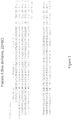
- SEQ ID NO: 4 defines the amino acid sequence of the B-domain of SpA: ADNKFNKEQQNAFYEIL H LPNLNEEQRNGFIQSLKDDPSQSANLLAEAKKLNDAQAPK
- SEQ ID NO: 6 defines a protein known as protein Z:
- Protein Z is a synthetic construct derived from the B-domain of SpA, wherein the glycine in position 29 has been exchanged for alanine, see e.g. Stahl et al, 1999: Affinity fusions in biotechnology: focus on protein A and protein G, in The Encyclopedia of Bioprocess Technology: Fermentation, Biocatalysis and Bioseparation. M.C. Fleckinger and S.W. Drew, editors John Wiley and Sons Inc., New-York, 8-22 .
- the above described mutant protein is comprised of the amino acid sequence defined in SEQ ID NO: 4, 5, 6, 7 or 8, or is a functional variant thereof, with a substitution at Histidine at the position corresponding to H18 of B domain of Protein A or Protein Z.
- the above described mutant protein is comprised of the amino acid sequence defined in SEQ ID NO: 1, 2 or 3, or is a functional variant thereof, with a substitution at Asparagine at the position corresponding to H18 of B domain of Protein A.
- the term "functional variant" as used in this context includes any similar sequence, which comprises one or more further variations in amino acid positions that have no influence on the mutant protein's affinity to immunoglobulins or Fc-containing proteins or its improved chemical stability in environments of increased pH-values.
- mutation of the asparagine residue in position 21 is avoided.
- the asparagine residue in position 3 is not mutated.
- the mutation of Asparagine or Histidine at position 18, the mutations at positions 57 and 28, the mutations to provide alkaline-stability, and the G to A mutation may be carried out in any order of sequence using conventional molecular biology techniques.
- the ligands can be expressed by a vector containing a nucleic acid sequence encoding the mutated protein ligands. Alternatively, they can also be made by protein synthesis techniques. Methods for synthesizing peptides and proteins of predetermined sequences are well known and commonly available in this field.
- amino acids with bulky side chains e.g. Tyrosine, Tryptophan or Methionine can be avoided as substituents in the H18 position.
- Bulky side chains may perturb the tertiary structure of the protein, which could affect the immunoglobulin- or Fc-binding properties.
- At least one of the Proline at position 57 and the Asparagine at position 28 has been substituted with a second amino acid residue.
- the amino acid residue at position 18 is selected from the group consisting of Serine, Glutamic acid, Aspartic acid, Threonine and Lysine. With these amino acids, particularly high elution pH levels can be achieved.
- At least one of the amino acid residues at position 57 and 28 is selected from the group consisting of Alanine and Isoleucine.
- the protein comprises one or more mutated monomers derived from the parental molecules defined by SEQ ID NO 5, 6, 7 or 8, wherein the mutation is selected from the group consisting of H18E; H18S,N28A; H18S,P57I; N28A,P57I and H18S,N28A,P57I.
- the protein comprises one or more mutated monomers defined by SEQ ID NO: 14, 16, 17 or 18.
- the protein comprises at least two mutated monomers, such as 3, 4, 5 or 6 monomers, forming a multimeric protein.
- the monomers may be linked covalently, such as by forming parts of a single polypeptide chain.
- the mutated monomers may be identical, but they can also be different mutated monomers according to the invention.
- the multimeric protein may also comprise other mutated or non-mutated IgG-binding domains of Protein A.
- the Asparagine or Histidine at the position corresponding to H18 of B domain of Protein A or Protein Z in at least one of the monomeric domains in a multimeric ligand is substituted.
- the Asparagine or Histidine residue in all the monomeric domains in a multimeric ligand is substituted.
- the multimeric protein according to the invention comprises monomer units linked to each other by a stretch of amino acids preferably ranging from 0 to 15 amino acids, such as 0-5, 0-10 or 5-10 amino acids.
- the nature of such a link should preferably not destabilize the spatial conformation of the protein units. This can e.g. be achieved by avoiding the presence of proline in the links.
- said link should preferably also be sufficiently stable in alkaline environments not to impair the properties of the mutated protein units. For this purpose, it is advantageous if the links do not contain asparagine. It can additionally be advantageous if the links do not contain glutamine.
- the present dimeric ligands comprise the sequence of SEQ ID NO: 9:
- the present tetrameric ligands comprise the sequence of SEQ ID NO: 11:
- the present tetrameric ligands comprise the sequence of SEQ ID NO: 12:
- the present tetrameric ligands comprise the sequence of SEQ ID NO: 13:
- the protein further comprises a C-terminal cysteine.
- the cysteine can be directly linked to the C-terminal monomer of a protein according to the invention or it can also be linked via a stretch of amino acids preferably ranging from 0 to 15 amino acids, such as 0-5, 0-10 or 5-10 amino acids.
- This stretch should preferably also be sufficiently stable in alkaline environments not to impair the properties of the mutated protein. For this purpose, it is advantageous if the stretch does not contain asparagine. It can additionally be advantageous if the stretch does not contain glutamine.
- An advantage of having a C-terminal cysteine is that endpoint coupling of the protein can be achieved through reaction of the cysteine thiol with an electrophilic group on a support. This provides excellent mobility of the coupled protein which is important for the binding capacity.
- an affinity separation matrix which comprises a protein according to any of the embodiments described above coupled to a support.
- This matrix is useful for chromatographic separation of immunoglobulins and other Fc-containing proteins, where the higher elution pH and the improved elution selectivity allow for better recoveries and lower impurity levels after the first capture step.
- the expressed protein should be purified to an appropriate extent before been immobilized to a support.
- purification methods are well known in the field, and the immobilization of protein-based ligands to supports is easily carried out using standard methods. Suitable methods and supports will be discussed below in more detail.
- the solid support of the matrix according to the invention can be of any suitable well-known kind.
- a conventional affinity separation matrix is often of organic nature and based on polymers that expose a hydrophilic surface to the aqueous media used, i.e. expose hydroxy (-OH), carboxy (-COOH), carboxamido (-CONH 2 , possibly in N- substituted forms), amino (-NH 2 , possibly in substituted form), oligo- or polyethylenoxy groups on their external and, if present, also on internal surfaces.
- the ligand may be attached to the support via conventional coupling techniques utilising, e.g. amino and/or carboxy groups present in the ligand.
- Bisepoxides, epichlorohydrin, CNBr, N-hydroxysuccinimide (NHS) etc are well-known coupling reagents.
- a molecule known as a spacer can be introduced, which improves the availability of the ligand and facilitates the chemical coupling of the ligand to the support.
- the ligand may be attached to the support by non-covalent bonding, such as physical adsorption or biospecific adsorption.
- the matrix comprises 5 - 15 mg/ml, such as 6 - 11 mg/ml of said protein coupled to said support.
- the amount of coupled protein can be controlled by the concentration of protein used in the coupling process, by the coupling conditions used and by the pore structure of the support used. As a general rule the absolute binding capacity of the matrix increases with the amount of coupled protein, at least up to a point where the pores become significantly constricted by the coupled protein. The relative binding capacity per mg coupled protein will decrease at high coupling levels, resulting in a cost-benefit optimum within the ranges specified above.
- the protein is coupled to the support via a thioether bridge.
- Methods for performing such coupling are well-known in this field and easily performed by the skilled person in this field using standard techniques and equipment.
- the protein is coupled via a C-terminal cysteine provided on the protein as described above. This allows for efficient coupling of the cysteine thiol to electrophilic groups, e.g. epoxide groups, halohydrin groups etc. on a support, resulting in a thioether bridge coupling.
- electrophilic groups e.g. epoxide groups, halohydrin groups etc.
- the support comprises a polyhydroxy polymer, such as a polysaccharide.
- polysaccharides include e.g. dextran, starch, cellulose, pullulan, agar, agarose etc.
- Polysaccharides are inherently hydrophilic with low degrees of nonspecific interactions, they provide a high content of reactive (activatable) hydroxyl groups and they are generally stable towards alkaline cleaning solutions used in bioprocessing.
- the support comprises agar or agarose.
- the supports used in the present invention can easily be prepared according to standard methods, such as inverse suspension gelation ( S Hjertén: Biochim Biophys Acta 79(2), 393-398 (1964 ).
- the base matrices are commercially available products, such as SEPHAROSETM FF (GE Healthcare).
- the support has been adapted to increase its rigidity using the methods described in US6602990 or US7396467 , and hence renders the matrix more suitable for high flow rates.
- the support is crosslinked, such as with hydroxyalkyl ether crosslinks.
- Crosslinker reagents producing such crosslinks can be e.g. epihalohydrins like epichlorohydrin, diepoxides like butanediol diglycidyl ether, allylating reagents like allyl halides or allyl glycidyl ether.
- Crosslinking is beneficial for the rigidity of the support and improves the chemical stability. Hydroxyalkyl ether crosslinks are alkali stable and do not cause significant nonspecific adsorption.
- the solid support is based on synthetic polymers, such as polyvinyl alcohol, polyhydroxyalkyl acrylates, polyhydroxyalkyl methacrylates, polyacrylamides, polymethacrylamides etc.
- hydrophobic polymers such as matrices based on divinyl and monovinyl-substituted benzenes
- the surface of the matrix is often hydrophilised to expose hydrophilic groups as defined above to a surrounding aqueous liquid.
- Such polymers are easily produced according to standard methods, see e.g. " Styrene based polymer supports developed by suspension polymerization" (R Arshady: Chimica e L'Industria 70(9), 70-75 (1988 )).
- a commercially available product such as SOURCETM (GE Healthcare) is used.
- the solid support according to the invention comprises a support of inorganic nature, e.g. silica, zirconium oxide etc.
- the solid support is in another form such as a surface, a chip, capillaries, or a filter.
- the matrix in one embodiment is in the form of a porous monolith.
- the matrix in beaded or particle form that can be porous or non-porous.
- Matrices in beaded or particle form can be used as a packed bed or in a suspended form. Suspended forms include those known as expanded beds and pure suspensions, in which the particles or beads are free to move. In case of monoliths, packed bed and expanded beds, the separation procedure commonly follows conventional chromatography with a concentration gradient. In case of pure suspension, batch-wise mode will be used.
- the present invention relates to a method of separating Fc-containing proteins from other substances, comprising the steps of:
- the elution buffer has a pH of 4.0 - 6.0 and if an elution buffer gradient is used (gradient elution) at least part of the elution buffer gradient is within the pH range of 6.0 - 4.0.
- Regular protein A media based on native or recombinant protein A normally elute at pH 3.1 - 4.0 (measured at peak apex) mainly depending on its VH3 binding (see e.g. Ghose, S. et al. Biotechnology and Bioengineering 92 665-673 [2005 ]).
- the alkaline stabilized product MABSELECT SURETM derived from the B-domain of protein A, essentially lacks the VH3 binding giving a higher elution pH: 3.7-4.0.
- substitution of the Asparagine or Histidine residue at the position corresponding to H18 of B domain of Protein A or Protein Z unexpectedly increases the elution pH of immunoglobulins, or fusion proteins containing an Fc-fragment.
- the substitution thus provides a ligand which allows for elution above pH 4.0, preferably above 4.2, while the yield of target molecule is at least 80% or preferably >95%. This results in gentler elution conditions which minimize the risk for aggregation or inactivation of the target molecule.
- the conditions for the adsorption step may be any conventionally used, appropriately adapted depending on the properties of the target antibody such as the pI thereof.
- the optional wash step can be performed using a buffer commonly used such as a PBS buffer. It may also be performed with more than one wash buffer, e.g. of different pH, ionic strength or additives. Additives like solvents, salts or detergents or mixtures thereof may be used in one or more wash buffers.
- the present method is useful to capture target antibodies, such as a first step in a purification protocol of antibodies which are e.g. for therapeutic or diagnostic use.
- a first step in a purification protocol of antibodies which are e.g. for therapeutic or diagnostic use.
- at least 75% of the antibodies are recovered.
- at least 80%, such as at least 90%, and preferably at least 95% of the antibodies are recovered using an eluent having a suitable pH for the particular ligand system.
- more than about 98% of the antibodies are recovered.
- the present method may be followed by one or more additional steps, such as other chromatography steps.
- the additional step(s) may comprise e.g.
- cation exchange chromatography anion exchange chromatography
- multimodal chromatography with either positively or negatively charged matrices
- thiophilic chromatography hydroxyapatite chromatography and/or gel filtration.
- Additional chromatography steps can be performed in either bind-elute or flow-through mode and they can be performed in packed beds or with membrane adsorbers or monolithic columns. Hold tanks may or may not be used between steps and it is possible to use e.g. in-line conditioning in order to avoid hold tanks between steps.
- the method further comprises a step g) of stripping said separation matrix with a stripping buffer having a pH of a least 0.1 pH units lower than the pH of the elution buffer or the pH of the elution buffer gradient at the end of step e).
- a stripping buffer having a pH of a least 0.1 pH units lower than the pH of the elution buffer or the pH of the elution buffer gradient at the end of step e.
- the solution comprising an Fc-containing protein and at least one other substance comprises host cell proteins (HCP), such as CHO cell or E Coli proteins.
- HCP host cell proteins
- Contents of CHO cell and E Coli proteins can conveniently be determined by immunoassays directed towards these proteins, e.g. the CHO HCP or E Coli HCP ELISA kits from Cygnus Technologies.
- the host cell proteins or CHO cell/E Coli proteins are desorbed during step g).
- the solution comprising an Fc-containing protein and at least one other substance comprises aggregates of said Fc-containing protein, such as at least 1%, at least 5% or at least 10% aggregates calculated on the total amount of the Fc-containing protein in said solution.
- aggregates can be removed directly in the capture step. Aggregate levels can conveniently be determined e.g. by analytical gel filtration, where aggregates elute before the monomeric Fc-containing protein.
- aggregates are desorbed during step g).
- the aggregate content in the recovered eluate is less than 1%, such as less than 0.5% or less than 0.2% aggregates calculated on the total amount of the Fc-containing protein in said recovered eluate.
- a significant clearance of aggregates in the capture step facilitates the subsequent purification steps in the process. It may even allow the use of feeds that would otherwise not be feasible for production due to too high aggregate contents.
- the elution may be performed by using any suitable solution used for elution from Protein A media.
- the elution buffer or the elution buffer gradient comprises at least one anion species selected from the group consisting of acetate, citrate, glycine, succinate, phosphate, and formiate.
- the elution buffer or the elution buffer gradient comprises at least one elution additive, such as arginine or urea.
- elution additives can further increase the pH levels for elution of the Fc-containing protein.
- the eluate of step f) is collected in a pool and the pH of said pool is at least 0.5 pH units higher than the pH of said elution buffer or the pH of said elution buffer gradient at the end of step e).
- the pH level of the pool can be at least 4.5, such as at least 5.0 or at least 5.5 or between 4.5 and 6.5 or between 5.0 and 6.5.
- a high pH level in the pool is important in order to prevent aggregate formation from the eluted monomeric Fc-containing protein, as the protein is exposed to the pool conditions for significant periods of time (at least several hours).
- the method further comprises a step h), optionally performed after step g), wherein the matrix is cleaned by application of an alkaline solution of pH 13 - 14, such as a solution comprising 0.1 M to 0.5 M sodium hydroxide.
- an alkaline solution of pH 13 - 14 such as a solution comprising 0.1 M to 0.5 M sodium hydroxide.
- the environment can be defined as alkaline, meaning of an increased pH-value, for example above about 10, such as up to about 13 or 14, i.e. from 10-13 or 10-14, in general denoted alkaline conditions.
- the conditions can be defined by the concentration of NaOH, which can be up to about 1.0 M, such as 0.7 M or specifically about 0.5 M, accordingly within a range of 0.7-1.0 M.
- the affinity to immunoglobulin i.e. the binding properties of the ligand, in the presence of the asparagine mutation as discussed, and hence the capacity of the matrix, is not essentially changed in time by treatment with an alkaline agent.
- the alkaline agent used is NaOH and the concentration thereof is up to 0.75 M, such as 0.5 M.
- its binding capacity will decrease to less than about 70 %, preferably less than about 50% and more preferably less than about 30%, such as about 28%, after treatment with 0.5 M NaOH for 7.5 h.
- the method further comprises a step i) of applying said eluate or pool to a cation exchange resin without any adjustment of the pH of said eluate or pool.
- a step i) of applying said eluate or pool to a cation exchange resin without any adjustment of the pH of said eluate or pool.
- the method further comprises, before step i), a step of solvent-detergent virus inactivation.
- the two commonly used virus inactivation methods are low pH inactivation and solvent-detergent inactivation.
- solvent-detergent inactivation is amenable to application on the pool/eluate before application to e.g. a cation exchange step.
- a detergent e.g. 0.3-1.5 % of a nonionic surfactant like TritonTM X-100 from Dow Chemical or TweenTM 80 from Uniqema
- a solvent e.g. 0.1-0.5 % tri n-butyl phosphate
- the present invention relates to a method of isolating an immunoglobulin, such as IgG, IgA and/or IgM, wherein a ligand or a matrix according to the invention is used.
- the invention encompasses a process of chromatography, wherein at least one target compound is separated from a liquid by adsorption to a ligand or matrix described above.
- the desired product can be the separated compound or the liquid.
- affinity chromatography which is a widely used and well-known separation technique.
- a solution comprising the target compounds, preferably antibodies as mentioned above is passed over a separation matrix under conditions allowing adsorption of the target compound to ligands present on said matrix.
- Such conditions are controlled e.g. by pH and/or salt concentration i.e. ionic strength in the solution. Care should be taken not to exceed the capacity of the matrix, i.e. the flow should be sufficiently slow to allow a satisfactory adsorption. In this step, other components of the solution will pass through in principle unimpeded.
- the invention discloses a method of selecting an elution buffer for a matrix according to any embodiment described above, with an adsorbed Fc-containing protein, comprising the steps of:
- the other substance comprises host cell proteins, such as CHO cell proteins, or aggregates of said Fc-containing protein.
- Site-directed mutagenesis was performed by a two-step PCR using oligonucleotides coding for the defined amino acid replacement.
- a plasmid containing a single domain of either wild type Z (SEQ ID NO: 6) or mutated Z (to create two or more mutations) was used as template.
- the PCR fragments were ligated into an E. coli expression vector (pGO).
- DNA sequencing was used to verify the correct sequence of inserted fragments.
- Acc I sticky-ends primers were designed, specific for each variant, and two overlapping PCR products were generated from each template.
- the PCR products were purified and the concentration was estimated by comparing the PCR products on a 2% agarose gel. Equal amounts of the pair wise PCR products were hybridized (90°C -> 25°C in 45min) in ligation buffer. The resulting product consists approximately to 1 ⁇ 4 of fragments likely to be ligated into an Acc I site (correct PCR fragments and/or the digested vector).
- the constructs were expressed in the bacterial periplasm by fermentation of E. coli K12 in standard media. After fermentation the cells were heat-treated to release the periplasm content into the media. The constructs released into the medium were recovered by microfiltration with a membrane having a 0.2 ⁇ m pore size.
- the permeate was loaded onto a chromatography medium containing immobilized IgG.
- the loaded product was washed with phosphate buffered saline and eluted by lowering the pH.
- the elution pool was adjusted to a neutral pH and reduced by addition of dithiothreitol.
- the sample was then loaded onto an anion exchanger. After a wash step the construct was eluted in a NaCl gradient to separate it from any contaminants.
- the elution pool was concentrated by ultrafiltration to 40-50 mg/ml.
- the purified ligands were analyzed with LC-MS to determine the purity and to ascertain that the molecular weight corresponded to the expected (based on the amino acid sequence).
- the mutant Z(H18del)2 (SEQ ID NO: 10) did not bind to the IgG medium in the affinity step. Hence it was concluded that this mutation caused a loss of the IgG-binding capability and no further experiments were made with H18del mutants.
- the base matrix used was rigid crosslinked agarose beads of 85 microns average diameter, prepared according to the methods of US6602990 and with a pore size corresponding to an inverse gel filtration chromatography Kav value of 0.70 for dextran of Mw 110 kDa, according to the methods described in Gel Filtration Principles and Methods, Pharmacia LKB Biotechnology 1991, pp 6-13 .
- ligand solution 50 mg/mL in a 50 ml Falcon tube
- 169 mg NaHCO 3 21 mg Na 2 CO 3 , 175 mg NaCl and 7 mg EDTA
- the Falcon tube was placed on a roller table for 5-10 min, and then 77 mg of DTE was added. Reduction proceeded for >45 min.
- the ligand solution was then desalted on a PD10 column packed with Sephadex G-25. The ligand content in the desalted solution was determined by measuring the 276 nm UV absorption.
- the activated gel was washed with 3-5 GV ⁇ 0.1 M phosphate/1 mM EDTA pH 8.6 ⁇ and the ligand was then coupled according to the method described in US6399750 . All buffers used in the experiments had been degassed by nitrogen gas for at least 5-10 min.
- the gels were washed 3xGV with distilled water.
- the gels + 1 GV ⁇ 0.1 M phosphate/1 mM EDTA/10% thioglycerol pH 8.6 ⁇ was mixed and the tubes were left in a shaking table at room temperature over night.
- the gels were then washed alternately with 3xGV ⁇ 0.1 M TRIS/0.15 M NaCl pH 8.6 ⁇ and 0.5 M HAc and then 8-10xGV with distilled water.
- Gel samples were sent to an external laboratory for amino acid analysis and the ligand content (mg/ml gel) was calculated from the total amino acid content.
- the breakthrough capacity was determined with an ⁇ KTAExplorer 10 system at a residence time of 2.4 minutes. Equilibration buffer was run through the bypass column until a stable baseline was obtained. This was done prior to auto zeroing. Sample was applied through the bypass until the 100% UV signal was obtained. Then, equilibration buffer was applied to the column again until a stable baseline was obtained. Sample was loaded onto the column until a UV signal of 85% of maximum absorbance was reached. The column was then washed with equilibration buffer until a UV signal of 20% of maximum absorbance at flow rate 0.5 ml/min. The protein was eluted with a linear gradient over 10 column volumes starting at pH 6.0 and ending at pH 3.0 at a flow rate of 0.5 ml/min.
- the dynamic binding capacity (DBC) at 10% breakthrough was calculated and the appearance of the curve was studied.
- the curve was also studied regarding binding, elution and CIP peak.
- the dynamic binding capacity (DBC) was calculated for 5, 10 and 80% breakthrough.
- IgG capacity and elution study for polyclonal human IgG and different mABs were done on Z(H18E)2, Z(H18S,P57I)4, Z(H18S,N28A)4, Z2 and Z4. Some examples are shown in Table 1.
- Table 1 Capacity data for Z(H18E)2, Z(H18S,N28A)4, Z(H18S,P57I)4, Z2 and Z4, using 1 mg/ml IgG dissolved in 20 mM PBS+0.15 M NaCl buffer, pH 7.4.
- the elution studies were done for different cell culture supernatant (mAb C, mAb D) or polyclonal human IgG in phosphate buffer.
- the elution pH increases with 0.6 to 1.8 pH units for Z(H18E)2, Z(H18S,P57I)4 and Z(H18S,N28A)4 compared to Z2 and Z4.-The biggest difference is shown with polyclonal IgG (Gammanorm) while the mAb D shows somewhat smaller differences.
- approximately 10 mg cell culture supernatant (different cell culture supernatants were used, see Table 2) was loaded on the column.
- a gradient elution from pH 6 to pH 3 was done using 0.1 M citrate buffers.
- pH at peak apex was noted (see Table 2.) Table 2.
- pH hIgG (first peak) and pH hIgG (second peak) are polyclonal IgG (Gammanorm).
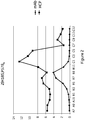
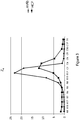
- Figures 2 and 3 show the elution of antibody E and adsorbed host cell proteins from Z4 ( Fig. 3 ) and Z(H18S,P57I)4 ( Fig. 2 ) in a decreasing pH gradient.
- Z4 as well as on other matrices not having the H18 mutations, the antibody and the HCP co-elute, meaning that HCP bound to the matrix will not be removed in the chromatography step.
- the HCP elutes later in the gradient, which creates a possibility for selective elution to remove the bound HCP, either by gradient elution or by applying an elution buffer having a pH where the antibody elutes and then e.g. applying a stripping buffer at lower pH to remove the HCP.
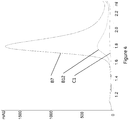
- FIG. 4 shows SEC chromatograms for the eluate fractions of a monoclonal antibody on Z(H18S,P57I)4 (the same fractions as shown in Fig. 2 ). It can be seen that the main antibody peak (fraction B7) contains no aggregates, while the aggregates start to appear in B12 and the later fraction C1 consists almost entirely of aggregates.
Landscapes
- Chemical & Material Sciences (AREA)
- Organic Chemistry (AREA)
- Analytical Chemistry (AREA)
- Health & Medical Sciences (AREA)
- Life Sciences & Earth Sciences (AREA)
- Chemical Kinetics & Catalysis (AREA)
- Molecular Biology (AREA)
- General Health & Medical Sciences (AREA)
- Biochemistry (AREA)
- Immunology (AREA)
- Medicinal Chemistry (AREA)
- Proteomics, Peptides & Aminoacids (AREA)
- Biophysics (AREA)
- Genetics & Genomics (AREA)
- Engineering & Computer Science (AREA)
- Urology & Nephrology (AREA)
- Biomedical Technology (AREA)
- Hematology (AREA)
- Gastroenterology & Hepatology (AREA)
- Dispersion Chemistry (AREA)
- Cell Biology (AREA)
- Microbiology (AREA)
- Food Science & Technology (AREA)
- Physics & Mathematics (AREA)
- General Physics & Mathematics (AREA)
- Pathology (AREA)
- Biotechnology (AREA)
- Peptides Or Proteins (AREA)
Applications Claiming Priority (3)
| Application Number | Priority Date | Filing Date | Title |
|---|---|---|---|
| SE1250304 | 2012-03-28 | ||
| SE1250493 | 2012-05-15 | ||
| PCT/SE2013/050335 WO2013147691A1 (en) | 2012-03-28 | 2013-03-26 | Affinity chromatography matrix |
Publications (3)
| Publication Number | Publication Date |
|---|---|
| EP2831096A1 EP2831096A1 (en) | 2015-02-04 |
| EP2831096A4 EP2831096A4 (en) | 2016-08-03 |
| EP2831096B1 true EP2831096B1 (en) | 2020-04-29 |
Family
ID=49260785
Family Applications (1)
| Application Number | Title | Priority Date | Filing Date |
|---|---|---|---|
| EP13767846.2A Active EP2831096B1 (en) | 2012-03-28 | 2013-03-26 | Affinity chromatography matrix |
Country Status (4)
| Country | Link |
|---|---|
| US (1) | US10189891B2 (enExample) |
| EP (1) | EP2831096B1 (enExample) |
| JP (1) | JP6420756B2 (enExample) |
| WO (1) | WO2013147691A1 (enExample) |
Families Citing this family (21)
| Publication number | Priority date | Publication date | Assignee | Title |
|---|---|---|---|---|
| JP6420756B2 (ja) | 2012-03-28 | 2018-11-07 | ジーイー・ヘルスケア・バイオプロセス・アールアンドディ・アクチボラグ | アフィニティークロマトグラフィーマトリックス |
| JP6464089B2 (ja) * | 2013-09-06 | 2019-02-06 | 株式会社カネカ | アフィニティー分離マトリックス用分離能強化リガンド |
| CN105481954B (zh) * | 2014-09-16 | 2021-03-26 | 亿一生物制药(北京)有限公司 | 一种重组蛋白a及其应用 |
| US11566082B2 (en) | 2014-11-17 | 2023-01-31 | Cytiva Bioprocess R&D Ab | Mutated immunoglobulin-binding polypeptides |
| CN107849088A (zh) * | 2015-07-22 | 2018-03-27 | 株式会社钟化 | 抗体样蛋白质的纯化方法 |
| JP7031934B2 (ja) | 2016-05-11 | 2022-03-08 | サイティバ・バイオプロセス・アールアンドディ・アクチボラグ | 分離マトリックス |
| EP3455241B1 (en) | 2016-05-11 | 2022-02-23 | Cytiva BioProcess R&D AB | Method of cleaning and/or sanitizing a separation matrix |
| US10654887B2 (en) | 2016-05-11 | 2020-05-19 | Ge Healthcare Bio-Process R&D Ab | Separation matrix |
| US10730908B2 (en) | 2016-05-11 | 2020-08-04 | Ge Healthcare Bioprocess R&D Ab | Separation method |
| WO2017194592A1 (en) | 2016-05-11 | 2017-11-16 | Ge Healthcare Bioprocess R&D Ab | Method of storing a separation matrix |
| US10703774B2 (en) | 2016-09-30 | 2020-07-07 | Ge Healthcare Bioprocess R&D Ab | Separation method |
| JP7122974B2 (ja) | 2016-05-11 | 2022-08-22 | サイティバ・バイオプロセス・アールアンドディ・アクチボラグ | 変異免疫グロブリン結合ポリペプチド |
| US11312745B2 (en) | 2016-07-22 | 2022-04-26 | Amgen Inc. | Methods of purifying Fc-containing proteins |
| US12448411B2 (en) | 2016-09-30 | 2025-10-21 | Cytiva Bioprocess R&D Ab | Separation method |
| GB201703116D0 (en) * | 2017-02-27 | 2017-04-12 | Ge Healthcare Bioprocess R&D Ab | A seperation matrix and a method of seperating antibodies |
| GB202109246D0 (en) * | 2021-06-28 | 2021-08-11 | Cytiva Bioprocess R & D Ab | A method of separating bispecific antibodies |
| GB202113626D0 (en) | 2021-09-24 | 2021-11-10 | Cytiva Bioprocess R & D Ab | FC binding polypeptides |
| US20250026784A1 (en) * | 2021-11-29 | 2025-01-23 | Tosoh Corporation | Separation method of antibody |
| CN114409748A (zh) * | 2022-01-28 | 2022-04-29 | 博格隆(浙江)生物技术有限公司 | 蛋白a的b结构域和z结构域突变体及其应用 |
| WO2026057420A1 (en) | 2024-09-10 | 2026-03-19 | Cytiva Bioprocess R&D Ab | Affinity ligand for purification of antibodies of isotype iga |
| EP4717704A1 (en) * | 2024-09-26 | 2026-04-01 | Cytiva BioProcess R&D AB | Novel protein a ligand that enables milder elution |
Family Cites Families (23)
| Publication number | Priority date | Publication date | Assignee | Title |
|---|---|---|---|---|
| SE8505922D0 (sv) | 1985-12-13 | 1985-12-13 | Kabigen Ab | Construction of an igg binding protein to facilitate downstream processing using protein engineering |
| JP2519136B2 (ja) | 1991-07-25 | 1996-07-31 | オリエンタル酵母工業株式会社 | 分子量マ−カ− |
| EP0550771B1 (en) | 1991-07-25 | 1999-09-29 | Oriental Yeast Co., Ltd. | Immunoglobulin-binding artificial protein |
| SE9503925D0 (sv) | 1995-11-07 | 1995-11-07 | Pharmacia Biotech Ab | Separationsmedium för IgG |
| SE9601368D0 (sv) | 1996-04-11 | 1996-04-11 | Pharmacia Biotech Ab | Process for the production of a porous cross-linked polysaccharide gel |
| US6602977B1 (en) * | 1999-04-19 | 2003-08-05 | Biovitrum Ab | Receptor structures |
| SE0200943D0 (sv) | 2002-03-25 | 2002-03-25 | Amersham Biosciences Ab | Mutant protein |
| US7709209B2 (en) | 2002-03-25 | 2010-05-04 | Ge Healthcare Bio-Sciences Ab | Protein ligands |
| CA2531238C (en) * | 2003-07-04 | 2015-02-24 | Affibody Ab | Polypeptides having binding affinity for her2 |
| SE0400274D0 (sv) * | 2004-02-09 | 2004-02-09 | Affibody Ab | New polypeptide |
| SE0402322D0 (sv) | 2004-09-22 | 2004-09-22 | Amersham Biosciences Ab | Method of preparing a chromatography matrix |
| WO2006092338A2 (en) * | 2005-03-01 | 2006-09-08 | Affibody Ab | Tnf-alpha binding polypeptide , uses thereof and methods employing it |
| CN101258175B (zh) * | 2005-08-03 | 2011-11-16 | 默克专利股份公司 | 亲水交联聚合物 |
| WO2007019376A2 (en) * | 2005-08-03 | 2007-02-15 | Rq Bioscience, Inc. | Methods and compositions for diagnosis of iga-and igm-mediated kidney diseases |
| CN101522278B (zh) * | 2006-09-29 | 2016-08-10 | 通用电气健康护理生物科学股份公司 | 用于抗体分离的包含来自金黄色葡萄球菌a蛋白的结构域c的层析配体 |
| WO2008085988A1 (en) * | 2007-01-05 | 2008-07-17 | Amgen Inc. | Methods of purifying proteins |
| JP5462461B2 (ja) | 2008-09-30 | 2014-04-02 | 株式会社東芝 | 不揮発性半導体記憶装置及びその駆動方法 |
| US20120149875A1 (en) | 2009-01-12 | 2012-06-14 | Ge Healthcare Bio-Sciences Ab | Affinity chromatography matrix |
| BR112012004697B8 (pt) * | 2009-09-01 | 2021-05-25 | Genentech Inc | método para purificar um polipeptídeo compreendendo uma região ch2/ch3 |
| WO2011118699A1 (ja) | 2010-03-24 | 2011-09-29 | 株式会社カネカ | 免疫グロブリンに特異的に結合するタンパク質および免疫グロブリン結合性アフィニティーリガンド |
| CN103269762B (zh) | 2010-12-20 | 2016-01-27 | 通用电气健康护理生物科学股份公司 | 亲和色谱基质 |
| CN103269761B (zh) * | 2010-12-20 | 2016-05-18 | 通用电气健康护理生物科学股份公司 | 亲和色谱基质 |
| JP6420756B2 (ja) | 2012-03-28 | 2018-11-07 | ジーイー・ヘルスケア・バイオプロセス・アールアンドディ・アクチボラグ | アフィニティークロマトグラフィーマトリックス |
-
2013
- 2013-03-26 JP JP2015503160A patent/JP6420756B2/ja active Active
- 2013-03-26 WO PCT/SE2013/050335 patent/WO2013147691A1/en not_active Ceased
- 2013-03-26 EP EP13767846.2A patent/EP2831096B1/en active Active
- 2013-03-26 US US14/385,336 patent/US10189891B2/en active Active
Non-Patent Citations (1)
| Title |
|---|
| None * |
Also Published As
| Publication number | Publication date |
|---|---|
| US20150080554A1 (en) | 2015-03-19 |
| JP2015511637A (ja) | 2015-04-20 |
| US10189891B2 (en) | 2019-01-29 |
| EP2831096A1 (en) | 2015-02-04 |
| JP6420756B2 (ja) | 2018-11-07 |
| WO2013147691A1 (en) | 2013-10-03 |
| EP2831096A4 (en) | 2016-08-03 |
Similar Documents
| Publication | Publication Date | Title |
|---|---|---|
| US10189891B2 (en) | Affinity chromatography matrix | |
| EP2654915B1 (en) | Affinity chromatography matrix | |
| EP2654914B1 (en) | Affinity chromatography matrix | |
| US11136359B2 (en) | Mutated immunoglobulin-binding polypeptides | |
| EP3221347B1 (en) | Mutated immunoglobulin-binding polypeptides | |
| US8859726B2 (en) | Affinity chromatography matrix | |
| US20130184438A1 (en) | Mutant protein |
Legal Events
| Date | Code | Title | Description |
|---|---|---|---|
| PUAI | Public reference made under article 153(3) epc to a published international application that has entered the european phase |
Free format text: ORIGINAL CODE: 0009012 |
|
| 17P | Request for examination filed |
Effective date: 20140919 |
|
| AK | Designated contracting states |
Kind code of ref document: A1 Designated state(s): AL AT BE BG CH CY CZ DE DK EE ES FI FR GB GR HR HU IE IS IT LI LT LU LV MC MK MT NL NO PL PT RO RS SE SI SK SM TR |
|
| AX | Request for extension of the european patent |
Extension state: BA ME |
|
| DAX | Request for extension of the european patent (deleted) | ||
| RIC1 | Information provided on ipc code assigned before grant |
Ipc: C07K 1/22 20060101ALI20160226BHEP Ipc: B01D 15/38 20060101ALI20160226BHEP Ipc: C07K 14/31 20060101AFI20160226BHEP |
|
| RAP1 | Party data changed (applicant data changed or rights of an application transferred) |
Owner name: GE HEALTHCARE BIOPROCESS R&D AB |
|
| RA4 | Supplementary search report drawn up and despatched (corrected) |
Effective date: 20160704 |
|
| RIC1 | Information provided on ipc code assigned before grant |
Ipc: C07K 14/31 20060101AFI20160628BHEP Ipc: C07K 1/22 20060101ALI20160628BHEP Ipc: B01D 15/38 20060101ALI20160628BHEP |
|
| 17Q | First examination report despatched |
Effective date: 20160919 |
|
| STAA | Information on the status of an ep patent application or granted ep patent |
Free format text: STATUS: EXAMINATION IS IN PROGRESS |
|
| REG | Reference to a national code |
Ref country code: DE Ref legal event code: R079 Ref document number: 602013068468 Country of ref document: DE Free format text: PREVIOUS MAIN CLASS: C07K0014310000 Ipc: B01D0015380000 |
|
| GRAP | Despatch of communication of intention to grant a patent |
Free format text: ORIGINAL CODE: EPIDOSNIGR1 |
|
| STAA | Information on the status of an ep patent application or granted ep patent |
Free format text: STATUS: GRANT OF PATENT IS INTENDED |
|
| RIC1 | Information provided on ipc code assigned before grant |
Ipc: C07K 14/31 20060101ALI20191118BHEP Ipc: B01D 15/38 20060101AFI20191118BHEP Ipc: B01J 20/29 20060101ALI20191118BHEP Ipc: B01J 20/32 20060101ALI20191118BHEP Ipc: B01J 20/28 20060101ALI20191118BHEP Ipc: C07K 1/22 20060101ALI20191118BHEP |
|
| INTG | Intention to grant announced |
Effective date: 20191203 |
|
| GRAS | Grant fee paid |
Free format text: ORIGINAL CODE: EPIDOSNIGR3 |
|
| GRAA | (expected) grant |
Free format text: ORIGINAL CODE: 0009210 |
|
| STAA | Information on the status of an ep patent application or granted ep patent |
Free format text: STATUS: THE PATENT HAS BEEN GRANTED |
|
| AK | Designated contracting states |
Kind code of ref document: B1 Designated state(s): AL AT BE BG CH CY CZ DE DK EE ES FI FR GB GR HR HU IE IS IT LI LT LU LV MC MK MT NL NO PL PT RO RS SE SI SK SM TR |
|
| REG | Reference to a national code |
Ref country code: GB Ref legal event code: FG4D |
|
| REG | Reference to a national code |
Ref country code: CH Ref legal event code: EP |
|
| REG | Reference to a national code |
Ref country code: AT Ref legal event code: REF Ref document number: 1262431 Country of ref document: AT Kind code of ref document: T Effective date: 20200515 |
|
| REG | Reference to a national code |
Ref country code: DE Ref legal event code: R096 Ref document number: 602013068468 Country of ref document: DE |
|
| REG | Reference to a national code |
Ref country code: IE Ref legal event code: FG4D |
|
| RAP2 | Party data changed (patent owner data changed or rights of a patent transferred) |
Owner name: CYTIVA BIOPROCESS R&D AB |
|
| REG | Reference to a national code |
Ref country code: NL Ref legal event code: MP Effective date: 20200429 |
|
| REG | Reference to a national code |
Ref country code: LT Ref legal event code: MG4D |
|
| PG25 | Lapsed in a contracting state [announced via postgrant information from national office to epo] |
Ref country code: FI Free format text: LAPSE BECAUSE OF FAILURE TO SUBMIT A TRANSLATION OF THE DESCRIPTION OR TO PAY THE FEE WITHIN THE PRESCRIBED TIME-LIMIT Effective date: 20200429 Ref country code: PT Free format text: LAPSE BECAUSE OF FAILURE TO SUBMIT A TRANSLATION OF THE DESCRIPTION OR TO PAY THE FEE WITHIN THE PRESCRIBED TIME-LIMIT Effective date: 20200831 Ref country code: GR Free format text: LAPSE BECAUSE OF FAILURE TO SUBMIT A TRANSLATION OF THE DESCRIPTION OR TO PAY THE FEE WITHIN THE PRESCRIBED TIME-LIMIT Effective date: 20200730 Ref country code: SE Free format text: LAPSE BECAUSE OF FAILURE TO SUBMIT A TRANSLATION OF THE DESCRIPTION OR TO PAY THE FEE WITHIN THE PRESCRIBED TIME-LIMIT Effective date: 20200429 Ref country code: LT Free format text: LAPSE BECAUSE OF FAILURE TO SUBMIT A TRANSLATION OF THE DESCRIPTION OR TO PAY THE FEE WITHIN THE PRESCRIBED TIME-LIMIT Effective date: 20200429 Ref country code: IS Free format text: LAPSE BECAUSE OF FAILURE TO SUBMIT A TRANSLATION OF THE DESCRIPTION OR TO PAY THE FEE WITHIN THE PRESCRIBED TIME-LIMIT Effective date: 20200829 Ref country code: NO Free format text: LAPSE BECAUSE OF FAILURE TO SUBMIT A TRANSLATION OF THE DESCRIPTION OR TO PAY THE FEE WITHIN THE PRESCRIBED TIME-LIMIT Effective date: 20200729 |
|
| REG | Reference to a national code |
Ref country code: AT Ref legal event code: MK05 Ref document number: 1262431 Country of ref document: AT Kind code of ref document: T Effective date: 20200429 |
|
| PG25 | Lapsed in a contracting state [announced via postgrant information from national office to epo] |
Ref country code: RS Free format text: LAPSE BECAUSE OF FAILURE TO SUBMIT A TRANSLATION OF THE DESCRIPTION OR TO PAY THE FEE WITHIN THE PRESCRIBED TIME-LIMIT Effective date: 20200429 Ref country code: LV Free format text: LAPSE BECAUSE OF FAILURE TO SUBMIT A TRANSLATION OF THE DESCRIPTION OR TO PAY THE FEE WITHIN THE PRESCRIBED TIME-LIMIT Effective date: 20200429 Ref country code: HR Free format text: LAPSE BECAUSE OF FAILURE TO SUBMIT A TRANSLATION OF THE DESCRIPTION OR TO PAY THE FEE WITHIN THE PRESCRIBED TIME-LIMIT Effective date: 20200429 Ref country code: BG Free format text: LAPSE BECAUSE OF FAILURE TO SUBMIT A TRANSLATION OF THE DESCRIPTION OR TO PAY THE FEE WITHIN THE PRESCRIBED TIME-LIMIT Effective date: 20200729 |
|
| PG25 | Lapsed in a contracting state [announced via postgrant information from national office to epo] |
Ref country code: NL Free format text: LAPSE BECAUSE OF FAILURE TO SUBMIT A TRANSLATION OF THE DESCRIPTION OR TO PAY THE FEE WITHIN THE PRESCRIBED TIME-LIMIT Effective date: 20200429 Ref country code: AL Free format text: LAPSE BECAUSE OF FAILURE TO SUBMIT A TRANSLATION OF THE DESCRIPTION OR TO PAY THE FEE WITHIN THE PRESCRIBED TIME-LIMIT Effective date: 20200429 |
|
| PG25 | Lapsed in a contracting state [announced via postgrant information from national office to epo] |
Ref country code: DK Free format text: LAPSE BECAUSE OF FAILURE TO SUBMIT A TRANSLATION OF THE DESCRIPTION OR TO PAY THE FEE WITHIN THE PRESCRIBED TIME-LIMIT Effective date: 20200429 Ref country code: SM Free format text: LAPSE BECAUSE OF FAILURE TO SUBMIT A TRANSLATION OF THE DESCRIPTION OR TO PAY THE FEE WITHIN THE PRESCRIBED TIME-LIMIT Effective date: 20200429 Ref country code: EE Free format text: LAPSE BECAUSE OF FAILURE TO SUBMIT A TRANSLATION OF THE DESCRIPTION OR TO PAY THE FEE WITHIN THE PRESCRIBED TIME-LIMIT Effective date: 20200429 Ref country code: IT Free format text: LAPSE BECAUSE OF FAILURE TO SUBMIT A TRANSLATION OF THE DESCRIPTION OR TO PAY THE FEE WITHIN THE PRESCRIBED TIME-LIMIT Effective date: 20200429 Ref country code: RO Free format text: LAPSE BECAUSE OF FAILURE TO SUBMIT A TRANSLATION OF THE DESCRIPTION OR TO PAY THE FEE WITHIN THE PRESCRIBED TIME-LIMIT Effective date: 20200429 Ref country code: ES Free format text: LAPSE BECAUSE OF FAILURE TO SUBMIT A TRANSLATION OF THE DESCRIPTION OR TO PAY THE FEE WITHIN THE PRESCRIBED TIME-LIMIT Effective date: 20200429 Ref country code: CZ Free format text: LAPSE BECAUSE OF FAILURE TO SUBMIT A TRANSLATION OF THE DESCRIPTION OR TO PAY THE FEE WITHIN THE PRESCRIBED TIME-LIMIT Effective date: 20200429 Ref country code: AT Free format text: LAPSE BECAUSE OF FAILURE TO SUBMIT A TRANSLATION OF THE DESCRIPTION OR TO PAY THE FEE WITHIN THE PRESCRIBED TIME-LIMIT Effective date: 20200429 |
|
| REG | Reference to a national code |
Ref country code: DE Ref legal event code: R097 Ref document number: 602013068468 Country of ref document: DE |
|
| PG25 | Lapsed in a contracting state [announced via postgrant information from national office to epo] |
Ref country code: PL Free format text: LAPSE BECAUSE OF FAILURE TO SUBMIT A TRANSLATION OF THE DESCRIPTION OR TO PAY THE FEE WITHIN THE PRESCRIBED TIME-LIMIT Effective date: 20200429 Ref country code: SK Free format text: LAPSE BECAUSE OF FAILURE TO SUBMIT A TRANSLATION OF THE DESCRIPTION OR TO PAY THE FEE WITHIN THE PRESCRIBED TIME-LIMIT Effective date: 20200429 |
|
| PLBE | No opposition filed within time limit |
Free format text: ORIGINAL CODE: 0009261 |
|
| STAA | Information on the status of an ep patent application or granted ep patent |
Free format text: STATUS: NO OPPOSITION FILED WITHIN TIME LIMIT |
|
| 26N | No opposition filed |
Effective date: 20210201 |
|
| PG25 | Lapsed in a contracting state [announced via postgrant information from national office to epo] |
Ref country code: SI Free format text: LAPSE BECAUSE OF FAILURE TO SUBMIT A TRANSLATION OF THE DESCRIPTION OR TO PAY THE FEE WITHIN THE PRESCRIBED TIME-LIMIT Effective date: 20200429 |
|
| PG25 | Lapsed in a contracting state [announced via postgrant information from national office to epo] |
Ref country code: MC Free format text: LAPSE BECAUSE OF FAILURE TO SUBMIT A TRANSLATION OF THE DESCRIPTION OR TO PAY THE FEE WITHIN THE PRESCRIBED TIME-LIMIT Effective date: 20200429 |
|
| REG | Reference to a national code |
Ref country code: CH Ref legal event code: PL |
|
| REG | Reference to a national code |
Ref country code: BE Ref legal event code: MM Effective date: 20210331 |
|
| PG25 | Lapsed in a contracting state [announced via postgrant information from national office to epo] |
Ref country code: IE Free format text: LAPSE BECAUSE OF NON-PAYMENT OF DUE FEES Effective date: 20210326 Ref country code: CH Free format text: LAPSE BECAUSE OF NON-PAYMENT OF DUE FEES Effective date: 20210331 Ref country code: LI Free format text: LAPSE BECAUSE OF NON-PAYMENT OF DUE FEES Effective date: 20210331 Ref country code: LU Free format text: LAPSE BECAUSE OF NON-PAYMENT OF DUE FEES Effective date: 20210326 |
|
| PG25 | Lapsed in a contracting state [announced via postgrant information from national office to epo] |
Ref country code: BE Free format text: LAPSE BECAUSE OF NON-PAYMENT OF DUE FEES Effective date: 20210331 |
|
| PG25 | Lapsed in a contracting state [announced via postgrant information from national office to epo] |
Ref country code: HU Free format text: LAPSE BECAUSE OF FAILURE TO SUBMIT A TRANSLATION OF THE DESCRIPTION OR TO PAY THE FEE WITHIN THE PRESCRIBED TIME-LIMIT; INVALID AB INITIO Effective date: 20130326 |
|
| PG25 | Lapsed in a contracting state [announced via postgrant information from national office to epo] |
Ref country code: CY Free format text: LAPSE BECAUSE OF FAILURE TO SUBMIT A TRANSLATION OF THE DESCRIPTION OR TO PAY THE FEE WITHIN THE PRESCRIBED TIME-LIMIT Effective date: 20200429 |
|
| P01 | Opt-out of the competence of the unified patent court (upc) registered |
Effective date: 20230526 |
|
| PG25 | Lapsed in a contracting state [announced via postgrant information from national office to epo] |
Ref country code: MK Free format text: LAPSE BECAUSE OF FAILURE TO SUBMIT A TRANSLATION OF THE DESCRIPTION OR TO PAY THE FEE WITHIN THE PRESCRIBED TIME-LIMIT Effective date: 20200429 |
|
| PG25 | Lapsed in a contracting state [announced via postgrant information from national office to epo] |
Ref country code: MT Free format text: LAPSE BECAUSE OF FAILURE TO SUBMIT A TRANSLATION OF THE DESCRIPTION OR TO PAY THE FEE WITHIN THE PRESCRIBED TIME-LIMIT Effective date: 20200429 |
|
| PG25 | Lapsed in a contracting state [announced via postgrant information from national office to epo] |
Ref country code: TR Free format text: LAPSE BECAUSE OF FAILURE TO SUBMIT A TRANSLATION OF THE DESCRIPTION OR TO PAY THE FEE WITHIN THE PRESCRIBED TIME-LIMIT Effective date: 20200429 |
|
| PGFP | Annual fee paid to national office [announced via postgrant information from national office to epo] |
Ref country code: GB Payment date: 20260319 Year of fee payment: 14 |
|
| PGFP | Annual fee paid to national office [announced via postgrant information from national office to epo] |
Ref country code: DE Payment date: 20260320 Year of fee payment: 14 |
|
| PGFP | Annual fee paid to national office [announced via postgrant information from national office to epo] |
Ref country code: FR Payment date: 20260323 Year of fee payment: 14 |