EP2830656B1 - Adjuvans - Google Patents
Adjuvans Download PDFInfo
- Publication number
- EP2830656B1 EP2830656B1 EP13711463.3A EP13711463A EP2830656B1 EP 2830656 B1 EP2830656 B1 EP 2830656B1 EP 13711463 A EP13711463 A EP 13711463A EP 2830656 B1 EP2830656 B1 EP 2830656B1
- Authority
- EP
- European Patent Office
- Prior art keywords
- adjuvant
- nanoparticles
- alum
- cobalt
- ova
- Prior art date
- Legal status (The legal status is an assumption and is not a legal conclusion. Google has not performed a legal analysis and makes no representation as to the accuracy of the status listed.)
- Not-in-force
Links
Images






Classifications
-
- A—HUMAN NECESSITIES
- A61—MEDICAL OR VETERINARY SCIENCE; HYGIENE
- A61K—PREPARATIONS FOR MEDICAL, DENTAL OR TOILETRY PURPOSES
- A61K39/00—Medicinal preparations containing antigens or antibodies
- A61K39/39—Medicinal preparations containing antigens or antibodies characterised by the immunostimulating additives, e.g. chemical adjuvants
-
- C—CHEMISTRY; METALLURGY
- C01—INORGANIC CHEMISTRY
- C01G—COMPOUNDS CONTAINING METALS NOT COVERED BY SUBCLASSES C01D OR C01F
- C01G51/00—Compounds of cobalt
- C01G51/04—Oxides
-
- A—HUMAN NECESSITIES
- A61—MEDICAL OR VETERINARY SCIENCE; HYGIENE
- A61K—PREPARATIONS FOR MEDICAL, DENTAL OR TOILETRY PURPOSES
- A61K39/00—Medicinal preparations containing antigens or antibodies
- A61K2039/555—Medicinal preparations containing antigens or antibodies characterised by a specific combination antigen/adjuvant
- A61K2039/55505—Inorganic adjuvants
-
- A—HUMAN NECESSITIES
- A61—MEDICAL OR VETERINARY SCIENCE; HYGIENE
- A61K—PREPARATIONS FOR MEDICAL, DENTAL OR TOILETRY PURPOSES
- A61K39/00—Medicinal preparations containing antigens or antibodies
- A61K2039/57—Medicinal preparations containing antigens or antibodies characterised by the type of response, e.g. Th1, Th2
-
- C—CHEMISTRY; METALLURGY
- C01—INORGANIC CHEMISTRY
- C01P—INDEXING SCHEME RELATING TO STRUCTURAL AND PHYSICAL ASPECTS OF SOLID INORGANIC COMPOUNDS
- C01P2004/00—Particle morphology
- C01P2004/60—Particles characterised by their size
- C01P2004/64—Nanometer sized, i.e. from 1-100 nanometer
-
- Y—GENERAL TAGGING OF NEW TECHNOLOGICAL DEVELOPMENTS; GENERAL TAGGING OF CROSS-SECTIONAL TECHNOLOGIES SPANNING OVER SEVERAL SECTIONS OF THE IPC; TECHNICAL SUBJECTS COVERED BY FORMER USPC CROSS-REFERENCE ART COLLECTIONS [XRACs] AND DIGESTS
- Y02—TECHNOLOGIES OR APPLICATIONS FOR MITIGATION OR ADAPTATION AGAINST CLIMATE CHANGE
- Y02A—TECHNOLOGIES FOR ADAPTATION TO CLIMATE CHANGE
- Y02A50/00—TECHNOLOGIES FOR ADAPTATION TO CLIMATE CHANGE in human health protection, e.g. against extreme weather
- Y02A50/30—Against vector-borne diseases, e.g. mosquito-borne, fly-borne, tick-borne or waterborne diseases whose impact is exacerbated by climate change
-
- Y—GENERAL TAGGING OF NEW TECHNOLOGICAL DEVELOPMENTS; GENERAL TAGGING OF CROSS-SECTIONAL TECHNOLOGIES SPANNING OVER SEVERAL SECTIONS OF THE IPC; TECHNICAL SUBJECTS COVERED BY FORMER USPC CROSS-REFERENCE ART COLLECTIONS [XRACs] AND DIGESTS
- Y10—TECHNICAL SUBJECTS COVERED BY FORMER USPC
- Y10T—TECHNICAL SUBJECTS COVERED BY FORMER US CLASSIFICATION
- Y10T428/00—Stock material or miscellaneous articles
- Y10T428/29—Coated or structually defined flake, particle, cell, strand, strand portion, rod, filament, macroscopic fiber or mass thereof
- Y10T428/2982—Particulate matter [e.g., sphere, flake, etc.]
Definitions
- the present invention provides novel adjuvants for use in altering, modulating or augmenting immune responses in human or animal subjects.
- the invention further provides compositions and vaccines comprising the same.
- Vaccines are considered to be the ultimate immunological tool in the prevention of infectious disease by providing a long-lasting protective immunity with a good antibody response [1;2].
- the role of the adjuvant is to enhance the specific response of the immune system to a minimal amount of the antigen supplied through activation of antigen presenting cells [3].
- the ideal adjuvant would not be in itself antigenic and would boost immune responses whilst not inducing overreaction of the immune system which could harm the patient (such as inducing excess local inflammation, allergy or delayed type hypersensitivity).
- adjuvants Due to safety concerns, licensed adjuvants are very limited and pain and inflammation at sites of injection are common side effects of the use of adjuvants in clinical vaccines.
- the adjuvants most widely used in human vaccines are aluminium containing [4] such as alum, a mineral salt, usually made up as Al(OH) 3 or Al(PO) 4 .
- Alum adjuvants are thus metal oxide particulates.
- alum containing adjuvant is suitable for responses against protein antigens or inactivated organisms but is not optimal for inducing responses to intracellular pathogens [1-4].
- Nanoparticles have been expanded to a wide range of biomedical applications owing to their unique physicochemical properties compared to bulk chemicals [6]. For example, NP have greater surface area and high protein binding affinity by electrostatic interaction [7]. NP also can penetrate deep into tissue and enhance cellular uptake as well as escape lysosomal compartments [7-9]. These unique properties have lead to NP being considered as potential adjuvants [10;11]. The size of NP appears to affect adjuvant ability and smaller NP have been shown to produce greater antibody and cellular immune responses [12]. However most of the NP candidates for vaccine adjuvants are organic substances [13].
- multi-walled carbon nanotubes [14], diesel exhaust particles [15], and nano-sized ultrafine carbon black [16] were reported to increase serum IgE levels by an adjuvant-like mechanism.
- nano-sized carbon black showed a similar adjuvant effect with IgG1 and IgE increases [16].
- NiONP nickel oxide NP
- cobalt oxide NP Co 3 O 4 NP
- Pusic Kae et al. (2011: Vaccine; vol. 29, no. 48, p8898-8908 ) describes incorganis CdSe/ZnS nanoparticles for use as a vaccine delivery system.
- US2011/123620 discloses vaccine nanoparticles of silicon dioxide for the immunotherapy of cancer.
- the present invention seeks to obviate one or more of the problems associated with the prior art and to provide additional adjuvants suitable for use with vaccines against diseases in which cell-mediated immune responses are important for prevention or cure.
- the present invention is based on the identification of the adjuvant properties of inorganic (metal/metal oxide) nanoparticles.
- the subject-matter of the invention is defined by the claims.
- the present invention provides an adjuvant comprising cobalt nanoparticles and/or cobalt oxide nanoparticles.
- the adjuvants of this invention may comprise one or more types of metal nanoparticle.
- the adjuvants described herein may comprise cocktails or mixtures of different types of inorganic (metal oxide) nanoparticle.
- the adjuvants described herein may further comprise a quantity of an alum based adjuvant.
- an embodiment of this invention provides an adjuvant comprising, consisting or consisting essentially of cobalt nanoparticles and/or cobalt oxide nanoparticles.
- the adjuvant of this invention may comprise, consist or consist essentially of cobalt nanopaticles.
- the cobalt nanoparticles comprise cobalt oxide.
- Cobalt oxide nanoparticles suitable for use as adjuvants of this invention may comprise, for example, cobalt (II,III) oxide (Co 3 O 4 ) nanoparticles.
- this invention provides an adjuvant comprising, consisting or consisting essentially of cobalt and/or cobalt (II,III) oxide (Co 3 O 4 )) nanoparticles.
- the adjuvants described herein may further comprise or may consist or consist essentially of cobaltous oxide (Cobalt (II) oxide: CoO) and/or cobaltic oxide (Cobalt (III) oxide: Co 2 O 3 ).
- adjuvants comprising inorganic nanoparticles, particularly those comprising metal nanoparticles such as cobalt nanoparticles, induce a balanced Th1 and Th2 type response when administered in vivo. This is in contrast to other adjuvants, including, for example, those comprising alum, which induce only a Th1 or a Th2 response.
- Th1 responses are effective in assisting clearance of intracellular pathogens
- most adjuvants elicit Th2 responses which are more effective in the clearance of extracellular pathogens.
- the inorganic or cobalt nanoparticle adjuvants of this invention can be used with a wide variety of vaccines and are particularly suited for use with vaccines against diseases in which humoral and/or cell-mediated immune responses are important for prevention or cure.
- the inventors have observed that in contrast to alum based adjuvants (which largely comprise or consist of microparticulate alum - i.e. alum particles of between 0.1 ⁇ m and 100 ⁇ m), the inorganic (cobalt based) nanoparticle adjuvants of this invention induce immune responses which comprise much less of the 'allergic' IgE immunoglobulin isotype. This is important as it reduces hypersensitivity reactions following adjuvant administration.
- inorganic nanoparticle based adjuvants - such as, for example, the cobalt nanoparticle adjuvants described herein, induce less inflammation at both the sensitisation and challenge sites. This has the advantage of reducing the painful swelling which can often follow the administration of an adjuvant such as alum.
- inorganic nanoparticles for example metal nanoparticles comprising cobalt and/or cobalt oxide (specifically Co 3 O 4 )
- inorganic nanoparticles represent versatile adjuvants suitable for use with vaccines where either a Th1 or a Th2 response or both Th1 and Th2 responses are needed to clear pathogens.
- nanoparticle encompasses particles which are between about 1nm and about 100nm in diameter.
- the nanoparticles may be about (or have an average diameter of) 1 nm, 5 nm, 10 nm, 15 nm, 20 nm, 25 nm, 30 nm, 40 nm, 50 nm, 60 nm, 70 nm, 80 nm, 90 nm , 95nm or 99nm.
- the nanoparticles of an adjuvant composition provided by this invention may have an average diameter of about 15 nm, 16 nm, 17 nm, 18 nm, 19 nm or 20 nm.
- the nanoparticle may have a diameter (or an average diameter) of about 17 nm, 17.5 nm, 18 nm, 18.1 nm, 18.2 nm, 18.3 nm, 18.4 nm, 18.5 nm, 18.6 nm, 18.7 nm, 18.8 nm, 18.9 nm, 19 nm, 19.5 nm or 20 nm.
- cobalt nanoparticles of the adjuvants described herein (including cobalt (II,III) oxide nanoparticles) have an average diameter of about 18.4 ⁇ 5.0 nm,.
- inorganic metal nanoparticles including the cobalt/cobalt oxide nanoparticles described herein as adjuvants.
- the invention provides inorganic cobalt nanoparticles and/or cobalt oxide nanoparticles for use as adjuvants.
- the invention may provide Co 3 O 4 nanoparticles and Co 3 O 4 nanoparticles for use as adjuvants.
- oil is also intended to include "light mineral oil,” i.e., oil which is similarly obtained by distillation of petrolatum, but which has a slightly lower specific gravity than white mineral oil.
- Other "oil” for use as excipients may include metabolizable (non-toxic) oils. Oils of this type may include, for example vegetable oils, fish oils, animal oils or synthetically prepared oils which can be metabolized by the body of the subject (human or animal) to which the adjuvant will be administered and which are non-toxic. Sources for vegetable oils include nuts, seeds and grains.
- oil excipients described herein may be provided as oil-in-water, water-in-oil or water-in-oil-in-water emulsion forms.
- An oil-in-water emulsion provided by the present invention is composed of an AMPHIGEN(R) formulation.
- This formulation comprises an aqueous component, lecithin, mineral oil, and surfactants.
- Patents describing the components of the formulation include US 5,084,269 and US 6,572,861 .
- compositions described herein can include pharmaceutically acceptable excipients, such as carriers, solvents, and diluents, isotonic agents, buffering agents, stabilizers, preservatives, vaso-constrictive agents, antibacterial agents, antifungal agents, and the like.
- Typical carriers, solvents, and diluents include water, saline, dextrose, ethanol, glycerol, oil, and the like.
- Representative isotonic agents include sodium chloride, dextrose, mannitol, sorbitol, lactose, and the like.
- Useful stabilizers include gelatin, albumin, and the like.
- Surfactants are used to assist in the stabilization of the emulsion selected to act as the carrier for the adjuvant and antigen.
- Surfactants suitable for use in the present inventions include natural biologically compatible surfactants and non- natural synthetic surfactants.
- Biologically compatible surfactants include phospholipid compounds or a mixture of phospholipids.
- Preferred phospholipids are phosphatidylcholines (lecithin), such as soy or egg lecithin. Lecithin can be obtained as a mixture of phosphatides and triglycerides by water-washing crude vegetable oils, and separating and drying the resulting hydrated gums.
- a refined product can be obtained by fractionating the mixture for acetone insoluble phospholipids and glycolipids remaining after removal of the triglycerides and vegetable oil by acetone washing.
- lecithin can be obtained from various commercial sources.
- suitable phospholipids include phosphatidylglycerol, phosphatidylinositol, phosphatidylsehne, phosphatidic acid, cardiolipin, and phosphatidylethanolamine.
- the phospholipids may be isolated from natural sources or conventionally synthesized.
- Non-natural, synthetic surfactants suitable for use in the present invention include sorbitan-based non-ionic surfactants, e.g. fatty-acid-substituted sorbitan surfactants (commercially available under the name SPAN(R) or ARLACEL(R)), fatty acid esters of polyethoxylated sorbitol (TWEEN(R)), polyethylene glycol esters of fatty acids from sources such as castor oil (EMULFOR(R)); polyethoxylated fatty acid (e.g., stearic acid available under the name SIMULSOL M-53(R)), polyethoxylated isooctylphenol/formaldehyde polymer (TYLOXAPOL(R)), polyoxyethylene fatty alcohol ethers (BRIJ(R)); polyoxyethylene nonphenyl ethers (TRITON(R) N), polyoxyethylene isooctyl phenyl ethers (TRITON(R) X).
- a pharmaceutically-acceptable carrier includes any and all solvents, dispersion media, coatings, adjuvants, stabilizing agents, diluents, preservatives, antibacterial and antifungal agents, isotonic agents, adsorption delaying agents, and the like.
- the carrier(s) should be “acceptable” in the sense of being compatible with the other components of the compositions and not deleterious to the subject.
- the carriers will be will be sterile and pyrogen-free, and selected based on the mode of administration to be used.
- compositions of pharmaceutically acceptable carrier comprise those carriers approved in the applicable regulations promulgated by the United States (US) Department of Agriculture or US Food and Drug Administration, or equivalent government agency in a non-US country. Therefore, the pharmaceutically accepted carrier for commercial production of the compositions may be a carrier that is already approved or will be approved by the appropriate government agency in the US or foreign country.
- compositions may optionally include compatible pharmaceutically acceptable (i.e., sterile or non-toxic) liquid, semisolid, or solid diluents that serve as pharmaceutical vehicles, excipients, or media.
- Diluents can include water, saline, dextrose, ethanol, glycerol, and the like.
- Isotonic agents can include sodium chloride, dextrose, mannitol, sorbitol, and lactose, among others.
- Stabilizers include albumin, among others.
- compositions can also contain antibiotics or other preservatives, including, for example, gentamicin, merthiolate, or chlorocresol.
- antibiotics or other preservatives including, for example, gentamicin, merthiolate, or chlorocresol.
- the various classes of antibiotics or preservatives from which to select are well known to the skilled artisan.
- the adjuvant and/or adjuvant compositions described herein may be provided in lyophilised form or as lyophilised compositions.
- lyophilised adjuvant/adjuvant compositions of this invention may be reconstituted using any of the pharmaceutically acceptable carriers/diluents and/or excipients described herein.
- the adjuvants and adjuvant compositions described herein may further comprise one or more preservative agents - including, for example, a cryopreservative agent.
- Adjuvants are frequently used as components of vaccine compositions - particularly where the antigen of the vaccine is poorly immunogenic.
- adjuvants may be used to alter, modulate, modify or augment the effects of a vaccine so as to stimulate a suitable or appropriate immune response - one which assists in the clearance of a pathogen from a human or animal host.
- this invention extends to vaccines for human or animal use, wherein said vaccines comprise or are formulated with, an adjuvant described herein.
- this invention provides the adjuvants of this invention (namely, cobalt based adjuvants) for use in enhancing immune responses in human or animal subjects.
- the adjuvants of this invention are administered together or concurrently with, a vaccine.
- the adjuvants are formulated together with a vaccine for administration to a human or animal subject.
- the adjuvants for use may be formulated as separate compositions (together with suitable pharmaceutical carriers, diluents and/or excipients) to be administered to human or animal subjects before or after administration of a vaccine.
- references to "vaccine” used herein may encompass any antigen preparation for use in raising immune responses in human or animal hosts. Many different types of vaccine are currently in use and many of these are formulated/combined or administered (concurrently or separately) with adjuvants to improve, augment or modify the nature of the raised immune response. In some cases, an adjuvant is exploited as a means to improve an immune response in a human or animal host. For example an adjuvant may be used to improve the immune response raised by low (sub-optimal) doses of antigen.
- an adjuvant/adjuvant composition of this invention may be combined with sub-optimal doses of a vaccine or antigen - the vaccine or antigen serving to increase the immune response raised by the sub-optimal dose.
- the immune response raised by a sub-optimal vaccine/antigen dose may be comparable to an immune response raised by administration of an optimal dose of vaccine/antigen alone (i.e. without adjuvant).
- viral and/or bacterial antigen vaccines may be combined or administered (concurrently or separately) with the adjuvants/adjuvant compositions described herein.
- vaccines against, for example, forms of 'flu', diphtheria, Whooping cough, measles, mumps, rubella, polio, tuberculosis, meningitis, tetanus, yellow fever, rabies may be combined or administered with the adjuvants described herein.
- the adjuvant may be formulated with a vaccine such that it is administered to a human or animal host therewith.
- the adjuvant may be formulated as a separate composition such that it can be administered separately from the vaccine or concurrently therewith.
- NPs could be utilized to improve Th1 immunity against a model antigen, ovalbumin (OVA).
- OVA ovalbumin
- Co 3 O 4 NP was selected as a candidate adjuvant because Co 3 O 4 NP produced a Th1 response without the severe delayed-type hypersensitivity pathology seen with NiONP[19].
- the aim was to determine whether Co 3 O 4 NP could be suitable for use as an adjuvant by inducing a balanced Th1 and Th2 response to the model antigen OVA given subcutaneously to female C57BL/6 mice.
- the size of Co 3 O 4 NP (Nanostructural and Amorphous Materials, TX, USA) and Imject Alum (Thermo Scientific, Cramlington, UK) was measured using a transmission electron microscopy (JEM-1200EX II, JEOL, Tokyo, Japan).
- the hydrodynamic sizes of particles were measured using a particle size analyser (90Plus/BI-MAS; Brookhaven Instruments Corporation, New York, USA) in the presence of various concentrations of a dispersion medium.
- the dose of I-alum was 2.0 mg per mouse[17].
- the dose of Co 3 O 4 NP was selected as 25 ⁇ g per mouse based on the inflammogenicity in the lung; instillation of 419 ⁇ g/rat of Co 3 O 4 NP showed acute neutrophilic inflammation and chronic lymphocytic/neutrophilic inflammation with alveolar lipoproteinosis[19].
- TiO 2 NP 30.5 ⁇ 1.8 nm
- NP or I-alum solutions with or without OVA (1%) were treated to RAW264.7 cells for 24 h.
- Each NP was tested at concentrations of 10, 30, 100 and 500 ⁇ g/ml whilst I-alum was tested at concentrations of 80, 240, and 800 ⁇ g/ml.
- cell-free culture supernatants were centrifuged at 17000 ⁇ g for 20 min to get rid of particles. The cytotoxicity was calculated as percentage compared to the positive control (0.1% Triton-X).
- mice Six-week old female C57BL/6 mice were obtained from Harlan Laboratories (Hillcrest, UK). All animals were maintained and handled under a specific license granted by the UK Home Office to one of the authors (SEMH) that ensures humane treatment and alleviation of suffering in all animal experiments.
- SEMH Standard Health Organization
- mice mice per group were immunised twice at 2 weeks interval. Each mouse was sensitised by subcutaneous injection at the base of tail with a 100 ⁇ l dose containing 25 ⁇ l PBS, 50 ⁇ l (100 ⁇ g) endotoxin-free ovalbumin (Worthington Biochemical Corporation, NJ, USA), and 25 ⁇ l of adjuvant (I-alum: 2.0 mg; Co 3 O 4 NP: 25 ⁇ g).
- Th1 type cytokine IFN- ⁇
- Th2 type cytokines IL-10 and IL-13
- macrophage-derived pro-inflammatory cytokine IL-1 ⁇
- Spleens were removed from mice and single cell suspensions made by passing through 40 ⁇ m filters.
- Cells were layered onto lympholyte-MTM (Fisher Scientific, Loughborough, UK) density gradient separation medium and spun at 2000 ⁇ g for 15 minutes to remove dead cells, erythrocytes and granulocytes.
- the mononuclear cell layer at the interface was removed washed and resuspended in tissue culture medium (RPMI 1640 supplemented with 10% FCS, 100 U/ml penicillin, 100 ⁇ g/ml streptomycin, 2 mM L-glutamine and 50 ⁇ M 2-ME; Sigma, UK).
- Viable cells were counted and triplicate cultures containing 4 ⁇ 10 5 cells in 200 ⁇ l containing no or 10 ⁇ M endotoxin-free ovalbumin were plated in 96-well plates. Cultures were incubated for 48 hrs and 0.5 ⁇ Ci 3 -H-thymidine was added to each well overnight. Cultures were harvested and incorporated thymidine counted in a betaplate scintillation counter (Wallac UK, Milton Keynes, UK). Supernatants from parallel non-labelled cultures were harvested at 72 hrs for cytokine analysis.
- Paraffin embedded formalin fixed tissues from the injection site were cut into 3 ⁇ m sections and stained with haematoxylin and eosin.
- Co 3 O 4 NP showed spherical shapes and the primary size was 18.4 ⁇ 5.0 nm. I-alum showed more heterogeneous shapes and the average size was 88.7 ⁇ 32.4 nm for length and 28.9 ⁇ 19.7 nm for width ( Figure 1 ). Endotoxin levels of both particles were below the detection limit (0.1 EU/ml). Co 3 O 4 NP showed large agglomerates without a dispersion medium but small agglomerates with ovalbumin as a dispersant (Table 1). I-alum showed small agglomerates even without dispersion medium.
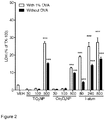
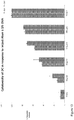
- I-alum was dissolved within 3 days in the acidic artificial lysosomal fluid (pH 5.5) whilst minimally dissolved in the artificial interstitial fluid (pH 7.4) (data not shown). Co 3 O 4 NP showed minimal dissolution in both conditions (data not shown). 3.2. In vitro cytotoxicity. I-alum was by far the most toxic of the NPs tested on mouse macrophages ( Figure 2 ). When particles were dispersed with OVA, particles were more toxic. Table 1. Hydrodynamic size and polydispersity of particles 24 h after dispersion (mean ⁇ SD).
- IgG1 was the only immunoglobulin subclass measurable at this stage.
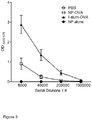
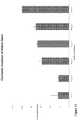
- Figure 3 shows that both I-alum-OVA and NP-OVA induced IgG1 production although I-alum-OVA was more potent than NP-OVA.
- Levels of OVA-specific immunoglobulins induced by NP-alone were similar to the vehicle control (PBS).
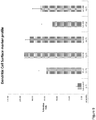
- NP-OVA and I-alum-OVA produced increases in the IgG1 response although again I-alum-OVA showed higher responses than NP-OVA ( Figure 4A ).
- the IgG1 levels in both NP-OVA and I-alum-OVA groups showed a marked increase when compared to those of post-sensitisation.
- NP-OVA increased in IgG2c levels ( Figure 4B ).
- I-alum-OVA induced higher IgE, IgM, and IgA levels than NP-OVA ( Figures 4C - 4E ).
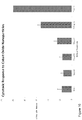
- levels of IFN- ⁇ were significantly increased by the NP-OVA whilst other groups showed no significant responses ( Figure 6A ).
- Levels of IL-1 ⁇ were significantly increased by I-alum-OVA only ( Figure 6B ).
- IL-10 and IL-13 showed no significant changes compared to controls (data not shown).
- Co 3 O 4 NP showed small agglomerates when dispersed with OVA which forms a protein corona providing repulsive force between particles[23].
- I-alum was relatively well-dispersed in saline which might be because of the stabilisers added during manufacturing.
- Adjuvants are believed to work by activating antigen presenting cells but there is little information on their toxicity for such cells.
- the LDH cytotoxicity study showed that I-alum by itself was approximately 6 times more toxic than an equivalent amount of Co 3 O 4 NP.
- Dispersal in OVA showed increased toxicity of both Co 3 O 4 NP and alum which might be due to the cytotoxicity of OVA itself or to facilitating recognition and phagocytosis of particles by forming a protein corona.
- the post-sensitisation data showed that both I-alum-OVA and NP-OVA increased serum OVA-specific IgG1 levels (which is marker for Th2 response[3]) whilst other immunoglobulins were not increased. However, the potential for IgG1 production by I-alum-OVA was about three times higher than that of NP-OVA.
- the post-challenge data showed that a T cell response was generated, confirmed by proliferation of spleen cells cultured with OVA in vitro. Further boosted immunoglobulin responses were also seen in mice immunized with either adjuvant.
- IgG and IgE antigen specific class-switched immunoglobulins
- IgG and IgE antigen specific class-switched immunoglobulins
- serum I-alum-OVA produced mainly Th2 type (IgG1) and allergic antibody responses (IgE) whilst NP-OVA produced a more balanced Th1 (IgG2c) and Th2 (IgG1) type response with much less IgE.
- Co 3 O 4 NP as an adjuvant maybe more likely to provide robust 'all-round' immunity and less likely to induce unwanted allergic/side effects.
- Th2 dependent IgG1 levels were significantly increased by NP-OVA and I-alum-OVA with the same pattern as seen in serum.
- Peritoneal lavage IFN- ⁇ a Th1 type cytokine[24] was increased only in the NP-OVA immunised group.
- the differential cell counts of the peritoneal lavage fluid showed that both NP-OVA and alum-OVA induced lymphocytic inflammation which is important for adjuvanticity[5] but NP-OVA induced far less granulocytic inflammation.
- I-alum induced prolonged massive inflammation and necrosis in the subcutaneous and muscular layer of the injected skin whilst Co 3 O 4 NP showed mild inflammation.
- the greater inflammation induced by I-alum compared to Co 3 O 4 NP was consistent with increased peritoneal IL-1 ⁇ secretion and number of granulocytes recruited to the peritoneal cavity by I-alum indicating inflammatory responses at both sensitisation and challenge sites.
- the I-alum induced more allergic anti-OVA IgE serum antibodies.
- Co 3 O 4 NP had not changed in solubility and this was consistent with persistence at the injection site. This suggests that the Co 3 O 4 NP is very insoluble and stable. There is a concern regarding the solubility of Co 3 O 4 NP, as cobalt ions are being released very slowly into cells and their long-term effect is unknown[19]. Cobalt poisoning is not common but it can occur. There are reports of hip replacements (which contain cobalt and chromium) that corrode over time and release metal ions into the body causing severe illness[32]. This seems an unlikely side-effect here for Co 3 O 4 NP due to their small dose and volume of injection and insoluble nature.
- Co 3 O 4 NP stimulated less allergic antibody production and in vivo inflammation (at both sensitisation and challenge sites) than a standard dose of the alum-containing adjuvant Imject alum. Together with the evidence that they also produced lower in vitro toxicity whilst stimulating both Th1 and Th2 in vivo antibody responses, this indicates that Co 3 O 4 NP would be suitable for use as a vaccine adjuvant.
Landscapes
- Chemical & Material Sciences (AREA)
- Health & Medical Sciences (AREA)
- Life Sciences & Earth Sciences (AREA)
- Organic Chemistry (AREA)
- Medicinal Chemistry (AREA)
- General Health & Medical Sciences (AREA)
- Chemical Kinetics & Catalysis (AREA)
- Immunology (AREA)
- Veterinary Medicine (AREA)
- Microbiology (AREA)
- Mycology (AREA)
- Pharmacology & Pharmacy (AREA)
- Epidemiology (AREA)
- Animal Behavior & Ethology (AREA)
- General Chemical & Material Sciences (AREA)
- Public Health (AREA)
- Inorganic Chemistry (AREA)
- Medicines Containing Antibodies Or Antigens For Use As Internal Diagnostic Agents (AREA)
- Medicinal Preparation (AREA)
Claims (12)
- Adjuvans, beinhaltend Cobalt-Nanopartikel und/oder Cobaltoxid-Nanopartikel.
- Adjuvans nach Anspruch 1, bei welchem das Adjuvans kein Alaun beinhaltet.
- Adjuvans nach Anspruch 1 oder 2, bei welchem die Cobaltoxid-Nanopartikel Cobalt(II,III)-oxid (Co3O4)-Nanopartikel beinhalten.
- Adjuvans nach einem der vorhergehenden Ansprüche, bei welchem das Adjuvans Cobaltoxid (Cobalt(II)-oxid: CoO)-Nanopartikel und/oder Cobaltoxid (Cobalt(III)-oxid: Co2O3)-Nanopartikel beinhaltet oder zudem beinhaltet.
- Adjuvans nach einem der vorhergehenden Ansprüche, bei welchem die Nanopartikel einen Durchmesser zwischen 1 nm und 100 nm aufweisen.
- Adjuvans nach einem der vorhergehenden Ansprüche, bei welchem die Nanopartikel einen mittleren Durchmesser von 18.4 ± 5.0 nm aufweisen.
- Anorganische Cobalt-Nanopartikel und/oder Cobaltoxid-Nanopartikel zum Gebrauch als Adjuvanzien.
- Anorganische Cobalt-Nanopartikel und/oder Cobaltoxid-Nanopartikel nach Anspruch 7 zum Gebrauch nach Anspruch 7, bei welchen die Cobalt-Nanopartikel und/oder Cobaltoxid-Nanopartikel Co3O4-Nanopartikel beinhalten.
- Adjuvans-Zusammensetzung, beinhaltend das Adjuvans nach einem der Ansprüche 1 bis 6, ein(en) pharmazeutisch oder physiologisch akzeptables(en) Hilfsstoff, Lösemittel, Trägerstoff oder Verdünnungsmittel.
- Adjuvans-Zusammensetzung nach Anspruch 9, bei welcher die Zusammensetzung eine oder mehrere zusätzliche Adjuvans-Komponenten beinhaltet.
- Impfstoff, beinhaltend ein Adjuvans nach einem der Ansprüche 1 bis 6.
- Adjuvans nach einem der Ansprüche 1 bis 6 oder Impfstoff nach Anspruch 11, zum Gebrauch zwecks (i) Verbessern der Immunreaktion bei Menschen oder Tieren, (ii) Hervorrufen von Immunreaktionen und/oder (iii) Verbessern, Modulieren oder Steigern von Immunreaktionen bei Menschen oder Tieren.
Applications Claiming Priority (2)
| Application Number | Priority Date | Filing Date | Title |
|---|---|---|---|
| GBGB1205237.9A GB201205237D0 (en) | 2012-03-26 | 2012-03-26 | Adjuvant |
| PCT/GB2013/050664 WO2013144562A1 (en) | 2012-03-26 | 2013-03-15 | Adjuvant |
Publications (2)
| Publication Number | Publication Date |
|---|---|
| EP2830656A1 EP2830656A1 (de) | 2015-02-04 |
| EP2830656B1 true EP2830656B1 (de) | 2017-08-02 |
Family
ID=46087086
Family Applications (1)
| Application Number | Title | Priority Date | Filing Date |
|---|---|---|---|
| EP13711463.3A Not-in-force EP2830656B1 (de) | 2012-03-26 | 2013-03-15 | Adjuvans |
Country Status (13)
| Country | Link |
|---|---|
| US (1) | US20150150965A1 (de) |
| EP (1) | EP2830656B1 (de) |
| JP (1) | JP2015511624A (de) |
| KR (1) | KR20150013464A (de) |
| CN (1) | CN104427998B (de) |
| AU (1) | AU2013239497B2 (de) |
| CA (1) | CA2868679A1 (de) |
| CL (1) | CL2014002578A1 (de) |
| ES (1) | ES2645076T3 (de) |
| GB (1) | GB201205237D0 (de) |
| NO (1) | NO2830656T3 (de) |
| NZ (1) | NZ701115A (de) |
| WO (1) | WO2013144562A1 (de) |
Families Citing this family (5)
| Publication number | Priority date | Publication date | Assignee | Title |
|---|---|---|---|---|
| CN104587464B (zh) * | 2015-01-23 | 2018-05-22 | 四川大学 | 一种基于氢氧化铝纳米粒的疫苗载体 |
| CN110201162B (zh) * | 2019-06-14 | 2021-09-07 | 中山大学附属第八医院(深圳福田) | 光治疗剂在打破肿瘤免疫抑制微环境中的应用 |
| CN112618711B (zh) * | 2019-09-24 | 2023-09-29 | 华南理工大学 | 一种猪口服接种疫苗纳米复合佐剂及其制备方法与应用 |
| CN111388663A (zh) * | 2020-01-07 | 2020-07-10 | 河北工业大学 | 一种花型氧化硅纳米颗粒疫苗及其制备方法 |
| CN115724449B (zh) * | 2022-11-22 | 2023-12-12 | 浙大城市学院 | 一种混合盐纳米铝佐剂及其制备方法和应用 |
Family Cites Families (4)
| Publication number | Priority date | Publication date | Assignee | Title |
|---|---|---|---|---|
| US5084269A (en) | 1986-11-06 | 1992-01-28 | Kullenberg Fred W | Adjuvant for dose treatment with antigens |
| AU769539B2 (en) | 1999-01-29 | 2004-01-29 | Zoetis Services Llc | Adjuvants for use in vaccines |
| DE102008033175A1 (de) * | 2008-07-15 | 2010-01-21 | Merck Patent Gmbh | Siliciumdioxid-Nanopartikel und deren Verwendung zur Vakzinierung |
| WO2011066390A2 (en) * | 2009-11-25 | 2011-06-03 | Wildcat Discovery Technologies, Inc. | Nanoscale adjuvants and related pharmaceutical compositions and methods |
-
2012
- 2012-03-26 GB GBGB1205237.9A patent/GB201205237D0/en not_active Ceased
-
2013
- 2013-03-15 WO PCT/GB2013/050664 patent/WO2013144562A1/en not_active Ceased
- 2013-03-15 NZ NZ701115A patent/NZ701115A/en not_active IP Right Cessation
- 2013-03-15 KR KR1020147029668A patent/KR20150013464A/ko not_active Withdrawn
- 2013-03-15 AU AU2013239497A patent/AU2013239497B2/en not_active Ceased
- 2013-03-15 JP JP2015502437A patent/JP2015511624A/ja active Pending
- 2013-03-15 ES ES13711463.3T patent/ES2645076T3/es active Active
- 2013-03-15 NO NO13711463A patent/NO2830656T3/no unknown
- 2013-03-15 CN CN201380027056.XA patent/CN104427998B/zh not_active Expired - Fee Related
- 2013-03-15 EP EP13711463.3A patent/EP2830656B1/de not_active Not-in-force
- 2013-03-15 US US14/388,663 patent/US20150150965A1/en not_active Abandoned
- 2013-03-15 CA CA2868679A patent/CA2868679A1/en not_active Abandoned
-
2014
- 2014-09-26 CL CL2014002578A patent/CL2014002578A1/es unknown
Non-Patent Citations (1)
| Title |
|---|
| None * |
Also Published As
| Publication number | Publication date |
|---|---|
| NZ701115A (en) | 2016-10-28 |
| CA2868679A1 (en) | 2013-10-03 |
| CN104427998B (zh) | 2017-12-12 |
| JP2015511624A (ja) | 2015-04-20 |
| WO2013144562A1 (en) | 2013-10-03 |
| AU2013239497B2 (en) | 2017-12-21 |
| KR20150013464A (ko) | 2015-02-05 |
| EP2830656A1 (de) | 2015-02-04 |
| CL2014002578A1 (es) | 2015-05-08 |
| NO2830656T3 (de) | 2017-12-30 |
| ES2645076T3 (es) | 2017-12-04 |
| GB201205237D0 (en) | 2012-05-09 |
| US20150150965A1 (en) | 2015-06-04 |
| CN104427998A (zh) | 2015-03-18 |
| AU2013239497A1 (en) | 2014-11-06 |
Similar Documents
| Publication | Publication Date | Title |
|---|---|---|
| RU2587061C2 (ru) | Способы лечения аллергических заболеваний | |
| Cibulski et al. | Novel ISCOMs from Quillaja brasiliensis saponins induce mucosal and systemic antibody production, T-cell responses and improved antigen uptake | |
| AU2013239497B2 (en) | Adjuvant | |
| US12318436B2 (en) | Composition and method for spray drying an adjuvant vaccine emulsion | |
| US20080014281A1 (en) | Chitin Micro-Particles As An Adjuvant | |
| JP2014505036A (ja) | マイコバクテリウム抗原性組成物 | |
| CN116617386B (zh) | 雷公藤红素或其可药用衍生物在制备疫苗佐剂中的用途 | |
| Zhang et al. | Engineered hydroxyapatite nanoadjuvants with controlled shape and aspect ratios reveal their immunomodulatory potentials | |
| Ahmed et al. | Development and evaluation of biodegradable particles coloaded with antigen and the Toll-like receptor agonist, pentaerythritol lipid A, as a cancer vaccine | |
| Ni et al. | Recombinant ArgF PLGA nanoparticles enhances BCG induced immune responses against Mycobacterium bovis infection | |
| Tafaghodi et al. | Immunization against leishmaniasis by PLGA nanospheres loaded with an experimental autoclaved Leishmania major (ALM) and Quillaja saponins. | |
| WO2009142988A2 (en) | Chitin micro-particles as an adjuvant | |
| JP7016317B2 (ja) | アジュバント組成物 | |
| WO2013110050A1 (en) | Inulin and inulin acetate formulations | |
| EP1843787B1 (de) | Lipid- und distickstoffoxidverbindung als hilfsmittel zur erhöhung der impfstoffeffizienz | |
| WO2017075053A1 (en) | Immune-modifying particles for the treatment of malaria | |
| CA3141577C (en) | Composition and method for spray drying an adjuvant vaccine emulsion | |
| US20240174986A1 (en) | Mutant herpesvirus and vaccine compositions | |
| WO2020045155A1 (ja) | 免疫寛容誘導剤及びアレルギー性疾患の治療又は予防剤 | |
| Hong | From nutritional support to innovative vaccines: Approaches to bolster the immune response to respiratory infection | |
| WO2025054577A1 (en) | Nanoparticle based subunit vaccine for african swine fever virus | |
| CN106999508A (zh) | 作为真菌感染疫苗的真菌葡萄糖神经酰胺 | |
| Parsons et al. | Nanosystems for Selective Epithelial Barrier Targeting in Chronic Airway Diseases | |
| HK1118013B (en) | Lipid and nitrous oxide combination as adjuvant for the enhancement of the efficacy of vaccines |
Legal Events
| Date | Code | Title | Description |
|---|---|---|---|
| PUAI | Public reference made under article 153(3) epc to a published international application that has entered the european phase |
Free format text: ORIGINAL CODE: 0009012 |
|
| 17P | Request for examination filed |
Effective date: 20140926 |
|
| AK | Designated contracting states |
Kind code of ref document: A1 Designated state(s): AL AT BE BG CH CY CZ DE DK EE ES FI FR GB GR HR HU IE IS IT LI LT LU LV MC MK MT NL NO PL PT RO RS SE SI SK SM TR |
|
| AX | Request for extension of the european patent |
Extension state: BA ME |
|
| DAX | Request for extension of the european patent (deleted) | ||
| 17Q | First examination report despatched |
Effective date: 20150907 |
|
| GRAP | Despatch of communication of intention to grant a patent |
Free format text: ORIGINAL CODE: EPIDOSNIGR1 |
|
| STAA | Information on the status of an ep patent application or granted ep patent |
Free format text: STATUS: GRANT OF PATENT IS INTENDED |
|
| INTG | Intention to grant announced |
Effective date: 20170216 |
|
| GRAS | Grant fee paid |
Free format text: ORIGINAL CODE: EPIDOSNIGR3 |
|
| GRAA | (expected) grant |
Free format text: ORIGINAL CODE: 0009210 |
|
| STAA | Information on the status of an ep patent application or granted ep patent |
Free format text: STATUS: THE PATENT HAS BEEN GRANTED |
|
| AK | Designated contracting states |
Kind code of ref document: B1 Designated state(s): AL AT BE BG CH CY CZ DE DK EE ES FI FR GB GR HR HU IE IS IT LI LT LU LV MC MK MT NL NO PL PT RO RS SE SI SK SM TR |
|
| REG | Reference to a national code |
Ref country code: CH Ref legal event code: EP Ref country code: AT Ref legal event code: REF Ref document number: 913744 Country of ref document: AT Kind code of ref document: T Effective date: 20170815 |
|
| REG | Reference to a national code |
Ref country code: IE Ref legal event code: FG4D |
|
| REG | Reference to a national code |
Ref country code: DE Ref legal event code: R096 Ref document number: 602013024333 Country of ref document: DE |
|
| REG | Reference to a national code |
Ref country code: CH Ref legal event code: NV Representative=s name: SERVOPATENT GMBH, CH |
|
| REG | Reference to a national code |
Ref country code: NL Ref legal event code: FP |
|
| REG | Reference to a national code |
Ref country code: ES Ref legal event code: FG2A Ref document number: 2645076 Country of ref document: ES Kind code of ref document: T3 Effective date: 20171204 |
|
| REG | Reference to a national code |
Ref country code: AT Ref legal event code: MK05 Ref document number: 913744 Country of ref document: AT Kind code of ref document: T Effective date: 20170802 |
|
| REG | Reference to a national code |
Ref country code: LT Ref legal event code: MG4D |
|
| REG | Reference to a national code |
Ref country code: NO Ref legal event code: T2 Effective date: 20170802 |
|
| PG25 | Lapsed in a contracting state [announced via postgrant information from national office to epo] |
Ref country code: AT Free format text: LAPSE BECAUSE OF FAILURE TO SUBMIT A TRANSLATION OF THE DESCRIPTION OR TO PAY THE FEE WITHIN THE PRESCRIBED TIME-LIMIT Effective date: 20170802 Ref country code: HR Free format text: LAPSE BECAUSE OF FAILURE TO SUBMIT A TRANSLATION OF THE DESCRIPTION OR TO PAY THE FEE WITHIN THE PRESCRIBED TIME-LIMIT Effective date: 20170802 Ref country code: SE Free format text: LAPSE BECAUSE OF FAILURE TO SUBMIT A TRANSLATION OF THE DESCRIPTION OR TO PAY THE FEE WITHIN THE PRESCRIBED TIME-LIMIT Effective date: 20170802 Ref country code: FI Free format text: LAPSE BECAUSE OF FAILURE TO SUBMIT A TRANSLATION OF THE DESCRIPTION OR TO PAY THE FEE WITHIN THE PRESCRIBED TIME-LIMIT Effective date: 20170802 Ref country code: LT Free format text: LAPSE BECAUSE OF FAILURE TO SUBMIT A TRANSLATION OF THE DESCRIPTION OR TO PAY THE FEE WITHIN THE PRESCRIBED TIME-LIMIT Effective date: 20170802 |
|
| PG25 | Lapsed in a contracting state [announced via postgrant information from national office to epo] |
Ref country code: PL Free format text: LAPSE BECAUSE OF FAILURE TO SUBMIT A TRANSLATION OF THE DESCRIPTION OR TO PAY THE FEE WITHIN THE PRESCRIBED TIME-LIMIT Effective date: 20170802 Ref country code: GR Free format text: LAPSE BECAUSE OF FAILURE TO SUBMIT A TRANSLATION OF THE DESCRIPTION OR TO PAY THE FEE WITHIN THE PRESCRIBED TIME-LIMIT Effective date: 20171103 Ref country code: BG Free format text: LAPSE BECAUSE OF FAILURE TO SUBMIT A TRANSLATION OF THE DESCRIPTION OR TO PAY THE FEE WITHIN THE PRESCRIBED TIME-LIMIT Effective date: 20171102 Ref country code: IS Free format text: LAPSE BECAUSE OF FAILURE TO SUBMIT A TRANSLATION OF THE DESCRIPTION OR TO PAY THE FEE WITHIN THE PRESCRIBED TIME-LIMIT Effective date: 20171202 Ref country code: RS Free format text: LAPSE BECAUSE OF FAILURE TO SUBMIT A TRANSLATION OF THE DESCRIPTION OR TO PAY THE FEE WITHIN THE PRESCRIBED TIME-LIMIT Effective date: 20170802 Ref country code: LV Free format text: LAPSE BECAUSE OF FAILURE TO SUBMIT A TRANSLATION OF THE DESCRIPTION OR TO PAY THE FEE WITHIN THE PRESCRIBED TIME-LIMIT Effective date: 20170802 |
|
| REG | Reference to a national code |
Ref country code: FR Ref legal event code: PLFP Year of fee payment: 6 |
|
| PG25 | Lapsed in a contracting state [announced via postgrant information from national office to epo] |
Ref country code: DK Free format text: LAPSE BECAUSE OF FAILURE TO SUBMIT A TRANSLATION OF THE DESCRIPTION OR TO PAY THE FEE WITHIN THE PRESCRIBED TIME-LIMIT Effective date: 20170802 Ref country code: CZ Free format text: LAPSE BECAUSE OF FAILURE TO SUBMIT A TRANSLATION OF THE DESCRIPTION OR TO PAY THE FEE WITHIN THE PRESCRIBED TIME-LIMIT Effective date: 20170802 Ref country code: RO Free format text: LAPSE BECAUSE OF FAILURE TO SUBMIT A TRANSLATION OF THE DESCRIPTION OR TO PAY THE FEE WITHIN THE PRESCRIBED TIME-LIMIT Effective date: 20170802 |
|
| PGFP | Annual fee paid to national office [announced via postgrant information from national office to epo] |
Ref country code: DE Payment date: 20180313 Year of fee payment: 6 Ref country code: NL Payment date: 20180312 Year of fee payment: 6 Ref country code: CH Payment date: 20180328 Year of fee payment: 6 |
|
| REG | Reference to a national code |
Ref country code: DE Ref legal event code: R097 Ref document number: 602013024333 Country of ref document: DE |
|
| PG25 | Lapsed in a contracting state [announced via postgrant information from national office to epo] |
Ref country code: SK Free format text: LAPSE BECAUSE OF FAILURE TO SUBMIT A TRANSLATION OF THE DESCRIPTION OR TO PAY THE FEE WITHIN THE PRESCRIBED TIME-LIMIT Effective date: 20170802 Ref country code: EE Free format text: LAPSE BECAUSE OF FAILURE TO SUBMIT A TRANSLATION OF THE DESCRIPTION OR TO PAY THE FEE WITHIN THE PRESCRIBED TIME-LIMIT Effective date: 20170802 Ref country code: SM Free format text: LAPSE BECAUSE OF FAILURE TO SUBMIT A TRANSLATION OF THE DESCRIPTION OR TO PAY THE FEE WITHIN THE PRESCRIBED TIME-LIMIT Effective date: 20170802 |
|
| PGFP | Annual fee paid to national office [announced via postgrant information from national office to epo] |
Ref country code: IE Payment date: 20180326 Year of fee payment: 6 Ref country code: IT Payment date: 20180322 Year of fee payment: 6 Ref country code: FR Payment date: 20180327 Year of fee payment: 6 Ref country code: BE Payment date: 20180314 Year of fee payment: 6 |
|
| PLBE | No opposition filed within time limit |
Free format text: ORIGINAL CODE: 0009261 |
|
| STAA | Information on the status of an ep patent application or granted ep patent |
Free format text: STATUS: NO OPPOSITION FILED WITHIN TIME LIMIT |
|
| 26N | No opposition filed |
Effective date: 20180503 |
|
| PGFP | Annual fee paid to national office [announced via postgrant information from national office to epo] |
Ref country code: ES Payment date: 20180402 Year of fee payment: 6 |
|
| PG25 | Lapsed in a contracting state [announced via postgrant information from national office to epo] |
Ref country code: SI Free format text: LAPSE BECAUSE OF FAILURE TO SUBMIT A TRANSLATION OF THE DESCRIPTION OR TO PAY THE FEE WITHIN THE PRESCRIBED TIME-LIMIT Effective date: 20170802 |
|
| PG25 | Lapsed in a contracting state [announced via postgrant information from national office to epo] |
Ref country code: MC Free format text: LAPSE BECAUSE OF FAILURE TO SUBMIT A TRANSLATION OF THE DESCRIPTION OR TO PAY THE FEE WITHIN THE PRESCRIBED TIME-LIMIT Effective date: 20170802 |
|
| PG25 | Lapsed in a contracting state [announced via postgrant information from national office to epo] |
Ref country code: LU Free format text: LAPSE BECAUSE OF NON-PAYMENT OF DUE FEES Effective date: 20180315 |
|
| REG | Reference to a national code |
Ref country code: DE Ref legal event code: R119 Ref document number: 602013024333 Country of ref document: DE |
|
| REG | Reference to a national code |
Ref country code: CH Ref legal event code: PL |
|
| REG | Reference to a national code |
Ref country code: NL Ref legal event code: MM Effective date: 20190401 |
|
| REG | Reference to a national code |
Ref country code: BE Ref legal event code: MM Effective date: 20190331 |
|
| PG25 | Lapsed in a contracting state [announced via postgrant information from national office to epo] |
Ref country code: IE Free format text: LAPSE BECAUSE OF NON-PAYMENT OF DUE FEES Effective date: 20190315 Ref country code: MT Free format text: LAPSE BECAUSE OF NON-PAYMENT OF DUE FEES Effective date: 20180315 Ref country code: NL Free format text: LAPSE BECAUSE OF NON-PAYMENT OF DUE FEES Effective date: 20190401 Ref country code: DE Free format text: LAPSE BECAUSE OF NON-PAYMENT OF DUE FEES Effective date: 20191001 Ref country code: LI Free format text: LAPSE BECAUSE OF NON-PAYMENT OF DUE FEES Effective date: 20190331 Ref country code: CH Free format text: LAPSE BECAUSE OF NON-PAYMENT OF DUE FEES Effective date: 20190331 |
|
| PG25 | Lapsed in a contracting state [announced via postgrant information from national office to epo] |
Ref country code: BE Free format text: LAPSE BECAUSE OF NON-PAYMENT OF DUE FEES Effective date: 20190331 Ref country code: FR Free format text: LAPSE BECAUSE OF NON-PAYMENT OF DUE FEES Effective date: 20190331 Ref country code: IT Free format text: LAPSE BECAUSE OF NON-PAYMENT OF DUE FEES Effective date: 20190315 |
|
| PG25 | Lapsed in a contracting state [announced via postgrant information from national office to epo] |
Ref country code: TR Free format text: LAPSE BECAUSE OF FAILURE TO SUBMIT A TRANSLATION OF THE DESCRIPTION OR TO PAY THE FEE WITHIN THE PRESCRIBED TIME-LIMIT Effective date: 20170802 |
|
| PG25 | Lapsed in a contracting state [announced via postgrant information from national office to epo] |
Ref country code: HU Free format text: LAPSE BECAUSE OF FAILURE TO SUBMIT A TRANSLATION OF THE DESCRIPTION OR TO PAY THE FEE WITHIN THE PRESCRIBED TIME-LIMIT; INVALID AB INITIO Effective date: 20130315 Ref country code: PT Free format text: LAPSE BECAUSE OF FAILURE TO SUBMIT A TRANSLATION OF THE DESCRIPTION OR TO PAY THE FEE WITHIN THE PRESCRIBED TIME-LIMIT Effective date: 20170802 |
|
| PG25 | Lapsed in a contracting state [announced via postgrant information from national office to epo] |
Ref country code: CY Free format text: LAPSE BECAUSE OF FAILURE TO SUBMIT A TRANSLATION OF THE DESCRIPTION OR TO PAY THE FEE WITHIN THE PRESCRIBED TIME-LIMIT Effective date: 20170802 Ref country code: MK Free format text: LAPSE BECAUSE OF NON-PAYMENT OF DUE FEES Effective date: 20170802 |
|
| REG | Reference to a national code |
Ref country code: ES Ref legal event code: FD2A Effective date: 20200727 |
|
| PG25 | Lapsed in a contracting state [announced via postgrant information from national office to epo] |
Ref country code: AL Free format text: LAPSE BECAUSE OF FAILURE TO SUBMIT A TRANSLATION OF THE DESCRIPTION OR TO PAY THE FEE WITHIN THE PRESCRIBED TIME-LIMIT Effective date: 20170802 |
|
| PG25 | Lapsed in a contracting state [announced via postgrant information from national office to epo] |
Ref country code: ES Free format text: LAPSE BECAUSE OF NON-PAYMENT OF DUE FEES Effective date: 20190316 |
|
| P01 | Opt-out of the competence of the unified patent court (upc) registered |
Effective date: 20230518 |
|
| PGFP | Annual fee paid to national office [announced via postgrant information from national office to epo] |
Ref country code: GB Payment date: 20240312 Year of fee payment: 12 |
|
| PGFP | Annual fee paid to national office [announced via postgrant information from national office to epo] |
Ref country code: NO Payment date: 20240321 Year of fee payment: 12 |
|
| GBPC | Gb: european patent ceased through non-payment of renewal fee |
Effective date: 20250315 |
|
| PG25 | Lapsed in a contracting state [announced via postgrant information from national office to epo] |
Ref country code: GB Free format text: LAPSE BECAUSE OF NON-PAYMENT OF DUE FEES Effective date: 20250315 |
|
| PG25 | Lapsed in a contracting state [announced via postgrant information from national office to epo] |
Ref country code: NO Free format text: LAPSE BECAUSE OF NON-PAYMENT OF DUE FEES Effective date: 20250331 |