EP2830626B1 - Fgfr inhibitor for use in the treatment of hypophosphatemic disorders - Google Patents
Fgfr inhibitor for use in the treatment of hypophosphatemic disorders Download PDFInfo
- Publication number
- EP2830626B1 EP2830626B1 EP13712589.4A EP13712589A EP2830626B1 EP 2830626 B1 EP2830626 B1 EP 2830626B1 EP 13712589 A EP13712589 A EP 13712589A EP 2830626 B1 EP2830626 B1 EP 2830626B1
- Authority
- EP
- European Patent Office
- Prior art keywords
- piperazin
- phenylamino
- dichloro
- urea
- pyrimid
- Prior art date
- Legal status (The legal status is an assumption and is not a legal conclusion. Google has not performed a legal analysis and makes no representation as to the accuracy of the status listed.)
- Active
Links
Images


Classifications
-
- A—HUMAN NECESSITIES
- A61—MEDICAL OR VETERINARY SCIENCE; HYGIENE
- A61K—PREPARATIONS FOR MEDICAL, DENTAL OR TOILETRY PURPOSES
- A61K31/00—Medicinal preparations containing organic active ingredients
- A61K31/33—Heterocyclic compounds
- A61K31/395—Heterocyclic compounds having nitrogen as a ring hetero atom, e.g. guanethidine or rifamycins
- A61K31/495—Heterocyclic compounds having nitrogen as a ring hetero atom, e.g. guanethidine or rifamycins having six-membered rings with two or more nitrogen atoms as the only ring heteroatoms, e.g. piperazine or tetrazines
- A61K31/505—Pyrimidines; Hydrogenated pyrimidines, e.g. trimethoprim
- A61K31/506—Pyrimidines; Hydrogenated pyrimidines, e.g. trimethoprim not condensed and containing further heterocyclic rings
-
- A—HUMAN NECESSITIES
- A61—MEDICAL OR VETERINARY SCIENCE; HYGIENE
- A61K—PREPARATIONS FOR MEDICAL, DENTAL OR TOILETRY PURPOSES
- A61K31/00—Medicinal preparations containing organic active ingredients
- A61K31/59—Compounds containing 9, 10- seco- cyclopenta[a]hydrophenanthrene ring systems
-
- A—HUMAN NECESSITIES
- A61—MEDICAL OR VETERINARY SCIENCE; HYGIENE
- A61K—PREPARATIONS FOR MEDICAL, DENTAL OR TOILETRY PURPOSES
- A61K33/00—Medicinal preparations containing inorganic active ingredients
- A61K33/06—Aluminium, calcium or magnesium; Compounds thereof, e.g. clay
-
- A—HUMAN NECESSITIES
- A61—MEDICAL OR VETERINARY SCIENCE; HYGIENE
- A61K—PREPARATIONS FOR MEDICAL, DENTAL OR TOILETRY PURPOSES
- A61K33/00—Medicinal preparations containing inorganic active ingredients
- A61K33/42—Phosphorus; Compounds thereof
-
- A—HUMAN NECESSITIES
- A61—MEDICAL OR VETERINARY SCIENCE; HYGIENE
- A61K—PREPARATIONS FOR MEDICAL, DENTAL OR TOILETRY PURPOSES
- A61K38/00—Medicinal preparations containing peptides
- A61K38/16—Peptides having more than 20 amino acids; Gastrins; Somatostatins; Melanotropins; Derivatives thereof
- A61K38/17—Peptides having more than 20 amino acids; Gastrins; Somatostatins; Melanotropins; Derivatives thereof from animals; from humans
- A61K38/1703—Peptides having more than 20 amino acids; Gastrins; Somatostatins; Melanotropins; Derivatives thereof from animals; from humans from vertebrates
- A61K38/1709—Peptides having more than 20 amino acids; Gastrins; Somatostatins; Melanotropins; Derivatives thereof from animals; from humans from vertebrates from mammals
-
- A—HUMAN NECESSITIES
- A61—MEDICAL OR VETERINARY SCIENCE; HYGIENE
- A61K—PREPARATIONS FOR MEDICAL, DENTAL OR TOILETRY PURPOSES
- A61K38/00—Medicinal preparations containing peptides
- A61K38/16—Peptides having more than 20 amino acids; Gastrins; Somatostatins; Melanotropins; Derivatives thereof
- A61K38/17—Peptides having more than 20 amino acids; Gastrins; Somatostatins; Melanotropins; Derivatives thereof from animals; from humans
- A61K38/22—Hormones
- A61K38/29—Parathyroid hormone, i.e. parathormone; Parathyroid hormone-related peptides
-
- A—HUMAN NECESSITIES
- A61—MEDICAL OR VETERINARY SCIENCE; HYGIENE
- A61K—PREPARATIONS FOR MEDICAL, DENTAL OR TOILETRY PURPOSES
- A61K45/00—Medicinal preparations containing active ingredients not provided for in groups A61K31/00 - A61K41/00
- A61K45/06—Mixtures of active ingredients without chemical characterisation, e.g. antiphlogistics and cardiaca
-
- A—HUMAN NECESSITIES
- A61—MEDICAL OR VETERINARY SCIENCE; HYGIENE
- A61P—SPECIFIC THERAPEUTIC ACTIVITY OF CHEMICAL COMPOUNDS OR MEDICINAL PREPARATIONS
- A61P17/00—Drugs for dermatological disorders
-
- A—HUMAN NECESSITIES
- A61—MEDICAL OR VETERINARY SCIENCE; HYGIENE
- A61P—SPECIFIC THERAPEUTIC ACTIVITY OF CHEMICAL COMPOUNDS OR MEDICINAL PREPARATIONS
- A61P19/00—Drugs for skeletal disorders
- A61P19/08—Drugs for skeletal disorders for bone diseases, e.g. rachitism, Paget's disease
-
- A—HUMAN NECESSITIES
- A61—MEDICAL OR VETERINARY SCIENCE; HYGIENE
- A61P—SPECIFIC THERAPEUTIC ACTIVITY OF CHEMICAL COMPOUNDS OR MEDICINAL PREPARATIONS
- A61P19/00—Drugs for skeletal disorders
- A61P19/08—Drugs for skeletal disorders for bone diseases, e.g. rachitism, Paget's disease
- A61P19/10—Drugs for skeletal disorders for bone diseases, e.g. rachitism, Paget's disease for osteoporosis
-
- A—HUMAN NECESSITIES
- A61—MEDICAL OR VETERINARY SCIENCE; HYGIENE
- A61P—SPECIFIC THERAPEUTIC ACTIVITY OF CHEMICAL COMPOUNDS OR MEDICINAL PREPARATIONS
- A61P3/00—Drugs for disorders of the metabolism
- A61P3/02—Nutrients, e.g. vitamins, minerals
-
- A—HUMAN NECESSITIES
- A61—MEDICAL OR VETERINARY SCIENCE; HYGIENE
- A61P—SPECIFIC THERAPEUTIC ACTIVITY OF CHEMICAL COMPOUNDS OR MEDICINAL PREPARATIONS
- A61P3/00—Drugs for disorders of the metabolism
- A61P3/12—Drugs for disorders of the metabolism for electrolyte homeostasis
-
- A—HUMAN NECESSITIES
- A61—MEDICAL OR VETERINARY SCIENCE; HYGIENE
- A61P—SPECIFIC THERAPEUTIC ACTIVITY OF CHEMICAL COMPOUNDS OR MEDICINAL PREPARATIONS
- A61P3/00—Drugs for disorders of the metabolism
- A61P3/12—Drugs for disorders of the metabolism for electrolyte homeostasis
- A61P3/14—Drugs for disorders of the metabolism for electrolyte homeostasis for calcium homeostasis
-
- A—HUMAN NECESSITIES
- A61—MEDICAL OR VETERINARY SCIENCE; HYGIENE
- A61P—SPECIFIC THERAPEUTIC ACTIVITY OF CHEMICAL COMPOUNDS OR MEDICINAL PREPARATIONS
- A61P35/00—Antineoplastic agents
-
- A—HUMAN NECESSITIES
- A61—MEDICAL OR VETERINARY SCIENCE; HYGIENE
- A61P—SPECIFIC THERAPEUTIC ACTIVITY OF CHEMICAL COMPOUNDS OR MEDICINAL PREPARATIONS
- A61P39/00—General protective or antinoxious agents
- A61P39/02—Antidotes
-
- A—HUMAN NECESSITIES
- A61—MEDICAL OR VETERINARY SCIENCE; HYGIENE
- A61P—SPECIFIC THERAPEUTIC ACTIVITY OF CHEMICAL COMPOUNDS OR MEDICINAL PREPARATIONS
- A61P43/00—Drugs for specific purposes, not provided for in groups A61P1/00-A61P41/00
-
- A—HUMAN NECESSITIES
- A61—MEDICAL OR VETERINARY SCIENCE; HYGIENE
- A61P—SPECIFIC THERAPEUTIC ACTIVITY OF CHEMICAL COMPOUNDS OR MEDICINAL PREPARATIONS
- A61P7/00—Drugs for disorders of the blood or the extracellular fluid
-
- A—HUMAN NECESSITIES
- A61—MEDICAL OR VETERINARY SCIENCE; HYGIENE
- A61K—PREPARATIONS FOR MEDICAL, DENTAL OR TOILETRY PURPOSES
- A61K2121/00—Preparations for use in therapy
Definitions
- the present invention relates generally to 3-(2,6-Dichloro-3,5-dimethoxy-phenyl)-1- ⁇ 6-[4-(4-ethyl-piperazin-1-yl)-phenylamino]-pyrimid-4-yl ⁇ -1-methyl-urea or a pharmaceutically acceptable salt or solvate thereof or a pharmaceutical composition comprising 3-(2,6-Dichloro-3,5-dimethoxy-phenyl)-1- ⁇ 6-[4-(4-ethyl-piperazin-1-yl)-phenylamino]-pyrimid-4-yl ⁇ -1-methyl-urea or a pharmaceutically acceptable salt or solvate thereof for use in the treatment of a disorder selected from X-linked hypophosphatemic rickets (XLH), autosomal dominant hypophosphatemic rickets (ADHR), autosomal recessive hypophosphatemic rickets (ARHR), tumor-induced osteomalacia, post-renal transplant hypo
- FGF fibroblast growth factor
- signaling receptors are associated with multiple biological activities (proliferation, survival, apoptosis, differentiation, motility) that govern key processes (development, angiogenesis, and metabolism) for the growth and maintenance of organisms from worms to humans. 22 distinct FGFs have been identified, all sharing a conserved 120-aminoacids core domain with 15-65% sequence identity.
- FGF23 is a critical, bone-derived mediator of phosphate homeostasis, which functions in the kidney to regulate vitamin D biosynthesis and renal absorption of phosphate.
- FGF23 signaling controls expression of the vitamin D metabolizing enzymes CYP27B1 and CYP24A1, resulting in decreased biosynthesis and elevated turnover of the active vitamin D metabolite 1,25-dihydroxyvitamin D3 (1,25[OH]2D3).
- FGF23 impairs expression of the sodium-phosphate co-transporters NPT2A and NPT2C in the brush border membrane of proximal tubular cells, which mediate the re-absorption of urinary phosphate.
- Excess levels or augmented function of FGF23 result in hypophosphatemia along with impaired biosynthesis of 1,25 (OH)2D3 (vitamin D) and are associated with several hereditary hypophosphatemia disorders with skeletal abnormalities as a consequence of impaired bone mineralization, including X-linked hypophosphatemic rickets (XLH), autosomal dominant hypophosphatemic rickets (ADHR), and autosomal recessive hypophosphatemic rickets (ARHR).
- XLH X-linked hypophosphatemic rickets
- ADHR autosomal dominant hypophosphatemic rickets
- ARHR autosomal recessive hypophosphatemic rickets
- secretion of FGF23 by tumor cells has been identified to cause hypophosphatemia resulting in tumor-induced osteomalacia (TIO). Elevated levels of FGF23 are also commonly observed in post-renal transplantation patients leading to servere hypophosphatemia.
- FGF23 plays a role in several other hypophosphatemic syndromes such as epidermal nevus syndrome, osteoglophonic dysplasia and McCune-Albright syndrome which have been associated with increased FGF23 levels.
- XLH and other FGF23-mediated hypophosphatemia diseases such as ADHR and ARHR commonly manifest clinically in early childhood with short stature and bowing deformities of the legs.
- WO2011/051425 discloses an N-oxide of 3-(2,6-Dichloro-3,5-dimethoxy-phenyl)-1- ⁇ 6-[4-( 4-ethyl-piperazin-1-yl)-phenylamino]pyrimidin-4-yl ⁇ -1-methyl-urea, pharmaceutically acceptable salts thereof, compositions including the compound and its pharmaceutically acceptable salts, and methods of preparing the compound and the compositions.
- Methods of monitoring the modulation of the kinase activity of fibroblast growth factor receptor are disclosed in WO2009/133101 .
- the present invention thus provides 3-(2,6-Dichloro-3,5-dimethoxyphenyl)-1- ⁇ 6-[4-(4-ethyl-piperazin-1-yl)-phenylamino]-pyrimid-4-yl ⁇ -1-methyl-urea or a pharmaceutically acceptable salt, N-oxide or solvate thereof for use in the treatment of X-linked hypophosphatemic rickets (XLH), autosomal dominant hypophosphatemic rickets (ADHR), autosomal recessive hypophosphatemic rickets (ARHR), tumor-induced osteomalacia, post-renal transplant hypophosphatemia, epidermal nevus syndrome, osteoglophonic dysplasia or McCune-Albright syndrome.
- XLH X-linked hypophosphatemic rickets
- ADHR autosomal dominant hypophosphatemic rickets
- ARHR autosomal recessive hypophosphatemic rickets
- the compound, its pharmaceutically acceptable salt or solvate can be used in the treatment of X-linked hypophosphatemic rickets (XLH), autosomal dominant hypophosphatemic rickets (ADHR), autosomal recessive hypophosphatemic rickets (ARHR) or tumor-induced osteomalacia, post-renal transplant hypophosphatemia,
- XLH X-linked hypophosphatemic rickets
- ADHR autosomal dominant hypophosphatemic rickets
- ARHR autosomal recessive hypophosphatemic rickets
- tumor-induced osteomalacia post-renal transplant hypophosphatemia
- the 3-(2,6-Dichloro-3,5-dimethoxy-phenyl)-1- ⁇ 6-[4-(4-ethyl-piperazin-1-yl)-phenylamino]-pyrimid-4-yl ⁇ -1-methyl-urea or a pharmaceutically acceptable salt or solvate is administered to a patient in more than one dose.
- the treatment should preferably last at least 8 weeks, optionally with an interruption.
- the time between two consecutive doses of the compound can be more than 24 hours, optionally 48 hours.
- the compound of formula I can be further used in the treatment in combination with another FGFR inhibitor, phosphate, calcium, osteopontin (OPN), parathyroid hormone or its analogue (PTH), and/or vitamin D or vitamin D analogue, preferably in combination with phosphate, calcium and/or vitamin D or vitamin D analogue, particularly vitamin D or vitamin D analogue.
- another FGFR inhibitor phosphate, calcium, osteopontin (OPN), parathyroid hormone or its analogue (PTH), and/or vitamin D or vitamin D analogue, preferably in combination with phosphate, calcium and/or vitamin D or vitamin D analogue, particularly vitamin D or vitamin D analogue.
- the invention provides a pharmaceutical composition
- a pharmaceutical composition comprising 3-(2,6-dichloro-3,5-dimethoxy-phenyl)-1- ⁇ 6-[4-(4-ethyl-piperazin-1-yl)-phenylamino]-pyrimid-4-yl ⁇ -1-methyl-urea or a pharmaceutically acceptable salt, N-oxide or solvate thereof for use as defined above.
- the present disclosure relates to 3-(2,6-Dichloro-3,5-dimethoxy-phenyl)-1- ⁇ 6-[4-(4-ethyl-piperazin-1-yl)-phenylamino]-pyrimid-4-yl ⁇ -1-methyl-urea or a pharmaceutically acceptable salt, N-oxide or solvate thereof for use in increasing cortical bone volume or thickness when compared to a control or cortical bone volume or thickness before the beginning of the treatment.
- the present disclosure also relates to 3-(2,6-Dichloro-3,5-dimethoxy-phenyl)-1- ⁇ 6-[4-(4-ethyl-piperazin-1-yl)-phenylamino]-pyrimid-4-yl ⁇ -1-methyl-urea or a pharmaceutically acceptable salt, N-oxide or solvate thereof for use in gaining body weight in a patient that shows increased activity of FGF23 compared to control.
- a further aspect of the disclosure is 3-(2,6-Dichloro-3,5-dimethoxy-phenyl)-1- ⁇ 6-[4-(4-ethyl-piperazin-1-yl)-phenylamino]-pyrimid-4-yl ⁇ -1-methyl-urea or a pharmaceutically acceptable salt, N-oxide or solvate thereof for use in inhibiting FGF23 expression in bone or inhibiting FGF23 activity in bone.
- the fibroblast growth factor 23 (FGF23) is known. It is considered a member of the fibroblast growth factor family with broad biological activities.
- the sequence of the protein and/or the coding sequence of the protein can be retrieved from publicly available databases known in the art.
- Human FGF23 is also known in the art as ADHR; HYPF; HPDR2; PHPTC.
- FGF23 is the disease-causing factor in several hypophosphatemic conditions.
- the compound can be especially useful for the treatment of X-linked hypophosphatemic rickets (XLH), autosomal dominant hypophosphatemic rickets (ADHR) or autosomal recessive hypophosphatemic rickets (ARHR), post-renal transplant hypophosphatemia, particularly X-linked hypophosphatemic rickets (XLH) and autosomal dominant hypophosphatemic rickets (ADHR) or autosomal recessive hypophosphatemic rickets (ARHR).
- XLH X-linked hypophosphatemic rickets
- ADHR autosomal dominant hypophosphatemic rickets
- ARHR autosomal recessive hypophosphatemic rickets
- the term “treat”, “treating” or “treatment” of any disease or disorder refers in one embodiment, to ameliorating the disease or disorder (i.e., slowing or arresting or reducing the development of the disease or at least one of the clinical symptoms thereof).
- “treat”, “treating” or “treatment” refers to alleviating or ameliorating at least one physical parameter including those which may not be discernible by the patient.
- “treat”, “treating” or “treatment” refers to modulating the disease or disorder, either physically, (e.g., stabilization of a discernible symptom), physiologically, (e.g., stabilization of a physical parameter), or both.
- “treat”, “treating” or “treatment” refers to preventing or delaying the onset or development or progression of the disease or disorder.
- pharmaceutically acceptable salts refers to salts that retain the biological effectiveness and properties of the compound when used according to this invention and, which typically are not biologically or otherwise undesirable.
- Pharmaceutically acceptable acid addition salts can be formed with inorganic acids and organic acids, e.g., acetate, aspartate, benzoate, besylate, bromide/hydrobromide, bicarbonate/carbonate, bisulfate/sulfate, camphorsulfonate, chloride/hydrochloride, chlortheophyllonate, citrate, ethandisulfonate, fumarate, gluceptate, gluconate, glucuronate, oleate, oxalate, palmitate, pamoate, phosphate/hydrogen phosphate/dihydrogen phosphate, propionate, stearate, succinate, sulfosalicylate, tartrate, tosylate, trifluoroacetate salt or the like.
- Inorganic acids from which salts can be derived include, for example, hydrochloric acid, hydrobromic acid, sulfuric acid, nitric acid, phosphoric acid, and the like.
- the pharmaceutically acceptable salt is monophosphoric acid salt (or phosphate) of the compound 3-(2,6-Dichloro-3,5-dimethoxy-phenyl)-1- ⁇ 6-[4-(4-ethyl-piperazin-1-yl)-phenylamino]-pyrimid-4-yl ⁇ -1-methyl-urea, which can optionally be in anhydrous crystalline form.
- the salt of the compound is any salt or form disclosed in WO2011/071821 .
- 3-(2,6-Dichloro-3,5-dimethoxy-phenyl)-1- ⁇ 6-[4-(4-ethyl-piperazin-1-yl)-phenylamino]-pyrimid-4-yl ⁇ -1-methyl-urea is in its free base form.
- solvate refers to a molecular complex of the compound with one or more solvent molecules.
- solvent molecules are those commonly used in the pharmaceutical art, which are known to be innocuous to the compound, e.g., water, ethanol, and the like.
- N-Oxide of compound 3-(2,6-Dichloro-3,5-dimethoxy-phenyl)-1- ⁇ 6-[4-(4-ethyl-piperazin-1-yl)-phenylamino]-pyrimid-4-yl ⁇ -1-methyl-urea has the following formula II
- BGJ398 or a pharmaceutically acceptable salt, N-oxide or solvate is administered to a patient in need thereof in more than one therapeutically effective dose.
- a therapeutically effective dose refers to an amount of the BGJ398 that will elicit the biological or medical response of a subject, for example, reduction or inhibition of kinase activity, or ameliorate symptoms, alleviate conditions, slow or delay disease progression, or prevent a disease, etc.
- the subject can be any mammal, incuding human.
- the therapeutically effective dose can be about 1-250 mg of BGJ398 for a subject of about 50-70 kg, or about 1-150 mg, for example at dose of 125mg, or about 0.5-100 mg, or about 1-50 mg, or about 1-25mg, or about 1-10mg of BGJ398.
- the therapeutically effective dosage of the compound, whether alone or in the pharmaceutical composition, or in a combination with other active ingredients as explained hereinafter, is dependent on the species of the subject, the body weight, age and individual condition, the disorder or disease or the severity thereof being treated.
- 3-(2,6-Dichloro-3,5-dimethoxy-phenyl)-1- ⁇ 6-[4-(4-ethyl-piperazin-1-yl)-phenylamino]-pyrimid-4-yl ⁇ -1-methyl-urea or a pharmaceutically acceptable salt, N-oxide or solvate thereof is for use in increasing cortical bone volume or thickness when compared to a control or cortical bone volume or thickness before the beginning of the treatment.
- the experiments that were conducted clearly show that the cortical bone volume increases from pathological values to indistinguishable with normal values when the subject is treated with BGJ398.
- cortex thickness was significantly increased.
- control refers to a value of FGF23 activity or expression in an individual, a number of subjects or population without the respective disease.
- transcriptional activity can be assessed by any appropriate method, including for example, detecting the quantity of mRNA transcribed from the FGF23 gene or the quantity of cDNA produced from the reverse transcription of the mRNA transcribed from the gene or the quantity of the polypeptide or protein encoded by the gene.
- any one of gene copy number, transcription, or translation can be determined using known techniques.
- an amplification method such as PCR may be useful.
- the dose can be administered intermittently in order to minimize the undesired secondary effect which may be harmful to the subject.
- Doses can be administered consecutively without interruptions, or starting first with a number of doses to achieve a steady state concentration in a patient in a need thereof and then modifying the time between the doses.
- the dosing can be adapted immediately after the first dose.
- the time between two consecutive doses of the compound can be more than 24 hours, optionally 48 hours or even a week.
- the dose is given repeatedly, optionally again with one, two, or three days between two consecutive doses, or only after a relapse.
- the compound 3-(2,6-Dichloro-3,5-dimethoxy-phenyl)-1- ⁇ 6-[4-(4-ethyl-piperazin-1-yl)-phenylamino]-pyrimid-4-yl ⁇ -1-methyl-urea can be used in the treatment in combination with another FGFR inhibitor, phosphate, calcium, osteopontin (OPN), parathyroid hormone or its analogue (PTH), and/or vitamin D or vitamin D analogue, preferably in combination with phosphate, calcium and/or vitamin D or vitamin D analogue, particularly vitamin D or vitamin D analogue.
- OPN osteopontin
- PTH parathyroid hormone or its analogue
- vitamin D or vitamin D analogue preferably in combination with phosphate, calcium and/or vitamin D or vitamin D analogue, particularly vitamin D or vitamin D analogue.
- the BGJ389 may be used in combination to advantage to bring about additive or even synergistic effects, but also to reduce the need of using higher doses of BGJ389 and consecutively to limit the risk of adverse effects.
- Phosphate can be used in any form which when taken orally or parenterally increases blood level of inorganic phosphorus (P), which may e.g. be measured in serum by ultraviolet method using for example kits from RANDOX Laboratories LTD, UK, and a clinical chemistry analyzer such as the HITACHI 717 analyzer (Roche Diagnostics).
- Calcium can also be in any form which eventually leads to, when taken, increased blood level of total calcium that may e.g.
- Osteopontin referred to as secreted phosphoprotein 1, bone sialoprotein I or early T-lymphocyte activation 1, which is known. It is considered an extracellular structural protein involved in bone remodeling.
- Human osteopontin is known in the art as SPP1.
- Parathyroid hormone (PTH) or parathormone is known. It is considered a hormone involved in the regulation of the calcium level in blood.
- PTH analogue is a molecule that at least in part retains the activity of PTH and structurally resembles the complete PTH by being only shorter or has modified or additional substituents linked to the PTH backbone structure.
- Vitamin D is a known hormone responsible for calcium homeostasis and important for healthy bone phenotype. Its analogue is a structurally similar compound in that it mimics the chemical structure of Vitamin D and elicits similar pharmacological effect.
- An example of Vitamin D analogue is calcipotriol.
- 3-(2,6-dichloro-3,5-dimethoxy-phenyl)-1- ⁇ 6-[4-(4-ethyl-piperazin-1-yl)-phenylamino]-pyrimid-4-yl ⁇ -1-methyl-urea, or a pharmaceutically acceptable salt, N-oxide or solvate thereof is formulated in a pharmaceutical composition which in turn can be used in any treatment as explained above.
- the pharmaceutical composition would normally comprise 3-(2,6-dichloro-3,5-dimethoxy-phenyl)-1- ⁇ 6-[4-(4-ethyl-piperazin-1-yl)-phenylamino]-pyrimid-4-yl ⁇ -1-methyl-urea or a pharmaceutically acceptable salt, N-oxide or solvate thereof and one or more pharmaceutically acceptable excipients.
- the amount of the compound in the pharmaceutical composition is preferably therapeutically effective.
- FGFR inhibitor phosphate, calcium, osteopontin (OPN), parathyroid hormone or its analogue (PTH), and/or vitamin D or vitamin D analogue, preferably in combination with phosphate, calcium and/or vitamin D or vitamin D analogue, particularly vitamin D or vitamin D analogue are added in the pharmaceutical composition according to the present invention.
- the pharmaceutical composition can be formulated for particular routes of administration such as oral administration, parenteral administration, and topical administration, etc.
- the pharmaceutical compositions of the present invention can be made up in a solid form (including without limitation capsules, tablets, pills, granules, powders or suppositories), or in a liquid form (including without limitation solutions, suspensions or emulsions).
- compositions can be subjected to conventional pharmaceutical operations such as compacting, tabletting, filtering, lyophilization, sterilization or the like.
- Excipient can be any conventional inert diluent, lubricating agent, buffering agent, binder, disintegration agent, sweetening agent, flavoring agent, as well as adjuvants, such as preservative, stabilizer, wetting agent, emulsifer, solvents, dispersion media, coating, surfactant, antioxidant, preservative (e.g. antibacterial agents, antifungal agents), isotonic agent, absorption delaying agent, salt, preservative, drug stabilizer, dye, and the like and combinations thereof.
- preservative e.g. antibacterial agents, antifungal agents
- FGFR inhibitor treatment induces 1,25(OH)2D3 biosynthesis and alleviates hypocalcemia and hypophosphatemia in Hyp mice.
- Wild-type C57BL/6 and Hyp (B6.Cg-PhexHyp/J) mice were obtained from The Jackson Laboratory.
- Dmp1-null mice were generated by Feng et al. (J.Dent.Res. 2003; 82:776-780 .). All mice were kept in cages under standard laboratory conditions. Mice were fed on a standard rodent diet with water ad libitum.
- Kidneys were sampled, total RNA was isolated. For RNA isolation from mouse tibial and femoral bones, epiphyses were cut off and bone marrow was removed by centrifugation at 4°C. Tissue was homogenized using a Precellyis 24 bead homogenizer and RNA was extracted with TRIzol reagent. RNA was purified subsequently by chloroform extraction, isopropanol precipitation and RNeasy Mini kit. For kidney RNA, approximately 60 mg of tissue was homogenized in 1.5 ml RTL buffer (Qiagen) with a rotor-stator homogenizer and RNA was purified with the RNeasy Mini kit. Random hexamer primed cDNA was synthesized with 0.5-2 ⁇ g RNA and MultiScribe MuLV reverse transcriptase.
- Gene expression was analyzed by quantitative real-time PCR (qPCR).
- TaqMan Probe-Based Gene Expression assays were used for expression analysis of mouse Cyp27b1 (MmOl 165919), Cyp24a1 (Mm00487244) and Gapdh (4352339E).
- Sequences of primers and FAM/TAMRA-labeled probes (Microsynth) for the detection of mouse Fgf23 were 5'-TTTGGATCGCTTCACTTCAG (forward), 5'-GTGATGCTTCTGCGACAAGT (reverse) and 5'-CGCCAGTGGACGCTGGAGAA (probe).
- Quantitative real-time PCR was performed in an iQ5 Real-Time PCR Detection System using a qPCR core kit for probe assay and an equivalent of 40 or 80 ng RNA of each sample. The data were normalized to Gapdh expression.
- Serum was separated from whole blood using clot activator centrifugation tubes. 100 ⁇ l of serum were used for determination of phosphate and calcium levels using the VetScan diagnostic profiling system. Serum concentrations of 1,25(OH)2D3 were determined using a radio receptor assay kit. FGF23 serum levels were analyzed by an ELISA detecting intact FGF23 (Kainos).
- FGF23 exerts its hypophosphatemic functions in part by transcriptional regulation of the 1,25 (OH)2D3-metabolizing enzymes CYP27B1 and CYP24A1 in the kidney.
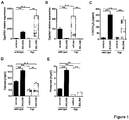
- Cyp27b1 and Cyp24a1 expression and 1,25(OH)2D3 serum levels in Hyp mice were not significantly different compared to wild-type mice ( Fig. 1A , B and C), potentially owing to adaption processes and in line with previous reports.
- FIG. 1 As explained, on the FIG. 1 regulation of the renal FGF23 target genes Cyp27b1 (A) and Cyp24a1 ( FIG. 1B ) upon FGFR inhibition in vivo is depicted. Also, (C) Serum 1,25(OH)2D3 levels of wild-type and Hyp mice treated as described in A and B were determined by radio receptor assay. In addition, Calcium ( FIG. 1D) and (FIG. 1E ) phosphate levels at 24 h post-administration in wild-type and Hyp mice treated with a single oral dose of BGJ398 (50 mg/kg) or vehicle are shown. All together this shows that FGFR inhibitor treatment induces 1,25(OH)2D3 biosynthesis and alleviates hypocalcemia and hypophosphatemia in Hyp mice. The results further indicate that pharmacological inhibition of FGFR is sufficient to counteract aberrant FGF23 signaling in Hyp mice.
- FGFR inhibitor treatment modulates renal FGF23 target gene expression and alleviates hypocalcemia and hypophosphatemia in Dmp1-null mice.
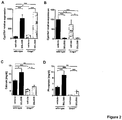
- Regulation of the renal FGF23 target genes Cyp27b1 ( Fig 2A ) and Cyp24a1 ( Fig 2B ) upon FGFR inhibition in vivo is shown on Fig 2 .
- Cyp27b1 and Cyp24a1 expression in Dmp1-null mice another FGF23-related hypophosphatemia model ( Fig. 2A and B ).
- SEM standard errors of the mean
- mice received a single oral dose of the FGFR inhibitor BGJ398 (50 mg/kg) or vehicle and were studied 24 h post-administration. Phosphate and calcium levels were determined from serum. As for Hyp mice, pharmacological FGFR inhibition led to increased serum calcium and phosphate levels in Dmp1-null mice ( Fig. 2C and D , respectively). Data in Fig. 2 are shown as average with SEM (n ⁇ 6). Data were compared by unpaired Student's t test; * p ⁇ 0.05; ** p ⁇ 0.01; *** p ⁇ 0.001; n. s.: not significant.
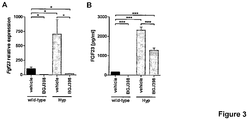
- Fig. 3 shows FGFR-dependent signaling regulates FGF23 expression in bone.
- BGJ398 FGFR inhibitor treatment
- Mice received a single oral dose of the FGFR inhibitor BGJ398 (50 mg/kg) or vehicle and were studied 7 h post-administration.
- FGF23 bone mRNA ( Fig. 3A ) and serum ( Fig. 3B ) levels in wild-type and Hyp mice treated with BGJ398 were determined.
- Fig. 2A The transcriptional repression of FGF23 resulted in undetectable serum FGF23 levels in wild-type mice, while the pathological high FGF23 levels in Hyp mice were reduced by approximately 50% ( Fig. 3B ).
- mRNA expression is shown on the figure as relative levels to the wild-type vehicle control group (relative levels of 100) and are given as average with SEM (n ⁇ 7). FGF23 mRNA expression values were normalized to Gapdh mRNA copies. Data were compared by unpaired Student's t test; * p ⁇ 0.05; ** p ⁇ 0.01; *** p ⁇ 0.001.
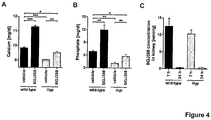
- FIG 4 clearly shows that FGFR inhibitor treatment leads to a persistent increase of calcium and phosphate serum levels.
- wild-type or Hyp mice received a single oral dose of the FGFR inhibitor BGJ398 or vehicle and were studied 48 h after administration of the compound.
- Calcium ( FIG 4A ) and phosphate ( FIG 4B ) levels were determined from serum. Data are shown as average with SEM (n ⁇ 3). Data were compared by unpaired Student's t test; * p ⁇ 0.05; ** p ⁇ 0.01; *** p ⁇ 0.001; n. s.: not significant.
- C BGJ398 concentrations in kidney at 7h and 24h post-administration. Values are given as average with SEM (n ⁇ 5).
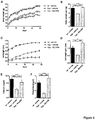
- FIG. 5B Total body weight ( FIG 5B ) and tail length gain ( FIG 5D ) over the course of the treatment are depicted in FIG. 5 as well.
- Data are shown as average with SEM (n ⁇ 6). Data were compared by unpaired Student's t test; * p ⁇ 0.05; ** p ⁇ 0.01; *** p ⁇ 0.001; n. s.: not significant.
- Hyp mice Compared to wild-type littermates, Hyp mice displayed a reduced body weight at 5 weeks of age, when the treatments were started. During the course of treatment, pharmacological FGFR inhibition in Hyp mice led to a stronger increase in body weight compared to the vehicle control group ( Fig. 5A ). Overall, the total body weight gain in BGJ398-treated Hyp mice was similar to vehicle-treated wild-type mice ( Fig. 5B ). A shorter tail is a pronounced feature of the hypophosphatemic rickets phenotype of Hyp mice, reflecting the impaired bone formation. Therefore, we monitored the tail length development during the 8 weeks of treatment and found that BGJ398-treated Hyp mice displayed a much stronger increase in tail length compared to control Hyp mice ( Fig.
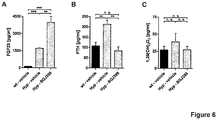
- Fig. 6 shows serum levels of FGF23, parathyroid hormone (PTH) and 1,25(OH)2D3 after long-term FGFR inhibition with BGJ398.
- Wild-type or Hyp mice were treated again with the FGFR inhibitor BGJ398 (50 mg/kg) or vehicle 3qw for 56 days and FGF23 ( Fig. 6A ), parathyroid hormone (PTH) ( Fig. 6B ) and 1,25(OH)2D3 ( Fig. 6C ) levels were determined from serum at 24 h after the last dosing.
- PTH values were determined by separating the serum from whole blood using clot activator centrifugation tubes (Sarstedt).
- FIG 7 Radiographs of femur ( FIG 7A ) and tibia ( FIG 7B ) from wild-type or Hyp mice treated with the FGFR inhibitor BGJ398 (50 mg/kg) or vehicle 3qw for 56 days. Quantification of femoral ( FIG 7C ) and tibial ( FIG 7D ) length. Data are shown as average with SEM (n ⁇ 6). Data were compared by unpaired Student's t test; * p ⁇ 0.05; ** p ⁇ 0.01; *** p ⁇ 0.001; n. s.: not significant.
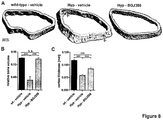
- FGFR inhibition improves cortex integrity in femoral bone of Hyp mice.
- ⁇ CT microcomputed tomography
- Fig. 8B Compared to wild-type mice, vehicle-treated Hyp mice displayed reduced relative bone volume in the cortical bone area ( Fig. 8B ) and a decreased average cortex thickness ( Fig. 8C ). In contrast, cortex of BGJ398-treated Hyp mice appeared intact ( Fig. 8A ), relative cortical bone volume was indistinguishable from wild-type mice ( Fig. 8B ) and cortex thickness was significantly increased compared to vehicle-treated Hyp mice ( Fig. 8C ).
- FIG. 9 shows Goldner staining of tibial sections from wild-type or Hyp mice treated with the FGFR inhibitor BGJ398 (50 mg/kg) or vehicle 3qw for 56 days ( FIG. 9A ).
- Mineralized tissue is indicated by white arrows, unmineralized osteoid is visualized by dark grey (indicated by black arrows).
- Growth plate structure is shown by light grey staining in the central part of the sections ( FIG. 9B ). Osteoid surface/bone surface and osteoid width ( FIG.
- our data indicate that pharmacological inhibition of FGFRs is sufficient to inhibit aberrant FGF23-signaling and to alleviate the hypophosphatemic rickets phenotype of XLH and potentially other FGF23-related hypophosphatemia diseases, such as ARHR.
- the complete normalization of phosphate and calcium levels in Hyp mice upon continuous dosing of the FGFR inhibitor BGJ398 and the re-organization of the growth plate area in rickets-resembling bone are promising, since this constitutes a prerequisite for a potential reversion of the hypophosphatemic rickets phenotype.
Landscapes
- Health & Medical Sciences (AREA)
- Life Sciences & Earth Sciences (AREA)
- Chemical & Material Sciences (AREA)
- Medicinal Chemistry (AREA)
- Pharmacology & Pharmacy (AREA)
- Animal Behavior & Ethology (AREA)
- General Health & Medical Sciences (AREA)
- Public Health (AREA)
- Veterinary Medicine (AREA)
- Epidemiology (AREA)
- Bioinformatics & Cheminformatics (AREA)
- Engineering & Computer Science (AREA)
- Nuclear Medicine, Radiotherapy & Molecular Imaging (AREA)
- Chemical Kinetics & Catalysis (AREA)
- General Chemical & Material Sciences (AREA)
- Organic Chemistry (AREA)
- Endocrinology (AREA)
- Physical Education & Sports Medicine (AREA)
- Inorganic Chemistry (AREA)
- Proteomics, Peptides & Aminoacids (AREA)
- Immunology (AREA)
- Gastroenterology & Hepatology (AREA)
- Zoology (AREA)
- Diabetes (AREA)
- Rheumatology (AREA)
- Hematology (AREA)
- Orthopedic Medicine & Surgery (AREA)
- Obesity (AREA)
- Marine Sciences & Fisheries (AREA)
- Dermatology (AREA)
- Toxicology (AREA)
- Nutrition Science (AREA)
- Pharmaceuticals Containing Other Organic And Inorganic Compounds (AREA)
- Medicines That Contain Protein Lipid Enzymes And Other Medicines (AREA)
Applications Claiming Priority (2)
| Application Number | Priority Date | Filing Date | Title |
|---|---|---|---|
| US201261617889P | 2012-03-30 | 2012-03-30 | |
| PCT/EP2013/056811 WO2013144339A1 (en) | 2012-03-30 | 2013-03-29 | Fgfr inhibitor for use in the treatment of hypophosphatemic disorders |
Publications (2)
| Publication Number | Publication Date |
|---|---|
| EP2830626A1 EP2830626A1 (en) | 2015-02-04 |
| EP2830626B1 true EP2830626B1 (en) | 2019-01-02 |
Family
ID=47998482
Family Applications (1)
| Application Number | Title | Priority Date | Filing Date |
|---|---|---|---|
| EP13712589.4A Active EP2830626B1 (en) | 2012-03-30 | 2013-03-29 | Fgfr inhibitor for use in the treatment of hypophosphatemic disorders |
Country Status (11)
| Country | Link |
|---|---|
| US (4) | US20150072019A1 (enExample) |
| EP (1) | EP2830626B1 (enExample) |
| JP (1) | JP6190871B2 (enExample) |
| KR (1) | KR102126092B1 (enExample) |
| CN (2) | CN104321058A (enExample) |
| AU (1) | AU2013241664B2 (enExample) |
| CA (1) | CA2866229C (enExample) |
| IN (1) | IN2014DN08969A (enExample) |
| MX (1) | MX354783B (enExample) |
| RU (1) | RU2643326C2 (enExample) |
| WO (1) | WO2013144339A1 (enExample) |
Families Citing this family (34)
| Publication number | Priority date | Publication date | Assignee | Title |
|---|---|---|---|---|
| WO2012088266A2 (en) | 2010-12-22 | 2012-06-28 | Incyte Corporation | Substituted imidazopyridazines and benzimidazoles as inhibitors of fgfr3 |
| UA125503C2 (uk) | 2012-06-13 | 2022-04-13 | Інсайт Холдинґс Корпорейшн | Заміщені трициклічні сполуки як інгібітори fgfr |
| US9388185B2 (en) | 2012-08-10 | 2016-07-12 | Incyte Holdings Corporation | Substituted pyrrolo[2,3-b]pyrazines as FGFR inhibitors |
| US9266892B2 (en) | 2012-12-19 | 2016-02-23 | Incyte Holdings Corporation | Fused pyrazoles as FGFR inhibitors |
| MY181497A (en) | 2013-04-19 | 2020-12-23 | Incyte Holdings Corp | Bicyclic heterocycles as fgfr inhibitors |
| EA028614B1 (ru) * | 2014-05-22 | 2017-12-29 | Общество С Ограниченной Ответственностью "Русские Фармацевтические Технологии" | Селективные ингибиторы, нарушающие взаимодействие рецептора фактора роста фибробластов и frs2, для профилактики и лечения рака |
| US10851105B2 (en) | 2014-10-22 | 2020-12-01 | Incyte Corporation | Bicyclic heterocycles as FGFR4 inhibitors |
| CR20170390A (es) | 2015-02-20 | 2017-10-23 | Incyte Holdings Corp | Heterociclos biciclicos como inhibidores de fgfr |
| US9580423B2 (en) | 2015-02-20 | 2017-02-28 | Incyte Corporation | Bicyclic heterocycles as FGFR4 inhibitors |
| MA41551A (fr) | 2015-02-20 | 2017-12-26 | Incyte Corp | Hétérocycles bicycliques utilisés en tant qu'inhibiteurs de fgfr4 |
| WO2016189472A1 (en) * | 2015-05-28 | 2016-12-01 | Novartis Ag | Fgfr inhibitor for use in the treatment of the phosphaturic mesenchymal tumor |
| WO2017015400A1 (en) * | 2015-07-20 | 2017-01-26 | Taipei Medical University | Chlorobenzene substituted azaaryl compounds |
| KR20180028524A (ko) * | 2015-07-24 | 2018-03-16 | 데비오팜 인터네셔날 에스 에이 | Fgfr 발현 및 fgfr 억제제에 대한 민감성 |
| KR20180081675A (ko) | 2017-01-06 | 2018-07-17 | 주식회사 레모넥스 | 전이성 난소암, 자궁내막암 또는 유방암의 예방 또는 치료용 조성물 |
| WO2018128510A1 (ko) * | 2017-01-06 | 2018-07-12 | 주식회사 레모넥스 | 전이성 난소암, 자궁내막암 또는 유방암의 예방 또는 치료용 조성물 |
| CN110476483A (zh) | 2017-04-14 | 2019-11-19 | 堺显示器制品株式会社 | 有机el显示装置的制造方法及制造装置 |
| AR111960A1 (es) | 2017-05-26 | 2019-09-04 | Incyte Corp | Formas cristalinas de un inhibidor de fgfr y procesos para su preparación |
| PE20210919A1 (es) | 2018-05-04 | 2021-05-19 | Incyte Corp | Sales de un inhibidor de fgfr |
| BR112020022392A2 (pt) | 2018-05-04 | 2021-02-02 | Incyte Corporation | formas sólidas de um inibidor de fgfr e processos para preparação das mesmas |
| US11628162B2 (en) | 2019-03-08 | 2023-04-18 | Incyte Corporation | Methods of treating cancer with an FGFR inhibitor |
| JP2022526713A (ja) | 2019-03-21 | 2022-05-26 | オンクセオ | がんの処置のための、キナーゼ阻害剤と組み合わせたDbait分子 |
| US11591329B2 (en) | 2019-07-09 | 2023-02-28 | Incyte Corporation | Bicyclic heterocycles as FGFR inhibitors |
| US12122767B2 (en) | 2019-10-01 | 2024-10-22 | Incyte Corporation | Bicyclic heterocycles as FGFR inhibitors |
| GEP20247679B (en) | 2019-10-14 | 2024-10-10 | Incyte Corp | Bicyclic heterocycles as fgfr inhibitors |
| WO2021076728A1 (en) | 2019-10-16 | 2021-04-22 | Incyte Corporation | Bicyclic heterocycles as fgfr inhibitors |
| KR20220098759A (ko) | 2019-11-08 | 2022-07-12 | 인쎄름 (엥스띠뛰 나씨오날 드 라 쌍떼 에 드 라 흐쉐르슈 메디깔) | 키나제 억제제에 대해 내성을 획득한 암의 치료 방법 |
| PE20221504A1 (es) | 2019-12-04 | 2022-09-30 | Incyte Corp | Derivados de un inhibidor de fgfr |
| JP7720840B2 (ja) | 2019-12-04 | 2025-08-08 | インサイト・コーポレイション | Fgfr阻害剤としての三環式複素環 |
| WO2021119108A1 (en) * | 2019-12-09 | 2021-06-17 | Cedars-Sinai Medical Center | Use of fgfr inhibitors for treatment of idiopathic short stature |
| WO2021146424A1 (en) | 2020-01-15 | 2021-07-22 | Incyte Corporation | Bicyclic heterocycles as fgfr inhibitors |
| WO2021148581A1 (en) | 2020-01-22 | 2021-07-29 | Onxeo | Novel dbait molecule and its use |
| TW202304459A (zh) | 2021-04-12 | 2023-02-01 | 美商英塞特公司 | 包含fgfr抑制劑及nectin-4靶向劑之組合療法 |
| TW202313611A (zh) | 2021-06-09 | 2023-04-01 | 美商英塞特公司 | 作為fgfr抑制劑之三環雜環 |
| CA3220155A1 (en) | 2021-06-09 | 2022-12-15 | Incyte Corporation | Tricyclic heterocycles as fgfr inhibitors |
Family Cites Families (8)
| Publication number | Priority date | Publication date | Assignee | Title |
|---|---|---|---|---|
| CA2433171A1 (en) | 2000-12-26 | 2002-07-04 | Chugai Seiyaku Kabushiki Kaisha | Human fgf23 protein mutants decreasing blood phosphorus level |
| GB0512324D0 (en) | 2005-06-16 | 2005-07-27 | Novartis Ag | Organic compounds |
| EP1882475A1 (en) * | 2006-07-26 | 2008-01-30 | Novartis AG | Method of treating disorders mediated by the fibroblast growth factor receptor |
| SG190592A1 (en) * | 2008-04-29 | 2013-06-28 | Novartis Ag | Methods of monitoring the modulation of the kinase activity of fibroblast growth factor receptor and uses of said methods |
| US20120220600A1 (en) * | 2009-10-30 | 2012-08-30 | Reiner Aichholz | N-Oxide of 3-(2,6-dichloro-3,5-dimethoxy-phenyl) -1--1-methyl-urea |
| AR079257A1 (es) * | 2009-12-07 | 2012-01-04 | Novartis Ag | Formas cristalinas de 3-(2,6-dicloro-3-5-dimetoxi-fenil)-1-{6-[4-(4-etil-piperazin-1-il)-fenil-amino]-pirimidin-4-il}-1-metil-urea y sales de las mismas |
| JP2013514986A (ja) * | 2009-12-18 | 2013-05-02 | ノバルティス アーゲー | 血液癌の処置方法 |
| WO2013088191A1 (en) | 2011-12-12 | 2013-06-20 | Institut National De La Sante Et De La Recherche Medicale (Inserm) | Antagonist of the fibroblast growth factor receptor 3 (fgfr3) for use in the treatment or the prevention of skeletal disorders linked with abnormal activation of fgfr3 |
-
2013
- 2013-03-29 CA CA2866229A patent/CA2866229C/en active Active
- 2013-03-29 IN IN8969DEN2014 patent/IN2014DN08969A/en unknown
- 2013-03-29 US US14/388,978 patent/US20150072019A1/en not_active Abandoned
- 2013-03-29 EP EP13712589.4A patent/EP2830626B1/en active Active
- 2013-03-29 WO PCT/EP2013/056811 patent/WO2013144339A1/en not_active Ceased
- 2013-03-29 KR KR1020147026889A patent/KR102126092B1/ko active Active
- 2013-03-29 MX MX2014011841A patent/MX354783B/es active IP Right Grant
- 2013-03-29 CN CN201380015597.0A patent/CN104321058A/zh active Pending
- 2013-03-29 RU RU2014143517A patent/RU2643326C2/ru active
- 2013-03-29 AU AU2013241664A patent/AU2013241664B2/en active Active
- 2013-03-29 JP JP2015502373A patent/JP6190871B2/ja active Active
- 2013-03-29 CN CN201811194059.3A patent/CN109718239B/zh active Active
-
2016
- 2016-09-22 US US15/272,633 patent/US10028955B2/en active Active
-
2018
- 2018-06-12 US US16/005,966 patent/US20210308132A1/en not_active Abandoned
-
2024
- 2024-01-09 US US18/407,729 patent/US20240398798A1/en not_active Abandoned
Non-Patent Citations (1)
| Title |
|---|
| None * |
Also Published As
| Publication number | Publication date |
|---|---|
| EP2830626A1 (en) | 2015-02-04 |
| RU2014143517A (ru) | 2016-05-27 |
| WO2013144339A1 (en) | 2013-10-03 |
| KR20140145133A (ko) | 2014-12-22 |
| US20170007606A1 (en) | 2017-01-12 |
| CN109718239A (zh) | 2019-05-07 |
| KR102126092B1 (ko) | 2020-06-24 |
| CA2866229C (en) | 2020-09-15 |
| AU2013241664A1 (en) | 2014-10-02 |
| RU2643326C2 (ru) | 2018-01-31 |
| US20150072019A1 (en) | 2015-03-12 |
| JP6190871B2 (ja) | 2017-08-30 |
| MX354783B (es) | 2018-03-21 |
| JP2015511621A (ja) | 2015-04-20 |
| US10028955B2 (en) | 2018-07-24 |
| MX2014011841A (es) | 2015-02-10 |
| AU2013241664B2 (en) | 2016-05-19 |
| US20210308132A1 (en) | 2021-10-07 |
| IN2014DN08969A (enExample) | 2015-05-22 |
| US20240398798A1 (en) | 2024-12-05 |
| CN104321058A (zh) | 2015-01-28 |
| CA2866229A1 (en) | 2013-10-03 |
| CN109718239B (zh) | 2024-09-10 |
Similar Documents
| Publication | Publication Date | Title |
|---|---|---|
| US20240398798A1 (en) | Fgfr inhibitor for use in the treatment of hypophosphatemic disorders | |
| De Baaij et al. | Magnesium in man: implications for health and disease | |
| D’Oronzo et al. | Cancer treatment-induced bone loss (CTIBL): pathogenesis and clinical implications | |
| EA023999B1 (ru) | Ингибиторы csf-1r для лечения опухолей головного мозга | |
| Zhang et al. | Differential response of bone and kidney to ACEI in db/db mice: A potential effect of captopril on accelerating bone loss | |
| Nie et al. | 1, 25-Dihydroxyvitamin D enhances alveolar fluid clearance by upregulating the expression of epithelial sodium channels | |
| Roumpou et al. | Bone in parathyroid diseases revisited: evidence from epidemiological, surgical and new drug outcomes | |
| US20230172935A1 (en) | Methods of monitoring kras mutations | |
| Katerelos et al. | The AMPK activator ATX-304 alters cellular metabolism to protect against cisplatin-induced acute kidney injury | |
| Rabb et al. | Possible molecular basis for changes in potassium handling in acute renal failure | |
| AU2012308097B2 (en) | Treatment of bone diseases | |
| EP3403652A1 (en) | Prevention and treatment of fibroblast growth factor 23 (fgf23)-associated disorders including chronic kidney disease (ckd) | |
| US20220062299A1 (en) | Use of glucocorticoid steroids in preventing and treating conditions of muscle wasting, aging and metabolic disorder | |
| HK40008771A (en) | Fgfr inhibitor for use in the treatment of hypophosphatemic disorders | |
| HK40008771B (zh) | 用於治疗低磷血性疾病的fgfr抑制剂 | |
| Fogel et al. | The effect of cannabinoids on single-level lumbar arthrodesis outcomes in a rat model | |
| Behm et al. | Kidney-specific claudin-2 deficiency leads to medullary nephrocalcinosis in mice | |
| Vita et al. | 1363P Genomic heterogeneity of ALK rearrangements and acquired resistance pathways in ALK+ Advanced non-small cell lung cancer (NSCLC) treated with upfront alectinib: Preliminary results of GALILEO project | |
| Tiosano et al. | Bone and Mineral Metabolism | |
| Reck et al. | 6512 ORAL Analysis of possible relationships between tumour biomarkers and clinical benefit from erlotinib in advanced non-small cell lung cancer (NSCLC): data from the prospective MERIT study | |
| Blumenschein Jr et al. | 6511 ORAL Phase II study of erlotinib (E) with or without sunitinib (SU) in the treatment of metastatic non-small cell lung cancer (NSCLC) | |
| Stratakis | Carney complex and related syndromes and their genetic loci—author’s response | |
| LaRusso et al. | Insignificant effect of secretin in rodent models of | |
| Dingemans et al. | 6513 ORAL A phase II study of erlotinib (E) and bevacizumab (B) in patients (pts) with previously untreated stage IIIB/IV non-small-cell lung cancer (NSCLC) | |
| Parfitt et al. | Comment on Calcium-regulated renal calcium handling in healthy men |
Legal Events
| Date | Code | Title | Description |
|---|---|---|---|
| PUAI | Public reference made under article 153(3) epc to a published international application that has entered the european phase |
Free format text: ORIGINAL CODE: 0009012 |
|
| 17P | Request for examination filed |
Effective date: 20141030 |
|
| AK | Designated contracting states |
Kind code of ref document: A1 Designated state(s): AL AT BE BG CH CY CZ DE DK EE ES FI FR GB GR HR HU IE IS IT LI LT LU LV MC MK MT NL NO PL PT RO RS SE SI SK SM TR |
|
| AX | Request for extension of the european patent |
Extension state: BA ME |
|
| DAX | Request for extension of the european patent (deleted) | ||
| STAA | Information on the status of an ep patent application or granted ep patent |
Free format text: STATUS: EXAMINATION IS IN PROGRESS |
|
| 17Q | First examination report despatched |
Effective date: 20170221 |
|
| REG | Reference to a national code |
Ref country code: DE Ref legal event code: R079 Ref document number: 602013049149 Country of ref document: DE Free format text: PREVIOUS MAIN CLASS: A61K0031506000 Ipc: A61P0003120000 |
|
| RIC1 | Information provided on ipc code assigned before grant |
Ipc: A61K 45/06 20060101ALI20180511BHEP Ipc: A61K 33/06 20060101ALI20180511BHEP Ipc: A61K 33/42 20060101ALI20180511BHEP Ipc: A61K 31/59 20060101ALI20180511BHEP Ipc: A61K 38/17 20060101AFI20180511BHEP Ipc: A61K 31/506 20060101ALI20180511BHEP Ipc: A61K 38/29 20060101ALI20180511BHEP |
|
| GRAP | Despatch of communication of intention to grant a patent |
Free format text: ORIGINAL CODE: EPIDOSNIGR1 |
|
| STAA | Information on the status of an ep patent application or granted ep patent |
Free format text: STATUS: GRANT OF PATENT IS INTENDED |
|
| RIC1 | Information provided on ipc code assigned before grant |
Ipc: A61K 45/06 20060101ALI20180601BHEP Ipc: A61K 38/17 20060101ALI20180601BHEP Ipc: A61K 38/29 20060101ALI20180601BHEP Ipc: A61K 33/06 20060101ALI20180601BHEP Ipc: A61K 33/42 20060101ALI20180601BHEP Ipc: A61P 3/12 20060101AFI20180601BHEP Ipc: A61P 19/08 20060101ALI20180601BHEP Ipc: A61K 31/59 20060101ALI20180601BHEP Ipc: A61K 31/506 20060101ALI20180601BHEP |
|
| INTG | Intention to grant announced |
Effective date: 20180627 |
|
| GRAJ | Information related to disapproval of communication of intention to grant by the applicant or resumption of examination proceedings by the epo deleted |
Free format text: ORIGINAL CODE: EPIDOSDIGR1 |
|
| STAA | Information on the status of an ep patent application or granted ep patent |
Free format text: STATUS: EXAMINATION IS IN PROGRESS |
|
| GRAR | Information related to intention to grant a patent recorded |
Free format text: ORIGINAL CODE: EPIDOSNIGR71 |
|
| GRAS | Grant fee paid |
Free format text: ORIGINAL CODE: EPIDOSNIGR3 |
|
| STAA | Information on the status of an ep patent application or granted ep patent |
Free format text: STATUS: GRANT OF PATENT IS INTENDED |
|
| GRAA | (expected) grant |
Free format text: ORIGINAL CODE: 0009210 |
|
| STAA | Information on the status of an ep patent application or granted ep patent |
Free format text: STATUS: THE PATENT HAS BEEN GRANTED |
|
| INTC | Intention to grant announced (deleted) | ||
| AK | Designated contracting states |
Kind code of ref document: B1 Designated state(s): AL AT BE BG CH CY CZ DE DK EE ES FI FR GB GR HR HU IE IS IT LI LT LU LV MC MK MT NL NO PL PT RO RS SE SI SK SM TR |
|
| INTG | Intention to grant announced |
Effective date: 20181127 |
|
| REG | Reference to a national code |
Ref country code: GB Ref legal event code: FG4D |
|
| REG | Reference to a national code |
Ref country code: CH Ref legal event code: EP Ref country code: AT Ref legal event code: REF Ref document number: 1083625 Country of ref document: AT Kind code of ref document: T Effective date: 20190115 |
|
| REG | Reference to a national code |
Ref country code: IE Ref legal event code: FG4D |
|
| REG | Reference to a national code |
Ref country code: DE Ref legal event code: R096 Ref document number: 602013049149 Country of ref document: DE |
|
| REG | Reference to a national code |
Ref country code: NL Ref legal event code: MP Effective date: 20190102 |
|
| REG | Reference to a national code |
Ref country code: LT Ref legal event code: MG4D |
|
| REG | Reference to a national code |
Ref country code: AT Ref legal event code: MK05 Ref document number: 1083625 Country of ref document: AT Kind code of ref document: T Effective date: 20190102 |
|
| PG25 | Lapsed in a contracting state [announced via postgrant information from national office to epo] |
Ref country code: NL Free format text: LAPSE BECAUSE OF FAILURE TO SUBMIT A TRANSLATION OF THE DESCRIPTION OR TO PAY THE FEE WITHIN THE PRESCRIBED TIME-LIMIT Effective date: 20190102 |
|
| PG25 | Lapsed in a contracting state [announced via postgrant information from national office to epo] |
Ref country code: FI Free format text: LAPSE BECAUSE OF FAILURE TO SUBMIT A TRANSLATION OF THE DESCRIPTION OR TO PAY THE FEE WITHIN THE PRESCRIBED TIME-LIMIT Effective date: 20190102 Ref country code: NO Free format text: LAPSE BECAUSE OF FAILURE TO SUBMIT A TRANSLATION OF THE DESCRIPTION OR TO PAY THE FEE WITHIN THE PRESCRIBED TIME-LIMIT Effective date: 20190402 Ref country code: PT Free format text: LAPSE BECAUSE OF FAILURE TO SUBMIT A TRANSLATION OF THE DESCRIPTION OR TO PAY THE FEE WITHIN THE PRESCRIBED TIME-LIMIT Effective date: 20190502 Ref country code: PL Free format text: LAPSE BECAUSE OF FAILURE TO SUBMIT A TRANSLATION OF THE DESCRIPTION OR TO PAY THE FEE WITHIN THE PRESCRIBED TIME-LIMIT Effective date: 20190102 Ref country code: SE Free format text: LAPSE BECAUSE OF FAILURE TO SUBMIT A TRANSLATION OF THE DESCRIPTION OR TO PAY THE FEE WITHIN THE PRESCRIBED TIME-LIMIT Effective date: 20190102 Ref country code: ES Free format text: LAPSE BECAUSE OF FAILURE TO SUBMIT A TRANSLATION OF THE DESCRIPTION OR TO PAY THE FEE WITHIN THE PRESCRIBED TIME-LIMIT Effective date: 20190102 Ref country code: LT Free format text: LAPSE BECAUSE OF FAILURE TO SUBMIT A TRANSLATION OF THE DESCRIPTION OR TO PAY THE FEE WITHIN THE PRESCRIBED TIME-LIMIT Effective date: 20190102 |
|
| PG25 | Lapsed in a contracting state [announced via postgrant information from national office to epo] |
Ref country code: HR Free format text: LAPSE BECAUSE OF FAILURE TO SUBMIT A TRANSLATION OF THE DESCRIPTION OR TO PAY THE FEE WITHIN THE PRESCRIBED TIME-LIMIT Effective date: 20190102 Ref country code: RS Free format text: LAPSE BECAUSE OF FAILURE TO SUBMIT A TRANSLATION OF THE DESCRIPTION OR TO PAY THE FEE WITHIN THE PRESCRIBED TIME-LIMIT Effective date: 20190102 Ref country code: BG Free format text: LAPSE BECAUSE OF FAILURE TO SUBMIT A TRANSLATION OF THE DESCRIPTION OR TO PAY THE FEE WITHIN THE PRESCRIBED TIME-LIMIT Effective date: 20190402 Ref country code: IS Free format text: LAPSE BECAUSE OF FAILURE TO SUBMIT A TRANSLATION OF THE DESCRIPTION OR TO PAY THE FEE WITHIN THE PRESCRIBED TIME-LIMIT Effective date: 20190502 Ref country code: LV Free format text: LAPSE BECAUSE OF FAILURE TO SUBMIT A TRANSLATION OF THE DESCRIPTION OR TO PAY THE FEE WITHIN THE PRESCRIBED TIME-LIMIT Effective date: 20190102 Ref country code: GR Free format text: LAPSE BECAUSE OF FAILURE TO SUBMIT A TRANSLATION OF THE DESCRIPTION OR TO PAY THE FEE WITHIN THE PRESCRIBED TIME-LIMIT Effective date: 20190403 |
|
| REG | Reference to a national code |
Ref country code: DE Ref legal event code: R097 Ref document number: 602013049149 Country of ref document: DE |
|
| PG25 | Lapsed in a contracting state [announced via postgrant information from national office to epo] |
Ref country code: EE Free format text: LAPSE BECAUSE OF FAILURE TO SUBMIT A TRANSLATION OF THE DESCRIPTION OR TO PAY THE FEE WITHIN THE PRESCRIBED TIME-LIMIT Effective date: 20190102 Ref country code: AT Free format text: LAPSE BECAUSE OF FAILURE TO SUBMIT A TRANSLATION OF THE DESCRIPTION OR TO PAY THE FEE WITHIN THE PRESCRIBED TIME-LIMIT Effective date: 20190102 Ref country code: IT Free format text: LAPSE BECAUSE OF FAILURE TO SUBMIT A TRANSLATION OF THE DESCRIPTION OR TO PAY THE FEE WITHIN THE PRESCRIBED TIME-LIMIT Effective date: 20190102 Ref country code: SK Free format text: LAPSE BECAUSE OF FAILURE TO SUBMIT A TRANSLATION OF THE DESCRIPTION OR TO PAY THE FEE WITHIN THE PRESCRIBED TIME-LIMIT Effective date: 20190102 Ref country code: DK Free format text: LAPSE BECAUSE OF FAILURE TO SUBMIT A TRANSLATION OF THE DESCRIPTION OR TO PAY THE FEE WITHIN THE PRESCRIBED TIME-LIMIT Effective date: 20190102 Ref country code: AL Free format text: LAPSE BECAUSE OF FAILURE TO SUBMIT A TRANSLATION OF THE DESCRIPTION OR TO PAY THE FEE WITHIN THE PRESCRIBED TIME-LIMIT Effective date: 20190102 Ref country code: MC Free format text: LAPSE BECAUSE OF FAILURE TO SUBMIT A TRANSLATION OF THE DESCRIPTION OR TO PAY THE FEE WITHIN THE PRESCRIBED TIME-LIMIT Effective date: 20190102 Ref country code: RO Free format text: LAPSE BECAUSE OF FAILURE TO SUBMIT A TRANSLATION OF THE DESCRIPTION OR TO PAY THE FEE WITHIN THE PRESCRIBED TIME-LIMIT Effective date: 20190102 Ref country code: CZ Free format text: LAPSE BECAUSE OF FAILURE TO SUBMIT A TRANSLATION OF THE DESCRIPTION OR TO PAY THE FEE WITHIN THE PRESCRIBED TIME-LIMIT Effective date: 20190102 |
|
| PLBE | No opposition filed within time limit |
Free format text: ORIGINAL CODE: 0009261 |
|
| STAA | Information on the status of an ep patent application or granted ep patent |
Free format text: STATUS: NO OPPOSITION FILED WITHIN TIME LIMIT |
|
| PG25 | Lapsed in a contracting state [announced via postgrant information from national office to epo] |
Ref country code: LU Free format text: LAPSE BECAUSE OF NON-PAYMENT OF DUE FEES Effective date: 20190329 Ref country code: SM Free format text: LAPSE BECAUSE OF FAILURE TO SUBMIT A TRANSLATION OF THE DESCRIPTION OR TO PAY THE FEE WITHIN THE PRESCRIBED TIME-LIMIT Effective date: 20190102 |
|
| REG | Reference to a national code |
Ref country code: BE Ref legal event code: MM Effective date: 20190331 |
|
| 26N | No opposition filed |
Effective date: 20191003 |
|
| PG25 | Lapsed in a contracting state [announced via postgrant information from national office to epo] |
Ref country code: SI Free format text: LAPSE BECAUSE OF FAILURE TO SUBMIT A TRANSLATION OF THE DESCRIPTION OR TO PAY THE FEE WITHIN THE PRESCRIBED TIME-LIMIT Effective date: 20190102 Ref country code: BE Free format text: LAPSE BECAUSE OF NON-PAYMENT OF DUE FEES Effective date: 20190331 |
|
| PG25 | Lapsed in a contracting state [announced via postgrant information from national office to epo] |
Ref country code: TR Free format text: LAPSE BECAUSE OF FAILURE TO SUBMIT A TRANSLATION OF THE DESCRIPTION OR TO PAY THE FEE WITHIN THE PRESCRIBED TIME-LIMIT Effective date: 20190102 |
|
| PG25 | Lapsed in a contracting state [announced via postgrant information from national office to epo] |
Ref country code: MT Free format text: LAPSE BECAUSE OF NON-PAYMENT OF DUE FEES Effective date: 20190329 |
|
| PG25 | Lapsed in a contracting state [announced via postgrant information from national office to epo] |
Ref country code: CY Free format text: LAPSE BECAUSE OF FAILURE TO SUBMIT A TRANSLATION OF THE DESCRIPTION OR TO PAY THE FEE WITHIN THE PRESCRIBED TIME-LIMIT Effective date: 20190102 |
|
| PG25 | Lapsed in a contracting state [announced via postgrant information from national office to epo] |
Ref country code: HU Free format text: LAPSE BECAUSE OF FAILURE TO SUBMIT A TRANSLATION OF THE DESCRIPTION OR TO PAY THE FEE WITHIN THE PRESCRIBED TIME-LIMIT; INVALID AB INITIO Effective date: 20130329 |
|
| PG25 | Lapsed in a contracting state [announced via postgrant information from national office to epo] |
Ref country code: MK Free format text: LAPSE BECAUSE OF FAILURE TO SUBMIT A TRANSLATION OF THE DESCRIPTION OR TO PAY THE FEE WITHIN THE PRESCRIBED TIME-LIMIT Effective date: 20190102 |
|
| P01 | Opt-out of the competence of the unified patent court (upc) registered |
Effective date: 20230514 |
|
| PGFP | Annual fee paid to national office [announced via postgrant information from national office to epo] |
Ref country code: DE Payment date: 20250327 Year of fee payment: 13 |
|
| PGFP | Annual fee paid to national office [announced via postgrant information from national office to epo] |
Ref country code: IE Payment date: 20250327 Year of fee payment: 13 |
|
| PGFP | Annual fee paid to national office [announced via postgrant information from national office to epo] |
Ref country code: FR Payment date: 20250325 Year of fee payment: 13 |
|
| PGFP | Annual fee paid to national office [announced via postgrant information from national office to epo] |
Ref country code: GB Payment date: 20250327 Year of fee payment: 13 |
|
| PGFP | Annual fee paid to national office [announced via postgrant information from national office to epo] |
Ref country code: CH Payment date: 20250401 Year of fee payment: 13 |