EP2825515B1 - Beschichtung von metalloxidpartikel - Google Patents
Beschichtung von metalloxidpartikel Download PDFInfo
- Publication number
- EP2825515B1 EP2825515B1 EP13715399.5A EP13715399A EP2825515B1 EP 2825515 B1 EP2825515 B1 EP 2825515B1 EP 13715399 A EP13715399 A EP 13715399A EP 2825515 B1 EP2825515 B1 EP 2825515B1
- Authority
- EP
- European Patent Office
- Prior art keywords
- particles
- coated
- mixture
- spio
- metal oxide
- Prior art date
- Legal status (The legal status is an assumption and is not a legal conclusion. Google has not performed a legal analysis and makes no representation as to the accuracy of the status listed.)
- Active
Links
Images




Classifications
-
- A—HUMAN NECESSITIES
- A23—FOODS OR FOODSTUFFS; TREATMENT THEREOF, NOT COVERED BY OTHER CLASSES
- A23L—FOODS, FOODSTUFFS OR NON-ALCOHOLIC BEVERAGES, NOT OTHERWISE PROVIDED FOR; PREPARATION OR TREATMENT THEREOF
- A23L19/00—Products from fruits or vegetables; Preparation or treatment thereof
- A23L19/03—Products from fruits or vegetables; Preparation or treatment thereof consisting of whole pieces or fragments without mashing the original pieces
- A23L19/05—Stuffed or cored products; Multilayered or coated products; Binding or compressing of original pieces
-
- A—HUMAN NECESSITIES
- A01—AGRICULTURE; FORESTRY; ANIMAL HUSBANDRY; HUNTING; TRAPPING; FISHING
- A01G—HORTICULTURE; CULTIVATION OF VEGETABLES, FLOWERS, RICE, FRUIT, VINES, HOPS OR SEAWEED; FORESTRY; WATERING
- A01G22/00—Cultivation of specific crops or plants not otherwise provided for
- A01G22/25—Root crops, e.g. potatoes, yams, beet or wasabi
-
- A—HUMAN NECESSITIES
- A01—AGRICULTURE; FORESTRY; ANIMAL HUSBANDRY; HUNTING; TRAPPING; FISHING
- A01G—HORTICULTURE; CULTIVATION OF VEGETABLES, FLOWERS, RICE, FRUIT, VINES, HOPS OR SEAWEED; FORESTRY; WATERING
- A01G31/00—Soilless cultivation, e.g. hydroponics
-
- A—HUMAN NECESSITIES
- A23—FOODS OR FOODSTUFFS; TREATMENT THEREOF, NOT COVERED BY OTHER CLASSES
- A23L—FOODS, FOODSTUFFS OR NON-ALCOHOLIC BEVERAGES, NOT OTHERWISE PROVIDED FOR; PREPARATION OR TREATMENT THEREOF
- A23L33/00—Modifying nutritive qualities of foods; Dietetic products; Preparation or treatment thereof
- A23L33/10—Modifying nutritive qualities of foods; Dietetic products; Preparation or treatment thereof using additives
- A23L33/16—Inorganic salts, minerals or trace elements
-
- A—HUMAN NECESSITIES
- A61—MEDICAL OR VETERINARY SCIENCE; HYGIENE
- A61K—PREPARATIONS FOR MEDICAL, DENTAL OR TOILETRY PURPOSES
- A61K31/00—Medicinal preparations containing organic active ingredients
- A61K31/33—Heterocyclic compounds
- A61K31/335—Heterocyclic compounds having oxygen as the only ring hetero atom, e.g. fungichromin
- A61K31/365—Lactones
- A61K31/375—Ascorbic acid, i.e. vitamin C; Salts thereof
-
- A—HUMAN NECESSITIES
- A61—MEDICAL OR VETERINARY SCIENCE; HYGIENE
- A61K—PREPARATIONS FOR MEDICAL, DENTAL OR TOILETRY PURPOSES
- A61K31/00—Medicinal preparations containing organic active ingredients
- A61K31/33—Heterocyclic compounds
- A61K31/395—Heterocyclic compounds having nitrogen as a ring hetero atom, e.g. guanethidine or rifamycins
- A61K31/41—Heterocyclic compounds having nitrogen as a ring hetero atom, e.g. guanethidine or rifamycins having five-membered rings with two or more ring hetero atoms, at least one of which being nitrogen, e.g. tetrazole
- A61K31/4164—1,3-Diazoles
- A61K31/4178—1,3-Diazoles not condensed 1,3-diazoles and containing further heterocyclic rings, e.g. pilocarpine, nitrofurantoin
-
- A—HUMAN NECESSITIES
- A61—MEDICAL OR VETERINARY SCIENCE; HYGIENE
- A61K—PREPARATIONS FOR MEDICAL, DENTAL OR TOILETRY PURPOSES
- A61K31/00—Medicinal preparations containing organic active ingredients
- A61K31/70—Carbohydrates; Sugars; Derivatives thereof
- A61K31/7028—Compounds having saccharide radicals attached to non-saccharide compounds by glycosidic linkages
- A61K31/7034—Compounds having saccharide radicals attached to non-saccharide compounds by glycosidic linkages attached to a carbocyclic compound, e.g. phloridzin
- A61K31/7036—Compounds having saccharide radicals attached to non-saccharide compounds by glycosidic linkages attached to a carbocyclic compound, e.g. phloridzin having at least one amino group directly attached to the carbocyclic ring, e.g. streptomycin, gentamycin, amikacin, validamycin, fortimicins
-
- A—HUMAN NECESSITIES
- A61—MEDICAL OR VETERINARY SCIENCE; HYGIENE
- A61K—PREPARATIONS FOR MEDICAL, DENTAL OR TOILETRY PURPOSES
- A61K33/00—Medicinal preparations containing inorganic active ingredients
- A61K33/24—Heavy metals; Compounds thereof
- A61K33/26—Iron; Compounds thereof
-
- A—HUMAN NECESSITIES
- A61—MEDICAL OR VETERINARY SCIENCE; HYGIENE
- A61K—PREPARATIONS FOR MEDICAL, DENTAL OR TOILETRY PURPOSES
- A61K9/00—Medicinal preparations characterised by special physical form
- A61K9/14—Particulate form, e.g. powders, Processes for size reducing of pure drugs or the resulting products, Pure drug nanoparticles
- A61K9/16—Agglomerates; Granulates; Microbeadlets ; Microspheres; Pellets; Solid products obtained by spray drying, spray freeze drying, spray congealing,(multiple) emulsion solvent evaporation or extraction
- A61K9/167—Agglomerates; Granulates; Microbeadlets ; Microspheres; Pellets; Solid products obtained by spray drying, spray freeze drying, spray congealing,(multiple) emulsion solvent evaporation or extraction with an outer layer or coating comprising drug; with chemically bound drugs or non-active substances on their surface
-
- B—PERFORMING OPERATIONS; TRANSPORTING
- B05—SPRAYING OR ATOMISING IN GENERAL; APPLYING FLUENT MATERIALS TO SURFACES, IN GENERAL
- B05D—PROCESSES FOR APPLYING FLUENT MATERIALS TO SURFACES, IN GENERAL
- B05D1/00—Processes for applying liquids or other fluent materials
- B05D1/40—Distributing applied liquids or other fluent materials by members moving relatively to surface
-
- B—PERFORMING OPERATIONS; TRANSPORTING
- B05—SPRAYING OR ATOMISING IN GENERAL; APPLYING FLUENT MATERIALS TO SURFACES, IN GENERAL
- B05D—PROCESSES FOR APPLYING FLUENT MATERIALS TO SURFACES, IN GENERAL
- B05D3/00—Pretreatment of surfaces to which liquids or other fluent materials are to be applied; After-treatment of applied coatings, e.g. intermediate treating of an applied coating preparatory to subsequent applications of liquids or other fluent materials
- B05D3/04—Pretreatment of surfaces to which liquids or other fluent materials are to be applied; After-treatment of applied coatings, e.g. intermediate treating of an applied coating preparatory to subsequent applications of liquids or other fluent materials by exposure to gases
- B05D3/0406—Pretreatment of surfaces to which liquids or other fluent materials are to be applied; After-treatment of applied coatings, e.g. intermediate treating of an applied coating preparatory to subsequent applications of liquids or other fluent materials by exposure to gases the gas being air
-
- B—PERFORMING OPERATIONS; TRANSPORTING
- B05—SPRAYING OR ATOMISING IN GENERAL; APPLYING FLUENT MATERIALS TO SURFACES, IN GENERAL
- B05D—PROCESSES FOR APPLYING FLUENT MATERIALS TO SURFACES, IN GENERAL
- B05D3/00—Pretreatment of surfaces to which liquids or other fluent materials are to be applied; After-treatment of applied coatings, e.g. intermediate treating of an applied coating preparatory to subsequent applications of liquids or other fluent materials
- B05D3/04—Pretreatment of surfaces to which liquids or other fluent materials are to be applied; After-treatment of applied coatings, e.g. intermediate treating of an applied coating preparatory to subsequent applications of liquids or other fluent materials by exposure to gases
- B05D3/0406—Pretreatment of surfaces to which liquids or other fluent materials are to be applied; After-treatment of applied coatings, e.g. intermediate treating of an applied coating preparatory to subsequent applications of liquids or other fluent materials by exposure to gases the gas being air
- B05D3/0413—Heating with air
-
- B—PERFORMING OPERATIONS; TRANSPORTING
- B05—SPRAYING OR ATOMISING IN GENERAL; APPLYING FLUENT MATERIALS TO SURFACES, IN GENERAL
- B05D—PROCESSES FOR APPLYING FLUENT MATERIALS TO SURFACES, IN GENERAL
- B05D3/00—Pretreatment of surfaces to which liquids or other fluent materials are to be applied; After-treatment of applied coatings, e.g. intermediate treating of an applied coating preparatory to subsequent applications of liquids or other fluent materials
- B05D3/12—Pretreatment of surfaces to which liquids or other fluent materials are to be applied; After-treatment of applied coatings, e.g. intermediate treating of an applied coating preparatory to subsequent applications of liquids or other fluent materials by mechanical means
-
- C—CHEMISTRY; METALLURGY
- C05—FERTILISERS; MANUFACTURE THEREOF
- C05D—INORGANIC FERTILISERS NOT COVERED BY SUBCLASSES C05B, C05C; FERTILISERS PRODUCING CARBON DIOXIDE
- C05D9/00—Other inorganic fertilisers
- C05D9/02—Other inorganic fertilisers containing trace elements
Definitions
- the invention relates to methods of forming coated metal oxide particles according to claim 1. Mention is also done of suspensions of such coated particles, particles comprising functionalised surface coatings and to fortification of food crops with coated metal oxide particles.
- Nanoparticles i.e. particles having dimensions in the general range of around 1 nm to 100 nm, have a myriad of actual and potential uses in many different fields of science and technology, ranging from electronic and structural materials engineering to medical technology.
- a particular feature of such particles is the high ratio of surface area to volume (an inherent feature of particle size), which can be exploited in applications where surface activity is important, although this also causes problems when handling and maintaining such particles in suspension.
- Stable suspensions of certain types of nanoparticles have however been known for many years, one of the earliest such examples being suspensions of gold nanoparticles.
- Such particles can be used in applications such as medical imaging, where a fine dispersion of a high atomic weight material can be used as an effective contrast agent, for example in X-ray imaging applications.
- SPIO Superparamagnetic iron oxide
- SPIO is an example of a material available in nanoparticulate form, typically comprising nanocrystalline particles with dimensions ranging from 2 nm to 100 nm in diameter. This material has been utilised in recent years for various applications including in magnetic inks, biosensors, catalysis, magnetic-activated cell sorting and in targeted drug delivery.
- SPIO nanoparticles are also being used and developed as contrast agents for magnetic resonance imaging (MRI).
- SPIO nanoparticles have a particular advantage as MRI contrast agents due to their low toxicity, particularly in comparison with existing contrast agents based on gadolinium, since iron becomes incorporated into the body to make haemoglobin upon degradation.
- Gadolinium-based contrast agents have a disadvantage of potential severe side effects including nephrogenic fibrosing dermopathy and other conditions. This has led to products finding their way to the market based on SPIO nanoparticles in preference to gadolinium-based agents for bowel, liver and spleen imaging. Other applications are also expected to be developed and used in the near future.
- SPIO as with most other metal oxides, is inherently insoluble in water and other solvents.
- the surfaces of particles of such materials can however, be treated to allow a stable colloidal suspension to be formed. Treating the surfaces of nanoparticles is commonly known as functionalising or capping. Suitably functionalised nanoparticles become effectively soluble (although the core metal oxide particle will remain undissolved), which allows for use of the particles in biomedical applications where compatibility with aqueous solvents is essential. Creating such suspensions is therefore also known as solubilising, and the suspensions are also referred to as solutions.
- SPIO nanoparticles can involve adding a polysaccharide such as dextran as a coating agent in situ., with the coating agent being added in solution to a suspension of nanoparticles. Coating, or capping, of the particles may occur during their formation, although hydrophobic groups have also been used. Capped particles can be further functionalised for various applications such as drug delivery, diagnosis and therapy.
- a self-assembled monolayer (SAM) can also be formed via the addition of a functionalising group such as sulfonic or phosphonic acids, or the ferrofluid (a term for a colloid of magnetic particles in a liquid solvent) can be taken up into a liposome to form a magneto-liposome.
- Elevated temperatures of up to around 260°C are currently used to form capped SPIO nanoparticles. This can be problematic as the temperatures required limits the capping groups that can be used to those that are stable at high temperatures, thus eliminating many potential bioactive compounds. Furthermore, other methods may also lead to the requirement of additional functionalising steps and / or ligand exchange in order to solubilise the particles. This can be complex and time-consuming due to the use of additional processing steps.
- the required linking compounds may also lead to an increase in toxicity and thus limitations in applications, particularly in biomedical applications.
- a further problem with forming coatings on nanoparticles during either formation or in subsequent solution processing is that the resulting nanoparticle suspension can have a limited shelf life, and may settle out of suspension over an extended period of time.
- Iron is an important micronutrient, found in nearly all forms of life on the planet, ranging from evolutionally primitive archaea to more complex organisms such as plants and humans. It has been estimated that 30% of the world wide population is deficient in this element. Iron deficiency in humans arises when the physiological requirements cannot be met by Fe absorption from the diet and results in the reduction of both circulating haemoglobin and essential iron-containing enzymes such as catalase. The main consequences of these are: reduced psychomotor and mental development in infants, decreased immune function, poor work performance and tiredness.
- US 2005/126238 A1 discloses soil and water dispersable plant nutrients in the form of metal carboxylates (sucrates) formed from the combination of metal oxides and saccharides.
- JP 472920 B1 discloses an iron ion feed material containing iron oxide and/or metallic iron-containing material, and gluconic acid and glutamic acid as organic acid.
- EP 0485225 A1 discloses micronutrient compositions containing an insoluble source of iron and/or manganese in aqueous suspension for treatment of growing plants.
- US 7913453 B2 discloses a composition for improving potato quality comprising a compound capable of forming a chelate with iron or a chelate of iron with a chelate-forming compound, a preferred iron chelate being EDDHA.
- US 2004/221426 A1 discloses a method for producing reduced iron pellets from a mixture of iron oxide, carbonaceous material, an organic binder and an inorganix coagulant.
- US 2007/227211 A1 discloses soil and water dispersable granular nutrients for use in fertilizers including granules having a crystallised saccharide and acid binder with carboxylates (sucrates) of a nutrient embedded therein.
- US 6123920 discloses superparamagnetic contrast media containing composite nanoparticles coated with starch and polyalkylene oxides.
- US 2010/0303730 A1 discloses a method of making iron-containing nanoparticles that includes contacting an iron-containing precursor with a reducing agent at a temperature of less than 200°C and allowing the mixture to react to form magnetite nanoparticles.
- CN20091088091 discloses preparation of superparamagnetic magnetite nanoparticles having surfaces modified with polarity-sensitive organic fluorescent molecules.
- US 5219577 discloses a biologically active composition made up of core particles having diameters of less than about 1000 nm coated with a layer designed to allow attachment of biologically active proteins, peptides or pharmacological agents.
- a method of forming coated particles comprising:
- a dry mechanical mixing process is surprisingly effective at forming coated metal oxide particles, particularly for SPIO nanoparticles.
- the resulting coated particles can be readily dispersed following the dry mixing process in a solvent such as water, and the resulting dispersion can remain stable for long periods.
- the dry mixing route also allows the resulting mixture to be used as a starting point for further processes, and can be stored in a dry form until a dispersion is required. This leads to a significant advantage in terms of the long term storage of such coated particles, since some compounds used as functionalising agents can be unstable over extended periods in solution.
- the benign nature of the process coupled with its wide potential applications, in particular when applied to aqueous solutions, make the process a desirable alternative to existing equivalent processes for providing coated particles.
- the metal oxide comprises or consists of iron oxide, which in nanoscale form is known as superparamagnetic iron oxide (SPIO).
- the iron oxide may be in the form of magnetite (Fe 3 O 4 ) or haematite (Fe 2 O 3 ).
- the iron oxide may be mixed with tin oxide, an advantage of which is that a mixture of iron and tin oxide provides contrast for X-Ray as well as magnetic resonance imaging.
- An exemplary ratio of iron to tin in such a mixture is 2 parts iron to 1 part tin by atomic weight, i.e. in a stoichiometric ratio Fe 2 SnO 4 .
- Other metal oxides may alternatively be used.
- the dry mixing process may for example comprise applying shear to mix together the metal oxide particles and the coating material.
- the process may comprise grinding or milling the mixture, for example in a mortar and pestle or other type of rotary milling or grinding process.
- Other mechanical mixing processes may be used, such as ball milling, twin roll milling or twin screw mixing.
- a common feature of such processes is the application of high levels of shear to the dry powder mixture, which acts to distribute the organic compound among and around the metal oxide particles and allows the surfaces of the particles to interact and bond with the organic compound to form the desired coated particles.
- the dry mixing process is preferably performed at a temperature of less than 100°C, optionally less than 60°C, and further optionally at or around ambient temperature (for example at or around 5°C, 10°C, 15°C, 20°C, 25°C, 30°C or any range within these temperature values).
- Lower temperatures are particularly advantageous when applying organic coating compounds that may become unstable or decompose at elevated temperatures.
- the coating material may comprise or consist of an organic compound selected from one or more of an amino acid and a peptide.
- organic compounds including vitamins and pharmaceuticals may also be used.
- iron oxide nanoparticles are mixed and coated with ascorbic acid (vitamin C).
- vitamin C ascorbic acid
- the resulting dry mixture can be used as a food supplement to add both iron and vitamin C, which are known to advantageously work together to enhance take-up of iron into the body.
- Other dry mixtures comprising a trace mineral in the form of a metal oxide particle coated, or functionalised, with an organic compound such as a vitamin, may be used as a food supplement.
- a further exemplary mixture is calcium with vitamin B12 (cobalamin) and or vitamin D3 (cholecalciferol), where calcium is in the form of calcium oxide particles.
- the organic compound preferably comprises one or more of a carboxyl, hydroxyl, amine or phosphate functional group, which function to bond the organic compound to the surface of the metal oxide particles by electrostatic bonding.
- Carboxyl and amine groups are particularly preferred, as these are effective at forming such bonds.
- the method may further comprise a step of dispersing the mixture, following the dry mixing process, in a solvent to provide a colloid of the particles in the solvent.
- the resulting colloid can be used immediately or can be stored for future use, as the colloid will generally remain stable for extended periods.
- the solvent used to disperse the mixture is commonly a polar solvent such as water, although in certain applications other solvents may be used such as chloroform. Water is generally preferred for biomedical applications, due to the requirement for compatibility with aqueous biological systems.
- the method may further comprise a step of a wet mixing process following addition of the solvent, in order to more effectively disperse the mixture in the solvent, the wet mixing process optionally comprising applying mechanical shear across the mixture.
- the solvent may be added in more than one stage, with a mixing process applied after a first amount is added to form a paste, followed by addition of further solvent to obtain a final desired strength of dispersion.
- the method may further comprise a filtering step for filtering the resulting colloid.
- the filtering step may be necessary to ensure that particles above a certain size are removed from the dispersion.
- the filtering step may for example remove particles above 200 nm from the dispersion.
- a settling step typically centrifugation may be used to remove such large particles. Such particles will generally be agglomerations of smaller particles that have not been broken down and coated during the preceding mixing processes.
- unbound coating material may be separated from the particles (both coated and uncoated) by magnetic separation.
- the mixture of particles and coating material may be suspended in a solvent in which none of the mixture is soluble and the suspension passed through a tube (preferably with a bore of around 1.5mm in diameter or smaller), the tube being wrapped around or otherwise in close proximity to a magnetic field, the magnetic field for example being as provided by a neodymium iron boride magnet.
- the solvent is then passed over the mixture through the tube, with the result being that the coated and uncoated particles are attracted to the magnet and adhered to the inside the tube and the flow of solvent removing unbound material from the mixture.
- a solvent in which the coating material is soluble such as water, is then passed through the tube, thereby solubilising the coated particles which can be collected on their own.
- the uncoated particles can then be removed from the magnet and extracted from the tube ready to be recycled.
- a solvent free method may also be used, for example by using air flow rather than a solvent for the first step of the separation process.
- the particles preferably have a volumetric mean particle size of between 2 nm and 1 micron in diameter, and further preferably between 2 nm and 100 nm in diameter, as measured for example by methods such as dynamic light scattering, disc centrifuge analysis or transmission electron microscopy.
- a further preferred volumetric mean particle size range is between 2 nm and 50 nm, or optionally between 2 nm and 20 nm.
- the ratio of the particles to the coating agent is between 1:0.5 and 1:2 by mass, with a further preferred ratio in the region of 1:1, i.e. approximately equal quantities of metal oxide to coating material by mass.
- This range of mixing ratios is preferred because the content of metal oxide in suspension decreases with an increasing mass of coating material, due to mixing effects.
- the method according to the first aspect of the invention may further comprise a step of dispersing the coated metal oxide particles in a polymer precursor followed by polymerisation of the polymer precursor.
- the method of the invention provides a dry or solvent-free mixture of metal oxide particles and a coating material comprising an organic compound, wherein the metal oxide particles are coated with the organic compound.
- the term 'dry mixture' is intended to encompass mixtures that are substantially free of any solvents, at least to the extent that the mixture is friable and not in a liquid or paste form.
- the dry mixture may be in a free-flowing powder form, for example comprising particles formed of agglomerations of the particles coated with the organic compound.
- the organic compound preferably comprises one or more functional groups selected from a carboxyl, hydroxyl, amine or phosphate group.
- the organic compound is preferably electrostatically bonded to the particle surfaces by the one or more functional groups.
- the mixture may be solvent-free but in a liquid form, for example glycerol can be used in its liquid form at room temperature as a coating material.
- An advantage of the dry or solvent-free mixture of particles and coating material is that the mixture is more stable over time compared with existing suspensions of coated nanoparticles.
- the dry mixture can be readily re-dispersed in water or another solvent when required, which is enabled by the particles being already coated with the organic compound.
- the dry mixture also allows for a greater degree of control over the concentration of a dispersion made with the mixture.
- a further advantage compared to some mixing processes is the avoidance of use of harmful solvents, and the avoidance of the need to dispose of such solvents.
- a yet further advantage is that a resulting dispersion can be more effective, for example as an MRI contrast agent, because use can be made of the dynamic balance between the organic compound and the solvent in which the mixture is suspended. This dynamic balance also allows the mixture to be used as a delivery system for drugs and other compounds into the body, as the electrostatic bonding between the organic compound allows for the compound to disassociate from the nanoparticles over time.
- the dry mixture comprises the metal oxide particles and coating material in a ratio of between 1:0.5 to 1:2. by weight. This preferred range allows for the coating material comprising the organic compound to be distributed around the particles so that the coating around the particles is maximised. In certain embodiments the ratio is around 1:1, for example between 1:0.9 and 1:1.1.
- the organic compound may be selected from one or more of an amino acid, a vitamin such as ascorbic acid or vitamin B12, a peptide, a pharmaceutical compound, fatty acids such as palmitic acid or a fluorescent marker, such as fluorescein or rhodamine B dyes.
- the metal oxide may for example be iron oxide or calcium oxide.
- the coating material may for example comprise an antibiotic such as Neomycin or Nitrofurantoin, to provide a mixture having antibiotic properties.
- a suitable starting material used in each of the following exemplary embodiments is freshly prepared SPIO nanoparticles, prepared by methods that are described in more detail by Khalafalla et al. ( Khalafalla, S. E.; Reimers, G. W., IEEE Trans. Magn., 1980, 16, 178 ), and by Kim et al. ( Kim, E. H.; Lee, H. S.; Kwak, B. K.; Kim, B., J. Magn. Magn. Mater., 2005, 289, 328-330 ).
- FeCl 2 .4H 2 O 10 g, 0.05 mol
- FeCl 3 .6H 2 O 24.3 g, 0.09 mol
- NH 3 solution 50 ml, 35%, 0.90 mol
- the mixture was filtered using a sintered funnel and washed (2 x 50 ml distilled water, 2 x 50 ml diethyl ether) and allowed to dry in air. This process resulted in 10.8 g of particles, giving a yield of 93.3 %.
- the size of the resulting particles was measured to be around 8-10 nm by TEM when suspended in ethanol. The particles were of solid black appearance, and responded to magnetic stimulus.
- the coating agent (2 g) was first dissolved in aqueous HCl (4 M, 20 ml) aided by vortex. Solvent was then removed in vacuo to yield a dry white crystalline powder. For amino acids around 10 mbar or less pressure and 60 °C was used. For peptides 40°C and around 10 mbar or less was used or alternatively acetone was added and kept at -20°C for 24 hours. The resulting mixture was then centrifuged (10 minutes, 3000 rpm), the supernatant removed and the solid product washed with diethyl ether (3 x 50 ml), followed by drying in air or by freeze-drying.
- 0.1 g of SPIO and 0.1 g of coating agent were ground in a mortar for 5 minutes. 2 ml of distilled water was then added to the mixture and further grinding carried out for 5 minutes. A further 3 ml of distilled water was then added and the mixture homogenised.
- Table 1 below indicates the different values for T 1 and T 2 for SPIO nanoparticle suspensions with various different amino acid coatings.
- amino acids with basic side chains R, H and K
- Amino acids with hydrophobic side chains tend to be less effective, having longer relaxation times.
- Those with side chains containing sulphur behaved in a manner that does not appear to fit any pattern. It is postulated that the sulphur atoms react to form disulphide bridges which cause excess aggregation leading to the SPIOs having different properties to those with other amino acids, thus affecting the T 1 and T 2 relaxation times.
- Table 1 A comparison of measured T 1 and T 2 NMR relaxation times for a range of amino acid coatings applied to SPIO nanoparticles (errors for tryptophan and histidine could not be collected, and errors for T 1 of cysteine were out of the measurement range of the instrument, probably due to the formation of sulphur bridges).
- T 1 increases, so does T 2 .
- tryptophan which demonstrated an increase in T 1 corresponding with a decrease in T 2 relative to the other samples. This may have been due to the hydrophobic nature of the amino acid, confirmed by the observation in the sample of a significant amount of aggregation and sedimentation.
- each type of coated SPIO was determined by dynamic light scattering (DLS) and by transmission electron microscopy (TEM).
- Figure 1 is a transmission electron micrograph of SPIO nanoparticles coated with glutamic acid.
- Figure 2 is a profile across one particle, where the x-axis is a linear trace across the particle in nm and the y axis indicates relative intensity.
- Analysis by transmission electron microscopy indicated that the particles were around 8-10 nm in diameter, with a fairly uniform coating of amino acid of between 0.5 and 1 nm in thickness.
- Analysis by DLS tended to be in general agreement with TEM analysis, although with larger particles identified by DLS, apparently due to the formation of aggregates. Most of the nanoparticles were observed as single units although some were found in clusters depending on the degree of aggregation, with aggregation of nanoparticles leading to larger particles of around 20 nm - 60 nm.
- Thermogravimetric analysis indicated that amino acid coverage of the particles varied from around 30% to around 90% by mass. It is postulated that this non-uniformity is due to the properties of the capping agents leading to multi-layering of the amino acid onto the SPIO particles, possibly a result of the mechanical mixing process. Further experimentation may determine whether this is the case, or if further modification of the method can lead to a greater uniformity of layer formation.
- an organic coating agent in this case palmitic acid
- an SPIO nanoparticle powder in the same manner as described above.
- the mixture was then taken up, i.e. dissolved and suspended, into chloroform.
- the result was a brown organic solution.
- sonication was applied to a mixture of SPIO with amino acid, which was found to be ineffective.
- Room temperature mixing of a mixture of SPIO with amino acid was found to be effective for aspartic acid, glutamic acid and threonine. Mixing at elevated temperatures of around 60°C was also attempted, but was found to be ineffective.
- Heating a mixture of SPIO and amino acid to just below the decomposition temperature of the amino acid was found to be effective for all of the amino acids with the exception of phenylalanine, which may have been due to its hydrophobic nature.
- phenylalanine which may have been due to its hydrophobic nature.
- a 1:1 mass ratio of hexadecanediol and SPIO were ground together for 5 minutes using a mortar and pestle. The mixture was then taken up into chloroform, centrifuged and the supernatant filtered. Analysis by ICP indicated the presence of 151 mg/l of Fe in the sample, indicating that the hexadecanediol, and in particular the diol group, had bound to the SPIOs. Particle size analysis by DLS indicated some agglomeration but with a majority of particles around 80 nm.
- grinding was also carried out using a KitchenAid® "Artisan” burr coffee grinder on mixtures of organic compounds with SPIO nanoparticles, using the grinder with the burrs at the closest setting to maximise the shearing action on the dry powder mixture.
- the mixture was passed through the grinder five times to yield a uniform powder.
- This powder was then solubilised in a solvent such as distilled water or another suitable solvent depending on the organic compound for further analysis.
- coated metal oxide particles may be suspended in a polymer matrix, for example by suspending the coated particles in a liquid polymeric precursor material prior to polymerisation.
- Coating materials may be used that are soluble in the polymer matrix, particular examples being paracetamol and diclofenac, which are soluble in methyl methacrylate and may be used as coating materials for SPIOs.
- the particles and coating material may be mixed as described above to provide a dry or solvent-free mixture. The mixture is then taken up into the monomer precursor liquid.
- Methyl methacrylate is a preferred example.
- Palmitic acid is an example of a coating material which may be applied to SPIOs and then suspended in toluene, which is miscible with many polymeric matrices.
- the suspended particles may be filtered, or centrifuged, to remove large unbound particles.
- a liquid coating material may be used, a preferred example being glycerol, having OH groups that enable binding to the surface of the metal oxide particles.
- glycerol having OH groups that enable binding to the surface of the metal oxide particles.
- 1 g of SPIOs and 1 g (0.79 ml) of glycerol were placed in a mortar and ground with a pestle for 5 minutes. 5 ml of water was then added to this mixture before processing through a 0.2 um microfilter. A brown solution (SPIOs coated with glycerol suspended in water) was produced.
- the coating materials contain functional groups containing lone electron pairs which are able to donate electrons towards the particles, thus allowing these groups to associate or bind to iron oxide on the surface of the nanoparticles.
- aspartic acid and glutamic acid both of which have two carboxyl groups containing a greater number of unbound electrons, appear to bind more readily than other amino acids. Since each have two carboxyl groups it is reasonable to assume that, in support of this hypothesis, it is the carboxylic acid groups that are responsible for the binding.
- the solutions from amino acids that were recrystallised remained stable for a period of 1 month, with those not recrystallised being stable for up to 3 months.
- Table 4 provides a further comparison of relaxation times for histidine-coated SPIO nanoparticles formed according to the methods described herein at various different stages of processing.
- the relaxation times increase from the as-formed values by between 2 and 3 times after 43 days.
- the relaxation times increase further upon dehydration followed by re-dissolving, increasing T 1 by around 20 times and T 2 by around 6 times, suggesting that not all of the SPIO particles are taken back up into solution after dehydration and re-dissolving.
- Table 3 A comparison of NMR relaxation times with existing dextran coated nanoparticles.
- this X-ray imaging agent could advantageously be used in combination with SPIO nanoparticles to provide a combined contrast imaging agent, with the iodipamide providing X-ray imaging contrast and the SPIO providing NMR imaging contrast.
- Shown in figure 5 is a schematic flow diagram of a method according to an embodiment of the invention.
- a first quantity of metal oxide nanoparticles 41 and a second quantity of a coating material 42 are brought together and subjected to mechanical mixing 43.
- the resulting dry powder mixture 44 may be stored or can be prepared for use by dispersing the mixture in a solvent 45.
- the resulting dispersion or colloid may be subjected to further mixing 46 following dispersion, and further dilution 47.
- the dispersion may also be subjected to filtration 48, either with or without the further mixing or dilution steps.
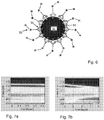
- Figure 6 illustrates schematically in simplified form the general principle of how an organic compound, or ligand, may bond electrostatically to a metal oxide particle 51 such as a nanoparticle via one particular mechanism, in this case employing carboxyl groups.
- Carboxyl groups 54 i.e. having the structure -COOH, disassociating to -COO - in solution
- Similar mechanisms apply to other groups able to dissociate in solution such as hydroxyl, amine or phosphate groups.
- bioactive MRI traceable nanoparticles can be synthesised by means of a simple, solvent-free coating method.
- the resulting coated nanoparticle mixtures can be made readily soluble/dispersible in water or another solvent, and the resulting solution can be stable over extended periods, lending such dispersions to future development for applications in areas such as contrast agents for medical imaging.
- a number of amino acid coatings were initially selected due to their ease of binding to the iron oxide nanoparticle and their high solubility in water. Coatings of Glutamic Acid (E), Glycine (G), Histidine (H) and Alanine (A) were selected for testing.
- the test consisted of submerging potato plantlets in solutions containing SPIOs coated with each amino acid and nutrients for six hours a day for 3 weeks. The concentration of Fe was kept constant at 2 mg/l for each coating system, as measured by ICP-OES (Inductively Coupled Plasma Optical Emission Spectroscopy). A control system containing just the micronutrient was also tested as a comparative study. The plantlets were then splutter coated with gold and the location and concentration of Fe in the roots of the plantlets was measured using SEM-EDX (scanning electron microscopy, energy dispersive X-ray spectroscopy.
- a hydroponic system was used to enable a high degree of control over the crop growing conditions.
- the system consisted of a reservoir for holding the nutrient solution, which was pumped into a growth medium (clay pellets) at six hour intervals with a constant flow rate of 100 ml/min.
- a set amount of nutrient was added to the reservoir at the beginning of the plant growth cycle, as indicated in Table 1 below, with the levels monitored via conductivity readings and maintained by the addition of a refill solution (see Table 2 below) added when needed.
- the pH of the nutrient solution was monitored and kept constant through the addition of HNO 3 and KOH to prevent biasing of results.
- Six hydroponic systems were used, each containing eight individual potato plants.
- Table 4 Results for the ICP of tubers Concentration of SPIO / mg/l Weight of potato / g Concentration of Fe in sample / mg/l 0 56.5 0.543106814 0 60.023 0.477673034 0 54.24 0.52944677 2 29.79 0.7667198 2 21.226 0.532051984 2 23.46 0.5834565 4 63.283 0.727932931 4 40.723 0.514716368 4 47.58 0.6123025 8 49.48 0.633362267 8 46.61 0.544922282 8 47.11 0.589757213 10 43.39 0.665625176 10 30.67 0.576235819 10 32.64 0.73934673 12 32.12 0.749311017 12 28.8 0.620396841 12 29.1 0.73446793 Table 5: Results for the ICP of leaves Concentration of SPIO/ mg/l Concentration of Fe in leaves / mg/l 0 0.096783212 0 0.131991014 0 0.
- Glucose standards were prepared by taking different volumes of the working standard (0.2, 0.4, 0.6, 0.8 and 1.0 mL) and diluting up to 1 ml. 4ml of the Anthrone reagent was added to both the test samples and the standards, which were then boiled for 8 minutes. Once boiled, the samples were cooled in an ice bath. The intensity of the peak at 630 nm was measured (see Table 6) and compared to known standards. Table 6: Results for starch analysis of tubers.
- a number of amino acid coatings were selected due to their ease of binding to the iron oxide nanoparticle and their high solubility in water.
- the coatings: E, G, H and A were the first four of these coating systems to be screened in a preliminary test. This test consisted of submerging potatoes plantlets in solutions containing SPIOs coated with each amino acid and nutrients, for six hours a day for 3 weeks. The concentration of Fe was kept constant at 2 mg/l for each coating system, measured by ICP-OES (Inductively Coupled Plasma Optical Emission Spectroscopy). A control system containing just the micronutrient was also tested as a comparative study.
- ICP analysis showed the plantlet submerged in Histidine and Glutamic acid coated SPIOs contained a higher concentration of iron per mass then the control.
- SEM (Scanning Electron Microscopy) analysis showed a higher Fe concentration in the roots of the plantlets exposed to the Histidine coated SPIOs compared with the control plantlet and the glutamic acid coated SPIO treatment.
- Table 7 EDS elemental analysis of plantlets exposed to histidine-coated SPIOs Element Weight% Atomic% C 60.27 69.40 O 32.82 28.37 P 1.96 0.88 Ca 1.26 0.43 Fe 3.69 0.91
- Table 8 EDS elemental analysis of control plantlet Element Weight% Atomic% C 64.54 71.76 O 32.36 27.01 P 2.08 0.90 Ca 0.96 0.32 Fe 0.05 0.01
- histidine was selected as the coating for the first hydroponic trial.
- SPIOs were prepared using the co-precipitation of ferrous and ferric salt solutions with aqueous ammonia solution in a spinning disc reactor.
- the main components of the SDR are: a rotating ridged disc with 100 mm diameter with controllable speed, a feed system capable of pumping solutions onto the centre of the disc and a glass walled housing for the disc, with drainage to facilitate recovery of the SPIO product.
- the solutions produced by processing through the SDR were filtered then washed to isolate the SPIO product. This solid was then dried under vacuum and coated with Histidine via grinding with a mortar and pestle. The concentration Fe in the coated-SPIOs was measured using ICP-OES.
- the coated SPIOs were added at different concentrations (4 ppm, 6 ppm, 8 ppm,10 ppm, 12 ppm) to the feed tanks of the hydroponic systems.
- the height of each plant in the six tank systems was measured every two days.
- Figure 6 shows the average plant height in each tank over time, indicating that increasing SPIO concentrations have a positive effect on the overall growth rate of the potato plants. This result implies that there must be some level of interaction between the coated-SPIOs and the plant.
- the plants showed no external signs of iron toxicity e.g. leaf discoloration even at the highest concentration which suggests the iron absorbed is being effectively stored.
- the measurements for the 8, 10 and 12 ppm tanks had to be aborted early, due to a pump malfunction damaging the plants and forcing early harvest.
- the tubers harvested increased in size as the coated SPIO concentration increased, which reinforces the hypothesis that there is a positive interaction between SPIO and plant. To investigate if any SPIO was observed in the tubers produced MRI experiments were conducted.
- Figure 9 illustrates the effect of SPIO on potato plant growth rate.
- any coated-SPIO were deposited in the tubers of the plant, 10 tubers from each concentration range were placed in a Bruker Bio spec small bore MRI machine and their T 2 relaxation times were measured. The results, shown in figure 10 , showed that no SPIO were observed for concentration ranges of 4 ppm 72 or 6 ppm 73. If the SPIOs were present in the potatoes the T 2 relaxation time should have reduced compared to the control 71. However, measurements of the average T 2 relaxation time of each concentration resulted in an increase in the relaxation signal observed. This is illustrated in figure 11 , which shows the average standard deviation of T 2 distributions as a function of added SPIO concentration, showing results for 60 days growth 81 and 40 days growth 82. This is thought to be caused by there being more loosely bound water in the tubers, possibly as a result of osmosis effects. Higher concentrations of Fe ions in the tuber may therefore result in the plant absorbing more water to dilute it.
- the concentration of Fe in the tubers was tested in the same way as the leaves, ie by digestion of a known mass of potato in a known volume of acid. Testing began by utilising only cores samples of potatoes, however the results were inconclusive so whole potatoes were then used instead to gain more accurate concentration reading. These results, illustrated in figure 15 , show a positive correlation between Fe concentration in the tuber and concentration of coated SPIO added to the feed. This suggests that the Fe from the SPIO is being transported into the plant and stored in the tubers. To investigate whether this increase of Fe in the tuber had any effect on the quality of the potato, testing into the starch content of the potatoes was also undertaken.
- Starch is the main energy store for a plant, and occurs in plants as water-insoluble granules. Starch granules contain two different sort of glucose polymers known as amylose and amylopectin. Starch is the most important carbohydrate used for food and feed purposes and represents the major resource for our diet. An increase in starch content in potatoes would therefore be potentially highly beneficial.
- Anthrone reagent was used to analysis the starch content of the potatoes. The samples were washed with hot ethanol to remove sugars then digested in acid, diluted in water and then added to 4 ml of Anthrone reagent. The intensity of the peak at 630 nm was then recorded of each sample then the starch content calculated using calibration against a known series of glucose concentrations. The results of the test, shown in figure 16 , indicate a positive correlation between the amount of starch present and an increasing coated SPIO concentration.
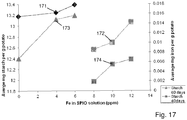
- Figure 17 illustrates the correlation between iron concentration 171 (60 days), 172 (40 days) and starch content 173 (60 days), 174 (40 days) of potatoes grown according to the methods above as a function of iron content in solution. Both quantities increase with increasing coated SPIO concentration, suggesting that they may be related. While not wishing to be bound by any particular theory, this could be due to the fact that Fe-S clusters are used in the Oxidative phosphorylation metabolic pathway for the synthesis of adenosine triphosphate (ATP). In the plant ATP is converted into ADP by ATPases and ADP is a major component in the biosynthesis of starch. It can therefore be postulated that an increase in iron concentration in the tuber would result in an increased starch content. This higher starch content could explain the observed increase in tuber size.
- ATP adenosine triphosphate
- iron oxide nanoparticles can be used to fortify potatoes through being incorporated via a growth medium. It is expected that the same or similar mechanism for fortification may be used for other trace elements such as selenium, magnesium or zinc, which may also be prepared in the form of nanoparticles coated with a suitable organic compound such as an amino acid. It has been shown that potato plants grown in the presence of a suspension of coated iron oxide particles results in an increase in the iron content of the resulting tubers, together with a surprising additional effect of an increase in the starch content of the tubers. The advantage of using iron oxide nanoparticles may therefore be not only in increasing the amount of iron in the food crop but also in the calorific quality of the food crop.
Landscapes
- Health & Medical Sciences (AREA)
- Life Sciences & Earth Sciences (AREA)
- Chemical & Material Sciences (AREA)
- Epidemiology (AREA)
- Veterinary Medicine (AREA)
- Public Health (AREA)
- General Health & Medical Sciences (AREA)
- Animal Behavior & Ethology (AREA)
- Medicinal Chemistry (AREA)
- Pharmacology & Pharmacy (AREA)
- Engineering & Computer Science (AREA)
- Inorganic Chemistry (AREA)
- Polymers & Plastics (AREA)
- Food Science & Technology (AREA)
- Nutrition Science (AREA)
- Bioinformatics & Cheminformatics (AREA)
- Environmental Sciences (AREA)
- Molecular Biology (AREA)
- Mycology (AREA)
- Chemical Kinetics & Catalysis (AREA)
- Organic Chemistry (AREA)
- Botany (AREA)
- Mechanical Engineering (AREA)
- Medicinal Preparation (AREA)
- Fodder In General (AREA)
- Coloring Foods And Improving Nutritive Qualities (AREA)
- Medicines Containing Antibodies Or Antigens For Use As Internal Diagnostic Agents (AREA)
Claims (11)
- Verfahren zum Bilden von beschichteten Partikeln, wobei das Verfahren umfasst:Bereitstellen einer ersten Menge von Metalloxidpartikeln;Bereitstellen einer zweiten Menge eines Beschichtungsmaterials, umfassend eine organische Verbindung;und mechanisches Mischen der Metalloxidpartikel mit dem Beschichtungsmaterial in einem Trockenmischprozess zum Bereitstellen einer Mischung, umfassend die Metalloxidpartikel, die mit der organischen Verbindung beschichtet sind;wobei das Massenverhältnis der Partikel zu dem Beschichtungsmaterial zwischen 1:0.5 und 1:2 ist.
- Verfahren nach Anspruch 1, wobei das Metalloxid Eisenoxid umfasst oder daraus besteht, oder eine Mischung von Eisenoxid und Zinnoxid umfasst.
- Verfahren nach Anspruch 1 oder Anspruch 2, wobei der Trockenmischprozess ein Anwenden einer Scherung zum Mischen der Metalloxidpartikel und des Beschichtungsmaterials umfasst, wobei der Trockenmischprozess optional einen Schleif- oder Mahlprozess umfasst.
- Verfahren nach einem der Ansprüche 1 bis 3, wobei der Trockenmischprozess bei einer Temperatur von weniger als 100°C durchgeführt wird, optional weniger als 60°C, und weiter optional bei oder in der Nähe der Umgebungstemperatur.
- Verfahren nach einem der Ansprüche 1 bis 4, wobei die organische Verbindung ausgewählt ist aus einer Aminosäure und/oder einem Peptid.
- Verfahren nach einem der Ansprüche 1 bis 5, wobei die organische Verbindung eine oder mehr von einer funktionalen Carboxyl-, Hydroxyl-, Amin- oder Phosphatgruppe umfasst.
- Verfahren nach einem der Ansprüche 1 bis 6, umfassend einen weiteren Schritt des Dispergierens der Mischung in einem Lösungsmittel, um ein Kolloid der Partikel in dem Lösungsmittel bereitzustellen, wobei das Lösungsmittel optional ein polares Lösungsmittel wie zum Beispiel Wasser ist.
- Verfahren nach Anspruch 7, umfassend einen weiteren Schritt eines Nassmischprozesses zum Dispergieren der Mischung in dem Lösungsmittel, wobei der Nassmischprozess optional ein Anwenden einer mechanischen Scherung über die Mischung hinweg umfasst.
- Verfahren nach Anspruch 7 oder Anspruch 8, umfassend eine Filterung des Kolloids.
- Verfahren nach einem der vorhergehenden Ansprüche, wobei die Partikel eine volumetrische mittlere Partikelgröße zwischen 2 nm und 1 µm im Durchmesser haben, und optional zwischen 2 nm und 100 nm im Durchmesser.
- Verfahren nach einem der Ansprüche 1 bis 6 oder 10, umfassend einen weiteren Schritt des Dispergierens der beschichteten Metalloxidpartikel in einem Polymerpräkursor, gefolgt von einer Polymerisation des Polymerpräkursors.
Applications Claiming Priority (2)
| Application Number | Priority Date | Filing Date | Title |
|---|---|---|---|
| GBGB1204579.5A GB201204579D0 (en) | 2012-03-15 | 2012-03-15 | Coating metal oxide particles |
| PCT/GB2013/050651 WO2013136082A2 (en) | 2012-03-15 | 2013-03-15 | Coating metal oxide particles |
Publications (2)
| Publication Number | Publication Date |
|---|---|
| EP2825515A2 EP2825515A2 (de) | 2015-01-21 |
| EP2825515B1 true EP2825515B1 (de) | 2021-02-24 |
Family
ID=46051984
Family Applications (1)
| Application Number | Title | Priority Date | Filing Date |
|---|---|---|---|
| EP13715399.5A Active EP2825515B1 (de) | 2012-03-15 | 2013-03-15 | Beschichtung von metalloxidpartikel |
Country Status (4)
| Country | Link |
|---|---|
| US (1) | US10154628B2 (de) |
| EP (1) | EP2825515B1 (de) |
| GB (1) | GB201204579D0 (de) |
| WO (1) | WO2013136082A2 (de) |
Families Citing this family (7)
| Publication number | Priority date | Publication date | Assignee | Title |
|---|---|---|---|---|
| GB201204579D0 (en) | 2012-03-15 | 2012-05-02 | Univ Nottingham Trent | Coating metal oxide particles |
| US9540291B2 (en) | 2015-02-10 | 2017-01-10 | Land View, Inc. | Coating for improved granular fertilizer efficiency |
| JP7054700B2 (ja) * | 2016-09-12 | 2022-04-14 | マディコ インコーポレイテッド | 難燃性感圧テープ |
| US12419230B1 (en) * | 2019-10-14 | 2025-09-23 | Orchid Gene, Llc | Porous ceramic member with nano silver coating for filtering a plant growth medium and method of application |
| US12441666B2 (en) | 2020-03-20 | 2025-10-14 | University Of Tennessee Research Foundation | Seed pre-soak technology with a drop of hematite nanoparticle fertilizer for increased plant growth |
| GB2600143A (en) * | 2020-10-22 | 2022-04-27 | Pharm 2 Farm Ltd | Nanoparticles for use in anti pathogenic applications |
| GB202118048D0 (en) | 2021-12-14 | 2022-01-26 | Pharm 2 Farm Ltd | Soluble nanoparticles for use in cosmetic and sunscreen applications |
Citations (1)
| Publication number | Priority date | Publication date | Assignee | Title |
|---|---|---|---|---|
| CN101935013A (zh) * | 2009-07-02 | 2011-01-05 | 国家纳米科学中心 | 具有对环境极性敏感的超顺磁性纳米粒子及制备方法 |
Family Cites Families (27)
| Publication number | Priority date | Publication date | Assignee | Title |
|---|---|---|---|---|
| AT121713B (de) | 1927-07-12 | 1931-03-10 | Ernst Pohl | Tragvorrichtung für Röntgendurchleuchtungsschirme und Röntgenkassetten. |
| US3555727A (en) * | 1970-01-30 | 1971-01-19 | Fred M Jaquith | Frost preventative for crops |
| US3935673A (en) * | 1973-09-21 | 1976-02-03 | Sy Raymond Robins | Production of belgium endive |
| US5219577A (en) | 1990-06-22 | 1993-06-15 | The Regents Of The University Of California | Biologically active composition having a nanocrystalline core |
| DK0485225T3 (da) | 1990-11-08 | 1995-09-04 | Phosyn Plc | Sporelementpræparater |
| DE4336694A1 (de) * | 1993-10-27 | 1995-05-04 | Inst Neue Mat Gemein Gmbh | Verfahren zur Herstellung von Metall- und Keramiksinterkörpern und -schichten |
| GB9600427D0 (en) * | 1996-01-10 | 1996-03-13 | Nycomed Imaging As | Contrast media |
| US20040221426A1 (en) | 1997-10-30 | 2004-11-11 | Kabushiki Kaisha Kobe Seiko Sho (Kobe Steel, Ltd.) | Method of producing iron oxide pellets |
| JP2005511761A (ja) * | 2001-07-10 | 2005-04-28 | ノース・キャロライナ・ステイト・ユニヴァーシティ | ナノ粒子送達ビヒクル |
| CO5410180A1 (es) * | 2002-10-22 | 2004-06-30 | Ciba Sc Holding Ag | Composicion y proceso para potenciar la produccion de bio-masa en invernaderos |
| FR2853307B1 (fr) * | 2003-04-07 | 2006-07-07 | Centre Nat Rech Scient | Procede de preparation d'une composition de nanoparticules d'au moins un oxyde metallique cristallin |
| US7118727B2 (en) * | 2003-06-16 | 2006-10-10 | General Electric Company | Method of making oxide particles |
| US20050126238A1 (en) * | 2003-12-11 | 2005-06-16 | Qc Corporation | Plant nutrient and method of making |
| US20070292622A1 (en) * | 2005-08-04 | 2007-12-20 | Rowley Lawrence A | Solvent containing carbon nanotube aqueous dispersions |
| GB0525564D0 (en) | 2005-12-15 | 2006-01-25 | Syngenta Participations Ag | Improvements in or relating to potato quality |
| CZ301067B6 (cs) * | 2006-02-24 | 2009-10-29 | Ústav makromolekulární chemie AV CR | Superparamagnetické nanocástice na bázi oxidu železa s modifikovaným povrchem, zpusob jejich prípravy a použití |
| US7691169B2 (en) * | 2006-03-28 | 2010-04-06 | Mccoy Jr Paul E | Partially chelated carboxylate nutrients and methods for their production and use |
| US20100166870A1 (en) * | 2006-12-21 | 2010-07-01 | The University Of Western Australia | Method for Coating Nanoparticles |
| AU2007338631A1 (en) * | 2006-12-22 | 2008-07-03 | Combinatorx, Incorporated | Pharmaceutical compositions for treatment of parkinson's disease and related disorders |
| US20110104073A1 (en) | 2007-01-18 | 2011-05-05 | Qi Zeng | Iron/Iron Oxide Nanoparticle and Use Thereof |
| WO2009040811A2 (en) | 2007-09-24 | 2009-04-02 | Bar-Ilan University | Polymer nanoparticles coated by magnetic metal oxide and uses thereof |
| US8383085B2 (en) | 2009-05-29 | 2013-02-26 | University Of Manitoba | Methods of making iron-containing nanoparticles |
| JP4729120B1 (ja) | 2010-02-15 | 2011-07-20 | Jfeミネラル株式会社 | 鉄イオン供給材料及びその製造方法並びに鉄イオン供給方法 |
| SE535087C2 (sv) * | 2010-08-24 | 2012-04-10 | En metod för att preparera en plan yta med en kontrollerad täthetsgradient av deponerade partiklar i nanostorlek | |
| CN103493256A (zh) * | 2010-12-21 | 2014-01-01 | 拜耳知识产权有限责任公司 | 制备粉末状聚合物-碳纳米管-混合物的方法 |
| CN104114028B (zh) * | 2012-02-15 | 2017-09-22 | 加尔各答大学 | 植物营养物包覆的纳米颗粒及其制备和使用方法 |
| GB201204579D0 (en) | 2012-03-15 | 2012-05-02 | Univ Nottingham Trent | Coating metal oxide particles |
-
2012
- 2012-03-15 GB GBGB1204579.5A patent/GB201204579D0/en not_active Ceased
-
2013
- 2013-03-15 US US14/384,605 patent/US10154628B2/en active Active
- 2013-03-15 EP EP13715399.5A patent/EP2825515B1/de active Active
- 2013-03-15 WO PCT/GB2013/050651 patent/WO2013136082A2/en not_active Ceased
Patent Citations (1)
| Publication number | Priority date | Publication date | Assignee | Title |
|---|---|---|---|---|
| CN101935013A (zh) * | 2009-07-02 | 2011-01-05 | 国家纳米科学中心 | 具有对环境极性敏感的超顺磁性纳米粒子及制备方法 |
Non-Patent Citations (1)
| Title |
|---|
| DATABASE WPI Week 201131, Derwent World Patents Index; AN 2011-B64893 * |
Also Published As
| Publication number | Publication date |
|---|---|
| WO2013136082A3 (en) | 2014-11-27 |
| WO2013136082A2 (en) | 2013-09-19 |
| US10154628B2 (en) | 2018-12-18 |
| GB201204579D0 (en) | 2012-05-02 |
| EP2825515A2 (de) | 2015-01-21 |
| US20150027050A1 (en) | 2015-01-29 |
Similar Documents
| Publication | Publication Date | Title |
|---|---|---|
| EP2825515B1 (de) | Beschichtung von metalloxidpartikel | |
| Zhang et al. | Synthesis of lanthanum doped carbon dots for detection of mercury ion, multi-color imaging of cells and tissue, and bacteriostasis | |
| Shen et al. | A novel carboxymethyl chitosan-based folate/Fe3O4/CdTe nanoparticle for targeted drug delivery and cell imaging | |
| CN112022834B (zh) | 一种负载金丝桃苷的玉米醇溶蛋白-果胶复合纳米颗粒及其制备方法 | |
| CN102020258B (zh) | 一种磁性荧光羟基磷灰石纳米复合结构的制备方法 | |
| Sahu et al. | Multifunctional magnetic fluorescent hybrid nanoparticles as carriers for the hydrophobic anticancer drug 5-fluorouracil | |
| Wang et al. | Multifunctional Fe 3 O 4–CdTe@ SiO 2–carboxymethyl chitosan drug nanocarriers: synergistic effect towards magnetic targeted drug delivery and cell imaging | |
| Malathi et al. | Green synthesis of gold nanoparticles for controlled delivery | |
| Dong et al. | Highly porous, water‐soluble, superparamagnetic, and biocompatible magnetite nanocrystal clusters for targeted drug delivery | |
| Dutta et al. | Development of oxaliplatin encapsulated in magnetic nanocarriers of pectin as a potential targeted drug delivery for cancer therapy | |
| CN112773899A (zh) | 一种基于生物金属有机骨架材料的药物递送载体及其制备方法和应用 | |
| Perton et al. | Wrapped stellate silica nanocomposites as biocompatible luminescent nanoplatforms assessed in vivo | |
| Nie et al. | Preparation and characterization of sodium alginate/phosphate-stabilized amorphous calcium carbonate nanocarriers and their application in the release of curcumin | |
| Ee Pei et al. | Biosynthesis of gold nanoparticles (AuNPs) by marine baitworm Marphysa moribidii idris, hutchings and arshad 2014 (annelida: polychaeta) and its antibacterial activity | |
| Ye et al. | Influence of aspartic acid and lysine on the uptake of gold nanoparticles in rice | |
| Gang et al. | Synthesis and biological evaluation of fluorescent hyaluronic acid modified amorphous calcium phosphate drug carriers for tumor-targeting | |
| Ren et al. | Biosynthesis of gold nanoparticles using catclaw buttercup (Radix Ranunculi Ternati) and evaluation of its colloidal stability | |
| Wang et al. | Preparation and drug releasing property of magnetic chitosan-5-fluorouracil nano-particles | |
| WO2016191816A1 (en) | Glucose sensitive phenylborate acid capsules for insulin delivery | |
| Sailaja et al. | Preparation of BSA nanoparticles by desolvation technique using acetone as desolvating agent | |
| Manikantan et al. | Praseodymium metal nanorods as a 5-fluorouracil carrier | |
| Devendiran et al. | Sunlight mediated biosynthesis and characterisation of gold nanoparticles using pisonia grandis leaf extract for biomedical applications | |
| KR20140094340A (ko) | 기능성 알지네이트/실리케이트 복합체 비드 및 이의 제조방법 | |
| CN109867309B (zh) | 一种水溶磁性氧化铁纳米晶及其制备方法 | |
| CN118286166A (zh) | 一种锰基纳米凝胶、以该纳米凝胶为载体的药物及抗糖、抗菌、抗肿瘤应用 |
Legal Events
| Date | Code | Title | Description |
|---|---|---|---|
| PUAI | Public reference made under article 153(3) epc to a published international application that has entered the european phase |
Free format text: ORIGINAL CODE: 0009012 |
|
| 17P | Request for examination filed |
Effective date: 20141015 |
|
| AK | Designated contracting states |
Kind code of ref document: A2 Designated state(s): AL AT BE BG CH CY CZ DE DK EE ES FI FR GB GR HR HU IE IS IT LI LT LU LV MC MK MT NL NO PL PT RO RS SE SI SK SM TR |
|
| AX | Request for extension of the european patent |
Extension state: BA ME |
|
| DAX | Request for extension of the european patent (deleted) | ||
| STAA | Information on the status of an ep patent application or granted ep patent |
Free format text: STATUS: EXAMINATION IS IN PROGRESS |
|
| 17Q | First examination report despatched |
Effective date: 20180523 |
|
| GRAP | Despatch of communication of intention to grant a patent |
Free format text: ORIGINAL CODE: EPIDOSNIGR1 |
|
| STAA | Information on the status of an ep patent application or granted ep patent |
Free format text: STATUS: GRANT OF PATENT IS INTENDED |
|
| RIC1 | Information provided on ipc code assigned before grant |
Ipc: A61K 31/7036 20060101ALI20200813BHEP Ipc: A61K 31/375 20060101ALI20200813BHEP Ipc: A61K 33/26 20060101ALI20200813BHEP Ipc: A23L 19/00 20160101ALI20200813BHEP Ipc: C05D 9/02 20060101AFI20200813BHEP Ipc: A61K 31/4178 20060101ALI20200813BHEP Ipc: A23L 33/16 20160101ALI20200813BHEP Ipc: C05G 5/30 20200101ALI20200813BHEP |
|
| INTG | Intention to grant announced |
Effective date: 20200911 |
|
| GRAS | Grant fee paid |
Free format text: ORIGINAL CODE: EPIDOSNIGR3 |
|
| GRAA | (expected) grant |
Free format text: ORIGINAL CODE: 0009210 |
|
| STAA | Information on the status of an ep patent application or granted ep patent |
Free format text: STATUS: THE PATENT HAS BEEN GRANTED |
|
| AK | Designated contracting states |
Kind code of ref document: B1 Designated state(s): AL AT BE BG CH CY CZ DE DK EE ES FI FR GB GR HR HU IE IS IT LI LT LU LV MC MK MT NL NO PL PT RO RS SE SI SK SM TR |
|
| REG | Reference to a national code |
Ref country code: GB Ref legal event code: FG4D |
|
| REG | Reference to a national code |
Ref country code: CH Ref legal event code: EP |
|
| REG | Reference to a national code |
Ref country code: AT Ref legal event code: REF Ref document number: 1364249 Country of ref document: AT Kind code of ref document: T Effective date: 20210315 |
|
| REG | Reference to a national code |
Ref country code: IE Ref legal event code: FG4D |
|
| REG | Reference to a national code |
Ref country code: DE Ref legal event code: R096 Ref document number: 602013075838 Country of ref document: DE |
|
| REG | Reference to a national code |
Ref country code: LT Ref legal event code: MG9D |
|
| REG | Reference to a national code |
Ref country code: NL Ref legal event code: MP Effective date: 20210224 |
|
| PG25 | Lapsed in a contracting state [announced via postgrant information from national office to epo] |
Ref country code: PT Free format text: LAPSE BECAUSE OF FAILURE TO SUBMIT A TRANSLATION OF THE DESCRIPTION OR TO PAY THE FEE WITHIN THE PRESCRIBED TIME-LIMIT Effective date: 20210624 Ref country code: LT Free format text: LAPSE BECAUSE OF FAILURE TO SUBMIT A TRANSLATION OF THE DESCRIPTION OR TO PAY THE FEE WITHIN THE PRESCRIBED TIME-LIMIT Effective date: 20210224 Ref country code: FI Free format text: LAPSE BECAUSE OF FAILURE TO SUBMIT A TRANSLATION OF THE DESCRIPTION OR TO PAY THE FEE WITHIN THE PRESCRIBED TIME-LIMIT Effective date: 20210224 Ref country code: GR Free format text: LAPSE BECAUSE OF FAILURE TO SUBMIT A TRANSLATION OF THE DESCRIPTION OR TO PAY THE FEE WITHIN THE PRESCRIBED TIME-LIMIT Effective date: 20210525 Ref country code: HR Free format text: LAPSE BECAUSE OF FAILURE TO SUBMIT A TRANSLATION OF THE DESCRIPTION OR TO PAY THE FEE WITHIN THE PRESCRIBED TIME-LIMIT Effective date: 20210224 Ref country code: BG Free format text: LAPSE BECAUSE OF FAILURE TO SUBMIT A TRANSLATION OF THE DESCRIPTION OR TO PAY THE FEE WITHIN THE PRESCRIBED TIME-LIMIT Effective date: 20210524 Ref country code: NO Free format text: LAPSE BECAUSE OF FAILURE TO SUBMIT A TRANSLATION OF THE DESCRIPTION OR TO PAY THE FEE WITHIN THE PRESCRIBED TIME-LIMIT Effective date: 20210524 |
|
| REG | Reference to a national code |
Ref country code: AT Ref legal event code: MK05 Ref document number: 1364249 Country of ref document: AT Kind code of ref document: T Effective date: 20210224 |
|
| PG25 | Lapsed in a contracting state [announced via postgrant information from national office to epo] |
Ref country code: SE Free format text: LAPSE BECAUSE OF FAILURE TO SUBMIT A TRANSLATION OF THE DESCRIPTION OR TO PAY THE FEE WITHIN THE PRESCRIBED TIME-LIMIT Effective date: 20210224 Ref country code: LV Free format text: LAPSE BECAUSE OF FAILURE TO SUBMIT A TRANSLATION OF THE DESCRIPTION OR TO PAY THE FEE WITHIN THE PRESCRIBED TIME-LIMIT Effective date: 20210224 Ref country code: PL Free format text: LAPSE BECAUSE OF FAILURE TO SUBMIT A TRANSLATION OF THE DESCRIPTION OR TO PAY THE FEE WITHIN THE PRESCRIBED TIME-LIMIT Effective date: 20210224 Ref country code: RS Free format text: LAPSE BECAUSE OF FAILURE TO SUBMIT A TRANSLATION OF THE DESCRIPTION OR TO PAY THE FEE WITHIN THE PRESCRIBED TIME-LIMIT Effective date: 20210224 Ref country code: NL Free format text: LAPSE BECAUSE OF FAILURE TO SUBMIT A TRANSLATION OF THE DESCRIPTION OR TO PAY THE FEE WITHIN THE PRESCRIBED TIME-LIMIT Effective date: 20210224 |
|
| PG25 | Lapsed in a contracting state [announced via postgrant information from national office to epo] |
Ref country code: IS Free format text: LAPSE BECAUSE OF FAILURE TO SUBMIT A TRANSLATION OF THE DESCRIPTION OR TO PAY THE FEE WITHIN THE PRESCRIBED TIME-LIMIT Effective date: 20210624 |
|
| PG25 | Lapsed in a contracting state [announced via postgrant information from national office to epo] |
Ref country code: EE Free format text: LAPSE BECAUSE OF FAILURE TO SUBMIT A TRANSLATION OF THE DESCRIPTION OR TO PAY THE FEE WITHIN THE PRESCRIBED TIME-LIMIT Effective date: 20210224 Ref country code: CZ Free format text: LAPSE BECAUSE OF FAILURE TO SUBMIT A TRANSLATION OF THE DESCRIPTION OR TO PAY THE FEE WITHIN THE PRESCRIBED TIME-LIMIT Effective date: 20210224 Ref country code: SM Free format text: LAPSE BECAUSE OF FAILURE TO SUBMIT A TRANSLATION OF THE DESCRIPTION OR TO PAY THE FEE WITHIN THE PRESCRIBED TIME-LIMIT Effective date: 20210224 Ref country code: AT Free format text: LAPSE BECAUSE OF FAILURE TO SUBMIT A TRANSLATION OF THE DESCRIPTION OR TO PAY THE FEE WITHIN THE PRESCRIBED TIME-LIMIT Effective date: 20210224 |
|
| REG | Reference to a national code |
Ref country code: CH Ref legal event code: PL |
|
| REG | Reference to a national code |
Ref country code: DE Ref legal event code: R097 Ref document number: 602013075838 Country of ref document: DE |
|
| PG25 | Lapsed in a contracting state [announced via postgrant information from national office to epo] |
Ref country code: SK Free format text: LAPSE BECAUSE OF FAILURE TO SUBMIT A TRANSLATION OF THE DESCRIPTION OR TO PAY THE FEE WITHIN THE PRESCRIBED TIME-LIMIT Effective date: 20210224 Ref country code: DK Free format text: LAPSE BECAUSE OF FAILURE TO SUBMIT A TRANSLATION OF THE DESCRIPTION OR TO PAY THE FEE WITHIN THE PRESCRIBED TIME-LIMIT Effective date: 20210224 Ref country code: ES Free format text: LAPSE BECAUSE OF FAILURE TO SUBMIT A TRANSLATION OF THE DESCRIPTION OR TO PAY THE FEE WITHIN THE PRESCRIBED TIME-LIMIT Effective date: 20210224 Ref country code: MC Free format text: LAPSE BECAUSE OF FAILURE TO SUBMIT A TRANSLATION OF THE DESCRIPTION OR TO PAY THE FEE WITHIN THE PRESCRIBED TIME-LIMIT Effective date: 20210224 Ref country code: RO Free format text: LAPSE BECAUSE OF FAILURE TO SUBMIT A TRANSLATION OF THE DESCRIPTION OR TO PAY THE FEE WITHIN THE PRESCRIBED TIME-LIMIT Effective date: 20210224 |
|
| REG | Reference to a national code |
Ref country code: BE Ref legal event code: MM Effective date: 20210331 |
|
| PLBE | No opposition filed within time limit |
Free format text: ORIGINAL CODE: 0009261 |
|
| STAA | Information on the status of an ep patent application or granted ep patent |
Free format text: STATUS: NO OPPOSITION FILED WITHIN TIME LIMIT |
|
| PG25 | Lapsed in a contracting state [announced via postgrant information from national office to epo] |
Ref country code: IE Free format text: LAPSE BECAUSE OF NON-PAYMENT OF DUE FEES Effective date: 20210315 Ref country code: AL Free format text: LAPSE BECAUSE OF FAILURE TO SUBMIT A TRANSLATION OF THE DESCRIPTION OR TO PAY THE FEE WITHIN THE PRESCRIBED TIME-LIMIT Effective date: 20210224 Ref country code: CH Free format text: LAPSE BECAUSE OF NON-PAYMENT OF DUE FEES Effective date: 20210331 Ref country code: LU Free format text: LAPSE BECAUSE OF NON-PAYMENT OF DUE FEES Effective date: 20210315 Ref country code: LI Free format text: LAPSE BECAUSE OF NON-PAYMENT OF DUE FEES Effective date: 20210331 |
|
| 26N | No opposition filed |
Effective date: 20211125 |
|
| PG25 | Lapsed in a contracting state [announced via postgrant information from national office to epo] |
Ref country code: SI Free format text: LAPSE BECAUSE OF FAILURE TO SUBMIT A TRANSLATION OF THE DESCRIPTION OR TO PAY THE FEE WITHIN THE PRESCRIBED TIME-LIMIT Effective date: 20210224 |
|
| PG25 | Lapsed in a contracting state [announced via postgrant information from national office to epo] |
Ref country code: IT Free format text: LAPSE BECAUSE OF FAILURE TO SUBMIT A TRANSLATION OF THE DESCRIPTION OR TO PAY THE FEE WITHIN THE PRESCRIBED TIME-LIMIT Effective date: 20210224 |
|
| PG25 | Lapsed in a contracting state [announced via postgrant information from national office to epo] |
Ref country code: IS Free format text: LAPSE BECAUSE OF FAILURE TO SUBMIT A TRANSLATION OF THE DESCRIPTION OR TO PAY THE FEE WITHIN THE PRESCRIBED TIME-LIMIT Effective date: 20210624 |
|
| PG25 | Lapsed in a contracting state [announced via postgrant information from national office to epo] |
Ref country code: BE Free format text: LAPSE BECAUSE OF NON-PAYMENT OF DUE FEES Effective date: 20210331 |
|
| PG25 | Lapsed in a contracting state [announced via postgrant information from national office to epo] |
Ref country code: HU Free format text: LAPSE BECAUSE OF FAILURE TO SUBMIT A TRANSLATION OF THE DESCRIPTION OR TO PAY THE FEE WITHIN THE PRESCRIBED TIME-LIMIT; INVALID AB INITIO Effective date: 20130315 |
|
| P01 | Opt-out of the competence of the unified patent court (upc) registered |
Effective date: 20230518 |
|
| PG25 | Lapsed in a contracting state [announced via postgrant information from national office to epo] |
Ref country code: CY Free format text: LAPSE BECAUSE OF FAILURE TO SUBMIT A TRANSLATION OF THE DESCRIPTION OR TO PAY THE FEE WITHIN THE PRESCRIBED TIME-LIMIT Effective date: 20210224 |
|
| P01 | Opt-out of the competence of the unified patent court (upc) registered |
Effective date: 20230525 |
|
| P03 | Opt-out of the competence of the unified patent court (upc) deleted | ||
| PG25 | Lapsed in a contracting state [announced via postgrant information from national office to epo] |
Ref country code: MK Free format text: LAPSE BECAUSE OF FAILURE TO SUBMIT A TRANSLATION OF THE DESCRIPTION OR TO PAY THE FEE WITHIN THE PRESCRIBED TIME-LIMIT Effective date: 20210224 |
|
| PG25 | Lapsed in a contracting state [announced via postgrant information from national office to epo] |
Ref country code: TR Free format text: LAPSE BECAUSE OF FAILURE TO SUBMIT A TRANSLATION OF THE DESCRIPTION OR TO PAY THE FEE WITHIN THE PRESCRIBED TIME-LIMIT Effective date: 20210224 |
|
| PG25 | Lapsed in a contracting state [announced via postgrant information from national office to epo] |
Ref country code: MT Free format text: LAPSE BECAUSE OF FAILURE TO SUBMIT A TRANSLATION OF THE DESCRIPTION OR TO PAY THE FEE WITHIN THE PRESCRIBED TIME-LIMIT Effective date: 20210224 |
|
| PGFP | Annual fee paid to national office [announced via postgrant information from national office to epo] |
Ref country code: GB Payment date: 20260224 Year of fee payment: 14 |
|
| PGFP | Annual fee paid to national office [announced via postgrant information from national office to epo] |
Ref country code: DE Payment date: 20260226 Year of fee payment: 14 |
|
| PGFP | Annual fee paid to national office [announced via postgrant information from national office to epo] |
Ref country code: FR Payment date: 20260224 Year of fee payment: 14 |