EP2824596A2 - Recherche de contenu web activée par la parole utilisant un navigateur multimodal - Google Patents
Recherche de contenu web activée par la parole utilisant un navigateur multimodal Download PDFInfo
- Publication number
- EP2824596A2 EP2824596A2 EP14187192.1A EP14187192A EP2824596A2 EP 2824596 A2 EP2824596 A2 EP 2824596A2 EP 14187192 A EP14187192 A EP 14187192A EP 2824596 A2 EP2824596 A2 EP 2824596A2
- Authority
- EP
- European Patent Office
- Prior art keywords
- action
- web content
- multimodal browser
- multimodal
- speech
- Prior art date
- Legal status (The legal status is an assumption and is not a legal conclusion. Google has not performed a legal analysis and makes no representation as to the accuracy of the status listed.)
- Granted
Links
Images


Classifications
-
- G—PHYSICS
- G06—COMPUTING OR CALCULATING; COUNTING
- G06F—ELECTRIC DIGITAL DATA PROCESSING
- G06F16/00—Information retrieval; Database structures therefor; File system structures therefor
- G06F16/90—Details of database functions independent of the retrieved data types
- G06F16/95—Retrieval from the web
- G06F16/957—Browsing optimisation, e.g. caching or content distillation
-
- G—PHYSICS
- G10—MUSICAL INSTRUMENTS; ACOUSTICS
- G10L—SPEECH ANALYSIS TECHNIQUES OR SPEECH SYNTHESIS; SPEECH RECOGNITION; SPEECH OR VOICE PROCESSING TECHNIQUES; SPEECH OR AUDIO CODING OR DECODING
- G10L15/00—Speech recognition
- G10L15/22—Procedures used during a speech recognition process, e.g. man-machine dialogue
Definitions
- the field of the invention is data processing, or, more specifically, methods, apparatus, and products for speech-enabled web content searching using a multimodal browser.
- Multimodal applications are often formed by sets of markup documents served up by web servers for display on multimodal browsers.
- a 'multimodal browser generally means a web browser capable of receiving multimodal input and interacting with users with multimodal output, where modes of the multimodal input and output include at least a speech mode.
- Multimodal browsers typically render web pages written in XHTML + Voice ('X+V').
- X+V provides a markup language that enables users to interact with an multimodal application often running on a server through spoken dialog in addition to traditional means of input such as keyboard strokes and mouse pointer action.
- Visual markup tells a multimodal browser what the user interface is to look like and how it is to behave when the user types, points, or clicks.
- voice markup tells a multimodal browser what to do when the user speaks to it.
- the multimodal browser uses a graphics engine; for voice markup, the multimodal browser uses a speech engine.
- X+V adds spoken interaction to standard web content by integrating XHTML (extensible Hypertext Markup Language) and speech recognition vocabularies supported by VoiceXML.
- X+V includes the XHTML standard.
- X+V includes a subset of VoiceXML.
- X+V uses events.
- XHTML includes voice modules that support speech synthesis, speech dialogs, command and control, and speech grammars. Voice handlers can be attached to XHTML elements and respond to specific events. Voice interaction features are integrated with XHTML and can consequently be used directly within XHTML content.
- SALT is a markup language developed by the Salt Forum. Both X+V and SALT are markup languages for creating applications that use voice input/speech recognition and voice output/speech synthesis. Both SALT applications and X+V applications use underlying speech recognition and synthesis technologies or 'speech engines' to do the work of recognizing and generating human speech. As markup languages, both X+V and SALT provide markup-based programming environments for using speech engines in an application's user interface.
- Both languages have language elements, markup tags, that specify what the speech-recognition engine should listen for and what the synthesis engine should 'say.
- SALT does not provide a standard visual markup language or eventing model. Rather, it is a low-level set of tags for specifying voice interaction that can be embedded into other environments.
- multimodal applications may be implemented in Java TM with a Java speech framework, in C++, for example, and with other technologies and in other environments as well. (Java and all Java-based trademarks and logos are trademarks of Sun Microsystems, Inc. in the United States, other countries, or both.)
- web pages may be designed to provide web content searching capabilities using a multimodal markup language such as X+V.
- X+V multimodal markup language
- Such speech-enabled searching of web content is currently available only to those web pages that include speech-enabled web content, that is web content implemented using voice markup such as, for example, X+V. This drawback occurs because speech-enabled web content searching is currently implemented in the web page that contains the web content.
- 'ASR' automatic speech recognition
- a method for speech-enabled web content searching using a multimodal browser operable with one or more grammars in an automatic speech recognition ('ASR') engine, with the multimodal browser operable on a multimodal device supporting multiple modes of interaction including a voice mode and one or more non-voice modes, the multimodal browser operatively coupled to the ASR engine, the method comprising: rendering, by the multimodal browser, web content; searching, by the multimodal browser, the web content for a search phrase, including yielding a matched search result, the search phrase specified by a first voice utterance received from a user and a search grammar; and performing, by the multimodal browser, an action in dependence upon the matched search result, the action specified by a second voice utterance received from the user and an action grammar.
- 'ASR' automatic speech recognition
- an apparatus for speech-enabled web content searching using a multimodal browser operable with one or more grammars in an automatic speech recognition ('ASR') engine, with the multimodal browser operable on a multimodal device supporting multiple modes of interaction including a voice mode and one or more non-voice modes, the multimodal browser operatively coupled to the ASR engine, the apparatus comprising a computer processor and a computer memory operatively coupled to the computer processor, the computer memory having disposed within it computer program instructions capable of: rendering, by the multimodal browser, web content; searching, by the multimodal browser, the web content for a search phrase, including yielding a matched search result, the search phrase specified by a first voice utterance received from a user and a search grammar; and performing, by the multimodal browser, an action in dependence upon the matched search result, the action specified by a second voice utterance received from the user and an action grammar.
- 'ASR' automatic speech recognition
- a computer program product for speech-enabled web content searching using a multimodal browser, the computer program product operable with one or more grammars in an automatic speech recognition ('ASR') engine, with the multimodal browser operable on a multimodal device supporting multiple modes of interaction including a voice mode and one or more non-voice modes, the multimodal browser operatively coupled to the ASR engine, the computer program product disposed upon a computer-readable medium, the computer program product comprising computer program instructions capable of: rendering, by the multimodal browser, web content; searching, by the multimodal browser, the web content for a search phrase, including yielding a matched search result, the search phrase specified by a first voice utterance received from a user and a search grammar; and performing, by the multimodal browser, an action in dependence upon the matched search result, the action specified by a second voice utterance received from the user and an action grammar.
- 'ASR' automatic speech recognition
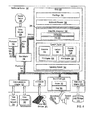
- FIG. 1 sets forth a network diagram illustrating an exemplary system for speech-enabled web content searching using a multimodal browser according to embodiments of the present invention.
- Speech-enabled web content searching using a multimodal browser in this example is implemented with a multimodal browser (196) operating on a multimodal device (152).
- the multimodal browser (196) provides an execution environment for web page (195).
- the web page (195) is an information resource containing web content that can be accessed through a browser.
- the web page (195) is implemented according to a markup language such as, for example, HyperText Markup Language ('HTML'), extensible Hypertext Markup Language ('XHTML,'), X+V, or other markup languages as will occur to those of skill in the art.
- Web content is the textual, visual or aural content of the web that is presented to a user along with metadata describing such content. Web content may include, among other things, text, images, sounds, videos, and animations.
- the multimodal device (152) of Figure 1 supports multiple modes of interaction including a voice mode and one or more non-voice modes of user interaction with the multimodal application (195).
- the voice mode is represented here with audio output of voice prompts and responses (177) from the multimodal devices and audio input of speech for recognition (315) from a user (128).
- Non-voice modes are represented by input/output devices such as keyboards and display screens on the multimodal devices (152).
- the multimodal browser is operatively coupled to an automatic speed recognition ('ASR') engine (150).
- the operative coupling may be implemented with an application programming interface ('API'), a voice service module, or a VOIP connection as explained more detail below.
- the multimodal browser (196) includes a set of computer program instructions configured for speech-enabled web content searching according to embodiments of the present invention.
- the multimodal browser (196) of Figure 1 operates generally for speech-enabled web content searching according to embodiments of the present invention by: rendering web content; searching the web content for a search phrase, including yielding a matched search result, the search phrase specified by a first voice utterance received from a user and a search grammar; and performing an action in dependence upon the matched search result, the action specified by a second voice utterance received from the user and an action grammar.
- Speech-enabled web content searching using a multimodal browser advantageously allows a multimodal browser to provide speech-enabled search capabilities for any web content regardless of whether the web content is speech enabled.
- Web content is speech enabled when the author of the content implemented the web content using technologies that provide voice interaction between a human and a computer such as, for example, X+V.
- Web content is not speech-enabled when the author of the content implemented the web content using technologies that do not provide voice interaction between a human and a computer such as, for example, HTML.
- Speech-enabled web content searching using a multimodal browser (195) is implemented with one or more grammars in the ASR engine (150).
- a grammar communicates to the ASR engine (150) the words and sequences of words that currently may be recognized.
- a grammar typically includes grammar rules that advise an ASR engine or a voice interpreter which words and word sequences presently can be recognized.
- Grammars for use according to embodiments of the present invention may be expressed in any format supported by an ASR engine, including, for example, the Java Speech Grammar Format ('JSGF'), the format of the W3C Speech Recognition Grammar Specification ('SRGS'), the Augmented Backus-Naur Format ('ABNF') from the IETF's RFC2234, in the form of a stochastic grammar as described in the W3C's Stochastic Language Models (N-Gram) Specification, and in other grammar formats as may occur to those of skill in the art.
- Grammars typically operate as elements of dialogs, such as, for example, a VoiceXML ⁇ menu> or an X+V ⁇ form>.
- a grammar's definition may be expressed in-line in a dialog. Or the grammar may be implemented externally in a separate grammar document and referenced from with a dialog with a URI.
- JSFG a grammar expressed in JSFG:
- the elements named ⁇ command>, ⁇ name>, and ⁇ when> are rules of the grammar.
- Rules are a combination of a rulename and an expansion of a rule that advises an ASR engine or a VoiceXML interpreter which words presently can be recognized.
- rule expansions includes conjunction and disjunction, and the vertical bars '
- An ASR engine or a VoiceXML interpreter processes the rules in sequence, first ⁇ command>, then ⁇ name>, then ⁇ when>.
- the ⁇ command> rule accepts for recognition 'call' or 'phone' or 'telephone' plus, that is, in conjunction with, whatever is returned from the ⁇ name> rule and the ⁇ when> rule.
- the ⁇ name> rule accepts 'bob' or 'martha' or 'joe' or 'pete' or 'chris' or 'john' or 'artoush' or 'tom,' and the ⁇ when> rule accepts 'today' or 'this afternoon' or 'tomorrow' or 'next week.
- the command grammar as a whole matches utterances like these, for example:
- grammars useful according to embodiments of the present invention may also be implemented using dynamically defined grammar rules that are specified by the grammar as rules that are not to be processed by the ASR until after at least one static rule has been matched.
- dynamic rules are dynamically defined at run time as a new static rule in dependence upon a matched value of a previously matched static rule.
- the following grammar for example:
- the dynamic ⁇ brand>> rule is initially defined in this example grammar only by a URL:
- the URL identifies a computer resource capable of dynamically defining at run time the dynamic ⁇ brand>> rule of the grammar as a new static rule in dependence upon matched value from the ⁇ item> rule, the rule required to be matched before the dynamic rule is processed.
- the computer resource so identified is a Java Server Page ('JSP') located at http://groceries.com.
- the JSP is a computer resource that is programmed to define the dynamic ⁇ brand>> rule of the grammar as a new static rule in dependence upon matched value from the ⁇ item> rule.
- the ASR engine expands the definition of the ⁇ brand>> rule with the results of the match from the ⁇ item> rule and provides the expansion to the JSP page to return a new static rule.
- the ASR engine may dynamically define the dynamic rule at run time as a new static rule by expanding the definition of the dynamic rule with a matched value of the referenced static ⁇ item> rule. If the ⁇ item> rule were matched with "peppers," for example, then the definition of the dynamic ⁇ brand>> rule may be expanded as:
- the dynamic ⁇ brand>> rule occurs in document order after the static ⁇ item> rule whose match value is required before the dynamic rule can be processed.
- the ASR engine typically will match the ⁇ item> rule in document order before processing the ⁇ brand>> rule. This document order, however, is not a limitation of the present invention.
- the static and dynamic rules may occur in any document order in the grammar, and, if a dynamic rule is set forth in the grammar ahead of a static rule upon which the dynamic rule depends, then the ASR engine is configured to make more than one pass through the grammar, treating the dynamic rule in the meantime as a rule that matches any speech in the utterance until a next rule match, a next token match, or the end of processing of the pertinent user utterance.
- the multimodal browser (196) provides an execution environment for the web page (195).
- the system of Figure 1 includes a VoiceXML interpreter (192).
- the VoiceXML interpreter (192) is a software module of computer program instructions that accepts voice dialog instructions from a web page or the multimodal browser itself, typically in the form of a VoiceXML ⁇ form> element.
- the voice dialog instructions include one or more grammars, data input elements, event handlers, and so on, that advise the VoiceXML interpreter (192) how to administer voice input from a user and voice prompts and responses to be presented to a user.
- the VoiceXML interpreter (192) administers such dialogs by processing the dialog instructions sequentially in accordance with a VoiceXML Form Interpretation Algorithm ('FIA').
- 'FIA' VoiceXML Form Interpretation Algorithm
- a multimodal device on which a multimodal browser operates is an automated device, that is, automated computing machinery or a computer program running on an automated device, that is capable of accepting from users more than one mode of input, keyboard, mouse, stylus, and so on, including speech input - and also providing more than one mode of output such as, graphic, speech, and so on.
- a multimodal device is generally capable of accepting speech input from a user, digitizing the speech, and providing digitized speech to a speech engine for recognition.
- a multimodal device may be implemented, for example, as a voice-enabled browser on a laptop, a voice browser on a telephone handset, an online game implemented with Java on a personal computer, and with other combinations of hardware and software as may occur to those of skill in the art.
- the system of Figure 1 includes several exemplary multimodal devices:
- Each of the example multimodal devices (152) in the system of Figure 1 includes a microphone, an audio amplifier, a digital-to-analog converter, and a multimodal browser capable of accepting from a user (128) speech for recognition (315), digitizing the speech, and providing the digitized speech to a speech engine for recognition.
- the speech may be digitized according to industry standard codecs, including but not limited to those used for Distributed Speech Recognition as such.
- 'codecs Methods for 'COding/DECoding' speech are referred to as 'codecs.
- the European Telecommunications Standards Institute ('ETSI') provides several codecs for encoding speech for use in DSR, including, for example, the ETSI ES 201 108 DSR Front-end Codec, the ETSI ES 202 050 Advanced DSR Front-end Codec, the ETSI ES 202 211 Extended DSR Front-end Codec, and the ETSI ES 202 212 Extended Advanced DSR Front-end Codec.
- a multimodal device is capable of providing speech to a speech engine for recognition.
- the speech engine (153) of Figure 1 is a functional module, typically a software module, although it may include specialized hardware also, that does the work of recognizing and generating or 'synthesizing' human speech.
- the speech engine (153) implements speech recognition by use of a further module referred to in this specification as a ASR engine (150), and the speech engine carries out speech synthesis by use of a further module referred to in this specification as a text-to-speech ('TTS') engine (not shown).
- a speech engine (153) may be installed locally in the multimodal device (107) itself, or a speech engine (153) may be installed remotely with respect to the multimodal device, across a data communications network (100) in a voice server (151).
- a multimodal device that itself contains its own speech engine is said to implement a 'thick multimodal client' or 'thick client,' because the thick multimodal client device itself contains all the functionality needed to carry out speech recognition and speech synthesis - through API calls to speech recognition and speech synthesis modules in the multimodal device itself with no need to send requests for speech recognition across a network and no need to receive synthesized speech across a network from a remote voice server.
- a multimodal device that does not contain its own speech engine is said to implement a 'thin multimodal client' or simply a 'thin client,' because the thin multimodal client itself contains only a relatively thin layer of multimodal browser software that obtains speech recognition and speech synthesis services from a voice server located remotely across a network from the thin client.
- the multimodal devices (152) in the system of Figure 1 is shown with a speech engine (153), but readers will recognize that any multimodal device may have a speech engine according to embodiments of the present invention.
- the multimodal browser (196) in this example provides speech for recognition and text for speech synthesis to a speech engine through the VoiceXML interpreter (192).
- the VoiceXML interpreter (192) may be installed locally in the multimodal device (107) itself, or the VoiceXML interpreter (192) may be installed remotely with respect to the multimodal device, across a data communications network (100) in a voice server (151).
- a multimodal device (152) includes both its own speech engine (153) and its own VoiccXML interpreter (192).
- the VoiceXML interpreter (192) exposes an API to the multimodal browser (196) for use in providing speech recognition and speech synthesis for the multimodal browser.
- the multimodal browser (196) provides dialog instructions, VoiceXML ⁇ form> elements, grammars, input elements, event handlers, and so on, through the API to the VoiceXML interpreter, and the VoiceXML interpreter administers the speech engine on behalf of the multimodal browser.
- VoiceXML dialogs are interpreted by a VoiceXML interpreter on the multimodal device.
- VoiceXML dialogs are interpreted by a VoiceXML interpreter on a voice server (151) located remotely across a data communications network (100) from the multimodal device running the multimodal browser (196).
- the VoiceXML interpreter (192) provides grammars, speech for recognition, and text prompts for speech synthesis to the speech engine (153), and the VoiceXML interpreter (192) returns to the multimodal browser speech engine (153) output in the form of recognized speech, semantic interpretation results, and digitized speech for voice prompts.
- the VoiceXML interpreter (192) is located remotely from the multimodal client device in a voice server (151), the API for the VoiceXML interpreter is still implemented in the multimodal device (152), with the API modified to communicate voice dialog instructions, speech for recognition, and text and voice prompts to and from the VoiceXML interpreter on the voice server (151).
- Each of the example multimodal devices (152) in the system of Figure 1 may support speech-enabled web content searching using a multimodal browser by installing and running on the multimodal device a VoiceXML interpreter that processes grammars and speech input using an ASR engine.
- Any automated computing machinery capable of accepting speech from a user, providing the speech digitized to an ASR engine, and receiving and playing speech prompts and responses from the ASR engine may be improved to function as a multimodal device according to embodiments of the present invention.
- the system of Figure 1 also includes a voice server (151), which is connected to data communications network (100) through wireline connection (122).
- the voice server (151) is a computer that runs a speech engine (153) that provides voice recognition services for multimodal devices by accepting requests for speech recognition and returning text representing recognized speech.
- Voice server (151) also provides speech synthesis, text to speech ('TTS') conversion, for voice prompts and voice responses (314) to user input in multimodal browsers that present web pages implemented using, for example, HTML, XHTML, or X+V.
- the system of Figure 1 includes a data communications network (100) that connects the multimodal devices (152) and the voice server (151) for data communications.
- a data communications network for speech-enabled web content searching using a multimodal browser is a data communications data communications network composed of a plurality of computers that function as data communications routers connected for data communications with packet switching protocols.
- Such a data communications network may be implemented with optical connections, wireline connections, or with wireless connections.
- Such a data communications network may include intranets, internets, local area data communications networks ('LANs'), and wide area data communications networks ('WANs').
- a data communications network may implement, for example:
- the system of Figure 1 also includes a web server (147) connected for data communications through wireline connection (123) to network (100) and therefore to the multimodal devices (152).
- the web server (147) may be any server that provides to client devices web pages implemented according to markup language such as, for example, HTML, XHTML, or X+V.
- the web server (147) typically provides such markup documents via a data communications protocol, HTTP, HDTP, WAP, or the like. That is, although the term 'web' is used to described the web server generally in this specification, there is no limitation of data communications between multimodal devices and the web server to HTTP alone.
- a multimodal browser in a multimodal device may provide speech-enabled web content searching according to embodiments of the present invention using a VoiceXML interpreter (192) and speech engine (153) in the multimodal device itself or by use of a VoiceXML interpreter (192) and speech engine (153) located remotely from the multimodal device in a voice server (151).
- Data processing systems useful for speech-enabled web content searching using a multimodal browser may include additional servers, routers, other devices, and peer-to-peer architectures, not shown in Figure 1 , as will occur to those of skill in the art.
- Data communications networks in such data processing systems may support many data communications protocols in addition to those noted above.
- Various embodiments of the present invention may be implemented on a variety of hardware platforms in addition to those illustrated in Figure 1 .
- Speech-enabled web content searching using a multimodal browser according to embodiments of the present invention in a thin client architecture may be implemented with one or more voice servers, computers, that is, automated computing machinery, that provide speech recognition and speech synthesis.
- Figure 2 sets forth a block diagram of automated computing machinery comprising an example of a computer useful as a voice server (151) in speech-enabled web content searching using a multimodal browser according to embodiments of the present invention.
- the voice server (151) of Figure 2 includes at least one computer processor (156) or 'CPU' as well as random access memory (168) ('RAM') which is connected through a high speed memory bus (166) and bus adapter (158) to processor (156) and to other components of the voice server (151).
- Speech-enabled web content searching using a multimodal browser includes: rendering, by the multimodal browser, web content; searching, by the multimodal browser, the web content for a search phrase, including yielding a matched search result, the search phrase specified by a first voice utterance received from a user and a search grammar; and performing, by the multimodal browser, an action in dependence upon the matched search result, the action specified by a second voice utterance received from the user and an action grammar.
- Voice server application (188) Stored in RAM (168) is a voice server application (188), a module of computer program instructions capable of operating a voice server in a system that is configured for speech-enabled web content searching using a multimodal browser according to embodiments of the present invention.
- Voice server application (188) provides voice recognition services for multimodal devices by accepting requests for speech recognition and returning speech recognition results, including text representing recognized speech, text for use as variable values in dialogs, and text as string representations of scripts for semantic interpretation.
- Voice server application (188) also includes computer program instructions that provide text-to-speech ('TTS') conversion for voice prompts and voice responses to user input in multimodal browsers that provide an execution environment for web pages implemented using, for example, HTML, XHTML, or X+V.
- Voice server application (188) may be implemented as a web server, implemented in Java, C++, or another language, that supports speech-enabled web content searching using a multimodal browser according embodiments of the present invention.
- the voice server (151) in this example includes a speech engine (153).
- the speech engine is a functional module, typically a software module, although it may include specialized hardware also, that does the work of recognizing and synthesizing human speech.
- the speech engine (153) includes an automated speech recognition ('ASR') engine (150) for speech recognition and a text-to-speech ('TTS') engine (194) for generating speech.
- the speech engine (153) also includes a grammar (104), a lexicon (106), and a language-specific acoustic model (108).
- the language-specific acoustic model (108) is a data structure, a table or database, for example, that associates Speech Feature Vectors with phonemes representing, to the extent that it is practically feasible to do so, all pronunciations of all the words in a human language.
- the lexicon (106) is an association of words in text form with phonemes representing pronunciations of each word; the lexicon effectively identifies words that are capable of recognition by an ASR engine.
- RAM (168) Also stored in RAM (168) is a Text To Speech ('TTS') Engine (194), a module of computer program instructions that accepts text as input and returns the same text in the form of digitally encoded speech, for use in providing speech as prompts for and responses to users of multimodal systems.
- the voice server application (188) in this example is configured to receive, from a multimodal client located remotely across a network from the voice server, digitized speech for recognition from a user and pass the speech along to the ASR engine (150) for recognition.
- ASR engine (150) is a module of computer program instructions, also stored in RAM in this example.
- the ASR engine (150) receives speech for recognition in the form of at least one digitized word and uses frequency components of the digitized word to derive a Speech Feature Vector ('SFV').
- An SFV may be defined, for example, by the first twelve or thirteen Fourier or frequency domain components of a sample of digitized speech.
- the ASR engine can use the SFV to infer phonemes for the word from the language-specific acoustic model (108). The ASR engine then uses the phonemes to find the word in the lexicon (106).
- the voice server application (188) passes the speech along to the ASR engine (150) for recognition through a VoiceXML interpreter (192).
- the VoiceXML interpreter (192) is a software module of computer program instructions that accepts voice dialogs (522) from a multimodal browser running remotely on a multimodal device.
- the dialogs (522) include dialog instructions, typically implemented in the form of a VoiceXML ⁇ form> element.
- the voice dialog instructions include one or more grammars, data input elements, event handlers, and so on, that advise the VoiceXML interpreter (192) how to administer voice input from a user and voice prompts and responses to be presented to a user.
- the VoiceXML interpreter (192) administers such dialogs by processing the dialog instructions sequentially in accordance with a VoiceXML Form Interpretation Algorithm ('FIA') (193).
- 'FIA' VoiceXML Form Interpretation Algorithm
- RAM (168) Also stored in RAM (168) is an operating system (154).
- Operating systems useful in voice servers according to embodiments of the present invention include UNIX®, Linux®, Microsoft NT®, IBM's AIX®, IBM's i5/OS®, and others as will occur to those of skill in the art.
- Operating system (154), voice server application (188), VoiceXML interpreter (192), speech engine (153), including ASR engine (150), and TTS engine (194) in the example of Figure 2 are shown in RAM (168), but many components of such software typically are stored in non-volatile memory also, for example, on a disk drive (170).
- UNIX is a registered trademark of The Open Group in the United States and other countries; Linux is a registered trademark of Linus Torvalds in the United States, other countries, or both; Windows NT is a trademark of Microsoft Corporation in the United States, other countries, or both; and IBM, AIX and i5/OS are trademarks of International Business Machines Corporation in the United States, other countries, or both.
- Voice server (151) of Figure 2 includes bus adapter (158), a computer hardware component that contains drive electronics for high speed buses, the front side bus (162), the video bus (164), and the memory bus (166), as well as drive electronics for the slower expansion bus (160).
- bus adapters useful in voice servers according to embodiments of the present invention include the Intel® Northbridge, the Intel Memory Controller Hub, the Intel Southbridge, and the Intel I/O Controller Hub.
- expansion buses useful in voice servers according to embodiments of the present invention include Industry Standard Architecture ('ISA') buses and Peripheral Component Interconnect ('PCI') buses. Intel is a trademarks of Intel Corporation in the United States, other countries, or both.
- Voice server (151) of Figure 2 includes disk drive adapter (172) coupled through expansion bus (160) and bus adapter (158) to processor (156) and other components of the voice server (151).
- Disk drive adapter (172) connects non-volatile data storage to the voice server (151) in the form of disk drive (170).
- Disk drive adapters useful in voice servers include Integrated Drive Electronics ('IDE') adapters, Small Computer System Interface ('SCSI') adapters, and others as will occur to those of skill in the art.
- non-volatile computer memory may be implemented for a voice server as an optical disk drive, electrically erasable programmable read-only memory (so-called 'EEPROM' or 'Flash' memory), RAM drives, and so on, as will occur to those of skill in the art.
- 'EEPROM' or 'Flash' memory electrically erasable programmable read-only memory
- RAM drives and so on, as will occur to those of skill in the art.
- the example voice server of Figure 2 includes one or more input/output ('I/O') adapters (178).
- I/O adapters in voice servers implement user-oriented input/output through, for example, software drivers and computer hardware for controlling output to display devices such as computer display screens, as well as user input from user input devices (181) such as keyboards and mice.
- the example voice server of Figure 2 includes a video adapter (209), which is an example of an I/O adapter specially designed for graphic output to a display device (180) such as a display screen or computer monitor.
- Video adapter (209) is connected to processor (156) through a high speed video bus (164), bus adapter (158), and the front side bus (162), which is also a high speed bus.
- the exemplary voice server (151) of Figure 2 includes a communications adapter (167) for data communications with other computers (182) and for data communications with a data communications network (100).
- data communications may be carried out serially through RS-232 connections, through external buses such as a Universal Serial Bus ('USB'), through data communications data communications networks such as IP data communications networks, and in other ways as will occur to those of skill in the art.
- Communications adapters implement the hardware level of data communications through which one computer sends data communications to another computer, directly or through a data communications network.
- Examples of communications adapters useful for speech-enabled web content searching using a multimodal browser include modems for wired dial-up communications, Ethernet (IEEE 802.3) adapters for wired data communications network communications, and 802.11 adapters for wireless data communications network communications.
- Figure 3 sets forth a functional block diagram of exemplary apparatus for speech-enabled web content searching using a multimodal browser in a thin client architecture according to embodiments of the present invention.
- the example of Figure 3 includes a multimodal device (152) and a voice server (151) connected for data communication by a VOIP connection (216) through a data communications network (100).
- a web page (195) operates in a multimodal browser (196) on the multimodal device (152), and a voice server application (188) operates on the voice server (151).
- the web page (195) contains web content for presentation to a user and may be implemented using HTML, XHTML, or X+V.
- the multimodal browser (196) of Figure 3 includes a set of computer program instructions configured for speech-enabled web content searching according to embodiments of the present invention.
- the multimodal browser (196) of Figure 3 may operate generally for speech-enabled web content searching according to embodiments of the present invention by: rendering, by the multimodal browser, web content; searching, by the multimodal browser, the web content for a search phrase, including yielding a matched search result, the search phrase specified by a first voice utterance received from a user and a search grammar; and performing, by the multimodal browser, an action in dependence upon the matched search result, the action specified by a second voice utterance received from the user and an action grammar.
- the multimodal device (152) of Figure 3 supports multiple modes of interaction including a voice mode and one or more non-voice modes.
- the example multimodal device (152) of Figure 3 also supports voice with a sound card (174), which is an example of an I/O adapter specially designed for accepting analog audio signals from a microphone (176) and converting the audio analog signals to digital form for further processing by a codec (183).
- the example multimodal device (152) of Figure 3 may support non-voice modes of user interaction with keyboard input, mouse clicks, a graphical user interface ('GUI'), and so on, as will occur to those of skill in the art.
- 'GUI' graphical user interface
- the voice server (151) also has installed upon it a speech engine (153) with an ASR engine (150), a grammar (104), a lexicon (106), a language-specific acoustic model (108), and a TTS engine (194), as well as a Voice XML interpreter (192) that includes a form interpretation algorithm (193).
- VoiceXML interpreter (192) interprets and executes VoiceXML dialog (522) received from the multimodal browser (196) and provided to VoiceXML interpreter (192) through voice server application (188).
- VoiceXML input to VoiceXML interpreter (192) may originate from the multimodal browser operating on the multimodal device (152) for speech-enabled web content searching according to embodiments of the present invention.
- the VoiceXML interpreter (192) administers such dialogs by processing the dialog instructions sequentially in accordance with a VoiceXML Form Interpretation Algorithm ('FIA') (193).
- 'FIA' VoiceXML Form Interpretation Algorithm
- VOIP stands for 'Voice Over Internet Protocol,' a generic term for routing speech over an IP-based data communications network.
- the speech data flows over a general-purpose packet-switched data communications network, instead of traditional dedicated, circuit-switchcd voice transmission lines.
- Protocols used to carry voice signals over the IP data communications network are commonly referred to as 'Voice over IP' or 'VOIP' protocols.
- VOIP traffic may be deployed on any IP data communications network, including data communications networks lacking a connection to the rest of the Internet, for instance on a private building-wide local area data communications network or 'LAN.'
- VOIP Voice over IP
- IETF's Session Initiation Protocol 'SIP'
- ITU's protocol 'H.323.
- SIP clients use TCP and UDP port 5060 to connect to SIP servers.
- SIP itself is used to set up and tear down calls for speech transmission.
- VOIP with SIP then uses RTP for transmitting the actual encoded speech.
- H.323 is an umbrella recommendation from the standards branch of the International Telecommunications Union that defines protocols to provide audio-visual communication sessions on any packet data communications network.
- Multimodal browser (196) is a user-level, multimodal, client-side computer program that presents a voice interface to user (128), provides audio prompts and responses (314) and accepts input speech for recognition (315).
- Multimodal browser (196) provides a speech interface through which a user may provide oral speech for recognition through microphone (176) and have the speech digitized through an audio amplifier (185) and a coder/decoder ('codec') (183) of a sound card (174) and provide the digitized speech for recognition to ASR engine (150).
- the multimodal browser (196) through an API (316) and a voice services module (130), then packages the digitized speech in a recognition request message according to a VOIP protocol, and transmits the speech to voice server (151) through the VOIP connection (216) on the network (100).
- Voice server application (188) provides voice recognition services for multimodal devices by accepting dialog instructions, VoiceXML segments, and returning speech recognition results, including text representing recognized speech, text for use as variable values in dialogs, and output from execution of semantic interpretation scripts - as well as voice prompts.
- Voice server application (188) includes computer program instructions that provide text-to-speech ('TTS') conversion for voice prompts and voice responses to user input in multimodal browsers and that provide responses to HTTP requests from multimodal browsers running on multimodal devices.
- 'TTS' text-to-speech
- the voice server application (188) receives speech for recognition from a user and passes the speech through API calls to VoiceXML interpreter (192) which in turn uses an ASR engine (150) for speech recognition.
- the ASR engine receives digitized speech for recognition, uses frequency components of the digitized speech to derive an SFV, uses the SFV to infer phonemes for the word from the language-specific acoustic model (108), and uses the phonemes to find the speech in the lexicon (106).
- the ASR engine compares speech found as words in the lexicon to words in a grammar (104) to determine whether words or phrases in speech are recognized by the ASR engine.
- the multimodal browser (196) is operatively coupled to the ASR engine (150) through the VoiceXML interpreter (192).
- the operative coupling to the ASR engine (150) through a VoiceXML interpreter (192) is implemented with a VOIP connection (216) through a voice services module (130).
- the voice services module is a thin layer of functionality, a module of computer program instructions, that presents an API (316) for use by an application level program in providing dialogs (522) and speech for recognition to a VoiceXML interpreter and receiving in response voice prompts and other responses, including action identifiers according to embodiments of the present invention.
- the VoiceXML interpreter (192) utilizes the speech engine (153) for speech recognition and generation services.
- the voice services module (130) provides data communications services through the VOIP connection and the voice server application (188) between the multimodal device (152) and the VoiceXML interpreter (192).
- the API (316) is the same API presented to applications by a VoiceXML interpreter when the VoiceXML interpreter is installed on the multimodal device in a thick client architecture. So from the point of view of an application calling the API (316), the application is calling the VoiceXML interpreter directly.
- the data communications functions of the voice services module (130) are transparent to applications that call the API (316).
- calls to the API (316) may be issued from the multimodal browser (196), which provides an execution environment for the web page (195) containing web content.
- Speech-enabled web content searching using a multimodal browser according to embodiments of the present invention in thick client architectures is generally implemented with multimodal devices, that is, automated computing machinery or computers.
- multimodal devices that is, automated computing machinery or computers.
- all the multimodal devices (152) are implemented to some extent at least as computers.
- Figure 4 sets forth a block diagram of automated computing machinery comprising an example of a computer useful as a multimodal device (152) in speech-enabled web content searching using a multimodal browser according to embodiments of the present invention.
- the multimodal device (152) has no connection to a remote voice server containing a VoiceXML interpreter and a speech engine. Rather, all the components needed for speech synthesis and voice recognition in speech-enabled web content searching using a multimodal browser according to embodiments of the present invention are installed or embedded in the multimodal device itself.
- the example multimodal device (152) of Figure 4 includes several components that are structured and operate similarly as do parallel components of the voice server, having the same drawing reference numbers, as described above with reference to Figure 2 : at least one computer processor (156), front-side bus (162), RAM (168), high speed memory bus (166), bus adapter (158), video adapter (209), video bus (164), expansion bus (160), communications adapter (167), I/O adapter (178), disk drive adapter (172), an operating system (154), a VoiceXML Interpreter (192), a speech engine (153), and so on.
- the speech engine in the multimodal device of Figure 4 includes an ASR engine (150), a grammar (104), a lexicon (106), a language-dependent acoustic model (108), and a TTS engine (194).
- the VoiceXML interpreter (192) administers dialogs (522) by processing the dialog instructions sequentially in accordance with a VoiceXML Form Interpretation Algorithm ('FIA') (193).
- An example of an embedded speech engine useful for speech-enabled web content searching using a multimodal browser according to embodiments of the present invention is IBM's Embedded ViaVoice Enterprise.
- the example multimodal device of Figure 4 also includes a sound card (174), which is an example of an I/O adapter specially designed for accepting analog audio signals from a microphone (176) and converting the audio analog signals to digital form for further processing by a codec (183).
- the sound card (174) is connected to processor (156) through expansion bus (160), bus adapter (158), and front side bus (162).
- a web page (195) and a multimodal browser (196) are also stored in RAM (168) in this example.
- the web page (195) contains web content implemented according to HTML, XHTML, or X+V.
- the multimodal browser (196) provides an execution environment for the web page (195).
- the multimodal browser (196) includes a set of computer program instructions configured for speech-enabled web content searching according to embodiments of the present invention.
- the multimodal browser (196) of Figure 4 may operate generally for speech-enabled web content searching according to embodiments of the present invention by: rendering, by the multimodal browser, web content; searching, by the multimodal browser, the web content for a search phrase, including yielding a matched search result, the search phrase specified by a first voice utterance received from a user and a search grammar; and performing, by the multimodal browser, an action in dependence upon the matched search result, the action specified by a second voice utterance received from the user and an action grammar.
- the multimodal browser (196) implements speech recognition by accepting speech utterances for recognition from a user and sending the utterance for recognition through a VoiceXML interpreter API (316) to the ASR engine (150).
- the multimodal browser (196) implements speech synthesis generally by sending words to be used as prompts for a user to the TTS engine (194).
- the multimodal browser (196) in this example does not send speech for recognition across a network to a voice server for recognition, and the multimodal browser (196) in this example does not receive synthesized speech, TTS prompts and responses, across a network from a voice server. All grammar processing, voice recognition, and text to speech conversion in this example is performed in an embedded fashion in the multimodal device (152) itself.
- multimodal browser (196) in this example is a user-level, multimodal, client-side computer program that provides a speech interface through which a user may provide oral speech for recognition through microphone (176), have the speech digitized through an audio amplifier (185) and a coder/decoder ('codec') (183) of a sound card (174) and provide the digitized speech for recognition to ASR engine (150).
- the multimodal browser (196) may pass VoiceXML grammars and digitized speech by calls through a VoiccXML interpreter API directly to an embedded VoiccXML interpreter (192) for processing.
- the embedded VoiceXML interpreter (192) may in turn issue requests for speech recognition through API calls directly to the embedded ASR engine (150).
- the embedded VoiceXML interpreter (192) may then issue requests to the action classifier (132) to determine an action identifier in dependence upon the recognized result provided by the ASR engine (150).
- the multimodal browser (196) also can provide speech synthesis, TTS conversion, by API calls to the embedded TTS engine (194) for voice prompts and voice responses to user input.
- the multimodal browser (196) is operatively coupled to the ASR engine (150) through a VoiceXML interpreter (192).
- the operative coupling through the VoiceXML interpreter is implemented using a VoiceXML interpreter API (316).
- the VoiceXML interpreter API (316) is a module of computer program instructions for use by an application level program in providing dialog instructions, speech for recognition, and other input to a VoiceXML interpreter and receiving in response voice prompts and other responses.
- the VoiceXML interpreter API presents the same application interface as is presented by the API of the voice service module (130 on Figure 3 ) in a thin client architecture.
- calls to the VoiceXML interpreter API may be issued from the multimodal browser (196), which provides an execution environment for the web page (195) implemented using HTML, XHTML, or X+V.
- the VoiceXML interpreter (192) in turn, utilizes the speech engine (153) for speech recognition and generation services.
- the multimodal browser (196) operates on a multimodal device (152) that contains its own VoiceXML interpreter (192) and its own speech engine (153) with no network or VOIP connection to a remote voice server containing a remote VoiceXML interpreter or a remote speech engine, is an example of a so-called 'thick client architecture,' so-called because all of the functionality for processing voice mode interactions between a user and the multimodal browser- as well as all or most of the functionality for speech-enabled web content searching using a multimodal browser according to embodiments of the present invention - is implemented on the multimodal device itself.
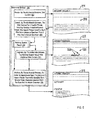
- Figure 5 sets forth a flow chart illustrating an exemplary method of speech-enabled web content searching using a multimodal browser (196) according to embodiments of the present invention.
- the multimodal browser (196) of Figure 5 provides an execution environment for web pages containing web content.
- the multimodal browser (196) operates on a multimodal device supporting multiple modes of interaction including a voice mode and one or more non-voice modes of user interaction with the multimodal application.
- the voice mode may be implemented in this example with audio output through a speaker and audio input through a microphone.
- Non-voice modes may be implemented by user input devices such as, for example, a keyboard and a mouse and by user output devices such as, for example, a display screen of the multimodal device.
- the method of Figure 5 includes rendering (500), by the multimodal browser (196), web content (504).
- web content is the textual, visual or aural content of the web that is presented to a user along with metadata describing such content.
- Web content may include, among other things, text, images, sounds, videos, and animations.
- Rendering (500), by the multimodal browser (196), web content (504) according to the method of Figure 5 may be carried out by displaying the web content on a display screen when the web content is implemented as visual content such as, for example, textual content, graphical content, animations, and so on.
- Rendering (500), by the multimodal browser (196), web content (504) according to the method of Figure 5 may be carried out by playing the web content through a speaker when the web content is implemented as aural content.
- the web content (504) is implemented as textual content.
- the multimodal browser (196) of Figure 5 renders the web content (504) on a graphical user interface ('GUI') (502) for display on the display screen of the multimodal device.
- 'GUI' graphical user interface
- the multimodal browser (196) is operatively coupled to an ASR engine, which may be implemented through a VoiceXML interpreter.
- the operative coupling provides a data communications path from the multimodal browser (196) to the ASR engine for grammars, speech for recognition, and other input.
- the operative coupling also provides a data communications path from the ASR engine to the multimodal browser (196) for recognized speech, semantic interpretation results, and other results.
- the operative coupling may be effected with a VoiceXML interpreter (192 on Figure 4 ) when the multimodal browser is implemented in a thick client architecture.
- the operative coupling may include a voice services module (130 on Figure 3 ), a VOIP connection (216 on Figure 3 ), and a VoiceXML interpreter (192 on Figure 3 ).
- Speech-enabled web content searching using a multimodal browser (196) is implemented with one or more grammars in an ASR engine.
- a grammar communicates to the ASR engine the words and sequences of words that currently may be recognized.
- a grammar typically includes grammar rules, both static and dynamic, that advise an ASR engine which words and word sequences presently can be recognized.
- the multimodal browser (196) may provide the grammars to the ASR engine.
- the multimodal browser (196) may specify the grammars using the VoiceXML ⁇ grammar> elements as follows:
- the source attribute 'src' specifics the URI of the definition of the exemplary grammar.
- a grammar's definition may also be expressed in-line in the ⁇ grammar> element.
- the method of Figure 5 includes searching (506), by the multimodal browser (196), the web content (504) for a search phrase, including yielding a matched search result (508), the search phrase specified by a first voice utterance received from a user and a search grammar.
- a matched search result (508) in the example of Figure 5 is a portion of the web content (504) that matches the search phrase specified by a first voice utterance received from a user and a search grammar.
- Searching (506), by the multimodal browser (196), the web content (504) for a search phrase, including yielding a matched search result (508) according to the method of Figure 5 may be carried out by creating the search grammar in dependence upon the web content (504), receiving the first voice utterance from a user, determining, using the ASR engine, the search phrase in dependence upon the first voice utterance and the search grammar, and matching the search phrase to at least one portion of the web content (504), yielding a matched search result (508) as described in more detail below with reference to Figure 6 .
- the matched search result (508) is the word 'interaction' in the exemplary web content (504).
- the word 'interaction' is specified as the matched search result (508) by the first voice utterance received from a user and the search grammar.
- the method of Figure 5 also includes augmenting (510), by the multimodal browser (196), the matched search result (508) with additional web content (514).
- the additional web content (514) of Figure 5 is web content that is used to supplement the matched search result (508).
- the additional web content (514) includes metadata used to turn the text 'interaction' into a hyperlink to the definition of 'interaction' provided by a dictionary.
- the additional web content (514) of Figure 5 also includes a superscripted numeral ⁇ 1' adjacent to the 'interaction' hyperlink along with metadata used to highlight the 'interaction' hyperlink and the superscripted numeral '1.
- Augmenting (510), by the multimodal browser (196), the matched search result (508) with additional web content (514) according to the method of Figure 5 may be carried out by rendering the additional web content (514) along with the web content (504).
- the additional web content (514) is rendered along with web content (504) using GUI (512).
- the method of Figure 5 includes performing (516), by the multimodal browser, an action in dependence upon the matched search result (508), the action specified by a second voice utterance received from the user and an action grammar.
- An action is any action that may be performed using the matched search result (508).
- the action may include creating a map using the matched search result (508) when the matched search result is a location, looking up more information regarding the matched search result (508) in a dictionary, encyclopedia, or other reference source available through the Internet, performing a search for the matched search result (508) through a search portal.
- the action performed is displaying the definition of the matched search result 'interaction' provided by a dictionary using GUI (518).
- an action in dependence upon the matched search result (508) may be carried out by creating the action grammar in dependence upon the matched search result (508), receiving the second voice utterance from the user, determining, using the ASR engine, an action identifier in dependence upon the second voice utterance and the action grammar, and performing the specified action in dependence upon the action identifier as described in more detail below with reference to Figure 6 .
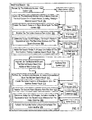
- Figure 6 sets forth a flow chart illustrating a further exemplary method of speech-enabled web content searching using a multimodal browser (196) according to embodiments of the present invention.
- the multimodal browser (196) of Figure 6 provides an execution environment for web pages containing web content.
- the multimodal browser (196) operates on a multimodal device supporting multiple modes of interaction including a voice mode and one or more non-voice modes of user interaction with the multimodal application.
- the voice mode may be implemented in this example with audio output through a speaker and audio input through a microphone.
- Non-voice modes may be implemented by user input devices such as, for example, a keyboard and a mouse and by user output devices such as, for example, a display screen of the multimodal device.
- the method of Figure 6 is similar to the method of Figure 5 .
- the method of Figure 6 includes: rendering (500), by the multimodal browser, web content (504); searching (506), by the multimodal browser, the web content (504) for a search phrase, including yielding a matched search result (508), the search phrase specified by a first voice utterance received from a user and a search grammar; augmenting (510), by the multimodal browser, the matched search result (508) with additional web content (514); and performing (516), by the multimodal browser, an action in dependence upon the matched search result (508), the action specified by a second voice utterance received from the user and an action grammar.
- the multimodal browser (196) is operatively coupled to an ASR engine. Speech-enabled web content searching using a multimodal browser (196) according to embodiments of the present invention is implemented with one or more grammars in an ASR engine.
- Searching (506), by the multimodal browser (196), the web content (504) for a search phrase, including yielding a matched search result (508) according to the method of Figure 6 includes creating (600) the search grammar (602) in dependence upon the web content (504).
- the search grammar (602) of Figure 6 communicates to the ASR engine the words and sequences of words that currently comprise or describe the web content (504).
- the multimodal browser (196) may create (600) the search grammar (602) in dependence upon the web content (504) according to the method of Figure 6 by parsing out individual words from the web content (504), concatenating the words from the web content (504) into a single alternative list to form a grammar rule, and adding the grammar rule to a grammar template.
- the multimodal browser (196) may create (600) the following exemplary search grammar expressed in JSGF:
- the grammar rule ⁇ words> is formed using an alternative list of all the words comprising the exemplary web content illustrated in Figure 5 at reference numeral 504.
- the grammar rule ⁇ words> is added to a grammar template used to recognize phrases such as:
- searching (506), by the multimodal browser (196), the web content (504) for a search phrase, including yielding a matched search result (508) also includes receiving (604) the first voice utterance (606) from a user.
- the first voice utterance (606) of Figure 6 represents digitized human speech provided to the multimodal browser (196) by a user of a multimodal device.
- the multimodal browser (196) may receive (604) the first voice utterance (606) from a user according to the method of Figure 6 through a microphone and encode the voice utterance in a suitable format for storage and transmission using any CODEC as will occur to those of skill in the art.
- the multimodal browser (196) may activate receipt of the first voice utterance (606) from a user by executing a VoiceXML ⁇ form> element through a VoiceXML interpreter such as the following exemplary VoiceXML ⁇ form> element:
- the multimodal browser (196) may provide the exemplary VoiceXML ⁇ form> element to a VoiceXML interpreter upon rendering (500) the web content (504) to the user so as to receive any utterance provided by the user in response to the rendered web content.
- the exemplary VoiceXML ⁇ form> element above activates the multimodal browser (196) to receive (604) the first voice utterance (606) from a user because the VoiceXML ⁇ form> element is a dialog for presenting information and collecting data.
- the exemplary VoiceXML ⁇ form> element above specifies that data is to be collected in the VoiceXML field identified as "vSearchField" using a grammar specified in the VoiceXML ⁇ grammar> element.
- the event "do.search” specifies that the multimodal browser (196) is to perform a search of the web content (504) based on the data collected in the "vSearchField” field.
- the manner in which the multimodal browser (196) collects data into the "vSearchField” field and the manner in which the multimodal browser (196) search the web content are discussed in more detail below.
- Searching (506), by the multimodal browser (196), the web content (504) for a search phrase, including yielding a matched search result (508) according to the method of Figure 6 includes determining (608), using the ASR engine, the search phrase (610) in dependence upon the first voice utterance (606) and the search grammar (602).
- the search phrase (610) is word or set of words specified by the first voice utterance (606) received from a user and the search grammar (602).
- the multimodal browser (196) may determine (608) the search phrase in dependence upon the first voice utterance (606) and the search grammar (602) using the ASR engine according to the method of Figure 6 by passing the first voice utterance (606) and the search grammar (602) to the ASR engine for speech recognition, receiving the recognition results from the ASR engine, and storing the recognition results in an ECMAScript data structure such as, for example, the application variable 'application.lastresult$' or some other field variable for a field specified in the VoiceXML ⁇ form> element generated by the multimodal browser (196) to pass the first voice utterance (606) and the search grammar (602) to the ASR engine.
- the multimodal browser (196) may identify the recognition results stored in an ECMAScript data structure as the search phrase (610).
- the multimodal browser (196) may provide the first voice utterance (606) and the search grammar (602) to the ASR engine as part of a call by the multimodal browser (196) to a voice services module (130 on Figure 3 ) to provide voice recognition services.
- the voice services module passes the first voice utterance (606) and the search grammar (602) to the ASR engine through a VOIP connection (216 on Figure 3 ) and a voice server application (188 on Figure 3 ) and a VoiceXML interpreter (192 on Figure 3 ).
- multimodal browser (196) may provide the first voice utterance (606) and the search grammar (602) to the ASR engine as part of a call directly to an embedded VoiceXML interpreter (192 on Figure 4 ) by the multimodal browser (196) through an API exposed by the VoiceXML interpreter (192 on Figure 4 ).
- the VoiccXML interpreter passes the first voice utterance (606) and the search grammar (602) to the ASR engine as a part of a call to an API of the ASR engine.
- the multimodal browser (196) of Figure 5 may store the recognition results from the ASR engine in an ECMAScript data structure such as, for example, the 'application.lastresult$' array.
- ECMAScript data structures represent objects in the Document Object Model ('DOM') at the scripting level in a web page.
- the DOM is a model that represents the data contained in web page in a form more readily processed by a browser and its supporting applications such as a VoiccXML interpreter.
- the DOM for a web page is created by the multimodal browser (196) upon loading a web page.
- the 'application.lastresult$' array holds information about the last recognition generated by an ASR engine for the multimodal browser (196).
- the ⁇ application.lastresult$' is an array of elements where each element, application.lastresult$[i], represents a possible result through the following shadow variables:
- the multimodal browser (196) may identify the recognition results stored in ⁇ application.lastresult$.utterance' as the search phrase (610).
- the recognition results may be stored in field variable array using shadow variables similar to the application variable 'application.lastresult$.'
- a field variable array may represent a possible recognition result through the following shadow variables:
- searching (506), by the multimodal browser (196), the web content (504) for a search phrase, including yielding a matched search result (508) also includes matching (612) the search phrase (610) to at least one portion of the web content (504), yielding a matched search result (508).
- Matching (612) the search phrase (610) to at least one portion of the web content (504), yielding a matched search result (508), according to the method of Figure 6 may be carried out by identifying a node of a DOM representing the web content that contains the search phrase (610).
- Identifying a node of a DOM representing the web content that contains the search phrase (610) may be carried out by calling an ECMAScript function that traverses through all the nodes of the DOM, parsing each node to determine whether the node contains the search phrase (610), and returning the identifiers for nodes that contain the search phrase (610).
- the matched search result (508) may be identified by the multimodal browser (196) as the text in a DOM node that matches the search phrase (610).
- the exemplary ECMAScript function 'findText' above receives parameters 'text,' 'nodes,' and 'results.'
- the 'text' parameter stores the search phrase (610).
- the 'nodes' parameter that stores the address of a list of DOM nodes that contains the web content (504).
- the 'results' parameter stores a pointer to a list of DOM nodes that represent the web content (504) that contains the search phrase (610).
- the 'findText' function above recursively traverses through each node of the DOM that represents the web content (504), determines whether each node contains the search phrase (610), and stores the identifiers for each node that contains the search phrase (610) in the 'results' list.
- the multimodal browser (196) may match the search phrase (610) to at least one portion of the web content (504) using the exemplary 'findText' function above in a ECMAScript script that executes after the multimodal browser (196) determines (608) the search phrase (610).
- the exemplary VoiceXML ⁇ form> element above used to receive (604) the first voice utterance (606) from a user and to determine (608) the search phrase (610).
- the exemplary VoiceXML ⁇ form> element throws a 'do.search' event if the multimodal browser (196) successfully determines (608) the search phrase (610) using the search grammar (602).
- the following exemplary ECMAScript script may be run to execute the 'findText' function:
- the exemplary ECMAScript script above is executed by the multimodal browser (196) when the 'do.search' event is thrown.
- the 'findText' function receives the search phrase (610) through the ⁇ application.lastresult$' variable.
- the 'document.body.childNodes' variable represents a list of DOM nodes through which the 'findText' function traverses to identify nodes that contain the search phrase (610).
- the 'searchResults' variable is an array used to store the list of nodes that contain the search phrase (610). Each node listed in the 'searchResults' array, therefore, contains the matched search result (508).
- augmenting (510), by the multimodal browser, the matched search result (508) with additional web content (514) may be carried out by inserting the additional web content (514) into a node of a Document Object Model representing the web content (504) that contains the matched search result (508).
- the multimodal browser (196) may insert the additional web content (514) into a node of a DOM representing the web content (504) that contains the matched search result (508) by calling an ECMAScript function that parses the node to locate the matched search result (508) within the DOM node and appends the additional web content (514) to the matched search result (508) or inserts the additional web content (514) into the matched search result (508).
- the exemplary ECMAScript function 'augmentContent' above receives parameters 'text' and 'results.'
- the 'text' parameter stores the search phrase (610).
- the 'results' parameter stores a pointer to a list of DOM nodes that represent the web content (504) that contains the search phrase (610).
- the 'augmentContent' function above parses the nodes in the 'results' list and appends exemplary additional web content to the matched search result (508), which is the text contained in a node of the 'results' list that matches the search phrase (610).
- the exemplary additional web content contained in the 'augmentContent' function above turns the matched search result (508) into a hyperlink to the definition of the matched search result (508) provided by a dictionary.
- the exemplary additional web content above also appends a superscripted numeral '1' to the matched search result hyperlink along with metadata used to highlight the matched search result hyperlink and the superscripted numeral '1.'
- the exemplary additional content may resemble the additional web content on Figure 5 at reference numeral 514.
- the exemplary 'augmentContent' function above operates to generate the additional web content illustrated in Figure 5 at reference numeral 514.
- the multimodal browser (196) of Figure 6 may augment (510) the matched search result (508) using the exemplary 'augmentContent' function above in a ECMAScript script that executes after the multimodal browser (196) matches the search phrase (610) to at least one portion of the web content (504) using the exemplary 'findText.
- exemplary ECMAScript script may be run to execute the 'augmentContent' function:
- the exemplary ECMAScript script above is executed by the multimodal browser (196) when the 'do.search' event is thrown. After executing the 'findText' function as described above, the multimodal browser (196) executes the 'augmentContent' function to parse the nodes in the 'scarchResults' list and append additional web content to the matched search result (508) contained in the parsed nodes.
- performing (516), by the multimodal browser (196), an action in dependence upon the matched search result (508) includes creating (614) an action grammar (616) in dependence upon the matched search result (508).
- the action grammar (616) of Figure 6 communicates to the ASR engine the words and sequences of words used by a user to perform an action based on the matched search result (508).
- the multimodal browser (196) may create (614) an action grammar (616) in dependence upon the matched search result (508) according to the method of Figure 6 by adding the matched search result (508) to a grammar rule in a grammar template.
- the multimodal browser (196) may create (614) the following exemplary action grammar expressed in JSGF:
- the exemplary grammar rule ⁇ word> is formed from matched search result 'interaction' and added to a grammar template used to recognize phrases such as:
- the multimodal browser (196) of Figure 6 may create (614) an action grammar (616) according to the method of Figure 6 by calling an ECMAScript function in an ECMAScript script.
- the ECMAScript script may be the same script used by the multimodal browser (196) to search (506) the web content (504) for a search phrase (610) and augment (510) the matched search result (508) with additional web content (514).
- search 506
- web content 504
- search phrase (610) for a search phrase (610)
- the exemplary ECMAScript script above is executed by the multimodal browser (196) when the 'do.search' event is thrown. After executing the 'findText' function and the ⁇ augmentContcnt' function as described above, the multimodal browser (196) executes the 'createActionGrammar' function, which creates an action grammar by adding the matched search result (508) to a grammar rule in a grammar template.
- an action in dependence upon the matched search result (508) according to the method of Figure 6 also includes receiving (618) the second voice utterance (620) from the user.
- the second voice utterance (620) of Figure 6 represents digitized human speech provided to the multimodal browser (196) by a user of a multimodal device.
- the multimodal browser (196) may receive (618) the second voice utterance (620) from a user according to the method of Figure 6 through a microphone and encode the voice utterance in a suitable format for storage and transmission using any CODEC as will occur to those of skill in the art.
- performing (516), by the multimodal browser (196), an action in dependence upon the matched search result (508) includes determining (622), using the ASR engine, an action identifier (624) in dependence upon the second voice utterance (620) and the action grammar (616).
- the action identifier (624) specifics the action to be performed by the multimodal browser (196).
- the multimodal browser (196) may determine (622) the action identifier (624) using an ASR engine according to the method of Figure 6 by passing the second voice utterance (620) and the action grammar (616) to the ASR engine for speech recognition, receiving the recognition results from the ASR engine, and determining the action identifier (624) based on the recognized results.
- the multimodal browser (196) may determine the action identifier (624) based on the recognized results using semantic interpretation scripts embedded into the action grammar.
- semantic interpretation scripts arc used to produce one of the following exemplary action identifiers based on the recognition result received from the ASR engine:
- the semantic interpretation scripts of the exemplary action grammar above store one of these exemplary action identifiers in the application variable:
- an action in dependence upon the matched search result (508) includes performing (626) the specified action in dependence upon the action identifier (624).
- the multimodal browser (196) may perform (626) the specified action in dependence upon the action identifier (624) according to the method of Figure 6 by triggering a VoiceXML event after determining (622) an action identifier (624) and executing a set of instructions that performs one of several actions based on the action identifier (624).
- the multimodal browser (196) may trigger a VoiceXML event after determining (622) an action identifier (624) by placing the action grammar (616) in a VoiceXML ⁇ link> element such as, for example, the following VoiceXML ⁇ link> element:
- the exemplary VoiceXML ⁇ link> element above throws the event specified in 'eventexpr' when the action grammar is matched, thereby determining an action identifier (624) using the semantic interpretation scripts embedded in the grammar.
- the action identifier (624) is stored in the 'interpretation.search-action' shadow variable for the 'application.lastresult$' variable.
- the multimodal browser (196) may execute a set of instructions that performs one of several actions based on the action identifier (624) by placing the set of instructions in a VoiceXML ⁇ catch> element that is processed when the VoiceXML event is triggered.
- VoiceXML ⁇ catch> element Consider the following VoiceXML ⁇ catch> element:
- the multimodal browser (196) executes the exemplary VoiceXML ⁇ catch> element above when the 'application.lastresult$.interpretation.search-action' event is triggered and contains a value of 'click,' 'map,' or 'google.' If the 'search-action' variable contains an action identifier (624) having a value of 'click,' then the multimodal browser (196) locates the matched search result (508) represented as a hypcrlink in a DOM node and actives the hyperlink using the 'clickOnElement' function.
- the multimodal browser (196) locates the matched search result (508) in a DOM node and opens a new window for obtaining web pages that contain the matched search result (508) using Google TM . If the 'search-action' variable contains an action identifier (624) having a value of 'map,' then the multimodal browser (196) locates the matched search result (508) in a DOM node and changes the current document to a web page that maps the matched search result (508) using Yahoo! ® maps.
- the multimodal browser (196) locates the matched search result (508) in a DOM node and opens a new window for obtaining web pages that contain the matched search result (508) using Google TM .
- Speech-enabled web content searching using a multimodal browser advantageously allows speech-enabled searching of web content regardless of whether the web-content is speech-enabled. Such an advantage may be obtained because the speech-enabled functionality that permits web content searching according to embodiments of the present invention is implemented at the browser level through the multimodal browser itself and its supporting components such as a VoiceXML interpreter and ASR engine.
- Exemplary embodiments of the present invention are described largely in the context of a fully functional computer system for speech-enabled web content searching using a multimodal browser. Readers of skill in the art will recognize, however, that the present invention also may be embodied in a computer program product disposed on signal bearing media for use with any suitable data processing system.
- signal bearing media may be transmission media or recordable media for machine-readable information, including magnetic media, optical media, or other suitable media.
- Examples of recordable media include magnetic disks in hard drives or diskettes, compact disks for optical drives, magnetic tape, and others as will occur to those of skill in the art.
- Examples of transmission media include telephone networks for voice communications and digital data communications networks such as, for example, Ethernets TM and networks that communicate with the Internet Protocol and the World Wide Web.
- a method for speech-enabled web content searching using a multimodal browser the method operable with one or more grammars in an automatic speech recognition ('ASR') engine, with the multimodal browser operable on a multimodal device supporting multiple modes of interaction including a voice mode and one or more non- voice modes, the multimodal browser operatively coupled to the ASR engine, the method comprising: rendering, by the multimodal browser, web content; searching, by the multimodal browser, the web content for a search phrase, including yielding a matched search result, the search phrase specified by a first voice utterance received from a user and a search grammar; and performing, by the multimodal browser, an action in dependence upon the matched search result, the action specified by a second voice utterance received from the user and an action grammar.
- 'ASR' automatic speech recognition
- searching, by the multimodal browser, the web content for a search phrase, including yielding a matched search result further comprises: creating the search grammar in dependence upon the web content; receiving the first voice utterance from a user; determining, using the ASR engine, the search phrase in dependence upon the first voice utterance and the search grammar; and matching the search phrase to at least one portion of the web content, yielding a matched search result.
- matching the search phrase to at least one portion of the web content, yielding a matched search result further comprises identifying a node of a Document Object Model ('DOM') representing the web content that contains the search phrase.
- 'DOM' Document Object Model
- performing, by the multimodal browser, an action in dependence upon the matched search result further comprises: creating the action grammar in dependence upon the matched search result; receiving the second voice utterance from the user; determining, using the ASR engine, an action identifier in dependence upon the second voice utterance and the action grammar; and performing the specified action in dependence upon the action identifier.
- the method further comprising augmenting, by the multimodal browser, the matched search result with additional web content.
- augmenting, by the multimodal browser, the matched search result with additional web content further comprises inserting the additional web content into a node of a Document Object Model ('DOM') representing the web content that contains the matched search result.
- 'DOM' Document Object Model
- Apparatus for speech-enabled web content searching using a multimodal browser the apparatus operable with one or more grammars in an automatic speech recognition ('ASR') engine, with the multimodal browser operable on a multimodal device supporting multiple modes of interaction including a voice mode and one or more non- voice modes, the multimodal browser operatively coupled to the ASR engine, the apparatus comprising a computer processor and a computer memory operatively coupled to the computer processor, the computer memory having disposed within it computer program instructions capable of: rendering, by the multimodal browser, web content; searching, by the multimodal browser, the web content for a search phrase, including yielding a matched search result, the search phrase specified by a first voice utterance received from a user and a search grammar; and performing, by the multimodal browser, an action in dependence upon the matched search result, the action specified by a second voice utterance received from the user and an action grammar.
- 'ASR' automatic speech recognition
- searching, by the multimodal browser, the web content for a search phrase, including yielding a matched search result further comprises: creating the search grammar in dependence upon the web content; receiving the first voice utterance from a user; determining, using the ASR engine, the search phrase in dependence upon the first voice utterance and the search grammar; and matching the search phrase to at least one portion of the web content, yielding a matched search result.
- matching the search phrase to at least one portion of the web content, yielding a matched search result further comprises identifying a node of a Document Object Model ('DOM') representing the web content that contains the search phrase.
- 'DOM' Document Object Model
- performing, by the multimodal browser, an action in dependence upon the matched search result further comprises: creating the action grammar in dependence upon the matched search result; receiving the second voice utterance from the user; determining, using the ASR engine, an action identifier in dependence upon the second voice utterance and the action grammar; and performing the specified action in dependence upon the action identifier.
- the apparatus further comprising computer program instructions capable of augmenting, by the multimodal browser, the matched search result with additional web content.
- augmenting, by the multimodal browser, the matched search result with additional web content further comprises inserting the additional web content into a node of a Document Object Model ('DOM') representing the web content that contains the matched search result.
- 'DOM' Document Object Model
- the apparatus wherein the web content is not speech-enabled.
- a computer program product for speech-enabled web content searching using a multimodal browser the computer program product operable with one or more grammars in an automatic speech recognition ('ASR') engine, with the multimodal browser operable on a multimodal device supporting multiple modes of interaction including a voice mode and one or more non-voice modes, the multimodal browser operatively coupled to the ASR engine, the computer program product disposed upon a computer-readable medium, the computer program product comprising computer program instructions capable of: rendering, by the multimodal browser, web content; searching, by the multimodal browser, the web content for a search phrase, including yielding a matched search result, the search phrase specified by a first voice utterance received from a user and a search grammar; and performing, by the multimodal browser, an action in dependence upon the matched search result, the action specified by a second voice utterance received from the user and an action grammar.
- 'ASR' automatic speech recognition
- searching, by the multimodal browser, the web content for a search phrase, including yielding a matched search result further comprises: creating the search grammar in dependence upon the web content; receiving the first voice utterance from a user; determining, using the ASR engine, the search phrase in dependence upon the first voice utterance and the search grammar; and matching the search phrase to at least one portion of the web content, yielding a matched search result.
- matching the search phrase to at least one portion of the web content, yielding a matched search result further comprises identifying a node of a Document Object Model ('DOM') representing the web content that contains the search phrase.
- 'DOM' Document Object Model
- performing, by the multimodal browser, an action in dependence upon the matched search result further comprises: creating the action grammar in dependence upon the matched search result; receiving the second voice utterance from the user; determining, using the ASR engine, an action identifier in dependence upon the second voice utterance and the action grammar; and performing the specified action in dependence upon the action identifier.
- the computer program product further comprising computer program instructions capable of augmenting, by the multimodal browser, the matched search result with additional web content.
- augmenting, by the multimodal browser, the matched search result with additional web content further comprises inserting the additional web content into a node of a Document Object Model ('DOM') representing the web content that contains the matched search result.
- 'DOM' Document Object Model
- the computer program product wherein the web content is not speech-enabled.
- a computer program comprising program code means adapted to perform the method when said program is run on a computer.
Landscapes
- Engineering & Computer Science (AREA)
- Theoretical Computer Science (AREA)
- Databases & Information Systems (AREA)
- Physics & Mathematics (AREA)
- General Engineering & Computer Science (AREA)
- Data Mining & Analysis (AREA)
- General Physics & Mathematics (AREA)
- Human Computer Interaction (AREA)
- Acoustics & Sound (AREA)
- Health & Medical Sciences (AREA)
- Multimedia (AREA)
- Audiology, Speech & Language Pathology (AREA)
- Computational Linguistics (AREA)
- User Interface Of Digital Computer (AREA)
- Telephonic Communication Services (AREA)
- Machine Translation (AREA)
- Information Transfer Between Computers (AREA)
Applications Claiming Priority (3)
| Application Number | Priority Date | Filing Date | Title |
|---|---|---|---|
| US11/685,350 US8843376B2 (en) | 2007-03-13 | 2007-03-13 | Speech-enabled web content searching using a multimodal browser |
| PCT/EP2008/052829 WO2008110536A1 (fr) | 2007-03-13 | 2008-03-10 | Recherche de contenu web activée par la parole en utilisant un navigateur multimodal |
| EP08717576A EP2126748A1 (fr) | 2007-03-13 | 2008-03-10 | Recherche de contenu web activée par la parole en utilisant un navigateur multimodal |
Related Parent Applications (1)
| Application Number | Title | Priority Date | Filing Date |
|---|---|---|---|
| EP08717576A Division EP2126748A1 (fr) | 2007-03-13 | 2008-03-10 | Recherche de contenu web activée par la parole en utilisant un navigateur multimodal |
Publications (3)
| Publication Number | Publication Date |
|---|---|
| EP2824596A2 true EP2824596A2 (fr) | 2015-01-14 |
| EP2824596A3 EP2824596A3 (fr) | 2015-03-04 |
| EP2824596B1 EP2824596B1 (fr) | 2019-10-09 |
Family
ID=39540756
Family Applications (2)
| Application Number | Title | Priority Date | Filing Date |
|---|---|---|---|
| EP14187192.1A Active EP2824596B1 (fr) | 2007-03-13 | 2008-03-10 | Recherche de contenu web activée par la parole utilisant un navigateur multimodal |
| EP08717576A Ceased EP2126748A1 (fr) | 2007-03-13 | 2008-03-10 | Recherche de contenu web activée par la parole en utilisant un navigateur multimodal |
Family Applications After (1)
| Application Number | Title | Priority Date | Filing Date |
|---|---|---|---|
| EP08717576A Ceased EP2126748A1 (fr) | 2007-03-13 | 2008-03-10 | Recherche de contenu web activée par la parole en utilisant un navigateur multimodal |
Country Status (3)
| Country | Link |
|---|---|
| US (1) | US8843376B2 (fr) |
| EP (2) | EP2824596B1 (fr) |
| WO (1) | WO2008110536A1 (fr) |
Families Citing this family (82)
| Publication number | Priority date | Publication date | Assignee | Title |
|---|---|---|---|---|
| US7516190B2 (en) * | 2000-02-04 | 2009-04-07 | Parus Holdings, Inc. | Personal voice-based information retrieval system |
| US6721705B2 (en) | 2000-02-04 | 2004-04-13 | Webley Systems, Inc. | Robust voice browser system and voice activated device controller |
| US10032452B1 (en) | 2016-12-30 | 2018-07-24 | Google Llc | Multimodal transmission of packetized data |
| US9083798B2 (en) | 2004-12-22 | 2015-07-14 | Nuance Communications, Inc. | Enabling voice selection of user preferences |
| US20060288309A1 (en) * | 2005-06-16 | 2006-12-21 | Cross Charles W Jr | Displaying available menu choices in a multimodal browser |
| US7917365B2 (en) * | 2005-06-16 | 2011-03-29 | Nuance Communications, Inc. | Synchronizing visual and speech events in a multimodal application |
| US8090584B2 (en) * | 2005-06-16 | 2012-01-03 | Nuance Communications, Inc. | Modifying a grammar of a hierarchical multimodal menu in dependence upon speech command frequency |
| US8073700B2 (en) | 2005-09-12 | 2011-12-06 | Nuance Communications, Inc. | Retrieval and presentation of network service results for mobile device using a multimodal browser |
| US9208785B2 (en) | 2006-05-10 | 2015-12-08 | Nuance Communications, Inc. | Synchronizing distributed speech recognition |
| US7848314B2 (en) * | 2006-05-10 | 2010-12-07 | Nuance Communications, Inc. | VOIP barge-in support for half-duplex DSR client on a full-duplex network |
| US8332218B2 (en) | 2006-06-13 | 2012-12-11 | Nuance Communications, Inc. | Context-based grammars for automated speech recognition |
| US7676371B2 (en) * | 2006-06-13 | 2010-03-09 | Nuance Communications, Inc. | Oral modification of an ASR lexicon of an ASR engine |
| US8145493B2 (en) * | 2006-09-11 | 2012-03-27 | Nuance Communications, Inc. | Establishing a preferred mode of interaction between a user and a multimodal application |
| US8374874B2 (en) * | 2006-09-11 | 2013-02-12 | Nuance Communications, Inc. | Establishing a multimodal personality for a multimodal application in dependence upon attributes of user interaction |
| US8086463B2 (en) | 2006-09-12 | 2011-12-27 | Nuance Communications, Inc. | Dynamically generating a vocal help prompt in a multimodal application |
| US7957976B2 (en) | 2006-09-12 | 2011-06-07 | Nuance Communications, Inc. | Establishing a multimodal advertising personality for a sponsor of a multimodal application |
| US8073697B2 (en) | 2006-09-12 | 2011-12-06 | International Business Machines Corporation | Establishing a multimodal personality for a multimodal application |
| US7827033B2 (en) * | 2006-12-06 | 2010-11-02 | Nuance Communications, Inc. | Enabling grammars in web page frames |
| US8612230B2 (en) | 2007-01-03 | 2013-12-17 | Nuance Communications, Inc. | Automatic speech recognition with a selection list |
| US8069047B2 (en) * | 2007-02-12 | 2011-11-29 | Nuance Communications, Inc. | Dynamically defining a VoiceXML grammar in an X+V page of a multimodal application |
| US7801728B2 (en) | 2007-02-26 | 2010-09-21 | Nuance Communications, Inc. | Document session replay for multimodal applications |
| US8150698B2 (en) | 2007-02-26 | 2012-04-03 | Nuance Communications, Inc. | Invoking tapered prompts in a multimodal application |
| US8713542B2 (en) | 2007-02-27 | 2014-04-29 | Nuance Communications, Inc. | Pausing a VoiceXML dialog of a multimodal application |
| US7840409B2 (en) * | 2007-02-27 | 2010-11-23 | Nuance Communications, Inc. | Ordering recognition results produced by an automatic speech recognition engine for a multimodal application |
| US7822608B2 (en) * | 2007-02-27 | 2010-10-26 | Nuance Communications, Inc. | Disambiguating a speech recognition grammar in a multimodal application |
| US7809575B2 (en) * | 2007-02-27 | 2010-10-05 | Nuance Communications, Inc. | Enabling global grammars for a particular multimodal application |
| US20080208594A1 (en) * | 2007-02-27 | 2008-08-28 | Cross Charles W | Effecting Functions On A Multimodal Telephony Device |
| US20080208589A1 (en) * | 2007-02-27 | 2008-08-28 | Cross Charles W | Presenting Supplemental Content For Digital Media Using A Multimodal Application |
| US8938392B2 (en) | 2007-02-27 | 2015-01-20 | Nuance Communications, Inc. | Configuring a speech engine for a multimodal application based on location |
| US9208783B2 (en) | 2007-02-27 | 2015-12-08 | Nuance Communications, Inc. | Altering behavior of a multimodal application based on location |
| US8843376B2 (en) | 2007-03-13 | 2014-09-23 | Nuance Communications, Inc. | Speech-enabled web content searching using a multimodal browser |
| US7945851B2 (en) | 2007-03-14 | 2011-05-17 | Nuance Communications, Inc. | Enabling dynamic voiceXML in an X+V page of a multimodal application |
| US8515757B2 (en) | 2007-03-20 | 2013-08-20 | Nuance Communications, Inc. | Indexing digitized speech with words represented in the digitized speech |
| US8670987B2 (en) * | 2007-03-20 | 2014-03-11 | Nuance Communications, Inc. | Automatic speech recognition with dynamic grammar rules |
| US8909532B2 (en) * | 2007-03-23 | 2014-12-09 | Nuance Communications, Inc. | Supporting multi-lingual user interaction with a multimodal application |
| US8788620B2 (en) | 2007-04-04 | 2014-07-22 | International Business Machines Corporation | Web service support for a multimodal client processing a multimodal application |
| US8862475B2 (en) * | 2007-04-12 | 2014-10-14 | Nuance Communications, Inc. | Speech-enabled content navigation and control of a distributed multimodal browser |
| US8725513B2 (en) | 2007-04-12 | 2014-05-13 | Nuance Communications, Inc. | Providing expressive user interaction with a multimodal application |
| US7986914B1 (en) * | 2007-06-01 | 2011-07-26 | At&T Mobility Ii Llc | Vehicle-based message control using cellular IP |
| US20090113475A1 (en) * | 2007-08-21 | 2009-04-30 | Yi Li | Systems and methods for integrating search capability in interactive video |
| US8731919B2 (en) * | 2007-10-16 | 2014-05-20 | Astute, Inc. | Methods and system for capturing voice files and rendering them searchable by keyword or phrase |
| US20090228280A1 (en) * | 2008-03-05 | 2009-09-10 | Microsoft Corporation | Text-based search query facilitated speech recognition |
| US8082148B2 (en) | 2008-04-24 | 2011-12-20 | Nuance Communications, Inc. | Testing a grammar used in speech recognition for reliability in a plurality of operating environments having different background noise |
| US8214242B2 (en) * | 2008-04-24 | 2012-07-03 | International Business Machines Corporation | Signaling correspondence between a meeting agenda and a meeting discussion |
| US9349367B2 (en) * | 2008-04-24 | 2016-05-24 | Nuance Communications, Inc. | Records disambiguation in a multimodal application operating on a multimodal device |
| US8229081B2 (en) * | 2008-04-24 | 2012-07-24 | International Business Machines Corporation | Dynamically publishing directory information for a plurality of interactive voice response systems |
| US8121837B2 (en) | 2008-04-24 | 2012-02-21 | Nuance Communications, Inc. | Adjusting a speech engine for a mobile computing device based on background noise |
| US20100217603A1 (en) * | 2009-02-26 | 2010-08-26 | Hammond Daniel D | Method, System, and Apparatus for Enabling Adaptive Natural Language Processing |
| KR101548273B1 (ko) * | 2009-04-08 | 2015-08-28 | 삼성전자주식회사 | 휴대용 단말기에서 웹 검색 속도를 향상시키기 위한 장치 및 방법 |
| US20110093545A1 (en) * | 2009-10-21 | 2011-04-21 | Microsoft Corporation | Voice-activated acquisition of non-local content |
| TWI413938B (zh) * | 2009-12-02 | 2013-11-01 | Phison Electronics Corp | 情感引擎、情感引擎系統及電子裝置的控制方法 |
| US20150279354A1 (en) * | 2010-05-19 | 2015-10-01 | Google Inc. | Personalization and Latency Reduction for Voice-Activated Commands |
| JP5739718B2 (ja) * | 2011-04-19 | 2015-06-24 | 本田技研工業株式会社 | 対話装置 |
| US8805869B2 (en) | 2011-06-28 | 2014-08-12 | International Business Machines Corporation | Systems and methods for cross-lingual audio search |
| US20130053007A1 (en) * | 2011-08-24 | 2013-02-28 | Microsoft Corporation | Gesture-based input mode selection for mobile devices |
| EP2783365B1 (fr) * | 2011-11-21 | 2018-02-21 | Robert Bosch GmbH | Procédé et système d'adaptation de grammars dans des moteurs de reconnaissance de la parole hybrides pour améliorer la performance de reconnaissance de la parole de discours local |
| US8788269B2 (en) | 2011-12-15 | 2014-07-22 | Microsoft Corporation | Satisfying specified intent(s) based on multimodal request(s) |
| US10209954B2 (en) | 2012-02-14 | 2019-02-19 | Microsoft Technology Licensing, Llc | Equal access to speech and touch input |
| US20130226892A1 (en) * | 2012-02-29 | 2013-08-29 | Fluential, Llc | Multimodal natural language interface for faceted search |
| US10776830B2 (en) | 2012-05-23 | 2020-09-15 | Google Llc | Methods and systems for identifying new computers and providing matching services |
| US10650066B2 (en) | 2013-01-31 | 2020-05-12 | Google Llc | Enhancing sitelinks with creative content |
| US10735552B2 (en) * | 2013-01-31 | 2020-08-04 | Google Llc | Secondary transmissions of packetized data |
| US10405163B2 (en) | 2013-10-06 | 2019-09-03 | Staton Techiya, Llc | Methods and systems for establishing and maintaining presence information of neighboring bluetooth devices |
| US9263042B1 (en) * | 2014-07-25 | 2016-02-16 | Google Inc. | Providing pre-computed hotword models |
| US9953646B2 (en) | 2014-09-02 | 2018-04-24 | Belleau Technologies | Method and system for dynamic speech recognition and tracking of prewritten script |
| US9940396B1 (en) * | 2014-12-10 | 2018-04-10 | Amazon Technologies, Inc. | Mining potential user actions from a web page |
| US20170351713A1 (en) * | 2016-06-03 | 2017-12-07 | Robin Daniel Chamberlain | Image processing systems and/or methods |
| US9619202B1 (en) | 2016-07-07 | 2017-04-11 | Intelligently Interactive, Inc. | Voice command-driven database |
| US10311856B2 (en) | 2016-10-03 | 2019-06-04 | Google Llc | Synthesized voice selection for computational agents |
| US11663535B2 (en) | 2016-10-03 | 2023-05-30 | Google Llc | Multi computational agent performance of tasks |
| US10853747B2 (en) | 2016-10-03 | 2020-12-01 | Google Llc | Selection of computational agent for task performance |
| US10373614B2 (en) | 2016-12-08 | 2019-08-06 | Microsoft Technology Licensing, Llc | Web portal declarations for smart assistants |
| US10708313B2 (en) | 2016-12-30 | 2020-07-07 | Google Llc | Multimodal transmission of packetized data |
| US10593329B2 (en) | 2016-12-30 | 2020-03-17 | Google Llc | Multimodal transmission of packetized data |
| CN107919129A (zh) * | 2017-11-15 | 2018-04-17 | 百度在线网络技术(北京)有限公司 | 用于控制页面的方法和装置 |
| CN112689177B (zh) * | 2021-01-14 | 2023-11-03 | 海信电子科技(深圳)有限公司 | 一种实现快速交互的方法及显示设备 |
| KR102903943B1 (ko) | 2021-02-08 | 2025-12-24 | 삼성전자주식회사 | 전자 장치 및 그 제어 방법 |
| US12277190B2 (en) | 2021-04-29 | 2025-04-15 | Karan Walia | Web task automation with vectorization |
| US12282801B2 (en) * | 2021-08-05 | 2025-04-22 | Karan Walia | Instruction interpretation for web task automation |
| US12236191B2 (en) | 2021-08-05 | 2025-02-25 | Karan Walia | Workflow instruction interpretation for web task automation |
| US12061660B2 (en) * | 2022-09-13 | 2024-08-13 | International Business Machines Corporation | Cross application meta history link |
| US12437238B1 (en) | 2024-03-20 | 2025-10-07 | Anthropic, Pbc | Generation of agentic trajectories for training artificial intelligence agents to automate multimodal interface task workflows |
Family Cites Families (305)
| Publication number | Priority date | Publication date | Assignee | Title |
|---|---|---|---|---|
| US5097528A (en) | 1991-02-25 | 1992-03-17 | International Business Machines Corporation | System for integrating telephony data with data processing systems |
| EP0543329B1 (fr) | 1991-11-18 | 2002-02-06 | Kabushiki Kaisha Toshiba | Système de dialogue vocal pour faciliter l'interaction homme-ordinateur |
| US5584052A (en) | 1992-11-16 | 1996-12-10 | Ford Motor Company | Integrated microphone/pushbutton housing for voice activated cellular phone |
| US6965864B1 (en) | 1995-04-10 | 2005-11-15 | Texas Instruments Incorporated | Voice activated hypermedia systems using grammatical metadata |
| US5835061A (en) | 1995-06-06 | 1998-11-10 | Wayport, Inc. | Method and apparatus for geographic-based communications service |
| US5752186A (en) | 1995-06-07 | 1998-05-12 | Jeman Technologies, Inc. | Access free wireless telephony fulfillment service system |
| US5689547A (en) | 1995-11-02 | 1997-11-18 | Ericsson Inc. | Network directory methods and systems for a cellular radiotelephone |
| GB9603582D0 (en) | 1996-02-20 | 1996-04-17 | Hewlett Packard Co | Method of accessing service resource items that are for use in a telecommunications system |
| US5646979A (en) | 1995-12-20 | 1997-07-08 | Casio Phonemate, Inc. | Cordless telephone with voice announced calling party identification |
| US5953392A (en) | 1996-03-01 | 1999-09-14 | Netphonic Communications, Inc. | Method and apparatus for telephonically accessing and navigating the internet |
| US5884262A (en) | 1996-03-28 | 1999-03-16 | Bell Atlantic Network Services, Inc. | Computer network audio access and conversion system |
| JPH1091412A (ja) | 1996-07-25 | 1998-04-10 | Toshiba Corp | 表示部品選択装置及び表示部品選択方法 |
| US6243375B1 (en) | 1996-11-08 | 2001-06-05 | Gregory J. Speicher | Internet-audiotext electronic communications system with multimedia based matching |
| US5915001A (en) | 1996-11-14 | 1999-06-22 | Vois Corporation | System and method for providing and using universally accessible voice and speech data files |
| US6298218B1 (en) | 1996-12-18 | 2001-10-02 | Clubcom, Inc. | Combined advertising and entertainment system network |
| US6188985B1 (en) | 1997-01-06 | 2001-02-13 | Texas Instruments Incorporated | Wireless voice-activated device for control of a processor-based host system |
| US6028601A (en) | 1997-04-01 | 2000-02-22 | Apple Computer, Inc. | FAQ link creation between user's questions and answers |
| US6393296B1 (en) | 1997-04-03 | 2002-05-21 | Lucent Technologies, Inc. | E-mail access from cellular/PCS phones using user agents |
| US6856960B1 (en) | 1997-04-14 | 2005-02-15 | At & T Corp. | System and method for providing remote automatic speech recognition and text-to-speech services via a packet network |
| US6101472A (en) | 1997-04-16 | 2000-08-08 | International Business Machines Corporation | Data processing system and method for navigating a network using a voice command |
| DE19718132A1 (de) | 1997-04-29 | 1998-11-05 | Philips Patentverwaltung | RDS-TMC-Rundfunkempfänger mit einem Sprachsegmentspeicher |
| US5991615A (en) | 1997-08-18 | 1999-11-23 | Transcommunications, Inc. | Truck communication system |
| US6664922B1 (en) | 1997-08-28 | 2003-12-16 | At Road, Inc. | Method for distributing location-relevant information using a network |
| US6529159B1 (en) | 1997-08-28 | 2003-03-04 | At Road, Inc. | Method for distributing location-relevant information using a network |
| US6552682B1 (en) | 1997-08-28 | 2003-04-22 | At Road, Inc. | Method for distributing location-relevant information using a network |
| US6157841A (en) | 1997-09-18 | 2000-12-05 | At&T Corp. | Cellular phone network that provides location-based information |
| US6636733B1 (en) | 1997-09-19 | 2003-10-21 | Thompson Trust | Wireless messaging method |
| GB9722766D0 (en) | 1997-10-28 | 1997-12-24 | British Telecomm | Portable computers |
| US6212545B1 (en) | 1997-10-31 | 2001-04-03 | Fujitsu Limited | Distributed searching system and searching apparatus for use in the distributed searching system |
| US6084583A (en) | 1997-12-31 | 2000-07-04 | At&T Corp | Advertising screen saver |
| US6301560B1 (en) | 1998-01-05 | 2001-10-09 | Microsoft Corporation | Discrete speech recognition system with ballooning active grammar |
| SE511771C2 (sv) | 1998-02-19 | 1999-11-22 | Telia Ab | Förfarande för att sända information vid telefonsvarstjänst |
| US6766369B1 (en) | 1998-03-09 | 2004-07-20 | Net Zero, Inc. | Internet service error tracking |
| WO1999048088A1 (fr) | 1998-03-20 | 1999-09-23 | Inroad, Inc. | Navigateur web a commande vocale |
| US6141010A (en) | 1998-07-17 | 2000-10-31 | B. E. Technology, Llc | Computer interface method and apparatus with targeted advertising |
| US6031467A (en) | 1998-08-31 | 2000-02-29 | Motorola, Inc. | Method in a selective call radio for ensuring reception of advertisement messages |
| IL142366A0 (en) | 1998-10-02 | 2002-03-10 | Ibm | Conversational browser and conversational systems |
| US6941273B1 (en) | 1998-10-07 | 2005-09-06 | Masoud Loghmani | Telephony-data application interface apparatus and method for multi-modal access to data applications |
| US6208972B1 (en) | 1998-12-23 | 2001-03-27 | Richard Grant | Method for integrating computer processes with an interface controlled by voice actuated grammars |
| US6606599B2 (en) | 1998-12-23 | 2003-08-12 | Interactive Speech Technologies, Llc | Method for integrating computing processes with an interface controlled by voice actuated grammars |
| JP2000155529A (ja) | 1998-11-20 | 2000-06-06 | Kai:Kk | 料理メニューの表示方法とこれを実施したプログラム |
| US6456699B1 (en) | 1998-11-30 | 2002-09-24 | At&T Corp. | Web-based generation of telephony-based interactive voice response applications |
| US6332127B1 (en) | 1999-01-28 | 2001-12-18 | International Business Machines Corporation | Systems, methods and computer program products for providing time and location specific advertising via the internet |
| US6321209B1 (en) | 1999-02-18 | 2001-11-20 | Wired Solutions, Llc | System and method for providing a dynamic advertising content window within a window based content manifestation environment provided in a browser |
| US6606611B1 (en) | 1999-02-27 | 2003-08-12 | Emdadur Khan | System and method for audio-only internet browsing using a standard telephone |
| US6401085B1 (en) | 1999-03-05 | 2002-06-04 | Accenture Llp | Mobile communication and computing system and method |
| US6600736B1 (en) | 1999-03-31 | 2003-07-29 | Lucent Technologies Inc. | Method of providing transfer capability on web-based interactive voice response services |
| US6128651A (en) | 1999-04-14 | 2000-10-03 | Americom Usa | Internet advertising with controlled and timed display of ad content from centralized system controller |
| US6560456B1 (en) | 1999-05-24 | 2003-05-06 | Openwave Systems, Inc. | System and method for providing subscriber-initiated information over the short message service (SMS) or a microbrowser |
| US7346374B2 (en) | 1999-05-26 | 2008-03-18 | Johnson Controls Technology Company | Wireless communications system and method |
| JP3514372B2 (ja) | 1999-06-04 | 2004-03-31 | 日本電気株式会社 | マルチモーダル対話装置 |
| AU5614500A (en) | 1999-06-14 | 2001-01-02 | Geoworks Corporation | Method for advertisers to provision advertisements sent to mobile wireless display devices |
| US20020087408A1 (en) | 1999-06-25 | 2002-07-04 | Burnett Jonathan Robert | System for providing information to intending consumers |
| GB2352933A (en) | 1999-07-31 | 2001-02-07 | Ibm | Speech encoding in a client server system |
| US6792086B1 (en) | 1999-08-24 | 2004-09-14 | Microstrategy, Inc. | Voice network access provider system and method |
| US7457397B1 (en) | 1999-08-24 | 2008-11-25 | Microstrategy, Inc. | Voice page directory system in a voice page creation and delivery system |
| US6381465B1 (en) | 1999-08-27 | 2002-04-30 | Leap Wireless International, Inc. | System and method for attaching an advertisement to an SMS message for wireless transmission |
| US6275806B1 (en) | 1999-08-31 | 2001-08-14 | Andersen Consulting, Llp | System method and article of manufacture for detecting emotion in voice signals by utilizing statistics for voice signal parameters |
| US6601026B2 (en) | 1999-09-17 | 2003-07-29 | Discern Communications, Inc. | Information retrieval by natural language querying |
| US7203721B1 (en) | 1999-10-08 | 2007-04-10 | At Road, Inc. | Portable browser device with voice recognition and feedback capability |
| US7376586B1 (en) | 1999-10-22 | 2008-05-20 | Microsoft Corporation | Method and apparatus for electronic commerce using a telephone interface |
| US6807574B1 (en) | 1999-10-22 | 2004-10-19 | Tellme Networks, Inc. | Method and apparatus for content personalization over a telephone interface |
| US6516207B1 (en) | 1999-12-07 | 2003-02-04 | Nortel Networks Limited | Method and apparatus for performing text to speech synthesis |
| IL133584A (en) | 1999-12-19 | 2010-02-17 | Enco Tone Ltd | Method for the acoustic encodification of dynamic identification codes |
| US6405123B1 (en) | 1999-12-21 | 2002-06-11 | Televigation, Inc. | Method and system for an efficient operating environment in a real-time navigation system |
| US7136634B1 (en) | 1999-12-22 | 2006-11-14 | Nokia Corporation | System and method for displaying information included in predetermined messages automatically |
| JP2003523565A (ja) | 1999-12-29 | 2003-08-05 | グローリキアン,ハリー・エイ | クライアントの旅行者を地理的に関連するデータに接続するインターネットシステム |
| US20030078779A1 (en) | 2000-01-04 | 2003-04-24 | Adesh Desai | Interactive voice response system |
| US6484148B1 (en) | 2000-02-19 | 2002-11-19 | John E. Boyd | Electronic advertising device and method of using the same |
| FI112433B (fi) | 2000-02-29 | 2003-11-28 | Nokia Corp | Sijaintiin sidotut palvelut |
| US6658389B1 (en) | 2000-03-24 | 2003-12-02 | Ahmet Alpdemir | System, method, and business model for speech-interactive information system having business self-promotion, audio coupon and rating features |
| US20030125958A1 (en) | 2001-06-19 | 2003-07-03 | Ahmet Alpdemir | Voice-interactive marketplace providing time and money saving benefits and real-time promotion publishing and feedback |
| US6934684B2 (en) | 2000-03-24 | 2005-08-23 | Dialsurf, Inc. | Voice-interactive marketplace providing promotion and promotion tracking, loyalty reward and redemption, and other features |
| US7415537B1 (en) | 2000-04-07 | 2008-08-19 | International Business Machines Corporation | Conversational portal for providing conversational browsing and multimedia broadcast on demand |
| US6862445B1 (en) | 2000-04-19 | 2005-03-01 | 67 Khz, Inc. | Secondary carrier messaging and advertising method for wireless network portable handsets |
| US6789077B1 (en) | 2000-05-09 | 2004-09-07 | Sun Microsystems, Inc. | Mechanism and apparatus for web-based searching of URI-addressable repositories in a distributed computing environment |
| US6769010B1 (en) | 2000-05-11 | 2004-07-27 | Howzone.Com Inc. | Apparatus for distributing information over a network-based environment, method of distributing information to users, and method for associating content objects with a database wherein the content objects are accessible over a network communication medium by a user |
| US6920425B1 (en) | 2000-05-16 | 2005-07-19 | Nortel Networks Limited | Visual interactive response system and method translated from interactive voice response for telephone utility |
| AU5997901A (en) | 2000-05-16 | 2001-11-26 | John Taschereau | Method and system for providing geographically targeted information and advertising |
| WO2001091488A1 (fr) | 2000-05-19 | 2001-11-29 | Leap Wireless International, Inc. | Procede d'annonce publicitaire pour pages de reseau d'ordinateurs |
| US7489768B1 (en) | 2000-06-01 | 2009-02-10 | Jonathan Strietzel | Method and apparatus for telecommunications advertising |
| US20010053252A1 (en) | 2000-06-13 | 2001-12-20 | Stuart Creque | Method of knowledge management and information retrieval utilizing natural characteristics of published documents as an index method to a digital content store |
| SE522878C2 (sv) | 2000-06-16 | 2004-03-16 | Ericsson Telefon Ab L M | Datakommunikationssystem |
| US20020065828A1 (en) | 2000-07-14 | 2002-05-30 | Goodspeed John D. | Network communication using telephone number URI/URL identification handle |
| US7899173B2 (en) | 2000-07-14 | 2011-03-01 | Context Connect, Llc | Communication connectivity via context association, advertising sponsorship, and multiple contact databases |
| US7035805B1 (en) | 2000-07-14 | 2006-04-25 | Miller Stephen S | Switching the modes of operation for voice-recognition applications |
| US6647269B2 (en) | 2000-08-07 | 2003-11-11 | Telcontar | Method and system for analyzing advertisements delivered to a mobile unit |
| US7653748B2 (en) | 2000-08-10 | 2010-01-26 | Simplexity, Llc | Systems, methods and computer program products for integrating advertising within web content |
| US6701162B1 (en) | 2000-08-31 | 2004-03-02 | Motorola, Inc. | Portable electronic telecommunication device having capabilities for the hearing-impaired |
| US20020092019A1 (en) | 2000-09-08 | 2002-07-11 | Dwight Marcus | Method and apparatus for creation, distribution, assembly and verification of media |
| US6999932B1 (en) | 2000-10-10 | 2006-02-14 | Intel Corporation | Language independent voice-based search system |
| DE60010087T2 (de) | 2000-10-16 | 2005-03-24 | Alcatel | Verfahren und Vorrichtung zur Übermittlung einer Informationsnachricht mit einem angepassten Inhalt an einen Nutzer oder eine Gruppe von Nutzern eines Kommunikationsendgerätes |
| WO2002041169A1 (fr) | 2000-11-17 | 2002-05-23 | Invention Machine Corporation, Inc. | Systeme et procede de reponses semantiques |
| GB0028810D0 (en) | 2000-11-25 | 2001-01-10 | Hewlett Packard Co | Voice communication concerning a local entity |
| GB0029025D0 (en) | 2000-11-29 | 2001-01-10 | Hewlett Packard Co | Enhancement of communication capabilities |
| EP1352316A2 (fr) | 2000-12-01 | 2003-10-15 | The Trustees Of Columbia University In The City Of New York | Procede et systeme pour pages web a activation vocale |
| GB0029576D0 (en) | 2000-12-02 | 2001-01-17 | Hewlett Packard Co | Voice site personality setting |
| US7028306B2 (en) * | 2000-12-04 | 2006-04-11 | International Business Machines Corporation | Systems and methods for implementing modular DOM (Document Object Model)-based multi-modal browsers |
| US6973429B2 (en) | 2000-12-04 | 2005-12-06 | A9.Com, Inc. | Grammar generation for voice-based searches |
| US20020077086A1 (en) | 2000-12-20 | 2002-06-20 | Nokia Mobile Phones Ltd | Method and apparatus for using DTMF for controlling context calls, and mutual context information exchange during mobile communication |
| ATE321422T1 (de) | 2001-01-09 | 2006-04-15 | Metabyte Networks Inc | System, verfahren und software für die bereitstellung einer gezielten werbung durch benutzerprofildatenstruktur basierend auf benutzerpräferenzen |
| US7379973B2 (en) | 2001-01-12 | 2008-05-27 | Voicegenie Technologies, Inc. | Computer-implemented voice application indexing web site |
| US7917888B2 (en) | 2001-01-22 | 2011-03-29 | Symbol Technologies, Inc. | System and method for building multi-modal and multi-channel applications |
| US20020120554A1 (en) | 2001-02-28 | 2002-08-29 | Vega Lilly Mae | Auction, imagery and retaining engine systems for services and service providers |
| GB2372864B (en) | 2001-02-28 | 2005-09-07 | Vox Generation Ltd | Spoken language interface |
| US20020147593A1 (en) | 2001-04-06 | 2002-10-10 | International Business Machines Corporation | Categorized speech-based interfaces |
| US7136846B2 (en) | 2001-04-06 | 2006-11-14 | 2005 Keel Company, Inc. | Wireless information retrieval |
| US20030046316A1 (en) | 2001-04-18 | 2003-03-06 | Jaroslav Gergic | Systems and methods for providing conversational computing via javaserver pages and javabeans |
| CA2440505A1 (fr) | 2001-04-19 | 2002-10-31 | Paul Ian Popay | Systeme de reponse vocale |
| EP1380154A1 (fr) | 2001-04-19 | 2004-01-14 | BRITISH TELECOMMUNICATIONS public limited company | Systeme de reponse vocale |
| US6826614B1 (en) | 2001-05-04 | 2004-11-30 | Western Digital Ventures, Inc. | Caching advertising information in a mobile terminal to enhance remote synchronization and wireless internet browsing |
| US7085722B2 (en) | 2001-05-14 | 2006-08-01 | Sony Computer Entertainment America Inc. | System and method for menu-driven voice control of characters in a game environment |
| FI111494B (fi) | 2001-06-29 | 2003-07-31 | Nokia Corp | Langaton käyttöliittymän laajennus |
| US6983307B2 (en) | 2001-07-11 | 2006-01-03 | Kirusa, Inc. | Synchronization among plural browsers |
| US20030024975A1 (en) | 2001-07-18 | 2003-02-06 | Rajasekharan Ajit V. | System and method for authoring and providing information relevant to the physical world |
| JP4437633B2 (ja) | 2001-08-10 | 2010-03-24 | 富士通株式会社 | 携帯端末 |
| US7752326B2 (en) | 2001-08-20 | 2010-07-06 | Masterobjects, Inc. | System and method for utilizing asynchronous client server communication objects |
| US7007074B2 (en) | 2001-09-10 | 2006-02-28 | Yahoo! Inc. | Targeted advertisements using time-dependent key search terms |
| JP2003140672A (ja) | 2001-11-06 | 2003-05-16 | Matsushita Electric Ind Co Ltd | 音素ビジネスシステム |
| US7103542B2 (en) | 2001-12-14 | 2006-09-05 | Ben Franklin Patent Holding Llc | Automatically improving a voice recognition system |
| GB2388209C (en) | 2001-12-20 | 2005-08-23 | Canon Kk | Control apparatus |
| US6823257B2 (en) | 2002-01-04 | 2004-11-23 | Intel Corporation | Non-GPS navigation |
| US7493259B2 (en) | 2002-01-04 | 2009-02-17 | Siebel Systems, Inc. | Method for accessing data via voice |
| US7194069B1 (en) | 2002-01-04 | 2007-03-20 | Siebel Systems, Inc. | System for accessing data via voice |
| EP1466460A1 (fr) | 2002-01-15 | 2004-10-13 | Avaya Technology Corp. | Serveur d'application de communication pour services de communications convergentes |
| WO2003063137A1 (fr) | 2002-01-22 | 2003-07-31 | V-Enable, Inc. | Systeme de livraison d'information multimodal |
| US20030235282A1 (en) | 2002-02-11 | 2003-12-25 | Sichelman Ted M. | Automated transportation call-taking system |
| US20030152203A1 (en) | 2002-02-13 | 2003-08-14 | Berger Adam L. | Message accessing |
| US7149694B1 (en) | 2002-02-13 | 2006-12-12 | Siebel Systems, Inc. | Method and system for building/updating grammars in voice access systems |
| AU2003225577A1 (en) | 2002-02-18 | 2003-09-09 | Kirusa, Inc. | A technique for synchronizing visual and voice browsers to enable multi-modal browsing |
| US20030171926A1 (en) * | 2002-03-07 | 2003-09-11 | Narasimha Suresh | System for information storage, retrieval and voice based content search and methods thereof |
| US7315613B2 (en) | 2002-03-11 | 2008-01-01 | International Business Machines Corporation | Multi-modal messaging |
| US7327833B2 (en) | 2002-03-20 | 2008-02-05 | At&T Bls Intellectual Property, Inc. | Voice communications menu |
| US6999930B1 (en) | 2002-03-27 | 2006-02-14 | Extended Systems, Inc. | Voice dialog server method and system |
| JP3967952B2 (ja) | 2002-04-16 | 2007-08-29 | 富士通株式会社 | 文法更新システム及び方法 |
| US7103349B2 (en) | 2002-05-02 | 2006-09-05 | Nokia Corporation | Method, system and network entity for providing text telephone enhancement for voice, tone and sound-based network services |
| US7899915B2 (en) | 2002-05-10 | 2011-03-01 | Richard Reisman | Method and apparatus for browsing using multiple coordinated device sets |
| US8601096B2 (en) | 2002-05-14 | 2013-12-03 | Motorola Mobility Llc | Method and system for multi-modal communication |
| US20040140989A1 (en) | 2002-05-28 | 2004-07-22 | John Papageorge | Content subscription and delivery service |
| US7398209B2 (en) | 2002-06-03 | 2008-07-08 | Voicebox Technologies, Inc. | Systems and methods for responding to natural language speech utterance |
| US7116985B2 (en) | 2002-06-14 | 2006-10-03 | Cingular Wireless Ii, Llc | Method for providing location-based services in a wireless network, such as varying levels of services |
| AU2002345285A1 (en) | 2002-07-11 | 2004-02-02 | Nokia Corporation | Method and device for automatically changing a digital content on a mobile device according to sensor data |
| US6978136B2 (en) | 2002-07-15 | 2005-12-20 | Motorola, Inc. | Method and wireless device for establishing a communication interface for a communication session |
| EP1394692A1 (fr) | 2002-08-05 | 2004-03-03 | Alcatel | Méthode, terminal, navigateur et langage balisé pour gérer des interactions multimodales entre un utilisateur et le terminal |
| US20040216036A1 (en) | 2002-09-13 | 2004-10-28 | Yahoo! Inc. | Browser user interface |
| US7668885B2 (en) | 2002-09-25 | 2010-02-23 | MindAgent, LLC | System for timely delivery of personalized aggregations of, including currently-generated, knowledge |
| US7257575B1 (en) | 2002-10-24 | 2007-08-14 | At&T Corp. | Systems and methods for generating markup-language based expressions from multi-modal and unimodal inputs |
| US7003457B2 (en) | 2002-10-29 | 2006-02-21 | Nokia Corporation | Method and system for text editing in hand-held electronic device |
| US7016845B2 (en) | 2002-11-08 | 2006-03-21 | Oracle International Corporation | Method and apparatus for providing speech recognition resolution on an application server |
| WO2004054217A1 (fr) | 2002-12-09 | 2004-06-24 | Voice Signal Technologies, Inc. | Logiciel actionne par le fournisseur destine aux dispositifs de communication mobile |
| EP1431958B1 (fr) | 2002-12-16 | 2018-07-18 | Sony Mobile Communications Inc. | Un appareil connectable ou comportant un dispositif de génération de la parole, et programme d'ordinateur adapté |
| US7502627B2 (en) | 2002-12-23 | 2009-03-10 | Systems Application Engineering, Inc. | System for product selection |
| US7003464B2 (en) | 2003-01-09 | 2006-02-21 | Motorola, Inc. | Dialog recognition and control in a voice browser |
| JP4107093B2 (ja) | 2003-01-30 | 2008-06-25 | 株式会社日立製作所 | 対話型端末装置及び対話アプリケーション提供方法 |
| EP1450350A1 (fr) | 2003-02-20 | 2004-08-25 | Sony International (Europe) GmbH | Méthode de reconnaissance de la parole avec des attributs |
| US20040179037A1 (en) | 2003-03-03 | 2004-09-16 | Blattner Patrick D. | Using avatars to communicate context out-of-band |
| US7603291B2 (en) | 2003-03-14 | 2009-10-13 | Sap Aktiengesellschaft | Multi-modal sales applications |
| GB2399983A (en) | 2003-03-24 | 2004-09-29 | Canon Kk | Picture storage and retrieval system for telecommunication system |
| US7116976B2 (en) | 2003-12-08 | 2006-10-03 | Thomas C Douglass | Adaptable communication techniques for electronic devices |
| US7127232B2 (en) | 2003-05-08 | 2006-10-24 | Bell South Intellectual Property Corporation | Multiple access internet portal revenue sharing |
| US7966188B2 (en) | 2003-05-20 | 2011-06-21 | Nuance Communications, Inc. | Method of enhancing voice interactions using visual messages |
| US20050015256A1 (en) | 2003-05-29 | 2005-01-20 | Kargman James B. | Method and apparatus for ordering food items, and in particular, pizza |
| US20050004840A1 (en) | 2003-06-23 | 2005-01-06 | Wanninger Lester A. | System and method for mobile telephone text message consumer promotions |
| US7446669B2 (en) | 2003-07-02 | 2008-11-04 | Raanan Liebermann | Devices for use by deaf and/or blind people |
| US7068994B2 (en) | 2003-08-08 | 2006-06-27 | Ciliko Wireless Incorporated | Methods and apparatus for communication |
| EP2397954A1 (fr) | 2003-08-21 | 2011-12-21 | Idilia Inc. | Système et procédé pour associer des requêtes et des documents à des publicités contextuelles |
| US8311835B2 (en) | 2003-08-29 | 2012-11-13 | Microsoft Corporation | Assisted multi-modal dialogue |
| US20050054381A1 (en) | 2003-09-05 | 2005-03-10 | Samsung Electronics Co., Ltd. | Proactive user interface |
| US20050075884A1 (en) | 2003-10-01 | 2005-04-07 | Badt Sig Harold | Multi-modal input form with dictionary and grammar |
| GB2407657B (en) | 2003-10-30 | 2006-08-23 | Vox Generation Ltd | Automated grammar generator (AGG) |
| US7414925B2 (en) | 2003-11-27 | 2008-08-19 | International Business Machines Corporation | System and method for providing telephonic voice response information related to items marked on physical documents |
| US7356472B2 (en) | 2003-12-11 | 2008-04-08 | International Business Machines Corporation | Enabling speech within a multimodal program using markup |
| US7379969B2 (en) | 2003-12-18 | 2008-05-27 | Sony Ericsson Mobile Communications Ab | Method and apparatus for providing instructional content on a mobile device |
| US7401337B2 (en) | 2003-12-19 | 2008-07-15 | International Business Machines Corporation | Managing application interactions using distributed modality components |
| US7409690B2 (en) | 2003-12-19 | 2008-08-05 | International Business Machines Corporation | Application module for managing interactions of distributed modality components |
| US7552055B2 (en) | 2004-01-10 | 2009-06-23 | Microsoft Corporation | Dialog component re-use in recognition systems |
| US20050160461A1 (en) | 2004-01-21 | 2005-07-21 | United Video Properties, Inc. | Interactive television program guide systems with digital video recording support |
| US7864929B2 (en) | 2004-02-13 | 2011-01-04 | Nuance Communications, Inc. | Method and systems for accessing data from a network via telephone, using printed publication |
| US20050203729A1 (en) | 2004-02-17 | 2005-09-15 | Voice Signal Technologies, Inc. | Methods and apparatus for replaceable customization of multimodal embedded interfaces |
| US20050188411A1 (en) | 2004-02-19 | 2005-08-25 | Sony Corporation | System and method for providing content list in response to selected closed caption word |
| US7650170B2 (en) | 2004-03-01 | 2010-01-19 | Research In Motion Limited | Communications system providing automatic text-to-speech conversion features and related methods |
| US8538386B2 (en) | 2004-03-01 | 2013-09-17 | Blackberry Limited | Communications system providing text-to-speech message conversion features using audio filter parameters and related methods |
| CN100424630C (zh) | 2004-03-26 | 2008-10-08 | 宏碁股份有限公司 | 网页语音接口的操作方法 |
| US7925512B2 (en) | 2004-05-19 | 2011-04-12 | Nuance Communications, Inc. | Method, system, and apparatus for a voice markup language interpreter and voice browser |
| US8549501B2 (en) | 2004-06-07 | 2013-10-01 | International Business Machines Corporation | Framework for generating mixed-mode operations in loop-level simdization |
| US8768711B2 (en) | 2004-06-17 | 2014-07-01 | Nuance Communications, Inc. | Method and apparatus for voice-enabling an application |
| US20060004627A1 (en) | 2004-06-30 | 2006-01-05 | Shumeet Baluja | Advertisements for devices with call functionality, such as mobile phones |
| US7487085B2 (en) | 2004-08-24 | 2009-02-03 | International Business Machines Corporation | Method and system of building a grammar rule with baseforms generated dynamically from user utterances |
| US20060069564A1 (en) | 2004-09-10 | 2006-03-30 | Rightnow Technologies, Inc. | Method of weighting speech recognition grammar responses using knowledge base usage data |
| US7739117B2 (en) | 2004-09-20 | 2010-06-15 | International Business Machines Corporation | Method and system for voice-enabled autofill |
| US7509260B2 (en) | 2004-09-20 | 2009-03-24 | International Business Machines Corporation | Systems and methods for inputting graphical data into a graphical input field |
| US7283850B2 (en) | 2004-10-12 | 2007-10-16 | Microsoft Corporation | Method and apparatus for multi-sensory speech enhancement on a mobile device |
| KR100689396B1 (ko) | 2004-10-29 | 2007-03-02 | 삼성전자주식회사 | 음성 인식을 이용한 통화 내역 관리 장치 및 방법 |
| US7564959B2 (en) | 2004-11-15 | 2009-07-21 | Microsoft Corporation | Billable activity processing |
| US7509659B2 (en) | 2004-11-18 | 2009-03-24 | International Business Machines Corporation | Programming portal applications |
| US7650284B2 (en) | 2004-11-19 | 2010-01-19 | Nuance Communications, Inc. | Enabling voice click in a multimodal page |
| US20060123358A1 (en) | 2004-12-03 | 2006-06-08 | Lee Hang S | Method and system for generating input grammars for multi-modal dialog systems |
| US8024194B2 (en) | 2004-12-08 | 2011-09-20 | Nuance Communications, Inc. | Dynamic switching between local and remote speech rendering |
| US9083798B2 (en) | 2004-12-22 | 2015-07-14 | Nuance Communications, Inc. | Enabling voice selection of user preferences |
| US7706780B2 (en) | 2004-12-27 | 2010-04-27 | Nokia Corporation | Mobile communications terminal and method therefore |
| US7751431B2 (en) | 2004-12-30 | 2010-07-06 | Motorola, Inc. | Method and apparatus for distributed speech applications |
| US20060150119A1 (en) | 2004-12-31 | 2006-07-06 | France Telecom | Method for interacting with automated information agents using conversational queries |
| US7808980B2 (en) | 2005-02-07 | 2010-10-05 | Avaya Inc. | Integrated multi-media communication system |
| US7548977B2 (en) | 2005-02-11 | 2009-06-16 | International Business Machines Corporation | Client / server application task allocation based upon client resources |
| US8725514B2 (en) | 2005-02-22 | 2014-05-13 | Nuance Communications, Inc. | Verifying a user using speaker verification and a multimodal web-based interface |
| US20060218039A1 (en) | 2005-02-25 | 2006-09-28 | Johnson Neldon P | Enhanced fast food restaurant and method of operation |
| DE102005009105A1 (de) | 2005-02-28 | 2006-09-07 | Siemens Ag | Verfahren und Verwalten einer Anzeigeeinrichtung |
| US20060229880A1 (en) | 2005-03-30 | 2006-10-12 | International Business Machines Corporation | Remote control of an appliance using a multimodal browser |
| GB0507148D0 (en) | 2005-04-08 | 2005-05-18 | Ibm | Method and apparatus for multimodal voice and web services |
| US7489946B2 (en) | 2005-04-14 | 2009-02-10 | Sudharshan Srinivasan | Cellular phone in form factor of a conventional audio cassette |
| US20060235694A1 (en) | 2005-04-14 | 2006-10-19 | International Business Machines Corporation | Integrating conversational speech into Web browsers |
| EP1891848B1 (fr) | 2005-06-13 | 2015-07-22 | Intelligent Mechatronic Systems Inc. | Systeme de communication d'immersion pour un vehicule |
| US20060287865A1 (en) | 2005-06-16 | 2006-12-21 | Cross Charles W Jr | Establishing a multimodal application voice |
| US8090584B2 (en) | 2005-06-16 | 2012-01-03 | Nuance Communications, Inc. | Modifying a grammar of a hierarchical multimodal menu in dependence upon speech command frequency |
| US7917365B2 (en) | 2005-06-16 | 2011-03-29 | Nuance Communications, Inc. | Synchronizing visual and speech events in a multimodal application |
| US20060288309A1 (en) | 2005-06-16 | 2006-12-21 | Cross Charles W Jr | Displaying available menu choices in a multimodal browser |
| US7328770B2 (en) | 2005-06-16 | 2008-02-12 | Owens Jeffrey A | Strap silencer |
| US8559922B2 (en) | 2005-07-14 | 2013-10-15 | Thomson Licensing | System and method for receiving user-specific information over digital radio |
| US7359723B2 (en) | 2005-08-02 | 2008-04-15 | Qualcomm Incorporated | Systems, devices and methods for providing a reward based upon use of a mobile communications device |
| US7636426B2 (en) | 2005-08-10 | 2009-12-22 | Siemens Communications, Inc. | Method and apparatus for automated voice dialing setup |
| US8073700B2 (en) | 2005-09-12 | 2011-12-06 | Nuance Communications, Inc. | Retrieval and presentation of network service results for mobile device using a multimodal browser |
| US8270933B2 (en) | 2005-09-26 | 2012-09-18 | Zoomsafer, Inc. | Safety features for portable electronic device |
| US7477909B2 (en) | 2005-10-31 | 2009-01-13 | Nuance Communications, Inc. | System and method for conducting a search using a wireless mobile device |
| US20070169143A1 (en) | 2006-01-17 | 2007-07-19 | Li Kam W | Method and system for increasing viewership and viewer interaction with public events and broadcast presentation |
| US8117196B2 (en) | 2006-01-23 | 2012-02-14 | Chacha Search, Inc. | Search tool providing optional use of human search guides |
| US8065286B2 (en) | 2006-01-23 | 2011-11-22 | Chacha Search, Inc. | Scalable search system using human searchers |
| US7962466B2 (en) | 2006-01-23 | 2011-06-14 | Chacha Search, Inc | Automated tool for human assisted mining and capturing of precise results |
| US8266130B2 (en) | 2006-01-23 | 2012-09-11 | Chacha Search, Inc. | Search tool providing optional use of human search guides |
| KR20070077569A (ko) | 2006-01-24 | 2007-07-27 | 삼성전자주식회사 | 휴대폰을 이용한 일회용 패스워드 서비스 시스템 및 방법 |
| US8311845B2 (en) | 2006-02-07 | 2012-11-13 | Groupon, Inc. | Pay-for-visit advertising based on visits to physical locations |
| US7505978B2 (en) | 2006-02-13 | 2009-03-17 | International Business Machines Corporation | Aggregating content of disparate data types from disparate data sources for single point access |
| US7487453B2 (en) | 2006-03-24 | 2009-02-03 | Sap Ag | Multi-modal content presentation |
| US9208785B2 (en) | 2006-05-10 | 2015-12-08 | Nuance Communications, Inc. | Synchronizing distributed speech recognition |
| US7848314B2 (en) | 2006-05-10 | 2010-12-07 | Nuance Communications, Inc. | VOIP barge-in support for half-duplex DSR client on a full-duplex network |
| US20070274297A1 (en) | 2006-05-10 | 2007-11-29 | Cross Charles W Jr | Streaming audio from a full-duplex network through a half-duplex device |
| US8344851B2 (en) | 2006-05-31 | 2013-01-01 | Samsung Electronics Co., Ltd. | Method for providing remote mobile device access and control |
| US8332218B2 (en) | 2006-06-13 | 2012-12-11 | Nuance Communications, Inc. | Context-based grammars for automated speech recognition |
| US7676371B2 (en) | 2006-06-13 | 2010-03-09 | Nuance Communications, Inc. | Oral modification of an ASR lexicon of an ASR engine |
| US10460327B2 (en) | 2006-07-28 | 2019-10-29 | Palo Alto Research Center Incorporated | Systems and methods for persistent context-aware guides |
| US8145493B2 (en) | 2006-09-11 | 2012-03-27 | Nuance Communications, Inc. | Establishing a preferred mode of interaction between a user and a multimodal application |
| US8374874B2 (en) | 2006-09-11 | 2013-02-12 | Nuance Communications, Inc. | Establishing a multimodal personality for a multimodal application in dependence upon attributes of user interaction |
| US7957976B2 (en) | 2006-09-12 | 2011-06-07 | Nuance Communications, Inc. | Establishing a multimodal advertising personality for a sponsor of a multimodal application |
| US8073697B2 (en) | 2006-09-12 | 2011-12-06 | International Business Machines Corporation | Establishing a multimodal personality for a multimodal application |
| US8086463B2 (en) | 2006-09-12 | 2011-12-27 | Nuance Communications, Inc. | Dynamically generating a vocal help prompt in a multimodal application |
| KR100814641B1 (ko) * | 2006-10-23 | 2008-03-18 | 성균관대학교산학협력단 | 사용자 주도형 음성 서비스 시스템 및 그 서비스 방법 |
| US7706818B2 (en) | 2006-12-01 | 2010-04-27 | Lg Electronics, Inc. | Method of responding to a call and mobile communication terminal for implementing the same |
| US8103509B2 (en) | 2006-12-05 | 2012-01-24 | Mobile Voice Control, LLC | Wireless server based text to speech email |
| US7827033B2 (en) | 2006-12-06 | 2010-11-02 | Nuance Communications, Inc. | Enabling grammars in web page frames |
| US8612230B2 (en) | 2007-01-03 | 2013-12-17 | Nuance Communications, Inc. | Automatic speech recognition with a selection list |
| US8069047B2 (en) | 2007-02-12 | 2011-11-29 | Nuance Communications, Inc. | Dynamically defining a VoiceXML grammar in an X+V page of a multimodal application |
| US7801728B2 (en) | 2007-02-26 | 2010-09-21 | Nuance Communications, Inc. | Document session replay for multimodal applications |
| US8150698B2 (en) | 2007-02-26 | 2012-04-03 | Nuance Communications, Inc. | Invoking tapered prompts in a multimodal application |
| US9208783B2 (en) | 2007-02-27 | 2015-12-08 | Nuance Communications, Inc. | Altering behavior of a multimodal application based on location |
| US20080208589A1 (en) | 2007-02-27 | 2008-08-28 | Cross Charles W | Presenting Supplemental Content For Digital Media Using A Multimodal Application |
| US20080208594A1 (en) | 2007-02-27 | 2008-08-28 | Cross Charles W | Effecting Functions On A Multimodal Telephony Device |
| US7840409B2 (en) | 2007-02-27 | 2010-11-23 | Nuance Communications, Inc. | Ordering recognition results produced by an automatic speech recognition engine for a multimodal application |
| US8938392B2 (en) | 2007-02-27 | 2015-01-20 | Nuance Communications, Inc. | Configuring a speech engine for a multimodal application based on location |
| US8713542B2 (en) | 2007-02-27 | 2014-04-29 | Nuance Communications, Inc. | Pausing a VoiceXML dialog of a multimodal application |
| US7822608B2 (en) | 2007-02-27 | 2010-10-26 | Nuance Communications, Inc. | Disambiguating a speech recognition grammar in a multimodal application |
| US20080208586A1 (en) | 2007-02-27 | 2008-08-28 | Soonthorn Ativanichayaphong | Enabling Natural Language Understanding In An X+V Page Of A Multimodal Application |
| US7809575B2 (en) | 2007-02-27 | 2010-10-05 | Nuance Communications, Inc. | Enabling global grammars for a particular multimodal application |
| US8843376B2 (en) | 2007-03-13 | 2014-09-23 | Nuance Communications, Inc. | Speech-enabled web content searching using a multimodal browser |
| US7945851B2 (en) | 2007-03-14 | 2011-05-17 | Nuance Communications, Inc. | Enabling dynamic voiceXML in an X+V page of a multimodal application |
| US8515757B2 (en) | 2007-03-20 | 2013-08-20 | Nuance Communications, Inc. | Indexing digitized speech with words represented in the digitized speech |
| US8670987B2 (en) | 2007-03-20 | 2014-03-11 | Nuance Communications, Inc. | Automatic speech recognition with dynamic grammar rules |
| US20080235029A1 (en) | 2007-03-23 | 2008-09-25 | Cross Charles W | Speech-Enabled Predictive Text Selection For A Multimodal Application |
| US8909532B2 (en) | 2007-03-23 | 2014-12-09 | Nuance Communications, Inc. | Supporting multi-lingual user interaction with a multimodal application |
| US8447285B1 (en) | 2007-03-26 | 2013-05-21 | Callwave Communications, Llc | Methods and systems for managing telecommunications and for translating voice messages to text messages |
| US8788620B2 (en) | 2007-04-04 | 2014-07-22 | International Business Machines Corporation | Web service support for a multimodal client processing a multimodal application |
| US8725513B2 (en) | 2007-04-12 | 2014-05-13 | Nuance Communications, Inc. | Providing expressive user interaction with a multimodal application |
| US8862475B2 (en) | 2007-04-12 | 2014-10-14 | Nuance Communications, Inc. | Speech-enabled content navigation and control of a distributed multimodal browser |
| US8412284B2 (en) | 2007-05-09 | 2013-04-02 | At&T Intellectual Property I, Lp | System and method for spoken caller identification in a cellular telephone headset |
| FI20075471A0 (fi) | 2007-06-20 | 2007-06-20 | Nokia Siemens Networks Oy | Kanavanvaihdon hallinta |
| US8831946B2 (en) | 2007-07-23 | 2014-09-09 | Nuance Communications, Inc. | Method and system of indexing speech data |
| US8046220B2 (en) | 2007-11-28 | 2011-10-25 | Nuance Communications, Inc. | Systems and methods to index and search voice sites |
| WO2009073806A2 (fr) | 2007-12-05 | 2009-06-11 | Johnson Controls Technology Company | Systèmes et procédés d'interface utilisateur de véhicule |
| US8203528B2 (en) | 2007-12-13 | 2012-06-19 | Sony Ericsson Mobile Communications Ab | Motion activated user interface for mobile communications device |
| US8065143B2 (en) | 2008-02-22 | 2011-11-22 | Apple Inc. | Providing text input using speech data and non-speech data |
| US8229081B2 (en) | 2008-04-24 | 2012-07-24 | International Business Machines Corporation | Dynamically publishing directory information for a plurality of interactive voice response systems |
| US8121837B2 (en) | 2008-04-24 | 2012-02-21 | Nuance Communications, Inc. | Adjusting a speech engine for a mobile computing device based on background noise |
| US9349367B2 (en) | 2008-04-24 | 2016-05-24 | Nuance Communications, Inc. | Records disambiguation in a multimodal application operating on a multimodal device |
| US8082148B2 (en) | 2008-04-24 | 2011-12-20 | Nuance Communications, Inc. | Testing a grammar used in speech recognition for reliability in a plurality of operating environments having different background noise |
| US8214242B2 (en) | 2008-04-24 | 2012-07-03 | International Business Machines Corporation | Signaling correspondence between a meeting agenda and a meeting discussion |
| US8073590B1 (en) | 2008-08-22 | 2011-12-06 | Boadin Technology, LLC | System, method, and computer program product for utilizing a communication channel of a mobile device by a vehicular assembly |
| US8265862B1 (en) | 2008-08-22 | 2012-09-11 | Boadin Technology, LLC | System, method, and computer program product for communicating location-related information |
| US8489690B2 (en) | 2008-08-28 | 2013-07-16 | International Business Machines Corporation | Providing cellular telephone subscription for e-mail threads |
| US8374872B2 (en) | 2008-11-04 | 2013-02-12 | Verizon Patent And Licensing Inc. | Dynamic update of grammar for interactive voice response |
| JP2010119019A (ja) | 2008-11-14 | 2010-05-27 | Sony Ericsson Mobilecommunications Japan Inc | 携帯端末、音声出力制御方法及び音声出力制御プログラム |
| US8508379B2 (en) | 2009-02-06 | 2013-08-13 | Research In Motion Limited | Motion-based disabling of messaging on a wireless communications device by differentiating a driver from a passenger |
| US8280434B2 (en) | 2009-02-27 | 2012-10-02 | Research In Motion Limited | Mobile wireless communications device for hearing and/or speech impaired user |
| KR101532932B1 (ko) | 2009-03-02 | 2015-07-01 | 엘지전자 주식회사 | 이동 단말기 및 이를 이용한 스케쥴 관리 방법 및 위치 정보 관리 방법 |
| WO2010114862A1 (fr) | 2009-03-31 | 2010-10-07 | Promptu Systems Corporation | Mécanisme permettant d'assurer un guidage d'utilisateur et un masquage de latence pour systèmes de reconnaissance vocale automatique |
| US8457612B1 (en) | 2009-04-14 | 2013-06-04 | The Weather Channel, Llc | Providing location-based multimedia messages to a mobile device |
| EP2436224A4 (fr) | 2009-05-28 | 2012-12-05 | Intelligent Mechatronic Sys | Système de communication avec gestion d'informations personnelles et surveillance de véhicule à distance et caractéristiques de commande |
| US8233919B2 (en) | 2009-08-09 | 2012-07-31 | Hntb Holdings Ltd. | Intelligently providing user-specific transportation-related information |
| US8301168B2 (en) | 2009-10-16 | 2012-10-30 | At&T Mobility Ii Llc | Devices and methods for selectively filtering message content |
| US8442447B2 (en) | 2009-11-19 | 2013-05-14 | Research In Motion Limited | Method, device and system for detecting the mobility of a mobile device |
| US9531854B1 (en) | 2009-12-15 | 2016-12-27 | Google Inc. | Playing local device information over a telephone connection |
| US8442429B2 (en) | 2010-04-06 | 2013-05-14 | Andre F. Hawit | System for providing audio messages on a mobile device |
| US8260247B2 (en) | 2010-07-21 | 2012-09-04 | Research In Motion Limited | Portable electronic device and method of operation |
| US8359020B2 (en) | 2010-08-06 | 2013-01-22 | Google Inc. | Automatically monitoring for voice input based on context |
| US8583431B2 (en) | 2011-08-25 | 2013-11-12 | Harris Corporation | Communications system with speech-to-text conversion and associated methods |
| US8571612B2 (en) | 2011-12-08 | 2013-10-29 | Vocollect, Inc. | Mobile voice management of devices |
| US8526932B2 (en) | 2011-12-08 | 2013-09-03 | At&T Intellectual Property I, L.P. | Performance zones |
| US8577422B1 (en) | 2013-03-27 | 2013-11-05 | Open Invention Network, Llc | Wireless device gesture detection and operational control |
-
2007
- 2007-03-13 US US11/685,350 patent/US8843376B2/en active Active
-
2008
- 2008-03-10 WO PCT/EP2008/052829 patent/WO2008110536A1/fr not_active Ceased
- 2008-03-10 EP EP14187192.1A patent/EP2824596B1/fr active Active
- 2008-03-10 EP EP08717576A patent/EP2126748A1/fr not_active Ceased
Non-Patent Citations (1)
| Title |
|---|
| None |
Also Published As
| Publication number | Publication date |
|---|---|
| EP2824596B1 (fr) | 2019-10-09 |
| US8843376B2 (en) | 2014-09-23 |
| US20080228494A1 (en) | 2008-09-18 |
| WO2008110536A1 (fr) | 2008-09-18 |
| EP2126748A1 (fr) | 2009-12-02 |
| EP2824596A3 (fr) | 2015-03-04 |
Similar Documents
| Publication | Publication Date | Title |
|---|---|---|
| EP2824596B1 (fr) | Recherche de contenu web activée par la parole utilisant un navigateur multimodal | |
| US7840409B2 (en) | Ordering recognition results produced by an automatic speech recognition engine for a multimodal application | |
| US8862475B2 (en) | Speech-enabled content navigation and control of a distributed multimodal browser | |
| US8069047B2 (en) | Dynamically defining a VoiceXML grammar in an X+V page of a multimodal application | |
| US7822608B2 (en) | Disambiguating a speech recognition grammar in a multimodal application | |
| US7827033B2 (en) | Enabling grammars in web page frames | |
| US8670987B2 (en) | Automatic speech recognition with dynamic grammar rules | |
| US7809575B2 (en) | Enabling global grammars for a particular multimodal application | |
| US8725513B2 (en) | Providing expressive user interaction with a multimodal application | |
| US8150698B2 (en) | Invoking tapered prompts in a multimodal application | |
| US8909532B2 (en) | Supporting multi-lingual user interaction with a multimodal application | |
| US7945851B2 (en) | Enabling dynamic voiceXML in an X+V page of a multimodal application | |
| US7801728B2 (en) | Document session replay for multimodal applications | |
| US8510117B2 (en) | Speech enabled media sharing in a multimodal application | |
| US9349367B2 (en) | Records disambiguation in a multimodal application operating on a multimodal device | |
| US20080235029A1 (en) | Speech-Enabled Predictive Text Selection For A Multimodal Application | |
| US8290780B2 (en) | Dynamically extending the speech prompts of a multimodal application | |
| US20080208586A1 (en) | Enabling Natural Language Understanding In An X+V Page Of A Multimodal Application | |
| US8380513B2 (en) | Improving speech capabilities of a multimodal application |
Legal Events
| Date | Code | Title | Description |
|---|---|---|---|
| 17P | Request for examination filed |
Effective date: 20140930 |
|
| AC | Divisional application: reference to earlier application |
Ref document number: 2126748 Country of ref document: EP Kind code of ref document: P |
|
| AK | Designated contracting states |
Kind code of ref document: A2 Designated state(s): AT BE BG CH CY CZ DE DK EE ES FI FR GB GR HR HU IE IS IT LI LT LU LV MC MT NL NO PL PT RO SE SI SK TR |
|
| AX | Request for extension of the european patent |
Extension state: AL BA MK RS |
|
| PUAI | Public reference made under article 153(3) epc to a published international application that has entered the european phase |
Free format text: ORIGINAL CODE: 0009012 |
|
| PUAL | Search report despatched |
Free format text: ORIGINAL CODE: 0009013 |
|
| AK | Designated contracting states |
Kind code of ref document: A3 Designated state(s): AT BE BG CH CY CZ DE DK EE ES FI FR GB GR HR HU IE IS IT LI LT LU LV MC MT NL NO PL PT RO SE SI SK TR |
|
| AX | Request for extension of the european patent |
Extension state: AL BA MK RS |
|
| RIC1 | Information provided on ipc code assigned before grant |
Ipc: G06F 17/30 20060101AFI20150129BHEP |
|
| R17P | Request for examination filed (corrected) |
Effective date: 20150904 |
|
| RBV | Designated contracting states (corrected) |
Designated state(s): AT BE BG CH CY CZ DE DK EE ES FI FR GB GR HR HU IE IS IT LI LT LU LV MC MT NL NO PL PT RO SE SI SK TR |
|
| 17Q | First examination report despatched |
Effective date: 20151118 |
|
| REG | Reference to a national code |
Ref country code: DE Ref legal event code: R079 Ref document number: 602008061404 Country of ref document: DE Free format text: PREVIOUS MAIN CLASS: G06F0017300000 Ipc: G06F0016957000 |
|
| GRAP | Despatch of communication of intention to grant a patent |
Free format text: ORIGINAL CODE: EPIDOSNIGR1 |
|
| STAA | Information on the status of an ep patent application or granted ep patent |
Free format text: STATUS: GRANT OF PATENT IS INTENDED |
|
| INTG | Intention to grant announced |
Effective date: 20190417 |
|
| RIC1 | Information provided on ipc code assigned before grant |
Ipc: G06F 16/957 20190101AFI20190405BHEP |
|
| RIN1 | Information on inventor provided before grant (corrected) |
Inventor name: CROSS, CHARLES WILLARD |
|
| GRAS | Grant fee paid |
Free format text: ORIGINAL CODE: EPIDOSNIGR3 |
|
| GRAA | (expected) grant |
Free format text: ORIGINAL CODE: 0009210 |
|
| STAA | Information on the status of an ep patent application or granted ep patent |
Free format text: STATUS: THE PATENT HAS BEEN GRANTED |
|
| AC | Divisional application: reference to earlier application |
Ref document number: 2126748 Country of ref document: EP Kind code of ref document: P |
|
| AK | Designated contracting states |
Kind code of ref document: B1 Designated state(s): AT BE BG CH CY CZ DE DK EE ES FI FR GB GR HR HU IE IS IT LI LT LU LV MC MT NL NO PL PT RO SE SI SK TR |
|
| REG | Reference to a national code |
Ref country code: GB Ref legal event code: FG4D |
|
| REG | Reference to a national code |
Ref country code: CH Ref legal event code: EP |
|
| REG | Reference to a national code |
Ref country code: IE Ref legal event code: FG4D |
|
| REG | Reference to a national code |
Ref country code: DE Ref legal event code: R096 Ref document number: 602008061404 Country of ref document: DE |
|
| REG | Reference to a national code |
Ref country code: AT Ref legal event code: REF Ref document number: 1189654 Country of ref document: AT Kind code of ref document: T Effective date: 20191115 |
|
| REG | Reference to a national code |
Ref country code: NL Ref legal event code: MP Effective date: 20191009 |
|
| REG | Reference to a national code |
Ref country code: LT Ref legal event code: MG4D |
|
| REG | Reference to a national code |
Ref country code: AT Ref legal event code: MK05 Ref document number: 1189654 Country of ref document: AT Kind code of ref document: T Effective date: 20191009 |
|
| PG25 | Lapsed in a contracting state [announced via postgrant information from national office to epo] |
Ref country code: SE Free format text: LAPSE BECAUSE OF FAILURE TO SUBMIT A TRANSLATION OF THE DESCRIPTION OR TO PAY THE FEE WITHIN THE PRESCRIBED TIME-LIMIT Effective date: 20191009 Ref country code: NL Free format text: LAPSE BECAUSE OF FAILURE TO SUBMIT A TRANSLATION OF THE DESCRIPTION OR TO PAY THE FEE WITHIN THE PRESCRIBED TIME-LIMIT Effective date: 20191009 Ref country code: LV Free format text: LAPSE BECAUSE OF FAILURE TO SUBMIT A TRANSLATION OF THE DESCRIPTION OR TO PAY THE FEE WITHIN THE PRESCRIBED TIME-LIMIT Effective date: 20191009 Ref country code: PL Free format text: LAPSE BECAUSE OF FAILURE TO SUBMIT A TRANSLATION OF THE DESCRIPTION OR TO PAY THE FEE WITHIN THE PRESCRIBED TIME-LIMIT Effective date: 20191009 Ref country code: AT Free format text: LAPSE BECAUSE OF FAILURE TO SUBMIT A TRANSLATION OF THE DESCRIPTION OR TO PAY THE FEE WITHIN THE PRESCRIBED TIME-LIMIT Effective date: 20191009 Ref country code: GR Free format text: LAPSE BECAUSE OF FAILURE TO SUBMIT A TRANSLATION OF THE DESCRIPTION OR TO PAY THE FEE WITHIN THE PRESCRIBED TIME-LIMIT Effective date: 20200110 Ref country code: FI Free format text: LAPSE BECAUSE OF FAILURE TO SUBMIT A TRANSLATION OF THE DESCRIPTION OR TO PAY THE FEE WITHIN THE PRESCRIBED TIME-LIMIT Effective date: 20191009 Ref country code: BG Free format text: LAPSE BECAUSE OF FAILURE TO SUBMIT A TRANSLATION OF THE DESCRIPTION OR TO PAY THE FEE WITHIN THE PRESCRIBED TIME-LIMIT Effective date: 20200109 Ref country code: NO Free format text: LAPSE BECAUSE OF FAILURE TO SUBMIT A TRANSLATION OF THE DESCRIPTION OR TO PAY THE FEE WITHIN THE PRESCRIBED TIME-LIMIT Effective date: 20200109 Ref country code: ES Free format text: LAPSE BECAUSE OF FAILURE TO SUBMIT A TRANSLATION OF THE DESCRIPTION OR TO PAY THE FEE WITHIN THE PRESCRIBED TIME-LIMIT Effective date: 20191009 Ref country code: PT Free format text: LAPSE BECAUSE OF FAILURE TO SUBMIT A TRANSLATION OF THE DESCRIPTION OR TO PAY THE FEE WITHIN THE PRESCRIBED TIME-LIMIT Effective date: 20200210 Ref country code: LT Free format text: LAPSE BECAUSE OF FAILURE TO SUBMIT A TRANSLATION OF THE DESCRIPTION OR TO PAY THE FEE WITHIN THE PRESCRIBED TIME-LIMIT Effective date: 20191009 |
|
| PGFP | Annual fee paid to national office [announced via postgrant information from national office to epo] |
Ref country code: GB Payment date: 20200327 Year of fee payment: 13 |
|
| PG25 | Lapsed in a contracting state [announced via postgrant information from national office to epo] |
Ref country code: HR Free format text: LAPSE BECAUSE OF FAILURE TO SUBMIT A TRANSLATION OF THE DESCRIPTION OR TO PAY THE FEE WITHIN THE PRESCRIBED TIME-LIMIT Effective date: 20191009 Ref country code: IS Free format text: LAPSE BECAUSE OF FAILURE TO SUBMIT A TRANSLATION OF THE DESCRIPTION OR TO PAY THE FEE WITHIN THE PRESCRIBED TIME-LIMIT Effective date: 20200224 |
|
| REG | Reference to a national code |
Ref country code: DE Ref legal event code: R097 Ref document number: 602008061404 Country of ref document: DE |
|
| PG2D | Information on lapse in contracting state deleted |
Ref country code: IS |
|
| PG25 | Lapsed in a contracting state [announced via postgrant information from national office to epo] |
Ref country code: CZ Free format text: LAPSE BECAUSE OF FAILURE TO SUBMIT A TRANSLATION OF THE DESCRIPTION OR TO PAY THE FEE WITHIN THE PRESCRIBED TIME-LIMIT Effective date: 20191009 Ref country code: RO Free format text: LAPSE BECAUSE OF FAILURE TO SUBMIT A TRANSLATION OF THE DESCRIPTION OR TO PAY THE FEE WITHIN THE PRESCRIBED TIME-LIMIT Effective date: 20191009 Ref country code: DK Free format text: LAPSE BECAUSE OF FAILURE TO SUBMIT A TRANSLATION OF THE DESCRIPTION OR TO PAY THE FEE WITHIN THE PRESCRIBED TIME-LIMIT Effective date: 20191009 Ref country code: EE Free format text: LAPSE BECAUSE OF FAILURE TO SUBMIT A TRANSLATION OF THE DESCRIPTION OR TO PAY THE FEE WITHIN THE PRESCRIBED TIME-LIMIT Effective date: 20191009 Ref country code: IS Free format text: LAPSE BECAUSE OF FAILURE TO SUBMIT A TRANSLATION OF THE DESCRIPTION OR TO PAY THE FEE WITHIN THE PRESCRIBED TIME-LIMIT Effective date: 20200209 |
|
| PGFP | Annual fee paid to national office [announced via postgrant information from national office to epo] |
Ref country code: DE Payment date: 20200528 Year of fee payment: 13 |
|
| PLBE | No opposition filed within time limit |
Free format text: ORIGINAL CODE: 0009261 |
|
| STAA | Information on the status of an ep patent application or granted ep patent |
Free format text: STATUS: NO OPPOSITION FILED WITHIN TIME LIMIT |
|
| PG25 | Lapsed in a contracting state [announced via postgrant information from national office to epo] |
Ref country code: IT Free format text: LAPSE BECAUSE OF FAILURE TO SUBMIT A TRANSLATION OF THE DESCRIPTION OR TO PAY THE FEE WITHIN THE PRESCRIBED TIME-LIMIT Effective date: 20191009 Ref country code: SK Free format text: LAPSE BECAUSE OF FAILURE TO SUBMIT A TRANSLATION OF THE DESCRIPTION OR TO PAY THE FEE WITHIN THE PRESCRIBED TIME-LIMIT Effective date: 20191009 |
|
| 26N | No opposition filed |
Effective date: 20200710 |
|
| PG25 | Lapsed in a contracting state [announced via postgrant information from national office to epo] |
Ref country code: MC Free format text: LAPSE BECAUSE OF FAILURE TO SUBMIT A TRANSLATION OF THE DESCRIPTION OR TO PAY THE FEE WITHIN THE PRESCRIBED TIME-LIMIT Effective date: 20191009 |
|
| REG | Reference to a national code |
Ref country code: CH Ref legal event code: PL |
|
| PG25 | Lapsed in a contracting state [announced via postgrant information from national office to epo] |
Ref country code: SI Free format text: LAPSE BECAUSE OF FAILURE TO SUBMIT A TRANSLATION OF THE DESCRIPTION OR TO PAY THE FEE WITHIN THE PRESCRIBED TIME-LIMIT Effective date: 20191009 |
|
| REG | Reference to a national code |
Ref country code: BE Ref legal event code: MM Effective date: 20200331 |
|
| PG25 | Lapsed in a contracting state [announced via postgrant information from national office to epo] |
Ref country code: LU Free format text: LAPSE BECAUSE OF NON-PAYMENT OF DUE FEES Effective date: 20200310 |
|
| PG25 | Lapsed in a contracting state [announced via postgrant information from national office to epo] |
Ref country code: FR Free format text: LAPSE BECAUSE OF NON-PAYMENT OF DUE FEES Effective date: 20200331 Ref country code: LI Free format text: LAPSE BECAUSE OF NON-PAYMENT OF DUE FEES Effective date: 20200331 Ref country code: CH Free format text: LAPSE BECAUSE OF NON-PAYMENT OF DUE FEES Effective date: 20200331 Ref country code: IE Free format text: LAPSE BECAUSE OF NON-PAYMENT OF DUE FEES Effective date: 20200310 |
|
| PG25 | Lapsed in a contracting state [announced via postgrant information from national office to epo] |
Ref country code: BE Free format text: LAPSE BECAUSE OF NON-PAYMENT OF DUE FEES Effective date: 20200331 |
|
| REG | Reference to a national code |
Ref country code: DE Ref legal event code: R119 Ref document number: 602008061404 Country of ref document: DE |
|
| GBPC | Gb: european patent ceased through non-payment of renewal fee |
Effective date: 20210310 |
|
| PG25 | Lapsed in a contracting state [announced via postgrant information from national office to epo] |
Ref country code: GB Free format text: LAPSE BECAUSE OF NON-PAYMENT OF DUE FEES Effective date: 20210310 Ref country code: DE Free format text: LAPSE BECAUSE OF NON-PAYMENT OF DUE FEES Effective date: 20211001 |
|
| PG25 | Lapsed in a contracting state [announced via postgrant information from national office to epo] |
Ref country code: TR Free format text: LAPSE BECAUSE OF FAILURE TO SUBMIT A TRANSLATION OF THE DESCRIPTION OR TO PAY THE FEE WITHIN THE PRESCRIBED TIME-LIMIT Effective date: 20191009 Ref country code: MT Free format text: LAPSE BECAUSE OF FAILURE TO SUBMIT A TRANSLATION OF THE DESCRIPTION OR TO PAY THE FEE WITHIN THE PRESCRIBED TIME-LIMIT Effective date: 20191009 Ref country code: CY Free format text: LAPSE BECAUSE OF FAILURE TO SUBMIT A TRANSLATION OF THE DESCRIPTION OR TO PAY THE FEE WITHIN THE PRESCRIBED TIME-LIMIT Effective date: 20191009 |
|
| P01 | Opt-out of the competence of the unified patent court (upc) registered |
Effective date: 20230510 |