EP2812699B1 - Verfahren zur identifizierung eines mittels zur hemmung des geruchs von pyrazinderivaten - Google Patents
Verfahren zur identifizierung eines mittels zur hemmung des geruchs von pyrazinderivaten Download PDFInfo
- Publication number
- EP2812699B1 EP2812699B1 EP12808993.5A EP12808993A EP2812699B1 EP 2812699 B1 EP2812699 B1 EP 2812699B1 EP 12808993 A EP12808993 A EP 12808993A EP 2812699 B1 EP2812699 B1 EP 2812699B1
- Authority
- EP
- European Patent Office
- Prior art keywords
- olfactory receptor
- odor
- response
- pyrazine derivative
- test substance
- Prior art date
- Legal status (The legal status is an assumption and is not a legal conclusion. Google has not performed a legal analysis and makes no representation as to the accuracy of the status listed.)
- Not-in-force
Links
- 150000003216 pyrazines Chemical class 0.000 title claims description 84
- 238000000034 method Methods 0.000 title claims description 51
- 230000002401 inhibitory effect Effects 0.000 title claims description 11
- 108050002069 Olfactory receptors Proteins 0.000 claims description 78
- 102000012547 Olfactory receptors Human genes 0.000 claims description 76
- 239000000126 substance Substances 0.000 claims description 68
- HJFZAYHYIWGLNL-UHFFFAOYSA-N 2,6-Dimethylpyrazine Chemical compound CC1=CN=CC(C)=N1 HJFZAYHYIWGLNL-UHFFFAOYSA-N 0.000 claims description 64
- 230000004044 response Effects 0.000 claims description 54
- 238000012360 testing method Methods 0.000 claims description 46
- 239000001934 2,5-dimethylpyrazine Substances 0.000 claims description 39
- 101000586069 Homo sapiens Olfactory receptor 5K1 Proteins 0.000 claims description 36
- 102100030046 Olfactory receptor 5K1 Human genes 0.000 claims description 36
- 239000003795 chemical substances by application Substances 0.000 claims description 29
- OXQOBQJCDNLAPO-UHFFFAOYSA-N 2,3-Dimethylpyrazine Chemical compound CC1=NC=CN=C1C OXQOBQJCDNLAPO-UHFFFAOYSA-N 0.000 claims description 18
- 125000003275 alpha amino acid group Chemical group 0.000 claims description 17
- LCZUOKDVTBMCMX-UHFFFAOYSA-N 2,5-Dimethylpyrazine Chemical compound CC1=CN=C(C)C=N1 LCZUOKDVTBMCMX-UHFFFAOYSA-N 0.000 claims description 15
- FINHMKGKINIASC-UHFFFAOYSA-N Tetramethylpyrazine Chemical compound CC1=NC(C)=C(C)N=C1C FINHMKGKINIASC-UHFFFAOYSA-N 0.000 claims description 14
- 238000006243 chemical reaction Methods 0.000 claims description 14
- 108090000623 proteins and genes Proteins 0.000 claims description 14
- IAEGWXHKWJGQAZ-UHFFFAOYSA-N trimethylpyrazine Chemical compound CC1=CN=C(C)C(C)=N1 IAEGWXHKWJGQAZ-UHFFFAOYSA-N 0.000 claims description 14
- FWMNVWWHGCHHJJ-SKKKGAJSSA-N 4-amino-1-[(2r)-6-amino-2-[[(2r)-2-[[(2r)-2-[[(2r)-2-amino-3-phenylpropanoyl]amino]-3-phenylpropanoyl]amino]-4-methylpentanoyl]amino]hexanoyl]piperidine-4-carboxylic acid Chemical compound C([C@H](C(=O)N[C@H](CC(C)C)C(=O)N[C@H](CCCCN)C(=O)N1CCC(N)(CC1)C(O)=O)NC(=O)[C@H](N)CC=1C=CC=CC=1)C1=CC=CC=C1 FWMNVWWHGCHHJJ-SKKKGAJSSA-N 0.000 claims description 9
- 229920001184 polypeptide Polymers 0.000 claims description 9
- 102000004196 processed proteins & peptides Human genes 0.000 claims description 9
- 108090000765 processed proteins & peptides Proteins 0.000 claims description 9
- KVFIJIWMDBAGDP-UHFFFAOYSA-N ethylpyrazine Chemical compound CCC1=CN=CC=N1 KVFIJIWMDBAGDP-UHFFFAOYSA-N 0.000 claims description 8
- CAWHJQAVHZEVTJ-UHFFFAOYSA-N methylpyrazine Chemical compound CC1=CN=CC=N1 CAWHJQAVHZEVTJ-UHFFFAOYSA-N 0.000 claims description 8
- 230000003834 intracellular effect Effects 0.000 claims description 7
- 102000004169 proteins and genes Human genes 0.000 claims description 7
- 230000002829 reductive effect Effects 0.000 claims description 7
- RAFHQTNQEZECFL-UHFFFAOYSA-N 2-Ethyl-6-methylpyrazine Chemical compound CCC1=CN=CC(C)=N1 RAFHQTNQEZECFL-UHFFFAOYSA-N 0.000 claims description 6
- 125000002496 methyl group Chemical group [H]C([H])([H])* 0.000 claims description 6
- 238000005259 measurement Methods 0.000 claims description 5
- 230000004043 responsiveness Effects 0.000 claims description 5
- UCGOSAWBWFUKDT-UHFFFAOYSA-N 2-Acetyl-3,5-dimethylpyrazine Chemical compound CC(=O)C1=NC=C(C)N=C1C UCGOSAWBWFUKDT-UHFFFAOYSA-N 0.000 claims description 3
- QUNOTZOHYZZWKQ-UHFFFAOYSA-N 2-Acetyl-3-methylpyrazine Chemical compound CC(=O)C1=NC=CN=C1C QUNOTZOHYZZWKQ-UHFFFAOYSA-N 0.000 claims description 3
- 239000001908 2-ethyl-5-methylpyrazine Substances 0.000 claims description 3
- UFHFLCQGNIYNRP-UHFFFAOYSA-N Hydrogen Chemical compound [H][H] UFHFLCQGNIYNRP-UHFFFAOYSA-N 0.000 claims description 3
- 125000000218 acetic acid group Chemical group C(C)(=O)* 0.000 claims description 3
- 125000000217 alkyl group Chemical group 0.000 claims description 3
- 125000001495 ethyl group Chemical group [H]C([H])([H])C([H])([H])* 0.000 claims description 3
- 239000001257 hydrogen Substances 0.000 claims description 3
- 229910052739 hydrogen Inorganic materials 0.000 claims description 3
- OYPRJOBELJOOCE-UHFFFAOYSA-N Calcium Chemical compound [Ca] OYPRJOBELJOOCE-UHFFFAOYSA-N 0.000 claims description 2
- 238000002965 ELISA Methods 0.000 claims description 2
- 239000011575 calcium Substances 0.000 claims description 2
- 229910052791 calcium Inorganic materials 0.000 claims description 2
- 238000003384 imaging method Methods 0.000 claims description 2
- 238000003571 reporter gene assay Methods 0.000 claims description 2
- 235000019645 odor Nutrition 0.000 description 88
- 210000004027 cell Anatomy 0.000 description 31
- 239000003205 fragrance Substances 0.000 description 22
- 241000282414 Homo sapiens Species 0.000 description 18
- KYQCOXFCLRTKLS-UHFFFAOYSA-N Pyrazine Natural products C1=CN=CC=N1 KYQCOXFCLRTKLS-UHFFFAOYSA-N 0.000 description 18
- RXKJFZQQPQGTFL-UHFFFAOYSA-N dihydroxyacetone Chemical compound OCC(=O)CO RXKJFZQQPQGTFL-UHFFFAOYSA-N 0.000 description 18
- 102000005962 receptors Human genes 0.000 description 17
- 108020003175 receptors Proteins 0.000 description 17
- 239000000203 mixture Substances 0.000 description 13
- 230000000873 masking effect Effects 0.000 description 12
- 150000001875 compounds Chemical class 0.000 description 11
- 235000013305 food Nutrition 0.000 description 11
- PCNDJXKNXGMECE-UHFFFAOYSA-N Phenazine Natural products C1=CC=CC2=NC3=CC=CC=C3N=C21 PCNDJXKNXGMECE-UHFFFAOYSA-N 0.000 description 10
- 230000008485 antagonism Effects 0.000 description 10
- 239000005557 antagonist Substances 0.000 description 10
- 230000000694 effects Effects 0.000 description 10
- 229940120503 dihydroxyacetone Drugs 0.000 description 9
- 125000003118 aryl group Chemical group 0.000 description 8
- 239000000796 flavoring agent Substances 0.000 description 8
- 230000005764 inhibitory process Effects 0.000 description 8
- PSQYTAPXSHCGMF-BQYQJAHWSA-N β-ionone Chemical compound CC(=O)\C=C\C1=C(C)CCCC1(C)C PSQYTAPXSHCGMF-BQYQJAHWSA-N 0.000 description 8
- 230000008859 change Effects 0.000 description 7
- 238000004020 luminiscence type Methods 0.000 description 7
- -1 nitrogen-containing compound Chemical class 0.000 description 7
- 230000001953 sensory effect Effects 0.000 description 7
- 239000004480 active ingredient Substances 0.000 description 6
- 210000004379 membrane Anatomy 0.000 description 6
- 239000012528 membrane Substances 0.000 description 6
- UQPHVQVXLPRNCX-UHFFFAOYSA-N erythrulose Chemical compound OCC(O)C(=O)CO UQPHVQVXLPRNCX-UHFFFAOYSA-N 0.000 description 5
- 235000013355 food flavoring agent Nutrition 0.000 description 5
- 238000004519 manufacturing process Methods 0.000 description 5
- PRNCMAKCNVRZFX-UHFFFAOYSA-N 3,7-dimethyloctan-1-ol Chemical compound CC(C)CCCC(C)CCO PRNCMAKCNVRZFX-UHFFFAOYSA-N 0.000 description 4
- POIARNZEYGURDG-FNORWQNLSA-N beta-damascenone Chemical compound C\C=C\C(=O)C1=C(C)C=CCC1(C)C POIARNZEYGURDG-FNORWQNLSA-N 0.000 description 4
- 230000006870 function Effects 0.000 description 4
- SDQFDHOLCGWZPU-UHFFFAOYSA-N lilial Chemical compound O=CC(C)CC1=CC=C(C(C)(C)C)C=C1 SDQFDHOLCGWZPU-UHFFFAOYSA-N 0.000 description 4
- 230000007246 mechanism Effects 0.000 description 4
- BOPPSUHPZARXTH-UHFFFAOYSA-N ocean propanal Chemical compound O=CC(C)CC1=CC=C2OCOC2=C1 BOPPSUHPZARXTH-UHFFFAOYSA-N 0.000 description 4
- 230000008447 perception Effects 0.000 description 4
- 230000000638 stimulation Effects 0.000 description 4
- PHXATPHONSXBIL-UHFFFAOYSA-N xi-gamma-Undecalactone Chemical compound CCCCCCCC1CCC(=O)O1 PHXATPHONSXBIL-UHFFFAOYSA-N 0.000 description 4
- WSTQLNQRVZNEDV-CSKARUKUSA-N (e)-4-methyldec-3-en-5-ol Chemical compound CCCCCC(O)C(\C)=C\CC WSTQLNQRVZNEDV-CSKARUKUSA-N 0.000 description 3
- FKUPPRZPSYCDRS-UHFFFAOYSA-N Cyclopentadecanolide Chemical compound O=C1CCCCCCCCCCCCCCO1 FKUPPRZPSYCDRS-UHFFFAOYSA-N 0.000 description 3
- 108090000331 Firefly luciferases Proteins 0.000 description 3
- GLZPCOQZEFWAFX-UHFFFAOYSA-N KU0063794 Natural products CC(C)=CCCC(C)=CCO GLZPCOQZEFWAFX-UHFFFAOYSA-N 0.000 description 3
- 230000003042 antagnostic effect Effects 0.000 description 3
- 210000003169 central nervous system Anatomy 0.000 description 3
- NEHNMFOYXAPHSD-UHFFFAOYSA-N citronellal Chemical compound O=CCC(C)CCC=C(C)C NEHNMFOYXAPHSD-UHFFFAOYSA-N 0.000 description 3
- 238000011156 evaluation Methods 0.000 description 3
- 239000000463 material Substances 0.000 description 3
- 239000002773 nucleotide Substances 0.000 description 3
- 125000003729 nucleotide group Chemical group 0.000 description 3
- 239000002304 perfume Substances 0.000 description 3
- SFEOKXHPFMOVRM-UHFFFAOYSA-N (+)-(S)-gamma-ionone Natural products CC(=O)C=CC1C(=C)CCCC1(C)C SFEOKXHPFMOVRM-UHFFFAOYSA-N 0.000 description 2
- NOOLISFMXDJSKH-KXUCPTDWSA-N (-)-Menthol Chemical compound CC(C)[C@@H]1CC[C@@H](C)C[C@H]1O NOOLISFMXDJSKH-KXUCPTDWSA-N 0.000 description 2
- KHWTYGFHPHRQMP-UHFFFAOYSA-N (4-propan-2-ylcyclohexyl)methanol Chemical compound CC(C)C1CCC(CO)CC1 KHWTYGFHPHRQMP-UHFFFAOYSA-N 0.000 description 2
- YKSSSKBJDZDZTD-XVNBXDOJSA-N (E)-isoeugenyl benzyl ether Chemical compound COC1=CC(\C=C\C)=CC=C1OCC1=CC=CC=C1 YKSSSKBJDZDZTD-XVNBXDOJSA-N 0.000 description 2
- KHQDWCKZXLWDNM-KPKJPENVSA-N (e)-2-ethyl-4-(2,2,3-trimethylcyclopent-3-en-1-yl)but-2-en-1-ol Chemical compound CC\C(CO)=C/CC1CC=C(C)C1(C)C KHQDWCKZXLWDNM-KPKJPENVSA-N 0.000 description 2
- MTVBNJVZZAQKRV-BJMVGYQFSA-N (e)-2-methyl-4-(2,2,3-trimethylcyclopent-3-en-1-yl)but-2-en-1-ol Chemical compound OCC(/C)=C/CC1CC=C(C)C1(C)C MTVBNJVZZAQKRV-BJMVGYQFSA-N 0.000 description 2
- JRJBVWJSTHECJK-LUAWRHEFSA-N (z)-3-methyl-4-(2,6,6-trimethylcyclohex-2-en-1-yl)but-3-en-2-one Chemical compound CC(=O)C(\C)=C/C1C(C)=CCCC1(C)C JRJBVWJSTHECJK-LUAWRHEFSA-N 0.000 description 2
- NKTOLZVEWDHZMU-UHFFFAOYSA-N 2,5-xylenol Chemical compound CC1=CC=C(C)C(O)=C1 NKTOLZVEWDHZMU-UHFFFAOYSA-N 0.000 description 2
- NXXYKOUNUYWIHA-UHFFFAOYSA-N 2,6-Dimethylphenol Chemical compound CC1=CC=CC(C)=C1O NXXYKOUNUYWIHA-UHFFFAOYSA-N 0.000 description 2
- DNRJTBAOUJJKDY-UHFFFAOYSA-N 2-Acetyl-3,5,5,6,8,8-hexamethyl-5,6,7,8- tetrahydronaphthalene Chemical compound CC(=O)C1=C(C)C=C2C(C)(C)C(C)CC(C)(C)C2=C1 DNRJTBAOUJJKDY-UHFFFAOYSA-N 0.000 description 2
- XSAYZAUNJMRRIR-UHFFFAOYSA-N 2-acetylnaphthalene Chemical compound C1=CC=CC2=CC(C(=O)C)=CC=C21 XSAYZAUNJMRRIR-UHFFFAOYSA-N 0.000 description 2
- IQVAERDLDAZARL-UHFFFAOYSA-N 2-phenylpropanal Chemical compound O=CC(C)C1=CC=CC=C1 IQVAERDLDAZARL-UHFFFAOYSA-N 0.000 description 2
- JRJBVWJSTHECJK-PKNBQFBNSA-N 3-Methyl-4-(2,6,6-trimethyl-2-cyclohexen-1-yl)-3-buten-2-one Chemical compound CC(=O)C(\C)=C\C1C(C)=CCCC1(C)C JRJBVWJSTHECJK-PKNBQFBNSA-N 0.000 description 2
- YLNYLLVKHRZLGO-UHFFFAOYSA-N 4-(1-ethoxyethenyl)-3,3,5,5-tetramethylcyclohexan-1-one Chemical compound CCOC(=C)C1C(C)(C)CC(=O)CC1(C)C YLNYLLVKHRZLGO-UHFFFAOYSA-N 0.000 description 2
- YPZUZOLGGMJZJO-UHFFFAOYSA-N Ambronide Chemical compound C1CC2C(C)(C)CCCC2(C)C2C1(C)OCC2 YPZUZOLGGMJZJO-UHFFFAOYSA-N 0.000 description 2
- XRHCAGNSDHCHFJ-UHFFFAOYSA-N Ethylene brassylate Chemical compound O=C1CCCCCCCCCCCC(=O)OCCO1 XRHCAGNSDHCHFJ-UHFFFAOYSA-N 0.000 description 2
- GLZPCOQZEFWAFX-YFHOEESVSA-N Geraniol Natural products CC(C)=CCC\C(C)=C/CO GLZPCOQZEFWAFX-YFHOEESVSA-N 0.000 description 2
- 241000234269 Liliales Species 0.000 description 2
- 108060001084 Luciferase Proteins 0.000 description 2
- 244000061456 Solanum tuberosum Species 0.000 description 2
- 235000002595 Solanum tuberosum Nutrition 0.000 description 2
- LMETVDMCIJNNKH-UHFFFAOYSA-N [(3,7-Dimethyl-6-octenyl)oxy]acetaldehyde Chemical compound CC(C)=CCCC(C)CCOCC=O LMETVDMCIJNNKH-UHFFFAOYSA-N 0.000 description 2
- 102000030621 adenylate cyclase Human genes 0.000 description 2
- 108060000200 adenylate cyclase Proteins 0.000 description 2
- GUUHFMWKWLOQMM-NTCAYCPXSA-N alpha-hexylcinnamaldehyde Chemical compound CCCCCC\C(C=O)=C/C1=CC=CC=C1 GUUHFMWKWLOQMM-NTCAYCPXSA-N 0.000 description 2
- GUUHFMWKWLOQMM-UHFFFAOYSA-N alpha-n-hexylcinnamic aldehyde Natural products CCCCCCC(C=O)=CC1=CC=CC=C1 GUUHFMWKWLOQMM-UHFFFAOYSA-N 0.000 description 2
- 238000004458 analytical method Methods 0.000 description 2
- POIARNZEYGURDG-UHFFFAOYSA-N beta-damascenone Natural products CC=CC(=O)C1=C(C)C=CCC1(C)C POIARNZEYGURDG-UHFFFAOYSA-N 0.000 description 2
- 238000010170 biological method Methods 0.000 description 2
- HQKQRXZEXPXXIG-VJOHVRBBSA-N chembl2333940 Chemical compound C1[C@]23[C@H](C)CC[C@H]3C(C)(C)[C@H]1[C@@](OC(C)=O)(C)CC2 HQKQRXZEXPXXIG-VJOHVRBBSA-N 0.000 description 2
- 229930003633 citronellal Natural products 0.000 description 2
- 235000000983 citronellal Nutrition 0.000 description 2
- 235000009508 confectionery Nutrition 0.000 description 2
- 239000002537 cosmetic Substances 0.000 description 2
- 231100000673 dose–response relationship Toxicity 0.000 description 2
- VQNUNMBDOKEZHS-UHFFFAOYSA-N ethoxymethoxycyclododecane Chemical compound CCOCOC1CCCCCCCCCCC1 VQNUNMBDOKEZHS-UHFFFAOYSA-N 0.000 description 2
- 230000001747 exhibiting effect Effects 0.000 description 2
- 238000002474 experimental method Methods 0.000 description 2
- 235000019634 flavors Nutrition 0.000 description 2
- PHXATPHONSXBIL-JTQLQIEISA-N gamma-Undecalactone Natural products CCCCCCC[C@H]1CCC(=O)O1 PHXATPHONSXBIL-JTQLQIEISA-N 0.000 description 2
- 229940020436 gamma-undecalactone Drugs 0.000 description 2
- 239000007789 gas Substances 0.000 description 2
- 238000003670 luciferase enzyme activity assay Methods 0.000 description 2
- 238000006386 neutralization reaction Methods 0.000 description 2
- 238000000053 physical method Methods 0.000 description 2
- 235000012015 potatoes Nutrition 0.000 description 2
- 238000010186 staining Methods 0.000 description 2
- 229930007850 β-damascenone Natural products 0.000 description 2
- VCOCESNMLNDPLX-BTXGZQJSSA-N (3s,6s)-2,2,8,8-tetramethyl-octahydro-1h-2,4a-methanonapthalene-10-one Chemical compound O=C1CCC(C)(C)[C@@]2(C3)C1C(C)(C)[C@H]3CC2 VCOCESNMLNDPLX-BTXGZQJSSA-N 0.000 description 1
- NVIPUOMWGQAOIT-UHFFFAOYSA-N (E)-7-Hexadecen-16-olide Natural products O=C1CCCCCC=CCCCCCCCCO1 NVIPUOMWGQAOIT-UHFFFAOYSA-N 0.000 description 1
- GLZPCOQZEFWAFX-JXMROGBWSA-N (E)-Geraniol Chemical compound CC(C)=CCC\C(C)=C\CO GLZPCOQZEFWAFX-JXMROGBWSA-N 0.000 description 1
- GQBVHGLNSHPKPG-UHFFFAOYSA-N 1-(2-tert-butylcyclohexyl)oxybutan-2-ol Chemical compound CCC(O)COC1CCCCC1C(C)(C)C GQBVHGLNSHPKPG-UHFFFAOYSA-N 0.000 description 1
- OEVIJAZJVZDBQL-UHFFFAOYSA-N 1-(5,5-dimethylcyclohexen-1-yl)pent-4-en-1-one Chemical compound CC1(C)CCC=C(C(=O)CCC=C)C1 OEVIJAZJVZDBQL-UHFFFAOYSA-N 0.000 description 1
- MGQBDQKNNDNBQZ-UHFFFAOYSA-N 1-(6-tert-butyl-1,1-dimethylinden-4-yl)ethanone Chemical compound CC(=O)C1=CC(C(C)(C)C)=CC2=C1C=CC2(C)C MGQBDQKNNDNBQZ-UHFFFAOYSA-N 0.000 description 1
- YBUIAJZFOGJGLJ-UHFFFAOYSA-N 1-(cedr-8-en-9-yl)ethanone Chemical compound C1C23C(C)CCC3C(C)(C)C1C(C)=C(C(C)=O)C2 YBUIAJZFOGJGLJ-UHFFFAOYSA-N 0.000 description 1
- YBUIAJZFOGJGLJ-SWRJLBSHSA-N 1-cedr-8-en-9-ylethanone Chemical compound C1[C@]23[C@H](C)CC[C@H]3C(C)(C)[C@@H]1C(C)=C(C(C)=O)C2 YBUIAJZFOGJGLJ-SWRJLBSHSA-N 0.000 description 1
- FACFHHMQICTXFZ-UHFFFAOYSA-N 2-(2-phenylimidazo[1,2-a]pyridin-3-yl)ethanamine Chemical compound N1=C2C=CC=CN2C(CCN)=C1C1=CC=CC=C1 FACFHHMQICTXFZ-UHFFFAOYSA-N 0.000 description 1
- FLUWAIIVLCVEKF-UHFFFAOYSA-N 2-Methyl-1-phenyl-2-propanyl acetate Chemical compound CC(=O)OC(C)(C)CC1=CC=CC=C1 FLUWAIIVLCVEKF-UHFFFAOYSA-N 0.000 description 1
- UQURIQWAEZGLAC-UHFFFAOYSA-N 2-cyclohexylpropanal Chemical compound O=CC(C)C1CCCCC1 UQURIQWAEZGLAC-UHFFFAOYSA-N 0.000 description 1
- YKXLOLXPAVQFLX-UHFFFAOYSA-N 3,7-dimethylocta-2,6-dienal Chemical compound CC(C)=CCCC(C)=CC=O.CC(C)=CCCC(C)=CC=O YKXLOLXPAVQFLX-UHFFFAOYSA-N 0.000 description 1
- WXCMHFPAUCOJIG-UHFFFAOYSA-N 4'-tert-Butyl-2',6'-dimethyl-3',5'-dinitroacetophenone Chemical compound CC(=O)C1=C(C)C([N+]([O-])=O)=C(C(C)(C)C)C([N+]([O-])=O)=C1C WXCMHFPAUCOJIG-UHFFFAOYSA-N 0.000 description 1
- INIOTLARNNSXAE-UHFFFAOYSA-N 4,8-dimethyl-2-propan-2-ylidene-3,3a,4,5,6,8a-hexahydro-1h-azulen-6-ol Chemical compound CC1CC(O)C=C(C)C2CC(=C(C)C)CC12 INIOTLARNNSXAE-UHFFFAOYSA-N 0.000 description 1
- LKKYKONZJIFZBH-UHFFFAOYSA-N 4-(4-propan-2-ylphenyl)butan-2-ol Chemical compound CC(O)CCC1=CC=C(C(C)C)C=C1 LKKYKONZJIFZBH-UHFFFAOYSA-N 0.000 description 1
- IOAISUCAQCEHTA-UHFFFAOYSA-N 5-methyl-2-propan-2-ylphenol Chemical compound CC(C)C1=CC=C(C)C=C1O.CC(C)C1=CC=C(C)C=C1O IOAISUCAQCEHTA-UHFFFAOYSA-N 0.000 description 1
- AZUVBPVDRHGGEP-UHFFFAOYSA-N 6a,9a-dimethyl-4,5,7,8,9,9a-hexahydro-6aH-dipyrrolo(2,3-b;3',2',1'-hi)indole Natural products CC(=C)C1CCC(C)=CCCC(C)=CCCC(C)=CC1O AZUVBPVDRHGGEP-UHFFFAOYSA-N 0.000 description 1
- NVIPUOMWGQAOIT-DUXPYHPUSA-N 7-hexadecen-1,16-olide Chemical compound O=C1CCCCC\C=C\CCCCCCCCO1 NVIPUOMWGQAOIT-DUXPYHPUSA-N 0.000 description 1
- 108010005094 Advanced Glycation End Products Proteins 0.000 description 1
- 244000105624 Arachis hypogaea Species 0.000 description 1
- NOOLISFMXDJSKH-UHFFFAOYSA-N DL-menthol Natural products CC(C)C1CCC(C)CC1O NOOLISFMXDJSKH-UHFFFAOYSA-N 0.000 description 1
- 239000005792 Geraniol Substances 0.000 description 1
- DUKPKQFHJQGTGU-UHFFFAOYSA-N Hexyl salicylic acid Chemical compound CCCCCCOC(=O)C1=CC=CC=C1O DUKPKQFHJQGTGU-UHFFFAOYSA-N 0.000 description 1
- 241000282412 Homo Species 0.000 description 1
- 239000000232 Lipid Bilayer Substances 0.000 description 1
- 239000012097 Lipofectamine 2000 Substances 0.000 description 1
- 239000005089 Luciferase Substances 0.000 description 1
- 241000124008 Mammalia Species 0.000 description 1
- WSTYNZDAOAEEKG-UHFFFAOYSA-N Mayol Natural products CC1=C(O)C(=O)C=C2C(CCC3(C4CC(C(CC4(CCC33C)C)=O)C)C)(C)C3=CC=C21 WSTYNZDAOAEEKG-UHFFFAOYSA-N 0.000 description 1
- 101100041225 Mus musculus Rtp1 gene Proteins 0.000 description 1
- ALHUZKCOMYUFRB-OAHLLOKOSA-N Muscone Chemical compound C[C@@H]1CCCCCCCCCCCCC(=O)C1 ALHUZKCOMYUFRB-OAHLLOKOSA-N 0.000 description 1
- YNMSDIQQNIRGDP-UHFFFAOYSA-N Phenethyl salicylate Chemical compound OC1=CC=CC=C1C(=O)OCCC1=CC=CC=C1 YNMSDIQQNIRGDP-UHFFFAOYSA-N 0.000 description 1
- 108010052090 Renilla Luciferases Proteins 0.000 description 1
- 230000004913 activation Effects 0.000 description 1
- HMKKIXGYKWDQSV-KAMYIIQDSA-N alpha-Amylcinnamaldehyde Chemical compound CCCCC\C(C=O)=C\C1=CC=CC=C1 HMKKIXGYKWDQSV-KAMYIIQDSA-N 0.000 description 1
- UZFLPKAIBPNNCA-BQYQJAHWSA-N alpha-ionone Chemical compound CC(=O)\C=C\C1C(C)=CCCC1(C)C UZFLPKAIBPNNCA-BQYQJAHWSA-N 0.000 description 1
- UZFLPKAIBPNNCA-UHFFFAOYSA-N alpha-ionone Natural products CC(=O)C=CC1C(C)=CCCC1(C)C UZFLPKAIBPNNCA-UHFFFAOYSA-N 0.000 description 1
- 150000001412 amines Chemical class 0.000 description 1
- 150000001413 amino acids Chemical class 0.000 description 1
- 239000002981 blocking agent Substances 0.000 description 1
- 230000000903 blocking effect Effects 0.000 description 1
- 210000000170 cell membrane Anatomy 0.000 description 1
- 238000002144 chemical decomposition reaction Methods 0.000 description 1
- 238000010367 cloning Methods 0.000 description 1
- 238000004040 coloring Methods 0.000 description 1
- 229940019836 cyclamen aldehyde Drugs 0.000 description 1
- 230000003013 cytotoxicity Effects 0.000 description 1
- 231100000135 cytotoxicity Toxicity 0.000 description 1
- 239000002781 deodorant agent Substances 0.000 description 1
- QWBBPBRQALCEIZ-UHFFFAOYSA-N di-methylphenol Natural products CC1=CC=CC(O)=C1C QWBBPBRQALCEIZ-UHFFFAOYSA-N 0.000 description 1
- 229940095104 dimethyl benzyl carbinyl acetate Drugs 0.000 description 1
- 230000002708 enhancing effect Effects 0.000 description 1
- 229940093468 ethylene brassylate Drugs 0.000 description 1
- RRAFCDWBNXTKKO-UHFFFAOYSA-N eugenol Chemical compound COC1=CC(CC=C)=CC=C1O RRAFCDWBNXTKKO-UHFFFAOYSA-N 0.000 description 1
- 229940113087 geraniol Drugs 0.000 description 1
- 239000001963 growth medium Substances 0.000 description 1
- 238000010438 heat treatment Methods 0.000 description 1
- 230000006872 improvement Effects 0.000 description 1
- 238000000338 in vitro Methods 0.000 description 1
- 230000010365 information processing Effects 0.000 description 1
- 239000003112 inhibitor Substances 0.000 description 1
- YJSUCBQWLKRPDL-UHFFFAOYSA-N isocyclocitral Chemical compound CC1CC(C)=CC(C)C1C=O YJSUCBQWLKRPDL-UHFFFAOYSA-N 0.000 description 1
- 229960004873 levomenthol Drugs 0.000 description 1
- 238000003468 luciferase reporter gene assay Methods 0.000 description 1
- 239000002609 medium Substances 0.000 description 1
- HRGPYCVTDOECMG-RHBQXOTJSA-N methyl cedryl ether Chemical compound C1[C@@]23[C@H](C)CC[C@H]2C(C)(C)[C@]1([H])[C@@](OC)(C)CC3 HRGPYCVTDOECMG-RHBQXOTJSA-N 0.000 description 1
- 235000013336 milk Nutrition 0.000 description 1
- 239000008267 milk Substances 0.000 description 1
- 210000004080 milk Anatomy 0.000 description 1
- 238000012986 modification Methods 0.000 description 1
- 230000004048 modification Effects 0.000 description 1
- 229940067137 musk ketone Drugs 0.000 description 1
- ALHUZKCOMYUFRB-UHFFFAOYSA-N muskone Natural products CC1CCCCCCCCCCCCC(=O)C1 ALHUZKCOMYUFRB-UHFFFAOYSA-N 0.000 description 1
- 125000001624 naphthyl group Chemical group 0.000 description 1
- 210000003928 nasal cavity Anatomy 0.000 description 1
- 239000005445 natural material Substances 0.000 description 1
- 235000016709 nutrition Nutrition 0.000 description 1
- 230000035764 nutrition Effects 0.000 description 1
- 210000001706 olfactory mucosa Anatomy 0.000 description 1
- 210000001517 olfactory receptor neuron Anatomy 0.000 description 1
- 210000000056 organ Anatomy 0.000 description 1
- 235000020232 peanut Nutrition 0.000 description 1
- 229920000642 polymer Polymers 0.000 description 1
- 230000000379 polymerizing effect Effects 0.000 description 1
- 239000000843 powder Substances 0.000 description 1
- 230000009467 reduction Effects 0.000 description 1
- 238000007789 sealing Methods 0.000 description 1
- 230000035807 sensation Effects 0.000 description 1
- 235000019615 sensations Nutrition 0.000 description 1
- 150000004666 short chain fatty acids Chemical class 0.000 description 1
- 235000021391 short chain fatty acids Nutrition 0.000 description 1
- 238000001179 sorption measurement Methods 0.000 description 1
- 150000003464 sulfur compounds Chemical class 0.000 description 1
- KLIDCXVFHGNTTM-UHFFFAOYSA-N syringol Natural products COC1=CC=CC(OC)=C1O KLIDCXVFHGNTTM-UHFFFAOYSA-N 0.000 description 1
- 150000003573 thiols Chemical class 0.000 description 1
- 210000001519 tissue Anatomy 0.000 description 1
- 230000001131 transforming effect Effects 0.000 description 1
- 230000009261 transgenic effect Effects 0.000 description 1
- 230000003313 weakening effect Effects 0.000 description 1
- ZFNVDHOSLNRHNN-UHFFFAOYSA-N xi-3-(4-Isopropylphenyl)-2-methylpropanal Chemical compound O=CC(C)CC1=CC=C(C(C)C)C=C1 ZFNVDHOSLNRHNN-UHFFFAOYSA-N 0.000 description 1
Images
Classifications
-
- C—CHEMISTRY; METALLURGY
- C12—BIOCHEMISTRY; BEER; SPIRITS; WINE; VINEGAR; MICROBIOLOGY; ENZYMOLOGY; MUTATION OR GENETIC ENGINEERING
- C12Q—MEASURING OR TESTING PROCESSES INVOLVING ENZYMES, NUCLEIC ACIDS OR MICROORGANISMS; COMPOSITIONS OR TEST PAPERS THEREFOR; PROCESSES OF PREPARING SUCH COMPOSITIONS; CONDITION-RESPONSIVE CONTROL IN MICROBIOLOGICAL OR ENZYMOLOGICAL PROCESSES
- C12Q1/00—Measuring or testing processes involving enzymes, nucleic acids or microorganisms; Compositions therefor; Processes of preparing such compositions
- C12Q1/02—Measuring or testing processes involving enzymes, nucleic acids or microorganisms; Compositions therefor; Processes of preparing such compositions involving viable microorganisms
- C12Q1/025—Measuring or testing processes involving enzymes, nucleic acids or microorganisms; Compositions therefor; Processes of preparing such compositions involving viable microorganisms for testing or evaluating the effect of chemical or biological compounds, e.g. drugs, cosmetics
-
- G—PHYSICS
- G01—MEASURING; TESTING
- G01N—INVESTIGATING OR ANALYSING MATERIALS BY DETERMINING THEIR CHEMICAL OR PHYSICAL PROPERTIES
- G01N33/00—Investigating or analysing materials by specific methods not covered by groups G01N1/00 - G01N31/00
- G01N33/48—Biological material, e.g. blood, urine; Haemocytometers
- G01N33/50—Chemical analysis of biological material, e.g. blood, urine; Testing involving biospecific ligand binding methods; Immunological testing
- G01N33/53—Immunoassay; Biospecific binding assay; Materials therefor
- G01N33/566—Immunoassay; Biospecific binding assay; Materials therefor using specific carrier or receptor proteins as ligand binding reagents where possible specific carrier or receptor proteins are classified with their target compounds
-
- G—PHYSICS
- G01—MEASURING; TESTING
- G01N—INVESTIGATING OR ANALYSING MATERIALS BY DETERMINING THEIR CHEMICAL OR PHYSICAL PROPERTIES
- G01N2500/00—Screening for compounds of potential therapeutic value
- G01N2500/10—Screening for compounds of potential therapeutic value involving cells
Definitions
- the present invention relates to a method to identify an agent for inhibiting an odor of a pyrazine derivative.
- malodorous molecules having different polarities and molecular weights in our living environment. Hitherto, a variety of methods have been developed for reducing various malodors. In general, the methods for reducing malodors are roughly classified into biological methods, chemical methods, physical methods, and sensory methods. Among malodorous molecules, short-chain fatty acids and amines, having high polarity, can be reduced by chemical methods, i.e., neutralization. Sulfur compounds such as thiol can be deodorized by physical methods, i.e., absorptive treatment. However, there still remain many malodorous molecules which cannot be reduced by known malodor reducing methods.
- the known malodor reducing methods by the chemical neutralization or the absorptive treatment take long time for reducing the amounts of malodorous substances and thereby lack immediate effect.
- a method of reducing malodor by using an aromatic and thereby providing strong perception of another odor is also known.
- the odor of the aromatic may cause discomfort in this method.
- these known methods may get rid of odors other than the target malodors.
- the mechanism for odorant recognition includes binding odorant molecules to olfactory receptors present on olfactory sensory neurons included in the olfactory epithelium, which is present in an upper portion of the nasal cavity, and transmitting the response of the receptors to the central nervous system. It has been reported that, 387 different olfactory receptors are present in human, and the genes encoding these olfactory receptors account for about 3% of the human genome. In general, a plurality of olfactory receptors responds to a plurality of odorant molecules.
- one single olfactory receptor responds to a plurality of structurally similar odorant molecules at different affinities, while one single odorant molecule is detected by a plurality of olfactory receptors. It is also reported that a certain odorant molecule which can activate one olfactory receptor serves as an antagonist which inhibits activation of another olfactory receptor. Such combined response of these olfactory receptors leads to recognition of each odor.
- olfactory receptor antagonism Odor modulation by olfactory receptor antagonism can inhibits recognition specific to a malodor, and therefore differs in mechanism from a malodor reducing method by adding a perfume, an aromatic, or a like substance to the target odorant. In addition, the odor of an aromatic causing an unpleasant sensation to users can be prevented. Therefore, odor modulation based on olfactory receptor antagonism is a preferred means for reducing malodor.
- a skin tanning agent (also called a self-tanning agent or a sunless tanning agent) is a skin cosmetic for staining the skin.
- DHA dihydroxyacetone
- erythrulose a component for providing skin with a brown color
- these components react with the upper layer of the skin to change the color of skin to brown. This staining probably progresses by a browning reaction, but the details of the reaction mechanism have been hardly clarified.
- the browning reaction is also called a Maillard reaction in the food chemistry field and is a term referring to a reaction for generating a brown polymer called melanoidin by polymerizing a nitrogen-containing compound, such as an amino acid or a protein, and a reducing sugar.
- the Maillard reaction is caused by, for example, heating of a food and is involved in coloring of the food and generation of a flavor component.
- Patent Document 1 describes an odor-blocking agent including a functional pyrazine compound as an active ingredient for blocking the odor of an alkylpyrazine compound. Pyrazines are usually used as flavoring agents for foods, and the odors of pyrazines are rather utilized. In the food field, odors obtained by the Maillard reaction are reported in Non-Patent Document 1.
- the pyrazine compound is described as a preferred odor which characterizes a food. For example, 2,6-dimethylpyrazine is described as having a "sweet, fried, resembling fried potatoes, nutty, roasted” odor.
- Non-Patent Document 1 S. Fors, Sensory Properties of Volatile Maillard Reaction Products and Related Compounds, "The Maillard Reaction in Foods and Nutrition” (ACS Symposium Series, Vol. 215), Chapter 12, pp. 185-286 Publication Date (Print): April 29, 1983
- the present invention provides a method to identify an agent for reducing an odor of a pyrazine derivative, including:
- the cause of the unpleasant odor has been investigated to reveal that dimethylpyrazine, which is generated when dihydroxyacetone (DHA) or erythrulose in a skin tanning agent reacts with the skin to change the color of skin to brown, is one of causative substances.
- DHA dihydroxyacetone
- erythrulose erythrulose
- an olfactory receptor which responds to a target malodorous substance must be determined, and substance which effectively exhibits an antagonistic effect on an olfactory receptor of malodorous substance must be searched and identified. Accordingly, the present inventors have searched for an olfactory receptor which responds to a pyrazine derivative and have succeeded in identification of the receptor. Furthermore, the present inventors have found that the substance which inhibits response of the olfactory receptor can reduce the odor of the pyrazine derivative through masking by the olfactory receptor antagonism.
- an agent for reducing the odor of a pyrazine derivative can be efficiently identified.
- the odor of a pyrazine derivative for example, the odor generated by using a known self-tanning agent (or sunless tanning agent) can be specifically reduced without causing problems which occur in known malodor reducing methods using a deodorant or an aromatic, such as lack of immediate effect and discomfort due to an odor of an aromatic.
- the term “masking” in the odor-related field generally refers to means for reducing or weakening recognition of a target odor.
- the term “masking” may encompass chemical means, physical means, biological means, and sensory means.
- the masking means include any means for removing an odorant molecule responsible for a target odor from the environment (e.g., adsorption and chemical decomposition of the odorant); means for preventing release of a target odor to the environment (e.g., sealing); and a method in which recognition of a target odor is reduced by adding another odorant such as a flavoring agent or an aromatic.
- the term "masking through olfactory receptor antagonism” refers to one embodiment of the aforementioned broadly defined “masking” and is means for inhibiting the response of an olfactory receptor to a target odorant molecule by an additional odorant molecule, to thereby modulate the odor of the target odorant molecule recognized by a subject.
- masking through olfactory receptor antagonism employs an additional odorant molecule, the masking differs from means for canceling out a target odor by use of a strong odorant such as a perfume.
- a substance which can inhibit the response of an olfactory receptor such as an antagonist is used. When a response-inhibiting substance which can specifically inhibit the response of a receptor related to recognition of a certain odor is employed, the response of the receptor is suppressed, whereby the odor recognized by a subject can be modulated.
- Pyrazine derivatives in the present invention are compounds represented by the following Formula (I):
- R 1 represents methyl, ethyl, or acetyl
- R 2 , R 3 , and R 4 each independently represent hydrogen or methyl. At least one of R 1 to R 4 is preferably an alkyl group.
- Examples of the pyrazine represented by Formula (I) of the present invention include 2,6-dimethylpyrazine, 2,5-dimethylpyrazine, 2,3-dimethylpyrazine, 2,3,5-trimethylpyrazine, 2,3,5,6-tetramethylpyrazine, 2-monomethylpyrazine, 2-monoethylpyrazine, 2-ethyl-6-methylpyrazine, 3-methyl-2-acetylpyrazine, and 3,5-dimethyl-2-acetylpyrazine.
- the "odor of a pyrazine derivative” can be an odor due to a pyrazine derivative represented by Formula (I).
- the "odor of a pyrazine derivative” in the present invention can be an odor generated by a Maillard reaction and is typically described as a roasted odor and the like.
- Non-Patent Document 1 describes that 2,6-dimethylpyrazine has a "sweet, fried, resembling fried potatoes, nutty, roasted” odor.
- the "odor of a pyrazine derivative" in the present invention can be expressed as an odor generated when a known self-tanning agent is applied to skin, more specifically, an earthy odor or an odor generated when dihydroxyacetone (DHA) or erythrulose reacts with the skin to change the color of skin to brown.
- DHA dihydroxyacetone
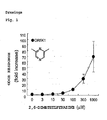
- OR5K1 olfactory receptor OR5K1 from many olfactory receptors as a sole receptor which responds to pyrazine derivatives.
- the response of OR5K1 to pyrazine derivatives has not been found until now, and OR5K1 is a novel receptor for the pyrazine derivatives.
- OR5K1 responds to pyrazine derivatives represented by Formula (I) in dose-dependent manner. Consequently, a substance which inhibits the response of OR5K1 causes a change in perception of odors of pyrazine derivatives in the central nervous system by masking based on the olfactory receptor antagonism and, as a result, can reduce the odor in an odor-specific manner.
- an aspect of the present invention provides a method to identify an agent for reducing an odor of a pyrazine derivative.
- the method includes the steps of adding a test substance and a pyrazine derivative represented by Formula (I) to olfactory receptor OR5K1 as defined above; measuring response of the olfactory receptor to the pyrazine derivative; and identifying a test substance inhibiting the response of the olfactory receptor on the basis of the measured response.
- the identified test substance is selected as the agent for reducing an odor of a pyrazine derivative.
- the method of the present invention can be performed in vitro or ex vivo.
- a test substance and a pyrazine derivative serving as a causative substance for an odor are added to olfactory receptor OR5K1.
- the pyrazine derivative used in the method of the present invention may be any pyrazine derivative represented by Formula (I).
- R 1 to R 4 is preferably an alkyl group.
- Preferred examples of the pyrazine derivative used in the method of the present invention include 2,6-dimethylpyrazine, 2,5-dimethylpyrazine, 2,3-dimethylpyrazine, 2,3,5-trimethylpyrazine, 2,3,5,6-tetramethylpyrazine, 2-monomethylpyrazine, 2-monoethylpyrazine, 2-ethyl-6-methylpyrazine, 3-methyl-2-acetylpyrazine, and 3,5-dimethyl-2-acetylpyrazine.
- 2-monomethylpyrazine, 2-monoethylpyrazine, 2,3-dimethylpyrazine, 2,5-dimethylpyrazine, 2,6-dimethylpyrazine, 2,3,5-trimethylpyrazine, and 2,3,5,6-tetramethylpyrazine are more preferred; and 2,3-dimethylpyrazine, 2,5-dimethylpyrazine, 2,6-dimethylpyrazine, 2,3,5-trimethylpyrazine, and 2,3,5,6-tetramethylpyrazine are even more preferred.
- test substance used in the method of the present invention may be any material which is desired to be used as an agent for reducing an odor of a pyrazine derivative.
- the test substance may be a natural material or may be artificially synthesized by a chemical or biological method and may be a compound, a composition, or a mixture thereof.
- Olfactory receptor OR5K1 used in the method of the present invention is expressed in human olfactory cells and has been registered in GenBank under the accession number GI: 115270955.
- OR5K1 is a protein encoded by a gene having a nucleotide sequence represented by SEQ ID NO: 1 and having the amino acid sequence represented by SEQ ID NO: 2.
- the olfactory receptor can be used in any form that does not lose the responsiveness to a pyrazine derivative.
- the olfactory receptor can be used in a form of a tissue, a cell, or a culture which naturally expresses the olfactory receptor, such as an olfactory organ or olfactory cells isolated from a living body; membrane of olfactory cells carrying the olfactory receptor; a recombinant cell genetically engineered to express the olfactory receptor or a culture of the cell; membrane of the recombinant cells; or artificial lipid bilayer membrane having the olfactory receptor.
- tissue, a cell, or a culture which naturally expresses the olfactory receptor such as an olfactory organ or olfactory cells isolated from a living body; membrane of olfactory cells carrying the olfactory receptor; a recombinant cell genetically engineered to express the olfactory receptor or
- cells such as olfactory cells, naturally expressing the olfactory receptor, genetically engineered recombinant cells expressing the olfactory receptor, or a culture of such cells can be used.
- the recombinant cells can be produced by transforming cells with a vector carrying a gene encoding the olfactory receptor.
- RTP1S is preferably transfected together with the receptor in order to enhance expression of the olfactory receptor in cell membrane.
- RTP1S examples include human RTP1S.
- Human RTP1S has been registered in GenBank under the accession number GI: 50234917.
- a polypeptide having an amino acid sequence which has at least 80%, preferably at least 85%, more preferably at least 90%, more preferably at least 95%, and more preferably at least 98% identity to human RTP1S and, like human RTP1S, enhancing expression of the olfactory receptor in membrane may be used instead of human RTP1S.
- an RTP1S variant used in Examples described in this specification is a protein encoded by a gene having a nucleotide sequence represented by SEQ ID NO: 3 and having the amino acid sequence represented by SEQ ID NO: 4.
- the protein has an amino acid sequence having 78.9% identity to human RTP1S, enhances expression of the olfactory receptor in membrane, and can be used in production of the recombinant cells.
- mouse RTP1S (see Sci. Signal., 2009, 2(60): ra9 mentioned above) is also a protein which has an amino acid sequence having 89% identity to human RTP1S, enhances expression of the olfactory receptor in membrane, and can be used in production of the recombinant cells.
- sequence identity in nucleotide sequence or amino acid sequence is calculated by a Lipman-Pearson method ( Science, 227, 1435, (1985 )). Specifically, the sequence identity is calculated by analysis using a homology analysis (Search homology) program in gene information processing software Genetyx-Win (Ver.5.1.1; Software Development Co., Ltd.) and setting Unit size to compare (ktup) to 2.
- the response of olfactory receptor OR5K1 to the pyrazine derivative is measured.
- the response of the olfactory receptor may be measured by any method which is known in the art, such as measurement of intracellular cAMP levels or reporter gene assay.
- the olfactory receptor activated by an odorant molecule couples with intracellular Gas to activate adenylate cyclase and thereby increases the amount of intracellular cAMP ( Mombaerts P., Nat. Neurosci., 5, pp. 263-278 ).
- the intracellular cAMP amount after the addition of the odorant molecules can be used as an index for measurement of response of the olfactory receptor.
- the cAMP amount can be measured by, for example, ELISA or calcium imaging method.
- the inhibition effect of a test substance on the response to the pyrazine derivative is evaluated based on the measured response of the olfactory receptor, and thereby a test substance inhibiting the response is identified.
- the inhibition effect can be evaluated by, for example, comparison of the measured responses of the olfactory receptor to the pyrazine derivative under addition of different concentrations of a test substance. More specifically, the response of the olfactory receptor to the pyrazine derivative is compared between a group of high concentration test substance and a group of low concentration test substance; between a group containing a test substance and a group not containing the test substance; or between before and after addition of a test substance.
- test substance can be identified as a material which inhibits response of the olfactory receptor to the pyrazine derivative.
- a polypeptide having a function equivalent to OR5K1 can be used as an olfactory receptor instead of OR5K1.
- Such polypeptides are polypeptides composed of amino acid sequences having at least 80%, preferably at least 85%, more preferably at least 90%, more preferably at least 95%, and more preferably at least 98% identity to the amino acid sequence (SEQ ID NO: 2) of OR5K1 and having responsiveness to the pyrazine derivative.
- OR5K1 and the polypeptides having a function equivalent to that of OR5K1 may be used alone or in a combination of two or more thereof as the olfactory receptor.
- the test substance identified by the above-described procedure is a substance which inhibits response of the olfactory receptor to a pyrazine derivative and thereby causes a change in perception of the odor of the pyrazine derivative in the central nervous system by masking based on the olfactory receptor antagonism.
- the test substance can reduce the level of human perception of the odor of the pyrazine derivative. Consequently, the test substance identified by the above-described procedure is selected as an agent for reducing the odor of the pyrazine derivative.
- the test substance can be selected as an agent for reducing the odor of the pyrazine derivative.
- the substance selected by the method of the present invention can reduce an odor of a pyrazine derivative by olfactory masking based on inhibition of response of the olfactory receptor to the odor of the pyrazine derivative. Consequently, the substance can be used as an active ingredient for reducing an odor of a pyrazine derivative, for example, a roasted odor, an odor generated by a Maillard reaction, an odor generated when a self-tanning agent is applied to the skin (e.g., earthy odor), or an odor generated when DHA or erythrulose reacts with the skin to change the color of skin to brown.
- a roasted odor for example, a roasted odor, an odor generated by a Maillard reaction, an odor generated when a self-tanning agent is applied to the skin (e.g., earthy odor), or an odor generated when DHA or erythrulose reacts with the skin to change the color of skin to brown.
- the substance selected by the method of the present invention can be an active ingredient of an agent for reducing an odor of a pyrazine derivative.
- the substance selected by the method of the present invention can be contained in compounds or compositions for reducing the odor of pyrazine derivatives as active ingredients for reducing the odor of the pyrazine derivatives.
- the antagonists can be used for producing agents for reducing the odor of pyrazine derivatives or for producing compounds or compositions for reducing the odor of pyrazine derivatives.
- the substance selected by the method of the present invention can be used as active ingredients for reducing the odor of pyrazine derivatives in every compound or composition desired to reduce the odor of the pyrazine derivatives or under every environment desired to reduce the odor of the pyrazine derivatives.
- the substance selected by the method of the present invention can be used for producing compounds or compositions desired to reduce the odor of pyrazine derivatives as active ingredients for reducing the odor of the pyrazine derivatives.
- Examples of the compounds or the compositions desired to reduce the odor of the pyrazine derivatives include skin tanning agents (also called self-tanning agent or sunless tanning agent), for example, a skin tanning agent containing dihydroxyacetone (DHA) or erythrulose as a color former and another skin tanning agent utilizing a browning reaction.
- skin tanning agents also called self-tanning agent or sunless tanning agent
- DHA dihydroxyacetone
- the compounds or the compositions desired to reduce the odor of the pyrazine derivatives include foods containing the pyrazine derivatives as flavoring components and compositions thereof, more specifically, foods, such as roasted peanuts and milk powders, of which taste is reduced by the presence of excess amounts of pyrazine derivatives and compositions thereof.
- Human olfactory receptors were cloned based on sequence information registered in GenBank by PCR using human genomic DNA female (G1521: Promega Corporation) as a template. Each gene amplified by PCR was inserted into a pENTR vector (Invitrogen Inc.) in accordance with the manual and was recombined into the NotI and AscI site located downstream of a Flag-Rho tag sequence in a pME18S vector using the NotI and AscI site present in the pENTR vector.
- pENTR vector Invitrogen Inc.
- RTP1S variant gene (SEQ ID NO: 3) encoding an RTP1S variant (SEQ ID NO: 4) was inserted into the EcoRI and Xhol site of a pME18S vector.
- HEK293 cells expressing 373 types of human olfactory receptors were produced.
- a reaction solution having a composition shown in Table 1 was prepared and left to stand in a clean bench for 15 min and then was dispensed in each well of a 96-well plate (Becton, Dickinson and Company). Subsequently, HEK293 cells (100 ⁇ L, 3 ⁇ 10 5 cells/cm 2 ) were seeded in each well and cultured in an incubator at 37°C and 5% CO 2 for 24 hr.
- OPTI-MEM (GIBCO) 50 ⁇ L Human olfactory receptor gene (incorporated in a pME18S vector having a Flag-Rho tag at the N-terminal) 0.075 ⁇ g pGL4.29 (fluc2P-CRE-hygro, Promega Corp.) 0.03 ⁇ g pGL4.75 (hRluc-CMV, Promega Corp.) 0.03 ⁇ g pME18S-RTP1S variant vector 0.03 ⁇ g Lipofectamine 2000 (Invitrogen Inc.) 0.4 ⁇ l
- HEK293 cells An olfactory receptor expressed in HEK293 cells couples with endogenous Gas in the cells to activate adenylate cyclase and thereby increases the amount of intracellular CAMP.
- the response of a pyrazine derivative was measured by luciferase reporter gene assay which monitors an increase in the amount of intracellular cAMP as the luminescence value derived from a firefly luciferase gene (fluc2P-CRE-hygro).
- a Renilla luciferase gene was fused downstream of a CMV promoter (hRluc-CMV) and was also introduced to HEK293 cells as an internal standard to correct errors in transgenic efficiency and number of cells.
- the culture medium was removed from the culture produced in the above 3), and 75 ⁇ L of a solution prepared with a CD293 medium (Invitrogen Inc.) so as to contain a pyrazine derivative (1 mM 2,6-dimethylpyrazine) was added thereto.
- the cells were cultured in a CO 2 incubator for 2.5 hr to sufficiently express the luciferase gene in the cells.
- the luciferase activity was measured with a Dual-GloTM luciferase assay system (Promega Corporation) in accordance with the operating manual of the system.
- the fold increases were calculated by dividing the luminescence value derived from firefly luciferase induced by stimulation with a pyrazine derivative at each concentration by the luminescence value in cells not stimulated with the pyrazine derivative and were used as an index of response strength.
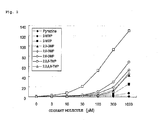
- Olfactory receptor OR5K1 (SEQ ID NO: 2) was expressed in HEK293 cells together with an RTP1S variant (SEQ ID NO: 4) by the same procedure as in Example 1, and the dependency of the response on the concentration (0, 3, 10, 30, 100, 300, and 1000 ⁇ M) of various pyrazine compounds was investigated.
- the pyrazine compounds used in this Example were pyrazine and pyrazine derivatives selected from the group consisting of 2-methylpyrazine, 2,3-dimethylpyrazine, 2,5-dimethylpyrazine, 2,3,5-trimethylpyrazine, 2,3,5,6-tetramethylpyrazine and 2-ethylpyrazine.
- OR5K1 responded in a dose-dependent manner to the pyrazine derivatives, i.e., 2-methylpyrazine (2-MMP), 2,3-dimethylpyrazine (2,3-DMP), 2,5-dimethylpyrazine (2,5-DMP), 2,6-dimethylpyrazine (2,6-DMP), 2,3,5-trimethylpyrazine (2,3,5-TMP), 2,3,5,6-tetramethylpyrazine (2,3,5,6-TMP), and 2-ethylpyrazine (2-MEP), but did not respond to pyrazine ( Fig. 2 ).
- 2-methylpyrazine (2-MMP 2,3-dimethylpyrazine (2,3-DMP
- 2,6-dimethylpyrazine (2,6-DMP 2,3,5-trimethylpyrazine (2,3,5-TMP), 2,3,5,6-tetramethylpyr
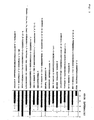
- Antagonistic activities of 174 test substances against olfactory receptor OR5K1 were investigated by examining response of OR5K1 to a pyrazine derivative.
- 2,6-Dimethylpyrazine (1 mM) and a test substance (300 ⁇ M) shown in Table 2 were added to HEK293 cells expressing olfactory receptor OR5K1 by the same procedure as in Example 2, and the response of the olfactory receptor to 2,6-dimethylpyrazine was measured to evaluate a change in response of the receptor due to addition of the test substance.
- Flavoring agents recognized to have cytotoxicity were re-evaluated using a mixture of 333 ⁇ M of 2,6-dimethylpyrazine and 100 ⁇ M of a test substance.
- the receptor response-inhibiting rate of a test substance was calculated as follows.
- the receptor activity (X-Y) by stimulation with 2,6-dimethylpyrazine alone was determined by subtracting the luminescence value (Y) in cells to which the receptor was introduced but were not stimulated with 2,6-dimethylpyrazine from the luminescence value (X) derived from firefly luciferase induced by stimulation with 2,6-dimethylpyrazine alone.
- the receptor activity (Z-Y) in the presence of a test substance was determined by subtracting the luminescence value (Y) in cells not stimulated with 2,6-dimethylpyrazine from the luminescence value (Z) stimulated with a mixture of 2,6-dimethylpyrazine and the test substance.
- a flavoring agent (0.5 ⁇ L) was added to dough (0.5 g) containing 2,6-dimethylpyrazine (1%), and the odor thereof was evaluated by comparing the strength of odor of 2,6-dimethylpyrazine in dough not applied with flavor by the flavoring agent.
- the sensory evaluation test was performed by four panelists. In the evaluation, a case where a strong odor of 2,6-dimethylpyrazine was smelled was rated as 1, and a case where the odor of 2,6-dimethylpyrazine was not smelled at all was rated as 5.
Landscapes
- Health & Medical Sciences (AREA)
- Life Sciences & Earth Sciences (AREA)
- Chemical & Material Sciences (AREA)
- Engineering & Computer Science (AREA)
- Immunology (AREA)
- Molecular Biology (AREA)
- Urology & Nephrology (AREA)
- Biomedical Technology (AREA)
- Hematology (AREA)
- Organic Chemistry (AREA)
- Microbiology (AREA)
- General Health & Medical Sciences (AREA)
- Biotechnology (AREA)
- Medicinal Chemistry (AREA)
- Physics & Mathematics (AREA)
- Analytical Chemistry (AREA)
- Biochemistry (AREA)
- Zoology (AREA)
- Wood Science & Technology (AREA)
- Bioinformatics & Cheminformatics (AREA)
- Proteomics, Peptides & Aminoacids (AREA)
- Pathology (AREA)
- General Physics & Mathematics (AREA)
- Cell Biology (AREA)
- Food Science & Technology (AREA)
- Toxicology (AREA)
- Biophysics (AREA)
- General Engineering & Computer Science (AREA)
- Genetics & Genomics (AREA)
- Measuring Or Testing Involving Enzymes Or Micro-Organisms (AREA)
- Investigating Or Analysing Biological Materials (AREA)
- Cosmetics (AREA)
- Pharmaceuticals Containing Other Organic And Inorganic Compounds (AREA)
Claims (9)
- Verfahren zum Identifizieren eines Agens zur Verringerung des Geruchs eines Pyrazinderivats, umfassend:Hinzufügen einer Testsubstanz und eines Pyrazinderivats, das durch die folgende Formel dargestellt ist:

zu einem olfaktorischen Rezeptor OR5K1, der ein Protein ist, das aus einer in SEQ ID NO:2 gezeigten Aminosäuresequenz besteht, oder zu einem Polypeptid, das aus einer Aminosäuresequenz besteht, die mindestens 80% Identität mit der in SEQ ID NO:2 gezeigten Aminosäuresequenz aufweist und auf das Pyrazinderivat reagiert;
Messen einer Reaktion des olfaktorischen Rezeptors auf das Pyrazinderivat; und
Identifizieren einer Testsubstanz, die die Reaktion des olfaktorischen Rezeptors auf der Grundlage der gemessenen Reaktion inhibiert. - Verfahren nach Anspruch 1, wobei mindestens eines von R1 bis R4 eine Alkylgruppe ist.
- Verfahren nach Anspruch 1 oder 2, wobei das Pyrazinderivat ausgewählt ist aus der Gruppe bestehend aus 2,6-Dimethylpyrazin, 2,5-Dimethylpyrazin, 2,3-Dimethylpyrazin, 2,3,5-Trimethylpyrazin, 2,3,5,6-Tetramethylpyrazin, 2-Monomethylpyrazin, 2-Monoethylpyrazin, 2-Ethyl-6-methylpyrazin, 3-Methyl-2-acetylpyrazin und 3,5-Dimethyl-2-acetylpyrazin.
- Verfahren nach einem der Ansprüche 1 bis 3, wobei das Polypeptid, das mindestens 80% Identität mit der wie in SEQ ID NO:2 gezeigten Aminosäuresequenz des olfaktorischen Rezeptors OR5K1 aufweist, ein Polypeptid ist, das aus einer Aminosäuresequenz besteht, die mindestens 90% Identität mit der in SEQ ID NO:2 gezeigten Aminosäuresequenz aufweist und auf das Pyrazinderivat reagiert.
- Verfahren nach einem der Ansprüche 1 bis 4, wobei der olfaktorische Rezeptor ein olfaktorischer Rezeptor ist, der auf einer Zelle exprimiert wird, die natürlicherweise den olfaktorischen Rezeptor exprimiert, oder auf einer rekombinanten Zelle exprimiert wird, die gentechnisch verändert ist, um den olfaktorischen Rezeptor zu exprimieren.
- Verfahren nach einem der Ansprüche 1 bis 5, das des Weiteren umfasst:Messen der Reaktion des olfaktorischen Rezeptors in Abwesenheit der Testsubstanz.
- Verfahren nach Anspruch 6, wobei, wenn die Reaktion des olfaktorischen Rezeptors in Anwesenheit einer Testsubstanz auf 60% oder weniger der Reaktion des olfaktorischen Rezeptors in der Abwesenheit der Testsubstanz vermindert ist, die Testsubstanz als eine Substanz identifiziert wird, die die Reaktion des olfaktorischen Rezeptors auf das Pyrazinderivat inhibiert.
- Verfahren nach einem der Ansprüche 1 bis 7, wobei der Schritt des Messens einer Reaktion des olfaktorischen Rezeptors unter Verwendung einer Messung des intrazellulären cAMP-Spiegels mittels ELISA oder Calcium-Bildgebung (calcium imaging) oder Reportergen-Assay durchgeführt wird.
- Verfahren nach einem der Ansprüche 1 bis 8, wobei der Geruch des Pyrazinderivats ein Geruch ist, der durch die Reaktion auf ein Hautbräunungsmittel mit der Haut erzeugt wird.
Applications Claiming Priority (2)
| Application Number | Priority Date | Filing Date | Title |
|---|---|---|---|
| US201261596967P | 2012-02-09 | 2012-02-09 | |
| PCT/US2012/067889 WO2013119312A1 (en) | 2012-02-09 | 2012-12-05 | Method of identifying an agent for inhibiting odor of pyrazine derivatives |
Publications (2)
| Publication Number | Publication Date |
|---|---|
| EP2812699A1 EP2812699A1 (de) | 2014-12-17 |
| EP2812699B1 true EP2812699B1 (de) | 2016-07-20 |
Family
ID=47470168
Family Applications (1)
| Application Number | Title | Priority Date | Filing Date |
|---|---|---|---|
| EP12808993.5A Not-in-force EP2812699B1 (de) | 2012-02-09 | 2012-12-05 | Verfahren zur identifizierung eines mittels zur hemmung des geruchs von pyrazinderivaten |
Country Status (4)
| Country | Link |
|---|---|
| US (1) | US9057090B2 (de) |
| EP (1) | EP2812699B1 (de) |
| JP (1) | JP6061955B2 (de) |
| WO (1) | WO2013119312A1 (de) |
Families Citing this family (8)
| Publication number | Priority date | Publication date | Assignee | Title |
|---|---|---|---|---|
| JP5593271B2 (ja) | 2011-06-06 | 2014-09-17 | 花王株式会社 | 悪臭抑制剤の探索方法 |
| JP2015062356A (ja) * | 2013-09-24 | 2015-04-09 | 株式会社豊田中央研究所 | 嗅覚受容体を用いた匂い分子の評価方法 |
| JP6276555B2 (ja) * | 2013-10-22 | 2018-02-07 | 花王株式会社 | フラネオールによるにおいの抑制剤の探索方法 |
| JP6705125B2 (ja) * | 2015-04-27 | 2020-06-03 | 株式会社豊田中央研究所 | 嗅覚受容体を用いたにおいの評価方法 |
| JP7016491B2 (ja) * | 2016-03-31 | 2022-02-07 | 株式会社豊田中央研究所 | 嗅覚受容体を用いた評価方法 |
| JP2023084474A (ja) * | 2021-12-07 | 2023-06-19 | 花王株式会社 | アミンを原因とするにおいの抑制剤の評価及び/又は選択方法 |
| WO2025047522A1 (ja) | 2023-08-31 | 2025-03-06 | 高砂香料工業株式会社 | 悪臭抑制素材のスクリーニング方法 |
| WO2025053198A1 (ja) * | 2023-09-07 | 2025-03-13 | 高砂香料工業株式会社 | 生乾き臭組成物およびマスキング香料組成物 |
Family Cites Families (10)
| Publication number | Priority date | Publication date | Assignee | Title |
|---|---|---|---|---|
| US5272134A (en) | 1992-03-24 | 1993-12-21 | Erox Corporation | Fragrance compositions and other compositions which contain human pheromones |
| JP2003024423A (ja) | 2001-07-13 | 2003-01-28 | Japan Tobacco Inc | アルキルピラジン化合物の臭気をブロックする臭気ブロッキング剤 |
| US7344845B2 (en) | 2001-12-21 | 2008-03-18 | Senomyx, Inc. | Olfactory receptor for isovaleric acid and related malodorants and use thereof in assays for identification of blockers of malodor |
| EP1781239A2 (de) | 2003-11-17 | 2007-05-09 | Patus Ltd | Wirksame zusammensetzungen zur veränderung der wahrnehmung von schlechtem geruch |
| JP2005325055A (ja) | 2004-05-14 | 2005-11-24 | Peptide Door Co Ltd | リガンド結合タンパク質含有複合体及びリガンド結合タンパク質に結合する物質のスクリーニング方法 |
| US7585833B2 (en) | 2005-02-17 | 2009-09-08 | Givaudan Fragrances Corporation | Malodor covering perfumery |
| EP1884555A2 (de) | 2006-08-01 | 2008-02-06 | Symrise GmbH & Co. KG | Maskierung von Mineralölgeruch und Beduftung von Mineralölen |
| JP5697383B2 (ja) | 2010-09-03 | 2015-04-08 | 花王株式会社 | 悪臭抑制剤の探索方法 |
| JP5646255B2 (ja) | 2010-09-03 | 2014-12-24 | 花王株式会社 | 悪臭抑制剤 |
| WO2012029922A1 (ja) | 2010-09-03 | 2012-03-08 | 花王株式会社 | 悪臭抑制剤の探索方法、悪臭抑制剤、及び悪臭抑制方法 |
-
2012
- 2012-12-04 US US13/693,295 patent/US9057090B2/en not_active Expired - Fee Related
- 2012-12-05 EP EP12808993.5A patent/EP2812699B1/de not_active Not-in-force
- 2012-12-05 JP JP2014556546A patent/JP6061955B2/ja active Active
- 2012-12-05 WO PCT/US2012/067889 patent/WO2013119312A1/en not_active Ceased
Also Published As
| Publication number | Publication date |
|---|---|
| WO2013119312A1 (en) | 2013-08-15 |
| EP2812699A1 (de) | 2014-12-17 |
| JP2015512032A (ja) | 2015-04-23 |
| US9057090B2 (en) | 2015-06-16 |
| JP6061955B2 (ja) | 2017-01-18 |
| US20130210022A1 (en) | 2013-08-15 |
Similar Documents
| Publication | Publication Date | Title |
|---|---|---|
| US9057090B2 (en) | Method of identifying an agent for inhibiting odor of pyrazine derivatives | |
| EP2812316B1 (de) | Mittel zur hemmung von geruch von pyrazin-derivaten | |
| EP2718718B1 (de) | Verfahren zur identifizierung eines geruchshemmers | |
| EP3578976A1 (de) | Verfahren zur auswahl eines stoffes zur geruchsbekämpfung | |
| EP3305898B1 (de) | Verfahren zur auswahl einer substanz zur geruchskontrolle | |
| JP6243698B2 (ja) | フラネオールによるにおいの抑制剤 | |
| JP5798382B2 (ja) | 悪臭抑制剤 | |
| JP7197298B2 (ja) | メチルメルカプタン臭抑制剤の評価及び/又は選択方法 | |
| JP6203598B2 (ja) | ソトロンによるにおいの抑制剤 | |
| JP2017528120A (ja) | リガンドに対する受容体を同定するための方法およびその使用 | |
| JP5982044B2 (ja) | 悪臭抑制剤 | |
| US9274102B2 (en) | Method of screening for an inhibitor of odor cause by furaneol | |
| EP3312289B1 (de) | Verfahren zur bewertung und auswahl eines mittels zur unterdrückung von gerüchen von sulfidverbindungen | |
| JP6422665B2 (ja) | 腋臭抑制剤の探索方法 | |
| EP2838495B1 (de) | Selbstbräunungskosmetikum | |
| JP6395426B2 (ja) | アクリル酸ブチル臭抑制剤の探索方法 | |
| JP6061448B2 (ja) | 被験物質の評価方法 | |
| KR101710706B1 (ko) | 췌장에서 발현되는 후각수용체 및 췌장소도 후각수용체 기반 글루카곤 조절을 이용한 당뇨병 예방 또는 치료용 조성물 | |
| JP2016152789A (ja) | 被験物質の評価方法および低浸透圧刺激抑制剤 |
Legal Events
| Date | Code | Title | Description |
|---|---|---|---|
| PUAI | Public reference made under article 153(3) epc to a published international application that has entered the european phase |
Free format text: ORIGINAL CODE: 0009012 |
|
| 17P | Request for examination filed |
Effective date: 20140903 |
|
| AK | Designated contracting states |
Kind code of ref document: A1 Designated state(s): AL AT BE BG CH CY CZ DE DK EE ES FI FR GB GR HR HU IE IS IT LI LT LU LV MC MK MT NL NO PL PT RO RS SE SI SK SM TR |
|
| AX | Request for extension of the european patent |
Extension state: BA ME |
|
| DAX | Request for extension of the european patent (deleted) | ||
| GRAP | Despatch of communication of intention to grant a patent |
Free format text: ORIGINAL CODE: EPIDOSNIGR1 |
|
| INTG | Intention to grant announced |
Effective date: 20160127 |
|
| GRAS | Grant fee paid |
Free format text: ORIGINAL CODE: EPIDOSNIGR3 |
|
| GRAA | (expected) grant |
Free format text: ORIGINAL CODE: 0009210 |
|
| AK | Designated contracting states |
Kind code of ref document: B1 Designated state(s): AL AT BE BG CH CY CZ DE DK EE ES FI FR GB GR HR HU IE IS IT LI LT LU LV MC MK MT NL NO PL PT RO RS SE SI SK SM TR |
|
| REG | Reference to a national code |
Ref country code: GB Ref legal event code: FG4D |
|
| REG | Reference to a national code |
Ref country code: CH Ref legal event code: EP |
|
| REG | Reference to a national code |
Ref country code: IE Ref legal event code: FG4D |
|
| REG | Reference to a national code |
Ref country code: AT Ref legal event code: REF Ref document number: 814505 Country of ref document: AT Kind code of ref document: T Effective date: 20160815 |
|
| REG | Reference to a national code |
Ref country code: DE Ref legal event code: R096 Ref document number: 602012020816 Country of ref document: DE |
|
| REG | Reference to a national code |
Ref country code: CH Ref legal event code: NV Representative=s name: VOSSIUS AND PARTNER PATENTANWAELTE RECHTSANWAE, CH |
|
| REG | Reference to a national code |
Ref country code: LT Ref legal event code: MG4D |
|
| REG | Reference to a national code |
Ref country code: NL Ref legal event code: MP Effective date: 20160720 |
|
| REG | Reference to a national code |
Ref country code: AT Ref legal event code: MK05 Ref document number: 814505 Country of ref document: AT Kind code of ref document: T Effective date: 20160720 |
|
| PG25 | Lapsed in a contracting state [announced via postgrant information from national office to epo] |
Ref country code: IT Free format text: LAPSE BECAUSE OF FAILURE TO SUBMIT A TRANSLATION OF THE DESCRIPTION OR TO PAY THE FEE WITHIN THE PRESCRIBED TIME-LIMIT Effective date: 20160720 Ref country code: IS Free format text: LAPSE BECAUSE OF FAILURE TO SUBMIT A TRANSLATION OF THE DESCRIPTION OR TO PAY THE FEE WITHIN THE PRESCRIBED TIME-LIMIT Effective date: 20161120 Ref country code: LT Free format text: LAPSE BECAUSE OF FAILURE TO SUBMIT A TRANSLATION OF THE DESCRIPTION OR TO PAY THE FEE WITHIN THE PRESCRIBED TIME-LIMIT Effective date: 20160720 Ref country code: FI Free format text: LAPSE BECAUSE OF FAILURE TO SUBMIT A TRANSLATION OF THE DESCRIPTION OR TO PAY THE FEE WITHIN THE PRESCRIBED TIME-LIMIT Effective date: 20160720 Ref country code: RS Free format text: LAPSE BECAUSE OF FAILURE TO SUBMIT A TRANSLATION OF THE DESCRIPTION OR TO PAY THE FEE WITHIN THE PRESCRIBED TIME-LIMIT Effective date: 20160720 Ref country code: NO Free format text: LAPSE BECAUSE OF FAILURE TO SUBMIT A TRANSLATION OF THE DESCRIPTION OR TO PAY THE FEE WITHIN THE PRESCRIBED TIME-LIMIT Effective date: 20161020 Ref country code: NL Free format text: LAPSE BECAUSE OF FAILURE TO SUBMIT A TRANSLATION OF THE DESCRIPTION OR TO PAY THE FEE WITHIN THE PRESCRIBED TIME-LIMIT Effective date: 20160720 Ref country code: HR Free format text: LAPSE BECAUSE OF FAILURE TO SUBMIT A TRANSLATION OF THE DESCRIPTION OR TO PAY THE FEE WITHIN THE PRESCRIBED TIME-LIMIT Effective date: 20160720 |
|
| PG25 | Lapsed in a contracting state [announced via postgrant information from national office to epo] |
Ref country code: SE Free format text: LAPSE BECAUSE OF FAILURE TO SUBMIT A TRANSLATION OF THE DESCRIPTION OR TO PAY THE FEE WITHIN THE PRESCRIBED TIME-LIMIT Effective date: 20160720 Ref country code: LV Free format text: LAPSE BECAUSE OF FAILURE TO SUBMIT A TRANSLATION OF THE DESCRIPTION OR TO PAY THE FEE WITHIN THE PRESCRIBED TIME-LIMIT Effective date: 20160720 Ref country code: GR Free format text: LAPSE BECAUSE OF FAILURE TO SUBMIT A TRANSLATION OF THE DESCRIPTION OR TO PAY THE FEE WITHIN THE PRESCRIBED TIME-LIMIT Effective date: 20161021 Ref country code: AT Free format text: LAPSE BECAUSE OF FAILURE TO SUBMIT A TRANSLATION OF THE DESCRIPTION OR TO PAY THE FEE WITHIN THE PRESCRIBED TIME-LIMIT Effective date: 20160720 Ref country code: PL Free format text: LAPSE BECAUSE OF FAILURE TO SUBMIT A TRANSLATION OF THE DESCRIPTION OR TO PAY THE FEE WITHIN THE PRESCRIBED TIME-LIMIT Effective date: 20160720 Ref country code: ES Free format text: LAPSE BECAUSE OF FAILURE TO SUBMIT A TRANSLATION OF THE DESCRIPTION OR TO PAY THE FEE WITHIN THE PRESCRIBED TIME-LIMIT Effective date: 20160720 Ref country code: PT Free format text: LAPSE BECAUSE OF FAILURE TO SUBMIT A TRANSLATION OF THE DESCRIPTION OR TO PAY THE FEE WITHIN THE PRESCRIBED TIME-LIMIT Effective date: 20161121 |
|
| REG | Reference to a national code |
Ref country code: DE Ref legal event code: R097 Ref document number: 602012020816 Country of ref document: DE |
|
| PG25 | Lapsed in a contracting state [announced via postgrant information from national office to epo] |
Ref country code: RO Free format text: LAPSE BECAUSE OF FAILURE TO SUBMIT A TRANSLATION OF THE DESCRIPTION OR TO PAY THE FEE WITHIN THE PRESCRIBED TIME-LIMIT Effective date: 20160720 Ref country code: EE Free format text: LAPSE BECAUSE OF FAILURE TO SUBMIT A TRANSLATION OF THE DESCRIPTION OR TO PAY THE FEE WITHIN THE PRESCRIBED TIME-LIMIT Effective date: 20160720 |
|
| PLBE | No opposition filed within time limit |
Free format text: ORIGINAL CODE: 0009261 |
|
| STAA | Information on the status of an ep patent application or granted ep patent |
Free format text: STATUS: NO OPPOSITION FILED WITHIN TIME LIMIT |
|
| PG25 | Lapsed in a contracting state [announced via postgrant information from national office to epo] |
Ref country code: DK Free format text: LAPSE BECAUSE OF FAILURE TO SUBMIT A TRANSLATION OF THE DESCRIPTION OR TO PAY THE FEE WITHIN THE PRESCRIBED TIME-LIMIT Effective date: 20160720 Ref country code: SK Free format text: LAPSE BECAUSE OF FAILURE TO SUBMIT A TRANSLATION OF THE DESCRIPTION OR TO PAY THE FEE WITHIN THE PRESCRIBED TIME-LIMIT Effective date: 20160720 Ref country code: BG Free format text: LAPSE BECAUSE OF FAILURE TO SUBMIT A TRANSLATION OF THE DESCRIPTION OR TO PAY THE FEE WITHIN THE PRESCRIBED TIME-LIMIT Effective date: 20161020 Ref country code: CZ Free format text: LAPSE BECAUSE OF FAILURE TO SUBMIT A TRANSLATION OF THE DESCRIPTION OR TO PAY THE FEE WITHIN THE PRESCRIBED TIME-LIMIT Effective date: 20160720 Ref country code: SM Free format text: LAPSE BECAUSE OF FAILURE TO SUBMIT A TRANSLATION OF THE DESCRIPTION OR TO PAY THE FEE WITHIN THE PRESCRIBED TIME-LIMIT Effective date: 20160720 |
|
| 26N | No opposition filed |
Effective date: 20170421 |
|
| REG | Reference to a national code |
Ref country code: DE Ref legal event code: R119 Ref document number: 602012020816 Country of ref document: DE |
|
| GBPC | Gb: european patent ceased through non-payment of renewal fee |
Effective date: 20161205 |
|
| PG25 | Lapsed in a contracting state [announced via postgrant information from national office to epo] |
Ref country code: SI Free format text: LAPSE BECAUSE OF FAILURE TO SUBMIT A TRANSLATION OF THE DESCRIPTION OR TO PAY THE FEE WITHIN THE PRESCRIBED TIME-LIMIT Effective date: 20160720 |
|
| PG25 | Lapsed in a contracting state [announced via postgrant information from national office to epo] |
Ref country code: MC Free format text: LAPSE BECAUSE OF FAILURE TO SUBMIT A TRANSLATION OF THE DESCRIPTION OR TO PAY THE FEE WITHIN THE PRESCRIBED TIME-LIMIT Effective date: 20160720 |
|
| REG | Reference to a national code |
Ref country code: FR Ref legal event code: ST Effective date: 20170831 |
|
| REG | Reference to a national code |
Ref country code: IE Ref legal event code: MM4A |
|
| PG25 | Lapsed in a contracting state [announced via postgrant information from national office to epo] |
Ref country code: FR Free format text: LAPSE BECAUSE OF NON-PAYMENT OF DUE FEES Effective date: 20170102 Ref country code: LU Free format text: LAPSE BECAUSE OF NON-PAYMENT OF DUE FEES Effective date: 20161205 |
|
| PG25 | Lapsed in a contracting state [announced via postgrant information from national office to epo] |
Ref country code: IE Free format text: LAPSE BECAUSE OF NON-PAYMENT OF DUE FEES Effective date: 20161205 Ref country code: GB Free format text: LAPSE BECAUSE OF NON-PAYMENT OF DUE FEES Effective date: 20161205 Ref country code: DE Free format text: LAPSE BECAUSE OF NON-PAYMENT OF DUE FEES Effective date: 20170701 |
|
| PG25 | Lapsed in a contracting state [announced via postgrant information from national office to epo] |
Ref country code: HU Free format text: LAPSE BECAUSE OF FAILURE TO SUBMIT A TRANSLATION OF THE DESCRIPTION OR TO PAY THE FEE WITHIN THE PRESCRIBED TIME-LIMIT; INVALID AB INITIO Effective date: 20121205 |
|
| PG25 | Lapsed in a contracting state [announced via postgrant information from national office to epo] |
Ref country code: CY Free format text: LAPSE BECAUSE OF FAILURE TO SUBMIT A TRANSLATION OF THE DESCRIPTION OR TO PAY THE FEE WITHIN THE PRESCRIBED TIME-LIMIT Effective date: 20160720 Ref country code: MK Free format text: LAPSE BECAUSE OF FAILURE TO SUBMIT A TRANSLATION OF THE DESCRIPTION OR TO PAY THE FEE WITHIN THE PRESCRIBED TIME-LIMIT Effective date: 20160720 |
|
| PG25 | Lapsed in a contracting state [announced via postgrant information from national office to epo] |
Ref country code: MT Free format text: LAPSE BECAUSE OF NON-PAYMENT OF DUE FEES Effective date: 20161205 |
|
| PG25 | Lapsed in a contracting state [announced via postgrant information from national office to epo] |
Ref country code: TR Free format text: LAPSE BECAUSE OF FAILURE TO SUBMIT A TRANSLATION OF THE DESCRIPTION OR TO PAY THE FEE WITHIN THE PRESCRIBED TIME-LIMIT Effective date: 20160720 Ref country code: AL Free format text: LAPSE BECAUSE OF FAILURE TO SUBMIT A TRANSLATION OF THE DESCRIPTION OR TO PAY THE FEE WITHIN THE PRESCRIBED TIME-LIMIT Effective date: 20160720 |
|
| PGFP | Annual fee paid to national office [announced via postgrant information from national office to epo] |
Ref country code: CH Payment date: 20211116 Year of fee payment: 10 Ref country code: BE Payment date: 20211203 Year of fee payment: 10 |
|
| REG | Reference to a national code |
Ref country code: CH Ref legal event code: PL |
|
| REG | Reference to a national code |
Ref country code: BE Ref legal event code: MM Effective date: 20221231 |
|
| PG25 | Lapsed in a contracting state [announced via postgrant information from national office to epo] |
Ref country code: LI Free format text: LAPSE BECAUSE OF NON-PAYMENT OF DUE FEES Effective date: 20221231 Ref country code: CH Free format text: LAPSE BECAUSE OF NON-PAYMENT OF DUE FEES Effective date: 20221231 |
|
| PG25 | Lapsed in a contracting state [announced via postgrant information from national office to epo] |
Ref country code: BE Free format text: LAPSE BECAUSE OF NON-PAYMENT OF DUE FEES Effective date: 20221231 |