EP2806756B1 - Enclosing materials in natural transport systems - Google Patents
Enclosing materials in natural transport systems Download PDFInfo
- Publication number
- EP2806756B1 EP2806756B1 EP13706773.2A EP13706773A EP2806756B1 EP 2806756 B1 EP2806756 B1 EP 2806756B1 EP 13706773 A EP13706773 A EP 13706773A EP 2806756 B1 EP2806756 B1 EP 2806756B1
- Authority
- EP
- European Patent Office
- Prior art keywords
- membrane
- extract
- edible
- particles
- powder
- Prior art date
- Legal status (The legal status is an assumption and is not a legal conclusion. Google has not performed a legal analysis and makes no representation as to the accuracy of the status listed.)
- Active
Links
Images





Classifications
-
- A—HUMAN NECESSITIES
- A23—FOODS OR FOODSTUFFS; TREATMENT THEREOF, NOT COVERED BY OTHER CLASSES
- A23G—COCOA; COCOA PRODUCTS, e.g. CHOCOLATE; SUBSTITUTES FOR COCOA OR COCOA PRODUCTS; CONFECTIONERY; CHEWING GUM; ICE-CREAM; PREPARATION THEREOF
- A23G9/00—Frozen sweets, e.g. ice confectionery, ice-cream; Mixtures therefor
- A23G9/04—Production of frozen sweets, e.g. ice-cream
- A23G9/22—Details, component parts or accessories of apparatus insofar as not peculiar to a single one of the preceding groups
- A23G9/24—Details, component parts or accessories of apparatus insofar as not peculiar to a single one of the preceding groups for coating or filling the products
- A23G9/245—Details, component parts or accessories of apparatus insofar as not peculiar to a single one of the preceding groups for coating or filling the products for coating the products
-
- A—HUMAN NECESSITIES
- A23—FOODS OR FOODSTUFFS; TREATMENT THEREOF, NOT COVERED BY OTHER CLASSES
- A23P—SHAPING OR WORKING OF FOODSTUFFS, NOT FULLY COVERED BY A SINGLE OTHER SUBCLASS
- A23P10/00—Shaping or working of foodstuffs characterised by the products
- A23P10/30—Encapsulation of particles, e.g. foodstuff additives
-
- A—HUMAN NECESSITIES
- A23—FOODS OR FOODSTUFFS; TREATMENT THEREOF, NOT COVERED BY OTHER CLASSES
- A23L—FOODS, FOODSTUFFS OR NON-ALCOHOLIC BEVERAGES, NOT OTHERWISE PROVIDED FOR; PREPARATION OR TREATMENT THEREOF
- A23L19/00—Products from fruits or vegetables; Preparation or treatment thereof
- A23L19/01—Instant products; Powders; Flakes; Granules
-
- A—HUMAN NECESSITIES
- A23—FOODS OR FOODSTUFFS; TREATMENT THEREOF, NOT COVERED BY OTHER CLASSES
- A23L—FOODS, FOODSTUFFS OR NON-ALCOHOLIC BEVERAGES, NOT OTHERWISE PROVIDED FOR; PREPARATION OR TREATMENT THEREOF
- A23L19/00—Products from fruits or vegetables; Preparation or treatment thereof
- A23L19/03—Products from fruits or vegetables; Preparation or treatment thereof consisting of whole pieces or fragments without mashing the original pieces
- A23L19/05—Stuffed or cored products; Multilayered or coated products; Binding or compressing of original pieces
-
- A—HUMAN NECESSITIES
- A23—FOODS OR FOODSTUFFS; TREATMENT THEREOF, NOT COVERED BY OTHER CLASSES
- A23P—SHAPING OR WORKING OF FOODSTUFFS, NOT FULLY COVERED BY A SINGLE OTHER SUBCLASS
- A23P20/00—Coating of foodstuffs; Coatings therefor; Making laminated, multi-layered, stuffed or hollow foodstuffs
- A23P20/10—Coating with edible coatings, e.g. with oils or fats
- A23P20/105—Coating with compositions containing vegetable or microbial fermentation gums, e.g. cellulose or derivatives; Coating with edible polymers, e.g. polyvinyalcohol
-
- A—HUMAN NECESSITIES
- A61—MEDICAL OR VETERINARY SCIENCE; HYGIENE
- A61K—PREPARATIONS FOR MEDICAL, DENTAL OR TOILETRY PURPOSES
- A61K9/00—Medicinal preparations characterised by special physical form
- A61K9/48—Preparations in capsules, e.g. of gelatin, of chocolate
- A61K9/4808—Preparations in capsules, e.g. of gelatin, of chocolate characterised by the form of the capsule or the structure of the filling; Capsules containing small tablets; Capsules with outer layer for immediate drug release
-
- Y—GENERAL TAGGING OF NEW TECHNOLOGICAL DEVELOPMENTS; GENERAL TAGGING OF CROSS-SECTIONAL TECHNOLOGIES SPANNING OVER SEVERAL SECTIONS OF THE IPC; TECHNICAL SUBJECTS COVERED BY FORMER USPC CROSS-REFERENCE ART COLLECTIONS [XRACs] AND DIGESTS
- Y02—TECHNOLOGIES OR APPLICATIONS FOR MITIGATION OR ADAPTATION AGAINST CLIMATE CHANGE
- Y02W—CLIMATE CHANGE MITIGATION TECHNOLOGIES RELATED TO WASTEWATER TREATMENT OR WASTE MANAGEMENT
- Y02W90/00—Enabling technologies or technologies with a potential or indirect contribution to greenhouse gas [GHG] emissions mitigation
- Y02W90/10—Bio-packaging, e.g. packing containers made from renewable resources or bio-plastics
Definitions
- This disclosure relates to vessels for encasing edible materials, and more particularly to edible and/or biodegradable vessels.
- Mankind has filled, carried, and transported water, other liquids (as well as solids, emulsions, slurries, foams, etc.) and edible materials in vessels made of pottery, glass, plastics and other materials since prehistoric times. While the nature of these vessels has evolved with advances in material manufacture and design, the basic principle of a vessel in the form of a container with a surface that encloses the edible material, either partially or completely, and from which the edible material can be removed, emptying the vessel, which can be refilled or discarded, has essentially not varied. Users continue to fill and empty containers with water, other liquids, and edible materials for various practical purposes.
- an edible composition particularly an edible transport system, comprises an edible substance and a first cross-linked matrix encapsulating the edible substance, the cross-linked matrix comprising (1) at least one edible polymer and edible particles or (2) a plurality of edible polymers; and a second cross-linked matrix encapsulating the first cross-linked matrix, the second cross-linked matrix comprising (1) at least one edible polymer and edible particles or (2) a plurality of edible polymers.
- the at least one edible polymer and the edible particles or the plurality of edible polymers are charge cross-linked by multivalent ions, including cross-linking interactions between the edible particles and edible polymer or plurality of edible polymers via bridges formed by the multivalent ions.
- the edible particles of the edible composition are one of the group consisting of a positively charged edible particle, a neutrally charged edible particle, a negatively charged edible particle, an amphipathic edible particle, a zwitterionic edible particle, and combinations thereof.
- the edible polymer is one of the group consisting of a positively charged edible polymer, a neutrally charged edible polymer, a negatively charged edible particle, an amphipathic edible polymer, a zwitterionic edible polymer, and combinations thereof.
- the edible particles comprise a second edible particle having a characteristic dimension of less than 75% (e.g., less than 50%, 25%, less than 10%, less than 5%, or less than 1 % of) a characteristic dimension of the first edible particle.
- the matrix comprising the first and second edible particles has a lower mass loss rate than a similar edible composition without the first and second edible particles.
- the first particles provide structural stability to the matrix.
- the polymer comprises a polysaccharide selected from the group consisting of a hydrocolloid, shellac, and fibers.
- the polymer comprises a hydrocolloid selected from the group consisting of an alginate, an agar, a starch, a gelatin, carrageenan, xanthan gum, gellan gum, galactomannan, gum arabic, a pectin, a milk protein, a cellulosic, a carboxymethylcellulosic, a methylcellulosic, gum tragacanth and karaya, xyloglucan, curdlan, a cereal ⁇ -glucan, soluble soybean polysaccharide, a bacterial cellulose, a microcrystalline cellulose, chitosan, inulin, an emulsifying polymer, konjac mannan/konjac glucomannan, a seed gum, and pullulan.
- the hydrocolloid comprises an alginate selected from the group consisting of sodium alginate, ammonium alginate, potassium alginate, and propylene glycol
- the cross-linked matrix further comprises particles selected from the group comprising a hydrocolloid, shellac, fibers, bagasse, tapioca, chitosan, sugar derivatives, chocolate, seaweed, and combinations thereof, and wherein the particles comprise a compound different from the polymer compound.
- the edible particles comprise a size having a volume mean distribution between about 0.1 microns and about 1.0 microns, between about 0.1 microns and about 10.0 microns, between about 0.1 microns and about 100.0 microns, between about 0.1 microns and about 1.0 millimeters, between about 0.1 and about 3 millimeters.
- the edible particles are particles selected from the group consisting of particles of a food, particles of an energy supplement, particles of a dietary supplement, particles of a confection, particles of a nutraceutical, particles of a pharmaceutical, particles of a sleep aid compound, particles of a weight loss compound, particles of a powdered vegetable, particles of a flavoring agent, particles of a sweetener, particles of a metabolic intermediate of a pharmaceutical, particles of a metabolic by-product of a pharmaceutical, and combinations thereof.
- the edible substance comprises at least one of a powder, a gel, an emulsion, a foam, a solid, and combinations thereof.
- the edible substance is selected from the group consisting of fruit, vegetable, meat, a dairy product, a carbohydrate food product, a botanical, an energy supplement, a dietary supplement, a confection, a nutraceutical, a pharmaceutical, a sleep aid compound, a weight loss compound, a powdered vegetable, a flavoring agent, a sweetener, a powdered food product, and combinations thereof.
- the edible substance comprises a liquid, particularly wherein the liquid comprises at least one of water, an alcohol, a juice, an alcohol mixed drink, a coffee product, a tea product, a soft drink, an energy supplement product, a dietary supplement, a confection, and combinations thereof.
- the edible composition further comprises an outer shell enclosing the matrix, the shell being more structurally resilient than the matrix at room temperature.
- an edible barrier layer between the matrix and the outer shell.
- the barrier layer reduces a force required to separate the matrix from the outer shell. In other embodiments the barrier layer limits the transfer of water out of the edible substance encapsulated in the matrix.
- the edible composition comprises a second cross-linked matrix encapsulating the cross-linked matrix, the second cross-linked matrix comprising (1) at least one edible polymer and edible particles or (2) a plurality of edible polymers. In some embodiments is a particle layer arranged between each cross-linked matrix.
- the particle layer comprises particles selected from the group consisting of particles of a food, particles of an energy supplement, particles of a dietary supplement, particles of a confection, particles of a nutraceutical, particles of a pharmaceutical, particles of a sleep aid compound, particles of a weight loss compound, particles of a powdered vegetable, particles of a flavoring agent, particles of a sweetener, particles of a metabolic intermediate of a pharmaceutical, particles of a metabolic by-product of a pharmaceutical, and combinations thereof.
- Described herein is a method of preparing an edible composition, comprising the steps of providing an edible substance; encapsulating the edible substance in a cross-linked matrix comprising (1) at least one edible polymer and edible particles or (2) a plurality of edible polymers.
- the edible polymer and the edible particles or the plurality of edible polymers are charge cross-linked by multivalent ions, including cross-linking interactions between the edible particles and edible polymer or plurality of edible polymers via bridges formed by the multivalent ions.
- the edible particles are one of the group consisting of a positively charged edible particle, a neutrally charged edible particle, a negatively charged edible particle, an amphipathic edible particle, a zwitterionic edible particle, and combinations thereof.
- the edible polymer is one of the group consisting of a positively charged edible polymer, a neutrally charged edible polymer, a negatively charged edible particle, an amphipathic edible polymer, a zwitterionic edible polymer, and combinations thereof.
- the edible particles comprise a second edible particle having a characteristic dimension of less than 75% (e.g., less than 50%, 25%, less than 10%, less than 5%, or less than 1 % of) a characteristic dimension of the first edible particle.
- the matrix comprising the first and second edible particles has a lower mass loss rate than a similar edible composition without the first and second edible particles.
- the first particles provide structural stability to the matrix.
- the polymer comprises a polysaccharide selected from the group consisting of a hydrocolloid, shellac, and fibers.
- the polymer comprises a hydrocolloid selected from the group consisting of an alginate, an agar, a starch, a gelatin, carrageenan, xanthan gum, gellan gum, galactomannan, gum arabic, a pectin, a milk protein, a cellulosic, a carboxymethylcellulosic, a methylcellulosic, gum tragacanth and karaya, xyloglucan, curdlan, a cereal ⁇ -glucan, soluble soybean polysaccharide, a bacterial cellulose, a microcrystalline cellulose, chitosan, inulin, an emulsifying polymer, konjac mannan/konjac glucomannan, a seed gum, and pull
- the hydrocolloid comprises an alginate selected from the group consisting of sodium alginate, ammonium alginate, potassium alginate, and propylene glycol alginate.
- the cross-linked matrix further comprises particles selected from the group comprising particles of a hydrocolloid, particles of shellac, fibers, particles of bagasse, particles of tapioca, particles of chitosan, particles of sugar derivatives, particles of chocolate, particles of seaweed, and combinations thereof, and wherein the particles comprise a compound different from the polymer compound.
- the edible particles comprise a size having a volume mean distribution between about 0.1 microns and about 1.0 microns, between about 0.1 microns and about 10.0 microns, between about 0.1 microns and about 100.0 microns, between about 0.1 microns and about 1.0 millimeters, between about 0.1 and about 3 millimeters.
- the edible particles are particles selected from the group consisting of particles of a food, particles of an energy supplement, particles of a dietary supplement, particles of a confection, particles of a nutraceutical, particles of a pharmaceutical, particles of a sleep aid compound, particles of a weight loss compound, particles of a powdered vegetable, particles of a flavoring agent, particles of a sweetener, particles of a metabolic intermediate of a pharmaceutical, particles of a metabolic by-product of a pharmaceutical, and combinations thereof.
- the edible substance comprises at least one of a powder, a gel, an emulsion, a foam, a solid, and combinations thereof.
- the edible substance is selected from the group consisting of fruit, vegetable, meat, a dairy product, a carbohydrate food product, a botanical, an energy supplement, a dietary supplement, a confection, a nutraceutical, a pharmaceutical, a sleep aid compound, a weight loss compound, a powdered vegetable, a flavoring agent, a sweetener, a powdered food product, and combinations thereof.
- the edible substance comprises a liquid, particularly wherein the liquid comprises at least one of water, an alcohol, a juice, an alcohol mixed drink, a coffee product, a tea product, a soft drink, an energy supplement product, a dietary supplement, a confection, and combinations thereof.
- the edible composition is an outer shell enclosing the matrix, the shell being more structurally resilient than the matrix at room temperature.
- the edible composition is an edible barrier layer between the matrix and the outer shell.
- the barrier layer reduces a force required to separate the matrix from the outer shell.
- the barrier layer limits the transfer of a liquid out of the edible substance encapsulated in the matrix.
- the edible composition is a second cross-linked matrix encapsulating the cross-linked matrix, the second cross-linked matrix comprising (1) at least one edible polymer and edible particles or (2) a plurality of edible polymers. In some embodiment, a particle layer is arranged between each edible matrix.
- the particle layer is comprised of particles selected from the group consisting of particles of a food, particles of an energy supplement, particles of a dietary supplement, particles of a confection, particles of a nutraceutical, particles of a pharmaceutical, particles of a sleep aid compound, particles of a weight loss compound, particles of a powdered vegetable, particles of a flavoring agent, particles of a sweetener, particles of a metabolic intermediate of a pharmaceutical, particles of a metabolic by-product of a pharmaceutical, and combinations thereof.
- an ingestible article comprising an edible fruit material comprising a fruit-derived material; and an exterior surface material disposed on the fruit material, wherein the exterior surface material comprises an edible or biodegradable component, wherein the exterior surface material is substantially moldable, wherein the ingestible article has a conformation substantially similar to the fruit from which the fruit-derived material is derived.
- the fruit-derived material is liquid or semi-solid.
- the fruit-derived material comprises water.
- the fruit-derived material comprises at least one nutritive compound not substantially present in the fruit from which the fruit-derived material is derived.
- the at least one nutritive compound comprises a vitamin or a mineral, a protein or peptide, a dietary fiber material, a lipid, or a combination thereof.
- the ingestible article as described herein has at least as much nutritional content as is present in the fruit from which the fruit-derived material is derived.
- the exterior surface material comprises a polymeric material.
- the exterior surface material is, in part, formed using a solution containing multivalent cations. In certain embodiments, the ingestible article as described herein has at least about 50% fruit-derived material on a weight to weight basis. In certain embodiments of the ingestible article as described herein, the exterior surface material comprises an insertion region suitable for insertion of an evacuation means. In certain embodiments the evacuation means comprises a straw.
- the exterior surface material is capable of maintaining the moisture content of the fruit material.
- Described herein is a method of preparing a reconstituted fruit object, comprising the steps of providing a fruit-derived material having at least one exterior surface, and contacting the fruit-derived material with an exterior surface material under conditions such that the exterior surface material is disposed on the exterior surface of the fruit-derived material.
- the exterior surface material is edible or biodegradable.
- the exterior surface material is moldable such that the reconstituted fruit object has a conformation substantially similar to the fruit from which the fruit-derived material is derived.
- the exterior surface material comprises an odorant, colorant, texturant, flavoring agent, or combination thereof.
- the fruit-derived material is semi-solid or solid when contacted with the exterior surface material.
- a system for enclosing a substance in an edible membrane comprising: a first station having a first inlet that receives an edible or potable substance; a first cage that is connected to a first movement device, the movement device configured to raise and lower the cage into a first fluid bath; and a first outlet that receives the edible or potable substance from the first cage, the first outlet being arranged at a generally lower vertical position than the first inlet relative to the first fluid bath; and a second station having: a second inlet that receives the edible or potable substance from the first outlet; a second cage that is connected to a second movement device, the movement device configured to raise and lower the cage into a second fluid bath; and a second outlet that receives the edible or potable substance from the second cage, the second outlet being arranged at a generally lower vertical position than the second inlet relative to the second fluid bath.
- the first movement device comprises a piston.
- a system for enclosing a substance in an edible membrane is a chute extending between the first outlet and the second inlet.
- a third station having: a third inlet that receives an edible or potable substance; a third cage that is connected to a third movement device, the third movement device configured to raise and lower the cage into a third fluid bath; and a third outlet that receives the edible or potable substance from the third cage, the third outlet being arranged at a generally lower vertical position than the third inlet relative to the third fluid bath.
- the second station is configured to contain liquid nitrogen.
- the first cage comprise members at least partially defining an interior space, the members defining apertures through which fluid can flow as the first cage is raised out of and lowered into the first fluid bath.
- Also described herein is a system for enclosing a substance in an edible membrane the members at least partially defining the interior space comprise perforated metal sheets.
- a system for enclosing a substance in an edible membrane is a method comprising: lowering an edible or potable substance into a first liquid bath and coating the edible or potable substance with a first membrane that is substantially impermeable to the edible or potable substance at room temperature; raising the cooled edible or potable substance from the first liquid bath; lowering the cooled edible or potable substance in the first membrane into a second liquid bath and coating the cooled edible or potable substance in the first membrane with a second membrane that is structurally stable at room temperature; and raising the cooled edible or potable substance in the first and second membranes from the second liquid bath.
- the edible or potable substance is in liquid nitrogen.
- a method of enclosing a substance in an edible membrane as described herein is the step of immersing the edible or potable substance in liquid nitrogen occuring after raising the cooled edible or potable substance from the first liquid bath and before lowering the edible or potable substance into the second liquid bath.
- lowering the edible or potable substance into the second liquid bath comprises lowering the edible or potable substance into an alginate solution.
- lowering the edible or potable substance into the first liquid bath comprises lowering the edible or potable substance into a gelling solution.
- Other embodiments comprise lowering the edible or potable substance into a gelling solution after lowering the edible or potable substance into the alginate solution.
- the method of enclosing a substance in an edible membrane as described herein comprises freezing the edible or potable substance before the lowering the edible or potable substance into the first liquid bath.
- a system for enclosing a substance in an edible membrane as described herein comprising: a first station having a reservoir, the first station operable to lower a portion of the substance into the reservoir of the first station and then raise the portion of the substance out of the reservoir of the first station; a second station having a reservoir, the second station operable to lower the portion of the substance into the reservoir of the second station and then raise the portion of the substance out of the reservoir of the second station; and a mechanism connecting the first station and the second station operable to transfer the portion of the substance between the first station and the second station.
- the first station comprises a cage moveable between a first position in which the cage is disposed in the reservoir of the first station and a second position in which the cage is disposed at least partially outside the reservoir of the first station.
- the first station comprises a piston operable to position the cage.
- the cage comprise members at least partially defining an interior space, the members defining apertures through which fluid can flow as the cage is raised out of and lowered into the reservoir of the first station.
- the mechanism connecting the first station and the second station comprises a slanted chute extending between the first station and the second station.
- the reservoir of the second station is configured to contain liquid nitrogen.
- Transport systems contain and protect ingestible/edible substances, such as food, within edible or biodegradable membranes (matrix or matrices) and/or shells.
- the edible membranes/shells of transport systems can be formed from various substances allowing different compositions to be transported and consumed.
- the terms "membrane(s)," “matrix” or “matrices,” and “shell(s)” may refer to similar or different materials or kinds of materials, depending on the type of object, how many barrier layers of any sort it may have, or the properties and contents of any such barrier layers. Thus, for some embodiments, the terms can be used interchangeably.
- membranes and/or membranes and shells are edible, providing nutritious benefits as well as reducing concerns about littering and waste.
- Embodiments of transport system described herein can have, e.g., varying shell or membrane thickness, one or more of a variety of chemical constituents, varying numbers of membranes, various consumable payloads, various shapes, and are constructed from various shell/membrane properties to provide a variety of flavors and textures and membrane characteristics.
- Embodiments of the transport systems can be made at large scale, using, for example, injection techniques, spray and spray drying techniques, fluidized-bed and other technologies. See, for example, PCT application WO 2011/103594 .
- Edible materials are generally solid, semi-solid or liquid in form, are capable of providing nutrition when consumed, and are typically provided in a form suitable for ingestion.
- Edible materials can be derived from many sources including plants and animals, particularly those generated by agriculture, or from artificial production methods including chemical synthesis.
- Edible refers to any substance that can provide for an organism's (e.g., a human or other mammal) nutritional needs or sensory desires, typically when consumed orally, and is usually non-toxic when properly consumed.
- Biodegradable refers to capable of being decomposed by actions of biological agents such as microorganisms, or by non-biological effects such as environmental exposure.
- Liquid refers to having a consistency like that of water or oil, that is to say, flowing freely but of constant volume.
- Solid refers to being characterized by structural rigidity and resistance to changes of shape and volume.
- Semi-solid refers to having a rigidity intermediate between a solid and a liquid.
- Viscosity refers to a fluid's resistance to flow, wherein gel-like liquids have higher viscosity ⁇ for example, honey is more viscous than water.
- Foam refers to a mass of small bubbles formed on or in a substrate, typically a liquid, but also includes ice cream, frozen yogurts and gellato.
- Frozen refers to a phase change in which a liquid is turned into a solid when its temperature is lowered beyond its freezing point.
- the food material may be liquid, partially liquid, viscous, partially or fully solid, or contains several states of matter having different degrees of liquidity or solidness.
- Ingestible substances include those that are edible or potable such as, for example, juice, chocolate, various medicines, and various other solids, liquids, slurries, emulsions, foams, etc.
- foods, particularly fruits and vegetables, such as berries, plants, and beans are provided in various states of matter: liquid, semi-solid, solid, and frozen. They can be mixed with each other and optionally one or more nutrients and additives in varying proportions can be added to the mixture to produce a large variety of novel food objects. Their texture and consistency can be manipulated by physical, chemical or biochemical means.
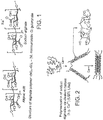
- FIG. 1 illustrates alginate (alginic acid) as an example of a polymer that can be used in forming a membrane of transport systems.
- Alginate is an anionic, polymeric polysaccharide, widely present in the cell walls of brown algae. It is a copolymer -(M) m -(G) n - segments composed of mannuronate M (manurronic acid) and guluronate G (guluronic acid) monomeric subunits.
- the values of m and n, the ratio m/n, and the space distribution between M and G i.e. presence of consecutive G-subunits and M-subunits, or randomly organized subunits) all play key roles in the chemical and physical properties of the final membrane.
- Alginates have been applied to pharmaceutical preparations, impression-making materials (e.g., in dentistry and in prosthetics manufacturing), and in the food industry.
- Sodium alginates also have found application in restaurants, e.g., to create spheres of liquid surrounded by a thin jelly membrane.
- Modern chefs such as Faran Adria have used sodium alginates to create "melon caviar," “false fish eggs,” etc., by adding sodium alginates into a liquid (e.g., melon juice), then dropping the preparation in a calcium bath (calcium lactate or calcium chloride).
- polymers such as alginate have the capacity to easily form a gel.
- divalent cations e.g., Ca 2+ or another multi-valent cation such as Mg 2+ ; Figure 2 ).
- a consumable, edible product is encased in a polysaccharide membrane, for example, an alginate membrane.
- a polysaccharide membrane for example, an alginate membrane.
- Methods for encasing a consumable edible product are found in US Patent Application No. 61/591,054 , US Patent Application No. 61/601,852 , US Patent Application No. 61/591,262 , US Patent Application No. 61/591,233 , US Patent Application No. 61/591,225 , U.S. Patent Application 61/647,721 , U.S. Patent Application 61/713,138 , U.S. Patent Application 61/713,100 , U.S. Patent Application 61/601,866 and U.S. Patent Application 61/713,063 .
- ingestible particles embedded in a membrane are shown to improve the physical, chemical and/or physico-chemical characteristics of the membrane.
- the ingestible particles impart a flavor, for example chocolate or various fruit flavors.
- membrane component concentrations for example, decreasing the membrane polymer concentration and increasing the membrane particulate concentration
- combinations of or homogenous particles can be used to encapsulate the edible material, or can be used in combination with polymers at lower weight %-by-mass than the particles (for example, less than 80%, less than 70%, less than 60%, less than 50%, less than 40%, less than 30%, less than 20%, less than 10% polymer).
- a thinner membrane can be sufficient to encapsulate a larger quantity of ingestible material, which may have further advantages of taste and texture.
- Particles contemplated herein include large food particles, for example greater than 1 millimeter (linseeds, sesame seeds, poppy seeds, chia seeds, chopped or pulverized foods including fruits, fruit skins, vegetables, etc.), small grains, and pulverized seeds, nuts, etc. In some embodiments, compositions use particulates less than about 1 millimeter.
- particulates used for the membrane(s) can advantageously affect the membrane strength, diffusion permeability, and stability.
- Important variables when considering particulates as components for membranes include: 1) the particle charge or net charge of a heterogenous or homogenous particulate mix, 2) the specific combinations of particulates for a heterogenous mix, 3) the hydroscopic or hydrophilic nature of the particulates, 4) solubility of particulates in a liquid polymer, 5) aqueous solubility of the particles, 6) particle solubility in polar, non-polar or amphipathic solvents, 7) particle size, 8) heterogeneity of particle size, 9) heterogeneity of particle sizes in a heterogenous or homogenous mix of particles, 10) shape of particulates in a heterogenous or homogenous mix of particles, and 11) chemical and physical nature of the edible or potable substance to be encased in the membrane when interacting with the particulates.
- the particles are neutrally charged.
- the particulates have various charge states, and can have an opposite charge as the membrane polymer or other membrane constituents.
- the overall charge state of the membrane polymer or other membrane constituents influences the choice of particulates, as particles oppositely charged to the charge state of the membrane polymer or particle matrix are likely incorporated into the membrane matrix and preferentially bonded. Oppositely charged particles could contribute to the formation of salt bridges within the membrane matrix and/or membrane polymeric subunit architecture.
- polysaccharide polymers are used as the membrane polymer.
- Polysaccharide polymer based membranes are porous, with porosity determined by the chemical content and 2- and 3-dimensional geometry of the polymeric structure of the membrane, for example the structure of the polysaccharide chain. Therefore, particulates are used that can be appropriately accommodated by the pore structure of the membrane, whether as particles that can be intercalated between polymeric chains and/or embedded into the pores to act as a plug based on a particulate size and shape, electrostatically bind to create salt bridges, enhance Van der vaal's interactions that can contribute to overall membrane stability, etc.
- various physical and chemical characteristics of the particulates are matched to the membrane structure and chemistry to achieve a desired effect, for example increased impermeability, elasticity, membrane strength-to-weight ratio, color, syneresis, etc.
- the particulates used for the membrane are sized at about 0.01microns, at about 0.1 microns, at about 0.1 to 1.0 microns, at about 0.1 to 10 microns, at about 0.1 to 100 microns, at about 0.01 to about 1 millimeter or to about 3 millimeters, or at about 0.1 to about 1 millimeter or to about 3 millimeters.
- the size of the particulates may be important for embedment characteristics into the porous structure of the membrane.
- the porosity of membranes is also determined in part by the ratios of the subunits and or the particulates that assemble to form the membrane.
- alginate based membranes are composed of manurronic acid and guluronic acid subunits.
- increasing the number of guluronic acid subunits relative to the number of manurronic acid subunits will contribute to a loss of mobility of the membrane polymers, resulting in a stiffer and more stable membrane.
- the stability is also offset by increased porosity of the membrane.
- Also contributing to porosity can be the overall concentration of polymer used when in solution. All else being equal, increasing the concentration (and therefore the density) of a polymer can decrease the porosity of the final membrane.
- ratios of polymeric building blocks and/or particulates of a membrane may be considered for determining membrane porosity with respect to particulate embedment, solution diffusion, and membrane permeability, and how these characteristics are related to each other.
- the molecular weight of the membrane polymer is between about 2000 daltons and about 2,000,000 daltons or larger.
- the polysaccharide polymer present in solution is between about 0.1% by weight and about 5% by weight, between about 0.1% and 10%, by weight, or greater.
- not all of the particulates are incorporated into the membrane. Instead, in some embodiments, a layer of particulates remain unincorporated, and form a layer next to a membrane or between two or more membrane layers.
- the additional particulate layer therefore contributes to, for example, permeability, elasticity, strength, durability, syneresis, hydroscopy, hydrophobicity, etc., changes across and within membrane layers.
- the chemical nature of the particulates for example if a hydrophobic particulate is used, can contribute to impeding the flow of liquid diffusion across an inner layer to an outer layer surface boundary.
- particulates can be layered so that the particulate layer has multiple effects, for example an inner impermeability layer, a middle flavor/texture/payload (e.g. a pharmaceutical or supplement) layer, and an outer strength improving layer.
- the particulate used may serve as a flavoring agent, a sweetener, a bittering agent, or to impart a salty flavor.
- Various foods and flavorings in powdered or extract form are contemplated, including fruits, vegetables, herbs and spices, and various food salts (onion salt, garlic salt, sea salt, etc).
- Some embodiments use any of a variety of herbal extracts, energy supplements, dietary supplements, pharmaceuticals, over-the-counter drugs, sleep aids, appetite suppressants, weight gain agents, antioxidants, nutraceuticals, confections, and the like.
- over-the-counter drugs refer to pharmaceutical compounds and compositions that had required a prescription but have been released from such prescription requirement for purchase and consumption.
- the edible or potable substance can be coated in a plurality of membranes.
- the membrane layers are distinct and melded.
- the membrane layers are separate and distinct from other membrane layers.
- the same polymer, particulate, or combination of polymer(s) and/or particulate(s) is used for each of the multi-membrane coatings as described herein.
- different polymers, particulates, or combination of polymer(s) and/or particulate(s) are used for each membrane in a multi-membrane layer.
- a multilayered outer membrane has the same polymer, particulate, or combination of polymer(s) and/or particulate(s) in each of the outer layers, but the membrane components are different than that used in, for example, the inner membrane or other inner membrane layers.
- the inner membrane is first constructed, with or without additional particulates and/or polymers incorporated into the inner membrane.
- the membrane coated substance can then be layered with one or more additional polymer/particulate layers of homogenous or heterogenous polymer/particulates, and then the particulate layer can be coated again with another membrane.
- the process may be repeated as many times as desired to construct a multilayered product. can we physically distinguish multi-layers?
- membrane polymers are contemplated for use in the membrane forming layers.
- Considerations for choice of membrane polymers include inherent physico-chemical characteristics (charge states, functional groups, kinetic reaction rates of polymerization, ion complex formation and cross-linking, etc.), texture, polymerization characteristics, reactivity to chemical interactions and reactions such as pH, ionic strength, specific ions and ratios of ions during polymerization, presence of complexing agents (e.g., phosphates, citrate, ethylenediaminetetraacetic (EDTA) acid, acids, glucono-delta-lactone (GDL), etc.), shielding susceptability of electrostatic character of polymer and polymeric strands, and cost effectiveness if used for commercial production.
- complexing agents e.g., phosphates, citrate, ethylenediaminetetraacetic (EDTA) acid, acids, glucono-delta-lactone (GDL), etc.
- Polysaccharide polymers contemplated herein include, but are not limited to, shellac, various fibers and hydrocolloids such as alginate, an agar, a starch, a gelatin, carrageenan, xanthum gum, gellan gum, galactomannan, gum arabic, a pectin, a milk protein, a cellulosic, gum tragacanth and karaya, xyloglucan, curdlan, a cereal ⁇ -glucan, soluble soybean polysaccharide, a bacterial cellulose, a microcrystalline cellulose, chitosan, inulin, an emulsifying polymer, konjac mannan/konjac glucomannan, a seed gum, and pullulan. Combinations of these polysaccharides are also contemplated herein.
- membrane compounds considered for use as structure forming compounds to modify or be used in combination with a polymer-based membrane include bagasse, tapioca, chitosan, polylactic acid, processed seaweed, chocolate, starch, gum arabic, cellulose based fibers, natural and synthetic amino acids and polymers thereof, proteins and sugars/sugar derivatives. Combinations of these compounds and compositions are also contemplated herein.
- a multi-layered and/or multi-component membrane for transport systems can have several advantages: increased longevity or freshness of the edible or potable substance; limited diffusion of aqueous components of membrane polymers or edible and potables substances; decreased water activity of the potable or edible payload; wider spectrum of taste sensation and experience by a consumer when powders of different flavors and mouth feel sensations are used, for example, between layers in a multilayered composition, taste improvement of a pharmaceutical or over the counter drug(s) if used as the particulate, etc.
- Incorporation of particulates into the outer most membrane can modify membrane performance, for example the prevention of the outer membrane from polymerizing and or mechanically bonding with the inner or proximate membrane layer.
- Unincorporated particulates also likely form a physical barrier between membranes so that a chemical or mechanical bonding between membranes does not occur. Electrostatic repulsion/attraction, hydrophobicity and/or hydrophilicity of particulates and other solvent/solute interactions between particulates and membrane polymer components when may also contribute to preventing an interaction between a polymerized layer and a non-polymerized membrane component.
- the proximately located membrane layers are made using the same polymer and the same particulates. In some embodiments, the proximately located membrane layers are made using different polymers and the same particulates to form the multiple membrane layers. In some embodiments, the proximately located membrane layers are made using the same polymers and different particulates to form the multiple membrane layers. In some embodiments, the proximately located membranes layers are made using different polymers and different particulates to form the multiple membrane layers. In some embodiments, different membranes are chosen wherein there is no inherent chemical or mechanical bonding between the membrane layers, thereby requiring no addition of particulates to the outer surface of the innermost membrane.
- membrane components for example polysaccharides or proteins
- methods and compositions well known in the art Modifications are important for altering functional groups of the membrane components which, in turn, can alter polymerization characteristics, chemical characteristics, physico-chemical characteristics, bonding propensities, electrostatics, hydrophobicity or hydrophilicity changes, diffusion propensity and resistance to diffusion, elasticity, stability, etc., in the final polymerized membrane.
- Modifications include, but are not limited to, carbamoylation, graft polymerization, etherification, esterification, reduction, oxidation, amination (e.g., (poly) lysine, arginine) halogenation, polymerization and degradation, complex formation with metals and salts, etc. See, for example, Chemical and Functional Properties of Food Saccharides (ISBN 978-0-8493-1486-5 ).
- various ions are employed for use in the polymerized membrane and related chemical processes.
- ions are used to form cross-linkages between and among individual polymer strands.
- Various ion/counter ion salt complexes are contemplated for use herein, including, but not limited to, divalent cations such as calcium, potassium, magnesium, manganese, iron, zinc; trivalent cations including, but not limited to, manganese and iron; and salts thereof including, but not limited to, calcium lactate and calcium chloride.
- micelles are formed within membranes and between membrane layers and/or between the inner membrane and the edible or potable substance. Micelles can alter the taste experience or mouth feel for the final encased product. Additionally, micelles engineered into the final membrane coated product may contain other ingestibles including sweeteners, flavors (fruits, herbs and spices, etc.), herbal extracts, energy supplements, dietary supplements, pharmaceuticals, over the counter drugs, sleep aids, appetite suppressants, weight gain agents, antioxidants, nutraceuticals, confections, and the like.
- natural and artificial flavors contemplated for particulates include, but are not limited to, stevia rebaudioside A, glycyrrizin, thaumatin, sorbitol, erythritol, mannitol, monk fruit, pentadin, xylitol, brazen, sugar, dextrose, crystalline fructose, maltodextrin, trehalose, molasses, aspartame, aspartame acesulfame salt, neotame, acesulfame, saccharin, sucralose, neohesperidin dihydrochalcone, sodium, saccharin, cyclamates, alitame and dulcim.
- Flavoring compounds contemplated for use in the membrane may be used to give the formulation payload a taste preferred by the end user, increase or enhance particular flavors or the perception of flavors. Flavors choices can include any fruit or vegetable flavor, or any artificial flavor, to elicit a desired taste perception (sweet, sour, bitty, salty and/or umami, and associated food or flavoring, e.g. mint, taste), as well as herbal or plant flavors that can otherwise be considered non-food (e.g., cinnamon), such as coffee, chocolate, and other confectionary flavors.
- Other flavor compounds considered as a novelty flavoring include, for example, beer and other alcoholic beverages, hemp, vomitus, and novel combinations of flavors (e.g. beer flavoring with caffeine).
- dietary supplements may be considered as vitamins and/or minerals taken in addition to naturally obtained vitamins/minerals in food. Dietary supplements can be taken 1) to enhance the physical well-being or state of health of the end user, 2) as a health related supplement, or 3) as supplements required for enhancing deficient vitamin/mineral states in the end user. Dietary supplements can also add to a higher quality or perceived quality of the health state of the end user.
- dietary supplements contemplated for use as membrane particles include, but are not limited to, Ascorbic Acid (Vitamin C), B Vitamins, Biotin, Fat Soluble Vitamins, Folic Acid, HCA (Hydroxycitric Acid), Inositol, pyruvate, Mineral Ascorbates, Mixed Tocopherols, Niacin (Vitamin B3), Orotic Acid, PABA (Para-Aminobenzoic Acid), Pantothenates, Pantothenic Acid (Vitamin B5), Pyridoxine Hydrochloride (Vitamin B6), Riboflavin (Vitamin B2), Synthetic Vitamins, Thiamine (Vitamin B1), Tocotrienols, Vitamin A, Vitamin D, Vitamin E, Vitamin F, Vitamin K, Vitamin Oils, Vitamin Premixes, Vitamin-Mineral Premixes, Water Soluble Vitamins, arsenic, boron, calcium, chloride, chromium, cobal
- Energy supplements are designed to boost mental or physical activity.
- Various embodiments of ingestible energy supplements contemplated for use in membrane formulations include, but are not limited to, American ginseng, Red ginseng, Siberian ginseng, maca, rhodiola, ginger, guarana, turmeric, acetyl-L-carnitine, L-carnitine, creatine, taurine, L-phenylalanine, L-arginine, tyrosine, acetyl-tyrosine, N-acetyl L-tyrosine, ginko biloba, yerba-mate, kola nut, gotu kola, maitake, cordyceps sinensis, guarana, acai-berry, L-theanine, caffeine, quercitine, synephrine, green tea extract, theophylline, epigallocatechin gallate (EGCG), capsaicin, bee pollen, alpha-lip
- Oral health compounds can contribute to decreasing unwanted bacterial flora and/or covering up unwanted odors and/or flavors. Control of the unwanted flora can decrease incidence of tooth decay, halitosis, and potentially contributes to long-term health benefits including incidence of heart disease.
- oral health compounds for use as membrane particles include, but are not limited to, fluoride, vitamin C, vitamin B, zinc, menthol, thymol, eucaleptic, sodium bicarbonate, vitamin K, chlorhexidine, and xylitol.
- Weight loss compounds are commonly divided into groups categorized as appetite suppressants, acting to manipulate hormonal and chemical processes in the body that otherwise increase hunger and/or the sense of feeling satiated (e.g. anorectics such as epinephrine and norepinephrine/noradrenaline), fat or cholesterol uptake inhibitors (such as green tea extract), gastrointestinal fillers, and thermogeneic compounds which boost a normal metabolic rate of the individual and result in metabolism of fat stores, all of which are contemplated for use in the present invention. Weight loss compounds can be synthetic or natural.
- weight loss compositions contemplated herein as particles for the membrane include, but are not limited to, hoodia, chitosan, chromium picolinate, conjugated linoleic acid, glucomannan, green tea extract, guar gum, guarana, guggal, senna, ephedra, bitter orange, fucoxanthin, white bean extract, vitamin D, human chorionic gonadotropin, resveratrol, capsaicin, chia, hoodia, L-carnitine, raspberry ketones, banana leaf, red clover, ginger, almonds, acai berry, flax seeds, leucine and lipodrene.
- Sleep-aid compounds can assist in slowing the metabolic resting rate of an individual to allow one to relax and gain more restful or longer sleep periods.
- sleep aid compositions contemplated herein for use as membrane particles include, but are not limited to melatonin, 5-hydroxytryptophan, 5-hydroxytrypatmine, diphenhydramine, doxylamine, benzodiazepine, kava, serenite, chamomile, phenibut, catnip herb, chamomile, glycine, hops, L-theanine, L-tryptophan, glycine, GABA and valerian.
- over-the-counter (OTC) and prescription (pharmaceutical) drugs contemplated for use as a membrane particle include, but are not limited to, amikacin, gentamicin, kanamycin, neomycin, netilmicin, tobramycin, paromomycin, geldanamycin, herbimycin, loracarbef, ertapenem, doripenim, imipenem/cilastatin, meropenem, cefadroxil, cefazolin, cefalotin, cefalexin, cefaclor, cefamandole, cefoxitin, cefprozil, cefuroxime, cefixime, cefdinir, cefditoren, cefoperazone, cefotaxime, cefpodoxime, ceftazidime, ceftibuten, ceftizoxime, ceftriaxone, cefepime, ceftobiprole, teico
- membrane particles Various other compounds are contemplated for use as membrane particles.
- antioxidants, hormones and other proteins, enzymes, amino acids, probiotics, etc. may be desirable.
- hormones are used for hormone replacement and supplementation.
- Various hormones contemplated for use as a membrane particle include, but are not limited to, apidonectin, aldosterone, androgen, natriuretic peptide, 7-Keto-DHEA, Androstenedione, dihydroepiandrosterone (DHEA), Melatonin, Nor-Androstenedione, pregnenolone, progesterone, 19 Nor-4-Androstendiol, 19 Nor-4-Androstenedione, 19 Nor-5-Androstenediol, 19 Nor-5-Androstendione, 3-Indolebutyric Acid, 4 Androstendiol, 4 Androstendione, 6 Furfurylaminopurene, 6-Benzylaminopurine, calcitonin, cortisol, erythropoietin, gonadotropin, human growth hormone (HGH), incretins, lep
- enzymes and amino acids are contemplated for use as a membrane particle, and include, but are not limited to, alpha galactosidase, amylase, bromelain, cellulase, papain, peptidase, protease, proteolytic enzymes, superoxide dismutase, trypsin, betaine, casein, glutamic Acid, L-alanine, L-arginine, L-cysteine, L-glutamine, L-glycine, L-histidine, L-isoleucine, L-leucine, L-lysine, L-methionine, L-ornithine, L-phenylalanine, L-proline, L-taurine, L-threonine, L-tryptophan, L-tyrosine, L-valine, N-acetly-L-cysteine, protein soluble soy, soy protein isolates, and whey protein isolates.
- antioxidants contemplated for use as membrane particulates include, but are not limited to, carotenoids, flavonoids, isoflavones, tocopherol, tocotrienol, lipoic acid, melatonin, superoxide dismutase, coenzyme Q10, alpha lipoic acid, vitamin A, chromium biotin, selenium and ascorbic acid.
- carotenoids contemplated for use as membrane particles include alpha-carotene, beta-carotene, cryptoxanthin, lycopene, lutein, zeaxathin, apocarotenal astaxanthin, canthaxanthin, lutein/lutein esters, etc.
- flavonoid used as membrane particles include esveratrol, quercetin, rutin, catechin, proanthocyanidins, acai berry extract, raspberry extract, cranberry extract, pomegranate extract, plum extract, cherry extract, rosemary extract, etc.
- isoflavones are used as membrane particles, including, but not limited to, genistein, daidzein, biochanin A, and formononetin.
- probiotics to reestablish healthy intestinal bacterial flora include probiotics to reestablish healthy intestinal bacterial flora.
- probiotics for use in the present invention include, but are not limited to, Bacillus coagulans GBI-30, 6086, Bifidobacterium animalis subsp. lactis BB-12, Bifidobacterium longum subsp.
- infantis 35624 Lactobacillus acidophilus NCFM, Lactobacillus paracasei St11 (or NCC2461), Lactobacillus johnsonii NCC533), Lactobacillus plantarum 299v, Lactobacillus reuteri ATCC 55730 ( Lactobacillus reuteri SD2112), Lactobacillus reuteri Protectis (DSM 17938, daughter strain of ATCC 55730), Saccharomyces boulardii, Lactobacillus rhamnosus GR-1 & Lactobacillus reuteri RC-14, Lactobacillus acidophilus NCFM & Bifidobacterium bifidum BB-12, Lactobacillus acidophilus CL1285 & Lactobacillus casei LBC80R, Lactobacillus plantarum HEAL 9 & Lactobacillus paracasei 8700:2, Lactobacillus bulgaricus, Streptococcus thermophiles
- Plants and plant extracts can provide compositions for dietary supplements, energy products, antioxidants, sleep-aids, weight-loss products, nutraceuticals, oral health compounds, novelty products, etc. Such compositions may be categorized as botanical supplements and botanical extracts.
- Aqueous or oil based botanical supplements can be combined at low volume with powdered components or be combined into membrane components, edible or potable substances, or into micelles engineered into membranes.
- botanical extracts and plant-based supplements for use as membrane components include, but are not limited to, Acerola Extracts, Alfalfa, Blue Green algea, Aloe, Amla, Angelica Root, Bacopa Monnieri, Mucuna Pruriens, Anise Seed, Arnica, Artichoke, Ashwagandha, Astragalus, Ayurvedic Herbs, Barberry, Barley Grass, Barley Sprout Extract, Benzoin, Bilberry, Bioflavonoids, Bitter Melon, Bitter Orange, Black Cohosh, Black Currant, Black Walnut, Bladderwrack, Blue Cohosh, Blueberry, Boswellia, Brahmi, Broccoli, Burdock, Butcher's Broom, Calendula, Capsicum, Cascara Sagrada, Cat's Claw, Catnip herb, Cayenne, Celery Seed, Certified Organic Herbs, Chamomile, Chapparal, Chaste Berry, Chicory Root, Chinese Her
- Nutraceuticals are generally thought of as food or food product that reportedly provides health and medical benefits, including the prevention and treatment of disease, and can be defined as a product isolated or purified from foods that is generally sold in medicinal forms not usually associated with food.
- a nutraceutical may have a physiological benefit or provide protection against chronic disease.
- Such products may range from isolated nutrients, dietary supplements and specific diets to genetically engineered foods, herbal products, and processed foods such as cereals, soups, and beverages.
- particulate nutraceuticals are used as membrane components, including, but not limited to, 5-Hydroxytryptophan, Acetyl L-Carnitine, Alpha Lipoic Acid, Alpha-Ketoglutarates, Bee Products, Betaine Hydrochloride, Bovine Cartilage, Caffeine, Cetyl Myristoleate, Charcoal, Chitosan, Choline, Chondroitin Sulfate, Coenzyme Q10, Collagen, Colostrum, Creatine, Cyanocobalamin (Vitamin B12), DMAE, Fumaric Acid, Germanium Sesquioxide, Glandular Products, Glucosamine HCL, Glucosamine Sulfate, HMB (Hydroxyl Methyl Butyrate), Immunoglobulin (Immune System Support), Lactic Acid, L-Carnitine, Liver Products, Malic Acid, Maltose-anhydrous, Mannose (d-mannose), MSM, Other Carnitine Products,
- the transport system resembles a naturally occurring object such as, for example, a fruit, a vegetable, etc.
- the transport system resembles an orange and contains material derived from an orange and, optionally, other fruits or foods.
- a reconstituted orange has an outer shell formed from an exterior surface material as described herein, and optionally, the outer shell is formed of or contains particles of orange, or contains one or more odorants, colorants, texturants, flavoring agents, or the combination thereof such that the reconstituted orange is similar to an orange in one or more sensory experiences.
- the outer shell is moldable and texturized such that it approximates the size (e.g., from about 65 to over 645 square centimeters (10 to over 100 square inches) of exterior surface area) and a tactile quality of an orange.
- Reconstituted oranges optionally contain other juices and/or other liquids.
- the reconstituted orange product is consumed by biting and chewing, or by insertion of a straw through the outer shell to draw out the internal contents. Alternatively, a portion of the outer shell is peeled and the contents consumed with a fork or spoon.
- the products are reconstituted grapefruits, and have a size (e.g., from about 193 to over 1935 square centimeters (30 to over 300 square inches) of exterior surface area) and a tactile quality of a grapefruit.
- the reconstituted grapefruit product is consumed by biting and chewing, or by insertion of a straw through the outer shell to draw out the internal contents. Alternatively, a portion of the outer shell is peeled and the contents consumed with a fork or spoon.
- the products are reconstituted grapes and resemble a grape, having a size in the range of about 1.25-5.0 cm (0.5 to about 2 inches) in length and about 0.5-5 cm (0.2 to about 2 inches) in girth, of any color.
- a reconstituted grape contains any variety of wine, fortified wine, or other alcoholic beverage, and/or non-alcoholic juice or extract from grapes or other fruits, containing a volume of liquid in the range of about 0.5 milliliter (ml) to about 300ml or greater, e.g., 1, 5, 10, 20, 30, 50, 75, 100, 150, 200, 250, 300 or over 300 mls.
- the reconstituted grape product is consumed by insertion of the entire grape product into the mouth and chewing, by biting and chewing, or by insertion of a straw through the outer shell to draw out the internal contents. Alternatively, a portion of the outer shell is peeled and the contents consumed with a fork or spoon.
- the products are reconstituted watermelons, having a size from about 645 to over 25,806 square centimeters (100 to over 4000 square inches), of any color or pattern.
- the exterior surface material is generally of sufficient thickness to contain the large volume of the reconstituted watermelon, and in some embodiments an additional outer material or casing is present around the exterior surface material to add rigidity and strength to the product. Such additional outer material or casing is generally easily penetrable to access the contents of the reconstituted watermelon.
- the products are reconstituted avocado, having a size from about 52 to over 322 square centimeters (8 to over 50 square inches), of any color or pattern, with an outer shell resembling in appearance and touch an avocado, and internal contents containing one or more of avocado, avocado paste, guacamole, and/or beverage such as juice, vegetable oil and/or plant oil.
- the reconstituted avocado product is consumed by biting and chewing, or by dividing into pieces, by cutting and breaking by hand, and consuming it by itself or in combination with another food product, e.g. salad.
- the food object is a dessert containing chocolate, candy, ice cream, caramel, honey, marmalade, bubble gum, or some combination thereof.
- Beverage materials are generally liquid in form, are capable of providing nutrition and/or hydration when consumed by a subject such as a human, and are typically provided in a form suitable for the gastrointestinal tract of the subject.
- the beverage material contains a juice, such as fruit juice, vegetable juice, berry juice, or some combination thereof.
- the beverage material contains an alcoholic beverage such as beer, wine, fortified wine, or a distilled spirit; optionally such alcoholic beverages are mixed with sugar-containing materials or other flavorants, as well as colorants and/or odorants.
- the beverage material contains a dairy product, for example, milk, yogurt, cream, or kefir. Typically, such beverage materials are produced under conditions such that the dairy products do not require refrigeration and do not spoil over a substantial period of time as described herein.
- the beverage material contains a soda product, meaning a carbonated flavored beverage.
- beverage materials are capable of being chilled so as to be consumed in temperature conducive to best taste and enjoyment.
- the beverage material contains water, either purified or from a natural source (e.g., mineral water), and optionally contains carbonation and/or flavorants.
- the beverage material contains tea or coffee.
- the product is capable of being chilled or heated so as to provide the consumer flexibility to consume the product at a temperature most appealing to him or her.
- the beverage material contains a sports drink, meaning a water-containing beverage that typically contains sugar (e.g., glucose and/or fructose) and optionally contains one or more vitamins and minerals.
- the beverage material contains a soup such as tomato soup, a liquid food sauce such as barbeque sauce, fish sauce, or salad dressing, or a semi-liquid food sauce such as guacamole.
- food and beverage materials are combined with one or more additional materials: exemplary materials include a vitamin, a mineral, a protein or peptide, dietary fiber material, a lipid, or a combination thereof, as described herein.
- the exterior surface materials described herein and/or food or beverage materials contain food particles such as nuts (crushed or not), berries (finely shredded or not), seeds (crushed or not), powders, sugars (crystallized or powdered), and spices.
- Exterior surface materials are generally those materials capable of being in contact with food materials or beverage materials so as to contain these materials in three dimensions, typically by interacting with the exterior surfaces of the food or beverage materials.
- a layer of an exterior surface material for example a membrane polymer, particulates, and/or a combination of membrane polymer and particulates, is disposed on a food or beverage material so as to essentially completely cover the food or beverage material.
- it is desirable that the exterior surface material is moldable, meaning that the surface material, either in isolation or when contacted with the food or beverage material, is capable of adopting and retaining a desired three dimensional shape.
- An exterior surface material may be moldable to take the shape or form of a fruit or vegetable, or of a consumer product such as a coffee cup, soda can or bottle, or the like.
- the exterior surface material is not altered in shape or consistency when handled, such as by a consumer.
- the exterior surface material generally does not melt or soften, or rupture or otherwise release the contents of the food or beverage object containing the exterior surface material, with typical handling.
- the exterior surface materials have useful combinations of properties.
- the surface materials have a thickness in the range of about 10 micron to about 200 mm.
- the surface materials have a moisture content in the range of about 10 to about 80%, although the exterior surface materials can optionally be dried or hydrated prior or subsequent to the production process.
- the melting temperature of the exterior surface materials ranges from about 30 to about 772 degrees Celsius.
- the weight of the exterior surface materials may be in the range of about 15 to about 45 grams per 6,45 square centimeters (1 square inch) sheet of surface material having a thickness of 2.5 cm (1 inch).
- exterior surface materials containing calcium which has a density of 2.15 g per cubic centimeter.
- the exterior surface materials are edible or non-edible, and biodegradable or non-biodegradable.
- the exterior surface materials resemble, taste and smell like a food product or products contained within them.
- the exterior surface resembles the skin of an orange with orange juice contained within it, or the skin of an apple and pineapple with apple juice and pineapple juice contained within it, whether mixed together or kept separately, thus creating new, yet seemingly familiar environments to experience a certain food or liquid product.
- the exterior surface can bear close, distant, or in-between close and distant resemblance to any combination of any number of foods.
- the exterior surface materials do not resemble, taste, or smell like the food or beverage material contained within them.
- the exterior surface materials resemble, taste, or smell like a particular food or liquid product (for example, an orange, as described herein) but the food or beverage material contain one or more different food or beverage products.
- the exterior surface materials have an abstract or unique shape, not resembling an existing food or liquid product.
- the exterior surface materials have hybrid shapes, which are expressed as combinations of both abstract or unique shape and resemblance to one or more food products.
- the exterior surface materials have shapes or resemblances that appear inedible, for example, an inanimate object such as a house. Such embodiments create opportunities to excite and surprise consumers of reconstituted foods and beverages with new sensory experiences. Consumers typically consume various foods and beverages in combination with each other, and this approach provides these consumers an opportunity to continue this dietary habit while enjoying new combinatorial experiences.
- the exterior surface materials, separating membrane or internal content are composed only of ingredients adhering to standards of kosher certification, as well as to dietary standards desired and expected by individuals who are vegetarian or vegan.
- Tensile strength characteristics are important attributes for the surface materials of the transport systems. The tensile strength determines the maximum strength of a surface material and the elastic modulus and elongation will determine the flexibility of a surface material. Additionally, compressive stress characteristics, defined as the capacity of a material or structure to withstand axially directed pushing forces, are also important attributes for the surface materials.
- Flavor, odor, color, and texture are important elements to almost any food or food product.
- the exterior surface materials are provided having one or more flavors that may or may not be different from the natural flavors of the food or beverage products contained therein. Flavorings can be natural, artificial, or combine in some proportion both natural and artificial ingredients.
- a natural flavoring is: "the essential oil, oleoresin, essence or extractive, protein hydrolysate, distillate, or any product of roasting, heating or enzymolysis, which contains the flavoring constituents derived from a spice, fruit or fruit juice, vegetable or vegetable juice, edible yeast, herb, bark, bud, root, leaf or similar plant material, meat, seafood, poultry, eggs, dairy products, or fermentation products thereof, whose significant function in food is flavoring rather than nutritional." Flavorings that do not meet the above requirements are considered artificial.
- the exterior surface materials are provided having one or more colors that may or may not be different from the natural colors of the food or beverage products contained therein.
- colorants approved by the Food and Drug Administration are anthocyanin (blueberry and cherry colors), flavonoids (cocoa colors), phycoerythrin (laver colors), carotenoids (orange colors), polyphenol (persimmon colors), and more.
- Maximum heavy metal tolerance for colorants is generally at 40 parts per million or below.
- the exterior surface materials will have a texture or textures that may or may not be different from the natural textures prevalent in the food or beverage products contained beneath the exterior surface materials.
- texturants approved by the Food and Drug Administration include hydrocolloids, which assist with stabilization, suspension and thickening; pectins, which are derived from citrus peels or sugar beets; gelatin; or inulin, which is a natural plant ingredient that provides fiber enrichment.
- the exterior surface materials are combined with one or more odorants that may or may not be different from the natural odorants, if any, present in the food or beverage materials contained beneath the exterior surface materials.
- the size of the food and beverage object, along with the external surface area, thickness or thinness of the exterior surface material, and the internal volume, can be modulated.
- the shape, taste, color, texture, smell, and/or mass of the overall product and the shape(s) of its internal content can be modulated.
- the object retains its shape, color, taste, and internal composition for a period in the ranges from several hours to 1 day, 1 day to 3 days, 3 days to 1 week, 1 week to 2 weeks, 2 weeks to 1 month, 1 month to 3 months, 3 months to 6 months, 6 months to 1 year or over 1 year.
- the product or constitutive parts will have water activity levels in the ranges from 0.1 to 0.3, 0.3-0.5, 0.5-0.8, or 0.8-1. Water Activity is defined as the amount of unbound, free water in a system available to support biological and chemical reactions ( Potter, Food Science, 4th Ed., p.
- Some foods may have high levels of total water content while at the same time possess low water activity.
- Food designers use water activity to formulate products that are shelf stable. If a product is kept below a certain water activity, then mold growth is inhibited. This results in a longer shelf-life. Water activity values can also help limit moisture migration within a food product made with different ingredients.
- the internal content of the transport system is juice that is liquid.
- the internal content is the same kind of juice, but one that is viscous. Viscosity can be important for preventing rapid spillage of the internal content when the exterior surface materials are broken, separated, peeled or cut off in the event of the commencement of consumption.
- Viscosity in liquids can be achieved by utilization of viscosity agents, which are substances that swell in water to form a gel.
- a viscosity agent is methylcellulose, which is a methyl ester of cellulose prepared by the methylation of natural cellulose.
- the internal content of the transport system is an alcoholic beverage, for example, wine, cognac, gin, or some combination thereof, that is liquid.
- the internal content is the same of kind of alcoholic beverage, but one that is viscous and/or completely frozen.
- these and similar embodiments convey the fact that the method of consumption that is convenient and enjoyable can differ from one situation to another, and that internal contents of the product can be manipulated to create the desired convenience and enjoyment for the consumer.
- the transport system or some of its content is ingested in full or in part by direct contact with the mouth.
- This embodiment is relevant for fruits and food products that are in size, mass and/or texture amenable for ingestion by direct applications to the mouth.
- fruits and food products are grapes, berries, cherry tomatoes, nuts and more, and examples of such product embodiments are grape looking and/or tasting outer shells that contain wine or any other beverage, cherry tomato looking and/or tasting outer shells that contain tomato juice or any other beverage, berry looking and/or tasting outer shells that contain any berry juice or any other beverage.
- certain transport systems are sized for convenient servings, such as grape sized membranes for single servings of, for example, ice cream, yogurts (frozen and semi-liquid), gelato, etc.
- the transport system or some of its contents is ingested via insertion of a straw or straw-like equipment.
- This embodiment is important for such applications as a reconstituted orange, reconstituted watermelon, or reconstituted grapefruit. All of these fruits tend to be too large and/or heavy for consumption in full through the mouth. However, orange- or watermelon- or grapefruit-looking shells could be penetrated by a straw, giving access to the internal contents, which could be juices of those fruits or any other juice or beverage.
- This embodiment is important because it is analogous to inserting a straw into a coconut and drinking its juice. The embodiment makes this process possible for other kinds of food products, fruits and their juices, providing consumers with new choices of dietary and sensory experiences.
- the transport system or some of its content are ingested via application of spoons, forks, or other forms of relevant cutlery.
- Reconstituted melon could be presented on a tray, cut with a knife, and consumed with forks or knifes.
- This embodiment is important because it allows for a communal, shared experience of consuming reconstituted fruit, food products, or beverage. This embodiment is important when consumption of a single product involves two or more people.
- some transport systems can be consumed by removing a portion of the transport system (e.g., biting a portion of the membrane layer) and drinking the inner fluid before eating the membrane layer.
- Figure 3 illustrates an example of a transport system having a pointed tip. The tip can be bitten off to form a spout or nozzle from which the inner fluid can be consumed.
- the shell for such transport systems can be formed to conform to the non-uniform shape of the membrane layer.
- the product or some of its parts are ingested in combination with, in submergence to, or dissolution into other food products. It is common for people to consume food products and beverages in some combination with each other. In some embodiments described herein, this should be no different for the reconstituted food or fruit product. For example, reconstituted berries could be consumed after submergence into a bowl of milk cereal. As another example described herein, reconstituted fruits could be consumed after submergence into hot chocolate. This embodiment is useful to provide consumers new and exciting sensory experiences.
- the transport system is packaged in various forms of packaging material: for example, wrapping paper, aluminum foil, plastic wrap, cellophane, or wax paper.
- packaging materials exhibit some or all of the following characteristics: light weight, thinness, transparency, or translucency. These qualities are important for aesthetic aspects of packaging that would promote the look and feel of the underlying product.
- packaging materials as aluminum foil and saran wrap share the quality of water-resistance, thus enabling an additional form of protection for the underlying product in environments where that is needed.
- flexibility in packaging material is useful for allowing labels or direct printing on the package so that a message about a product or any other message from the vendor could be communicated.
- the final product is presented without any form of wrapping material.
- the embodiment is important, among other instances, where the final product is produced in venues such as restaurants and cafes and then presented to the consumer for non-delayed consumption.
- the final product is packaged, presented and delivered in various quantities. This embodiment is important, among other instances, in shops and stores where the product is offered to the consumers. Flexibility in packaging in various quantities gives the consumer the flexibility in purchase and consumption of the final product.
- various final products are packaged together into one or more collective products. This embodiment is important, among other instances, because it gives the consumer the flexibility and ability to experience the final product in many or all its available varieties.
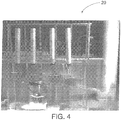
- FIG 4 illustrates an exemplary machine for manufacturing edible compositions encased in a membrane as described herein.
- Systems of the machine may include multiple processing stations and one or more movement devices.
- the movement device transfers an edible composition among the different processing stations to produce the final edible composition.
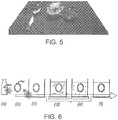
- Figure 5 we obtained an "egg of water" (water was used as a reference liquid, but other liquids can also be used), by following the process described later and summarized in Figure 6 .
- Figure 7 illustrates the different processing steps that are performed in the different processing stations of a machine 100.
- step (c) provides particularly improved results: in the case of the process of step (a) directly to step (d) (skipping steps (b) and (c)), the solid in contact with the alginate solution at room temperature (approximately 20°C) melts quickly on the solid surface, thus creating a liquid film between the solid and the alginate solution. Consequently, it is very difficult to stabilize a homogeneous membrane. (e) After the desired time needed to achieve the desired thickness of the membrane, the membrane-covered solid is moved to a fourth processing station 108 and is placed in calcium solution (e.g., calcium chloride solution), where gelation occurs.
- calcium solution e.g., calcium chloride solution
- step (d) and step (e)) can be repeated to produce a thicker, harder, and more rigid shell, with or without the other steps (e.g. additional cooling in liquid nitrogen).
- step (f) The membrane covered frozen solid is rinsed (e.g., in water). The liquid within the calcium-coated membrane is allowed to melt gradually.
- the machine 100 has a frame 110 that supports components of the machine including individual processing stations.
- the first processing station 102 includes an inlet chute 112 to receive an object and deliver it to a cage 114.
- the inlet chute 112 is inclined to permit the object being coated to roll (or slide) towards the cage 114. In this example, the inlet chute 112 is inclined about 15° downward.
- the cage 114 is sized to receive and contain the objects being coated.
- the cage 114 is formed of material allowing fluid to freely flow in and out of the cage 114.
- the exemplary cage 114 is a box-like structure made of aluminum sheet metal having multiple holes to permit fluid to flow in and out of the cage 114 surrounding the object.
- the cage can also have other constructions and be made from other types of materials.
- the cage is shaped like a sphere, an ellipsoid, a pyramid or other semi-rigid shapes.
- the cage is non-rigid, for example, a net, a sling, a bag, a suspended platform, and/or other object-supporting devices.
- the cage has been described as being made from perforated sheet metal, other types of materials can be used.
- the cage is made of mesh, textile, netting, and/or cables.
- the cage is made from other metals, plastics, glass materials, and/or composites.
- a lower surface of the cage 114 is inclined downwards away from the inlet chute 112 which tends to cause an object supported in the cage 114 to roll or slide away from the inlet chute 112.
- the lower surface of the cage 114 is inclined about 15° downward.
- the lower surface is typically covered with or made from a non-stick material (e.g., Teflon ® ) to prevent the object from sticking to the cage 114.
- the lower surface of the cage 114 includes a flange to act as a stop preventing the object from rolling off of the inlet chute 112 until the cage 114 is properly aligned with the inlet chute 112.
- An upper surface of the cage 114 provides a downward force onto the object when the object is submerged in a fluid and has the tendency to float. Two opposing sides of the cage 114 are open so that the object can roll into the cage 114 from the input chute 112 and exit the cage 114 via an outlet chute 116 arranged on the opposite side of the cage 114.
- the outlet chute 116 is offset at a generally lower vertical position relative to the inlet chute 112 and is inclined downward away from the cage 114. In this example, the outlet chute 116 is inclined about 15° downward. As a result of the inclination, during machine operation, the object can roll (or slide) from the input chute 112 into the cage 114 and subsequently from the cage 114 to the outlet chute 116.
- the inlet chute 112 and the outlet chute 116 are inclined and the outlet chute 116 is at a lower general vertical position than the inlet chute 112. This configuration provides a station in which the lower end of the inlet chute is at a lower vertical position than the upper end of the outlet chute 116. As a result, when an object enters the cage 114 from the inlet chute 112, it is prevented from exiting the cage 114 via the outlet chute 116 until it is lifted above the upper end of the outlet chute.
- the cage 114 is raised and lowered to submerge the object within and remove the object from a liquid bath.
- the cage 114 is secured to a vertical moving arm 118 extending from a movement device 120.
- the movement device 120 is a linear actuator that vertically moves the cage 114 vertically for receiving the object from the inlet chute 112 and submerging the object into and retrieves the object out of a volume of fluid contained in a fluid vessel 122. From the fluid, the movement device 120 lifts the cage 114 to deliver the object to an outlet chute 116 of the first processing station.
- the movement device 120 is a 24V DC electric actuator having 300 mm of maximum displacement.
- the movement device 120 has a maximum displacement speed of about 80 mm/s, a maximum driving force of about 200N and upper and lower position detectors that restrict motion to within a desired distance range.
- the movement device 120 is in communication with a control unit 121 that controls the movement of the device 120 and the position of the cage 114.
- the movement device 120 is typically operated using timers (e.g., double pole, double throw (DPDT) switch times).
- timers e.g., double pole, double throw (DPDT) switch times.
- Other types of control devices and actuators e.g., other types of electromechanical actuators or pneumatic actuators can also be used as the movement device.
- the fluid vessel 122 is a reservoir filled with a volume of liquid to coat the object when submerged by the movement device 120.
- the fluid vessel 122 is made of materials suitable to contain fluid (e.g., Plexiglass) and is sized to permit submersion of the cage 114.
- the fluid vessel is about 140 mm wide, about 140 mm deep, and about 360 mm high.
- walls of the fluid vessel are an integrated part of the frame 110.
- the fluid vessel contains a calcium solution (e.g., calcium chloride solution) that surrounds the object in a calcium layer.
- the calcium layer formed between the object and a subsequently formed alginate membrane layer typically results in a higher quality alginate membrane layer.
- the cage 114 lowers the object into stream of flowing fluid. Via the movement device 120 and the cage 114, the object is submerged for a length of time and is then raised and delivered to the output chute 116 from which the object can roll to an input chute 126 of the second processing station 104.
- An inlet chute 126 of the second processing station 104 is in proximity to and extends substantially along the same plane as the first processing station outlet chute 116.
- the second processing station 104 is similar to the first processing station 102. However, in this machine 100, unlike the first processing station 102, the second processing station 104 is configured to submerge the object into a bath of liquid nitrogen. Due to the material properties of liquid nitrogen (e.g., very low temperatures) the fluid vessel containing liquid nitrogen (e.g., a liquid nitrogen vessel 124) is sized and constructed to suitably contain the liquid nitrogen.
- the liquid nitrogen vessel 124 is a round Dewar flask (e.g., an AGIL6 model flask from Air Liquide). However, other types of vessels suitable for housing liquid nitrogen can be used.
- the second processing station inlet chute 126 has a curved lower edge to more closely conform to the round shape of the liquid nitrogen vessel 124.
- the cage 114 of the second processing station has a flange 130 attached to its right side (i.e., the side of the cage 114 opposite from the inlet chute 126).
- the flange 130 has a curved forward edge that is sized to roughly fit along the inner surface of the liquid nitrogen vessel 124 so that a gap between the curved flange 130 and the inner surface of the liquid nitrogen vessel 124 is small enough to allow the object to slide or roll out the cage 114 and onto a second processing station outlet chute 132.
- the second processing station outlet chute 132 is inclined downward away from the cage 114 and is at a lower vertical position than the second processing station inlet chute 126.
- the second processing station outlet chute 132 has a curved edge that is offset from the curved edge of the flange 130 or an outer surface of the liquid nitrogen vessel 124 to accommodate the round liquid nitrogen vessel 124.
- An inlet chute 112 of the third processing station 106 is in proximity to and extends substantially along the same plane as the second processing station outlet chute 132.
- the third processing station 106 is generally the same as the first processing station 102.
- the third processing station 106 is configured to raise and lower the object into a bath containing a solution for coating the object with a membrane.
- a fluid vessel 122 in the third processing station 106 contains an alginate solution (e.g., 1.5% sodium alginate solution) that coats the object when a cage 114 is lowered into the bath via the movement device 120.
- the cage 114 delivers the coated object to an outlet chute 116 of the third processing station 106 that is at a lower vertical position than the inlet chute 112 of the of the third processing station 104.
- An inlet chute 112 of the fourth processing station 108 is connected to and extends substantially along the same plane as the third processing station outlet chute 116.
- the fourth processing station 108 is generally the same as the first and third processing stations 102, 106.
- the four processing station 108 is configured to raise and lower the object into a bath containing a solution for solidifying the membrane applied to the object at the third processing station 106.
- a fluid vessel 122 of the fourth processing station 108 contains a calcium solution (e.g., calcium chloride solution) that coats and solidifies the object membrane when a cage 114 is lowered into the bath via the movement device 120.
- the cage 114 delivers the solidified object to an outlet chute 116 of the fourth processing station 108 that is at a lower vertical position than the inlet chute 112 of the of the fourth processing station 106.
- the output chute 116 of the fourth processing station 108 delivers the object from the machine 100 to a container (e.g., hopper) 134 for rinsing/cleaning, packaging, storage, shipping, or immediate use and consumption.
- a container e.g., hopper
- an object e.g., a frozen object
- the frozen object is generally round.
- the object is prefrozen to be other shapes.
- a frozen object such as a frozen amount of a liquid food product (e.g., water, juice, soup, soft drink, alcohol, or other food) is placed onto the inlet chute 112 of the first processing station 102.
- a liquid food product e.g., water, juice, soup, soft drink, alcohol, or other food
- the object is placed on the inlet chute 112 manually, for example, by a machine operator.
- An "Archimedes' Screw" device can optionally be used to introduce frozen objects one-by-one into the machine, to help prevent the objects from sticking to each other.
- frozen objects are automatically placed on the inlet chute 112 by a machine.
- the machine placing the frozen objects on the inlet chute 112 also molds and freezes, or otherwise forms liquid into frozen objects.
- the frozen object rolls (or slides) downward along the inlet chute and stops against the cage 114. Due to an initial position (e.g., an upper position) of the cage 114 relative to the inlet chute 112, the lower surface of the cage 114 keeps the object on the inlet chute 112 until the cage 114 is moved to submerge the object in the fluid vessel 122.
- the movement device 120 of the first processing station then receives a signal from the control unit 121 and begins moving the cage 114 downward. Once the cage 114 moves far enough so that object is no longer blocked by the lower surface of the cage 114, the object rolls into the cage 114.
- the cage 114 continues to move downward until it is fully submerged in the calcium solution (e.g., a 2% calcium solution) in the fluid vessel 122 and reaches a bottom position. Once in the bottom position, the object is held in the calcium solution long enough so that a calcium layer is formed on the object. In this example, the cage 114 remains at the bottom position for a submerging time of about 3 seconds to about 15 seconds (e.g., about 5 seconds). After the submersion time, the movement device 120 moves the cage 114 upwards towards the upper position.
- the calcium solution e.g., a 2% calcium solution
- the cage 114 of the second processing station 104 When the object rolls from the first processing station outlet chute 116 to the second processing station inlet chute 126, the cage 114 of the second processing station 104 is typically in its upper position. Like the first processing station 102, a lower surface of the cage 114 of the second processing station 104 holds the object on the inlet chute 126 until the cage 114 is moved downward towards its bottom position within the liquid nitrogen vessel 124. After a brief pause, the movement device 120 of the second processing station 104 receives a signal from the control unit 121 and begins moving downward. Once the cage 114 is moved downward far enough that the object is no longer held in place by the lower surface of the cage 114, the object rolls into the cage 114. While the cage 114 moves downward into the liquid nitrogen vessel 124, the object is submerged into liquid nitrogen.
- the cage 114 Once the cage 114 reaches its bottom position, it remains in place while the object undergoes deep freezing due to the liquid nitrogen bath. In some cases, this also dries the object and allows membrane-forming materials to crystalize onto and stick to the surface of the object. In this example, the object is submerged in the liquid nitrogen for about 45 seconds to about 60 seconds to form a super-frozen object. Once the object is submerged for the desired time, the movement device 120 begins moving the cage 114 upwards towards its upper position. Once the cage reaches the upper position, the super-frozen object rolls or slides from the cage 114 to the outlet chute 132 of the second processing station 104.
- the super-frozen object rolls onto the inlet chute 112 of the third processing station 106 to have a membrane layer applied.
- a lower surface of the cage 114 of the third processing station holds the super-frozen object on the inlet chute 112 while the cage 114 is in its upper position.
- the movement device 120 of the third processing station 106 receives a signal from the control unit 121 and begins moving the cage 114 downward towards its bottom position to submerge the super-frozen object in the alginate solution in the fluid vessel 122.
- the object rolls into the cage 114. While the cage 114 moves downward into the fluid vessel 122, the super-frozen object is submerged into the alginate solution. Once the cage 114 reaches its bottom position, it remains in place while the alginate solution forms a membrane layer around the object. Typically, greater submersion times in the alginate tend to create thicker membrane layers around the object. In this example, the super-frozen object is submerged in the alginate solution for about 45 seconds to about 60 seconds to form a membrane layer. Once a membrane is formed having a desired thickness, the movement device 120 begins moving the cage 114 back upwards towards its upper position. Once the cage reaches the upper position, a membrane-covered object rolls or slides from the cage 114 to the outlet chute 132 of the third processing station 106.
- the membrane-covered object rolls onto the inlet chute 112 of the fourth processing station 108 to solidify a portion of the membrane layer.
- a lower surface of the cage 114 of the fourth processing station holds the membrane-covered object on the inlet chute 112 while the cage 114 is in its upper position.
- the movement device 120 of the fourth processing station 108 receives a signal from the control unit 121 and begins moving the cage 114 downward towards its bottom position to submerge the membrane-covered object in the calcium solution in the fluid vessel 122.
- the membrane-covered object rolls into the cage 114. While the cage 114 moves downward into the fluid vessel 122, the membrane-covered object is submerged into the calcium solution. Once the cage 114 reaches its bottom position, it remains in place while the calcium solution solidifies the outer surface of the membrane. Typically, the greater submersion times tend to create thicker, stronger solidified surfaces on the membrane layers. In this example, the membrane-covered object is submerged in the calcium solution for about 5 seconds to about 60 seconds to form a membrane layer. When the order is Calcium, Nitrogen, Alginate, Calcium, the first Calcium is 5s and the second Calcium is 60s.
- the membrane thickness is also impacted by the particles in solution. These submersion times have been observed to form membranes ranging between about 2 and about 7 mm (e.g., thin membranes, ⁇ 2mm; membranes with small particles, ⁇ 3mm; membranes with large particles up to ⁇ 7 mm). Often the membranes are about 5 mm thick.
- the movement device 120 begins moving the cage 114 upwards towards its upper position. Once the cage reaches the upper position, a final membrane-covered object rolls or slides from the cage 114 to the outlet chute 116 of the fourth processing station 108.
- the final membrane-covered object rolls into the container 134 for rinsing/cleaning, packaging, storage, shipping, or immediate thawing, use, and consumption.
- each movement device 120 is configured to submerge their respective cage 114 for the same submersion times. By submerging the cages in each processing station for the submersion time, multiple objects can be processed at the same time without substantial delay or lag time.
- a well-run machine may be able to produce up to about 30, up to about 60, up to about 80, up to about 100, or more transport systems per hour.
- inlet chutes, outlet chutes, and lower surfaces of the cages have been described as all being inclined at substantially the same angle, other configurations are possible.
- the inlet chutes, outlet chutes, and lower surfaces of the cages are arranged at different inclinations relative to one another
- the machine can include more or fewer processing stations and/or processing steps.
- the machine described herein includes additional processing stations for submerging the object in alginate and calcium to provide additional layers on the object.
- it has been found that applying a first layer of calcium, a layer of alginate, and a second layer of calcium, in that order (with or without intervening steps) may allow for thinner, stronger membranes.
- Other sequences may give rise to a variety of membrane properties.
- the machine has been described as having multiple movement devices that are configured to move independent of one another, other configurations are possible.
- the machine described herein has more or fewer movement devices.
- the machine has been described as advancing an object along a substantially straight path, other configurations are possible.
- the machine is curved to advance the object around an arc-like or circular path.
- While the machine has been described with specific mechanisms and features to transition objects to and from cages 114, including inlet and outlet chutes, other configurations are possible.
- objects can be transferred to/from cages 114 without the need for inlet and/or outlet chutes.
- the relative heights of the cages 114 and inlet and outlet chutes can vary, depending on the designs of each, and the vertical position of the cages 114 at different times.
- the machine as described herein includes one or more aesthetic auditory and/or visual stimulations.
- the machine includes audio or visual (e.g., strobe lights, neon lights, colored lights or sequences, or other visual stimulation) that coincides with the object being moved between the various stations.
- audio or visual e.g., strobe lights, neon lights, colored lights or sequences, or other visual stimulation
- consumers select a specific consumable substance, membrane characteristics (e.g., flavor and/or texture), and shell characteristics before activating the machine. The consumers can then watch as their selected transport system is made. In some embodiments described herein, this can provide a "custom-made" and rapidly formed edible transport system for immediate consumption. In some embodiments described herein, this can provide a more robust transport system for longer-term use or storage.
- the machine described herein is enclosed in a substantially transparent or translucent protective case. In some embodiments, the machine as described herein is enclosed in a more opaque protective case.
- the fluid vessels have been described as containing certain solutions for forming a substantially homogenous membrane layer around the object, other configurations are possible.
- the solutions contain any of various particles, substances, or materials to modify the texture, composition, structural capabilities, flavor, or other properties of the membrane layer.
- a liquid or semi-solid inner material e.g., in a non-frozen state
- a liquid or semi-solid inner material that contains divalent cations is dispensed directly into an alginate solution to form an initial membrane layer that is structurally suitable for handling the inner material and the membrane layer.
- the membrane-covered inner material can then be removed from the alginate solution (e.g., lifted from the alginate solution), in some cases then submerged in calcium solution (e.g., lowered into the calcium solution), and then further processed in a similar manner as described above, for example, with reference to the machine 100.
- the alternative approach can thus reduce or eliminate the steps of freezing the inner material to form a frozen object to be submerged in liquid nitrogen, a first calcium solution, an alginate solution, and then a second calcium solution.
- the machine for producing the transport system as described herein can be simplified, for example, by eliminating the processing station having a liquid nitrogen bath.
- a reconstituted orange is obtained by the following process.
- a reconstituted wine-bearing grape is obtained by the following process.
- a soda-bearing container with edible outer shell is obtained by the following process.
- a membrane By adjusting the properties of an alginate solution, a membrane can be designed to be stronger, thinner/thicker, or taste in a particular way, by adding suspended particles of food, e.g. chocolate, nuts, seeds, caramel, fruit or vegetable fragments (e.g., orange rind), or other particles at least partially insoluble in water.
- suspended particles of food e.g. chocolate, nuts, seeds, caramel, fruit or vegetable fragments (e.g., orange rind), or other particles at least partially insoluble in water.
- the particles can be sized (e.g., chosen or formed) such that the maximum dimension of the container formed by the membrane is about 10 or 20 or 50 or 100 times larger (or more) than the maximum dimension of the particles.
- these particles will be charged (i.e., most particle surfaces have some charge or zeta potential). This charge can be modified by the way each particle is created, its size, and the nature of the particle surface. Surfactants can be added to enhance the charged nature and the ionic atmosphere of the water can also be modified beneficially.
- these particles When in solution (e.g., alginate or an aqueous medium), these particles (assuming they are zwitterionic or oppositely charged to the membrane forming material, such as the alginate) will undergo strong or weak associations with alginate but not so strong as to cause gel formation.
- particles When in contact with calcium, for example, particles will form with alginate a gelled membrane through interaction of the calcium and food particles trapped within the membrane, possibly strengthening it, improving flavor, etc.
- Figure 8 schematically illustrates the interaction between positively charged particles (e.g., Ca 2+ or Mg 2+ ) with negatively charged alginate or food particles.
- positively charged particles e.g., Ca 2+ or Mg 2+
- the maximum weight of the added material e.g., chocolate particles
- the maximum weight of the added material can be quite large, i.e., far larger than 1:1 ratio of particles to alginate by mass. This will depend on the desired membrane nature as well as the nature of the particles and the interactions they may have with calcium and alginate.
- Figure 9 illustrates various transport systems having membrane layers containing different particles (e.g., edible particles).
- membrane layers can include differently sized particles, different types of particles, or different orientations or configurations of particles.
- the membrane layers of the transport system can have various sized characteristic dimensions (e.g., diameters). In some embodiments, the diameter of a membrane layer is greater than 1.5 centimeters (e.g., 2 centimeters, 3 centimeters, 4 centimeters, 5 centimeters, 7.5 centimeters, 10 centimeters, 15 centimeters, or 20 centimeters, or greater).
- the transport systems can be enclosed in various shells for packaging, transportation, or storage.
- a membrane layer around an ingestible substance includes large particles suspended in the alginate polymer matrix.
- the large particles can provide structural stability to the membrane and help reduce the likelihood of deformation or the membrane.
- Such a membrane can have an unusual (e.g., non-spherical) shape. Additionally, large particles can reduce the likelihood of evaporation of the membrane and/or the fluid inside the membrane. Having embedded particles exposed to the exterior of the membrane can also provide a more rigid and/or less sticky surface for holding the vessel.
- the large particles can have a characteristic dimension (e.g., mean diameter of a sphere or length or radius of a cylinder) that is, for example, roughly about 1 mm to about 30 mm (e.g., about 2 mm to about 5 mm). In some embodiments, the large particles have a diameter that is less than 1/5, less than 1/10, or less than 1/20 of the diameter of the membrane layer.
- a characteristic dimension e.g., mean diameter of a sphere or length or radius of a cylinder
- the large particles have a diameter that is less than 1/5, less than 1/10, or less than 1/20 of the diameter of the membrane layer.
- large particles are large seeds (e.g., sesame seeds, linseed), grains, puffed grains (e.g., puffed quinoa or puffed rice), fruit or vegetable pieces (e.g. lemon or orange peel, rind, zest), and nuts. In some cases, these are prepared by blending or grating.
- the membrane layer includes one or more different types of large particles.
- a membrane layer includes small particles suspended in the alginate polymer matrix.
- the small particles typically have a characteristic dimension (e.g., diameter) that is less (e.g., much less) than 1/10 or 1/50 or 1/100 of the diameter of the membrane.
- Such small particles can also improve the evaporation properties of the membrane layer, some structural stability, and improve the texture and handling of the vessel.
- the small particles can have a diameter that is, for example, roughly about 0.1 microns to about 3 mm (e.g., about 0.2 mm to about 1.5 mm).
- small particles are small seeds (e.g., poppy seeds, chia seeds), small grains, pulverized fruit or vegetable skin, and pulverized seeds.
- the membrane layer includes one or more different types of small particles.
- a membrane layer includes a mixture of both the large and small particles suspended in the alginate polymer matrix.
- a characteristic dimension (e.g., diameter) of the small particles is less than 75% (e.g., less than 50%, less than 25%, less than 10%, less than 5%, or less than 1 %) of a corresponding characteristic dimension of the large particles also suspended in the membrane.
- a ratio by weight of the large particles suspended in the membrane to the small particles suspended in the membrane is about 1:2 to about 2:1.
- an edible bottle may have roughly 4 grams puffed quinoa, 2 grams poppy seeds, and 2 grams sesame seeds.
- the membrane layer having both large and small particles has been shown to produce better particle packing and arrangement within the membrane layer, possibly better structural integrity, reduced water evaporation from the membrane or the fluid contained therein, and forming more useful textures than membrane layers having only large or small particles.
- samples having puffed quinoa, linseed, sesame seed, poppy seed, and/or chia seed were tested.
- the tested samples with both large and small particles were shown to maintain adequate evaporation and structural properties for up to 1-2 weeks, whereas similar membrane layers having no particles suspended in the membrane were shown to maintain similar structural properties for only 48 hours.
- Membranes with only large or small particles, or with fewer particles, were shown to generally maintain similar structural properties for an intermediate duration (i.e., in some cases, between 48 hours and 1 week).
- particles of a variety of sizes can be used together, even if the sizes do not clearly correspond to "large” and "small".
- the distinction between large and small particles described here is meant to be exemplary of having particles of more than one typical size in a membrane. In some embodiments, there will be one kind of "large” particle and one kind of "small” particle; in other embodiments, there may be more than two kinds (i.e. characteristic sizes) of particles, or there may be more than one kind of "large” particle, or there may be more than one kind of "small” particle, etc. Overall, the mixture of larger and smaller particles generally leads to tighter packing of the particles.
- transport systems are formed as non-spherical, non-uniform shapes.
- a membrane of a transport system can include ridges or features for aesthetic and/or structural purposes.
- the transport system is constructed to resemble naturally occurring objects (e.g., fruits and vegetables).
- the membrane is formed to be non-spherical by forming a non-spherical object on which the membrane is applied. For example, to make a cylindrical membrane, a cylindrical frozen object can be molded or sculpted and a membrane subsequently formed thereon.
- non-spherical or non-uniform shapes are also created by other means.
- a hard, external, biodegradable membrane can be protected from the water that it contains by a soft internal membrane, e.g., produced by calcium alginate
- a soft internal membrane e.g., produced by calcium alginate
- PLA polylactic acid
- the PLA shells became opaque, reflecting a degradation of the PLA shell through contact with water.
- the PLA shells separated from water by a calcium alginate membrane remained transparent, indicating little or no degradation.
- the PLA surface in the presence of the alginate membrane remained relatively smooth.
- the surface of the PLA shell exposed to water without the intervening calcium alginate membrane remained comparatively rough. This is understood to indicate that the calcium alginate membrane protects the PLA shell from degradation due to the presence of the internal liquid.
- the transport systems are enclosed in shell made of an ingestible shell material.
- the shell material is generally harder and more structurally resilient at room temperature than the membrane layer.
- the shell layer can be made from various edible or biodegradable materials, such as, for example, isomalt, poly(lactic acid) (PLA), caramel, bees wax, chocolate, hard candy, pastry shells, cookies, wafers, waffles, or other materials.
- Figure 14 illustrates a translucent shell made of isomalt that is roughly 2 mm in thickness.
- Shells can be made of edible materials that are relatively solid and dry at room temperatures but become liquid at higher temperatures.
- isomalt and caramel have been used.
- translucent isomalt shells have been prepared as follows:
- Caramel shells have been prepared similarly, heating to 130 degrees C.
- the temperatures to which they are heated for melting tend to yield, upon cooling, harder, more stable solids.
- particles can be added to the shells to change the structure, appearance, stability, taste, texture, "stickiness", humidity, or other characteristics of the shell, and/or reduce evaporation of internal liquid.
- Particles added to the shell can include sesame seeds, puffed quinoa, or other particles mentioned.
- a shell includes multiple, different types of particles (e.g., puffed quinoa, linseed, sesame seeds, chia seeds, and poppy seeds) distributed throughout the isomalt shell.
- soluble apple flavoring, green coloring agents, and citric acid were also added to the shell.
- a glazing agent such as shellac (E904) can be used to help improve the impermeability of a shell (or membrane) at least temporarily.
- Shellac has also been used in the preparation of isomalt shells in molds. Applied to the mold surface directly, it can act as a temporary "glue” and hold in place food particles against the mold surface. After liquid isomalt is poured in, the particles then adhere to the isomalt, and end up on the external surface of the isomalt shell. Particles can also be added to the external face of an isomalt shell by adding moisture, causing it to become sticky, and rolling the shell in the particles or otherwise attaching the particles to the shell.
- having particles on the exterior of the shell can provide a way to handle the vessel that minimizes direct contact with the shell, which in some cases (e.g. isomalt) is sensitive to humidity and may be sticky and unpleasant to touch.
- a solid (e.g. frozen) edible substance can be dipped into the isomalt + calcium solution, and then in an alginate solution, to create a protective layer.
- Gum arabic has been used in such studies to vary the viscosity of the solutions.
- FIGs 16a-16c show an example of a shell and a method for enclosing a transport system within a shell.
- a transport system can be placed into a lower, bowl-like portion of a shell.
- the transport system contains a pear flavored filling encased in a membrane.
- the shell can be made from a commercially available edible food container or a container that is made specifically for the transport system that it will contain.
- the lower portion is typically sized and configured to enclose or contain at least about 50% of the volume of the transport system.
- the container is a commercially available waffle cone bowl.
- an upper portion of the shell can be placed on top of the lower portion to enclose the transport system.
- the upper portion can be substantially the same as the lower portion to form a generally symmetrical shell.
- the upper portion like the lower portion, is a commercially available waffle cone bowl (e.g., the same waffle cone bowl as the lower portion).
- the upper portion is placed onto the lower portion to enclose the transport system in a clamshell manner.
- the upper and lower portions can be bonded to one another or they can include mating features to secure the shell together.
- the shell can be implemented in other shapes and configurations. For example, a flat wafer could be used as the top portion of the shell.
- the shell can be coated by a sealing material.
- the sealing material can bond the upper and lower portions of the shell to one another, as well as reduce the likelihood that the shell will degrade (e.g., due to environmental conditions).
- the sealing material can also reduce the likelihood that moisture will pass from inside the shell to outside the shell, which could result in water evaporating from the membrane layer of the transport system.
- an edible sealing material e.g., wax, frosting, glaze, icing, or other spreadable food product.
- an edible wax is applied to the shell that forms a hard outer surface that can dry or set to have a touchable surface that is not sticky to the touch when cooled (e.g., to room temperature).
- a sealing substance e.g., oil
- the oil can absorb into the shell and reduce the likelihood that moisture will pass through the shell.
- the shell is pre-treated with the oil applied to the inner surfaces of the shell).
- shells can help preserve the structural integrity and flavors of the transport systems that they enclose.
- both the waffle cone bowl covered in wax and the waffle cone bowl with oil applied were tested relative to one another. Similar transport systems were prepared and enclosed in each of the two waffle bowl shells. One of the shells was treated with oil and the other shell had a wax coating applied. The two shells were exposed to environmental tests and the waffle bowl coated in wax was shown to preserve the structural and flavor characteristics of the pear flavored transport system longer than a similar transport system enclosed in the waffle bowl treated with oil.
- a barrier layer is arranged between the membrane layer of the natural transport system and the shell.
- Barrier layers can be made of various materials (e.g., wax paper, thin plastic, caramel, or edible waxes) to help (i) reduce the evaporation of materials from the inner membrane or its contents; (ii) sequester degradation products of the inner membrane or its contents; and/or (iii) reduce the likelihood that the membrane layer substantially sticks to or becomes bonded with the shell during storage or transportation. This can further protect, and increase the longevity, of the outer shell.
- Figures 17a-17d illustrate packaging a transport system into a shell with a barrier layer between the membrane layer of the transport system and the shell.
- Figure 17a shows a piece of wax paper cut into a pattern placed on top of a bottom half of a shell.
- the wax paper pattern is formed so that the wax paper can conform to the substantially spherical inner surfaces of the shell.
- Figure 17b shows the wax paper inserted down into the bottom half of the shell.
- the transport system With the wax paper inserted into the bottom half of the shell, the transport system can be placed into the bottom half of the shell inside the wax paper.
- Figure 17c with the transport systems inside the wax paper, upper portions of the wax paper can be wrapped onto and around an upper portion of the transport systems, which substantially surrounds the membrane layer with the wax paper.
- a top half of the shell can be placed onto the bottom half of the shell to enclose the transport system.
- the top half can be placed on and attached to the bottom half.
- the shell is made of isomalt
- the two molded portions can be attached to each other by humidifying (e.g., adding small amounts of water) to the edges to be attached; this causes the isomalt to become sticky, and the two portions can be thus secured together.
- humidifying e.g., adding small amounts of water
- Another example of how such portions may be attached is by adding a separate amount of melted isomalt. Similar techniques can be used for other shells, such as caramel shells.
- a transport system can also be packaged in a wafer, waffle-like material. In such systems, a barrier layer may be particularly useful.
- Figure 18 is a perspective view of an exemplary fluid enclosing system 10 for coating objects to form natural transport systems.
- the fluid enclosing system 10 includes a fluid delivery apparatus 100, and at least one reactor module 200 for coating an object (e.g., a frozen object) with a membrane layer.
- an object e.g., a frozen object
- Other details and disclosure about the fluid enclosing system 10 can be found in International Publication Number WO 2011/103594 A1 .
- Figure 20 is a front view of another exemplary fluid enclosing system 20 for coating objects to form natural transport systems.
- the fluid enclosing system 20 includes multiple processing stations in which an object (e.g., a frozen object) is raised and lowered into multiple fluid baths. The object is lowered into the multiple fluid baths to enclose the object in a membrane layer.
- an object e.g., a frozen object
- the object is lowered into the multiple fluid baths to enclose the object in a membrane layer.
- Other details and disclosure about the fluid enclosing system 20 can be found in U.S. Provisional Patent Application 61/591,225, filed on January 26, 2012 , U.S. Provisional Patent Application 61/601,866, filed on February 22, 2012 .
- Other related details and disclosures can be found in U.S. Provisional Patent Application 61/591,054, filed on January 26, 2012 , U.S.
- Membrane layer and inner liquid compositions to be used in the transport systems shown, e.g., in Figures 9-13 can include various ingredients to achieve different results (e.g., different flavors or textures) based on the requirements or needs of the intended end user.
- membrane layer compositions and liquids to be enclosed by membrane are provided below.
- transport systems are made from various ingredients to be consumed as a food product (e.g., as a component in a meal or a dessert).
- a food product e.g., as a component in a meal or a dessert.
- membrane layer compositions and corresponding liquids to be enclosed by the membrane are provided in the tables below.
- Example 9A Compositions and Recipes: Cocktails/Alcohol beverages (not according t o the claimed invention)
- transport systems are comprised of various ingredients of an alcohol beverage (e.g., a cocktail).
- an alcohol beverage e.g., a cocktail
- membrane layer compositions and corresponding cocktail beverages to be enclosed by the membrane are provided in the tables below. While certain combinations of membranes and inner liquids are provided herein, other combinations are possible, or neat solutions of alcohol drinks are possible.
- Membrane transport systems with the following ingredients and formulations may be constructed as described or with alternative methods of preparation as described herein.
- Table 1.1A Kir Cocktail Inner Liquid Ingredient Mass per 1000g Blackberry Liqueur 400 g Apple Grape Blackcurrant Juice 600 g Table 1.1B Membrane Ingredient Mass per 1000g Sodium Alginate (1.5% solution) 878 g Sugar 120 g Apple Flavoring (e.g., from Givaudan company) 2g Table 1.2A: 1084 Cocktail Inner Liquid Ingredient Mass per 1000g Triple sec (e.g., Cointreau) 188 g Cranberry Juice 250 g Grapefruit Juice 312 g Strawberry Syrup 250 g Table 1.2B Membrane Ingredient Mass per 1000g Sodium Alginate (1.5% solution) 778 g Sugar 120 g Strawberry Syrup (e.g., Teissere brand) 100 g Strawberry Flavoring (e.g., from Firmenich company) 2 g Table 1.3A: Blue Monster Cocktail Inner Liquid Ingredient Mass per 1000g Triple sec (e.g., Cointreau) 150 g Curacao 100 g Schweppes 750 g Table 1.3B Membr
- Example 9B Compositions and Recipes: Beverages (not according to the claimed invention)
- transport systems are comprised of various ingredients to be flavored like a beverage (e.g., soft drinks, energy drinks, juice, coffee/tea).
- a beverage e.g., soft drinks, energy drinks, juice, coffee/tea
- membrane layer compositions and corresponding beverages to be enclosed by the membrane are provided in the tables below. While certain combinations of membranes and inner liquids are provided together, other combinations are possible, or neat solutions of beverage drinks are possible.
- Membrane transport systems with the following ingredients and formulations may be constructed as described or with alternative methods of preparation as described herein.
- Table 1.11A Cucumber Drink Inner Liquid Ingredient Mass per 1000g Cucumber flavoring 2 g Water 998 g Table 1.11B Membrane Ingredient Mass per 1000g Sodium alginate (1.5% solution) 968 g Sodium citrate 2 g Grated Cucumber Skin 30 g Table 1.12A: Black Forest Dessert Inner Liquid Ingredient Mass per 1000g Dark Chocolate 400 g Cherry Syrup 200 g Kirsch 100 g Water 300 g Table 1.12B Membrane Ingredient Mass per 1000g Sodium Alginate 15 g Sugar 120 g Concentrated Cherry Juice 100 g Cherry Flavoring (e.g., from AM Todd company) 2 g Water 1 Liter Sodium Citrate 5 g Table 1.13A: Orange Juice Inner Liquid Ingredient Mass per 1000g Orange Juice 432 g Table 1.13B Membrane Ingredient Mass per 1000g Sodium alginate (1.5% solution) 827 g Sugar 120 g Orange Peel 50 g Sodium Citrate 3 g Table 1.14A: Coffee Drink I Inner Liquid Ingredient Mass per 1000g Li
- the transport system can be packaged or stored (e.g., in a shell) and placed in a refrigerator or freezer. Alternatively, the transport system can be allowed to thaw and prepared for consumption.
- Example 9C Compositions and Recipes: Food products (not according to the claimed invention)
- Membrane layer and inner liquid compositions to be used in the transport systems can include various ingredients to achieve different results (e.g., different flavors or textures) based on the requirements or needs of the intended end user.
- membrane layer compositions and payloads to be enclosed by a membranous transport system are provided below.
- transport systems are made from various ingredients to be consumed as a food product (e.g., as a component in a meal or a dessert).
- a food product e.g., as a component in a meal or a dessert.
- membrane layer compositions and corresponding payloads to be enclosed by the membrane are provided in the tables below.
- Membrane transport systems with the following ingredients and formulations may be prepared as described or with alternative methods of preparation as described herein. Ice cream, cheese, mousse, etc. is made using methods known to those in the art using the ingredients exemplified in the tables described herein, or ice cream, cheese, etc. is available through commercial venues.
- Table 1.18A Tomato Juice in Basil or Spinach Membrane Inner Liquid Ingredient Mass per 1000g Tomato Juice or Soup 1000 g Table 1.18B Membrane (sodium alginate) Ingredient Mass per 1000g Sodium Alginate 15 g Sodium Citrate (optional) 5 g Salt and pepper Pinch Fresh Basil (or Spinach) Bunch Mineral Water 1 Liter Table 1.18C Membrane (calcium lactate) Ingredient Mass per 1000g Calcium Lactate 20 g Water 1 Liter Table 1.18D Rinsing Solution Ingredient Mass per 1000g Fresh Basil (or Spinach) Leaves Water 1 Liter Method of preparation for tomato: Before creating the transport system (e.g., 24 hours before), freeze the tomato juice or soup into molds to form balls each having a diameter of about 4 to 5 cm. Set balls aside in freezer.
- the transport system can be packaged or stored (e.g., in a shell) and placed in a refrigerator or freezer. Alternatively, the transport system can be allowed to thaw and prepared for consumption.
- the basil or spinach membrane can enclose pumpkin soup instead of tomato soup.
- Table 1.19A Chocolate Mousse Membrane (calcium lactate) Ingredient Mass per 1000g Alginate (1.5% solution) 935 g Cacao powder 65 g Table 1.19B Inner composition Ingredient Mass per 1000g Chocolate mousse 1000 g Table 1.20A: Hazelnut-chocolate ice cream Inner composition Ingredient Mass per 1000g Sugar 93 g Liquid cream, 30% fat 520 g Whole milk 120 g Cacao powder 30 g Dark chocolate 250 g Table 1.20B Membrane Ingredient Mass per 1000g Sodium alginate (1.5% solution) 720 g Cacao butter 75 g Sugar 93 g Hazelnut powder 112 g Table 1.20A: Hazelnut-chocolate ice cream Inner composition Ingredient Mass per 1000g Sugar 93 g Liquid cream, 30% fat 520 g Whole milk 120 g Cacao powder 30 g Dark chocolate 250 g Table 1.20B Membrane Ingredient Mass per 1000g Sodium alginate (1.5% solution) 720
- Multimembrane transport systems can be provided with two or more membranes encasing an inner product. Variations of a multimembrane transport systems exemplified below include an ingestible powder product rolled onto the surface of an inner membrane, followed by subjecting the transport system to at least one additional membrane forming process. Membrane transport systems with the following ingredients and formulations may be prepared as described or with alternative methods of preparation as described herein.
- Table 2.1A Vanilla Cream Double Layer Inner Substance Ingredient Mass per 1000g Yogurt 926 g Sugar 74 g Table 2.1B Inner Membrane Ingredient Mass per 1000g 1.5% Alginate base 980 g Sugar 20 g Table 2.1C Powder Layer Ingredient Mass per 1000g Vanilla Powder 150 g Mascarpone Powder 850 g Table 2.1D Outer Membrane Ingredient Mass per 1000g 1.5% Alginate Base 934 g Sugar 66 g
- Table 2.2A Green Mint-Green Peas Double Layer Inner Substance Ingredient Mass per 1000g Yogurt 926 g Sugar 74 g Table 2.2B Inner, Outer Membranes Ingredient Mass per 1000g 1.5% Alginate base 970g Sugar 30 g Table 2.2C Powder Layer Ingredient Mass per 1000g Green mint powder 40 g Green peas powder 960 g Table 2.3A: Cinnamon Cream Double Layer Inner Substance Ingredient Mass per 1000g Yogurt 926 g Sugar 74 g Table 2.3B Inner, Outer Membranes Ingredient Mass per 1000g 1.5% Alginate base 970g Sugar 30 g Table 2.3C Powder Layer Ingredient Mass per 1000g Cinnamon powder 150 g Cream powder 850 g Table 2.4A: Raspberry Beetroot Cherry Tomato Double Layer Inner Substance Ingredient Mass per 1000g Yogurt 926 g Sugar 74 g Table 2.4B Inner, Outer Membranes Ingredient Mass per 1000g 1.5% Alginate base 970g Sugar 30 g Table 2.4C Powder Layer Ingredient Mass per 1000g Raspberry powder 500 g Cherry tomato
- Example 10B Triple membrane transport systems
- Table 2.8A Strawberry Triple Membrane Yogurt Inner Substance Ingredient Mass per 1000g Yogurt 926 g Sugar 74 g Table 2.8B Inner, Middle, Outer Membranes Ingredient Mass per 1000g 1.5% Alginate base 934 g Sugar 66 g Table 2.8C Powder Layer Ingredient Mass per 1000g Strawberry Powder 1000 g
- the containers can include ingestible substances contained in a soft membrane; ingestible substances contained in a soft membrane inside a hard edible shell; multiple membrane-enclosed servings disposed in a hard edible shell; and multiple membrane-enclosed servings disposed in a hard biodegradable shell.
- the exemplary membranes discussed above are generally 5-6 cm, but we have made shells of 7-8 cm and smaller "grape" membranes (1-3 cm) as well.
- containers include a PLA outer shell and use inner membranes ranging from the sodium alginate membranes to edible waxes of the kinds used on fine chocolates occasionally. The latter have a distinct advantage of repelling water.
- Some embodiments may contain one or more combinations of such materials as "shells" or “membranes", for example, a sodium alginate membrane, hardened/cured with calcium, may be covered with an edible wax and then placed within a PLA shell.
- multiple inner containers can be protected by a single outer shell.
- a shell of PLA is filled with 'grapes' of liquid and closed up like a bottle.
- the outer shell can be opened and the 'grapes' consumed with the liquid they contain.
- the outer shell is biodegradable and the advantage of the inner membranes is to reduce direct contact of water bottle and water and therefore avoid degradation of the bottle itself.
Landscapes
- Life Sciences & Earth Sciences (AREA)
- Chemical & Material Sciences (AREA)
- Engineering & Computer Science (AREA)
- Food Science & Technology (AREA)
- Polymers & Plastics (AREA)
- Nutrition Science (AREA)
- Health & Medical Sciences (AREA)
- Oil, Petroleum & Natural Gas (AREA)
- Biotechnology (AREA)
- General Preparation And Processing Of Foods (AREA)
- Jellies, Jams, And Syrups (AREA)
- Alcoholic Beverages (AREA)
- Non-Alcoholic Beverages (AREA)
- Dairy Products (AREA)
- Confectionery (AREA)
- Medicinal Preparation (AREA)
- Coloring Foods And Improving Nutritive Qualities (AREA)
- Tea And Coffee (AREA)
Priority Applications (1)
| Application Number | Priority Date | Filing Date | Title |
|---|---|---|---|
| EP21197480.3A EP4062772A3 (en) | 2012-01-26 | 2013-01-28 | Enclosing materials in natural transport systems |
Applications Claiming Priority (11)
| Application Number | Priority Date | Filing Date | Title |
|---|---|---|---|
| US201261591262P | 2012-01-26 | 2012-01-26 | |
| US201261591225P | 2012-01-26 | 2012-01-26 | |
| US201261591054P | 2012-01-26 | 2012-01-26 | |
| US201261591233P | 2012-01-26 | 2012-01-26 | |
| US201261601852P | 2012-02-22 | 2012-02-22 | |
| US201261601866P | 2012-02-22 | 2012-02-22 | |
| US201261647721P | 2012-05-16 | 2012-05-16 | |
| US201261713138P | 2012-10-12 | 2012-10-12 | |
| US201261713063P | 2012-10-12 | 2012-10-12 | |
| US201261713100P | 2012-10-12 | 2012-10-12 | |
| PCT/US2013/023500 WO2013113027A2 (en) | 2012-01-26 | 2013-01-28 | Enclosing materials in natural transport systems |
Related Child Applications (2)
| Application Number | Title | Priority Date | Filing Date |
|---|---|---|---|
| EP21197480.3A Division EP4062772A3 (en) | 2012-01-26 | 2013-01-28 | Enclosing materials in natural transport systems |
| EP21197480.3A Division-Into EP4062772A3 (en) | 2012-01-26 | 2013-01-28 | Enclosing materials in natural transport systems |
Publications (2)
| Publication Number | Publication Date |
|---|---|
| EP2806756A2 EP2806756A2 (en) | 2014-12-03 |
| EP2806756B1 true EP2806756B1 (en) | 2021-10-27 |
Family
ID=47754950
Family Applications (2)
| Application Number | Title | Priority Date | Filing Date |
|---|---|---|---|
| EP13706773.2A Active EP2806756B1 (en) | 2012-01-26 | 2013-01-28 | Enclosing materials in natural transport systems |
| EP21197480.3A Pending EP4062772A3 (en) | 2012-01-26 | 2013-01-28 | Enclosing materials in natural transport systems |
Family Applications After (1)
| Application Number | Title | Priority Date | Filing Date |
|---|---|---|---|
| EP21197480.3A Pending EP4062772A3 (en) | 2012-01-26 | 2013-01-28 | Enclosing materials in natural transport systems |
Country Status (6)
| Country | Link |
|---|---|
| US (2) | US20150250203A1 (enExample) |
| EP (2) | EP2806756B1 (enExample) |
| JP (2) | JP2015509708A (enExample) |
| AU (3) | AU2013211799A1 (enExample) |
| CA (2) | CA3120969C (enExample) |
| WO (1) | WO2013113027A2 (enExample) |
Families Citing this family (35)
| Publication number | Priority date | Publication date | Assignee | Title |
|---|---|---|---|---|
| US8691275B2 (en) | 2011-01-28 | 2014-04-08 | Zx Pharma, Llc | Controlled-release melatonin compositions and related methods |
| US9532952B2 (en) | 2011-01-28 | 2017-01-03 | Physician's Seal, LLC | Controlled-release compositions of melatonin combined with sedative and/or analgesic ingredients |
| JP2015509708A (ja) * | 2012-01-26 | 2015-04-02 | ウィキフーズ,インコーポレイテッド | 材料の天然輸送系内への封入 |
| WO2014151326A1 (en) * | 2013-03-15 | 2014-09-25 | Wikifoods, Inc. | Enclosing materials in natural transport systems |
| WO2015127063A1 (en) | 2014-02-19 | 2015-08-27 | Wikifoods, Inc. | Encapsulated soft food compositions and methods of making |
| HK1255122A1 (zh) * | 2015-09-01 | 2019-08-02 | 健美生实验室有限公司 | 新的改善睡眠的组合物 |
| PT108987A (pt) * | 2015-11-27 | 2017-05-29 | Novadelta - Comércio E Indústria De Cafés S A | Componente edível derivado de café, sistema de produtos edíveis apresentando o referido componente edível e uso do referido sistema |
| PT108986B (pt) * | 2015-11-27 | 2022-10-31 | Novadelta Comercio E Ind De Cafes Lda | Revestimento edível, sistema de produtos edíveis apresentando o referido revestimento edível e uso do referido sistema |
| US20170252388A1 (en) * | 2016-03-07 | 2017-09-07 | Hydro One Llc | Beverages for enhancing sexual performance |
| JP7576905B2 (ja) | 2016-05-06 | 2024-11-01 | ソシエテ・デ・プロデュイ・ネスレ・エス・アー | バレリアン組成物及び関連方法 |
| US11206841B2 (en) | 2016-09-09 | 2021-12-28 | International Agriculture Group, LLC | Yogurt product from high starch fruits |
| US11259551B2 (en) | 2016-09-09 | 2022-03-01 | International Agriculture Group, LLC | Natural cocoa alternative and methods of producing same |
| ES2595243B1 (es) * | 2016-09-16 | 2017-04-06 | Caviaroli, S.L. | Procedimiento de envasado de capsulas alimenticias y producto alimenticio envasado obtenido mediante el mismo |
| USD887666S1 (en) | 2017-05-19 | 2020-06-23 | Generale Biscuit | Food bar |
| CN107674892A (zh) * | 2017-11-20 | 2018-02-09 | 天津科技大学 | 一种高抗形变能力细菌纤维素的制备方法 |
| EP3511266A1 (de) * | 2018-01-15 | 2019-07-17 | Axel Nickel | Getränkepulver und füllstoff enthaltende kapsel, insbesondere zur zubereitung von gebrühtem kaffee |
| CN108576779B (zh) * | 2018-02-11 | 2021-11-12 | 湖北工业大学 | 魔芋葡甘聚糖-脂质体复合纳米食品递送系统及其制备方法和应用 |
| AU2019239797B2 (en) | 2018-03-20 | 2024-04-04 | Exerkine Corporation | Weight management composition |
| US12285456B2 (en) | 2018-03-20 | 2025-04-29 | Exerkine Corporation | Weight management composition |
| US20210229881A1 (en) * | 2018-05-14 | 2021-07-29 | Rks Global Pte Ltd | A dosage in film package form, a film composition and a process for preparation thereof |
| CN108719958B (zh) * | 2018-05-30 | 2022-03-04 | 北京林业大学 | 一种玫瑰花渣改性膳食纤维复合凝胶 |
| CN108841485A (zh) * | 2018-07-12 | 2018-11-20 | 贵州高原蓝生态农业科技开发有限公司 | 一种低醇蓝莓保健酒的酿造方法 |
| US20200037655A1 (en) * | 2018-07-16 | 2020-02-06 | Ulrich vom Bauer | Edible nutrition system, method of preparation and use thereof |
| US20200080036A1 (en) * | 2018-09-12 | 2020-03-12 | CDJ Partners, LLC | Edible alcohol-containing spheres |
| JP7156683B2 (ja) * | 2018-09-28 | 2022-10-19 | 株式会社東洋新薬 | 経口組成物 |
| US20210393621A1 (en) | 2018-10-26 | 2021-12-23 | The Research Foundation For The State University Of New York | Combination serotonin specific reuptake inhibitor and serotonin 1a receptor partial agonist for reducing l-dopa-induced dyskinesia |
| CN112955226A (zh) * | 2018-10-29 | 2021-06-11 | 宝洁公司 | 制备包封的液体组合物的方法 |
| EP3732980A1 (en) * | 2019-04-30 | 2020-11-04 | Viscofan, S.A. | Edible film and method for its manufacturing |
| JP7568380B2 (ja) * | 2019-05-28 | 2024-10-16 | トイメディカル株式会社 | ナトリウム排出粒子 |
| EP3900544A1 (de) * | 2020-04-20 | 2021-10-27 | Swiss Coffee Innovation AG | Verfahren zur beschichtung eines pulverpresslings insbesondere zur herstellung einer getränkepulver enthaltenden kapsel |
| US20220142208A1 (en) * | 2020-11-12 | 2022-05-12 | Bossa Nova Superfruit Company | Sparkling water micronutrient delivery system |
| CN112753956A (zh) * | 2021-01-20 | 2021-05-07 | 重庆周师兄餐饮文化有限公司 | 一种腰片的加工方法 |
| IT202300007962A1 (it) * | 2023-04-21 | 2024-10-21 | Univ Degli Studi Di Messina | Integratore alimentare |
| IT202300020562A1 (it) * | 2023-10-04 | 2025-04-04 | S I I T S R L Servizio Int Imballaggi Termosaldanti | Granulato a rilascio modificato di principi attivi e/o ingredienti nutrizionali |
| KR102984526B1 (ko) * | 2025-12-30 | 2026-07-01 | 이성혜 | 바이오리듬 기반의 다단계 방출 제어형 수면 질 개선 및 간 건강 증진을 위한 회복용 조성물 |
Family Cites Families (34)
| Publication number | Priority date | Publication date | Assignee | Title |
|---|---|---|---|---|
| US4753790A (en) * | 1986-12-16 | 1988-06-28 | Warner-Lambert Company | Sorbitol coated comestible and method of preparation |
| US4828845A (en) | 1986-12-16 | 1989-05-09 | Warner-Lambert Company | Xylitol coated comestible and method of preparation |
| US4822622A (en) | 1987-07-30 | 1989-04-18 | Warner-Lambert Co. | Stabilized chewing gum product and method of making same |
| US4985263A (en) * | 1989-11-30 | 1991-01-15 | Nestec S.A. | Coating method for frozen confectionery products |
| US5240396A (en) * | 1991-12-20 | 1993-08-31 | Jeff Bremyer | Co-extrusion head |
| DE69614089T2 (de) * | 1996-04-12 | 2001-11-08 | Societe Des Produits Nestle S.A., Vevey | Verfahren und Vorrichtung zur Herstellung von extrudierter Speiseeis |
| US5924469A (en) * | 1996-10-29 | 1999-07-20 | Zipwall, Llc | Partition mount |
| DE69725594T2 (de) * | 1997-12-18 | 2004-04-29 | Société des Produits Nestlé S.A. | Beschichteter Konfektartikel und Verfahren zur Herstellung |
| DE10001172A1 (de) * | 2000-01-13 | 2001-07-26 | Max Planck Gesellschaft | Templatieren von Feststoffpartikeln mit Polymermultischichten |
| AU2002218174A1 (en) * | 2000-09-21 | 2002-04-02 | Brace Gmbh | Polystyrene microspheres and a method for their production |
| US6980234B2 (en) * | 2000-10-19 | 2005-12-27 | Canon Kabushiki Kaisha | System for changing setup of first device that executes predetermined function by second device and these devices |
| AU2002343734A1 (en) * | 2001-11-16 | 2003-06-10 | Givaudan Sa | Edible film |
| US20040121051A1 (en) | 2002-12-19 | 2004-06-24 | Melissa Fenn | Moisture barrier for foods |
| GB0310673D0 (en) * | 2003-05-09 | 2003-06-11 | Givaudan Sa | Alginate matrix particles |
| EP1755522A1 (en) * | 2004-06-07 | 2007-02-28 | Novo Nordisk A/S | Reservoir with liquidly applied seal |
| ATE511359T1 (de) * | 2004-09-30 | 2011-06-15 | Hershey Co | Versiegelte essbare folienstreifenpakete und verfahren zu ihrer herstellung und verwendung |
| DE102005015131A1 (de) * | 2005-03-31 | 2006-10-05 | Franz Zentis Gmbh & Co. Kg | Verfahren zum Verhindern des Übertritts von Wasser |
| EP1759591B2 (en) * | 2005-08-31 | 2014-07-23 | Nestec S.A. | Low-fat confectionery product |
| US20070148285A1 (en) * | 2005-12-12 | 2007-06-28 | Marguerite Yang | Confectionery products having liquid centers |
| WO2007079333A2 (en) * | 2005-12-30 | 2007-07-12 | Wm. Wrigley Jr. Company | Multiple phase confectionery product with gel component and method |
| EP2007216B1 (en) * | 2006-04-03 | 2012-10-17 | MARS, INCORPORATED (a Delaware corp.) | Confectionery meringue |
| US20070254071A1 (en) * | 2006-04-28 | 2007-11-01 | David Michael & Co., Inc. | Method of making a frozen food product |
| JP2009539719A (ja) * | 2006-06-16 | 2009-11-19 | テイト アンド ライル イングレディエンツ アメリカス インコーポレイテッド | プルランフィルムおよび食用包装におけるそれらの使用 |
| US20080063748A1 (en) | 2006-09-08 | 2008-03-13 | Cadbury Adams Usa Llc. | Center-fill confectionery and chewing gum compositions containing suspended saccharide particles |
| US20090214729A1 (en) * | 2008-02-26 | 2009-08-27 | General Mills Ip Holdings Ii, Llc. | Low caloric density aerated confections and methods of preparation |
| MX345970B (es) | 2008-02-27 | 2017-02-28 | Intercontinental Great Brands Llc | Confiteria de regiones multiples. |
| WO2010041273A2 (en) * | 2008-10-03 | 2010-04-15 | Rubicon Research Private Limited | Compositions comprising fenugreek hydrocolloids |
| PL2496681T3 (pl) * | 2009-11-06 | 2018-01-31 | Procter & Gamble | Wysokowydajne kapsułki zawierające środek korzystny |
| BR112012021037A2 (pt) | 2010-02-22 | 2017-06-20 | Wikicell Designs Inc | sistemas de uma substância comestível ou potável e processo para fabricação de uma composição comestível ou potável envolta em uma membrana |
| KR20130008564A (ko) * | 2010-03-26 | 2013-01-22 | 필립모리스 프로덕츠 에스.에이. | 복합 코아세르베이션과 겔화 기술을 적용한 고형 향미 캡슐 |
| AR081743A1 (es) * | 2010-03-26 | 2012-10-17 | Philip Morris Prod | Fabricacion de capsulas de nucleo/caparazon de diferentes geometrias y tratamiento a partir de las mismas |
| CA2703807C (en) * | 2010-05-12 | 2017-10-24 | Molly S. Shoichet | Enhanced stability of inverse thermal gelling composite hydrogels |
| JP2015509708A (ja) * | 2012-01-26 | 2015-04-02 | ウィキフーズ,インコーポレイテッド | 材料の天然輸送系内への封入 |
| US20130316053A1 (en) * | 2012-05-25 | 2013-11-28 | Martin Rifkin | Methods of making center-in-shell chewable compositions with functional components |
-
2013
- 2013-01-28 JP JP2014554937A patent/JP2015509708A/ja active Pending
- 2013-01-28 EP EP13706773.2A patent/EP2806756B1/en active Active
- 2013-01-28 CA CA3120969A patent/CA3120969C/en active Active
- 2013-01-28 CA CA2862917A patent/CA2862917C/en active Active
- 2013-01-28 EP EP21197480.3A patent/EP4062772A3/en active Pending
- 2013-01-28 WO PCT/US2013/023500 patent/WO2013113027A2/en not_active Ceased
- 2013-01-28 AU AU2013211799A patent/AU2013211799A1/en not_active Abandoned
- 2013-01-28 US US14/374,069 patent/US20150250203A1/en not_active Abandoned
-
2016
- 2016-12-20 AU AU2016277563A patent/AU2016277563A1/en not_active Abandoned
-
2018
- 2018-03-23 JP JP2018056900A patent/JP2018110596A/ja active Pending
- 2018-07-26 AU AU2018208716A patent/AU2018208716B2/en active Active
-
2019
- 2019-01-28 US US16/259,110 patent/US11172690B2/en active Active
Non-Patent Citations (1)
| Title |
|---|
| None * |
Also Published As
| Publication number | Publication date |
|---|---|
| WO2013113027A3 (en) | 2013-09-19 |
| AU2018208716B2 (en) | 2020-02-27 |
| AU2013211799A1 (en) | 2014-08-21 |
| US20190223466A1 (en) | 2019-07-25 |
| WO2013113027A2 (en) | 2013-08-01 |
| EP4062772A2 (en) | 2022-09-28 |
| US20150250203A1 (en) | 2015-09-10 |
| JP2015509708A (ja) | 2015-04-02 |
| AU2016277563A1 (en) | 2017-01-12 |
| JP2018110596A (ja) | 2018-07-19 |
| EP2806756A2 (en) | 2014-12-03 |
| CA3120969C (en) | 2026-01-13 |
| US11172690B2 (en) | 2021-11-16 |
| EP4062772A3 (en) | 2022-12-14 |
| AU2018208716A1 (en) | 2018-08-16 |
| CA2862917C (en) | 2021-07-20 |
| CA2862917A1 (en) | 2013-08-01 |
| CA3120969A1 (en) | 2013-08-01 |
Similar Documents
| Publication | Publication Date | Title |
|---|---|---|
| US11172690B2 (en) | Enclosing materials in natural transport systems | |
| US20160023826A1 (en) | Enclosing materials in natural transport systems | |
| AU2002212303C1 (en) | Encased food product with contrasting components | |
| US20150367366A1 (en) | Aerosol dispenser with edible cartridge | |
| WO2014151329A1 (en) | Particles for aerosolizing apparatus | |
| WO2013133903A1 (en) | Particles for aerosolizing apparatus | |
| US20120035277A1 (en) | Liquid-filled chewable supplement | |
| US20240292877A1 (en) | Edible bioreactors and compositions thereof | |
| US20040237663A1 (en) | Delivery systems for functional ingredients | |
| US20040033293A1 (en) | Decorated food product | |
| JP2012519686A (ja) | 有機チュアブルサプリメント | |
| US20100330058A1 (en) | Chewable drug | |
| US20120164134A1 (en) | Sugar-free chewable supplement | |
| WO2012092391A1 (en) | Method for adding heat sensitive ingredients to chewable supplements | |
| WO2012173587A1 (en) | Sugar-free chewable supplement | |
| RU2835946C1 (ru) | Соломинка для питья с внутренним покрытием |
Legal Events
| Date | Code | Title | Description |
|---|---|---|---|
| PUAI | Public reference made under article 153(3) epc to a published international application that has entered the european phase |
Free format text: ORIGINAL CODE: 0009012 |
|
| 17P | Request for examination filed |
Effective date: 20140424 |
|
| AK | Designated contracting states |
Kind code of ref document: A2 Designated state(s): AL AT BE BG CH CY CZ DE DK EE ES FI FR GB GR HR HU IE IS IT LI LT LU LV MC MK MT NL NO PL PT RO RS SE SI SK SM TR |
|
| DAX | Request for extension of the european patent (deleted) | ||
| STAA | Information on the status of an ep patent application or granted ep patent |
Free format text: STATUS: EXAMINATION IS IN PROGRESS |
|
| 17Q | First examination report despatched |
Effective date: 20170331 |
|
| RAP1 | Party data changed (applicant data changed or rights of an application transferred) |
Owner name: INCREDIBLE FOODS, INC. |
|
| REG | Reference to a national code |
Ref country code: DE Ref legal event code: R079 Ref document number: 602013079790 Country of ref document: DE Free format text: PREVIOUS MAIN CLASS: A23P0001040000 Ipc: A61K0009480000 |
|
| GRAP | Despatch of communication of intention to grant a patent |
Free format text: ORIGINAL CODE: EPIDOSNIGR1 |
|
| STAA | Information on the status of an ep patent application or granted ep patent |
Free format text: STATUS: GRANT OF PATENT IS INTENDED |
|
| RIC1 | Information provided on ipc code assigned before grant |
Ipc: A23L 19/00 20160101ALI20210423BHEP Ipc: A23P 20/10 20160101ALI20210423BHEP Ipc: A23P 10/30 20160101ALI20210423BHEP Ipc: A61K 9/48 20060101AFI20210423BHEP |
|
| INTG | Intention to grant announced |
Effective date: 20210517 |
|
| GRAS | Grant fee paid |
Free format text: ORIGINAL CODE: EPIDOSNIGR3 |
|
| GRAA | (expected) grant |
Free format text: ORIGINAL CODE: 0009210 |
|
| STAA | Information on the status of an ep patent application or granted ep patent |
Free format text: STATUS: THE PATENT HAS BEEN GRANTED |
|
| AK | Designated contracting states |
Kind code of ref document: B1 Designated state(s): AL AT BE BG CH CY CZ DE DK EE ES FI FR GB GR HR HU IE IS IT LI LT LU LV MC MK MT NL NO PL PT RO RS SE SI SK SM TR |
|
| REG | Reference to a national code |
Ref country code: GB Ref legal event code: FG4D |
|
| REG | Reference to a national code |
Ref country code: CH Ref legal event code: EP |
|
| REG | Reference to a national code |
Ref country code: AT Ref legal event code: REF Ref document number: 1441197 Country of ref document: AT Kind code of ref document: T Effective date: 20211115 |
|
| REG | Reference to a national code |
Ref country code: DE Ref legal event code: R096 Ref document number: 602013079790 Country of ref document: DE |
|
| REG | Reference to a national code |
Ref country code: IE Ref legal event code: FG4D |
|
| REG | Reference to a national code |
Ref country code: LT Ref legal event code: MG9D |
|
| REG | Reference to a national code |
Ref country code: NL Ref legal event code: MP Effective date: 20211027 |
|
| REG | Reference to a national code |
Ref country code: AT Ref legal event code: MK05 Ref document number: 1441197 Country of ref document: AT Kind code of ref document: T Effective date: 20211027 |
|
| PG25 | Lapsed in a contracting state [announced via postgrant information from national office to epo] |
Ref country code: RS Free format text: LAPSE BECAUSE OF FAILURE TO SUBMIT A TRANSLATION OF THE DESCRIPTION OR TO PAY THE FEE WITHIN THE PRESCRIBED TIME-LIMIT Effective date: 20211027 Ref country code: LT Free format text: LAPSE BECAUSE OF FAILURE TO SUBMIT A TRANSLATION OF THE DESCRIPTION OR TO PAY THE FEE WITHIN THE PRESCRIBED TIME-LIMIT Effective date: 20211027 Ref country code: FI Free format text: LAPSE BECAUSE OF FAILURE TO SUBMIT A TRANSLATION OF THE DESCRIPTION OR TO PAY THE FEE WITHIN THE PRESCRIBED TIME-LIMIT Effective date: 20211027 Ref country code: BG Free format text: LAPSE BECAUSE OF FAILURE TO SUBMIT A TRANSLATION OF THE DESCRIPTION OR TO PAY THE FEE WITHIN THE PRESCRIBED TIME-LIMIT Effective date: 20220127 Ref country code: AT Free format text: LAPSE BECAUSE OF FAILURE TO SUBMIT A TRANSLATION OF THE DESCRIPTION OR TO PAY THE FEE WITHIN THE PRESCRIBED TIME-LIMIT Effective date: 20211027 |
|
| PG25 | Lapsed in a contracting state [announced via postgrant information from national office to epo] |
Ref country code: IS Free format text: LAPSE BECAUSE OF FAILURE TO SUBMIT A TRANSLATION OF THE DESCRIPTION OR TO PAY THE FEE WITHIN THE PRESCRIBED TIME-LIMIT Effective date: 20220227 Ref country code: SE Free format text: LAPSE BECAUSE OF FAILURE TO SUBMIT A TRANSLATION OF THE DESCRIPTION OR TO PAY THE FEE WITHIN THE PRESCRIBED TIME-LIMIT Effective date: 20211027 Ref country code: PT Free format text: LAPSE BECAUSE OF FAILURE TO SUBMIT A TRANSLATION OF THE DESCRIPTION OR TO PAY THE FEE WITHIN THE PRESCRIBED TIME-LIMIT Effective date: 20220228 Ref country code: PL Free format text: LAPSE BECAUSE OF FAILURE TO SUBMIT A TRANSLATION OF THE DESCRIPTION OR TO PAY THE FEE WITHIN THE PRESCRIBED TIME-LIMIT Effective date: 20211027 Ref country code: NO Free format text: LAPSE BECAUSE OF FAILURE TO SUBMIT A TRANSLATION OF THE DESCRIPTION OR TO PAY THE FEE WITHIN THE PRESCRIBED TIME-LIMIT Effective date: 20220127 Ref country code: NL Free format text: LAPSE BECAUSE OF FAILURE TO SUBMIT A TRANSLATION OF THE DESCRIPTION OR TO PAY THE FEE WITHIN THE PRESCRIBED TIME-LIMIT Effective date: 20211027 Ref country code: LV Free format text: LAPSE BECAUSE OF FAILURE TO SUBMIT A TRANSLATION OF THE DESCRIPTION OR TO PAY THE FEE WITHIN THE PRESCRIBED TIME-LIMIT Effective date: 20211027 Ref country code: HR Free format text: LAPSE BECAUSE OF FAILURE TO SUBMIT A TRANSLATION OF THE DESCRIPTION OR TO PAY THE FEE WITHIN THE PRESCRIBED TIME-LIMIT Effective date: 20211027 Ref country code: GR Free format text: LAPSE BECAUSE OF FAILURE TO SUBMIT A TRANSLATION OF THE DESCRIPTION OR TO PAY THE FEE WITHIN THE PRESCRIBED TIME-LIMIT Effective date: 20220128 Ref country code: ES Free format text: LAPSE BECAUSE OF FAILURE TO SUBMIT A TRANSLATION OF THE DESCRIPTION OR TO PAY THE FEE WITHIN THE PRESCRIBED TIME-LIMIT Effective date: 20211027 |
|
| REG | Reference to a national code |
Ref country code: DE Ref legal event code: R097 Ref document number: 602013079790 Country of ref document: DE |
|
| PG25 | Lapsed in a contracting state [announced via postgrant information from national office to epo] |
Ref country code: SM Free format text: LAPSE BECAUSE OF FAILURE TO SUBMIT A TRANSLATION OF THE DESCRIPTION OR TO PAY THE FEE WITHIN THE PRESCRIBED TIME-LIMIT Effective date: 20211027 Ref country code: SK Free format text: LAPSE BECAUSE OF FAILURE TO SUBMIT A TRANSLATION OF THE DESCRIPTION OR TO PAY THE FEE WITHIN THE PRESCRIBED TIME-LIMIT Effective date: 20211027 Ref country code: RO Free format text: LAPSE BECAUSE OF FAILURE TO SUBMIT A TRANSLATION OF THE DESCRIPTION OR TO PAY THE FEE WITHIN THE PRESCRIBED TIME-LIMIT Effective date: 20211027 Ref country code: EE Free format text: LAPSE BECAUSE OF FAILURE TO SUBMIT A TRANSLATION OF THE DESCRIPTION OR TO PAY THE FEE WITHIN THE PRESCRIBED TIME-LIMIT Effective date: 20211027 Ref country code: DK Free format text: LAPSE BECAUSE OF FAILURE TO SUBMIT A TRANSLATION OF THE DESCRIPTION OR TO PAY THE FEE WITHIN THE PRESCRIBED TIME-LIMIT Effective date: 20211027 Ref country code: CZ Free format text: LAPSE BECAUSE OF FAILURE TO SUBMIT A TRANSLATION OF THE DESCRIPTION OR TO PAY THE FEE WITHIN THE PRESCRIBED TIME-LIMIT Effective date: 20211027 |
|
| PG25 | Lapsed in a contracting state [announced via postgrant information from national office to epo] |
Ref country code: MC Free format text: LAPSE BECAUSE OF FAILURE TO SUBMIT A TRANSLATION OF THE DESCRIPTION OR TO PAY THE FEE WITHIN THE PRESCRIBED TIME-LIMIT Effective date: 20211027 |
|
| PLBE | No opposition filed within time limit |
Free format text: ORIGINAL CODE: 0009261 |
|
| STAA | Information on the status of an ep patent application or granted ep patent |
Free format text: STATUS: NO OPPOSITION FILED WITHIN TIME LIMIT |
|
| REG | Reference to a national code |
Ref country code: BE Ref legal event code: MM Effective date: 20220131 |
|
| 26N | No opposition filed |
Effective date: 20220728 |
|
| PG25 | Lapsed in a contracting state [announced via postgrant information from national office to epo] |
Ref country code: LU Free format text: LAPSE BECAUSE OF NON-PAYMENT OF DUE FEES Effective date: 20220128 Ref country code: AL Free format text: LAPSE BECAUSE OF FAILURE TO SUBMIT A TRANSLATION OF THE DESCRIPTION OR TO PAY THE FEE WITHIN THE PRESCRIBED TIME-LIMIT Effective date: 20211027 |
|
| PG25 | Lapsed in a contracting state [announced via postgrant information from national office to epo] |
Ref country code: SI Free format text: LAPSE BECAUSE OF FAILURE TO SUBMIT A TRANSLATION OF THE DESCRIPTION OR TO PAY THE FEE WITHIN THE PRESCRIBED TIME-LIMIT Effective date: 20211027 Ref country code: BE Free format text: LAPSE BECAUSE OF NON-PAYMENT OF DUE FEES Effective date: 20220131 |
|
| PG25 | Lapsed in a contracting state [announced via postgrant information from national office to epo] |
Ref country code: IE Free format text: LAPSE BECAUSE OF NON-PAYMENT OF DUE FEES Effective date: 20220128 |
|
| PG25 | Lapsed in a contracting state [announced via postgrant information from national office to epo] |
Ref country code: IT Free format text: LAPSE BECAUSE OF FAILURE TO SUBMIT A TRANSLATION OF THE DESCRIPTION OR TO PAY THE FEE WITHIN THE PRESCRIBED TIME-LIMIT Effective date: 20211027 |
|
| P01 | Opt-out of the competence of the unified patent court (upc) registered |
Effective date: 20230508 |
|
| PG25 | Lapsed in a contracting state [announced via postgrant information from national office to epo] |
Ref country code: HU Free format text: LAPSE BECAUSE OF FAILURE TO SUBMIT A TRANSLATION OF THE DESCRIPTION OR TO PAY THE FEE WITHIN THE PRESCRIBED TIME-LIMIT; INVALID AB INITIO Effective date: 20130128 |
|
| PG25 | Lapsed in a contracting state [announced via postgrant information from national office to epo] |
Ref country code: MK Free format text: LAPSE BECAUSE OF FAILURE TO SUBMIT A TRANSLATION OF THE DESCRIPTION OR TO PAY THE FEE WITHIN THE PRESCRIBED TIME-LIMIT Effective date: 20211027 Ref country code: CY Free format text: LAPSE BECAUSE OF FAILURE TO SUBMIT A TRANSLATION OF THE DESCRIPTION OR TO PAY THE FEE WITHIN THE PRESCRIBED TIME-LIMIT Effective date: 20211027 |
|
| PG25 | Lapsed in a contracting state [announced via postgrant information from national office to epo] |
Ref country code: MT Free format text: LAPSE BECAUSE OF FAILURE TO SUBMIT A TRANSLATION OF THE DESCRIPTION OR TO PAY THE FEE WITHIN THE PRESCRIBED TIME-LIMIT Effective date: 20211027 |
|
| PGFP | Annual fee paid to national office [announced via postgrant information from national office to epo] |
Ref country code: DE Payment date: 20250627 Year of fee payment: 13 |
|
| PGFP | Annual fee paid to national office [announced via postgrant information from national office to epo] |
Ref country code: GB Payment date: 20250627 Year of fee payment: 13 |
|
| PGFP | Annual fee paid to national office [announced via postgrant information from national office to epo] |
Ref country code: FR Payment date: 20250625 Year of fee payment: 13 |
|
| PGFP | Annual fee paid to national office [announced via postgrant information from national office to epo] |
Ref country code: CH Payment date: 20250627 Year of fee payment: 13 |
|
| PG25 | Lapsed in a contracting state [announced via postgrant information from national office to epo] |
Ref country code: TR Free format text: LAPSE BECAUSE OF FAILURE TO SUBMIT A TRANSLATION OF THE DESCRIPTION OR TO PAY THE FEE WITHIN THE PRESCRIBED TIME-LIMIT Effective date: 20211027 |
|
| REG | Reference to a national code |
Ref country code: CH Ref legal event code: U11 Free format text: ST27 STATUS EVENT CODE: U-0-0-U10-U11 (AS PROVIDED BY THE NATIONAL OFFICE) Effective date: 20260727 |