EP2768951B1 - Modifizierte arsenitoxidase und biosensor zum nachweis von arsenit - Google Patents
Modifizierte arsenitoxidase und biosensor zum nachweis von arsenit Download PDFInfo
- Publication number
- EP2768951B1 EP2768951B1 EP12781415.0A EP12781415A EP2768951B1 EP 2768951 B1 EP2768951 B1 EP 2768951B1 EP 12781415 A EP12781415 A EP 12781415A EP 2768951 B1 EP2768951 B1 EP 2768951B1
- Authority
- EP
- European Patent Office
- Prior art keywords
- seq
- modified
- native
- homologue
- arsenite
- Prior art date
- Legal status (The legal status is an assumption and is not a legal conclusion. Google has not performed a legal analysis and makes no representation as to the accuracy of the status listed.)
- Active
Links
Images






Classifications
-
- C—CHEMISTRY; METALLURGY
- C12—BIOCHEMISTRY; BEER; SPIRITS; WINE; VINEGAR; MICROBIOLOGY; ENZYMOLOGY; MUTATION OR GENETIC ENGINEERING
- C12Q—MEASURING OR TESTING PROCESSES INVOLVING ENZYMES, NUCLEIC ACIDS OR MICROORGANISMS; COMPOSITIONS OR TEST PAPERS THEREFOR; PROCESSES OF PREPARING SUCH COMPOSITIONS; CONDITION-RESPONSIVE CONTROL IN MICROBIOLOGICAL OR ENZYMOLOGICAL PROCESSES
- C12Q1/00—Measuring or testing processes involving enzymes, nucleic acids or microorganisms; Compositions therefor; Processes of preparing such compositions
- C12Q1/001—Enzyme electrodes
- C12Q1/005—Enzyme electrodes involving specific analytes or enzymes
-
- C—CHEMISTRY; METALLURGY
- C12—BIOCHEMISTRY; BEER; SPIRITS; WINE; VINEGAR; MICROBIOLOGY; ENZYMOLOGY; MUTATION OR GENETIC ENGINEERING
- C12N—MICROORGANISMS OR ENZYMES; COMPOSITIONS THEREOF; PROPAGATING, PRESERVING, OR MAINTAINING MICROORGANISMS; MUTATION OR GENETIC ENGINEERING; CULTURE MEDIA
- C12N9/00—Enzymes; Proenzymes; Compositions thereof; Processes for preparing, activating, inhibiting, separating or purifying enzymes
- C12N9/0004—Oxidoreductases (1.)
-
- C—CHEMISTRY; METALLURGY
- C12—BIOCHEMISTRY; BEER; SPIRITS; WINE; VINEGAR; MICROBIOLOGY; ENZYMOLOGY; MUTATION OR GENETIC ENGINEERING
- C12Q—MEASURING OR TESTING PROCESSES INVOLVING ENZYMES, NUCLEIC ACIDS OR MICROORGANISMS; COMPOSITIONS OR TEST PAPERS THEREFOR; PROCESSES OF PREPARING SUCH COMPOSITIONS; CONDITION-RESPONSIVE CONTROL IN MICROBIOLOGICAL OR ENZYMOLOGICAL PROCESSES
- C12Q1/00—Measuring or testing processes involving enzymes, nucleic acids or microorganisms; Compositions therefor; Processes of preparing such compositions
- C12Q1/26—Measuring or testing processes involving enzymes, nucleic acids or microorganisms; Compositions therefor; Processes of preparing such compositions involving oxidoreductase
-
- C—CHEMISTRY; METALLURGY
- C12—BIOCHEMISTRY; BEER; SPIRITS; WINE; VINEGAR; MICROBIOLOGY; ENZYMOLOGY; MUTATION OR GENETIC ENGINEERING
- C12Y—ENZYMES
- C12Y120/00—Oxidoreductases acting on phosphorus or arsenic in donors (1.20)
- C12Y120/09—Oxidoreductases acting on phosphorus or arsenic in donors (1.20) with a copper protein as acceptor (1.20.9)
- C12Y120/09001—Arsenate reductase (azurin) (1.20.9.1)
-
- C—CHEMISTRY; METALLURGY
- C12—BIOCHEMISTRY; BEER; SPIRITS; WINE; VINEGAR; MICROBIOLOGY; ENZYMOLOGY; MUTATION OR GENETIC ENGINEERING
- C12Y—ENZYMES
- C12Y120/00—Oxidoreductases acting on phosphorus or arsenic in donors (1.20)
- C12Y120/99—Oxidoreductases acting on phosphorus or arsenic in donors (1.20) with other acceptors (1.20.99)
- C12Y120/99001—Arsenate reductase (donor) (1.20.99.1)
-
- G—PHYSICS
- G01—MEASURING; TESTING
- G01N—INVESTIGATING OR ANALYSING MATERIALS BY DETERMINING THEIR CHEMICAL OR PHYSICAL PROPERTIES
- G01N27/00—Investigating or analysing materials by the use of electric, electrochemical, or magnetic means
- G01N27/26—Investigating or analysing materials by the use of electric, electrochemical, or magnetic means by investigating electrochemical variables; by using electrolysis or electrophoresis
- G01N27/28—Electrolytic cell components
- G01N27/30—Electrodes, e.g. test electrodes; Half-cells
- G01N27/327—Biochemical electrodes, e.g. electrical or mechanical details for in vitro measurements
-
- G—PHYSICS
- G01—MEASURING; TESTING
- G01N—INVESTIGATING OR ANALYSING MATERIALS BY DETERMINING THEIR CHEMICAL OR PHYSICAL PROPERTIES
- G01N27/00—Investigating or analysing materials by the use of electric, electrochemical, or magnetic means
- G01N27/26—Investigating or analysing materials by the use of electric, electrochemical, or magnetic means by investigating electrochemical variables; by using electrolysis or electrophoresis
- G01N27/416—Systems
- G01N27/4166—Systems measuring a particular property of an electrolyte
-
- G—PHYSICS
- G01—MEASURING; TESTING
- G01N—INVESTIGATING OR ANALYSING MATERIALS BY DETERMINING THEIR CHEMICAL OR PHYSICAL PROPERTIES
- G01N27/00—Investigating or analysing materials by the use of electric, electrochemical, or magnetic means
- G01N27/26—Investigating or analysing materials by the use of electric, electrochemical, or magnetic means by investigating electrochemical variables; by using electrolysis or electrophoresis
- G01N27/416—Systems
- G01N27/447—Systems using electrophoresis
-
- G—PHYSICS
- G01—MEASURING; TESTING
- G01N—INVESTIGATING OR ANALYSING MATERIALS BY DETERMINING THEIR CHEMICAL OR PHYSICAL PROPERTIES
- G01N2333/00—Assays involving biological materials from specific organisms or of a specific nature
- G01N2333/90—Enzymes; Proenzymes
- G01N2333/902—Oxidoreductases (1.)
Definitions
- the present invention relates to modified enzymes for detecting the presence of arsenic derivatives, in particular arsenite, and methods for expressing such enzymes in heterologous organisms.
- the invention is also directed to devices for detecting arsenic, and derivatives thereof, in a sample.
- Arsenic is a groundwater contaminant that is ubiquitous in the environment and the two soluble forms, arsenite (As III ) and arsenate (As V ), are toxic. Anthropogenic activity has resulted in widespread contamination of both soluble forms but As III is prevalent in anoxic environments, including most sources of drinking water. countries affected include India, Bangladesh, Vietnam, USA, Germany, France, Hungary, Australia, Argentina, Mexico, Canada.
- analytes such as arsenite in the field using sensors.
- the sensors should be low-cost, disposable and able to be readily adapted to multiple analytes that are commonly found together in contaminated water.
- As field test kits are commercially available (e.g. from Industrial Systems, Inc, Hydrodyne) but these only detect total As, rather than the most toxic form, As III , which is dominant in anoxic drinking waters. Moreover, because As remediation preferentially removes As V (e.g. by binding to iron hydroxide) and requires the pre-oxidation of As III , it is crucial to determine whether any As III remains in the water.
- the chemically based arsenic field kits rely on a colorimetric method which reduces the As III and As V to the gas arsine which reacts with the mercuric bromide test strips. These kits require the training of personnel, are expensive (e.g. Arsenic, Quick II Hydrodyne kit US$4.24 per test and Ultra Low Quick II, Industrial Test Systems, Inc. US$6 per test) and have low sensitivity and reproducibility.
- a biosensor for As III has been developed using molybdenum-containing arsenite oxidase (known as "Aio” and also previously known as Aro and Aso; see Lett et al., Unified Nomenclature for Genes Involved in Prokaryotic Aerobic Arsenite Oxidation; J. Bacteriology, 4 Nov 2011; p.207-208 ) which is a member of the DMSO reductase family, prepared from chemolithoautotrophic Alphaproteobacterium Rhizobium sp. strain NT-26 ( Santini et al. (2000) Appl. Environ. Microbiol. 66, 92-97 ).
- As III oxidase catalyses the oxidation of As III to As V and the suitability of this native enzyme for use as a biosensor has been tested and shown to detect down to 1 ppb As III , which is 10 times lower than the recommended WHO MCL (maximum contaminant level) of As in drinking water. Furthermore the native enzyme shows specificity for As III ( Male et al. (2007) Anal. Chem. 79, 7831-7837 ).
- the biosensor comprises the enzyme directly linked to the surface of a mulitwalled carbon nanotube-modified electrode, in which electron transfer proceeds directly from enzyme to electrode.
- GC glassy carbon
- the present invention provides a microorganism modified to express a heterologous arsenite oxidase enzyme modified to prevent translocation to the periplasm, wherein the enzyme comprises the native AioA subunit from Rhizobium sp. NT-26, or a homologue that retains at least the functionality of SEQ ID NO. 4, and the native AioB subunit from Rhizobium sp. NT-26, or a homologue that retains at least the functionality of SEQ ID NO. 3, wherein a portion of the nucleotide sequence encoding the native AioB subunit corresponding to the translocation signal sequence, or a functional fragment of the translocation sequence, is modified, preferably wherein the microorganism is E. coli., preferably wherein the microorganism is E. coli. strain DH5 ⁇ or JM109 ⁇ pir.
- the present invention also provides a method of producing recombinant arsenite oxidase, comprising expressing a modified arsenite oxidase in a heterologous microorganism, wherein the arsenite oxidase enzyme is modified to prevent translocation to the periplasm, wherein the enzyme comprises the native AioA subunit from Rhizobium sp. NT-26, or a homologue that retains at least the functionality of SEQ ID NO. 4, and the native AioB subunit from Rhizobium sp. NT-26, or a homologue that retains at least the functionality of SEQ ID NO. 3, wherein a portion of the nucleotide sequence encoding the native AioB subunit corresponding to the translocation signal sequence, or a functional fragment of the translocation sequence, is modified.
- the present invention also provides a device for detecting the presence of arsenite in a sample, comprising at least one electrode, an arsenite oxidase enzyme and a redox mediator, wherein the enzyme comprises the native AioA subunit from Rhizobium sp. NT-26, or a homologue that retains at least the functionality of SEQ ID NO. 4, and the native AioB subunit from Rhizobium sp. NT-26, or a homologue that retains at least the functionality of SEQ ID NO. 3, wherein a portion of the nucleotide sequence encoding the native AioB subunit corresponding to the translocation signal sequence, or a functional fragment of the translocation sequence, is modified to prevent translocation to the periplasm.
- the present inventors have developed a modified version of the native As III oxidase from Rhizobium sp. NT-26 (GenBank Accession Number AY345225) which can be successfully expressed in heterologous expression systems such as E. coli. This has been achieved by modifying a translocation signal sequence present in the native enzyme, or a functional fragment thereof, to prevent translocation.
- the native As III oxidase consists of two heterologous subunits: AioB is the small subunit largely composed of beta sheets and AioA is the large subunit largely composed of alpha-helices ( Santini & vanden Hoven (2004) J. Bacteriology. 186(6):1614-1619 ).
- the polypeptide sequence of wild-type AioB from Rhizobium sp. NT-26 is shown in SEQ ID No. 1 and SEQ ID No. 5 shows the corresponding nucleotide sequence.
- the AioB subunit comprises a Tat leader sequence (also referred to herein interchangeably as a Tat translocation signal sequence) which corresponds to the first 25 amino acids of SEQ ID No 1.
- This translocation signal sequence is shown as SEQ ID No. 2 and SEQ ID No. 6 shows the nucleotide sequence of the portion of the aioB gene encoding the translocation signal sequence.
- the signal sequence directs the transport of the protein to the periplasm using the Twin Arginine Translocation (Tat) pathway.
- the present inventors have modified the native As III oxidase by modifying the translocation signal sequence in the AioB subunit. As a result of the modification, the modified enzyme is not exported from the host cytoplasm, and as a result can be expressed in large, commercially-viable quantities.
- the translocation signal sequence can be modified by various methods which will be apparent to a person skilled in the art, including frame-shift mutations, substitution mutations or deletion. Any modification that results in loss of function of the native translocation signal sequence is suitable, however deletion of the translocation signal sequence or a functional fragment thereof, is preferred.
- the present disclosure provides an As III oxidase modified to prevent translocation by modification of a translocation signal sequence, or a functional fragment thereof.
- the modified As III oxidase comprises two subunits.
- the first subunit corresponds to the native AioA subunit from NT-26, or a variant, derivative or homologue thereof.
- the second subunit corresponds to the native AioB subunit from NT-26, or a variant, derivative or homologue thereof; however a portion of the native AioB subunit which corresponds to the translocation signal sequence, or a functional fragment of the translocation signal sequence, is modified in the enzyme of the disclosure.
- the portion of the native AioB subunit which corresponds to the translocation signal sequence, or a functional fragment thereof is modified by deletion.
- At least a portion of the aioB gene which encodes the translocation signal sequence, or a portion thereof encoding a functional fragment of the translocation signal sequence, is modified, preferably by deletion.
- the portion of the aioB gene sequence encoding the translocation signal sequence is identified herein as SEQ ID NO. 6.
- SEQ ID NO. 6 Either the complete sequence identified as SEQ ID NO. 6 or a homologue of this sequence encoding a functional fragment of the translocation signal sequence may be modified according to the disclosure.
- the modified enzyme of the disclosure does not comprise the amino acid sequence identified herein as SEQ ID No. 2, or does not comprise a portion thereof that is required for a functional translocation signal sequence.
- the term 'functional fragment' means that the portion of the nucleotide sequence that is modified (e.g. by deletion) encodes a polypeptide having Tat translocation signal sequence activity, preferably having at least the same activity of the polypeptide shown as SEQ ID NO: 2.
- the recombinant enzyme of the disclosure lacks such Tat translocation signal sequence activity.
- the term "homologue” refers to a nucleotide sequence that encodes a polypeptide which has Tat translocation signal sequence activity.
- sequence similarity preferably there is at least 60%, more preferably at least 70%, more preferably at least 75%, more preferably at least 85%, more preferably at least 90% sequence similarity between SEQ ID NO. 6 and the sequence of the native aioB gene that is modified according to the disclosure. More preferably there is at least 95%, more preferably at least 98%, sequence similarity. These terms also encompass allelic variations of the sequences.
- the portion of the aioB gene that is modified according to the disclosure comprises or consists of the sequence identified herein as SEQ ID NO. 6.
- SEQ ID No. 3 corresponds to the amino acid sequence of the AioB subunit excluding the entire native leader region.
- SEQ ID No. 7 shows the corresponding nucleotide sequence. If the entire AioB leader region is deleted, then the AioB subunit of the modified enzyme of the disclosure will correspond to SEQ ID No. 3. However, it is possible for a portion of the leader region within the AioB subunit to remain unmodified, provided that the portion of the leader region that is modified renders the remaining portion non-functional.
- SEQ ID No. 4 shows the amino acid sequence of the AioA subunit and SEQ ID No. 8 shows the corresponding nucleotide sequence.
- the modified As III oxidase may comprise homologues, variants or derivatives of SEQ ID Nos. 3 and 4.
- variant include any substitution, variation, modification, replacement, deletion or addition of one (or more) amino acid from or to a sequence.
- the variant may have a deletion, insertion or substitution variation.
- the variation may produce a silent change and a functionally equivalent polypeptide, or may result in improved catalytic function or other characteristics of the resulting enzyme.
- Deliberate amino acid substitutions may be made on the basis of similar physio-chemical properties such as size, charge and hydrophobicity in order to alter the catalytic function or other properties or characteristics of the enzyme.
- references to "AioA” and “AioB” include references to such variants, homologues and derivatives of the native subunits.
- the term “homologue” covers identity with respect to structure and/or function and is used to refer to peptides that share levels of sequence identity or similarity to SEQ ID Nos. 3 and 4 and retain at least the functionality of the native amino acid sequences.
- the variants may result in improvements in the catalytic activity or other properties of the resulting enzyme.
- These terms also encompass polypeptides derived from amino acids which are allelic variations of the aioA and/or aioB nucleic acid sequences (SEQ ID Nos. 7 and 8).
- the present inventors were surprised to find that that following removal of the Tat leader sequence, the modified As III oxidase could achieve complete assembly (both subunit assembly and cofactor addition) to form a heterotetramer in the cytoplasm of the various E. coli strains.
- abbreviations "aio”, “Aio”, “aro”, “Aro”, “aso” and “Aso” can be used interchangeably and all refer to the arsenite oxidase enzyme (gene or protein).
- the different abbreviations are the result of different nomenclature that has been used in the art ( Lett et al., J. Bacteriology, 4 Nov 2011; p.207-208 ).
- the advantage of modifying the native As III oxidase according to the disclosure is that is can be expressed successfully in heterologous expression systems such as E. coli at high, commercially-viable yields. Once expressed, the enzyme can be used to detect the presence of As III . Therefore, disclosed herein is the use of the modified arsenite oxidase enzyme as described above as a biosensor to detect the presence of As III in a sample.
- the modified enzyme of the disclosure has been found to be equally effective as the native enzyme in catalysing the oxidation of As III to arsenate As V (Warelow & Santini, unpublished data). The absence of the translocation sequence does not impact upon the catalytic activity of the enzyme.
- the modified enzyme is therefore suitable for use in biosensors to detect the presence of As III .
- the sample is a liquid sample.
- the liquid sample may be any type of liquid that is susceptible to As III contamination, including, but not limited to, ground-water, drinking-water, environmental liquids such as mining effluent and sewage, waste-water, biological samples.
- the modified enzyme of the disclosure may be used in laboratory-based biosensors or, preferably, in low-cost disposable biosensor suitable for field use (i.e. detecting As III in a sample at the source of the sample rather than in a laboratory).
- the advantage of utilising the modified enzyme according to the disclosure in a biosensor for detecting As III in a sample is that it can be expressed in commercially-viable quantities in a variety of heterologous expression systems, including, unexpectedly, host strains that are normally used for cloning rather than protein expression.
- the present invention provides a microorganism modified to express the heterologous As III oxidase of the disclosure.
- the wild-type microorganism may be selected from a range of species including, but not limited to, E. coli.
- the wild-type microorganism is E. coli, in particular E. coli K12 strains DH5 ⁇ and JM109 ⁇ pir .
- E. coli strain DH5 ⁇ is a Hoffman-Berling 1100 strain derivative and can be purchased from InvitrogenTM. The properties of this strain are described by the following standard nomenclature: F- endA1 glnV44 thi-1 recA1 relA1 gyrA96 deoR nupG ⁇ 80dlacZ ⁇ M15 ⁇ (lacZYA-argF)U169, hsdR17(rK- mK+), ⁇ -.
- DH5 ⁇ strain is described in the following publications: FOCUS (1986) 8:2, 9.; Hanahan, D. (1985) in DNA Cloning: A Practical Approach (Glover, D.M., ed.), Vol. 1, p. 109, IRL Press ; Grant, S.G.N. et al. (1990) Proc. Natl. Acad. Sci. USA 87: 4645-4649 PMID 2162051 ; and Meselson M. and Yuan R. (1968) Nature 217:1110 PMID. 4868368 .
- E. coli strain JM109 ⁇ pir can be purchased from Promega and has the following standard nomenclature properties: endA1 glnV44 thi-1 relA1 gyrA96 recA1 mcrB+ ⁇ (lac-proAB) e14- [F' traD36 proAB+ laclq lacZ ⁇ M15] hsdR17(rK-mK+).
- the present invention provides a method of producing recombinant As III oxidase, comprising expressing the modified enzyme as described above in a heterologous microorganism.
- novel primers identified herein as SEQ ID NO. 9 and SEQ ID NO. 10 can be used to clone the NT-26 aioB and aioA genes (termed aioBA ) into the commercially-available pPROEX Htb vector (Invitrogen).
- the aioB gene is modified to delete at least the portion of the nucleotide sequence (SEQ ID NO. 6) encoding at least the functional portion of the TAT leader sequence shown herein as SEQ ID NO. 2.
- the heterologous microorganism is E. coli, and preferably E. coli strains DH5 ⁇ or JM109 ⁇ pir .
- strain DH5 ⁇ provides optimal expression of the heterologous arsenite oxidase enzyme when grown aerobically and JM109 ⁇ pir provides optimal expression of the heterologous enzyme when grown anaerobically with nitrate as the electron acceptor.
- JM109 ⁇ pir provides optimal expression of the heterologous enzyme when grown anaerobically with nitrate as the electron acceptor.
- use of an affinity tag at the N-terminus of AioB allows for simple purification. This embodiment is described in more detail in Example 1 below.
- the present invention provides a device for detecting the presence of As III in a sample.
- the device comprises an electrode (termed the “test electrode”) incorporating an As III oxidase enzyme and a redox mediator.
- the device may comprise wild-type As III oxidase or the modified As III oxidase according to the disclosure.
- the enzyme is the modified As III oxidase.
- high yields of the modified enzyme can be obtained through heterologous expression in E. coli. Therefore, it is preferable to use the modified enzyme to keep the manufacturing cost of the device low and to enable the device to be manufactured in commercially-viable quantities.
- the device comprises a test strip made of polymer or ceramic materials.
- the device comprises two or more planar electrodes.
- the device comprises a "reference electrode" in addition to the test electrode. At least the test electrode incorporates the As III oxidase.
- the device includes a redox mediator.
- redox mediator is defined as any moiety capable of transferring electrons from the enzyme to the electrode surface. Artificial redox mediators such as 2,6-dichlorophenolindophenol (DCPIP) are often used in solution in laboratory-based spectrophotometric measurements; however spectrophotometric measurements are not routinely used in field test equipment.
- DCPIP 2,6-dichlorophenolindophenol
- the inclusion of a redox mediator is advantageous in a number of different ways, compared with existing devices in which the enzyme is directly linked to an electrode.
- the presence of a redox mediator improves the efficiency of electron transfer and reduces the effects of electrode surface chemistry on the currents measured. This enables a much wider range of electrode materials to be used. As the background currents due to sample components are dependent on the electrode material this gives greater versatility in optimising signal to background.
- redox mediators include, but are not limited to, metal complexes where the metal exists in two or more different redox states, for example iron, ruthenium or osmium complexes, organic molecules that can exist in two or more accessible redox states, for example cytochromes, conducting organic polymers, conducting organic salts, 2,6-dichlorophenolindophenol, ferrocene and ferrocene derivates including ferrocene carboxylic acid and hydroxymethyl ferrocene (ferrocene methanol), Tris(2,2'-bipyridine)dichlororuthenium(II), tetrathiafulvalene (TTF) and quinones including, but not limited to, benzoquinone and hydroquinone.
- redox mediators include, but are not limited to, metal complexes where the metal exists in two or more different redox states, for example iron, ruthenium or osmium complexes, organic molecules that can exist in two or
- the device of the invention is versatile and has been shown to work with a variety of test electrode materials (see Example 2 below).
- the test electrode is made of one or more conducting materials including, but not limited to, carbon, carbon nanotubes, graphene, graphite, gold, platinum, palladium, glassy carbon, nanostructured metal oxides or nanostructured metal.
- the reference electrode comprises a reference redox couple, such as Ag/AgCl.
- the electrode materials can be deposited on the test strip by a variety methods including, but not limited to, screen-printing or evaporation.
- the electrodes may be open or covered by a lid so forming a defined volume cell. There may, or may not, be a membrane covering the electrodes.
- the test strip is suitable for laboratory use and, preferably, field-based use (i.e. As III can be detected in a sample at the source using the test strip or device).
- the device may be suitable for multiple uses or a single use, and may be disposable.
- the device comprises a micro-structured surface, with the enzyme entrapped thereon with a mediator (see Figure 1 ).
- a micro-structured surface for example pillars rising from the base of the electrode, improves the performance of the electrode.
- the sample in which As III is detected using the device of the invention is a liquid sample.
- the liquid sample may be any type of liquid that is susceptible to As III contamination, including, but not limited to, ground-water, drinking-water, environmental liquids such as mining effluent and sewage, waste-water, biological samples.
- test sample is brought into direct contact with the test strip.
- Operation of the sensor device involves applying an electrical potential between the test and reference electrodes and measuring the current.
- chronoamperomerty square wave voltammetry and coulometry.
- the response to As III can be measured from 5 ⁇ M to 40 ⁇ M with the same sensor showing comparable results the next day (see Figure 2 ).
- the advantages of using the device of the invention as described above to test for the presence of As III in a sample are that the sensitivity for the analyte is high and the test is specific for As III (i.e. the most toxic soluble form of arsenic) due to the presence of the enzyme; the test is quick and results are obtained almost instantaneously; the device is simple to use; the results are reproducible; and the device can be produced and purchased cheaply (particularly important for use in developing countries).
- the present invention is further described with reference to the following examples.
- Escherichia coli strains DH5 ⁇ , JM109 ⁇ pir , RK4353, C43, BL21 and Origami were used to test expression of the NT-26 arsenite oxidase.
- the expression vector pPROEX-HTb (Invitrogen) was used for expression purposes. All expression conditions involved growing E. coli in LB containing 100 ⁇ g/ml ampicillin either aerobically (with aeration at 170 rpm (1:5 ratio liquid to head space) or anaerobically with nitrate (14 mM) or DMSO (14 mM) as electron acceptors and sodium lactate (20 mM) as the electron donor.
- NT-26 aioB and aioA ( aioBA ) genes were amplified without the native Tat leader sequence using the following primers:
- the restriction enzymes Ec o R I and Ps t I were used to facilitate cloning into the expression vector, pPROEX-HTb.
- the pPROEX-HTb carrying the aioBA genes was transformed into a variety of E. coli strains to determine which one gave optimal expression.
- a variety of IPTG (Isopropyl ⁇ -D-1-thiogalactopyranoside) and sodium molybdate (Mo) concentrations as well as time of induction were tested.
- the final optimum expression conditions used for purification of the Aio involved growing DH5 ⁇ aerobically at 21 °C for 24 hrs in LB containing 40 ⁇ M IPTG and 1 mM Mo.
- Recombinant Aio was purified from DH5 ⁇ using a combination of affinity and size exclusion chromatography.
- Cells were harvested by centrifugation at 9,700 x g for 10 minutes.
- the cell pellets were pooled and washed by suspending in binding buffer (10 ml/gm wet weight cells) (20 mM potassium phosphate, 500 mM sodium chloride, 20 mM imidazole, pH 7.2) and centrifuged at 12,000 x g for 15 minutes.
- the cell pellet was then re-suspended in binding buffer (10 ml/gm wet weight cells).
- binding buffer (10 ml/gm wet weight cells) (20 mM potassium phosphate, 500 mM sodium chloride, 20 mM imidazole, pH 7.2
- coli cells were disrupted by a single pass through a French pressure cell (12,000 psi) and the cell debris removed by centrifugation at 30,000 x g for 30 minutes.
- the supernatant was loaded onto a GraviTrap prepacked Ni charged affinity chromatography column (GE Healthcare) as per the manufacturer's instructions except with one minor modification; the wash volume used was 120 ml.
- the eluent was desalted in 50 mM 2-(N-morpholino)ethanesulfonic acid (MES) (pH 5.5) buffer resulting in the precipitation of non-target co-eluted protein(s) which were removed by centrifugation at 10,000 x g for 5 minutes.
- MES 2-(N-morpholino)ethanesulfonic acid
- the supernatant was filtered through a 0.22 ⁇ m filter (Millipore), concentrated using a Vivaspin 20 (MWCO 100,000) (GE Healthcare) centrifugal concentrator and loaded onto a Superdex 200 gel filtration column (GE Healthcare) pre-equilibrated with 50 mM MES, 100 mM NaCl, pH 5.5 buffer. Chromatography was carried out at a flow rate of 0.3 ml/min. The 0.25 ml fractions containing Aio activity were pooled and concentrated using a Vivaspin 20 centrifugal concentrator (MWCO 100,000).
- aioB and aioA (designated aioBA ) genes were cloned without the aioB Tat leader sequence allowing for expression in the E. coli cytoplasm.
- a combination of different strains and growth conditions were tested to optimise Aio expression.
- the highest Aio specific activity was obtained with E. coli K12 strains DH5 ⁇ and JM109 ⁇ pir .
- the native molecular mass of the enzyme was 219 kDa which is consistent with the ⁇ 2 ⁇ 2 oligomeric state of the native enzyme purified from NT-26 ( Santini & vanden Hoven, 2004, J. Bacteriology. 186(6):1614-1619 ).
- Carbon screen printed electrodes were purchased from Dropsens (Oviedo, Spain). Carbon screen printed electrodes have a carbon working electrode (4mm diameter) and counter electrode and silver/silver chloride reference electrode (product ref. DRP-C110). Carbon nanotube screen printed electrodes have a multi-walled carbon nanotube working electrode (4 mm diameter), carbon counter electrode and silver/silver chloride reference electrode (produce reference DRP-110CNT). Gold screen printed electrode have a gold working electrode (4 mm diameter) and counter electrode and a silver/silver chloride reference electrode (product reference DRP-220AT).
- Electrochemical measurements were recorded using a CompactStat.e potentiostat instrument (Ivium Technologies) and IviumSoft software (Ivium Technologies).
- 2,6-dichlorophenolindophenol, Ferrocene Carboxylic acid, hydroxymethyl ferrocene (ferrocene methanol), tetrathiafulvalene (TTF) and Tris(2,2'-bipyridine)dichlororuthenium(II) mediators were all purchased from Sigma Aldrich. 50 mM solution of sodium arsenite (Fluka) was also purchased from Sigma Aldrich.
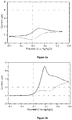
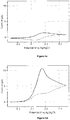
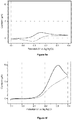
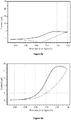
- Cyclic voltammograms were recorded using carbon, carbon nanotube and gold electodes with a 0.5 mM hydroxymethyl ferrocene solution (10 mM PBS, pH 7.1, 100 mM KCI) containing 0.05 U arsenite oxidase (0.17 nanomoles) with and without 500 micromolar sodium arsenite. A scan rate of 5 mV/s was used.
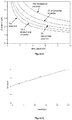
- Chrono amperometry was performed using a 0.25 mM hydroxymethyl ferrocene solution (10 mM PBS, pH 7.1, 100 mM KCI) containing 0.05 U arsenite oxidase (0.17 nanomoles) with 0 and 50 micromolar sodium arsenite when using a carbon electrode and 0, 12.5, 25, 50 and 100 micromolar sodium arsenite when using a gold electrode.
- the solution was mixed between each chrono amperometry run. Triplicate runs were recorded for each concentration of arsenite and the average values plotted. A one step potential of 0.35 V (vs Ag/AgCl) was applied for each run.
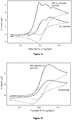
- Cyclic voltammograms were recorded using carbon and carbon nanotube electodes with a 1 mM Tris(2,2'-bipyridine)dichlororuthenium(II) solution (10 mM PBS, pH 7.1, 100 mM KCI) containing 0.05 U arsenite oxidase (0.17 nanomoles) with and without 500 micromolar sodium arsenite. A scan rate of 5mV/s was used.
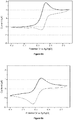
- Cyclic voltammograms were recorded using carbon and gold electodes with a 1 mM ferrocene carboxylic acid solution (10 mM PBS, pH 7.1, 100 mM KCI) containing 0.1 U arsenite oxidase (0.34 nanomoles) with and without 1 mM sodium arsenite. A scan rate of 5 mV/s was used. Chrono amperometry was performed using a 1 mM ferrocene carboxylic acid solution (10 mM PBS, pH 7.1, 100 mM KCI) containing 0.1 U arsenite oxidase (0.34 nanomoles) with 0, 50 and 100 micromolar sodium arsenite with a carbon electrode. A single step run was performed applying a potential of 0.38 V (vs Ag/AgCl reference electrode). The solution was mixed between each chrono amperometry run. Duplicate runs were recorded for each concentration of arsenite.
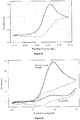
- Cyclic voltammograms were recorded using carbon, carbon nanotube and gold electodes with a 1 mM 2,6-dichlorophenolindophenol (DCPIP) solution (50 mM MES, pH 5.5, 100 mM KCI) containing 0.05 U arsenite oxidase (0.17 nanomoles) with and without 500 micromolar sodium arsenite. A scan rate of 5 mV/s was used.
- DCPIP 2,6-dichlorophenolindophenol
- Cyclic voltammograms were recorded using carbon nanotube electode by first depositing 6 ⁇ l of 2 mM tetrathiafulvalene (TTF) in acetone onto the working electrode and allowing to dry for 10 minutes. The electrode screen printed electrode was then immersed in 200 ⁇ l solution (10 mM PBS, pH 7.1, 100 mM KCI) containing 0.05 U arsenite oxidase (0.17 nanomoles) with and without 500 micromolar sodium arsenite. A scan rate of 50mV/s was used.
- TTF tetrathiafulvalene
- Figures 5 (a-f) show cyclic voltammograms of ferrocene methanol as the mediator with carbon (a and b), carbon nanotube (c and d) and gold (e and f) screen printed electrodes without (a, c, e) and with 500 micromolar arsenite (b,d,f).
- Figure 5g shows chronoamperometry plots of ferrocene methanol plus enzyme, and ferrocene methanol plus enzyme plus 50 ⁇ M arsenite recorded using a carbon electrode.
- Figures 5h and 5i show chronoamperometry plots of ferrocene methanol plus enzyme, and ferrocene methanol plus enzyme plus 0, 12.5, 25, 50 and 100 micromolar arsentie recorded using a gold electrode.
- Figure 5i is a zoomed portion of Figure 5h .
- Figure 5j is a plot showing a linear dose response of current to arsenite concentration and refers to the Chrono amperometry plots in Figures 5h and 5i , plotting current values taken at four seconds from the chrono amperometry plots.
- Figures 6 (a-d) show cyclic voltammograms of Tris(2,2'-bipyridine) dichlororuthenium(II) as the mediator with carbon (a and b) and carbon nanotube (c and d) screen printed electrodes, without (a and c) and with (b and d) 500 micromolar arsenite.
- Figures 7a and 7b show cyclic voltammogram's of feccocene carboxylic acid as the mediator with carbon (2a) and gold (2b) screen printed electrodes.
- Figure 2c shows a chrono amperometry plots of ferrocene carboxylic acid plus enzyme with 0, 50 micromolar and 100 micromolar arsenite.
- Figures 8 show cyclic voltammograms of 2,6-dichlorophenolindophenol as the mediator with carbon (a and b), gold (c and d) and carbon nanotube (e and f) screen printed electrodes, without (a,c,e) and with (b,d,f) 500 micromolar arsenite.
- Figure 9 shows cyclic voltammograms of TTF as the mediator with carbon nanotube screen printed electrodes, without and with 500 micromolar arsenite.
- Chronoamperometry plots show a shift to high current values in the presence of arsenite and there was a linear dose response in the current shift to the arsenite concentration.
Landscapes
- Chemical & Material Sciences (AREA)
- Life Sciences & Earth Sciences (AREA)
- Health & Medical Sciences (AREA)
- Organic Chemistry (AREA)
- Engineering & Computer Science (AREA)
- Wood Science & Technology (AREA)
- Zoology (AREA)
- General Health & Medical Sciences (AREA)
- Biochemistry (AREA)
- Molecular Biology (AREA)
- Bioinformatics & Cheminformatics (AREA)
- Genetics & Genomics (AREA)
- General Engineering & Computer Science (AREA)
- Proteomics, Peptides & Aminoacids (AREA)
- Analytical Chemistry (AREA)
- Physics & Mathematics (AREA)
- Immunology (AREA)
- Biotechnology (AREA)
- Microbiology (AREA)
- Biophysics (AREA)
- General Physics & Mathematics (AREA)
- Chemical Kinetics & Catalysis (AREA)
- Electrochemistry (AREA)
- Pathology (AREA)
- Biomedical Technology (AREA)
- Medicinal Chemistry (AREA)
- Enzymes And Modification Thereof (AREA)
- Measuring Or Testing Involving Enzymes Or Micro-Organisms (AREA)
- Micro-Organisms Or Cultivation Processes Thereof (AREA)
Claims (13)
- Ein Mikroorganismus, der modifiziert worden ist, um ein heterologes Arsenitoxidaseenzym zu exprimieren, das modifiziert worden ist, um eine Translokation zum Periplasma zu verhindern, wobei das Enzym die native AioA-Untereinheit von Rhizobium sp. NT-26 oder ein Homolog, das mindestens die Funktionalität von SEQ ID NO. 4 beibehält, und die native AioB-Untereinheit von Rhizobium sp. NT-26 oder ein Homolog, das mindestens die Funktionalität von SEQ ID NO. 3 beibehält, beinhaltet, wobei ein Anteil der Nucleotidsequenz, der für die native AioB-Untereinheit kodiert, die der Translokationssignalsequenz oder einem funktionalen Fragment der Translokationssequenz entspricht, modifiziert ist, wobei der Mikroorganismus vorzugsweise E. coli ist, wobei der Mikroorganismus vorzugsweise der E.-coli-Stamm DH5α oder JM109λpir ist.
- Ein Verfahren zur Herstellung von rekombinanter Arsenitoxidase, das das Exprimieren einer modifizierten Arsenitoxidase in einem heterologen Mikroorganismus beinhaltet, wobei das Arsenitoxidaseenzym modifiziert ist, um die Translokation zum Periplasma zu verhindern, wobei das Enzym die native AioA-Untereinheit von Rhizobium sp. NT-26 oder ein Homolog, das mindestens die Funktionalität von SEQ ID NO. 4 beibehält, und die native AioB-Untereinheit von Rhizobium sp. NT-26 oder ein Homolog, das mindestens die Funktionalität von SEQ ID NO. 3 beibehält, beinhaltet, wobei ein Anteil der Nucleotidsequenz, der für die native AioB-Untereinheit kodiert, die der Translokationssignalsequenz oder einem funktionalen Fragment der Translokationssequenz entspricht, modifiziert ist.
- Verfahren gemäß Anspruch 2, wobei der heterologe Mikroorganismus E. coli ist, wobei der E.-coli-Stamm vorzugsweise DH5a oder JM109λpir ist.
- Verfahren gemäß einem der Ansprüche 2 oder Anspruch 3, das das Klonieren von modifiziertem aioBA in einen Vektor beinhaltet, wobei der Anteil des nativen aioB-Gens, der für die Translokationssignalsequenz kodiert, oder ein Anteil davon, der für ein funktionales Fragment der Translokationssignalsequenz kodiert, modifiziert ist, wobei der Vektor vorzugsweise der pPROEX-HTb-Vektor ist, wobei die Primersequenzen, die hierin als SEQ ID NO. 9 und/oder SEQ ID NO. 10 identifiziert sind, verwendet werden, um die modifizierten Gene in den Vektor zu klonieren.
- Eine Vorrichtung zum Nachweis des Vorliegens von Arsenit in einer Probe, die mindestens eine Elektrode, ein Arsenitoxidaseenzym und einen Redoxmediator beinhaltet, wobei das Enzym die native AioA-Untereinheit von Rhizobium sp. NT-26 oder ein Homolog, das mindestens die Funktionalität von SEQ ID NO. 4 und die native AioB-Untereinheit von Rhizobium sp. NT-26 oder ein Homolog, das mindestens die Funktionalität von SEQ ID NO. 3 beibehält, beinhaltet, wobei ein Anteil der Nucleotidsequenz, der für die native AioB-Untereinheit kodiert, die der Translokationssignalsequenz oder einem funktionalen Fragment der Translokationssequenz entspricht, modifiziert ist, um eine Translokation zum Periplasma zu verhindern.
- Vorrichtung gemäß Anspruch 5, wobei die Elektrode aus einem oder mehreren leitenden Materialien, vorzugsweise ausgewählt aus Kohlenstoff, Kohlenstoffnanoröhrchen, Graphen, Graphit, Gold, Palladium, Glaskohlenstoff, nanostrukturierten Metalloxiden oder nanostrukturiertem Metall, hergestellt ist.
- Vorrichtung gemäß einem der Ansprüche 5 oder Anspruch 6, wobei der Redoxmediator aus Folgenden ausgewählt ist: Metallkomplexen, in denen Metall in zwei oder mehreren verschiedenen Redoxzuständen existiert, zum Beispiel Eisen-, Ruthenium-oder Osmiumkomplexen, und organischen Molekülen, die in zwei oder mehreren zugänglichen Redoxzuständen existieren können, zum Beispiel Cytochromen, leitenden organischen Polymeren, leitenden organischen Salzen, 2,6- Dichlorphenolindophenol, Ferrocen oder Ferrocenabkömmlingen einschließlich Ferrocencarbonsäure und Hydroxymethylferrocen (Ferrocenmethanol), Tris(2,2' bipyridin)dichlorruthenium(II), Tetrathiafulvalen (TTF) und Chinonen.
- Vorrichtung gemäß einem der Ansprüche 5 bis 7, die ferner eine Referenzelektrode beinhaltet, wobei die Referenzelektrode vorzugsweise ein Ag/AgCI-Referenz-Redoxpaar beinhaltet.
- Vorrichtung gemäß einem der Ansprüche 5 bis 8, wobei die Vorrichtung ein Teststreifen mit einer mikrostrukturierten Oberfläche ist.
- Mikroorganismus, Verfahren oder Vorrichtung gemäß einem der vorhergehenden Ansprüche, wobei ein Anteil des nativen aioB-Gens, das für die Translokationssignalsequenz kodiert, oder ein Anteil davon, der für ein funktionales Fragment der Translokationssignalsequenz kodiert, modifiziert ist, wobei der Anteil des nativen aioB-Gens vorzugsweise als SEQ ID NO. 6 oder ein Homolog von SEQ ID NO. 6 identifiziert ist, das für ein funktionales Fragment der Translokationssignalsequenz, die als SEQ ID NO. 2 identifiziert ist, kodiert.
- Mikroorganismus, Verfahren oder Vorrichtung gemäß einem der vorhergehenden Ansprüche, wobei die Modifikation eine Deletion ist.
- Mikroorganismus, Verfahren oder Vorrichtung gemäß einem der vorhergehenden Ansprüche, wobei die AioB-Untereinheit die Peptidsequenz, die als SEQ ID NO. 3 identifiziert ist, oder ein Homolog, das mindestens die Funktionalität von SEQ ID NO. 3 beibehält, beinhaltet oder von der Polynucleotidsequenz von SEQ ID NO. 7 oder einem Homolog, das mindestens die Funktionalität von SEQ ID NO. 7 beibehält, kodiert wird.
- Mikroorganismus, Verfahren oder Vorrichtung gemäß einem der vorhergehenden Ansprüche, wobei die AioA-Untereinheit die Peptidsequenz, die als SEQ ID NO. 4 identifiziert ist, oder ein Homolog, das mindestens die Funktionalität von SEQ ID NO. 4 beibehält, beinhaltet oder von der Polynucleotidsequenz von SEQ ID NO. 8 oder einem Homolog, das mindestens die Funktionalität von SEQ ID NO. 8 beibehält, kodiert wird.
Applications Claiming Priority (2)
| Application Number | Priority Date | Filing Date | Title |
|---|---|---|---|
| GBGB1118026.2A GB201118026D0 (en) | 2011-10-19 | 2011-10-19 | Biosensor |
| PCT/GB2012/052609 WO2013057515A1 (en) | 2011-10-19 | 2012-10-19 | Modified arsenite oxidase and a biosensor for detecting arsenite |
Publications (2)
| Publication Number | Publication Date |
|---|---|
| EP2768951A1 EP2768951A1 (de) | 2014-08-27 |
| EP2768951B1 true EP2768951B1 (de) | 2018-11-28 |
Family
ID=45219927
Family Applications (1)
| Application Number | Title | Priority Date | Filing Date |
|---|---|---|---|
| EP12781415.0A Active EP2768951B1 (de) | 2011-10-19 | 2012-10-19 | Modifizierte arsenitoxidase und biosensor zum nachweis von arsenit |
Country Status (8)
| Country | Link |
|---|---|
| US (2) | US9447384B2 (de) |
| EP (1) | EP2768951B1 (de) |
| AU (1) | AU2012324576B2 (de) |
| CA (1) | CA2852619C (de) |
| DK (1) | DK2768951T3 (de) |
| ES (1) | ES2708303T3 (de) |
| GB (1) | GB201118026D0 (de) |
| WO (1) | WO2013057515A1 (de) |
Families Citing this family (5)
| Publication number | Priority date | Publication date | Assignee | Title |
|---|---|---|---|---|
| GB201517275D0 (en) | 2015-09-30 | 2015-11-11 | Bio Nano Ct The Ltd | Biosensor |
| WO2018198008A1 (en) * | 2017-04-24 | 2018-11-01 | Abdolahad Mohammad | In-situ microbubbles generation for ultrasonic biomedical applications |
| US10890460B2 (en) * | 2018-10-19 | 2021-01-12 | International Business Machines Corporation | Navigation and location validation for optimizing vehicle-based transit systems |
| CN110229917B (zh) * | 2019-06-18 | 2021-10-19 | 广东省科学院生态环境与土壤研究所 | 一种检测环境微生物砷氧化基因物种组成的pcr引物及方法 |
| KR102425477B1 (ko) * | 2021-12-30 | 2022-07-27 | 한국지질자원연구원 | 비소 산화 능력을 가지는 Bosea sp. BH3 균주 및 이를 이용한 비소 제거 방법 |
Family Cites Families (1)
| Publication number | Priority date | Publication date | Assignee | Title |
|---|---|---|---|---|
| FR2814751B1 (fr) * | 2000-10-03 | 2002-12-06 | Rech S Geol Et Minieres Brgm B | Bacteries utilisables pour oxyder de l'arsenic, procede pour leur selection et leurs applications pour traiter des milieux renfermant de l'arsenic |
-
2011
- 2011-10-19 GB GBGB1118026.2A patent/GB201118026D0/en not_active Ceased
-
2012
- 2012-10-19 US US14/352,437 patent/US9447384B2/en active Active
- 2012-10-19 DK DK12781415.0T patent/DK2768951T3/en active
- 2012-10-19 WO PCT/GB2012/052609 patent/WO2013057515A1/en not_active Ceased
- 2012-10-19 CA CA2852619A patent/CA2852619C/en active Active
- 2012-10-19 AU AU2012324576A patent/AU2012324576B2/en not_active Ceased
- 2012-10-19 EP EP12781415.0A patent/EP2768951B1/de active Active
- 2012-10-19 ES ES12781415T patent/ES2708303T3/es active Active
-
2016
- 2016-06-07 US US15/175,553 patent/US9777306B2/en active Active
Non-Patent Citations (1)
| Title |
|---|
| STEFAN FRIELINGSDORF ET AL: "Prerequisites for Terminal Processing of Thylakoidal Tat Substrates", JOURNAL OF BIOLOGICAL CHEMISTRY, vol. 282, no. 33, 19 June 2007 (2007-06-19), US, pages 24455 - 24462, XP055251402, ISSN: 0021-9258, DOI: 10.1074/jbc.M702630200 * |
Also Published As
| Publication number | Publication date |
|---|---|
| AU2012324576A1 (en) | 2014-06-05 |
| CA2852619A1 (en) | 2013-04-25 |
| GB201118026D0 (en) | 2011-11-30 |
| US20140238857A1 (en) | 2014-08-28 |
| WO2013057515A1 (en) | 2013-04-25 |
| US9447384B2 (en) | 2016-09-20 |
| EP2768951A1 (de) | 2014-08-27 |
| AU2012324576B2 (en) | 2018-02-22 |
| ES2708303T3 (es) | 2019-04-09 |
| CA2852619C (en) | 2023-09-19 |
| US20160340708A1 (en) | 2016-11-24 |
| US9777306B2 (en) | 2017-10-03 |
| DK2768951T3 (en) | 2019-02-25 |
Similar Documents
| Publication | Publication Date | Title |
|---|---|---|
| US9353395B2 (en) | Glucose dehydrogenase/cytochrome fusion protein | |
| US9777306B2 (en) | Modified arsenite oxidase and a biosensor for detecting arsenite | |
| EP2748311B1 (de) | Glukoseoxidase | |
| JP2014528712A (ja) | ペニシリウム・アマガサキエンスのグルコースオキシダーゼ突然変異体 | |
| EP2562250A1 (de) | Glukoseoxidase | |
| CN110511913B (zh) | 突变型葡萄糖氧化酶及其利用 | |
| JP7818927B2 (ja) | 熱安定性が向上した変異型グルコースデヒドロゲナーゼ及びその利用 | |
| US20220306996A1 (en) | Mutant Glucose Dehydrogenase Having Improved Thermal Stability, and Use Thereof | |
| JP2012039949A (ja) | ピロロキノリンキノン依存性グルコースデヒドロゲナーゼ変異体、及びその利用 | |
| EP3356809B1 (de) | Doppelmediator-biosensor | |
| JP6520106B2 (ja) | 変異型ピロロキノリンキノン依存性グルコース脱水素酵素、変異型ピロロキノリンキノン依存性グルコース脱水素酵素をコードする単離核酸分子、変異型ピロロキノリンキノン依存性グルコース脱水素酵素を固定した酵素電極、酵素電極を備えたバイオ電池、及びバイオセンサー | |
| JP5077870B2 (ja) | ニトロ化合物を検出するためのニトロレダクターゼを用いた検知デバイス | |
| WO2024249874A2 (en) | Orientation controllable direct electron transfer type glucose dehydrogenases and their biosensor applications | |
| JPWO2012147822A1 (ja) | 油劣化の判定方法およびこれを用いる装置 |
Legal Events
| Date | Code | Title | Description |
|---|---|---|---|
| PUAI | Public reference made under article 153(3) epc to a published international application that has entered the european phase |
Free format text: ORIGINAL CODE: 0009012 |
|
| 17P | Request for examination filed |
Effective date: 20140509 |
|
| AK | Designated contracting states |
Kind code of ref document: A1 Designated state(s): AL AT BE BG CH CY CZ DE DK EE ES FI FR GB GR HR HU IE IS IT LI LT LU LV MC MK MT NL NO PL PT RO RS SE SI SK SM TR |
|
| RIN1 | Information on inventor provided before grant (corrected) |
Inventor name: SANTINI, JOANNE Inventor name: CASS, ANTHONY EDWARD GEORGE Inventor name: JOHNSON, CHRISTOPHER JAMES |
|
| DAX | Request for extension of the european patent (deleted) | ||
| RAP1 | Party data changed (applicant data changed or rights of an application transferred) |
Owner name: THE BIO NANO CENTRE LIMITED |
|
| 17Q | First examination report despatched |
Effective date: 20160226 |
|
| STAA | Information on the status of an ep patent application or granted ep patent |
Free format text: STATUS: EXAMINATION IS IN PROGRESS |
|
| GRAP | Despatch of communication of intention to grant a patent |
Free format text: ORIGINAL CODE: EPIDOSNIGR1 |
|
| STAA | Information on the status of an ep patent application or granted ep patent |
Free format text: STATUS: GRANT OF PATENT IS INTENDED |
|
| RIC1 | Information provided on ipc code assigned before grant |
Ipc: G01N 27/327 20060101ALI20180531BHEP Ipc: C12Q 1/26 20060101ALI20180531BHEP Ipc: G01N 27/416 20060101ALI20180531BHEP Ipc: C12N 9/02 20060101ALI20180531BHEP Ipc: C12N 9/00 20060101AFI20180531BHEP Ipc: C12Q 1/00 20060101ALI20180531BHEP |
|
| INTG | Intention to grant announced |
Effective date: 20180620 |
|
| GRAS | Grant fee paid |
Free format text: ORIGINAL CODE: EPIDOSNIGR3 |
|
| GRAA | (expected) grant |
Free format text: ORIGINAL CODE: 0009210 |
|
| STAA | Information on the status of an ep patent application or granted ep patent |
Free format text: STATUS: THE PATENT HAS BEEN GRANTED |
|
| AK | Designated contracting states |
Kind code of ref document: B1 Designated state(s): AL AT BE BG CH CY CZ DE DK EE ES FI FR GB GR HR HU IE IS IT LI LT LU LV MC MK MT NL NO PL PT RO RS SE SI SK SM TR |
|
| REG | Reference to a national code |
Ref country code: GB Ref legal event code: FG4D |
|
| REG | Reference to a national code |
Ref country code: CH Ref legal event code: EP |
|
| REG | Reference to a national code |
Ref country code: AT Ref legal event code: REF Ref document number: 1070240 Country of ref document: AT Kind code of ref document: T Effective date: 20181215 |
|
| REG | Reference to a national code |
Ref country code: DE Ref legal event code: R096 Ref document number: 602012054114 Country of ref document: DE |
|
| REG | Reference to a national code |
Ref country code: IE Ref legal event code: FG4D |
|
| REG | Reference to a national code |
Ref country code: CH Ref legal event code: NV Representative=s name: VALIPAT S.A. GEVERS SA, CH |
|
| RAP2 | Party data changed (patent owner data changed or rights of a patent transferred) |
Owner name: THE BIO NANO CENTRE LIMITED |
|
| REG | Reference to a national code |
Ref country code: DK Ref legal event code: T3 Effective date: 20190218 |
|
| REG | Reference to a national code |
Ref country code: SE Ref legal event code: TRGR |
|
| REG | Reference to a national code |
Ref country code: NL Ref legal event code: FP |
|
| REG | Reference to a national code |
Ref country code: CH Ref legal event code: PCAR Free format text: NEW ADDRESS: RUE DES NOYERS 11, 2000 NEUCHATEL (CH) |
|
| REG | Reference to a national code |
Ref country code: ES Ref legal event code: FG2A Ref document number: 2708303 Country of ref document: ES Kind code of ref document: T3 Effective date: 20190409 |
|
| REG | Reference to a national code |
Ref country code: LT Ref legal event code: MG4D |
|
| PG25 | Lapsed in a contracting state [announced via postgrant information from national office to epo] |
Ref country code: IS Free format text: LAPSE BECAUSE OF FAILURE TO SUBMIT A TRANSLATION OF THE DESCRIPTION OR TO PAY THE FEE WITHIN THE PRESCRIBED TIME-LIMIT Effective date: 20190328 Ref country code: NO Free format text: LAPSE BECAUSE OF FAILURE TO SUBMIT A TRANSLATION OF THE DESCRIPTION OR TO PAY THE FEE WITHIN THE PRESCRIBED TIME-LIMIT Effective date: 20190228 Ref country code: HR Free format text: LAPSE BECAUSE OF FAILURE TO SUBMIT A TRANSLATION OF THE DESCRIPTION OR TO PAY THE FEE WITHIN THE PRESCRIBED TIME-LIMIT Effective date: 20181128 Ref country code: LT Free format text: LAPSE BECAUSE OF FAILURE TO SUBMIT A TRANSLATION OF THE DESCRIPTION OR TO PAY THE FEE WITHIN THE PRESCRIBED TIME-LIMIT Effective date: 20181128 Ref country code: BG Free format text: LAPSE BECAUSE OF FAILURE TO SUBMIT A TRANSLATION OF THE DESCRIPTION OR TO PAY THE FEE WITHIN THE PRESCRIBED TIME-LIMIT Effective date: 20190228 Ref country code: LV Free format text: LAPSE BECAUSE OF FAILURE TO SUBMIT A TRANSLATION OF THE DESCRIPTION OR TO PAY THE FEE WITHIN THE PRESCRIBED TIME-LIMIT Effective date: 20181128 |
|
| PG25 | Lapsed in a contracting state [announced via postgrant information from national office to epo] |
Ref country code: PT Free format text: LAPSE BECAUSE OF FAILURE TO SUBMIT A TRANSLATION OF THE DESCRIPTION OR TO PAY THE FEE WITHIN THE PRESCRIBED TIME-LIMIT Effective date: 20190328 Ref country code: AL Free format text: LAPSE BECAUSE OF FAILURE TO SUBMIT A TRANSLATION OF THE DESCRIPTION OR TO PAY THE FEE WITHIN THE PRESCRIBED TIME-LIMIT Effective date: 20181128 Ref country code: RS Free format text: LAPSE BECAUSE OF FAILURE TO SUBMIT A TRANSLATION OF THE DESCRIPTION OR TO PAY THE FEE WITHIN THE PRESCRIBED TIME-LIMIT Effective date: 20181128 Ref country code: GR Free format text: LAPSE BECAUSE OF FAILURE TO SUBMIT A TRANSLATION OF THE DESCRIPTION OR TO PAY THE FEE WITHIN THE PRESCRIBED TIME-LIMIT Effective date: 20190301 |
|
| PG25 | Lapsed in a contracting state [announced via postgrant information from national office to epo] |
Ref country code: PL Free format text: LAPSE BECAUSE OF FAILURE TO SUBMIT A TRANSLATION OF THE DESCRIPTION OR TO PAY THE FEE WITHIN THE PRESCRIBED TIME-LIMIT Effective date: 20181128 |
|
| REG | Reference to a national code |
Ref country code: DE Ref legal event code: R097 Ref document number: 602012054114 Country of ref document: DE |
|
| PG25 | Lapsed in a contracting state [announced via postgrant information from national office to epo] |
Ref country code: EE Free format text: LAPSE BECAUSE OF FAILURE TO SUBMIT A TRANSLATION OF THE DESCRIPTION OR TO PAY THE FEE WITHIN THE PRESCRIBED TIME-LIMIT Effective date: 20181128 Ref country code: SM Free format text: LAPSE BECAUSE OF FAILURE TO SUBMIT A TRANSLATION OF THE DESCRIPTION OR TO PAY THE FEE WITHIN THE PRESCRIBED TIME-LIMIT Effective date: 20181128 Ref country code: RO Free format text: LAPSE BECAUSE OF FAILURE TO SUBMIT A TRANSLATION OF THE DESCRIPTION OR TO PAY THE FEE WITHIN THE PRESCRIBED TIME-LIMIT Effective date: 20181128 Ref country code: SK Free format text: LAPSE BECAUSE OF FAILURE TO SUBMIT A TRANSLATION OF THE DESCRIPTION OR TO PAY THE FEE WITHIN THE PRESCRIBED TIME-LIMIT Effective date: 20181128 |
|
| PLBE | No opposition filed within time limit |
Free format text: ORIGINAL CODE: 0009261 |
|
| STAA | Information on the status of an ep patent application or granted ep patent |
Free format text: STATUS: NO OPPOSITION FILED WITHIN TIME LIMIT |
|
| PG25 | Lapsed in a contracting state [announced via postgrant information from national office to epo] |
Ref country code: SI Free format text: LAPSE BECAUSE OF FAILURE TO SUBMIT A TRANSLATION OF THE DESCRIPTION OR TO PAY THE FEE WITHIN THE PRESCRIBED TIME-LIMIT Effective date: 20181128 |
|
| 26N | No opposition filed |
Effective date: 20190829 |
|
| PG25 | Lapsed in a contracting state [announced via postgrant information from national office to epo] |
Ref country code: TR Free format text: LAPSE BECAUSE OF FAILURE TO SUBMIT A TRANSLATION OF THE DESCRIPTION OR TO PAY THE FEE WITHIN THE PRESCRIBED TIME-LIMIT Effective date: 20181128 |
|
| PG25 | Lapsed in a contracting state [announced via postgrant information from national office to epo] |
Ref country code: MC Free format text: LAPSE BECAUSE OF FAILURE TO SUBMIT A TRANSLATION OF THE DESCRIPTION OR TO PAY THE FEE WITHIN THE PRESCRIBED TIME-LIMIT Effective date: 20181128 |
|
| PG25 | Lapsed in a contracting state [announced via postgrant information from national office to epo] |
Ref country code: LU Free format text: LAPSE BECAUSE OF NON-PAYMENT OF DUE FEES Effective date: 20191019 |
|
| PGFP | Annual fee paid to national office [announced via postgrant information from national office to epo] |
Ref country code: ES Payment date: 20201105 Year of fee payment: 9 |
|
| PG25 | Lapsed in a contracting state [announced via postgrant information from national office to epo] |
Ref country code: CY Free format text: LAPSE BECAUSE OF FAILURE TO SUBMIT A TRANSLATION OF THE DESCRIPTION OR TO PAY THE FEE WITHIN THE PRESCRIBED TIME-LIMIT Effective date: 20181128 |
|
| PG25 | Lapsed in a contracting state [announced via postgrant information from national office to epo] |
Ref country code: HU Free format text: LAPSE BECAUSE OF FAILURE TO SUBMIT A TRANSLATION OF THE DESCRIPTION OR TO PAY THE FEE WITHIN THE PRESCRIBED TIME-LIMIT; INVALID AB INITIO Effective date: 20121019 Ref country code: MT Free format text: LAPSE BECAUSE OF FAILURE TO SUBMIT A TRANSLATION OF THE DESCRIPTION OR TO PAY THE FEE WITHIN THE PRESCRIBED TIME-LIMIT Effective date: 20181128 |
|
| PGFP | Annual fee paid to national office [announced via postgrant information from national office to epo] |
Ref country code: IE Payment date: 20220127 Year of fee payment: 10 Ref country code: FI Payment date: 20220209 Year of fee payment: 10 Ref country code: DK Payment date: 20220209 Year of fee payment: 10 Ref country code: CH Payment date: 20220127 Year of fee payment: 10 Ref country code: AT Payment date: 20220209 Year of fee payment: 10 |
|
| PGFP | Annual fee paid to national office [announced via postgrant information from national office to epo] |
Ref country code: SE Payment date: 20220228 Year of fee payment: 10 Ref country code: IT Payment date: 20220225 Year of fee payment: 10 Ref country code: BE Payment date: 20220221 Year of fee payment: 10 Ref country code: CZ Payment date: 20220215 Year of fee payment: 10 |
|
| PG25 | Lapsed in a contracting state [announced via postgrant information from national office to epo] |
Ref country code: MK Free format text: LAPSE BECAUSE OF FAILURE TO SUBMIT A TRANSLATION OF THE DESCRIPTION OR TO PAY THE FEE WITHIN THE PRESCRIBED TIME-LIMIT Effective date: 20181128 |
|
| PGFP | Annual fee paid to national office [announced via postgrant information from national office to epo] |
Ref country code: NL Payment date: 20220401 Year of fee payment: 10 |
|
| REG | Reference to a national code |
Ref country code: ES Ref legal event code: FD2A Effective date: 20230216 |
|
| PG25 | Lapsed in a contracting state [announced via postgrant information from national office to epo] |
Ref country code: ES Free format text: LAPSE BECAUSE OF NON-PAYMENT OF DUE FEES Effective date: 20211020 |
|
| REG | Reference to a national code |
Ref country code: DK Ref legal event code: EBP Effective date: 20221031 |
|
| REG | Reference to a national code |
Ref country code: SE Ref legal event code: EUG |
|
| REG | Reference to a national code |
Ref country code: CH Ref legal event code: PL |
|
| REG | Reference to a national code |
Ref country code: NL Ref legal event code: MM Effective date: 20221101 |
|
| REG | Reference to a national code |
Ref country code: AT Ref legal event code: UEP Ref document number: 1070240 Country of ref document: AT Kind code of ref document: T Effective date: 20181128 Ref country code: AT Ref legal event code: MM01 Ref document number: 1070240 Country of ref document: AT Kind code of ref document: T Effective date: 20221019 |
|
| REG | Reference to a national code |
Ref country code: BE Ref legal event code: MM Effective date: 20221031 |
|
| PG25 | Lapsed in a contracting state [announced via postgrant information from national office to epo] |
Ref country code: NL Free format text: LAPSE BECAUSE OF NON-PAYMENT OF DUE FEES Effective date: 20221101 Ref country code: LI Free format text: LAPSE BECAUSE OF NON-PAYMENT OF DUE FEES Effective date: 20221031 Ref country code: CZ Free format text: LAPSE BECAUSE OF NON-PAYMENT OF DUE FEES Effective date: 20221019 Ref country code: CH Free format text: LAPSE BECAUSE OF NON-PAYMENT OF DUE FEES Effective date: 20221031 Ref country code: AT Free format text: LAPSE BECAUSE OF NON-PAYMENT OF DUE FEES Effective date: 20221019 |
|
| PG25 | Lapsed in a contracting state [announced via postgrant information from national office to epo] |
Ref country code: SE Free format text: LAPSE BECAUSE OF NON-PAYMENT OF DUE FEES Effective date: 20221020 |
|
| PG25 | Lapsed in a contracting state [announced via postgrant information from national office to epo] |
Ref country code: BE Free format text: LAPSE BECAUSE OF NON-PAYMENT OF DUE FEES Effective date: 20221031 |
|
| PG25 | Lapsed in a contracting state [announced via postgrant information from national office to epo] |
Ref country code: IT Free format text: LAPSE BECAUSE OF NON-PAYMENT OF DUE FEES Effective date: 20221019 Ref country code: IE Free format text: LAPSE BECAUSE OF NON-PAYMENT OF DUE FEES Effective date: 20221019 Ref country code: DK Free format text: LAPSE BECAUSE OF NON-PAYMENT OF DUE FEES Effective date: 20221031 |
|
| PG25 | Lapsed in a contracting state [announced via postgrant information from national office to epo] |
Ref country code: FI Free format text: LAPSE BECAUSE OF NON-PAYMENT OF DUE FEES Effective date: 20221019 |
|
| PGFP | Annual fee paid to national office [announced via postgrant information from national office to epo] |
Ref country code: FR Payment date: 20240401 Year of fee payment: 12 |
|
| PGFP | Annual fee paid to national office [announced via postgrant information from national office to epo] |
Ref country code: DE Payment date: 20250430 Year of fee payment: 13 |
|
| PG25 | Lapsed in a contracting state [announced via postgrant information from national office to epo] |
Ref country code: FR Free format text: LAPSE BECAUSE OF NON-PAYMENT OF DUE FEES Effective date: 20241031 |
|
| PGFP | Annual fee paid to national office [announced via postgrant information from national office to epo] |
Ref country code: GB Payment date: 20251215 Year of fee payment: 14 |