US9447384B2 - Modified arsenite oxidase and a biosensor for detecting arsenite - Google Patents
Modified arsenite oxidase and a biosensor for detecting arsenite Download PDFInfo
- Publication number
- US9447384B2 US9447384B2 US14/352,437 US201214352437A US9447384B2 US 9447384 B2 US9447384 B2 US 9447384B2 US 201214352437 A US201214352437 A US 201214352437A US 9447384 B2 US9447384 B2 US 9447384B2
- Authority
- US
- United States
- Prior art keywords
- arsenite
- enzyme
- modified
- iii
- ferrocene
- Prior art date
- Legal status (The legal status is an assumption and is not a legal conclusion. Google has not performed a legal analysis and makes no representation as to the accuracy of the status listed.)
- Active, expires
Links
- 108010035690 arsenite oxidase Proteins 0.000 title claims abstract description 23
- AQLMHYSWFMLWBS-UHFFFAOYSA-N arsenite(1-) Chemical compound O[As](O)[O-] AQLMHYSWFMLWBS-UHFFFAOYSA-N 0.000 title claims abstract description 22
- GCPXMJHSNVMWNM-UHFFFAOYSA-N arsenous acid Chemical class O[As](O)O GCPXMJHSNVMWNM-UHFFFAOYSA-N 0.000 title description 2
- 230000005945 translocation Effects 0.000 claims abstract description 30
- 108010076504 Protein Sorting Signals Proteins 0.000 claims abstract description 24
- 102000004190 Enzymes Human genes 0.000 claims description 57
- 108090000790 Enzymes Proteins 0.000 claims description 57
- OKTJSMMVPCPJKN-UHFFFAOYSA-N Carbon Chemical compound [C] OKTJSMMVPCPJKN-UHFFFAOYSA-N 0.000 claims description 32
- OKKJLVBELUTLKV-UHFFFAOYSA-N Methanol Chemical compound OC OKKJLVBELUTLKV-UHFFFAOYSA-N 0.000 claims description 30
- 238000012360 testing method Methods 0.000 claims description 22
- 229910052799 carbon Inorganic materials 0.000 claims description 17
- KTWOOEGAPBSYNW-UHFFFAOYSA-N ferrocene Chemical compound [Fe+2].C=1C=C[CH-]C=1.C=1C=C[CH-]C=1 KTWOOEGAPBSYNW-UHFFFAOYSA-N 0.000 claims description 15
- PCHJSUWPFVWCPO-UHFFFAOYSA-N gold Chemical compound [Au] PCHJSUWPFVWCPO-UHFFFAOYSA-N 0.000 claims description 13
- 230000000694 effects Effects 0.000 claims description 12
- 239000012634 fragment Substances 0.000 claims description 12
- 229910052737 gold Inorganic materials 0.000 claims description 12
- 239000010931 gold Substances 0.000 claims description 12
- 229910021393 carbon nanotube Inorganic materials 0.000 claims description 11
- 239000002041 carbon nanotube Substances 0.000 claims description 11
- FHCPAXDKURNIOZ-UHFFFAOYSA-N tetrathiafulvalene Chemical compound S1C=CSC1=C1SC=CS1 FHCPAXDKURNIOZ-UHFFFAOYSA-N 0.000 claims description 10
- 125000003275 alpha amino acid group Chemical group 0.000 claims description 8
- GPRSOIDYHMXAGW-UHFFFAOYSA-N cyclopenta-1,3-diene cyclopentanecarboxylic acid iron Chemical compound [CH-]1[CH-][CH-][C-]([CH-]1)C(=O)O.[CH-]1C=CC=C1.[Fe] GPRSOIDYHMXAGW-UHFFFAOYSA-N 0.000 claims description 7
- 229910052751 metal Inorganic materials 0.000 claims description 6
- 239000002184 metal Substances 0.000 claims description 6
- 210000001322 periplasm Anatomy 0.000 claims description 6
- XEEYBQQBJWHFJM-UHFFFAOYSA-N Iron Chemical compound [Fe] XEEYBQQBJWHFJM-UHFFFAOYSA-N 0.000 claims description 4
- KDLHZDBZIXYQEI-UHFFFAOYSA-N Palladium Chemical compound [Pd] KDLHZDBZIXYQEI-UHFFFAOYSA-N 0.000 claims description 4
- -1 Tris (2, 2′-bipyridine) dichlororuthenium Chemical compound 0.000 claims description 4
- 229910021397 glassy carbon Inorganic materials 0.000 claims description 4
- 102000018832 Cytochromes Human genes 0.000 claims description 2
- 108010052832 Cytochromes Proteins 0.000 claims description 2
- KJTLSVCANCCWHF-UHFFFAOYSA-N Ruthenium Chemical compound [Ru] KJTLSVCANCCWHF-UHFFFAOYSA-N 0.000 claims description 2
- 239000004020 conductor Substances 0.000 claims description 2
- 229910021389 graphene Inorganic materials 0.000 claims description 2
- 229910002804 graphite Inorganic materials 0.000 claims description 2
- 239000010439 graphite Substances 0.000 claims description 2
- 229910052742 iron Inorganic materials 0.000 claims description 2
- 229910044991 metal oxide Inorganic materials 0.000 claims description 2
- 150000004706 metal oxides Chemical class 0.000 claims description 2
- 229920000620 organic polymer Polymers 0.000 claims description 2
- 150000002907 osmium Chemical class 0.000 claims description 2
- 229910052763 palladium Inorganic materials 0.000 claims description 2
- 150000004053 quinones Chemical class 0.000 claims description 2
- 229910052707 ruthenium Inorganic materials 0.000 claims description 2
- 150000003839 salts Chemical class 0.000 claims description 2
- CCBICDLNWJRFPO-UHFFFAOYSA-N 2,6-dichloroindophenol Chemical compound C1=CC(O)=CC=C1N=C1C=C(Cl)C(=O)C(Cl)=C1 CCBICDLNWJRFPO-UHFFFAOYSA-N 0.000 claims 1
- 244000005700 microbiome Species 0.000 abstract description 8
- 238000012986 modification Methods 0.000 abstract description 8
- 230000004048 modification Effects 0.000 abstract description 8
- 108090000854 Oxidoreductases Proteins 0.000 description 23
- 102000004316 Oxidoreductases Human genes 0.000 description 23
- 241000588724 Escherichia coli Species 0.000 description 22
- 239000000523 sample Substances 0.000 description 18
- 238000002484 cyclic voltammetry Methods 0.000 description 16
- 210000004027 cell Anatomy 0.000 description 15
- 108090000623 proteins and genes Proteins 0.000 description 15
- 238000000970 chrono-amperometry Methods 0.000 description 13
- 238000000034 method Methods 0.000 description 13
- 101150097320 aioB gene Proteins 0.000 description 11
- 239000000243 solution Substances 0.000 description 11
- 239000007788 liquid Substances 0.000 description 10
- FBWADIKARMIWNM-UHFFFAOYSA-N N-3,5-dichloro-4-hydroxyphenyl-1,4-benzoquinone imine Chemical compound C1=C(Cl)C(O)=C(Cl)C=C1N=C1C=CC(=O)C=C1 FBWADIKARMIWNM-UHFFFAOYSA-N 0.000 description 9
- PTLRDCMBXHILCL-UHFFFAOYSA-M sodium arsenite Chemical compound [Na+].[O-][As]=O PTLRDCMBXHILCL-UHFFFAOYSA-M 0.000 description 9
- 239000002773 nucleotide Substances 0.000 description 8
- 125000003729 nucleotide group Chemical group 0.000 description 8
- 108090000765 processed proteins & peptides Proteins 0.000 description 8
- 102000004196 processed proteins & peptides Human genes 0.000 description 8
- RQNWIZPPADIBDY-UHFFFAOYSA-N arsenic atom Chemical class [As] RQNWIZPPADIBDY-UHFFFAOYSA-N 0.000 description 7
- 238000012217 deletion Methods 0.000 description 7
- 230000037430 deletion Effects 0.000 description 7
- IAZDPXIOMUYVGZ-UHFFFAOYSA-N Dimethylsulphoxide Chemical compound CS(C)=O IAZDPXIOMUYVGZ-UHFFFAOYSA-N 0.000 description 6
- 229910021607 Silver chloride Inorganic materials 0.000 description 6
- 239000000370 acceptor Substances 0.000 description 6
- 229910052785 arsenic Inorganic materials 0.000 description 6
- 239000003651 drinking water Substances 0.000 description 6
- 235000020188 drinking water Nutrition 0.000 description 6
- 239000007772 electrode material Substances 0.000 description 6
- 229920001184 polypeptide Polymers 0.000 description 6
- 102000004169 proteins and genes Human genes 0.000 description 6
- HKZLPVFGJNLROG-UHFFFAOYSA-M silver monochloride Chemical compound [Cl-].[Ag+] HKZLPVFGJNLROG-UHFFFAOYSA-M 0.000 description 6
- ZOKXTWBITQBERF-UHFFFAOYSA-N Molybdenum Chemical compound [Mo] ZOKXTWBITQBERF-UHFFFAOYSA-N 0.000 description 5
- 238000010367 cloning Methods 0.000 description 5
- 229910052750 molybdenum Inorganic materials 0.000 description 5
- 239000011733 molybdenum Substances 0.000 description 5
- XLYOFNOQVPJJNP-UHFFFAOYSA-N water Substances O XLYOFNOQVPJJNP-UHFFFAOYSA-N 0.000 description 5
- CHEANNSDVJOIBS-MHZLTWQESA-N (3s)-3-cyclopropyl-3-[3-[[3-(5,5-dimethylcyclopenten-1-yl)-4-(2-fluoro-5-methoxyphenyl)phenyl]methoxy]phenyl]propanoic acid Chemical compound COC1=CC=C(F)C(C=2C(=CC(COC=3C=C(C=CC=3)[C@@H](CC(O)=O)C3CC3)=CC=2)C=2C(CCC=2)(C)C)=C1 CHEANNSDVJOIBS-MHZLTWQESA-N 0.000 description 4
- FAPWRFPIFSIZLT-UHFFFAOYSA-M Sodium chloride Chemical compound [Na+].[Cl-] FAPWRFPIFSIZLT-UHFFFAOYSA-M 0.000 description 4
- 230000003197 catalytic effect Effects 0.000 description 4
- 238000011109 contamination Methods 0.000 description 4
- BFUZANWGLHWYKK-UHFFFAOYSA-N cyclopenta-1,3-diene iron(2+) 5-methylcyclopenta-1,3-dien-1-ol Chemical compound [Fe++].c1cc[cH-]c1.C[c-]1cccc1O BFUZANWGLHWYKK-UHFFFAOYSA-N 0.000 description 4
- 210000000805 cytoplasm Anatomy 0.000 description 4
- 238000001514 detection method Methods 0.000 description 4
- DHCWLIOIJZJFJE-UHFFFAOYSA-L dichlororuthenium Chemical compound Cl[Ru]Cl DHCWLIOIJZJFJE-UHFFFAOYSA-L 0.000 description 4
- 238000002474 experimental method Methods 0.000 description 4
- 239000003673 groundwater Substances 0.000 description 4
- 238000005259 measurement Methods 0.000 description 4
- 230000003647 oxidation Effects 0.000 description 4
- 238000007254 oxidation reaction Methods 0.000 description 4
- 238000000746 purification Methods 0.000 description 4
- 230000004044 response Effects 0.000 description 4
- 238000006467 substitution reaction Methods 0.000 description 4
- 229910002651 NO3 Inorganic materials 0.000 description 3
- NHNBFGGVMKEFGY-UHFFFAOYSA-N Nitrate Chemical compound [O-][N+]([O-])=O NHNBFGGVMKEFGY-UHFFFAOYSA-N 0.000 description 3
- 241000589187 Rhizobium sp. Species 0.000 description 3
- 150000001413 amino acids Chemical class 0.000 description 3
- 230000008901 benefit Effects 0.000 description 3
- 239000012472 biological sample Substances 0.000 description 3
- 238000005119 centrifugation Methods 0.000 description 3
- 238000004587 chromatography analysis Methods 0.000 description 3
- 231100000673 dose–response relationship Toxicity 0.000 description 3
- 238000002523 gelfiltration Methods 0.000 description 3
- RAXXELZNTBOGNW-UHFFFAOYSA-N imidazole Natural products C1=CNC=N1 RAXXELZNTBOGNW-UHFFFAOYSA-N 0.000 description 3
- 230000006698 induction Effects 0.000 description 3
- BPHPUYQFMNQIOC-NXRLNHOXSA-N isopropyl beta-D-thiogalactopyranoside Chemical compound CC(C)S[C@@H]1O[C@H](CO)[C@H](O)[C@H](O)[C@H]1O BPHPUYQFMNQIOC-NXRLNHOXSA-N 0.000 description 3
- 238000005065 mining Methods 0.000 description 3
- 238000005067 remediation Methods 0.000 description 3
- 230000027756 respiratory electron transport chain Effects 0.000 description 3
- 230000035945 sensitivity Effects 0.000 description 3
- 229910052709 silver Inorganic materials 0.000 description 3
- 239000004332 silver Substances 0.000 description 3
- 238000001542 size-exclusion chromatography Methods 0.000 description 3
- 231100000331 toxic Toxicity 0.000 description 3
- 230000002588 toxic effect Effects 0.000 description 3
- 239000002351 wastewater Substances 0.000 description 3
- SXGZJKUKBWWHRA-UHFFFAOYSA-N 2-(N-morpholiniumyl)ethanesulfonate Chemical compound [O-]S(=O)(=O)CC[NH+]1CCOCC1 SXGZJKUKBWWHRA-UHFFFAOYSA-N 0.000 description 2
- CSCPPACGZOOCGX-UHFFFAOYSA-N Acetone Chemical compound CC(C)=O CSCPPACGZOOCGX-UHFFFAOYSA-N 0.000 description 2
- 108010088751 Albumins Proteins 0.000 description 2
- 102000009027 Albumins Human genes 0.000 description 2
- DJHGAFSJWGLOIV-UHFFFAOYSA-K Arsenate3- Chemical compound [O-][As]([O-])([O-])=O DJHGAFSJWGLOIV-UHFFFAOYSA-K 0.000 description 2
- 241001646716 Escherichia coli K-12 Species 0.000 description 2
- QIGBRXMKCJKVMJ-UHFFFAOYSA-N Hydroquinone Chemical compound OC1=CC=C(O)C=C1 QIGBRXMKCJKVMJ-UHFFFAOYSA-N 0.000 description 2
- 101100301239 Myxococcus xanthus recA1 gene Proteins 0.000 description 2
- 239000012505 Superdex™ Substances 0.000 description 2
- 238000001042 affinity chromatography Methods 0.000 description 2
- 229940000489 arsenate Drugs 0.000 description 2
- 239000012148 binding buffer Substances 0.000 description 2
- 239000000872 buffer Substances 0.000 description 2
- 150000001732 carboxylic acid derivatives Chemical class 0.000 description 2
- 238000007398 colorimetric assay Methods 0.000 description 2
- 239000000356 contaminant Substances 0.000 description 2
- 108010066830 dimethyl sulfoxide reductase Proteins 0.000 description 2
- 238000005516 engineering process Methods 0.000 description 2
- 230000007613 environmental effect Effects 0.000 description 2
- 239000013604 expression vector Substances 0.000 description 2
- 230000012010 growth Effects 0.000 description 2
- 238000004519 manufacturing process Methods 0.000 description 2
- 230000001404 mediated effect Effects 0.000 description 2
- 150000007523 nucleic acids Chemical group 0.000 description 2
- 239000008188 pellet Substances 0.000 description 2
- BASFCYQUMIYNBI-UHFFFAOYSA-N platinum Chemical compound [Pt] BASFCYQUMIYNBI-UHFFFAOYSA-N 0.000 description 2
- 239000000047 product Substances 0.000 description 2
- 230000002441 reversible effect Effects 0.000 description 2
- 239000010865 sewage Substances 0.000 description 2
- 239000011780 sodium chloride Substances 0.000 description 2
- 238000002798 spectrophotometry method Methods 0.000 description 2
- 239000006228 supernatant Substances 0.000 description 2
- LWIHDJKSTIGBAC-UHFFFAOYSA-K tripotassium phosphate Chemical compound [K+].[K+].[K+].[O-]P([O-])([O-])=O LWIHDJKSTIGBAC-UHFFFAOYSA-K 0.000 description 2
- AZQWKYJCGOJGHM-UHFFFAOYSA-N 1,4-benzoquinone Chemical compound O=C1C=CC(=O)C=C1 AZQWKYJCGOJGHM-UHFFFAOYSA-N 0.000 description 1
- CYDQOEWLBCCFJZ-UHFFFAOYSA-N 4-(4-fluorophenyl)oxane-4-carboxylic acid Chemical compound C=1C=C(F)C=CC=1C1(C(=O)O)CCOCC1 CYDQOEWLBCCFJZ-UHFFFAOYSA-N 0.000 description 1
- FWMNVWWHGCHHJJ-SKKKGAJSSA-N 4-amino-1-[(2r)-6-amino-2-[[(2r)-2-[[(2r)-2-[[(2r)-2-amino-3-phenylpropanoyl]amino]-3-phenylpropanoyl]amino]-4-methylpentanoyl]amino]hexanoyl]piperidine-4-carboxylic acid Chemical compound C([C@H](C(=O)N[C@H](CC(C)C)C(=O)N[C@H](CCCCN)C(=O)N1CCC(N)(CC1)C(O)=O)NC(=O)[C@H](N)CC=1C=CC=CC=1)C1=CC=CC=C1 FWMNVWWHGCHHJJ-SKKKGAJSSA-N 0.000 description 1
- 239000004475 Arginine Substances 0.000 description 1
- 108090000444 Arsenate reductases Proteins 0.000 description 1
- KSSJBGNOJJETTC-UHFFFAOYSA-N COC1=C(C=CC=C1)N(C1=CC=2C3(C4=CC(=CC=C4C=2C=C1)N(C1=CC=C(C=C1)OC)C1=C(C=CC=C1)OC)C1=CC(=CC=C1C=1C=CC(=CC=13)N(C1=CC=C(C=C1)OC)C1=C(C=CC=C1)OC)N(C1=CC=C(C=C1)OC)C1=C(C=CC=C1)OC)C1=CC=C(C=C1)OC Chemical compound COC1=C(C=CC=C1)N(C1=CC=2C3(C4=CC(=CC=C4C=2C=C1)N(C1=CC=C(C=C1)OC)C1=C(C=CC=C1)OC)C1=CC(=CC=C1C=1C=CC(=CC=13)N(C1=CC=C(C=C1)OC)C1=C(C=CC=C1)OC)N(C1=CC=C(C=C1)OC)C1=C(C=CC=C1)OC)C1=CC=C(C=C1)OC KSSJBGNOJJETTC-UHFFFAOYSA-N 0.000 description 1
- 102000003846 Carbonic anhydrases Human genes 0.000 description 1
- 108090000209 Carbonic anhydrases Proteins 0.000 description 1
- 108010026206 Conalbumin Proteins 0.000 description 1
- 108020004414 DNA Proteins 0.000 description 1
- 229920002307 Dextran Polymers 0.000 description 1
- 102000008857 Ferritin Human genes 0.000 description 1
- 108050000784 Ferritin Proteins 0.000 description 1
- 238000008416 Ferritin Methods 0.000 description 1
- 102000001390 Fructose-Bisphosphate Aldolase Human genes 0.000 description 1
- 108010068561 Fructose-Bisphosphate Aldolase Proteins 0.000 description 1
- 108060001084 Luciferase Proteins 0.000 description 1
- 108010058846 Ovalbumin Proteins 0.000 description 1
- 108091005804 Peptidases Proteins 0.000 description 1
- 108010065081 Phosphorylase b Proteins 0.000 description 1
- 239000004365 Protease Substances 0.000 description 1
- 108700005075 Regulator Genes Proteins 0.000 description 1
- 108700008625 Reporter Genes Proteins 0.000 description 1
- 102100037486 Reverse transcriptase/ribonuclease H Human genes 0.000 description 1
- 241000490596 Shewanella sp. Species 0.000 description 1
- 102000009843 Thyroglobulin Human genes 0.000 description 1
- 108010034949 Thyroglobulin Proteins 0.000 description 1
- 101710162629 Trypsin inhibitor Proteins 0.000 description 1
- 229940122618 Trypsin inhibitor Drugs 0.000 description 1
- 238000005273 aeration Methods 0.000 description 1
- 230000009603 aerobic growth Effects 0.000 description 1
- AVKUERGKIZMTKX-NJBDSQKTSA-N ampicillin Chemical compound C1([C@@H](N)C(=O)N[C@H]2[C@H]3SC([C@@H](N3C2=O)C(O)=O)(C)C)=CC=CC=C1 AVKUERGKIZMTKX-NJBDSQKTSA-N 0.000 description 1
- 229960000723 ampicillin Drugs 0.000 description 1
- 230000009604 anaerobic growth Effects 0.000 description 1
- 239000012491 analyte Substances 0.000 description 1
- 238000013459 approach Methods 0.000 description 1
- ODKSFYDXXFIFQN-UHFFFAOYSA-N arginine Natural products OC(=O)C(N)CCCNC(N)=N ODKSFYDXXFIFQN-UHFFFAOYSA-N 0.000 description 1
- 101150005693 arsR gene Proteins 0.000 description 1
- RBFQJDQYXXHULB-UHFFFAOYSA-N arsane Chemical compound [AsH3] RBFQJDQYXXHULB-UHFFFAOYSA-N 0.000 description 1
- 238000003149 assay kit Methods 0.000 description 1
- QVGXLLKOCUKJST-UHFFFAOYSA-N atomic oxygen Chemical compound [O] QVGXLLKOCUKJST-UHFFFAOYSA-N 0.000 description 1
- 230000001580 bacterial effect Effects 0.000 description 1
- 239000008366 buffered solution Substances 0.000 description 1
- 238000011088 calibration curve Methods 0.000 description 1
- 229910010293 ceramic material Inorganic materials 0.000 description 1
- 230000008859 change Effects 0.000 description 1
- 238000004737 colorimetric analysis Methods 0.000 description 1
- 230000009918 complex formation Effects 0.000 description 1
- 238000012790 confirmation Methods 0.000 description 1
- 238000003869 coulometry Methods 0.000 description 1
- 230000002950 deficient Effects 0.000 description 1
- 101150106284 deoR gene Proteins 0.000 description 1
- 230000001419 dependent effect Effects 0.000 description 1
- 238000000151 deposition Methods 0.000 description 1
- 238000002848 electrochemical method Methods 0.000 description 1
- 239000003480 eluent Substances 0.000 description 1
- 238000001704 evaporation Methods 0.000 description 1
- 230000008020 evaporation Effects 0.000 description 1
- 239000000284 extract Substances 0.000 description 1
- YAGKRVSRTSUGEY-UHFFFAOYSA-N ferricyanide Chemical compound [Fe+3].N#[C-].N#[C-].N#[C-].N#[C-].N#[C-].N#[C-] YAGKRVSRTSUGEY-UHFFFAOYSA-N 0.000 description 1
- 235000021393 food security Nutrition 0.000 description 1
- 230000037433 frameshift Effects 0.000 description 1
- 239000007789 gas Substances 0.000 description 1
- 235000003869 genetically modified organism Nutrition 0.000 description 1
- 238000004128 high performance liquid chromatography Methods 0.000 description 1
- 238000011534 incubation Methods 0.000 description 1
- 238000001095 inductively coupled plasma mass spectrometry Methods 0.000 description 1
- 238000003780 insertion Methods 0.000 description 1
- 230000037431 insertion Effects 0.000 description 1
- 235000014413 iron hydroxide Nutrition 0.000 description 1
- NCNCGGDMXMBVIA-UHFFFAOYSA-L iron(ii) hydroxide Chemical compound [OH-].[OH-].[Fe+2] NCNCGGDMXMBVIA-UHFFFAOYSA-L 0.000 description 1
- 238000011005 laboratory method Methods 0.000 description 1
- 101150065800 luxB gene Proteins 0.000 description 1
- 239000003550 marker Substances 0.000 description 1
- 239000000463 material Substances 0.000 description 1
- 101150079876 mcrB gene Proteins 0.000 description 1
- 239000012528 membrane Substances 0.000 description 1
- NGYIMTKLQULBOO-UHFFFAOYSA-L mercury dibromide Chemical compound Br[Hg]Br NGYIMTKLQULBOO-UHFFFAOYSA-L 0.000 description 1
- CXKWCBBOMKCUKX-UHFFFAOYSA-M methylene blue Chemical compound [Cl-].C1=CC(N(C)C)=CC2=[S+]C3=CC(N(C)C)=CC=C3N=C21 CXKWCBBOMKCUKX-UHFFFAOYSA-M 0.000 description 1
- 229960000907 methylthioninium chloride Drugs 0.000 description 1
- 238000012544 monitoring process Methods 0.000 description 1
- 239000002048 multi walled nanotube Substances 0.000 description 1
- 230000035772 mutation Effects 0.000 description 1
- 108020004707 nucleic acids Proteins 0.000 description 1
- 102000039446 nucleic acids Human genes 0.000 description 1
- 101150012154 nupG gene Proteins 0.000 description 1
- 229940092253 ovalbumin Drugs 0.000 description 1
- 229910052760 oxygen Inorganic materials 0.000 description 1
- 239000001301 oxygen Substances 0.000 description 1
- 230000037361 pathway Effects 0.000 description 1
- 239000013612 plasmid Substances 0.000 description 1
- 229910052697 platinum Inorganic materials 0.000 description 1
- 229920002401 polyacrylamide Polymers 0.000 description 1
- 229920000642 polymer Polymers 0.000 description 1
- 229910000160 potassium phosphate Inorganic materials 0.000 description 1
- 235000011009 potassium phosphates Nutrition 0.000 description 1
- 238000001556 precipitation Methods 0.000 description 1
- 230000008569 process Effects 0.000 description 1
- 230000008844 regulatory mechanism Effects 0.000 description 1
- 108091008146 restriction endonucleases Proteins 0.000 description 1
- 230000000630 rising effect Effects 0.000 description 1
- YBCAZPLXEGKKFM-UHFFFAOYSA-K ruthenium(iii) chloride Chemical compound [Cl-].[Cl-].[Cl-].[Ru+3] YBCAZPLXEGKKFM-UHFFFAOYSA-K 0.000 description 1
- 238000007650 screen-printing Methods 0.000 description 1
- 238000002415 sodium dodecyl sulfate polyacrylamide gel electrophoresis Methods 0.000 description 1
- 239000001540 sodium lactate Substances 0.000 description 1
- 229940005581 sodium lactate Drugs 0.000 description 1
- 235000011088 sodium lactate Nutrition 0.000 description 1
- 235000015393 sodium molybdate Nutrition 0.000 description 1
- 239000011684 sodium molybdate Substances 0.000 description 1
- TVXXNOYZHKPKGW-UHFFFAOYSA-N sodium molybdate (anhydrous) Chemical compound [Na+].[Na+].[O-][Mo]([O-])(=O)=O TVXXNOYZHKPKGW-UHFFFAOYSA-N 0.000 description 1
- 241000894007 species Species 0.000 description 1
- 238000004365 square wave voltammetry Methods 0.000 description 1
- 239000000126 substance Substances 0.000 description 1
- 229960002175 thyroglobulin Drugs 0.000 description 1
- 238000012549 training Methods 0.000 description 1
- 239000002753 trypsin inhibitor Substances 0.000 description 1
- 239000013598 vector Substances 0.000 description 1
- 239000011800 void material Substances 0.000 description 1
Images




Classifications
-
- C—CHEMISTRY; METALLURGY
- C12—BIOCHEMISTRY; BEER; SPIRITS; WINE; VINEGAR; MICROBIOLOGY; ENZYMOLOGY; MUTATION OR GENETIC ENGINEERING
- C12Q—MEASURING OR TESTING PROCESSES INVOLVING ENZYMES, NUCLEIC ACIDS OR MICROORGANISMS; COMPOSITIONS OR TEST PAPERS THEREFOR; PROCESSES OF PREPARING SUCH COMPOSITIONS; CONDITION-RESPONSIVE CONTROL IN MICROBIOLOGICAL OR ENZYMOLOGICAL PROCESSES
- C12Q1/00—Measuring or testing processes involving enzymes, nucleic acids or microorganisms; Compositions therefor; Processes of preparing such compositions
- C12Q1/001—Enzyme electrodes
- C12Q1/005—Enzyme electrodes involving specific analytes or enzymes
-
- C—CHEMISTRY; METALLURGY
- C12—BIOCHEMISTRY; BEER; SPIRITS; WINE; VINEGAR; MICROBIOLOGY; ENZYMOLOGY; MUTATION OR GENETIC ENGINEERING
- C12N—MICROORGANISMS OR ENZYMES; COMPOSITIONS THEREOF; PROPAGATING, PRESERVING, OR MAINTAINING MICROORGANISMS; MUTATION OR GENETIC ENGINEERING; CULTURE MEDIA
- C12N9/00—Enzymes; Proenzymes; Compositions thereof; Processes for preparing, activating, inhibiting, separating or purifying enzymes
- C12N9/0004—Oxidoreductases (1.)
-
- C—CHEMISTRY; METALLURGY
- C12—BIOCHEMISTRY; BEER; SPIRITS; WINE; VINEGAR; MICROBIOLOGY; ENZYMOLOGY; MUTATION OR GENETIC ENGINEERING
- C12Q—MEASURING OR TESTING PROCESSES INVOLVING ENZYMES, NUCLEIC ACIDS OR MICROORGANISMS; COMPOSITIONS OR TEST PAPERS THEREFOR; PROCESSES OF PREPARING SUCH COMPOSITIONS; CONDITION-RESPONSIVE CONTROL IN MICROBIOLOGICAL OR ENZYMOLOGICAL PROCESSES
- C12Q1/00—Measuring or testing processes involving enzymes, nucleic acids or microorganisms; Compositions therefor; Processes of preparing such compositions
- C12Q1/26—Measuring or testing processes involving enzymes, nucleic acids or microorganisms; Compositions therefor; Processes of preparing such compositions involving oxidoreductase
-
- C—CHEMISTRY; METALLURGY
- C12—BIOCHEMISTRY; BEER; SPIRITS; WINE; VINEGAR; MICROBIOLOGY; ENZYMOLOGY; MUTATION OR GENETIC ENGINEERING
- C12Y—ENZYMES
- C12Y120/00—Oxidoreductases acting on phosphorus or arsenic in donors (1.20)
- C12Y120/09—Oxidoreductases acting on phosphorus or arsenic in donors (1.20) with a copper protein as acceptor (1.20.9)
- C12Y120/09001—Arsenate reductase (azurin) (1.20.9.1)
-
- C—CHEMISTRY; METALLURGY
- C12—BIOCHEMISTRY; BEER; SPIRITS; WINE; VINEGAR; MICROBIOLOGY; ENZYMOLOGY; MUTATION OR GENETIC ENGINEERING
- C12Y—ENZYMES
- C12Y120/00—Oxidoreductases acting on phosphorus or arsenic in donors (1.20)
- C12Y120/99—Oxidoreductases acting on phosphorus or arsenic in donors (1.20) with other acceptors (1.20.99)
- C12Y120/99001—Arsenate reductase (donor) (1.20.99.1)
-
- G—PHYSICS
- G01—MEASURING; TESTING
- G01N—INVESTIGATING OR ANALYSING MATERIALS BY DETERMINING THEIR CHEMICAL OR PHYSICAL PROPERTIES
- G01N27/00—Investigating or analysing materials by the use of electric, electrochemical, or magnetic means
- G01N27/26—Investigating or analysing materials by the use of electric, electrochemical, or magnetic means by investigating electrochemical variables; by using electrolysis or electrophoresis
- G01N27/28—Electrolytic cell components
- G01N27/30—Electrodes, e.g. test electrodes; Half-cells
- G01N27/327—Biochemical electrodes, e.g. electrical or mechanical details for in vitro measurements
-
- G—PHYSICS
- G01—MEASURING; TESTING
- G01N—INVESTIGATING OR ANALYSING MATERIALS BY DETERMINING THEIR CHEMICAL OR PHYSICAL PROPERTIES
- G01N27/00—Investigating or analysing materials by the use of electric, electrochemical, or magnetic means
- G01N27/26—Investigating or analysing materials by the use of electric, electrochemical, or magnetic means by investigating electrochemical variables; by using electrolysis or electrophoresis
- G01N27/416—Systems
- G01N27/4166—Systems measuring a particular property of an electrolyte
-
- G—PHYSICS
- G01—MEASURING; TESTING
- G01N—INVESTIGATING OR ANALYSING MATERIALS BY DETERMINING THEIR CHEMICAL OR PHYSICAL PROPERTIES
- G01N27/00—Investigating or analysing materials by the use of electric, electrochemical, or magnetic means
- G01N27/26—Investigating or analysing materials by the use of electric, electrochemical, or magnetic means by investigating electrochemical variables; by using electrolysis or electrophoresis
- G01N27/416—Systems
- G01N27/447—Systems using electrophoresis
-
- G—PHYSICS
- G01—MEASURING; TESTING
- G01N—INVESTIGATING OR ANALYSING MATERIALS BY DETERMINING THEIR CHEMICAL OR PHYSICAL PROPERTIES
- G01N2333/00—Assays involving biological materials from specific organisms or of a specific nature
- G01N2333/90—Enzymes; Proenzymes
- G01N2333/902—Oxidoreductases (1.)
Definitions
- the present invention relates to modified enzymes for detecting the presence of arsenic derivatives, in particular arsenite, and methods for expressing such enzymes in heterologous organisms.
- the invention is also directed to devices for detecting arsenic, and derivatives thereof, in a sample.
- Arsenic is a groundwater contaminant that is ubiquitous in the environment and the two soluble forms, arsenite (As III ) and arsenate (As V ), are toxic. Anthropogenic activity has resulted in widespread contamination of both soluble forms but As III is prevalent in anoxic environments, including most sources of drinking water. countries affected include India, Bangladesh, Vietnam, USA, Germany, France, Hungary, Australia, Argentina, Mexico, Canada.
- analytes such as arsenite in the field using sensors.
- the sensors should be low-cost, disposable and able to be readily adapted to multiple analytes that are commonly found together in contaminated water.
- As field test kits are commercially available (e.g. from Industrial Systems, Inc, Hydrodyne) but these only detect total As, rather than the most toxic form, As III , which is dominant in anoxic drinking waters. Moreover, because As remediation preferentially removes As V (e.g. by binding to iron hydroxide) and requires the pre-oxidation of As III , it is crucial to determine whether any As III remains in the water.
- the chemically based arsenic field kits rely on a colorimetric method which reduces the As III and As V to the gas arsine which reacts with the mercuric bromide test strips. These kits require the training of personnel, are expensive (e.g. Arsenic, Quick II Hydrodyne kit US$4.24 per test and Ultra Low Quick II, Industrial Test Systems, Inc. US$6 per test) and have low sensitivity and reproducibility.
- a biosensor for As III has been developed using molybdenum-containing arsenite oxidase (known as “Aio” and also previously known as Aro and Aso; see Lett et al., Unified Nomenclature for Genes Involved in Prokaryotic Aerobic Arsenite Oxidation; J. Bacteriology, 4 Nov. 2011; p. 207-208) which is a member of the DMSO reductase family, prepared from chemolithoautotrophic Alphaproteobacterium Rhizobium sp. strain NT-26 (Santini et al. (2000) Appl. Environ. Microbiol. 66, 92-97).
- As III oxidase catalyses the oxidation of As III to As V and the suitability of this native enzyme for use as a biosensor has been tested and shown to detect down to 1 ppb As III , which is 10 times lower than the recommended WHO MCL (maximum contaminant level) of As in drinking water. Furthermore the native enzyme shows specificity for As III (Male et al. (2007) Anal. Chem. 79, 7831-7837).
- the biosensor comprises the enzyme directly linked to the surface of a multiwalled carbon nanotube-modified electrode, in which electron transfer proceeds directly from enzyme to electrode.
- GC glassy carbon
- the present invention provides an arsenite oxidase enzyme modified to prevent translocation to the periplasm, wherein the enzyme comprises the native AioA subunit from NT-26 and the native AioB subunit from NT-26, wherein a portion of the native AioB subunit corresponding to the translocation signal sequence, or a functional fragment thereof, is modified.
- the present invention is directed to the use of a modified As III oxidase according to the first aspect of the invention as a biosensor to detect the presence of As III in a sample.
- the present invention provides a microorganism, modified to express a heterologous As III oxidase according to the first aspect of the invention.
- the present invention provides a method of producing recombinant As III oxidase, comprising expressing the modified enzyme heterologously according to the first aspect of the invention in a microorganism.
- the present invention provides a device for detecting the presence of As III in a sample, comprising at least one electrode, an arsenite oxidase enzyme and a redox mediator.
- FIG. 1 shows the micro-structured surface of a device according to the invention
- FIG. 2 is an As III dose-response curve showing the comparable results of the sensor of the invention over two consecutive days;
- FIG. 3 is a comparison of As III oxidase activities in total cell extracts of E. coli strains DH5 ⁇ and JM109 ⁇ pir grown with different electron acceptors;
- FIG. 4 shows a SDS-Polyacrylamide gel (12%) of purified recombinant NT-26 As III oxidase (M: Molecular weight marker: phosphorylase b (94 kDa), albumin (67 kDa), oval albumin (43 kDa), carbonic anhydrase (30 kDa), trypsin inhibitor (20 kDa), ⁇ -lactalbumin (14 kDa) (GE Healthcare) 1: Purified recombinant AioBA, two subunits AioA ( ⁇ 94 kDa) AioB with N-terminal His-tag ( ⁇ 19 kDa));
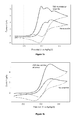
- FIGS. 5 ( a - j ) show cyclic voltammogram measurements and chrono amperometry for a device according to the invention including ferrocene methanol as the mediator;
- FIGS. 6 ( a - d ) shows show cyclic voltammogram measurements for a device according to the invention including Tris(2,2′-bipyridine) dichlororuthenium(II) as the redox mediator;
- FIGS. 7 a , 7 b and 7 c show cyclic voltammogram and chrono amperometry measurements for a device according to the invention including feccocene carboxylic acid as the mediator;
- FIGS. 8 ( a - f ) show cyclic voltammograms measurements for a device according to the invention including 2,6-dichlorophenolindophenol as the redox mediator;
- FIG. 9 shows cyclic voltammograms of TTF as the redox mediator.
- the present inventors have developed a modified version of the native As III oxidase from Rhizobium sp. NT-26 (GenBank Accession Number AY345225) which can be successfully expressed in heterologous expression systems such as E. coli . This has been achieved by modifying a translocation signal sequence present in the native enzyme, or a functional fragment thereof, to prevent translocation.
- the native As III oxidase consists of two heterologous subunits: AioB is the small subunit largely composed of beta sheets and AioA is the large subunit largely composed of alpha-helices (Santini & vanden Hoven (2004) J. Bacteriology. 186(6):1614-1619).
- the polypeptide sequence of wild-type AioB from Rhizobium sp. NT-26 is shown in SEQ ID No. 1 and SEQ ID No. 5 shows the corresponding nucleotide sequence.
- the AioB subunit comprises a Tat leader sequence (also referred to herein interchangeably as a Tat translocation signal sequence) which corresponds to the first 25 amino acids of SEQ ID No 1.
- This translocation signal sequence is shown as SEQ ID No. 2 and SEQ ID No. 6 shows the nucleotide sequence of the portion of the aioB gene encoding the translocation signal sequence.
- the signal sequence directs the transport of the protein to the periplasm using the Twin Arginine Translocation (Tat) pathway.
- the present inventors have modified the native As III oxidase by modifying the translocation signal sequence in the AioB subunit. As a result of the modification, the modified enzyme is not exported from the host cytoplasm, and as a result can be expressed in large, commercially-viable quantities.
- translocation signal sequence can be modified by various methods which will be apparent to a person skilled in the art, including frame-shift mutations, substitution mutations or deletion. Any modification that results in loss of function of the native translocation signal sequence is within the scope of the invention, however deletion of the translocation signal sequence or a functional fragment thereof, is preferred.
- a first aspect of the invention provides an As III oxidase modified to prevent translocation by modification of a translocation signal sequence, or a functional fragment thereof.
- the modified As III oxidase comprises two subunits.
- the first subunit corresponds to the native AioA subunit from NT-26, or a variant, derivative or homologue thereof.
- the second subunit corresponds to the native AioB subunit from NT-26, or a variant, derivative or homologue thereof; however a portion of the native AioB subunit which corresponds to the translocation signal sequence, or a functional fragment of the translocation signal sequence, is modified in the enzyme of the invention.
- the portion of the native AioB subunit which corresponds to the translocation signal sequence, or a functional fragment thereof is modified by deletion.
- At least a portion of the aioB gene which encodes the translocation signal sequence, or a portion thereof encoding a functional fragment of the translocation signal sequence is modified, preferably by deletion.
- the portion of the aioB gene sequence encoding the translocation signal sequence is identified herein as SEQ ID NO. 6.
- SEQ ID NO. 6 Either the complete sequence identified as SEQ ID NO. 6 or a homologue of this sequence encoding a functional fragment of the translocation signal sequence may be modified according to the invention.
- the modified enzyme of the invention does not comprise the amino acid sequence identified herein as SEQ ID No. 2, or does not comprise a portion thereof that is required for a functional translocation signal sequence.
- the term ‘functional fragment’ means that the portion of the nucleotide sequence that is modified (e.g. by deletion) encodes a polypeptide having Tat translocation signal sequence activity, preferably having at least the same activity of the polypeptide shown as SEQ ID NO: 2. As a result of the modification, the recombinant enzyme of the invention lacks such Tat translocation signal sequence activity.
- the term “homologue” refers to a nucleotide sequence that encodes a polypeptide which has Tat translocation signal sequence activity.
- sequence similarity preferably there is at least 60%, more preferably at least 70%, more preferably at least 75%, more preferably at least 85%, more preferably at least 90% sequence similarity between SEQ ID NO. 6 and the sequence of the native aioB gene that is modified according to the invention. More preferably there is at least 95%, more preferably at least 98%, sequence similarity. These terms also encompass allelic variations of the sequences.
- the portion of the aioB gene that is modified according to the invention comprises or consists of the sequence identified herein as SEQ ID NO. 6.
- SEQ ID No. 3 corresponds to the amino acid sequence of the AioB subunit excluding the entire native leader region.
- SEQ ID No. 7 shows the corresponding nucleotide sequence. If the entire AioB leader region is deleted, then the AioB subunit of the modified enzyme of the invention will correspond to SEQ ID No. 3. However, it is within the scope of the invention for a portion of the leader region within the AioB subunit to remain unmodified, provided that the portion of the leader region that is modified renders the remaining portion non-functional.
- SEQ ID No. 4 shows the amino acid sequence of the AioA subunit and SEQ ID No. 8 shows the corresponding nucleotide sequence.
- modified As III oxidase to comprise homologues, variants or derivatives of SEQ ID Nos. 3 and 4.
- variant include any substitution, variation, modification, replacement, deletion or addition of one (or more) amino acid from or to a sequence.
- the variant may have a deletion, insertion or substitution variation.
- the variation may produce a silent change and a functionally equivalent polypeptide, or may result in improved catalytic function or other characteristics of the resulting enzyme.
- Deliberate amino acid substitutions may be made on the basis of similar physio-chemical properties such as size, charge and hydrophobicity in order to alter the catalytic function or other properties or characteristics of the enzyme.
- references to “AioA” and “AioB” include references to such variants, homologues and derivatives of the native subunits.
- the term “homologue” covers identity with respect to structure and/or function and is used to refer to peptides that share levels of sequence identity or similarity to SEQ ID Nos. 3 and 4 and retain at least the functionality of the native amino acid sequences. The variants may result in improvements in the catalytic activity or other properties of the resulting enzyme.
- These terms also encompass polypeptides derived from amino acids which are allelic variations of the aioA and/or aioB nucleic acid sequences (SEQ ID Nos. 7 and 8).
- the present inventors were surprised to find that that following removal of the Tat leader sequence, the modified As III oxidase could achieve complete assembly (both subunit assembly and cofactor addition) to form a heterotetramer in the cytoplasm of the various E. coli strains.
- abbreviations “aio”, “Aio”, “aro”, “Aro”, “aso” and “Aso” can be used interchangeably and all refer to the arsenite oxidase enzyme (gene or protein).
- the different abbreviations are the result of different nomenclature that has been used in the art (Lett et al., J. Bacteriology, 4 Nov. 2011; p. 207-208).
- a second aspect of the invention is directed to the use of the modified arsenite oxidase enzyme according to the first aspect of the invention as a biosensor to detect the presence of As III in a sample.
- the modified enzyme of the invention has been found to be equally effective as the native enzyme in catalysing the oxidation of As III to arsenate As V (Warelow & Santini, unpublished data). The absence of the translocation sequence does not impact upon the catalytic activity of the enzyme. The modified enzyme is therefore suitable for use in biosensors to detect the presence of As III .
- the sample is a liquid sample.
- the liquid sample may be any type of liquid that is susceptible to As III contamination, including, but not limited to, ground-water, drinking-water, environmental liquids such as mining effluent and sewage, waste-water, biological samples.
- the modified enzyme of the invention may be used in laboratory-based biosensors or, preferably, in low-cost disposable biosensor suitable for field use (i.e. detecting As III in a sample at the source of the sample rather than in a laboratory).
- the advantage of utilising the modified enzyme according to the first aspect of the invention in a biosensor for detecting As III in a sample is that it can be expressed in commercially-viable quantities in a variety of heterologous expression systems, including, unexpectedly, host strains that are normally used for cloning rather than protein expression.
- the present invention provides a microorganism modified to express the heterologous As III oxidase of the first aspect of the invention.
- the wild-type microorganism may be selected from a range of species including, but not limited to, E. coli .
- the wild-type microorganism is E. coli , in particular E. coli K12 strains DH5 ⁇ and JM109 ⁇ pir.
- E. coli strain DH5 ⁇ is a Hoffman-Berling 1100 strain derivative and can be purchased from InvitrogenTM. The properties of this strain are described by the following standard nomenclature:
- F-endA1 glnV44 thi-1 recA1 relA1 gyrA96 deoR nupG ⁇ 80dlacZ ⁇ M15 ⁇ (lacZYA-argF)U169, hsdR17(rK ⁇ mK+), ⁇ .
- DH5 ⁇ strain is described in the following publications: FOCUS (1986) 8:2, 9.; Hanahan, D. (1985) in DNA Cloning: A Practical Approach (Glover, D. M., ed.), Vol. 1, p. 109, IRL Press; Grant, S. G. N. et al. (1990) Proc. Natl. Acad. Sci. USA 87: 4645-4649 PMID 2162051; and Meselson M. and Yuan R. (1968) Nature 217:1110 PMID. 4868368.
- E. coli strain JM109 ⁇ pir can be purchased from Promega and has the following standard nomenclature properties:
- the present invention provides a method of producing recombinant As III oxidase, comprising expressing the modified enzyme according to the first aspect of the invention in a heterologous microorganism.
- novel primers identified herein as SEQ ID NO. 9 and SEQ ID NO. 10 can be used to clone the NT-26 aioB and aioA genes (termed aioBA) into the commercially-available pPROEX Htb vector (Invitrogen).
- the aioB gene is modified to delete at least the portion of the nucleotide sequence (SEQ ID NO. 6) encoding at least the functional portion of the TAT leader sequence shown herein as SEQ ID NO. 2.
- the heterologous microorganism is E. coli , and preferably E. coli strains DH5 ⁇ or JM109 ⁇ pir.
- strain DH5 ⁇ provides optimal expression of the heterologous arsenite oxidase enzyme when grown aerobically and JM109 ⁇ pir provides optimal expression of the heterologous enzyme when grown anaerobically with nitrate as the electron acceptor.
- use of an affinity tag at the N-terminus of AioB allows for simple purification. This embodiment is described in more detail in Example 1 below.
- the present invention provides a device for detecting the presence of As III in a sample.
- the device comprises an electrode (termed the “test electrode”) incorporating an As III oxidase enzyme and a redox mediator.
- the device may comprise wild-type As III oxidase or the modified As III oxidase according to the first aspect of the present invention.
- the enzyme is the modified As III oxidase.
- high yields of the modified enzyme can be obtained through heterologous expression in E. coli . Therefore, it is preferable to use the modified enzyme to keep the manufacturing cost of the device low and to enable the device to be manufactured in commercially-viable quantities.
- the device comprises a test strip made of polymer or ceramic materials.
- the device comprises two or more planar electrodes.
- the device comprises a “reference electrode” in addition to the test electrode. At least the test electrode incorporates the As III oxidase.
- the device includes a redox mediator.
- redox mediator is defined as any moiety capable of transferring electrons from the enzyme to the electrode surface. Artificial redox mediators such as 2,6-dichlorophenolindophenol (DCPIP) are often used in solution in laboratory-based spectrophotometric measurements; however spectrophotometric measurements are not routinely used in field test equipment.
- DCPIP 2,6-dichlorophenolindophenol
- the inclusion of a redox mediator is advantageous in a number of different ways, compared with existing devices in which the enzyme is directly linked to an electrode.
- the presence of a redox mediator improves the efficiency of electron transfer and reduces the effects of electrode surface chemistry on the currents measured. This enables a much wider range of electrode materials to be used. As the background currents due to sample components are dependent on the electrode material this gives greater versatility in optimising signal to background.
- redox mediators include, but are not limited to, metal complexes where the metal exists in two or more different redox states, for example iron, ruthenium or osmium complexes, organic molecules that can exist in two or more accessible redox states, for example cytochromes, conducting organic polymers, conducting organic salts, 2,6-dichlorophenolindophenol, ferrocene and ferrocene derivates including ferrocene carboxylic acid and hydroxymethyl ferrocene (ferrocene methanol), Tris(2,2′-bipyridine)dichlororuthenium(II), tetrathiafulvalene (TTF) and quinones including, but not limited to, benzoquinone and hydroquinone.
- redox mediators include, but are not limited to, metal complexes where the metal exists in two or more different redox states, for example iron, ruthenium or osmium complexes, organic molecules that can exist in two or
- the device of the invention is versatile and has been shown to work with a variety of test electrode materials (see Example 2 below).
- the test electrode is made of one or more conducting materials including, but not limited to, carbon, carbon nanotubes, graphene, graphite, gold, platinum, palladium, glassy carbon, nanostructured metal oxides or nanostructured metal.
- the reference electrode comprises a reference redox couple, such as Ag/AgCl.
- the electrode materials can be deposited on the test strip by a variety methods including, but not limited to, screen-printing or evaporation.
- the electrodes may be open or covered by a lid so forming a defined volume cell. There may, or may not, be a membrane covering the electrodes.
- the test strip is suitable for laboratory use and, preferably, field-based use (i.e. As III can be detected in a sample at the source using the test strip or device).
- the device may be suitable for multiple uses or a single use, and may be disposable.
- the device comprises a micro-structured surface, with the enzyme entrapped thereon with a mediator (see FIG. 1 ).
- a micro-structured surface for example pillars rising from the base of the electrode, improves the performance of the electrode.
- the sample in which As III is detected using the device of the invention is a liquid sample.
- the liquid sample may be any type of liquid that is susceptible to As III contamination, including, but not limited to, ground-water, drinking-water, environmental liquids such as mining effluent and sewage, waste-water, biological samples.
- test sample is brought into direct contact with the test strip.
- Operation of the sensor device involves applying an electrical potential between the test and reference electrodes and measuring the current.
- chronoamperomerty square wave voltammetry and coulometry.
- the response to As III can be measured from 5 ⁇ M to 40 ⁇ M with the same sensor showing comparable results the next day (see FIG. 2 ).
- the advantages of using the device of the invention as described above to test for the presence of As III in a sample are that the sensitivity for the analyte is high and the test is specific for As III (i.e. the most toxic soluble form of arsenic) due to the presence of the enzyme; the test is quick and results are obtained almost instantaneously; the device is simple to use; the results are reproducible; and the device can be produced and purchased cheaply (particularly important for use in developing countries).
- Escherichia coli strains DH5 ⁇ , JM109 ⁇ pir, RK4353, C43, BL21 and Origami were used to test expression of the NT-26 arsenite oxidase.
- the expression vector pPROEX-HTb (Invitrogen) was used for expression purposes. All expression conditions involved growing E. coli in LB containing 100 ⁇ g/ml ampicillin either aerobically (with aeration at 170 rpm (1:5 ratio liquid to head space) or anaerobically with nitrate (14 mM) or DMSO (14 mM) as electron acceptors and sodium lactate (20 mM) as the electron donor.
- NT-26 aioB and aioA (aioBA) genes were amplified without the native Tat leader sequence using the following primers:
- PROEXAroBFHis (SEQ ID No. 9) 5′-GC GAATTC AAGCTACCGCGGCGGCAGGGGTC-3′
- PROEXAroAR (SEQ ID No. 10) 5′-GC CTGCAG TCAAGCCGACTGGTATTCTTTCGA-3′
- the restriction enzymes EcoRI and PstI were used to facilitate cloning into the expression vector, pPROEX-HTb.
- the pPROEX-HTb carrying the aioBA genes was transformed into a variety of E. coli strains to determine which one gave optimal expression.
- a variety of IPTG (Isopropyl ⁇ -D-1-thiogalactopyranoside) and sodium molybdate (Mo) concentrations as well as time of induction were tested.
- the final optimum expression conditions used for purification of the Aio involved growing DH5 ⁇ aerobically at 21° C. for 24 hrs in LB containing 40 ⁇ M IPTG and 1 mM Mo.
- Recombinant Aio was purified from DH5 ⁇ using a combination of affinity and size exclusion chromatography.
- Cells were harvested by centrifugation at 9,700 ⁇ g for 10 minutes.
- the cell pellets were pooled and washed by suspending in binding buffer (10 ml/gm wet weight cells) (20 mM potassium phosphate, 500 mM sodium chloride, 20 mM imidazole, pH 7.2) and centrifuged at 12,000 ⁇ g for 15 minutes.
- the cell pellet was then re-suspended in binding buffer (10 ml/gm wet weight cells).
- binding buffer (10 ml/gm wet weight cells) (20 mM potassium phosphate, 500 mM sodium chloride, 20 mM imidazole, pH 7.2
- coli cells were disrupted by a single pass through a French pressure cell (12,000 psi) and the cell debris removed by centrifugation at 30,000 ⁇ g for 30 minutes.
- the supernatant was loaded onto a GraviTrap pre-packed Ni charged affinity chromatography column (GE Healthcare) as per the manufacturer's instructions except with one minor modification; the wash volume used was 120 ml.
- the eluent was desalted in 50 mM 2-(N-morpholino)ethanesulfonic acid (MES) (pH 5.5) buffer resulting in the precipitation of non-target co-eluted protein(s) which were removed by centrifugation at 10,000 ⁇ g for 5 minutes.
- MES 2-(N-morpholino)ethanesulfonic acid
- the supernatant was filtered through a 0.22 ⁇ m filter (Millipore), concentrated using a Vivaspin 20 (MWCO 100,000) (GE Healthcare) centrifugal concentrator and loaded onto a Superdex 200 gel filtration column (GE Healthcare) pre-equilibrated with 50 mM MES, 100 mM NaCl, pH 5.5 buffer. Chromatography was carried out at a flow rate of 0.3 ml/min. The 0.25 ml fractions containing Aio activity were pooled and concentrated using a Vivaspin 20 centrifugal concentrator (MWCO 100,000).
- aioB and aioA (designated aioBA) genes were cloned without the aioB Tat leader sequence allowing for expression in the E. coli cytoplasm.
- a combination of different strains and growth conditions were tested to optimise Aio expression.
- the highest Aio specific activity was obtained with E. coli K12 strains DH5 ⁇ and JM109 ⁇ pir.
- the native molecular mass of the enzyme was 219 kDa which is consistent with the ⁇ 2 ⁇ 2 oligomeric state of the native enzyme purified from NT-26 (Santini & vanden Hoven, 2004, J. Bacteriology. 186(6):1614-1619).
- Carbon screen printed electrodes were purchased from Dropsens (Oviedo, Spain). Carbon screen printed electrodes have a carbon working electrode (4 mm diameter) and counter electrode and silver/silver chloride reference electrode (product ref. DRP-C110). Carbon nanotube screen printed electrodes have a multi-walled carbon nanotube working electrode (4 mm diameter), carbon counter electrode and silver/silver chloride reference electrode (produce reference DRP-110CNT). Gold screen printed electrode have a gold working electrode (4 mm diameter) and counter electrode and a silver/silver chloride reference electrode (product reference DRP-220AT).
- Electrochemical measurements were recorded using a CompactStat.e potentiostat instrument (Ivium Technologies) and IviumSoft software (Ivium Technologies).
- 2,6-dichlorophenolindophenol, Ferrocene Carboxylic acid, hydroxymethyl ferrocene (ferrocene methanol), tetrathiafulvalene (TTF) and Tris(2,2′-bipyridine)dichlororuthenium(II) mediators were all purchased from Sigma Aldrich. 50 mM solution of sodium arsenite (Fluka) was also purchased from Sigma Aldrich.
- Cyclic voltammograms were recorded using carbon, carbon nanotube and gold electrodes with a 0.5 mM hydroxymethyl ferrocene solution (10 mM PBS, pH 7.1, 100 mM KCl) containing 0.05 U arsenite oxidase (0.17 nanomoles) with and without 500 micromolar sodium arsenite. A scan rate of 5 mV/s was used.
- Chrono amperometry was performed using a 0.25 mM hydroxymethyl ferrocene solution (10 mM PBS, pH 7.1, 100 mM KCl) containing 0.05 U arsenite oxidase (0.17 nanomoles) with 0 and 50 micromolar sodium arsenite when using a carbon electrode and 0, 12.5, 25, 50 and 100 micromolar sodium arsenite when using a gold electrode.
- the solution was mixed between each chrono amperometry run. Triplicate runs were recorded for each concentration of arsenite and the average values plotted. A one step potential of 0.35 V (vs Ag/AgCl) was applied for each run.
- Cyclic voltammograms were recorded using carbon and carbon nanotube electrodes with a 1 mM Tris(2,2′-bipyridine)dichlororuthenium(II) solution (10 mM PBS, pH 7.1, 100 mM KCl) containing 0.05 U arsenite oxidase (0.17 nanomoles) with and without 500 micromolar sodium arsenite. A scan rate of 5 mV/s was used.
- Cyclic voltammograms were recorded using carbon and gold electrodes with a 1 mM ferrocene carboxylic acid solution (10 mM PBS, pH 7.1, 100 mM KCl) containing 0.1 U arsenite oxidase (0.34 nanomoles) with and without 1 mM sodium arsenite. A scan rate of 5 mV/s was used. Chrono amperometry was performed using a 1 mM ferrocene carboxylic acid solution (10 mM PBS, pH 7.1, 100 mM KCl) containing 0.1 U arsenite oxidase (0.34 nanomoles) with 0, 50 and 100 micromolar sodium arsenite with a carbon electrode. A single step run was performed applying a potential of 0.38 V (vs Ag/AgCl reference electrode). The solution was mixed between each chrono amperometry run. Duplicate runs were recorded for each concentration of arsenite.
- Cyclic voltammograms were recorded using carbon, carbon nanotube and gold electrodes with a 1 mM 2,6-dichlorophenolindophenol (DCPIP) solution (50 mM MES, pH 5.5, 100 mM KCl) containing 0.05 U arsenite oxidase (0.17 nanomoles) with and without 500 micromolar sodium arsenite. A scan rate of 5 mV/s was used.
- DCPIP 2,6-dichlorophenolindophenol
- Cyclic voltammograms were recorded using carbon nanotube electrode by first depositing 6 ⁇ l of 2 mM tetrathiafulvalene (TTF) in acetone onto the working electrode and allowing to dry for 10 minutes. The electrode screen printed electrode was then immersed in 200 ⁇ l solution (10 mM PBS, pH 7.1, 100 mM KCl) containing 0.05 U arsenite oxidase (0.17 nanomoles) with and without 500 micromolar sodium arsenite. A scan rate of 50 mV/s was used.
- TTF tetrathiafulvalene
- 2,6-dichlorophenolindophenol, Ferrocene Carboxylic acid, Ferrocene Methanol and Tris(2,2′-bipyridine)dichlororuthenium(II) mediators all showed reversible redox behaviour in the presence of the enzyme (very similar cathodic and anodic peak currents) and an increased cathodic peak current relative to the anodic peak current in the presence of the enzyme and arsenite. This is a typical response of an enzyme mediated electrochemical device.
- FIGS. 5 show cyclic voltammograms of ferrocene methanol as the mediator with carbon (a and b), carbon nanotube (c and d) and gold (e and f) screen printed electrodes without (a, c, e) and with 500 micromolar arsenite (b,d,f).
- FIG. 5 g shows chronoamperometry plots of ferrocene methanol plus enzyme, and ferrocene methanol plus enzyme plus 50 ⁇ M arsenite recorded using a carbon electrode.
- FIGS. 5 shows chronoamperometry plots of ferrocene methanol plus enzyme, and ferrocene methanol plus enzyme plus 50 ⁇ M arsenite recorded using a carbon electrode.
- FIG. 5 h and 5 i show chronoamperometry plots of ferrocene methanol plus enzyme, and ferrocene methanol plus enzyme plus 0, 12.5, 25, 50 and 100 micromolar arsenite recorded using a gold electrode.
- FIG. 5 i is a zoomed portion of FIG. 5 h .
- FIG. 5 j is a plot showing a linear dose response of current to arsenite concentration and refers to the Chrono amperometry plots in FIGS. 5 h and 5 i , plotting current values taken at four seconds from the chrono amperometry plots.
- FIGS. 6 show cyclic voltammograms of Tris(2,2′-bipyridine) dichlororuthenium(II) as the mediator with carbon (a and b) and carbon nanotube (c and d) screen printed electrodes, without (a and c) and with (b and d) 500 micromolar arsenite.
- FIGS. 7 a and 7 b show cyclic voltammograms of feccocene carboxylic acid as the mediator with carbon (2a) and gold (2b) screen printed electrodes.
- FIG. 7 c shows chrono amperometry plots of ferrocene carboxylic acid plus enzyme with 0, 50 micromolar and 100 micromolar arsenite.
- FIGS. 8 show cyclic voltammograms of 2,6-dichlorophenolindophenol as the mediator with carbon (a and b), gold (c and d) and carbon nanotube (e and f) screen printed electrodes, without (a,c,e) and with (b,d,f) 500 micromolar arsenite.
- FIG. 9 shows cyclic voltammograms of TTF as the mediator with carbon nanotube screen printed electrodes, without and with 500 micromolar arsenite.
- Chronoamperometry plots show a shift to high current values in the presence of arsenite and there was a linear dose response in the current shift to the arsenite concentration.
Landscapes
- Chemical & Material Sciences (AREA)
- Life Sciences & Earth Sciences (AREA)
- Health & Medical Sciences (AREA)
- Organic Chemistry (AREA)
- Engineering & Computer Science (AREA)
- Wood Science & Technology (AREA)
- Zoology (AREA)
- General Health & Medical Sciences (AREA)
- Biochemistry (AREA)
- Molecular Biology (AREA)
- Bioinformatics & Cheminformatics (AREA)
- Genetics & Genomics (AREA)
- General Engineering & Computer Science (AREA)
- Proteomics, Peptides & Aminoacids (AREA)
- Analytical Chemistry (AREA)
- Physics & Mathematics (AREA)
- Immunology (AREA)
- Biotechnology (AREA)
- Microbiology (AREA)
- Biophysics (AREA)
- General Physics & Mathematics (AREA)
- Chemical Kinetics & Catalysis (AREA)
- Electrochemistry (AREA)
- Pathology (AREA)
- Biomedical Technology (AREA)
- Medicinal Chemistry (AREA)
- Enzymes And Modification Thereof (AREA)
- Measuring Or Testing Involving Enzymes Or Micro-Organisms (AREA)
- Micro-Organisms Or Cultivation Processes Thereof (AREA)
Applications Claiming Priority (3)
| Application Number | Priority Date | Filing Date | Title |
|---|---|---|---|
| GB1118026.2 | 2011-10-19 | ||
| GBGB1118026.2A GB201118026D0 (en) | 2011-10-19 | 2011-10-19 | Biosensor |
| PCT/GB2012/052609 WO2013057515A1 (en) | 2011-10-19 | 2012-10-19 | Modified arsenite oxidase and a biosensor for detecting arsenite |
Related Parent Applications (1)
| Application Number | Title | Priority Date | Filing Date |
|---|---|---|---|
| PCT/GB2012/052609 A-371-Of-International WO2013057515A1 (en) | 2011-10-19 | 2012-10-19 | Modified arsenite oxidase and a biosensor for detecting arsenite |
Related Child Applications (1)
| Application Number | Title | Priority Date | Filing Date |
|---|---|---|---|
| US15/175,553 Division US9777306B2 (en) | 2011-10-19 | 2016-06-07 | Modified arsenite oxidase and a biosensor for detecting arsenite |
Publications (2)
| Publication Number | Publication Date |
|---|---|
| US20140238857A1 US20140238857A1 (en) | 2014-08-28 |
| US9447384B2 true US9447384B2 (en) | 2016-09-20 |
Family
ID=45219927
Family Applications (2)
| Application Number | Title | Priority Date | Filing Date |
|---|---|---|---|
| US14/352,437 Active 2032-12-31 US9447384B2 (en) | 2011-10-19 | 2012-10-19 | Modified arsenite oxidase and a biosensor for detecting arsenite |
| US15/175,553 Active US9777306B2 (en) | 2011-10-19 | 2016-06-07 | Modified arsenite oxidase and a biosensor for detecting arsenite |
Family Applications After (1)
| Application Number | Title | Priority Date | Filing Date |
|---|---|---|---|
| US15/175,553 Active US9777306B2 (en) | 2011-10-19 | 2016-06-07 | Modified arsenite oxidase and a biosensor for detecting arsenite |
Country Status (8)
| Country | Link |
|---|---|
| US (2) | US9447384B2 (de) |
| EP (1) | EP2768951B1 (de) |
| AU (1) | AU2012324576B2 (de) |
| CA (1) | CA2852619C (de) |
| DK (1) | DK2768951T3 (de) |
| ES (1) | ES2708303T3 (de) |
| GB (1) | GB201118026D0 (de) |
| WO (1) | WO2013057515A1 (de) |
Cited By (2)
| Publication number | Priority date | Publication date | Assignee | Title |
|---|---|---|---|---|
| US10975410B2 (en) * | 2015-09-30 | 2021-04-13 | Aquaffirm Limited | Dual mediator biosensor |
| US11079355B2 (en) * | 2017-04-24 | 2021-08-03 | Nano Hesgarsazan Salamat Arya | Ultrasound-assisted electrochemical distinction of normal and cancerous cells |
Families Citing this family (3)
| Publication number | Priority date | Publication date | Assignee | Title |
|---|---|---|---|---|
| US10890460B2 (en) * | 2018-10-19 | 2021-01-12 | International Business Machines Corporation | Navigation and location validation for optimizing vehicle-based transit systems |
| CN110229917B (zh) * | 2019-06-18 | 2021-10-19 | 广东省科学院生态环境与土壤研究所 | 一种检测环境微生物砷氧化基因物种组成的pcr引物及方法 |
| KR102425477B1 (ko) * | 2021-12-30 | 2022-07-27 | 한국지질자원연구원 | 비소 산화 능력을 가지는 Bosea sp. BH3 균주 및 이를 이용한 비소 제거 방법 |
Citations (1)
| Publication number | Priority date | Publication date | Assignee | Title |
|---|---|---|---|---|
| WO2002029007A2 (fr) | 2000-10-03 | 2002-04-11 | B.R.G.M.-Bureau De Recherches Geologiques Et Minieres | Bacteries utilisables pour oxyder de l'arsenic, procede pour leur selection et leurs applications pour traiter des milieux renfermant de l'arsenic |
-
2011
- 2011-10-19 GB GBGB1118026.2A patent/GB201118026D0/en not_active Ceased
-
2012
- 2012-10-19 US US14/352,437 patent/US9447384B2/en active Active
- 2012-10-19 DK DK12781415.0T patent/DK2768951T3/en active
- 2012-10-19 WO PCT/GB2012/052609 patent/WO2013057515A1/en not_active Ceased
- 2012-10-19 CA CA2852619A patent/CA2852619C/en active Active
- 2012-10-19 AU AU2012324576A patent/AU2012324576B2/en not_active Ceased
- 2012-10-19 EP EP12781415.0A patent/EP2768951B1/de active Active
- 2012-10-19 ES ES12781415T patent/ES2708303T3/es active Active
-
2016
- 2016-06-07 US US15/175,553 patent/US9777306B2/en active Active
Patent Citations (1)
| Publication number | Priority date | Publication date | Assignee | Title |
|---|---|---|---|---|
| WO2002029007A2 (fr) | 2000-10-03 | 2002-04-11 | B.R.G.M.-Bureau De Recherches Geologiques Et Minieres | Bacteries utilisables pour oxyder de l'arsenic, procede pour leur selection et leurs applications pour traiter des milieux renfermant de l'arsenic |
Non-Patent Citations (23)
| Title |
|---|
| Atschul et al., "Gapped BLAST and PSI-BLAST: a new generation of protein database search programs", Nucleic Acids Res., 25: 3389-3402 (1997). |
| Battaglia-Brunet F et al: "An arsenic(III)-oxidizing bacterial population: selection, characterization, and performance in reactors", Journal of Applied Microbiology, Oxford, GB, vol. 93, No. 4, Jan. 1, 2002, pp. 656-667, XP002215222. |
| D. Malasarn et al: "Characterization of the Arsenate Respiratory Reductase from Shewanella sp. Strain ANA-3", Journal of Bacteriology, vol. 190, No. 1, Jan. 1, 2008, pp. 135-142, XP055052315. |
| Focus, "Escherichia coli Strain DH5(TM) Is a Suitable Host for the Study of PHOA Insertions" (1986) 8:2, 9. |
| Focus, "Escherichia coli Strain DH5™ Is a Suitable Host for the Study of PHOA Insertions" (1986) 8:2, 9. |
| Grant, S.G.N. et al., "Differential plasmid rescue from transgenic mouse DNAs into Escherichia coli methylation-restriction mutants", (1990) Proc. Natl. Acad. Sci. USA 87: 4645-4649 PMID 2162051. |
| Hanahan, D. (1985) In DNA Cloning: A Practical Approach (Glover, D.M., ed.), vol. 1, p. 109, IRL Press. |
| International Search Report for Application No. PCT/GB2012/052609 dated Feb. 14, 2013. |
| J. H.T. Luong et al: "Analytical Tools for Monitoring Arsenic in the Environment", The Open Analytical Chemistry Journal, Jan. 1, 2007, pp. 7-14. XP055052321. |
| J. M. Santini et al: "Molybdenum-Containing Arsenite Oxidase of the Chemolithoautotrophic Arsenite Oxidizer NT-26", Journal of Bacteriology, vol. 186, No. 6, Mar. 2, 2004, pp. 1614-1619, XP055052239. |
| Keith B. Male et al: "Biosensor for Arsenite Using Arsenite Oxidase and Multiwalled Carbon Nanotube Modified Electrodes", Analytical Chemistry, vol. 79, No. 20, Oct. 1, 2007, pp. 7831-7837, XP055051921. |
| Lett et al., Unified Nomenclature for Genes Involved in Prokaryotic Aerobic Arsenite Oxidation; J. Bacteriology, Nov. 4, 2011; p. 207-208. |
| Lleutaud et al. (Arsenite Oxidase from Ralstonia sp. 22, The Journal of Biological Chemistry vol. 285, No. 27, pp. 20433-20441, Jul. 2, 2010). * |
| Marchal et al. (Microbiology, Effect of arsenite on swimming motility delays surface colonization in Herminiimonas arsenicoxydans, Aug. 2010;156(Pt 8):2336-42). * |
| Meselson M. and Yuan R., "DNA Restriction Enzyme from E. coli" (1968) Nature 217:1110 PMID. 4868368. |
| Paul V. Bernhardt: "Exploiting the versatility and selectivity of Mo enzymes with electrochemistry", Chemical Communications, vol. 47, No. 6, Jan. 1, 2011, p. 1663, XP055052324. |
| Penfold et al., "An improved suicide vector for construction of chromosomal insertion mutations in bacteria", (1992) Gene 118:145-146. |
| Santini et al. "A New Chemolithoautotrophic Arsenite-Oxidizing Bacterium Isolated from a Gold Mine: Phylogenetic, Physiological, and Preliminary Biochemical Studies" (2000) Appl. Environ. Microbiol. 66, 92-97. |
| Santini et al: "The NT-26 cytochrome c552 and its role in arsenite oxidation", Biochimica Et Biophysica Acta. Bioenergetics, Amsterdam, NL, vol. 1767, No. 2, Feb. 24, 2007, pp. 189-196, XP005904421. |
| Stocker et al. "Development of a Set of Simple Bacterial Biosensors for Quantitative and Rapid Measurements of Arsenite and Arsenate in Potable Water" (2003) Environ. Sci. Technol. 37, 4743-4750. |
| Vanden Hoven R N et al: "Arsenite oxidation by the heterotroph Hydrogenophaga sp. str. NT-14: the arsenite oxidase and its physiological electron acceptor", Biochimica Et Biophysica Acta. Bioenergetics, Amsterdam, NL, vol. 1656, No. 2-3, Jun. 7, 2004, pp. 148-155. XP004514821. |
| Weeger W et al: "Oxidation of Arsenite to Arsenate by a Bacterium Isolated From an Aquatic Environment", Biometals, Kluwer Academic Publishers, NL, vol. 12, No. 2, Jun. 1, 1999, pp. 141-149, XP000926523. |
| Yanisch-Perron et al., "Improved MI3 phage cloning vectors and host strains: nucleotide sequences of the M13mp18 and pUC19 vectors" (1985) Gene, 33(1):103-19. |
Cited By (2)
| Publication number | Priority date | Publication date | Assignee | Title |
|---|---|---|---|---|
| US10975410B2 (en) * | 2015-09-30 | 2021-04-13 | Aquaffirm Limited | Dual mediator biosensor |
| US11079355B2 (en) * | 2017-04-24 | 2021-08-03 | Nano Hesgarsazan Salamat Arya | Ultrasound-assisted electrochemical distinction of normal and cancerous cells |
Also Published As
| Publication number | Publication date |
|---|---|
| AU2012324576A1 (en) | 2014-06-05 |
| CA2852619A1 (en) | 2013-04-25 |
| EP2768951B1 (de) | 2018-11-28 |
| GB201118026D0 (en) | 2011-11-30 |
| US20140238857A1 (en) | 2014-08-28 |
| WO2013057515A1 (en) | 2013-04-25 |
| EP2768951A1 (de) | 2014-08-27 |
| AU2012324576B2 (en) | 2018-02-22 |
| ES2708303T3 (es) | 2019-04-09 |
| CA2852619C (en) | 2023-09-19 |
| US20160340708A1 (en) | 2016-11-24 |
| US9777306B2 (en) | 2017-10-03 |
| DK2768951T3 (en) | 2019-02-25 |
Similar Documents
| Publication | Publication Date | Title |
|---|---|---|
| US9353395B2 (en) | Glucose dehydrogenase/cytochrome fusion protein | |
| US9777306B2 (en) | Modified arsenite oxidase and a biosensor for detecting arsenite | |
| EP2748311B1 (de) | Glukoseoxidase | |
| JP2014528712A (ja) | ペニシリウム・アマガサキエンスのグルコースオキシダーゼ突然変異体 | |
| EP2562250A1 (de) | Glukoseoxidase | |
| CN110511913B (zh) | 突变型葡萄糖氧化酶及其利用 | |
| JP7818927B2 (ja) | 熱安定性が向上した変異型グルコースデヒドロゲナーゼ及びその利用 | |
| US20220306996A1 (en) | Mutant Glucose Dehydrogenase Having Improved Thermal Stability, and Use Thereof | |
| US10975410B2 (en) | Dual mediator biosensor | |
| JP6870172B2 (ja) | フラビンアデニンジヌクレオチド依存性ギ酸オキシダーゼ変異体、核酸分子、酵素電極、バイオ電池、及び、バイオセンサー | |
| JP6520106B2 (ja) | 変異型ピロロキノリンキノン依存性グルコース脱水素酵素、変異型ピロロキノリンキノン依存性グルコース脱水素酵素をコードする単離核酸分子、変異型ピロロキノリンキノン依存性グルコース脱水素酵素を固定した酵素電極、酵素電極を備えたバイオ電池、及びバイオセンサー | |
| JP5077870B2 (ja) | ニトロ化合物を検出するためのニトロレダクターゼを用いた検知デバイス | |
| WO2024249874A9 (en) | Orientation controllable direct electron transfer type glucose dehydrogenases and their biosensor applications |
Legal Events
| Date | Code | Title | Description |
|---|---|---|---|
| AS | Assignment |
Owner name: THE BIO NANO CENTRE LIMITED, UNITED KINGDOM Free format text: ASSIGNMENT OF ASSIGNORS INTEREST;ASSIGNORS:CASS, ANTHONY EDWARD GEORGE;SANTINI, JOANNE;JOHNSON, CHRISTOPHER JAMES;SIGNING DATES FROM 20140618 TO 20150108;REEL/FRAME:034679/0781 |
|
| STCF | Information on status: patent grant |
Free format text: PATENTED CASE |
|
| FEPP | Fee payment procedure |
Free format text: ENTITY STATUS SET TO SMALL (ORIGINAL EVENT CODE: SMAL); ENTITY STATUS OF PATENT OWNER: SMALL ENTITY |
|
| MAFP | Maintenance fee payment |
Free format text: PAYMENT OF MAINTENANCE FEE, 4TH YR, SMALL ENTITY (ORIGINAL EVENT CODE: M2551); ENTITY STATUS OF PATENT OWNER: SMALL ENTITY Year of fee payment: 4 |
|
| FEPP | Fee payment procedure |
Free format text: 7.5 YR SURCHARGE - LATE PMT W/IN 6 MO, SMALL ENTITY (ORIGINAL EVENT CODE: M2555); ENTITY STATUS OF PATENT OWNER: SMALL ENTITY |
|
| MAFP | Maintenance fee payment |
Free format text: PAYMENT OF MAINTENANCE FEE, 8TH YR, SMALL ENTITY (ORIGINAL EVENT CODE: M2552); ENTITY STATUS OF PATENT OWNER: SMALL ENTITY Year of fee payment: 8 |