EP3356809B1 - Doppelmediator-biosensor - Google Patents
Doppelmediator-biosensor Download PDFInfo
- Publication number
- EP3356809B1 EP3356809B1 EP16794388.5A EP16794388A EP3356809B1 EP 3356809 B1 EP3356809 B1 EP 3356809B1 EP 16794388 A EP16794388 A EP 16794388A EP 3356809 B1 EP3356809 B1 EP 3356809B1
- Authority
- EP
- European Patent Office
- Prior art keywords
- electrode
- seq
- arsenite
- redox mediator
- homologue
- Prior art date
- Legal status (The legal status is an assumption and is not a legal conclusion. Google has not performed a legal analysis and makes no representation as to the accuracy of the status listed.)
- Active
Links
Images






Classifications
-
- C—CHEMISTRY; METALLURGY
- C12—BIOCHEMISTRY; BEER; SPIRITS; WINE; VINEGAR; MICROBIOLOGY; ENZYMOLOGY; MUTATION OR GENETIC ENGINEERING
- C12Q—MEASURING OR TESTING PROCESSES INVOLVING ENZYMES, NUCLEIC ACIDS OR MICROORGANISMS; COMPOSITIONS OR TEST PAPERS THEREFOR; PROCESSES OF PREPARING SUCH COMPOSITIONS; CONDITION-RESPONSIVE CONTROL IN MICROBIOLOGICAL OR ENZYMOLOGICAL PROCESSES
- C12Q1/00—Measuring or testing processes involving enzymes, nucleic acids or microorganisms; Compositions therefor; Processes of preparing such compositions
- C12Q1/001—Enzyme electrodes
- C12Q1/004—Enzyme electrodes mediator-assisted
-
- C—CHEMISTRY; METALLURGY
- C12—BIOCHEMISTRY; BEER; SPIRITS; WINE; VINEGAR; MICROBIOLOGY; ENZYMOLOGY; MUTATION OR GENETIC ENGINEERING
- C12Q—MEASURING OR TESTING PROCESSES INVOLVING ENZYMES, NUCLEIC ACIDS OR MICROORGANISMS; COMPOSITIONS OR TEST PAPERS THEREFOR; PROCESSES OF PREPARING SUCH COMPOSITIONS; CONDITION-RESPONSIVE CONTROL IN MICROBIOLOGICAL OR ENZYMOLOGICAL PROCESSES
- C12Q1/00—Measuring or testing processes involving enzymes, nucleic acids or microorganisms; Compositions therefor; Processes of preparing such compositions
- C12Q1/001—Enzyme electrodes
- C12Q1/005—Enzyme electrodes involving specific analytes or enzymes
-
- C—CHEMISTRY; METALLURGY
- C12—BIOCHEMISTRY; BEER; SPIRITS; WINE; VINEGAR; MICROBIOLOGY; ENZYMOLOGY; MUTATION OR GENETIC ENGINEERING
- C12Q—MEASURING OR TESTING PROCESSES INVOLVING ENZYMES, NUCLEIC ACIDS OR MICROORGANISMS; COMPOSITIONS OR TEST PAPERS THEREFOR; PROCESSES OF PREPARING SUCH COMPOSITIONS; CONDITION-RESPONSIVE CONTROL IN MICROBIOLOGICAL OR ENZYMOLOGICAL PROCESSES
- C12Q1/00—Measuring or testing processes involving enzymes, nucleic acids or microorganisms; Compositions therefor; Processes of preparing such compositions
- C12Q1/26—Measuring or testing processes involving enzymes, nucleic acids or microorganisms; Compositions therefor; Processes of preparing such compositions involving oxidoreductase
-
- C—CHEMISTRY; METALLURGY
- C12—BIOCHEMISTRY; BEER; SPIRITS; WINE; VINEGAR; MICROBIOLOGY; ENZYMOLOGY; MUTATION OR GENETIC ENGINEERING
- C12Y—ENZYMES
- C12Y120/00—Oxidoreductases acting on phosphorus or arsenic in donors (1.20)
- C12Y120/02—Oxidoreductases acting on phosphorus or arsenic in donors (1.20) with a cytochrome as acceptor (1.20.2)
- C12Y120/02001—Arsenate reductase (cytochrome c)(1.20.2.1)
-
- C—CHEMISTRY; METALLURGY
- C12—BIOCHEMISTRY; BEER; SPIRITS; WINE; VINEGAR; MICROBIOLOGY; ENZYMOLOGY; MUTATION OR GENETIC ENGINEERING
- C12Y—ENZYMES
- C12Y120/00—Oxidoreductases acting on phosphorus or arsenic in donors (1.20)
- C12Y120/99—Oxidoreductases acting on phosphorus or arsenic in donors (1.20) with other acceptors (1.20.99)
- C12Y120/99001—Arsenate reductase (donor) (1.20.99.1)
-
- G—PHYSICS
- G01—MEASURING; TESTING
- G01N—INVESTIGATING OR ANALYSING MATERIALS BY DETERMINING THEIR CHEMICAL OR PHYSICAL PROPERTIES
- G01N27/00—Investigating or analysing materials by the use of electric, electrochemical, or magnetic means
- G01N27/26—Investigating or analysing materials by the use of electric, electrochemical, or magnetic means by investigating electrochemical variables; by using electrolysis or electrophoresis
- G01N27/28—Electrolytic cell components
- G01N27/30—Electrodes, e.g. test electrodes; Half-cells
- G01N27/327—Biochemical electrodes, e.g. electrical or mechanical details for in vitro measurements
- G01N27/3271—Amperometric enzyme electrodes for analytes in body fluids, e.g. glucose in blood
- G01N27/3272—Test elements therefor, i.e. disposable laminated substrates with electrodes, reagent and channels
Definitions
- the present invention relates to a biosensor comprising a dual electron acceptor system.
- the invention is also directed to uses of the biosensor for detecting an analyte, in particular arsenic derivatives such as arsenite, in a sample.
- Arsenic is a groundwater contaminant that is ubiquitous in the environment and the two soluble forms, arsenite (As III ) and arsenate (As V ), are toxic. Anthropogenic activity has resulted in widespread contamination of both soluble forms but As III is prevalent in anoxic environments, including most sources of drinking water. countries affected include India, Bangladesh, Vietnam, USA, Germany, France, Hungary, Australia, Argentina, Mexico, Canada.
- analytes such as arsenite in the field using sensors.
- the sensors should be low-cost, disposable and able to be readily adapted to multiple analytes that are commonly found together in contaminated water.
- As field test kits are commercially available (e.g. from Industrial Systems, Inc, Hydrodyne) but these only detect total As, rather than the most toxic form, As III , which is dominant in anoxic drinking waters. Moreover, because As remediation preferentially removes As V (e.g. by binding to iron hydroxide) and requires the pre-oxidation of As III , it is crucial to determine whether any As III remains in the water.
- the chemically based arsenic field kits rely on a colorimetric method which reduces the As III and As V to the gas arsine which reacts with the mercuric bromide test strips. These kits require the training of personnel, are expensive (e.g. Arsenic, Quick II Hydrodyne kit US$4.24 per test and Ultra Low Quick II, Industrial Test Systems, Inc. US$6 per test) and have low sensitivity and reproducibility.
- a biosensor for As III has been developed using molybdenum-containing arsenite oxidase (known as "Aio” and also previously known as Aro and Aso; see Lett et al., Unified Nomenclature for Genes Involved in Prokaryotic Aerobic Arsenite Oxidation; J. Bacteriology, 4 Nov 2011; p.207-208 ) which is a member of the DMSO reductase family, prepared from chemolithoautotrophic Alphaproteobacterium Rhizobium sp. strain NT-26 ( Santini et al. (2000) Appl. Environ. Microbiol. 66, 92-97 ).
- As III oxidase catalyses the oxidation of As III to As V and the suitability of this native enzyme for use as a biosensor has been tested and shown to detect down to 1 ppb As III , which is 10 times lower than the recommended WHO MCL (maximum contaminant level) of As in drinking water. Furthermore the native enzyme shows specificity for As III ( Male et al. (2007) Anal. Chem. 79, 7831-7837 ).
- the biosensor comprises the enzyme directly linked to the surface of a mulitwalled carbon nanotube-modified electrode, in which electron transfer proceeds directly from enzyme to electrode.
- GC glassy carbon
- WO2013/057515 discloses a modified arsenite oxidase and a biosensor for detecting arsenite.
- the native arsenite oxidase enzyme As III oxidase from Rhizobium sp. NT-26 was modified to prevent translocation to the periplasm.
- the modified enzyme comprises the native AioA subunit from NT-26, or a variant, homologue or derivative thereof, and the native AioB subunit from NT-26, or a variant, homologue or derivative thereof.
- a portion of the native AioB subunit corresponding to the translocation signal sequence, or a functional fragment thereof, is modified.
- the present invention provides a device for detecting the presence of an arsenic derivative analyte in a sample as defined in claim 1 and its dependent claims.
- the present invention is directed to the use of a device according to the first aspect of the invention as a biosensor to detect the presence of As III in a sample as defined in claim 11.
- the present inventors previously developed a modified version of the native As III oxidase from Rhizobium sp. NT-26 (GenBank Accession Number AY345225) which can be successfully expressed in heterologous expression systems such as E. coli.
- the modified arsenite oxidase (Aio-NT26) oxidises arsenite (As III ) to arsenate (As V ).
- arsenite oxidase can react with a second molecule, a redox mediator, which acts as an electron acceptor, accepting electrons from the arsenite oxidase.
- the electron acceptor molecule is reduced and the arsenite oxidase, re-oxidised.
- the oxidation of the reduced form of the electron acceptor molecule at an electrode forms the basis of an electrochemical biosensor for arsenite, and such a biosensor is described in WO2013/057515 .
- various electrode materials can be used, including metallic (gold, platinum and palladium) sputtered thin-film electrodes.
- the present invention is based on the realisation that in such a biosensor it is advantageous for both the chemical reaction step and the heterogeneous electron transfer step to be as fast as possible.
- the biosensor works fast at close to neutral pH values.
- Potassium ferricyanide is an electron acceptor molecule that has fast electron transfer kinetics with electrodes, such as metallic sputtered thin-film electrodes, making it a good candidate redox mediator for use in an arsenite biosensor.
- electrodes such as metallic sputtered thin-film electrodes
- potassium ferricyanide has a slow chemical reaction rate when oxidising arsenite oxidase.
- Figure 1 the chemical oxidation of arsenite oxidase by potassium ferricyanide works best at acidic values close to pH 4.5.
- horse heart cytochrome C has a fast chemical reaction rate when oxidising arsenite oxidase at close to neutral pH values (pH 7).
- it has poor electron transfer kinetics on unmodified macroscopic metallic thin-film electrodes.
- cytochrome C is to be used effectively as a redox mediator in a arsenite biosensor such as a biosensor described in WO2013/057515 , it is necessary to modify gold thin-film electrodes with a chemical, such as 4,4'-Dipyridyl disulphide, to increase the electron transfer rate between cytochrome C and the electrode.
- ferricyanide will chemically oxidise horse heart cytochrome C with a fast reaction rate. Therefore, instead of using a single electron acceptor molecule (ferricyanide or cytochrome C) the inventors have developed a new system in which the overall reaction rates of the biosensor at neutral pH values are increased by using two redox mediators (exemplified as cytochrome C and ferricyanide). This is illustrated in Figure 3 .
- a first aspect of the invention provides a device for detecting the presence of an arsenic derivative analyte in a sample, comprising (i) at least one electrode, (ii) an arsenite oxidase enzyme, and (iii) first and second redox mediators, wherein the first redox mediator is cytochrome C and wherein the second redox mediator is ferricyanide.
- the analyte is preferably arsenite (As III ).
- the device includes two redox mediators.
- the term "redox mediator” is defined as any moiety capable of transferring electrons from the enzyme to the electrode surface. Artificial redox mediators such as 2,6-dichlorophenolindophenol (DCPIP) are often used in solution in laboratory-based spectrophotometric measurements; however spectrophotometric measurements are not routinely used in field test equipment.
- DCPIP 2,6-dichlorophenolindophenol
- the inclusion of two redox mediators is advantageous, compared with existing devices which comprise only a single redox mediator, or in which the enzyme is directly linked to an electrode.
- the presence of two redox mediators improves the rate and efficiency of electron transfer through the system from the enzyme to the electrode.
- the first redox mediator accepts an electron from the enzyme.
- the first redox mediator then transfers an electron to the second redox mediator (i.e. the first redox mediator is oxidised by the second redox mediator).
- This is followed by heterogeneous electron transfer between the second redox mediator and the electrode, in which the second redox mediator is oxidised.
- first and second redox mediators may each be independently selected from metal complexes where the metal exists in two or more different redox states, for example iron, ruthenium or osmium complexes, and organic molecules that can exist in two or more accessible redox states, for example cytochromes, conducting organic polymers, conducting organic salts, 2,6-dichlorophenolindophenol, ferrocene or ferrocene derivatives including ferrocene carboxylic acid, hydroxymethyl ferrocene (ferrocene methanol) and ferricyanide, Tris(2,2'-bipyridine)dichlororuthenium(II), tetrathiafulvalene (TTF) and quinones.
- the first and second redox mediators are different.
- the first redox mediator is cytochrome C (including but not limited to horse heart cytochrome C) and the second redox mediator is ferri
- the device comprises a test strip made of polymer or ceramic materials.
- the device comprises two or more planar electrodes.
- the device comprises a "reference electrode" in addition to the test electrode. At least the test electrode incorporates the As III oxidase.
- the device of the invention is versatile and works with a variety of test electrode materials.
- the electrode is made of one or more conducting materials, preferably selected from carbon, carbon nanotubes, graphene, graphite, gold, palladium, platinum, glassy carbon, nanostructured metal oxides or nanostructured metal.
- the electrode may be a metallic spluttered thin-film electrode made of gold, platinum or palladium.
- the electrode may be an unmodified macroscopic thin film metallic electrode.
- the reference electrode comprises a reference redox couple, such as Ag/AgCl.
- the electrode materials can be deposited on the test strip by a variety methods including, but not limited to, screen-printing or evaporation.
- the electrodes may be open or covered by a lid so forming a defined volume cell. There may, or may not, be a membrane covering the electrodes.
- the test strip is suitable for laboratory use and, preferably, field-based use (i.e. As III can be detected in a sample at the source using the test strip or device).
- the device may be suitable for multiple uses or a single use, and may be disposable.
- the device comprises a micro-structured surface, with the enzyme entrapped thereon with the two redox mediators.
- a micro-structured surface for example pillars rising from the base of the electrode, improves the performance of the electrode.
- the sample in which As III is detected using the device of the invention is a liquid sample.
- the liquid sample may be any type of liquid that is susceptible to As III contamination, including, but not limited to, ground-water, drinking-water, environmental liquids such as mining effluent and sewage, waste-water, biological samples.
- test sample is brought into direct contact with the test strip.
- Operation of the sensor device involves applying an electrical potential between the test and reference electrodes and measuring the current.
- chronoamperomerty square wave voltammetry and coulometry.
- the enzyme is an arsenite oxidase.
- the arsenite oxidase enzyme is a modified version of the native As III oxidase from Rhizobium sp. NT-26 (GenBank Accession Number AY345225). Such a modified enzyme is disclosed in WO2013/057515 .
- the native As III oxidase consists of two heterologous subunits: AioB is the small subunit largely composed of beta sheets and AioA is the large subunit largely composed of alpha-helices ( Santini & van den Hoven (2004) J. Bacteriology. 186(6):1614-1619 ).
- the polypeptide sequence of wild-type AioB from Rhizobium sp. NT-26 is shown in SEQ ID No. 1 and SEQ ID No. 5 shows the corresponding nucleotide sequence.
- the AioB subunit comprises a Tat leader sequence (also referred to herein interchangeably as a Tat translocation signal sequence) which corresponds to the first 25 amino acids of SEQ ID No 1.
- This translocation signal sequence is shown as SEQ ID No. 2 and SEQ ID No. 6 shows the nucleotide sequence of the portion of the aioB gene encoding the translocation signal sequence.
- the signal sequence directs the transport of the protein to the periplasm using the Twin Arginine Translocation (Tat) pathway.
- the native As III oxidase has been modified by modifying the translocation signal sequence in the AioB subunit.
- the modified enzyme is not exported from the host cytoplasm, and as a result can be expressed in large, commercially-viable quantities.
- the translocation signal sequence can be modified by various methods which will be apparent to a person skilled in the art, including frame-shift mutations, substitution mutations or deletion. Any modification that results in loss of function of the native translocation signal sequence can be used, however deletion of the translocation signal sequence or a functional fragment thereof, is preferred.
- the modified As III oxidase comprises two subunits.
- the first subunit corresponds to the native AioA subunit from NT-26, or a variant, derivative or homologue thereof.
- the second subunit corresponds to the native AioB subunit from NT-26, or a variant, derivative or homologue thereof; however a portion of the native AioB subunit which corresponds to the translocation signal sequence, or a functional fragment of the translocation signal sequence, is modified in the enzyme of the invention.
- the portion of the native AioB subunit which corresponds to the translocation signal sequence, or a functional fragment thereof is modified by deletion.
- At least a portion of the aioB gene which encodes the translocation signal sequence, or a portion thereof encoding a functional fragment of the translocation signal sequence is modified, preferably by deletion.
- the portion of the aioB gene sequence encoding the translocation signal sequence is identified herein as SEQ ID NO. 6.
- SEQ ID NO. 6 Either the complete sequence identified as SEQ ID NO. 6 or a homologue of this sequence encoding a functional fragment of the translocation signal sequence may be modified.
- the modified enzyme of the invention does not comprise the amino acid sequence identified herein as SEQ ID No. 2, or does not comprise a portion thereof that is required for a functional translocation signal sequence.
- the term 'functional fragment' means that the portion of the nucleotide sequence that is modified (e.g. by deletion) encodes a polypeptide having Tat translocation signal sequence activity, preferably having at least the same activity of the polypeptide shown as SEQ ID NO: 2.
- the recombinant enzyme of the invention lacks such Tat translocation signal sequence activity.
- the term "homologue” refers to a nucleotide sequence that encodes a polypeptide which has Tat translocation signal sequence activity.
- sequence similarity preferably there is at least 60%, more preferably at least 70%, more preferably at least 75%, more preferably at least 85%, more preferably at least 90% sequence similarity between SEQ ID NO. 6 and the sequence of the native aioB gene that is modified according to the invention. More preferably there is at least 95%, more preferably at least 98%, sequence similarity. These terms also encompass allelic variations of the sequences.
- the portion of the aioB gene that is modified may comprise or consist of the sequence identified herein as SEQ ID NO. 6.
- SEQ ID No. 3 corresponds to the amino acid sequence of the AioB subunit excluding the entire native leader region.
- SEQ ID No. 7 shows the corresponding nucleotide sequence. If the entire AioB leader region is deleted, then the AioB subunit of the modified enzyme of the invention will correspond to SEQ ID No. 3. However, a portion of the leader region within the AioB subunit may remain unmodified, provided that the portion of the leader region that is modified renders the remaining portion non-functional.
- SEQ ID No. 4 shows the amino acid sequence of the AioA subunit and SEQ ID No. 8 shows the corresponding nucleotide sequence.
- the modified As III oxidase may comprise homologues, variants or derivatives of SEQ ID Nos. 3 and 4.
- variant include any substitution, variation, modification, replacement, deletion or addition of one (or more) amino acid from or to a sequence.
- the variant may have a deletion, insertion or substitution variation.
- the variation may produce a silent change and a functionally equivalent polypeptide, or may result in improved catalytic function or other characteristics of the resulting enzyme.
- Deliberate amino acid substitutions may be made on the basis of similar physio-chemical properties such as size, charge and hydrophobicity in order to alter the catalytic function or other properties or characteristics of the enzyme.
- references to "AioA” and “AioB” include references to such variants, homologues and derivatives of the native subunits.
- the term “homologue” covers identity with respect to structure and/or function and is used to refer to peptides that share levels of sequence identity or similarity to SEQ ID Nos. 3 and 4 and retain at least the functionality of the native amino acid sequences.
- the variants may result in improvements in the catalytic activity or other properties of the resulting enzyme.
- These terms also encompass polypeptides derived from amino acids which are allelic variations of the aioA and/or aioB nucleic acid sequences (SEQ ID Nos. 7 and 8).
- the present inventors were surprised to find that that following removal of the Tat leader sequence, the modified As III oxidase could achieve complete assembly (both subunit assembly and cofactor addition) to form a heterotetramer in the cytoplasm of the various E. coli strains.
- abbreviations "aio”, “Aio”, “aro”, “Aro”, “aso” and “Aso” can be used interchangeably and all refer to the arsenite oxidase enzyme (gene or protein).
- the different abbreviations are the result of different nomenclature that has been used in the art ( Lett et al., J. Bacteriology, 4 Nov 2011; p.207-208 ).
- the advantage of using a modifying As III oxidase is that is can be expressed successfully in heterologous expression systems such as E. coli at high, commercially-viable yields. Once expressed, the enzyme can be used to detect the presence of As III .
- the modified enzyme has been found to be equally effective as the native enzyme in catalysing the oxidation of As III to arsenate As V (Warelow & Santini, unpublished data). The absence of the translocation sequence does not impact upon the catalytic activity of the enzyme. The modified enzyme is therefore suitable for use in biosensors to detect the presence of As III .
- a second aspect of the present invention is directed to the use of a device according to the first aspect of the invention as a biosensor to detect the presence of As III in a sample.
- the sample is a liquid sample, having a neutral pH of around 7.
- a heterogeneous chemical reaction between one or two mediators, arsenite oxidase (Aio) and arsenite was allowed to run for 60 seconds at room temperature before measuring the reduced form of the mediator electrochemically, using chronoamperometry.
- Disposable thin-film gold sputtered electrode with a 15 mm square working electrode area were used. These were produced by laser ablation. A plastic tape with a 8mmx8mm square aperture was attached on top of the electrode to make an open sample cell. Electrochemical measurements were conducted with a PalmSens EmStat potentiostat using a standard three electrode set up, with a Ag/AgCl reference electrode. Prior to measurements, electrodes are treated with a 0.3mM aqueous MESA (2-Mercaptoethanesulphonate) solution for 30 minutes, then washed with copious amounts of distilled water and dried under a flow of nitrogen gas. A new electrode was used for each electrochemical measurement.
- MESA 2-Mercaptoethanesulphonate
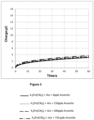
- FIG. 4a The chronoamperometry results for experiment 1 are shown in Figures 4a and 4b.
- Figure 4b is a magnified plot of Figure 4a .
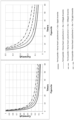
- Figure 5 shows a plot of the integration of the chronoamperometry data shown in Figures 4a and 4b .
- FIG. 6a The chronoamperometry results for experiment 2 are shown in Figures 6a and 6b.
- Figure 6b is a magnified plot of Figure 6a .
- Figure 7 shows a plot of the integration of the chronoamperometry data shown in Figures 6a and 6b .
Landscapes
- Chemical & Material Sciences (AREA)
- Life Sciences & Earth Sciences (AREA)
- Organic Chemistry (AREA)
- Health & Medical Sciences (AREA)
- Wood Science & Technology (AREA)
- Engineering & Computer Science (AREA)
- Zoology (AREA)
- General Health & Medical Sciences (AREA)
- Biochemistry (AREA)
- Proteomics, Peptides & Aminoacids (AREA)
- Genetics & Genomics (AREA)
- Bioinformatics & Cheminformatics (AREA)
- General Engineering & Computer Science (AREA)
- Immunology (AREA)
- Molecular Biology (AREA)
- Analytical Chemistry (AREA)
- Physics & Mathematics (AREA)
- Biophysics (AREA)
- Biotechnology (AREA)
- Microbiology (AREA)
- Hematology (AREA)
- Chemical Kinetics & Catalysis (AREA)
- Electrochemistry (AREA)
- General Physics & Mathematics (AREA)
- Pathology (AREA)
- Measuring Or Testing Involving Enzymes Or Micro-Organisms (AREA)
Claims (12)
- Vorrichtung zum Nachweis des Vorhandenseins eines Arsenderivat-Analyten in einer Probe, umfassend(i) mindestens eine Elektrode,(ii) ein Arsenitoxidase-Enzym und(iii) einen ersten Redoxmediator;dadurch gekennzeichnet, dass der erste Redoxmediator Cytochrom C ist, und die Vorrichtung weiter einen zweiten Redoxmediator umfasst, wobei der zweite Redoxmediator Ferricyanid ist.
- Vorrichtung nach Anspruch 1, wobei die Elektrode aus einem oder mehreren leitenden Materialien besteht, die bevorzugt aus Kohlenstoff, Kohlenstoff-Nanoröhren, Graphen, Graphit, Gold, Palladium, Platin, glasartigem Kohlenstoff, nanoskaligen Metalloxiden oder nanoskaligem Metall ausgewählt sind.
- Vorrichtung nach Anspruch 2, wobei die Elektrode eine metallische gesplitterte Dünnfilmelektrode aus Gold, Platin oder Palladium ist, oder wobei die Elektrode eine unmodifizierte makroskopische metallische Dünnfilmelektrode ist.
- Vorrichtung nach einem vorstehenden Anspruch, wobei der erste Redoxmediator ein Elektron vom Enzym aufnimmt und ein Elektron auf den zweiten Redoxmediator überträgt, und/oder wobei der zweite Redoxmediator ein Elektron vom ersten Redoxmediator aufnimmt und ein Elektron auf die Elektrode überträgt.
- Vorrichtung nach einem vorstehenden Anspruch, wobei der Analyt Arsenit (AsIII) ist.
- Vorrichtung nach einem vorstehenden Anspruch, wobei das Arsenitoxidase-Enzym eine molybdänhaltige Arsenitoxidase Aio aus Rhizobium sp. NT-26 ist oder von Aio aus Rhizobium sp. NT-26 abgeleitet ist.
- Vorrichtung nach Anspruch 6, wobei das Arsenitoxidase-Enzym modifiziert ist, um die Translokation in das Periplasma zu verhindern, wobei das Enzym die native AioA-Untereinheit von Rhizobium sp. NT-26 oder eine Variante, ein Homolog oder ein Derivat davon und die native AioB-Untereinheit von Rhizobium sp. NT-26 oder eine Variante, ein Homolog oder ein Derivat davon umfasst, wobei ein Teil der nativen AioB-Untereinheit, der der Translokationssignalsequenz oder einem funktionellen Fragment davon entspricht, modifiziert ist, wobei gegebenenfalls ein Teil des nativen aioB-Gens, der die Translokationssignalsequenz kodiert, oder ein Teil davon, der ein funktionelles Fragment der Translokationssignalsequenz kodiert, modifiziert ist, wobei gegebenenfalls der Teil des nativen aioB-Gens als SEQ-ID NR. 6 identifiziert ist, oder ein Homolog von SEQ-ID NR. 6, das ein funktionelles Fragment der Translokationssignalsequenz kodiert, das als SEQ-ID NR. 2 identifiziert ist.
- Vorrichtung nach Anspruch 7, wobei es sich bei der Modifikation um eine Löschung handelt und/oder wobei die AioB-Untereinheit die als SEQ-ID NR. 3 identifizierte Peptidsequenz oder eine Variante, ein Homolog oder ein Derivat davon umfasst oder durch die Polynukleotidsequenz von SEQ-ID NR. 7 oder eine Variante, ein Homolog oder ein Derivat davon kodiert wird, oder wobei die AioA-Untereinheit die als SEQ-ID NR. 4 identifizierte Peptidsequenz oder eine Variante, ein Homolog oder ein Derivat davon umfasst oder durch die Polynukleotidsequenz von SEQ-ID NR. 8 oder eine Variante, ein Homolog oder ein Derivat davon kodiert wird.
- Vorrichtung nach einem vorstehenden Anspruch, die weiter eine Referenzelektrode umfasst, wobei die Referenzelektrode bevorzugt ein Ag/AgCl-Referenzredoxpaar umfasst.
- Vorrichtung nach einem der vorstehenden Ansprüche, wobei die Vorrichtung ein Teststreifen mit einer mikrostrukturierten Oberfläche ist.
- Verwendung einer Vorrichtung nach einem vorstehenden Anspruch als Biosensor zum Nachweis der Anwesenheit von Arsenit in einer Probe.
- Verwendung nach Anspruch 11, wobei die Probe eine flüssige Probe ist, gegebenenfalls wobei die Probe einen neutralen pH-Wert von etwa pH 7 aufweist.
Applications Claiming Priority (2)
| Application Number | Priority Date | Filing Date | Title |
|---|---|---|---|
| GBGB1517275.2A GB201517275D0 (en) | 2015-09-30 | 2015-09-30 | Biosensor |
| PCT/GB2016/053058 WO2017055873A1 (en) | 2015-09-30 | 2016-09-30 | Dual mediator biosensor |
Publications (2)
| Publication Number | Publication Date |
|---|---|
| EP3356809A1 EP3356809A1 (de) | 2018-08-08 |
| EP3356809B1 true EP3356809B1 (de) | 2024-05-08 |
Family
ID=54544336
Family Applications (1)
| Application Number | Title | Priority Date | Filing Date |
|---|---|---|---|
| EP16794388.5A Active EP3356809B1 (de) | 2015-09-30 | 2016-09-30 | Doppelmediator-biosensor |
Country Status (4)
| Country | Link |
|---|---|
| US (1) | US10975410B2 (de) |
| EP (1) | EP3356809B1 (de) |
| GB (1) | GB201517275D0 (de) |
| WO (1) | WO2017055873A1 (de) |
Family Cites Families (4)
| Publication number | Priority date | Publication date | Assignee | Title |
|---|---|---|---|---|
| US8057659B2 (en) | 2006-06-27 | 2011-11-15 | Agamatrix, Inc. | Detection of analytes in a dual-mediator electrochemical test strip |
| KR20190026948A (ko) | 2011-07-27 | 2019-03-13 | 아가매트릭스, 인코포레이티드 | 전기화학 시험 스트립용 시약 |
| JP5684767B2 (ja) | 2011-09-26 | 2015-03-18 | アークレイ株式会社 | 乳酸センサ |
| GB201118026D0 (en) * | 2011-10-19 | 2011-11-30 | Bio Nano Consulting Ltd | Biosensor |
-
2015
- 2015-09-30 GB GBGB1517275.2A patent/GB201517275D0/en not_active Ceased
-
2016
- 2016-09-30 EP EP16794388.5A patent/EP3356809B1/de active Active
- 2016-09-30 WO PCT/GB2016/053058 patent/WO2017055873A1/en not_active Ceased
- 2016-09-30 US US15/763,654 patent/US10975410B2/en active Active
Non-Patent Citations (1)
| Title |
|---|
| PALRAJ KALIMUTHU ET AL: "Electrochemically driven catalysis of Rhizobium sp. NT-26 arsenite oxidase with its native electron acceptor cytochrome c552", BIOCHIMICA ET BIOPHYSICA ACTA. BIOENERGETICS., vol. 1837, no. 1, 1 January 2014 (2014-01-01), NL, pages 112 - 120, XP055585059, ISSN: 0005-2728, DOI: 10.1016/j.bbabio.2013.07.010 * |
Also Published As
| Publication number | Publication date |
|---|---|
| GB201517275D0 (en) | 2015-11-11 |
| EP3356809A1 (de) | 2018-08-08 |
| US10975410B2 (en) | 2021-04-13 |
| WO2017055873A1 (en) | 2017-04-06 |
| US20180282777A1 (en) | 2018-10-04 |
Similar Documents
| Publication | Publication Date | Title |
|---|---|---|
| US9353395B2 (en) | Glucose dehydrogenase/cytochrome fusion protein | |
| Male et al. | Biosensor for arsenite using arsenite oxidase and multiwalled carbon nanotube modified electrodes | |
| US9777306B2 (en) | Modified arsenite oxidase and a biosensor for detecting arsenite | |
| EP2748311B1 (de) | Glukoseoxidase | |
| Schäfer et al. | Novel, oxygen-insensitive group 5 [NiFe]-hydrogenase in Ralstonia eutropha | |
| Neufeld et al. | Genetically engineered p fabA p fabR bacteria: an electrochemical whole cell biosensor for detection of water toxicity | |
| JP2014528712A (ja) | ペニシリウム・アマガサキエンスのグルコースオキシダーゼ突然変異体 | |
| EP2562250A1 (de) | Glukoseoxidase | |
| WO2014012089A1 (en) | Biosensors for organic and inorganic arsenic | |
| Lzaod et al. | Harnessing recombinant Bacillus licheniformis CotA laccase for electrochemical detection of catechol | |
| US10975410B2 (en) | Dual mediator biosensor | |
| Pepi et al. | A comparison of mer:: lux whole cell biosensors and moss, a bioindicator, for estimating mercury pollution | |
| Guarín et al. | Rapid electrochemical detection of Staphylococcus aureus based on screen-printed gold electrodes modified with cysteine and Guinea grass (Panicum maximum) peroxidase | |
| US20210155675A1 (en) | Mutant Cytochrome Protein and Use Thereof | |
| JP2012039949A (ja) | ピロロキノリンキノン依存性グルコースデヒドロゲナーゼ変異体、及びその利用 | |
| Wang et al. | Amperometric Flow‐Biosensor for Cyanide Based on an Inhibitory Effect upon Bioelectrocatalytic Reduction of Oxygen by Peroxidase‐Modified Carbon‐Felt | |
| US6511592B1 (en) | Biosensor for pentachlorophenol | |
| CN115710306A (zh) | 一种锑选择性SxArsR蛋白及其构建的锑污染监测全细胞微生物传感器 | |
| CN113717260A (zh) | 一种多溴联苯醚感受蛋白及其构建的全细胞微生物传感器 | |
| JP5077870B2 (ja) | ニトロ化合物を検出するためのニトロレダクターゼを用いた検知デバイス | |
| JP6520106B2 (ja) | 変異型ピロロキノリンキノン依存性グルコース脱水素酵素、変異型ピロロキノリンキノン依存性グルコース脱水素酵素をコードする単離核酸分子、変異型ピロロキノリンキノン依存性グルコース脱水素酵素を固定した酵素電極、酵素電極を備えたバイオ電池、及びバイオセンサー | |
| JPWO2006022235A1 (ja) | 紅色非硫黄細菌の色素合成遺伝子を利用したバイオセンサー及びかかるバイオセンサーの作成方法 | |
| KR101247157B1 (ko) | 카드뮴 검출용 바이오센서 및 이의 제조 방법 | |
| Watanabe et al. | Fructose biosensor based on D-fructose dehydrogenase and phenanthroline cobalt complex as a mediator |
Legal Events
| Date | Code | Title | Description |
|---|---|---|---|
| STAA | Information on the status of an ep patent application or granted ep patent |
Free format text: STATUS: UNKNOWN |
|
| STAA | Information on the status of an ep patent application or granted ep patent |
Free format text: STATUS: THE INTERNATIONAL PUBLICATION HAS BEEN MADE |
|
| PUAI | Public reference made under article 153(3) epc to a published international application that has entered the european phase |
Free format text: ORIGINAL CODE: 0009012 |
|
| STAA | Information on the status of an ep patent application or granted ep patent |
Free format text: STATUS: REQUEST FOR EXAMINATION WAS MADE |
|
| 17P | Request for examination filed |
Effective date: 20180327 |
|
| AK | Designated contracting states |
Kind code of ref document: A1 Designated state(s): AL AT BE BG CH CY CZ DE DK EE ES FI FR GB GR HR HU IE IS IT LI LT LU LV MC MK MT NL NO PL PT RO RS SE SI SK SM TR |
|
| AX | Request for extension of the european patent |
Extension state: BA ME |
|
| RIN1 | Information on inventor provided before grant (corrected) |
Inventor name: CASS, ANTHONY EDWARD GEORGE |
|
| RAP1 | Party data changed (applicant data changed or rights of an application transferred) |
Owner name: THE BIO NANO CENTRE LIMITED |
|
| DAV | Request for validation of the european patent (deleted) | ||
| DAX | Request for extension of the european patent (deleted) | ||
| STAA | Information on the status of an ep patent application or granted ep patent |
Free format text: STATUS: EXAMINATION IS IN PROGRESS |
|
| 17Q | First examination report despatched |
Effective date: 20190510 |
|
| GRAP | Despatch of communication of intention to grant a patent |
Free format text: ORIGINAL CODE: EPIDOSNIGR1 |
|
| STAA | Information on the status of an ep patent application or granted ep patent |
Free format text: STATUS: GRANT OF PATENT IS INTENDED |
|
| INTG | Intention to grant announced |
Effective date: 20231201 |
|
| GRAS | Grant fee paid |
Free format text: ORIGINAL CODE: EPIDOSNIGR3 |
|
| GRAA | (expected) grant |
Free format text: ORIGINAL CODE: 0009210 |
|
| STAA | Information on the status of an ep patent application or granted ep patent |
Free format text: STATUS: THE PATENT HAS BEEN GRANTED |
|
| AK | Designated contracting states |
Kind code of ref document: B1 Designated state(s): AL AT BE BG CH CY CZ DE DK EE ES FI FR GB GR HR HU IE IS IT LI LT LU LV MC MK MT NL NO PL PT RO RS SE SI SK SM TR |
|
| REG | Reference to a national code |
Ref country code: GB Ref legal event code: FG4D |
|
| REG | Reference to a national code |
Ref country code: CH Ref legal event code: EP |
|
| REG | Reference to a national code |
Ref country code: DE Ref legal event code: R096 Ref document number: 602016087440 Country of ref document: DE |
|
| REG | Reference to a national code |
Ref country code: IE Ref legal event code: FG4D |
|
| REG | Reference to a national code |
Ref country code: LT Ref legal event code: MG9D |
|
| REG | Reference to a national code |
Ref country code: NL Ref legal event code: MP Effective date: 20240508 |
|
| PG25 | Lapsed in a contracting state [announced via postgrant information from national office to epo] |
Ref country code: IS Free format text: LAPSE BECAUSE OF FAILURE TO SUBMIT A TRANSLATION OF THE DESCRIPTION OR TO PAY THE FEE WITHIN THE PRESCRIBED TIME-LIMIT Effective date: 20240908 |
|
| PG25 | Lapsed in a contracting state [announced via postgrant information from national office to epo] |
Ref country code: BG Free format text: LAPSE BECAUSE OF FAILURE TO SUBMIT A TRANSLATION OF THE DESCRIPTION OR TO PAY THE FEE WITHIN THE PRESCRIBED TIME-LIMIT Effective date: 20240508 |
|
| PG25 | Lapsed in a contracting state [announced via postgrant information from national office to epo] |
Ref country code: FI Free format text: LAPSE BECAUSE OF FAILURE TO SUBMIT A TRANSLATION OF THE DESCRIPTION OR TO PAY THE FEE WITHIN THE PRESCRIBED TIME-LIMIT Effective date: 20240508 Ref country code: HR Free format text: LAPSE BECAUSE OF FAILURE TO SUBMIT A TRANSLATION OF THE DESCRIPTION OR TO PAY THE FEE WITHIN THE PRESCRIBED TIME-LIMIT Effective date: 20240508 |
|
| PG25 | Lapsed in a contracting state [announced via postgrant information from national office to epo] |
Ref country code: GR Free format text: LAPSE BECAUSE OF FAILURE TO SUBMIT A TRANSLATION OF THE DESCRIPTION OR TO PAY THE FEE WITHIN THE PRESCRIBED TIME-LIMIT Effective date: 20240809 |
|
| PG25 | Lapsed in a contracting state [announced via postgrant information from national office to epo] |
Ref country code: PT Free format text: LAPSE BECAUSE OF FAILURE TO SUBMIT A TRANSLATION OF THE DESCRIPTION OR TO PAY THE FEE WITHIN THE PRESCRIBED TIME-LIMIT Effective date: 20240909 |
|
| REG | Reference to a national code |
Ref country code: AT Ref legal event code: MK05 Ref document number: 1685378 Country of ref document: AT Kind code of ref document: T Effective date: 20240508 |
|
| PG25 | Lapsed in a contracting state [announced via postgrant information from national office to epo] |
Ref country code: NL Free format text: LAPSE BECAUSE OF FAILURE TO SUBMIT A TRANSLATION OF THE DESCRIPTION OR TO PAY THE FEE WITHIN THE PRESCRIBED TIME-LIMIT Effective date: 20240508 |
|
| PG25 | Lapsed in a contracting state [announced via postgrant information from national office to epo] |
Ref country code: ES Free format text: LAPSE BECAUSE OF FAILURE TO SUBMIT A TRANSLATION OF THE DESCRIPTION OR TO PAY THE FEE WITHIN THE PRESCRIBED TIME-LIMIT Effective date: 20240508 |
|
| PG25 | Lapsed in a contracting state [announced via postgrant information from national office to epo] |
Ref country code: AT Free format text: LAPSE BECAUSE OF FAILURE TO SUBMIT A TRANSLATION OF THE DESCRIPTION OR TO PAY THE FEE WITHIN THE PRESCRIBED TIME-LIMIT Effective date: 20240508 |
|
| PG25 | Lapsed in a contracting state [announced via postgrant information from national office to epo] |
Ref country code: PL Free format text: LAPSE BECAUSE OF FAILURE TO SUBMIT A TRANSLATION OF THE DESCRIPTION OR TO PAY THE FEE WITHIN THE PRESCRIBED TIME-LIMIT Effective date: 20240508 |
|
| PG25 | Lapsed in a contracting state [announced via postgrant information from national office to epo] |
Ref country code: LV Free format text: LAPSE BECAUSE OF FAILURE TO SUBMIT A TRANSLATION OF THE DESCRIPTION OR TO PAY THE FEE WITHIN THE PRESCRIBED TIME-LIMIT Effective date: 20240508 |
|
| PG25 | Lapsed in a contracting state [announced via postgrant information from national office to epo] |
Ref country code: PT Free format text: LAPSE BECAUSE OF FAILURE TO SUBMIT A TRANSLATION OF THE DESCRIPTION OR TO PAY THE FEE WITHIN THE PRESCRIBED TIME-LIMIT Effective date: 20240909 Ref country code: PL Free format text: LAPSE BECAUSE OF FAILURE TO SUBMIT A TRANSLATION OF THE DESCRIPTION OR TO PAY THE FEE WITHIN THE PRESCRIBED TIME-LIMIT Effective date: 20240508 Ref country code: NO Free format text: LAPSE BECAUSE OF FAILURE TO SUBMIT A TRANSLATION OF THE DESCRIPTION OR TO PAY THE FEE WITHIN THE PRESCRIBED TIME-LIMIT Effective date: 20240808 Ref country code: NL Free format text: LAPSE BECAUSE OF FAILURE TO SUBMIT A TRANSLATION OF THE DESCRIPTION OR TO PAY THE FEE WITHIN THE PRESCRIBED TIME-LIMIT Effective date: 20240508 Ref country code: LV Free format text: LAPSE BECAUSE OF FAILURE TO SUBMIT A TRANSLATION OF THE DESCRIPTION OR TO PAY THE FEE WITHIN THE PRESCRIBED TIME-LIMIT Effective date: 20240508 Ref country code: IS Free format text: LAPSE BECAUSE OF FAILURE TO SUBMIT A TRANSLATION OF THE DESCRIPTION OR TO PAY THE FEE WITHIN THE PRESCRIBED TIME-LIMIT Effective date: 20240908 Ref country code: HR Free format text: LAPSE BECAUSE OF FAILURE TO SUBMIT A TRANSLATION OF THE DESCRIPTION OR TO PAY THE FEE WITHIN THE PRESCRIBED TIME-LIMIT Effective date: 20240508 Ref country code: GR Free format text: LAPSE BECAUSE OF FAILURE TO SUBMIT A TRANSLATION OF THE DESCRIPTION OR TO PAY THE FEE WITHIN THE PRESCRIBED TIME-LIMIT Effective date: 20240809 Ref country code: FI Free format text: LAPSE BECAUSE OF FAILURE TO SUBMIT A TRANSLATION OF THE DESCRIPTION OR TO PAY THE FEE WITHIN THE PRESCRIBED TIME-LIMIT Effective date: 20240508 Ref country code: ES Free format text: LAPSE BECAUSE OF FAILURE TO SUBMIT A TRANSLATION OF THE DESCRIPTION OR TO PAY THE FEE WITHIN THE PRESCRIBED TIME-LIMIT Effective date: 20240508 Ref country code: BG Free format text: LAPSE BECAUSE OF FAILURE TO SUBMIT A TRANSLATION OF THE DESCRIPTION OR TO PAY THE FEE WITHIN THE PRESCRIBED TIME-LIMIT Effective date: 20240508 Ref country code: AT Free format text: LAPSE BECAUSE OF FAILURE TO SUBMIT A TRANSLATION OF THE DESCRIPTION OR TO PAY THE FEE WITHIN THE PRESCRIBED TIME-LIMIT Effective date: 20240508 Ref country code: RS Free format text: LAPSE BECAUSE OF FAILURE TO SUBMIT A TRANSLATION OF THE DESCRIPTION OR TO PAY THE FEE WITHIN THE PRESCRIBED TIME-LIMIT Effective date: 20240808 |
|
| PG25 | Lapsed in a contracting state [announced via postgrant information from national office to epo] |
Ref country code: DK Free format text: LAPSE BECAUSE OF FAILURE TO SUBMIT A TRANSLATION OF THE DESCRIPTION OR TO PAY THE FEE WITHIN THE PRESCRIBED TIME-LIMIT Effective date: 20240508 |
|
| PG25 | Lapsed in a contracting state [announced via postgrant information from national office to epo] |
Ref country code: EE Free format text: LAPSE BECAUSE OF FAILURE TO SUBMIT A TRANSLATION OF THE DESCRIPTION OR TO PAY THE FEE WITHIN THE PRESCRIBED TIME-LIMIT Effective date: 20240508 |
|
| PG25 | Lapsed in a contracting state [announced via postgrant information from national office to epo] |
Ref country code: CZ Free format text: LAPSE BECAUSE OF FAILURE TO SUBMIT A TRANSLATION OF THE DESCRIPTION OR TO PAY THE FEE WITHIN THE PRESCRIBED TIME-LIMIT Effective date: 20240508 |
|
| PG25 | Lapsed in a contracting state [announced via postgrant information from national office to epo] |
Ref country code: SK Free format text: LAPSE BECAUSE OF FAILURE TO SUBMIT A TRANSLATION OF THE DESCRIPTION OR TO PAY THE FEE WITHIN THE PRESCRIBED TIME-LIMIT Effective date: 20240508 Ref country code: RO Free format text: LAPSE BECAUSE OF FAILURE TO SUBMIT A TRANSLATION OF THE DESCRIPTION OR TO PAY THE FEE WITHIN THE PRESCRIBED TIME-LIMIT Effective date: 20240508 |
|
| PG25 | Lapsed in a contracting state [announced via postgrant information from national office to epo] |
Ref country code: SM Free format text: LAPSE BECAUSE OF FAILURE TO SUBMIT A TRANSLATION OF THE DESCRIPTION OR TO PAY THE FEE WITHIN THE PRESCRIBED TIME-LIMIT Effective date: 20240508 |
|
| PG25 | Lapsed in a contracting state [announced via postgrant information from national office to epo] |
Ref country code: SM Free format text: LAPSE BECAUSE OF FAILURE TO SUBMIT A TRANSLATION OF THE DESCRIPTION OR TO PAY THE FEE WITHIN THE PRESCRIBED TIME-LIMIT Effective date: 20240508 Ref country code: SK Free format text: LAPSE BECAUSE OF FAILURE TO SUBMIT A TRANSLATION OF THE DESCRIPTION OR TO PAY THE FEE WITHIN THE PRESCRIBED TIME-LIMIT Effective date: 20240508 Ref country code: RO Free format text: LAPSE BECAUSE OF FAILURE TO SUBMIT A TRANSLATION OF THE DESCRIPTION OR TO PAY THE FEE WITHIN THE PRESCRIBED TIME-LIMIT Effective date: 20240508 Ref country code: EE Free format text: LAPSE BECAUSE OF FAILURE TO SUBMIT A TRANSLATION OF THE DESCRIPTION OR TO PAY THE FEE WITHIN THE PRESCRIBED TIME-LIMIT Effective date: 20240508 Ref country code: DK Free format text: LAPSE BECAUSE OF FAILURE TO SUBMIT A TRANSLATION OF THE DESCRIPTION OR TO PAY THE FEE WITHIN THE PRESCRIBED TIME-LIMIT Effective date: 20240508 Ref country code: CZ Free format text: LAPSE BECAUSE OF FAILURE TO SUBMIT A TRANSLATION OF THE DESCRIPTION OR TO PAY THE FEE WITHIN THE PRESCRIBED TIME-LIMIT Effective date: 20240508 |
|
| PG25 | Lapsed in a contracting state [announced via postgrant information from national office to epo] |
Ref country code: IT Free format text: LAPSE BECAUSE OF FAILURE TO SUBMIT A TRANSLATION OF THE DESCRIPTION OR TO PAY THE FEE WITHIN THE PRESCRIBED TIME-LIMIT Effective date: 20240508 |
|
| REG | Reference to a national code |
Ref country code: DE Ref legal event code: R097 Ref document number: 602016087440 Country of ref document: DE |
|
| PLBE | No opposition filed within time limit |
Free format text: ORIGINAL CODE: 0009261 |
|
| STAA | Information on the status of an ep patent application or granted ep patent |
Free format text: STATUS: NO OPPOSITION FILED WITHIN TIME LIMIT |
|
| REG | Reference to a national code |
Ref country code: DE Ref legal event code: R119 Ref document number: 602016087440 Country of ref document: DE |
|
| 26N | No opposition filed |
Effective date: 20250211 |
|
| PG25 | Lapsed in a contracting state [announced via postgrant information from national office to epo] |
Ref country code: MC Free format text: LAPSE BECAUSE OF FAILURE TO SUBMIT A TRANSLATION OF THE DESCRIPTION OR TO PAY THE FEE WITHIN THE PRESCRIBED TIME-LIMIT Effective date: 20240508 Ref country code: SI Free format text: LAPSE BECAUSE OF FAILURE TO SUBMIT A TRANSLATION OF THE DESCRIPTION OR TO PAY THE FEE WITHIN THE PRESCRIBED TIME-LIMIT Effective date: 20240508 |
|
| REG | Reference to a national code |
Ref country code: CH Ref legal event code: PL |
|
| PG25 | Lapsed in a contracting state [announced via postgrant information from national office to epo] |
Ref country code: LU Free format text: LAPSE BECAUSE OF NON-PAYMENT OF DUE FEES Effective date: 20240930 |
|
| PG25 | Lapsed in a contracting state [announced via postgrant information from national office to epo] |
Ref country code: DE Free format text: LAPSE BECAUSE OF NON-PAYMENT OF DUE FEES Effective date: 20250401 |
|
| REG | Reference to a national code |
Ref country code: BE Ref legal event code: MM Effective date: 20240930 |
|
| PG25 | Lapsed in a contracting state [announced via postgrant information from national office to epo] |
Ref country code: BE Free format text: LAPSE BECAUSE OF NON-PAYMENT OF DUE FEES Effective date: 20240930 |
|
| PG25 | Lapsed in a contracting state [announced via postgrant information from national office to epo] |
Ref country code: FR Free format text: LAPSE BECAUSE OF NON-PAYMENT OF DUE FEES Effective date: 20240930 |
|
| PG25 | Lapsed in a contracting state [announced via postgrant information from national office to epo] |
Ref country code: CH Free format text: LAPSE BECAUSE OF NON-PAYMENT OF DUE FEES Effective date: 20240930 |
|
| PG25 | Lapsed in a contracting state [announced via postgrant information from national office to epo] |
Ref country code: IE Free format text: LAPSE BECAUSE OF NON-PAYMENT OF DUE FEES Effective date: 20240930 |
|
| PG25 | Lapsed in a contracting state [announced via postgrant information from national office to epo] |
Ref country code: SE Free format text: LAPSE BECAUSE OF FAILURE TO SUBMIT A TRANSLATION OF THE DESCRIPTION OR TO PAY THE FEE WITHIN THE PRESCRIBED TIME-LIMIT Effective date: 20240508 |
|
| PG25 | Lapsed in a contracting state [announced via postgrant information from national office to epo] |
Ref country code: CY Free format text: LAPSE BECAUSE OF FAILURE TO SUBMIT A TRANSLATION OF THE DESCRIPTION OR TO PAY THE FEE WITHIN THE PRESCRIBED TIME-LIMIT; INVALID AB INITIO Effective date: 20160930 |
|
| PG25 | Lapsed in a contracting state [announced via postgrant information from national office to epo] |
Ref country code: HU Free format text: LAPSE BECAUSE OF FAILURE TO SUBMIT A TRANSLATION OF THE DESCRIPTION OR TO PAY THE FEE WITHIN THE PRESCRIBED TIME-LIMIT; INVALID AB INITIO Effective date: 20160930 |
|
| PGFP | Annual fee paid to national office [announced via postgrant information from national office to epo] |
Ref country code: GB Payment date: 20260303 Year of fee payment: 10 |