EP2754576A1 - Verschließbare Türanordnung für einen Nutzfahrzeugaufbau - Google Patents
Verschließbare Türanordnung für einen Nutzfahrzeugaufbau Download PDFInfo
- Publication number
- EP2754576A1 EP2754576A1 EP14150470.4A EP14150470A EP2754576A1 EP 2754576 A1 EP2754576 A1 EP 2754576A1 EP 14150470 A EP14150470 A EP 14150470A EP 2754576 A1 EP2754576 A1 EP 2754576A1
- Authority
- EP
- European Patent Office
- Prior art keywords
- profile
- door
- channel
- toothing
- lockable door
- Prior art date
- Legal status (The legal status is an assumption and is not a legal conclusion. Google has not performed a legal analysis and makes no representation as to the accuracy of the status listed.)
- Withdrawn
Links
Images

Classifications
-
- B—PERFORMING OPERATIONS; TRANSPORTING
- B60—VEHICLES IN GENERAL
- B60J—WINDOWS, WINDSCREENS, NON-FIXED ROOFS, DOORS, OR SIMILAR DEVICES FOR VEHICLES; REMOVABLE EXTERNAL PROTECTIVE COVERINGS SPECIALLY ADAPTED FOR VEHICLES
- B60J5/00—Doors
- B60J5/10—Doors arranged at the vehicle rear
- B60J5/108—Doors arranged at the vehicle rear for load transporting vehicles or public transport, e.g. lorries, trucks, buses
-
- E—FIXED CONSTRUCTIONS
- E05—LOCKS; KEYS; WINDOW OR DOOR FITTINGS; SAFES
- E05B—LOCKS; ACCESSORIES THEREFOR; HANDCUFFS
- E05B83/00—Vehicle locks specially adapted for particular types of wing or vehicle
- E05B83/02—Locks for railway freight-cars, freight containers or the like; Locks for the cargo compartments of commercial lorries, trucks or vans
- E05B83/08—Locks for railway freight-cars, freight containers or the like; Locks for the cargo compartments of commercial lorries, trucks or vans with elongated bars for actuating the fastening means
- E05B83/10—Rotary bars
-
- F—MECHANICAL ENGINEERING; LIGHTING; HEATING; WEAPONS; BLASTING
- F16—ENGINEERING ELEMENTS AND UNITS; GENERAL MEASURES FOR PRODUCING AND MAINTAINING EFFECTIVE FUNCTIONING OF MACHINES OR INSTALLATIONS; THERMAL INSULATION IN GENERAL
- F16B—DEVICES FOR FASTENING OR SECURING CONSTRUCTIONAL ELEMENTS OR MACHINE PARTS TOGETHER, e.g. NAILS, BOLTS, CIRCLIPS, CLAMPS, CLIPS OR WEDGES; JOINTS OR JOINTING
- F16B5/00—Joining sheets or plates, e.g. panels, to one another or to strips or bars parallel to them
- F16B5/0004—Joining sheets, plates or panels in abutting relationship
- F16B5/0008—Joining sheets, plates or panels in abutting relationship by moving the sheets, plates or panels substantially in their own plane, perpendicular to the abutting edge
Definitions
- the invention relates to a closable door arrangement for a commercial vehicle body consisting of a loading floor, a vehicle roof and two side walls, with a first door pivotally storable with respect to the first side wall of the structure, a second door pivotally storable with respect to the second side wall of the structure, and with at least one one of the doors arranged and this opposite movably mounted locking bar for locking the door to the loading floor and / or the vehicle roof.
- Such closable door assemblies are z. B. from the DE 299 24 647 U1 , of the DE 94 19 874 U1 and the DE 102 49 273 A1 known.
- Such door assemblies are usually composed of several components that may have relatively large manufacturing tolerances due to production. This complicates the exact adjustment of the swing doors and deteriorates the accuracy of fit of the locking and locking means. The exact adjustment is important above all for the reliability of the seals often present on the doors.
- the invention has for its object to come by constructive measures during assembly both to facilitate handling of the components of the door assembly and to an improved adjustment of the door assembly.
- the door composed of several interconnected along their longitudinal edges profile elements that at least one of the profile elements to the adjacent profile element has a channel that the adjacent profile element has a toothing in the longitudinal direction of the profile extending tooth structures, which is positively connected to a correspondingly shaped toothing engaged, one of the two gears an internal toothing, and the other of the two gears is an external toothing, and that the correspondingly shaped toothing is arranged on the inside of the channel, or is arranged at an inserted into the channel compensation profile, wherein the with the Internal toothing provided profile element in the toothing region has a thickness which is substantially equal to the inner width of the channel.
- Such a trained door assembly can be composed of individual, partly identically designed profile elements with usually a width in the range of 5 cm to 30 cm. Since these profile elements are hollow and thus weight-reduced, they are easy to handle during assembly. Furthermore, interchanging with identical profile elements can remain inconsequential for the achievable mounting state of the door arrangement. By the mutually corresponding teeth of two of the profile elements is a correction possibility caused by manufacturing tolerances deviations transverse to the longitudinal direction of the profile elements, d. H. the door width, created. This leads to a better adjustment of the two doors on the commercial vehicle body, which in turn allows an improved closing and locking situation of the door assembly, as well as a higher accuracy of fit in the sealing areas.
- the door composed of vertically arranged profile elements, and that at least one profile element has a continuous over its entire length channel for supporting the locking bar.
- This allows a storage of the locking bar, for example, the rotary rod of an espagnolette lock, within the profile element, d.
- H Protected against environmental influences which are not to be underestimated in the commercial vehicle sector and which often lead to disturbances.
- the edge profile has the channel in which the closing rod is arranged.
- the two outer profile elements as, preferably recesses for door seals having, edge profiles configured.
- the edge profile arranged towards the middle of the commercial vehicle body has the channel with an inner width which is substantially equal to the thickness of all other profile elements.
- the correspondingly designed toothing is arranged on an inserted into the channel of an edge profile compensation profile internal teeth, and the compensation profile and the adjacent profile element are interlocked with their teeth in the channel of the edge profile. Since they usually have the inward-facing channels anyway, it allows such an arrangement in a hinged door to integrate a tolerance compensation, in which conventional door edge profiles can be used.
- the sensitive teeth can also be protected within such a channel of one of these edge profiles also against environmental influences. The fact that the teeth are completely inserted into the channel of an edge profile and thus also disappear visually, also a homogeneous door surface can be achieved without once more and once less wide slots.
- the compensation profile U-shaped configured with two legs, and arranged the internal toothing on the legs.
- the toothing region of the adjacent profile element has, in this case, for the compensation profile, two extensions which have the outer toothing.
- the compensation profile has a simple basic shape, can thus be manufactured easily and represents the smallest possible design for the compensation profile. This allows a low weight, which in turn can have a positive effect on the assembly.
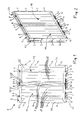
- FIG. 1 shows the rear view of a commercial vehicle body 1, such as a truck or a truck trailer.
- the front side of the structure 1 is closed by a door arrangement of two doors 11, 12.
- the first door 11 is connected to a vertical portal column 21 at the end of a first Side wall, and the second door 12 pivotally mounted on a vertical portal column 22 at the end of a second side wall, via a plurality of hinges 3.
- the structure 1 is a box structure with rigid side walls, then the pivotable mounting of the doors 11, 12 instead of at the portal columns also directly on the side walls done.
- espagnolette locks 4 To the espagnolette locks 4 are designed as turning rods lock rods 5, which in FIG. 1 are shown in dashed lines and the doors 11, 12 penetrate vertically.
- the pivot rods 5 go in the area of the vehicle roof 6 of the box body 1 in each case a rotary latch 7.
- the rotary latch 7 is rotatably connected to the respective rotary rod 5 and engages in a receiving pocket 8 at the top of the structure 1 a.
- the rotary operation of the rotary rod 5 via a shutter lever 9 of the rotary rod closure 4.
- the locking lever 9 is fixed in the closed state in a base plate 10 of the rotary rod closure 4 and blocked therein.
- the base plate 10 is in turn fixed to the loading floor 13 of the box body.
- FIG. 2 is the commercial vehicle body 1 after FIG. 1 shown laterally rotated in a perspective view, so that the portal columns 21, 22 of the side walls, on which the two doors 11, 12 are hinged on the hinges 3, can be seen.
- FIG. 3 shows a horizontal section through the second door 12 after FIG. 1 with an omission in the middle for better presentation.
- the door 12 is in the embodiment of the side edges forming edge profiles 31, 32, a plurality of identical side wall profiles 25, a compensation profile 26, a compensation profile adjacent profile element 27 and a final profile 28 together.
- the inner edge profile 31 of the second door 12 is adjacent as in the Figures 1 and 2 can be seen directly on the first door 11 and has a recess 35 for receiving a door seal, not shown, which seals the two doors 11, 12 against each other.
- the inner edge profile 31 has a channel 36 which passes through the entire length of the inner edge profile 31.
- the wall of the channel 36 serves to guide or to store a locking rod 5 arranged in the channel 36.
- the locking bar 5 is preferably a turning bar.
- the inner edge profile 31 opens to a U-shaped and channel-shaped channel 38 which extends along the longitudinal direction of the edge profile 31, d. H. parallel to the channel 36 extends. Due to the fact that the thickness D2 of the inner edge profile 31 relative to the thickness D1 of the other profile elements 25, 26, 27, 28, with the exception of the outer edge profile 32, is increased substantially by twice the profile thickness P of the side walls of the channel 38, all profile elements 25, 26, 27, 28 of thickness D1 fit into the channel 38.
- the outer edge profile 32 corresponds to the reverse side substantially the inner edge profile 31, d. H. it also has the thickness D2, a recess 35 and a channel 38.
- the outer edge profile 32 has in addition at its outer longitudinal edge hinges 40 for pivotally mounting the door 12 on the side wall 22, and a groove in which a seal for engagement with the end face of the side wall 22 can be used.
- the majority of the door surface lying between the edge profiles 31, 32 form a plurality of identical side wall profiles 25, which are permanently connected to one another by means of locking means 42 formed on their longitudinal edges by latching.
- a final profile 28 is arranged between the outer edge profile 32 and the outermost side wall section 25, a final profile 28 is arranged.
- the end profile 28 is also connected to the adjacent side wall profile 25 via latchable locking means 42. With its other flat designed longitudinal edge of the end profile 28 sits flush with the bottom 39 of the channel 38 of the outer edge profile 32nd
- one of the two toothings 45a, 45b having profile element 27 connects, likewise via locking means 42 connected thereto.
- the second teeth having profile element is the compensation profile 26th
- the compensation profile 26 is a U-profile with arranged on the inner sides of its legs 26a teeth 45a.
- This internal toothing 45a of the compensation profile 26 consists of a plurality of triangular tooth structures 46, which run along the longitudinal direction of the compensation profile 26.
- the compensation profile 26 With its between the provided with the teeth 45 a leg 26 a base 26 b, the compensation profile 26 is in the assembled state within the channel 38 of the inner Edge profile 31 flush to the bottom 39 at.
- an external toothing 45b of the adjacent profile element 27 engages in the internal toothing 45a of the compensation profile 26 so far that the second door 12 receives its desired overall width.
- the outer toothing 45b consists of a plurality of tooth structures 46 designed correspondingly to those of the compensation profile 26.
- the internal toothing 45a and the outer toothing 45b connected by latching only one of their tooth structures 46 and so together introduced into the channel 38 of the edge profile 31 to the stop of the base 26b to the bottom 39. Thereafter, the entire door 12 is pushed together by means of a clamping device, not shown, usually with locking further tooth structures 46 to the desired door width.
- the outer toothing 45b is arranged on the outer sides of two extensions 50 of a toothed region 51 of the adjacent profile element 27.
- the channel 38 of the inner edge profile 31 is so deep that in the mounted state, both the complete compensation profile 26 and the toothed area 51 are covered by the side walls of the channel 38.
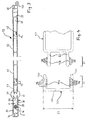
- FIGS. 5a and 5b show in the manner of a comparison representation once a swing door already used with the measures described above, and once without these. Because according to FIG. 5b tend such swing doors after many years of use and due to the shocks to lower at its edge facing away from the hinge more and more and deforming to a parallelogram (lowering H). As a result, the adjustment of the door to the commercial vehicle body deteriorates, which in turn impedes proper closing and locking or even prevented. A cause for the lowering is the too small dimensional accuracy in the summed width of the profile elements 25, ie the existing over the width of the door game.
- FIG. 5a represented minimizes this game in the width direction, because by the corresponding teeth on at least two of the profile elements a correction possibility caused by manufacturing tolerances deviations transverse to the longitudinal direction of the profile elements 25, ie the door width, created.
- the profile elements 25, 26, 27, 28 may also be arranged in opposite orientation, so that in the mounted state of the second door 12, the end profile 28 is seated in the channel 38 of the inner edge profile 31 and the compensation profile 26 and the toothed portion 51 of the adjacent profile element 27th is inserted into the outer edge profile 32. It is also self-evident that the conditions in the first door 11 correspond to those of the second door 12 in mirror image.
Landscapes
- Engineering & Computer Science (AREA)
- Mechanical Engineering (AREA)
- Lock And Its Accessories (AREA)
Abstract
Description
- Die Erfindung betrifft eine verschließbare Türanordnung für einen aus einem Ladeboden, einem Fahrzeugdach und zwei Seitenwänden bestehenden Nutzfahrzeugaufbau, mit einer bezüglich der ersten Seitenwand des Aufbaus schwenkbar lagerbaren ersten Tür, einer bezüglich der zweiten Seitenwand des Aufbaus schwenkbar lagerbaren zweiten Tür, und mit mindestens einer an einer der Türen angeordneten und dieser gegenüber beweglich gelagerten Schließstange zur Arretierung der Tür an dem Ladeboden und/oder dem Fahrzeugdach.
- Derartige verschließbare Türanordnungen sind z. B. aus der
DE 299 24 647 U1 , derDE 94 19 874 U1 und derDE 102 49 273 A1 bekannt. Solche Türanordnungen setzen sich in der Regel aus mehreren Bauteilen zusammen, die fertigungsbedingt relativ große Fertigungstoleranzen aufweisen können. Dies erschwert die exakte Justierung der Schwenktüren und verschlechtert die Passgenauigkeit der Schließ- und Verriegelungsmittel. Die exakte Justierung ist vor allem für die Zuverlässigkeit der häufig an den Türen vorhandenen Dichtungen wichtig. - Der Erfindung liegt die Aufgabe zugrunde, durch konstruktive Maßnahmen bei der Montage sowohl zu einer erleichterten Handhabung der Bauteile der Türanordnung als auch zu einer verbesserten Justierung der Türanordnung zu kommen.
- Zur Lösung dieser Aufgabe wird bei einer Türanordnung mit den eingangs angegebenen Merkmalen vorgeschlagen, dass sich die Tür aus mehreren entlang ihrer Längsränder miteinander verbundenen Profilelementen zusammensetzt, dass zumindest eines der Profilelemente zu dem benachbarten Profilelement hin einen Kanal aufweist, dass das benachbarte Profilelement eine Verzahnung aus in Profillängsrichtung sich erstreckenden Zahnstrukturen aufweist, welche formschlüssig mit einer korrespondierend gestalteten Verzahnung in Eingriff steht, wobei eine der beiden Verzahnungen eine Innenverzahnung, und die andere der beiden Verzahnungen eine Außenverzahnung ist, und dass die korrespondierend gestaltete Verzahnung an der Innenseite des Kanals angeordnet ist, oder an einem in den Kanal eingesetztes Ausgleichsprofil angeordnet ist, wobei das mit der Innenverzahnung versehene Profilelement im Verzahnungsbereich eine Dicke aufweist, die im Wesentlichen gleich ist der Innenweite des Kanals.
- Eine solchermaßen ausgebildete Türanordnung kann sich aus einzelnen, teils identisch gestalteten Profilelementen mit in der Regel einer Breite im Bereich von 5 cm bis 30 cm zusammensetzen. Da diese Profilelemente hohl und somit gewichtsreduziert sind, sind sie bei der Montage einfach handzuhaben. Ferner kann ein Vertauschen bei identischen Profilelemente folgenlos für den erzielbaren Montagezustand der Türanordnung bleiben. Durch die zueinander korrespondierenden Verzahnungen zweier der Profilelemente wird eine Korrekturmöglichkeit der durch Fertigungstoleranzen verursachten Maßabweichungen quer zur Längsrichtung der Profilelemente, d. h. der Türbreite, geschaffen. Dies führt zu einer besseren Justierung der beiden Türen an dem Nutzfahrzeugaufbau, was wiederum eine verbesserte Schließ- und Verriegelungssituation der Türanordnung ermöglicht, sowie eine höhere Passgenauigkeit in den Dichtungsbereichen.
- Vorteilhafte Ausgestaltungen der Türanordnung sind in den Unteransprüchen angegeben.
- So wird mit einer bevorzugten Ausgestaltung vorgeschlagen, dass sich die Tür aus vertikal angeordneten Profilelementen zusammensetzt, und dass mindestens ein Profilelement einen über seine ganze Länge durchgehenden Kanal zur Lagerung der Schließstange aufweist. Dies ermöglicht eine Lagerung der Schließstange, beispielsweise der Drehstange eines Drehstangenverschlusses, innerhalb des Profilelements, d. h. geschützt vor im Nutzfahrzeugbereich nicht zu unterschätzenden und häufig zu Störungen führenden Umwelteinflüssen.
- Mit einer weiteren Ausgestaltung wird vorgeschlagen, dass das Randprofil den Kanal aufweist, in welchem die Schließstange angeordnet ist.
- Gemäß einer weiteren Ausgestaltung sind die zwei äußeren Profilelemente als, vorzugsweise Ausnehmungen für Türdichtungen aufweisende, Randprofile ausgestaltet. Das zur Mitte des Nutzfahrzeugaufbaus hin angeordnete Randprofil weist den Kanal mit einer Innenweite auf, die im Wesentlichen gleich der Dicke aller weiteren Profilelemente ist. Bei dieser Ausgestaltung ist die korrespondierend gestaltete Verzahnung eine an einem in den Kanal eines Randprofils eingesetzten Ausgleichsprofil angeordnete Innenverzahnung, und das Ausgleichsprofil und das benachbarten Profilelement sind mit ihren Verzahnungen ineinander verrastet in dem Kanal des Randprofils angeordnet. Da sie die nach innen weisenden Kanäle in der Regel ohnehin aufweisen, ermöglicht es eine derartige Anordnung in eine Schwenktür einen Toleranzausgleich zu integrieren, bei dem herkömmliche Türrandprofile zum Einsatz kommen können. Die empfindlichen Verzahnungen können ferner innerhalb eines solchen Kanals eines dieser Randprofile ebenfalls vor Umwelteinflüssen geschützt werden. Dadurch, dass die Verzahnungen komplett in den Kanal eines Randprofils eingesetzt sind und somit darin auch optisch verschwinden, kann zudem eine homogene Türfläche ohne einmal mehr und einmal weniger breite Schlitze erzielt werden.
- Gemäß einer weiteren Ausgestaltung ist das Ausgleichsprofil U-förmig mit zwei Schenkeln ausgestaltet, und die Innenverzahnung an den Schenkeln angeordnet. Der Verzahnungsbereich des benachbarten Profilelements weist dabei zum Ausgleichsprofil hin zwei die Außenverzahnung aufweisende Fortsätze auf. Als ein Profilelement in U-Form weist das Ausgleichsprofil eine einfache Grundform auf, kann somit unkompliziert gefertigt werden und stellt die kleinstmögliche Bauform für das Ausgleichsprofil dar. Dies ermöglicht ein geringes Gewicht, was sich wiederum positiv auf die Montage auswirken kann.
- Weitere Vorteile und Einzelheiten ergeben sich aus der nachfolgenden Beschreibung eines Ausführungsbeispiels, wobei auf die Zeichnungen Bezug genommen wird. Darin zeigen:
- Fig. 1
- eine rückwärtige Ansicht eines kastenförmig gestalteten Nutzfahrzeugaufbaus mit zwei durch Drehstangenverschlüsse verriegelbaren Schwenktüren;
- Fig. 2
- eine perspektivische Ansicht des Nutzfahrzeugaufbaus nach
Fig. 1 ; - Fig. 3
- einen horizontalen Schnitt durch eine Schwenktür der
Fig. 1 mit einer Auslassung in der Mitte; - Fig. 4
- eine vergrößerte Ansicht der Einzelheit "IV" der
Fig. 3 ; - Fig. 5a
- die Ansicht einer Schwenktür, in der die im folgenden näher beschriebenen Maßnahmen realisiert sind, und
- Fig. 5b
- eine vergleichbare Ansicht einer Schwenktür, in der die im folgenden näher beschriebenen Maßnahmen nicht realisiert sind.
-
Figur 1 zeigt die Heckansicht eines Nutzfahrzeugaufbaus 1, etwa eines Lkw oder eines Lkw-Anhänger. Stirnseitig verschlossen ist der Aufbau 1 durch eine Türanordnung aus zwei Türen 11, 12. Die erste Tür 11 ist an einer vertikalen Portalsäule 21 am Ende einer ersten Seitenwand, und die zweite Tür 12 an einer vertikalen Portalsäule 22 am Ende einer zweiten Seitenwand schwenkbar gelagert, und zwar über jeweils eine Mehrzahl von Scharnieren 3. Ist der Aufbau 1 ein Kastenaufbau mit starren Seitenwänden, so kann die schwenkbare Lagerung der Türen 11, 12 statt an den Portalsäulen auch unmittelbar an den Seitenwänden erfolgen. - Das Öffnen und Verschließen der beiden Türen 11, 12 erfolgt über Drehstangenverschlüsse 4. Zu den Drehstangenverschlüssen 4 gehören als Drehstangen ausgestaltete Schließstangen 5, welche in
Figur 1 weitgehend gestrichelt dargestellt sind und die Türen 11, 12 vertikal durchdringen. Die Drehstangen 5 gehen im Bereich des Fahrzeugdachs 6 des Kastenaufbaus 1 in je einen Drehriegel 7 über. Der Drehriegel 7 ist mit der jeweiligen Drehstange 5 drehfest verbunden und greift in eine Aufnahmetasche 8 oben an dem Aufbau 1 ein. Die Drehbetätigung der Drehstange 5 erfolgt über einen Verschlusshebel 9 des Drehstangenverschlusses 4. Der Verschlusshebel 9 ist im Schließzustand in einer Grundplatte 10 des Drehstangenverschlusses 4 festgelegt und darin blockiert. Die Grundplatte 10 ist wiederum an dem Ladeboden 13 des Kastenaufbaus festgelegt. - In
Figur 2 ist der Nutzfahrzeugaufbau 1 nachFigur 1 in perspektivischer Ansicht seitlich gedreht dargestellt, so dass die Portalsäulen 21, 22 der Seitenwände, an denen die beiden Türen 11, 12 über die Scharniere 3 angelenkt sind, zu erkennen sind. -
Figur 3 zeigt einen horizontalen Schnitt durch die zweite Tür 12 nachFigur 1 mit einer Auslassung in der Mitte für eine bessere Darstellbarkeit. Die Tür 12 setzt sich beim Ausführungsbeispiel aus die seitlichen Türränder bildenden Randprofilen 31, 32, mehreren identischen Bordwandprofilen 25, einem Ausgleichsprofil 26, einem dem Ausgleichsprofil benachbarten Profilelement 27 und einem Abschlussprofil 28 zusammen. Durch die Auslassung inFigur 3 sind von den vier oder mehr identischen Bordwandprofilen 25 nur zwei in Teilen zu sehen. - Das innere Randprofil 31 der zweiten Tür 12 grenzt wie in den
Figuren 1 und 2 ersichtlich unmittelbar an die erste Tür 11 an und weist eine Ausnehmung 35 zur Aufnahme einer nicht dargestellten Türdichtung auf, die die beiden Türen 11, 12 gegeneinander abdichtet. - Das innere Randprofil 31 weist einen Kanal 36 auf, welcher die gesamte Länge des inneren Randprofils 31 durchsetzt. Die Wandung des Kanals 36 dient dazu, eine in dem Kanal 36 angeordnete Schließstange 5 zu führen bzw. zu lagern. Bei der Schließstange 5 handelt es sich vorzugsweise um eine Drehstange.
- Zur restlichen Türfläche hin, d. h. in Richtung der anderen Profilelemente hin, öffnet sich das innere Randprofil 31 zu einem U-förmigen und rinnenförmigen Kanal 38, der sich entlang der Längsrichtung des Randprofils 31, d. h. parallel zu dem Kanal 36, erstreckt. Dadurch, dass die Dicke D2 des inneren Randprofils 31 gegenüber der Dicke D1 der anderen Profilelemente 25, 26, 27, 28 mit Ausnahme des äußeren Randprofils 32 im Wesentlichen um die zweifache Profilstärke P der Seitenwände des Kanals 38 vergrößert ist, würden alle Profilelemente 25, 26, 27, 28 der Dicke D1 in den Kanal 38 passen.
- Das äußere Randprofil 32 entspricht seitenverkehrt im Wesentlichen dem inneren Randprofil 31, d. h. es weist ebenfalls die Dicke D2, eine Ausnehmung 35 sowie einen Kanal 38 auf. Das äußere Randprofil 32 weist zusätzlich an seinem äußeren Längsrand Scharniere 40 zur schwenkbaren Lagerung der Tür 12 an der Seitenwand 22 auf, sowie eine Nut, in der sich eine Dichtung zur Anlage an der Stirnfläche der Seitenwand 22 einsetzen lässt.
- Den Großteil der zwischen den Randprofilen 31, 32 liegenden Türfläche bilden mehrere identische Bordwandprofile 25, welche mittels an ihren Längsrändern ausgeformten Verriegelungsmitteln 42 dauerhaft durch Verrasten miteinander verbunden sind.
- Zwischen dem äußeren Randprofil 32 und dem äußersten Bordwandprofil 25 ist ein Abschlussprofil 28 angeordnet. Das Abschlussprofil 28 ist mit dem benachbarten Bordwandprofil 25 ebenfalls über verrastbare Verriegelungsmittel 42 verbunden. Mit seinem anderen flach ausgestalteten Längsrand sitzt das Abschlussprofil 28 bündig am Grund 39 des Kanals 38 des äußeren Randprofils 32.
- An das zu dem inneren Randprofil 31 am nächsten liegende Bordwandprofil 25 schließt sich, ebenfalls über Verriegelungsmittel 42 mit diesem verbunden, eines der beiden Verzahnungen 45a, 45b aufweisende Profilelement 27 an. Das zweite Verzahnungen aufweisende Profilelement ist das Ausgleichsprofil 26.
- Wie in
Figur 4 zu erkennen, ist das Ausgleichsprofil 26 ein U-Profil mit an den Innenseiten seiner Schenkel 26a angeordneten Verzahnungen 45a. Diese Innenverzahnung 45a des Ausgleichsprofils 26 besteht aus mehreren dreieckförmigen Zahnstrukturen 46, die entlang der Längsrichtung des Ausgleichsprofils 26 verlaufen. Mit seiner zwischen den mit den Verzahnungen 45a versehenen Schenkel 26a angeordneten Basis 26b liegt das Ausgleichsprofil 26 im montierten Zustand innerhalb des Kanals 38 des inneren Randprofils 31 bündig an dessen Grund 39 an. Dabei greift in die Innenverzahnung 45a des Ausgleichsprofils 26 eine Außenverzahnung 45b des benachbarten Profilelements 27 so weit ein, dass die zweite Tür 12 ihre gewünschte Gesamtbreite erhält. Die Außenverzahnung 45b besteht aus mehreren mit jenen des Ausgleichsprofils 26 korrespondierend gestalteten Zahnstrukturen 46. - Bei der Montage wird jedoch zunächst die Innenverzahnung 45a und die Außenverzahnung 45b mittels Verrastung lediglich jeweils einer ihrer Zahnstrukturen 46 miteinander verbunden und so gemeinsam in den Kanal 38 des Randprofils 31 bis zum Anschlag der Basis 26b an den Grund 39 eingeführt. Danach wird die gesamte Tür 12 mittels einer nicht abgebildeten Spannvorrichtung, zumeist unter Verrasten weiterer Zahnstrukturen 46, auf die gewünschte Türbreite zusammengeschoben. Dazu ist die Außenverzahnung 45b auf den Außenseiten zweier Fortsätze 50 eines Verzahnungsbereichs 51 des benachbarten Profilelements 27 angeordnet.
- Der Kanal 38 des inneren Randprofils 31 ist so tief, dass im montierten Zustand sowohl das komplette Ausgleichsprofil 26 als auch der Verzahnungsbereich 51 von den Seitenwänden des Kanals 38 überdeckt werden.
- Die
Figuren 5a und 5b zeigen nach Art einer Vergleichsdarstellung einmal eine bereits länger gebrauchte Schwenktür mit den oben beschriebenen Maßnahmen, und einmal ohne diese. Denn gemäßFigur 5b neigen derartige Schwenktüren nach langjährigem Einsatz und aufgrund der Erschütterungen dazu, sich an ihrem dem Scharnier abgewandten Rand mehr und mehr und unter Verformen zu einem Parallelogramm abzusenken (Absenkung H). Dadurch verschlechtert sich die Justierung der Türe an dem Nutzfahrzeugaufbau, was wiederum ein ordnungsgemäßes Schließen und Verriegeln erschwert oder sogar verhindert. Eine Ursache für das Absenken ist die zu geringe Maßgenauigkeit in der summierten Breite der Profilelemente 25, d.h. das über die Breite der Tür vorhandene Spiel. - Mit der Erfindung hingegen wird, wie in
Figur 5a dargestellt, dieses Spiel in Breitenrichtung minimiert, denn durch die korrespondierenden Verzahnungen an zumindest zwei der Profilelemente wird eine Korrekturmöglichkeit der durch Fertigungstoleranzen verursachten Maßabweichungen quer zur Längsrichtung der Profilelemente 25, d. h. der Türbreite, geschaffen. Dies führt zu einer präzisen Einstellung der summierten Breiten der Profilelemente mit der Folge einer besseren Justierung der beiden Türen an dem Nutzfahrzeugaufbau, was wiederum eine verbesserte Schließ- und Verriegelungssituation der Türanordnung ermöglicht. - Die Erfindung ist nicht auf die in den Figuren gezeigte Ausführungsform begrenzt. Selbstverständlich können die Profilelemente 25, 26, 27, 28 auch in entgegengesetzter Orientierung angeordnet sein, sodass im montierten Zustand der zweiten Tür 12 das Abschlussprofil 28 in dem Kanal 38 des inneren Randprofils 31 sitzt und das Ausgleichsprofil 26 auch der Verzahnungsbereich 51 des benachbarten Profilelements 27 in das äußere Randprofil 32 eingesetzt ist. Ebenso selbstverständlich ist, dass die Verhältnisse bei der ersten Tür 11 denen der zweiten Tür 12 spiegelbildlich entsprechen.
-
- 1
- Aufbau, Nutzfahrzeugaufbau
- 3
- Scharnier
- 4
- Drehstangenverschluss
- 5
- Drehstange/Schließstange
- 6
- Fahrzeugdach
- 7
- Drehriegel
- 8
- Aufnahmetasche
- 9
- Verschlusshebel
- 10
- Grundplatte
- 11
- erste Tür
- 12
- zweite Tür
- 13
- Ladeboden
- 21
- Portalsäule der ersten Seitenwand
- 22
- Portalsäule der zweiten Seitenwand
- 25
- Bordwandprofil
- 26
- Ausgleichsprofil
- 26a
- Schenkel
- 26b
- Basis
- 27
- benachbartes Profilelement, Profilelement
- 28
- Abschlussprofil
- 31
- Randprofil
- 32
- Randprofil
- 35
- Ausnehmung
- 36
- Kanal
- 38
- Kanal
- 39
- Grund
- 40
- Scharniere
- 42
- Verriegelungsmittel
- 45a
- Innenverzahnung, Verzahnung
- 45b
- Außenverzahnung, Verzahnung
- 46
- Zahnstruktur
- 50
- Fortsätze
- 51
- Verzahnungsbereich
- D1
- Dicke
- D2
- Dicke
- H
- Höhe
- P
- Profilstärke
Claims (10)
- Verschließbare Türanordnung für einen aus einem Ladeboden (13), einem Fahrzeugdach (6) und zwei Seitenwänden bestehenden Nutzfahrzeugaufbau (1), mit einer bezüglich der ersten Seitenwand des Aufbaus (1) schwenkbar lagerbaren ersten Tür (11), einer bezüglich der zweiten Seitenwand des Aufbaus (1) schwenkbar lagerbaren zweiten Tür (12), und mit mindestens einer an einer der Türen (11, 12) angeordneten und dieser gegenüber beweglich gelagerten Schließstange (5) zur Arretierung der Tür (11, 12) an dem Ladeboden (13) und/oder dem Fahrzeugdach (6),
dadurch gekennzeichnet,
dass sich die Tür (11, 12) aus mehreren entlang ihrer Längsränder miteinander verbundenen Profilelementen (25, 26, 27, 28, 31, 32) zusammensetzt,
dass zumindest eines der Profilelemente (25, 26, 27, 28, 31, 32) zu dem benachbarten Profilelement (27) hin einen Kanal (38) aufweist,
dass das benachbarte Profilelement (27) eine Verzahnung (45a, 45b) aus in Profillängsrichtung sich erstreckenden Zahnstrukturen (46) aufweist, welche formschlüssig mit einer korrespondierend gestalteten Verzahnung (45a, 45b) in Eingriff steht, wobei eine der beiden Verzahnungen eine Innenverzahnung (45a), und die andere der beiden Verzahnungen eine Außenverzahnung (45b) ist, und dass die korrespondierend gestaltete Verzahnung (45a, 45b)
an der Innenseite des Kanals (38) angeordnet ist,
oder
an einem in den Kanal (38) eingesetzten Ausgleichsprofil (26) angeordnet ist, wobei das mit der Innenverzahnung (45a) versehene Profilelement (26, 27) eine Dicke (D1) aufweist, die im Wesentlichen gleich ist der Innenweite des Kanals (38). - Verschließbare Türanordnung nach Anspruch 1, dadurch gekennzeichnet, dass sich die Tür (11, 12) aus vertikal angeordneten Profilelementen (25, 26, 27, 28, 31, 32) zusammensetzt.
- Verschließbare Türanordnung nach Anspruch 1 oder 2, dadurch gekennzeichnet, dass die zwei äußeren Profilelemente als, vorzugsweise Ausnehmungen (35) für Türdichtungen aufweisende, Randprofile (31, 32) ausgestaltet sind, und dass die Randprofile (31, 32) jeweils zur Türmitte hin den Kanal (38) mit einer Innenweite aufweisen, die im Wesentlichen gleich der Dicke (D1) aller weiteren Profilelemente (25, 26, 27, 28) ist.
- Verschließbare Türanordnung nach Anspruch 3, dadurch gekennzeichnet, dass die korrespondierend gestaltete Verzahnung eine an einem in den Kanal (38) eines Randprofils (31, 32) eingesetzten Ausgleichsprofil (26) angeordnete Innenverzahnung (45a) ist.
- Verschließbare Türanordnung nach Anspruch 4, dadurch gekennzeichnet, dass das Ausgleichsprofil (26) und das benachbarte Profilelement (27) mit ihren Verzahnungen (45a, 45b) ineinander verrastet in dem Kanal (38) des Randprofils (31, 32) angeordnet sind.
- Verschließbare Türanordnung nach Anspruch 5, dadurch gekennzeichnet, dass das Ausgleichsprofil (26) U-förmig mit zwei Schenkeln (26a) ausgestaltet ist, die Innenverzahnung (45a) an den Schenkeln (26a) angeordnet ist, und dass der Verzahnungsbereich (51) des benachbarten Profilelements (27) zum Ausgleichsprofil (26) hin zwei die Außenverzahnung (45b) aufweisende Fortsätze (50) aufweist.
- Verschließbare Türanordnung nach einem der Ansprüche 2 bis 6, dadurch gekennzeichnet, dass mindestens ein Profilelement (25, 26, 27, 28, 31, 32) einen über seine ganze Länge durchgehenden Kanal (36) zur Lagerung der Schließstange (5) aufweist.
- Verschließbare Türanordnung nach Anspruch 7, dadurch gekennzeichnet, dass das Randprofil (31) den Kanal (36) aufweist, in welchem die Schließstange (5) angeordnet ist.
- Verschließbare Türanordnung nach einem der Ansprüche 3 bis 8, dadurch gekennzeichnet, dass an dem äußeren Randprofil (32) Scharniere (40) zur schwenkbaren Lagerung an einer Seitenwand (21, 22) ausgeformt sind.
- Verschließbare Türanordnung nach einem der vorherigen Ansprüche, dadurch gekennzeichnet, dass die Profilelemente (25, 26, 27, 28, 31, 32) Strangpressprofile aus Leichtmetall sind.
Applications Claiming Priority (1)
| Application Number | Priority Date | Filing Date | Title |
|---|---|---|---|
| DE102013100215.3A DE102013100215A1 (de) | 2013-01-10 | 2013-01-10 | verschließbare Türanordnung für einen Nutzfahrzeugaufbau |
Publications (1)
| Publication Number | Publication Date |
|---|---|
| EP2754576A1 true EP2754576A1 (de) | 2014-07-16 |
Family
ID=49943181
Family Applications (1)
| Application Number | Title | Priority Date | Filing Date |
|---|---|---|---|
| EP14150470.4A Withdrawn EP2754576A1 (de) | 2013-01-10 | 2014-01-08 | Verschließbare Türanordnung für einen Nutzfahrzeugaufbau |
Country Status (2)
| Country | Link |
|---|---|
| EP (1) | EP2754576A1 (de) |
| DE (1) | DE102013100215A1 (de) |
Cited By (1)
| Publication number | Priority date | Publication date | Assignee | Title |
|---|---|---|---|---|
| IT202200006278A1 (it) * | 2022-03-30 | 2023-09-30 | Takler S R L | Anta o porta modulare per vano di carico di veicolo industriale e relativo metodo di assemblaggio |
Families Citing this family (1)
| Publication number | Priority date | Publication date | Assignee | Title |
|---|---|---|---|---|
| CN110087925B (zh) * | 2016-12-22 | 2023-03-14 | 赖纳·卡尔·舒 | 载重汽车或载重汽车挂车的车厢的后门 |
Citations (5)
| Publication number | Priority date | Publication date | Assignee | Title |
|---|---|---|---|---|
| DE3538188A1 (de) * | 1985-03-28 | 1986-10-09 | Aluminium-Walzwerke Singen Gmbh, 7700 Singen | Verbundelement aus zwei aneinander festliegenden profilelementen |
| DE9419874U1 (de) | 1994-08-26 | 1996-01-04 | PWP S.A., Payerne, Waadt | Laderaumtür für z.B. einen Kastenaufbau eines LKW |
| DE10249273A1 (de) | 2002-02-11 | 2003-08-28 | Schmitz Cargobull Ag | Lastfahrzeug mit Hubdach und Rückwandtür |
| DE29924647U1 (de) | 1998-12-22 | 2004-08-12 | Pwp S.A., Payerne | Drehstangenverschluss, insbesondere für Schwenktüren von Kraftfahrzeugaufbauten |
| EP2020365A1 (de) * | 2007-07-25 | 2009-02-04 | Pommier Gross Aluminium GmbH | Plattenelement, vorzugsweise in Profilform, insbesondere zur Bildung einer Seitenwand im Laderaum eines Fahrzeugs |
Family Cites Families (3)
| Publication number | Priority date | Publication date | Assignee | Title |
|---|---|---|---|---|
| DE1659178B1 (de) * | 1968-01-11 | 1972-12-14 | Merkur Gmbh Metallwerk | Aus zwei Waenden zusammengesetzte Hohlplatte,insbesondere aus Leichtmetall oder Kunststoff,fuer Wandflaechen,Tueren od. dgl. |
| AT370047B (de) * | 1981-02-13 | 1983-02-25 | Vmw Ranshofen Berndorf Ag | Aus strangpressprofilen, die mit randseitigen laengsrippen kraftschluessig ineinandergreifen, gebildete platte od.dgl. |
| DE102005048001B4 (de) * | 2005-10-06 | 2007-06-14 | Euro-Composites S.A., Zone Industrielle | Verbindungselement |
-
2013
- 2013-01-10 DE DE102013100215.3A patent/DE102013100215A1/de not_active Withdrawn
-
2014
- 2014-01-08 EP EP14150470.4A patent/EP2754576A1/de not_active Withdrawn
Patent Citations (5)
| Publication number | Priority date | Publication date | Assignee | Title |
|---|---|---|---|---|
| DE3538188A1 (de) * | 1985-03-28 | 1986-10-09 | Aluminium-Walzwerke Singen Gmbh, 7700 Singen | Verbundelement aus zwei aneinander festliegenden profilelementen |
| DE9419874U1 (de) | 1994-08-26 | 1996-01-04 | PWP S.A., Payerne, Waadt | Laderaumtür für z.B. einen Kastenaufbau eines LKW |
| DE29924647U1 (de) | 1998-12-22 | 2004-08-12 | Pwp S.A., Payerne | Drehstangenverschluss, insbesondere für Schwenktüren von Kraftfahrzeugaufbauten |
| DE10249273A1 (de) | 2002-02-11 | 2003-08-28 | Schmitz Cargobull Ag | Lastfahrzeug mit Hubdach und Rückwandtür |
| EP2020365A1 (de) * | 2007-07-25 | 2009-02-04 | Pommier Gross Aluminium GmbH | Plattenelement, vorzugsweise in Profilform, insbesondere zur Bildung einer Seitenwand im Laderaum eines Fahrzeugs |
Cited By (2)
| Publication number | Priority date | Publication date | Assignee | Title |
|---|---|---|---|---|
| IT202200006278A1 (it) * | 2022-03-30 | 2023-09-30 | Takler S R L | Anta o porta modulare per vano di carico di veicolo industriale e relativo metodo di assemblaggio |
| EP4253110A1 (de) * | 2022-03-30 | 2023-10-04 | Takler S.r.l. | Modularer flügel oder tür für einen laderaum eines industriefahrzeugs und zugehöriges montageverfahren |
Also Published As
| Publication number | Publication date |
|---|---|
| DE102013100215A1 (de) | 2014-07-10 |
Similar Documents
| Publication | Publication Date | Title |
|---|---|---|
| DE69600252T2 (de) | Verriegelbare Schiene für Kraftfahrzeugsitze | |
| DE2706013C2 (de) | Treibstangenbeschlag an Fenstern, Türen od.dgl. aus Metall- oder Kunststoffprofilen | |
| EP4473182B1 (de) | Profilanordnung eines fensters oder einer tür mit einem flügelprofil, insbesondere einem schiebeflügelprofil | |
| EP2163716A2 (de) | Schloss für eine Gleittür | |
| EP3798390B2 (de) | Faltanlage | |
| DE69109486T2 (de) | Vorrichtung an runger für ladeplattformen an fahrzeugen mit abdeckung und abdeckungshalter. | |
| DE69001725T2 (de) | Verriegelungsvorrichtung fuer ein schiebefenster, eine schiebetuer o.dgl. | |
| DE2204427B2 (de) | Beschlag fuer einen heb- und schiebbaren fluegel eines fensters, einer tuere o.dgl. | |
| EP3112577B1 (de) | Absenkdichtung | |
| EP2754576A1 (de) | Verschließbare Türanordnung für einen Nutzfahrzeugaufbau | |
| DE69903680T2 (de) | Eckverbindung für einen Rahmen | |
| DE3925708C1 (de) | ||
| DE3238593A1 (de) | Laengsfuehrung, insbesondere fuer laengsverstelleinrichtungen von fahrzeugsitzen und mit einer derartigen laengsfuehrung ausgeruestetes fahrzeug | |
| EP3524765A1 (de) | Absenkbare einbruchsicherung | |
| DE102016216835A1 (de) | Aushebesicherung für einen verschiebbaren und zum Verschieben anhebbaren Flügel | |
| DE102009000643A1 (de) | Profilsystem für einen Kunststoff-Rollladenkasten | |
| DE2511696C2 (de) | Versetzbare trennwand und wandelement hierfuer | |
| DE102005054458A1 (de) | Befestigungseinrichtung für Insektenschutzgitter | |
| DE3221110A1 (de) | Beschlag fuer einen kipp- und nachfolgend mindestens parallelabstellbaren fluegel eines fensters, einer tuer od. dgl. | |
| DE102007034638B4 (de) | Isolieraufbau für ein Fahrzeug | |
| DE202017103985U1 (de) | Hebe-Schiebe-Einrichtung, insbesondere Hebe-Schiebe-Tür oder Hebe-Schiebe-Fenster | |
| DE69908260T2 (de) | Diebstahlsicherungsvorrichtung zur verriegelung von türen eines behälters oder lastkraftwagens | |
| EP0082353A1 (de) | Höhenverstellbare Tragkonsole für Bauwerksteile | |
| DE102007007252A1 (de) | Schließanordnung für einen kastenförmigen Fahrzeugaufbau | |
| DE102012011013B4 (de) | Fenster, Tür oder dergleichen, mit einer Drehverschlusseinrichtung |
Legal Events
| Date | Code | Title | Description |
|---|---|---|---|
| 17P | Request for examination filed |
Effective date: 20140108 |
|
| AK | Designated contracting states |
Kind code of ref document: A1 Designated state(s): AL AT BE BG CH CY CZ DE DK EE ES FI FR GB GR HR HU IE IS IT LI LT LU LV MC MK MT NL NO PL PT RO RS SE SI SK SM TR |
|
| AX | Request for extension of the european patent |
Extension state: BA ME |
|
| PUAI | Public reference made under article 153(3) epc to a published international application that has entered the european phase |
Free format text: ORIGINAL CODE: 0009012 |
|
| R17P | Request for examination filed (corrected) |
Effective date: 20150107 |
|
| RBV | Designated contracting states (corrected) |
Designated state(s): AL AT BE BG CH CY CZ DE DK EE ES FI FR GB GR HR HU IE IS IT LI LT LU LV MC MK MT NL NO PL PT RO RS SE SI SK SM TR |
|
| GRAP | Despatch of communication of intention to grant a patent |
Free format text: ORIGINAL CODE: EPIDOSNIGR1 |
|
| STAA | Information on the status of an ep patent application or granted ep patent |
Free format text: STATUS: GRANT OF PATENT IS INTENDED |
|
| INTG | Intention to grant announced |
Effective date: 20180727 |
|
| STAA | Information on the status of an ep patent application or granted ep patent |
Free format text: STATUS: THE APPLICATION IS DEEMED TO BE WITHDRAWN |
|
| 18D | Application deemed to be withdrawn |
Effective date: 20181207 |