EP2726151B1 - Behandlungsvorrichtung zur äusserlichen anwendung an einem säugetierkörper - Google Patents
Behandlungsvorrichtung zur äusserlichen anwendung an einem säugetierkörper Download PDFInfo
- Publication number
- EP2726151B1 EP2726151B1 EP12743199.7A EP12743199A EP2726151B1 EP 2726151 B1 EP2726151 B1 EP 2726151B1 EP 12743199 A EP12743199 A EP 12743199A EP 2726151 B1 EP2726151 B1 EP 2726151B1
- Authority
- EP
- European Patent Office
- Prior art keywords
- treatment apparatus
- mammal body
- mammal
- contact pressure
- transducer element
- Prior art date
- Legal status (The legal status is an assumption and is not a legal conclusion. Google has not performed a legal analysis and makes no representation as to the accuracy of the status listed.)
- Not-in-force
Links
- 238000011282 treatment Methods 0.000 title claims description 120
- 241000124008 Mammalia Species 0.000 title claims description 72
- 230000008878 coupling Effects 0.000 claims description 24
- 238000010168 coupling process Methods 0.000 claims description 24
- 238000005859 coupling reaction Methods 0.000 claims description 24
- 238000002604 ultrasonography Methods 0.000 claims description 18
- 230000008859 change Effects 0.000 claims description 9
- 230000004044 response Effects 0.000 claims description 9
- 230000000007 visual effect Effects 0.000 claims description 8
- 238000013500 data storage Methods 0.000 claims description 5
- 230000004913 activation Effects 0.000 claims description 2
- 239000013013 elastic material Substances 0.000 claims description 2
- 241001465754 Metazoa Species 0.000 description 47
- 239000000523 sample Substances 0.000 description 43
- 230000008901 benefit Effects 0.000 description 11
- 230000006378 damage Effects 0.000 description 10
- 208000027418 Wounds and injury Diseases 0.000 description 8
- 241000282414 Homo sapiens Species 0.000 description 7
- 208000014674 injury Diseases 0.000 description 7
- 241000282412 Homo Species 0.000 description 4
- 238000004458 analytical method Methods 0.000 description 3
- 238000000034 method Methods 0.000 description 3
- 238000002560 therapeutic procedure Methods 0.000 description 3
- 230000001960 triggered effect Effects 0.000 description 3
- 230000001055 chewing effect Effects 0.000 description 2
- 230000007246 mechanism Effects 0.000 description 2
- 230000001225 therapeutic effect Effects 0.000 description 2
- 238000009210 therapy by ultrasound Methods 0.000 description 2
- 230000000451 tissue damage Effects 0.000 description 2
- 231100000827 tissue damage Toxicity 0.000 description 2
- XLYOFNOQVPJJNP-UHFFFAOYSA-N water Substances O XLYOFNOQVPJJNP-UHFFFAOYSA-N 0.000 description 2
- 206010017076 Fracture Diseases 0.000 description 1
- 206010061223 Ligament injury Diseases 0.000 description 1
- 208000029549 Muscle injury Diseases 0.000 description 1
- 230000004075 alteration Effects 0.000 description 1
- 230000037037 animal physiology Effects 0.000 description 1
- 239000007822 coupling agent Substances 0.000 description 1
- 238000013461 design Methods 0.000 description 1
- 239000003814 drug Substances 0.000 description 1
- 230000000694 effects Effects 0.000 description 1
- 229920001971 elastomer Polymers 0.000 description 1
- 230000005670 electromagnetic radiation Effects 0.000 description 1
- 239000006260 foam Substances 0.000 description 1
- 230000035876 healing Effects 0.000 description 1
- 238000007726 management method Methods 0.000 description 1
- 230000004048 modification Effects 0.000 description 1
- 238000012986 modification Methods 0.000 description 1
- 238000012806 monitoring device Methods 0.000 description 1
- 210000003205 muscle Anatomy 0.000 description 1
- 238000000554 physical therapy Methods 0.000 description 1
- 230000035479 physiological effects, processes and functions Effects 0.000 description 1
- 230000008569 process Effects 0.000 description 1
- 230000005855 radiation Effects 0.000 description 1
- 230000008439 repair process Effects 0.000 description 1
- 239000005060 rubber Substances 0.000 description 1
- 230000005236 sound signal Effects 0.000 description 1
- 229920002725 thermoplastic elastomer Polymers 0.000 description 1
- 238000012546 transfer Methods 0.000 description 1
- 238000009489 vacuum treatment Methods 0.000 description 1
Images




Classifications
-
- A—HUMAN NECESSITIES
- A61—MEDICAL OR VETERINARY SCIENCE; HYGIENE
- A61B—DIAGNOSIS; SURGERY; IDENTIFICATION
- A61B5/00—Measuring for diagnostic purposes; Identification of persons
- A61B5/103—Measuring devices for testing the shape, pattern, colour, size or movement of the body or parts thereof, for diagnostic purposes
-
- A—HUMAN NECESSITIES
- A61—MEDICAL OR VETERINARY SCIENCE; HYGIENE
- A61D—VETERINARY INSTRUMENTS, IMPLEMENTS, TOOLS, OR METHODS
- A61D1/00—Surgical instruments for veterinary use
-
- A—HUMAN NECESSITIES
- A61—MEDICAL OR VETERINARY SCIENCE; HYGIENE
- A61D—VETERINARY INSTRUMENTS, IMPLEMENTS, TOOLS, OR METHODS
- A61D99/00—Subject matter not provided for in other groups of this subclass
-
- A—HUMAN NECESSITIES
- A61—MEDICAL OR VETERINARY SCIENCE; HYGIENE
- A61N—ELECTROTHERAPY; MAGNETOTHERAPY; RADIATION THERAPY; ULTRASOUND THERAPY
- A61N7/00—Ultrasound therapy
-
- A—HUMAN NECESSITIES
- A61—MEDICAL OR VETERINARY SCIENCE; HYGIENE
- A61B—DIAGNOSIS; SURGERY; IDENTIFICATION
- A61B17/00—Surgical instruments, devices or methods
- A61B2017/00017—Electrical control of surgical instruments
- A61B2017/00115—Electrical control of surgical instruments with audible or visual output
-
- A—HUMAN NECESSITIES
- A61—MEDICAL OR VETERINARY SCIENCE; HYGIENE
- A61B—DIAGNOSIS; SURGERY; IDENTIFICATION
- A61B18/00—Surgical instruments, devices or methods for transferring non-mechanical forms of energy to or from the body
- A61B2018/00636—Sensing and controlling the application of energy
- A61B2018/00642—Sensing and controlling the application of energy with feedback, i.e. closed loop control
-
- A—HUMAN NECESSITIES
- A61—MEDICAL OR VETERINARY SCIENCE; HYGIENE
- A61B—DIAGNOSIS; SURGERY; IDENTIFICATION
- A61B18/00—Surgical instruments, devices or methods for transferring non-mechanical forms of energy to or from the body
- A61B2018/00636—Sensing and controlling the application of energy
- A61B2018/00666—Sensing and controlling the application of energy using a threshold value
-
- A—HUMAN NECESSITIES
- A61—MEDICAL OR VETERINARY SCIENCE; HYGIENE
- A61B—DIAGNOSIS; SURGERY; IDENTIFICATION
- A61B90/00—Instruments, implements or accessories specially adapted for surgery or diagnosis and not covered by any of the groups A61B1/00 - A61B50/00, e.g. for luxation treatment or for protecting wound edges
- A61B90/06—Measuring instruments not otherwise provided for
- A61B2090/064—Measuring instruments not otherwise provided for for measuring force, pressure or mechanical tension
- A61B2090/065—Measuring instruments not otherwise provided for for measuring force, pressure or mechanical tension for measuring contact or contact pressure
-
- A—HUMAN NECESSITIES
- A61—MEDICAL OR VETERINARY SCIENCE; HYGIENE
- A61B—DIAGNOSIS; SURGERY; IDENTIFICATION
- A61B2560/00—Constructional details of operational features of apparatus; Accessories for medical measuring apparatus
- A61B2560/02—Operational features
- A61B2560/0266—Operational features for monitoring or limiting apparatus function
- A61B2560/028—Arrangements to prevent overuse, e.g. by counting the number of uses
-
- A—HUMAN NECESSITIES
- A61—MEDICAL OR VETERINARY SCIENCE; HYGIENE
- A61B—DIAGNOSIS; SURGERY; IDENTIFICATION
- A61B2562/00—Details of sensors; Constructional details of sensor housings or probes; Accessories for sensors
- A61B2562/14—Coupling media or elements to improve sensor contact with skin or tissue
-
- A—HUMAN NECESSITIES
- A61—MEDICAL OR VETERINARY SCIENCE; HYGIENE
- A61N—ELECTROTHERAPY; MAGNETOTHERAPY; RADIATION THERAPY; ULTRASOUND THERAPY
- A61N7/00—Ultrasound therapy
- A61N2007/0004—Applications of ultrasound therapy
Definitions
- the present invention relates to the field of non-invasive treatment apparatus. More specifically, the present invention relates to a device for the correct mounting and/or application of such treatment apparatus. Even more specifically, the present invention relates to a treatment apparatus for veterinary use.
- the animal or mammal as well as the human may benefit from low intensity pulsed ultrasound treatment in order to accelerate the fracture repair process or accelerate the healing of tissue damage.
- the physician or veterinarian may decide to repeatedly apply an ultrasound probe to the injured area over a period of time.
- the probe may be manually held in place by the owner for the duration of the treatment or may be strapped to the injured area. Since it is unlikely for an animal or mammal to give any feedback and for unqualified people to provide meaningful feedback, the veterinarian, owner, physician or the self-applying patient may not be aware if the probe has been aligned correctly or if the probe has been strapped to the animal or mammal body too tightly, causing discomfort or even further injury to the animal.
- a misaligned probe 1 may also cause unwanted pressure concentration 2 on the animal or mammal body 3 as shown in Figure 1 . Furthermore, a human patient applying an ultrasound probe to his injured area at home, may not be aware of correct alignment and pressure, potentially causing discomfort and/or reduced treatment effectiveness.
- US 2005 0065531 A1 discloses a treatment apparatus with an spring-loaded transducer.
- medical or therapeutic devices that are used in human medicine and which are considered for veterinary use are often not suitable for use in the veterinary world. They are subject to different shear forces, different stresses or different types of interference (e.g. chewing or licking). In addition, these human devices may not be used in a clean, clinical environment and the injuries are often not clean or severely infected.
- Typical devices that may be used for animal or mammal treatment include (i) LIPUS (Low Intensity Pulsed Ultrasound), (ii) wound management system, (iii) monitoring devices, (iv) diagnostic devices and (v) surgical tools.
- LIPUS Low Intensity Pulsed Ultrasound
- a misalignment i.e. maximize the contact between the transducer and the body (i.e. animal, mammal and human body)
- Preferred embodiments of the invention seek to overcome one or more of the above disadvantages of the prior art.
- the transducer element will self-align its output surface with the surface of the mammal body within a limited range, therefore maximising the transducer coupling, such as, for example the acoustic coupling between the transducer and the surface of the mammal body.
- the invention ensures that sufficient contact pressure is applied before the transducer element is activated for treatment, and potentially prevents applying a contact pressure that may harm the mammal by providing a feedback to the user if such harmful pressure is reached.
- the user will not apply too much force to the mammal body, either when strapping the treatment apparatus, such as an ultrasound probe, to the mammal body, or when manually pressing the treatment apparatus to the injured area.
- the feedback device triggers a signal indicating to the user that the applied pressure is too high, at which point the user can either release the applied manual pressure or loosen the strap, therefore preventing the mammal from discomfort or further injury.
- the present invention may prevent losing contact to the surface due to its ability to cope with contours and uneven pressure applied by unqualified / unskilled users.
- the resilient coupling element is adapted to provide a limited range of three degrees of freedom between said transducer element and said housing.
- the first predetermined condition may be a contact pressure equal or above a first predetermined contact pressure applied by said transducer element to the mammal body in a normal direction with respect to the surface of the mammal body.
- the second predetermined condition may be a contact pressure below said first predetermined contact pressure applied by said transducer element to the mammal body in a normal direction with respect to the surface of the mammal body.
- the third predetermined condition may be a contact pressure above a second predetermined contact pressure applied by said transducer element to the mammal body in a normal direction with respect to the surface of the mammal body.
- the first predetermined contact pressure may be smaller than said second predetermined contact pressure.
- the predetermined condition may be defined by the resilience of said resilient coupling element.
- the resilient coupling element is made of elastic material.
- the output may be an ultrasound signal.
- the treatment apparatus may further comprise a data storage controller adapted to determine and log the number and duration of activation of said transducer element for a plurality of user profiles.
- a veterinarian may prescribe a 20 min treatment over a period of 6 weeks for a mammal. During treatment, the user may then be informed whether or not the treatment plan has been followed correctly. Also, at the end of the treatment, the veterinarian may access the logged treatment information to find out if his instructions were followed correctly.
- the treatment apparatus may further comprise an external interface adapted to operatively connect to an external power source and/or external data storage device.
- the external interface may be a hot-shoe interface.
- the treatment apparatus may further comprise at least one proximity sensor adapted to determine the position of said treatment apparatus with respect to the mammal body, wherein said proximity sensor is adapted to selectively provide at least one second feedback signal in response to at least one predetermined position being measured by said at least one proximity sensor.
- the at least one first and second feedback signal may be any one or more of a visual and/or audible and/or tactile signal.
- the treatment apparatus may further comprise a first transceiver adapted to transmit said first and/or second feedback signal to a remote second transceiver.
- the said first transceiver may be further adapted to receive a control signal adapted to control the output of said transducer element.
- the second feedback signal may be adapted to change in response to a change of position of the mammal treatment apparatus with respect to the mammal body during use.
- a feedback device for use with a mammal treatment apparatus, comprising at least one tactile sensor adapted to determine the force the mammal treatment apparatus applies to the mammal body when brought into contact with the mammal body, wherein said feedback device is further adapted to selectively provide at least one first feedback signal in response to at least one predetermined force being measured by said at least one tactile sensor.
- the feedback device triggers a signal indicating to the user that the applied pressure is too high, at which point the user can either release the applied manual pressure or loosen the strap, therefore preventing the mammal from discomfort or further injury.
- the feedback device may further comprise at least one proximity sensor adapted to determine the position of the mammal treatment apparatus with respect to the mammal body, wherein said proximity sensor is adapted to selectively provide at least one second feedback signal in response to at least one predetermined position being measured by said at least one proximity sensor.
- the treatment apparatus is always correctly positioned with respect to the mammal body.
- the mammal owner or unqualified user who may not be familiar with the mammal physiology or the correct application of the device, may mount the treatment apparatus incorrectly by, for example, accidentally tilting the ultrasound transducer away from the target area.
- the contact between the mammal body and the treatment apparatus may not be sufficient or misaligned.
- the proximity sensor of the feedback device is adapted to determine the exact position of the treatment apparatus with respect to the mammal body. In the event the treatment apparatus is not in a predetermined position, a signal is triggered indicating to the user that the apparatus needs repositioning.
- the at least one first and second feedback signal may be one or more of a visual and/or audible and/or tactile signal.
- This provides the advantage that the user can choose a preferred signal indication. For example, it may preferable to use a visual or tactile (vibration) indicator for very nervous animals, whereas an audible signal may be preferred if the user is unable to see the apparatus during application.
- a visual or tactile (vibration) indicator for very nervous animals, whereas an audible signal may be preferred if the user is unable to see the apparatus during application.
- the feedback device may further comprise a first transceiver adapted to transmit said first and/or second feedback signal to a remote second transceiver.
- the first transceiver may further adapted to receive a control signal adapted to control the output of the mammal treatment apparatus.
- the mammal may manipulate the position of the probe by licking, chewing or kicking, or the mammal my lie on the probe, therefore increasing the contact force of the probe to the mammal body. If that happens, the user can be notified by the signal even when not on site and prevent any serious damage to the mammal or the probe.
- the first feedback signal may be adapted to change in response to a change of force the mammal treatment apparatus applies to the mammal body during use.
- the second feedback signal may be adapted to change in response to a change of position of the mammal treatment apparatus with respect to the mammal body during use.
- the user will not only be notified by a characteristic signal in the event of exceeding a pressure threshold or when the probe is misaligned, but also when the pressure is below the threshold or the probe is in the correct position.
- the change of the signal may also indicate to the user the extent of misalignment or exceeding pressure. For example, a low tone may indicate correct positioning or alignment, whereas a higher pitched tone may be used with increasing pressure or further misalignment This feature can help the user to home-in to the correct pressure or position of the treatment apparatus.
- a treatment apparatus for external application to a mammal body comprising:
- the output may be any one of an ultrasound signal, a vacuum, a water jet and an electromagnetic radiation.
- the feedback device may be removably coupled to said treatment apparatus, allowing the feedback device to be used with more than one treatment apparatus.
- the feedback device may be an integral part of said treatment apparatus. Including the feedback device integrally with the treatment apparatus may allow a more compact and robust design.
- the following example describes the invention when used with animals.
- different embodiments of the present invention are suitable for use with animal, mammals and humans.
- the invention is for use on all mammals, including humans, however, it has significant benefits when used on non-human mammals.
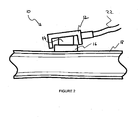
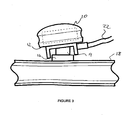
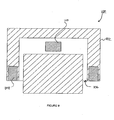
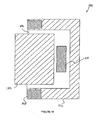
- the treatment apparatus 10 consists of a housing 12, a resilient coupling element 14 and an ultrasound transducer 16.
- the housing 12 is shaped so as to accommodate the coupling element 14 and at least part of the transducer 16.
- a switch (not shown) operatively connects the transducer 16 to a power source (not shown), such as a battery (not shown).
- the switch may be integrated within the coupling element 14 such that the switch (not shown) is operated by compressing the coupling element 14.
- a predetermined contact pressure defined by the resilience properties of the coupling element 14
- the deformable resilient coupling element 14 ensuring maximum acoustic coupling between the ultrasound transducer 16 and the surface 18 of the animal, as well as preventing unwanted pressure concentration and potential harm to the animal.
- the coupling element 14 is preferably made of a flexible rubber, foam, thermoplastic elastomer or one or more springs. However, it is understood by the skilled person in the art that any suitable coupling element 14 adapted to deform at a predetermined pressure may be used. Also, it is further understood by the skilled person in the art that any suitable arrangement of the coupling element 14, the transducer 16 and switch (not shown) that enables the operation of the switch (not shown) at a predetermined contact pressure may be used.
- the coupling element 14 couples the transducer 16 to an interior surface of the housing 12 such that the transducer 16 can move with respect to the housing 12 within a limited range of at least one degree of freedom.
- the transducer 16 is coupled to the interior surface of the housing 12 such that the transducer 16 can move with respect to the housing 12 within a limited range of at least two degrees of freedom.
- the transducer 16 is coupled to the interior surface of the housing 12 such that the transducer 16 can move with respect to the housing 12 within a limited range of three degrees of freedom.
- the switch (not shown) is further adapted to trigger a feedback signal if the contact pressure between the treatment apparatus 10 and the surface 18 of the animal exceeds a predetermined pressure threshold.
- the feedback signal activates an LED visually located on the external surface of the housing 12, but any other form of feedback may be used, such as, for example, and audio signal or a tactile signal (i.e. vibration).
- the switch (not shown) if the contact pressure between the treatment apparatus 10 and the surface 18 of the animal exceeds a predetermined threshold, the increased deformation of the resilient coupling element 14 will cause the switch (not shown) to activate the LED indicating a pressure that may be harmful to the animal.
- a second switch (not shown) may be used to be activated by the increased deformation of the resilient coupling element 14.
- the feedback signal may be utilised to deactivate the transducer 16.
- the housing 12 may be shaped so as to be held by one hand including a hand-held portion 20.
- the treatment apparatus 10 may be powered by a power cable 22 connecting the hand-held treatment apparatus 10 to a base system (not shown) or external power source.
- the treatment apparatus 10 is a stand-alone unit powered by a battery.
- Preferred output power of the transducer 16 may be about 100 mW / cm 2 , but any other required power output may be used.
- the treatment apparatus 10 comprises data storage (not shown) and a controller (not shown) configured to determine duration and number of treatments and log the data for various different user profiles.
- the operator may be able to set up user profiles for a number of animals. Each time animal 'A' is treated, the number and duration of that treatment is logged under the animal 'A' user profile. The stored data may be used to show to the operator whether or not the prescribed treatment has been followed.
- the treatment apparatus 10 is adapted to directly process the stored data and assess the data with regards to the prescribed treatment plan, providing, for example a colour-coded visual indicator showing a level of compliance to the prescribed treatment plan.
- the stored data may be transferred to an external location for further analysis.
- Figures 4 to 6 shows a base unit 30 for storing the hand-held treatment apparatus 10.
- the base unit 30 may simply perform the function of protecting the stand-alone hand-held treatment apparatus 10 during transport.
- the base unit 30 is adapted to re-charge the battery powered hand-held treatment apparatus 10.
- the hand-held treatment apparatus 10 may comprise external interface contacts (not shown) that operatively mate with a connector (e.g. hot-shoe connection, not shown) of the base unit 30.
- a connector e.g. hot-shoe connection, not shown
- the interface contact are adapted to coexitingly transfer the stored data from the hand-held treatment apparatus 10 to the base unit 30, where a computer (not shown) may analyse the data and provide the results of the analysis on a display 32.
- the operator creates a user profile for the animal to be treated including a treatment plan (e.g. 20 min daily application for 6 weeks).
- the animal is then treated under its user profile.
- the operator then simply presses the transducer 16 contact surface of the treatment apparatus 10 against the surface 18 of the animal at the treatment area.
- An aqueous gel or any other acoustic coupling agent may be applied to the contact surface of the ultrasound probe.
- the transducer 16 is activated providing, for example, an ultrasound output to the animal.
- the coupling element 14 compensates for the misalignment ensuring maximum contact area and acoustic coupling between the transducer 16 and the surface 18 of the animal.
- an activated LED will indicate that to the operator, so that it can be corrected.
- the duration and number of treatment are logged by the treatment apparatus, which may also provides an instant indication, whether or not, any treatments have been missed and the duration of each treatment complies with the prescribed treatment plan.
- the treatment apparatus 10 is secured by a hot-shoe connector in a base unit 30, where the treatment apparatus is re-charged and the data may be transferred to an onboard computer of the base unit 30.
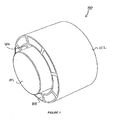
- the probe 100 consists of a cylindrically shaped transducer housing 102, a tactile sensor 104 operatively coupled along a longitudinal axis inside the housing 102 such that at least part of the tactile sensor 104 project out of an opening 106 of the housing 102.
- the probe 100 further comprises an array of proximity sensors 108 arranged along the rim of the housing, wherein the proximity sensors are embedded inside the cylindrical side wall of the housing 102.
- An ultrasound transducer 110 is located inside the housing 102 and directed towards the opening 106.
- the tactile sensor 104, the array of proximity sensors 108 and the ultrasound transducer 110 are all directed into the same direction, towards the opening of the housing 102.
- the probe 100 is placed onto the injured area of the animal body, such that the output of the ultrasound transducer 110 is directed towards the animal body. Tactile sensor 104 and proximity sensors 108 are also directed towards the animal body. The probe is then pressed onto the injured area, wherein the tactile sensor 104 triggers a signal output in the event the pressure provided by the probe exceeds a predetermined pressure.
- the triggered signal output may be an audible noise, a visual indication such as a light, or vibration of the probe 100.
- the proximity sensors 108 measure the distance between the housing rim and the surface of the animal body. In the event the distance of one or more proximity sensors differs from the distance of other proximity sensors of the array, a signal output is triggered, indicating that the probe is not properly aligned with the surface of the injured area of the animal body. This allows the user to correct the position of the probe 100 until the signal is switched off.
- the signal output may be a noise, a visual indication such as a light, or vibration of the probe 100.
- the signal of the tactile sensor 104 differs from the signal of the proximity sensor 108 such that the user is able to distinguish between them.
- the probe may provide a continuous signal, e.g. a noise, which changes its characteristics according to the applied pressure or position.
- a noise which changes its characteristics according to the applied pressure or position.
- the probe 100 may provide a low frequency noise, which increases in frequency with increasing pressure.
- a low frequency noise may indicate a correct position/alignment of the probe 100, wherein any misalignment of the probe increases the noise frequency.
- the same effect can be achieved by a light source that changes colour in accordance to the pressure applied by the probe or the current alignment of the probe with respect to the animal body.
- the tactile sensor 104 is a load cell.
- the load cell may comprise a pressure sensor which may be used alone or in combination with other sensors to provide feedback to during application. By using these mechanisms together (or individually), it would allow the owner to position the probe precisely and safely. It would let you know when you are in the correct proximity of the animal and would then guide the owner as to how much pressure to apply to the probe. Pressure ranges may be used to define the applied pressure as 'good', 'poor', or 'too much'.
- the proximity sensor 108 may use a capacitance or resistance sensing mechanism in order to provide feedback of how much of the probe rim is in contact with the animal. Ranges may be used to indicate if the contact of the probe is 'excellent' (e.g. 80%-100% contact), good' (70%-80% contact), 'sufficient' (50%-70% contact) or 'insufficient' ( ⁇ 50% contact).
- an array of infrared sensors may be used as proximity sensors 108 to detect the position of the probe 100 with respect to the animal body.
- thermistors may be used to detect a heat signature from the animal. If one or more of the thermistors move away from the animal skin, the temperature would drop triggering a signal that the probe was out of contact
- All of those feedback signals, visual, audible or tactile, provide a feedback to the user of any deviation form a predetermined norm in order to ensure that the treatment is delivered effectively and without harming the animal.
- Such a feedback from a pressure sensor alone or in combination with a proximity sensor allows the user to position the probe precisely and safely.
- the feedback device (not shown), probe 100 or treatment apparatus may comprise a transceiver (not shown) that allows the feedback signals to be transmitted to a remote location so that the user can monitor the treatment without having to be onsite.
- the transceiver may also be able to receive a control signal for the transducer allowing the user to control the output of the transducer from a remote location.
- the present invention may be in the form of a feedback device that can be removably coupled to an existing treatment apparatus, or it may be an integral part of a probe or treatment apparatus.
- the treatment apparatus may include other treatment means adapted to provide other types of treatment such as radiation treatment, water jet treatment or vacuum treatment.
Landscapes
- Health & Medical Sciences (AREA)
- Life Sciences & Earth Sciences (AREA)
- Veterinary Medicine (AREA)
- Engineering & Computer Science (AREA)
- Animal Behavior & Ethology (AREA)
- General Health & Medical Sciences (AREA)
- Public Health (AREA)
- Biomedical Technology (AREA)
- Nuclear Medicine, Radiotherapy & Molecular Imaging (AREA)
- Radiology & Medical Imaging (AREA)
- Wood Science & Technology (AREA)
- Zoology (AREA)
- Surgery (AREA)
- Dentistry (AREA)
- Oral & Maxillofacial Surgery (AREA)
- Physics & Mathematics (AREA)
- Biophysics (AREA)
- Pathology (AREA)
- Heart & Thoracic Surgery (AREA)
- Medical Informatics (AREA)
- Molecular Biology (AREA)
- Surgical Instruments (AREA)
- Percussion Or Vibration Massage (AREA)
Claims (15)
- Eine Behandlungsvorrichtung zur externen Anwendung an einem Säugetierkörper, beinhaltend:ein Gehäuse,ein Wandlerelement, das angepasst ist, um eine Ausgabe in Richtung des Säugetierkörpers und/oder in diesen bereitzustellen,ein Schalterelement, das angepasst ist, um das Wandlerelement gemäß einem ersten vorbestimmten Zustand zu aktivieren und das Wandlerelement gemäß einem zweiten vorbestimmten Zustand zu deaktivieren,ein Rückmeldeelement, das angepasst ist, um als Reaktion auf mindestens einen dritten vorbestimmten Zustand mindestens ein erstes Rückmeldesignal bereitzustellen, undein nachgiebiges Kopplungselement, das aus elastischem Material hergestellt und angepasst ist, um das Wandlerelement betriebsfähig an das Gehäuse zu koppeln und zwischen dem Wandlerelement und dem Gehäuse einen eingeschränkten Bereich von drei Freiheitsgraden bereitzustellen.
- Behandlungsvorrichtung gemäß Anspruch 1, wobei der erste vorbestimmte Zustand ein Kontaktdruck ist, der gleich oder höher als ein erster vorbestimmter Kontaktdruck ist, der durch das Wandlerelement in einer senkrechten Richtung in Bezug auf die Oberfläche des Säugetierkörpers auf den Säugetierkörper angewendet wird.
- Behandlungsvorrichtung gemäß Anspruch 2, wobei der zweite vorbestimmte Zustand ein Kontaktdruck ist, der niedriger als der erste vorbestimmte Kontaktdruck ist, der durch das Wandlerelement in einer senkrechten Richtung in Bezug auf die Oberfläche des Säugetierkörpers auf den Säugetierkörper angewendet wird.
- Behandlungsvorrichtung gemäß einem der vorhergehenden Ansprüche, wobei der dritte vorbestimmte Zustand ein Kontaktdruck ist, der höher als ein zweiter vorbestimmter Kontaktdruck ist, der durch das Wandlerelement in einer senkrechten Richtung in Bezug auf die Oberfläche des Säugetierkörpers auf den Säugetierkörper angewendet wird.
- Behandlungsvorrichtung gemäß den Ansprüchen 2 bis 4, wobei der erste vorbestimmte Kontaktdruck geringer als der zweite vorbestimmte Kontaktdruck ist.
- Behandlungsvorrichtung gemäß einem der vorhergehenden Ansprüche, wobei der vorbestimmte Zustand durch die Nachgiebigkeit des nachgiebigen Kopplungselements definiert wird.
- Behandlungsvorrichtung gemäß einem der vorhergehenden Ansprüche, wobei die Ausgabe ein Ultraschallsignal ist.
- Behandlungsvorrichtung gemäß einem der vorhergehenden Ansprüche, die ferner eine Datenspeichersteuerung beinhaltet, die angepasst ist, um die Aktivierungsanzahl und -dauer des Wandlerelements für eine Vielzahl von Anwenderprofilen zu bestimmen und aufzuzeichnen.
- Behandlungsvorrichtung gemäß einem der vorhergehenden Ansprüche, die ferner eine externe Schnittstelle beinhaltet, die angepasst ist, um betriebsfähig mit einer externen Energiequelle und/oder externen Datenspeichereinrichtung verbunden zu werden.
- Behandlungsvorrichtung gemäß Anspruch 9, wobei die externe Schnittstelle eine Anschlussschnittstelle (Hot-Shoe Interface) ist.
- Behandlungsvorrichtung gemäß einem der vorhergehenden Ansprüche, die ferner mindestens einen Näherungssensor beinhaltet, der angepasst ist, um die Position der Behandlungsvorrichtung in Bezug auf den Säugetierkörper zu bestimmen, wobei der Näherungssensor angepasst ist, um als Reaktion auf mindestens eine von dem mindestens einen Näherungssensor gemessene vorbestimmte Position selektiv mindestens ein zweites Rückmeldesignal bereitzustellen.
- Behandlungsvorrichtung gemäß Anspruch 11, wobei das mindestens eine erste und zweite Rückmeldesignal ein beliebiges oder mehrere von einem visuellen und/oder hörbaren und/oder fühlbaren Signal ist.
- Behandlungsvorrichtung gemäß einem der Ansprüche 11 und 12, das ferner einen ersten Transceiver beinhaltet, der angepasst ist, um das erste und/oder zweite Rückmeldesignal an einen entfernten zweiten Transceiver zu übertragen.
- Behandlungsvorrichtung gemäß Anspruch 13, wobei der erste Transceiver ferner angepasst ist, um ein Steuersignal zu empfangen, das angepasst ist, um die Ausgabe des Wandlerelements zu steuern.
- Behandlungsvorrichtung gemäß einem der Ansprüche 11 bis 14, wobei das zweite Rückmeldesignal angepasst ist, um sich als Reaktion auf eine Änderung der Position der Säugetierbehandlungsvorrichtung in Bezug auf den Säugetierkörper im Gebrauch zu ändern.
Applications Claiming Priority (2)
| Application Number | Priority Date | Filing Date | Title |
|---|---|---|---|
| GB1111012.9A GB2493693A (en) | 2011-06-29 | 2011-06-29 | Feedback device for use with a mammal treatment apparatus |
| PCT/GB2012/051512 WO2013001302A1 (en) | 2011-06-29 | 2012-06-28 | Treatment apparatus for external application to a mammal body |
Publications (2)
| Publication Number | Publication Date |
|---|---|
| EP2726151A1 EP2726151A1 (de) | 2014-05-07 |
| EP2726151B1 true EP2726151B1 (de) | 2015-08-05 |
Family
ID=44485329
Family Applications (1)
| Application Number | Title | Priority Date | Filing Date |
|---|---|---|---|
| EP12743199.7A Not-in-force EP2726151B1 (de) | 2011-06-29 | 2012-06-28 | Behandlungsvorrichtung zur äusserlichen anwendung an einem säugetierkörper |
Country Status (5)
| Country | Link |
|---|---|
| US (1) | US20140213939A1 (de) |
| EP (1) | EP2726151B1 (de) |
| CN (1) | CN103747836A (de) |
| GB (1) | GB2493693A (de) |
| WO (1) | WO2013001302A1 (de) |
Families Citing this family (3)
| Publication number | Priority date | Publication date | Assignee | Title |
|---|---|---|---|---|
| US9039655B2 (en) | 2009-11-06 | 2015-05-26 | Crisi Medical Systems, Inc. | Medication injection site and data collection system |
| WO2017020081A1 (en) * | 2015-08-03 | 2017-02-09 | Deakin University | Apparatus, system and method for controlling motion of a robotic manipulator |
| CN109172031A (zh) * | 2018-11-20 | 2019-01-11 | 广东省第二人民医院(广东省卫生应急医院) | 缓力按压装置及利用该装置的按压方法 |
Family Cites Families (18)
| Publication number | Priority date | Publication date | Assignee | Title |
|---|---|---|---|---|
| US5253656A (en) * | 1991-05-23 | 1993-10-19 | Rincoe Richard G | Apparatus and method for monitoring contact pressure between body parts and contact surfaces |
| US7369161B2 (en) * | 1999-06-08 | 2008-05-06 | Lightsurf Technologies, Inc. | Digital camera device providing improved methodology for rapidly taking successive pictures |
| DE10107832A1 (de) * | 2001-02-16 | 2002-09-05 | Norbert Notz | Druckmesskissen |
| WO2004037346A1 (en) * | 2002-10-28 | 2004-05-06 | John Perrier | Ultrasonic medical device |
| US7153298B1 (en) * | 2003-03-28 | 2006-12-26 | Vandolay, Inc. | Vascular occlusion systems and methods |
| US7249512B2 (en) * | 2005-01-24 | 2007-07-31 | The Boeing Company | Non-destructive stringer inspection apparatus and method |
| US20070078484A1 (en) * | 2005-10-03 | 2007-04-05 | Joseph Talarico | Gentle touch surgical instrument and method of using same |
| JP4345818B2 (ja) * | 2007-01-15 | 2009-10-14 | パナソニック電工株式会社 | 超音波発生装置及びこれを用いた肌ケア装置 |
| EP2122318A2 (de) * | 2007-03-07 | 2009-11-25 | Koninklijke Philips Electronics N.V. | Medizinische vorrichtung mit einem sensor zur krafterkennung |
| WO2009103165A1 (en) * | 2008-02-21 | 2009-08-27 | Medx Health Corp. | Phototherapy device for illuminating the periphery of a wound and phototherapy system incorporating the same |
| JP5363020B2 (ja) * | 2008-04-07 | 2013-12-11 | オリンパスメディカルシステムズ株式会社 | カプセル型医療装置および医療システム |
| US20090287085A1 (en) * | 2008-05-15 | 2009-11-19 | Shmuel Ben-Ezra | Device, system, and method of determining an acoustic contact between an ultrasonic transducer and a body |
| WO2009144623A1 (en) * | 2008-05-26 | 2009-12-03 | Koninklijke Philips Electronics N.V. | Control of measurement and/or treatment means of a probe |
| US8086298B2 (en) * | 2008-09-29 | 2011-12-27 | Civco Medical Instruments Co., Inc. | EM tracking systems for use with ultrasound and other imaging modalities |
| US8864757B2 (en) * | 2008-12-31 | 2014-10-21 | St. Jude Medical, Atrial Fibrillation Division, Inc. | System and method for measuring force and torque applied to a catheter electrode tip |
| AT507293B1 (de) * | 2009-02-20 | 2010-04-15 | Ima Integrated Microsystems Au | Druckindikator für medizinische druckverbände |
| US20120172763A1 (en) * | 2009-07-01 | 2012-07-05 | Industrial Research Limited | Measurement device |
| JP2014500538A (ja) * | 2010-10-12 | 2014-01-09 | タニス,ケヴィン ジェイ. | 医療機器 |
-
2011
- 2011-06-29 GB GB1111012.9A patent/GB2493693A/en not_active Withdrawn
-
2012
- 2012-06-28 EP EP12743199.7A patent/EP2726151B1/de not_active Not-in-force
- 2012-06-28 WO PCT/GB2012/051512 patent/WO2013001302A1/en not_active Ceased
- 2012-06-28 CN CN201280032646.7A patent/CN103747836A/zh active Pending
- 2012-06-28 US US14/128,779 patent/US20140213939A1/en not_active Abandoned
Also Published As
| Publication number | Publication date |
|---|---|
| GB201111012D0 (en) | 2011-08-10 |
| CN103747836A (zh) | 2014-04-23 |
| WO2013001302A9 (en) | 2013-03-07 |
| EP2726151A1 (de) | 2014-05-07 |
| US20140213939A1 (en) | 2014-07-31 |
| WO2013001302A1 (en) | 2013-01-03 |
| GB2493693A (en) | 2013-02-20 |
Similar Documents
| Publication | Publication Date | Title |
|---|---|---|
| EP3551079B1 (de) | System zur automatisierten flüssigkeitsreaktionsmessung | |
| US20210244943A1 (en) | Systems and methods for automated muscle stimulation | |
| KR102479936B1 (ko) | 초음파 치료 시스템 | |
| US8285381B2 (en) | Systems and methods for automated muscle stimulation | |
| US8753295B2 (en) | Treatment of warts and other dermatological conditions using topical ultrasonic applicator | |
| EP3915472B1 (de) | Vorrichtung zur behandlung von vaginaler atrophie | |
| US20160136462A1 (en) | Wearable ultrasound device | |
| US9592029B2 (en) | Vascular access monitoring device | |
| CA2674446A1 (en) | Systems and methods for intra-operative stimulation | |
| CA2768298A1 (en) | Orifice probe and method of use thereof | |
| US20190201151A1 (en) | Haptic feedback device, system and method for operation of a medical tool | |
| US20150073251A1 (en) | Medical device with automatic start-up upon contact to patient tissue | |
| US20140213939A1 (en) | Treatment apparatus for external application to a mammal body | |
| JP6449028B2 (ja) | 子牛の疑似グルーミング装置及び飼育管理方法 | |
| US20120319846A1 (en) | Combination Bio-Sensing and Proximity Switch | |
| EP2209429A2 (de) | Vakuumextraktor | |
| WO2013111785A1 (ja) | 動物の呼吸及び/又は心拍の変動を監視する方法 | |
| KR101463210B1 (ko) | 고강도 집속 초음파 생성장치 | |
| WO2010018383A1 (en) | Device for detecting skin sensitivity and use of the same | |
| KR101658680B1 (ko) | 안면 신경 모니터링 장치 및 방법 | |
| KR100989070B1 (ko) | 도난방지장치가 구비된 제세동기 | |
| KR20150072191A (ko) | 기저귀 용변 처리 시스템 | |
| KR20200130591A (ko) | 고주파 방식의 여드름 치료기 | |
| CN217220124U (zh) | 一种无线表面肌电训练设备 | |
| US20260013830A1 (en) | Ultrasonic device |
Legal Events
| Date | Code | Title | Description |
|---|---|---|---|
| PUAI | Public reference made under article 153(3) epc to a published international application that has entered the european phase |
Free format text: ORIGINAL CODE: 0009012 |
|
| 17P | Request for examination filed |
Effective date: 20131211 |
|
| AK | Designated contracting states |
Kind code of ref document: A1 Designated state(s): AL AT BE BG CH CY CZ DE DK EE ES FI FR GB GR HR HU IE IS IT LI LT LU LV MC MK MT NL NO PL PT RO RS SE SI SK SM TR |
|
| DAX | Request for extension of the european patent (deleted) | ||
| GRAP | Despatch of communication of intention to grant a patent |
Free format text: ORIGINAL CODE: EPIDOSNIGR1 |
|
| INTG | Intention to grant announced |
Effective date: 20150116 |
|
| GRAS | Grant fee paid |
Free format text: ORIGINAL CODE: EPIDOSNIGR3 |
|
| GRAP | Despatch of communication of intention to grant a patent |
Free format text: ORIGINAL CODE: EPIDOSNIGR1 |
|
| INTG | Intention to grant announced |
Effective date: 20150522 |
|
| GRAA | (expected) grant |
Free format text: ORIGINAL CODE: 0009210 |
|
| AK | Designated contracting states |
Kind code of ref document: B1 Designated state(s): AL AT BE BG CH CY CZ DE DK EE ES FI FR GB GR HR HU IE IS IT LI LT LU LV MC MK MT NL NO PL PT RO RS SE SI SK SM TR |
|
| REG | Reference to a national code |
Ref country code: GB Ref legal event code: FG4D |
|
| REG | Reference to a national code |
Ref country code: CH Ref legal event code: EP |
|
| REG | Reference to a national code |
Ref country code: AT Ref legal event code: REF Ref document number: 740363 Country of ref document: AT Kind code of ref document: T Effective date: 20150815 |
|
| REG | Reference to a national code |
Ref country code: IE Ref legal event code: FG4D |
|
| REG | Reference to a national code |
Ref country code: DE Ref legal event code: R096 Ref document number: 602012009376 Country of ref document: DE |
|
| REG | Reference to a national code |
Ref country code: AT Ref legal event code: MK05 Ref document number: 740363 Country of ref document: AT Kind code of ref document: T Effective date: 20150805 |
|
| REG | Reference to a national code |
Ref country code: LT Ref legal event code: MG4D |
|
| REG | Reference to a national code |
Ref country code: NL Ref legal event code: MP Effective date: 20150805 |
|
| PG25 | Lapsed in a contracting state [announced via postgrant information from national office to epo] |
Ref country code: LT Free format text: LAPSE BECAUSE OF FAILURE TO SUBMIT A TRANSLATION OF THE DESCRIPTION OR TO PAY THE FEE WITHIN THE PRESCRIBED TIME-LIMIT Effective date: 20150805 Ref country code: FI Free format text: LAPSE BECAUSE OF FAILURE TO SUBMIT A TRANSLATION OF THE DESCRIPTION OR TO PAY THE FEE WITHIN THE PRESCRIBED TIME-LIMIT Effective date: 20150805 Ref country code: GR Free format text: LAPSE BECAUSE OF FAILURE TO SUBMIT A TRANSLATION OF THE DESCRIPTION OR TO PAY THE FEE WITHIN THE PRESCRIBED TIME-LIMIT Effective date: 20151106 Ref country code: LV Free format text: LAPSE BECAUSE OF FAILURE TO SUBMIT A TRANSLATION OF THE DESCRIPTION OR TO PAY THE FEE WITHIN THE PRESCRIBED TIME-LIMIT Effective date: 20150805 Ref country code: NO Free format text: LAPSE BECAUSE OF FAILURE TO SUBMIT A TRANSLATION OF THE DESCRIPTION OR TO PAY THE FEE WITHIN THE PRESCRIBED TIME-LIMIT Effective date: 20151105 |
|
| PG25 | Lapsed in a contracting state [announced via postgrant information from national office to epo] |
Ref country code: ES Free format text: LAPSE BECAUSE OF FAILURE TO SUBMIT A TRANSLATION OF THE DESCRIPTION OR TO PAY THE FEE WITHIN THE PRESCRIBED TIME-LIMIT Effective date: 20150805 Ref country code: RS Free format text: LAPSE BECAUSE OF FAILURE TO SUBMIT A TRANSLATION OF THE DESCRIPTION OR TO PAY THE FEE WITHIN THE PRESCRIBED TIME-LIMIT Effective date: 20150805 Ref country code: PT Free format text: LAPSE BECAUSE OF FAILURE TO SUBMIT A TRANSLATION OF THE DESCRIPTION OR TO PAY THE FEE WITHIN THE PRESCRIBED TIME-LIMIT Effective date: 20151207 Ref country code: IS Free format text: LAPSE BECAUSE OF FAILURE TO SUBMIT A TRANSLATION OF THE DESCRIPTION OR TO PAY THE FEE WITHIN THE PRESCRIBED TIME-LIMIT Effective date: 20151205 Ref country code: SE Free format text: LAPSE BECAUSE OF FAILURE TO SUBMIT A TRANSLATION OF THE DESCRIPTION OR TO PAY THE FEE WITHIN THE PRESCRIBED TIME-LIMIT Effective date: 20150805 Ref country code: AT Free format text: LAPSE BECAUSE OF FAILURE TO SUBMIT A TRANSLATION OF THE DESCRIPTION OR TO PAY THE FEE WITHIN THE PRESCRIBED TIME-LIMIT Effective date: 20150805 Ref country code: HR Free format text: LAPSE BECAUSE OF FAILURE TO SUBMIT A TRANSLATION OF THE DESCRIPTION OR TO PAY THE FEE WITHIN THE PRESCRIBED TIME-LIMIT Effective date: 20150805 Ref country code: PL Free format text: LAPSE BECAUSE OF FAILURE TO SUBMIT A TRANSLATION OF THE DESCRIPTION OR TO PAY THE FEE WITHIN THE PRESCRIBED TIME-LIMIT Effective date: 20150805 |
|
| PG25 | Lapsed in a contracting state [announced via postgrant information from national office to epo] |
Ref country code: NL Free format text: LAPSE BECAUSE OF FAILURE TO SUBMIT A TRANSLATION OF THE DESCRIPTION OR TO PAY THE FEE WITHIN THE PRESCRIBED TIME-LIMIT Effective date: 20150805 |
|
| PG25 | Lapsed in a contracting state [announced via postgrant information from national office to epo] |
Ref country code: DK Free format text: LAPSE BECAUSE OF FAILURE TO SUBMIT A TRANSLATION OF THE DESCRIPTION OR TO PAY THE FEE WITHIN THE PRESCRIBED TIME-LIMIT Effective date: 20150805 Ref country code: IT Free format text: LAPSE BECAUSE OF FAILURE TO SUBMIT A TRANSLATION OF THE DESCRIPTION OR TO PAY THE FEE WITHIN THE PRESCRIBED TIME-LIMIT Effective date: 20150805 Ref country code: EE Free format text: LAPSE BECAUSE OF FAILURE TO SUBMIT A TRANSLATION OF THE DESCRIPTION OR TO PAY THE FEE WITHIN THE PRESCRIBED TIME-LIMIT Effective date: 20150805 Ref country code: SK Free format text: LAPSE BECAUSE OF FAILURE TO SUBMIT A TRANSLATION OF THE DESCRIPTION OR TO PAY THE FEE WITHIN THE PRESCRIBED TIME-LIMIT Effective date: 20150805 Ref country code: CZ Free format text: LAPSE BECAUSE OF FAILURE TO SUBMIT A TRANSLATION OF THE DESCRIPTION OR TO PAY THE FEE WITHIN THE PRESCRIBED TIME-LIMIT Effective date: 20150805 |
|
| REG | Reference to a national code |
Ref country code: DE Ref legal event code: R097 Ref document number: 602012009376 Country of ref document: DE |
|
| PG25 | Lapsed in a contracting state [announced via postgrant information from national office to epo] |
Ref country code: RO Free format text: LAPSE BECAUSE OF FAILURE TO SUBMIT A TRANSLATION OF THE DESCRIPTION OR TO PAY THE FEE WITHIN THE PRESCRIBED TIME-LIMIT Effective date: 20150805 |
|
| REG | Reference to a national code |
Ref country code: FR Ref legal event code: PLFP Year of fee payment: 5 |
|
| PLBE | No opposition filed within time limit |
Free format text: ORIGINAL CODE: 0009261 |
|
| STAA | Information on the status of an ep patent application or granted ep patent |
Free format text: STATUS: NO OPPOSITION FILED WITHIN TIME LIMIT |
|
| 26N | No opposition filed |
Effective date: 20160509 |
|
| PG25 | Lapsed in a contracting state [announced via postgrant information from national office to epo] |
Ref country code: SI Free format text: LAPSE BECAUSE OF FAILURE TO SUBMIT A TRANSLATION OF THE DESCRIPTION OR TO PAY THE FEE WITHIN THE PRESCRIBED TIME-LIMIT Effective date: 20150805 |
|
| PG25 | Lapsed in a contracting state [announced via postgrant information from national office to epo] |
Ref country code: BE Free format text: LAPSE BECAUSE OF FAILURE TO SUBMIT A TRANSLATION OF THE DESCRIPTION OR TO PAY THE FEE WITHIN THE PRESCRIBED TIME-LIMIT Effective date: 20150805 |
|
| PG25 | Lapsed in a contracting state [announced via postgrant information from national office to epo] |
Ref country code: MC Free format text: LAPSE BECAUSE OF FAILURE TO SUBMIT A TRANSLATION OF THE DESCRIPTION OR TO PAY THE FEE WITHIN THE PRESCRIBED TIME-LIMIT Effective date: 20150805 |
|
| REG | Reference to a national code |
Ref country code: CH Ref legal event code: PL |
|
| PG25 | Lapsed in a contracting state [announced via postgrant information from national office to epo] |
Ref country code: CH Free format text: LAPSE BECAUSE OF NON-PAYMENT OF DUE FEES Effective date: 20160630 Ref country code: LI Free format text: LAPSE BECAUSE OF NON-PAYMENT OF DUE FEES Effective date: 20160630 |
|
| REG | Reference to a national code |
Ref country code: FR Ref legal event code: PLFP Year of fee payment: 6 |
|
| PG25 | Lapsed in a contracting state [announced via postgrant information from national office to epo] |
Ref country code: SM Free format text: LAPSE BECAUSE OF FAILURE TO SUBMIT A TRANSLATION OF THE DESCRIPTION OR TO PAY THE FEE WITHIN THE PRESCRIBED TIME-LIMIT Effective date: 20150805 Ref country code: HU Free format text: LAPSE BECAUSE OF FAILURE TO SUBMIT A TRANSLATION OF THE DESCRIPTION OR TO PAY THE FEE WITHIN THE PRESCRIBED TIME-LIMIT; INVALID AB INITIO Effective date: 20120628 |
|
| PG25 | Lapsed in a contracting state [announced via postgrant information from national office to epo] |
Ref country code: MK Free format text: LAPSE BECAUSE OF FAILURE TO SUBMIT A TRANSLATION OF THE DESCRIPTION OR TO PAY THE FEE WITHIN THE PRESCRIBED TIME-LIMIT Effective date: 20150805 Ref country code: CY Free format text: LAPSE BECAUSE OF FAILURE TO SUBMIT A TRANSLATION OF THE DESCRIPTION OR TO PAY THE FEE WITHIN THE PRESCRIBED TIME-LIMIT Effective date: 20150805 Ref country code: LU Free format text: LAPSE BECAUSE OF NON-PAYMENT OF DUE FEES Effective date: 20160628 Ref country code: MT Free format text: LAPSE BECAUSE OF NON-PAYMENT OF DUE FEES Effective date: 20160630 |
|
| REG | Reference to a national code |
Ref country code: FR Ref legal event code: PLFP Year of fee payment: 7 |
|
| PG25 | Lapsed in a contracting state [announced via postgrant information from national office to epo] |
Ref country code: BG Free format text: LAPSE BECAUSE OF FAILURE TO SUBMIT A TRANSLATION OF THE DESCRIPTION OR TO PAY THE FEE WITHIN THE PRESCRIBED TIME-LIMIT Effective date: 20150805 |
|
| PGFP | Annual fee paid to national office [announced via postgrant information from national office to epo] |
Ref country code: IE Payment date: 20180629 Year of fee payment: 7 |
|
| PGFP | Annual fee paid to national office [announced via postgrant information from national office to epo] |
Ref country code: FR Payment date: 20180629 Year of fee payment: 7 |
|
| PG25 | Lapsed in a contracting state [announced via postgrant information from national office to epo] |
Ref country code: TR Free format text: LAPSE BECAUSE OF FAILURE TO SUBMIT A TRANSLATION OF THE DESCRIPTION OR TO PAY THE FEE WITHIN THE PRESCRIBED TIME-LIMIT Effective date: 20150805 Ref country code: AL Free format text: LAPSE BECAUSE OF FAILURE TO SUBMIT A TRANSLATION OF THE DESCRIPTION OR TO PAY THE FEE WITHIN THE PRESCRIBED TIME-LIMIT Effective date: 20150805 |
|
| PGFP | Annual fee paid to national office [announced via postgrant information from national office to epo] |
Ref country code: GB Payment date: 20180629 Year of fee payment: 7 Ref country code: DE Payment date: 20180629 Year of fee payment: 7 |
|
| REG | Reference to a national code |
Ref country code: DE Ref legal event code: R119 Ref document number: 602012009376 Country of ref document: DE |
|
| GBPC | Gb: european patent ceased through non-payment of renewal fee |
Effective date: 20190628 |
|
| PG25 | Lapsed in a contracting state [announced via postgrant information from national office to epo] |
Ref country code: DE Free format text: LAPSE BECAUSE OF NON-PAYMENT OF DUE FEES Effective date: 20200101 Ref country code: IE Free format text: LAPSE BECAUSE OF NON-PAYMENT OF DUE FEES Effective date: 20190628 Ref country code: GB Free format text: LAPSE BECAUSE OF NON-PAYMENT OF DUE FEES Effective date: 20190628 |
|
| PG25 | Lapsed in a contracting state [announced via postgrant information from national office to epo] |
Ref country code: FR Free format text: LAPSE BECAUSE OF NON-PAYMENT OF DUE FEES Effective date: 20190630 |