EP2709079B1 - Induktive heizvorrichtung für getränkedosen - Google Patents
Induktive heizvorrichtung für getränkedosen Download PDFInfo
- Publication number
- EP2709079B1 EP2709079B1 EP11865118.1A EP11865118A EP2709079B1 EP 2709079 B1 EP2709079 B1 EP 2709079B1 EP 11865118 A EP11865118 A EP 11865118A EP 2709079 B1 EP2709079 B1 EP 2709079B1
- Authority
- EP
- European Patent Office
- Prior art keywords
- holder
- resealable
- metal beverage
- temperature
- cap
- Prior art date
- Legal status (The legal status is an assumption and is not a legal conclusion. Google has not performed a legal analysis and makes no representation as to the accuracy of the status listed.)
- Not-in-force
Links
Images

Classifications
-
- H—ELECTRICITY
- H05—ELECTRIC TECHNIQUES NOT OTHERWISE PROVIDED FOR
- H05B—ELECTRIC HEATING; ELECTRIC LIGHT SOURCES NOT OTHERWISE PROVIDED FOR; CIRCUIT ARRANGEMENTS FOR ELECTRIC LIGHT SOURCES, IN GENERAL
- H05B6/00—Heating by electric, magnetic or electromagnetic fields
- H05B6/02—Induction heating
- H05B6/10—Induction heating apparatus, other than furnaces, for specific applications
- H05B6/105—Induction heating apparatus, other than furnaces, for specific applications using a susceptor
- H05B6/108—Induction heating apparatus, other than furnaces, for specific applications using a susceptor for heating a fluid
-
- A—HUMAN NECESSITIES
- A47—FURNITURE; DOMESTIC ARTICLES OR APPLIANCES; COFFEE MILLS; SPICE MILLS; SUCTION CLEANERS IN GENERAL
- A47J—KITCHEN EQUIPMENT; COFFEE MILLS; SPICE MILLS; APPARATUS FOR MAKING BEVERAGES
- A47J36/00—Parts, details or accessories of cooking-vessels
- A47J36/24—Warming devices
- A47J36/2411—Baby bottle warmers; Devices for warming baby food in jars
- A47J36/2433—Baby bottle warmers; Devices for warming baby food in jars with electrical heating means
-
- G—PHYSICS
- G07—CHECKING-DEVICES
- G07F—COIN-FREED OR LIKE APPARATUS
- G07F11/00—Coin-freed apparatus for dispensing, or the like, discrete articles
- G07F11/70—Coin-freed apparatus for dispensing, or the like, discrete articles in which the articles are formed in the apparatus from components, blanks, or material constituents
-
- G—PHYSICS
- G07—CHECKING-DEVICES
- G07F—COIN-FREED OR LIKE APPARATUS
- G07F17/00—Coin-freed apparatus for hiring articles; Coin-freed facilities or services
- G07F17/0064—Coin-freed apparatus for hiring articles; Coin-freed facilities or services for processing of food articles
- G07F17/0078—Food articles which need to be processed for dispensing in a hot or cooked condition, e.g. popcorn, nuts
-
- G—PHYSICS
- G07—CHECKING-DEVICES
- G07F—COIN-FREED OR LIKE APPARATUS
- G07F9/00—Details other than those peculiar to special kinds or types of apparatus
- G07F9/10—Casings or parts thereof, e.g. with means for heating or cooling
- G07F9/105—Heating or cooling means, for temperature and humidity control, for the conditioning of articles and their storage
-
- H—ELECTRICITY
- H05—ELECTRIC TECHNIQUES NOT OTHERWISE PROVIDED FOR
- H05B—ELECTRIC HEATING; ELECTRIC LIGHT SOURCES NOT OTHERWISE PROVIDED FOR; CIRCUIT ARRANGEMENTS FOR ELECTRIC LIGHT SOURCES, IN GENERAL
- H05B6/00—Heating by electric, magnetic or electromagnetic fields
- H05B6/02—Induction heating
-
- H—ELECTRICITY
- H05—ELECTRIC TECHNIQUES NOT OTHERWISE PROVIDED FOR
- H05B—ELECTRIC HEATING; ELECTRIC LIGHT SOURCES NOT OTHERWISE PROVIDED FOR; CIRCUIT ARRANGEMENTS FOR ELECTRIC LIGHT SOURCES, IN GENERAL
- H05B6/00—Heating by electric, magnetic or electromagnetic fields
- H05B6/02—Induction heating
- H05B6/10—Induction heating apparatus, other than furnaces, for specific applications
- H05B6/105—Induction heating apparatus, other than furnaces, for specific applications using a susceptor
Definitions
- This invention relates to an induction heating apparatus for heating a canned beverage, and especially to an induction heating apparatus adapted to stop heating when a detected surface temperature of the can reaches a preset temperature.
- the warming apparatus of this kind is adapted to keep the canned beverages at the desired temperature by raising a temperature in the glass case to the desired temperature.
- the conventional warming apparatuses of this kind consume electricity continuously and a running cost thereof is therefore expansive.
- oxidation reactions of ingredients (e.g., vitamin C, starch, etc.) of the beverage are promoted by thus keeping the beverage warm, and as a result, color, flavor, taste etc. of the beverage in the can will be deteriorated.
- heating apparatuses for heating the canned beverages quickly according to need have been proposed.
- Japanese Patent No. 3259808 discloses a heating device for canned drink adapted to heat a canned drink by applying high-frequency current to a heating coil wound around the can held by a rotary table rotated by a motor.
- the can is held by a cylindrical guide except for an upper portion, and a temperature of the can is detected by a thermistor bolometer, a thermopile or the like at the exposed upper potion. Therefore, a heating of the can is stopped when the temperature of the upper portion of the can is raised to a preset temperature.
- Japanese Patent No. 4562765 discloses an induction heating apparatus for a resealable metal beverage can sealed by a cap screwed onto a threaded neck portion (as will be called a resealable can hereinafter).
- the induction heating apparatus taught by Japanese Patent No. 4562765 is comprised of a heating coil wound around a cylindrical holder, and adapted to heat the resealable can held in the holder by energizing the coil to generate an induced current while rotating the holder.
- the holder in order to enhance an agitation effect, the holder is inclined with respect to a vertical line and the holder is rotated while changing a revolution speed.
- Japanese Patent Laid-Open No. 2000-11247 discloses another induction heating device for canned beverage in which the can is placed sideways on a heating coil.
- the induction heating device is comprised of rollers contacted with an outer surface of a can trunk, and those rollers are individually provided with a spiral groove or ridge. Therefore, the can is moved in an axial direction by rotating the rollers by a motor. In order to enhance an agitation effect, a rotational direction of the can is reversed repeatedly.
- the can is heated by applying high-frequency current to the heating coil wound around the can while rotating the can so that the content is heated by the heat of the can.
- the can contains high viscosity beverage such as a corn soup
- the contents may be heated only in the vicinity of the inner face of the can and the central portion of the contents may not be heated sufficiently.
- the can itself produces a heat so that the surface temperature of the can is raised to be higher than that of the of the content. Therefore, if the heating is stopped at an instant when the temperature measured at the surface of the can reaches a preset temperature, the temperature of the content may be lower than the preset temperature.
- the resealable can is heated by energizing the coil wound around the cylindrical holder.
- the temperature of the can trunk is measured in the vicinity of the heating portion, the temperature of the can thus measured may be different from an actual temperature of the content.
- the present invention has been conceived the foregoing technical problems, and an object of the present invention is to provide an induction heating apparatus fur a beverage can, which can heat a content efficiently and measure a temperature of the content accurately.
- the induction heating apparatus comprising: a can holder for holding a resealable metal beverage can having a thread formed on a neck portion and a cap screwed onto the neck portion to close the can; a heating coil disposed around the can holder to inductively heat the metal beverage can; characterised in that the can holder is adapted to hold the metal beverage can in a manner such that the cap of the can inserted thereto is exposed on an axially upper side; and by a temperature measuring means that measures a surface temperature of the cap of the metal beverage can held in the can holder.
- the induction heating apparatus is further comprised of a rotating mechanism adapted to rotate the metal beverage can held in the can holder around a center axis of the can holder.
- the rotating mechanism repeatedly switches a rotational direction of the metal beverage can being heated by the heating coil.
- the rotating mechanism is adapted to switch the rotational direction of the metal beverage can after a rotational speed of the metal beverage can reaches a preset speed.
- the can holder is inclined in a manner such that a center axis of the metal beverage can is inclined with respect to a vertical direction.
- the temperature measuring means is adapted to measure a temperature of an outer circumferential face of the cap situated in an outer circumferential side of the neck portion to which a content held in the metal beverage can is contacted by rotating the inclined metal beverage can.
- the metal beverage can is held by the can holder but the cap of the can is exposed on the outside of the can holder.
- the metal beverage can thus held by the can holder is heated by the heating coil situated around the can holder, and temperature of the metal beverage can is measured by the temperature measuring means at the surface of the cap. That is, the temperature measuring means measures the surface temperature of at the cap which is not be effected seriously by the heat transmitted from a portion heated by the heating coil. Therefore, it is possible to accurately measure the temperature of the content held in the metal beverage can.
- the induction heating apparatus is provided with the rotating mechanism adapted to rotate the metal beverage can held in the can holder around a center axis of the can holder. Therefore, the content is allowed to be agitated by the rotation, and a liquid level of the content is centrifugally displaced to the neck portion on which the cap is mounted. For this reason, the temperature of the content can be measured accurately by measuring the temperature of the cap.
- the metal beverage can is heated by the heating coil while being rotated by the rotating mechanism, and the rotational direction is switched repeatedly during heating the can. Therefore, agitation of the content is facilitated by an inertial force resulting from switching the rotational direction.
- the rotating mechanism switches the rotational direction of the metal beverage can after a rotational speed of the metal beverage can reaches a preset speed. Therefore, it is possible to increase the inertial force resulting from switching the rotational direction so that the content can be agitated efficiently.
- the can holder is inclined in a manner such that the center axis of the metal beverage can is inclined with respect to a vertical direction. Therefore, the content is allowed to be agitated efficiently by rotating the metal beverage can.
- the temperature measuring means is adapted to measure a temperature of the outer circumferential face of the cap situated in the outer circumferential side of the neck portion to which a content held in the metal beverage can is contacted by rotating the inclined metal beverage can. That is, it is possible to measure the temperature of the cap at a portion where the temperature thereof is closest to that of the content.
- Fig. 2 is a view showing a structure of the resealable can 1.
- the resealable can 1 is comprised of a can body 2 and a cap 3.
- the can body 2 is comprised of a cylindrical can trunk 2a in which a bottom thereof is closed, a truncated conical shaped or hemispherical shaped shoulder portion 2b formed integrally with an upper portion of the can trunk 2a, and a neck portion 2c formed above the shoulder portion 2b.
- an upper end of the neck portion 2c is curled outwardly.
- the can body 2 In order to heat the can body 2 inductively by the current applied to the after-mentioned heating coil, the can body 2 is made of metal material such as iron, stainless, etc.
- a cap 3 is mounted on the neck portion 2c while covering an upper end portion of the neck portion 2c, and a thread is rolled thereon from an outer circumferential side. Therefore, the reasealable can 1 can be resealed by screwing the cap 3 onto the neck portion 2c even after dismounting the cap 3 to drink the content.
- a cylindrical can holder 6 for holding the resealable can 1 is arranged in a casing 5.
- the can holder 6 is inclined at an angle of predetermined degrees, and a bottom portion of the can holder 6 is connected with a rotating mechanism such as a motor 7 to be rotated around a center axis A.
- the can holder 6 is comprised of a cylindrical holder portion 8 having an inner diameter slightly larger than an outer diameter of the can body 2 of the resealable can 1 to be held therein, and a heating coil 9 for heating the resealable can 1 inductively is arranged around the holder portion 8.
- a height of the holder portion 8 i.e., a length along the center axis A is shorter than that of the can trunk 2a, that is, the holder portion 8 is situated below the shoulder portion 2b.
- the length of the holder portion 8 is preferably longer than a half of entire length of the resealable can 1. To this end, it is especially preferable to maintain the length of the holder portion 8 longer than two thirds of entire length of the resealable can 1.
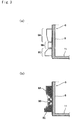
- FIG. 3(a) and 3(b) A preferred example of a structure of the heating coil 9 is shown in Figs. 3(a) and 3(b) . It is preferable to use a litz wire prepared by twisting a plurality of copper wires as the heating coil 9 to which the electric current is applied.
- the heating coil 9 is comprised of three regions such as a region 9A situated in the vicinity of the opening of the holder portion 8, a central region 9B, and a region 9C situated in the vicinity of the bottom portion 11.
- the heating coil 9 is wound densely in the regions 9A and 9C, and wound roughly in the region B (that is, wound more times in the regions A and C in comparison with the region B).
- the heating coil 9 is wound homogeneously around the holder portion 8, a magnetic flux around the region 9A and a magnetic flux around the region 9C cause interfere with a magnetic flux around the central region 9B. That is, a density of the magnetic flux would be maximized in the central region 9B so that a current is induced excessively within an intermediate portion of the holder portion 8. Consequently, a highest heat would be developed in the vicinity of the intermediate portion of the holder portion 8 thereby damaging a resin coating on the surface of an intermediate portion of the can trunk 2a and an inner coating of the resealable can 1. As a result, appearance of the resealable can 1 and quality of the content may be deteriorated.
- the magnetic flux around the central region 9B may be dampened by reducing a winding number of the heating coil 9 in the central region 9B.
- the intermediate portion of the holder portion 8 can be prevented from being heated excessively, in other words, the resealable can 1 is allowed to be heated homogeneously.
- the resin coating on the surface of the can trunk 2a and the inner coating of the resealable can 1 will not be damaged. Therefore, appearance of the resealable can 1 and quality of the content will not be deteriorated thermally.
- a heat-shrinkable label is attached to the outer surface of the resealable can 1, the heat-shrinkable label can be prevented from being damaged by the excessive heat developed in the vicinity of the central region 9B of the heating coil 9.
- the beverage contained in the resealable can 1 can be heated homogeneously, in addition to avoid the foregoing disadvantages resulting from heating the intermediate portion of the resealable can 1.
- a winding number of the heating coil 9 per unit length in the axial direction of the resealable can 1 is larger in the region in the vicinity of the opening than that in the region in the vicinity of the central region 9B.
- a winding number of the heating coil 9 per unit length in the axial direction of the resealable can 1 is larger in the region in the vicinity of the bottom portion 11 than that in the region in the vicinity of the central region 9B.
- a ratio of the winding density (TA) in the region 9A divided by the winding density (TB) in the central region 9B is 1.2 to 2.0.
- a ratio of the winding density (TC) in the region 9C divided by the winding density (TB) in the central region 9B is 1.2 to 2.0. If the above-explained ratio is smaller than 1.2, the concentration of the magnetic fluxes to the central region 9B will not be eased sufficiently. In this case, therefore, the disadvantages caused by an excessive heat development around the central region 9B of the heating coil 9 will not be avoided effectively.
- the intermediate portion of the resealable can 1 will not be heated sufficiently, that is, the resealable can 1 will be heated unevenly.
- the winding density in the region 9C of the bottom side is preferably higher than that in the region 9A of the opening side. In this case, the bottom side of the resealable can 1 is heated relatively strongly. As a result, a convection flow of the content is created so that the content is allowed to be heated efficiently and homogeneously.
- the can holder 6 is made of heat resistance material transmissive of magnetic flux.
- the holder 6 may be made of poly-acetal resin, polyether ether ketone resin, polycarbonate rasin, MC Nylon (registered trademark of Quadrant Polypenco Japan Ltd.) or the like.
- a radiation thermometer 10 is arranged to be opposed to the cap 3 of the inclined resealable can 1. Therefore, the radiation thermometer 10 is allowed to measure a temperature of the cap 3 at a portion of an outer circumferential side of a site at which the content is gravitationally contacted with an inner surface of the neck portion 2c.
- a thermistor bolometer, a thermopile or the like adapted to detect an infrared energy may be used as the radiation thermometer 10.
- a contact type thermometer can be used as the radiation thermometer 10.
- the resealable can 1 is heated while being rotated. Therefore, it is preferable to use the non-contact thermometer as the radiation thermometer 10.
- a high-frequency power source 12 is arranged underneath the motor 7.
- a top lid of the casing 5 is comprised of a cover 13 for covering the opening of the can holder 6, and an operation panel (not shown) is arranged next to the cover 13.
- the operation panel is comprised of a start button for starting the heating, a stop button for stopping the heating, an adjuster button for adjusting a heating degree and so on.
- the resealable can 1 is allowed to be inserted into the can holder 6 by opening the cover 13.
- the upper end portion of the resealable can 1 is exposed on the outside of the can holder 6.
- the cover 13 is closed and the heating operation is ready to be started using the operating panel.
- the induction heating apparatus 4 is provided with a (not shown) sensor for detecting an opening status of the cover 13 for safety sake. Therefore, if the cover is opened, the heating coil 9 is prevented from being energized.
- the can holder 6 When the heating operation is started, the can holder 6 is rotated around the center axis A by driving the motor 7. At the same time, the controller 14 orders the power source 12 to apply a high-frequency current to the heating coil 9. Then, when the radiation thermometer 10 detects a fact that the temperature of the resealable can 1 reaches a preset temperature, the induction heating apparatus 4 is stopped automatically. Since the resealable can 1 is thus inductively heated while being rotated, the resealable can 1 is allowed to be heated homogeneously. In addition, the content held in the resealable can 1 is agitated while being heated so that the content can be heated homogeneously.
- the resealable can 1 is rotated while being inclined at a predetermined degree with respect to the vertical line. Therefore, a turbulence flow of the content is created so that the content is allowed to be heated efficiently and homogeneously.
- An inner diameter of the holder portion 8 is substantially identical to an outer diameter of the trunk portion 2a so as to hold the resealable can 1 tightly by contacting the inner surface of the holder portion 8 with the outer surface of the trunk portion 2a. Therefore, the resealable can 1 is allowed to be rotated without slipping on the inner surface of the holder portion 8.
- a rotational direction of the motor 7 is switched suddenly to agitate the content efficiently utilizing an inertial force thereby conforming the temperature of the content to the temperature of the cap 3.
- a fluid level of the content being contacted with the inner surface of the resealable can 1 is centrifugally displaced to the neck portion 2c situated inner circumferential side of the cap 3.
- the inner face of the can holder 6 is preferably be covered with an elastic sheet made of rubber, sponge, etc.
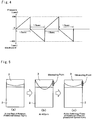
- Fig. 4 is a graph indicating a rotational shift pattern of the can holder 6 of the induction heating apparatus 4.
- the rotation direction of the resealable can 1 rotated together with the can holder 6 is switched repeatedly between the forward direction and the reverse direction.
- a program determining a length of time of a rotation, rotational direction and a rotational speed is installed in a computer of the controller 14 so that the controller 14 is allowed to control the rotational speed of the motor 7.
- the can holder 6 holding the resealable can 1 is rotated in the forward direction during a first period of 1.5 seconds.
- a rotational speed of the can holder 6 is increased to 400 revolutions per minute, and dropped abruptly to zero by interrupting the current. Then, the rotational direction of the can holder 6 is switched to the reverse direction. As the first period, the can holder 6 is rotated in the reverse direction for 1.5 seconds, and a rotational speed of the can holder 6 is increased to 400 revolutions per minute and dropped abruptly to zero. Then, the rotational direction of the can holder 6 is switched to the forward direction. Thus, the rotational direction of the can holder 6 is repeatedly switched every 1.5 seconds, and the heating operation is stopped when the surface temperature of the cap 3 measured by the radiation thermometer 10 reaches the preset temperature.
- the content is allowed to be agitated effectively utilizing the inertial force without burning to the inner surface of the resealable can 1.
- the heat of the resealable can 1 is allowed to be transmitted efficiently to the content so that the heating time will be shortened.
- Fig. 5 a change in a fluid level as the change in the rotational speed of the resealable can 1 is shown. As shown in Fig. 5 , the content centrifugally reaches the inner surface of the neck portion 2c situated in the inner circumferential side of the cap 3 during raising the rotational speed to 400 revolutions per minute. Specifically, Fig.
- Fig. 5(a) shows the fluid level of the case in which the rotation has not yet started, that is, the rotational speed is zero
- Fig. 5(b) shows the fluid level of the case in which the rotational speed is raised to 400 revolutions per minute
- Fig. 5(c) shows the fluid level of the case in which the rotational direction is switched after the rotational speed reaches 400 revolutions per minute.
- the resealable can 1 is inclined toward the radiation thermometer 10 so that the content is contacted with the inner surface of the neck portion 2c situated inner circumferential side of the cap 3. Therefore, the heat of the content is transmitted to the cap 3 through the neck portion 2c. As a result, the temperature of the cap 3 is raised to a substantially same level as the temperature of the content.
- a surface temperature of the cap 3 was compared with a temperature of the content after the resealable can 1 was heated by the induction heating apparatus thus structured.
- a resealable can 1 having a capacity of 170 grams and filled with corn soup having viscosity of 230cp was heated at 1350 watts.
- a temperature of the corn soup before heated was 20 degrees C.
- the can holder 6 was inclined at an angle of 45 degrees, and rotated 400 revolutions per minute in both forward and reverse directions. The rotation and the heating were stopped when the surface temperature of the cap 3 reached 55 degrees C. Then, the resealable can 1 was dismounted, and a temperature of the resealable can 1 was measured at the surface of the cap 3 (point A), at an upper portion of the trunk portion 2a (point B), and at a lower portion of the trunk portion 2a (point C).
- the resealable can 1 was shaken in the vertical direction in about 5 seconds, and the temeperature of the resealable can 1 was measured by the radiation thermometer 10 at the point B where the temperature of the resealable can 1 seems to be substantially identical to the temperature of the content.
- Such measurement was carried out nine times, and deviation in temperature was calculated based on the measurement results, and the temperatures measured at foregoing measuring points were compared with the temperature measured at foregoing measuring points after shaking the resealable can 1.
- the measurement results and standard deviations at foregoing measuring points are shown in the table below.
- the temperatures measured at the cap 3 were substantially similar to the temperature measured at the upper portion of the trunk portion 2a after shaking the resealable can 1. However, the temperatures measured at other measuring points were 5 to 10 degrees C higher than the temperatures measured at the upper portion of the trunk portion 2a after shaking the resealable can 1. In addition, the variation in the temperatures (i.e., standard deviation) measured at the cap 3 was smallest.
- the temperatures measured at the cap 3 were closest to the temperature of the content, and variation in the measured temperature was smallest. This is because the temperature of the trunk portion 2a was inductively heated by the heating coil 9 so that the temperature of the trunk portion 2a was higher than that of the content.
- the cap 3 was heated indirectly by the heat transmitted from the can body 2 through the neck portion 2c. Therefore, the cap 3 seems not to be heated excessively by the heat transmitted from the trunk portion 2a. Specifically, the cap 3 is heated by the heat of the content contacted to the inner surface of the neck portion 3c as a result of being agitated. Therefore, it is assumed that the temperature of the cap 3 becomes substantially congruent with the temperature of the content.
- the holder 6 is inclined at an angle of 45 degrees.
- the present invention should not be limited to the foregoing example.
- the resealable can 1 may also be held vertically.
- the can holder 6 has to be rotated at the speed possible to displace the fluid level of the content centrifugally to the inner surface of the neck portion 2c thereby heating the cap 3.
- the rotational speed of may be adjusted to be higher or lower than 400 revolutions per minute.
- viscosity of the content is high, it is preferable to raise the rotational speed of the can holder 6 to agitate the content effectively.
- the viscosity of the content is higher than 200cp, it is preferable to rotate the can holder 6 more than 400 revolutions per minute.
- the temperature of the cap 3 may also be measured at a top ceiling instead of the lateral circumferential face. For example, if the can holder 6 is rotated more than 600 revolutions per minute, the liquid level of the content will be further raised to a higher level. In this case, therefore, it is more preferable to measure the temperature of the cap 3 at the ceiling by displacing the radiation thermometer 10 to the place to be opposed to the outer surface of the ceiling.
- the can holder 6 is rotated by the motor 7 disposed underneath the bottom of the can holder 6.
- the can holder 6 may also be rotated using a roller by arranging the roller in an outer circumferential side of the can holder 6.
- an aluminum can may also be used as the resealable can 1 instead of the steel can or a stainless can.
- a heat value of the aluminum can resulting from the induction heating is smaller in comparison with that is the steel can or stainless can, that is, a heating efficiency of the aluminum can is not as good as that of the steel can or stainless can. Therefore, the aluminum can is preferable to be heated while using an appropriate means to improve the heating capacity and efficiency.
- the heating coil 9 should not be limited to a spiral coil formed by winding the litz wire around the holder portion 8.
- the heating coil 9 may be wound into variety of shapes such as a C-shape or an arcuate shape.
- an output power, a rotational acceleration, a maximum rotational speed etc. of the induction heating apparatus according to the present invention may also be adjusted arbitrarily depending on a shape and material of the resealable can 1, a kind of contents and other relative factors.
Landscapes
- Physics & Mathematics (AREA)
- General Physics & Mathematics (AREA)
- Electromagnetism (AREA)
- Engineering & Computer Science (AREA)
- Food Science & Technology (AREA)
- Life Sciences & Earth Sciences (AREA)
- General Induction Heating (AREA)
- Details Of Rigid Or Semi-Rigid Containers (AREA)
- Vending Machines For Individual Products (AREA)
Claims (7)
- Induktions-Heizvorrichtung (4), die Folgendes aufweist:- einen Dosenhalter (6), um eine wiederverschließbare Getränkedose (1) aus Metall zu halten, die ein an einem Halsbereich (2c) ausgebildetes Gewinde sowie einen auf den Halsbereich (2c) aufschraubbaren Deckel (3) aufweist, um die Dose (1) zu verschließen;- eine Heizwendel (9), die um den Dosenhalter (6) herum angeordnet ist, um die Getränkedose (1) aus Metall induktiv zu beheizen,
wobei der Dosenhalter (6) dazu ausgelegt ist, die Getränkedose (1) aus Metall derart zu halten, dass der Deckel (3) der darin eingesetzten Dose (1) an der axial oberen Seite freiliegt,
gekennzeichnet durch
eine Temperatur-Messeinrichtung, die eine Oberflächentemperatur des Deckels (3) der Getränkedose (1) aus Metall misst, welche in dem Dosenhalter (6) gehalten ist. - Induktions-Heizvorrichtung (4) nach Anspruch 1,
die ferner Folgendes aufweist:einen Drehmechanismus, der dazu ausgelegt ist, die Getränkedose (1) aus Metall, die in dem Dosenhalter (6) gehalten ist, um die Mittelachse des Dosenhalters (6) rotieren zu lassen. - Induktions-Heizvorrichtung (4) nach Anspruch 2,
wobei der Drehmechanismus die Drehrichtung der Getränkedose (1) aus Metall umschaltet, welche von der Heizwendel (9) beheizt wird. - Induktions-Heizvorrichtung (4) nach Anspruch 3,
wobei der Drehmechanismus dazu ausgelegt ist, die Drehrichtung der Getränkedose (1) aus Metall umzuschalten, wenn die Drehgeschwindigkeit der Getränkedose (1) aus Metall eine vorgegebene Geschwindigkeit erreicht hat. - Induktions-Heizvorrichtung (4) nach einem der Ansprüche 2 bis 4, wobei der Dosenhalter (6) derart geneigt ist, dass die Mittelachse der Getränkedose (1) aus Metall gegenüber der vertikalen Richtung geneigt ist.
- Induktions-Heizvorrichtung (4) nach Anspruch 5,
wobei die Temperatur-Messeinrichtung dazu ausgelegt ist, eine Temperatur einer Außenumfangsfläche des Deckels (3) zu messen, der sich an der Außenumfangsseite des Halsbereiches (2c) befindet, mit dem der in der Getränkedose (1) aus Metall enthaltene Inhalt in Kontakt steht, und zwar durch die Drehbewegung der geneigten Getränkedose (1) aus Metall. - Induktions-Heizvorrichtung (4) nach Anspruch 3 oder 4,
wobei der Dosenhalter derart geneigt ist, dass die Mittelachse der Getränkedose (1) aus Metall gegenüber der vertikalen Richtung geneigt ist.
Applications Claiming Priority (1)
| Application Number | Priority Date | Filing Date | Title |
|---|---|---|---|
| PCT/JP2011/060772 WO2012153394A1 (ja) | 2011-05-10 | 2011-05-10 | 飲料缶の誘導加熱装置 |
Publications (3)
| Publication Number | Publication Date |
|---|---|
| EP2709079A1 EP2709079A1 (de) | 2014-03-19 |
| EP2709079A4 EP2709079A4 (de) | 2015-04-15 |
| EP2709079B1 true EP2709079B1 (de) | 2016-08-24 |
Family
ID=47138897
Family Applications (1)
| Application Number | Title | Priority Date | Filing Date |
|---|---|---|---|
| EP11865118.1A Not-in-force EP2709079B1 (de) | 2011-05-10 | 2011-05-10 | Induktive heizvorrichtung für getränkedosen |
Country Status (6)
| Country | Link |
|---|---|
| US (1) | US9674900B2 (de) |
| EP (1) | EP2709079B1 (de) |
| JP (1) | JPWO2012153394A1 (de) |
| KR (1) | KR20140106383A (de) |
| CN (1) | CN103562974A (de) |
| WO (1) | WO2012153394A1 (de) |
Families Citing this family (10)
| Publication number | Priority date | Publication date | Assignee | Title |
|---|---|---|---|---|
| US9883551B2 (en) | 2013-03-15 | 2018-01-30 | Silgan Containers Llc | Induction heating system for food containers and method |
| US10237924B2 (en) * | 2013-03-15 | 2019-03-19 | Silgan Containers Llc | Temperature detection system for food container induction heating system and method |
| US9526409B2 (en) * | 2013-09-18 | 2016-12-27 | Covidien Lp | Laparoscopic visualization system |
| US10433372B2 (en) * | 2013-12-20 | 2019-10-01 | Toaster Labs, Inc. | Portable fluid warming device |
| US9967924B2 (en) | 2014-02-25 | 2018-05-08 | James Heczko | Package for storing consumable product, induction heating apparatus for heating package and system including same |
| WO2015164174A1 (en) | 2014-04-24 | 2015-10-29 | Silgan Containers Llc | Food container induction heating system having power based microbial lethality monitoring |
| FR3033974B1 (fr) | 2015-03-16 | 2018-11-09 | Chopin Technologies | Dispositif de chauffage, systeme de test comprenant un tel dispositif et procede de mise en œuvre d'un systeme de test. |
| PT3474712T (pt) | 2016-06-22 | 2021-09-20 | Nestle Sa | Dispositivo de aquecimento em linha |
| CN107049044A (zh) * | 2017-03-30 | 2017-08-18 | 史宏 | 一种包装饮料的电磁加热器 |
| CN111402491B (zh) * | 2020-03-21 | 2022-01-04 | 深圳市邂逅科技有限公司 | 自动贩卖机和自动微波炒菜的方法 |
Family Cites Families (12)
| Publication number | Priority date | Publication date | Assignee | Title |
|---|---|---|---|---|
| US5201797A (en) * | 1991-10-31 | 1993-04-13 | Weng Shun Te | Induction heater having cylindrical cooking receptacle |
| JP3259808B2 (ja) | 1994-04-05 | 2002-02-25 | 富士電機株式会社 | 缶入飲食品の加熱装置 |
| JP3706928B2 (ja) * | 1998-06-23 | 2005-10-19 | 富士電機リテイルシステムズ株式会社 | 缶飲料の誘導加熱装置 |
| JP2001109943A (ja) * | 1999-10-12 | 2001-04-20 | Matsushita Refrig Co Ltd | 飲料加熱機 |
| JP3744307B2 (ja) * | 2000-03-17 | 2006-02-08 | 富士電機リテイルシステムズ株式会社 | 飲料缶の判別方法および缶飲料の誘導加熱装置 |
| WO2003062720A2 (en) * | 2002-01-17 | 2003-07-31 | Jung Quy Doe | Apparatus for varying the temperature of a container for food or drinks |
| KR100842025B1 (ko) * | 2005-01-25 | 2008-06-27 | 다이와 세칸 가부시키가이샤 | 음료캔의 유도가열장치 및 유도가열방법 |
| US20070170174A1 (en) * | 2006-01-20 | 2007-07-26 | Segiet William W | Food inductive heating device and method |
| US7829827B2 (en) * | 2006-04-21 | 2010-11-09 | Ameritherm, Inc. | Radio frequency (RF) induction cooking food heater |
| JP2008021526A (ja) * | 2006-07-12 | 2008-01-31 | Sanden Corp | 食品加熱装置及びそれを備えた自動販売機 |
| US8140185B2 (en) * | 2008-06-09 | 2012-03-20 | The Coca-Cola Company | Virtual vendor shelf inventory management |
| JP5419573B2 (ja) * | 2009-07-22 | 2014-02-19 | 大和製罐株式会社 | 缶詰加熱装置 |
-
2011
- 2011-05-10 KR KR1020137029770A patent/KR20140106383A/ko not_active Ceased
- 2011-05-10 JP JP2013513850A patent/JPWO2012153394A1/ja active Pending
- 2011-05-10 CN CN201180070698.9A patent/CN103562974A/zh active Pending
- 2011-05-10 US US14/116,561 patent/US9674900B2/en not_active Expired - Fee Related
- 2011-05-10 WO PCT/JP2011/060772 patent/WO2012153394A1/ja not_active Ceased
- 2011-05-10 EP EP11865118.1A patent/EP2709079B1/de not_active Not-in-force
Also Published As
| Publication number | Publication date |
|---|---|
| EP2709079A1 (de) | 2014-03-19 |
| CN103562974A (zh) | 2014-02-05 |
| US9674900B2 (en) | 2017-06-06 |
| JPWO2012153394A1 (ja) | 2014-07-28 |
| EP2709079A4 (de) | 2015-04-15 |
| US20140197158A1 (en) | 2014-07-17 |
| KR20140106383A (ko) | 2014-09-03 |
| WO2012153394A1 (ja) | 2012-11-15 |
Similar Documents
| Publication | Publication Date | Title |
|---|---|---|
| EP2709079B1 (de) | Induktive heizvorrichtung für getränkedosen | |
| CN106233820B (zh) | 存储消费品的包装、用于加热包装的感应加热装置和包括前者的系统 | |
| JP2004267519A (ja) | 回転式電磁誘導加熱装置 | |
| US10278410B2 (en) | Food container induction heating system having power based microbial lethality monitoring | |
| JP5419573B2 (ja) | 缶詰加熱装置 | |
| WO2019191718A1 (en) | Improvements to induction heating devices and containers usable with induction heating devices | |
| JP4562765B2 (ja) | 飲料缶の誘導加熱装置及び誘導加熱方法 | |
| JP2001109943A (ja) | 飲料加熱機 | |
| JP7398889B2 (ja) | 炊飯器および炊飯器の加熱制御方法 | |
| CN103519674B (zh) | 感应加热煮饭器 | |
| JP3575137B2 (ja) | 缶商品加温装置 | |
| JP2001008825A (ja) | 飲料または食品の加熱装置 | |
| CN220425261U (zh) | 带有加热组件的混合脱泡搅拌设备及加热系统 | |
| JP3706928B2 (ja) | 缶飲料の誘導加熱装置 | |
| JP5985017B1 (ja) | 炊飯器 | |
| JP2011206142A (ja) | 加熱調理器 | |
| CN103303175B (zh) | 车载瓶装饮料加热装置及运载工具 | |
| KR102084111B1 (ko) | 인덕션가열용 회전식 조리장치 및 이를 포함하는 인덕션 가열시스템 | |
| JP2008054916A (ja) | 電気炊飯器 | |
| JP6485813B2 (ja) | ロータリー式炒め・焙煎装置 | |
| JP2021142120A (ja) | 炊飯器 | |
| JPH0646620U (ja) | 回転式電磁誘導加熱調理器 | |
| JPH05115356A (ja) | 炊飯器 | |
| JP2001093657A (ja) | 缶詰誘導加熱方法及び装置 | |
| JPH1118953A (ja) | 起立状態で缶を加熱する方法と加熱装置 |
Legal Events
| Date | Code | Title | Description |
|---|---|---|---|
| PUAI | Public reference made under article 153(3) epc to a published international application that has entered the european phase |
Free format text: ORIGINAL CODE: 0009012 |
|
| 17P | Request for examination filed |
Effective date: 20131104 |
|
| AK | Designated contracting states |
Kind code of ref document: A1 Designated state(s): AL AT BE BG CH CY CZ DE DK EE ES FI FR GB GR HR HU IE IS IT LI LT LU LV MC MK MT NL NO PL PT RO RS SE SI SK SM TR |
|
| DAX | Request for extension of the european patent (deleted) | ||
| RA4 | Supplementary search report drawn up and despatched (corrected) |
Effective date: 20150316 |
|
| RIC1 | Information provided on ipc code assigned before grant |
Ipc: H05B 6/10 20060101ALI20150310BHEP Ipc: A47J 36/24 20060101ALI20150310BHEP Ipc: G07F 11/70 20060101AFI20150310BHEP |
|
| GRAP | Despatch of communication of intention to grant a patent |
Free format text: ORIGINAL CODE: EPIDOSNIGR1 |
|
| INTG | Intention to grant announced |
Effective date: 20160205 |
|
| GRAS | Grant fee paid |
Free format text: ORIGINAL CODE: EPIDOSNIGR3 |
|
| GRAA | (expected) grant |
Free format text: ORIGINAL CODE: 0009210 |
|
| AK | Designated contracting states |
Kind code of ref document: B1 Designated state(s): AL AT BE BG CH CY CZ DE DK EE ES FI FR GB GR HR HU IE IS IT LI LT LU LV MC MK MT NL NO PL PT RO RS SE SI SK SM TR |
|
| REG | Reference to a national code |
Ref country code: GB Ref legal event code: FG4D |
|
| REG | Reference to a national code |
Ref country code: CH Ref legal event code: EP |
|
| REG | Reference to a national code |
Ref country code: AT Ref legal event code: REF Ref document number: 823676 Country of ref document: AT Kind code of ref document: T Effective date: 20160915 |
|
| REG | Reference to a national code |
Ref country code: IE Ref legal event code: FG4D |
|
| REG | Reference to a national code |
Ref country code: DE Ref legal event code: R096 Ref document number: 602011029711 Country of ref document: DE |
|
| REG | Reference to a national code |
Ref country code: LT Ref legal event code: MG4D |
|
| REG | Reference to a national code |
Ref country code: NL Ref legal event code: MP Effective date: 20160824 |
|
| REG | Reference to a national code |
Ref country code: AT Ref legal event code: MK05 Ref document number: 823676 Country of ref document: AT Kind code of ref document: T Effective date: 20160824 |
|
| PG25 | Lapsed in a contracting state [announced via postgrant information from national office to epo] |
Ref country code: IT Free format text: LAPSE BECAUSE OF FAILURE TO SUBMIT A TRANSLATION OF THE DESCRIPTION OR TO PAY THE FEE WITHIN THE PRESCRIBED TIME-LIMIT Effective date: 20160824 Ref country code: LT Free format text: LAPSE BECAUSE OF FAILURE TO SUBMIT A TRANSLATION OF THE DESCRIPTION OR TO PAY THE FEE WITHIN THE PRESCRIBED TIME-LIMIT Effective date: 20160824 Ref country code: NL Free format text: LAPSE BECAUSE OF FAILURE TO SUBMIT A TRANSLATION OF THE DESCRIPTION OR TO PAY THE FEE WITHIN THE PRESCRIBED TIME-LIMIT Effective date: 20160824 Ref country code: FI Free format text: LAPSE BECAUSE OF FAILURE TO SUBMIT A TRANSLATION OF THE DESCRIPTION OR TO PAY THE FEE WITHIN THE PRESCRIBED TIME-LIMIT Effective date: 20160824 Ref country code: RS Free format text: LAPSE BECAUSE OF FAILURE TO SUBMIT A TRANSLATION OF THE DESCRIPTION OR TO PAY THE FEE WITHIN THE PRESCRIBED TIME-LIMIT Effective date: 20160824 Ref country code: NO Free format text: LAPSE BECAUSE OF FAILURE TO SUBMIT A TRANSLATION OF THE DESCRIPTION OR TO PAY THE FEE WITHIN THE PRESCRIBED TIME-LIMIT Effective date: 20161124 Ref country code: HR Free format text: LAPSE BECAUSE OF FAILURE TO SUBMIT A TRANSLATION OF THE DESCRIPTION OR TO PAY THE FEE WITHIN THE PRESCRIBED TIME-LIMIT Effective date: 20160824 |
|
| PG25 | Lapsed in a contracting state [announced via postgrant information from national office to epo] |
Ref country code: ES Free format text: LAPSE BECAUSE OF FAILURE TO SUBMIT A TRANSLATION OF THE DESCRIPTION OR TO PAY THE FEE WITHIN THE PRESCRIBED TIME-LIMIT Effective date: 20160824 Ref country code: PT Free format text: LAPSE BECAUSE OF FAILURE TO SUBMIT A TRANSLATION OF THE DESCRIPTION OR TO PAY THE FEE WITHIN THE PRESCRIBED TIME-LIMIT Effective date: 20161226 Ref country code: AT Free format text: LAPSE BECAUSE OF FAILURE TO SUBMIT A TRANSLATION OF THE DESCRIPTION OR TO PAY THE FEE WITHIN THE PRESCRIBED TIME-LIMIT Effective date: 20160824 Ref country code: LV Free format text: LAPSE BECAUSE OF FAILURE TO SUBMIT A TRANSLATION OF THE DESCRIPTION OR TO PAY THE FEE WITHIN THE PRESCRIBED TIME-LIMIT Effective date: 20160824 Ref country code: GR Free format text: LAPSE BECAUSE OF FAILURE TO SUBMIT A TRANSLATION OF THE DESCRIPTION OR TO PAY THE FEE WITHIN THE PRESCRIBED TIME-LIMIT Effective date: 20161125 Ref country code: SE Free format text: LAPSE BECAUSE OF FAILURE TO SUBMIT A TRANSLATION OF THE DESCRIPTION OR TO PAY THE FEE WITHIN THE PRESCRIBED TIME-LIMIT Effective date: 20160824 |
|
| PG25 | Lapsed in a contracting state [announced via postgrant information from national office to epo] |
Ref country code: EE Free format text: LAPSE BECAUSE OF FAILURE TO SUBMIT A TRANSLATION OF THE DESCRIPTION OR TO PAY THE FEE WITHIN THE PRESCRIBED TIME-LIMIT Effective date: 20160824 Ref country code: RO Free format text: LAPSE BECAUSE OF FAILURE TO SUBMIT A TRANSLATION OF THE DESCRIPTION OR TO PAY THE FEE WITHIN THE PRESCRIBED TIME-LIMIT Effective date: 20160824 |
|
| REG | Reference to a national code |
Ref country code: DE Ref legal event code: R097 Ref document number: 602011029711 Country of ref document: DE |
|
| PG25 | Lapsed in a contracting state [announced via postgrant information from national office to epo] |
Ref country code: BE Free format text: LAPSE BECAUSE OF FAILURE TO SUBMIT A TRANSLATION OF THE DESCRIPTION OR TO PAY THE FEE WITHIN THE PRESCRIBED TIME-LIMIT Effective date: 20160824 Ref country code: PL Free format text: LAPSE BECAUSE OF FAILURE TO SUBMIT A TRANSLATION OF THE DESCRIPTION OR TO PAY THE FEE WITHIN THE PRESCRIBED TIME-LIMIT Effective date: 20160824 Ref country code: SK Free format text: LAPSE BECAUSE OF FAILURE TO SUBMIT A TRANSLATION OF THE DESCRIPTION OR TO PAY THE FEE WITHIN THE PRESCRIBED TIME-LIMIT Effective date: 20160824 Ref country code: CZ Free format text: LAPSE BECAUSE OF FAILURE TO SUBMIT A TRANSLATION OF THE DESCRIPTION OR TO PAY THE FEE WITHIN THE PRESCRIBED TIME-LIMIT Effective date: 20160824 Ref country code: BG Free format text: LAPSE BECAUSE OF FAILURE TO SUBMIT A TRANSLATION OF THE DESCRIPTION OR TO PAY THE FEE WITHIN THE PRESCRIBED TIME-LIMIT Effective date: 20161124 Ref country code: SM Free format text: LAPSE BECAUSE OF FAILURE TO SUBMIT A TRANSLATION OF THE DESCRIPTION OR TO PAY THE FEE WITHIN THE PRESCRIBED TIME-LIMIT Effective date: 20160824 Ref country code: DK Free format text: LAPSE BECAUSE OF FAILURE TO SUBMIT A TRANSLATION OF THE DESCRIPTION OR TO PAY THE FEE WITHIN THE PRESCRIBED TIME-LIMIT Effective date: 20160824 |
|
| PLBE | No opposition filed within time limit |
Free format text: ORIGINAL CODE: 0009261 |
|
| STAA | Information on the status of an ep patent application or granted ep patent |
Free format text: STATUS: NO OPPOSITION FILED WITHIN TIME LIMIT |
|
| 26N | No opposition filed |
Effective date: 20170526 |
|
| PG25 | Lapsed in a contracting state [announced via postgrant information from national office to epo] |
Ref country code: LU Free format text: LAPSE BECAUSE OF NON-PAYMENT OF DUE FEES Effective date: 20170531 Ref country code: SI Free format text: LAPSE BECAUSE OF FAILURE TO SUBMIT A TRANSLATION OF THE DESCRIPTION OR TO PAY THE FEE WITHIN THE PRESCRIBED TIME-LIMIT Effective date: 20160824 |
|
| REG | Reference to a national code |
Ref country code: DE Ref legal event code: R119 Ref document number: 602011029711 Country of ref document: DE |
|
| REG | Reference to a national code |
Ref country code: CH Ref legal event code: PL |
|
| GBPC | Gb: european patent ceased through non-payment of renewal fee |
Effective date: 20170510 |
|
| PG25 | Lapsed in a contracting state [announced via postgrant information from national office to epo] |
Ref country code: MC Free format text: LAPSE BECAUSE OF FAILURE TO SUBMIT A TRANSLATION OF THE DESCRIPTION OR TO PAY THE FEE WITHIN THE PRESCRIBED TIME-LIMIT Effective date: 20160824 |
|
| REG | Reference to a national code |
Ref country code: IE Ref legal event code: MM4A |
|
| PG25 | Lapsed in a contracting state [announced via postgrant information from national office to epo] |
Ref country code: CH Free format text: LAPSE BECAUSE OF NON-PAYMENT OF DUE FEES Effective date: 20170531 Ref country code: LI Free format text: LAPSE BECAUSE OF NON-PAYMENT OF DUE FEES Effective date: 20170531 |
|
| REG | Reference to a national code |
Ref country code: FR Ref legal event code: ST Effective date: 20180131 |
|
| PG25 | Lapsed in a contracting state [announced via postgrant information from national office to epo] |
Ref country code: LU Free format text: LAPSE BECAUSE OF NON-PAYMENT OF DUE FEES Effective date: 20170510 |
|
| PG25 | Lapsed in a contracting state [announced via postgrant information from national office to epo] |
Ref country code: IE Free format text: LAPSE BECAUSE OF NON-PAYMENT OF DUE FEES Effective date: 20170510 Ref country code: GB Free format text: LAPSE BECAUSE OF NON-PAYMENT OF DUE FEES Effective date: 20170510 Ref country code: DE Free format text: LAPSE BECAUSE OF NON-PAYMENT OF DUE FEES Effective date: 20171201 |
|
| PG25 | Lapsed in a contracting state [announced via postgrant information from national office to epo] |
Ref country code: FR Free format text: LAPSE BECAUSE OF NON-PAYMENT OF DUE FEES Effective date: 20170531 |
|
| PG25 | Lapsed in a contracting state [announced via postgrant information from national office to epo] |
Ref country code: MT Free format text: LAPSE BECAUSE OF NON-PAYMENT OF DUE FEES Effective date: 20170510 |
|
| PG25 | Lapsed in a contracting state [announced via postgrant information from national office to epo] |
Ref country code: AL Free format text: LAPSE BECAUSE OF FAILURE TO SUBMIT A TRANSLATION OF THE DESCRIPTION OR TO PAY THE FEE WITHIN THE PRESCRIBED TIME-LIMIT Effective date: 20160824 |
|
| PG25 | Lapsed in a contracting state [announced via postgrant information from national office to epo] |
Ref country code: HU Free format text: LAPSE BECAUSE OF FAILURE TO SUBMIT A TRANSLATION OF THE DESCRIPTION OR TO PAY THE FEE WITHIN THE PRESCRIBED TIME-LIMIT; INVALID AB INITIO Effective date: 20110510 |
|
| PG25 | Lapsed in a contracting state [announced via postgrant information from national office to epo] |
Ref country code: CY Free format text: LAPSE BECAUSE OF NON-PAYMENT OF DUE FEES Effective date: 20160824 |
|
| PG25 | Lapsed in a contracting state [announced via postgrant information from national office to epo] |
Ref country code: MK Free format text: LAPSE BECAUSE OF FAILURE TO SUBMIT A TRANSLATION OF THE DESCRIPTION OR TO PAY THE FEE WITHIN THE PRESCRIBED TIME-LIMIT Effective date: 20160824 |
|
| PG25 | Lapsed in a contracting state [announced via postgrant information from national office to epo] |
Ref country code: TR Free format text: LAPSE BECAUSE OF FAILURE TO SUBMIT A TRANSLATION OF THE DESCRIPTION OR TO PAY THE FEE WITHIN THE PRESCRIBED TIME-LIMIT Effective date: 20160824 |
|
| PG25 | Lapsed in a contracting state [announced via postgrant information from national office to epo] |
Ref country code: IS Free format text: LAPSE BECAUSE OF FAILURE TO SUBMIT A TRANSLATION OF THE DESCRIPTION OR TO PAY THE FEE WITHIN THE PRESCRIBED TIME-LIMIT Effective date: 20161224 |