EP2651981B2 - Supports d'activation - Google Patents
Supports d'activation Download PDFInfo
- Publication number
- EP2651981B2 EP2651981B2 EP11802343.1A EP11802343A EP2651981B2 EP 2651981 B2 EP2651981 B2 EP 2651981B2 EP 11802343 A EP11802343 A EP 11802343A EP 2651981 B2 EP2651981 B2 EP 2651981B2
- Authority
- EP
- European Patent Office
- Prior art keywords
- activating
- support
- silica
- complexes
- support according
- Prior art date
- Legal status (The legal status is an assumption and is not a legal conclusion. Google has not performed a legal analysis and makes no representation as to the accuracy of the status listed.)
- Active
Links
Images
Classifications
-
- C—CHEMISTRY; METALLURGY
- C08—ORGANIC MACROMOLECULAR COMPOUNDS; THEIR PREPARATION OR CHEMICAL WORKING-UP; COMPOSITIONS BASED THEREON
- C08F—MACROMOLECULAR COMPOUNDS OBTAINED BY REACTIONS ONLY INVOLVING CARBON-TO-CARBON UNSATURATED BONDS
- C08F4/00—Polymerisation catalysts
- C08F4/02—Carriers therefor
-
- B—PERFORMING OPERATIONS; TRANSPORTING
- B01—PHYSICAL OR CHEMICAL PROCESSES OR APPARATUS IN GENERAL
- B01J—CHEMICAL OR PHYSICAL PROCESSES, e.g. CATALYSIS OR COLLOID CHEMISTRY; THEIR RELEVANT APPARATUS
- B01J21/00—Catalysts comprising the elements, oxides, or hydroxides of magnesium, boron, aluminium, carbon, silicon, titanium, zirconium, or hafnium
- B01J21/06—Silicon, titanium, zirconium or hafnium; Oxides or hydroxides thereof
- B01J21/08—Silica
-
- C—CHEMISTRY; METALLURGY
- C08—ORGANIC MACROMOLECULAR COMPOUNDS; THEIR PREPARATION OR CHEMICAL WORKING-UP; COMPOSITIONS BASED THEREON
- C08F—MACROMOLECULAR COMPOUNDS OBTAINED BY REACTIONS ONLY INVOLVING CARBON-TO-CARBON UNSATURATED BONDS
- C08F4/00—Polymerisation catalysts
- C08F4/42—Metals; Metal hydrides; Metallo-organic compounds; Use thereof as catalyst precursors
- C08F4/72—Metals; Metal hydrides; Metallo-organic compounds; Use thereof as catalyst precursors selected from metals not provided for in group C08F4/44
- C08F4/74—Metals; Metal hydrides; Metallo-organic compounds; Use thereof as catalyst precursors selected from metals not provided for in group C08F4/44 selected from refractory metals
- C08F4/76—Metals; Metal hydrides; Metallo-organic compounds; Use thereof as catalyst precursors selected from metals not provided for in group C08F4/44 selected from refractory metals selected from titanium, zirconium, hafnium, vanadium, niobium or tantalum
-
- B—PERFORMING OPERATIONS; TRANSPORTING
- B01—PHYSICAL OR CHEMICAL PROCESSES OR APPARATUS IN GENERAL
- B01J—CHEMICAL OR PHYSICAL PROCESSES, e.g. CATALYSIS OR COLLOID CHEMISTRY; THEIR RELEVANT APPARATUS
- B01J27/00—Catalysts comprising the elements or compounds of halogens, sulfur, selenium, tellurium, phosphorus or nitrogen; Catalysts comprising carbon compounds
- B01J27/06—Halogens; Compounds thereof
- B01J27/08—Halides
- B01J27/12—Fluorides
-
- B—PERFORMING OPERATIONS; TRANSPORTING
- B01—PHYSICAL OR CHEMICAL PROCESSES OR APPARATUS IN GENERAL
- B01J—CHEMICAL OR PHYSICAL PROCESSES, e.g. CATALYSIS OR COLLOID CHEMISTRY; THEIR RELEVANT APPARATUS
- B01J31/00—Catalysts comprising hydrides, coordination complexes or organic compounds
- B01J31/02—Catalysts comprising hydrides, coordination complexes or organic compounds containing organic compounds or metal hydrides
- B01J31/12—Catalysts comprising hydrides, coordination complexes or organic compounds containing organic compounds or metal hydrides containing organo-metallic compounds or metal hydrides
-
- B—PERFORMING OPERATIONS; TRANSPORTING
- B01—PHYSICAL OR CHEMICAL PROCESSES OR APPARATUS IN GENERAL
- B01J—CHEMICAL OR PHYSICAL PROCESSES, e.g. CATALYSIS OR COLLOID CHEMISTRY; THEIR RELEVANT APPARATUS
- B01J31/00—Catalysts comprising hydrides, coordination complexes or organic compounds
- B01J31/16—Catalysts comprising hydrides, coordination complexes or organic compounds containing coordination complexes
- B01J31/22—Organic complexes
-
- B—PERFORMING OPERATIONS; TRANSPORTING
- B01—PHYSICAL OR CHEMICAL PROCESSES OR APPARATUS IN GENERAL
- B01J—CHEMICAL OR PHYSICAL PROCESSES, e.g. CATALYSIS OR COLLOID CHEMISTRY; THEIR RELEVANT APPARATUS
- B01J37/00—Processes, in general, for preparing catalysts; Processes, in general, for activation of catalysts
- B01J37/02—Impregnation, coating or precipitation
- B01J37/0201—Impregnation
- B01J37/0209—Impregnation involving a reaction between the support and a fluid
-
- B—PERFORMING OPERATIONS; TRANSPORTING
- B01—PHYSICAL OR CHEMICAL PROCESSES OR APPARATUS IN GENERAL
- B01J—CHEMICAL OR PHYSICAL PROCESSES, e.g. CATALYSIS OR COLLOID CHEMISTRY; THEIR RELEVANT APPARATUS
- B01J37/00—Processes, in general, for preparing catalysts; Processes, in general, for activation of catalysts
- B01J37/08—Heat treatment
- B01J37/082—Decomposition and pyrolysis
- B01J37/086—Decomposition of an organometallic compound, a metal complex or a metal salt of a carboxylic acid
-
- B—PERFORMING OPERATIONS; TRANSPORTING
- B01—PHYSICAL OR CHEMICAL PROCESSES OR APPARATUS IN GENERAL
- B01J—CHEMICAL OR PHYSICAL PROCESSES, e.g. CATALYSIS OR COLLOID CHEMISTRY; THEIR RELEVANT APPARATUS
- B01J37/00—Processes, in general, for preparing catalysts; Processes, in general, for activation of catalysts
- B01J37/22—Halogenating
- B01J37/26—Fluorinating
-
- C—CHEMISTRY; METALLURGY
- C08—ORGANIC MACROMOLECULAR COMPOUNDS; THEIR PREPARATION OR CHEMICAL WORKING-UP; COMPOSITIONS BASED THEREON
- C08F—MACROMOLECULAR COMPOUNDS OBTAINED BY REACTIONS ONLY INVOLVING CARBON-TO-CARBON UNSATURATED BONDS
- C08F10/00—Homopolymers and copolymers of unsaturated aliphatic hydrocarbons having only one carbon-to-carbon double bond
- C08F10/02—Ethene
-
- C—CHEMISTRY; METALLURGY
- C08—ORGANIC MACROMOLECULAR COMPOUNDS; THEIR PREPARATION OR CHEMICAL WORKING-UP; COMPOSITIONS BASED THEREON
- C08F—MACROMOLECULAR COMPOUNDS OBTAINED BY REACTIONS ONLY INVOLVING CARBON-TO-CARBON UNSATURATED BONDS
- C08F210/00—Copolymers of unsaturated aliphatic hydrocarbons having only one carbon-to-carbon double bond
- C08F210/16—Copolymers of ethene with alpha-alkenes, e.g. EP rubbers
-
- C—CHEMISTRY; METALLURGY
- C08—ORGANIC MACROMOLECULAR COMPOUNDS; THEIR PREPARATION OR CHEMICAL WORKING-UP; COMPOSITIONS BASED THEREON
- C08F—MACROMOLECULAR COMPOUNDS OBTAINED BY REACTIONS ONLY INVOLVING CARBON-TO-CARBON UNSATURATED BONDS
- C08F4/00—Polymerisation catalysts
- C08F4/42—Metals; Metal hydrides; Metallo-organic compounds; Use thereof as catalyst precursors
- C08F4/44—Metals; Metal hydrides; Metallo-organic compounds; Use thereof as catalyst precursors selected from light metals, zinc, cadmium, mercury, copper, silver, gold, boron, gallium, indium, thallium, rare earths or actinides
- C08F4/52—Metals; Metal hydrides; Metallo-organic compounds; Use thereof as catalyst precursors selected from light metals, zinc, cadmium, mercury, copper, silver, gold, boron, gallium, indium, thallium, rare earths or actinides selected from boron, aluminium, gallium, indium, thallium or rare earths
-
- C—CHEMISTRY; METALLURGY
- C08—ORGANIC MACROMOLECULAR COMPOUNDS; THEIR PREPARATION OR CHEMICAL WORKING-UP; COMPOSITIONS BASED THEREON
- C08F—MACROMOLECULAR COMPOUNDS OBTAINED BY REACTIONS ONLY INVOLVING CARBON-TO-CARBON UNSATURATED BONDS
- C08F4/00—Polymerisation catalysts
- C08F4/42—Metals; Metal hydrides; Metallo-organic compounds; Use thereof as catalyst precursors
- C08F4/44—Metals; Metal hydrides; Metallo-organic compounds; Use thereof as catalyst precursors selected from light metals, zinc, cadmium, mercury, copper, silver, gold, boron, gallium, indium, thallium, rare earths or actinides
- C08F4/60—Metals; Metal hydrides; Metallo-organic compounds; Use thereof as catalyst precursors selected from light metals, zinc, cadmium, mercury, copper, silver, gold, boron, gallium, indium, thallium, rare earths or actinides together with refractory metals, iron group metals, platinum group metals, manganese, rhenium technetium or compounds thereof
- C08F4/62—Refractory metals or compounds thereof
- C08F4/64—Titanium, zirconium, hafnium or compounds thereof
- C08F4/659—Component covered by group C08F4/64 containing a transition metal-carbon bond
- C08F4/65916—Component covered by group C08F4/64 containing a transition metal-carbon bond supported on a carrier, e.g. silica, MgCl2, polymer
-
- C—CHEMISTRY; METALLURGY
- C08—ORGANIC MACROMOLECULAR COMPOUNDS; THEIR PREPARATION OR CHEMICAL WORKING-UP; COMPOSITIONS BASED THEREON
- C08F—MACROMOLECULAR COMPOUNDS OBTAINED BY REACTIONS ONLY INVOLVING CARBON-TO-CARBON UNSATURATED BONDS
- C08F4/00—Polymerisation catalysts
- C08F4/42—Metals; Metal hydrides; Metallo-organic compounds; Use thereof as catalyst precursors
- C08F4/44—Metals; Metal hydrides; Metallo-organic compounds; Use thereof as catalyst precursors selected from light metals, zinc, cadmium, mercury, copper, silver, gold, boron, gallium, indium, thallium, rare earths or actinides
- C08F4/60—Metals; Metal hydrides; Metallo-organic compounds; Use thereof as catalyst precursors selected from light metals, zinc, cadmium, mercury, copper, silver, gold, boron, gallium, indium, thallium, rare earths or actinides together with refractory metals, iron group metals, platinum group metals, manganese, rhenium technetium or compounds thereof
- C08F4/62—Refractory metals or compounds thereof
- C08F4/64—Titanium, zirconium, hafnium or compounds thereof
- C08F4/659—Component covered by group C08F4/64 containing a transition metal-carbon bond
- C08F4/6592—Component covered by group C08F4/64 containing a transition metal-carbon bond containing at least one cyclopentadienyl ring, condensed or not, e.g. an indenyl or a fluorenyl ring
-
- B—PERFORMING OPERATIONS; TRANSPORTING
- B01—PHYSICAL OR CHEMICAL PROCESSES OR APPARATUS IN GENERAL
- B01J—CHEMICAL OR PHYSICAL PROCESSES, e.g. CATALYSIS OR COLLOID CHEMISTRY; THEIR RELEVANT APPARATUS
- B01J2231/00—Catalytic reactions performed with catalysts classified in B01J31/00
- B01J2231/10—Polymerisation reactions involving at least dual use catalysts, e.g. for both oligomerisation and polymerisation
- B01J2231/12—Olefin polymerisation or copolymerisation
-
- B—PERFORMING OPERATIONS; TRANSPORTING
- B01—PHYSICAL OR CHEMICAL PROCESSES OR APPARATUS IN GENERAL
- B01J—CHEMICAL OR PHYSICAL PROCESSES, e.g. CATALYSIS OR COLLOID CHEMISTRY; THEIR RELEVANT APPARATUS
- B01J2531/00—Additional information regarding catalytic systems classified in B01J31/00
- B01J2531/40—Complexes comprising metals of Group IV (IVA or IVB) as the central metal
- B01J2531/46—Titanium
-
- B—PERFORMING OPERATIONS; TRANSPORTING
- B01—PHYSICAL OR CHEMICAL PROCESSES OR APPARATUS IN GENERAL
- B01J—CHEMICAL OR PHYSICAL PROCESSES, e.g. CATALYSIS OR COLLOID CHEMISTRY; THEIR RELEVANT APPARATUS
- B01J31/00—Catalysts comprising hydrides, coordination complexes or organic compounds
- B01J31/02—Catalysts comprising hydrides, coordination complexes or organic compounds containing organic compounds or metal hydrides
- B01J31/0231—Halogen-containing compounds
-
- B—PERFORMING OPERATIONS; TRANSPORTING
- B01—PHYSICAL OR CHEMICAL PROCESSES OR APPARATUS IN GENERAL
- B01J—CHEMICAL OR PHYSICAL PROCESSES, e.g. CATALYSIS OR COLLOID CHEMISTRY; THEIR RELEVANT APPARATUS
- B01J31/00—Catalysts comprising hydrides, coordination complexes or organic compounds
- B01J31/02—Catalysts comprising hydrides, coordination complexes or organic compounds containing organic compounds or metal hydrides
- B01J31/12—Catalysts comprising hydrides, coordination complexes or organic compounds containing organic compounds or metal hydrides containing organo-metallic compounds or metal hydrides
- B01J31/122—Metal aryl or alkyl compounds
-
- B—PERFORMING OPERATIONS; TRANSPORTING
- B01—PHYSICAL OR CHEMICAL PROCESSES OR APPARATUS IN GENERAL
- B01J—CHEMICAL OR PHYSICAL PROCESSES, e.g. CATALYSIS OR COLLOID CHEMISTRY; THEIR RELEVANT APPARATUS
- B01J31/00—Catalysts comprising hydrides, coordination complexes or organic compounds
- B01J31/16—Catalysts comprising hydrides, coordination complexes or organic compounds containing coordination complexes
- B01J31/22—Organic complexes
- B01J31/2282—Unsaturated compounds used as ligands
- B01J31/2295—Cyclic compounds, e.g. cyclopentadienyls
-
- C—CHEMISTRY; METALLURGY
- C08—ORGANIC MACROMOLECULAR COMPOUNDS; THEIR PREPARATION OR CHEMICAL WORKING-UP; COMPOSITIONS BASED THEREON
- C08F—MACROMOLECULAR COMPOUNDS OBTAINED BY REACTIONS ONLY INVOLVING CARBON-TO-CARBON UNSATURATED BONDS
- C08F2410/00—Features related to the catalyst preparation, the catalyst use or to the deactivation of the catalyst
- C08F2410/07—Catalyst support treated by an anion, e.g. Cl-, F-, SO42-
-
- C—CHEMISTRY; METALLURGY
- C08—ORGANIC MACROMOLECULAR COMPOUNDS; THEIR PREPARATION OR CHEMICAL WORKING-UP; COMPOSITIONS BASED THEREON
- C08F—MACROMOLECULAR COMPOUNDS OBTAINED BY REACTIONS ONLY INVOLVING CARBON-TO-CARBON UNSATURATED BONDS
- C08F4/00—Polymerisation catalysts
- C08F4/42—Metals; Metal hydrides; Metallo-organic compounds; Use thereof as catalyst precursors
- C08F4/44—Metals; Metal hydrides; Metallo-organic compounds; Use thereof as catalyst precursors selected from light metals, zinc, cadmium, mercury, copper, silver, gold, boron, gallium, indium, thallium, rare earths or actinides
- C08F4/60—Metals; Metal hydrides; Metallo-organic compounds; Use thereof as catalyst precursors selected from light metals, zinc, cadmium, mercury, copper, silver, gold, boron, gallium, indium, thallium, rare earths or actinides together with refractory metals, iron group metals, platinum group metals, manganese, rhenium technetium or compounds thereof
- C08F4/62—Refractory metals or compounds thereof
- C08F4/64—Titanium, zirconium, hafnium or compounds thereof
- C08F4/659—Component covered by group C08F4/64 containing a transition metal-carbon bond
- C08F4/65912—Component covered by group C08F4/64 containing a transition metal-carbon bond in combination with an organoaluminium compound
Definitions
- the present invention relates to supported catalysts suitable for the polymerization of olefins and in particular to activated supports and a method for their preparation.
- the use of the activating supports, in particular with metallocene catalysts, provide advantages for operation in both gas and slurry phase processes for the polymerization of ethylene or the copolymerization of ethylene and ⁇ -olefins having from 3 to 10 carbon atoms.
- the above single site catalyst systems such as metallocene complexes may be used for the polymerization of olefins in solution, slurry or gas phase.
- the metallocene complex and/or the activator are suitably supported.
- Typical supports include inorganic oxides eg. silica or polymeric supports may alternatively be used.
- the above supported polymerization c cene catalysts offer the advantage of generally a higher activity than traditional Ziegler atalyst systems may in some cases lead to certain disadvantages such as cost, instabilities as well as poor morphology of the resultant polymers as well as problems with gels and the like when subsequently transformed into films and other articles.
- EP 906920 describes fluorine-containing activator solid supports for metallocenes wherein the surface of the support has been modified by aluminium (or magnesium) Lewis-acid sites of formula Al-F or AlF 2 .
- the supports are prepared by a method comprising reaction of the surface -OH radicals with a functionalisation agent followed by fluorination.
- WO 2005/075525 describes methods for preparing activating supports for metallocenes wherein the supports are treated with fluorinated functionalizing agents followed by heating and treatment with oxygen.
- WO 2007/014889 describes similar supports prepared by functionalizing the support with an alkylating agent followed by heating under an inert gas then under oxygen and finally treatment with a fluorinating agent.
- WO 2007/127465 describes fluorinated transition metal catalysts based on supports comprising bonding sequences selected from Si-O-Al-F, F-Si-O-Al, F-Si-O-Al-F.
- WO 2007/131856 describes mono- or di-fluorinated metallocene catalyst components supported on fluorinated activating supports.
- WO 2010/037808 describes activating supports based on perfluorinated boronic acids and aluminium alkyls and their use in the activation of metallocene complexes.
- WO 2007/005676 describes activator compositions based on metal oxide supports having surface hydrogen-bonded hydroxyl groups and organoaluminum compounds having bulky functional ligands resulting in aluminate anions covalently bonded to the metal oxide via two chelating oxygen atoms.
- novel activating supports based on fluorine-containing compounds and organometallic compounds and which may be used for the activation of transition metal compounds to provide supported catalyst systems for the polymerization of olefins.
- the novel activating supports are intended to be used as replacements for the traditional activators such as methyl aluminoxane and borates and also lead to supported catalyst systems showing improved activities.
- these novel supported catalysts lead to improved rheological properties of the polymer resulting in improved extrudability and bubble stability during film blowing process.
- the preparation of the activating supports of the present invention has the advantage of avoiding the use of a fluorination step involving the liberation of hydrogen fluoride.
- activating supports of the present invention in olefin polymerization results in polymers having improved rheology properties.
- an activating support prepared by the steps of
- Suitable fluorine-containing compounds are those having a group capable of reacting with the organometallic compound.
- R is hydrocarbyl and most preferably alkyl.
- n is 1 - 6.
- X is OH.
- Suitable compounds include fluorine-containing alcohols, phenols, thiols and amines.
- Suitable aliphatic alcohols include 2,2,2-trifluoroethanol and 1,1,1,3,3,3-hexafluoropropan-2-ol.
- the preferred alcohol is 2,2,2-trifluoroethanol.
- Suitable aromatic alcohols include 2-fluorophenol, 3-fluorophenol, 3.5-difluorophenol, 4-fluorophenol, 3,4,5-trifluorophenol and 4-(trifluoromethyl)phenol.
- a particularly preferred phenol is pentafluorophenol.
- Suitable thiols include 2-fluorobenzenethiol, 3-fluorobenzenethiol, and 4-fluorobenzenethiol.
- Suitable amines include 2-bromo-6-fluoroaniline and 2-bromo-4,6-difluoroaniline.
- the organometallic compound is selected from triethylaluminium or triethylboron.
- the porous mineral oxide is advantageously chosen from silica, alumina or mixtures thereof but preferably it is silica.
- Suitable silicas are those having surface areas in the range 100 to 1000 m 2 /g, preferably in the range 200 to 600 m 2 /g.
- Suitable silica have an average particle diameter between 15 micrometers and 150 micrometers (15 ⁇ m ⁇ d50 ⁇ 150 ⁇ m ).
- Suitable silicas include Grace Davison Sylopol 2229 and 2408 silicas or ES70 or CS2050 silicas from PQ Corporation.
- the support material may be subjected to a heat treatment (calcination) to reduce the water content or the hydroxyl content of the support material.
- a heat treatment to reduce the water content or the hydroxyl content of the support material.
- the support material Prior to its use the support material maybe subjected to treatment at 25°C to 1000°C, preferably at 100°C to 1000°C and most preferably at 150°C - 850°C under an inert gas flow or under reduced pressure.
- the functionalized support is subjected to a thermal treatment under an inert gas such as argon or nitrogen and is carried out a temperature in the range 100 - 600°C and most preferably in the range 150-450°C.
- an inert gas such as argon or nitrogen
- the support is then further subjected to treatment under an atmosphere comprising oxygen at temperature in the range 70 - 600°C, preferably in the range 100 - 600°C and most preferably in the range 150 - 450°C.
- the atmosphere may comprise air or pure oxygen or mixtures thereof.
- the preferred activating supports according to the aspect of the present invention are those wherein the porous mineral oxide support material is silica.
- an activating support prepared as described above.
- the activating supports of the present invention may suitably be used as components of olefin polymerization catalyst systems and as such may be combined with polymerization catalysts, in particular comprising transition metal compounds.
- the polymerisation catalyst may typically be a transition metal complex of Groups 3 to 12 of the Periodic Table of Elements (IUPAC Version). Examples of such complexes are well known in the art.
- activators are aluminoxanes, in particular methyl aluminoxane or alternatively may be compounds based on boron compounds.
- borates such as trialkyl-substituted ammonium tetraphenyl- or tetrafluorophenyl-borates or triarylboranes such as tris(pentafluorophenyl) borane.
- Catalyst systems incorporating borate activators are described in EP 561479 , EP 418044 and EP 551277 .
- catalysts include derivatives of Groups 3 - 4 or Lanthanide metals which are in the +2, +3 or +4 formal oxidation state.
- Preferred compounds include metal complexes containing from 1 to 3 anionic or neutral ligand groups which may be cyclic or non-cyclic delocalized ⁇ -bonded anionic ligand groups. Examples of such ⁇ -bonded anionic ligand groups are conjugated or non-conjugated, cyclic or non-cyclic dienyl groups, allyl groups, boratabenzene groups, phosphole and arene groups.
- ⁇ -bonded is meant that the ligand group is bonded to the metal by a sharing of electrons from a partially delocalised ⁇ -bond.
- Each atom in the delocalized ⁇ -bonded group may independently be substituted with a radical selected from the group consisting of hydrogen, halogen, hydrocarbyl, halohydrocarbyl, hydrocarbyl, substituted metalloid radicals wherein the metalloid is selected from Group 14 of the Periodic Table. Included in the term "hydrocarbyl" are C1 - C20 straight, branched and cyclic alkyl radicals, C6 - C20 aromatic radicals. In addition two or more such radicals may together form a fused ring system or they may form a metallocycle with the metal.
- anionic, delocalised ⁇ -bonded groups include cyclopentadienyl, indenyl, fluorenyl, tetrahydroindenyl, tetrahydrofluorenyl, octahydrofluorenyl as well as phospholes and boratabenzene groups.
- Phospholes are anionic ligands that are phosphorus containing analogues to the cyclopentadienyl groups. They are known in the art and described in WO 98/50392 .
- the boratabenzenes are anionic ligands that are boron containing analogues to benzene. They are known in the art and are described in Organometallics, 14, 1, 471 - 480 (1995 ).
- the preferred polymerisation catalysts of the present invention comprise bulky ligand compounds also referred to as metallocene complexes containing at least one of the aforementioned delocalized ⁇ -bonded group, in particular cyclopentadienyl ligands.
- metallocene complexes are those based on Group IVA metals for example titanium, zirconium and hafnium.
- Metallocene complexes may be represented by the general formula: LxMOn where L is a cyclopentadienyl ligand, M is a Group 4 metal, Q is a leaving group and x and n are dependent upon the oxidation state of the metal.
- the Group 4 metal is titanium, zirconium or hafnium, x is either 1 or 2 and typical leaving groups include halogen or hydrocarbyl.
- the cyclopentadienyl ligands may be substituted for example by alkyl or alkenyl groups or may comprise a fused ring system such as indenyl or fluorenyl.
- Such complexes may be unbridged eg. bis(cyclopentadienyl) zirconium dichloride, bis(pentamethyl)cyclopentadienyl dichloride, or may be bridged eg. ethylene bis(indenyl) zirconium dichloride or dimethylsilyl(indenyl) zirconium dichloride.
- bis(cyclopentadenyl) metallocene complexes are those bis(cyclopentadienyl) diene complexes described in WO 96/04290 .
- Examples of such complexes are bis(cyclopentadienyl) zirconium (2.3-dimethyl-1,3-butadiene) and ethylene bis(indenyl) zirconium 1,4-diphenyl butadiene.
- Suitable complexes may be represented by the general formula: CpMX n wherein Cp is a single cyclopentadienyl or substituted cyclopentadienyl group optionally covalently bonded to M through a substituent, M is a Group 4 metal bound in a ⁇ 5 bonding mode to the cyclopentadienyl or substituted cyclopentadienyl group, X each occurrence is hydride or a moiety selected from the group consisting of halo, alkyl, aryl, aryloxy, alkoxy, alkoxyalkyl, amidoalkyl, siloxyalkyl having up to 20 non-hydrogen atoms and neutral Lewis base ligands having up to 20 non-hydrogen atom
- Particularly preferred monocyclopentadienyl complexes have the formula: wherein:-
- Suitable monocyclopentadienyl complexes are (tert-butylamido) dimethyl (tetramethyl- ⁇ 5 -cyclopentadienyl) silanetitanium dichloride and (2-methoxyphenylamido) dimethyl (tetramethyl- ⁇ 5 -cyclopentadienyl) silanetitanium dichloride.
- Suitable monocyclopentadienyl complexes are those comprising phosphinimine ligands described in WO 99/40125 , WO 00/05237 , WO 00/05238 and WO00/32653 .
- a typical examples of such a complex is cyclopentadienyl titanium [tri (tertiary butyl) phosphinimine] dichloride.
- polymerisation catalyst suitable for use in the present invention are monocyclopentadienyl complexes comprising heteroallyl moieties such as zirconium (cyclopentadienyl) tris (diethylcarbamates) as described in US 5527752 and WO 99/61486 .
- Particularly preferred metallocene complexes for use in the preparation of the supported catalysts of the present invention may be represented by the general formula: wherein:-
- Suitable X groups include s-trans- ⁇ 4 -1,4-diphenyl-1,3-butadiene, s-trans- ⁇ 4 -3-methyl-1,3-pentadiene; s-trans- ⁇ 4 -2,4-hexadiene; s-trans- ⁇ 4 -1,3-pentadiene; s-trans- ⁇ 4 -1,4-ditolyl-1,3-butadiene; s-trans- ⁇ 4 -1,4-bis(trimethylsilyl)-1,3-butadiene; s-cis- ⁇ 4 -3-methyl-1,3-pentadiene; s-cis- ⁇ 4 -1,4-dibenzyl-1,3-butadiene; s-cis- ⁇ 4 -1,3-pentadiene; s-cis- ⁇ 4 -1,4-bis(trimethylsilyl)-1,3-butadiene, said s-cis diene group forming
- R' is hydrogen, methyl, ethyl, propyl, butyl, pentyl, hexyl, benzyl, or phenyl or 2 R' groups (except hydrogen) are linked together, the entire C 5 R' 4 group thereby being, for example, an indenyl, tetrahydroindenyl, fluorenyl, terahydrofluorenyl, or octahydrofluorenyl group.
- Highly preferred Y groups are nitrogen or phosphorus containing groups containing a group corresponding to the formula -N(R H )- or -P(R H )- wherein R H is C 1-10 hydrocarbyl.
- Most preferred complexes are amidosilane - or amidoalkanediyl complexes.
- a particularly preferred complex for use in the preparation of the supported catalysts of the present invention is (t-butylamido) (tetramethyl- ⁇ 5 -cyclopentadienyl) dimethyl silanetitanium- ⁇ 4 -1.3-pentadiene.
- the loading (transition metal) in the supported catalysts of the present invention is typically in the range 0.1 ⁇ mol/g to 1 mmol/g.
- the polymerization catalyst and activating supports may be combined in any suitable manner.
- the activating support and the polymerization catalyst are combined in a suitable solvent.
- the activated supported catalyst system may optionally be used in the presence of scavenger material such as an organometallic compound.
- the organometallic compound is an organoaluminium compound.
- the most preferred organoaluminium compounds are triisobutylaluminium and triethylaluminium.
- the invention may also be utilised with a catalyst system for the polymerisation of olefins comprising (a) a transition metal compound, and (b) an activated support as hereinbefore defined or prepared, by the process defined above.
- the preferred transition metal compound is a metallocene.
- the supported catalyst systems of the present invention are most suitable for use in slurry or gas phase processes.
- a slurry process typically uses an inert hydrocarbon diluent and temperatures from about 0°C up to a temperature just below the temperature at which the resulting polymer becomes substantially soluble in the inert polymerisation medium.
- Suitable diluents include toluene or alkanes such as hexane, propane or isobutane.
- Preferred temperatures are from 30°C up to 200°C but preferably from 60°C to 100°C.
- Loop reactors are widely used in slurry polymerisation processes.
- Typical operating conditions for the gas phase are from 20°C to 100°C and most preferably from 40°C to 85°C with pressures from subatmospheric to 100 bar.
- Particularly preferred gas phase processes are those operating in a fluidised bed. Examples of such processes are described in EP 89691 and EP 699213 the latter being a particularly preferred process for use with the supported catalysts of the present invention.
- Particularly preferred polymerisation processes are those comprising the polymerisation of ethylene or the copolymerisation of ethylene and ⁇ -olefins having from 3 to 10 carbon atoms.
- the preferred ⁇ -olefins are 1-butene, 1-hexene, 4-methyl-1-pentene and 1-octene.
- the most preferred ⁇ -olefin is 1-hexene.
- the activating supports of the present invention provide supported polymerization catalyst systems having excellent activities.
- the preparative route is easier than prior art methods and has the advantage of avoiding the use of a fluorination step involving the liberation of hydrogen fluoride.
- the route is also more economic than typical supported metallocene catalyst systems based on aluminoxanes or borates as activators.
- activating supports as components of catalyst systems for the polymerization of olefins also leads to improvements in the rheology properties of the resultant polymers in particular improved processability.
- the fluoride content was determined by potentiometric analysis using a selective electrode.
- the sample was prepared by Wurzschmitt combustion followed by acidic work-up. These methods are well known in the art.
- the principle of combustion according Wurzschmitt lies in the quantitative conversion of fluorinated species into inorganic fluorides following a combustion reaction that takes place explosively in an airtight pure nickel bombs in which was introduced the sample, ethylene glycol to the ignition, and sodium peroxide as an oxidant.
- the combustion residues are taken up in deionized water.
- the excess of sodium peroxide is hydrolyzed.
- the hydrogen peroxide formed is decomposed by adding a cobalt salt and a gentle boil.
- the quantity of fluoride ions in the solution is determined via selective electrode.
- the assay is performed by external calibration (potential versus log of the concentration of fluoride). Standard solutions (prepared from NaF) and samples are measured under the same conditions.
- a suitable buffer cyclohexylenediamine-tetraacetic acid
- a suitable buffer cyclohexylenediamine-tetraacetic acid
- the concentrations of fluoride ions are then calculated using the parameters of the calibration curve previously established.
- Aluminium content was determined by X-ray Fluorescence Spectroscopy.
- the sample was calcined in a Pt-Au crucible in the presence of lithium tetraborate.
- the catalyst is dissolved in the molten borate.
- the resulting homogeneous glass is shaped into discs which are examined in a X-ray fluorescence spectrometer.
- the instrument calibration is performed with tetra-borate glasses containing lithium sales of elements to be determined in known amounts.
- the resulting silica has a surface silanol concentration of 2.1 mmol per gram.
- This modified silica was then subjected to heated nitrogen fluid bed, followed by a heated dry air fluid bed as follows:
- the silica (CS2050 from PQ Corporation) was subjected to the following heating procedure under nitrogen flow in 15 g batches
- the resulting silica has a surface silanol concentration of 2.5 mmol per gram when activation temperature is 250°C.
- This modified silica was then subjected to heated nitrogen fluid bed, followed by a heated dry air fluid bed as follows:
- the silica (CS2050 from PQ Corporation) was subjected to the following heating procedure under nitrogen flow in 15 g batches
- the resulting silica has a surface silanol concentration of 2.1 mmol per gram when activation temperature is 450°C.
- This modified silica was then subjected to heated nitrogen fluid bed, followed by a heated dry air fluid bed as described in example 2.
- the silica (CS2050 from PQ Corporation) was subjected to the following heating procedure under nitrogen flow in 15 g batches
- the resulting silica has a surface silanol concentration of 2.5 mmol per gram when activation temperature is 250°C.
- This modified silica was then subjected to heated nitrogen fluid bed, followed by a heated dry air fluid bed as described in example 2.
- the silica (CS2050 from PQ Corporation) was subjected to the following heating procedure under nitrogen flow in 15 g batches
- the resulting silica has a surface silanol concentration of 2.1 mmol per gram when activation temperature is 450°C.
- This modified silica was then subjected to heated nitrogen fluid bed, followed by a heated dry air fluid bed as described in example 2.
- a support was prepared using the following procedure according to WO 2007/014889 :
- TiBA triisobutylaluminum
- CE comparative support
- Hydrogen and hexene were regulated by use of a mass spectrometer in order to keep H 2 /C 2 and C 6 /C 2 molar ratios constant at respectively 0.13 and 0.55 mol/mol.
- Dynamic rheological measurements are carried out, according to ASTM D 4440, on a dynamic rheometer (e.g., ARES rheometer by TA Instruments) with 25 mm diameter parallel plates in a dynamic mode under an inert atmosphere.
- the rheometer has been thermally stable at 190°C for at least 30 minutes before inserting the appropriately stabilised (with anti-oxidant additives), compression-moulded sample onto the parallel plates.
- the plates are then closed with a positive normal force registered on the meter to ensure good contact. After about 5 minutes at 190°C, the plates are lightly compressed and the surplus polymer at the circumference of the plates is trimmed. A further 10 minutes is allowed for thermal stability and for the normal force to decrease back to zero. That is, all measurements are carried out after the samples have been equilibrated at 190°C for about 15 minutes and are run under full nitrogen blanketing.
- Two strain sweep (SS) experiments are initially carried out at 190°C to determine the linear viscoelastic strain that would generate a torque signal which is greater than 10% of the lower scale of the transducer, over the full frequency (e.g. 0.01 to 100 rad/s) range.
- the first SS experiment is carried out with a low applied frequency of 0.1 rad/s. This test is used to determine the sensitivity of the torque at low frequency.
- the second SS experiment is carried out with a high applied frequency of 100 rad/s. This is to ensure that the selected applied strain is well within the linear viscoelastic region of the polymer so that the oscillatory rheological measurements do not induce structural changes to the polymer during testing.
- a time sweep (TS) experiment is carried out with a low applied frequency of 0.1 rad/s at the selected strain (as determined by the SS experiments) to check the stability of the sample during testing.
- the rheometer software viz., Rheometrics RHIOS V4.4 or Orchestrator Software
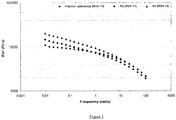
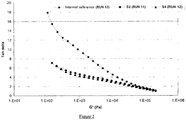
- Polymers produced using the novel activating supports of the present invention show improved rheological properties. In particular higher viscosities were observed at lower shear rates providing better bubble stability and lower viscosities at higher shear rates resulting in a better processability in the extruder.
- the internal reference polymer was prepared according to WO 05/019275 and represents the use of a catalyst system known to produce polymers having small amounts of LCB.
Landscapes
- Chemical & Material Sciences (AREA)
- Organic Chemistry (AREA)
- Chemical Kinetics & Catalysis (AREA)
- Engineering & Computer Science (AREA)
- Materials Engineering (AREA)
- Health & Medical Sciences (AREA)
- Medicinal Chemistry (AREA)
- Polymers & Plastics (AREA)
- Inorganic Chemistry (AREA)
- Crystallography & Structural Chemistry (AREA)
- Physics & Mathematics (AREA)
- Thermal Sciences (AREA)
- Transition And Organic Metals Composition Catalysts For Addition Polymerization (AREA)
- Polymerization Catalysts (AREA)
- Addition Polymer Or Copolymer, Post-Treatments, Or Chemical Modifications (AREA)
Claims (9)
- Support d'activation préparé par les étapes suivantes(a) la combinaison(i) d'un composé contenant du fluor ayant un groupe réactif, et ayant la formule R(Fn)-X dans laquelle
R est un hydrocarbyle, un hydrocarbyle substitué, un hétérohydrocarbyle ou un hétérohydrocarbyle substitué ayant jusqu'à 20 atomes qui ne sont pas des atomes d'hydrogène,
n est 1 à 41
X est OH, SH ou NH2, et(ii) d'un composé organométallique sélectionné parmi un dérivé alkylé d'aluminium ou de bore,(b) l'ajout d'un matériau de support poreux à base d'un oxyde minéral,(c) le chauffage du support fonctionnalisé provenant de l'étape (b) sous un gaz inerte et ensuite sous une atmosphère comprenant de l'oxygène, et(d) la récupération du support d'activation. - Support d'activation selon la revendication 1 dans lequel n est 1 à 6.
- Support d'activation selon la revendication 1 ou 2 dans lequel X est OH.
- Support d'activation selon l'une quelconque des revendications précédentes dans lequel le composé contenant du fluor est choisi parmi le pentafluorophénol, le 2,2,2-trifluoroéthanol ou le 1,1,1,3,3,3-hexafluoro-propan-2-ol.
- Support d'activation selon l'une quelconque des revendications précédentes dans lequel le composé organométallique est un composé d'organoaluminium.
- Support d'activation selon la revendication 5 dans lequel le composé d'organoaluminium est le triéthyl-aluminium.
- Support d'activation selon l'une quelconque des revendications précédentes dans lequel le matériau de support poreux à base d'un oxyde minéral est une silice.
- Support d'activation selon l'une quelconque des revendications précédentes dans lequel le support fonctionnalisé provenant de l'étape (b) est chauffé sous un gaz inerte à une température située dans la plage allant de 100 à 600 °C et de préférence dans la plage allant de 150 à 450 °C.
- Support d'activation selon l'une quelconque des revendications précédentes dans lequel le support fonctionnalisé provenant de l'étape (b) est chauffé sous une atmosphère comprenant de l'oxygène à une température située dans la plage allant de 70 à 600 °C, de préférence dans la plage allant de 100 à 600 °C et de manière préférée entre toutes dans la plage allant de 150 à 450 °C.
Priority Applications (1)
| Application Number | Priority Date | Filing Date | Title |
|---|---|---|---|
| EP11802343.1A EP2651981B2 (fr) | 2010-12-15 | 2011-12-14 | Supports d'activation |
Applications Claiming Priority (3)
| Application Number | Priority Date | Filing Date | Title |
|---|---|---|---|
| EP10195224A EP2465876A1 (fr) | 2010-12-15 | 2010-12-15 | Supports d'activation |
| PCT/EP2011/072726 WO2012080314A2 (fr) | 2010-12-15 | 2011-12-14 | Supports d'activation |
| EP11802343.1A EP2651981B2 (fr) | 2010-12-15 | 2011-12-14 | Supports d'activation |
Publications (3)
| Publication Number | Publication Date |
|---|---|
| EP2651981A2 EP2651981A2 (fr) | 2013-10-23 |
| EP2651981B1 EP2651981B1 (fr) | 2016-03-16 |
| EP2651981B2 true EP2651981B2 (fr) | 2019-01-23 |
Family
ID=43988775
Family Applications (2)
| Application Number | Title | Priority Date | Filing Date |
|---|---|---|---|
| EP10195224A Ceased EP2465876A1 (fr) | 2010-12-15 | 2010-12-15 | Supports d'activation |
| EP11802343.1A Active EP2651981B2 (fr) | 2010-12-15 | 2011-12-14 | Supports d'activation |
Family Applications Before (1)
| Application Number | Title | Priority Date | Filing Date |
|---|---|---|---|
| EP10195224A Ceased EP2465876A1 (fr) | 2010-12-15 | 2010-12-15 | Supports d'activation |
Country Status (9)
| Country | Link |
|---|---|
| US (1) | US9175106B2 (fr) |
| EP (2) | EP2465876A1 (fr) |
| JP (1) | JP6114195B2 (fr) |
| KR (1) | KR20140026342A (fr) |
| CN (1) | CN103328516B (fr) |
| BR (1) | BR112013015202A2 (fr) |
| RU (1) | RU2013132342A (fr) |
| SG (1) | SG190834A1 (fr) |
| WO (1) | WO2012080314A2 (fr) |
Families Citing this family (6)
| Publication number | Priority date | Publication date | Assignee | Title |
|---|---|---|---|---|
| EP2465876A1 (fr) | 2010-12-15 | 2012-06-20 | INEOS Manufacturing Belgium NV | Supports d'activation |
| CN104105722B (zh) | 2011-12-14 | 2016-11-09 | 英尼奥斯欧洲股份公司 | 聚合物 |
| CN108727527A (zh) * | 2018-06-08 | 2018-11-02 | 北京化工大学 | 负载型催化剂及负载方法与应用 |
| IT201900015932A1 (it) * | 2019-09-09 | 2021-03-09 | Gea Procomac Spa | Apparato di formatura per formare contenitori a partire da preforme realizzate in materiale termoplastico e relativo processo |
| CN113087823B (zh) * | 2020-01-08 | 2023-05-09 | 中国科学院上海有机化学研究所 | 一种含氟代醇负载物的催化剂及其制备方法、应用 |
| US20230212328A1 (en) * | 2020-06-18 | 2023-07-06 | Ineos Europe Ag | Method for preparing a catalyst |
Citations (5)
| Publication number | Priority date | Publication date | Assignee | Title |
|---|---|---|---|---|
| WO2001044309A1 (fr) † | 1999-12-16 | 2001-06-21 | Phillips Petroleum Company | Compositions catalytique organometallique |
| US20050192178A1 (en) † | 2002-09-24 | 2005-09-01 | Kazuo Takaoki | Modified particle, catalyst component for addition polymerization, catalyst for addition polymerization and process for producing addition polymer |
| US7022782B2 (en) † | 2000-12-26 | 2006-04-04 | Sumitomo Chemical Company, Limited | Homogeneous type solid catalyst component or homogeneous type solid catalyst, process for production thereof and process for producing addition polymer with the same |
| US20100222529A1 (en) † | 2007-03-19 | 2010-09-02 | Total Petrochemicals Research Feluy | Homo- or Co-polymers of Ethylene with Combination of Processability and Toughness Properties |
| EP2465876A1 (fr) † | 2010-12-15 | 2012-06-20 | INEOS Manufacturing Belgium NV | Supports d'activation |
Family Cites Families (43)
| Publication number | Priority date | Publication date | Assignee | Title |
|---|---|---|---|---|
| DZ520A1 (fr) | 1982-03-24 | 2004-09-13 | Union Carbide Corp | Procédé perfectionné pour accroitre le rendement espace temps d'une réaction de polymérisation exothermique en lit fluidisé. |
| ZA844157B (en) | 1983-06-06 | 1986-01-29 | Exxon Research Engineering Co | Process and catalyst for polyolefin density and molecular weight control |
| CA1268754A (fr) | 1985-06-21 | 1990-05-08 | Howard Curtis Welborn, Jr. | Catalyseur de polymerisation sur support |
| IL85097A (en) | 1987-01-30 | 1992-02-16 | Exxon Chemical Patents Inc | Catalysts based on derivatives of a bis(cyclopentadienyl)group ivb metal compound,their preparation and their use in polymerization processes |
| US5055438A (en) | 1989-09-13 | 1991-10-08 | Exxon Chemical Patents, Inc. | Olefin polymerization catalysts |
| NZ235032A (en) | 1989-08-31 | 1993-04-28 | Dow Chemical Co | Constrained geometry complexes of titanium, zirconium or hafnium comprising a substituted cyclopentadiene ligand; use as olefin polymerisation catalyst component |
| US5064802A (en) | 1989-09-14 | 1991-11-12 | The Dow Chemical Company | Metal complex compounds |
| EP0672689A1 (fr) | 1990-06-22 | 1995-09-20 | Exxon Chemical Patents Inc. | Catalyseurs à base de métallocène monocyclopentadienylique dépourvus d'aluminium destinés à la polymérisation d'oléfines |
| US5240894A (en) | 1992-05-18 | 1993-08-31 | Exxon Chemical Patents Inc. | Method for making and using a supported metallocene catalyst system |
| DE69415317T2 (de) | 1993-05-13 | 1999-06-02 | Exxon Chemical Patents, Inc., Baytown, Tex. | Ethylen-copolymere mit enger zusammensetzungsverteilung, ihre herstellung und ihre verwendung |
| JP3264338B2 (ja) * | 1993-05-20 | 2002-03-11 | 出光興産株式会社 | 特定のアルミニウム化合物を含有する重合用触媒 |
| ZA943399B (en) | 1993-05-20 | 1995-11-17 | Bp Chem Int Ltd | Polymerisation process |
| JP2736938B2 (ja) | 1993-06-24 | 1998-04-08 | ザ ダウ ケミカル カンパニー | チタン(▲ii▼)またはジルコニウム(▲ii▼)錯体およびそれからなる付加重合触媒 |
| WO1995007939A1 (fr) | 1993-09-17 | 1995-03-23 | Exxon Chemical Patents Inc. | Systemes catalyseurs de polymerisation, leur production et utilisation |
| JP3699479B2 (ja) | 1994-06-24 | 2005-09-28 | エクソンモービル・ケミカル・パテンツ・インク | 重合触媒系、それらの製造及び使用 |
| US5616664A (en) | 1994-08-02 | 1997-04-01 | The Dow Chemical Company | Polymerization process with biscyclopentadienyl diene complex containing catalysts |
| WO1996004318A1 (fr) | 1994-08-05 | 1996-02-15 | Exxon Chemical Patents Inc. | Systemes de catalyseur de polymerisation, leur production et utilisation |
| US5527752A (en) | 1995-03-29 | 1996-06-18 | Union Carbide Chemicals & Plastics Technology Corporation | Catalysts for the production of polyolefins |
| DE69620760T2 (de) | 1995-07-06 | 2002-12-05 | Exxonmobil Chemical Patents Inc., Baytown | Verfahren zur herstellung von polymerisierten geträgerten metallocenkatalysatorsystemen |
| IL129929A0 (en) | 1996-12-17 | 2000-02-29 | Du Pont | Polymerization of ethylene with specific iron or cobalt complexes novel pyridinebis (imines) and novel complexes of pyridinebis(imines) with iron and cobalt |
| CA2204803C (fr) | 1997-05-08 | 2005-11-15 | Nova Chemicals Ltd. | Methode pour preparer des phosphols cyclopentadienyliques pontes |
| JP3890761B2 (ja) * | 1997-08-21 | 2007-03-07 | 住友化学株式会社 | 改質された粒子、それよりなる担体、それよりなるオレフィン重合用触媒成分、それを用いてなるオレフィン重合用触媒、およびオレフィン重合体の製造方法 |
| KR100516336B1 (ko) | 1997-09-05 | 2005-09-22 | 비피 케미칼즈 리미티드 | 중합 촉매 |
| FR2769245B1 (fr) | 1997-10-02 | 1999-10-29 | Atochem Elf Sa | Support solide activateur des catalyseurs metallocenes en polymerisation des olefines, son procede de preparation, systeme catalytique et procede de polymerisation correspondants |
| CA2228923A1 (fr) | 1998-02-06 | 1999-08-06 | Nova Chemicals Ltd. | Procede de preparation de catalyseur sur support pour la polymerisation d'olefines |
| JP4440355B2 (ja) * | 1998-03-25 | 2010-03-24 | 住友化学株式会社 | 改質された粒子、それよりなる担体、それよりなるオレフィン重合用触媒成分、それを用いてなるオレフィン重合用触媒、およびオレフィン重合体の製造方法 |
| US6245868B1 (en) | 1998-05-29 | 2001-06-12 | Univation Technologies | Catalyst delivery method, a catalyst feeder and their use in a polymerization process |
| CA2243775C (fr) | 1998-07-21 | 2007-06-12 | Nova Chemicals Ltd. | Composant de catalyseur au phosphinimine/heteroatome |
| CA2243783C (fr) | 1998-07-21 | 2007-06-05 | Nova Chemicals Ltd. | Catalyseur au bis-phosphinimine |
| CA2254841C (fr) | 1998-11-26 | 2007-02-06 | Nova Chemicals Ltd. | Ligand de phosphinimine susbtituee sur l'atome d'azote |
| GB9928679D0 (en) | 1999-12-03 | 2000-02-02 | Bp Chem Int Ltd | Polymerisation process |
| KR101164043B1 (ko) | 2003-08-22 | 2012-07-18 | 이네오스 유럽 리미티드 | 지지 중합 촉매 |
| SG131121A1 (en) * | 2003-10-22 | 2007-04-26 | Sumitomo Chemical Co | Process for producing modified particle, carrier or catalyst component for addition polymerization, pre-polymerized catalyst component therefor, catalyst therefor, and addition polymer |
| WO2005075525A2 (fr) | 2004-01-30 | 2005-08-18 | Total Petrochemicals Research Feluy | Supports d'activation destines a la catalyse de metallocene |
| JP4622350B2 (ja) * | 2004-04-30 | 2011-02-02 | 住友化学株式会社 | 改質された粒子およびその製造方法、担体、付加重合用触媒成分、付加重合用触媒および付加重合体の製造方法 |
| US7592402B2 (en) * | 2004-04-30 | 2009-09-22 | Sumitomo Chemical Company, Limited | Process for producing modified particle; carrier; catalyst component for addition polymerization; process for producing catalyst for addition polymerization; and process for producing addition polymer |
| WO2007005676A2 (fr) | 2005-07-01 | 2007-01-11 | Albemarle Corporation | Compositions activatrices et leur utilisation dans des catalyseurs et dans la polymerisation d'olefine |
| ATE458303T1 (de) | 2005-07-26 | 2010-03-15 | Austriamicrosystems Ag | Verstärkeranordnung und methode |
| EP1749842A1 (fr) * | 2005-08-03 | 2007-02-07 | Total Petrochemicals Research Feluy | Complexe de métal de transition supporte sur un support active et fluore |
| EP1857470A1 (fr) | 2006-05-16 | 2007-11-21 | Total Petrochemicals Research Feluy | Catalyseur metallocene supporte sur supports activateurs |
| EP2084193A2 (fr) * | 2006-09-20 | 2009-08-05 | Albermarle Corporation | Activateurs de catalyseurs, procédés de fabrication correspondant, et leur utilisation dans des catalyseurs et la polymérisation d'oléfines |
| EP2172493A1 (fr) | 2008-10-02 | 2010-04-07 | Total Petrochemicals Research Feluy | Activation de supports à base d'acides boroniques perfluorés |
| EP2251362A1 (fr) * | 2009-05-07 | 2010-11-17 | Total Petrochemicals Research Feluy | Activation de supports avec la répartition contrôlée de groupes OH |
-
2010
- 2010-12-15 EP EP10195224A patent/EP2465876A1/fr not_active Ceased
-
2011
- 2011-12-14 WO PCT/EP2011/072726 patent/WO2012080314A2/fr not_active Ceased
- 2011-12-14 JP JP2013543746A patent/JP6114195B2/ja active Active
- 2011-12-14 US US13/988,136 patent/US9175106B2/en active Active
- 2011-12-14 RU RU2013132342/04A patent/RU2013132342A/ru not_active Application Discontinuation
- 2011-12-14 BR BR112013015202A patent/BR112013015202A2/pt not_active IP Right Cessation
- 2011-12-14 CN CN201180060224.6A patent/CN103328516B/zh active Active
- 2011-12-14 KR KR1020137015318A patent/KR20140026342A/ko not_active Withdrawn
- 2011-12-14 EP EP11802343.1A patent/EP2651981B2/fr active Active
- 2011-12-14 SG SG2013038617A patent/SG190834A1/en unknown
Patent Citations (5)
| Publication number | Priority date | Publication date | Assignee | Title |
|---|---|---|---|---|
| WO2001044309A1 (fr) † | 1999-12-16 | 2001-06-21 | Phillips Petroleum Company | Compositions catalytique organometallique |
| US7022782B2 (en) † | 2000-12-26 | 2006-04-04 | Sumitomo Chemical Company, Limited | Homogeneous type solid catalyst component or homogeneous type solid catalyst, process for production thereof and process for producing addition polymer with the same |
| US20050192178A1 (en) † | 2002-09-24 | 2005-09-01 | Kazuo Takaoki | Modified particle, catalyst component for addition polymerization, catalyst for addition polymerization and process for producing addition polymer |
| US20100222529A1 (en) † | 2007-03-19 | 2010-09-02 | Total Petrochemicals Research Feluy | Homo- or Co-polymers of Ethylene with Combination of Processability and Toughness Properties |
| EP2465876A1 (fr) † | 2010-12-15 | 2012-06-20 | INEOS Manufacturing Belgium NV | Supports d'activation |
Also Published As
| Publication number | Publication date |
|---|---|
| EP2465876A1 (fr) | 2012-06-20 |
| EP2651981A2 (fr) | 2013-10-23 |
| KR20140026342A (ko) | 2014-03-05 |
| JP6114195B2 (ja) | 2017-04-12 |
| WO2012080314A2 (fr) | 2012-06-21 |
| EP2651981B1 (fr) | 2016-03-16 |
| WO2012080314A3 (fr) | 2013-06-27 |
| US9175106B2 (en) | 2015-11-03 |
| US20130245214A1 (en) | 2013-09-19 |
| CN103328516B (zh) | 2019-06-28 |
| BR112013015202A2 (pt) | 2016-09-13 |
| JP2014503633A (ja) | 2014-02-13 |
| CN103328516A (zh) | 2013-09-25 |
| RU2013132342A (ru) | 2015-01-20 |
| SG190834A1 (en) | 2013-07-31 |
Similar Documents
| Publication | Publication Date | Title |
|---|---|---|
| EP2791189B1 (fr) | Nouveaux polymères | |
| US20090036621A1 (en) | Catalyst System | |
| EP2651981B1 (fr) | Supports d'activation | |
| WO2012048067A2 (fr) | Systèmes de catalyseur métallocène ponté avec effets commutables de l'hydrogène et de comonomère | |
| EP1656394B1 (fr) | Catalyseurs de polymerisation supportes | |
| US7811956B2 (en) | Supported olefin polymerization catalyst | |
| US20200071349A1 (en) | Metallocene Compounds Having Appended Lewis Acids and Polymerization Therewith | |
| US8008413B2 (en) | Method for preparing copolymers | |
| EP1694717B1 (fr) | Procede de polymerisation | |
| US9012359B2 (en) | Activating supports | |
| US20090131613A1 (en) | Supported polymerisation catalysts | |
| EP1891122B1 (fr) | Catalyseurs de polymerisation supportes | |
| WO2020046900A1 (fr) | Composés métallocènes ayant des acides de lewis annexés et polymérisation avec ceux-ci | |
| US20060154808A1 (en) | Supported polymerisation catalysts | |
| EP1660542A1 (fr) | Catalyseurs de polymerisation supportes | |
| US20050209096A1 (en) | Supported polymerisation catalysts | |
| KR20050059160A (ko) | 올레핀 중합 방법 | |
| WO2005075523A1 (fr) | Composition de catalyseur |
Legal Events
| Date | Code | Title | Description |
|---|---|---|---|
| PUAI | Public reference made under article 153(3) epc to a published international application that has entered the european phase |
Free format text: ORIGINAL CODE: 0009012 |
|
| 17P | Request for examination filed |
Effective date: 20130509 |
|
| AK | Designated contracting states |
Kind code of ref document: A2 Designated state(s): AL AT BE BG CH CY CZ DE DK EE ES FI FR GB GR HR HU IE IS IT LI LT LU LV MC MK MT NL NO PL PT RO RS SE SI SK SM TR |
|
| 17Q | First examination report despatched |
Effective date: 20140320 |
|
| DAX | Request for extension of the european patent (deleted) | ||
| GRAP | Despatch of communication of intention to grant a patent |
Free format text: ORIGINAL CODE: EPIDOSNIGR1 |
|
| RIC1 | Information provided on ipc code assigned before grant |
Ipc: C08F 4/02 20060101AFI20150827BHEP Ipc: B01J 37/26 20060101ALI20150827BHEP Ipc: B01J 31/12 20060101ALI20150827BHEP Ipc: B01J 27/12 20060101ALI20150827BHEP |
|
| INTG | Intention to grant announced |
Effective date: 20150910 |
|
| GRAS | Grant fee paid |
Free format text: ORIGINAL CODE: EPIDOSNIGR3 |
|
| GRAA | (expected) grant |
Free format text: ORIGINAL CODE: 0009210 |
|
| AK | Designated contracting states |
Kind code of ref document: B1 Designated state(s): AL AT BE BG CH CY CZ DE DK EE ES FI FR GB GR HR HU IE IS IT LI LT LU LV MC MK MT NL NO PL PT RO RS SE SI SK SM TR |
|
| REG | Reference to a national code |
Ref country code: GB Ref legal event code: FG4D |
|
| REG | Reference to a national code |
Ref country code: CH Ref legal event code: EP |
|
| REG | Reference to a national code |
Ref country code: IE Ref legal event code: FG4D |
|
| REG | Reference to a national code |
Ref country code: AT Ref legal event code: REF Ref document number: 781167 Country of ref document: AT Kind code of ref document: T Effective date: 20160415 |
|
| REG | Reference to a national code |
Ref country code: DE Ref legal event code: R096 Ref document number: 602011024135 Country of ref document: DE |
|
| REG | Reference to a national code |
Ref country code: NL Ref legal event code: FP |
|
| REG | Reference to a national code |
Ref country code: SE Ref legal event code: TRGR |
|
| REG | Reference to a national code |
Ref country code: LT Ref legal event code: MG4D |
|
| PG25 | Lapsed in a contracting state [announced via postgrant information from national office to epo] |
Ref country code: FI Free format text: LAPSE BECAUSE OF FAILURE TO SUBMIT A TRANSLATION OF THE DESCRIPTION OR TO PAY THE FEE WITHIN THE PRESCRIBED TIME-LIMIT Effective date: 20160316 Ref country code: HR Free format text: LAPSE BECAUSE OF FAILURE TO SUBMIT A TRANSLATION OF THE DESCRIPTION OR TO PAY THE FEE WITHIN THE PRESCRIBED TIME-LIMIT Effective date: 20160316 Ref country code: NO Free format text: LAPSE BECAUSE OF FAILURE TO SUBMIT A TRANSLATION OF THE DESCRIPTION OR TO PAY THE FEE WITHIN THE PRESCRIBED TIME-LIMIT Effective date: 20160616 Ref country code: GR Free format text: LAPSE BECAUSE OF FAILURE TO SUBMIT A TRANSLATION OF THE DESCRIPTION OR TO PAY THE FEE WITHIN THE PRESCRIBED TIME-LIMIT Effective date: 20160617 |
|
| REG | Reference to a national code |
Ref country code: AT Ref legal event code: MK05 Ref document number: 781167 Country of ref document: AT Kind code of ref document: T Effective date: 20160316 |
|
| PG25 | Lapsed in a contracting state [announced via postgrant information from national office to epo] |
Ref country code: RS Free format text: LAPSE BECAUSE OF FAILURE TO SUBMIT A TRANSLATION OF THE DESCRIPTION OR TO PAY THE FEE WITHIN THE PRESCRIBED TIME-LIMIT Effective date: 20160316 Ref country code: LV Free format text: LAPSE BECAUSE OF FAILURE TO SUBMIT A TRANSLATION OF THE DESCRIPTION OR TO PAY THE FEE WITHIN THE PRESCRIBED TIME-LIMIT Effective date: 20160316 Ref country code: LT Free format text: LAPSE BECAUSE OF FAILURE TO SUBMIT A TRANSLATION OF THE DESCRIPTION OR TO PAY THE FEE WITHIN THE PRESCRIBED TIME-LIMIT Effective date: 20160316 |
|
| PG25 | Lapsed in a contracting state [announced via postgrant information from national office to epo] |
Ref country code: PL Free format text: LAPSE BECAUSE OF FAILURE TO SUBMIT A TRANSLATION OF THE DESCRIPTION OR TO PAY THE FEE WITHIN THE PRESCRIBED TIME-LIMIT Effective date: 20160316 Ref country code: IS Free format text: LAPSE BECAUSE OF FAILURE TO SUBMIT A TRANSLATION OF THE DESCRIPTION OR TO PAY THE FEE WITHIN THE PRESCRIBED TIME-LIMIT Effective date: 20160716 Ref country code: EE Free format text: LAPSE BECAUSE OF FAILURE TO SUBMIT A TRANSLATION OF THE DESCRIPTION OR TO PAY THE FEE WITHIN THE PRESCRIBED TIME-LIMIT Effective date: 20160316 |
|
| PG25 | Lapsed in a contracting state [announced via postgrant information from national office to epo] |
Ref country code: CZ Free format text: LAPSE BECAUSE OF FAILURE TO SUBMIT A TRANSLATION OF THE DESCRIPTION OR TO PAY THE FEE WITHIN THE PRESCRIBED TIME-LIMIT Effective date: 20160316 Ref country code: SM Free format text: LAPSE BECAUSE OF FAILURE TO SUBMIT A TRANSLATION OF THE DESCRIPTION OR TO PAY THE FEE WITHIN THE PRESCRIBED TIME-LIMIT Effective date: 20160316 Ref country code: ES Free format text: LAPSE BECAUSE OF FAILURE TO SUBMIT A TRANSLATION OF THE DESCRIPTION OR TO PAY THE FEE WITHIN THE PRESCRIBED TIME-LIMIT Effective date: 20160316 Ref country code: SK Free format text: LAPSE BECAUSE OF FAILURE TO SUBMIT A TRANSLATION OF THE DESCRIPTION OR TO PAY THE FEE WITHIN THE PRESCRIBED TIME-LIMIT Effective date: 20160316 Ref country code: AT Free format text: LAPSE BECAUSE OF FAILURE TO SUBMIT A TRANSLATION OF THE DESCRIPTION OR TO PAY THE FEE WITHIN THE PRESCRIBED TIME-LIMIT Effective date: 20160316 Ref country code: PT Free format text: LAPSE BECAUSE OF FAILURE TO SUBMIT A TRANSLATION OF THE DESCRIPTION OR TO PAY THE FEE WITHIN THE PRESCRIBED TIME-LIMIT Effective date: 20160718 Ref country code: RO Free format text: LAPSE BECAUSE OF FAILURE TO SUBMIT A TRANSLATION OF THE DESCRIPTION OR TO PAY THE FEE WITHIN THE PRESCRIBED TIME-LIMIT Effective date: 20160316 |
|
| REG | Reference to a national code |
Ref country code: DE Ref legal event code: R026 Ref document number: 602011024135 Country of ref document: DE |
|
| PLBI | Opposition filed |
Free format text: ORIGINAL CODE: 0009260 |
|
| REG | Reference to a national code |
Ref country code: FR Ref legal event code: PLFP Year of fee payment: 6 |
|
| PG25 | Lapsed in a contracting state [announced via postgrant information from national office to epo] |
Ref country code: IT Free format text: LAPSE BECAUSE OF FAILURE TO SUBMIT A TRANSLATION OF THE DESCRIPTION OR TO PAY THE FEE WITHIN THE PRESCRIBED TIME-LIMIT Effective date: 20160316 |
|
| PLAX | Notice of opposition and request to file observation + time limit sent |
Free format text: ORIGINAL CODE: EPIDOSNOBS2 |
|
| 26 | Opposition filed |
Opponent name: TOTAL RESEARCH & TECHNOLOGY FELUY Effective date: 20161215 |
|
| PG25 | Lapsed in a contracting state [announced via postgrant information from national office to epo] |
Ref country code: DK Free format text: LAPSE BECAUSE OF FAILURE TO SUBMIT A TRANSLATION OF THE DESCRIPTION OR TO PAY THE FEE WITHIN THE PRESCRIBED TIME-LIMIT Effective date: 20160316 |
|
| PG25 | Lapsed in a contracting state [announced via postgrant information from national office to epo] |
Ref country code: BG Free format text: LAPSE BECAUSE OF FAILURE TO SUBMIT A TRANSLATION OF THE DESCRIPTION OR TO PAY THE FEE WITHIN THE PRESCRIBED TIME-LIMIT Effective date: 20160616 |
|
| PG25 | Lapsed in a contracting state [announced via postgrant information from national office to epo] |
Ref country code: SI Free format text: LAPSE BECAUSE OF FAILURE TO SUBMIT A TRANSLATION OF THE DESCRIPTION OR TO PAY THE FEE WITHIN THE PRESCRIBED TIME-LIMIT Effective date: 20160316 |
|
| PLBB | Reply of patent proprietor to notice(s) of opposition received |
Free format text: ORIGINAL CODE: EPIDOSNOBS3 |
|
| REG | Reference to a national code |
Ref country code: CH Ref legal event code: PL |
|
| GBPC | Gb: european patent ceased through non-payment of renewal fee |
Effective date: 20161214 |
|
| PG25 | Lapsed in a contracting state [announced via postgrant information from national office to epo] |
Ref country code: MC Free format text: LAPSE BECAUSE OF FAILURE TO SUBMIT A TRANSLATION OF THE DESCRIPTION OR TO PAY THE FEE WITHIN THE PRESCRIBED TIME-LIMIT Effective date: 20160316 |
|
| REG | Reference to a national code |
Ref country code: IE Ref legal event code: MM4A |
|
| PG25 | Lapsed in a contracting state [announced via postgrant information from national office to epo] |
Ref country code: LU Free format text: LAPSE BECAUSE OF NON-PAYMENT OF DUE FEES Effective date: 20161214 Ref country code: LI Free format text: LAPSE BECAUSE OF NON-PAYMENT OF DUE FEES Effective date: 20161231 Ref country code: CH Free format text: LAPSE BECAUSE OF NON-PAYMENT OF DUE FEES Effective date: 20161231 |
|
| PG25 | Lapsed in a contracting state [announced via postgrant information from national office to epo] |
Ref country code: GB Free format text: LAPSE BECAUSE OF NON-PAYMENT OF DUE FEES Effective date: 20161214 Ref country code: IE Free format text: LAPSE BECAUSE OF NON-PAYMENT OF DUE FEES Effective date: 20161214 |
|
| REG | Reference to a national code |
Ref country code: FR Ref legal event code: PLFP Year of fee payment: 7 |
|
| PG25 | Lapsed in a contracting state [announced via postgrant information from national office to epo] |
Ref country code: CY Free format text: LAPSE BECAUSE OF FAILURE TO SUBMIT A TRANSLATION OF THE DESCRIPTION OR TO PAY THE FEE WITHIN THE PRESCRIBED TIME-LIMIT Effective date: 20160316 Ref country code: HU Free format text: LAPSE BECAUSE OF FAILURE TO SUBMIT A TRANSLATION OF THE DESCRIPTION OR TO PAY THE FEE WITHIN THE PRESCRIBED TIME-LIMIT; INVALID AB INITIO Effective date: 20111214 |
|
| PG25 | Lapsed in a contracting state [announced via postgrant information from national office to epo] |
Ref country code: MK Free format text: LAPSE BECAUSE OF FAILURE TO SUBMIT A TRANSLATION OF THE DESCRIPTION OR TO PAY THE FEE WITHIN THE PRESCRIBED TIME-LIMIT Effective date: 20160316 |
|
| PG25 | Lapsed in a contracting state [announced via postgrant information from national office to epo] |
Ref country code: MT Free format text: LAPSE BECAUSE OF NON-PAYMENT OF DUE FEES Effective date: 20161214 |
|
| PG25 | Lapsed in a contracting state [announced via postgrant information from national office to epo] |
Ref country code: TR Free format text: LAPSE BECAUSE OF FAILURE TO SUBMIT A TRANSLATION OF THE DESCRIPTION OR TO PAY THE FEE WITHIN THE PRESCRIBED TIME-LIMIT Effective date: 20160316 Ref country code: AL Free format text: LAPSE BECAUSE OF FAILURE TO SUBMIT A TRANSLATION OF THE DESCRIPTION OR TO PAY THE FEE WITHIN THE PRESCRIBED TIME-LIMIT Effective date: 20160316 |
|
| PUAH | Patent maintained in amended form |
Free format text: ORIGINAL CODE: 0009272 |
|
| STAA | Information on the status of an ep patent application or granted ep patent |
Free format text: STATUS: PATENT MAINTAINED AS AMENDED |
|
| 27A | Patent maintained in amended form |
Effective date: 20190123 |
|
| AK | Designated contracting states |
Kind code of ref document: B2 Designated state(s): AL AT BE BG CH CY CZ DE DK EE ES FI FR GB GR HR HU IE IS IT LI LT LU LV MC MK MT NL NO PL PT RO RS SE SI SK SM TR |
|
| REG | Reference to a national code |
Ref country code: DE Ref legal event code: R102 Ref document number: 602011024135 Country of ref document: DE |
|
| REG | Reference to a national code |
Ref country code: BE Ref legal event code: FP Effective date: 20160512 |
|
| REG | Reference to a national code |
Ref country code: SE Ref legal event code: RPEO |
|
| REG | Reference to a national code |
Ref country code: NL Ref legal event code: FP |
|
| P01 | Opt-out of the competence of the unified patent court (upc) registered |
Effective date: 20230518 |
|
| PGFP | Annual fee paid to national office [announced via postgrant information from national office to epo] |
Ref country code: NL Payment date: 20251226 Year of fee payment: 15 Ref country code: FR Payment date: 20251226 Year of fee payment: 15 |
|
| PGFP | Annual fee paid to national office [announced via postgrant information from national office to epo] |
Ref country code: BE Payment date: 20251229 Year of fee payment: 15 |
|
| PGFP | Annual fee paid to national office [announced via postgrant information from national office to epo] |
Ref country code: SE Payment date: 20251227 Year of fee payment: 15 |
|
| PGFP | Annual fee paid to national office [announced via postgrant information from national office to epo] |
Ref country code: DE Payment date: 20251229 Year of fee payment: 15 |